
| 4
STRONG SUPPORT
Phoenix leaders rally for Jewish community in wake of Michigan attack
HEADLINES | 6
PLAY BALL
The Cactus League Hall of Fame inducts Phoenix resident Geoffrey Gonsher

| 4
Phoenix leaders rally for Jewish community in wake of Michigan attack
HEADLINES | 6
The Cactus League Hall of Fame inducts Phoenix resident Geoffrey Gonsher
JOSH BOOTZIN | STAFF WRITER
J
onah Platt, a Jewish actor, singer, advocate and host of the “Being Jewish with Jonah Platt” podcast, was the featured guest speaker at the Center for Jewish Philanthropy of Greater Phoenix’s (CJP) annual campaign event for young leaders on March 4.
More than 100 Jewish community members were welcomed into the home of Bob and Sara Silver in Phoenix for an evening of food and connection, highlighted by a conversation between Platt and Matt Gottesman, host of “The Niche is You” podcast.
“It’s so special to officially welcome Jonah Platt here, not just as my childhood friend, but as someone helping lead important conversations through his ‘Being Jewish’ podcast,” said Sarah Langert, vice president of CJP’s annual campaign.
As a product of Jewish day school, sleepaway camp and what he described as a “vibrant Jewish family,” Platt inherited a Jewish identity from early childhood, yet that didn’t stop him from asking questions, digging deeper and forging his own path towards a meaningful Jewish life.
He pointed out that finding community, connection and meaning in Judaism not only varies from person to person, but it can also differ depending on where each person stands on life’s journey. Each major life phase — college, marriage, parenthood, etc. — presents new challenges and perspectives that may put one’s Jewish identity into question.
“Whether it was being in my early 20s in (Los Angeles) and trying to find the right federation program that I could get involved with or being a father and thinking about how I am going to intentionally infuse Jewish identity in my kids, all of those things have been
SEE PLATT, PAGE 2
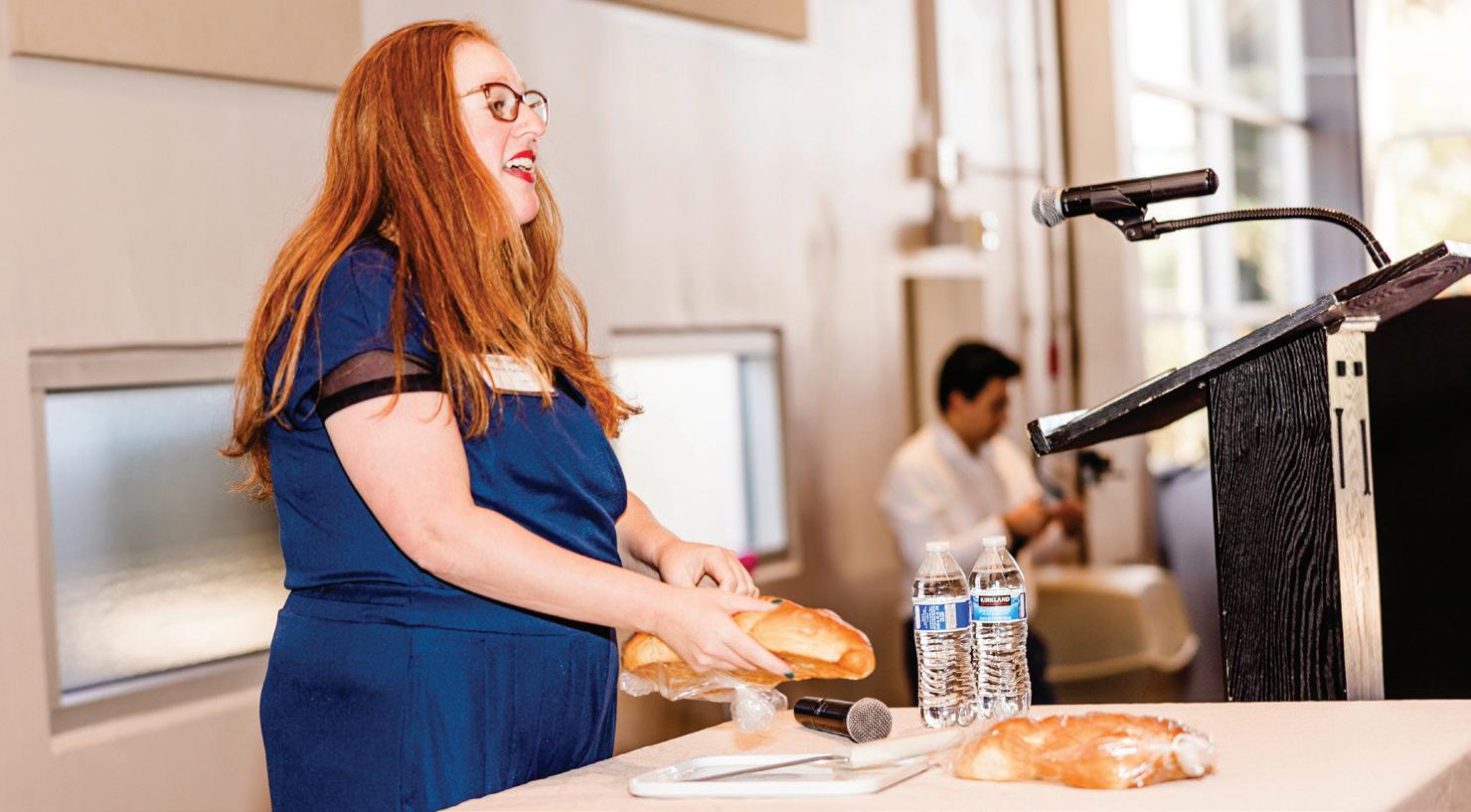
Community members gathered on Feb. 20 in the Social Hall at the Ina Levine Jewish Community Campus for a luncheon recognizing the work of Gesher Disability Resources and acknowledging Jewish Disability Awareness, Acceptance and Inclusion Month (JDAAIM).
Observed each February, JDAAIM was founded in 2009 by the Jewish Special Education International Consortium to raise awareness and encourage inclusion for people with disabilities and special needs.
“It is such a pleasure and honor to be here as we celebrate Gesher and acknowledge Jewish Disability Awareness and Inclusion Month,” said Rabbi Sara Mason-Barkin, who opened the gathering and said the Hamotzi. “There is room for every single person to be a part of the Jewish community, and Gesher is an invaluable resource that helps to make this so.”
Mason-Barkin, one of the rabbis at Congregation Beth Israel in Scottsdale, spoke about how she first encountered Gesher through its Simchat Shabbat program, a “no shushing” prayer service that encourages participants to experience worship however they see fit.
The service, she noted, reflects the broader philosophy behind Gesher’s work of creating environments where individuals of all abilities can participate fully in Jewish life. Gesher Disability Resources, formerly known as the Council for Jews with Special Needs, was founded in 1985 to support individuals with disabilities and their families within the Jewish community. SEE GESHER, PAGE 3

Pão de queijo is a snack you can make in under an hour, and it’s kosher for Passover. See page 10.



different touch points for how to live the Jewish life that’s right for me,” Platt said.
He recognized that being Jewish means something different to everyone, but throughout his life, his identity has been most rooted in family and responsibility.
His earliest Jewish memories were of family holiday celebrations, and he now relishes the many friends, peers and acquaintances he’s gained throughout his life, considering them extended family members.

about her Judaism with her fellow council members and speaking out for her rights
She already has some practice at
about her Judaism with her fellow council members and speaking out for her rights
“One time, I was in class and someone called me the R-word and I told him not to. The teacher was in the hallway and another student repeated the word,” she said. Rather than letting the situation go, she told her theater teacher, who was able
She already has some practice at
“One time, I was in class and someone called me the R-word and I told him not to. The teacher was in the hallway and another student repeated the word,” she said. Rather than letting the situation go, she told her theater teacher, who was able
“If someone has a disability, saying the R-word is like saying the F-word,”

In recent years, Platt said he’s gained an interest in what it means to move about the world as a Jewish person beyond the values dictated by Jewish customs and the Torah, leading him to embrace a sense of responsibility for himself and those around him.
January 6
January 20
January
February 3
January
February 17
August 25
“That’s something that I think distinguishes Jews from other groups throughout the world who may have the same values as us,” he said. “Being kind is not a solely Jewish value. Repairing the world, doing good for others, doing what’s morally right, those are universal values you would hope for in most people. But the responsibility factor, that it’s our job to do that stuff, even if no one else is doing it … that’s what I love about being Jewish.
September 1
September 8
1
station.
that he reached out to Silverman, and the two became friends.
Meyers was so captivated by the essays that he reached out to Silverman, and the two became friends.
remove a part of yourself to make someone else comfortable, the only person who’s living with that decision is you.”
That’s how Stern first learned of the open council seat, but there’s no doubt she earned her position, Meyers said.
That’s how Stern first learned of the open council seat, but there’s no doubt she earned her position, Meyers said.
“If someone has a disability, saying the R-word is like saying the F-word,” Stern said.
While performing in the musical “Hairspray,” she had another occasion to tangle with the offensive word, which appears in the script.
Tohn from the Netflix show “Nobody Wants This,” and he highlighted Sarah Hurwitz, Dara Horn and David Baddiel as some of his other favorite guests.
While performing in the musical “Hairspray,” she had another occasion to tangle with the offensive word, which appears in the script.
February 3
March 10
February 17
March 24
March 10
March 31
March 24
April 7
March 31
April 21
April 7
May 5
April 21
May 19
September 15 October 6
6
8
15
October 13** October 20
November 3
20
“By nature, we are leaders of humanity,” he added. “Not in a way that makes us better than anyone else. We signed up for it, and if anybody else wants to take part, that’d be awesome. There’s a lot of work to do.”
November 10
3
November 17
10
December 1
Blocking out the hateful noise became especially prevalent for Platt when he began recording the “Being Jewish with Jonah Platt” podcast, subjecting himself to the inescapable prejudice and scrutiny that comes with being a public voice for the Jewish people.
To become a council member, Stern had to apply and demonstrate that she had something valuable to contribute, he said.
His wish list for future guests includes Jerry Seinfeld, Pink, Mark Cuban and Adam Sandler, among many others.
To become a council member, Stern had to apply and demonstrate that she had something valuable to contribute, he said.
“She’s on the council because she deserves to be on the council,” he said. Stern is creating a life and career as a member of her community, which makes her a great addition.
“I try to be careful with what I say and how I say it, which isn’t to say that I hold back, or I’m not being authentic or honest, but I want to make sure that I’m staying on message,” he explained. “I’m not talking about stuff I don’t know anything about. I’m not allowing myself to be at the whim of the world’s energy or the emotion of a moment. I’m being thoughtful, and I’m being measured.”
“She’s on the council because she deserves to be on the council,” he said. Stern is creating a life and career as a member of her community, which makes her a great addition.
Stern graduated from McClintock High School in Tempe last year and now attends Glendale Community College, with a focus on dance. She is a regular performer at Detour Company Theatre, a Scottsdale theatre company for adults with intellectual, developmental and physical disabilities.
“That’s really bad and my friend said it on stage. I was not OK with that, so I went to the director and told her it was a bad word for people with disabilities, but she wouldn’t take it out,” Stern said.
“That’s really bad and my friend said it on stage. I was not OK with that, so I went to the director and told her it was a bad word for people with disabilities, but she wouldn’t take it out,” Stern said.
She let her mother know about the conflict and they were able to convince the director of the need to remove the word from the script.
One of the most profound lessons Platt said he learned from one of his guests came in a conversation with political analyst Van Jones, who made it clear that Jews tend to overestimate how much non-Jews know and understand about the Jewish experience.
She let her mother know about the conflict and they were able to convince the director of the need to remove the word from the script.
“My friend Al was next to me when I told the director and he gave me the biggest hug ever and said that he loved me so much,” Stern said. Sadly, Al died in a car crash on Oct. 24, 2021.
Heart Can’t Even Believe It: A Story of Science, Love and Down Syndrome,” Silverman’s book about her daughter. When Gesher’s speakers’ bureau, Damon Brooks & Associates, was asked to find a speaker about Down syndrome for an event this spring, Hummell first asked Silverman to speak, thinking Stern might be too young.
“Most of the world will never meet a Jew and has never met a Jew,” Platt said, “and there’s still plenty of places in America where they have never seen a Jew, never met a Jew and never will.”
June 9
May 5
May 19
July 14
June 9
August 4
July 14
August 18*
17
December 15
Gottesman posited that many young Jews have a desire to honor their heritage, but there is a fear of being reduced to a single category, religious identity or status. Platt dismissed this as a “them problem,” rather than a “you problem.”
August 4
August 18*
“We are who we are, and the most important thing is that you’re living life as your full, authentic self,” Platt said. “When you change yourself, diminish yourself or
1
15
Platt said he strives to be “bulletproof,” especially on social media platforms. He makes sure to educate himself before stating an opinion, explain himself accurately and clearly and to refrain from inciting unnecessary anger.
Stern graduated from McClintock High School in Tempe last year and now attends Glendale Community College, with a focus on dance. She is a regular performer at Detour Company Theatre, a Scottsdale theatre company for adults with intellectual, developmental and physical disabilities.
In fact, when Stern attended her first council meeting in January, she couldn’t wait to tell people of her involvement with Detour and share information about its upcoming shows.
In fact, when Stern attended her first council meeting in January, she couldn’t wait to tell people of her involvement with Detour and share information about its upcoming shows.
Throughout just 60 episodes, Platt has interviewed many Jews and non-Jewish allies from a variety of professions. He relished the opportunity to interview both of his parents and his wife, actress Jackie
“There’s no question that she is going to thrive,” Meyers said. “She’s very gregarious and passionate about the things that matter to her.”
“My friend Al was next to me when I told the director and he gave me the biggest hug ever and said that he loved me so much,” Stern said. Sadly, Al died in a car crash on Oct. 24, 2021.
Heart Can’t Even Believe It: A Story of Science, Love and Down Syndrome,” Silverman’s book about her daughter. When Gesher’s speakers’ bureau, Damon Brooks & Associates, was asked to find a speaker about Down syndrome for an event this spring, Hummell first asked Silverman to speak, thinking Stern might be too young.
They decided instead that Stern should tell her own story; it’s a real bonus that she is not afraid of public speaking.
23
“That was hard; it’s very hard to get emotions out and I was very, very upset,” she said.
“That was hard; it’s very hard to get emotions out and I was very, very upset,” she said.
That makes it all the more important to educate and raise awareness, because “140 million people don’t even know antisemitism exists in America anymore, and we just take that for granted, as Jews, because we’re thinking about it and talking about it all the time,” Platt said.
On the recent anniversary of his death, Stern made a cake and took it to the crash site.
On the recent anniversary of his death, Stern made a cake and took it to the crash site.
“I don’t know how I did it without crying. I’m so proud of myself,” she said.
“I don’t know how I did it without crying. I’m so proud of myself,” she said.
Amy Hummell, executive director of Gesher Disability Resources, agreed that Stern is a good fit for ADDPC because of her ability to self-advocate.
“It’s not the same when someone tries to tell a person’s story for them,” Hummell said.
They decided instead that Stern should tell her own story; it’s a real bonus that she is not afraid of public speaking.
“It’s not the same when someone tries to tell a person’s story for them,” Hummell said.
Additionally, helping people with disabilities find jobs was one of the reasons for acquiring the bureau. Unemployment in the disability community is upwards of 75% and of that percentage, 75% are ready, willing and able to work — but haven’t been given the opportunity, Hummell said.
*Annual Directory **Best of Magazine
“There’s no question that she is going to thrive,” Meyers said. “She’s very gregarious and passionate about the things that matter to her.”
Stern looks forward to sharing insights
“We have to remember that we need to constantly be making the implicit explicit for people outside of our community,” he said. “They don’t know … they just need to be activated, and they just need to be
Stern looks forward to sharing insights
Hummell co-hosted a book event with Meyers a few years ago for “My
Amy Hummell, executive director of Gesher Disability Resources, agreed that Stern is a good fit for ADDPC because of her ability to self-advocate.
Hummell co-hosted a book event with Meyers a few years ago for “My
Phone: 602.870.9470 | Fax: 602.870.0426 | editor@jewishaz.com | advertising@jewishaz.com subscriptions@jewishaz.com | www.jewishaz.com
Additionally, helping people with disabilities find jobs was one of the reasons for acquiring the bureau. Unemployment in the disability community is upwards of 75% and of that percentage, 75% are ready, willing and able to work — but haven’t been given the opportunity, Hummell said.
“People have it in them to speak up but don’t know how, and often they’re not cheered on. Sophie has family support
“People have it in them to speak up but don’t know how, and often they’re not cheered on. Sophie has family support
12701 N. Scottsdale Road, Suite 201, Scottsdale, AZ 85254 Phone: 602.870.9470 | editor@jewishaz.com | advertising@jewishaz.com subscriptions@jewishaz.com | www.jewishaz.com
12701 N. Scottsdale Road, Suite 201, Scottsdale, AZ 85254 Phone: 602.870.9470 | Fax: 602.870.0426 | editor@jewishaz.com | advertising@jewishaz.com subscriptions@jewishaz.com | www.jewishaz.com
PUBLISHER
Jewish Community Foundation of Greater Phoenix
PUBLISHER
PUBLISHER Jewish Community Foundation of Greater Phoenix
ADVERTISING SALES
Jodi Lipson | 602.639.5866 jlipson@jewishaz.com
SENIOR ACCOUNT EXECUTIVE Jodi Lipson | 602.639.5866 jlipson@jewishaz.com
ASSOCIATE PUBLISHER Rich Solomon | 602.639.5861 rsolomon@jewishaz.com
GENERAL MANAGER Rich Solomon | 602.639.5861 rsolomon@jewishaz.com
Jewish Community Foundation of Greater Phoenix
GENERAL MANAGER
Rich Solomon | 602.639.5861 rsolomon@jewishaz.com
MANAGING EDITOR Mala Blomquist | 602.639.5855 mblomquist@jewishaz.com
MANAGING EDITOR Mala Blomquist | 602.639.5855 mblomquist@jewishaz.com
MANAGING EDITOR
STAFF
Mala Blomquist | 602.639.5855 mblomquist@jewishaz.com
STAFF WRITER Josh Bootzin | 602.639.7066 jbootzin@jewishaz.com
Shannon Levitt | 602.639.5854 slevitt@jewishaz.com
STAFF WRITER
Shannon Levitt | 602.639.5854 slevitt@jewishaz.com
ADVERTISING SALES CONSULTANT Jodi Lipson | 602.639.5866 jlipson@jewishaz.com
ACCOUNT EXECUTIVE
SUBSCRIPTIONS 602.870.9470 x 1 subscriptions@jewishaz.com
Emily Stoddard | 602.639.7036 estoddard@jewishaz.com
SUBSCRIPTIONS 602.870.9470 x 1 subscriptions@jewishaz.com
GRAPHIC DESIGNER Ebony Brown | 410.902.2333 ads_phoenixjn@midatlanticmedia.com
SUBSCRIPTIONS 602.870.9470 x 1 subscriptions@jewishaz.com
GRAPHIC DESIGNER Ebony Brown | 410.902.2333 ads_phoenixjn@midatlanticmedia.com
GRAPHIC DESIGNER
Ricki Urban | 602.870.9470 x 2 advertising@jewishaz.com


Serving as master of ceremonies, Deborah Blyn offered a personal perspective on what Gesher’s work means to families navigating the challenges of disability support.
Blyn shared the story of her adult son, Jared, and the family’s difficult search for an appropriate residential placement.
Just a year earlier, she explained, the family had been in the midst of a long and frustrating process with the Arizona Division of Developmental Disabilities. Despite identifying what they believed was the right group home environment, one where Jared would live with peers he had known for years, their application was denied.
They appealed against the decision and even went through an administrative hearing, only to face another rejection.
The uncertainty weighed heavily on the family, who knew that long-term planning was essential.
“(My husband) Gary and I are both in our early 60s,” she said. “We knew Jared needed a secure home before there was ever a crisis.”
Eventually, a new opportunity emerged when a vacancy opened at a Geshersupported residence. After a process involving residents and families, Jared was invited to join the home.
“On Sept. 1, Jared moved into Keshet House,” Blyn told the audience. “His transition has been nothing short of lifechanging for him. He considers it home, and it gives us incredible peace of mind knowing that he is so well situated.”
Residential support has been one of the organization’s fastest-growing areas. Gesher currently operates two homes, Shalom House and Keshet House, and is preparing to open an additional residence.
“These are safe, gold-standard homes for adults who have intellectual and developmental disabilities,” said Amy Hummell, Gesher’s executive director. These homes allow the residents to live independently while still receiving the support they need.
Education is another major component
informed. We need to give people the opportunity to be there for us.”
The question was raised about how to reach those people, especially those whose social media algorithms only show them content that tells one side of the story, content they’re used to and have no reason to doubt.
Platt admitted that it’s usually impossible to move someone from hating Jews to liking Jews in a simple conversation. Those people need professional counseling or to have some sort of eye-opening experience. Rather, he prioritizes the more agreeable people in the middle who can be molded with a well-intentioned push.
“I go after the people who have doubts, who are decent, well-meaning people, who
of Gesher’s work. The organization now partners with six Jewish day schools as well as private and homeschool programs, offering tutoring and specialized support to students with diverse learning needs.
Social programming also plays a central role in Gesher’s mission. Monthly gatherings such as the Simchat Shabbat service offer inclusive opportunities for community engagement, while other activities include fitness classes, museum outings and recreational programs.
In 2022, Gesher expanded its mission further by acquiring David Brooks and Associates. “This is a speakers’ bureau of all professionals living with a disability,” said Hummell.
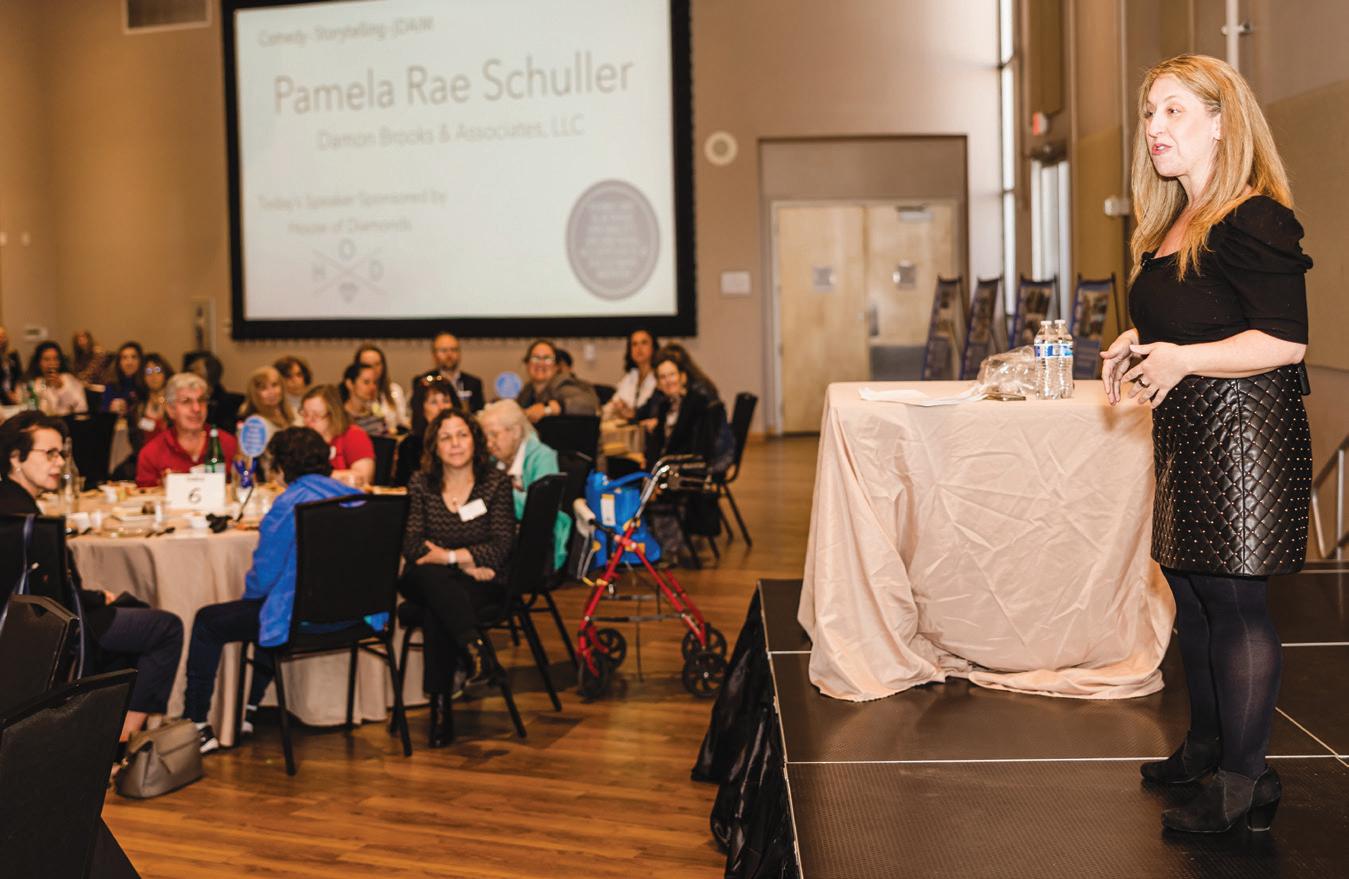
One of those speakers was the luncheon’s featured presenter, comedian and advocate Pamela Rae Schuller.
“There are three things I want you to know about me,” Schuller told the audience. “First, I’m a disability and mental health advocate. Second, I’m a professional stand-up comedian from New York City. And third, I have Tourette syndrome.”
Tourette syndrome is a neurological condition characterized by involuntary movements and vocalizations known as tics.
At its most severe, during Schuller’s childhood, it affected nearly every aspect of her life. She described years when her body was constantly moving and making sounds she could not control.
“I had the worst diagnosed case of
maybe want to support Jews, but they’re hearing all this other stuff, so they’re not sure if they should or not,” he said. “I’m trying to move them from, ‘I don’t have an opinion’ to ‘I support Jews,’ or ‘I think I support Jews’ to ‘I definitely support Jews.’
I’m trying to move the movable people one step, not the far side all the way to the other side.”
For those Jews who desire to reconnect with their roots or become more involved in Judaism, Platt advised being knowledgeable of one’s personal motivators and being intentional.
“Once you’ve decided you would like to connect with your roots or your heritage, we live in the information age. There is no shortage of content to consume, of classes
Tourette syndrome any doctor had ever seen,” she said. “I tensed my stomach muscles so hard I ruptured my own appendix. I drew my head back so hard, and so many times, I broke my own neck. I was out of school for years on cocktails of medication.”
The experience often shaped how others perceived her. Teachers and peers frequently focused only on her disability rather than her abilities.
At one point, a person hired to be the school disability advocate told her mother that children with disabilities “don’t get A’s or B’s, they don’t get into college and they don’t get invited to hang out at the mall. If you lower your expectations now, it’ll be easier in the future.”
“We all know that’s not true,” Schuller said. “But her words became my truth and my narrative for longer than I wished they had.”
A turning point came when she transferred to a small boarding school that embraced creativity and individuality. There she discovered improvisational theater and stand-up comedy.
“In improv there’s a rule called ‘Yes, and,’” she explained. “You just accept what’s happening as truth and you build off of it. And that day when I was flailing and barking and making noises, they said, ‘Yes, and’ to me.”
For the first time, she said, people laughed not at her disability but at her ideas and perspective.
to take, of organizations to join,” Platt said. “If this is something that’s meaningful to you, or at least you want it to be meaningful to you, you have to budget the time and the energy to make it meaningful.”
He acknowledged that antisemitism and Jew hate will never be completely eradicated, just like racism and other forms of bigotry, but making hate crimes legally impermissible and levying a social cost to hate speech are proven ways to affect cultural change. JN
For more information on Jonah Platt’s podcast, visit beingjewishpodcast.com.
Jewish News is published by the Jewish Community Foundation of Greater Phoenix, a component of the Center for Jewish Philanthropy of Greater Phoenix.

JOSH BOOTZIN | STAFF WRITER
S
hortly after 9 a.m. on Thursday, March 12, Ayman Ghazali, 41, a U.S. citizen originally born in Lebanon, drove his Ford F-150 through the front entrance of Temple Israel in West Bloomfield, Michigan.
While temple security responded, the truck’s engine caught fire, igniting several jugs of gasoline in the bed and causing the synagogue to fill with smoke. Federal Bureau of Investigation Detroit Field Office Special Agent In Charge Jennifer Runyan reported the next day that Ghazali died of a self-inflicted gunshot wound.
More than 100 children and 40 to 50 staff were inside the temple at the time of the incident, but only one injury to a security guard was reported. The guard is expected to make a full recovery.
Built in 1941, during the midst of the Holocaust, Temple Israel serves as the house of worship for many descendants of Holocaust survivors. The Zekelman Holocaust Center, built in 1984 as the
first free-standing Holocaust museum in the United States, was located just one mile away until its move in 2004.
“Temple Israel is not just a synagogue, it is proof that Jewish life endures,” shared Jack Simony, director general of the Auschwitz Jewish Center Foundation in New York, a nonprofit dedicated to Holocaust education and combating antisemitism.
“We know how violence against Jews begins,” Simony said. “It rarely begins with bullets. But when bullets come, the warning signs have already been ignored. Today’s attack is one of those warnings. It demands more than statements.”
Arizona government officials and public figures were quick to call for an increase in synagogue security and protective measures following the attack in Michigan.
Maricopa County Supervisor Thomas Galvin posted the following on X shortly after noon on March 12: “My prayers for victims of this terrorist attack on
a house of worship. I just spoke with (Sheriff Jerry Sheridan) and requested that (Maricopa County Sheriff’s Office) provide increased patrols at synagogues and other areas to ensure our Jewish constituents are safe. The sheriff readily agreed. I’m grateful for him.”
Shortly before the shooting, Temple Israel underwent active shooter training, which may have contributed to the timely neutralization of the suspect.
The Phoenix Police Department (PPD) released a statement after the shooting, offering to assist with antiterrorism training at synagogues and Jewish organizations, joining MCSO and other public safety agencies across the Valley in increasing their patrols and presence around Jewish institutions since the attack.
“The Phoenix Police Department deeply cares about our Jewish community,” said Detective Michael Hillman, PPD. “We value our strong partnership and stand together with you in ensuring that our community remains safe and secure.”
many other directions as well, and we need allies now more than ever, people who will stand with us,” Yanklowitz said.
“This wasn’t just another ‘act of violence,’ as some news outlets have casually described it,” said Rabbi Pinchas Allouche of Congregation Beth Tefillah in Scottsdale. “It was yet another act of pure, evil, disgusting and intolerable antisemitism, and a chilling reminder that we are in the midst of a global war, courageously led by Israel and the U.S., between good and evil, a terrorist regime and seekers of freedom, truth and lies, moral clarity and moral blindness.”
Allouche reminded the community that verbal violence leads to physical terror, calling on every good person, no matter their religious affiliation, to join the fight against hatred.


Rabbi Dr. Shmuly Yanklowitz, president and dean of Valley Beit Midrash in Scottsdale, told Fox 10 Phoenix that this attack was “completely disturbing and upsetting, but not at all surprising,” due to a recent rise in antisemitism throughout the American political spectrum.
“It’s coming from white supremacists on the far right, it’s coming from antiZionists on the far left, it’s coming from fundamentalist Islamists, it’s coming from
GESHER
CONTINUED FROM PAGE 3
“I realized they were seeing more of me than just Tourette’s,” she said. She went on to share her favorite story of living with Tourette syndrome. She explained that she currently lives in an apartment in New York with a strict no-pets policy.
“Sometimes I bark at night due to the Tourette’s,” she said. “And people in my building kept complaining that I illegally had a dog.” So, the owner of the building showed up unannounced to conduct an animal check.
“I was laughing so hard that I could not breathe,” Schuller said. She explained the situation and invited her in to look around. “She did the quickest sweep around my tiny 120-square-foot apartment and said, ‘I am so, so sorry. If anyone else complains, I’m never coming back here again.’”
Arizona Faith Network also released a statement on the Temple Israel attack: “Arizona Faith Network condemns in the strongest terms the violent attack on a synagogue in Michigan. Antisemitism and violence against Jewish communities have no place in our society, and houses of worship must never be targets of hate. At a time when antisemitism and other forms of hate are rising, people of faith must speak clearly and act courageously to protect one another and defend the dignity and safety of every community.”
“This attack did not begin yesterday,” Allouche said. “It was preceded by years of antisemitic and poisonous rhetoric on news programs, podcasts, campuses and social media outlets.” JN
Schuller said she sometimes wished she could pick the symptoms of Tourette syndrome, so that she wouldn’t be up in the night barking or that she wouldn’t have days where she wakes up unable to control any part of her body, forced to move her mattress onto the floor to avoid hitting things and breaking bones.
“I have a disability. I’m always going to have a disability, and I’m not broken or less than because of it. I just exist in this world a little bit differently, as most of us do,” she said. “But if I had not found communities who had been willing to ‘Yes, and’ me and create a world with me in mind, I don’t think I’d be happy today. Inclusion is not about what we can’t do because people with disabilities are a part of our community, it’s about what we get to do because we build and grow with every single person.” JN
For more information, visit gesherdr.org.






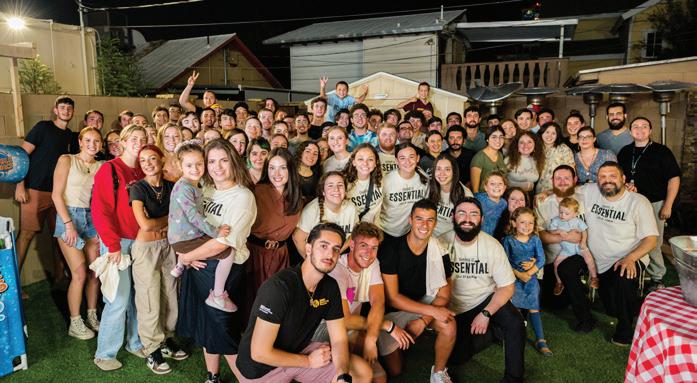
Hillel at ASU is deeply grateful to our generous sponsors, dedicated supporters, and inspiring honorees who helped make our recent gala such a meaningful celebration of 80 years of Hillel in the Valley.
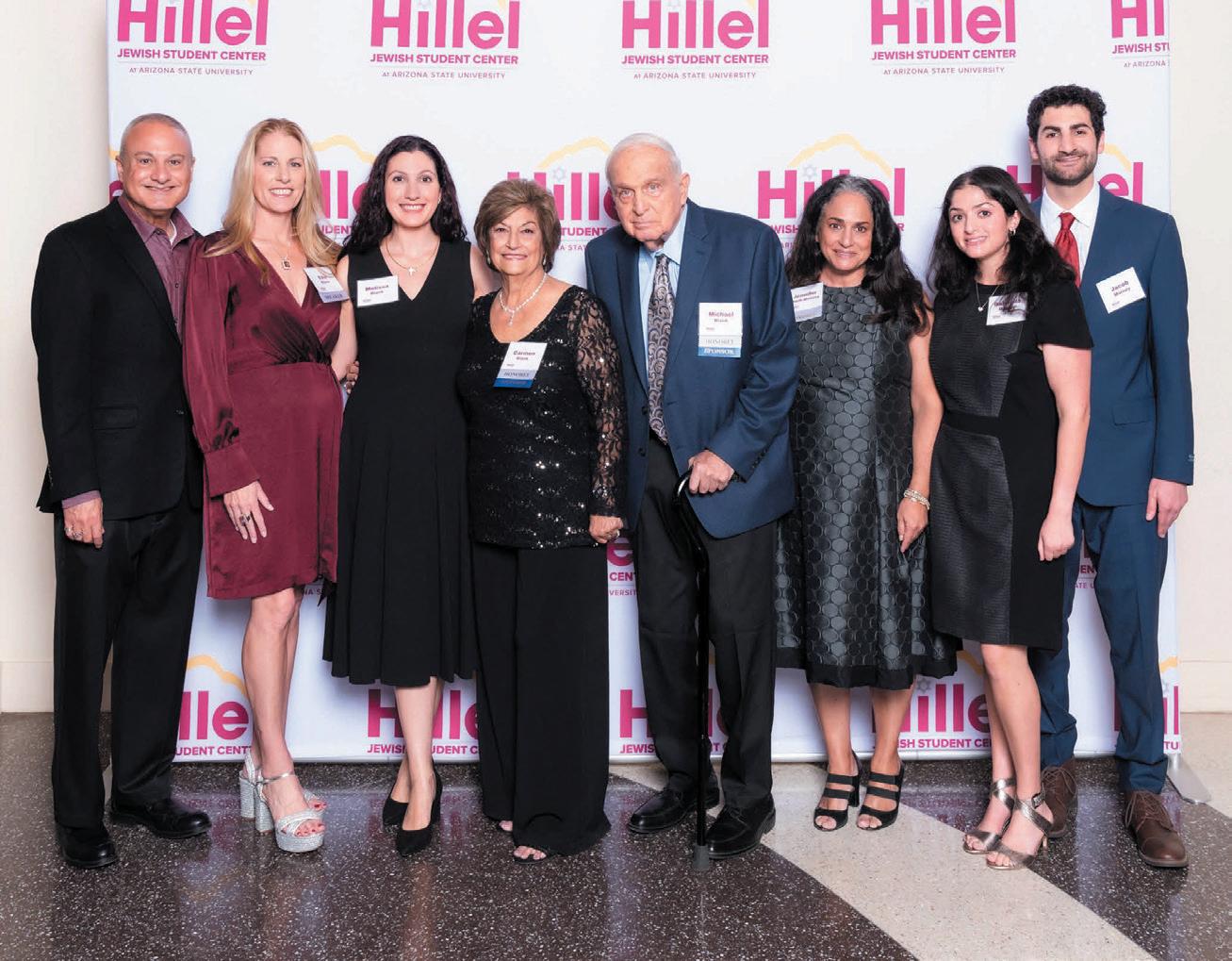
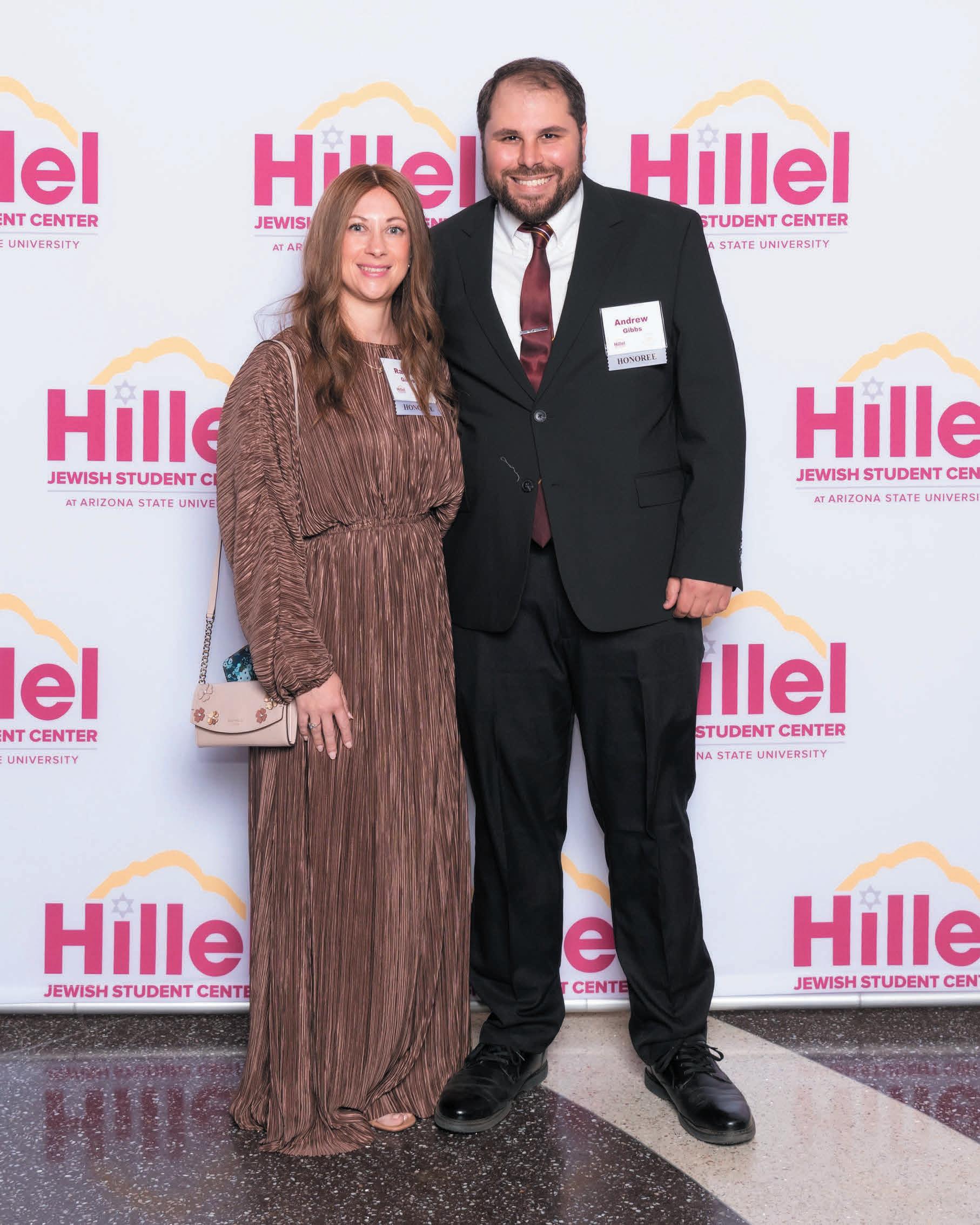
Carmen & Michael Blank, Edie & Matthew Blank, Jennifer Blank-Matney
Andrew & Rachel Gibbs
Don & Esther Schon, Jessielyn & Jared Hirschl
Chase & Denise Alyeshmerni, Devin
Davidson, Doreen Feldberg, Lynn Frazin
Lerner & Marc Lerner, Gail & Ed Ober,
Susie & Bob Roth, Judy Searle, Tina Sheinbein, Barb Zemel
William S. & Ina Levine Foundation
Alyse & Tony Wanger
Jaburg & Wilk, PC
Carrie & Morrie Aaron
The Blank Family
Shelley Cohn
ASU Foundation
ASU Jewish Studies
Andrew & Amy Cohn
EOSS at ASU
Doreen & Harley Feldberg
Cheryl Hintzen-Gaines & Ira Gaines
Suzanne & Steve Hilton
Erika & Steven Neuberg
Gail & Ed Ober
Center for Jewish Philanthropy
Sybil Francis and Dr. Michael Crow
Edson College of Nursing & The College of Health Solutions
East Valley JCC
East Valley JCC
Allan & Barbara Friedman
Allan & Barbara Friedman
Mo & Stephanie Garfinkle
Andrew Goldschmidt
Cheryl & Stan Hammerman
Rachel & Jonathan Hoffer
Gary Grove & Diane Mann
Judy & Mark Searle
Judy
Barbara & Barry Zemel
Flo & Paul Eckstein
Bruce Greenberg
Joel Schaller & Sally Oscherwitz
Jenny Norton & Bob Ramsey
Cyndi & Jamie Rosenthal
Laura & Herb Roskind
Don & Esther Schon
Livia & Michael Steingart
Elana & Daniel Storch
Mike & Nina Kotin
Kimberly & Norm Kur
Lerner/Roth Families
Seth & Julie Rachlin
Brad & Julie Schoen
Jennifer & Steven Schwarz
Tina & Irwin Sheinbein
Bob & Sara Silver
Bob Sara
Sacks Tierney P.A.
Southwest Gas
Watts College of Public Service
Watts College of Public Service
W. P. Carey School of Business
JOSH BOOTZIN | STAFF WRITER
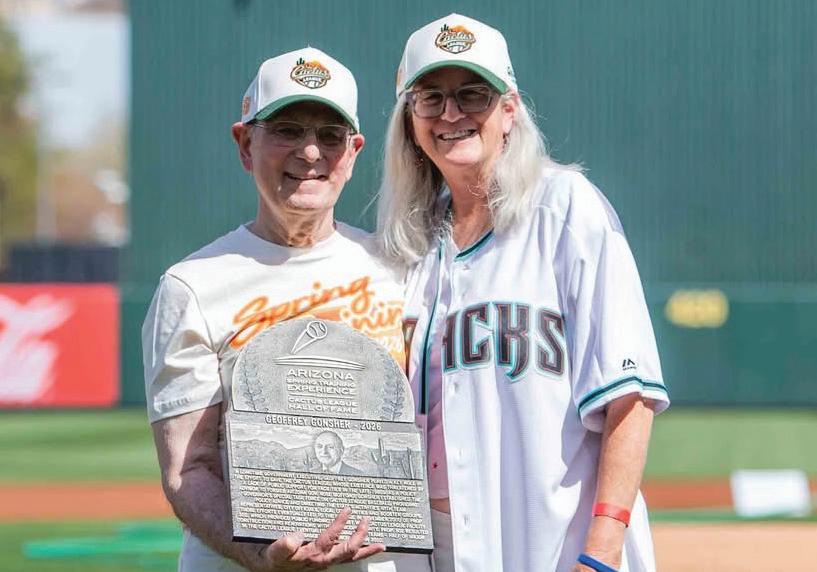
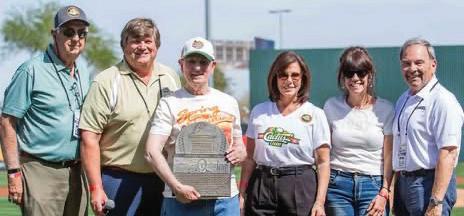
Geoffrey Gonsher, public policy advisor in municipal and state government serving Arizona from 1974 to 2008, has been honored alongside some of Major League Baseball’s (MLB) brightest stars in the 2026 class of the Cactus League Hall of Fame.
This is not the first time the Cactus League Hall of Fame has inducted someone with no professional plate appearances, having included governors, broadcasters, photographers and more, but “I never realized that I was in the same class as those who might be considered,” Gonsher said. “I was pleasantly surprised to get the honor, and I just feel overwhelmed by it.”
Arizona’s famed spring training league, now the center for preseason baseball for 15 MLB clubs, was not always the lucrative tourist attraction that it is today.
Though baseball was present in Arizona since the 1920s, the Cactus League traces its origins to the mid-1940s, when former Cleveland Indians (now Cleveland Guardians) owner Bill Veeck began training
his team in Tucson and convinced the New York Giants (now San Francisco Giants) to train in Phoenix.
The league grew to eight teams by the late 1980s, but a lack of public support to fund facility renovations threatened its future.
“MLB teams were looking for better opportunities for spring training, and those better opportunities were being offered by the state of Florida,” Gonsher said.
Florida was recruiting Arizona’s teams with financial incentives, plans for new ballparks and free land for development.
Even the Cleveland Indians, the league’s first member, were preparing to leave, a move that was finalized in 1993, and the Chicago Cubs, by then the league’s most popular team, were also on their way out.
At the time, Gonsher was serving as a special assistant on Arizona Governor Rose Mofford’s staff. An All-American softball player, Mofford was known as a dedicated advocate for athletics.
In order to preserve the value she knew Arizona could build as a home for baseball,

Brad’s Kitchen is catering made easy with service you can trust. Our food is delicious with unmatched quality. Taste the difference for yourself. Kosher catering for all occasions.
Bradley Levy | Chef/Owner 602-540-9909 bkitchenaz@gmail.com www.bradskitchenazco.com

We are in your neighborhood and have room in our schedule for you. We have been designing, building and maintaining yards in the Valley for 30 years.

13608 N Cave Creek Rd., Phoenix, AZ 85022 ROC: 293769, 302509
she established the Governor’s Special Task Force on Cactus League Baseball. The task force directed state coordination with public stakeholders, team representatives, city officials, stadium owners and hospitality, tourism and economic development groups.
Mofford appointed Gonsher to represent her office on the task force, through which he spent three years developing proposals to revitalize the Cactus League.
“At that point in my career, I had been a public administrator for almost 20 years,” Gonsher said. “I had worked on a number of major projects for the City of Phoenix, so I knew the game plan. I knew that it wasn’t so much a baseball project as it was a public policy initiative.”
Gonsher led research into the current and potential teams, locations and incentives offered by competitors, drafted all of the governor’s speeches on the subject and brought together public and private stakeholders, all while developing an overarching strategic plan for the governor’s review and acceptance.

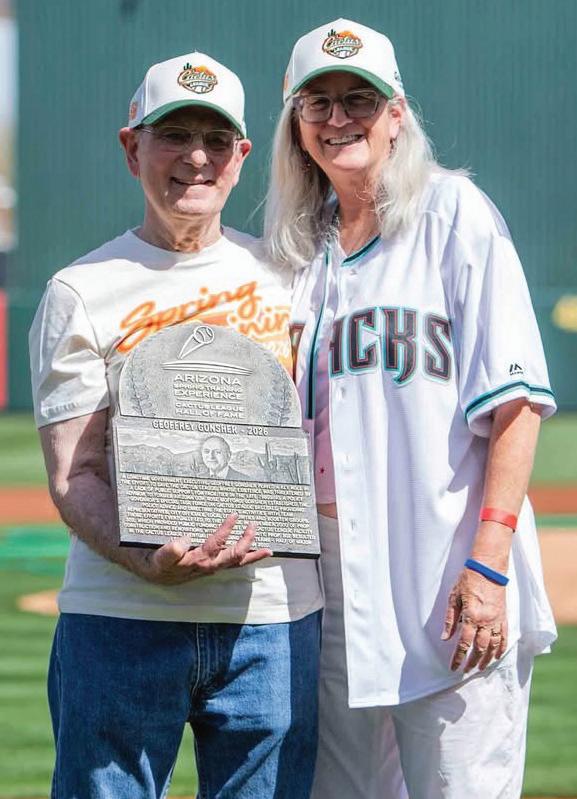
“I was the man behind the curtain,” he said. “I followed up on the governor’s directions, prepared the information in a professional manner for public policy and provided the governor, team owners and community members with the resources they needed.”
Early successes included creating a Cactus League constituency, developing personal relationships with the teams and gaining MLB’s support.





Through the task force, the governor built a strong Cactus League constituency, which had never been done before, including mayors, city officials, congressmen, public promotional and marketing firms, visiting organizations and fans.
“Establishing that constituency was really important to move forward and to have the collaboration and the support of all of those people,” Gonsher said.
Mofford also prioritized relationships with the teams themselves. She attended games, joining owners in their boxes, and interacted with players in the dugouts, taking pictures and cultivating personal connections with some of the sport’s biggest
Initially, MLB did not go out of its way to support the Cactus League. “I was sitting in those meetings with the commissioners when they said, ‘Governor, you’ve got to get your act together if you want us to support Arizona,’” Gonsher said.
Mofford’s and Gonsher’s efforts led the Arizona Legislature to pass a $2.50 car-rental tax in Maricopa County, a much-needed allocation of public funds to renovate and build Cactus League stadiums. The success of the governor’s task force led to Arizona being considered for a major league team, which it finally achieved with the Diamondbacks in 1998.
Two years later, Proposition 302 provided additional public funding to assist Cactus League facility renovations across Maricopa County and created the Arizona Sports and Tourism Authority, both major factors that aided the league’s eventual expansion to 15 teams in 2010.
Gonsher said the passage of Prop. 302 “felt great. It was a feeling that what we started 10 years earlier had finally achieved all of its results.”
Gonsher continued a personal and professional relationship with Mofford after she left office, having served more than 50 years in government.
“Once you work for a governor, you always work for a governor,” he said. “She would call and say, ‘Geoffrey, what do you think about this? Do you think you can prepare some notes for me?’ My response was always, ‘Yes, ma’am.’”
One of the highlights of Gonsher’s professional career was in 2014, when Mofford was inducted to the Cactus League Hall of Fame in its inaugural year. She was 92 at the time.
“She asked if I would represent her and give her acceptance speech, and that was one of the greatest honors of my life to be able to do that for somebody who was such a fantastic leader, who contributed so much to Arizona,” he said.
Gonsher struggled to say which honor he appreciated more, representing his longtime colleague and friend or being inducted himself.
His family were season ticket holders for the minor league Phoenix Firebirds for many years, and they’ve held Diamondbacks season tickets since the team was founded.
“I see baseball not only from a fan’s perspective, but from a public policy person’s perspective, an economic perspective, a recreation perspective and a community perspective,” Gonsher said. “It’s something that brings people together. Nobody asks your political views when you walk into the stadium. Nobody cares. You’re there to enjoy a baseball game.”
Since Gonsher’s involvement in the late 1980s, the Cactus League has grown from an annual economic value of about $150 million to an estimated $700 million, increased from six to 15 teams and transitioned from aging, deteriorating stadiums to state-of-the-art ballparks.
He joined MLB single-season hits record holder Ichiro Suzuki, legendary White Sox first baseman Paul Konerko, World Series champion player and manager Dusty Baker and Diamondbacks 2001 World Series manager Bob Brenly in the Cactus League Hall of Fame class of 2026.
“I have been very fortunate to have had the most wonderful career working for my state, my community and my family,” Gonsher said. JN
Born and raised in Phoenix as a member of Beth El Phoenix, Gonsher remembers his father taking him to see the New York Giants play at the old Phoenix Municipal Stadium, a wooden stadium located at Central Avenue and Mohave Street that no longer exists.
Beth Ami Temple is a congregation serving the spiritual and the social needs of active and involved adults. We consider and treat our members, visitors to our events and those interested in learning about Beth Ami Temple, as family. While we affiliate with the Reform movement, we welcome individuals and families of all denominations.
We are seeking an off-site, part-time administrator; an individual to be our ambassador who will embrace and reflect Beth Ami Temple’s culture of service and community.
Major Duties:
1. Communication: verbal (telephone or in person) and/or written (electronic or printed)
2. Support for the very busy Jewish High Holidays
Other duties as assigned
3. Strong organizational skills
4. Willingness to learn new skills such as website maintenance
If interested or would like more information, please call 602-956-0805 or email bethamitemple35@gmail.com.
Beth Ami Temple Skills: 1. Proficiency in Microsoft Office 2. Exceptional verbal and written communication skills
This is the time of year when I get the urge to give my house a deep cleaning.
Yes, Passover is approaching rapidly, but I always feel as though it is generations of my ancestors, rather than the calendar, calling me to give my house a scrub-down. Reading this week’s Torah portion, Tzav, might give us a bit of the same urge; it certainly makes me want to break out my cleaning gear. Sacrifices to God and the ordination of the priests were a messy business!
In Tzav, we read about how Moses ordains the priests and prepares them for service in the Tabernacle. He bathes Aaron and his sons, dresses them in their priestly garments and anoints them. Moses then engages in a fairly elaborate ritual, placing sacrificial blood on the tip of the right ear, the thumb of the right hand and the big toe of the right foot of each priest. He offers parts of the sacrificial animals, unleavened bread and
oil bread, waving them in the air, and then sprinkles anointing oil and blood upon Aaron and his sons and their garments. Afterward, Aaron and his sons remain in the tent of meeting for seven days without leaving.
Painting and sprinkling with blood are far afield from our modern ways of connecting with God, yet as Passover approaches, we are reminded of another moment in Torah when blood carries transformative power. Just as the initiation into the priesthood was a messy, embodied ritual, so too was the painting of lamb’s blood on the doorposts of Israelite homes. It was a sacred act that marked those homes to be “passed over,” sparing their firstborn sons on the night of the final plague before the Israelites’ escape from Egypt.
In both cases, blood signifies a special connection to God. The blood marking the priests demonstrates their unique status within the Israelite community and their role in facilitating sacrifices, acts that fostered relationship with God and repaired any breaks in that connection. The blood on the doorposts signified each family’s identification with the Israelite community and their distinctive belief in and connection to God, setting them
apart from their Egyptian neighbors.
In this way, the two acts of marking with blood point to two distinct but equally holy realms. The blood on the priests consecrated them for centralized, communal worship first in the Tabernacle and later in the Temple in Jerusalem. Today, we come together to create holiness as well: we gather in community for the High Holy Days, for Shabbat worship, to pray within a minyan, to celebrate b’nai mitzvah and baby namings. These are occasions that call for formal community to be observed in their fullest, most meaningful way.
The blood on the doorposts, however, belongs to a different sacred space: the home. It was not a priestly act, but a family one — democratic, intimate and deeply personal. This teaches us that the home is not secondary to the sanctuary; it is a sanctuary in its own right. Judaism does not happen only in the synagogue. We are each called to make our home a mikdash m’at — a small sanctuary, a place where sacred space is created and tended.
At this time of year, that holy work happens around our Passover tables. No special training is required to lead or participate in a Seder, and we have the freedom and even the invitation to
make it our own. We may use a different Haggadah each year or return to a beloved one; we may follow the text closely or let the conversation wander; we may cook familiar dishes or try something new; we may gather with family or open our doors to those we hope to befriend. We create spiritual space. We create meaningful experiences. We create connection. The making of holy space and sacred time is not the province of clergy alone. Around our Seder tables, we are each rabbis and cantors, each a priest in our own small tabernacle.
As we sweep and mop, cook and bake, set our Seder tables and open our doors for Elijah the Prophet and for our loved ones, may our homes each become a mikdash m’at, infused with holiness and joy. JN
YEHUDA KURTZER, AARON DORFMAN | JTA
At a time when American democracy faces real threats, many mainstream Jewish leaders are struggling to find public footing. Some leaders have spoken out, and some institutions and denominations have joined together on statements condemning violence, cruelty and impunity in immigration enforcement, for example.
But on this issue, and on several others that have arisen in recent years — aggressive gerrymandering, threats to voting rights, the dismantling of the federal bureaucracy, retributive investigations against political enemies, and the erosion of democratic norms — most Jewish establishment organizations have remained silent.
This unevenness is striking, given the Jewish people’s historical allergy to authoritarianism and how essential healthy democracy has been to the success and thriving of
We
the American Jewish community. So what’s going on?
First, there’s fear. Jewish leaders carry a heavy responsibility: We feel a powerful obligation to keep our Jewish communities safe and united. Speaking out on politically charged issues in a divided America risks highlighting internal divisions, alienating long-time partners and drawing government retaliation.
Second, some leaders are defining Jewish interests narrowly, insisting that the collective Jewish agenda is limited to defending Israel against threats and fighting discrimination that specifically targets Jews (and separating the defense of Jews from broader concerns about civil rights and the vulnerability of other minority groups). Those leaders either do not believe that liberal democracy keeps Jews safe, or they do not feel that they can
divert resources from their parochial interests into a concern for the broader body politic, or they feel that the responsibility for attending to these broader challenges belongs elsewhere.
Third, in our post-Oct. 7 context, antisemitism is real and rising, and debates around Israel are raw. Many of the activists leading the fight against authoritarianism are also openly anti-Zionist, making them difficult partners for mainstream Jewish organizations, creating real tension and impeding coalition-building.
A colleague in Minneapolis described this challenge vividly: When asked about the Jewish communal response to aggressive immigration raids, she said, “The biggest names doing this work locally are strongly anti-Israel and anti-us [Jews]. You can find groups to work with, but vetting them
through a Jewish lens and coming up with anything meaningful is basically impossible.” Her words capture the tension: some Jewish leaders want to act, but find their likely bedfellows intolerable. Moreover, some of them will also conclude that the advocacy that these organizations are pursuing on behalf of their vision for America is inherently wrong. Partisanship forces us to choose sides, and it is an easy shortcut to join the side that makes you feel more comfortable — even if you have to sacrifice some of your commitments.
JN
This piece has been edited for space. Read it in its entirety at jewishaz.com. The views and opinions expressed in this article are those of the author and do not necessarily reflect the views of JTA or its parent company, 70 Faces Media.
Jewish Philanthropy, Jewish Federation of Greater Phoenix, Cleveland Jewish Publication Company or the staff of Jewish News. Letters must respond to content published by Jewish News and should be a maximum of 200 words. They may be edited for space and clarity. Unsigned letters will not be published. Letters and op-ed submissions should be sent to editor@jewishaz.com
MICAH SIVA | THE NOSHER
Ihost a monthly Shabbat club. And the more people at your table, the more dietary restrictions there are. I’ve always seen restrictions as a way to inspire creativity, so when I had a gluten-free, dairy-free guest RSVP, I knew I had to think outside the box. Naturally, when I think of gluten-free desserts, I often think of the Passover table, where many gluten-containing grains are off limits. And while this coconut macaroon cake is indeed Passover friendly (and Passover flavored), it’s also perfect year-round. It’s a dense, rich, coconutty cake with a hint of lime to brighten it up. If you want a more citrusy cake, you can double the zest, or try using lemon or orange zest. Top this cake with your favorite whipped cream and fruit for a slightly fresher option. You won’t need much more on your dessert table after a night of eating, but trust me, you’ll want leftovers of this decadent dessert.

Ingredients:
• 4 large eggs
• 1 cup granulated sugar
• 3 cups unsweetened coconut
• 2 cups almond flour
• 1 tablespoon vanilla extract, kosher for Passover if preferred
• 1 teaspoon lime zest
• 1/2 teaspoon kosher salt
• Confectioners’ sugar, for serving, kosher for Passover if preferred
Instructions:
1. Preheat the oven to 350 degrees and grease a 9-inch cake or springform pan before lining the bottom with parchment paper.
2. Using the whisk attachment, whisk the eggs on medium speed until very well combined. Raise the speed to medium-high, and slowly add the sugar. Increase the speed to high, and whisk for 5–6 more minutes




until the egg and sugar mixture is very light and fluffy. Continue until the mixture reaches the “ribbon stage,” where a trail from the whisk holds its shape slightly.
3. Use a silicone spatula to gently fold in the coconut, almond flour, vanilla extract (if using), lime zest and salt until well incorporated.
4. Transfer batter to your prepared pan, smoothing the top with a small angled spatula. Bake for 28–32 minutes, or until firm and golden brown.
5. Let cool in the pan on a wire rack, then remove from the pan to serve, dusting with confectioners’ sugar. JN
Note: You can cover leftover cake with plastic wrap and store on the counter for up to three days, or in the fridge for up to one week.
This recipe originally appeared on The Nosher.





EDUARDO LIFCHITZ | THE NOSHER
I’ve always been passionate about the easy Brazilian cheese bread, pão de queijo. For me, it’s a snack to eat all year round (please don’t tell my nutritionist), but when it comes to Passover, pão de queijo is the card up my sleeve. First, because if you’re like me — someone who follows at least some of the laws, cooks for the seder (and in my case, also cooks for other people) — by the time the seder night rolls around, all you want is to throw your family out the window and eat in peace. So it would be pretty cruel of me to give you yet another recipe that means more hours in the kitchen and more dishes to wash.
Pão de queijo is a snack you can make in under an hour, it’s kosher for Passover and if you’re not sure what to do during those hours before the seder (when eating hametz and matzah is prohibited), it’s an easy snack to make for the kids. Pro tip: Let them help roll the little balls. Everything indicates that pão de queijo originated in Minas Gerais, a region in central Brazil known for its cerrado (savanna) landscape. It is believed to have emerged around the mid-18th century, a time when wheat flour was an imported good brought from Europe to Rio de Janeiro and the
surrounding areas. As a result, various cassava derivatives were developed, such as tapioca, cassava flour and polvilho (cassava starch).
In Brazil, we typically use either sour or sweet polvilho. If you can find it in a specialty market, buy it! (At home, I mix half sweet and half sour.) But rest assured that generic tapioca flour can be easily sourced in chain grocery stores and the end result will be just as delicious.
So, what’s the connection between pão de queijo and Passover? Since pão de queijo contains no wheat flour or leavening, it has become a popular dairy snack for Passover. I’ve been seeing more and more versions of pão de queijo specifically adapted for the holiday. Forget gefilte fish, brisket and mina de matzah — pão de queijo, like Brazilians themselves, is easygoing and unfussy. Plus, it’s gluten-free!
There are a few ways to make it, but the most common method involves pouring boiling liquid over the flour. In Brazil, the defining characteristic of pão de queijo — and a source of pride for people from Minas Gerais — is the type of cheese used. Years ago, many people made it with queijo Minas, a soft yet firm white cheese,




sometimes adding Parmesan. Nowadays, most recipes call for Canastra or meia cura, both aged cheeses that range from white to creamy in color, with meia cura being a favorite.
If you don’t have the luxury of being surrounded by delicious Brazilian cheeses, we suggest a mix of mozzarella and
Parmesan (you can do more mozarella if you like). But if you have a favorite white cheese, go ahead and use that! And if you want to enjoy it like a true Mineiro, once your pão de queijo is ready, cut it open, spread a little butter or creamy cheese inside and pair it with a good cup of coffee from the Minas Gerais cerrado.
Ingredients:
• 1/4 cup neutral oil, like canola, avocado or vegetable oil
• 6 tablespoons + 2 teaspoons water
• 1/3 cup plus 1 tablespoon whole milk
• 2 cups tapioca flour
• 1/2 tablespoon salt
• 2 cups shredded cheese (a mix of mozzarella and Parmesan is recommended)
• 1 1/2 eggs, mixed
Directions:
1. Preheat your oven to 350 degrees.
2. Add the water, oil and milk to a medium pot and bring to a boil.
3. In a separate bowl, mix the tapioca flour and salt.
4. Pour the boiling mixture of water, oil and milk over the dry ingredients and mix well until lumps form.

5. Let the mixture rest until it becomes lukewarm and the bowl has cooled. If the mixture is too hot, it will cook the eggs in the next step.
6. Once the bowl is cool, add the cheese and eggs.
7. Now mix all the ingredients together until well blended.
8. Measure out dough into balls about the size of a golf ball and roll in the palm of your hand.
9. Put the balls on a parchment paperlined baking sheet and into the preheated oven.
10. Bake for 30 minutes, or until the balls are golden in color. They’re best eaten straight from the oven. JN
Note: You can wrap the balls in plastic wrap and freeze for up to three months before baking if you want to bake later.




MELISSA UCHIYAMA | THE NOSHER
Shank bone, check. haroset, check. Everything is there, on smooth pottery, but wait — is that … wasabi? This is the one item on my Seder plate that draws smiles, and I get it. It’s not the norm. It’s my take on a bitter herb, maror. Welcome to our Passover in Japan!
Wasabi is a must at our Japanese-Jewish table. It’s simply what happens when any of us live our Jewish life in a specific cultural stream and land: We make do with what’s available. To not include it at my Passover Seder would be harder. I’d have to be oblivious not to use what is here, growing locally.
To be Jewish in Japan is to look for the connectors. After all, I am raising children who are proud and aware of their heritage — being wholly Jewish, Japanese and American. Food is one of the best avenues to express who we are because of its tangibility. Our hamantaschen feature the classics, like Nutella or apricot, sure, but also, matcha with a sakura crust, or a red bean/anko, a chestnut. Any chance I have to celebrate our children’s full identity, I’m taking it. When I could not source the white or red horseradish I was used to growing up in the U.S., I saw a great big wasabi root, nearly a foot long, in my local Tokyo veggie shop and thought, “bingo.”
Wasabi, the one you know from sushi, grows in moving streams of fresh water. The white horseradish you’re probably familiar with, does not grow this way, in the wet ground of streams. Every wasabi root is different — twisty, thick, spicier than others, alive. It’s this plant before it’s the plastic packet in the sushi section of your Trader Joe’s or Whole Foods Market.
Grate fresh wasabi with a traditional porcelain (or shark-skin) grater, and you’ll get it: bitter tears. Wasabi affects the olfactory/nasal passages, same as horseradish, clearing out sinuses. If you really go for it, spreading it on thick on your matzah, you may cry harder than the white, or definitely the purple horseradish. It is the strongest
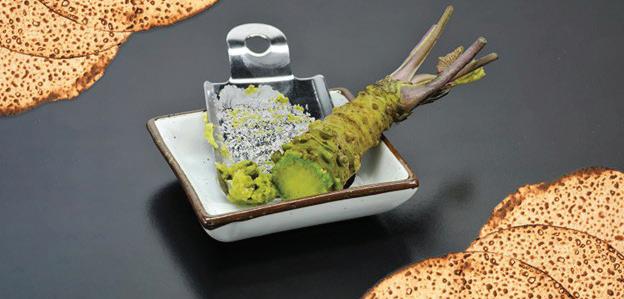
choice out there.
Of course, wasabi, an intrinsically Japanese plant, is a natural bridge between my life in the U.S., in Japan and the Passover story, but it also stirs something in me about leaving my family and community for life in Japan. How do you tear away from such hugs? Sixteen years later, and it is not much easier.
I wish for there to be no ocean between us, no time zones or longing. I relate to the Israelites who missed the gorgeous leeks when they moved into their long journey. I wanted everything just so for those first holidays away from my home in the U.S., but to be happy, we shift and adapt.
I include wasabi to not sink down in bitter tears, but consciously embrace where I am and the life I continue to make and choose. I look at my children, at their precious identities, palettes, humor — their full heritage. Every parent wants to affirm their child’s identity. Fusion is not a gimmick if there is meaning and personal context. Then it is seamless.
Last year, I discovered that I could order powdered white horseradish. I was shocked to notice that the label said “yama no wasabi,” or “mountain wasabi.” Turns out, horseradish is simply the cousin or sibling of Japanese wasabi — the family member who lives on a drier home in the mountains. Call it the same kind of plant but locally sourced.
All of my searching and wanting to source this ingredient and it was there all along.
I now want the spiciest, greenest wasabi. Or any horseradish, really. Why was I even on the hunt for something to make us cry when producing tears was never the problem? This year, like every year before, I’ll hold the sweet with the bitter, together. JN
This article was produced as part of The Nosher’s Jewish Food Fellows Program, which aims to diversify the voices telling Jewish food stories in media spaces. This article originally appeared on The

Chag Pesach Kasher v’Sameach!
Beth El Phoenix wishes you a sweet Passover. May we all be free from that which enslaves us!
Please join us on the second night Thursday, April 2 | 7:00 pm for a spirited community seder

For Passover resources, service times, and to RSVP for events, visit our website or call our office

(602) 944-3359 www.bethelphoenix.com/pesach






















Kehillah’s

Congregation Kehillah 5858 E Dynamite Blvd, Cave Creek 602-369-7667 • info@congregationkehillah.org www.congregationkehillah.org
























































SUNDAY, MARCH 29
Madcap Mah Jongg Mayhem:
11 a.m.-2 p.m. Congregation Or Tzion, 16415 N. 90th St., Scottsdale. Join the Women’s League of Or Tzion Or for an afternoon of game playing with prizes. This is a fundraising event for a scholarship fund for rabbinical and cantorial students. Cost: $54, includes lunch. For more information, visit otaz.org/mahjongg.
FRIDAY, MARCH 27
Ashkenazi Music & Song: An Illustrated History: 2-4 p.m. The Annex, 7950 E. Thompson Peak Parkway, Scottsdale. Join Arizona Musicfest for a performance by Jordan Wax and Jake Shulman-Ment, bearers and innovators of klezmer and Yiddish song. Cost: Free. For more information, visit azmusicfest.org/events/ ashkenazi-music-song-an-illustrated-history.
SATURDAY, MARCH 28
Speed Painting and Live Music: 11 a.m.-1 p.m. Chompie’s Phoenix, 3212 E. Cactus Road, Phoenix. Join Chompie’s and mural artist Randall Hedden as he performs a live speed-painting of John Lennon and the Statue of Liberty on the patio. As he paints, he will share his history of creating the deli’s murals. The performance will be accompanied by an acoustic guitarist playing a set of The Beatles’ classics. For more information, visit chompies.com.
SUNDAY, MARCH 29
Bagels & Beyond: Where Brunch Meets the Blues: 9-11 a.m. Valley of the Sun Jewish Community Center, 12701 N. Scottsdale Road, Scottsdale. Join VOSJ for a program featuring live jazz music for adults 55+. For more information, visit valleyofthesunj.org.
SUNday FUNday: 10 a.m.-1 p.m. Beth El Early Childhood Center, 1118 W. Glendale Ave., Phoenix. Join Beth El for a dance-a-thon, class presentations, silent auction, lunch and children’s activities and entertainment. For more information, visit bethelphoenix.com.
Passover Food Bag Packing: 10 a.m. Ina Levine Jewish Community Campus, 12701 N. Scottsdale Road, Scottsdale. Join the Bureau of Jewish Education of Greater Phoenix, Hebrew High and Jewish Family and Children’s Service to pack bags for Passover Seders or help deliver them once packed. For more information, visit bjephoenix.org.
Final Four Raffle: 12-1 p.m. Congregation Or Tzion, 16415 N. 90th St., Scottsdale. Join Or Tzion for a Women’s NCAA Final Four raffle. Prizes include tickets for April 3 and April 5, Apple iPad and $200 to Mastro’s Restaurants. Cost: $50 per raffle ticket; need not be present to win. For more information, visit otaz.org/bballrules.
TUESDAY, MARCH 31
Our Voice, Our Vote: 2-3 p.m. Online via Zoom. Join Arizona Faith Network, faith leaders and community members for a conversation about protecting voter access and strengthening civic participation in Arizona with a presentation of the “Voters First Act” by Adrian Fontes, Arizona Secretary of State, with Q&A to follow. For more information, visit arizonafaithnetwork.org/calendar.
WEDNESDAY, APRIL 1 AND THURSDAY, APRIL 2
Happy Passover!: For a list of community Seders open to the public, visit jewishaz.com/community/ community-seders-for-passover-2026.
SUNDAY, APRIL 5
Passover Picnic in the Park: 4-6 p.m. Granada Park, 6505 N. 20th St., Phoenix. Join Beth El Phoenix for a Passover celebration with games, snacks and music. Soft drinks and chips provided, please bring your own Passover-friendly meal. For more information, visit bethelphoenix.com/event/picnic.
Passover Pop-Up Night Out: 4-7 p.m. Congregation Beth Tefillah, 6529 E. Shea Blvd., Scottsdale. Join CBT for an evening of vendors selling art, books, Judaica, toys and more. Cost for vendors: $54 table fee. For more information, contact info@bethtefillah.org.
SUNDAYS
Chassidus Class: 9 a.m. Online. Learn about the Chasidic movement with Rabbi Yossi Friedman. Use this link: ChabadAZ.com/LiveClass. Cost: Free. For more information, visit chabadaz.com.
Finding Meaning and Hope: 11 a.m.-12:30 p.m. Temple Chai, 4645 E. Marilyn Road, Phoenix. Join Temple Chai for this support group for family caregivers caring for someone with memory loss, dementia or other cognitive impairment. Cost: Free; registration required. For more information, visit templechai.com.
Jewish War Veterans Post 210: 10 a.m. the first Sunday of the month in Central Phoenix. Any veterans, friends of veterans or if you just want to meet a vet, all are welcome. For more information, contact Michael at c365michael@ yahoo.com.
Anxiety in the Modern World: 6 p.m. Online. Learn the secrets of the Torah for living stressfree in the current environment with Rabbi Boruch of Chabad of Oro Valley. Cost: Free. Use this link: zoom.us/j/736434666. For more information, visit chabadaz.com.
MONDAYS
Pomegranate Guild of Judaic Needlework, Desert Cactus Chapter: 10 a.m. The Oasis at Sagewood, 4555 E. Mayo Blvd., Phoenix. The guild meets the third Monday of the month, adjusted when necessary to accommodate Jewish holidays. For more information, visit pomegranateguild.org.
Mahjong: 1:30-3:30 p.m. East Valley Jewish Community Center, 908 N. Alma School Road, Chandler. Come play mahjong each week. For all levels. Cost: Free; registration required at evjcc.org/mahjong.
Ethics of Our Fathers: 7 p.m. Online. Learn with Rabbi Zalman Levertov. Use this link: bit. ly/2Y0wdgv. Cost: Free. For more information, visit chabadaz.com.
Quotable Quotes by our Sages: 7 p.m. Online. Learn with Rabbi Shlomy Levertov. Use this link: JewishParadiseValley.com/class. Cost: Free. For more information, visit chabadaz.com.
Partners in Torah: 7:30 p.m. Online. Join a growing group of inspired learners with Project Inspire. Cost: Free. Use this link: us04web. zoom.us/j/3940479736#success, password is 613. For more information, email Robin Meyerson at robin@projectinspireaz.com.
Learning to Trust in God: 7:30 p.m. Online. Learn with Rabbi Yossi Friedman. Use this link: ChabadAZ.com/LiveClass. Cost: Free. For more information, visit chabadaz.com.
Torah & Tea: 7:30 p.m. Online. Learn with Rabbi Yossie Shemtov. Cost: Free. For more information, visit Facebook.com/ChabadTucson.
Single Parent Zoom: 8 p.m. First and third Monday of every month. Join The Bureau of Jewish Education’s Family University single parents’ group for those looking to form friendships and build their support system with likeminded people. For more information or to register, visit bjephoenix.org/family-university.
TUESDAYS
Let’s Knit: 1:30 p.m. Ina Levine Jewish Community Campus, 12701 N. Scottsdale Road, Scottsdale. Share the pleasure of knitting, crocheting, etc. outside the social hall in the campus. Can’t knit? They will teach you! Every level welcome. Cost: Free. For more information, visit vosjcc.org.
Grief Support Group: 4 p.m. Beth Emeth Congregation of the West Valley, 13702 W. Meeker Blvd., Sun City West. All are welcome to this support group for anyone experiencing grief or any kind of loss. Cost: Free. For more information, call 623-584-7210 weekdays 9 a.m. to 12 p.m.
Maintaining an Upbeat Attitude: 7 p.m. Online. A class exclusively for people in their 20s and 30s, learn how Jewish Mysticism can help with your attitude with Rabbi Shlomy Levertov. Use this link: JewishParadiseValley.com/YJPclass. Cost: Free. For more information, visit chabadaz.com.
Torah Studies: 7:30 p.m. Online. Learn with Rabbi Mendy Levertov. Use this link: ourjewishcenter.com/virtual. Cost: Free. For more information, visit chabadaz.com.
WEDNESDAYS
My Baby and Me: 9-10 a.m. Temple Chai Early Childhood Center, 4645 E. Marilyn Road, Phoenix. Join Temple Chai ECC for a weekly gathering for families with babies up to 12 months. Cost: Free. For more information, visit tcaz. shulcloud.com/event/my-baby-and-me-playgroup.html.
Torah Study with Temple Beth Shalom of the West Valley: 11 a.m.-12:30 p.m. Online. Weekly study group explores that week’s portion and studies different perspectives and debates the merits of various arguments. Intended for adults, Torah study is open to students of all levels. For more information, contact the TBS office at 623-977-3240.
Happiness Hour: 11:30 a.m. Online. Class taught by Rabbi Pinchas Allouche that delves into texts and references culled from our traditions

to address a relevant topic. For more information, visit BethTefillahAZ.org.
Lunch & Learn: 12 p.m. Online. Grab some food and learn with Rabbi Yehuda Ceitlin. Use this link: Facebook.com/ChabadTucson. Cost: Free. For more information, visit chabadtucson.com.
Torah Study with Chabad: 12 p.m. Online. Take a weekly journey of Torah with Rabbi Yossi Levertov. Cost: Free. For more information, visit chabadaz.com.
The Thirteen Petalled Rose: 1 p.m. Online. Kabbalah class that studies “The Thirteen Petalled Rose” by Rabbi Adin Even-Israel Steinsaltz, focusing on the many concepts of Kaballah and Jewish Mysticism and applying them to everyday life. For more information, visit BethTefillahAZ.org.
Grief Support Group: 5-6 p.m. Online via Zoom. Therapist Susan Charney MSW, LCSW, leads a grief support group every first and third Wednesday of the month virtually for individuals experiencing the loss of an adult child or sibling. In lieu of any fees for these sessions, donations to Temple Solel are appreciated. For more information, contact susancharneycounseling@gmail.com.
History of the Jews: 7 p.m. Online. Learn the Jewish journey from Genesis to Moshiach with Rabbi Ephraim Zimmerman. Use this link: zoom.us/j/736434666. Cost: Free. For more information, visit chabadaz.com.
JACS: 7:30-8:30 p.m. Online. Zoom support group for Jewish alcoholics, addicts and their friends and family on the first and third Wednesdays of the month. Cost: Free. For more information, email jacsarizona@gmail. com or call 602-692-1004.
THURSDAYS
Messiah Matters: Jews and Christians in Conversation: 10-11:30 a.m. April 2, 9 and 16. Temple Beth Shalom of the West Valley, 12202 N. 101st Ave., Sun City. Join TBSWV Rabbi Dana Evan Kaplan for this interfaith series where he will be joined by Father David Halm from St. John Vianney Church in Goodyear and Rev. Bill Bjork, a Bible-centered evangelical minister from Grace Bible Church in Sun City. Cost: $20 for members; $35 for nonmembers. Registration deadline is March 31. For more information, visit tbsaz.org.
Ladies Torah & Tea: 10:30 a.m. Online. Learn about the women of the Torah with Mrs. Leah Levertov. Use this link: ourjewishcenter.com/ virtual. Cost: Free. For more information, visit chabadaz.com.
Talmud - Makkos: 11 a.m. Online. Learn with Rabbi Shlomy Levertov. Cost: Free. Use this link: JewishParadiseValley.com/YJPclass. For more information, visit chabadaz.com.
The Science of Everything: 11 a.m. Online. Explore the most fundamental work of Chassidut: the Tanya, with Rabbi Boruch. Use this link: zoom.us/j/736434666. Cost: Free. For more information, visit chabadaz.com.
Torah Study with Hazzan Lev Ettelson: 11 a.m.
Beth Emeth Congregation of the West Valley, 13702 W. Meeker Blvd., Sun City West. Join Hazzan Ettelson for a discussion of the weekly Torah portion. For more information, call 623584-7210 weekdays 9 a.m. to 12 p.m.
Mindfulness Gatherings: 12 p.m. Online. Hosted by Hospice of the Valley via Zoom. Cost: Free. To join by phone, dial 1-253-215-8782, meeting ID 486 920 2119#, to get the Zoom link or for further questions contact Gill Hamilton at ghamilton@hov.org or 602-748-3692.
Weekly Mahjong: 1-3 p.m. Temple Solel, 6805 E. McDonald Drive, Paradise Valley. Join Temple Solel each Thursday afternoon for mahjong. Lessons available for beginners. Cost: Free. RSVP via email to dottiebefore@gmail.com so they know how many tables to set up.
Torah Portion Class: 7 p.m. Online or in person. Chabad Lubavitch of Fountain Hills, 16830 E. Avenue of the Fountains, Fountain Hills. Join Rabbi Mendy Lipskier for a discussion of the weekly parshah and gain new insights to the Torah. For more information, visit jewishfountainhills.com.
Teen Discussions: 7-8:30 p.m. Online. Learn with Rabbi Tzvi Rimler. Use this link: cteen.clickmeeting.com/east-valley. Cost: Free. For more information, visit chabadaz.com.
SATURDAYS
Saturday Mindfulness Gatherings: 9:30 a.m. Online. Hosted by Hospice of the Valley. To join by phone, dial 1-253-215-8782, meeting ID 486 920 2119#. To get the Zoom link or for more information, contact Gill Hamilton at ghamilton@hov.org or 602-748-3692.
Book Discussion: 1:30-2:30 p.m. Online. Join Or Adam Congregation for Humanistic Judaism on the third Saturday of every month for a book discussion. For more information and to register, contact oradaminfo@gmail.com.
Shabbat
FRIDAYS
Tot Shabbat: 9:30 a.m. Ina Levine Jewish Community Campus, 12701 N. Scottsdale Road, Scottsdale. Join the Bureau of Jewish Education of Greater Phoenix monthly for music, parachute play, crafts and a family Shabbat experience. For more information, visit bjephoenix.org.
Welcome Shabbat: 11-11:30 a.m. Online. Celebrate Shabbat with the JFCS Virtual Center for Senior Enrichment. Each week a different guest host will lead the program with song and celebration. Cost: Free. For more information, visit jfcsaz.org/cse.
Shabbat at Beth El: 5:45 p.m. on Zoom; 9:30 a.m. at Beth El Phoenix, 1118 W. Glendale. Ave., Phoenix or livestreaming at tinyurl.com/beclivestream. Celebrate Shabbat with songs, blessings and teachings with Rabbi Stein-Kokin and Cantor Sarah Bollt. For more information or to join, visit bethelphoenix.com.
BAR MITZVAH
Erev Shabbat Service: 5:30 p.m. Online. Rabbi Alicia Magal will lead a service livestreamed for members of the Jewish Community of Sedona and the Verde Valley. Cost: Free. For more information and to obtain the Zoom link, visit jcsvv.org/contact.
Shabbat Service: 5:30-6:30 p.m.; Oneg at 5 p.m. Temple B’rith Shalom, 2077 Brohner Way, Prescott. Join Temple B’rith Shalom for a musical and spiritual Shabbat service. For more information, visit brithshalom-az.org.
Shabbat Services: 5:30 p.m. nosh, 6:15 p.m. service; morning service has varying dates and times. Temple Chai, 4645 E. Marilyn Road, Phoenix. For more information, contact Joan Neer at jneer@templechai.com.
Pre-Shabbat Kiddush Club: 6 p.m. Online. Say Kiddush with Rabbi Mendy Levertov. Cost: Free. Use this link: ourjewishcenter.com/virtual. For more information, visit chabadaz.com.
Shabbat Services: 6 p.m.; 9:30 a.m.; followed by a light Kiddush lunch. Beth Emeth Congregation of the West Valley, 13702 W. Meeker Blvd., Sun City West. For more information call 623-584-7210 or visit bethemethaz.org.
Shabbat Services: 6 p.m.; 9:30 a.m. Congregation Or Tzion, 16415 N. 90th St., Scottsdale. Services are also live streamed at otaz.org/ livestream. For more information about services, events and membership, visit congregationortzion.org or call 480-342-8858.
First Friday Shabbat Services: 6:15 p.m.; Oneg at 7:15 p.m. Valley Unitarian Universalist, 6400 W. Del Rio St., Chandler. Join Congregation NefeshSoul for Friday night services the first Friday of each month in the sanctuary building of Valley Unitarian Universalist. For more information, contact Jim Hoffman at 480-329-3316.
Shabbat Services: 6:15 p.m.; 10 a.m. Congregation Beth Israel, 10460 N. 56th St., Scottsdale. Services held in the Goldsmith Sanctuary. Participants must pre-register by Thursday at 5 p.m. Priority will be given to members first and then guests. If there are more requests than available seats a lottery system will be used. For more information or to make a reservation, visit cbiaz.org/shabbat-services.
Kabbalat Shabbat and/or Shabbat morning service: 6:30 p.m.; 10 a.m.; dates vary. Congregation Kehillah, 5858 E. Dynamite Blvd., Cave Creek. Join Rabbi Bonnie Sharfman and cantorial soloists Erica Erman and Scott Leader either in person or via Zoom. For safety reasons, please register ahead of time. For dates, visit congregationkehillah.org/event/. Register by emailing info@congregationkehillah.org.
Shabbat Services: 7 p.m. Temple Beth Shalom of the West Valley, 12202 N. 101st Ave., Sun City. Services are followed by an Oneg. Services are live-streamed on YouTube. For more information and to get the YouTube link, visit tbsaz.org or call 623-977-3240.
Shabbat Services in Sun Lakes: 7-9 p.m. Sun Lakes Chapel, 9240 E. Sun Lakes Blvd. North, Sun Lakes. Sun Lakes Jewish Congregation
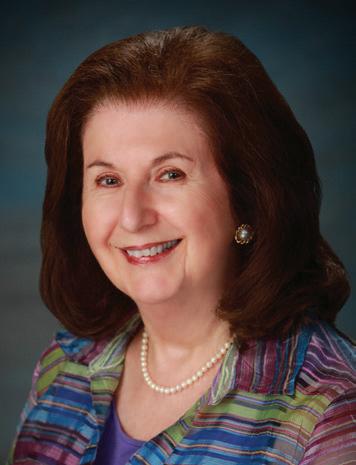
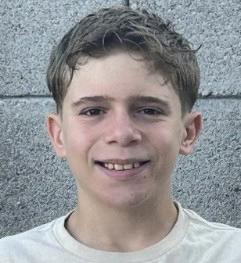
Matthew Garber will become a bar mitzvah on March 28, 2026, at Temple Kol Ami. He is the son of Nicole and Brian Garber of Scottsdale.
A student at Desert Shadows Middle School, Matthew enjoys playing club soccer, attending Camp Ramah, watching movies and sports and spending time with family and friends. JN
conducts Reform Shabbat services on the second Friday of each month. New members welcome. For more information, call 480-612-4413 or 480-580-1592.
Shabbat Services with Beth Ami Temple: 7 p.m. Services held at Unitarian Universalist Congregation of Phoenix, 4027 E. Lincoln Dr., Paradise Valley. Join Beth Ami Temple Rabbi Alison Lawton and Cantorial Soloist Michael Robbins as they lead Shabbat services twice a month. For more information, visit bethamitemple.org.
Third Friday Shabbat: 7-9 p.m. Group meets at a North Scottsdale location. The Desert Foothills Jewish Community Association hosts a Shabbat service followed by a program. Contact 602-487-5718 for more information. JN
(For 2 people)
This section is sold out, plots are no longer available for purchase
Includes opening and closing and transfer fees
Valued at $11,000, asking $6,500 OBO
Call Robin: 480-231-0165
Morley Rosenfield, beloved husband, father, grandfather, great-grandfather and distinguished surgeon, passed away peacefully on March 16, 2026, at the age of 99.
Born in Winnipeg, Manitoba, Morley dedicated his life to the service of others. He pursued a career in medicine, ultimately becoming a skilled and respected surgeon known not only for his precision and expertise, but for his deep compassion and commitment to his patients.
In 1977, he moved to Phoenix, where he continued his medical practice and became a valued member of the community. Morley was a man of generosity, intellect and quiet humor. His charitable spirit extended far beyond his profession — he was always willing to help those in need and believed deeply in giving back.
To his family, he was a source of wisdom, strength and steady love. He is survived by his devoted wife, Verne; his children, Michael, Lyle and Marissa; his grandchildren, Danna, Drew, Matthew and Ryan; and his great-grandchild, Kitt. He leaves behind a legacy of compassion, dedication and a life exceptionally well lived. Morley will be deeply missed by all who knew and loved him.
Funeral service was held Sunday, March 22, 2026, at 10 a.m. at Mt Sinai Cemetery.
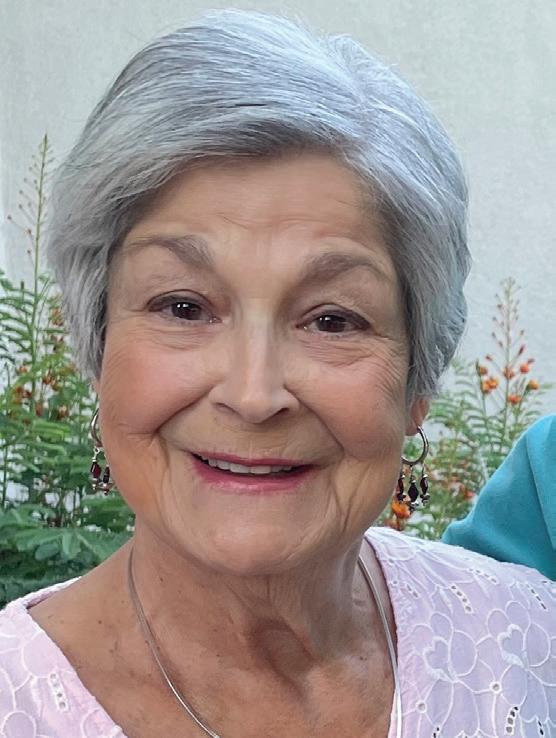
Born on May 17, 1946, in Brooklyn, New York, Felice Greenhut lived a life defined by her love for her family. She passed away in Phoenix, on March 17, 2026, leaving a legacy of warmth and selflessness that touched everyone fortunate enough to know her.
At just 18 years old, following the loss of her father, Felice transferred colleges to be closer to her mother but maintained her relationship with her college sweetheart, David. In 1968, they married and soon started a family, which they raised in Randolph, New Jersey.
Felice was an involved, supportive, affectionate and loving presence whose family was always her number one priority. Her nurturing spirit was so genuine and radiant that it was even felt by strangers, however, this gentle unassuming nature belied an extraordinary inner strength. She faced significant challenges for much of her adult life and endured each one without complaint and with great courage. Few truly knew how tough she was but those who did admired her resilience and grace.
Felice was a woman of many talents. Her first job was teaching art, and her natural artistic ability was apparent in everything from her artwork and unique handwriting to her bold interior design and incredible fashion sense.
Felice is survived by David, her beloved husband of nearly 58 years; her daughters Marnie and Kimberly; her sister, Karen; and her nieces and nephews. She was adored by her family and will be remembered for her kindness, her resilience, her artistic flair, adorable smile and the love and devotion she poured into her family every single day. Felice was, in every sense, a woman of valor.
We are grateful for the exceptional care Felice received at the Mayo Clinic over the years. In lieu of flowers, please join the Greenhut Family in supporting cardiovascular sciences at Mayo Clinic (give.mayoclinic.org/FeliceGreenhut).
May your home be filled with light, freedom, and joy this Passover.