SPRINGING FORWARD
Jacob Cohen, springboard innovation fellow at ASU Hillel, joined other Jewish professionals at the M² Aleh Summit
KEEPING COOL AND CONNECTED
Brandeis National Committee Phoenix Chapter offers Summer Camp for adults
Jacob Cohen, springboard innovation fellow at ASU Hillel, joined other Jewish professionals at the M² Aleh Summit
Brandeis National Committee Phoenix Chapter offers Summer Camp for adults
JOSH BOOTZIN | STAFF WRITER
Rabbi Zalman Levertov and his wife, Tzipi, arrived in Arizona in January 1977, working as a two-person team to spread the teachings of Chabad-Lubavitch to Arizonan Jews of all denominations.
A half-century later, Chabad has expanded to more than 25 locations across the state, with over 55 Chabad rabbis carrying on the Lubavitcher Rebbe’s legacy.
“For five decades, it has been our privilege to serve as a spiritual anchor, an educational hub and a warm home for the Jewish community across our state,” Zalman said.
The Lubavitcher movement was named after its birthplace in the village of Lubavitch in rural Smolensk Oblast in Russia, which no longer exists. The name in Russian translates to “city of brotherly love.”
Generations of Chabad rebbes led the movement from Lubavitch throughout most of the 19th century before relocating to Brooklyn in the early 20th century under Rebbe Menachem Mendel Schneerson, the seventh Lubavitcher leader.
In the mid-1970s, Zalman went to the Chabad headquarters and said he’d like to represent them, following in his grandfather’s footsteps, who did the same kind of work in Russia until he was imprisoned.
Zalman was appointed by Schneerson to represent a new organization in Arizona, and as the first leader of Chabad in Arizona, he had the authority to oversee its expansion throughout the state and appoint his desired staff.
“One of the teachings of Chabad is to not be satisfied with yourself, but to reach out to others and bring Judaism to them,” Zalman said.
He remembered that there were only about 35,000 Jews in Arizona when he founded his Chabad center, and he confronted a severe lack of public outreach in spreading Jewish messages and values.
JOSH BOOTZIN | STAFF WRITER
As Temple Chai in Phoenix celebrates its 50th anniversary and reflects on years of celebration, connections and memories, the congregation is also looking forward to the future, set to take place in an entirely different location than its past.
“It was five years ago when the leadership of the congregation made the difficult, but brave, decision to sell our campus on Marilyn Road that has been our home for so long, and to imagine a new home for our congregation,” said Rabbi Emily Segal.
During the last week of May 2026, Temple Chai’s community came together for several gatherings to deconsecrate its campus at 4645 E. Marilyn Road, and physically and spiritually relocate to a brand-new, stateof-the-art campus at 6025 E. Bell Road in Scottsdale. SEE FAREWELL, PAGE 3
‘I thought I was doing something good’
Shortly after arriving in January 1977, Zalman and Tzipi mailed over 5,000 shalach manos, sending of portions or, in this case, bags of
SEE CHABAD, PAGE 2
After losing her mother in January, Scottsdale resident Carolyn Leff thought she was doing the responsible thing with her mother’s Facebook page. See page 12.

candy, to children across the state, letting them know that Chabad had arrived. They began reaching out to Jews and non-Jews of all ages, expanding programming and engaging communities across the state.
Chabad also organized a megillah reading in February 1977, at the Phoenix Jewish Community Center for its first Purim in Arizona.
Zalman singled out the purchase of Chabad-Lubavitch of Arizona’s current building on Lincoln Drive in Phoenix in 1989 as a standout moment from the last 50 years.
Zalman and Tzipi have seven children, six of whom live in Arizona, and every one of those either runs their own Chabad center or leads social welfare programs out of Chabad, such as Smile on Seniors, Friendship Circle, Roving Rabbis, Jewish Care Network and more.
January 6
January 20
January 6
February 3
January 20
February 17
that he reached out to Silverman, and the two became friends.
go where they feel at home away from home,” Zalman said.
August 25 September 1 September 8
Meyers was so captivated by the essays that he reached out to Silverman, and the two became friends.
That’s how Stern first learned of the open council seat, but there’s no doubt she earned her position, Meyers said.
Programming is catered to groups of all ages, from children to seniors, programs specifically for men or women or both.
That’s how Stern first learned of the open council seat, but there’s no doubt she earned her position, Meyers said.
To become a council member, Stern had to apply and demonstrate that she had something valuable to contribute, he said.
about her Judaism with her fellow council members and speaking out for her rights
She already has some practice at
about her Judaism with her fellow council members and speaking out for her rights
“One time, I was in class and someone called me the R-word and I told him not to. The teacher was in the hallway and another student repeated the word,” she said. Rather than letting the situation go, she told her theater teacher, who was able
She already has some practice at
“One time, I was in class and someone called me the R-word and I told him not to. The teacher was in the hallway and another student repeated the word,” she said. Rather than letting the situation go, she told her theater teacher, who was able
“If someone has a disability, saying the R-word is like saying the F-word,”
“If someone has a disability, saying the R-word is like saying the F-word,” Stern said.
While performing in the musical “Hairspray,” she had another occasion to tangle with the offensive word, which appears in the script.


While performing in the musical “Hairspray,” she had another occasion to tangle with the offensive word, which
March 10
February 3
“People know Chabad,” said Rabbi Shlomy Levertov, director of Chabad of Paradise Valley. “There aren’t too many Jews in town that haven’t been affected by Chabad in one way or another, whether they know it or not. Creating that base and infrastructure over 50 years, it made Arizona a place where Judaism continues to thrive.”
March 24
February 17
March 10
March 31
March 24
April 7
March 31
April 21
April 7
May 5
April 21
May 19
May 5
1
September 15
October 6
6
8
15
October 13** October 20
13**
November 3
Shlomy also manages JPhoenix Young Jewish Professionals (YJP), hosting programs for Jewish young adults who are entering the workforce, may not have a family yet and are seeking Jewish connection outside a synagogue setting.
June 9
May 19
July 14
June 9
August 4
July 14
August 18*
August 4
20
November 10
3
November 17
December 1
10 November 17
“We do weekly programming to keep the community together and make sure young Jews can enjoy their Judaism, study and meet other young Jews,” he explained.
August 18* August 25
December 15
1 December 15
“It’s amazing to look back and see all the growth and how many rabbis there are now in the state,” said Rivky Friedman, Zalman’s daughter, who runs Camp Gan Israel.
To become a council member, Stern had to apply and demonstrate that she had something valuable to contribute, he said.
“She’s on the council because she deserves to be on the council,” he said. Stern is creating a life and career as a member of her community, which makes her a great addition.
“Most of the children are not religious, children that really don’t have money to be able to go to overnight camp,” Zalman said. “Raising money for scholarships for them to come is one of the best things that happens to these kids.”
“She’s on the council because she deserves to be on the council,” he said. Stern is creating a life and career as a member of her community, which makes her a great addition.
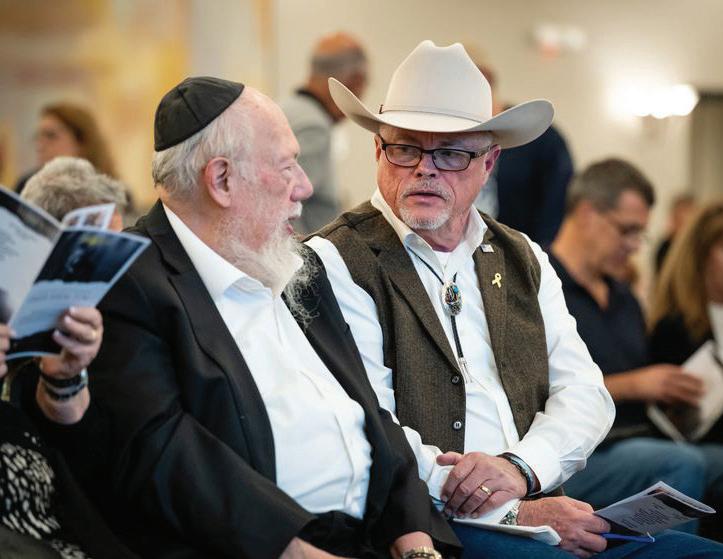
Stern graduated from McClintock High School in Tempe last year and now attends Glendale Community College, with a focus on dance. She is a regular performer at Detour Company Theatre, a Scottsdale theatre company for adults with intellectual, developmental and physical disabilities.
Rabbi Moshe Levertov runs the Jewish Care Network, helping people who are going through medical challenges, illnesses or crises, and providing support in the form of visits, care packages and connecting patients to the right doctors.
of Magazine
“There is a lot of work, and we try to cover every group within the Jewish community, to give them a place to
Stern graduated from McClintock High School in Tempe last year and now attends Glendale Community College, with a focus on dance. She is a regular performer at Detour Company Theatre, a Scottsdale theatre company for adults with intellectual, developmental and physical disabilities.
In fact, when Stern attended her first council meeting in January, she couldn’t wait to tell people of her involvement with Detour and share information about its upcoming shows.
“I remember, as a kid, driving to certain parts of the city on dirt roads, and now there’s a Chabad beyond those areas in the city, not to mention across the state,” Moshe said. “When my parents moved out here, there was barely a Jewish presence. Now you see many
In fact, when Stern attended her first council meeting in January, she couldn’t wait to tell people of her involvement with Detour and share information about its upcoming shows.
“There’s no question that she is going to thrive,” Meyers said. “She’s very gregarious and passionate about the things that matter to her.”
“That’s really bad and my friend said it on stage. I was not OK with that, so I went to the director and told her it was a bad word for people with disabilities, but she wouldn’t take it out,” Stern said.
9
23
6
She let her mother know about the conflict and they were able to convince the director of the need to remove the
“That’s really bad and my friend said it on stage. I was not OK with that, so I went to the director and told her it was a bad word for people with disabilities, but she wouldn’t take it out,” Stern said.
She let her mother know about the conflict and they were able to convince the director of the need to remove the word from the script.
“My friend Al was next to me when I told the director and he gave me the biggest hug ever and said that he loved me so much,” Stern said. Sadly, Al died in a car crash on Oct. 24, 2021.
organizations, Chabad or otherwise, carrying out the rebbe’s vision to make Judaism at the forefront of every Jew’s mind, no matter where they are. My parents contributed a lot to that.”
Heart Can’t Even Believe It: A Story of Science, Love and Down Syndrome,” Silverman’s book about her daughter. When Gesher’s speakers’ bureau, Damon Brooks & Associates, was asked to find a speaker about Down syndrome for an event this spring, Hummell first asked Silverman to speak, thinking Stern might be too young.
6
20
20
27
2
23**
Heart Can’t Even Believe It: A Story of Science, Love and Down Syndrome,” Silverman’s book about her daughter. When Gesher’s speakers’ bureau, Damon Brooks & Associates, was asked to find a speaker about Down syndrome for an event this spring, Hummell first asked Silverman to speak, thinking Stern might be too young.
3
“That was hard; it’s very hard to get emotions out and I was very, very upset,” she said.
“My friend Al was next to me when I told the director and he gave me the biggest hug ever and said that he loved me so much,” Stern said. Sadly, Al died in a car crash on Oct. 24, 2021.
“That was hard; it’s very hard to get emotions out and I was very, very upset,” she said.
Rabbi Dov Levertov runs the preschool and kindergarten, among other programs, out of Chabad in Phoenix. He is also planning many of the celebratory events for this year’s 50th anniversary.
“There’s no question that she is going to thrive,” Meyers said. “She’s very gregarious and passionate about the things that matter to her.”
Stern looks forward to sharing insights
Stern looks forward to sharing insights
N. Scottsdale
On the recent anniversary of his death, Stern made a cake and took it to the crash site.
30
They decided instead that Stern should tell her own story; it’s a real bonus that she is not afraid of public speaking.
17
6
13
“It’s not the same when someone tries to tell a person’s story for them,” Hummell said.
They decided instead that Stern should tell her own story; it’s a real bonus that she is not afraid of public speaking.
20
“It’s not the same when someone tries to tell a person’s story for them,” Hummell said.
On the recent anniversary of his death, Stern made a cake and took it to the crash site.
“I don’t know how I did it without crying. I’m so proud of myself,” she said.
“It’s a great honor to continue the work,” Dov said. “The idea of being a Chabad rabbi is supposed to be selfless. In other words, it’s not about ourselves, it’s
Amy Hummell, executive director of Gesher Disability Resources, agreed that Stern is a good fit for ADDPC because of her ability to self-advocate.
“I don’t know how I did it without crying. I’m so proud of myself,” she said.
Additionally, helping people with disabilities find jobs was one of the reasons for acquiring the bureau. Unemployment in the disability community is upwards of 75% and of that percentage, 75% are ready, willing and able to work — but haven’t been given the opportunity, Hummell said.
4 December 11 December 18 *Annual Directory **Best of Magazine
Hummell co-hosted a book event with Meyers a few years ago for “My
Amy Hummell, executive director of Gesher Disability Resources, agreed that Stern is a good fit for ADDPC because of her ability to self-advocate.
Hummell co-hosted a book event with Meyers a few years ago for “My
AZ 85254 Phone: 602.870.9470 | Fax: 602.870.0426 | editor@jewishaz.com | advertising@jewishaz.com subscriptions@jewishaz.com | www.jewishaz.com
Road, Suite 201, Scottsdale, AZ 85254 Phone: 602.870.9470 | editor@jewishaz.com | advertising@jewishaz.com subscriptions@jewishaz.com | www.jewishaz.com
PUBLISHER
PUBLISHER Jewish Community Foundation of Greater Phoenix
12701 N. Scottsdale Road, Suite 201, Scottsdale, AZ 85254 Phone: 602.870.9470 | Fax: 602.870.0426 | editor@jewishaz.com | advertising@jewishaz.com subscriptions@jewishaz.com | www.jewishaz.com station.
Jewish Community Foundation of Greater Phoenix
PUBLISHER
ASSOCIATE PUBLISHER Rich Solomon | 602.639.5861 rsolomon@jewishaz.com
ADVERTISING SALES CONSULTANT
SENIOR ACCOUNT EXECUTIVE Jodi Lipson | 602.639.5866 jlipson@jewishaz.com
Jodi Lipson | 602.639.5866 jlipson@jewishaz.com
Additionally, helping people with disabilities find jobs was one of the reasons for acquiring the bureau. Unemployment in the disability community is upwards of 75% and of that percentage, 75% are ready, willing and able to work — but haven’t been given the opportunity, Hummell said.
“People have it in them to speak up but don’t know how, and often they’re not cheered on. Sophie has family support
“People have it in them to speak up but don’t know how, and often they’re not cheered on. Sophie has family support
Jewish Community Foundation of Greater Phoenix
GENERAL MANAGER Rich Solomon | 602.639.5861 rsolomon@jewishaz.com
GENERAL MANAGER
MANAGING EDITOR Mala Blomquist | 602.639.5855 mblomquist@jewishaz.com
Rich Solomon | 602.639.5861 rsolomon@jewishaz.com
MANAGING EDITOR Mala Blomquist | 602.639.5855 mblomquist@jewishaz.com
MANAGING EDITOR
STAFF WRITER Josh Bootzin | 602.639.7066 jbootzin@jewishaz.com
SUBSCRIPTIONS
SUBSCRIPTIONS 602.870.9470 x 1 subscriptions@jewishaz.com
ADVERTISING SALES CONSULTANT Jodi Lipson | 602.639.5866 jlipson@jewishaz.com
602.870.9470 x 1 subscriptions@jewishaz.com
SUBSCRIPTIONS 602.870.9470 x 1 subscriptions@jewishaz.com
GRAPHIC DESIGNER Ebony Brown | 410.902.2333 ads_phoenixjn@midatlanticmedia.com
GRAPHIC DESIGNER Ricki Urban | 602.870.9470 x 2 advertising@jewishaz.com
STAFF WRITER Shannon Levitt | 602.639.5854 slevitt@jewishaz.com
Mala Blomquist | 602.639.5855 mblomquist@jewishaz.com
STAFF WRITER
Shannon Levitt | 602.639.5854 slevitt@jewishaz.com
GRAPHIC DESIGNER Ebony Brown | 410.902.2333 ads_phoenixjn@midatlanticmedia.com


“It’s been a long process that included our entire staff and clergy team, as well as so many groups of volunteers, to get us to this point, looking for new properties, selecting architects, identifying through listening sessions what was most important to the congregation in a home, and raising the significant dollars needed to build our new home, take care of our history and all our special ritual items and artifacts,” Segal said.
The new 19,435-square-foot campus, designed by the Tempe architecture, design and public art firm Jones Studio, was built with the goal to combine joy, light, community and security in one place. It contains a sanctuary for worship, celebration and community, as well as a state-of-the-art Early Childhood Center, a cafe and a secure perimeter fence.
The new campus is designed to “welcome everyone in our community who wants to be present with us, to have state-of-the-art security to keep us all safe, and to be as flexible as possible so we can stay nimble as the needs of our community continue to develop over time,” Segal said.
“Temple Chai is synonymous with community. People love belonging here,” said Molly Levy, marketing, communications and engagement manager. “For 50 years this congregation has inspired its members to deepen their Jewish lives, to find meaning and joy in Jewish tradition and to experience the warmth of community. This new campus is the next beautiful chapter in that ongoing story.”
With years of constant planning, fundraising and making design and architectural decisions for the new building, Rabbi Bonnie Koppell explained how easy it was to lose sight of the fact that the day of the move was really happening. She described it as both “surreal” and “mind blowing.”
“We’ve been in a process of ritual leavetaking for quite some time,” Koppell said.
She led a program for community members to take some time for personal prayer in the old sanctuary, and she put together a booklet for them to follow with prayers and reflections.
Koppell considered the weekend of April
what we can do to bring Moshiach closer.” The multi-month celebration will include expanded programming, lectures and cultural events, designed to foster Jewish pride throughout the state.
A calendar of events is expected to be released in the coming months, highlighted by “An Evening of Inspiration” on Sunday, June 14, marking the Rebbe’s yahrtzeit with a lecture from Rabbi Yitzchak Schochet, chairman of the Rabbinical Council and one of the 10 most influential rabbis in the United Kingdom, according to The Jewish Telegraph.
In addition to various celebrations, Chabad of Arizona commissioned a Golden Jubilee Unity Torah.
24-25, when the congregation celebrated its 50th anniversary with many of its past rabbis, cantors and board members, as the true beginning of the transition, with the community coming together to honor its history.
“It’s a bittersweet time to say goodbye to the home that’s been so special, where life’s most joyous moments have been celebrated, where people have found support in times of challenge, and to step forward into the future,” Segal said. “I’m so proud of our community for making that brave decision, holding each other through the poignancy of this time and celebrating together as we enter our new home.”
To begin the move, Segal held a special service on May 26 using the rituals of Havdalah to guide the community’s separation from its old sanctuary. The deconsecration included removing the Torah scrolls from the ark and the mezuzot from the sanctuary, while honoring the collective memories made in that space.
Havdalah represents transition, traditionally from Shabbat to the rest of the week, but in this case, from one place to another. “It was very emotional,” Koppell said. “People were really moved.”
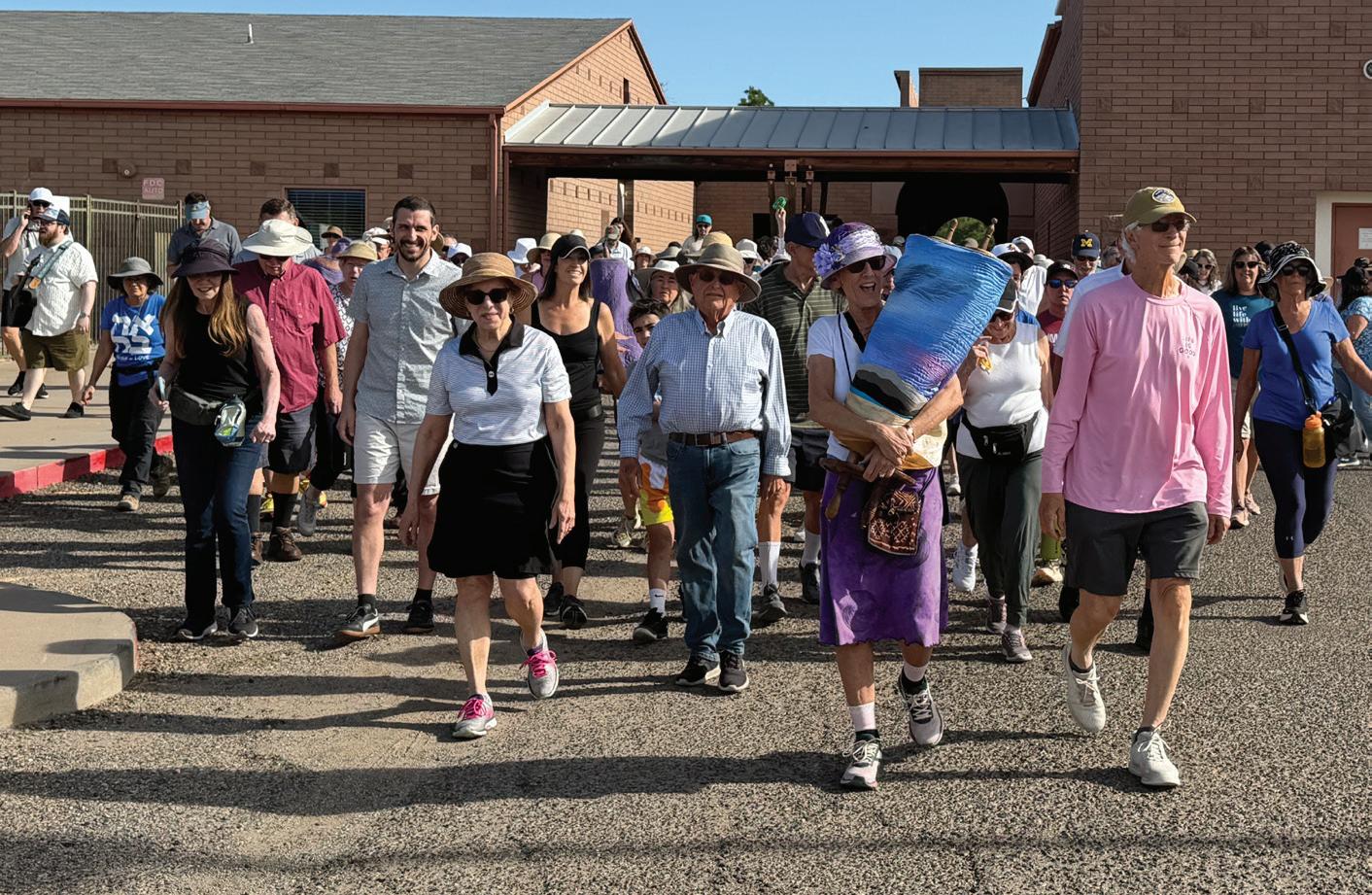
On the morning of May 28, more than 150 congregants attended a Halichat Sefer Torah (Torah walk) to help carry the Torah scrolls from the Marilyn Road campus to their new home.
Multiple generations in attendance had the opportunity to carry one of the Torahs for a stretch of the three-mile walk.
“It’s exciting to see everybody’s enthusiasm and how the congregation has responded so positively,” said outgoing board president David Weiner during the walk. “There’s just a lot of appreciation, reflection on memories and looking forward to the future.”
“We’re holding our heritage and our values at the core as we journey from one place to another, just as our ancestors have for generations,” Segal said. “It means everything to be together and enjoy in celebration as we begin this new chapter for our community.”
On May 29, more than 400 guests convened at the new sanctuary to consecrate the new home and usher in Temple Chai’s next chapter.
“The Torah has always represented Jewish unity; it’s what makes us special and unites us,” Dov said. “Every Jew is represented in those letters.”
An expert sofer (scribe) has begun the meticulous process of hand-writing the sacred scroll in Israel, and Chabad is hoping to welcome the Torah to its new home before Purim in 2027.
Details on how to participate and dedicate letters, verses or chapters in honor or in memory of loved ones will be made available soon.
“We felt it would be a very good unity thing that everybody writes together, and we’ll be having a dedication of the Torah at the end of the 50 years,” Zalman said.
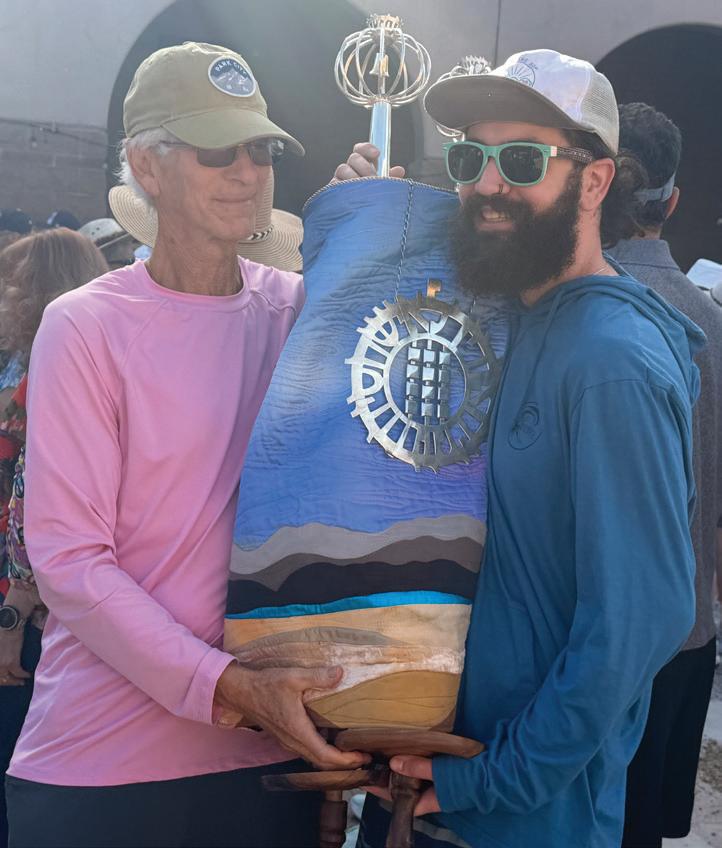
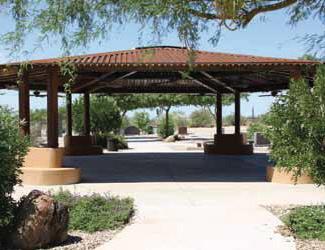
The ceremony included the hanging of new mezuzot on the main entrance and sanctuary, carrying the Torahs into the sanctuary and placing them in the ark, reciting prayers of consecration and celebrating the first Kabbalat Shabbat service as a community in its new home.
“When we finish a book of Torah, we say, ‘Chazak, chazak, v’nitchazek’: have the strength to get to this moment, and may we have the strength to move forward,” Koppell said. “That’s the feeling that the whole congregation has.”
“We are in the best condition with our clergy, our membership and our finances. Everybody’s so positive in celebrating our new home,” Weiner said. “Please come join us for service. We’d love to have as many people come by, meet our wonderful clergy and our new cantor. We’re a welcoming, inclusive, outgoing group that believes in tikkun olam.”
“We can’t wait to welcome the whole community to our new home,” Segal said. “We envision it as a hub for not only the Temple Chai community, but for the entire Jewish community, where we hope to welcome everyone for learning, joy and community programs. If people are looking for a congregational home, know that we have the sweetest, most welcoming community in the most beautiful and safe facility, and we can’t wait to welcome you.” JN
For more information, visit templechai.com.
On how he feels about celebrating 50 years of Chabad in Arizona, Zalman said: “At times, good; at times, it’s not enough. There’s so much more work to do.”
The organization is marking its 50th birthday with the opening of two more centers, in Carefree and Maricopa.
“The programs that we have are always open to everyone. You don’t have to be Orthodox to come here for anything we offer,” Zalman said. “We are the largest Jewish organization in the world, and our vision is strictly to reach out and bring the pride of Judaism everywhere. We don’t force anything upon anyone, and we’re there for everyone.” JN
For more information, visit chabadaz.com.


JOSH BOOTZIN | STAFF WRITER
J
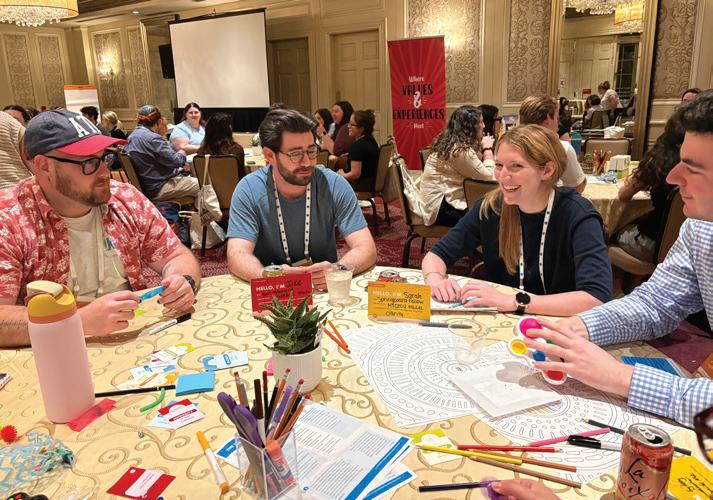
acob Cohen, currently serving as springboard innovation fellow at Hillel Jewish Student Center at Arizona State University (ASU Hillel), joined more than 90 aspiring Jewish professionals for three days of networking and values-based learning at the M² Aleh Summit.
M²: The Institute for Experiential Jewish Education connects Jewish educators and organizations, helping to design collaborative educational experiences that help Jewish professionals find meaning in their work.
Taking place April 28-30 in New Orleans, Louisiana, the Aleh (Hebrew for “uplift”) Summit was intended for early-career professionals with two-to-five-years of experience in Jewish communal work.
“My undergraduate degree is in experiential education, and for a while, I’ve been very curious about the connections between the Jewish experiential education world and some areas of experiential education that aren’t necessarily explicitly Jewish,” Cohen said. “To have the opportunity to go to a conference that’s designed to build on all those experiences and connect the past to the present, to the benefit of the future, was too incredible an opportunity to pass up.”
According to Michael Kress, vice president of marketing at M², the conference aimed to equip Jewish professionals with the tools and confidence to navigate difficult conversations in the workplace and in their daily lives, to cultivate a network of connections across the Jewish world and to reinforce their motivation for why they chose their particular career paths.
“Our purpose was to help people connect or reconnect with their sense of purpose, with their ‘why,’ and to explore the values that underlie their career,” Kress said. “We were thrilled with how it turned out.”
Aleh was held once before, but only to connect professionals employed by M² part-
ner Jewish Federations of North America (JFNA) spread across the country. This was its first year with open enrollment for any early-career professional in the Jewish world, and over 90 participants representing more than 70 organizations across the United States, Canada and Israel were in attendance.
Cohen learned about M² from some of his mentors who have supported his work at Jewish summer camp and youth groups, and he found out about the Aleh Summit through Hillel springboard calls.
“A couple of us got connected and found out we were all very interested in the conference,” Cohen said.
Cohen said attendees were provided meals, attended sessions of varying sizes and even had some time in the evenings to explore the French Quarter and other sites.
He identified one of the sessions that stood out to him was one facilitated by Kress on having difficult conversations.
“It not only helped me in my development, especially at Hillel, where I am on the younger side of my career, but gave me the tools to immediately start supporting the students that I supervise as well,” Cohen said.
As springboard innovation fellow at ASU Hillel, Cohen handles event planning, social media marketing, logistics, organization and otherwise supports students however they need.
“Considering sessions that talked about how to support people as they come to big life decisions, looking at how to inspire curiosity, how to identify gifts versus skills and how we continually work to develop those, it was an all-encompassing experience that really helped me connect all the different aspects of my past to build up myself for the future,” Cohen said.
He explained that he aspires to place himself in career situations where he can
“support the community.”
“I’m very motivated to support the local Arizona Jewish community, having grown up in it, but wherever I can support community and help participants be the best version of themselves, even for an hour a day, that would be a dream role for me,” he said.
One aspect of the conference that stood out to Cohen was the variety of experience levels present across the many career paths that make up the world of Jewish professionals.
He found that the layout of small-group learning and full-group sessions not only provided opportunities to connect with and learn from professionals who similarly work with teens and young adults, but also those who work with young children, the elderly and every group in between.
Cohen appreciated the chance to learn from different cultures about how they’ve cultivated successful, collaborative communities, as well as the hurdles they had to overcome to reach that success.
“It’s really intriguing to hear how a lot of the hurdles are very similar, yet local cultures create nuanced approaches that make everyone so unique,” he said. “It was amazing getting to learn from all those different cultures, communities and professionals from across the country and even around the world.”
Two values that stood out from the conference that Cohen tries to embody every day are curiosity and understanding.
“Since the conference, I’ve really put a lot of emphasis on not just helping to teach those values and those skills, but really embodying them within the community here,” he said.
Cohen continues to take part in an active group chat with other Hillel and BBYO professionals who have similar roles around


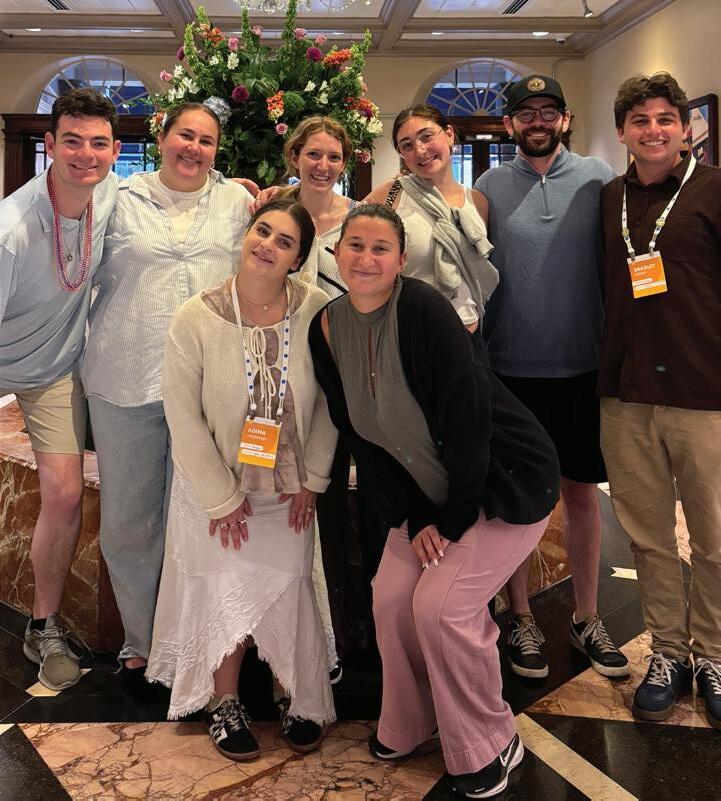
the country who he met at the conference.
“Getting to connect with people, not just from across the Hillel movement, but across the experiential Jewish education movement, was a very eye-opening experience, and I do feel like it has benefited my network tremendously,” Cohen said.
“It was really powerful for me to watch connections happening organically among the people there,” said Kress. “Watching people from the same organization who didn’t know each other before, and people who do similar roles in very different organizations, find each other, connect, learn from each other and create a professional connection that they will have for the rest of their careers. I thought that was extremely powerful to be a part of.”
Cohen said his experience helped him “understand that I’m exactly where I should be in the world, doing the work that I should be doing, in exactly the right place, and I couldn’t be more grateful for the experience.” JN
For more information, visit ieje.org.



1.


• Facilitate Jewish learning in your own community!
ensure VBM has the ability to provide engaging learning opportunities and save lives in our
We hope this year will be a time of renewal and growth and that we will experience many joyful
• Lead a small group in monthly text-based studies guided by the overarching theme of “Building a Just and Compassionate Society”
2. Serve with us and volunteer with Arizona Jews for Justice to help uplift the most vulnerable members of
3. Reach out if you are looking for internship or fellowship opportunities for teens and young adults. We would be thrilled to tell you more about our leadership development programs.
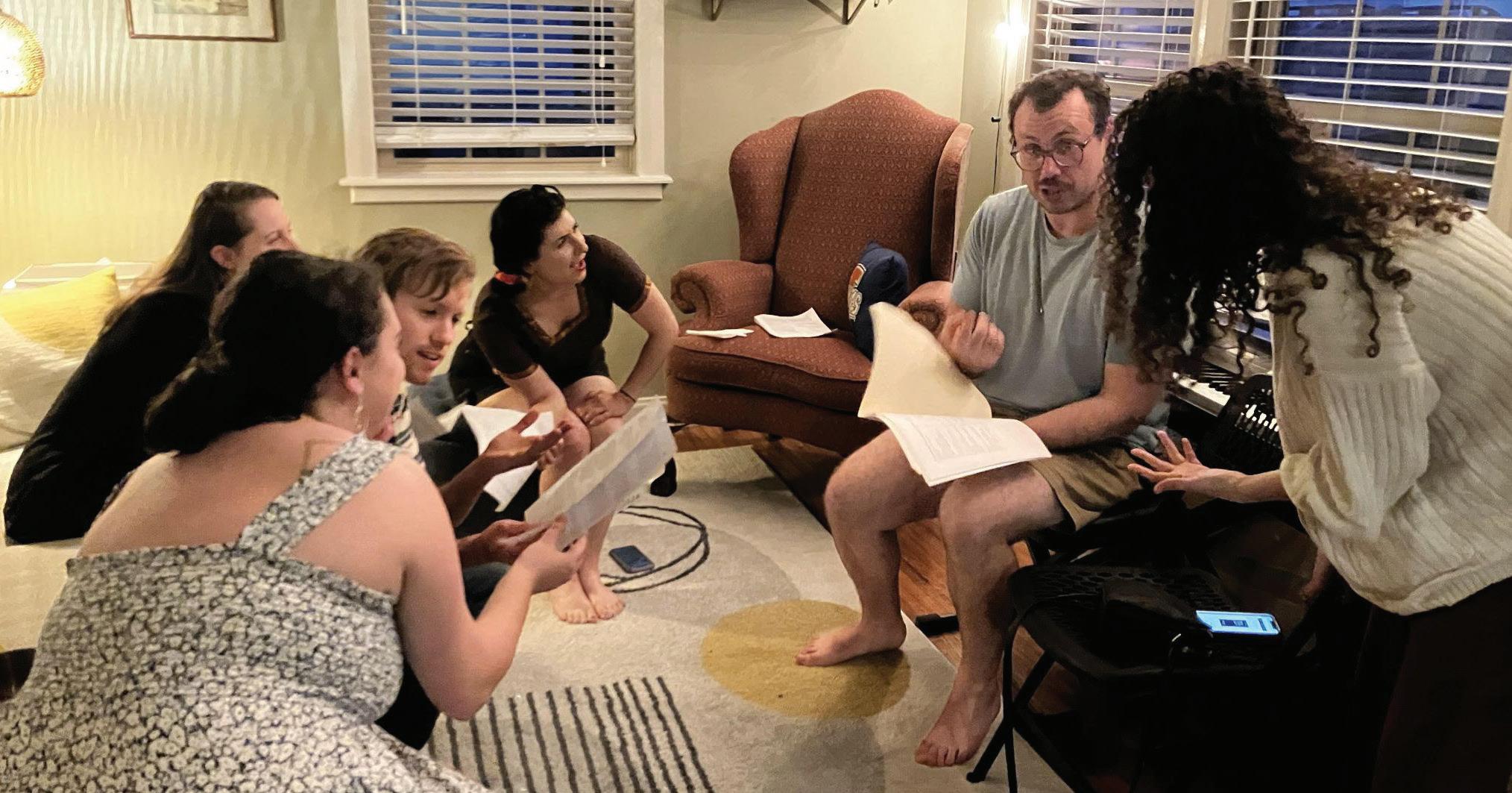
4. Become a Legacy donor. By joining the Jewish Education Legacy Society of Valley Beit Midrash you will ensure VBM has the ability to provide engaging learning opportunities and save lives in our communities for many years to come.
• Join a nationally-based cohort of lay-leaders in virtual mentorship and training sessions
• August 2026 - June 2027
We hope this year will be a time of renewal and growth and that we will experience many joyful moments together in the year ahead.
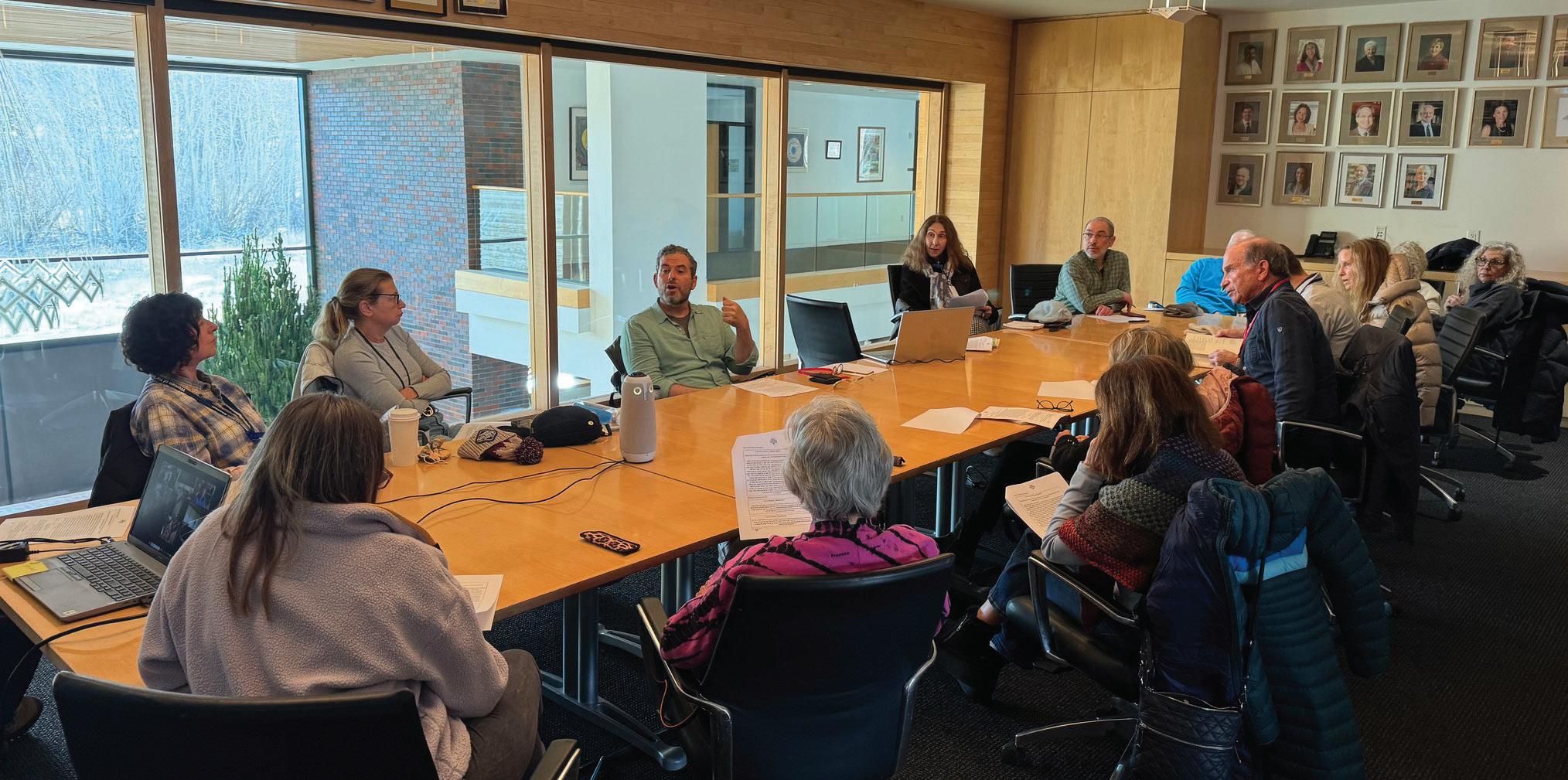

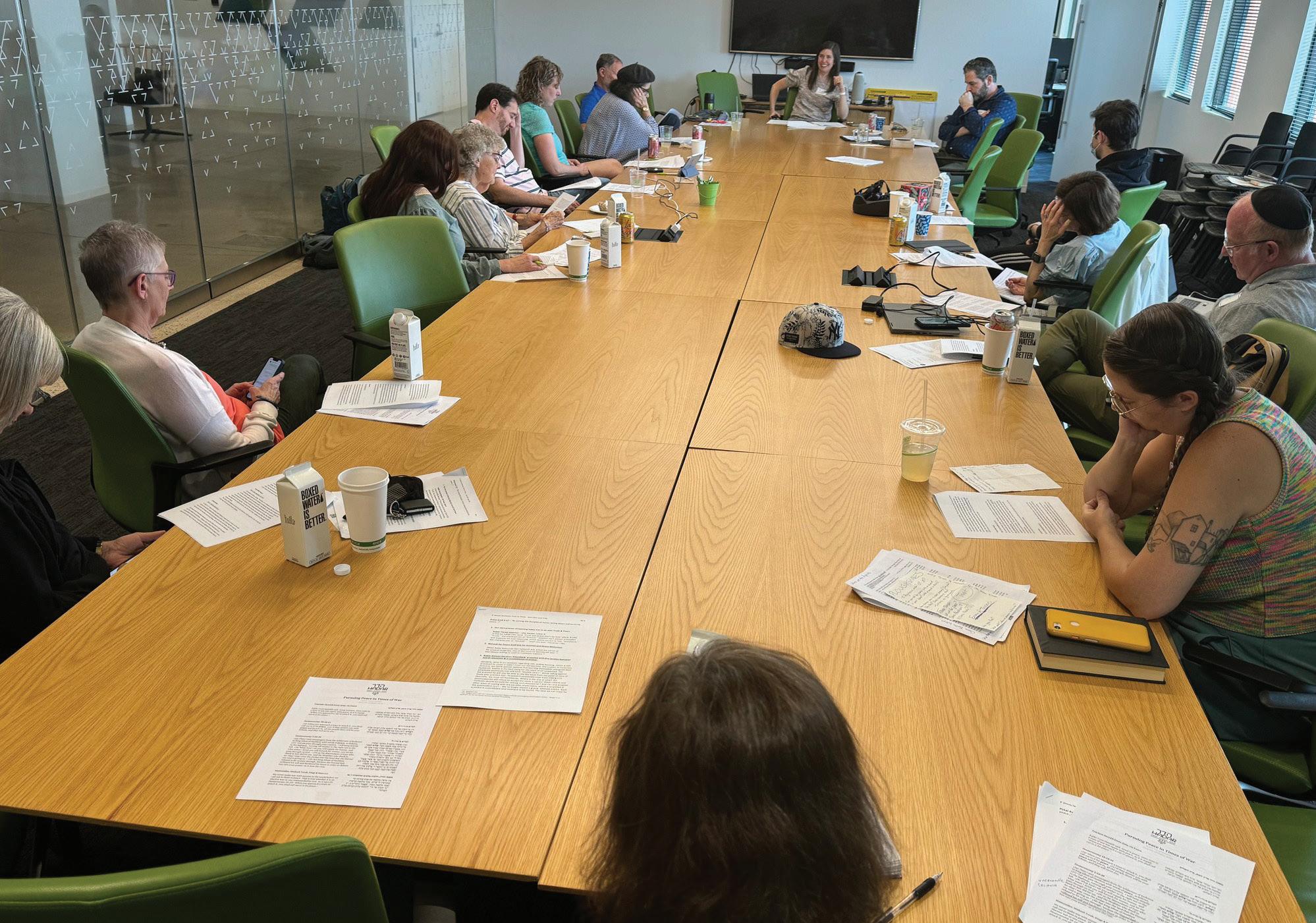

Proverbs 22:9 The Targovnik Family wants to congratulate the Arizona Kosher Food Pantry on buying a new truck. We are driving the food home!


MALA BLOMQUIST | MANAGING EDITOR
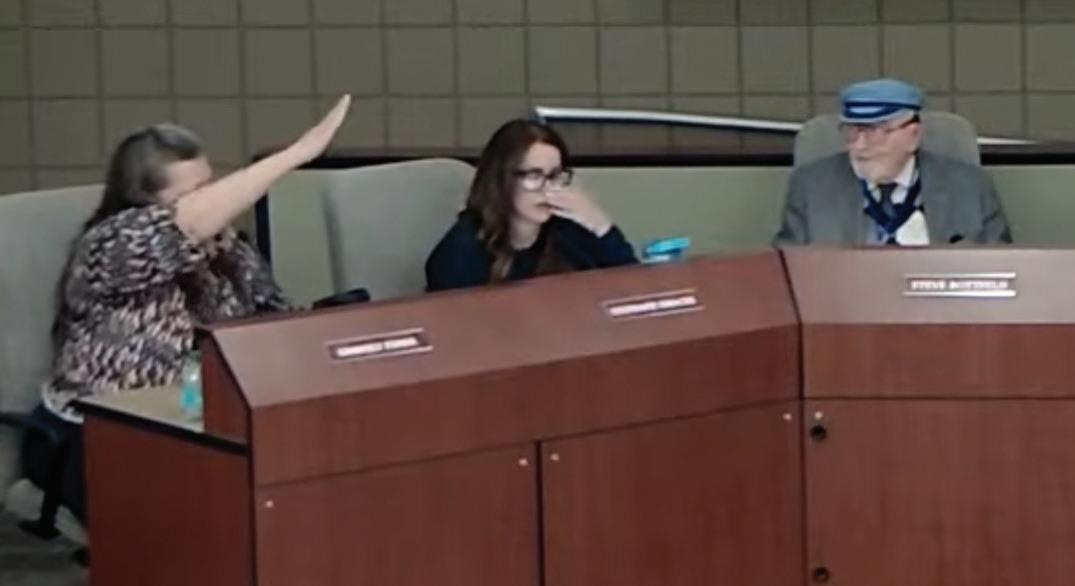
At the end of the Deer Valley Unified School District Governing Board meeting on May 26, board member Kimberly Fisher performed a Nazi salute and said, “Heil, heil,” before packing up her belongings.
the discussions.”





The incident occurred after a discussion between board president, Paul Carver Jr. and Fisher regarding the starting time of the June 9 study session, which is open to the public. Fisher said starting at 4:30 p.m. was “rough” and that the meetings didn’t always have to be on Tuesdays.
Carver said that the last time it was discussed, at least half of the board would not be available on a different day.
“You set it at a time when our community can’t even be here, so I’m just a little concerned that it’s for show, not for meaning. So, I would ask that we actually take a look at what would be the best time for our community,” said Fisher. “The whole point of us having a study session with our community is that we can get their input and they can hear
At this point, Dr. Curtis Finch, the Deer Valley Unified School District superintendent, said that their discussion was illegal because the topic was not on the official agenda. At that moment, Carver moved to adjourn the meeting and was met with Fisher’s extended-arm gesture. Fisher responded to Jewish News with an emailed statement that began that she wouldn’t be speaking to any other media except Jewish News because other reporters seek “sensationalism rather than the truth” and she cares what the Jewish community is told.
“What I did was in no way aimed at, or reflective to, the Jewish community,” she stated. “I have never and would never be against the Jewish people. That is just not who I am.”
After the meeting, Fisher recorded an eight-minute video where she referred to Carver as a dictator and told people not to vote for him. Carver is running for election to the Arizona House of Representatives












to represent District 2.
In the video she said, “All I could think of tonight was Hitler, so I said, ‘Heil’ or whatever.”
In the email to Jewish News she stated, “It was a bad choice to use to point out that Mr. Carver and Mr. Finch have been acting like dictators, but it is what they have been doing, and as a result they have hurt many people and will continue to do so as long as nobody calls it out.”
She stated she was calling out the “dictator behavior” with the gesture that she said originated with the National Socialist German Workers’ Party. “No, I didn’t think it through in the moment, but I did call out their actions and did not imply support or agree with their actions,” she stated.
Carver said that since he became president, Fisher has been referring to him as a dictator.
“The reason I believe that she did what she did wasn’t from any source of hate for the Jewish community. She’s been screaming this narrative from the rooftops that I’m a dictator. So, I think what she was trying to do was drive that point home,” he said. “That being said, you cannot, under any circumstances, regardless of how you feel about the organization, the leader or the process, invoke a motion and a term like that from the public pulpit — it is unacceptable behavior on any level.”
After the incident, fellow board member Rep. Stephanie Simacek (LD-2), who was sitting next to Fisher on the dais when she made the gesture, issued a press release condemning Fisher’s actions. In it she stated, “What happened in that room was not a joke. It was not a political statement or an expression of frustration. It was a deliberate invocation of one of the most evil ideologies in human history on display in a building where our children come to learn … Our Jewish students, families and community members deserve better. Every student deserves better. We will not normalize this. Not on my watch. Not in our schools. Not in Arizona.”
Simacek told Jewish News that she has
called for Fisher’s resignation.
Jewish News also received a statement from the Deer Valley Unified School District (DVUSD) stating:
“The District does not condone, support or endorse gestures or language associated with hate, discrimination, intimidation or violence in any form. Such actions do not reflect the mission or vision of Deer Valley Unified School District (DVUSD) … As an elected official, Mrs. Fisher speaks and acts independently. Her views and actions do not reflect and should not be attributed to other Board members, staff, other members of the school community or the District.”
In the video of the board meeting, it shows none of the other members reacted when Fisher performed her Nazi salute, and Carver said in hindsight that they should have done something at the time.
“She’s attacked me as a member of the Church of Jesus Christ of Latter-day Saints because of my faith,” he said. “So, this woman is somebody who will jump from hot button to hot button just to try to stay relevant and to get people to engage with her on social media.”
Carver said that Fisher will not face any disciplinary action because she is an elected official and the only way for her to lose her seat on the board would be in a recall election. DVUSD is the fifthlargest district in Arizona, encompassing communities in north Phoenix, Glendale, Peoria, Cave Creek and Anthem, so it would take more than 10,000 signatures on a petition to run a recall election.
“There’s nothing that the board can do to her due to her inappropriate behavior, because she’s an elected official,” he said. “We can go out to the community, we can tell everybody we disagree and that what she did was wrong, but as far as trying to implement any kind of penalty, like removing her from the board or censuring her, we can’t.”
Carver’s concern now is that people will view the district unfavorably.
“If we can get the word out that this is just a rogue individual that is making herself look foolish and that this isn’t a

DVUSD thing, this isn’t a school board thing, this is a Mrs. Fisher thing, and she can’t conduct herself properly and really shouldn’t be in this environment.”
Fisher stated that she will not resign from the board. Her curent term expires Dec. 31, 2028.
“I have given over 10 years of my life for this district because I believe public education should be available for everyone. I will fight the fight for the remainder of my term, seeking to give parents their ability to influence the education of their children,” she said. “I will serve because it is the word I have given and those who I have helped will remember me fondly. Others will celebrate me being gone, but what can I do about that.”
Note: Media outlets reported that Fisher’s husband, William, as having posted antisemitic and racist content under the name of “Preston Brooks” or “Preston S. Brooks,” as shared by Atlanta Antifa on Torch Network Antifascist Action's website in 2022.

When Jewish News asked Fisher if her husband ever used either of those usernames on social media, she responded, “No. That was addressed years ago when ANTIFA put it out. They also used an old Facebook of mine that I no longer have access to and haven’t had access to in roughly nine or 10 years.”
She also said that she would not be able to respond to any more inquiries as she is seeking legal counsel.

















MALA BLOMQUIST | MANAGING EDITOR
M
ore than 20 Holocaust survivors, community leaders, state legislators, educators and hundreds of attendees gathered at Beth El Phoenix on April 12 for the Phoenix Holocaust Association’s (PHA) annual Yom HaShoah commemoration, a remembrance of the six million Jews murdered during the Holocaust and a call to preserve their stories for future generations.
Mark Curtis, evening anchor for 12News, served as master of ceremonies and introduced each local survivor in attendance with a brief account of their wartime experiences. Among them were survivors who endured Auschwitz, Bergen-Belsen, ghettos, forced labor camps and years in hiding.
Curtis, who is also Jewish, said, “I’m honored to be here amongst you tonight as we honor these incredible people who not only survived but came back to tell these stories so that we would never forget.”
Sheryl Bronkesh, immediate past president of PHA and daughter of two Holocaust survivors, emphasized the importance of preserving survivors’ testimonies.
“We live in a time when the number of eyewitnesses grows smaller, and as firsthand testimony fades, the risk of forgetting grows greater,” Bronkesh said. “At the same time, we witness a troubling rise in antisemitism and hate. This makes our work more urgent than ever.”
She highlighted the organization’s educational mission, including a partnership with the Chandler Unified School District that enabled more than 2,500 high school students to hear directly from Holocaust survivors.
Chandler High School teacher Lori Redman was the recipient of one of
Sundt Construction, Inc. has full time Data Engineer Senior position in Tempe, Arizona. Mgmt of data org, incl design, implem, maint, discov & govrnnce; Collab w stakeholdrs, bus intel teams, report buildrs, and dvloprs; Ensure effic data consumpt; Build & maint databases to store data and custom in-house devlpd apps; Build metadata repository; Des, dev, implmnt data guidelins; Dev maint data warhous; Dev & maint data models, data pipelines, database schemas, & data qual checks; Educ & support teams; Power BI deplymnts; Mng data platfrms, performance optimization; Manage data privacy, security, & compli. Bachelor in Comp Sci, Computer Eng, MIS or relat & 4 yrs exp reqd. Bkgrd check, drug test reqd. Submit res to recruiting@sundt.com Code LP2301.
the Shofar Zachor Awards given for outstanding contributions to Holocaust and genocide education.
“In 2022, Lori led the effort to establish a Holocaust and Genocide Studies course within the district, with the first section launching in July 2024,” said Leslie Feldman, executive director of PHA. “Continuing her commitment to this work, she earned an advanced degree in Holocaust education from Yeshiva University in 2025.” Redman also currently serves on the PHA Education Committee and is vice president of the Arizona Council for Social Studies.
The second Shofar Zachor Award was presented to Childsplay, the Tempe-based theater company.
The organization was recognized for its productions of “The Diary of Anne Frank” and “No Going Back,” which have introduced thousands of Arizona students to Holocaust history through theater and post-performance discussions with local Holocaust survivors.
The keynote speaker was Holocaust survivor and U.S. Army veteran Dr. Mark Olsky, whose life began amid the final days of the Holocaust. He was featured on a segment of “60 Minutes” in February that highlighted the Holocaust’s youngest survivors.
Born on April 20, 1945, aboard a freight train transporting Jewish forced laborers to Mauthausen concentration camp, Olsky arrived just weeks before Nazi Germany’s surrender.
April 20 was also Adolf Hitler’s birthday, still celebrated at the time as a national holiday in Germany and Austria. The guards transporting the prisoners were reportedly in a festive mood. Perhaps because of that unusual atmosphere, they decided to let him live. “Unlike a lot of other babies,” he said.
Mother and child eventually arrived at Mauthausen, one of the last Nazi concentration camps still operating, even after the liberation of Auschwitz more than three months earlier.
According to family accounts and later testimony from liberating American soldiers, the group was effectively destined for the gas chambers. By chance, they arrived on April 29, 1945 — the day after the camp’s gas chambers ceased operation.
Olsky’s father died before he was born, and growing up, his mother and stepfather didn’t tell him all the horrific details of the Holocaust. He knew the suffering when he saw his mother in her
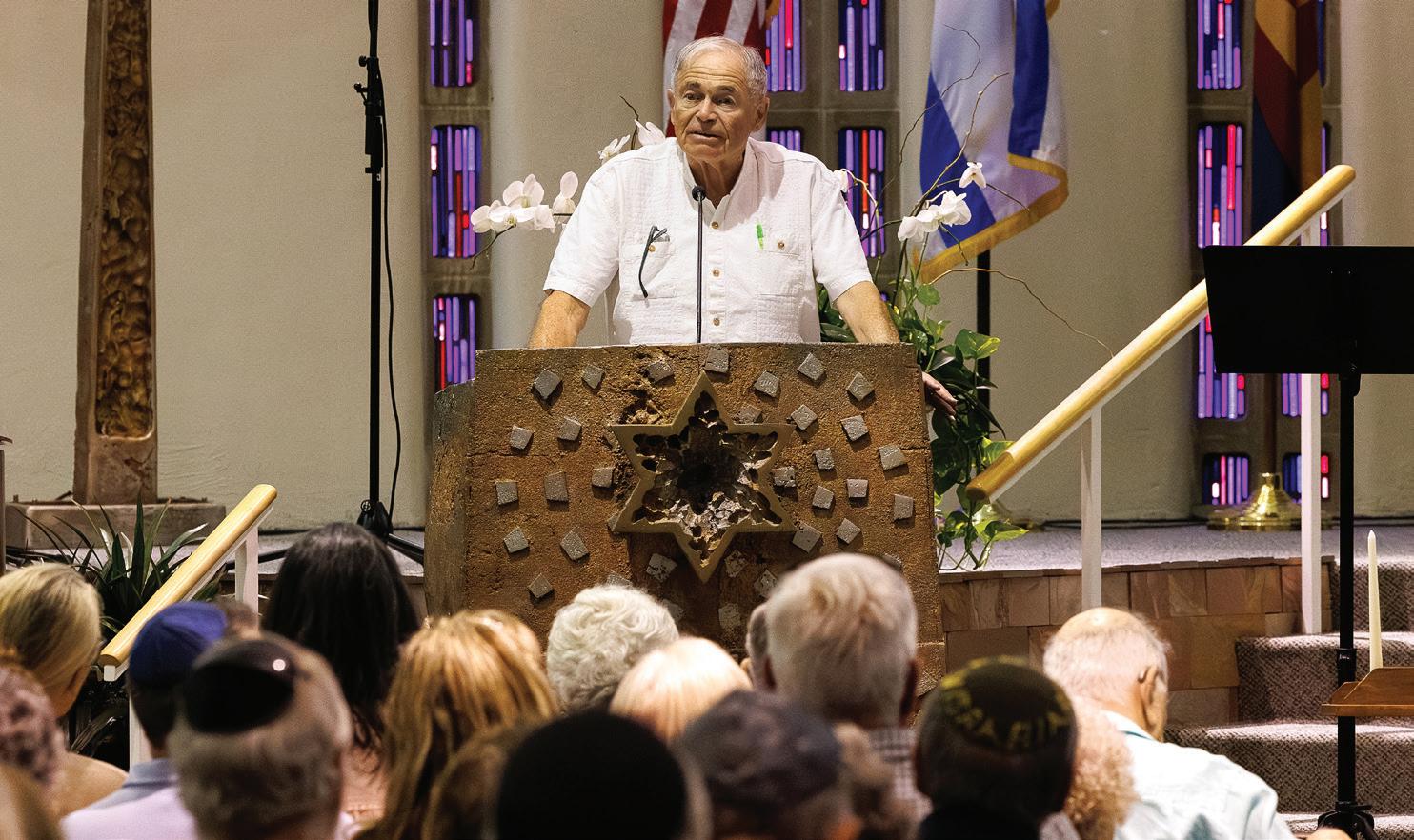
“I’VE HAD A WONDERFUL LIFE. I’VE LOVED JUST ABOUT EVERY MINUTE OF IT.”
DR.
30s and 40s with no teeth remaining due to malnutrition.
“My parents didn’t want me to be angry,” he recalled. “They did not like anger and thought it was not only counterproductive but would put you in danger.”
Olsky remembered his mother telling him stories of the prisoners telling jokes, describing imaginary banquets of food to each other and singing songs in Yiddish about longing and loss.
“Something they noticed that they hadn’t planned was that the German guards, who were nasty people, absolutely humorless and never smiled, yet Yiddish is so close to German that they actually understood the words of the songs and some of them would start crying,” he said.
This moment of humanity may have saved more than one life, like an unexpected moment of mercy saved his mother.
Seven months pregnant, believing any moment would be her last because she was starving, she was returning from working and spotted part of a head of cabbage next to a garbage can. Standing off to the side was a red-haired female guard named Bertha.
Bertha looked straight at Olsky’s mother and back at the head of cabbage. Both women knew the penalty for stealing food, even if it was garbage, was death.
“My mother remembered that Bertha had tears in her eyes a little earlier when they were singing a song, so she decided she could take a chance,” he said. “She kept looking at Bertha’s eyes, not in a defiant look, just a look. And she bent down, grabbed that cabbage and ate it all in about 10 seconds.”
He shared that his mother said it was the best-tasting thing she ever had eaten and Bertha did nothing.
“That was about as much humanity as Bertha was capable of showing, but it was something. And I might be alive today because of that rotten cabbage and that rotten woman,” he said.
“I’ve had a wonderful life,” said Olsky. “I’ve loved just about every minute of it.”
Eva Flaster, PHA president and the daughter of two Holocaust survivors, ended the program with a quote from Holocaust survivor Elie Wiesel: “I believe firmly and profoundly that whoever listens to a witness becomes a witness. So those who hear us, those who read us, must continue to bear witness for us.”
She continued, “Saying ‘never again’ does not provide a guarantee against antisemitism and other hatreds. We must keep our eyes open and have the courage to stand up for justice. It is essential to keep survivor stories alive for future generations, ensuring that these lessons remain unforgotten.” JN
For more information, visit phxha.com.
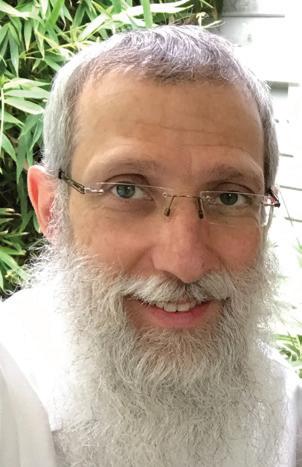
Rabbi Jonathan Sacks often told a remarkable story about a Chabad rabbi who visited a remote town in Alaska.
While speaking to a classroom of children, he asked whether anyone had ever met a Jew.
One little girl raised her hand. “Yes, my mother is Jewish,” she said.
The rabbi immediately realized that this child was growing up at the very edge of the Jewish world. He could have spoken to her about the challenges of being Jewish in such an isolated place. Instead, he gave her a gift that would shape her life.
He explained that every Friday evening Jewish women and girls throughout the world light Shabbos candles. Beginning in New Zealand and Australia, the light of Shabbos moves across Asia, Israel, Europe and the Americas. Then he looked at her and said, “When all the Jewish girls in the world have already lit their Shabbat candles, the
- 8:23 P.M. JUNE 20 - 8:25 P.M. OPINION
Jewish people are still waiting for you. Here in Alaska, in one of the last communities in the Western Hemisphere to welcome Shabbos, you are the last Jewish girl in the world to bring in the holy day.”
In that moment, everything changed.
She was no longer a lonely Jewish child living a thousand miles from a major Jewish community. She became an essential partner in the destiny of the Jewish people. The world was waiting for her light.
This week marks 85 years since the Lubavitcher Rebbe arrived on American shores after escaping war-torn Europe. America was then called a spiritual desert. Many believed that Jewish observance, Jewish learning and Jewish identity would slowly fade away.
The Rebbe saw something entirely different.
He saw a Jewish child and envisioned a future leader. He saw a small mitzvah and envisioned a transformed world. He saw an isolated Jew and envisioned a community. Above all, he taught that every single Jew has a unique mission that no one else can fulfill.
continue to transform lives.
The Rebbe’s revolution was unlike any other. It was not built upon wealth, influence or political power. It was built upon one simple yet revolutionary idea: every Jew matters.
A child lighting Shabbos candles matters. A teenager putting on tefillin matters. A family placing a mezuzah on their door matters. One mitzvah matters. One soul matters. One act of goodness matters.
This message lies at the heart of this week’s Torah portion, Shlach.
The spies returned from the Land of Israel frightened by what they saw. They focused on the giants, the fortified cities and the obstacles.
Yehoshua and Calev saw the very same reality but understood something deeper. Great missions are never achieved by people who focus only on difficulties. They are achieved by people who recognize the greatness of their responsibility.
The challenge facing our generation is not conquering a physical land. It is securing the Jewish future.
of Torah, the warmth of Shabbos, the pride of Jewish identity and the story of a people that has carried the light of Torah, faith and morality across the centuries.
The lesson of the little girl in Alaska is the lesson of Jewish history itself.
The future of the Jewish people is not built by famous individuals alone. It is built when ordinary Jews discover that they are extraordinary. It is built when every child knows that his or her light matters.
The Jewish people are waiting for that light.
This week, in honor of the Rebbe’s yahrzeit please dedicate one mitzvah that you otherwise would not have done.
May G-d protect the Jewish people. May G-d protect the armed forces. Am Yisrael Chai. JN
Rabbi Yossi Levertov is the director of Chabad of Scottsdale and the dean of the Yeshiva of Scottsdale. RABBI
This week also marks 32 years since Gimmel Tammuz (the Rebbe’s passing) and we have watched the power of that vision
Every Jewish child deserves the opportunity to receive a Jewish education. Every Jewish boy and girl deserves to know the beauty
RABBI ROBYN FRYER BODZIN | JTA
Thirteen years ago, on the morning of Rosh Chodesh Adar, I was detained at the Kotel.
I had joined a group choosing to pray with the Women of the Wall in the women’s section. A minyan of us, 10 women, were detained by police.
My “crime” on that February day in 2013 was violating the regulations of holy places and behaving in a way that may have endangered public safety.
At the time, my arrest was befuddling. All I did was daven, or pray, just as I do every day, as a rabbi serving the largest Conservative synagogue in Canada.
In the years since, I’ve seen police interfere with women’s prayer at the Kotel on a near-monthly basis. And now, something is unfolding that is beyond befuddling — it is outrageous.
The Knesset’s Constitution, Law and Justice Committee has been moving forward
a piece of legislation that would criminalize any egalitarian prayer at the Western Wall — punishable by up to seven years in prison — including at the site that has been dedicated to egalitarian services for the past decade.
Currently, the Kotel has a men’s section and women’s section, which is overseen by the haredi Orthodox Chief Rabbinate, and a nearby egalitarian section, which has been overseen by the non-Orthodox branches since 2016. The legislation would transfer authority of the entire Kotel to the Chief Rabbinate and criminalize religious services anywhere at the site that do not conform to their standards.
Diaspora Jews who have stood with Israel must stand against this outrage.
When I think back to the day I was arrested, it is with sadness. I no longer feel comfortable in the women’s section of the Kotel. As a Jewish leader, it is hard for me to admit that publicly.
Now, whenever I am in Israel, usually a few times a year, I instead make my way to the egalitarian section to daven the morning prayers with a group or squeeze in solo mincha prayers in the afternoon.
I have come to appreciate that the egalitarian section is a continuation of the same wall and has the same level of holiness. In February, right before the current war began, my husband, daughter and I all stood there together, took photos and acknowledged how grateful we felt that we could be together without a mechitzah segregating us.
We never dreamed it could be our last time praying together there.
There are many ways to be Jewish. The government should let the Orthodox control the gender-segregated sections. Leave the egalitarian section for egalitarian Jews. Those who agree should weigh in by joining thousands of others who have
signed a petition of protest to the Israeli government.
After my sentence ended 13 years ago, I took to Facebook and posted: ”It is very liberating to wake up in the morning and know my sentence is over … looking for someone to lend me a plane for a quick back and forth flight today.”
With the Knesset’s term running out, this legislation may not pass the required three readings to become law. But it could certainly advance just one more step and pass a first reading, which would then allow the next Knesset to quickly pass it in its second and third readings.
If that happens, even a plane ride to Israel could never make me feel welcome there again. JN
The views and opinions expressed in this article are those of the author and do not necessarily reflect the views of JTA or its parent company, 70 Faces Media.
They may be edited for space and clarity. Unsigned letters will not be published. Letters and op-ed submissions should be sent to editor@jewishaz.com
BOB ROTH | COLUMNIST
There are few things harder for me than learning how to slow down.
I’ve spent most of my life moving, literally and figuratively. As a kid, I had shpilkes, the Yiddish expression for “ants in your pants,” a restlessness that never really left me. I played football and lacrosse in high school, lacrosse in college and later coached Scottsdale Miss Softball and high school girls’ lacrosse. I built a home care company dedicated to helping people remain independent in their own homes. Independence has been central to who I am for as long as I can remember.
Then my body forced me to pay attention.
What began as discomfort turned into something far more serious: a herniated disc tied to a nerve impingement in the dorsal root ganglion. The pain eventually led to weakness and a drop foot I could no longer ignore. At first, I responded the only way I knew how. I pushed through it. I committed to physical therapy. I convinced myself I could outwork the problem. But this time, determination wasn’t enough.
A few weeks ago, I underwent spine
surgery, something I never expected and certainly never planned for. And while surgery itself can sound frightening, what surprised me most afterward was not the pain or recovery. It was the perspective.
There’s a line from Clint Eastwood in “Magnum Force”: “A man’s got to know his limitations.” I used to laugh at that quote. It sounded dramatic, not practical. But there’s real wisdom in it. Understanding your limitations isn’t surrendering. Sometimes it’s the first honest step toward healing.
This experience has reminded me that independence is not the same thing as invincibility.
At the same time, I’ve found myself deeply grateful. We live in an era of extraordinary medical innovation. The fact that surgeons can now perform minimally invasive spine procedures with such precision and success is remarkable. Conditions that once might have permanently altered someone’s quality of life now often have a real path forward. Sitting here now on the other side of surgery, I’m especially thankful for the

skilled medical professionals who helped me get here and for the opportunity to recover with optimism about what comes next.
The bigger lesson, though, has been personal: slowing down.






For years, I moved so quickly that I didn’t always stop long enough to fully appreciate the people and moments around me. Recovery has a way of forcing reflection, and maybe that’s not entirely a bad thing.
What I’m learning is that slowing down does not diminish dignity. If anything, it creates space for presence. It allows you to notice people more fully, to accept care instead of always providing it and to appreciate connection in a deeper way.
But this experience has also made me more intentional. I call more often. I listen longer. I say the things that matter. The moments I missed now serve as reminders of how I want to live moving forward. Right now, recovery has become its own kind of work: physical therapy, discipline, patience and learning to trust the process. It’s not quick or easy, but it’s necessary. And I genuinely believe I’ll return to the life I love, maybe a little slower and maybe a little differently. And that’s okay. This isn’t brokenness. It’s adjustment. It’s a new chapter that requires a different kind of discipline.

To anyone going through something similar, don’t let pride make your decisions. Pride kept me from scheduling that first appointment. Pride convinced me I could simply “push through” when I should have stepped back sooner. Independence and interdependence can coexist and during difficult seasons, it’s often the latter that carries us.















I’m also entering a new season of life personally. In the months ahead, I’m expecting to become a grandfather for the first time and that reality has shifted my perspective in ways I didn’t fully expect. It’s made me think more carefully about time, health and being present for the people you love, even when life gets busy and families don’t always live close by. You begin to realize that slowing down is not necessarily about giving something up. Sometimes it’s about appreciating moments more fully and making the most of the time you do have together.

I’m also learning that asking for help does not erase independence. For someone used to solving problems and taking care of others, needing help getting to appointments or handling everyday tasks has been humbling. But it has also been humanizing. It reminds me that allowing others to show up for you is not weakness. It’s part of being connected to the people who care about you.
I won’t pretend any of this has been easy. There have been missed meetings, canceled trips and moments with family I wish I could reclaim. For someone who has always measured life by showing up, that has been one of the hardest parts.
And to those caring for someone who is slowing down: don’t wait to be asked. Make the call. Offer the ride. Drop off the meal. Small acts of kindness carry more dignity and meaning than you may realize.
My life’s work has been helping people remain where they most want to be at home, surrounded by what matters most. Now I’m learning to apply that same philosophy to myself.
I won’t let this chapter define me, but I will let it teach me. I’ll do the work. I’ll accept the help. I’ll keep the faith. And when the time comes, I’ll show up again, maybe a little slower, but wiser, more grateful and more present.
Because if this interruption has taught me anything, it’s this: slowing down isn’t always something to fear. Sometimes, it’s what saves you. JN
Bob Roth is the managing partner of
MALA BLOMQUIST | MANAGING EDITOR
I
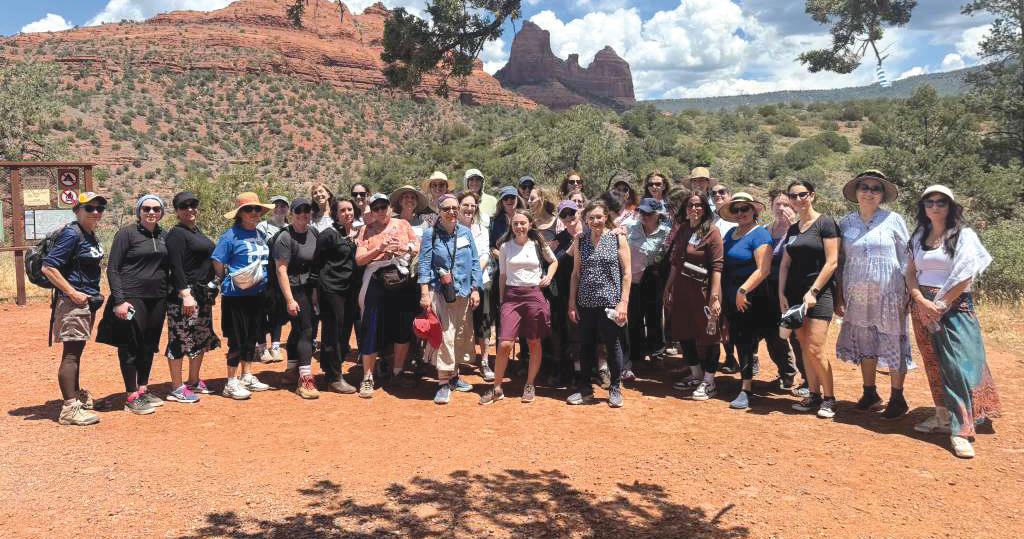
f you think summer camp is just for the kids, think again. Brandeis National Committee (BNC) Phoenix Chapter is offering “Summer Camp” for adults featuring more than 60 activities running from June through August.
Participants must pay the annual dues to become members before being able to register for summer activities. Join by July 1 to take advantage of the summer program and the membership year, which ends June 30, 2027. After summer ends, members can participate in other Brandeis programming offered throughout the year, including more than 100 study groups planned for 2026-2027.
BNC provides financial support to Brandeis University and its libraries. Since 1950, the Phoenix Chapter has offered its members a wide array of programs, activities and events throughout the year, and provides community service and volunteer opportunities in the Greater Phoenix area.
The BNC Phoenix Chapter has been offering summer activities to its members for more than a decade.
Programming ranges from games like canasta, mahjong, pinochle, Mexican Train Dominoes and Rummikub to food-related meetups, including a dim sum lunch, wine tasting, ice cream socials, happy hours and even a special tasting of desert-plantinspired offerings, included with a tour of the Biblical Garden at Congregation Beth Israel in Scottsdale.
Co-chairs of the program, Ronee Siegel and Harriet Schwartz, said that most activities are led by Brandeis members, except



for a few Zoom presentations such as “Over the Rainbow,” “Custer’s Last Stand, Little Bighorn,” “AZ H2O Update” and “Muhammad Ali and His Times.”
“It’s our members themselves who are very happy to do this during the summer,” said Siegel.
Last summer, BNC member Ruth Lerner led a class on “Packing Light,” and this summer she will lead a backstage tour at the Peoria Center for the Performing Arts and TheaterWorks, taking place at the end of June.
She finds these activities give everyone an opportunity to learn, meet people or just socialize. “Part of what results is making new friends,” she said. “There are so many opportunities to do this for different interests.”
Other creative activities include a mosaic class, a block-printing project and a visit to sculptor Sandy Dishman’s home to view his work and learn how he began his hobby.
Marilyn Reinfeld likes that there are programs for everybody: singles, couples, men and women.
“The nice thing about summer is the flexibility for anyone’s schedule, especially if you travel. For many activities, you can sign up for just one time and even Zoom if you’re out of town,” she said. “It’s lots of fun to try different things and there’s a variety of choices. I went to a wine group with my husband, and it was nice to meet other couples.”
Schwartz added that the movie discussion group she belongs to switches to Zoom over the summer, so members can
still participate. “For people who do go back ‘home’ for the summer, we have a fair number of Zoom activities that they could still participate in,” she said.
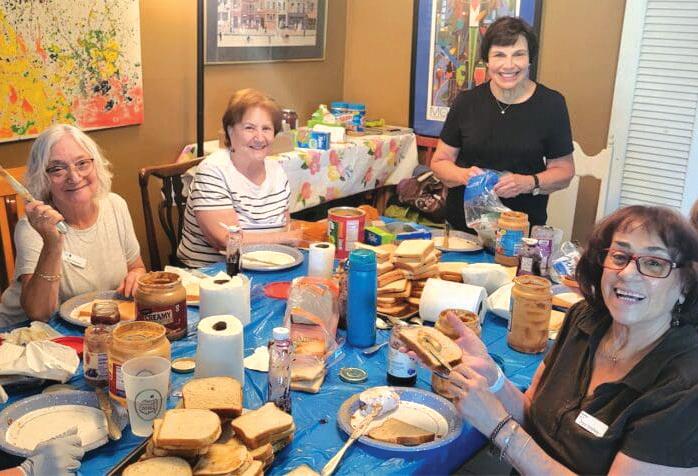
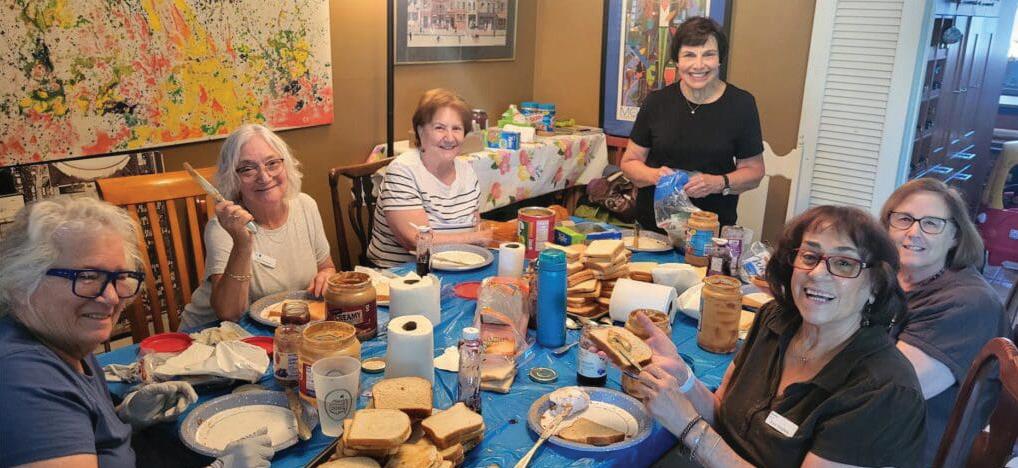
Since community service is part of Brandeis’ mission, several activities offer opportunities to give back. “Make a Mitzvah” participants will make peanut butter and jelly sandwiches to donate, and another group will volunteer at the Desert Mission Food Bank, sorting and bagging items for distribution to families in need.
This is Sherry Wolf’s third summer participating. She has attended happy hours, lunches and ice cream socials at the Sugar Bowl in Scottsdale. She took canasta lessons last summer and signed up for mahjong this summer. During the year, she also volunteered with “Mitzvah Mavens,” mak-
ing peanut butter sandwiches one year and stuffing backpacks for donations another.
“Through Brandeis, I’ve increased my social life and filled my days. I made a lot of friends — many now good friends,” she said.
Schwartz agreed that the summer camp activities are a great resource for those who don’t leave the Valley. “It gives them an opportunity to get together with friends, meet new people, enjoy activities with others, and they don’t have to be shut in because it is over 110 degrees.”
“We’re very proud of the fact that we keep our people busy, interested and connected in the summer,” said Siegel. “The connection is the important thing.” JN
For more information, visit brandeisphoenix.org.














MALA BLOMQUIST | MANAGING EDITOR
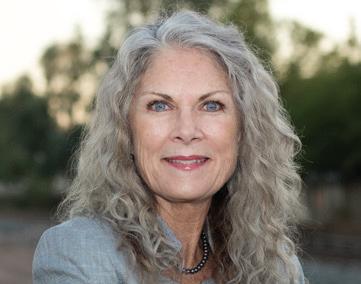
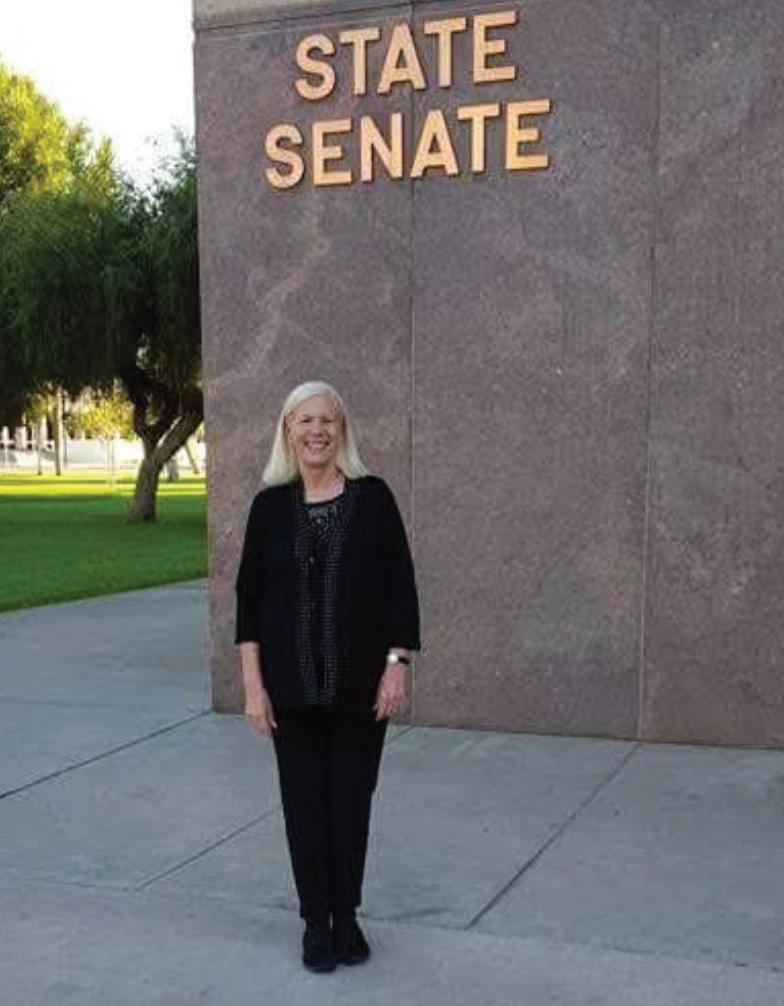
After losing her mother in January, Scottsdale resident Carolyn Leff thought she was doing the responsible thing with her mother’s Facebook page. Instead, she said, she now kicks herself every day for the decision she made.
Leff, an Arizona political activist and daughter of former Jewish Arizona State Senator Barbara Leff, is now pushing for legislative reform after discovering that memorializing her mother’s Facebook account effectively locked her out of key parts of the page, including access to private messages on Messenger, account management tools and years of digital memories.
“I thought I was doing something good when I told Facebook that my mom passed,” said Leff. “Like when you go down to the elections department, you tell them that someone passed and they take them off the voter list.”
Barbara Leff died Jan. 14, 2026, leaving behind decades of political connections and family memories stored online. Shortly after her death, her daughter submitted the required documentation to Meta, Facebook’s
parent company, including a death certificate and identification, to convert the account into a memorial page.
Leff had already been designated as her mother’s “legacy contact,” a Facebook feature intended to allow limited management of memorialized accounts.
But she quickly discovered the limitations were far greater than she expected.
“You can change the cover photo. You can approve friend requests. But you can’t access Messenger. You can’t edit important information. You can’t fully manage the account,” Leff said. “Memorialization isn’t the same as access.”
Leff says Meta’s customer service repeatedly failed to explain why the account could not simply be restored. Because she subscribes to Meta Verified, a paid service that issues a blue badge with a checkmark that requires photo identification, she believed the company already had sufficient proof of her identity and relationship to her mother.
“One question I kept asking them was: ‘What information are you still missing?’” Leff said. “Nobody could answer me.”
According to Leff, at one point, Meta
indicated the account could be reversed, that the case was on the manager’s desk and to check back in 48 hours if she hadn’t heard from anyone. After 48 hours had passed, she messaged them and was told the case had been closed and that it would take another six months.
The whole experience has transformed her grief into activism.
Leff has reached out to local politicians, including Rep. David Schweikert, former Pinal County Sheriff Mark Lamb and State Senator Shawnna Bolick, to explore changes to digital asset laws governing social media accounts after death.
She realized she may have to wait until after the midterm elections, but her focus is on both federal and state reforms that would clarify the rights of immediate family members to manage a deceased relative’s digital accounts.
“There needs to be some reform on nextof-kin access after someone passes,” she said. “Most people don’t put Facebook accounts in their wills. They don’t think about it.”
In 2016, Arizona passed the Revised Uniform Fiduciary Access to Digital Assets Act (FAADA). This legislation allows an individual’s designated fiduciary — such as a power of attorney, trustee or executor — to legally access, manage and distribute their digital assets and online accounts in the event of their death or incapacity.
Leff argues the law does not adequately address how families interact with modern social media platforms in practice.
“The tools exist and the law exists, but they don’t work together,” she said. “There’s no clear, consistent path when families actually need help.”
Leff said she began hearing from others across the country after sharing her story publicly.
One parent told Leff that they lost their son 15 years ago, and Facebook still won’t let them access his account. Others described

similar struggles involving deceased spouses and parents.
She also mentioned a recent Wall Street Journal article detailing another family’s difficulties accessing a deceased relative’s Facebook account, saying the issue appears to be far more widespread than many realize. What frustrates her most, she says, is the permanence of Facebook’s memorialization system.
“If I had never memorialized the page, everything would’ve been fine,” Leff said. “I could have still logged in normally.”
She contrasts the process with other social media platforms, including TikTok, where she says she was able to switch account types within minutes.
“If I can change a business account back to a personal account on TikTok in two seconds, why can’t Facebook reverse a memorialized page?” she asked.
Leff acknowledges she acted while grieving and said she never anticipated the consequences.
“When I finally had a moment of clarity through all the crying and missing my mom, I realized, ‘Oh no, this isn’t what I wanted,’” she said.
Despite her frustration, Leff says she does not intend to give up, even if it means going after a multi-billion-dollar company all alone.
“I’m not doing it just for myself, I want to help other people,” she said. “I’m not giving up.” JN
THURSDAY, JUNE 18
Mussar in Recovery – A Jewish Spiritual Path to Serenity and Joy:
1-2 p.m. Online via Zoom. Join Valley Beit Midrash and Temple Kol Ami for a virtual presentation by Hannah L. who will draw on her personal experience to address misinformation and misunderstanding about addiction in the Jewish community and show how Mussar wisdom and practice provides a blueprint for healing. For more information, visit valleybeitmidrash.org.
SUNDAY, JUNE 14
Gesher's Annual Pool Party: 9:30-11 a.m. Martin Pear Aquatics Center at the Ina Levine Jewish Community Campus, 12701 N. Scottsdale Road, Scottsdale. Join Gesher Disability Resources for a fun morning poolside. The pool has zero entry and the chair lift will be available. This is not a drop-off event. For more information, visit gesherdr.org.
JWV Post 619 Speaker: 9:30 a.m. Oakwood Country Club Ballroom, 24218 S. Oakwood Blvd., Sun Lakes. Join Jewish War Veterans Copper State Post 619 for a presentation by Luana Patterson, president of Blue Star Moms of the Southwest Valley, Chapter AZ 4. For more information, contact Arthur Uram at 702884-4175 or uramarthur@gmail.com.
MR. G Sings Songs of the Rat Pack: 2 p.m. Beth Emeth Congregation of the West Valley, 13702 W. Meeker Blvd., Sun City West. Join the Sisterhood of Beth Emeth Congregation for a selection of songs from the Rat Pack. Cost: $15. For more information, call the office at 623-5847210 Mon.-Fri. from 9 a.m. to 12 p.m.
An Evening of Inspiration: 7 p.m. Chabad of Phoenix, 2110 E. Lincoln Drive, Phoenix. Join Chabad for a tribute in honor of Gimmel Tammuz, the Rebbe’s yahrzeit, with orator Rabbi Yitzchak Schochet, rabbi of Mill Hill Synagogue in London. For more information, visit chabadaz.com/rebbelecture.
WEDNESDAY, JUNE 17
Young Adult Happy Hour: 5-7 p.m. The Sicilian Butcher, 15530 N. Tatum Blvd. #160, Phoenix. Join Temple Chai’s Young Adult Group (ages 20s, 30s and early 40s) for a happy hour to connect with other young Jewish adults. For more information, visit tcaz.shulcloud.com/ form/SicilianButcher.
THURSDAY, JUNE 18
Operation Back to School: East Valley Jewish Community Center, 908 N. Alma School Road, Chandler. The Early Learning Center and Camp Rimon at the EVJCC are collecting school supplies in support of Operation Back to School, a project of For Our City-Chandler. Drop off school supplies at the EVJCC by June 18 or order online by June 15 to have the supplies shipped directly to the EVJCC. For more information, visit evjcc.org.
FRIDAY, JUNE 19
Farewell & Thank You, Cantor Greenblatt: 5:30 p.m. Temple Chai, 6025 E. Bell Road, Scottsdale. Join Temple Chai for nosh and Kabbalat Shabbat service to bid farewell to Cantor Tanya Greenblatt as she concludes her time as cantor in residence. For more information, visit templechai.com.
WEDNESDAY, JUNE 24
Slice Into Summer: Pizza Social at Lou Malnati’s Pizzeria: 11:30 a.m.-1:30 p.m. Lou Malnati’s Pizzeria, 17787 N. Scottsdale Road, Scottsdale. Join the Valley of the Sun Jewish Community Center for lunch and socializing. Please note:
Pizzas served are dairy only and are not kosher. Cost: $20 VOSJ members, $25 non-members; includes pizza, soda and salad. For more information, visit valleyofthesunj.org/calendar.
SUNDAY, JUNE 28
Bags of Hope: Interfaith Heat Relief Bag
Packing Event: 3-4:30 p.m. Foothills Christian Church, 3951 W. Happy Valley Road, Glendale. Join Arizona Faith Network for a hands-on service opportunity to pack heat relief bags for those most vulnerable to Arizona’s extreme summer temperatures. For more information, visit membership-usa.keela.co/bagsofhope.
WEDNESDAY, JULY 1
Summer Cinema Social: Bagels, Bites & Big Screen: 9:30 a.m.-12:30 p.m. Valley of the Sun Jewish Community Center, 12701 N. Scottsdale Road, Scottsdale. Join the VOSJ for Israeli and Jewish films, bagels, snacks and ice cream. Cost: $10 members, $15 non-members. For more information, visit valleyofthesunj.org/ calendar.
Out-of-School Safety Awareness: 11 a.m.-1 p.m. Online. Join the Valley of the Sun Jewish Community Center and Lebovitz Law Group for practical, easy-to-follow safety tips to help families navigate the summer months. For more information, visit valleyofthesunj.org/calendar.
THURSDAY, JULY 2
Righteous Idolaters? A History of Christianity Through Jewish Eyes: 1-2 p.m. Online via Zoom. Join Valley Beit Midrash for a virtual presentation by Rabbi Dr. Joshua Garroway, who is the Sol and Arlene Bronstein Professor of JudaeoChristian Studies at the Hebrew Union College–Jewish Institute of Religion in Los Angeles. For more information, visit valleybeitmidrash.org.
SUNDAYS
Chassidus Class: 9 a.m. Online. Learn about the Chasidic movement with Rabbi Yossi Friedman. Use this link: ChabadAZ.com/LiveClass. Cost: Free. For more information, visit chabadaz.com.
Jewish War Veterans Post 210: 10 a.m. the first Sunday of the month in Central Phoenix. Any veterans, friends of veterans or if you just want to meet a vet, all are welcome. For more information, contact Michael at c365michael@ yahoo.com.
Anxiety in the Modern World: 6 p.m. Online. Learn the secrets of the Torah for living stressfree in the current environment with Rabbi Boruch of Chabad of Oro Valley. Cost: Free. Use this link: zoom.us/j/736434666. For more information, visit chabadaz.com.
MONDAYS
Pomegranate Guild of Judaic Needlework, Desert Cactus Chapter: 10 a.m. The Oasis at Sagewood, 4555 E. Mayo Blvd., Phoenix. The guild meets the third Monday of the month, adjusted when necessary to accommodate Jewish holidays. For more information, visit pomegranateguild.org.
Living Through Loss: 4:30-6 p.m the first and third Monday of each month. Online via Zoom. Join the Deutsch Family Shalom Center at Temple Chai for a Jewish bereavement support group. For more information, contact shalomcenter@templechai.com or 602-971-1234, ext. 253.
Ethics of Our Fathers: 7 p.m. Online. Learn with Rabbi Zalman Levertov. Use this link: bit. ly/2Y0wdgv. Cost: Free. For more information, visit chabadaz.com.
Quotable Quotes by our Sages: 7 p.m. Online. Learn with Rabbi Shlomy Levertov. Use this link: JewishParadiseValley.com/class. Cost: Free. For more information, visit chabadaz.com.
Partners in Torah: 7:30 p.m. Online. Join a growing group of inspired learners with Project Inspire. Cost: Free. Use this link: us04web.zoom. us/j/3940479736#success, password is 613. For more information, email Robin Meyerson at robin@projectinspireaz.com.
Learning to Trust in God: 7:30 p.m. Online. Learn with Rabbi Yossi Friedman. Use this link: ChabadAZ.com/LiveClass. Cost: Free. For more information, visit chabadaz.com.
Torah & Tea: 7:30 p.m. Online. Learn with Rabbi Yossie Shemtov. Cost: Free. For more information, visit Facebook.com/ChabadTucson.
Single Parent Zoom: 8 p.m. First and third Monday of every month. Join The Bureau of Jewish Education’s Family University single parents’ group for those looking to form friendships and build their support system with like-minded people. For more information or to register, visit bjephoenix.org/family-university.
TUESDAYS
Let’s Knit: 1:30 p.m. Ina Levine Jewish Community Campus, 12701 N. Scottsdale Road, Scottsdale. Share the pleasure of knitting, crocheting, etc. outside the social hall in the campus. Can’t knit? They will teach you! Every level welcome. Cost: Free. For more information, visit vosjcc.org.
Grief Support Group: 4 p.m. Beth Emeth Congregation of the West Valley, 13702 W. Meeker Blvd., Sun City West. All are welcome to this support group for anyone experiencing grief or any kind of loss. Cost: Free. For more information, call 623-584-7210 weekdays 9 a.m. to 12 p.m.
Maintaining an Upbeat Attitude: 7 p.m. Online. A class exclusively for people in their 20s and 30s, learn how Jewish Mysticism can help with your attitude with Rabbi Shlomy Levertov. Use this link: JewishParadiseValley.com/YJPclass. Cost: Free. For more information, visit chabadaz.com.
Torah Studies: 7:30 p.m. Online. Learn with Rabbi Mendy Levertov. Use this link: ourjewishcenter.com/virtual. Cost: Free. For more information, visit chabadaz.com.
WEDNESDAYS
My Baby and Me: 9-10 a.m. Temple Chai Early Childhood Center, 4645 E. Marilyn Road, Phoenix. Join Temple Chai ECC for a weekly gathering for families with babies up to 12 months. Cost: Free. For more information, visit tcaz. shulcloud.com/event/my-baby-and-me-playgroup.html.
Torah Study with Temple Beth Shalom of the West Valley: 11 a.m.-12:30 p.m. Online. Weekly study group explores that week’s portion and studies different perspectives and debates the merits of various arguments. Intended for adults, Torah study is open to students of all levels. For more information, contact the TBS office at 623-977-3240.
Happiness Hour: 11:30 a.m. Online. Class taught by Rabbi Pinchas Allouche that delves into texts and references culled from our traditions to address a relevant topic. For more information, visit BethTefillahAZ.org.
Lunch & Learn: 12 p.m. Online. Grab some food and learn with Rabbi Yehuda Ceitlin. Use this link: Facebook.com/ChabadTucson. Cost: Free. For more information, visit chabadtucson.com.
The Thirteen Petalled Rose: 1 p.m. Online. Kabbalah class that studies “The Thirteen Petalled Rose” by Rabbi Adin Even-Israel Steinsaltz, focusing on the many concepts of Kaballah and Jewish Mysticism and applying them to everyday life. For more information, visit BethTefillahAZ.org.
Grief Support Group: 5-6 p.m. Online via Zoom. Therapist Susan Charney MSW, LCSW, leads a grief support group every first and third Wednesday of the month virtually for individuals experiencing the loss of an adult child or sibling. In lieu of any fees for these sessions, donations to Temple Solel are appreciated. For more information, contact susancharneycounseling@ gmail.com.
History of the Jews: 7 p.m. Online. Learn the Jewish journey from Genesis to Moshiach with Rabbi Ephraim Zimmerman. Use this link: zoom. us/j/736434666. Cost: Free. For more information, visit chabadaz.com.
JACS: 7:30-8:30 p.m. Online. Zoom support group for Jewish alcoholics, addicts and their friends and family on the first and third Wednesdays of the month. Cost: Free. For more information, email jacsarizona@gmail.com or call 602-692-1004.
THURSDAYS
Ladies Torah & Tea: 10:30 a.m. Online. Learn about the women of the Torah with Mrs. Leah Levertov. Use this link: ourjewishcenter.com/ virtual. Cost: Free. For more information, visit chabadaz.com.
Talmud - Makkos: 11 a.m. Online. Learn with Rabbi Shlomy Levertov. Cost: Free. Use this link: JewishParadiseValley.com/YJPclass. For more information, visit chabadaz.com.
The Science of Everything: 11 a.m. Online. Explore the most fundamental work of Chassidut: the Tanya, with Rabbi Boruch. Use this link: zoom.us/j/736434666. Cost: Free. For more information, visit chabadaz.com.
Torah Study with Hazzan Lev Ettelson: 11 a.m. Beth Emeth Congregation of the West Valley, 13702 W. Meeker Blvd., Sun City West. Join Hazzan Ettelson for a discussion of the weekly Torah portion. For more information, call 623584-7210 weekdays 9 a.m. to 12 p.m.
Mindfulness Gatherings: 12 p.m. Online. Hosted by Hospice of the Valley via Zoom. Cost: Free. To join by phone, dial 1-253-215-8782, meeting ID 486 920 2119#, to get the Zoom link or for further questions contact Gill Hamilton at ghamilton@hov.org or 602-748-3692.
Israel and the Middle East: 12:30-2 p.m. for five sessions beginning June 18. Ina Levine Jewish Community Campus, 12701 N. Scottsdale Road, Scottsdale. Join the Bureau of Jewish Education of Greater Phoenix for a course taught by Meir Jolovitz on the complex issues facing Israel today. For more information, visit bjephoenix. org/courses-classes.
Weekly Mahjong: 1-3 p.m. Temple Solel, 6805 E. McDonald Drive, Paradise Valley. Join Temple Solel each Thursday afternoon for mahjong. Lessons available for beginners. Cost: Free. RSVP via email to dottiebefore@gmail.com so they know how many tables to set up.
Torah Portion Class: 7 p.m. Online or in person. Chabad Lubavitch of Fountain Hills, 16830 E. Avenue of the Fountains, Fountain Hills. Join Rabbi Mendy Lipskier for a discussion of the weekly parshah and gain new insights to the Torah. For more information, visit jewishfountainhills.com.
Teen Discussions: 7-8:30 p.m. Online. Learn with Rabbi Tzvi Rimler. Use this link: cteen.clickmeeting.com/east-valley. Cost: Free. For more information, visit chabadaz.com.
SATURDAYS
Saturday Mindfulness Gatherings: 9:30 a.m. Online. Hosted by Hospice of the Valley. To join by phone, dial 1-253-215-8782, meeting ID 486 920 2119#. To get the Zoom link or for more information, contact Gill Hamilton at ghamilton@hov.org or 602-748-3692.
Book Discussion: 1:30-2:30 p.m. Online. Join Or Adam Congregation for Humanistic Judaism on the third Saturday of every month for a book discussion. For more information and to register, contact oradaminfo@gmail.com.
Shabbat
FRIDAYS
Tot Shabbat: 9:30 a.m. Ina Levine Jewish Community Campus, 12701 N. Scottsdale Road, Scottsdale. Join the Bureau of Jewish Education of Greater Phoenix monthly for music, parachute play, crafts and a family Shabbat experience. For more information, visit bjephoenix.org.
Shabbat Morning Service: 10 a.m. Ina Levine Jewish Community Center, 12701 N. Scottsdale Road, Scottsdale. Join Congregation Shomrei Torah for a traditional/egalitarian service lead by Hazzan Bernard Savitz with kiddush following service. Zoom available. For more information, visit cstaz.org or contact 602-376-4392.
Welcome Shabbat: 11-11:30 a.m. Online. Celebrate Shabbat with the JFCS Virtual Center for Senior Enrichment. Each week a different guest host will lead the program with song and
celebration. Cost: Free. For more information, visit jfcsaz.org/cse.
Shabbat at Beth El: 5:45 p.m. on Zoom; 9:30 a.m. at Beth El Phoenix, 1118 W. Glendale Ave., Phoenix or livestreaming at tinyurl.com/beclivestream. Celebrate Shabbat with songs, blessings and teachings with Rabbi Stein-Kokin and Cantor Sarah Bollt. For more information or to join, visit bethelphoenix.com.
Erev Shabbat Service: 5:30 p.m. Online. Rabbi Alicia Magal will lead a service livestreamed for members of the Jewish Community of Sedona and the Verde Valley. Cost: Free. For more information and to obtain the Zoom link, visit jcsvv. org/contact.
Shabbat Service: 5:30-6:30 p.m.; Oneg at 5 p.m. Temple B’rith Shalom, 2077 Brohner Way, Prescott. Join Temple B’rith Shalom for a musical and spiritual Shabbat service. For more information, visit brithshalom-az.org.
Shabbat Services: 5:30 p.m. nosh, 6:15 p.m. service; morning service has varying dates and times. Temple Chai, 4645 E. Marilyn Road, Phoenix. For more information, contact Joan Neer at jneer@templechai.com.
Pre-Shabbat Kiddush Club: 6 p.m. Online. Say Kiddush with Rabbi Mendy Levertov. Cost: Free. Use this link: ourjewishcenter.com/virtual. For more information, visit chabadaz.com.
Shabbat Services: 6 p.m.; 9:30 a.m.; followed by a light Kiddush lunch. Beth Emeth Congregation of the West Valley, 13702 W. Meeker Blvd., Sun City West. For more information call 623-584-7210 or visit bethemethaz.org.
Shabbat Services: 6 p.m.; 9:30 a.m. Congregation Or Tzion, 16415 N. 90th St., Scottsdale. Services are also live streamed at otaz.org/ livestream. For more information about services, events and membership, visit congregationortzion.org or call 480-342-8858.
First Friday Shabbat Services: 6:15 p.m.; Oneg at 7:15 p.m. Valley Unitarian Universalist, 6400 W. Del Rio St., Chandler. Join Congregation NefeshSoul for Friday night services the first Friday of each month in the sanctuary building of Valley Unitarian Universalist. For more information, contact Jim Hoffman at 480-329-3316.
Shabbat Services: 6:15 p.m.; 10 a.m. Congregation Beth Israel, 10460 N. 56th St., Scottsdale. Services held in the Goldsmith Sanctuary. Participants must pre-register by Thursday at 5 p.m. Priority will be given to members first and then guests. If there are more requests than available seats a lottery system will be used. For more information or to make a reservation, visit cbiaz.org/shabbat-services.
Kabbalat Shabbat and/or Shabbat morning service: 6:30 p.m.; 10 a.m.; dates vary. Congregation Kehillah, 5858 E. Dynamite Blvd., Cave Creek. Join Rabbi Bonnie Sharfman and cantorial soloists Erica Erman and Scott Leader either in person or via Zoom. For safety reasons, please register ahead of time. For dates, visit congregationkehillah.org/event/. Register by emailing info@congregationkehillah.org.
Shabbat Services: 7 p.m. Temple Beth Shalom of the West Valley, 12202 N. 101st Ave., Sun City. Services are followed by an Oneg. Services are live-streamed on YouTube. For more information and to get the YouTube link, visit tbsaz.org or call 623-977-3240.
Shabbat Services in Sun Lakes: 7-9 p.m. Sun Lakes Chapel, 9240 E. Sun Lakes Blvd. North, Sun Lakes. Sun Lakes Jewish Congregation conducts Reform Shabbat services on the second Friday of each month. New members welcome.
For more information, call 480-612-4413 or 480-580-1592.
Shabbat Services with Beth Ami Temple: 7 p.m. Services held at Unitarian Universalist Congregation of Phoenix, 4027 E. Lincoln Dr., Paradise Valley. Join Beth Ami Temple Rabbi Alison Lawton and Cantorial Soloist Michael Robbins as they lead Shabbat services twice a month. For more information, visit bethamitemple.org.
BAR MITZVAH
ADAM SILVERMAN
Third Friday Shabbat: 7-9 p.m. Group meets at a North Scottsdale location. The Desert Foothills Jewish Community Association hosts a Shabbat service followed by a program. Contact 602-487-5718 for more information. JN
Adam Silverman became a bar mitzvah on May 30, 2026, at Congregation Beth Israel. He is the son of David and Diane Silverman of Peoria.
Adam’s grandparents are Steve and Lucy Silverman of Glendale; and Ron and Cathy Caplan of Mesa.
For his mitzvah project, Adam collaborated with several classmates to fundraise for dogs in shelters. Their team’s project is called “Teen Activating Inspiring Loving Shelter Dogs (TAILSd).” In partnership with the Arizona Cavalier Foundation, they raised $350.
A student at Paseo Verde Elementary, Adam enjoys playing basketball, video games, hanging out with friends at the mall, being on the student council at school and listening to music. JN
OBITUARY
MELANIE BETH BECKER
Melanie Beth (née Berkey) Becker of Phoenix died on May 17, 2026. She was 78. Melanie was born in St. Paul, Minnesota.
Melanie is survived by her husband, Barry Becker; daughter, Sarah Becker; son, Daniel Becker; brother, Terry Berkey; and three grandchildren.
Services were held on May 20, 2026, at Beth El Cemetery and officiated by Rabbi Nitzan Stein Kokin.
Donations in her name may be made to the Alzheimer’s Association and Jewish National Fund-USA. JN
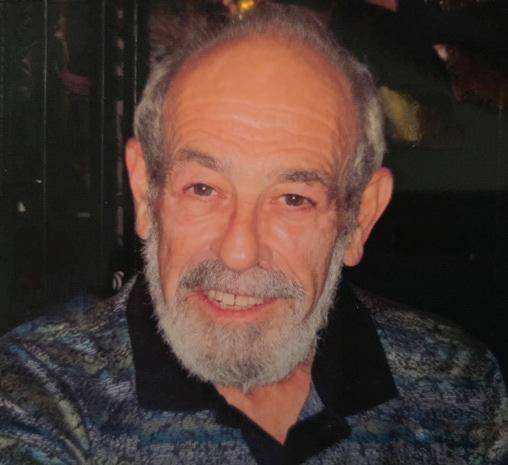
Darryl Roland Stern, M.D., died peacefully on May 31, 2026, with his wife and children by his side. He was born June 6, 1942, in Milwaukee, Wisconsin, to Jack and Viola (Newman) Stern. He earned his pre-med degree from the University of Wisconsin-Milwaukee and completed medical school and residency at the University of Wisconsin-Madison, where he married his wife of 60 years, Helen (Sheps) Stern. He then served as a major at Dover Air Force Base and was honorably discharged in 1973, when he and his family moved to Phoenix. In Arizona, Darryl was director of Camelback Hospital’s Community Mental Health Center and set up private practice in Tempe in 1975. In 2007, he became an outpatient staff psychiatrist at the VA Medical Center, from which he retired in 2012. He lived in Tempe since 1977.
Darryl is survived by his wife, Helen; daughter, Ariann Stern-Gottschalk (Haim); son Miles Stern (Melissa); grandchildren Karenna, Lily and Maeve Stern, and Sigal and Lev Gottschalk; sister, Mimi Aronson (Gordon); and several nieces, nephews and cousins.
Herschel Mayer Richter, M.D. died on May 7, 2026. He was born in Cincinnati, Ohio, on Jan. 27, 1933. He graduated from the University of Cincinnati with Phi Beta Kappa honors. He went to medical school there and graduated with distinction as a member of the Alpha Omega Alpha Honor Medical Society.
He moved to Phoenix in 1965 and was in private cardiology practice for 23 years. He became chief of cardiology at the Phoenix VA Hospital until he retired at 74.
Herschel is survived by his wife, Valerie; daughters Stacey Richter (Dan Colement) and Jessica Richter; and grandson Noah Siegel.
He was an avid fly fisherman, skier, hiker, desert explorer, artist and sculptor of animals made from wood found on his many hikes.
Donations can be made in Herschel’s memory to The Nature Conservancy or Jewish Family & Children’s Service in Phoenix.
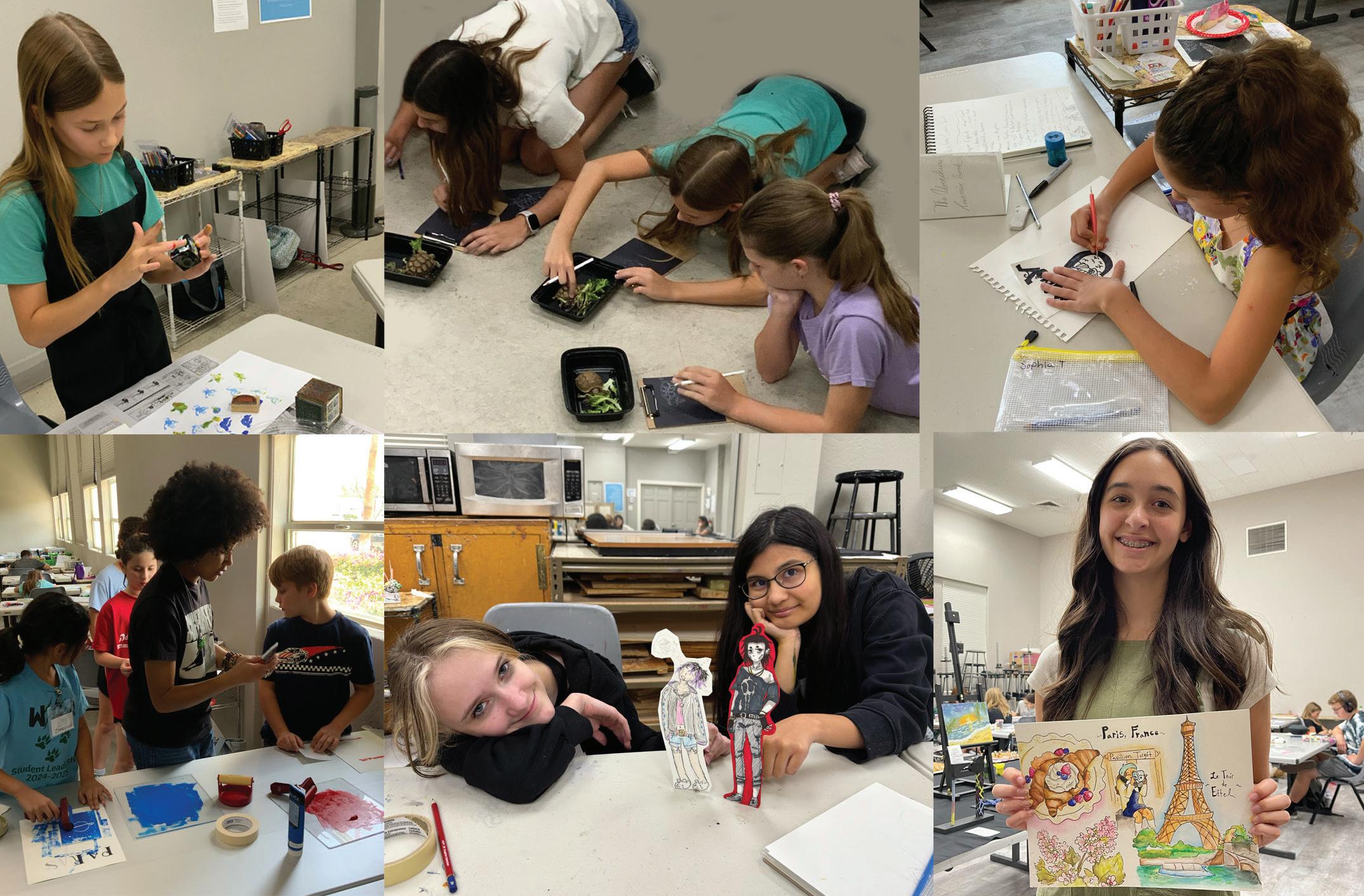


YOUTH & TEEN CLASSES AGES 6-18


Join us for our week-long Youth Academy Fine Art Summer Camps. Programs are taught by professional artists and are designed for all skill levels. Projects include: Painting, 3D Sculpting, Designing, Studio Art, Drawing, Anime, Recycled Art and much more. Our studios are set up so that each student has a personalized space equipped with individual supplies for a fun and creative fine art experience. Most camps run daily Monday through Friday, 9am-3pm. Before and after art is available for an additional fee for students who need an extended day.
We believe art is something to be shared by all, therefore Scottsdale Artists´ School offers scholarships based on merit and/or financial need.