
TEMPLE TAPESTRY
In October, a tapestry stolen nearly 100 years ago will be
AG PRIMARY RACE
Rodney Glassman is relying on experience in the GOP attorney general primary
In October, a tapestry stolen nearly 100 years ago will be
Rodney Glassman is relying on experience in the GOP attorney general primary
MALA BLOMQUIST | MANAGING EDITOR
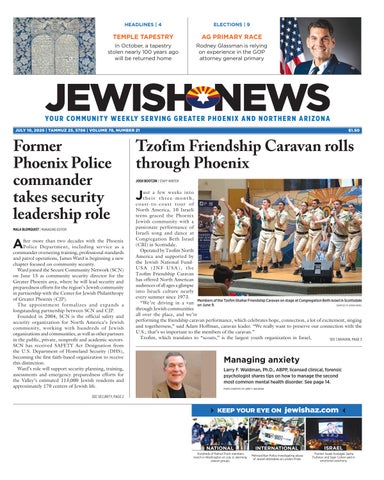
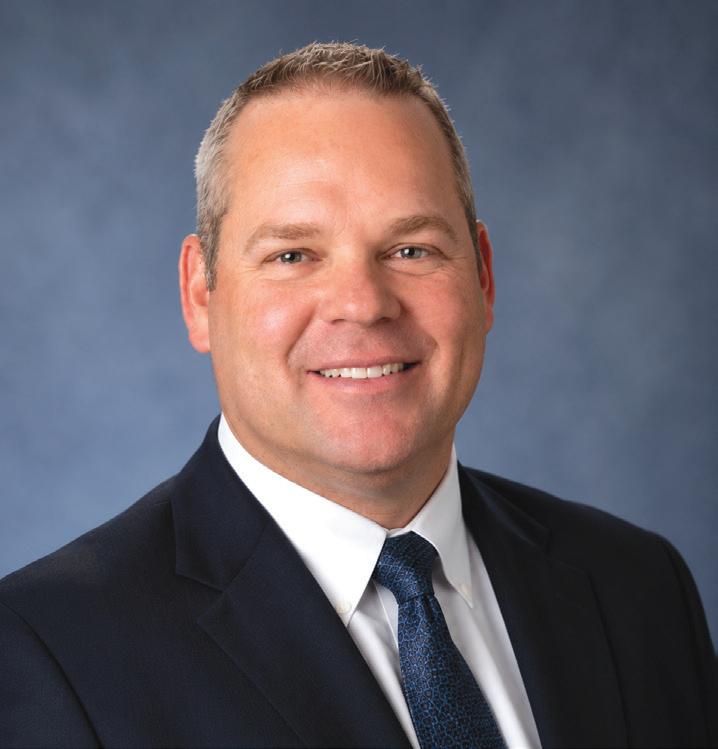
After more than two decades with the Phoenix Police Department, including service as a commander overseeing training, professional standards and patrol operations, James Ward is beginning a new chapter focused on community security.
Ward joined the Secure Community Network (SCN) on June 15 as community security director for the Greater Phoenix area, where he will lead security and preparedness efforts for the region’s Jewish community in partnership with the Center for Jewish Philanthropy of Greater Phoenix (CJP).
The appointment formalizes and expands a longstanding partnership between SCN and CJP.
Founded in 2004, SCN is the official safety and security organization for North America’s Jewish community, working with hundreds of Jewish organizations and communities, as well as other partners in the public, private, nonprofit and academic sectors. SCN has received SAFETY Act Designation from the U.S. Department of Homeland Security (DHS), becoming the first faith-based organization to receive this distinction.
Ward’s role will support security planning, training, assessments and emergency preparedness efforts for the Valley’s estimated 113,000 Jewish residents and approximately 170 centers of Jewish life.
SEE SECURITY, PAGE 2
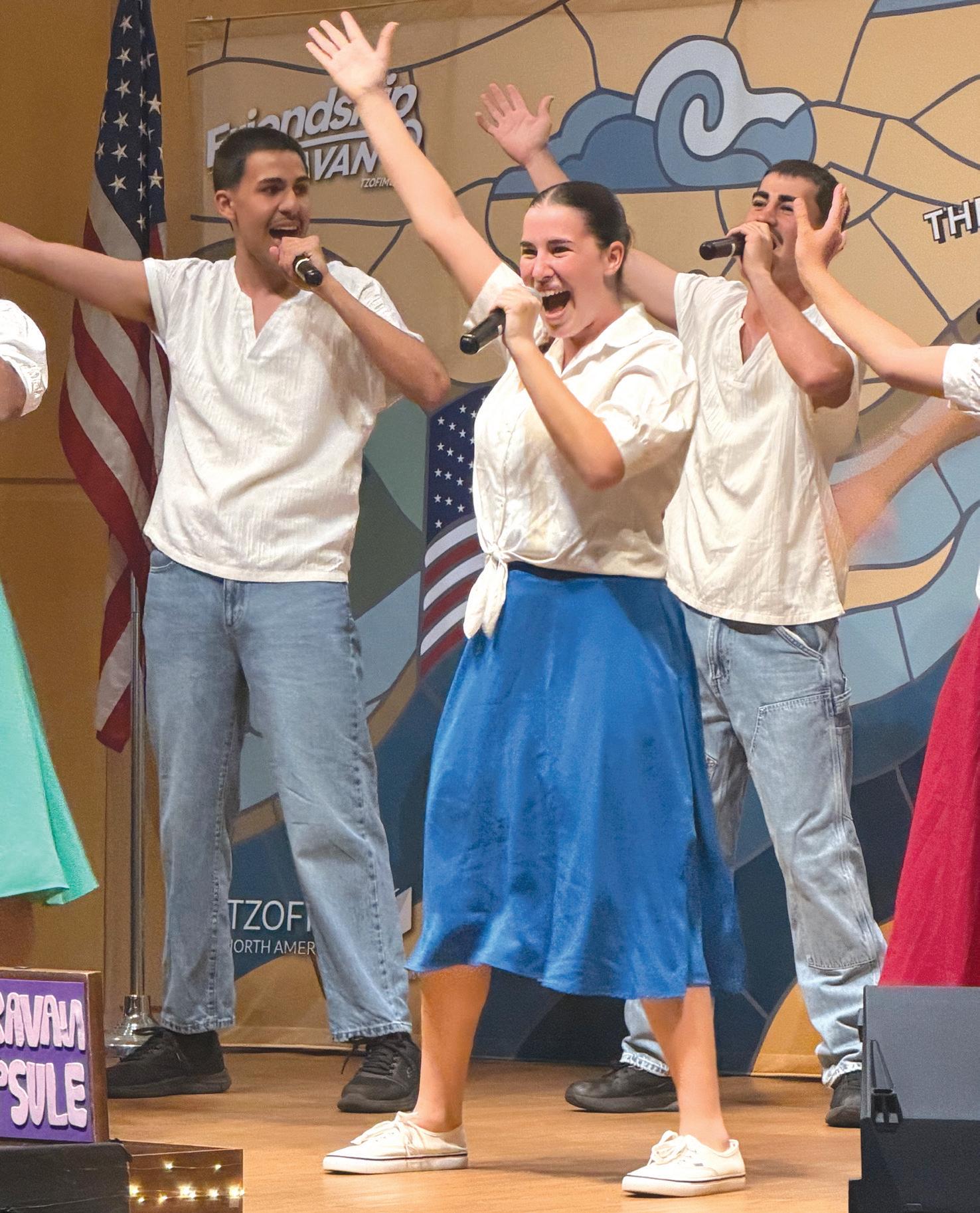
Just a few weeks into their three-month, coast-to-coast tour of North America, 10 Israeli teens graced the Phoenix Jewish community with a passionate performance of Israeli song and dance at Congregation Beth Israel (CBI) in Scottsdale.
Operated by Tzofim North America and supported by the Jewish National FundUSA (JNF-USA), the Tzofim Friendship Caravan has offered North American audiences of all ages a glimpse into Israeli culture nearly every summer since 1973.
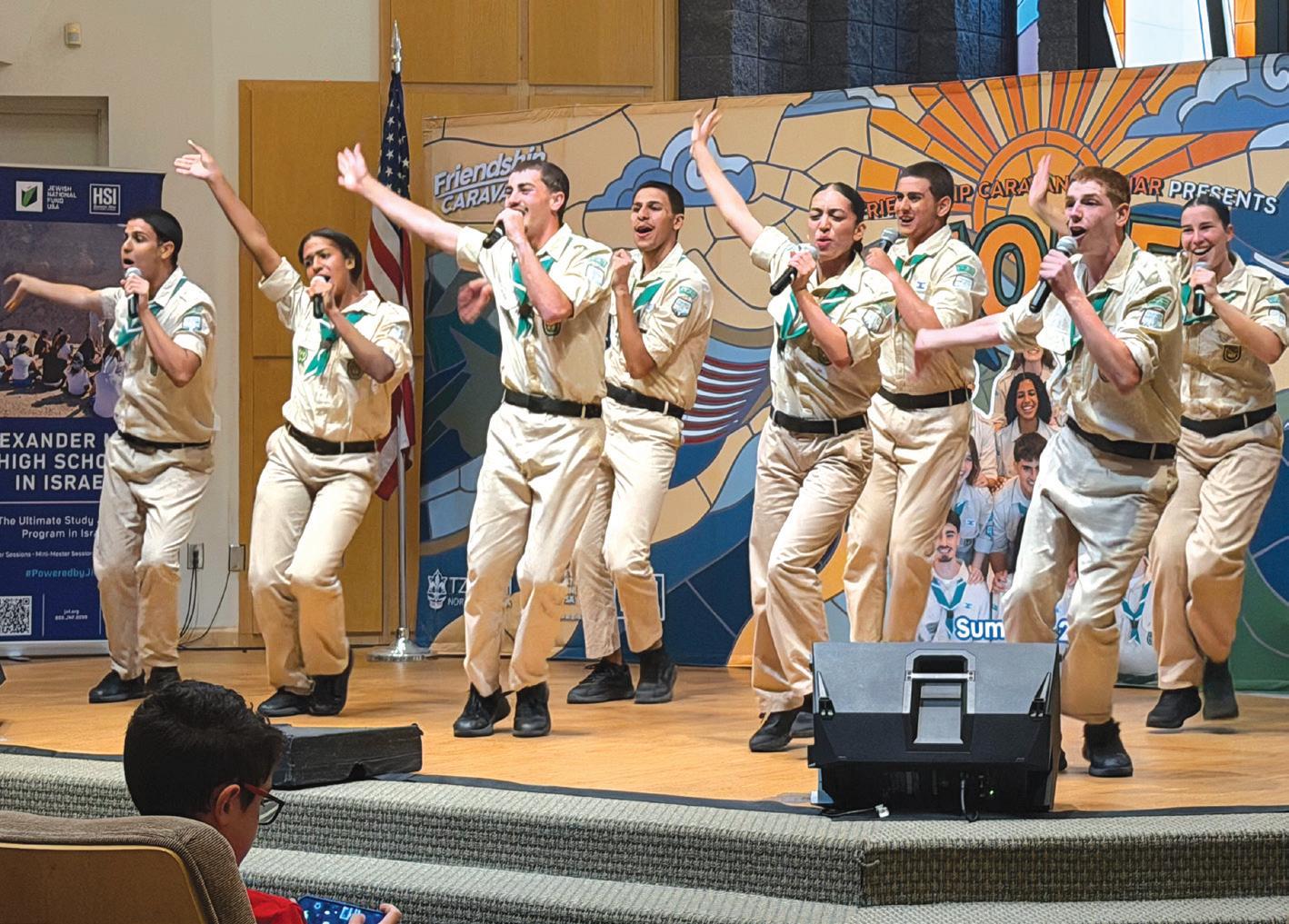
“We’re driving in a van through Jewish communities all over the place, and we’re performing the friendship caravan performance, which celebrates hope, connection, a lot of excitement, singing and togetherness,” said Adam Hoffman, caravan leader. “We really want to preserve our connection with the U.S.; that’s so important to the members of the caravan.”
Tzofim, which translates to “scouts,” is the largest youth organization in Israel, SEE
Larry F. Waldman, Ph.D., ABPP, licensed clinical, forensic psychologist shares tips on how to manage the second most common mental health disorder. See page 14.



“THROUGH MY TWO DECADES WITH THE PHOENIX POLICE DEPARTMENT, I’VE SEEN UP CLOSE HOW SPECIAL AND ENGAGED THIS COMMUNITY IS, AND I LOOK FORWARD TO BUILDING STRONG PARTNERSHIPS AND INFRASTRUCTURE THAT SUPPORT ITS SAFETY, RESILIENCE AND ABILITY TO FLOURISH.”
WARD
JAMES
SECURITY
CONTINUED FROM PAGE 1
“I’m honored to join SCN and begin the next chapter of my career in service to the Greater Phoenix Jewish community,” Ward said. “Through my two decades with the Phoenix Police Department, I’ve seen up close how special and engaged this community is, and I look forward to building strong partnerships and infrastructure that support its safety, resilience and ability to flourish.”
January 6
January 20
January
February 3
January 20
February 17
SOPHIE STERN
said Jon Meyers, director of ADDPC.
CONTINUED FROM PAGE 1
said Jon Meyers, director of ADDPC.
“Our hope is to create and promote opportunities for people to be embraced, become part of the community and find equitable opportunities wherever they might live,” he said.
“Our hope is to create and promote opportunities for people to be embraced, become part of the community and find equitable opportunities wherever they might live,” he said.
response training and is also incorporated into SCN’s security programs.
Meyers first came to know Stern through her mother, Amy Silverman, who read her personal essays about raising a daughter with Down syndrome on KJZZ, National Public Radio’s Phoenix affiliate station.
The Greater Phoenix Community Security program joins a growing network of regional security programs led by SCN and supported by Jewish Federations across the country.
Meyers first came to know Stern through her mother, Amy Silverman, who read her personal essays about raising a daughter with Down syndrome on KJZZ, National Public Radio’s Phoenix affiliate station.
Meyers was so captivated by the essays that he reached out to Silverman, and the two became friends.
about her Judaism with her fellow council members and speaking out for her rights
August 25
Ward retired from the Phoenix Police Department after a 22-year career that included leadership positions across several divisions. He led the department’s Professional Standards Bureau, managed strategic planning initiatives and oversaw training programs for more than 3,000 employees.
September 1
September 8
These programs, informed by the National Jewish Community Security Standards (NJCSS), deliver best-inclass resources, information sharing and coordinated response capabilities tailored to the specific needs of Jewish communities as well as best-practice security information and support.
Meyers was so captivated by the essays that he reached out to Silverman, and the two became friends.
That’s how Stern first learned of the open council seat, but there’s no doubt she earned her position, Meyers said.
That’s how Stern first learned of the open council seat, but there’s no doubt she earned her position, Meyers said.
To become a council member, Stern had to apply and demonstrate that she had something valuable to contribute, he said.
She already has some practice at
about her Judaism with her fellow council members and speaking out for her rights
“One time, I was in class and someone called me the R-word and I told him not to. The teacher was in the hallway and another student repeated the word,” she said. Rather than letting the situation go, she told her theater teacher, who was able
She already has some practice at
“One time, I was in class and someone called me the R-word and I told him not to. The teacher was in the hallway and another student repeated the word,” she said. Rather than letting the situation go, she told her theater teacher, who was able
“If someone has a disability, saying the R-word is like saying the F-word,”
“If someone has a disability, saying the R-word is like saying the F-word,” Stern said.
While performing in the musical “Hairspray,” she had another occasion to tangle with the offensive word, which appears in the script.


While performing in the musical “Hairspray,” she had another occasion to tangle with the offensive word, which appears in the script.
“That’s really bad and my friend said it on stage. I was not OK with that, so I went to the director and told her it was a bad word for people with disabilities, but she wouldn’t take it out,” Stern said.
February 3
March 10
February 17
March 24
March 10
March 31
March 24
April 7
August 25 September 1 September 8 September 15
September 15 October 6 October 13** October 20
October 6
His responsibilities included supervising responses to major incidents, leading complex internal investigations and helping modernize departmental policies related to use of force and accountability.
October 13**
November 3
March 31
April 21
April 7
May 5
April 21
May 19
October 20
November 10
Ward is also known for his work in education and preparedness training. During his law enforcement career, he developed and delivered courses on leadership, communication, tactical response and cultural awareness for both law enforcement personnel and civilian audiences.
November 3
November 10
“CJP has long prioritized community security, and we are proud to help them build on that foundation,” said Michael Masters, SCN’s national director and CEO. “Our partnership and James’s onboarding reflect what it means to grow alongside our communities, connecting on-the-ground support with SCN’s national infrastructure, threat management capabilities, training programs and physical security solutions to meet evolving needs.”
“She’s on the council because she deserves to be on the council,” he said.
To become a council member, Stern had to apply and demonstrate that she had something valuable to contribute, he said.
Stern is creating a life and career as a member of her community, which makes her a great addition.
“She’s on the council because she deserves to be on the council,” he said. Stern is creating a life and career as a member of her community, which makes her a great addition.
“CJP and SCN have a strong history of working collaboratively, and we have seen the impact of their professionalism both up close and from afar,” Kasper said. “Bringing James in and formally joining the SCN umbrella will help better meet the evolving needs of our community and strengthen our ability to support vibrant Jewish life across Greater Phoenix today and for years to come.”
“That’s really bad and my friend said it on stage. I was not OK with that, so I went to the director and told her it was a bad word for people with disabilities, but she wouldn’t take it out,” Stern said.
She let her mother know about the conflict and they were able to convince the director of the need to remove the word from the script.
Ward holds a bachelor’s degree in criminal justice and master’s degrees in educational leadership and human relations from Northern Arizona University. He lives in the Greater Phoenix area with his wife and three children.
23
25
2
9
23
Stern graduated from McClintock High School in Tempe last year and now attends Glendale Community College, with a focus on dance. She is a regular performer at Detour Company Theatre, a Scottsdale theatre company for adults with intellectual, developmental and physical disabilities.
She let her mother know about the conflict and they were able to convince the director of the need to remove the word from the script.
“My friend Al was next to me when I told the director and he gave me the biggest hug ever and said that he loved me so much,” Stern said. Sadly, Al died in a car crash on Oct. 24, 2021.
Heart Can’t Even Believe It: A Story of Science, Love and Down Syndrome,” Silverman’s book about her daughter. When Gesher’s speakers’ bureau, Damon Brooks & Associates, was asked to find a speaker about Down syndrome for an event this spring, Hummell first asked Silverman to speak, thinking Stern might be too young.
23**
30
May 5
June 9
May 19
July 14
June 9
August 4
July 14
August 18*
August 4
August 18*
November 17 December 1 December 15
November 17
December 1
December 15
Among his most notable contributions was the development of an active-shooter preparedness curriculum based on the “Run, Hide, Fight” model, an approach that has become widely used in emergency
Stern graduated from McClintock High School in Tempe last year and now attends Glendale Community College, with a focus on dance. She is a regular performer at Detour Company Theatre, a Scottsdale theatre company for adults with intellectual, developmental and physical disabilities.
These security needs come at a cost. According to the Jewish Federations of North America, security costs for the Jewish community total $765 million per year, with individual organizations spending about 14% of their annual budgets on security.
In fact, when Stern attended her first council meeting in January, she couldn’t wait to tell people of her involvement with Detour and share information about its upcoming shows.
In fact, when Stern attended her first council meeting in January, she couldn’t wait to tell people of her involvement with Detour and share information about its upcoming shows.
Richard Kasper, CEO of CJP, said the partnership will help address the ongoing security needs of the Greater Phoenix Jewish community.
As he transitions from municipal law enforcement to community-based security work, Ward’s career continues to be one of service — this time helping safeguard a community he has worked alongside throughout much of his law enforcement career. JN
“There’s no question that she is going to thrive,” Meyers said. “She’s very gregarious and passionate about the things that matter to her.”
“My friend Al was next to me when I told the director and he gave me the biggest hug ever and said that he loved me so much,” Stern said. Sadly, Al died in a car crash on Oct. 24, 2021.
Heart Can’t Even Believe It: A Story of Science, Love and Down Syndrome,” Silverman’s book about her daughter. When Gesher’s speakers’ bureau, Damon Brooks & Associates, was asked to find a speaker about Down syndrome for an event this spring, Hummell first asked Silverman to speak, thinking Stern might be too young.
They decided instead that Stern should tell her own story; it’s a real bonus that she is not afraid of public speaking.
6
“That was hard; it’s very hard to get emotions out and I was very, very upset,” she said.
“That was hard; it’s very hard to get emotions out and I was very, very upset,” she said.
On the recent anniversary of his death, Stern made a cake and took it to the crash site.
13
They decided instead that Stern should tell her own story; it’s a real bonus that she is not afraid of public speaking.
“It’s not the same when someone tries to tell a person’s story for them,” Hummell said.
“It’s not the same when someone tries to tell a person’s story for them,” Hummell said.
20 December 4
December 11
“I don’t know how I did it without crying. I’m so proud of myself,” she said.
On the recent anniversary of his death, Stern made a cake and took it to the crash site.
For more information about the Secure Community Network, visit securecommunitynetwork.org.
December 18
Amy Hummell, executive director of Gesher Disability Resources, agreed that Stern is a good fit for ADDPC because of her ability to self-advocate.
“I don’t know how I did it without crying. I’m so proud of myself,” she said.
Additionally, helping people with disabilities find jobs was one of the reasons for acquiring the bureau. Unemployment in the disability community is upwards of 75% and of that percentage, 75% are ready, willing and able to work — but haven’t been given the opportunity, Hummell said.
*Annual Directory **Best of Magazine
“There’s no question that she is going to thrive,” Meyers said. “She’s very gregarious and passionate about the things that matter to her.”
Stern looks forward to sharing insights
Jewish News is published by the Jewish Community Foundation of Greater Phoenix, a component of the Center for Jewish Philanthropy of Greater Phoenix.
Stern looks forward to sharing insights
Hummell co-hosted a book event with Meyers a few years ago for “My
Amy Hummell, executive director of Gesher Disability Resources, agreed that Stern is a good fit for ADDPC because of her ability to self-advocate.
Hummell co-hosted a book event with Meyers a few years ago for “My
Phone: 602.870.9470 | Fax: 602.870.0426 | editor@jewishaz.com | advertising@jewishaz.com subscriptions@jewishaz.com | www.jewishaz.com
Phone: 602.870.9470 | editor@jewishaz.com | advertising@jewishaz.com subscriptions@jewishaz.com | www.jewishaz.com
PUBLISHER
PUBLISHER Jewish Community Foundation of Greater Phoenix
12701 N. Scottsdale Road, Suite 201, Scottsdale, AZ 85254 Phone: 602.870.9470 | Fax: 602.870.0426 | editor@jewishaz.com | advertising@jewishaz.com subscriptions@jewishaz.com | www.jewishaz.com
Jewish Community Foundation of Greater Phoenix
PUBLISHER
ASSOCIATE PUBLISHER Rich Solomon | 602.639.5861 rsolomon@jewishaz.com
SENIOR ACCOUNT EXECUTIVE Jodi Lipson | 602.639.5866 jlipson@jewishaz.com
ADVERTISING SALES CONSULTANT Jodi Lipson | 602.639.5866 jlipson@jewishaz.com
Additionally, helping people with disabilities find jobs was one of the reasons for acquiring the bureau. Unemployment in the disability community is upwards of 75% and of that percentage, 75% are ready, willing and able to work — but haven’t been given the opportunity, Hummell said.
“People have it in them to speak up but don’t know how, and often they’re not cheered on. Sophie has family support
“People have it in them to speak up but don’t know how, and often they’re not cheered on. Sophie has family support
GENERAL MANAGER Rich Solomon | 602.639.5861 rsolomon@jewishaz.com
SUBSCRIPTIONS
Jewish Community Foundation of Greater Phoenix
GENERAL MANAGER
Rich Solomon | 602.639.5861 rsolomon@jewishaz.com
MANAGING EDITOR Mala Blomquist | 602.639.5855 mblomquist@jewishaz.com
MANAGING EDITOR Mala Blomquist | 602.639.5855 mblomquist@jewishaz.com
STAFF WRITER Josh Bootzin | 602.639.7066 jbootzin@jewishaz.com
MANAGING EDITOR Mala Blomquist | 602.639.5855 mblomquist@jewishaz.com
STAFF WRITER Shannon Levitt | 602.639.5854 slevitt@jewishaz.com
STAFF WRITER
Shannon Levitt | 602.639.5854 slevitt@jewishaz.com
ADVERTISING SALES CONSULTANT Jodi Lipson | 602.639.5866 jlipson@jewishaz.com
SUBSCRIPTIONS 602.870.9470 x 1 subscriptions@jewishaz.com
602.870.9470 x 1 subscriptions@jewishaz.com
SUBSCRIPTIONS 602.870.9470 x 1 subscriptions@jewishaz.com
GRAPHIC DESIGNER Ebony Brown | 410.902.2333 ads_phoenixjn@midatlanticmedia.com
GRAPHIC DESIGNER Ricki Urban | 602.870.9470 x 2 advertising@jewishaz.com
GRAPHIC DESIGNER Ebony Brown | 410.902.2333 ads_phoenixjn@midatlanticmedia.com



divided into various local chapters that administer youth programming and afterschool activities.
The Tzofim movement has many projects in Israel, but the U.S. delegation is the most exclusive, according to Hoffman.
Members attend three levels of sortings (auditions) for the opportunity to be chosen. The first stage is in their local chapter, the next is with a larger leadership contingent and the final stage is a two-day seminar where they express their opinions on Zionism and Judaism to test their abilities to be a representative of Israel on the global stage.
“From Qiryat Shemona in the north to Eilat, everyone can be sorted,” Hoffman said. “After they go through all those sortings, the delegation is created.”
After the members of the delegation are chosen, of which this year there were 20 — 10 each for the Shahar and Eitan caravans — they undergo months of training and rehearsals with a professional team of music producers, choreographers and content creators.
“We also check their ability to sing and dance, but it’s not what matters in the end,” Hoffman said. “If somebody is fit to be in the delegation and he doesn’t know how to sing and dance, we’ll teach him.”
The Shahar caravan began its journey in Los Angeles in late May, performed twice in the Greater Phoenix area, and plans to perform around 75 total times before finishing in New York in late August.
“It’s a big commitment and a big challenge, being stuck away in a van, but it also becomes a family,” Hoffman said. “It’s one of the craziest experiences you can have, leaving a lot of things behind, but it’s giving yourself to something bigger.”
“Ever since I joined the scouts, I wanted to be part of the friendship caravan delegation to the United States,” said Adi Shahar, a caravan member from Ness Ziona. “I still remember seeing them for the first time — 10 teenagers on stage, singing, dancing, representing Israel and I thought to myself, one day, that’s going to be me, and here I am.”
“These 10 Israeli teenagers came all the way here to tell you a story, what they believe in, who they really are and what they hope for. In these times, we can often feel a little bit of fear and despair,” said Karen Haras, caravan leader. “But tonight, we’re all connected as we sing and dance together.”
Throughout the one-hour performance, caravan members took turns between songs reading notes they had written at the beginning of rehearsals, which were placed in a special caravan time capsule. Many of these notes followed a theme of hope.
The following were some of their resolutions:
“I hope I feel like I’m doing something bigger than just a show, that I’m telling Israel’s story, one song at a time.”
“I hope that on this journey, I’ll feel like someone is guiding me, even if I can’t see the whole path.”
“I hope this summer changes me for the better.”
Halfway through the performance, caravan members took a moment to reflect on how their lives changed on Oct. 7, 2023. They emphasized the importance of hope in moments of unrest and violence.
They spoke on the healing that came afterward, however slow and painful.
“The quiet we were hoping for didn’t last,” said one of the teens. “During our rehearsals for this show, a new escalation began. Suddenly, Israel was under attack again and everything just stopped, but we didn’t. We kept singing and dancing in shelters between sirens, just to make it here to share our story with you.”
“To us, Israel is more than just a piece of land,” said another one of the performers.
“It’s where we were born, where we grew up and where we dream about our future. It’s a place we care deeply about and one we never take for granted.”
Hoffman said that the delegation has a saying in Hebrew that loosely translates to “explaining from the backdoor.” Their goal is not to approach people and explain Israel’s political, religious or historic


significance, but to provide a window into Israeli culture through its youth.
“I’m an alumnus,” Hoffman said. “I was in their role seven years ago, and I think it’s the most meaningful thing I’ve ever done. These are Israeli youth. They want to be the best they can be, they want to meet people and have conversations. They are the good face of Israel.”
Haras was also a caravan member seven years ago before returning as a caravan leader, and she had the chance to thank David and Melissa “Missy” Rosenfeld for hosting her all those years ago by gifting them 2026 Friendship Caravan neckerchiefs.
Ellen and Steve Rosenbaum also received neckerchiefs for their many years of support for Tzofim North America.
“Thank you to the host families who hosted us, welcomed us and opened their hearts and their doors,” Haras said.
The performance concluded with a rendition of “Oseh Shalom” to the tune of “Viva La Vida” by Coldplay, followed by “Hatikvah,” Israel’s national anthem.
The performance at CBI was organized by Shevet Shemesh, the local Israeli Scouts of North America chapter operating in Greater Phoenix. JN
For more information, visit israelscouts.org/ friendship-caravan.

JOSH BOOTZIN | STAFF WRITER
As Phoenix’s Temple Chai congregation prepared to vacate its longtime campus for a brand-new building three miles to the northeast this year, temple leadership began considering that it might be time to return two historic pieces of artwork to the community from which they were stolen nearly 100 years ago.
“In our sanctuary, we had no artwork but one thing: a beautiful woven tapestry and a wimpel that were looted by the Nazis on Kristallnacht from a synagogue in Berlin,” said Rabbi Bonnie Koppell. “They’ve been on display in our congregation for decades, and now with this move, we reached out to the Jewish community in Berlin, and they’re ready to receive these things back.”
Koppell connected with Nikolai Todorov, an expert tour guide for the Berlin Guides Association, who confirmed that the long, narrow piece was either a Torah wimpel (mappah) or a Torah binder (gartel). This textile is traditionally used to wrap and secure a closed Torah.
Todorov also considered that the larger tapestry was either a parochet, a curtain used to protect the Torah’s ark, or a Torah mantle, a decorative dress that wraps the scroll.
Both objects appear to reflect individual and communal aspects of Jewish life in Berlin prior to the Holocaust, and they may have been used weekly, or even daily, during prayer services.
The objects originated from the Fasanenstrasse Synagogue in Berlin, one of the most prominent liberal synagogues in the German capital until its forced closure by Nazi authorities.
Fasanenstrasse was inaugurated in 1912 in Berlin’s Charlottenburg district, which served as a central place of worship for Berlin’s western Jewish community until 1936.
Much of its artwork remained in the
building until it was looted or severely damaged during Kristallnacht in November 1938. The tapestry and wimpel were thought to have been looted briefly before Nazi sympathizers set fire to the building and many of its remaining religious artifacts, and then the building was further devastated by an Allied air raid in 1943.
According to Koppell, sometime after the war, an American soldier traded some cartons of cigarettes, Crisco oil and other items with a Nazi doctor for the tapestry and wimpel.
That soldier’s son, Robert Saksenhaus, then donated the items to Temple Chai for safekeeping.
After the remaining foundation of the Fasanenstrasse Synagogue was torn down in the 1950s, the Jüdisches Gemeindehaus was built on its exact footprint in 1959 and still serves as the center of Jewish communal life in Berlin.
Koppell is leading Temple Chai congregants and other interested community members on a four-to-fiveday trip to Berlin in late October to finally return the items.
Though the original congregation no longer exists, the artifacts are planned to be accepted and stewarded once again by the Berlin Jewish community.
“It’s wildly touching that we’re going to go as a community to bring them back to their home, where they were taken so many years ago,” Koppell said.
Koppell is no stranger to Germany, having spent two summers there during her 38-year career as a United States Army Reserve chaplain. Throughout her career, Koppell earned three Meritorious Service medals, two Army Achievement medals, Army Physical Fitness Excellence awards and an Army Commendation medal, in addition to becoming the first female rabbi to serve in the U.S. military.

“Germany is an interesting place to go as a Jew. It has a bit of a haunted feel to it,” she said. “There’s a lot of Jewish history in Berlin to explore.”
Koppell recalled serving in a U.S. Military base in Heidelberg, Germany, where she had to cross a set of railroad tracks to travel from the base to the nearby city.
“When I crossed the railroad tracks in Germany, it was impossible for me not to picture the trains that ran on those tracks,” she said, referring to the millions of Jewish Europeans transported to concentration camps and death camps by train during the Holocaust.
Those who join Koppell on her trip to Berlin later this year will personally witness the return of the Nazi-looted religious artifacts, in addition to touring and learning about the Jewish communities of Berlin
and Prague, capital of the Czech Republic. More information on the trip will be made available in the coming months. For now, Temple Chai is focused on celebrating its new home at Bell Road and 60th Street. The congregation came together on the morning of May 28 to walk the Torahs from the established Temple Chai building near Marilyn Road and Tatum Boulevard, and the first Kabbalat Shabbat service in the new building was held on May 29.
“As we move into our new home, we are bringing (the tapestry) back to Berlin, so it can go back to its old home,” said outgoing board president David Weiner. “It’s really rewarding to know this tapestry’s history and that it can now finally go back.”
For more information, visit templechai.com.







Board Members Staff Members
tovah, a happy new year filled with joy and
Valley Beit Midrash wishes everyone a shana tovah, a happy new year filled with joy and love. We invite you to join us in pursuit of improving lives in our communities through transformative learning and action.
new year filled with joy and love. We invite you to join us in pursuit of improving lives in our communities through transformative learning and action.
filled with joy and love. We invite you to join us in pursuit of improving lives in our communities through transformative learning and action.
Here’s how you can plug into our work this year:
Here’s how you can plug into our work this year:
Here’s how you can plug into our work this year:
Here’s how you can plug into our work this year:
Here’s how you can plug into our work this year:

tovah, a happy new year filled with joy and love. We invite you to join us in pursuit of improving lives in our communities through transformative learning and action.
you
how you can plug into our work this year:
Here’s how you can plug into our work this year:
1. Learn with us at our upcoming classes. We have multiple pluralistic o erings each week and options for both virtual or in-person learning.
1. Learn with us at our upcoming classes. We have multiple pluralistic o erings each week and options for both virtual or in-person learning.
1. Learn with us at our upcoming classes. We have multiple pluralistic o erings each week and options for both virtual or in-person learning.
1. with us at our upcoming classes. We have multiple pluralistic o erings each week and options for both virtual or in-person learning.
1. with us at our upcoming classes. We have multiple pluralistic o erings each week and options for both virtual or in-person learning.
1. Learn with us at our upcoming classes. We have multiple pluralistic o erings each week and options for both virtual or in-person learning.
2. Serve with us and volunteer with Arizona Jews for Justice to help uplift the most vulnerable members of our community.
2. Serve with us and volunteer with Arizona Jews for Justice to help uplift the most vulnerable members of our community.
2. Serve with us and volunteer with Arizona Jews for Justice to help uplift the most vulnerable members of our community.
2. with us and volunteer with Arizona Jews for Justice to help uplift the most vulnerable members of our community.
2. Serve with us and volunteer with Arizona Jews for Justice to help uplift the most vulnerable members of our community.
Learn with us at our upcoming classes. We have multiple pluralistic o erings each week and options for both virtual or in-person learning.
2. with us and volunteer with Arizona Jews for Justice to help uplift the most vulnerable members of our community.
pursuit of improving lives in our communities through transformative learning and action. Here’s how you can plug into our work this year: with us at our upcoming classes. We have multiple pluralistic o erings each week and options for both virtual or in-person learning. with us and volunteer with Arizona Jews for Justice to help uplift the most vulnerable members of our community.
join us in pursuit of improving lives in our communities through transformative learning and action.
Serve with us and volunteer with Arizona Jews for Justice to help uplift the most vulnerable members of our community.
Serve with us and volunteer with Arizona Jews for Justice to help uplift the most vulnerable members of our community.
We invite you to join us in pursuit of improving lives in our communities through transformative learning and action. Here’s you can plug into our work this year: with us at our upcoming classes. We have multiple pluralistic o erings each week and options for both virtual or in-person learning. with us and volunteer with Arizona Jews for Justice to help uplift the most vulnerable members of our community.
3. Reach out if you are looking for internship or fellowship opportunities for teens and young adults. We would be thrilled to tell you more about our leadership development programs.
3. Reach out if you are looking for internship or fellowship opportunities for teens and young adults. We would be thrilled to tell you more about our leadership development programs.
3. Reach out if you are looking for internship or fellowship opportunities for teens and young adults. We would be thrilled to tell you more about our leadership development programs.
3. Reach out if you are looking for internship or fellowship opportunities for teens and young adults. We would be thrilled to tell you more about our leadership development programs.
3. Reach out if you are looking for internship or fellowship opportunities for teens and young adults. We would be thrilled to tell you more about our leadership development programs.
3. Reach out if you are looking for internship or fellowship opportunities for teens and young adults. We would be thrilled to tell you more about our leadership development programs.
We hope this year will be a time of renewal and growth and that we will experience many joyful moments together in the year ahead. Board Members Staff Members
3. Reach out if you are looking for internship or fellowship opportunities for teens and young adults. We would be thrilled to tell you more about our leadership development programs.
3. Reach out if you are looking for internship or fellowship opportunities for teens and young adults. We would be thrilled to tell you more about our leadership development programs.
4. Become a Legacy donor. By joining the Jewish Education Legacy Society of Valley Beit Midrash you will ensure VBM has the ability to provide engaging learning opportunities and save lives in our communities for many years to come.
4. Become a Legacy donor. By joining the Jewish Education Legacy Society of Valley Beit Midrash you will ensure VBM has the ability to provide engaging learning opportunities and save lives in our communities for many years to come.
4. Become a Legacy donor. By joining the Jewish Education Legacy Society of Valley Beit Midrash you will ensure VBM has the ability to provide engaging learning opportunities and save lives in our communities for many years to come.
4. Become a Legacy donor. By joining the Jewish Education Legacy Society of Valley Beit Midrash you will ensure VBM has the ability to provide engaging learning opportunities and save lives in our communities for many years to come.
4. Become a Legacy donor. By joining the Jewish Education Legacy Society of Valley Beit Midrash you will ensure VBM has the ability to provide engaging learning opportunities and save lives in our communities for many years to come.
4. Become a Legacy donor. By joining the Jewish Education Legacy Society of Valley Beit Midrash you will ensure VBM has the ability to provide engaging learning opportunities and save lives in our communities for many years to come.
4. Become a Legacy donor. By joining the Jewish Education Legacy Society of Valley Beit Midrash you will ensure VBM has the ability to provide engaging learning opportunities and save lives in our communities for many years to come.
4. Become a Legacy donor. By joining the Jewish Education Legacy Society of Valley Beit Midrash you will ensure VBM has the ability to provide engaging learning opportunities and save lives in our communities for many years to come.
3. Reach out if you are looking for internship or fellowship opportunities for teens and young adults. We would be thrilled to tell you more about our leadership development programs. Become a Legacy donor. By joining the Jewish Education Legacy Society of Valley Beit Midrash you will ensure VBM has the ability to provide engaging learning opportunities and save lives in our communities for many years to come.
We hope this year will be a time of renewal and growth and that we will experience many joyful moments together in the year ahead.
We hope this year will be a time of renewal and growth and that we will experience many joyful moments together in the year ahead.
We hope this year will be a time of renewal and growth and that we will experience many joyful moments together in the
We hope this year will be a time of renewal and growth and that we will experience many joyful moments together in the year ahead.
3. Reach out if you are looking for internship or fellowship opportunities for teens and young adults. We would be thrilled to tell you more about our leadership development programs. Become a Legacy donor. By joining the Jewish Education Legacy Society of Valley Beit Midrash you will ensure VBM has the ability to provide engaging learning opportunities and save lives in our communities for many years to come.
We hope this year will be a time of renewal and growth and that we will experience many joyful moments together in the year ahead.
We hope this year will be a time of renewal and growth and that we will experience many joyful moments together in the year ahead.
We hope this year will be a time of renewal and growth and that we will experience many joyful moments together in the year ahead.
We hope this year will be a time of renewal and growth and that we will experience many joyful moments together in the year ahead.
We hope this year will be a time of renewal growth and that we will experience many joyful moments together in the year ahead.














JOSH BOOTZIN | STAFF WRITER
T
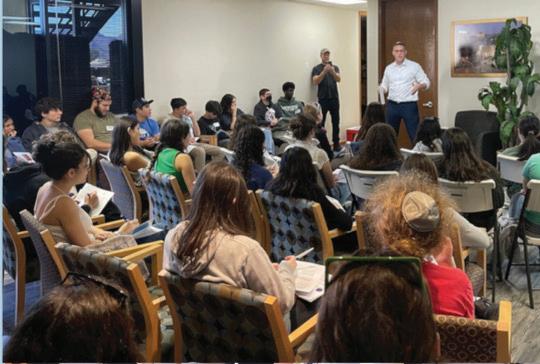
he Jewish Democratic Council of America (JDCA) hosted a Democratic Primary Issues Forum on June 18 with four candidates running to represent Arizona’s 1st Congressional District (AZ-01) in the House of Representatives. Participants included: Dr. Amish Shah, Jonathan Treble, Marlene Galán-Woods and Rick McCartney.
AZ-01, encompassing Scottsdale, Paradise Valley, Carefree, Cave Creek and parts of Phoenix, is home to nearly 70,000 Jewish voters, the most of any district in Arizona.
“JDCA is working to ensure that Democrats win back the House majority in November,” said JDCA CEO Halie Soifer. “As the political home and voice of Jewish Democrats, advocating for policies and electing candidates who share our core values, we’re mobilizing millions of voters around the country, including in Arizona, and helping them make informed decisions at the ballot box with issue forums like this one.”
Candidates had the opportunity to express their views on various issues affecting Jewish voters in the district, including antisemitism, Israel, the Iran war, affordable healthcare, democratic elections and immigration.
Since this event was not a debate, but rather an issues forum, candidates were each allowed one minute for opening and closing statements; they were only permitted to address the audience, not each other, and they were given rules against lobbying for votes or financial support.
Shah kicked off the round of opening statements. In addition to practicing as an emergency physician at the Mayo Clinic in Scottsdale, Shah has personally knocked on 27,000 doors to meet his constituents

over the last eight years.
He has won three elections, served in the Arizona House of Representatives for more than five years and described himself as “one of the most effective legislators with regard to passing bills and getting actual public policy into law.”
Shah described the Trump Administration as a “complete and utter disaster” and vowed to take the fight directly to him in Washington, D.C.
Treble is running on a platform of improving the healthcare system and increasing affordability.
“I’ve talked to thousands of Arizona families here in the district, and I’ve understood that healthcare is a big problem for them, but it goes way beyond that,” Treble said. “We’re really struggling with the cost of living, which
continues to rise, and I believe we need strong leadership to bring that down.”
Galán-Woods, the daughter of Cuban immigrants and a former investigative broadcast journalist, has lived in the district for 40 years and raised her five children there.
“I am running for congress because I want to be part of saving our democracy, saving Medicaid and Medicare and Social Security, to make sure that every girl and woman in this country has power over her own body, regardless of what zip code she lives in,” Galán-Woods said. “And I am running for congress to hold accountable the most corrupt administration we have seen in our nation’s history.”
Over the last 30 years, McCartney has resided, raised his family and built his business all within AZ-01. He pointed out

that Democrats have failed to represent the district for seven consecutive election cycles, so the party needs a fighter to flip the seat.
“I am running for congress in Arizona’s 1st congressional district because we need a winner,” McCartney said. “This district is my home, and I am working very hard to focus on the issues, really discuss them, top to bottom, in front of audiences all over this district, targeting every square inch so that we can be there in front of the voters, which is what I think representation is all about.”
When asked how they would address antisemitism across the United States, multiple candidates stressed the importance of funding the Federal Emergency Management Agency’s (FEMA) Nonprofit Security Grant















Program (NSGP), sufficiently educating the public on the meaning and scope of antisemitism and calling out hate speech.
“The (NSGP) needs to be fully funded,” Treble said. “We need to make sure that every house of worship, no matter the faith, especially if they are more likely to be targeted, such as synagogues, needs to have full funding.”
“I think it’s very unfortunate that FEMA’s (NSGP) has been diminished at a time when we need it most,” McCartney agreed. “If I were in congress tomorrow, I would reinstate it. It’s the responsible thing to do.”
Galán-Woods also stated the NSGP needs additional funding, and she stressed the importance of having strong leaders within the Democratic Party to call out antisemitism, hate speech and misinformation.
“The occupant of the White House continues to use dangerous rhetoric that dehumanizes (multiple groups),” Shah said. “This is giving permission and encouraging behavior among our society, and the world, to go down this dark path, and we should have no tolerance for it. We’ve got to call that out as morally abhorrent.”
Treble voiced that social media companies need to be held accountable for spreading antisemitic speech and conspiracy theories, advocating for strengthening the Department of Justice’s hate crimes prosecution unit, which he claimed has been weakened under the Trump Administration.
Treble and Galán-Woods both spoke on expanding education on antisemitism.
“It blows my mind that there are so many young people who do not believe the Holocaust happened, who do not believe that six million Jews were killed,” Galán-Woods said.
“Given what’s happening in the Middle East right now and the threats to Israel, we need to focus on this now,” McCartney said. “This is something that should be part of an emergency fund, and it needs to be funded immediately.”
According to Soifer, 70% of Jewish voters feel emotionally attached to Israel, and a similar number disapprove of Prime Minister Benjamin Netanyahu.
When the candidates were asked how they would approach relations between the United States and Israel, all four affirmed their support for Israel’s safety despite disagreeing with many of Netanyahu’s policies.
“Israel is our strongest ally in the region, surrounded by enemies trying to annihilate it, so we must continue our support for Israel,” Galán-Woods said.
“I support a very strong and enduring relationship with Israel,” McCartney said. “I always have, and I believe that America has a responsibility to stand with them against terrorism.”
“I’ve seen with my own eyes the
damage that custom rockets have made by attacking these towns,” Treble said, referring to border towns near Gaza.
“The Iron Dome is saving lives. It’s the first line of defense; it has a high accuracy rate. It’s not perfect, but it’s something that I believe we need to support. Israel has a right to defend itself.”
“I think it’s hard for many Americans to envision a daily threat to your life and your security. That cannot be happening,”
Shah said. “I absolutely support the Iron Dome and defensive weapons to make sure that (Israel’s) security is guaranteed, and I strongly believe in a two-state solution, yet there is the current Prime Minister there (whose policies) are breaking Israeli society and leaving Israel less secure. The United States has to provide clear moral direction. We want peace in the region. We want dignity and security for all people involved.”
Galán-Woods agreed that the United States has to lead with other countries to find a two-state solution, also echoing sentiments from McCartney and Treble that Netanyahu must be held accountable.
“I think America must be cleareyed when it comes to the leadership that undermines democratic values, accountability, human rights and prospects for everlasting peace,” McCartney said “It’s okay to disagree with the leader
of a country, but know that the people in the country are good people, and that we need to stand shoulder to shoulder with them for their security,” Treble said. “I would continue to support our ally in the region. It is a very important strategic alliance. It keeps America safer, and we need to stay true to our promises.”
In addition to antisemitism, Israel and Iran, candidates were asked about topics that affect all voters, not just Jews. They each advocated for affordable healthcare and the sanctity of democratic elections,



called for immigration reform and denounced Immigration and Customs Enforcement (ICE) under the Trump Administration.
All votes must be placed on or before July 21 to count towards the AZ-01 Democratic Primary election. JN
For more information, visit jewishdems.org.
Jewish News does not endorse any political candidate and welcomes the opportunity to interview any Jewish candidate running for office.




From education expenses, to repairs on your car or home, and so much more.
JFL offers a variety of interest-free loans to help you meet your long-term goals and immediate needs.






Sr. Lead Process Engr: Lead mfg & assembly process design, optimization & sustainment; supervise engrg/technical personnel. Bach deg or higher in Electronic Engg, Elec. Engg, Ind. Engg or rel. engr discipline (or foreign equiv) + 60 mos prog exp in mfg/process engrg incl MES, tooling/fixtures, CAD, PFMEA, poka-yoke & NPI. Travel req.
Sr. Lean Engr: Support lean mfg & CI initiatives. Bach deg or higher in Mech. Engg, Ind. Engg or rel. engr discipline (or foreign equiv) + 60 mos prog exp in mfg/process engrg or CI roles incl lean methodologies, time studies, line balancing, SOPs, RCA, Kaizen, Kanban & CAD.



This week, we bring to a close the Book of Numbers with the double parshah of Matot-Masei.
In Parshah Matot, which means “tribes,” the Jews are approaching the Land of Israel, and the leaders of the tribes of Reuven and Gad (and half of the tribe of Manasseh) say that they don’t want to cross over into the land. They want to stay on the east side of the Jordan because the land in Jazer and Gilead is better for the vast amounts of cattle they own.
This upsets Moshe because it reminds him of the sin of the spies 39 years earlier, who responded with fear after scoping out the land, which in turn caused Israelis to wander in the wilderness for 40 years.
They then quickly come to a compromise: Moshe concedes that if the tribes of Reuven, Gad and Manasseh go in and help
to fight to conquer the land, they can later go back to live east of the Jordan.
The issue at play here is the conflict between the interests of the individual and the interests of the community or, in this case, the interests of the individual tribe versus those of the entire nation. It would benefit these cattle owners financially to own the superior farmland, but the nation needed them as military support. Moshe’s task then was to reorient their focus from the self to the collective — with regard to supporting the nation in war, but also in smaller ways.
We can also view this conflict as an important leadership moment. Moshe is shocked by the tribes’ desire to stay back. After all his people had been through, and after all Moshe had done to reunify his people and rekindle in them a desire to enter the land, it would have been reasonable for Moses to simply cut these tribes off. But instead, he decides to give them their preferred land.
Yes, we can try to reach our goals through division and stubbornness, but drawing people over to the side of goodness via love and inclusion is ultimately the only winning strategy.
To be sure, there is the concern that if the leadership makes one concession, the people will ask for many more. However, if they are being lovingly drawn into the larger mission of the community, their desires will hopefully begin to align more closely with the group’s.
Another thing we can learn from this parshah is that while different people and factions have different missions and want different things, we could, in the spirit of Moses, allow people to play different roles while simultaneously helping them to see the bigger picture. We need not necessarily view such differences as a negative, although at first glance it may seem so, as not everyone is on board with working toward the communal vision of success. In other words, what seems like a negative can actually be converted into a positive.
The same goes for the relationship between Jews in Israel and Jews in the diaspora. While the specific endeavors of our lives may differ, we are all a part of the same people and we all share an interest in the thriving of the Jewish project.
This also applies to pluralism within the local communities in our own lives. The
people around us will have a wide range of visions for how to best spend their time and effort. The priorities of a lawyer, schoolteacher, stay-at-home parent, restaurant worker and clergyperson might all look very different. Even within the Jewish world, we encounter people with drastically different conceptions of how to best serve our communities.
But often, rather than dismissing those who think differently, we should, like Moshe, be finding ways to bring them into a shared plan for progress. And when we ourselves are brought into greater group, we must remember our responsibility to contribute toward the team’s endeavors.
As we continue our journey of Torah study and social impact, may we strive to find ways to always bring along those who would otherwise be left out. JN
BETH OPPENHEIM | JTA
W
hen my grandfather fled Nazi Germany, he carried with him, across multiple borders, an unwavering faith that the future was waiting on the other side. What he found was larger than any one man’s journey to safety: the American commitment to each person born on this soil that they belong.
This commitment, alongside my grandfather’s extraordinary courage to dream, meant that his son — my father — would be fully American. And I, a granddaughter he did not yet know, would be as well.
Birthright citizenship is one of the Constitution’s most fundamental guarantees: that every child born in the United States is a citizen of the United States, entitled to all the rights of every other citizen regardless of how or where their American story began. This week, when the Supreme Court ruled in Trump v. Barbara to affirm the 14th Amendment, many people cried tears of relief and
cheered that the fight had been won.
But winning a battle that should never have been fought in the first place robs the victory of some measure of its glory.
The fact that a challenge to such a fundamental principle of the Constitution was able to reach the highest court in the land, and was rejected by just five of the nine justices, is a stark reminder that the very foundations of this nation, and the values underpinning it, are under attack, and that we must never take them for granted.
Now is not the time for complacency.
Not while a small yet powerful group of people loudly question whether children born on this soil belong to it. And not after years of political efforts to cast Jews, Muslims, immigrants, refugees, LGBTQ+ people and other marginalized communities as outsiders, determined to define whose place in American society is secure and whose is not. No president, no administration has the right to challenge
our legacy of welcome, because it doesn’t belong to one person, it belongs to us all.
HIAS, the organization I lead, was founded more than 140 years ago on New York City’s Lower East Side. Its mission, which I’m proud to carry forward, was to support Jews fleeing persecution and seeking the chance to rebuild their lives in the United States. Since then, we have been at the forefront of every wave of Jewish immigration, supporting millions on their path to safety — whether arriving through Ellis Island, fleeing the Holocaust or escaping religious persecution. In fact, we estimate that more than half of all American Jews are here in some part because of HIAS.
Those families trusted that America would provide the kind of safety and certainty their ancestors had rarely known. That a history filled with precarious legal status and conditional belonging would be replaced by a promise, and that their
children would never find their birthright under siege. That promise and that certainty must not end with us. We must not waver from our responsibility to defend the sanctity of welcome and stand alongside refugees and immigrants building their lives here today.
Just over three dozen countries grant citizenship to anyone born within the country’s borders (known as jus soli, “right of the soil”) regardless of their parents’ nationality. Most other countries primarily confer citizenship based on the nationality of the parents (jus sanguinis, “right of blood”), with birthright citizenship only available under limited circumstances. JN
This piece has been edited for space. To read the piece in its entirety, visit jewishaz.com.
The views and opinions expressed in this article are those of the author and do not necessarily reflect the views of JTA or its parent company, 70 Faces Media.
and op-ed submissions should be sent to editor@jewishaz.com
MALA BLOMQUIST | MANAGING EDITOR
Jewish Republican candidate Rodney Glassman describes the attorney general’s position as “the most impactful and least understood elected office in the state” and notes that assistant attorneys general provide legal services to numerous state agencies, including those involved in education, healthcare and professional licensing.
The attorney general is also the elected official in charge of investigating and prosecuting election fraud.
“The only person in the state of Arizona that can open an investigation, secure ballots and doesn’t have chain of custody issues is the attorney general. And he didn’t. Period. So, anything else is null and void,” said Glassman regarding thenAttorney General Mark Brnovich on investigating the outcome of the 2020 presidential election.
Arizona Attorney General Kris Mayes issued a statement on March 9, 2026, which read in part:
“In fact, under the direction of my predecessor, Attorney General Mark Brnovich, agents and support staff of the Arizona Attorney General’s Office spent over 10,000 hours investigating voting irregularities and alleged instances of illegal voting by high-profile election deniers. Complaints and allegations submitted to the Arizona Attorney General’s Office by members of the public were also unsupported by factual evidence.” Brnovich died on Jan. 12, 2026.
“The number one thing that the attorney general can do to restore credibility with our elections is to enforce the laws that are on the books,” said Glassman.
Glassman started his political career as a Democrat, serving on the Tucson City Council from 2007 to 2010. He left that seat to launch a U.S. Senate campaign against U.S. Sen. John McCain. Glassman lost that election and subsequent elections for Arizona Corporation Commission and Maricopa County Assessor.
Glassman said that he changed from a Democrat to a Republican on “June 16, 2015, the day President Trump announced his candidacy.”
Glassman ran for attorney general in 2022 but was beaten by Abe Hamadeh in the primary election after Hamadeh was endorsed by then-former President Donald J. Trump. Hamadeh went on to lose to Democrat Mayes.
Glassman said his nearly two decades of legal experience, military service and community involvement is what distinguishes him from his opponent, Warren Petersen. The two will face off in
the primary election on July 21, and the winner will then run against incumbent Arizona Attorney General Kris Mayes in November.
As of press time, Trump has not endorsed Glassman nor his opponent, Petersen. “I’d love to have the president’s support,” said Glassman. “I’d love to have the support of anyone willing to give it. The reality is that in the meantime, we are running on experience. President Trump obviously wants to get rid of Kris Mayes, so we just keep working hard.”
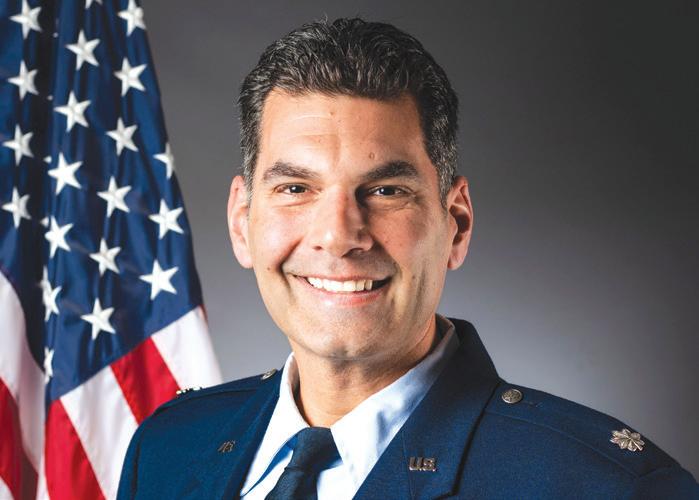
Glassman currently serves as a lieutenant colonel in the U.S. Air Force JAG (judge advocate general) Corps Reserve and is assigned to Luke Air Force Base as an individual mobilization augmentee (IMA) to the staff judge advocate.
At Luke Air Force Base, Glassman runs the active-duty legal office when serving in uniform.
“We have 25 JAGs, paralegals and support staff who provide all the legal services for the one-star general and all the squadron commanders,” he said. “What makes that so relevant is that I’m the only Republican running for attorney general who’s ever run a law office.”
In the private sector, Glassman is of counsel at Slavicek Law Firm in Phoenix. His practice areas include high-stakes commercial litigation and catastrophic personal injury.
“The attorney general’s office is the largest law office in Arizona, with over 400 attorneys and 1,000 support staff,” Glassman said. “I will be bringing the skills and experience of being a practicing attorney to run the largest office in the state.”
He rejected criticism that he is a perennial candidate, arguing that his political campaigns have occurred alongside a lengthy military career, private legal practice and volunteer service with nonprofit organizations. He described serving as attorney general as a natural extension of his public service.
Glassman’s campaign centers on three themes: protecting law enforcement, children and Arizona’s economy.
“I’m going to focus on my core priorities of protecting cops, protecting kids and protecting Arizona’s prosperity — and not using Arizona tax dollars just to file lawsuits to score political points,” he said.
If elected, Glassman said one of his first actions would be to withdraw Arizona from the more than 40 lawsuits that Mayes has filed against the Trump administration.
“Kris Mayes’ entire business model is suing the Trump administration, filing
lawsuits, going after cops, going after school choice, using Arizona tax dollars to create chaos and build a resistance resume,” he said.
He said that if there were an issue with any government agency, including the federal government, he would pick up the phone. He added that most of the time, when you hire an attorney, it’s not to file a lawsuit; it’s to help you reach a solution.
Among his supporters are former attorney general and current Superintendent of Public Instruction Tom Horne, serving as campaign chairman, and Maricopa County Sheriff Jerry Sheridan, serving as co-chair of his campaign.
In May 2025, Sheridan visited Israel for the first time. He was invited by Larry Mizel, co-founder and chair of the Museum of Tolerance Jerusalem. In July 2025, Glassman was also invited to Israel by Mizel, but the trip was postponed until September due to the ongoing war.
While in Israel, Glassman celebrated Shabbat with Ambassador Mike Huckabee and visited the site of the Supernova music festival.
“I met with members of the Knesset and visited the Israeli Supreme Court and learned about the challenges that they’re having and also discussed the rise of antiAmericanism across the United States,” he said.
“The reality is that first they will come for the Saturday worshipers and then they will come for the Sunday worshipers,” he said. “So, we need to have more elected officials who believe in the conservative values of faith and family.”
He said attorneys general can play a role in coordinating with law enforcement agencies and counterparts in other states to address hate crimes and threats against religious communities.
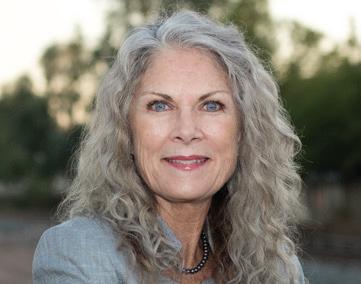
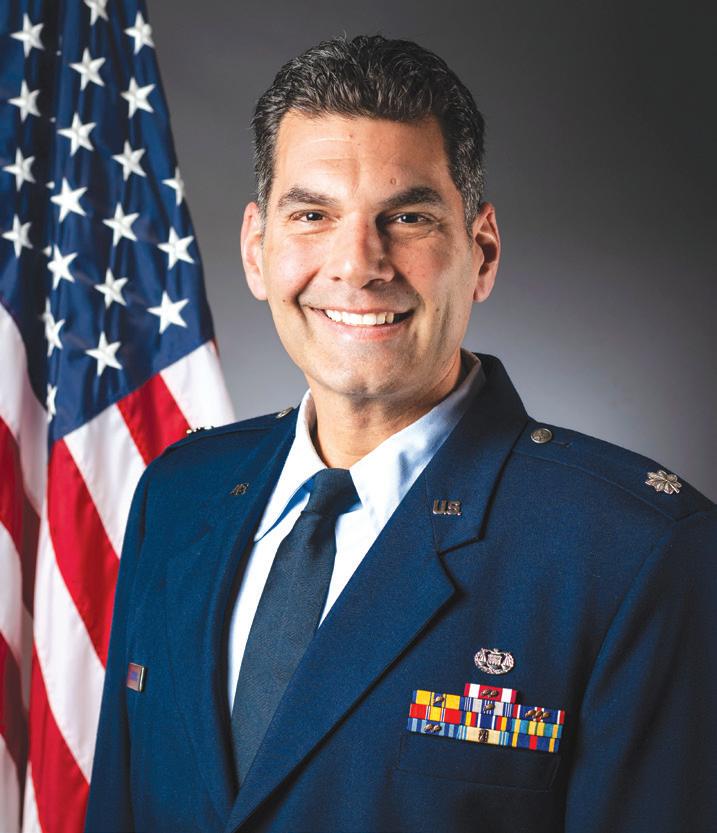
Glassman and his wife, Sasha, and their two daughters are members of Congregation Beth Israel and Congregation Beth Tefillah, both in Scottsdale.
“I think what the Jewish community wants as their attorney general is someone who is committed to protecting everyone,” he said.
He also addressed concerns about leaning into national partisan issues and Trump-aligned messaging.
“My campaign themes, my yard signs and my commercials all talk about protecting cops, protecting kids and protecting Arizona’s prosperity,” he said. “Those are Arizona values. Those are Arizona priorities. Those are Arizona issues.”
Looking ahead, Glassman said his goal is to serve two terms as attorney general, if elected.
He said, “If you care about kids, if you care about cops, if you care about elections, if you care about rooting out waste, fraud and abuse, if you care about the economy, there is no elected office in the state of Arizona that directly has a more impactful role than that of Arizona attorney general.” JN
For more information, visit rodneyglassman.com.
Jewish News does not endorse any political candidate and welcomes the opportunity to interview any Jewish candidate running for office.
JOSH BOOTZIN | STAFF WRITER
World ORT and ORT America, distinct organizations that shared a similar mission but operated separately, merged in March 2026 as World ORT, led by CEO Dov Ben-Shimon.
Before the merger, ORT America was the fundraising arm supporting schools around the globe, while World ORT focused on developing educational programs.
“We’ve had a lot of new leadership and new energy coming together saying that it makes sense for us to be one organization,” explained Jaime Fox, World ORT’s West Coast/Southwest regional director.
“We’ve been intertwined for so long; now it’s official.”
The unified global entity, now with headquarters in New York and offices in London and Israel, held its first major convening in Lithuania last month, where senior professionals and lay leaders formally recognized the leadership transition.
“World ORT is positioned to deepen relationships with locally run schools, connect educators across borders and direct funding more strategically to where the need is greatest,” shared a World ORT spokesperson. “The ambition is not to standardize. It’s to strengthen. Every student in the World ORT network, wherever they are, should have access to the best that the network has to offer.”
“Our mission remains the same,” echoed Fox. “We are educating for life, infusing Jewish values through this global network.”
A group of Jewish leaders in St. Petersburg founded ORT in 1880, when legal restrictions in Tsarist Russia barred Jewish people from land ownership and most professions. The goal was to teach trades to impoverished Russian Jews to help them gain the necessary skills for
employment.
“ORT started in 1880 in Russia, where being Jewish was a challenge and there weren’t a lot of opportunities,” Fox said.
“A few wealthier Jews decided to educate the disadvantaged Jews and taught them trade skills so that they were contributing to society. In a way, we’re still doing that, just on a bigger level.”
In the nearly 150 years since, World ORT has expanded to more than 30 countries across five continents, serving 80,000 students annually.
“Even when situations are dire — poverty, war, displacement — ORT students can imagine a future,” said BenShimon. “That is what World ORT has done for 145 years, and we will carry it forward for 145 more.”
World ORT is driven by three pillars: education for life, creating a global network and enhancing the Jewish experience.
Education for life means instilling sustainable, employable skills to cultivate the next generation of leaders.
“ORT is all about transforming lives through education, driven by Jewish values and innovation, so that we’re empowering people and strengthening communities,” Fox said.
The global network entails connecting the more than 30 countries to which World ORT has expanded into with mutually beneficial programming and value sharing.
For example, Spanish-speaking students in Spain and Latin America can take part in an ecology summer program in Panama led by Smithsonian biologists.
Many schools follow project-based learning models that incorporate various subjects into a single project.
Fox recounted a recent visit to an ORT school in Mexico City, where

junior high students were working on a project to measure and reduce air pollution. Not only were they performing experiments to reduce pollution, they were also analyzing on a social level how community characteristics affect pollution and vice versa. The single project included aspects of reading, writing, math, science, engineering and public speaking.
Enhancing the Jewish experience is achieved by infusing Jewish values into every lesson.
“World ORT doesn’t just teach skills. We also share the joy of Jewish peoplehood, ensuring our students are both prepared for the future and proud of their identity,” said Jon Levine, World ORT board chair.
Some schools are composed entirely of Jewish students, while others are open to anyone in the area. Some serve kindergarten students all the way through high school, while others are more tailored to a specific age range.
“In many Eastern European countries, families didn’t find out they were Jewish until much later in life, so it’s informing


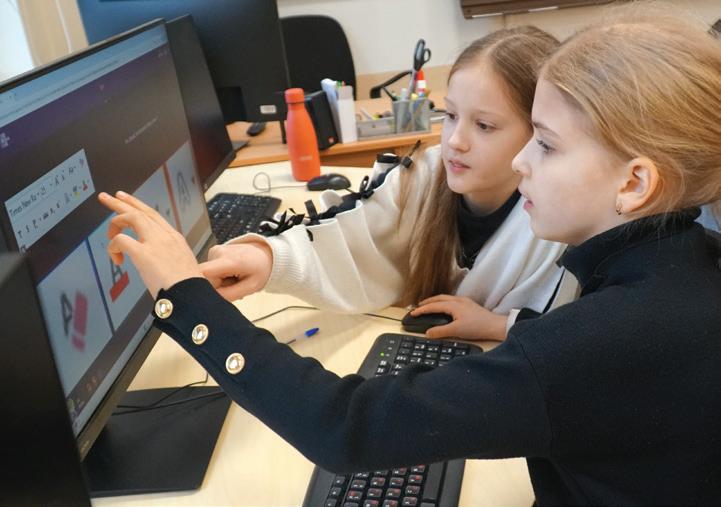
them of their background and creating allies and a shared sense of belonging,” Fox said.
Fox’s mother and grandmother were also involved with ORT, making her recent appointment that much more meaningful.
“Having my grandmother and my mom involved with ORT is really special for me to come into this work now,” she said. “It feels really important to me personally to be able to reinvigorate people and re-educate them on what ORT does



JOSH BOOTZIN | STAFF WRITER
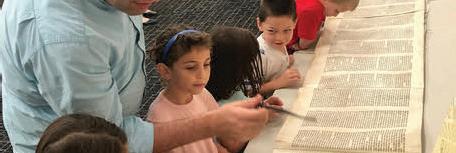
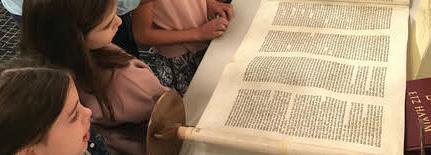
Thanks to a collaborative effort between Hebrew High, a program of the Bureau of Jewish Education of Greater Phoenix (BJE) and Arizona State University’s (ASU) Center for Jewish Studies, participating high school students can begin earning university credit before even stepping on campus.
“Hebrew High is a place for Jewish teens of all denominations and affiliations to engage in deeper learning, be a part of another Jewish community, explore Jewish ideas and develop their own sense of Jewish self as they transition from early religious school life to young adulthood,” said Sada Gilbert, Hebrew High director.
Since starting in her position last August, Gilbert has heard from parents, students and community members that Valley high school students, similar to national trends, are feeling pressure to bolster their resumes for college applications.
“What we find is that families are, unfortunately, having to choose between college prep activities and engaging in other extracurriculars like Jewish learning, so I started looking for ways that we could make it easier for families to say ‘yes’ to Hebrew High,” Gilbert said.
One way to increase engagement in Hebrew High while easing families’ worries about getting ahead with college prep was to offer dual-enrollment opportunities, of which there were none.
Stanley Mirvis, director of ASU Jewish Studies, visited Hebrew High students last fall to introduce them to ASU’s program and share his passion for Jewish studies, so Gilbert reached out and learned that it would be possible to offer college credits at Hebrew High through ASU Prep Digital Online School.
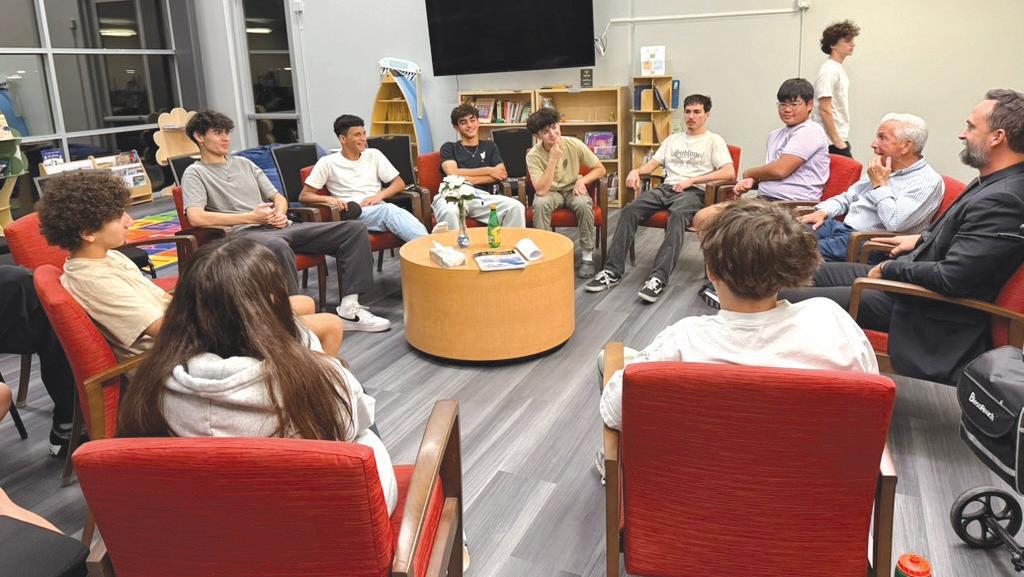
“This Hebrew High initiative does a lot to fulfill the mandate of Jewish studies, and it promotes Jewish studies as not just an intellectual endeavor, but as a solid way to anchor Jewish identity through knowledge of the past, of the Jewish experience and of Jewish thoughts,” Mirvis said.
Beginning in spring 2027, Mirvis
plans to personally teach “History of the Jewish People” (JST 230), a threecredit ASU Jewish Studies class, at the Ina Levine Jewish Community Campus, with lectures planned for Tuesdays and SEE PARTNERSHIP, PAGE 12







and how special it is to be part of this network that my grandmother believed in so strongly.”
Fox’s grandmother was an ORT member and donor, and she keeps her grandmother’s ORT pins on her desk. “When I’m working, it’s like my grandmother is close by.”
Fox praised ORT for how much it invests in its teachers, hosting annual workshops and conferences to ensure teachers are capable of relaying lessons at all levels to students. Her mother was a special education teacher, so education has always held value in her family.
“It feels like a full circle moment, encompassing the lessons that my mom taught us growing up: Education is important, being an educator is important and being able to provide students, regardless of their economic background, with a high education is really important,” Fox said.
Moving forward over the next year, Fox said she’s working on bringing representatives from overseas schools to the American Southwest to share their stories and expertise, continuing the mission of growing a global network. JN For more information, visit ort.org/merger.
Thursdays, 6 to 7:15 p.m.
ASU Jewish Studies acknowledges the value of promoting connection to Judaism through religion, but it also strives to provide a connection to the social, cultural, political and geographic experiences of Jews.
JST 230 offers students a taste of what it means to study Jewish history, identity and concepts in an academic atmosphere, providing insight into their religious identity as well as a career path in the world of Jewish professionals.
“It’s supposed to be the history of the Jewish people, rather than the history of Judaism or Jewish thought,” Mirvis explained. “It makes the case that the Jewish peoplehood has a story of its own that is parallel to Judaism, and I think that’s a really powerful way of helping people connect to their identity.”
“An important thing for families and students to know is that this isn’t a class we’re making just for high school students; this is an ASU class that already exists,” Gilbert said.
JST 230 is a core part of the major and certificate in Jewish studies at ASU. The three credits make up 2.5% of the 120 credits required for the major and nearly 15% of the 21 credits required for a certificate.



Students who ultimately choose to attend ASU after completing this class “will be starting off as if you had taken a regular Jewish studies class, offered twice a week for an hour and 15 minutes, that could work toward your certificate or your major in Jewish studies,” Mirvis said.
JST 230 also fulfills a humanities general education requirement, so it’s even worthwhile for students who decide against pursuing a degree in Jewish studies.
“Even if you end up in ASU and you’re not a Jewish studies major or don’t want the certificate, you’ll still be working toward your degree,” Mirvis said.
After Mirvis teaches the first class, he foresees the partnership evolving to include additional options, with the goal of offering one class every semester.
That one class may rotate between JST 230 and other core ASU Jewish Studies’ classes, such as “Intro to Judaism” and “Jews and Judaism in America.”
“If we find that this is a model that works for our community, we have other opportunities,” Gilbert said.
“This Hebrew High initiative is only the beginning of a really aggressive attempt to be more present in our community, not just in the Jewish community, but also in the non-Jewish community,” Mirvis said. “It helps us to invigorate our major, and it allows us to be deeply embedded in our
community, which is a primary goal for ASU Jewish Studies.”
There have been discussions to identify a maximum number of students for the first iteration of the class, but since it’s routinely taught at ASU in large lecture halls, “if students want to come, we’ll figure it out,” Gilbert said.
Families choosing to register their high school student for the class, rather than enrolling them as a fulltime Hebrew High student, will pay an administrative fee plus the $675 ASU tuition for the three-credit class. Hebrew High is subsidizing much of the cost for families already registered, so they can take the class for just $300. “There’s an advantage to being part of Hebrew High,” Gilbert said.
Gilbert said she’s also working to find scholarship opportunities for students.
“It’s a phenomenal opportunity for our students and for the community,” she said. “This is another way that we’re hoping to make Jewish studies a little bit more accessible so that families can do this in a way that’s authentically Jewish, learning from a phenomenal instructor.” JN
For more information, contact Sada Gilbert at sadag@bjephoenix.org.



BOB ROTH | COLUMNIST
Irem ember 1976 like it was yesterday.
The flags. The fireworks. The red, white and blue everywhere. And every night, the “Bicentennial Minutes” aired on television, 60 seconds of American history that somehow made the entire country pause and reflect on who we were and where we were headed.
I think about that now as America celebrates its 250th birthday. For those of us who lived through the Bicentennial, this moment carries weight. Fifty years have passed in what feels like the blink of an eye. And while many of us may not see America’s 300th birthday in 2076, our children and grandchildren will. The decisions we make now will shape the country and the lives they inherit.
That is what aging asks of us. Not just to look back, but to look forward honestly. I have spent my career in aging services, and I will tell you plainly: aging in America is hard. Healthcare is hard. Navigating systems that were built for a younger population is hard. Pretending otherwise does not help anyone. But planning helps.
It helps when families have conversations before a crisis. It helps when people prepare financially and legally for the future. It helps when we stop treating aging as something that happens to “other people” and recognize it as the most universal experience there is.
Every one of us, if we are fortunate, will grow old. And yet too many Americans still avoid conversations about long-term care, healthcare proxies, advanced directives and what they actually want later in life.
The numbers alone should force our attention. In the next two decades, the population of Americans over 65 will nearly double. Americans over 85, the group with the most complex care needs, will nearly quadruple. We are not facing a small demographic shift. We are facing a transformation of American life.
That is not a reason for despair. It is a reason for urgency. It is a reason to have the conversations you have been putting off. Advanced directives. Healthcare proxies. Long-term care planning. Honest conversations with your children, your siblings, your


doctor, your rabbi.
These are not morbid exercises. They are acts of love. They are among the most patriotic things you can do, because a country of people who have planned for their futures is a country that can take care of its most vulnerable.
America has always been an intergenerational project. The country was built not for one generation, but for the generations that followed. Freedom itself requires planning, maintenance and responsibility. The same is true of aging well.
What I find myself wishing for as we celebrate America at 250 is something like those old Bicentennial Minutes. Except instead of reminding Americans about history, they would remind us of something equally important: growing older is not failure. Needing care is not a weakness. Planning ahead is not surrender. It is hope in action, because hope without a plan is just a wish.
America at 250 is imperfect and extraordinary all at once, which is the only honest way to describe something worth loving.
We are a country of all ages, backgrounds and experiences. Our challenge now is to make sure people can age with dignity, support and community.
So, as we watched the fireworks on this Fourth of July, our thoughts turned not only about the last 250 years, but about the next 50. It’s time to think about the conversations you still need to have, the plans you have been meaning to make and the future you want for the people you love. Then make those plans.
That is how we honor what this country was built to be: not by only looking backward, but by preparing responsibly for what comes next. Happy 250th, America. Now let’s get to work. JN
Bob Roth is the managing partner of Cypress HomeCare Solutions.









LARRY F. WALDMAN, PHD, ABPP | SPECIAL TO JEWISH NEWS
Anxiety is the second most common mental health disorder, next to depression. In many cases, depressed people also struggle with anxiety, and many anxious people feel depressed. An estimated 20 million individuals in the U.S. regularly deal with anxiety.
Anxiety is described as a feeling of tension and/or fear. Some say anxiety is like “an impending sense of doom.”


The medical approach
The most popular form of anxiety treatment is medication — psychopharmacology. Tranquilizers, like Klonopin and Xanax, can provide immediate short-term relief. Long-term use of tranquilizers is dangerous, though, because these medicines build a tolerance —needing more of the drug for the same effect — which leads to addiction. The recent epidemic of addiction to pain medication is a prime example of this effect.
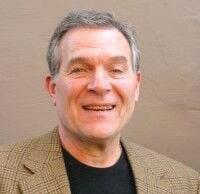







Many visits to the emergency room are people thinking they are having a heart attack when, in fact, they are experiencing a panic attack. Anxiety can cause distinct physical effects: hyperventilation, difficulty catching your breath, nausea and dizziness. When extreme, anxiety can lead to a “panic attack,” characterized as a “flood of tension” which often causes people to think they are dying. Similarly, 50% of visits to the general practitioner (GP), it has been estimated, are due to unrecognized depression and/or anxiety.
Long-term pharmacological treatment for anxiety involves the use of antidepressants, such as Prozac, Zoloft, Paxil, Lexapro, Effexor, Celexa and several others. New antidepressants regularly come to the market because they are taken daily, typically for years, and there is a huge population that wants them.
of negative thinking: “What if _______ happens? What if I fail? This could be bad. What if I’m rejected? This could be the worst thing ever!” etc. I refer to this kind of cognition as “stinkin’ thinkin’.”

Anxiety comes in several different forms: A general feeling of tension, named generalized anxiety disorder (GAD), is often based on the fear of failure. Social anxiety stems from discomfort with meeting and interacting with people, typically due to believing one is not good enough. Phobias are intense specific fears, the most common being agoraphobia, fear of public places, and the fear of public speaking — again, feeling inadequate. Obsessive compulsive disorder (OCD), is another form of anxiety in which the person dwells on a particular negative thought (obsesses) and then feels the strong need to do something (compulsion — like checking and re-checking) in the attempt to control the fear. Post-Traumatic Stress Disorder (PTSD) is caused by a past trauma or traumas, common to soldiers, police officers and victims of abuse or significant accidents.
Anxiety can be debilitating. It may interfere with working, education, loving, communication and recreating. What can be done?
These meds take a few weeks to become therapeutic but do not develop a tolerance and are not considered addictive. Nevertheless, if one has been taking such meds for awhile, and they want to discontinue them, they should taper off rather than stopping abruptly.
The typical medical paradigm is to prescribe a tranquilizer for 30 days along with a script for an antidepressant. In this manner the patient receives some immediate relief, but once the antidepressant becomes therapeutic the tranquilizer is discontinued. Research has clearly indicated nearly 85% of these programs are implemented by primary care physicians, not psychiatrists.
The psychological approach
Several times in the above description of anxiety the terms “fear,” “fear of failure” and “feeling inadequate” were used. Sigmund Freud said a century ago that depressed people rue the past and anxious individuals fear the future. These notions represent thoughts.
Cognitive psychology purports that thoughts determine our feelings. If someone thinks something will hurt them or they anticipate failure or embarrassment, they will feel anxious. Thus, much of the anxiety plaguing millions of people is the result

While caution is appropriate in some situations (you won’t catch me skydiving, for example) over-cautious thinking creates anxiety and inhibits people. Daily life involves some risks (like driving). We must come to accept it. If we learn to talk to ourselves (think) in a supportive manner, we can learn to manage our feeling, moods and anxiety. I regularly asked clients these question to assist them in the process of challenging their negative thinking: “Will I read about this in the newspaper? Will this be a big deal 24 hours from now? Who won the Super Bowl last year? (It was a huge deal then but now not so much.) Haven’t you already gone through something worse and survived?” Exercise. The research is clear. Exercise is an excellent, natural healthy way to combat anxiety. Numerous studies have shown that regular exercise, high in aerobics, can be as effective a treatment for anxiety as psychopharmacology.
Relaxation training. Relaxation methods can also be quite helpful in managing anxiety. Therapeutic breathing, progressive muscular tension and release, autogenics and meditation are all excellent aids in coping with anxiety.
Baby steps. Behavioral psychology argues that the best way to deal with anxiety is to go through it. Using the behavioral technique of systematic desensitization, phobic and anxious people learn to face their fear by taking one small step at a time. For example, an agoraphobic is directed to daily, for a week, get the mail from the mailbox and come back into the house. Once they have “survived” that, they are coached to walk to the corner and return, etc. Practicing relaxation techniques while completing their “baby steps” will facilitate the process. By using these various approaches — medical and psychological, individually or in combination — anxiety can be successfully managed. JN
RON KAMPEAS | JTA
Alan Greenspan, the free markets champion whose longevity shaping the American economy was grist for the mills of Jewish pride and antisemitic conspiracy mongering alike, has died at 100.
Greenspan, who led the Federal Reserve under presidents of both parties for 18 years, died on June 22, 2026, according to a statement by his widow, veteran NBC correspondent Andrea Mitchell.
“Alan passed away at our home this morning at the age of 100 from complications of Parkinson’s disease,” Mitchell said in a statement she shared with her employer. “He was a giant of a man who helped shape the U.S. economy for decades under presidents of both parties, but was always honest in acknowledging his mistakes.”
The “mistakes” he acknowledged included first and foremost the housing bust in 2008, two years after he retired
as Fed chairman.
“Yes, I’ve found a flaw,” he confessed in congressional testimony that year when Rep. Henry Waxman, the Jewish California Democrat, asked Greenspan if he regretted his laissez faire approach to keeping interest rates low. “I don’t know how significant or permanent it is. But I’ve been very distressed by that fact.”
Greenspan’s Jewish profile was low key:
He was a member of two predominantly Jewish clubs, Harmonie in New York and Hillcrest in Los Angeles. He rarely if ever headlined Jewish events, but he campaigned in the Jewish community for his favored candidates, including for Ronald Reagan in 1980, when the Republican ousted Jimmy Carter from office.
He was among a coterie of Reagan advisers who assured Jewish leaders in a New York meeting that Reagan would be a better friend to Israel than Carter,

who had clashed with the government of Prime Minister Menachem Begin.
Because of his prominence, Greenspan became an avatar of postwar Jewish
success. When Sen. Joe Lieberman became in 2000 the Democratic vice presidential candidate, commentators











reflexively named Greenspan as one of the prominent Jews who had helped create an environment that paved the way for Lieberman’s ascent.
Greenspan’s successors as Fed chair, Ben Bernanke, and then Janet Yellen, were Jewish; by the time Yellen assumed the job in 2013, that fact seemed hardly worth mentioning.
That didn’t spare Greenspan from being fodder for antisemitic conspiracy theorists. Hutton Gibson, the extremist who shaped the views of his son, Hollywood megastar Mel Gibson, placed Greenspan at the center of his fantasies of Jewish malign influence and once said Greenspan should be hanged.
By the time he assumed the Fed chairmanship in 1987, Greenspan was a prominent Republican deeply involved in economic politics. President Richard Nixon named him chairman of the White House Council of Economic Advisers in 1974; he assumed the position just after the scandal-plagued Nixon resigned and then worked throughout President Gerald Ford’s term.
Greenspan, a prominent analyst and consultant since his early 20s, had in 1967 joined Nixon’s presidential campaign as a top domestic affairs consultant.
He came to Republican politics by way of his infatuation with the works of Ayn Rand, the Russian-born Jewish philosopher whose extreme libertarianism wrapped up in didactic, potboiler novels like “The Fountainhead” shaped generations of post-World War II conservatism. He invited Rand to his swearing-in as chairman of the White House council.
“As I got to know her better and read her materials and had conversations with her, she had a sort of effect similar to that of a favorite college professor,” Greenspan told The New York Times in 1989.
Still, for all of his attachment to Rand’s philosophy of rationalist self-interest, which she dubbed “Objectivism,” Greenspan was known above all for his caution in addressing the government’s role in distributing resources and addressing inequality.
Reagan tasked him with reforming Social Security, and some of the recommendations of the commission Greenspan headed became law. At the time, he said he had to temper his ideals, which would have scrapped the system, in order to reform a system which kept millions of retired Americans solvent.
“Do I like the present Social Security system? No,” he told The New York Times in 1983. “If you asked me whether it would be necessary in the ideal society,
I’d say no. Our type of economy is far removed from where I would like to see it, but you have to be careful about moving from one type of society to another.”
A throwaway line in a 1996 televised speech referring to the “irrational exuberance” of investors caused markets to plunge and reinforced for Greenspan the importance of caution in whatever he said.
His caution and his maintenance of low interest rates steered the U.S. economy through its massive 1991-2001 boom, and helped the economy recover from the crisis precipitated by the Sept. 11, 2001 terrorist attacks. But his laissez-faire policies also were blamed for the 2000 dot-com bust and the 2008 mortgage crisis; his critics said he gave banks too much freedom, leading to abuses.
Born in 1926 in New York City, Greenspan was steered toward music school by his mother, a Jew of Hungarian descent. His father worked as a stockbroker and financial analyst. Alan attended the prestigious Julliard school and played saxophone in swing bands. On breaks between gigs, he was a voracious reader, and a book on markets led him to leave Julliard for New York University, where he studied economics.
He preserved his love for music throughout his life. Eric Alterman, the
liberal Jewish commentator, recalled his conversation with the Fed chair after an introduction by Mitchell.
“I have you on CD with Woody Herman’s Thundering Herd,” Alterman, a pop music enthusiast, recalled saying. “How did you like my playing?” Greenspan said. “Better than your monetary policy,” Alterman said, and Mitchell ended the conversation.
Greenspan’s only survivor is Mitchell, whom he married in 1997 in a ceremony officiated by Jewish Supreme Court Justice Ruth Bader Ginsburg.
The Genesis Prize, the organization that awards people for commitment to Jewish values, said in a social media post that Greenspan’s virtues exemplified Jewish values.
“One of Greenspan’s guiding principles was a Jewish value of l’dor v’dor — from generation to generation: decisions made today should not mortgage our children’s future,” the organization said. “Another was cheshbon hanefesh, or moral self-accounting and selfcritique. After the 2008 financial crisis, Greenspan — a vocal proponent of free market policies — publicly acknowledged where his assumptions had fallen short, demonstrating a willingness to reconsider prior convictions in light of evidence.” JN



















































































































SUNDAY, AUG. 9
Jewish Community Day with the Diamondbacks: 11:30 a.m. gates open; 12:15 p.m. on-field activities begin. Chase Field, 401 E. Jefferson St., Phoenix. Join the Center for Jewish Philanthropy of Greater Phoenix and more than 30 local organizations for a community fair and activities for all ages. Tickets purchased in the Jewish CommUNITY sections include a hat with D-Backs in Hebrew. For more information, visit phoenixcjp.org/diamondbacks.
FRIDAY, JULY 10
Underdog: Against All Odds, the Fight for Justice: 10 a.m. Online via Zoom. Join the Arizona Jewish Historical Society for a presentation featuring Holocaust survivor Thomas Jacobson. For more information, visit azjhs.org/event/ underdog-against-all-odds-thomas-jacobson.
SUNDAY, JULY 12
Annual Open House and Ice Cream Social: 1-4 p.m. Beth Emeth Congregation of the West Valley, 13702 W. Meeker Blvd., Sun City West. Join Beth Emeth for an open house to meet members and Rabbi Lev Ettelson, get information and High Holy Days tickets, enjoy refreshments and a sing along. For more information, contact 623-584-7210 or visit bethemethaz. org/upcoming-events.
Movie Night: 7 p.m. Chabad Edelman Jewish Center, 16830 E. Avenue of the Fountains, Fountain Hills. Join Chabad of Fountain Hills for a viewing of “Women in Gold,” an inspiring true story of courage, justice and Jewish resilience. Cost: Free. For more information, visit jewishfountainhills.com.
WEDNESDAY, JULY 15
Free Agent Night: 7-9 p.m. Valley of the Sun Jewish Community Center, 12701 N. Scottsdale Road, Scottsdale. Join the VOSJ to showcase your skills, meet fellow players and the sports staff. It’s an evening filled with games and networking for ages 18 and over. For more information, visit valleyofthesunj.org/calendar.
WEDNESDAY, JULY 22
CJP July Mitzvah: 12-5 p.m. Phoenix College, 1202 W. Thomas Road, Phoenix. Join the Center for Jewish Philanthropy of Greater Phoenix Mitzvah Collective to help kids from Title I schools, children in foster care of military-connected families get ready for back to school with backpacks, shoes and more. Volunteers must be 13 years or older. For more information, visit phoenixcjp.org/backpack.
SUNDAY, JULY 26
Open House and Community Event: 3-5 p.m. Temple Chai, 6025 E. Bell Road, Scottsdale. Meet Temple Chai’s clergy and staff, learn about programs and explore its new home. For more information, visit templechai.com.
MONDAY, JULY 27
Adult Audition Workshop: 6:30-9:30 p.m. Chandler Community Center, 125 E. Commonwealth Ave., Chandler. Chandler Center for the Arts will offer a free musical theater audition workshop for adults 18 and over. Workshop attendees who wish to actively participate should prepare 16 bars of a song from “Fiddler on the Roof” or any Broadway classic (not pop or rock). On Sunday, Aug. 2, Showtime Productions will hold adult auditions for its March live stage production of “Fiddler on the Roof.” For more information, visit chandlercenter.org/ FiddlerAuditions.
THURSDAY, JULY 30
The Summer Party VI: 7:30-10 p.m. Venue 48, 6140 E. Thunderbird Road, Scottsdale. Join Chabad of Paradise Valley for an evening for young Jewish professionals in their 20s and 30s. For more information, visit jewishparadisevalley.com.
SUNDAY, AUG. 2
Singing & Swimming: 4 p.m. Address provided upon registration. Bring your swimsuit and join Beth El Phoenix for campfire favorites and easy sing alongs including the theme song from “Gilligan’s Island.” Drinks, hot dogs, potato salad and chips provided; bring a pareve dessert to share. For more information, visit bethelphoenix.com/event/pool-party.
MONDAY, AUG. 3
Explore Brandeis Phoenix Study Groups: 1-3 p.m. Address provided upon registration. Join Brandeis National Committee, Phoenix Chapter and learn about its more than 110 study groups, activities, community service, socials and more. For more information, visit brandeisphoenix.org.
WEDNESDAY, AUG. 5
Summer Cinema Social: Bagels, Bites & Big Screen: 9:30 a.m.-12:30 p.m. Valley of the Sun Jewish Community Center, 12701 N. Scottsdale Road, Scottsdale. Join the VOSJ for Israeli and Jewish films, bagels and snacks. Cost: $10 members, $15 non-members. For more information, visit valleyofthesunj.org/calendar.
THURSDAY, AUG. 6
The Jewish World of Alexander Hamilton: 1-2 p.m. Online via Zoom. Join Valley Beit Midrash for a virtual presentation by Dr. Andrew Porwancher, who is a professor of history at Arizona State University. For more information, visit valleybeitmidrash.org.
SUNDAYS
Chassidus Class: 9 a.m. Online. Learn about the Chasidic movement with Rabbi Yossi Friedman. Use this link: ChabadAZ.com/LiveClass. Cost: Free. For more information, visit chabadaz.com.
Jewish War Veterans Post 210: 10 a.m. the first Sunday of the month in Central Phoenix. Any veterans, friends of veterans or if you just want to meet a vet, all are welcome. For more information, contact Michael at c365michael@ yahoo.com.
Anxiety in the Modern World: 6 p.m. Online. Learn the secrets of the Torah for living stressfree in the current environment with Rabbi Boruch of Chabad of Oro Valley. Cost: Free. Use this link: zoom.us/j/736434666. For more information, visit chabadaz.com.
MONDAYS
Pomegranate Guild of Judaic Needlework, Desert Cactus Chapter: 10 a.m. The Oasis at
Sagewood, 4555 E. Mayo Blvd., Phoenix. The guild meets the third Monday of the month, adjusted when necessary to accommodate Jewish holidays. For more information, visit pomegranateguild.org.
Living Through Loss: 4:30-6 p.m. the first and third Monday of each month. Online via Zoom. Join the Deutsch Family Shalom Center at Temple Chai for a Jewish bereavement support group. For more information, contact shalomcenter@templechai.com or 602-9711234, ext. 253.
Ethics of Our Fathers: 7 p.m. Online. Learn with Rabbi Zalman Levertov. Use this link: bit. ly/2Y0wdgv. Cost: Free. For more information, visit chabadaz.com.
Quotable Quotes by our Sages: 7 p.m. Online. Learn with Rabbi Shlomy Levertov. Use this link: JewishParadiseValley.com/class. Cost: Free. For more information, visit chabadaz.com.
Learning to Trust in God: 7:30 p.m. Online. Learn with Rabbi Yossi Friedman. Use this link: ChabadAZ.com/LiveClass. Cost: Free. For more information, visit chabadaz.com.
Single Parent Zoom: 8 p.m. First and third Monday of every month. Join The Bureau of Jewish Education’s Family University single parents’ group for those looking to form friendships and build their support system with like-minded people. For more information or to register, visit bjephoenix.org/family-university.
TUESDAYS
Let’s Knit: 1:30 p.m. Ina Levine Jewish Community Campus, 12701 N. Scottsdale Road, Scottsdale. Share the pleasure of knitting, crocheting, etc. outside the social hall in the campus. Can’t knit? They will teach you! Every level welcome. Cost: Free. For more information, visit vosjcc.org.
Grief Support Group: 4 p.m. Beth Emeth Congregation of the West Valley, 13702 W. Meeker Blvd., Sun City West. All are welcome to this support group for anyone experiencing grief or any kind of loss. Cost: Free. For more information, call 623-584-7210 weekdays 9 a.m. to 12 p.m.
Maintaining an Upbeat Attitude: 7 p.m. Online. A class exclusively for people in their 20s and 30s, learn how Jewish Mysticism can help with your attitude with Rabbi Shlomy Levertov. Use this link: JewishParadiseValley.com/YJPclass. Cost: Free. For more information, visit chabadaz.com.
Torah Studies: 7:30 p.m. Online. Learn with Rabbi Mendy Levertov. Use this link: ourjewishcenter.com/virtual. Cost: Free. For more information, visit chabadaz.com.
WEDNESDAYS
My Baby and Me: 9-10 a.m. Temple Chai Early Childhood Center, 4645 E. Marilyn Road, Phoenix. Join Temple Chai ECC for a weekly gathering for families with babies up to 12 months. Cost: Free. For more information, visit tcaz.

shulcloud.com/event/my-baby-and-me-playgroup.html.
Torah Study with Temple Beth Shalom of the West Valley: 11 a.m.-12:30 p.m. Online. Weekly study group explores that week’s portion and studies different perspectives and debates the merits of various arguments. Intended for adults, Torah study is open to students of all levels. For more information, contact the TBS office at 623-977-3240.
Happiness Hour: 11:30 a.m. Online. Class taught by Rabbi Pinchas Allouche that delves into texts and references culled from our traditions to address a relevant topic. For more information, visit BethTefillahAZ.org.
Lunch & Learn: 12 p.m. Online. Grab some food and learn with Rabbi Yehuda Ceitlin. Use this link: Facebook.com/ChabadTucson. Cost: Free. For more information, visit chabadtucson.com.
Torah Study with Chabad: 12 p.m. Online. Take a weekly journey of Torah with Rabbi Yossi Levertov. Cost: Free. For more information, visit chabadaz.com.
Grief Support Group: 5-6 p.m. Online via Zoom. Therapist Susan Charney MSW, LCSW, leads a grief support group every first and third Wednesday of the month virtually for individuals experiencing the loss of an adult child or sibling. In lieu of any fees for these sessions, donations to Temple Solel are appreciated. For more information, contact susancharneycounseling@gmail.com.
History of the Jews: 7 p.m. Online. Learn the Jewish journey from Genesis to Moshiach with Rabbi Ephraim Zimmerman. Use this link: zoom.us/j/736434666. Cost: Free. For more information, visit chabadaz.com.
JACS: 7:30-8:30 p.m. Online. Zoom support group for Jewish alcoholics, addicts and their friends and family on the first and third Wednesdays of the month. Cost: Free. For more information, email jacsarizona@gmail. com or call 602-692-1004.
THURSDAYS
Ladies Torah & Tea: 10:30 a.m. Online. Learn about the women of the Torah with Mrs. Leah Levertov. Use this link: ourjewishcenter.com/ virtual. Cost: Free. For more information, visit chabadaz.com.
Torah Study with Rabbi Lev Ettelson: 11 a.m. Beth Emeth Congregation of the West Valley, 13702 W. Meeker Blvd., Sun City West. Join Hazzan Ettelson for a discussion of the weekly Torah portion. For more information, call 623584-7210 weekdays 9 a.m. to 12 p.m.
Mindfulness Gatherings: 12 p.m. Online. Hosted by Hospice of the Valley via Zoom. Cost: Free. To join by phone, dial 1-253-2158782, meeting ID 486 920 2119#, to get the Zoom link or for further questions contact
Gill Hamilton at ghamilton@hov.org or 602-748-3692.
Weekly Mahjong: 1-3 p.m. Temple Solel, 6805 E. McDonald Drive, Paradise Valley. Join Temple Solel each Thursday afternoon for mahjong. Lessons available for beginners. Cost: Free. RSVP via email to dottiebefore@gmail. com so they know how many tables to set up.
SATURDAYS
Saturday Mindfulness Gatherings: 9:30 a.m. Online. Hosted by Hospice of the Valley. To join by phone, dial 1-253-215-8782, meeting ID 486 920 2119#. To get the Zoom link or for more information, contact Gill Hamilton at ghamilton@hov.org or 602-748-3692.
Book Discussion: 1:30-2:30 p.m. Online. Join Or Adam Congregation for Humanistic Judaism on the third Saturday of every month for a book discussion. For more information and to register, contact oradaminfo@gmail.com.
Shabbat
FRIDAYS
Tot Shabbat: 9:30 a.m. Ina Levine Jewish Community Campus, 12701 N. Scottsdale Road, Scottsdale. Join the Bureau of Jewish Education of Greater Phoenix monthly for music, parachute play, crafts and a family Shabbat experience. For more information, visit bjephoenix.org.
Shabbat Morning Service: 10 a.m. Ina Levine Jewish Community Center, 12701 N. Scottsdale Road, Scottsdale. Join Congregation Shomrei Torah for a traditional/egalitarian service lead by Hazzan Bernard Savitz with kiddush following service. Zoom available. For more information, visit cstaz.org or contact 602-376-4392.
Welcome Shabbat: 11-11:30 a.m. Online. Celebrate Shabbat with the JFCS Virtual Center for Senior Enrichment. Each week a different guest host will lead the program with song and celebration. Cost: Free. For more information, visit jfcsaz.org/cse.
Shabbat at Beth El: 5:45 p.m. on Zoom; 9:30 a.m. at Beth El Phoenix, 1118 W. Glendale Ave., Phoenix or livestreaming at tinyurl.com/beclivestream. Celebrate Shabbat with songs, blessings and teachings with Rabbi Stein-Kokin and Cantor Sarah Bollt. For more information or to join, visit bethelphoenix.com.
Erev Shabbat Service: 5:30 p.m. Online. Rabbi Alicia Magal will lead a service livestreamed for members of the Jewish Community of Sedona and the Verde Valley. Cost: Free. For more information and to obtain the Zoom link, visit jcsvv.org/contact.
Shabbat Service: 5:30-6:30 p.m.; Oneg at 5 p.m. Temple B’rith Shalom, 2077 Brohner Way, Prescott. Join Temple B’rith Shalom for a musical and spiritual Shabbat service. For more information, visit brithshalom-az.org.
Shabbat Services: 5:30 p.m. nosh, 6:15 p.m. service; morning service has varying dates and times. Temple Chai, 4645 E. Marilyn Road, Phoenix. For more information, contact Joan Neer at jneer@templechai.com.
Pre-Shabbat Kiddush Club: 6 p.m. Online. Say Kiddush with Rabbi Mendy Levertov. Cost: Free. Use this link: ourjewishcenter.com/virtual. For more information, visit chabadaz.com.
Shabbat Services: 6 p.m.; 9:30 a.m.; followed by a light Kiddush lunch. Beth Emeth Congregation of the West Valley, 13702 W. Meeker Blvd., Sun City West. For more information call 623-584-7210 or visit bethemethaz.org.
Shabbat Services: 6 p.m.; 9:30 a.m. Congregation Or Tzion, 16415 N. 90th St., Scottsdale. Services are also live streamed at otaz.org/ livestream. For more information about services, events and membership, visit congregationortzion.org or call 480-342-8858.
First Friday Shabbat Services: 6:15 p.m.; Oneg at 7:15 p.m. Valley Unitarian Universalist, 6400 W. Del Rio St., Chandler. Join Congregation NefeshSoul for Friday night services the first Friday of each month in the sanctuary building of Valley Unitarian Universalist. For more information, contact Jim Hoffman at 480-329-3316.
Shabbat Services: 6:15 p.m.; 10 a.m. Congregation Beth Israel, 10460 N. 56th St., Scottsdale. Services held in the Goldsmith Sanctuary. Participants must pre-register by Thursday at 5 p.m. Priority will be given to members first and then guests. If there are more requests than available seats a lottery system will be used. For more information or to make a reservation, visit cbiaz.org/shabbat-services.
Kabbalat Shabbat and/or Shabbat morning service: 6:30 p.m.; 10 a.m.; dates vary. Congregation Kehillah, 5858 E. Dynamite Blvd., Cave Creek. Join Rabbi Bonnie Sharfman and cantorial soloists Erica Erman and Scott Leader either in person or via Zoom. For safety reasons, please register ahead of time. For dates, visit congregationkehillah.org/event/. Register by emailing info@congregationkehillah.org.
Shabbat Services: 7 p.m. Temple Beth Shalom of the West Valley, 12202 N. 101st Ave., Sun City. Services are followed by an Oneg. Services are live-streamed on YouTube. For more information and to get the YouTube link, visit tbsaz.org or call 623-977-3240.
Shabbat Services in Sun Lakes: 7-9 p.m. Sun Lakes Chapel, 9240 E. Sun Lakes Blvd. North, Sun Lakes. Sun Lakes Jewish Congregation conducts Reform Shabbat services on the second Friday of each month. New members welcome. For more information, call 480-612-4413 or 480-580-1592.
Shabbat Services with Beth Ami Temple: 7 p.m. Services held at Unitarian Universalist Congregation of Phoenix, 4027 E. Lincoln Dr., Paradise Valley. Join Beth Ami Temple Rabbi Alison Lawton and Cantorial Soloist Michael Robbins as they lead Shabbat services twice a month. For more information, visit bethamitemple.org.
Third Friday Shabbat: 7-9 p.m. Group meets at a North Scottsdale location. The Desert Foothills Jewish Community Association hosts a Shabbat service followed by a program. Contact 602-487-5718 for more information.JN
HENRY JACOBOWITZ
Henry Jacobowitz of Tempe died on June 7, 2026. He was 97. Henry was born in Sevlus, Czechoslovakia. He served in the Army from 1950 to 1952. Henry was preceded in death by wives Betty Jacobowitz and Jean Franklin; and daughters Frieda and Hedy. He is survived by daughter Susan; and three grandchildren Harper Cowan, Adi Sragovich and Chava Ramspek. JN
Shirlee Elaine (Tamaroff) Katzman was born July 29, 1927, in Detroit, Michigan, and passed away on June 29, 2026, in Sun Lakes, where she had lived close to 30 years. Shirlee was preceded in death by her daughter Lori Renee Katzman (1956) and her husband of 61 years, Aaron Katzman (2009). Shirlee enjoyed spending time with family and playing mahjong with her friends. She was an avid baker and knitter. She knit hats and handbags in her spare time and donated many of these to homeless organizations and women’s shelters. Shirlee loved watching sports like golf and basketball, and her favorite cowboy movies as well.
Shirlee led the prominent local chapter of Pioneer Women (NA’AMAT USA) in Oak Park and Southfield, Michigan, in 1968 and 1970. She served as president of the Greater Detroit Council and was active for many years. Shirlee was a member of the Sun Lakes Jewish Congregation and a former member of Temple Beth Sholom of the East Valley.
Shirlee Katzman is survived by her sons Michael (Shoshanna) Katzman of Little Silver, New Jersey, and Lawrence Katzman of Scottsdale and Ian (Beki Kendrick) Katzman of Mesa; grandchildren Hilary (Bryan) Kayne, Noah (Hannah Wolfson) Katzman, Jared Katzman, Alexandra aka Lexi (Dominic) Youkhana; and great-grandchildren Mateo and Paul Kendrick Ignacio; and her nieces and nephews Larry (Laurie Forrest) Richard, Rikki Richard, Marc (Shoshana) Shulman, Lynne Shulman Ludwig, Cindy (Danny) Shulman Hirsch, Jeffrey (Sandi) Tamaroff and Karen (Howard) Tamaroff Frehsee.
Graveside services were held July 1, 2026, at Green Acres Cemetery, Scottsdale, arranged by Sinai Mortuary, Phoenix.
Contributions in Shirlee Katzman’s honor can be made to her favorite charities: The Joy Bus Diner (giving.gofundme.com/campaign/753774/donate)
Hospice of the Valley (hov.org/donate/)
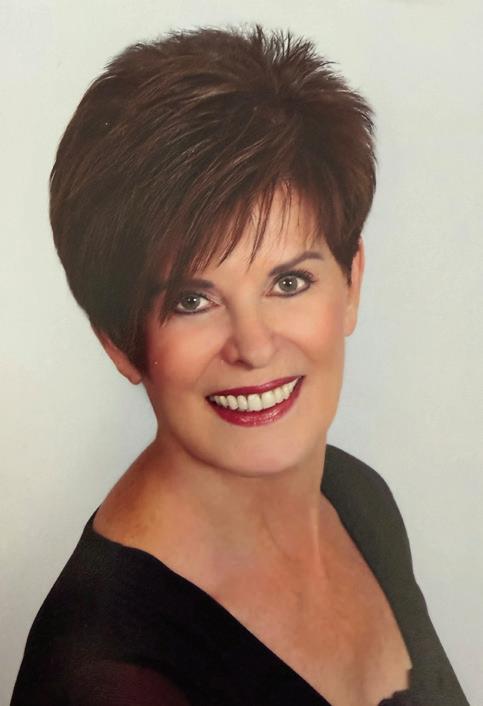
It is with profound sadness that we announce the passing of Marlys Balanoff Lazarus, who died peacefully surrounded by her family after a courageous battle with cancer.
Born and raised in Des Moines, Iowa, Marlys grew up in a large, loving family where she developed the deep commitment to family that would define her life. She graduated from Roosevelt High School, where she recently enjoyed reconnecting with lifelong friends at her class reunion. After spending a year at the University of Wisconsin, she decided Wisconsin was too cold and instead returned to warm and balmy Iowa and graduated from the University of Iowa. There she met the love of her life, Larry Lazarus, whom she married.
Following graduation, Marlys taught high school English while Larry attended law school at Drake University in Des Moines. Soon after, they moved to Chicago where their oldest daughter was born. The family relocated to Phoenix in 1973, where Larry began his 50-plus-year legal career and they welcomed their second daughter. Throughout her life, Marlys embraced many roles with grace and dedication. She taught English, managed a dental practice for a longtime family friend and later became a consultant to dental offices across the country. No matter where life took her professionally, her greatest joy was always her family.
Her grandchildren were the light of her life. She treasured traveling with them and creating lasting memories through the beloved annual “Camp Bubbe and Pops,” a week-long summer tradition in Phoenix. Marlys also found joy and strength in her daily workouts at The Villages, remaining committed to rowing 5,000 meters each day, even during her chemotherapy. Her determination and resilience inspired everyone around her.
Marlys had a remarkable gift for connecting with people, leaving a lasting impression wherever she went. During her two-year cancer journey, she was deeply touched by the extraordinary love and support she received from friends, family and caregivers.
She is survived by her devoted husband of 57 years, Larry Lazarus; her daughters Keri Silvyn and Sammy Glassman Utsunomiya; and her five beloved grandchildren Bennett, Ethan, Riley, Eliana and Jesse.
Our family extends heartfelt gratitude to Banner Health, Dr. Mengesha, Dr. Willmott and her staff, Connections in Homecare and Communities, and Hospice of the Valley for the exceptional care, compassion and kindness they provided throughout Marlys’ journey.
Graveside services were held on Friday, June 26 at Greenwood Memory Lawn Cemetery, Beth El Section in Phoenix.
In lieu of flowers, donations may be made in Marlys’ memory to Banner MD Anderson Cancer Center: Make a Gift: In Memory of Marlys Lazarus - Banner Health Foundation.