Delegates from the Valley traveled to the CTeen International Shabbaton
CJP Impact Mission informs community on the many resources available throughout the Valley
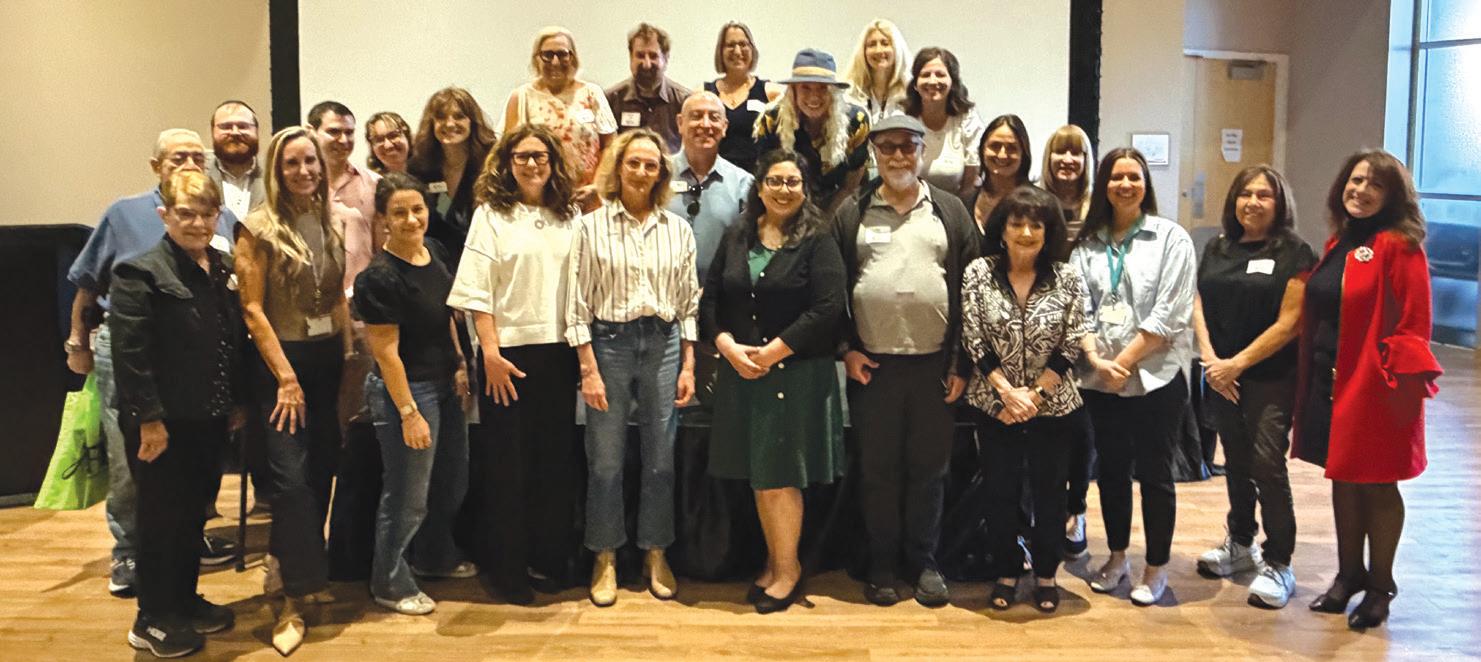
On Friday, March 13, the Center for Jewish Philanthropy of Greater Phoenix (CJP) hosted members of the Jewish community for its annual Impact Mission, a hands-on, educational program that included a tour around the Valley to inform interested parties about the many services available and ways to get involved in Jewish life.
CJP provides grants to fund various services and programs for everyone from preschoolers to seniors throughout the Greater Phoenix area and around the world.
In 2025, CJP distributed over $1.7 million to 49 organizations through its annual community impact grants, and another $20,500 to nine organizations through its year-round small grants cycle.
“The CJP’s mission is to energize and sustain Jewish life throughout Greater Phoenix, Israel and around the world,” said Richard Kasper, CJP’s CEO. “Today, we’re coming together to get to know the professionals and the community members that drive impact and see firsthand the scope of leadership represented across the system.”
The day began with the opportunity to get to know all of the partner organizations that share space at the Ina Levine Jewish Community Campus (ILJCC), including the Bureau of Jewish Education of Greater Phoenix (BJE), Gesher Disability Resources, Jewish Community Relations Council of Greater Phoenix (JCRC), Jewish Free Loan (JFL), Jewish Tuition Organization (JTO), Minkoff Center for Jewish Genetics (MCJG) and the Valley of the Sun Jewish Community Center, a nonprofit community hub offering educational, wellness, cultural and social programs to members of all faiths.
SEE MISSION, PAGE 2
HEADLINES | 7
ISRAEL AT 78
Join the celebration of Yom Ha’atzmaut, Israel’s Independence Day, in Scottsdale
Arizona Jewish organizations advocate for safe worship zones and enhanced hate crime legislation
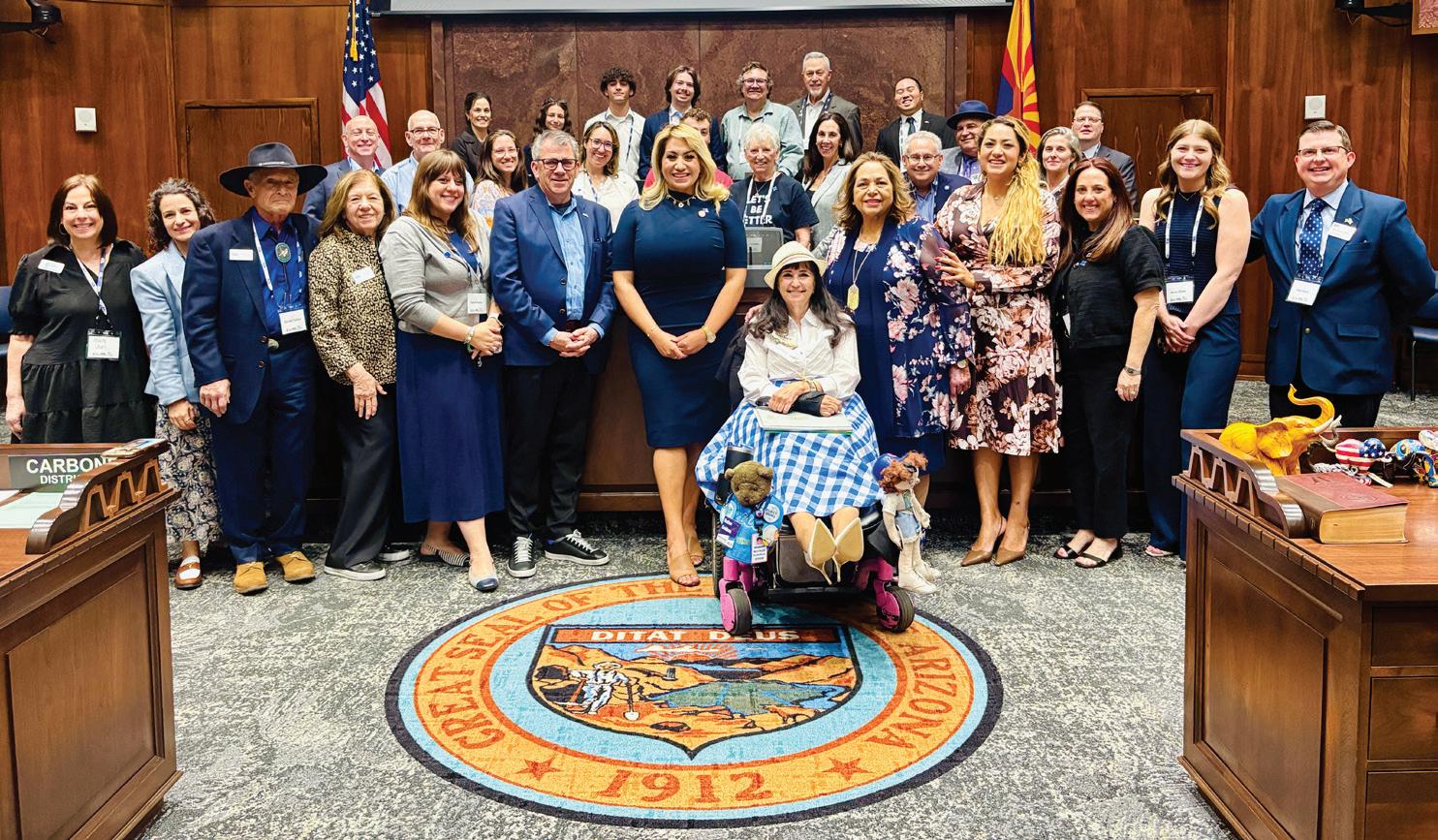
The Anti-Defamation League (ADL), Center for Jewish Philanthropy of Greater Phoenix (CJP) and Jewish Philanthropies of Southern Arizona (JPSA) came together at the State Capitol in Phoenix on March 23 to encourage representatives to support legislation that further protects Arizonans’ First Amendment right to freedom of religion.
“Joining together in this work is so meaningful to us,” said Sarah Kader, deputy regional director, ADL Desert Region.
ADL has led Arizona Jewish Communal Advocacy Days for four consecutive years. In 2023, ADL partnered with Jewish Community Relations Council (JCRC) to advocate for nonprofit security grant funding.
The next year, ADL helped build legislation against swatting, which was passed with bipartisan support and signed by Gov. Katie Hobbs.
In 2025, ADL advocated for HB2880, sponsored by Rep. Alma Hernandez, banning encampments on university campuses. SEE LEGISLATION, PAGE 3
‘Straight Outta Skokie’
Scottsdale author Al Krockey shares stories of growing up in Skokie, Illinois, in his new memoir. See page 10.
JOSH BOOTZIN | STAFF WRITER
JOSH BOOTZIN | STAFF WRITER
PHOTO COURTESY OF AL KROCKEY
Jewish community members and state representatives came together for Jewish Communal Advocacy Day 2026 at the Arizona State Capitol. COURTESY
The ILJCC also hosts local BBYO Mountain Region programs, during which teens focus on enrichment, leadership and fundraising. The Mountain Region encompasses over 550 high school students from across Arizona, Nevada and Utah.
The BJE, in existence for over 55 years, provides educational programming for all ages, including classes for expectant parents, single parents, recently married couples, infants, seniors, Hebrew learners and more. “Our mantra is lifelong Jewish learning,” said Linda Feldman, director of family education for the BJE. “We welcome anyone who wants to learn.”
2023 Phoenix Jewish News Print Dates
station.
daughter with Down syndrome on KJZZ, National Public Radio’s Phoenix affiliate station.
on advances in genetics and connecting patients to the support they need.
Meyers was so captivated by the essays that he reached out to Silverman, and the two became friends.
about her Judaism with her fellow council members and speaking out for her rights
She already has some practice at
about her Judaism with her fellow council members and speaking out for her rights
“One time, I was in class and someone called me the R-word and I told him not to. The teacher was in the hallway and another student repeated the word,” she said. Rather than letting the situation go, she told her theater teacher, who was able
She already has some practice at
“One time, I was in class and someone called me the R-word and I told him not to. The teacher was in the hallway and another student repeated the word,” she said. Rather than letting the situation go, she told her theater teacher, who was able
“If someone has a disability, saying the R-word is like saying the F-word,” Stern said.
“If someone has a disability, saying the R-word is like saying the F-word,” Stern said.
Since 1985, Gesher has served Jewish community members living with a disability, primarily between the ages of 25 and 50, through education, residential support, employment resources and social groups.
January 6
January 20
January 6
February 3
January 20
February 17
August 25
After getting to know all of the organizations at the ILJCC, the group boarded a bus for a trip to visit the East Valley Jewish Community Center (EVJCC) in Chandler.
Meyers was so captivated by the essays that he reached out to Silverman, and the two became friends.
33,000-square-foot facility by Rabbi Michael Beyo, the only orthodox rabbi in the world at the helm of a JCC.
That’s how Stern first learned of the open council seat, but there’s no doubt she earned her position, Meyers said.
That’s how Stern first learned of the open council seat, but there’s no doubt she earned her position, Meyers said.
While performing in the musical “Hairspray,” she had another occasion to tangle with the offensive word, which appears in the script.
While performing in the musical “Hairspray,” she had another occasion to tangle with the offensive word, which appears in the script.
September 1
August 25
September 8
September 1
September 15
March 10
February 3
February 17
March 24
March 10
March 31
March 24
April 7
March 31
April 21
April 7
May 5
September 8
October 6
While on the bus, Sapir Tiram, senior community shlicha (emissary), the first shlicha in Phoenix in 15 years, led a conversation about Israel and her role as a cultural ambassador educating Phoenix Jews and non-Jews on the issues facing Israel.
To become a council member, Stern had to apply and demonstrate that she had something valuable to contribute, he said.
‘The EVJCC is different from most JCCs,” Beyo said. “We do not have our own campus, we do not have membership dues and all of our community programs are free.”
“That’s really bad and my friend said it on stage. I was not OK with that, so I went to the director and told her it was a bad word for people with disabilities, but she wouldn’t take it out,” Stern said.
2026 Phoenix Jewish News Print Dates
9
Created in the 1930s, the JCRC has taken a hyper-local approach to build trust in Jewish partnerships, inform public policy and leverage strategic communications. “We foster mutual understanding, strengthen social cohesion and uphold democratic values to advance a more just, inclusive society,” said Rabbi Mindie Snyder, executive director.
October 13**
September 15
October 6
October 20
JFL has provided interest-free loans to Arizona’s Jewish community for more than 75 years, helping families meet basic needs, avoid eviction and keep utilities running. JFL also provides financial literacy programs and support for community institutions.
April 21
May 19
November 3
November 10
October 13** October 20 November 3
November 17
November 10
December 1
June 9
May 5
May 19
July 14
June 9
August 4
The top-ranked Jewish student tuition organization (STO) in Arizona, JTO has raised approximately $4 million dollars per year for the past two years, helping provide scholarships for students in grades K-12 to attend Jewish day school.
July 14
August 18*
August 4
August 18*
December 15
November 17 December 1
15
For the last 20 years, MCJG has provided testing for genetic disorders to support the generational health of individuals and families. The organization recently expanded its scope to educating the public
To become a council member, Stern had to apply and demonstrate that she had something valuable to contribute, he said.
“She’s on the council because she deserves to be on the council,” he said.
“That’s really bad and my friend said it on stage. I was not OK with that, so I went to the director and told her it was a bad word for people with disabilities, but she wouldn’t take it out,” Stern said.
23
“She’s on the council because she deserves to be on the council,” he said.
Stern is creating a life and career as a member of her community, which makes her a great addition.
Tiram had been working as a junior high school English teacher in South Tel Aviv when the Hamas attack occurred on Oct. 7, 2023. She recalled that there was so much propaganda and misinformation on social media that many of her students questioned the point of “learning the language of people who hate us.”
The EVJCC hosts nearly 150 programs each year, including cultural programs, movies, concerts, classes, lectures and even interfaith programs with other religious organizations.
Stern is creating a life and career as a member of her community, which makes her a great addition.
Stern graduated from McClintock High School in Tempe last year and now attends Glendale Community College, with a focus on dance. She is a regular performer at Detour Company Theatre, a Scottsdale theatre company for adults with intellectual, developmental and physical disabilities.
That inspired her to join the Jewish Agency for Israel, to educate communities around the world about the threats facing Israelis and the country’s existence.
Stern graduated from McClintock High School in Tempe last year and now attends Glendale Community College, with a focus on dance. She is a regular performer at Detour Company Theatre, a Scottsdale theatre company for adults with intellectual, developmental and physical disabilities.
In her role at CJP, Tiram tailors programs according to community needs. “If you feel there is a need in your community to talk about a subject that hasn’t been touched before, I’d love to help with that,” she said.
She let her mother know about the conflict and they were able to convince the director of the need to remove the word from the script.
She let her mother know about the conflict and they were able to convince the director of the need to remove the word from the script.
“My friend Al was next to me when I told the director and he gave me the biggest hug ever and said that he loved me so much,” Stern said. Sadly, Al died in a car crash on Oct. 24, 2021.
Most of the facility is used by the Early Learning Center, the only full-time, allservice, accredited early learning center with five stars in the East Valley. The ELC accepts infants as young as 6 weeks old and offers classes for toddlers and children through kindergarten.
In fact, when Stern attended her first council meeting in January, she couldn’t wait to tell people of her involvement with Detour and share information about its upcoming shows.
In fact, when Stern attended her first council meeting in January, she couldn’t wait to tell people of her involvement with Detour and share information about its upcoming shows.
Heart Can’t Even Believe It: A Story of Science, Love and Down Syndrome,” Silverman’s book about her daughter. When Gesher’s speakers’ bureau, Damon Brooks & Associates, was asked to find a speaker about Down syndrome for an event this spring, Hummell first asked Silverman to speak, thinking Stern might be too young.
6
20
Heart Can’t Even Believe It: A Story of Science, Love and Down Syndrome,” Silverman’s book about her daughter. When Gesher’s speakers’ bureau, Damon Brooks & Associates, was asked to find a speaker about Down syndrome for an event this spring, Hummell first asked Silverman to speak, thinking Stern might be too young.
They decided instead that Stern should tell her own story; it’s a real bonus that she is not afraid of public speaking.
“That was hard; it’s very hard to get emotions out and I was very, very upset,” she said.
“My friend Al was next to me when I told the director and he gave me the biggest hug ever and said that he loved me so much,” Stern said. Sadly, Al died in a car crash on Oct. 24, 2021.
“That was hard; it’s very hard to get emotions out and I was very, very upset,” she said.
The facility emphasizes utilizing its indoor recreational space and outdoor playground areas, and it offers flexible schedules so that parents with financial strain can take advantage of only what they can comfortably afford.
“There’s no question that she is going to thrive,” Meyers said. “She’s very gregarious and passionate about the things that matter to her.”
On the recent anniversary of his death, Stern made a cake and took it to the crash site.
On the recent anniversary of his death, Stern made a cake and took it to the crash site.
“I don’t know how I did it without crying. I’m so proud of myself,” she said.
“I don’t know how I did it without crying. I’m so proud of myself,” she said.
Amy Hummell, executive director of Gesher Disability Resources, agreed that Stern is a good fit for ADDPC because of her ability to self-advocate.
“It’s not the same when someone tries to tell a person’s story for them,” Hummell said.
They decided instead that Stern should tell her own story; it’s a real bonus that she is not afraid of public speaking.
“It’s not the same when someone tries to tell a person’s story for them,” Hummell said.
Additionally, helping people with disabilities find jobs was one of the reasons for acquiring the bureau. Unemployment in the disability community is upwards of 75% and of that percentage, 75% are ready, willing and able to work — but haven’t been given the opportunity, Hummell said.
Stern looks forward to sharing insights
Once they arrived at the EVJCC, the group was treated to a tour of the
“There’s no question that she is going to thrive,” Meyers said. “She’s very gregarious and passionate about the things that matter to her.”
Back on the bus, mission attendees learned about the many ways Jewish college students can get involved in Arizona in a discussion with Arizona State University (ASU) Hillel managing director Taylor Silverman and Nick Baer,
Stern looks forward to sharing insights
Hummell co-hosted a book event with Meyers a few years ago for “My
Amy Hummell, executive director of Gesher Disability Resources, agreed that Stern is a good fit for ADDPC because of her ability to self-advocate.
Hummell co-hosted a book event with Meyers a few years ago for “My
12701 N. Scottsdale Road, Suite 201, Scottsdale, AZ 85254 Phone: 602.870.9470 | Fax: 602.870.0426 | editor@jewishaz.com | advertising@jewishaz.com subscriptions@jewishaz.com | www.jewishaz.com
PUBLISHER
Jewish Community Foundation of Greater Phoenix
Additionally, helping people with disabilities find jobs was one of the reasons for acquiring the bureau. Unemployment in the disability community is upwards of 75% and of that percentage, 75% are ready, willing and able to work — but haven’t been given the opportunity, Hummell said.
“People have it in them to speak up but don’t know how, and often they’re not cheered on. Sophie has family support
“People have it in them to speak up but don’t know how, and often they’re not cheered on. Sophie has family support
Jewish Community Foundation of Greater Phoenix
PUBLISHER
GENERAL MANAGER Rich Solomon | 602.639.5861 rsolomon@jewishaz.com
SUBSCRIPTIONS 602.870.9470 x 1 subscriptions@jewishaz.com
SUBSCRIPTIONS
602.870.9470 x 1 subscriptions@jewishaz.com
SUBSCRIPTIONS
GRAPHIC DESIGNER Ebony Brown | 410.902.2333 ads_phoenixjn@midatlanticmedia.com
602.870.9470 x 1 subscriptions@jewishaz.com
GRAPHIC DESIGNER
GRAPHIC DESIGNER Ebony Brown | 410.902.2333 ads_phoenixjn@midatlanticmedia.com
Ricki Urban | 602.870.9470 x 2 advertising@jewishaz.com
N. Scottsdale Road, Suite 201, Scottsdale, AZ
Sophie Stern at her high school graduation
2026 CJP Impact Mission participants and Ina Levine Jewish Community Campus partners. COURTESY OF JEWISH NEWS
“We’ve had three really strong years advocating for really important pieces of legislation that protected the Jewish community, and the community at large,” Kader said. “We’re very excited for the growth of this Advocacy Day.”
This year was ADL’s first time partnering with CJP and JPSA for Advocacy Day.
“It’s really important that we’re able to do this together, representing the entire state,” said Richard Kasper, CJP CEO. “That is the sort of representation that is meaningful to our elected officials, when they see that it’s not just one or two people coming from one pocket in the community, but the entire state.”
“It is so important that we are here today as one, and I really hope that, moving forward, we have more conversations as one Arizona Jewish community,” said Carina Bien-Willner, JPSA director of public affairs.
After morning introductions, the more than 30 volunteer advocates in attendance spent the day learning about the issues being addressed in this legislative session and how to speak with their representatives in short meetings later in the day.
“Unfortunately, we’re at a time when there are a lot of rotten things happening to the Jewish community locally, nationally and internationally,” Kasper said. “We’ve got two terrific bills that we’re here to advocate in favor of, and we have a lot of really solid data to back them up.”
Many representatives also dropped in to speak to the group throughout the day, including Senate Minority Leader Mitzi Epstein.
“The work we are doing makes such a difference,” Epstein said. “Prejudice against anybody is a problem. Jewish people are a very tiny minority, and yet they don’t get the respect of being a minority. I know there are people out there who feel prejudice, so I want to pull in other minorities and try to help them understand.”
Rep. Alma Hernandez, who served as a Public Interest Fellowship/legal extern for the national ADL in 2024, was not only the youngest woman elected to Arizona State Congress, but also the first Jewish Latina elected.
“There are five of us in the Jewish caucus
a current ASU student.
There are an estimated 3,500 Jewish students across four ASU campuses. Though ASU Hillel supports nine fulltime staff, students take a direct role in leading student programs and events throughout the year.
The organization prioritizes community partnerships and fostering a pipeline for Jewish students to continue working in the Phoenix area. “We want to invest in the Valley,” Silverman said. “We want students to feel like they can stay here. Or, if they choose to leave, we want them to come back and invest in community programs here.”
The last stop of the day was the Arizona
here, me and my sister Consuela make up two,” Hernandez said. “It’s just really exciting to see you all here advocating for issues that are important.”
In the afternoon, attendees divided into small groups to advocate directly to their representatives in private meetings. ADL encouraged them to discuss two distinct pieces of legislation, the first being HB4117, creating safe worship zones at institutions of faith.
“Over the last several years, we have seen a rise in extremist activity outside of houses of worship, especially synagogues, where people are protesting, where there is harassment, intimidation and violent altercations,” said Kendall Kosai, director of policy, ADL Western Division. “We find the freedom to express religion extremely important. We are trying to make sure that congregants simply have the ability to go to their place of worship without being obstructed, intimidated or harassed.”
The language in HB4117 (sponsored by Rep. Teresa Martinez) pertaining to safe worship zones was originally written into HB2677, sponsored by Rep. Alma Hernandez. HB2677 was not heard in committee, but since many representatives felt this to be an important issue, it was rewritten into HB4117 and passed out of the House.
“It’s always great when we have other elected officials, who are not Jewish, who are good allies that will run legislation for us,” Hernandez said. “It’s always more important to have folks who are not part of our community advocating and standing up for us.
HB4117 was heard and considered by the Senate Judiciary and Elections Committee on March 26, passing with a 4-3 vote. The next step is a vote by the entire Senate, and if it passes, it will go back to the House and then the governor’s desk to be signed.
The second legislation the Jewish community was encouraged to advocate for was to strengthen Arizona’s hate crime law, aiming to address bias-motivated crimes against protected characteristics by increasing penalties.
According to the FBI, Arizona experienced 710 hate crimes between 2022 and 2024, with anti-Jewish hate crimes accounting for 74% of all religious-based hate crimes in the state.
Kosher Food Pantry in Phoenix, where participants took part in packing snack containers of oats, raisins and brown sugar to be donated to families in need.
The pantry is under the supervision of Chabad, with its own kosher kitchen, and it distributes around 1,000 pounds of food every day, in addition to Shabbat, birthday and holiday meals.
Visitors do not have to show an ID, and they can take as much food as they want, though they’re encouraged to only take what they, or their family, need.
As the day came to a close, participants reflected on the new perspective they gained of the work that CJP and its partners provide for the more than 100,000 Jews
“Hate crimes are rising in the state of Arizona. There’s a real issue,” Kosai said. “What we’re asking for is to make sure that prosecutors have the tools they need to hold people accountable when they target someone because of a characteristic.”
Originally written into HB2175, sponsored by Rep. Julie Willoughby, this legislation met unexpected opposition on the House floor due to the inclusion of “political affiliation” as a protected characteristic along with other characteristics that are considered immutable, such as age, religion, sexual orientation, etc.
ADL’s verbiage was rewritten into HB2746, but the language is still being negotiated.
If successful, HB2746 would force judges to charge individuals guilty of hate crimes with a felony, as opposed to a misdemeanor, updating the current law which leaves the decision to the judge’s discretion.
“We live in a country where freedom is important. It doesn’t matter your ethnic background, how much money you have or where you came from. It’s important that the constitution applies to everyone,” said Rep. Walter Blackman. “This sends a message to the bullies: Stop acting like this is your country alone and stop pushing people around. It’s an honor to support this legislation and help push it over the finish line.”
HB2746 does not currently have a scheduled hearing date.
Attendees advocated to various representatives in favor of the two bills, including Rep. Kevin Volk, Sen. Hildy Angius, Rep. Lorena Austin, Sen. John Kavanaugh and Sen. Lauren Kuby.
Two Phoenix Country Day School students, Max Allen and Charlotte Yudell, had the opportunity to speak directly with Rep. Matt Gress about facing anti-Zionism on their school’s campus.
After meeting with their representatives, attendees had the opportunity to sit in the House gallery and witness the legislative session.
“The Jewish community has always had to stand up and represent itself throughout the ages,” Kasper said. “This is our day to do it here in Phoenix.” JN
Jewish News is published by the Jewish Community Foundation of Greater Phoenix, a component of the Center for Jewish Philanthropy of Greater Phoenix
throughout the Valley.
“We get into our bubbles, and we aren’t as aware of everything that’s going on in the wider community, especially in Phoenix, where it’s such a large community, geographically speaking,” said Danielle Breslow Gross, CJP board of directors vice chair. “It’s really great to be able to go into other parts and see what’s going on and the lives that are impacted.”
“This was a great day,” said CJP event engagement associate Shayna Raphael. “I hope people were inspired.” JN
Jewish News is published by the Jewish Community Foundation of Greater Phoenix, a component of the Center for Jewish Philanthropy of Greater Phoenix.
Inspiring the next generation of Jewish leaders in the Valley of the Sun
JOSH BOOTZIN | STAFF WRITER
T
he 15 CTeen Phoenix delegates that journeyed to New York City for the 18th Annual CTeen International Shabbaton on Feb. 19-22 learned more than how to navigate a snowstorm. They gained experience in leadership, connection and programming to last a lifetime.
Spread across four days of programming, the CTeen International Shabbaton welcomed 4,500 Jewish teens from 54 countries for a transformational leadership summit that sent them off to help strengthen Jewish life across the globe.
“The Shabbaton is not your average youth retreat,” shared Rabbi Tzvi Rimler, director of CTeen Phoenix. “From high-stakes leadership workshops to electrifying citywide events, every moment was engineered to push participants beyond their comfort zones and into a larger vision of themselves as Jewish leaders.”
CTeen Phoenix delegates connected with other teens in New York City to gain inspiration on how to continue to cultivate a leadership culture back in Arizona, one they
have been building through social activities, a growing leadership board and the Solomon Leadership Program.
On Friday, they explored the Big Apple’s tourist sites, highlighted by an ice skating adventure at Central Park and dynamic Shabbat services, games and workshops.
On Saturday night, the 4,500 teens danced their hearts out in a Times Square takeover that included a Havdalah ceremony. Then, the weekend concluded on Sunday with a farewell mega-event.
“The CTeen Shabbaton is such an actionpacked and meaningful weekend where I got to see how I’m part of something much bigger than just my local chapter and city,” said Gabriel, a high school senior and leader of CTeen Phoenix
The Solomon Leadership Program, a biweekly leadership course that includes three college credits and offers teens the opportunity to interact with successful businesspeople in the community, also sent representatives to the international event.
Solomon Leadership fellows Oliver Ahdoot and Matan Levitin put their mentorship and programming skills to the test.
“It was crazy how many Jewish teens my age I met over the span of four days,” Ahdoot said.
The Phoenix delegation met and conversed with teens from all over the world — London, Buenos Aires, Tel Aviv, etc. — while participating in activities, packing Times Square and squeezing into subway cars all weekend.
The teens embodied this year’s Shabbaton theme, “Live The Life,” by doing exactly that, gaining life experiences in a world city and inspiring others to take the trip in years to come.
Half the delegation became temporarily stranded due to a blizzard at the end of the visit, but they turned the experience
into a memorable one thanks to a knack for improvisation that they’ve been cultivating through leadership programming, utilizing skills and activities they had just learned at the Shabbaton.
“That energy — electric, contagious, and deeply Jewish — is exactly what CTeen Phoenix’s Leadership Board was built to channel,” Rimler wrote. “When these teens walk back into their schools and synagogues, they carry with them not just memories, but a mandate: to bring the light of that experience into their own community, one event, one conversation, one act of leadership at a time.”
The 15 delegates returned to Phoenix with new friends, new ideas and a new passion for social leadership. JN
For more information, visit cteenphoenix.com.
All Real Estate Agents Are Not Alike!
Full service Real Estate needs, including property management
Full service Real Estate needs, including property management
Full service Real Estate needs, including property management
Full service Real Estateneeds, including property management
I will make your next real estate transaction pleasant, productive, and profitable.
I will make your next real estate transaction pleasant, productive, and profitable.
Toby Weinstein Broker Associate Full service Real Estate needs, including property management
I will make your next real estate transaction pleasant, productive, and profitable.
I will make your next real estate transaction pleasant, productive, and profitable.
Toby Weinstein Broker Associate
Toby Weinstein Broker Associate
Toby Weinstein Broker Associate
Toby Weinstein Broker Associate
Toby Weinstein Broker Associate
service Real Estateneeds, including property management I will make your next real estate transaction pleasant, productive, and profitable.
I will make your next real estate transaction pleasant, productive, and profitable.
Bus (480) 948-5554
Real Estate Agents Are Not Alike! L’Shana Tova!
Bus (480) 948-5554 • Cell (602) 228-0265 tobyre4u@gmail.com
Bus (480) 948-5554 • Cell (602) 228-0265 Tobyre4u@aol.com
Bus (480) 948-5554 • Cell (602) 228-0265 Tobyre4u@aol.com
Bus (480) 948-5554 • Cell (602) 228-0265 Tobyre4u@aol.com
Bus (480) 948-5554 • Cell (602) 228-0265 Tobyre4u@aol.com
7077 E. Marilyn Rd., Bldg. 4, Ste 130 Scottsdale, AZ
7077 E. MarilynRd.,Bldg. 4, Ste 130 Scottsdale, AZ
14350 N. 87th Street, Suite 170, Scottsdale, AZ 85260
7077 E. Marilyn Rd., Bldg. 4, Ste 130 Scottsdale, AZ
7077 E. Marilyn Rd., Bldg. 4, Ste 130 Scottsdale, AZ
7077 E. MarilynRd.,Bldg. 4, Ste 130 Scottsdale, AZ
14350 N. 87th Street, Suite 170 | Scottsdale, AZ 85260
14350 N. 87th Street, Suite 170 | Scottsdale, AZ 85260
7077 E. Marilyn Rd., Bldg. 4, Ste 130 Scottsdale, AZ
Happy Passover!
The CTeen Phoenix delegation in New York.
COURTESY OF
Phoenix youth chosen for national PJ Library committee
JOSH BOOTZIN | STAFF WRITER
Tabitha Creviston, an 11-year-old living in the Phoenix area, was recently chosen to take part in PJ Our Way’s national Kids Advisory Committee, helping coordinate Jewish reading material for preteens across North America.
Created by the Harold Grinspoon Foundation (HGF) and funded with help from community partners, PJ Library sends an age-appropriate book every month to participating Jewish families with children up to 12 years old.
As stated on the PJ Library website, “These stories spark conversations that inspire the whole family to explore and celebrate what they love about Jewish life.”
videos. There’s no adult input on this.”
The Kids Advisory Committee, populated with 12 members identified by HGF, pre-reads potential books and chooses the four options for their peers each month.
“We review books and give feedback on them,” Tabitha explained. “(PJ Library) sends us PDFs and then we fill out a survey about how much we liked the books and if we thought they were a good fit for PJ Library to send out. I’m just very excited for the opportunity to read more books.”
Tabitha is only the second kid from the Phoenix area chosen for the advisory committee over the last 10 years.
Many of the books are rooted in Jewish themes and values, while others may only include a Jewish character or reference to Judaism, so the program can be meaningful to all families, no matter their level of religious observance.
Once participants make it to the older group, known as PJ Our Way, for preteens ages 9 to 12, they get to choose their own reading experience each month from one of four middle-grade book options.
PJ Our Way is available for free throughout the United States and Canada, offering a more advanced selection of fantasy, historical fiction, mysteries, biographies, graphic novels and more.
“PJ Our Way is really special, because the whole program is completely kid driven,” said Marcy Lewis, director of family and volunteer engagement at the Center for Jewish Philanthropy of Greater Phoenix (CJP). Lewis runs PJ LibraryPhoenix, a program of CJP. “PJ Our Way empowers the kids to choose a chapter book, write book reviews and make
“It’s pretty special that we get a hometown person, a kid that gets to make these decisions for such a big organization,” Lewis said.
An avid reader of fantasy, science fiction and adventure, some of Tabitha’s favorite books include popular young adult series such as “The Hunger Games” and “Percy Jackson,” as well as graphic novels like “The Baby-Sitters Club” and other works of author Raina Telgemeier.
She said her involvement in PJ Our Way is “a great experience for me because this gives me an opportunity to explore more genres that I wouldn’t have thought I liked, until I find out that I actually do like them.”
An aspiring author, Tabitha is constantly generating new stories, with about 50 finished and unfinished works in her Google Drive. She’s tried her hand at horror, romance and mystery, even endeavoring to create a compilation of original poetry, but she likes to write thrilling adventures above all.
“Being able to explore lots of different kinds of books helps me when I’m
writing, because I can explore new descriptions and idioms that I can use in my own books.”
She said she often begins a story, makes it to about halfway through, starts thinking about a sequel, and then jumps ahead before finishing the first one. Therefore, the only thing in her way of finishing any story is the natural eagerness to skip to the most exciting, thoughtprovoking ideas.
Tabitha currently attends school online at Khan World School through Arizona State University Preparatory Academy. She’s taking seventh and eighth grade courses, plus a high school Spanish class. All coursework is due by the end of the school year, with no individual deadlines, and she can resubmit assignments until she receives the grade she was looking for, allowing for a more gradual and personalized learning experience. This helps her schedule her schooling to leave lots of time for reading and writing.
“If you’re not sure whether you want to do PJ Library, maybe read some of the books, and then ask yourself, ‘Do I want to talk about this with someone else?’ If the answer is yes, then I think you should sign up,” Tabitha said. JN
more information, visit pjourway.org.
For
Jewish News is published by the Jewish Community Foundation of Greater Phoenix, a component of the Center for Jewish Philanthropy
Tabitha Creviston reading a book at home. COURTESY OF HANNAH CREVISTON
Celebrate Israel’s 78th birthday at the Ina Levine Jewish Community Campus
JOSH BOOTZIN | STAFF WRITER
F
or the fourth consecutive year,
Greater Phoenix community members and visitors of all faiths are invited to celebrate Yom Ha’atzmaut, the anniversary of Israel’s reformation 78 years ago, at the Ina Levine Jewish Community Campus (ILJCC) in Scottsdale.
Taking place from 5 p.m. to 7:30 p.m. on Wednesday, April 22, this free event promises to immerse attendees in Israeli culture with food, art, games and Phoenix’s own Torch Lighter Award ceremony.
At 5:30 p.m., attendees are encouraged to witness an opening ceremony with an invocation and honoring of this year’s Torch Lighter awardees.
This is modeled after Israel’s Independence Day ceremony, where 12 large torches are lit by well-known innovators, peacemakers and community alliance members, symbolizing the 12 tribes of Israel.
“We wanted to recreate that same feeling and excitement, so last year, the committee came up with this idea of a Torch Lighter Award, invoking an image of someone lighting that torch and leading the way towards Israel education and advocacy here in our community,” said
Leah Zigmond, coordinator for the event. Last year, Sigal Urman and Stacy Palestrant received the honor, and the ceremony is expanding this year to include a Teen Torch Lighter Award.
SEE BIRTHDAY, PAGE 8
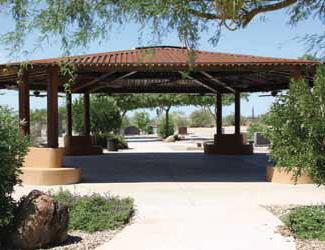
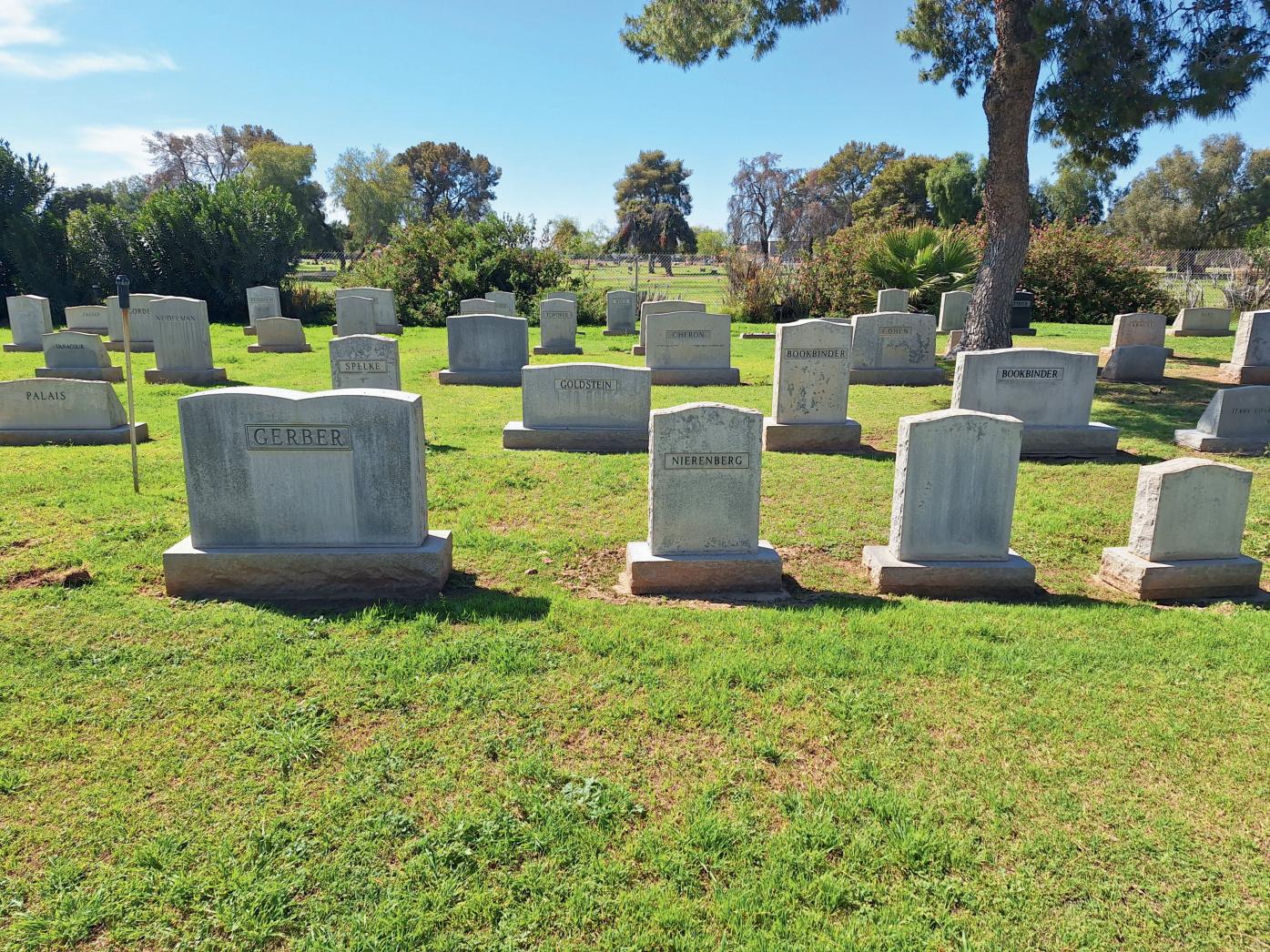
Traditional grass kosher cemetery conveniently located in central Phoenix at the Northwest corner of I-17 and Van Buren St.
Participants dance and show their support of Israel during the Israel at 77 celebration. COURTESY OF VALLEY OF THE SUN JEWISH COMMUNITY CENTER
SUNDAY, APRIL 12, 2026 AT 4:00 PM NORTH CENTRAL PHOENIX LOCATION EVENT LOCATION DETAILS WILL BE PROVIDED UPON CONFIRMATION OF REGISTRATION
Join the Phoenix Holocaust Association for a powerful community-wide commemoration featuring:
Keynote Address by Holocaust Survivor Mark Olsky Candle Lighting Ceremony · Music & Prayers
Annual Shofar Zachor Awards
Masters Men’s Choir (affiliate of Phoenix Boys Choir) Performance
RSVP FOR THE FREE COMMEMORATION EVENT AT:
“We have some incredible teens and some very active youth movements in our community,” Zigmond said. “We definitely want to highlight the work that they’re doing.”
Regardless of who is chosen for the awards, all nominees will be read aloud during the ceremony.
With more than 1,500 attendees each of the last three years, Zigmond highlighted some modifications to the event for this year.
The most notable change is that the festival is moving indoors, aiding event security and ensuring visitors won’t be out in the heat all evening.
Attendees should expect to go through metal detectors at the front entrance, and everything will be available once inside. “We’re working very closely with security, and security is working closely with the Scottsdale Police Department,” Zigmond said.
The Valley of the Sun Jewish Community Center’s gym will turn into a kids’ zone with bounce houses and inflatable obstacle courses, lawn games, face painting and more.
Thanks to encouragement from a community member, the festival will include a backgammon tournament. “Backgammon is a super common game in Israel, so we’re glad to be able to host that,” Zigmond said.
For the first time, the Greater Phoenix Jewish Film Festival has put together a program of short films to be shown throughout the event. Attendees can experience one film or all of them.
Another new partner is ESEK, a global marketplace endeavor for Israeli-made goods.
“They bring items from Israel, specifically from artists and artisans who have been impacted by the war in some way,” Zigmond said. “Some of the artists are on reserve duty, some of them have family businesses that were impacted and some are from specific areas of the country that were particularly impacted. They’re going to be selling items from Israel, and the funds go directly to the artists.”
As far as food and drink, visitors can expect Israeli cooking demonstrations and tastings with local chefs. Kosher food options will also be available for purchase throughout the evening, with milk+honey
espresso bar & eatery serving Kosher dairy and local food trucks on site serving Kosher meat.
Adults are also encouraged to participate in Israeli wine tasting and whiskey tasting. The whiskey comes from a Tel Aviv business, The M&H (Milk & Honey) Distillery, the only whiskey distillery in Israel.
For those feeling overwhelmed during the event or in need of a break, Gesher Disability Services is turning two classrooms into quiet zones, where people can relax and learn about Gesher’s services in the community.
Community members are also encouraged to submit personal photographs from Israel to be shown in a slideshow exhibit. Zigmond said one of the focuses for this year was to appeal to a wider range of ages, from adults to families with young children, ensuring a fun, celebratory experience for everyone.
“I feel like each of the last few years have been really hard for our relationship with Israel,” Zigmond said. “This event is just about coming together and celebrating, because despite all of the challenges, this incredible, tiny, powerful country is having a birthday. It’s just about celebrating Israel together.”
Attendees can register for the event, but it is not mandatory. JN
To register, submit photos, nominate torch lighters or learn more about the event, visit valleyofthesunj.org/israel-78/.
“THIS EVENT IS JUST ABOUT COMING TOGETHER AND CELEBRATING, BECAUSE DESPITE ALL OF THE CHALLENGES, THIS INCREDIBLE, TINY, POWERFUL COUNTRY IS HAVING A BIRTHDAY. IT’S JUST ABOUT CELEBRATING ISRAEL TOGETHER.”
LEAH ZIGMOND
Andrea Quen, chief experience officer at the Valley of the Sun Jewish Community Center shares information at last year's event.
Don’t let others speak your truth
Pesach begins with many of us sitting at a Seder or two.
We tell the story, eat the matzah, ask the questions, maybe have a bit too much wine and step into a moment that has shaped Jewish life for thousands of years. Whether it feels routine or deeply meaningful, something real is happening. For a few hours, being Jewish feels natural — open, uncomplicated.
And that’s not a small thing. Because what we are stepping into is not just a memory. It is the moment our people came into being. Pesach is when G-d formed us as a nation and gave us our identity. And that identity was not earned. It was not based on knowledge, observance or background. It was given.
That means something simple, but powerful. No matter what we go through,
no matter where life takes us and no matter what the world tries to say about us or call us, we are G-d’s people. That does not change.
In 1990, during a time of intense division among Jews in Israel, the Lubavitcher Rebbe addressed a painful reality. Jews were questioning other Jews, labeling them, dismissing them, even saying they were not truly Jewish. The Rebbe responded with clarity and urgency, returning to the essence.
He pointed to the words of the prophet Yeshayahu (Isaiah), where G-d Himself declares about the Jewish people: “This nation I formed for Myself, they will declare My praise.”
And the Rebbe explained: the very existence of a Jew is itself a declaration of G-d’s praise. Not what a Jew does, not what a Jew knows, but simply that a Jew is.
Because a Jew is not just someone who believes in G-d — a Jew is someone who belongs to G-d. And that relationship itself reflects Him in the world.
That identity is not something that needs to be earned, proven or validated. It does not depend on behavior or level of observance. It is inherent and unconditional.
As Columbia’s Hillel
That message, spoken in 1990, feels strikingly relevant today. We are living through a time of real external pressure. There are attacks on Jews, on synagogues and on Jewish identity itself. At the same time, internal differences within our people remain close to the surface — sometimes quiet, sometimes ready to divide.
Throughout history, we’ve been constantly reminded of what we’re not.
We’re different.
We don’t fit in.
We’re not like everyone else.
Sometimes it comes from the outside. Sometimes, over time, we start to internalize it.
Pesach is a time to remember something else.
Not what we’re not, but who we are.
G-d’s children.
The freedom we received was not only physical. It was the gift of identity.
It is easy to feel that at the Seder table, surrounded by family and tradition. The challenge begins the next day. Do we leave that sense of identity behind with the leftover brisket, or do we carry it into our
daily lives?
Because real freedom is not just remembering who we are. It is living that way.
In small, real ways.
Saying something Jewish out loud. Doing one more mitzvah. Showing our identity without hesitation. Taking responsibility for one another.
Pesach gave us our identity. The opportunity now is to carry it forward — a little more openly, a little more honestly, a little more fully.
Because being true to ourselves begins with remembering who we are and having the freedom to live that way, openly. JN
Rabbi Moshe Levertov directs the Jewish Care Network in Phoenix.
director, I know: ‘Is there antisemitism on campus?’ is the wrong question
BRIAN S. COHEN | JTA
A
s the parent of a high-school junior and someone who has worked with Jewish college students almost my entire career, nearly all the conversations I have with other parents revolve around the college search process and — unfortunately — one question: “Is there antisemitism on campus?” It’s the wrong question.
Not because antisemitism isn’t real or serious. It is. In our “new normal,” the unfortunate reality is that antisemitism is everywhere. According to a recent survey by the American Jewish Committee and Hillel International, 42% of Jewish college students nationally reported experiencing antisemitism.
No campus is immune.
The right question to ask is: “If there is antisemitism, what happens next?”
What actually shapes a Jewish student’s experience isn’t the absence of incidents, it’s the support in place if they occur. Is there a professional staff that knows administrators and community partners by name? Does the campus have a Hillel or other Jewish student
organization with deep relationships across the university, faculty, deans, trustees, forged over years, not assembled in a crisis?
And while it may seem counterintuitive, a university that has demonstrated, when tested, that it will take action and stand up for Jewish students is probably preferable to one that has not.
However, just like being Jewish is not defined by antisemitism, neither should a Jewish student’s experience on campus.
Each young person will have different needs, and so the next important question to ask is: “what is there to help my son or daughter live Jewishly, however you — or they — define it?”
Some students may want kosher meals or a prayer minyan three times a day, and others may be excited about a Jewish fraternity or sorority. The options within a school’s Jewish infrastructure matter most in how they match who your student is and what they’re looking for in a Jewish community.
At Columbia University, where I’ve served for the past 14 years, I have seen this
play out in real time.
It’s not a surprise to anyone reading this (or has been reading the news the past two years), that Columbia has had real challenges. I’m not going to pretend otherwise.
But here is what I have seen and the headlines often miss: a university that has been forced to reckon publicly with antisemitism is a university that has been forced to build. For the university itself, it means that they have had to devise the processes and policies, hire the personnel and take actions to begin to reset the campus culture.
For the Jewish communal professionals on campus, it means that we have deepened our work to be an advocate and partner with the university. In fact, I’d wager our team has developed closer working relationships with administrators, faculty and trustees than at almost any other campus in the country. Those relationships weren’t handed to us. We earned them, in part, by being present through the hardest moments.
And through all of that, we have had to figure out how to sustain and build Jewish
Jewish Publication Company or the staff of Jewish
joy. We hosted more than 1,300 students, faculty and administrators for a massive Shabbat dinner on the university’s basketball court, we held an Israel Independence Day celebration in the middle of campus and our Kraft Center for Jewish Life is filled to capacity nearly every week. This year alone, we sent students to Israel, Poland, Curacao, Greece, Brazil and Mexico. By keeping up our consistent drumbeat of programs in the tough times, it has made our Jewish community stronger.
So, for all those Jewish high school seniors who just got their acceptances and are trying to make that tough decision about where to study, the question is not where can I avoid antisemitism. The question is where can I go where there is someone in my corner to help and is actively building and nurturing the best defense against antisemitism: a vibrant, joyful Jewish life.JN
The views and opinions expressed in this article are those of the author and do not necessarily reflect the views of JTA or its parent company, 70 Faces Media.
Letters must respond to content
by Jewish News and should be a maximum of 200 words. They may be edited for space and clarity. Unsigned letters will not
Find area congregations at
Rabbi Moshe Levertov COURTESY OF RABBI MOSHE LEVERTOV
Scottsdale author revisits Jewish life in 1960s Skokie in new memoir
MALA BLOMQUIST | MANAGING EDITOR
Anew memoir by Scottsdale resident Al Krockey is bringing readers back to the streets of Skokie, Illinois, through stories of family, music, community and the turbulence of 1968.
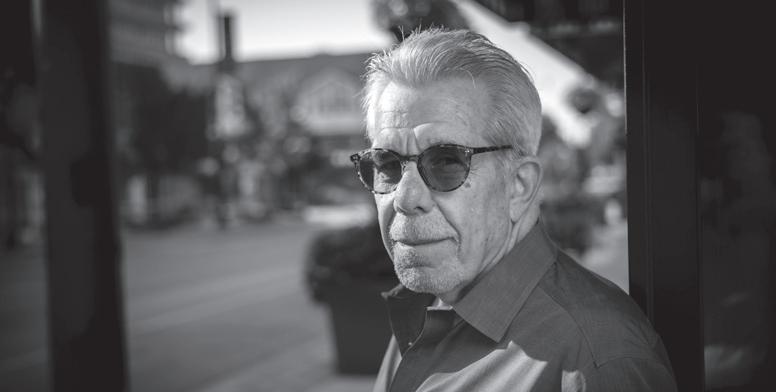
Krockey’s recently released book, “Straight Outta Skokie: The Krockey Chronicles: 1968,” is the first installment of a planned trilogy tracing his comingof-age during a consequential year in modern American history. Now 76 and living in Scottsdale, Krockey said the project began unexpectedly during the COVID-19 pandemic.
“I’d been telling these stories my whole life,” he said. “During COVID, I was alone in my apartment, with nothing else to do. To keep my sanity, I started writing them down.”
After the pandemic, he returned to work and it wasn’t until after he moved to Arizona in 2022 that he picked up writing again. “I got into it. It became a routine of mine, and I started writing. As I wrote and wrote, all of a sudden, I had these stories down, and it became a book,” he said.
The memoir blends personal anecdotes with snapshots of Jewish suburban life in Skokie at a time when the community was shaped by Holocaust survivors, immigrant families and the social upheaval of the late 1960s. Later volumes in the trilogy will follow Krockey’s experiences through 1969 and the early 1970s.
In the late 1970s, the town became nationally known after Illinois neo-Nazis of the National Socialist Party of America attempted to hold a march in Skokie, far from their headquarters on Chicago’s south side, sparking a landmark legal battle over free speech.
Krockey’s memoir takes place earlier, but he recalls growing up surrounded by neighbors still living with the trauma of World War II.
“In the ’50s, one survivor lived two blocks away, I was friends with her son, and you could hear her screaming in the middle of the night, because we had our windows open. We didn’t have air conditioning then,” he remembered.
His own family’s wartime history also shaped his perspective. His father served as a medic during the Battle of the Bulge and later helped treat survivors liberated from Buchenwald and Dachau concentration camps. A medal his father recovered from a German officer is now preserved at the United States Holocaust Memorial Museum in Washington, D.C.
Krockey attended Hebrew school at Skokie Central Congregation and
became a bar mitzvah in a storefront location before the congregation moved into a larger building. His father, facing financial challenges at the time, cleaned the synagogue in exchange for tuition.
His parents were regular High Holiday attendees, and his mother participated in the synagogue’s sisterhood activities. He remembers Shabbat dinners at the rabbi’s home and a neighborhood environment where parents looked after one another’s children.
“It was a community,” he said. “If your mother wasn’t watching you, the next-door neighbor’s mother was taking care of you.”
The memoir captures not only Jewish suburban life but also the broader cultural landscape of 1968, from the unrest following the assassination of Martin Luther King Jr. to the tensions surrounding the Democratic National Convention in Chicago. Krockey also recounts attempts to avoid the Vietnam draft, entrepreneurial ventures selling clothing (and “a bit of weed”) from his car trunk and his growing immersion in the music scene of the era.
He recalled a time when his entrepreneurship and his love of music coincided. “When the Mets won the World Series, I was working at Wrigley Field, and I decided to go to New York with pennants. I sold all the pennants, and I made money to open my record store.”
That was the beginning of The Record Shack, a 1,000-square-foot store that became a gathering place for
neighborhood teens and college students.
“At Christmastime, it got so crowded we had to let one person in for every person who left,” he said.
Future volumes of the trilogy will include stories from the 1969 Woodstock era and his years running the store.
Although the memoir focuses on Illinois, Krockey’s story now includes Arizona as well. His parents retired to the Valley in the late 1970s, and he visited frequently before relocating permanently. Since moving, he’s attended High Holidays at Temple Solel in Paradise Valley and has reconnected with several friends from his youth who also settled in the Phoenix area.
“I’ve bumped into four or five guys I grew up with at restaurants,” he said. “It’s amazing how many people from Skokie ended up out here.”
Krockey has already written roughly 20,000 words of the second installment, “Straight Outta Skokie: Krockey Road Ahead: 1969,” and plans a third volume covering his record-store years, “Straight Outta Skokie: The Record Shack Years: 1970-1974.”
The first book has drawn more than 70 four- and five-star reviews on Amazon since its October 2025 release, and Krockey hopes the trilogy will eventually reach a wider audience.
“I grew up on television,” he said. “I’d love to see it become a series someday.”
For now, he is focused on continuing to write — and preserving memories of a time and place that helped shape his life.
“It was much easier back then, in the ‘50s and ‘60s,” said Krockey of the Skokie of his youth. “It was a safe haven for Jewish families, too. We used to leave our doors open; I miss it.” JN
For more information, visit straightouttaskokie. com.
The cover of the first book in a three-part series chronicling Al Krockey’s adventures in Skokie, Illinois. COURTESY OF AL KROCKEY
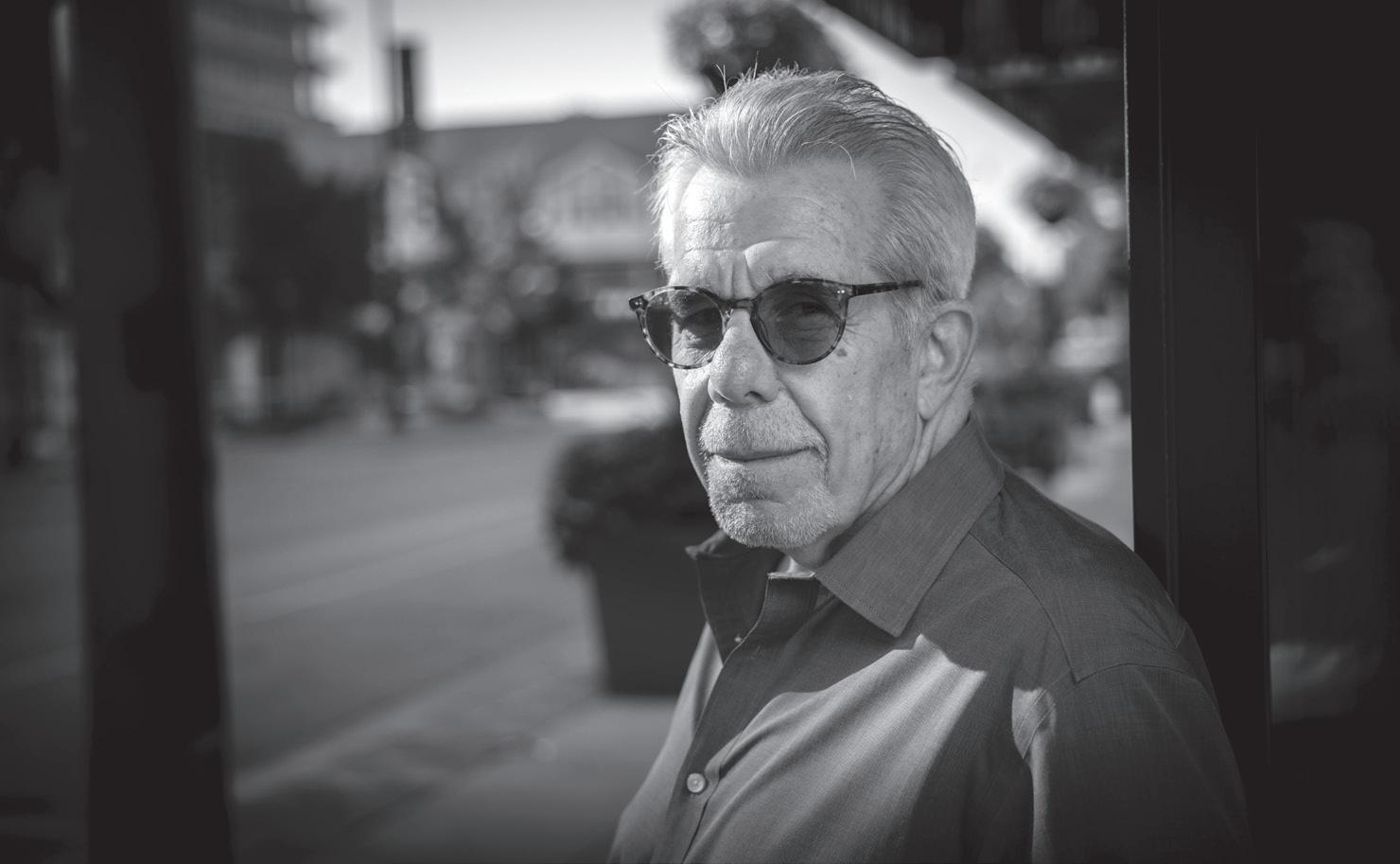
Al Krockey COURTESY OF AL KROCKEY
New interactive technology preserves Holocaust survivor’s voice for future generations
MALA BLOMQUIST | MANAGING EDITOR
On Feb. 8, students and community members gathered in the Black Box Theater at Yavapai College’s Performing Arts Department in Prescott, where they experienced something once thought impossible: they asked questions of the late Holocaust survivor Esther Basch — and she answered them.
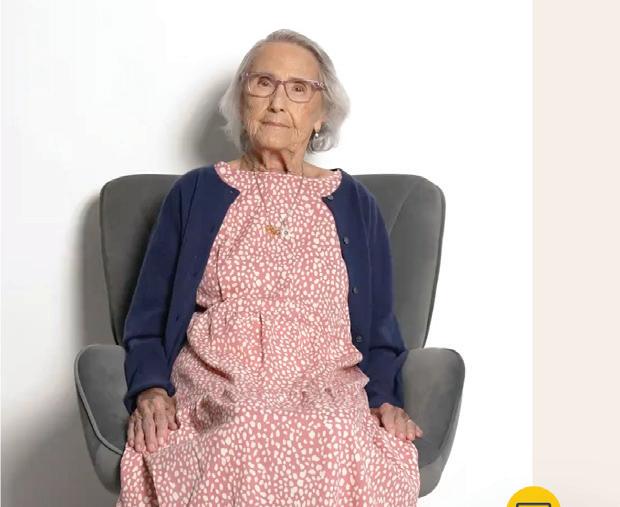
Basch, affectionately known as the “Honey Girl,” survived Auschwitz and later devoted decades to Holocaust education. She died on April 14, 2025, exactly 80 years after her liberation by American soldiers.
The AI-powered video conversation technology called “Interactive Interview,” developed in collaboration with the Arizona Jewish Historical Society and Hilton Family Holocaust Education Center (AZJHSHFHEC), the USC (University of Southern California) Shoah Foundation, USC Libraries and USC Digital Repository, allows Basch to respond directly to audiences in real time.
“This type of technology creates a personal and conversational experience for the user,” said Tony Fusco, Holocaust education director of the AZJHS. “Individuals can interact with the interviewee on their own terms and in an informal way, so the interaction will feel just like a normal conversation with Esther.”
The technology uses natural language processing to match a visitor’s spoken question with one of more than 400 prerecorded responses filmed during a three-day session with Basch in September 2024.
Unlike generative artificial intelligence systems, Fusco emphasized that the responses are entirely authentic.
“Each Interactive Interview is created from a real interview with a real person, and every answer is the actual words of the interview subject,” he said. “There is no generative AI here that’s used to create the answers, ensuring every answer is an authentic response.”
During the Feb. 8 unveiling program, visitors asked Basch about her Holocaust experiences and also about her favorite song and food. In one emotional moment, she sang “Hallelujah.” In another, she shared her enduring message: “I can forgive, but I can’t forget.”
The event took place in an intimate theater setting that accommodated about 70 attendees, including Basch’s daughter, Rachel Basch Turet, granddaughter, Elana Turet, and fellow survivors Henry Jacobowitz and Rise Stillman, who were from the same area as Basch in what was then Czechoslovakia.
“It was very emotional,” Fusco said.
“My mother shared her story so young people would understand the dangers of hatred and the power of their own choices,”
said Basch Turet. “Knowing her voice will continue to teach and inspire future generations means everything to our family.”
On her 16th birthday, Basch was sent in a cattle car to Auschwitz. She survived the concentration camp, worked in ammunition factories, endured a death march and crossed paths with the infamous Nazi doctor Josef Mengele before being liberated by American soldiers on April 14, 1945.
She found a jar of honey and ate her fill, but because she was suffering from malnutrition, her body could not process the sweet substance and she became ill. That moment earned her the nickname, “The Honey Girl of Auschwitz.”
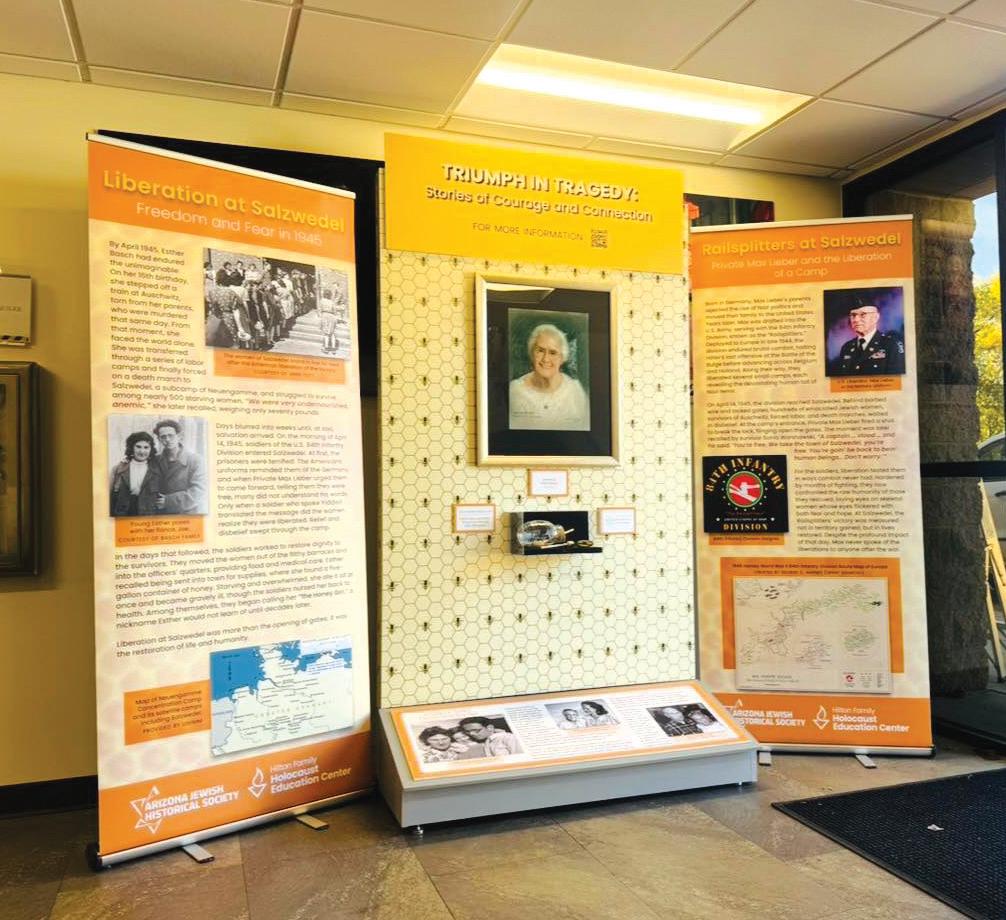
Decades later, she was reunited with her liberator, Max Lieber, a story now highlighted in one of the statewide exhibitions, “Triumph in Tragedy.”
“Triumph in Tragedy” will continue through 2026, presenting paired narratives of Holocaust survivors and the individuals who shaped their journeys, along with art and artifacts. These exhibitions appear at multiple sites across Arizona, including the Valley of the Sun Jewish Community Center in Scottsdale, the Arizona State Capitol Museum in Phoenix, the Tucson Jewish Museum & Holocaust Center and Northern Arizona University’s MartinSpringer Institute in Flagstaff.
At Yavapai College, Basch’s story is presented alongside Lieber’s and will remain there through August before moving to another Prescott-area venue.
“These companion events share powerful personal stories from the Holocaust,” Fusco said. “They highlight resilience, compassion and the strength of the human spirit — even during humanity’s darkest days.”
The companion unveiling event for her Interactive Interview was designed to deepen that connection and demonstrate how
emerging technologies are helping preserve testimony as the number of living survivors decline.
According to the Claims Conference, as of January 2026, an estimated 196,600 Jewish Holocaust survivors are still alive worldwide.
“We feel like it’s a race against the clock,” said Fusco.
“When survivors can no longer stand in front of a classroom, we have a responsibility to ensure their voices still can,” said Talli Dippold, executive director of the Hilton Family Holocaust Education Center. “Esther’s testimony does more than tell history. It invites conversation, challenges indifference and reminds every generation that their choices matter.”
Basch’s Interactive Interview will be integrated into educational programming at the Hilton Family Holocaust Education Center, scheduled to open in 2027.
Another local Holocaust survivor, Oskar Knoblauch, participated in the USC Shoah Foundation’s “Dimensions in Testimony” project. Similar, yet different from the Interactive Interview, this technology features a 3D life-size “holographic-like video” that allows visitors to have a “virtual conversation” with Knoblauch as he answers questions and shares his story.
Together, these projects reflect a growing shift toward immersive testimony experiences as educators prepare for a future without living witnesses.
For Fusco, who is not Jewish, the work is both urgent and deeply personal.
“I wake up every day, blessed to know that I’m able to work with these survivors,” he said. “Students are so impacted when they hear them speak, and it’s so important because someday they aren’t going to have that firsthand survivor testimony anymore.” JN
For more information, visit azjhs.org.
The “Triumph in Tragedy” exhibit featuring Esther Basch and her liberator, Max Lieber, on display in Prescott. COURTESY OF TONY FUSCO
In Esther Basch’s Interactive Interview she addresses questions asked in real time.
SCREENSHOT COURTESY USC DIGITAL REPOSITORY
Exodus to elder care: Finding our promised land in every generation
BOB ROTH | COLUMNIST
As a child growing up in Baltimore, our family’s Passover Seders were a tapestry of connection. Grandparents, cousins, aunts, uncles, immediate family, even friends of different backgrounds crowded around the table. It wasn’t just a meal — it was a community. And that’s the essence of Passover: the Exodus wasn’t walked alone. Six hundred thousand souls crossed the desert together. No one was left behind.
In my 22 years working with older adults, I’ve come to understand that aging is also a journey we were never meant to walk alone. And as we gather this Passover to retell the ancient story of liberation, I find myself seeing something I couldn’t have seen as a child at that crowded Baltimore table: the Exodus is not just history. It is a roadmap for how we care for one another, and for what aging in America can, and should, become. Consider the parallels. In Egypt, our people lived under a system that stripped them of dignity, of autonomy, of identity.
Pharaoh saw only their utility — what they could build, what they could produce. When they could no longer serve his purposes, they were disposable. Today, ageism operates with a quieter cruelty, but its message is the same: once you slow down, you become invisible. Our culture too often sees older adults through the lens of what they can no longer do, rather than celebrating the wisdom, the depth and the irreplaceable lived experience they carry. Moses changed that equation. He didn’t look at a people diminished by slavery and see their limitations. He saw
their promise, heard their cries and he acted. That is the call placed before us today, not just as Jewish community members but as a society, to hear the cries of our elders and act with urgency and love.
that shows up through neighborhood support networks, programs that bring together healthcare and in-home support, community health workers and caregiver support systems, all designed to help people stay connected and cared for. No one should have to navigate aging alone. No one should be left in the desert.
The Ten Commandments, given at the foot of Sinai after that long desert crossing, place the honoring of parents as the bridge between our obligations to God and our obligations to one another. It is the only commandment that comes with a reward: that your days may be long. Our tradition is telling us something profound — that how we treat our elders determines the kind of future we build for ourselves. A society that honors its elders is a society with a future worth inhabiting. To care for those who once cared for us is one of life’s greatest honors.
But Passover’s lessons go deeper still. The Haggadah instructs us that in every generation, each person must see themselves as if they personally left Egypt. Not as a spectator of history, but as a participant. That means the liberation we celebrate is never finished. There is always a new wilderness to cross, always a new Promised Land to reach toward. For aging services today, that Promised Land is coming into view, and it is more hopeful than many realize.
The Torah teaches in Leviticus: “You shall rise in the presence of the aged and show respect for the elderly.” This is not sentiment. It is law. It is architecture, a blueprint for how a civilization is supposed to be built.
And yet the work is not done. Caregiver burnout is real. Loneliness among older adults has reached epidemic proportions. Too many families face impossible choices between their careers, their children and the parents who raised them. The wilderness is real. But so is the pillar of fire that lights the way through it.
My family, growing up, invited a priest and a judge, both elderly neighbors with no family, to our Passover table every year. No matter their faith, it was simply what you did. You made room. You set an extra place.
That instinct — that reflex of inclusion — is what modern aging services must be built upon. Not systems that merely manage decline, but communities that celebrate every stage of life as sacred.
Technology is now enabling older adults to remain in their homes longer, connected to family, care providers and community, in ways that were unimaginable a decade ago. Telehealth has made specialists accessible in rural Arizona communities. Smart home sensors can detect a fall or a change in routine before a crisis occurs. Artificial intelligence is beginning to help identify the early signs of cognitive decline, buying families precious time for planning and connection. These are not cold, impersonal tools. In the right hands, they can part the waters, revealing a way forward that once felt out of reach.
At the same time, the movement toward “aging in place” reflects something deeply Jewish: the belief that home, community and belonging aren’t luxuries, they’re essential to a dignified life. Today,
The Exodus reminds us that liberation is not a destination; it is a practice. Every day, we choose whether to be Pharaoh or Moses. Whether to diminish or to elevate. Whether to leave someone behind or to extend a hand.
Let us choose wisely. Let us be the generation that crosses this particular wilderness together and builds, on the other side, a Promised Land where every person, at every age, is seen, honored and never alone. JN
Bob Roth is the managing partner of Cypress HomeCare Solutions.
Bob Roth COURTESY OF
Scottsdale teen uses bar mitzvah project to help underprivileged kids experience live musical theater
JOSH BOOTZIN | STAFF WRITER
Adam Blutter, a student at Desert Shadows Middle School in Scottsdale, has dedicated his bar mitzvah project to sponsor underprivileged kids to share in one of his strongest passions: musical theater.
Blutter has steadily grown his stage presence and performing skills from his very first time in front of an audience (a production of “The Wizard of Oz”) until today, as he participates in his school’s musical theater elective class while also attending Bender Performing Arts’ musical theater dance class in Phoenix.
“I love theater. I’ve always been a performer,” said Blutter, whose favorite musical is “Six: The Musical,” based on Henry VIII’s wives. “We found Bender, I
started at their ‘showstoppers’ level, and I loved the experience. When I got on that stage, I was like, this is official, so then we just kept going.”
Bender has fostered dance and music learning since 1974, recently having celebrated its 50th anniversary.
“Ten years ago, we began a musical theater program where, in addition to our summer recital, we would put on a full-length musical,” said Beth Uebelherr, a Bender instructor. “We had about 75 kids in it at that time, and we performed it at Horizon High School. Ten years later, there’s over 300 kids in our program and we now perform at Madison Center for the Arts. We have grown quite exponentially over the past 10 years, and
St. Mary’s Food Bank
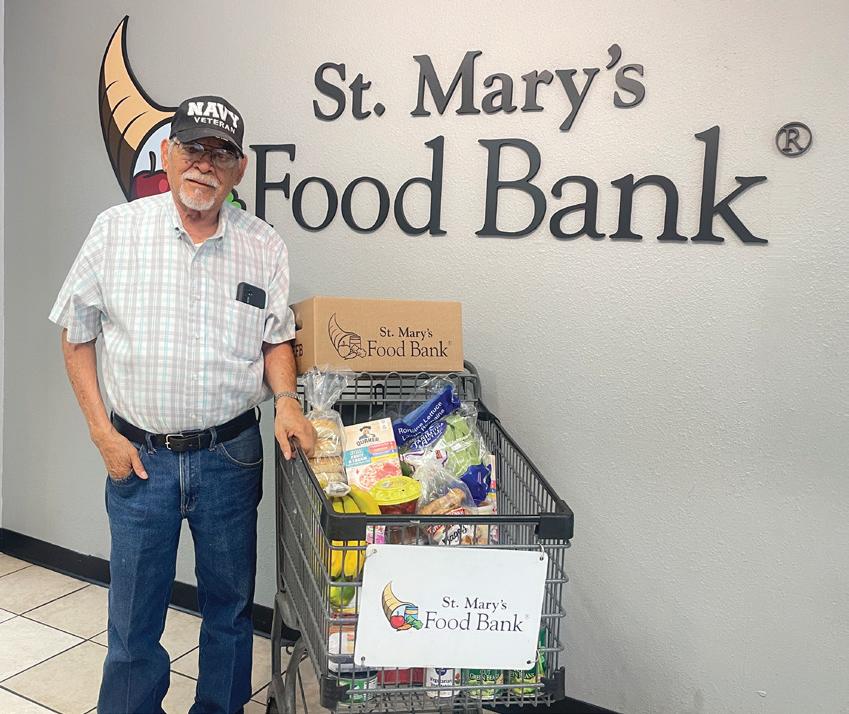
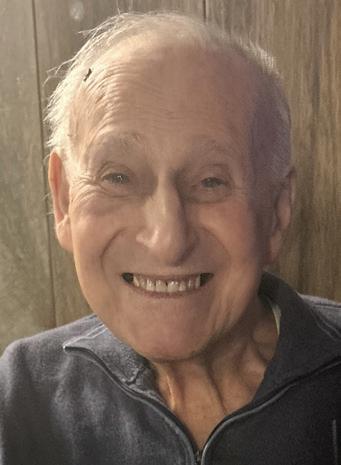
John, a Vietnam veteran, served his country for nearly five years. Now retired, he lives with his son and grandson.
“I’ve always been a workaholic,” he said, reflecting on his youth, both during his service and afterward.
Even after retirement, John continued to support his family, even when his son lost his job. “My son was out of work for awhile and moved in with me. He’s working for the city now.”
Despite his resilience, John’s health took a sudden turn. What was supposed to be a routine surgery went wrong. “They had to do the surgery again,” he said. “I was just recently released from the hospital. Before the surgery, I was bedridden.”
Although John spent his life working and taking care of others, he now found himself needing help. During those hard months, the support from St. Mary’s Food Bank became a lifeline.
“I eat everything that I can, and my son is the same way. But my grandson is picky,” he chuckled.
As John recovers, he is deeply grateful for supporters like you who have eased the burden on his family, ensuring putting food on the table is one less worry during his healing. “Thank you,” John said. “I appreciate everything you guys do.”
it is wonderful to be able to bring in so many more kids to our program.”
Uebelherr helps organize yearround performances for Dance Motion Performing Company, a competitive performing group based out of the Bender studio, including programs to make tickets more affordable.
When Blutter approached her with the idea for his bar mitzvah project, she helped him implement something similar with the upcoming musical theater performance of “The Little Mermaid Jr.”
“It warms our hearts as it directly aligns with Bender’s core mission and values,” Uebelherr said. “It just goes to show that what we’re trying to do here, which is make great kids first and then great dancers second, is working, because of kids like Adam deciding to give back to their community.”
Around two-thirds of the 300 kids in the musical theater program auditioned for roles in “The Little Mermaid Jr.” this year. In his third year with Bender, Blutter auditioned for a lead role for the first time, throwing his hat in the ring for King Triton. He made it to the callbacks stage before being cast as a lead sailor.
He said being cast in a large role was “pretty awesome. It really fits me, and I’m really enjoying it. It’s been pretty cool.”
Blutter’s main goal for his bar mitzvah project is to provide an opportunity for underserved children to experience the emotions, music, spectacle and inspiration that he takes from a musical.
“What I’m trying to do is get underprivileged children to see the show for free and make lasting memories,” he said. “This bar mitzvah project has been really special, taking what I love, putting it into a project and getting other people to experience what I love, it’s really special to be doing this.”
As of Monday, Feb. 23, Blutter raised around $330, enough to provide a free show to almost 20 kids.
Performances are scheduled to take place on Saturday, April 18 at 2 p.m. and 7 p.m., and on Sunday, April 19 at 1 p.m. and 6 p.m.
Blutter’s bar mitzvah is scheduled for May 16 at Congregation Or Tzion in Scottsdale.
“Adam always has a smile on his face, and he is a funny kid,” Uebelherr said. “Everybody loves being around him, loves working with him. He’s got a great work ethic, and he’s a great kid.” JN
Tickets for Bender Performing Arts productions of “The Little Mermaid Jr.” can be purchased online at benderperformingarts.com.
Adam Blutter performed an ensemble role in last year’s Bender Performing Arts production of “Seussical Jr.” COURTESY OF BENDER PERFORMING ARTS
Advertorial
CBI religious school hosts community service workshops
JOSH BOOTZIN | STAFF WRITER
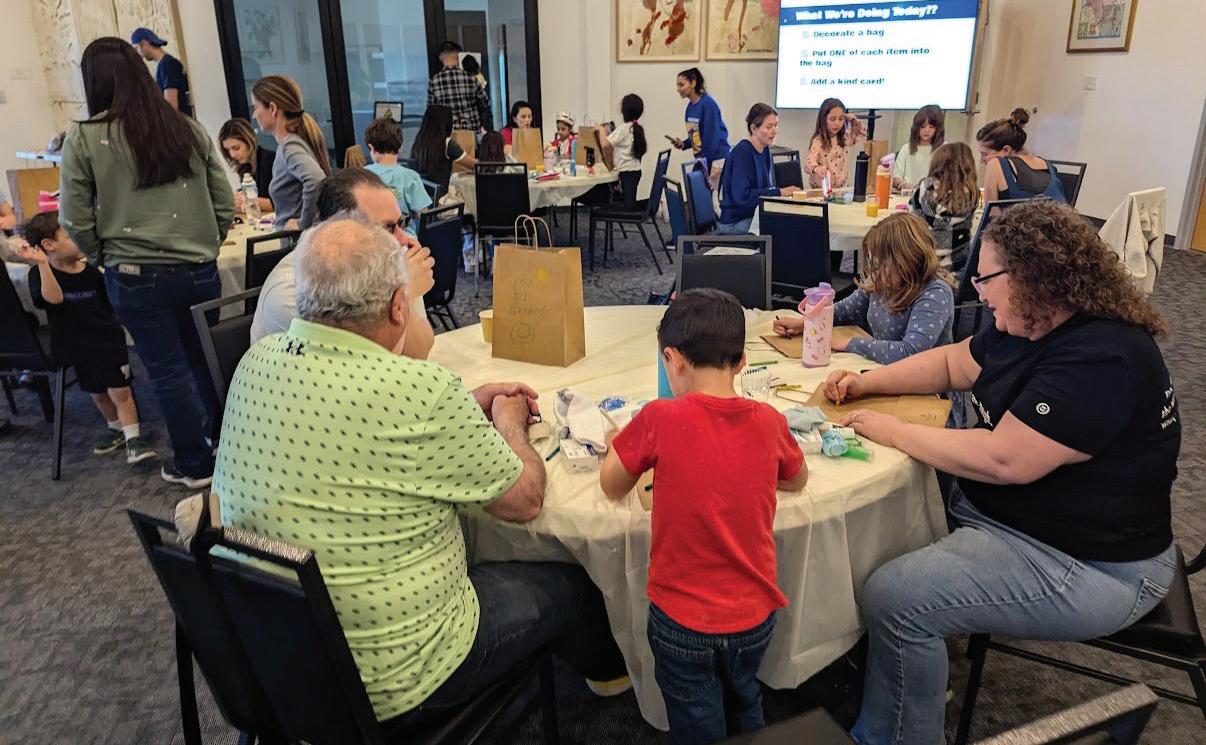
Congregation Beth Israel (CBI) in Scottsdale partnered with Jewish Family and Children’s Service (JFCS) to host a workshop on Feb. 22 for first- and second-grade religious school students and their families. Attendees created more than 100 “Hygiene Kits” with essentials such as soap, conditioner, toothbrushes, toothpaste, socks and sanitary pads to be distributed to underserved families.
CBI’s Hevre Religious School, serving students from pre-K through seventh grade, includes special, hands-on tikkun olam projects for students and families.
“Helping Hevra” mornings occur five times each year, once for each age group, during which CBI hosts the families of Hevre Religious School students for a philanthropic project benefiting both the Jewish community and those in need throughout Greater Phoenix.
“We’re just doing a very small part in helping people throughout the community, and I think if everyone listened to what was going on around them, and we all took part in helping others, we could help the community grow and flourish,” said Rachael VanLandingham, director of youth education and engagement at CBI. “We’re trying to do our best in upholding these Jewish values and being examples for our future generations.”
This year’s Helping Hevra project for first- and second-grade students and their families, held on Feb. 22, resulted in the creation of over 100 hygiene kits to benefit underserved families that are clients of JFCS.
In the past, this program has benefited JFCS’ Just 3 Things Pantry. Just 3 Things was recently discontinued due to funding
cuts, but “our families felt so strongly about still doing something to benefit those families through the JFCS, so we kept the original plan of hygiene kits, still wanting to be able to provide basic necessities for these families that struggle,”
VanLandingham said. “It was a very big outpouring of love.”
Helping Hevra projects have been taking place throughout the school year. On Nov. 23, third- and fourth-grade classes participated in a food drive. Families brought in non-perishable Thanksgiving items, packed them into bags and delivered these “Bags of Blessings” to families in need through the PV Community Food Bank in Phoenix and JFCS.
One month earlier, on Sept. 28, fifth and sixth graders and their families participated in a hands-on recycling workshop. “Tikkun olam is all about the Jewish value of protecting and preserving the world, making the world a better place, so we just talked about all the things that we use on a daily basis and throw out, and how we can reuse those items for our daily lives,” said VanLandingham.
At the workshop, attendees talked about Bal Tashchit — the Jewish law forbidding waste — and turned regular household items into completely different objects they could reuse or donate to those in need.
On April 19, CBI’s pre-K and kindergarten classes will create “Bedtime Bundles” for JFCS and Phoenix Children’s Hospital.
Last year, attendees created nearly 200 bedtime bundles to help sick kids feel more comfortable. Each bundle has a soft blanket, a stuffed animal, a set of pajamas,
Creighton Community
In communities across Phoenix, too many families are facing impossible choices — between paying rent or putting food on the table. At the Creighton Community Foundation, we believe no one should have to make that decision.
Through our Feeding Phoenix program, we provide consistent, reliable access to fresh and nutritious food for hundreds of families every single week. But this work is about more than just food — it’s about dignity, stability, and building a stronger, healthier community for everyone.
Every Saturday, families line up knowing they will be met with care, compassion, and support. Children receive meals that help them focus in school. Parents gain a sense of relief knowing they can provide for their families. And neighbors come together in a shared effort to uplift one another.
Right now, you have a unique opportunity to be part of that impact — at no extra cost to you.
As highlighted in the advertisement, Arizona’s Qualified Charitable Organization Tax Credit allows you to give up to $495 (individual) or $987 (married filing jointly) and receive every dollar back as a credit on your state taxes.
That means your donation doesn’t just make a difference — it comes right back to you.
Your support helps ensure that families in our community continue to have access to the food and resources they need to thrive. It keeps our distribution lines moving, our shelves stocked and our programs running during a time when funding for hunger relief is more limited than ever.
This is your chance to turn your tax dollars into something meaningful. Give today. Feed a family. Strengthen a community.
CBI families with first- and second-graders build hygiene kits for underserved
FROM PAGE 15
socks and a bedtime story.
CBI is also a regular participant in JFCS’ annual Adopt A Family drive, held every November. This year, CBI congregants took on nine families, providing up to three gifts for each family member during the holiday season.
JFCS provides CBI with information on the family; a little bit about their hardships, how many adults, how many kids and their grade level, and then for every family member, their interests. “We had our congregants go out and shop purposefully for these individuals so they knew that people in the community cared,” said VanLandingham.
For those congregants who did not have time to shop for the adopted families, CBI’s teen youth group took a trip to Target with a collection of gift cards and chose gifts for each adopted family member.
“We focus on a lot of self-care items for the parents, because we know that that is a full-time job where you have no days off, and then we made sure each child had a clothing item, an educational item and a fun item,” VanLandingham said.
CBI led another food drive for Passover, where members of the teen youth group
visited Arizona Kosher Pantry in Phoenix on March 22 and helped pack Passover kits for families that cannot afford all the items for a Passover Seder.
“We have 20 to 25 teens that are very heavily involved in the synagogue, whether as madrichim or through other programming aspects,” Vanlandingham said.
VanLandingham expressed her gratitude to JFCS for being there for her own family at times when they were in need, as well as the growing connections between CBI and nonprofits for allowing congregants the opportunity to give back to the community.
“Having personal connections to community programs like this is extremely important, because I think sometimes we say, ‘give to philanthropy, give to tzedakah,’ but doing these hands-on experiential projects with the parents, having people from nonprofit community programs come and speak to them, I think puts it on a deeper level of meaning for them,” VanLandingham said.
“It helps them say, ‘I’m not just going to be a nameless benefactor. I am doing this for these community members and this feels good.’” JN
For more information, visit cbiaz.shulcloud.com.
Parkinson’s Foundation. Find Real Answers. Grow Real Impact.
This April, for Parkinson’s Awareness Month, the Parkinson’s Foundation invites you to Find Real Answers — connecting people to trusted, sciencebacked information and real stories from the more than 1.2 million Americans living with Parkinson’s disease (PD).
Each year, nearly 90,000 people in the U.S. are diagnosed with PD. With that diagnosis often comes uncertainty, questions and overwhelm. The Parkinson’s Foundation is here to help — offering reliable answers and meaningful support at every stage.
Get the answers you need:
• Ask PAM (Parkinson’s Assistance Messenger): An AI-powered chat tool with trusted information
• Helpline: Call 1-800-4PD-INFO (473-4636) for personalized support in English or Spanish
• Interactive Quiz: Learn more and explore resources at Parkinson. org/Awareness
This year’s campaign also shares powerful stories from people in the PD community —individuals who found connection, guidance and hope through the Foundation.
Find answers. Build connection. Live better.
Visit Parkinson.org/Awareness or call 1-800-4PD-INFO to get started today.
Awareness is only the beginning. You can be part of the impact. Join us at the Seeds of Change Luncheon and help grow a future with better care, stronger support and progress toward a cure. Your support fuels research, education and life-changing resources for people living with Parkinson’s and their families.
Parkinson’s is the fastest-growing neurological disease in the world. While there is no cure yet, together we can make a difference.
Visit Parkinson.org/SeedsofChange or call 480-506-0063 to learn more — and reserve your seat at the Seeds of Change Luncheon today.
See all of our upcoming local events at www.parkinson.org/Southwest
Featured Event
MONDAY-THURSDAY, APRIL 13-16
Rosenbluth Family Charitable Foundation Genocide Awareness Week 2026:
9 a.m.-5 p.m. Online via Zoom and in person at the Arizona State University campus, Tempe. Join Arizona State University Jewish Studies and other organizations for a week of programs that examine the roles of democracy and authoritarianism in both past and present cases of genocide. For more information, visit jewishstudies.asu.edu/GAW2026.
Events
SUNDAY, APRIL 5
Free Birds Field Day: 10 a.m.-12:15 p.m. Fireside Clubhouse at Desert Ridge Tennis Ramada, 3775 E. Lone Cactus Drive, Phoenix. Join Free Birds, Congregation Or Tzion’s Generation X-ish social group for field day activities. Cost: $9 per person, $18 per couple. For more information, visit otaz.org/freebirds.
Passover Picnic in the Park: 4-6 p.m. Granada Park, 6505 N. 20th St., Phoenix. Join Beth El Phoenix for a Passover celebration with games, snacks and music. Soft drinks and chips provided, please bring your own Passover-friendly meal. For more information, visit bethelphoenix.com/event/picnic.
Passover Pop-Up Night Out: 4-7 p.m. Congregation Beth Tefillah, 6529 E. Shea Blvd., Scottsdale. Join CBT for an evening of vendors selling art, books, Judaica, toys and more. Cost for vendors: $54 table fee. For more information, contact info@bethtefillah.org.
TUESDAY, APRIL 7
Miriam’s Table: Women’s Pesach Event and Mitzvah Project: 6-8 p.m. Beth El Phoenix, 1118 W. Glendale Ave., Phoenix. Join Beth El for a women’s Passover event, meal and social action project. Cost: $18 per person. For more information, visit bethelphoenix.com/event/ womens-pesach.
FRIDAY, APRIL 10
Families with Littles Shabbat: 5 p.m. Congregation Or Tzion, 16415 N. 90th St., Scottsdale. Join Or Tzion Rabbi Andy Green and Cantor Dannah Rubinstein for an age-appropriate service of prayers, songs and ruach. Matzah pizza will be served. For more information, visit otaz. org/littles.
SUNDAY, APRIL 12
Mitzvah Day: 1-3 p.m. Address provided upon registration. Join the Center for Jewish Philanthropy of Greater Phoenix for a day of handson service and mitzvot with more than 20 volunteer opportunities, including assembling care kits, supporting community organizations or participating in family-friendly service activities. For more information, visit phoenixcjp.org/ mitzvahday.
2026 Community-wide Yom HaShoah Commemoration: 4-5:30 p.m. Address provided upon registration. Join the Phoenix Holocaust Association for its annual event honoring the six million Jewish lives lost in the Holocaust. Cost: Free; advance registration required. For more information, visit phxha.com/remember.
MONDAY, APRIL 13
2026 Yom HaShoah Commemoration: 5:30 p.m. reception; 6 p.m. program. East Valley Jewish Community Center, 908 N. Alma School Road, Chandler. Join the EVJCC with special guests Talli Dippold, executive director of the Hilton Family Holocaust Education Center; Dr. Michael Markson, Holocaust survivor; and
Hannah Creviston performing “Voices Silenced: Music from the Holocaust,” featuring music by composers who were killed during the Holocaust. Cost: Free. For more information, visit evjcc.org/yomhashoah.
Yom HaShoah Commemoration Service: 6 p.m. Congregation Or Tzion, 16415 N. 90th St., Scottsdale. Join Rabbi Andy Green and the Or Tzion Men’s Club to commemorate Yom HaShoah with prayer and candle lighting. For more information, visit congregationortzion.org.
MONDAY THROUGH FRIDAY, APRIL 13-17
Through the Eyes of Youth: Life and Death in the Bedzin Ghetto: Congregation Or Tzion, 16415 N. 90th St., Scottsdale. Join Or Tzion and the Martin-Springer Institute at Northern Arizona University for a Yom HaShoah commemoration exhibit curated by NAU students under the mentorship of Dr. Bjorn Krondorfer. For more information, visit congregationortzion.org.
THURSDAY, APRIL 16
Coming Together: Challenging Misinformation and Standing Up to Antisemitism: 6 p.m. Temple Chai, 4645 E. Marilyn Road, Phoenix. Join Temple Chai’s ADL Kulanu Committee for a presentation by Gabe Ivker, public policy and civil rights specialist, StandWithUs-Chicago. Middle school and high school students and their families are encouraged to attend. For more information, visit templechai.com.
FRIDAY THROUGH SUNDAY, APRIL 17-19
Camp Stein Family Camp: 5 p.m. Friday to 10 a.m. Sunday. Camp Daisy & Harry Stein, Prescott. Join Camp Stein for Shabbat celebrations, time with friends, camp activities and more. Cost: $150 per adult, $75 per child, ages 2 and under free. For more information, visit campstein.org.
Meetings, Lectures & Classes
SUNDAYS
Chassidus Class: 9 a.m. Online. Learn about the Chasidic movement with Rabbi Yossi Friedman. Use this link: ChabadAZ.com/LiveClass. Cost: Free. For more information, visit chabadaz.com.
Jewish Marriage University: 9:30 a.m.-4 p.m. on April 12; special session for interfaith couples on April 13 at 6:30 p.m. Ina Levine Jewish Community Campus, 12701 N. Scottsdale Road, Scottsdale. Join the Bureau of Jewish Education of Greater Phoenix for a marriage preparation class for serious or engaged couples or those recently married looking to enhance their relationship. Cost: $54 per couple; includes lunch. For more information, contact Linda Feldman at lindaf@bjephoenix.org.
Finding Meaning and Hope: 11 a.m.-12:30 p.m. Nov. 23-March 8. Temple Chai, 4645 E. Marilyn Road, Phoenix. Join Temple Chai for this support group for family caregivers caring for someone with memory loss, dementia or other
cognitive impairment. Cost: Free; registration required. For more information, visit templechai.com.
Jewish War Veterans Post 210: 10 a.m. the first Sunday of the month in Central Phoenix. Any veterans, friends of veterans or if you just want to meet a vet, all are welcome. For more information, contact Michael at c365michael@ yahoo.com.
Anxiety in the Modern World: 6 p.m. Online. Learn the secrets of the Torah for living stressfree in the current environment with Rabbi Boruch of Chabad of Oro Valley. Cost: Free. Use this link: zoom.us/j/736434666. For more information, visit chabadaz.com.
MONDAYS
Pomegranate Guild of Judaic Needlework, Desert Cactus Chapter: 10 a.m. The Oasis at Sagewood, 4555 E. Mayo Blvd., Phoenix. The guild meets the third Monday of the month, adjusted when necessary to accommodate Jewish holidays. For more information, visit pomegranateguild.org.
Mahjong: 1:30-3:30 p.m. East Valley Jewish Community Center, 908 N. Alma School Road, Chandler. Come play mahjong each week. For all levels. Cost: Free; registration required at evjcc.org/mahjong.
Ethics of Our Fathers: 7 p.m. Online. Learn with Rabbi Zalman Levertov. Use this link: bit. ly/2Y0wdgv. Cost: Free. For more information, visit chabadaz.com.
Quotable Quotes by our Sages: 7 p.m. Online. Learn with Rabbi Shlomy Levertov. Use this link: JewishParadiseValley.com/class. Cost: Free. For more information, visit chabadaz.com.
Partners in Torah: 7:30 p.m. Online. Join a growing group of inspired learners with Project Inspire. Cost: Free. Use this link: us04web. zoom.us/j/3940479736#success, password is 613. For more information, email Robin Meyerson at robin@projectinspireaz.com.
Learning to Trust in God: 7:30 p.m. Online. Learn with Rabbi Yossi Friedman. Use this link: ChabadAZ.com/LiveClass. Cost: Free. For more information, visit chabadaz.com.
Torah & Tea: 7:30 p.m. Online. Learn with Rabbi Yossie Shemtov. Cost: Free. For more information, visit Facebook.com/ChabadTucson.
Single Parent Zoom: 8 p.m. First and third Monday of every month. Join The Bureau of Jewish Education’s Family University single parents’ group for those looking to form friendships and build their support system with likeminded people. For more information or to register, visit bjephoenix.org/family-university.
TUESDAYS
Let’s Knit: 1:30 p.m. Ina Levine Jewish Community Campus, 12701 N. Scottsdale Road, Scottsdale. Share the pleasure of knitting,
crocheting, etc. outside the social hall in the campus. Can’t knit? They will teach you! Every level welcome. Cost: Free. For more information, visit vosjcc.org.
Grief Support Group: 4 p.m. Beth Emeth Congregation of the West Valley, 13702 W. Meeker Blvd., Sun City West. All are welcome to this support group for anyone experiencing grief or any kind of loss. Cost: Free. For more information, call 623-584-7210 weekdays 9 a.m. to 12 p.m.
Maintaining an Upbeat Attitude: 7 p.m. Online. A class exclusively for people in their 20s and 30s, learn how Jewish Mysticism can help with your attitude with Rabbi Shlomy Levertov. Use this link: JewishParadiseValley.com/YJPclass. Cost: Free. For more information, visit chabadaz.com.
Torah Studies: 7:30 p.m. Online. Learn with Rabbi Mendy Levertov. Use this link: ourjewishcenter.com/virtual. Cost: Free. For more information, visit chabadaz.com.
WEDNESDAYS
My Baby and Me: 9-10 a.m. Temple Chai Early Childhood Center, 4645 E. Marilyn Road, Phoenix. Join Temple Chai ECC for a weekly gathering for families with babies up to 12 months. Cost: Free. For more information, visit tcaz. shulcloud.com/event/my-baby-and-me-playgroup.html.
Torah Study with Temple Beth Shalom of the West Valley: 11 a.m.-12:30 p.m. Online. Weekly study group explores that week’s portion and studies different perspectives and debates the merits of various arguments. Intended for adults, Torah study is open to students of all levels. For more information, contact the TBS office at 623-977-3240.
Happiness Hour: 11:30 a.m. Online. Class taught by Rabbi Pinchas Allouche that delves into texts and references culled from our traditions to address a relevant topic. For more information, visit BethTefillahAZ.org.
Lunch & Learn: 12 p.m. Online. Grab some food and learn with Rabbi Yehuda Ceitlin. Use this link: Facebook.com/ChabadTucson. Cost: Free. For more information, visit chabadtucson.com.
Torah Study with Chabad: 12 p.m. Online. Take a weekly journey of Torah with Rabbi Yossi Levertov. Cost: Free. For more information, visit chabadaz.com.
The Thirteen Petalled Rose: 1 p.m. Online. Kabbalah class that studies “The Thirteen Petalled Rose” by Rabbi Adin Even-Israel Steinsaltz, focusing on the many concepts of Kaballah and Jewish Mysticism and applying them to everyday life. For more information, visit BethTefillahAZ.org.
Grief Support Group: 5-6 p.m. Online via Zoom. Therapist Susan Charney MSW, LCSW, leads a grief support group every first and third
CALENDAR
Wednesday of the month virtually for individuals experiencing the loss of an adult child or sibling. In lieu of any fees for these sessions, donations to Temple Solel are appreciated. For more information, contact susancharneycounseling@gmail.com.
Jewish Baby University: 6:15-9 p.m. on Wednesdays for six weeks starting April 15. Ina Levine Jewish Community Campus, 12701 N. Scottsdale Road, Scottsdale. Join the Bureau of Jewish Education of Greater Phoenix for this series for first-time parents to be. For more information, contact Linda Feldman at lindaf@ bjephoenix.org.
History of the Jews: 7 p.m. Online. Learn the Jewish journey from Genesis to Moshiach with Rabbi Ephraim Zimmerman. Use this link: zoom.us/j/736434666. Cost: Free. For more information, visit chabadaz.com.
JACS: 7:30-8:30 p.m. Online. Zoom support group for Jewish alcoholics, addicts and their friends and family on the first and third Wednesdays of the month. Cost: Free. For more information, email jacsarizona@gmail.com or call 602-692-1004.
THURSDAYS
Ladies Torah & Tea: 10:30 a.m. Online. Learn about the women of the Torah with Mrs. Leah Levertov. Use this link: ourjewishcenter.com/ virtual. Cost: Free. For more information, visit chabadaz.com.
Talmud - Makkos: 11 a.m. Online. Learn with Rabbi Shlomy Levertov. Cost: Free. Use this link: JewishParadiseValley.com/YJPclass. For more information, visit chabadaz.com.
The Science of Everything: 11 a.m. Online. Explore the most fundamental work of Chassidut: the Tanya, with Rabbi Boruch. Use this link: zoom.us/j/736434666. Cost: Free. For more information, visit chabadaz.com.
Torah Study with Hazzan Lev Ettelson: 11 a.m. Beth Emeth Congregation of the West Valley, 13702 W. Meeker Blvd., Sun City West. Join Hazzan Ettelson for a discussion of the weekly Torah portion. For more information, call 623584-7210 weekdays 9 a.m. to 12 p.m.
Mindfulness Gatherings: 12 p.m. Online. Hosted by Hospice of the Valley via Zoom. Cost: Free. To join by phone, dial 1-253-215-8782, meeting ID 486 920 2119#, to get the Zoom link or for further questions contact Gill Hamilton at ghamilton@hov.org or 602-748-3692.
Weekly Mahjong: 1-3 p.m. Temple Solel, 6805 E. McDonald Drive, Paradise Valley. Join Temple Solel each Thursday afternoon for mahjong. Lessons available for beginners. Cost: Free. RSVP via email to dottiebefore@gmail.com so they know how many tables to set up.
Torah Portion Class: 7 p.m. Online or in person. Chabad Lubavitch of Fountain Hills, 16830 E. Avenue of the Fountains, Fountain Hills. Join Rabbi Mendy Lipskier for a discussion of the weekly parshah and gain new insights to the Torah. For more information, visit jewishfountainhills.com.
Teen Discussions: 7-8:30 p.m. Online. Learn with Rabbi Tzvi Rimler. Use this link: cteen.clickmeeting.com/east-valley. Cost: Free. For more information, visit chabadaz.com.
SATURDAYS
Saturday Mindfulness Gatherings: 9:30 a.m. Online. Hosted by Hospice of the Valley. To join by phone, dial 1-253-215-8782, meeting ID 486 920 2119#. To get the Zoom link or for more information, contact Gill Hamilton at ghamilton@hov.org or 602-748-3692.
Book Discussion: 1:30-2:30 p.m. Online. Join Or Adam Congregation for Humanistic Judaism on the third Saturday of every month for a book discussion. For more information and to register, contact oradaminfo@gmail.com.
Shabbat
FRIDAYS
Tot Shabbat: 9:30 a.m. Ina Levine Jewish Community Campus, 12701 N. Scottsdale Road, Scottsdale. Join the Bureau of Jewish Education of Greater Phoenix monthly for music, parachute play, crafts and a family Shabbat experience. For more information, visit bjephoenix.org.
Welcome Shabbat: 11-11:30 a.m. Online. Celebrate Shabbat with the JFCS Virtual Center for Senior Enrichment. Each week a different guest host will lead the program with song and celebration. Cost: Free. For more information, visit jfcsaz.org/cse.
Shabbat at Beth El: 5:45 p.m. on Zoom; 9:30 a.m. at Beth El Phoenix, 1118 W. Glendale Ave., Phoenix or livestreaming at tinyurl.com/beclivestream. Celebrate Shabbat with songs, blessings and teachings with Rabbi Stein-Kokin and Cantor Sarah Bollt. For more information or to join, visit bethelphoenix.com.
Erev Shabbat Service: 5:30 p.m. Online. Rabbi Alicia Magal will lead a service livestreamed for members of the Jewish Community of Sedona and the Verde Valley. Cost: Free. For more information and to obtain the Zoom link, visit jcsvv.org/contact.
Shabbat Service: 5:30-6:30 p.m.; Oneg at 5 p.m. Temple B’rith Shalom, 2077 Brohner Way, Prescott. Join Temple B’rith Shalom for a musical and spiritual Shabbat service. For more information, visit brithshalom-az.org.
Shabbat Services: 5:30 p.m. nosh, 6:15 p.m. service; morning service has varying dates and times. Temple Chai, 4645 E. Marilyn Road, Phoenix. For more information, contact Joan Neer at jneer@templechai.com.
Pre-Shabbat Kiddush Club: 6 p.m. Online. Say Kiddush with Rabbi Mendy Levertov. Cost: Free. Use this link: ourjewishcenter.com/virtual. For more information, visit chabadaz.com.
Shabbat Services: 6 p.m.; 9:30 a.m.; followed by a light Kiddush lunch. Beth Emeth Congregation of the West Valley, 13702 W. Meeker Blvd., Sun City West. For more information call 623-584-7210 or visit bethemethaz.org.
Shabbat Services: 6 p.m.; 9:30 a.m. Congregation Or Tzion, 16415 N. 90th St., Scottsdale. Services are also live streamed at otaz.org/ livestream. For more information about services, events and membership, visit congregationortzion.org or call 480-342-8858.
First Friday Shabbat Services: 6:15 p.m.; Oneg at 7:15 p.m. Valley Unitarian Universalist, 6400 W. Del Rio St., Chandler. Join Congregation NefeshSoul for Friday night services the first Friday of each month in the sanctuary building of Valley Unitarian Universalist. For more information, contact Jim Hoffman at 480-329-3316.
Shabbat Services: 6:15 p.m.; 10 a.m. Congregation Beth Israel, 10460 N. 56th St., Scottsdale. Services held in the Goldsmith Sanctuary. Participants must pre-register by Thursday at 5 p.m. Priority will be given to members first and then guests. If there are more requests than available seats a lottery system will be used. For more information or to make a reservation, visit cbiaz.org/shabbat-services.
Kabbalat Shabbat and/or Shabbat morning service: 6:30 p.m.; 10 a.m.; dates vary. Congregation Kehillah, 5858 E. Dynamite Blvd., Cave Creek. Join Rabbi Bonnie Sharfman and cantorial soloists Erica Erman and Scott Leader either in person or via Zoom. For safety reasons, please register ahead of time. For dates, visit congregationkehillah.org/event/. Register by emailing info@congregationkehillah.org.
Shabbat Services: 7 p.m. Temple Beth Shalom of the West Valley, 12202 N. 101st Ave., Sun City. Services are followed by an Oneg. Services are live-streamed on YouTube. For more information and to get the YouTube link, visit tbsaz.org or call 623-977-3240.
Shabbat Services in Sun Lakes: 7-9 p.m. Sun Lakes Chapel, 9240 E. Sun Lakes Blvd. North, Sun Lakes. Sun Lakes Jewish Congregation conducts Reform Shabbat services on the second Friday of each month. New members welcome. For more information, call 480-612-4413 or 480-580-1592.
Shabbat Services with Beth Ami Temple: 7 p.m. Services held at Unitarian Universalist Congregation of Phoenix, 4027 E. Lincoln Dr., Paradise Valley. Join Beth Ami Temple Rabbi Alison Lawton and Cantorial Soloist Michael Robbins as they lead Shabbat services twice a month. For more information, visit bethamitemple.org.
Third Friday Shabbat: 7-9 p.m. Group meets at a North Scottsdale location. The Desert Foothills Jewish Community Association hosts a Shabbat service followed by a program. Contact 602-487-5718 for more information.
Seniors
MONDAYS
Fitness Xpress Series with Zoe: 11-11:30 a.m. Online. Presented by JFCS Center for Senior Enrichment. Workout features weight and band exercises as well as yoga poses. Exercises will be demonstrated standing, but can also be done sitting in a chair. Cost: Free. For more information, visit jfcsaz.org/cse.
Sip & Schmooze: 11 a.m. milk + honey, 12701 N. Scottsdale Road, Scottsdale. Sip on kosher coffee or tea, enjoy a pastry and schmooze every second Monday of the month. RSVP appreciated to chani@sosaz.org or 602-492-7670. For more information, visit sosaz.org.
Featured Presentation: 12:30 p.m. Online. Join Smile on Seniors Mondays and Wednesdays to learn from a variety of presenters about topical issues, like Q&As with medical professionals, entertainers and lectures. Cost: Free. For more information, visit sosaz.org/virtual or email Rabbi Levi Levertov at levi@sosaz.org.
Harold A. Waxman
TUESDAYS
Movie Discussion Group: 11 a.m. Online. Join Smile on Seniors on the third Tuesday of every month hosted by Issy Lifshitz. Cost: Free. For full details and the movie of the month visit sosaz.org/virtual or email Rabbi Levi Levertov at levi@sosaz.org.
WEDNESDAYS
Fitness Fun with Zoe: 10-10:45 a.m. Online. Presented by JFCS Center for Senior Enrichment. Workout features light chair exercises with optional weights. Cost: Free. For more information, visit jfcsaz.org/cse.
Chair Yoga with Zoe: 11-11:45 a.m. Online. Presented by JFCS Center for Senior Enrichment. 45-minute chair yoga class. No prior yoga experience required. Cost: Free. For more information, visit jfcsaz.org/cse.
THURSDAYS
Memory Cafe: 10-11 a.m. first Thursday; 1-2 p.m. third Thursday. Online. Presented by Jewish Family & Children’s Service. Program for those with changes in their thinking or memory, mild cognitive impairment due to Alzheimer’s disease or a related disorder, along with their care partners. For more information, visit jfcsaz.org/our-services/ older-adult-services/memory-cafe/.
In the Kitchen with Benita: 12:30 p.m. Join Smile on Seniors on the fourth Thursday of every month for some delicious cooking or baking fun! Cost: Free. For full details visit sosaz.org/virtual or email Rabbi Levi Levertov at levi@sosaz.org.
FRIDAYS
Welcome Shabbat: 11-11:30 a.m. Online. Celebrate Shabbat with the JFCS Virtual Center for Senior Enrichment. Each week a different guest host will lead the program with song and celebration. Cost: Free. For more information, visit jfcsaz.org/cse.
Sit or Stand Ballet Class: 12-12:45 p.m. Online. Presented by JFCS Center for Senior Enrichment. Jennifer Cafarella Betts and Friends from Ballet Theatre of Phoenix teach this class. Grab a chair or you can stand next to a chair or counter. Cost: Free. For more information, visit jfcsaz.org/cse.
Musical Friday: 12:30 p.m. Online. Join Smile on Seniors on the first Friday of every month for a musical presentation. Cost: Free. For full details visit sosaz.org/virtual or email Rabbi Levi Levertov at levi@sosaz.org. JN
Harold A. Waxman, beloved CEO of City Express Delivery for 50 years, passed away earlier this week at his home in Arizona. A passionate gardener and avid traveler, Harold explored the United States extensively. Despite not being a whiskey connoisseur himself, he had a notable collection of whiskey advertising and mini bottles.
In retirement, Harold enjoyed visiting antique stores and flea markets, adding to his cherished collection, especially Limoges china, a favorite of his late wife, Rosalyn. He was also a frequent guest at Las Vegas hotels, indulging in the excitement of craps tables, and loved going on cruises.
Harold will be deeply missed by his children Michael (Andrea) Waxman, Lisa (Mitchell) Cronig and Mark Waxman; and his grandchildren Daniel (Cayla) Waxman, Sam Waxman, Parker Waxman, Arielle Cronig and Jeremy Cronig (fiancée Kiki Carey). He is also survived by his great-grandchildren Olivia and Ethan Waxman. Harold was predeceased by his beloved wife, Rosalyn, and his brother, Gerald.
Funeral services were held on Sunday, March 29 at 1 p.m. at Hillcrest Memorial Park. Shiva will be held at the home of Michael and Andrea Waxman, 7878 S. La Rosa Drive, Tempe, at 5 p.m. on Sunday, April 5.
Arrangements were made under the supervision of Berkowitz Kumin Bookatz Memorial Chapel.