Are our communal institutions truly open to everyone? By
JA Staff
The Language of the Soul: Judaism for the Deaf-Blind By Yitzchok Landa
COVER STORY
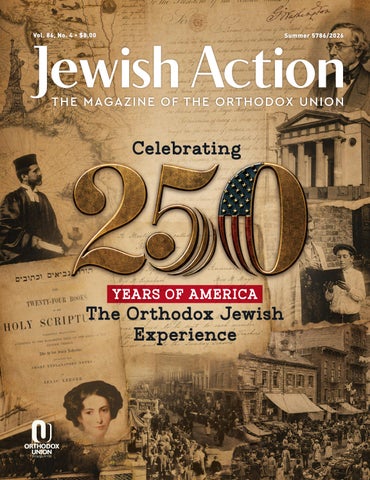
Celebrating 250 Years of America: The Orthodox Jewish Experience
Reflections on Orthodox Jewish Life in America
By Rabbi Dr. Jacob J. Schacter
Why American Jewish History Matters By Rabbi Dr. Zev Eleff
America and the Problem of Opportunity
Editor-in-Chief Nechama Carmel Speaks with Rabbi Yaakov Glasser
The Early Years of American Orthodox Judaism: A Historical Timeline
Moses Seixas (1744–1809) The Promise of Liberty By Dr. Jeanne Abrams
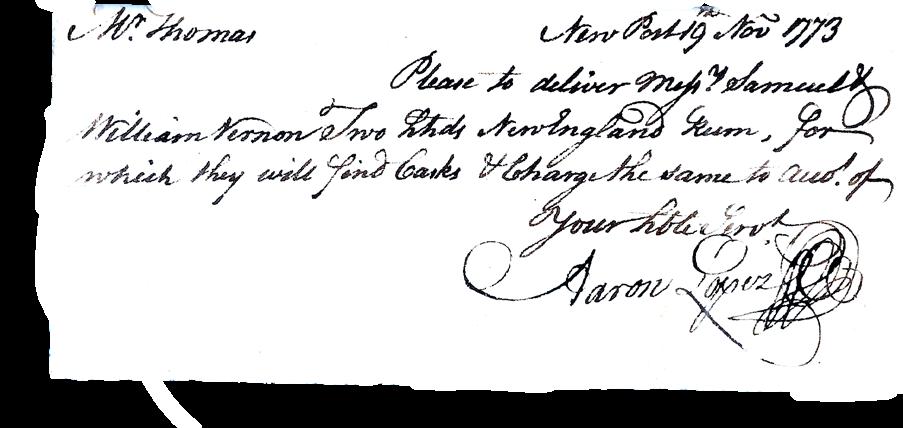
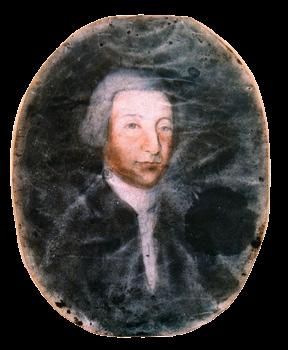
Aaron Lopez (1731–1782) Faith Before Fortune: Jewish Life in Colonial America By Saul Jay Singer
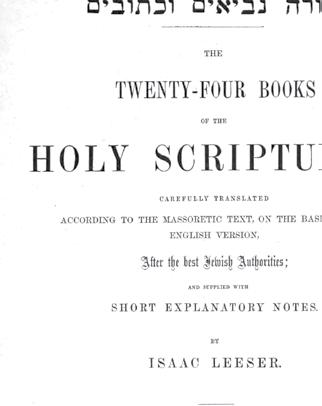
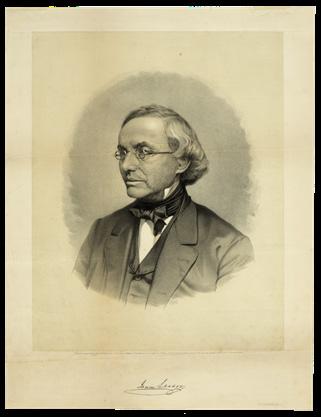
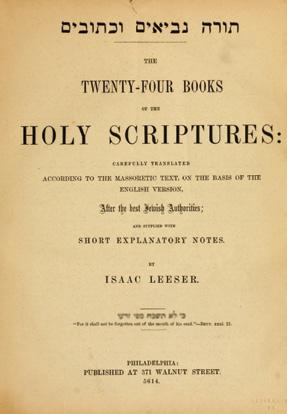
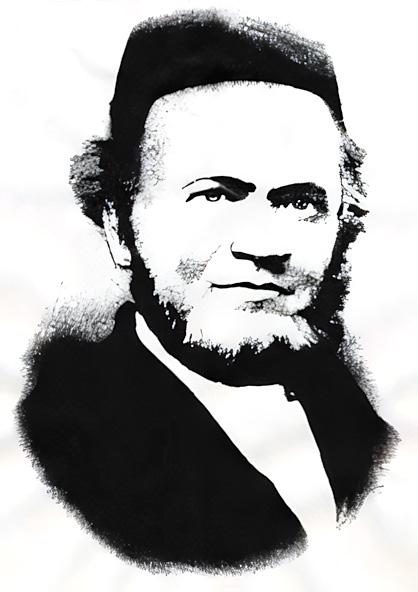
Isaac Leeser (1806–1868) Champion of Orthodoxy By Rabbi Dr. Zev Eleff
Rabbi Abraham Joseph Rice (1802–1862)
Cover story
LETTERS
MENSCH MANAGEMENT
E Pluribus Unum—Managing Unity Without Uniformity By Rabbi Dr. Josh Joseph
LEGAL-EASE
What’s the Truth about . . . the Kashrut of New World Birds? By Rabbi Dr. Ari Z. Zivotofsky
In Complete Isolation: The Struggle for Torah in America
By Rabbi Dr. Aaron Rakeffet-Rothkoff
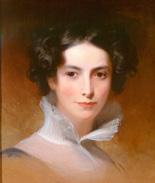
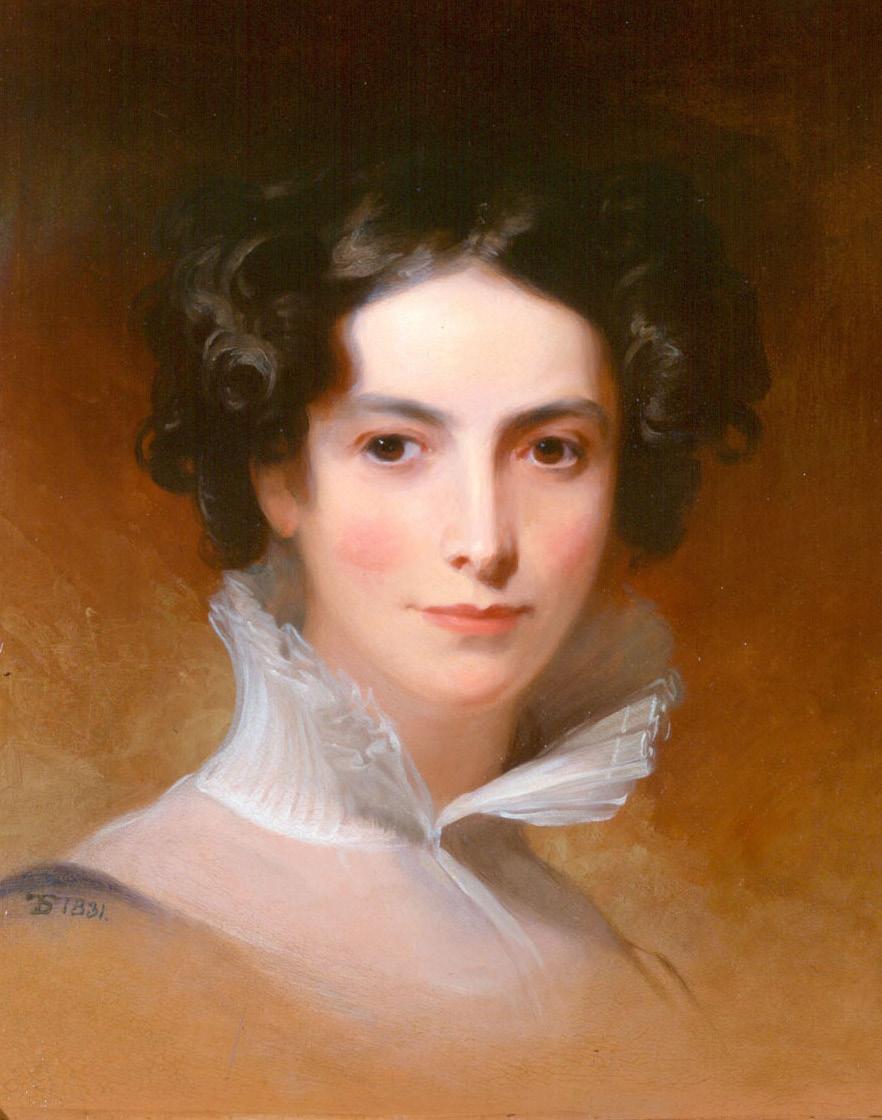
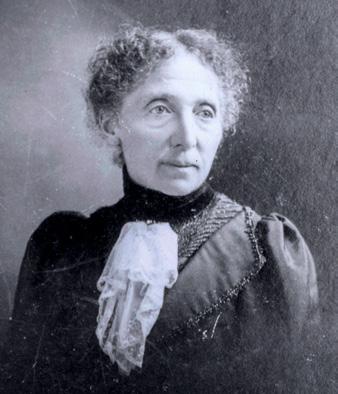
Rebecca Gratz (1781–1869) A Life of Giving
By Dr. Melissa R. Klapper
Rabbi Jacob Joseph (1840–1902)
The Tragic Tale of New York’s Only Chief Rabbi By Rabbi Dr. Zev Eleff
Rabbi Herbert S. Goldstein (1890–1970)
The Maverick Rabbi By Rabbi Aaron I. Reichel
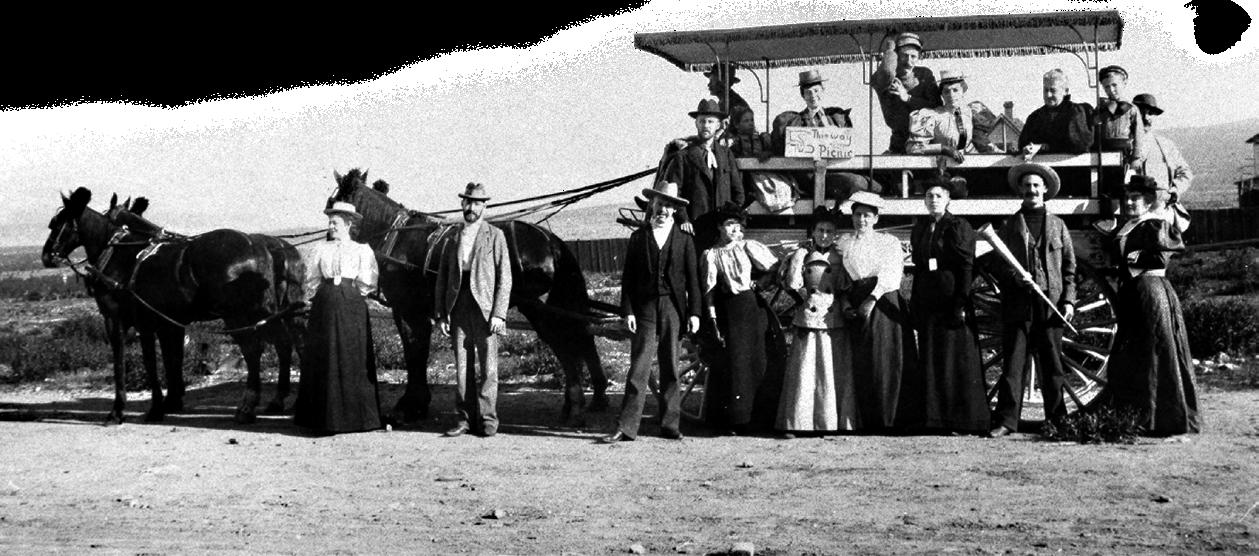
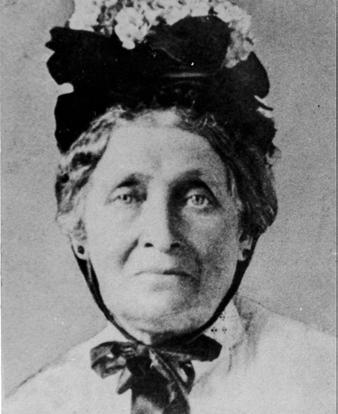
Faith on the Frontier: Orthodox Women of the Wild West By Dr. Jeanne Abrams
The American Story in the Responsa: She’eilos from the New World By Rabbi Moshe Taub
LIFECYCLE
The Last Kindness: A Conversation with Yael Davidowitz By Merri Ukraincik
How to Speak to a Loved One about Cremation By Yael Davidowitz
Jewish Action is published by the Orthodox Union • 40 Rector Street, 4th Floor, New York, NY 10006, 212.563.4000. Printed Quarterly—Winter, Spring, Summer, Fall, plus Special Passover issue. ISSN No. 0447-7049. Periodical’s postage paid at New York, NY, and additional offices. POSTMASTER: Send address changes to Jewish Action, 40 Rector Street, New York, NY 10006.
Jewish Action seeks to provide a forum for a diversity of legitimate opinions within the spectrum of Orthodox Judaism. Therefore, opinions expressed do not necessarily reflect the policy or opinion of the Orthodox Union. 23
THE CHEF’S TABLE
An All-American Barbecue By Naomi Ross
NEW FROM OU PRESS
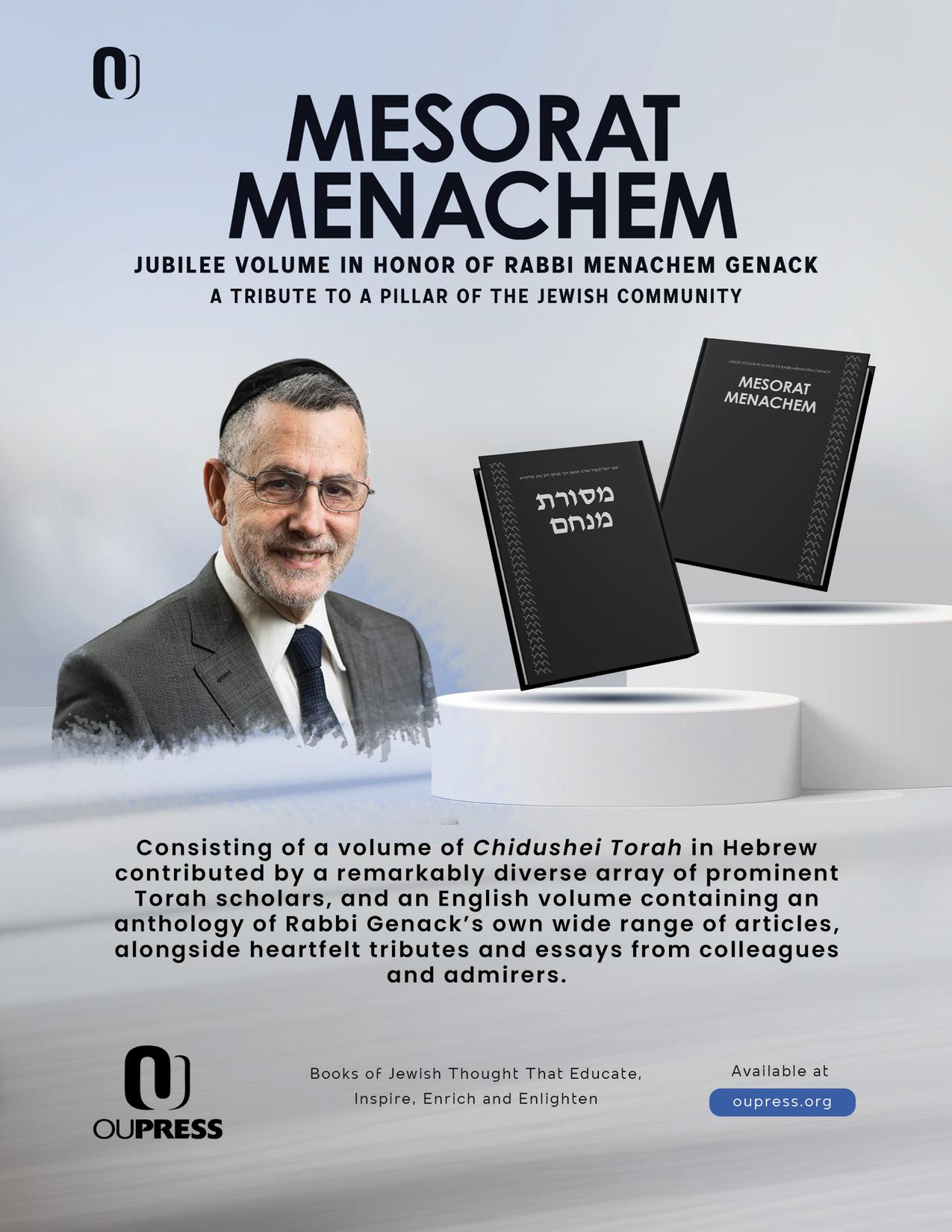
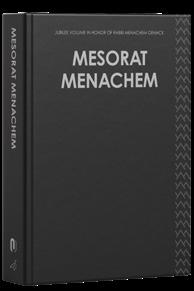
Mesorat Menachem: Jubilee Volume in Honor of Rabbi Menachem Genack (2 volumes)
BOOKS
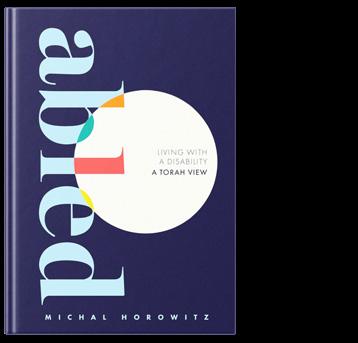
Abled: A Torah View on Living with a Disability By Michal Horowitz Reviewed by Rachelly Eisenberger
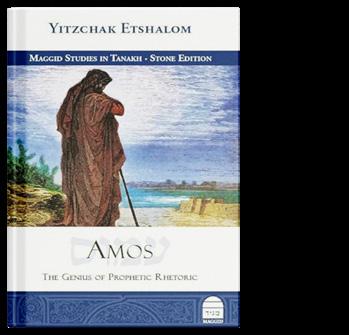
Amos: The Genius of Prophetic Rhetoric By Rabbi Yitzchak Etshalom Reviewed by Sarah Rindner
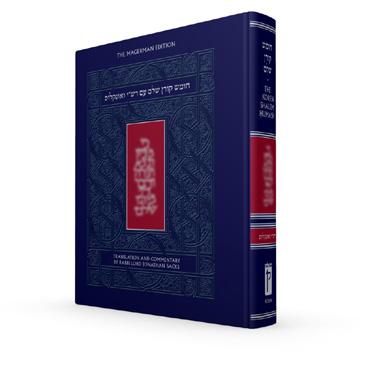
The Koren Sacks Humash By Rabbi Lord Jonathan Sacks, zt”l Reviewed by Rabbi Allen Schwartz
REVIEWS IN BRIEF By Rabbi Gil Student
LASTING IMPRESSIONS
Five Minutes a Day: Lessons from a Life Approaching Seventy By Efraim Jaffe
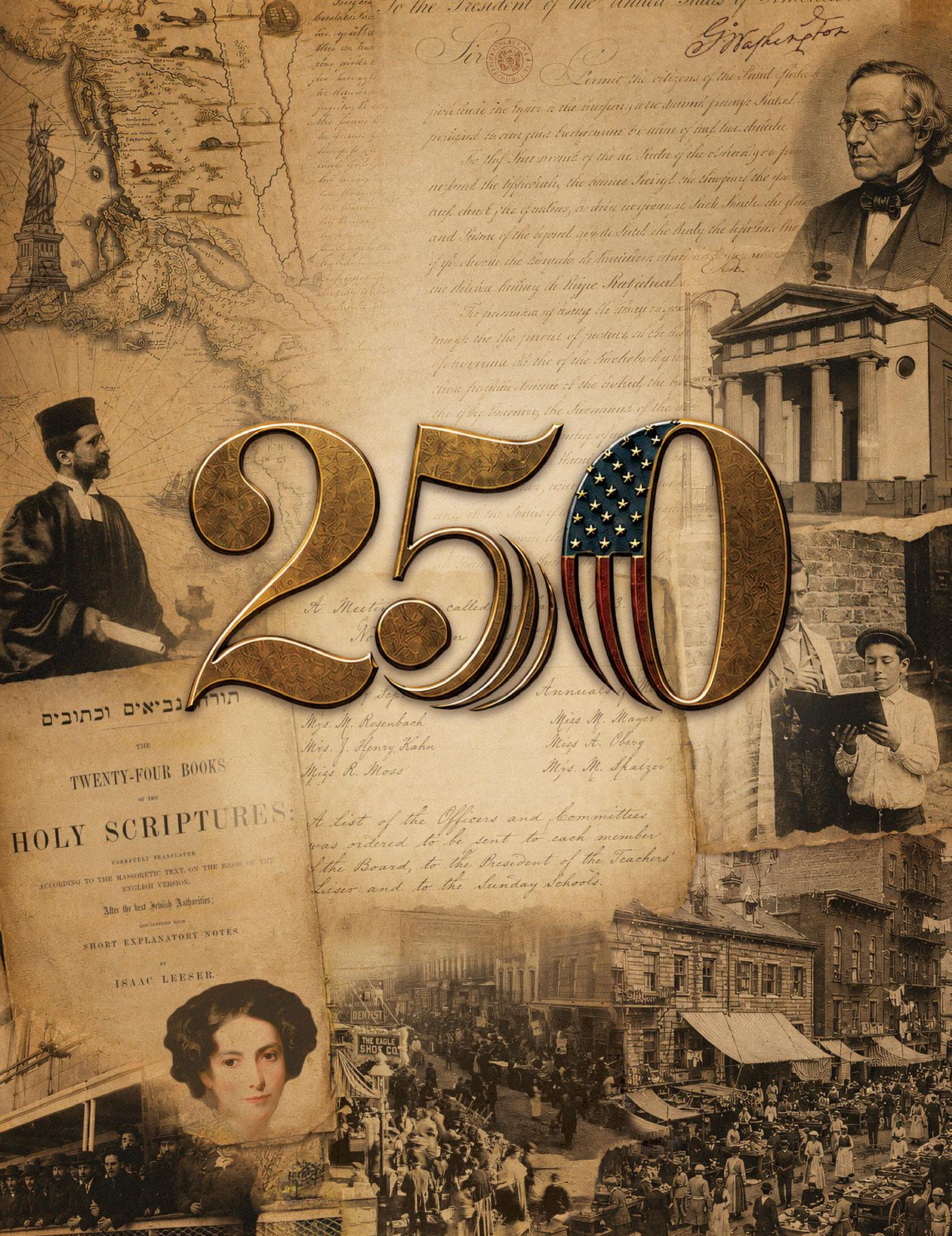
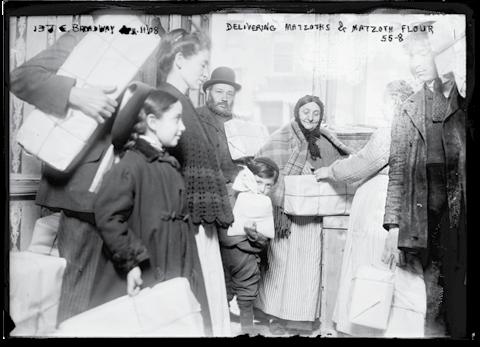
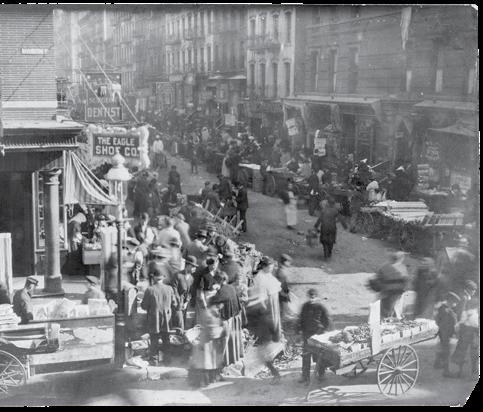
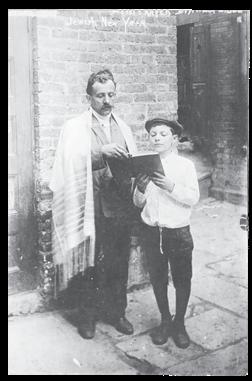
Cover photo credits: Statue of Liberty, courtesy of the Library of Congress, Prints & Photographs Division; letter from Moses Seixas, courtesy of the Library of Congress, Prints & Photographs Division; Isaac Leeser, courtesy of the Library of Congress, Prints & Photographs Division; Rabbi Dr. Henry Pereira Mendes, courtesy of Umanuth/Wikimedia Commons; Pentateuch, courtesy of Internet Archive; Jews praying, courtesy of the Library of Congress, Prints & Photographs Division; markets in New York, courtesy of the Library of Congress, Prints & Photographs Division
THE MAGAZINE OF THE ORTHODOX UNION
jewishaction.com
THE MAGAZINE OF THE ORTHODOX UNION jewishaction.com
Editor in Chief Nechama Carmel carmeln@ou.org
Editor in Chief Nechama Carmel carmeln@ou.org
Associate Editor Sarah Dyckman
Assistant Editor Sara Olson
Associate Digital Editor Rachelly Eisenberger
Literary Editor Emeritus Matis Greenblatt
THE COSTS THAT CRUSH
I loved the article “Crushed by the Costs” by Shalom Goodman (winter 2025), especially the way it balanced empathy with accountability. I don’t like when friends complain that they can “barely pay their expenses each month,” as if they are poor, while they pay $4,000 in rent, lease a luxury car, give elaborate mishloach manos, host lavish birthday parties for their children every year, and always have clothes that keep up with the trend. We may all want those extra things, but going into debt over them is a personal choice.
Rabbinic Advisor Rabbi Yitzchak Breitowitz
Book Editor Rabbi Gil Student
Book Editor
Contributing Editors
Rabbi Eliyahu Krakowski
Rabbi Yitzchok Adlerstein • Dr. Judith Bleich
Rabbi Emanuel Feldman • Rabbi Hillel Goldberg
Rabbi Sol Roth • Rabbi Jacob J. Schacter Rabbi Berel Wein
Contributing Editors
Rabbi Yitzchok Adlerstein • Moishe Bane • Dr. Judith Bleich
Rabbi Emanuel Feldman • Rabbi Dr. Hillel Goldberg
Editorial Committee
David Olivestone • Rabbi Sol Roth • Rabbi Jacob J. Schacter
David Olivestone • Gerald M. Schreck • Dr. Rosalyn Sherman Rebbetzin Dr. Adina Shmidman • Rabbi Dr. Tzvi Hersh Weinreb
Design 14Minds
Advertising Sales
Copy Editor Hindy Mandel
Joseph Jacobs Advertising • 201.591.1713 arosenfeld@josephjacobs.org
Subscriptions 212.613.8140
ORTHODOX UNION
Design Zalman Friedman zf@wavecreative.io
Something worth highlighting is that in our communities, it’s less about how much you make and more about how much you’re given. Baruch Hashem, my husband and I make comfortable salaries. We have friends who make significantly less than we do, but their parents cover tuition; their grandparents buy their children all their clothes; they do not have to pay for Pesach or other chagim because they are taken on programs each year; and they have trust funds in their names. Though they make significantly less than we do, they are likely significantly wealthier than we are, since we do not get help with any of our expenses. We don’t qualify for tuition aid and other forms of assistance due to our technically high salaries, yet we have to live significantly simpler lifestyles than those who receive substantial parental and other help.
President Mark (Moishe) Bane
Advertising Sales
Joseph Jacobs Advertising • 201.591.1713 arosenfeld@josephjacobs.org
Chairman of the Board Howard Tzvi Friedman
ORTHODOX UNION
Vice Chairman of the Board Mordecai D. Katz
President Mitchel R. Aeder
Chairman, Board of Governors Henry I. Rothman
Chairman, Board of Directors Yehuda Neuberger
Vice Chairman, Board of Governors Gerald M. Schreck
Vice Chairman, Board of Directors Morris Smith
Executive Vice President/Chief Professional Officer Allen I. Fagin
Chief Institutional Advancement Officer Arnold Gerson
Chairman, Board of Governors Henry Orlinsky
Senior Managing Director Rabbi Steven Weil
Vice Chairman, Board of Governors Jerry Wolasky
Executive Vice President, Emeritus Rabbi Dr. Tzvi Hersh Weinreb
Executive Vice President & Chief Operating Officer
Chief Human Resources Officer
Rabbi Josh Joseph, Ed.D.
Rabbi Lenny Bessler
Executive Vice President, Emeritus
Finally, as a school psychologist working with many community families, I am concerned that the difficulty of sustaining financial stability is falling more and more on women, while they are also expected to retain traditional roles (being the homemaker, overseeing the children, preparing for yom tov, et cetera). The scope of women’s mental burdens and responsibilities as a result of financial needs is far beyond what is reasonable, with many describing themselves as “simply trying to survive.” When young women get married nowadays, it is assumed that they will work full time and be the CEO of the household as well; young men are expected to work full time and simply “help” with whatever tasks their wives ask. We need to remember that whatever the financial needs of a household, women are the only ones who struggle through pregnancy, delivery and postpartum recovery, often several times over the years.
As a community, we need to work on ways to make sure that women are not carrying an unequal share of the household burdens if they are being expected to bring home more income.
Anonymous
New York, New York
Rabbi Dr. Tzvi Hersh Weinreb
Chief Information Officer Samuel Davidovics
Chief Innovation Officer
Managing Director, Community Engagement
Rabbi Dave Felsenthal
Rabbi Yaakov Glasser
Director of Marketing and Communications Gary Magder
Director, Jewish Media, Publications and Editorial Communications
The article “The Cost of Community,” by Tova Cohen (winter 2025), states that the middle class includes families making “upwards of $250,000 to $300,000” per year. Modern Orthodox Jews are among the most successful groups in America, along with South Asians, and this figure of $300,000 is not unreasonable for the middle class of the Modern Orthodox. Even American Chareidim have a middle class that falls within this range. However, the vast majority of Americans have much lower median incomes. For the country as a whole, the middle class ranges from roughly $60,000 to $170,000 per year for a family. Our families are larger, school tuitions are high, and housing costs in [states with
ZEVI SAMET YC '26 CO-CAPTAIN YU MEN'S BASKETBALL
DR. RAIZI CHECHIK DIRECTOR, PAVA CENTER
RAV MICHAEL ROSENSWEIG ROSH YESHIVA, RIETS ADINA FELDMAN SCW '26 STRAUS SCHOLAR DR. REBECCA CYPESS DEAN OF UNDERGRADUATE EDUCATION
high concentrations of Orthodox Jews such as] New Jersey are among the highest in the country. But it is good to keep in mind that the rich person is the one who rejoices in his portion.
Ken Halperin
Silver Spring, Maryland
GLIMPSES OF CHANGE
In the fascinating section containing the retrospective on Jewish Action over the last forty years (“Forty Years of Change,” winter 2025), Rabbi Avraham Edelstein notes some of the great figures and institutions of the early years of the kiruv movement from the mid-1960s, as well as the people and organizations that dominate the scene today. That short retrospective omitted major figures including Rabbi Abraham Besdin, Rabbi Avraham Stern, Rabbi Shlomo Freifeld, Rabbi Pinchas Stolper, Rabbi Shlomo Riskin, Rabbi Ephraim Buchwald, Rebbetzin Esther Jungreis, Rabbi Avi Weiss, Rabbi Shlomo Carlebach and Rabbi Benjamin Yudin, all of whom brought so many Jews closer to Torah. Institutions such as YU’s Torah Leadership Seminars and the James Striar School for Jewish Studies, Lincoln Square Synagogue and Hineni in Manhattan, the Bayit in Riverdale, and other synagogues
throughout the country that transformed the landscape of the Jewish community should be part of any, even cursory, review of the origins of the kiruv movement.
Rabbi Nathaniel Helfgot Teaneck, New Jersey
Thank you for including the thoughtful reflections of Dr. Rona Novick and Rabbi Michoel Druin on the changes in Jewish education over the past forty years. I strongly agree with their praise of the shift toward more individualized, student-centered and compassionate educational approaches. Todayʼs teachers have greater access to resources and a deeper understanding of the wide range of studentsʼ needs and experiences. Ultimately, our young people are the beneficiaries of this progress.
At the same time, these reflections highlight how much work remains. Despite the advances described, hundreds of young people continue to drop out of the yeshivah system each year. As an educational advocate with Work At It, my team works closely with these students and their families to help them find opportunities that truly fit them. While traditional, academically focused schools serve many children well, other children possess strengths and talents that lie outside the academic realm. Too often, these students are left
BUT I DON’T EVEN KNOW
Halakhic Foundations for Real-World Medical Ethics
Ȯ Expert Faculty in Torah and Medicine
Ȯ Case-Based, Practical Curriculum, CME credit available
Ȯ Evening Classes, Part-Time Online Format
Ȯ Master’s and Certificate Tracks Now accepting applications! Learn more at yu.edu/riets/ bioethics
YOUR SUK KOS STARTS HERE
to struggle through their formative years before they are given the opportunity to thrive. Creating pathways that keep such children meaningfully connected to the mainstream educational system is essential if we are to claim that there is a place for every child in our community.
There is also a troubling trend that may be, in part, a byproduct of the success of our yeshivah system. Forty years ago, day schools sought to enroll as many Jewish children as possible. Today, in many communities, schools have selective admissions and compete to attract the strongest students. In this climate, children with academic and especially behavioral challenges are too often seen as liabilities. Under the language of doing “what is best for the other children” or “finding a better fit,” schools may quickly reject or remove students. Where once every Jewish child felt actively valued and pursued, many now feel they must earn their place by meeting ever-narrowing standards.
I hope our community will take these concerns seriously and continue moving toward an educational system that truly makes room for every child.
Educational Advocate, Work At It
I really enjoyed the newest issue of Jewish Action entitled “Torah in the Age of Artificial Intelligence”; it
SERVI NG COM M U N ITI ES, I
NSTITUTIONS
& FAM I LI ES
SYNAGOGUES • SCHOOLS • CHABAD HOUSES
JUDAICA STORES • HILLEL HOUSES • JCCS
TRUSTED FOR OVER 40 YEARS.
In regard to AI locating authentic Torah sources, as Rachel Schwartzberg noted in her article (“When Rabbis Meet AI,” spring 2026), AI will often provide completely inaccurate (or even made-up) sources that have no authenticity in any Torah literature. AI is great for tasks such as checking my weekly devar Torah post for typos or spelling errors, translating a word or phrase from a complex Lashon Hakodesh source, explaining abbreviations I may not understand, or refining a shiur title based on my input and suggestions. But with its current capabilities and technology, it cannot be relied upon for Torah sources or searches.
Michal Horowitz Woodmere, New York
Transliterations in the magazine are based on Sephardic pronunciation, unless an author is known to use Ashkenazic pronunciation. Thus, the inconsistencies in transliterations in the magazine are due to authors’ or interviewees’ preferences.
This magazine contains divrei Torah and should therefore be disposed of respectfully by either double-wrapping prior to disposal or placing in a recycling bin.
NO ONE SAVES
There are many ways to support Israel and its people, but no gift is more transformative than one to Magen David Adom, Israel’s emergency services system. Your support of MDA isn’t just changing lives — it’s literally saving them — providing critical care and hospital transport for everyone from victims of heart attacks to rocket attacks, and every emergency in between. Donate today at MagenDavidAdom.org or call 866.632.2763.
E Pluribus Unum— Managing Unity Without Uniformity
By Rabbi Dr. Josh Joseph
As the United States approaches its 250th anniversary, one of its best-known mottos feels especially relevant: “E pluribus unum—Out of many, one.”
This motto was suggested by a committee on July 4, 1776, and can still be found on the one-dollar bill. It represents the thirteen colonies that banded together to fight for independence and soon became one nation. Over time, that nation grew to fifty states, yet remained unified.
Two hundred and fifty years later, as we watch our nation splintering into fragmented groups who are growing increasingly suspicious of one another, the Founding Fathers’ idea is more urgent than ever. How do you bring together people with different perspectives and personalities to function as a unified team? And just as importantly, how do you do so without forcing them all to think the same way? In other words, how do you build real unity without demanding uniformity?
In many organizations, there is an unspoken assumption that if everyone agrees, things are going well. Meetings run smoothly, decisions are made quickly, and there is little visible tension. But that kind of “unity” can be misleading. Sometimes it reflects genuine alignment, but more often, it reflects something else: people holding back. They may not want to challenge a supervisor, disrupt the flow or be seen as difficult. So they nod along, even when they have reservations. That is not unity. It is uniformity. And while it may feel efficient in the moment, it comes at a cost. You lose better ideas, honest feedback and the kind of thoughtful pushback that leads to stronger decisions. The American ideal behind E pluribus unum was never about eliminating differences, but about finding a way to move forward together despite them.
For the Jewish people, this is not a new challenge; it is one our tradition has long grappled with. Chazal recognized the value of machloket l’shem Shamayim, disagreement for a higher purpose. The debates between Beit Hillel and Beit Shammai or between the Amoraim in the Gemara were sharp and substantive yet part of a single mesorah. Disagreement did not weaken the system; it strengthened it.
We see a similar idea in the structure of Klal Yisrael. The Shevatim were distinct, each with its own identity and role. Yet when they camped in the midbar, they arranged themselves around a shared center: the Mishkan. The Mishkan itself was built from a wide range of materials contributed by the different Shevatim, men and women alike, each in their own way. Its strength came not from uniformity, but from the integration of those differences into something cohesive.
If unity doesn’t come from everyone thinking the same way, where does it come from?
First, from a clear and shared sense of mission and purpose. People can disagree on tactics, priorities or even strategy, but they must agree on what they are ultimately trying to accomplish. Without that shared mission, differences pull teams apart; with it, those same differences can propel a team forward.
At the OU, this idea has taken on renewed focus through a new strategy we call “One OU,” an effort to more intentionally align our programs, people and resources around a shared mission: to build a growing, religiously vibrant and caring community by harnessing the Orthodox community’s Torah values, talent and networks to move communal solutions forward. The goal is not to erase the distinct strengths of individual programs, but to connect them more deliberately so that we maximize our performance as a coordinated engine serving Klal Yisrael. In that sense, “One OU” is a contemporary expression of E pluribus unum: many parts, aligned around a shared purpose. Effective leaders return frequently to the shared mission, framing discussions not as “Who’s right?” but as “What best advances what we are here to do?”
Second, unity depends on creating an environment where people feel comfortable speaking up. Today we might call this “psychological safety,” but the concept is familiar. If machloket l’shem Shamayim is a value, then people
Rabbi Dr. Josh Joseph is OU executive vice president/chief operating officer.
must feel safe expressing disagreement. Otherwise, discussions remain superficial. In practice, creating that kind of environment often comes down to a few basic habits: clear communication, thoughtful coordination and a willingness to collaborate.
In our OU office, we have worked to strengthen these areas, often referring to them as the “3 Cs.” Communication ensures that information, expectations and reasoning are clearly shared, reducing misunderstandings that can fracture a team. Coordination helps ensure that teams are not working at cross purposes and that they understand how their efforts connect within a broader system. Collaboration creates space for differing perspectives to be actively engaged rather than sidelined. Recently, we have begun extending this approach to the broader OU community. Our Department of Synagogue Initiatives is available for consultation with synagogue leadership, helping translate the “One OU” model and the “3 Cs” into practice within OU synagogues and affiliated organizations.
When implemented well, these practices do not eliminate disagreement; they make it far more likely that it will be constructive and aligned with a shared mission. Leaders play a central role in shaping this environment. If a
leader reacts defensively to criticism, people notice. If a leader rewards only agreement, others will hesitate to speak up. When leaders actively seek input, listen carefully and take disagreement seriously, they signal that differing views are not just tolerated, but genuinely valued.
As we’ve written in these pages before, one of the simplest—and most difficult— things for leaders to do well is to listen: not listening to respond, but listening to understand. The sages of Beit Hillel were known for presenting the views of Beit Shammai before their own (Eruvin 13b). That practice reflects the discipline of understanding another position before challenging it. In a workplace setting, this can translate into a simple but powerful habit: Before rejecting an idea, ensure you can explain it clearly and fairly. It may slow the conversation slightly, but it improves both the discussion and the outcome.
The US Constitution speaks about forming “a more perfect union.” The phrasing is deliberate. Unity is not something achieved once and then completed, nor is it something that can be reached smoothly or perfectly. It requires ongoing attention and intention. The same is true for leadership. As teams evolve, as new people join, and as priorities shift, the balance between
individuality and cohesion must be revisited. What worked a year ago may no longer work today. Maintaining unity is less about a single initiative and more about a consistent approach—how decisions are made, how disagreements are handled, and how people are treated day to day.
Efforts like “One OU” reflect this ongoing work, not as a onetime alignment, but as a continued commitment to keeping diverse strengths connected to a shared purpose. As divisions between nations and within families continue to grow, E pluribus unum offers a useful framework for thinking about unity. The goal is not to eliminate differences or create a team of identical thinkers; rather, it is to bring together individuals with different strengths and perspectives and intentionally align them around a shared purpose. This requires clarity, patience and the courage to engage with views that may challenge your own. When embraced fully, this approach produces a stronger, more resilient whole—one that is greater than the sum of its parts. Such unity— built from those differences rather than despite them—is not only more effective but also the means through which we, as a community, continue to translate Torah values into meaningful, lasting impact.
I’LL HAVE THE MAC & CHEESE
CANCEL YOUR RESERVATIONS. YOU'RE COOKING.
— Madame Discerning Doyenne
CHOOSE EXCELLENCE TOURO CHOOSE
Touro University is all in on one mission—your excellence. We’re here to help you become exceptional: highly successful, purpose-driven, and ready to make a meaningful impact. The first step? Choose Touro. We’ll take you where you want to go.
touro.edu/excellence
This article is part of a Jewish Action series on accessibility. In this installment, we look at physical accessibility—how spaces can better welcome everyone.
Accessible To All
Even as shuls are renovating to accommodate congregants who have disabilities, and mikvaot are being built with wheelchair access, the question remains: Are our communal institutions truly open to everyone?
By JA Staff
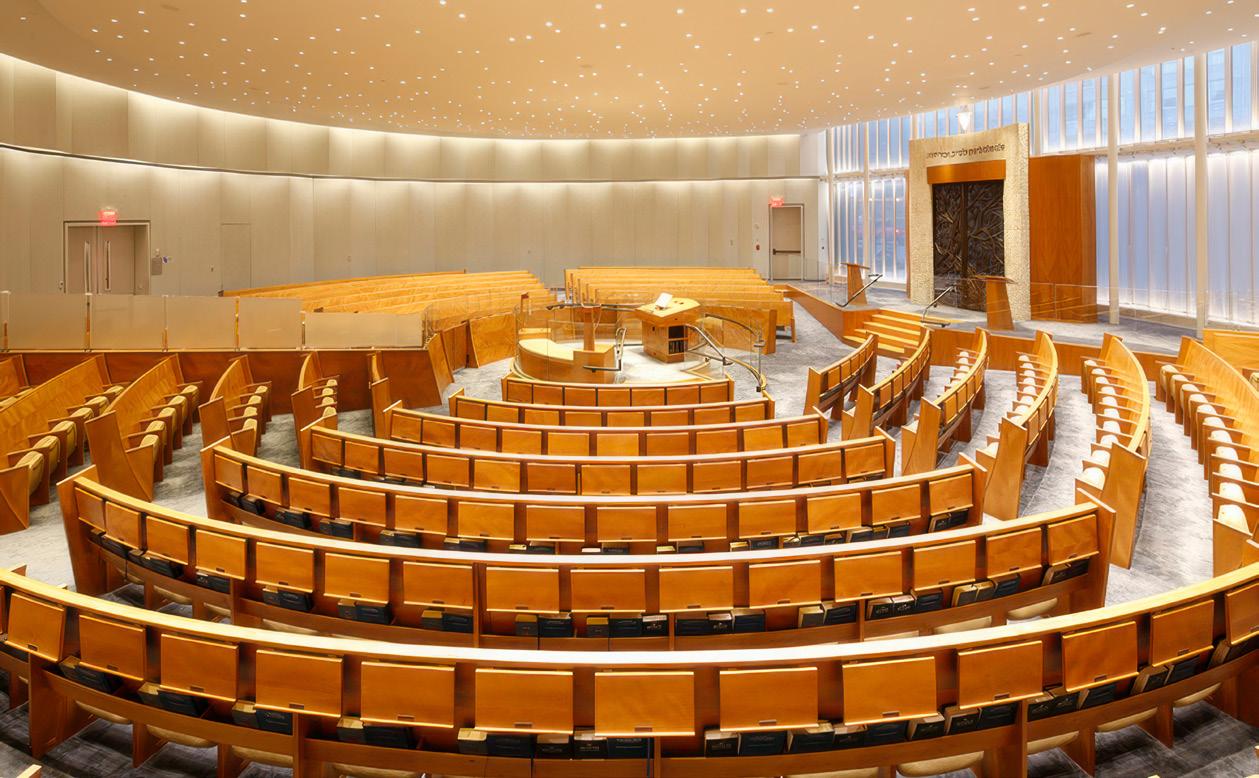
By the time Lincoln Square Synagogue on Manhattan’s Upper West Side moved to its new location in 2013, Nathaniel Richman Cohen was not there to see it. But his presence is felt in the very architecture of the shul, in the pews, in the amud
Nathaniel, who suffered from Duchenne muscular dystrophy and passed away from the disease at the age of twenty-one in 2007, was wheelchairbound from the age of eight and fully quadriplegic by his mid-teens. He and his mother, Shelley, who served on the shul’s architectural committee, inspired a sanctuary fully accessible to all. In fact, the sanctuary was named after him.
“We are Kohanim,” says Shelley. “Nathaniel saw his kehunah and his belonging to the Jewish people as just as integral to him as the Duchenne muscular dystrophy he lived with. He did not want to be denied any aspect of Judaism.”
Nathaniel’s insistence on fully participating in frum life is not unusual. Disability advocates note that over the past two decades, more and more individuals with physical or other disabilities have expressed similar sentiments and, as a result, shuls, mikvaot and communal institutions have begun to make tangible changes, gradually paving the way toward a more inclusive Orthodox community.
“Why should a male who is in a wheelchair not get an aliyah to the Torah?” asks Shelley who first started advocating for her son and others with disabilities in the 1980s. Since then, she observes, a “sea change” has reshaped synagogues and institutions.
“As the baby boomers are aging and people are beginning to have mobility issues, things are changing,” she says. “Many synagogues with women’s sections located on balconies are now installing Shabbat elevators.”
Lincoln Square Synagogue’s new building has incorporated multiple accessibility features: wheelchair seating in the sanctuary, a rear sound circle meant to enhance sound for those with hearing impairments, and a sensory room for children. The latter is for “those kids who get sensory overload,” says Shelley. “A room where that child knows he can go any time for quiet, soothing light and softer chairs. Kids can go relax a little bit.” Shelley realized the need for a sensory room at a bar mitzvah several years ago. She saw an aide standing in the shul lobby, trying to calm an autistic child. The child’s mother soon joined them, but she was also the bar mitzvah boy’s mother. Instead of being in the sanctuary, sharing in her son’s simchah, she was in the lobby, trying to soothe her overwhelmed child. “I thought to myself,” says Shelley, “how could it be that a boy is about to be bar mitzvahed, and there’s nothing to accommodate this younger
Courtesy of Lin C o L n s quare s ynagogue
child with special needs?”
Rebecca Mayer, MSW, Yachad’s managing director of Communal Engagement, notes the progess she has witnessed over time: the increasing presence of large-print and braille siddurim as well as designated wheelchair parking and wider spaces in shuls and communal institutions, all of which point to a growing awareness of the need to meet a wide range of needs. She strongly supports the creation of “inclusion committees” within shuls to identify accessibility gaps and develop solutions, ensuring that the voices of those with disabilities are part of the conversation. “Inclusion committees help keep the conversation ongoing and are personal to that shul’s community— their unique constituents and their unique needs,” says Mayer. “The goal is to keep asking the questions of how every member of the shul can feel that sense of belonging and what actions
“ Why should a male who is in a wheelchair not get an aliyah to the Torah?”
the shul can take when barriers are identified.” In addition to consulting with the end users, it is important, advocates say, to consult with experts in the field.
Rabbi Benjamin Samuels has been at the helm of Boston’s Congregation Shaarei Tefillah since 1995. He agrees that a movement towards inclusivity
began in the Jewish world at large some twenty-five years ago, with attempts made to reach out to disengaged community members, a demographic that included those with disabilities. And when it came time for Shaarei Tefillah to put up a new building, there was no doubt that accessibility was of paramount importance.
“This was the pride of the community,” says Rabbi Samuels. “This wasn’t just a pet project for those who felt sidelined or aggrieved. We were building a shul that would match its function with its form, and its form with its function. Inclusivity was very much a driving force.”
All of Shaarei Tefillah’s spaces are now accessible to everyone. The shulchan can be lowered so that a man in a wheelchair getting an aliyah can see the Torah. Both the main shul and the ezrat nashim were designed to allow maximum visibility for those seated in wheelchairs. The shul’s beit midrash, social hall and downstairs
Lincoln Square Synagogue on Manhattan’s Upper West Side is a model of inclusivity. Since its renovation in 2013, the synagogue has incorporated multiple accessibility features, including wheelchair seating in the sanctuary and a rear sound circle meant to enhance sound for those with hearing impairments.
Top Ways Shuls Can Be More Inclusive
By Rebecca Mayer
Ideally, all shuls should install ramps and accessible bathrooms, ensure access to the bimah, and provide designated accessible seating. They should also make braille and large-print siddurim and Chumashim available.
The list below, however, focuses on smaller adjustments that do not require costly renovations or major financial outlay. Even so, these changes can have a meaningful impact, helping all congregants feel more comfortable in shul.
1 ALLOW FOR FAMILIARITY WITH THE SPACE. Offer tours of the shul to people who are new or visiting, so they can become familiar with the space and find a seat ahead of time where they will be comfortable sitting.
2 INSTALL CLEAR SIGNAGE. Make sure congregants are aware of the accessible accommodations and resources available to them in your shul. Post clear picture-based signage around your shul, with braille in addition where possible, indicating the locations of and routes to the accessible accommodations throughout the shul (such as entrances/exits, accessible bathrooms, accessible seating in the sanctuary, places to park mobility devices if they are not needed full time, and so on). Add all applicable symbols of
children’s room are all accessible as well, and the ramp leading up to the pulpit has a double handrail—one positioned to accommodate a person in a wheelchair and another higher railing for the person pushing that chair.
While Shaarei Tefillah has an outdoor ramp that allows wheelchair users to access the upstairs sanctuary, it also has an indoor lift that can transport a wheelchair-bound person between floors, although it can only be operated by a non-Jew on Shabbat. (The Zomet Institute introduced its halachic solution for elevators after Shaarei Tefillah was completed.)
“At the time, we spent $50,000 on the lift, even though it is barely used, but it is inconceivable that we would ask someone to go outside in a Boston winter to use the ramp,” says Rabbi Samuels.
That type of accommodation was notably absent when Sharon ShapiroLacks went to her shul on Purim night to hear Megillah. With the main shul located up a full flight of stairs, a second downstairs minyan also involving a step, and the only door with appropriate access locked, several men were corralled to carry Shapiro-Lacks upstairs to the main shul in her wheelchair. When her husband complained about the lack of accommodations, he was told that the shul wasn’t required to install an elevator because it was grandfathered in under the Americans with Disabilities Act (ADA).
While the shul does have a chairlift for people who can’t climb stairs, it is useless for Shapiro-Lacks, who has cerebral palsy. “If you’re a wheelchair user, you can’t transfer into a chairlift, so that really doesn’t matter,” notes Shapiro-Lacks.
As an advocate for the disabled for more than forty years and the
The Lower Merion Community Mikveh is the only fully handicapaccessible mikveh in the greater Philadelphia area. The mikveh has a water-powered hydraulic lift that can be used on Shabbat and yom tov .
founder and executive director of Yad HaChazakah–the Jewish Disability Empowerment Center, aimed at promoting access to Jewish community life, Shapiro-Lacks wants to see every person able to enjoy all the same communal opportunities presented to others, no matter what their disability or condition may be. She finds that often there is a myopic approach to inclusivity, with shuls that are meant to be accessible being built without any consultation with disability experts.
“Chesed can be self-serving,” explains Shapiro-Lacks. “People feel good about themselves because they did a good deed and are reacting to a need, while people with disabilities do not want to be needy.” She dislikes the term “special needs” because “special separates us out from everyone else. We don’t want to be perceived as needy, we want to be proactively accommodated like everyone else.”
Shapiro-Lacks isn’t a fan of the term “inclusion” either, noting that people with disabilities of any kind aren’t looking to be included; they want to be equal participants of their own volition. She believes that organizations, yeshivahs and shuls need to look around and see which
the Breakthrough TTI Bachelor of Science Nursing
“ Accessibility is about more than infrastructure; it’s about culture.”
accessibility to the marketing for your congregation and its events (such as the icons for wheelchair access, assistive listening devices, et cetera).
3 OFFER CONTEXT. During services, announce page numbers often and display them from the bimah, describing the siddur or Chumash by color and size, in addition to naming the publisher. Motion times to sit versus stand. Acquire some large-print siddurs and transliterated siddurs
4 CREATE AN INCLUSION COMMITTEE. Assemble a diverse group of congregants to identify and address any obstacles or concerns about accessibility. Task them with brainstorming and implementing solutions to ensure all congregants feel welcomed, appreciated and included in every aspect of shul programming and services.
REBECCA MAYER, MSW, is Yachad’s managing director of Communal Engagement.
community members are missing, and then find out why.
“Ask, be inquisitive, and don’t assume you know the answers to accommodations, or that they cost a lot of money because very often they do not,” says Shapiro-Lacks.
Across the Atlantic, Daniella Neifeld, community participation manager at the United Synagogue based in London, has taken a systematic approach to accessibility across the organization’s fifty-six communities in Britain. United Synagogue is the largest umbrella body of Orthodox synagogues in Britain.
When she took the position two and a half years ago, inclusivity was part of her role, and she defined inclusion broadly as “anyone who feels marginalized from the community who shouldn’t.” She began with physical accessibility but quickly realized it’s “much more complex than being wheelchair accessible.”
“We began by asking: What would I want if I were entering a community and had a disability? I’d want to know the layout, whether I could access the building, and what I could do inside it,” says Neifeld.
Neifeld’s team conducted a full audit of the shuls and communities under her jurisdiction, gathering data and working with designers to create synagoguespecific accessibility symbols, such as indicators for wheelchair access to the bimah. While physical signage is still being rolled out, a website now allows visitors to check which communities and shuls are accessible—and to what degree.
“This first step was about transparency,” says Neifeld. “For example, someone in a wheelchair attending a bar mitzvah can now check in advance to see whether they can access the bimah.”
The initiative aims to reduce anxiety, inform users, and encourage communities to improve.
“Being accessible is not just about having a ramp. It’s about whether someone feels welcome when they
come in,” says Neifeld.
That same attention to access is beginning to shape other communal spaces as well. In Bala Cynwyd, Pennsylvania, the Lower Merion Community Mikveh, directed by Carly Chodosh, is the only fully handicapaccessible mikveh in the greater Philadelphia area. The mikveh was built with the input of Chava Willig Levy, a polio survivor who was a well-known writer, editor, disabilities advocate and motivational speaker. As a result, the mikveh has a waterpowered hydraulic lift that can be used on Shabbat and yom tov. Its fully accessible preparation room isn’t only ADA compliant; it was built to incorporate the same aesthetic as the rest of the building. Its many accommodations include wheelchairheight light switches and attendant’s buzzer, lowered vanity counters and stools, and special benches built for wheelchair transfers in both the bath and the shower. Chodosh has found that giving those with disabilities an advance tour of the special room has led to solutions that make the mikveh work for an even larger number of people.
“One thing I have learned is that nothing is more valuable than asking an individual what they will need to ensure the ease and meaning of their visit,” Chodosh says. “In one instance, we had a deaf woman coming to see the mikveh, and it was only during the walk-through that we realized that she had no way to communicate with the attendant over the intercom.”
A workaround was found, but the lesson endured: Accessibility cannot be one-size-fits-all. True accessibility, say advocates, requires more than isolated features; it demands a shift in mindset—one that begins with listening and continues with constant adjustment.
As Neifeld puts it, “Accessibility is about more than infrastructure; it’s about culture.”
LANDER
The Language of the Soul: Judaism for the Deaf-Blind
By Yitzchok Landa
Here’s a thought experiment. Describe our Jewish life, capturing the experience to share with another. Not easy, right? Now imagine doing so without referencing any visual or auditory experiences. So much of our concept of belonging is woven from threads of shared experiences that come to us through our eyes and ears: the melodies of Kabbalat Shabbat, the energy of a packed shul, the call of the shofar or the flickering light of candles. Jewish life is a rich tapestry of sound, sight and communal gathering. But what does inclusion mean for Jews who can neither see nor hear?
“Deaf-blindness is so much more than the individual limitations of deafness and blindness,” explains Yael Zelinger, coordinator of the Jewish DeafBlind Experience through the Jewish Connection Network, based in Baltimore, Maryland. Those lacking one of the two “distance senses” can still take in information passively by virtue of the other. Deaf-blindness is a condition distinct from the sum of its parts. “Communication of any sort has to be focused and intensely intentional.”
For those who take in information only or mostly through touch, scent and taste, life in a room buzzing with hundreds of people can be silent, sightless waiting. Information absorbed passively by hearing and sighted people—the mood of a room, the direction of traffic, a passing comment—is completely lost. Most of the deaf-blind population—estimates indicate there are approximately 40,000 people in the United States who are deaf-blind—use tactile sign language, where they feel the signs of others.
“Deaf-blind people don’t get information about what’s going on in the world unless you make the effort to tell them,” says Rabbi Yehoshua Soudakoff, a rabbi for the deaf community and
founder of the Israeli nonprofit organization Chushim Ben Dan. “When we take the extra mile and give them access to the information they are so thirsty for, it makes an incredible difference,” says the rabbi who is deaf himself.
About 50 percent of people in the deafblind community have Usher syndrome, a genetic condition in which a person is
“ Jewish life is a rich tapestry of sound, sight and communal gathering. But what does inclusion mean for Jews who can neither see nor hear?”
born deaf or hard of hearing and later loses vision due to retinitis pigmentosa (RP), or is born with normal hearing and later loses both hearing and vision. Other causes of deaf-blindness include birth trauma, optic nerve atrophy, cataracts, glaucoma, macular degeneration, and diabetic retinopathy. Some individuals are born with dual impairments, while others become deaf-blind through illness or injury.
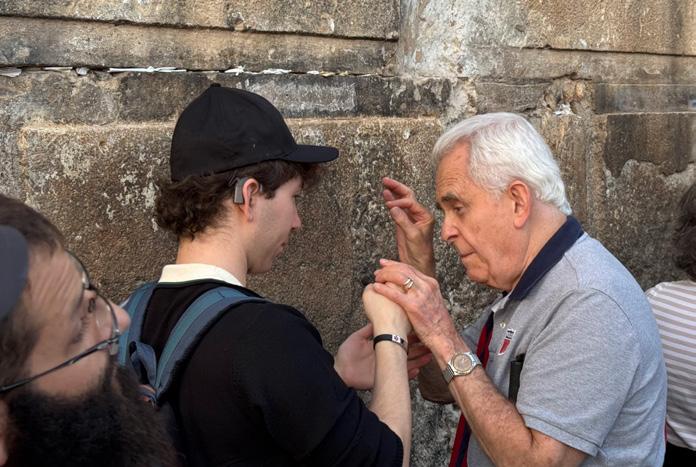
In general settings, people with deaf-blindness rely heavily on Support Service Providers (SSPs), individuals who serve as their eyes and ears, describing the environment to them through tactile sign language, signing into their hands or using descriptive touch, like drawing diagrams of the room on their back.
How do deaf-blind Jews experience Jewish life?
Enter Zelinger, one of a dedicated
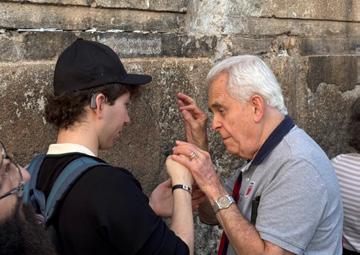
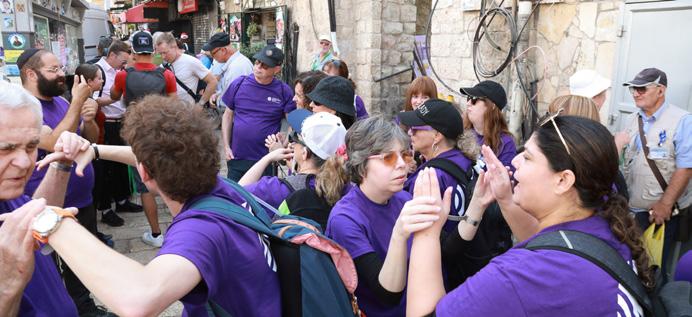
A deaf-blind participant explores his Jewish identity on a recent trip to Israel. Courtesy of yae L Ze L inger
group of Jewish individuals determined to fill the world of Jewish deaf-blind individuals with authentic Jewish experiences. Fifteen years ago, Rabbi Eliezer Lederfeind of the Orthodox Union’s Our Way, a longstanding program for the deaf Jewish community, was running one of his popular Shabbatons. A deaf-blind man named Jeff attended, but as the weekend unfolded, Rabbi Lederfeind realized that Jeff was unable to fully participate. An American Sign Language (ASL) interpreter stood at the front of the room, but for a man who was both deaf and blind, a visual language presented from a distance was as inaccessible as a spoken lecture.
Rabbi Lederfeind reached out to Zelinger and Dr. Sheryl Cooper, founder of the Deaf Studies program at Towson University, who has since retired and now co-leads DeafBlind events with Zelinger as a volunteer. This was the genesis of an initiative that is the only one of its kind in the world: a program dedicated not just to supporting deaf-blind Jews, but to actively bringing Judaism to them.
The work of Zelinger, who has a master’s degree in deaf education, and the many volunteers who come together to create programs is a masterclass in creative, multisensory Jewish experience. Their Shabbatons and trips, like the recent special DeafBlind mission to Israel, are not about narrating the world to participants; they are about facilitating firsthand experience. The question driving every activity is: Can it be touched, tasted or felt?
The group of six deaf-blind Jews visiting Israel on the most recent trip enjoyed thrilling days packed with activity—experiencing the Land in unique ways. Inclusion meant a visit to the Biblical Museum of Natural History where special permission was granted to touch the taxidermy animals mentioned in the Torah, stroking the mane of a lion and poking the eyes of a jackal. A tour through a winery was accessed through smell, taste and touch.
Zelinger arranged for a challah bake, where participants didn’t just learn the berachah; they kneaded and braided the dough, their hands learning the texture and life of the tradition. “Everything was experiential,” she stresses. “I don’t want
it to be secondhand. . . . It was about asking: What could they do; what could they experience firsthand?” A Shabbat dinner can be filled with animated discussion and conversation—all conducted in tactile ASL, the room silent.
“I was given the chance to explore my identity as a Jewish deaf-blind person,” one participant wrote after the Israel trip. “It was incredibly rewarding, instilling me with strength, confidence and a sense of comfort. . . . It has built lasting memories that I will cherish forever.”
The level of support required for such a Shabbaton is staggering. For a Shabbaton with fifteen to twenty deaf-blind participants, a team of nearly sixty-five additional people—including rotating SSPs, coordinators and volunteers—is needed to provide the necessary one-on-one facilitation. On the trip to Israel, transitions from place to place—on and off the bus, or to another activity—require far more than a simple announcement.
This intense intentionality fosters a profound bond. “Human interaction touches them in a deeper way,” notes Rabbi Soudakoff. The constant tactile connection of sign language on the palm or back is not just a way to communicate, but a real social connection. For many participants who may feel isolated in their daily lives, these gatherings are a powerful antidote to loneliness. And for the interpreters and volunteers, the experience is equally transformative.
The experience of the deaf-blind
community raises a deeper question: What does inclusion actually mean?
“Sometimes, integration within a regular framework is a good idea,” says Dr. Cooper. “They want to be part of society. They want to be able to go to events.” With interpreters and guides, they can fully access and appreciate the environment.
But it isn’t always beneficial to integrate deaf-blind individuals into a typical event. “At times they prefer to do things with other deaf-blind people,” she says. When Zelinger and Dr. Cooper were planning the trip to Israel, they were offered grant money to have deaf-blind participants join a Birthright trip as part of a larger group, but they declined.
“The speed of a group trip is far too fast for deaf-blind people to enjoy,” Dr. Cooper explains. “You can’t give them twenty minutes to go shopping in the Cardo. They walk more slowly; they need to touch things. We need to have a trip planned at our pace.”
Ultimately, Zelinger’s goal is to create spaces where deaf-blind Jews can engage with Jewish life on their own terms.
“You can live a perfectly satisfying life as a deaf-blind person,” says Dr. Cooper. “You can have friends, you can have a spouse, you can have fun activities and you can have a community.”
YITZCHOK LANDA is a US Air Force chaplain and co-rabbi at Congregation Rodef Sholom of Atlantic City, New Jersey, who writes and lectures extensively on fascinating Jewish topics.
Support Service Providers sign into the hands of deaf-blind participants during a trip to Israel. Courtesy of yae L Ze L inger
Cover story
Celebrating 250 Years of America
The
Orthodox Jewish Experience
In celebration of America’s Semiquincentennial —the 250th anniversary of the signing of the Declaration of Independence, which will be officially marked on July 4, 2026—it is fitting to pause and reflect on the American Jewish experience, and specifically the Orthodox Jewish experience. First, we must recognize the deep sense of gratitude—mentioned more than once in this cover story—that we owe to a country that welcomed our Jewish brothers and sisters during immensely difficult moments across the centuries, often saving them from religious persecution, from the Inquisition in the seventeenth and eighteenth centuries to Communism in the twentieth century. Second, we are grateful to America for enabling the Jewish people to prosper, both materially and spiritually.
No doubt, the remarkable growth of Orthodoxy in a country once referred to as the treifa medinah would have shocked many of the personalities profiled in this issue. Yet the vibrancy of contemporary Orthodoxy is due, in no small part, to the mesirut nefesh and ongoing struggles of these very Jews who defended Torah and traditional Jewish life in every way they could during exceptionally challenging times. Their stories are told in the pages ahead.
As we take a moment to celebrate 250 years of Jewish life in this country, we give thanks to Hakadosh Baruch Hu, who enabled Torah to flourish despite extraordinary obstacles, placing these spiritually courageous individuals in the right place at the right time to help shape the future of Orthodox Jewish life in America.
The history of Jews in America is deep and rich. Unfortunately, in this limited space, we can only touch on some of the issues and figures in order to offer a taste of the history.
This cover story does not attempt to trace all 250 years of American Jewish life, but instead focuses on three formative eras of early American Jewish life: the Colonial and Revolutionary Era, the Pre–Civil War Era, and the Post–Civil War Era through the early twentieth century. We deliberately do not focus on more modern American Jewish history, as that period tends to be more familiar to readers.
IReflections on Orthodox Jewish Life in America
BY RABBI DR. JACOB J. SCHACTER
n the last decade of the eighteenth century, Rebecca Samuel, then living in Petersburg, Virginia, wrote a letter to her parents in Hamburg, Germany, in which she explained why she was moving from that city to Charleston, South Carolina. She informed them that although her husband, Hyman, had earned the respect of their Gentile neighbors as a very successful clockmaker and silversmith, and although “one [i.e., a Jew] can live here peacefully,” she and her family were “leaving this place because of [the lack of] Yehudishkeit,” or Jewishness, which “is pushed aside here.” She explained that the shochet buys non-kosher meat, there is no sefer Torah in town, all Jewish-owned shops are open on Shabbat, there are no educational opportunities available for her two children, and almost none of the worshippers on the High Holidays wear a tallit “You can believe me that I crave to see a synagogue to which I can go. The way we live now is no life at all.”1
communal cohesiveness has been a hallmark of Jewish life in this country from the very dawn of its existence. But those eighteenth-century Jews living in America were acutely aware that America was different than the countries from which they had emigrated and in which many of their family members and religious authorities still lived. In a letter written in 1785 to a rabbi in Amsterdam, seeking guidance on a complex religious issue challenging their community, two lay leaders in Philadelphia noted that they were “anxiously awaiting” the rabbi’s reply “because this matter touches the very essence of our faith, especially in this country where everyone does as he pleases [asher kol ish hayashar bi’enav ya’aseh].” They wrote that in America, “the Kahal has no authority” over those who live in its midst, unlike the situation in Amsterdam and in many of those countries and communities they had left behind.2
In the old country, the community still had a hold, to a greater or lesser extent, on those who lived within its geographical boundaries. In America, by contrast, the ability of the community to exercise any power was severely limited, as its leaders were only too acutely aware. Some halfcentury later, a note written to a couple leaving Bavaria for Cleveland, Ohio, began with the warning, “Friends! You are traveling to a land of freedom where the opportunity will be presented to live without compulsory religious education.”3
“Living in America, with its emphasis on freedom, democracy and individualism, was—and continues to be—both a blessing and a challenge to perpetuating Jewish values and practice.”
For more than a hundred years after America’s founding, Orthodoxy was practiced by dispersed individuals committed to it who acted alone, bereft of any institutional infrastructure or support. It was only sometime in the second half of the nineteenth century that it found a place in a small number of communities that were beginning to be founded and developed.
The desire of Jews in America to be financially successful and respected by members of the community at large without sacrificing Jewish observance and
The founding meeting of the organization that was to be known as the Union of
Orthodox Congregations of America [later to be known as the Orthodox Union] was held on the Upper West Side in Manhattan at the end of the century, in June 1898. Over one hundred individuals were present, representing congregations in Lancaster, Pennsylvania; Buffalo, New York; San Antonio, Texas; Louisville, Kentucky; Charleston, South Carolina; and others, with the greatest representation coming from New York City. It was called “The Convention of Orthodox Congregations” but the designation “Orthodox” was still unclear. A newspaper article describing the deliberations reported: “The attention of the chairman was called to the fact that some of the gentlemen reported were from congregations where organ and pews were in vogue. The chairman replied that the acceptance of an invitation by any congregation entitled them to representation.” It further noted that “Mr. [Lewis] Dembitz [from Louisville] objected to the use of the word Orthodox. It did not sufficiently indicate the purpose of the organization. Orthodox was used to cover one’s belief; persons who did not live a Jewish life, but read the olden prayers were, according to the generally accepted view, Orthodox. He preferred a title like Shomre Hadath, ‘Observers of the Law.’”4
A little more than two years later, Rabbi Jacob David Wilowsky, the great scholar and sage known as “the Slutsker Rav” or “the Ridbaz,” could speak only with great pessimism about the state of traditional Judaism in America. Addressing the second convention of the newly founded Orthodox Jewish Congregational Union of America (that was its name then) on December 30, 1900, the Ridbaz deplored the condition of Orthodox Judaism in America. . . . He exclaimed that whoever came to America is Poshe Yisrael, for here, Judaism, the Torah She-Be-al-Pe, is trodden under foot. It was not only home that the Jews left behind them in Europe; it was their Torah, their Talmud, their Yeshivos, their Chochomim. His heart was rent by the sights to be seen. . . . In Europe
they say that Yiddishkeit in America is nothing, but gold is found in the gutter. The fact is, neither gold nor Yiddishkeit is to be found here.5
And what was true then remained an accurate description of the situation for many years.
Living in America, with its emphasis on freedom, democracy and individualism, was—and continues to be—both a blessing and a challenge to perpetuating Jewish values and practice. It is a blessing because we Jews have here been afforded an unprecedented opportunity to exercise our religion unhindered by external controls and constraints. At the same time, it serves as a real challenge because in a world without any “compulsory” prerogatives, any choices—including those to define and reject Jewish practice and identity— are possible, and even celebrated. And the more traditional the values and practices, the greater the challenge to their perpetuation.
Orthodoxy’s place in American Judaism was far from assured even as late as the 1950s. In his well-known analysis of Conservative Judaism published in 1955, Dr. Marshall Sklare wrote, “Orthodox adherents have succeeded in achieving the goal of institutional perpetuation to only a limited extent; the history of their movement in this country can be written in terms of institutional decay.”6 It is thus manifestly evident that even by the middle of the last century Orthodoxy had not succeeded in rooting itself in an American soil that consistently swallowed up even those traditional Jewish immigrants who sought to make a new life here. What Dr. Sklare asserted seventy years ago was, indeed, a true reflection of the state of Orthodoxy in this country up until that time.
And yet, in this American world, Orthodoxy has found a place. In a book published less than twenty years later, the same Dr. Sklare wrote, “One of the most surprising trends in American Jewish life has been the emergence of Orthodoxy as a ‘third force’ competing with Reform and Conservative Judaism.
In less than three decades, Orthodoxy has transformed its image from that of a dying movement to one whose strength and opinions must be reckoned with in any realistic appraisal of the Jewish community.”7
Indeed, the most significant success of American Orthodoxy is that it has resoundingly confounded all those negative prognostications about its future. Simply put, we are still here! But what is significant is much more than our mere continued existence. The greatest sociological surprise (or miracle, depending upon your perspective) of twentieth-century American Judaism is not only the dogged continued presence of Orthodoxy in this country, defying all odds, but the extraordinary growth that it has experienced. And the most remarkable growth has come from the Chareidi community, that segment of Orthodoxy where such growth was least expected. With its increasing confidence, institutional strength and extraordinary unselfconsciousness, Orthodoxу has achieved a presence and a prominence in America simply and literally unimaginable even a mere seven decades ago.
But none of this is cause for smug self-satisfied triumphalism. True, our competition no longer comes from the specific ideologies and positions of the various liberal movements. Far more formidable an adversary is the notion of individualism and the emphasis upon the sacred right of personal autonomy so pervasive in American culture today. Contemporary American sociologists of religion have recently pointed to this essential feature of American life, an attitude surely inimical to that espoused by any organized religion. I will decide; I will act; I will determine my own destiny. Choice is central to Americans in general and is even more so for Jews. Even if “religion” has returned to “the secular city,”8 and even if the name and concept of G-d has somewhat reentered the vocabulary of contemporary America,9 the result is not a religion, or a notion of G-d, that is even remotely prepared to recognize the fundamental obligation central certainly to traditional Judaism, to submit oneself—wholly and uncompromisingly—to Torah and mitzvot, a normative religious system which demands something of its adherents. We have our work cut out for
us. Orthodox Judaism will be successful only if its adherents can construct a compelling argument in favor of the importance of submitting one’s life to a transcendent G-d, to convince Jews voluntarily to choose to abdicate their freedom of choice.10
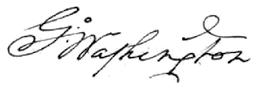
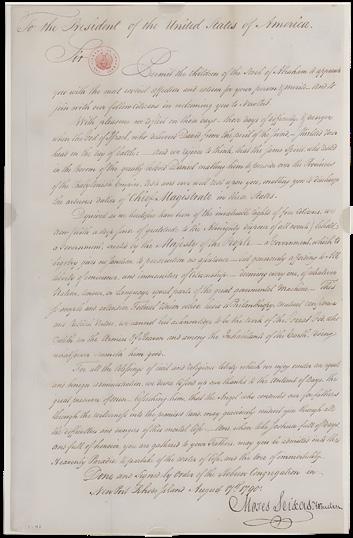
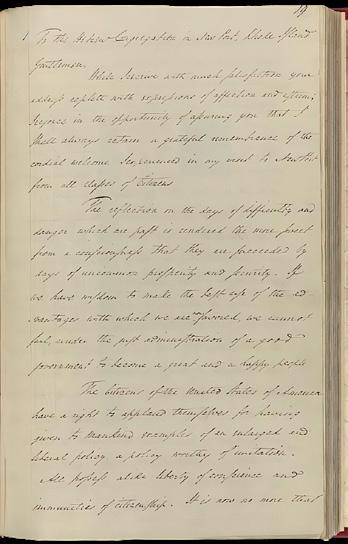
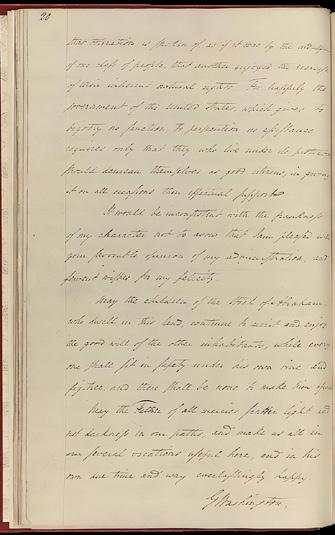
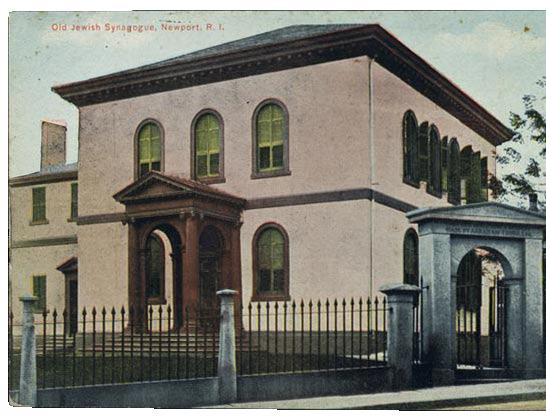
But our focus on this 250th anniversary of America’s founding needs be on American Jewry as a whole, not just American Orthodoxy. Ever since its founding, America has been good to the Jews. George Washington famously asserted in his letter to the Jews of Newport, in the summer of 1790 that “happily, the Government of the United States which gives to bigotry no sanctions, to persecution no assistance, requires only that they who live under its protection should demean themselves as good citizens in giving it on all occasions their effectual support.” He concluded his letter with a prayer: “May the children of the stock of Abraham, who dwell in this land, continue to merit and enjoy the goodwill of the other inhabitants; while everyone shall sit in safety under his own vine and fig tree, and there shall be none to make him afraid.”11
“The greatest sociological surprise (or miracle, depending upon your perspective) of twentieth-century American Judaism is not only the dogged continued presence of Orthodoxy in this country, defying all odds, but the extraordinary growth that it has experienced.”
With some exceptions, this sentiment defined the place of Jews in America for centuries.12 America has famously, and deservedly, been called a “malchut shel chesed,” a phrase that has been understood in different ways, all of which reflecting how Jews think of themselves as Americans, given the religious freedom America has bestowed upon them.13
I want to express my own personal debt of gratitude to America. My father, Rabbi Herschel Schacter, z”l, was the first American Army chaplain to enter a concentration camp when he liberated the Buchenwald Concentration Camp on April 11, 1945. He had been serving as a pulpit rabbi in Stamford, Connecticut, when he volunteered to serve in the army in 1942. His parents were absolutely opposed to this move on his part, and, in response, he sent them a letter explaining why he felt compelled to contravene their explicitly stated wishes. Among his arguments, he wrote (what follows is my English translation of the original Hebrew):
I thought a great deal about your feelings of sorrow concerning my decision to leave my comfortable
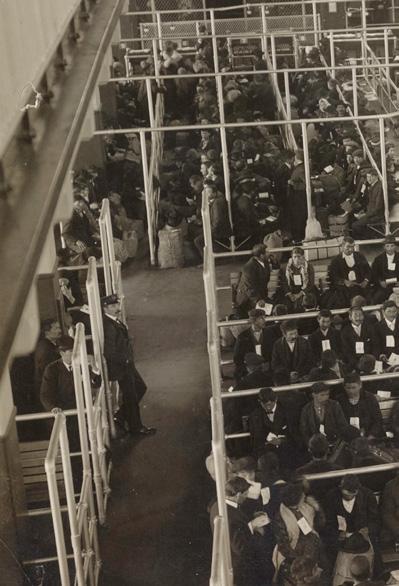
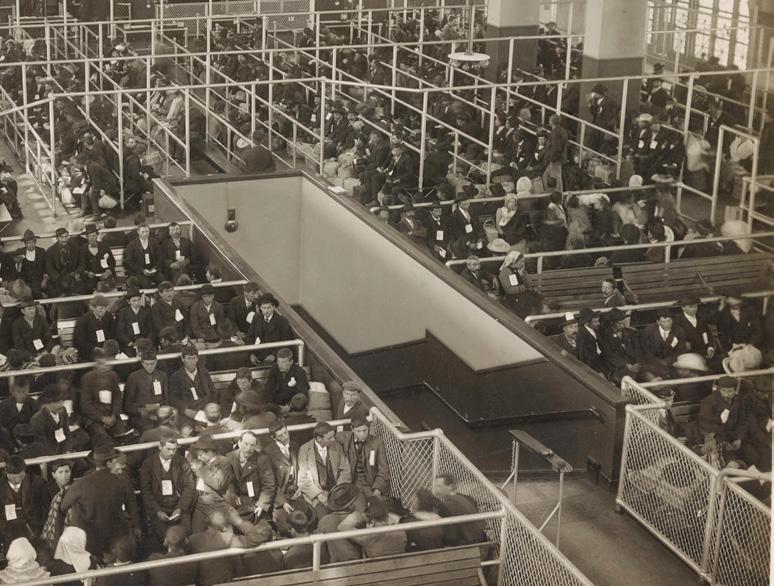
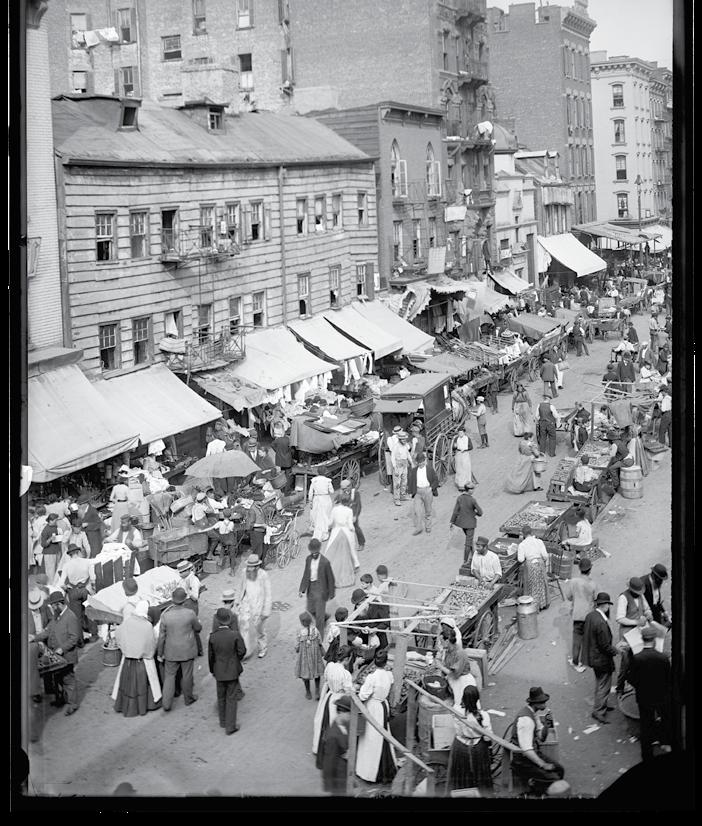
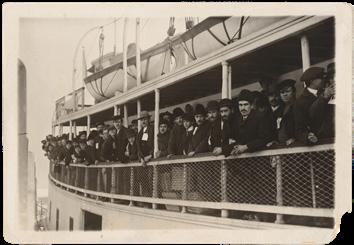
Immigrants waiting at Ellis Island Immigration Station to go through the immigration process in 1910. C ourtesy of the L ibrary of Congress, Prints & Photogra P hs Division
position here and enlist in the army of our blessed land, the land of freedom and liberty—the only land among all the lands of the earth that has conferred equality and the right to exist to the Children of Israel—to fight for her and to protect all of these rights on our behalf and on behalf of the entire world.
Are we not obligated as faithful Jews to dedicate our lives on behalf of this, our truly blessed country that provided refuge and tranquility to our wretched and oppressed brethren?
“My hakarat hatov to America is profound. America has been good— very good—to my family, as it has to so many others.”
And then, turning directly to his father, he wrote, “Please consider, dear father, where would you be had America not opened her compassionate doors and gates to all who knocked, to all those persecuted and downtrodden from all ends of the world?”14 Like millions of American Jews, all four of my grandparents were immigrants who created wonderful personal and Jewish lives in this country. My hakarat hatov to America is profound. America has been good—very good—to my family, as it has to so many others. But now we have reached an inflection point. At this juncture in our history, we look to the future of Jewish life in the United States with trepidation. Antisemitism is rising and becoming a factor of great concern. At the same time, baruch Hashem, Medinat Yisrael is playing more and more a central role in our religious priorities. We do not know what the future will bring for Jews in this country. But we draw strength from the knowledge that our future as a people, wherever we may be, is Divinely assured. In his letter to the Jews of Yemen facing crisis, Maimonides wrote to strengthen their resolve to persevere: “The Divine assurance was given to Jacob, our father, that his descendants would survive the people who degraded and discomfited them . . . . Although his offspring will be abased like dust that is trodden under foot, they will ultimately emerge triumphant and victorious.”15 This fact was also recognized by non-Jews. The twentieth-century Russian religious philosopher Nicholas Berdayev also grappled with this reality that defied rational explanation:
According to the materialistic and positivist criterion, this people [the Jews] ought long ago to have perished. Its survival is a mysterious and wonderful phenomenon demonstrating that the life of this people is governed by a special predetermination . . . . The survival of the Jews, their resistance to destruction, their endurance under absolutely peculiar conditions, and the fateful role played by them in history; all these point to the particular and mysterious foundations of their destiny.16 With the help of G-d, we will continue successfully to meet all the challenges that do—and will continue to—confront us well into the rest of the twenty-first century, and beyond.
RABBI DR. JACOB J. SCHACTER is university professor of Jewish history and Jewish thought at Yeshiva University and senior scholar at the Rabbi Isaac Elchanan Theological Seminary (RIETS). He serves as a contributing editor of Jewish Action.
NOTES
1. See Jacob Rader Marcus, American Jewry: Documents, Eighteenth Century (Cincinnati: The Hebrew Union College Press, 1959), 52–53.
2. See Sidney M. Fish, “The Problem of Intermarriage in Early America,” Gratz College Annual of Jewish Studies 4 (1975): 89, 93.
3. See Jonathan D. Sarna, American Judaism: A History (New Haven: Yale University Press, 2004), 66.
4. See The American Hebrew 63, no. 6 (June 10, 1898): 172. By “pews,” I assume that the reference was to “mixed pews.” The article went on to note (p. 173) that “several of the delegates expressed their regret that they failed to understand the drift of the discussion inasmuch as they are unfamiliar with English.”
5. See The American Hebrew 68, no. 7 (January 4, 1901): 236.
6. See Marshall Sklare, Conservative Judaism: An American Religious Movement (Glencoe: Free Press, 1955), 43. This prediction also appears in both the 1972 and 1985 reprints of the book.
7. See Marshall Sklare, The Jewish Community in America (New York: Behrman House, 1974), 131.
8. In 1965, Harvey Cox published a book entitled The Secular City (New York: The Macmillan Company, 1965). Nineteen years later, he published a book entitled Religion in the Secular City (New York: Simon and Schuster, 1984).
9. See, for example, John Updike, Roger’s Version (New York: Alfred A. Knopf, 1986), 10, 20–21.
10. I have dealt with this challenge in my “Halakhic Authority in a World of Personal Autonomy,” in Michael J. Harris, Daniel Rynhold and Tamara Wright, eds., Radical Responsibility: Celebrating the Thought of Chief Rabbi Lord Jonathan Sacks (New Milford: The Michael Scharf Publication Trust / YU Press; Jerusalem: Maggid Books, 2012), 155–76. See also my “Foreword” to Zev Eleff, Modern Orthodox Judaism: A Documentary History (Philadelphia: The Jewish Publication Society, 2016), xxv–xxviii, and my contribution to the Symposium on “The Sea Change of Orthodox Judaism,” Tradition 32, no. 4 (Summer, 1998): 92–97.
11. See Lewis Abraham, “Correspondence Between Washington and Jewish Citizens,” Publications of the American Jewish Historical Society 3 (1895): 91–92. It has already been pointed out that Washington’s formulation, “which gives to bigotry no sanctions, to persecution no assistance,” already appeared in the letter sent him first by the leadership of the Newport Congregation. See ibid., p. 90.
12. See Jonathan D. Sarna, “American Anti-Semitism,” in David Berger, ed., History and Hate: The Dimensions of Anti-Semitism (Philadelphia, New York and Jerusalem: The Jewish Publication Society, 1986), 115–28; Pamela S. Nadell, Antisemitism: An American Tradition (New York: W. W. Norton & Company, 2025).
13. See Elana Stein Hain, “Twentieth-Century American Orthodox Responses to Living in a Malkhut shel Chesed,” in Zev Eleff and Shaul Seidler-Feller, eds., Emet Le-Ya’akov: Facing the Truths of History: Essays in Honor of Jacob J. Schacter (Boston: Academic Studies Press, 2023), 234–57.
14. See Rafael Medoff, The Rabbi of Buchenwald: The Life and Times of Herschel Schacter (New York: Ktav Publishing House, 2021), 4–8; Jacob J. Schacter, “‘The Voice of Your Brothers’ Blood is Screaming’: Rabbi Herschel Schacter’s Letter Home,” Tradition 54, no. 1 (2022): 121–30.
15. See Maimonides, “Letter to Yemen,” translated in Isadore Twersky, A Maimonides Reader (New York: Behrman House, 1972), 444–45. See also idem, Mishneh Torah, Hilchot Isurei Bi’ah 14:4, where Maimonides writes that “all the nations shall cease to exist while they [the Jewish people] shall endure.”
16. This passage, from Berdayev’s The Meaning of History, as well as that from Maimonides’ “Letter to Yemen” quoted above, are cited in Isadore Twersky, “Survival, Normalcy, Modernity,” in Moshe Davis, ed., Zionism in Transition (New York: Herzl Press, 1980), 348–49.
Why American Jewish History Matters: The Orthodox Experience
ABY RABBI DR. ZEV ELEFF
s America prepared to celebrate its Bicentennial back in 1975, a quiet debate was unfolding within Orthodox Jewish circles: Was the United States a providential haven for Jewish flourishing—or a subtle engine of assimilation?
In December of that year, the National Conference of Yeshiva Principals convened to mark the upcoming anniversary, but the conversation quickly became something larger than a history lesson. Rabbi Jason Jacobowitz painted a sweeping portrait of Jewish life in colonial New York, Newport and Philadelphia. With a touch of patriotic flourish, he argued that Jews had both contributed to and benefited from the American experiment. The United States, he maintained, had offered unprecedented religious freedoms. “Jews have contributed much to this country and, in return, have found a haven for religious freedom.”1 His message reached beyond educators and students; it was a call for the Orthodox community to recognize the unique opportunities America offered for Jewish life—freedom of religion, civic participation and cultural integration— without compromising religious ideals.
Rabbi Shmuel Singer offered a starkly different reading of the same past. Focusing on religious observance, he pointed to instances of intermarriage and religious laxity and emphasized the lack of rigorous Jewish schools and yeshivahs to stymie assimilation. He felt that America’s “culture took a terrible toll on their Yiddishkeit.”2 If Orthodox Judaism had planted a foothold in the United States,
suggested Rabbi Singer, it was despite the environment, not because of it—a testament to resolute leaders who had resisted powerful currents of assimilation. His address was less celebration than caution, urging vigilance about the terms of integration between American society and Jewish life.
No doubt, the American Jewish experience is complex. The impact of American culture is variegated—and learning that history, especially for the Orthodox, a tradition-bound faith community, is complicated. Is America the great guarantor of Orthodox continuity, or its greatest test?
A half-century later, and owing to the present Semiquincentennial, it seems prudent to rethink the value of studying the American Jewish experience. Put simply, what does the Orthodox Jewish community hope to gain from teaching and learning about American Jewish history?
The Historical Record
Rabbi Jacobowitz’s and Rabbi Singer’s positions were reasonable interpretations of the historical record. Since 1954, the Tercentenary of American Jewish life, the Jewish community had become very acquainted with the colonial period. In September 1654, twenty-three Jewish refugees arrived in New Amsterdam. These were women and men who were eager to find a new home after the Portuguese had invaded Brazil and brought the Inquisition to the Western Hemisphere.3 This band of Jews—with the exception of Asser Levy, they were the first to settle in North America—faced miserable hostility from Peter Stuyvesant, who the West India Company had placed in control of New Amsterdam. In the end, Amsterdam’s influential Jews prevailed on the Dutch to intercede, and their coreligionists were granted permission to remain in the New World, albeit with some social limitations. American Jews, Rabbi Jacobowitz included, were very taken by the tale and its lessons about Jewish agency and courage to stand up to evil. The episode was particularly important after the
Holocaust and Israel’s Independence.
Rabbi Singer didn’t counter the importance of the beginnings of American Jewish life. His point was that most of the “original” American Jews had soon after relocated to the Netherlands and that subsequent Jewish migration to the New World had faced steep challenges to establish religious footing.
Orthodox Jews continued to debate how to view the American Jewish experience and the value of studying it. For instance, before the development of a more robust literature, day school educators had been rather unsure how to incorporate American Jewish history into their classrooms. Earlier textbooks had been deemed by some sorely insufficient.4 The most that Orthodox teachers could glean from these books, so went the prevailing wisdom, was what they had detected as the evident Divine handiwork to ensure Jewish survival. There was no other explanation, they figured, for the persistence of traditional Jewish life in the United States.5
Things eventually got more nuanced. The Bicentennial celebration occurred in concert with a rise in Orthodox triumphalism: self-confidence in this community’s thriving institutions to support all streams of Orthodox Judaism. Historians paid increased attention to American Orthodoxy and the primary sources required to research this group.6
In turn, countless Orthodox Jews began to turn to American Jewish history for the guiding values it offered. The ways that Orthodox Judaism developed within its American environment could teach something important about Orthodox community building. The “interest in Orthodox Judaism,” noticed one observer, “has increased geometrically.”7 The staying power of American Orthodoxy was no longer seen as an unexplainable miracle.
Sociologists such as Charles Liebman and historians like Jeffrey Gurock demonstrated that the most successful branches of Orthodox Judaism, from the modern exponents to the champions of
the Yeshivah World, understood how to negotiate with the forces of American life.8 The history of the Orthodox Union, for example, shows how Torah-committed Jews met uniquely American challenges with vision and creativity. OU leaders partnered with food manufacturers and government agencies to make kosher food widely accessible. In line with concurrent social movements, the OU tapped into the energy of young people through NCSY, its successful youth group which grew exponentially in the 1960s. And when Church-State issues came to the forefront in the following decade, they turned the moment into an opportunity to strengthen Orthodox institutions.9 By the 1980s, American Jewish history—taught by itself or as part of
discipline.12 The myriad ways that this group has adapted to American life have fascinated historians.
Much of the concentration is on the post–World War II period. We know much about the ebbs and flows of Orthodoxy’s various subgroups, their leaders, and the demographics and behaviors of the “Chassidic,” “Modern Orthodox,” and “Yeshivish” communities, as categorized by the Pew Research Forum. We are attuned to how changes in American politics, education and the broader ecosystem of religion have shaped the decisions of Orthodox Jews.13
Recent research informs us how Orthodox Jews participate in American consumerism and what moves them to dine at kosher restaurants.14 Within
“Was the United States a providential haven for Jewish flourishing—or a subtle engine of assimilation?”
the general US history curriculum—was a mainstay in day schools, although it “remain[ed] a minor subject in comparison with other Judaic studies subjects.”10
The State of the Field
What about today? We don’t have the data to determine how frequently and vigorously schools currently teach American Jewish history.11 But as for the present state of academic scholarship, the field has never been stronger. American Jewish history is one of the largest fields in Jewish studies. Furthermore, Orthodox Judaism— starting, in earnest, with the wave of European migration in the 1880s—is one of the most written-about areas in the
the past five years, the National Book Council has awarded its top prize in American Jewish studies to a pair of books that respectfully and sophisticatedly showed the growth of Satmar in the context of New York urban history and American legal history.15 Often thought of as existing apart from American life, Satmar has shrewdly considered when to operate within or without the rhythm of American society.
There’s more work to be done on Orthodox Jewish life in the earlier periods of American Jewish history. As the present issue of Jewish Action demonstrates, there’s a lot we can learn from the lives and legacies of Moses Seixas, Rebecca Gratz and Isaac Leeser.
NOTES
The Goals of American Jewish History
Then and now, what are the goals for the study of American Jewish history?
Curriculum experts in Orthodox day schools have offered their take. Some suggest zeroing in on the link between knowledge of American Jewish history and the cultivation of Jewish identity. A Boston educator concluded that an appreciation of the American Jewish experience “provides students with some desperately needed historical perspectives on matters which affect them as Jews both today as well as in the future.”16
With a certain pride in the postwar resurgence of American Orthodoxy, another teacher suggested that American Jewish history, likely with a focus on the Orthodox community, can impart a “loyalty to tradition.”17 No longer a heavenly godsend or told with an emphasis on the crushing challenges of tradition-bound faith in modern life, American Orthodox history was perceived by this educator as a story of communal determination to preserve “Torah life” in a hospitable American climate. Others, focused more on civics than religious dimensions, hoped that improved literacy in American Jewish history could help students better integrate their Jewish and American experiences.18 A more recent incarnation of this goes so far as to claim that Jewish ideas were at the very heart of America’s founding.
My view aligns with my teacher, Jonathan Sarna, professor emeritus of American Jewish history at Brandeis University. Reflecting on the broader sweep of the American Jewish experience, Sarna suggested that the lessons of this history ought to center on the
“ability of American Jews—young and old, men and women alike—to change the course of history and transform a piece of the world.”
Orthodox Judaism, in particular, exemplifies this. The daring changemakers who founded synagogues, schools and countless other institutions ensured that the community would thrive despite real concerns about secularism and assimilation.
Perhaps no better example is the American history of Bais Yaakov. My friend and colleague, Leslie Klein, has studied the migration of the Bais Yaakov movement to the United States and demonstrated how it has adapted to changing attitudes about American childhood and the varied indigenous women’s movements.19 With thoroughness and thoughtfulness, those who study American Jewish history can grapple with the challenges that their coreligionists faced when their faith and cultural sensibilities engaged with the realities of American life. Sometimes these two worlds coalesce. On other occasions, they don’t. And that is perhaps the most valuable lesson American Jewish history—Orthodox or otherwise— can teach. The relationship between Judaism and America has never been seamless, nor entirely antagonistic. The most discerning among us see history as a “story of how people shaped events— establishing and maintaining communities, responding to challenges, working for change.”20 This offers a prudent path forward: a middle ground between uncritical devotion to American Jewish exceptionalism and fears of a culture at odds with a traditionbound faith.
1. Jason Jacobowitz, “Judaism in Colonial America,” Jewish Parent 28 (April 1976): 23.
2. Shmuel Singer, “The Bicentennial: A History of Religious Jewry in America,” Jewish Parent 28 (April 1976): 14.
3. See, for example, Leo Hershkowitz, “New Amsterdam’s Twenty-Three Jews—Myth or Reality,” in Hebrew and the Bible in America, ed. Shalom Goldman (Hanover: Brandeis University Press, 1993), 171–83.
4. See, for example, Joseph Elias, “Past and Present in the Teaching of Jewish History,” Jewish Observer 4 (November 1967): 23.
5. See Abraham A. Kellner, “Towards a Philosophy of Jewish History,” Young Israel Viewpoint 38 (May-June 1950): 13–15.
6. See Zev Eleff, “In Search of American Orthodox Jewish History,” Jewish Action 73 (Fall 2012): 42–47.
7. Reuven P. Bulka, “General Introduction,” in Dimensions of Orthodox Judaism, ed. Reuven P. Bulka (New York: Ktav, 1983), xv.
8. See, for example, Charles S. Liebman, “Orthodox Judaism Today,” Midstream 25 (August/ September 1979): 19–26; and Jeffrey S. Gurock, “Resisters and Accommodators: Varieties of Orthodox Rabbis in America, 1886–1983,” American Jewish Archives Journal 35 (November 1983): 100–187.
9. See, for example, Timothy D. Lytton, Kosher: Private Regulation in the Age of Industrial Food (Cambridge: Harvard University Press, 2013); Zev Eleff, Living from Convention to Convention: A History of the NCSY (Jersey City: Ktav, 2009); and Lawrence Grossman, Living in Both Worlds: Modern Orthodox Judaism in the United States, 1945–2025 (Boston: Academic Studies Press, 2025),155–59.
10. David I. Bernstein, “A Study of the Teaching of Jewish History in Modern Orthodox Yeshivah High Schools,” Jewish Education 54 (Winter 1986): 30.
11. On the pedagogical approaches to teaching history in Jewish school, see Benjamin
M. Jacobs, “Where the Personal and Pedagogical Meet: A Portrait of a Master Teacher of Jewish History,” Jewish Education 68 (2002): 73–86.
12. For the most complete survey of American Orthodoxy, see Jeffrey S. Gurock, Orthodox Jews in America (Bloomington: Indiana University Press, 2009).
13. For a contemporary analysis and breakdown of the Pew Research Forum’s studies, see Zev Eleff, “Orthodox Judaism in the United States,” in The State of American Jewry: New Insights and Scholarship, ed. Frederick E. Greenspahn (New York: NYU Press, 2025), 210–41.
14. See Zev Eleff, Authentically Orthodox: A Tradition-Bound Faith in American Life (Detroit: Wayne State University Press, 2020), 104–23; and Jody Myers, Eating at G-d’s Table: How Foodways Create and Sustain Orthodox Jewish Communities (Detroit: Wayne State University Press, 2023).
15. See Nathaniel Deutsch and Michael Casper, A Fortress in Brooklyn: Race, Real Estate, and the Making of Hasidic Williamsburg (New Haven: Yale University Press, 2021); and Nomi M. Stolzenberg and David N. Myers, American Shtetl: The Making of Kiryas Joel, a Hasidic Village in Upstate New York (Princeton: Princeton University Press, 2022).
16. Jon Bloomberger, “The Study of Jewish History in the Jewish Day School,” Ten Da’at 6 (Spring 1992): 31.
17. Bernstein, “A Study of the Teaching of Jewish History,” 34.
18. See Sondra Leiman, “Practical Techniques and Methods in Teaching American Jewish History,” in Moving Beyond Haym Solomon: The Teaching of American Jewish History to 20th Century Jews (Philadelphia: Temple University, 1995), 14–25.
19. See Leslie Ginsparg Klein, Bais Yaakov Girls: Agency, Identity, and Education in Jewish Orthodox Girlhood (Waltham: Brandeis University Press, forthcoming).
20. Jonathan D. Sarna, “Why Study American Jewish History,” HaYidion (Spring 2014): 52.
RABBI DR. ZEV ELEFF is president of Gratz College and professor of American Jewish history.
America and the Problem of Opportunity
A conversation with Rabbi Yaakov Glasser
Jewish
Nechama Carmel: Rabbi Moshe Feinstein famously described America as a “malchut shel chesed” (a benevolent government). How do you understand the American Jewish experience in that light?
Rabbi Yaakov Glasser: Jews were, by and large, welcomed into this country. As a rav in Russia who was forced to flee, Rav Moshe understood firsthand what it meant to live in an oppressed state, where the Jewish people were subject to the whims of local crime and antisemitism. More distressingly, not only did the government not protect its Jews, it often instigated antisemitism.
The American Jewish experience is so very different, historically speaking. At its core, America is a malchut shel chesed. Even with the troubling rise in antisemitism that we are now witnessing, and even with some voices in government that are deeply concerning, we do not go to sleep at night
Action Editor-in-Chief Nechama Carmel spoke with Rabbi Yaakov Glasser, the OU’s managing director of Community Engagement, about American individualism, rising antisemitism and the hidden cost of freedom.
worrying that law enforcement agencies will knock on our doors and take our families away, to be put on trains or executed in a nearby forest.
Our experience in the United States of America, as opposed to many other experiences throughout Jewish history (certainly much of Ashkenazic history), has largely been one not of survival, but of opportunity. The Jewish people in this country are likely more financially successful than at any point in our history. And this is due, in no small part, to the freedoms and opportunities we have been granted here.
NC: Would you say it’s important to feel hakarat hatov to America?
Rabbi Glasser: Very important. We are now multiple generations into a sense of entitlement and, to some extent,
From left, top row:
Jewish market on the Lower East Side, New York, in 1890; Orthodox Jews in 1910; Delivering matzot and matzah flour; Jews praying on Rosh Hashanah in New York City in 1907; Bottom row:
A Judaica shop on Broome Street, New York, in 1942; Sunday morning crowds fill the market at Orchard and Rivington on the Lower East Side.
complacency about this gift. It’s not just about saying thank you. Who are you thanking? You’re talking about an abstract entity. What hakarat hatov means, literally, is a recognition of the good—not merely an expression of gratitude. It begins with appreciating what we have and looking around at our society—the proliferation of Jewish institutions, yeshivot, shuls, and communities—and recognizing that much of this exists because of the broader reality in which we live.
It’s very easy in our community to create a bifurcation between religious and secular. The country is placed in the secular box, while we see ourselves in the religious box. We dip into the secular box when we need something practical for our community, but we don’t hold the things in that box to be of sacred importance.
Part of what we need to do is cultivate a deeper appreciation for that broader reality and what it affords us, and to carry ourselves as responsible, engaged citizens of the United States. I would say hakarat hatov expresses itself in several ways.
The first is by respecting America’s laws and institutions—not trying to work around them, but recognizing why they exist and valuing the process of law itself.
The second is by engaging in the American reality: voting, participating in civic life, being engaged in the political process and public affairs, and caring about all its citizens—not only the Jewish community.
Finally, hakarat hatov requires historical awareness—zechor yemot olam—to recognize and appreciate what we have in contrast to what came before, and to understand the magnitude of the gift we have been given.
NC: Since Jews first started settling in this country, what would you say have been the challenges that American life presented to Jews in particular? Specifically, what have been the challenges of opportunity?
Rabbi Glasser: The challenges of opportunity are essentially the challenges of choice. American culture is so open, so deeply rooted in autonomy and independence. It provides people with almost unlimited opportunity for self-actualization. These are challenges, which, of course, are also blessings. The opportunities available to us in this country—for education, careers, and so much more—are extraordinary in the context of Jewish history.
And yet, there were eras in American Jewish history where the choices and the challenges were different. American Jews had to contend with a level of intolerance toward religious observance. Many of us had grandparents or great-grandparents who worked six days and then had a choice to make: keep Shabbat or lose their job. In those
Photos C ourtesy of the Library of Congress, Prints & Photogra P hs Division
“Hope engenders achrayut—–a sense of responsibility that compels action. Looking at assimilation or antisemitism and concluding that the situation is hopeless is an attitude that leads to paralysis.”
Tashlich
years, there was also very limited Jewish education, so the ability to perpetuate not only Jewish observance but even Jewish identity to the next generation was an existential challenge. It wasn’t a physically existential challenge, but it was equally existential in a spiritual sense: How are we going to pass this along to the next generation?
In 1964, Look magazine ran a famous cover story titled “The Vanishing American Jew,” which predicted the demise of observant Judaism because there didn’t seem to be a mechanism to pass it on. We famously say that the Orthodox Jewish community is stronger than ever in the United States and the only thing that vanished was Look magazine.
NC: You’ve spent so much of your life in kiruv and community building. Tell me about assimilation in American Jewish life. What happened to the majority of American Jews, and how did it happen?
Rabbi Glasser: In the early years there was no institutional infrastructure in this country. Communities were essentially organic, and the success of perpetuating Jewish identity to the next generation was entirely in the hands of the individuals who were striving to do so. There was no legislation protecting
religious rights such as Shabbat observance, and access to kosher food was limited.
There was also significant poverty, and immigrants had to navigate the demands of a new reality, a new culture and a new language. The dissonance between generations within these frameworks was considerable, and support structures existed only where communities had already formed.
Whatever sense of commitment, loyalty and initiative people brought with them became the only tools they had to advance their families. The experience was extremely challenging. While many were able to absorb Jewish culture in a basic way, they often could not internalize the fundamentals of Jewish identity as a set of core values—values significant enough that one would be willing to make sacrifices or accept inconvenience to uphold them.
Not surprisingly, many were lost to assimilation. Some had the courage and the strength to persevere and bring forward a set of standards and commitments anyway, but others didn’t.
NC: How do you view our role, as educated Jews, toward so many of our brothers and sisters who are, in many cases, lost through no fault of their own? What is our responsibility toward them?
Rabbi Glasser: Assimilation today is much more complicated than it was when I began my kiruv career because we are now several generations removed even from simply being exposed to authentic religious life.
When I first started, we were doing kiruv with Conservative and Reform Jews who, for the most part, had exposure to parents or grandparents—or at least great-grandparents—who had some level of Jewish tradition. You could build on that and help that spark come alive. Today, you’re dealing with Jews who are so far removed that you are essentially starting from scratch. It’s a much greater challenge.
I am biased because I spent much of my career in kiruv. But a lot of this is, in some sense, our fault.
One of the casualties of our success—of becoming so strong—is that we have the benefit of being able to be more insular and self-focused. Look, for example, at the New Jersey community where I live. We don’t have a single Conservative or Reform shul in the entire community. Some people view that as a victory. But there is another way to view it: as a catastrophe. Because what it means is that a lot of Jews have assimilated and are no longer part of the community. And it also means that wherever these clusters of non-religious Jews exist, they are not in accessible spaces where
on the Brooklyn Bridge in 1909 Jews praying on Rosh Hashanah in early 1900s
they can connect with frum Jews and potentially be influenced. So we didn’t win—we lost. If you feel a sense of achrayut for every Jew, you understand that we lost.
NC: Is fighting assimilation American Jewry’s biggest challenge at this time? Is rising antisemitism?
Rabbi Glasser: That’s a hard question because for different parts of the community, at different moments, and for different people, the challenges are different.
There is no question that Klal Yisrael is losing people to intermarriage. And that is a crisis. And yet, declaring assimilation as the central crisis of American Jewry can be somewhat unhelpful because it’s not a crisis that most people feel they can meaningfully address.
At the same time, we have to remember that we move history. We do it all the time. Every single chag shares a similar theme: We celebrate a moment of apparent hopelessness, where the combination of siyata d’Shmaya and the resolve of the Jewish people gives rise to a miracle.
Look at the story of Purim. That was also a moment of profound danger. If this interview were taking place with Mordechai and Esther in ancient Persia, you would be asking them the same
question: What are we going to do about rising antisemitism? It was no less hopeless in the time of the Chanukah story, as well as during galut Mitzrayim. Rabbi Jonathan Sacks, zt”l, has a powerful quote: “Optimism and hope are not the same. Optimism is the belief that the world is changing for the better; hope is the belief that, together, we can make the world better.” Optimism is a more passive attitude that things will improve. When you’re hopeful, you put in the work to make it better.
Hope engenders achrayut—a sense of responsibility that compels action. Looking at assimilation or antisemitism and concluding that the situation is hopeless is an attitude that leads to paralysis. It’s also an attitude that stems from a lack of faith layered into one’s historical consciousness. On the other hand, we could take the attitude that these are formidable challenges. We have no idea how we’re going to solve them perfectly, but we know that little by little, if we put ourselves into the fight against assimilation and religious apathy, there’s a Ribbono Shel Olam behind us who will enable us to succeed and to prevail. And I believe that. We can’t be hopeless, and we won’t be hopeless.
NC: Antisemitism today seems different, and is even evident among political figures.
Rabbi Glasser: We’ve always had antisemites. What’s very concerning about what’s happening now is not just the antisemites and the antisemitism, but the tolerance—and, in some cases, the embrace—of antisemitism as an acceptable option within society by a large segment of the culture and the country. Thirty years ago, you could walk down the street and someone might call you a Jew, or something like that. But did it feel normalized? If it happened on a subway today, people would just stand around and say, “Yeah, look what they’re doing in Israel . . . look what they’re doing to the Palestinians.”
The normalization of antisemitism is very, very troubling. And things
like the election of public figures who are themselves antisemitic are a manifestation of that.
Ten years ago, if you went to a shul in America, you didn’t see too many security guards—maybe in the very large shuls, and maybe on Shabbat morning. Now, just about every shul and every school has an armed guard.
Nevertheless, when shul is over, people walk home on the streets, they congregate in the parks, and they carry themselves with a sense of overall security. On some level they feel insecure, and on some level they still feel, “This is the United States of America—I can walk home.”
Many Torah commentators wrote explicitly that the Ribbono Shel Olam brings antisemitism into the world to strengthen Jewish identity. Because when we are threatened, we tend to hunker down in who we are, in our identity. But strengthening our identity only in times of threat is not the healthiest way to go about it.
Irrespective of all this, our job is to do as much as we can to make sure we are as safe as possible.
NC: We talked earlier about America being a country that has a certain set of values—for example, autonomy and individualism. I’m wondering if individualism is a positive factor in our society and in our mindset.
Rabbi Glasser: Individualism in its extreme form is very challenging for what we’re trying to accomplish, because it suggests that a person can center their whole world around what is best for them. And that’s not what we believe. We believe in a life where we are accountable to others. We believe in authority. We believe in being deferential to a Higher Purpose. We believe in conforming to a certain set of expectations, many of which we understand frame our life with a great deal of meaning and purpose, and some of which we do not understand but simply accept as part of our loyalty to the Ribbono Shel Olam. So we have to carve out a very large space for a deference
A Jewish peddler selling socks
to authority that runs counter to the extreme manifestation of individualism.
But America did not always represent such an extreme manifestation of individualism. There was a time when individualism meant that people had the freedom to pursue their sense of happiness, but there was a recognition that in broader society there were limits. As individualism has increasingly come to occupy the core of Western culture, which is now almost entirely built on “I want” and “what’s best for me”—a dynamic that is further amplified by social media—it has become more challenging.
To say that we reject individualism completely is a mistake. We believe in individuality. No two people share the same mission in life. Every person was created for a unique purpose that cannot be replicated by someone else. We are all a composite of our background, our strengths and weaknesses, our circumstances and our place in history, and we each have something unique to contribute—our own shelichut
We do not believe in the extremes of collectivism, where everyone is a cog in a wheel. At the same time, we do not believe in the extremes of individualism. As Rabbi Joseph Ber Soloveitchik discusses, we believe in a dialectic, where the individual is developed by virtue of being part of a larger collective, and the collective is composed of the unique contributions of all its individuals. So for us, it’s more nuanced.
NC: Do you see individualism negatively impacting the younger generation?
Rabbi Glasser: Extreme individualism is not a uniquely American issue; it’s a Western cultural issue.
In fact, society itself is beginning to recognize the challenges posed by extreme individualism. This is evident when you read discussions about the younger generation and their expectations in the workplace. And yet, while we may be at a point where we have a generation that is characterized as highly individualized, entitled and
materialistic—young people who want to do whatever they want—at the end of the day, when something matters to them, they will sacrifice that individualism for something they see as greater than themselves. When the war in Israel broke out, there were hundreds of millennials and Gen Zers who were, on the surface, so focused on themselves yet ready to give life and limb to fight for their land and their people.
This speaks to the fact that, when it really matters, our youth show up. Even though they have grown up in this culture of individualism, a piece of them remains anchored to who we are and what we stand for.
NC: What is the spiritual cost of the freedom and openness that have made America such a blessing for Jews?
Rabbi Glasser: If you have a society that is open and tolerant—not exclusively built on Torah values, but on more universal values—then, by definition, that society will allow in a certain degree of permissiveness. There is an aspect of secular culture that we hold to be not only wrong, but also corrosive, toxic and highly inappropriate for what we are trying to achieve, and we try to protect ourselves from it.
At the same time, the very ability to do that is itself part of the malchut shel chesed.
We do not want a society in which the United States government decides what is appropriate and what is not, because that determination will not always align with our values—as it hasn’t in many other periods of Jewish history.
NC: Before we wrap up our conversation about American Jewry, we should at least mention the fact that many American Orthodox rabbis—certainly in the Modern Orthodox community—and many young people are making aliyah. What impact does that have on American Orthodoxy, and what does that say about us?
Rabbi Glasser: When Rav Moshe made the statement that “we live in a malchut shel chesed,” he was speaking about a United States of America at a time when the alternative was a still-developing State of Israel. In those days, it required great mesirut nefesh to live there, materially speaking. Nowadays, Israel has far more to offer materially; living there does, however, require mesirut nefesh, though in a different form: the wars, the sirens, the constant realities of life in Eretz Yisrael.
But the question we all need to ask ourselves is this: What are we still doing here? Why are we not living in Eretz Hakodesh? To be sure, it is a complex conversation, and people’s responses can be broadly divided into three categories.
There are those who believe we have no right to remain here in the US now that we have a thriving State of Israel. On the other extreme, there are those who feel moving to Israel is a nice idea, but not for them; they are content to settle there when Mashiach comes. For now, this is where they are, this is their home, this is their community.
And then there is a middle category: people who are here but struggle with being here. They are held here by various factors—parents, education, communal ties, parnassah or other considerations— but there remains a part of them that aspires to live in Eretz Yisrael.
That is not a small segment of the community—in fact, it is growing. You see it in people purchasing property in Israel even when they are not moving, and you see it in the increased frequency of travel there. The pull of Israel and the push of antisemitism are, together, reshaping our relationship to this medinah shel chesed
When Rav Moshe arrived on these shores, this was the haven. It is no longer the only haven.
That does not diminish our hakarat hatov to the United States. But it does raise a question we must all reflect on: What is the future of the American Jewish community?
The Early Years of American Orthodox Judaism
A Historical Timeline
September 1654:
The first twenty-three Jewish refugees arrive in New Amsterdam (modern-day New York) fleeing the Portuguese Inquisition in Brazil.
August 17, 1790
Newport communal leader Moses Seixas presents a letter to George Washington, prompting the President’s famous reply affirming that the US government gives “to bigotry no sanction, to persecution no assistance.”
1763
Aaron Lopez lays the cornerstone for what would become the Touro Synagogue in Newport, Rhode Island.
1825
After a petition for changes to synagogue worship is rejected, a few dozen members of Congregation Beth Elohim in Charleston, South Carolina, establish the Reformed Society of Israelites, the first organized Reform-style Jewish congregation in the United States.
1838
Rebecca Gratz founds the Hebrew Sunday School Society in Philadelphia, Pennsylvania, creating the first lasting model for formal Jewish religious education in America.
1843
Isaac Leeser launches the Occident longstanding monthly Jewish newspaper in the US, to defend Orthodoxy against Reform. 1853 Isaac Leeser publishes the first English translation of the Torah in America.
1840
Rabbi Abraham Rice arrives in New York, becoming the first Orthodoxordained rabbi to settle in the US.
1845
The “Lloyd Street Shul” is completed in Baltimore, Maryland, serving as the first Jewish house of worship in the city and containing a mikveh and matzah oven.
THE COLONIAL & REVOLUTIONARY ERA/EARLY REPUBLIC
PRE–CIVIL WAR/EARLY NINETEENTH CENTURY
1880s
Mass migration of Eastern European Jews to the US begins, dramatically transforming American Jewish life; the Jewish population grows from about 250,000 in 1880 to 3.5 million by 1924.
June 1898
The Union of Orthodox Jewish Congregations of America (now known as the OU) is founded in Manhattan to create a federation for Orthodox synagogues.
Rabbi Dr. Henry Pereira Mendes was a founder of the OU.
uM anuth/
Post-1902
The Agudath Harabbonim (Union of Orthodox Rabbis) is formed by Eastern European-trained rabbis to increase rabbinic authority.
1924 US immigration restrictions effectively halt the mass migration of Eastern European Jews that had reshaped American Jewish society since the 1880s.
1855
The Cleveland Conference, convened by Rabbi Isaac Mayer Wise, attempts to unite American Jewish congregations around shared principles; the effort fails and deepens divisions between Reform and Orthodox Jews.
1888
Rabbi Jacob Joseph of Vilna is appointed the first and only “chief rabbi” of New York by the Association of American Orthodox Hebrew Congregations.
July
22, 1902
Rabbi Jacob Joseph passes away; his funeral draws an estimated 100,000 mourners.
1923
OU Kosher is officially established, setting the stage for the widespread availability of kosher-certified products.
POST–CIVIL WAR THROUGH EARLY TWENTIETH CENTURY
Photo:
1654–1830s
The Colonial & Revolutionary Era /Early Republic
The first Jews arrived in North America in September 1654. These twenty-three Jews, refugees fleeing from the Portuguese conquest of Brazil, disembarked from the St. Catherine. Few, if any, remained in New Amsterdam for very long. However, their brief presence convinced other Jews to settle in the New World.
By 1700, about 300 Jews relocated to Colonial America. Jews initially settled in strategic port cities such as Charleston, South Carolina; New York, New York; Newport, Rhode Island; and Savannah, Georgia. Many were former conversos, eager to reconstitute their openly Jewish lives beyond the reach of the Inquisition. The few congregations established in this period practiced the Spanish-Portuguese customs.
As more Ashkenazic Jews settled in Colonial America, they, too, adopted Sephardic practices. Colonial Jews were, on the whole, punctilious about religious observance, particularly when it came to Shabbat.
By the time of the Revolution, as many as 2,000 Jews most aligning with the Patriots lived in the nascent United States. Exiled from their British-occupied communities, many took up residence, albeit temporarily, in Philadelphia.
Moses Seixas
1744–1809
The Promise of Liberty
By Dr. Jeanne Abrams
In the summer of 1790, the United States was still an experiment. The Constitution had only recently taken effect, and the meaning of “liberty” remained, in many ways, untested. For the tiny Jewish community of Newport, Rhode Island, the question was urgent: Would the new republic merely tolerate Jews, or would it recognize them as full and equal citizens?
On August 17, 1790, Moses Mendes Seixas, the warden, or chief lay leader, of Congregation Yeshuat Israel in Newport, Rhode Island, today known as the Touro Synagogue (which still stands at the center of Newport’s downtown), seized a historic opportunity. President George Washington was visiting Newport, along with his Secretary of State Thomas Jefferson, to mark Rhode Island’s belated ratification of the Constitution, the last state to do so, as part of a goodwill tour to demonstrate appreciation for that ratification. Seixas presented him with a letter on behalf of the congregation, one that would help define religious liberty in America.
A Jewish Leader in a New Nation
Seixas was no marginal figure. Born in New York in 1744 to a family of Sephardic and Ashkenazic descent, he embodied the layered story of early American Jewry. Seixas’s paternal ancestors had escaped the long arm of the Inquisition in Portugal. His father, Isaac Mendes Seixas, had fled to New York via London and Barbados in the 1730s and later married Rachel Levy, daughter of a wealthy Ashkenazic immigrant, cementing the Jewishly observant family’s position as part of the American
Letters
written between
in which
wrote, “All possess alike liberty of conscience and immunities of citizenship.” C ourtesy of the L ibrary of Congress, Prints & Photogra P hs Division
Jewish elite. Moses Seixas was raised in New York. The family numbered eight children: two girls and six boys (two of whom died in infancy). In 1765, the Isaac Seixas family moved for a time to Newport. Moses, however, settled there permanently in 1770. By that time, he was part of a small but economically significant Jewish community.
Seixas became a successful Newport merchant and banker, a co-founder of the Bank of Rhode Island. Yet his most enduring role was communal. In the voluntary position of warden of the shul, Seixas effectively oversaw the financial, charitable and religious life of the congregation and served as the head of the Newport Jewish community. By the time of the American Revolution, about twenty-five Jewish families resided in Newport, and Jews were spread across the colonies, primarily in New York, Rhode Island, Pennsylvania, South Carolina, and Georgia. In total, no more than 2,000 Jews lived among a population of roughly 2.5 million. Though Seixas and other Jews of
Newport were financially successful, they were concerned that their freedom to worship could one day be curtailed. They had reason to worry. Jews had been expelled from various European countries over the centuries and had suffered ongoing religious persecution.
The stakes were clear. Jews had lived for centuries at the mercy of rulers who could rescind protections at will. The American Revolution offered something different—but would it endure?
“To Bigotry No Sanction”
Seixas’s letter to Washington was gracious but pointed. It acknowledged the full British rights. It acknowledged the full rights that the colonists had been denied.
Deprived as we heretofore have been of the invaluable rights of free Citizens [under the British], we now, with a deep sense of gratitude to the Almighty disposer of all events, behold a Government, erected by the Majesty of the People—a Government,
“For the tiny Jewish community of Newport, Rhode Island, the question was urgent: Would the new republic merely tolerate Jews, or would it recognize them as full and equal citizens?”
which to bigotry gives no sanction, to persecution no assistance—but generously affording to All liberty of conscience, and immunities of Citizenship.
This was not mere flattery. It was a theological and political claim. Seixas invoked Divine Providence while subtly pressing the president to affirm that Jews stood fully within the promise of
Moses Seixas and George Washington,
Washington famously
the new republic. Would America offer equality or simply toleration?
Washington’s Reply
Washington responded within days. His letter remains one of the foundational texts of American religious freedom. He affirmed and expanded upon Seixas’s central argument, and his response became pivotal for all religious groups, but particularly for Jews, or “the children of the Stock of Abraham,” as both Seixas and Washington termed them.
Echoing and expanding Seixas’s language, he wrote: “All possess alike liberty of conscience and immunities of citizenship. It is now no more that toleration is spoken of, as if it was by the indulgence of one class of people that another enjoyed the exercise of their inherent natural rights.”
With that sentence, Washington shifted the framework. Religious liberty was not a concession granted by a dominant majority. It was an inherent right. In a striking flourish, Washington closed with words drawn from the prophet Micah:
May the children of the stock of Abraham, who dwell in this land, continue to merit and enjoy the goodwill of the other inhabitants; while everyone
shall sit under his own vine and fig tree, and there shall be none to make him afraid.
For a president addressing a tiny minority faith, the Biblical cadence was deliberate. Washington signaled that Jews were not outsiders asking for indulgence; they were citizens, secure in their rights as along as they upheld their responsibilities as Americans. Seixas and many Jews in the new United States found hope and reassurance in his words.
A Family of Builders
Seixas came from a remarkable family that helped build American Jewish life. Seixas married Jochebed Levy in 1770, and together they became the parents of eight children. His younger brother, Gershom Mendes Seixas, later became chazzan of the Shearith Israel Synagogue in Manhattan and an influential leader in his own right in the early days of the American Republic. He was present
at Washington’s inauguration as the representative of the small American Jewish community and was the first Jewish trustee of Columbia College, now Columbia University. Another brother, Benjamin Mendes Seixas, born in Newport, became a prominent New York merchant and a founder of the New York Stock Exchange. The respected Supreme Court Justice Benjamin Cardozo was descended from the Seixas family on his mother’s side.
More Than a Letter
Seixas did not draft a constitutional amendment. He did not sit in Congress. Yet his initiative prompted a presidential statement that helped define the American understanding of church and state.
In pressing Washington for clarity, Seixas articulated a distinctly Jewish concern: that freedom must rest not on goodwill alone but on principle. Washington’s reply answered that concern with enduring force. America would not merely “tolerate” Jews. It would recognize their equal claim to citizenship.
Seixas passed away in 1809 at the age of sixty-six in New York City, at the home of a son-in-law, and was buried in the old Jewish cemetery on the Bowery. Newport’s newspaper eulogized him as a man of “unblemished reputation . . . without bigotry, zealous and uniform in the profession of his [Jewish] faith.” His life did not reshape the Constitution, but it helped secure something just as enduring: a public affirmation that in the United States, liberty of conscience was not a favor extended to Jews—it was their birthright as citizens.
DR. JEANNE ABRAMS is professor emerita at the University of Denver. She served for many years as director of the University of Denver Rocky Mountain Jewish Historical Society and as curator of the Beck Archives of Rocky Mountain Jewish History. She is the author of six books and numerous articles in scholarly journals and popular magazines, and in 2023, she was inducted into the Colorado Authors’ Hall of Fame.
The Seixas family circumcision set
Guided by Rav Simcha Hochbaum
Aaron Lopez
(1731–1782)
Faith Before Fortune: Jewish Life in Colonial America
By Saul Jay Singer
At a time when Jews were seeking to escape from the long shadow of the Inquisition, a small but determined community took root in Newport, Rhode Island—determined not merely to trade, but to live openly as Jews. Between 1740 and 1760, enterprising Jewish settlers from Spain, Portugal and the West Indies arrived in the colony, helping to establish Newport as a trading hub. By the time of the Revolutionary War, some twenty-five Jewish families lived there. One notable community member was Aaron Lopez—a man whose mercantile achievements were considerable, but whose deeper legacy lay in his unwavering commitment to Jewish identity and practice.
The Lopez family, Portuguese Jews fleeing persecution, emigrated to Colonial America, and Aaron (born Duarte Lopez) moved to Newport in October 1752 at age twenty-one, not simply to seek his fortune but to build a life in which he could practice Judaism publicly. Known as “the Merchant Prince of New England,” he is credited with playing the leading role in the rapid commercial development of Newport that transformed it into the most formidable commercial rival to New York in Colonial America. He built an extensive transatlantic mercantile empire, was among the first to pursue the
whaling business as far as the Falkland Islands and, in particular, he was heavily involved in the West India trade in molasses, which he brought to Newport, manufactured into rum and exported to Africa.
Lopez was a proud Jew who took great pride in his Jewish heritage. Once he settled in America, he publicly renounced his Marrano past and he and his family became practicing Jews in the Sephardic tradition. He underwent circumcision at age twenty-one (and had his son circumcised in 1753); regularly donned tefillin; married his wife Abigail in a Jewish ceremony; and became the president of Congregation Yeshuat Israel in Newport, laying the cornerstone for the famous Touro Synagogue.
In a letter to a correspondent in Charleston, Lopez describes the Spanish Inquisition and his family’s flight to Newport. His account books include references to purchases of sweet oil for Chanukah and mentions “sedakah” (sic), charity that he donated to the synagogue. He was strictly Shabbat observant, closing his shop on Saturday and prohibiting any of his ships from departing Newport on Saturday; out of deference to his Christian clients and neighbors, he also kept his shop closed on Sundays, making his closing on Shabbat
Courtesy of the aM eri C an Jewish h istori C a L s o C iety
Receipt signed by Lopez in November 1773.
Courtesy of s au L Jay s inger
an ever greater financial challenge and sacrifice.
In 1782, he was deeply upset when his trial regarding one of his vessels continued through Saturday, forcing him to remain overnight in Hartford for Shabbat; as he wrote to his friend, Moses Seixas, in a January 7, 1782 correspondence, “I would not stay one hour longer in that Town & soon as our Sabbath was over I mounted my Sulkey and left the contentious Judges to pass the Sentence.” It was broadly known that he meticulously kept the chagim as well; on one occasion, an out-of-town client apologized for being in Newport and not visiting him because it was Passover and he knew that Lopez would not conduct business. He not only forbade his employees from working on Shabbat and the chagim, but also on minor holidays when work was ordinarily permitted, such as Purim and the afternoon of Tishah B’Av. In accordance with Torah law, his “no work” on Jewish holidays policy extended to his slaves as well.
There is a record of Lopez ordering 250 pounds of matzah from New York, and the family refused to compromise its observance of Passover even after the outbreak of the American Revolution forced them to flee from Newport. He sold some of his cheese as “coushir” (kosher) and he frequently included “Jew beef” (i.e., kosher meat) for sale in his shops.
Jacob Rodriguez Rivera, whose daughter married Lopez in 1763 after the death of his first wife, often acted as his partner. His business interests included whale oil and spermaceti candles, livestock, groceries, household furnishings and clothes, lumber,
Portrait of Aaron Lopez.
“Having escaped the shadow of the Spanish Inquisition, Aaron Lopez built a legacy not in wealth or commerce, but in the freedom to live fully as a Jew—creating a foundation for generations to follow.”
molasses, rum, and ships, which he outfitted and chartered. By 1770, Lopez had become the wealthiest man in Newport and one of the largest merchants in the American colonies. He owned a wharf and more than 120 ships, including transoceanic vessels engaged in European and West Indies trade, dispatching over 200 voyages between 1760 and 1776.
Although there were actually very few Jewish slave owners in Colonial America, Lopez personally owned five slaves. Lopez’s (and Rivera’s) involvement in the slave trade included sending slave ships to the west coast of Africa between 1761 and 1774. Although all fourteen of the slave voyages reached their intended destinations and returned safely to Newport, there is evidence that few of them turned a profit and, in general, the slaving enterprise resulted in a net loss for Lopez and Rivera. Thus, while it is true that, regrettably, Lopez and Rivera did engage in the slave trade, contrary to
allegations by countless antisemites and historians, they did not make their fortunes from slaving. In fact, slavery constituted only the smallest part of their commercial activities and the slave trade in general was never a meaningful part of Newport’s economy.
On the eve of the American Revolution, Lopez was Newport’s leading merchant and recognized by both the Jewish and broader secular communities. Notwithstanding his extensive financial and other contacts with the British, he strongly supported the American cause. With the imminent capture of Newport by the British, he was forced to flee. He relocated to Leicester where, together with Rivera, he took seventy members of the Newport Jewish community and founded the first Jewish community in Massachusetts. Even in exile, he helped sustain Jewish communal life while establishing a modest retail shop and commodities trade. He used the proceeds from his business to become an important supplier of munitions to American forces, including equipping his own ships with guns to serve as armed frigates, and he harbored many Jewish refugees in his Leicester home during the American Revolution.
He died in 1782 in an accident when, returning with his family from Leicester to Newport, he drowned. He was buried in the Jewish cemetery in Newport and was mourned not only by the Jewish community, but by all Newporters. Having escaped the shadow of the Spanish Inquisition, Aaron Lopez built a legacy not in wealth or commerce, but in the freedom to live fully as a Jew—creating a foundation for generations to follow.
SAUL JAY SINGER is an expert on legal ethics who serves as senior legal ethics counsel with the District of Columbia Bar. He has published 600 articles on some of the more interesting personalities and events in Jewish history.
1830s–1860s
Pre–Civil War/ Early Nineteenth Century
American Jewry during the Early Republic underwent major changes. Drawing primarily from Central Europe, the population grew from 2,500 women and men at the turn of the century to more than 50,000 souls by 1850.
By the start of the Civil War, there were more than 100,000 Jews in the United States. In 1800, there were just eight synagogues in six states. Four decades later, those figures increased to twenty synagogues in twelve states.
By the midpoint of the nineteenth century, American Jews could boast a total of fifty-six congregations. Religious life also changed in this epoch. The records report a heightened sense of religious laxities. Many young Jews kept Shabbat imperfectly and some intermarried. Yet, it was also a time for increased religious infrastructure.
Rebecca Gratz, for example, founded the first Jewish Sunday School in 1838. Her disciples established similar schools in other Jewish communities. In 1840, Rabbi Abraham Rice arrived in Baltimore, marking the arrival of the first ordained rabbi to the United States. Finally, as early as the 1820s, men such as Jacob Mordecai and Isaac Leeser started to define themselves as “Orthodox” in response to the growing trend toward religious reform.
Isaac Leeser
(1806–1868)
Champion of Orthodoxy
By Rabbi Dr. Zev Eleff
In the aftermath of the Civil War, Reverend* Isaac Leeser charged Reform Jewish leaders with causing “disunion.” In 1867, for a Northerner, there was no more charged word in the English language. “Our old opponents,” preached Leeser, perhaps American Orthodoxy’s greatest champion at that moment, “also take part in the disunion, and uniformly rejoice when they see a chance of a hope for the introduction of their views into our councils.”
Leeser was beside himself with the Reformers’ introduction of new prayer books, the omission of the second day of Jewish holidays, and recent rumors that Reform leaders wished to remove gitten, the rite of divorce—a decision that would limit who Orthodox Jews could marry within the Reform community. Reformers did this, accused Leeser, even though they “no doubt believe that modern reform is a deviation from Judaism and an approximation to their [personal] doctrines.”
As a religious leader, translator, newspaper editor and public spokesman, Leeser is a crucial figure in the history of Orthodox Judaism in the United States. The lodestar for a generation of traditional Jews in the United States, he appeared at a pivotal moment. His career coincided
“The lodestar for a generation of traditional Jews in the United States, he appeared at a pivotal moment.”
with the rapid growth of the American Jewish population from 3,000 to about 160,000 women and men. Isaac Leeser was born in
Known as “the Synagogue of the Revolution,” Congregation Mikveh Israel was founded in 1740 in Philadelphia and dedicated its new building in 1782.
Westphalia, Prussia, in 1806. Perhaps the greatest influence on Leeser, who was orphaned at a young age, was Rabbi Abraham Sutro, the chief rabbi of Münster. Rabbi Sutro was an outspoken opponent of religious reform. Leeser got an advanced Torah education in Münster—although he never received semichah—before migrating to Richmond, Virginia, in May 1824. There, Leeser lived with his uncle, worked for him and helped lead the local synagogue. Leeser gained a certain level of prominence after penning a defense of his coreligionists amid increased anti-Jewish hostility and missionizing.
In 1829, Leeser’s literary output earned him an offer to serve as minister and chazzan (the main religious functionary) of Congregation Mikveh Israel in Philadelphia, Pennsylvania, a position that required a certain level of Torah knowledge, which was not so common in those days. Established toward the end of the colonial era, Mikveh Israel, cut from the proud SpanishPortuguese tradition, was one of the first congregations in the United States, although its membership was significantly depleted after the Revolutionary War.
At Mikveh Israel, Leeser was a pioneer. His biographer, Lance Sussman, assembled a list of Leeser’s
Portrait of Isaac Leeser
Courtesy of the Library of Congress, Prints & Photogra P hs Division
“firsts.” In the context of American Judaism, Leeser is credited with the introduction of the weekly sermon (1830); first translations of the Sephardic (1837) and Ashkenazic (1848) prayer books and Pentateuch (1853); first Hebrew primer (1838) for Sunday school children; first longstanding monthly Jewish newspaper (1843); and first, although very short lived, Jewish theological school in the United States (1867). Each of these accomplishments provided traditional Jews with the material and wherewithal to fortify their faith in the United States. Leeser also supported the efforts of the philanthropist Rebecca Gratz, also of Philadelphia.
Leeser had a national reach. In the pages of his monthly newspaper, the Occident, Leeser communicated with Jews, as historian Shari Rabin put it, on the burgeoning American frontier. He often traveled to these upstart communities to dedicate new synagogues and reinforce Orthodox practice.
Something of a polemicist, he used these occasions to rail against the nearby Reform congregation for introducing mixed pews or shortening the Shabbat service, toning down the prayers’ emphasis on the coming of the Messiah or the return to Zion.
Leeser’s newspaper connected likeminded Jews throughout the United States. In time, Leeser’s newspaper shifted from a focus on protecting Jewish rights in the young Republic to defending Orthodox Judaism against the rise of public reformers such as Rabbis David Einhorn, Max Lilienthal and Isaac Mayer Wise. For instance, Wise convened a group of leaders in 1855 and released a statement that seemed to devalue the authority of the Talmud. Leeser slammed Wise for his assault on “traditional theology.”
Ever the optimist, Leeser wrote frequently about the formation of a “synod” or rabbinical body that could help mediate the widening differences between Orthodox and Reform leaders. Eventually Leeser gave up hope for this, coming around to the less sanguine
“If Orthodoxy would take root in American soil, it would be because figures like Isaac Leeser planted it deliberately and tended it with care.”
Isaac
Leeser published the first English translation of the Pentateuch in 1853.
Courtesy of i nternet a r C hive
positions of other Orthodox exponents such as Rabbi Abraham Rice (Baltimore) and Rabbi Morris Raphall (New York).
On the other hand, Leeser experienced many disappointments. In 1850, he became embroiled in a tug-of-war for religious authority at Mikveh Israel. Despite the religious leader’s increased national prominence, the parnas (president) and trustees refused to grant Leeser a lifetime contract and continued to oversee his sermons and projects. Leeser was crushed. He felt that his heroics on behalf of Orthodox Judaism merited far more leeway at home. He wanted the freedom to not worry about his finances and desired autonomy to preach from his pulpit without first submitting to lay leaders for approval.
As a historic synagogue, Mikveh Israel provided Leeser with status to fight on behalf of that community’s shared beliefs. Deeply dismayed, Leeser resigned and, together with his followers, established a small congregation in Philadelphia. On this score—namely, the battle for religious authority in the United States—Leeser was on the same side as all rabbis and ministers who agitated for power against the long tradition of lay authority in American Judaism, a battle that would define American Orthodoxy for generations.
Leeser also never married. Several of his overtures to Rebecca Gratz (who also never married) were unrequited. In his dealings with Reform, Leeser was on the receiving end of some unfair ad hominem attacks. The trio of rabbinic reformers cited above, for instance, held traditional clerical credentials (of varying degrees) from Europe and often belittled Leeser’s scholarly stature. But Leeser remained resolute and confident in his knowledge of traditional Jewish texts. Throughout the highs and the lows of his life, Leeser maintained a close circle of followers and students who, in turn, provided him with the determination to continue his work.
Isaac Leeser died in 1868. He was mourned in the Jewish press—by Orthodox and Reform voices alike— as a tireless champion of American Jewish life. Members of the so-called Philadelphia Group, who would go on to establish the Jewish Publication Society and other enduring institutions, credited Leeser’s mentorship and vision. His student, Judge Mayer Sulzberger, called him a “pioneer” of American Judaism—a word that captures his legacy well. If Orthodoxy would take root in American soil, it would be because figures like Isaac Leeser planted it deliberately and tended it with care. That achievement secures his place as an indispensable pioneer of American Orthodox Judaism.
RABBI DR. ZEV ELEFF is president of Gratz College and professor of American Jewish history.
“I dwell in complete isolation . . . without a teacher or a companion in this land whose atmosphere is not conducive to wisdom.”
With these words, written to his revered rebbi in Bavaria, Rabbi Abraham Joseph Rice described his early years in America. It was the 1840s. The Jewish community was growing. But religious observance was fragile, halachic infrastructure was nonexistent, and assimilation was rampant.
Rabbi Abraham Joseph Reiss (his name was later Americanized to Rice), who lived from 1802 to 1862, was not merely another immigrant rabbi; he was the first traditionally ordained rabbi to settle in the United States. What he encountered here—resistance, reform, loneliness and relentless responsibility—would define the challenges facing Orthodoxy in America for generations.
Rabbi Rice did not live to see a flourishing Orthodox infrastructure in America. The synagogue he helped build would eventually become Reform. The religious decline that pained him did not reverse in his lifetime. And yet, he remained.
He remained when others compromised. He remained when he had to earn his livelihood with “the sweat of my brow.” He remained when he questioned whether a Jew could
Rabbi Abraham Joseph Rice
(1802–1862)
In Complete Isolation: The Struggle for Torah in America
By Rabbi Dr. Aaron Rakeffet-Rothkoff
live in such a land. In doing so, he established something more enduring than an institution. He established the principle that authentic Torah Judaism could take root on American soil. The generations of Orthodox rabbis who followed did not enter a wilderness entirely uncharted. Rabbi Abraham Rice had already walked it.
Rabbi Rice’s accomplishments and failures are an overture for all that would be the fate of the Orthodox Rabbinate on the American scene for the next 100 years. Born in Gagsheim,
“The synagogue he helped build would eventually become Reform. The religious decline that pained him did not reverse in his lifetime.”
Bavaria, a provincial town near Würzburg, Rabbi Rice would later study with two notable scholars, Rabbis Wolf Hamburger and Abraham Bing. At the age of thirty, Rabbi Rice became a Talmud instructor at the yeshivah in Zell, Germany. The leading Bavarian rabbis were concerned about the lack of religious guidance in the American
wilderness, to where thousands of Bavarian Jews had emigrated. These rabbis encouraged Rabbi Rice to join his brethren in the United States.
In 1840, Rabbi Rice, his wife and his sister arrived in New York. Soon after his arrival, he followed the advice of his American acquaintances and settled in Newport, Rhode Island. Rabbi Rice aspired to become the spiritual leader of the historic Newport congregation, Yeshuat Israel. This synagogue was famous as it received the historic letter from George Washington which stated that “the children of the stock of Abraham” may happily live in this land “by right” and not by sufferance. However, Rabbi Rice soon learned, to his disappointment, that the Jewish community in Newport declined to a few people, and there was little chance of reviving the community at that time.
The rabbi returned to New York where he met Aaron Weglein, a landsman, who hailed from his birthplace. The latter had opened an iron foundry in Baltimore and also served as the president of Congregation Nidchei Yisroel. He invited Rabbi Rice to become its spiritual leader. Rabbi Rice would become the Stadt Rav, the ritual authority for the Baltimore community totaling over 300 families, mostly newly arrived Bavarian Jews.
Rabbi Rice’s sermons, preached in Judeo-German during the High Holy Days of 1840, presented his staunch
Torah outlook regarding the relevancy of halachah. Evidently it aroused the ire of the non-observant. Soon, opponents of his viewpoints spread rumors to demean him. Rabbi Rice responded in his Shabbat sermon, delivered the last day of Chanukah, December 26, 1840:
Let my enemies take notice that there are no ways or means that they can devise which will deter or halt me. I am willing to offer myself and all I possess to bring G-d’s teachings to you . . . I am obliged[,] as your religious teacher, to point out to you your faults, for who can maintain that he is without a blemish? Let those who reject these teachings disseminate all sorts of fantasies about me. It is my love for you, which inspires me to bring the Word of G-d to you. I only need your confidence to accomplish this holy goal
Rabbi Rice at first directed that those who did not observe Shabbat restrictions should not be honored with aliyot. He evidently did not take into account how many of his congregants were Shabbat desecrators. Rabbi Rice was forced to rescind his original directive and to allow non-Shabbat observers to be called to the Torah. He wrote the following depressing letter to his teacher, Rabbi Wolf Hamburger, part of which was cited earlier: I dwell in complete isolation (obscurity) without a teacher or a companion in this land whose atmosphere is not conducive to wisdom; all religious questions (she’eilot) are brought to me for solution. I have to carry the full load on my shoulders and have to assume the authority to render decisions in Halachic questions in both private and public matters.
And one more thing I wish to disclose to you my revered master and teacher . . . and my soul weepeth in the dark on account of it, namely, that the character of religious life in this land is on the lowest level; most of the people are eating non-Kosher food, are violating the Shabbat in public . . . and there are thousands who have been assimilated among the non-Jewish
population, and have married non-Jewish women. Under these circumstances, my mind is perplexed and I wonder whether a Jew may live in a land such as this.
Nevertheless in my own home— thank G-d—I conduct myself as I did in days of old in my native country. I study Torah day and night, and my devoted and G-d fearing wife is always standing by and helping me with all her strength, in spite of privation and difficulties. Yet in spite of all this, life has lost all meaning here on account of the irreverence and low estate of our people. Alas, therefore, my master and teacher, impart to me of your wisdom, and let me have your august opinion in the matter; for often times I have made up my mind to leave and go from here to Paris and to put my trust in the good Lord.
Rabbi Rice gradually made his peace with the religious situation and continued to minister to the needs of the growing community of Baltimore. He was encouraged by his association with Isaac Leeser, the chazzan and spiritual leader of Congregation Mikveh Israel in Philadelphia. Leeser encouraged Rabbi Rice to express his views in the Occident, the first general Jewish periodical published in the United States, from 1843 to 1869. The publication was dedicated to authentic
Judaism, and Leeser served as its editor. Together with Rabbi Rice as a contributor, they challenged Reform innovations and defended Orthodoxy with forthrightness and skill. Reform leaders like David Einhorn and Isaac Mayer Wise found them to be formidable opponents.
In 1841, Rabbi Rice organized the first Hebrew school in Baltimore. In 1845, he celebrated the completion of the building of the first Jewish house of worship in Baltimore. Until then, religious services were conducted in quarters converted into synagogues. The new structure contained a mikveh as well as an oven for baking matzot Rabbi Rice’s synagogue became known as the “Lloyd Street Shul” in accordance with its location. The membership increased as the Bavarian Jewish immigration to the United States intensified. However, the new reality also added dissension and conflict to the synagogue scene. Many members had been exposed to and influenced by American liberal ideas. The Reform movement was also appealing and beckoning to many of the recent arrivals. At first, these congregants requested some minor ritual changes. Gradually, they advocated for more major innovations. Rabbi Rice refused to compromise, as he viewed this as the initial steps to a total break with
Congregation Yeshuat Israel (known as the Touro Synagogue today) in Newport, Rhode Island, in 1910.
Silver rimonim (Torah finials) crafted in the mid-eighteenth century and used in Congregation Yeshuat Israel.
Orthodoxy. He was not incorrect, as the Lloyd Street Shul eventually became a Reform temple.
In 1849, the situation was so painful that Rabbi Rice resigned as the spiritual leader of the congregation. “I resigned,” he said, “because as a private citizen, I expect to have greater influence with the congregation.” Rabbi Rice became a merchant, at first in the dry-goods business and afterwards conducting a grocery. However, notwithstanding his retirement from the official rabbinate, many regarded him as their “rav umanhig.” In 1851, Rabbi Rice organized a small congregation where he officiated as the spiritual leader without compensation. In 1862, his initial congregation found itself without a rabbi. They once again turned to Rabbi Rice to accept the pulpit of Congregation Nidchei Yisroel. Isaac Leeser urged him to accept the call. He wrote to Rice: “We
“What he encountered here—resistance, reform, loneliness and relentless responsibility—would define the challenges facing Orthodoxy in America for generations.”
know of no one in the country on whose shoulders the dignity of rabbi could be more fittingly placed.” Rabbi Rice returned, but his second term of service lasted barely a few months, from June to October, as he passed away on October 29, 1862.
Rabbi Rice was venerated by those who appreciated his piety and dedication to the study of Torah. His understanding of the American scene resulted in activities and viewpoints which helped strengthen authentic Judaism against the Reform innovations. Rabbi Rice urged his colleague Isaac Leeser to undertake a translation of the Bible into English. He
correctly felt that the German edition, which was in vogue at the time, would not attract the younger Americanized generation. The result was the Leeser English Bible, the first traditional translation of the Bible in America.
When the influence of the liberal and Reform doctrines encouraged Jews to negate the practice of circumcision, Rabbi Rice was consulted on a series of problems relating to the burial of uncircumcised sons. Rabbi Rice declared that a boy who died before his thirteenth birthday is not in violation of that commandment and is entitled to a Jewish burial. However, circumcision must be performed symbolically prior to interment, as it is customary to do for an infant who died before his eighth day. Rice also ruled that the circumcised son of a gentile mother is still regarded as a non-Jew. The religion of the child is determined only by the mother’s status. In order for the child to enter into the Jewish faith, the brit must be followed by immersion in a mikveh
When Isaac Mayer Wise, a prominent Reform rabbi, publicly rejected belief in the “Messiah” and “resurrection of the dead,” Rabbi Rice placed a ban of excommunication upon him. In the commotion that followed, Rabbi Rice declared:
I come forth only to do my duty as a true Israelite, to show to my brethren the iniquity of these doctrines, and to warn them not to go in these paths. Thank G-d!—my motives are good. I live not on the fat of religion; with the sweat of my brow I have to labour to maintain my family. I have no desire to be called a Rabbi or a Doctor, or a great man in Israel. I strive only to do justice to the
For additional information and sources, see:
sacred cause of my religion, to show how Israel will be deceived by these innovations.
Among the many halachic quandaries that he was called upon to decide was whether etrogim from the West Indies were acceptable. Another problem that concerned him was the kashrut status of shortening and the oils utilized in its manufacture. The procedure of draining blood from animals before shechitah was another question that required his guidance. It was believed that bloodletting before slaughter had a good effect upon the meat. Problems concerning the writing of gittin in certain cities were also sent to Rice. In many American cities, gittin were never written before. Since there was no precedent, Rabbi Rice had to establish how to write the text in relation to the spelling and the location of the city.
A plaque was placed in his synagogue which declared “Abraham J. Rice, first ordained rabbi in America, 1840. First rabbi of Baltimore Hebrew Congregation, 1840–1862.” The example of Rabbi Rice and his role on the American scene encouraged other ordained scholars to reach the United States. The next such spiritual leader was Rabbi Dr. Bernard Illowy (1814–1871). A student of the Chatam Sofer, he arrived in America in about 1852. While Rabbi Illowy served in a number of cities, he also was to become the spiritual leader of the Baltimore Hebrew Congregation (1859–1861).
Rabbi Rice never saw the flourishing of Orthodox life in America. But he stood his ground when he stood alone, and in doing so, made it possible for Orthodoxy to take root and, in time, thrive on these shores.
1. Israel Tabak, “Rabbi Abraham Rice of Baltimore,” Tradition, 7 (1965), 100–120.
2. Rabbi I. Harold Sharfman, The First Rabbi (Malibu: Joseph Simon Pangloss Press, 1988).
3. Yitzhak Levine, “Rabbi Abraham Rice: America’s First Rabbi,” in Eli W. Schlossberg, My Shtetl Baltimore (Israel: Targum Publishers, 2017), 162–171.
RABBI DR. AARON RAKEFFET-ROTHKOFF is professor of rabbinic literature at Yeshiva University’s Caroline and Joseph S. Gruss Institute in Jerusalem. He is a noted scholar, author and teacher who has taught thousands of students throughout his over sixty years of teaching. His tenth book, entitled Philo in Washington Heights: A Memoir of Rabbi Dr. Samuel Belkin, will soon be published jointly by OU Press and Yeshiva University Press.
Rebecca Gratz
(1781–1869)
A Life of Giving
By Dr. Melissa R. Klapper
In April 1838, Rebecca Gratz received a letter from her niece Miriam Gratz Moses Cohen that probably brought a smile to her lips. Miriam thanked “the Giver of all good things” for her aunt’s love and reported that her husband, Solomon, was busy preparing for Passover by “weighing out [the] Motsas” he had ordered from Savannah, Georgia, to supply their entire Jewish community in Georgetown, South Carolina.1 Rebecca, whose large and varied family lived all over the antebellum United States, was always glad to hear about her relatives’ Jewish lives. Born during the middle of the American Revolution, when there were fewer than 2,000 Jews in the thirteen British colonies, Rebecca died shortly after the end of the Civil War, when there were between 150,000 and 200,000 Jews in the United States. Throughout her long life, she was devoted to her family, to Jewish community and to her consistent values of education, religious devotion and public service.
Rebecca was the seventh of Michael and Miriam Simon Gratz’s twelve children, not all of whom lived to adulthood, as was all too common at the time. Her
1. Miriam Gratz Moses Cohen, Georgetown, South Carolina, to Rebecca Gratz, Philadelphia, Pennsylvania, April 8, 1838, RGC0105, Rebecca Gratz Digital Collection (RGDC hereafter), https://rebeccagratz. digitalcollections.gratz.edu/item/rgc0105/.
father and his brothers had left behind a distinguished rabbinic lineage in central Europe to pursue economic opportunity in the American colonies, where they prospered as merchants. Rebecca grew up in a wealthy household and was well-educated, as the daughters of many Philadelphia elites were in the new United States. Her family played a leadership role in Congregation Mikveh Israel, a synagogue founded in 1740 that used a Sephardic liturgy even though most of its members, like the Gratzes, were Ashkenazic. Rebecca faithfully attended services at Mikveh Israel throughout her life and worked on many communal projects with Isaac Leeser, who served as Mikveh Israel’s chazzan (the main religious functionary) from 1829 to 1850
“The elite Philadelphia women who dispensed material aid to the poor with one hand dispensed an evangelizing Protestantism with the other.”
Portrait by Thomas Sully, 1831
and defended traditional Judaism in America. Like many of the other congregants, including most of the women, she knew little Hebrew, but English translations of both the siddur and Tanach were available in growing number in the mid-nineteenth century.
Building Jewish Institutions
The women of the Gratz family were heavily involved with philanthropic institutions in Philadelphia and beyond. Rebecca and a number of her female relatives were among the founders of the Female Association for the Relief of Women and Children in Reduced Circumstances (1801) and the Philadelphia Orphan Asylum (1815). Though she was valued by these organizations and remained committed to them throughout her life, Rebecca became increasingly concerned about their sectarian nature. The elite Philadelphia women who dispensed material aid to the poor with one hand dispensed an evangelizing Protestantism with the other, making
“As Israelites in a Christian community, where our youth associate and compete with their fellow citizens in all the branches of the arts and sciences, it is essential they should go provided with a knowledge of their own doctrines.”
it difficult for Jewish women and children to benefit from their assistance without compromising their religious beliefs. As a result, Rebecca also became a leader in establishing Jewish institutions to serve those in need in her own religious community. In 1819, she was the moving force behind the Female Hebrew Benevolent Society, which she later described as embodying
the “good will, good wishes, and good words” of Jewish women who wanted to provide aid to other Jewish women and children, demonstrating the “spirit of charity in which the Female Hebrew Benevolent Society greets and claims kindred with every daughter of Israel.”2 Later in her life, she played an influential role in the establishment of the Jewish Foster Home (1855), an orphanage for Jewish children that had become increasingly necessary due to the influx of central and western European Jewish immigrants during the 1840s and 1850s.
Inventing Hebrew School
Perhaps most famously of all, she also transformed American Jewish education when she started the Hebrew Sunday School Society (HSSS) in 1838. Based on the idea that formal, if supplementary, Jewish education was critical to the continuity of Judaism in the open society of America, HSSS
Reports from the Hebrew Sunday School Society of Philadelphia in the 1880s
offered weekly lessons in English to coeducational groups of Jewish children who would not otherwise have had any formal religious education. This innovation was particularly important in an era when even supposedly nondenominational public schools often allowed for Christian missionary activity. As Rebecca wrote in an 1858 HSSS report, “As Israelites in a Christian community, where our youth associate and compete with their fellow citizens in all the branches of the arts and sciences, it is essential they should go provided with a knowledge of their own doctrines.”3 All the teachers in the school were women, another radical departure from tradition, and Rebecca personally served as superintendent
3. Rebecca Gratz, “Hebrew Sunday School Report,” April 25, 1858, reprinted in the Occident and American Jewish Advocate 16 (May 1858): 164–165.
for more than twenty-five years. The HSSS model spread to almost every other Jewish community in America and remained the only lasting form of formal religious education for decades.
A Woman in Charge
Rebecca served in executive—albeit unpaid and voluntary—roles in nearly all these institutions, formulating and carrying out their policies and overseeing their finances. This was only possible because she was unmarried; not until the mid-1800s did married women (and then only in some states, including Pennsylvania in 1848) enjoy an independent legal identity such that they were able to manage money and oversee public affairs. Several of Rebecca’s siblings also never married, and they all lived together in the Philadelphia home where they had grown up. After her sister Rachel’s death in 1823, however, Rebecca took in her six nieces and nephews, including Miriam Gratz Moses Cohen, and raised them as a second mother.
Of the Gratz siblings who did marry, only the sisters chose Jewish spouses. Her brothers’ interfaith marriages were a source of distress for Rebecca; she wrote to a friend that she had always thought “conformity of religious opinions essential and therefore could not approve my Brothers [sic] election.”4 Still, she chose not to break family bonds and corresponded frequently with her sistersin-law. Rebecca became especially close to her brother Benjamin’s wife, Maria Gist Gratz, whom she wrote to in loving terms as “My Dear Sister” and with whom she even engaged in religious debate about the relative merits of her Judaism and Maria’s Christianity.5
4. Rebecca Gratz to Maria Fenno Hoffman, New York, October 31, 1819, RGC0622, RGDC, https:// rebeccagratz.digitalcollections.gratz.edu/item/ rgc0622.
5. Rebecca Gratz to Maria Gist Gratz, Lexington, Kentucky, September 4, 1831, RGC0332, RGDC, https://rebeccagratz.digitalcollections.gratz.edu/ item/rgc0332.
“No War in Our Hearts”
Similarly, Rebecca tried to reconcile potential family conflict during the Civil War era. There were Gratzes living in both the North and the South, and although Rebecca herself rejected slavery, she remained in touch with her relatives on both sides and worried greatly that they might find themselves taking up arms against each other. She wrote to her niece Miriam during the height of the war in 1863 that she could not wait until a reunion with the “many dear ones,” since there was “one great consolation left us, that there is no war in our hearts.”6 She was heartbroken when her brother Benjamin’s son Cary Gratz, a Union soldier, was killed in battle at the beginning of the war and her niece Miriam’s son Gratz Cohen, a Confederate soldier, was killed in battle at the end of the war.
By the time of her death in 1869, Rebecca was the best-known Jewish woman in America, renowned for the leadership role she continued to play in the many institutions she founded and for her mentorship of younger Jewish women devoted to serving the needs of their community. A few years before her death, she wrote that “the crowning happiness of my days has been my association with my beloved companions in the duties we have shared together” in communal work.7 Later Jewish women’s groups invoked her name as a precedent for their own publicfacing activities and philanthropic work. Rebecca’s life exemplified the possibilities of an integrated identity for American Jewish women seeking simultaneously to express their religious devotion and sense of themselves as Americans.
7. Rebecca Gratz to the Teachers and Pupils of the HSSS, March 4, 1862, quoted in Dianne Ashton, Rebecca Gratz: Women and Judaism in Antebellum America (Detroit: Wayne State University Press, 1997), 231.
DR. MELISSA R. KLAPPER is professor of history and director of Women’s and Gender Studies at Rowan University in New Jersey.
1870s–1930s
Post–Civil War through Early Twentieth Century
The postbellum era, continuing to the close of the nineteenth century, was a period of religious retrenchment for Orthodox Jews. Earlier traditionalist champions such as Rebecca Gratz, Rabbi Abraham J. Rice, Rabbi Morris Raphall and Reverend Isaac Leeser had died in the 1860s. The new guard of Jewish leaders particularly the ordained rabbis embraced religious reform. Orthodox Judaism was at a nadir until the late 1870s. It was in that time that a core of young Jews, many of whom were disciples of Isaac Leeser, established newspapers (the American Hebrew) and programs to catalyze traditional Jewish life in the United States.
In the 1880s, a wave of migration from Eastern Europe increased the national Jewish population from 250,000 to about a million Jews at the turn of the twentieth century. These Eastern European Jews brought with them new cultural and religious sensibilities. Unofficially headquartered on New York’s Lower East Side, these Jews invested in new rabbinic institutions and schools. They opened butcher shops, sold etrogs, and published religious texts for the benefit of a muchenlarged Orthodox community.
In June 1898, the Orthodox establishment of the prior epoch and these new Eastern European Jews came together to form the Union of Orthodox Jewish Congregations of America, now known as the Orthodox Union.
Rabbi Jacob Joseph
1840–1902
The Tragic Tale of New York’s Only Chief Rabbi
By Rabbi Dr. Zev Eleff
Rabbi Jacob Joseph, the chief rabbi of New York, is a cautionary tale of the limits of religious authority in America. The First Amendment that has done so much to protect Judaism in the United States also blocks government-sponsored rabbis. The effort to unify Orthodox Jewish life without the levers of government made this an especially interesting moment in American Jewish history. In that way, Rabbi Joseph’s career represents an important turning point in Orthodox Jewish life in the United States.
Rabbi Jacob Joseph’s appointment in 1888 by New York’s Association of American Orthodox Hebrew Congregations to serve as chief rabbi of its eighteen congregations was a long time in coming. America’s Jews, as historian Abraham Karp has written, had agitated for a chief rabbi since the 1860s. The search included luminary candidates such as the Malbim and Rabbi Tzvi Hirsch Rabinovitch, son of Rabbi Yitzchak Elchanan Spektor. In the end, Rabbi Jacob Joseph, maggid of Vilna, answered the call. His American sojourns, however troubling, were formative in the history of American Orthodox Judaism.
Rabbi Jacob Joseph was born in 1840. A disciple of Rabbi Yisrael Salanter, Rabbi Joseph also studied in the Volozhin yeshivah. Known as “Reb Yankev Charif,” Rabbi Joseph had a sharp mind and wit that rendered him a celebrated orator. He held several positions before his election as maggid of Vilna, “Lithuania’s Jerusalem.”
Rabbi Joseph was appointed chief rabbi of New York (with a Jewish population perhaps as large as 200,000) after the death of Rabbi Abraham Ash (1813–1887) of the Beth Hamidrash Hagadol on New York’s Lower East Side. Led by the leaders of Beth Hamidrash Hagadol, the Association of American Orthodox Hebrew Congregations could not achieve a consensus among all traditional Jews in New York. Hence, not everyone considered
Rabbi Joseph New York’s chief rabbi. They had that right, since, unlike in Europe, the US government did not appoint rabbis or ministers to official posts. If America’s Jews were to accept Rabbi Joseph as their top rabbinic leader, it would have to be an “opt-in,” a voluntary appointment of authority.
One of the major challenges was that “Eastern Europe,” as historians (myself included) refer to this massive wave of migration at the turn of the century, lacks a particular precision. The Orthodox Jews of New York and elsewhere didn’t consider themselves “Eastern European Jews.” No, they viewed themselves as landsmen of much smaller areas. As the historian Moses Rischin long ago outlined, the Romanian Jewish immigrants moved to its own section of the Lower East Side—as did the Jewish Hungarians, Galicians, Lithuanians and Russians. Each had its own customs and, to the chagrin of those who wished to unite these groups, expectations for the rabbinate.
But insiders were still optimistic that Rabbi Joseph could be a bridgebuilder. They eagerly fundraised to meet Rabbi Joseph’s demands for a six-year contract of a significant wage and an advance of payment to make arrangements for his family’s Atlantic travels. But Rabbi Joseph struggled from the outset. At his first discourse in July 1888, remembered the journalist Abraham Cahan, “some of the very people who drank in his words thirstily in Vilna left the synagogue in the middle of his sermon.” Rabbi J. D. Eisenstein, an important figure within the rabbinic world of the Lower East Side, wrote about Rabbi Joseph that “he did not satisfy his audience here.” The Americanized Jews of Manhattan didn’t appreciate Rabbi Joseph’s style of Yiddish oration and considered him a “greenhorn.”
Rabbi Joseph also faced opposition from the local rabbinate. This, importantly, relates to the effort to unify Orthodox groups and practices. Upon Rabbi Joseph’s arrival, the New York Tribune published a column entitled
“Will He Be an Autocrat?” While Rabbi Dr. Henry Pereira Mendes, a founder of the Orthodox Union, had “kind words,” most of the rabbinic leaders cited in the lengthy column objected to the institution that would have them subservient to a newcomer. The local butchers also resented Rabbi Joseph’s tax on meat. His attempts to standardize kosher standards and burial customs were met with trenchant resistance. Historians Jeffrey Gurock and Menachem Blondheim, among others, have demonstrated how near impossible it was for Rabbi Joseph to gain a foothold in the religious marketplace of American Judaism. Concluded Blondheim: “Defeated and abandoned, both physically paralyzed and spiritually spent, a pauper Rabbi Joseph would pass away in New York on 22 July 1902.”
The tragic circumstances of Rabbi Joseph’s chief rabbinate convinced American Orthodoxy to seek other forms of organization. In June 1898, rabbis and lay leaders representing fifty congregations met at Shearith Israel in New York to form the Orthodox Jewish Congregational Union of America, later renamed the Union of Orthodox Jewish Congregations of America (also known as the Orthodox Union). These leaders convened to support the
“Judaism we love so well” and to create a federation-style governance for Orthodox synagogues. This was a significant departure from the chief rabbinate approach that had by then proven unworkable in America.
Another iteration of rabbinic leadership was established after Rabbi Joseph’s funeral. Perhaps as many as 100,000 people attended the funeral—a gesture to the potential of Rabbi Joseph’s appointment and as a symbol of Jewish immigrant solidarity. After the burial, a large group of Eastern European–trained rabbis met to form the Agudath Harabbonim. Their goal to increase rabbinic authority was the same as the men who hired Rabbi Joseph in 1888, but the strategy was, of course, different.
Rabbi Joseph’s chief rabbinate did not endure. Yet the questions it raised about authority, unity and organization would define Orthodox Jewish life in America for decades to come. The formation of institutions, such as the Orthodox Union, grew directly out of the challenges he faced. His story, however painful, became part of the foundation on which American Orthodoxy was built.
RABBI DR. ZEV ELEFF is president of Gratz College and professor of American Jewish history.
Perhaps as many as 100,000 people attended Rabbi Joseph’s funeral—a gesture to the potential of Rabbi Jacob Joseph’s appointment and as a symbol of Jewish immigrant solidarity.
Rabbi Herbert S. Goldstein
(1890–1970)
The Maverick Rabbi
By Rabbi Aaron I. Reichel
It is hard to fathom an Orthodox Union without OU Kosher, without a Women’s Branch (now the OU Women’s Initiative), without an NCSY for high school students or a Yavneh (now the Jewish Learning Initiative on Campus) for college students, and without so many of the other initiatives that shape Orthodox Jewish life today.
But this was the landscape in the early 1920s, when Rabbi Herbert S. Goldstein emerged as a national Orthodox leader more than a century ago. Much of what we now take for granted in American Orthodoxy was still in its infancy. There were a handful of day schools or yeshivot, no five-day workweek, and few koshercertified products in supermarkets. Preaching a sermon in unaccented English was virtually unheard of.
All of this made Rabbi Goldstein—the first American-born, Ivy League–educated Orthodox rabbi to achieve national prominence—unique in the American Orthodox Jewish landscape and a driving force in transforming Orthodoxy in the early part of the twentieth century.
Rabbi Goldstein received semichah from the rabbi then heading the Agudath Harabbonim, Rabbi Sholom Elchanan Jaffe, who served as the spiritual leader of Manhattan’s Beth Hamidrash Hagadol, the preeminent synagogue of Yiddishspeaking Eastern European Orthodox immigrants.
To hone his skills in the specifically
Courtesy of r abbi a aron i r ei C he L
American aspects of the contemporary rabbinate, Rabbi Goldstein earned a second ordination at the Jewish Theological Seminary (when it was still traditional enough to have been considered worthy of a merger with Yeshiva University’s rabbinical school). He followed this by earning bachelor’s and master’s degrees at Columbia University. He was accepted into Columbia Law School but ultimately decided that American Jewry did not need another Jewish lawyer and that he could make a greater difference as a rabbi. The decision shaped not only his own life but, to a great extent, Orthodox Jewish life in America.
Rabbi Goldstein was selected to succeed the then-Orthodox Mordecai Kaplan—who later became the founder of Reconstructionist Judaism—as the English-speaking rabbi of Congregation Kehilath Jeshurun (KJ) in 1913, alongside the venerable Rabbi Judah David Margolis (the Ramaz). This was his first rabbinical position.
In addition to becoming the first director of KJ’s Central Jewish Institute, his responsibilities included delivering sermons in English each Shabbat while the senior rabbi spoke in Yiddish. The
arrangement reflected the passing of the baton from the immigrant generation to their more Americanized sons and daughters.
Rabbi Goldstein soon became convinced that the Orthodox community needed what he called “a new type, the American type” of rabbi—someone who could relate to younger Jews who respected tradition but also wanted “to break down these ghetto walls” and “live as their neighbors, as Americans.” Orthodox Judaism “can have little hope of survival” in the United States unless younger men “who are both genuinely Jewish and genuinely American occupy American pulpits,” he wrote.
An out-of-the-box thinker—and in many ways a precursor to modern kiruv efforts—he sought out Jews who had drifted far from synagogue life. He would visit pool halls and other gathering places and encourage young Jews to return to synagogue life. He also organized Friday evening forums in his synagogue, not just to give young people an opportunity to learn Torah together but to keep them away from pool halls and gambling casinos; many were already that far from their roots, even if their parents had been raised Orthodox.
From left: Rabbi Herbert S. Goldstein’s father-in-law, philanthropist Harry Fischel; Rabbi Goldstein; Rabbi Goldstein’s son-in-law and synagogue successor, Rabbi Dr. O. Asher Reichel, shown here in Rabbi Goldstein’s office at the Institutional Synagogue.
The rabbi’s challenge bordered on the impossible: to go against the mainstream culture and attract a generation of young people sliding into the American melting pot.
Rabbi Goldstein was called a maverick for good reason. He tried every possible approach to draw people into his synagogue. He managed to convince generations of Jews eager to “Americanize” that since Americans espouse Judeo-Christian values, to be a good American one must also be a good Jew.
To lure young people into the synagogue, he introduced an innovative idea: turning the shul into a multipurpose institution serving the physical, recreational and social needs of the local Jewish population under the auspices of a synagogue and talmud Torah (Hebrew school).
In 1917, that vision was realized when he launched the Institutional Synagogue, so named because it resembled the era’s popular Protestant institutional churches, which offered athletics, classes, clubs and employment assistance.
The trend-setting Institutional Synagogue merged the synagogue and talmud Torah—at one point enrolling more than 1,000 students—with the community center, which included a gym, a swimming pool and more than sixty social clubs.
Rabbi Goldstein’s “shul with a pool” became a model for what later developed into the modern-day synagogue-based Jewish community center. Situated in Harlem—when that neighborhood had a large Jewish population—the Institutional Synagogue was so successful that at its height it served more than 3,000 people a day from all walks of life.
The success of the Institutional Synagogue also helped propel Rabbi Goldstein into national leadership. Even as he immersed himself in the development of his synagogue, he took on leadership roles in the Jewish organizational world, most notably serving as the third president of the Orthodox Union beginning in 1924.
“The rabbi’s challenge bordered on the impossible: to go against the mainstream culture and attract a generation of young people sliding into the American melting pot.”
OU Kosher was actually founded at the initiative of his wife, Rebecca Fischel Goldstein, a daughter of the leading Orthodox philanthropist Harry Fischel. As a co-founding president of the OU’s Women’s Branch—whose tenure overlapped with her husband’s presidency and continued somewhat longer—she famously remarked that she was tired of telling her children at the supermarket what they could not eat. Her activism helped launch the OU’s program of systematic kashrut supervision, including on-site inspections of food manufacturing plants.
Rabbi Goldstein briefly served as the (unpaid) kosher supervisor for Sunshine Biscuits, the first company in the United States to arrange for OU supervision in the early 1920s and the first to bear the organization’s certification. At one point the packaging included an early Hebrewlanguage version of the OU insignia containing Rabbi Goldstein’s full name within a circle.
The agreement he secured with Heinz in 1925 set OU Kosher on the path to a century—and counting—of making kashrut observance more attainable.
Within the first few years of his presidency of the OU, high school and college groups were established with the direct involvement of his wife and the Women’s Branch, and kashrut
supervision was extended to restaurants and even Passover products. He was also involved in kosher legislation and enforcement, advocacy for a five-day workweek, the creation of a rabbinic registry, the organization of itinerant rabbis, and even a weekly radio show.
Rabbi Goldstein’s administration at the OU was so transformative that many people for decades referred to him as one of its founders. In reality, he had been only about eight years old when the Union itself was founded. Yet he closely followed its founding president, Rabbi Dr. Henry Pereira Mendes, both as national president of the OU (with only one president serving in between) and as professor of homiletics at the rabbinical school associated with the institution that later evolved into Yeshiva University. What made him relatively unique was his ability to see the good in both of the major political and organizational movements within Orthodox Judaism and to support each with comparable sincerity and enthusiasm. Students of his at the rabbinical school associated with Yeshiva University recalled that at one point he pulled two membership cards from his pocket: one for Mizrachi and one for Agudath Israel of America— organizations often seen as representing competing visions of Orthodox life.
An obituary that the New York Times ran in 1970 upon Rabbi Goldstein’s passing noted “his all-embracing devotion to Orthodox Judaism as well as his outspokenness.” The article continued: “Early in his ministry, Rabbi Goldstein said: ‘If I knew that by putting a jazz band outside the temple it would bring in thousands of people who never attend the synagogue, I would have no hesitancy in doing so. It makes little difference what forces or agencies we use to get men and women to attend the temple. All we need to worry about is to get them there.’”
RABBI AARON I. REICHEL ESQ. is a grandson and biographer of Rabbi Goldstein, and author of many publications. He also writes articles on the Daf Yomi and current events.
Orthodox Women of the Wild West
BY DR. JEANNE ABRAMS
“Today is Yom Kippur. We all fasted well.”
With that simple diary entry, written in 1856 in the tiny town of San Diego, California, Victoria Jacobs captured a quiet but remarkable truth: even on the farthest edge of the American frontier, Jewish women were upholding Jewish life.
At the time, San Diego’s population numbered fewer than a thousand. There were not enough Jewish men to
form a minyan. Yet inside the Jacobs home, Victoria’s mother, Hannah Solomon Jacobs, ran a kosher kitchen, welcomed Shabbat by reciting the berachot over the candles, and taught her daughters Jewish traditions. The San Diego Herald noted the Jewish High Holidays that year: “The Israelites of San Diego, faithful to the religion of their forefathers, observed their New Year’s days and Day of Atonement with due solemnity. . . . We are glad to record
In 1895, the National Council of Jewish Women, Denver section, led a kosher picnic in Leadville, Colorado.
such an act of faith under circumstances most unfavorable.”
Stories like that of the Jacobs family were far from rare. Across the vast and often harsh American West, Jewish women were steadfast guardians of faith—building homes, sustaining observance, and planting the seeds of enduring communities.
While some Jews embraced the opportunities of the frontier by assimilating and leaving Jewish
Miriam Kubeski
Miriam Kubeski and her family become temporary vegetarians because the kosher meat shipments to Central City, Colorado, often spoiled.
practices behind, many others managed—against the odds—to transplant Judaism into these remote communities. It was Jewish women, in particular, who stood at the center of that effort.
In 1911, Clara Sky lived on a homestead in a tiny Jewish agricultural colony near Chugwater, Wyoming— home to just thirty-one Jewish families at its peak. When a late-spring snowstorm blocked matzah deliveries for Pesach, she simply baked her own.
Jewish women on farms in Republic, Washington, in the early 1900s faced grueling lives—papering their rough cabin walls with newspaper to keep out the cold and carrying water from a nearby creek for cooking. Yet Jenny Krajewski Shafran, the daughter of one of these early families, recalled: “We [still] observed all the Jewish holidays. I have never seen a more beautiful Pesach than in our little log cabin, four miles from any neighbor, right in the middle of the woods.”
In Vernal, Utah, Clare Steres’s family was the town’s only Jewish family. Her
mother went to extraordinary lengths to keep a kosher home and prepare for Passover, while her father worked tirelessly to support the family.
Following the California Gold Rush, a small number of Jewish families made their way to the Western frontier; among them was young Mary Goldsmith, later Mary Goldsmith Prag. (Like many Jewish women whose names began with an “M” sound, she adopted the common English name Mary upon arriving in America.) In 1852, at age five, she reached San Francisco from Poland, traveling by steamship via the Isthmus of Panama. Her father, Isaac Goldsmith, was a shochet. Soon after,
“We [still] observed all the Jewish holidays. I have never seen a more beautiful Pesach than in our little log cabin, four miles from any neighbor, right in the middle of the woods.”
Isaac became active in Congregation Sherith Israel, the traditional synagogue founded in 1851. Just two months after their arrival, the Goldsmiths joined other observant Jews for the High Holidays. Mary later recalled:
The first Rosh Hashanah after our arrival, Mother not being able to go, Father took my sister and me to the evening service at Sherith Israel. The men occupied the main floor, while the women were seated in the gallery. At the time, all synagogues followed a similar arrangement.
Mary’s memories show that synagogue life was central for early frontier immigrants and that many of them were observant Jews. “Away from home and friends, they clung more closely together,” she wrote, “and were more devoted to the faith of their fathers.”
She later became a respected teacher, high school vice-principal, and the first Jewish woman on the San Francisco Board of Education. In the 1920s, her daughter, Florence Prag Kahn, became the first Jewish congresswoman in the United States.
Bavarian-born Nanette Conrad Blochman, whose Yiddish name was Yettel, stands out as another early Western woman who remained steadfast in her Jewish observance.
Born in 1830, she immigrated to America with her parents as a young woman, first settling in New York City before moving to San Francisco. In the mid-1850s, when she was in her mid-twenties, Nanette married Emanuel Blochman, a Jewish pioneer and scholar who had arrived in California from Alsace-Lorraine in 1851.
Fueled by the Gold Rush of 1849, San Francisco was a bustling metropolis in the mid-nineteenth century, home to the region’s largest Jewish population. A businesswoman running a series of millinery shops, Nanette never let her work take precedence over her religious commitments. Her eldest son, Lazar,
Bavarian-born Nanette Conrad Blochman stands out as an early Western woman who remained steadfast in Jewish observance. Courtesy of the b an C roft Library, u
Nanette Conrad Blochman
Denver’s West Side, comprised mostly of Eastern European immigrants, soon became a traditional Jewish enclave filled with numerous small shuls as well as kosher bakeries, butcher shops and grocery stores. Seen here, Star Bakery delivery wagon with driver and horses, c. 1915.
born in 1856, recalled in his memoir:
Mother was a strict adherent to the Jewish faith and kept her [millinery] business closed every Saturday as well as [on] Jewish holidays. Her Jewish customers knew this, but she lost much of the transient trade because of the day. Despite this, [Nanette] established a reputation as a fancy milliner and had a wide scope of customers.
Often the family’s main provider, Nanette supported Emanuel as he founded a Torah school for children in 1864 and experimented with dairy farming, winemaking and matzah baking—though none of these ventures proved profitable. Emanuel was also active in local Jewish philanthropic organizations, and the family belonged to San Francisco’s traditional Congregation Ohabai Shalom.
Nanette’s strict adherence to halachah drew notice beyond her household. In the early 1880s, a prominent Western Jewish journalist praised her as “a noble example of a pious woman who conscientiously observed the tenets of
old Israel regarding the dietary laws,” adding, “Such women are certainly rare in this age and country.”
The diary of Victoria Jacobs (mentioned above), whose family arrived in San Diego in 1851 via London and Baltimore, offers an intimate glimpse into daily observance. It is filled with references to Shabbat and the holidays. In June, Victoria wrote: “It being Sabbath, me and Fanny were invited by my dear Maurice [her future husband] to dine with him and take a little walk.”
On several occasions, she recorded preparations for the “Day of Rest,” as when in late June she noted: “Busy cleaning for Sabbath.”
By the last decades of the nineteenth century, Denver, Colorado, was home to a growing observant Jewish community. Many had arrived from the failed Russian agricultural colony in Cotopaxi, Colorado—a venture of sixty-three Orthodox Jews that never took root. Other frum Jews migrated west seeking economic opportunity or the healthful
mountain air—Colorado had earned the reputation as the “world’s sanatorium” for tuberculosis patients by the turn of the century. Denver’s West Side, populated mostly by Eastern European immigrants, quickly became a vibrant traditional Jewish enclave filled with small shuls, kosher bakeries, butcher shops and grocery stores. In the 1880s, Miriam Kubeski, her husband Abraham, and their children emigrated from England to Central City—a silver boom mining town about thirty miles west of Denver. Born Miriam Rachofsky in Suwalk, Poland, she left her family’s farm at sixteen and married Abraham, who was studying for semichah. The couple lived in Poland with their first three children before economic hardship and pogroms drove them to Manchester, England, where Abraham worked as a Hebrew teacher and rabbi. Miriam, who gave birth to three more sons there, began her career as a midwife— often earning as much as a pound per delivery. While still in England, their eldest daughter Rachel married Isaac Shwayder, a young Torah scholar from Poland.
News soon reached Miriam of her uncle, Alexander Rittmaster, who had found success in the rugged Colorado mountains. Her brother Abraham
Courtesy of b e C k a r C hives Photogra P h Co LL e C tion, u niversity of Denver Libraries
Rachofsky also emigrated, and soon her brother, now a prosperous dry goods merchant in Central City, sent for Miriam and her family. In 1879, Isaac went ahead, working for Abraham as a peddler. Abraham formed a minyan in a storefront and acquired a sefer Torah, while Isaac served as an unofficial rabbi for several years—though a formal shul never materialized.
Isaac was not reunited with his wife and children for two years. Family lore recounts that one Shabbat he received a rare letter from England—but he
waited until after Shabbat was over to open it, honoring the sanctity of the day. When the family finally arrived in Central City, they were overjoyed to join him, though the absence of a proper Jewish community in the mining camp remained a challenge. At times, the Kubeskis became temporary vegetarians because kosher meat shipments often spoiled.
In 1888, Miriam, now Mary Kobey, settled in Denver and became a beloved midwife. Abraham helped establish Agudas Achim and earned a modest
The Shwayder Brothers
living as a rabbi and sofer. In 1901, when a Manischewitz matzah shipment failed to arrive, he and the local Jewish blacksmith built a massive oven behind the shul, overseeing matzah baking for the entire community.
Miriam’s granddaughter recalled Shabbat visits to the Kubeski home in her memoir, The Tale of a Little Trunk (1977): “They were dressed in Sabbath clothes in the sitting room, both engrossed in reading from the Torah. Grandma read the Teitch Hummish, a Yiddish Bible, and Grandpa the siddur or Hebrew Bible.”
The yamim tovim were celebrated with enthusiasm. Miriam served family favorites like kishka and tzimmes, and the sukkah was decorated with colorful, ripe fruits and vegetables.
As a midwife, Miriam earned the nickname “Denver’s Angel of Mercy” for her selfless care of poor immigrant mothers. Gemilut chesed guided her every action. She volunteered her services free of charge, collected money and clothing for baby layettes, and brought homemade chicken soup to new mothers. Her granddaughter called her “the Pied Piper of West Colfax”— referring to the main street through Denver’s Eastern European enclave. Children she had delivered often trailed her wherever she went, seeing her as a surrogate grandmother.
Miriam’s reputation extended beyond the Jewish community. On one occasion, Dr. Henry Buchtel, a leading Denver obstetrician, introduced her at a medical convention as “the most famous midwife in Denver.” She passed away in 1921, leaving descendants who would shape the city. Miriam and Abraham helped found Denver’s Jewish Free Loan Society, and the Shwayder family remained prominent in Denver’s Jewish and civic philanthropy for nearly a century.
Miriam’s daughter, Rachel Shwayder, emerged as the real “boss” of the family—a strong-minded matriarch who guided the household. Isaac opened a grocery store in Denver, and Rachel, like so many immigrant women, supplemented the family’s modest
In 1910, Isacc and Rachel Shwayder’s sons founded the Denver Shwayder Trunk Factory, which evolved into the world-famous Samsonite Luggage Corporation. Seen here, the Shwayder brothers demonstrate the strength of a Samsonite suitcase.
income by taking in boarders. In 1910, the couple’s sons founded the Shwayder Trunk Factory, which would eventually grow into the world-famous Samsonite Luggage Corporation.
The Shwayders kept Judaism at the center of family life. Their daughter, Hannah Shwayder Berry, recalled Passover at her parents’ table with all ten Shwayder children gathered around: “Mama, her face flushed from the heat of the kitchen, lighted [sic] the candles, covered her eyes with her hands, and chanted the ancient blessing.”
In preparation for the Seder, Rachel spent days at her blue enamel stove, bringing out the family’s Passover dishes and preparing traditional foods: gefilte fish (hand-ground from a feisty carp that had swum in a backyard tub for several days), kneidlach, borscht, and hand-grated horseradish.
Ida Cook was a contemporary of Miriam Kubeski in Denver’s West Side Eastern European community. She arrived at Ellis Island from Russia in 1892 with four children to join her
“They were dressed in Sabbath clothes in the sitting room, both engrossed in reading from the Torah. Grandma read the Teitch Hummish, a Yiddish Bible, and Grandpa the siddur or Hebrew Bible.”
husband, Harry, and the family soon moved west to Denver to be near others from their hometowns. Ida became the mikveh attendant at a local shul, and before the turn of the century, the couple opened Cook’s Russian Baths, which included a mikveh for Jewish women. For years, Ida faithfully served the community. Although mikveh observance often fell by the wayside in America, it is noteworthy that as early as 1857, the small Orthodox congregation
Hebrah Shimra Shabboth in North Beach, California, maintained its own mikveh.
In 1910, around the same time that Ida presided over the local mikveh, Russian-born Devera Ginsberg moved with her husband and daughter from New York City to Colorado. She began creating handmade sheitels for women in Denver who covered their hair according to Jewish tradition. While many Eastern European Jewish women in America had abandoned the traditional sheitel in the name of modernity, enough Denver women retained the custom to sustain a thriving business for Devera and her sister Molly.
From Victoria Jacobs’ diary in San Diego to the bustling Jewish neighborhoods of Denver, these accounts reveal a continuous thread: Jewish women, whether on isolated
Channah Milstein
A founding member of the failed colony in Cotopaxi, Milstein and her family, like so many other Jews at the time, moved to Denver’s West Side.
homesteads or in growing urban communities, played a pivotal role in sustaining Jewish life in Western towns and cities in the late nineteenth and early twentieth centuries. Through their efforts, the seeds of Jewish tradition they planted—and nurtured— have grown deep roots in Jewish communities across the American West.
This article is an expanded version of an article titled “Orthodox Women in the Wild West” that was published in Jewish Action in 2008.
DR. JEANNE ABRAMS is professor emerita at the University of Denver. She served for many years as director of the University of Denver’s Rocky Mountain Jewish Historical Society and as curator of the Beck Archives of Rocky Mountain Jewish History. She is the author of six books and numerous articles in scholarly journals and popular magazines, and in 2023, she was inducted into the Colorado Authors’ Hall of Fame.
The American Story in the Responsa
She’eilos from the New World
By Rabbi Moshe Taub
“Zeh sefer toldos Adam—This is the book of the history of mankind.”
—Ramban to Bereishis 5:1
The history of Jews in America has been recorded in countless books, archives and scholarly journals. Already in 1892, the American Jewish Historical Society was founded to document the Jewish presence in the New World. Yet the Jewish people have always possessed another archive—one far older and often more revealing than formal histories. It sits not in libraries but in the beis midrash: the vast literature of She’eilos U’Teshuvos (rabbinic responsa). These volumes are more than collections of halachic rulings; they offer a window into the condition and character of the Torah Jew across the centuries.
Historically, when one had a Torah question beyond his expertise, it was sent to the Great Sanhedrin. Already in the era of the Geonim, these queries were directed to Mesopotamia. From the period of the Rishonim until today we have studied and preserved dispatches to and from countries including France, Spain, Iraq, China, and all regions in between. Reading through the responsa preserved in halachic literature, one begins to glimpse the struggles, the triumphs and the salvations of our people. Our sefarim have a story to tell.
America is no exception. Long before historians began chronicling American Jewish life, she’eilos from the New World were landing on the desks of Europe’s and the Ottoman Empire’s greatest poskim. Read carefully, and the responsa form an unexpected chronicle: the halachic history of American Jewry.
she’eilos from t H e new world
THE SHE’EILOS
Begin
“I received a question from a far-off land, the kingdom of Brazil . . . which rests below the equator . . . .”
She’eilos U’Teshuvos Toras Chaim, vol. 3, siman 3
Remarkably, we are as distant today from America’s founding—two-hundredand-fifty years—as America’s founders were from the arrival of the first Jews to the New World, who came to South America in the early-to-mid 1500s (Adam Smith, The Wealth of Nations, Book IV, chap. 7). Some eighty years later, around 1630, the first kehillah began to flourish in Recife, Brazil. The unfamiliar environment posed halachic challenges, prompting them to reach out to rabbinic authorities abroad. These Jews may also have been the first to live below the equator, experiencing seasons reversed from the rest of world Jewry. This compelled them to send a letter to the great Rabbi Chaim Shabsei of Salonika (d. 1647), seeking guidance on whether and when to switch to “v’sein tal umatar,” a blessing in the weekday Shemoneh Esrei recited during the winter months to pray for rain.
This early question set the tone for the next four hundred years. Indeed, American Jewry would soon need to question the level of mesorah to ascribe to these early South American and Caribbean kehillos. For example, some seventy years after our country’s founding, in the 1840s, Jews were purchasing esrogim grown in and around the West Indies. The appearance of these esrogim differed somewhat from their European counterparts, and some questioned whether these were halachically viable. Rabbi Yaakov Ettlinger, the great German posek (d. 1871), went so far as to question whether European Jews could rely on any American esrogim. He stressed that the arba minim must be used (held) in
the direction in which they grew, derech gedeilasan. From the perspective of one living in Europe, esrogim grown in America could be perceived as growing sideways and below [the equator] and therefore not be acceptable (Bikurei Yaakov, siman 568:13; he ultimately did not maintain this strict approach)!
Rabbi Ettlinger was a strong influence on the first Orthodox-ordained rabbi in America, Rabbi Abraham Rice of Baltimore. Ironically, Rabbi Rice publicly affirmed the kosher status of the Caribbean esrogim, writing in the Occident in April of 1847:
[T]ime is approaching when our yearly communications are made to the West Indies for the supply of Citrons, and I think it therefore my duty to state that these esrogim are kosher, and there cannot be found any word against them in all Rishonim, Acharonim and poskim. All rumors that were set afloat against the kashrus of these esrogim are founded in error and misinformation . . .
Rabbi Yissachar Dov (Bernard) Illowy, another early Orthodox-ordained rabbi in the US and prominent leader of Congregation Shangarai Chasset [also called Shaarei Chesed] in New Orleans from 1861 to 1865, disagreed. His son recounted (in his father’s biography, Milchemes Elokim):
“In the year 1861 . . . the Ethrog that grew indigenously was found to be passul. In the emergency, my father decided that it should be used, but without the usual Berakhah, al netilas Lulav.”
Rabbi Illowy soon called upon European rabbanim regarding another matter related to early Caribbean kehillos. In New Orleans, Muscovy duck was a popular dish. The Shulchan Aruch clearly states that any bird without a mesorah must not be consumed (YD, siman 82). However, Rabbi Illowy wrote, the local chazzan explained
“Read carefully, and the responsa form an unexpected chronicle: the halachic history of American Jewry.”
that its mesorah rested on the practice of Jamaican Jewry, who had been consuming it for years.
Rabbi Illowy shared with his congregation:
“Such a ‘mesorah’ does not allow us to permit this doubt. First, these [Caribbean Jewish] communities have never had a true musmach from a known beis din [yeshivah] . . .”
Rabbi Illowy turned to two of his European rebbeim, Rabbi Samson Raphael Hirsch and Chief Rabbi Nathan Adler of London (great-nephew of the more famous Rabbi Nosson Adler, rebbi of the Chasam Sofer1). They concurred with their student’s pesak. Rabbi Hirsch wrote:
.
. . [R]egarding the Muscovy duck . . . whose eggs are round and yellow/green . . . certainly you are correct that such a mesorah is unfounded, and that we would need a mesorah going back to early times . . . and even with a mesorah, since these eggs are round and discolored [this is a sign in and of itself that they are not kosher], and therefore such a mesorah would be an error . . .
ENTER Shechitah
Questions pertaining to kashrus went beyond mesorah. Rabbi Yekusiel Yehudah Greenwald, who settled in the United States in 1924, where he served as the rabbi of a shul in New York and subsequently, of Congregation Beth Jacob in Columbus, Ohio, lamented the fragile state of Torah observance in the country in his HaShochet V’HaShechitah B’Sifrus HaRabbanus:
“Here in our country, America . . . it is hard to find written recordings of these disagreements from our early
[American] history regarding these halachic matters; this is likely due to them not having anyone worthy [local] to ask . . .”
Expounding upon the lack of knowledgeable and reliable shochtim in America, he shared a stunning comment from a London rav in 1840 who wrote (Avraham Baharav, Beis Avraham):
I now wish to awaken the hearts of the Chareidim . . . there are people who do not even know more than one law [of shechitah], who can’t speak or understand lashon kodesh. Yet they learn these halachos in English by heart, and then embark for America to become “shochtim.” This [America] is a place where there is no rav, no talmid chacham, and no mashgiach who can watch over them.
Rabbi Greenwald then added:
“However, as soon as learned rabbanim arrived here, fights broke out regarding the shochet and shechitah. The first reached all the way to Europe, in the year 1862 . . . .”
Rabbi Greenwald was referring to a controversy surrounding Rabbi Avraham Friedman, author of Chein Tov on shechitah, who arrived in the United States from Poland in 1860. Rabbi Friedman’s appearance was strikingly unfamiliar in America; his distinctive dress, flowing beard, and peyos led many to label him “the Baal Shem.”
One of the founders of the Beth Hamidrash Hagadol on Manhattan’s Lower East Side, Rabbi Abraham Joseph Ash, who arrived in 1851, proclaimed Rabbi Friedman’s shechitah unreliable. However, another prominent member of the shul, Rabbi Yudel Mittelman, stunned by this pesak, wrote to his rav back home, Rabbi Yosef Shaul Nathanson in Galicia, author of the renowned responsa Shoel U’Meishiv.
Rabbi Nathanson responded together with his chavrusa, Rabbi Mordechai Zev Ettinger, expressing their support for Rav Yudel and the shochet (their sefer of teshuvos, Sheves Achim, was never published; see the postscript to Divrei Shaul, Shemos, for the tragic reason2). To defend his pesak, Rabbi Ash sent a she’eilah to Chief Rabbi Nathan Adler who confirmed that Rabbi Friedman’s shechitah had already been revoked in Europe.
From there, the controversy only deepened. In 1861, Rabbi Yosef Moshe Aronson arrived in New York. He conducted services at his home on East Broadway and was referred to by some of his followers as the “East Broadvayer Maggid.” In his sefer Mattei Moshe (which has a haskamah from Rabbi Moshe Yehoshua Yehuda Leib Diskin, the Maharil Diskin), he recorded:
[S]oon after my arrival in New York, I discovered that in every city they eat veal from calves whose blood had been let while alive so that the meat would be smooth and white. They do this hours or even days before shechitah . . . in New York they accept it, largely due to Rav Friedman and Rav Mittelman, who seek heterim for all forbidden things . . .
Rabbi Aronson immediately wrote letters about this new practice— bleeding calves before slaughter in order to improve the appearance and marketability of the meat—to gedolim in Europe. Specifically, he wrote to Rabbi Shlomo Kluger (Shu”t Tuv Ta’am Vada’as 3:48), Rabbi Yaakov Tzvi Mecklenburg, known as the Kesav VeHakabbalah (Matteh Moshe 53), Rabbi Samson Raphael Hirsch, Rabbi Shmuel Salant (see the Mavo [preface] to HaShochet V’HaShechitah B’Sifrus HaRabbanus) and many others, all of whom largely agreed that such
You've thought about it. Maybe even dreamed about it. You've walked the neighborhoods, sat through the presentations, watched the webinars, hoping one of them would feel like yours. None of them did. This one will.
Families just like yours. Rabbi Kalman Topp building it with you.
The light rail into the city center. A garden of your own. Shuls, schools, and easy access to Begin Highway. The Kotel, fifteen minutes away. It's already happening. It's your time.
bloodletting was forbidden. The other side had their own supporters as well, including a pesak handed down from the Chasam Sofer and others.
Soon, Rabbi Mittelman’s rebbi, the Shoel U’Meishiv, withdrew his heter. In his final letter on the subject (see Chein Tov 48ff), he wrote of his desire not to get involved and pleads with both him and Rabbi Aronson:
“[P]erhaps this land (America) cannot withstand both of you. . . .”
CHURCHES and Pews
Still other questions arose. Beth Hamidrash Hagadol was founded in the summer of 1852 at 83 Bayard Street. By 1858, the rav of the shul, Rabbi Ash, had learned of a church for sale that could accommodate the congregation’s growing numbers. Seeking guidance on the halachic implications of converting a church into a shul, he sent a she’eilah to Rabbi Yaakov Ettlinger, the chief rabbi of Altona (Hamburg) at the time. Rabbi Ettlinger responded that while one should generally be machmir, and avoid using such a building for a shul, in cases of pressing need, exceptions could be made (Shu”t Binyan Tzion 63).
By then, many churches had adopted family seating. Purchasing a church meant acquiring its pews, fixtures and seating layout. For some congregations, leaving that setup unchanged was far easier—and far less expensive—than reconstructing a new interior.
This is what had occurred seven years earlier in Albany, New York. In 1851, thirty-two-year-old Isaac Mayer Wise—who would later become a leading voice of American Reform Judaism—purchased a church and introduced the world to a synagogue without a mechitzah. He wrote in his autobiography:
“American Judaism is indebted to the Anshe Emeth congregation of Albany for one important reform; viz., family pews. The church building had family pews, and the congregation
resolved unanimously to retain them” (Isaac M. Wise, Reminiscences [Cincinnati: Leo Wise and Company, 1901], 212, https://collections. americanjewisharchives.org/wise/ attachment/5306/reminiscences. pdf).
Even European Reformers took note of this dramatic break with tradition. Jonathan Sarna, professor emeritus of American Jewish history at Brandeis University, explains that they viewed the move toward mixed seating as “. . . following the ways of the Gentiles!” (“The Debate Over Mixed Seating in the American Synagogue,” in The American Synagogue: A Sanctuary Transformed, ed. Jack Wertheimer [Cambridge: Cambridge University Press, 1988], 363–94; n. 26).
EUROPEAN GEDOLIM AND American Reform
The response of European gedolim to the early American reformations was sharp and swift, best illustrated by Charleston’s Congregation Beth Elohim. Its Reform-minded members founded the Reformed Society of Israelites in 1825, advocating revision of the “Maimonidean [Rambam’s] creed,” “worship without hats,” and even the addition of “instrumental music” on Shabbos.
The traditionalists in the congregation retained influence for several decades, but tensions escalated when a new chazzan had to be hired. During this period, the Reformers gained support from the Hungarian Rabbi Aaron Chorin, a former student of the Noda B’Yehudah who, unfortunately, embraced Reform. Chorin responded:
“. . . It is not only permissible, but obligated, to free the worship-rituals from its adhesions . . .”
Traditionalists countered by appealing to European gedolim. In the sefer Eleh Divrei HaBris, published by the
beis din of Hamburg, gedolim such as the Chasam Sofer and the Nesivos Hamishpat (Rabbi Yaakov of Lissa) forcefully reject these innovations, decrying the emerging concept of the “Temple.”
SLAVERY AND Intermarriage
We have presented above but a sampling of the rabbinic literature that emerged from early America. While this account of American halachic history is far from comprehensive, mention must be made of the following other matters of import: For example, on the issue of slavery, Rabbi Hirsch wrote:
No Jew could make any other human being into a slave. He could only acquire, by purchase, people, who by the then-universally accepted international law, were already slaves. But [for] this transference into the property of a Jew was the one and only salvation for anybody. . . . The terribly sad experiences of the last century, Union, Jamaica 1865, teach us how completely unprotected and liable to the most inhuman treatment was the slave who in accordance with the national law was not emancipated, and even when emancipated, where he was, looked upon as still belonging to the slave class, or as a freed slave . . . . (Shemos 12:43–44, The Hirsch Chumash, 1976 ed.; cf. Rambam, chap. 8, “Hilchos Avadim”)
At the height of America’s slavery tensions, Rabbi Morris Yaakov Raphall, of B’nai Jeshurun on Green Street in lower Manhattan, an ardent Unionist, wrote a treatise on the matter:
The learned sage delved deep into the Hebrew Bible, citing the books of Leviticus, Deuteronomy, Job and even Exodus before concluding that “slaveholding is not only recognized and sanctioned as an integral part of the social structure . . . [but] the property in slaves is placed under the
“Woven into the challenges and difficulties of transplanting Torah to new soil, there was also a deep and abiding sense of appreciation for the blessings and freedoms of life in the New World.”
same protection as any other species of lawful property.”
Nevertheless, Rabbi Raphall also found reason to criticize American slaveholders.
“According to the Bible,” he said, “The slave is a person in whom the dignity of human nature is to be respected; he has rights. Whereas, the heathen view of slavery which . . . I am sorry to say, is adopted in the South, reduces the slave to a thing, and a thing can have no rights” (quoted in Adam Goodheart, “The Rabbi and the Rebellion,” New York Times, March 7, 2011).
This same Rabbi Raphall fought valiantly to publicly expose the leaders of the new American Reform movement. In Charleston, South Carolina, he famously challenged his interlocutor to publicly declare his belief in fundamental Jewish principles—the coming of Mashiach and in techias hameisim (he sadly refused to do so).
Congregants in a shul in St. Paul, Missouri, sent him a she’eilah asking if a man married to a Christian woman may be counted in their minyan. In his teshuvah, he stated:
“I beg to say that no congregation will receive a member or admit to the sefer [Torah, i.e., an aliyah] or for any devar shebekedushah a man who is married to a non-Israelite . . . .”
YIDDISH, RAMBAM AND Hakaras Hatov
Woven into the challenges and difficulties of transplanting Torah to new soil, there was also a deep and abiding sense of appreciation for the blessings and freedoms of life in the New World.
Jonas Phillips (d. 1803), a founder of the famed Mikveh Israel synagogue in Philadelphia, served valiantly in the American Revolutionary War. On July 28, 1776, he sent a letter from Philadelphia to someone in Amsterdam, describing the war—and included the entire Declaration of Independence in Yiddish! His letter reflected a deep desire to share both the joy of American independence and the freedoms it brought with the Jews remaining in Europe. Centuries later, this spirit of gratitude and observance continues to resonate.
It is therefore fitting to conclude with a rabbinical writing of a different kind. In 1620, the pilgrims on the Mayflower, fleeing persecution in England, arrived safely to the New World, and read Psalm 107. William Bradford, future governor of Plymouth Colony, led the prayer of thanks to G-d, which was recited from a Bible with the annotations of a Puritan scholar Henry Ainsworth (1571–1622).
Bradford and the pilgrims prayed the following text:
And from this Psalme, and this verse of it, the Hebrues have this Canon; Foure must confess (unto G-d): the sick, when he is healed; the prisoner when he is released out of bonds; they that goe down to sea, when they are come up (to land); and wayfaring men, when they are come to the inhabited land. And they must make confession before ten men, and two of them wise men.
The Psalm the pilgrims recited speaks of four individuals who “owe thanks to the Lord” for being saved from dire situations: those who emerge safely from
a journey through the desert, those who were imprisoned and released, those who recover from serious illness, and those who sail across the sea and reach dry land. In his commentary, Ainsworth notes that Psalm 107 serves as the basis of the Jewish law requiring a public declaration of thanks to G-d upon being saved from a potentially life-threatening situation—including after safe passage across the ocean. He cites his source by name: Rambam, who incorporated the halachah into his Yad Hachazakah Bradford and his fellow passengers took the Jewish law seriously. Once they disembarked, the pilgrims made sure to give public thanks.
America indeed released our nation— and countless others—from bonds and from the sea. May it continue to serve as a Divine agent for good, sustaining both our physical security and spiritual continuity.
Notes
1. Being that Chief Rabbi Nathan Adler’s pedigree is often recorded ambiguously, allow me to share the following excerpt from a speech delivered by his son, Marcus Nathan Adler, on June 6, 1909 (Rabbi Nathan Adler’s other son was the then-serving chief rabbi of the British Empire, Rabbi Hermann Adler).
The title for his lecture was “The Adler Family,” and it was contemporaneously printed:
My father used to tell of a tradition which was current in our family that our ancestors came to Europe from the Isle of Crete, and his revered grand-uncle, the so-called ha’nesher, ha’gadol, ha’chassid, the pious Rabbi Nathan Adler, who was not given to saying or doing things lightly, avowed himself “M’zerah yichusei kehunah, baal Yalkut Shimoni [a descendant of the author of the Yalkut Shimoni, an accredited priest.” (See: https://archive. org/details/adlerfamilyaddre00adleiala/page/6/ mode/2up.)
2. For the full details behind their split, and how that machlokes would soon arrive to America, see: https://shulchronicles.com/2025/08/26/the-complete-history-of-machine-matza-matzo/.
RABBI MOSHE TAUB is the author of Jews in the New World: History, Halachah, and Hashkafah (Beit Shemesh: Mosaica Press, 2024). He is the rabbi of Young Israel of Holliswood/Holliswood Jewish Center in Queens, New York, and serves as Ami Magazine’s rabbinical editor.
Last Kindness The
A Conversation with Yael Davidowitz
Interview by Merri Ukraincik
The entire nation of Israel and Jews around the world looked on with relief and sorrow as the body of Sergeant Major Ran Gvili was returned from Gaza in January of this year. Gvili, who was killed in battle and whose body was taken into captivity by Hamas on October 7, 2023, was returned home after 843 days in captivity. Gvili was the last of the 251 hostages to return home.
Gvili’s story highlights our sacred obligation to bury the dead with dignity and respect. While the return of Gvili’s body could not assuage the family’s grief, it gave them the blessing of closure, making it possible for them to fulfill this final act of chesed
Yet in stark contrast, a troubling—and growing—number of American Jews are choosing cremation instead of burial, abandoning a practice that Jewish tradition has regarded for millennia as a sacred duty.
We spoke with Yael Davidowitz, outreach director for Project Last Kindness at the National Association of Chevra Kadisha (NASCK), about her work to stem the tide and to inspire all Jews of all affiliations and backgrounds to opt for Jewish burial.
Yael is a certified adult-geriatric nurse practitioner and seasoned fitness professional. A passionate Torah educator, Yael has worked with the OU Women’s Initiative, NCSY and Aish HaTorah. She lives in Cherry Hill, New Jersey, with her family.
Merri Ukraincik: Has Jewish cremation reached crisis levels?
Yael Davidowitz: Yes. Cremation among Jews in the United States has reached what I would call crisis levels. This is not a fringe issue. Based on field statistics, approximately one out of every two Jews who die in the United States are cremated instead of buried.
I was recently in Florida at an event alongside a Chabad shaliach who works specifically with elderly Jews, and he told me that in his experience the rate is closer to 70 or even 80 percent in South Florida, where so many older Jews retire.
We are also seeing significant numbers of Jews choosing to cremate in parts of Europe and South America. These individuals are also not getting a taharah (sacred Jewish ritual of cleansing and purifying a deceased person’s body before burial), which is another serious concern, but the most pressing issue is that they are not being buried. What is particularly concerning is how normalized it has become. Unless a funeral home is owned by a fully Torah-observant Jew, almost every so-called “Jewish” funeral home will arrange for cremation. Some actively promote it, while others list it more
Yael Davidowitz gave up her career as a nurse practitioner to inspire Jews of all backgrounds to choose a Jewish burial.
Courtesy of yae L Davi D owit Z
quietly on their price sheets or websites, including urns with a Magen David. But in practice, most Jewish funeral homes will provide it.
Some even advertise cremation explicitly under names such as “Jewish Cremation Society.”
MU: How has cremation gone from taboo to trendy?
YD: The primary driver is cultural. Today, most Americans are cremated. As that number has steadily risen, Jewish cremation rates have followed. Most American Jews are acculturated, so when cremation becomes the societal norm, it increasingly becomes the Jewish norm as well.
According to the Cremation Association of North America (CANA) and the National Funeral Directors Association (NFDA), the national cremation rate was about 5 percent in 1972. Today it is around 60 percent, and projections suggest it could exceed 80 percent by 2045. As the broader American rate rises, Jewish rates rise alongside it.
There are additional contributing factors. Cost and convenience play a role. A direct cremation is typically less expensive than a burial and logistically simpler. Emotional considerations also factor in—concerns about distant family attending funerals, visiting graves or general discomfort with burial.
But at its core, the issue is educational. Most American Jews have simply never been taught why Jewish burial matters. If the surrounding culture embraces cremation—and even Jewish funeral homes offer it—it becomes normalized. Without direct education, the default follows the culture.
MU: What about the argument that cremation is better for the environment?
YD: The idea that cremation is more environmentally friendly is a myth. Burning anything—including human
“At its core, the issue is educational. Most American Jews have simply never been taught why Jewish burial matters.”
bodies—is not eco-friendly. Cremation requires fossil fuels and carries a significant carbon footprint. In 2020, the Environmental Protection Agency reported that the cremation process releases up to 30 pollutants into the air. It is important to distinguish between traditional Jewish burial and the older American model of burial, which often involved embalming chemicals and metal caskets. Kevuras Yisrael is fundamentally different. During the taharah process, the body is returned to its most natural state. The tachrichim (shrouds) are fully biodegradable. Ideally, no casket is used, as is common in Israel. In the United States, where cemeteries typically require one, a simple pine aron (casket) with no metal components is used.
Jewish burial is, in effect, a green burial. The body returns naturally to the earth and reintegrates into the environment without industrial processing.
As for land use concerns, they are often overstated. Doron Kornbluth, in his 2012 book Cremation or Burial: A Jewish View, calculated that even if every American—not just the Jewish population—chose burial, it would take approximately 10,000 years to use 1 percent of US land mass. There is no national land shortage driving this issue. Cremation is industrial and emission-producing. Traditional Jewish burial is natural and environmentally responsible.
MU: How did you go from being a nurse practitioner and fitness instructor to a full-time advocate for Jewish burial?
YD: In 2020, Rabbi Elchonon Zohn, head of both NASCK and the Chevra Kadisha of the Vaad Harabonim of Queens and a world-renowned expert in Jewish after-life care, issued what was essentially an SOS about the growing cremation crisis to chevros kadisha around the country. Traditionally, their role is limited to taharah, but he was urging them to step into education as well.
Rabbi Chananya Kramer, the head of our chevra kadisha in Cherry Hill, New Jersey, asked me to get involved. I remember saying, “Jews cremate?” It had never been on my radar. I began looking into the issue, became increasingly moved by what I was learning, and started volunteering in outreach.
That volunteer work grew quickly. I helped build a website for our chevra kadisha, developed an educational model around the issue, and met with non-Orthodox rabbis. Over time, it became clear this was not a side project. The scope of the problem required sustained, full-time attention.
My husband and I met with Rabbi Sholom Kamenetsky for guidance. He told me to “do anything and everything possible” to address the issue. With his encouragement and my husband’s support, I stepped away from medicine and committed myself fully to this work.
MU: Tell me about Project Last Kindness’ Mission.
YD: Its mission is simple: to help every American Jew choose kevurah, traditional Jewish burial.
Our work is grounded in a clear
By Yael Davidowitz
MHow to Speak to a Loved One About Cremation
ost people who choose cremation have not done a deep exploration of the issue and are not committed to it. Very often, it is chosen simply because it feels like the easiest, cheapest and least complicated option.
The most important thing is to reach people before they make a decision. In many cases, they haven’t actually decided anything at all. Experience has shown that it is far easier to influence someone who has not yet made a choice than to change their mind afterward. This is a conversation that is best raised much earlier—sometimes even decades before it seems relevant.
Above all, approach this topic with the utmost sincerity. People are moved by your genuine care, which speaks louder than words. Make sure you are coming from a place of ahavas Yisrael and truly wanting what is best for them. This conversation is not about your mitzvah brownie points. It is about chesed shel emes for them—ensuring that they will be treated in the kindest way possible, with the body handled gently and with dignity.
There is no one-size-fits-all script. Every person is an individual. It is essential to understand who you are speaking to—what is driving their decision-making and what their values are. Ask open-ended questions and listen carefully, without judgment. Assume they are thoughtful people who want to make good choices for themselves and those they love. In many cases, they have simply never learned why Jewish burial is meaningful. Show them how burial actually aligns with their values.
genuine need. If you are able, let them know it would be an honor for you to help explore those resources and make the necessary arrangements.
If they believe cremation is better for the environment, you can respectfully share that Jewish burial is actually a form of green burial—performed by hand, without chemicals, using biodegradable shrouds and coffins—and is far more environmentally friendly than cremation, which has a significant carbon footprint and releases toxins into the environment.
Sometimes there is an unspoken fear—which you can tune into if you listen carefully—that no one will come to their funeral or visit their grave. You can express that you, or your children or grandchildren, would want to visit. At the same time, gently remind them that burial is primarily about treating the deceased with dignity and kindness, not about visitors. Even Moshe Rabbeinu, the greatest Jewish leader of all time, has no known grave that people visit.
“There is no one-size-fits-all script. Every person is an individual.”
If there is fear of being “eaten by worms” or claustrophobia, it may help to clarify misconceptions. At the depth at which people are buried, there are almost no worms; such fears are often associated with bodies not found for days or weeks. You can also acknowledge that the concern about claustrophobia may reflect an intuitive awareness that the soul lives on and is aware of how the body is treated. Jewish tradition teaches that returning the body to the earth—its natural source— brings comfort to the neshamah, whereas incineration in a crematorium is an intense and violent process for the body.
If they are spiritual, speaking about the spiritual impact of burial versus cremation and what the neshamah experiences may be illuminating. At the same time, there are others for whom mentioning the soul will cause them to disengage entirely. Know your audience.
If they feel connected to Jewish heritage or strongly aligned with Israel, you may speak about the deep value of burial throughout Jewish history, which continues today. This is reflected in the extraordinary lengths to which the Israeli government and the IDF go to bring fallen soldiers or hostages to burial, even many years or decades later.
If finances are the concern, it is important to reassure them that no Jew ever needs to be cremated due to financial hardship. There are always resources available when there is
In our experience, when the conversation is with a parent or grandparent or an older friend—simply sharing that choosing Jewish burial would be a gift to you can be the most powerful message of all. Not a financial inheritance, but the gift of allowing you to care for them with gentleness, dignity and grace.
And finally, as with any meaningful endeavor, daven that Hashem give you the right words to touch the pintele Yid within every Jew. Starting these conversations may feel awkward at first and may take several attempts, but the effort is worthwhile. Helping another Jew choose and receive kevurah is an act of chesed shel emes and profound ahavas Yisrael—it is the opportunity to positively impact a loved one’s eternity.
premise—the average American Jew who chooses cremation has never learned in any meaningful way why Jewish burial matters. We believe people want to make good choices for themselves and their loved ones. They simply need access to accurate, accessible information in order to make an informed decision. Education is therefore at the heart of what we do— through our website, workshops and direct outreach.
MU: What makes your messaging effective?
YD: Our clarity and sensitivity are what make the difference. People naturally have questions about death, but in their experience, their questions are often better than the answers they’ve been given. Judaism offers what I call “stunning clarity” about death, and that clarity provides the context to understand why burial is so important.
Our approach is not about attacking cremation—though we do debunk many of the myths surrounding it—but about demonstrating how Jewish burial aligns with values most people already hold: treating those who have died with gentleness and dignity. Burial is, in many ways, the last physical act of kindness one can do for a loved one. The fact that it is also gentle on the environment resonates with many people as well.
We work from the premise that people are thoughtful and want to make good decisions. Again and again, I see the words of Chazal come true: devarim hayotzim min halev nichnasim el halev—when ideas are shared sincerely, respectfully, and in an accessible way, they resonate.
The Holocaust, while historically relevant, no longer moves most people in this conversation, so we rarely reference it. Our approach is educational, principled and values-based.
MU: How can someone legally
“The further someone is from Jewish engagement, the more at risk they are of choosing cremation— and the harder they are to reach.”
protect their choice of Jewish burial?
YD: We created a free, state-specific— as well as a Canadian—My Burial Wishes document that anyone can download from our website. It allows one to formally document their choice of Jewish burial and designate an agent to ensure those wishes are honored. The document also includes options to request a taharah and decline an autopsy. Because it is separate from a last will and testament, it does not require probate. For anyone concerned that their burial wishes may not be respected by next of kin, putting those wishes in writing is essential.
MU: What’s your most impactful resource?
YD: Our Journey of the Soul workshop is definitely our most impactful resource. It’s a sixty-minute, engaging and thought-provoking learning experience that explores the Jewish understanding of the body-soul relationship, death, burial and the afterlife. That framework provides the deeper context needed to understand why burial is so important.
Contrary to the concern that learning about death is depressing, the opposite is true. Not only do participants leave committed to Jewish burial for themselves and their loved ones, but understanding death through a Jewish lens is actually energizing and life-affirming. It illuminates the preciousness of every moment and often motivates people to live with
greater meaning and purpose. The feedback has been extraordinarily positive.
MU: Who’s your target audience and how do you reach them?
YD: Our initial target audience—and still our primary one—is Jews in their fities, sixties and early seventies. These are individuals who are beginning to think about retirement, downsizing, legacy and estate planning. Ideally, we want to reach people decades before the final decision becomes urgent, so they have time to learn, plan and have important conversations with family. That said, we’ve found that the Journey of the Soul workshop resonates across the lifespan. We now present on college campuses and have even worked with high school seniors. The questions surrounding death are ultimately questions about the human
“Burial is, in many ways, the last physical act of kindness one can do for a loved one.”
experience. With older audiences, the focus is on their own decisions. With younger audiences, they often become thoughtful influencers within their families.
As for how we reach people—that remains our greatest challenge. At this point, the messaging is well-crafted and effective. Gaining the attention of the average American Jew is harder. In many ways, the further someone is from Jewish engagement, the more at risk they are of choosing cremation—and the harder they are to reach.
We run digital campaigns to meet people online, but our most effective outreach comes through partnerships—with kiruv organizations, Chabad centers, federations and
“Helping another Jew receive kevurah is an extraordinary act of chesed and ahavas Yisrael.”
RESOURCES
“Almost everyone can help by identifying one person in their life who may be at risk for cremation and starting a conversation.”
other communal institutions that host workshops in person or on Zoom. We also attempt to collaborate with funeral homes, though that can be complex. Most funeral homes offer cremation, and as businesses, they are often not willing to redirect someone who is requesting it.
MU: How can we help?
YD: Almost everyone can help by identifying one person in their life who may be at risk for cremation and starting a conversation—a family member, neighbor, childhood friend or close colleague.
Today, being “at risk” does not mean someone is disconnected or unaffiliated. Many deeply identified, proud Jews— wearing a Magen David, active in Jewish causes, even owning a grave— will be cremated if the issue is never directly addressed. Unless someone is fully Torah-observant, we can no longer assume that burial will automatically be chosen.
Having this conversation may feel awkward at first. But when it comes from a place of genuine care,
it is usually well received. And timing matters. Don’t wait until someone is terminally ill or has already passed away and then approach the family—by then, it is often too late to change plans. The earlier the conversation, the better.
LastKindness.org offers many practical resources, and for the Orthodox community, we created EndCremation.org with tools and guidance for starting these conversations. We are also available for one-on-one support. If you are involved in Jewish outreach, consider bringing our turnkey Journey of the Soul workshop to your programming calendar.
Rabbi Kamenetsky has described helping a Jew at risk for cremation choose burial as a modern-day iteration of caring for a meis mitzvah. I can tell you from experience that people do not regret having these conversations. We cannot control the outcome, but we can control our effort. Helping another Jew receive kevurah is an extraordinary act of chesed and ahavas Yisrael.
MERRI UKRAINCIK has written for Tablet, the Lehrhaus, the Forward and other publications, including Jewish Action. She is the author of a book on the history of the Joint Distribution Committee.
Books:
Afterlife: The Jewish View by Jonathan Morgenstern and Rabbi Sholom Kamenetsky (Mosaica Press, 2014)
Cremation or Burial: A Jewish View by Doron Kornbluth (Mosaica Press, 2012)
WHAT’S THE TRUTH ABOUT... the Kashrut of New World Birds?
By Rabbi Dr. Ari Z. Zivotofsky
MISCONCEPTION: For a bird to be kosher, it must be domesticated and not included in the Biblical list of forbidden birds. Because that list was given to the Jews at Sinai, and they did not know New World birds, all domesticated New World birds, such as turkey, are, by definition, kosher.
FACT: The Biblical list consists of categories, not species in the modern taxonomic sense, and thus New World birds can be—and some are—included in the list of non-kosher birds. For at least the last 500 years, the only way a bird is accepted as kosher is if there exists a mesorah (living tradition) attesting to its kosher status. This has led to interesting discussions about New World birds such as the turkey and Muscovy duck, for which there simply cannot be a tradition predating the discovery of the New World. Particular species of birds are either kosher or non-kosher, irrespective of whether they are domesticated.
Background: With the arrival of Europeans to the New World, Jewish communities were confronted with new flora and fauna. This encounter gave rise to rich and nuanced halachic discourse across a range of subjects. Among the most intriguing was the question of the kashrut of newly discovered bird species. Unlike fish and four-legged mammals, whose kosher status can be determined through relatively straightforward Biblical indicia, leaving little room for spirited debate,1 the kashrut classification of birds has historically been more complex. This has led to fascinating discussions
Rabbi Dr. Ari Z. Zivotofsky is a professor of neuroscience at Bar-Ilan University in Israel.
and sometimes perplexing practices regarding New World species.
Very few birds are named as kosher in the Torah. The most significant are the two used as sacrifices, the tor (turtledove, Streptopelia turtur) and yonah (pigeon or dove, Columba livia), which are the prototypical kosher birds. The slav (common or European quail, Coturnix coturnix), having been fed to the Jews in the desert by G-d Himself, is obviously kosher, and is the only other kosher bird mentioned in the Torah.2 In the Navi, there is a description (Melachim I 4:22–23) of the food that Shlomo Hamelech supplied, and it includes fattened “barburim.”3 Rabbi Saadiah Gaon suggests it is the goose, and that is the most widely accepted identification. Rashi suggests it refers to chickens, a less likely identification
as chicken was not a popular food in the Biblical period, a situation that changed significantly by the rabbinic period, when Rabbi Yochanan is quoted (Bava Metzia 86b) as saying “the choicest of fowl is the chicken.” Either way, barburim was a delicacy of fattened fowl. This is reflected in the Friday night zemer “Mah Yedidut,” which references the enjoyment of barburim, quail and fish.
In addition to the few birds identified as kosher, the Torah provides a list of twenty-four (see Chullin 63a) categories of non-kosher birds (Vayikra 11:13–19 and Devarim 14:11–18). By implication, any bird not included in that list would be kosher. Owing to the difficulty in transmitting an accurate identification of all twenty-four categories (a prerequisite for utilizing the list), a problem exacerbated by the global dispersion of the Jews, the rabbis provided signs to distinguish kosher from non-kosher birds. The Mishnah (Chullin 3:6 [59a]) gives three signs of a kosher bird (an “extra toe,” a crop [a pouch in the throat for storing food], and a gizzard with an inner lining that can be peeled) and one of a non-kosher bird (being a dores, a “predator”). A huge debate developed regarding how to interpret and utilize these signs.
One difficulty involved the Mishnah’s “negative sign,” that a bird that is a dores (“predator”) is not kosher. The definition of dores was widely debated, and it is often difficult to determine whether this label applies to a particular
species. The Talmud relates a story where an error actually occurred. A particular bird, the “tarnegolta d’agma,” was treated as kosher and subsequently was found to be a dores and declared to be non-kosher. This led Rashi (Chullin 62b) to opine that because of this incident one must always be concerned that an unfamiliar bird is a dores, and therefore birds may only be treated as kosher if there is a mesorah—a tradition that they are kosher. Rashi elaborates and explains that any bird that our forefathers told us is kosher may be eaten, and if not, it may not be eaten.
This position was accepted by both the Shulchan Aruch and the Rema (YD 82), who both require a mesorah for a bird to be kosher, and say that neither the Biblical list nor the Mishnaic signs suffice. The only minor difference between the Sephardic Shulchan Aruch and the Ashkenazic Rema is that the Shulchan Aruch seems willing to accept the “goose comparison,” a wide beak and webbed feet, as evidence that a bird is physically incapable of being a dores, and therefore that, in conjunction with the Mishnah’s three physical signs, would be sufficient to permit the bird as kosher without a mesorah 4
The Beit Yosef (Shulchan Aruch) agrees with the position of Rabbeinu Yerucham (d. 1350) that names of birds are insufficient as a mesorah. Someone testifying orally or in writing that a bird with a particular name is kosher is insufficient to permit it; one must actually see the bird. Additionally, the Beit Yosef quoting the Rosh, was concerned about relying on any mesorah from a locale without a history of strong rabbinic authorities, because perhaps some uninformed person decided that a bird was kosher.
With both the Shulchan Aruch and the Rema requiring a mesorah, and with no mesorah in the New World, how could a New World bird be accepted as kosher? Yet Israel is the world leader in per-capita turkey consumption, where it is eaten year-round, particularly in the form of shawarma, and its consumption is almost double that of the United States where turkey consumption is highly seasonal.5
Turkey (Meleagris gallopavo) was introduced from America to Europe in the early sixteenth century, and its first appearance in the halachic literature seems to have been in 1646 in Damesek Eliezer, a commentary on Chullin by Rabbi Eliezer Ashkenazi, av beit din and rosh metivta of Apta (Opatów), Poland. In the clear absence of a mesorah, how did this New World bird become accepted as kosher? The suggestion might be made that while a mesorah is required, if it is known with certainty that a bird is not on the Torah’s non-kosher list, then it is kosher even without a mesorah. Assuming that Moshe Rabbeinu was familiar with all twentyfour listed birds, and assuming that he was not familiar with American fauna, one might be inclined to argue that the turkey cannot be on the list. The flaw in that argument is that the list is not twenty-four species in the modern taxonomic sense, but rather twenty-four broad categories into which Moshe might have been able to classify New World birds. For example, the first bird in the Biblical list is the
nesher, commonly translated as the eagle, but likely the griffon vulture.6 Even if it is not the nesher, the eagle is an opportunistic carnivore that is unquestionably included in the Biblical list of non-kosher birds, and Old World eagles, such as the Golden eagle, and New World eagles, such as the Bald eagle, are closely related. Thus, whatever category included the eagle that Moshe knew about would have included the eagle that is found on the Great Seal of the United States. Similarly, the California condor and the American crested caracara are certainly non-kosher predators, and had Moshe been presented with them, he would have included them within one of the twenty-four listed names. The same is theoretically possible regarding the turkey, and its New World origin does not prove that it is necessarily kosher.
Turkey was not the only New World bird that came face to face with this conundrum, but others were not as successful as the turkey at gaining acceptance. The Western Hemisphere Muscovy duck (Cairina moschata) has been the subject of rabbinic debate since at least 1862 when Rabbi Yissachar Dov (Bernard) Illowy, then rabbi in New Orleans, sent an erudite, eloquent query regarding its status to European rabbis. Rabbi Illowy succeeded in prohibiting it in New Orleans, resulting in its being unacceptable in the US until today,7 despite Rabbi Aharon Halevi Goldman permitting it in Moisés Ville,
Answers for the Wondering Jew
How could Yaakov lie to get the birthright from Esav?
inspirational parsha class?
Meet OHRBIT, the AI companion that turns your curiosity into clarity. Explore any Jewish question with confidence and enjoy a personalized learning path
Argentina, in 1907 and Rabbi Chaim Leeber Cohen permitting it in Memphis, Tennessee, in 1916. In 1907, Rabbi Yosef Aharon Taran turned to the Land of Israel instead of Europe and sent a pair of Muscovy ducks by boat from Argentina to Rabbi Shmuel Salant, the venerated long-time chief rabbi of Yerushalayim (the female Muscovy duck miraculously arrived alive), who permitted it, possibly subsuming it under the mesorah of the Old World duck.8 Ever since, the New World Muscovy duck has been treated as kosher in Israel.
The infamous bird mentioned earlier that was treated as kosher and then found to be a dores was the “tarnegolta d’agma.” Rav Pappa had previously taught (Chullin 62b) that the “tarnegolta d’agma” is kosher while the “tarnegola d’agma” is non-kosher. Literally, those could be translated as swamp-hen and swamp-rooster, seemingly permitting the female and prohibiting the male of a single species. Tosafot (ibid. s.v. tarnegolta) are quick to reject that possibility as implausible and suggest that those are the names of two distinct species; in one, both male and female are permitted, and in the other, both are prohibited.9
In a similar vein, there are those who claim that within one species there can be kosher and non-kosher birds. For instance, in a comprehensive book about kashrut, 10 it says: “Birds are in a category all their own. Those which are wild and birds of prey are trayfe, while those which have been domesticated are kosher. This rule produces the anomaly that one specie [sic] of bird may be both Kosher and trayfe, as, for example, the pheasant11 or turkey. Those which are raised on a farm are Kosher. Turkeys or pheasants which are wild are trayfe.”12 However, this is simply inaccurate. Birds that are predators are not kosher, and those are likely to be nondomesticated,13 but it is the species that is acceptable or not acceptable, not the individual bird, and it is irrelevant how a particular bird is raised. If the turkey or the pheasant is acceptable, then all turkeys or pheasants, whether wild or
farm-raised, are kosher. Similarly, if an osprey is non-kosher, raising it on a farm will not make that particular bird kosher.
How the turkey, a uniquely New World bird, initially made its way into the kosher kitchen is a mystery.14 As for why it has remained acceptable, there are many explanations, some better than others.15 The Arugot Habosem (Rabbi Aryeh Lebush Bolchuver, late nineteenth century, Kuntres Ha’teshuvot, siman 16 [170a]) posits that when the Rema requires a tradition, it is only when there is uncertainty about the bird’s dores status, but regarding the turkey, which has been raised in large numbers for many years, there is no doubt that it is non-dores and therefore does not require a mesorah and that it would suffice with the three physical signs. It is clear that this was a post-facto justification and was never suggested as an ab-initio means to actually permit a bird.
Similarly, one might suggest that when the Mechaber accepts the goose comparison, it is merely an example of a means to prove non-dores status, and he would be willing to accept other proofs as well. However, his providing only one particular possible exception to the mesorah requirement, a specific physical inability to be a dores, with no hint of a willingness to accept any other proof, strongly suggests his unwillingness to rely on any other exceptions to the need for a mesorah.
The requirement for tradition in defining a bird as kosher is an example of development in halachah. Halachah is an evolving, living process. Halachic rulings regarding birds evolved through three stages: first, reliance on the Torah’s list of non-kosher birds; second, the use of the rabbinic simanim (physical signs) to distinguish kosher from non-kosher species; and finally, the current standard—the requirement of a mesorah, an established tradition that a bird was accepted as kosher by a community with a strong rabbinic foundation. A living tradition that a community with a strong rabbinic past
had accepted a bird as kosher is today the only method of accepting birds as kosher, both for Ashkenazim and Sephardim (except the rare instance of a goose comparison). That there were other birds accepted as kosher in the rabbinic or medieval periods is immaterial and halachically irrelevant today. It is similar to how halachah has “changed,” and, for example, for the last approximately 800 years Ashkenazim do not eat rice on Pesach despite the fact that rice was unquestionably eaten on Pesach in the Talmudic period. That is irrelevant to the current halachah. So too, knowing that a species of bird was acceptable in the past is insufficient to permit it today without a living link to a strong Jewish community that treated it as kosher.
The discovery of the area known today as the United States, and more generally the exposure of Jews to the Americas, presented a plethora of opportunities: religious freedom, escape from persecution, economic potential, and one not usually considered—novel halachic discourse. One of the most interesting topics has been that of the kashrut of New World birds, an area of inquiry that has yielded creative Torah scholarship and a variety of practical rulings.
Notes
1. Despite the seemingly straightforward rules, controversies do arise. For example, regarding the Old World zebu (Zohar Amar, “The Zebu in the Land of Israel: Cattle with a Hump” [Hebrew], Cathedra 157 [September 2015]: 7–23) and the New World bison, often imprecisely called buffalo (Ari Z. Zivotofsky, “Kashrut of Exotic Animals: The Buffalo,” The Journal of Halacha and Contemporary Society 38 [Fall 1999]: 117–28). Regarding fish, see the debate about the Old World swordfish (Ari Z. Zivotofsky, “The Turning of the Tide; The Kashrut Tale of the Swordfish,” BDD 19 [January 2008]: 5–53) and the Southern Hemisphere (hence unknown to Jews until the late nineteenth century) kingklip (Ari Z. Zivotofsky and Ari Greenspan, “The Kashrut of Kingklip: Its Turbulent History and Who Decides,” Hakirah 14 [2012]: 61–77, http:// www.hakirah.org/Vol14Zivotofsky.pdf ).
2. For a discussion of the need for caution when buying quail eggs and clarification about quail kashrut, see the article by Rabbi Chaim Loike, rabbinic coordinator and ornithology expert at the OU, in Daf Hakashrus 13, no. 7 (April 2005), https://oukosher.org/content/uploads/2013/02/ Daf-13-71.pdf
3. In modern Hebrew, “barburim” means swans.
4. It is not very practical, as most birds that fulfill the goose-comparison criteria will not have all three physical indicia, because water fowl generally do not have a full crop (zefek).
5. Israel’s per-capita consumption is about 28 pounds per year; US per capita is about 13. The only country between Israel and the US is Hungary at about 20 pounds. The global average is under two pounds.
6. See Tosafot, Chullin 63a, s.v. netz, that people mistake the nesher for the “eagle” (the word “eagle” is found in Tosafot). In modern Hebrew, nesher is the griffon vulture.
7. A huge controversy regarding its status flared up in late 2009 among the Satmar community. On the history, see: Ari Z. Zivotofsky and Zohar Amar, “The Halachic Tale of Three American Birds: Turkey, Prairie Chicken and Muscovy Duck,” Journal of Halacha and Contemporary Society 46 (2003): 81–103; Zohar Amar and Ari Z. Zivotofsky, “Kashrut HaBerberi v’HaMulourd,” HaMa’ayan 44, no.1 (5764): 35–42; Zohar Amar and Ari Z. Zivotofsky, “L’Taher et haTahor: Od b’Inyan Kashrut HaBerber,” HaMa’ayan 51, no. 1 (Tishrei 5771): 47–55; and Ari Z. Zivotofsky and Zohar Amar, “Clarifying Why the Muscovy Duck is Kosher: A Factually Accurate Response,” Hakirah 11 (2011): 159–74.
8. How wide a net a mesorah encompasses is a difficult question that has elicited much discussion. The OU ornithology expert Rabbi Chaim Loike invested a great deal of effort with former OU posek Rabbi Yisrael Belsky, zt”l, in clarifying this question. It seems clear that the periodically recurring claim that some of the modern commercial breeds of chickens are not “chicken” enough to be under the mesorah for chicken is baseless.
9. See also Tosafot Niddah 50b (s.v. tarnegolta), where they give a possible explanation for the initial understanding (which seems to be Rashi’s understanding) and then reiterate that their explanation is the preferred one. Cf. Sichat Chullin to Chullin 62b [p. 426].
10. Seymour E. Freedman, The Book of Kashruth: A Treasury of Kosher Facts & Frauds (New York: Bloch Publishing, 1970), 104–5.
11. On pheasant in general, see: Ari Z. Zivotofsky and Ari Greenspan, “Kashruto Shel Ha’pasyon,” Mesorah (published by OU Kosher) 18 (Tishrei 5762/October 2001): 87–96.
12. “Trayfe” is being used in its colloquial, imprecise usage of “non-kosher.” For an explanation of its technical meaning, see: Ari Z. Zivotofsky, “What’s the Truth About . . . Glatt Kosher,” Jewish Action 60, no. 2 (winter 1999): 75–76.
13. The Avnei Nezer (YD 1:76:13–14) suggests that domestication and living among “friends” can make a dores species “behave” like a non-dores.
14. For a discussion of this question, see: Ari Z. Zivotofsky, “Is Turkey Kosher?” The Journal of Halacha and Contemporary Society 35 (Spring 1998): 79–110, http://www.kashrut.com/articles/turkey/
15. See Ari Z. Zivotofsky, “The Kashrut of Turkey—Top 11 Explanations,” Torah Musings, November 27, 2024, https://www.torahmusings. com/2024/11/the-kashrut-of-turkey-top-11-explanations/
To send a letter to Jewish Action, e-mail ja@ou.org. Letters may be edited for clarity.
$1,000,000 +
Drs. Felix A”h and Miriam Glaubach
The Kohelet Foundation
Jewish National Fund - USA
The Marcus Foundation Inc.
$500,000 - $999,999
Becky and Avi Katz
Mordecai A”h and Monique Katz
The Jewish Federation of Greater Los Angeles
UJA-Federation of New York
$250,000 - $499,999
Dr. Shmuel and Evelyn Katz
Mayberg Foundation
Olami Launch
World Mizrachi
$100,000 - $249,999
Andrew and Corey Morris-Singer Foundation
Hyman A”h and Ann Arbesfeld
The Associated Jewish Community Federation of Baltimore
Irving and Melody Boime Dailygiving.org
Diamond Foundation
Gershon and Aviva Distenfeld
Mitchell and Annette Eichen
Jack and Harriet Feintuch
Fieldgate Cares Foundation Foundation for Jewish Day Schools, Greater Philadelphia
Jonathan Blair Frank and Tena Frank
Elliot P. and Deborah Gibber
Alan and Barbara Gindi
Amir and Stacey Goldman
Joseph and Ellen Goldstein
Lance and Rivkie Hirt
In Memory of Anne Samson A”h
Jewish Federation of Broward County
Jewish Federation of Greater Philadelphia
The Jewish Federation of Metropolitan Chicago
The Jewish Federations of North America
The Jewish Federation of Northern New Jersey
Natalie and Davidi Jonas
Dr. Ezra and Lauren Kest
Edward and Inna Kholodenko
Harry and Esther Lebovic
Tim and Ria Levart
Michael and Andrea Leven
Marc Levine
The Margaret and Daniel Loeb Foundation
The Meyer and Idelle Weinstock
Charitable Foundation
Eitan and Debra Milgram
Vivian and David Luchins
Yehuda and Anne Neuberger
Raphael and Rivka Egozi Nissel
Ralla Klepak Foundation for Education in the Performing Arts
Jeff Rubenstein
Genie and Steve Savitsky
Mark and Barbara Silber
Daniel and Ellie Stone
Moris and Lillian Tabacinic
Berry and Raizy Weiss
Drs. Yechiel and Suri Zagelbaum
$50,000 - $99,999
Raanan and Nicole Agus
Martin and Barbara Ast
Lewis and Lauri Barbanel
Jeffrey Barr
Bart Baum
Saby and Rosi Behar
Phil and Connie Beinhaker
Hillel and Charlotte A”h Brachfeld
The Cayre Family
Charles Crane Family Foundation
Crain-Maling Foundation
Tzippy and Daniel Cohen
The Conduit Foundation
Isaac Dabah
The Dan-Hytman Family Foundation
Robert and Michelle Diener
Grant and Jennifer Dinner
Jonathan Ditinis
Benefactor Circle members are part of a devoted community of visionaries whose leadership and philanthropy make it possible for the OU to serve and uplift Jews at every stage of life. With heartfelt appreciation, we recognize the individuals whose generosity during Fiscal Year 2025 - 2026* reflects a deep commitment to this mission.
We are honored to celebrate all members of the Benefactor Circle—those listed by name and those who choose to remain anonymous—for the impact they create through their steadfast partnership.
We invite you to join them in making a difference.
To learn more about the OU Benefactor Circle or to become a member, please contact Chaya Schechter at Chaya.schechter@ou.org.
*The listing below represents donors with payments received as of March 25, 2026.
Eisenreich Family Foundation Federation CJA
Brett and Alana Fine
Mark and Judy Frankel
Ezra and Racheli Friedberg
Bentzion Friedman
The George Weinberger Music Program
Goldring Family Foundation
Joseph Goldstein
Dr. Ephraim and Rita Greenfield
Shaul and Tammy Greenwald
Robyn and Shukie Grossman
Moshe and Tira Gubin
Hahn Family Foundation
Klein, Jaffa, and Halpern Families
Mitchell and Joleen Julis
Suchy and Yocheved Klein
The Hidden Sparks Fund
Lior and Janet Hod
Ed and Robyn Hoffman/Hoffman Catering
Thomas Hofstedter
Dr. Allan and Sandy Jacob
Chavi and Paul Jacobs
Jewish Community Federation of San Francisco
Jewish Federation of St. Louis
Jewish Federation of Greater Atlanta
Howard and Debbie Jonas
Warren and Debbie Kimel
Jonathan and Mindy Kolatch
L&D Charitable Foundation
Joshua and Erica Legum
Daniel and Elana Lowy
Iris and Shalom Maidenbaum
Chuck and Allegra Mamiye
The Martin Silk Foundation
Ezra and Lauren Merkin
Minneapolis Jewish Federation
Gabriel and Beth Nechamkin
Gil and Shani Orbach
Drs. Jay and Susan Pepose
Gabe and Yaara Plotkin
Ian and Carol Ratner
George and Martha Rich Foundation
George and Pamela Rohr
Rose Community Foundation
David and Adeena Rosen
Eric and Gale A”h Rothner
David and Gail A”h Rubin
Moshe and Helen Sassover
Bryan Schon
Avi and Adina Schron
Enoch and Leah Schulgasser
Scott and Sharon Seligsohn
The Shamah Family
Les and Andi Silver
Jonathan and Michelle Spetner
The Staenberg Family Foundation
Alan A”h and Ina Taffet
Jeffrey and Sharona Weinberg
Michael and Arianne Weinberger
The Weiss Family, Cleveland, Ohio
Jerry and Sora Wolasky
Wynn Family Charitable Foundation
Daniel and Alicia Yacoby
Ben Zussman
David and Becky Zwillinger
Barry Zyskind
$25,000 - $49,999
Aaron Laub Memorial Foundation
Emanuel and Helen Adler
Jeff Aeder
Mitch and Lita Aeder
Scott and Sally Alpert
Lior and Drora Arussy
Sue and Bill Auerbach
Mark and Joanne Bane
Saby and Rosi A”h Behar
Dr. Moshe and Bryndie Benarroch
Max and Elana Berlin
Brian and Dafna Berman
Judi and Jason Berman
The Blackman Foundation
Maxx and Liraz Blank
Julie and Paul Candau
Vivian and Daniel Chill
Drs. Benjamin and Esther Chouake
Jeff and Helena Cohen
Combined Jewish Philanthropies
Eli and Chasi Davis
Dov and Tamar Deutsch
Shimon and Chaya Eckstein
Jeffrey and Shira Eisenberg
Linda and Michael Elman
Jonathan and Ariella Eltes
Ezra Erani
Ariela and Benito Esquenazi in Honor of The Mendel Balk Yachad Community Center
Facts Education Solutions
Seth and Nealy Fischer
David and Abby Flamholz
Matthew and Julia Fleisher
Murray and Frimmit Forman
Dr. Charles and Victoria Frankel
Sheara Fredman
Gerald A”h and Miriam Friedkin
Howard Tzvi and Chaya Friedman
David and Kathleen Gamzeh
Sheila Ganchrow
Steven and Gail Gerzof
Raymond and Elizabeth Gindi
Yaacov and Monique Ginsburg
Murray and Batsheva Goldberg
Dan and Annie Goldish
Jerry and Anne Gontownik
Barnard A”h and Rachel Gottstein
Seth and Orit Gribetz
Ari and Estee Gross
The Gryfe Family
James and Amy A”h Haber
Marc and Ruki Halpert
Robert and Debbie Hartman
Heitner Charitable Foundation
The Herbert Smilowitz Foundation
David and Lorraine Hoppenstein
Charitable Fund of the Dallas Jewish Community Foundation
Alissa and Shimmie Horn
Ira Waldbaum Family Foundation
J. Samuel Harwit and Manya Harwit-Aviv
Charitable Trust
Jay and Diane Zidell Charitable Foundation
Jerry & Helen Stern Grandchildren’s Fund
Jewish Federation and Family Services of Orange County
Jewish Federation of Greater Washington
Jewish Federation of San Antonio
Dr. Julie and Rabbi Dr. Josh Joseph
Chaim and Suri Kahn
David and Michal Kahan
Benyamin and Esti Kaminetzky
Rabbi Mark and Linda Karasick
Jack Albert Kassin
Michael and Elissa Katz
Laizer and Jessica Kornwasser
Marc and Rena Kwestel
Albert Laboz
Jon and Dina Leader
Lisa and Michael Leffell Family Foundation
Kenneth and Libby Lehmann
Bruce and Cheryl Leon
Eli and Raizy Levitin
Howard and Elayne Levkowitz
Shlomo and Racheli Lobell
M. B. Glassman Foundation
Lynn and Joel Mael
Steven and Aliza Major
Malcmacher & Meystel Families
Azi and Rachel Mandel
Elliott and Chavi Mandelbaum
Mrs. Fegi Mauer
Stephen and Eve Milstein
Yale and Gail Miller
Alan and Julie Minsk
Steven and Sarah Morgan
Mosaic United
Jason and Jessica Muss
Martin and Elizabeth Nachimson
Sharona A”h and Irwin Nachimson
Nathan and Louise Schwartz Tzedaka Fund
Steven and Martine Newman
NOF Foundation Inc
Michael and Naomi Nudell
Scott and Grace Offen
Organization for Autism Research
The Oved Family
Ethan Penner
David and Elana Pollack
Moishe and Nicole Posner
Drs. Nathan and Rachel Rabinovitch
Heschel and Adinah Raskas
Yaron and Lisa Reich
Jason and Shani Reitberger
Mel and Karen Rom
Henry and Vivian Rosenberg
Yossi and Simi Rosengarten
Shawn and Karen Rosenthal
Rowan Family Foundation, Inc.
Rabbi Daniel and Elisheva Rubenstein
Gabriela Saiewich
Robert and Tamar Scharf
Menachem and Rena Schnaidman
Joe and Jessica Schwartz
Michael and Roberta Seedman
Dr. Allan Seidenfeld
Yaakov and Sari Sheinfeld
Meyer and Baila Silverberg
Jeremy and Dahlia Simons
Michael and Jessica Singer
Silver Family Foundation
Stephanie and David Sokol
Alex and Sandy Solomon
David Sonenstein
Ed Sonshine
Daniel and Diana Sragowicz
Avi and Deena Stein
Jonathan and Rachel Strauss
Travel Insurance Israel
Daniel and Zahavah Uretsky
Elizabeth Walder
Alan Wecker
Richard and Diane Weinberg
Dovid and Gila Weinstein
Ari and Caroline Weisman
Gary and Hildee Weiss
Moshe and Dr. Ilana Wertenteil
Joyce and Jeremy Wertheimer
Howard and Batia Wiesenfeld
Esther and Jerry Williams
Daniel and Becky Wolf
Shimon and Hennie Wolf
Yaad Yisrael - Israel Destination
Leon Zekaria
Maurice and Michelle Zekaria
$18,000 - $24,999
Craig and Yael Ackermann
Jonathan and Leah Adler
Art Harris Foundation
Isaac Ash
Ezra and Isaac Ashkenazi
Beker Foundation
Benjamin and Deena Berkowitz
David and Shira Berkowitz
Dennis and Debra Berman
Rabbi Chaim Hagler and Ms. Andrea Bier
Rabbi Glenn and Hennie Black
B’nai Sholom and Beth El Foundation
Kalman and Esme Jennifer Bookman
APH HE Ltd
Jeffrey Brown
Jon and Sima Burstein
Elliot and Elana Chovev
Comerica Wealth Management
Dahan Family Philanthropies
Alan and Judi Eisenman
Yisroel Epstein
Bari and Daniel Erber
Dana Septimus and Joseph Feldman
Sam and Jessica Farber
Jeffrey and Sharon Fishman
Joshua and Shifra Fox
Isaac Franco
Allen and Rachel Friedman
Seth Gerszberg
Don and Marina Ghermezian
David and Sara Gibber
Joseph and Laura Goldman
Ezra and Lilly Gontownik
Nelson and Esther Goodman
Gottesman Family
Greater Miami Jewish Federation
David and Shira Greenberg
Dr. Alan and Miriam Greenspan
Harvey Greenstein
Adam and Claudine Grossman
Yoseph and Yael Gurevich
H and R Rothenberg Family Foundation
Dr. Barry and Shira Hahn
David and Ava Hamburger
Harri Hoffmann Family Foundation
Harvey L. Miller Family Foundation
Harry Kramer Memorial Fund
Steven Heller
Joan and Peter Hoffman
Dr. Shalom and Lori Huberfeld
The Jack Weinbaum Family Foundation
Joseph and Esther Jerome
Jewish Community Federation of Richmond
Jewish Federation of Greater Houston
Steven and Pesh Katz
Ranon and Stacy Kent
Jonathan Kier
Etta Brandman Klaristenfeld and Harry Klaristenfeld
Mitchell and Miriam Klausner
Ethan Klingsberg
David and Sara Knee
Adir Koschitzky
David and Sarena Koschitzky
Kenneth and Bev Kraft
Lawrence and Evelyn Kraut
Liuna Community Foundation
Jonathan Mael
Dr. Menachem and Judy Marcus
Yigal and Caryn Marcus
Aaron and Lisa Martin
Yaacov and Esther Mashiach
Sholom Menora
Michael and Aliza Mermelstein
Daniel and Elana Miller
Marshall and Jean Mizrahi
Michael and Ellen Mondrow
Michael and Michelle Nachmani
Cal and Janine Nathan
Eli and Talia Neuberg
Avishai and Elisheva Neuman
Isabelle and David Novak
Ronie and Julie Ovadia
Adam and Arielle Parkoff
Harvey and Devorah Pava
Gil and Melissa Perl
Yossi Rabinowitz
Jona and Rachel Rechnitz
David Reichmann
Roby Brachfeld c/o H.B.S Diamonds Inc
RIK Enterprises
Jonatan and Warren Rosenblum
Eliyahu Rosenthal
Marc and Alissa Rossman
Idelle Rudman
David and Diana Safier
James and Fancy Saka
Samis Foundation
Sarah Shamah Foundation
Bruce and Jill Schanzer
Lisa and Jonathan Schechter
Jonathan and Brigitte Schoen
Cyrus and Sarra Schwartz
Mauricio and Joan Schwarz
Robert and Erica Schwartz
Joseph Shamie
Amos and Barbara Shamir
Benjamin and Mor Shapiro
Sharon Shapiro
Joseph Chaim and Nina Shenker
Tzvi Simpson
Mendy and Susan Sokol
Max and Irina Stesel
Adam and Stephanie Summers
Victor and Alice Tawil
Gary and Malke Torgow
Lizzy and Josh Trump
Kirill and Mary Vorobeychik
Marcus and Carole Weinstein
Aryeh and Yael Wielgus
Wilf Family Foundation
Zevy and Sara Wolman
Dr. Moshe and Rachel Yudkowsky
Zalik Family Foundation
Atta and Henry Zieleniec
Uri and Effie Zisblatt
Elie Zrihen
$10,000 - $17,999
Ora and Maury Aaron
Chanan Ben-Abraham
Jason and Lisa Ablin
Avi Adelsberg
Daniel and Liora Adler
Ari and Rebecca Adlerstein
Zev and Tali Aeder
AEG Contracting, Inc.
Ahavas Yisroel Charity Fund
Michael Aingorn
Lorraine Allen and Rita Mae Allen Family Foundation
All Set Travel
Patrick and Leah Amar
American Unity Fund
Mark Applebaum
Sol and Nicole Appleman
Ateret Marjsn
Mendel Balk Yachad Adult Community Center
Richard and Maureen Axelbaum
AYS Tzedakah Foundation
Yaacov Azrad
Gershon Bassman
David and Natalie Batalion
Jonathan and Beth Bennett
Abbey and Helene Berkowitz
Barry and Erica Berkowitz
Ashley and Lisa Berman
Yvonne Berman
Saul and Leslie Bernstein Family
Foundation Inc
Stanley and Vivian Bernstein
Carol Lasek and Howard Bienenfeld
Yehuda and Faige Bienstock
Tomer and Jennifer Bitton
Michael Bixon
Aaron and Eileen Bleeman
Steven and Daniele Bleier
Zev and Vivian Blumenfrucht
Ian and Sarah Boczko
Michael and Darlene Bokor
Alyssa and Joseph Boris
Yossi and Dalia Brandman
Lee and Aliza Braverman
Mr. Ludwig Bravmann
Faigie Brecher
David and Nancy Brent
Keith and Lauren Breslauer & Family
Yishai and Bluma Broner
Joshua and Amy Buchsbayew
Buckingham Pavilion Nursing and Rehabilitation
Carol Hochberg 2019 Living Trust
Barry and Ellen Carron
Center for Jewish Philanthropy of Greater Phoenix (CJP)
Vanessa and Raymond Chalme
David and Tamara Charnowitz
Jouky Chehebar
Igor and Galina Chernizer
Adam and Ilana Chill
Donny and Freyda Cohen
Uriel and Yael Cohen
Gobbie and Shayna Cohn
Eduardo Cojab
David and Kathleen Colburn
Contra Costa Jewish Community Center
Converium Capital (USA) Inc.
Ari and Yael Cukier
Shlomo Dalezman
Daniel and Vera Rubinstein Charitable
Foundation
The David and Barbara B. Hirschhorn
Foundation, Inc.
John Davison
Tabitha and Brian Dror
Esty Edell
Fred and Suzan Ehrman
Yechiel and Nechy Eisenstadt
Noah and Lisa Elbogen
David and Devora Elkouby
Leon Elmaleh
EMT Action Fund
Benjamin and Yael Englander
Danny and Binah Englander
The F&R Hauer Charitable Foundation
Gloria Feldman
Alex Fenigstein
Martin and Leora Fineberg
David and Sharon Fishel
Yonatan and Michal Frankel
Nancy and Eric Fremed
Ernest and Regina Frenkel
Akiva and Mimi Friend
Mark and Tamara Friedman
Nathan and Beth Fruchter
Joseph and Stephanie Gabbay
Paul and Diane Gallant
Joshua Ganjei
Mordechai and Zipporah Gasner
Pierre and Reyna Gentin
Efrem and Gila Gerszberg
Eli and Shoshana Ghoori
Gibson, Dunn & Crutcher
IG Gindi
Isaac Gindi
Jack and Marjorie Gindi
Jeffrey and Debbi Gindi
The Gisela and Daniel Ades Foundation
Jillian Gliksberg
Zev Glina
David and Randi
Sultan
Adam and Tali Tantleff
Ira and Sara Landsman
Jack Landsmanas
Jonathan and Shari Lauer
Reuven and Rivky Levitin
Shari and Nathan J Lindenbaum
Ralph Azrak
Bryan Badzin
Rachel and Avrumi Bak
Balanoff Foundation
Yale and Ann Baron
Brian and Gila Gluck
Mark Goldberg
Barry and Judy Goldgrab
Mark and Anne Goldin
Yonatan and Bellene Gontownik
Rabbi Daniel and Judith Goodman
Tomas and Aviva Gorny
Elisha and Daniella Graff
Daniel and Tova Green
Rabbi Micah and Rivkie Greenland
Philip and Aviva Greenland
Seymour and Penny Greenstein
Aryeh and Goldie Gross
Ethan and Yael Gross
Daniel and Chana Grove
Dr. Daniel and Tsipora Gurell
Gustave & Carol Jacobs Center for Kashrut Education
Abe and Ronit Gutnicki
Moshe Hager
Marc and Vivian Hammerman
David and Chaya Tova Hartman
Cheryl Haas
Rabbi Moshe A”h and Mindi Hauer
The Helen and Irving Spatz Foundation
Joseph and Daniella Hellerstein
Chaim and Ariella Herman
Steve and Raquel Herz
Larry and Kimberly Ende Heyman
Etta Hirsch
Yisrael and Shira Hochberg
Cathy and David Hoffman
George Hofstedter
Jason Ingber
Fred Isaac
Isaac H. Taylor Endowment Fund
Rabbi Moshe and Devora Isenberg
Mike and Nava Izak
Michael and Batya Jacob
Joshua Jacobs
The Jacoby Family
Jacobson Jewish Community Foundation
Jewish Children’s Adoption Network
Jewish Federation and Family Services
Jewish Federation of Greater Kansas City
Jewish Federation of South Palm Beach County
Ruthy and Aaron Jungreis
Jeffrey and Ellie Kagan
Miriam Kahn
Dr. Bernard and Melanie Kaminetsky
Dr. Eliezer and Dr. Ilana Kanal
George and Denise Karasick
Joel and Darcie Kassewitz
Yitzy and Gila Katz
Barak Kaufman
Joseph and Esther Kazarnovsky
Gideon Keyson
Karmela A”h and Jerry Klasner
Robin and Brad Klatt
Gary Klein
Michael and Naomi Klein
Nachum Klugman
Daniel and Eugenie Kohanchi
Dana and Jeffrey Korbman
David and Cyndilee Kosloff
Marcel and Esther Kremer
Scott and Aviva Krieger
Josh and Daniella Kuhl
Steven and Danielle Kupferman
Chana and Josh Kutin
Aaron and Pamela Lauchheimer
Adam and Dania Lauer
Shloimy and Yita Lazar
Mark and Eta Levenson
Emily Levine
Yitz Levinson
Paul and Linda Lewis
Richard and Leora Linhart
Dovid Meir and Faige Loeb
Josef Loeffler
Joseph and Michelle London
Lucius N Littauer Foundation
The Lubin-Green Foundation
The Lyn Stacie Getz Foundation
Michelle Mankoff
Daniel and Cindy Mann
Joseph and Meryl Mark
Alex Markowitz
Yechiel and Malkie Mashiach
Morris and Caroline Massel
Eli Mechlovitz
Shmuel and Pamela Melamed
Pinchas and Michal Mikhli
Mordechai and Tova Milch
Joshua and Melissa Mitgang
Marcus and Aimee Mizrachi
Samuel and Debbie Moed
Maurice and Sharleen Moradof
Dr. Zev and Susan Munk
Avi and Debra Naider
Elliot and Cara Neumann
Bernice Novick
Daniel Laifer and Amanda Nussbaum
Howard and Jaclyn Oppenheimer
Russel and Charlene Orelowitz
Drew and Careena Parker
Hillel and Amanda Parness
Prof. Martin Patt
Allen and Miriam Pfeiffer
Michael Pinewski
Pepperdine University
Israel and Nechama Polak
Rabbi Yakov and Frumie Polatsek
Moshe and Yaffa Popack
Adir and Hindi Posy
Michael Potack
Yitzie and Nancy Pretter
Dr. Steven and Belinda Raikin
Jonathan and Anne Rand
Adam and Ilana Rauzman
Dr. Azriel and Ilana Rauzman
Eli Reinhard
Shlomo and Jessica Ressler
Alex and Rachel Rindner
Mel and Karen Rom
Todd Rones
Debbie Rosalimsky
Malki and J. Philip Rosen
David Rosengarten
Aaron Rosenson
Jonathan and Nechama Rosenstein
James and Loren Rosenzweig
Mark and Natalie Rosovsky
Sean and Keri Ross
Yechiel and Nomi Rotblat
Joel and Lisa Rubinstein
Eileen Ruby
Andrew and Rachel Saka
Allen and Esther Samson
Judah and Bayla Samter
Stephen and Jessica Samuel
David and Shira Sandel
George and Irina Schaeffer
Ilan and Diana Scharf
Joshua A”h and Eileen Schein
Kenny and Naomi Schiff
Steven and Elisheva Schlam
Marc and Ronnie Schlussel
Jordan Schnitzer
Naftali and Lauren Schuss
Justin and Alyssa Schussheim
Heshe and Harriet Seif
Andrew and Stephani Serotta
David Shabsels
Asher and Cheryl Shafran
Hyman and Liza Shamah
Akiva and Allison Shapiro
Robert and Mara Shlachter
Myra Shulkes
Aaron Siebzener
Brian Siegel
Helen and Gerald Silver
Hillel and Saritte Silvera
Barry and Joy Sklar
Ivan and Marilyn Soclof
Jared and Aliza Solomon
Michael and Fran Sosnowik
Ethan and Cheryl Speigler
Jonathan and Anat Stein
Estate of Melvin and Mirele Steinig
Peter and Elizabeth Steinlauf
Marvin and Debra Sternberg
Daniel and Mira Stokar
Sullivan and Cromwell
Elliot and Laurie Sutton
Dr. Robert and Marilyn Rabhan Swedarsky
Joshua and Beth Sydney
Eli Tabaria
Talk-N-Save B.Y. Stash Telecom Inc.
Tell Construction and Projects, LLC
Dr. and Mrs. Shimmy Tennenbaum
Jonathan and Rachel Tiger
Fred and Susan Toczek
Tree of Knowledge
Julius and Stephanie Trump
Shlomo and Ronni Troodler
Daniel Turkel
UJA Federation of Greater Toronto
Shuli and Marc Tropp
Holtzman Vogel
Bonnie Vozar
Charles and Rachel Wagner
Samuel and Tami Wald
Weil, Gotshal & Manges
Barbara and Howard Weiner
The Weininger Foundation Inc.
Dr. Neal and Bonnie Weinreb
Adam and Jodi Weinstein
Mark and Lois Weintrub
Lyle Weisman
Shlomo and Blimy Weiss
Marc and Cindy Weisskopf
Adam and Ava Weisstuch
Wendy and Colin Smith Family Foundation
George and Joni White
Eli and Rhona Wilamowsky
Aron Wolf
Rabbi Shabsai and Debbie Wolfe
Morris and Arielle Wolfson
Zev A”h and Nechama Wolfson
Jonathan Wornick
Alice Zekaria
Alan and Lori Zekelman
Alan and Lenore Zelinger
Mark and Jessica Zitter
Benzion and Shevy Zlotnick
Abraham Zonana
Shlomo and Ariela Zuller
$5,000 - $9,999
Yisrael Abisror
Brian and Lynn Abrams
Zev Abramson
Leon and Sofia Achar
Gershi and Aliza Adler
ADM/ROI
Leor and Evelyn Alon
Charles and Myrna Alpert
David Altbaum
Jeremy and Rebecca Amster
Eric N. and Heather Andron
Alanna Apfel
Yakira and Jeremy Apfel
Rabbi Shlomo and Miriam Appel
Alan and Roberta Aronoff
Arnold & Porter
Jack and Regine Ashkenazie
Prof Michael and Dr Daphna Atar
Richard and Sharon Auman
Avital Homes
David Azar
Natan and Tzippy Bane
Shai and Lori Barnea
Lowell and Lisa Baron
Jonathan and Sara Barzideh
Martin and Mayann Baumrind
Don and Miryam Benovitz
Avi and Liba Benus
Samuel and Deborah Beran
Sabrina Bercovitch
Daniel Berger
Jack Berger
Dr. and Mrs. Yitzhak and Ellen Berger
Betzalel Berkman
Ari Berkowitz
Jordan Berman
Craig and Jan Berne
Avromi Bernstein
Michael Betesh
Steven Betesh
Or and Tracy Bielak
Daniel and Nina Bieler
Leora and Jules Bienenfeld
Binah Charitable Foundation
Donald and Aliza Bixon
Yehuda and Roni Blinder
Harvey and Judy Blitz
Ben and Tamar Blumenthal
David and Barbara Blumenthal
Doris Blumkin and Mark Blumkin A”h
Jack and Staci Bodner
Sandy and Shoshana Bodzin
Tzvi and Sara Bogomilsky
Enid and Harold H. Boxer Endowment
David and Renee Braha
Avrumi and Sarah Bram
Chesky Braunstein
Susan Braverman
Igor and Olga Braylovskiy
Kevin Brown
Jonah and Jo Bruck
Yonah and Sonya Budd
Yerachmiel and Bracha Caine
Lorein Cassab
Eddie Chabbott
Daniel and Devorah Chefitz
Josef Chehebar
Chelm Family Foundation
Isaac Chera
Thechesedfund.com
Gerald and Michelle Cohen
Yoni and Tzivia Cohen
Ethan and Amy Corey
Rick and Marcy Cornfeld
Mark and Andrea Coronel
Daniel and Avital Cutler
David and Leah Cutler
Jason and Rachel Cyrulnik
Yosef Dancykier
DAAT Charitable Foundation
Erica and Michael Dachs
Benjamin Dahan
Eliana Dahan
David Daniel
Shimon Danieli
Anthony Daniels
Susan Danziger
David and Inez Myers Foundation
Melvin David
Deloitte & Touche
Den Labor Law
Charles and Naomi Ruth Deutsch
David and Debra Diamond
Kayla Diamond
Jared and Ilana Dinkes
Dorothy Philips Michaud Charitable Trust
Aaron and Evgenya Dragushan
Sari and Shlomo Drazin
Jared Dubin
Dr. Caryn Borger and Mark Dunec
Ezra and Adena Dyckman
Ari and Nechama Eckman
Daniel Eckstein
Eric and Yvette Edidin
Leah Edidin
Yossi Eisenberger
Gary and Karen Eisenberg
Michael and Shelley Eizelman
Jack and Bonnie Eizikovitz
Joel and Marni Eizikovitz
Judah and Nina Eizikovitz
Dov and Nina Elman
The Ember Foundation
Alan and Rachel Engel
Ari Erlichman
Sherri Esformes
Jeffrey and Linda Esses
Lorne and Yaffa Factor
Scott and Roberta Fretzin
Yossi and Farrah Izsak
Melvin Farber
Seth and Zahava Farbman
Paul and Lorraine Fein
Dennis and Amy Feit
Joseph and Sarah Felsen
Jonty and Juli-Ann Felsher
Brian Ferber
Naftali and Pnina Fessel
Hillel and Shani Feuerman
Zev and Laurie Finkel
Aryeh and Dorit Fischer
David Fishel
Nussin and Pamela Fogel
Mort Fertel
Joseph and Rachel Fox
Joseph and Raquel Franco
Dovid and Adina Frankel
Samuel and Aviva Francis
Dr.
Ben and Cara Freedman
Jeeremy and Dana Frenkel
Marc and Gitty Freund
Daniel and Ariella Freundlich
Rabbi Yitzchak and Debbie Fund
Joey Gabay
Paul and Diane Gallant
Ehud Gaon
Shai and Tova Gerson
David and Rachel Gerstley
Risa and Zev Gewurz
Nechemia and Dr. Chanie Ginsburg
Sheldon and Fran Gittleson
Robert and Leah Gladstein
Ari and Abigail Glass
Lenny Glass
Yoel and Yehudit Goldberg
Mr. and Mrs. Ernie Goldberger
Diego and Sandy Goldfarb
Michael and Rena Goldman
Gadi and Shira Goldress
Daniel and Tova Goldring
Allen A”h and Shulamith Goldstein
Myra Gondos
Ben and Aviva Gonsher
Hillel Gontownik
Rafi and Alyson Goodman
Daniel and Aviva Gordon
David and Naomi Graber
Neil and Rachel Grafstein
Noah and Nava Greenfield
Morey and Eleanor Greenstein
Bradley and Beryl Gross
Heshy and Chaya Gross
Noah and Rivka Gross
Solomon and Ahuva Gurwitz
Steven and Jodi Halper
Lee and Frumie Hanover
George and Barbara Hanus
Leon Harari
Robert and Jan Hardcastle
Steve Harris
Rabbi Yechezkel Hartman
HC Staffing and Payroll Solutions
Yehuda and Joanne Faigie Hecht
Bobby Hedaya
Andrew and Terri Herenstein
Chani and Daniel Herrmann
Elias and Marcia Herschmann
Ronald and Michelle Herzlinger
Orin and Esther Hirschman
Gary and Cheryl Hoberman
Hoffberger Endowment Fund for Torah Education
Adam and Sarah Hofstetter
Norma Holzer
Akiva and Chana Horowitz
Richard and Beverly Horowitz
Dr. David and Barbara Hurwitz
Jon Hurewitz
Chaim Hyman
I.Rice & Co., Inc.
Jay and Yael Idler
In Memory of Dovid Ben Reb Yosef Weinberg A”h
In Memory of Stan Jaspan Z”l
Gilon and Barbara Irwin
Moshe and Devora Isenberg
Benjamin and Yehudis Esther Israel
Deborah Laub Israel
Ovadiah and Leila Jacob
Howard and Rosalyn Jacobson
Vladimir Jaffe
Nouri Jaradeh
Norman Jemal
Jewish Community Foundation of Greater Kansas City
The Jewish Education Project - Board of Jewish Education
Jewish Federation of Las Vegas
Jewish Federation of Metropolitan Detroit
Jewish Federation of Northeastern New York
Jewish Legacy Charitable Foundation
George Kaplan Memorial Foundation
Dr. Jodi Wenger and Stuart Karon
Max and Nina Karpel
Aaron Kasper
Ari and Shari Katz
Gary and Shelley Katz
Jacob Katz
Lance Katz
Stuart and Carol Katz
Steven and Marjorie Kellner
Benjamin Kellogg
Dov and Amy Kesselman
Chaim and Bayla Kiffel
Mitchell and Anne Kirschner
Shmuel Klahr
Elli and Ashley Klapper
Benjamin and Samantha Klein
Nancy I. Klein
Reuven and Leah Klein
Robert A”h and Ita Klein
Daniel Klugman
Jonathan and Marian Koblenzer
Richard and Susan Kofkoff
Jeffrey and Leeann Kole
Avi and Ravital Korn
Samuel and Maxine Kosofsky
Allen Koss
Harry Kotler
Maya Kovalsky
David and Deborah Kramer
Daniel and Rachel Kraus
Rachel Kraut
Kranzberg Foundation Kroll LLC
Edy and Jacob Kupietzky
Robert Kushner
Ophir and Sharron Joan Laizerovich
Joseph and Rena Landes
Benzion Lasker
Armand and Esther Lasky
Eliot and Marilyn Lauer
Pinchus and Deborah Schick Laufer
Shlomo Lazar
Robert and Jennifer Lebovits
In Memory of Judy Lefkovits
Nathan Lefkovitz
Hugo Leibovitch
Gerald and Tsipi Lerman
Ted and Razel Lerman
Tova and Seth Levine
Reuven and Ilana Levinson
Zachary Levovitz
Adam Lewis
Andrew and Leah Lewis
Daniel Lewis
Ilana Lewis
Alexander and Sherry Libin
Netanel and Aviva Lichtenstein
Jason and Miriam Lieber
Joe and Shira Lieberman
Hylton and Leah Lightman
Marc and Jean Lehmann
Ari and Mindi Lind
Erik and Connie Lindenauer
Bradley Lipman
Shabsa and Susan Lis
Michael and Leslie Litwack
Jeremy and Tamar Lustman
Matthew Luterman
Elijah Magerman
Lawrence and Milagro Magid
Michael Mann
Shimon Margoline
Shari and Yaakov Markovitz
Rena Krasnow and Robert Marx
Shmuel and Talia Mashiach
Leonard and Beatrice Mauskopf
Pesach and Nancy Mehlman
Moises Meichor
Gershon and Tzipporah Meisel
Tzachi and Elisheva Meisel
Benay and Ira Meisels
Adam and Francine Mermelstein
Dr. Daniel and Stephanie Mishkin
Isaac and Laurie Mitrani
Jonathan and Shoshana Mizrachi
Randy and Rebecca Modell
David and Jill Mogil
Aryeh and Mirlana Morris
Aaron and Rikki Moss
David A”h and Candace Muhlrad
Adam and Karen J. Myers
David A”h and Naomi Myers
Samson Nabozny
Shulamis Nadler
Rabbi Yaakov and Sara Nagel
Edward and Devorah Neiger
Harry and Dorit Nelson
Adam Nesenoff
Ira Neuberg
Zachary Neugut
Terry and Gail Novetsky
Mark and Rena Nussbaum
Lee Omer
Aaron and Ahuva Orlofsky
Leslie and Josh Ostrin and Family
Joe Oved
Debra Panitch
Ari and Cheryl Pearl
Bella Picciotto
Louis and Lynne Pillemer
Shimshon and Naomi Pitterman
Isaac and Bonnie Pollak
David and Deborah Popper
Dov and Naomi Prero
Donald and Esther A”h Press
Elliot and Risa Prince
Mitchell and Katia Raab
Isaac and Susan Rabinowicz
Nachum and Chava Rabinowitz
Meir and Sarah Raskas
Michael and Arianne Rauchman
Georgia Ravitz
Anne Read
Andrew Rechtschaffen
Max and Susan Reichenthal
Drs. Craig and Jackie Reiss
Remark Foundation
Lonnie Richardson
Gail and Binyamin Rieder
Ralph and Leah Rieder
The Rita J and Stanley H Kaplan Family Foundation
Michael Ritzer
Dr. Jay and Marjorie Robinow
Alberto Rodrigues
Nathaniel and Devora Rogoff
Ben Rogowski
Donny and Arielle Rosenberg
Jacob Rosenberg
Marcos and Dalia Rosenberg
Phillip Rosenberg
Stuart and Susan Rosenblum
David and Miriam Rosenwasser
Yechiel and Margo Rosman
Abie Rosow
Brian and Naomi Ross
Eli and Racheli Roth
Henry and Golda Reena Rothman
Michoel and Selina A”h Rovinsky
Joshua and Alyse Rozenberg
William Ruppel
Ronald Rutman
Shlomo and Tamar Rydzinski
Rafi and Elimor Ryzman
Joseph Sabbagh
Milton and Shirley Sabin
Zev and Shuly Safran
Kenneth and Mindy Saibel
Noam and Aliza Salamon
Marvin and Roz Samuels
Sapphire Wealth Advisory Group
Zev and Shuly Safran
Adam and Dana Sasouness
Avi and Cheryl Savitsky
Schachter Family Trust
Miki Jona and Shmuel Schreiber
David and Ruthie Schwartz
Joseph Schwartz
Shlomo and Gitty Schwartz
David and Debra Segal
Mark Segal
Ari and Shoshana Shabat
Howard and Alissa Shams
Mazyar K. Shamshoni
Tamar and Aaron Sheffey
David and Sima Sherman
Neil Shore
Shoresh Charitable Trust
Kenneth and Bonnie Sicklick
Moishe and Deena Siebzener
Leigh and Sicily Silver
Tuvia and Miriam Silverstein
Mark and Jennifer Smith
Mordecai and Vivienne Soloff
Jacob and Yosepha Solomon
S. Jan and Marsha Spector
Jonathan and Dodi Spielman
Gil and Elysa Stein
The Steinberg Family Charitable Trust
David Steiner
Aaron Stern
Gary Stern
Rachelle and Zev Stern
Tom Stern
Yair Stern
Jack S. and Ianna Sterenfeld
Daniel and Joyce Straus
Joseph and Diana Straus
Moshael and Zahava Straus
Ted and Linda Struhl
Josh Sultan
Richard and Alison Sutton
Swieca Children Foundation
Kalman and Chaya Tabak
Morris and Rachel Tabush
Bruce and Michelle Taragin
Maurice Tempelsman
Joshua Ternyak
Torah Community Fund Inc.
Traditions
Sam and Tzipi Tramiel
Jonathan and Irit Tratt
Jay and Peggy Umansky
United Congregation Mesorah
Steven and Murielle Uretsky
Maria Vasiliki-Alkis
Eliana Vidan
Avner and Lisa Vider
Ephraim and Aviva Vilenski
Danny and Tirtza Vizel
Avi and Aviva Vogel
Adina Wagman
David and Rachel Warschawski
Chaim and Aviva Wealcatch
Janet Weinberg
Lee and Liora Weinberg
Rabbi Steven and Yael Weil
Avrum and D’vorah Weinfeld
Joshua and Ariel Weiner
Tova and Howard Weiser
Howard and Rita Weiss
The Wengrowsky Family
Michael and Jennifer Wiederkehr
Jeffrey and Rita Wilder
Alan and Denise Wildes
Robert Winter
Zev Wolf
James and Caryn Wolfe
Lorne Wolfe
Norman Wolk
David Wolkinson
Herschel and Debbie Wrotslavsky
Rafael Zakinov
Ari Zaltz
Ron and Sarah Zanger
David and Nicole Zeff
Cheryl and Marc Zeffren
Ariel and Beth Zell
Jewish Women’s Foundation of South Palm Beach County
JG Funding Corp
Tzvi and Miriam Juskowicz
Mark Kahan
Alexandra and David Kahn
Allan and Nechama Kahn
Michael and Judith Kaiser
John and Julie Kaplan
Michael Kaplan
Barbara Merzel-osband
Avi and Adina Metchik
Avraham Metta
Dror and Jennifer Michaelson
Miller Families
David and Desi Miller
Victor and Susan Mindlin
Daniel and Jessica Minkoff
Meyer and Lisa Mintz
Etan and Valerie Mirwis and Family
Joseph Scharf
Robert and Andrea Schechter
Dr. Josef and Debra Schenker
Joshua and Julie Schenker
Yaniv and Michal Schiller
Daniel and Rivka Schimel
Arnold and Sheri Schlesinger
Chana and Ezra Schneck
Steven and Rhonda Schottenstein
Debra Schreck
Erez Zevulunov
Ian Zive
Danny and Dawn Zouber
Yechiel and Aliza Zucker
This list is updated regularly and the most up to date version can be found at OU.org/ Benefactor/. We apologize for any omissions. If you wish to be acknowledged or your name is listed incorrectly, please email Chaya Schechter at Chaya.Schechter@ou.org.
An All-American Barbecue
By Naomi Ross
Every country has their own cuisine. Culinary traditions inform the identity of a region, adding color to its personality on both national and regional levels. The French have French food, the Chinese have Chinese food. . . . What, then, of a country whose identity is a melting pot of all other nations? Is there an authentic homegrown American cuisine? Although the United States is comparatively young, we have established some flavors and dishes we can call red-white-blue “American.” Hamburgers and fries, Mom’s deep-dish apple pie, and Southern cornbread all come to mind. Perhaps there is no greater place to find them than in the all-American backyard barbecue, a time to appreciate the freedoms we enjoy, especially at a Fourth of July celebration. American Jews have an added culinary development: the impact of keeping kosher within the landscape of American gastronomic traditions. Putting our own kosher spin on these foods, we maintain our identity while appreciating the peace we have experienced in this democratic free land.
Serves 4–6
Granny Smith–Cabbage Slaw
Toasting the fennel seeds prior to blending lends a more intense, robust fennel flavor to this sweet slaw.
2 granny smith apples, coarsely shredded
½ head red cabbage,* shredded
3 scallions,* thinly sliced
Fennel-Apple Dressing
1 teaspoon fennel seeds
1½ tablespoons honey
3 tablespoons apple cider vinegar
2 teaspoons apple-flavored liqueur (optional)
½ teaspoon mustard powder
½ teaspoon Kosher salt or more to taste
¼ teaspoon dried thyme
Freshly ground black pepper
1/3 cup mayonnaise
2 tablespoons olive oil
Combine apples, cabbage and scallions in a large mixing bowl; set aside. Prepare Fennel-Apple Dressing: Place fennel seeds in a small, dry frying pan over medium heat. Toast for about 2–3 minutes, stirring occasionally until fennel seeds become aromatic. Remove from heat to cool. Transfer seeds and all remaining dressing ingredients to a food processor fitted with an “S” blade. Process until blended and emulsified (alternatively, use an immersion blender). Season to taste, adding more salt and pepper as needed.
Pour dressing over apple/cabbage mixture. Toss to coat.
Yields 2 pies
Blueberry Pie with Lattice Crust
A good flaky pastry makes all the difference in pies and quiches. Use fresh in-season fruit for the best results.
2 Flaky Piecrust Doughs (recipe below)
2 pints fresh blueberries,* picked over ¾ cup sugar
3½ tablespoons cornstarch
½ teaspoon grated lemon peel
1 tablespoon fresh lemon juice (from ½ lemon)
1 teaspoon vanilla extract
½ teaspoon cinnamon
1 beaten egg (for egg wash glaze)
Demerara or turbinado sugar for sprinkling (optional)
Position rack in lowest third of oven and preheat to 425°F. Line a baking sheet with 2 pieces of foil crisscrossed.
Filling: Combine blueberries and remaining filling ingredients in large bowl. Toss to blend; set aside.
NAOMI ROSS is a cooking instructor and food writer based in Woodmere, New York. She teaches classes throughout the country and writes articles connecting good cooking and Jewish inspiration. She is the author of The Giving Table (New York, 2022).
* Consult the OU Manual for Checking Fruits & Vegetables for instructions on how to check vegetables and fruits for insects, https://oukosher.org/ou-guide-to-checking-produce-and-more/.
Photos: Baila Gluck
Blueberry Pie with Lattice Crust
Roll bottom dough: Using a wellfloured rolling pin, roll out 1 piecrust on a lightly floured surface to a 12½-inch round. Transfer round to a 9-inch pie plate by rolling up the dough onto the pin and unrolling the dough into the pie dish (that’s the easiest way!). Trim dough to 1-inch overhang.
Fill: Spoon filling (and juices) into crust.
Roll top dough: Roll out second piecrust disk on lightly floured surface to a 12x9-inch rectangle. Using pastry wheel or tip of non-serrated knife, cut dough into 10 strips (about ½–¾ inch wide).
Weave into a lattice pattern (2 methods):
Fast and easy cheater’s method: Arrange 5 dough strips across top of filling leaving ½-inch space in between each strip. Form lattice look by arranging the remaining strips at right angle over first strips. Or a true woven lattice method:
Arrange 5 dough strips across top of filling. Fold numbers 1, 3 and 5 back halfway to the center of the pie. Insert one dough strip over numbers 2 and 4, then replace the folded back strips. Fold back numbers 2 and 4, then insert one dough strip over numbers 1,3, and 5. If there is room for one more strip, repeat by folding back numbers 1, 3 and 5 and insert strip. Replace folded strips. Turn pie around and repeat weaving process starting from the center towards opposite side of the pie.
Trim away excess overhang (to not more than an inch); Press to seal bottom and top crusts together; fold the overhang underneath itself to form a neat exterior crust. Crimp or flute edges decoratively.
Brush edges and lattice lightly with egg wash. Sprinkle with raw/coarse sugar.
Bake: Place pie on foil-lined baking sheet. Bake 20 minutes in bottom third of the oven. Reduce heat to 375°F (cover
crust edges with foil if needed to prevent overbrowning); continue to bake about 45–55 minutes longer until filling is bubbling through lattice. Cool pie on a rack for at least 2–3 hours before cutting. Slice and serve with vanilla ice cream.
Chef’s Tips
• For best even rolling technique, always start by placing the pin on the center of the dough and roll outwards in each direction working from the center. Run your hand over the dough to help gauge even thickness and identify areas that need to be rolled out further.
• An uncut pie is “sealed” by its upper crust and can be left out uncovered at room temperature until cut for 1–2 days. Once cut, a fruit pie should be refrigerated.
• Save those scraps! Save dough scraps and use for a mini-tart or hand-pie . . . someone in your house will be grateful.
Sticky BBQ Ribs
Flaky Piecrust Dough
Yields enough for a double-crusted 9-inch pie or two 9-inch pie shells | Prep Time: 7–10 minutes
A good flaky pastry makes all the difference in pies and quiches. Whenever possible, I love to make an all-butter crust whose superior flavor is hard to beat.
Chef’s Note
Try your hardest to resist the temptation to keep pulsing or kneading the dough. Over-working the dough will result in a tough crust that is difficult to roll out.
2 cups flour
2 sticks chilled butter or margarine, cut into 1-inch cubes
3 tablespoons sugar (omit for use in savory recipes)
1/8 teaspoon of salt
1 teaspoon vinegar
Iced water
Recommended Equipment
Pastry blender
Rolling pin
If making the dough by hand, place flour, sugar, and salt in a large bowl. Mix to blend. Add butter; using a pastry blender (or two knives), cut butter into the flour mixture into pea-size pieces until it resembles a coarse meal. Drizzle in the vinegar and iced water 1 tablespoon at a time, tossing with a fork until larger clumps of dough form and can mound on a fork without falling off. Applying slight pressure, knead the mixture together a few times just until it gathers together into a cohesive ball. Or if using a food processor, place flour, butter, and sugar in processor (with the dough blade) and pulse a few times until the butter is cut into small pea-size pieces. Drizzle in the vinegar and 1 tablespoon of iced water through the feed tube; pulse 1–2 times to incorporate. Add iced water 1 tablespoon at a time, pulsing 2–3 times in between each addition until the mixture forms large clumps. Transfer to a bowl and knead for a few turns until dough gathers into a ball.
Divide the dough into 2 parts. Gently press and form each half into a 1-inchthick disk. Wrap each disk in plastic and refrigerate for at least 1 hour. (Can be made up to 2 days ahead or frozen up to 2 months.)
Chilled dough can now be rolled out using a well-floured rolling pin and surface as per recipe directions or to prepare unbaked pie/tart shells.
Sticky BBQ Ribs
Yields 10–12 ribs (Each rack will contain about 5–6 large ribs)
Get yourself a stack of napkins and roll up your sleeves. These finger-licking ribs are to be eaten with no embarrassment and without hesitation! Pre-baking the ribs in the oven to perfect tenderness prior to being finished on the grill is a big time-saver at a barbeque (and this step can also be done 1–2 days in advance).
Chef’s Note
Do Ahead. Start a day ahead to rub and marinate the ribs.
1 (2–2½ pounds) racks beef ribs
1½ cups (12 ounces) pineapple juice
Brown Sugar Spice Rub
1½ tablespoons dark brown sugar
1 tablespoon Kosher salt
1½ teaspoons black pepper
¾ teaspoon cayenne pepper
1 teaspoon thyme
1½ teaspoons garlic powder
¾ teaspoon onion powder
1 tablespoon paprika
1½ teaspoons dry mustard powder
Sweet & Sticky Basting Sauce
½ cup dark brown sugar
¼ cup bourbon whiskey
1 tablespoon Dijon mustard
2 tablespoons soy sauce
¼ cup apricot butter or apricot jam
Prepare rub: Mix all the rub spices together in a small bowl. Rub the mixture into the ribs on all sides with your fingers. Place the rib racks into a large baking dish or roasting pan, cover and refrigerate for at least 4–8 hours or overnight.
Pre-bake: Preheat oven to 325° F. Pour the pineapple juice into the pan with the ribs. Cover with foil and bake until the meat is tender, about 1½–2 hours.
Meanwhile, prepare the basting sauce: Whisk all the basting sauce ingredients in a medium-sized bowl to blend. Set aside until grilling time (the sauce can be made in advance and stored in a sealed container in the refrigerator).
Grill: When ribs are tender, preheat the grill for indirect grilling (1 zone on, 1 zone off). Grease the grates (using a wad of oil-soaked paper towel with tongs makes short work of this). Keep the lid closed until the heat registers at around 350°–400°F. Place the ribs over the area of the grill with no heat; close cover and grill until heated through and slightly charred, turning once, about 8–10 minutes per side. The ribs are done when the meat is very tender and has shrunk back from the ends of the bones.
Glaze: Brush the ribs generously on all sides with the basting sauce. Grill until the sauce becomes a sticky glaze, about 3–4 minutes per side.
Cut: Transfer to a cutting board and cut racks between bones into individual ribs. Arrange on a platter and serve with additional basting sauce.
Chef’s Note
If rib racks are not available, individual spare ribs can also be used. Reduce grilling time by half.
Fresh Lime-ade
Every summer get together needs a cool and refreshing drink! Use fresh limes for the best taste.
Juice from 10 limes (about 1 cup)
3 cups water
¾ cup sugar
Lime slices for garnish
Fresh mint leaves,* if desired
Cut limes in half and squeeze juice into a large pitcher.
Mix together with water and sugar until sugar is dissolved. Serve over ice. Garnish with lime slices and mint.
NEW FROM OU PRESS
Mesorat Menachem:
Jubilee Volume in Honor of Rabbi Menachem Genack (2 volumes)
Mesorat Menachem stands as a publishing event—two substantial volumes that capture the scope, depth and enduring impact of Rabbi Menachem Genack’s life and work, offering readers an encounter with a figure whose influence has shaped both scholarship and communal life on a global scale.
The Hebrew volume presents a sweeping collection of contributions from leading rabbinic scholars across the Orthodox world. The range of material, reflecting the range of Rabbi Genack’s areas of expertise, is immediately striking. Essays explore complex areas of Jewish law, probe conceptual questions with precision, and address contemporary challenges with clarity and seriousness.
The volume contains a section of never-before-published letters and chiddushei Torah by Rabbi Chaim Soloveitchik and his descendants, including Rabbi Moshe Soloveitchik, Rabbi Joseph B. Soloveitchik, Rabbi Ahron Soloveichik, and Rabbi Moshe Twersky. A section composed of contributions from members of Rabbi Genack’s own family includes previously unpublished chiddushei Torah by the late Tchebiner rosh yeshivah Rabbi Avraham Genachovsky. Additional sections include clarifications in the laws of kashrut as well as explorations of sugyot by leading roshei yeshivah and kashrut professionals. As befitting a figure as widely beloved as Rabbi Genack, who is retiring after over forty years of service to OU Kosher, the contributors to the volume form a veritable Who’s Who of the Torah greats of our time.
The Hebrew volume unfolds with remarkable breadth. It assembles leading rabbinic figures from across the Torah world, each contributing substantial work in halachah, lomdut and Jewish thought. The range itself tells a story. One encounters intricate discussions of kashrut, nuanced explorations of classic sugyot, and essays that address relevant halachic questions.
The English volume offers a complementary perspective, presenting a carefully organized selection of Rabbi Genack’s own writings. Here, the reader encounters a voice that is clear, confident and remarkably versatile. The essays span multiple areas: reflections on major rabbinic figures, discussions of kosher law, explorations of Jewish thought, and engagements with American politics.
Unsurprisingly, among Rabbi Genack’s own writings, a section is devoted to his illustrious teacher, Rabbi Joseph B. Soloveitchik. In this series of articles written over the past forty years, Rabbi Genack explores Rabbi Soloveitchik’s derech halimmud, his attitude toward Zionism and his relationship with the Lubavitcher Rebbe, and he offers his deep appreciation as a devoted talmid. His writing reflects deep familiarity and an ability to present complex ideas in a form that is both accessible and intellectually satisfying.
But Rabbi Genack has also developed deep relationships with a wide range of figures besides the Rav, and the volume includes moving tributes to other mentors and revered colleagues such as Rabbi Nisson Alpert, Rabbi Aharon Lichtenstein, Rabbi Yisroel Belsky, Rabbi Nota Greenblatt, Dr. Bernard Lander, Senator Joe Lieberman and others.
Another significant aspect of the volume is a selection of Rabbi Genack’s book recommendations, reviews and prefaces to OU Press volumes. Two lengthier essays explore the significance of the title of the Rambam’s magnum opus, Mishneh Torah, and reflect on the halachic writings of Rabbi Dr. Norman Lamm published as Halachot VeHalichot.
Included as well are Rabbi Genack’s essays on Abraham Lincoln, expanding the scope of the collection to include broader reflections on leadership and moral vision. The English volume concludes with tributes written by friends and admirers as well as a number of essays contributed in honor of Rabbi Genack, touching on some of the major themes mentioned above—i.e., Rabbi Soloveitchik, kashrut and Abraham Lincoln.
Across both volumes, Rabbi Genack emerges as a figure of remarkable range. His achievements encompass rigorous scholarship, institutional leadership, political advocacy and the ability to guide complex systems with clarity and purpose. The books highlight his role in disseminating the teachings of his mentor, in shaping the standards of modern kosher supervision, and in cultivating a generation of scholars and leaders.
Mesorat Menachem represents a significant contribution to contemporary Jewish literature. It offers readers an opportunity to engage with serious scholarship, to explore the practical application of legal principles in a modern context, and to appreciate the enduring impact of a life dedicated to learning, teaching and communal service.
STEP INTO A DREAM
What if school felt like it was made just for your child?
In the mountains, there’s a yeshiva that feels like a breath of fresh air. Maybe it does take a village…
Let There Be…
Yeshiva of Glade Valley is a warm, Torah-centered microschool that combines joyful learning, strong academics, and real-world application. YGV is built to nurture the whole child, guiding them towards self-confidence, emotional balance, and a living, breathing relationship with Hashem.
The yeshiva is part of Mountain View by Shefa Living, a masterplanned frum community in the beautiful Blue Ridge Mountains of North Carolina, for families who are ready to build a more meaningful life at a more thoughtful pace. Let there be wonder. Let there be purpose. Let there be growth.
Abled: Living With a Disability, A Torah View
By Michal Horowitz Mosaica Press
Beit Shemesh, Israel, 2025
256 pages
Reviewed by Rachelly Eisenberger
Ihave spent most of my life making sure you wouldn’t know.
My cochlear implant sits behind my right ear, and my hair covers it. I sit myself at the left side of every table so my implanted ear hears to the right of the room. At weddings, when the music is blasting, and everyone around me is straining to hear, I discreetly tap on a setting called Forward Focus on my phone, and suddenly I can hear the people around me better than they can hear themselves.
Most people I meet have no idea. That has always been the goal.
I was born in 2001 and declared profoundly deaf in both ears at birth. I got my cochlear implant at nine months old—the youngest recipient of the device at the time. I have spent the better part of my life perfecting the art of blending in. So when Michal Horowitz’s Abled: Living With a Disability, A Torah View landed in my hands, I almost didn’t want to read it. The subject of disabilities in general wasn’t the problem. I was afraid of what
the book might bring up. There are feelings you learn to file away when you grow up different. You get very good at not acknowledging these feelings. I wasn’t sure I was ready for a book that might force me to confront them. I was right: the book did just that.
Horowitz is a Torah educator and speaker based in Woodmere, New York, who developed severe bilateral hearing loss in her mid-twenties—ironic given that she has a master’s degree in audiology. But the irony runs deeper. Horowitz is a well-known Torah teacher catering to frum women, delivering weekly lectures on topics ranging from parashah to tefillah to emunah, lecturing in schools and communities across the United States, and amassing over 2,000 shiurim on YUTorah and OUTorah. Most recently, she was the opening speaker at the OU Women’s Initiative third Nach Yomi siyum in February. She does all this while being profoundly deaf (with the help of hearing aids).
The woman who cannot fully hear has spent fifteen years helping thousands of others listen more carefully. What could have derailed her life became, instead, the lens through which she built an entire Torah framework for understanding human dignity, limitation and self-worth. Abled reflects years of teaching and hard-won experience in living a life with a disability, and it shows.
The book’s central argument lives in its title. We use the words “abled” and “disabled” as though ability is something fixed, something you either have in full or lack entirely. Horowitz goes after that assumption directly, drawing on classical Torah sources to make the case that human worth is not dependent on what a person can do. As she writes: “My hearing loss is one part of me, but I am so much more than my hearing loss. I am a
mother, wife, daughter, teacher, friend, servant of Hashem, and Jew. My hearing impairment should not, and does not, define what I can accomplish in my life.”
This is not a self-help book telling you to feel better about your limitations. It is a serious Torah argument showing that we sometimes measure ourselves and others by the wrong criteria entirely.
One of the most powerful examples Horowitz brings is from Parashas Emor. The Torah lists kohanim with various types of mumim (physical blemishes) who are prohibited from performing the avodah in the Beis Hamikdash. This is a startling and seemingly offensive verse in the Torah. But Horowitz explains the true meaning: The Torah goes out of its way to state that a kohen with a mum still eats from the holiest offerings, still receives his share, still holds his full status as a kohen because the mum is not a defect in the kohen’s personality and does not change who he is. The restriction speaks to a specific role in a specific context. As Horowitz explains, “in exempting—not excluding—Kohanim who are blemished from serving, the Torah is teaching us that we must be sensitive to their condition and take great care not to burden them with tasks that would be impossible to fulfill, for that would be embarrassing or demeaning to them and their dignity.”
The restriction says nothing about the person’s worth, identity or place in the community. The Torah itself, Horowitz argues, is teaching us not to confuse one with his or her disability.
For anyone who has internalized the quiet shame of needing accommodations,
Rachelly Eisenberger is associate digital editor of Jewish Action
who has fielded “you’d never know” as though it were a compliment, Horowitz’s book moves the conversation beyond social inclusion and into the realm of Torah principles.
The memoir sections of the book are where Horowitz is at her best. She is a gifted storyteller, and her account of navigating daily life with hearing loss (the social calculations, the strategic positioning, the exhausting mental labor of following a conversation) is the most precise description of that experience I have encountered in print. I read certain paragraphs and had to put the book away. It hit too close to home emotionally.
One passage that stayed with me describes Horowitz’s reluctance to get a cochlear implant, choosing instead to rely on hearing aids. She writes about wanting to hold on to the last remaining natural hearing she has, feeling that the implant would mean giving up something irreplaceable. [Traditional implantation often entails forfeiting remaining hearing.] She is honest about the trade-off: “While I do struggle, and I miss a lot of information in everyday conversations and communications, I am adept at functioning as I do with my bilateral hearing aids. Is it ideal? Far from it. But for the past twenty-five years it is all I know.”
I wish I could show Horowitz what a life with a cochlear implant is like. With all the hearing aid options that are out there, the cochlear implant, in my view, is by far the best. Living with just one cochlear implant (some people have two) is far less limiting than the world assumes it to be. There is nothing I cannot enjoy sound-wise with one implant. The purity and richness of what I hear is something no amount of residual, struggling hearing could have given me. While Horowitz’s feelings are certainly valid, I feel it’s important to express my view for readers who may be facing that same decision or watching someone they love face it.
The Torah scholarship throughout the book is genuinely impressive. Horowitz draws on a wide range of sources across Chazal and the major commentators, and her ability to bring those sources to bear on contemporary questions of disability, inclusion and human dignity gives the book a seriousness that sets it apart from more popular inspirational writing on the subject. This is not just chizuk, though there is plenty of that! This is actual learning, much of which has stuck with me long after I completed the book.
What Abled ultimately does really well is give the Orthodox community a Torah-grounded conversation about disability. Horowitz is not asking for admiration. She is asking all of us, disabled or not, to examine the assumptions with which we walk into shul, into school, into our own homes, about what a full human life looks like and who gets to have one.
There is one area where I hope this book finds its way into a very important and very specific conversation: shidduchim. When a suggestion is presented with a potential match who has a disability, the conversation often ends before it begins. The word “disabled” alone is treated as a verdict. What Horowitz’s book makes impossible to ignore is how deeply that reaction contradicts everything the Torah actually teaches about human worth and capability. People with disabilities
are, in many cases, among the strongest and most capable people you will ever meet. We have spent our lives navigating a world we can’t fully enjoy naturally, developing reserves of resilience, adaptability and self-awareness that are genuinely extraordinary.
This book addresses a significant shortcoming within the Orthodox world: our collective unease regarding disabilities in the shidduch system. By providing a clear Torah framework, the author reminds us that a person with a disability is never a diminished prospect. He or she is a fully realized individual, deserving of the same aspirations for a home and family as anyone else.
I finished this book with a different relationship to the cochlear implant I have spent years hiding. Horowitz gave me a new sense of appreciation for the life I live, giving me a language rooted deep in Torah for understanding that hiding was never really the answer. She also made me realize that wanting to integrate fully into society is a beautiful instinct, but it is not the same thing as believing you belong there as you are. Disability is not an interruption of a life; as Horowitz illustrates, it is simply the shape of one.
What shapes a life of clarity, purpose, and inner strength?
Drawing on the teachings of Rav Yitzchok Hutner ל״צז, Moriah explores the ideas that define a Torah life—illuminating how we think, grow, and meet life’s challenges. At its core is the vision of the adam Eloki: a life guided by values, purpose, and deep awareness of Hashem.
For those seeking depth, clarity, and genuine growth.
at Jewish bookstores or feldheim.com 1-800-237-7149 845-709-0278
Amos: The Genius of Prophetic Rhetoric
By Rabbi Yitzchak Etshalom Maggid Books
Jerusalem, 2024 464 pages
Reviewed by Sarah Rindner
One of our family’s favorite songs to play in the car here in Israel is a feel-good anthem called “Al Tira Yisrael,” (“Have No Fear, Israel”). The version we listen to, by Israeli singer Itay Levi, is meant to inspire confidence during the difficult period following October 7. Its refrain includes a quote from the Biblical Book of Amos: “Do not fear Israel, do not be afraid, / For are you not a young lion?/ And if a lion roars—who won’t be afraid?/ Who won’t be afraid?”
The sentiment of Israel roaring like a lion reached its pinnacle during the “Sha’agat HaAri” (“Lion’s Roar”) joint US–Israeli campaign against Iran, which took place between Purim and Pesach this year. This, too, draws on Amos and suggests continuity with the “Rising Lion” campaign that took place against Iran one year ago in June. Yet a closer reading of Amos reveals a more complex context for the line, “If a lion roars, who will not be afraid?” One might even ask whether its fear is meant for our enemies or for our own society.
Amos was a Judean shepherd and
farmer living in the eighth century bCe in a place called Tekoa, located on the edge of the desert southeast of Jerusalem. Despite living in a time of relative tranquility, he is called upon by G-d to warn the inhabitants of the Northern Kingdom of Israel, largely residing in Samaria, to stop their corrupt behavior or face destruction. Amos prophesies using rich and vivid literary language. The lion is one recurring motif among many that the prophet employs to stunning and devastating effect.
Rabbi Yitzchak Etshalom, a well-known Tanach teacher based in Los Angeles, authored a wonderful volume entitled Amos: The Genius of Prophetic Rhetoric published by Maggid Books, an imprint of Koren Publishers in Jerusalem. The book is part of a series of scholarly volumes that address specific Biblical books. Each book is designed to be read on its own but also serves as a learning supplement. It offers deep, line-by-line analysis of a book’s language that is sensitive to the history of traditional interpretation, as well as to its historical and archaeological context, and to a peshat-based “close reading” of the text itself. In this spirit, Rabbi Etshalom’s Amos marries rabbinic interpretation with scholarly analysis, while demonstrating an unyielding dedication to making sense of Amos’s brilliant but dense and sometimes elusive prophetic rhetoric.
One of the signature features of the Book of Amos is its opening formulation of “for three sins [of so-and-so country], for four, I will not recant.” Rabbi Etshalom paraphrases this as “I have forgiven/overlooked three sins of this nation, but the fourth one is too grievous to overlook.” This rhetorical pattern appears elsewhere in the Torah, such as in the Book of Proverbs, and Rabbi Etshalom notes that these two numbers add up to the number seven, which is an important number in Biblical poetry representing a complete cycle. Indeed, this very “three-four” pattern is employed
seven times in the beginning of Amos to describe dire prophetic punishments for seven kingdoms, such as Edom, Ammon and Moab, which surround the Northern Kingdom, and includes, interestingly enough, the Kingdom of Judah as well. Rabbi Etshalom’s analysis here also incorporates a larger introduction to Biblical poetry and to the role of numerological patterns. Amos makes heavy use of the “heptad,” or groupings of seven, to relay his prophecies and even to structure individual verses and poetic sequences.
Rabbi Etshalom’s thorough treatment of these verses helps us imagine the situation of a Samarian audience listening to Amos’s speech. They have just heard the punishments that are about to befall their enemies on all sides. The fortresses of Gaza will be devoured, the walls of Tyre will be burnt down, and Ammon will go into exile. Even the Kingdom of Judah has not fully observed the laws of the Torah, and it, too, faces conquest and destruction. It’s not too far-fetched to imagine a Samarian audience feeling somewhat reassured by these prophecies, which are directed at their adversaries or rivals. Alternatively, these prophecies might induce a sense of dread because the listeners know, on some level, that their behavior is also far from perfect, and they wonder if they are next on the list. Rabbi Etshalom explores the different ways in which Amos’s “rhetorical sleight-ofhand” may be interpreted or experienced, ultimately leading to the understanding that “the greatest punishment is waiting for none but Israel.”
Thus begins the real heart of the Book of Amos, a vivid and painful account of the ways in which the people of the Kingdom of Israel have rejected their mission as
Sarah Rindner is a writer and educator who lives in Israel.
G-d’s chosen people by exploiting the innocent. “For three sins of Israel, and for four, I will not recant: For their selling a tzaddik for silver, and the needy (for a pair of) shoes” (Amos 2:6–7). While the actions of the surrounding nations are cruel and unusual—the Ammonites rip open the pregnant women of Gilead, and the king of Moab incinerates the bones of the king of Edom to lime—the sins of the Israelites are largely “white-collar” crimes of corruption and infidelity. Yet for the G-d of Israel, even these sins are worthy of catastrophic punishment: “Therefore, because you trample upon the poor, and take from him extractions of wheat; you have built houses of hewn stone, but you will not dwell in them, you have planted pleasant vineyards but you will not drink of their wine” (Amos 5:11).
Perhaps the intensity of Amos’s rebukes may be attributable to the seeming complacency of his audience. “You cows of Bashan,” he declares in one sequence directed toward women of the Northern Kingdom, “who oppress the poor, who crush the needy, who say to their masters, ‘Bring, that we may drink!’” (Amos 4:1). Amos warns that these wealthy landowners will be cast out on “fishhooks” and will experience starvation, thirst, pestilence and slaughter. Rabbi Etshalom analyzes each punishment with an eye to its meaning and significance, drawing parallels with other Biblical books that help explain how these rebukes may have been received. G-d choosing Israel means that He expects more from them than other nations of the world: “You alone have I singled out of all the families of the earth; that is why I will call you to account for all your iniquities” (Amos 3:2).
Amos is a literary prophet along the lines of Isaiah. His book almost entirely consists of poetry, with the exception of one small narrative section. There, Amos’s words are heard by Amatziah, a false priest of the Northern temple at Beit El, and delivered to King Jeroboam of Israel (to be distinguished from the original Jeroboam I, who was the first king of the breakaway Northern Kingdom). Amatziah warns Jeroboam of Amos’s prophecies: “the country cannot endure the things he is saying” (Amos 7:10). The question of what precisely this means is of interest to
Thus begins the real heart of the Book of Amos, a vivid and painful account of the ways in which the people of the Kingdom of Israel have rejected their mission as G-d’s chosen people by exploiting the innocent.
Rabbi Etshalom in his discussion of the verse. One potential ambiguity is whether Amos’s words are threatening to the crown because of the immense suffering they predict, or if the real threat is that Amos’s audience may actually listen to him, repent, and thus potentially avert the verdict that has been decreed.
Indeed, while Amos’s prophecies are harsh, they always carry with them a kind of escape hatch: “Hate evil, and love good, and establish justice in the gate; perhaps the Lord G-d of Hosts will be gracious unto the remnant of Joseph” (Amos 5:15).
The motif of the lion used throughout the book is meant to terrify the Israelite audience and capture their attention. The opening anthem of the book has the word of G-d “roaring from Zion.” The lion of the Book of Amos evokes the wrath of G-d, not His protection. Yet the lion’s roar does not emanate from vindictiveness or cruelty; it represents justice. Rabbi Etshalom notes that one of the most famous lines of Amos appears in Martin Luther King Jr.’s 1963 Letter from Birmingham Jail and became a staple of the American Civil Rights Movement: “Spare Me the sound of your hymns, / And let Me not hear the music of your lutes. / But let justice well up like water, / Righteousness like an unfailing stream” (Amos 5:23–24, JPS Trans.).
The image of justice “welling up like water,” comes in direct contrast to the scenes of desiccated thirst that Amos prophesies for Israel in the future—when “beautiful maidens and young men shall faint with thirst” (Amos 8:13). Righteousness, not water, is what is needed to restore life to the Northern Kingdom, which at this moment is rich in material rather than spiritual abundance: “A time is coming—declares my Lord
G-d—when I will send a famine upon the land: not a hunger for bread or a thirst for water, but for hearing the words of the Lord” (Amos 8:11).
The Book of Amos may be filled with rebuke, but like all prophetic books, it ends on a distinctly hopeful note. The final lines of the book predict the restoration of the Davidic monarchy, which will unite both kingdoms under one sovereign, in a line that we sing on the holiday of Sukkot every year: “In that day, I will raise up the fallen booth of David [sukkat David hanofelet]. . . .” The sukkah in this verse famously suggests both the sukkot, the temporary huts of the Wilderness, as well as David’s Temple in Jerusalem. Yet Rabbi Etshalom adds another twist: The word sukkah is also sometimes used to refer to a lion’s lair, as it is in two other places in the Bible. He writes, “Amos imagines a Davidic monarchy, mighty as a lion, bringing protection for the people—yet it will ever remain a sukkah, an inherently insubstantial structure whose stability is entirely dependent on the extent of its loyalty to G-d and His Divine truths of righteous justice” (425).
Perhaps then it should not be a great surprise that Amos’s lion imagery— originally meant to frighten the Kingdom of Israel—is repurposed in modern Israeli culture as a threat against enemies and a national rallying cry. Even within the book, the significance of the lion’s roar is double-edged. When we forsake the path of righteousness and loyalty to G-d’s words, it can make us quiver in our tracks. But when our house is in order— virtuous, united and committed to the protection of the most vulnerable in our society—then the roar of the lion becomes a proud anthem rather than a harbinger of destruction.
The Koren Shalem Humash
Translation and commentary by Rabbi Lord Jonathan Sacks Koren Publishers
Jerusalem, 2025 1736 pages
Reviewed by Rabbi Allen Schwartz
Rabbi Lord Jonathan Sacks, zt”l, former chief rabbi of the United Kingdom, has emerged as the dominant Torah voice of Modern Orthodox Jewry. His Torah is eloquent, erudite and multifaceted, speaking to a broad swath of Jews engaged with the world. It resonates not only with those who seek to improve the world, but with those who aspire to do so in the service of the Kingdom of Heaven, “B’malchut Shakkai.”
Rabbi Sacks’ partnership with Koren Publishers has already been well established with his popular work on the Koren Sacks Siddur. Some years ago, Koren translated the Tanach, based on the 1917 JPS translation, which has been a mainstay for schools and synagogues. The new Koren Shalem Humash, with both English translation and commentary by Rabbi Sacks, takes the earlier Koren translation to task.
In the earlier Koren translation, for example, “Bereishit bara Elokim” is translated as “In the beginning, G-d
created,” without taking into account that Bereishit may be a construct form, meaning “In the beginning of” (as seen in Jeremiah 26:1, 27:1, 28:1).
The new Koren translation follows the pattern of both the new JPS and ArtScroll’s Stone edition translations, where we find: “When G-d began to create heaven and earth” (JPS) and “In the Beginning of G-d’s creating the heaven and earth” (Stone). The new Koren reads: “When G-d began creating heaven and earth.”
The new Koren translation constantly seeks to improve upon earlier translations. Many examples can be brought, but I will focus on Bereishit, chapter 1. Consider, for example, when G-d states, “Na’aseh adam” (Bereishit 1:26), which most translations render as “Let us make man.” The earlier Koren translation rendered “adam” as “mankind,” and the new translation takes it a step further with “humankind.” This nuance reflects the universal picture of creation in chapter 1 vis-à-vis the particular creation of man in chapter 2, where man (ha’adam) is formed from the dust of the land (Bereishit 2:7). (This translation, however, does not go as far as Robert Alter’s recent rendition of a human formed from the humus [rich soil], in order to draw attention to the etymological pun between adam and adamah.)
In translation, Rabbi Sacks’ prescient comments are only sharpened as we read. Thus, he addresses the Biblical critics who claim that the first two chapters of Genesis represent two different creation sources, by explaining the difference between the universalistic dimension of creation depicted in chapter 1 and the particularistic emphasis in chapter 2. This approach reflects Rabbi Joseph B. Soloveitchik’s philosophical presentation of Adam I and Adam II; he discusses the particularistic approach to reaching the Divine, represented by Adam I, as well as
the universalistic approach to reaching the Divine, represented by Adam II. In this work, the Rav’s presentation is imparted in short paragraphs that are easy to read and digest.
Many readers will reasonably ask: “If I already have the Stone Chumash in my shul or personal library, do I need this one too?” In fact, there are similarities between the two: the layout is similar—with text, Rashi’s commentary and Targum Onkelos at the top, and commentary in English below. Nevertheless, personal libraries will undoubtedly be enriched by Rabbi Sacks’ insightful commentary that will appeal to readers across the spectrum of the serious Modern Orthodox Torah world. Whether or not shuls will replace their Chumashim with this work remains to be seen.
Both the Stone and Koren commentaries draw extensively from the wisdom of Chazal as well as from classic medieval and modern commentary. The Biblical text is seen through the eyes of Chazal, Rashi, Ibn Ezra, the Rambam, Ramban, Seforno, Abrabanel, the Netziv, Meshech Chochmah, and so many others. Additionally, both Chumashim concentrate on the moral aspect of the Torah’s message, providing the reader with a takeaway from the parashah that can be easily shared at the Shabbat table. Rabbi Sacks’ work, however, provides additional material that sets it apart from other traditional works; in this regard it is somewhat similar to the Steinsaltz Chumash. Readers will encounter ideas from Plato, Bernard Williams, George Herbert Mead, Peter Beyer, Charles Taylor and Ludwig Wittgenstein—and that’s only in the first three chapters of Bereishit! Readers will also come across
Rabbi Allen Schwartz is the rav of Congregation Ohab Zedek in Manhattan.
references to ancient Ugaritic and Egyptian mythology as well as a broad swatch of ancient Near Eastern parallels to the Torah, alongside questions from Maimonides’ Guide for the Perplexed. While the Steinsaltz Chumash incorporates a wider range of sources, the Sacks edition will appeal to a wider range of readers.
In his incisive commentary, Rabbi Sacks draws on the most up-to-date psychological research to illuminate family relationships, bringing into focus the Torah’s timeless insights on sibling bonds, parental guidance and spousal connection. The material in the beginning of Bereishit is extremely enlightening but becomes less consistently so as Bereishit progresses. Rabbi Sacks’ other Torah works, in particular, Covenant & Conversation on the weekly Torah portion, can be a worthy supplement at these points.
The Book of Shemot begins, as Bereishit, with a plethora of material from ancient Near Eastern sources that shed light on our Egyptian slavery experience. Throughout, many connections are made between biblical experiences and modern history, as well as contemporary events. Rabbi Sacks provides historical background on the Egyptian rulers of the period and explains how Egyptian military defeats exacerbated hatred of the Jewish people, paralleling the rise of antisemitism in France and Germany in the nineteenth and twentieth centuries.
When presenting the rituals of the Mishkan and the Temple, Rabbi Sacks offers halachic, Aggadic and Chassidic sources rendering the intricacies of ritual impurity and sacrificial order relevant to the contemporary reader. Other difficult topics such as reward and punishment are handled thoughtfully as well. As a result, readers of this Chumash can move through Vayikra with the same ease as Bereishit and Shemot.
In Bamidar and Devarim, Rabbi Sacks traces the Jewish people’s transition from “dependent children” to that of “mature adults,” as they prepare themselves for the challenges and responsibilities that such a transformation entails. Concepts such as the sotah, the nazir and the completion and dedication of the Mishkan are all presented in a way that is both relevant and meaningful. With this Chumash, a 3,000-year-old text speaks to our daily experiences.
Finally, Devarim is presented in a way that makes its parallels to the first four books of the Torah readily accessible, with erudite and concise treatment of its repetitions, apparent contradictions, and nuances. I found that this work admirably presents Devarim as a transitional book, preparing the people for entry into the Promised Land, with a keen eye toward the centralization and unification of the nation through Torah, avodah and gemilut chasadim. The balance of these pillars— so central to the ethics of Pirkei Avot—runs through virtually every page of the work.
The Koren Shalem Humash has something for every reader, across every level of learning and observance; the beginner, the ba’al teshuvah, the student and the talmid chacham will all find much to engage and satisfy them. Scholars, in particular, will appreciate the explicatory notes on Onkelos,
the most up-to-date scholarship in establishing Rashi’s text, and the excellent glossary that connects to Rabbi Sacks’s broader body of work.
One shortcoming is that Koren’s newly digitized Rashi script can be somewhat difficult to read. Time will tell whether “Rashi script” (which, of course, is not actually Rashi’s own) will go the way of English cursive, but its aesthetic appeal is undeniable. It is striking in a decorative ketivah; whether it serves effectively in a running commentary, however, remains to be seen.
This Chumash certainly belongs in private libraries, adding a bright dimension to weekly Shabbat study. To return to an earlier question: Will large shuls order hundreds of copies to replace the ArtScroll Chumashim they have used for years?
Many have also more recently added the Steinsaltz Chumash to their shelves, and, as Kohelet reminds us, “Asot sefarim harbeh ein keitz—the making of many books is without limit” (12:12). All the more so, we should welcome the addition of this new Koren Chumash to our shelves.
Like all of Rabbi Sacks’s Torah, this work will enhance the study of the weekly parashah, aiding in the preparation of divrei Torah, and serving as a meaningful companion in shul, while reviewing the parashah between aliyot. It is a Chumash that will enrich the lives of all who read it.
Jewish Action is now in large print. Jewish Action is now in large print.
Reviews in Brief
One Day in October: Forty Heroes, Forty Stories
By Yair Agmon and Oriya Mevorach
The Toby Press Jerusalem, 2024 385 pages
The October 7, 2023, attack on Israel traumatized a nation. The brutalities broadcast on the internet made the age-old oppression of Jews more real than any prayer or poem. For the rest of our lives, we will be able to testify that we are part of Jewish history, suffering horrific antisemitic violence like the victims of the Holocaust, the Chmielnicki massacres, the Spanish Inquisition, the Roman destruction and all the tragedies in between. October 7 made Jews all over the world feel like victims.
One Day in October: Forty Heroes, Forty Stories flips the script of that historical narrative. Authors Yair Agmon and Oriya Mevorach tell the October 7 stories of heroism, of standing up to the terrorists and saving lives. In the face of unspeakable brutality, ordinary people found incredible reservoirs of strength and courage. This book tells their stories.
Tali Hadad is a retired kindergarten teacher and founder of a religious day care center. She suffers from high blood pressure and knee pain. She went outside after hearing sirens on October 7 and ran through alleyways until she stumbled onto a large gun battle. Still in pajamas and sneakers, she learned that there were wounded and that ambulances had
By Rabbi Gil Student
stopped coming. She went back home to get her car and drove the wounded out of the battle zone, toward medical care. She soon learned that her son, Itamar, was wounded and losing blood. She found him, loaded him and two other badly wounded into her car, and drove them to the care station at the entrance to Ofakim. But she did not stay with him; instead she told her son, “Itamar, I’m not coming with you. Take care of yourself. You’re brave. Mommy will be back later, but now I have to go and pick up more casualties.” And so she did. Over and over, back and forth, speeding like a maniac and dodging bullets, until a military helicopter arrived. Only then did she head home, pack up the rest of her family, and drive them to join her son in the safety of the hospital. Yaakov Krasniansky had a Chariedi childhood, but during high school he decided to switch to a Religious Zionist school so he could learn secular studies and join the army. After he finished his required army service, he rejoined as a career soldier. On October 7, he led a team of police officers on security duty at Kibbutz Nahal Oz. The night before the attack, he stayed up late talking to his team about the importance of their security mission and duty during what seemed like a quiet time. When terrorists breached the kibbutz’s fence in the morning, the head of security sent a message to Yaakov who took his team straight to the breach. As they arrived on foot, they came under heavy fire. Yaakov ran ahead of his team and straight into the gunfire. Before shooting, he called out in Arabic to ensure he was not attacking a civilian. A member of Yaakov’s team who survived tells how Yaakov eventually was shot, bandaged himself and got back up to fight, and was shot again. He continued fighting after being shot multiple times, losing consciousness and then regaining it and continuing to fight until he could no longer continue.
Mickey is a retired security professional, sufficiently important that his full name is not provided. The terrorists had enough information about him that they
specifically targeted his home. With a single pistol, he defended his house against intruders with machine guns. He fired with precision from guarded positions as they entered from multiple points. Eventually the terrorists threw grenades, and Mickey entered the safe room with his wife and daughter, shooting out from the slightly opened door until he closed and locked it. The terrorists used explosives to open the door and Mickey continued to fire into the confusion, closing the hole-filled door and maintaining his position. He spoke with them in Arabic, and then the Hamas commander arrived, quieting everyone and calmly negotiating Mickey’s surrender while aiming an RPG at the safe room. The other terrorists left, and Mickey negotiated in return, extending the conversation in order to find his moment. He managed to distract the commander for a brief second and shot him, saving himself and his family. They waited in the safe room for hours until the army arrived.
Emanuel Sakat, Avi Gian and Avi Yudkowsky are observant Hatzalah volunteers. They heard of an emergency situation and started driving south from Jerusalem. As they approached the region, they were radioed multiple times to stop because it was too dangerous. They decided to disobey orders and take their ambulance farther south than allowed. If they had to desecrate Shabbat by driving, they reasoned, it should be to save lives, not to wait in a secure area. So they became the first ambulance to plunge into the carnage, finding the injured and transporting them back for treatment. They continued for hours. As they continued farther south in the afternoon, into the midst of active combat, more and more wounded were loaded into their sole ambulance for transport. At one point, Hatzalah’s director of operations refused their request to send additional ambulances to Kfar Aza, which was still an active war zone. The driver pulled him aside. “What are we here for? We’re here to save lives. Are you really telling me that because there’s a chance we’ll get hurt, we’re not willing to try and
save people’s lives? I’m telling you that all the volunteers here are prepared to risk getting hurt just on the chance that we’ll save them.” That convinced him. They worked into the night, transporting sixty wounded. All lived.
These are only some of the forty stories in this book, which are only a fraction of the stories that occurred, most of which we can never know. Each person in these stories is a hero who stood up with courage and fought back to save their lives and the lives of others. Not all of them survived, but their stories live on as triumphs of the spirit. We cannot and will not forget the stories of the inhuman brutality of October 7 and the terrible ordeal of the hostages. But along with that, we will also remember the stories of courage and heroism. We are a people that lives as proud Jews and, when necessary, dies as proud Jews. We fight with our spirit and with every ounce of energy and creativity that we can muster. One Day in October reminds us that October 7 and its aftermath recall not only the Roman destruction but also the Maccabean revolt.
Gan Shoshanim, Vol. 4
By Rabbi Menachem Genack
OU Press
New York, 2026
260 pages
Rabbi Menachem Genack, CEO and rabbinic administrator of OU Kosher, structures the articles in Gan Shoshanim, Vol. 4 with remarkable artistry. There is a clear rhythm to the essays in this sefer, the steady, confident unfolding of his conceptual explanations. Each chapter begins with a textual tension that invites the reader into the topic, and
Each person in these stories is a hero who stood up with courage and fought back to save their lives and the lives of others. Not all of them survived, but their stories live on as triumphs of the spirit.
the discussion progresses with an almost musical sense of development. The insights emerge naturally, building one upon another, until the original question resolves itself in a satisfying conceptual framework. This combination of precision and flow reflects Rabbi Genack’s mastery not only of the Brisker method of Talmud study but also of its distinctive literary style.
The Brisker method itself has long been analyzed and employed in the study halls of the yeshivah world. It seeks to identify the underlying structures that organize halachic law, distinguishing between related but fundamentally different legal categories. Rabbi Genack works squarely within this tradition. His essays typically begin with a textual difficulty or contradiction. He then draws on the teachings of the Rav, Rabbi Joseph B. Soloveitchik, often invoking ideas from seemingly unrelated areas of halachah. These conceptual parallels illuminate the problem at hand, allowing Rabbi Genack to construct an elegant solution. In this way, he demonstrates the classic Brisker content: the search for conceptual clarity that transforms scattered details into an integrated system.
Rabbi Genack also demonstrates mastery of the Brisker style. The Brisker tradition is not only a method of analysis but also a particular form of intellectual presentation. A text is first placed before the reader in its plain form. Then comes the challenge, often a sharp question that exposes an apparent inconsistency or difficulty in the traditional understanding. Finally, the answer arrives, not merely resolving the difficulty but reshaping the reader’s perspective. A successful Brisker resolution does more than answer the question; it reframes the entire issue so thoroughly that the original problem dissolves. The reader finds that the question no longer feels compelling
because the conceptual landscape has shifted. Rabbi Genack employs this dramatic intellectual arc with exceptional skill, making complex Talmudic discussions both rigorous and accessible.
As a student of Rabbi Genack, I celebrated the publication of each of the earlier volumes of Gan Shoshanim. Those volumes present a rich collection of essays that showcase Rabbi Genack’s ability to translate the Rav’s teachings and approach into clear and compelling analysis. This new volume continues that achievement. Containing forty-six of his own essays and five by his son, Rabbi Yitzchak Genack, the sefer explores familiar topics surrounding the Jewish holidays, such as classical Chanukah and Sukkot themes, through a Brisker lens. At the same time, the collection reaches far beyond these topics. Rabbi Genack addresses a wide range of Talmudic subjects, including areas traditionally considered among the most challenging in the Talmud, such as a series of insights into the less-frequently studied tractates Zevachim and Avodah Zarah. Gan Shoshanim, Vol. 4 stands as another powerful presentation of Brisker thought and communication. For readers encountering this approach for the first time, the essays provide an accessible entry into the conceptual richness of the Talmud. For experienced scholars, the volume offers thoughtful guidance through some of the most complex questions that arise in the study of Talmud and halachah. In both respects, Rabbi Genack demonstrates how the Brisker tradition remains a powerful tool for deepening our understanding of the classical sources of Jewish law.
Rabbi Gil Student serves as OU director of Jewish Media, Publications and Editorial Communications.
Five Minutes a Day: Lessons from a Life Approaching Seventy
By Efraim Jaffe
Almost fifty years ago, when I started becoming religious, a looming tower appeared as a blip on the horizon.
Every Shabbat, we read in Psalm 90, attributed to Moshe Rabbeinu: “The days of our years are seventy; or if by reason of special strength, eighty years . . . .” In my twenties and thirties, I thought the message was directed at older people. They needed to take stock of their lives—did they think they were going to live forever? Now I am facing my upcoming seventieth. How did that happen?
On my fortieth birthday, friends took my wife and me out to dinner in New York. We ate sushi and shared laughs over the rigors of raising our families. At halfway to eighty, I no longer felt young. But I didn’t feel old. I still had plenty of time before I would join the Old Timers Club, I thought, as I read my weekly Shabbat reminder. Now my children are over or nearly forty.
As I approached fifty, I published a piece titled “Oh That 50 Feeling.” Fifty sounded old, and in that article, I renewed my vows with life, pledging to live with added gusto and savor every day. Inspirational thoughts, like those expressed in my fifties, can be fleeting. It’s hard to say if I changed my behavior much. But now that Psalm 90 message, repeated every Shabbat, is bigger, no longer a blip.
At sixty, I was taken by surprise. The decade passed quickly. I was a grandfather and an empty nester, a bit grayer. If fifty turned to sixty so fast, well, halfway through my sixties, Medicare loomed, and Social Security was next. That weekly “seventy” message was flashing yellow. I couldn’t wait for inspiration. I knew I needed to do something more.
My chavruta of nearly forty years provided a spark.
Zelig is a master at utilizing his time. He developed a routine of using just five extra minutes a day for learning, at specific times, to accomplish his goals. After Shacharit, he would stay for just five minutes. Five minutes a day, thirty-five minutes a week—an extra thirty hours a year. Every morning in davening, we read the mishnah: “These are the things without limit and the study of Torah is equal to them all.” Talmud Torah is infinite, but Zelig learned it differently. “No limit” also means no minimum. Even five minutes is valuable. Thirty hours a year. Three hundred hours in a decade—equal to twelve and a half days of nonstop learning!
The passage of time is both tangible and intangible, and as I reach each rung on the ladder, I am amazed at my age. We march through time, and it marches through us. It is both a journey and a destination. As we age, we change and are changed, yet the “I” at seventy is the same self we had at age ten.
What is Moshe Rabbeinu telling us about turning seventy?
Of course, at age sixty-nine, seventy doesn’t sound old. But let’s get beyond relativism and our attempts to think we’re still young. “Eighty is the new seventy”? That can’t be Moshe’s message. The psalm reminds us that life is finite. When I was in my twenties and thirties, even forties, I believed that I would live forever. Every Shabbat, that pasuk about seventy years caught my eye.
Now I’m turning seventy. I was looking for grandiose answers. Wake up! I told myself. But change doesn’t work that way. I’m ready to act. Every day. Just five minutes.
Five minutes is enough to change your world.
EFRAIM JAFFE is an independent certified financial planner. He lives in Great Neck, New York.