




By The Chronicle staff
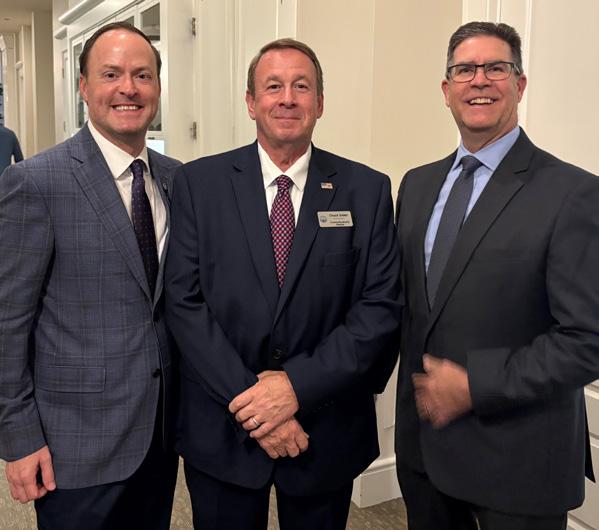
Chuck Green, the director of community security for Jewish Kansas City, is retiring after nearly nine years of service. Green has been instrumental in numerous security projects, procedural upgrades and initiatives to keep the Jewish community safe. He will be succeeded by Simon Happer, former Overland Park, Kansas, deputy chief of police.
Before Green worked for the community, he had served for decades in law enforcement and the United States Secret Service, arming him with experience and expertise in subtle but effective security. His skills have resulted in dozens of security improvements, often behind the scenes, which ensure community safety.
“I believe our community has been kept safe in no small part thanks to Chuck's presence and professionalism over the past nine years,” said Derek Gale, vice president and chief operating officer of Jewish Federation of Greater Kansas City, who works closely with Green on community security initiatives. “I know that we avoided a number of vulnerabilities by employing Chuck and following his lead around making our security infrastructure, technology and posture stronger.”
During Green’s tenure, upgrades to community security have included, but are not limited to, extensive additions to the Jewish Community Campus: mail monitoring equipment, the SafeDefend emergency notification and response system, security
cameras, turnstiles, gates at driveway entrances, bulletresistant film on doors and windows, the addition of Ty Fernandez as assistant director of community security (a position that evolved into the director of Campus security) and an emergency operations center in the Jewish Federation suite.
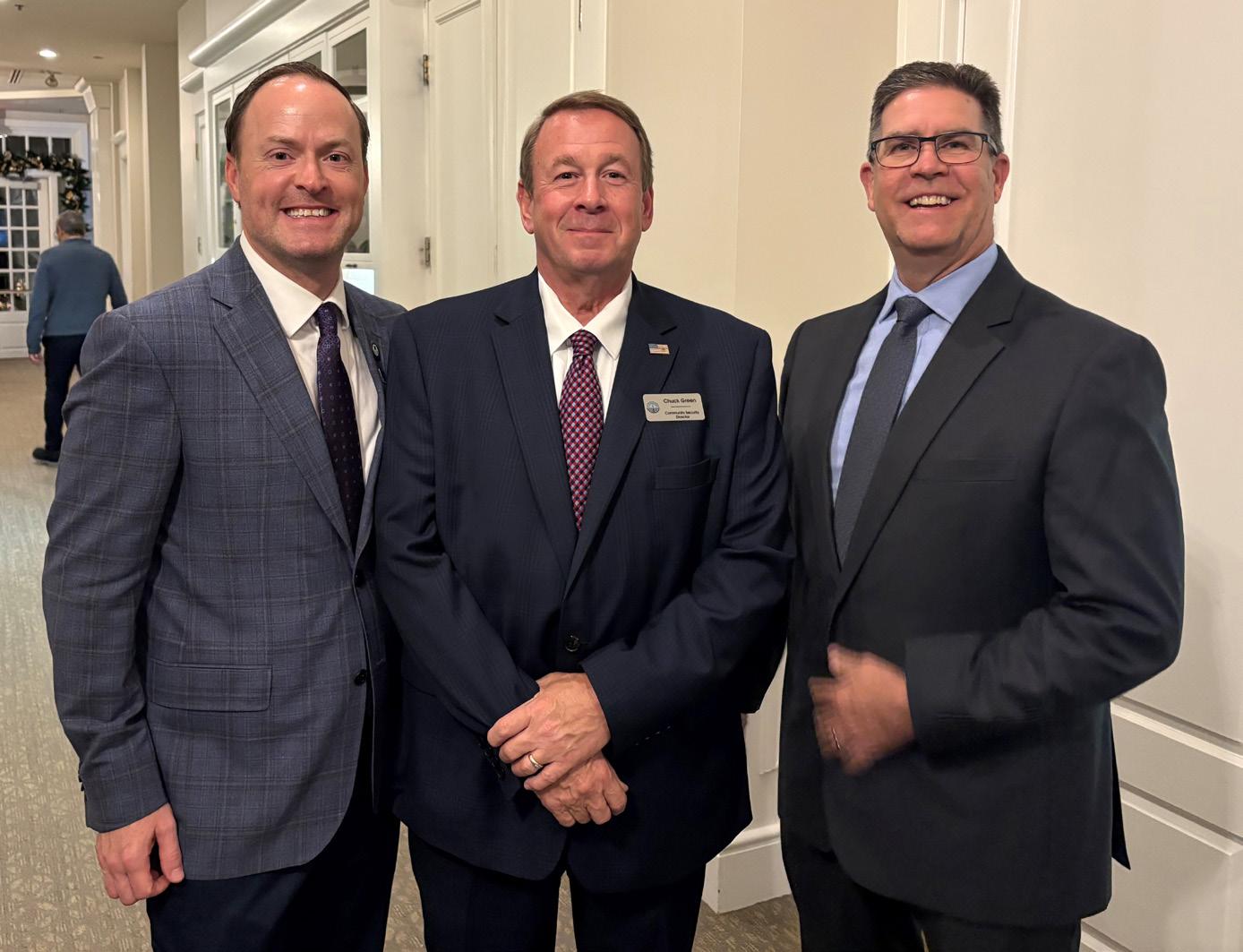
Beyond the Campus, Green has helped with the implementation of upgrades across the region, such as a license plate reader network including Jewish institutions across the state of Kansas. He has also advised and evaluated security in other regional Jewish communities, such as those in Wichita and Topeka, and other faith communities such as Latter-day Saints and Catholics.
Some of these Jewish community projects were funded in part or in full by six-figure federal nonprofit security grants, which were awarded based on Green’s application or guidance to other Jewish institutions.
This guidance has always come with security experience, but it was only in the past nine years that Green gained familiarity with the Jewish community.
“After 30-plus years in the Secret
Service, traveling the world and being involved in all kinds of things, you feel like you’ve covered the spectrum,” he said, “and then you get a job with the Jewish community and find out that you’ve never even scratched the surface… I’ve learned something every day, whether it's about the Jewish community or whether it’s about other types of things that I wasn’t exposed to before.”
Green believes that “good security is security that you don’t really see… but it’s still out there and protecting you and the community at all times.” He also said that security has to be balanced with being welcoming.
“You harden your security; you don’t harden your heart,” he said. “We try to keep things welcoming, especially for the Community Campus, for synagogues and other facilities.”
Sam Kricsfeld Editorandbusinessmanager
Lacey Storer Assistant editor



Green likened the current state of Kansas City’s Jewish community security to a roof with shingles — overlapping layers provide watertight protection, and should one layer fail, others can remain in place.
“The bottom line is that we want to know as much as we can before another incident of any sort so we can stop it before it happens,” Green said. “Kansas City isn’t one of those places that seems to be a hotbed [for antisemitic violence], and we’re thankful for that, but you don’t always know.”
Green’s connections from earlier in his career also have been helpful — his relations with law enforcement have resulted in occasional police protection for Jewish gatherings, notably for high-profile events such as the Jewish Culture Fest which occurred just days after Oct. 7, 2023, and the recent opening of KU Chabad’s new facilities. Both events could have been targets for antisemitic violence or disruption, so Green and his connections worked together to ensure robust coverage.
“On a rudimentary basis, [events like those] are as close to a Secret Service-type of event we could have,” he said.
“Chuck’s relationships with local and national law enforcement agencies and officers have given us both comfort and impactful connections, and he’s used his network to benefit our community in a variety of ways,” Gale said.
In addition to protection, safety training has also regularly been provided for the community during Green’s tenure. The SafeDefend emergency system at the Campus includes regular training for employees — ranging from teachers and faculty at Hyman Brand Hebrew Academy to counselors at J Camp — on how to keep themselves and others safe in case of an attack inside the building. Leaders from various synagogues have also gathered for directed crisis management meetings and training.
Green has worked closely with the Secure Community Network (SCN), a nonprofit that serves as North American Jewish communities’ liaison with local and federal law enforcement. SCN’s role in Kansas City Jewish community security will continue and grow, as it will be supervising and supporting Happer in his new role.
“Chuck has offered this community his dedicated service and considerable expertise and effort, and we owe him an enormous amount of gratitude for all he has done,” Gale said. “I am pleased to have had the opportunity to partner closely with Chuck in ensuring the Jewish community's security through these years, and I can't thank him enough for getting us to such a place of strength with our community’s security.”
Green has been helping Happer transition into the community security director role, after which he plans to enjoy retirement by spending time with his family, visiting old friends from the Secret Service and occasionally doing private security consulting work on the side.
The Kansas City Jewish community faced an eventful 2025, with global, national and local events all deeply impacting members. Marred by the war in Israel and murder of Sarah Milgrim (z”l) , 2025 has left scars that won’t heal, but the community continues to move forward with new leaders, new rabbis, new facilities and an unmatched resilience.
Below are the biggest stories affecting the Kansas City Jewish community in 2025 as reported in The Chronicle.
Despite happening thousands of miles away, the events in Israel directly impacted local Jewry.
“If there is a distinction between antisemitism and anti-Zionism in theory, it’s not translating in practice,” Jewish Community Relations Bureau | American Jewish Committee Executive Director Neta Meltzer told The Chronicle in October. “Things that are happening on the other side of the world are having a direct impact on the safety and security of Jews right here in this community.”
In April, this was faced by students at the University of Kansas as its student senate passed a resolution near the end of the school year titled “A Resolution to Recognize the Ongoing Genocide in Palestine.” This resolution was opposed in person by Jewish students, but passed nonetheless.
In a joint statement shared on social
media, KU Hillel and KU Chabad said that this resolution is “an act of selective, performative activism singling out the State of Israel and villainizing Jewish students who believe in the Jewish people’s right to self-determination in their ancestral homeland.”

A screenshot of an Israeli missile attack warning app showing all of Israel under fire.
In June, Iran launched a barrage of missile attacks on Israel, sparking a war. The initial attacks caused dozens of deaths,
Communities across the world will unite in late December for Sarah’s Week of Service, a global initiative honoring the life and legacy of Sarah Milgrim (z”l), who was committed to sustainability, social justice and human connection.
At just 26, Milgrim and her partner, Yaron Lischinsky, were murdered outside the Capital Jewish Museum in Washington, D.C. Sarah’s Week of Service was created to ensure that her spirit of purpose and generosity continues forward through hands-on service, acts of kindness and moments of connection that reflect the way she lived.
From Dec. 22 to 29, 2025, participants around the world will take part in service activities that reflect the causes Milgrim cared deeply about: environmental stewardship, community support, social action, creativity and collective care. Whether through neighborhood cleanups, food drives, advocacy efforts or personal acts of giving, each contribution is meant to extend the light Milgrim carried into the world.
Individuals and groups from Japan,

Israel, Canada and the United States will participate.

Milgrim is remembered by friends and family as a steady and generous source of light with an instinct to show up, help, create and repair. She believed in the Jewish value of tikkun olam, “repairing the world,” and she embodied it through action, curiosity and compassion. Initiative organizers said that Milgrim’s quick wit, openhearted nature and belief in the power of small, meaningful choices made a tangible impact on the people and communities around her.
A local community service event will be held at The J on Sunday, Dec. 28, at 10:30 a.m. Volunteers will gather to assemble emergency kits and care packages to keep in their cars to be shared with community members in need whenever the opportunity arises. The event is open to all.
For details about the local event or to commit to an act of service, those interested can visit serviceforsarah. wixsite.com/sarah and follow along on Instagram @serviceforsarah.
Community service in memory of Sarah Milgrim Sunday, Dec. 28, at 10:30 a.m.
The following are the deadlines for articles, celebration announcements, Spotlight pictures, advertisements and editorials for upcoming Chronicle print issues. If you have any questions, please contact Sam Kricsfeld at samk@jewishkc.org.
Jan. 1 issue.........................................Dec. 23 noon deadline (early because of office closure) Jan. 15 issue..............................................................................................Jan. 8 noon deadline To submit news to The Chronicle, go to kcjc.com/chronicle-submissions!
thousands of injuries and significant destruction of property. Multiple community members were in Israel on the day it happened.
The Chronicle reported about the difficulties that some of these community members faced. In July, The Chronicle published an article sharing the stories of Kansas Citians Matthew and Bonnie Siegel, Irv and Ellen Robinson and John Isenberg, who were attending the Israel Economic Forum; and Alexa Summers and Lydia Schwartz, who were on Birthright trips.
The war also prompted Jewish Federation to launch an Israel crisis fund to help rebuild, which echoed its crisis fund shortly after the Oct. 7 attacks of 2023.
Over the course of the year, the Israeli hostages taken by Hamas on Oct. 7 were front and center in the minds of many Jewish Kansas Citians. Vigils were held throughout the year, with Israeli emissaries often leading. In October, news broke of hostage releases, and The Chronicle spoke to various community members who celebrated their return.
“I cried like a baby seeing them free, because they were back with their families, back after so much suffering,” community member Elie Solomon said. “Whenever I’m trying to do something fun, my mind goes to those people underground. You imagine them there, in the dark, no food, no air. You can’t turn it off. Finally, they are home.”
loss of Sarah Milgrim

The Kansas City Jewish community was struck with a devastating loss in May when Sarah Milgrim, who grew up in Prairie Village and was a KU graduate, was fatally shot in Washington, D.C. alongside her partner, Yaron Lischinsky.
Milgrim had moved to Washington and worked as an employee of the Embassy of Israel to the United States. She and Lischinsky were
continued on next page
The Jewish Community Foundation (JCF) has received a multi-million dollar grant from the Stanley J. Bushman Supporting Foundation to establish the Bushman Legacy Initiative, a renewed community-wide effort to strengthen and sustain the Jewish community through a focus on planned giving. This initiative will build upon the success of the Bushman Community Endowment (BCE) program which ran from 2008-2016. BCE put planned giving at the forefront of the communal agenda and raised millions of dollars in realized and future funding for Jewish agencies and synagogues.
In 2006, through his involvement with JCF, Stanley Bushman (z”l) was introduced to a planned giving program at the Jewish Community Foundation of San Diego that changed the way he thought about philanthropy. Bushman, a past JCF president, was inspired by the effort in San Diego and worked closely with local JCF leadership to develop a similar program in Kansas City. Together, they created the Bushman Community Endowment program, in which JCF collaborated with professional and lay leadership from more than a dozen communal organizations to establish bequests and other planned gifts. JCF provided intensive training, consulting, coaching and marketing support, along with financial incentive grants. Due to these efforts, more than 1,000 planned gifts have been established
by community members, including $89 million in realized planned gifts and another $125 million in future commitments.
“I think this is the best investment I ever made in my life,” Bushman said about the program. “Every dollar I put in has been returned 50 times. It’s incredible what this community has done, and this is just the start.”
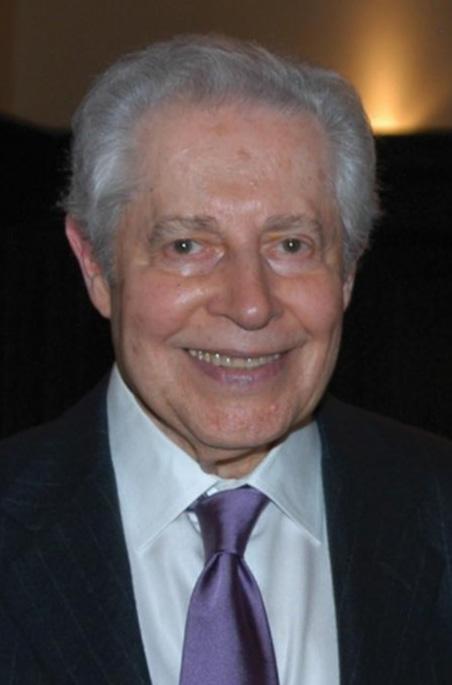
During his lifetime, Bushman established the Stanley J. Bushman Supporting Foundation of the Jewish Community Foundation and hand-selected a trusted board to serve as stewards of his philanthropic resources. After Bushman’s passing earlier this year, the trustees identified a funding opportunity which reimagined a planned giving program that built on the success of BCE. The Supporting Foundation honored Bushman’s charitable intentions through this gift to JCF to establish the Bushman Legacy Initiative, an effort to continue Bushman’s vision of ensuring a strong and vibrant community for future generations.
“We are hopeful and confident that the dimension and scope of this new effort will make it one of the most impactful charitable initiatives in the history of Kansas City’s
Jewish community,” said Charles Helzberg, president of the Bushman Supporting Foundation and Bushman’s lifelong friend and business partner.
“In the true spirit of legacy giving, Stan put plans in place through his estate to ensure that his vision would continue to grow,” said Merilyn Berenbom, a supporting foundation trustee and friend of Bushman.
“This initiative will support local donors across the full lifecycle of giving, emphasizing the growth of our endowments through gifts both during donors’ lifetimes and from their estates. It is the truest expression of who Stan was, helping each of us to be our best, make a greater difference, and strengthen our own legacies in the process.”
The Bushman Legacy Initiative will be developed and implemented by JCF over the course of the coming months. Through the new program, JCF will provide organizations with professional and lay leader training, prospect identification and cultivation, comprehensive marketing resources, access to stewardship events and ongoing education and development support. The program will include substantial financial incentives
to motivate best practices for securing legacy gifts and for donors to help realize their ability to make an impact. In addition to planned giving, the program director will promote JCF’s resources for the “Philanthropic Life Journey,” which includes educational touchpoints along life’s milestones such as marriage, starting a family, making an impact through tax-smart giving in peak earning years, and retirement planning.
According to JCF president and CEO Josh Stein, “One of the things that initially brought me back to K.C. was Bushman’s vision and foresight to make legacy giving a priority in this community. I am now humbled to be able to honor Stan’s legacy in a manner reflecting his personal approach, through supporting and stimulating the legacies of others.”
“The Stanley J. Bushman Supporting Foundation is honored to continue to support Stan's transformative vision for the Kansas City Jewish community,” said Lauren Mattleman Hoopes, Supporting Foundation trustee and former JCF executive director. “Stan’s wisdom, warm heart, and open hand continue to provide a lasting legacy of leadership and love.”
More information about the Bushman Legacy Initiative or supporting organizations through a planned gift is available by contacting Suzanne Galblum Dicken at sdicken@jcfkc.org or (913) 327-8286.
murdered at an event hosted by the American Jewish Committee at the Capital Jewish Museum in an antisemitic attack.
Just days after the murder, hundreds gathered at the Jewish Community Campus for a rapidly-planned memorial. Jewish Federation, JCRB|AJC and The J issued a joint statement stating that “the attack impacts us all, and directly impacts Kansas City, as one of the victims was one of our own vibrant young adult leaders… Our hearts are broken for Sarah's parents and Yaron's family, and for our entire Kansas City Jewish community.”
Messages of condolence and memory were also issued by KU Chabad; KU Hillel; KU Jewish Studies; The Temple, Congregation B’nai Jehudah; Congregation Kol Ami and more.
The attack reverberated not just through the local Jewish community. Political figures including Kansas City, Missouri, Mayor Quinton Lucas, Kansas Gov. Laura Kelly, President Donald Trump, Israeli President Isaac Herzog, Israeli Prime Minister Benjamin Netanyahu, German Chancellor Friedrich Merz, U.K. Prime Minister Keir Starmer and Irish Prime Minister Micheál Martin and more issued statements. Federation President and CEO Jay Lewis was contacted for interviews by more than a dozen news outlets, including The New York Times, The Washington Post and the Associated Press. Local TV news stations KMBC, KCTV, KSHB and Fox4 KC joined outlets like The Kansas City Star and KCUR in their frequent coverage.
Programs and funds in Milgrim’s honor continue to this day.
The Chronicle reported on two new rabbis and two new nonprofit executives who stepped into leadership roles this year.
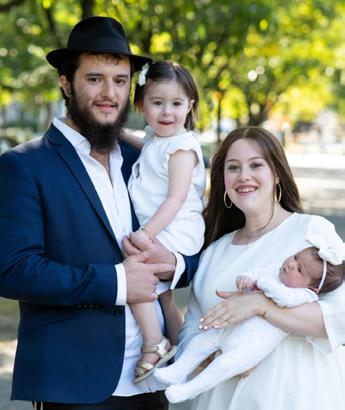
In February, The Chronicle reported on the opening of Chabad of Olathe, which brought with it Olathe’s first-ever resident rabbi, Rabbi Mendel Wenger. He told The Chronicle that he and his family “saw an opportunity to create something meaningful for Jews in Olathe, where they wouldn’t have to travel to Overland Park or other parts of Greater Kansas City to engage with their Jewish identity… There’s a lot of Jewish potential here, and we want to help unleash it.”
Jewish Family Services announced its new chief executive officer, Angela DeWilde, in April. DeWilde said, “I am honored to join JFS at a time when its mission is more important than ever, and I am delighted to work alongside its amazing team and extraordinary partners to build on its legacy of success and impact.”
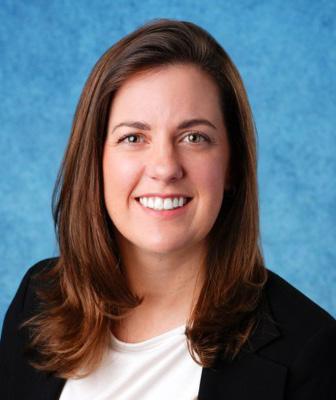
Also in April, Neta Meltzer became the executive director of JCRB|AJC after having been its interim executive director for 10 months. She also serves as the Bert Berkley Chair for Neta Meltzer
continued from previous page
Community Relations. In October, she said, “I found the most effective way to [tell our stories] is person-to-person conversation… That’s why so much of what [JCRB|AJC does] is closed-door, sitdown, face-to-face conversations and relationships, because we really see the needle moving with that sort of activity. That’s community relations.”
rector, in May. “This new work (‘First Generation’), and others like it, have a huge impact on local young people — allowing refugee and immigrant youth to see their stories represented… our whole community suffers when changes to federal policies and funding jeopardize our ability to carry out our important missions.”
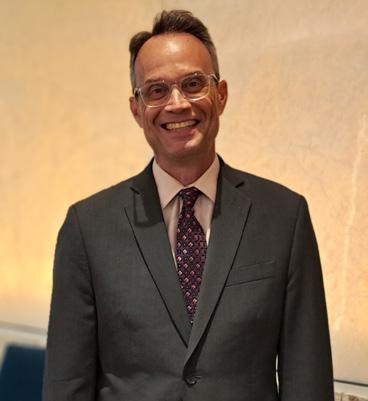
Rabbi David Levinsky
Rabbi David Levinsky succeeded Rabbi Alan Londy as rabbi of The New Reform Temple in July, telling The Chronicle, “I love Judaism. I believe that it’s one way to make the world better and a resource for people to improve themselves. I believe this so strongly that I think the message of Judaism shouldn’t be limited to Jews; I think that we should think of non-Jews as equal and fellow partners.”
Since President Trump was inaugurated in January, various government policies and cuts have elicited criticism and concern from local Jewish organizations.
Most vocal has been Jewish Vocational Service, which has been affected by funding cuts and changes in immigration and refugee services. In response to the elimination of federal funds, it announced its Emergency Support Campaign in March and has continued fundraising since.
In May, the National Endowment for the Arts rescinded a reimbursement grant to fund “First Generation,” a play commissioned by Spinning Tree Theatre, written by community member Victor Wishna and produced in partnership with JVS.
“Now, more than ever, the experiences of refugees and immigrants deserve and need to be shared,” said Hilary Cohen Singer, JVS executive di-
In August, The Chronicle ran an article compiled by the Jewish Community Foundation (JCF) about how President Trump’s One Big Beautiful Bill Act could affect local nonprofits and charitable giving. The article highlights how restrictions for the SNAP program would affect Jewish Family Services clients; how Medicaid cuts could affect funding at Village Shalom; and how new tax policies will affect donors and philanthropists.
Some of The Chronicle staff’s other favorites included:
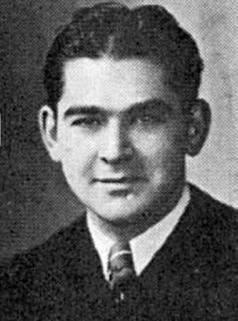
“Fallen POW Sgt. Simon Garelich identified and returned to family after 82 years”
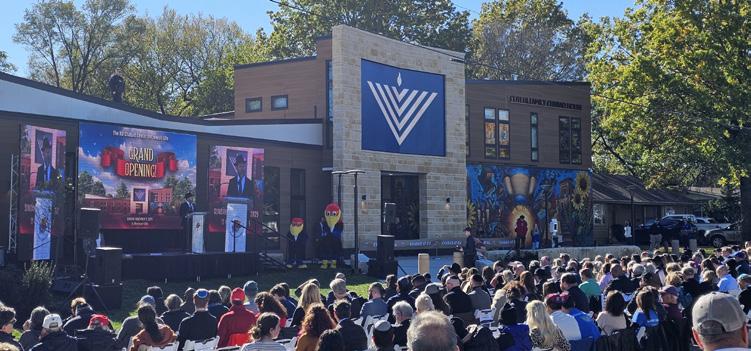
“KU Chabad celebrates grand opening of new building”
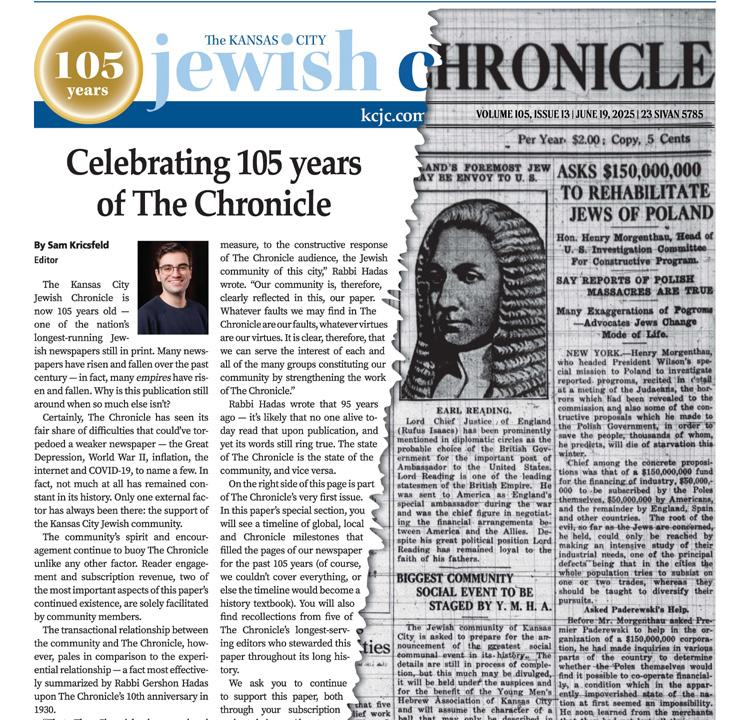
The entirety of our 105th Anniversary Issue
The JCC Maccabi Games will take place in Kansas City from Aug. 2 through 7, 2026, and will bring more than 1,000 Jewish teen athletes from around the world to the city. The Maccabi Games are a week of Olympic-style competition, sportsmanship, community service and cultural exchange. Hosting the Games requires broad community support, including 400 host families, thousands of volunteers and a local delegation of 125 athletes.
This will be Kansas City’s first time hosting the international competition since 1997, and planning efforts are already underway. Organizers are now focused on recruiting local athletes ages 13 to 17, engaging volunteers and securing home hospitality for visiting teens.
“The Maccabi Games are about more than athletics,” said Cindy Bodker, director of development at The J and staff lead on the Housing Committee. “Home hospitality is central to the experience, allowing local families to open their homes and form lasting connections with visiting teens.”
Since the announcement, local involvement has continued to grow. More than 55 people have joined planning committees, and more than 279 beds have already been pledged for visiting athletes. In that spirit, the kickoff event on Oct. 5 brought together more than 700 community members and featured interactive displays, youth performances and opportunities for families to learn about volunteer roles, registration details and hosting expectations.
Jewish families who wish to host are required to house at least two athletes. Each athlete must have their
The following bowlers achieved high scores in the Sunday Kansas City B’nai B’rith Men’s
Dec. 7
500 Series:
Hunter Thomas 692 (221 267 204)
Steve Thomas 628 (195 205 228)
Brian Wright 619 (200 184 235)
Willie Jones 618 (244 202 172)
Ryan Thomas 601 (211 175 215)
Mark Newton 601 (183 212 206) Nick Meyers 560 (191 163 206)
Steve Baraban 539 (173 157 209) Christopher Eldredge 520 (173 199 148)
Zachariah Archie 518 (148 169 201)
League at Ward Parkway Lanes on Dec. 7 and 14.
Tom Balke 517 (195 170 152) Bruce Parker 504 (146 195 163)
(156 176 170)
Game:
14
500
If you are interested in bowling during the ‘25-’26 season for a competitive, fun, social atmosphere, you can contact Tom Balke at (913) 244-7010 or balketw@yahoo.com or Stuart Pollack at (913) 957-3716 or skp28@aol.com.
own mattress or air mattress, along with access to meals, laundry and daily transportation to The J. Kansas City is also seeking 100 to 125 local athletes to represent Team KC. As of the first week of December, 85 teens have already committed. Teen competitors will join peers from around the world for a week of athletic events, service projects and community programming.
Building on those commitments, The J is now working to complete its local delegation. Athletes ages 12 to 17 are eligible to participate, and those who will be 12 by Aug. 2, 2026, may petition to join the delegation, with emotional and physical maturity used to determine eligibility. Teen competitors will join peers from around the world for a week of athletic events, service projects and community programming.
“Participating in the Games connects young athletes to a wider community,” said Ilan Lakritz, senior manager of member experience at The J and co-lead for local delegation recruitment. “It gives them the chance to represent Kansas City while celebrating teamwork and shared values.”
Volunteer opportunities are open to both Jewish and non-Jewish community members.
“Each role, from hosting to volunteering, contributes to the success of the Games and helps strengthen Kansas City’s reputation for hospitality,” said Bob Hennecke, JCC Maccabi Games director.
Those interested in volunteering or hosting athletes can email jccmaccabivolunteers@thejkc.org or jccmaccabihousing@thejkc.org.
Information about joining Team KC as an athlete is available by contacting Maggie Osgood Nicholls at maggieo@thejkc.org or (913) 3274612, or Lakritz at ilanl@thejkc.org or (913) 327-8551.
More information about the Games is available at jcckcmaccabikc.org.

25 years ago
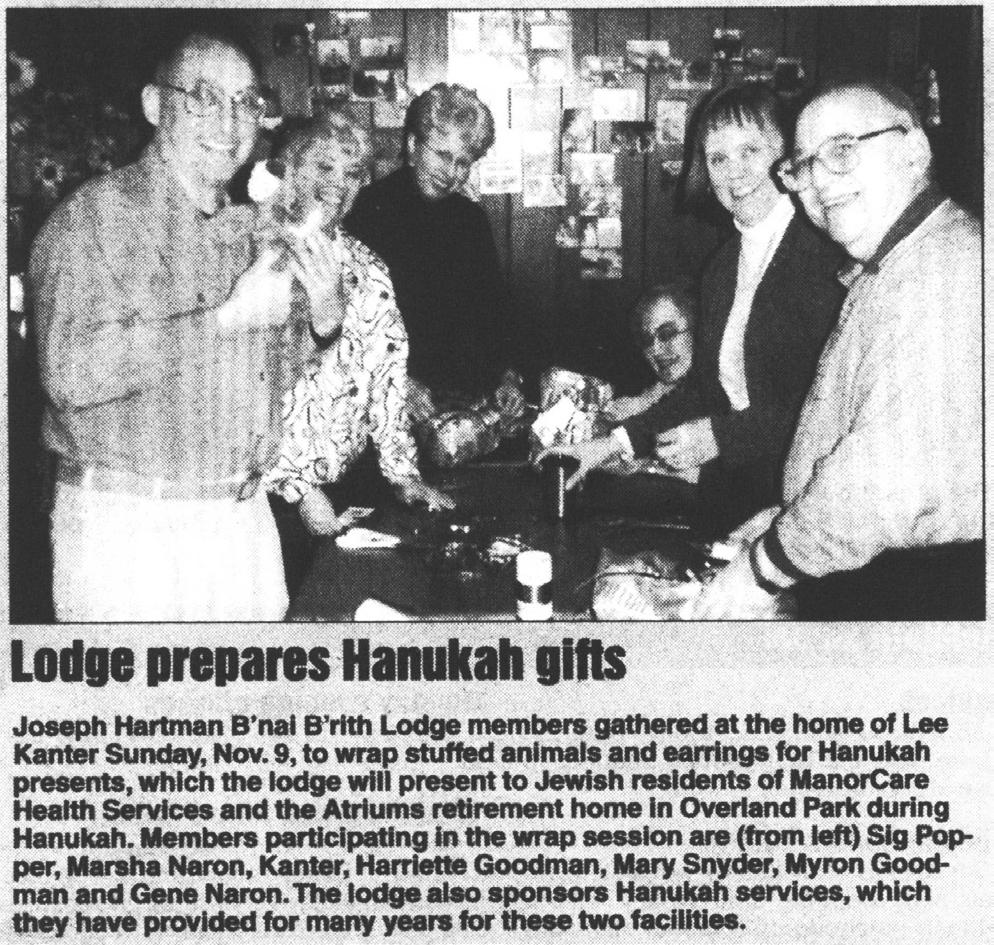
Find more community history at kcjc.com/archive.


Using The Chronicle’s archives and community submissions, here are some recipes for you to try out. Email samk@ jewishkc.org with a recipe, and it might be published here!
KCJC, 1985
Ingredients
• 2 cups grated potatoes, finely packed
• 1 egg
• ¼ cup flour
• 1 ¼ tsp. salt
• ½ tsp. baking soda
• Vegetable oil for frying
• Small onion, finely chopped
• ⅛ tsp. pepper
Instructions
1. Squeeze liquid out of the potatoes
2. Mix all ingredients together
3. Drop spoonfuls into the hot frying pans and flatten latkes into ovals
4. Turn over when golden brown
5. When ready, dry on paper towel and serve immediately with applesauce
Get yourself, your family and your friends subscriptions to The Chronicle!
Scan the QR code below or go to kcjc.com/subscribe for more information.

• ADHD Conference (pg. 11)
ELIMAKER KARENGERSON ELMWOOD FRIENDSHIPCIRCLE STANLEYBUSHMAN JIMSTEVENS HADASSAHEVOLVE ADHDCONFERENCE JCCMACCABIGAMES WEEKOFSERVICE CHUCKGREEN HAPPYHANUKKAH
• Chuck Green (pg. 2)
• Eli Maker (pg. 15)
• Elmwood (pg. 10)
• Friendship Circle (pg. 9)
• Hadassah Evolve (pg. 10)
• Happy Hanukkah
• JCC Maccabi Games (pg. 5)
• Jim Stevens (pg. 8)
• Karen Gerson (pg. 10)
• Stanley Bushman (pg. 4)
• Week of Service (pg. 3)
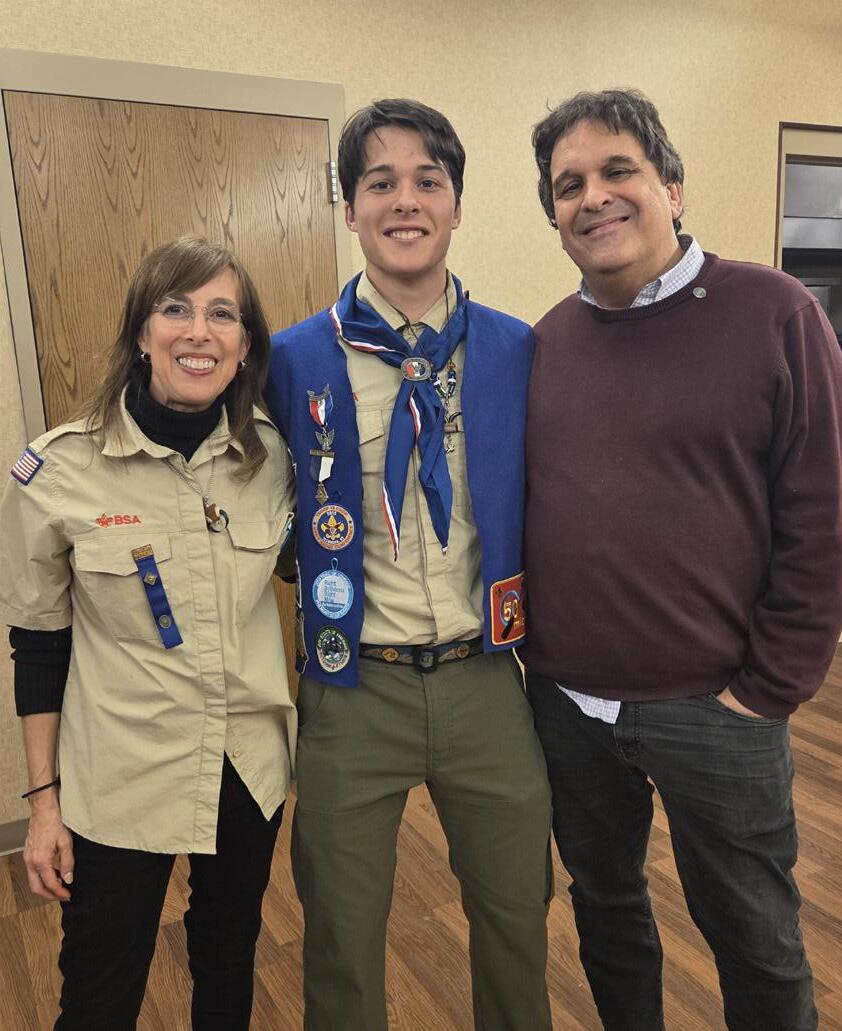

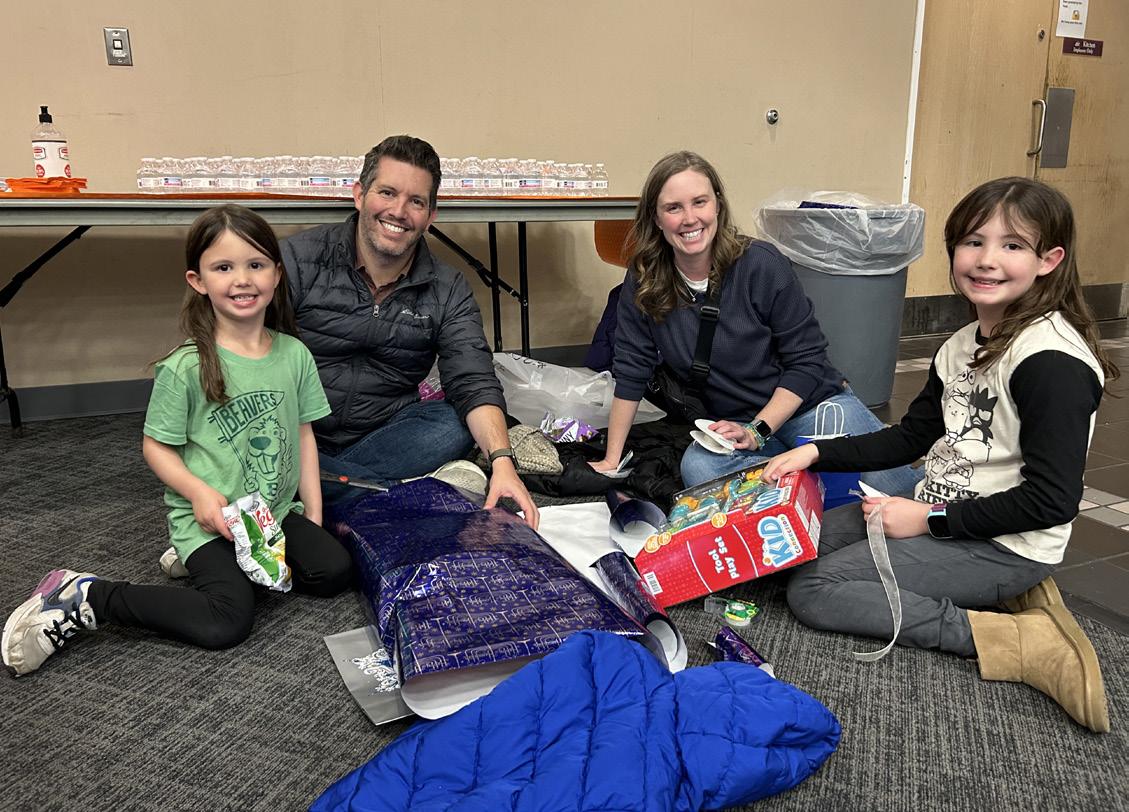

Left: Ezra Jacobs recently received his Eagle Award at a Court of Honor ceremony held at Congregation Beth Shalom. He is pictured with his parents, Sherri Jacobs and Dr. Jonathan Jacobs. Ezra is a member of Troop 61, which is sponsored by Beth Shalom.
Right: Hyman Brand Hebrew Academy student Eitan Cohen won the school’s spelling
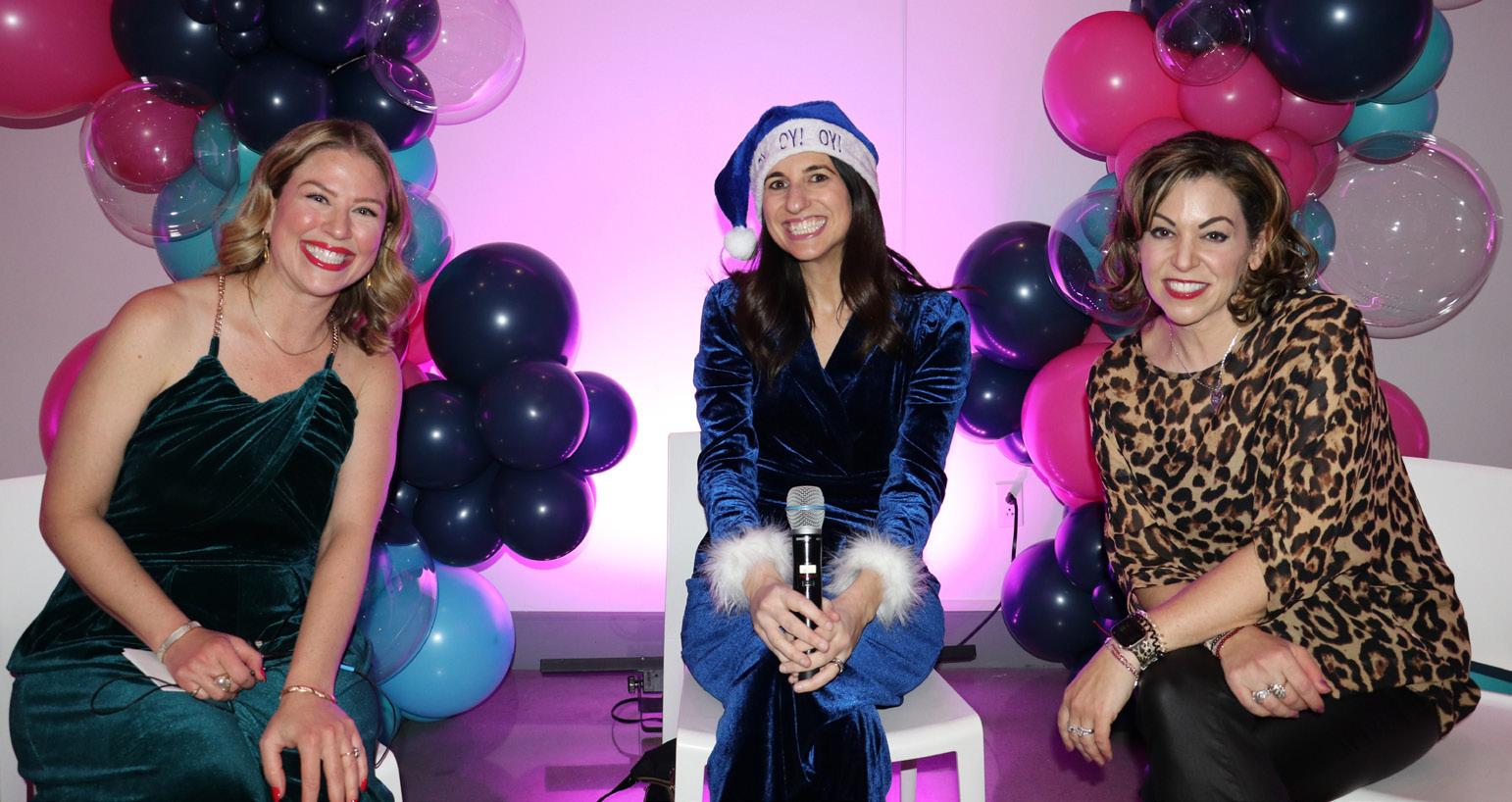
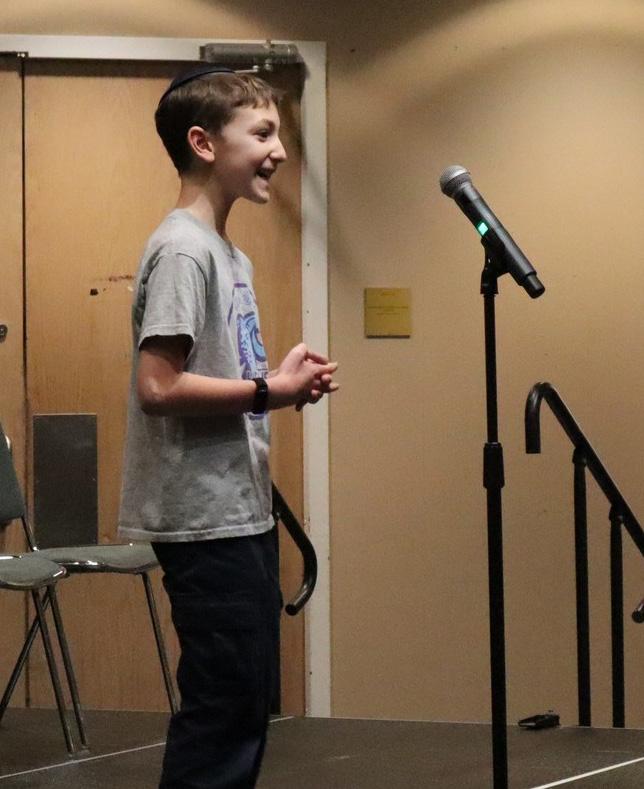
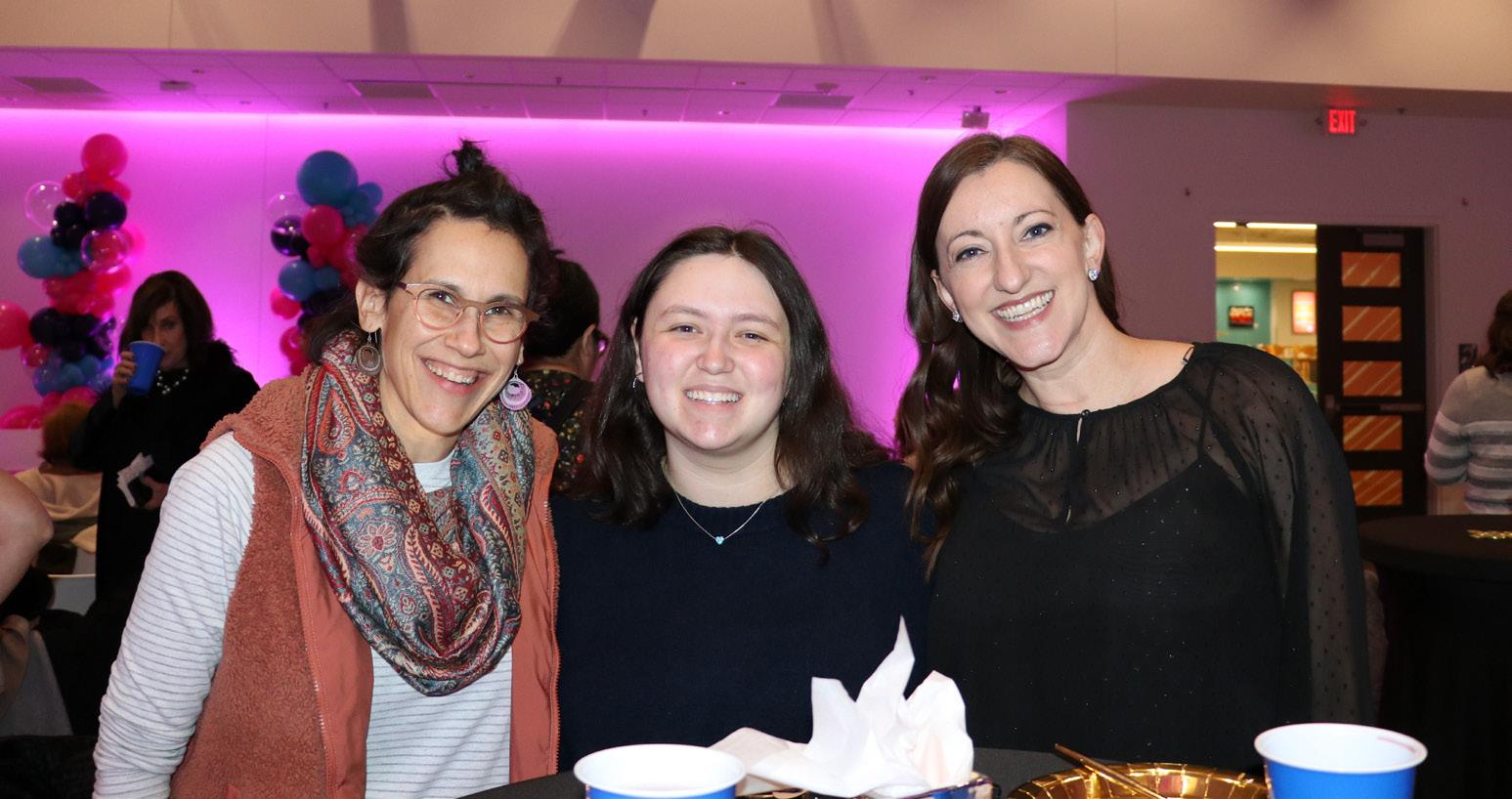
On Dec. 4, Jewish
and attendees Lauren Weinberg, Alexis Greenberg and Lacey Storer.
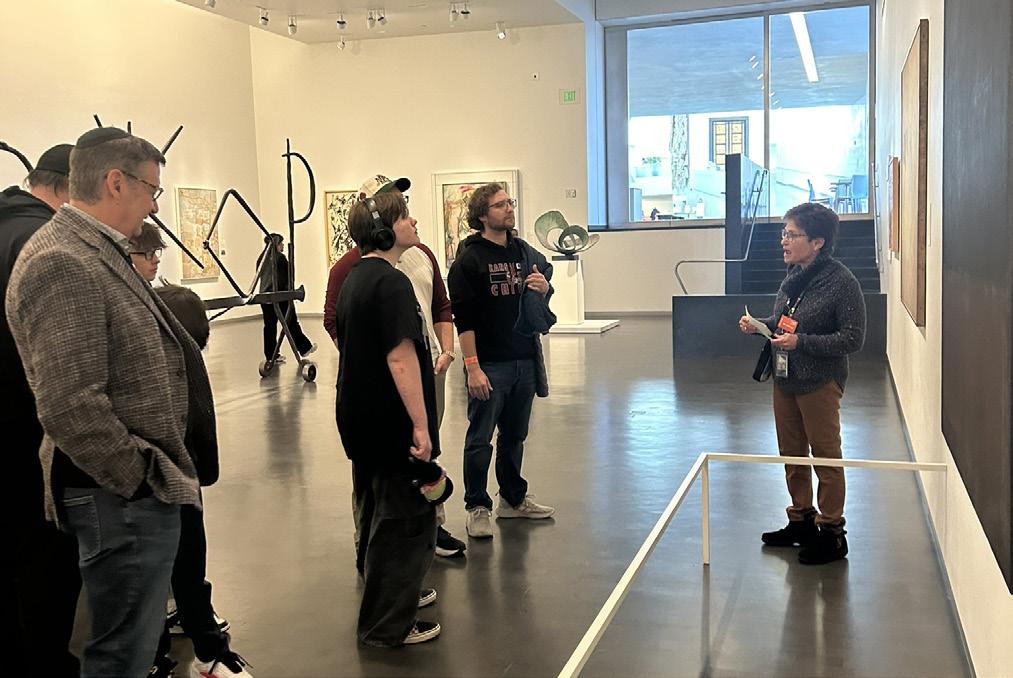
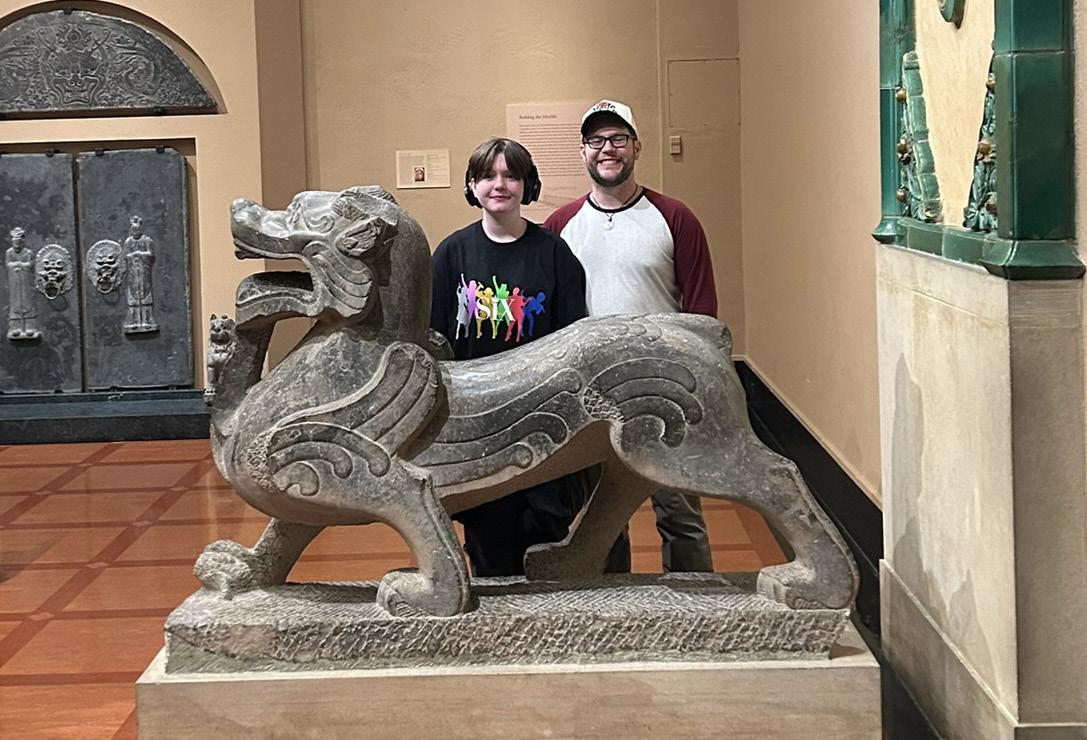
Left: Members of Congregations Beth Torah and Kol Ami came together for a docent-led tour of Jewish art at the Nelson-Atkins Museum of Art.

Bella (Rivka Baila) Glickman, daughter of Gavriel Glickman and Tiferet Wachtel of Jerusalem, was born

Eric and Miriam Kaseff of Leawood, Kansas, announce the engagement of their daughter, Rachel Kaseff, to Alex Worth, son of David and Sherry Worth of Overland Park, Kansas.
Rachel, a resident of Kansas City, Missouri, is the granddaughter of Irma
earlier this month.
Bella is the granddaughter of Sarah and Jonathan Wachtel of Ramat Beit Shemesh, Israel, and Annie and Rabbi David Glickman of Overland Park, Kansas.
She is named after Gavriel’s maternal grandmother, “Great Grammie Sallie” (with her Hebrew name Rivka coming from Sarah Rivka), and GreatGreat “Grandma Beck,” Tiferet’s mother’s paternal grandmother Rebecca Fink (with the name Baila, which is Yiddish for beauty, coming from Rivva Baila).
“We hope and pray she will carry forward the most wonderful character traits that her beloved matriarchs bestowed,” the family said.
and the late Dr. Jack Katz of Leawood; Eddy Lynn and the late Harold Bortz of Leawood; and Rhea Salasche and Harold Kaseff of Overland Park. A graduate of Goucher College in Baltimore, Maryland, Rachel has a bachelor’s degree in religious studies with a minor in Jewish studies. She is now the programs and development coordinator at the Jewish Community Relations Bureau | American Jewish Committee in Overland Park.
Alex, also a resident of Kansas City, is the grandson of Doris and the late Zolie Gilgus and Jon and the late Arlene Worth, all of Leawood. He graduated from the University of Kansas with a bachelor’s degree in journalism and now works as the program director for Congregation Beth Shalom in Overland Park.
The two plan to wed on Aug. 16, 2026, at The Oliver Building in Kansas City, Missouri.
The Epsten Gallery at Village Shalom is showcasing the global photography of resident Jim Stevens. The exhibit will be open through Jan. 16.
Stevens, 81, has traveled to 141 countries, all seven continents and the North Pole. A five-time cancer survivor, he began photographing the world as a teenager and aims to capture spontaneous, unfiltered moments that reveal the beauty and diversity of our planet.

flowers and travel, offering viewers a window into the places and experiences that have shaped his life.
“It is my hope that these images will inspire viewers to see the magic in everyday moments and be reminded of the incredible planet that we are fortunate to call home,” he said.
Beyond photography, Stevens founded Creative Planning and later Angel Flight Central, which has completed more than 37,000 charitable flights.

By Ellie Holsten
Connections between Jewish communities around the world can be found in art. This Torah crown from the late 19th century is an example of cultural exchange between Italy, France and Tunisia. It is made in an Italian style with French silver marks, showing that it was made in France after Italian design conventions. Later inscriptions of names into the silver indicate that it was used by a congregation in Tunisia.
The situation for Italian Jews in the late 19th century was favorable, with limited discrimination and increased access to professions that could bring prosperity. This safety and security allowed the Jewish communities to create art and influence surrounding cultures, as is the case with this French Torah crown made in an Italian style.
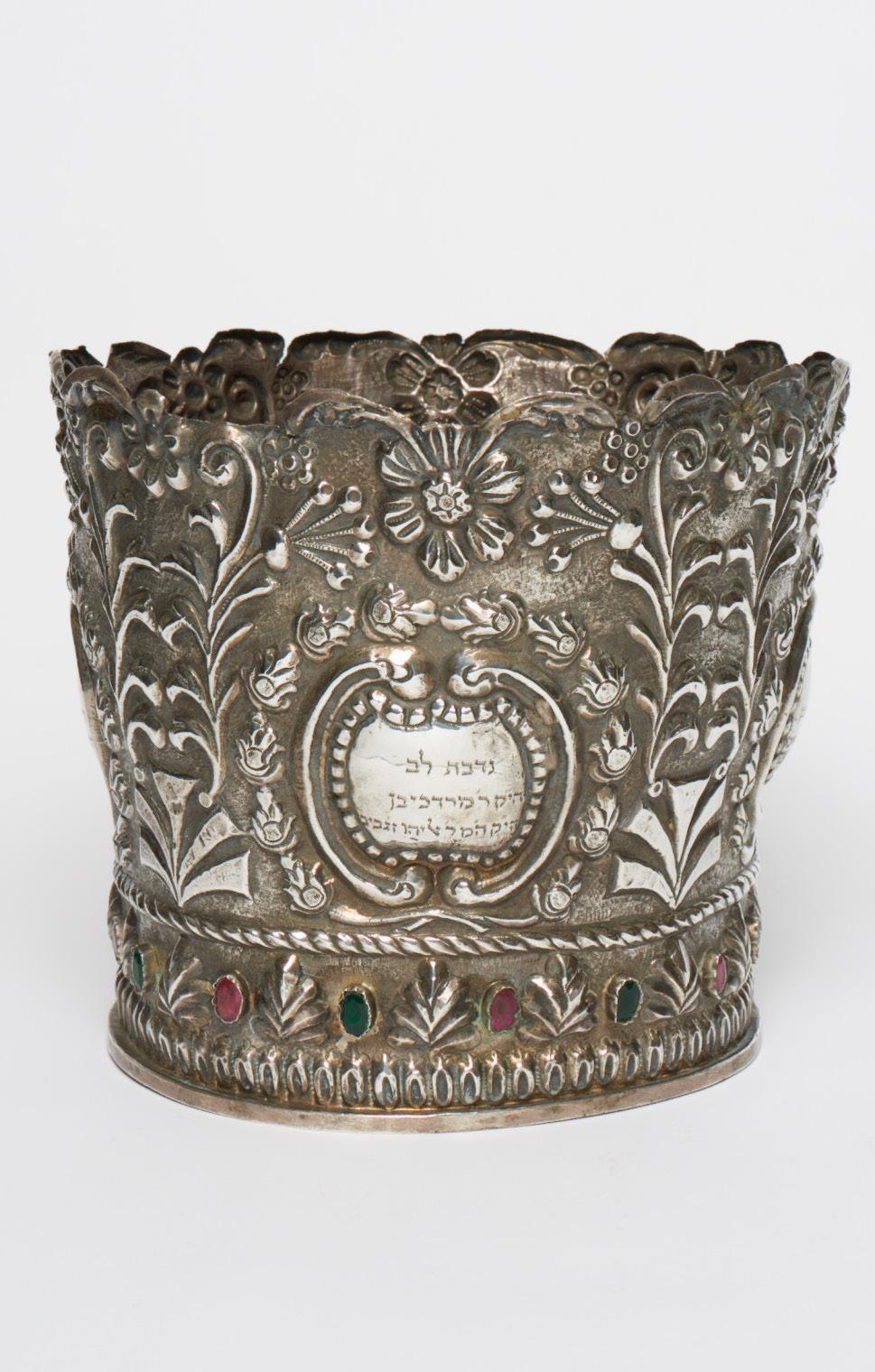
Tunisian marks on this Torah crown are also an expected cultural exchange. Trade on the Mediterranean Sea connected the Jews of North Africa to the Jews of Europe. Many of the Jewish communities of North Africa were populated with Jews who had been expelled from the Iberian Peninsula, so these groups had pre-existing links to Europe.
More information about the Michael Klein Collection at the Temple, Congregation B’nai Jehudah can be found at kleincollection.org or by calling(913)663-4050toscheduleatour.
The Kansas City Jewish Chronicle and the Klein Collection are partnering to share and highlight some of the collection’suniquepieces.
“My goal is to document the world as it is — raw, unfiltered and real,” he said.
The exhibition features themes including landscapes, people, wildlife,
The Epsten Gallery is open daily from 10 a.m. to 6 p.m., and admission is free. All proceeds from the sale of his artwork will directly benefit Village Shalom.

BSD Homes of Kansas City has partnered with the Friendship Circle of Kansas City, a program of Chabad of Kansas City centered on inclusion for people with disabilities. The partnership’s goal was to renovate a local home, with 100% of the net profits from the sale going to Friendship Circle programs, and it has since inspired other companies to join in giving back. The initiative, called the Friendship Circle House Project, is designed to fund programs that create meaningful friendships and foster inclusion throughout the community.
“Thanksgiving expresses not just gratitude to G-d, but the responsibility that comes with it,” said Executive Director Rabbi Avremi Baron about the program. “The Rebbe taught that recognizing our blessings must lead us to act. That's what we're seeing with Kansas City businesses, gratitude turning into action.”
Progress on the house has been shared through social media updates, drawing attention across the city. BSD Homes called it their “most meaningful project yet.” Their example
has inspired other local companies to find their own ways to give back.
“This house isn't just a fundraiser, it's a vision,” said Gili Beer, CEO of BSD Creative Solutions. “It shows how business, community and compassion can come together to make Kansas City a more inclusive place for everyone. It's inspiring to see an idea become something so concrete, literally and figuratively. Seeing other companies join this mission has been incredibly meaningful.”
When finished and sold, the home will provide direct funding for Friendship Circle programs, ensuring that more children can experience friendship and more families can be supported. The growing participation from local businesses demonstrates how gratitude can transform into community impact.
Friendship Circle offers a range of programs that extend far beyond playdates, designed to create lasting relationships and a sense of belonging: Friends@Home sends volunteers into participants' homes for weekly visits, giving children companionship

and parents a chance to rest.
Sunday Circle hosts children for afternoons of games, music and art with one-on-one buddies.
Teen Scene and the Young Adult Club provide opportunities for older participants to socialize, gain
independence and practice life skills in a supportive setting.
“Our mission has always been to celebrate the soul within each person, focusing on what we share rather than what separates us,” said Mushky Baron, program director of Friendship Circle. “We believe every human being has gifts and a purpose to share with the world, and when you give them the opportunity to be included, you allow those gifts to shine.”
The Friendship Circle House is expected to be completed and sold in the coming months.
“When we are inclusive, we are a better city,” Rabbi Baron said. “When a child has someone to laugh with, when a family feels supported, when a young adult can experience belonging, that changes everything. This house represents that change. We're grateful to see so many companies embrace the communal responsibility that comes with recognizing our blessings.”
For more information, visit friendshipcirclekc.org or follow @ friendshipcirclekc and @bsdhomeskc on Instagram.

Author and community member Karen Gerson has released “I Should Not Be Here,” her debut memoir meant to serve as “a map, a mirror and a message for anyone touched by mental illness,” she said.
In “I Should Not Be Here,” Gerson shares about her lived experience with mental illness, creating a narrative that combines her memories and inner thoughts. The book is meant to serve not just as her story but also as a tribute to those who stood beside her.
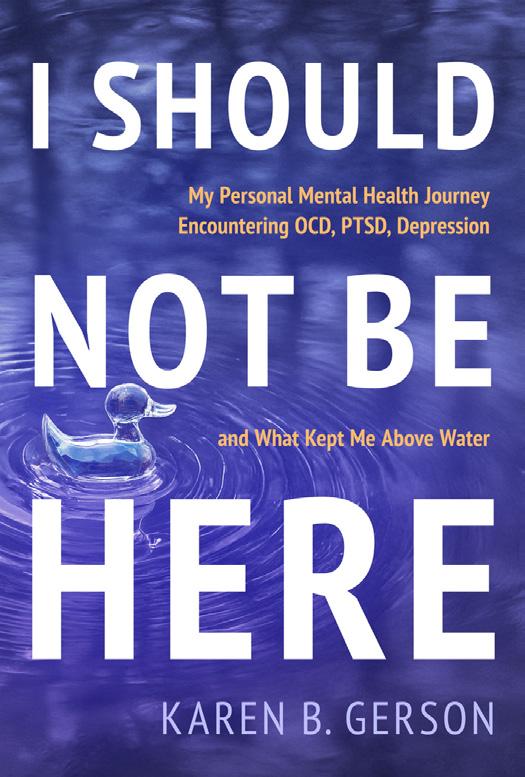
were moments when I felt unreachable,” Gerson wrote, “but others were still reaching.”
The book also focuses on the far-reaching effects of mental illness, such as how it impacts loved ones, friends and families. Gerson includes their voices and perspectives to offer representation and compassion for those navigating life alongside one suffering from mental illness.
“Throughout my journey, there
Gerson has lived in Leawood, Kansas, for more than 25 years. She has taught in both public and private school settings, and her passion for education led her to a 20+ year career in the Jewish community, where she specialized in program development, implementation and relationship-building for children and young adults. She also spent several years working for First Call, an organization that reduces the impact of alcohol, drugs and addiction, and continues serving on its board of directors.
Gerson is married to Jeffry Gerson and has two sons, Gilli and Eitan.
“I Should Not Be Here” is available on Amazon and at major book retailers. More information about Gerson is available at karenbgerson.com.
Fifteen women came together to make beaded bracelets at an Evolve program designed for the next generation of Hadassah women. On Dec. 2, the “Sip, String & Support” gathering brought participants together to craft beaded bracelets under the guidance of beading expert Meghann Barrish. Each bracelet is intended to be a small symbol of hope, healing and the strength of the Hadassah community. A build-yourown hot chocolate bar was also part of the evening.
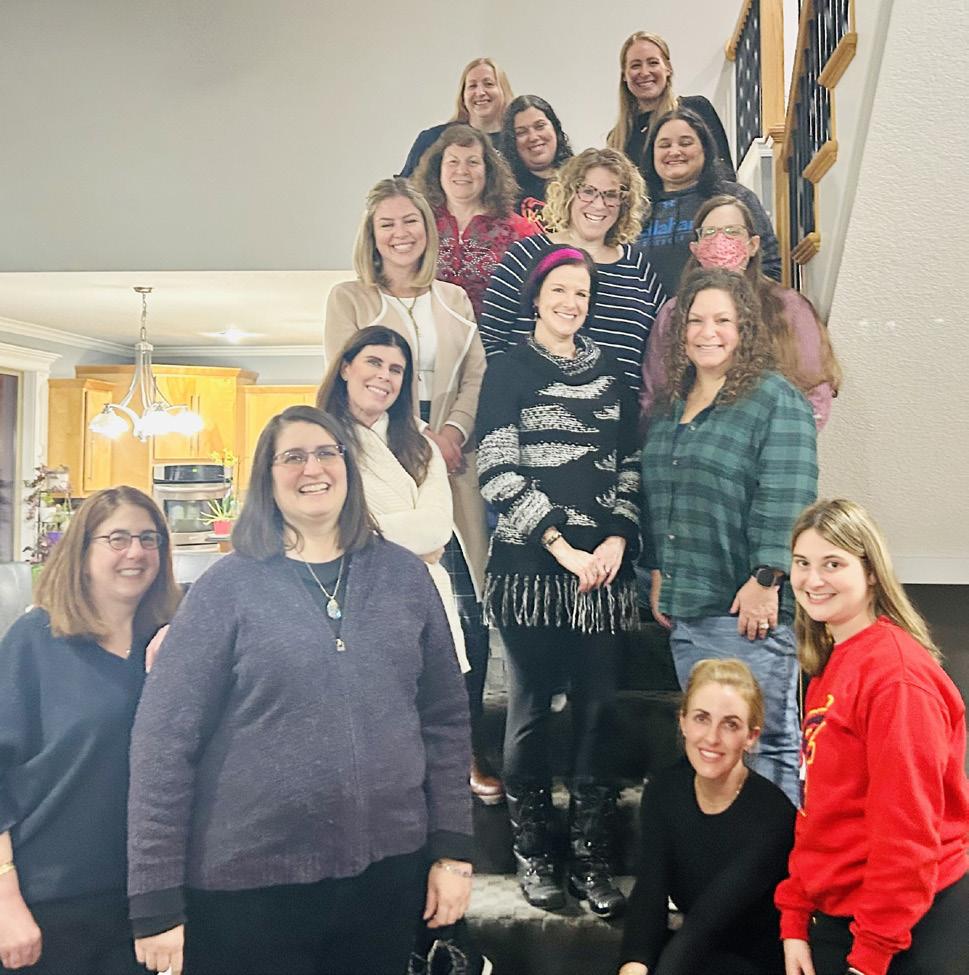
Julie Spiegel, Dara Granoff, Jennifer
Emily
korn, Adryan
At the event, Jennifer Schlozman shared heartfelt reflections from the recent Hadassah-sponsored Momentum Trip to Israel. Her stories were told to deepen the sense of purpose in the room and reminded attendees of Hadassah’s impact in women’s health, medical research and community care.
More information about Evolve programming is available by contacting
Adryan Steinberg at adryangordon@ hotmail.com.
Hadassah continues to raise funds for its services, and until Dec. 31, 2025, all gifts designated for pediatric projects will be tripled because of two anonymous donors who pledged to match donations up to $10 million in gifts.
Donations to support Elmwood Cemetery, a historic cemetery and memorial to Kansas City’s Jewish heritage, will be matched two-to-one for the remainder of 2025.
In honor of his father, WWI veteran Major Clarence A. McGuire, longtime supporter John McGuire has pledged to match all year-end donations two-to-one, up to $25,000. Every dollar invested before Dec. 31 turns into three dollars for Elmwood. Donation information is available at elmwoodcemeterykc.org/mcguirematching-donation.
“This match is a powerful way to honor the families who built our community,” said Simon Abrahms, president of the Board of Trustees of Elmwood Cemetery. “Contribution directly supports the preservation of these historic grounds, ensuring they remain a place of beauty and respect for generations to come.”
Preserving this 153-year-old sanctuary requires regular attention. In
2025, Elmwood faced significant challenges, including vandalism that necessitated extensive security upgrades and lighting improvements. Critical repairs were also made to the administrative offices and aging water-line infrastructure.
With over 1,800 Jewish burials, Elmwood serves as the final resting place for the community's founders, including the city's first rabbi, Rabbi Marcus Cohen, and the eight founding families of The Temple, Congregation B’nai Jehudah. Helen Baum, believed to be the first local Jewish burial in 1865, is interred at Elmwood’s Block H section. Walking the grounds means walking among the legacies of the Kander, Bloch, Rieger, Sachs, Helzberg and Feld families who shaped Kansas City’s civic and business landscape.
More information about Elmwood Cemetery and how to donate is available online at elmwoodcemeterykc.org.


By Amanda Birger HBHA Director of Communications
Lindsey Lipsky Director of Sasone
This fall, four Hyman Brand Hebrew Academy (HBHA) educators, Wendy Snitz, Rachel Ryan, Jenny Safir and Laura Severin, attended the International ADHD Conference for the first time in the school’s history. Their participation was made possible through support from Sasone, a community program that supports Jewish life and learning for individuals with disabilities, and a special grant from the White Family Supporting Fund at the Jewish Community Foundation of Greater Kansas City.
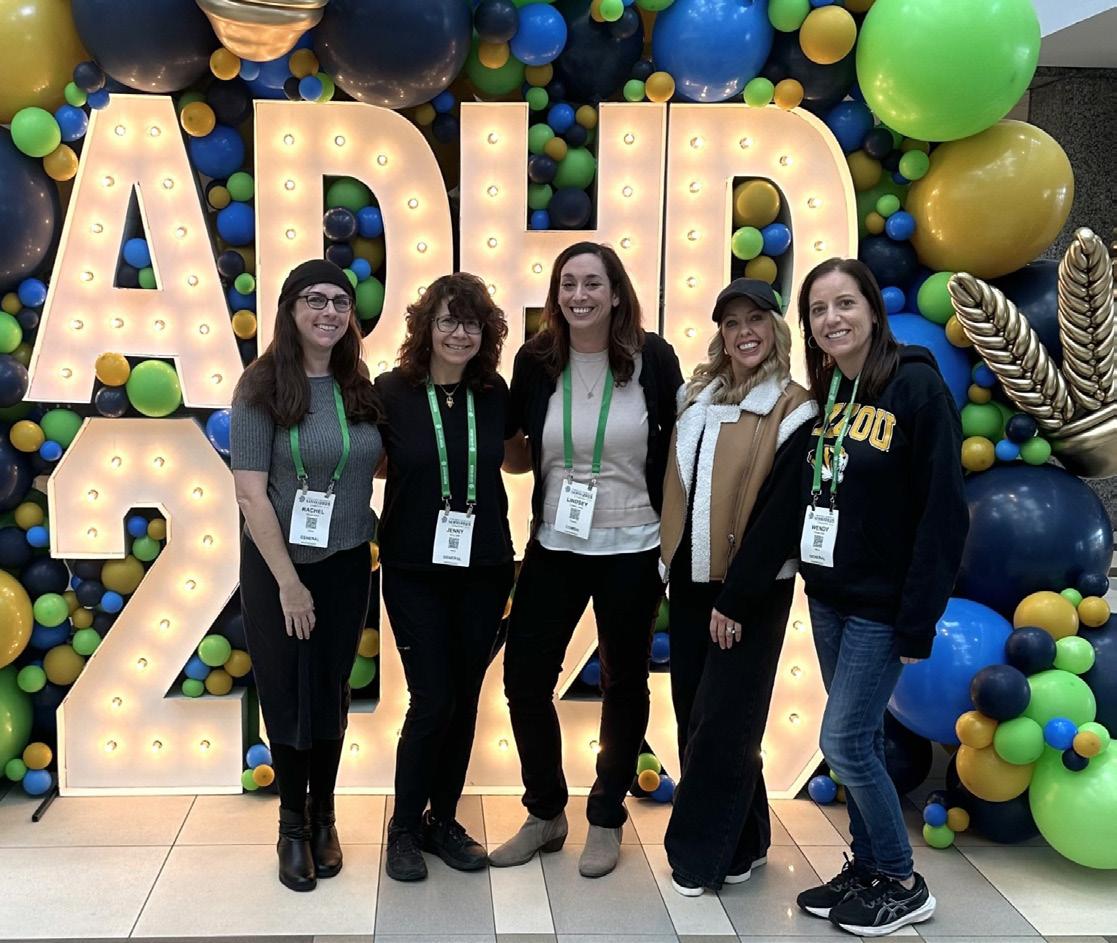
Rachel Ryan, Jenny Safir, Lindsey Lipsky, Laura Severin and Wendy Snitz at the International ADHD Conference.
including breathing exercises we’ve used at school before. He’s also the author of ‘Alphabreaths,’” said Wendy Snitz, HBHA’s lower school director of student services.

By Lindsey Lipsky Sasone
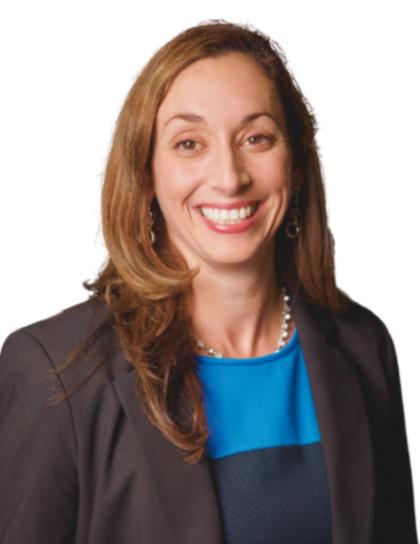
Sometimes it’s hard when you feel like the only kid in town without a Christmas tree. (If you catch the Adam Sandler reference, bless you — you are officially old like me.) According to the most recent Jewish community study, there are only 12,600 Jewish households with 22,100 Jews across the Kansas City metro. When you look at the numbers, that feeling of being the “only one” can go from “zero to 60” in an instant.
inside, my heart tightened just a bit. As I often do I turn to community and to stories that help name what our children feel. Recently, with our Jewish Girl Scouts, I read “The Only One Club,” a PJ Library book about a girl who is the only Jewish student in her class. It sparked a thoughtful conversation. Naming differences, honoring them and giving kids a chance to recognize themselves can feel like emotional oxygen. It lets them say, “Yes, that’s me,” and “it’s okay to be different.”
The conference brought together leading researchers, clinicians and educators from around the world to share the latest findings on attention-deficit/hyperactivity disorder (ADHD), executive-function development and emotional regulation. For the HBHA faculty members who attended, it provided not only cutting-edge research but also an opportunity to be part of the national conversation about how schools can better meet the needs of students with diverse attention and learning profiles.
Over three days, HBHA’s team learned from experts about updated intervention models, trauma-informed strategies and practical tools that help students manage focus, motivation, transitions and frustration. They also participated in a Jewish-specific educator group — one of the only national spaces dedicated to exploring neurodiversity within Jewish day schools and supplementary learning programs.
“It truly was a great experience. The conference was well organized with plenty of session options that spoke to us as therapists, educators, mentors and more,” said Severin, who is HBHA’s middle and upper school director of student services.
HBHA staff returned with concrete strategies they’re already integrating into classrooms, including breathing techniques that support student regulation.
“Christopher Willard shared several approaches to help kids stay regulated,
The educators attended the conference because for many families, an ADHD diagnosis shapes not only academic life but also a child’s overall confidence and sense of belonging in Jewish spaces. If teachers grasp how attention differences affect learning, they can respond with empathy, structure and practical tools intended to help students thrive. The teachers now bring timely research back to their classrooms for students and families.
Sasone’s investment in this conference is part of a broader mission to strengthen disability inclusion across Jewish Kansas City.
“ADHD is extremely common, in our community and beyond. It has so many misconceptions which negatively affect our students and families. ADHD isn’t about willpower or behavior; it’s about how the brain processes, prioritizes and responds to the world. When educators understand that, students feel seen rather than judged. Training like this truly helps us change our learning ecosystems,” said Lindsey Lipsky, director of Sasone.
“Training like this makes a real difference for our students and families. With deeper understanding, our educators can apply strategies that build confidence, reduce frustration and strengthen a child’s connection to our school community,” said Annie Glickman, HBHA’s head of school. “This kind of investment directly improves how our students experience learning every day.”
Those wishing to support Sasone and HBHA’s disability inclusion partnership can donate to the Sasone 30th Anniversary campaign at sasone.org/ donate.
And during Christmas, the isolation can ring even louder. The lights, the trees, the caroling, it’s everywhere. A friend’s daughter told me that her class recently read a book that basically said Santa only comes for the true believers. Ugh. Moments like that land hard for our kids, even when the adults around them don’t realize it.
Let me be clear: I think Christmas is a beautiful holiday. Thanks to brilliant marketing, it may have the broadest cultural appeal of any holiday out there. Growing up, I was one of only a few Jewish kids in my town. I still laugh about the friend who came over during winter break, looked around my living room and sincerely asked why we didn’t have any Christmas decorations. She knew I was Jewish, yet somehow still expected a tree in the corner.
Assumptions are everywhere. The well-meaning hairdresser who asks my kids what they asked Santa for (their blank stares remain iconic). The worksheets covered in ornaments and candy canes at public school. (Meanwhile, my two who attend Hyman Brand Hebrew Academy came home singing a latke song performed to “Macarena.”)
Recently, while volunteering at my oldest daughter’s elementary school, I was cutting out mittens and winter trees for an activity. One little boy sighed and said, “Ugh, not more Christmas stuff, I don’t celebrate Christmas.” I smiled and told him, “Oh, me neither. I’m Jewish, and I celebrate Hanukkah.” His face lit up with the brightness of a thousand menorahs as he said: “Me too!” I reassured him that even if we don’t celebrate Christmas, we can still have fun with the activity, though

Not long after, my oldest daughter and I were walking through the aisles of Michael’s, surrounded by Christmas décor. She suddenly spotted a small Hanukkah turnstile tucked between garlands. Her whole face lit up. “Mom! Look! They have Hanukkah here! They are so nice!” We bought what we could, because when we see Hanukkah represented, we support it. Ever since, we’ve started scanning stores for Hanukkah items. Sometimes they’re there, sometimes they’re not. But my daughter notices every effort.
Every year in the Kansas City Jewish moms’ Facebook group, people post “spottings” of stores carrying Hanukkah merchandise. These posts feel like communal cheers, small reminders that somewhere, someone remembered we exist. It’s not everything, but it matters.
Maybe that’s really what we can offer them this season. Not an attempt to recreate someone else’s holiday, or to step into a cultural machine we were never meant to join, but a chance to deepen our own sense of community and pride. To remind our children that they are never actually alone. Our stories, our traditions, our joy, and even those small moments of being remembered on a store shelf, all of that brings its own light. And it shines just as brightly as anything twinkling on a tree.
And for the parents who have caved and bought the lights, the décor or anything else to help their kids feel included, I see you. It’s okay. We are all doing our best to bring joy to our children in a world that doesn’t always make that easy. Let’s keep finding ways to help our kids feel proud and celebrated. And maybe, just maybe, consider buying the “Mensch on a Bench” instead of the “Elf on a Shelf?”


It all started with that phone call from my daughter five years ago.
“Are you sitting down?” she asked.
“Yes,” I lied, standing over the box of crystal I had been packing for my upcoming move from Florida to Kansas City.
“I’m pregnant,” she squealed.
“OH MY GOD,” I cried, collapsing onto the box of fragile glass. I didn’t even hear the crunches, so consumed was I at the thought of becoming a Bubbe. Then came a moment of panic. I realized that I was moving to the wrong place. Rather than return to my native Kansas City from Florida to be near my family, I should move to California where my pregnant daughter lived. Instead of “famplanting” — as I call it — I should be “grandplanting.” Shouldn’t I?
Thus began my dilemma. Where to live? Three grandchildren and five years later, I’m still wrestling with that question. According to a 2019 AARP study, over half of grandparents live at least 200 miles from their grandchildren. Of my friends in that category, 99.9% have considered relocating. That figure would be 100%, but one friend jokingly told me, “I couldn’t stand my own children when they were little. Why should I subject myself to their kids?”
For those of us who can stand our kids (most of the time, anyway), the relocation question is fraught, especially complicated if you are Jewish. Jews need a community of fellow Jews. Our own Barbra Streisand sang, “People who need people are the luckiest people in the world.” The Jewish version would be, “Jews who need Jews are all of us.”
But my daughter has settled in one of those agricultural exurbs of California that is heavily “goyish” (non-Jewish). If I relocated near her, I would be at least a 45-minute drive from any Jewish community. Even worse, the closest deli with decent bagels and
chopped liver is an hour away! And to get there, I’d need to negotiate curvy, narrow mountain roads that terrify me.
Also, there’s the California cost of living which is prohibitive. I would need to start over finding friends in a “strange new land” where I know no one. Moving would also separate me from my Kansas City family, most of whom I can stand almost all of the time.
So, for these and a million other reasons, I decided to stick with my plan. I moved to Kansas City five years ago and am glad I did. As I have written previously, I’m delighted to have discovered Kansas City’s vibrant Jewish community. Even better, joining with other Jews is accomplished with an easy 20-minute drive. Actually, just about anywhere you want to go in Kansas City is 20 minutes away, another reason I’m happy to be here.
I will admit that sharing Judaism with my grandchildren from afar has been difficult. After several disappointing attempts at virtual visits, I now just go there frequently. I make it a point to spend Rosh Hashanah, Hanukkah and Passover with them. On Friday nights when I’m in town, we have a special Shabbat dinner, held not at the kitchen table but, as my three-year-old granddaughter calls it, “the diving room.” I’m never sure if I can find challah at the one local store that carries it, but I always provide “that good kind of white grape juice” that my five-year-old twin grandsons claim to “love-love-love.”
We begin by lighting the candles, which have been carefully placed in the new crystal candlesticks I bought. I had to replace the old one I broke when I learned my daughter was expecting.
Nancy Kalikow Maxwell is a Kansas City native and award-winning author. Her book, “Typically Jewish,” is available through the Jewish Publication Society or Amazon.Herwebsiteiskaliwellinc. com and email is nancykalikowmaxwell@gmail.com.

By Sam Kricsfeld Editor
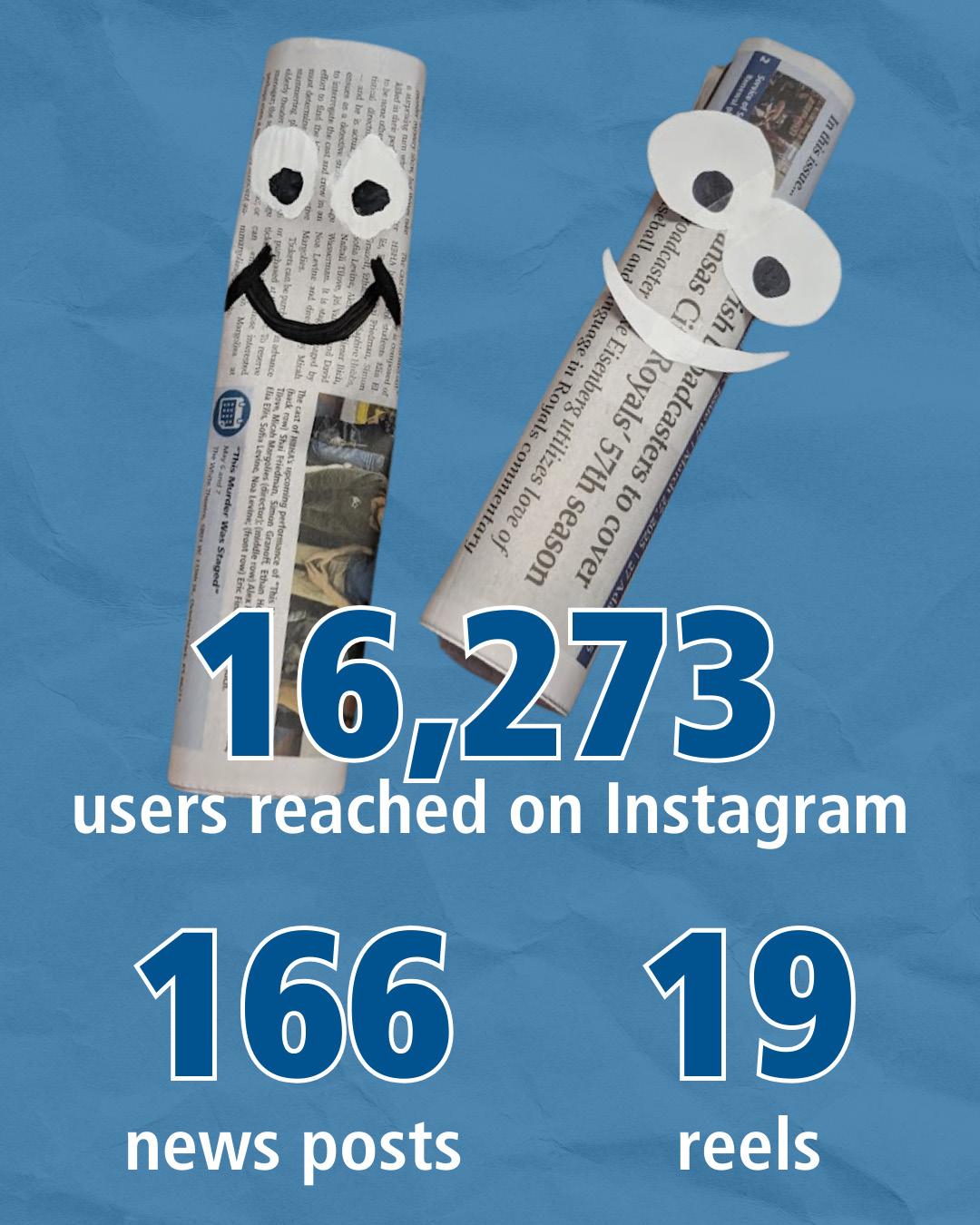
Spotify offers a feature at the end of every year called “Spotify Wrapped,” which summarizes the user’s listening habits and usage statistics. Jewish Federation’s digital marketing specialist, Alexis Greenberg (who also writes frequently for The Chronicle), has compiled a “Chronicle Wrapped” that summarizes The Chronicle’s statistics this past year, and we are quite happy with the results. Please check it out at facebook.com/kcjewishchronicle and on Instagram (@kcjewishchronicle)!
In the meantime, here are a few highlights:
(By the way, these numbers don’t include this issue or next week’s online content, so the numbersareactuallyhigher!)
I think it’s fair to say that Kansas City has a bustling Jewish community, considering the fact that we published more than 400 locally-focused stories. Plus, we’ve been thrilled to share more than 60 celebrations and more than 113 commentary pieces by community members.
Despite the difficulty of maintaining a print publication (and the mid-year surprise of having to locate a new printing company), we’ve continued to produce The Chronicle as a physical newspaper. The Chronicle is one of the
oldest Jewish publications still in print in the United States, and we are grateful for your support in our 105th year and beyond.
Every week, even if it is not a print week, we send out an email with community news. We are proud that every week in 2025, without fail, there were new community news stories on our website and sent to subscribers’ inboxes.
In 2025, eight organizations took us up on our offer to share our 105th anniversary presentation. We sincerely thank the Jewish Unforgettable Ladies Interested in Eating Together (JULIETs); Congregation Beth Torah; Hadassah Greater Kansas City; National Council of Jewish Women - Greater Kansas City; Heritage at The J; Cafe Ohev at Congregation Beth Shalom; Jewish War Veterans Mo-Kan Post 605; and all who attended our Day of Discovery presentation for their time and support.
On page 4, we assembled our annual recap of the biggest community news stories for 2025. It was a busy and tumultuous year full of joys and sorrows, but aren’t they all? Wishing us all a happy 2026 and a year full of only good news!
-Sam Kricsfeld, editor
On the front page is a collage of various photos of community members featured in The Chronicle in 2025. The photos were selected and arranged at random.
Featured are (top row, from left) Benjamin Cartel, Rabbi Zalman Tiechtel, Ace Allen, Audrey Asher, Kansas Sen. Ethan Corson, Kansas Rep. Dan Osman, Dr. Micah Levine, Joe Loeffler, Judy Sherry, Terry Miro; (third row) Nechama Tiechtel, DD Gass, Sam Devinki, Julia Osburn, Bobby Sight, Sonia Warshawski, Rabbi David Levinsky, Dr. Tiffany Simpson, Julie Rudman, Rachel Kricsfeld, Joel Goldberg; (second row) Jay Lewis, Elisa Pener, Marsha Cowan, Sherrill Rosen, Jori Sackin, Neta Meltzer, Blumah Wineberg, Andi Milens, Todd Cohn, Barb Bloch, Shelley Rissien; (front row) Samantha Goodman, Simon Abrahms, Judge Howard Sachs, Lindsay Fineman, Derek Gale, Erwin and Phyllis Abrams, Alan Edelman, Bill Carr, Jacob Schwartzberg, Jonah Stolte, Brody Feldman and Rebeca Amezcua-Hogan.
Saul Lee Gitomer
Saul Lee Gitomer, 87, of Overland Park, Kansas, passed away peacefully on Nov. 16, surrounded by loved ones.
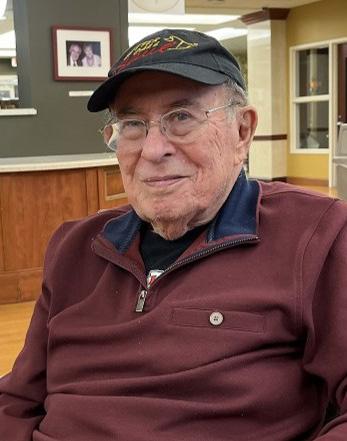
A memorial service was held at Village Shalom on Nov. 19, followed by a graveside service on Nov. 21 at his family’s cemetery in Millville, New Jersey.
Saul was born on Oct. 9, 1938, in Atlantic City, New Jersey, to Betty and Aaron Gitomer, of blessed memory. Affectionately known as “Saulee” in his youth and later as “Dappy” by his grandchildren, Saul enriched the lives of those around him with his warmth and storytelling.
In 1969, Saul relocated with his family — Audrey, Lynn, Kenan and Daniel — from New Jersey to Kansas for a career opportunity in the pharmaceutical industry. His storied career as a research statistician and consultant spanned over 35 years, leaving a meaningful impact. His tenure at Marion Laboratories sparked a lifelong passion for international travel, which led him to explore 35 countries — a journey he chronicled in his memoir, “The Luckiest Man Alive,” published in 2023. He was so proud of this book that he shared it with everyone he met.
Saul will be lovingly remembered as a devoted father, grandfather and great-grandfather, always bringing joy with his engaging stories, family gatherings at the Jersey Shore and his gentle presence. Whether basking in the sun, fishing, traveling, cycling or savoring good food, Saul’s zest for life was contagious. His pride in his family was boundless; he often described himself as the wealthiest man alive because of them. His fondest memories included time spent with family on the beaches of Brigantine, New Jersey.
An accomplished cyclist, Saul rode thousands of miles across the U.S., raising funds for multiple sclerosis and AIDS while forming enduring friendships. Locally, he dedicated time volunteering at Restart, cooking for their homeless shelter; Jewish Family Services; and the Ronald McDonald House, securing and preparing food with great compassion.
As a lifelong member of The Temple, Congregation B’nai Jehudah, Saul cherished chanting his bar mitzvah Torah portion, Bereshit, annually on Simchat Torah. His dedication to Judaism and its rituals remained unwavering. Recently, he found weekly joy in singing the Kiddush at Friday night services at Village Shalom.
Lynn Gitomer and her husband, Dan Weiner; Ken Gitomer and his wife, Kathy; and Danny Gitomer. He is also survived by his grandchildren, Jesse, Allie, Connor and Sussa; and greatgrandchildren Ella, Cameron, Emma and Savannah.
Memorial donations may be made to the Village Shalom Employee Appreciation Fund; Congregation B’nai Jehudah Rabbi Rothstein Discretionary Fund; and The Jewish Community Center of Greater Kansas City.
The family extends deep gratitude to the caring teams at Village Shalom and Monarch, especially to Melissa Jacob and Val Somova, for their compassionate care over the past three years.
Saul, Dad, Dappy, will be deeply missed and fondly remembered. Online condolences for the family may be left at louismemorialchapel.com.
Lynn Allen Goodman passed peacefully at home on Dec. 2 at the age of 90 years. A graveside service was held on Dec. 5 at Rose Hill Cemetery.
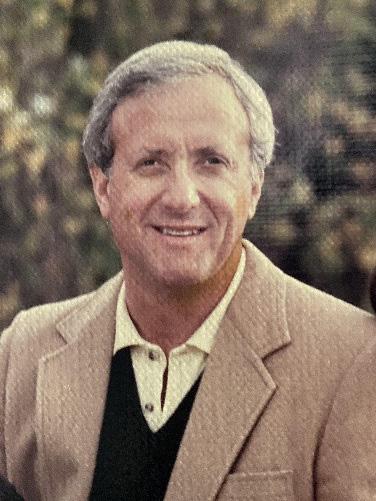
Lynn was born on June 20, 1935, at Eitel Hospital in Minneapolis, Minnesota, to Melvin and Mayme Goodman. He often professed his profound love and respect for his wonderful parents, thankful for a childhood filled with encouragement, care, comfort and warmth, all the while creating lasting memories.
Most of Lynn’s life was spent in the Kansas City area. He attended Southwest High School, where he was an exceptional athlete — especially in shot-put — winning many awards, including the state championship. He loved to play football and baseball in high school and also with his neighborhood friends on 73rd Terrace. Lynn earned a full football scholarship to Missouri University. As a senior in 1953, he was awarded the prestigious Joe Dorr trophy for excellence in athletics, one of his proudest accomplishments.
On Aug. 11, 1957, Lynn married Helen Samrick Bushman, and together they welcomed two daughters, Robyn and Mindy. Though they divorced, they remained close friends and celebrated many special occasions together with Helen’s husband, Robert Bushman, and the blended family.
On Oct. 28, 1977, Lynn married Sally Parker, and together they had twin daughters, Lynley and Melanee. Lynn loved and adored all four of his daughters.
estate business. He developed land, contracted homes, and, with their brokerage company, sold them. After his retirement, Lynn enjoyed many breakfasts at First Watch with his buddies. He was an athlete his entire life, always watching his diet and faithfully going to the gym every day.
Lynn leaves his loving wife, Sally Parker Goodman; his daughters, Melanee Dale Goodman and fiancé
Kyle O’Mara, Lynley Nell Goodman and partner Aaron Liam Moran, Robyn Lynn Goodman Shopmaker and Mindy Susan Goodman and husband Brian Cahill; grandchildren, David William Shopmaker and wife Hannah, Zoey Lynn Shopmaker, Annie Elizabeth Shopmaker and fiance Bryce Austin and Emma Lynn Gee and Samuel James Gee; and great-grandchildren, Emerson Grace Shopmaker, Taylor Jane Shopmaker and Baby Girl Shopmaker, due in late December.
Lynn was predeceased by his parents, Melvin Goodman and Mayme Fox Goodman; sister, Gayle Marcia Goodman Andersen; and brother-inlaw, James Andersen.
Lynn has many nieces, nephews, cousins, friends and his faithful furry friend, Molly Lu, who will miss him terribly, especially during storms. Lynn’s first stop in heaven will be “The Rainbow Bridge,” where he will be greeted by Spotty, Tucky I, Tuffy, Tucky Honey, Baby Lulu and Lucy Lu.
In keeping with Jewish tradition, flowers are not customary. Contributions to honor Lynn’s memory may be made to Sally to ease the financial burden at this difficult time. Online condolences for the family may be left at louismemorialchapel.com.
Jay T. Grodsky, 78, of Raymore, Missouri, passed away at home on Nov. 30 after a long battle with prostate cancer. His loved ones were at his side.
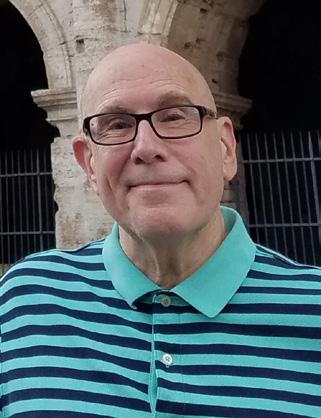
Jay was born in St. Louis, Missouri, to Viola and Albert Grodsky. He swam competitively in middle school and high school and played trombone in his band, Captain Crunch and the Crispy Critters.
family was never able to verify this during his lifetime.
Jay eventually headed back to school. He met his wife, Tamara, in Spanish class during college, and while the Spanish didn’t stick, the relationship did. After they married, Jay and Tamara moved to Kansas City, where he later graduated from the UMKC School of Law, Class of 1978. Although he was a talented artist and writer, Jay truly believed in the United States legal system and loved practicing law. He held a long career in bankruptcy and family law and never turned away a client who couldn’t pay. He and Tamara stayed and raised their daughter, Rachel, in Kansas City. Towards the end of his career, he worked for the Department of Health and Human Services in the Kansas City area.
Jay was beloved by people from all walks of life. He was smart and truly funny — not just “Dad joke” funny. He knew the exact dates and names of all the Roman wars and generals, Egyptian pharaohs and Japanese emperors — but he could not tell you which way was north to save his life. He loved Renaissance art, the Impressionists, the Abstract Expressionists and good books. He traveled often with his daughter, and once spent days at the Louvre, finally admitting to her the Mona Lisa was indeed “more impressive in person.”
Although he insisted he wasn’t a “foodie,” he’d never turn down an authentic French or Italian meal or a coastal seafood restaurant. He loved family vacations, Steven Segal movies, his dog Abby and classical music, and he leaves behind a carefully curated collection of books.
Jay is survived by his wife, Tamara; his daughter, Rachel; his sister, Lois; his brother, Allen; his brother-in-law, Greg Gibbs; and six nieces and nephews. The family asks that in lieu of flowers, donations be made to the Midwest Center for Holocaust Education or Wayside Waifs.
Kansas City native Alvin Levin, 94, passed away peacefully on Nov. 29 in Olathe, Kansas, surrounded by his loving family.

Although his birth certificate lists Aug. 30, 1931 as his birth date, family lore, supported by his parents, the late Frank and Flora Levin, always said he was born on Aug. 31.
He treasured memories of a childhood populated by his large and caring extended family, as well as
Lynn, together with his wife, Sally, spent many years in the real
After high school, Jay served in the U.S. Air Force during the Vietnam War. He was stationed in Okinawa, Japan, where he learned to love the Japanese language, which he studied for the rest of his life. After the war, he learned to play guitar and spent many evenings immersed in the music scene in St. Louis. His claim to fame was that he stepped in to play with the Allman Brothers one evening, although despite many attempts, his
Saul’s legacy continues through Audrey Hollander and his children, continued on next page
continued from previous page
boyhood friends. Alvin loved telling stories of “the way things were.”
A veteran of the Missouri National Guard, 35th Division, Alvin later worked in sales for women’s apparel manufacturing, management and ownership for many years, first in Kansas City, and later in Dallas, Texas.
In 1999, he and his wife, Barbara Fresh, moved to Gig Harbor, Washington, living in and loving the Pacific Northwest for 15 years, during which he served as a volunteer handicap parking enforcement officer for the Pierce County Sheriff’s Department. Later they moved to Redmond, Oregon, and, in 2016, Olathe.
Alvin’s later years were enriched by his love of the family felines, most notably the rascal Danny and sweet boys Simba and Janga.
Alvin is survived by his wife, Barbara Fresh, and four sons: Paul (Scott Yi) of Chicago, Illinois; David of Vacaville, California; Mark (Joanne) of Omaha, Nebraska; and Jeffrey (Ami) of Olathe. He is also survived by eight grandchildren; six great-grandchildren; brothers Lawrence (Meta) of Chicago and Gary “Bud” (Sharon) of Overland Park, Kansas; along with many cherished nieces and nephews.
No funeral service is planned. In lieu of flowers, the family requests memorial contributions to Wild Heart Ranch in Claremore, Oklahoma, or the animal rescue organization of your choice.
Marilyn B. Ozar, a resident of Palm Beach Gardens, Florida, and formerly of Kansas City, Missouri, died at the age of 97 on Dec. 11.
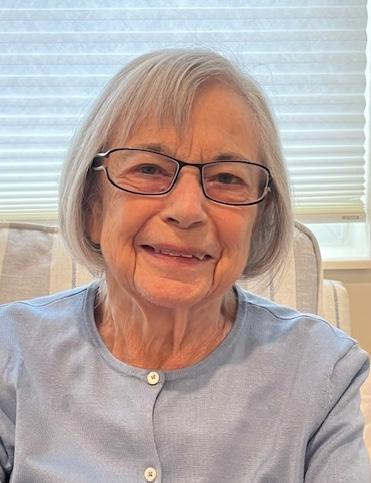
Funeral services were held at 1 p.m. at the Louis Memorial Chapel on Dec. 14, followed by burial at Mt. Carmel Cemetery.
Marilyn, born in New York and raised from infancy in Kansas City, will be remembered as a generous and loving person who enriched the lives of all those she met. No one left a visit or call with her without feeling acknowledged, supported

and strengthened. She was deeply connected to her extended family and the Jewish community that supported her and, in turn, benefited from her dedicated volunteer efforts. Her children, grandchildren, nieces and nephews all knew that Mom, Grandma or Aunt Marilyn was the one to turn to in a time of need.
Her love and caring were learned from those who cared for her. After the tragic loss of her father when she was eight, her aunt and uncle, Hyman and Clara Brand, took her, her brother and her mother into their home. She absorbed their values and admired Uncle Hymie and her cousin Arthur Brand, who led many Jewish community institutions with wisdom and dignity.
With her husband of 72 years, Milton B. Ozar, of blessed memory, she devoted herself to her family and her community while managing Milton’s medical practice. At Congregation Beth Shalom, she chaired the Youth Activities Committee and the Scholarship Committee, ran the gift shop and was designated as the synagogue historian. This new position allowed her to become the first woman to serve on the synagogue board. She served as a board member of the synagogue’s Sisterhood; treasurer and secretary of the Midwest Branch of the Women’s League for Conservative Judaism; on the board of the Jewish Educational Council; at the Women’s Division of the Jewish Federation and Council; and at Jewish Vocational Service. Her organizational skills and her attention to detail served her well in volunteer roles with Hyman Brand Hebrew Academy and the Jewish Community Campus. In recognition of her community service, she was given the Beth Shalom Men’s Club Kovod Award.
Marilyn and Milton spent the greater part of their retirement years in Florida, helping their daughters, Judy and Donna, recover from Hurricane Andrew and then staying to continue support for their families.
She was preceded in death by her husband of 72 years, Milton B. Ozar, M.D. She is survived by her son, Dr. Stuart Ozar, and his wife, Dr. Betty Sonnenwirth Ozar, of St. Louis, Missouri; daughter, Judy Henry, and her husband, Bruce Shulman; Donna Goldfarb, and her husband, Bob Goldfarb; nine grandchildren,

25 great-grandchildren and one greatgreat-grandchild.
The family is grateful to her devoted caregivers who lovingly kept her safe and comfortable.
Kindly omit flowers. The family suggests contributions to Congregation Beth Shalom, Hyman Brand Hebrew Academy or a charity of your choice. Online condolences for the family may be left at louismemorialchapel.com.
Gabriel Seidman, age 96, of Moores Hill, Indiana, passed away on Dec. 6.
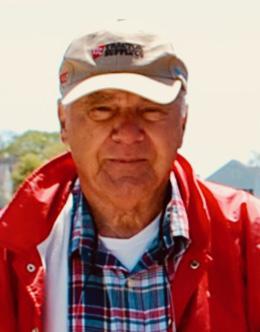
Born in Lisbon, Connecticut, Seidman moved with his family to Miami, Florida, where he graduated from high school. He received his undergraduate and master’s degrees from the University of Miami. His love of horticulture led him to obtain a Ph.D. in plant physiology from Kansas State University.
Gabe was proud to serve in the U.S. Navy as a crew radarman during the Korean War. He later served in the Air
Force Reserves for many years. Gabe received a fellowship from the National Institute of Health to do research at Cornell University from 1960 to 1961. He married Sandra Matters of Kansas City in 1959. Gabe transferred to the U.S. Department of Agriculture in Cincinnati, Ohio, and worked there from 1961 to 1970. His passion was plants, so he decided to open his own business, The Garden Place, in Withamsville, Ohio. Upon retirement, Gabe and Sandra moved to a farm in Moores Hill, Indiana, where they kept their horses. In retirement, Gabe planted a small orchard of many different varieties of fruit trees and maintained a huge garden, selling his produce at a nearby farm market.
Gabe was predeceased by his parents, Bessie and Isaac Seidman; siblings, Leo (Rose), Ethel Botnick (Joe) and Abe (Lillian); and special nephew, Ralph Botnick. He is survived by his wife, Sandra (Matters) Seidman; his daughter, Sara Jaffee (Tom); special nieces Sara Levine and Debra Botnick; and many nieces and nephews.
Graveside services were held at Mt. Carmel Cemetery in Raytown, Missouri, on Friday, Dec. 12. Online condolences for the family may be left at louismemorialchapel.com.
Jewish Federation of Greater Kansas City is seeking candidates for its administrative assistant position.
The position is a part-time, non-exempt position and will report to the Jewish Federation office from 9 a.m. to 3 p.m. Monday through Thursday and one to two evenings a month.
The ideal candidate is a “proactive problem-solver with exceptional organizational and communication skills, exercising sound judgment, discretion and professionalism.”
Qualified applicants will have proven experience as an executive assistant, administrative assistant or similar role. Required skills include exceptional organizational and time-management, strong written and verbal communication, proficiency with the Microsoft Office Suite and strong problem-solving skills.
The administrative assistant will ensure “smooth and efficient operations, foster a professional and welcoming environment and contribute to the success of Federation programs and initiatives.”
Key responsibilities include calendar management and coordination of meetings; serving as a liaison between staff and external stakeholders; and preparing reports and presentations.
A bachelor’s degree is preferred, but an equivalent combination of education and experience will be accepted. Experience in a nonprofit or Jewish communal setting is a plus but not required.
Applicants should send their resume to erinm@jewishkc.org. More information is available at jewishkansascity.org/careers.


University of Kansas sophomore Eli Maker, a Kansas City native and active member of AEPi, KU Hillel and KU Chabad, has been selected as a SparkIL Campus Fellow to encourage Israel engagement and micro-philanthropy to the KU community.
The SparkIL Campus Fellowship is designed to engage North American college students at the intersection of philanthropy, Israel engagement, financial inclusion and micro-financing. The fellowship targets students passionate about Israel and interested in business, entrepreneurship and economic development. Each fellow receives a stipend and assumes leadership roles on campus — running programs, organizing events, facilitating discussions about Israel’s economic landscape and encouraging peers to participate in micro-lending.
Maker first learned about SparkIL at the AEPi National Convention this summer.
“I loved the idea immediately,” he said. “Being able to make a real impact on Israeli businesses affected by the war — while I’m still a student in
Kansas — that felt meaningful. I applied right away.”
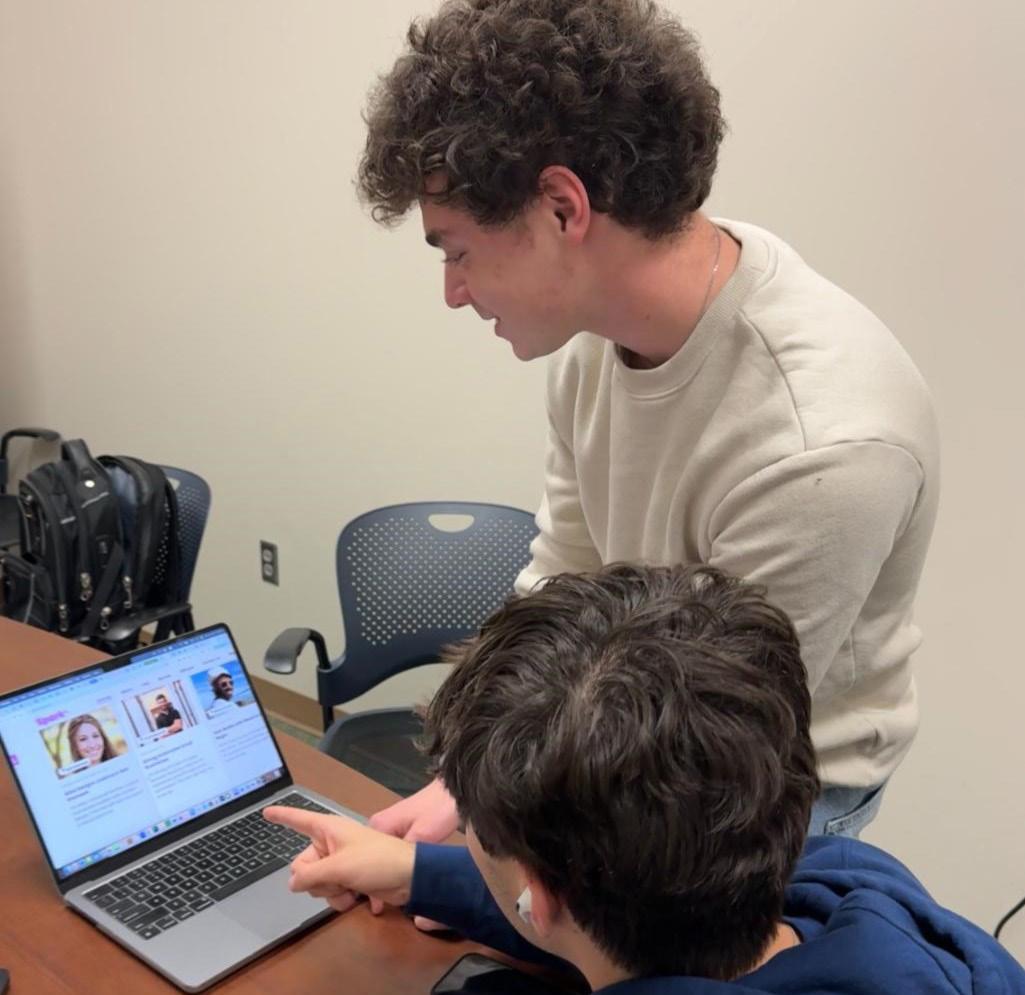
Fellows have wide latitude to design programming, often partnering with other student organizations to broaden their reach. One avenue for engagement is distributing SparkIL Credit vouchers: $36 vouchers funded by donors committed to strengthening the connection between Israel and the Diaspora and supporting small businesses across the country. These vouchers allow students to apply their first micro-loan to an Israeli small business at no personal cost.
Since beginning the fellowship, Maker has already facilitated dozens of micro-loans, introducing both Jewish and non-Jewish students to Israel’s small business ecosystem. Many are unfamiliar with micro-financing, he said, but quickly become enthusiastic
when they realize how tangible the impact can be.
“I tell students, ‘Do you have one minute to do a mitzvah — and you don’t even have to leave your phone?’”
Maker said. “Then I ask them to scroll through SparkIL’s site and find a business that speaks to them. I want people to choose with intention, not randomly.”
Most of his outreach so far has taken place in familiar spaces — AEPi, Hillel and Chabad — but Maker plans to expand programming more broadly across campus. Late last month, he led an educational program at AEPi featuring a video spotlighting one of the Israeli businesses supported through SparkIL. Next semester, he plans to collaborate with KU Hillel to host a SparkIL-themed Shabbat experience, and additional events are in
development.
Maker’s passion for Israel deepened after spending the summer of 2023 there.
“It opened my eyes,” he said. “I fell in love with the innovation, the culture and the determination of the people.”
He hopes to return this coming summer and, if possible, visit some of the businesses KU students helped support, including a coffee-shop-byday, bar-by-night founded by a soldier building his dream between periods of active duty.
“The perseverance it took — that really inspired me,” he said.
Growing up in Kansas City and active in BBYO as a teen, Maker chose KU to stay close to home while remaining deeply involved in Jewish life. Now, as a SparkIL Fellow, he is channeling that commitment into hands-on Israel engagement and entrepreneurial impact.
Maker plans to continue into the spring.
“Students here in Lawrence want to make a difference,” Maker said. “SparkIL gives them a way to do that — quickly, directly and meaningfully.”