By Sam Kricsfeld Editor
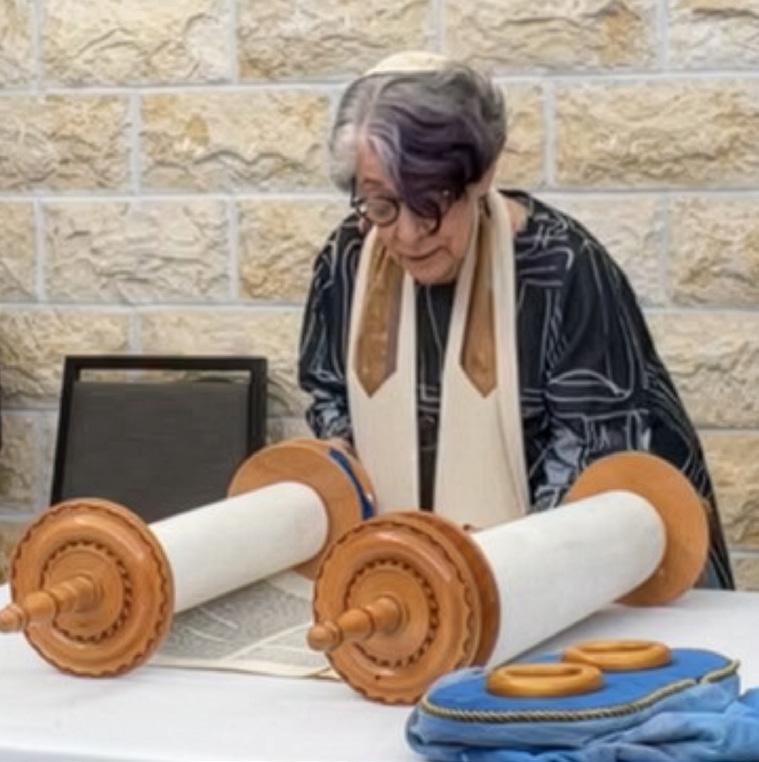
The Book of Psalms states that “the span of our life is 70 years.” Some consider those who have lived beyond that biblical projection as having started a new life cycle. At age 83, 13 years after their new start, some Jewish people choose to have a second bar or bat mitzvah. Rabbi Linda Steigman just celebrated hers.
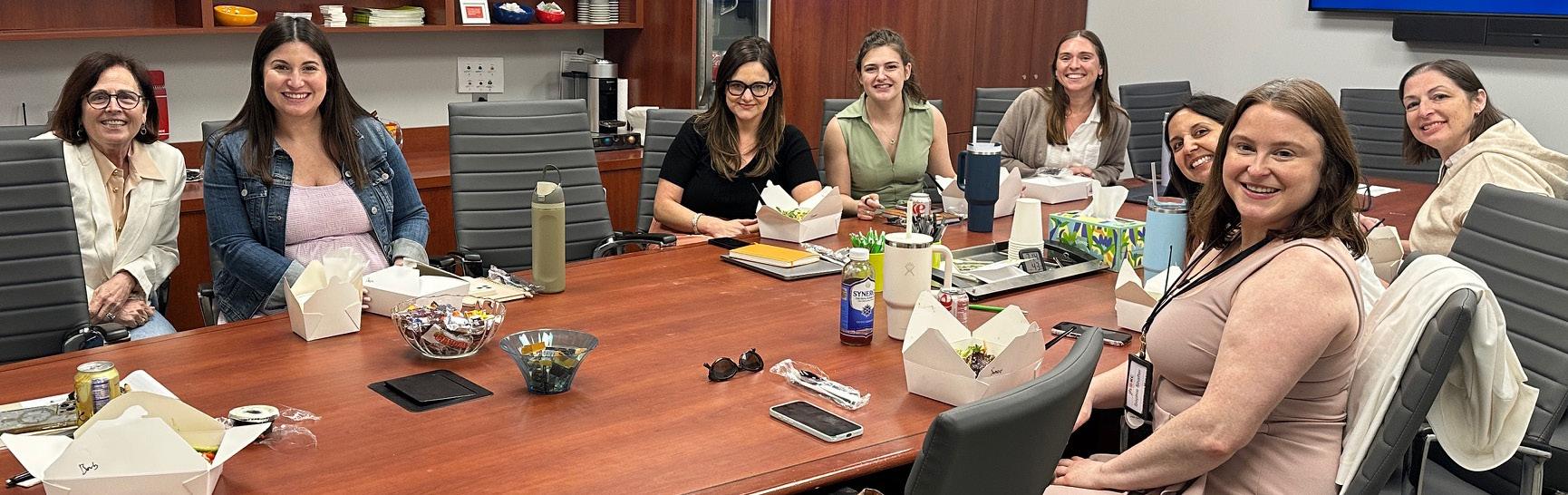
Rabbi Steigman’s second bat mitzvah took place on April 25 at The Temple, Congregation B’nai Jehudah. Alongside Rabbi Caitlin Brazner and Music Director Laura Payne on the bimah, she did everything one would expect a bat mitzvah to do at B’nai Jehudah — lead prayers, read from the Torah, give a sermon and celebrate with her family.
“Having this bat mitzvah at the age of 83 is, in a very real way, a culmination
of my commitment to Judaism in all its depth and beauty,” she said in her sermon. “I pray for many more years to continue to live as a Jew, surrounded by family and friends, passing down my values to the next generation.”
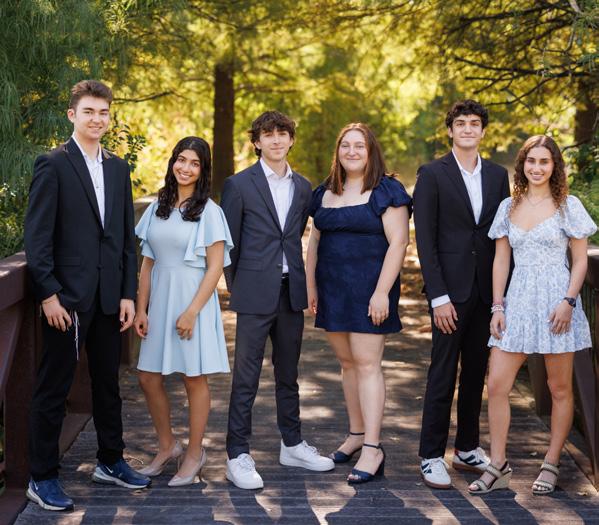
Many of Rabbi Steigman’s friends and family came to celebrate. She gave three Aliyot to groups of her loved ones: the first to six of her colleagues (five rabbis and a cantor); the second to extended family and friends; and the third to her children, grandchildren and sister. She herself had the fourth Aliyah and did the Torah reading for Parashat Kedoshim.
The presence of her children, Stephen Steigman and Ellen Steigman, and grandchildren was particularly touching for Rabbi Steigman.
“Usually at a bar or bat mitzvah, the parents will talk to the kid,” she told The Chronicle. “I asked my children
that Jewish growth and engagement doesn’t stop — it keeps unfolding over a lifetime,” Rabbi Brazner said. “To stand alongside Rabbi Steigman as she embraced this opportunity was deeply fulfilling for me and served as a beautiful reminder of our tradition’s call to continuously wrestle with our Torah.”
Her children were also present at her first bat mitzvah, which took place when she was 42 years old, not yet a rabbi, and living in Philadelphia.
to talk to me, and that was really lovely and meaningful.”
Rabbi Steigman prepared for her bat mitzvah alongside Rabbi Brazner, to whom she also expressed appreciation.
“Working with Rabbi Steigman as she prepared for her second bat mitzvah was such a meaningful reminder
“When I grew up, very few girls went to Hebrew school or had a bat mitzvah,” she said. “I grew up in a Reform congregation, and the emphasis was on confirmation… but as time went on, I decided I wanted to [have a bat mitzvah], and I did it with a good friend.”
In addition to encouragement from
See page 15
By Ruby Sokol Chronicle Intern
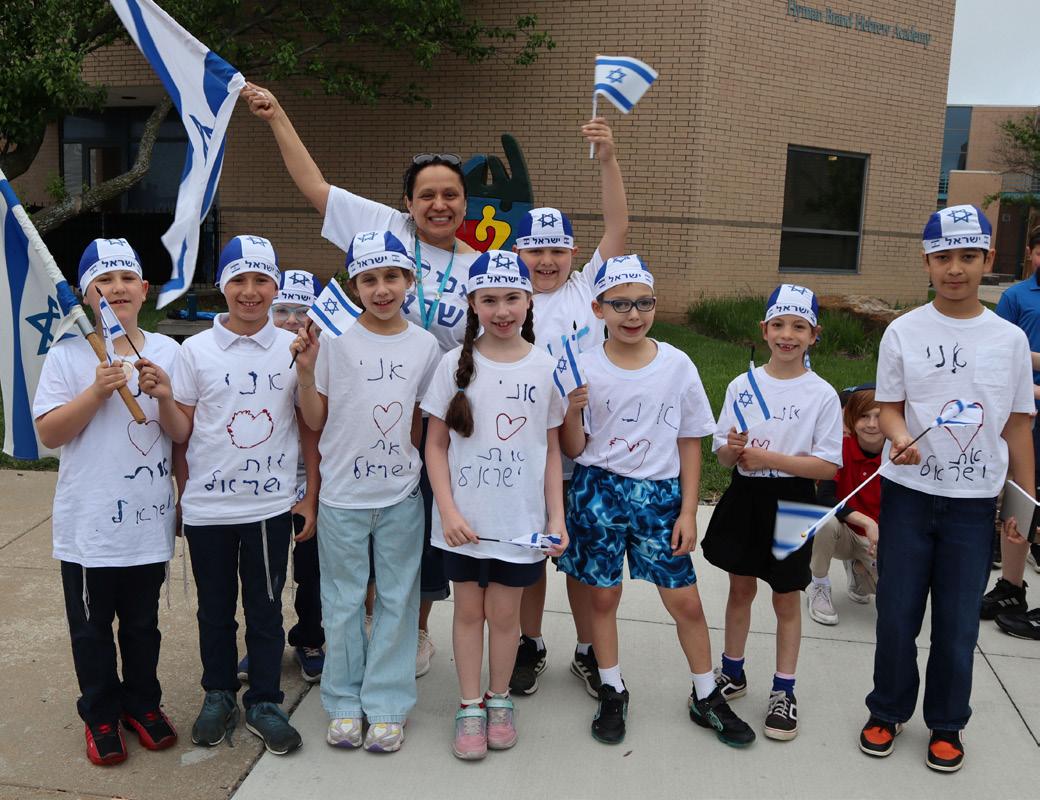
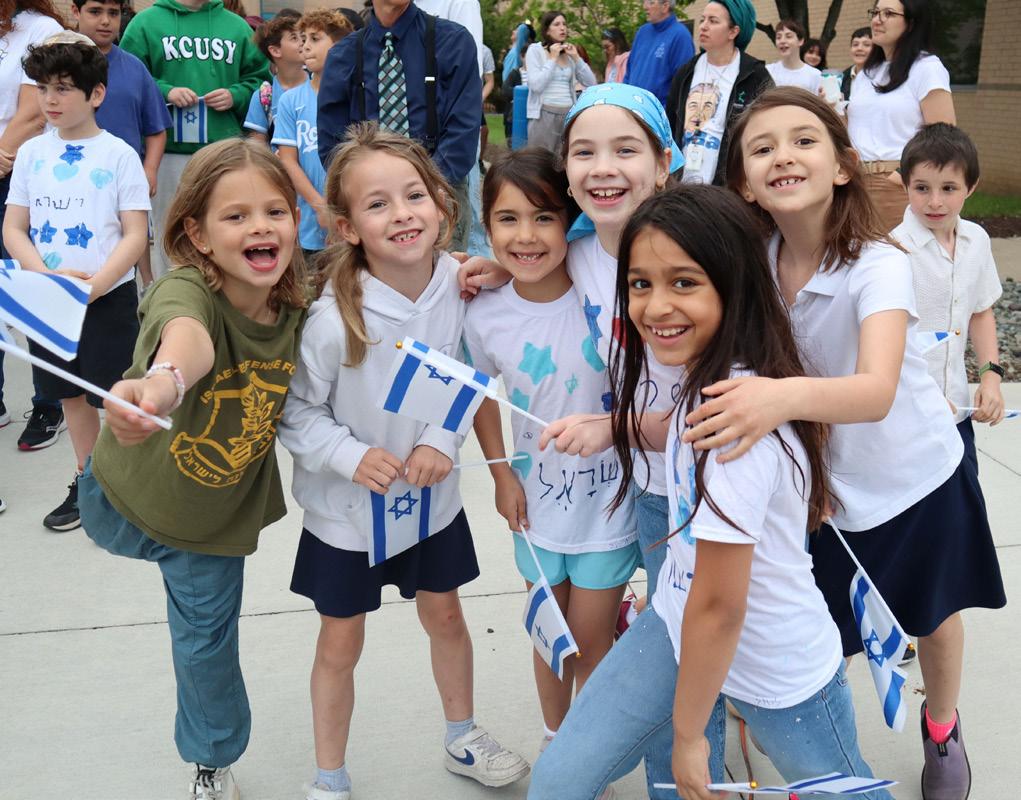
Hyman Brand Hebrew Academy (HBHA) juniors and seniors recently returned from the school’s biannual Jewish Heritage Trip (JHT). At HBHA, students look forward to JHT throughout their entire HBHA career; it is the most immersive experience the students receive. Students spend classroom time preparing for this trip throughout high school.
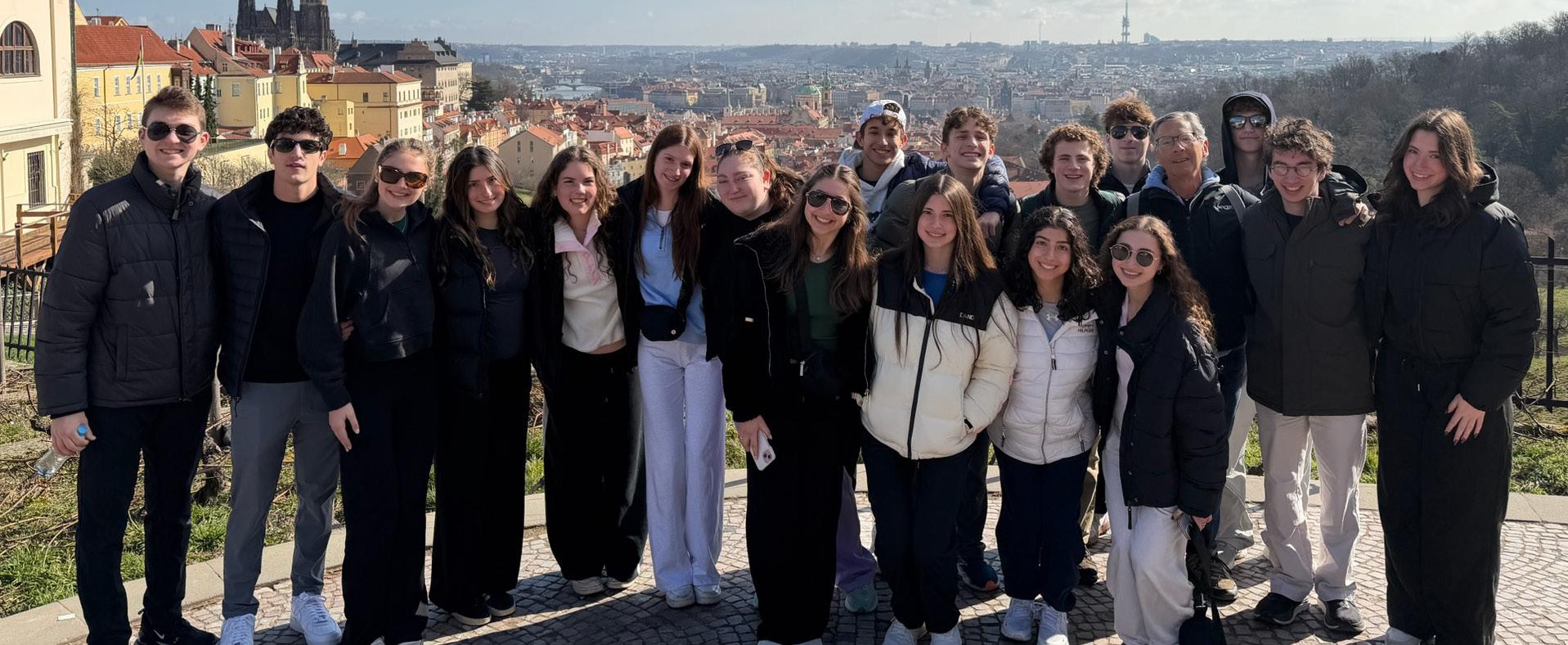
For the first time since 2018, HBHA juniors and seniors planned to attend the traditional JHT, traveling to Germany, Poland, Israel, and Sofia, Bulgaria, Jewish Federation of Kansas City’s sister city. Days before departure, the war between Israel and Iran caused a travel freeze, which canceled the Israeli portion of the itinerary and left the trip’s conclusion uncertain.
The trip had a rough start — the
JHT group’s flight to Bulgaria was delayed several hours and later canceled, forcing the group to spend the night at the airport in Washington, D.C. The students spent Shabbat that evening in D.C. Shabbat was a time where the group bonded most, said Zohar Flacks, Upper School principal and director of Jewish Education. The nearby branch
of Chabad hosted a Shabbat and introduced the students to the concept of a farbrengen (a Jewish gathering, usually with singing involved).
On March 8, the group arrived in Berlin, where they met David Solomon, their tour guide. There, he led two days of educational walking tours covering the Holocaust Memorial,
Hitler’s bunker, and the Jewish Quarter in East Berlin. He also covered other historical and tourist locations, like the Berlin Wall. While in Berlin, Flacks announced a revised itinerary to complete the trip; instead of going to Israel, the group would continue to Prague and Spain after Poland.
After Berlin, the group traveled to Poland, where they spent five days filled with intense Holocaust history, visiting mass graves, museums, synagogues and several concentration camps. While going through such a heavy experience, the students journaled to reflect on their emotions.
Ethan Hobbs, an HBHA senior, said, “Visiting all the historic sites also reminded us how important it is to hold onto our Judaism and celebrate it with
Hyman Brand Hebrew Academy’s (HBHA) graduation ceremony will celebrate the growth, learning and experiences that have shaped the seniors throughout their time at HBHA.
The community is invited to attend this year’s ceremony, which will take place on Monday, May 11, at 7 p.m. at the Lewis & Shirley White Theatre at The J. Families, alumni, faculty and friends are welcome to join in recognizing the Class of 2026 as they reach this milestone.
Each year, HBHA’s graduation works to reflect the school’s core commitments: academic excellence, character development and connection to Jewish life and values. The students who take the stage are recognized for their academic achievements and for who they have become as young adults.
A defining feature of the ceremony
is the student speeches. Each graduate shares reflections from their HBHA experience, offering personal insight into the moments, relationships and lessons that have shaped their time at HBHA. These speeches are delivered in both English and Hebrew, highlighting the language proficiency students develop through years of immersive learning.
The ceremony also includes a d’var Torah delivered by a community leader. This year’s d’var Torah will be given by former HBHA Board Chair Rita Cortes, who is retiring from her position as executive director of the Menorah Heritage Foundation.
“As we celebrate the Class of 2026, we are proud to honor not only their accomplishments, but the integrity, curiosity and character they bring to the world beyond HBHA,” HBHA Head of School Annie Glickman said.
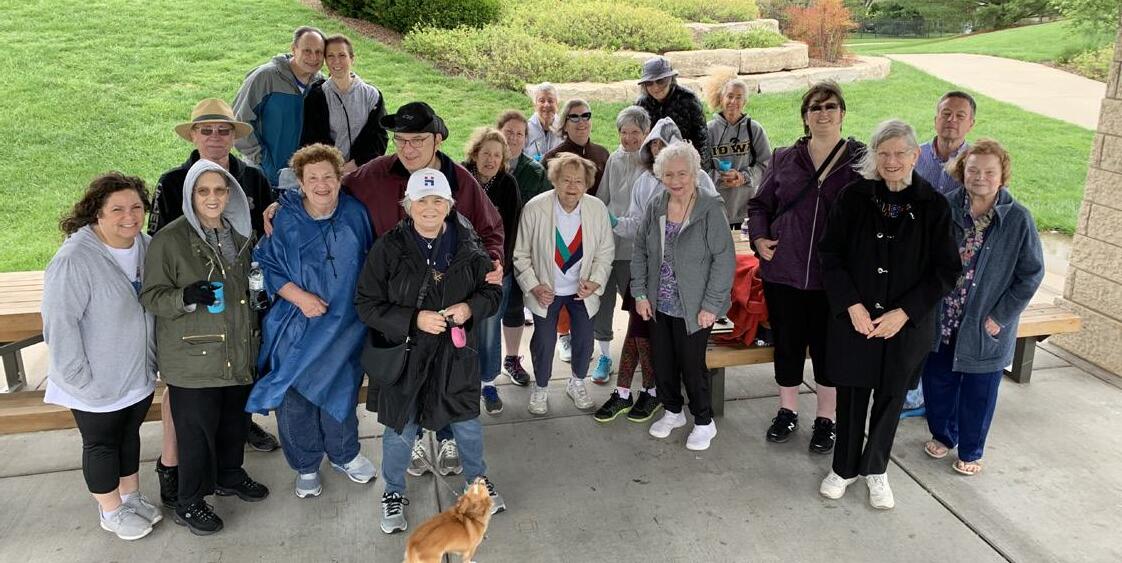
Hadassah Greater Kansas City will celebrate its 24th Annual Walk for Health sponsored by its Nurses Council, which will be held on Sunday, May 10 (Mother’s Day), from 9:30 to 11 a.m. in Leawood, Kansas. The exact address provided upon registration.
This year, the local council has chosen to promote both physical and mental health and raise funds for Hadassah. Participants are encouraged to come with a family member or friend and walk as little or as much as they wish.
The local chapter will be honoring child life members and child Hadassah associates, including those members who were once child members. They will also be recognizing all Hadassah members who have given the gift of Hadassah to a child.
Donations to Hadassah in honor or memory of a nurse or loved one are welcome. These donations will help support pediatric care at the Hadassah Medical Organization (HMO) in Israel. Hadassah has partnered with the Rady Family Foundation, which has pledged to match all new gifts up to $10 million, that support pediatric care at the HMO.
At the Walk for Health, there will be a drawing for a free annual Hadassah membership. Those who want to participate in the drawing must be
present to win. Members may choose any non-member ages 17+ in Greater Kansas City to receive a membership. Non-members may choose to use the gift for themselves.
This free event is open to all, but no walk-ins are allowed. Registration must be done by May 7. The chapter hopes that its members, Hadassah Associates and the community will show their support of local nurses and nursing students by attending this annual walk.
Registration and donations can be done at events.hadassah.org/ GKCwalk. To make a donation by mail, donors can send a check payable to Hadassah (including “GKC Walk 2026” in the memo line) to Hadassah Midwest, 900 Skokie Blvd, Ste 295, Northbrook, IL 60062. Making a donation is separate from event registration.
All attendees will be required to sign a Hadassah Event Participation

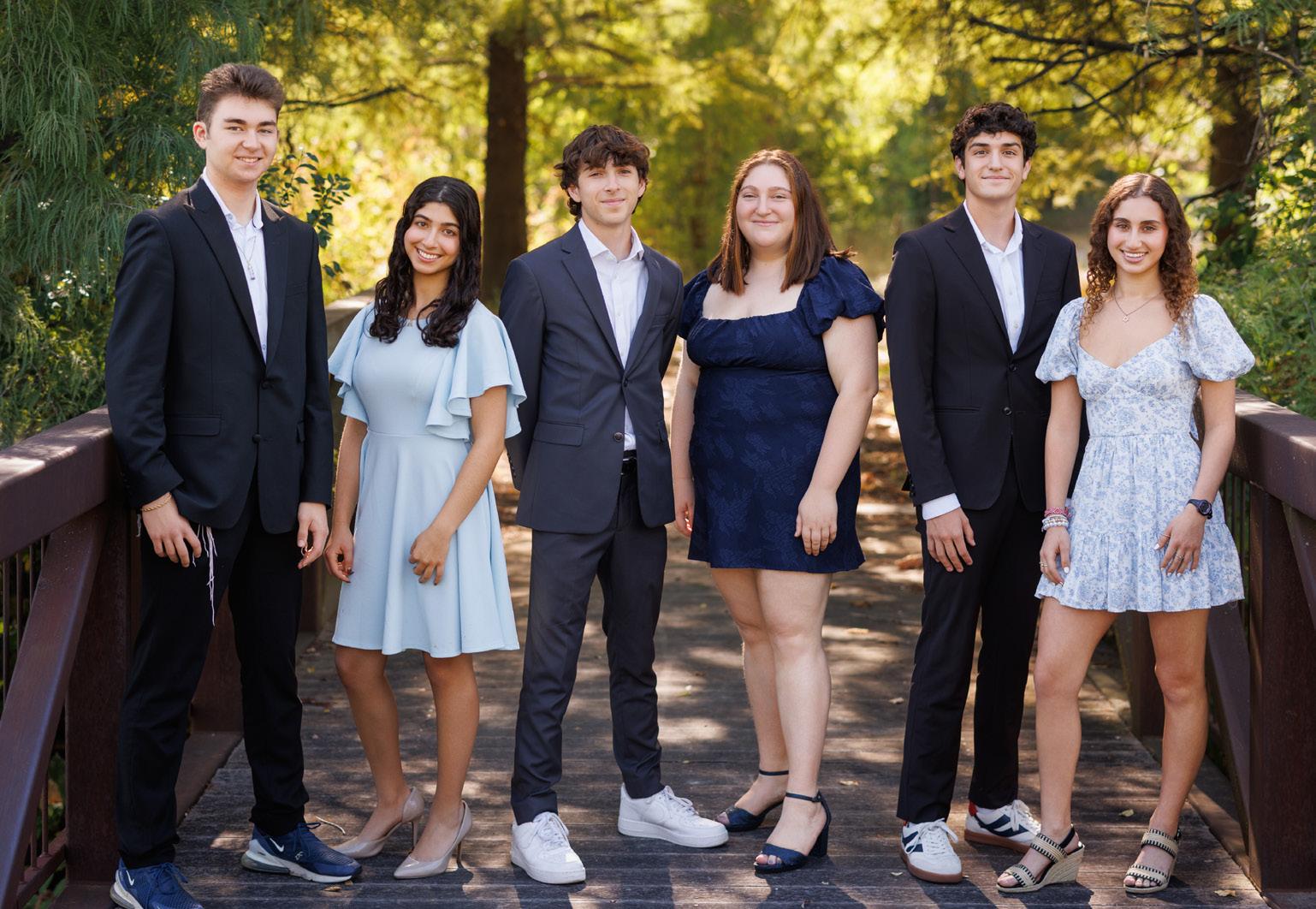
Jewish Experiences, a collaboration of Jewish Federation and The J, will host a community conversation focused on mental health awareness. The event will be held from 7 to 8 p.m. on Tuesday, May 12, in the social hall of the Jewish Community Campus, and is intended to bring together community members, advocates and local organizations for a program centered on education, support and connection.
The event will feature keynote speaker Karen Gerson, a community leader, mental health advocate and author who has shared her personal story to empower individuals and families. Guests will also hear from a panel of representatives from Jewish Family Services, First Call and GRASP, who will share practical resources, insights and pathways to care.
“Mental illness affects not only the individual but also those around them,” Gerson said. “If you have ever struggled with how to support someone you love, I hope this conversation offers guidance, understanding and hope.”
The discussion will be moderated
Release to attend Hadassah in-person events. There will be no exceptions to this policy.
Questions can be directed to Hadassah Midwest at (847) 205-1900 or midwest@hadassah.org.
24th Annual Walk for Health
Sunday, May 10, from 9:30 to 11 a.m.
Location upon registration
by Jamie Copaken. Attendees will also have the opportunity to explore community resource tables and browse books by local authors focused on mental health. Proceeds from book sales will benefit Jewish Family Services’ mental health services and support its other programs and services.
“Judaism teaches us that caring for our mental health is not optional; it is a sacred responsibility,” said Molly Hess, director of Jewish Experiences at The J. “It is our responsibility to create space for these conversations and bring them to our community.”
Gerson said she hopes her message reminds those facing challenges that healing is possible and no one has to struggle alone.
“Mental illness does not discriminate,” Gerson said. “By sharing lived experiences, learning from one another and building strong connections, we can challenge stigma and create spaces where people feel supported, understood and able to heal.”
The event is open to the community, and more information is available by contacting jex@thejkc.org. Those who need emotional support can call the JFS Navigator line at (913) 7301433 or the Suicide and Crisis Lifeline at 988.
Mental health conversation
Tuesday, May 12, from 7 to 8 p.m.
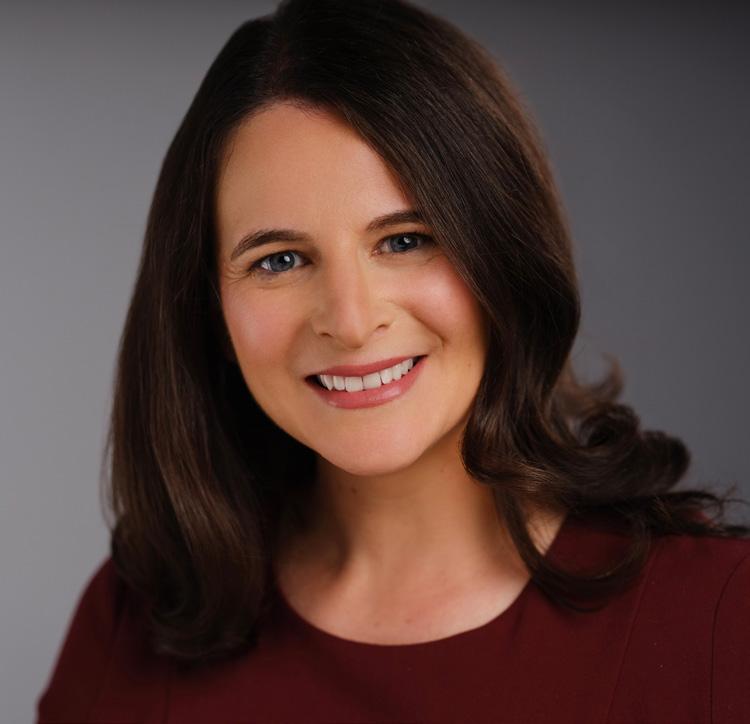
Author and former White House speechwriter Sarah Hurwitz will visit Kansas City to speak about Jewish identity and her experience in politics. The discussion will center on her latest book, “As a Jew: Reclaiming Our Story from Those Who Blame, Shame, and Try to Erase Us.”
The event, “An Evening with Sarah Hurwitz,” will take place on May 18 at 7 p.m. at Congregation Beth Shalom (14200 Lamar Ave., Overland Park, KS 66223). Jewish Experiences, a collaboration of Jewish Federation and The J, together with the Jewish Community Relations Bureau | American Jewish Committee (JCRB|AJC), will host Hurwitz. She will be in conversation with Neta Meltzer, executive director of JCRB|AJC.
Hurwitz served as a White House speechwriter from 2009 to 2017, first as a senior speechwriter for former President Barack Obama and later as head speechwriter for former first lady Michelle Obama. Prior to her time in the White House, Hurwitz worked on several presidential campaigns. She served as chief speechwriter for Hillary Clinton during her 2008 presidential campaign and as deputy chief speechwriter for Sen. John Kerry (D.Mass.) in 2004 and Gen. Wesley Clark in 2003.
“I’m so excited to come to Kansas City to discuss some of the most important issues facing the Jewish people today,” Hurwitz said. “From the challenge of antisemitism to the importance of embracing Jewish tradition,
community, wisdom and joy, I know this is going to be a wonderful event.”
Registration and payment are required in advance at thejkc.org/ sarahhurwitz. Tickets are available with or without a copy of Hurwitz’s book. A book signing will follow the conversation at 8:30 p.m.
This program is presented in partnership with The Temple, Congregation B’nai Jehudah; Congregation Beth Torah; New Reform Temple; and Hyman Brand Hebrew Academy. It is funded by Bill and Robin Carr.
“Sarah Hurwitz brings a powerful and deeply personal perspective to the conversation about Jewish identity today,” Meltzer said. “I’m looking forward to a thoughtful conversation about identity, leadership and why Jewish learning matters so much in this moment.”
More information and registration details are available at thejkc.org/ sarahhurwitz or by contacting Jewish Experiences at jex@thejkc.org or (913) 327-8163.
p.m.
Congregation Beth Shalom, 14200 Lamar Ave., Overland Park, KS 66223
Shabbat times (Overland Park): Candlelighting: 8 p.m. Havdalah: 9:04 p.m.
The following are the deadlines for articles, celebration announcements, Spotlight pictures, advertisements and editorials for upcoming Chronicle print issues. If you have any questions, please contact Sam Kricsfeld at samk@jewishkc.org.
May 21 issue.....................................May 14 noon deadline June 4 issue.......................................May 28 noon deadline
To submit news to The Chronicle, go to kcjc.com/chronicle-submissions!
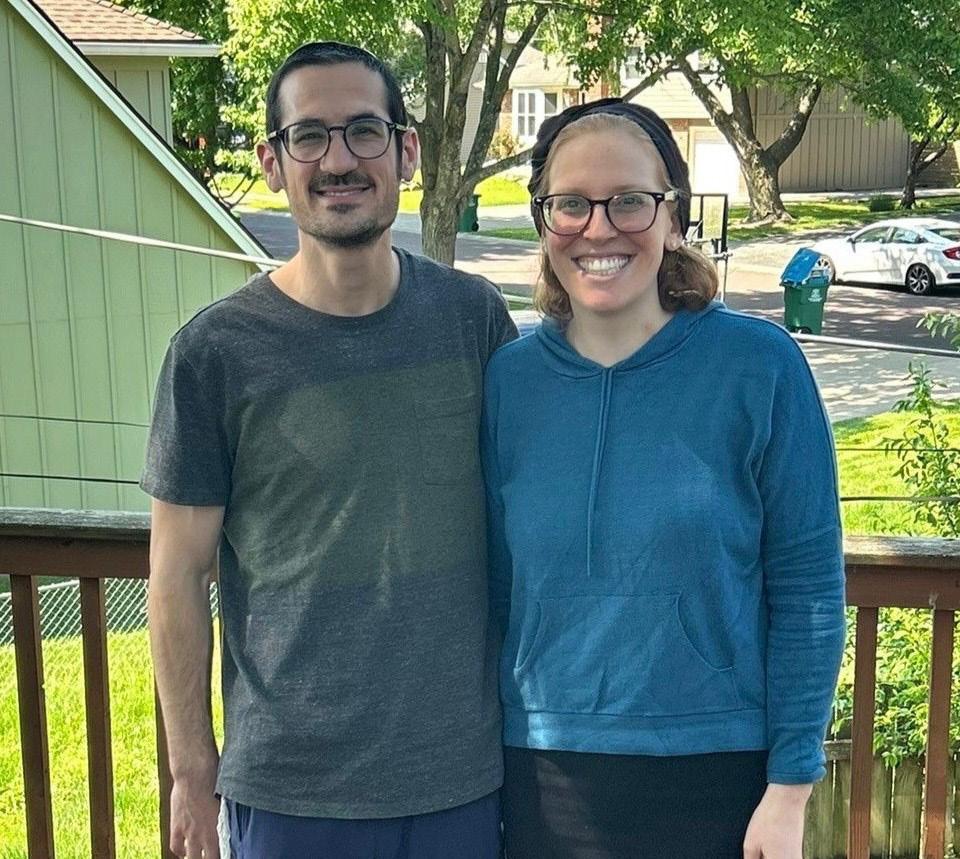
The Kansas City Community Kollel invites the community to an appreciation and farewell Kiddush honoring its emissaries from Israel, Benny and Tehilla Feldman.
The farewell Kiddush will be held at Congregation Beth Israel Abraham & Voliner on Saturday, June 27, at 12 p.m., following 9 a.m. morning services. The entire community is invited to attend.
interact with all members of the community while promoting Israel, Torah and Jewish heritage,” Bernard said.
“We are so grateful to our many donors around the community for their ongoing support of the Kollel and, in particular, helping us bring the Feldman family to Kansas City,” said Jerry Bernard, interim Kollel president.
The Feldman family arrived in Kansas City in early August 2024 from their home in Efrat, Israel, for a two-year assignment as emissaries under the auspices of The Kansas City Community Kollel in partnership with Torah Mitzion, an Israel-based organization with a global network of community-based initiatives. Benny, Tehilla and their infant son, Ezra, came to Kansas City to establish a community Beit Midrash housed at the JCC.
“Their goals were to teach and
Kollel leadership said that during their time in Kansas City, the Feldmans have endeared themselves to many as a result of their individual and combined efforts. Benny and Tehilla Feldman have made a difference in the Kansas City Jewish community by teaching part-time at Hyman Brand Hebrew Academy; offering community-wide programming and lunch-and-learn programs for women; helping infuse Jewish learning and Israel flavor in Ahoovim programs for special needs young Jewish adults; studying Jewish texts with individuals and small groups; and hosting people at their home.
The Feldman family — including its newest addition, 6-month-old Adi — will return to Israel in early August.
“It is our hope,” Bernard said, “that Kansas City — the heart of America — will always have a special place in the Feldmans’ hearts. Help us show our appreciation for the Feldmans’ service to our community by attending the farewell.”



Jewish Family Services (JFS) is hosting a series of upcoming Neighbor Market events to make it easy for individuals and families to pick up free groceries and household essentials.
In partnership with Kanbe’s Markets, Harvesters and other local organizations, JFS will offer these drop-by markets at its Brookside location (425 E. 63rd St., Kansas City, MO 64110) on Fridays, May 15, June 12 and July 10, from 12:30 to 2 p.m., or while supplies last. Inventory will vary each week, offering a fresh selection of items. These Neighbor Markets are open to anyone experiencing food insecurity.
JFS is partnering with Harvesters – A Community Food Network and AdventHealth to bring these markets
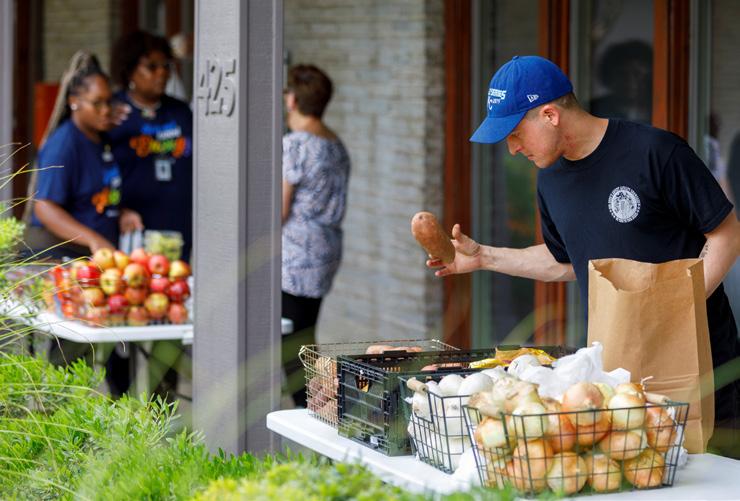
to life to ensure more people in the community have access to the food they need.
JFS is currently seeking volunteers to assist at the markets. More information is available by emailing volunteer@jfskc.org.
The J is calling on community members to volunteer in support of the 2026 JCC Maccabi Games as Kansas City prepares to host the international Jewish youth sports event from Aug. 2 to 7. More than 1,000 volunteers will be needed throughout the week to welcome athletes, coaches and families from across the United States and around the world.
Kelly Somberg, co-chair of the volunteer committee, said community support will be essential to creating a successful and meaningful experience for everyone involved.
“I have done an extensive amount of volunteer work in our community, but I have never been involved with something on this scale,” Somberg said. “It is a real privilege to serve as one of the volunteer co-chairs.”
Somberg said months of planning have already gone into preparing for the Games, with volunteers and staff working side by side to build an unforgettable experience for visiting delegations.
“Our steering committee has already spent months meeting and laying the groundwork for the Games,” she said. “The J staff have been incredible. They are working alongside volunteer chairs, on top of their day jobs, to lead all the Maccabi committees. It truly is a great partnership and what we can accomplish when we work together for the good of our community.”
Community members across Kansas City are already answering that call in a variety of ways. Alex Worth, a Kansas City community member, said the Games present a unique opportunity for local residents to support visiting
athletes while showcasing the strength of the city’s Jewish community.
“Volunteering for the Maccabi Games was an easy choice for me,” Worth said. “I love Kansas City and our growing Jewish community. This felt like the best way to help out.”
Somberg said the Games will also give Kansas City an opportunity to showcase its warmth and hospitality to visitors from around the world.
“I am excited to welcome delegations of athletes from around the country and even the world to Kansas City,” she said.
For some volunteers, the motivation comes from firsthand experience with the Games. Gabriel Perez, who will serve as a boys soccer coach for this year’s Games, said volunteering was an easy decision after previously experiencing the impact as a coach in the Games.
“I was part of the 2024 Houston Maccabi Games and got the opportunity to work alongside great coaches and coach some amazing soccer athletes,” Perez said. “Above all, I got to see how impactful this tournament was for the kids. They get to be part of something that could be a once-in-a-lifetime experience, and the connections you build with coaches and athletes are remarkable.”
Worth said volunteers play an important role in creating a welcoming environment and helping athletes enjoy a memorable week both on and off the field.
“If you’re considering volunteering for the Maccabi Games, do it,” he said. “You’ll meet new people and help athletes from across the world continue to grow as athletes and people.”
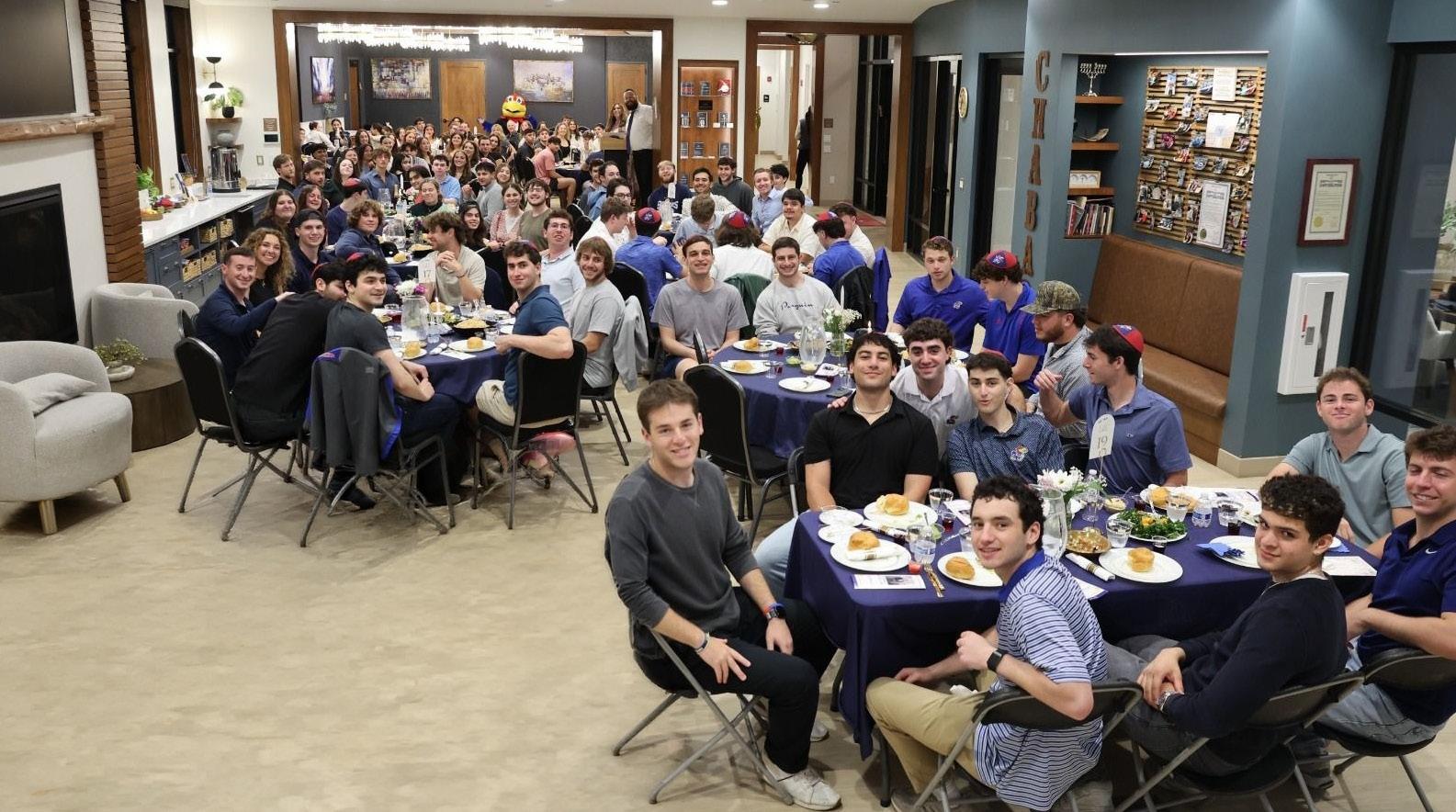
KU Chabad hosted its largest Shabbat dinner ever as 150 Jewish students came together in the new Cutler Family Chabad Center for Jewish Life.
KU Chabad considers the “Shabbat 150” event to be a milestone moment for Jewish life on campus. The evening’s theme, “Jewish and Proud,” focused on strengthening Jewish identity and courage at a time when many students across the country are navigating increased challenges and antisemitism on college campuses.
“People sometimes wonder about the future of the Jewish people,” said Rabbi Zalman Tiechtel, co-director of KU Chabad, “but when you look around a room filled with 150 Jewish students celebrating Shabbat together, the answer is clear. The future is strong, vibrant and proud.”
The program featured reflections from students who spoke about what it means to stand tall as Jews on campus today. In an environment where Jewish identity can sometimes feel challenged, the evening was intended to provide a space of confidence, connection, and shared strength.
Students sang, danced and celebrated together, joined by the University of Kansas mascot Big
Volunteer roles will include greeting families at the opening ceremonies, serving meals, assisting at evening events and more throughout the week. Community members can also support the Games by serving as host families for visiting athletes. Jewish families interested in hosting are required to house at least two athletes, with each athlete needing their own mattress or air mattress, along with access to meals, laundry and daily transportation to The J. Volunteer shifts are expected to open in early May.
More information is available at jcckcmaccabi.org. Those interested in volunteering or hosting athletes can email jccmaccabivolunteers@thejkc. org or jccmaccabihousing@thejkc. org.
Jay. A gourmet Shabbat dinner was served.
Adina Thompson, KU Class of 2026 and a member of KU Chabad’s executive board, shared that despite rising challenges, the event created a powerful sense of connection.
“Shabbat 150 was different in that it highlighted just how many Jewish students there are,” Thompson said. “It brought so much of KU’s Jewish student body together in one room, especially people who don’t usually show up.”
She added that the evening gave students a unique opportunity to meet others from across campus and feel part of something larger.
While regular Shabbat dinners allow students to come and go freely, Shabbat 150 introduced a more intentional model, asking students to “host” tables. Nechama Tiechtel of KU Chabad said that hosts recruited at least eight friends, helped set up the event and served food throughout the evening. Interest in hosting resulted in students volunteering throughout the week leading up to the event.
“It was really beautiful,” she said. “The hosts were excited to bring their friends and welcome them into the family.”
This year, 20 students served as table hosts. Jacob Abowitz, KU Class of 2028, took on that role and said the experience deepened his connection to the community.
“I really liked hosting a table this year because I felt more a part of KU Chabad,” Abowitz said. “I felt proud to bring more of my Jewish friends to such a special, unifying event.”
Beyond the celebration, the evening also served as a tribute to the legacy of Bob Cutler, the namesake of the Cutler Family Chabad Center. During the program, Cutler, who is the key building donor, shared the guiding principles, values and life lessons that have shaped his life.
As the semester continues, KU Chabad will continue its weekly Shabbat dinners and ongoing programming.
By Skye Pournazari News-Press NOW
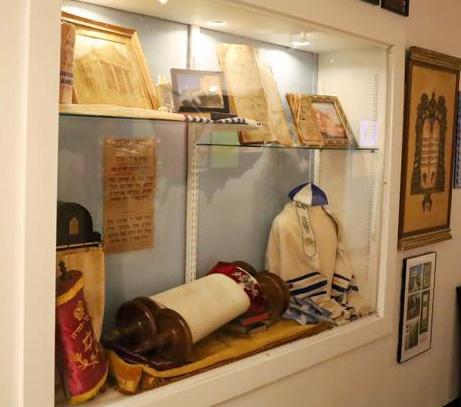
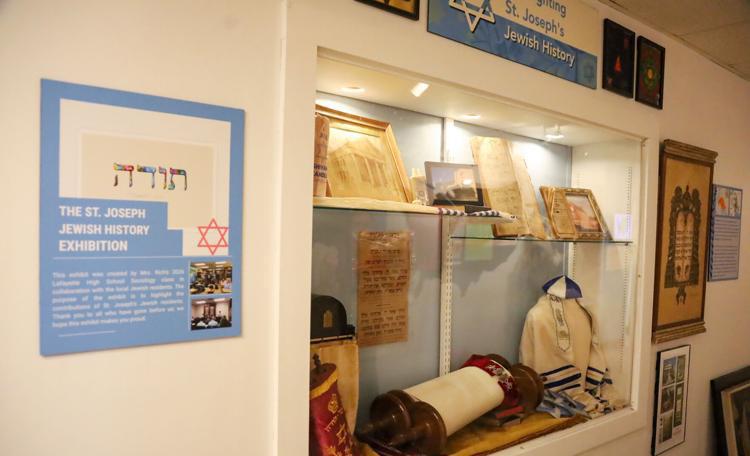
A Lafayette High School class in St. Joseph, Missouri, is bringing history to life by collecting, cataloging and curating a museum exhibit filled with historic items, books, documents and more donated by St. Joseph Jewish families. The exhibit opened to the public at the St. Joseph Museums on Sunday, May 3.
Tori Zieger, an archaeologist with the St. Joseph Museums, said that the project completed by Lafayette High School history teacher Brooke Rich’s sociology class has been a joy to see take shape.
Initially unsure how the exhibit would come together, she said her expectations were exceeded as items accumulated, far surpassing what was originally anticipated. Students handled the exhibit materials, researching, dating and cataloging each piece.
“The families got really invested,” she said, noting that while some items belong to the museum, most on display — along with seven additional boxes in her office — were donated by local families. “So all of this is a very grassroots created, curated exhibit. We do have a pretty robust Jewish history. They were some of the first families here.”
Zieger said many early businesses, particularly on Sixth Street, were owned by young Jewish entrepreneurs who moved west, invested in commerce and helped develop the local economy.
“I’m really excited that the families were involved, that’s the history we want to tell, that locally connected from the source,” she said.
Senior Brendan Hines said the class connected with members of St. Joseph’s Jewish community with help from teacher Mrs. Rich.
“We were able to find a lot of people who were interested in the project,” he said.
Surprised by the depth of Jewish history in St. Joseph, senior Nicholas
Arevalo said the exhibit would not have been possible without community involvement.
“We had no clue,” Arevalo said. “We’d never really heard about a synagogue here before.”
Rich told the News-Press she felt called to help share this history. Though not Jewish, she said her husband Alex’s family has Jewish roots in St. Joseph dating back to the 1800s.
“Growing up, I had no idea there were Jewish people in St. Joe,” she said.
Rich said the exhibit aims to show visitors that Jewish residents were active contributors to the city’s growth and community.
“To show that they were part of the community, and believed in the community and wanted to make it better, I think that is something we personally, I, need to hear in our current state,” she said.
She said many items on display had been kept in storage and are now being shared with a broader audience through the exhibit.
“I think it brings history to life, and it shows them that these people aren’t just names in newspapers; that they were living, breathing people who had very similar lives to them,” she said.
Rich said members of the Jewish community visited the class during the project to share their stories.
“It’s been amazing,” she said. “Because it’s been a lot, but it’s a pleasure to have this burden, if that makes sense. It doesn’t feel like work. It feels like passion. I have loved it.”
Students created their own system to research, date and catalog donated items using spreadsheets before submitting the catalog to the museum for integration into its system.
“They did it all,” Rich said. “…There’s
a future in museum curating for some of those boys.”
Zieger said the sociology class took ownership of the project from the beginning.
“They picked the items that they wanted to focus on,” she said. “They designed the layout… This was all done by the kids. They did such a good job.”
Senior Talan Sowell said he enjoyed reviewing a photo book Rich shared and learning about the everyday lives of Jewish residents in St. Joseph.
Hines said the project offered a hands-on way to explore local history.
“We then get to make a project that’s not just for us, but for the entire St. Joseph community to go see,” he said.
Hines said one of his biggest takeaways was gaining a broader understanding of Jewish history beyond the Holocaust.
“But it’s really hard to relate to, especially if you’re not Jewish or related, but with this, you learn and get a lot of the pictures,” he said. “You can put a face to a name and understand a lot of the things they went through, as well as you understand that they did survive, they made it through that hardship, and they’re still alive today and thriving in the community.”
Arevalo said the experience has been one of the most engaging of his academic career.
“Throughout my entire life history with school, this is the coolest and most unique experience,” he said, noting that learning about the Jewish community’s impact on St. Joseph was eye-opening.
Seniors Ian Chapin and Tejas Davison said they were surprised to learn there were once three synagogues in the city.
Davison said he also enjoyed participating in a Passover experience, sampling traditional foods.
Chapin said one exhibit item — a collection of dolls created by a Jewish sewing circle — is valued at about $12,000.
“We weren’t really sure how to deal with them, so we just tried to make them all at least visible,” he said.
Davison said he used a 3D printer to create elements for the exhibit, including a large Star of David displayed atop one section and signage throughout.
Sophomore Noemi Miller and freshman Breanna Sellars said the class has become popular among students.
“It made me happy to be a part of something so big as a younger student,” Miller said.
Sellars said she enjoyed organizing items into categories such as religion, social life and business.
Both said they are excited to attend the opening.
“It feels really good,” Sellars said. “To know that we did it, that makes me feel proud because we worked together as a team.”
Those interested can see more of the exhibit at St. Joseph Museums, located at 3406 Frederick Ave #2913, St Joseph, MO 64506.
This article was originally published in News-Press NOW of St. Joseph, Missouri. It has been edited for length.
April 12
500 Series:
Hunter Thomas 658 (246 168 244)
Bill Sloan 630 (235 199 196)
Steve Thomas 627 (200 189 238)
Ryan Thomas 601 (193 207 201)
Chase Lee 579 (185 211 183)
Kent Verden 575 (177 183 215)
Zachariah Archie 572 (145 160 267)
Michael Sokol 557 (189 190 178)
Mark Newton 549 (179 190 180)
Adam Russo 545 (200 170 175)
Willie Jones 541 (200 164 177)
Nick Meyers 531 (195 164 172)
Brian Wright 526 (212 142 172)
Steve Baraban 522 (157 185 180)
Irwin Snitz 509 (180 170 159)
Chris Eldredge 506 (145 190 171)
170 Game:
Balke 187
Katzif 183 Morty Rock 181
Altman 179 Steve Eisman 172
April 19
500 Series:
Hunter Thomas 706 (232 239 235)
Michael Sokol 606 (199 224 183)
Ryan Thomas 599 (222 179 198) Mark Newton 591 (176 216 199) Willie Jones 570 (168 192 210)
Wright 564 (162 208 194) Zachariah Archie 558 (173 189 196) Steve Baraban 550 (186 162 202)
Eldredge 547 (202 169 176) Joe Ravnikar 531
244-7010 or balketw@yahoo.com or Stuart Pollack at (913) 957-3716 or skp28@aol.com.
• 1st Place: Neighborhood Hearing (1841) (pictured)
Scott Bronston 399
Larry Katzif 497
Alan Abramovitz 390
• 2nd Place: BS and Me (1807)
Bruce Singer 414
Steve Baraban 586
Steve Greenberg 480
• 3rd Place: Pin Pals (1805)
Chase Lee 537
Joe Ravnikar 515
Adam Russo 513

• 4th Place: Ward Parkway Lanes (1791)
Jerry Shapiro 464
Terry Fink 384
Zeek Archie 526
Find more community history at kcjc.com/archive.

Using The Chronicle’s archives and community submissions, here are some recipes for you to try out. Email samk@ jewishkc.org with a recipe, and it might be published here!
Mrs. Ben Trillin, 1970
Ingredients
• 5 celery stalks
• 1 green pepper
• 2 bunches green onion
3 large garlic cloves
• 4 tbsp. margarine
½ cup white wine or sherry
1 large can whole tomatoes
2 small cans tomato sauce
1 small can tomato paste
• 1 can tomato soup
• 1 cup hot water
• 2 tbsp. oregano
1 tbsp. each of basil, salt, pepper
⅛ tsp. red pepper
• 1 8 oz. box of fresh mushrooms
• 1 12-oz. package green noodles
• 2 lbs. ground chuck 1 large can corn niblets
Instructions
1. Chop celery, green pepper, onions and garlic very fine
2. Saute in margarine until soft, then add wine
3. Let simmer for 5 minutes
4. Whirl tomatoes for a second in a blender or mash them with a fork and add to above along with other tomato ingredients, seasoning, water and slivered mushrooms
5. Saute meat until redness is gone, drain fat off and add to above
6. Let simmer for several hours (best to cook in a Dutch oven)
7. Prepare green noodles according to directions
8. In a large casserole dish, start to layer, beginning with sauce, noodles and corn, saving some sauce for the top.


JEWISHHERITAGETRIP HBHAGRADUATION
Get yourself, your family and your friends subscriptions to The Chronicle!
Scan the QR code below or go to kcjc.com/subscribe for more information.

RABBILINDASTEIGMAN
WALKFORHEALTH
• B’nai B’rith bowling (pg. 5)
KOLLEL
• B’nai Tzedek Shuk (pg. 8)
KUCHABAD
BNAITZEDEKSHUK
• HBHA graduation (pg. 2)
• Jewish Heritage Trip (pg. 1)
• Jewish War Veterans (pg. 15)
• JFS market (pg. 4)
• Kollel (pg. 3)
MENTALHEALTH SARAHHURWITZ
• Rabbi Linda Steigman (pg. 1)
JFSMARKET MACCABIGAMES
• KU Chabad (pg. 4)
STJOSEPHJEWISHHISTORY BNAIBRITHBOWLING
• Rabbi Stephen Karol (pg. 11)
MARABALKE WHITETHEATRE
• Leaders for Tomorrow (pg. 11)
• Sarah Hurwitz (pg. 3)
RABBISTEPHENKAROL JEWISHWARVETERANS LEADERSFORTOMORROW
• Maccabi Games (pg. 4)
• Mara Balke (pg. 9)
• Mental health (pg. 2)
• St. Joseph Jewish history (pg. 5)
• Walk for Health (pg. 2)
• White Theatre (pg. 10)
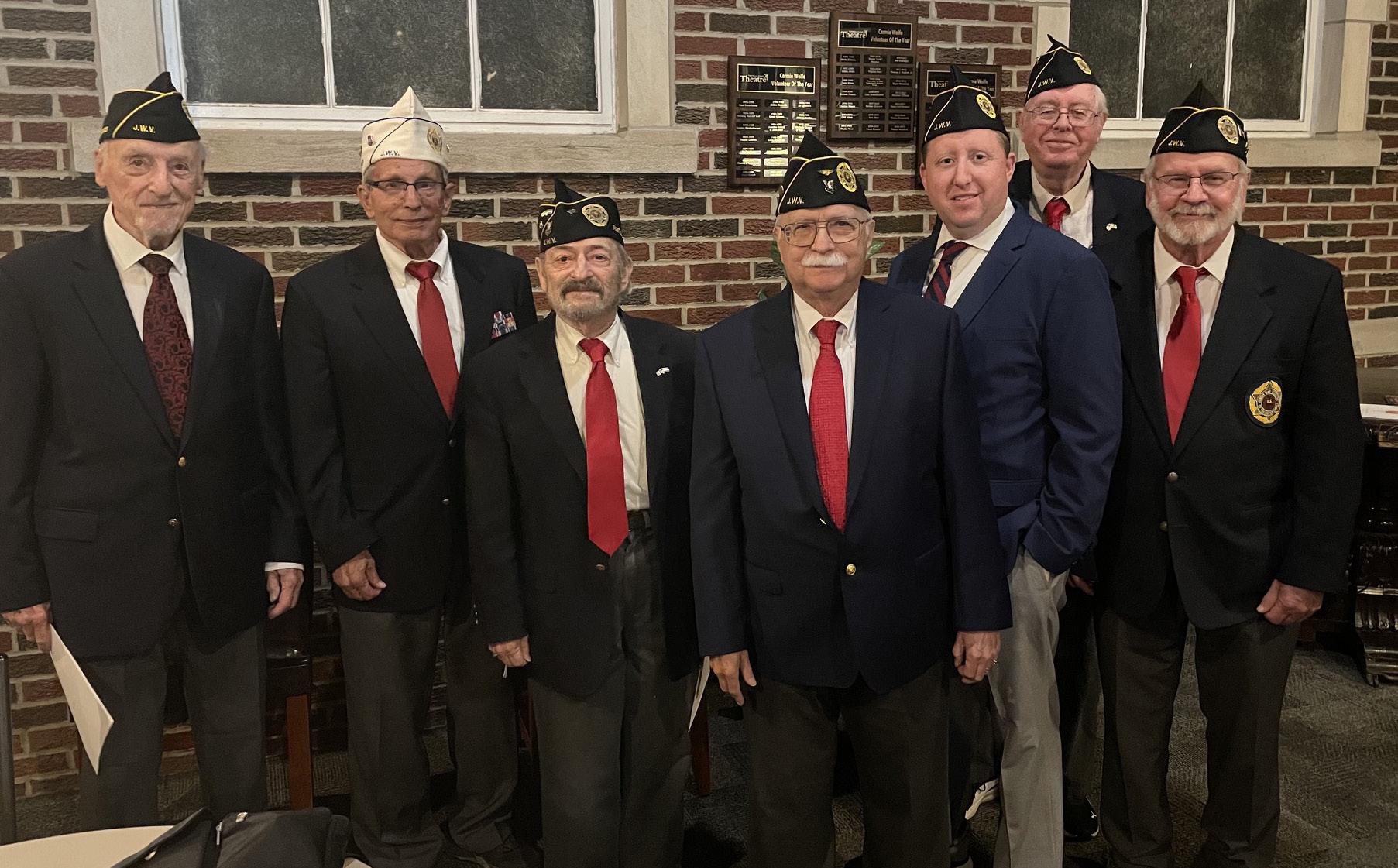
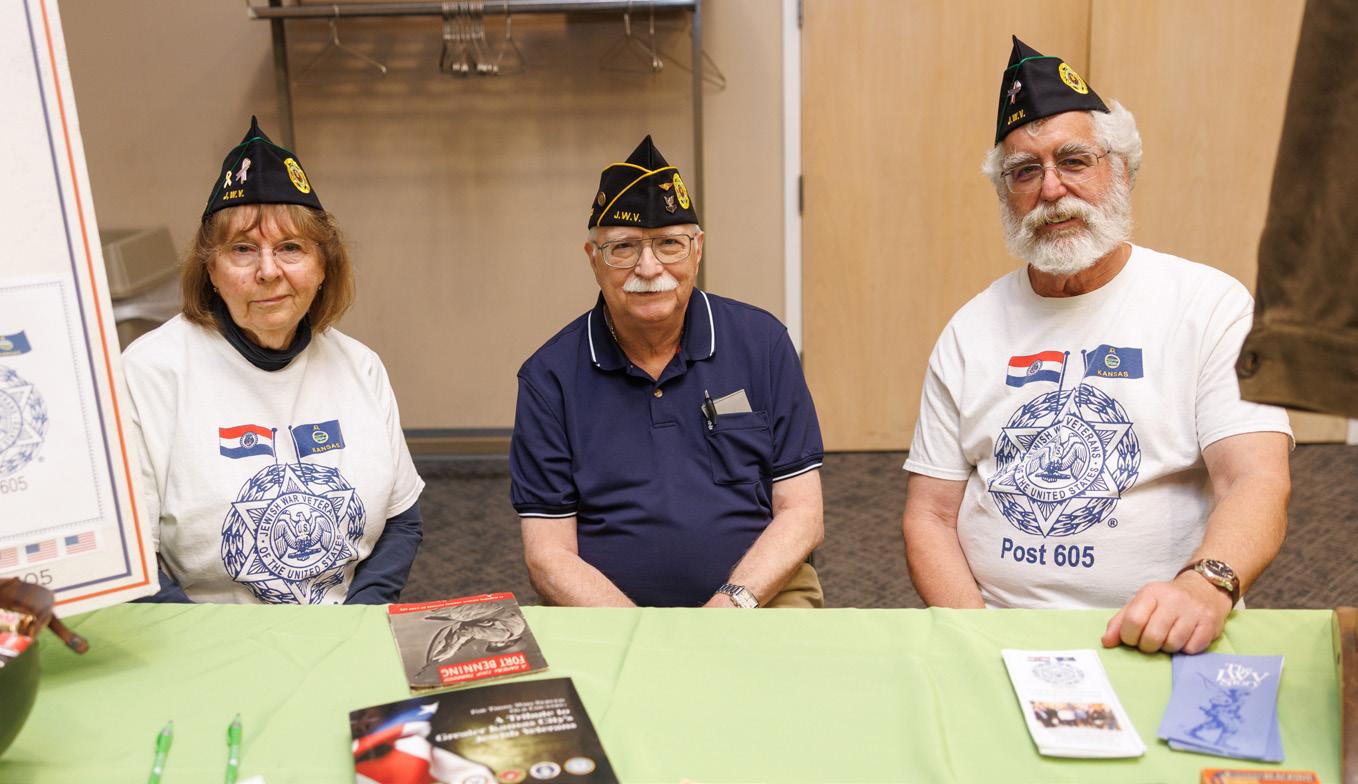
Members of Jewish War Veterans Post 605 attended the Annual Kansas Holocaust Commemoration on April 20 in Topeka. Pictured (top) are Scott Bronston, Greg Quinn, Howard Noah, Larry Gordon, Steve Schorr, Richard Brockman and Josh Goldfarb. JWV also took part in the annual B’nai Tzedek Shuk. Pictured (above) are Julie London, Howard Noah and Mark London.


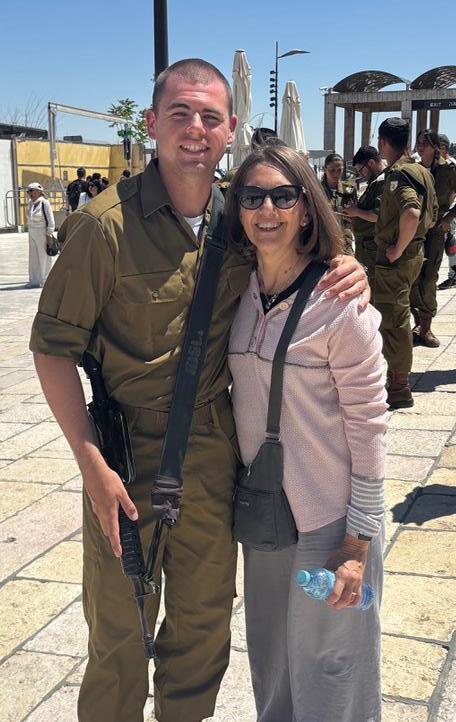

Gilli Gerson had his Israel Defense Forces swearing-in ceremony, Tekes Hashbaah, recently at the Kotel in Jerusalem, where he received his Bible and weapon. His unit is the Combat Intelligence Collection Corps, responsible for gathering real-time visual and field intelligence. Gilli's mom, Karen Gerson, attended the ceremony and gave him his priestly blessing.
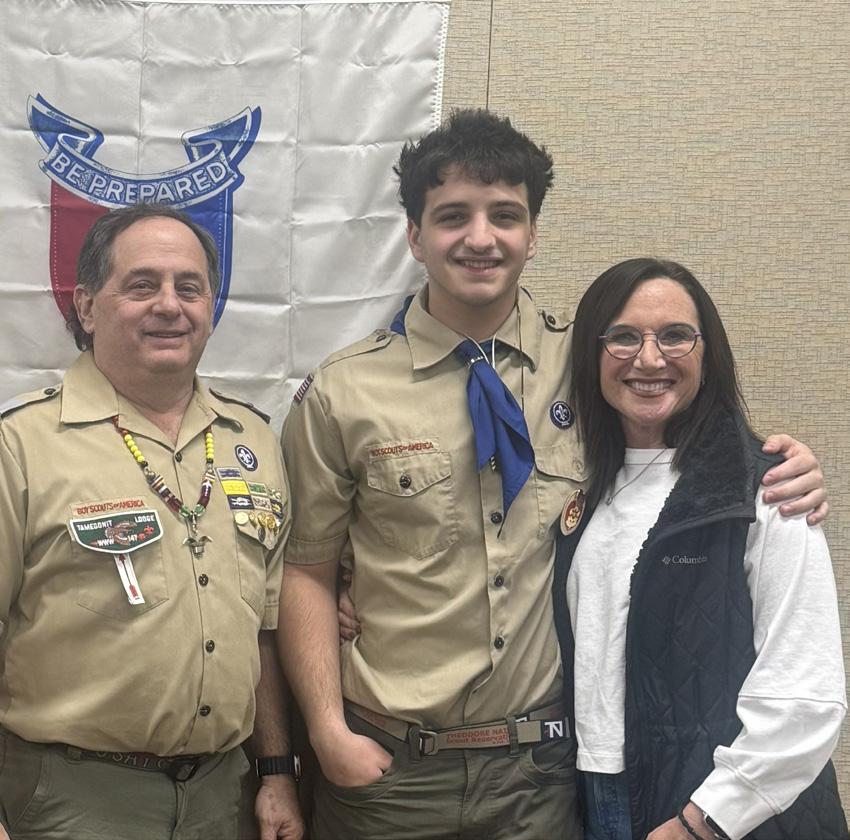
of
61 recently earned the rank of Eagle
the highest honor in
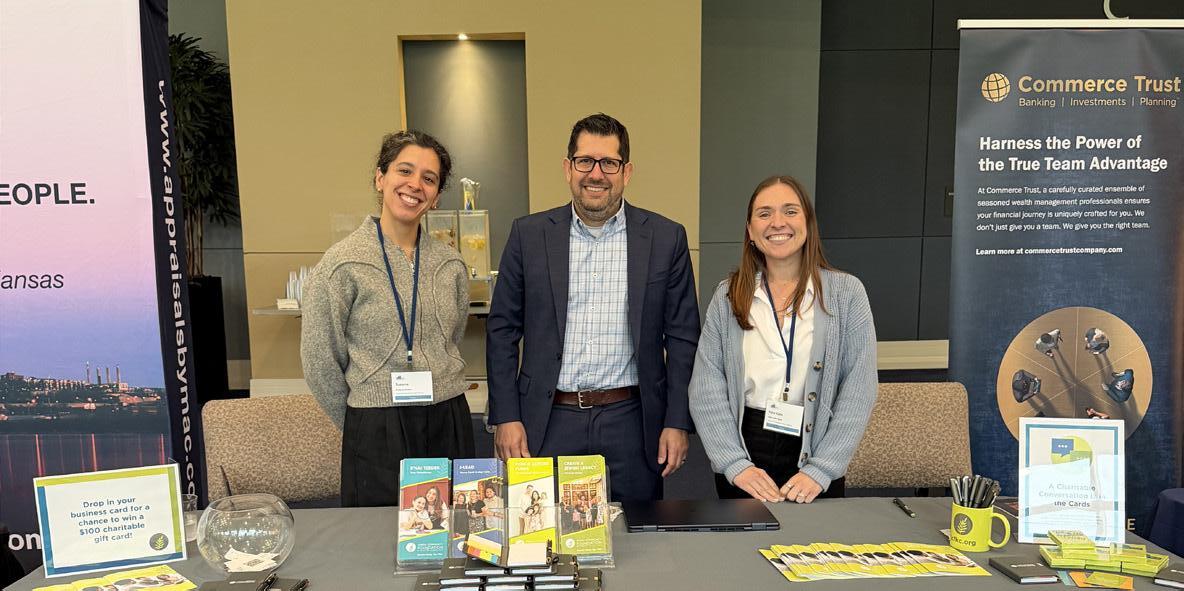
Above: JCF also participated in the Kansas City Estate Planning Symposium, where the JCF team connected with regional professional advisors and shared how they can work together to achieve their clients’ charitable goals. Pictured are Suzanne Galblum Dicken, Josh Stein and Kara Kahn Bush.


Sylvia Fehr
Abrams Soule
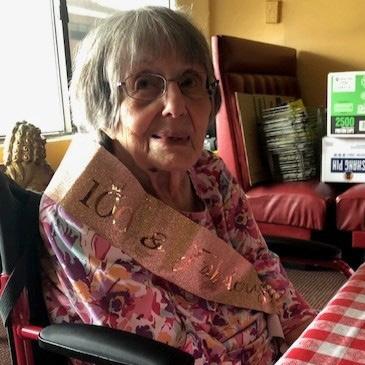
Sylvia Fehr Abrams Soule turned 100 years old on April 20. She was born on April 20, 1926, in Santa

Shira Bernard and Derek Jobst were married on March 8 at the Hacienda Del Sol Resort in Tucson, Arizona. Alan Edelman officiated at the wedding.
The bride is the daughter of Lisa and Jerry Bernard of Overland Park, Kansas, and the granddaughter of Marjorie Adler and the late Milton Adler; the late Myron Bernard and Audrey Rothbarth of St. Louis, Missouri;

Drs. Stephanie Heimler and Benjamin Bernard were married on Aug. 31, 2025, at Paradise Point in Mission Bay, San Diego, California.
Rabbi Ron Schulman and Cantor David Lipsitz of Congregation Beth El
Monica, California, to her parents, Minnie and David Fehr, and had one older brother, Louis A. Fehr. She has been a resident of Kansas City since 1953, where she raised two daughters, Caryn Abrams Rains and Diane Abrams Jones, and remains a longtime member of The Temple, Congregation B’nai Jehudah.
Attending the celebration were Soule’s two daughters, a son-in-law, two grandchildren, three great-grandchildren and many nieces and nephews. Her extended family and closest friend celebrated with her recently with a surprise party, luncheon and special gift — a memory book of her life stories. She was also honored by a letter by the governor of Kansas, Laura Kelly, as part of the surprise.
and the late Beverly Edelstein of St. Louis. Included in the wedding party were her brother Daniel Bernard of Paradise Valley, Arizona; brother and sister-in-law Drs. Benjamin Bernard and Stephanie Heimler of La Jolla, California; and brother-in-law Gavi Horwitz and sister Rachel Horwitz as matron-of-honor. Shira’s nephew, Eli Horwitz, served as ring bearer, and her nieces, Mia and Noa Horwitz, served as flower attendants.
The groom is the son of Amy Jobst and the late Christopher Jobst of Tucson. He is the grandson of Ann Volz and the late Dr. Robert Volz, the late Alois Jobst, and the late Bernadette Jobst of Tucson. Included in the wedding party was his sister, Ellie Jobst of Kansas City.
The couple lives in San Francisco, California, and their honeymoon was in Lanai, Hawaii. Shira works in medical device marketing, and Derek works as a software engineer. The couple met several years ago on a dating app.
in La Jolla, California, officiated the ceremony, which overlooked the water and was attended by friends and family.
The bride is the daughter of Susie and Jeff Heimer of San Diego and the granddaughter of Nancy and George Heimler of Beverly Hills, California. Included in the wedding party were her brother, Danny Heimler, and his fiance, Jena Sniefer, of La Jolla. The bride’s cousin Samantha Heimler of Beverly Hills served as a flower attendant.
The groom is the son of Lisa and Jerry Bernard of Overland Park, Kansas, and the grandson of Marjorie Adler and the late Milton Adler; the late Myron Bernard and Audrey Rothbarth of St. Louis, Missouri; and the late Beverly Edelstein of St. Louis. His brother, Daniel Bernard of Paradise Valley, Arizona, served as best
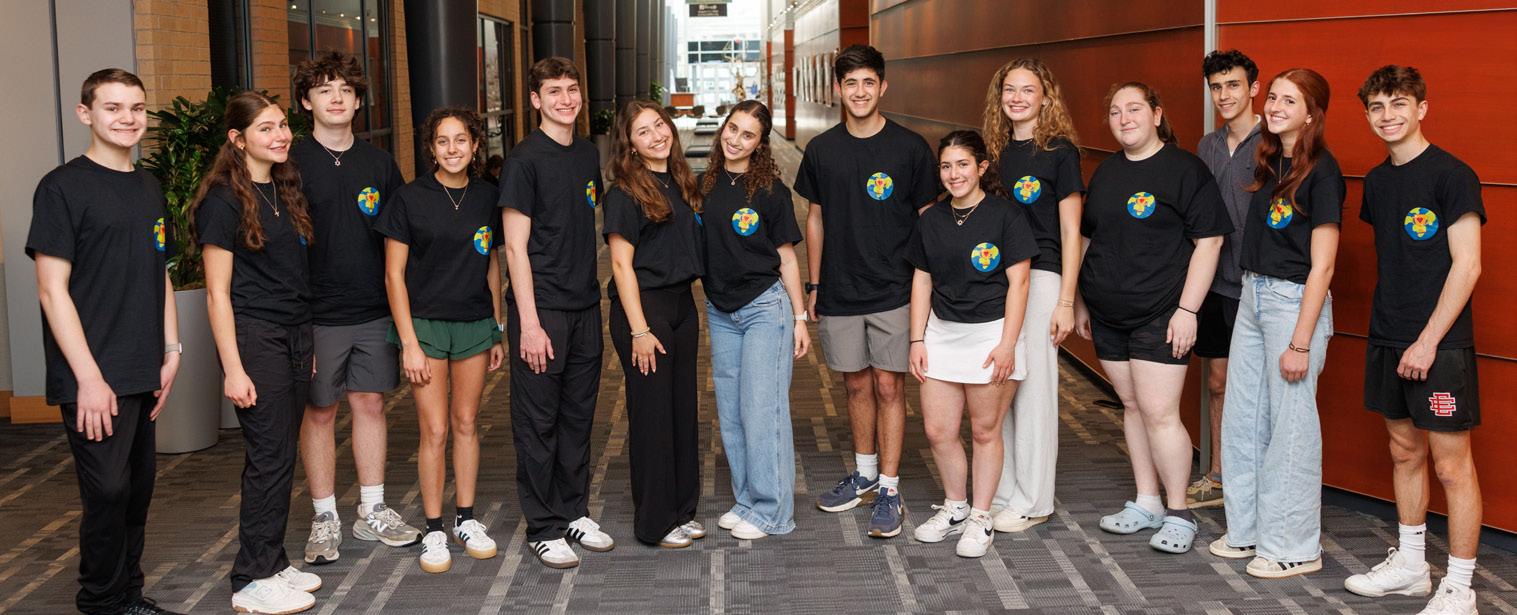
On Tuesday, April 14, the Jewish Community Foundation (JCF) welcomed teens and their families to its youth philanthropy fair, the B’nai Tzedek Shuk. This annual event, a highlight of the Foundation’s philanthropic programming, is held to connect teens with Jewish communal organizations for an evening of learning, engagement and fun.
The theme of the event was the “Philanthropy World Cup,” inspired by Kansas City hosting the upcoming FIFA World Cup and JCC Maccabi Games. The theme was selected to reinforce the core Jewish value of collective responsibility and empower teens to take an active role in repairing the world. B’nai Tzedek participants donated more than $3,000 to communal organizations at the Shuk.
The event took place in the Jewish Community Campus social hall, where teens met with representatives from Jewish organizations and learned about each nonprofit’s work. To maximize engagement, the fundholders participated in a trivia challenge to discover interesting facts about each organization represented. Representatives from 20 local nonprofits participated in the event.
“The Shuk is always one of the most meaningful events of the year for me,” said Ruby Sokol, a member
man. Included in the wedding party were his sister Shira Bernard and her then-fiance, Derek Jobst, of San Francisco; and sister and brotherin-law Rachel and Gavi Horwitz of Overland Park. Ben’s nephew, Eli Horwitz, served as ring bearer, and his nieces, Mia and Noa Horwitz, served as flower attendants.
The couple lives in San Diego, and their honeymoon was in Tahiti and Bora Bora. Stephanie recently completed her Ph.D. in Biomedical Science at UC San Diego and will work in the pharmaceutical space. Ben is completing his fifth year as an ENT resident at UC San Diego. The couple met several years ago at a Passover Seder hosted by Rabbi Eric and Chaya Ertel of La Jolla.
of the B’nai Tzedek Youth Council, the cadre of teens that planned the event. “The ability to talk directly with various Jewish organizations in one place helps me make a confident choice of where to make my annual B’nai Tzedek grant.”
The Foundation’s B’nai Tzedek program introduces bar and bat mitzvah-age youth to tzedakah by inviting them to establish their own personal charitable giving accounts at JCF. B’nai Tzedek Funds may be opened with a $125 tax-deductible contribution, which the Foundation triple matches with a $375 contribution. Each teen fundholder begins their philanthropic journey with a $500 fund balance, and every year they may donate 10% of their fund to a Jewish charity, either locally or in Israel.
The Shuk gives these young philanthropists the opportunity to learn about the missions of community organizations and discover how their donations can make a positive impact. The Shuk can be the first time teens are introduced to the wide array of diverse organizations working in the community.
“It’s incredibly meaningful to spend time with the next generation of philanthropists at the Shuk,” said Melanie Hayden, chief advancement officer of Jewish Family Services. “Hearing what young people care about and having the chance to share how Jewish Family Services is supporting individuals and families in our community through counseling, food security and social services, makes these conversations so powerful for all of us.”
After visiting the organizations’ booths, a reception was held with child-oriented menu items such as mac and cheese, quesadillas and Dippin’ Dots. The evening concluded with members of the Youth Council sharing personal insights about their positive experiences participating in the B’nai Tzedek program.
Since the program began in 2001, nearly 700 teens have opened funds, and almost $500,000 has been donated to Jewish nonprofits.
More information about the B’nai Tzedek program is available by contacting Suzanne Galblum Dicken at (913) 327-8286 or sdicken@jcfkc.org.

By Ellie Holsten
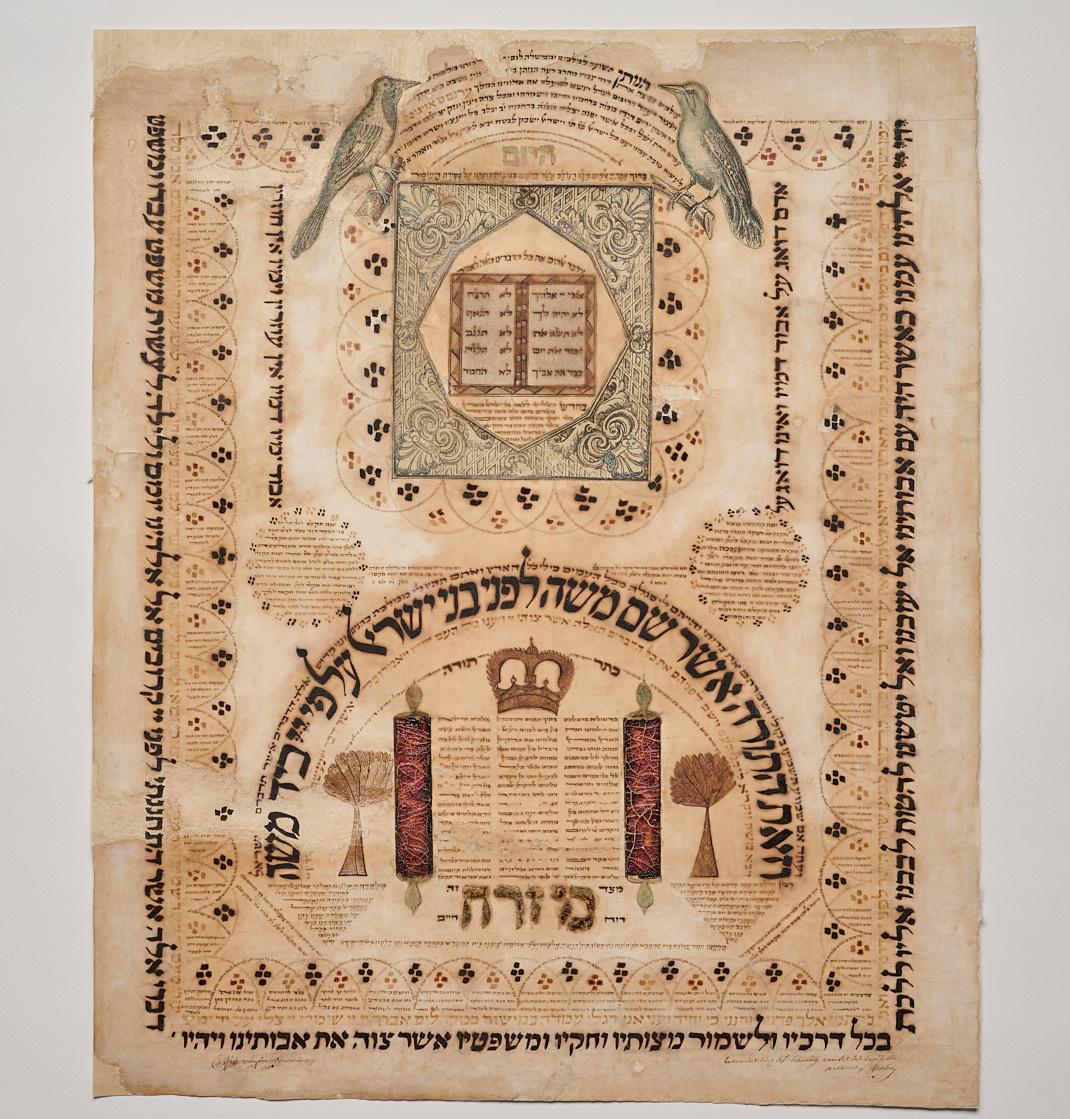
The seven-week period between Passover and Shavuot is called the Omer. During this period of semi-mourning, certain events like weddings and haircuts are prohibited. People who count the days of the Omer can use tools like this parchment counter to keep track of the seven weeks.
In addition to counting the Omer, this parchment piece serves as a Mizrach, a decoration that indicates the direction of Jerusalem for prayer. It is also inscribed with the names of the couple for whom it was made, Yesayah and Peska, and important dates
to their family including birthdays, anniversaries and yahrzeits.
Made in Hanover, Germany, around 1850, the parchment contains a prayer for the welfare of the German government. Symbols on it include a crown, songbirds and a Torah scroll. Some of its text creates shapes through a technique called micrography. It is signed by its scribe and artist, Yosef Eibeshitz.
More information about the Michael Klein Collection at the Temple, Congregation B’nai Jehudah can be found at kleincollection.org or by calling (913) 663-4050 to schedule a tour.
Village Shalom recently recognized Mara Balke as the recipient of the 2026 Stephen Schoenfeld Volunteer Recognition Award, which celebrates her dedication, talent and heart for service.
The award, named in honor of Stephen Schoenfeld and his commitment to volunteerism, recognizes individuals who embody a true spirit of giving. This year’s award was presented by Marcia Schoenfeld, who joined Village Shalom in celebrating Balke’s contributions to the community.
Balke’s connection to Village Shalom began four years ago when her mother, Joie, became a resident. Since then, Balke has become a beloved presence across the community. Drawing on her extensive formal piano training, she plays music throughout the campus — most notably each Friday during lunch in the Assisted Living dining room.
Her contributions extend beyond performance. Balke has taken it upon herself to oversee the care and maintenance of the community’s keyboard instruments, ensuring they are regularly tuned and in excellent condition — for the musicians who play them, the residents who enjoy them and the longevity of the instruments themselves.
Balke embraced a new challenge about a year ago by learning to play mahjongg. What began as participation quickly evolved into leadership. She became a regular in the group, then an assistant to its organizer, Sandy Lerner. When Lerner was no longer able to continue in that role, Balke
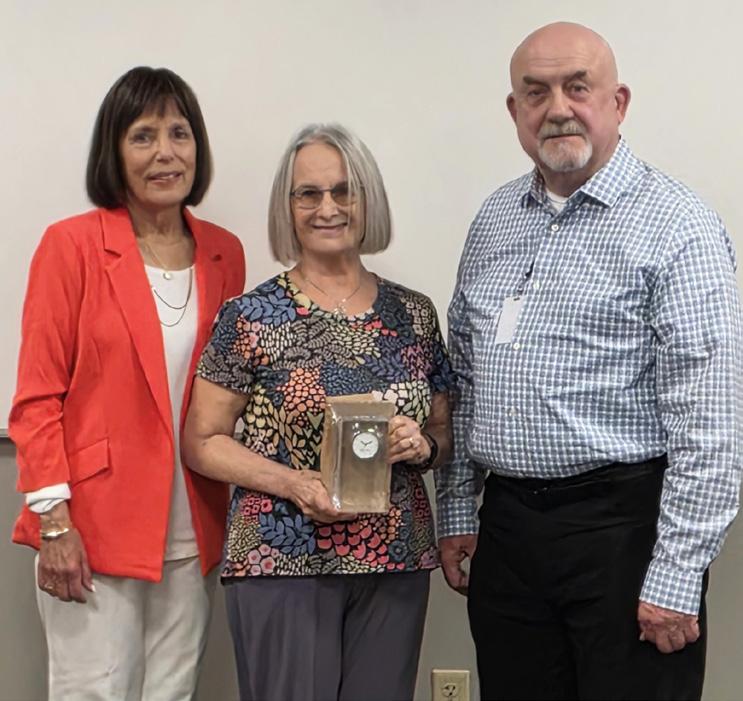
2026 Stephen Schoenfeld Volunteer
stepped forward to keep the group thriving, ensuring residents could continue enjoying the camaraderie and engagement the game provides.
Balke’s connection to Village Shalom remains deeply personal. Even follow ing the recent passing of her mother, Joie, leadership say she has continued to give her time and talents generously — an enduring reflection of her love for both her family and this community.
Outside of Village Shalom, Balke also volunteers at a local food pantry in Johnson County and maintains an active circle of friends who value her time and companionship.
“Mara exemplifies what it means to be part of a community,” said John Gilbert, volunteer coordinator for Vil lage Shalom. “Her generosity of spirit and consistent presence have made a meaningful difference in the lives of our residents.”
By Julie London
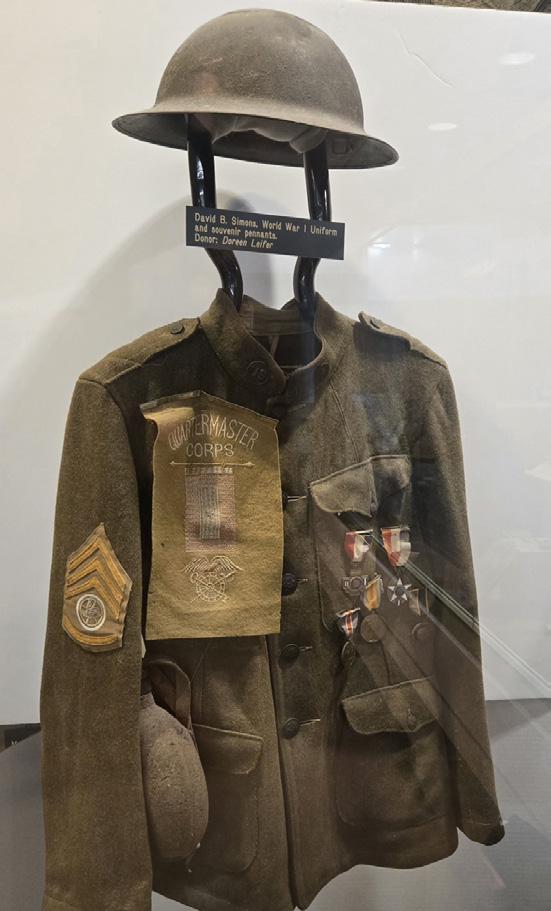
This jacket is one of the older items in our cases. Once belonging to David B. Simon, it is a wool World War I Army uniform and helmet. Simon served in World War I in France. His uniform was later donated to the museum by his daughter, Doreen Leifer. Simon had been very involved in the local Jewish community, having been instrumental in the development of the Hyman Brand Hebrew Academy since its founding, among other things.
The uniform is a wool service coat, featuring a pennant that signifies the soldier was a member of the Quartermaster Corps. Below the wording features an eagle emblem perched on a wheel with a crossed sword and key. Originally called the Quartermaster Department, it is the Army’s oldest logistics branch,
established on June 16, 1775. The chevron on the sleeve indicates the rank of Ordnance Sergeant. It includes three chevrons and a flaming bomb insignia, which was traditional for the Ordnance Corps.
The helmet is a Model 1917 “Brodie” helmet, commonly used by U.S. forces during WWI. Attached to the garment are a variety of medals. One is a WWI Victory Medal, which is often shown with campaign clasps indicating service overseas. Also featured are “Welcome Home” medals, which were frequently issued by local towns and cities to their returning veterans. Be on the lookout for an update on the two museum cases in the lobby of The J. We will be working on this for thenextfewmonths,addingitemsdonated by local veterans who served in more current conflicts.

The Lewis & Shirley White Theatre at The J has launched a new mission statement and updated logo in anticipation of the reopening of its newly renovated space later this fall.
The mission statement ties in with The J’s established values. The complimentary values reflect The White Theatre’s continued commitment to producing professional-quality performances to inspire, entertain and connect the community. Rooted in more than 20 years of history, the refreshed identity is intended to reinforce The White Theatre’s role as an innovative, inclusive and passionate cultural hub.
“This rebrand clarifies and strengthens The White Theatre at The J’s identity as a place where professional-quality artistry and community connection meet,” said Jonah Greene, director of Arts & Culture at The J. “It reflects our continued commitment to producing high-caliber work while deepening our role as a vibrant destination for the arts.”
The White Theatre produces year-round performances with a
commitment to artistic excellence, meaningful storytelling and community engagement. The rebrand comes as The White Theatre prepares to reopen following a renovation designed to enhance both audience enjoyment and performer success.
“This renovation is about elevating every aspect of the experience, from the moment you sit down to the final curtain,” said Scott Slabotsky, producer at The White Theatre. “Audiences will notice improved sightlines, enhanced acoustics and more dynamic lighting, all of which bring them closer to the story on stage.”
Slabotsky, who chaired the capital campaign that led to the opening of The White Theatre in 2005, said the organization has grown beyond its original vision.
“When we opened in 2005, we had a vision of what The White Theatre at The J could become, but the growth has exceeded our expectations,” he said. “We have evolved into more than a producing theater and have become a destination for artists across the

Take a look inside Village Shalom to see our remarkable Assisted Living and Memory Care communities. Maintenance-free, private apartments and specialized care from caring staff give peace of mind to you and your loved ones. Learn more at VillageShalom.org or call Justine Ogdon at 913-317-2600 to tour our welcoming senior living community. We look forward to showing you what peace of mind looks like. Welcome to The Village.

Midwest and are now recognized as one of the leading Jewish theaters in the country.”
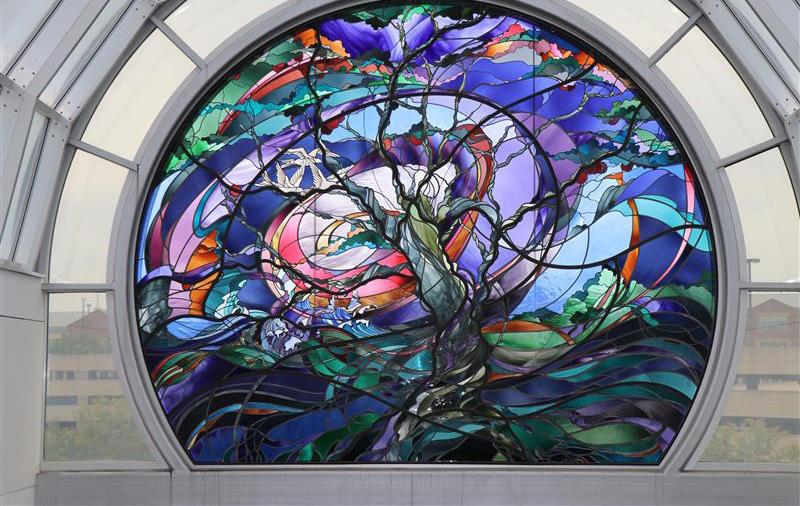
The updated logo represents the Tree of Life that can be found in the stained-glass window at the entrance of the theater itself. The roots represent the theater’s history. The branches complement The J’s “Five Core Values:” Welcoming & Inclusive; Building Community; Enriching Mind, Body & Soul; Passing on Jewish Culture & History; and Treating Others As You Wish To Be Treated. The trunk, uniting both the past and present, shares the theatre’s vision to be an innovative, inclusive and passionate space for actors and theatregoers alike to engage with
theatre.
“Moving forward, the rebrand positions The White Theatre at The J not only as a presenter of performances, but as a cultural hub for the community where belonging is fostered, diverse voices are elevated and Jewish storytelling comes to life,” Greene said.
Theater programming at The J dates back to 1932 with the Resident Theatre, one of the region’s earliest organized community theater efforts. Since opening its current space in 2005, The White Theatre at The J has produced a wide range of acclaimed performances, including “Les Misérables,” “Newsies,” “A Raisin in the Sun,” “The Music Man” and “West Side Story.”
As The White Theatre looks ahead to its next chapter, leaders hope the rebrand resonates with both longtime patrons and new audiences. The refreshed identity is intended to honor the theater’s legacy while creating momentum for its future.
More information about The White Theatre at The J is available at thewhitetheatre.org.
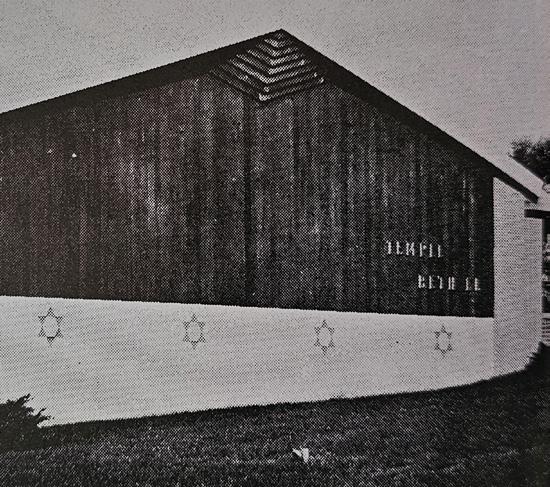
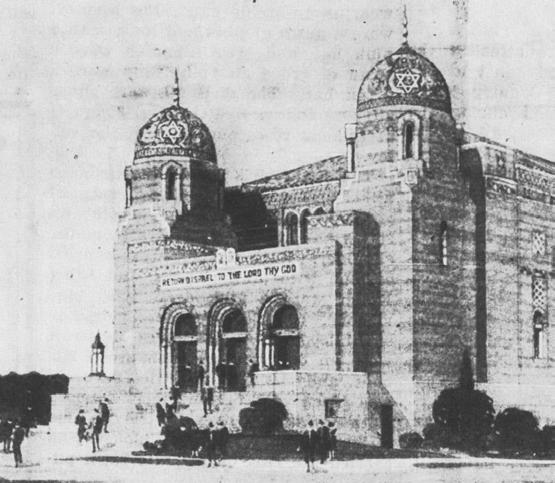
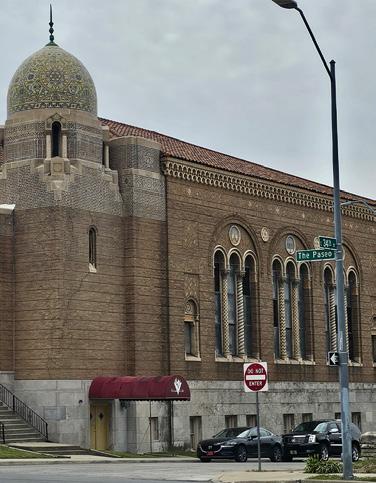
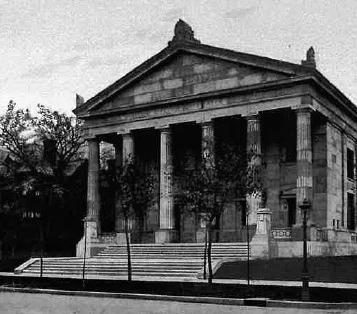
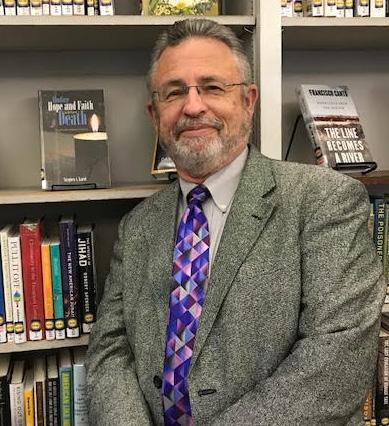
Rabbi Stephen Karol, a Kansas City native who lives on Long Island in New York, was honored by his synagogue when it announced its new youth lounge would be named for him.
Rabbi Karol is a rabbi emeritus of Temple Isaiah, a Reform Synagogue in Stony Brook, New York, which he led from 2002 until 2014. He was honored by officially opening its Rabbi Stephen A. Karol Youth Lounge in February.
Synagogue leadership told Times Beacon Record (TBR) News Media that congregants “thought the most appropriate way to honor Rabbi Karol’s time at Temple Isaiah would be something for youngsters. During his dozen years as spiritual leader, his focused outreach to children and teenagers was clear. Lifelong relationships with former students, now adults (several of them rabbis), continue.”
Rabbi Karol told The Chronicle that he considers his work as “paying it forward.”
“I was fortunate enough to have had financial and moral support from [The Temple, Congregation] B’nai Jehudah that encouraged me to be in youth group, go to camp and go to Israel,” he said. “When I became a rabbi, I wanted the students at my
congregations in Buffalo, Boston and Stony Brook to have the kind of support that I did.”
After leaving Kansas City, he was ordained at the Hebrew Union College-Jewish Institute of Religion (HUCJIR) in Cincinnati, Ohio in 1977. He has served at synagogues in Buffalo, New York, and Hingham, Massachusetts, in addition to at Temple Isaiah. He also authored a book, “Finding Hope and Faith in the Face of Death: Insights of a Rabbi and Mourner,” in 2018.
Rabbi Karol lives in Port Jefferson Station, New York, on Long Island, with his wife, Donna. He is the brother of Rabbi Larry Karol (z”l), former rabbi of Temple Beth Sholom in Topeka, Kansas.
The Jewish Community Relations Bureau | American Jewish Committee (JCRB|AJC) is now accepting applications from rising high school sophomores, juniors and seniors for its 2026-2027 Leaders for Tomorrow (LFT) program cohort, beginning in the fall of 2026.
With antisemitism continuing to rise nationwide, JCRB|AJC finds it crucial for Jewish students to feel confident and empowered to advocate for their community and say that the Leaders for Tomorrow (LFT) program instills that confidence.
Over the past seven years, over 130 Kansas City students have participated in the LFT program.
AJC’s LFT program educates young Jewish students to become informed, prepared and effective advocates for themselves, the Jewish community and Israel. LFT works to instill in teens the knowledge, confidence and passion to serve as positive change-makers among their peers, in their communities and beyond.
During the 2026-2027 school year, KC LFT students will meet for seven monthly sessions, one Sunday a month, for interactive, student-centered sessions to learn about and unpack the most pressing issues affecting today’s Jewish teens.
Students will discuss a variety of topics, including understanding and combating antisemitism in a post-Oct.
7 world; the history of the Israeli-Palestinian conflict; challenges and opportunities facing global Jewry; and strategic advocacy and coalition building.
Applications are accepted on a rolling basis. Participants will be selected based on their application and a phone interview. There is no cost to participate.
Those interested can visit ajconline. wufoo.com/forms/ajc-leaders-fortomorrow-application.
Questions can be directed to JCRB|AJC Director of Education and Community Relations Joshua Goldberg at joshuag@jewishkc.org.

Jewish motherhood is for the bold
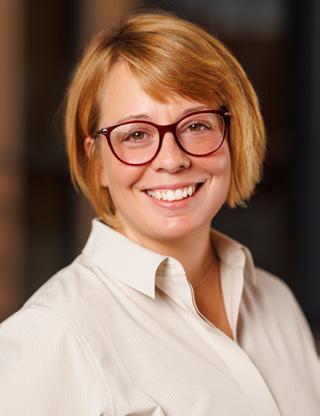
By Bridey Stangler PJ Library
“Don’t Tell Me to Keep Calm; I’m a Jewish Mother.”
The white letters are emblazoned on a red tote bag that I spot from across a busy lobby, and I let out a theatrical “ha!” It’s a reference, of course, to the 1939 English war slogan “keep calm and carry on.” It’s even in the same font. Helvetica, maybe?
It’s cute, and I love a good tote bag. But the truth is, it makes me just a little uneasy, and I have to put my finger on why.
I grew up in a place and time of unprecedented tranquility for our people. The decades after the Holocaust have been coined a “holiday from history,” when our relative safety allowed us to flourish in ways previously unimaginable.
Growing up, I wore all my Hebrew t-shirts everywhere (and I had a lot of them). I never thought twice about my Jewish star necklace, and I even wore a kippah to my public high school for a bit (so progressive!). I don’t remember ever being afraid. I don’t remember my parents ever being afraid, either. So as an adult, the caricature of the anxious Jewish mother never felt relatable to me. I admit I even rolled my eyes at the very suggestion of antisemitism.
Then Oct. 7 came in like a wave. The breaking of the fences and the storming of the land and the slaughter of our people was so inconceivable that when I first heard about it, it seemed like a mistake. It was like on Sept. 11, 2001, when I laughed and wondered — who is such a terrible pilot as to accidentally fly into a skyscraper?
The news trickled into this house at first, then swelled, rolling from the horizon until it was so vast you could not see the end of it — and it crashed into us with a breathless, drowning fear from which it felt there was no escape. And I know this sounds familiar, my friend.
Two-and-a-half years later, I
do not feel suffocated by anxiety. I am largely who I was before: a mother who wants my children to walk (safely and responsibly and looking both ways) to school, who leaves the bedroom so they can learn to fall asleep on their own, who expects them to be prepared to explain the Jewish holiday for which they are missing school.
I don’t remember my parents ever being afraid — but of course they were. They were like I am now: as afraid of what could happen when my children cross the street as I am of what could happen because my children are Jewish children.
Today and every day since Oct. 7 has felt new to me, but the unease that is carried by the mother and father of Jewish children? There is nothing new about that. We wear our generational trauma — our cautiousness, protectiveness, neuroses — like a badge of honor.
Jewish motherhood is for the bold, and sometimes that boldness means laughing at ourselves: Don’t tell me to keep calm; I’m a Jewish mother.
But I would rather play that card a bit closer to my chest. Right now, at least, and at this age, I want my child to see that I trust first in the innate goodness of people. That I need not be afraid. That I can be calm. And second, that if we are, indeed, at the end of our “holiday from history,” we will be ready.
I don’t want a tote bag that says, “don’t tell me to keep calm; I’m a Jewish Mother.” I want that written on a quiet piece of paper and locked away on a dusty bookshelf. Instead, I want one that says “V’ahavta l’reacha kamocha. Love your neighbor as yourself.”
And for dire moments — which don’t always feel so far away — I want ready at the back of my closet a sweatshirt with a quote from “Jojo Rabbit,” a film by Jewish director Taika Waititi. In huge letters it will read:
“There are no weak Jews. I am descended from those who wrestle angels and kill giants. We were chosen by God.”
And it’ll be in Helvetica.


Editorials express the view of the writer and are not necessarily representative of the views of The Kansas City Jewish Chronicle staff, the Jewish Federation of Kansas City, or the Kansas City Jewish Community as a whole.

When I haven’t heard from my daughter in what feels like ages, I find solace in the title of the book, “You Never Call! You Never Write!” I appreciate knowing that our kids’ failure to communicate is such a common problem it warrants a whole book.
However, I hold myself back from complaining because of that book’s subtitle, “A History of the Jewish Mother.” I don’t want to be one of those whining, kvetching Jewish moms who make their offspring feel guilty. Well, maybe a little guilt wouldn’t hurt, yet I restrain myself.
But after researching the topic of guilt for my latest book, I came to realize that I shouldn’t let the cliché of the guilt-inducing Jewish mother hold me back. According to the psychological and sociological literature I unearthed, the whole “Jewish mothers as shaming, silent sufferers” is a myth, which frankly surprised me. I had planned for my book “Typically Jewish” to include a chapter called “Guilting,” along with such topics as “Noshing,” “Joining” and “Worrying.” I did find plenty of academic research documenting Catholic guilt (a topic for others to write about), but I couldn’t substantiate that the classic Jewish mother “you-never-call” type of guilt actually exists.
Of course, Jews experience plenty of guilt. Yet scholars have found that we Bubbes and Zaydes instead tend to chide ourselves for failing to pass on Judaism to the next generation — the “I sent my kid to Hebrew school and now there’s a Christmas tree in her living room” variety. But according to Ruth Andrew Ellenson’s book, “The Modern Jewish Girl’s Guide to Guilt,” this emotion is not so much guilt as responsibility. She suggests that the internal reprimand goes something like, “We Jews have barely survived for thousands of years, and I’ve screwed it up.”
But such remorse is substantially different from the “you-never-call” category. So why is the Jewish mother guilt-giving stereotype so prevalent? Or, as Brandeis University Professor Emerita of American Jewish History Joyce Antler asks, “Why has the Jewish mother been the figure that so many people love to hate for so long?”
The answer, she claims, can be found in Jewish jokes. Through what she calls “the wellspring of the innovative Jewish comic tradition,” Jewish mother tenets are passed down through the generations. For instance, consider these classic comic routines about the Jewish mother:
“One of the cardinal rules of Jewish mothers,” Dan Greenburg writes, “is to let your child hear you sigh every day; if you don’t know what he’s done to make you suffer, he will.”
Or Alan King’s Catskill standup about a mother suffering weakness from not eating for 38 days. “Why haven’t you eaten?” asks the son. “Because I didn’t want my mouth full if you should call.”
And then there’s the Elaine May and Mike Nichols sketch in which the son admits to his mother that he feels awful for not calling. “If I could believe that,” she says, “I’d be the happiest mother in the world.”
On this Mother’s Day, please let the record show that making my daughter feel bad would make me the unhappiest mother in the world. On the other hand, a quick call from her from time to time wouldn’t kill her. Am I right, or what?
Nancy Kalikow Maxwell is a Kansas City native and awardwinningauthor.Herbook,Typically Jewish,isavailablethroughtheJewish Publication Society or Amazon. Her websiteiskaliwellinc.comandemail is nancykalikowmaxwell@gmail. com.
By Joel Levine Past President of Congregation Ohev Sholom
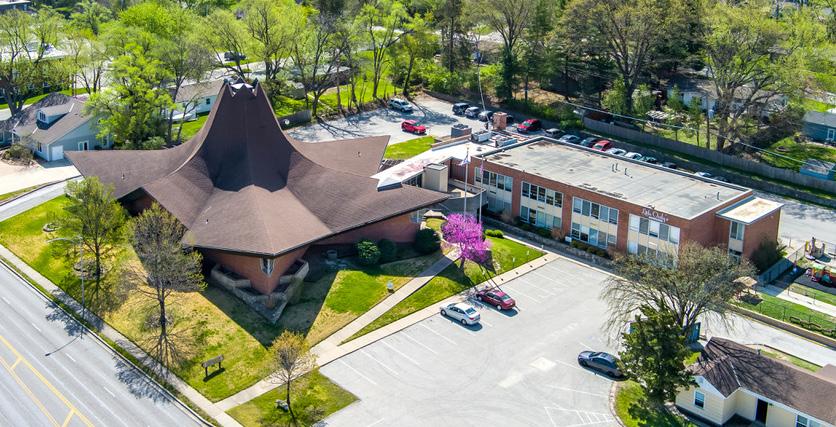
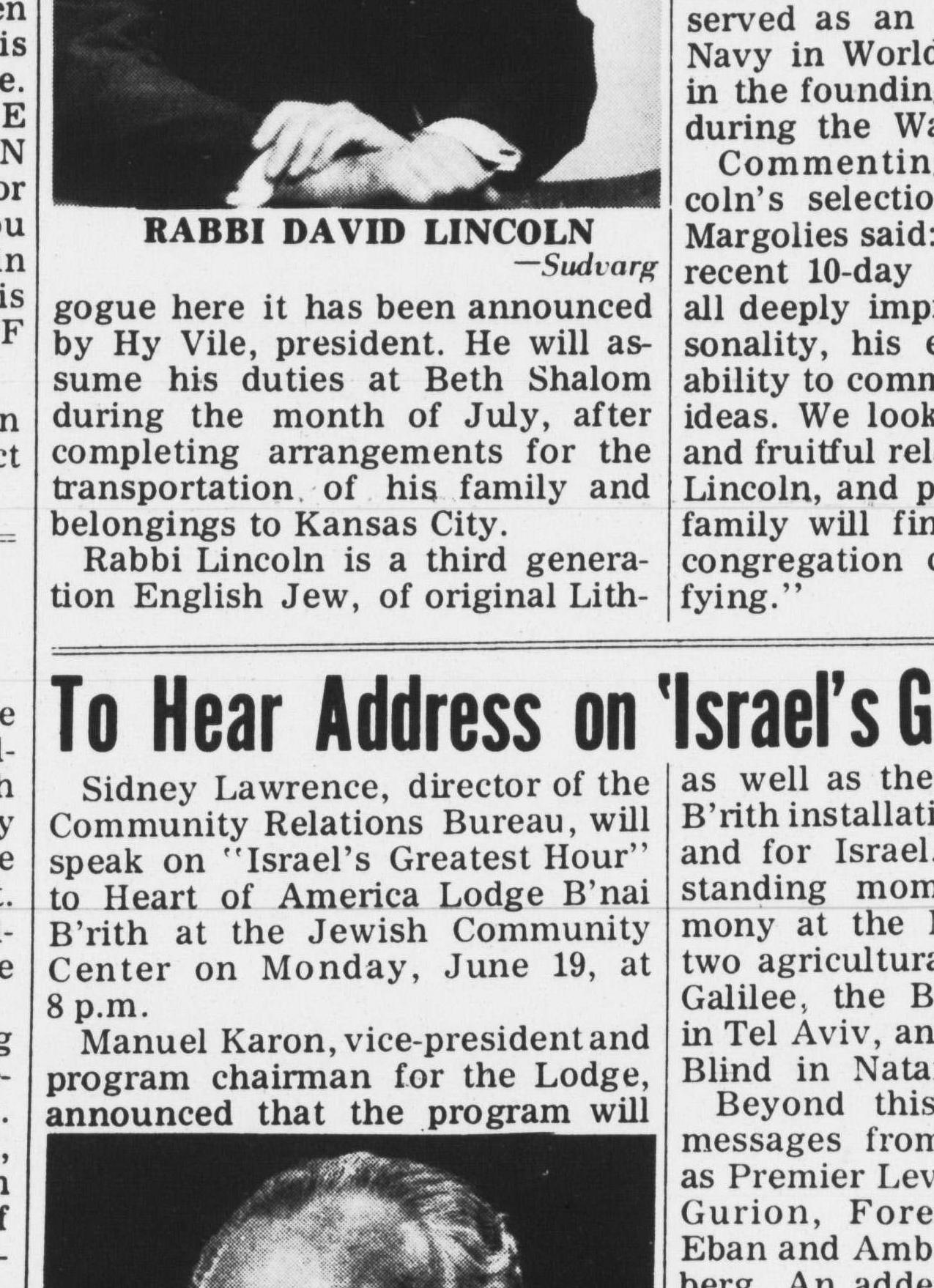
Sam, kudos to you and The Kansas City Jewish Chronicle for the extraordinary work and research required to publish the “Where Arks Once Stood” project. As a past president of Congregation Ohev Sholom, your work to keep our community history alive is so very important now and I believe for future generations.
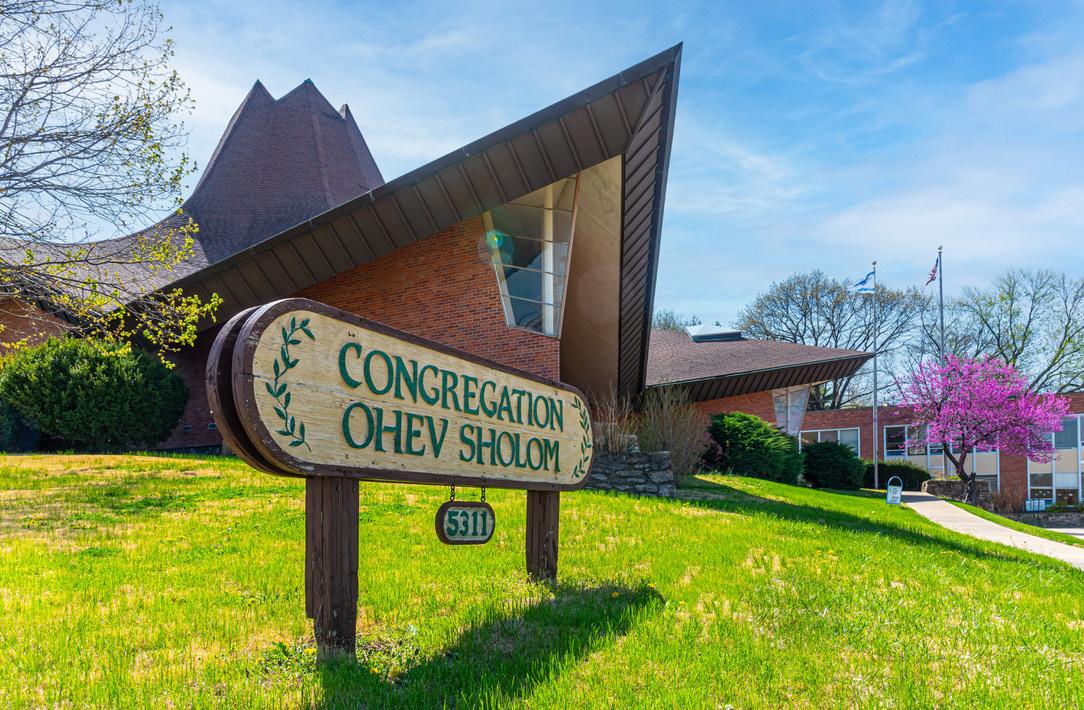
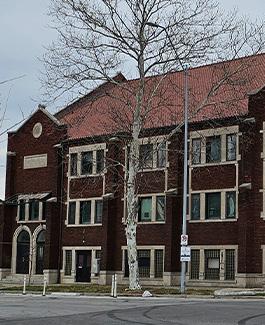
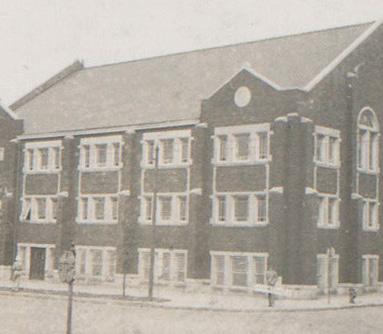
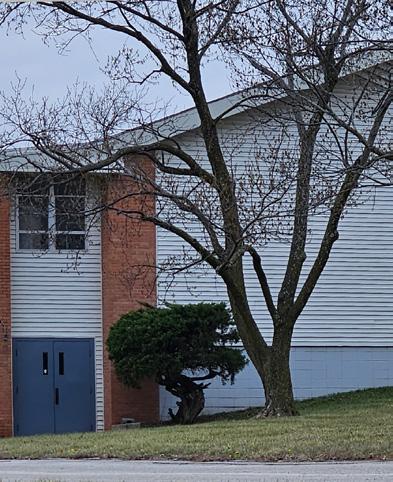
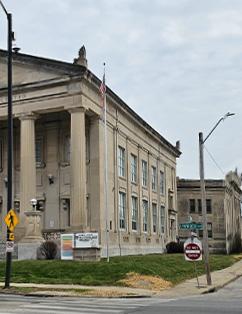
Pictured are two exterior shots of the former Congregation Ohev Sholom on 75th and Nall, taken in 2022. Joel Levine provided a wealth of photos about Congregation Ohev Sholom, many of which are now included in “Where Arks Once Stood” at bit.ly/wherearksoncestood.
Your attention to details, to telling the story and to inviting the community to participate in this unique project brings our Jewish community together. Further, I hope others agree with
me that projects and articles like this are the very reason it is so critical for us to support The Kansas City Jewish Chronicle. A local Jewish newspaper has always been vital to us, but in this day and age, more necessary than ever. Keep up the great work you are doing for our community.
By Rabbi Stephanie Kramer
The Temple, Congregation B’nai Jehudah
May is Mental Health Awareness
Month, and for me, this is not an abstract idea or a passing calendar moment. It is core to my rabbinate and to how I understand sacred community.
A huge part of my work as a rabbi has always been tending to the mental and spiritual health of the people I serve — often in moments when life has become overwhelming, traumatic or unbearably heavy. I have stood with families who lost everything in the California wildfires of 2017. I have sat with communities grieving young lives and lives lost far too soon. I have walked with individuals whose pain was invisible to the outside world, but all consuming on the inside.
Over the years, I have come to use a phrase that often stops people short: died of depression. We are comfortable naming heart disease, cancer or stroke as causes of death. Yet depression — an illness that alters brain chemistry, perception, energy and hope itself
— still carries stigma. And so people suffer quietly. They worry that if they speak up, they will be judged as weak or broken. They are afraid to see a doctor, seek therapy or take medication that might help bring their bodies and minds back into balance.
The rates of depression and suicide in our country are alarming. And still, so many people struggle to ask for help.
One of the most important messages I share — whether in my office, from the bimah or in quiet conversation — is this: Seeking help is not a failure of faith or strength. It is an act of courage. In Jewish tradition, pikuach nefesh — the obligation to save a life — overrides almost every other commandment. Your life, your well-being, your mental health matter profoundly. Getting professional help is not giving up; it is choosing life.
Alongside one-on-one pastoral counseling and encouraging professional care, I have also seen the profound healing power of community — especially through support groups that acknowledge that some challenges are situational, shared and deeply human.
This year at Congregation B’nai Jehudah, we have intentionally created spaces to respond to those needs. We
launched a caregiver support group for spouses and adult children caring for a loved one. Caregiving can be isolating, exhausting and emotionally complex. Love and resentment can coexist. Guilt often sits beside devotion. This group is a place of vulnerability, support, shared resources and community. It is also anonymous — creating a safe space where caregivers can truly grapple with their challenges without fear or shame.
Again and again, I witness how powerful it is for people to sit in a room and realize, “I am not the only one who feels this way.”
We also started a widow’s support group. This one comes from deeply personal awareness. When my father died 16 years ago, my mother experienced not only the grief of losing her partner, but also a painful shift in her social world. “Couple friends” often change. Invitations dry up. Widows grieve in unique and varied ways, and navigating that landscape alone can be incredibly lonely.
Having a place to come where stories are shared, friendships are formed, and spiritual support is woven into the conversation matters. It reminds us that grief does not follow a timetable, and that companionship does not erase
pain, but it does make it more bearable.
In my High Holy Day sermon this year, I spoke about the phrase gam zeh ya’avor — this too shall pass. It is a beloved Jewish teaching, often whispered during moments of great distress. But it is not meant to minimize suffering or rush healing. It is not a command to “be over it already.”
Instead, gamzehya’avoris a reminder that moments, even the most painful ones, are not permanent — and that we are not meant to pass through them alone. Judaism does not ask us to endure silently. It asks us to lean into relationships, into care, into honest presence with one another.
Mental health awareness is not just about naming illness; it is about building communities where people feel safe enough to speak the truth of their lives. It is about normalizing therapy and medication. It is about sitting beside someone who is struggling and saying, “I’m here — and I’m not going anywhere.”
If you are struggling, please know: help exists. Support exists. You are not weak for needing it. And you do not walk this path alone.
This too shall pass — but together, we can help one another through.
By Sara Glass
Director of Weiner Religious School at Congregation Beth Torah
We all know the saying, “the best teachers are also the best students.” Few things bring a Jewish educator more joy than when students are so excited about what they are learning — and living — that they offer up teachings of their own. At Congregation Beth Torah’s Weiner Religious School, that happens more often than you might think, and the gems our students share never cease to amaze.
Beth Torah’s 6–8th grade teen program, T.A.G. — representing Torah, Avodah and Gemilut Chasadim from Pirkei Avot 1:2 — focuses on learning sacred texts, engaging in prayer and action, and practicing acts of lovingkindness. While middle schoolers have a reputation for being a tough crowd (and let’s be honest, sometimes they are), their depth of knowledge and curiosity is remarkable. As educators, our job isn’t just to teach — it’s also to listen. In a world full of noise, sometimes the most meaningful role is simply to be still.
At T.A.G., we gather weekly to explore Judaism in ways that are both traditional and deeply relevant to students’ lives. Our conversations move
fluidly between ancient texts, modern Reform perspectives, and whatever music, apps or trends are shaping their world. Occasionally, I catch myself doing the thing we all swore we wouldn’t — turning into our parents. (“I’ve never heard of this music… but have you heard of Kosha Dillz?” Worth a try.)
Just when I think students have been lost to the algorithm, they surprise me. A discussion about Jewish identity or current events quickly becomes a thoughtful, sometimes heated debate. Students compare what they hear at school, in synagogue and online — often navigating very different narratives. They aren’t interested in neatly packaged answers. They question, wrestle and push back — which is, in many ways, deeply Jewish. After all, argument and inquiry are part of our tradition.
Recently, a conversation about antisemitism was sparked by the 2026 Super Bowl commercial from Robert Kraft’s Blue Square Alliance Against Hate. It was one of our most meaningful discussions. Students thoughtfully critiqued the commercial’s tone and messaging, with some feeling it missed the mark and others appreciating the effort while wishing it had been framed differently. Following
it up with a parody ad also sparked debate. The takeaway wasn’t whether the ads were right or wrong — it was that our students are thinking critically about Jewish representation and their responsibility to use their voices. They are active interpreters of culture.
Another powerful moment came during a visit to the Michael Klein Collection at The Temple, Congregation B’nai Jehudah. Surrounded by ritual objects and artwork, students were asked to choose something that spoke to them. One student stood quietly in front of a tallit. When asked why, they pointed to their own tzitzit and explained they now wear them daily as a visible expression of their Judaism.
When I asked why, their response was simple and profound: “Pride, visibility and the choice to be openly Jewish in a world where that can sometimes feel complicated.” Wearing tzitzit, they explained, was their way of responding to antisemitism — an act of identity and quiet protest.
In that moment, the exhibit faded. The lesson was no longer about objects, but about courage and ownership of identity. Their confidence made me reflect on my own habits. Why don’t I wear my Jewish star more often? How
can we, as educators, create spaces where Judaism feels approachable, inclusive and safe to express openly?
Reflecting on my own Jewish voice was a wake-up call. Thank you to the T.A.G. students for reminding us why showing up with curiosity, courage and confidence matters.
An old rabbinical teaching says, “When the wind moves through the tzitzit, it is like the commandments tapping you on the leg saying, ‘Remember who you are.’”
This is what the Weiner Religious School is really about. Yes, students learn that tzitzit connect us to the 613 mitzvot. More importantly, they learn that their voices matter — and that being informed, thoughtful and proud of who they are is essential.
Sometimes the eggs still teach the chickens. What a gift when our students remind us how to be curious, brave, questioning and proud of this beautiful tradition.
If you have thoughts about conversations happening in your own classrooms — about antisemitism, identity or anything in between — I would love to hear from you at sglass@beth-torah.org.
In a true community of learners, we are both the teacher and the student.
Roger Lawrence Fogel, 80, passed away on April 22.
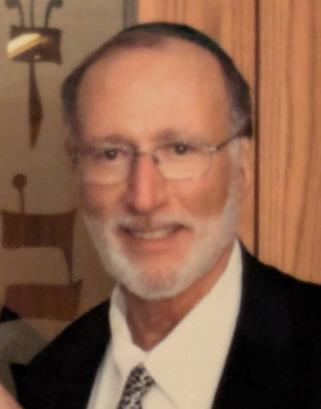
Roger was born in Brooklyn, New York, on May 12, 1945. He was raised in River Edge, New Jersey, but was a longtime resident of Overland Park, Kansas. He was happily married to his wife Joan (Rosenberg) Fogel.
Roger worked all his professional life in pharmaceutical manufacturing. Personally, he loved spending time with family and friends.
He is survived by his wife, Joan; sons Jamie (Kyrie) and Billy (Kim); daughters Kim (Ben Kopelman) and Leslie (Dan Vianello); and 17 grandchildren, Dustin (Kayla), Ella and Caleb Fogel; Aidan and Evan Fogel; Rayli, Naava, Coby, Shalva, Dovid, Menucha, Tzvi, Tehilla, Atara and Akiva Kopelman; and Joey and Callie Vianello.
Memorial contributions may be made to a charity of your choice.
put down roots, and they raised their three children, Debra, Ruben and Brian, there. Mel was a partner of the Kansas City Medical Group, where he practiced internal medicine for 38 years. He loved the practice of medicine, became the president of staff of Baptist Hospital and served on the board of Blue Cross Blue Shield of Kansas City for 25 years.
When he took off the white coat, Mel genuinely enjoyed life and appreciated the gift of good health: gardening, barbecues, long walks with the dog and summers as the camp doctor in Lake of the Ozarks, Missouri.
After retiring, Mel and Elaine spent eight years enjoying the desert heat of Scottsdale, Arizona, eventually moving to Seattle, Washington, in 2024. He loved swimming, traveling, and his family most of all.
Mel is survived by Elaine; children Debra (Doug), Ruben (Stacey) and Brian (Sarah); and 11 grandchildren: Jacob, Tye, Daniel, Aharon, Cooper, Chaim Yaakov, Lucy, Miriam Golda, Harper, Elisheva and Avigayil.
discernment and quiet strength that defined her life. Beyond her profession, she found joy in the beauty of everyday living. She loved being outdoors, soaking in fresh air and sunshine, and had a natural gift for interior decorating — creating spaces that felt warm, thoughtful and distinctly her.
She was deeply devoted to her friends and family, showing up with consistency, care and an open heart. During the holidays, she carried on her beloved tradition of hosting her annual cookie party, filling her home with laughter and a true sense of togetherness. As the family’s cherished baker, her recipes — and the memories made alongside them — will be passed down with love for generations.
Graveside services were held on April 28 at United Hebrew Cemetery in St. Louis, Missouri. Contributions in her memory may be made to the Siteman Cancer Center (MSC 1082414-2555, 1 Brookings Dr., St. Louis, MO 63130) or online at siteman.wustl. edu/tribute.
Temple, Congregation B’nai Jehudah, the ROMEOs and a former member of Meadowbrook Country Club. Later in life, he was proud of his physical fitness, making sure to do 100 pushups a day well into his 90s. An active member of The J’s Heritage Center, he attended exercise classes and bowled in a league, achieving an average score in the 160s.
Harold was a loving husband, father, grandfather and great-grandfather. He was preceded in death by his beloved wife of 53 years, Shirley, and is survived by his daughter and sonin-law, Tammy and Arvin; his granddaughter and her husband, Heather and Andrew; and his two great-grandchildren, Oliver and Sophie. He will also be deeply missed by his special friend, Sandy Levin.
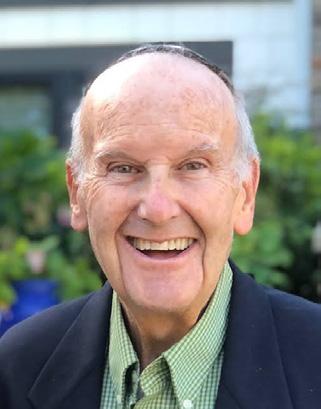
Dr. Melvin Glazer passed away on April 28 at the age of 84. Devoted to his family, and for many years the practice of medicine, Mel was a beloved doctor, husband, father and grandfather.
Born in Des Moines, Iowa, to Herman and Anna Glazer, he grew up with siblings Alice and David, helping out in his parents’ grocery store before attending Drake University, graduating in 1962. He began his path to a career in medicine at the University of Iowa Medical School, graduating in 1966, interning at Philadelphia General Hospital and then returning to the University of Iowa for his residency.
He met his future wife, Elaine, through his cousin in Chicago in 1965. Mel and Elaine married in 1967 and remained together for 58 years.
During the Vietnam War, Mel served as a Lieutenant Commander in the U.S. Navy from 1970 to 1972, stationed at Guantanamo Bay, Cuba. After concluding his naval service, Mel and Elaine chose Kansas City to

Graveside services were held on May 1 at Mt. Carmel Cemetery. In lieu of flowers, contributions may be made to Kline Galland Senior Care (klinegalland.org/philanthropy/howto-give), Congregation Beth Shalom in Kansas (bethshalomkc.shulcloud.com/ payment.php), Beth Shalom Synagogue of Seattle (bethshalomseattle.org/ donate) and Ohr Tzion Synagogue in Scottsdale (congregationortzion.org/ give/donate).
Online condolences may be left for the family at louismemorialchapel. com.
Patricia Leigh Shostak, formerly of Kansas City, passed away on April 24.
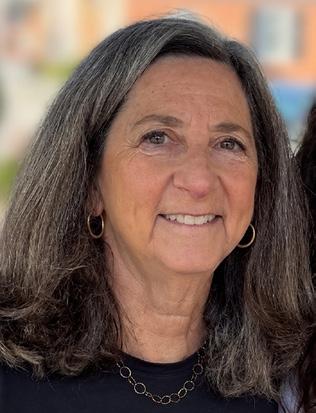
She was the loving mother of Skylar Brennan, Riley Brennan and Gillian Brennan; dear sister of Leslie (Bruce) Cohen, Elliott (Rebecca) Shostak and Grant (Stacey) Shostak; beloved daughter of Arleen and the late Burton Shostak; dear aunt, greataunt, cousin and friend.
Pattie followed in her father’s footsteps by pursuing a career in law, bringing the same steadiness,

Harold B. Steinberg, 98, peacefully passed away on April 29 at the home of his daughter and son-in-law.
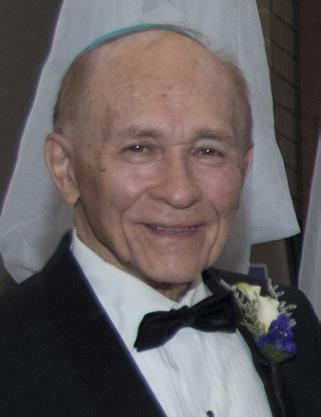
Harold was born on Jan. 11, 1928, in Norfolk, Nebraska, to Joseph and Bessie Levine Steinberg. The family later moved to Lincoln, Nebraska, where his sister, Elaine, was born, and eventually settled in Kansas City, Missouri, when he was about three years old.
In high school, Harold enjoyed sports and played catcher and outfielder on the baseball team. Alongside his studies and athletic pursuits, he also worked at Union Station, where he had the opportunity to meet celebrities passing through, including the great Jack Benny.
After graduation, Harold enlisted in the U.S. Army and proudly served his country for two years while stationed in the Philippines. With assistance from the G.I. Bill, Harold attended the University of Kansas, graduating with a degree in engineering. A member of the ZBT fraternity, he worked as an engineer for more than 40 years.
In 1961, Harold married the love of his life, Shirley Berkson Fishman. They shared a passion for travel and loved cruising and visiting countries all around the globe. They took that passion and turned it into a business, owning Accent on Travel for nine years. As a couple, they also enjoyed dancing.
Harold was a member of The
The family would like to extend a special thank you to Mark Zwick, R.N. — Arvin’s brother — as well as Harold’s devoted caregivers, Virginia and Lou, and the Kansas City Hospice. Their care, compassion and dedication to Harold’s health and happiness in his later years meant so much and will always be deeply appreciated by the family.
Funeral services were held on May 3, at Louis Memorial Chapel, followed by burial in Rose Hill Cemetery. Memorial contributions may be made to the Alzheimer’s Association (alz. org/kansascity), Kansas City Hospice (kchospice.org/donate) or to any charity of one’s choice.
Online condolences for the family may be left at louismemorialchapel. com.
Irene “Dolly” Gulko Fehr monument unveiling
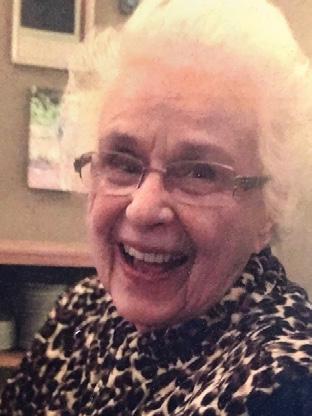
The family of Irene “Dolly” Gulko Fehr announces her monument unveiling, which was held on April 12 with her family at the Rose Hill Cemetery on a very rainy afternoon.
It was also on the birthday of her mother, Malka Gulko (may her memory be a blessing).
Family traveled from Chicago, Illinois; Hillsboro, Oregon; and Rye Brook, New York, to attend. Her sons Don Fehr and Jerry Fehr were in attendance, but her son Steve Fehr was in the hospital and could not attend in person.
Also attending were her daughterin-laws; sister-in-law, Sylvia Abrams Soule, who just turned 100 and was “Dolly’s” best friend through college; grandchildren; great-grandchildren; cousins; nieces and nephews, as well as close family friends to remember her long 99-year life. Rabbi Rachel Rothstein from The Temple, Congregation B’nai Jehudah led the service.
continued from page 1
her rabbi and friend, her son also gave her a push.
“Stephen said in his bar mitzvah speech on Dec. 1, 1984 that, ‘If my mom studies, she’ll have her bat mitzvah in February,’ which everyone kind of laughed at,” Rabbi Steigman said.
Her first bat mitzvah was just one step in Rabbi Steigman’s lifelong Jewish journey. It started when she was a young girl in Chicago, going on to attend the first Reform Jewish summer camp and remain involved in Jewish life. Moving to Philadelphia in her 30s, she received a Master of Social Work from Bryn Mawr College and worked in counseling and education for the city’s Jewish Family Services. She then worked for the Union of American Hebrew Congregations (now the Union for Reform Judaism).
Not yet a rabbi, she moved to New
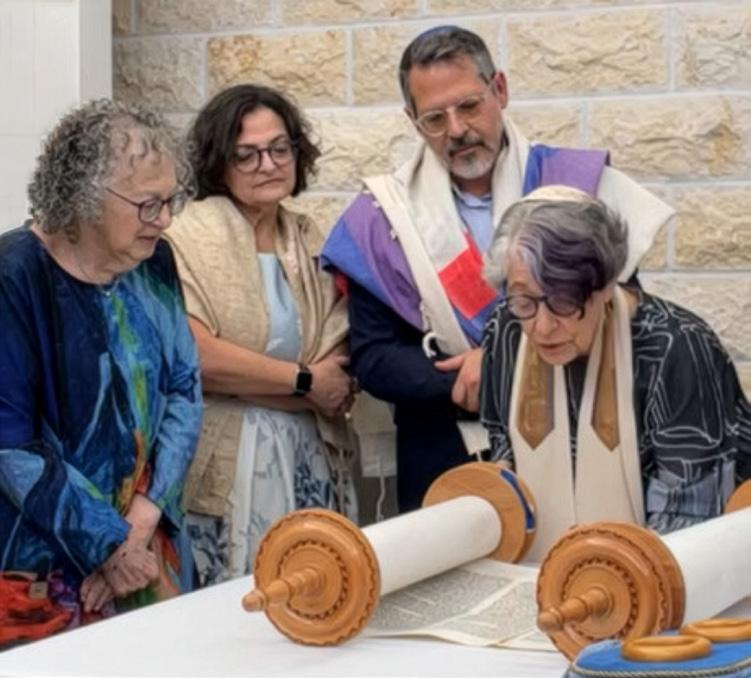
begin studying. Her studies took her to Jerusalem (where she said many of her classmates were younger than her own children) and Cincinnati, Ohio. In 2004, Rabbi Steigman was ordained in New York at the age of 61.
the idea of a second bat mitzvah, but it took a push from her friend Rabbi Batsheva Appel (currently of Tulsa, Oklahoma) for it to happen.
York City to take a job with National Hadassah. When out to lunch with a friend, she was told that she’d make a good rabbi. After being assured that her age would not be a barrier to the rabbinate, she was encouraged to apply to Hebrew Union College and
After serving at congregations in Virginia and Pennsylvania, she decided to come to Kansas City to be near her son, daughter-in-law and grandchildren. She has served as the rabbi at the former Temple Adath Joseph in St. Joseph, Missouri, a teacher at Congregation Beth Torah and many more roles for various community synagogues and organizations. She still teaches today at B’nai Jehudah.
“I try and teach [students] not just what they have to read or sing, but what it means… and what it’s all about in the context of being Jewish,” she said about her teaching philosophy.
Rabbi Steigman was familiar with
“In January 2025, I had a very bad case of pneumonia and was in the hospital for three weeks,” Rabbi Steigman said, “and [Rabbi Appel] told me, ‘The reason I asked you to [have a second bat mitzvah] is because I wanted to give you something to look forward to,’ which was so wise of her… I will be forever grateful to her for giving me something to look forward to.”
Now a double bat mitzvah with decades of Jewish and rabbinic experience under her belt, Rabbi Steigman vows to “keep on doing what I’ve been doing” — tutoring, offering chaplain services, teaching and more.
“That’s what I see as my role now,” she said. “My goal is to pass [Judaism] down to the next generation.”
continued from page 1
pride…It was very meaningful to me as someone who is passionate about spreading Judaism in a positive way.”
The most powerful moment of the trip for Hobbs was the visit to a mass children’s grave in Tarnów, Poland. At the gravesite, Flacks read a letter written during the Holocaust from a mother to her baby daughter. Before she sent her daughter away to safety, she sewed the letter into her daughter’s clothes. The letter contains messages of love, hopes and dreams for her daughter.
After listening to the letter, each student received a letter written by their parents. “There was not a dry eye in the entire group,” Flacks said. She said that this group felt comfortable to openly show their emotions, which “speaks to the level of relationships that we have” at HBHA.
As someone who has led several Holocaust trips, Flacks said it is special, “to (be in) Poland with people that you grew up with, that are truly your support system.”
Dr. Jessica Kyanka-Maggart, Lower and Middle School principal, also chaperoned, but unlike Flacks, the trip was new to her. She experienced everything as a first with the students.
When asked about her most meaningful experience, Dr. Kyanka-Maggart said, “I really loved the synagogue in Łańcut, (Poland) that was burned and then restored.”
The synagogue had a non-Jewish caretaker who spoke to the group in Hebrew. “When he said Am Yisrael Chai… and then he opened the doors, it was very theatric,” she said. “I don’t think he meant for it to be, but watching that
all happen as an outsider… was really meaningful.”
While visiting the Auschwitz-Birkenau concentration camp, students went to the famous room containing a book of 4,000,000 victims and spent time searching for their ancestors’ names.
Norah Pabst, an HBHA junior, chose the Auschwitz exhibit of the video containing European Jewry between both World Wars as her most meaningful moment. She said, “it was just very heartbreaking and meant a lot to me.”
After Poland, the group traveled to Prague. Students had free time in the main city square and learned its Jewish history. After going through Poland, “your mental (health) needs a break,” and the beauty of Prague did just that, Flacks said.
The scenery continued in Spain through Madrid, Barcelona and Toledo. This leg of the trip tracked Sephardic Jewish roots.
Dr. Kyanka-Maggart recalled a favorite memory from a cold and cloudy day, during which students “seiz[ed] the moment and [ran] into that frigid water” off the coast of Barcelona.
After the three-week trip and all of its unpredictability, the HBHA juniors and seniors returned home to their parents and family members waiting for them at the airport.
“It was transformative on so many levels for our students,” said Rabbi Elizabeth Bonney-Cohen, dean of Jewish life and community engagement, “both in terms of how it gave our students a sense of never taking for granted the robust Jewish experience they have every day, and the legacies they carry forward.”
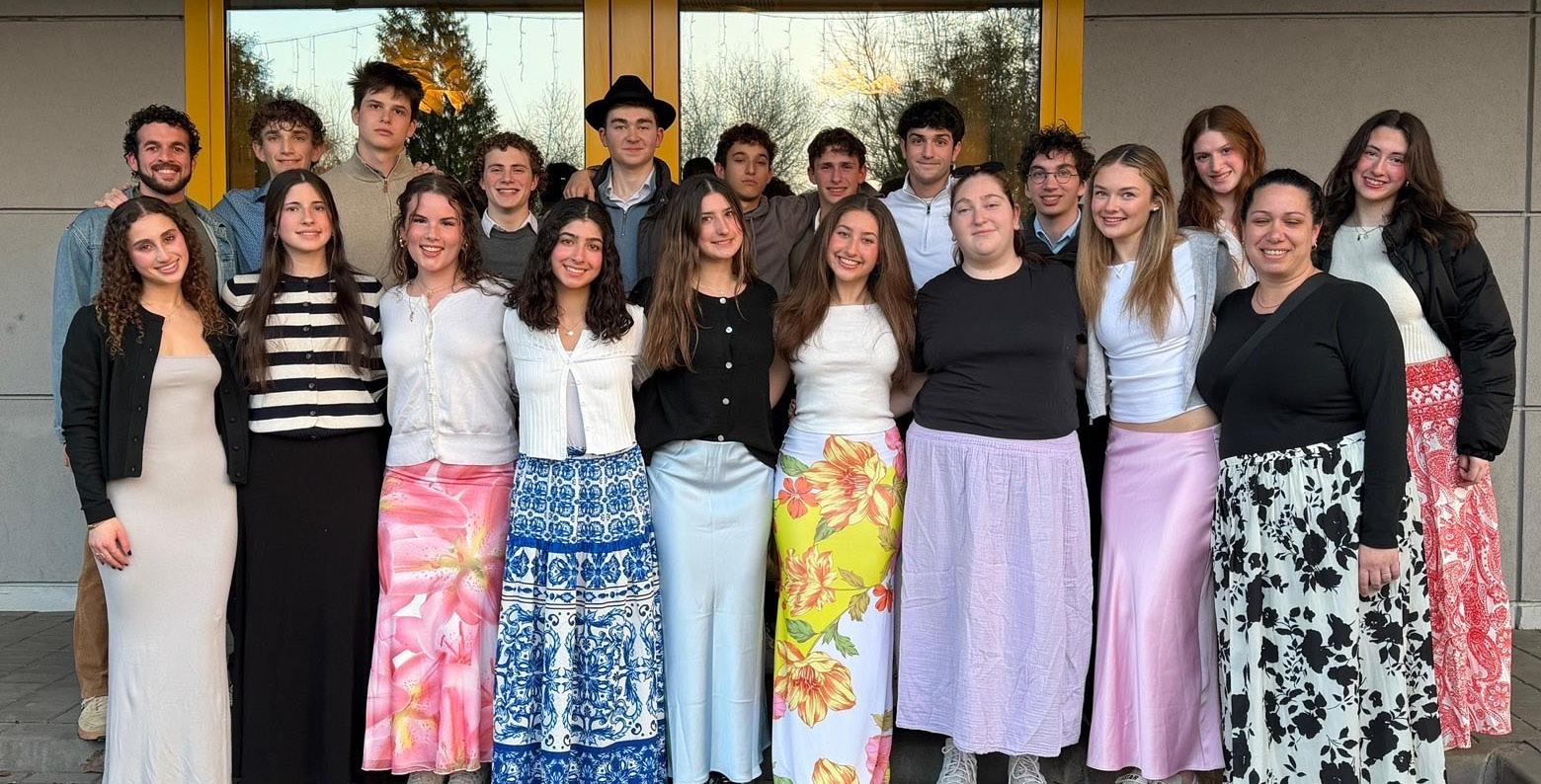
David Wasserman, Eric Fine, Emily Stang, and Ayla Williams.
ka-Maggart)
Jewish War Veterans (JWV) MOKAN Post 605 is currently seeking applications for college scholarships for the 2026-27 academic year.
JWV Post 605 scholarships are administered by a directive that states “the funds shall be used to initiate or further the education of needy or worthy students.” Funds for these named scholarships may come from multiple sources.
These scholarships are awarded annually to students who are in or entering college. High school seniors and college students at any level (including graduate school) may apply. The primary requirement is that the applicant be related to a current or deceased member of Jewish War
Veterans MO-KAN Post 605 in good standing or who was in good standing at their time of passing. Applicants should be prepared to offer documentation that they are related to a current or deceased member of the Post, if requested by the Post Scholarship Committee.
Interested and eligible applicants should contact Joshua Goldfarb, Post 605 Scholarship Chairperson, at jwvpost605@outlook.com. Applications should be submitted no later than June 30.
Jewish War Veterans MO-KAN Post 605 is active in community service in the Kansas City-Leavenworth area. The Post can be found on Facebook at facebook.com/JWV-605113534657113204.
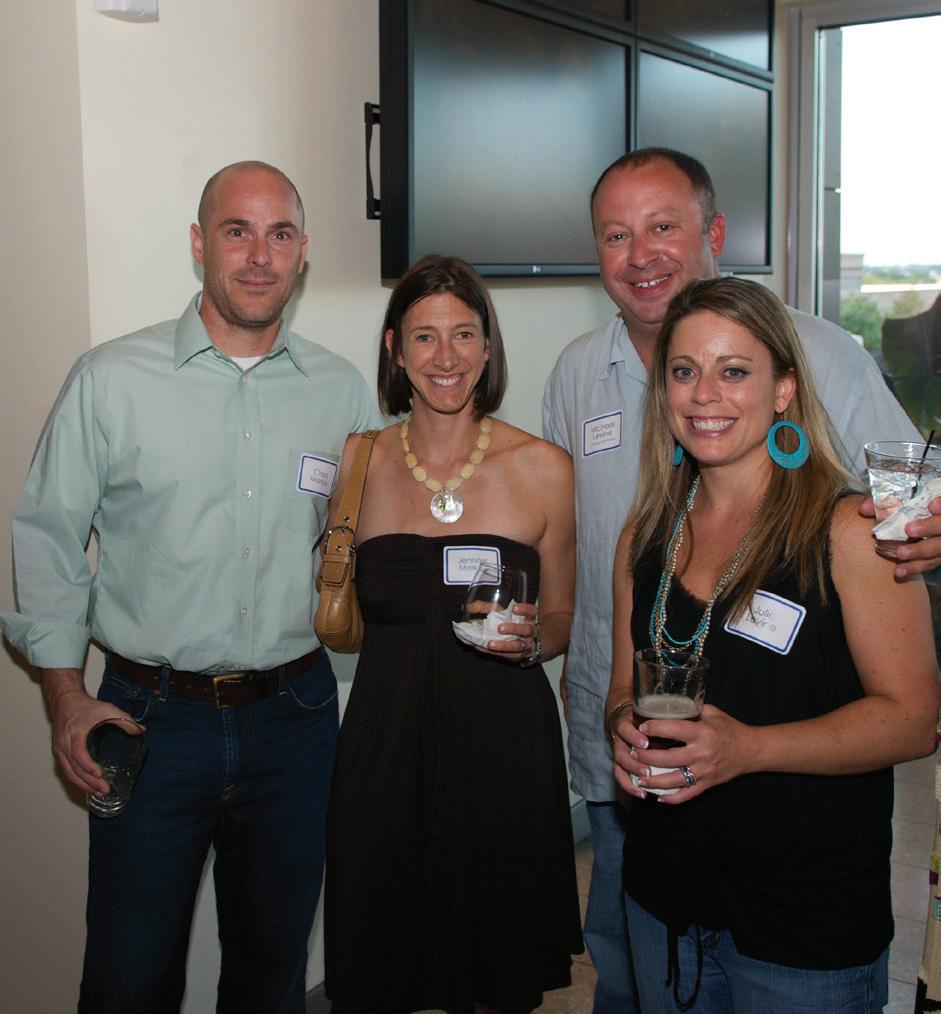
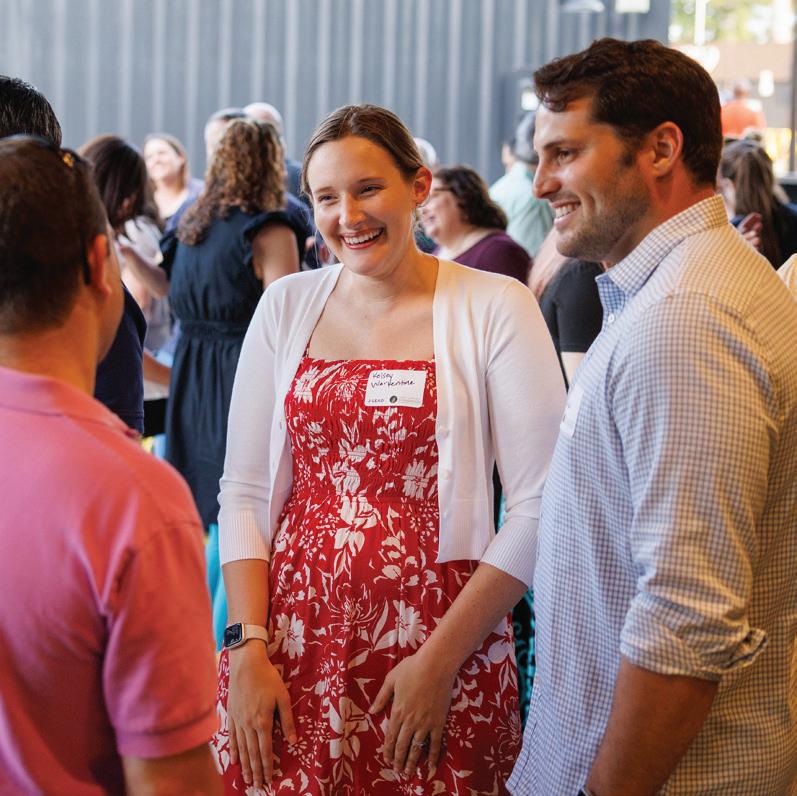
The Jewish Community Foundation’s J-LEAD program is celebrating 20 years of impactful grantmaking in the Kansas City Jewish community. J-LEAD members have collectively granted more than $550,000 to communal organizations since the program began in 2006.
Over the years, more than 250 community members have participated in J-LEAD, which stands for Jewish leadership, education, action and development. This giving circle for Jewish young adults has empowered members to pool resources, learn about community needs, and collectively make grant decisions.

After participating in J-LEAD, many members have gone on to hold prominent leadership positions in the community and become more thoughtful and strategic philanthropists
The Foundation would like to thank past and present J-LEAD members for helping make the program a success. To celebrate this milestone, the Foundation is hosting a special 20th Anniversary Party and Grants Celebration on June 4 at 7:00 pm at Chicken ‘n Pickle in Overland Park
For more information about the J-LEAD program or the June 4th event, please contact Suzanne Galblum Dicken at sdicken@jcfkc.org or (913) 327-8286.
Smarter Giving. Your Way. | jcfkc.org