Service of Spiritual Renewal planned
By Jane Martin
Special to The Chronicle
Mahjongg, the tile-based game that has entertained generations, is riding a wave of renewed popularity across the United States and beyond — and this time, it’s not just “grandma’s game.” In the Kansas City Jewish community, the classic game is thriving with players of all ages. The trend has found its way into homes and gatherings, where long-time enthusiasts and newcomers alike come to play.
Mahjongg’s journey to American Jewish living rooms is well-documented. After arriving in the U.S. in the 1920s, the game was standardized in 1937 when hundreds of (mostly Jewish) New York women formed the National Mah Jongg League, whose annually published card helped create a distinct “American” version and fueled a massive, womenled community of play. That structure — one shared card for the whole country — still binds players today, allowing a Kansas City table to compete with the same hands as a table in New York or Los Angeles, according to Aimee Patton, a local mahjongg teacher
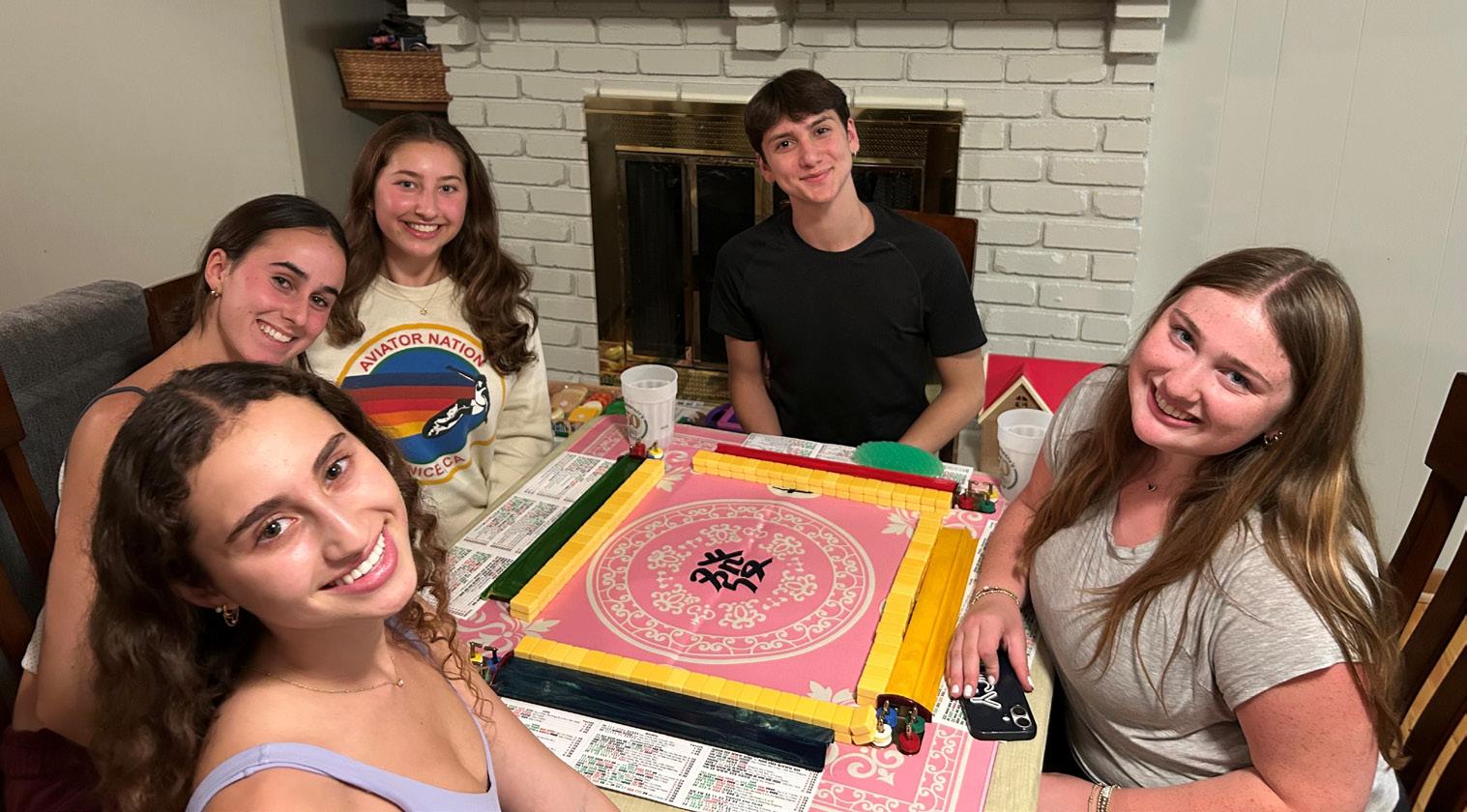
and player in addition to her work at marketing agency VML.
While mahjongg never disappeared, its popularity surged after 2020 as people craved offline connection and intergenerational activities.
Kansas City is part of the nationwide “mahjongg renaissance,” with new tournaments and places to learn and play (including Bam Bam, the metro area’s first dedicated mahjongg parlor) drawing beginners and veterans alike for classes, open play and new tile sets.
For Patton, the game is family
legacy and daily practice. Her lineage runs deep: her grandmother played in the 1940s and ’50s, and her mother, Anita Mooney, started playing in 1969. As a rite of passage, Patton’s 20-year-old daughter, Amelia, is also learning how to play.
“It’s something that has always been around my home,” Patton said.
Patton brings this tradition into her teaching. She learned young — subbing in at age 12 — and has since
See page 15
By Ellen Portnoy
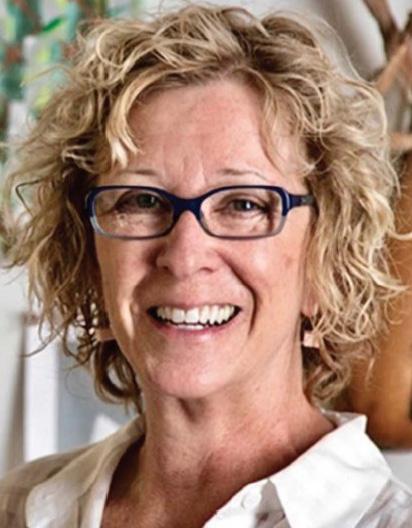
The start of a new year brought the arrival of a new executive director for Kehilath Israel Synagogue. Robin Abramowitz joined the K.I. staff on Jan. 19, succeeding Shelley Palmarine, who left to take over a similar role at Northland Cathedral.
“I am delighted to welcome Robin as the new executive director of K.I. Synagogue. Robin brings a wealth of knowledge and passion to our congregation,” said K.I. President Joe Adamous. “I am especially excited to have her return to K.I., where she once was a valued member. We look forward to

Robin Abramowitz
the energy, vision and leadership she will bring.”
“I am thrilled to be at K.I. It is such
an honor to not only be back at K.I., but also working in the Jewish community,” said Abramowitz, who was a member of K.I. after she graduated from college. “I am grateful to our Jewish community for investing in me as a young adult. I gained valuable skills by participating in leadership programs with both Hadassah and Women’s Division at the Federation and was fortunate to use those skills when I started my nonprofit career at the Jewish Federation.”
Abramowitz is a University of Kansas graduate, holding a B.A. in psychology
See page 11
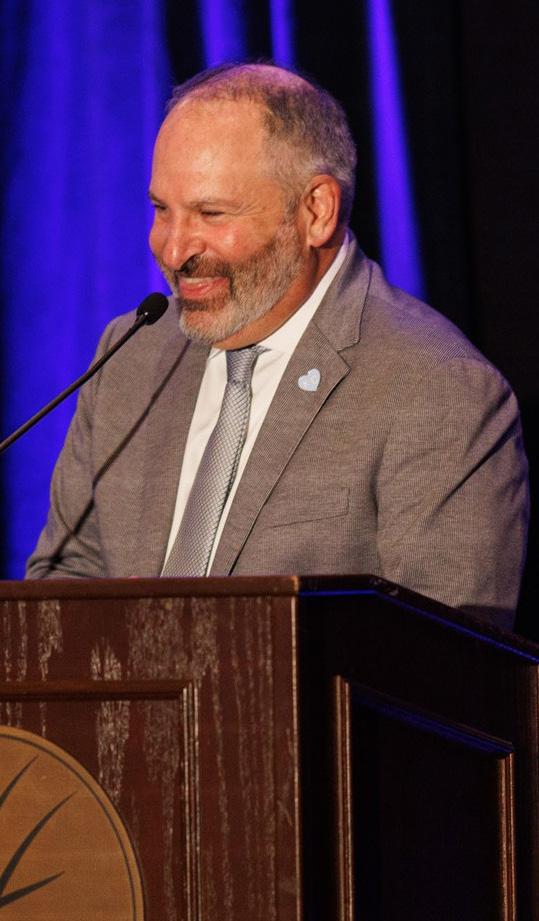
Jewish Federation is celebrating its most successful Community Campaign in the organization's 92-year history, an accomplishment that Federation leadership attributes to the support and generosity of the entire Kansas City Jewish community. More than $5.6 million was raised for Federation's 2025 Community Campaign.
“This year’s campaign is a powerful reflection of who we are as a community,” said Jay Lewis, Federation’s president and CEO. “It shows that people understand not only the importance of meeting today’s needs, but also the responsibility we share to ensure a strong, vibrant Jewish future for Kansas City.”
Federation’s campaign manager, Becca Graham, said the record-setting year was driven by a combination of dedicated staff and volunteer leadership. She credited Board Chair Sondra Friedman, Fundraising and Development Chair Jeremy Antes, Campaign Chair Jerry Enslein and others who helped guide and support Federation’s fundraising efforts throughout the year.
The 2025 campaign also saw significant growth among younger donors. Federation recorded a record number of Ben Gurion Society members (donors under 45 who give $1,000 or more) and saw strong participation from Young Adults Division (YAD) donors, including many who gave for the first time through Federation’s YAD Lights the Way campaign last summer.
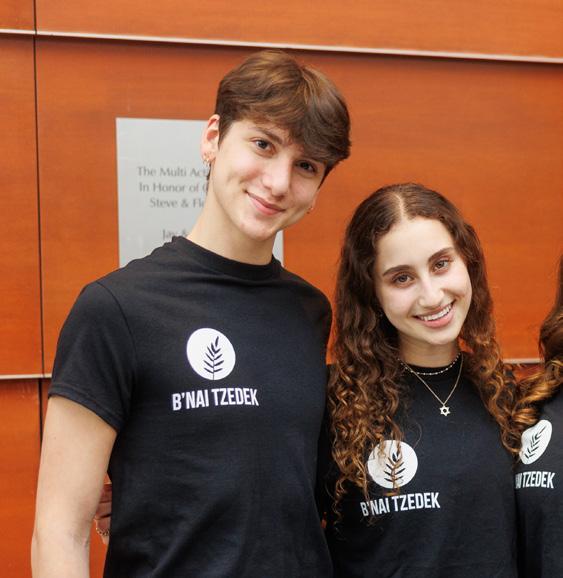
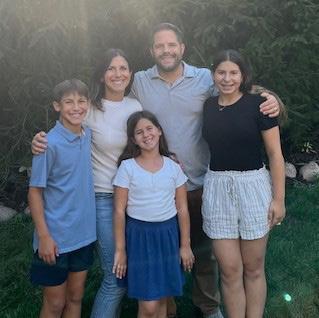
Hyman Brand Hebrew Academy (HBHA) will receive its first-ever schoolowned Torah. Donated by the Wasserman family, the Torah will be completed and celebrated on Wednesday, Feb. 18, from 1:30 to 4:30 p.m. at The J. This event is open to the entire community, and RSVPs are requested at tinyurl.com/ uzmbfwvd.
“We’re so excited to receive and dedicate HBHA’s first Torah, generously donated by the Wasserman family in thanks for the education of their three children,” said Zohar Flacks, the school’s director of Jewish education. “It’s incredible to see one family’s gratitude turn into something

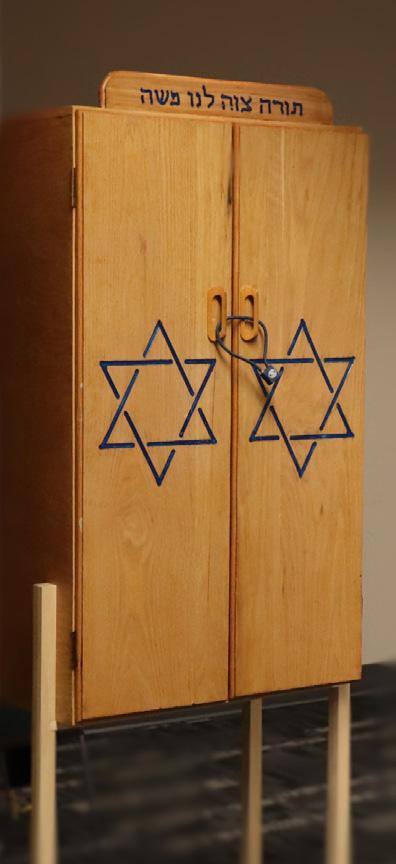
HBHA’s ark, in which its new Torah will be held.
that will bring meaning, learning and connection to our entire community for generations to come."
The program will be in four parts. It will start with the siyyum (completion) of the Torah in The J’s lobby. Following the dedication, HBHA students and staff will parade the Torah around The J at 2:30 p.m.. Hakafot, or dancing with the Torah, will take place at 3 p.m., with men and women separated between Conference Room C and the Beit Midrash. At 3:30 p.m., a festive meal will be held in the social hall.
More information about HBHA is available at hbha.edu.
HBHA Torah Celebration Wednesday, Feb. 18, 1:30 to 4:30 p.m. The J, 5801 W. 115th St., Overland Park, KS 66211
Ahead of Purim, the Sisterhood at The Temple, Congregation B’nai Jehudah, will hold a fundraiser selling homemade hamantaschen. Pricing and ordering instructions are available at tinyurl.com/y8f57ezf.
Two variety packs are available: poppyseed and apricot/raspberry, or chocolate and apricot/raspberry. Limited quantities are available.
Orders must be made by Wednesday, Feb. 18, at tinyurl.com/y8f57ezf. Pickup will be on Sunday, March 1,

anytime between 9:15 a.m. and 12:15 p.m. at B’nai Jehudah (12320 Nall Ave., Overland Park, KS 66209).
Shabbat times (Overland Park): Candlelighting: 5:36 p.m. Havdalah: 6:36 p.m.
The following are the deadlines for articles, celebration announcements, Spotlight pictures, advertisements and editorials for upcoming Chronicle print issues. If you have any questions, please contact Sam Kricsfeld at samk@jewishkc.org.
Feb. 26 issue..........................................Feb. 19 noon deadline March 12 issue.....................................March 5 noon deadline To submit news to The Chronicle, go to kcjc.com/chronicle-submissions!
continued from page 1
“We’re seeing younger donors step up in meaningful ways,” Graham said. “They’re not just giving, they’re engaging and becoming leaders.”
That momentum reflects Federation’s broader efforts to educate younger community members about the impact of collective giving and the role Federation plays in supporting the community.

“We can be very optimistic about the strength of our Jewish community for years to come,” Lewis said.
Funds raised through the Community Campaign support a wide range of local, national, and international Jewish organizations, while also allowing Federation to respond quickly in times of crisis and plan strategically for the future.
“The old analogy is that you don’t build the firehouse once the fire starts—you build it ahead of time so you’re ready when the call comes,” Lewis said. “A successful campaign ensures we’re prepared, whether that means responding to an emergency or strengthening our community for what’s next.”
Looking ahead to 2026, Federation plans to place an increased focus on leadership development, with the goal of cultivating a strong and
sustainable pipeline of community leaders.
In addition to the more than $5.6 million raised through the Community Campaign, Federation also generated significant support for several special funds in 2025. More than $289,000 was raised for the Chesed Fund, which provides both short- and long-term financial assistance to individuals and families struggling to afford basic needs.
Sasone, Federation’s program dedicated to ensuring access to Jewish opportunities and education for individuals with disabilities, received more than $234,000 in grants and donations, expanding its ability to create inclusive and welcoming experiences across the community.
Lewis said that the success of the 2025 Community Campaign is not just Federation’s accomplishment, but “an achievement every member of the Kansas City Jewish community can be proud of.”
Sam
Kricsfeld
Editor and businessmanager


member of the chronicle@jewishkc.org | (913) 327-8116 kcjc.com | @kcjewishchronicle

The Epsten Gallery for the Arts at Village Shalom is hosting “Remembering Home: The Art of Gerry Trilling,” an exhibition celebrating the life and work of artist Gerry Trilling (z”l) (Jan. 22, 1945 – Oct. 27, 2024). Through objects both ordinary and symbolic, Trilling’s art was made to transform material culture into a powerful meditation on Jewish identity, memory, assimilation and belonging. Having opened on
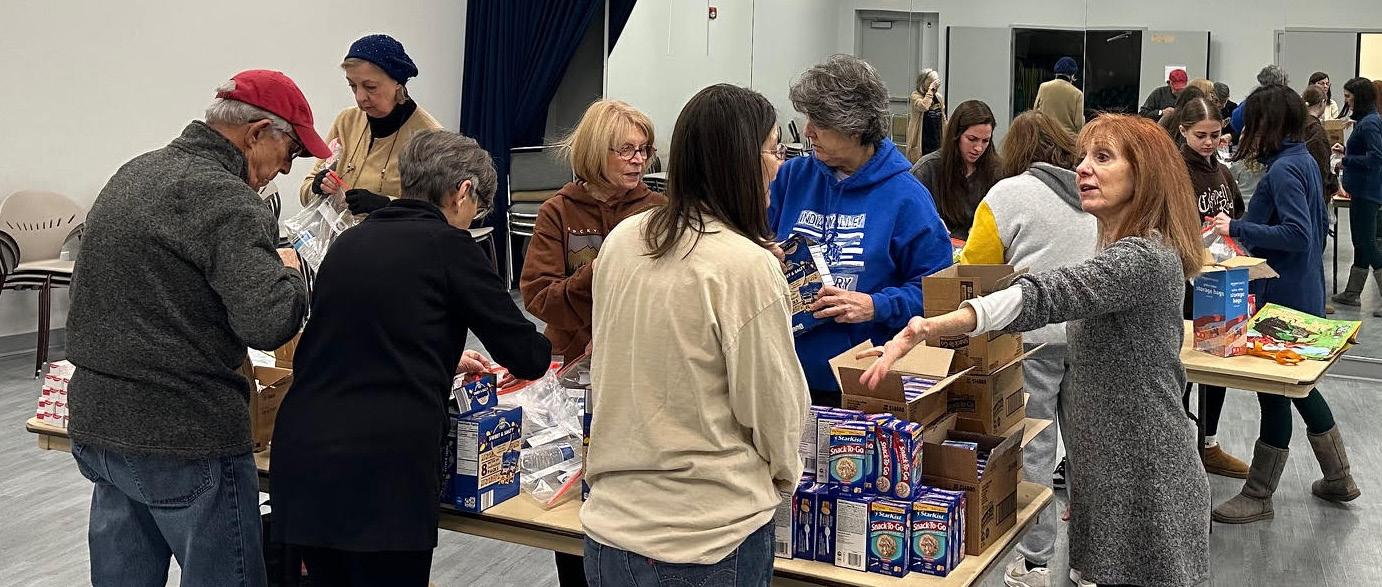
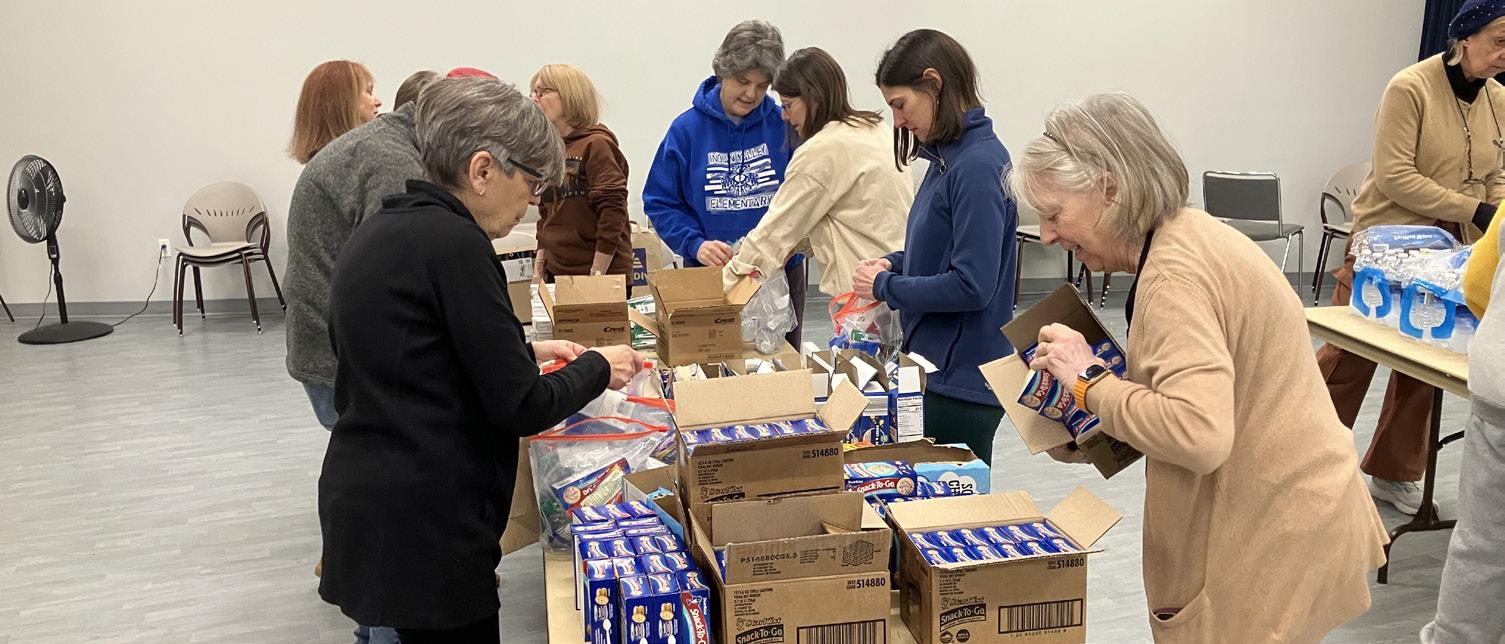
To keep pantry shelves full, Jewish Family Services (JFS) needs community donations, especially peanut butter and other spreadables that families rely on every day. Throughout February, JFS invites the community to take part in its “Spread the Love” food drive by donating jars of their favorite spreadables.
“We take for granted the simplicity of peanut butter and jelly sandwiches, or even spreadable products in general like ketchup, ranch or mustard,” said Zach Sellers, JFS director of pantry operations. “For some of our families, this is a luxury to have and not something we just always have on hand. That is why providing these items during our ‘Spread the Love’ campaign is such a benefit to our pantries.”
Honey and other non-perishable spreadables are also welcome and among the most requested items in the two locations of the JFS pantry. Donations can be dropped off in designated barrels at The J and the JFS Brookside office.
During the “Spread the Love” campaign, JFS hopes to collect 2,500 jars of spreadables to stock pantry shelves. Individuals, businesses, schools, youth groups, organizations and neighborhoods are encouraged to host their own food drives throughout February.
Donors may also purchase items for the food pantry directly through the JFS Pantry Wish List on Amazon (amzn.to/3XH5v7Z) or make a financial contribution to the pantry at jfskc.org/donate.
Those interested in hosting a drive during February can email fooddrive@jfskc.org or call Zach Sellers at (816) 785-8720 to coordinate dates.
Jan. 29, the exhibition will run until March 1.
Trilling grew up in St. Louis, Missouri, in a closeknit community of immigrants.. Her parents fled Vienna, Austria, to escape the Holocaust, settling in a neighborhood shaped by Jewish refugees from across Europe. This environment — rich with tradition, shared experience and the textures of everyday life — became the foundation of her artistic voice. In Trilling’s work, domestic objects are intended to be vessels of history, emotion and generational memory.
“For me, identity and belonging were linked to home environment and material culture,” Trilling once said.
Family traditions, foods and customs anchored her early life, while the gradual acquisition of “American treasures” marked the process of assimilation. She often recalled a dark green boucle sofa from her childhood — its scratchy texture, twisted loops and shadows cast in the living room light — as emblematic of this transition. Over time, as families moved to new neighborhoods and
older furnishings were replaced, these objects became quiet markers of progress, loss and change.
A new sofa, Trilling said, signaled where a family had landed along the refugee success spectrum.
This sensitivity to material culture runs throughout Trilling’s body of work. Her art invites viewers to consider their own relationships with familiar objects and to reflect on how memory is carried through touch, texture and form. As parents age, pass away or slip into dementia, Trilling found solace in revisiting these sensory memories as an impulse that resonates strongly across generations.
Trilling received her B.F.A. in painting from the Kansas City Art Institute and went on to exhibit widely in both local and national venues. Her solo exhibitions included Studios Inc. and Habitat Contemporary Gallery in Kansas City; the Albrecht-Kemper Museum of Art in St. Joseph, Missouri; and the Ruth Funk Center for Textile Arts at the Florida Institute of Technology. Her work is held in numerous public and corporate collections, including
the Nelson-Atkins Museum of Art, the Nerman Museum of Contemporary Art, the Albrecht-Kemper Museum of Art and the Loews Hotel, among many others.
Her distinguished career was marked by significant honors, including a three-year studio residency at Studios Inc., an Inspiration Grant from ArtsKC, a Kansas Arts Commission Mini Fellowship and selection for the Kansas City Collection. She also participated in a Creative Capital–sponsored professional development workshop and was featured in “Ley Lines,” an interdisciplinary exchange between writers and artists.
The Epsten Gallery exhibition offers the Jewish community and the broader public an opportunity to encounter Trilling’s work in a setting that underscores its themes of Jewish heritage, legacy and lived experience.
“Remembering Home: The Art of Gerry Trilling” is supported by the Polsky Family Supporting Foundation and The Epsten Gallery.
The Epsten Gallery (5500 West 123rd Street, Overland Park, KS 66209) is open from 9 a.m. to 6 p.m. daily. More information is available at villageshalom.org/events.
On Sunday, Feb. 15, the Lawrence Jewish Community Congregation (LJCC) will hold its fourth annual Telling Our Stories Through Food series. This year, the event will feature storyteller Laura Packer for an afternoon of Jewish food, stories and folklore.
The catered event will begin at 3 p.m. with Packer sharing tales that explore the origin (true or exaggerated) of some well-known Jewish foods, the cleverness of Jewish bakers and cooks, the ways food helps us remember who we are, and how food is interwoven into Jewish life.
The second half of the event will feature a brief reception with refreshments and snacks and an interactive storytelling workshop, the aim of which will be to help attendees find their stories about food and family. Packer will lead participants through a story crafting and sharing process so they can leave with stories and the ability to create more.
“Laura is the very essence of story telling, a teller who can enter the soul of the story's protagonists and bring them to life,” said event sponsor Hagith Sivan, an Overland Park resident
and friend of the LJCC. “I met Laura at the wonderful KC Fringe festival, where her annual performances draw appreciative audiences. She brought laughter and tears as she narrated folk tales from various cultures, giving voice to diverse characters. I am looking forward to seeing her in our Lawrence community.”
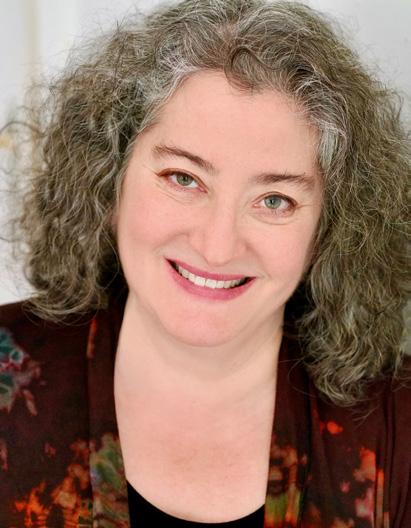
With a degree in folklore and mythology, Laura Packer is the winner of many awards, including her 2020 induction into the National Storytelling Network’s Circle of Excellence for standard bearers in the art of storytelling; best in fringe in many fringe festivals; Grand Slams; and more. Her books, “From Audience to Zeal: The ABCs of Finding, Crafting, and Telling a Great Story” and the accompanying workbook were Storytelling World Award winners. When she isn’t telling, she runs venues, coaches, writes and
helps people and organizations to find their stories, hone their vision and use their voices to make the world a better place.
Sponsored by Sivan, Telling Our Stories Through Food focuses on food, cooking traditions and homes as the link between generations and communities with the goal of helping people connect with each other. Previous speakers in this series have included local illustrator-author Marilyn Naron (2025), Associate Professor of Jewish Studies at San Francisco State University Dr. Rachel B. Gross (2024) and Poet Laureate Emeritus of Kansas Caryn Mirriam-Goldberg (2023).
Telling Our Stories Through Food is free and open to the public (Jewish and non-Jewish alike), although the LJCC is appreciative of financial contributions. The LJCC requests advance registration at lawrencejcc.com.
Telling Our Stories Through Food Sunday, Feb. 15, 3 p.m.
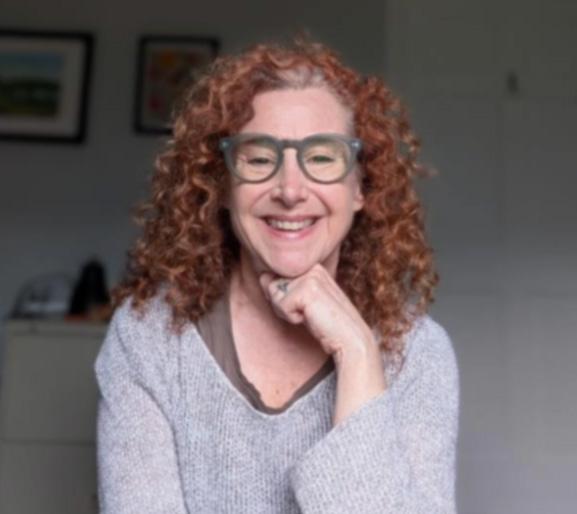
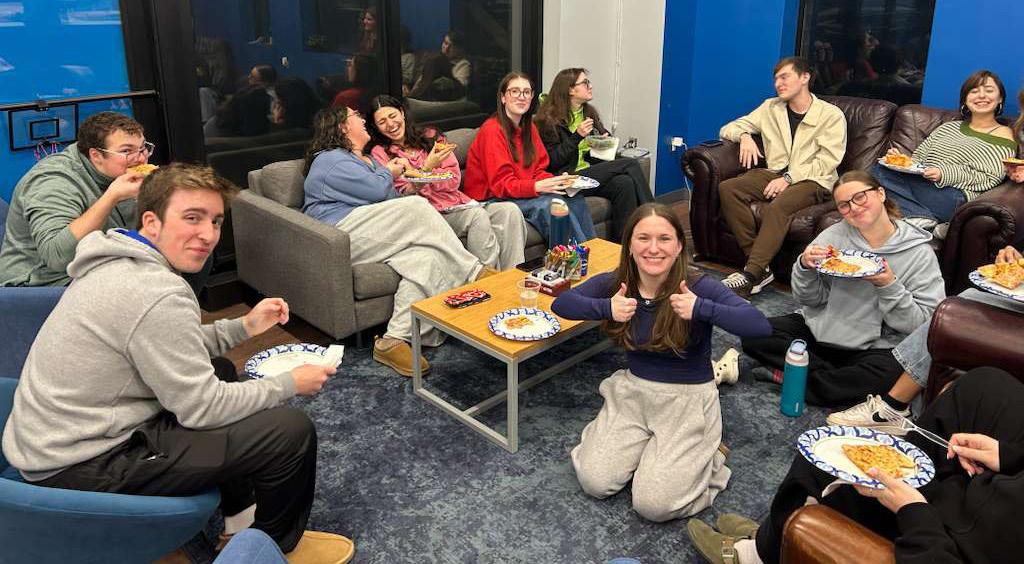
For Jewish students attending the University of Kansas, there are mental health support offerings from Jewish Family Services. Carla DeHetre is the new Jewish student therapist at KU. DeHetre is available to meet with any Jewish student who may be struggling with their mental health, which could interfere with their ability to succeed in daily life.
JFS facilitates the program, saying that college life can be difficult, with balancing class commitments, homework assignments and living on one’s own.
“I hope to normalize the process of accessing mental health services for students and for them to see they do not have to struggle alone," DeHetre said. “I can help students address issues such as anxiety, depression, grief and loss, relationship conflict and trauma.”
DeHetre is available to meet with students on Mondays and Wednesdays at her office between 10 a.m. and 3 p.m. Jewish students interested in meeting with DeHetre should call the
JFS navigator line at (913) 730-1433 or email her at cdehetre@jfskc.org.
“I meet with students individually for brief solution-focused therapy, to help them best help themselves,” DeHetre said. “I am also available to help with general questions related to mental health and to assist with resource acquisition if needed.”
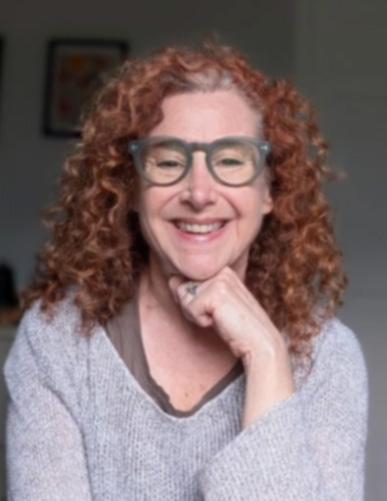
Carla DeHetre
DeHetre has a background in mental health and wellness, having worked in community mental health for more than 20 years. She holds a master’s degree in social work from Loyola University of Chicago as well as a bachelor’s degree in art history from the University of Kansas. DeHetre is also a licensed specialist clinical social worker (LSCSW) in Kansas. In addition to her work with JFS at KU, DeHetre has a private psychotherapy practice in Lawrence, Kansas, where she works with adults with a focus on anxiety, depression, trauma, grief, loss, and life transitions.
“Carla is excited to begin her new role as the Jewish student therapist at KU,” said Maggie Haghirian, JFS chief program officer. “Carla’s therapeutic style is collaborative, client-centered and strengths-based. No matter the therapeutic model, she strives to tailor the therapy process to meet the individual needs of each client through an empathic and compassionate lens.”
A native Chicagoan, DeHetre now lives in Lawrence with her husband and two cats. In her spare time, she enjoys exploring Lawrence, cooking and rooting for her favorite sports teams: the Kansas Jayhawks, the Chicago Cubs and the Chicago Bears.
However, DeHetre enjoys the work she does in mental health most of all.
“I love having the ability to combine my love of clinical and community work,” DeHetre said. “I would encourage students to reach out if they are struggling.”
Hyman Brand Hebrew Academy announced the final two panelists for its upcoming annual spring celebration, “A Night of Mensches & Memories,” on Sunday, March 1. The event will honor alumni, while also celebrating community and the values that shape HBHA students long after graduation.
Joining the alumni panel are Jacob Katz (Class of 2016) and Dan Cohen (Class of 1999), two HBHA alumni who were chosen by the school because their careers “reflect the creativity, leadership and storytelling skills fostered at HBHA.”
Katz is an award-winning digital artist specializing in video production. With more than 16 years of experience — nine of them professionally — Katz has contributed to projects that have collectively reached tens of millions of views across platforms. His work spans schools, political campaigns, feature films and businesses across the media landscape. Katz currently lives in St. Louis, Missouri, with his wife, Michaela.
Cohen is a strategic communications leader currently serving as head of communications and brand at Chicago Fire FC, Chicago’s Major League Soccer team. Over the course of his career, Cohen has helped shape brands including Doritos, Cheetos, Lay’s, Jim Beam and Maker’s Mark. A former Edelman Public Relations professional, Cohen has been recognized by PR
Week’s 40 Under 40 and the Holmes Report’s Innovator 25 Americas list. He spends most of his free time with his wife, Michelle, and two sons, Ben (11) and Jack (9).
“HBHA influenced my career path, inspired our decision to send our sons to Jewish day school and deepened our desire to celebrate Jewish holidays and uphold the traditions instilled in me by the HBHA community,” Cohen said. “I will always be grateful for my 13 formative years at

Together with previously announced panelists, Katz and Cohen will take part in an alumni discussion at the celebration, offering insight into their career journeys and memories of their time at HBHA.
Tickets and sponsorship opportunities are available, but space is limited. Community members are encouraged to secure their place at hbha. edu/support-us/celebration-event. cfm before the event sells out.
Members of the Jewish community who have experienced pregnancy or infant loss are invited to attend Comfort in Community: Living with Pregnancy Loss. The event will be from 3 to 5 p.m. on Sunday, Feb. 22, at Congregation Beth Shalom (14200 Lamar Ave., Overland Park, KS 66223).
In an effort to help members of the Jewish community deal with this loss in a communal setting, a spiritual care service will be held for all adults who have lost a pregnancy at any time and feel a need to be with others and remember their child who did not enter the world. This program is open to people of all ages and genders who have personal experience with this type of grief.
Rabbi Talia Kaplan of Congregation Beth Shalom; Ellen Portnoy, a spiritual care volunteer at Jewish Family Services (JFS); and Rabbi Monica Kleinman of the Pardes Institute of Jewish Studies; will join several others who have experienced pregnancy loss to guide attendees through a brief service and then offer various breakout groups. There will be opportunities to share, listen, write, pray and grieve.
The service is hosted by Jewish Community Chaplaincy and Priya Programs of JFS; Congregation Beth Shalom; and Kehilath Israel Synagogue, with co-sponsorship from The Temple, Congregation B’nai Jehudah; and Congregation Beth Torah.
Registration opens on Jan. 1, and attendees should RSVP by Feb. 16 at bethshalomkc.org/upcoming-events. The event is adults-only.
Comfort in Community: Living with Pregnancy Loss Sunday, Feb. 22, from 3 to 5 p.m.
Congregation Beth Shalom, 14200 Lamar Ave., Overland Park, KS 66223
The following bowlers achieved high scores in the Sunday Kansas City B’nai B’rith Men’s Bowling League at Ward Parkway Lanes on Feb. 1 and 8.
Feb. 1
500 Series:
Willie Jones 597 (172 225 200)
Hunter Thomas 596 (181 215 200)
Mark Newton 595 (221 172 202)
Steve Baraban 593 (207 149 237)
Nick Meyers 571 (141 223 207)
Zachariah Archie 569 (186 172 211)
Bruce Singer 560 (182 206 172)
Joe Ravnikar 552 (161 196 195)
Chris Eldredge 551 (177 212 162)
Brian Wright 542 (212 158 172)
Ryan Thomas 523 (171 184 168)
Steve Thomas 521 (173 170 178)
Stuart Pollack 521 (150 171 200)
Bill Sloan 516 (159 166 191)
Steve Greenberg 509 (159 183 167)
Michael Sokol 504 (176 180 148)
Jerry Shapiro 503 (177 156 170)
170 Game: Kent Verden 190 Adam Russo 188 Morty Rock 179 Tom Balke 174
Feb. 8
500 Series:
Hunter Thomas 667 (177 223 267)
Mark Newton 638 (214 203 221)
Adam Russo 595 (203 209 183)
Brian Wright 573 (180 180 213)
Christopher Eldredge 571 (199 210 162) Joe Ravnikar 542 (161 177 204)
Ryan Thomas 541 (194 177 170)
Zachariah Archie 538 (167 171 200)
Steve Baraban 514 (181 184 149)
(204
(161
Greenberg 508 (147 175 186) 170 Game:
music and worship leader for Congregation Beth Torah.
Jewish Family Services is offering its annual Pre-Passover Communitywide Service of Spiritual Renewal on Sunday, March 8, at 3 p.m. at the social hall of Village Shalom (5500 W. 123rd St., Overland Park, KS 66209).
The JFS Jewish Chaplaincy program facilitates the Service of Spiritual Renewal.
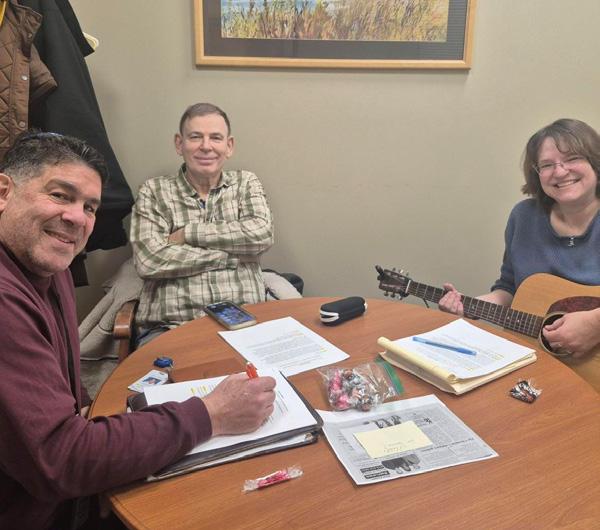
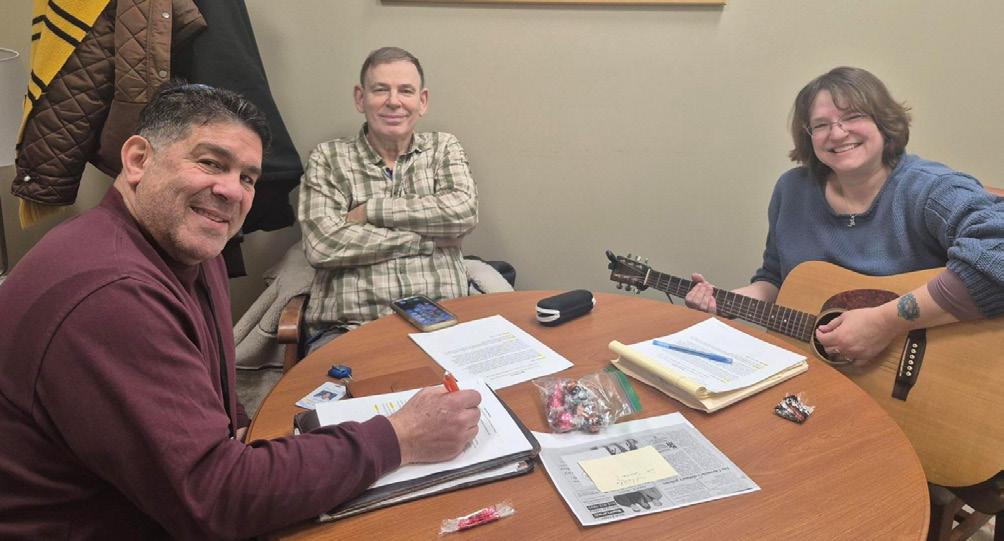
Leading this year’s service will be Jewish Community Chaplain Rabbi Jonathan Rudnick; Lezlie Zucker, Director of Music and Worship Leader for Congregation Beth Torah; and Cantor Aaron Hayoun of Kehilith Israel Synagogue. Cantor Hayoun’s son Arthur Hayoun will also participate as a special guest. This service will include readings, prayers and music focusing on reflection and renewal.
Those who would like to attend the service should RSVP by emailing their name and the number of people planning to attend with them to chaplaincy@jfskc.org.
The Jewish Community Chaplaincy Program at JFS works to connect spiritually with Kansas City’s Jewish community. Spiritual services include pastoral care, education and training of volunteers as well as community collaboration in the realm of spiritual care.
More information is available by contacting chaplaincy@jfskc.org or (913) 327-8250.
The Greater Kansas City Section of National Council of Jewish Women (NCJW) is providing scholarships for high school seniors who plan to go to college in the fall of 2026. The scholarship application is online under the “Programs” section at kansascity.section.ncjw.org. Along with the application, students need to provide the first two pages of both parents’ most recent Federal Income Tax 1040 Form. All documentation and the application must be at the NCJW office by April 15.
The scholarships are available to all seniors in the Greater Kansas City area regardless of race, religion or gender. Scholarships are provided based on an applicant’s demonstrated financial need, academic excellence and counselor’s recommendation. These scholarships are designed to augment the students’ resources, as they are not large enough to pay the entire cost of college.
Questions can be directed to the NCJW office between 8:30 a.m. and 12:30 p.m., Monday through Wednesday, at (913) 648-0747 or ncjwofkc@gmail. com.

MAHJONGG
FEDERATION
ROBINABRAMOWITZ
HBHATORAH HAMANTASCHEN GERRYTRILLING SPREADTHELOVE LAURAPACKER CARLADEHERTE JACOBKATZ DANCOHEN SPIRITUALRENEWAL
• Artillery shell (pg. 9)
• HBHA Torah (pg. 3)
• Social justice (pg. 8)
• Dan Cohen (pg. 5)
• Federation (pg. 1)
• Jacob Katz (pg. 5)
NCJWSCHOLARSHIPS VILLAGESHALOM SOCIALJUSTICE
• Spiritual renewal (pg. 6)
• Laura Packer (pg. 4)
WALKINGSTICK ARTILLERYSHELL SENIORNIGHT SUPERSTAR FORMERJCC
• Former JCC (pg. 15)
• Gerry Trilling (pg. 4)
• Hamantaschen (pg. 3)
• Mahjongg (pg. 1)
• NCJW scholarships (pg. 6)
• Robin Abramowitz (pg. 1)
• Senior night (pg. 10)
• Spread the Love (pg. 4)
• SuperStar (pg. 11)
• Village Shalom (pg. 7)
• Walking stick (pg. 9)

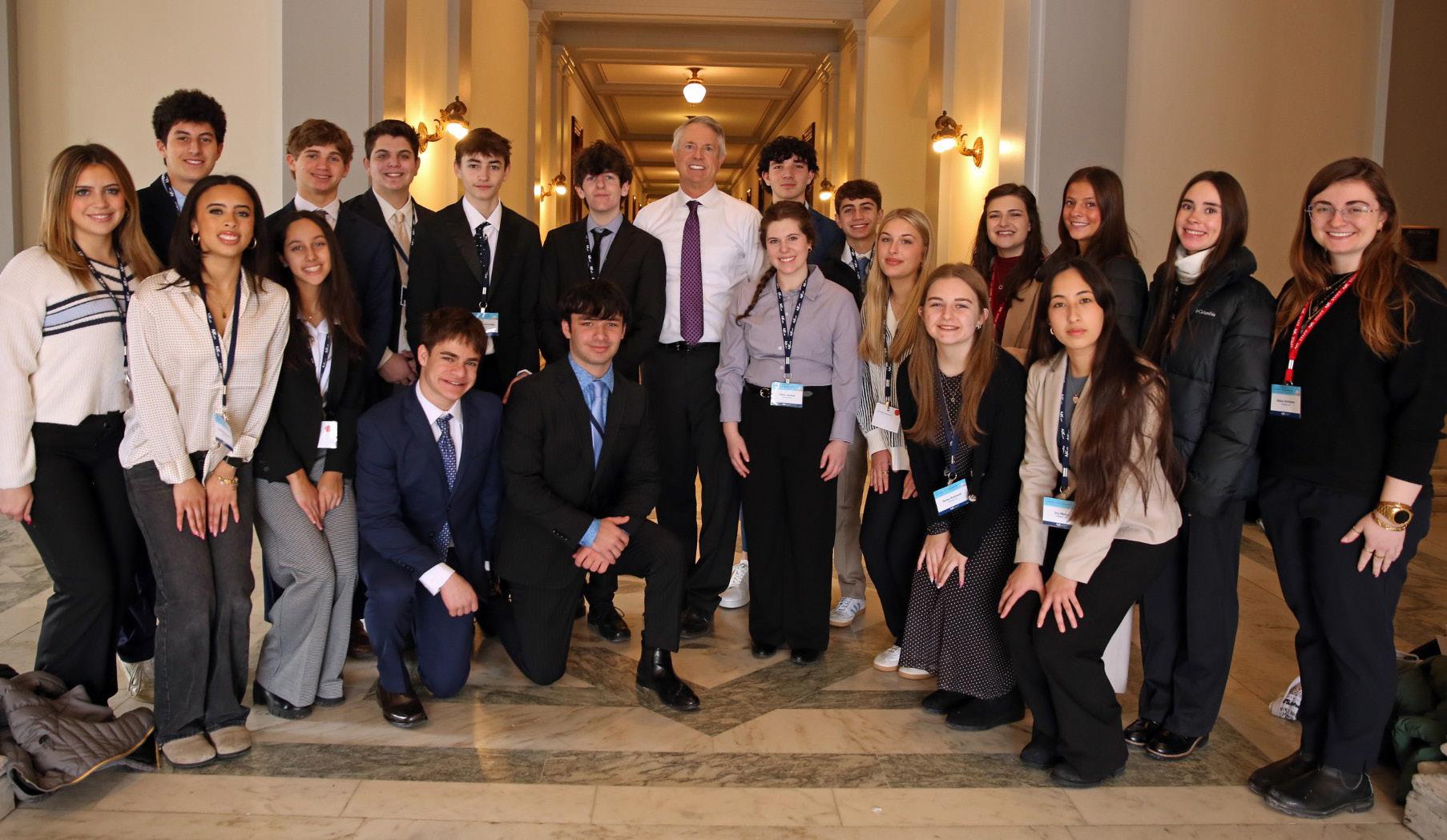
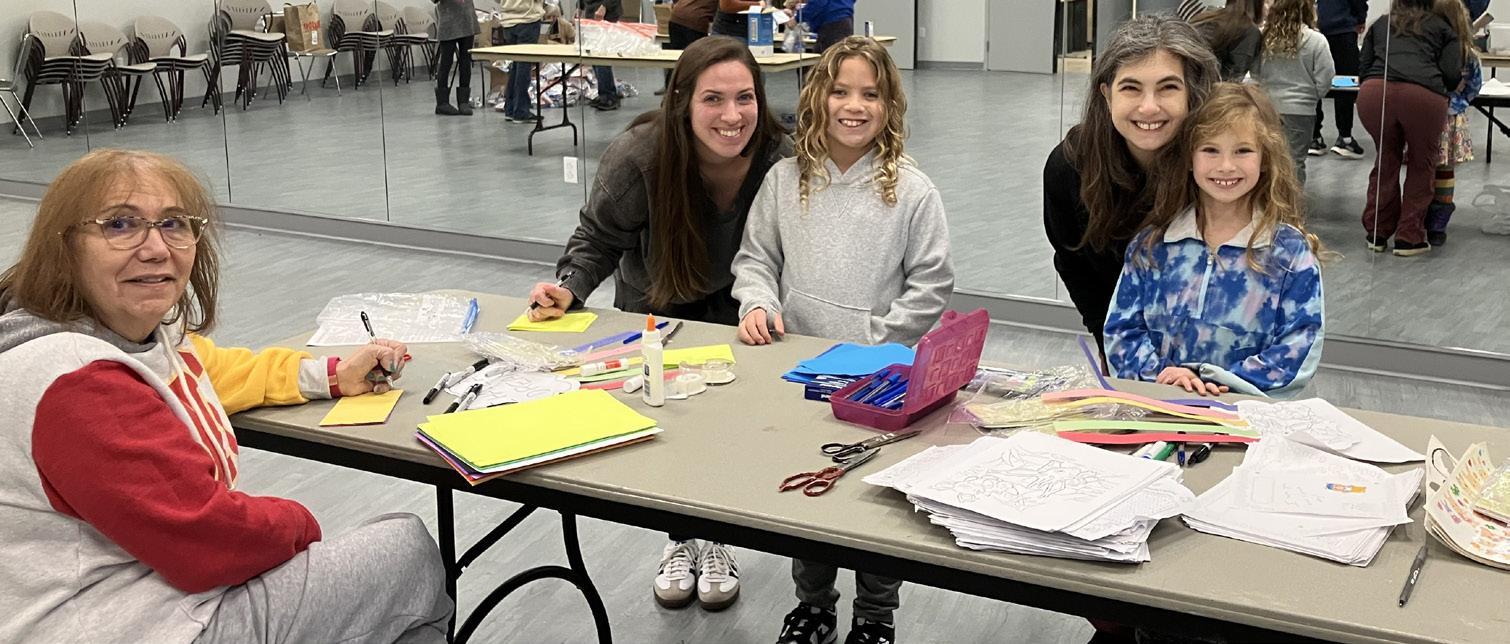
Left: Sen. Roger Marshall of Kansas met with Kansas City-area students in Washington during the American Jewish Committee’s annual fly-in for students in its Leadership for Tomorrow program. More than 250 students from across the country took part in the event.
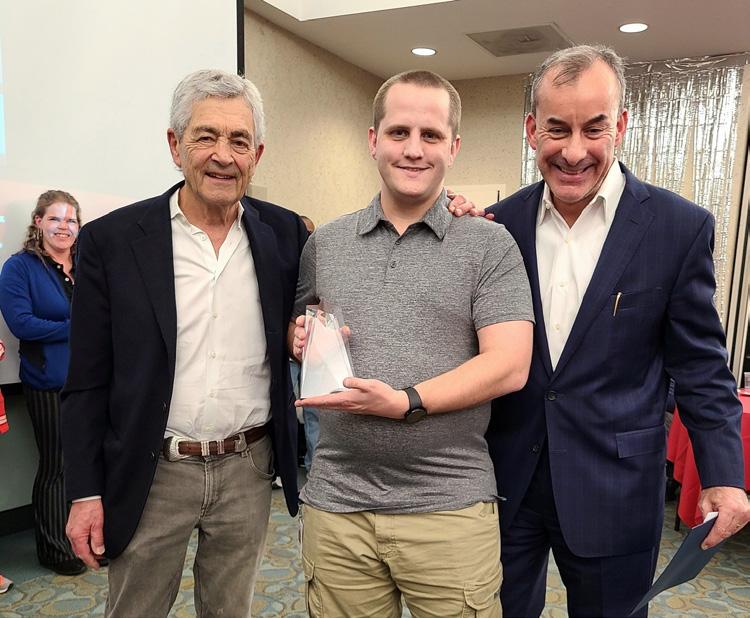
Commitment to excellence at Village Shalom, which the organization says is built day by day through the people who show up with consistency, compassion, and pride in their work, was celebrated at the annual staff holiday gathering on Dec. 12. There, Village Shalom recognized its Employee of the Year and Rookie of the Year.
“These awards go beyond recognition,” said Mark Campbell, chief financial officer of Village Shalom. “They reflect the values that guide our work each day and the generosity of the Helzberg family, whose support allows us to honor team members making a meaningful impact on residents, families and one another.”
The Employee of the Year and Rookie of the Year awards are funded through the Charles M. Helzberg Recognition Fund, established in 2000 to honor outstanding staff. Throughout the year, Employees of the Month and Rookies of the Month are selected from across departments, creating a year-long framework for appreciation and peer recognition. Monthly honorees receive financial awards and public recognition, with those recipients forming the pool
for the year-end awards of $5,000 for Employee of the Year and $1,500 for Rookie of the Year.
Charley Helzberg joined staff for this year’s celebration, which featured a “Game Night” theme, talking and celebrating with employees.
“The work you do matters more than you may realize,” Helzberg told the staff. “You affect not only residents, but entire families. The culture here — how people treat one another — is truly special.”
Village Shalom President Simon Abrahms emphasized the broader impact of staff recognition.
“When we celebrate our team members, we reinforce the importance of excellence, accountability and care across the entire organization,” Abrahms said.
Andrew Blakely
Blakely supports CNAs during their rounds and takes time to build meaningful connections with residents.
Director of Nursing Cristal Hernandez said, “Andrew consistently looks for ways to support others. Whether assisting staff or taking on extra responsibilities during winter weather, his thoughtfulness and reliability make a lasting difference.”
nothing but appreciation for Michael’s work,” IT Director Jim Oliverius said. “He brings patience, knowledge and a genuine understanding that technology support is ultimately about people.”

Andrew Blakely, who joined Village Shalom in 2019, was selected as Employee of the Year for his “steady presence and quiet leadership.” Known for his calm demeanor,
Michael Pfau, who joined Village Shalom last May, was named Rookie of the Year for his “technical expertise and approachable style.”
“In over a year, I have heard
As Village Shalom celebrates 25 years on the Helzberg Campus for Jewish Living, the community also honored Nazira Hussaini, who has been part of the organization since the campus opened in 2000. Charley Helzberg presented Nazira with the 25 Year Award in recognition of her continuous service and professional growth — from her early work in the kitchen, to serving as a CNA, to her current role as nursing house supervisor. She received a $1,000 award in appreciation of her lasting commitment to Village Shalom.

Birth Finn Isaac Liebenthal
Finn Isaac Liebenthal, son of Jennifer Liebenthal of Leawood, Kansas, was born on Nov. 14.
Finn’s grandparents are Cindy and Arthur Liebenthal of Leawood. He is the great-grandson of Clara Liebenthal of West Orange, New Jersey.
By Congregation Beth Torah
For most of its history, Congregation Beth Torah has considered itself a social justice synagogue with diverse opportunities for fellowship and social gathering. From the congregation’s beginning, these were a major focus of its people and its mission.
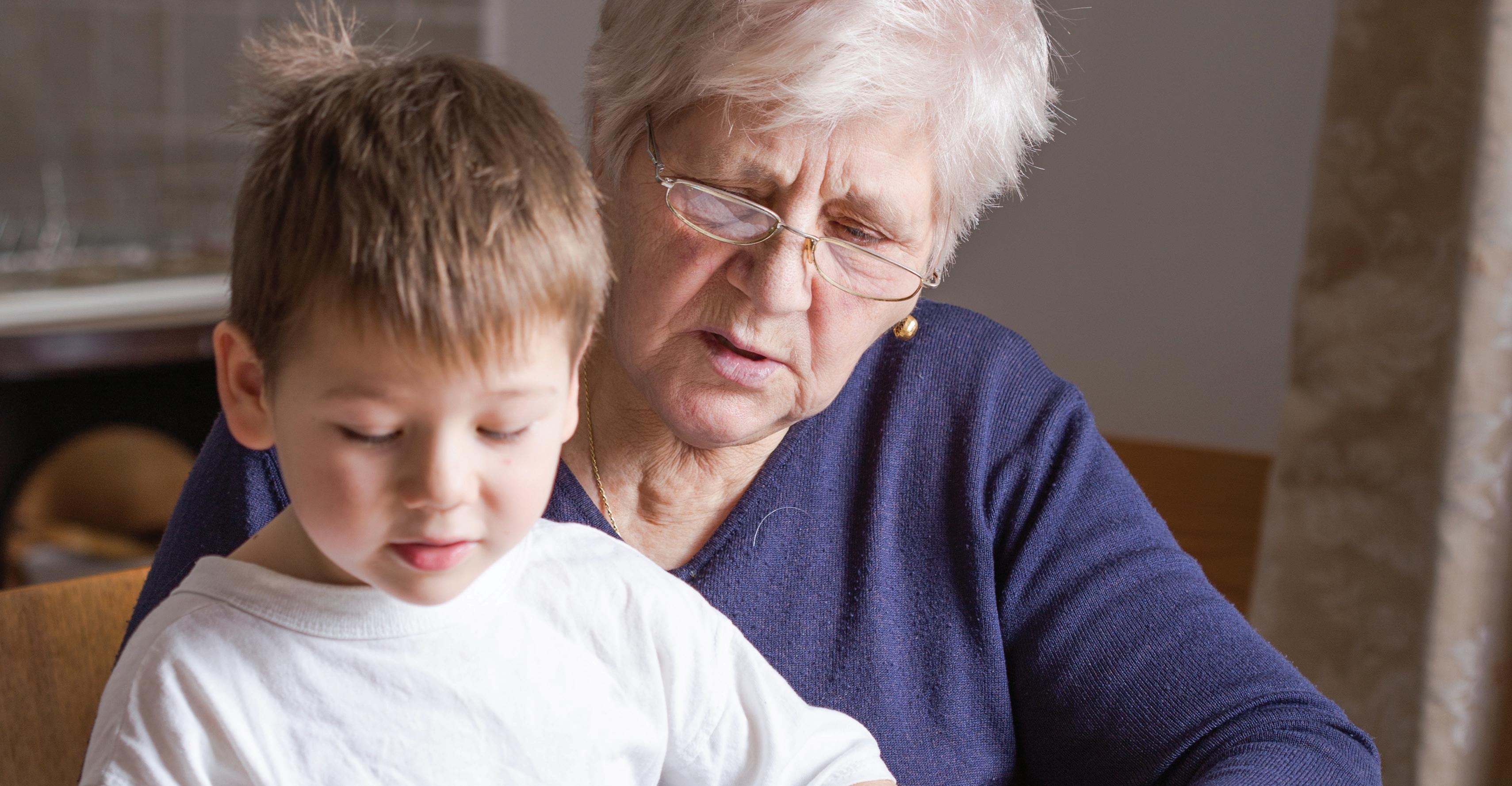
During the Covid pandemic when gathering was so problematic, Beth Torah’s Small Groups program kept its community alive. Started by Rabbi Javier Cattapan and modelled on a successful national model, small groups were and continue to be a vital part of
programming at Beth Torah.
“It is so important to ensure that we keep the right balance of social and sacred here at Beth Torah,” Executive Director Damien Timms said. “Synagogue life is so much more than services and Torah learning. These elements are important, of course, but we need to also provide opportunities for gathering that are not sacred based. Our Small Groups roster and our many social events during the year
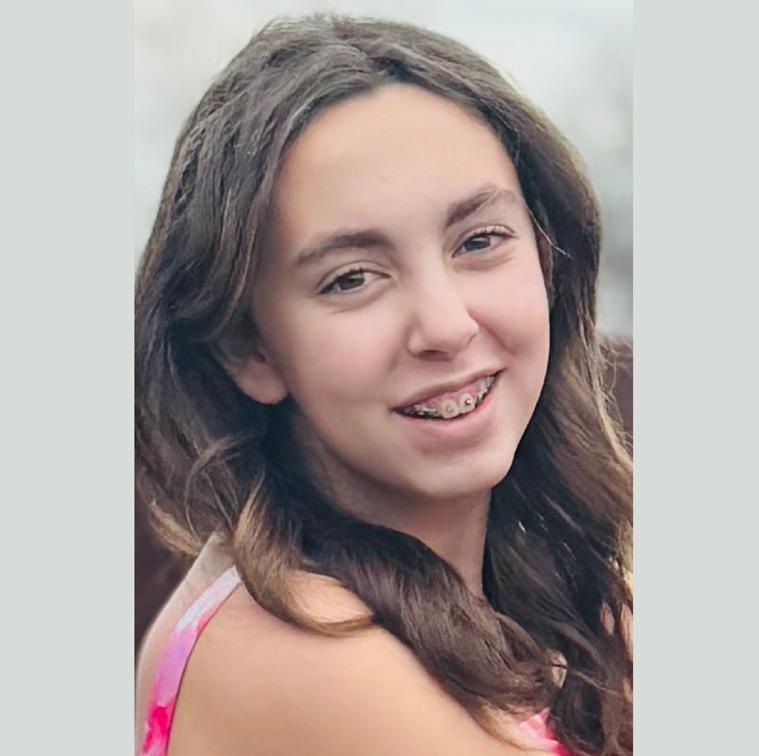
Harper Kadosh, daughter of Julie Guckenheimer and Ronen Kadosh,
will become a bat mitzvah on Saturday, Feb. 21, at The Temple, Congregation B’nai Jehudah.
Harper is the granddaughter of Helen and Dan Guckenheimer and Mymon and Fefeen Kadosh. She has two siblings, Marcelle and Brody.
Some of her hobbies include soccer, choir, theatre and playing the saxophone.
For her mitzvah project, Harper has been busy baking and selling challah to raise money for the Red Cross in Israel. She wants to help those suffering in the region and hopes for one day to have peace for all people in the Middle East.

achieves this.”
Beth Torah provides a range of opportunities to gather around a shared activity. Among the groups offered are ones for baking, walking, playing Dungeons and Dragons, playing mahjongg, enjoying barbecue restaurants, enjoying local coffee and more. These Small Groups have been in existence for a decade and continue every year, with new groups often being
on page 10
Through your generous gifts in 2025, you have directly impacted the lives of children with diverse needs in our Jewish community. You help make Sasone’s work possible.
Danielle and Jeremy Antes
Barbara and Richard Atlas
Lindsey and Zach Bassin
Judy and Steven Berman
Rachel Beser Brookes
Irene Bettinger
Marion and Henry Bloch
Family Foundation
Gary Blumenthal
The Central Chevra Kadisha
Natalie and Donald Cohen
Community Legacy Fund of the Jewish Community Foundation
Rebecca Dragon-Freiden and Jonathan Freiden
Sandi and Ed Fried
Karen and Jeffry Gerson
Phillip L. and Rita Gershon
Philanthropic Fund
Linda Gibian and Mark Fishman
Erin Heffernan Markowicz
Elena and Ben Heisler
Sharon and Scott Jerwick
J-LEAD Fund of the Jewish Community Foundation
Nan and Sidney Kanter
Rhonda Karol and Rabbi
Larry Karol (z”l)
Lynne Melcher and Barry Kaseff
Carla Klausner
Abigail Klein
Rachel Krantz and Edward Goldstein

Kylie Levine and Elliot Levine
Marcia and Jeffrey Lipsky
Nathan Lipsky
Peggy Locke
Menorah Heritage Foundation
Shanny and Eric Morgenstern
Shelby Moylan
Ronna Nussbaum
Robin Onikul
Organization for Autism Research
Jean Parelman
Sandy and Steven Passer
Megan and Sam Pener
Norman & Elaine Polsky
Family Charitable Foundation
Carol and David Porter
Lauren and Sam Raiche
Deborah Rosenberg
Renee Rosenberg
Lisa and Steven Ruben
Rabbi Jonathan Rudnick
Marcelle Rudnick
Marco and Nadine Farias
Santana
Sophie Shafter
Leslie Shea
Merna Siegler
Cindy and Sheldon Singer
Blanche and Neil Sosland
The Sosland Foundation
Lisa and Jeffrey Stolper
Jennifer and Daniel Stolper
Jennifer and John Stolte
Howard Trilling
Kimberly Turbes
Karen and Douglas Tyler
Mindy and David Wajcman
Elise Walker
Rachel and Ben Warner
Susan Warshawsky
White Family Supporting Foundation
Cyprienne Simchowitz and Gerald White
Joyce and Stanford Zeldin

By Ellie Holsten
The prophet Elijah is symbolically invited to important events in Jewish life, from a glass of wine for him on the Passover Seder table to a chair empty for him at the circumcision ceremony. In Afghanistan, the circumcision custom was slightly different but achieved the same purpose. A walking stick like this one was left in the room for Elijah to lean against if he grew weary from attending so many circumcision ceremonies.
Walking sticks for Elijah were ascribed amuletic properties of healing and protection. This one is also engraved “Angel of Circumcision” and “In honor of Elijah, the Angel of Circumcision.”
There is no longer a Jewish community in Afghanistan, but when there was, many of their customs differed from Jews of neighboring
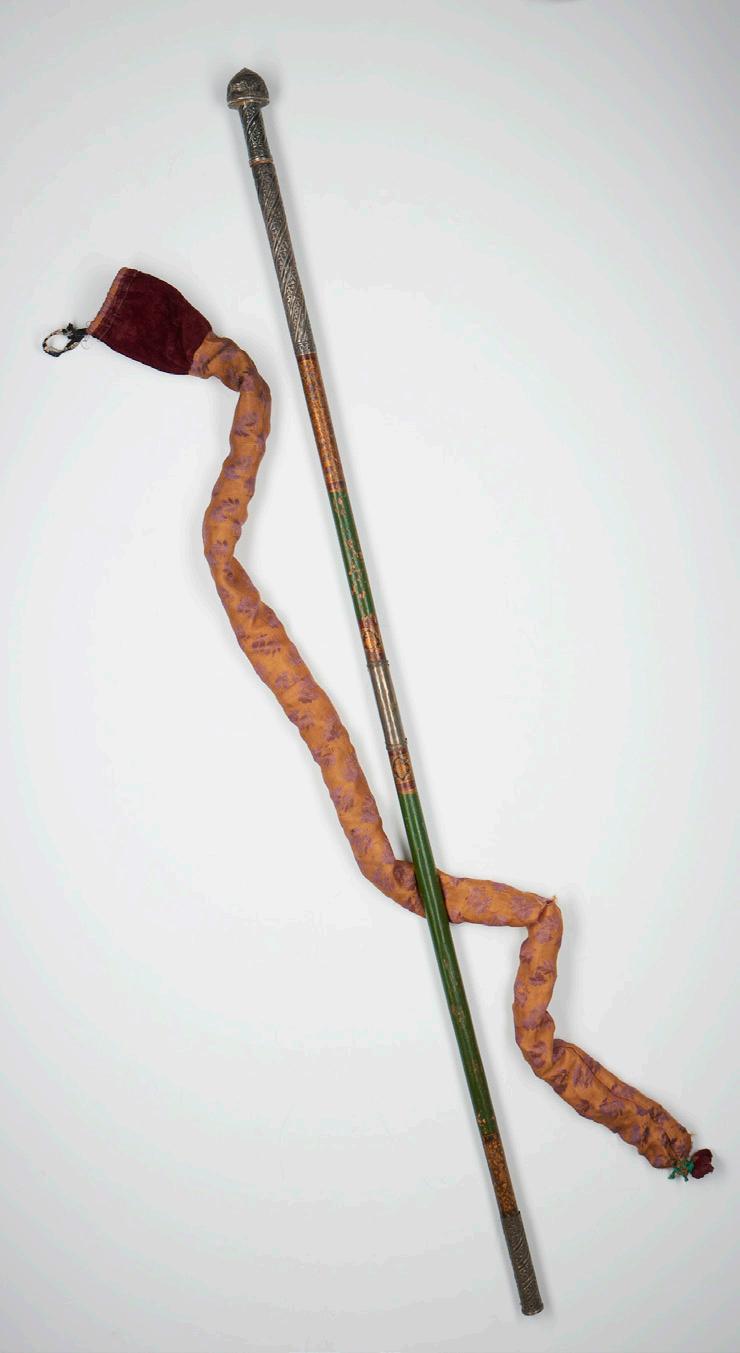
areas. Afghan Jews did not drink wine from a goblet for kiddush; instead they drank an anis-based spirit called arak out of a shallow bowl. Torah tiks, or hard-sided cases, in Afghan synagogues were draped with textiles called malbush, a custom unique to Afghanistan.
More information about the Michael Klein Collection at the Temple, Congregation B’nai Jehudah can be found at kleincollection.org or by calling (913) 663-4050 to schedule a tour.
This is a piece of “trench art,” a decorative object that was made from a repurposed World War I artillery shell casing. It is believed that over 1.5 billion artillery shells were fired on the Western front during this war.
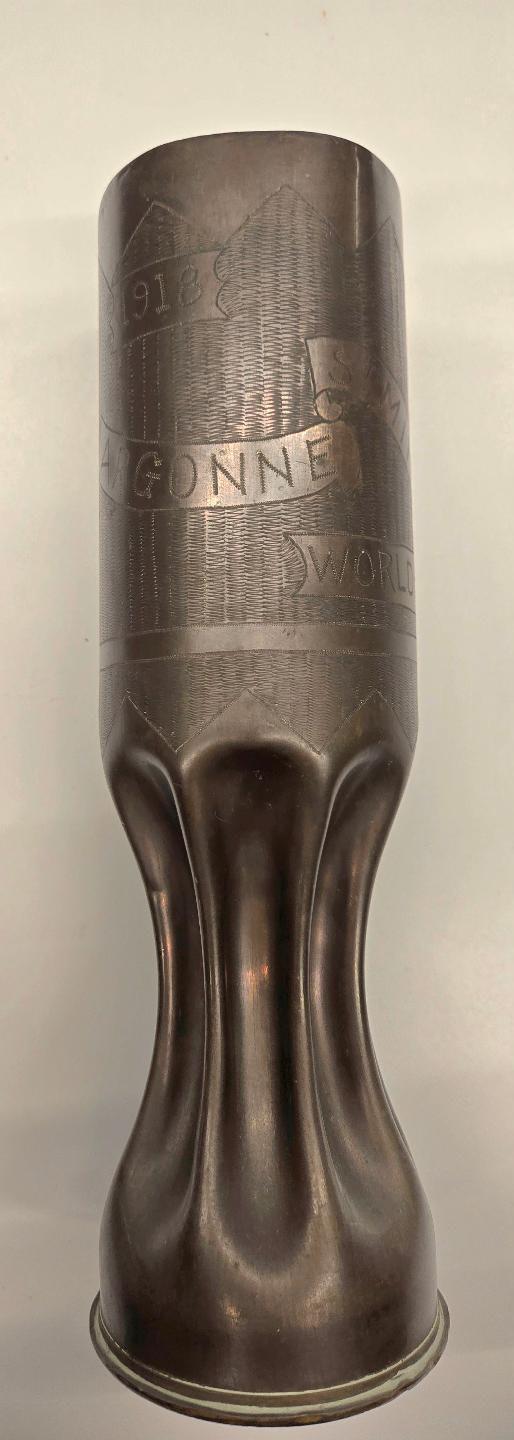
Trench art was a common practice among soldiers, prisoners of war and civilians during and after the war, using materials found on the battlefield. Most were actually made by locals who then sold them as souvenirs. Some were decorated with the battles or campaigns that the soldier served in.
This particular item appears to be an American 75-millimeter shell casing. It has been modified into a vase, with the casing heated and pressed
into a fluted, decorative shape. It is engraved with the year “1918” and the word “ARGONNE,” likely referring to the Battle of the Somme.
Community members are invited to view the glass cases in the lobby of the Jewish community Campus and view the large collection of military items donated by local veterans and their families. The cases will be updated this year with more current items.
Jewish War Veterans MO-KAN Post 605 is accepting donations for inclusion with emphasis on the Vietnam War era and beyond. Those wishing to contribute a military memorabilia donation can email jwvpost605@outlook.com for more information.
For
30 years, Sasone has helped our Jewish community be more inclusive & accessible for everyone. Make your gift today & help us make an impact for the next 30 years.

Scan the QR code or donate online at sasone.org/donate
By Norah Pabst Chronicle Intern
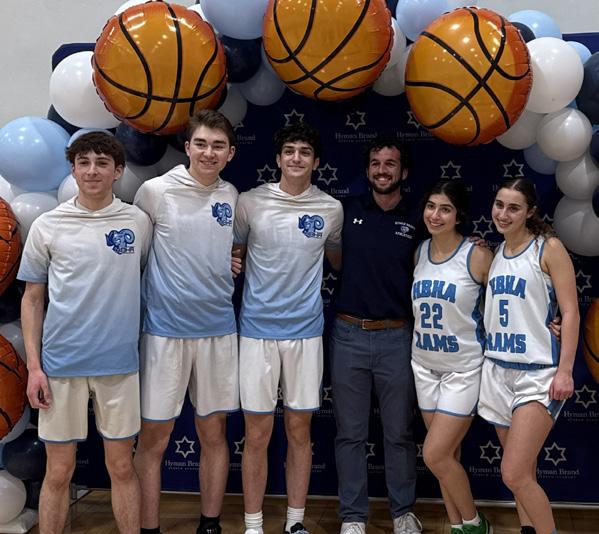
Hyman Brand Hebrew Academy (HBHA) held its annual Basketball Senior Night celebration this past week. This event occurs at the end of every basketball season at HBHA and serves as both a celebration of the graduating seniors on each basketball team and a night of recognition for each team’s dedication to the sport. It celebrated not only the senior’s seasons, but also the dedication and work each of them put into their team, with many of them serving as team captains.
The night, fully planned by HBHA student council’s community outreach committee and Director of Athletics and Student Life Sam Matsil, was also open to Jewish teen youth groups across the Kansas City Jewish community, from BBYO to USY to KCteen. The multi-denominational invitation ensured a large student section for the Rams, leading to lots of audience interaction throughout the game.
Both the Varsity girls and Varsity boys were up against the Guadalupe Centers High School Aztecs from Kansas City, Missouri. Both teams were able to come out with a victory, with the Varsity girls defeating their opponents with a score of 61-17, and the Varsity boys winning 58-45.
Senior Night also celebrates each senior’s work and dedication to their teams. The celebration this year included games, a halftime performance from HBHA’s cheer team, a pieing contest of school administrators, and the Senior Night celebration itself.
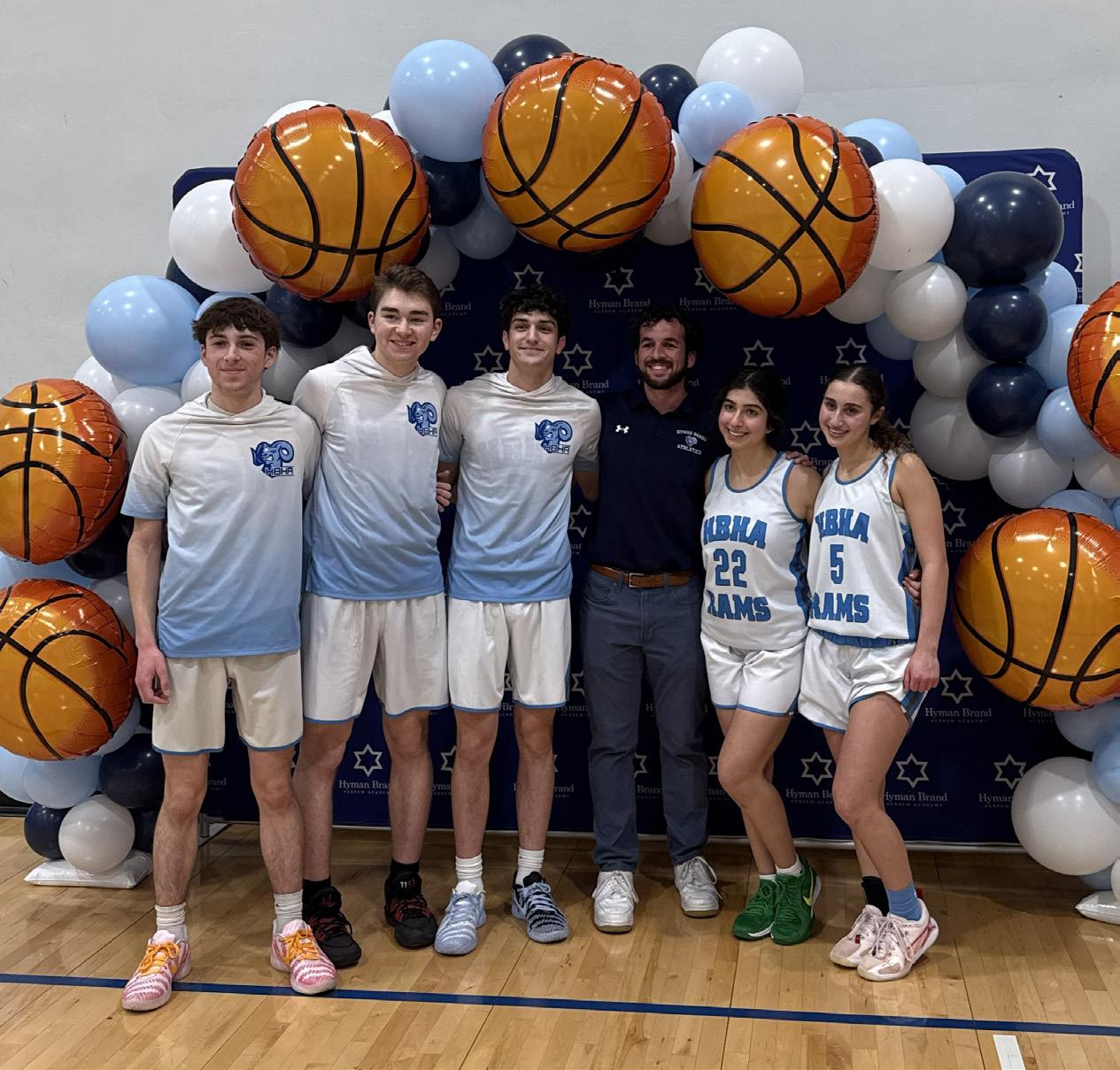
During the celebration, each senior was able to walk down the “stage” (the basketball court) accompanied by their parents as Matsil narrated to the
crowd of parents, classmates, teachers and community members about each senior’s impact on their team and plans for after graduation. He also included
personal messages about each senior’s contribution to the basketball program at HBHA.
There was also a video dedicated to the seniors that was compiled by HBHA’s student council. The video was filled with messages for each senior of love and support from previous coaches, teachers, parents, siblings and friends.
HBHA’s intent for Senior Night is to share appreciation for what the dedication and effort a student’s four years on a team can do for every single one of its players. The school worked to ensure that each senior was recognized and applauded for their years of service to the athletic program at HBHA and the school as a whole.
continued from page 8
added. With 11 groups this year, the Small Groups roster continues to be driven by dedicated volunteers from the Beth Torah congregation.
After a hiatus post-Covid, the Social Justice Committee at Beth Torah has reformed “with gusto and an energy that reminds many of the earlier years of the synagogue,” Timms said. The focus of Beth Torah’s social justice programs is one of tangible goals and community representation.
“It is not simply about being seen to be doing good,” he said, “but it has
always been about doing tangible works with real outcomes that make a difference.”
Some of the initiatives in the Beth Torah Social Justice calendar include:
• Good Faith Network — Beth Torah is a foundational member of the Good Faith Network and hosts its annual Problems Assembly.
• Strangers No More — An interfaith initiative that began with Beth Torah as a founding member, Strangers No More brings together women from many faiths in conversation and action.
• Annual “Soup-er Bowl” Soup Drive
— This soup drive contributes much needed food to the Jewish Family Services (JFS) Food Pantry.
• Annual Spice Drive — This drive is to provide the “extras” that families in need might be missing from their pantries and to enhance the food packs from JFS.
• Winter Clothing drive for Free Hot Soup — Donations of warm winter gear, including coats and blankets for those in need, are gathered in exchange for soup.
• Tikkun KC-Affordable Housing — This initiative, driven by the Tikkun KC group, takes abandoned houses
in key areas, renovates them and then sells them to vetted low income households.
• Annual Mitzvah Day — A day devoted to volunteering for multiple initiatives that are both within and external to the Jewish community. Some organizations that benefit include Happy Bottoms and JFS.
• Blood Drives — Blood stocks are always in high demand, and Beth Torah hosts multiple blood drives during the year.
• Harvesters Backsnack Program — Partnering with Harvesters, Beth Torah volunteers deliver food boxes to Pawnee Elementary School for students who experience food insecurity.
• Voter Registration — Beth Torah holds voter registration drives to assist people through the registration process, ensuring as many people as possible can be prepared to vote.
Beth Torah leadership continues to look for opportunities to walk in the steps of Torah, most notably in the area of tikkun olam. With its volunteer corps, it looks to further its outreach and community impact. During times of antisemitism, it is also a tool for building bridges with other faiths and communities.
“Beth Torah remains committed and involved in Social Justice,” Timms said. “It is not simply the right thing to do; it is the Jewish thing to do.”
continued from page 1
and communications studies. She worked in the local Jewish community through a grant-funded position at Jewish Federation of Kansas City, after which she stayed in the nonprofit field and became the executive director for the Brain Injury Association of Kansas and Greater Kansas City (BIAKS).
“At BIAKS, it was an honor to work with people whose lives had changed in the blink of an eye yet had the resilience and fortitude to carry on,” she said. “These experiences parallel much of the Jewish experience and reinforced my deep appreciation for life and good health.”
Oct. 7 impacted Abramowitz deeply and was an impetus for her return to working in the Jewish community.
“When it happened, I felt helpless,” she said about Oct. 7. “I felt a deep
desire to return to working in our community and making a difference. I am looking forward to working with our members, our hardworking and dedicated staff and board, and collaborating with other Jewish organizations in our community. Together, we are stronger.”
Security is now a major issue at all congregations. Abramowitz is looking forward to continuing the relationship with the local police that K.I. has developed. She hopes to help the community stay strong and secure given the increase in antisemitism in the last couple of years.
Besides her work at K.I., Robin enjoys traveling with her partner, Brian Thompson, and spending time with friends and family. To relax, she reads and enjoys Jazzercise. She loves local sports teams, but no team is more important to her than K.U.’s Jayhawks.
The J’s largest annual fundraiser, KC SuperStar, a premier high school vocal competition for performers from across the metropolitan area, pairs scholarship support with a professionally produced performance experience to challenge young artists while engaging the broader community. Now in its 17th year, KC SuperStar has showcased emerging talent, with several participants continuing on to professional performance careers.
This year, organizers increased scholarship offerings, with more than $30,000 to be awarded to the top 10 finalists. The winner will receive $15,000, with additional awards of $7,500 for second place, $5,000 for third place, $2,500 for fourth place and $500 each for the remaining finalists.
“We are excited to expand scholarship opportunities for this year’s KC SuperStar,” said Tammy Ruder, KC SuperStar producer. “Recognizing that the cost of higher education continues to rise, organizers chose to significantly increase scholarship support for participants. As we have seen in the past, these scholarships have helped ease the financial burden for families as students pursue the school of their choice.”
Auditions will be held on March 8 from 1 to 4 p.m. and March 10 from 5 to 7 p.m. Registration is appreciated, and walk-ins are welcome. High school singers ages 14–18 from across the metropolitan area are encouraged to audition, regardless of prior performance experience.
As The J’s major fundraising event,
KC SuperStar supports access to The J’s programs for members of all ages. A portion of funds raised supports the Reat Griffin Underwood Rising Stars Fund, which provides performing arts education and training programs for youth ages 14–21.
Serving as co-chairs, Alana Muller and Marc Hammer are longtime Kansas City leaders known for their impact throughout the Jewish community. Muller is the founder of Coffee Lunch Coffee, an internationally recognized platform focused on relationship-building and community connection. Hammer, a financial planner, has been helping small business professionals with a client-focused approach to invest and grow. Both are former members of The J’s board of directors and have played active roles in initiatives to strengthen local institutions and the region.
“The Jewish Community Center has been a consistent source of joy for our family over multiple generations,” Muller said. “As such, we are delighted to be involved with KC SuperStar this year. It is a wonderful program that celebrates remarkably talented high school singers while supporting The J, an important organization that continues to convene our broad community.”
KC SuperStar is made possible through the support of community members. Sponsorship opportunities are available, with options to support both the program and its scholarship offerings. More information is available at kcsuperstar.org.
By Bridey Stangler PJ Library

By the time you read this you might be:
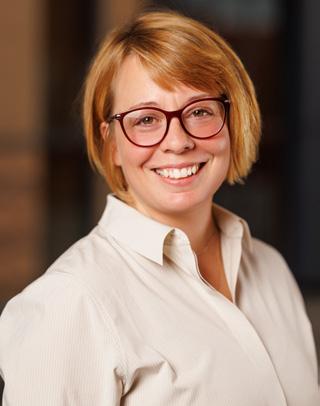
• Elbow deep in Elmer’s Glue, putting the last touches on your child’s classroom Valentines box,
• Recovering from the classroom party,
• Planning a romantic night out, or
• Treating the day like any other on the calendar.
To be a Jewish American is to juggle two traditions, and I’m here to voice my completely unqualified opinion that no one is remiss to do any of the ones above. After all, Valentine’s Day lost religious status in 1969, when the Catholic Church gave up the holiday: history doesn’t really corroborate the saint’s connection to romantic love.
Thus, Valentine’s Day, celebrated on Feb. 14, is considered a secular holiday with excellent sales on chocolate. No harm done, then, in taking an extra moment to celebrate those you love (not in this Jew’s opinion, anyway).
Only good things can come, then, in adding a little Yiddishkeit to your Valentine’s Day revelry. Here are a few ideas to do just that:
• PJ Library certainly has its share of books that explore love of family and friends. Check out these titles to start a conversation about how we show people we care:
• “A Hat for Mrs. Goldman” by Michelle Edwards
• “Yaffa and Fatima: Shalom, Salaam” by Fawzia Gilani-Williams
• “A Kiss on the Keppie” by Leslea Newman
• “The Lion and the Bird” by Marianne Dubuc
• Sit down to enjoy PJ Library’s “Someone for Mr. Sussman” by Patricia Polacco. In this charming lower-grade picture book, Jerome helps his own bubbe find companionship. Even the neighborhood’s best matchmaker deserves love!
• Make Sweet Toots! Tutim (Hebrew for strawberries) dipped in chocolate are a popular American Valentine’s Day treat. Deliver handdipped “Sweet toots for your sweet tooth!” to Hebrew teachers, rabbis,

neighbors and friends.
• Paper cutting is a long-held Jewish tradition and the perfect way to craft your own homemade valentines. A quick Google search will yield countless images of beautiful and historic ketubot (marriage contracts) that employ the art. Younger kids can make hearts with a simple folded sheet of paper and some scissors, while older kids and teens might love the thrill of wielding an X-acto knife to create something elaborate and unique.
• Adults can give tzedakah to a charity related to supporting safe, healthy and productive loving relationships. Consider Priya, a program of Jewish Family Services, which provides financial and emotional support to all Jewish families facing fertility and family building challenges. Another is the National Center on Domestic and Sexual Violence in the Jewish Community, an organization of Jewish Women International.
• Deliver cookies to your neighbors with kid-made cards about literally “loving your neighbor as you love yourself!” (Leviticus 19:18).
• Kids love to see their names written in Hebrew – it’s like a secret code! Do a little crafting of your own and put hearts on their bedroom doors that have their English or Hebrew names written out in Hebrew letters. Don’t forget glitter!
• Make your own Jewish conversation hearts with some punny Valentine’s messages: “Love you Lox!” “I sure love JEW” “Chaim Yours!” “Hugs & Knishes” “Challah at me!” and, my favorite, “You’re a KIPPAH!”
• Mesh this secular holiday with an upcoming Jewish favorite: Hamantashen! An extra pinch in the right place makes these triangular treats look like hearts.
• Snuggle up with some cocoa and your little one to read PJ Library’s “The Chocolate King” by Laura Catalaan. In this sweet story of family love and tradition, a Jewish boy passes on his grandfather’s tradition of bringing hot chocolate to the masses.
However you celebrate – or don’t – Feb. 14 is as good a day as any to model healthy and open affection for those who hold your heart. Now get out there and buy that discounted chocolate!


“What should I bring you back from my trip?” This familiar question from someone about to embark on a voyage often elicits a response such as, “Please bring me chocolates from Belgium,” or “How about a wool sweater from Scotland?” But I know of two instances when this mundane request ended up as an entire museum collection.
The World Erotic Art Museum in Miami Beach (yes, there is such a museum) began when its founder, Naomi Wilzig, of blessed memory, was asked by her son to return from a European trip with a piece of erotic art for his apartment. As Wilzig tells it, as an avid antique collector, she was quite knowledgeable about historical pieces. However, having been raised in an Orthodox Jewish home, she knew nothing about erotic art. Not surprisingly, her purchase proved a disappointment to her son.
“That’s not what I had in mind,” he told her.
“I’ll keep looking,” she said. Did she ever. “It became an obsession,” she later admitted. By the time she died she had amassed 4,000 pieces of artwork and created the largest privately-held erotic collection in North America.
Our own local Michael Klein Judaica collection also began with a “bring-me-back” request. Before his parents left for Israel, Michael Klein asked them to bring him a Havdalah spice box. They brought back three, but rather than simply becoming tchotchkes for his shelf, they piqued his interest in Jewish art and artifacts. He started buying more. And more. And more. Before he knew it, he had amassed one of the largest privately-held Judaica collections in the country.
I wonder what motivated each of these collectors to keep accumulating. Personally, I’m not much of a “thing” person myself. Though I’m a librarian, I don’t even like owning books, preferring to borrow rather than own them. So, what explains this desire to find and own?
According to the online website Artrewards, most art collectors fall into four identifiable psychological
categories. Investors focus on resale value; aesthetes appreciate the beauty of a work; historians strive to preserve culture; and advocates want to support artists or social causes.
Some art lovers also possess what psychoanalyst Werner Muensterberger identified as “an unquenchable thirst” to own the artwork. University of Texas psychology professor Andrew Dillon claims that “collecting is a rather curious behavior that seems to defy easy explanation or analysis.”
I can somewhat understand the joy that comes from successfully locating and purchasing a desired object. Once, while shopping at Savers, my exuberant outburst upon finding a set of wine glasses earned me a high-five from a fellow thrifter. And I experienced deep satisfaction at Home Goods when I found a bathroom rug exactly the same shade of blue as my bath towels. Though enjoyable experiences, I’m not sure the pleasure I derived from these finds was worth the effort that had been expended.
I’m glad that both Klein and Wilzig were motivated to continue seeking out their desired treasures.
As I have kvelled over in previous columns, the Michael Klein Judaica collection on display at B’nai Jehudah is amazing and should be seen by every Jew in the Kansas City area.
And if you are ever in South Florida, you absolutely must visit the World Erotic Art Museum. When I joined eleven women from the L’Chayim Hadassah Chapter on a tour, we Jewish women gained valuable knowledge. But that’s a story for another column. For now, I’ll just say I’m glad that Wilzig and Klein were presented with souvenirs that inspired the creation of two great museums.
Nancy Kalikow Maxwell is a Kansas City native and award-winning author. Her book, Typically Jewish, is available through the Jewish Publication Society or Amazon. Her website is kaliwellinc. com and email is nancykalikowmaxwell@gmail.com.
Editorials express the view of the writer and are not necessarily representative of the views of The Kansas City Jewish Chronicle staff, the Jewish Federation of Kansas City, or the Kansas City Jewish Community as a whole.
By Rabbi Doug Alpert Congregation Kol Ami
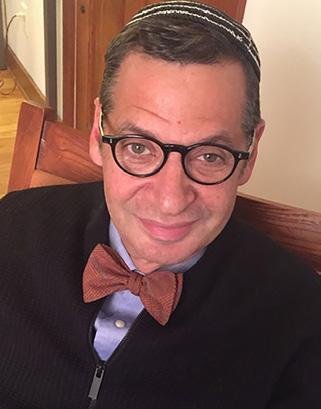
I was one of two local rabbis (the other was Rabbi Moti Rieber) who were amongst the 600 clergy who traveled to Minneapolis a few weeks ago to witness firsthand what can only be characterized as a reign of violence and induced fear inflicted on everyday residents by ICE (ICE is used as an encompassing term that references both Immigration and Customs Enforcement and Customs and Border Protection). We have all heard about the murders of Renee Good — formerly a neighbor here in Waldo — and Alex Pretti. In 2025, there 32 reported deaths of people in ICE custody.
There are stories of cruel family separation, children being detained and held as bait to force their parents into ICE custody, and children asking why classmates are no longer in school. People have literally been forced into lockdown in their homes; notwithstanding that they may be people who hold legal immigrant status.
That all these stories I could never have imagined would be part of an American story in my lifetime have left me feeling gut-punched, a feeling of profound sadness and anger. The policy of “rounding up” people indiscriminately, ignoring due process and rights — both Constitutional rights and human rights — hits way too close to our own Jewish history for me to ignore. It is a feeling that led me to Minneapolis to fight this madness and stand with the decent people of Minnesota. The idea of “Minnesota nice” is more than just a slogan.
So what is the impetus for this reign of terror? It is not to implement needed immigration policy. They are not going after the criminals, the worst of the worst. Those who are rounded up and detained/imprisoned or deported are done so with disregard for their background or immigration status. Also, if the goal is to deport those who are in the country without documentation, why only carry out this government sponsored assault on some cities, and do relatively little in states like Texas and Florida that actually have existing borders where immigrants cross?
The $75 billion dollars committed to ICE has led to reckless recruiting
of new ICE agents, put out on the streets with little training. They act without lawful judicial warrants entering schools, places of worship, hospitals and homes. Their actions have not made our cities and states safer, quite the contrary. They are a hindrance to our local law enforcement doing what they are trained to do: keep us all safe. These conditions made the deaths of Renee Good and Alex Pretti inevitable.
This was all brought into stark reality during my time in Minneapolis. At one point, we were shooed into a church as an ICE abduction was taking place around the corner, and there was legitimate fear that, being outside and close by, we were at risk. All this had given rise to my sadness and anger.
Yet, I also take hope back home from my time in Minneapolis. I spent Friday morning in the neighborhood where Renee Good was killed. (It is the same neighborhood that had been traumatized by the murder of George Floyd, and close to where ICE agents shot and killed Alex Pretti.) There is no one leader in that neighborhood. They have created a community where everyone knows everyone, and they protect and support each other.
The community has a gathering spot where, for years now, they meet outside of an abandoned convenience store morning and evening (their own version of Shacharit and Ma’ariv) to check up on each other. Groceries are delivered to families who are in fear of leaving their homes, kids are picked up by neighbors and taken to school where parents fear abduction and deportation. There are systems to warn each other of ICE presence. Mutual aid has become everyone’s responsibility in Minneapolis. This is a model we can and should replicate here in Kansas City.
As Jews, we should know better than anyone the importance of welcoming immigrants and what happens when borders have been closed to us. In this crucial time in our country’s history, let us stand on the side of compassion. Let us consider each of us our neighbor, beyond our own Jewish community. As the strangers in our midst suffer oppression as we have in our own history, let us carry with us the mitzvah that commands us to fight against oppressing the stranger. In this moment, there is no more important mitzvah than to love the stranger.
Diane Mnookin
Arnell passed away peacefully on Feb. 4, surrounded by her family after a short illness.
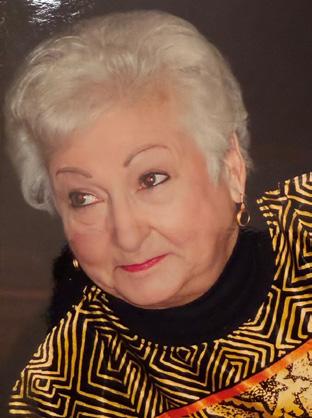
Diane was predeceased by her parents, Nathan and Esther Mnookin; her husband, Norman Arnell; and her sisters, Natalie Garrett and Barbara Mnookin.
Diane was born on April 25, 1933, in Kansas City, Missouri, and lived most of her life in the KC Metro Area. Diane attended the University of Illinois where she met her husband, who was a law student there. After a brief stint in Chicago, the couple moved back to Kansas City, where he practiced law for more than 50 years, and she was, by turns, a housewife, a seasonal employee at the Internal Revenue Service, a volunteer for many charitable causes and an employee at the Community Blood Center, where she donated nearly 100 pints of blood over her lifetime.
Diane was known for her kindness, playful nature, generosity and wit. Some of her philanthropic endeavors included the National Council of Jewish Women, the Menorah Medical Center Auxiliary, being a Court Appointed Special Advocate (CASA), performing in Kiddie Kapers at the JCC for at least 20 years, and serving on the board of KC Hospice in its early years (where she spent her final days).
Diane was a lifelong member of The Temple, Congregation B’nai Jehudah and a longtime member of Oakwood Country Club. Diane was an avid bridge player, loved card and word games (she played a mean game of Scrabble and spent many hours with her children and grandchildren playing gin and cribbage), traveling with the family (especially with her grandchildren) and playing golf for about 40 years, breaking 90 frequently in her prime but never hitting a drive more than 150 yards (but you could count on it being in the fairway).
Diane is survived by her three children, Steve of Overland Park, Kansas, Nate (Heidi Hellring) of Maplewood, New Jersey, and Lisa Clarke (JR Clarke) of Prairie Village, Kansas; five grandchildren, Nicole Arnell (Eddie Smith) of Los Angeles, California, Max Arnell (Kate Fetrow) of Brooklyn, New York, Jessie Arnell (Zack Griffiths) of Brooklyn, and Scott and Ian Clarke, both of Prairie Village; and one great-grandchild, Theo Arnell, of Brooklyn. In lieu of flowers, the family requests contributions be made to a charity of one’s own choosing. A memorial service will be held at a later date.
Friedman Bartlett
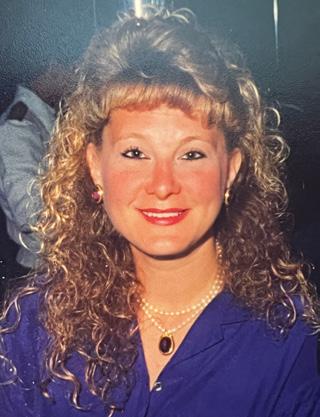
Paula Sue Friedman Bartlett, 69, of Lone Jack, Missouri, passed away on Jan. 30. Funeral services were held at Louis Memorial Chapel on Feb. 2, followed by internment at Floral Hills East Memorial (25203 E. US Hwy. 50, Lee’s Summit, MO 64086).
She was born on July 29, 1956, and was predeceased by her parents, Sam and Minnie Friedman, and sister Jacquelyn Friedman. Paula is survived by her husband of 51 years, Chris Bartlett; sister Sherry Pollack (Jeff); daughters, Jennifer Pabst (Greg) and Christy Eggers; and grandchildren, Alec Eggers (Jessica), Jacob Pabst, Aerial Eggers, Justus Pabst, Jadon Pabst, Danielle Pabst, Liberty Pabst and Olivia Pabst.
Paula graduated Center Senior High School in 1974 and went on to attend Drake University. Her love of theatre, singing and dance drove her to perform in musicals, recitals and plays. Paula’s talents landed her many leading roles.
During college, she worked at KC Fitness Center, where she met Chris, the love of her life.
Later, she worked at Kriegels, Constantines and R. Goldman Jewelry. She followed her passion for gemstones and attained a degree in gemology. In the fall of 1984, she began a 38 year career as a co-owner of Miller-Bartlett Inc. “Custom Carpet.” In the flooring business, she was in charge of all the finances for servicing multi-family housing.
Some of Paula’s joys in life included hosting family and friends for holidays and celebrations. She shared her faith and traditions with not only her family but also friends and the community. Since 1955, the family has been Kansas City Royals season ticket holders. Paula shared her love of baseball with her daughters, grandchildren and friends. Her love of sports also included NFL football.
The definition of animal lover was Paula. She rescued, cared for, re-homed and mostly adopted every stray dog and cat she came across. From starling babies falling from their nest to the metamorphosis of monarch butterflies, the animals always had the absolute love and best care from her. In 1999, she added the biggest animals she’d own to her resume: two foundation quarter horses. Bill, her pride and joy, brought home many awards through showmanship events. Paula enjoyed riding in Blue and Gray Park with her equestrian friends. She found pleasure in giving the grandchildren rides as well.
Paula was deeply loved by her family, friends and animals. She was fiercely loyal, compassionate and supportive, and will be greatly missed by all.
Per traditions, the family requests no flowers or monetary gifts.
Charna Bulayevsky, 99, of Overland Park, Kansas, passed away peacefully, surrounded in love on Jan. 27.
Charna, born on July 2, 1926, in Ódessa, Odesa Oblast, Ukraine, to Abram and Raisa Polyak, was a beacon of resilience and love who never allowed adversity to overshadow her radiant spirit. She was a loving mother, grandmother and great-grandmother who made the world a better place with her warmth and support. She was a talented seamstress whose hands spun threads into stories of beauty and dedication. Music and dance were her solace, joy and expressions of life’s beauty amidst its trials.
Charna’s life was a testament to her indomitable spirit. She grew up in challenging circumstances, surviving the Holocaust; her resilience saw her through the turmoil of war and displacement. From Odessa to Uzbekistan and back, from meager meals to communal living, Charna’s journey was marked by hardships even at the young age of 15.
In 1979, she made the brave decision to move to the United States, seeking a better life for her family. Her selflessness was legendary, always putting her children first, even when she was thousands of miles away. She was a pillar of strength for her family, ensuring their survival and wellbeing at all costs. She singlehandedly raised her daughters Alina and Dina, who stand today as proud symbols of their mother’s courage and tenacity.
Charna leaves behind a legacy woven with threads of her love and strength. She is survived by her daughters, Alina Bashmakov and husband Ilya and Dina Claiborne and husband Darrell; her grandchildren, Alex Bashmakov and wife Olga and Anna Claiborne and wife Jacquie; and her great-granddaughter, Alice Bash. She was preceded in death by her parents, Abram and Raisa Polyak, and her brother, Gregory Polyak.
Graveside services were held on Jan. 30 at Kehilath Israel Blue Ridge Cemetery. In lieu of flowers, memorial contributions may be made to Jewish Family Services.
Online condolences for the family may be left at louismemorialchapel. com.
Rae Jaben
Rae Jaben died on Jan. 28 at the age of 101.
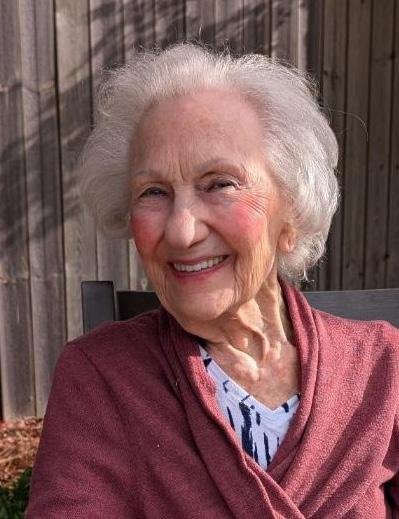
She had been called “fancy” by her granddaughter Ariel Mesnick of Atlanta, Georgia. Many others had called her “elegant,” “beautiful,” “sweet” and “classy.”
Rae was all those adjectives and so much more. Her legacy are her children: Cheryl (Eddie) Feintech, Jan (Joab) Jaben-Eilon, Keith (Cathy) Jaben, Darla Jaben, Bruce (Galina) Jaben and Cynthia Gayle. Teri Ohrenstein predeceased Rae. Her grandchildren include Lisa (Steve) Meyer, Mindy Esqueda, Elizabeth (Peter) Gilman, Daniel (Shannon) Jaben and Ariel Mesnick. Great-grandchildren include Alex Esqueda, Mina Esqueda and Danny Esqueda.
She is also survived by nephew Marc Jaben, niece Lauren (Peter) Jaben and niece Linda Henning.
Everyone loved Rae, including the staff at Solana East Cobb, where she lived since Dec. 1, 2023, and sadly died. On her recent birthday, another resident came over to where Rae was sleeping in a chair and said, “I really love her.”
Rae Frances Horovitz was born in Kansas City, Missouri, on Jan. 7, 1925. She was predeceased by her parents, Louis and Lauretta; brother, Maurice Horovitz; and sister, Reveley Horovitz.
She married one of her many high school suitors, Lawrence Richard Jaben, in 1945. He died in 1962, at age 37.
She then married his first cousin, Edward Jaben, who died in 2016. It was as Edward’s wife that Rae became the epitome of a corporate wife, hosting elegant gourmet meals for his business associates. She joined him on luxurious business trips to exotic destinations, including Thailand, but also France, Italy, Spain and Israel. She was in her element when she was wined and dined abroad.
Rae loved being with people, and she attracted people with her beautiful, warm smile and her willingness to listen to people. She had good instincts about people, and she probably shared her insight with her two husbands.
Before moving to Atlanta in 2017, Rae chaired several lavish fundraisers for the Lyric Stage in Irving, Texas, snagging longtime family friend and well-known singer Marilyn Maye to sing for the always-successful events. Besides reveling in social situations, Rae was a first-class bridge
continued on next page
continued from previous page
player and played tennis until she was about 90. Going through passport control in Spain after a cruise with her daughters in 2012, the officials gaped at her birth year in disbelief. No one could ever guess her age.
Even as her memory started slipping away in the last decade, Rae was always smiling and appreciative of those who tried to help her with the increasingly difficult tasks of living. And she especially loved being with her family. She took much deserved joy and satisfaction from her children and their descendants.
his parents and his first wife, Diane Organ, to whom he was married from 1971 until her passing in 1999.
He is survived by his wife, Joyce Mills, whom he married in 2002. He is also survived by his children and their spouses, Jason and Deborah Organ of Indianapolis, Indiana; Alison and Brad Schul of Fenton, Missouri; and Haley Organ of St. Louis, Missouri; as well as his stepson, Billy Mills. He leaves behind four grandsons, Andrew and Matthew Organ and Dylan and Teddy Schul; his brother, Steve Organ; and nephews, Craig and Adam Organ.
Condolences may be shared at louismemorialchapel.com.
parents, Arlene (Steinzeig Weinstein) Plassmeyer and Ernie Weinstein. He is survived by his brother David Weinstein of Atlanta, Georgia; niece, Mattea (Joe) Leonardi, and great nephews, Lucas and Julian, of Atlanta; Jarod (Yvonne) Weinstein and great nephew, Elias, and great niece, Aria, of Lakewood Ranch, Florida; aunt Hanna Apple of Henderson, Nevada; and cousins Craig Apple of Atlanta; Terri Apple of Los Angeles, California; Debbie (Neil) Bass of Lee’s Summit, Missouri; Lisa Angelotti of Shawnee, Kansas; and Laura Toms of Florida.
there; Brian was born three years later in Florida.
After the Navy, Harvey accepted a position in radiology at Research Medical Center in Kansas City, Missouri. Harvey was always going to be a doctor — his mother wanted it that way — and he was a great one. He chose radiology so he wouldn’t actually have to see patients, just their shadows. He liked to joke that he didn’t really like people, but he was beloved by colleagues and staff for his gentleness, kindness and respect for everyone.

Alan E. Organ, M.D., Ph.D., 77, of Overland Park, Kansas, passed away on Jan. 31. Graveside services were held on Feb. 3 at Sheffield Cemetery. The family suggests that contributions be made to the MedZou Community Health Clinic (https://medicine.missouri. edu/offices-programs/education/ medzou-community-health-clinic) in lieu of flowers.
Dr. Organ was born on April 28, 1948, in Los Angeles, California to the late Hyman and Dorothy Organ. He graduated with a B.A. in chemistry from UCLA in 1969, where he served as basketball manager under legendary coach John Wooden and was part of three national championship teams. He went on to earn a Ph.D. in biology from the University of Kansas in 1972 and his M.D. from the University of Missouri in 1976.
A dedicated pediatrician, Dr. Organ completed his residency at the University of Kansas, serving as chief pediatric resident from 1978 to 1979. He remained in private practice in Kansas City until 1999 and was widely respected as one of the area’s few specialists in treating Cystic Fibrosis.
Alan was an avid sports fan who spent his Saturdays cheering for the Missouri Tigers and Sundays for the Kansas City Chiefs. He found great joy in growing orchids in his basement, playing pickleball and bridge and spending time with his family and beloved dog, Max.
Alan was preceded in death by


Jeffrey (Jeff) Barth Weinstein passed away on his 66th birthday, Jan. 24. Funeral services were on Jan. 30 at Louis Memorial Chapel. Graveside services at Sheffield Cemetery will follow. Kindly omit flowers; the family suggests contributions to Wayside Waifs Animal Shelter, American Heart Association, University Health Foundation’s diabetes program or a charity of the donor’s choice.
Jeff was born on Jan. 24, 1960, in Kansas City, Missouri, and remained a lifelong area resident between Kansas City and his farm in Louisburg, Kansas. He graduated from Center High School. Jeff founded his company KCCP, Inc.
All through his life, Jeff was an avid softball player, playing in multiple leagues. He also loved animals, especially dogs and horses. Jeff enjoyed going to the New Theater & Restaurant. As a kid, Jeff collected hundreds of comic books and baseball cards.
Behind Jeff’s gruff exterior, he was a very devoted partner, son, friend, uncle and cousin. For several years, he was the primary caregiver for both of his parents until they passed. Jeff would do anything for a friend or family member. He acknowledged everyone’s birthday with a phone call or dinner. Faith and family traditions were highly treasured.
Jeff is preceded in death by his

Harvey Thalblum passed away peacefully on Feb. 4 at home, surrounded by his family and his dogs.
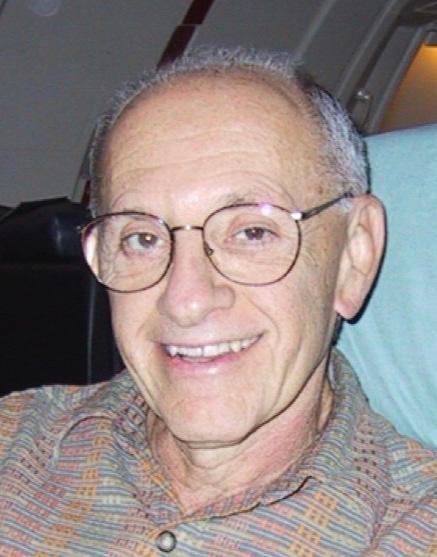
Harvey was a giant of a man in a 5-foot, 7-inch frame. His parents, Nettie and Eddie Thalblum, immigrated to the United States in the 1920s from different parts of Eastern Europe. They met and married after arriving, lived in the Bronx like so many Jewish immigrants of their day, and soon had a daughter, Norma. In 1939, 11 years later, they welcomed a baby boy, Harvey, and then moved to North Miami Beach, where Harvey grew up.
His father was a butcher with his own store, and Harvey often worked there. His favorite days were Saturdays, when he would make a huge sandwich at the store and take it to the cinema. He could watch movies back to back all day long. His love of film started early. His father went to the movies to learn English, and Harvey went with him. He was sure he had seen every western by the time he was five.
Harvey attended the University of Miami and then went to medical school at the University of Florida. There, he met the love of his life and his wife of 61 years, Donna, a beautiful southern belle from Jacksonville, Florida, who was a nurse at the hospital. He first approached her with a line about her long eyelashes — unfortunately, he had used the same line on one of her roommates the day before. Thankfully, Donna saw past the faux pas to his true potential. They were married in 1965.
Following an internship in Charlotte, North Carolina, Harvey began service in the United States Navy in Long Beach, California. He completed his residency at Balboa Naval Hospital in San Diego, California, after a tour at sea in the South Pacific. Their first son, Todd, was born
Harvey had the rational, logical brain needed for radiology, which also served him well in card games, trivia and puzzles — though he didn’t much like games, even though he won. You always wanted him as your partner. He excelled at crosswords, Scrabble and Sudoku, and he had a remarkable 97% Wordle win percentage.
But Harvey also had a creative soul. He drew artwork that still hangs in his home, wove blankets for his grandchildren and made a tallit for his son. He was an avid reader, finishing a book or two each week. He loved theater, musicals and movies, kept up with what was worth seeing or reading and saw nearly all of it. And he could dance — really dance — making anyone lucky enough to dance with him look good.
He was thoughtful, kind and generous, becoming even more so over the years, thanks in no small part to Donna. He found strength in his people and his community and was a devoted member and leader at The Temple, Congregation B’nai Jehudah for more than 50 years. He served on its board and was especially proud to be part of the committee that brought Rabbi Stephanie Kramer to Kansas City.
Harvey also loved to travel. He and Donna went everywhere — Europe, Asia, Africa, Australia, both Americas and Israel three times. He traveled by plane, cruise ship, river boat, dog sled and even the back seat of a fighter jet. He skied mountains, walked beaches and once walked across the top of the Sydney Harbour Bridge. He saw every place he wanted to see.
He lived a wonderful, beautiful life. In lieu of flowers, donations may be made to the General Endowment Fund at The Temple, Congregation B’nai Jehudah, or to a charity of your choice.
Harvey is preceded in death by his parents, Nettie and Eddie; his sister, Norma; and his son Brian. He is survived by his wife, Donna; his son and daughter-in-law, Todd and Sabrina; his grandchildren, Noah, Gabriella, Tyler and Samantha; and his beloved shih tzus, Speedo and Buttons.
May his memory be a blessing.
continued from page 1
taught dozens of players around Kansas City, first informally as she began teaching friends how to play with her in her 20s. Now, she teaches with a five-lesson curriculum that she developed to build offensive and defensive techniques and, equally important to her, community. In addition to sharing her knowledge with private groups of players, she recently began teaching intermediate and advanced mahjongg classes at Johnson County Community College (JCCC).
“About five years ago, someone asked me, ‘Do you give lessons?’ I initially said no. Then I started researching what they were doing in other cities,” Patton said. “I ended up putting together a series of five lessons so the group could play on their own after the fifth lesson.”
“When I teach private groups, I require at least four people so they can become a table,” she said. “I still get ‘mahj emergencies’ from the groups — texts and calls about rules or strategy — and I love that they’re still playing together.”
Patton teaches National Mah Jongg League rules so students “can hold their own in a tournament,” and also demystifies table stakes. “Playing for money changes the way you play,” she said, noting she uses scorecards at JCCC, where students cannot exchange money during play.
The family connection is vivid — she still plays on her grandmother’s and mother’s sets. In one Saturday group, Patton and a friend play with the same set their grandmothers once shared.
“It’s really special,” she said. “Now there are boutique sets — beautiful collectibles.”
Patton’s own story just entered print: she is the featured player from Kansas in the new coffee table book “The Tiles that Unite.”
“I feel like it is my whole life sometimes,” she said. She even took a bucket-list “mahj cruise” with her mom — “the most intense play I’ve ever experienced” — and competes in local tournaments, including synagogue events that donate proceeds to good causes, a hallmark of American mahjongg since the League’s early days.
Rachel Warner, a kindergarten teacher in the Shawnee Mission School District, learned the game 18 years ago from seasoned preschool teachers at Congregation Beth Shalom, just as her grandmother had anticipated when she left Warner her set.
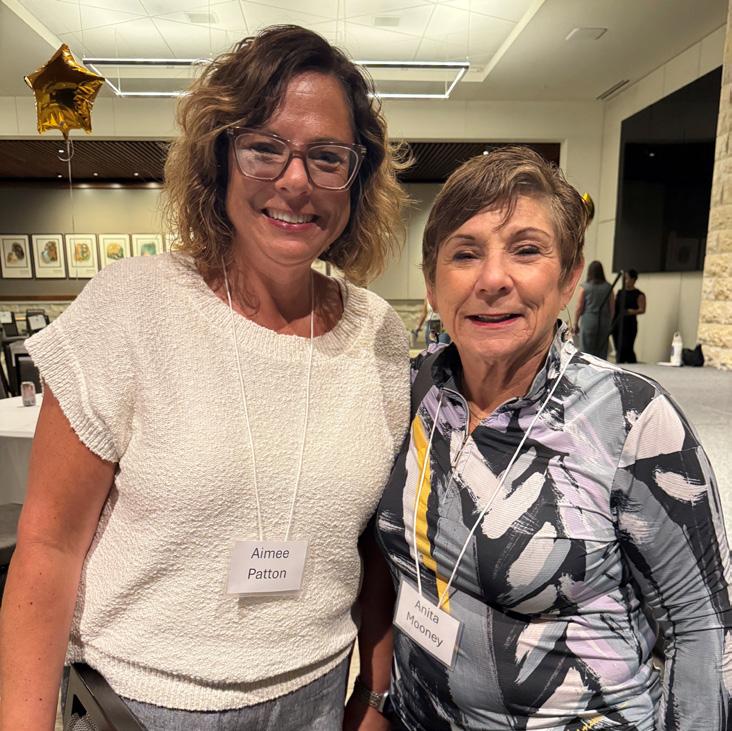
Today, Warner plays multiple times a week with groups spanning “all ages and stages,” from young mothers to her beloved original mentors. She’s taught neighbors from a variety of religious and cultural backgrounds, and she happily notes how trendy the game has become — right down to stylish sets and Bam Bam, the local mahjongg boutique where she and her daughter Lucy have met new friends over sample tiles during open play sessions.
For 19-year-old daughter Lucy Warner, now a freshman at Mizzou, the spark came during wisdom-tooth removal recovery in late 2024. She started playing online, graduated to live play, and then began teaching peers: BBYO friends, a dance teammate and even her cousin in Chicago.
“When a hand comes together, it’s fun,” she said. “You can celebrate other people’s wins and really watch them grow.”
The best part for her, though, is family time.
“Playing with my Nana [Natalie Hammer] is really special when my cousin and aunt are in town,” she said.
Rachel Warner plays regularly and substitutes at multigenerational tables, and Lucy Warner and her friends (who she taught to play) are now teaching other friends. Lucy Warner shared that some of her friends taught a week-long Winterims mahjongg class at Hyman Brand Hebrew Academy in January. Rachel and Lucy Warner were guest teachers during the week and were excited to see how interested middle and upper school students were to learn the game.
Lucy Warner’s intergenerational arc mirrors the Kansas City landscape, where one can find everything from synagogue tournaments to open-play rooms — more pathways for teens to sit beside elders and learn. That binding force is l’dor v’dor — the unbroken chain of learning from generation to generation.
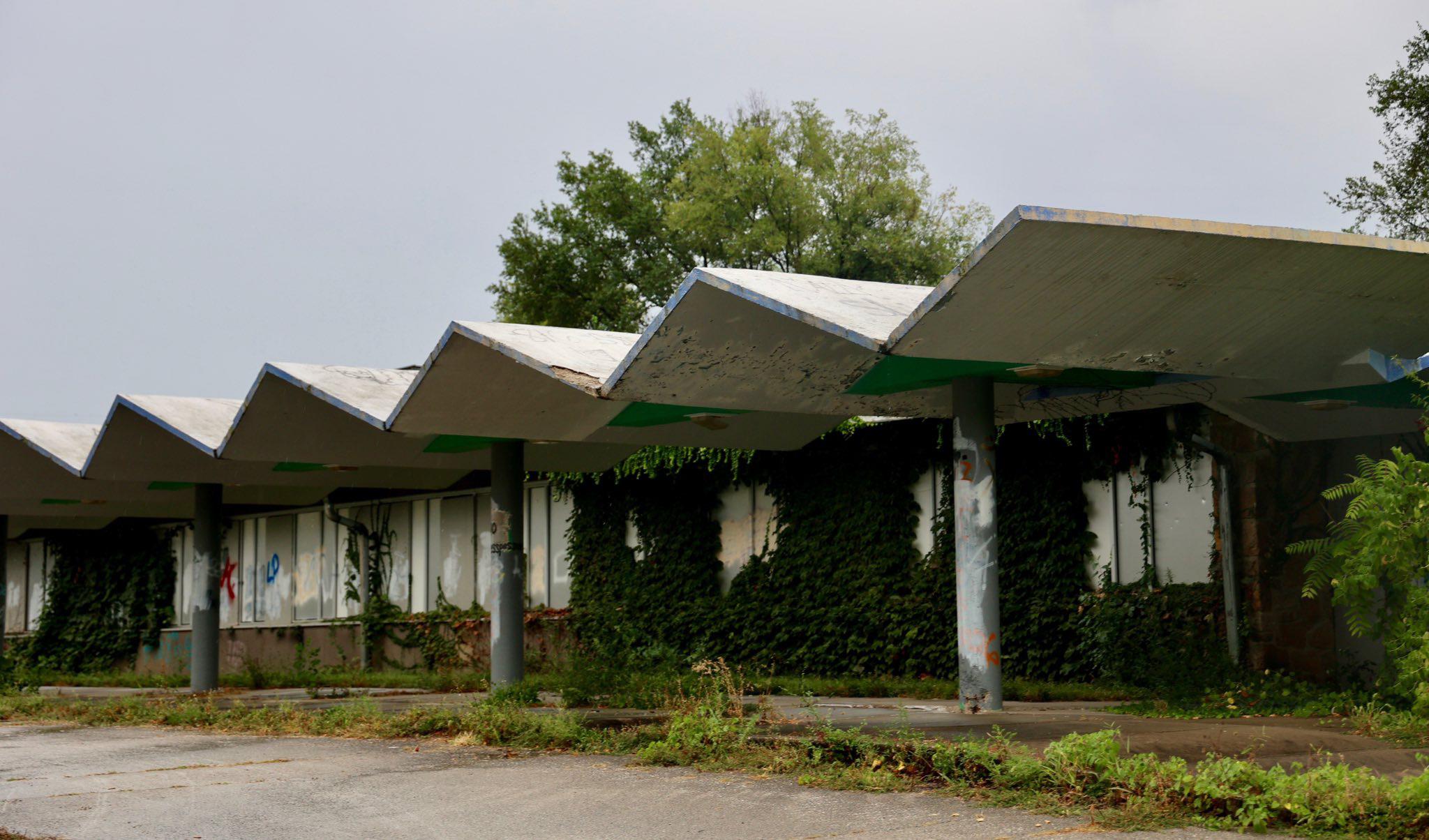
The abandoned former Jewish Community Center (and later the Paul Robeson Middle School) is being demolished. The demolition was announced alongside that of Kansas City’s abandoned Parade Park Homes.
Kansas City Mayor Quinton Lucas said on Tuesday, Feb. 3, that the city is “reclaiming a site that has been sitting abandoned and decayed for nearly two decades. Both [demolitions] represent our commitment to ensuring every neighborhood in Kansas City can move forward with dignity and opportunity.”
The building, located at 82nd St.
and Holmes, was the site of the JCC for more than two decades before being sold to the Kansas City School District after the current center was built in 1984. It later became the Paul Robeson Middle School before closing and falling into disrepair.
“For too many years, the site of the former Robeson Middle School (and former Jewish Community Center) has blighted the Holmes and Troost corridors and neighborhoods around them with unkempt weeds, crumbling structures, trash build up, vandalism and graffiti,” Lucas said in a Facebook post last September.

Learn more at VillageShalom.org or call Lori Carter, Admissions Coordinator, at 913-636-8888 to tour our welcoming senior living community. We look forward to showing you what peace of mind looks like. Welcome to The Village.