note: The use of images in pages found in this guide, are only used to illustrate forms and expressions of Wright’s ideas. Those images may not be owned by the Foundation and should not be copied or used for the creation of derivative works. They should instead be referenced only to clarify Wright’s ideas visually, in conjunction with Wright’s own designs and the other contents of this guide. All works created by licensees should be original works incorporating or derived from Frank Lloyd Wright’s intellectual property as permitted by your license agreement.
INTRODUCTION
Ask most Americans to name a famous architect, and Frank Lloyd Wright is the name that comes to mind.
Frank Lloyd Wright has been called America’s greatest architect by the American Institute of Architects; his “organic architecture” has been recognized by the UNESCO World Heritage Council as pivotal in the development of modern architectural design in the 20th century. Wright’s modernist innovations still impact how we design and build today, through such innovations as the open plan, structural elements that blur between exterior and interior, the adventurous uses of materials and technologies, and the inspiration from and relations with the natural settings of his various buildings.
The Frank Lloyd Wright Foundation. From The Frank Lloyd Wright Foundation Archives (The Museum of Modern Art | Avery Architectural & Fine Arts Library, Columbia University, New York) All rights reserved.
THE POWER OF THE BRAND
Wright’s name recognition is high and on par with established household brands and well ahead of some contemporary designers and media personalities. By associating with Frank Lloyd Wright, purchase interest in home décor categories increases by 42%.
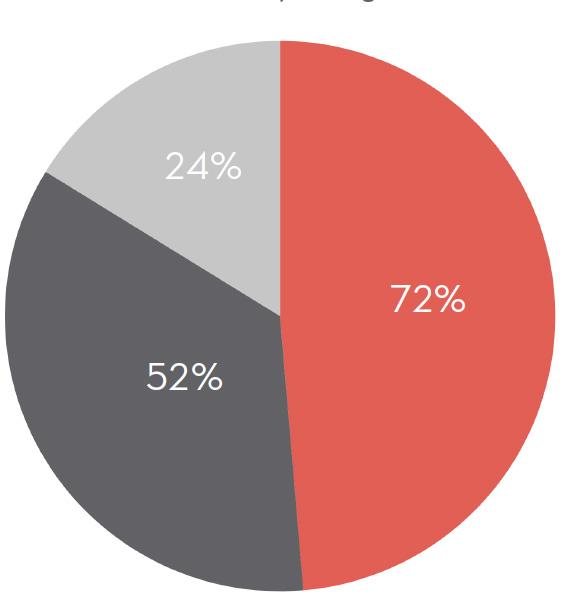
41% of shoppers likely to purchase Frank Lloyd Wright branded products have children
24% interest in purchasing Children’s Products associated with Frank Lloyd Wright
Consumer Awareness of Frank Lloyd Wright
Consumer Awareness of Frank Lloyd Wright vs. Other Brands
IN THE MEDIA
The Frank Lloyd Wright Foundation has earned strong industry and media recognition for translating Wright’s design legacy into contemporary culture. Recent highlights include:
• Awarded Design Company of the Year by Fast Company for its innovative, cross-category licensing strategy
• Nominated by Licensing International as Best Brand –Art, Design, or Museum
• Standout collaborations like the Airstream Frank Lloyd Wright Usonian Limited Edition
• Recent campaigns led by the Foundation each generated over 1 billion media impressions online
EDUCATIONAL PRINCIPLES THAT
ENDURE
“IT IS PECULIARLY IMPORTANT THAT CHILDREN SHOULD GROW UP IN CONDITIONS THAT ARE HARMONIOUS, IN CONDITIONS THAT CONTRIBUTE TO THEIR SERENITY AND WELL-BEING AND THEIR CONSCIOUSNESS OF THOSE THINGS.”
PHILOSOPHY AT WORK
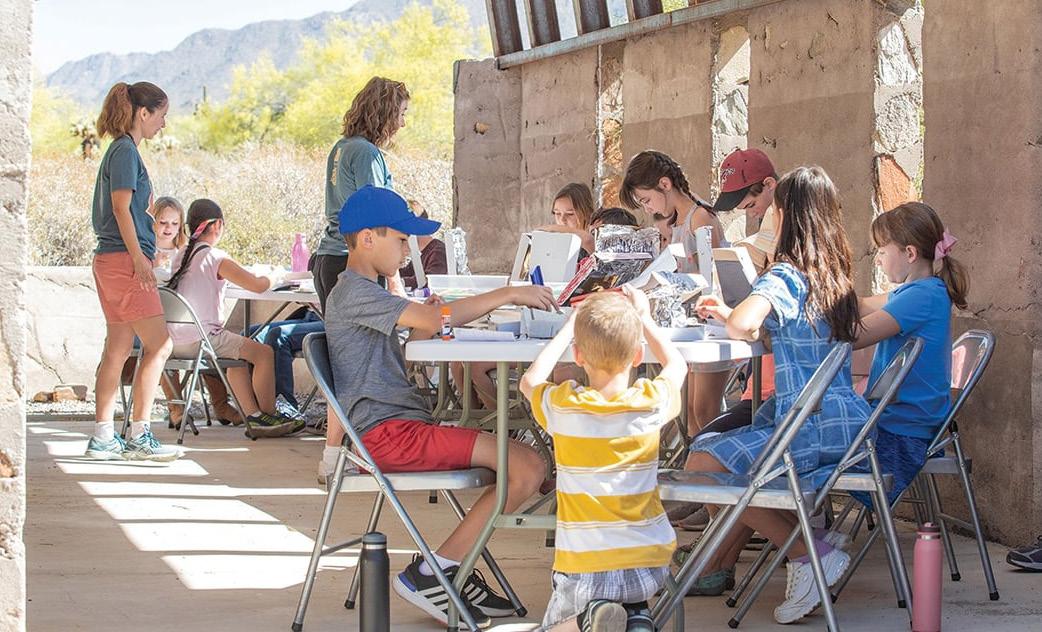
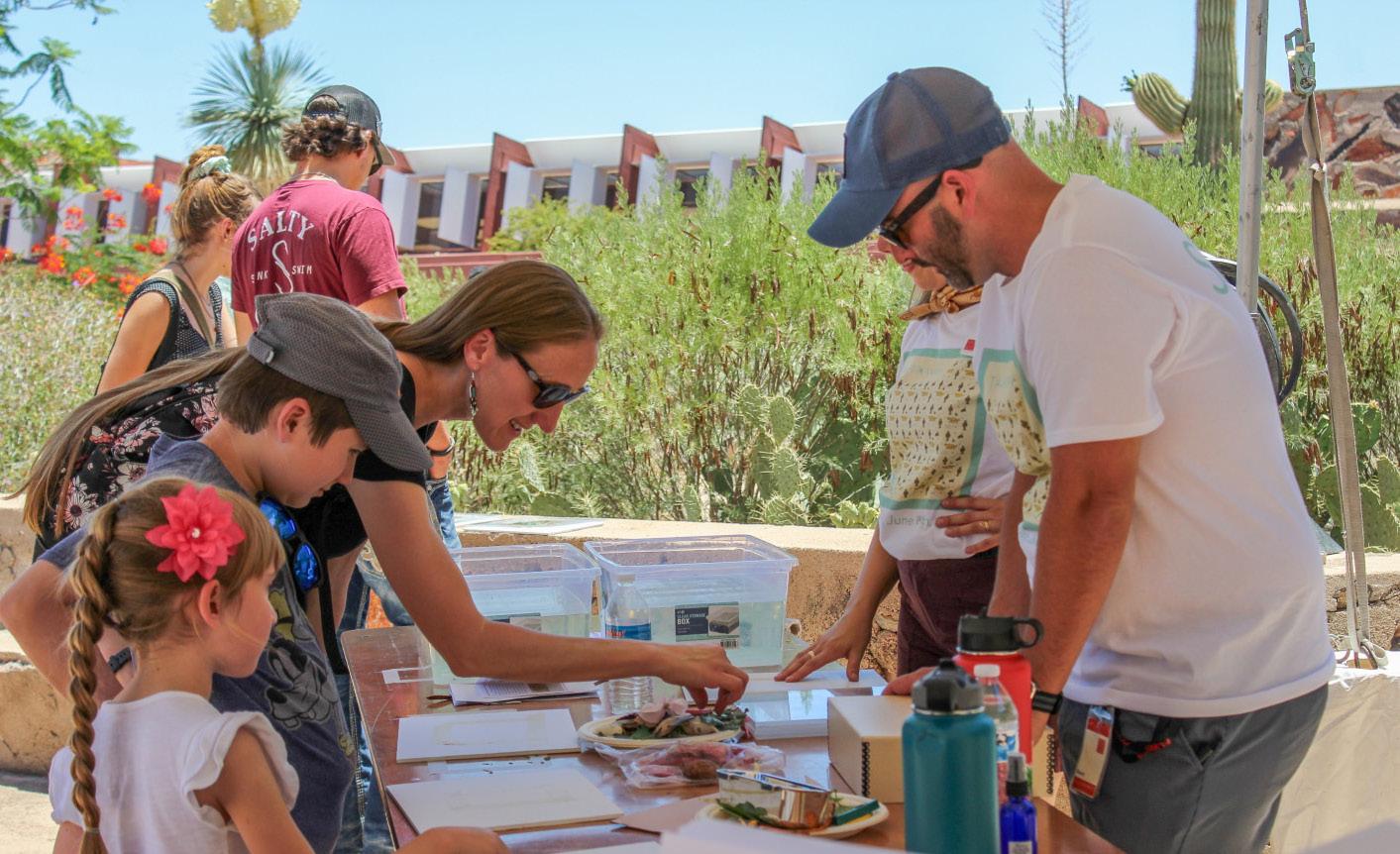
The Youth & Family Programs Department serves over 5,000 students, teachers, youth, and families annually developing interdisciplinary, hands-on programs based on the life, work, and inspirations of Frank Lloyd Wright. Using his ethos of “learning by doing”, every program and activity employs project-based-learning and encourages learners of all ages to design, explore, fail, and try again, in the same fearless manner Wright once did. In this way, we further the mission of the Frank Lloyd Wright Foundation while serving k-12 students, educators, home schoolers, Girl Scouts, campers, and more.
• Serves over 5,000 students, teachers, youth, and families annually.
• Since 2019, guests has increase 249%.
• Annual field trip program welcomes 1600 students yearly
• Offer 10 weeks of programing that serves over 200 students annually.
• In partnerships with Let’s Build: Construction Camp for Girls, Civitan Foundation, and Scottsdale Arts.
PROGRAMS AT WORK
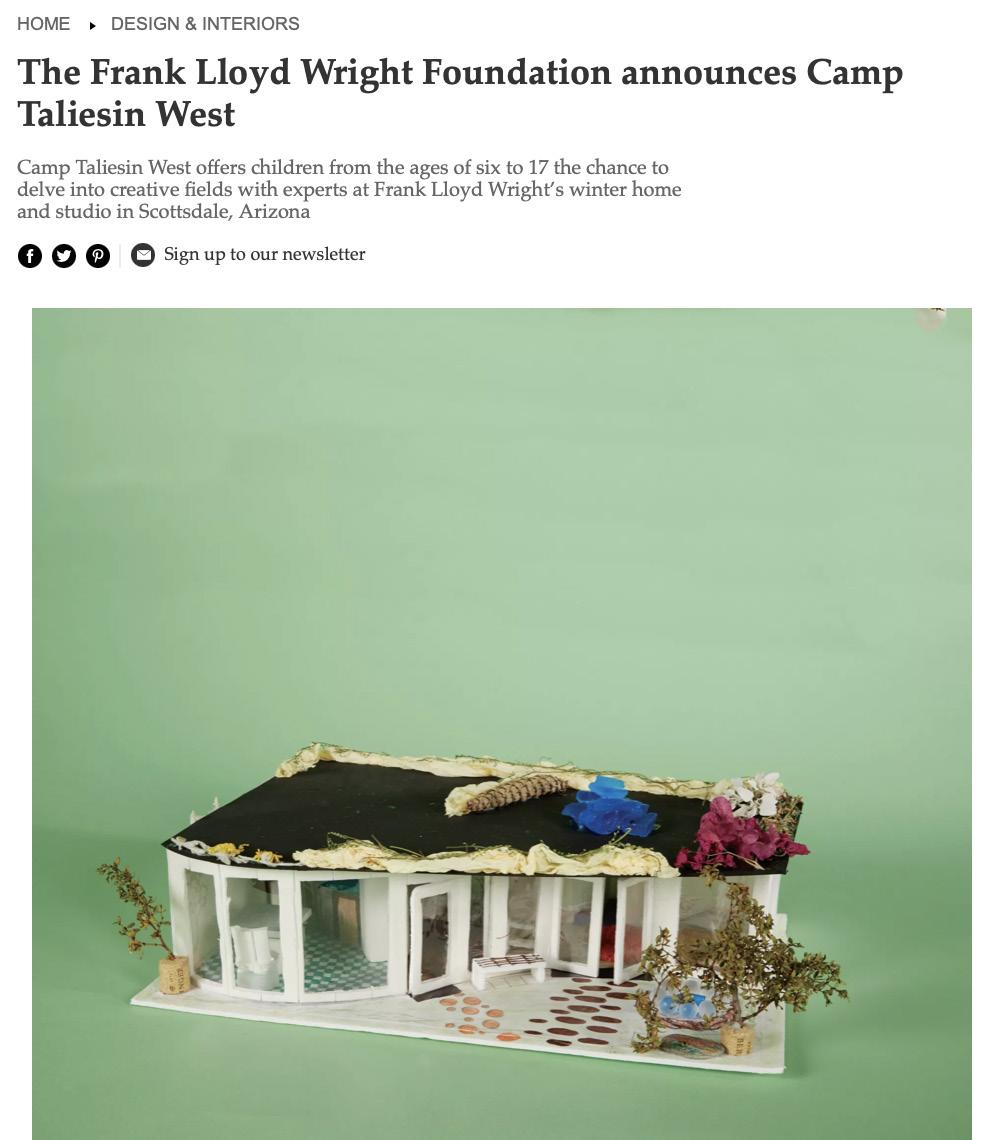
9 New sessions of day camps in winter, spring, and summer, focusing on “animal architects,” the history of shelters, Frank Lloyd Wright and the automobile, furniture design, and more!
4 New Girl Scout Badge Workshops, focusing on STEM and the arts
3 Workshops for k-6 educators, focusing on using architecture in the classroom through project-based learning
7 Mornings of FREE story-time programs for young children and their families, using picture books focusing on diverse engineers, architects, and scientists.
AN EDUCATIONAL LEGACY
“Mother learned that Friedrich Froebel taught that children should not be allowed to draw from casual appearances of Nature until they had first mastered the basic forms lying hidden behind appearances. Cosmic, geometric elements were what should first be made visible to the child mind.”
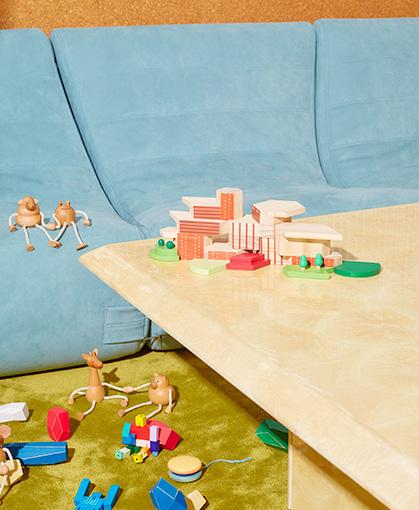
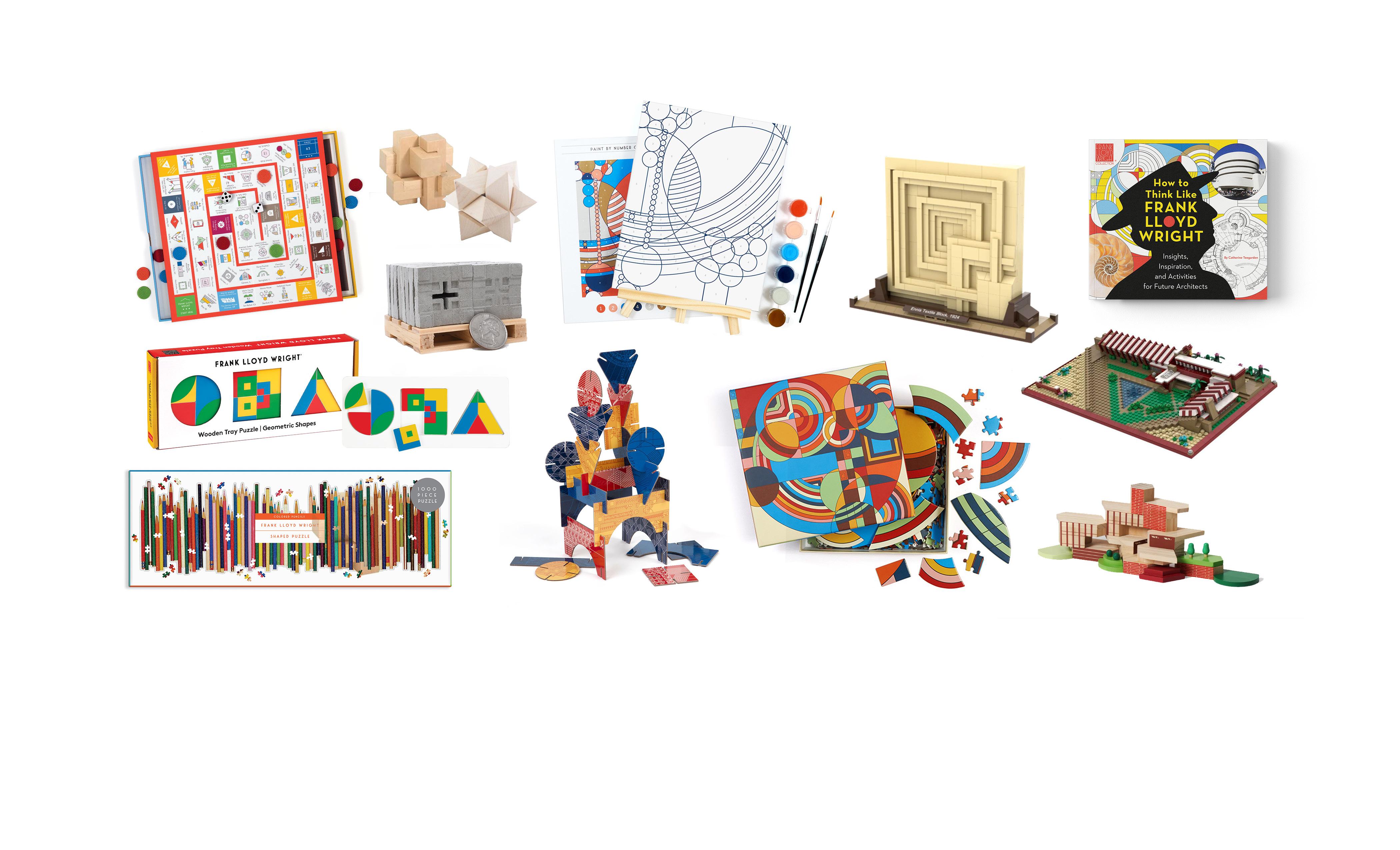
When Frank Lloyd Wright was a child, his mother gave him a set of educational toys called the Froebel Gifts and Occupations by his mother, Anna. The Gifts were made of spheres, cubes, triangles, rectangular and triangular prims, classic building blocks and paper. Anna Lloyd Wright, a teacher herself, bought these toys at an exhibition in Philadelphia for her family. Wright’s exploratory play with these basic geometric shapes and observations of patterns in nature as a child on his family’s Wisconsin family farm developed into a unique architectural and graphic design style.
HISTORY OF PLAY
“Design a school for very young children? I would try and make [it] a happy place that would be like a flower in their lives. ”
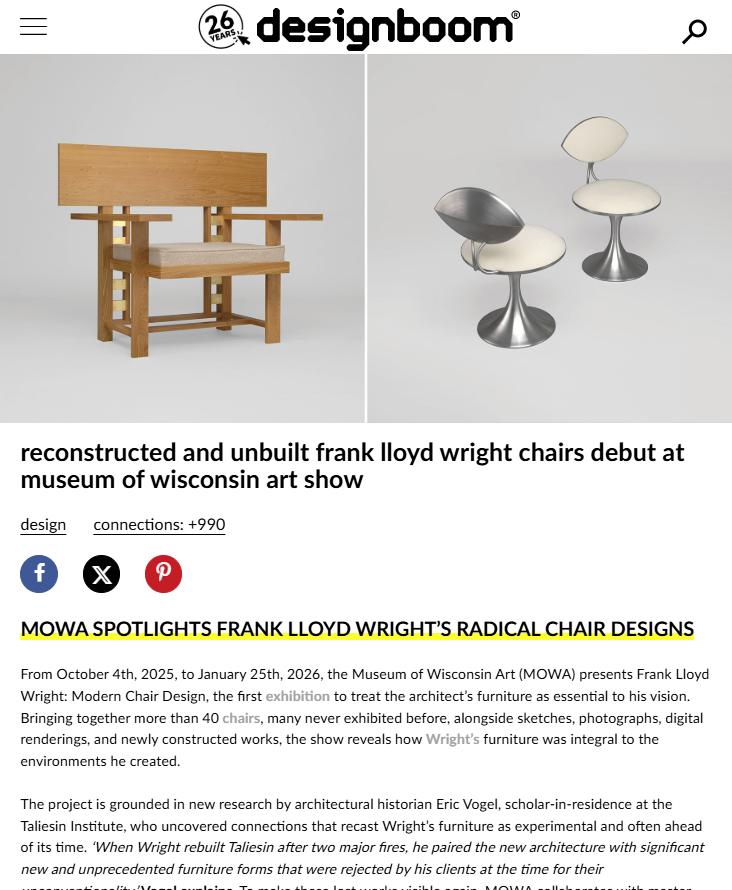
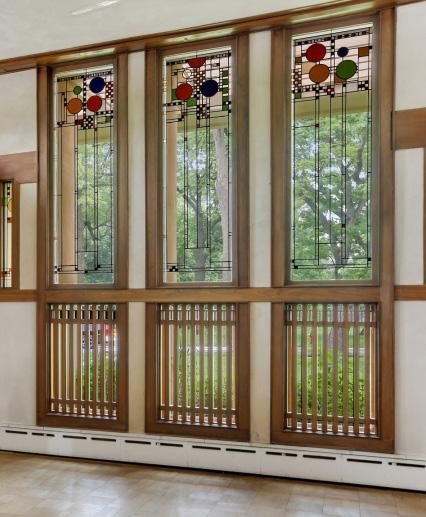
Frank Lloyd Wright designed several children’s playrooms and playhouses over the course of his career. The first one was for his own family in his house and studio in Oak Park. This large room featured a mural of Aladdin and his magic lamp over the fireplace and a maze like stair at the other end for the kids to play on and around. He designed playrooms in several of his prairie houses, but his most famous was the playhouse he designed for the Coonley family in Riverside, Illinois. This separate playhouse had a stage and a large open area, where Mrs. Coonley held theater classes for local children. The playhouse had playful colored-glass windows with a design that Wright called “confetti and balloons.”
HISTORY OF FELLOWSHIP
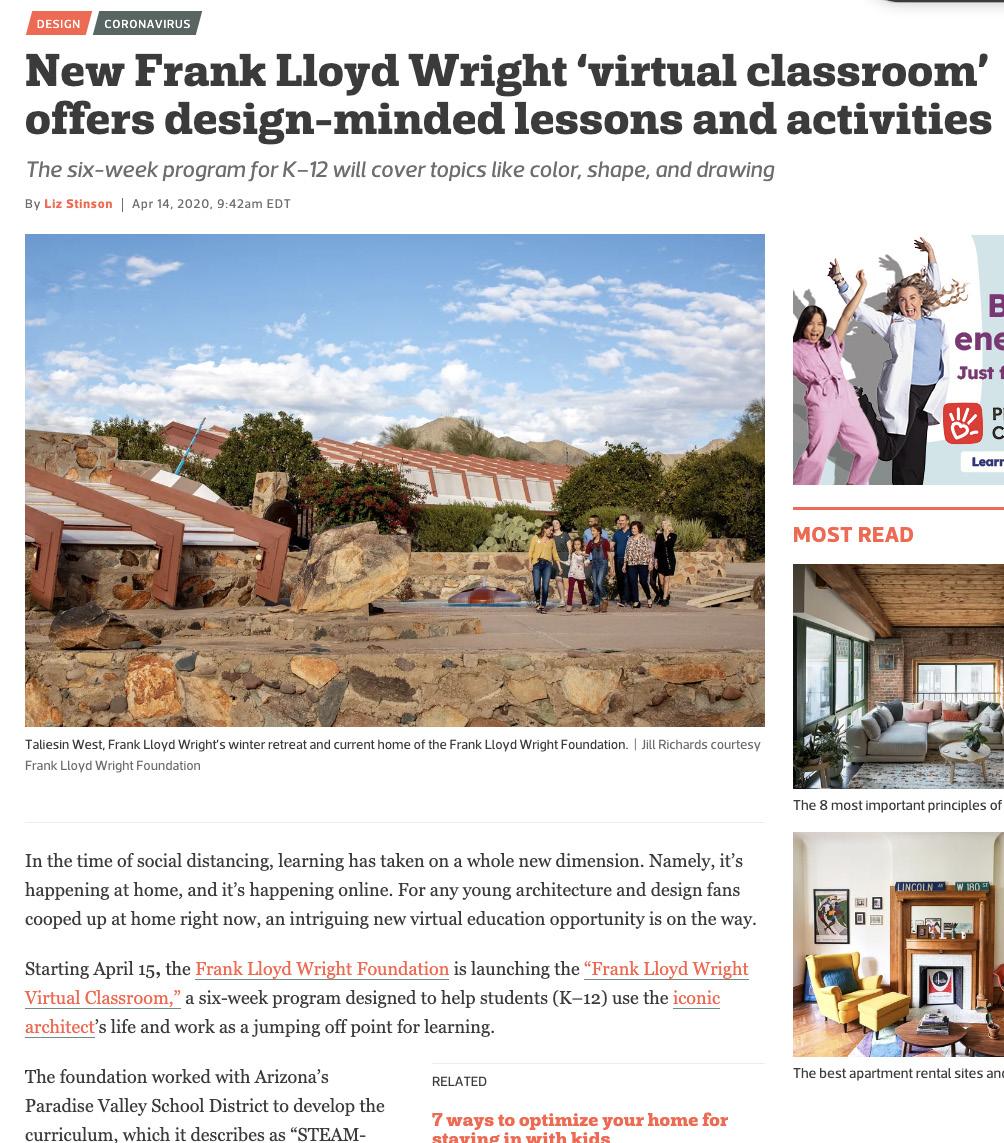
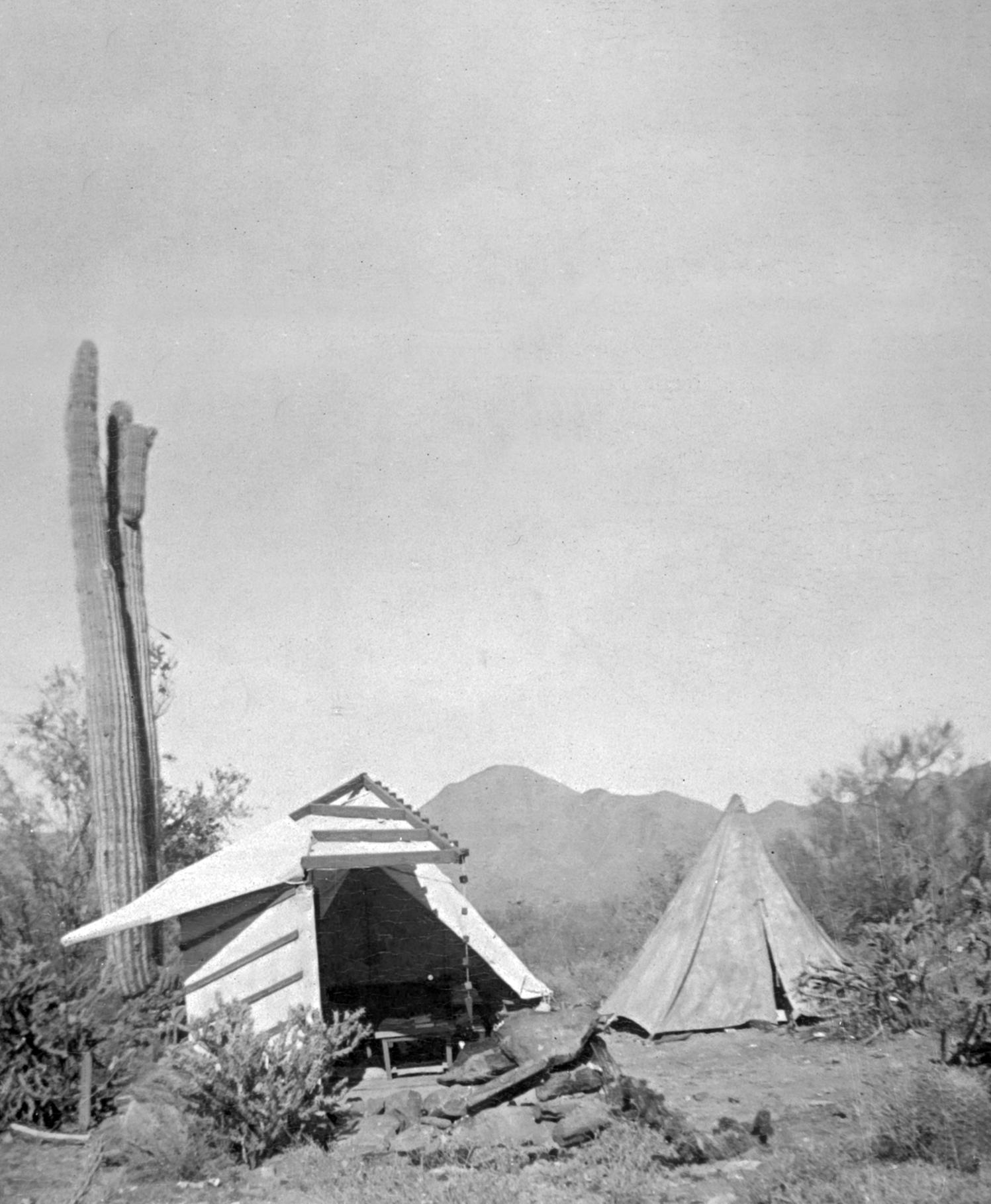
In 1932, during the depths of the Great Depression Frank Lloyd Wright founded a “school of the soil,” the Taliesin Fellowship, on two hundred acres of farmland near Spring Green, Wisconsin, the ancestral valley of his family, the Lloyd Joneses. Wright was insistent that the curriculum not center on books and lectures but rather prioritize hands-on experiences and direct experiences with the natural world, very much like his own education. Part of their experiential education involved building their own shelters out in the desert of his Taliesin West home and studio in Arizona. This experience taught them about the importance of the form of their structures and the function of their materials in protecting against the elements.