
Examination Emergency Evacuation Policy
DATE February 2026
REVIEW DATE February 2027
Centre name
Jumeirah English Speaking School
Centre number 91526/74558/AE313
Date policy first created 11/10/2023
Current policy approved by Stephen Green
Current policy reviewed by Katie Raybould
Key staff involved in the policy
Role Name
Head of Centre Stephen Green
Senior Leaders Richard Malpass Katie Raybould
Examinations Officer Alexis Cheneau-Chateau
SENCO (or equivalent role) Beth Sargeant, Zoe Phelps
This policy is reviewed and updated annually to ensure that any complaints at Jumeirah English Speaking School are managed in accordance with current requirements and regulations.
INTRODUCTION
1.1 This policy is reviewed and updated annually to ensure that emergency evacuation from examination rooms at Jumeirah English Speaking School (‘JESS’ and/or the ‘School’) is managed in accordance with current requirements and regulations. References in this policy to ICE refer to the JCQ publication Instructions for conducting examinations.
1.2 An emergency evacuation is required where it is unsafe for candidates to remain in the examination room. This might include a fire, the fire alarm sounding to warn of fire, bomb alert or other serious threat.
1.3 In exceptional situations, where candidates might be severely disadvantaged or distressed by remaining in the room, the emergency evacuation procedure may also need to be followed. This might include situations where there is severe disruption in the examination room, serious illness of a candidate or invigilator or similarly serious incidents:
1.3.1 As each incident may be different, advice will be sought (if applicable) from the relevant awarding body as soon as it is safe to do so (ICE 25.6).
1.3.2 Where candidates are unable to return to the building to complete the examination, the relevant awarding body will be contacted immediately for advice (ICE 25.6).
PURPOSE OF THE POLICY
2.1 The purpose of this policy is to confirm the arrangements at JESS for dealing with an emergency evacuation of an examination room by defining staff roles and responsibilities and confirming the emergency evacuation procedure.
2.2 This policy ensures compliance with JCQ regulations (ICE 25) which state that centres must have a written policy for dealing with emergency evacuation of the examination room which will be subject to inspection by the JCQ Centre Inspection Service.
EMERGENCY EVACUATION PROCEDURE
3.1 Actions taken in the event of an emergency evacuation of the examination room
At JESS the following actions (in accordance with ICE 25) are taken if an examination room has to be evacuated:
3.1.1 Candidates are instructed to stop writing.
3.1.2 The attendance register is collected (in order to ensure all candidates are present)
3.1.3 The examination room is evacuated in line with the instructions given by the appropriate authority.
3.1.4 Candidates are advised to leave all question papers and scripts in the examination room. Candidates are advised to close their answer booklet(s)
3.1.5 Candidates are instructed to leave the room in silence.
3.1.6 Candidates are supervised as closely as possible while they are out of the examination room so that there is no discussion about the examination.
3.1.7 The time of the interruption is noted and how long it lasted
3.1.8 Candidates are allowed the remainder of the working time set for the examination once it resumes.
3.1.9 If there are only a few candidates, the possibility is considered of taking the candidates (with question papers and scripts collected by the invigilator) to another place to finish the examination.
3.1.10 A full report is made of the incident and of the actions taken (and retained on file if required by an awarding body).
3.1.11 For on-screen assessments:
a) Candidates must be closely supervised if an emergency evacuation of the assessment room occurs.
b) Invigilators should refer to any software specific instructions to safeguard the security of the assessment content and candidates’ responses (For example, pausing the assessment for all candidates and locking the evacuated assessment room without closing down the software).
c) Invigilators should understand the procedures for re-starting an onescreen assessment after an emergency evacuation of the assessment room, controlling the re-starting of the assessment, re-sitting the timing
and ensuring, where appropriate, candidates can access their previous responses.
3.1.12 Additional actions taken:
d) In the event of a fire alarm, invigilators are trained to help the examinations officer to evacuate students in a calm manner, ensure that candidates do not communicate with one another. Once we are at the evacuation point, invigilators are to line students up as they were seated and again ensure that candidates do not communicate with each other. Invigilators who are in separate rooms will evacuate their candidates, bring with them the seating plan and bring candidates to the evacuation point, keeping them separate from the main hall candidates, each lined up in their room allocations, these invigilators will do the register to ensure that all candidates are present.
e) When/if allowed to return to the examination room, invigilators allow candidates time to settle down, reminding them they are still under formal examination conditions and that they must not open their answer booklets until instructed to do so.
f) Invigilators announce clearly to candidates when they may begin and how much time they have (the examination will formally restart at this point)
g) Invigilators record the time the examination(s) restarted and amend the displayed finishing time(s) for all candidates to see.
h) Invigilators are trained to record as much detail on the exam room incident log when able to do so (ensuring candidates are continually supervised and giving complete attention to this duty at all times) and to ensure the examinations officer is fully briefed at the end of the examination(s) to enable a full report to be submitted to the awarding body/bodies.
i) Where not allowed to return to the examination room, or the decision is made by the appropriate authority that the examination(s) cannot be resumed, the centre’s examination contingency plan will be invoked and invigilators/candidates briefed accordingly at the time.

ROLES AND RESPONSIBILITIES
4.1 The role of the head of centre
4.1.1 Ensure that the emergency evacuation policy for examinations is fit for purpose and complies with relevant health and safety regulation.
4.1.2 Ensure that any instructions from relevant local or national agencies are referenced and followed where applicable (ICE 25.1)
4.1.3 Ensures any breach of question paper security or malpractice is reported to the awarding body immediately (ICE 25.5).
4.2 The role of the senior leader
4.2.1 Where responsible for the centre-wide emergency evacuation procedure, ensure that all staff and appointed fire marshals are aware of the policy and procedures to be followed when an emergency evacuation of an examination room is required.
4.2.2 SLT will confer with the examinations officer to ensure the safety of all candidates and will assist where needed to have candidates follow exam regulations.
4.3 The role of the special educational needs coordinator (SENCo) or equivalent role
4.3.1 Ensure that appropriate arrangements are in place for the emergency evacuation of a disabled candidate from an examination room where different procedures or assistance may need to be provided for the candidate.
4.3.2 Ensure that the candidate is informed prior to taking their examinations of what will happen in the event of an emergency evacuation.
4.4 The role of the examinations office/officer
4.4.1 Ensure that invigilators are trained in emergency evacuation procedures and how an incident and actions taken must be recorded.
4.4.2 Ensure that candidates are briefed prior to examinations taking place, on what will happen in the event of an emergency in the examination room.
4.4.3 Provide a standard invigilator announcement for each exam room which includes appropriate instructions for candidates about emergency procedures and what will happen if the fire alarm sounds.
4.4.4 Provide an exam room incident log in every examination room
4.4.5 Liaise with relevant staff prior to each examination session where different procedures or assistance may need to be provided for a disabled candidate.
4.4.6 Brief invigilators prior to each examination session where different procedures or assistance may need to be provided for a disabled candidate
4.4.7 Ensure that appropriate follow-up is undertaken after an emergency evacuation, reporting the incident to the awarding body and the actions taken.
4.4.8 Ensure a full report of the incident is produced and retained on file if required by an awarding body (ICE 25.4).
4.4.9 Ensure an online application for special consideration is submitted to the relevant awarding body where candidates have been disadvantaged (ICE 25.7).
4.5 The role of invigilators
4.5.1 By attending training and/or update sessions, ensure they understand what to do in the event of an emergency in the examination room.
4.5.2 Follow the actions required in the emergency evacuation procedure issued to them for every examination room.
4.5.3 Confirm with the examinations officer, where different procedures or assistance may need to be provided for a disabled candidate they are invigilating
4.5.4 Record details on the exam room incident log to support follow-up reporting to the awarding body by the examinations officer (see below).
4.6 The role of other centre staff
4.6.1 Other centre staff might be requested to help keep candidates under exam conditions, especially on days where the full cohort is taking exams.
RECORDING DETAILS
5.1 As soon as practically possible and safe to do so, the following details will be recorded (see Roles and Responsibilities for the members of staff who will record these details):
5.1.1 The actual time of the start of the interruption.
5.1.2 The actions taken.
5.1.3 The actual time the exam(s) resumed.
5.1.4 The actual finishing time(s) of the resumed exam(s)
5.2 Further details which may also be recorded include:
5.2.1 A report on candidate behaviour throughout the interruption/evacuation
5.2.2 A judgement on the impact on candidates after the interruption/evacuation.

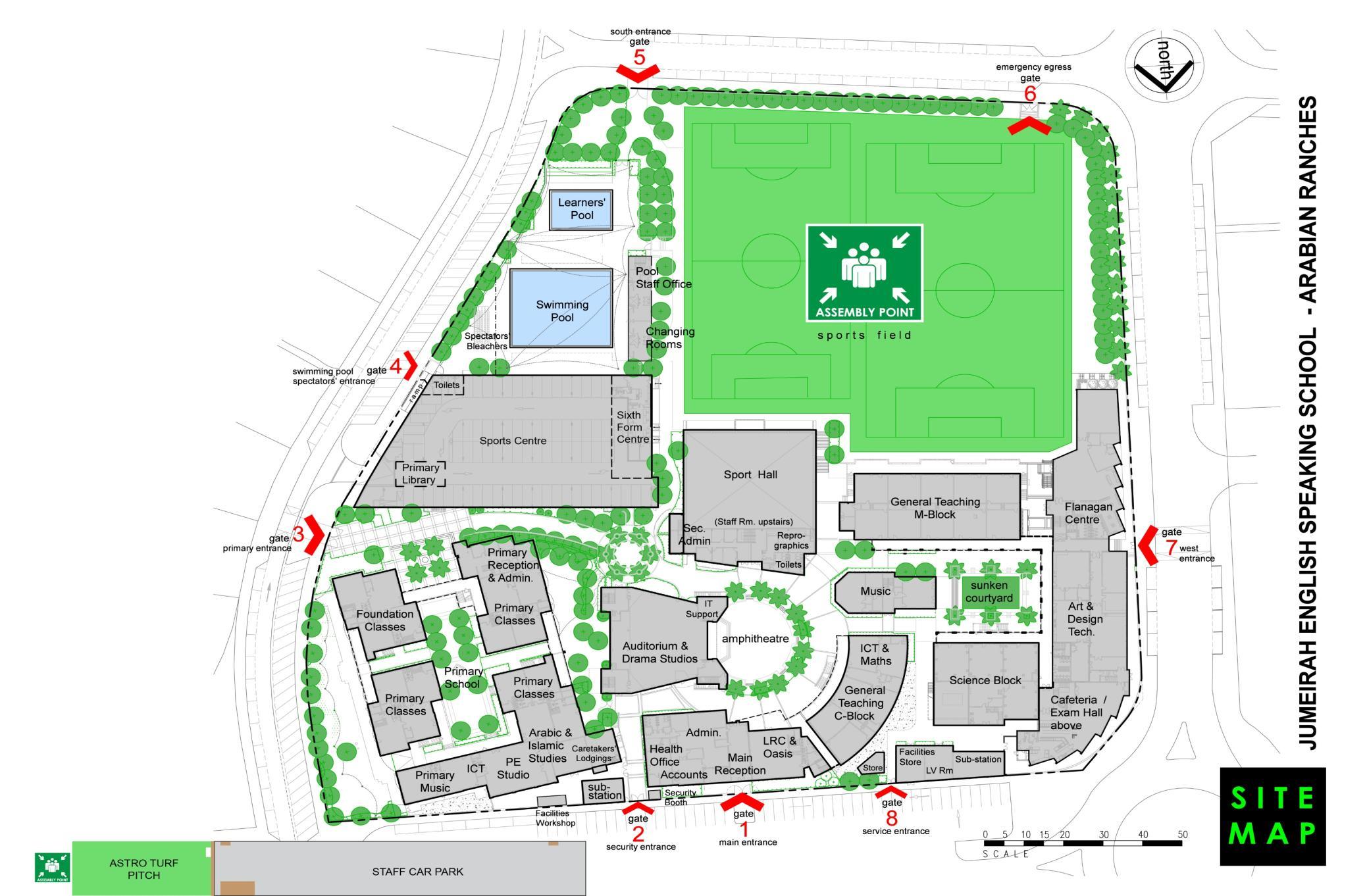

SPORTS HALL ASSEMBLY POINT FLANAGAN CENTRE ASSEMBLY