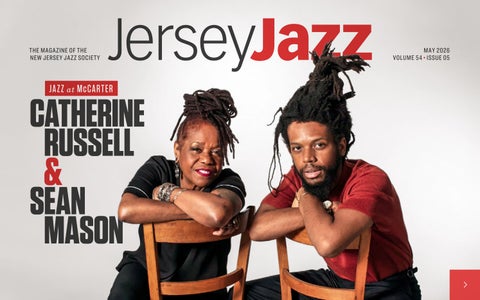
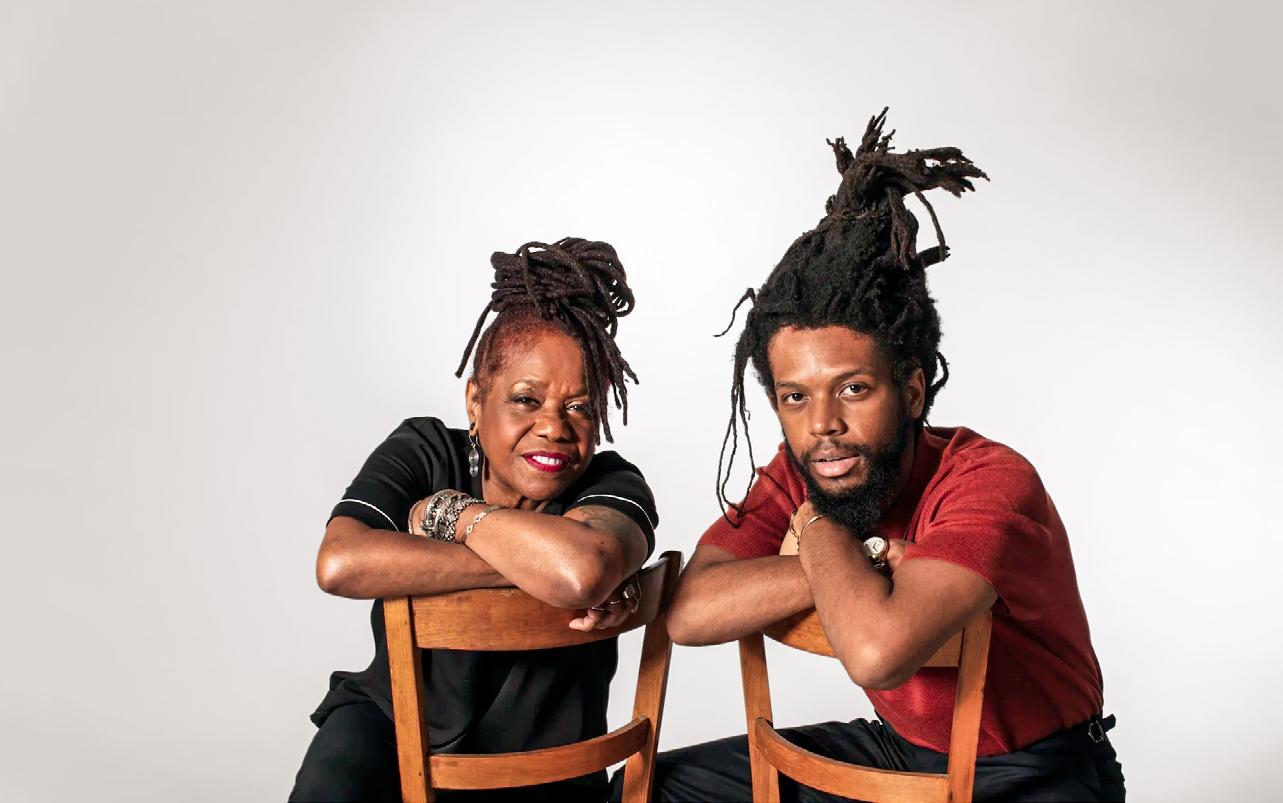
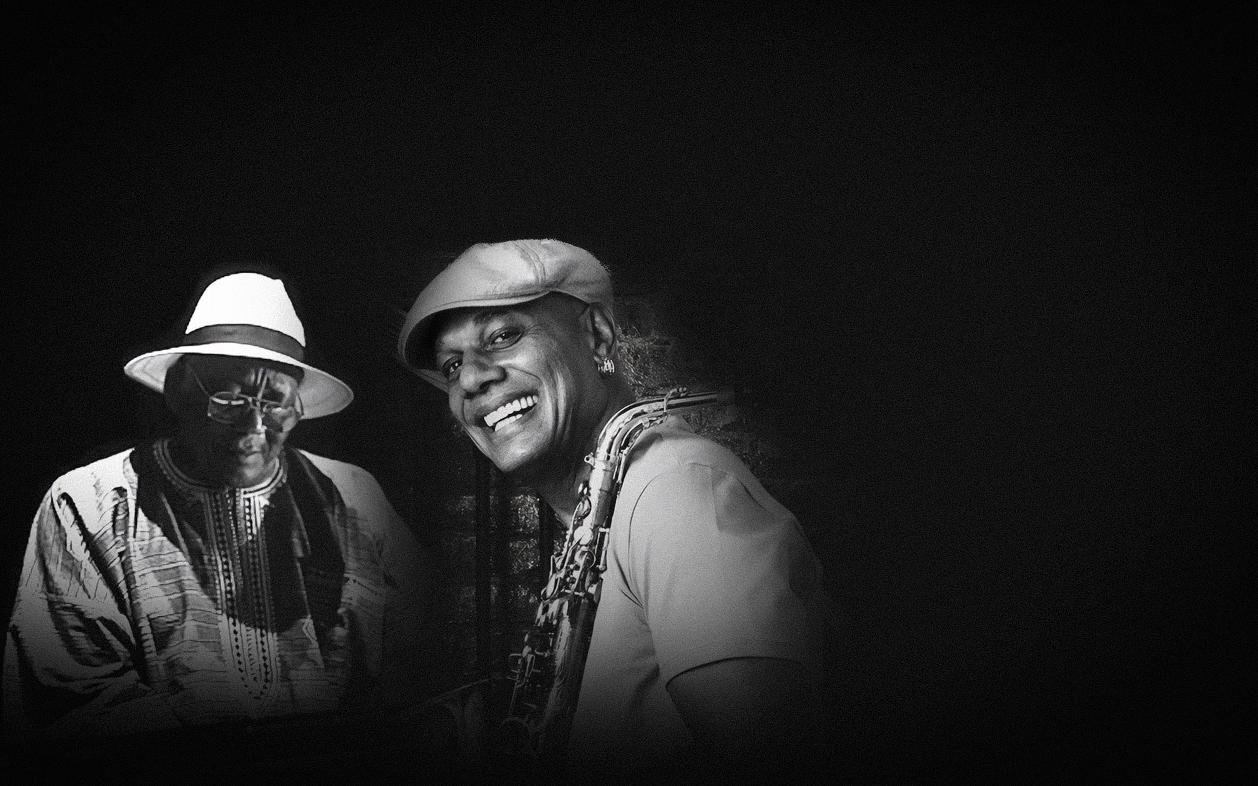
CATHERINE RUSSELL & SEAN MASON

ALL THAT’S JAZZ
BY CYDNEY HALPIN
I hope you all had the opportunity to enjoy at least one “JAM”—Jazz Appreciation Month—event in April. But I’d posit that JAM is every month and this issue of Jersey Jazz is testimony to the incredible musical offerings in May and beyond. Enjoy it and mark your calendars accordingly!
Please note: The digital issue of Jersey Jazz is easily downloaded to your favorite device for easy and repeat access. Simply click on the red “VIEW MAGAZINE” button on our website— njjs.org—homepage, and once “inside the issue,” click on the red “DOWNLOAD ISSUE” button conveniently located beneath the issue cover page. This will allow you to save the issue.
Don’t miss out on spectacular music at our Jersey Jazz LIVE! concerts. Plan to join us Sun-
day, May 3rd as we present the T.K. Blue Quartet in Celebration of NEA Jazz Master Dr. Randy Weston’s Centennial Birthday. This will be a special “hybrid” event with lively conversation between jazz scholar Noal Cohen and saxophonist and bandmate T.K., followed by the musical tribute. The quartet will feature T.K. Blue on saxophone & flute, Aaron Graves on piano, Kalimba Santi Debriano on bass, and George Coleman Jr. on drums.
If you attended our February 2025 or 2026 LIVE! events, you know how enjoyable these special format concerts can be. For more information about this concert and these artists, click here: njjs.org/t-k-bluecentennial-tribute-to-randy-weston/
This concert has been generously supported by NJJS member
Noal Cohen. The Board and I thank him for his generosity and support.
Jersey Jazz LIVE! Is held at Madison Community Arts Center, 10 Kings Road, Madison, NJ. There is FREE street parking. $15 NJJS Members, $20 Non-Members, $5 Child/Student w/ID. Doors open at 2:30PM. LIVE! events are well attended, plan accordingly. For advance ticket sales: events.ticketleap. com/tickets/new-jersey-jazz-society/jersey-jazz-live-t-k-blue-quartet-celebrates-nea-jazz-master-drrandy-weston-s-centennial-birthday
If you’d like to support a JJ LIVE! concert—in part or in full—or our Rising Stars/Opening Act initiative—providing performance opportunities for the next generation of jazz musicians, please contact me at pres@njjs.org or at 973.229.0543.
Save the Date! Sunday, June 7th at 3:00 p.m., for Jersey Jazz LIVE! featuring the Anderson Brothers Trio with multi-instrumentalists Peter and Will Anderson and Ehud Asherie on piano. These fan favorites will be presenting their not-to-be missed program on Irving Berlin.
The Rising Stars/Opening Act will showcase New Jersey City University graduate students Sofia Carrasco on tenor saxophone and Victor Sotomayor on piano. For more information on all of these artists and concert please see page 11.
The Anderson Brothers Trio was a sellout at their LIVE! appearance in 2025. Advance tickets are recommended: events.ticketleap.com/tickets/new-jersey-jazz-society/jerseyjazz-live-the-anderson-brothers-trio
Additional funding for this
concert has been generously provided by NJJS Board Member Paul Flexner and his wife Barbara. The Board and I thank them for their generosity and support.
There’s still time to donate!
While NJJS is very grateful for program funding, in part, from Morris Arts and The Summit Foundation, the majority of our operating expenses and initiatives are financed by membership dues and donations.
“
THE MAJORITY OF OUR OPERATING EXPENSES AND INITIATIVES ARE FINANCED BY MEMBER DUES AND DONATIONS. ”
can’t do what we do without YOU!
If you haven’t yet contributed to this campaign, please consider helping NJJS continue its performance and educational initiatives by donating today online at njjs.org/ donate/ There’s also a red “Donate” button conveniently located on our home page—njjs.org—for easy giving.
We’re counting on you to partner with us and keep this uniquely American art form swingin’. You make it all possible! The first blooms of spring always make my heart sing. S. Brown ALL
The Board and I would like to thank all the donors who’ve donated to our 2025 “Setting New Standards in Tradition!” annual appeal campaign to date. So many of you are patrons who’ve generously supported our work year after year, and your commitment to NJJS has both sustained us through difficult times and fostered growth. We truly
Would you like to maximize the impact of your gift? Many of you work for employers that have a matching gift program that will
double the impact of your gift for free by completing and submitting a simple form. Check with your Human Resources Department for further information.
You can also make a tax-efficient gift from your IRA today! Qualified Charitable Distributions (QCDs), also known as IRA Charitable Rollovers, are the savviest way for individuals age 70½ or older to use their IRAs to maximize their charitable giving. Your IRA donation is
a generous way to fulfill your required minimum distribution for the year. Gifts generated directly from your IRA will save you on taxes while helping NJJS fulfill its mission to promote and preserve jazz.
EDITOR’S CHOICE
BY SANFORD JOSEPHSON
Ross Farm Jazz Festival Showcases the Stars of Tomorrow
The jazz landscape has changed dramatically over the years. In 1973, there were five colleges and/ or universities offering Jazz Studies programs. Today, the number of those programs has multiplied tremendously. A similar scenario has taken place at high schools across the country.
In addition, programs like Jazz at Lincoln Center’s Essentially Ellington event, and the New School’s Charles Mingus Festival & High School Competition have fostered the development of future jazz stars.
Jersey Jazz Magazine initiated a Rising Star feature in March 2020 with an article on drummer Evan Sherman, and we introduced a Rising Stars opening act at our first Jersey Jazz LIVE! concert in June 2022 with a trio of student musicians

from Newark Academy: pianist Ben
Collins-Siegel (now a member of the prestigious Stamps Scholars Program at the University of Miami’s Frost School of Music), bassist Ethan Freed, and tenor saxophonist Ethan Lee.
I mention all of this as a preface to previewing the second annual Ross Farm Jazz Festival, being held
Saturday, May 9, in Basking Ridge, NJ. David Becker, President of Ross Farm, in coordination with guitarist/ educator Dave Stryker, has assembled an incredible program, showcasing some of the brightest young stars in the Tri-State Area. Here’s the lineup:
» 1 p.m., Jazz House Ambassadors Combo, directed by tenor saxophonist/educator Mike Lee
» 2 p.m., Montclair State Jazz Sextet led by saxophonist Ryan Huston
» 3 p.m., Rutgers Jazz Quartet led by guitarist Christian Orlowski
» 4 p.m., William Paterson Jazz Septet led by guitarist Sally Shupe. » The final performance, at 5:30 p.m., a quartet led by Stryker and tenor saxophonist Eric Alexander.
The JHK Combo has eight performers: trumpeter Lucas Comesana, baritone saxophonist/clarinetist Henry Yip, trombonist Cameron Van Wyk, guitarist Desmond Diehl, pianist George Shekiladze, bassist Sam Konin, and drummers Vir Mehrotra and Cole Rosenberg. Comesana, from Princeton, and Konin, from Lawrenceville, were named outstanding soloists at February’s Charles Mingus Festival & High School Competition. Konin and guitarist Desmond Diehl, have performed as Rising Stars at NJJS’ Jazz Jersey LIVE! concerts. Konin played twice—the first time as a 13-year-old in a group led by Mount Olive trumpeter Alvaro Cara-
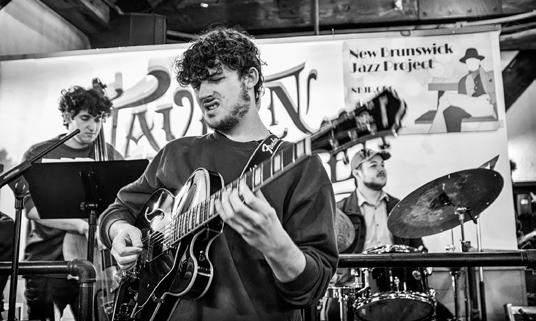
Christian Orlowski leading a New Brunswick Jazz Project performance at Tavern on George .
vaca in August 2022. Desmond, from Basking Ridge, led a trio October 2025. The repertoire from the JHK group will celebrate the centennial birthdays of pianist Randy Weston and tenor saxophonist John Coltrane with Weston’s “Hi Fly” and Coltrane’s “Like Sonny”. Other selections will include Steve Swallow’s “Falling Grace”, Cedar Walton’s “Clockwise”, and Lil Hardin Armstrong’s “Struttin’ With Some Barbeque”.
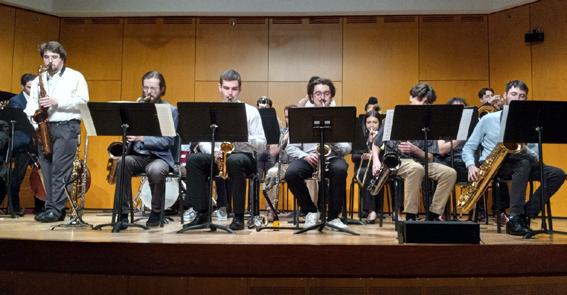
Tenor saxophonist Ryan Huston, from Toms River, performed in a Montclair State quintet that preceded pianist Ted Rosenthal’s trio at a June 2023 JJL. I recently attended Huston’s Senior Recital at MSU, and he told me the musicians playing with him in Basking Ridge will be trumpeter Myles Twitty, guitarist Luke Mattessich, pianist Daniel Sokolsky, bassist Dominic Carnival, and drummer Larry Davis. Selections will include David Sanborn’s “Tough”, George
Coleman’s “Amsterdam After Dark”, and Dizzy Gillespie’s “Night in Tunisia”. The latter, Huston feels, is particularly appropriate in a year the United States is celebrating its 250th birthday. “Dizzy,” he said, “introduced music from other countries. He brought in music from Cuba.” In his autobiography, To Be or Not to Bop (Doubleday: 1979), Gillespie recalled going to Spanish Harlem in 1937 to hear music with Cuban bandleader Mario Bauza. He said the music he heard was “like putting West Indian hot sauce in some black-eyed peas, or hot Cu-
ban peppers in a dish of macaroni.”
Christian Orlowski’s sextet will include four student musicians, including himself, who performed at the Rutgers Jazz Ensemble’s wonderful Miles Davis at 100 concert on April 24 at the New Brunswick Performing Arts Center. (See April Jersey Jazz cover story). The others were alto saxophonists Ginger Meyer and Michael Price and pianist James Pakhomou. They will be joined in Basking Ridge by drummer Logan Bogdan and bassist Jeff Andolaro. Selections will include Neal Hefti and Count Basie’s
“Splanky”, Rene McLean’s “Dance Little Mandisa”, Lenny White’s “L’s Bop”, and Michael Price’s “Great Calm.” Meyer, from Mendham, was Sam Konin’s bandmate in Alvaro Caravaca’s 2022 Jersey Jazz LIVE! band. In May 2022 Meyer was the lead alto saxophonist in the Jazz House Kids’ Big Band that was a finalist in the Essentially Ellington competition and the lead altoist in the New Jersey High School All-State Jazz Ensemble. As a result of Meyer’s skill, JHK Band Director trumpeter Nathan Eklund selected an arrangement of Ellington’s “Isfahan”,
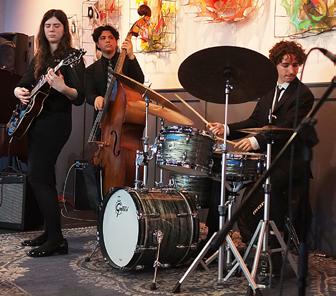
Left: Ryan Huston leading a big band at his Senior Recital; Right: Sally Shupe at March 2024 Jersey Jazz LIVE! with bassist Jeff Andolaro and drummer Beckett Diehl.
which featured the great alto saxophonist Johnny Hodges, for one of JHK’s EE finalist performances.
In March 2024, Sally Shupe, then a senior at South Orange/Maplewood’s Columbia High School, led a quintet as the Rising Stars opening act at NJJS’ Jersey Jazz LIVE!. To celebrate Women’s History Month, the quintet played three tunes associated with female composers: Emily Remler’s “Blues for Herb” written for guitarist Herb Ellis; harpist Dorothy Ashby’s “Games”; and pianist Monika Herzig’s “Another Day at the Office.” One member of that quintet was bassist Jeff Andolaro of Medford, who, as previously mentioned, is performing at Ross Farm with Christian Orlowski’s Rutgers sextet.
Shupe is one of Dave Stryker’s students at William Paterson, and in August 2025 she was invited to sit in with him and guitarist Frank Vignola at Birdland. She was also a special guest in my online Rutgers Osher Lifelong Learning Institute class on Remler last fall. “Learning about Emily Remler in high school,” she told me, “was life-changing. Jazz, but especially jazz guitar, is an extremely male-dominated field.”
The William Paterson sextet at the Ross Farm Festival will include vocalist Kyra Cioffi, from Rutherford, a 2025 NJJS Scholarship Winner; trumpeter
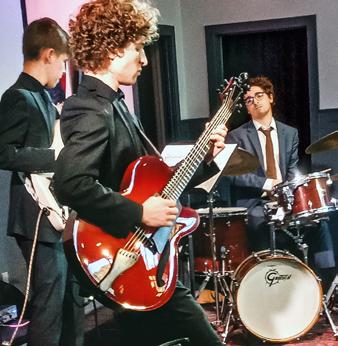
Desmond Diehl at October 2025 Jersey Jazz LIVE! with his brother, Beckett Diehl on drums and Lark Villinski on bass.
Josh Mercado; tenor saxophonist Bailey Giles; pianist Leon Hsu; drummer Luke Richardson; and bassist Killian Winn. Selections will include Dutch guitarist Jesse van Ruller’s “Secret Champ”, Wayne Shorter’s “Footprints”, George Gershwin’s “Someone to Watch Over Me” and “Soon”, and Roy Hargrove’s “Soulful.”
Dave Stryker and Eric Alexander will be joined by organist Jared Gold and drummer Steve Johns.
: Ross Farm is located at 135 North Maple Ave. in Basking Ridge, NJ. For more information or to order tickets, log onto rossfarm.org/ event/2nd-annual-ross-farm-jazz-fest

Founded in 1972, The New Jersey Jazz Society has diligently maintained its mission to promote and preserve America’s great art form—jazz. To accomplish our mission, we produce a monthly magazine, Jersey Jazz ; sponsor live jazz events; and provide scholarships to New Jersey college students studying jazz. Through our outreach program
Generations of Jazz, we provide interactive programs focused on the history of jazz. The Society is run by a board of directors who meet monthly to conduct Society business. NJJS membership is comprised of jazz devotees from all parts of the state, the country and the world.
MEMBER BENEFITS
You become an integral part of the NJJS community, and the history and future of jazz
Access to 11 Digital Issues of our Award Winning Jersey Jazz Magazine
— Featuring Articles, Interviews, Reviews, Events and More Discounts to our Jersey Jazz LIVE! Sunday Concerts
Discounts at NJJS Sponsored Concerts & Events.
MUSICIAN MEMBERS
FREE Listing on NJJS.org “Musicians List” with Individual Website Link
FREE Gig Advertising in our Monthly eBlast
THE RECORD BIN
Visit www.njjs.org or email info@njjs.org for more information on our programs and services
A collection of used CD’s & LP’s available at reduced prices at specific events and through mail order njjs.org/shop
JOIN NJJS
Family/Individual $45
(Family includes to 2 Adults and 2 children under 18 years of age)
Family/Individual 3-Year $115
Musician Member $45 / 3-Year $90 (one time only, renewal at standard basic membership level.)
Youth $15 - For people under 21 years of age. Date of Birth Required.
Give-A-Gift $25 - Members in good standing may purchase unlimited gift memberships. Applies to New Memberships only.
Fan $75 - $99
Jazzer $100 - $249
Sideman $250 - $499
Bandleader $500+
Corporate Membership $1000
Members at Bandleader level and above and Corporate Memberships receive special benefits. Please contact Membership@njjs.org for details. The New Jersey Jazz Society is qualified as a tax exempt cultural organization under section 501(c)(3) of the Internal Revenue Code, Federal ID 23-7229339. Your contribution is tax-deductible to the full extent allowed by law. For more Information or to join, visit www.njjs.org
Magazine of the New Jersey Jazz Society
VOLUME 54 • ISSUE 05
Jersey Jazz (ISSN 07405928)
is published monthly for members of The New Jersey Jazz Society
382 Springfield Ave., Suite 217, Summit, NJ 07901 973-229-0543 • info@njjs.org
Membership fee is $45/year.
All material in Jersey Jazz, except where another copyright holder is explicitly acknowledged, is copyright ©New Jersey Jazz Society 2026. All rights reserved. Use of this material is strictly prohibited without the written consent of the NJJS.
Editorial Staff
EDITOR
Sanford Josephson, editor@njjs.org
ART DIRECTOR
Michael Bessire, art@njjs.org
CONTRIBUTING EDITORS
Bill Crow, Joe Lang, Vincent Pelote, Gilda Rogers, Andrew Schinder, Jay Sweet
CONTRIBUTING PHOTOGRAPHERS
Lia Chang, Kasia Idzkowska, Sanford Josephson, Gilda Rogers, Todd Rosenberg, Mitchell Seidel, Anna Yatskevich
WEBMASTER
Christine Vaindirlis
WEBSITE DESIGN
Prism Digital
Advertising
DIRECTOR OF ADVERTISING
Cydney Halpin, advertising@njjs.org
ADVERTISING RATES
Full Page: $135, Half Page: $90, 1/3
Page: $60, 1/4 Page: $30
For reservations, technical information and deadlines contact advertising@njjs.org or visit njjs.org/Magazine/Advertise . Make a payment online at njjs.org/advertise via the red Submit Payment button, or via check made payable to NJJS, 382 Springfield Ave., Suite 217, Summit, NJ 07901.
New Jersey Jazz Society, Officers 2026
PRESIDENT
Cydney Halpin, pres@njjs.org
EXECUTIVE VP
Elizabeth Kavlakian, vicepresident@njjs.org
TREASURER
Mike Katz, treasurer@njjs.org
VP, MEMBERSHIP membership@njjs.org
VP, PUBLICITY
Sanford Josephson, sanford.josephson@gmail.com
VP, MUSIC PROGRAMMING music@njjs.org
RECORDING SECRETARY
Irene Miller
CO-FOUNDER
Jack Stine
IMMEDIATE PAST PRESIDENT
Mike Katz
DIRECTORS
Jay Dougherty, Cynthia Feketie, Paul Flexner, Pete Grice, Carrie Jackson, Caryl Anne McBride, Robert McGee, James Pansulla, Stew Schiffer, Elliott Tyson, Jackie Wetcher
ADVISORS
Don Braden, Mariel Bildsten, Ted Chubb, Al Kuehn, Jason Olaine



Anderson Brothers to Perform Songs from Their Best of Berlin Album at June Concert in Madison
“A Must for Fans of Swinging (and Sometimes Rollicking) Jazz”
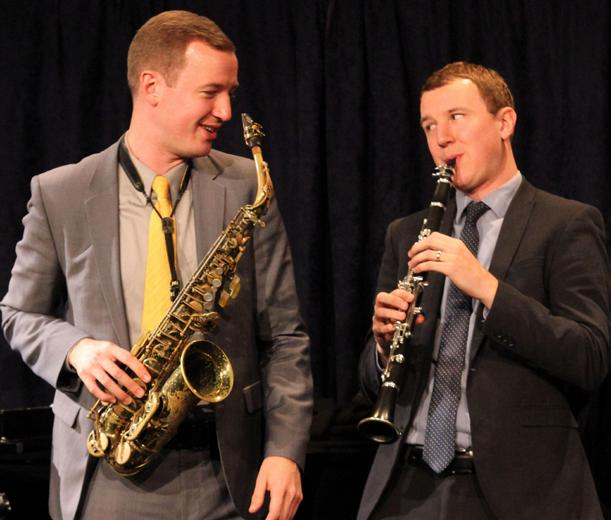
In March 2025, multireedists (and twin brothers) Will and Peter Anderson released an album on the Arbors Records label entitled The Best of Berlin, performing 13 tunes composed by Irving Berlin.
“Even though all of the songs may be well known,” wrote The New York City Jazz Record’s Scott Yanow, “these renditions ultimately sound both fresh and lively.” Highlights, he added, were “How Deep is the Ocean” with Will on flute and Peter on tenor saxophone, Will’s “Phil Woods-esque alto feature on ‘They Say It’s Wonderful’, and the uptem-
po ‘All By Myself’.” The album, he added, “is a must for fans of swinging (and sometimes rollicking) jazz.”
On Sunday, June 7, the Andersons, joined by pianist Ehud Asherie, will be playing songs from the album and talking about Berlin’s life story. This will be the Anderson Brothers’ second Jersey Jazz LIVE! performance. In January 2025, they presented a concert featuring the music of several American composers including the Gershwins, Harold Arlen, and Hoagy Carmichael.
Born and raised in the Washington, DC, area, the Andersons
Will, left, and Peter Anderson
JERSEY JAZZ LIVE!
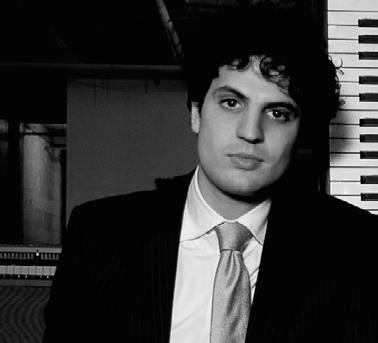
moved to New York City to attend Juilliard. They have performed at such venues as Carnegie Hall, Jazz at Lincoln Center, and the Kennedy Center; and they were part of the Grammy Award winning soundtrack of HBO’s Boardwalk Empire with Vince Giordano and the Nighthawks. Asherie was featured in the April 2024 issue of Jersey Jazz in connection with his appearance at the Chicken Fat Ball in Maplewood, NJ. Called “a master of swing and stride” by The New Yorker, Asherie started playing professionally in 1997 with his own trio—Kenji Robinson on bass and Tom Pleasant on drums—performing late Sunday nights at Smalls. Then, he played in bands led by saxophonists Grant Stewart and Bob Mover.
In January 2025, Asherie and trumpeter Bruce Harris released an Arbors album entitled Thank You Barry Harris, a tribute to the late
bebop pianist and educator. In the April 2024 interview, Asherie revealed that, “In my formative years, I kind of grew up in bebop—Bud Powell, Thelonious Monk, Barry Harris—that New York kind of piano playing.” In 2016, his Blue Heron album, Shuffle Along, paid tribute to Eubie Blake and Noble Sissle’s 1921 Broadway musical of the same name. According to Jersey Jazz’s Joe Lang, it contained “scintillating solo interpretations of eight songs from the show.”
The Andersons and Asherie will be preceded by a Rising Stars opening
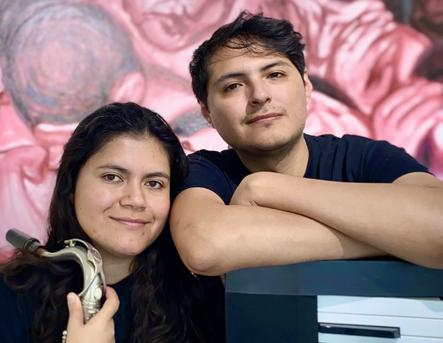
act featuring tenor saxophonist Sofia Carrasco and pianist Victor Sotomayor, graduate Jazz Studies students at New Jersey City University, and Co-Founders of the Misti Peruvian Jazz Project, an ensemble dedicated to exploring the intersection of jazz and Peruvian musical traditions.
: The Madison Community Arts Center is located at 10 Kings Road in Madison, NJ. The Jersey Jazz LIVE! concerts begin at 3 p.m. Admission is $15 for NJJS members and $20 for non-members. Student
admission is $5 with valid ID. There will be light refreshments for purchase. To order tickets in advance, log onto Events.ticketleap.com/tickets/ new-jersey-jazz-society/jersey-jazzlive-the-anderson-brothers-trio
: Funding for Jersey Jazz Live! has been made possible, in part, by funds from Morris Arts through the New Jersey State Council on the Arts/ Department of State, a partner agency of The National Endowment for the Arts. Additional funding has been provided by The Summit Foundation.
Sofia Carrasco and Victor Sotomayer
Ehud Asherie
Sentimental Journey Big Band to Feature Swing Hits Inspired by Classical Composers
Tommy Dorsey’s “Song of India” Was Derived from a Rimsky-Korsakov Opera
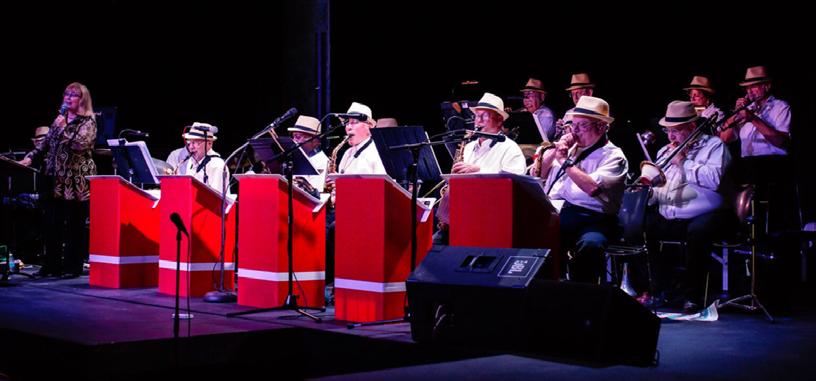
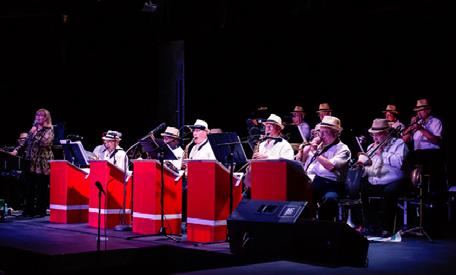
The Sentimental Journey Big Band, led by Sea Girt, NJ, residents, alto saxophonist/clarinetist Curt Morton and vocalist Altha Morton, is dedicated to playing the music of the swing era—transporting audiences back to the 1930s and ‘40s when jazz was America’s popular music.
On Sunday, May 17, the SJBB will put a new twist on its repertoire when it returns to the Jay and Linda Grunin Center for the Arts in Toms River, NJ. What makes this year’s program unique is a vibrant celebration of the enduring dialogue between classical music and jazz. Classical composers have long inspired jazz artists with their timeless themes and harmonic structures.
Some examples: Paganini’s “Caprice XXIV” was performed by Benny Goodman, and Tommy Dorsey’s “Song of India” came from Rimsky-Korsakov’s opera, Sadko.
The latter featured a trumpet solo by Bunny Berigan, and both Berigan and Dorsey had played it previously with the Paul Whiteman Orchestra.
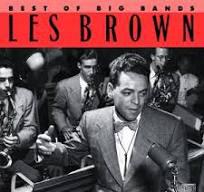
Other big band adaptations from the classical world have included Glenn Miller’s “Anvil Chorus” from Verdi’s opera, il trovatore (aka, The Gypsy Chorus) and “Bizet Has His Day”, modified by bandleader Les Brown from Bizet’s L’Arlesienne Suite. When radio
stations imposed a 10-month ban on music from ASCAP in 1941, the stations only played music licensed by BMI or material that was in the public domain, music old enough for its copyrights to have expired. According to Les Brown, “That’s why we did ‘Bizet Has His Day’.”
A lesser-known classical piece, “Minuet in G”, by Christian Petzold, was transformed by the ‘60s American pop girl group, The Toys, into
“ SJBB ARRANGER DARRELL PLEASANT HAS WRITTEN A BIG BAND ARRANGEMENT OF CHRISTIAN PETZOLD’S ‘MINUET IN G’. ”
Shore Regional High School in West Long Branch, NJ. Student musicians joined in on performances of Herbie Hancock’s “Chameleon” and Frank Foster’s “Blues in Hoss Flat.” Women’s History Month was observed in March with a performance at Lakewood, NJ, Middle School. SJBB’s school performances are supported by the Music Performance Trust Fund.
“A Lover’s Concerto.” SJBB arranger Darrell Pleasant has written a big band version for the Grunin concert. Other highlights of the concert will be Steve Kaplan’s arrangement of David Mann’s “No Moon At All” and Tom Bender’s gospel call-andresponse treatment of “Who Threw the Whiskey in the Well”, a 1940s hit for Lucky Millinder and his Orchestra with vocal by Wynonie Horn.
In April, the Sentimental Journey Big Band celebrated Jazz Appreciation Month with a concert at
: The Jazz on a Sunday Afternoon series is made possible through funding from the Wintrode Family Foundation and the Ocean County College Foundation and media support from the New Jersey Jazz Society. The Jay and Linda Grunin Center for the Arts is located at College Drive in Toms River, NJ. The Sentimental Journey Big Band concert begins at 3 p.m. For more information or to order tickets, log onto grunincenter.org or call (732) 255-0500.
Bandleader Les Brown’s song, “Bizet Has His Day” was adapted from Bizet’s L’Arlesienne Suite opera.
Eric Darius Brings His Smooth Saxophone Sound Home to New Jersey
“Every Time My Dad Would Put on a Grover Washington Jr. Record or a David Sanborn Record, My Ears Would Just Perk Up”
BY JAY SWEET
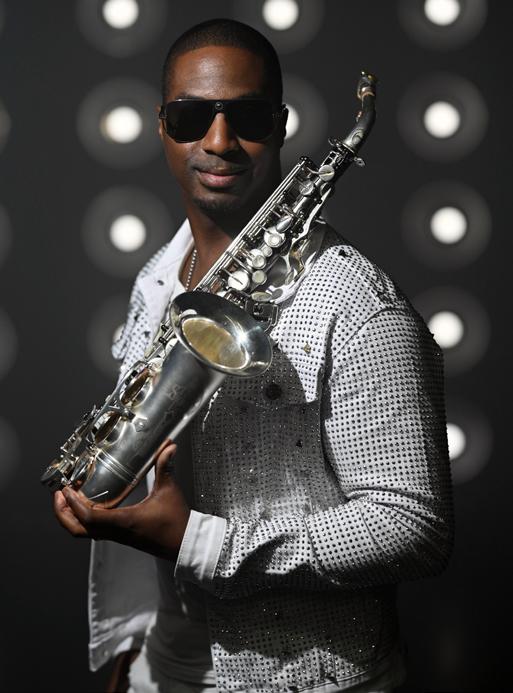
Saxophonist Eric Darius’ musical identity was shaped early, rooted in a family environment where music was encouraged and ever-present. “I grew up in a musical household. My dad plays the bass, my mom sings and plays the piano. My brother plays the drums and trumpet, and my sister sings. So, it’s basically been in my blood from day one.”
Darius was born in Livingston,
NJ. “We moved to Florida about the time I was three years old,” he said, “so I haven’t spent too much time in New Jersey, but I’m really excited to come back to perform there.”
His current tour will bring him to the Union County Performing Arts Center’s Hamilton Stage on May 9 as part of the WBGO All That Jazz Concert Series, with performances scheduled for 5 p.m. and 9 p.m.
JAZZ AT UCPAC
His musical upbringing was enriched by a range of influences, particularly Caribbean sounds drawn from his Haitian and Jamaican heritage. “There was a lot of reggae, soca (soul of calypso)… all these different types of rhythms and sounds,” Darius recalled, alongside a steady rotation of artists like Stevie Wonder, Michael Jackson, James Brown, Prince, and George Benson. Still, it was the saxophone that ultimately spoke to him most directly. “Every time my dad would put on a Grover Washington Jr. record or a David Sanborn record, my ears would just perk up. It was almost like a voice.”
That connection deepened when he saw the instrument performed live for the first time. “I was about nine years old. I saw somebody play the saxophone at my church, and I just fell in love with it. It spoke to me. I felt like that was my calling.” Soon after, his parents bought him a saxo-
phone, and his journey began. What followed was a rapid ascent fueled by discipline and passion. “I was practicing four or five hours at a time. My parents would have to pull me out of my room just to eat,” he said. Within months, his early teacher recognized his accelerated growth: “After about seven months, he told my parents, ‘I’ve taught your son everything I can.’” By age 11, Darius was already performing on an international stage as part of Sonny LaRosa and America’s Youngest Jazz Band, playing the music of Duke Ellington and Count Basie. A pivotal moment came at the Montreux Jazz Festival. “That was the moment that changed my life,” he said, “being in a foreign country, performing in front of thousands of people. I realized music is a universal language. It’s so much bigger than myself.” That realization solidified his path forward, transforming a child-
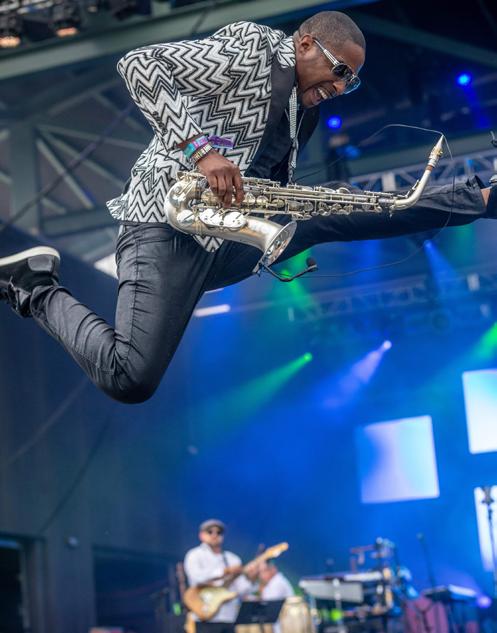
The “Darius Leap”
hood passion into a lifelong calling. As a teenager, Darius’ development continued at a remarkable pace. Performing extensively throughout Florida, he built a strong foundation as a live musician while deepening his understanding of jazz at the Howard W. Blake High School of the Performing Arts in Tampa. “That’s when I really started to dive into John Coltrane, Charlie Parker, Cannonball Adderley, Sonny Rollins, Wayne Shorter. I started to get a more rounded appreciation for jazz.” At the same time, real-world experience continued to shape his artistry, including opportunities to
perform alongside major figures such as Wynton Marsalis. “My dad was my manager at the time. I’m very blessed with the upbringing that I had.”
A defining crossroads came at 18 when Darius was simultaneously pursuing higher education and professional opportunities. “I auditioned for Juilliard and did not get accepted, but they told me to come back the next year. At the same time, I got a record deal.” Faced with the choice, he committed fully to his recording career while continuing studies at the University of South Florida. The release of his 2004 debut album, Night on the
Town (Higher Octane), marked his national emergence and set the stage for a career that has continued to evolve.
Today, Darius balances tour-
“
GEORGE BENSON
WAS ONE OF THE FIRST JAZZ
ARTISTS
I EVER HEARD. ”
ing, recording, and teaching with a clear artistic vision. His current live performances typically feature a six-piece band, though the scale can expand depending on the setting. “Occasionally I’ll bring in a horn section and a guest vocalist. Sometimes it’s a nine-piece show, but generally it’s six of us.” His sets draw from across his catalog while introducing new material, including upcoming releases. “We have a brand new single
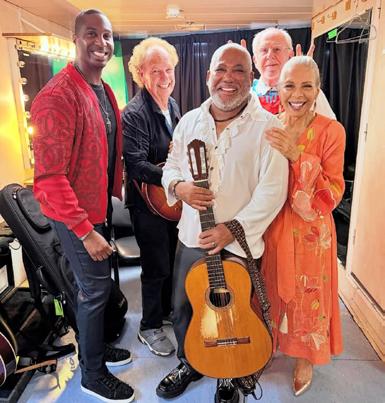
On the Smooth Jazz Cruise, from left: Darius, Lee Ritenour, Jonathan Butler, Bob James, and Patti Austin
JAZZ AT UCPAC
coming out two days after our show in New Jersey so we’ll be debuting that as well,” he said. “Album number nine is in the works. We’re hoping to get it out by the end of this year, but it’s projected more for early 2027.” In the meantime, Darius continues to release singles, maintaining a steady creative output that keeps audiences engaged between larger releases.
A significant aspect of Darius’ career has been his embrace of independence through his own label, SagiDarius Music. “I started my own label almost 10 years ago. There’s no better feeling than having full creative control,” he explained. “One of the reasons we started it was to give a platform to upcoming artists. Once we finish this project, we plan on signing new artists and launching them in the near future.” In this way, Darius is not only shaping his own career but also positioning him-
self as a mentor in the same way in which he was embraced by his musical heroes such as George Benson. “George Benson was one of the first jazz artists I ever heard,” he recalled. My dad took me to see him when I was about 16, and he gave me advice even back then.” That relationship came full circle years later. “At a festival I was at with him, he asked me to come up and join him and Kenny G on the final song. That was a huge honor, definitely a career highlight.”
Another unforgettable experience came in an entirely different context —an impromptu late-night performance with Prince. “It was about 2 o’clock in the morning. I was invited to an after-party, and they told me to bring my horn,” he recalled. What followed was unexpected. “Prince looked over and told his music director to grab that guy with the sax. I got up there and jammed
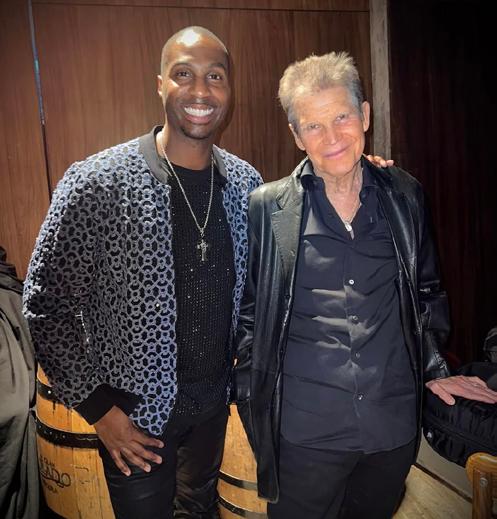
Darius and David Sanborn
with him.” Beyond the thrill of the moment, what stayed with Darius was Prince’s relentless passion. “Even after a three-hour show, he was still playing like nobody was watching. That’s how much he loved music.”
That same sense of energy and showmanship defines Darius’ own performances, including his now-signature leap at the end of a tune. “It’s something I always did naturally, but one photo from a festival in Spain went viral, and it took on a life of its own. Now it’s my logo… kind of a Jordan-esque silhouette.” The “Darius Leap” reflects the high energy he brings to the stage. “I grew up watching Prince, James Brown, Michael Jackson. I want to bring that same level of excitement to jazz.”
Beyond performance and recording, Darius has expanded his role within the music community through festival hosting and educa-
tion. “I’ve been hosting festivals for about eight years now. It’s a different way to connect with the audience,” he explained, citing events such as the San Diego Smooth Jazz Festival and Florida Smooth Jazz Weekend. At the same time, his commitment to education remains central. “For the last 15 or 16 years, I’ve been going into schools with the program, ‘On a Mission in the Schools,’ just encouraging kids to follow their dreams and showing them the importance of music education.”
Taken together, these elements — performance, recording, mentorship, and outreach —continue to evolve while Darius remains grounded in the passion that first drew him to the saxophone. As he reflects on his journey, that spark remains unmistakably present: a belief in music not only as an art form, but as a universal means of connection and joy.
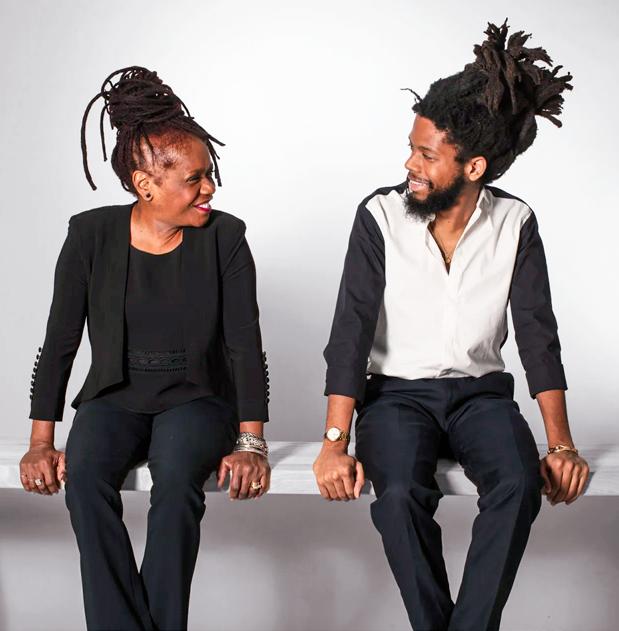
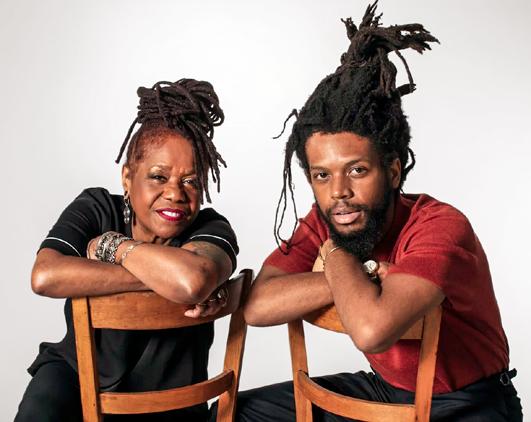
Catherine Russell and Sean Mason:
American Songbook Tunes
‘That No One Seems to be Doing’
“A Really Good Concert ... It’s Going to be So Much Fun”
BY SANFORD JOSEPHSON
In August 2024, vocalist Catherine Russell and pianist Sean Mason released an album, My Ideal, on Dot Time Records. Reviewing it for Jersey Jazz, Joe Lang pointed out that the recording “is filled with quality songs while avoiding reliance on the same old, same old selections that form the core of so many albums.” Russell would agree with that assessment. “Why do the top 10 when there are so many songs?” she asked me. One song on My Ideal is “Ain’t Got Nobody to Grind My Cof-
fee” written by Spencer Williams and Bud Allen and originally sung by Clara Smith in 1928. “I’m always looking for songs by 1920s blues women,” Russell said, “because I like the writing, I like the way they sound, and they add some levity to the show.”
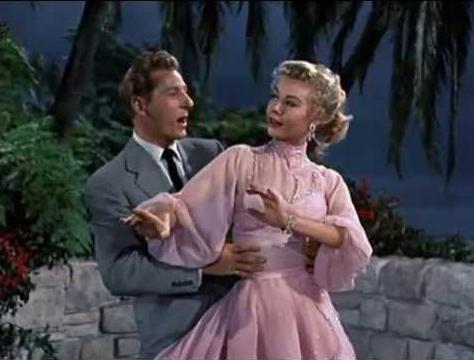
An example of a somewhat obscure song by a prolific composer is “The Best Things Happen While You’re Dancing” by Irving Berlin. “I heard a recording of Danny Kaye singing it a long time ago,” Russell said, “and I was a big Danny Kaye
JAZZ AT M c CARTER
fan. So, that song had been in my mind for a while. When people hear it, they say, ‘oh yeah.’ They remember the movie (White Christmas).”
Russell, Mason said, “really has a gift of finding a repertoire of standards that weren’t recognized at the time these songs were written, and they’re not remembered as well as other things we now know as standards. She ignores the noise and chooses songs that stand on their own and are great compositions that have a great lyric.”
On Friday night, June 5, Russell and Mason will be performing some selections from My Ideal at Princeton’s McCarter Theater Center, but they’ll also be adding songs that aren’t on the album. One of them is Patty Cake, written by Fats Waller and Andy Razaf. “Sean likes to play stride piano. So, he’s the perfect one to do that song with,” Russell said.
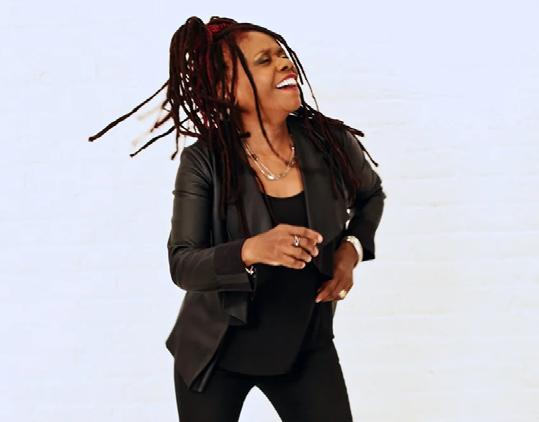
Catherine Russell: “Why do the top 10 when there are so many songs?”
“It’s a good uptempo rhythmic song that I’ve been doing for a while.
“There’s another standard called ‘Moonlight Saving Time’ (Irving Kahal/Harry Richmond), which a friend of mine recently turned me onto. It’s another American Songbook tune that no one seems to be doing. My friend sent me the Blossom Dearie version but it was originally sung by
Annette Hanshaw (in the ‘20s). That’s another case of a tune that nobody really knows. It gives me something to talk about, and it’s a nice kind of mid-tempo swing tune. I also like some blues, some straight blues” she continued. “Sean plays great blues, and that loosens up the program.”
Mason described the probable repertoire at McCarter as “a good
mix of songs from the swing idiom and songs from the blues idiom. I smile thinking of how enjoyable these concerts are because we really go deep into the blues and extract as much out of it as possible. It is so much fun to play with Catherine. I find myself looking at her all the time and just smiling. We just smile and laugh at each other.”
When the 69-year-old Russell takes a break, the 27-year-old Mason will play a few solo tunes on the piano. “For those selections,” he said, “it really depends on my mood. Lately, I’ve been playing some original material that fits the overall vibe of what we’re playing. I like to kind of test them out on the audience to see how they like them. Then, sometimes I do some standards, but they’re not always classic standards. They may be some things that are not as popular.” Another song on My Ideal is “A
Porter’s Love Song (To a Chambermaid)”, written by James P. Johnson and Andy Razaf. “A long time ago,” Russell recalled, “I was doing an Ethel Waters tribute concert at Jazz at Lincoln Center. So, ‘Porter’s Love Song’ has been with me for a long time. There are different versions of that song, and it also gives me a chance to talk about the revue it came from, ‘The Kitchen Mechanics Revue.’ There are only a couple of things that survived from that show.”
My Ideal also includes two songs
by Richard A. Whiting, the title tune (co-written with Newell Chase and Leo Robin) and “You Stayed Away Too Long” (co-written with J.C. Johnson and Nat Schwartz). “I’ve done other co-written Richard Whiting songs as well,” Russell said. “I guess I’m naturally drawn to his writing.”
Russell and Mason first performed together in 2019 at a New Orleans-themed concert at JALC, a tribute to vocalist/guitarist Danny Barker, who played with Cab Calloway, Lucky Millinder, and Benny Carter in the
“ MASON WAS FEATURED AS A RISING STAR IN THE OCTOBER 2021 ISSUE OF JERSEYJAZZ.”
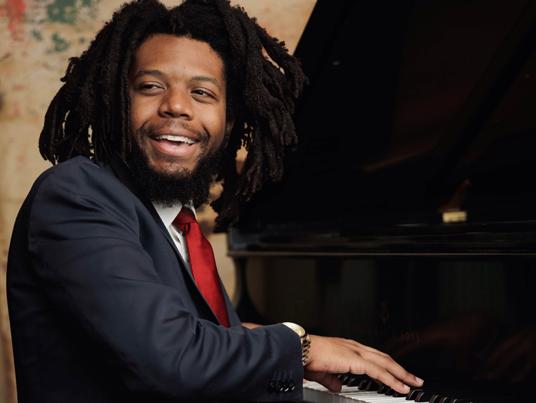
1930s. “There were some very prominent New Orleans musicians on the program,” Russell recalled. Among them were: banjoist Don Vappie, clarinetist Dr. Michael White, and drummer Herlin Riley. In February 2021, Russell and Mason did a virtual JALC Family Concert called “Legacies of Excellence”, including music from jazz giants such as Duke Ellington and Thelonious Monk. After that, Russell said, “I really en-
joyed working with him, so I asked him to work with me in my band.”
Two other recording projects Russell has recently been associated with are Cat & the Hounds with Colin Hancock’s Jazzhounds (Turtle Bay Records: July 2025) and Live @ Jazz at Lincoln Center (Dot Time Records: April 2026), an album honoring the Hot Club of New York, a group of vintage jazz and blues enthusiasts.
Hancock, she explained, “is a
Sean Mason was tapped by Branford Marsalis to play piano on the soundtrack of the Netflix movie, Ma Rainey’s Black Bottom.
JAZZ AT M c CARTER
scholar and multi-instrumentalist record collector and also an afficionado on recording on cylinder. The first time I met Colin, we recorded on cylinder, my first experience doing that. It was really fascinating and interesting and gave me even more respect for pre-electronic recording because it was difficult and challenging. So, Colin wanted to do a whole collection of ‘20s blues tunes and asked me to join him on that. I got to learn about some artists I was not familiar with in addition to including Ada Brown, who played with my father, Luis Russell, the first time he was accompanying a vocalist, back in 1926. That was a very fun project for me to do.”
Russell’s father, the late Luis Russell, was a legendary pianist/ composer/bandleader and Louis Armstrong’s long-time Musical Director. Her mother, the late Carline Ray, was a pioneering vocalist/guitar-
ist/bassist who performed with the International Sweethearts of Rhythm, Mary Lou Williams, and Sy Oliver. (Phonograph cylinders, invented by Thomas Edison in 1877, were the earliest commercial medium for recording and reproducing sound).
In his Jersey Jazz review of Cat & the Hounds, Joe Lang wrote that the album “is guaranteed to bring a smile to your face and get your toes tapping,” adding that, “Having new vocals by Russell is always a joy.”
The Live @ Jazz at Lincoln Center album, Russell explained, contains “lesser-known tunes by well-known and lesser-known individuals, all initially released on 78 recordings.” Wrote JJ’s Joe Lang: “Russell’s approach exudes the spirit of the earlier era, and she is adept at milking the double entendre present in some selections. Her band is filled with musicians who understand
Danny Kaye and Vera Ellen singing “The Best Things Happen When You’re Dancing” in the 1954 movie, White Christmas.
JAZZ AT M c CARTER
this material as well as she does.”
Mason was featured as a Rising Star in the October 2021 issue of Jersey Jazz. In 2020, he was tapped by Branford Marsalis to play piano on the soundtrack of the Netflix movie, Ma Rainey’s Black Bottom. In the fall of 2023, he led a national tour called “When You Wish Upon a Star – A Jazz Tribute to 100 Years of Disney” with the House Band of The National Jazz Museum in Harlem. It was performed at the New Jersey Performing Arts Center in Newark and the Jay and Linda Grunin Center for the Arts in Toms River, NJ. In November 2025, Mason released his latest album, A Breath of Fresh Air, on the Taylor Christian Records label. Reviewing it for UK Jazz, Len Weinrich wrote that the album, “reveals his firm grasp of jazz history, which, when it’s considered that Ray Charles was his original inspira-
tion to play piano, shouldn’t surprise anyone. Yet, while Mason is deeply conscious of the glories that have gone before and employs routines, rhythms and riffs from earlier times, rather than copying them, he bends and adapts them to suit his needs.”
Mason will soon be releasing another album, featuring just a trio, describing it as “a departure from the quintet sound. I did away with the horns for this one and kept it as the basic piano trio.” As for the June 5th performance in Princeton. “It’s going to be a really good concert. It’s going to be so much fun. I love playing with Cat.”

Sunday, May 17 • 3:00pm
: The McCarter Theater Center is located at 91 University Place in Princeton. The Catherine Russell/Sean Mason concert will be at 7:30 p.m. on June 5 in the Berlind Theatre. For more information or to order tickets, log onto mccarter.org or call (609) 258-2787.
JAZZ AT CROSSROADS
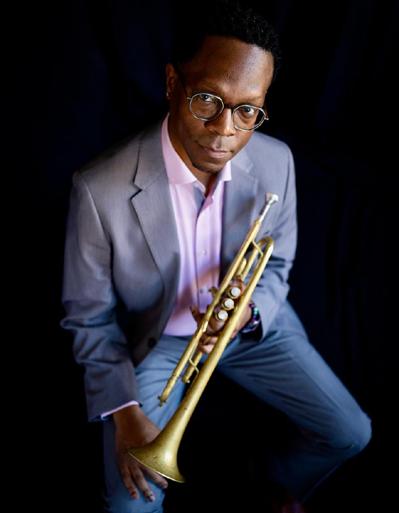
Trumpeter Brandon Lee is Drawn to the ‘Lasting Community Feel’ of Big Bands
He’ll Be Performing as a Guest Artist This Month with Two High School Jazz Bands in Garwood, NJ
BY ANDREW SCHINDER
The big band format is, of course, one that is jazz’s most timeless, enduring, and malleable. A big band could take a classic standard and update it for a modern audience, or transport that audience back to a Jazz Age ballroom. It’s no wonder, then, that so many modern jazz practitioners view the big band format not as an anachronism to be scoffed at, but rather a sanctuary to be revered. Trumpeter Brandon Lee is one of those musicians. Lee has embraced the big band format and counts himself as a current or past member of many of the finest new and legacy big bands working today—the Count Basie Orchestra, the Jazz at Lincoln Center Orchestra, the Vanguard Jazz Orchestra, and the Maria Schneider Orchestra, to name a few. Lee is also a Co-Founder and Co-Leader of the Uptown Jazz Tentet, a
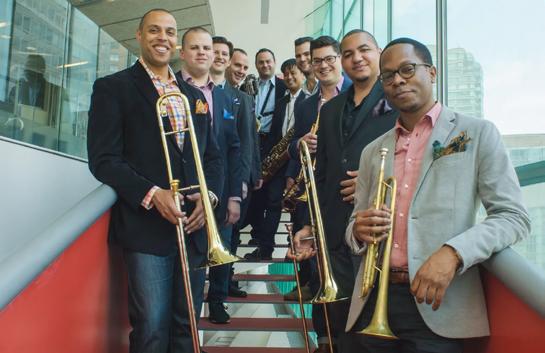
10-piece ensemble paying homage to the big band tradition while repurposing it for a modern audience.
Not one to be limited artistically, Lee is also a student of the small-combo idiom. He has released three leader albums that faithfully update the straight-ahead, post-bop heritage for modern listeners. On these albums, Lee skillfully offers his take on beloved standards that, despite their age, really never seem to grow old.
Furthermore, as if the above endeavors weren’t keeping Lee busy enough, he also serves in the orchestra of the Broadway musical Death Becomes Her, which marks his third show, following stints in Some Like it Hot and Water for Elephants.
Finally, continuing the tradition established by his parents, Lee is a dedicated educator. He is currently Adjunct Professor at New York Uni-
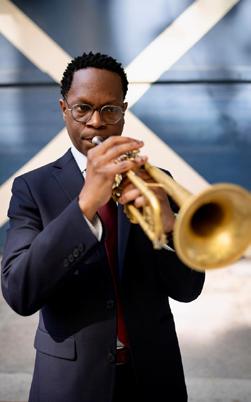
versity’s Department of Music and Performing Arts Professions. He also works with younger aspiring musicians, and this month Lee will join the One More Once Jazz Ensemble to serve as a guest artist in a concert program with the Piscataway High School and Passaic County Vocational and Technical High School jazz bands. The events will take place on May 17 and 31 at Crossroads in Garwood, NJ.
As one might imagine, balancing educational, orchestral, and jazz performance endeavors with the
“
ambition and drive to create and push himself as an artist is challenging. The obvious economic benefits of serving in a Broadway orchestra, Lee’s passion for education, and his innate artistic desires, often conflict. Nevertheless, he’s up for it.
“The thing that I’ve been following, which is I guess my North Star,” Lee said, “has been trying to keep the balance between the things I know I need to do to have a good quality of life, the things I feel I need to do as a musician; and to contribute to this music.
I’VE ALWAYS FOUND BIG BANDS CHALLENGING IN A GOOD WAY. ”
That’s been the thing for me. Am I balancing out everything that I want to do in this music? And right now, I feel like I’ve been kind of putting my own stuff on the back burner a bit.
I’m trying to get that rolling again.”
Lee was born and raised in Houston, and his parents were both educators. His family members immersed themselves in music, and were active with their Christian faith. These twin passions had natural synergies. All of the Lees were musicians, and
they spread the gospel through their music in churches all across Texas.
“My parents made it their spiritual life’s journey to go and start different praise and worship ministries at different churches as we were growing up,” Lee explained. “So, we would go to a lot of different types of churches. Sometimes it would be an all-Black church. Sometimes it would be an all-white church in the outskirts of Houston, places that most Black people weren’t going to back in that day.
Brandon Lee at right with members of the Uptown Jazz Tentette.
JAZZ AT CROSSROADS
But we were right in the middle of the churches, helping them get their praise and worship ministries together.”
Starting out on piano at an early age, he quickly switched to the trumpet. The impetus was Lee’s brother’s drumming prowess. Lee excelled at the trumpet and played in many Houston-area jazz workshops, including some with area peers who also grew up to be major jazz players, such as pianist Robert Glasper and saxophonist Walter Smith III. In high school, Lee competed in Lincoln Center’s Essentially Ellington student jazz festival, winning the Best Soloist award. There, he met an ideal mentor for a young trumpeter, Wynton Marsalis, who helped him get into The Julliard School, which – shockingly in the year 2000 – was about to commence its inaugural Jazz Studies program.
In the 1980s, Marsalis facilitated a movement—dubbed by many as the
“Young Lions” --that saw a return to a traditional swing, bop-inspired jazz sound after a decade that was dominated by rock-oriented jazz fusion.
Lee’s sound is generally a natural extension of that movement with his compositions and recordings all being excellent additions to the bop idiom. And, of course, no format is more traditional than the big band.
“When I’m writing music, it usually doesn’t come with any kind of
preset sort of agenda,” Lee explained. “I would say that the way I write my music is probably because of the musicians that I’ve been listening to throughout my career. Wynton is, of course, the early influence, but basically all of the Young Lions. That kind of resurgence of swing and jazz was my childhood. I grew up listening to all of them. Whether it was Wynton or Nicholas Payton, Roy Hargrove, all the other guys that were on Criss Cross Records. The musicians who were playing at that time were playing things that were pushing the music a little forward, but at the same time they
were tipping their hat to the tradition.
“So, the hours and hours of music that I listened to growing up are swirling in my head when I go to write music. When I go and play, I’m usually trying to keep the musicians that are playing with me engaged by challenging them with music that is complicated, but does not necessarily sound complicated. So, it’s the musicians who are being challenged, but the audience is still enjoying what they are hearing.”
Lee’ three leader albums—all worth seeking out on Bandcamp or streaming services—are 2007’s From
“ I’M VERY EXCITED TO DO THE (GARWOOD) CONCERTS. ”
JAZZ AT CROSSROADS
Within, 2010’s Absolute-Lee, and 2017’s Common Thread, as well as two albums with the Uptown Jazz Tentet large ensemble. Lee has appeared on dozens of albums a sideman with various big bands, winning four Grammy Awards along the way.
Reviewing the Uptown Jazz Tentet’s album, What’s Next (Irabbagast Records: 1990), for AllAboutJazz, Edward Bianco wrote that the music was “grounded in the traditions of the Billy Strayhorn, Gil Evans, Duke Ellington big bands ...
these 10 players reveal a swing and swagger similar to today’s typical 17-piece modern big band, producing a muscular sound at every turn.”
Lee gravitates toward big bands because, “I think that the big band is one of the last things that’s around that sort of has this lasting community feel to it. I think it’s because of the sheer number of people who are on stage at the same time. You get locked in immediately with three or four different trumpet players. You are therefore immediately within that family, keeping that sort of jazz tradition, community, family, feeling alive, and not feeling so individualistic all the time. It’s about me, as an individual, coming in and helping and contributing to a larger whole, as opposed to everything just being about me.
“Ever since I was a student at Juilliard,” he continued, “ I’ve always found big bands challenging in a good way, to figure out how to play, how I play, the way I wanted to play, over the big band, but also make it to where I’m still making a statement. How do I play with the Count Basie Orchestra and play within the confines of that band, but also still sound like me, right? That’s a very special, specific skill.”
Lee has also spent much of his career in


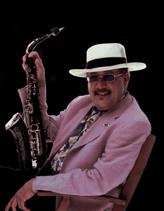


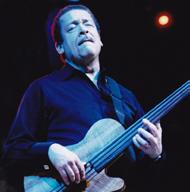
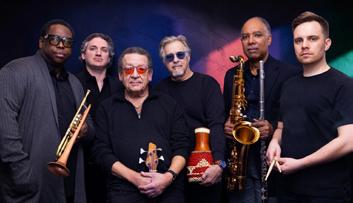
PERFORMING 2 SHOWS AT THE HAMILTON STAGE - JUNE 6
UCPAC Hamilton Stage - 360 Hamilton St. Rahway, NJ 5:00pm and 8:00pm
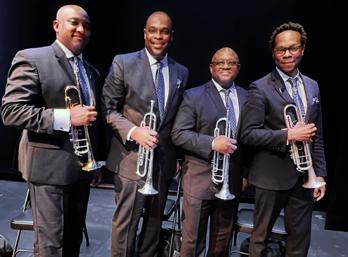
Count Basie Orchestra trumpeters in 2022. From left: Shawn Edmonds, David Spencer, Endre Rice, Brandon Lee.
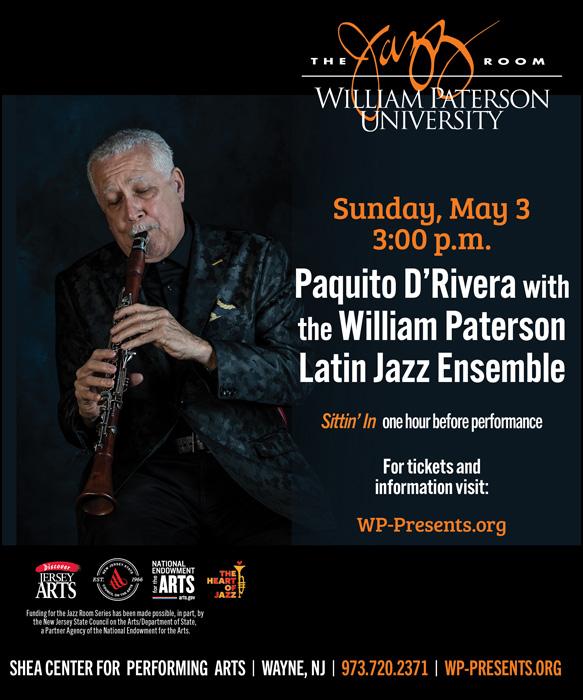
DIZZY GILLESPIE ALUMNI AND GRAMMY WINNER JOHN LEE collaborates with 16-TIME GRAMMY WINNER PAQUITO D’ RIVERA and the DIZZY GILLESPIE ALL STARS
JAZZ AT CROSSROADS
the classroom. He taught at Juilliard for several years following graduation, and soon after spent an extended period of time as a professor at the University of North Carolina at Greensboro. While Greensboro was certainly comfortable and lucrative, after several years Lee began to miss the New York scene. He landed the professorship at NYU in 2023. In addition to his scheduled clinic with the two high school bands and the Once More Once Big Band, Lee regularly participates in jazz camps with younger musicians. This allows him to perform in New York while continuing his parents’ work as educators.
“I’m very excited to do [the Garwood concerts],” Lee said. “I like to tell students that they need to play Count Basie, Pat Jones, Duke Ellington. If you’re in a big band, to never play that music just doesn’t make sense. Look, it’s fun to play all these other charts, these funk charts, there’s a lot of great music out there. I have a lot of fun playing a lot of those charts that aren’t Basie and stuff like that. But for students, I ‘m always trying to make sure that they at least have a chance to play through this music, to learn something
from it. So, yeah, it’ll be a nice mix of things.”
Despite a full schedule of big band gigs, teaching engagements, and his Broadway engagements, Lee remains highly ambitious. He wants to spend more time on smaller combos, for example. “With smaller bands, it just feels there’s just so much freedom,” he said. “You can get to a level that is pure improvisation. Nobody is coming in with anything preconceived or anything like that. The small group offers more when it comes to creativity, and you have more than one chance to do it, like if you play a week at a club or a month on the road or something like that.
“I’m trying to allow myself to start thinking about projects that I want to start and think of more people who I want to play with. I see myself doing more or less of a lot of the similar things that I’m doing now, but there are other things that I have in mind that I just haven’t been able to, like bigger picture things. They’re not all clearly formed yet. But as far as my musical career, I just want to do more of my own thing, and see where that takes me.”
No matter where that may be, there can be no doubt that it will be respectful of jazz’s past, while keeping a keen eye on the future.
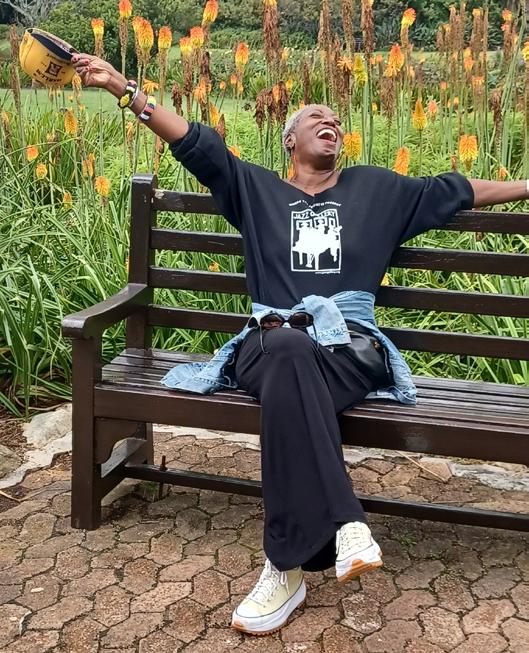
Lezlie Harrison Blends Her Sultry Vocal Style with a Hint of the Black Church
“I’m About Community, Fighting to Keep This Music Alive, and Women Behind the Music”
BY GILDA ROGERS
The ubiquitous sound of trumpeter Clifford Brown’s “Joy Spring,” musically captures the essence of song stylist, Lezlie Harrison, who will perform at the Jersey City Jazz Festival, on May 28, along with being a host on a couple of other stages.
The joy she brings, as a radio personality and host of “Come Sunday” on Newark’s WBGO 88.3 FM, which celebrated its 47th Anniversary in April, is as refreshing as spring. Statuesque and always fashionably correct, Harrison is living her best life. Meaning, she has combined all the experiences along her journey, and
you get a strong sense that “Girlfriend” is enjoying her life. “It seems I wear a lot of hats,” said Harrison. “It’s by choice and I’ve worked hard for it.”
A theater major at the University of Massachusetts Amherst, Harrison parlayed that into performances with The Negro Ensemble Company and the late Woodie King’s New Federal Theatre. As part of the Black Mass Communications Project, she got her start in radio at WMUA 91.1 FM, “The Voice of UMass Amherst.”
Destiny prevailed and Harrison, a 23-year-old ingenue, was on her way back to New York from Massa-
Lezlie Harrison, on a recent trip to South Africa
JERSEY CITY JAZZ FESTIVAL
chusetts with a friend accompanying her, who said, “Look Mahogany,” (her nickname), “You should work at this radio station (WBGO),” on which she had been listening to Rhonda Hamilton, a radio host, religiously.
She worked at the station from 1984-1987, returning as an on-air announcer in 2014. Harrison’s on-air voice, and uptempo personality permeates the girl-next-door conversation she has with her listeners. She also co-hosts “Singers Unlimited,” with Janice Siegel, one of the charter voices of Manhattan Transfer.
However, what most people will be surprised to learn about Harrison is that, in 1995, she was one of the co-founders of the popular New York City venue known as The Jazz Gallery, along with the late, world-renowned trumpeter, Roy Hargrove, and his late business manager, Dale Fitzgerald. The original loft-style
location on Hudson Street was meant to be a rehearsal space for Hargrove, who was tormenting his neighbors with his late night playing into the wee hours of morning.
“Roy wanted an education component to the Hargrove brand,” said Harrison. The space is now located at 1158 Broadway and serves as an incubator for a younger generation of jazz musicians. This is the place where Hargrove jammed with the late R&B crooner and musician, D’Angelo, along with bassist Christian McBride and a host of others.
The Jazz Gallery offers opportunities for emerging musicians through residencies and fellowship commissions. Its upcoming gala on May 18, at The Cosmopolitan Club, will honor alto saxophonist Marshall Allen (Lifetime Achievement Award), pianist Jason Moran and his wife, classical vocalist Alicia Hall
Moran (Trailblazer Award), along with New Jersey Performing Arts CEO John Schreiber (Contribution to the Arts Award), visual artist Gammy Miller and her husband, Ken Kimerling, Legal Director of the Asian-American Legal Defense and Education Fund. (Founders Award).
As a jazz vocalist, Harrison has had residencies in Istanbul, Turkey, and Cape Town, South Africa. Singing is a part of her DNA. As a child, and keeping with the Black cultural
tradition, she started singing in her grandfather’s church. Her mother was also a musician. The sultry styling of her voice sets the tone in a smoke-filled jazz club (now without the smoke), that makes you feel good.
Reviewing her 2023 Cellar Live album, Let Them Talk, George W. Harris of Jazz Weekly wrote: “I love a vocalist who doesn’t overplay her hand, Lezlie Harrison sings with the wisdom of a card shark who knows when to hold ‘em and fold ‘em ... She coos out a gospel feel on the backbeat of the bold title track ... A read of Paul McCartney’s ‘Yesterday’ has a soft ember of soul flickering.”
In Jersey City, you can expect to hear tunes like “Ain’t No Sunshine,” by Bill Withers, in her cool, performance art and sultry style. And, from Let Them Talk, “Close Your Eyes,” which transports you to a place where love lingers in your
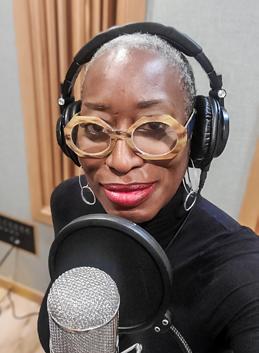
Harrison, in the broadcast booth at WBGO
JERSEY CITY JAZZ FESTIVAL
Lezlie Harrison in Red Bank
“What’s Going On?” Lezlie Harrison asked the audience at Red Bank’s Triumph Brewery on Wednesday night, April 22, before putting her signature style on the ubiquitous tune perfected by Marvin Gaye. Harrison’s sultry rendition, with the piano accompaniment of John DiMartino and bassist Yoshi Waiki, was an improvised call and response with the audience about what’s going on today. Her performance was part of the Jazz Arts Project’s celebration of Jazz Appreciation Month.
Harrison opened the set with “All of Me,” by the great Billie Holiday, who was born on April 7, 1915. She also included the late song stylist, Phyllis Hyman, in her repertoire of songs by singing “Somewhere in My Lifetime,” and “The Answer is You.”
Harrison’s experience as a longtime WBGO radio host certainly allowed her to connect with the audience in a downhome, charming and delightful way. In between sets she mingled with the audience, taking selfies and pictures. Others in the audience remembered her as one of the speakers in the “Talking Jazz Series,” in 2025, sponsored by the Jazz Arts Project and hosted at the T. Thomas Fortune Cultural Center.-GR
heart for a special someone, if only but a memory that still feels good.
A joyful expression of energy, Harrison has been on a whirlwind, appearing all throughout the Tri-State Area —everywhere from New York City to being a part of last fall’s Middlesex County Jazz Festival; and she closed out this year’s Black History Month celebration at the East Orange Public Library. Harrison will also be part of the Tiny Porch Jazz Concert series on August 15 on the great lawn at the T. Thomas Fortune Cultural Center in Red Bank, NJ, the home of Count Basie. She appeared in April as part of the Jazz Arts Project’s celebration of Jazz Appreciation Month at Red Bank’s Triumph Brewery. (See article at left).
Harrison has built a strong following over the years with “the people,” through her day job as a WBGO radio host, and she connects effortlessly in person with her audience. “I’m
happy and I do love what I do,” she said. “Clearly, I’m not in this business for the money. I’m rich in so many aspects of my life. I’m about community, fighting to keep this music alive, and women behind the music.”
: Lezlie Harrison will give two performances on Thursday, May 28, at 6 and 8 p.m., at Junto, 68 Mercer St. in Jersey City. The Jersey City Jazz Festival will stretch over six days, from Tuesday, May 26-Sunday, May 31 at several locations. Among other performers will be pianist/vocalist Champian Fulton, trumpeter Ted Chubb, pianist David Kikoski, tenor saxophonists Joe Lovano and Melissa Aldana, trumpeter/vocalist Bria Skonberg, drummer Jeff ‘Tain’ Watts and the Roy Hargrove Band.
: For more information or to order tickets, log onto riverviewjazz.org/ jersey-city-jazz-festival.
For Saxophonist/Clarinetist
Paloma Ximena, Essentially Ellington Was ‘Life Changing’
“She
is Growing into One of the Most Promising Jazz Stars on the Clarinet, an Instrument That is Rarely Played Yet Critically Needed”
BY SANFORD JOSEPHSON
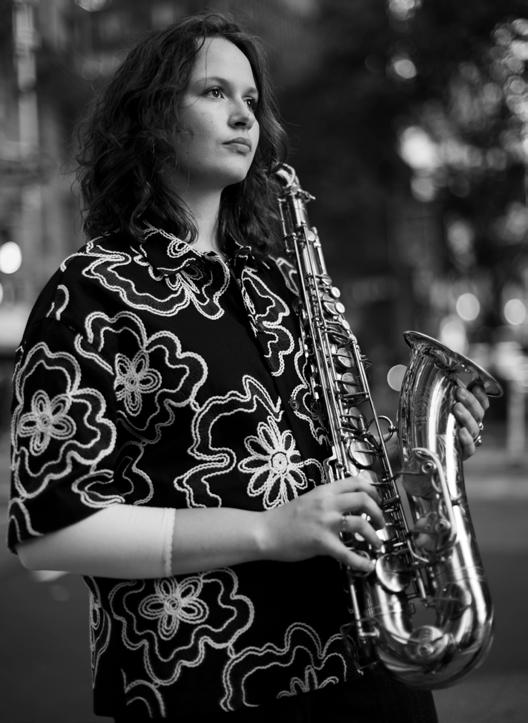
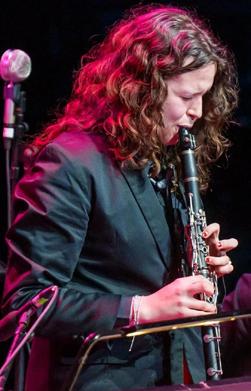
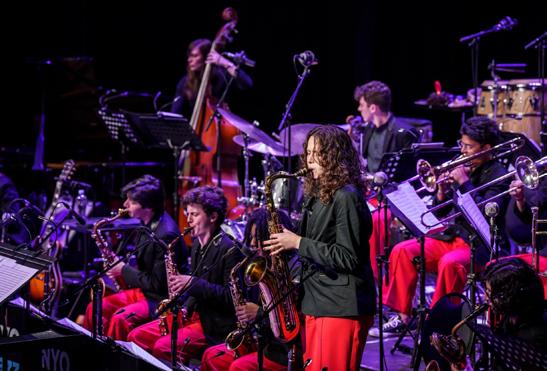
In May 2022, Rio Americano High School in Sacramento, CA, was a finalist in Jazz at Lincoln Center’s Essentially Ellington competition, and sophomore Paloma Ximena won two solo awards: Outstanding Clarinetist and Outstanding Alto Saxophonist. “That was really the start of my career,” she said. “That was the moment when I really decided to pursue music.”
During the fall of 2021, Ximena was playing competitive soccer as a
goalie and “trying to go to college for soccer. But that year I suffered six concussions. I was forced to stop playing soccer. I had only been playing music for five or six years, but it had never been my priority. When I wasn’t playing soccer, I had so much more time to play music. I had a lot of headaches and brain fog from the concussions, and I found that playing the clarinet was the only thing that could help me get rid of those symptoms, so I found
RISING STAR
myself playing clarinet all the time.” Her inspiration? “Sidney Bechet. He was my first hero—‘Moulin A Cafe’, ‘Blues in Thirds’, ‘Blue Horizon.’ I would play those tracks over and over again and try to sound like him. I fell in love with the music. It was a year where I really found a voice, and then, when I found out we got selected to go to Essentially Ellington, it was so exciting.”
As a follow-up to her Essentially Ellington performances, Ximena was invited to attend JALC’s Summer Jazz Academy in July 2022. “I started studying with Victor Goines there, and he taught me how to play the clarinet properly. He got me on some classical stuff, taught me a lot of technique things; and then I started studying with (multireedist) Ted Nash as well. He taught me many things about composition and saxophone. I also consider (trumpeter) Marcus Printup to be another mentor of mine. He was my combo director. Essential-
ly Ellington was kind of the start of everything for me. Being exposed to Jazz at Lincoln Center, getting introduced to that world was life changing.”
The 20-year-old Ximena is currently a sophomore Jazz Studies major at the Michigan State University College of Music. Goines was introduced to her, when she was in high school, by Todd Stoll, JALC Director of Education. “He mentioned that she was very talented and would be an excellent candidate for lessons,
or at the very least, someone worth listening to,” Goines recalled, in an email to me. “Although I’m not sure how long she had been playing the clarinet or who her teacher was, I was impressed by her skills and exceptional commitment to the instrument. It wasn’t until we spent more time together that I learned she had been teaching herself to play the clarinet.
“What sets Paloma apart,” he continued, “is not just her interest in the clarinet but also the fact that she is self-taught. She has shown a keen interest in studying earlier clarinet styles, particularly those from the New Orleans tradition, as well as the works of Duke Ellington and Benny Goodman. Paloma is especially captivated by the music of Sydney Bechet, along with clarinetists such as Barney Bigard and Jimmy Hamilton from Duke Ellington’s band. While Benny Goodman’s music is also part of her repertoire, her true passion
lies with Bechet, whose influence on her sound is evident in her playing. Additionally, she has expressed interest in the work of Doreen Joseph, a former college colleague of mine and one of the current torchbearers of the New Orleans style of clarinet playing. Paloma even traveled to New Orleans to meet Doreen, where she had the opportunity to perform with her.
“Paloma is growing into one of the most promising jazz stars on the clarinet, an instrument that is rarely played yet critically needed. Her talent has inspired me to create an original big band arrangement of my composition, titled ‘Morning,’ which will feature her with the MSU Jazz Orchestra. I am confident that she will excel in this performance.”
Growing up in Sacramento, Ximena was aware that the Rio Americano High School would often be a finalist at Essentially Ellington. “I think they have gone 12 times out of
30 years. They’re also a frequent participant in the Mingus Festival (at the New School).” Ximena attended Mary Detering Elementary School, and, “They required every student to play an instrument. In fourth grade, we started with the little plastic recorder. I mastered it by October. You don’t switch to a real instrument until fifth grade, but by my teacher said, ‘We need to get you on a real instrument because you’re learning very fast.’ So, I chose the clarinet because it looked like the recorder. I got
a $75 clarinet off of Craig’s List, and I played that all the way up until high school. I taught myself on YouTube.”
When she reached sixth grade and middle school, Ximena wanted to join the jazz band, but she was told there were no clarinets in the band so “I picked up the saxophone.” In eighth grade, “Covid happened, so then I started transcribing a lot. I would just play my horns all day.” One of her teachers recommended she check out tenor saxophonist Melissa Aldana. “I followed her on Instagram,
“
HER TRUE PASSION LIES
WITH BECHET, WHOSE INFLUENCE ON HER SOUND IS EVIDENT IN HER PLAYING. ”
and she was giving out lessons. I took a Zoom lesson with her when I was 15, playing tenor.” Then, came the concussions and Essentially Ellington.
Josh Murray, the Rio Americano Band Director, remembers that Ximena “was already a musical force at 14 and developed into an exceptional all-around musician through hard work and a desire to be great. I look forward to seeing how her creativity, talent, and drive
develop as her career unfolds.”
Last month, Ximena won first place in the College Jazz Saxophone category at the National Saxophone Alliance (NASA) competition at Ohio State University. Her decision to attend Michigan State resulted from meeting bassist Rodney Whitaker, MSU Director of Jazz Studies, four years ago at the JALC Jazz Academy. “He was always open to answer questions,” she re-
Paloma Ximena with 2024 NYO Jazz Ensemble
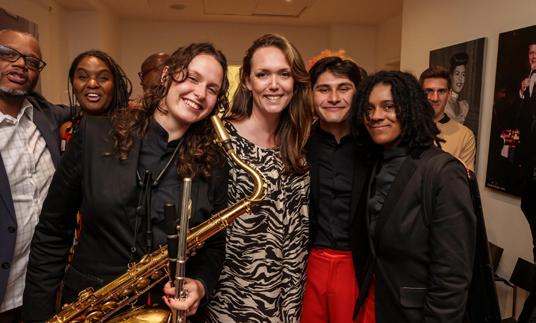
At Carnegie Hall, from left: pianist Reggie Thomas, bassist Endea Owens, saxophonist/flutist Erica Von Kliest, Ximena, tenor saxophonist Gustavo Cruz, and alto saxophonist Miriam Goroff-Behel.
called, “and he quickly took me under his wing and started mentoring me. I also got to spend time with him when I attended the Brevard (NC) Music Institute Jazz Camp. He recruited me to come to Michigan State. He’s been supporting me ever since. He’s hired me for his gigs, and the first
semester I was here I would be in his office two or three times a week. A lot of the times we would be playing duo. I’m still learning from the musical lessons I was getting from him.”
Whitaker described Ximena to me as “such a soulful person. She loves jazz of all kinds. She’s very intuitive and wants to know everything. And, she listens! She’s gifted on all levels and can go a long way.”
Other important influences at Michigan State have been two saxophonists: Walter Blanding and his successor on the faculty, Erena Terakubo. Blanding, she said, “dramatically changed my life because, coming to college, I was more of a clarinetist; and he really taught me how to play the saxophone. He studied with Sonny Rollins and Benny Golson. Every single lesson I had with him I took as sacred. He taught me how to improve effective-
ly and to master my instrument.”
Terakubo, she said, “pushes me to expand my knowledge and technical mastery of the saxophone. She has pushed me to technical, musical, and scholarly levels I never thought I could reach on my own.”
In addition to her awards at Essentially Ellington and NASA, Ximena was a six-time YoungArts winner, a member of the Carnegie Hall National Youth Orchestra Jazz Ensemble in 2024, an Honorable Mention clarinet soloist at JALC’s 2026 National Collegiate Jazz Competition, and a member of the 2023 Monterey Jazz Festival’s Next Generation Women in Jazz Combo in 2023.
The 2024 NYO Jazz Ensemble toured South Africa, and “that trip changed my life,” she said, “because I was 18 and fresh out of high school. We got to spend a lot of time learning about the history of South Africa. It was my first time hearing about
RISING STAR
apartheid; they didn’t teach that to me in school. It really opened my eyes. We went to the Morris Isaacson School in Johannesburg, a school for kids who play music. There was this seven-year-old who was a drummer— the best musician I’ve ever heard in my life. He had the ‘it’ factor, and he immediately fit in with us when we were playing. It was so inspiring.”
The friendships Ximena has made with bandmates at NYO, Essentially Ellington, and the band camps she attended are lasting. “I’m still best friends with them to this day even though I live out in Michigan. I visit New York frequently and play with them.” She and some of those friends are in the process of assembling a working band. They include: Juilliard students, alto saxophonist Miriam Goroff-Behel, drummer Ethan Oliver, and trombonist Grace Rock; fellow MSU student, bassist Laura Simone-Martin; and pianist
William Hill III, a Manhattan School of Music student. (Simone-Martin was a Jersey Jazz Rising Star in July/ August 2022 when she was first selected for the NYO Jazz Ensemble).
Ximena’s “biggest hero of all time” continues to be Sidney Bechet. “His autobiography, Treat It Gentle, is one of my favorite books.” (Orginally published in 1960 by Hill and Wang, it was later released as a paperback by DeCapo Press). Other major influences from the past have been Sonny Rollins, John Coltrane, Stanley Turrentine, and Joe Henderson. Among current saxophonists, it’s Joe Lovano, Mark Turner, Melissa Aldana, and Walter Smith III.
After school ends this spring, Ximena will spend the summer in Sacramento. That, however, will be interrupted by an August trip to Scotland to play with the JALC Orchestra at the Edinburgh Jazz Festival, “which I’m extremely excited about.”

Celebrate Renowned Jazz Artists at McCarter
Madeleine Peyroux
In 2026, Madeleine Peyroux marks the tenth anniversary of her Secular Hymns album and the thirtieth year since her debut album Dreamlandthe milestone that shifted teen busker Peyroux from the streets of Paris to the world’s concert halls.
Thu, May 14 at 7:30PM
Catherine Russell & Sean Mason
The GRAMMY-nominated voice-and-piano duo celebrate classic jazz traditions, blending Sean Mason’s sophisticated piano with Catherine Russell’s brilliant, timeless voice. Their new album, My Ideal, nods to the roots of blues, R&B, jazz, and pop while o ering fresh, invigorated interpretations.
Fri, Jun 5 at 7:30PM
Oran Etkin: Timbalooloo
Internationally acclaimed musician and educator Oran Etkin brings his beloved Timbalooloo show to life in an interactive musical adventure for the whole family.
Sun, Jun 7 at 11:00AM

Christian McBride & Ursa Major
Christian McBride is an eleven-time GRAMMY-winning bassist, composer, and bandleader. In Ursa Major, he is joined by four rising young master instrumentalists including saxophonist Nicole Glover, guitarist Ely Perlman, pianist Mike King, and drummer Savannah Harris.
Sun, Jun 7 at 7:00PM
Hamilton de Holanda Trio
Hamilton de Holanda is one of Brazil’s most celebrated musicians, a global ambassador for Brazilian music, and a master of improvisation. Picking up the mandolin at the age of ve, he revolutionized the 10-string version of the instrument, blending Brazilian traditions like choro with jazz and other global in uences.
Tue, Jun 9 at 7:30PM
The Brandee Younger Trio
Brandee Younger is revolutionizing the harps’ role in modern music. Over the past fteen years, she has worked relentlessly to stretch boundaries and limitations for harpists. In 2022, she made history by becoming the rst Black woman to be nominated for a GRAMMY Award for Best Instrumental Composition.
Wed, Jun 10 at 7:30PM

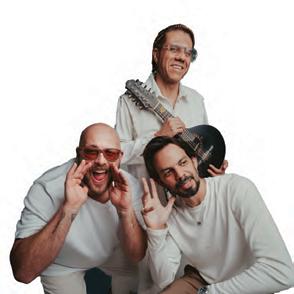
Hamilton de Holanda Trio.
Jersey Jazz LIVE!
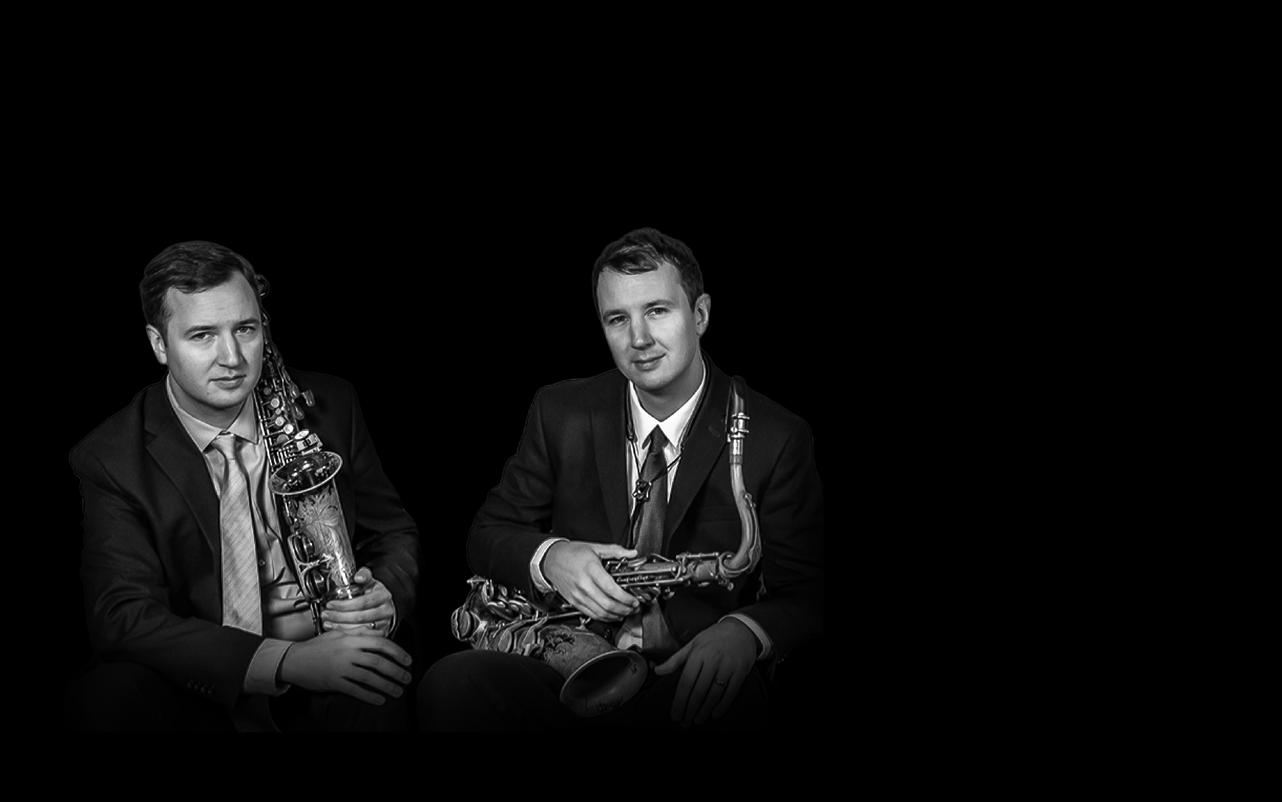
FROM THE CROW’S NEST
BY BILL CROW
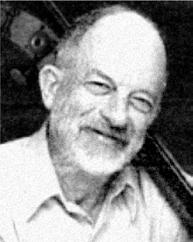
Back in 1982, I became a member of Local 802’s Executive Board when John Glasel and his ticket swept the Local 802 officers’ election and brought in a new era for Local 802 with its Members Party. John said to me, “How would you like to write a column for our monthly newspaper Allegro?” I said, “I would, and I know just the column I want to write. Every time musicians get together on the bus, in the band room, backstage at the gig or in their favorite bar, they start telling stories on each other. Someone always says that somebody should write these stories down. Let me be the guy.”
So, the February 1983 issue of Allegro carried the first Band Room
Bill Crow was honored as a Living Legend by the New Jersey Jazz Society at our 50th Anniversary Concert on October 9, 2022. Bill has given us permission to reprint this, his final column for Allegro . We were honored to have him as a Jersey Jazz columnist for so many years, and we wish him well as he continues his regular gigs at Smalls’ jam sessions and at the informal gatherings at the Rockaway, NJ, home of drummer Nick Scheuble.
column, and I have continued writing it, even when Covid changed the newspaper from printed paper to an online publication. I managed to republish many of the stories I had collected in two books: Jazz Anecdotes (Oxford University Press: 1990/1991) and From Birdland to Broadway (Oxford University Press: 1992/1993), with a paperback expansion of the first titled Jazz Anecdotes, Second Time Around (Oxford University Press: 2005); and there are Japanese translations of both of them by the great novelist Haruki Murakami.
But time and age have changed the music world, and they have changed me as well. I’ve used up most of my stories, and the places to hang out with other musicians have diminished; and so this is my final Band Room column. As a farewell, I’m adding anecdotes from that original 1983 column here:
In contrast to the serious business of the union reported elsewhere in this paper, this column will be devoted to the trivial, odd, amusing, and otherwise non-serious items about New York musicians. Most of us seem to enjoy each other’s company, and we spend a lot of time laughing together. In our business, you either learn to laugh, or you may cry a lot. The old joke—“What’s the difference between a bass and a cello?” “A bass burns longer”— is a good example of laughing to keep from crying.
Bass players get asked about once a week, “Don’t you wish you played the piccolo?” I usually answer, “You mean this isn’t a piccolo?”
Outsiders’ attempts at musicians’ jokes rarely hit the mark. Our own jokes are better. “How late does the band play?” “About half a beat behind the drummer.”
FROM THE CROW’S NEST
“ CHARLIE, GIVE THIS CAT A GIG. AND PUT IT ON MY TAB. ”
There are at least as many Benny Goodman and Buddy Rich stories as there are ex-sidemen from their bands. There are great lines, like Don Joseph’s “I’m barred from bands and I’m banned from bars!” Or Al Thompson’s grand gesture, after listening to another musician’s long tale of woe at Charlie’s Tavern about the scarcity of gigs. “Charlie, give this cat a gig. And put it on my tab,”
Bobby Hackett was known for never saying anything bad about anyone. When a friend insisted that he comment on Adolf
Hitler, Bobby said, “Well, he was the best in his field.” Bobby was offering one of his old trumpets for sale. “It’s worth the money,” he said. “Above the F, it’s absolutely brand new!”
Eddie Condon was trying to cross 52nd Street one night, and a friend, seeing he was having trouble walking straight, took him by the arm. Eddie indignantly tried to pull away, and lurched toward the opposite curb. The friend pulled him back and yelled, “Eddie, the cars are coming! You’ll be killed!” Eddie gave him a withering look and snapped, “Well, let me do it on my own!”
Merv Gold recently finished taking his vacation from the pit of the hit show 42nd Street. Merv doesn’t like vacations. “I had plenty when I wasn’t working.”

Iwas jamming with Zoot Sims and some French jazz players one night in the sub-basement of a Paris bistro. Zoot really tore into one tune, playing chorus after chorus of his own special whoopee, and then, as he turned it over to the piano player, he grinned at me and said, “You know, you can have a lot of fun with these musical instruments!”

OTHER VIEWS
BY JOE LANG
The Good Old Days (TMR Music – 022726) is the final release of a four-disc series, Trio in Four Acts, by the Ted Rosenthal Trio. As on the previous three albums, Rosenthal exhibits why he is among the most acclaimed and admired pianists in jazz. For this collection, Rosenthal gives a nod in the direction of ragtime, stride, and swing styles that were prominent genres of earlier jazz. He is accompanied by Martin Wind or Noriko Ueda on bass and Tim Horner or Quincy Davis on drums, with the late Ken Peplowski adding his tasty clarinet on two tracks, “Hot Sauce” and “Sunny Side Up.” These are two of the six original numbers composed by Rosenthal, the others being “Back Home in Okayama,” “The Good Old Days,” “Sultry Sweetie”, and “Schmatta Rag. The balance of the program includes “From This Moment On,” “Two Sleepy People,” “Maple Leaf Rag”, and “Autumn in New York.”
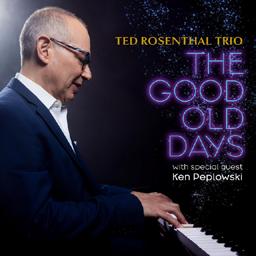
While six of the tunes will be new to you, they quickly feel like old friends as Rosenthal is a creative composer whose eclectic imagination finds him at home in a wide range of jazz styles. He always finds players to accompany him who are equally versatile. Particularly notable are the ragtime duets with Horner on “Maple Leaf Rag” and Schmatta Rag.” The presence of Peplowski as a guest is a welcome addition to Peps’ vast recorded legacy.
You can never go wrong by adding any new recording by Ted Rosenthal to your music library. tedrosenthal.com
Bijan Taghvi is a jazz pianist who is at home in a variety of settings but believes the greatest challenge is playing solo piano. He appreciates the freedom given to the solo player, but acknowledges that the soloist is fully exposed. Taghavi’s talent for producing superb results in this format is evident consistently on Cactus Sessions (self-produced), an eight-tune program that includes four standards, “I Should Care,” “I’ll Remember April,” “Have You Met Miss Jones”, and “East of the Sun;” two Jobim numbers, “Wave” and “Desafinado;” and a pair of jazz classics, Horace Silver’s “Peace” and Thelonious Monk’s “Ask Me Now.”
Despite choosing to play songs that have already been assayed by a wide variety of artists, Taghavi brings his
unique creativity to each number in ways that make them feel fresh, demonstrating that good material in the hands of an imaginative player provides fertile ground for him to explore. Taghavi is also an educator, and his students are fortunate to have a mentor with a plethora of experience and ideas to share with them. On Cactus Sessions he gives the listener a musical journey worth taking. bijantaghavi.com/cactussessions
Are you ready for some joyous and fun music? If so, you should check out A Texas-Sized Band (Turtle Bay –26002) by The Joymakers. This tentette is led by multi-instrumentalist Colin Hancock, who plays cornet, alto and baritone sax, mellophone, kazoo, and clarinet mouthpiece while adding occasional vocals. He has also arranged most of the dozen selections. This band is devoted to capturing the jazz sounds that proliferated
OTHER VIEWS
in Texas in the period prior to the onset of the Swing Era. Hancock’s compatriots on this venture are Lee Allen on trumpet and vocals, Freddie Mendoza on trombone, Lauren Gould on alto, soprano and tenor saxes as well as contributing some vocals and arrangements; David “Jelly” Jellema is on c-melody sax, clarinet and cornet; Dylan Blackthorn on accordion, Shane Dickens on piano, Westen Borghesi on banjo and guitar; Ryan Gould on bass, and Ryan Neubauer on drums. The informative liner notes by Hancock give the background of each selection as well as how their performances reflect the influence of the original recordings. The toe-tapping is unlikely to abate as you listen to this magical music. turtlebayrecords.com
Alto saxophonist Jesse Davis has released Reflections (Cellar musicCMSLF012) an intriguing program of four Davis originals, two Thelonious
Monk tunes, “Reflections” and “Evidence,” plus a nod to Davis’s hometown, “Do You Know What It Means to Miss New Orleans.” His mates for this session are pianist Spike Wilner, bassist John Webber, and drummer Lewis Nash. Davis cites as his primary influences Charlie Parker, Sonny Stitt, and Cannonball Adderley, certainly prime role models for any jazz alto saxophonist. Listening to this album, it is soon apparent that Davis has evolved his own style which has an uplifting exuberance, nicely complemented by his accompanists. He has dedicated two of his compositions to a family member who was tragically lost several years ago, “Blue Autumn” and “It’s Just Farewell.” His takes on the Monk songs are personal and impressive. Davis has produced just shy of an hour of music that keeps your ears attentive and filled with music that is consistently pleasing. cellarlive.com
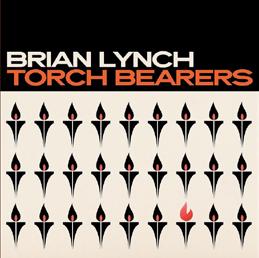
The pairing of trumpeter/flugelhornist Brian Lynch and alto sax master Charles McPherson on a recording was one destined since they first became acquainted at a jam session in San Diego some 40-plus years ago. Both have had incredible careers and are brilliant composers in addition to their instrumental prowess. The evidence of their compatibility is evident throughout Torch Bearers (Holistic MusicWorks – 026) a nine-tune program that includes three selections composed by each of the frontliners as well as “Luminescence,” a piece by Barry Harris, who served as mentor to both Lynch
and McPherson; Johnny Burke and Jimmy Van Heusen’s, “But Beautiful,” and the Dizzy Gillespie/Frank Paparelli bop masterpiece “Blue ‘n Boogie.”
The other participants include Orrin Evans, Rob Schneidermn or Luis Perdomo on piano, Boris Kozlov on bass, and Kyle Swan on drums except for Ulysses Owens Jr. on one track. Also present is vocalist Samara Joy who sings her original lyrics to McPherson’s “The Joy of Love” and Lynch’s “Pursuit of a Dream.” The words that keep coming to mind as one listens to the music on Torch Bearers are excitement, musical empathy and creative genius. While they are a about a decade and a half apart in age, McPherson being the elder, their joint background as bebop veterans makes this a simpatico outing full of exceptional music. bryanlynch.bandcamp.com
Among the treasures to be unveiled as we entered the 21st Century was
OTHER VIEWS
the formation of the Django Festival Allstars for what has become an annual residency at the Birdland Jazz Club in New York City. The idea was to celebrate the gypsy jazz of Django Reinhardt with a group under the leadership of master guitarist Dorado Schmitt. Evolution (Motema Music –0470) is a recording by the latest iteration of the group now led by Dorado’s son Samson Schmitt. The current lineup includes Samson Schmitt on lead guitar, Ludovic Beier on accordion and accordion, Pierre Blanchard on bass, and Francko Mehrstein on rhythm guitar. They offer up a dozen original tunes, six by Schmitt, and three each by Beier and Blanchard. The songs capture the essence of gypsy jazz, swinging and exciting. The group is tight, with its accomplished individual musicianship always shining through. Django Reinhardt would surely have been happy with hearing how the musical genre that
he brought to the fore has endured and grown with the Django Festival Allstars. djangofestivalallstars.com
It would have been fun to attend the event captured on House Party (Turtle Bay – 26003), the new release by pianist/vocalist Champian Fulton. Fulton was approaching her 40th birthday and planning her 20th album as a leader. Rather than recording in a studio, it was decided that recording at a party at the Turtle Bay headquarters in New York City with a gathering of friends as an audience would be a fine alternative. Thus, Fulton assembled her long-time rhythm section of bassist Hide Tanaka and drummer Fukushi Tainaka along with alto saxophonist Klas Lindquist for the party. They kicked things off with just the trio on “The One I Love Belongs to Somebody Else” and “I Cried for You.” Lindquist joined for “Stardust”, before the trio gave an instrumental take on
Wayne Shorter’s “One By One.” Vancouver-based tenor saxophonist Cory Weeds, owner ot the Cellar Music Group, was among the guests, and he added his horn to “Get Out of Town.”
Things took off in a new direction when all five players jammed on Charlie Parker’s “Billie’s Bounce,” with Weeds and Lindquist stepping out for some exciting interplay. To close the evening, Fulton acceded to a request from the audience for a song that she had recorded with Weeds, “Carry Me Back to Old Manhattan,” a rare gem by Mabel Mercer. All in all, the evening proved to be a good time for players and listeners, and it is nice that all interested parties can dig it on this recording. turtlebayrecords.com
Vocalist Marcus Goldhaber has been a presence on the New York City jazz scene for more than two decades. For many years he was the Creative Director of Room 623, an intimate
club in Harlem that he co-founded. In addition to his vocalizing, he is an accomplished songwriter, creating tunes that are in the tradition of the Great American Songbook. After a 10-year absence from the recording studio, he has now released his sixth album, The Promise of You (Fallen Apple Records). It has a program of 12 songs, a mix of standards, “Skylark,” ‘Let’s Get Lost,” “Ill See You in My Dreams,” “I’ll Build a Stairway to Paradise,” “There’s a Small Hotel” and “The Best Is Yet to Come;” and six original songs that fit seamlessly with the standards. His support is provided by pianist Art Hirahara, bassist Michael O’Brien, and drummer Alvester Garnett, with occasional contributions from guitarist Paul Bollenback, reedman Jay Rattman, trumpeter Summer Carmargo, and percussionist Keita Ogawa. Goldhaber has a smooth baritone and an innate sense of swing. It is a pleasure to have him
OTHER VIEWS
back in the studio to share his consummate vocalizing with a broad audience. marcusgoldhaber.com
If there is a walking definition of hip, vocalist/songwriter Mark Winkler is it. His pleasant baritone brings a jazz sensitivity to all of his performances, and his timing is spot on. He knows how to select just the right standards to mix with songs for which he contributed the lyrics—all music by a
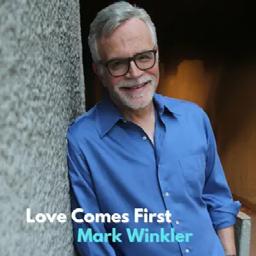
variety of composers. For Love Comes First (Café Pacific Records – 6041) the standards are “More Than You Know,” “Embraceable You,” “Everything But You,” “Mona Lisa” and “Just in Time.” He has a knack for writing lyrics that range from the romantic to the witty. The songs here that fit into the latter category include “Snappin’ on the 2 and 4,” about people who have difficulty finding the beat, “Fame Adjacent” a lyric about people who have some success but never achieve true stardom, and “Why Are People So Stupid,” a commentary about contemporary culture. To achieve the right feeling for each track, Winkler selected different musicians for each of the seven sessions necessary to complete the album as he conceived it. Listening to Love Come First, there is no doubt that Winkler has created a gem of an album that makes all of the thought and effort well worth it. markwinklermusic.com
THANK YOU and welcome to all who have recently joined or renewed their memberships. We can’t do what we do without you!
NOT WITHOUT YOU!
Your membership is vital to NJJS’s mission to promote and preserve America’s great art form— JAZZ!
NEW MEMBERS
John Pachnos NEWTON, NJ
RENEWAL MEMBERS
Robert Paski CHESTER, NJ
David Becker BASKING RIDGE, NJ
John Becker EDISON, NJ
Michel Belt MADISON, NJ
Marian Calabro HASBROUCK HEIGHTS, NJ
Brian Hochstadt MORRISTOWN, NJ
Pete Grice FLANDERS, NJ
Curt Morton SEA GIRT, NJ
Ron & Jeanne Parke LIVINGSTON, NJ
Al Schulman WEST ORANGE, NJ