





EDITOR’S CHOICE
BY SANFORD JOSEPHSON

The week before Memorial Day, there were two very significant events in New York City: A Jazz Memorial celebrating the life of clarinetist/saxophonist Ken Peplowski and the Jazz Foundation of America’s Great Night Gala.
The first time I saw Ken Peplowski perform was at a 1987 concert by John Lewis’ American Jazz Orchestra at Cooper Union. I remember asking, “Who was that young clarinetist? He was incredible.” I soon found out. The last time I saw him was in April 2024 at the Chicken Fat Ball in Maplewood.
There were many times in between, but two of the most memo-
rable were with Dick Hyman at the Sarasota Jazz Festival, in 2017 and again in 2022. In 2017, Peplowski and Hyman performed together to celebrate Hyman’s 90th birthday, and Peplowski called the NEA Jazz Master “the most important person in my life as a person and a mentor.” In 2022, Hyman asked Peplowski, “How long have we been doing this?”, and Peplowski responded, “since the early ‘80s.” Then, they proceeded to play Juan Tizol’s “Caravan”, Ray Henderson’s “It All Depends on You”, Johnny Green’s “Body and Soul”, and Jerome Kern’s “All The Things You Are.”
On Tuesday evening, May 19, New York City’s Saint Peter’s Church was packed for a program paying tribute to Peplowski, who passed away on February 2, while on The Jazz Cruise, at the age of 66.
The evening was hosted by Louis Armstrong Eternity Band leader David Ostwald, who pointed out that Peplowski “complained about every-
thing” such as airlines, car rentals, the U.S. Postal Service, and bad drivers “but he never complained about his physical pain.” Peplowski was diagnosed with multiple myeloma in 2021.
The program included performances, video clips, and reminiscences from the jazz world, such as Paquito D’Rivera reflecting on Peplowski’s last performance, part
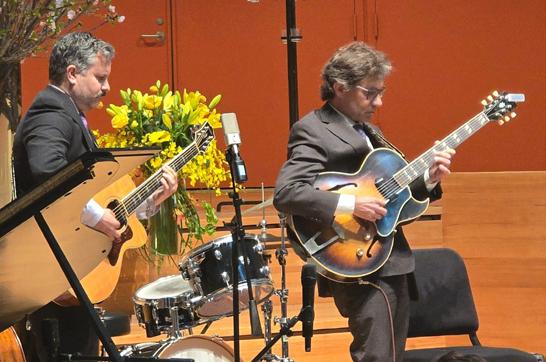
of a clarinet trio on the cruise with him and Anat Cohen; saxophonist/ arranger Mark Lopeman remembering their early days with the Tommy Dorsey Band; and pianist Ted Rosenthal recalling that Peplowski, of Polish descent, would sometimes pretend to be Jewish. “It was a running joke,” Rosenthal said. “He told me people around the country thought Peplowski was a Jewish name, so we’d be sitting at breakfast in the hotel, and he’d say, ‘Are you
sure we should be eating the bacon?’”
Then, Rosenthal and drummer Willie Jones III played Rosenthal’s “Schmatta Rag,” a tune he wrote from “little snippets I heard in the synagogue or other Jewish situations.”
Guitarist Frank Vignola met Peplowski in 1985 when both were members of Vince Giordano’s Nighthawks. “He knew more songs than anyone I played with,” Vignola said. Then, he and fellow guitarist, Vinnie Raniolo, played “one of
Ken’s favorite songs,” Johnny Mandel’s ‘The Shadow of Your Smile’.”
Some other musical highlights included pianist Glenn Zaleski, bassist Martin Wind, and Willie Jones III playing Leigh Harline’s “When You Wish Upon a Star”, pianist Rossano
Sportiello and drummer Kevin Dorn performing Jack Strachey’s “These Foolish Things”, vocalist Tierney Sutton and pianist Shelly Berg playing Michel LeGrand’s “You Must Believe in Spring”, and a video clip of Peplowski with trumpeter Harry “Sweets” Edison, performing Ray Henderson’s “The Best Things in Live Are Free.”
About three years ago, photographer/writer/music producer
Hank O’Neal, a Jazz Foundation of America Board member, explained to me how the JFA is able to provide medical care for jazz mu-
sicians who need it. “When Dizzy Gillespie was battling cancer at the end of his life,” O’Neal told me, Dr. Frank Forte, an oncologist at Englewood Hospital, was Gillespie’s doctor. “Dizzy,” O’Neal said, “made Dr. Frank promise that he would never turn away a jazz musician who needed help. And, Englewood never has.”
Medical care is just one of the things JFA does to help jazz musicians in need of assistance. In the past year, JFA provided more than $4 million in direct assistance, responding to 7,000 individual cases—helping with rent, groceries, utilities, disaster relief, and “those unexpected moments that can derail even the most resilient lives.”
The Gala, on Thursday, May 21, in Jazz at Lincoln Center’s Rose Hall, presented vocalist Norah Jones with its Dr. Billy Taylor Humanitarian
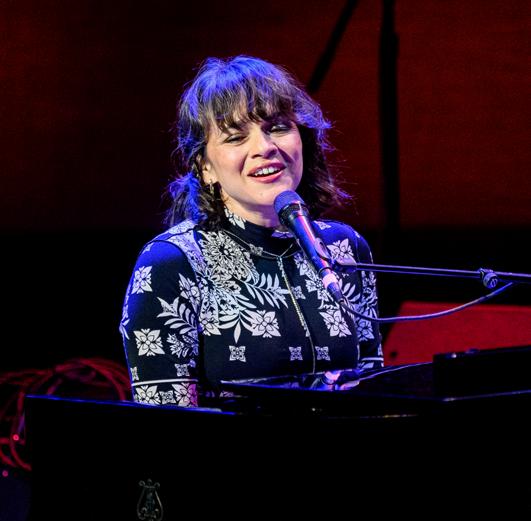
Award, honored multireedist Gary Bartz and bassist Buster Williams, celebrated the music of vibraharpist Cal Tjader and percussionist Willie Bobo; and paid tribute to guitarist/composer Ernest Ranglin, credited with inventing Ska, the musical forerunner to reggae.
There was also a musical segment led by trumpeter Jimmy Owens that remembered those in the jazz community who passed away during the past year. That segment included a special shoutout to pianist Danny Mixon, who died on May 1 at the age of 76 and had a close relationship with JFA. Owens knew Mixon “for 60 years. He was a friend and a marvelous pianist who played many concerts with me over the years.” (See Big Band in the Sky, page 47).
Norah Jones has been a supporter of the JFA since 2008 when
she participated in its Great Night benefit. At the organization’s Great Night Loft Party in 2014, she paid tribute to the late Blue Note President, Bruce Lundvall, and she also performed at JFA’s Spotlight Jazz event at City Winery in 2021.
Introduced by journalist Ann Curry, Jones, accompanied by guitarist Smoky Hormel, bassist James Genus, and drummer (and the evening’s Musical Director) Steve Jordan, sat down at the piano and mesmerized the crowd with Tom Waits’ “Long Way Home”, Jesse Harris’ “Don’t Know Why” from Jones’ groundbreaking 2002 Blue Note album, Come Away With Me, and the southern soul classic, “I Can’t Stand the Rain.”
One additional note. According to the program, Dr. Frank Forte remains a member of JFA’s Board of Directors.
Founded in 1972, The New Jersey Jazz Society has diligently maintained its mission to promote and preserve America’s great art form—jazz. To accomplish our mission, we produce a monthly magazine, Jersey Jazz ; sponsor live jazz events; and provide scholarships to New Jersey college students studying jazz. Through our outreach program Generations of Jazz, we provide interactive programs focused on the history of jazz. The Society is run by a board of directors who meet monthly to conduct Society business. NJJS membership is comprised of jazz devotees from all parts of the state, the country and the world.
You become an integral part of the NJJS community, and the history and future of jazz
Access to 11 Digital Issues of our Award Winning Jersey Jazz Magazine
— Featuring Articles, Interviews, Reviews, Events and More
Discounts to our Jersey Jazz LIVE! Sunday Concerts
Discounts at NJJS Sponsored Concerts & Events.
MUSICIAN MEMBERS
FREE Listing on NJJS.org “Musicians List” with Individual Website Link
FREE Gig Advertising in our Monthly eBlast
THE RECORD BIN
Visit www.njjs.org or email info@njjs.org for more information on our programs and services
A collection of used CD’s & LP’s available at reduced prices at specific events and through mail order njjs.org/shop
JOIN NJJS
Family/Individual $45
(Family includes to 2 Adults and 2 children under 18 years of age)
Family/Individual 3-Year $115
Musician Member $45 / 3-Year $90 (one time only, renewal at standard basic membership level.)
Youth $15 - For people under 21 years of age. Date of Birth Required.
Give-A-Gift $25 - Members in good standing may purchase unlimited gift memberships. Applies to New Memberships only.
Fan $75 - $99
Jazzer $100 - $249
Sideman $250 - $499
Bandleader $500+
Corporate Membership $1000
Members at Bandleader level and above and Corporate Memberships receive special benefits. Please contact Membership@njjs.org for details. The New Jersey Jazz Society is qualified as a tax exempt cultural organization under section 501(c)(3) of the Internal Revenue Code, Federal ID 23-7229339. Your contribution is tax-deductible to the full extent allowed by law. For more Information or to join, visit www.njjs.org
Magazine of the New Jersey Jazz Society VOLUME 54 • ISSUE 06
Jersey Jazz (ISSN 07405928)
is published monthly for members of The New Jersey Jazz Society
382 Springfield Ave., Suite 217, Summit, NJ 07901 973-229-0543 • info@njjs.org
Membership fee is $45/year.
All material in Jersey Jazz, except where another copyright holder is explicitly acknowledged, is copyright ©New Jersey Jazz Society 2026. All rights reserved. Use of this material is strictly prohibited without the written consent of the NJJS.
EDITOR
Sanford Josephson, editor@njjs.org
ART DIRECTOR
Michael Bessire, art@njjs.org
CONTRIBUTING EDITORS
Joe Lang, Vincent Pelote, Andrew Schinder, Jay Sweet
CONTRIBUTING PHOTOGRAPHERS
Joseph Calhoun, Dresden Engle,
Tony Graves, Claire Johnson, Daniel Kassell, Marguerite LaFountaine, Shyla Murray, Udo Salters, Gilberto Tadday, Adam Z.
WEBMASTER
Christine Vaindirlis
WEBSITE DESIGN
Prism Digital
DIRECTOR OF ADVERTISING
Cydney Halpin, advertising@njjs.org
ADVERTISING RATES
Full Page: $135, Half Page: $90, 1/3
Page: $60, 1/4 Page: $30
For reservations, technical information and deadlines contact advertising@njjs.org or visit njjs.org/Magazine/Advertise . Make a payment online at njjs.org/advertise via the red Submit Payment button, or via check made payable to NJJS, 382 Springfield Ave., Suite 217, Summit, NJ 07901.
New Jersey Jazz Society, Officers 2026
PRESIDENT
Cydney Halpin, pres@njjs.org
EXECUTIVE VP
Elizabeth Kavlakian, vicepresident@njjs.org
TREASURER
Mike Katz, treasurer@njjs.org
VP, MEMBERSHIP membership@njjs.org
VP, PUBLICITY
Sanford Josephson, sanford.josephson@gmail.com
VP, MUSIC PROGRAMMING music@njjs.org
RECORDING SECRETARY
Irene Miller
CO-FOUNDER
Jack Stine
IMMEDIATE PAST PRESIDENT
Mike Katz
DIRECTORS
Jay Dougherty, Cynthia Feketie, Paul Flexner, Pete Grice, Carrie Jackson, Caryl Anne McBride, Robert McGee, James Pansulla, Stew Schiffer, Elliott Tyson, Jackie Wetcher
ADVISORS
Don Braden, Mariel Bildsten, Ted Chubb, Al Kuehn, Jason Olaine



Tenor Saxophonist Sonny Rollins: ‘One of the Music’s Great Improvisers’
“You Can Hear the Whole Energy of His Being in Every Single Note”
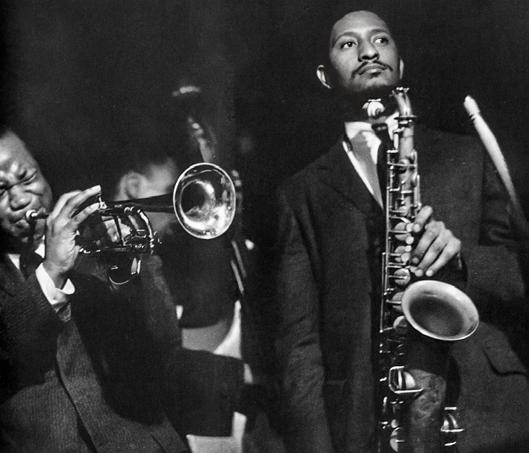
On August 12, 1958, nearly 60 jazz musicians assembled on 126th Street in Harlem between Madison and Fifth avenues to have their photo taken for Esquire Magazine. The photograph, taken by Art Kane, appeared in Esquire’s January 1959 issue with the title, “The Golden Age of Jazz.”
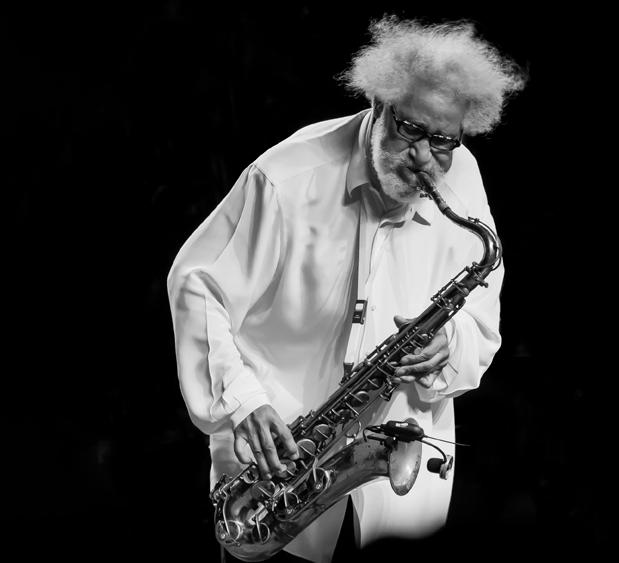
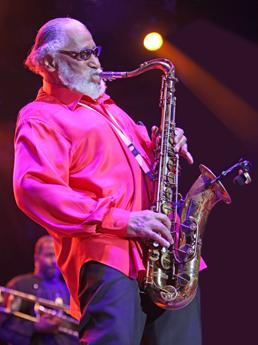
The last living jazz musician from that photo shoot, tenor saxophonist, Sonny Rollins, passed away Monday, May 25, 2026 (Memorial Day) in Woodstock, NY, at the age of 95.
In 2000, a book about that event, The Great Jazz Day, was published by Woodford Press, featuring articles by several jazz writers and other photos by Kane, as well as some taken by trumpeter Dizzy Gillespie and bassist Milt Hinton.
Many of the jazz legends photographed that day were asked to recount their memories from that event. “I never thought I would be up there with my idols, Coleman (Haw-
kins) and Lester (Young),” Rollins told The New Yorker’s Whitney Balliett. “I was one of the youngest there.”
Rollins grew up on Harlem’s 137th Street, and, “The guys on the block,” he said, “asked me, ‘Sonny, who’s the greatest tenor player in the world?’ And I answered, ‘Coleman Hawkins’, and they said, ‘No, he’s not.’ And so, I said, ‘Who’s the greatest?’ And they told me, ‘Lester Young is.’ And I said, ‘Who’s Lester Young?’ That’s how I found out about Lester, and that’s how I started to listen to him. Coleman was still my idol, but I found out there was another way of playing the tenor, completely different from Coleman.”
Rollins also spoke to Balliett about bassist Oscar Pettiford. “One of the greatest”, and cornetist Rex Stewart “one of the greatest, too. I never dreamed when I started out that I would ever get to meet them, much less to play with them.”
Now, of course, jazz musicians
and journalists recognize Rollins as “one of the greatest” saxophonists in jazz history. The Guardian’s Ben Beaumont-Thomas, in an article published shortly after Rollins’ death was announced, described him as “a genius of melody, whose bright, catch lines—whether jazz standards or self-penned—would be unpicked, extended and refashioned in improvised and sometimes epic solos.”
Tenor saxophonist Branford Marsalis has called Rollins “the greatest improviser in the history of jazz.” The jazz critic Francis Davis agreed with that assessment. In 2000, he wrote that Rollins “is the greatest living jazz improviser, and if we redefine virtuosity to include improvisational cunning as well as instrumental finesse (as we probably should when discussing this music), he may be the greatest virtuoso ever produced by jazz.”
Jazz Journalists Association President Howard Mandel, writing
for National Public Radio, depicted Rollins as “the last man standing, the reigning star of the generation that turned jazz from bluesy entertainment into a personally expressive ever-changing art form—without losing its bluesy, entertaining side.”
Born in New York City September 7, 1930, Rollins started playing the saxophone when he was seven. In high school, some of his bandmates were alto saxophonist Jackie McLean, pianist Kenny Drew, and drummer Art Taylor.
In the early 1950s, he became addicted to heroin, but, with the help of a rehab program, became clean in 1955. He was a member of the renowned Max Roach/Clifford Brown Quintet and began recording several albums as a leader. Among the most wellknown were Tenor Madness (Prestige: 1956), the only known recording with Rollins and John Coltrane together; and Saxophone Colossus (Prestige:
1957), considered his breakthrough record. It contained one of his bestknown compositions, “St. Thomas”, an adaptation of a West Indian song.
In 1959, Rollins took a threeyear sabbatical from recording and performing but continued to practice by himself, playing the saxophone for up to 15 hours a day on the walkway of the Williamsburg
Bridge. When he made a comeback in 1962, his first album, on the RCA Victor label, was called The Bridge.
Rollins recorded more than 60 albums as a leader, retiring in 2014 after being diagnosed with pulmonary fibrosis, a lung disease. In 1973, he was named to the DownBeat Hall of Fame; in 1983, he was named a National Endowment for the Arts Jazz Master;
and, in 2014, he received a Grammy Lifetime Achievement Award.
In 2001, Rollins won a Grammy Award for Best Jazz Instrumental Album for This Is What I Do (Milestone: 2000). On September 11, 2001, Rollins and his wife, Lucille, who lived near the World Trade Center, had to evacuate their apartment after its collapse. A few days later, he played a concert at the Berklee College of Music in Boston. It was recorded and released in 2005 as an album called Without a Song: The 9/11 Concert on the Milestone label. His performance of “ Why Was I Born? ” on the recording won the 2006 Grammy Award for Best Jazz Instrumental Solo.
Reviewing the album for AllAbout Jazz, Florence Wetzel called it, “a beautiful recording, five long songs full of energy and hope. ‘Without a Song’ starts things off warm and lively, with seamless support by Rollins’ band: Clifton Anderson (trombone), Stephen
Scott (piano), Bob Cranshaw (electric bass), Perry Wilson (drums), and Kimati Dinizulu (percussion). Next is Rollins’ classic tune ‘Global Warming,’ 15 sublime minutes of engaging calypso. ‘A Nightingale Sang in Berkeley
Square’ is more subdued, a lovely meditation with a warm, reflective Rollins and a delicate piano solo by Scott.
‘Why Was I Born?’ starts off with a Rollins solo and then leaps into full swing.
The recording wraps up with the Rodgers/Hart piece ‘Where or When,’ a nice mid-tempo number with a playful lilt.
“A professional musician,” Wet-
zel added, “performs no matter how he or she may feel. One of the most poignant moments on the recording is when Rollins tells the audience, ‘We must remember that music is one of the beautiful things in life, so we have to try to keep the music alive in some kind of way. Maybe music can help; I don’t know, but we have to try something these days.’”
Howard Mandel pointed out that, “Rollins was no elitist or purist. He enjoyed blowing on calypsos as much as extending himself in unaccompanied cadenzas. He composed a jaunty theme for the movie, Alfie, sat in with the Rolling Stones, and recorded an exuberant version of Stevie Wonder’s ‘Isn’t She Lovely.’”
In a 2007 interview on NPR, pianist Joanne Brackeen said that Rollins had “this sound, it’s like his sound. You hear just a couple of seconds, and you know who that is. And, not only who that is, but
how he is. You can hear the whole energy of his being, in every note.”
The late writer and historian Dan Morgenstern once tried to put Rollins’ musical identity into perspective. Writing in Jazz People (Harry N. Abrams: 1976), he said: “His somewhat acerbic tone, virile and expressive mode, and, at times, sarcastic musical humor are characteristics of a most individual style and sound, and Rollins is one of the music’s great improvisers, capable of sustaining interest with minimal or no accompaniment over long stretches of time ... While a Rollins performance is never boring, it can range from invigorating to ecstasy-inducing. Few experiences in contemporary jazz listening can compare with catching Rollins on a good night; he’ll lift you up to the heights.”— SANFORD JOSEPHSON
Big Band in the Sky continued on page 46
Gracina Leporace:
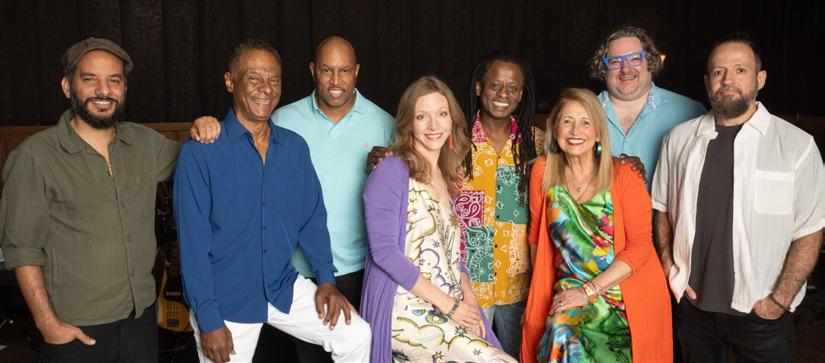
“This is essentially the same band that performed with Sergio during the last 12 years of his career.”
“The Songs Sergio Made Famous Have Become Part of the Soundtrack of So Many People’s Lives”
BY JAY SWEET
Sixty years ago, Herb Alpert Presents Sergio Mendes & Brasil ‘66 (A&M Records) emerged as both a masterful artistic statement and a major commercial breakthrough album. The record helped introduce the sophisticated rhythms and cool elegance of Brazilian bossa nova and samba to a truly global audience, blending Brazilian musical traditions with American pop, jazz, and contemporary studio production and repertoire. The album reached Number 7 on the Billboard 200 and became one of the defining crossover
recordings of the 1960s. Featuring classics such as “Mas Que Nada” and “The Joker,” it remains a landmark recording that permanently expanded the international reach and cultural impact of Brazilian popular music.”
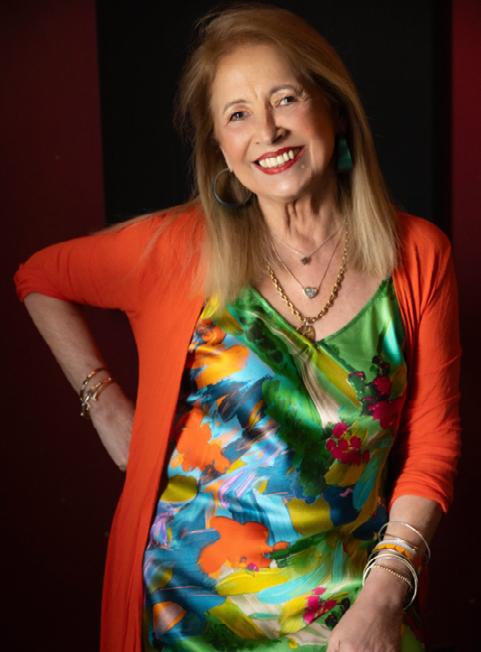
Mendes passed away in September 2024 at the age of 83, but the music remains active and vibrant through the efforts of his widow and longtime musical partner, Gracinha Leporace. The Sergio Mendes Band will make New Jersey stops on June 11 at the Mayo Performing Arts Center in Morristown and June 14 at
Bergen Performing Arts Center in Englewood. Leporace reflected on the music, the band, and the extraordinary life she shared with Mendes.
“Sergio has always maintained a strong following in New York and New Jersey, and I think audiences will be happy to hear the repertoire they love—the songs Sergio made famous and the music that have become part of the soundtrack of so many people’s lives,” she explained. “What makes this especially meaningful is that this is essentially the same band that performed with Sergio during the last 12 years of his career. Of course, we added a piano player in Jamieson Trotter, but otherwise the sound remains the same. Sergio used to call this ‘my best band ever,’ and he truly adored these musicians. Everyone in the group is a dear friend, and several members have been with us for 15 or even 20 years. The vocalist
who sings with me, Katie Hampton, joined the band when she was just 20 years old, and she has now been part of the group for two decades. I think audiences will really connect with the fact that this is the band they came to know through Sergio over the years—the sound, spirit, and musical chemistry are still very much intact.”
What made the breakthrough album so special? “Herb Alpert Presents Sergio Mendes & Brasil ‘66 really started the entire phenomenon,” she said. “At the time, Brazilian music was only beginning to gain widespread international attention, and Sergio brought something that felt completely fresh and different. When he came to America, he found the perfect creative environment with Herb Alpert and A&M Records. That gave him the freedom to fully develop the concept he envisioned for the group.
“Up to that point, Sergio’s bands
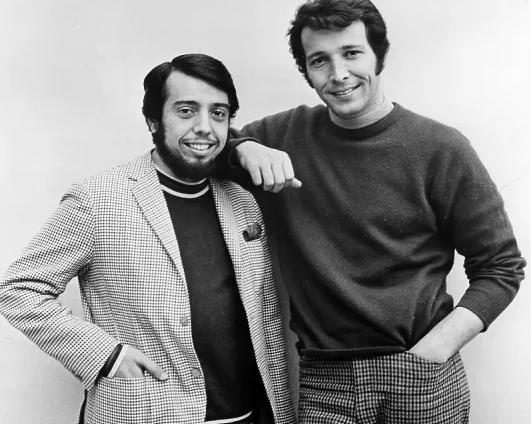
had primarily been instrumental. Choosing to feature vocalists as a central element of the ensemble was a major artistic decision. When he met Lani Hall and Bibi Vogel, he realized their voices could function almost like instruments within the arrangements. In many of the recordings, the singers perform largely in unison rather than traditional harmo-
ny— a sound that became one of the band’s trademarks. While it sounds effortless, singing together in that way consistently is actually very difficult.
“What made the music so compelling was Sergio’s ability to bring Brazilian rhythm, color, and feeling to songs audiences already knew. Whether interpreting ‘Mas Que Nada,’ songs by The Beatles, Burt Bacha-
rach, Henry Mancini, and many others, he transformed familiar material into something completely new. The blend of Brazilian grooves with sophisticated pop songwriting immediately connected with listeners. ‘Mas Que Nada’ became groundbreaking as one of the first Portuguese-language songs to become a major international hit, even though many listeners did not understand the lyrics.”
Leporace also emphasized Mendes’ generosity and collaborative spirit. “Sergio was an incredible bandleader and an extraordinarily generous person musically,” she said. “What always stood out about him was that he cared deeply about presenting and highlighting the musicians around him. He made sure everyone in the band was recognized and had opportunities to shine. That spirit is one of the reasons this current project feels so natural, be-
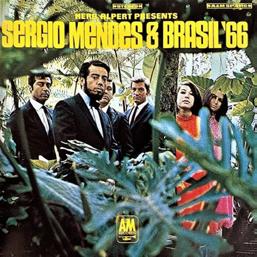
Herb Alpert Presents Sergio Mendes & Brasil ‘66 helped introduce the sophisticated rhythms and cool elegance of Brazilian bossa nova and samba to a truly global audience.
cause audiences genuinely know and remember the people who performed with Sergio over the years.
“He wanted the other players to take solos and showcase their personalities. He took genuine joy in hearing everyone contribute, and that collaborative spirit became one of the defining characteristics of his music from the very beginning.”
What has it been like to perform the music without Sergio’s presence?
“Jamieson Trotter’s transition into Sergio’s role happened very organically. He had already worked with us several times through the years because we often used a second keyboardist.
So, Jamieson was already familiar with the band’s sound, arrangements, repertoire, and overall musical approach. Sergio admired both his musicianship and his personality, and it was always a pleasure having him around. He fit seamlessly into the group because he already understood the music so deeply and had strong personal relationships with everyone in the band. He is an exceptionally talented musician and arranger, and he has done an incredible job carrying the music forward while preserving the spirit and sound that audiences associate with Sergio Mendes.”
Leoporace started with Sergio when she was 18 years old. “I came from Brazil at 18, but I actually began
singing professionally when I was 17,” she recalled. “At the time, I was part of a vocal group in Brazil, and we regularly appeared on television programs. Music was everywhere on Brazilian TV then, so we had a small weekly feature where we performed several songs over the course of a few months.
“While I was with that group, we entered a major international song festival in Brazil and our group won the national competition. Beyond performing with the group, I also sang with several other musicians involved in the festival, and I ended up being recognized as the ‘revelation’ or breakout artist of the event.
I was very young and still unsure whether I even wanted to pursue singing professionally, but after that experience I decided to continue.
“About a year later, Sergio returned to Brazil with Brasil ’66 and came to see a show I was doing with
friends. Sergio loved the performance and invited all of us to America to record and tour with him. Everyone initially agreed, but at the last minute I was the only one who actually came.
“Once in the United States,” she continued, “Sergio assembled a group of Brazilian musicians and called it Bossa Rio—reviving the name of one of his earlier Brazilian bands from the early 1960s. We toured extensively with him for two years. Eventually, many of the musicians decided to return to Brazil around the same time that Lani Hall chose to leave Brasil ’66 to spend more time with Herb Alpert, whom she would later marry. Since I had already been touring with the group for two years and knew the entire repertoire, stepping into the band felt completely natural. By the end of 1970, I officially joined Sergio Mendes’ group.”
Eventually the musical partnership evolved into a romantic
one. “Over the years, my relationship with Sergio naturally evolved. Sergio divorced in 1972, and, by that point, we were already extremely close. Eventually we married in 1974.
“Sergio had three children from his first marriage, and they became a very important part of our lives. I did not have children of my own until much later. Our first son was born in 1986, after Sergio and I had already been together for 12 years; and our second
son was born in 1993. We built a wonderful life together, balancing family and music throughout the decades.
“One of the first things that struck me when I met Sergio,” she said, “was the extraordinary number of genuine friendships he had. Today, with social media, people claim to have thousands of friends, but in those days friendship meant something very different. Sergio had close friends everywhere—in Brazil, in the
United States, across Europe—and from every imaginable profession and walk of life. What amazed me most was that he maintained those friendships throughout his entire life. People were drawn to him because he was endlessly curious about life. He loved art, literature, food, wine, travel, conversation—everything.
Leporace especially wanted people to understand how funny Mendes could be offstage. “What I wish more people
could have seen was just how funny he was. People always mention his beautiful smile and warm personality, and while he was thoughtful, intellectual, and widely read, he also had a tremendous sense of humor. We laughed together constantly until the very end.”
She then shared a story that perfectly captured his spontaneity and charm. “We were traveling by train from Paris to Bordeaux when Sergio decided he absolutely needed coffee before the train service started,” she laughed. “He stepped off the train to get some, and I went with him to grab a newspaper. Suddenly the train began leaving — with all of our luggage onboard, and Sergio was nowhere in sight. We ended up having to fly to Bordeaux just so we could arrive before the train continued on to Spain and recover all of our belongings. It became a very expensive cup of coffee.”
Still, for Leporace, moments
like that became part of the joy of their life together. “I always say that when the laughter disappears from a relationship, usually the relationship itself is over,” she said. “Ours never lost that laughter. We laughed together until the last moment. I truly had a wonderful life with him. He was the love of my life.”
: The Mayo Performing Arts Center is located at 100 South St. in Morristown, NJ. The Sergio Mendes Band concert begins at 7:30 p.m. on Thursday, June 11. For more information or to order tickets, log onto mayoarts. org or call (973) 539-8008. The Bergen Performing Arts Center is located at 30 North Van Brunt St. in Englewood, NJ. The Sergio Mendes Band concert begins at 7 p.m. on Sunday, June 14. For more information or to order tickets, log onto bergenpac.org or call (201) 816-8160.

This Year’s Awardees: Three from William Paterson, Two from Princeton, One from Rutgers
BY SANFORD JOSEPHSON
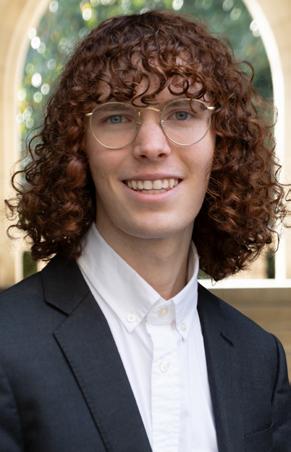
Although Jasper Zimmerman is only finishing up his freshman year at Princeton, Rudresh
Mahanthappa, Anthony H.P. Director of Jazz, considers him to possibly be “the best student I have ever had in my 10 years at Princeton. He’s a great improviser, composer, arranger, and conceptualist. I don’t think there are any limits to his potential, as he is fiercely curious and ever-thirsty for knowledge.”
Growing up in Hastings-on-Hudson, NY, Zimmerman was inspired
$1,000 PRIZE
INSTRUMENTAL PERFORMANCE
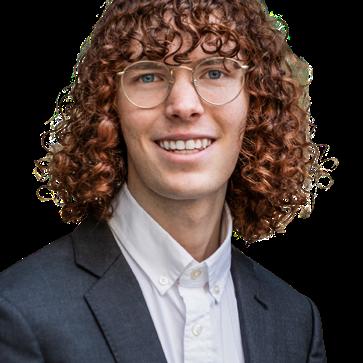
Pianist Jasper Zimmerman
Hastings-on-Hudson, NY
Princeton University
$1,000 PRIZE
VOCAL PERFORMANCE
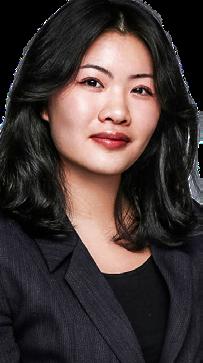
Allison Jiang
Shanghai, China
Princeton University
$1,000 PRIZE
COMPOSITION
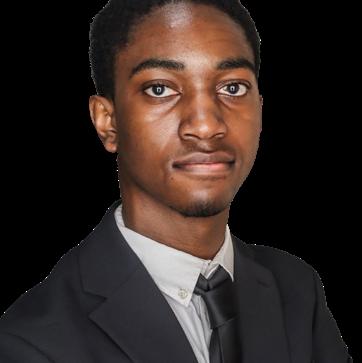
Pianist Nicholas Thorpe
West Orange, NJ
Rutgers University
$500 PRIZE
INSTRUMENTAL PERFORMANCE
Sally Shupe
Maplewood, NJ
William Paterson University
$500 PRIZE
VOCAL PERFORMANCE
Kyra Cioffi
Rutherford, NJ
William Paterson University
$500 PRIZE
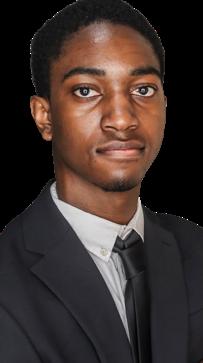
COMPOSITION
Simon Bahadoran Nice, France
William Paterson University
early on by the piano playing of Art Tatum, who he described as “my biggest piano hero. I started out by playing traditional jazz from the 1920s and’30s, and I was awestruck by the way he took American Songbook tunes and played them with both extreme virtuosity and an equally amazing harmonic concept.” His other favorite pianists include Erroll Garner, Phineas Newborn, Jr., and Brad Mehldau.
Zimmerman’s first piano teacher was Billy Lester, a pianist who studied under Lennie Tristano protege Sal Mosca; Zimmerman then studied with Dan Tepfer, a former American Piano Awards winner; and, at Princeton, his piano instructor is Sumi Tonooka, a veteran Philadelphia-based pianist who was inspired by Thelonious Monk, studied with Mary Lou Williams, and has performed with such giants as bassist Rufus Reid
and drummer Philly Joe Jones.
One of the highlights of Zimmerman’s freshman year at Princeton was the opportunity to play duets with vocalist Michael Mayo and NEA Jazz Master saxophonist Gary Bartz. “Rehearsing with Michael Mayo and learning his tunes,” he said, “was eye-opening for me as an improviser and a composer. And, performing with someone as legendary as Gary Bartz was really special.”
Looking ahead, Zimmerman said, “I continue to strive to play jazz piano at the highest level I can, and I aspire to be a touring and session musician, as well as to continue writing, recording, and producing music as a solo artist. The prize money from the NJJS Scholarship Competition will help me achieve these goals by helping me cover transportation costs and equipment purchases.”
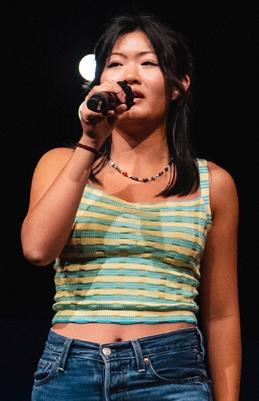
Allison Jiang, who grew up in Chicago and Shanghai, China, came to Princeton to study sociology and classical violin. “If you asked me to define what a ‘rhythm section’ was as a college freshman,” she said, “I would have replied with a blank stare.” But, as
a junior, she auditioned for the jazz ensembles at Princeton “so I could engage in a type of musicmaking that would push my musical skillset.”
That ‘skillset’ included singing and studying with Michelle Lordi, Lecturer of Music, Jazz and Contemporary Voice and Director of the Jazz Vocal Ensemble. Jiang, said Lordi, “revealed a fresh and modern voice that blends influences of R&B and neo-soul with jazz.” As a member of several Princeton jazz ensembles, she added, Jiang “has had the opportunity to work with jazz luminaries such as (trumpeter) Etienne Charles, (saxophonist) Gary Bartz, (vocalist) Becca Stevens, (vocalist) Michael Mayo, and (vocal group) Säje.” Jiang, who graduated from Princeton this spring, now looks forward to combining her classical violin training with her jazz vocalizing. “I’m really excited to sing
and play violin together more!” she said. “They’ve felt like separate pursuits for me, but recently that line has become more blurred. I had a jazz violin epiphany when Snarky Puppy performed at Princeton my sophomore year. Seeing Zach Brock improvise with these pedals and distortion and reverb effects was truly a revelation. I’d never seen the violin played like that before.
“In the big band concert at the Princeton Jazz Festival this year,” she added, “I was able to play violin with Gary Bartz on the McCoy Tyner tune, ‘Uncle Bubba’, which was originally recorded with violinist John Blake. It was the first time I played jazz violin in concert, and it was definitely the highlight of that performance for me. Singing on Etienne Charles’ arrangements was one of the most fun experiences I’ve had at Princeton. He’s just so lively as a bandleader,
and he even sprung a surprise vocal arrangement of ‘Lawns’ by Carla Bley the morning of our concert. The concert with Michael Mayo was also a highlight because I think his vocal style is quite similar to mine and seeing him improvise and arrange in person was so inspirational.”
In the fall, Jiang has a Fulbright Scholarship to pursue a Master’s Degree in Environment and Sustainability at the University of Toronto. “Before I head off for that,” she said, “I definitely want to stay a while in New York this summer to pull up to jam sessions and play with people. I also hope to continue performing pretty actively in Toronto, as the University of Toronto campus is basically right in the city. I want to explore writing originals more and hopefully playing around with some vocal layering and multitrack arranging stuff on my own.”
Nicholas Thorpe grew up in West Orange, NJ, studying classical piano with Irina Edelman, who teaches at The New School and the Manhattan School of Music. When he became a student at Livingston’s Newark Academy, renowned for its jazz program, he was “reluctant to study jazz despite Mr. Tolentino’s (Jazz Director Julius Tolentino) endeavors to get me involved.”
In his junior year, Thorpe joined the jazz band “out of curiosity” and “managed to immerse myself with my school’s jazz culture. I found an early interest in the Oscar Peterson Trio, Bill Evans, Stan Getz, and Duke Ellington’s big band.” As a member of Newark Academy’s Chameleon big band his senior year, he participated in Jazz at Lincoln Center’s Essentially Ellington competition, “an impact-
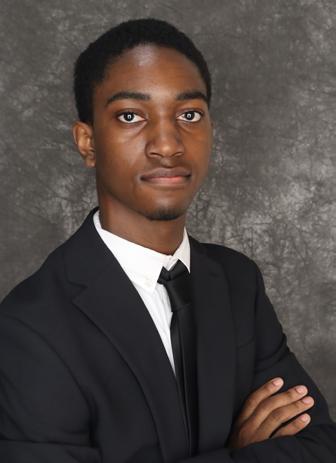
ful experience for me and my peers.” Thorpe also began taking piano lessons from Bob Himmelberger, who expanded his knowledge of jazz pianists to include Wynton Kelly and McCoy Tyner. “The first tune I ever transcribed,” he said, “was ‘Pot Luck’,
As a freshman at Rutgers Mason Gross School of the Arts, Thorpe is studying with Dr. Robert Livingston Aldridge, Professor of Composition; composer Jack Frerer; and tenor saxophonist Abraham Burton.
The composition that won the NJJS Scholarship is entitled “Jakarta.” Thorpe began writing it in his senior year of high school, completed it during his freshman year at Rutgers and performed it with the Rutgers Mingus Band, directed by Burton. “I named it ‘Jakarta’,” Thorpe said, “because I had watched a handful of action movies that took place in densely populated cities, and this song encapsulates what that may feel like.”
more than 60 works for orchestra, opera, music theater, voice, dance, string quartet, solo and chamber ensembles, called Thorpe “one of the most talented students I’ve ever had in my 40-year teaching career. What’s even more astounding is that he’s only a freshman. He has a sophisticated ear for jazz voicing, arrangements, compositional structure.”
As a teenager growing up in Maplewood, NJ, Sally Shupe discovered a 1963 YouTube video of guitarist Wes Montgomery playing Henry Mancini’s “Days of Wine and Roses.” After hearing that, Shupe said, “My fate was sealed. I knew then that I would never stop striving to be the best guitarist possible.”
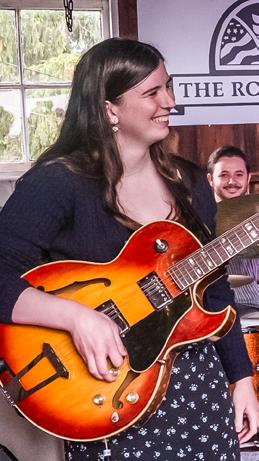
High School, Shupe was selected to be part of the November 2023 New Jersey All-State Jazz Ensemble that performed at the New Jersey Performing Arts Center’s TD James Moody Jazz Festival. In March 2024, Shupe led a quintet as the Rising a blues featuring the Wynton Kelly Trio. I still listen to Bill Evans pretty often, and I’ve expanded my palette to include people like Thelonious Monk, Herbie Hancock, and Chick Corea.”
Dr. Aldridge, who has written
In her senior year at Maplewood/South Orange’s Columbia
Stars opening act at NJJS’ Jersey Jazz LIVE! concert. To celebrate Women’s History Month, the quintet played three tunes associated with female composers: Emily Remler’s “Blues for Herb” written for guitarist Herb Ellis; harpist Dorothy Ashby’s “Games”; and pianist Monika Herzig’s “Another Day at the Office.”
Now a sophomore at William Paterson University, Shupe studies with guitarist Dave Stryker, who last August invited her to sit in with him and guitarist Frank Vignola at Birdland. Stryker recommended Shupe for the NJJS scholarship, calling her “simply one of the best students I have had the pleasure of working with. She is serious, hardworking, and self-motivated, always going beyond what I give her to work on. Sally has developed into a very mature and promising jazz guitarist and has a bright future in music.”
At the May 9th Ross Farm Jazz Festival in Basking Ridge, NJ, Shupe led a sextet of WPU students playing selections such as Dutch guitarist Jesse van Ruller’s “Secret Champ”, Wayne Shorter’s “Footprints”, and George Gershwin’s “Someone to Watch Over Me.”
Van Ruller and Peter Bernstein are among her biggest current guitar jazz influences. “I have been very lucky to take a few lessons with Peter Bernstein,” she said, “and talking to him is eye-opening.”
This summer will be Shupe’s second year as a Teaching Assistant for the Jazz House Kids summer program. “Last year,” she said, “getting to work with kids who are extremely driven and passionate about learning this music—just like I am—was the highlight of my summer, and I am looking forward to doing it again this year.”
This is the second year Kyra Cioffi has been awarded an NJJS Scholarship. In 2025, she received the First Place Vocal Performance Award.
At the November 2, 2025 Jersey Jazz LIVE! concert in Madison, Cioffi was singing the Vincent Youmans/
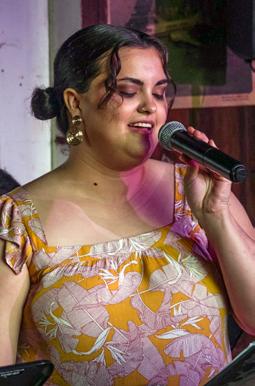
Irving Caesar standard, “Tea for Two”, with a healthy dose of scatting, when tenor saxophonist Don Braden, off script, joined her on the stage with his sax. The result was an exhilarating, extemporaneous call-andresponse that delighted the crowd. Cioffi is “particularly fond” of that impromptu duet with Braden. “His musicality and spontaneity,” she said, “inspired me to step up to the plate and attempt to meet him at his level, and, for that, I will be forever grateful.”
Cioffi, who received her William Paterson Jazz Studies Bachelors Degree this spring, was part of Shupe’s quintet at Ross Farm and recently won Second Place in the Blues Alley Ella Fitzgerald Vocal Competition. She will perform at Washington DC’s Blues Alley jazz club in March 2027.
As Cioffi looks back on her time at William Paterson, she is “especially grateful for the support of my
vocal teacher, Carolyn Leonhart. Her commitment to lyrically driven storytelling and horizontal improvisation really stuck with me. I am also tremendously grateful for other faculty members who have shaped my undergraduate journey, including, but not limited, to Professor Peter McGuinness, Dr. Mitch Butler, Dr. David Demsey, and Professor David Wong. “Some highlights,” she continued, “have included touring in Europe in 2024, debuting at Dizzy’s Club in 2025, and receiving Second Place in the Ella Fitzgerald Competition.” Cioffi also thanked the rhythm section that accompanied her on the Fitzgerald entries: bassist Gabriel Balado, drummer Graham Monroe, and pianist Leon Hsu. Trombonist/vocalist McGuinness, Professor of Music/Jazz Studies at William Paterson, called Cioffi “by far one of the strongest jazz voice students we have ever had at WPU. Her
talent is evident in every note she sings. Her work ethic is equally impressive. She is extremely serious about all she does, and it has always been a joy to be involved in the learning process alongside her and seeing her growth.”
McGuinness directs the William Paterson Jazz Vocal Workshop, and Cioffi, he said, “sang wonderfully as well as often taking on the role as a student leader of the group, which benefited both the entire ensemble and herself in gaining valuable leadership and pedagogical skills.”
Simon Bahadoran grew up in Nice, France, playing and listening to classical music before getting into jazz when he was around 15 years old. “The first jazz album that made a deep impression on me,” he recalled, “was Keith Jarrett’s Stan-
dards Trio album, Tokyo ‘96 (ECM: 1998). I still vividly remember Keith’s lush. magical chords that open the tune—how they hit me at the core, like fresh water. It was a combination of Bach’s counterpoint, Ravel’s harmonic language, and something else.”
From 2020 until the fall of 2024 when he came to William Paterson University, Bahadoran lived in Paris, studying in a pre-college jazz program at the Bobigny Conservatory in Paris’ northeastern suburbs. When he began to consider applying to jazz schools in the United States, he discovered William Paterson online. “I looked at the jazz faculty,” he said, “and immediately thought, ‘Wow. Bill Charlap, Johnathan Blake, David Wong—the list went on. These were world class artists I had been listening to and admiring, some of them for years. Suddenly, I could imagine a future where I could study with musicians who were heroes to me.”
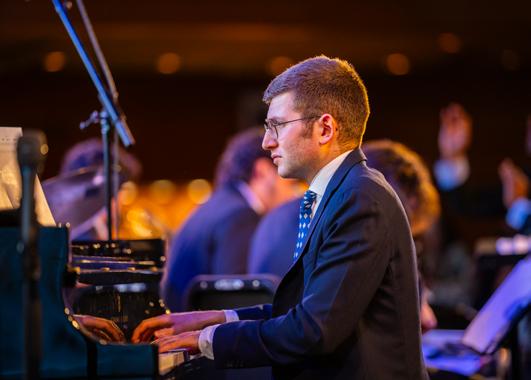
Bahadoran’s other early piano hero, in addition to Jarrett, was Oscar Peterson, “who was my introduction to swing. Then, I discovered Bill Evans, whose harmonic sensibility and sense of economy I admired very much.”
Later came McCoy Tyner, Thelonious Monk, Cecil Taylor, and Kris Davis.
Two of the highlights of Bahadoran’s time at William Paterson have been the opportunity to play with trumpeter Jon Faddis at the Mid-Atlantic Jazz Festival and at Dizzy’s
Club with multireedist Steve Wilson.
With Faddis, “I remember the start of his solo on Thad Jones’ ‘Comin’ Out’. He asked the drummer and me to lay out, and, with only the double bass behind him, he began with his incredibly soft, controlled trumpet sound. It showed me that virtuosity is not only high notes and speed; it can also be softness, sound, patience, and restraint.”
Before the Dizzy’s performance, Wilson gave a master class at William Paterson. “He talked
about approaching the music with an ‘arranger’s mind’,” Bahadoran said. “At Dizzy’s, while I was comping behind him and he was on flute on his tune, ‘Tortola’, I could feel him doing exactly that.”
One of Bahadoran’s many mentors at William Paterson has been pianist Bruce Barth, who described him as “an extraordinarily talented and imaginative musician.” According to Bahadoran, Barth “has helped me a lot with projecting my sound more and with being more confident in expressing myself freely through the music. I have learned so much just by playing alongside him—feeling his deep sense of time, his beautiful sound, and his tremendous musicianship.”
The original composition entered by Bahadoran in the NJJS Scholarship Competition is entitled, “East Village Roses.”
The NJJS Scholarship Competition was open to all students currently enrolled in a New Jersey college undergraduate music program, as well as to New Jersey residents currently enrolled in an out-of-state college undergraduate music program. Proof of residence was required
for Jersey applicants in out-of-state schools.
Along with the cash awards, the winners will receive guidance, mentorship, and the opportunity to perform with an industry professional, along with coverage in Jersey Jazz.
The Competition was judged by a panel of professional musicians, educators, and industry leaders:
» Don Braden, Tenor saxophonist, flutist, composer, and educator.
» Champian Fulton, Vocalist, pianist, composer, and educator.
» Ted Chubb, trumpeter, educator, composer, and arts administrator
» Jason Olaine, Vice President of Programming, Jazz at Lincoln Center
: The New Jersey Jazz Society would like to thank Nan Hughes Poole, and NJJS Board members Cynthia Feketie, Mike Katz, and Jackie Wetcher for their generous support of this initiative.

“An Intriguing Album That Extends Nat’s R&B Arranging Brilliance to the Jazz Forum”
In August 1981, rhythm and blues singer Luther Vandross released his debut solo album, Never Too Much, on Epic Records. It reached Number 1 on the Top R&B/Hip-Hop Albums chart, Number 19 on the US Billboard 200 chart, and was certified double platinum by the Recording Industry Association of America (RIAA). As a result, Vandross received two Grammy Award nominations in 1982: Best New Artist and Best R&B Vocal Performance, Male.
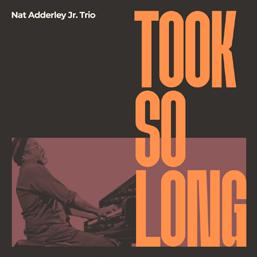
In October 2025, Nat Adderley, Jr., the late Vandross’ Music Director for 25 years, released his
first-ever jazz album as a leader, the independently-produced Took So Long. It soared to Number 1 on the JazzWeek charts, spending five weeks in that position and remaining in the Top 50 for several more weeks.
Adderley was “in absolute shock. I feel like I did in 1981 with the first Luther Vandross album. Talk about having no idea it would come out and do what it did. We thought Never Too Much sounded ‘nice.’ We thought it was going to be a hit, but it didn’t cross my mind that it would become the important record that it has become. I feel the same way about this record—
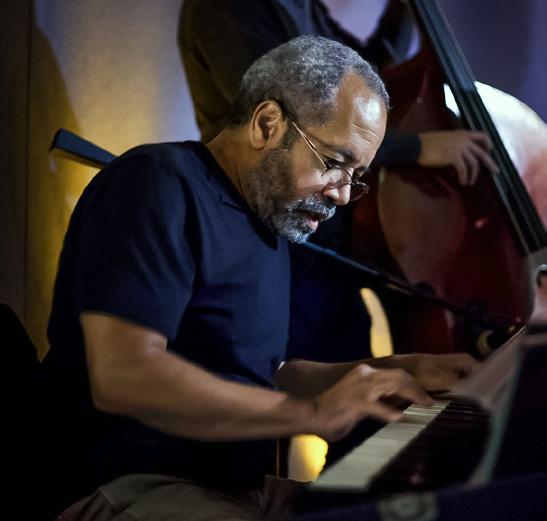
not to compare it with Never Too Much, but I just hoped it would do well enough to get me going in this idiom.”
As reported in the January 2026 issue of Jersey Jazz, Joshua Myers of DownBeat called Took So Long “a near perfect mixture of standard jazz tunes and popular musical mainstays ... It is simply cool to hear once again how interpretations of sounds made famous by Stevie Wonder, The Stylistics, The Carpenters, Luther
Vandross, and Aretha Franklin beautifully coexist along those written by Billie Holiday and Dizzy Gillespie.”
The Amsterdam News’ Ronald E. Scott described Took So Long as “an intriguing album that extends Nat’s R&B arranging brilliance to the jazz forum ... His sound somewhat resembles pianist Erroll Garner. Nat plays fewer notes, allowing more open phrasing space, but, like Garner, he has that subtle, high-flyin’ bouncy flow.”
“
WBGO Radio’s Gary Walker, featuring the album as the station’s “New Day, New Play” album in October said, “There are reimagined standards, an original, and a fabulous recollection of his dear friend, Luther Vandross, on ‘Superstar’ ... It might have taken so long, but it has been well worth it.”
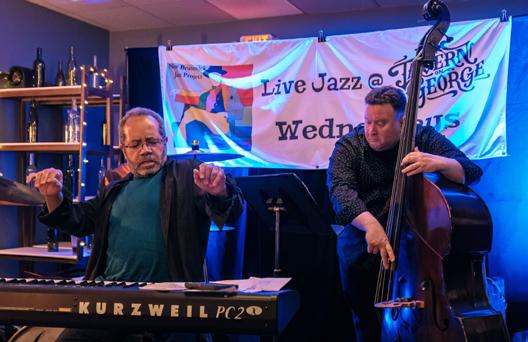
Jazz fans in New Jersey will have seven opportunities this summer to hear music from Took So
Long live. Here is the schedule:
» THURSDAY, JUNE 4
Tavern on George, New Brunswick
» SATURDAY, JUNE 20
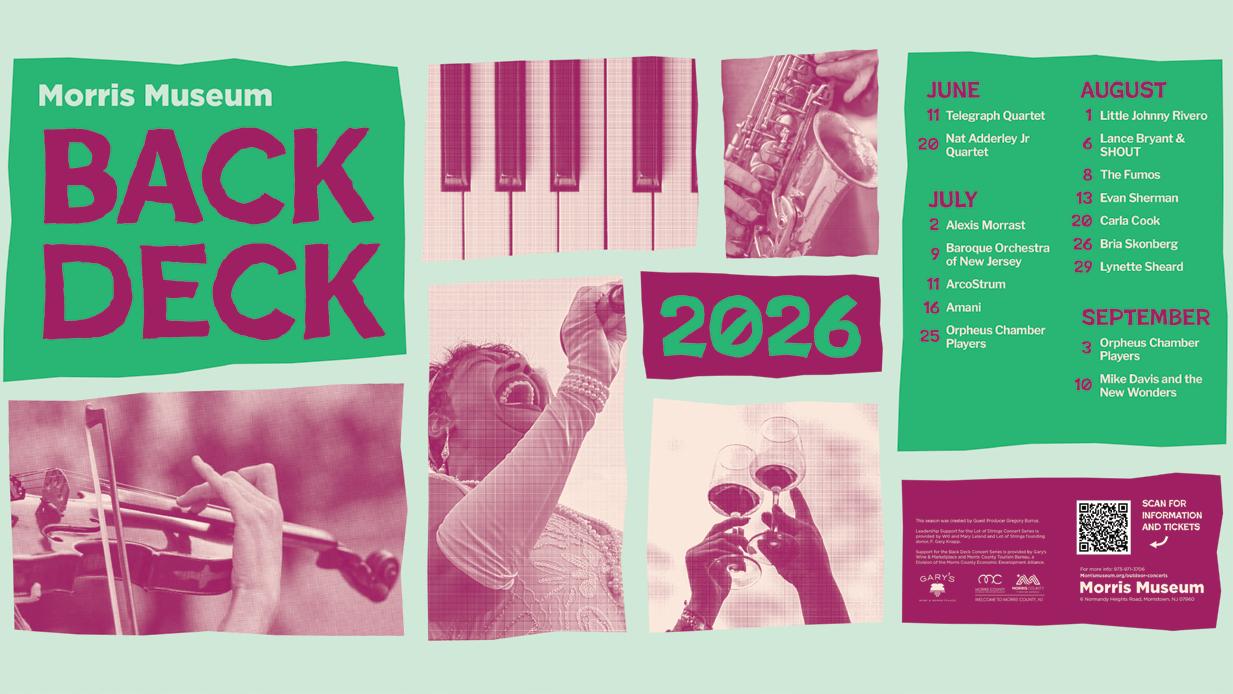
Morris Museum Jazz on the Back Deck, Morristown
» FRIDAY, JUNE 26
Shanghai Jazz, Madison
» SATURDAY, JULY 18
Monte Irvin Park, Orange
» SUNDAY, AUGUST 23
Union County Performing Arts Center, Rahway
» FRIDAY, SEPTEMBER 4
Jazz Cafe, South Brunswick
» SUNDAY, SEPTEMBER 13
Jay and Linda Grunin Center for the Arts, Toms River
Took So Long features Adderley leading a trio, alternating two bassists—Chris Berger and Belden Bullock—with four drummers— Dwayne “Cook” Broadnax, Tommy Campbell, Vince Ector, and Steve Johns. Some of the live summer performances will add a saxophone. At presstime, Adderley could only confirm the personnel for the first two gigs: At Tavern on George, it will be a quartet with Berger, Broadnax, and tenor saxophonist Mike Lee. At Shanghai Jazz, he will be leading a trio with Bullock and Johns.
Vandross passed away in 2005 and a few years later R&B singer-songwriter Mary J. Blige tried to hire Adderley as her music director. “I decided I didn’t want to take the gig,” he said. “I loved her, loved what she was doing, great and brilliant. But, as much as I loved her music, I didn’t want to be in R&B anymore. I wanted
to play jazz. I had all these arrangements of pop tunes. So, I played them in restaurants in Maplewood, and when I got ready to go into the studio, I recorded them. I picked out the ones that came out decently enough to put on the record, and it just happened.
“I got asked about the ‘concept’ of this record. ‘Concept?’ What a great idea. The ‘concept’ was going into the studio and cutting some tunes, and then, one day, I looked up and said, ‘Oh, wow. I guess I have enough to put a record out. That’s the ‘concept’.”
The album was recorded in the Rudy Van Gelder Studios in Englewood Cliffs, NJ. “I’m just feeling blessed to be able to record there,” Adderley said. “The drums and the piano sound like those old records that came out of there.”
The upcoming concerts and club dates will, of course, feature songs from the album. In addition to “Su-
perstar,” they include Adderley’s title track, Stevie Wonder’s “You and I (We Can Conquer the World)”, Dizzy Gillespie’s “Con Alma”, Bronislaw Kaper’s “Green Dolphin Street”, and Burton Lane’s “Old Devil Moon.” But there will also be “some things that didn’t make the album and that will probably be on a second album.” They
might include tunes associated with Adderley’s late uncle, alto saxophonist Julian “Cannonball” Adderley, such as Joe Zawinul’s “Mercy Mercy Mercy”, “The Work Song”, written by Adderley’s father, trumpeter Nat Adderley, and Jerry Bock’s “Tradition” from Fiddler on the Roof.
There will probably also be something from the Burt Bacharach/Hal David songbook as well as Frank Perkins’ “Stars Fell on Alabama” (a favorite of tenor saxophonist Mike Lee), and Duke Pearson’s “Jeannine.”
One more song sure to be performed will be Victor Young’s “Stella By Starlight.” Adderley’s mother passed away a couple of weeks before our interview, and “it was my mom’s favorite tune. My father’s other son played it solo on the trumpet as we lowered my mom into the ground. So, I will be playing that song all the time.”—SANFORD JOSEPHSON
the ‘Street Immediacy’ of Hard Bop and Latin Jazz
“There are Very Few People I’ve Encountered with the Depth of Charles McPherson”
BY ANDREW SCHINDER
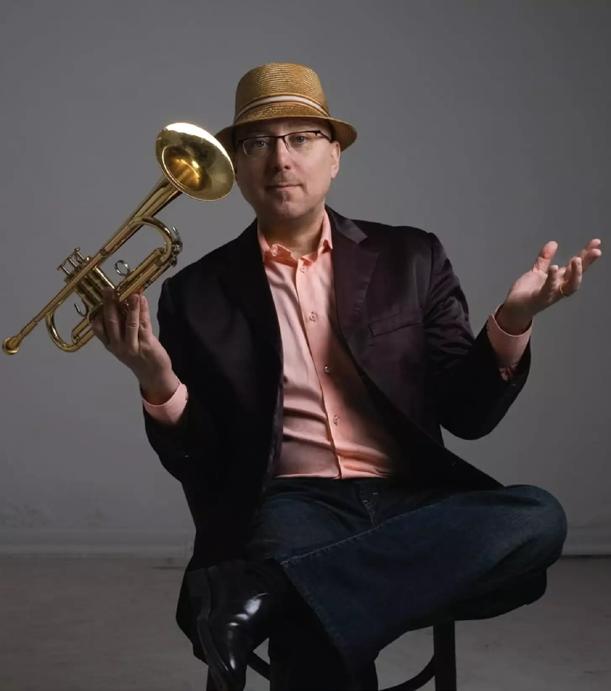
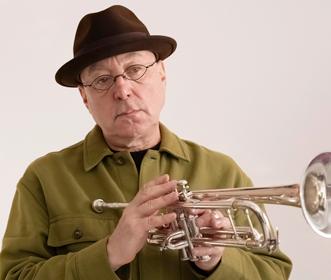
New York-based trumpet fixture
Brian Lynch is a living embodiment of the sonic, cultural and geographic diversity within jazz music. Over the past several decades he has established himself as an expert practitioner of many of the music’s forms. Lynch performed with Horace Silver’s ensemble for a number of years in the 1980s and was a member of the final incarnation of Art Blakey’s Jazz Messengers. Beginning with the release of his first leader album, Peer Pressure, in 1986 on Criss Cross Records, Lynch has led a large variety
of small combos and large ensembles, creating a big, varied catalog of work that could rival any of his peers. However, he may be most famous for his work as a modern master of Latin jazz. Having grown up as a bornand-bred Midwesterner in Milwaukee, quite a ways away from Puerto Rico or any Caribbean or Latin American country, this may seem unlikely. Nevertheless, the marriage between Lynch and the Latin Jazz idiom is as natural as a Wisconsinite’s love for cheese or Packers football. Since the 1980s, Lynch served as a critical side-
man for late Latin/Afro-Caribbean jazz legend Eddie Palmieri, and as the decades went on, he took on composing, arranging and other leadership roles for Palmieri’s vaunted ensembles. Despite Lynch’s cultural background, given his early exploration with the Latin styles, his partnership with Palmieri was innate. Although Palmieri sadly passed away last year, Lynch continues to be a member of the Eddie Palmieri Experience band with other Palmieri alumni carrying on the salsa maestro’s legacy.
“The experiences that I’ve had in Milwaukee playing Latin music really helped [my development as a musician],” Lynch began. “In particular, in Milwaukee there was a gentleman named Toty Ramos, who had a group called La Chazz, which had salsa band instrumentation and also played Toty’s own originals, both instrumentals and with a singer. But they also played a lot of salsa hits, ranging from Machito
and Tito Puente to the more contemporaneous music of that era, people like Ray Barretto and Tipica 73, and also some Eddie Palmieri and so forth.
So that’s where I started getting some exposure to that music, and it stood me in good stead when I got to New York, because I was able to start working with some very good salsa bands.
“This gave me a whole different
resource in terms of being a working musician,” he continued. “I realized how integral salsa was going to be to my overall musical concept. So that was one big part of it. And it was happening at the same time I was just getting into the New York jazz scene.”
Lynch’s latest album, Torch Bearers, was released in March on the Hollistic MusicWorks label. On a purely
genre-specific level, it is not a Latin jazz record. But given who Lynch is as a musician, composer, and arranger, the rhythms, melodies and vibes of his past work with Palmieri and similar artists are present throughout. Torch Bearers is, in fact, a wonderful mélange of Lynch’s influences and experiences. It is fundamentally a fairly straight-ahead, post-bop record, containing Lynch originals as well as covers of standards (including a gorgeous version of Jimmy Van Heusen’s “But Beautiful”), but with a characteristically musically diverse overlay that makes Lynch unique among his peers. (Reviewing the album in the May issue of Jersey Jazz, Joe Lang wrote “The words that keep coming to mind as one listens to the music on Torch Bearers are excitement, musical empathy and creative genius.” At presstime, the album was Number 5 on the JazzWeek charts). Torch Bearers is a particularly
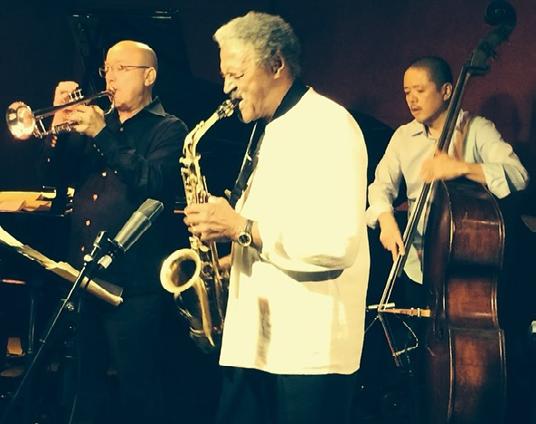
personal album for Lynch, in that it features alto saxophone icon Charles McPherson. Early in his career, Lynch performed with McPherson, while Lynch was living in San Diego. McPherson acted as a mentor, and the two collaborated from time to time over the decades. However, they never recorded together before this album. At nearly age 87, McPherson is still a powerful musician, and his chemistry with Lynch (who himself turns 70 later this year) is evidence of their long working relationship.
“There are very few people I’ve encountered with the depth of Charles McPherson,” Lynch said. “As a musician and a person. I still consider him my mentor, and I still learn from him every time I get on the bandstand with him, every time I’m on the phone with him, every time I go over to his house. Underrated is too prosaic of a way to put it. Everyone should seek him out. I’m so blessed to have had
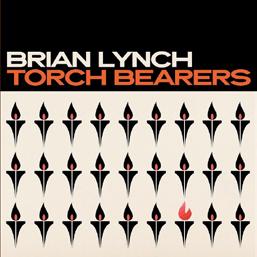
Torch Bearers is a particularly personal album for Lynch, in that it features alto saxophone icon Charles McPherson
that experience with him over the years. It’s in my heart and my musical DNA. And as I’ve become an elder, I’m very glad I have that to share.
“When you’re writing for a particular person in mind, it’s a whole different level. It is an amazing thing to be able to do, to write for Charles after so many years of my association
with him. We played the music together, and made changes as needed, and I incorporated his feedback. And then I was able to rehearse his music with him at the same time, and we saw what would fit together. I wrote music that I knew would pique his interest without it being too far outside his wheelhouse. I believe you should write music for people that will maybe give them a little bit of a challenge, but, at the same time, will draw them in because, they can tell from the music that you might know something about their style.
“I had always wanted to do something with Charles,” Lynch continued. “Opportunities over the years kind of came and went, but finally having the opportunity to do this was very important to me. And I think it was important to Charles, too.”
Modern vocal powerhouse Samara Joy (a 2019 winner of the Sarah Vaughan International Vocal Competition) appears on Torch Bearers,
lending her beautifully distinct voice to two tracks written for her, one by Lynch and one by McPherson. Lynch served as co-producer on Joy’s recent critically lauded Verve album Portraits, winning his third Grammy for his efforts. Lynch, McPherson, and Joy share a common lineage—they were all students of revered pianist Barry Harris (Joy was among Harris’ last pupils in his vaunted jazz workshop before his death in 2021). Harris was one of the last living links to the original bebop tradition (Indeed, he counted Charlie Parker, Dizzy Gillespie, and Thelonious Monk as contemporaries and friends) and, in addition to teaching the three musicians on Torch Bearers, was a New York jazz education institution.
Torch Bearers, by virtue of the three musicians’ ties to him, became an unplanned tribute to the piano legend, including a glorious cover of Harris’ “Luminescence.” Lynch explained
how this developed. “Harris crept up as subtext when writing the album. I found out about Samara’s relationship with Barry, and I thought that there would be a good through-line there, and it would be nice to bring that out a bit, to bring everything together.”
Joining Lynch, McPherson, and Joy on Torch Bearers are pianists Orrin Evans, Rob Schneiderman, and Luis Perdomo on various tracks, as well as Boris Kozlov (bass), Kyle Swan (drums on all but one track), and Ulysses Owens (drums on one track). It is an expert ensemble that serves Lynch and McPherson well. Lynch was particularly impressed with the band’s interaction with McPherson. “I think the way this group sounds, it’s got a personality,” Lynch said. “It sounds modern without leaving the wheelhouse of classic jazz.
“Orrin is great. I love the breadth of what he does. I wanted to hear how Charles sounded with him, and
I wanted to hear how he sounded with Charles. At the same time, I also wanted to memorialize the close relationship that Rob had with myself and Charles, when we all played together back in the day and subsequently later on. Their two contrasting styles are really what makes the record good. It’s a good slice of the two of them.
“Boris is on many of my records. Charles is really finicky about bass players. So, one big piece of the puzzle was figuring out who the right bass player would be for the record. Charles checked him out, and then called for Boris to play with him. So, I guess Charles must have liked Boris! That to me is like getting the gold star seal of approval.
“Kyle Swan is an up-and-comer who was a student of mine at Miami. He’s originally from the Chicago area and lives there now. I noticed right away how clear his playing was and how well it recorded. It was

Lynch served as co-producer on Joy’s recent critically lauded Verve album Portraits, winning his third Grammy for his efforts.
pretty, particularly his symbols. I asked myself, ‘Why can’t I get the symbols to sound like that on my records?’ So, I started using Kyle after his graduation. I was able to get him on gigs, and this is the third recorded project of mine he’s played on.”
The band recorded Torch Bearers in Englewood Cliffs’ legendary Van
Gelder Studios, founded by seminal engineer Rudy Van Gelder, where—to put it somewhat melodramatically—jazz simply sounds different.
“Recording at Rudy’s,” Lynch began. “is something. I did my first records as a leader there, over 40 years ago. I’ve had a long, long relationship with that place. [Current co-owner and operator of Van Gelder Studios] Maureen Sickler has really carried on the tradition of Rudy’s so amazingly, and it’s really my happy place to be. I hadn’t been there for many years, before going back there to produce Samara’s record. She chose that place, and I walked in and said, ‘I need to be back here more often!’
“It’s a magical place to make music, and it really centers me. You feel the ghosts of the past. It’s living history, but I also have a past there myself. I did a number of records there. I recorded with Art Blakey there. Rudy actually even
let me move a microphone once!”
Lynch plans to continue working through the idioms and theories of both straight-ahead jazz and Latin jazz. To him, oscillating between both sub-genres is natural to any musician exploring jazz generally.
“Hard bop and salsa are actually very similar musical forms,” he said. “There’s a lot of sophistication, especially if you’re talking about some
of the really hip salsa that I grew up with, from Puerto Rico or Cuba. It’s got that street immediacy to it. I think hard bop has the same kind of thing going on with it. There is a lot of interchange between those styles, even in terms of musicians that would, like myself, find themselves playing with a salsa group one day and, say, the Horace Silver Quintet the next day.
“When I was growing up, we didn’t know about clave [(i.e., the anchor of Latin jazz music mainly derived from West African rhythmic tradition)].
Discovering that concept and discovering how to rhythmically organize your music and your phrasing in that way—I think it really improved my playing very much. And when I write music or a range of music, I want to be able to have that sort of organization to it. All music that swings has clave. With hard bop, it may not be as implicit as it is in Latin music or Afro-Caribbean music, but it’s there.”
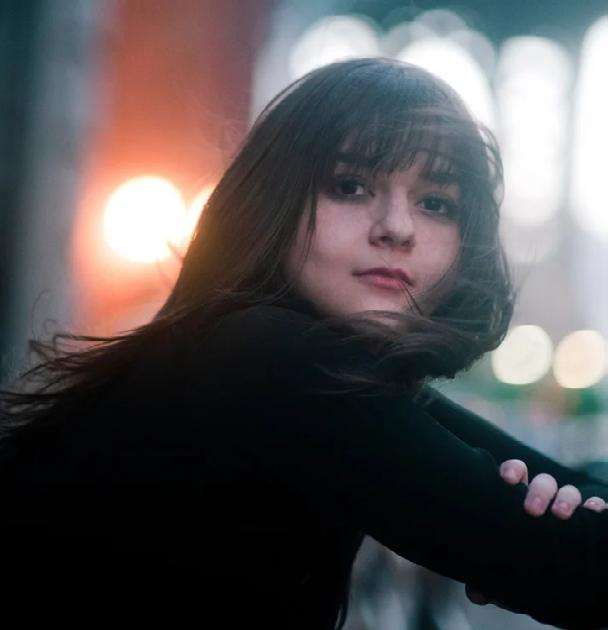
Ella Fitzgerald Winner Ava Preston
‘Sidewalk Swing’, Bringing Jazz to 12 NYC Street Corners
“I Love Jazz, and I Want to Keep Doing This for the Rest of My Life”
BY SANFORD JOSEPHSON
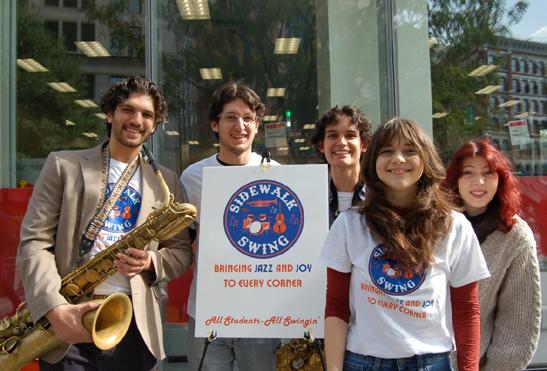
On Saturday, October 18, 2025, there was live jazz on 12 corners in Manhattan—from Harlem to the financial district. The musicians were jazz studies majors from several colleges and universities including Juilliard, Manhattan School of Music, William Paterson, Oberlin, SUNY Purchase, and The New School. The event was called Sidewalk Swing, and it was created by Ava Preston, a Juilliard graduate student. Preston, the winner of this year’s Blues Alley Ella Fitzgerald Vocal
Competition, explained how it happened. “It was a project for my jazz business class,” she said. “They told us to make an idea for a project and go and do it. A lot of people were doing tours, albums. I’m a big advocate for community engagement.
“What I did was get together my friends from different universities with a jazz program. They put together combos of their peers. There were a couple of duos. There was even a one horn, one drum combo. They were all playing on a street corner from 12 to
4 p.m. It was like a big jazz takeover of Manhattan, and the mission was bringing jazz and joy to every corner, spreading the love of the music and connecting directly with the community. I’m trying to do it again this year.” (See link at bottom of article to a feature on News4NewYork).
One of the students who participated in the Sidewalk Swing—baritone saxophonist Evan Gongora, a William Paterson student from East Hanover, NJ—described being in the event as “an incredibly special experi-
ence. My band and I had a great time bringing joy to the people of NoHo and contributing to the citywide jazz takeover. One of my favorite memories was seeing a young kid come over to our drummer, Maria Kolesnik, after one of our tunes because he was amazed by how beautifully she was playing. Maria let him sit down and play a bit, and you could see how much joy the experience brought him.
“That is what Ava does through her projects and music. She creates community and brings happiness to the people around her. Ava is truly inspirational, both for her musicianship and her passion to see jazz culture flourish.”
“ I LOVE SCATTING.
I
HOW ELLA MAKES THE MELODY HER OWN. ”
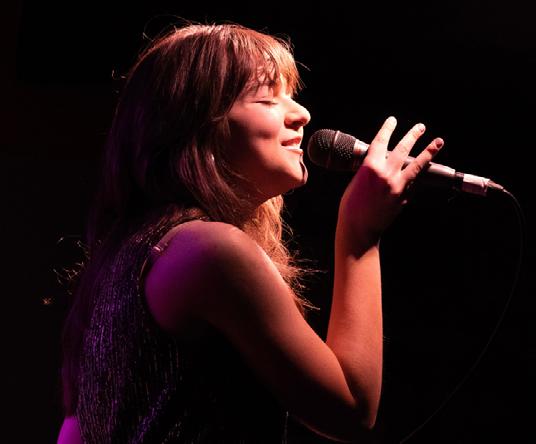
Originally from Cleveland, the 21-year-old Preston received her Master of Music degree from Juilliard last month. When she was four or five years old, she heard a recording by Diana Krall, “and I was really enamored with her voice. From there, I started listening to Ella Fitzgerald
and Sarah Vaughan. Then I moved onto Bird, Coltrane, Clifford Brown— all the great instrumentalists.”
The attraction of jazz, Preston said, was “all the improvisatory elements. I love improvising. I love scatting. I love how Ella makes the melody her own. She gets inspiration from the original melody and then develops it and makes it her own. Jazz has a way of just being so creatively fulfilling, embracing one’s individuality.”
Preston began taking jazz-oriented vocal lessons when she was seven years old. An early mentor was pianist/educator Theron Brown. “He took me to jam sessions in Akron and Cleveland and started mentoring me in all aspects of jazz.”
In sixth grade, Preston began participating in an after-school program called the Tri-C Fest Jazz Academy, directed by trumpeter Dominick Farinacci. Tri-C also runs a College Credit Plus program that allows eligible students in grades 7-12 to earn high school and college credits by taking college courses. “I got my Associate Degree (from Cuyahoga Community College) when I was a sophomore in high school,” Preston explained. “Then I received my Bachelors Degree with a Focus on Jazz from Kent State a year out of high school.”
The theme of this year’s Ella Fitzgerald competition was “Ella Sings
the George and Ira Gershwin Songbook.” The finalists were asked to pick three songs from the Verve and Pablo recording catalogs. Preston selected “I’ve Got a Crush on You”, “How Long Has This Been Going On?” and “But Not for Me.” She was familiar with all three tunes. “I’d sung them before, but when I heard them again, I heard different arrangements in my head that
I wanted to do with them,” she said.
For winning the Fitzgerald competition, Preston will receive an honorarium of $2,500. Second-place winner, Kyra Cioffi of Rutherford, NJ, will receive $1,000; and third place winners—Gabriela Allemana of Chicago, Lily Alger of Oak Park, IL, and Emily Davies of Buffalo will each receive $500. (Cioffi is a two-
time winner of the New Jersey Jazz Society’s scholarships. See page ??)
In 2024, Preston was voted Best Female Vocalist at the Cleveland Music Awards, was a YoungArts finalist, was selected as vocalist for the Next Generation Jazz Orchestra at the Monterey Jazz Festival, and was a 12-time DownBeat Student Music Award Winner (six times for Vocal Jazz Soloist and six times for Blues/Pop/Rock Soloist). She plans to stay in New York, writing music and arrangements and performing around the city. “Music has always been such a universal language to me, such a source of hope and light in a world that can have many challenges. I love jazz, and I want to keep doing this for the rest of my life.”
nbcnewyork.com/video/news/musicstudents-take-over-manhattan-withfree-jazz-this-weekend/6405752
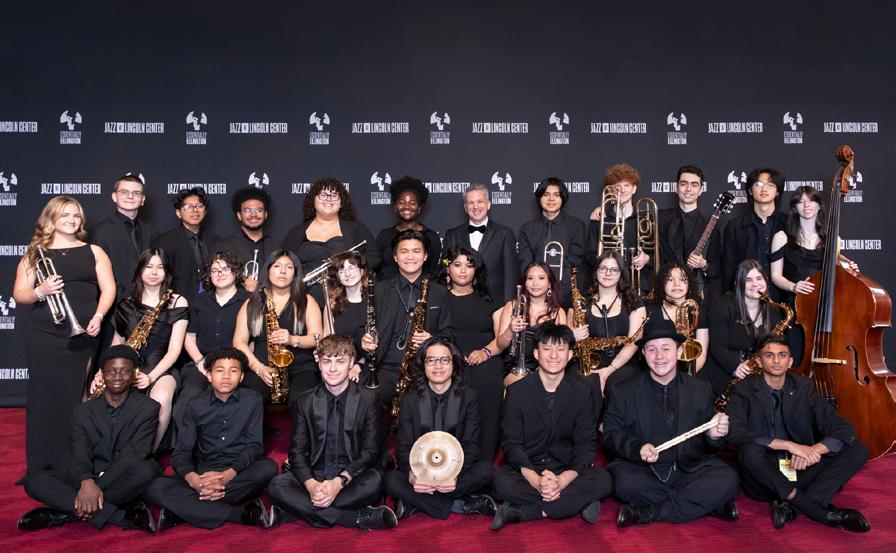
Susan E. Wagner High School Represented the NY/NJ Area in This Year’s Finals
“I’ve Never Been a Part of Anything That Was as Impactful or as Exciting or as Meaningful as Essentially Ellington”
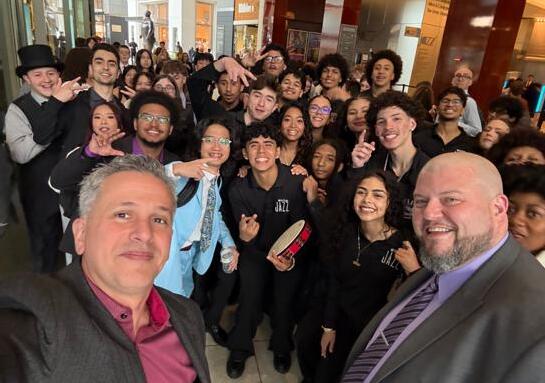
Staten Island, NY’s Susan E. Wagner High School entered Jazz at Lincoln Center’s Essentially Ellington competition about dozen times before becoming a finalist on the ninth try in 2023, finishing in Second Place. The arts-designated public high school has now reached the finals four years in a row. This year it received an Honorable Mention award and was the only school in the finals from the New York/ New Jersey metropolitan area.
“There are so many great bands out there,” said multireedist Paul Corn, Susan E. Wagner Assistant Principal of the Performing and Visual Arts and Director of the Jazz Ensemble. “It’s an honor to be there. The first time we got in, we said just being there is a win, and it was exactly the same case this year. I’ve never been a part of anything as a teacher or a player that was as impactful or as exciting or as
meaningful as Essentially Ellington.”
To enter Essentially Ellington, high schools must submit three unedited performance recordings. Wagner’s three selections this year were: “Symphony in Riffs”, “Sugar Hill Penthouse” (the final movement of Duke Ellington’s Black Brown and Beige), and “Portrait of Wellman Braud”. The 20 finalists then perform these pieces live. At the April 30-May 2 finals, Wagner “swapped out one of the songs. We took out ‘Symphony in Riffs’ and added ‘Old Man Blues’, which fit some of our strengths a little bit better.”
Every finalist receives a pre-event visit from a clinician, a member of the JALC Orchestra. This year’s clinician for Susan E. Wagner was trumpeter Tatum Greenblatt, who said, “Working with Paul’s band at Wagner was a special experience on a number of levels. For starters, I had the opportu-
nity to take part in Essentially Ellington when I was in high school, and I know first-hand how incredibly inspiring and potentially life-changing the experience can be. Paul and I go back aways, having overlapped for a number of years as faculty in JALC’s Education Department. I’ve long held a deep admiration and respect for his work as an educator.” Corn described Tatum as “just a natural teacher, so passionate about teaching kids how to express themselves.”
Although Greenblatt spent only a few hours with the Wagner students, he said, “When I watched them perform at the finals, I felt so proud of them. Abby Saladis (trumpet) and Nicollette Solis (baritone saxophone, clarinet, bass clarinet), in particular, shouldered a ton of responsibilities in their roles within the ensemble.”
Saladis has been in the Wagner band for four years. “This year,” said
Corn, “she stepped into the lead trumpet role and commanded the music and the respect of her peers. When she was a freshman, we had an all-star lead trumpeter, Gianna Ciaburri, who helped us come in Second Place. She got to do a duet with Marcus Printup. Gianna was a monster musician and dedicated worker, and Abby is really a direct line from that.” Greenblatt has stayed in touch with Ciaburri, cur-
rently pursuing a degree in Trumpet Performance at Montclair State’s John J. Cali School of Music. “She comes by to support the JALC Youth Orchestra in concerts when she can,” he said.
Solis, Corn said, “had two huge solos. She’s excellent, but they were so hard. She dedicated herself to this music, stood up on that stage, and played with all her might.”
Greenblatt was also impressed
with the rhythm section—pianist Jayden Lee, drummer Anran Deng, and bassist Riley Greenfield—“not only in their playing, but in the way they responded and adapted to critique.” The bassist, Riley Greenfield, Corn said, “is unbelievable. She plays so well in so many ways, and she loves it, and she wants to be the next Mingus. But, she’s not looking to go to school for music, and that’s fine.”
Lee, Solis, and Deng are juniors, and Corn believes all three are planning to pursue music degrees in college. One graduating senior, trombonist Jamie Avery, who soloed on “Old Man Blues,” “is going to be a music teacher.”
Corn emphasized that, “I certainly don’t do this alone. Joe Maniscalco, who is the guitar teacher at Wagner, works with our rhythm section and helps the bassists. Our bassists don’t come in playing upright bass. They all play electric so he teaches them how to play upright bass.” The other three
Wagner music teachers are: Thomas Russo, trombone specialist; Darick Kelly, percussionist; and Kevin Edell, saxophonist. “They all work with the students to some degree on sectionals,” Corn said, “or covering rehearsals when I’m out. It’s a great team effort.”
Greenblatt described what he feels is “an atmosphere of dedication, joy, and profound love and respect for the music and one another,” at Wagner. “Paul Corn,” he added, “has built a culture within the program that brings out the best in his students, both as musicians and as human beings.”— SANFORD JOSEPHSON
: First Place at Essentially Ellington this year was awarded to Osceola County School for the Arts in Kissimmee, FL. Second Place winner was Orange County School for the Arts, Santa Ana, CA; and Third Place went to Alexander W. Dreyfoos School of the Arts, West Palm Beach, FL.

The GRAMMY-nominated voice-and-piano duo celebrate classic jazz traditions, blending Sean Mason’s sophisticated piano with Catherine Russell’s brilliant, timeless voice. Their new album, My Ideal, nods to the roots of blues, R&B, jazz, and pop while o ering fresh, invigorated interpretations.
Fri, Jun 5 at 7:30PM
Internationally acclaimed musician and educator Oran Etkin brings his beloved Timbalooloo show to life in an interactive musical adventure for the whole family.
Sun, Jun 7 at 11:00AM
Christian McBride is an eleven-time GRAMMY-winning bassist, composer, and bandleader. In Ursa Major, he is joined by four rising young master instrumentalists including saxophonist Nicole Glover, guitarist Ely Perlman, pianist Mike King, and drummer Savannah Harris.
Sun, Jun 7 at 7:00PM

Hamilton de Holanda is one of Brazil’s most celebrated musicians, a global ambassador for Brazilian music, and a master of improvisation. Picking up the mandolin at the age of ve, he revolutionized the 10-string version of the instrument, blending Brazilian traditions like choro with jazz and other global in uences.
Tue, Jun 9 at 7:30PM
Brandee Younger is rede ning the harps’ role in contemporary music. Over the past fteen years, she has worked relentlessly to stretch boundaries and limitations for harpists. In 2022, she made history by becoming the rst Black woman to be nominated for a GRAMMY Award for Best Instrumental Composition.
Wed, Jun 10 at 7:30PM



BY VINCENT PELOTE
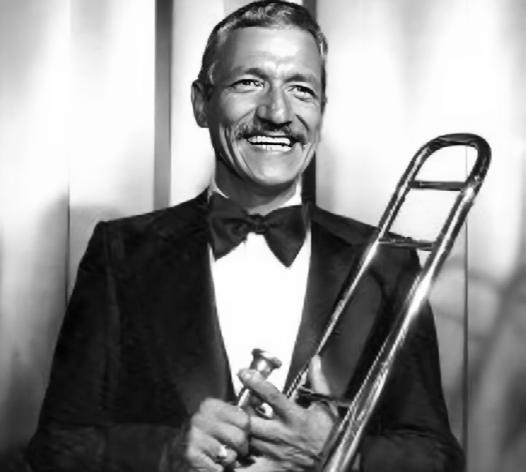
This year marks the centennial of two seminal jazz figures: John Coltrane and Miles Davis. Both greats have been immortalized on a CBS film clip from 1959 called “The Sound of Miles Davis” that showcases the music from Davis’s Kind of Blue session. Also appearing on that clip on trombone is another musician whose centennial is worth celebrating, Frank Rehak, who is the subject of my column this month. Rehak was indeed a talented trombonist who was more than a decent soloist and an adaptable ensemble player.
Frank Rehak was born on July 7, 1926, in Brooklyn, New York in the Bedford-Stuyvesant section. He started his musical journey at the tender age six on piano, switched to the cello then the baritone horn, claiming in an interview to have been quite proficient on that instrument. He started playing trombone when he was in the
Navy during World War II, citing Bill Harris and Lawrence Brown as two of his favorites on that instrument. After his service he was hired by vocalist Art Mooney to play in his band at the Hollywood Palladium in California. He stayed with Art Mooney until 1949 then joined the Gene Krupa Orchestra. From Krupa he found himself in
the Jimmy Dorsey band (1950-52). At the time Jimmy and Tommy were still not getting along and Tommy tried unsuccessfully to steal Rehak away from his brother, but the trombonist stayed with Jimmy until he got an offer to join the Woody Herman band. It was around this time that Rehak started getting involved with her-
oin. By 1955-56 he was pretty much addicted and was having a hard time getting work as the word was out that he was a junkie. He made the decision to abandon music and took a job as a plumber’s assistant and kicked his drug addiction in the process. He got back into the music scene when he filled in for a trombonist who was injured in a bar fight. The gig was playing trombone in a group led by drummer Eddie Grady at Birdland. By this time Rehak had kicked his drug habit and word quickly spread that he was clean and back on the scene as a performing musician.
Rehak became part of the Dizzy Gillespie Big Band in 1956 that was touring countries for the State Department. The Gillespie band was an 18-piece, racially integrated orchestra with Quincy Jones serving as musical director that was tapped as part of a government initiative
to promote American culture and counter Soviet propaganda during the Cold War. The band’s 1956 State Department ambassador tours included trips to Southern Europe, the Middle East, South Asia, and South America. Rehak apparently loved every minute touring with the Gillespie orchestra in all the exotic locations and playing with such talented musicians as Phil Woods, Benny Golson, Billy Mitchell, and Dizzy of course and said in an interview, “It was probably one of the greatest musical highs I ever had.”
From there he was asked to join the staff at CBS. He had a short run in a Broadway production called Copper and Brass that unfortunately bombed, but in 1957 he won the Downbeat New Star award. From 1958 on he found himself on numerous record dates including Michel Legrand’s Legrand Jazz album with
“
Miles Davis. But most notable was his work with the Gil Evans Orchestra from 1956-62 where he appeared on the albums Miles Ahead, Porgy and Bess, and Sketches of Spain. However, Rehak’s returning drug problems eventually caused him to drop out of music altogether. He ended up working for Synanon in Houston. Synanon was a California-based organization founded in 1958 by Charles “Chuck” Dederich. It began as a pioneering, highly successful residential drug and alcohol rehabilitation program. Sadly, by the time of his death on
June 22, 1987 (at the age of 60) Rehak was largely a forgotten figure. I would like to celebrate his centennial and remind all that he was a marvelous soloist and left behind some great recordings with the various ensembles he played in. It just so happens that the Frank Rehak papers and audio recordings are currently housed at the Institute of Jazz Studies (archives.libraries.rutgers.edu/ repositories/6/resources/207#) for anyone interested in learning more about him. The collection is available to the public by appointment.
BY JOE LANG
With Oracles (Sunnyside 1799), by the Helen Sung Big Band, pianist/composer Sung adds a new dimension to her catalog of recordings. Her first big band album is essentially a tribute to several artists who had an influence on her development as a jazz artist. Sung’s original compositions, “Positively C.T.” (for Clark Terry), “Waynes World” (for Wayne Shorter), “Mr Virtuoso” (for Ron Carter), “A Little Bird Watching” (for Jimmy Heath) and the three-part “Pianism”, a concerto with separate movements named after Barry Harris, Kenny Barron, and Herbie Hancock. The trilogy format grew out of an admonition from Sir Roland Hanna to never forget her classical roots. Sung includes pieces by Terry, “Samba De Gumz”; Shorter, “Diana”; Carter, “R.J.”; and Horace Silver, “Peace.” Her writing is eclectic and consistently interesting. She uses the 17-piece band,

conducted by Alan Ferber, as a palate on which she creates musical shadings exhibiting her imagination and some of the personal characteristics of her honorees. Oracles is an album that demands serious listening to appreciate the many subtleties in her approach. sunnysiderecords.com
The variety that characterized the abundant composition legacy of Duke
Ellington is masterfully captured on Ellington Masterworks (MCG Jazz - 1062) from the Smithsonian Jazz Masterworks Orchestra, an eight-selection program bookended by two compositions from 1940, “The Flaming Sword,” a Latin swing tune, and “Jack the Bear,” most noted for the bass work of the legendary Jimmy Blanton on the original recording. In between, are a couple of stand- alone numbers, “Tattooed Bride”, a tune that dates back to 1948 and “Shepherd,” Ellington’s tribute to Rev. John Gensel, a Lutheran minister who was a jazz enthusiast. There are two pieces inspired by the worldwide travels of the Ellington band, “Ad Lib on Nipon” that grew out of a 1964 tour in Japan, and “Oclupaca,” part of the Latin American Suite. Another selection came from Such Sweet Thunder, the suite by Ellington inspired by the works of William Shakespeare, the
selection here being “Madness in the Great Ones,” a take on the story of Hamlet. The informative liner notes by Thomas Cunniffe provide wonderful background and analysis of each selection. The execution by the band of these demanding charts is exactly what the material demands. It will provide you with a little over an hour of memorable listening. mcgjazz.org)
Ulysses Owens Jr. and Generation Y is a quintet led by drummer Ulysses Owens Jr. with Owens on drums, Erena Terakubo on alto saxophone, Tyler Bullock on piano, and Yasushi Nakamura on bass, with trombonist Nanami Haruta added for two selections, “Little Girl Power” and “Road Life.” This new album is titled Around the World with You (Cellar Music - 81825). Owens has fashioned his group in the style of Art Blakey and the Jazz Messengers, Blakey
being one of his drumming heroes. The band is tight with fine soloing by all players. They explore a range of tunes: a pairing of Dizzy Gillespie’s “Bebop” and Charlie Parker’s “Confirmation,” “Espresso” a pop tune by Sabrina Carpenter, “Mo’ Better Blues” by Branford Marsalis and Terrance Blanchard, “The Light That Grew Amongst Us” by Tim Green, “New York” by Donald Brown,” “Road Life”
by James Williams and “I’m Not So Sure” by Cedar Walton, plus “Stardust” and three originals by band members, Bullock’s “Prodigal Son,” Nakamura’s “Morning Prayer” and Terakubo’s “Little Girl Power.” If Owens continues in Blakey’s footsteps as successfully as his inspiration did, he will garner a significant place in the jazz world. This is the group’s second release, and portends a bright future. At presstime, Around the World with You was Number 1 on the JazzWeek chart. cellarmusicgroup.com
It is marvelous that so many younger jazz musicians are looking to express their fresh perspectives within the general parameters of mainstream jazz. British alto saxophonist Sam Braysher and Dutch guitarist Linus Eppinger are two such individuals, and their artistry is on display with A Sinner Kissed an Angel (Fresh
Sound - 5147). Joined by bassist Darryl Hall and drummer Eric Ineke, they have a 10-song program that includes jazz tunes, “A Smooth One,” “I Told You So,” “Room 608” and “Relaxing at Camarillo;” songs from the Great American Songbook, “Put on a Happy Face,” “Never Let Me Go,” “That Sunday, That Summer” and “A Sinner Kissed an Angel,” plus an overlooked gem from Vernon Duke, “Roundabout.” Braysher and Eppinger are a natural pairing. They are wonderfully supported by Hall and Ineke. Braysher has a warm tone that is more commonly found in tenor saxophonists, while Eppinger shows the influence of Wes Montgomery, but has not attempted to channel him, rather taking the music in his own directions. As a package, this group is immediately welcoming and sure to bring smiles to your face. sambraysher.bandcamp.com
The music on Treasury Volume 3 (Turtle Bay - 26004) by Terry Waldo & The Gotham City Band is a cornucopia of early jazz styles, ragtime, blues, hot jazz, Dixieland or whatever terms you wish to apply. The bottom line is that this is good music played by a bunch of musicians who are having a ball playing music they love. Pianist Waldo has gathered together a roster of players who are steeped in the tradition and mixes them into combinations are perfectly suited to each of the 11 selections. The players should be familiar to many NJJS members: Waldo on piano, Jim Fryer on trombone, Mike Davis and Colin Hancock on cornets, Evan Arntzen and Ricky Alexander on clarinets, Jerome Paxton, Nick Russo, and Arnt Arntzen on banjos, Brian Nelepka on bass, and Jay Lepley on drums, with Waldo, Fryer, Davis, Paxton
and Lepley sharing the occasional vocal duties. The songs are diverse and perfect for this aggregation, including “Minnie the Mermaid,” a nice bit of whimsey with Waldo and Fryer sharing the vocal; “Alice Blue Gown,” with a tasty vocal by Davis; “Take Me Back” with Paxton on the vocal; and “Louisiana Fairy Tale,” the most mellow of the selections sung with sensitivity by Lepley. “If you are ready for a toe-tapping good time, give a listen to Waldo and his crew swinging out! turtlebayrecords.com
The Jeff Hamilton Trio has a new album titled A New Chapter (R.M.I. Records - 10306). The title reflects the recent addition of pianist Tadataka Unno to the trio joining Hamilton on drums and Jon Hamar on bass. In addition to Unno’s first recording date with the trio, the program introduces three compositions
by the pianist: “The Magic of Mr. Wess,” “Some Other Suite”, and “Roy Said So;” plus two by Hamar, “Paseo Del Mar” and “BYOB Blues.” Hamilton also chose to include a song, “Blues for Stephanie”, written by John Clayton of The Clayton-Hamilton Jazz Orchestra, co-founded with Hamilton. There is also a piece by Clayton’s son, pianist Gerald Clayton, “Nail…In Need.” The other tunes are “I Have the Feeling I’ve Been Here Before,” by Roger Kellaway and the Bergmans, “Isn’t It Romantic”, and “Wrap Your Troubles in Dreams.”
This trio is not your typical piano trio with the pianist the primary focus with rhythmic support from the bass and drums. It is more like the approach fostered by Bill Evans where the three players are musical equals. Unno has lots of chops and a fertile mind; Hamilton is a master at adding accents that aurally en-
hance the listening experience; and Hamar’s strong presence is always evident. Hamilton has been leading trios for decades, and this iteration, as one would expect, adheres to the high standards that he established long ago. kmusicproductions.com
Canadian vocalist Angela Verbrugge is an acclaimed singer, but she also has a talent as a lyricist and composer that sets her on another level of artistry. There are ample examples of both her vocal virtuosity and her impressive songwriting on In the Wonder of Night (G Records - 101025), a duo album with New York Citybased pianist Ray Gallon. There are 11 tracks on the album including five songs for which Verbrugge wrote the words, providing the music for some of them. Her songs are well-crafted, ones that should be picked up by other singers. Some are romantic
like “On a Night Such as This” and “In the Wonder of Night,” while her wit comes through in “I’m 99% Sure of You.” She can swing as she does on”’S’posin’” and “It’s De-Lovely,” and knows how to caress a ballad or nail middle tempo numbers. Her willingness to look for good songs that are on the rare side come through on Irving Berlin’s “Reaching for the Moon” and Cole Porter’s “Goodbye, Little Dream, Goodbye” to which she gives a sprightly reading. Her voice is pure pleasure to experience, and her phrasing brings each lyric to life.
Gallon and Verbrugge have been working together, when their schedules coincide, for about nine years. His taste as an accompanist is exquisite. This is another outing from Verbrugge that illustrates why she is recognized as an elite vocalist with a marvelous jazz sensitivity. angelaverbrugge.com
Albums dedicated to music from the world of Ellingtonia just keep coming. I Like the Sunrise (Turtle Bay -265005) by vocalist Hannah Gill is one of the latest releases in the genre. She surprisingly opens with a tune not written by The Duke, “So Far, So Good.” It was played by the Duke Ellington Orchestra that became known as the Blanton-Webster band and is a peppy way to start the program. The other 10 tunes are all Ellington compositions:
‘I Ain’t Got Nothin’ but the Blues,” “Love You Madly,” “I’m Just a Lucky So-and-So,” “I Didn’t Know About You,” “I Got It Bad (and That Ain’t Good),” “Azalea,” “Do Nothing Till You Hear From Me,” “I Like the Sunrise,” “Take Love Easy”, and “Azure.” Gill’s jazzy vocals are backed by guitarist Luis Salcedo, bassist Paul Ambuel, and drummer Adam Ray with occasional contributions from saxophonist Ricky Alexander. Put this album
on and you will feel the atmosphere of an intimate jazz club where Gill is singing directly to you and doing so with a voice and style that are easy to appreciate. turtlebayrecords.com
Sarah Sharp is an Austin, Texasbased singer who has released her initial album, Deja Vü (Spaceflight Records). It contains 10 selections. Her band includes Mitch Watkins
on guitar, Oliver Stack or Sean Giddings on piano, John Fremgen on bass, and Masumi Jones on drums with Stack also contributing occasionally on cornet or accordion. A feeling of intimacy is pervasive in her understated vocalizing. The songs include “Don’t Think Twice, It’s All Right,” “The Boy from Ipanema,” “It’s Been a Long, Long Time,”and “The Nearness of You.” Particularly memorable are Sharp’s takes on “The Girl from Ipanema” which has no hint of the normal bossa nova setting, rather a soft, haunting quality; and “Losing My Mind” which has a sadness about it unlike most versions that reflect desperation. Sharp’s openness to taking songs where they might not have previously been sets her apart as an artist. This is an album for quiet times. Available as a download or on vinyl at sarahsharp.bandcamp.com
For Billie (Matterhorn Records - 001) finds vocalist Stella Heath paying tribute to the legendary Billie Holiday. Heath has a band that includes pianist Neil Fontano, bassist Daniel Fabricant, guitarist Victor Wong, drummer/trombonist Riley Baker, trumpeter/trombonist Clint Baker, and reedmen Robert Elfman and Johnny Bones. They assay songs from the Holiday catalog, such as “Now, Baby, or Never,” “If You Were Mine,” “What a Little Moonlight Can Do,” and “Crazy He Calls Me.” Heath also includes a song that would have suited Holiday by guitarist Vilray. It’s called “These Tears (Are All I Have of You).” Rather than channeling Holiday, Heath approaches songs in ways that effectivelyreflect her musical personality. Heath, who has been performing since her youth, studied acting and spent several years pursuing an acting career, but eventually decided that
music was her true calling. Once she moved back to the Bay Area of her early years, she got involved in the gypsy music scene that was present in San Francisco and was vocalist for a band called the Bandjango Collectif, a group that produced one album. She has developed shows about the Nat King Cole Trio, Ella Fitzgerald and Billie Holiday, the last of which resulted in this debut album. Perhaps there will be Cole and Fitzgerald tributes as future recordings, a welcome possibility based on the wonderful For Billie. Cds are available at www. stellaheathmusic.com and downloads are available at amazon.com
Singer/pianist Danny Sinoff has spent a 25-year career playing primarily in southwest Florida. Hearing him, there are two obvious influences, Harry Connick Jr. and Bobby Darin, but he has evolved with his own musical personality. Make Someone Happy (Cellar
Music - 041226) is Sinoff’s first recording and, with guidance from producer/drummer Ulysses Owens Jr, he is surrounded by an outstanding group of musicians. The basic trio has Sinoff on piano, Ben Wolfe on bass, and Owens on drums. Also contributing occasionally are guitarist Dan Wilson, pianist Tyler Henderson, trumpeter/vocalist Benny Benack III, saxophonist Jerry Weldon, and trumpeter Joe Magnarelli. The program is made up of standards such as “Taking a Chance on Love,” “I Left My Heart in San Francisco,” “Three Little Words,” and “All I Need Is the Girl,” with Sinoff and Benack sharing the oh so hip vocals, “Make Someone Happy,” “I Won’t Dance,” “Mood Indigo,” “I’m an Old Cowhand,” “Charade”, and “Black Coffee,” plus one surprise: Elton John’s “Sorry Seems to Be the Hardest Word.” Albums like this are, sadly, few and far between these days—collections of great songs performed with an old school attitude. cellarmusicgroup.com
Continued from Page 11
“Kiyoshi’s Swing, Imagination, and Musicality Were Incredible”
Bassist Kiyoshi Kitagawa, who passed away on May 4, 2026, at the age of 67, emigrated to the United States from Osaka, Japan, in 1988. Having studied double bass at Japan’s Kwansei Gakuin University, he became an in-demand performer in New York City, playing with such well-known artists as trumpeter Jon Faddis and saxophonists Kenny Garrett and Jimmy Heath. But, after he was introduced to pianist Kenny Barron by drummer Ben Riley 30 years ago, Kitagawa became Barron’s regular bassist and is best known for being part of a trio that also included drummer Johnathan Blake.
Pianist Miki Hayama, on Facebook, said Kitagawa played on her last two studio albums 18 years ago, and she toured with him in Japan.
“He was my big brother, my hero, and my champion,” she wrote, “a world class proud Japanese musician. I loved everything about his playing:
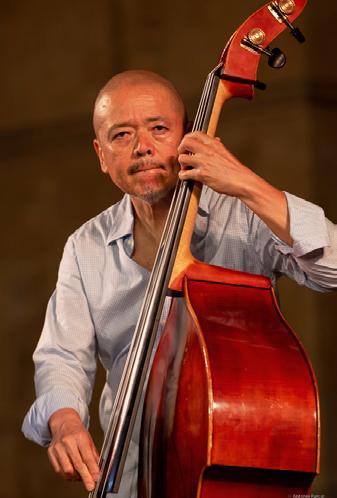
his sound, that warm tone, his note choices, and his swing. He knew exactly what a pianist needed, as if he were a master acupuncturist who knew exactly where to place the needles.”
Saxophonist Jeff Lederer performed with Kitagawa in New York in the late 1980s and early ‘90s. In a Facebook post, he remembered that it was “most often in a remarkable band led by Gerry Gibbs, including Mark Feldman, John Butler, Phillip Harper, and others—the original Thrasher band. Kiyoshi’s swing, imagination, and musicality were incredible—it was the sound that then went on to grace the great jazz stages of the world with legendary figures such as Kenny Garrett and Kenny Barron; and I was always so proud to say that we knew him in those golden early years filled with the joy of music making and figuring out how it all worked.”
Kitagawa is survived by his wife, Yuka.
Although he released six albums as a leader, pianist Danny Mixon was known as the consummate sideman. Among those with whom he played were: vocalists Betty Carter, Dee Dee Bridgewater, and Antoinette Montague; saxophonist Frank Foster; and drummer Art Blakey. Mixon passed away at the age of 76 on May 1, after a long battle with prostate cancer.
“He called me his musical partner,” Montague told the New York Amsterdam News. “We were a musical marriage who soared with high-power energy, creativity, and love.”
In 2004, Mixon was honored by the National Jazz Museum in Harlem as part of a series entitled “Har-
lem Speaks.” The honor resulted in an invitation to the White House for what was then called Black Music Month. A resident of Brooklyn, Mixon was given his own day in 2011, “Danny Mixon Day” by Borough President Mark Markowitz.
Mixon has been a strong supporter of the Jazz Foundation of America. “Danny was a dear friend and collaborator,” JFA Program Director Will Glass told the Amsterdam News. “He performed at parks, hospitals, and senior citizen centers, bringing deep swing and great joy.” He was
also a supporter, performer and in structor with Jazzmobile, the Har lem-based nonprofit which brings jazz performances and jazz educa tion programs to New York area res idents, tourists, and other visitors.
His last album, the self-pro duced Pass It On, was released in 2015. Reviewing it for Chris M. Slawecki wrote: “Mix on so adeptly explores two Wayne Shorter tunes that you’d think they were composed for piano, seamless ly swapping improvisations in and out of the verses of ‘Yes or No’ and blending jazz, blues and classical styles into ‘Infant Eyes,’ played as soft and gentle as baby’s breath.”

Survivors include: Cheryl Alavanet, his partner of 20 years; a brother, Robert Mixon; a son Jaesyn Mixon; a daughter-in-law, Dr. Sonyja Mixon; and his grandchildren, Carlyn and Hunter Mixon.

for more Sandy info
Pinky Winters, who passed away May 18, 2026, at the age of 96, had a warm voice that was wonderfully accessible, was comfortable at any tempo, and had immaculate phrasing influenced by the many jazz masters with whom she performed. She would be right at home on any list of the finest female vocalists. Unfortunately, while admired by her peers and those who were exposed to her music, she was one of those great artists who flew under the radar, never achieving the widespread recognition that her brilliant talent deserved.
Born Phyllis Wozniak in Michigan City, IN, she began taking piano lessons at the age of four. Following high school, she worked briefly in an office
before moving to Denver with a friend where she took the stage name of Pinky Winters and began performing in clubs. Her next stop was Los Angeles where she established herself on the club scene, working with many firstrate jazz musicians and recording a few albums that were well received.
Winters had a short-lived marriage with bassist Jim Wolf, but they had one daughter. After her divorce, she married saxophonist Bob Hardaway with whom she also had a daughter. From 1958 to 1979, she left performing to raise her family. After a second divorce, she returned to performing, soon establishing a professional and personal relationship with the legendary jazz pianist, Lou Levy, a connection that lasted until his death in 2001.
Among the notable performances with Levy was a 1983 concert at the Corcoran Gallery in Washington, DC. The music was eventually released on two albums, The Shadow of Your Smile
– Pinky Winters Sings Johnny Mandel and Speak Low (SSJ Presents: 2006).
After hearing her sing the Mandel material, you might conclude that she had produced the definitive version of each song. Winters and Levy recorded three additional albums, Let’s Be Buddies, As Long As There Is Music with the Netherlands Metropole Orchestra, and This Happy Madness on Verve, her only major label release. In 2001, Winters collaborated with the exceptional pianist Richard Rodney Bennett to create Rain Sometimes (SSJ: 2005), a 15-song collection that included several rarely heard gems. The combination of Winters and Bennett was a pairing that produced an album appropriate for
anyone’s desert island list, her warm vocalizing combining with Bennett’s sensitive accompaniment. Winters recorded two subsequent albums for the Sinatra Society of Japan, World on a String: Pinky Winters Sings Sinatra and a program of tunes by Antonio Carlos Jobim, Winters in Summer.
On a personal level, I became acquainted with Winters about 20 years ago at a jazz event in Los Angeles. We struck up an immediate friendship. We would socialize whenever I was in Los Angeles, and we would speak on the phone frequently. She had a terrific personality, warm and friendly, and was full of tales from her career, often providing insights about many of the musicians with whom she worked.
When I received a call notifying me of her passing from her daughter, Jennifer, I was saddened, but comforted that I had many wonderful memories of our friendship and can always play her music and smile. R.I.P. Pinky!—JOE LANG
THANK YOU and welcome to all who have recently joined or renewed their memberships. We can’t do what we do without you!
Your membership is vital to NJJS’s mission to promote and preserve America’s great art form— JAZZ!
org
Tom Holman
SHORT HILLS, NJ
Ralph Humphrey HILLSIDE, NJ
Nicholas Pachnos
Edward Berryman MADISON, NJ
Richard Bielak MATAWAN, NJ
C. Graham Burton RIDGEFIELD, CT
Live at Night RICH ENGEL
Neil Gordon NEW CITY, NY
John Gunyan BERKELEY HEIGHTS, NJ
Sanford Josephson BASKING RIDGE, NJ
Cheryl Levy BASKING RIDGE, NJ
Ronald Lilly FANWOOD, NJ
Patrick Mercuri MOORESTWON, NJ
John Pachnos NEWTON, NJ
Tom Salvas CHATHAM, NJ
Daryl Sherman NEW YORK, NY
Terrence Smith MORRISTOWN, NJ