
BY CYDNEY HALPIN
April is Jazz Appreciation Month (JAM). Originally intended as a catalyst to encourage people of all ages to actively participate in jazz, JAM heralds and celebrates the extraordinary heritage and history of jazz. I encourage you to celebrate and do something “jazz-centric” this month by attending a live concert event or lecture, reading a book devoted to a jazz great; purchasing a CD or LP, Googling an artist or song you’re interested in finding out more about … the possibilities and opportunities are endless.
However you chose to celebrate, actively take part in the preservation and promotion of jazz and share your interest and enthusiasm of America’s great art form with someone else—perhaps introducing a child, your neighbor, or a colleague to jazz for the first time.
“Jazz music is America’s past and it’s potential, summed up and sanc-
tified and accessible to anybody who learns to listen”—Wynton Marsalis
There is money to be won! NJJS’
2026 Juried Scholarship Competition—which will award a $1000 and a $500 prize in three categories:
Jazz Instrumental Performance, Jazz Vocal Performance, and Original Composition—is accepting entries.
This year marks our second year with the additional category of Jazz Vocal Performance, thanks to the generosity of Board members Mike Katz and Jackie Wetcher. The submission deadline has been extended to Friday, April 10, 2026, 11:59 p.m. Visit njjs. org/competition for complete details.
The competition is open to all students currently enrolled in a New Jersey college undergraduate music program, as well as to Jersey residents currently enrolled in an out-ofstate college undergraduate program. Proof of residency is required for Jer-
sey applicants in out-of-state schools.
Along with the cash award, winners will receive guidance, mentorship and the opportunity to perform with an industry professional, and coverage in Jersey Jazz.
This competition will be judged by our prestigious panel of professional musicians, educators and industry leaders comprised of:
» Don Braden: World class tenor saxophonist, flutist, composer and educator
» Mariel Bildsten: Trombonist, bandleader, sidewoman, and educator
» Ted Chubb: Princeton University Lecturer of Music—Jazz Trumpet, composer, educator, and arts administrator
» Jason Olaine: Vice President of Programming, Jazz at Lincoln Center
The Board and I would like to thank Nan Hughes Poole and NJJS Board Members Cynthia Feketie, Mike Katz, and Jackie Wetcher for their generous support of this initiative.
If you’d like to support the growth
of our prize offerings, donations can be made via our website njjs.org/donate. Please note “Scholarship Fund” where indicated. Donations can also be mailed: NJJS, 382 Springfield Ave., Ste. 217, Summit, NJ 07901.
Don’t hesitate to contact me at pres@ njjs.org if you have any questions.
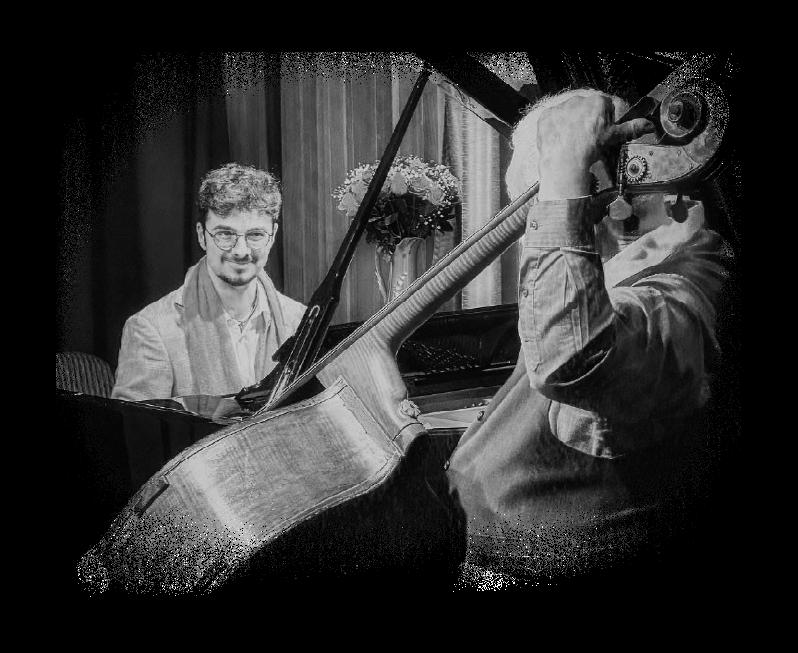
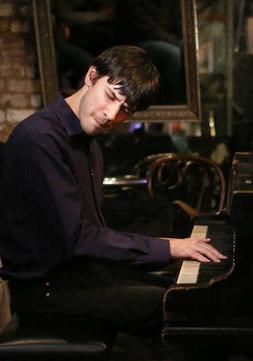
Don’t miss out on spectacular music at our Jersey Jazz LIVE! concerts. Plan to join us Sunday, April 12th as we celebrate Jazz Appreciation Month featuring: Two Generations of Jazz: Pianist Caelan Cardello and Bassist Rufus Reid.
“Cardello has the three things that set the primo players apart: great chops, a wide imagination, and exquisite taste. His playing grabs your attention and never lets it go.”—Joe Lang Reid is simply a legend! Together ... they are magic.
The Rising Stars opening act will showcase a sextet of students
from the County College of Morris. For more information about this concert and these artists, click here: njjs.org/caelan-cardello-and-rufus-reid-at-april-jersey-jazz-live/
Additional funding for this concert has been provided by NJJS Board Member Cynthia Feketie. The Board and I thank her for her generosity and support.
Jersey Jazz LIVE! Is held at Madison Community Arts Center, 10 Kings Road, Madison, NJ. $15 NJJS Members, $20 Non-Members, $5 Child/ Student w/ID. There is free street parking. Doors open at 2:30PM. These events are well attended, plan accordingly. For advance ticket sales: events.ticketleap.com/tickets/ new-jersey-jazz-society/jersey-jazzlive- caelen-cardello-rufus-reid
If you’d like to support a JJ LIVE! concert—in part or in full—or our Rising Stars/Opening Act initiative—providing performance opportunities for the next generation of
jazz musicians, please contact me at pres@njjs.org or at 973.229.0543.
Save the Date! Sunday, May 3rd at 3:00 p.m., for Jersey Jazz LIVE!
featuring the T.K. Blue Quartet in Celebration of NEA Jazz Master Dr. Randy Weston’s Centennial Birthday. This will be a special “hybrid” event with lively conversation between jazz scholar Noal Cohen and saxophonist and bandmate T.K., followed by the musical tribute. If you attended our February 2025 or 2026 LIVE! events, you know how enjoyable these special format concerts can be. For more information on this event please see page 09.
The Board and I would like to thank Noal Cohen for his generous support of this event. For advance ticket sales: events.ticketleap.com/ tickets/new-jersey-jazz-society/ jersey-jazz-live-t-k-blue-quartetcelebrates-nea-jazz-master-dr-randy-weston-s-centennial-birthday
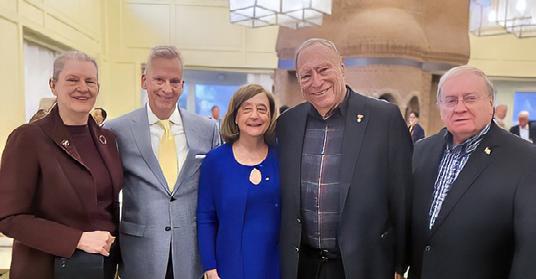
Please join me in congratulating NJJS Board Treasurer Michael Katz on being a 2026 Summit Good Scout Award recipient. This award honors community members for their service beyond self and for making their communities a great place to live and work. It’s presented on behalf of the Patriot’s Path Council/Scouting America. Bravo to Mike for his many years of dedication to Summit and to NJJS.
There’s still time to donate! Our “Setting New Standards in Tradition!” annual appeal campaign kicked off in December and we need you to join with us in this collaborative effort.
Many of you have already contributed to this annual campaign we are grateful! If you haven’t donated, please consider a tax-deductible gift today. We need your help to continue our performance and educational initiatives. You can donate anytime online at njjs.org via the red “Donate” button. Or by mail to: NJJS, 382 Springfield Ave., Summit, New Jersey, 07027. Please make check payable to NJJS.
We’re counting on you to partner with us and keep this uniquely American art form swingin’. You make it all possible!
April hath put a spirit of youth in everything. William Shakespeare
BY SANFORD JOSEPHSON
April is Jazz Appreciation
Month, celebrating the impact and history of jazz. And, there is no shortage of musical events saluting America’s original art form in our area this month.
In this issue of Jersey Jazz, we feature the New Jersey Performing Arts Center’s celebration on April 26, presenting performances by more than 100 student musicians (page 33); the Rutgers Jazz Ensemble’s concert honoring Miles Davis’ centennial birthday (page 26); and alto saxophonist Erena Terakubo’s Little Big Band Birthday Bash at Dizzy’s Club on April 29th, the day before her birthday, which falls on International Jazz Day (page 30).
Last month, we previewed two April concerts honoring John Col-

trane’s centennial birthday—Coltrane
100 performances on April 8 at the McCarter Theatre in Princeton, and April 18 at NJPAC. Those concerts will feature two tenor saxophonists—Joe Lovano and Melissa Aldana.
One of Lovano’s favorite Coltrane albums was the 1965 Impulse recording Blowin’ Session, which also included performances by fellow tenor saxophonists Johnny Griffin and Hank Mobley and trumpeter Lee Morgan.
“It was a big record for me growing up,” he said, “with them playing off of each other, giving each other inspiration as they played.” For Aldana, “The Coltrane compositions that resonate the most are the ones that leave room for exploration, where the music can evolve naturally in the moment.”
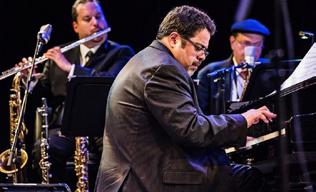
Two other April events are highlighted in the Latest News section on njjs.org: Wharton Arts’ Trailblazer Award being given to keyboardist Matthew Whitaker on April 17, and the Jazz Arts Project’s four-day celebration that culminates with a performance by pianist Arturo O’Farrill and his Afro-Latin Group on April 29.
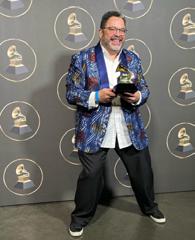
O’Farrill, who is receiving a Jazz Arts Hero Award, was the cover story in the February 2022 issue of Jersey Jazz in connection with a performance at the McCarter Theatre. The winner of six Grammy Awards, O’Farrill challenged the assumptions of what Afro-Latin music means. “We play music of all sorts,” he told Jersey Jazz’s Schaen Fox. “We get on stage with no idea of what we’re going to do. We just start, and it’s beautiful, incredible improvisation at its best.”
Whitaker, who will turn 25 on April 3, moves easily between piano
and organ. At the West Orange Jazz Festival last September, he honored some of his organ heroes: Jimmy Smith, Charles Earland, Dr. Lonnie Smith, Joey DeFrancesco, and Elbernita “Twinkie” Clark. Their music was featured on his 2024 MOCAT album, On Their Shoulders: An Organ Tribute, which received an NAACP Image Award nomination for Outstanding Jazz Album in 2025.
On Sunday, April 12, the New Jersey’s Jazz Society’s Jersey Jazz LIVE! concert at the Madison (NJ) Community Arts Center will present two generations of jazz: 25-yearold pianist Caelan Cardello and one his mentors, 82-year-old bassist Rufus Reid (For more information, see the March Jersey Jazz or the Latest News section of njjs.org).
Cardello and Reid will be preceded by a sextet of Rising Stars from the County College of Morris.
Founded in 1972, The New Jersey Jazz Society has diligently maintained its mission to promote and preserve America’s great art form—jazz. To accomplish our mission, we produce a monthly magazine, Jersey Jazz ; sponsor live jazz events; and provide scholarships to New Jersey college students studying jazz. Through our outreach program Generations of Jazz, we provide interactive programs focused on the history of jazz. The Society is run by a board of directors who meet monthly to conduct Society business. NJJS membership is comprised of jazz devotees from all parts of the state, the country and the world.
You become an integral part of the NJJS community, and the history and future of jazz
Access to 11 Digital Issues of our Award Winning Jersey Jazz Magazine
— Featuring Articles, Interviews, Reviews, Events and More
Discounts to our Jersey Jazz LIVE! Sunday Concerts
Discounts at NJJS Sponsored Concerts & Events.
MUSICIAN MEMBERS
FREE Listing on NJJS.org “Musicians List” with Individual Website Link
FREE Gig Advertising in our Monthly eBlast
THE RECORD BIN
Visit www.njjs.org or email info@njjs.org for more information on our programs and services
A collection of used CD’s & LP’s available at reduced prices at specific events and through mail order njjs.org/shop
JOIN NJJS
Family/Individual $45
(Family includes to 2 Adults and 2 children under 18 years of age)
Family/Individual 3-Year $115
Musician Member $45 / 3-Year $90 (one time only, renewal at standard basic membership level.)
Youth $15 - For people under 21 years of age. Date of Birth Required.
Give-A-Gift $25 - Members in good standing may purchase unlimited gift memberships. Applies to New Memberships only.
Fan $75 - $99
Jazzer $100 - $249
Sideman $250 - $499
Bandleader $500+
Corporate Membership $1000
Members at Bandleader level and above and Corporate Memberships receive special benefits. Please contact Membership@njjs.org for details. The New Jersey Jazz Society is qualified as a tax exempt cultural organization under section 501(c)(3) of the Internal Revenue Code, Federal ID 23-7229339. Your contribution is tax-deductible to the full extent allowed by law. For more Information or to join, visit www.njjs.org
Magazine of the New Jersey Jazz Society
54 • ISSUE 03
Jersey Jazz (ISSN 07405928)
is published monthly for members of The New Jersey Jazz Society
382 Springfield Ave., Suite 217, Summit, NJ 07901 973-229-0543 • info@njjs.org
Membership fee is $45/year.
All material in Jersey Jazz, except where another copyright holder is explicitly acknowledged, is copyright ©New Jersey Jazz Society 2026. All rights reserved. Use of this material is strictly prohibited without the written consent of the NJJS.
EDITOR
Sanford Josephson, editor@njjs.org
ART DIRECTOR
Michael Bessire, art@njjs.org
CONTRIBUTING EDITORS
Noal Cohen, Bill Crow, Joe Lang, Vincent Pelote, Andrew Schinder, Jay Sweet
CONTRIBUTING PHOTOGRAPHERS
Lynne DeLade, Chris Drukker, Jeff Dunn, Tomoji Hirakata, Eva Kapanadze, Penelope Santana, Ariane Smolderen
WEBMASTER
Christine Vaindirlis
WEBSITE DESIGN
Prism Digital
DIRECTOR OF ADVERTISING
Cydney Halpin, advertising@njjs.org
ADVERTISING RATES
Full Page: $135, Half Page: $90, 1/3
Page: $60, 1/4 Page: $30
For reservations, technical information and deadlines contact advertising@njjs.org or visit njjs.org/Magazine/Advertise . Make a payment online at njjs.org/advertise via the red Submit Payment button, or via check made payable to NJJS, 382 Springfield Ave., Suite 217, Summit, NJ 07901.
New Jersey Jazz Society, Officers 2026
PRESIDENT
Cydney Halpin, pres@njjs.org
EXECUTIVE VP
Elizabeth Kavlakian, vicepresident@njjs.org
TREASURER
Mike Katz, treasurer@njjs.org
VP, MEMBERSHIP membership@njjs.org
VP, PUBLICITY
Sanford Josephson, sanford.josephson@gmail.com
VP, MUSIC PROGRAMMING music@njjs.org
RECORDING SECRETARY
Irene Miller
CO-FOUNDER
Jack Stine
IMMEDIATE PAST PRESIDENT
Mike Katz
DIRECTORS
Jay Dougherty, Cynthia Feketie, Paul Flexner, Pete Grice, Carrie Jackson, Caryl Anne McBride, Robert McGee, James Pansulla, Stew Schiffer, Elliott Tyson, Jackie Wetcher
ADVISORS
Don Braden, Mariel Bildsten, Ted Chubb, Al Kuehn, Jason Olaine



BY NOAL COHEN
In the history of jazz, no American musician’s career has been more interconnected with the continent of Africa than that of the great pianist and composer Randy Weston. Weston, whose centennial we celebrate on April 6, 2026, was a giant, not only as a creative and spiritual force, but standing six feet, seven inches, an imposing figure in the venues at which he performed throughout the world.
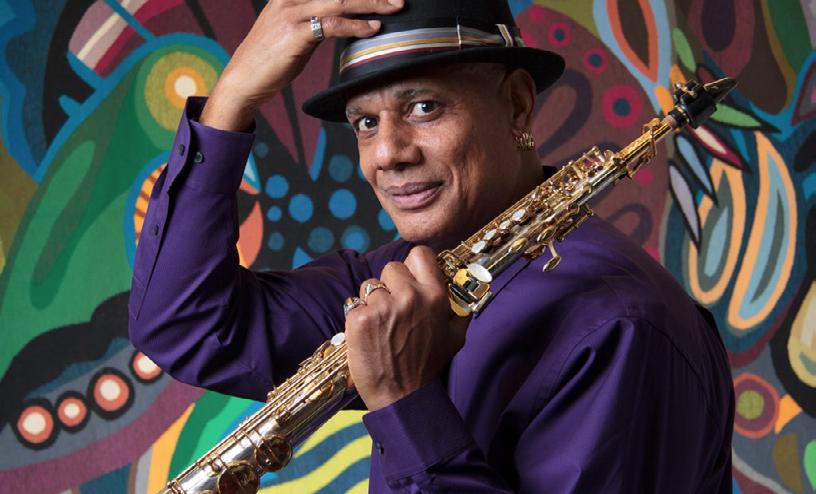
On May 3 at 3 p.m., saxophonist/ flutist/composer/arranger/educator T.K. Blue (Talib Kibwe) will lead a quartet paying tribute to Weston at the New Jersey Jazz Society’s Jersey Jazz LIVE! concert at the Madison (NJ) Community Arts Center. Blue was a member of Weston’s African Rhythms Quintet for 38 years. Joining him at this event will be pianist Orrin Evans, bassist Santi Dibriano, and drummer George Coleman, Jr. Prior to the concert,
Blue will be interviewed by me.
Interestingly, Weston didn’t consider himself primarily a musician. In his own words, “I come to be a storyteller; I’m not a jazz musician. I’m really a storyteller through music and I’ve had some amazing and unique experiences…God is the real musician. I’m an instrument, and the piano is another instrument. Africa taught me that” (African Rhythms: The Autobiography of Randy Weston by Randy Weston & Willard Jenkins, Duke University Press: 2010). Influenced by both Thelonious
“
MOST
Monk and Duke Ellington, Weston
created a significant legacy throughout a 70-year career, involving 150 compositions, many of them waltzes such as the haunting “Little Niles”; and 50 albums as a leader on record labels both foreign and domestic including his most commercially successful effort, Blue Moses, for the CTI label in 1972. Although emerging during the hard bop period of the 1950s, his creative work, starting in the 1960s, incorporated the music and spiritual content of Africa, especially the Gnawa people of Morocco with
”
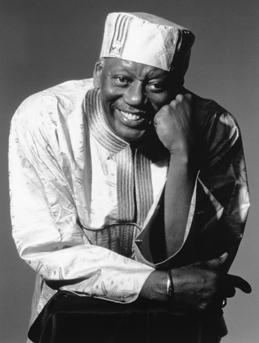
Randy Weston
whom he developed an enduring bond.
Randolph Edward Weston was born April 6, 1926, in Brooklyn and was raised in the Bedford-Stuyvesant section. His father, Frank Weston, was of Jamaican and Panamanian descent and a follower of activist Marcus Garvey. He instilled in his son a sense of pride in his African-American heritage from an early age. Weston’s mother, Vivian Moore, was from Meredithville, VA. The couple split when Randy was only three and it would be his father who was most involved in Randy’s
life, indoctrinating the young man with Afro-centric concepts including the often-overlooked fact that Black history predates slavery.
The family was not musical. Randy didn’t start piano until the age of 14, and he didn’t make the decision to become a professional musician until he was 29. He had several teachers who provided the basics, and he learned much from listening to many of the older musicians in his neighborhood. Soon after graduation from high school, he was drafted into the Army in 1944, ending up in the Signal Corps, stationed in Okinawa where he survived typhoons and snipers.
Upon returning to Brooklyn after discharge, he worked at restaurants during the day and played piano at night, gaining exposure to the jazz scene and its dangerous aspects, specifically heroin. Seeing the effect this drug had on many of his friends, along with the advent of gangs and
violence in his Brooklyn neighborhood, Weston needed an escape hatch. This turned out to be 10 summers spent in the Berkshire resort area of Massachusetts. He received a great response after playing a concert at Windsor Mountain School in Lenox that led to interactions with people like poet and activist Langston Hughes, actor Geoffrey Holder, Cuban percussionist Candido Camero, and musicologist Professor Marshall Stearns. Stearns’ lectures at Music Inn alerted Weston to the concept that, originally, jazz came from Africa, not New Orleans. This direct connection of music from America and Africa would be an overarching concept throughout the pianist’s long career. Weston’s professional musical activities began in earnest in 1949, in the rhythm and blues band of singer/saxophonist Bull Moose Jackson. This experience served to convince him that, in order to perform the mu-
sic important to him, he would need to be in charge. As it turned out, most of Weston’s recordings and performances were under his own leadership.
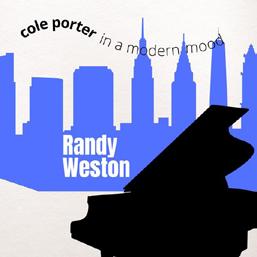
In 1954, Riverside Records was looking for young artists to record modern jazz, and the label’s owner, Bill Grauer, tapped Weston to be the first. His initial album was a duo outing with Sam Gill on bass, enti-
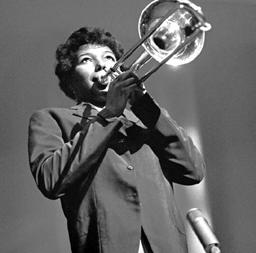
The trombonist and arranger, Melba Liston, was an important Weston collaborator.
tled Cole Porter in a Modern Mood, which shows him, at this point, very much influenced by Thelonious Monk. Four more albums for Riverside followed, some featuring his Brooklyn friend baritone saxophonist Cecil Payne. During 1956 and 1957, Weston recorded for the Dawn and Jubilee labels and, in 1958, half of an LP for MetroJazz (New Faces at Newport) which included the very first version of “Hi Fly,” his most popular composition. It would be made famous through the Riverside album The Cannonball Adderley Quintet in San Francisco (1960). By this time, Weston’s prowess as a composer was being recognized.
An important Weston collaborator was the arranger and trombonist Melba Liston (1926-1999) with whom the pianist had a strong personal relationship as well as a musical one. Between 1958 and 1995, Liston penned arrangements for eight of Weston’s
albums including the innovative Uhuru Afrika (Roulette Records, 1960), Weston’s first overt effort to pay tribute to his African heritage. The ensemble was an all-star big band augmented by the presence of poet Langston Hughes, baritone Brock Peters, soprano Martha Flowers, and Nigerian percussionist Babatunde Olatunji. Weston’s goal is his own words: “I wanted to create a large-scale suite to illustrate that the African people are a global people and that what we do and who we are comes from our collective experience, from our African cultural memory.” The album was sufficiently controversial to be banned in apartheid South Africa.
Weston’s first trip to Africa took place in 1961 through an exchange program run by the American Society of African Culture. He spent 10 days in Nigeria where he met the influential musicians Fela Kuti and Bobby Benson. But it wouldn’t be until 1967 that
he was able to take his own ensemble and music to the continent, this time in a tour arranged by the US State Department. The band he assembled for this tour included trumpeter Ray Copeland, saxophonist Clifford Jordan, bassist Bill Wood, drummer Ed Blackwell, and percussionist Chief Bey. Lasting three months during which 13countries were visited, the experience encouraged Weston to consider living in Africa.
Discouraged by the direction that jazz was taking in the late 1960s at home and anxious to explore his African roots, Weston moved to Rabat, Morocco, in 1967 and a year later to Tangier. He found the strongest bond with the Gnawa musicians and healers of North Africa and was schooled in their ways by guimbre (guitar-like instrument) player Abdellah El Gourd. Weston’s musical abilities were revered in this new setting, and he opened the African
Rhythms Club in Tangier where he frequently performed with his son, percussionist Azeddin Weston.
In September 1972, Weston organized the first Tangier Jazz Festival featuring both American and African artists. While the event was an artistic success, it was a financial disaster and left him deeply in debt. The situation forced him to return to the U.S. where he recorded the Blue Moses album for CTI Records. Featuring trumpeter Freddie Hubbard, flutist Hubert Laws, and saxophonist Grover Washington, Jr., it would be his most successful recording, the royalties enabling him to pay off the debts incurred by the festival.
Weston then made France his home base for 10 years, traveling and performing widely. After returning to the U.S., his later years were very productive and centered on an ensemble he called the African Rhythms Quintet comprising saxophonist, flutist
and musical director T.K. Blue (Talib Kibwe), trombonist Benny Powell, bassist Alex Blake, and percussionist Neil Clarke. With these talented musicians as the core, Weston produced several important albums including The Spirits of Our Ancestors (Antilles: 1991) with guest appearances by Dizzy Gillespie and Pharoah Sanders, Spirit! the Power of Music (Arkadia Jazz: 1999) with Gnawa master musicians of Morocco and The Storyteller (Motéma: 2009). His last recording was Solo Piano Sound released on his
own label, African Rhythms, in 2017. He was the recipient of many awards and honors including the French Order of Arts and Letters (1997), NEA Jazz Master (2001), Honorary Doctor of Music from Brooklyn College (2003), Guggenheim Fellowship (2011) and Doris Duke Artist Award (2014). He died in Brooklyn York, in 2018, at the age of 92. T. K. Blue is at the peak of his creative output. His artistry is found on over 85 recordings, and he has performed with a long list of great international artists. In addition to Weston, they include: pianist/composerAbdullah Ibrahim, bassist Sam Rivers, the Spirit of Life Ensemble, and poet/activist Jayne Cortez. He garnered tremendous experience in pedagogy teaching Pre-K thru 12 in the Roosevelt, L.I., school district. He also taught in an adjunct capacity for several years at Suffolk Community College and Montclair State Uni-
versity. Blue was eventually hired as a fulltime professor by Long Island University as the Director of Jazz Studies from 2007 to 2014. Blue has issued 15 CDs under his own leadership, the most recent of which is Planet Bluu on the Jaja Records label (2024).
: The Madison Community Arts Center is located at 10 Kings Road in Madison, NJ. The Jersey Jazz LIVE! concerts begin at 3 p.m. Admission is $15 for NJJS members and $20 for non-members. Student admission is $5 with valid ID. There will be light refreshments for purchase. To order tickets in advance, log onto events.ticketleap.com/ tickets/new-jersey-jazz-society/ jersey-jazz-live-t-k-blue-quartetcelebrates-nea-jazz-master-drrandy-weston-s-centennial-birthday
: This LIVE! celebration is generously sponsored by NJJS member Noal Cohen.
April 6, 2026, marks the actual centennial of an iconic figure in jazz history: NEA Jazz Master Dr. Randy Weston. Dr. Weston was one of the most prolific composers in jazz history, and many of his compositions are considered jazz standards. His pianistic style was a complete synthesis of Thelonious Monk and Duke Ellington, both of whom he knew intimately! Randy was also one of the very first jazz artists to incorporate and utilize the African cultural aesthetic within the realm of his musical expression, often in collaboration with a multitude of African musicians throughout the continent. His biggest selling LP Blue Moses (CTI Records) is a perfect example where he expands on rhythms indicative of the Gnawa musical tradition from Morocco. Randy also paid tribute to many African composers adding their compositions to his musical repertoire: “Niger Mambo” (Bobby Benson from Nigeria) “Love, The Mystery Of” (Kofi Ghanaba from Ghana). It was an absolute pleasure and blessing to be Musical Director and part of Randy’s African Rhythms for 38
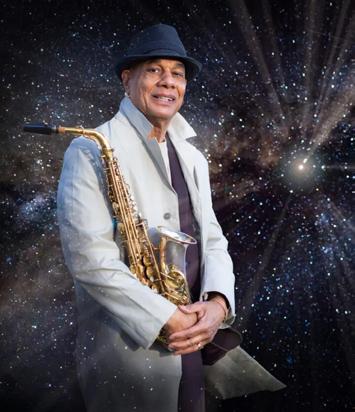
years. After the passing of Randy’s chief arranger, NEA Jazz Master Melba Liston in 1999, I was also called upon to arrange some of his later suites: “Ancient Future” and “The James Reese Europe Suite.”
Lastly, it is extremely important to note that Dr. Weston was a cultural warrior highlighting the greatness of African culture and civilization in his attempt to counter beliefs that were quite discriminatory and contrary to the truth regarding the importance and compelling facts of the African and African-American accomplishments! May Dr. Weston’s legacy live onward!
» T.K. BLUE, JANUARY 16, 2026, FROM ACCRA, GHANA

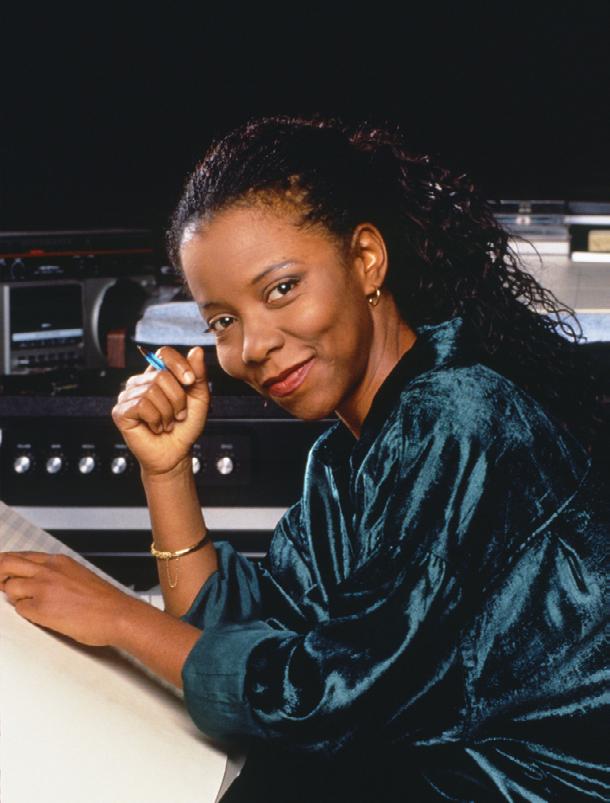
Rushen Was the First Woman to Serve as Musical Director for the Grammy Awards, and the First Woman Musical Director of the NAACP Image Awards
BY ANDREW SCHINDER
Patrice Rushen is a jazz master. Regardless of whether an entity such as the National Endowment for the Arts names her as such is irrelevant. It’s not a matter up for debate. Famously a vocalist, pianist, and overall multi-instrumentalist, Rushen is at the same time a master of pop, soul, R&B, classical, and probably a dozen other genres. She is a musical marvel, having made a positive, tangible impact on so many facets of music, the music industry, and culture in
general (popular or otherwise). Rushen is a jazz musician who appeals to the music’s intelligentsia but who also boasts a litany of popular hits—“Haven’t You Heard,” “Feels So Real (Won’t Let Go)” and, of course, her signature hit, 1982’s “Forget Me Nots.”
In fact, Rushen was recently named a 2026 NEA Jazz Master, a title that is more than well-deserved. In this day and age, sadly, such a title bestowed by a government that is actively hostile to the arts and culture
carries with it an unfortunate burden. There seems to be an expectation that a recipient of the award must also answer for, or perhaps apologize for, the actions of the giver of the award – over which the artist obviously has no control. It is, frankly, surprising (and maybe a little heartening) that the award has been given out at all (though the annual concert celebrating the recipients has been indefinitely postponed).
Rushen is introspective about this new weight imposed on the shoulders of the Jazz Masters, and by no means will she allow it to diminish the accomplishments that the award represents. “The honor of being named NEA Jazz Master is just that, a tremendous honor and recognition,” she said. “That doesn’t go away, no matter what the political climate is, no matter where they do it, if they do a celebration at all, all of that.
“For me, being recognized among
people I consider heroes and sheroes in this music is the most important part. In this country the arts have not always received consistent support. But art is part of what makes us human, and music in particular is an important form of communication and expression.”
No matter the political environment, Rushen is more than worthy of the award. It is a crowning achievement—though by no means the pin-
nacle—of a tremendous, celebrated, groundbreaking career. Hers is a decorated career magnified by the creation of brilliant music coupled with the blazing of trails unmatched not just by any woman, but by any musician, period.
“This particular award, unlike some of the other awards that we offer in the ‘entertainment business’— people don’t know about it,” Rushen continued. “And they should. Something that’s been interesting for me
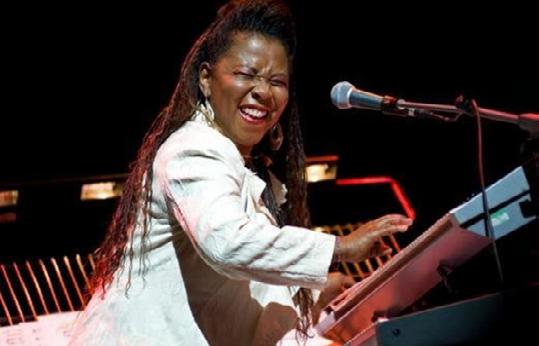
to observe now, as an honoree, is how few people, even within the jazz community, are aware of this acknowledgement when it happens. And what I hope that we will address at some point is that if [the NEA Jazz Masters] is supposed to be the highest honor in this area, why don’t people know that? And what does that have to do with why the music itself is seemingly always struggling for a certain type of recognition. Whether you like it or not, whether you enjoy jazz or not, it’s always struggling for a type of recognition that does acknowledge the mastery or appreciation of jazz as high art. So that’s been interesting to observe.”
Rushen was born and raised in the Los Angeles area and began playing piano at a very young age. In the early 1960s, during her formative years, educational professionals and academics began focusing on early childhood education, and Rushen was a
beneficiary. In preschool, she joined a preparatory program at the University of Southern California, and became immersed in music and rudimentary music theory. As she progressed on the piano, Rushen became exposed to all sorts of different musical genres that would foreshadow her later eclectic output—classical at the university program, contemporary jazz and pop music at home, gospel at church.
“It was all music to me,” she said. “The idea of learning to play the piano was a vehicle even then for me to be able to hear that Beatles song on the radio and try to pick it out, or that Stevie Wonder song or that James Brown piece or whatever, to try to pick it out so that I could play it for my friends at school.”
Rushen went to the all-Black Locke High School in Watts, and the school’s impressively forward-thinking educational curriculum harnessed her interest and talent in mu-
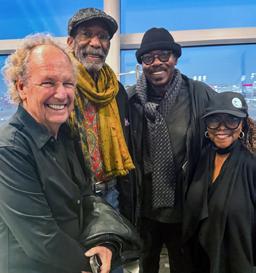
In Japan, from left, guitarist Lee Ritenour, bassist Ron Carter, drummer Harvey Mason, and Rushen
sic and turned what was a high-level interest into a profession. She credits her educators for introducing her to not just the music itself, but to the music business. Rushen’s longevity in such a notoriously tough business could be traced back to her years at Locke. The teachers were smart, dedicated, and took full advantage of the Los Angeles area. “This was before jazz was institutionalized,” Rushen said. “This was the progression of learning that came from some very progressive and innovative teachers who took action.”
She was “discovered” during a
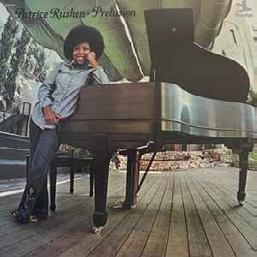
high school band performance at the Monterey Jazz Festival, attended by such luminaries as Quincy Jones and Oliver Nelson. Despite her young age, Rushen had already been making a name for herself around Los Angeles (particularly with her improvisation skills). Representatives from Prestige Records witnessed Rushen’s talent at a winning small combo Battle of the Bands competition at the Festival, and the label released her debut album, Prelusion, in 1974. Unlike her later albums, Prelusion was a fairly straightahead instrumental album, but, foreshadowing her later cross-genre sensibilities, contained detours into fusion and funk. Incredibly for a debut, the album featured such legends as Joe Henderson on tenor saxophone and Oscar Brashear on trumpet. Rushen introduced vocals on her follow-up Prestige album, Before the Dawn.
“I liked singing, and part of my training was singing in choirs and
things like that,” she explained. “But it was a means to an end for me. By this time, I was really into the textures of other instruments. I learned to play the flute. I was involved in ensembles where I had a part to play, and I would listen and sit right in the middle. So, I’m hearing this great combination of instruments and sounds and textures. The voice is an instrument, as the clarinet is an instrument, or as the tuba, etc.; and each has particular qualities that evoke certain feelings. And at this point I started doing music that allowed for that to happen.”
With each successive album with Prestige, Rushen’s sound drifted further into the mainstream pop realm. Ultimately, after three albums with Prestige, Rushen signed with the more pop-oriented Elektra Records label. Elektra would ultimately propel Rushen into mainstream pop stardom. However, she never abandoned her roots in the jazz or classical idioms.
“At the time, Elektra was very interested in doing what was basically the precursor to Smooth Jazz, called Quiet Storm,” Rushen said. “Quiet Storm represented that language, represented people who had very strong jazz sensibilities and jazz tradition as part of their sound, but who also possessed a certain kind of commercial sensibility and could do so without sacrificing the aesthetic of what it was that they wanted to do. My assignment was to create records that had commercial sensibilities, but the maintenance of a certain level of playing and writing were also very important.”
Rushen released her classic album Straight from the Heart in 1982. The record is one of the definitive early 1980s pop/R&B masterpieces, and peaked at Number 14 on the Billboard pop chart. It contains Rushen’s signature hit, “Forget Me Nots.” The single almost didn’t happen. Like many classics,
it was initially rejected by the suits in the Board Room. Rushen and her team ultimately took the bold step of engaging an independent promoter to place the song on the radio and in dance clubs without record label involvement. It worked. The label recognized success, released the song as a single, and the rest is dance-pop history.
“Forget Me Nots” was famously repurposed for the theme song of the 1997 Will Smith megahit movie, Men in Black. While many less populist artists may disapprove of such usage, Rushen embraced it, along with the many modern hiphop/R&B artists who have sampled her work. She views Men in Black as validation of her efforts to push a song she believed in, even if those in charge at the time couldn’t see it.
“We understood the environment and the politics, in terms of what it would take to get the song
in front of people,” she said. “And that was a big lesson. So fast forward 25, 30 years later, you have this franchise, and the theme song is the song that almost didn’t come out. That’s the biggest part for me.”
Straight from the Heart represented Rushen’s commercial peak but, unlike some of her peers (many of
whom were derisively labeled as “one hit wonders”), Rushen never stopped working. Indeed, Straight from the Heart was really just the beginning. Rushen ultimately accomplished a laundry list of “firsts” – milestones for women, Black women, or really just artists generally. For example, she was the first woman to serve as Musical Director for the Grammy Awards, the first woman in 43 years to serve as Head Composer/Musical Director for the Emmy Awards, and the first woman Musical Director of the NAACP Image Awards. Furthermore, she built an extremely successful second career as a composer for film and television. And she continued work in the classical and chamber music that she began when she was a mere preschooler at USC. But to Rushen, it’s all just music.
“First and foremost, it’s the work,” she began. “I want to make a differ-
ence from the standpoint of giving it my best. I am not worried, in the moment, about whether or not I’m the first woman or the first Black person, or the first this, or the first that. I’m thinking, ‘Let’s get it done and let’s get it done at a level which reflects a certain commitment to excellence.’
“I know I stand on the shoulders of a lot of people who did not have the same opportunities that I did, based on their gender or their race, and that created a ceiling. So, I know I’m standing on those shoulders. And that’s what drives me.”
Rushen will continue to break barriers and create beautiful art now as an NEA Jazz Master. She plans to continue to honor that title, and those who came before her. She is in her seventh decade as a musical artist, but, characteristically, she assures her audience that she is just getting started.
“Jazz is always progressing,” she noted. “And in its progression, you hope that it is being allowed to be pushed forward by people who have an understanding and a mastery of the tradition as part of their aesthetic of moving it forward, not just people jumping on trends.”
Rushen has a full slate of performances and projects planned for 2026, including a slot at the Montclair Jazz Festival in August. Not included in that slate is the traditional concert recognizing the current class of NEA Jazz Masters. However, Rushen doesn’t need yet another concert to validate her accomplishments. “The acknowledgement is there,” she said.
: The other 2026 NEA Jazz Masters are: vocalist Carmen Lundy, percussionist Airto Moreira, and jazz broadcaster Rhonda Hamilton (recipient of the A.B. Spellman Fellowship).

Featuring Joe Lovano, Melissa Aldana, Nduduzo Makhathini, Linda May Han Oh and Je "Tain" Watts
2026 marks the centennial of iconic saxophonist John Coltrane's birth. This show o ers audiences a rare chance to join this historic moment. An all-star lineup join together to pay tribute to one of the most inspirational artists.
Wed, Apr 8 at 7:30PM

“Celebrating 50 & Beyond”
For more than ve decades, Sweet Honey in the Rock has created music that is both socially conscious and spiritually uplifting. The ensemble bridges generations and genres, blending gospel, blues, jazz, and African rhythms into a singular and soulful experience.
Fri, Apr 24 at 7:30PM
Opening Set by Gabriele Leite In association with Brazil LAB
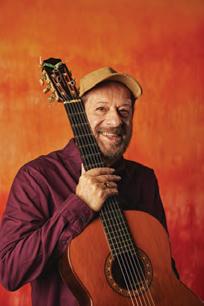
João Bosco has reason to celebrate. He kicks o his U.S. tour in celebration of his 80th birthday and more than 50 years of his career with a special performance at McCarter, cementing his status as one of the most in uential gures in modern Brazilian music.
Post-Show Party with Samb'in Princeton!
Sat, Apr 25 at 7:30PM
In 2026, Madeleine Peyroux marks the tenth anniversary of her Secular Hymns album and the thirtieth year since her debut album Dreamland - the milestone that shifted teen busker Peyroux from the streets of Paris to the world’s concert halls.
Thu, May 14 at 7:30PM


EXPLORE THE SEASON
LEARN MORE AND BUY TICKETS
In Princeton, NJ.







April Appearances Will Be at Smalls, Puffin Cultural Forum in Teaneck, and the Deer Head Inn
BY JAY SWEET
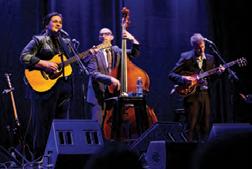
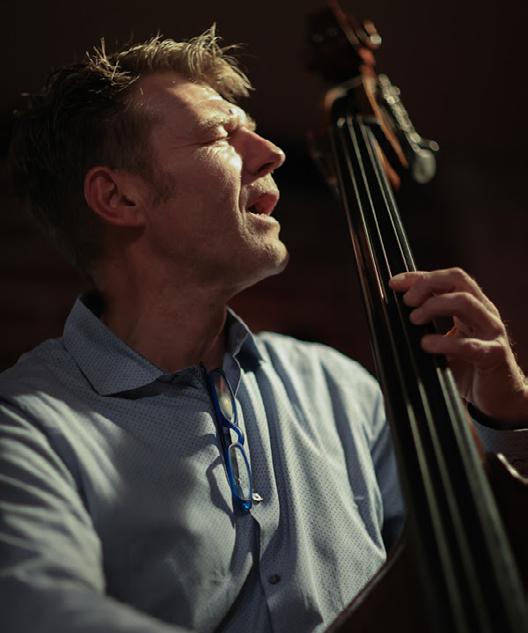
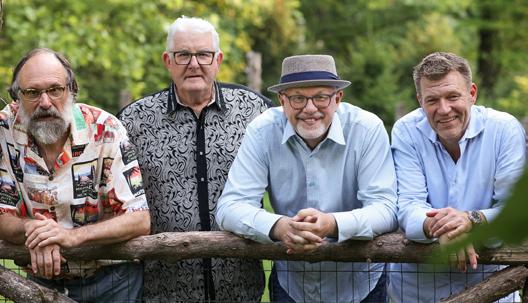
German-born bassist and composer Martin Wind has built an extensive résumé with more than 20 albums as a leader or co-leader and performance credits with legends such as clarinetist Buddy DeFranco, guitarist Pat Metheny, alto saxophonist Phil Woods, harmonicist Toots Thielemans, and many others. He has regularly performed at some of the top jazz venues in the world. Upcoming performances include two nights
at Mezzrow in New York with pianist Bill Cunliffe’s trio on April 3 and 4, as well as release performances for his newest record September (2026, Laika Records) with his Gravity Trio and special guest Glenn Zaleski on piano—
April 9 at Smalls Jazz Club, April 10 at the Puffin Cultural Forum in Teaneck, NJ, and at the Deer Head Inn in Delaware Water Gap, PA, April 11.
“For the record September, I worked again with my two partners
in crime. The tenor player is Peter Weniger—he and I go back to the winter of 1987–88, when the National Youth Jazz Orchestra in Germany was founded. We were both part of that first lineup. He was already an established player, and I was more on the bench, so to speak. Over the years, though, we kept finding ourselves making music together again and again.
“Jonas Burgwinkel is the drummer, and he’s really one of the major voices in Germany right now. He’s maybe a decade and a half younger than Peter and me, but he’s already a professor at the conservatory in Cologne. He’s played with people like Chris Potter, John Scofield, and Fred Hersch—musicians from the U.S. who seek him out when they’re touring in Europe.”
A few years ago, the trio gathered in Berlin, where Weniger directs the Jazz
Institute, and recorded their first album, Gravity (2023, Laika Records). “At the time, I wasn’t sure if it would be Peter’s record or more of a collective effort, but I eventually decided to release it under my name,” Wind said. “We toured quite a bit, including opening the Jazz Baltica Festival in my home state of Schleswig-Holstein. After living with that format, I wanted to revisit it, his time writing specifically for the band.”
For the new project, Wind expanded the palette. “I also invited reeds specialist Scott Robinson as a special guest. He’s a close friend here in Teaneck, and we’ve played in each other’s groups for years. I thought it would be interesting to bring together my European collaborators and my American counterpart and just let those worlds interact.”
One of the defining elements of the Gravity Trio is its chordless format—saxophone, bass, and drums.
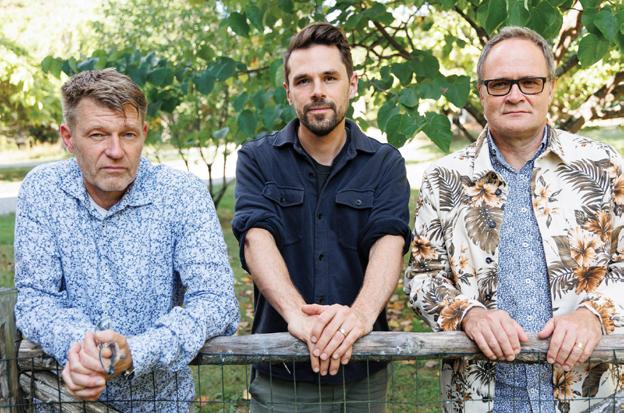
and Peter Weniger.
Wind is not the first to explore this setting; notable other recordings include Sonny Rollins’ Way Out West (Contemporary Records:1957), Joe Henderson’s State of the Tenor (Blue Note:1985), Branford Marsalis’ Trio Jeepy (Columbia Records: 1988), Joe Lovano’s Trio Fascination
(Blue Note: 1997), and Joshua Redman’s Back East (Nonesuch: 2007). The format presents both freedom and responsibility for the bassist.
“In a chordless trio, what we love is the freedom to react harmonically. There’s no guitar or piano locking us into a fixed framework. I start thinking
more in terms of counterpoint rather than just outlining chords,” Wind explained. “That’s the thrill—you can reshape the harmony in real time. But that freedom comes with a challenge. You have to be intentional so the harmony is still clear to the listener. At the same time, you want an open, resonant sound on the bass, which often leads to more ‘bass-friendly’ keys. It’s a different way of playing and a different way of listening.”
When it comes to writing, Wind moves fluidly between approaches. “I write in different ways. ‘King of the Castle’ (on September) was written on the bass. I wanted something that really resonated on the instrument. But sometimes I write at the piano, and sometimes away from any instrument. That’s something I learned from Kenny Werner—writing without trying to hear everything in advance. So, I have different compositional
if I’d play electric bass in the big band. I said, ‘Yes,’ thinking it was temporary, but I never looked back. I studied with Elmer Turnage, who had me working through a Simandl book, even on electric bass. (Franz Simandl was a double bassist from Austria-Hungary most remembered for his book New Method for String Bass). That’s how I learned to read. Eventually, I switched to upright, especially since a small bebop group didn’t want electric bass. Within a few months, I was playing in both modes, different entry points depending on what I’m trying to discover.”
Wind’s first instrument was guitar. “I remember sitting in a circle with about 10 people playing ‘He’s Got the Whole World in His Hands.’ It only had two chords—E and B7. The E was easy, but it would take five or six seconds for everyone to get their fingers into B7 before we could continue. I was about 12.
“At 15, my band director asked
the big band and orchestra. That shaped everything. I never saw classical and jazz as separate worlds.”
Wind went on to study at the conservatory in Cologne with Wolfgang Güttler, a former Berlin Philharmonic bassist under Austrian conductor, Herbert von Karajan. “He taught me everything—not just technique, but how to think like an artist.” After completing his studies, Wind received a scholarship to New York University. “It was a small program at the time. My connection
“ I SWITCHED TO UPRIGHT, ESPECIALLY SINCE A SMALL BEBOP GROUP DIDN’T WANT ELECTRIC BASS. ”
was bassist Mike Richmond—we met through the National Youth Jazz Orchestra. He told my wife and me to move to Teaneck, and we did. At 28, I focused less on technique and more on composition, arranging, and repertoire, and especially listen-
ing. That was the biggest difference I noticed with American musicians— their ability to react in real time.”
Wind quickly found his footing in New York. “I started playing small gigs, got recommended around, and began teaching non-majors in my
first semester. Around that time, my first son was born, so those years were intense, but amazing.” Among his most important mentors was pianist Bill Mays. “He would fax me lists of tunes I needed to learn, really pushing me, and then recommended me once I got to New York.” (See “Talking Jazz with Bill Mays”, Jersey Jazz, September-October 2019). Another key influence was Jim McNeely. “He would occasionally put up a signup sheet for lessons at NYU. Not many people took advantage of it, so I did. We’d play duo, talk arranging, go over my music. It was incredible. Through him, I got recommended to play with the Vanguard Jazz Orchestra.” Wind also credits Kenny Barron, with whom he recorded his previous release Stars (2026), for a lasting piece of advice: “Don’t put things off. If you have something to say, make it happen.”
Wind’s profile rose significantly after placing third in the 1995 Thelonious Monk Competition. “I have to mention John Clayton, a huge mentor and friend. I met him in 1989 at Centrum Jazz Camp (in Port Townsend. WA). He doesn’t believe in competition, but he still helped me prepare. I also worked with Jeff Hamilton, who helped me with repertoire. That competition introduced me to the U.S. scene. I played in front of Milt Hinton, Ron Carter, Percy Heath, Charlie Haden, and Christian McBride—an unbelievable jury. The guitar competition was happening at the same time, so I also played in front of Pat Metheny, John Scofield, Jim Hall, Pat Martino, and Mark Whitfield. Everyone was there—Clark Terry, Wynton Marsalis, Herbie Hancock. It was incredible.”
One of Wind’s career highlights was his annual work with the Kenne-
dy Center Honors Orchestra, which has since been halted due to recent and “unfortunate” institutional changes. “I got involved through Chris Walden, a friend from Cologne who became a major arranger in LA. He recommended me when they needed someone who could handle both orchestral and big band work. The Musical Director was bassist Ricky Minor. I did it for six or seven years. One of the highlights was being part of Aretha Franklin’s ‘Natural Woman’ performance—the one where she drops the fur coat. I was in the orchestra behind the curtain. We also performed with artists like Renée Fleming, John Legend, and many others. There’s even a moment where I’m onstage with Dianne Reeves. I really loved those weeks.”
Looking ahead, Wind shows no signs of slowing down. “Starting tonight (March 10), I’m at Birdland for
five nights with Anat Cohen, Matt Wilson, and Gary Rissmiller. Then I head to Germany for the September release tour. I’ll also be in Graz, Austria, working with bass students. They have a ‘bass night,’ and we’ll perform my arrangements. That’s something I’ve developed through my teaching at Hofstra University, where I started a bass ensemble. We’ve done pieces like ‘Yardbird Suite,’ and last year I completed an arrangement of Beethoven’s Fifth Symphony for bass ensemble, which we performed at the ISB Convention in Tallahassee.”
Wind continues to build a body of work rooted in tradition, exploration, and collaboration, moving fluidly between continents, ensembles, and roles. Like his name suggests, his career doesn’t stand still; it shifts direction when needed, but always carries the music forward while continuing to connect to the jazz’s rich past.

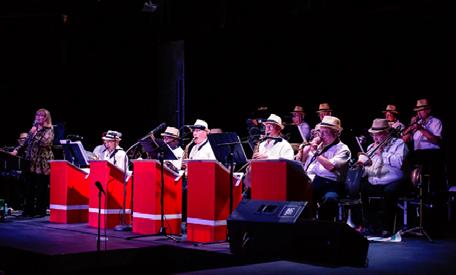
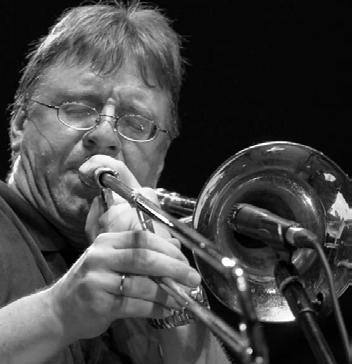
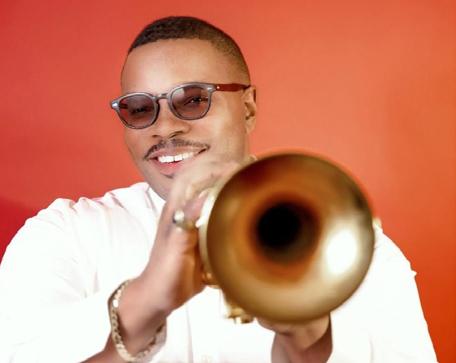
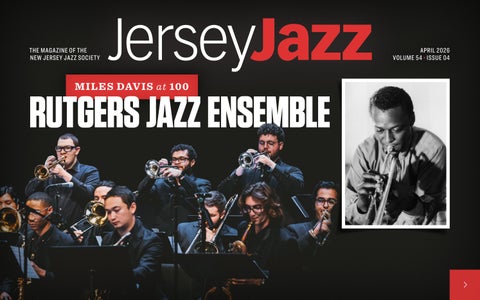
Conrad Herwig (left) will direct the Rutgers Jazz Ensemble featuring special guest,
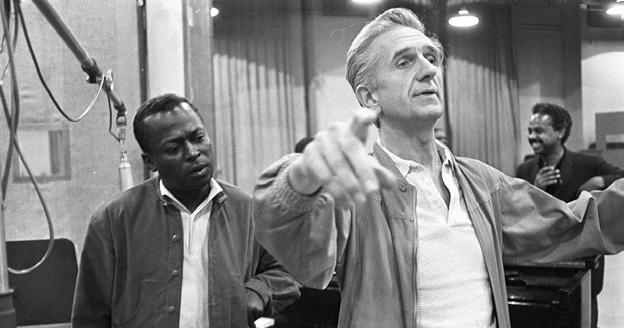
In July 1991, Miles Davis and Quincy Jones assembled an orchestra at the Montreux Jazz Festival to re-create some of the music Davis had recorded with Gil Evans, who died in 1988. The result was Miles & Quincy Live at Montreux, released by Rhino/Warner Records in 1993.
Rutgers Jazz Ensemble to Perform Music from Miles Ahead and Porgy and Bess
“We’re Going to Pick the Best of the Best ... With Gil Evans and Miles, You Can’t Really Go Wrong”
BY SANFORD JOSEPHSON
Trombonist Conrad Herwig was part of that orchestra. “My phone rang,” he recalled. “It was Quincy Jones’ personal assistant, asking me if I wanted to fly to Switzerland to record with Quincy and Miles. He said, ‘We’re going to re-create Miles Ahead, Porgy & Bess, Sketches of Spain.’ It was like a who’s who in the band. Lew Soloff and Wallace Roney were in the trumpet section; the trombone section included Tom Malone and Dave Bargeron. Mike Richmond was on bass, Grady Tate on drums. Nobody knew it was going to be Miles’ last recording. He passed three months later.
It was a once-in-a-lifetime experience.”
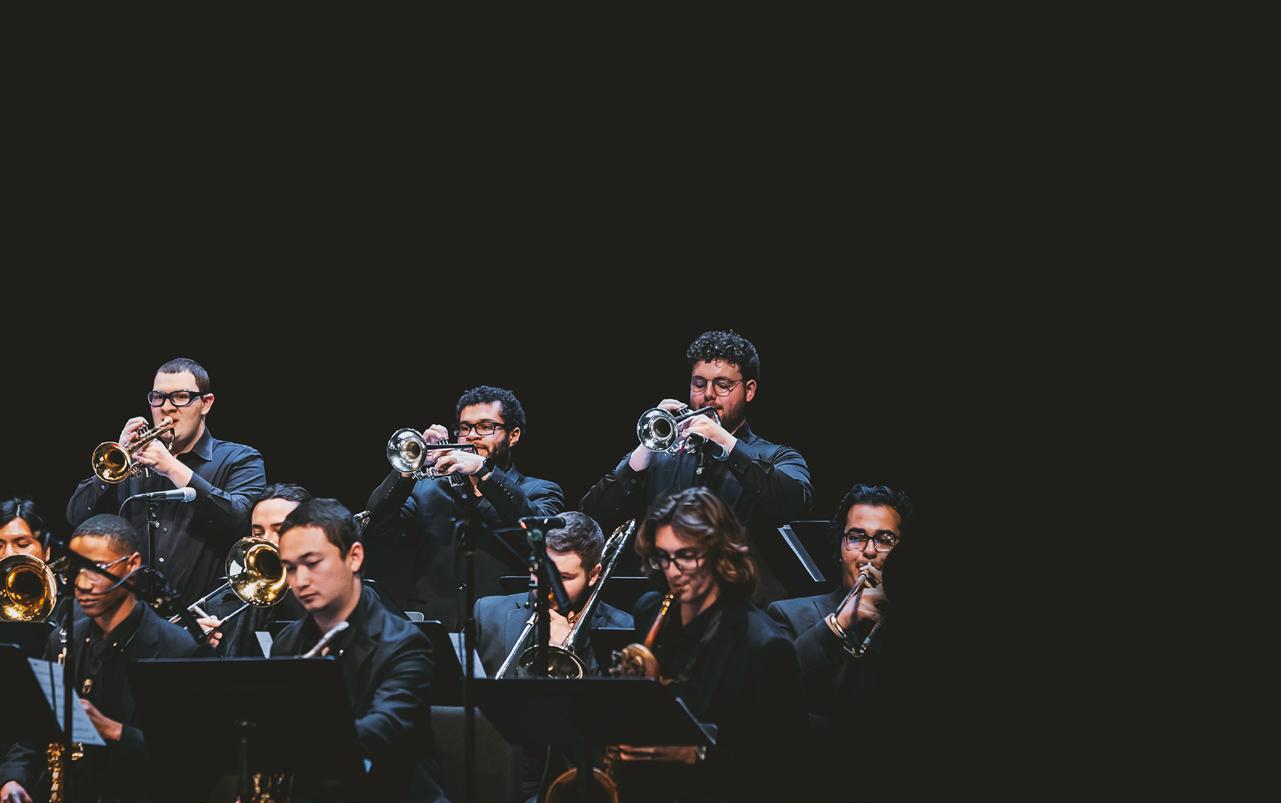
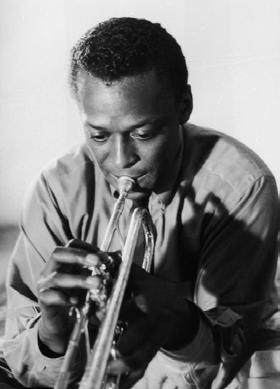
Miles Davis would have turned 100 years old on May 26 of this year, and Herwig, now Head of Jazz Studies at Rutgers’ Mason Gross School of the Arts, will be leading the Rutgers Jazz Ensemble in a “Miles Davis at 100” tribute concert on April 24 at the New Brunswick Performing Arts Center. The concert will consist of music from two of the classic Davis and Evans albums: Miles Ahead, aka Miles Plus 19, (Columbia Records: 1957) and Porgy and Bess (Columbia Records: 1959).
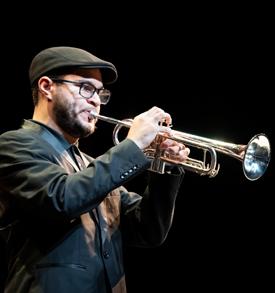
“We have these recordings,” Herwig said, “and we’re going to mix and match those amazing arrangements, featuring our special guest, trumpeter Jeremy Pelt.” Pelt is looking forward to the concert because “The set list is a culmination of my very favorite recordings.” Davis, he added, was “the singular artist that
made me pursue the craft. He represents Black excellence. The albums represent a whole to me. All the songs are my favorites, and I can sing every facet of the recordings.”
Davis, Herwig said, “is in the Valhalla of icons. There’s so much we can learn from Miles for the students. His playing and his vision and his influence on the music is existential.” The concert set list wasn’t finalized, but Herwig said, “We’re going to pick the best of the best. It’s going to be kind of a medley of the greatest hits from both of those records. With Gil Evans and Miles, you can’t really go wrong, and Jeremy is such an amazing virtuoso player.”
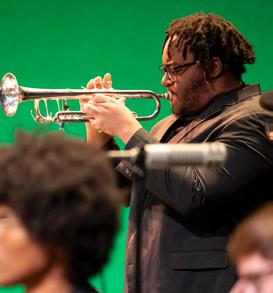
Among the young trumpeters in the orchestra will be recent graduate Tahj Walsh and undergraduate Carlos Hernandez. “This ensemble,” Herwig said, “is composed of the most experienced and talented jazz
majors we have. I’m very proud of the level of this band. And, we have one of the best drummers on the planet—Ivanna Cuesta Gonzalez.”
Art Taylor was the drummer on Miles Ahead, and Jimmy Cobb and Philly Joe Jones shared the drumming duties on Porgy and Bess. Gonzalez, a
graduate jazz major at Mason Gross, has been inspired by all three. Taylor, Cobb, and Jones, she said, “could make the music swing while still serving the larger sound of the band. Listening to those Miles Davis recordings taught me that great drumming isn’t just about chops—it’s about
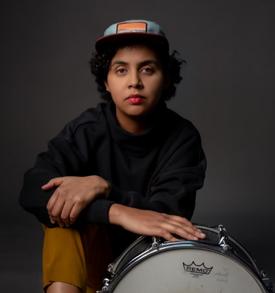
shaping time, dynamics, and texture so the whole ensemble comes alive.”
Miles Davis was the first jazz trumpeter Carlos Hernandez listened to “even before I started playing the trumpet. When I was learning jazz chords on piano, the first tune I listened to was ‘Autumn Leaves’ off of Cannonball Adderley’s record titled
Somethin’ Else. Miles sings the melody with his infamous harmon mute, a sound full of color and mystery that the cool jazz period was known for in the late ‘50s. ‘Autumn Leaves’ was the first jazz standard I learned, and Miles’ sound is what inspired me to start playing trumpet in the fourth grade.
“Another record that stood out
to me was Miles Smiles, which featured his second quintet in the late ‘60s. The harmonic structure of tunes was looser, and comping emphasized rhythmic elements.
An important part of Miles Davis’ jazz playing was his willingness to evolve and change his style.”
When Quincy Jones conceived
the idea of re-creating the music of Miles Davis and Gil Evans, he faced resistance from Davis. Finally, Davis relented in 1991. “He made a declaration that he wouldn’t go back and do anything he’d done before,” Jones told The New York Times. “I first asked him 15 years ago, and I just kept bugging him.”
Herwig believes it was “the power of Quincy, talking Miles into it. If he was going to go back, he had this supreme admiration and respect for Gil Evans.” When I interviewed Davis’ protege, the late trumpeter Wallace Roney, in 2014, he said Davis “was my idol since I was a kid. He told me he looked in the mirror, and he saw Gil in the mirror, and Gil said, ‘You got to go back and play this stuff.’ After Montreux, he was so happy about it, and he said, ‘Me and Quincy are talking about taking it on the road.’”
The UK Jazz Journal, reviewing the resulting album, described it as
“a momentous event, both for bringing Miles full circle only months before his death and for re-creating some great music.” Davis was in frail health, and the review pointed out that Roney was there to “pick up the pieces” on segments Davis couldn’t handle. AllMusic’s Ron Wynn added that, “Not every moment is golden, but the overall session ranks just a bit below the majestic ‘50s and ‘60s dates featuring Davis’ trumpet and Evans’ arrangements.”
The 1957 album, Miles Ahead, according to AllMusic’s Stacia Proefrock, was “a big gamble for Columbia Records” because Evans and Davis hadn’t worked together since The Birth of the Cool, recorded in 1949 and released in 1957 by Capitol Records. “Columbia,” Proefrock said, “allowed Evans to assemble a 19-piece band for the recordings, at a time when big bands were far out of fashion.” The resulting album,
though, “gave a hint of the greatness that would come as Evans and Davis fine-tuned their partnership over the course of the next several years.”
Two years later, Porgy and Bess was released. In a 2003 article, AllAboutJazz’s Robert Gilbert reflected that, “In jazz, only a handful of albums never lose their lustre. Each listening is a magical experience, no matter how familiar the material has become. The second collaboration between Miles Davis and Gil Evans, Porgy and Bess, is one such distinctive recording.” Pointing out that it was a follow up to “the magnificent Miles Ahead,” Gilbert added that, “Many of that album’s characteristics are also present on Porgy and Bess: lush orchestrations, a wide range of material between exuberant swingers and tender ballads, and plenty of virtuoso playing by Davis.”
Herwig emphasized that, “We’re not exactly duplicating the concert

we did in Montreux, but, with Ahead, we’re looking at classic Ger shwin stuff, like ‘My Ship” and things like Evans’ ‘Blues for Pablo’, Bru beck’s ‘The Duke’, and ‘Springsville’ (written by Johnny Carisi). For and Bess, ‘Summertime’, ‘Gone Gone Gone’, ‘ Bess, You is My Woman Now’. “It’s always fun to reminisce or spread the knowledge that you’ve gained,” he continued, “but when your students are really talented, it’s like an artist that has really com plete power of the paint, that you can paint or do sophisticated music. The student level is very high, and I’m really pleased with that.”
: The Miles Davis at 100 concert begins at 7:30 p.m. on Friday, April 24, in the New Brunswick Performing Arts Center’s Elizabeth Ross Johnson Theater at 11 Livingston Ave. in New Brunswick. To order tickets, log onto masongross.rutgers.edu/events.

“All the Swinging High Schoolers in Town Should Definitely Come Check Us Out. This is as New York as It Gets!”
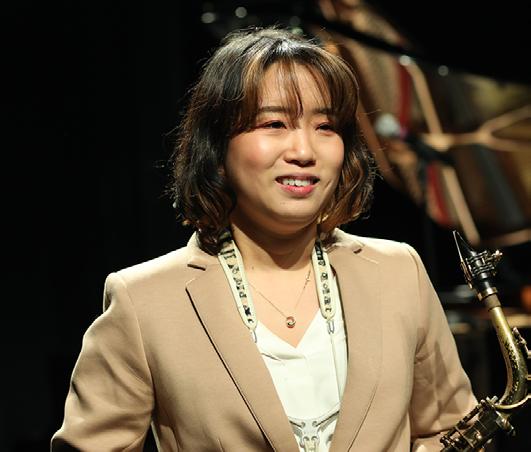
Alto saxophonist Erena Terakubo’s birthday falls on April 30, which is International Jazz Day, and this year she’ll be celebrating (her 34th) a day early with an all-star sextet—her Little Big Band Birthday Bash at Dizzy’s Club on April 29. “The band is going to be swinging,” she promised. “I go to their gigs all the time. I know their music.” She has previously played with four of the band members: saxophonist Vincent Herring, trumpeter Freddie Hendrix, pianist Mike LeDonne, and bassist John Webber. Kenny Washington will join them as the drummer.
A few days after the Dizzy’s performance, the sextet will go to the Rudy Van Gelder Studio in Englewood Cliffs, NJ, to record an album on the Savant label. “I think it will be some quartet, quintet, and sextet tracks,” Terakubo said. “I am still sorting it out. When I was doing my
Master’s at Manhattan School of Music, I learned a lot about writing, so I spent a lot of time with arrangers, mainly Richard Sussman. I had some charts I wrote for sextet, big band, and studio orchestra. I always wanted to record those arrangements.”
Sussman has been on the MSM Jazz Composition Faculty since 1986. A pianist and composer, he has performed or recorded with jazz giants such as vibraphonist Lionel Hampton, drummer Buddy Rich, and alto saxophonist David Sanborn, among many others. Terakubo also plans to do an arrangement of at least one of pianist Toshiko Akiyoshi’s compositions. “I had dinner with her recently. She’s 96 years old and is the first Japanese person who came to the U.S. to study jazz. I respect her so much. She has so many compositions.”
Terakubo was featured in the October 2023 issue of Jersey Jazz
in connection with her appearance at the South Jersey Jazz Society’s Jazz@the Point Festival in Somers Point. She moved to New York in 2018 after receiving her Bachelor’s Degree from the Berklee College of Music and went on to receive her Master’s at MSM. While still living in Japan, she recorded albums with such U.S. jazz veterans as pianist Kenny Barron and bassists Ron Carter and Christian McBride.
Other accomplishments include being a member of pianist/composer/ arranger John Beasley’s MONK’estra Big Band, celebrating the music of Thelonious Monk; and performing as part of the all-star cast of global jazz stars representing Japan at the 2022 International Jazz Day Gala. Beasley described Terakubo to Jersey Jazz as having “a unique and beautiful voice on the saxophone, with one foot in tradition and the
other with a vision for the future.”
In September of last year, Terakubo joined the Jazz Studies faculty at Michigan State University’s College of Music as Assistant Professor of Jazz Saxophone. “I was a little bit worried,” she said, “because I was inheriting students from Walter Blanding, who was in the Jazz at Lincoln Center Orchestra, but the students started trusting me, and sometimes they play a phrase that I taught them; and it’s a really good feeling.
“I have students who are outstanding,” she continued. “There’s Paloma Ximena, a tenor saxophonist who’s releasing an album on Posi-Tone, and alto saxophonist Tommy Noble, who’s moving to New York this year. And, people are going to national competitions. That’s never happened in the saxophone studio at Michigan State. Three of my students—Paloma, Tommy, and alto
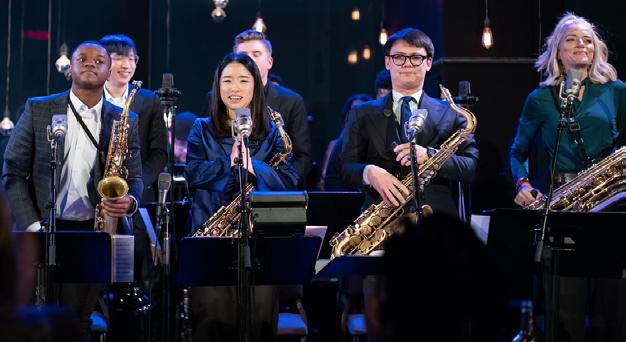
During an earlier date leading a big band at Dizzy’s Club. From left, alto saxophonist Langston Hughes II, Terakubo, tenor saxophonist Jacob Chung, and baritone saxophonist Lauren Sevian.
saxophonist Mason Reinhardt—were semifinalists this year at the NASA (North American Saxophone Alliance) Competition at Ohio State University, and Paloma won first place in the College Jazz Saxophone category.”
At JALC’s National Collegiate Championship, held in New York in January, the Michigan State Big Band finished second among the 10 competing colleges and universities; and Noble and Reinhardt were named Outstanding Alto Saxophonists.
Ximena told me that studying with Terakubo “has been an invigorating and enlightening experience. She challenges me by not only holding me accountable but expecting me to hold myself accountable as well, helping me develop the personal responsibility required to be a successful working musician. Her belief in me to succeed as a jazz musician is genuine. Professor Terakubo pushes me to expand my knowledge and technical mastery of the saxophone.
She has pushed me to technical, musical, and scholarly levels I never thought I could reach on my own.”
Noble described Terakubo as “an amazing professor. She not only helps us reach our own goals but pushes us to explore new things that broaden our perspectives as musicians.”
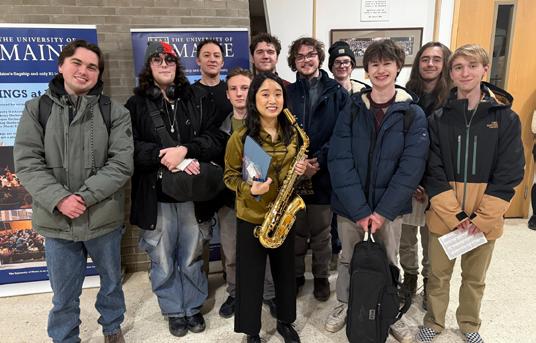
In January, Terakubo visited the University of Maine to present a concert at the Collins Center of the Arts and spend time with Jazz Studies students. She led a quartet there with Webber on bass, pianist Rich Germanson, and drummer Aaron Seeber. The UM Facebook page posted this about the visit: “The Erena Terakubo Quartet played their hearts out to a full house tonight! What a treat to hear such incredibly talented jazz musicians! And—we always love it when our guest artists spend time in classrooms before they hit the stage.”
From June 27-July 11, Tera-
kubo will be on the faculty of the Skidmore Jazz Institute in Saratoga Springs, NY. She will also perform as part of a Faculty All-Stars band with trumpeter Mike Rodriguez, trombonist Marshall Gilkes, pianist Bill Cunliffe, bassist Todd Coolman, and drummer Dennis Mackrel.
The Cellar Music Group released an album in March 2025 called The Empress Square One, featuring Terakubo in an all-female saxophone quartet led by alto and soprano saxophonist Pureum Jin, along with ten-
or saxophonist Chelsea Baratz, and baritone saxophonist Lauren Sevian. The recording finished Number 22 on the 2025 Annual Jazz Week chart, after peaking at Number 5.
Reviewing it for Jersey Jazz, Joe Lang described the quartet as having “a large sound, and each of the sax players has wonderful tone and control as well as limitless creativity. The Empress is a group well named, as their music has a royalty about it that draws you right in and holds you until the last notes.”
According to Jazz Weekly’s George W. Harris, “The sisters sound Four Brother-ish on the easy swing of (Miles Davis’) ‘Milestones’, while sizzling on (Cedar Walton’s) ‘Bolivia’. Terakubo and Baratz banter back and forth on a wailing read of (Oliver Nelson’s) ‘Yearnin’. When are these ladies hitting the road?”
This year’s Essentially Ellington competition begins at JALC on April 30, the day after the Little Big Band Birthday Bash gig, prompting Terakubo to issue an invitation: “All the swinging high schoolers in town should definitely come check us out. This is as New York as it gets!”— SANFORD
JOSEPHSON
: The Little Big Band Birthday Bash sets will be at 7 and 9 p.m. on Wednesday, April 29, at Dizzy’s Club. For more information or to order tickets, log onto jazz.org/dizzys.
“He
Was incredibly Hungry and Eager to Learn and Also an Extremely Quick Learner”
t 4 p.m. on Sunday, April 26, the New Jersey Performing Arts Center will celebrate International Jazz Day (April 30) with a free musical celebration in the Victoria Theater, featuring more than 100 young local musicians performing together.
The musicians will come from the NJPAC TD Jazz for Teens Moody Jazz Orchestra and George Wein Scholars Ensemble; Montclair’s Jazz House Kids; the Riverdale Country
School in the Bronx; and the Valley Jazz Orchestra in Annville, PA. There will also be a special performance by the Lance Bryant Big Band featuring vibraphonist Stefon Harris.
One of the celebration participants will be 16-year bassist Lukas Wormack of Plainfield, NJ, a member of the George Wein Scholars Ensemble. A junior at Koinonia Academy in Plainfield, Wormack has been playing electric bass for years. “I was playing funk and R&B,
and church music.” But when he initially enrolled in the Jazz for Teens program in the spring of 2025, he was introduced to the upright bass by Teaching Assistant Dominic Carneval. “He began to let me play his upright bass,” Wormack said, “but I was just experimenting with it.”
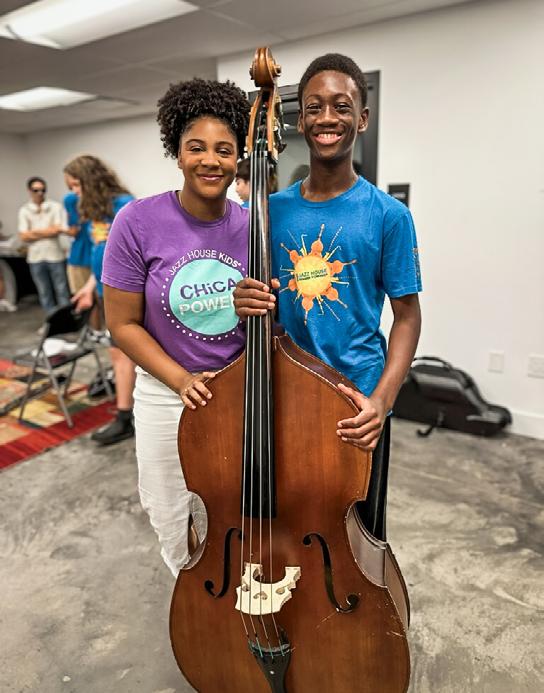
That experimentation became a more permanent part of Wormack’s musical life last summer when he attended Jazz House Kids’ Summer Workshop. “I started off on electric bass,” Wormack
“
recalled, “and then one of the TAs, Miss Laura Simone, took a particular liking to me, and, at the end of the camp, she gave me her upright bass. That’s when jazz started to make sense; that’s when it all clicked.”
Bassist Laura Simone-Martin has been featured in Jersey Jazz twice—in June 2022 when she was invited to join the Carnegie Hall National Youth Orchestra Jazz Ensemble and, in June 2023, when she was selected for NYO again. A graduate of Lawrenceville
High School, Simone-Martin is cur-
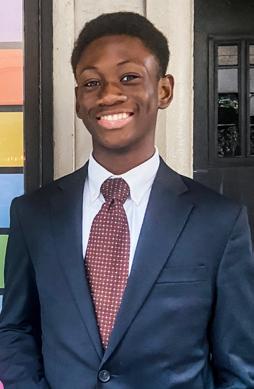
Lukas Wormack: “I always liked to watch the George Wein Scholars play and rehearse. That was a big motivating factor.”
rently a Jazz Studies major at Michigan State University’s College of Music, and she was greatly impressed by Wormack’s ability and enthusiasm. “I remember the glow he had while playing,” she said. “He was incredibly hungry and eager to learn and also an extremely quick learner. Whenever I showed him something new to practice, he was able to understand it al-
most instantly and pick it up with ease.”
Simone-Martin described Wormack as, “a very special and rare musician, someone who truly enjoys the journey of discovering and developing his love for music and the bass. When he told me he didn’t have access to an upright at all, I felt it in my spirit that I should give my first bass a new home. That bass is very special to me, as it marked the beginning of my own musical journey. I’ve been blessed to have artists and musicians look out for me along the way. I’ve even been gifted a bass myself, and I recognized this as an opportunity to do the same and pay it forward to someone truly deserving.”
Although he remembers listening to Miles Davis’ All Blues album when he was younger, Wormack “never actually got deep into jazz until I got into the Jazz for Teens program. I remember feeling really amazed by
the whole environment they create and by the big band. In the beginning, I always liked to watch the George Wein Scholars play and rehearse. That was a big motivating factor.”
Growing up, though, there was always music around his household.
“I started off on piano from an Eastern European piano teacher, Miss Olga. She taught me the fundamentals of piano and the fundamentals of theory. My mother, though, was my real teacher. She’s a singer, and she allowed me to kind of chart my own path. She played music around the house all the time. From a young age, I got a really broad diaspora of music—baby music, hip-hop, gospel. I also really liked Afro-Cuban music. I liked how when the Africans came over forcefully from Africa to the Americas, they brought their culture with them, and it still survives. They took the native culture that was al-
ready there, added European culture, and their culture; and they made so much good music. It’s just awesome.”
Looking ahead, Wormack said he “would love to do jazz in college, maybe be in a jazz ensemble or big band and do gigs. I may minor in music studies or jazz. I’m thinking of a future that does not have me touring every single week out of town. More realistically I’d like to do session gigs close by or touring for a couple of weeks.”
Laura Simone-Martin, though, believes Wormack “has the potential to become one of the greatest bass players in history, if he chooses to pursue it.”—SJ
: Although the International Jazz Day in Newark is free, registration is required. To register, log onto www.njpac.org/event/international-day-of-jazz-2026/#register.
BY VINCENT PELOTE
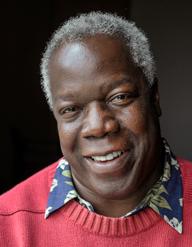
This month I am devoting this column to one of my personal favorite drummers, Dave Tough. My colleague and former boss at the Institute of Jazz Studies, Dan Morgenstern, was one of the many jazz historians and critics who often sang the praises of Tough. Nevertheless, there is no book on this great drummer probably because he had a very short life, dying at the age of 41 on December 9, 1948.
Tough was born on April 27, 1907, the son of affluent Oak Park, IL, parents. Like fellow musician Bix Beiderbecke, who was also from an affluent household in Davenport, Iowa, Tough’s career choice was not supported by his family. He made his way to the South Side of Chicago and played with a bunch of other impressionable young budding musicians including tenor saxophonist Bud Freeman, trumpeter Jimmy and guitarist Dick McPartland, clarinetist
Frank Teschemacher, and pianist Jim Lanigan. The were known as the Austin Hill Gang, and they often played with veteran musicians such as guitarist Eddie Condon, drummer Gene Krupa, clarinetist Benny Goodman, clarinetist Mezz Mezzrow, drummer George Wettling, pianist Joe Sullivan, trombonist Floyd O’Brien, and cornetist Muggsy Spanier. They all fell in love with the music made by the great Black New Orleans jazz musicians
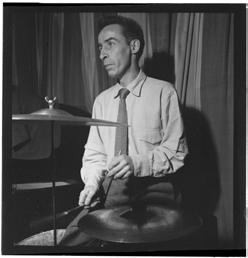
Dave Tough
working in the various Chicago venues such as the Lincoln Gardens and Sunset Café. Tough fell in love with the drums, and one of his main influences according to Freeman was New Orleans drummer Warren “Baby” Dodds. But Tough’s style was so much more subtle, though not any less swinging.
In 1926 Tough toured Europe with a seven-piece group led by George Carhart called the New Yorkers Tanzorchester and made his first records with that group, which also included fellow American clarinetist Danny Polo on clarinet, in 1927 in Berlin. His return to the U.S. found him on a number of recording sessions in New York with Eddie Condon, Red Nichols, etc. His health was always fragile and, on top of that, Tough developed an alcohol problem that often took him off the scene to recuperate. He played with the Tommy Dorsey band from 1936-37 and in 1938 he replaced Gene Krupa in the Benny Goodman
Orchestra. Other big bands he performed in were led by Bunny Berigan and Artie Shaw. Tough’s style was not anywhere as extroverted as Krupa’s or Buddy Rich’s but he swung bands in his own understated way. His cymbal work and bass drum figures were pretty advanced for the time.
Along with Count Basie drummer Jo Jones, Tough was responsible for transferring the focus of jazz drumming from the snare and bass drum to the cymbals. One could say his style was advanced for its time and foreshadowed bop drumming. In fact, Tough joined Woody Herman’s First Herd, one of the first big bands to feature bebop. He held the drum chair from 1944-45. Musicians universally praised him for what Artie Shaw described as his “musical sensibilities.”
Lionel Hampton, who played with Tough while both were part of Benny Goodman’s organization, was quoted as saying “He was the most imagi-
native drummer we ever had in the business.” Hampton went on to say, “Everything he ever hit was musical. If he tapped on the floor, it was musical.”
Alcohol abuse unfortunately continued to be a problem for Tough, complicated in his later years by epileptic seizures. In his biography of Woody Herman, author Gene Lees theorized that Tough’s alcoholism was a result of his fear of the seizures. He tried with the help of his devoted wife to stop drinking but with no success. Tragically, Tough was found unconscious on a street in Newark on a cold December morning and died the following day. In his brief time on the jazz scene, he made one hell of an impression on so many of his fellow musicians. For anyone who would like to know more about this remarkable musician I recommend the chapter on him in Burt Korall’s book Drummin’ Men: The Heartbeat of Jazz, The Swing Years (Oxford University Press: 2002).
JAZZ AT PRINCETON UNIVERSITY PRESENTS
1–6 PM FREE
SMALL GROUP X with VIRGINIA MACDONALD clarinet
SMALL GROUP A with MICHAEL RODRIGUEZ trumpet
SMALL GROUP I with PATRICK BARTLEY alto saxophone
PRINCETON UNIVERSITY FACULTY SEPTET
8 PM TICKETED HEADLINER CONCERT CREATIVE LARGE ENSEMBLE with GARY BARTZ alto saxophone

PRINCETON UNIVERSITY
RICHARDSON AUDITORIUM | ALEXANDER HALL SCAN FOR DETAILS & TICKETS
BY JOE LANG
Each month, I receive dozens of albums to consider for review. Among them have been several containing newly released music from the archives. In addition, albums by vocalists have been dominant. This month’s column will concentrate on these categories.
One of the most painful stories about jazz musicians is that of alto saxophonist Art Pepper, told in detail in the posthumous autobiography, Straight Life: The Story of Art Pepper, jointly written by Pepper and his wife, Laurie. His career was plagued by heroin addiction that resulted in four periods of jail time. (See “Jazz History Art Pepper: The Brilliance of His Saxophone Playing Was Overshadowed by his Addictions” in the September 2025 issue of Jersey Jazz). In 1959, Pepper was between jail terms and was booked into The Cellar, a fine jazz club in Vancouver. Now, thanks to Pepper’s
widow, Laurie, and Cheryl Pawelski of Omnivore Records, the music from that engagement is available for all to hear on the four-disc set, Everything Happens to Me: 1959 – Live at The Cellar (Omnivore Records -607). It resulted from Laurie Pepper hearing a clip from this material on Facebook that led her to contact saxophonist Dave Quarin who managed The Cellar and recorded several sets from Pepper’s engagement. He still had the tapes that he had recorded, and the quality was excellent. Pepper, who would be back in prison within a year, was in peak form during this run where he was accompanied by a trio from Vancouver, pianist Chris Gage, bassist Tony Clitheroe, and drummer George Ursan. There are 20 tunes spread over the first three discs, and eight incomplete takes on the fourth disc. This is music to be treasured. Pepper’s
playing was smooth, full of emotion with technique to spare; and his creative improvisations were awe -inspiring. The trio lends fine support with Gage adding several fine solos.
After his last jail sentence, Pepper’s style leaned toward the approaches of John Coltrane and the free jazz that was then in vogue. Although he remained active until his death in 1984, he never again created the musical magic that was present in his recordings from the 1950s when he was one of the giants on the scene. The four hours of music contained in this set demonstrate why he was so highly regarded. omnivorerecordings.com
Somehow, Perfect Harmony: The Lost Album (Jazz Detective – 1006) got misplaced in my stacks of albums to review. It is a previously unreleased album by trumpeter/vocalists Chet Baker and Jack Sheldon. Abetted by
pianist Dave Frishberg, guitarist Jack Marshall, bassist Joe Mondragon, and drummer Nick Ceroli, Baker and Sheldon deliver 11 tracks with each taking some of the vocals after sharing the vocal on “This Can’t Be Love.” These two had distinctly different approaches to their singing and playing. Baker was understated and stuck to the middle range on trumpet. On the other side, Sheldon was an exuberant vocalist and a bop-influenced trumpeter who did not hesitate to reach into the upper register on his horn. At the time of this 1972 recording, Baker, who had his teeth broken in a 1966 fight, had difficulty redeveloping an embouchure with his new dentures. This outing was the first straight-ahead jazz recording by him since his unfortunate fight. While stylistically different, the two were good friends and the empathy between them is evident throughout the album. It took 50 years for this
album to reach the market, and it has only 36 minutes of music. The wait was well worth it. elemental-music.com
It seems like there are more new releases of live Bill Evans performances than by any other jazz player. What makes them so appealing is the way in which Evans made each selection that he played sound unique, despite returning to many tunes frequently. This is true of most of the songs he played over the two sets on Bill Evans at the BBC (Elemental – 5990458), recorded on March 19, 1965. Evans is joined by Chuck Israels on bass and Larry Bunker on drums. Each of the two sets is bookended by the Evans theme, “Five.” Among the others are “Elsa” and “Summertime,” on set one; and “Come Rain or Come Shine,” and “My Foolish Heart” “on Set two. As is the case with Evans’ trios, the group is a musically integrated unit unlike so
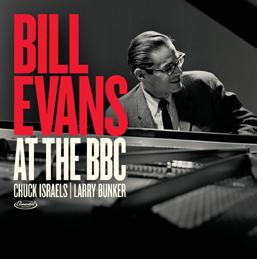
many piano trios where the bass and drums merely offer support to the pianist. Evans found bandmates with big ears and fierce concentration. This is obvious on this outing as Evans’ unique approach to harmony is absorbed by Israels and Bunker in ways that influence their contributions. Bill Evans at the BBC provides 70 minutes of pure musical pleasure. (Street Date: April 24). elemental-music.com
French-born Michel Petrucciani
was a first-tier jazz pianist who overcame many obstacles especially, osteogenesis imperfecta, a genetic
bone disorder causing him to suffer stunted growth, brittle bones, and nearly constant pain. He was blessed with a father who was committed to making life as tolerable and productive as possible for young Michel, home schooling him and exposing him to music at an early age. Petrucciani’s first inspiration was seeing Duke Ellington on television when he was about four years old, deciding on the spot that playing jazz on the piano was his goal. By his teenage years, he was already playing professionally. He moved to the United States at 18, originally in California and eventually to New York City. He quickly established himself as a force to be reckoned with on the jazz scene. Kuumbwa (Elemental Music – 5990459) was recorded in concert at the Kuumbwa Jazz Center in Santa Cruz, CA, on May 11, 1987, when Petrucciani was 24 years old. His musical partners for
this event were Dave Holland on bass and Eliot Zigmund on drums, the only recorded evidence of the special empathy present in this particular trio.
Petrucciani was an accomplished player on many levels. He had technique to spare, passion, sensitivity, improvisatory brilliance, a sense of humor, and a talent for creating fine original songs. The program, spread over two sets on this two-disc set, includes standards such as “Stella by Starlight,” “Autumn Leaves,” and “My Funny Valentine”; “a couple of jazz tunes, “Nardis” by Miles Davis” and “Sweet Georgia Bright” by Charles Lloyd”; plus five Petrucciani originals. These performances illustrate all of the attributes referenced above. In addition, we hear the generous side of Petrucciani as he offers ample solo space to Holland and Zigmund. Unfortunately, Petrucciani’s life was too brief as he passed at the age of
36. Having this music is a significant addition to his recorded legacy. Street Date: April 24. elemental-music.com
Flying High: Still Soaring (Songbook Ink), Various Artists, is a terrific follow-up to the 2024 release Flying High: Big Band Canaries Who Soared. As on the prior volume, the Champian Fulton Trio—Fulton on piano, Buster Williams or Neal Miner on bass, and Charles Ruggiero or Fukushi Tainaka on drums—provide the instrumental support for five separate vocalists, with alto saxophonist Klas Lindquist adding some tasty sax on several tracks. The singers are Bria Skonberg (“S’posin” and “It’s Been a Long, Long Time”); Tahira Clayton (“Good Morning Heartache” and “Swing! Brother, Swing!”); Carmen Bradford (“What a Little Moonlight Can Do” and “Lullaby of the Leaves”); Nicole Zuraitis (“Sentimental Journey”); Fulton (“Just for a Thrill” and “Do It Again). There Is one nifty
instrumental duet by Fulton and Lindquist, “If Dreams Come True.” These women nicely capture the kind of vocals that were standard fare during the Swing Era. songbook-ink.com
When a fine female jazz singer like April Varner decided to record an album of tunes mostly from the recorded archives of one of her inspirations, Ella Fitzgerald, chances were that the resulting album would be an exciting one. Listen to Ella (Cellar Music – 032306) and you will hear a young woman who has taken each selection to different places than Ella did, but does so with a jazz sense that her inspiration would admire. The accompanying musicians include a big band consisting of trumpeters Brian Lynch, Nathaniel Willford, and Michael Cruse; trombonists Jeffrey Miller and Jacob Melsha; saxophonists Cleave Guyton and Bruce Williams; pianist William Hill III; bassist Yasushi Nakamura; and drummer Ul-
ysses Owens Jr. for “I’ve Got You Under My Skin,” “I Couldn’t Sleep a Wink Last Night/In the Wee Small Hours of the Morning” and “Fly Me to the Moon; a trio of pianist Emmet Cohen, Nakamura and Owens on “A-Tisket, A-Tasket,” “Night and Day,” “Cheek to Cheek,” “Mr. Paganini,” “Bewitched, Bothered and Bewildered” and “Undecided; and a duet by Varner and Cohen on “Dream a Little Dream of Me.” The big band arrangements are by Brian Lynch, and
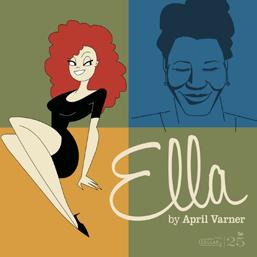
the other tracks are arranged by Emmet Cohen. Varner takes full advantage of the strong instrumental support that she receives. She swings, is comfortable at any tempo, has a true jazz sense in her phrasing, and has an imaginative approach to each song. Varner raised expectations with her first album, April (Cellar Music – 211123), showed her developing talent on her two Christmas releases, and on Ella, she makes her listeners realize that she is indeed a major new voice in jazz. (Varner was featured as a Rising Star in the June 2023 issue of Jersey Jazz) cellarlive.com
There are few jazz performers around today who can equal the kind of excitement generated by vocalist Catherine Russell when she is in front of an audience. On March 24, 2024, she was front and center on the stage of the Appel Room at Jazz at Lincoln Center for a program honoring The Hot Club of New York, enthusiasts of
vintage jazz and blues who have weekly gatherings playing 78s of that music. The results of the JALC concert are available to hear on Live @ Jazz at Lincoln Center (Dot Time Records – 9179). Russell, daughter of pianist/ bandleader/composer Luis Russell, was steeped in these sounds from her earliest days. She culled the expansive catalog of these recordings to select 11 tunes that illustrate the attraction of this music. Among the songs included are: “Now You’re Talkin’ My Language,” “Never Too Old to Swing,” “I Just Refuse to Sing Those Blues,”, and “I Like Pie, I Like Cake.” Russell’s approach exudes the spirit of the earlier era, and she is adept at milking the double entendre present in some selections. Her band is filled with musicians who understand this material as well as Russell does: trumpeter Jon-Erik Kellso, trombonist John Allred, tenor saxophonist/clarinetist Evan Arntzen, guitarist Matt Munis-
teri, bassist Russell Hall, and drummer Domo Branch. Traveling back in time with Russell and her crew pleased the audience and will certainly have the same effect on you. Street date: April 24. dottimerecords.com
The Sweetest Sounds (Sabrina Records – 063) is an impressive debut recording by Chicago-based vocalist/ pianist Isabella Isherwood. Although only 23-years of age, she is an experienced performer with a background in theater as well as music. She has chosen a program of tunes that are from the Great American Songbook such as “The Sweetest Sounds,” “Till There Was You,” and “This Time the Dream’s on Me”; a couple of hip jazz tunes, “Devil May Care” and “’Round Midnight;” and a pair from the pop field, Bob Dylan’s “Don’t Think Twice, It’s All Right” and Amy Winehouse’s “Love Is a Losing Game.” Accompanied by her own piano, guitarist Mike
Allemana, bassist Joe Policastro, and drummer Alejandro Salazar, Isherwood demonstrates a deep understanding of and regard for the lyrics that she sings. Her acting background enables her to add a dramatic element to her interpretations, but does not detract from her jazz-influenced approach. Her voice is a perfect vehicle for her to present each song. With the effective support of her bandmates, Isherwood has given her listeners a hip introduction to her talents. Street Date April 3. isabellaisherwood.com
Vocalist Tierney Sutton and pianist Tamir Hendelman are a superb duo. Sutton is one of the most innovative singers in jazz, and Hendelman combines his formidable jazz chops with the sensitive ears required to be an effective accompanist. In this format, Sutton and Hendelman prove to be perfectly matched. Unlike many vocal/ piano pairings, they are equal partners,
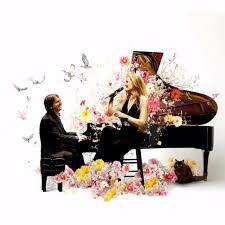
feeding off of each other’s creativity to create unique approaches to each selection on Spring (BFM Jazz). As the title indicates, the program contains songs related in some way to Spring: “Waters of March,” “April, She Will Come,” “’S Wonderful,” “I Get Along Without You Very Well,” “Things Are Swingin’,” “Spring,” “Spring Can Really Hang You Up the Most,” “Spring Will Be a Little Late This Year,” “Spring, Spring, Spring,” “You Must Believe in Sprin,” and “L.O.V.E,” the closer that adds a sizzling finale to this interesting collection. The performances are full of surprises. Sutton takes songs in unexpected directions, but is also ca-
pable of lovely straightforward readings of ballads. Hendelman is always right with her, adding his imaginative perspectives seemingly effortlessly. Street date” April 3. tierneysutton.com
It is fitting that, as the time approaches for Tony Bennett’s centennial birthday, singer/guitarist John Pizzarelli, who is carrying on the tradition of performing songs of the Great American Songbook, has released Dear Mr. Bennett (Gren Hill Music – 6666). Accompanied by his regular musical partners, pianist Isaiah J. Thompson and bassist Mike Karn, Pizzarelli addresses 12 selections from the vast catalog of songs recorded by Bennett. The tunes are “Watch What Happens,” “The Best Is Yet to Come,” “It Amazes Me,” “Firefly,” “Boulevard of Broken Dreams,” “Because of You,” “It Don’t Mean a Thing (If It Ain’t Got That
Swing),” “Waltz for Debby,” “Young and Foolish,” “When in Rome,” “I
Left My Heart in San Francisco”, and “Shakin the Blues Away.” (See “John Pizzarelli to Perform Songs from His New Album, Dear Mr. Bennett” in the March 2026 Jersey Jazz). Pizzarelli sometimes accompanied Bennett on radio and had an enduring friendship with him. In fact, the cover to the album is based on a sketch of Pizzarelli drawn by Bennett while seeing Pizzarelli at Feinstein’s in New York City. Pizzarelli does not channel Bennett. Instead, he gives his own special readings to the songs as well as providing ample examples of his guitar artistry. This heartfelt tribute would certainly have met with warm approval by the incomparable Tony Bennett. greenhillmisic.com
Watch the Latest News section of njjs.org for more album reviews later in April.
THANK YOU and welcome to all who have recently joined or renewed their memberships. We can’t do what we do without you!
Your membership is vital to NJJS’s mission to promote and preserve America’s great art form— JAZZ!
org
Deirdre Garvey FLORHAM PARK, NJ
Linda Berliner MADISON, NJ
Timothy Fisher
NEW PROVIDENCE, NJ
Steven Marcus SHORT HILLS, NJ
Nancy Miller JERSEY CITY, NJ
David Ross MENDHAM, NJ
Robert Seeley FLEMINGTON, NJ
Terrence Smith MORRISTOWN, NJ