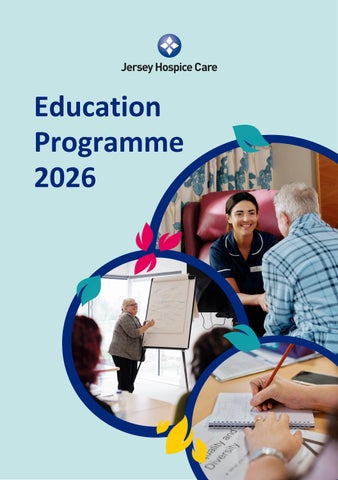
Education Programme 2026
Introduction At Jersey Hospice Care, our vision is that anyone with a life-limiting or life-threatening condition - and those close to them - have access to the best palliative care and support, when and where they need it. We recognise the pivotal role that education and training plays in delivering this care and support, and listed within this brochure is our comprehensive learning programme. Each course in our programme is hosted by members of our Education Team - clinical professionals with extensive teaching and palliative care experience - with support from practicing clinical specialists in palliative and end of life care. Our courses, some of which are accredited for Continuing Professional Development (CPD), including sessions that delve into the principles of end of life care, offering skill-based workshops on communication, advance care planning, discussions around spirituality, and sessions addressing emotional and bereavement support both before and after death. Expanding palliative care education to the wider community empowers not only health and social care professionals, but also family members caring for loved ones, and individuals involved in providing support, to offer compassionate, informed, and holistic care. All courses are provided free of charge unless stated otherwise.
Contact and booking Our Community Education Practitioners offer bespoke palliative and end of life education sessions at a location convenient for you. Please contact us for more information or to arrange a visit. You can email the team on: Education@jerseyhospicecare.com We look forward to welcoming you at Jersey Hospice Care.
Education Team, Jersey Hospice Care
Book here!
Or visit: www.jerseyhospicecare.com
Courses Palliative and End of Life Care - Improving Patient Outcomes Through Enhancing Your Knowledge Foundation This foundation-level interactive, evidence-based workshop is aimed at all health and social care professionals. It sets the context of end of life care and will help you understand the meaning of palliative, end of life care, and the Gold Standards Framework. The content will help you identify when people are approaching the end of their lives - 12 months or imminently dying - and increase knowledge, confidence, and understanding of the importance of ‘Advance Care Planning’ and ‘Treatment Escalation Plans’. Dates: 24 March | 9:00-16:00 9 June | 9:00-16:00 6 October | 9:00-16:00 10 December | 9:00-16:00 Is this course for you? This one day course is suitable for all health and social care workers interested in learning more about palliative and end of life care essentials. It is a foundation course that is useful for those new to this speciality and as preparation for more advanced sessions.
Routes to Success: Ambitions for Palliative and End of Life Care - Intermediate This highly interactive two day workshop focuses on raising awareness of the principles of palliative and end of life care and how these can be translated to and applied in any healthcare setting throughout our island community. The course is framed by the Ambitions for Palliative and End of Life Care: A national framework for local action 2021-2026. It sets out a vision to improve end of life care through partnership and collaboration between organisations at a local level. The focus is on how these principles can be translated into practice no matter what the role of the individual or the care setting is.
Dates: 20 & 21 January | 9:00-17:00 3 & 4 June | 9:00-17:00 3 & 4 November | 9:00-17:00 Is this course for you? This course is suitable for all health and social care workers interested in learning more about palliative and end of life care. It is an intermediate course to gain more knowledge of this speciality and as further preparation for more advanced sessions.
Holistic Aspects of Palliative Care There is the option to attend the all day course or half day. Total Pain This interactive workshop considers the history and origins of Cicely Saunder’s concept of “Total Pain”. As a group we consider the Social, Psychological, Physical and Spiritual components of pain and look at the relevance of “Total Pain” in our assessments. This session offers practical tools, case discussions, and evidenceinformed strategies to support individualised holistic care. Participants will deepen their understanding of multidimensional pain, enhance communication skills, and build confidence in delivering compassionate, person-centred support to patients and families during some of life’s most challenging moments. Dates: 19 February | 9:00-13:00
16 June | 9:00-13:00 20 October | 9:00-13:00 Sexuality, Body Image, and Dignity Let's dive deep into the world of palliative care, exploring the connections between sexuality, body image, and dignity in a holistic way. The aim of this workshop is to explore the importance of sexuality, body image and dignity reinforcing the need to include intimacy and sexuality as central components of health care. Interactive activities will be used to explore the issue of dignity and how this may be perceived and experienced by individual patients. The following topics will be covered: • The importance of dignity • The impact of altered body image on wellbeing at the end of life • Barriers to communication around sexuality, intimacy and body image • Application to practice Dates: 19 February | 13.30-16:30 16 June | 13.30-16:30 20 October | 13.30-16:30 Are these courses for you? These courses are intended for all health and social care workers in any setting and provides further learning related to the concept of “Total Pain” and sexuality, body image, and dignity.
Advance Care Planning Do you find it difficult to have conversations about the end of life? People have the right to make choices in their care - including end of life medical decisions. However, these conversations can be challenging for many. Advance Care Planning (ACP) is an important component of the Gold Standards Framework. Attending this evidence-based workshop will support you to build confidence in having these sensitive conversations. You will learn about the key components and benefits of having ACP discussions with people in their last years of life. This one day workshop will include the use and guidance on ACP in different settings, ACP for people with dementia, discussion of common challenges, solutions, and communication skills. Dates: 3 February | 9:00-16:30 18 June | 9:00-16:30 23 September | 9:00-16:30 26 November | 9:00-16:30 Is this course for you? This course is suitable for all health and social care workers and volunteers working with individuals who may benefit from the opportunity to plan their future care.
Opening the Spiritual Gate Having a conversation about spiritual issues is not always easy. However, when providing holistic care, addressing spirituality is everybody’s business and everyone in healthcare has a role to play. This one day workshop aims to help health and social care workers gain confidence and skills in assessing and having conversations about spiritual needs with people in their care. Throughout the day we will: Discuss the diversity and individuality of spiritual and religious needs Consider how to open, maintain, and close a conversation about spiritual issues Understand the importance of concise and confidential reporting and communication of spiritual needs Consider a management plan for meeting spiritual needs Have access to available resources to support conversations Develop an individual action plan to apply within the workplace Dates: 15 January | 9:00-16:30 14 May | 9:00-16:30 29 September | 9:00-16:30 Is this course for you? This course is intended for all health and social care workers in any setting and provides further learning related to spirituality. This is a paid-for course, price £80.
End of Life Dementia Care This one day course explores how we can ensure the delivery of high quality, compassionate, and co-ordinated end of life care for people with dementia. The session starts with why an awareness of the neurology of dementia aids a person-centred care approach. This will cover how we meet the physical, psychological, and spiritual needs of the person living with dementia, whilst also paying attention to the needs of their families. This course is run in collaboration with Health Care Jersey Senior Mental Health Lecturer and supported by individuals with lived experiences caring for someone with dementia; offering a practical and personal insight. You will have the opportunity to network with colleagues from across the health, social care, and voluntary sector to share common challenges in improving end of life care for those living with dementia. Dates: 17 February | 9:00-15:00 22 April | 9:00-15:00 16 September | 9:00-15:00 17 November | 9:00-15:00 Is this course for you? This course is for health and social care professionals working in any care setting interested in learning more about caring for a person with dementia at the end of life.
Bereavement, Grief, and Loss in the Workplace This half day workshop aims to understand the issues surrounding bereavement in the workplace, and how to communicate with clients, colleagues, employees, patients, and customers after someone close to them has died. The workshop provides an opportunity to have your questions answered about this taboo subject. The aim of this course is to “normalise” grief and the process of bereavement, to introduce the various helpful grief models, and to help participants on how to acknowledge and support those experiencing grief. Course outline: Gain an understanding of loss and its impact How to communicate with others after someone close to them has died Why can grieving at work be difficult? What is grief and its impact? Models of grief Roles and responsibilities of workplaces in relation to loss Minimising loss related trauma Signposting and support Dates: 18 March | 9:15-13:00 18 November | 9:15-13:00 Is this course for you? Anyone who wishes to deepen their understanding of the issues surrounding grief, loss, and bereavement in the workplace. This is a paid-for course, price £80.
Communications Skills - Foundation The aim of this half day workshop covers the following topics: Defining communication Principles of effective communication Barriers to effective communication Core communication skills Focusing on changing practice Dates: 11 February | 9:00-13:00 20 May | 9:00-13:00 16 July | 9:00-13:00 15 October | 9:00-13:00 Is this course for you? This course is suitable for all health and social care workers wanting to improve their communication skills in palliative care or need a refresher before the intermediate level course.
Communications Skills - Intermediate This three hour course builds on the topics covered in ‘Communication Skills - Foundation’ and will include: Reinforcing core communication skills Introducing an evidence-based communication skills model The current evidence base for effective communication and the barriers Identification and recognition of effective communication skills in practice Application of a positive change to practice
Dates: 11 February | 13:30-17:00 20 May | 13:30-17:00 16 July | 13:30-17:00 15 October | 13:30-17:00 Is this course for you? The course is suitable for all health and social care workers who’ve attended the foundation session aiming to enhance their competence and confidence in effective communication. This is a paid-for course, price £40.
Communications Skills - Advanced Effective communication is fundamental to good quality patient care. This course will explore challenging communication issues from the participant’s practice and provide a structured evidencebased and practical approach to advanced communication skills. This is a two day interactive workshop to develop your skills and confidence when communicating with patients and families at the end of life. This course requires contribution from participants for a range of activities which may include the use of role play and working with an actor. Participants are able to refresh and review their current communication skills practice and experience through the use of: Reinforcement of core communication skills Practical use of the Calgary Cambridge Communications skills model Review of the evidence base for effective communication Skills practice in advance care planning and end of life
conversations Dates: 29 & 30 April | 9:00-17:00 | Enid Quenault, Health and Wellbeing Centre 9 & 10 July | 9:00-17:00 (at Hospice) 3 & 4 September | 9:00-17:00 | Enid Quenault, Health and Wellbeing Centre 10 & 11 November | 9:00-17:00 (at Hospice) Is this course for you? This course is open to health and social care professionals who are regularly involved in complex, difficult or challenging conversations with patients, families, or colleagues and wishing to practice and enhance their communication skills in a safe and supported environment. It’s recommended to attend the foundation and intermediate sessions. Please note delegates must complete the full two days to receive their certificate of attendance.
Mini-Series The mini-series programme offers a collection of short, focused sessions introducing key aspects of palliative and end of life care. Designed to complement our more detailed training events, these sessions aim to provide accessible learning opportunities for those with limited time or a preference for more concise educational formats. There are multiple dates available, please book via Eventbrite or contact the Education Team for more information. These sessions can also be brought to your place of work if you prefer.
Essentials of Palliative and End of Life Care This series includes: Principles of palliative and end of life care Priorities of care for the dying person and The Personalised Care Record for the expected last days of life Recognising deterioration and when to act Needs based coding using The Gold Standards Framework
Essential Clinical Skills in Palliative and End of Life Care This series includes: A practical workshop for the use of syringe pumps Commonly used medications to treat the most common symptoms at the end of life Care after death: A practical session addressing person-centred care after death About Me and Do Not Attempt Cardiopulmonary Resuscitation
Symptom Management in Palliative and End of Life Care This series includes: Introduction to symptom recognition in Palliative Care Introduction to pain management in Palliative Care Managing anxiety, agitation, and delirium Managing breathlessness and dyspnoea Gastrointestinal symptoms in the palliative patient Palliative care emergencies
How To Find Us Jersey Hospice Care Mont Cochon, St Helier, JE2 3JB 01534 876555 www.jerseyhospicecare.com Unless otherwise specified, all courses are held at the purposebuilt King Centre on the Jersey Hospice Care premises. There is free parking and wheelchair access. Lunches will be available to order on all full day courses only. Directions: From St Helier, head west along the Avenue. At First Tower, turn right at the traffic lights (by the Martello Tower) and up Mont Cochon (you will pass The Old Bakehouse on your right and a corner shop on your left). Carry on up Mont Cochon, passing St Andrew’s Park on your left, go round two sets of S bends and Jersey Hospice Care is at the top of the hill on your right.