
FEATURE REPORT: ELECTRONIC HEALTH RECORDS
INSIDE:
Peterborough’s Peregrine PRHC has created an enterprisewide platform called Peregrine that integrates numerous systems. It offers BI and AI to give staff and clinicians new ways of solving problems.
Page 4
Reducing no-shows
Newfoundland and Labrador have been testing an AI-powered system that has dramatically lowered the rate of no-shows in healthcare. The solution includes two-way texting, and scores high marks with patients and staff.
Page 6
Up to speed quickly
When the North Bay Regional Health Centre went live with its EHR in 63 outpatient clinics, it took only three days for them to manage as many patients with the new digital system as they had before.
Page 8

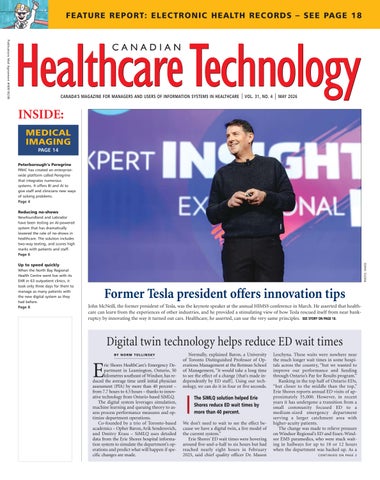
Former Tesla president offers innovation tips
John McNeill, the former president of Tesla, was the keynote speaker at the annual HIMSS conference in March. He asserted that healthcare can learn from the experiences of other industries, and he provided a stimulating view of how Tesla rescued itself from near bankruptcy by innovating the way it turned out cars. Healthcare, he asserted, can use the very same principles. SEE STORY ON PAGE 18.
Digital twin technology helps reduce ED wait times
BY NORM TOLLINSKY
Erie Shores HealthCare’s Emergency Department in Leamington, Ontario, 50 kilometres southeast of Windsor, has reduced the average time until initial physician assessment (PIA) by more than 40 percent –from 7.7 hours to 4.5 hours – thanks to innovative technology from Ontario-based SiMLQ.
The digital system leverages simulation, machine learning and queuing theory to assess process performance measures and optimize department operations.
Co-founded by a trio of Toronto-based academics – Opher Baron, Arik Senderovich, and Dmitry Krass – SiMLQ uses detailed data from the Erie Shores hospital information system to simulate the department’s operations and predict what will happen if specific changes are made.
Normally, explained Baron, a University of Toronto Distinguished Professor of Operations Management at the Rotman School of Management, “it would take a long time to see the effect of a change [that’s made independently by ED staff]. Using our technology, we can do it in four or five seconds.
The SiMLQ solution helped Erie Shores reduce ED wait times by more than 40 percent.
We don’t need to wait to see the effect because we have a digital twin, a live model of the current system.”
Erie Shores’ ED wait times were hovering around five-and-a-half to six hours but had reached nearly eight hours in February 2025, said chief quality officer Dr. Mason
Leschyna. These waits were nowhere near the much longer wait times in some hospitals across the country, “but we wanted to improve our performance and funding through Ontario’s Pay for Results program.” Ranking in the top half of Ontario EDs, “but closer to the middle than the top,” Erie Shores reports annual ED visits of approximately 35,000. However, in recent years it has undergone a transition from a small community focused ED to a medium-sized emergency department serving a larger catchment area with higher-acuity patients.
The change was made to relieve pressure on Windsor Regional’s ED and Essex-Windsor EMS paramedics, who were stuck waiting in hallways for up to 10 or 12 hours when the department was backed up. As a
PHOTO: HIMSS
SiMLQ digital twin technology helps Erie Shores reduce ED wait times
result, Erie Shores ED is now serving about a third of the patients seeking emergency care in the Windsor-Essex County area.
“With that, we’re having sicker patients coming in with more complex presentations and fewer patients with simple concerns,” said Dr. Leschyna. “So, it has become a more demanding place to work and that had contributed to a drain on morale. At the same time, our performance dropped because when you have more complex patients, the work is a lot more difficult and time consuming.
“Instead of seeing a 25-year-old with a cough and cold, we end up seeing an 80year-old who’s in a nursing home with numerous comorbidities presenting with multiple concerns.”
There was a little less impact on staff who had experience working in busier EDs, but it was a big change for doctors and nurses who were used to the slower pace of the ED prior to the transition, said Dr. Leschyna.
“Clinical administration had already been implementing creative approaches to improve access and flow in the department,” remarked SiMLQ’s Baron. “However, they needed our technology to amplify these ideas and create the capacity to step back from day-to-day operational demands and redesign processes in a more sustainable, effective way.”
“What we aim to do,” added Alwin Hartawan, SiMLQ’s director of business development, “is take that burden off their shoulders and let them focus on patient care. If we can automate this kind of decision-making for them, they can concentrate on saving lives.”
Efforts to improve performance prior to the engagement with SiMLQ were challenging because “they weren’t controlled experiments where you change one variable and everything else stays the same,” said Dr. Leschyna. “As you’re changing, the entire environment is changing around you, so it’s hard to know if what you’re doing is making a difference.”
Another challenge with making changes in the absence of SiMLQ’s technology, noted Dr. Leschyna, is that people in the department have different ideas about how to improve performance, “and without solid evidence to support one over another, it often comes down to whoever presents the most convincing argument rather than a true evidence-based decision.”
The anonymized data that’s used in SiMLQ’s simulation model includes a detailed event log of patient flow through the system from triage to discharge. The model also includes the patient’s age and gender, the zone to which they were routed and the number of staff on the floor.
“The model would see the number of patients flowing through the department
Do More With One Device
Optimize workflows and empower care teams with a Zebra Mobile Computer.
and the stylized Zebra head are trademarks of Zebra Technologies Corp., registered in many jurisdictions worldwide. All other trademarks are the property of their respective owners. ©2025 Zebra Technologies Corp. and/or its affiliates. 04/08/2025.


and what was happening to each patient,” explained Dr. Leschyna. “They would see the clicks on the computer that represented those tasks. We would give SiMLQ a chunk of that data for a period of time, but we also shared high level process mapping and how we view things as happening from the clinician perspective.”
The biggest change that was made because of the engagement with SiMLQ related to physician scheduling. Instead of multiple doctors starting their shifts at the same time, Erie Shores’ ED moved to a cascading shift schedule with four or five physicians all starting at different times.
“One of the things I suspected but didn’t have evidence for was that wait times depend on when patients arrive during physician shifts,” said Dr. Leschyna.
CANADA’S MAGAZINE FOR MANAGERS AND USERS OF INFORMATION TECHNOLOGY IN HEALTHCARE Volume 31, Number 4 May 2026
Address all correspondence to Canadian Healthcare Technology, P.O. Box 907, 183 Promenade Circle, Thornhill ON L4J 8G7 Canada. Telephone: (905) 709-2330. Internet: www.canhealth.com. E-mail: info2@canhealth.com. Canadian Healthcare Technology will publish eight issues in 2026. Feature schedule and advertising kits available upon request. Canadian Healthcare Technology is sent free of charge to physicians and managers in hospitals, clinics and nursing homes. All others: $67.80 per year ($60 + $7.80 HST). Registration number 899059430 RT. ©2026 by Canadian Healthcare Technology. The content of Canadian Healthcare Technology is subject to copyright. Reproduction in whole or in part without prior written permission is strictly prohibited. Send all requests for permission to Jerry Zeidenberg, Publisher. Publications Mail Agreement No. 40018238. Return undeliverable Canadian addresses to Canadian Healthcare Technology, P.O. Box 907, 183 Promenade Circle, Thornhill ON L4J 8G7. E-mail: jerryz@canhealth.com. ISSN 1486-7133
Canada
Patients who arrive at the ED at the start of a physician shift, he noted, are more likely to be seen on an expedited basis, but if they arrive toward the middle or the end of a shift, they’re likely to wait longer because these physicians have already seen a lot of patients and were busy following up rather than seeing new patients. “SiMLQ verified that this was happening,” he said.
With all four or five physicians starting at staggered times, patients are more likely to arrive at the start of a physician’s shift and therefore more likely to have a shorter wait time.
“It made some difference to the average time it takes for a patient to be seen, but where it really matters is in the 90th percentile,” said Dr. Leschyna. “Instead of some patients waiting five hours and other patients waiting 30 minutes, everyone moved down to waiting two or three hours. When you’re looking at the 90th percentile, that makes a huge difference in cutting down those longest wait times, which are so frustrating for patients. Moving the average wait time from three to two and a half hours is important, but moving the 90th percentile down closer to the average is the main thing that patients care about.”
Morale also improved, said Dr. Leschyna, because “no one wants to start a shift with patients who have been waiting seven or eight hours. The first question you’re asked is ‘Why has it taken so long for you to see me?’ It’s much nicer to walk into a shift when patients aren’t frustrated with the long waits.”
Wait times were also reduced by directing more patients to the ED’s lower acuity zone, where patients are assessed much faster than in the high acuity zone. “We suspected this, but SiMLQ brought to light how significant this was.”
“Another change we made was that we became more transparent with physicians about how productive they are and how many patients they’re seeing on a shift,” said Dr. Leschyna. “We created a tracking board showing how much weight doctors are carrying in the department. This encouraged those who were slower to recognize that they were underperforming and adjust their behaviour accordingly.”
While Erie Shores ED staff are pleased with the improvements that have been made, they continue to have access to the model to test additional changes. There is also the possibility of using SiMLQ’s technology to expand the model to cover other areas of the hospital, including diagnostic imaging and the inpatient department, which both impact performance in the ED.
Publisher & Editor
Jerry Zeidenberg jerryz@canhealth.com
Office Manager
Neil Zeidenberg neilz@canhealth.com
Contributing Editors
Dianne Daniel dianne.l.daniel@gmail.com Will Falk will@wfalk.ca
Dr. Sunny Malhotra Twitter: @drsunnymalhotra Norm Tollinsky tollinskyn@gmail.com
Art Director
Walter Caniparoli art@canhealth.com
Digital Media Specialist
Rebecca Downer rebecca@canhealth.com
Dr. Mason Leschyna Opher Baron, PhD





Peterborough Regional Health makes AI push, rolls out Peregrine
BY JERRY ZEIDENBERG
LAS VEGAS – At a HIMSS session on how hospitals are deploying real-world AI solutions, Evan Lyons, executive vice president and chief information officer at Peterborough Regional Health Centre (PRHC), described a major AI-driven platform that’s about to be rolled out at his organization in the next few months.
PRHC is a community hospital located 140km east of Toronto, serving a broad urban and rural referral population of 600,000. It’s unusual for a hospital of its size, outside of a major urban centre, to have orchestrated such a large-scale AI program.
Lyons spoke at the annual HIMSS conference in March.
He said the hospital has integrated its main sources of data and linked them to an AI-enabled data platform, so that clinicians and administrators can find the answers to difficult questions faster than ever before. The system is designed to help them make more informed decisions for both clinical and administrative work.
Called Peregrine, the AI-powered platform makes use of underlying technologies from Microsoft, including Fabric for integration and Copilot for generative AI. “We’ve now integrated over 18 different data sources, and we’ve flowed them into the platform,” Lyons said.
Key to the effort has been the leadership of PRHC president and CEO, Dr. Lynn Mikula, who has championed new ways to handle rising costs and the shortage of staff in healthcare today.
She has been a huge supporter of innovative technologies like interoperability solutions, business intelligence and AI to enable staff to make better decisions and to work more effectively.
As she noted in a press release issued by PRHC, “It’s difficult to overstate the effects Peregrine will have on the way we do things at the hospital. Having real-time, curated data at our fingertips through a custom-built platform that has been designed to inform and support the decisions we make – this is a vitally important tool when it comes to the lifesaving work we do here every day.”
PRHC is encouraging people to query

Lthe system to find their own answers to difficult questions.
Lyons said one of the more technically inclined physicians worked with the AI system on departmental staffing.
“They took the data and did some modeling with it. In a department where they’ve done scheduling the same way for about 15 years, they’re now changing their scheduling system, based on the data,” said Lyons.
Peregrine is expected to become very helpful in case costing, too, as departments try to keep spending under control.
The system allows users to model different scenarios, looking at which solutions are most efficient, and which are delivering the best results at the lowest cost.
“It doesn’t help to tell clinicians, ‘do surgery more cheaply or see patients faster,’” noted Lyons. “They don’t want to hear that.”
“But if we know that a particular product can be replaced at a better price while maintaining or improving clinical outcomes, and it’s being used by our peers, there’s a much different conversation that takes place.”
In the orthopedics department, Lyons said, use of Peregrine has already helped clinicians focus on the most cost-effective solutions. “We used to have seven different knee systems for implants. Through the case-costing work we’ve been doing, that’s come down to three.”
With many of its systems now integrated, and layers of business intelligence and gen-
erative AI put into place, the hospital is soon going to launch its own command centre, making use of the connected data to monitor patient flow throughout the hospital.
That will not only enable staff to monitor logjams and problem areas in the hospital, but it will also give them predictive abilities.
For example, they might be alerted that a wave of patients is expected the next day, with a certain level of acuity, enabling the team to get ready for them.
Bed management is, moreover, something that can be greatly improved by artifi-
The hospital hopes to launch a Command Centre that will enable staff and clinicians to analyze data region-wide.
cial intelligence. “You might have 20 people who need beds, and 18 beds are immediately available,” said Lyons. “The system might be able to tell you that a certain bed is available right away, but if you wait 20 minutes, a bed will become available in an area of the hospital that will better serve that patient’s needs.”
Significantly, PRHC is seeking to work with its four partner hospitals in the region, extending the Peregrine platform to them so they can obtain a region-wide view of patient patterns and logjams.
“That could be a big win for all of us –
AI at the City of Hope – painkillers vs. vitamins
AS VEGAS – A panelist at the annual HIMSS conference, held in March, described an effective technique to prepare the ground for AI. Dr. Nasim Eftekhari, chief AI and analytics officer at City of Hope, a cancer hospital and research institute in Los Angeles, said she views new software solutions as either painkillers or vitamins.
“A painkiller gives immediate relief, and everyone will use it, even if it’s not integrated [with the main hospital system],” she said.
“A vitamin is something you know is good for you, but you don’t see instant results. It’s harder to get people to adopt this.”
Dr. Eftekhari said if you can design your technological solution so that it gives an immediate benefit, you’ll see much faster uptake.
A ‘painkiller’ gives immediate relief, and everyone will use it, even if it’s not integrated with the hospital IT system.
She said her team produced an AI solution that was seen as a painkiller and experienced quick adoption.
It solved a problem faced by many oncologists – patients referred to them
and not just within our region, but well beyond it,” said Lyons. “We can exchange information securely, and we can co-develop solutions that help us collectively. It means we won’t be repeating the same hires and rebuilding the same infrastructure.”
Also in the works is a plan to extend the benefits of AI to patients. Lyons said AI agents for patients are in development, enabling them to ask questions about their own healthcare.
For example, he said after a visit to the fracture clinic for a broken bone, a patient is typically discharged with instructions for the next six months. He or she may quickly forget what was said.
But the agent will enable them to ask questions in natural language and obtain answers – at any time. Moreover, the agent will be linked to the patient’s own health record, so that it can tailor answers specifically to that person.
The same agent can also pre-screen patients in the clinic. “There might be indications of intimate partner violence,” said Lyons. “Then we might approach the waiting room differently, taking the patient to a private screening room so we can have that conversation.”
He said the AI agent can also flag warnings for things like osteoporosis, alerting clinicians to order tests and providing information and instructions to the patient about the disease.
Lyons told the audience at HIMSS that the driver of technological adoption at PRHC is the fast-growing demand for healthcare services. “We have increasing volumes, increasing complexity in the patients we’re seeing. And we don’t have the budget to infinitely expand our workforce.”
“So, we really started looking at how can we do things differently,” he added. “How can we do things better? We sat down as a leadership group and looked at opportunities that we might capitalize on to allow our workforce to get more mileage.”
Lyons said that brainstorming highlighted issues like: “What parts of their work are they doing that we don’t want them doing? What other work could they be doing that would be more aligned to our core values and mandate, providing excellent patient care?”
were walking in with 20 years of documentation. It was taking hours to go through the notes and make sense of them.
Dr. Eftekhari designed an AI application that summarized the documentation in minutes. Even though they had to go to a different interface to access the system, oncologists were glad to use it.
“I was getting emails at 3 or 4 in the morning from clinicians thanking me,” she said. They system had saved them hours of work and was enabling them to get a few hours of sleep.
So, the challenge, she said, “is how to make a vitamin into a painkiller.”
“So, we looked at... a few different lenses, but specifically on the sort of health operations side, what are we doing right now where someone spends a day scouring an Excel spreadsheet looking for insight? Where is the person who’s not getting any insight at all, there’s nothing being delivered to them? And who is spending all of their time doing the mundane repeated tasks?”
One of the goals was to reduce these mundane tasks, handing them off to technologies, so that employees could focus more on patient care.
“We wanted to put tools in their hands that allowed them to focus on bringing the joy back into their work, that let them bring empathy into patient care,” said Lyons.
AI was immediately discussed as a possible solution, but the team at PRHC quickly realized the workforce wasn’t ready for artificial intelligence – emotionally or technologically.
Creating the dashboards and business
Evan Lyons, executive VP at PRHC, discussed the hospital’s use of AI at the recent HIMSS gathering.

Join Us at e-Health 2026 Booth #41



On Monday, June 15 at 2:45 p.m. (Convention Hall Breakout Room 4), MEDITECH will host a presentation: Reimagining Care Delivery With Embedded Intelligence
Discover how MEDITECH’s Expanse AI portfolio addresses real-world challenges and optimizes the patient and clinician experience.
Reduce documentation burden with ambient listening technology integrated in
synthesizing key data from multiple sources in a digestible format
Leverage generative AI to synthesize data and draft documentation at key transitions of care
Assist clinician queries at the point of care and enable them to perform agentic administrative actions such as letter generation with the Ask Expanse chatbot
Automate patient communication in their preferred language with Expanse Patient
Connect to reduce missed appointments and complete pre-visit tasks
including customer session details.
Predict no-shows to prevent delays and Empower patients to schedule
with the MyHealth Assistant chatbot
real-time guidance from the Expanse Helper chatbot
Nfld and Labrador Health Services charts path to near-zero no-shows
BY LUKE CALLANAN
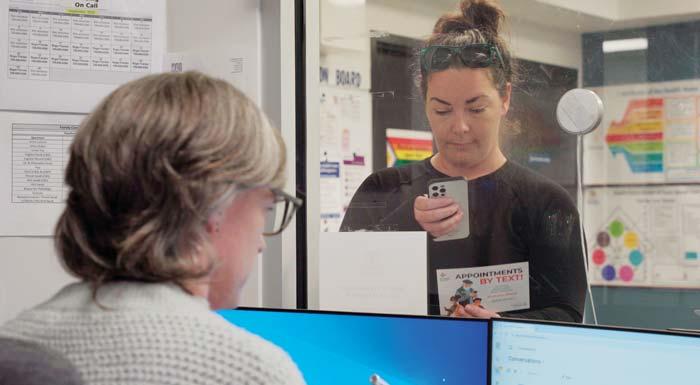
ST. JOHN’S – Newfoundland and Labrador (NL) Health Services has been implementing a new approach to address missed appointments. NL Health Services partnered with patient engagement specialists, TxtSquad, to introduce two-way patient communication by text – paired with AI voice outreach to land-line phones – to drive no-shows down to the sub-four percent range.
“This small pilot quickly evolved into a multi-site initiative that has enhanced the patient experience, reduced no-show rates, and improved workflow efficiency and satisfaction for our front-line clerical teams,” said Megan Carey, director (interim) primary healthcare with NL Health Services. “TxtSquad has been an exceptional partner and has become integral to how we engage with patients across nearly all of our primary healthcare sites.”
Currently active in 30+ clinics across the province, TxtSquad is used to manage over 20,000 appointments for 70,000 patients and the number is growing.
TxtSquad is a Canadian-made patient engagement platform that is compliant with the Canadian Personal Information Protection and Electronic Documents Act (PIPEDA) and the American Health Insurance Portability and Accountability Act (HIPAA).
It combines two-way texting with features such as appointment reminders, broadcast notifications, and a full phone system with automated calling, AI agents, call and voicemail transcription and summaries that work with a clinic’s existing phone system.
After seeing dramatic and immediate results in primary care, NL Health Services identified other program areas that could
benefit from using the TxtSquad solution. The provincial breast screening program experienced similar early wins.
“It has significantly reduced the time staff spend calling patients and responding to voicemail,” noted Greg Doyle, provincial manager of the breast screening program with NL Health Services. “It allows the program to reallocate time to other clinical and administrative tasks. As well, patients are finding it much easier to contact the clinic, ask questions, and book or adjust their screening appointments.”
Two-way texting, supported by AI, and practical integrations that reduce friction: “The mechanics are straightforward – make reminders actionable,” explained Josh Taylor, founder and CEO of TxtSquad.
“Even SMS can underperform if it’s treated as notification-only. A one-way text reminder may increase awareness, but it doesn’t remove the key problem: many patients hesitate to cancel (they don’t want to “lose” their spot) or they don’t have time to call their clinic.
Or they have the best of intentions but
can’t get through when they do call. Twoway texting changes that dynamic by making rescheduling the easy path.”
Rather than a one-way, “Don’t forget your appointment” notification, two-way SMS opens a conversation that lets patients confirm, cancel, reschedule, or ask a quick question.
Where the model becomes especially effective, according to the NL Health Services experience, is when texting is paired with voice automation for the remaining hardto-reach patients, such as those without a mobile number on file; patients who don’t text, don’t see texts, or prefer to talk to a person directly; and patients who routinely miss reminders and require follow-up.
Voice AI can do initial outreach to a large number of patients at once – capturing whether patients wish to confirm, cancel or reschedule their appointments and escalating exceptions back to staff. This is the piece that, in practice, helps move from “big improvement” to “nearly eliminating preventable no-shows.”
Patients report confidence, staff report
NeuraVue can detect wandering, aggression or abuse
HAMILTON, ONT. – Nearly 90 percent of people living with dementia experience agitation, wandering, aggressive treatment or abuse (called “responsive behaviours” in the senior-care field). Even though most senior care homes have camera monitors, these incidents are detected late, if at all.
NeuraVue, however, is using AI to detect and enable earlier intervention while preserving resident dignity and privacy. Elder abuse remains a significant and often underreported issue. Statistics Canada estimates that 8 percent of seniors living in the community report experiencing some form of abuse, while global estimates suggest the number may be as high as 1 in 6. In institutional environments, workload pressures and under-reporting can make early detection even more challenging.
While cameras are already widely deployed in common areas, most systems today remain passive, recording incidents rather than actively detecting and
thus helping prevent them. NeuraVue is addressing this gap with a new approach: privacy-first, AI-powered monitoring designed specifically for senior care environments.
At the core of the platform is Responsive Behaviour Detection, a capability that identifies early signs of agitation, distress, or behavioural escalation – enabling care teams to intervene before incidents occur.
NeuraVue has been approved under Canada’s Innovative Solutions Canada (ISC) AI Testing Stream, with up to $1.1 million in funding to support real-world deployments. Through this program, eligible senior care homes can pilot NeuraVue’s solution at no cost for up to 12 months. Organizations interested in participating can reach out to contactus@neuravue.com to learn more and explore eligibility.
Unlike traditional monitoring systems that focus primarily on outcomes such as falls, NeuraVue is designed to recognize the behaviours that often precede
ease and stronger engagement: Beyond attendance metrics, NL Health Services’ post-pilot surveys suggest the approach is resonating with both patients and frontline teams.
On the patient side, 83 percent of respondents said texting the clinic was easy, while 81 percent reported feeling very confident using text to communicate with their clinic.
Staff feedback mirrored the patient experience with 92 percent of staff reporting that TxtSquad was easy to use, and 87 percent said the text platform worked well.
Overall staff satisfaction reached 87 percent, including 71 percent who described themselves as very satisfied. When rating quality, 88 percent rated TxtSquad “very good” or “excellent.”
Perhaps most telling for operational leaders, 96 percent agreed that texting had a positive to very positive impact on patient engagement compared to the usual communication process.
Voice AI then extends the same model to patients who don’t engage by text – supporting reception-like workflows such as reminders, confirmations, basic intake questions, and routing to the right place.
Taylor describes a rapidly evolving system that adds an “AI reception layer” that can answer common questions (pre-visit instructions, clinic policies, “what do I bring?”); triage requests (administrative vs. clinical routing); support appointment workflows (confirm/cancel/reschedule); reduce voicemail backlog with transcription and summarization; and hand off cleanly to staff when needed: “We want to move from reminders to conversations –and from conversations to AI-supported reception and triage.”
Luke Callanan is a project manager with TxtSquad.
in senior care homes
them. Subtle signals, such as pacing, repetitive movements, or sudden changes in activity, can indicate distress or an impending escalation.
By detecting these patterns in real time, the system sends alerts directly to care staff, allowing for earlier and more proactive intervention.
NeuraVue’s proactive approach is
By detecting suspicious patterns, the system sends alerts directly to care staff, allowing earlier intervention.
supported by additional capabilities: fall detection, wandering and zone violation alerts, and recognition of distress or calls for help.
The technology is currently being validated in real-world care environments, including deployments at elder-care locations in Quebec and British Columbia. Across this deployment, care teams re-
ported a meaningful improvement in response times and visibility into resident risk, with early internal observations indicating a reduction in missed incidents during overnight shifts and high-demand periods.
The platform is designed to detect behavioural patterns – such as movement, pacing, or escalation – without identifying individuals, eliminating the need for facial recognition or identity tracking.
It works with existing camera infrastructure and ensures monitoring remains non-intrusive and aligned with care standards.
NeuraVue’s development has also been supported by Canada’s AI ecosystem, including participation in the Vector Institute’s FastLane program.
Through this initiative, NeuraVue received technical guidance to strengthen its AI models. AI-based detection of these behaviours is technically difficult, and a key part of NeuraVue’s innovation lies in how its AI models are trained.
TOMORROW’S STANDARD DELIVERED TODAY


Expert in medical infrastructure, SDI has developed specialized expertise in the deployment of prefabricated modular solutions for clinics, hospitals, and laboratories. SDI has built its reputation by remaining at the forefront of medical infrastructure implementation for over 23 years. This experience has enabled the company to gain a deep understanding of the needs and challenges faced by healthcare providers around the world. Through its modular hospital technology, SDI aims to address three key challenges faced by healthcare facilities: (1) controlling costs, timelines, and quality; (2) ensuring modularity and scalability of high-performance infrastructure; and (3) enabling the deployment of high-performance medical infrastructure in remote locations. YOUR DEDICATED
www.sdicanada.ca
Unique change management system enables rapid deployment of EHR
BY JERRY ZEIDENBERG
NORTH BAY, ONT. – When the North Bay Regional Health Centre deployed its electronic health record – MEDITECH Expanse – in 63 outpatient clinics, most of them were up-and-running and booking their full slate of patients just three days after go-live.
The go-live was preceded by 12 to 18 months of education, training and testing to bring clinicians and staff up to speed.
Those preparations proved to be very effective – once the digital system was turned on, in 2024, the clinics were quickly able to maintain the same patient volume as before, without any major glitches. It was an unusual feat.
The success story in North Bay was partially a product of the hospital’s own change-management methodology, developed earlier when it implemented the MEDITECH Expanse digital system in its hospital setting.
But it also required recognizing that clinics are different than hospital departments and adjusting to the requirements of those departments.
“There’s a uniqueness to outpatient clinics, and it’s not like a one-size-fits-all solution will fit everyone, like it did with our inpatients,” said Dr. Alexis Lemmex, an emergency department physician and chief medical information officer (CMIO).
“Endoscopies are very different than something like a CHF (congestive heart
failure) clinic, with different physician and nursing support, the way clerical staff work, and so on.”
“Realizing that was key to our project,” she added.
So, the team came up with a ‘change matrix’ to identify clinics that would require larger modifications and more time for training.
To find out how much of a transition was in store, each clinic was required to fill out a questionnaire.
That helped determine where each clinic was on the digital journey, how much paper was used in terms of workflow, and whether workflows could be improved.
“Some were doing registration electronically, but not documentation or order management,” said Kristen Vaughan, manager, informatics and information systems at the North Bay Regional Health Centre.
As it turned out, 25 of the clinics required a full-build-out of the EHR, going from paper to digital, while many others were already making partial use of electronic solutions.
Another key to getting the clinics up and running quickly was to perform what the change management team calls ‘parallel testing’. That amounted to clinic staff performing their workflow in the traditional way, whether it was on paper or a
mixture of paper and digital, and simultaneously running the fully digital solution.
This technique was used to train staff in how the MEDITECH Expanse solution worked, while at the same time, identifying where workflows could be improved or built via early-stage testing.
“It would show you that in one area, the EHR was working great, but in another, there’s a gap,” said Vaughan. “Then we could mitigate it.”
Vaughan emphasized that parallel testing meant that clinics could continue taking patients, and function normally, while staff were being trained. “We couldn’t close a clinic to conduct this – we wanted patients flowing through,” she said.
In this way, patients could continue to be treated while each of the clinics was trained on the new software.
During the training period, the change management team would send out monthly messaging about the project. They also met with users across the clinics, including by role.
For example, there would be meetings of the clerical teams from clinics. “We’d meet with the clerical group, because there is uniqueness to them, and they needed to know, ‘this is my role now, and this will be the impact of the electronic solution on that role’,” said Vaughan.
Meetings of this kind were held with nurses and physicians, too.
When the clinics went live on the MEDITECH solution, in February and June
Building trustworthy AI with Infosys’ open-source Responsible AI Toolkit
BY BRENT MCGAW AND NARENDRAN CHANDRASEKARAN
AIis no longer a future ambition in Canadian healthcare. It is already being used for clinical documentation, diagnostic support, patient engagement and operational planning. The potential benefits are real: better outcomes, less administrative burden, and much-needed relief for health systems and over-stretched staff.
But the risks are just as compelling. When AI interacts with Personal Information (PI) and Personal Health Information (PHI), the stakes around privacy, safety, and transparency are not theoretical. Patients and clinicians need to know that AI systems behave as intended, and that trust will be undermined in the event of a breach or negative outcome.
To help healthcare organizations navigate these challenges, Infosys developed the Responsible AI Toolkit (RAI Toolkit), an open-source collection of technical guardrails designed to help organizations deploy AI safely, ethically, and transparently, without putting innovation on hold.
Why responsible AI is essential in healthcare: Healthcare is among the most sensitive environments to apply AI. An AI-assisted insight that influences a clinical decision or a patient interaction
is not the same as a product recommendation. The consequences of a biased model or an unexplainable output are far more serious in a healthcare context.
In Canada, that sensitivity is reflected in strong health information and privacy legislation, as well as public expectations that put patient trust ahead of efficiency gains. Most healthcare leaders are not opposed to AI adoption and indeed want to accelerate it. But they also want firm control over how data is used, how models behave, and who is accountable when something goes wrong.
Policies, review committees, and approval mechanisms still matter, but they are no longer sufficient on their own. What organizations increasingly need are technical safeguards that embed responsible behavior directly into systems.
Why Infosys built the Responsible AI Toolkit: There is no shortage of Responsible AI principles in circulation. What is harder to find is practical tooling that makes those principles operational across the actual AI lifecycle.
The RAI Toolkit was built to close this gap. It provides technical controls for privacy protection, bias detection, explainability, hallucination mitigation, safety, and security, applied at the key points in the AI lifecycle where they matter most.
The RAI Toolkit sits within Infosys’
broader “Scan, Shield, and Steer” approach to Responsible AI: where risks are continuously monitored (Scan), mitigated through technology (Shield), and governed through structured oversight (Steer). The framework is designed to be ongoing, not a one-time review.
Because it is open source, the RAI Toolkit can be adapted to local regulatory requirements and organizational needs, an important consideration for Canadian healthcare, where provincial and federal privacy requirements vary, and where
The intent is not to lock down the use of artificial intelligence, but to make it safe enough to scale.
vendor lock-in is a legitimate concern. Infosys’ governance approach is also backed by our ISO/IEC 42001:2023 certification, the world’s first international standard for AI management systems. Achieving this certification means our own AI governance practices have been independently audited against a rigorous international benchmark, something worth asking about when evaluating any AI partner. Protecting PI/PHI by design: Privacy is not just a compliance requirement in healthcare, it is often the single biggest
obstacle to AI adoption in practice. Organizations are right to be cautious about what happens to patient data inside AI systems: whether it surfaces in generated outputs, whether it persists in model memory, or whether it can be reconstructed from prompts.
Generative AI platforms can expose sensitive information in ways that are non-obvious. For example, a model that has ingested PHI during fine-tuning may reproduce fragments of it as outputs. A poorly designed prompt interface may inadvertently pass patient details to an external API.
The RAI Toolkit addresses this by providing privacy capabilities that detect and protect sensitive data, including redaction and anonymization, across unstructured text and documents. These controls greatly reduce the likelihood of PI/PHI being inadvertently disclosed, stored, or reused within AI workflows.
The intent is not to lock down AI use, but rather to make it safe enough to scale. Embedding privacy-by-design principles directly into AI workflows means organizations can move faster.
Making AI transparent and explainable: A clinician who cannot understand why an AI system made a recommendation will not trust it. Nor should they. Explainability is not a nice-to-have
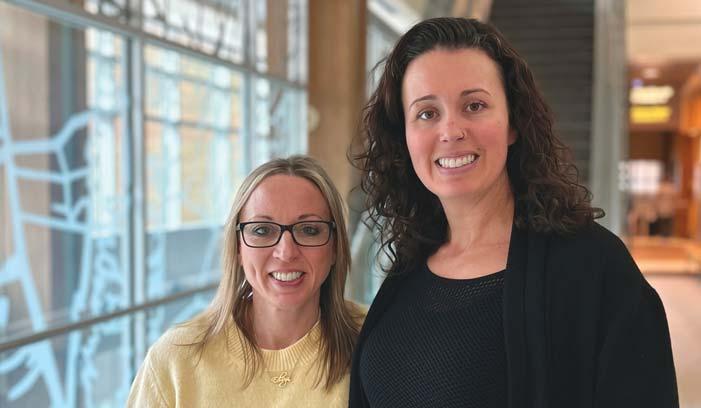
Kristen Vaughan (left) and Dr. Alexis Lemmex led the effective implementation of the EHR in clinics.






20+ YEARS OF CONNECTING CARE NATIONWIDE

With multi-provincial deployments and long-standing public sector partnerships, Orion Health is helping unify data, providers, and people across Canada.


Today, we’re delivering measurable impact by enabling better access, stronger system performance, and more connected care. Supporting clinicians and empowering Canadians at every step of their journey.
Canada-tested. Canada-trusted. Built for what comes next. Learn more at orionhealth.com/ca

Health info management in BC:a journey to computer-assisted coding
British Columbia’s Health Information Management (HIM) program is a lower mainland consolidated (LMC) service, supporting Providence Health Care, Provincial Health Services Authority, Fraser Health, and Vancouver Coastal Health.
With nearly 1,400 full-time employees across 42 locations, HIM delivers a comprehensive suite of services, including registration, records management, transcription, coding and informatics, and corporate services.
The HIM Coding team, comprising over 140 coders, data quality specialists, coding application specialist and clinical documentation specialists manages the coding of a vast array of patient visits –spanning inpatient, emergency, surgical day care, rehabilitation, and tertiary mental health. Each year, this team processes more than 250,000 acute care, 300,000 surgical day care, and 1.1 million emergency visits, underscoring the scale and complexity of their responsibilities.
Challenges in health information management: Despite a robust infrastructure, the HIM team faced challenges that were very similar to other coding teams across the country. Coder shortages and tight submission deadlines placed pressure on the team, while the lack of standardized documentation, error-prone manual entry of patient information and the need to navigate multiple systems caused delays and frustration.
The data quality process can be labor-intensive, and retroactive error resolution meant time-consuming rework. As a result, coded data was often submitted with a delay of 60 days or more, reflecting the challenges of managing increasing patient volumes and expanding submission requirements.
Recognizing these obstacles, the HIM team saw an opportunity in computer-assisted coding (CAC) technology, which can analyze healthcare documents, suggest codes, and identify errors, thereby improving data quality and supporting a more efficient coder workflow.
Solution selection and implementation: The journey toward a CAC solution began in the fall of 2019. The team, led by Monique Rasmussen, Regional Director of Coding & Informatics, initiated an Environmental Request for Information, carefully defining their approach and scope, and began engaging with Solventum, formerly 3M Health Care, to understand the capabilities of available products.
A comprehensive governance structure and RFP committee were established, a business case was developed, and funding opportunities were identified. After a thorough evaluation, Solventum was selected as the successful contract recipient, offering the Solventum™ 360 Encompass™ Computer-Assisted Coding System.
This system brought together features such as consolidated document views, annotated terms, advanced search capabilities, and real-time error management. The implementation and rollout followed, with the first site going live in January 2022.
Change management and user engagement: Central to the project’s success was a robust change management strategy, anchored in a vision to improve coding effi-
ciency and accuracy while creating an engaging work environment where coders feel empowered by the technology. The rollout process emphasized training and onboarding, ensuring that coders were well-prepared to adopt the new technology. The organization’s approach was not only about introducing a new tool but also about empowering coders to feel confident and supported as they navigated changes to their workflow. Evaluation framework and methodology: To assess the effectiveness of the new system, the LMC HIM team developed a rigorous evaluation framework based on Canada Health Infoway’s Benefits Evaluation model. The evaluation focused on three key metrics:
1. Coding speed and volume: Measured using the Coding and Informatics Workload Indicator and Coding Coordinator Dashboard.
2. User satisfaction: Assessed through surveys distributed to sites operational with 360 Encompass for at least two months. The survey captured feedback on ease of use, productivity, workflow adjustments, and feature utility, stratified by coding experience and duration of system use.
3. Coding specificity, accuracy, completeness, and productivity: Evaluated through a controlled clinical coding exercise, comparing performance with and without CAC.
Key Findings: Several key findings from this evaluation were discovered. User surveys indicated an overall satisfaction rate of 84 percent. CAC was reported as most useful for acute and inpatient cases, particularly in internal medicine and long inpatient stays involving multiple procedures, where it quickly surfaced key information and reduced the need for manual searching.
In surgical day care cases, the system’s ability to highlight key details in operative reports made it easier to extract procedures and diagnoses, while organizing operating
from the team to maximize the benefits of CAC implementation. A coordinated, organization wide change management approach is essential to support maximum user adoption. Ensuring that all required documentation is available in 360 Encompass will help maximize the utility of the tool. Advancing the rollout of 360 Encompass R2 is recommended to support further improvements in data quality.
Developing longitudinal studies to assess the impact of CAC on clinical outcomes will provide valuable insights for ongoing improvement. Finally, implementing standardized documentation practices will enhance data reliability across the system.
National context – CIHI’s AI strategy:
The transformation underway in British Columbia aligns with pan-Canadian efforts led by the Canadian Institute for Health Information (CIHI), which is driving the modernization of health information management by investing in artificial intelligence (AI) solutions to power Canada’s health data systems.
room reports ensured accurate capture of both primary and secondary procedures.
However, some challenges were noted, including navigation and formatting issues, which highlighted areas for further improvement. Interestingly, two-thirds of coders with less than one year of experience provided a positive recommendation for using the tool, while mid-career coders appeared more hesitant, possibly due to established workflows or differing expectations regarding the tool’s effectiveness.
To further assess data quality and productivity, a single set of cases was re-
Computer-assisted coding (CAC) technology can analyze healthcare documents, suggest codes, and identify errors.
coded twice in controlled environments – once with CAC in a production environment and once without CAC in a staging environment.
A data quality specialist then reviewed the charts to determine the type of discrepancy. The results were compelling: average coding time per chart without CAC was 16.86 minutes, compared to 11.48 minutes with CAC, representing a 47 percent increase in coding efficiency in the controlled test environment.
Gains in data completeness, specificity, and accuracy are anticipated from the latest version of 360 Encompass, which includes auto-suggested coding and data quality worklist functionalities and eventually autonomous coding capabilities. The rollout of this latest version is expected to further streamline coder workflows and enhance data quality.
Recommendations: Based on these findings, several recommendations emerged
CIHI’s mission is to ensure that health data is trusted, connected, accessible, timely, and comprehensive, supporting better decisions and healthier Canadians. The organization’s AI strategy is focused on driving innovation and efficiency, with a particular emphasis on AI-assisted coding to enhance data accuracy and timeliness. This enables faster, richer data availability to support rapid policy decisions and responses to health system challenges.
CIHI’s Hospital Data Transformation Initiative aims to accelerate the implementation of AI-assisted coding technologies in hospitals. This approach is key to reducing the manual burden and processes of coding, expanding capacity, and augmenting the valueadd of Health Information Management professionals. In addition, coding validation, edits, and auditing – both assisted and AIdriven – can improve specificity and compliance with Canadian Coding Standards.
CIHI is collaborating with hospitals and health authorities to trial AI assisted coding solutions, including Solventum 360 Encompass Computer-Assisted Coding System, and to share learnings from AI-assisted coding implementations via partnerships with innovation centres and vendors.
Ongoing evaluation of coding automation tools for usability, integration across multiple acute care EHR’s, and impact is a priority, with findings shared across stakeholders. CIHI also works with vendor partners to optimize system design, support change management, and ensure ongoing engagement as digital health evolves.
Conclusion: The implementation of computer-assisted coding in the LMC Information Management organization marks a significant step forward in the modernization of health data processes. By embracing innovative technology, fostering a culture of continuous improvement, and aligning with national strategies, the LMC HIM team has demonstrated how digital transformation can drive efficiency, data quality, and user satisfaction.
Ongoing evaluation, collaboration, and adaptation will be essential as the province – and Canada as a whole – continues to advance toward a more connected, responsive, and data-driven healthcare system.
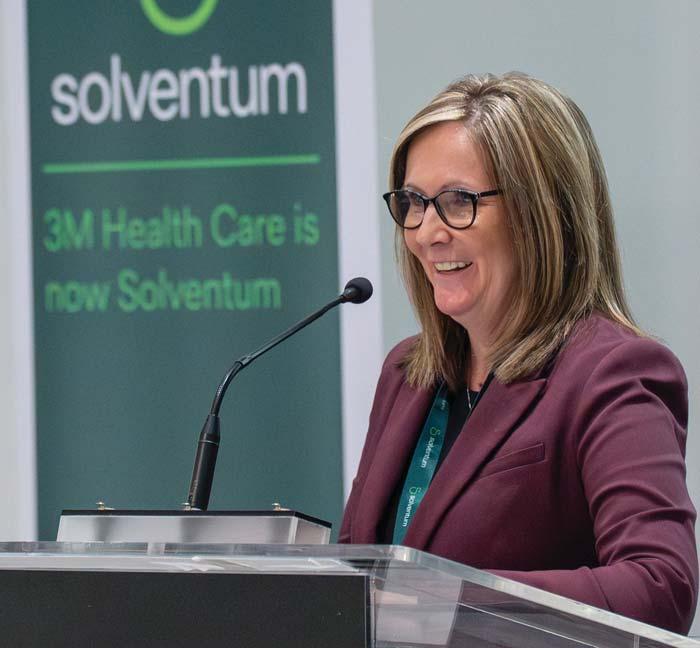
Monique Rasmussen, Regional Director of Coding & Informatics, speaking about the Lower Mainland Consolidated HIM team’s journey to computer assisted coding in British Columbia.
KEEP
AND SAFE WITH INFOSYS OPEN-SOURCE RESPONSIBLE AI TOOLKIT
Healthcare AI must do more than perform. It must earn trust.
Infosys Responsible AI Toolkit builds trust, transparency, and compliance into every workflow so your organization can scale AI confidently across the care continuum.
Explainable decisions: Clear rationale for clinicians.


Continuous governance: Always-on audits and drift monitoring.
Scale responsibly: Deploy confidently across health systems.
Build trustworthy healthcare AI from day one. Explore the Infosys Responsible AI Toolkit:

www.infosyspublicservices.ca/rai.html


Bias detection: Catch demographic bias early.
Privacy by design: Built-in PIPEDA/PHIPA compliance.
Industry credibility: ISO/IEC 42001:2023 certified.

Aligned to Health Canada
SaMD guidance and provincial privacy requirements built for Canadian health systems.
Turning to innovation to care for Canada’s “super-aged” population
As Canada’s population becomes officially “super-aged” this year –with more than 20 percent of people over 65 – healthcare and community-based organizations are increasingly adopting innovative solutions to solve complex challenges associated with providing care to more older persons than ever before.
The Canadian Institute for Health Information (CIHI) has cautioned that long-strained healthcare systems across the country will not be able to keep up with the rapidly growing need for skilled staff to support the aging population, especially the growing number of people living with dementia. Researchers and innovators are responding with new ideas and solutions that address real-world challenges faced by care providers, helping to ensure our healthcare system is ready for the new reality of Canada’s super-aged era.
The Centre for Aging + Brain Health Innovation (CABHI), powered by Baycrest, recently provided $2.6 million to 26 healthcare and community-based organizations across Canada through its Discover + Adopt (D+A) program, enabling them to find and implement innovation into their care settings.
Recipients will receive coaching and access to a learning series, ensuring they have the skills and support necessary to use ground-breaking solutions to solve care challenges affecting older persons and caregivers, including preventing falls, responding to safety incidents and ensuring people living with dementia remain socially connected and engaged. Many organizations report a lack of skills, operational processes and capacity to sustain new and novel approaches to care, some-
thing the D+A program addresses through tailored support services.
Baycrest Terraces, one of the most recent D+A funding recipients, is in the process of adopting BedSense, an innovation from Momo Medical, to prevent avoidable falls, one of the leading causes of injury, putting retirement home residents at serious risk.
BedSense offers a proactive approach to
little bit of an extra touch of care – more of an ‘in’ but still allowing autonomy. That’s where it’s going to be a game-changer, and for the staff, too. I think the staff are going to love having that little eye in.”
CABHI previously funded and supported Momo Medical through its Mentorship, Capital, and Continuation program in partnership with National Bank program
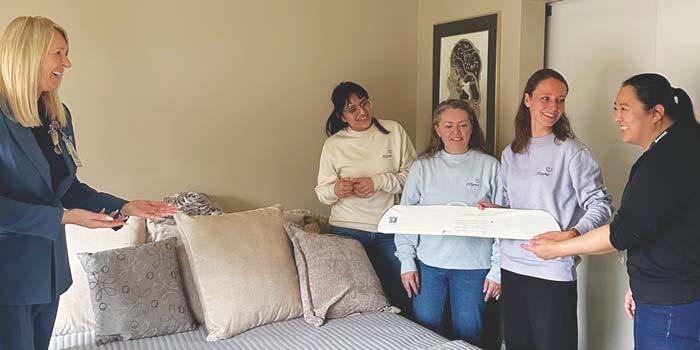
care through a smart sensor mat placed under mattresses. This app-connected smart mat monitors movement, heart rate, and breathing, providing staff with real-time alerts predicting bed exits to enable timely intervention before incidents occur.
“The pain point we’re trying to solve is to be able to have some insight into when people are sleeping, when they are in the bed, when they are out of the bed, but also we are trying to look for a noticeable reduction in falls,” said Debra ConwayChung, director, residential and community programs. “This will be a gamechanger for people who are looking for that
(now the Fuel program), which provides funding and acceleration services to earlyto mid-stage companies developing agingand brain health-related innovations.
Among the other funding recipients are Perley Health in Ottawa, and Copper Ridge Place in Yukon, both of which are solving real operational challenges with new and innovative solutions.
“Our team from the Perley Health Centre of Excellence in Frailty-Informed Care will really benefit from the structured approach of the D+A program,” said Danielle Sinden, director, centre of excellence and research operations at Perley Health. “It is
unique in that it supports the sustainability and long-term impacts of technology implementation through its funding model. We look forward to measuring and sharing the impact of our project and our continued collaboration with CABHI.”
Perley Health is implementing Dicerra, a patient safety and incident management system designed to streamline staff reporting and reduce duplication, minimizing the administrative burden and enabling the care team to dedicate more time to meaningful client engagement.
The omiVista Interactive Projection System, developed by Sensory One, will help residents at Copper Ridge Place stay socially connected, improving quality of life for those living with dementia. This innovative motion-activated, touch-responsive technology transforms blank surfaces into engaging, interactive games. With an intuitive design that ensures easy use and customizable activities to appeal to diverse interests, the system empowers both residents and care partners to engage in meaningful activities in shared spaces.
With an intuitive design that ensures easy use and customizable activities to appeal to diverse interests, the system empowers both residents and care partners to engage in meaningful activities in shared spaces.
Since the launch of the D+A program in 2022, CABHI has awarded $5.9 million in funding to more than 40 healthcare and community-based organizations across Canada. The next round of program applications for innovators opened April 1, with applications for organizations hoping to be paired with innovations set to open in May. Details about the D+A program, including the full list of recently announced recipients, can be found at CABHI.com.
Building the infrastructure for precision medicine and genomics at scale
BY MEGAN SCHMIDT
Across Canada, genomics and precision medicine are transforming the delivery of care, particularly in oncology. From somatic testing to targeted therapies and biomarker-driven treatment selection, the promise of precision medicine is clear: better outcomes through more informed, individualized decisions.
However, the success of precision medicine does not rely on science alone. It depends equally on the digital and operational infrastructure that connects ordering, specimen procurement, laboratory analysis, results delivery, and longitudinal patient data across the healthcare continuum.
From the perspective of a trusted interoperability partner actively working alongside laboratories, hospitals, health systems, and EHR vendors for more than two decades, one theme consistently emerges: precision medicine requires precision infrastructure. Precision infrastructure: Genomic laboratories across Canada are making significant investments in precision ini-
tiatives. Their work is evidence-driven and deeply committed to improving patient outcomes. Yet delivering genomic testing within real-world oncology workflows brings considerable operational complexity.
It requires determining the appropriate test based on the patient’s diagnosis and stage of cancer, ensuring timely and accurate specimen procurement, tracking orders in real-time, and delivering structured, actionable results back to the treating clinician.
It also involves supporting tumour boards and multidisciplinary teams, all while integrating results seamlessly into the longitudinal health record.
Each of these steps is critical, and each introduces potential friction. In oncology, timing is not an abstract concept. Minutes, days, and overall turnaround time directly influence treatment pathways as well as the lives of the patients.
A delay in ordering or communicating results can alter the course of care and the patient’s overall wellbeing. Precision medicine depends on close coordination among pathologists, oncologists, labora-
tory professionals, and digital health teams to ensure that insights translate into timely, informed clinical decisions.
Technology must support, not complicate, these workflows.

Reducing fragmentation: One emerging challenge in genomics is fragmentation at the point of order entry. As testing options expand, providers are often asked to navigate multiple external portals or duplicative workflows. This increases administrative burden and introduces the risk of incomplete information transfer.
Long-term sustainability depends on integration. Seamlessly incorporating genomic ordering and tracking into current clinical workflows, with results delivered as structured, actionable data that supports interpretation, longitudinal analysis, and searchability.
When ordering, tracking, and results management are aligned within the broader digital ecosystem, clinicians benefit from:
•Clear visibility into order status
•Streamlined specimen coordination
•Real-time communication of results
•Reduced manual reconciliation
•Improved confidence in selecting the appropriate test at the appropriate time
For Canadian health systems navigating provincial interoperability strategies and digital modernization efforts, integration also supports standardization and scalability across sites of care.
From data delivery to data utility: Precision medicine is inherently data driven, yet genomic insights must be accessible and actionable within everyday clinical workflows to truly support care delivery, research, and population health efforts. Through structured data exchange, organizations can conduct global cohort searches based on diagnosis, stage, and genomic findings, equip tumor boards to review complex cases with confidence, drive quality improvement and utiliza-
BedSense, an innovation from Momo Medical, helps prevent avoidable falls, a major cause of injury.
Megan Schmidt
Opal platform transitions to open-source software and seeks partners
MONTREAL – At the Research Institute of the McGill University Health Centre, a patient co-led research team developed Opal, a patient information platform that has enabled thousands to access and manage their health data.
However, with the move in Quebec to a province-wide EHR deployment from a large, proprietary vendor, the MUHC’s support for Opal ended in December 2024. Rather than marking an endpoint, this transition has catalyzed a new phase: Opal’s release as open-source software in 2025.
Now, the Quebec-made Opal platform is positioning itself as a Canadian alternative: an open-source, patient-in-the-loop digital health infrastructure designed to re-centre care and interoperability with the patient as an integral member of their care team.
John Kildea, director of the Opal Health Informatics Group (OHIG), is looking for partners for Opal’s open-source adventure – if you are a vendor or a foundation with an interest in supporting open-source digital health solutions and connecting patients with their health data, you can contact him at john.kildea@mcgill.ca.
Opal began in 2014 at the Research Institute of the McGill University Health Centre (RI-MUHC) as a collaboration between a patient, a physician, and a researcher. Launched clinically in 2018, Opal operated for more than six years at the MUHC, serving thousands of patients.
Upon its launch in 2018, it provided real-time access to test results alongside educational content, appointment tools, and patient-reported outcome questionnaires (opalmedapps.com).
In 2021, Opal became the cornerstone of the Quebec SmartCare Consortium (quebecsmartcare.com), a $10 million publicprivate multi-partner initiative to scale the platform into a secure, interoperable, patient-in-the-loop data infrastructure.
Today, by making its code openly available (github.com/opalmedapps), Opal aims to support digital sovereignty, avoid vendor lock-in, and spur innovation.
model by insisting that patients should have the same access to their data as their clinicians.
Susie Judd, DevSecOps manager of the OHIG who first encountered Opal as a cancer patient, describes the shift: “The patient is not only their own most important

caregiver, they are also the only member of their care team who is always present. If we were to build a data infrastructure that treats patients like clinicians, we would break down siloes and inherently solve the interoperability problem.”
A key operational concept of patient-inthe-loop data is the once-only principle: patients should not have to repeatedly provide the same information; things like smoking history, alcohol use, previous surgeries, etc. Opal aims to facilitate structured data entry once, with reuse and controlled sharing across systems.






In April 2025, the OHIG formed a strategic partnership with the foundation behind OpenEMR, the world’s most popular open-source electronic medical record system, opening new doors to partnerships worldwide.
As Kildea explained, “Our approach stands in contrast to the monolithic foreign systems that dominate Canadian healthcare. If Canadian decision-makers were to insist on an open backbone infrastructure, standards, and strong governance, as is the case in Estonia for example, digital health could stimulate the Canadian economy rather than being a burden on it. It could support Canadian jobs while ensuring that our health data and taxpayer dollars don’t cross the border.”
At its core, Opal advances a simple but transformative principle: patients should be full members of their care teams, not just passive participants. It reimagines care as “patient-in-the-loop” rather than “patient centered”.
Today’s healthcare systems are built around institutions and clinicians. Data flows between providers, while patients receive partial, delayed, or fragmented views of their own information. Opal flips this












Prefabricated cassettes are accelerating diagnostic imaging capacity
BY NORM TOLLINSKY
Canadian hospitals are facing unprecedented demand for MRI and CT imaging, driving the need for rapid, efficient expansion of diagnostic imaging infrastructure. As wait times for exams in some regions stretch beyond a year, more hospitals are turning to prefabricated modular construction as a faster, high-quality alternative to traditional onsite building projects.
Montreal-based SDI Canada has emerged as a national leader in this space. The company has designed and delivered prefabricated modular Cassettes to 10 hospitals across the country, including installations in Ontario (4), New Brunswick, Quebec, British Columbia (2), Manitoba, and Saskatchewan.
These units allow hospitals to expand diagnostic imaging capacity without the long timelines, weather-related delays, and cost uncertainties associated with conventional construction.
A faster, high-quality solution: Cassettes are constructed in controlled factory environments, ensuring consistent quality, safer working conditions, and none of the weather-related disruptions that slow down onsite construction, particularly during Canadian winters. While site preparation occurs at the hospital, the unit itself is manufactured in parallel, significantly reducing project timelines.
The result is a fully functional imaging suite that can be delivered and installed in 12 to 16 months, compared to the two to three years often required for traditional exterior building additions.
The units are tailored to seamlessly match the interior and exterior finishes of the existing hospital, creating a cohesive expansion that is indistinguishable from the original structure.
Why modular construction is gaining momentum: Prefabricated modular units for MRI and CT have long been used in the

United States but were only introduced to the Canadian market in recent years by SDI. According to Toufic Abiad, president of SDI, their growing adoption reflects a shift in how hospitals evaluate major imaging infrastructure projects.
“The modular option isn’t always the answer, but it always deserves consideration,” said Abiad. “You really need to look at a project holistically and consider all scenarios when installing new equipment.”
For hospitals in dense urban centres like Montreal and Toronto, where interior space is limited, mobile trailers are often unsuitable except for temporary use. For hospitals in smaller communities with available land, administrators typically evaluate three options:
•Prefabricated modular construction
•Container-based units
•Traditional onsite construction
Container-based solutions, while slightly
less costly, come with significant limitations. Because they are essentially modified freight containers, they:
•offer limited size and layout flexibility
•are not integrated into the hospital
Cassettes are constructed in controlled factory environments, ensuring consistent quality.
•do not meet Canadian healthcare building codes
•accommodate fewer imaging system types
By contrast, modular Cassettes provide a permanent-quality, code-compliant solution capable of housing any MRI or CT model, with full integrated radiofrequency shielding, insulation for our northern cli-
First ever bilateral adrenalectomy performed
MONTREAL – Dr. Pierre Y. Garneau, chief of surgery at Montreal’s Sacré-Cœur Hospital, successfully performed the first documented robot-assisted bilateral adrenalectomy in a single operation in Canada.
The removal of both adrenal glands would typically require two separate visits to the operating room however thanks to the advanced technology and specialized resources available at Sacré Coeur Hospital, Dr. Garneau was able to remove both adrenal glands during the same operation for the treatment of Cushing’s disease.
This rare endocrine disorder, caused by chronic excess cortisol, only exceptionally requires such a complex surgical intervention – one that can be performed exclusively in highly specialized centres.
Dr. Garneau is a leading figure in adrenal and bariatric surgery, practicing at Sacré-Coeur Hospital a high-volume centre where roughly 1,500 bariatric surgeries are performed annually and where he performs about 30 robotic adrenalectomies per year. He is also the director of the University of Montreal fellowship program in minimally invasive, bariatric and robotic surgery, one of the largest of its kind in Canada.
This case represented a rare and complex clinical challenge for the treating endocrinologists. The patient had already undergone two neurosurgical procedures to remove a pituitary tumour which is typically the first line treatment for pituitary dependent Cushing’s disease, yet her hypercortisolism persisted.
Given the failure of standard thera-
mate, and optimized clinical workflow. Cost and configuration options: A fully outfitted prefab modular MRI suite, including dedicated control and equipment rooms, typically ranges from $1.4 million to $1.7 million. Units designed to house support spaces such as patient waiting areas and changing rooms cost significantly less. Despite the investment, the accelerated timeline often translates into earlier operational readiness, allowing hospitals to begin reducing waitlists sooner.
At Headwaters Health Care Centre, SDI delivered two 15-by-55-foot modular units, joined on site to form a fully integrated MRI suite, demonstrating the flexibility of modular construction for midsized communities.
According to the hospital, this approach enables them to begin scanning up to 8,000 patients per year sooner, helping to reduce the region’s MRI waitlist backlog. Headwaters selected a two-cassette configuration with integrated support spaces, enabling the immediate assumption of patient care and streamlined patient flow upon arrival in the department.
A growing footprint across Canada: SDI Canada has spent 23 years evolving from an MRI shielding supplier to a comprehensive provider of turnkey diagnostic imaging solutions. After acquiring its U.S. shielding supplier in 2013 and transitioning manufacturing to Canada six years later, SDI expanded again by securing a licensing agreement to produce prefabricated Cassettes domestically.
Two modular units for the Kemptville District Hospital, south of Ottawa, were recently manufactured in Ontario, and the company is now exploring additional manufacturing facilities in Quebec and Alberta to meet rising demand.
Modular construction isn’t meant to replace traditional, but rather to complement it. As pressure mounts to improve diagnostic imaging access, prefabricated modular construction is increasingly seen as a practical, cost-effective, and timely solution.
using
the da Vinci robot
pies, a multidisciplinary team of endocrinologists, neurosurgeons, and adrenal specialists reviewed the patient’s case to explore other possible treatment options. Dr. Garneau was one of the physicians consulted to explore the option of the complete surgical removal of both adrenal glands.
Dr. Garneau performed the bilateral adrenalectomy using the fully computerized da Vinci robot. “The enhanced precision and ergonomics offered by the cutting-edge technology allowed us to push the boundaries of traditional treatments and because we were able to perform the surgery in just one visit to the OR, the patient was able to leave the hospital the next day,” said Dr. Garneau. The patient will need hormone replacement therapy for the rest of her life, but her endogenous cortisol production has ceased thanks to the procedure.
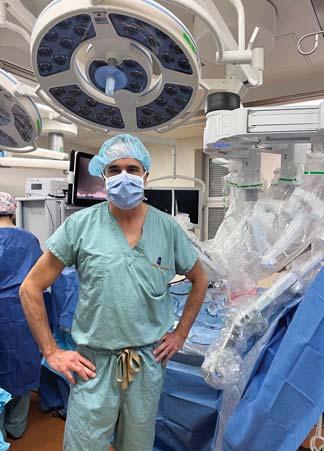
Dr. Pierre Y. Garneau, chief of surgery.
A cassette for diagnostic imaging is craned into position at Headwaters Health Care Centre, August 2025.

Optimizeyour carecapacity andfinances


Unite your workforce management and medical billing solutions to deliver faster, better care at scale.



30%3,500$3B Of Canadian physicians supported Healthcare teams use Petal In billing claims processed annually
Centralized visibility
Automated Scheduling
Secured communications
Gain up to 8,000 hours and $610K in economic value annually as proven at CHUM.
Total revenue visibility
Streamlined submissions
Tracked compensation
Achieve up to 99% claim accuracy and optimize for 40+ medical specializations.
Save time.
Maximize budgets. Support patients.
Proudly Canadian
Change management: GenAI and CDS are already accepted by clinicians
Technological innovations used to face slow acceptance; GenAI and CDS have altered the rules.
BY JENNIFER MacGREGOR AND WILL FALK
Most health IT leaders know the picture. Everett Rogers drew it in 1962. A bell curve. Innovators at the left, then early adopters, early and late majority, laggards at the right. Technology diffuses slowly, over years. Resistance is expected. Change is managed.
Rogers was right about almost everything in digital health. His model is not right for generative AI.
Introduced commercially in November 2022, GenAI quickly produced three new clinical software categories. By the end of 2025, ambient scribes had moved from novelty to tipping point: a CMA-CFIB survey found 28 percent adoption among Canadian physicians.
OntarioMD and Infoway created safe harbour VORs. No enterprise implementation. No steering committee. Few pilots. Clinicians downloaded an app, often before their IT department knew. Evaluations showed remarkably positive results.
Second-screen clinical decision support followed a faster pattern with even less governance. Tools like OpenEvidence and Doximity sit beside the EMR, answer clinical questions in real-time, touch no PHI, and spread through peer recommendation.
OpenEvidence reported 34 percent of Canadian physicians using its tool as of February 2026. Clinicians adopt these tools the way they adopt journal subscriptions, not the way they adopt EMR modules. OE and Dox have been joined by Heidi, Tali and others.
On the patient side, AI usage is skyrocketing. Some studies showing a third or more of web searches now converting to GenAI. Patients bring their own GenAI tools into the exam room to record and transcribe the encounter in real-time. The contrast with portal adoption and frustration could not be more stark.
This does not happen in digital health. It is happening in GenAI. The two are not the same thing.
Wachter’s Reversal: Robert Wachter’s 2015 book The Digital Doctor is a deeply ambivalent account of what the EHR did to the medical profession. The documentation burden exploded. Technology turned clinicians into expensive data-entry clerks.
Wachter’s new book, A Giant Leap (2026), marks a striking reversal. GenAI is not an extension of the EHR era but its corrective. The ambient scribe is his central
Peterborough
CONTINUED FROM PAGE 4
intelligence system served as springboard into AI.
PRHC brought in these technologies and educated staff and clinicians, encouraging them to familiarize themselves with them.
“We put dynamic dashboards into people’s hands for the first time. That’s a jump,” said Lyons.
“If we had gone straight to AI, we would have lost a lot of people … there’s already enough distrust of the technology in the space. So, we started fairly simple.”
Once people became more familiar with the dashboards, the team at PRHC added Microsoft
exhibit: a technology solution to a problem that technology created. The scribe restores eye contact. It does not fix the EHR. It sits above it, and it works well:
“The speed with which the digital scribe went from not-ready-for-prime-time to something every doctor wanted offers several insights about both the implementation and business considerations surrounding AI in healthcare.”
(Wachter, A Giant Leap, p. 97)
GenAI is empowerment, not procurement. It is a knowledge strategy, not a release strategy. Leaders who mistake it for another digital health project will specify old solutions, lock into old technology, and find their clinicians and patients have already moved on.
Taylor and Ford Versus Deming and Toyota: Digital health is a Taylor and Ford technology. Frederick Taylor decomposed work into discrete tasks and optimized each one. Henry Ford built the assembly line.

Together they gave the auto industry (and health IT) a model that treats the existing process as fixed and asks how technology can make it faster and more legible.
The EHR digitized the paper chart. CPOE digitized the medication order. The process was not questioned. It was encoded.
Generative AI is closer to Deming and Toyota. W. Edwards Deming argued that quality is built in, not inspected out, and that the people closest to the process know where it fails. Toyota built a production system on that principle. The tool does not impose a fixed process. It responds to the one in front of it.
Digital health asked: how do we digitize what we already do? Generative AI asks: given an intelligence layer that can do work for us, what should we do instead? That question changes scope of practice, models of care, administrative need, and clinical
Copilot on top of Power BI, allowing them to ask natural language questions of the dashboards and business intelligence system.
The organization also wanted to build the governance structure needed before unleashing AI.
“One of the biggest concerns we had was that we’d have 6,000 agents in our organization doing random things,” asserted Lyons. “We really wanted to be focused on how they actually tie together.”
With these parts of the puzzle in place, the organization then brought in generative AI. It’s embedded into all data systems, so that employees can access the data they need.
“We’re now getting people to realize that these tools are in place to help them,” said Lyons.
communication. Those are different change management problems.
Managing change in the late twenties: The change management challenge in generative AI is not resistance. Resistance was the digital health problem. Leaders built entire disciplines around overcoming it: communication plans, physician champions, super-user networks.
Those tools sound quaint when a third of clinicians are already using GenAI. By the time this is published it will be more than half. By the end of 2027 the vast majority of Canadian physicians will be using GenAI. Probably 80+ in the authors’ opinions.
Adoption is outrunning governance. The existing models that conflate “clinician engagement” with months of committee process are not merely inefficient. They are a risk. Exhausted clinicians will not tolerate project plans that prioritize process over relief.
The era of multi-month design phases followed by rigid activation and sustainment windows is over. Those timelines belonged to the EMR era. The EMR era ended sometime in 2025.
GenAI demands a shift from perfection to iteration. Change management is not imposed from the top down. It is pulled from the bottom up. Organizations do not need to overcome resistance. They need the agile capacity to govern a tool that clinicians already use and patients already demand.
The ambient scribe and second-screen CDS give time back. Five to 15 hours a week of pyjama time, returned. What health systems do with that time is the new change management question. It is a Deming quality improvement problem.
GenAI will move faster still: Everything described above is already being overtaken. Vibe coding builds functional software through natural language prompts and compresses the gap between idea and deployed tool from months to days.
A clinician with a problem and access to an AI coding agent can prototype a solution before a procurement committee drafts its terms of reference. Autonomous agents take multi-step actions, retrieve information, complete forms, coordinate handoffs, and communicate with patients.
Meanwhile, scribes and CDS are converging. Both are adding referrals, note templates, history-taking, and a widening range of clinical functions. The next generation of clinical copilots will be difficult to distinguish from one another.
Every major EMR vendor acknowledged these emerging facts in late 2025 by announcing forthcoming scribes, CDS tools, agents, and copilots. At least eight major technology companies have entered their space. Legacy integration was an advantage in digital health. It may be a disadvantage when the intelligence layer arrives.
In the spring of 2026, it is an open question whether the EMR retains its position at the top of the clinical technology stack or becomes a system of record: necessary infrastructure, but no longer the organizing layer of clinical work. A system of intelligence may become the interaction layer that adapts to the clinician, replacing the legacy method of changing the clinician to adapt to the EMR.
Jennifer MacGregor is Managing Director of Elewana Advisory; Will Falk is a policy fellow at the CSA Public Policy Group, the C.D. Howe Institute, Rotman, and WiHV.
Will Falk Jennifer MacGregor
Tesla, the giant car-maker, offers lessons in innovation to the healthcare sector
Simplify processes before you deploy advanced technologies like AI, says Tesla’s former president.
How should innovation be done in healthcare? Speakers at the recent HIMSS conference in Las Vegas addressed this topic, repeatedly pointing out that other industries have surged ahead on productivity by applying technology, while healthcare efficiency hasn’t improved. In fact, in healthcare, technology often makes things worse.
Just look at the application of EMRs, slowing down care by demanding too many clicks and timeconsuming documentation.
Sometimes it helps to look at the experience of another industry, and the keynote address of former Tesla president John McNeill was enlightening.
“What we’re going to talk about is how you can systematically guide your organization to become more innovative,” said McNeill in a provocative and stimulating presentation. “You can become both intentional and repeatable with innovation.”
He focused on a few core principles:
•Define your problem and set bold goals.
•Question everything as a way of eliminating poor processes.
•Attack complexity and make things simpler. Often, innovation is a process of making things simpler.
McNeill said the principles of innovation can be applied to any organization – including healthcare providers.
But importantly, when innovating, you should apply technologies like AI last, said McNeil. It may seem counterintuitive, but it forces you to improve your processes before you implement a complicated technology like AI. He explained this further after giving a bit of background.
When McNeill took on the president’s job at Tesla in 2015, he was faced with a crisis: Tesla was on the brink of bankruptcy. “We had 90 days of cash on the balance sheet, but it was worse than that,” he averred.
“We had 70 days of payables, so essentially, we had about three weeks worth of cash.” Wall Street figured this out, and they were predicting Tesla’s demise, he said.
So, the challenge was not only to turn the business around, but to survive.
customers ordered just three different cars – basic, mid-range, and top-tier, with all the options.
Moreover, 44 of the 64 clicks concerned financing – and people were getting hung up on the complexity of financing.
So, the management team did two things. They told the engineering department they only needed to produce three different options – basic, mid-range and souped-up.
“To my surprise, they said, “We have been waiting for someone to clear up this mess.”
Engineering told McNeill and Musk, “You don’t understand how complex our supply chain is, and how hard it is for our production systems to accommodate an infinity of configurations.”
Reducing the number of configurations made sense – and it was quickly done.
“Then we were down to the 44 clicks in financing,” said McNeill.
With a little more research, they found out that most of those clicks weren’t needed. A myriad of loan and lease clauses were there because, over the years, the lawyers of car companies wanted to protect their clients from liability.
It turned out that the engineering team hadn’t factored in the weight of the wheels – the last step in assembly. The extra weight made the frame buckle slightly, and the doors wouldn’t close properly.
McNeill explained that originally, no one wanted to question the engineers on whether they had included the wheels in their calculations – it would be too embarrassing to ask about such a simple thing.
But the management team finally did it. Engineering checked and to their chagrin, discovered the error.
After the engineers fessed up, it was an easy matter to add a piece to reinforce the skeleton of the car.
“It took us a matter of weeks, but that saved the company,” said McNeill, because at $100,000 a car, the solution provided $120 million in quick revenue.
It was another case of questioning everything.
Online sales then soared, helping to turn around the company.
McNeill talked about one other challenge at Tesla, and it was a big one.
He approached the issue of technology and automation. “You’ll notice that I’m 10 minutes in and I haven’t mentioned AI or automation,” he noted.
He emphasized that automation should be the last step in innovation. It comes after redesigning your processes, the way you work.
“We automate last because we believe that if you
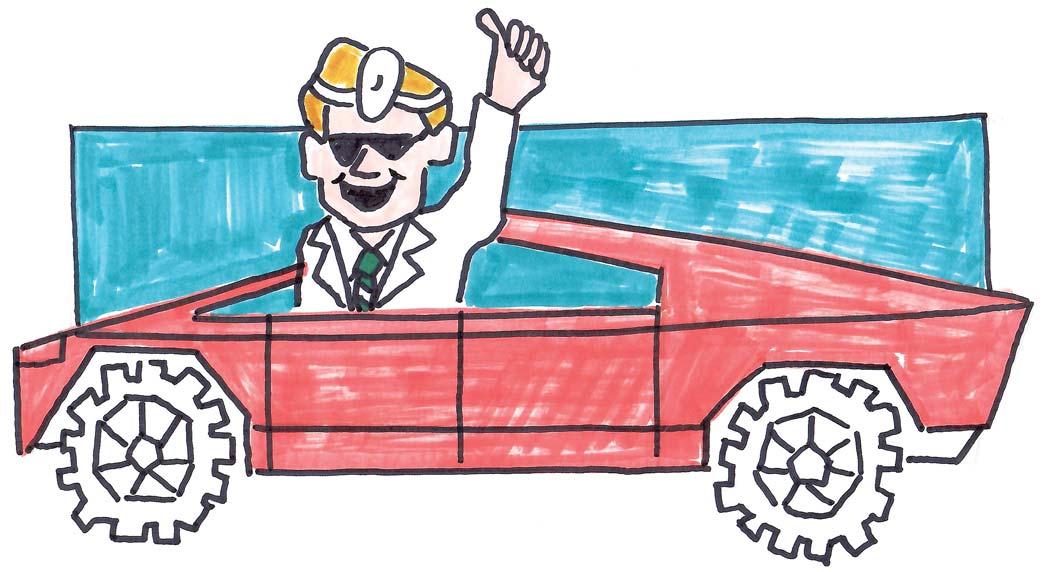
McNeill described how Tesla had its chain of storefront dealerships. But it also had an online business, where people could buy a $100,000 car online, sight unseen.
After brainstorming, the team came up with a clear and aggressive goal: increase online sales by 20X.
To do this, they first looked at the barriers people faced when trying to purchase a Tesla on the web. The major issue was that it took 64 clicks to get from start to finish – people who wanted to buy a car simply gave up through exhaustion.
By contrast, they saw it took only 10 clicks to order a pizza from Domino’s.
“Elon [Musk, the CEO] said, ‘Alright, that’s the goal. We’re going to get clicks down from 64 to 10.”
How did they do it? They realized that to buy a car online, there were too many options – the interior, the motors, rear or all wheel drive and more.
But in analyzing buying patterns, they saw that
However, most of the terms and conditions weren’t legally required.
“I said, I don’t believe this, but a 12-page loan document comes down to one paragraph, it comes down to how much are you going to pay for a car –what the interest rate is, over what period of time, and what the monthly payment is,” noted McNeill.
They then found a bank, US Bank in Minnesota, that would work with Tesla and process the loans.
“I applaud that institution, because they were the first to say, we’ll give you a one-click loan and oneclick lease.”
This questioning of the way things were done resulted in a major innovation. “We got from 64 clicks down to 13. We didn’t get to 10, but we got to 13. And Tesla’s online sales went up by 20 percent.”
Thus, to innovate, Tesla had questioned the assumptions of lease and loan practices “that all our peers had overlooked.”
Meanwhile, Tesla had 1,200 cars sitting in a lot because the doors didn’t fit. No one in the organization could find out why not.
automate a flawed process, you’re just getting to the bad answer faster,” said McNeill.
Moreover, if you invest a lot of money in technology at the beginning, it’s very hard to make changes later. Even if mistakes have been uncovered, the investment might have been so great that it’s nearly impossible to start over again.
He said the first step in solving a bad process is to map it out and identify all the existing steps in the process.” It’s the part where you put yellow stickies on the wall.
He advised putting a circle around all the steps that add value and eliminating the rest.
This process when Tesla set an enormous goal: reduce manufacturing costs by 50 percent.
McNeill described how cars were produced –there were two buildings, each a kilometer long. One turned out the chassis (what is also called the skeleton), where 300 robots put the underlying frame to-
gether, and another factory for general assembly. “That’s where human beings are hanging parts on the skeleton.”
In this second factory, everything was done by hand. While some would have added robots to automate and bring down costs, Tesla did something different.
It examined the whole process and realized that much of the hand-done work could be eliminated – the outer body could be moulded from aluminum and snapped onto the skeleton.
What they saw was that the body of the Tesla consisted of many aluminum pieces that were being bolted onto the skeleton one piece at a time.
The idea for doing this was inspired by something different, but related. A colleague of McNeill one day rolled a toy metal car across a table top. His kids played with the little vehicles – all which had molded metal bodies.
He asked whether the body of full-sized automobile could be moulded into two pieces and then secured onto the chassis –in this way eliminating many steps in the factory and a good deal of labour.
Everyone said it couldn’t be done – nobody had ever cast aluminum parts that big. The fear was that the body would crack.
But McNeill and his team started experimenting on their own. They smelted their own aluminum behind the factory. They started small, and little by little worked up to the large pieces that were needed.
“We figured out how to cast a whole side of the car,” said McNeill. “And so today, the factories that Tesla builds are half the size they used to be.”
He said this one design improvement “took 50 percent of the factory core out, and 50 percent of the costs.”
Moreover, Tesla has created a process that nobody else has. “We invented the machines that could do this. Now, you can imagine Toyota, Honda, GM, Ford, Stellantis – the rest of industry wants to do this. But you can’t buy the machines.”
It was a clear example of his innovation principles – think boldly, question everything, and make things simpler.
Finally, McNeill described how technology – used too early – can be the enemy of innovation.
In designing a factory to produce a new model, the company had used computeraided design (CAD). However, the computerized model didn’t account for the amount of space needed between robots and machinery for repairs.
Thus, when the factory was built, and machines went down, it was impossible to repair them.
“We were stuck. We couldn’t produce a single car because we had automated it first,” said McNeill.
To rectify the problem, a Tesla employee led a team in a tent that would build the cars by hand.
In this way, they learned how to design an effective process for turning out cars –including enough space to get around. Not only was the original problem fixed, but the team pioneered a new way assembling cars.
Instead of just-in-time delivery of parts, which can go wrong when suppliers can’t deliver, the Tesla team stockpiled a cache of all the parts they needed outside the tent.
The parts could be used as needed,
when needed – no waiting for just-in-time deliveries.
“So, if you look at our factory in Shanghai today, that breakthrough has caused one of the biggest changes in manufacturing,” said McNeill. “Almost every new car is designed this way.”
He stressed that once the process was mapped and improved in the tent, it could be automated and expanded to factories
around the world. By tinkering with processes on a small scale, often with minimal technology, teams can improve ways of working before scaling up and adding technology.
Lastly, McNeill said managers and designers should be users of the products they’ve produced. In this way, they can experience the solutions and provide feedback to management.
McNeill is now doing work for General Motors. As part of his work, he drove an electric Cadillac on a four-day, 2,000 mile trip. “So I could experience firsthand what the charging experience was like,” he said.
Afterward, he wrote an extensive report for his boss, GM’s CEO Mary Barra. “It’s a feedback loop that executives can use in their companies.”


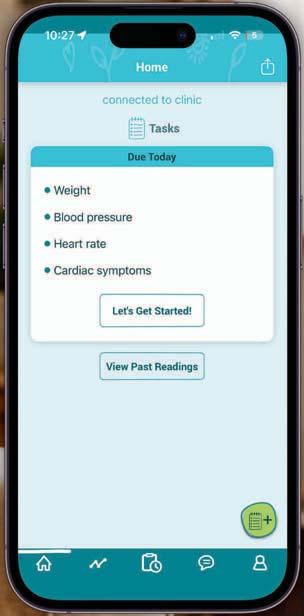





Implementing cross-agency care coordination case management solutions
BY RUBY LEDERMAN
Canada’s Connected Care for Canadians Act (Bill S5) reinforces expectations for interoperability and vendor alignment, but success will be in the operational details: standardized definitions and consent models people can follow, role-based access that is defensible under privacy law, data stewardship across organizations, and governance that can survive turnover.
VitalHub is working with three organizations in the Waterloo/Wellington region to develop a Mental Health and Addictions Information Exchange (MHAIE) providing timely, personal health information to enable safe quality care.
As noted by Anna Tersigni, director, Quality & Risk and chief privacy officer, CMHA Waterloo Wellington, a core principle is solution-agnostic exchange across case management platforms to support regional network growth.
When a client is enrolled in two or more organizations, they are matched in the MHAIE, unless the client has explicitly applied a lock box directive. In the event of the “Harm to Self or Others” scenario, the lock box can be over-ridden as per Ontario Privacy laws.
Work is proceeding in three phases:
•a shared client and consent record across partners (in pilot);
•sharing selected service records such as enrollments, documents, and events; •expansion into referrals, reporting, and additional interfaces.
In phase one, partners established a joint governance body overseeing hosting, a memorandum of understanding clarifying ownership and accountability, shared incident and breach procedures, coordinated communications and public disclosure, and shared auditing and monitoring, including Privacy Impact and Threat Risk assessments.
Beyond enabling staff in the three organizations to view shared client information, the pilot is accelerating alignment on privacy and security practices, reducing ambiguity and creating a consistent experience for clients.
Tersigni emphasized that a major hurdle to enabling effective shared models is a common interpretation of PHIPA legislation and roll out of an implied consent model. What we need are solutions that support Privacy and Security by Design, and trust that detailed audit trails exist and are being monitored, she said.
Dual-context work – regional solutions alongside agency systems: With the advent of Ontario treatment networks, some staff are required to document in a service-specific regional case-management solution (e.g., youth outreach programs) while also providing home agency services to the same client.
This dual-system reality fragments client information and care plans, affecting timeliness and continuity for clients while adding administrative burden for staff and organizations.
While it may not be possible for teams to use a single system, selective and gov-
erned exchange of key information should be enabled with clear attribution for things such as care team member identification, notes, goals, risk flags, and referral status.
Outsourced services – third-party delivery and partner access: When agencies contract out services (e.g., housing supports), coordination and effective client care depends on the right information, in the right place, at the right time.
Too often, partners rely on paper or limited digital tools, so information is shared verbally or by fax/email, resulting in delays, lost context, and extra follow-up work, while clients experience slower handoffs and less continuity.
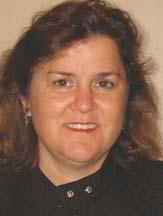
A sustainable model pairs partner-friendly access with explicit governance. Partnership portals enable configurable access controls, with workflow patterns for structured requests, status updates, and task handoffs, removing reliance on fax/email while avoiding unnecessary access beyond what partners require.
The Children’s Treatment Network (CTN) provides coordinated intake, service navigation, and specialized services to children and youth with disabilities and developmental needs across the York and Simcoe regions. In 2025, CTN went live with one of VitalHub’s case management solutions, involving staff across
20+ organizations and 1,200+ schools. While CTN is in post-go-live stabilization, the design illustrates multi-partner and data stewardship complexity yet showcases how coordinated workflows enable collaboration across service teams. Lewis Park, director, information systems and technology at CTN, recognized that the complexity of the network model, cross-team coordination, and the challenge of standardizing processes became clearer after the requirements gathering phase. Active partner engagement helped surface readiness and risk early – but also highlighted that each onboarding decision affects the entire network, reinforcing the need for stronger central coordination.
Despite challenges, Lewis emphasized that the strong partnership between CTN, Network Partners and VitalHub has been crucial in working through implementation challenges.
To make cross-agency coordination reliable at scale, partners need more than connectivity: shared definitions, practical consent and access models, strong security and auditability to build trust, and day-today processes that reduce rework. VitalHub is committed to partnering with organizations, other vendors, and government to create streamlined, efficient, and effective cross-boundary solutions.
Ruby Lederman is Vice President, EHR & Care Coordination Products and Solutions, VitalHub Corp. To learn how VitalHub can help your organization support cross-agency care coordination, reach out to info@vitalhub.com.
The role of mobile tools in AI-powered, personalized care
BY KASSAUNDRA MCKNIGHT-YOUNG
Clinicians today navigate a sea of information. Electronic Health Records (EHRs) and an array of monitoring devices generate a constant stream of data. This deluge often leads to alarm fatigue, a state where caregivers become desensitized to warnings, making it difficult to prioritize who needs attention.
The challenge lies in converting this massive volume of data into actionable insights through intelligent visibility. Instead of just adding another layer of alerts, AI-driven systems analyze data from multiple sources in real-time.
For example, a standard protocol might suggest turning a patient at risk for pressure injuries every two hours. An intelligent system, however, monitors the individual’s status and automates the information flow, sending precise instructions to a clinician’s mobile device when their unique situation requires it. This enables proactive interventions, optimizing workflows for care that truly adapts to each patient.
One of the most significant pressures facing the Canadian healthcare system remains the immense administrative burden on clinicians. A landmark study in the Annals of Internal Medicine re-
vealed that for every hour of direct patient care, physicians spend nearly two additional hours on EHR and desk work. This paperwork takes valuable time away from direct patient care, contributing to burnout.
Ambient and generative documentation tools offer a practical solution to empower care teams. These AI-powered applications listen to the natural conversation between a clinician and a patient, automatically populating the EHR.
Information gets charted in minutes, not hours after a visit. Unifying communication and mobilizing essential data onto a single mobile device keeps care teams better connected. Automating these repetitive tasks helps build safer environments and restores meaningful time for the human side of medicine.
Many healthcare leaders express eagerness to adopt the latest AI technologies. However, any investment will fail to deliver its full potential without a comprehensive clinical mobility strategy. A brilliant insight from an AI system provides little value if it stays on a desktop monitor.
To deliver personalized care, insights must reach the right person at the right time. Developing a true clinical mobility strategy means equipping the connected frontline with a unified framework. This extends beyond the hospital walls to optimize operations everywhere.
Consider the challenge of managing high-value, life-saving medications. Forward-thinking institutions have successfully co-developed solutions to this very problem. By implementing an RFIDpowered system, they properly track critical medications, dramatically reducing waste and preventing stockouts that could impact patient care.

This real-world example demonstrates how digitizing asset tracking and inventory creates intelligent visibility, leading to significant cost savings and improved safety. The goal involves creating a seamless flow of information that digitizes and automates frontline operations, and it works.
A successful strategy also demands purpose-built tools. The hardware used by clinicians must withstand the rigors of a healthcare environment. Modern scanners and mobile computers now feature disinfectant-ready plastics and smooth, sealed designs that help eliminate microbial buildup and the spread of bacteria. Devices offering long battery life with swappable power sources en-
sure clinicians face fewer interruptions during patient rounds.
These seemingly small details have a large impact on workflow efficiency and infection control. By piloting a mobility program with these considerations on a single unit, establishing strong governance, and then scaling a proven model, organizations can drive enterprise-wide adoption.
Ultimately, the promise of AI in healthcare does not rest in the technology alone. It lives in our ability to build an operational framework for orchestrated care and delivering critical insights to the frontline. For Canadian healthcare leaders ready to act, the journey begins now.
The first step is not to select an AI algorithm, but to critically evaluate your current clinical mobility strategy. Challenge your teams to think of mobility not as an accessory, but as the essential foundation for every future investment in intelligent care. Begin by empowering your frontline with the unified mobile tools they need, because the path to truly personalized, patient care is paved with a connected and supported clinical workforce.
Kassaundra McKnight-Young, MBA, MSN, RN, is Chief Nursing Informatics Officer, Zebra Technologies. To learn more, visit www.zebra.com/healthcare.
Ruby Lederman
Ms. McKnight-Young
Hospital capacity: The missing link between planning and delivery
BY CINDY CARVALHO
Healthcare systems are often described as capacity constrained. Demand continues to rise, workforce shortages persist, and fiscal pressures limit the ability to scale resources at the pace required to keep up with demand. The conclusion appears straightforward: the system needs more.
More clinicians. More funding. More infrastructure.
Yet the reality for hospitals, clinics, and health authorities is to do more with less.
A different constraint becomes increasingly visible.
Health systems and clinicians are universally committed to expanding patient access and maintaining high-quality care.

Optimizing day-today operations means hospitals don’t run on fixed staffing plans and schedules. They run on agile coordination. And in this critical layer, between planning and execution, a meaningful portion of capacity is lost. This is the coordination gap.
Where capacity breaks down: Hospitals are highly structured environments. Schedules are created weeks in advance. On-call rotations are defined. Clinical responsibilities are assigned. On paper, capacity exists. In practice, that capacity is difficult to access.
Consider a common scenario in a large, multi-site hospital. An emergency physician needs to urgently reach an on-call specialist for a deteriorating patient. While the information exists, it is not centralized or accessible. The physician turns to the unit clerk, who contacts the switchboard, which then searches across multiple schedules or pages several clinicians before identifying the correct individual.
Each additional step introduces critical delays, uncertainty, and the risk of errors.
This pattern repeats across thousands of interactions each day: shift changes, locating a physician for advice, confirming coverage, or routing urgent external calls. Without effective coordination, each step reduces the system’s ability to deliver timely care.
In one of Canada’s largest hospitals, CHUM, Petal’s implementation of automated scheduling, on-call management, and mobile access improved real-time visibility into workforce coverage, eliminating a significant number of coordination steps and generating approximately 8,000 hours of time-savings annually.
These hours were not taken from clinical work, but from the time and effort required to navigate the system itself. Capacity was not added. It was made accessible.
From time saved to throughput gained: Time savings in healthcare are often treated as an abstract measure of efficiency. In reality, their value depends on whether they translate into improved care delivery for patients and clinicians.
Returning to the earlier example, reduc-
ing the time required to identify and reach the correct clinician directly influences the trajectory of care and patient outcomes. For a deteriorating patient, minutes matter. Across a hospital, these incremental improvements accumulate into measurable gains in throughput, reducing bottlenecks and improving patient flow. Emergency department congestion, for example, is influenced not only by patient volume, but by how efficiently patients can move through each stage of care.
When real-time visibility into workforce coverage is available, these delays begin to compress. In the same ecosystem, direct access to accurate on-call information reduced reliance on intermediary call routing and decreased overall call volume by 16 percent.
Fewer steps between care need and response translate into faster clinical action and more consistent use of existing capacity.
The economic impact of coordination: The financial implications of coordination are usually understated because they don’t appear as discrete line items in traditional budgeting. Yet, it directly influences both costs and care delivery.
In practice, a significant portion of clinical time is absorbed by coordination tasks: locating the right clinician, routing calls, or reconciling schedules. While necessary in current models, these activities don’t directly contribute to patient care and introduce inefficiencies.
In the same implementation, the time savings associated with improved workflow and reduced call volume translated into an estimated annual economic value of up to $614,000, with potential for further scaling.
This value is not derived from new resources, but from avoided inefficiencies: fewer redundant interactions, reduced reliance on intermediaries, and better alignment between planned and actual clinical activity.
Importantly, this creates options. Time recovered from low-value coordination tasks can be reallocated to higher-impact
Building trustworthy AI
CONTINUED FROM PAGE 8
feature, it is what makes AI outputs usable in clinical and administrative settings where accountability matters.
The RAI Toolkit provides explainability features for both predictive and generative models. Users can assess confidence indicators, evaluate potential bias in outputs, and, where applicable, review what sources or data a recommendation was drawn from. This makes it possible to interrogate AI outputs rather than simply accept them.
For regulators and boards, this transparency supports external accountability. For clinical and operations teams, it supports the kind of internal assurance needed before AI outputs are acted upon at scale.
Enabling governance without slowing innovation: One of the more persistent concerns among healthcare leaders is that rigorous AI governance

activities, improving patient access, reducing wait times, and supporting more predictable care delivery.
Financial sustainability, in this context, is not solely a function of budget control, but is closely tied to operational design. Reducing coordination overhead allows existing resources to be used more effectively, supporting both fiscal performance
Time recovered from low-value coordination tasks can be reallocated to higher-impact activities, supporting care.
and the ability to meet patient demand.
Reducing cognitive load in clinical environments: While time and cost are measurable, an equally critical dimension of the coordination gap is less frequently quantified: cognitive load.
Clinical work is inherently complex. It requires sustained attention, rapid decision-making, and the ability to manage uncertainty. When coordination relies on fragmented systems, additional mental effort is required to compensate for that fragmentation.
Over time, this added mental effort is
will become a bottleneck, slowing down the very innovation that organizations are trying to enable. This is a reasonable concern, and worth addressing directly.
The RAI Toolkit is designed to avoid that tradeoff. Organizations can configure policy-based controls, role-based access, approved data sources, and output
Safeguards when using artificial intelligence need to hold at scale, not just in controlled test environments.
moderation, while relying on automated monitoring and audit trails rather than manual review queues. The goal is governance that scales with the technology, rather than one that becomes an administrative burden.
For healthcare organizations moving from pilots to enterprise-wide AI adoption, this matters. Safeguards need to
not benign. It contributes to fatigue, increases the likelihood of errors, and diverts focus from patient care. Improving coordination changes the nature of this work.
In environments where accurate, realtime workforce information is accessible through a single, reliable source, clinicians and staff spend less time searching and more time acting.
In the same ecosystem as the recent study commissioned by Petal, daily selfservice access to on-call and service coverage information increased by more than 400 percent, reflecting a shift from intermediary coordination toward direct access.
Reducing cognitive load is not an ancillary benefit. It is a prerequisite for sustainable clinical work.
From planning to execution: Hospitals have invested heavily in planning systems that are necessary components for their function, but they are not sufficient on their own. The coordination gap highlights a structural reality: capacity does not fail at the point of planning, but in the transition to execution. Closing this gap requires a shift in focus toward the operational layer that connects them.
Cindy Carvalho is Executive Vice-President, Growth, at Petal Health.
hold at scale, not just in controlled test environments.
Advancing AI while preserving trust: AI promises to transform healthcare delivery in Canada in profound ways. The organizations that get this right, who build trust with patients, clinicians, regulators, and boards, are the ones that will be able to move quickly and sustain it.
Infosys’ Responsible AI Toolkit provides a practical, open-source foundation for enabling AI adoption at scale –whether implemented independently or supported by Infosys when additional expertise is required. The RAI Toolkit combines technical safeguards, explainability, privacy protection, and governance standards designed for the realworld operational and regulatory realities of Canadian healthcare.
For more information about the free, open-source Infosys Responsible AI Toolkit, visit https://www.infosyspublicservices.ca/rai.html or contact your Infosys representative.
Cindy Carvalho
First in Ontario to implement LUMED APSS for antimicrobial stewardship
BY KRISTEN TAM
Antimicrobials, particularly antibiotics, have transformed modern medicine. From routine surgeries to cancer care, these drugs make it possible to treat infections that once carried devastating consequences. Yet their effectiveness is increasingly under threat.
Antimicrobial resistance (AMR) occurs when bacteria, fungi, parasites and other microbes evolve to survive the medications designed to kill them. As resistance spreads, infections become harder to treat, more costly to manage, and in some cases impossible to cure.
The issue is no longer theoretical. It is a growing global health challenge with real implications for patients and healthcare systems.
In Canada, the impact is already being felt. The Public Health Agency of Canada estimates that one resistant infection is detected for every 220 patients admitted to sentinel acute-care hospitals.
For clinicians on the front lines, the repercussions are clear.
“Antimicrobial resistance is one of the most significant and growing threats to patient care worldwide,” said Sumit Raybardhan, infectious disease pharmacist practitioner and antimicrobial stewardship program (asp) co-chair at North York General (NYGH), in Toronto. “Antibiotics save lives, but every time we use them, we need to be sure we’re using the right drug, at the right dose, for the right duration. Stewardship programs exist to make sure we get those decisions right.”
At North York General, a leading team of infectious diseases physicians and pharmacists is responsible for reviewing antimicrobial use across the hospital and working with clinical teams to optimize drug therapy. This work involves identify-
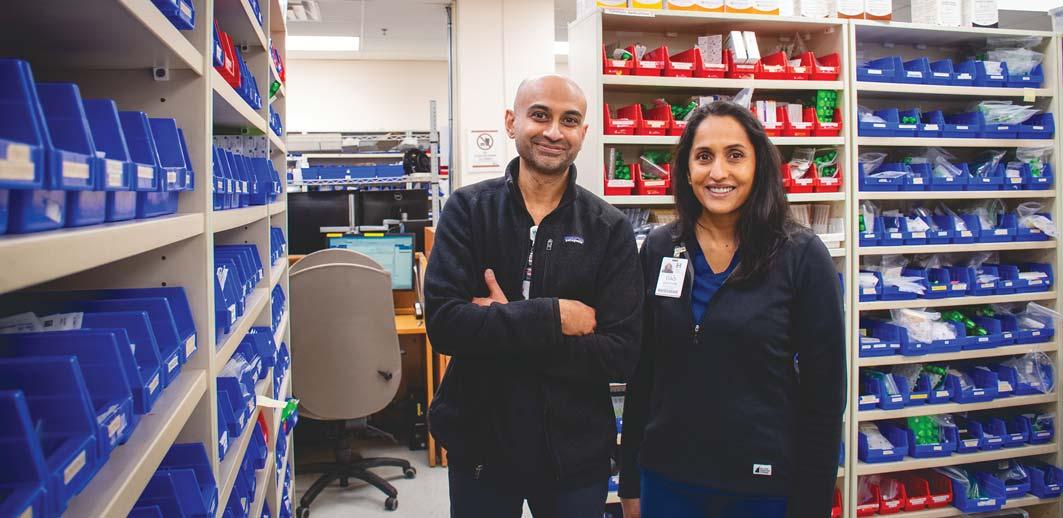
ing opportunities to adjust, de-escalate or discontinue antibiotics to ensure patients receive the most appropriate treatment. Historically, this has been a labour-intensive and largely manual process, requiring the ASP team to review patient charts, laboratory results and medication records across multiple systems.
To streamline and strengthen this work, North York General is now the first in Ontario to implement LUMED APSS, a Canadian-developed data analysis and clinical decision support software designed specifically for antimicrobial stewardship.
With LUMED APSS, the software analyzes patient data across the care journey –including laboratory results, microbiology findings, medication profiles and allergies, vital signs and other data in the electronic
health record (EHR) – to identify opportunities to improve antimicrobial prescribing.
Using algorithms informed by thousands of guidelines and guardrails, the system can flag situations that may benefit from review – such as dosing adjustments, opportunities to de-escalate therapy, redundant antimicrobial coverage, or even when a patient may be ready to transition from intravenous to oral treatment.
“We’re constantly reviewing lab results, medication histories and patient conditions to determine whether antimicrobial therapy should be adjusted,” said Dr. Pavani Das, infectious disease physician and ASP co-chair at NYG. “LUMED APSS helps us see all the relevant information more clearly in a smart dashboard, so we can better prioritize patients. It supports
Canadian platform supports “sandwich generation”
AVancouver healthtech company, Kindly, has developed a care navigation platform designed to support Canadians balancing raising children while caring for aging loved ones.
“Kindly acts as a guide through one of the most complicated moments families face,” said Logan Gibson, founder and CEO of Kindly. “When a parent begins to need care, families suddenly have to navigate waitlists, care options, providers, and financial decisions, often overnight. Our goal is to bring clarity and expert guidance to families.”
Kindly’s founder has seen firsthand the impact senior care can have on families. Gibson grew up closely connected to the senior care industry. His father has spent nearly two decades working in senior living, while his mother has worked with seniors in their local community for as long as he can remember.
“I have seen that most families don’t plan for aging care until they’re already in the middle of it,” said Gibson. “It often arrives during one of the most emotional periods of someone’s life. We started Kindly because if we can take even a portion of the logistical burden off families,
it allows them to focus on spending time with the people they love.”
A recent report found that working Canadians who are part of the ‘sandwich generation’ are experiencing a sharp drop in overall well-being. The decline was seen across five areas of health, including mood, stress, sleep, physical activity, and even sense of purpose.

The decline was attributed to the growing strain faced by Canadians who are working while caring for both their children and aging relatives. In fact, the mental health implications in this cohort are so severe that over a quarter (26 percent) are planning to take a leave of absence as a result.
The need for support is clear, not only to maintain productivity in the workplace and prevent additional health strain, but to help Canadians who carry the emotional and logistical weight of caregiving.
Kindly helps families navigate complex paperwork, care decisions, and multiple providers, reducing both the logistical burden and emotional strain for working Canadians.
Here’s how it works. Kindly combines licensed care experts with AI-powered technology to create personalized care plans.
Users are connected with a designated care expert who will coordinate the next step, check in to assess needs and progress, and provide 1:1 support. The result is a clear and practical roadmap for moving forward, with the personalized support required to navigate local and provincial healthcare systems.
Kindly helps Canadians remain present at work while navigating some of life’s most challenging moments. Families can also access the service independently.
As Canada’s population continues to age and caregiving demands increase, the need for Kindly’s solution will become even more pressing than it already is.
The platform is currently available to employers and families across Canada. To learn more, visit kindly.ca.
our day-to-day work by helping us focus our attention where it can make the greatest difference.”
At a busy community academic hospital like North York General, that efficiency matters. The stewardship team reviews about 100 cases per day, identifying opportunities to optimize therapy while ensuring patients continue to receive the treatment they need when they need it.
By surfacing high-priority cases and highlighting potential prescribing issues in real time, LUMED APSS allows the team to spend less time searching for information and more time applying clinical expertise.
The technology has already demonstrated measurable results in other healthcare settings. Studies evaluating the impact of LUMED APSS in Quebec hospitals have shown more than 20 percent reduction in antimicrobial use and antimicrobial spending, while also shortening average hospital stays.
The introduction of LUMED APSS builds on North York General’s longstanding commitment to appropriate antimicrobial use and patient safety.
In 2025, NYGH became the first in Canada to migrate its Oracle Health electronic health record to Oracle Cloud Infrastructure (OCI). As the organization continues to strengthen its digital infrastructure, leaders saw an opportunity to enhance its antimicrobial decision-making with LUMED APSS as the software had proven results and the ability to integrate with NYGH’s Oracle Health EHR.
“Strengthening antimicrobial practices is an important part of delivering safe, highquality care,” said Rudy Dahdal, executive vice president, clinical programs and chief planning & redevelopment officer at North York General. “Implementing LUMED APSS supports our strategic priorities around personalized care and specialized excellence by helping clinical teams access the insights they need to make timely, evidence-informed decisions for patients.”
By integrating stewardship-focused decision support into clinical workflows, the hospital hopes to improve antimicrobial decision-making while strengthening compliance with national standards and key performance indicators.
Sumit Raybardhan, infectious disease pharmacist (left), and Dr. Pavani Das, infectious disease physician (right), are co-chairs of North York General’s Antimicrobial Stewardship program. They review over 100 patient cases each day, using LUMED’s smart dashboard to support safe and timely treatment decisions.
Logan Gibson
The opportunity for connected care with digital health never better
tastic way to break down the walled gardens stood up by the big HIS and EMR vendors.
Words matter: The Roadmap says standardized data can follow the patient across all care settings and geographies to enable more informed care provision, leading to better health outcomes.”
At best, “data following the patient” only serves as a rallying cry. The phrase implies point-to-point interoperability which is financially imprudent, clinically deficient and technically challenging.
Think about it, does one want to follow the puck or anticipate where it is going? I’d rather anticipate the future use of a person’s Personal Health Information (PHI) and ensure it is always accessible to clinicians and patients. Having it accessible in the shared EHR, as defined above, provides the best return on investment financially and clinically.
Data silos: Some data is not clinically relevant to store in the EHR, therefore some data silos are okay. Why? Because there is a lot of data that is of no use to another clinician. Also, there is an exponential loss of data value over time, thus little value for it to be in the EHR. Finally, the data silo is required for medical/legal record keeping.
The HIAL becomes the HIAIL: The other major component of the 2006 Blueprint that needs a refresh is the Health Information Access Layer (HIAL). Given today’s focus on AI let’s rebrand it to the HIAIL – the Health Information Artificial Intelligence Layer. The 2026 HIAIL would use Agentic AI for many key functions:
•The HIAIL orchestrates read/write to the EHR Agents would handle variances in standards, e.g. HL7 v2 or v3 messaging, HL7 CDA and HL7 FHIR where the semantics, such as data contents, are the same, but the syntax is not. Therefore, we do not need any longer common interoperability standards that are adopted nationwide. Like the burger ad, systems connected to the EHR via the HIAIL “would have data served their way”.
•Use agents to improve the quality of the data going into the EHR. Data quality actions are done as data are written into the EHR. These include:
•De-duplicate data and curate if necessary.
Building infrastructure
tion analyses, and enhance collaboration between oncology programs and research networks.
Too often, genomic results are delivered in static formats that limit downstream use. Moving toward structured, interoperable data ensures that somatic testing results become part of the broader clinical narrative rather than remaining isolated artifacts.
Pathology and workflow alignment: Pathology laboratories are foundational to effective genomics programs, yet genomic strategies sometimes fail to reflect the practical workflow, staffing, and system constraints present in hospital-based pathology and oncology environments.
Effective integration requires a deep understanding of laboratory information
•Normalization of data for comparability.
•Extract data in SOAP notes into coded structured data store in the EHR.
•Organize data for easy query when needed, where needed, optimized for high performance access by clinicians and patients.
Benefits for clinicians: What is the impact of this solution on the clinician’s workload and work processes? To share data, there is no impact on workload or work processes. The copy of clinically relevant information into the EHR happens automatically from their record keeping system as outlined above.
When a clinician needs data from the EHR for historically relevant data, it is a button click to initiate a filtered query. Filters may be by clinician, date, encounter, disease, diagnostic test, data category (for
example, medications, lab test results, etc.) The benefit is great because they get the data they need when they need it instantly and digitally.
Conclusion: We must continue to build out a comprehensive EHR as defined in the Blueprint using current data content stan-
Refresh the EHRS Blueprint to align with recent innovations. Use current technology with it to achieve connected care.
dards. It should be the destination for all relevant data for a person-centric health record and the first source queried by patients and clinicians when personal health data across the healthcare ecosystem are needed.
Leverage agentic AI to support data quality and interoperability to and from the EHR. For clinicians, access to a person’s historical data from the EHR will reduce their workload and improve their experience in the delivery of care.
We must require all healthcare record keeping systems to update the EHR with clinically relevant data. In other words, enforce compliance with the anti-data blocking provisions in the CCA with timely and complete data submission from point-ofservice systems.
Finally, refresh the EHRS Blueprint to align with the innovations above. Use state of the art technology with an emphasis on achieving digitally connected care.
Dennis
Giokas, M.Sc., is Principal, Theoria Health Innovations Inc.
Unique change management system means rapid deployment
of 2024, they also had the assistance of 44 staff champions.
The champions included physicians, nurses, and admin and clerical staff who had been recruited for this role and were given more intense training. They were responsible for helping clinic users when the digital switchover occurred.
Since physicians were already accustomed to using Expanse in their hospital work, their transition to the new ambulatory system was easier than for other staff.
“They were already used to things like order entry and digital documentation,” said Vaughan. “So, they were also supporting their colleagues in the clinics.”
Sometimes, the snags were minor things, like a clerk forgetting how to access a particular system. These smaller problems could be quickly resolved by a staff champion working with the clinic user.
For bigger issues on the go-live, a command centre was set up and the clinics had special access, with little waiting time for answers. “The requests didn’t get lost with all the other problems, like a hospital user forgetting a password,” said Vaughan.
To date, more than 90 of NBRHC’s out-
systems (LIS), hospital information systems (HIS), oncology workflows, and clinical decision support tools. It requires recognizing that precision oncology is not a standalone service line; it is embedded within complex care pathways.
By aligning digital solutions with existing clinical workflows, health systems can reduce unnecessary repeat testing, improve utilization of genomic testing, and support more informed therapeutic decisions.
A longitudinal perspective on care: Cancer care is rarely linear. Patients may move across institutions and provinces. Additional testing may be required at recurrence or progression. New targeted therapies continue to emerge. Precision medicine must be supported by a longitudinal view of the patient’s health journey.
Incorporating genomic data into the complete health record allows clinicians to review prior tests, interpret findings
patient clinics are now using MEDITECH Expanse, as some were already running the system. The clinics can now securely exchange patient information amongst themselves and the hospital. They have also gained the workflow and productivity benefits associated with digital systems.
Dr. Lemmex pointed out that for a digital project to meet with success, it must have buy in from the users – the clinicians, administrators and clerical staff.
The best way to obtain buy-in, she said, is to demonstrate how the digital system
Resistors can be invited to join the team, so their concerns are heard and they become part of the solution.
will benefit them. “You’ve got to show that it allows for easier access to information. So, when physicians and staff really understand what it means for them, and how it would make life easier, they’re always saying, okay, let’s do it.”
For example, the digital system dramatically improved documentation, enabling staff to log no-shows more efficiently –
within the full clinical context, and reduce unnecessary repeat diagnostics. It also promotes seamless care coordination across community oncology practices, tertiary centers, and academic institutions.
This longitudinal approach is particularly relevant in Canada’s publicly funded healthcare system, where coordination
The ultimate measure of precision medicine is not the sophistication of the test, but the impact on outcomes.
across jurisdictions and care settings is essential to equitable access and sustainability. Enabling impact through infrastructure: The ultimate measure of precision medicine is not the sophistication of a test, but the impact on patient outcomes. Delivering the right therapy
something that’s important for medico/legal purposes. They could also inform physicians about rejected referrals faster, enabling them to find another solution for their patients more quickly.
At the same time, expectations must also be managed – it must be emphasized that everything isn’t going to be complete right from the start. “You also have to stress that it’s a process – this is how it’s going to look like now, but we’re going to get to this other point later,” said Dr. Lemmex.
Importantly, the change management team must be open to hearing criticisms of the project from the inevitable naysayers. But Vaughan said she tries to bring the resistors on board to become part of the team.
“We’re open to communication about the good and the bad, because we understand there are always opportunities for improvement,” she said. In her view, people tend to resist when they feel their concerns aren’t being addressed, so she tries to make them part of the solution.
“I challenge them to be part of the solution with me,” she said. “This happened, and we actually brought them to the table. They became part of the project.”
sooner can extend survival, reduce toxicity, and improve quality of life.
To achieve that impact at scale, Canada’s genomics ecosystem must continue to invest not only in scientific advancement, but also in the digital and operational frameworks that enable timely, accurate, and actionable information flow. Precision medicine demands more than innovation. It demands integration, workflow efficiency, and a shared commitment to longitudinal, connected care. By fostering collaboration between genomic laboratories, pathology services, hospitals, health systems, and digital health partners, Canada can continue to advance a precision medicine model that is analytically rigorous, operationally sound, and ultimately centered on improving lives.
Megan Schmidt is VP, Product Management, at ELLKAY.