INSIDE:
Front-desk pressure
A group of physicians has created an AI-powered solution that dramatically improves the ability of patients to get through to the front desk. They can easily make appointments and more.
Page 6
AI scribe for specialists
Most AI-scribes have been developed for use by general practitioners. Now, a system called QuickChart has been devised that attends to the needs of specialists as well as GPs.
Page 10
Med charting in the ED
A new study found significant medication charting errors can be made when patients are treated in Emergency Departments. The use of registered pharmacy technicians, working remotely, have been found to dramatically improve the process.
Page 11
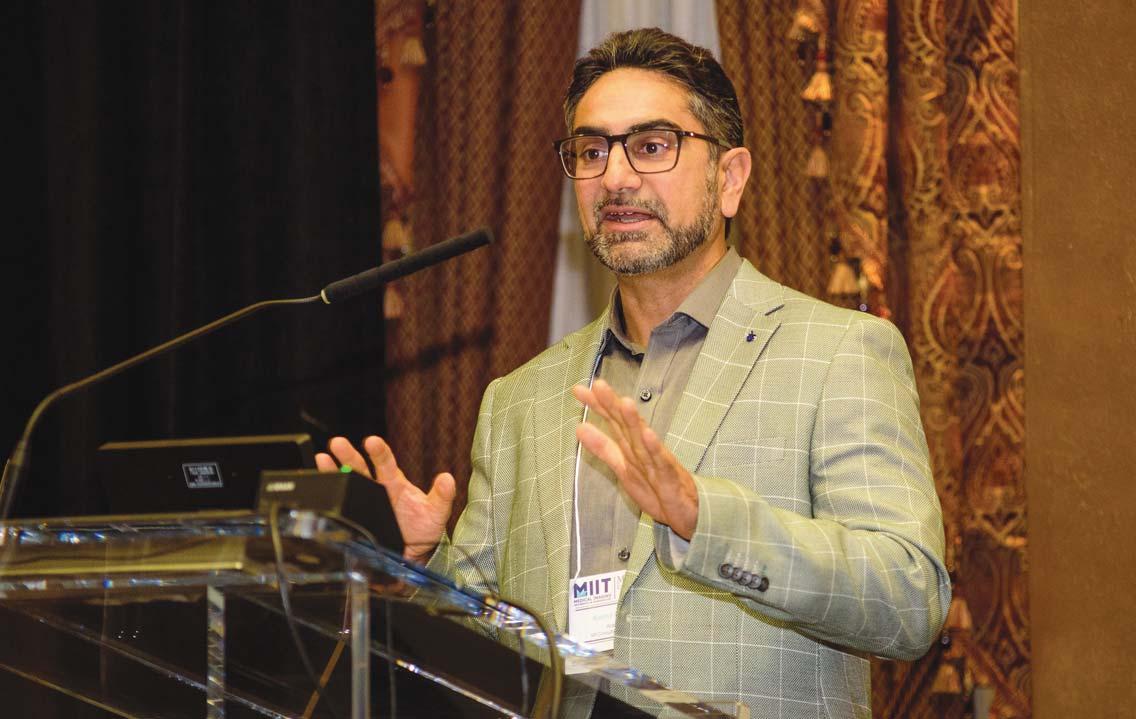
Cyber-criminals are now revving up their efforts, using AI-assisted techniques such as deep-fakes -- where they can emulate voices to trick unwary staff into opening files that contain viruses. Kashif Parvaiz, VP at Arancia and former CISO at Toronto’s UHN, told a group of radiologists and other health professionals how to defend their departments, clinics and hospitals from AI predators. SEE STORY ON PAGE 8.
Osler to deploy Epic, with large suite of AI tools
BY NORM TOLLINSKY
William Osler Health System, a community teaching hospital serving 1.3 million people in Brampton and surrounding regions in the Greater Toronto Area, is embarking on a major clinical transformation that will introduce several time-saving AI capabilities to doctors and nurses. The changes are all part of a transition to the latest release of Epic’s health information system that makes extensive use of artificial intelligence.
Consisting of Brampton Civic Hospital, Etobicoke General Hospital and the Peel Memorial Centre for Integrated Health and Wellness, Osler is gearing up to retire its Meditech Magic information system and go live with Epic in October 2026.
“We spent the last six months redesign-
ing our clinical workflows in preparation for the move to Epic,” said David Stankiewicz, vice president, digital transformation, chief information and privacy officer. “This has given us the opportunity to redesign those workflows with the AI tools that are available to us. Epic has a broad range of AI ca-
Clinicians have made the bulk of the decisions about how the system will be implemented.
pabilities. We’re introducing AI to make our hospital operations more efficient and to enhance the quality of care.”
According to Stankiewicz, the project is unique in that it’s clinician-led, meaning doctors, nurses and allied professionals have designed the workflow and selected the AI
tools that will be deployed. “Typically, we see many of these projects led from a technology perspective with the result that clinicians feel it’s being done to them versus our approach of engaging with clinicians to design the system themselves,” he said.
An executive steering committee made 5 percent to 10 percent of the overall strategic decisions for the project and an interdisciplinary committee made 30 percent to 40 percent of decisions affecting policies and procedures that cross boundaries between programs. Working groups from every clinical program accounted for the largest component of the decisions impacting the design of the project.
Of the three main types of AI tools in healthcare – predictive models, generative AI that produces content, and agentic AI
William Osler Health system to deploy Epic, with
that takes an output and acts on it – Osler clinicians opted to begin their AI journey with generative AI.
“We’re really focused on AI that will help clinicians with administrative functionality,” said Stankiewicz. “There will be no AI used in our environment in place of human decision making. In other words, there’s no way it’s going to make diagnosis determinations. All the AI that we’re going to use will focus on helping clinicians with clinical documentation and administrative burdens.”
Doctors, for example, will be able to use Epic’s generative AI tool to produce discharge summaries and patient-friendly instructions. They will also be able to produce a summary of a patient’s condition and past visit history in preparation for an appointment.
Nurses will be able to take advantage of generative AI at the end of their shift for the handover to the nurse replacing them. The AI tool produces a summary of what happened on a nurse’s shift from information that has already been keyed into the
patient chart, reducing the amount of documentation required by Osler nurses.
“It’s really designed to reduce the administrative burden that nurses have had to deal with,” said Sharon MacSween, associate vice-president, health information system. “It’s a much more seamless way of being able to do the handover and it’s much better for patients because their needs are expressed to the nurse who is taking over their care.”
Currently, nurses are required to go to the patient chart and other sources to collect and document the information required to ensure continuity of care. Come fall 2026, AI will do it for them. All they have to do is review it for accuracy and sign off on it.
“The AI that we are choosing to use has been selected by the clinical programs themselves,” said Stankiewicz. “It’s AI that has been adopted through other Epic hospitals globally, so we are taking a riskbased approach to the AI we are going to use. We want to make sure that it’s safe, we want to make sure it’s proven, and we want to make sure it will benefit clinicians and patients. AI is moving so fast in healthcare. There’s always something new, so we’re


putting the foundation and structures in place to adopt AI in a thoughtful, safe and responsible way, in line with specific AI frameworks and legislation that are shaping the regulatory climate for best practice use, but also in an agile way that allows us to take advantage of new AI applications that come up.”
One tool Osler is undecided about is AI scribe functionality, said Stankiewicz. “We’re still working through that. It’s likely we will move forward with a small pilot. We haven’t figured out which clinical program specifically we will select but we think we will have a group that trials an AI
scribe at go-live. That will allow us to focus on our immediate goal of getting off our legacy platform and getting the broader Epic system in place.”
An AI scribe pilot will allow Osler clinicians to understand how the technology will work in a hospital setting before broader adoption at some point in the future, said Stankiewicz.
In the meantime, instead of the current third-party transcription service they are using for documentation, doctors will transition to dictating directly into Epic.
Osler will also begin using Epic’s MyChart patient portal, which will provide more comprehensive information than the patient portal currently in use. In addition to viewing diagnostic imaging reports, other test results and AI produced documentation, patients will be able to use MyChart to schedule follow-up appointments.
“This is something we’re really excited about,” said MacSween. “If you have a follow-up appointment at Osler, you won’t have to wait for someone to call you. You can proactively go in and book the appointment when it’s convenient for you. It will give you several options. That will save our team from having to call patients to schedule appointments.”
Issue DateFeature ReportFocus Report
September Community CareStart-ups
October Virtual CareSurgical Technologies
Nov/Dec AI/AnalyticsCardiology
February 2026 Medical ImagingPhysician IT
March 2026 Artificial IntelligenceInteroperability
For advertising or editorial inquiries, contact Jerry Zeidenberg, Publisher, jerryz@canhealth.com
Coming up in CHT www.canhealth.com

Address all correspondence to Canadian Healthcare Technology, P.O. Box 907, 183 Promenade Circle, Thornhill ON L4J 8G7 Canada. Telephone: (905) 709-2330. Internet: www.canhealth.com. E-mail: info2@canhealth.com. Canadian Healthcare Technology will publish eight issues in 2026. Feature schedule and advertising kits available upon request. Canadian Healthcare Technology is sent free of charge to physicians and managers in hospitals, clinics and nursing homes. All others: $67.80 per year ($60 + $7.80 HST). Registration number 899059430 RT. ©2026 by Canadian Healthcare Technology. The content of Canadian Healthcare Technology is subject to copyright. Reproduction in whole or in part without prior written permission is strictly prohibited. Send all requests for permission to Jerry Zeidenberg, Publisher. Publications Mail Agreement No. 40018238. Return undeliverable Canadian addresses to Canadian Healthcare Technology, P.O. Box 907, 183 Promenade Circle, Thornhill ON L4J 8G7. E-mail: jerryz@canhealth.com. ISSN 1486-7133
Publisher & Editor
Jerry Zeidenberg jerryz@canhealth.com
Office Manager
Neil Zeidenberg neilz@canhealth.com
She added, “We’re also going to implement other tools that will allow patients to use MyChart when they’re admitted to hospital. If they’re not exactly sure what’s going on, they’ll be able to go into My Chart and see what’s happening to them as their care progresses.”
Osler will also be able to take advantage of Epic’s analytics tools to produce all of the reports required by government authorities as well as reports used internally to improve clinical outcomes.
“We have some limited reporting tools that are available within our existing Meditech system and other systems, but they tend to be inefficient and don’t link up very well, so that contributes to the administrative burden on our report writers because they have to go to different places to pull it all together,” said MacSween.
“We have a very smart team. They’re very good at what they do, and they’ve done really well with the tools they currently have, but this is going to take them to the next level.”
With the design phase of the project completed, Osler has moved on to a user readiness phase where it’s testing the system in the background to make sure everything’s working.
When they show up for training, any questions they have about what’s going to change will already have been answered and they can spend their time learning how to use the system, said Stankiewicz.
Contributing Editors
Dianne Daniel dianne.l.daniel@gmail.com Will Falk will@wfalk.ca Dr. Sunny Malhotra Twitter: @drsunnymalhotra Norm Tollinsky tollinskyn@gmail.com
Art Director
Walter Caniparoli art@canhealth.com
Digital Media Specialist
Rebecca Downer rebecca@canhealth.com
David Stankiewicz Sharon MacSween







From friction to flow: Redesigning the clinic for a connected digital age
BY DR. CHANDI CHANDRASENA, SIMON LING, DR. REZA TALEBI, AND DR. ABBAS ZAVAR
In the second article of this fourpart series, we explored connected clinics, where patient data can move more easily across settings and teams through improved interoperability. This next pillar –streamlined – focuses on what it takes to turn that connectivity into real changes in practice, including understanding clinical pain points, reassessing existing workflows, and using technology such as AI to better solve these problems.
OntarioMD (OMD) research, including a 2024 survey on the impact of health information technology (HIT) on physician burnout, confirmed the overall management of medical reports, patient communications, and workflow redundancies, as recurring pain points for physicians. By identifying tasks that demand significant time, effort, and cognitive load, it allows the opportunity to prioritize solutions that address them.
A streamlined clinic isn’t about adding more layers of technology but rather stepping back and asking what you’re trying to achieve as a team and what’s getting in the way.
It means taking a closer look at workflows, roles, and routines, and being willing to redesign them – whether that’s ex-
With clear training, and defined roles and processes, many tasks can be handled without direct clinician involvement.
panding team responsibilities, adding support where needed or rethinking how work gets done.
Technology plays a role, but only after clearing the real barriers. The goal is to reduce friction, create capacity and make workflows more connected and manageable. Every clinic will approach this differently, but the common thread is structured, adaptable workflows that support both teams and patients.
Ideally, a streamlined clinic uses simple, low-friction processes that are helped by automation and technologies informed by clinical and workflow design.
Everyday repetitive tasks could be automated via scheduling reminders, follow-ups, inbox triage, document routing and postvisit work, incorporating them into the clinic workflow. The pre-visit, in-visit, and post-visit framework still applies, but is less linear; workflows are increasingly iterative, with ongoing movement between stages.
New clinic models and emerging technologies are starting to reshape the delivery of care by helping reduce unnecessary clinic visits and directing patients to the most appropriate care settings.
As a result, a streamlined clinic workflow extends beyond the family practice, ensuring patients receive the right care, at the right time – even if that care is provided elsewhere. However, within the parameters of Ontario’s healthcare system, it
is still reasonable and practical to structure workflows into the standardized pre-visit, in-visit, and post-visit framework.
Pre-visit – by- bye phone tag, hello automated flow: In a streamlined clinic, the workflow starts before the patient visits. Once challenges are identified and assessed from patient, clinic and staff perspectives, the optimization process can begin. This includes considering solutions that empower patients to be active partners in their own healthcare to reduce burden on front desk staff (for example, online booking, digital pre-visit forms to minimize phone outreach, etc.).
Using digital tools to triage patients helps facilitate patient care via the appropriate medium (in-person, virtual, or with an alternate team member) and priority level, while ensuring equitable access by maintaining phone-based options for patients who face barriers to digital channels or prefer not to use them. This is precisely where the Empowered, Connected and Streamlined pillars connect.
In-visit – fewer computer clicks, more patient focus : Once a patient visit begins, care is streamlined around physicians’ and clinicians’ cognitive flow, or being ‘present’, rather than software constraints. In a streamlined clinic, check-in is quick, key tasks are visible for staff to complete, and templates and preselected requisitions reduce clicks for documentation, orders, and referrals.
Other tools such as AI-enabled documentation and clinical decision supports (embedded into EMRs, if possible) can further alleviate administrative tasks for physicians and clinicians by generating clinical notes and after-visit summaries.
When an integrated EMR is combined with patient data from hospitals, home care, or vetted remote monitoring devices, these tools provide clinicians with a fulsome patient picture, sparing them from having to access information through multiple portals.
Post-visit – closing the loop reliably: Many high-risk and time-consuming tasks happen after the patient visit. This includes reviewing results, completing forms, and coordinating care with clinician colleagues. In a streamlined clinic, these are handled with clear processes tailored to individual clinics, and where possible, automation. Incoming documents, like lab results and consult notes, are automatically sent to the correct clinician and patient record, with clear queues for review. This process helps to minimize duplicates. Follow-ups and reminders are triggered au-
tomatically, reducing reliance on memory recall or spreadsheets. Provincial EMRintegrated eReferral and eConsult tools replace the use of paper forms and fax machines, accelerating care and improving tracking.
Clear post-visit routines, such as issuing patient summaries, instructions, followups and lists of tasks, help ensure nothing is missed. Patients receive clear information via their preferred channels, and staff complete work following predefined tasks instead of managing ad hoc requests.
Realizing a streamlined clinic through design and partnership: Bringing a “streamlined” clinic to fruition takes more than implementing new technology. It involves reviewing current workflows, re-
moving low-value activities, and redesigning processes to reduce burden for clinicians and staff. Without this, new tools are simply digitizing existing inefficiencies rather than eliminating them.
To be sustainable, a culture of continuous improvement should be considered. This involves continually assessing workflows to identify friction and inefficiencies and prioritize gradual changes to optimize team roles, reduce administrative burden and improve satisfaction. Every step of the process – each message, alert, or click – should be assessed for real clinical value. This ongoing refinement builds the necessary capacity for future automation and sustainable, long-term operational excellence.
Empowering staff to work at the height of their skills is also key. With clear training, and defined roles and processes, many tasks can be handled without direct clinician involvement. This improves efficiency, balances workload, and lets clinicians focus more on what matters most –patient care. This also benefits staff and reduces turnover due to their own burnout and frustration.
The physical environment plays a critical role in supporting the delivery of effective healthcare. Workflow-focused design, such as dual screens, camera-ready rooms for virtual care, and standardized layouts, reduces the number of daily micro-interruptions, enabling fewer clicks and pivots, and more time focused on patients. It also presents an opportunity to design for accessibility, for patients and staff alike. Adjustable equipment, customizable EMR settings, and inclusive ergonomics support a range of abilities as needs evolve. By planning for this, clinics can create more efficient, adaptable, and equitable spaces for everyone.
For partners and vendors, a streamlined clinic creates an opportunity to co-design solutions that fit real workflows, including EMR-integrated inbox management, AI-enabled documentation, smart scheduling, and automated recalls aligned with provincial interoperability standards. These tools should integrate seamlessly with clinic routines, reduce workarounds, and support efficient operations across a range of facility types and care models. When they do, they can minimize stress for staff, improve patient care, and make it easier to adopt new technology. None of this works without a solid technical foundation. Automation and improved workflows depend on reliable infrastructure, secure networks, and coordinated digital tools that run smoothly in the background.
In our next article, we’ll look at the supported pillar, which is how managed digital services, cybersecurity, and shared systems can provide the strong foundation that empowered, connected, and streamlined clinics need to thrive.
Thunder Bay surgeons create digital system for better OR scheduling
THUNDER BAY, ONT. – Operating room (OR) scheduling is one of the most complex operational processes within healthcare organizations. Effective coordination among surgeons, anesthesiologists, nurses, administrative staff, and support services is essential to maintaining efficient surgical care.
However, many existing scheduling systems remain fragmented, rely on outdated communication methods, and struggle to adapt to real-time changes such as staffing shortages, emergency cases, or equipment availability. These inefficiencies can result in delayed surgeries, scheduling conflicts, wasted resources, increased stress for healthcare providers, and poorer patient experiences.
To address these challenges, Drs. Tina Lefrancois and Jubin Payandeh, orthopedic surgeons at Thunder Bay Regional Health Sciences, and Dr. Bruce Pynn, an oral and maxillofacial surgeon at the hospital, initiated the C List project with support from the NOAMA AFP Innovation Fund.
The initiative aimed to create a userfriendly digital application that centralizes emergency OR scheduling information and improves real-time communication among all stakeholders involved in surgical care. Unlike generic scheduling systems, the application was specifically designed to reflect the workflow and operational realities of the OR environment at Thunder Bay Regional Health Sciences Centre.
The C List application was developed by Mitchell Pynn of Dogfish.dev in close collaboration with clinical users. A major strength of the project was its collaborative design approach.
Surgeons, nurses, OR managers, and administrative staff actively contributed to identifying operational challenges and shaping the application’s functionality. This co-design process ensured the platform addressed practical issues such as last-minute scheduling changes, staffing coordination, equipment requirements, and communication gaps between teams.
The application focuses on improving management of the OR emergency list
process. During weekdays, separate emergency OR lists exist for general surgery and orthopedic surgery, involving approximately 44 surgeons.
On weekends, however, only one OR is available for emergency cases. The C List application allows surgeons and OR personnel to view, in real-time, the number of cases awaiting surgery and each case’s position within the surgical queue. This enhanced visibility supports better coordina-
system also provides timely updates when cases are sent for surgery, helping improve workflow coordination.
The project has four primary objectives. First, it aims to develop and implement a centralized digital platform that improves OR communication and scheduling coordination.
Second, it seeks to reduce scheduling conflicts, delays, and cancellations through enhanced real-time information sharing.
tion, communication, and decision-making across teams.
The application also modernizes the process of adding cases to the emergency OR list. Previously, surgeons completed paper forms that were physically delivered to the OR clerk. With the new system, once a case is entered into the electronic medical record (EMR), it automatically appears within the C List application. This integration significantly improves efficiency and reduces communication delays.
Currently, the C List functions as a standalone mobile application used by surgeons, OR managers, and hospital leadership. Early adoption has been positive, with users reporting fewer phone calls to OR clerks to check case status. The
Third, the project aims to improve workflow efficiency, staff satisfaction, and patient outcomes. Finally, it seeks to generate evidence and best practices that may support adoption of similar innovations in other healthcare organizations.
The work plan spans two years. During the first phase, the project team conducted a comprehensive needs assessment through interviews, surveys, and consultations with OR stakeholders. This process identified communication barriers, operational inefficiencies, and key functional requirements for the application.
Following the assessment, Mitchell Pynn and Dogfish.dev collaborated with clinical users to design, build, and test the platform. User feedback was incorporated
throughout development to ensure the application remained practical and aligned with clinical workflows.
The application is currently undergoing pilot implementation in a controlled OR setting. During this phase, the project team is monitoring system usage, workflow integration, and communication effectiveness while collecting data on scheduling performance.
The pilot phase allows refinements prior to broader implementation. In the second year, the application will be fully implemented and formally evaluated using both quantitative and qualitative measures.
Evaluation will focus on reductions in scheduling delays, conflicts, and surgical cancellations, as well as improvements in workflow efficiency, staff satisfaction, and patient care outcomes. The project will also assess long-term adoption and sustained use of the platform to determine its potential scalability to other departments or healthcare organizations.
Future development plans include automated patient care notifications related to NPO (nil per os) status. Managing NPO status is particularly challenging for emergency surgery patients because OR schedules change frequently. Automated notifications would help hospital wards determine when patients should or should not be fed in preparation for surgery, improving both patient experience and perioperative coordination.
The project has received strong institutional support from surgical leadership, research administration, and information technology services, reflecting its alignment with organizational priorities related to digital innovation, operational efficiency, and patient- and family-centered care.
Overall, the C List project represents an innovative and practical response to persistent OR scheduling challenges. By combining technology, stakeholder collaboration, and evidence-based evaluation, the initiative aims to improve communication, efficiency, staff experience, and patient outcomes while contributing to broader healthcare system innovation.
Montreal hospital performs Canadian first experimental heart procedure
In a major medical milestone, a first ever experimental heart procedure in Canada has been successfully performed at Montreal’s Sacré-Cœur Hospital offering new hope to patients suffering from the most severe and lifethreatening cardiac arrhythmias.
In March, Dr. Alexios Hadjis, cardiologist and cardiac electrophysiologist at Sacré-Cœur Hospital, performed a leading-edge intervention on a 73-year old patient suffering from recurrent ventricular tachycardia – a dangerous form of arrhythmia often associated with sudden cardiac death. Each year, ventricular tachycardia is responsible for approximately 35,000 deaths across Canada.
The procedure involved the first clinical use in the country of a new type of experimental cardiac catheter developed
by Abbott to treat arrhythmias that are resistant to conventional therapies. In this patient’s case, all standard treatment options had been exhausted. Radiofrequency ablation– the usual approach for treating this condition– was no longer viable because the arrhythmia-causing tissue in the heart was too deep and partly inaccessible.
“The arrhythmia followed a circular pathway,” explained Dr. Hadjis. “Part of that circuit could not be accessed because of bypass surgery the patient underwent in the 1990s.” While radiotherapy was considered as an alternative treatment, it carried significant risks.
Given the urgency and complexity of the case, Dr. Hadjis sought and obtained special authorization from Health Canada to use the new catheter designed
to combine pulsed field ablation and radiofrequency ablation– two techniques that until now had only been used separately. By combining both technologies, Dr. Hadjis would be able to reach deeper critical scar tissue that was previously inaccessible and was responsible for triggering the arrhythmia.
Remarkably, the arrhythmia was successfully halted during the procedure.
The medical team performed a highly specialized ventricular tachycardia ablation. Using new technology, they were able to precisely map the arrhythmia and target its most critical point.
“At the end of the intervention, we could no longer induce any arrhythmias,” says Dr. Hadjis. “That was extremely satisfying. Overall, the procedure went very well, and we are very happy for the patient that we were able to eliminate this serious problem.”
The patient’s recovery was equally encouraging. He was discharged from hospital the following day, free of arrhythmias and complications.
While still experimental, this first-inCanada procedure signals a major advance in cardiac care and may soon become a new standard for treating the most complex and severe arrhythmias–offering renewed hope to patients with few remaining options.
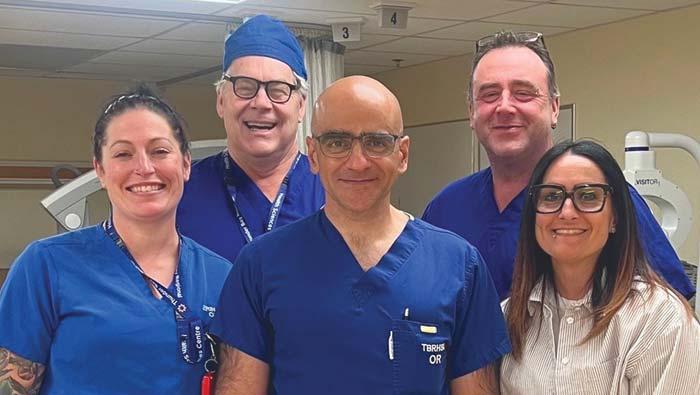
Left to right: Erin Ranta-Ojala, OR co-ordinator; Dr. Bruce Pynn, oral and maxillofacial surgeon; Dr. Jubin Payandeh, orthopaedic surgeon; Ron Garon, OR manager; Domenica Gvora, OR clerk.
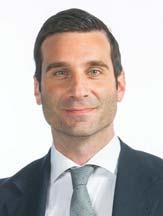
Dr. Alexios Hadjis
AI-driven Strello Health reduces pressure on the front desk in clinics
BY JERRY ZEIDENBERG
TORONTO – A team of Ontariobased physicians has produced an AI-powered solution called Strello Health that solves one of the biggest problems for physician practices –patients can’t get through to the reception desk to make an appointment.
The front desk is often so busy with calls that patients are put on hold for what seems like ages, or they get a busy signal when they call in.
It’s a source of incredible frustration for them.
But by automating the process with AI and natural language technology, Strello Health can take any number of calls simultaneously.
No caller is put on hold, and a simulated ‘medical office assistant’ that sounds just like a human can deal with about 70 percent of the calls, asking patients when their preferred times for appointments might be and connecting to the scheduling system to find a suitable timeslot.
The system also gets back to the patient with reminders about the appointment and instructions about what might be needed.
Strello Health’s AI can even answer questions like where to park at the clinic, or the local landmarks to look for to locate it.
For patients with more serious medical issues – comprising about 30 percent of the calls – the calls are routed to a live medical office assistant or another staff member, the human in the loop.
“If you have an infection or pneumonia, or chest pain, you need to be seen more quickly,” said Dr. Ali Qamar, co-founder and CEO of Strello Health. In these cases, a member of the team is alerted.
For more sensitive or higher-risk concerns – such as mental health or pregnancy
– the system can also switch over to a human when the clinic’s protocols call for it.
According to the company, Strello Health is leading to much greater patient satisfaction. They’re getting immediate attention and they’re never put on hold.
Dr. Qamar said the front desk staff are happier, too. They’d rather be performing higher-value work than field non-stop telephone calls. “Nobody wakes up in the morning and says, you know, I can’t wait to answer 100 phone calls today,” he quipped.
Instead, MOAs are engaging in higher value work – such as taking vital signs and blood pressure readings.
They can also be re-deployed to carry out high value work like identifying patients who should be coming in for screenings for chronic conditions like diabetes and cancer.
Clinics benefit financially through incentives for screenings of this sort, but often, staff haven’t had the time to manage screenings.
Overall, the company says streamlined phone operations are saving clinics with
Fone GP about $5,800 a year, while clinics with 10 family doctors could see savings of up to $58,000 and up to 2,400 administrative hours saved per year.
Savings are even greater, Strello Health says, for specialists.
Since going live in 2025, Strello has been handling over 20,000 clinic calls a month in Ontario, BC, Alberta, and several US regions.
It works with a variety of popular EMRs, such as Telus PSS, Oscar, and Accuro, with more integrations in development.
Already, Strello has proved so popular that many of the original test users have decided to invest in the product.
So has the Ontario Centre of Innovation (OCI) and other strategic investors. Together, they’ve committed $1.1 million to a pre-seed funding round.
This new capital will fund team expansion and broader US and Canadian distribution.
Right now, Strello Health supports over 100 provider schedules across clin-
ics and has 150 clinics on its waitlist.
Dr. Qamar said the company has put a great amount of time and effort into developing the technology, first researching the workflow at many medical clinics.
Its AI uses a mixture of models, versus some competitors that use just one LLM and attach a voice system to it, he commented.
In the R&D stage, the company devised and tested simulated patient calls, using AI to detect patterns and outliers in the conversations. It now has a sophisticated suite of test calls and patient simulations.
Whenever it wants to add a feature, it can run the feature through the simulated suite to ensure the feature works as expected.
The system can also be fine-tuned to match the protocols and preferences of individual clinics.
What’s more, any data collected is held in Canada but destroyed after 30 days. The company said no data from clinics is used for training the AI system.
Dr. Qamar said solutions like Strello Health are becoming lifesavers for clinics large and small, as medical centres are putting increasing resources into administration.
AI-powered Strello Health is enabling them to automate many of the front desk functions, while providing better service to patients.
Currently, most of the demand for Strello Health is coming from larger clinics. But he said about a third of the customers are smaller clinics.
“They’re in a situation where they’re drowning … their margins are being spent on meeting administrative needs,” said Dr. Qamar.
“If one secretary quits, the whole clinic can come to a standstill,” he asserted. “So, there’s a lot of existential fear that clinic owners have on the smaller clinic side.”
HHS is first hospital in North America to ‘filter out’ blood clots
BY LISE DIEBEL
ilters keep coffee fresh, water clean, and cars running smoothly. Now, a team of Hamilton Health Sciences (HHS) doctors and researchers are using that same concept to prevent strokes, by placing tiny filters in patients’ carotid arteries at each side of the neck to trap blood clots so they can’t reach the brain.
HHS is the first hospital site in North America and most of the world to perform this innovative new procedure to investigate whether these tiny filters, called Vine carotid filters, can lower the number of strokes caused by large vessel blockages inside the brain.
This global, Phase 3 clinical trial is taking place through a partnership with a medical device company and our Hamilton General Hospital’s stroke and neuro-intervention teams. The trial is also exploring whether these filters will reduce the overall number of strokes and will further evaluate the filters’ safety.
Trials happen in phases so researchers can study their effectiveness in a gradual and safe way. Phase 1 trials explore tolerability and dosing, Phase 2 trials evaluate how well an intervention works and what side effects may occur; Phase 3 look at efficacy; and Phase 4 focuses on what happens in the long-term.
The Phase 1 and 2 trials took place in Europe, where close to 100 patients received filters.
The Hamilton-led Phase 3 trial is much larger. Dr. Ashkan Shoamanesh, an HHS neurologist, and Dr. Alexander Benz, a cardiologist fellow at HHS, are leading the Phase 3 study globally, which will involve 2,000 patients worldwide over the next two to three years, with about 40 from HHS.
With Phase 3, one group of patients receives the filters along with the current, standard treatment of blood thinners, while other group continues with blood thinners only, and their outcomes are compared.
At the time of writing, HHS had enrolled three patients. One underwent
the procedure while the other two continued with the standard treatment of blood thinners.
The HHS patient who received the filters recovered quickly and is doing very well, said HHS neurologist Dr. Aristeidis Katsanos, the study’s site lead.
Katsanos, Shoamanesh and Benz all
Blood thinners don’t prevent all strokes, and researchers are looking for alternative ways to stop them.
conduct research through the Population Health Research Institute, a world-renowned, shared institute of HHS and our academic partner McMaster University.
Strokes in people with a history of atrial fibrillation (AF), an irregular heart rhythm, are often caused by blood clots that travel to the brain and block major blood vessels, which can lead to severe, life-altering disabilities. Since blood
thinners don’t prevent all strokes in these patients, researchers are looking for other, more effective ways to protect them in addition to standard-of-care blood thinners.
Laboratory testing shows that these filters can trap larger clots (about 1.4 millimetres in size or bigger) and sometimes smaller ones too.
In people with AF, blood clots can form in the heart and travel through the bloodstream where they can cause a stroke if they reach the brain. Placing these filters in both carotid arteries, the main vessels carrying blood to the front of the brain, could stop large clots from the heart from reaching this area, where about 90 per cent of AF-related strokes occur.
Patients qualifying for this Phase 3 trial have had a stroke within the last year. They also have AF, which puts them at higher risk of stroke.
While blood thinners help lower the risk, people with AF who have had a stroke in the past year face about a three to seven per cent chance of having another one.
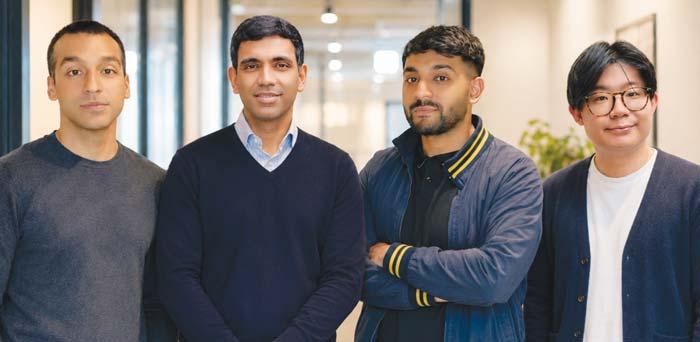
The leadership team at Strello Health:, pictured above. Left to right: Dr. Reza Mirza, CSO, Rheumatologist; Dr Ali Qamar, CEO, Family Physician; Ali Sharif, head of Technology; Yao Sun, head of Engineering.
AI agents: unlike humans, they never call in sick and they never leave early
BY JERRY ZEIDENBERG
LAS VEGAS – AI has dominated the discussion at the annual HIMSS conference for several years, but at this year’s gathering, held in March, the focus moved to a more specific form of the technology – AI agents.
AI agents can carry out tasks on their own, making decisions like humans, but relieving people of many mundane tasks. U.S. healthcare executives talked about their experiences at a session called, “Agentic AI: Reinventing Healthcare Operations for Better Care.”
Donna Fortson, senior vice president at Wellspan Health, a non-profit healthcare provider with hospitals and clinics in Pennsylvania and Maryland, discussed how AI agents saved the day for the organization’s call centre.
She emphasized that the biggest challenge for healthcare today is workforce shortages – and that includes administrative jobs.
Fortson inherited the call centre when she was recently promoted. She became acutely aware of the staff shortage issue when a physician called her soon after and complained that patients were walking into their practices.
She asked, “Isn’t that what you want them to do?”
The physician snapped back, “No, they’re waiting so long on the phone in your call centre that they’re getting into their cars, driving to our practice, and scheduling their appointments in person.”
After recognizing the problem, Fortson and her team quickly established a partnership with a technology company. “That enabled us to bring in our first AI agent,” said Fortson. “Her name is Anna.”
Fortson noted that the centre answers approximately 235,000 calls a month for their primary care clinics, and Anna is now answering 117,000 of them.
“So where am I today,” asked Fortson. “We are transforming our call centre. Wellspan was the first nationally to bring in some type of AI agent in a [healthcare] call centre.”
She said that initially, there was some push-back from employees who feared that AI was going to eliminate jobs. “They automatically said, You’re trying to replace me.’ But she answered, ‘Replace you? We don’t have enough of you to answer the phones.”
Once her team was able to get this message across to staff, they were able to bring some of them into groups that would help build out the application. “They became so proud, because they were a part of the making of the AI,” said Fortson.
Moreover, with the AI agent answering the phone, Wellspan was able to shift humans into higher value tasks, providing specialty care for more complex areas where live agents were needed.
“We actually stabilized our call centre with the capacity of AI. And that’s what we all needed,” said Fortson.
As for patient care, that’s improved immensely. Wellspan’s call centres used to have an abandonment rate of 19 percent –meaning that 19 percent of callers grew so frustrated with holding that they gave up.
Now, with the help of the AI agent
Anna, the abandonment rate has fallen to 5.9 percent.
“Anna doesn’t call in sick, and doesn’t ask to leave early,” quipped Fortson.
Dr. Amish Desai, chief medical officer at Northwestern Health, said his organization does an annual blitz to bring patients in for
annual wellness visits. It’s a monumental task, with a small army of people on the phones trying to get patients in the doors.
“Instead of using the traditional way of doing it, we said, let’s test using agentic AI,” said Dr. Desai. “Ours is called Titi, not Anna.”
He said Northwestern is also using an agent for lung cancer screening. “We’re testing that right now.”
Craig Anderson, VP of innovation at BayCare, a non-profit health system with 16 hospitals serving the greater Tampa
BUILT FOR CARE. DESIGNED FOR PERFORMANCE.
Transform your perioperative spaces with STERIS Healthcare Design Services— combining clinical insight, immersive visualization, and proven expertise.







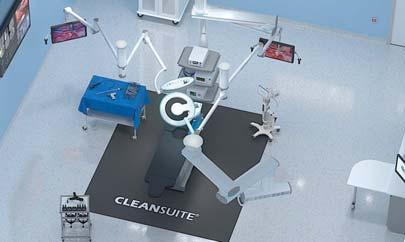

No matter how simple or complex your goals for your perioperative space, STERIS partners with Canadian healthcare facilities from concept to completion. Our team delivers:
• Tailored Design for renovations and expansions aligned with clinical workflows
• Data-Driven Planning using capacity and workflow analysis
• Immersive Visualization with 3D renderings, animations, and Virtual / Augmented Reality tools
• Ongoing Support Beyond the Build—equipment, training, and services to keep your space performing optimally
• Uninterrupted Operations with mobile reprocessing units that maintain full capacity and compliance during construction

YOUR PARTNER IN FUTURE-READY HEALTHCARE DESIGN Explore our virtual design portal: healthcaredesign.steris.com Call 800-661-3937 or email Canada_Resource@steris.com
Cyber-crooks now deploy AI, making data protection more difficult
BY JERRY ZEIDENBERG
HAMILTON, ONT. – If your worries about hackers and cyber-criminals were already bad enough, they’re about to get even worse. And we can thank AI for that.
“AI has been weaponized,” said Kashif Parvaiz, speaking at the Medical Imaging Informatics & Teleradiology (MIIT) conference in April, which was held in Hamilton and was supported by McMaster University.
Kashif Parvaiz is a VP and chief information security officer at Arancia, where he leads the governance, risk, compliance and consulting portfolio and provides advisory services to healthcare and public sector organizations.
He was previously CISO at University Health Network, in Toronto, where he led the provincial initiative to strengthen cyber capabilities across more than 15 Ontario hospitals.
Cyber-criminals are now revving up their efforts, using AI-assisted techniques such as deep-fakes where they can emulate voices to trick unwary staff into opening files that contain viruses.
He noted there have been instances of cyber-crooks calling help desks and impersonating doctors, saying they’ve damaged their phones and can’t get back into the network. They ask for help setting up a new login, which the help desk facilitates.
“They’ve done all their research and know what the person’s name is, who they report to, etc. The initial verification usually passes.”
As a result, the thieves get into the network.
They can also use AI to seek out vulnerabilities in computer networks, using them as launch pads for viruses or ransomware.
The IOMT (Internet of Medical Things) is a special target, such as medical dispensing machines and remote personal monitors for imaging. They’re all from third party suppliers, who may not be vigilant about security, Parvaiz said.
TWhat’s more, a great deal of medical equipment is old and doesn’t have the latest software, making it susceptible to hackers when linked to a network.
Once into the network, hackers can launch a viral attack, shutting down the system and simultaneously acquiring reams of patient and staff data.
Cyber-thieves can and have demanded ransoms to restore the data, a nightmare for hospitals and health regions.
Parvaiz noted that Anthropic, a leader in the creation of AI models, recently produced a new system so powerful that the company was closely controlling its dissemination. In the wrong hands, they worried, it could be used to wreak havoc by discovering weak points in computer networks.
According to Parvaiz, what’s driving the latest generation of cyber-criminals? As he puts it, it’s all about the money.
“We have a lot of information that they can leverage from people’s accounts, including names, addresses and healthcare numbers. They can then impersonate people.
Armed with that data, they can mimic the identities of real people, spending on their accounts.
The problem for healthcare systems is that most are underfunded and unprepared. They’re unable to properly fund their staffing needs and technology, let alone IT security.
But today, every hospital and medical facility must realize that cyber-crime is a growing threat. Moreover, said Parvaiz, organizations are evolving from thinking they can protect themselves to a strategy of resilience. “You know that some stuff is going to get through,” he said.
Not only do you need as strong a defence as possible, but you also need credible backup. In fact, said Parvaiz, you shouldn’t have just one backup, you should have two. “You really should have three copies of the data – two on 90-day standby, and one offsite,” he commented.
Parvaiz urged healthcare managers to assess their current states of cyber-security.
“If you’re at two [out of a scale] of five, you’ve got a lot of work to do,” he said.
As first steps, he said organizations must build up their resilience, deploying multi-factor authentication (MFA), as well as 24/7 monitoring of networks and a containment response strategy.
“Make sure you have incident response partners in place for all emergencies. If a person you need is in Bermuda, it doesn’t help.”
And importantly, keep testing the network for vulnerabilities. As systems change over time, with updates and additions, new weak spots emerge. These must be identified and shored up.
Parvaiz noted that on the plus-side, AI can also be used to fight AI. Fortunately,
some of the work can be done by AI systems that seek out and find problem areas and suspicious behaviours.
“For example, artificial intelligence can identify a log-in from a foreign country and challenge it with a second login,” he said. And AI systems work around the clock.
As a defensive measure, organizations have been segmenting their networks, splitting them up into self-contained units so that if a virus penetrates one, it can’t easily get through to the others.
Parvaiz emphasized the role of continuous testing – something that still benefits from human participation. He termed it red team versus purple team, where a group of staff members are assigned to mimic hackers and try to break through the network.
This could be done by phishing, for example, where red team-members trick regular staff into opening files containing viruses, or by impersonating others to gain access to the network.
Another group, team purple, is assigned to defend – to find weak points in the network or suspicious activities.
Through this technique, the network is constantly being assessed and upgraded.
Parvaiz mentioned that hospital executives should also be trained to respond to real-world pressures that occur when a network is breached. “TV reporters and cameras will show up asking for comment,” he asserted. Executives must respond appropriately under this stress, so the public doesn’t lose confidence in the healthcare system.
“Unfortunately, the break-ins tend to happen at 10 pm on a long weekend,” he observed, just when people are expecting to relax.
Because you never know when hackers may strike – and viruses can lay dormant in a system for months – it’s important to conduct defensive exercises, commented Parvaiz.
“Cyber-crime is accelerating at a pace we’ve never seen before,” he said. “AI is now a weapon.”
INOVAIT announces $1.35 million funding for 10 AI projects
ORONTO – INOVAIT, Canada’s image-guided therapy (IGT) and artificial intelligence (AI) commercialization network, has announced the latest recipients of its Pilot Fund. This research and development (R&D) funding program supports cutting-edge medical technology projects that harness the transformative power of AI, machine learning, and big data analytics in IGT to advance medical innovation and streamline care.
INOVAIT committed $1.35 million to support 10 new projects involving collaborations between small- and mediumsized enterprises, hospital research centres, and academic institutions, creating jobs and launching healthcare innovation across the country. The combined value of the selected projects is nearly $4.16 million contributed by all project participants along with INOVAIT.
The Pilot Fund provides up to $150,000 in funding for collaborative R&D projects lasting 9 to 15 months. To date, INOVAIT has selected over 100 image-guided therapy and AI projects for funding, leading to an infusion of over $128 million into the Canadian image-guided therapy sector across the last six years.
“Canada’s medtech sector does not lack for bold ideas in IGT and AI; it lacks the commercialization mechanisms to validate them. The Pilot Fund gives innovators the runway to deliver prototypes, stress test their technologies and build the evidence base that attracts investment,” said Raphael Ronen, co-executive director, INOVAIT
The INOVAIT Pilot Fund is made possible through the Government of Canada’s Strategic Response Fund.
Among the newly funded projects are:
* Perimeter Medical Imaging, of
Toronto. In collaboration with the University of Toronto, Perimeter Medical Imaging is developing a scalable AI infrastructure for an intraoperative Optical Coherence Tomography (OCT) device. This project aims dramatically reduce the 20 percent re-operation rate currently plaguing breast conserving surgeries.
* Hyivy Health, of Kitchener, Ont., in
Canada doesn’t lack for bold ideas in IGT and AI. It lacks the commercialization mechanisms that are needed.
collaboration with the University of Waterloo will develop and validate the first AI-enabled, image-guided intravaginal therapy system that integrates real-time ultrasound, infrared perfusion sensing,
optical imaging, and multimodal biomechanical sensors to create a longitudinal pelvic health intelligence platform. This project aims to create a system that can objectively diagnose, monitor, and personalize treatment for chronic pelvic pain, tissue changes, pelvic floor dysfunction, and related gynecologic and colorectal conditions.
* Vope Medical of Montreal, in collaboration with the University Health Network, will evaluate CLARIS, a realtime AI platform that improves visibility during minimally invasive surgery by digitally removing smoke and visual obstructions. The project aims to improve downstream surgical AI workflows.
Other awards can be found on the INOVAIT website. The announcement was made at the Medventions Toronto Innovation Day, hosted at Sunnybrook Health Sciences Centre in Toronto.
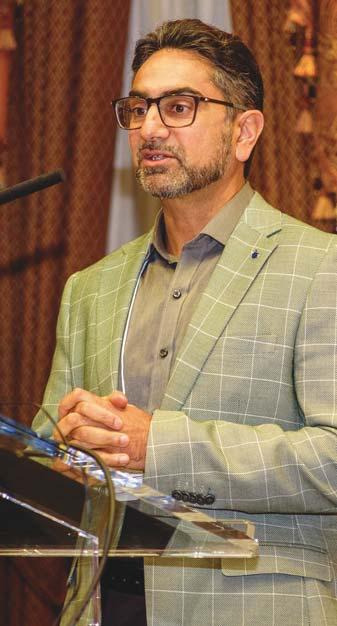
Kashif Parvaiz, VP and CISO at Arancia.
Operational readiness drives clinical success and improves medical outcomes
BY BOYEDE SOBITAN
Medical breakthroughs captivate imaginations across the industry. People frequently applaud new therapies, AI diagnostics, and surgical advances. Such innovations certainly deserve recognition. However, a quiet, foundational reality continuously shapes modern healthcare delivery.
Clinicians require immediate access to essential tools. Brilliant technology serves no purpose if implementation fails. Paradoxically, the point of care often arrives as an afterthought.
Facilities rely on complex technological workflows. Caregivers leave patients hoping that systems will function correctly. Stakeholders simply pray human oversight intervenes at exactly the right moment.
Quantifying operational readiness: Zebra Technologies recently conducted a hospital vision study examining materials management. Findings reveal a stark reality regarding health systems. Operational readiness directly influences clinical outcomes.
Nearly three-quarters of hospital leaders report delayed or canceled procedures due to unavailable supplies. Each statistic represents human anxiety, severe disruption, and significant risk.
Stockouts carry massive consequences in medical settings. Missing medications or absent equipment alters treatment trajectories. Absences delay care and force clinicians into difficult compromises. Modern implications reach far beyond logistics. Supply availability directly impacts patient safety and survival.
Discussions with healthcare executives highlight critical trends. Study data indicates 84 percent of non-clinical leaders consider automated digital tracking systems for materials a key organizational initiative.
An equal percentage of decision-makers recognize inventory management dictates patient safety. Recognizing the connection signals a vital shift in industry thinking. Operational teams, supply chain leaders, and inventory specialists define the success of care delivery.
Care begins at the bedside, yet the infrastructure guaranteeing continued implementation starts much earlier.
Breaking the workflow mesh: Hospitals suffer from severely fragmented systems today. Administrators invest heavily in electronic health records and procurement platforms. Yet, tools function in isolation. Separate databases hide critical data. Incomplete visibility strains the entire organization. Clinicians navigate a technological workflow mesh full of complications.
Inconsistent terminology exacerbates the challenge across departments. Different units define ”out of stock“ quite differently. One department might mean inventory dropped below a specific threshold. Another might simply lack an item locally while the broader system holds the asset elsewhere.
Communication failures hinder coordination. When coordination suffers, patient care falters.
Fragmentation introduces inefficiencies extending far beyond financial costs. Caregivers experience additional strain while navigating uncertainty. Time spent resolving supply issues causes immense frustra-
tion. Burnout increases heavily in an already stressed workforce. Searching for equipment takes valuable moments away from direct patient interaction.
Implementing frameworks that work: To resolve exact complexities, Zebra launched the Orchestrated Care framework. The
methodology harmonizes intelligent visibility, empowered teams, and optimized operations. Under the framework, technology finally serves the caregiver, rather than the other way around.
Intelligent visibility connects patient touchpoints digitally. Digital connections ensure error-proof identification for critical elements like medications and test results. Empowered teams rely on unified communication through a single mobile device. Consolidating communication reduces the chaotic workflow mesh. Optimized
Ontario specialists create QuickChart, an AI scribe and management system
BY JERRY ZEIDENBERG
Two Ontario physicians – an orthopaedic surgeon and a cardiologist – have created QuickChart.MD, an ambient scribe, telehealth and documentation platform they say is different than other AI-powered scribes currently available. That’s because as specialists, they’ve built tools and workflows into the system that appeal to other medical specialists, as well as general practitioners.
In the past two years, QuickChart has already gained almost 1,000 users – both specialists and GPs who like the platform. Using the system, the doctors have conducted over 1.2 million patient visits.
“About two-and-a-half years ago, we were talking about ambient scribes, and we thought we could build a better one,” said Dr. Joel Moktar, an orthopaedic surgeon who works at Health Sciences North, in Sudbury, and at several surrounding clinics.
Dr. Moktar also has an MSc in engineering, while his business partner, Dr. Pavel Antiperovitch, is a cardiologist working in London, Ont., and an assistant professor at Western University, who also did AI training at Stanford University and UCSF. Interestingly, Dr. Antiperovitch was one of the lead developers of the Oscar electronic health record system, which was originally developed at McMaster University’s department of family medicine.
Dr. Moktar explained that QuickChart uses six different AI models, each performing the tasks to which it’s best suited. For example, one AI model might be great at report generation, while another might excel at reading images or extracting data.
“Other scribes are often just ChatGPT with a wraparound,” he commented.
The system offers ‘multi-modal AI processing’, meaning that it can make sense of a variety of inputs, including PDFs, interviews, images, medication lists and referrals.
QuickChart can also look up reference guidelines and literature.
Its outputs include consult letters, referral notes, work notes, physiotherapy notes, patient education documents, and more.
The creators also had the benefit of fellow specialists using QuickChart in its early stages and giving feedback, which helped improve the solution. They continue to provide constructive comments, ensuring that QuickChart is continuously enhanced.
As well, Dr. Moktar’s wife is a GP who uses QuickChart, and Dr. Antiperovitch’s spouse is an internist who also makes use of it. “Even with our core group of four you’ve got a broad spectrum of users,” said Dr. Moktar. “We also have nephrologists, respirologists, neurologists, and others who continue to give us feedback.”
The company assesses its solution against its leading competitors to ensure that it is performing well, Dr. Moktar said.
“Against leading competitors, we found that our solution consistently scored the

highest in terms of quality, accuracy, medical terminology. And hallucination risk was the lowest.”
On the issue of hallucinating AI scribes, Dr. Moktar wanted to comment on the Ontario auditor general’s recent report, which found a high rate of hallucinations among Ontario’s 20 accredited AI scribes, of which QuickChart is one.
He explained that in testing, the companies were given audio files that their products were supposed to “listen to” and provide outputs.
Not only were the tests done over two years ago, when many of the companies were just starting out – rapid improvements in AI have occurred since then – but
Qthe companies also weren’t allowed to edit the outputs.
“That doesn’t reflect real clinical practice,” said Dr. Moktar, explaining that all AI scribes must be reviewed by the physician – the human in the loop. Edits of the output files are only to be expected.
Additionally, Dr. Moktar mentioned that the report did not compare AI scribe technology to its performance in real clinical practice, or against the previous technology of typing or verbal dictations.
The bottom line seems to be that physician users of QuickChart – and other AI scribes – are finding them to be extremely useful in everyday practice.
Before scribes began to be used, doc-
VisitRecap assists patients
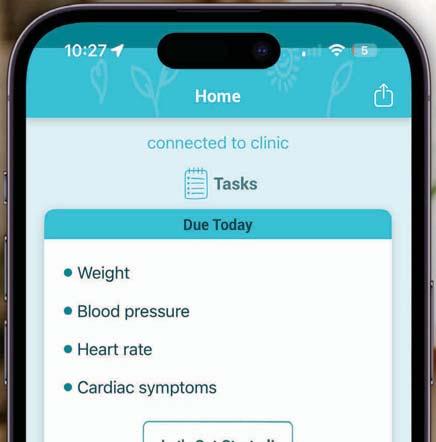
uickChart also offers a free product for patients called VisitRecap, which enables patients to prepare for future visits and understand their past visits. Available on the App Store and Google’s Play Store, VisitRecap is used on smartphones and taken by patients to any medical appointment. It then captures an understandable summary of the conversation with the healthcare provider.
Before the appointment, the system can be used to generate the appropriate questions to ask.
“What we’re seeing is patients putting all their medical data into ChatGPT and coming in with 28 questions to ask,” said Dr. Moktar. “We’re having to interface not only with the
tors were spending 19 hours a week on charting, according to the CMA. The workload was weighing on their personal and professional lives – instead of focusing on patients, they were often filling out forms.
Prior to using QuickChart, Dr. Moktar could see 15 to 20 consultations per day and still finish late. Now, he regularly sees 25 consults, while spending the same amount of time with each patient.
For his part, Dr. Antiperovitch said he used to spend two the three hours each night catching up on charts – now it’s all done during the workday. He used to see 10 to 12 patients each day before using QuickChart; after using it, he regularly sees 20 patients a day and never goes home late.
A major function of QuickChart, and one that differentiates it from most other ambient scribes, is its built-in telehealth capabilities. It has both phone and video components integrated with the system, so that doctors can contact patients from wherever they might be – something very useful for specialists, who often split their time between hospitals and clinics.
“I do a lot of phone calls,” said Dr. Moktar, as his patients are spread across northern Ontario. Speaking via phone or video can be an enormous help to rural patients, who otherwise must travel extremely long distances. “One lady drove seven hours to see me, and that was a one-way trip.”
According to Dr. Moktar, QuickChart is the only AI scribe in Canada that has telehealth abilities embedded into it.
“It’s an incredibly powerful tool,” he said. I can be anywhere in the hospital, maybe outside the operating room and I might want to call the patient’s family. But there’s no landline nearby.”
The doctor’s office number can be programmed into the cell phone, so to the patient, it looks like a call from his office. That way, the patient doesn’t get the doctor’s personal number, and he or she tends to pick-up, as they see it’s the doctor’s office calling.
If the patient does need to call back later, the number isn’t blocked, as may sometimes happen with a doctor’s private number.
patient, but with ChatGPT, too.”
What’s more, the patient sometimes uploads X-rays and radiology reports to ChatGPT without the right context. VisitRecap helps the patient structure the context and useful questions.
It then creates a summary for the patient to walk away with, and it also includes next steps.
VisitRecap solves the problem of patients coming out of encounters with their doctors and not remembering what was said.
Even when patients take notes, they sometimes get things incorrect or can’t keep up. VisitRecap gives them a full and accurate summary.
The system was just released, and 60 patients were using it at the time this article was written.
When it’s a clinical discussion via phone or video, the conversation is immediately converted to text and integrated with the patient’s electronic record.
After hanging up, the physician can create a note right then and there, within seconds. In addition to the doctor checking the transcription of the encounter, QuickChart now has a review tool that looks for any inconsistencies.
“It’s like having two reviewers,” said Dr. Moktar.
Another unique feature of QuickChart is a study screener – the system will suggest research studies the patient may be a candidate for.
“We’re missing this a lot in Canadian healthcare,” he said. “Now, we can sign them up and refer patients to studies, giving them the opportunity to be involved.”
QuickChart is available for 30-day free trials; individual plans are available for $75 month, while the web site advises calling the company for group plans.
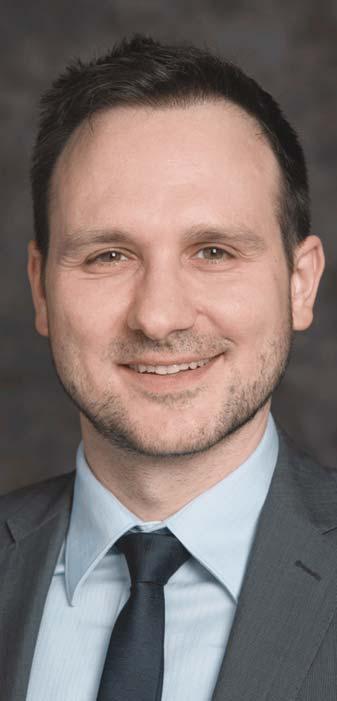
Dr. Joel Moktar, orthopaedic surgeon.
Dr. Pavel Antiperovitch, cardiologist.
Why pharmacy technicians belong at the front of every ED admission
BY SAMMU DHALIWALL
Walk into any Canadian emergency department on a Tuesday evening, and the scene is the same. Nurses move between bays, balancing triage decisions with charting, IV starts, family questions, and the steady churn of admission paperwork.
Somewhere in that workflow, a nurse is being asked to capture the patient’s complete medication history. What do they take, what are the doses of each medication and how often? Is the current label accurate for how they take it, and do they take any herbal or over-the-counter medications?
The result is a document called the Best Possible Medication History (BPMH) and becomes the foundation on which every inpatient medication decision rests for the next several days.
The problem is that the BPMH is often the first thing to compress when time is short.
For more than a decade, Accreditation Canada has identified medication reconciliation as a Required Organizational Practice. Despite this, many hospitals, especially small, rural, and communitybased sites, continue to struggle to consistently meet that standard. The reason is not effort or intent. It is structural. Pharmacy departments in these facilities are rarely staffed in evenings or on weekends and recruiting registered pharmacy technicians into rural and remote communities across Canada has become harder, not easier, over the past several years. The default position is that the BPMH falls to the admitting nurse, who is already responsible for everything else happening in that bay.
North West Telepharmacy Solutions (NTS) set out to understand what that compression costs, not in the abstract, but in measured terms.
Between February and June 2024, the NTS team conducted a study comparing nurse-created BPMHs to BPMHs derived by registered pharmacy technicians (RPhTs) working remotely, using an electronic interview tool. The study examined 154 patient admissions to the emergency department of a 30-bed rural hospital.
The results were eye opening. Across those 154 admissions, NTS pharmacy technicians identified 352 deviations between the nurse-collected medication history and the BPMH the technicians produced through a structured remote interview.
Fifty percent of the nurse-created BPMHs contained three or more deviations. Forty-one percent of those deviations had the potential to cause moderate to severe patient discomfort or clinical deterioration.
The majority were drug omissions, meaning medications not listed that the patient was taking. Partial matches (wrong dose, wrong frequency, wrong formulation) and drug commissions (medication listed the patient was not taking) were also common.
These are not minor data hygiene is-
sues. A wrong dose carried forward into admission orders becomes a wrong dose administered on the unit. A drug commission means a patient may receive a medication they discontinued months ago.
An omission means an actively prescribed antihypertensive, anticoagulant, or

insulin is missing from the chart at the moment care decisions are being made. Every one of those scenarios is a downstream patient safety event waiting to happen, and every one of them traces back to the same root cause. The BPMH was incomplete when admission orders were written.
“When we built our remote BPMH program, we were not trying to replace anyone. We were trying to give nurses back the time they were never supposed to lose in the first place. Frontline nurses in the ER are skilled at many of the things they do,


Turning Technology into Time Creating Capacity in the Community

October 1 & 2, Automotive Building at Exhibition Place

Why you should attend
• Stay ahead of the curve on AI, cybersecurity and EMR workflows
• Explore the latest in health technology at the Vendor Showcase and Start-up Zone
• Learn from thought-provoking keynotes, given by leaders in digital health
• Earn continuing medical education (CME credits)
Open to all clinicians and practice staff. Group pricing is available for further discounts. Scan the QR code to learn more and register!

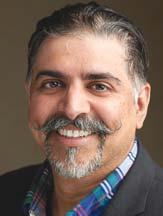
Sammu Dhaliwall
The future of electronic medical records: Why resistance to change is rational
Until interoperability is easy, and there are benefits for clinicians, it won’t happen.
BY KARIM KESHAVJEE, MSC, MD, MBA
If interoperability is so good, why isn’t it everywhere? That question has plagued Canadian digital health for more than two decades. We have standards. We have HL7 FHIR, an international standard for sharing health data. We have APIs, tools for connecting disparate databases. We have data repositories and strategies.
Yet patients still repeat their histories. Clinicians still search for data across systems. Information moves, but mostly over fax and often without coherence.
And patients notice.
They want access to their information. They deserve access to their own information. And most physicians want to give it to them. But too often, what sits inside the electronic medical record (EMR) is fragmented, inconsistently coded, buried in narrative text, or difficult to extract in meaningful form.
Dirty data does not just slow systems and understanding. It blocks transparency and sharing.
Interoperability in Canada has been treated primarily as a connectivity problem. In reality, interoperability is an alignment problem.
Healthcare is cautious for good reason. But caution is not the core barrier. The deeper issue is that the burdens and benefits of interoperability do not fall on the same actors.
The physician entering structured data does not necessarily experience the downstream system value. The clinic assuming cybersecurity exposure does not necessarily capture the analytics or research benefit.
When risk and reward are misaligned, resistance is rational.
There is also a harder truth. Interoperability, implemented poorly, can increase costs, increase cognitive load, and increase perceived privacy and cybersecurity risk. When physicians resist sharing data, they are not ‘resistant to change’. They are acting rationally, by avoiding risk where there is no benefit for them.
More connections mean more complexity. More inbound data means more information to interpret. More inbound data means exposure to more medico-legal risk. More endpoints mean more cybersecurity risk. Without careful architecture, interoperability redistributes effort and risk without redistributing the benefits that drive adoption.
This is most visible in primary care, where the longitudinal patient story lives. Here, prevention, chronic disease management, prescriptions, lab results, diagnostic imaging, referrals, specialist notes, emergency department and hospital discharge summaries and follow-up converge. It is also where data is often messy. Cleaning and standardizing it requires time and expertise that clinics do not have.
When we ask why data does not flow, the answers are practical. The data is too dirty to share reliably. Cleaning it takes effort. Sharing increases perceived risk. Integration increases costs.
If we begin from this reality rather than from aspiration, the path forward becomes clearer.
The next stage of electronic medical records is not more exchange. Surprisingly, it already exists to a great extent. What is needed instead is clean, validated, standardized data inside the clinic, created in a way that reduces human effort rather than adds to it.
If information can be coded automatically to in-
ternational standards such as SNOMED, ATC, and LOINC, the burden shifts from clinicians to systems. If data is captured once and reused many times, duplication falls and clinician effort falls.
If structured summaries can be generated instantly from validated data, cognitive load decreases. At that point, interoperability stops being about compliance and coercion and starts being about capability and clinical value.
We have evidence that this model can work. Through CPCSSN, Canada’s Primary Care chronic disease surveillance system, primary care data from multiple EMRs is extracted, transformed into a common structure, coded, cleaned using natural language processing, and de-identified for secondary use.
In return for participating, clinicians receive
The physician entering structured data does not necessarily experience the downstream system value. The benefits often accrue to others.
meaningful information that assists them during the patient encounter, reinforcing participation.
The lesson is simple. Reciprocity drives sustainability.
This architectural shift is no longer optional. Bill S-5, through the new Artificial Intelligence and Data Act, signals Canada’s intention to regulate high-impact AI systems with transparency, accountability, and risk management at the forefront. Health AI tools, from online appointment booking to predictive analytics, depend on structured, reliable data.
However, regulation without infrastructure creates burden. Infrastructure without regulation creates risk.
If messy, inconsistently structured data flows into AI systems, exposure will increase and increase exponentially. Garbage in, super garbage out.
If, on the contrary, validated, standards-based data flows within Canadian governance frameworks before it is shared, responsible AI becomes possible. Bill S-5 raises the bar for accountability. Clean data makes that bar achievable.
Data sovereignty will be the driver for change: Increasingly, data sovereignty is entering our collective vocabularies. Data sovereignty is not about isolation. It is about agency. Who controls how clinical data is structured? Who benefits from the intelligence derived from it? When cleaning, normalization, and modeling occur outside Canadian governance frameworks, strategic control shifts. Even if raw data remains within our borders, value can and will migrate outward.
Dirty data creates dependency and sovereignty risk. Clean data creates choice.
When identifiers remain local and only structured, purpose-specific information flows outward under clear governance, Canadians retain control. Researchers gain analyzable datasets. Vendors and startups can compete on quality and innovation rather than proprietary access and deep pockets. AI systems operate on validated inputs that meet regulatory expectations.
But sovereignty and architecture are not ends in themselves.
Patients are the reason this matters.
For patients, interoperability is not about APIs. Rather, it is about not having to retell their story in moments of vulnerability. It is about medications reconciled accurately across settings. It is about a specialist seeing a coherent summary rather than disconnected fragments. It is about logging in and actually understanding their own health record.
Doctors want to provide that transparency. They want to share information confidently. They want to support patient access. They are hampered not by unwillingness, but by the condition of the data itself and rational reasons for not sharing.
The boring design principle: Interoperability is meant to be infrastructure. It should be boring. That is not an insult. It is a design principle. When it is working, no one notices. No one should notice. Information flows safely. Transitions are smooth. Patients experience continuity without thinking about standards.

If we want interoperability to succeed in Canada, the sequencing must change. First, invest in automated cleansing and validation within primary care so that data becomes useful at the point of care. If physicians don’t benefit from clean data, their incentives to share are considerably less. Second, design architectures that reduce risk by keeping identifiers local and limiting external access to what is necessary. Third, ensure that every interoperability initiative delivers visible value to clinicians and patients before broader system gains are pursued.
Interoperability is not a privilege granted to those who can afford integration. It is a promise to patients that their information will follow them safely, intelligently, and meaningfully. That promise does not begin with another API. It begins with clean data, inside Canadian primary care.
Karim Keshavjee, MSc, MD, MBA, is program director, Master of Health Informatics, Institute of Health Policy, Management and Evaluation at the Dalla Lana School of Public Health, University of Toronto.
Bill S-5:
I’ve been waiting 20 years for this, and it’s not good enough
BY MIKE MARTINEAU
In November 2014, I wrote an article with the headline, “The Interoperability Imperative.” In it, I quoted a colleague who said something I’ve never forgotten: “Interoperability and data mobility have a huge impact on whether innovation is even possible. Wherever valuable data is accessible through simple open standards, innovation will flourish.”
That was over 11 years ago. The problem was already old then.
When Bill S-5, the Connected Care for Canadians Act, was tabled in the Senate this past February, I felt something I hadn’t felt in a long time: hope. Real hope. We’d never had actual legislation before. Just roadmaps. And fax machines. That hope comes from two very different places, and I want to be honest about both.
The first is professional. About half my career has been in healthcare. I’ve worked for health IT vendors. I’ve worked in the public sector deploying their technology. I know how this industry behaves from both sides of the table.
The second is personal. I have MDS, a blood cancer. I’ve been through two stem cell transplants at The Ottawa Hospital. I’ve dealt with Graft vs. Host Disease. I was hospitalized for COVID.
When the GVHD later flared, I was confined to my room because of the recent COVID infection. I’m also a cardiac patient. The five-year survival odds after what I’ve been through are, to put it plainly, not great. The health system and I are going to be in a long relationship. I have more riding on it working properly than most people writing about it.
I believe deeply in technology’s power to transform healthcare. Not by replacing human compassion. Rather, by giving healthcare providers more time to be compassionate.
The nurse who patted my leg gently during a painful stretch and told me I’d be OK is irreplaceable. Technology can give her more time for exactly that.
That’s what Bill S-5 is trying to do. I applaud the intent … I am genuinely, deeply disappointed by the execution.
The opt-out that swallows the law: Buried in Section 7 of Bill S-5 is a clause I recognized immediately. Not from legal training, but from 20 years of watching health IT policy fail in slow motion.
The Act only applies in provinces and territories that don’t already have “substantially similar” requirements in place. If a jurisdiction passes its own interoperability legislation, however thin or vague, the federal law steps aside.
I’ve heard this argument my entire career. Health is a provincial jurisdiction. Ottawa must tread carefully. I understand the constitutional reality. What I also understand, from experience, is how this attempt to trigger a constitutional debate plays out in practice.
Some jurisdictions will move seriously. Others will pass legislation designed primarily to meet the “substantially similar” test while changing as little as possible. A national standard that applies in some jurisdictions and not others is not a national standard. It is a patchwork with extra steps.
Vendors don’t build for optional. They never have.
Back in 2018, I wrote an article imploring healthcare leaders to embrace APIs, a powerful architectural approach to interoperability. I called them a “strategic weapon.”
I made the case that what had worked in retail, finance, and virtually every other data-intensive industry could work in healthcare too, if leaders demanded it. When I pitched the idea to one hospital leadership team, the CEO’s response stopped me cold.





Dennis Giokas
AlayaCare
Annual directory of leading healthcare information-technology suppliers
480 University Avenue, 12th Floor
Toronto ON M5G 1V2
Tel: 647-668-6369
E-mail: sales@alayacare.com
Contact: Steph Davidson
AlayaCare offers an AI-powered, end-toend software platform for home and community care providers to manage the full client lifecycle, from referrals and intake to scheduling, billing, payroll, and beyond. Built to support the evolving needs of care delivery in Canada and around the world, AlayaCare helps providers drive greater efficiency, improve outcomes, and advance the future of healthcare.
Alcidion
c/o Fieldstone Law
4391 Harvester Road, Unit 5A
Burlington ON L7L 4X1
Tel: +61 8 8208 4612
E-mail: info@alcidion.com
Contact: Nick White
Web: https://www.alcidion.com/
Miya Precision is an Intelligent Care Platform that builds on your EMR, consolidating clinical and operational data from multiple systems to create a system of insight rich in clinical content and context, in real time. It gives clinicians and leaders the intelligence they need to manage patient flow, surface insights from across a fragmented data environment and unlock the potential of AI across the care pathway.

Alifor
4261 Highway 7 E, Unit B2
Markham ON L3R 9W6
Tel: 647-631-5210
E-mail: paul@alifor.ca
Contact: Paul Forman
Web: https://www.alifor.ca/
ALIFOR is an evidence-based Canadian clinical operating system that integrates AI scribing, clinical decision support, patient engagement, and chronic disease management into a unified workflow. It empowers patients, supports healthcare providers with guideline-informed care, reduces administrative burden, and helps address clinician burnout while improving care quality and continuity.
Altera Digital Health
1 Antares Drive, Suite 400 Ottawa ON K2E 8C4
Tel: 416-879-0411
E-mail: john.lee-bartlett@alterahealth.com
Contact: Stacey Hunter Web: https://www.alterahealth.com/
A healthcare IT leader, Altera Digital Health develops and elevates technology to bring next-level healthcare within reach across Canada. Altera provides full-platform electronic patient record capabilities that help healthcare organizations connect people, data and workflows across care settings, supporting more informed decisions, stronger coordination and practical progress toward a more connected healthcare system from province to province.
Amplify Care
235 The Boardwalk, Suite 301
Kitchener ON N2N 0B1
Tel: 519-885-0606
Email: info@amplifycare.com
Contact: Hannele Kivinen
Web: https://www.amplifycare.com
Amplify Care is a not-for-profit organization that supports primary care practices and other healthcare organizations with digital health and AI solutions that streamline clinical workflows and enhance care delivery. Our team provides ongoing assistance through evidence-based and structured change management support, helping clinicians navigate the complexities of adoption.
AQuity Canada ULC/IKS Health
7501 Keele Street, Suite 305
Concord ON L4K 1Y2
Tel: 416-816-1196
E-mail: carey.silverstein@ikshealth.com
Contact: Carey Silverstein Web: https://ikshealth.com
Reducing physician burnout with intuitive documentation and workflow solutions.
Bialogics Analytics Inc.
16 Industrial Parkway S
Aurora ON L4G 0R4
Tel: 416-580-2659
E-mail: info@bialogics.com
Contact: Jeff Vachon
Web: www.bialogics.com
Bialogics Analytics Inc. is a leading health informatics company specializing in transforming radiology operations through real-time, data-informed decision support. By bringing transparency and trust to AI deployment, Bialogics empowers healthcare
providers to achieve clinical excellence through evidence-driven insights across radiology.
Brightsquid Secure
Communications Corp.
3655 36 Street NW Calgary AB T2L 1Y8
Tel: 800-238-6503
E-mail: jeff.mackay@brightsquid.com
Contact: Jeff MacKay Web: https://brightsquid.com/ Healthcare gets better when we all work together. Brightsquid provides secure digital communication tools, privacy compliance support, and privacy compliance training for healthcare professionals that enable more effective team-based care and prevent breaches. Over 15,000 Canadian healthcare organizations use Brightsquid Secure-Mail to exchange patient data more securely and conveniently for improved outcomes across a better-connected healthcare community.
Carestream Health Canada Company
290 Caldari Road, M1-20
Vaughan ON L4K 4J4
Tel: 1-866-792-5011
E-mail: info-canada@carestream.com
Contact: Jonathan Neville
From Imaging Centers to community hospitals to large academic providers, we offer flexible imaging solutions that can be tailored to your facility’s needs and budget.
Accelerate and evolve your digital transition with wireless DR solutions; both in-room and mobile, advanced imaging software and more – all designed to improve workflow, staff productivity and the quality of patient care, while reducing your costs.

Careteam Technologies Inc.
Suite 1200, 555 West Hastings Street
Vancouver BC V6B 4N6
Tel: 604-760-2842
Contact: Rob Attwell
Web: www.getcareteam.com
Canon Medical Systems
Canada Limited
75 Tiverton Court
Markham ON L3R 4M8
Tel: 905-470-3538
E-mail: sherry.lyons@medical.canon
Contact: Sherry Lyons Web: https://ca.medical.canon/ For more than 100 years, Canon Medical has been at the cutting edge of diagnostic imaging, creating healthcare solutions that can help enrich life for everyone. Our full range of diagnostic medical imaging solutions – CT, PET-CT, MR, X-Ray, Angiography, Ultrasound, and Healthcare Informatics – coupled with deep learning technologies deliver uncompromised quality, insight, and value across the entire global care pathway.
Canon Canada Inc.
8000 Mississauga Road
Brampton ON L6Y 5Z7
Tel: 905-863-8279
E-mail: gvijayan@canada.canon.com
Contact: Gerson Vijayan
Web: https://www.canon.ca/en/products/Scanners/ Canon Canada delivers cutting-edge technology tailored for modern healthcare environments. We specialize in highperformance document scanners that streamline patient workflows, ensure secure data management, and offer seamless EMR integration. From administrative offices to clinics, Canon empowers Canadian healthcare providers with unparalleled scanning accuracy, speed, and system reliability.
Careteam is a digital health platform that facilitates integrated care through a shared care plan, connecting all participants in a patient’s care journey. It supports clinical programs in primary and specialty care, hospitals, and community services, ensuring seamless coordination among providers, patients, families, and support teams. By focusing on a dynamic, patient-centered care plan, Careteam enhances health outcomes, minimizes duplication, and provides clinicians with real-time, actionable insights across the care ecosystem.


Christie Innomed 516 Rue Dufour
Saint-Eustache QC J7R 0C3
Tel: 514-265-5631
Email: mharaoui@christieinnomed.com
Contact: Muriel Haraoui Web: https://www.christieinnomed.com
Christie Innomed is a leader in Medical Imaging Equipment, Health IT Solutions, Service Solutions & MVS with over 200 dedicated specialists across North America. Founded in 1954, we are committed to provide innovative medical technologies and leading-edge service solutions to maximize efficiency while improving the quality of patient care pathway.
CloudWave
100 Crowley Drive
Marlborough MA 01752 USA
Tel: 877-991-1991
E-mail: customersfirst@gocloudwave.com
Web: https://gocloudwave.com
CloudWave is a full-service cybersecurity and cloud services provider exclusively for healthcare. Protecting over 300 hospitals and health systems, CloudWave delivers end-to-end solutions combining secure hosting, IT operations, and 24/7 threat detection. Services include managed security, risk and compliance, disaster recovery, and cloud optimization – all with a healthcarefirst approach. Powered by AI-driven security operations and supported by U.S.-based Network and Cybersecurity Tactical Operations Centers, CloudWave provides healthcare organizations with a cyber-ready foundation for safe, uninterrupted patient care.
ELLKAY
200 Riverfront Blvd
Elmwood Park NJ 07407 USA
Tel: 520-481-2862
E-mail: Auna.Emery@ELLKAY.com
Contact: Auna Emery, CMO, ELLKAY
Web: http://www.ELLKAY.com
ELLKAY is a trusted healthcare data management partner, advancing connectivity and innovation since 2002. Serving hospitals, labs, payers, and health IT vendors, ELLKAY connects 58,000+ practices and supports 750+ EHR/PM systems to streamline data exchange, enable valuebased care, and support smarter decisions. Learn more at ELLKAY.com.

FirstHx
146E Clinton Street, Suite 111 Toronto ON M6G 2Y3
Tel: 416-450-2423
E-mail: chris.oconnor@firsthx.com
Contact: Chris O’Connor
Web: https://firsthx.com
FirstHx combines adaptive pre-visit patient history collection with ARIS, the world’s first proactive clinical intelligence scribe. ARIS starts with visit-specific clinical context, not just conversation, resulting in more accurate notes, dramatically fewer hallucinations, and greater clinician efficiency.
FORGE Health
44 Dodge Drive
Whitby ON L1M 1J5
Tel: 905-242-6826
Email: contact@forgehealth.ai
Contact: Sean Murray https://forgehealth.ai/
Activating safe, scalable AI in Canadian healthcare. Outcomes-as-a-Service for hospital operations. Our first workload, Patient Companion, targets a specific contributor to ED walkouts: poor visibility while patients wait. Cocreated with patients, nurses and physicians. Governed by LUMEN-X, our patent-pending runtime engine. PHIPA-compliant with audit trail.
GE HealthCare
1919 Minnesota Court
Mississauga ON L5N 0C9
Tel: 416-948-6608
E-mail: tong.yu1@gehealthcare.com
Contact: Tong Yu
Web: https://www.gehealthcare.ca/
GE HealthCare is a leading global medical technology, pharmaceutical diagnostics, and digital solutions innovator, dedicated to providing integrated solutions, services, and data analytics to make hospitals more efficient, clinicians more effective, therapies more precise, and patients healthier and happier. Serving patients and providers for more than 125 years, GE HealthCare is advancing personalized, connected, and compassionate care, while simplifying the patient’s journey across the care pathway. Together our Imaging, Ultrasound, Patient Care Solutions, and Pharmaceutical Diagnostics businesses help improve patient care from diagnosis, to therapy, to monitoring.
Built in Canada by clinicians, for clinicians, our solutions are designed with a deep understanding of the real-world challenges your teams face every day. Our flagship offerings –Harris Arc and Harris Patient Timeline – go beyond traditional healthcare technology by empowering care teams with the right information, at the right time, to make faster and more informed clinical decisions. Arc: the leading edge EHR, developed with a leading clinical partner in Canada, incorporates the latest technology including AI, FHIR and Cloud which will revolutionize hospital workflows, clinician satisfaction, and significantly enhance patient care.
HealthHub Solutions
2000 Argentia Road, Plaza 5, Unit 400 Mississauga ON L5N 1W1
Tel: 1-866-223-3686
E-mail: hhaccounts@healthhubsolutions.ca
Contact: Chris Carbone & Andrea Gianello Web: https://healthhubsolutions.ca
GoAutomate Inc.
Unit 14-75 Horner Avenue
Etobicoke ON M8Z 4X5
Tel: 416-479-0800
E-mail: hello@goautomatemd.com
Contact: Samantha Williams
Web: https://goautomatemd.com GoAutomateMD seamlessly integrates with health systems, enhancing workflows and interoperability without added complexity. Simplify referrals, enable smart booking, and streamline tasks with AI-powered protocoling and intelligent centralized waitlist management. Enjoy customizable worklist servers, DICOM anonymization, and more. Focus on patient care, let GoAutomate handle the tedious tasks for a more efficient healthcare environment.
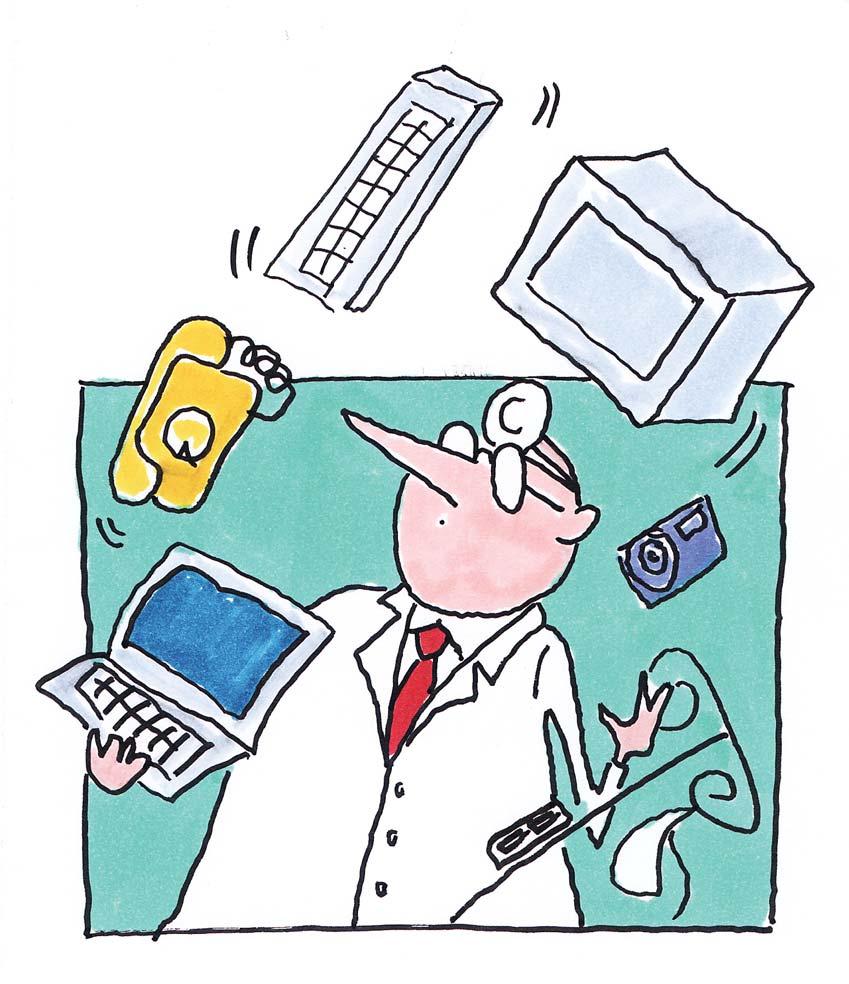
GoldCare
445 Wes Graham Way, 104 Waterloo ON N2V 1K4
Tel: 1-800-463-2688
E-mail: melissa.tunks@mygoldcare.com
Contact: Melissa Tunks
Web: https://www.mygoldcare.com
Cloud-based Healthcare & Information Management Software for Home Health Care, Children’s Services and Long-Term Care Organizations. GoldCare is the only software provider that offers a complete, end-to-end solution, from client, staff and clinical management to reporting, mobile options, and back-office financials with payroll.
For over 59 years, HealthHub Solutions has partnered with Canadian patients, hospitals, and health systems to create a digital health aggregation platform that provides a humancentered, effortless experience. HealthHub tackles the biggest issues in healthcare by identifying and aggregating applications at the point of care, to optimize patient and staff experience, health outcomes and cost savings.
Healthquest Inc.
4246 97 Street NW, Suite 201 Edmonton AB T6E 5Z9
Tel: 866-438-3762
E-mail: info@microquest.ca
Contact: Janet Verlinden
Web: https://www.healthquest.ca/
Microquest Inc. is the provider of Healthquest, Alberta’s premier EMR, and the freely available dr2dr Secure Messaging system. Founded in 1993, Microquest has been delivering effective healthcare solutions for over 30 years. Healthquest provides a full suite of tools, including electronic charting, claim entry, appointment scheduling, online booking, automated appointment reminders, customizable patient fillable forms, and a complete set of virtual care tools.
Hypercare
108 College Street, Suite W680
Toronto ON M5G 0C6
Tel: 1-877-379-3533
Contact: Albert Tai
Web: https://www.hypercare.com
Hypercare is a secure, cloud-based platform that helps hospitals eliminate communication delays and keep care moving. By connecting teams in real time, Hypercare improves response times for critical events, reduces workflow friction, and supports clinicians with faster, clearer coordination. Trusted by hospitals and health systems across North America.
InBodyCanada
4338 Innes Road, Suite 75
Ottawa ON K4A 3W3
Tel: 613-212-7434
E-mail: info@inbodycanada.ca
Contact: Eric Lavoie
Web: https://inbodycanada.ca
Harris Arc Health
1 Antares Drive, Suite 400 Ottawa ON K2E 1C4
Tel: 647-286-6888
E-mail: elavoie@harriscomputer.com
Contact: Eric Lavoie
Web: https://www.harrishealthcare.com/ Harris Arc Health is redefining Connected Care – delivering measurable improvements in patient outcomes, safety, and operational efficiency across today’s complex healthcare environments.
InBody is the global leader in body composition technology, with award-winning, medical-grade devices trusted across medical, fitness, research, and corporate wellness environments. Our devices have been used in over 8,000 published studies worldwide, with more than 223 million tests recorded through our cloud platform alone –just a fraction of total global usage –demonstrating unmatched scale, credibility, and real-world application.
Infosys Public Services Canada Inc.
275 Slater Street, Suite 501 Ottawa ON K1P 5H9
Tel: 416-435-0422
E-mail: Brent.McGaw@Infosys.com
Contact: Brent McGaw
Web: https://www.infosyspublicservices.ca/
Infosys Public Services Canada Inc. is a Canadian-based public sector consulting and technology services firm specializing in largescale digital transformation for healthcare, government, and broader public sector organizations. Drawing on the global capabilities of Infosys Limited while delivering locally based, Canadian-compliant services, Infosys Public Service Canada Inc. supports healthcare organizations with advisory, implementation, and managed services across areas such as clinical and administrative system modernization, data and analytics, cloud platforms, interoperability, cybersecurity, and accessibility-compliant digital services. Infosys Public Services Canada Inc. works with health ministries, provincial agencies, hospitals, and health authorities to improve service delivery, operational efficiency, and patient and citizen outcomes.
INTEGRAiTE
8126 Lakefield Drive
Burnaby BC V5E 4G6
Tel: 778-322-0662
E-mail: sheazin.premji@integraite.ca
Contact: Sheazin Premji
Web: https://integraite.ca/
INTEGRAiTE helps organizations redesign operations, workflows, and decision making to successfully operationalize AI at scale. Founded by leaders who implemented enterprise AI within one of Canada’s largest and most complex health systems, we combine practitioner led expertise with a secure, healthcare grade agentic AI orchestration platform. This enables organizations of all sizes, not just large enterprises, to access enterprise grade AI capabilities, intelligent agents, embedded governance, and operational transformation support to create adaptive organizations that continuously learn, improve, and scale.
Island Corporation
1 Keyes Court, Unit 1 Vaughan ON L4H 4V6
Tel: 905-695-9129
E-mail: sales@island.ca
Contact: Isabelle Drolet
Web: https://island.ca
Island Corporation has 35 years of experience providing medical displays for radiology, pathology, and clinical applications. We are an IT services company with a focus on clinic support, healthcare security, risk mitigation, disaster recovery, and network infrastructure. Contact us for special pricing on Barco, Eizo and LG medical displays available to all radiologists across Canada.
LGI Healthcare Solutions
1500-1010 de la Gauchetiere W Montreal QC H3B 2N2
Tel: 1-800-261-9659
E-mail: info@lgisolutions.com
Contact: John Rafeletos
Web: https://lgisolutions.com/healthcare
LGI Healthcare Solutions delivers a comprehensive portfolio of software solutions that are at the heart of critical infrastructure of healthcare facilities, offering reliable support for essential daily operations. Deeply rooted in Canada for over 40 years, we also serve healthcare facilities internationally, including in the United States, Australia, the United Kingdom, and France.
MedCurrent, A VitalHub Company
480 University Avenue, Suite 1001 Toronto ON M5G 1V2
Tel: 1-855-279-3380
E-mail: Martin.Kepa@vitalhub.com
Contact: Martin Kepa
Web: https://www.medcurrent.com
MedCurrent, a VitalHub company, is a physicianfounded Clinical Decision Support (CDS) company focused on improving the quality of care and managing health system costs through our innovative and scalable solution, OrderWise. Our solution enhances the clinical decisionmaking process with real-time, evidence-based guidelines integrated at the point of care to improve health and healthcare delivery.
MindSea Development Inc.
1701 Hollis Street, Suite 800
Halifax NS B3J 3M8
Tel: 902-237-0311
E-mail : alex.ferrari@mindsea.com
Contact: Alex Ferrari
Web: https://mindsea.com/ MindSea partners with Health-tech leaders to build custom mobile apps and web applications that empower patients and clinicians. On-Shore: Our Canadian-based development team ensures top-quality results, eliminating the risks often associated with outsourcing. Transparent: Avoid the common pitfalls of in-house software development. Leverage MindSea’s expertise to achieve your objectives more efficiently.
Mutuo Health Solutions Inc. 40 Temperance Street, Suite 2700
Toronto ON M5H 0B4
Tel: 647-954-0224
E-mail: noah.crampton@mutuohealth.com
Contact: Noah Crampton
Medirex Systems Inc.
18 King Street E, 14th Floor Toronto ON M5C 1C4
Tel: 416-363-9313
E-mail: m.caskenette@medirex.com
Contact: Mark Caskenette
Web: https://medirex.com
Medirex specializes in patient identification and engagement workflows, helping hospitals improve safety, accuracy and patient experience. We manufacture ThermaSoft, the only 100% Canadian-made direct thermal patient ID wristband, and provide wristbands, labels, printers, barcode scanners and mySPOT digital tools to support patient engagement.
MEDITECH
7 Blue Hill River Road Canton MA 02021 USA
Tel: 781-821-3000
E-mail: mmobasseri@meditech.com
Contact: Mitra Mobasseri
Web: https://ehr.meditech.com
MEDITECH Expanse provides health systems with a future-ready EHR foundation, leveraging AI, cloud technology, and advanced interoperability to support world-class care in 28 countries. As one of Canada’s leading HIS solution providers, MEDITECH software facilitates care in organizations of all sizes and specialties, including complex health authorities and multi-site clustered environments.
MedSpace Canada
212 King Street W, Suite 101 Toronto ON M5H 1K5
Tel: 647-648-5831
E-mail: admin@medspacecanada.ca
Contact: Adriana Beltran
Web: https://medspacecanada.ca
MedSpace Canada specializes in medical real estate solutions, helping healthcare professionals find, lease, purchase, and optimize medical office spaces across Ontario. Our experienced team provides end-to-end support, including site selection, lease negotiations, financial analysis, design coordination, and project management, empowering healthcare providers to make confident real estate decisions.
Microsoft
One Microsoft Way Redmond WA 98052 USA
Tel: 781-565-5000
E-mail: benjaminhebb@microsoft.com
Contact: Benjamin Hebb
Microsoft Health & Life Sciences helps healthcare organizations modernize care delivery through secure cloud, data, and AI solutions. With Dragon Copilot, we deliver AI-powered clinical assistance that reduces documentation burden and surfaces insights in real time. PowerScribe One enhances radiology workflows with integrated reporting, automation, and analytics – improving efficiency, accuracy, and patient outcomes. Our portfolio also includes a broad ecosystem of additional AI and cloud solutions.
Web: https://mutuohealth.com
State-of-the-art AI scribe vendor of AutoScribe, which is integrated into Telus PS Suite, Telus Medesync, Qccuro QHR and Intrahealth Profile. On New Brunswick Health Authority preferred list, Ontario VOR list and Quebec TGV/EFVP certified. Wholly-owned subsidiary of Wellstar Inc.
Northwest Telepharmacy Solutions
2 Alexander Place, Box 606
Deep River ON K0J 1P0
Tel: 613-260-3474
E-mail: info@northwesttelepharmacy.ca
Contact: Sammu Dhaliwall
Web: https://www.northwesttelepharmacy.ca
NTS provides professional pharmacist and pharmacy technician services to Hospitals and health institutions across Canada. Recent launches include Medication Reconciliation, sterile compounding delegation, and Virtual Reality training modules.
Novari Health
1473 John Counter Blvd
Kingston ON K7M 8Z6
Tel: 613-531-3008
E-mail: david.mosher@vitalhub.com
Contact: David Mosher
Web: http://www.novarihealth.com
Novari Health, a VitalHub company, delivers cloud-based enterprise scale AI enabled referral management, central intake, and waitlist management software solutions for a wide variety of clinical services including surgery, mental health, endoscopy, medical imaging, and others. Our software solutions integrate with HIS (e.g., Oracle, Meditech, etc.), PACS and other systems.
OnX
20 Toronto Street, Suite 800 Toronto ON M5C 2B8
Tel: 905-482-2292
Contact: Marie Maegher
Web: www.onx.com/
OnX is a Canadian technology solutions provider serving businesses, healthcare, and government. Combining deep technical expertise with a full suite of solutions – including Generative AI, Application Modernization, Managed Hybrid Cloud, Cybersecurity, Digital Workplace, and Infrastructure – OnX delivers end-to-end technology for clients’ most transformative initiatives.
Nuon Imaging Inc.
Head Office A18A-6120 2 Street SE Calgary AB T2H 2L8 Tel: 866-455-3050
E-mail: hello@nuonimaging.ca
Web: https://nuonimaging.ca/human-home/ Nuon Imaging is a Canadian-owned provider of advanced diagnostic imaging IT, software, and digital radiography solutions for Diagnostic Imaging clinics across Canada. Specializing in PACS, cloud imaging workflow, acquisition software, and integrated radiology IT infrastructure, Nuon delivers customized solutions designed to improve efficiency, connectivity, cybersecurity, and long-term scalability. With offices in Vancouver, Edmonton, Calgary, and Toronto, Nuon Imaging provides comprehensive service, remote support, maintenance programs, and proactive system monitoring to ensure imaging environments remain secure, reliable, and optimized for years to come.
Optum Enterprise Imaging
10711 Cambie Road
Richmond BC V6X 3G5
Tel: 00447825230595
E-mail: Benoit_Turenne@optum.com
Contact: Benoit Turenne
Web: https://business.optum.com/en/operationstechnology/enterprise-imaging.html
Our comprehensive imaging ecosystem brings together the critical information physicians need to make confident decisions quickly. Advanced tools and AI-driven clinical workflows enable an accelerated speed-todiagnosis, streamlining processes and supporting improved outcomes. Our proven, scalable solutions ensure reliable and fast access to the complete patient story for the full care team. Flexible, hybrid-to-cloud solutions for radiology, cardiology, digital pathology and beyond deliver the functionality, speed and security you need to focus on what matters most – your patients.

Orion Health
120 Adelaide Street W, Suite 1010
Toronto ON M5H 1T1
Tel: 647-535-3853
E-mail: kara.hill@orionhealth.com
Contact: Kara Hill
Web: https://orionhealth.com/ca
Orion Health, a HEALWELL AI company, is advancing connected healthcare through interoperable data infrastructure, AI-enabled clinical insights, and coordinated care solutions. Orion Health’s Unified Healthcare Platform brings together longitudinal health and social data to support population health, preventative care, and more informed decisionmaking - built on more than 30 years of digital health innovation focused on improving wellbeing.
Perite PharmaSys Inc.
11 Yellowhammer Crescent Brampton ON L6P 4J6
Tel: 1-647-928-9009
E-mail: Vipul.patel@peritepharmasys.com
Contact: Vipul Patel
Perite PharmaSys Inc. provides end-to-end support for pharmaceutical manufacturers entering or expanding in Canada. We specialize in regulatory navigation, market access insights, supply chain planning, and commercialization strategy, helping global partners launch, distribute, and manage prescription and specialty products with compliance, efficiency, and operational clarity.
Petal
150 King Street W, Suite 306-02 Toronto ON M5H 1J9
Tel: 888-949-8601
E-mail: vbrasseur@petal-health.com
Contact: Valerie Brasseur
Web: https://www.petal-health.com
Petal, a leading Canadian healthcare technology company, helps physicians and healthcare organizations reclaim time, reduce administrative burden, and improve access to care. Through connected patient navigation, workforce management, automated scheduling, and billing operations solutions, Petal aligns demand, capacity, and financial workflows to help deliver more efficient, responsive, and patient-centered care.
Quest Diagnostics
6700 Steger Drive Cincinnati OH 45237 USA
Tel: 513-234-6907
E-mail: vicki.m.joyce@questdiagnostics.com
Contact: Vicki Joyce
Web: https://www.questdiagnostics.com/businesssolutions/hospitals-health-systems/enterprisecontent-management/contact-quanum-ecs-ad
Quanum Enterprise Content Solutions is part of the Quest Diagnostics technology brand and is a data platform that empowers healthcare organizations to intelligently capture, manage, and deliver clinical and business content to the right systems, users and workflows. www.QuanumECS.com

QuickChart Inc.
PHILIPS Canada Ltd.
1875 Buckhorn Gate, 5th Floor Mississauga ON L4W 5P1
Tel: 484-643-8847
E-mail: giridhar.poondi@philips.com
Contact: Nathan Bluvol
Web: https://www.philips.ca/healthcare/solutions/ clinical-informatics/radiology-informatics
Philips is a leading-edge supplier of clinical informatics and radiology informatics solutions, including the following: Philips Clinical Repository (Vendor Neutral Archive); Philips Enterprise Viewer (Medical Image Sharing); Interactive Multimedia reporting (Radiology Image Management PACS); Radiology Operations Command Center (ROCC); Performance Bridge; Patient Portal (Patient Engagement Platform); Philips Digital Pathology; Advanced Visualization Workspace Platform; Cardiovascular Workspace (IntelliSpace Cardiovascular or ISCV); Philips Hemo with IntelliVue X3; Interventional Cardiology Workspace (Xper IM); Ultrasound Workspace (TOMTEC); Philips Medical Device Integration; Philips Capsule Surveillance; Philips Clinical Insights Manager; and Inpatient Telehealth – Philips eCareManager.
2120 Regent Street S, Unit 2 Greater Sudbury ON P3E 3Z9
Tel: 647-444-3497
E-mail: jmoktar@gmail.com
Contact: Moktar Moktar
Web: https://quickchart.ca
QuickChart is a Canadian AI-powered clinical documentation platform built by specialist physicians to reduce administrative burden and improve healthcare efficiency. Trusted by hundreds of Canadian clinicians, QuickChart combines ambient AI scribing, medical dictation, document analysis, and specialty-specific workflows to generate accurate, high-quality clinical notes in seconds. Designed with privacy and security at its core, QuickChart supports PHIPA, PIPEDA, and HIPAA compliance while helping clinicians spend less time documenting and more time caring for patients.

RealTime Medical
7111 Syntex Drive, 3rd Floor
Mississauga ON L5N 8C3
Tel: 888-590-5069
E-mail: software@realtimemedical.com
Contact: Ian Maynard
Web: https://realtimemedical.com
Pixalere Healthcare Inc.
The Future of Wound Care
Tel: 866-297-2442
E-mail: info@pixalere.com
Contact: Ken Hendsbee
Web: http://www.pixalere.com
Increased access. Decreased administrative burden.
QReserve Inc.
405-1063 King Street W Hamilton ON L8S 4S3
Tel: 289-426-3217
E-mail: hello@qreserve.com
Contact: Marissa Hishon
Web: https://get.qreserve.com
QReserve is a Canadian advanced scheduling and resource management platform that helps leading research hospitals and core facilities manage equipment, services, and spaces; optimize workflows; streamline operations; and enhance the overall experience for staff and partners. Showcase your resources to increase revenue generation; track maintenance; invoice; and easily access utilization data.
SeamlessMD
25 Grenville Street, Unit 1004
Toronto ON M4Y 2X5
Tel: 857-465-4112
E-mail: info@seamless.md
Contact: Markus Bowden
Web: https://www.seamless.md
SeamlessMD guides patients through surgery, cancer treatment, chronic care and more with timely reminders, education, and symptom monitoring - reducing length of stay, preventing readmissions, and giving clinical staff their time back.
STERIS Canada Sales ULC
6-88B East Beaver Creek Road
Richmond Hill ON L4B 4W2
Tel: 440-479-8711
E-mail: Stephanie_abbott@steris.com
Contact: Stephanie Abbott
Web: https://healthcare.steris.com/en-ca/ca
STERIS Healthcare partners with customers in the perioperative environment to elevate patient care in Operating Rooms. GI/Endoscopy Suites and Medical Device Reprocessing Areas. Through Comprehensive offerings in equipment, consumables, devices, and services, we help our customers solve challenges, leverage growth opportunities, and advance patient care every day.
Strata Health, A VitalHub Company 1811 4 Street SW, Suite 924 Calgary AB T2S 1W2 Tel: 437-776-8149
Email: Michael.Conn@vitalhub.com
Contact: Michael Conn
Sectra Canada Inc.
2000 Argentia Road Plaza 4, Suite 250 Mississauga ON L5N 1W1
Tel: 1-437-889-0600
E-mail: info.can@sectra.com
Contact: Nader Soltani
Web: https://medical.sectra.com
With over 30 years of innovation, Sectra manages 170 million annual imaging exams and is a leading provider to health systems worldwide. Imaging modules for radiology, cardiology, pathology, orthopaedics, ophthalmology, and genomics, as well as a robust VNA and an optimized workflow engine, form an integrated enterprise diagnostic solution designed to support both human driven and AI driven clinical workflows. In 2026, Sectra won 7 Best in KLAS awards for the highest customer satisfaction.
Web: https://stratahealth.com/ca
Strata Health, a VitalHub company, helps health systems and providers coordinate patient transitions across the continuum of care. Through a connected network and integrated platform, Strata Health streamlines referrals, placements, waitlist management, discharge coordination, and care transition to improve patient flow, optimize capacity, and ensure patients receive timely, appropriate care.
Stryker Canada ULC
2 Medicorum Place
Waterdown ON L8B 1W2
Tel: 1-800-668-8323
E-mail: efgriffiths9@gmail.com
Contact: Rachel Dufresne
RealTime Medical (RTM) is a clinician-founded, leading radiology software/service company at the forefront of diagnostic imaging workflow innovation. Through its AICloudSuite platform, RTM delivers advanced, AI-driven solutions that delivers optimal workload balancing, workflow orchestration, and first-of-a-kind multidimensional peer learning to over 30 hospitals and clinics.
Savience Canada Ltd.
4255 Taywood Drive
Burlington ON L7M 4V1
Tel: 343-803-9072
E-mail: info@savience.com
Contact: Roger Everitt
Web: https://www.savience.com
Savience Canada offers digital patient flow and outpatient transformation solutions for healthcare organisations across Canada. Their platform includes appointment reminders, selfcheck-in kiosks, mobile check-in, real-time clinic flow dashboards, patient calling displays, ED workflow tools, and room utilisation solutions to improve efficiency and patient experience in outpatient and emergency departments.
Siemens Healthineers
1577 North Service Road E Oakville ON L6H 0H6
Tel: 647-613-7777
E-mail: archana.nair@siemens-healthineers.com
Contact: Archana Nair
Web: https://www.siemens-healthineers.com/en-ca
At Siemens Healthineers, we’re helping transform healthcare delivery in Canada to support smarter, more connected care. Our Digital and Automation portfolio connects radiology, cardiology, and pathology through a unified enterprise imaging platform that enables integrated workflows and informed clinical decisions. By combining enterprise workflows, embedded reporting, AI-driven insights, and remote access, we support collaboration, efficiency, and scalability. Together with advanced analytics, we help organizations address workforce challenges, rising demand, and complex data management – ultimately improving operational performance and patient care across the continuum.
SiMLQ
105 St. George Street Toronto ON M5S 3E6
Tel: 647-373-0525
E-mail: info@SiMLQ.com
Contact: Opher Baron
Web: https://emergency.simlq.com/ SiMLQ turns hospital operational data into actionable improvement plans. Our AI/MLdriven digital twin platform maps patient flow, detects bottlenecks, tests interventions through simulation, and helps emergency departments reduce wait times, improve throughput, and make staffing, routing, and capacity decisions with greater confidence.
Stryker is a global leader in medical technologies and, together with our customers, we are driven to make healthcare better. Our innovative solutions are designed to help improve patient and caregiver outcomes across the continuum of care. With Dynamic Clinical Workflow, care teams can manage workflow around the patient and beyond. Receive relevant information – when and where it’s needed – to inform patient care. Collaborate quickly and effectively and streamline clinical and operation communications.
Tali AI
153 Hillsdale Avenue E Toronto ON M4S 1T4
Tel: 647-529-1366
E-mail: mahshid@tali.ai
Contact: Mahshid Yassaei
Web: https://tali.ai
Tali is Canada’s leading AI Clinical Platform, including an AI Scribe (for note taking), AI Billing Agent and AI Clinical Decision Support among others. Physicians using Tali save up to 20 hours a week on documentation and administrative tasks. That is time back with patients, with family, or simply off the clock. Tali works across desktop, mobile, and directly inside the EMRs you already use, including PS Suite, Med Access, Accuro, CHR, Medesync and Oscar. Tali is SOC 2 Type II certified and Canadian-built and supported. If you have any questions reach out to us at help@tali.ai
Talk 2 Me Technology Inc.
Box 82089
Waterdown ON L0R 2M0
Tel: 866-554-8877
Email: info@dictation.ca
Contact: Charles Marriott
Web: http://www.dictation.ca
Microsoft Dragon Copilot and Dragon Medical One, your AI Assistant, Philips SpeechLive dictation, transcription & Philips SpeechMike, the Powermic replacement.
Techie Maestro Inc.
928 Creekside Drive
Waterloo ON N2V 2W6
Tel: 519-208-1872
E-mail: mhussain@techiemaestro.com
Contact: Mohannad Hussain
Web: https://www.techiemaestro.com/
Consultancy in medical imaging and radiology informatics offering advisory and technical services, including integrations, prototyping, architecture, training, standards and interoperability.
Tectonic Advisory Services Inc.
4145 N Service Road, Suite 200 Burlington ON L7L 6A3
Tel: 905-336-6901
Email: info@tectoniconline.com
Contact: Glenn Lanteigne
Web: https://tectoniconline.com/
Tectonic Advisory Services is a Canadian healthcare technology advisory, staffing, and management consulting firm focused on helping health systems plan, implement, and optimize digital transformation. Tectonic provides industry advisory and research as well. Tectonic brings deep expertise in HIS, EHR, analytics, interoperability, program delivery, and publicprivate collaboration to support practical outcomes for hospitals, governments, vendors, and healthcare partners.
Terra Nova Transcription Inc.
100 Elizabeth Avenue, Suite 122
St. John’s NL A1B 1S1
Tel: 1-866-726-1367
E-mail: m.french@terranovanow.com
Contact: Maria French
Web: https://www.terranovanow.com
When it comes to clinical documentation, we understand the challenges of hospitals and physician practices. With Terra Nova’s team of transcriptionists, editors, and quality assurance specialists onboard, you can focus on delivering high-quality patient care.
TxtSquad
132 Bond Street
St. John’s NL A1C 1T9
Tel: 709-770-5943
E-mail: josh@txtsquad.com
Contact: Josh Taylor
Web: https://www.txtsquad.com
The Unified Patient Engagement Platform for Modern Healthcare Teams. Bridge the patient engagement gap using familiar channels like text, phone and voicemail, supercharged by AI-assisted workflows, all without requiring patients to download an app. Reduce staff burden by organizing and automating engagement and provide managers with deep operational insights.

UpCare Partners & Associates Inc.
28 Glebemount Avenue
Toronto ON M4C 3R4
Tel: 647-704-0942
E-mail: contact@upcarepartners.com
Contact: Olivier Poitier
Web: https://upcarepartners.com/en/
We are a commercial partner of innovative medical technologies in neurosciences, specializing in value creation for Canadian healthcare. UpCare drives innovation in neuroscience across Canada and France, collaborating with leading partners. We specialize in introducing cutting-edge solutions to enhance diagnostics, planning, treatment, rehabilitation, and clinical outcomes in public and private healthcare settings.

Velox Imaging
1600 Steeles Avenue W, Suite 214 Concord ON L4K 4M2
Tel: 888-766-9955
E-mail: v.kravchuk@velox.me
Contact: Volodymyr Kravchuk
Web: https://veloximaging.com/
Velox Imaging is a Canadian healthcare technology company providing an integrated imaging operations platform for diagnostic imaging clinics, hospitals, and healthcare networks. The Velox platform combines RIS, PACS, scheduling, reporting, physician and patient access, billing, image sharing, and interoperability capabilities within a single operational environment. Supporting more than 1,100 imaging locations, Velox helps healthcare organizations improve access to imaging information, streamline communication between care providers, support multi-site imaging operations, and enhance visibility across the imaging workflow.
VitalHub Corp.
480 University Avenue, Suite 1001
Toronto ON M5G 1V2
Tel: 416-699-0123
E-mail: Sales@vitalhub.com
Contact: Niels Tofting
Web: https://www.vitalhub.com
VitalHub is a Toronto-based software company that empowers health and human services providers globally. Our comprehensive product suite spans care coordination, EHRs and case management, operational intelligence, patient engagement, and workforce management solutions, supporting over 1,300 clients across Canada, the UK, the US, Australia, New Zealand, and Europe – improving access, efficiency, experiences, and outcomes.
“So, what exactly is an API?” It wasn’t a question. It was a dismissal.
That exchange taught me something I’ve never forgotten. In health IT, change doesn’t come from enthusiasm. It comes from consequences. And consequences are exactly what vendors have learned to avoid.
Health IT vendors are businesses with shareholders, sales pipelines, and legal teams whose primary job is to minimize compliance cost and maximize contract lock-in. When a standard is mandatory and uniform, they build to it. When it is optional, fragmented, or subject to jurisdictional variation, they do something else entirely.
They wait.
They wait to see which jurisdictions opt out. They wait to see how “substantially similar” gets interpreted. They wait to see whether enforcement actually has teeth.
I’ve watched this behaviour through multiple generations of interoperability initiatives in Canada. The roadmaps came. The frameworks came. The voluntary commitments came. And in boardrooms across the country, the conversation always went the same way. Interoperability was always on the roadmap. Coming in the next release. The next contract cycle. The next provincial agreement. There was always a reason why now wasn’t quite right.
Without hard consequences, uniformly applied, delay is simply the rational business decision.
The Motor Vehicle Safety Act didn’t ask nicely: There’s a law in Canada that regulates another complex, safety-critical product that crosses provincial borders. You’ve probably never thought about it, because it works so well you never need to.
rective – are routinely used to justify keeping vendors at arm’s length during exactly the kind of collaborative standard-setting that would produce workable results.
Vendors aren’t equal participants in the conversation. They’re handed requirements they had no hand in shaping. Standards get softened, timelines get extended, compliance dates get pushed. By the time binding standards are published, the political energy has moved on. The fax machines are still running. I still want this to work: I’m writing this from a position of hard-won recovery. In remission now, I’m grateful to my
Technology only makes healthcare better when information flows where it needs to go.
oncology team at The Ottawa Hospital and my cardiac team at the University of Ottawa Heart Institute. I’m grateful to the nurses at both institutions who made me feel genuinely cared for during the worst of it.
And I’m grateful to a healthcare system that, for all its informational fragmentation, contains extraordinary people doing extraordinary work.
I believe technology can make that work better. I’ve believed it for 20 years. I’ve written about it, argued for it in boardrooms, and staked a professional career on it.
Zebra Technologies, Corp.
2100 Meadowvale Blvd
Mississauga ON L5N 7J9
Tel: 905-812-6400
Contact: Bas (Basim) Al-Ali
Web: http://www.zebra.com
Enable healthcare teams with more time and control by leveraging proven technology from Zebra. We offer the broadest portfolio of healthcare IT solutions, including rugged handheld computers, tablets, barcode scanners, printers, RFID readers, software, and more. We serve most top fortune 500 organizations and have a 50-year history of innovation.
The Motor Vehicle Safety Act mandates specific technical standards for every vehicle manufactured or imported for the Canadian market. It doesn’t ask manufacturers to meet federal safety requirements unless their jurisdiction has opted out. It doesn’t leave the definition of “crashworthy” to future regulation. It doesn’t suggest that airbags would be a nice idea if the industry finds it convenient.
It mandates. It penalizes. It applies uniformly.
I assert that the health information a nurse needs to safely care for a leukemia patient is at least as important as the crash rating of the car that drives that patient to the hospital.
Standards deferred are standards denied: The specific technical standards vendors must meet are left entirely to future regulation. The bill passes first. The standards follow later.
Later? As an engineer, I was taught that time has precise units. Days. Weeks. Months. “Later” was never on the list.
I’ve watched what “later” means in Canadian health IT. It means consultation. In theory, consultation sounds reasonable. In practice, public sector procurement rules – including Ontario’s Broader Public Sector Procurement Di-
Technology only makes healthcare better when the information flows where it needs to go. Information only flows where it needs to go when the rules are clear, uniform and enforceable. Rules are only clear, uniform and enforceable when they apply to every jurisdiction, on day one, without exception. Not later. Now. Ottawa finally tried. After 20 years of writing about this problem and the last two of living it from a hospital bed, I’m genuinely grateful for that much. Now I’m asking them to try harder. For patients like me, time is not a policy abstraction. “Later” is not good enough. I wanted to celebrate this bill. I still do. Give me something to celebrate.
Michael “Mike” Martineau is a Canadian technology entrepreneur and Internet pioneer who co-founded early internet infrastructure companies in the 1990s and was recognized by the Canadian government for his contributions to Canada’s internet. After a career as a digital health executive overseeing large-scale EMR deployments across Canadian hospital systems, Mike brings a uniquely personal perspective to the subject. A leukemia patient who underwent two stem cell transplants at The Ottawa Hospital, and a cardiac patient at the University of Ottawa Heart Institute, Mike has more than a professional stake in getting this right. His earlier health IT commentary can be found at ehealthmusings.ca, his personal account of living with leukemia at thecancercard.ca, and his latest work at digitalpatient.ca.
Pharmacy in the ED
but finding 15-25 minutes to do a BPMH for every hospital admission is not a good use of this resource,” says Kevin McDonald, director and founder of North West Telepharmacy Solutions.
The case for placing registered pharmacy technicians at the front of every hospital admission is not new. RPhTs are explicitly trained and licensed to collect, verify, and document medication histories.
They know how to read a community pharmacy printout, interpret a provincial drug profile, recognize when a brand and generic are the same drug, and probe for the medications patients routinely forget to mention.
These include over-the-counter products, as needed medications, herbal supplements and sample medications from a physician.
They also cover recently completed therapies such as antibiotics or steroid tapers.
A pharmacy technician approaches the medication history with a clinical eye that a generalist clinician simply does not have the bandwidth to develop while simultaneously managing acute care.
The barrier has always been access. There is not enough pharmacy technicians physically located in rural hospitals, in northern hospitals, in small community hospitals, or in any hospital after hours. Not to mention, with some small hospitals that can have anywhere from zero to five admissions on any given evening, having a RPhT available every night of the year for a BPMH is not reasonable. That is the gap remote service closes.
North West Telepharmacy Solutions operates a national team of more than 250 pharmacists and registered pharmacy technicians delivering virtual clinical pharmacy services to over 100 hospital clients across Canada.
The NTS remote BPMH program connects technicians with newly admitted patients by phone or video, typically within an hour of the request. The technician conducts a structured interview using an evidence-based electronic tool built on the ISMP Canada algorithm, references the patient’s community pharmacy records and provincial drug profile where available, and produces a documented BPMH that flows into the hospi-
Operational readiness
CONTINUED FROM PAGE 9
operations depend on radio frequency identification (RFID) tracking. Automated tracking solutions manage inventory seamlessly. Clinicians no longer waste valuable time searching for equipment. Medical professionals focus entirely on direct patient interaction.
Hospital teams require real-time visibility into the location and condition of vital resources. The sector shows a clear trend of accelerated investment in technologies providing location awareness and automation.
Elevating materials management: Proper execution matters more than the underlying science. Reliable supply access forms the absolute foundation of effective healthcare. Decision-mak-
tal’s information system for the admitting team to act on.
“The patients we interview consistently tell us they appreciate the time and attention. They are not being rushed, and they feel heard. From the hospital’s side, nurses tell us they cannot believe how much of their evening just came back to them. That is the program working as intended on both ends,” said Rebecca Lynch, regional manager, pharmacy technicians at North West Telepharmacy Solutions.
The implications for senior hospital leadership extend well beyond pharmacy. Every BPMH error that reaches the inpatient chart has the potential to extend length of stay, contribute to a preventable adverse drug event, trigger a readmission, or generate a quality reporting incident.
The Canadian Institute for Health Information has reported that hospital readmissions cost the Canadian system more than $2.3 billion annually, and medication-related issues are among the most common contributing factors.
Eighteen percent of patients experience a medication-related error after discharge from hospital, and many of those errors are seeded at admission, when the medication list was wrong from the start.
Investing in a robust BPMH process at the point of admission is, in operational
CIHI reports that readmissions cost more than $2.3 billion annually, and medicationrelated issues are prominent.
terms, one of the highest-leverage decisions a hospital can make.
It improves Accreditation Canada compliance against an ROP that has been in place for more than a decade. It reduces ER nursing burden. It lowers the rate of inpatient medication discrepancies. It supports more accurate discharge medication reconciliation. And it contributes directly to the readmission reduction agenda that
every health authority in the country is now measured against.
Looking ahead, NTS continues to invest in the program. Future iterations will include patient self-completion of the medication history while waiting in the ER or in pre-operative clinics, freeing technician time for the higher-complexity interviews that benefit most from a dedicated clinical professional.
The company is also working on tighter integration with hospital electronic health records, so the BPMH document flows directly into the inpatient chart with minimal manual reconciliation by the admitting team.
The registered pharmacy technician is one of the most underutilized members of the modern hospital care team. With the right tools and delivery model, they are also among the most valuable and efficient.
Sammu Dhaliwall is senior manager, business development, research and health innovation, North West Telepharmacy Solutions.
AI agents: they never call in sick, they never leave early
area, said they’re using voice technologies, but learned there are differences in the way they should be deployed.
“We started with primary care, and when we got some traction there, we said, great, let’s move on to specialists. And you start finding that primary care providers are not the same as an orthopod or a rheumatology expert. They use it in different ways.”
He added, “We moved from those specialties, we did urgent care, we did hospitalists. We’re learning all these workflows, and you really can’t have one size fits all, because the adoption won’t be there. You need to customize it.”
On the issue of whether patients like speaking to an AI agent, Fortson said Wellspan gives them a choice.
“Some of the patients asked, ‘are you a robot?’, and Anna would say, yes, I’m an AI technology. And they would have a conversation and make the patients feel comfortable.”
Dr. Desai asserted that with Northwestern’s agents, under 5 percent of patients refused to interact with the AI agents. In the vast majority of cases, the patients liked
ers must elevate materials management to a strategic priority. Shifting to digital inventory systems creates a consistent source of truth. Transparent inventory levels allow organizations to shift from reactive responses to proactive management.
Consistency improves cross-departmental coordination. Shared understanding among staff removes barriers. Accessible data informs decisions rapidly. Ultimately, a unified system strengthens the ability of the facility to deliver on promises made to patients.
Society cannot view materials management as a background function. Inventory functions as a core pillar of care delivery. Without reliable access to supplies and equipment, even the most advanced clinical capabilities falter. Operational teams create specific conditions required for care. Diligent work removes obstacles
talking to the AI. It seems that in some cases, the AI has better social skills than humans: “We had agents wish a patient happy birthday and sing happy birthday to them.”
Dr. Desai said their AI agents have even caught instances of suicidal patients. “And so, we’ve been pleasantly delighted,” he beamed.
Anderson noted another area where bringing in AI at BacCare has been a big success. He said at one point, the organiza-
Fewer than 5% of patients refused to talk to an AI agent. Often, an AI agent has better social skills than humans.
tion couldn’t find enough staff for its cafeterias. “We had to start shrinking the hours of operation,” he said.
But that affected patients and their families, staff and visitors. Nobody liked it.
“Our CEO challenged us,” said Anderson. “He said, go innovate and fix this.”
So, Anderson and his team looked at retail automation – including Hudson maga-
and reduces clinical uncertainty.
Building trust through system reliability: Patients trust health facilities implicitly. Individuals enter clinics with expectations of total preparedness. Providers rely on the same expectation when making critical decisions. Frequent
We shouldn’t view materials management as a background function; it is a key to healthcare delivery.
supply shortages test patient confidence daily. Consistent readiness reinforces conviction across the board.
Future health initiatives demand flawless operational execution alongside continuous scientific discovery. Every piece of the operational puzzle requires per-
zine and snack stores in airports, where customers check themselves out. They struck up a relationship with Amazon to deploy this kind of self-service in their cafeterias.
“So fast forward, I am now the proud owner of the largest Just Walk Out store in a health system. Probably only Whole Foods is larger than what we’ve got.”
He explained that customers simply walk in, scan a payment method, collect what they want, and walk out. “I’ve got 363 cameras and a few thousand sensors that monitor everything, and they know what shopper A, shopper B, and shopper C took. And then they just walk out, and it charges that credit card.”
Anderson said this enabled BayCare to not only reopen to 12 to 14 hours a day, they’re now open 24/7. “We can create more service with fewer people,” said Anderson. “And those folks that we would have had being cashiers, we can elevate their roles into something that’s more responsible.”
He added that when some people complained they don’t like being monitored by cameras in the cafeterias, he simply told them they’re already monitored by hundreds of cameras in the other parts of the hospital. They couldn’t argue with that.
fect alignment. Health leaders possess an opportunity to redefine innovation right now. Genuine advancement ensures medical breakthroughs reach patients without delay.
Elevate materials management to a strategic priority today. Decision-makers must evaluate current infrastructure and integrate isolated data platforms. Standardize internal definitions regarding stockouts so teams share consistent information. Connect staff across traditional boundaries to shift from reactive responses to proactive management. Prioritize operational readiness alongside clinical expertise. Brilliant medical science matters most when essential tools sit within reach exactly when patients need care.
Boyede Sobitan is global healthcare strategy lead, Zebra Technologies.



Connect with hundreds of clinicians and key decision-makers
Sponsorship and exhibitor opportunities now available!
October 1 & 2, Automotive Building at Exhibition Place
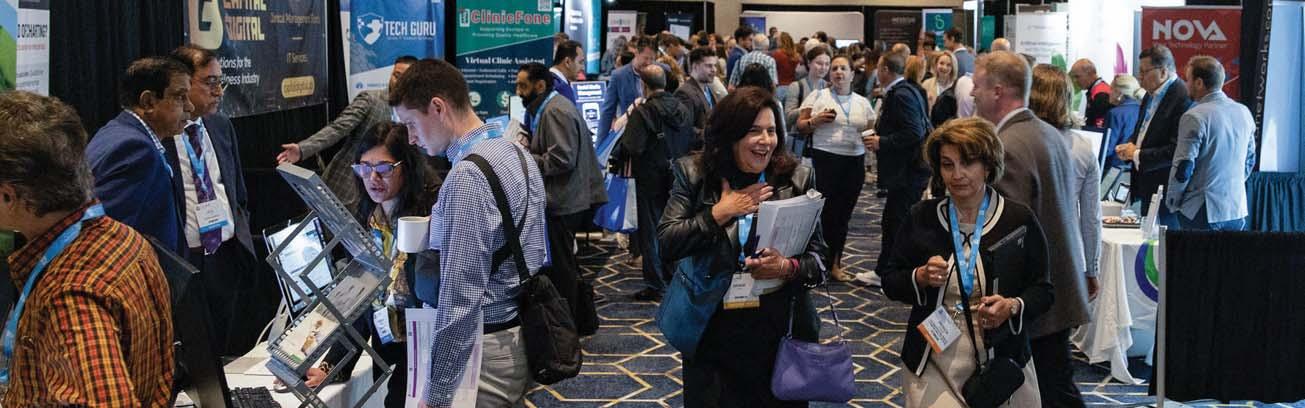
Looking to sponsor or exhibit?
• Showcase your digital health solutions
• Position your brand as a leader
• Gain exposure through multi-channel event promotion
• Save 10% with early bird registration on exhibit booths available until July 31
View the sponsorship and exhibitor prospectus to find the right opportunity for your company!
Visit OntarioMD.ca for sponsorship and exhibitor opportunities!