INSIDE:
MRI scanning in the OR Surgeons at St. Michael’s Hospital, in Toronto, have been testing the Swoop MRI scanner after neurosurgery in the OR. It enables them to check whether parts of a tumour remain behind.
Page 4
Medly is commercialized UHN’s Medly platform, which enables clinicians to keep in touch digitally with heart failure patients and to care for them remotely, is being marketed by Vitall Intelligence, a Canadian company.
Page 6
Improving care in Lagos A Canadian system that reduces the cognitive load on clinicians and with the aid of AI, enables them to make better decisions, is being tested by a group in Nigeria. The hope is to improve the level of care there.
Page 10
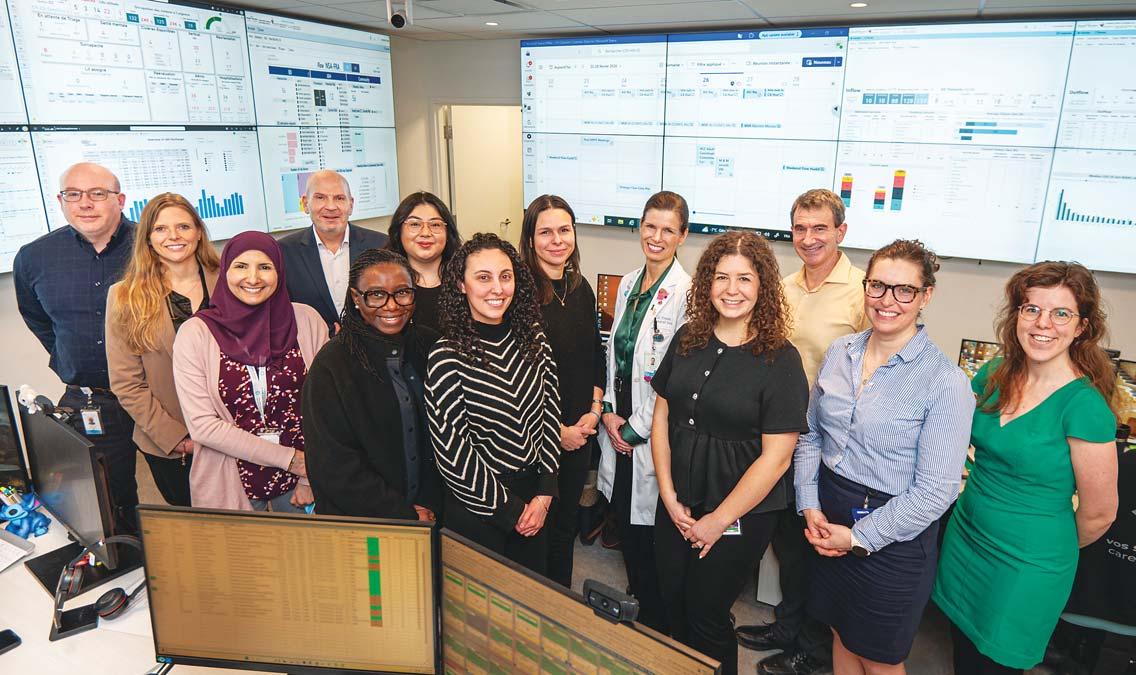
Command Centre monitors patient flow
Montreal’s Jewish General Hospital (JGH) – part of CIUSSS West-Central Montreal, the region’s Integrated Health and Social Serv ices network – is able to monitor patient flow throughout the network at its centralized Command Centre, pictured above. It also monitors and communicates with patients enrolled in its 20-bed Hospital@Home program. We report on developments. SEE STORY ON PAGE 18.
U of Ottawa launches applied AI centre for healthcare
BY NORM TOLLINSKY
The University of Ottawa has launched a new research institute to accelerate the development and adoption of AIpowered solutions in the healthcare system.
The Ottawa Medical Artificial Intelligence Research Institute, or OMARI, is housed in the university’s Faculty of Medicine and has close ties with the city’s six hospitals and their research institutes.
OMARI is led by Dr. Khaled El Emam, a full professor in the university’s School of Epidemiology and Public Health. Dr. El Emam is also senior scientist at the Children’s Hospital of Eastern Ontario (CHEO) Research Institute and holds the Canada Research Chair in Medical Artificial Intelligence.
“We’re an applied institute, so we’re focused on innovations that can be applied in practice at the point of care in hospitals either directly by researchers or through com-
mercialization by enabling researchers to create spinoffs, building teams and getting the funding so they can productize their innovations and deploy them at a much greater scale,” said Dr. El Emam.
OMARI differs from the three other AI research institutes in Canada – Toronto’s
“We’re
focused on innovations that can
be applied in practice at the point of care ... “
Vector Institute, Amii in Edmonton and Mila in Montreal – which do more basic research on AI and aren’t focused specifically on medicine.
While researchers in Ottawa have used artificial intelligence for many years, recent innovations have improved the capability and power of AI and its potential impact on medicine, creating a need for a more fo-
cused research institute to promote the use of the technology.
“We need to be able to produce impactful results faster and transition them into practice faster,” said Dr. El Emam. “We need to attract the best people domestically and internationally to work with us and we need to increase our computing capacity so we can apply AI at scale. These are the types of issues we are trying to address.”
Dr. El Emam cites the example of the ThinkRare AI algorithm developed at the CHEO Research Institute to speed rare disease diagnoses for children. The algorithm uses routinely collected clinical information and observations from 300,000 patient charts to flag children with potential undiagnosed rare genetic disorders, prompting clinicians to consider referring them for genetic testing.
“Historically, clinicians would notice some patterns over time when the children
University of Ottawa launches new applied AI centre for healthcare
would come in and would eventually refer them for genetic testing,” said Dr. El Emam. “Now, we have an AI tool that runs in the background on top of the EMR looking at all the patterns in the data. This is an example of an AI tool that was developed by researchers, transitioned into practice and is now used on a regular basis. The plan now is to expand it more broadly across the country at other pediatric hospitals.”
The ThinkRare project was led by Dr. Ivan Terekhov, director of research informatics, AI and technology at the CHEO Research Institute.
Another example of AI’s potential impact is an AI model that estimates the chances of patients with advanced chronic kidney disease needing dialysis within the next six to 12 months. This work, led by Dr. Gregory Hundemer, a nephrologist and clinical researcher at the Ottawa Hospital, has the potential to reduce the number of unplanned dialysis starts linked to worse outcomes.
Roughly 40 percent of patients with advanced chronic kidney disease “crash” into
dialysis after arriving in hospital very sick and needing urgent treatment. If AI can anticipate the need for dialysis, clinicians can ensure it’s planned rather than rushed.
“There’s a strong link between the research institutes at the hospitals and the university’s Faculty of Medicine,” said Dr. El Emam. “The clinicians have clinical appointments at their hospital and also have faculty appointments at the university where they’re teaching or supervising students.” Dr. Hundemer, for example, is also an assistant professor at the University of Ottawa.
OMARI will help researchers develop their AI-enabled solutions and bring them to market using the university’s entrepreneurship hub. Dr. El Emam is well aware of the challenges faced by entrepreneurs having founded or co-founded six companies himself over a career spanning more than 20 years at CHEO and the University of Ottawa.
“I know all about the pain of spinning off a company and raising money,” he said. “The university has some good support for entrepreneurs whether they’re students or faculty. I benefitted tremendously from the
Coming up in 2026
Issue DateFeature ReportFocus Report
May EHR / EMR TrendsPrecision Medicine
June/July IT Resource GuidePoint-of-Care Systems
September Community CareStart-ups
October Virtual CareSurgical Technologies
Nov/Dec AI/AnalyticsCardiology
For advertising or editorial inquiries, contact Jerry Zeidenberg, Publisher, jerryz@canhealth.com
www.canhealth.com
services the university offered when I spun off my first company 20 years ago.”
Help with matchmaking, seed funding and mentoring can be made available to medical students, faculty and researchers through OMARI and the university’s entrepreneurship hub. It’s also important that budding entrepreneurs hear from those who have successfully commercialized a product or spun off a company, he said.
“We want people to understand and appreciate that this happened before and that there are other clinicians and researchers

Address all correspondence to Canadian Healthcare Technology, P.O. Box 907, 183 Promenade Circle, Thornhill ON L4J 8G7 Canada. Telephone: (905) 709-2330. Internet: www.canhealth.com. E-mail: info2@canhealth.com. Canadian Healthcare Technology will publish eight issues in 2026. Feature schedule and advertising kits available upon request. Canadian Healthcare Technology is sent free of charge to physicians and managers in hospitals, clinics and nursing homes. All others: $67.80 per year ($60 + $7.80 HST). Registration number 899059430 RT. ©2026 by Canadian Healthcare Technology. The content of Canadian Healthcare Technology is subject to copyright. Reproduction in whole or in part without prior written permission is strictly prohibited. Send all requests for permission to Jerry Zeidenberg, Publisher. Publications Mail Agreement No. 40018238. Return undeliverable Canadian addresses to Canadian Healthcare Technology, P.O. Box 907, 183 Promenade Circle, Thornhill ON L4J 8G7. E-mail: jerryz@canhealth.com. ISSN 1486-7133
at the University of Ottawa who have spun off companies that have been very successful. By telling our stories we’re hoping to encourage others to take the plunge. It’s not easy. It’s hard work, but it’s possible. It has been done. We have the knowledge and experience to make it happen, so if someone has a good idea, we can help them get started down this road.”
OMARI offers researchers several medical AI databases and resources, including the University of Ottawa Heart Institute’s ARCHIMEDES platform and the International Data Access Tools Repository.
The ARCHIMEDES platform is a national, digital health data platform that provides access to curated, multimodal brain-heart datasets, advanced analytics tools and high-performance computing. The platform supports secure, collaborative health research.
The International Data Access Tools Repository is a collection of tools and resources that support the discovery and access to population-level data across multiple countries. It brings together data catalogues, metadata tools, algorithm inventories and guidance on good practices for accessing and using health-related data. It helps researchers identify relevant data sources and understand access pathways, governance requirements and conditions for use.
OMARI also provides researchers with a systematic review tool, which gathers all the available evidence on a topic and provides an unbiased and reliable assessment of the current state of knowledge. Instead of relying on individual studies, systematic reviews gather information from multiple studies, ensuring a comprehensive overview of the current evidence.
Another resource available to researchers through OMARI is a regulatory playbook that educates researchers about Health Canada regulations for approving AI-enabled software as a medical device (SaMD). It provides information about Health Canada’s risk-based classification framework and educates researchers about Class 1 SaMD requirements.
OMARI also has a mandate to enhance AI education and help achieve better health equity using data-driven tools.
“One way to enhance medical education is to make sure that students learn how to use AI, how to collect, analyze and interpret data and synthesize evidence. We want our students to understand how to use these tools effectively so they can be competitive when they go out into the workforce,” said Dr. El Emam. Dr. El Emam encourages researchers across the country to learn more about OMARI by checking out its website and subscribing to its monthly newsletters.
Publisher & Editor
Jerry Zeidenberg jerryz@canhealth.com
Office Manager
Neil Zeidenberg neilz@canhealth.com
Contributing Editors
Dianne Daniel dianne.l.daniel@gmail.com Will Falk will@wfalk.ca
Dr. Sunny Malhotra Twitter: @drsunnymalhotra Norm Tollinsky tollinskyn@gmail.com
Art Director
Walter Caniparoli art@canhealth.com
Digital Media Specialist
Rebecca Downer rebecca@canhealth.com
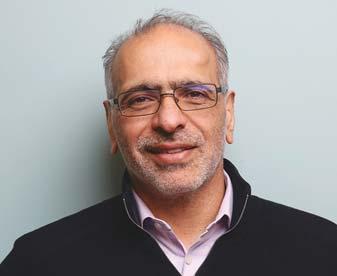
Dr. Khaled El Emam
Mobile units
Be where your patients are
siemens-healthineers.ca
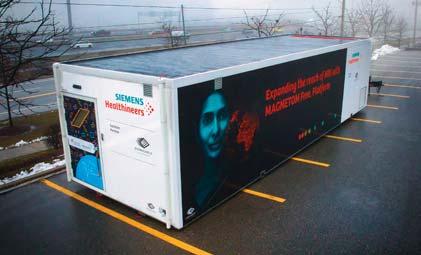
By bringing MRI, CT, and mammography technologies closer to where care is needed across Canada, our mobile units help support timely diagnostic care for patients. Siemens Healthineers offers a broad range of mobile to semi-mobile solutions, delivered in collaboration with our certified partners, enabling:
• Fast operational readiness of the system
• Easy set-up on site facilities a quick location change
• Developed for a long-term mobile use
• Mobile connectivity enables remote service

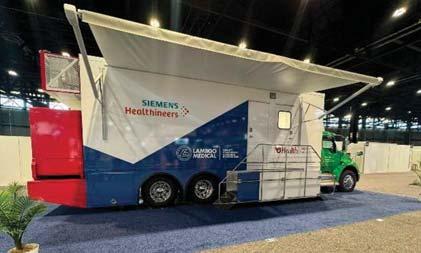
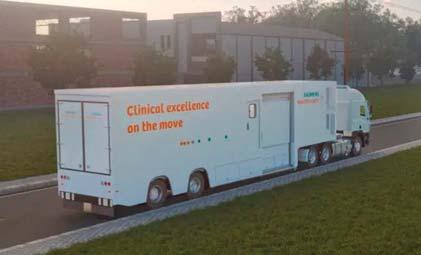
• Single piece of equipment
• Moveable on a daily basis
• Detached from truck tractor
• More comprehensive setups
• Use for lung health check, geriatric care, outreach to long-term care
• Public health campaigns in remote or low-resource areas
CT | PET/CT | Mammo
Very flexible solutions
• Container-based solution
• Suitable for long-term setups
Hospital refurbishment or equipment replacement; interim solution in new medical sites
Semi flexible solutions
Want to learn more?
Visit us at the Canadian Association of Radiologists (CAR) Annual Scientific Meeting April 16-19, 2026 | Montreal, Quebec | Booth 23
Scan QR code for more event information
CT | MR | PET/CT | Mammo
Truck
Neurosurgeons at St. Michael’s use low-field MRI to assist surgeries
BY JERRY ZEIDENBERG
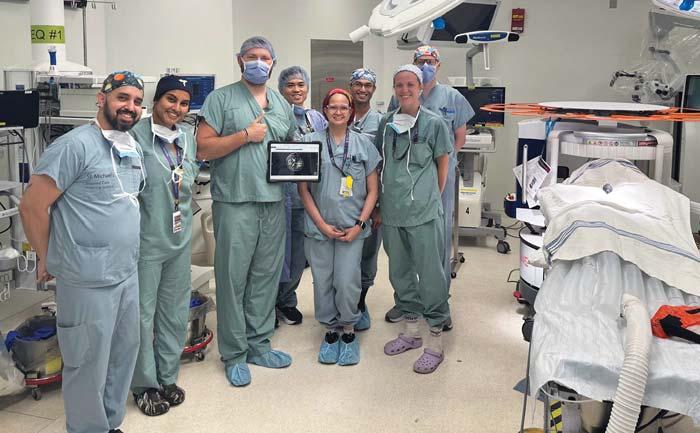
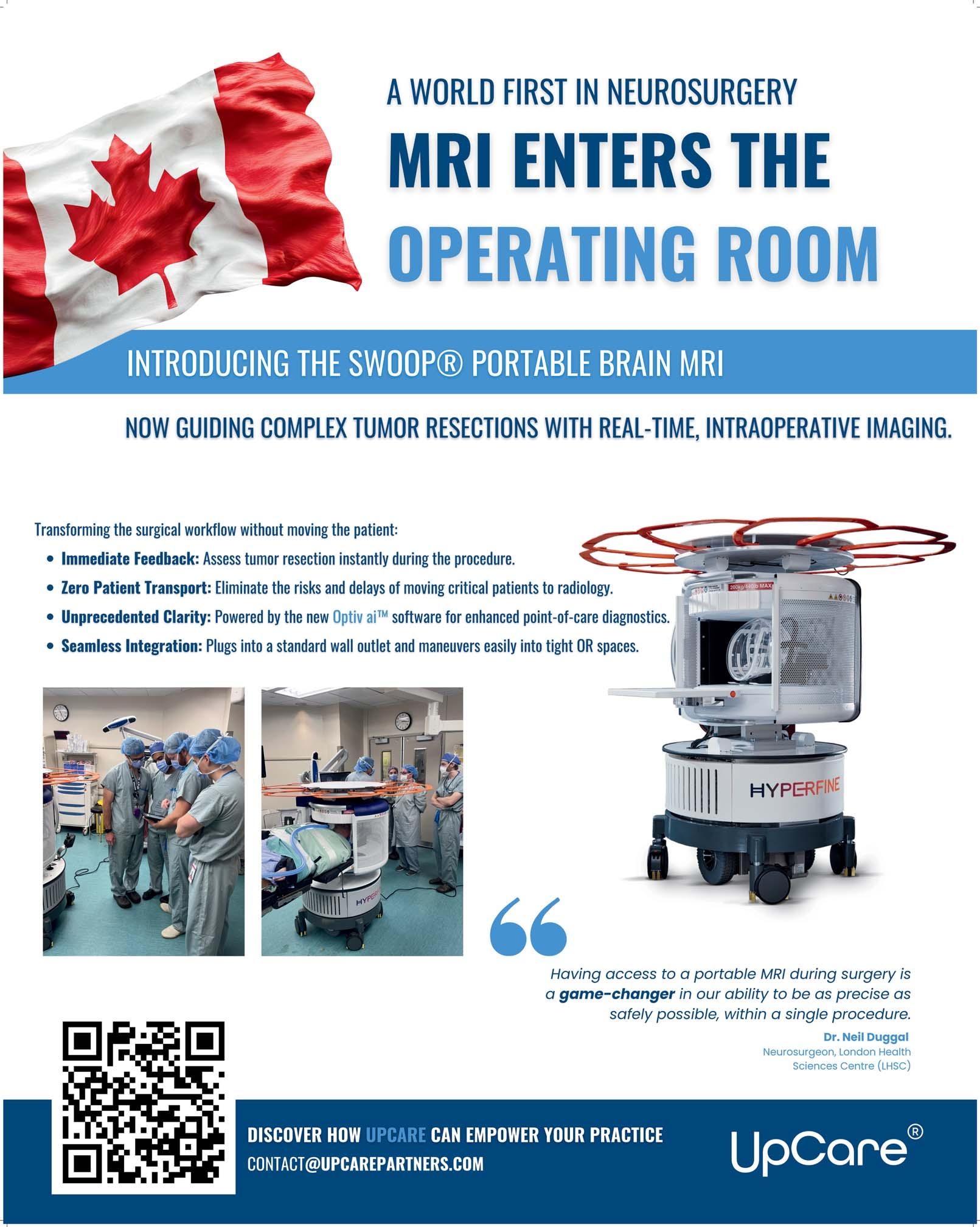
TORONTO – Neurosurgeons at St. Michael’s Hospital are among the first in Canada to deploy the Hyperfine Swoop® MR scanner to check on the quality of brain surgeries – right after the procedures and while still in the surgical suite.
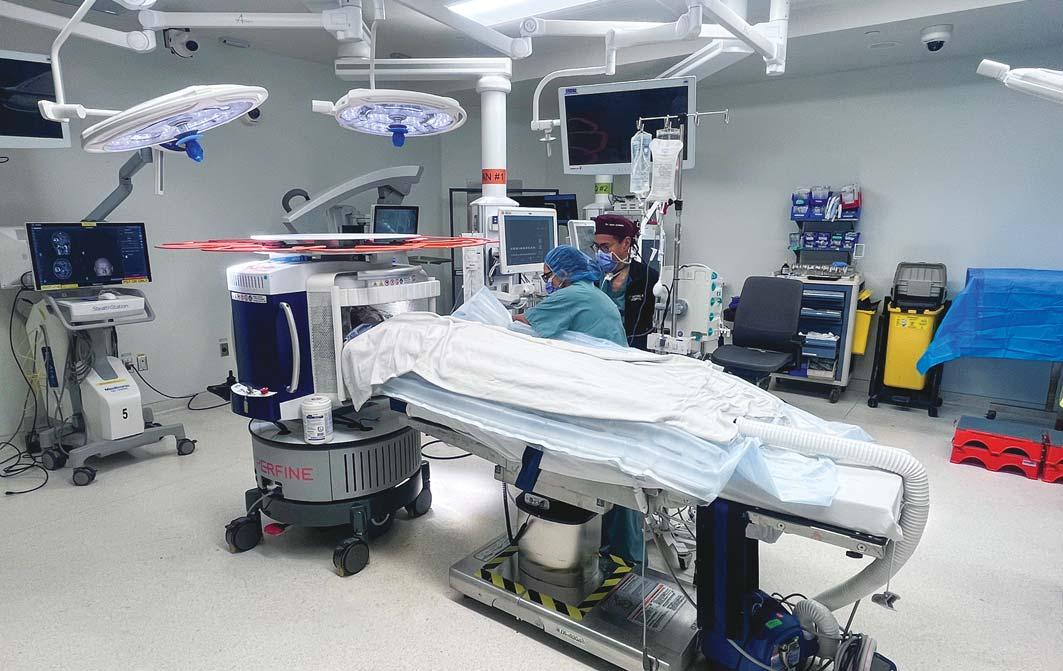
The Swoop is a portable, low-field MR –designed for head exams – that can be wheeled into the operating room. It has a field strength of just 0.064T, compared with the 1.5T field strength of a conventional scanner, and it’s much smaller.
That compact size allows it to easily fit into the OR, and the low-intensity of the magnetic field means surgeons can still use their regular metal instruments – something that would be impossible with a fullstrength magnetic scanner.
The Swoop scanner enables physicians to see structures in the brain, including tumours and other lesions. It can also be used to spot bleeding or strokes.
It takes just minutes to scan the patient and obtain results.
“It’s amazing to be able to check on the patient with an MR just after you’ve finished operating,” said Dr. Leniel Laud Rodriguez, an internationally trained neurosurgeon working with Dr. Julian Spears, division head of Neurosurgery at St. Michael’s Hospital.
“It adds an important measure of safety for the patient and it’s very reassuring for the surgeon,” he added.
Dr. Rodriguez explained that he and his colleagues normally work with pre-op MR
By imaging right after the procedure, the team can go back and remove the remaining parts of the tumour without delay.
and CT scans of a patient’s brain, and they also have navigational aids as they work.
But it sometimes happens that in cancer procedures, the surgeons can’t remove all of the tumour. By imaging right after the procedure, while still in the surgical suite, the team can go back and remove the remaining parts of the tumour or diagnose unforeseen events without delay. That results in a better outcome for the patient.
“For example, sometimes we see tumours that are very well-defined, like a lemon or an orange, and you can easily separate the tumour from the brain,” commented Dr. Rodriguez. “But in other cases, such as gliomas, the tumour has infiltrated the cells … it’s harder to know if we have removed the whole tumour.”
He explained that it’s extremely helpful to be able to image the brain before leaving the operating room, as a quality check.
There are also occasions when an anesthetized patient takes longer to awaken after surgery. With the Swoop on hand, the surgeons can scan right away to see if there has been a complication or if the medication has had a stronger effect than expected.
That’s much better than finishing the procedure and having the patient come back 72 hours later for a follow-up scan,
only to discover then that parts of the tumour remains. The patient then must undergo a second surgery.
It also lead to a significant decrease in patient length of stay, which can be prolonged awaiting post operative MRI.
Dr. Rodriguez said he’s done five procedures using the Swoop to check the patients afterwards. He hasn’t had to go back in to remove additional tumours or address any complications, but by checking, it gives the surgeon a real measure of confidence in the procedure.
He believes this way of working could become standard practice in the future.
At St. Michael’s Hospital, surgeons can send the patient for regular MRI imaging, if they are concerned. However, the surgical suites are on the fifth floor and the Radiology Department is on the third floor – it can take a long time to transport the patient for an MRI and to get him or her back.
“So, with this technology, we avoid a
step and do the MRI right away in the OR to confirm that we accomplished our surgical goals.” The patient only needs some extra time to wake up from the anesthesia, as there are no concerns with the brain,” he said.
Dr. Rodriguez would like to see the technology taken even further, with additional engineering that allows surgeons to operate while the patient’s head is in the Swoop scanner. This would allow real-time checks on whether the whole tumour is being resected.
While operating, neurosurgeons have many decisions to make. Chief among them is how to avoid important structures in the brain while reaching and resecting tumours. For example, they always want to avoid cutting areas that govern tasks like speech, memory, movement and even the symmetry of the face.
It would also enable the surgeon to reassess the best way to reach a tumour. Sometimes, when the actual surgery is
taking place, it turns out that the pre-operative plan isn’t the best way of reaching the lesion.
Surgeons will occasionally come up with a better plan while they’re working, and an MR scan would be very helpful in determining the best path.
“Even though we have navigation and ultrasound, sometimes you have to change your trajectory to reach the tumour,” said Dr. Rodriguez.
With real-time MR imaging assisting the surgery, these decisions would be easier to make, said Dr. Rodriguez.
Current intra-operative MRI technology, which has been available for many years, has the distinct disadvantage that the operating room has to be shielded and all the operative tools must be MRI compatible, which is not the case with Swoop.
“We look forward to the day when Swoop is able to offer this intra operative [while skull is open] dimension,” he said. “If we had this, it would be even more amazing.”
The Hyperfine Swoop is distributed in Canada by UpCare Partners & Associates Inc. of Toronto. The company has deployed the system at hospitals across Canada, including urban centres and the far North. In addition to operating rooms, such as at St. Michael’s, the Hyperfine Swoop has also proven highly valuable in emergency medicine, particularly in remote communities where it is used to rapidly detect bleeds and strokes, helping reduce time to diagnosis and treatment.
Its most common use case, however, has been in the ICU for post-operative followup, where it supports ongoing patient monitoring and clinical decision-making.
More recently, Swoop has also made its debut in neurology clinics, including for the management and follow-up of patients with multiple sclerosis (MS).
Due to its low-field and portability, the Swoop can be used in operating rooms. Pictured above, it is being used after neurosurgery at St. Michael’s Hospital.








Medly heart monitoring enters commercialization through Vitall
BY NORM TOLLINSKY
The commercialization of Medly, a universally acclaimed remote monitoring technology for heart failure patients developed by Toronto’s University Health Network (UHN), has been entrusted to Vitall Intelligence Inc., a member of the Blyth Group of companies headed by serial entrepreneur Don Simmonds.
Invented by Dr. Heather Ross, head of cardiology at the UHN’s Peter Munk Cardiac Centre and Dr. Joseph Cafazzo, the hospital’s director of biomedical engineering, Medly is a smartphone-based system that collects and interprets daily health data from Bluetooth enabled weigh scales and blood pressure monitors.
The system uses an algorithm that detects the risk of decompensation and keeps patients out of hospital.
Medly has expanded from a single site in 2016 to five Toronto area hospitals. It is also being used to monitor heart failure patients in remote Indigenous communities in Northern Ontario, preventing unnecessary medivacs.
Based on data and studies from eight to 10 years of use, Medly keeps heart failure patients stable and results in a 50 percent reduction in heart failure-related hospitalizations.
Vitall, which describes itself as a digital health information utility, is transitioning Medly from its current on-premise deployments to a cloud-based infrastructure that makes it scalable and affordable for expansion across Canada and beyond.
Vitall business development lead Kirk
Fergusson is aware of the odds he’s up against, acknowledging that, “Hospitals are struggling financially and don’t have a lot of disposable cash sitting around for innovations even if there’s compelling ROI story behind it.”
The problem, said Vitall chairman and CEO Simmonds, is that “Hospitals aren’t necessarily reimbursed for keeping people out of hospital. If they invest in Medly, it doesn’t change the economics of the hospital at all. That’s a fault of the system.”
He explained that we should be incentivizing hospitals to take care of patients so they’re not re-hospitalized. We don’t yet do that well here in Canada.
Nevertheless, Medly helps hospitals function more efficiently, reducing costs in a broader context.
“Medly benefits the entire healthcare system,” said Fergusson, “because it strategically cares for a group of very high users of the system’s resources. It keeps them out of hospital, and that unclogs a lot of capacity. Hospital CEOs have been dealing with supply side remedies to meet increasing demand, so more beds, more clinicians, more capacity. What Medly does is reduce demand, so the resources they have can be used for other patients.
“If you deal with the sickest heart failure patients by giving them better care at home, monitoring and responding to their situation every day, they have fewer situations of decompensation. This means they don’t show up at the ER and don’t get rehospitalized. That reduces stress on the system, since the average stay is 10 days.”
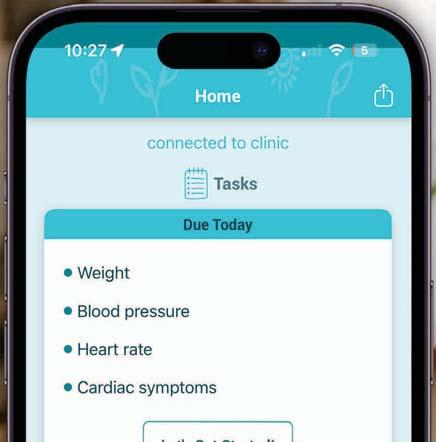
Patients on the Medly program receive notification on their cellphones every
morning asking them a series of five questions.
Their weight, blood pressure and heart rate are entered into the app manually or automatically if they are using Bluetooth enabled devices.
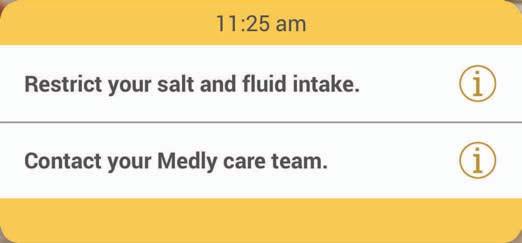
An algorithm instantly interprets the data and responds to the patient. Eighty percent of the time, patients are told, “Have a nice day. See you tomorrow.” Only 20 percent of the time is there an issue requiring a nurse to get back to the patient by text or phone call through the app. In


the few cases of a red alert, there is comfort knowing the challenge has been reported for an immediate response.
If the patient’s weight is elevated and there’s a risk of edema, the nurse can ask for a photo of their swollen ankle and either advise the patient to take an extra dose of Lasix or reduce salt intake. Only when necessary will nurses refer patients to their cardiologist.
According to Fergusson, Medly is significantly more effective and less onerous on staffing than traditional remote monitoring programs because of the algorithm
that automatically interprets patient data.
In traditional remote monitoring programs, nurses have to review and interpret the data themselves and usually aren’t able to oversee more than 50 patients.
Because the algorithm does so much of the work for them, nurses using the Medly program can handle anywhere from 200 to 250 patients.
Medly includes a dashboard that displays the pertinent patient data for nurses and cardiologists, allowing them to see the trajectory of a patient’s disease. It advises them during a virtual appointment on the appropriate course of action, hopefully avoiding an ER visit or re-hospitalization.
Heart failure patients on the Medly program have the potential to live longer because they can get to guideline-directed medical therapy in a shorter timeframe.
“There are four primary drugs that in combination help heart failure patients,” said Simmonds. “But everyone’s different, so you can’t just say, ‘take these four medications in these dosages.’ It’s a process of titration.
“Because we have a shortage of cardiologists, most Canadians with heart failure are not optimized and, in some ways, we shortchange them of lifespan because it’s proven that an optimized combination of these drugs will extend their life.”
He added, “That’s an important side benefit for the patient. Medly supplies the data that speeds the optimization of the titration process.”
Vitall will continue pitching Medly to individual hospitals but also plans to persuade provincial and territorial health ministries to take the lead in rolling it out across the country.
Hypercare mobilizes vascular team during ‘Life and Limb’ emergencies
BY NEIL ZEIDENBERG
BARRIE, ONT. – Royal Victoria Regional Health Centre (RVH), in Barrie, Ont., recently completed a one-year pilot for their Vascular Life and Limb team activations using Hypercare (www.hypercare.com) – an advanced clinical communication and coordination solution that can send out alerts to the entire clinical response team when a patient presents at hospital with life threatening vascular conditions.
RVH had used Hypercare for a successful deployment for its Code STEMI activations, just four years prior. Its effectiveness in coordinating the urgent transfer of cardiac patients made Hypercare the logical decision for life and limb threatening situations.
“Life and limb activations involve a highly coordinated and urgent response during a medical emergency,” said Andrew Bell, director, Emergency Management, Safety and Security. “First, a physician [in the community] determines if a patient’s life is at risk, or whether there’s a risk of loss of limb, and quickly consults with CritiCall Ontario.”
CritiCall then coordinates the transport of a patient to the nearest hospital
capable of providing the necessary clinical services. Next, a stat message goes out to a vascular surgeon and a consult is requested. If the clinical criteria are met, the hospital brings in the patient on a priority, non-refusal basis ensuring they receive whatever care is needed.
The final step is to gather the on-call surgical team with just a single tap via Hypercare. This includes a full complement of support staff, surgical nurses, recovery nurses, and vascular surgeons.
If all goes according to plan, these steps reduce the amount of time it takes to get a patient to hospital and to gather the team together, all in one place.
“Before Hypercare, we called everyone individually by phone, and that could take upwards of 15 minutes,” said Bell. “Hypercare can send out a secure message on their group chat to the entire team – all at once. Even if someone’s phone is ‘silent’, Hypercare can break through those settings.”
Life and limb activations include persons with vascular emergencies, a birthing mother with threat to her newborn, or any emergency condition that brings a patient to hospital with risk of loss of life or limb.
Significantly, RVH averages one or
more life and limb activations every day throughout the year.
Before Hypercare, when members of the vascular team were notified individually by phone, not only was the method slow and cumbersome, but some members of the on-call team could be overlooked.
With Hypercare, the process is automated – all members of a team are alerted at the same time, saving significant time and coordination, and ulti-
For vascular emergencies, they’re moving 20 minutes faster, greatly improving patient outcomes.
mately ensuring the patient receives care as fast as possible.
As time is of the essence, the speed of Hypercare’s technology can be lifesaving.
Moreover, if a team member doesn’t respond, Hypercare’s automated escalation pathways will retry alternative contact methods if the initial alert isn’t acknowledged.
“During our one-year pilot, we reduced hospital acceptance time as a consulting hospital, from 15 minutes to
within 10-minutes with a consulting physician,” said Bell.
He added, “Since adopting Hypercare, our reject or accept times have been cut almost in half from 38 minutes in 2023 to just under 21 minutes in 2025,” said Bell. For vascular emergencies, they’re moving 20-minutes faster, greatly improving patient outcomes.
“Streamlining our CritiCall afterhours emergency pathway has reduced response times and accelerated transfers for life- and limb-threatening vascular emergencies – ensuring patients receive specialized care faster when every minute matters,” said Dr. Joel Cooper, vascular surgeon, Royal Victoria Hospital.
Code STEMI activations used to be a challenge to coordinate effectively. Members of the health team were contacted individually by phone. “It was an arduous process, slow and prone to delays. The longer it takes to assemble the clinical care team, the higher the risk to the patient,” Bell explained. “But with Hypercare, there’s no comparison – Hypercare works quickly and saves lives.”
There are other use cases RVH may –at some point – investigate, such as staffing alerts to Resource Nurses and surge notifications to physicians.
Kirk Fergusson Don Simmonds
Standardizing health data for good medicine and connected care
Connected care requires more than technology – it requires shared standards. Standardized health data is crucial for building a world class health system, improving patient care, and supporting innovation in Canada’s health technology sector.
The Canadian Institute for Health Information (CIHI) is enabling connected care in Canada: A more coordinated, data-driven system where accurate health information flows securely and easily across the health system.
On March 31, 2026, CIHI released Version 2 of the Canadian Core Data for Interoperability (CACDI), strengthening the national foundation for interoperable standards-based health data exchange.
As Canada makes progress towards advancing connected care through Bill S-5, the Connected Care for Canadians Act, the CACDI provides a practical and scalable path forward. With Version 2 now released, CIHI will work with jurisdictions, vendors, and health system partners to support alignment and implementation.
A Common Language for Health Data
The CACDI data content standard defines a standardized set of health data that can flow between systems, health care providers and jurisdictions. It encompasses core patient demographics, clinical information, and provider and organizational data.
Co-designed with patients, clinicians, digital health partners, First Nations, Inuit and Métis communities, and jurisdictional partners, the CACDI is helping to reduce fragmentation and making health data easier to integrate and share na-

tionwide, leading to improved patient safety, reduced administrative burden and a more efficient health care system. The CACDI works in tandem with Canada Health Infoway’s CA Core+, a set of pan-Canadian Fast Healthcare Interoperability Resources (FHIR) profiles, to facilitate the meaningful exchange of health care information across Canada’s health systems.
“As a family doctor, I often hold the most complete picture of my patients’ health because the majority of patient care happens in the community and much of that information lives in my EMR. Yet I don’t always see what happens when my patients receive care in hospitals, specialist offices, or walk in clinics. Too often I’m logging into multiple systems and piecing together information myself, always wondering if something is missing. To provide safe, coordinated care, I need a clear, up-to-date picture of my patient’s health regardless of where they received care. National standards like the Canadian Core Data for Interoperability are essential so information can follow the patient and allow me to focus on the patient in front of me.”
– Dr. Chandi Chandrasena, Chief Medical Officer, Ontario MD
Why This Matters
Imagine a health system where you never have to repeat your medical history, where your prescriptions and other key data follow you automatically, and where your accurate, up-to-date health information moves with you. Too often, important health details get lost between visits, providers or systems – leading to avoidable errors or care gaps. With accurate, up-todate information that moves with the patient, we can help improve outcomes, safety and experiences. The CACDI will help ensure jurisdictions and health system vendors can define and collect health information in the same way and help it flow freely and securely for the benefit of all Canadians.
Interested in learning more? Visit the QR code or reach out to us at connectedcare@cihi.ca.

The Canadian Institute for Health Information launches CACDI version 2.

Alifor launches partnership with Piat, digital health study in Nigeria
MARKHAM, ONT. – Alifor has announced a strategic partnership with Piat Public Health, a consulting firm specializing in strategy, evaluation, and equity-centred digital health integration. The collaboration aligns Alifor’s clinical work-
flow innovation with implementation science and public health evaluation to drive measurable health system transformation across diverse care environments.
Alexandra Piatkowski, founder and CEO of Piat Public Health, will serve as implementation lead for the partnership.
An epidemiologist and certified project manager, she brings extensive expertise in population health strategy, implementation science, and performance evaluation. Her leadership ensures that Alifor’s expansion is grounded not only in technological capability, but also in structured evalua-
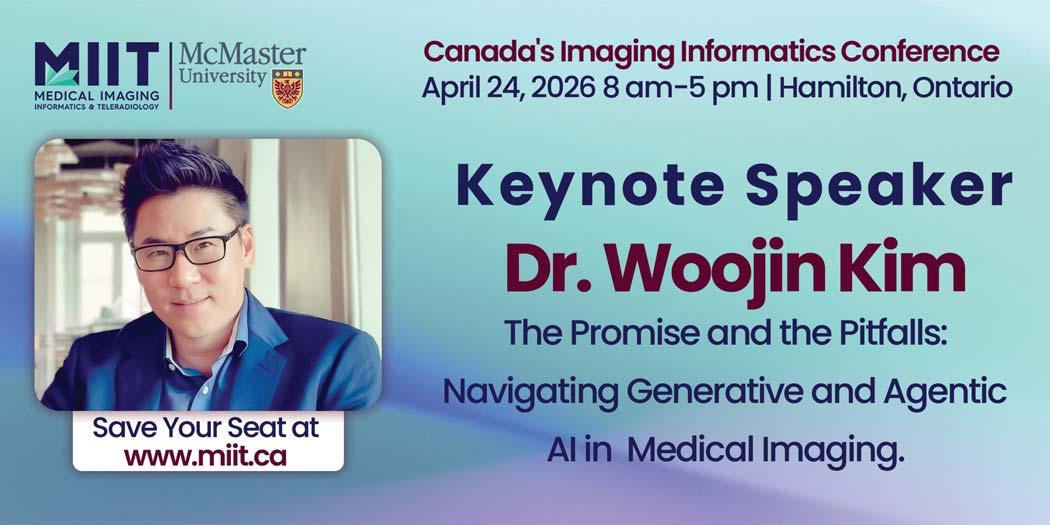
MIIT 2026
Friday, April 24, 2026
8am 5pm
Liuna Station
360 James St. N. Hamilton, Ontario
Register now
Early bird pricing until April 1
$100 individual / $80 per person for groups (5+)
Breakfast + lunch
+ coffee/snacks included
Learn more & register:
www.miit.ca

Canada’s Medical Imaging Informatics Conference.
Local. Practical. Connected.
Learn what’s next in imaging informatics – right here in Canada. Join us for a full day of practical insight, emerging tech, and realworld problem solving – built for imaging leaders, informatics teams, IT, and clinicians.
FEATURED KEYNOTE
Dr. Woojin Kim (Chief Strategy Officer & CMIO, HOPPR; CMO, ACR DSI)
“The Promise and the Pitfalls: Navigating Generative and Agentic AI in Medical Imaging”
ON THE AGENDA
• Agentic AI & foundation models in radiology
• Imaging informatics best practices & career planning
• PanCanadian updates, cybersecurity, and more
• Vendor talks + networking (with prize draw)
• Interoperability standards that actually work
NETWORK + LEARN IN A WELCOMING COMMUNITY
Meet – and learn from – leaders, faculty, and peers in an inclusive, welcoming environment. Stay after the meeting for the networking event and keep the conversation going.
tion frameworks, defined system metrics, and internationally recognized methodological standards.
The first major initiative emerging from this partnership will be a structured implementation study in a busy trauma centre in Lagos, Nigeria.
The project will evaluate whether Alifor’s computerized system – which combines AI scribes, clinical decision support, and workflow management – can strengthen documentation, triage consistency, care coordination, and overall system efficiency within a high-volume emergency environment.
“Often these emergency rooms, just like ours in Canada, can be overwhelmed –sometimes on an even larger scale,” said Dr. Paul Forman, a South African-born family physician who developed Alifor as a support system for physicians navigating increasing complexity and administrative burden.
“I’ve worked in those environments. Our goal is not to replace doctors, but to assist them – to reduce cognitive burden, support decision-making, and improve how care is delivered under pressure.”
The chief of the Trauma Department at General Hospital Lagos reached out di-

rectly to Dr. Forman to explore whether Alifor could help strengthen clinical operations and documentation processes.
The request was for a high-impact, ethical system that augments physicians and nurses rather than displacing them – while meaningfully improving efficiency and reducing strain within the hospital system.
Beyond supporting frontline clinicians, the partnership’s broader objective is to evaluate whether Alifor can reduce waste and low-yield system utilization.
“Healthcare systems around the world lose substantial resources to inefficiency,” said Dr. Forman. “If we can reduce unnecessary duplication, streamline handovers, and improve documentation accuracy, the savings – and the impact – can be significant, particularly at scale.”
Through the partnership with Piat Public Health, the Nigeria study will assess not only clinical performance, but also systemlevel implications.
“We are evaluating Alifor’s impact across the Quintuple Aim,” said Piatkowski. “That includes patient experience, provider experience, population health outcomes, cost efficiency, and equity.
“The goal is to apply rigorous implementation science to determine whether this technology delivers measurable value.” Alifor has demonstrated promising results in Dr. Forman’s own Canadian clinic. By integrating AI-driven documentation
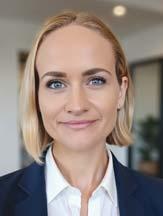
Dr. Paul Forman Alexandra Piatkowski
Tool alerts ER nurses of opportunities to move patients based on care needs
BY DUSKA KENNEDY
TORONTO – Artificial intelligence is becoming an undeniable part of everyday life, and its role in healthcare is beginning to take shape in meaningful ways.
North York General (NYG) is home to one of Ontario’s highest-volume emergency departments, and we see firsthand the pressure facing emergency care. Last year alone, our Charlotte & Lewis Steinberg Emergency recorded more than 121,000 visits, including over 11,000 in December during peak respiratory illness season.
Long waits in emergency departments are linked to delayed diagnoses and a higher likelihood that patients leave before being seen –an increasingly serious patient safety concern across the health system.
That reality prompted our team to ask a simple but urgent question: how can we better support frontline staff to make timely, safe decisions when demand surges?
In response, we developed SmartER Zones by partnering with Toronto-based Signal 1 to co-create an AI algorithm that uses real-time data on patient wait times alongside information about available care spaces across the department. The tool alerts nurses when opportunities exist to move patients based on their care needs, helping ease pressure in overcrowded areas and reduce unnecessary waiting.
In recent years, our emergency department has optimized a zonal care model that groups patients with similar needs together in dedicated areas. While effective, an unintended consequence is that some zones may experience periods of high volume, causing them to become overloaded, while other zones still have capacity. This can leave some patients waiting longer than they should.
That is the gap SmartER Zones was designed to address.
SmartER Zones supports triage nurses by identifying patients who have been waiting disproportionately long and highlighting opportunities to move them into care spaces sooner. By flagging these situations early, teams can intervene before delays translate into avoidable risk. The tool does not make clinical decisions; it provides timely insights into an environment where conditions change minute by minute.
Importantly, this work began with listening first and it continued that way throughout. Alongside Signal 1, we undertook a comprehensive discovery process, sitting down with emergency nurses, physicians and other key stakeholders to understand where bottlenecks were occurring and where patient risk increased during surges.
Early concepts were brought back to frontline teams, refined, and tested again until we narrowed in on a tool that would meaningfully support decision-making without disrupting workflow. By embedding clinician-centred design throughout both development and implementation, we were
able to strengthen safety measures while also supporting early adoption on the front lines.
The model was iteratively trained on historical, anonymized North York General data, where its zone recommendations were reviewed and stress tested. We also used simulation exercises to anticipate how the
model would function in real-world conditions, examining its potential impact on clinicians, operational processes and ultimately patients. These simulations allowed us to proactively identify and mitigate risks before full implementation, while shaping targeted change management and adoption
strategies. The final model reflects multiple cycles of refinement, grounded in both data and frontline expertise.
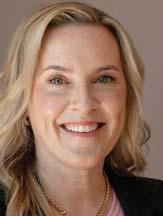
Duska Kennedy is Vice President, Strategy, Digital Health and Chief Digital Officer at North York General.
Duska Kennedy
Measuring AI performance in radiology using the AI quality framework
BY JEFF VACHON
Across academic and enterprise health systems, AI tools are now routinely embedded within imaging workflows, supporting triage, image detection, quantification, reporting, and operational coordination. The more pressing challenge today is not adoption but understanding how well these systems perform once they become part of daily clinical reality.
As AI assumes a more central role in radiologic practice, it increasingly influences diagnostic decisions, workflow and clinical management. In this environment, traditional approaches to AI evaluation, often based on static, retrospective accuracy metrics, are no longer sufficient.
Radiology now requires a framework that can continuously assess how intelligently AI systems operate within realworld clinical environments. This need has given rise to the concept of the AI Quality Framework (AIQ): an evidence-driven approach to measuring AI performance as it is experienced by radiologists, departments, and patients.
From point solutions to embedded intelligence: Early generations of radiology AI were characterized by narrowly focused algorithms designed to address specific diagnostic tasks. These tools often existed outside the core imaging workflow and were accessed selectively, requiring additional interfaces or manual steps. While clinically promising, their impact was inherently constrained.
Today, AI has migrated into the foundational infrastructure of radiology. Algorithms are increasingly embedded directly into AI platforms, reporting systems and enterprise workflow engines.
Rather than acting as optional add-ons, AI systems now operate continuously in the background – prioritizing studies, generating structured findings, surfacing quantitative measurements and supporting operational decision-making.
In many departments, AI has effectively become part of the digital backbone of imaging services.
As AI becomes pervasive, radiology must move beyond asking whether an algorithm is accurate in isolation and instead evaluate how intelligently it performs within the broader context of a complex diagnostic system guided by human expertise.
Why traditional AI metrics are no longer sufficient: Most AI systems enter clinical use on the strength of validation studies conducted in controlled research environments. These studies typically report sensitivity, specificity, and related statistical accuracy measures derived from curated datasets with known ground truth.
While essential for regulatory clearance and early assessment, these metrics represent only potential performance.
Clinical radiology, however, is dynamic. Image quality varies, disease prevalence shifts, biases become transparent, patient populations differ across jurisdictions and over time.
Workflow integration influences how
AI outputs are interpreted and acted upon. Human judgment remains central, and radiologist interpretation itself introduces variability. Under these conditions, AI performance cannot be assumed to remain static after deployment.
An algorithm that performs well during development may drift, degrade, or behave unpredictably once exposed to real-world complexity. Static accuracy metrics cannot capture these changes.
Intelligence, by contrast, implies consistency, adaptability, and contextual awareness. Measuring AI intelligence therefore requires continuous observation within clinical practice rather than episodic retrospective review.
Defining the AI Quality Framework:
T he AI Quality Framework (AIQ) reframes how radiology evaluates AI performance. Rather than focusing solely on technical accuracy, AIQ assesses how consistently AI outputs align with radiologistreported findings, how reliably the system avoids false positives and false negatives, and how much incremental value it adds to clinical interpretation.
AIQ is derived from a composite of clinically meaningful performance indicators calculated directly from routine imaging workflows. By comparing AI-generated findings with finalized radiology reports on a case-by-case basis, AIQ reflects how AI behaves in the same clinical context as the radiologist. Importantly, the framework allows institutions to weight these indicators according to clinical priorities, recognizing that intelligence may be defined differently for screening, triage, or diagnostic augmentation.
In this way, AIQ functions not as a single abstract score, but as a structured measure of real-world clinical intelligence.
Measuring operational impact as a component of AI intelligence: As AI becomes embedded in daily workflows, its
At the departmental level, throughput metrics such as studies interpreted per shift or relative value units (wRVU) generated provide insight into AI’s effect on capacity management.
Within an AIQ-aligned model, throughput is never evaluated in isolation. Increases in volume are assessed alongside AIQ trends, drift indicators, and radiologist interaction metrics to ensure that productivity gains do not come at the expense of diagnostic intelligence or clinician trust.
Augmented diagnostic capability and clinical value: Beyond efficiency, AI’s most meaningful contribution may be its ability to enhance diagnostic capability. AIQ captures this dimension through measures such as augmented findings rate, which quantify AI’s incremental contribution relative to baseline interpretation. These metrics provide evidence that AI is not merely accelerating workflows but actively improving diagnostic insight.
value must also be assessed through its impact on radiology performance and productivity. Within AIQ, operational metrics are intentionally evaluated alongside diagnostic KPIs to provide a unified view of how AI influences both patient care and departmental function.
Radiologist read-time is one of the most direct indicators of AI’s operational impact. AI systems that automatically identify findings, generate measurements, or populate structured report elements are designed to reduce cognitive and manual workload.
Within AIQ, changes in read time are interpreted in parallel with concordancebased KPIs such as overall concordance, positive and negative concordance rate. Consistent reductions in read times with
Clinical radiology is dynamic, and image quality varies, disease prevalence shifts, and biases become transparent.
stable or improving AIQ metrics indicate that AI is effectively supporting clinician decision-making, while drops in diagnostic alignment may point to unsafe speedups or workflow issues.
Turnaround time offers a broader view of AI’s influence on care delivery. AI-driven triage and prioritization tools are intended to surface critical findings earlier in the workflow, particularly in emergency and high-acuity settings.
Improvements in turnaround time that coincide with stable AIQ scores indicate successful workflow integration. Conversely, gains in speed accompanied by declining negative concordance or increasing false-positive alerts may reflect prioritization inefficiencies that warrant governance review.
The need for continuous monitoring: A defining characteristic of radiology is that it evolves over time. AI systems are no exception. Changes in patient populations, imaging protocols, scanner technology, or clinical workflows can subtly influence performance long after deployment. Without continuous monitoring, these changes may remain undetected until they manifest as clinical risk.
AIQ addresses this challenge by enabling longitudinal tracking of AI performance across diagnostic and operational dimensions. Trends in AIQ scores, concordance metrics, and productivity indicators provide early warning of drift or instability.
This allows radiology departments to intervene proactively – adjusting workflows, retraining models, or restricting use when necessary – rather than reacting to failures retrospectively.
Implications for radiologists and radiology leadership: As AI becomes more deeply embedded in practice, the role of the radiologist is evolving from sole generator of findings to supervisor of AIaugmented interpretation. For this model to succeed, trust must be supported by evidence. AIQ provides that evidence by making AI behavior transparent and measurable.
For radiology executives, AIQ offers a strategic governance tool. It supports informed decisions about AI procurement, deployment, scaling, and retirement, while providing defensible documentation for quality oversight and regulatory readiness. By integrating clinical and operational intelligence into a single framework, AIQ enables leadership to manage AI as a core component of radiology performance rather than as an isolated technology initiative.
AIQ as the foundation of intelligent radiology: Radiology is no longer questioning whether AI works, but how intelligently it performs in real-world clinical practice. AIQ offers a framework to ensure AI remains trustworthy, clinically aligned, and beneficial to patient care as AI diagnostics become the norm.
Jeff Vachon is the president of Bialogics.
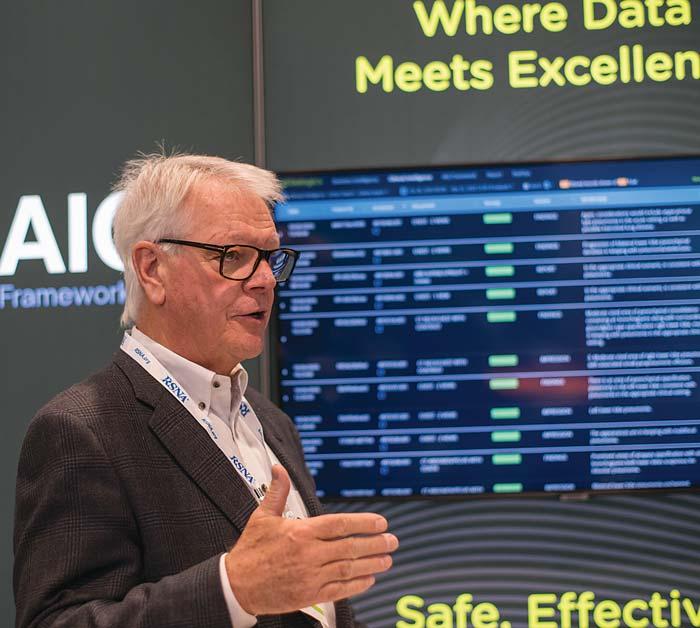
Jeff Vachon explains the benefits of Bialogics and the AI quality framework at last fall’s RSNA conference in Chicago. The AI-driven system can assess the performance of other AI applications.












































The AI-powered medical school: a revolution in how we train physicians
At Scarborough Health Network, learners and businesses are prototyping AI-enabled educational tools.
BY SAMIR C. GROVER AND WILL FALK
Modern medical education was built through imported infrastructure and retooled institutions. In the 1870s, Parisian physicians redefined medicine by anchoring learning in observation, pathology, and bedside correlation.
That model travelled to Berlin, where laboratory science and systematic clinical reasoning were integrated into training, and then to North America.
The transformation culminated in reforms associated with William Osler, a Canadian by birth, who helped move students out of lecture halls and into hospital wards, establishing clinical immersion as the core of physician training for the next century. Dr. Abraham Flexner took that model from Johns Hopkins and expanded it across North America and around the world.
We are now on the edge of a comparable shift driven by a change in available infrastructure, not a change in the science-based philosophy. Artificial intelligence is altering how knowledge is accessed, synthesized, tested, and applied. While much attention has focused on teaching students about AI, the more consequential change lies in using AI to reorganize how physicians are trained in the first place.
Medical education today still relies on systems designed for scarcity. Knowledge is delivered in fixed sequences. Feedback is episodic and delayed. Faculty supervision, though central, is constrained by time and scale.
Learning management systems largely function as repositories, placing the burden of search, synthesis, and translation on the learner. These constraints were tolerable when the volume of medical knowledge was smaller and the pace of change slower. They are increasingly mismatched to contemporary practice.
Retrieval-augmented generation changes this foundation. In a RAG-based system, a language model is coupled to a curated corpus of scientifically rigorous and approved educational materials. When a learner asks a question, the system retrieves relevant content from that knowledge base and generates an answer grounded explicitly in the curriculum, with traceable sources.
The result is not generic explanation, but contextspecific guidance anchored in what the institution has decided is authoritative. The knowledge base can be continuously updated with best evidence.
Alifor partnership
CONTINUED FROM PAGE 10
and guideline-supported clinical reasoning, the system has reduced the time required to generate SOAP notes and comprehensive patient profiles from approximately 15 minutes per patient to under a minute, while maintaining structured accuracy and compliance with national standards.
The platform is designed to be EMR- and EHR-agnostic, capable of integrating with existing systems and aligning with jurisdiction-specific clinical guidelines. In Nigeria, it will connect with appropriate national standards and best
Yale School of Medicine’s Curriculum Search illustrates how this works in practice. Developed by its educational technology and medical library teams in under one year, the tool allows students and faculty to query thousands of lectures, slides, and readings in seconds.
Questions such as where a topic is taught, how a concept evolves across courses, or what limits a specific intervention can be answered directly from the curriculum itself. Faculty use the same system to identify gaps, reduce redundancy, and understand how their teaching fits within the whole. The infrastructure serves learners and teachers simultaneously using the same underlying content.
The learning science behind this approach is well established. Active learning, appropriate challenge,


and timely feedback consistently outperform passive instruction.
What has been missing is the ability to deliver those conditions at scale. Faculty cannot provide individualized coaching to every learner in real time. AI systems grounded in approved materials can. Novices can clarify foundational concepts as questions arise. Advanced learners can test their reasoning against guidelines using realistic (but synthetic) vignettes and receive immediate, structured critique from trained agents. The supervision model remains human, but the reach of that supervision expands.
Evidence supporting this shift is accumulating. Randomized studies and meta-analyses show improvements in practical skills when generative tools are used as learning supports. Studies comparing AIgenerated feedback with expert faculty feedback on clinical reasoning tasks have found no meaningful
practices, ensuring that deployment respects local clinical governance.
Dennis Giokas, chief product officer and former chief technology officer at Canada Health Infoway, will oversee product integration and continued system development. Hannah Starkman, a Master’s candidate at the University of Toronto, will support on-site deployment and clinician training.
The trial is expected to run for approximately six months, with findings targeted for academic publication and international presentation.
With its formal partnership with Piat Public Health, Alifor is positioning itself not simply as a technology platform, but as an implementationdriven clinical operating system.
differences in outcomes when the systems are properly constrained.
Simulation work using AI-based patients suggests learners benefit from low-stakes repetition and pacing that traditional settings cannot offer. These tools do not replace mentorship. They change how often and how effectively it can occur.
This matters beyond pedagogy. Training environments shape professional expectations. Physicians educated in AI-native settings will expect clinical systems that behave similarly: searchable by default, responsive to context, and capable of supporting reasoning rather than merely recording it.
They will not accept health IT that requires manual navigation through static screens to retrieve basic information. Just as “digital phones” became phones and “digital computers” became computers once the infrastructure matured, “digital health” will fade as a category and simply be healthcare.
At Scarborough Health Network, we are building toward this future deliberately. Our student programs have brought together learners from medicine, engineering, design, and business to prototype AI-enabled educational tools that address clinical and teaching problems.
Using AI-assisted development, teams moved from concept to tested prototype within weeks, producing patient-education tools for post-admission care and assessment systems suitable for busy clinical environments. Each project shipped with validation data and a pathway to pilot use. The lesson was not that AI accelerates coding, though it does. It was that when AI is treated as infrastructure rather than content, learners engage by building, testing, and iterating. Learning accelerates as a consequence.
This reorientation has direct implications for health IT leaders. Education and care delivery are not separate systems. The tools used to teach reasoning, documentation, and communication become the tools clinicians expect to use in practice.
AI-native graduates will route around systems that cannot support their workflows, just as earlier generations bypassed paper when electronic records became unavoidable. Health IT strategies that ignore how clinicians are trained will struggle to retain relevance, no matter how compliant or secure they may be.
We have already seen this in the past two years as nimble clinical decision support on iPhones has replaced online textbooks.
Medical education has always evolved by absorbing new infrastructure and reshaping institutions around it. Artificial intelligence is the next substrate. It will alter how knowledge is organized, how reasoning is practiced, and how judgment is formed well before it changes licensure or regulation.
Physicians trained in AI-native environments will expect systems that are adaptive and responsive by design, and they will carry those expectations into every setting they work in.
The question facing medical schools, health systems, and health IT leaders today is not whether this transformation will occur. It is whether they will shape it intentionally or accept the consequences of arriving late.
Samir C. Grover is a gastroenterologist, education researcher, and Executive Vice-President, Academics at Scarborough Health Network. Will Falk is a retired management consulting partner and public policy fellow focused on healthcare and technology.
Will Falk Samir C. Grover
Going with the flow of data: focusing on the power of connected clinics
BY DR. CHANDI CHANDRASENA, SIMON LING, DR. REZA TALEBI, DR. ABBAS ZAVAR
In our first article of this four-part series on the keys to developing a digitally optimized medical practice, we introduced the EMPOWERED pillar – the importance of people as the starting point for a clinic’s digital optimization. An empowered team is the foundation for any successful transformation. Yet even the most digital-ready team can become stagnant if not met with system readiness.
This is where the next pillar – CONNECTED – becomes essential. It channels human readiness into an interoperable environment where information moves with patients and care teams, instead of being confined to one system. It reinforces a clinic’s digital capability with the infrastructure, standards, and shared accountability to support healthcare continuity and coordination across settings.
Connectivity is the limiting factor: Across Canada, primary care teams experience the same pain points: fragmented workflows, hard-to-find hospital reports, duplicate tests due to missing results, and manually replicating information from documents into EMRs. These are more than annoyances; lack of interoperability is a hindrance to quality and capacity.
OntarioMD (OMD) research, including a 2024 survey on the impact of health information technology (HIT) on physician burnout, bear this out, identifying manual referrals, numerous forms, and limited EMR integration as key contributors to administrative burden and risk to patient safety.
Fundamentally, interoperability is a health system issue and must be solved as one. Thankfully, many initiatives are underway, including:
•Bill S-5, the Connected Care for Canadians Act, (formerly Bill C-72) aims to modernize the healthcare system by prohibiting “data blocking” by HIT vendors and ensuring HIT systems are interoperable.
•The Canadian Institute for Health Information (CIHI) and Canada Health Infoway (through its Shared Pan-Canadian Interoperability Roadmap) are advocating for greater connected care with standardized data and modernized information exchange.
•The Digital Health Information Exchange (DHIEX) framework allows Ontario Health to define, enforce, and manage technical standards, including interoperability and related specifications for sharing health information with the Ontario Patient Summary as its first venture.
•The Digital Health Interoperability Task Force (DHITF) submitted parliamentary recommendations in February 2026 to unlock connected care for easier access, use, and exchange of information across health systems in Canada, underscoring the importance of interoperability national standards and policy levers yielding improvements for clinics and patients. For clinics, it may be overwhelming as to actions they can take to facilitate connectivity. For vendors and health system partners, it is a clear signal: the future is standards-based, with data that flows se-
curely across care settings in ways that strengthen team-based care, reduce burden, and create capacity at the point of care – if developed with end users in mind.
Characteristics of a “connected” clinic: Interoperability is rightly being tackled as a national and provincial priority. Govern-
ments are advancing standards, health systems are investing in shared infrastructure, and vendors are aligning with common frameworks. This macro level work is essential, but clinics do not have to sit idly by.
A truly connected clinic prepares itself in parallel with optimization efforts. Inter-
operability may be built at the system level, but readiness begins at the point-of-care. Clinics can begin strengthening data quality, structure, and workflows, so that when the infrastructure is ready they are too. To this end, we must focus on data quality to-
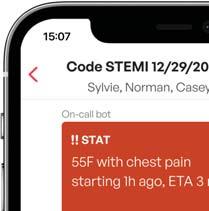
Hypercare helps hospitals coordinate care, escalate faster, and reduce risk with one unified system.






Conducting an artificial intelligence Privacy Impact Assessment (PIA)
PIAs assess whether an organization exercised due diligence when introducing new systems or technologies.
BY PATRICK LO AND SHIRLEY FENTON
Artificial intelligence (AI) is moving quickly from pilot projects into day-to-day healthcare operations, supporting clinical documentation, diagnostics, scheduling, population health analytics, and patient communications.
While these tools promise efficiency and improved care, they also amplify privacy risk. In Canada, a Privacy Impact Assessment (PIA) remains one of the most effective mechanisms for ensuring that AI adoption respects patient privacy, complies with Canadian federal and provincial laws, and maintains public trust.
What is a Privacy Impact Assessment (PIA)? A Privacy Impact Assessment is a structured, documented process designed to identify, assess, and mitigate privacy risks associated with the collection, use, disclosure, and retention of personal information or personal health information (PHI).
In healthcare, a PIA typically records the purpose and legal authority for collecting PHI, outlines detailed data flows across systems and vendors, and highlights any identified privacy risks. Additionally, it describes the safeguards and mitigation measures implemented to address these risks, as well as any residual risks that have been accepted by accountable leadership.
PIAs are not theoretical exercises. They are practical risk management tools used to assess whether an organization exercised due diligence when introducing new systems or technologies.
Why PIAs matter in healthcare: Healthcare data is one of the most sensitive types of personal information. Improper use or exposure of this data can lead to stigma, discrimination, and a loss of trust, ultimately causing real harm to patients. The risks associated with this data are amplified by AI systems that operate at a large scale, rely on complex data processing, and can evolve over time.
For hospitals and health authorities, a PIA demonstrates that innovation has been balanced with legal compliance, ethical obligations, and patient expectations. In practice, PIAs help executives, project sponsors, privacy offices, IT, and clinical leaders ask the right questions early, before a tool is embedded in clinical workflows.
Is an “AI PIA” different from a traditional PIA? Fundamentally, an AI PIA adheres to the same principles as any standard PIA: it involves data mapping, analysis of legal authority, identification of risks, and planning for mitigation. What differs is the extent and focus of the risk perspective.
The AI PIA risk analysis should consider the following use cases, addressing issues commonly associated with AI initiatives:
•Training and secondary use of data: Was PHI utilized for training or fine-tuning the model? If so, what authority was involved, what was the sample size, what was the population of the patient data (diversity, conditions, institutions) and what measures were in place to ensure safety?
•Inference and re-identification risk: AI-generated outputs can often expose sensitive characteristics or lead to conclusions about patients that extend beyond the data originally provided.
•Transparency and explainability: It is essential for both clinicians and patients to have a clear under-
standing of the capabilities and limitations of AI technologies. They should be aware of what the AI can accomplish, what it cannot, and how to properly interpret the outputs provided by these systems.
•Bias and equity: It is essential to evaluate and track performance disparities among different populations.
•Governance Risk: Weak governance can lead to several significant challenges, including regulatory violations, ethical shortcomings, unanticipated behaviors in models, and a decline in organizational trust. Addressing these issues is crucial for maintaining integrity and accountability within an organization.
•Ongoing change: Changes in model updates, prompt modifications, and vendor releases can significantly impact privacy risks over time. It’s important to stay informed about these developments, as they may alter how data is handled and protected. A continuous cycle of monitoring, detection, analysis, and remediation is needed to avoid data drift.
•Privacy Risk: Evaluates how the AI system collects, uses, stores, shares, and protects personal information/personal health information.
•Security Risk: Security risk looks at the AI sys-


tem’s protection from cyberattacks, manipulation, hacking, and unauthorized access.
Procuring AI vs. building AI – key PIA differences: The decision to procure an AI solution from an external provider or to develop one in-house has implications for the focus of the PIA. However, regardless of the approach taken, the requirement to complete a PIA remains unchanged.
•Procuring AI (vendor solutions, SaaS, embedded EMR tools): PIAs for procured AI emphasize vendor due diligence and contractual controls. Key considerations include data residency, cross-border transfers, subcontractors, restrictions on secondary use or model training, breach notification timelines, audit rights, and how updates are managed. Guidance from bodies such as the Information and Privacy Commissioner of Ontario and the Information Privacy Commissioner of Alberta is particularly relevant for hospitals navigating vendor-led AI deployments.
•Building AI (in-house or custom-trained models): When an organization is involved in building an AI solution, it assumes greater accountability throughout the process. The AI governance and documentation become critical. The Privacy Impact Assessment (PIA) must extend into the system development lifecycle, addressing several critical areas. These include data collection and quality control measures to ensure the integrity of the information used. Additionally, the PIA should cover model testing, validation, and documentation to establish the reliability of the
AI systems. Ongoing monitoring for bias and potential misuse is essential to maintain ethical standards and effectiveness. Finally, effective change management and version control processes need to be implemented to adapt to new challenges and ensure the AI system remains relevant and compliant over time.
Canada’s legislative and guidance landscape: There’s currently no Federal AI-specific legislation in Canada. However, across Canada and at the international level, PIAs are embedded in privacy frameworks, with increasing attention to AI. The following are some of the PIA and AI guidance that will assist in the AI PIA process:
•Federal: Under the Privacy Act and Treasury Board policy instruments, federal institutions must complete PIAs. The federal Directive on Automated Decision-Making and Algorithmic Impact Assessment sets additional expectations for automated systems. The Office of the Privacy Commissioner of Canada has also issued guidance on responsible, privacy-protective AI. In addition, the Pan-Canadian AI for Health (AI4H) Guiding Principles outline person-centric, equitable, safe, and transparent adoption of AI in Canada’s health systems.
•Ontario: Hospitals operating as public institutions must comply with FIPPA, while also meeting PHIPA obligations for PHI. Recent amendments have made PIAs explicitly mandatory before collecting personal information. The IPC has published AIspecific guidance for healthcare contexts.
•Alberta: The Office of the Information and Privacy Commissioner of Alberta provides PIA guidance and has released AI-scribe-specific materials for custodians under the Health Information Act.
•Québec: Law 25 introduced a formal privacy impact assessment regime, with guidance from the Commission d’accès à l’information.
•Professional colleges: Clinical regulators such as the College of Physicians and Surgeons of Ontario and the College of Physicians & Surgeons of Alberta have issued guidance on the responsible use of AI, reinforcing professional accountability alongside privacy compliance.
•International: The OECD AI Principles provide a global foundation focused on human rights, fairness, transparency, and societal benefit. These principles align closely with the Pan-Canadian AI for Health (AI4H) guiding principles. The EU AI Act establishes a comprehensive set of requirements to effectively mitigate the risks associated with AI.
An AI PIA is not a one-time checkbox; it is a living governance artifact. Conducted early and maintained over time, it enables innovation while protecting patients, clinicians, and organizations alike.
If an organization cannot clearly explain how AI data flows work, what authority supports them, and how harms are mitigated, it is not yet ready to deploy. Privacy Impact Assessments are not merely a compliance checkbox; they represent a commitment to safeguarding the rights and dignity of individuals in a digital age.
By integrating privacy into every facet of data practices, organizations contribute to a world where datadriven innovation coexists harmoniously with privacy protection, enriching the digital experience for all.
Patrick Lo is chief executive officer of Privacy Horizons. Shirley Fenton is president of the National Institutes of Health Informatics and cofounder of Waterloo MedTech.
Shirley Fenton Patrick Lo
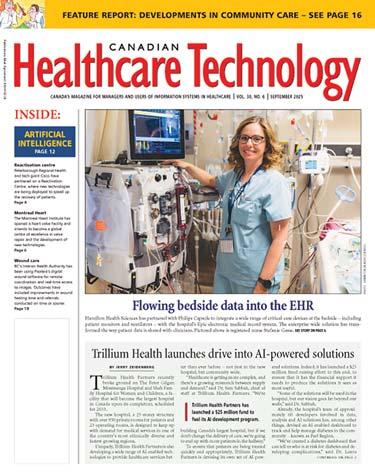
Canadian Healthcare Technology magazine
Canadian Healthcare Technology offers the country's leading healthcare I.T. publications. And they're free to healthcare providers. Get your complimentary subscriptions now!
Canadian Healthcare Technology breaks the news about important projects, programs and technologies, and provides hospital executives and senior managers with an excellent source of information for improving the delivery of healthcare. It’s sent to over 3,900 readers in print format and to over 7,300 opt-in subscribers of the digital edition.
White Papers
eMessenger newsletter
Canadian Healthcare Technology’s e-Messenger contains breaking news about important deals, installations and developments. Four blasts are sent each month, via e-mail, to over 7,100 senior managers and executives in hospitals, clinics and health regions.
Canadian Healthcare Technology’s White Papers are sent out once a month, via e-mail, to over 5,500 senior managers and executives in Canadian hospitals and health regions. The monthly blast contains summaries and links to White Papers issued by various organizations, providing cutting-edge information about topics of interest to healthcare decision-makers.
For advertising or editorial inquiries, contact Jerry Zeidenberg, Publisher, jerryz@canhealth.com
Jewish General Hospital brings AI into Hospital@Home
The hospital is refining its Hospital@Home program to reduce the cognitive load on clinicians.
BY JERRY ZEIDENBERG
Montreal’s Jewish General Hospital (JGH) – part of CIUSSS West-Central Montreal, the region’s Integrated Health and Social Services network – continues to advance its Hospital@Home program. As a key element of the CIUSSS’s Care Everywhere vision, the JGH now operates a 20-bed “virtual hospital,” delivering inpatient-level treatment to users in their own homes with the same high standard of care as on site.
It’s all made possible through a combination of remote monitoring technology and in-person visits by clinicians and support staff.
The program has treated roughly 3,400 patients at home since 2022, achieving a 93 percent satisfaction rate. In turn, this has freed up thousands of bed days, allowing other patients to access beds for surgeries and helping to reduce congestion in the Emergency Department.
Patients and staff have shown a deep appreciation for the program, resulting in rapid growth.
“What’s more, the range of conditions the program can support has expanded. From a handful of medical conditions, such as COVID-19, heart failure and straightforward infections, our Hospital@Home program is now caring for patients with about 30 different medical conditions,” said Dr. Lawrence Rudski, chief of cardiology at the JGH and medical director, strategy and development of virtual care for the CIUSSS.
“This includes a growing focus on oncology patients and palliative care as a bridge to the CIUSSS’s existing home palliation program. In some cases, even stabilized ICU patients have been able to return home sooner and receive follow-up care there.”
In fact, as part of its broader commitment to helping patients remain safely at home with the care they need, the JGH also introduced limited point-of-care testing through a partnership with a diagnostics company. This on-the-spot testing allows clinicians to confirm or rule out common respiratory viruses in minutes rather than hours, supporting faster treatment decisions without requiring a hospital visit.
Leveraging AI for better care: With rapid growth inevitably come new challenges.
“There’s a heavy burden on clinicians for screening patients for admission to the program, which is one of the reasons why Hospital@Home hasn’t scaled faster across jurisdictions,” added Erin Cook, associate CEO of CIUSSS West-Central Montreal. “Screening is a time-consuming process and there’s a formidable cognitive load on physicians and nurses.”
“Currently, the way to identify patients is to manually review paper lists, done by doctors, nurses and multidisciplinary teams – sometimes together and sometimes asynchronously,” added Dr. Rudski.
When the CIUSSS’s Virtual Care team attended a global Hospital at Home conference back in 2023, it became clear that partners from around the world were facing the same challenge. Interestingly, a few participants at the conference said they were experimenting with AI as a screening tool. That made sense to the CIUSSS team, and they decided to investigate artificial intelligence solutions.
This is where OROT – the CIUSSS’s Connected Health Innovation Hub – steps in to support the or-
ganization’s AI-first approach, providing intelligent monitoring, real-time data integration, and predictive insights into everyday clinical decision-making.
“Digital tools enable predictions and earlier detection of deterioration, faster therapeutic adjustments, and more proactive care management. In this way, we improve outcomes for patients while reducing avoidable hospital-level care,” said Kathy Malas, director of OROT, and the CIUSSS’s chief of quality, innovation, artificial intelligence and value officer.
The JGH has also been working with Signal 1, a Toronto-based AI company, operating at the frontier of responsible healthcare AI. Its solutions are currently used at seven health systems across Canada and the United States. Together, Signal 1 and the JGH have created a first-of-its-kind AI-enabled solution for screening H@H patients in Canada.
Mara Lederman, chief operating officer of Signal 1,
fine the tool. As expected, this process has led to adjustments to the algorithm to better align it with clinicians’ real-world decision-making.
“I think it’s very important to make sure we’re deploying a model that’s safe and responsible,” said Charina Alducente, clinical deployment manager at Signal 1. “We’re taking those steps together to do that. I think we’ve gotten really good feedback from each of the sessions.”
That iterative process is nearing completion, at least for version 1.0. “It’s mostly a case of tweaking the rules in order to better define and improve the accuracy,” said Dr. Rudski. “We’re hoping to launch quite soon.”
Although the AI screening algorithm is still in the testing phase at the Jewish General Hospital, the organization has already been sharing its Hospital@Home expertise across Quebec. In 2023, the Government of Quebec invested $120 million to expand H@H pro-
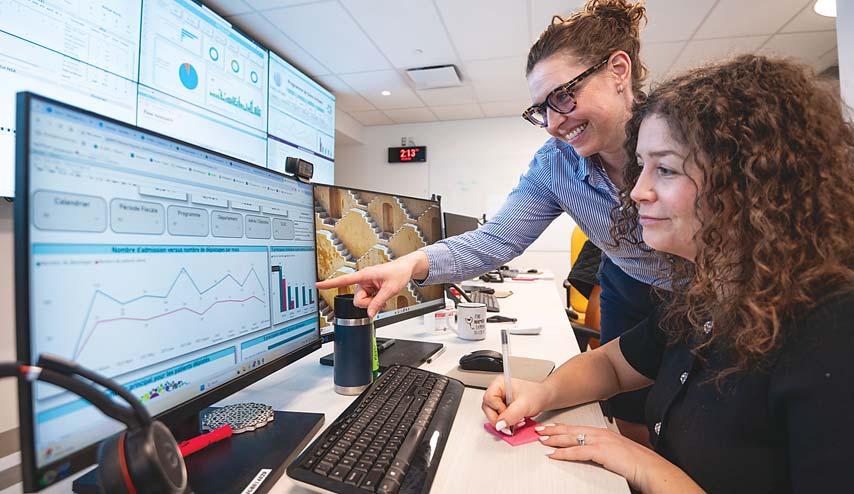
outlined some of the steps the AI solution considers when screening.
“There are practical factors, like are patients in the right geography and do they have an appropriate caregiver? There are inclusion criteria, exclusion criteria, and there are always a bunch of edge cases where patients look like they may be suitable, but sometimes you have to rule them out.”
She added that AI is great for this, because it can assess a great amount of data about a patient and match it to the data of patients who have successfully gone through the H@H program – all very quickly.
What’s more, it can do it on its own, pulling the data from electronic patient records.
“When the day begins, the AI can say, here are all the people we think may be suitable [for transfer to H@H]. And it can rank them on how suitable they are for a member of a clinical team to make the final decision,” said Lederman.
By leveraging OROT’s user-centric design expertise, the AI system is now being tested as team members review its outputs and compare them with their own clinical assessments. Multiple evaluation sessions have already taken place, with Signal 1 collaborating closely with hospital staff and clinicians to re-
grams, and the JGH supported eight other organizations in launching their own initiatives.
The JGH has also applied its remote care expertise to help another Quebec hospital facing a critical nursing shortage. Over a three month period, JGH nurses cared for 150 patients remotely using augmented reality glasses. This technology enabled them to assess patients, monitor their condition in real-time, and supervise on-site care teams from a distance.
The C4 Command Centre: Not only is the Jewish General Hospital a leader in technological innovation, but it’s also re-thinking the organizational structure of the healthcare system. On this front, it created an innovative Command Centre called C4 – short for care, collaboration, creation, and communication.
C4 was originally established during the COVID-19 pandemic to predict when the hospital would have to transform units into special wards. Since then, it has been used to help reduce the numbers of Alternate Level of Care (ALC) patients in the hospital by electronically monitoring all the factors that might influence discharge and quickly marshalling the resources to overcome the roadblocks.
At the same time, the effort also encouraged
Kimberly Gartshore, (standing), Coordinator of the Command Centre, and Michelle Kosikowski, Chief of Service - Virtual Care.
Continuus health expands and refines remote monitoring of patients
BY JERRY ZEIDENBERG
HAMILTON, ONT. – Continuus health, the virtual care service of Hamilton Health Sciences, has expanded its remote monitoring services both out-of-province and out-of-country.
Continuus health (it was rebranded in 2024) is planning to provide care to postsurgical patients in Cape Breton, N.S. and to a region in Norway.
“Overall, we’ve been looking after about 1,300 patients a year, for both clinical and research,” said Dr. Ted Scott, chief innovation officer at Hamilton Health Sciences.
The projects in Nova Scotia and Norway are for research purposes and will help in the development of effective care pathways.
In Nova Scotia, Continuus health is building a replica of the PROTECT virtual care laboratory (construction under way) at McMaster and Hamilton Health Sciences.
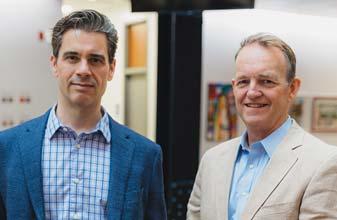
This next state-of-the-art facility will be a centre of excellence for virtual care trials.
The work in Norway came out of a four-year research project that the PROTECT Continuus health team won with the European Union. Now, Norway is continuing the relationship as it investigates how it might transfer Continuus’s health model to its own jurisdiction.
For its part, Continuus health has been refining its remote monitoring abilities since 2016, when it was originally launched under the leadership of Drs. PJ Devereaux, Michael McGillion and the operational leadership of Jennifer Lounsbury.
Continuus health is unique in Canada, as it focuses on post-surgical patients –such as those who have had cardiac and vascular surgeries. Of late, it has added new surgical specialities, including oncology.
In doing so, it is helping patients leave the hospital more quickly, recovering at home, where most people want to be. And it’s freeing up beds in hospital.
“We keep the patient connected to us and contributing data on a daily basis,” said Dr. Scott. “It’s typically for 14 days, but it can be extended, as necessary.”
There’s face to face care on days one, three, seven and 14, when the patient is usually discharged. And each day, the patient sends data using connected devices, including a tablet computer, BP cuffs and weight scales.
A monitoring centre staffed 24/7 with six team members working at a time covers the remote patients. (Four nurses, a clerical manager and a charge nurse.) The nurses take care of most issues that arise, and when needed, care is handed off to physicians.
Recently, Dr. Jeremy Petch, director of HHS’s Centre for Data Science and Digital
Health (CREATE) has been working on applying artificial intelligence to the care offered by the Continuus health program.
For example, CREATE is developing an AIdriven app for diagnosing wounds in home-care patients.
Dr. Petch explained that wound care is
a time-consuming task for busy nurses, but an important one. They must regularly examine wounds and determine whether they’re getting infected or have other complications.

The #1 Healthcare Management Software
Powering Modern Care
Empowering home care, long-term care, and children’s services organizations to operate efficiently and deliver exceptional care.
Ultimately, the goal is to be able to use this app to transform post-operative care globally.
CREATE is also developing AI for med-
The AI wound-care app would help, as patients can take a picture of the wound on their phone and the app can determine whether it needs escalation for more attention.













"GoldCare has been our trusted technology partner for decades, and that long-standing relationship really counted during our consumer portal project. The implementation went smoothly, and was a great example of how they continue to modernize their platform while supporting the real-world needs of organizations like ours."



Jeremy Petch, left, and Ted Scott, right.
New digital communication solution monitors seniors as they age-in-place
BY NEIL ZEIDENBERG
Most seniors in Canada want to stay in their homes as they age but struggle to stay connected to family and caregivers. Many of them require help with basic daily tasks like using the phone and managing their medication.
Without proper oversight by a PSW, care coordinator, or family caregiver, it’s hard to tell if our loved ones are stable or in a state of decline. Isolation can lead to higher rates of depression and premature moves into long-term care.
An Ontario start-up company, kiloBryte Inc., recently developed a senior-first digital communication device – called Paige – that checks all the boxes for safety, security and ease of use.
“Paige is a secure one-touch video communications solution that bridges the gap between the family circle of care and homecare service providers,” said Bob Millar, cofounder and chief revenue officer. “It overcomes the workforce shortage and enables service delivery and human connection.”
Paige’s co-founders have all experienced the challenges of caring for an aging parent. In fact, two of the co-founders were primary caregivers for their mothers before their passing, and all three co-founders experienced the stress, distance and helplessness that come with that responsibility.
“We built Paige to make that experience easier for millions of families who have or will have that same experience,” said Millar. Millar joined forces with two friends to develop a solution to better connect aging seniors and their families. The three previ-
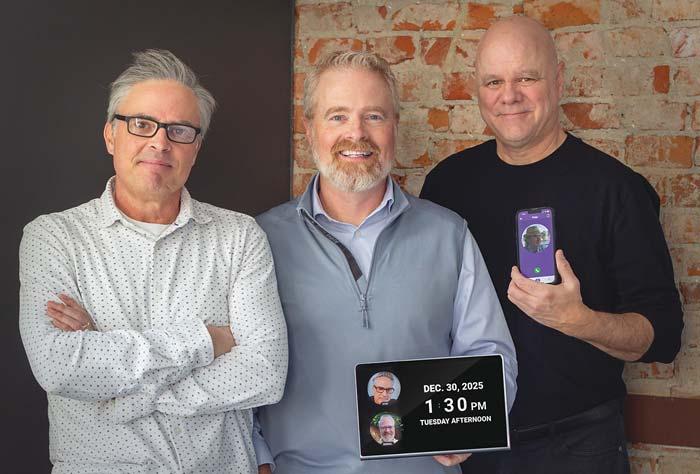
ously worked together at BlackBerry, in Waterloo, and understand wireless communications and usability.
What exactly is Paige? It’s a one-touch video calling device disguised as a large format dementia clock, making it familiar, friendly, and unintimidating.
Older adults simply tap the photo of the person they want to reach, and the person is instantly connected via video call. Families join from their smartphones using the Paige Connect companion App.
When needed, Paige devices can also be configured to auto-answer inbound video calls, so a trusted family member, caregiver or professional can always get through.
No more “I can’t reach them – they’re not answering.” Many of us take video chat for granted, until a loved one ages out of the technology and can’t connect any more.
“Paige is built from the ground up to solve a problem that I lived,” said Peter Kirkpatrick, co-founder of Paige. “Every facet of the design has come from the point of view of, “Would mom be able to use it?”
There are many problems with the current healthcare system. In hospitals, bed occupancy rates are too high; many acute care beds are occupied by patients who no longer require them but can’t be safely discharged, creating a bottleneck for new admissions. This results in longer wait times, increased
stress on staff and higher risk of patient deterioration outside the correct setting.
Paige, however, enables earlier and safer discharge from hospital by providing monitoring and engagement for seniors while recovering at home.
Paige links hospital-to-home, home and community service providers and family caregiver networks’ with real-time communication and data. It leads to lower re-admissions, avoids extended hospital stays and frees up acute care beds.
Paige also addresses challenges faced by seniors in retirement communities overcoming feelings of isolation, especially for those with infrequent visitors.
By using Paige, family members can see and hear their loved ones anytime they like.
And if an aging family member has cognitive or physical challenges, Paige’s auto-answer capability ensures families can always see and speak with their loved ones.
Paige is currently undergoing programs, pilots and partnerships with a wide range of organizations, including: a national healthcare provider, George Brown College; Sheridan College’s Centre for Elder Research with support from the Ontario Centre of Innovation, Mitacs and the University of Waterloo.
During user validation, Paige was tested across 70,000 minutes of live video in 10,000+ calls.
“As we begin to focus on commercialization, we’ve been receiving support from local innovation hubs, recently completed the Accelerator Centre’s REV Lab program (in Waterloo, Ontario), and are excited to now be part of their Incubate scaleup program,” said Millar.
How technology and responsible AI are transforming healthcare
BY STUART FELDMAN
Canada’s healthcare landscape is experiencing a fundamental shift as care moves closer to home.
Long-term care facilities, nursing homes, and community-based services have become cornerstones of the healthcare system – and technology is playing a defining role in how these services evolve to meet growing demands. Intelligence-driven support: Community care technology has evolved rapidly over the past few years. The focus has shifted from basic digitization toward intelligence-driven tools that actively support clinical decision-making. AI-enabled capabilities are increasingly embedded into clinical workflows, helping nurses and care providers identify risks earlier, prioritize urgent tasks, and reduce documentation burden. These tools are particularly valuable in long-term and community care environments, where staff are managing increasingly complex populations with limited resources.
Predictive analytics represents a significant advancement in proactive care. By surfacing early indicators of decline –such as changes in mobility, cognition,
or clinical patterns – these systems allow care teams to intervene sooner and prevent avoidable hospital transfers.
Workflow automation streamlines documentation and reporting, freeing clinicians from administrative tasks so they can focus on direct care delivery.
When integrated into core clinical systems, this data becomes part of a holistic view of each individual, supporting better-informed care decisions.
Responsible AI: As AI adoption increases in community care settings, ensuring it is implemented responsibly is critical. In environments where trust, safety, and accountability are paramount, AI must be designed to support – not replace – clinical expertise.
This is where Responsible AI provides the necessary framework. In practice, this means delivering AI tools that provide actionable, understandable insights directly within existing workflows.
For nurses and care providers, this includes risk flags, summaries, and prioritization cues that enhance situational awareness without adding complexity. The goal is clear: augment clinical judgment while upholding high standards of safety and ethics.
Five pillars guiding responsible im-
plementation: Effective adoption of advanced technologies in community care requires more than innovation alone – it demands organization-wide commitment to governance, ethics, and humancentered design. PointClickCare’s approach is anchored in five interconnected pillars that guide responsible technology implementation.

Accountability: Accountability ensures AI systems are governed, monitored, and continuously evaluated throughout their lifecycle. In community care settings, this includes clear ownership of AI initiatives, transparent documentation of data sources and model behavior, and defined protocols for addressing errors or unintended outcomes.
Fairness: Equitable access to highquality care is fundamental to Canada’s healthcare system, and technology must uphold that principle. Fairness requires that AI systems are trained with representative, high-quality data and monitored
across diverse populations and care contexts.
Privacy and Security: Community care relies on highly sensitive personal health information, making privacy and security non-negotiable. Advanced analytics and AI introduce additional considerations, as large datasets can increase risk, if not properly governed.
Human Oversight: Despite technological advancement, care decisions must remain firmly in human hands. AI and analytics are designed to support – not replace – clinical expertise. Human oversight ensures nurses and care providers retain authority to interpret, validate, or override technology-driven insights based on individual context.
Interoperability: Many of the most impactful technological developments in community care depend on strong data foundations. Fragmented systems and disconnected records remain a major barrier, limiting visibility across care transitions and creating gaps in continuity.
Interoperability, the ability for systems to securely share and use data, is therefore critical.
Stuart Feldman is Vice President, Industry Market Leader, Canada at PointClickCare.
Stuart Feldman
Co-founders (left to right) Bob Millar, Donal Byrne and Peter Kirkpatrick, creators of Paige.
Cheshire deploys GoldCare to strengthen consumer independence
LONDON, ONT. – For communitybased providers in Canada, delivering personal attendant services requires constant coordination, accurate documentation, and the ability to monitor and respond to trends in service delivery.
At the same time, organizations must protect the independence and dignity of the people they support. For organizations serving adults with physical disabilities and seniors, those core principles guide daily operations.
At Cheshire Independent Living Services in London, Ontario where the focus is on enabling independent living and participation in the community, the implementation of GoldCare’s comprehensive healthcare software demonstrates how direct digital access can reinforce consumer autonomy while strengthening operational visibility and accreditation readiness.
Real-time schedule access helps consumers feel in control: Cheshire coordinates personal attendant services that are essential to consumers’ daily routines. Visit timing affects every facet of consumer life, from employment to medical appointments, family responsibilities, and social participation. When schedules must be confirmed through phone calls or staff intermediaries, consumers do not have direct access to information about their own supports. To allow consumers and families increased control and visibility into their services, Cheshire implemented GoldCare’s portal technology.
Now, the Cheshire Consumer Portal provides secure, real-time access to personal attendant schedules and schedule changes. According to feedback received by Cheshire’s leadership, the positive impact has been consistent:
“The consumer portal provides direct access to schedules and schedule changes, and our consumers consistently report it provides autonomy,” said IT coordinator Carri Broere. “It makes them feel more in control of their daily routines and able to navigate schedules independently. Working with GoldCare to support the rollout of this portal is a proud accomplishment for our team.”
Access to current scheduling information empowers consumers to plan their days with greater confidence and reduces reliance on administrative confirmation.
Support for families and care partners: Family members who assist with coordinating services also benefit from increased transparency. Mike Lang, a Cheshire consumer, shared:
“I love the peace of mind that the Consumer Portal has given to me and my wife. When you get full-time staff coming in and don’t get notified of changes, sometimes it’s hard to deal with. But something as simple as knowing who’s coming in gives power back to us.
Not only does it give power back to me as a consumer, but my wife feels more confident seeing that staff are coming and she can complete other tasks.”
In community-based disability and aging support, predictability improves communication and reduces stress. Clear schedule visibility supports smoother coordination between consumers, families, and service providers.
Streamlined Workflows and Scheduling: After decades of partnership with Cheshire, GoldCare’s impact extends well beyond consumer-facing functionality. Cheshire’s internal teams report high levels of satisfaction with GoldCare’s usability and workflow efficiency.
Staff describe the platform as intuitive, with simplified processes that reduce reliance on paper-based documentation. Centralized dashboards surface key information quickly, reducing time spent navigating multiple systems.
Scheduling flexibility is improved through the use of GoldCare’s platform. Team members can reassign multiple bookings or groups of days at once and make adjustments directly from desktop worksheets. Indirect time entries can be managed within the same system. These capabilities allow faster responses to
staffing changes while maintaining service continuity.
Built-in alerts that flag incorrect dates or inconsistencies in service plans help prevent errors before they affect consumers and support ongoing quality assurance.
Reporting and Accreditation Readiness: Robust reporting and analytics capabilities have strengthened oversight and compliance at Cheshire. During a recent accreditation review, evaluators responded positively to several system features, including: •Staff’s ability to create and edit custom reports independently •Mobility tools supporting real-time personal attendant tracking and updates
•A centralized planning calendar providing schedulers with comprehensive visibility •Statistical dashboards enabling at-aglance service and performance analysis Program-specific and ministry-targeted
reports can be generated quickly, supporting accountability requirements. Dashboards centralize employee and consumer information, highlight service gaps, and consolidate documentation. This visibility allows leadership to monitor indicators and respond in a timely manner.
As provincial oversight frameworks continue to evolve, the ability to access accurate data internally and generate reports without external customization is becoming increasingly important for community-based providers like Cheshire.
Supporting community care modernization: Community support organizations operate within constrained funding environments while responding to growing demand and regulatory expectations. Technology investments must be made judiciously, to align with both operational efficiency goals and organizational core values.
At Cheshire, GoldCare’s software reinforces independent living by restoring informational control to consumers and reducing reliance on intermediaries. Families gain confidence in service continuity, while behind the scenes, staff members benefit from streamlined workflows and centralized data access. Leadership gains stronger reporting capabilities and accreditation preparedness.
Cheshire Independent Living Services’ experience with GoldCare is a powerful demonstration of how purposeful implementation of integrated consumer-facing and back-office technology can strengthen both independence and organizational performance within community-based care.
For more information, see GoldCare: www.mygoldcare.com
How radar technology is redefining fall detection
BY CATHERINE GAUVIN
It is rare that an informal meeting at a technology development event turns into an 18-month journey of adaptation and discovery. What began as a conversation at MTL Connect in 2022 evolved into a real-world pilot of a solution that promises to change how we protect our most vulnerable residents: the LISA solution by Living Safe.
Montreal-based Living Safe specializes in the collection, analysis and interpretation of data, providing accurate, insightful information on seniors’ health, safety and well-being with the LISA smart-monitoring system.
The human element of innovation: When we first met David Landry, the founder of Living Safe, it wasn’t just the technical specifications that caught our attention – it was the mission. Driven by a personal family experience where a loved one was left on the floor without help after a fall, Landry developed a non-intrusive system to ensure no senior would ever face that isolation again.
The appeal for our clinical team was immediate: a system requiring no wearables – which residents with cognitive
impairments often find distressing –and no cameras, preserving essential privacy. And by removing the “noise” of traditional alarms, we saw a path toward reducing “alarm fatigue,” a chronic issue that often delays staff response times.
Navigating the regulatory maze – A pivot to pragmatism: In the public healthcare sector, innovation is a tightrope walk. Our project gained initial momentum through a subsidy from
The appeal was immediate: a system requiring no wearables and no cameras, preserving essential privacy.
the Ministère de l’Économie, de l’Innovation et de l’Énergie du Québec. However, the path to implementation was steeper than anticipated.
The introduction of Law 25 in Quebec, combined with evolving security and documentation requirements, transformed our initial goals. As the administrative and Privacy Impact Assessment (PIA) processes lengthened, we faced a “loss of collaborators” along the way.
Rather than abandoning the project, we pivoted. We shifted from a formal research study to a pragmatic pilot deployment. This agility allowed us to move forward despite bureaucratic hurdles, focusing on operational feasibility and the “proof of concept” in a complex clinical environment.
Lessons from the ward – Hospital vs. long-term care: Our pilot targeted two environments: a standard hospital ward and a specialized long-term care (LTC) unit at the Centre d’hébergement JeanDe La Lande.
The hospital setting provided a harsh reality check. We encountered “environmental friction” including complex WiFi certification and limits on simultaneous connections.
Physically, the hardware was challenged; patients frequently unplugged sensors to charge their own devices. Given the high turnover and constant need for new consents, we realized the hospital setting was too demanding for the pilot’s scope.
In contrast, the LTC facility’s wandering prosthetic unit became our success story. Under the leadership of manager Frank Tran and in collaboration with
How digital care journeys and AI are redefining the patient experience
BY JOSHUA LIU, MD,
For decades, the “black hole” of healthcare has existed in the spaces between hospital and clinic visits.
We provide world-class care within our walls, but once a patient returns to their community – often hours away – the cord is essentially cut.
Patients are frequently left to navigate complex care protocols with little more than a stack of paper instructions. We founded SeamlessMD in 2012 to bridge this gap by guiding patients across the entire continuum of care.
Our platform acts as a digital GPS for the patient journey, guiding patients through everything from surgery and cancer treatment to chronic disease management.
By leveraging the devices patients already own, hospitals and health authorities can deliver personalized, just-in-time support – including symptom monitoring, reminders, and evidence-based education.
Looking across the Canadian landscape in 2026, the results from leading healthcare organizations are transformative. From the remote geography of Northern Ontario to the province-wide initiatives in Atlantic Canada, digital care journeys are now an essential pillar of patient experience, quality and safety.
In New Brunswick, Horizon Health Network has demonstrated the power of deploying this technology at a provincial scale. Since 2023, over 5,500 patients have been enrolled in digital journeys that span multiple clinical areas.
The reach of the program covers complex surgeries like cardiac and orthopedic procedures, as well as chronic disease management for heart failure. This province-wide approach has accelerated recovery and allowed for safer transitions from hospital to home.
Horizon Health Network has found SeamlessMD to reduce average length of stay by 42 percent and readmissions by 52 percent in orthopedic surgery, and lower
ED visits by 47 percent for cardiac surgery. By reducing stress on the healthcare system, this opens up capacity to care for more patients. As one Horizon patient put it, “It makes me feel included. It makes me feel like I matter. It’s like having 24/7 care”. This sense of continuous support is
What AlayaCare’s newest tools teach us about AI
Home and community care organizations across Canada are operating under sustained pressure.
Caseloads are rising, workforce shortages persist, and documentation and compliance needs continue to grow in complexity. In many organizations, entire teams are dedicated to resolving visit verification discrepancies, checking compliance forms, and filling last-minute call-offs.
It’s against this backdrop that AI is moving into hands-on process execution. While the tools of two years ago focused on answering user-entered questions, the current frontier of AI is technology that acts as an in-workflow agent.
This shift underpins AlayaCare’s newest platform initiatives. AlayaFlow, AlayaCare’s AI-powered workflow platform, is now embedding agentic AI directly into critical processes across home-based care.
“There are four flavours of AI to understand. Assistants, copilots, AI baked into features like risk models, and now agentic systems,” said Isaac Alexander, chief software architect at AlayaCare. “Agentic AI doesn’t just react. It looks for what’s happened – or hasn’t happened – and then takes action. Rather than layering AI on top of an organization’s workflow, we’re building it into the workflow engine.”
Automation with accountability: In home and community care, workflows are complex and highly regulated. Scheduling, visit verification, care planning, and payer documentation all require judgment and escalation pathways.
To address this, AlayaFlow allows teams to define where automation should be deterministic (rule-based and tightly controlled) and where AI models have permission to make contextual decisions.
“We use deterministic logic as a
guardrail,” Alexander said. “Every agent can have a human-in-the-loop step where it can escalate and ask for approval before proceeding.”
In practice, that means organizations can trace and verify every step an agent takes within a workflow. “You can see exactly what the agent did, where it escalated, and what decision the human made. It’s all part of the audit trail.”
Three ways agentic AI is already in use: AlayaFlow currently powers a set of AI agents focused on improving highfriction workflows. “When developing these agents, we wanted to focus on a few key workflows that customers cared about,” said Alexander.
Visit verification – managing late visits, early departures, and missing documentation –is one of the most resource-intensive back-office functions in home care, triggering a chain of manual checks and calls.

“We have organizations with 40 people whose job is just chasing visit verification issues every day,” Alexander said.
The Visit Verification Agent was developed to alleviate much of this work. It reviews flagged visits against agency-defined rules, communicates directly with caregivers to request clarification, and resolves cases automatically when responses meet criteria. Only complex or non-compliant cases escalate to human staff.
The Vacant Visit Scheduling Agent targets another high-burden workflow: call-offs and last-minute schedule gaps.
When a caregiver cancels, the agent identifies qualified replacements based on client preferences and agency rules
also becoming a new standard for oncology care on the West Coast. Vancouver Coastal Health’s RESPONSe program is the first in British Columbia to use SeamlessMD for chemotherapy patients. One patient shared how this digital monitoring was a “game-changer” during her battle with cancer.
“It’s night and day,” she said. “Knowing the care team was a click away was reassuring... like having a nurse in your pocket.” Data from the program’s first year shows that 100 percent of patients would recommend the system to others.
This safety net is equally critical for regions where travel is a barrier. Thunder Bay Regional Health Sciences Centre (TBRHSC) serves a region the size of France, where some partner sites are six hours away.
By implementing digital care journeys across over a dozen clinical areas, TBRHSC proved a motivated care team supported by remote care monitoring could reduce hospital length of stay by 48 percent and ED visits by 31 percent.
and can then confirm and book the visit without human intervention. “It can automatically react to call-offs, find a replacement caregiver, communicate with them and book the shift, without a person being involved,” Alexander said.
Yet adoption is as much organizational as it is technical. For many agencies, handing parts of long-standing manual workflows to an AI agent represents a cultural shift.
The human-in-the-loop model provides a transitional bridge, allowing leaders to control where and how AI autonomy increases over time.
The Recommended Care Plan Agent, the third of AlayaFlow’s current agents, works more like a copilot. Clinicians can trigger recommendations based on a client’s history, documentation, and agency standards.
Combined with voice-to-form capabilities, assessments can be dictated and structured fields suggested automatically. AI accelerates the workflow, but clinical judgment remains central.
A step beyond conversational AI: Before AlayaFlow, AlayaCare introduced Layla, a conversational AI assistant embedded in its platform.
Layla provides instant access to organized, actionable information at the point of care. Through a secure chat interface, caregivers and supervisors can retrieve schedules, summarize notes, translate documentation, and draft communications.
Layla is opt-in and user-driven, and it represents the assistant layer of AlayaCare’s broader AI strategy. “Layla is designed to be user-initiated,” Alexander said, “and over time, they discover where it fits best into their day.”
While Layla surfaces information and accelerates tasks at the point of care, AlayaFlow agents quietly automate multistep workflows behind the scenes.
In one instance, the platform saved a spine surgery patient’s life by allowing her to flag symptoms of meningitis while in a remote location despite lacking cellular service. The team used SeamlessMD’s Follow Up module to stay in contact with the patient electronically and coordinate a lifesaving flight back to the hospital for immediate treatment.
We are seeing this same innovation applied to recovery areas that were previously difficult to track. Muskoka Algonquin Healthcare (MAHC) has scaled the platform to nine clinical areas in just three years. In particular, MAHC launched a stroke digital journey to empower patients and improve self-management between visits. By tracking biometrics and providing resources for mobility and nutrition, they are ensuring recovery is a guided transition rather than a period of isolation.
While these results are game changing, we recognize that the emergence of AI creates an exciting new opportunity to elevate the patient experience further. This year SeamlessMD launched “Seamless Answers”: a new Conversational AI experience within our existing platform that allows patients to ask questions about their digital care journey in a natural, conversational way. Our AI provides safe and accurate answers by using Retrieval-Augmented Generation (RAG) to provide responses that align with the hospital or health authority’s already approved healthcare education and protocols for patients. This alignment with the healthcare team’s own instructions for patients is critical because general-purpose AI (e.g. ChatGPT) lacks context, which can be dangerous in healthcare.
If a patient asks a specific question about their care plan, Seamless Answers ensures the response is based on the approved instructions from the patient’s own care team.
By taking this safe and thoughtful approach to AI, we are ensuring that whether a patient is asking about preparation, recovery or a treatment plan, the answer is contextually relevant and safe.
Joshua Liu, MD, is CEO of SeamlessMD.
Isaac Alexander
Connected clinics
CONTINUED FROM PAGE 15
day to have meaningful interoperability tomorrow. So, what can clinics do now to facilitate interoperability and build connectedness?
•Shift the documentation lens. Clinical notes are part of a shared patient record across care settings. A connected clinic must write with others in mind, using structured data fields properly, and applying standardized coding and terminology where appropriate. For example, completing the Cumulative Patient Profile (CPP) accurately rather than relying on free text helps improve data quality, support information sharing, and strengthen interoperability readiness.
•Consider seamless exchanges. Clinics should prioritize tools that align with interoperability standards to ensure seamless data exchange and quality improvement, such as EMRs able to exchange structured data and relevant narrative notes with other EMRs, hospitals, regional and provincial repositories.
•Modernize care transitions. Adopt eReferral and eConsult to reduce delays in care, duplicate work, and missed follow-ups while improving the quality and reliability of information shared amongst clinicians.
•Leverage remote monitoring. Remote patient monitoring and wearables can deliver timely, clinically relevant information directly into patient records. When assessed and implemented thoughtfully,
Continuus health
CONTINUED FROM PAGE 19
ication reconciliation. In this case, it’s to address the issue of medication changes that occur when patients undergo surgeries.
As Dr. Petch explained, patients often have their meds changed when they go in for pre-op consultations. The regimen can be changed again while they’re in hospital after surgery, and possibly again as they leave to go home.
The medication reconciliation is designed to determine what the patients should be taking as they continue to recover at home – often patients have mixed up the instructions over time. The reconciliation spots errors and omissions in the
Radar technology
CONTINUED FROM PAGE 21
Anika Munn from Living Safe, we integrated LISA into the daily routine.
The stability of the team allowed us to map room configurations and successfully correlate “semi-falls” with tablet alerts at the nursing station.
The “LISA” moment: One incident solidified the technology’s value: an employee suddenly fainted while alone in a resident’s room. LISA immediately detected the collapse and alerted the team. This unexpected “save” of a staff member highlighted a secondary benefit: the system creates a safer environment for everyone in the unit.
From a clinical standpoint, the most significant achievement was the freedom of movement. By providing a reliable
these tools support outreach and preventive care without adding administrative burden to clinical teams.
•Promote shared analytics for proactive care. Shared dashboards provide clinical teams with greater insight and coordination of preventive care (for example, identifying diabetic patients overdue for A1C testing or tracking recently discharged heart failure patients), at the clinic and re-
The future is standards based. Moreover, interoperability is being tackled as a national and provincial priority.
gional levels (for example, within Ontario Health Teams) supporting population health management.
While the goal of connectedness is improving interoperability and data quality for the broader healthcare system, it is crucial to do so without additional burden or cost for clinics, clinicians, and staff by incorporating resource planning and change management from the start. Even the most advanced technology will fail or, at best, achieve limited impact without a clear, shared understanding of its adoption, long-term sustainability, and training and skills development. Through its Peer Leaders and Advisory Service Team, OMD is at the forefront, delivering change management support in adopting digital health tools.
AI can play a key role as system-level in-
drug regimen and gets patients back on track.
“Ultimately, it’s to make sure that patients are adhering to the right drug therapies, as we hope that they would to have the best outcomes,” said Dr. Petch.
As Continuus health expands, Dr. Scott said it will be adding staff – such as nurses trained in oncology care.
At the same time, Continuus health will be reducing the pressure on hospitals, as it can support earlier discharges when caring for patients at home.
“The big picture is that we continue to have a capacity problem for certain patients in Ontario,” said Dr. Scott. “There’s still an issue of patient flow and hospital bed availability, so the intent of these programs is to reduce the need for hospital bed utilization.”
safety net, we encourage residents to walk freely, which is vital for preventing the physical and mental deconditioning that occurs when the elderly are kept sedentary out of a fear of falling.
Optimizing the clinical workflow: Beyond simple detection, the pilot allowed us to refine the communication loop between the AI and the bedside. When LISA identifies an event, the alert is routed directly to the nursing station’s tablet.
This immediacy is a game-changer; in traditional settings, a fallen resident might wait until the next routine check to be discovered.
By providing a real-time “window” into the room without violating privacy, the system allows staff to prioritize their movements. We observed that this led to a more serene environment; because the team felt “backed up” by the technology, the overall anxiety level regarding noctur-
teroperability evolves. It can help clean and standardize EMR data, translate information into correct structured fields, and support projects like the Ontario Patient Summary. AI tools, such as scribes, can capture and organize clinical notes and enhance data consistency, facilitating information across systems.
For clinical teams, being ‘connected’ should involve fewer manual reconciliations, less surprises, and more access to information related to patient care. For patients of a connected clinic, they need only tell their story once; care should be a continuum, with the right information reaching the right team at the right time.
So, what can vendors and health system leaders do to facilitate connectivity? •Align to standards. Designing tools to meet DHIEX and pan-Canadian specifications is more than just checking off a box in a compliance checklist. Employing a standards-based design allows products to plug into real-world clinic workflows without creating ad hoc customized workarounds.
Co-design to deliver seamless care. Connectivity should be built around the patient care journey and real clinical tasks (for example, referrals, recalls, and inbox triage), not abstract data flows. Maintaining a “people–process–technology” perspective ensures interoperability reduces burden, supports care delivery, and aligns with how clinicians work.
•Create a digital playbook: Assess connectivity gaps to create tailored digital playbooks for clinics as actionable roadmaps to reduce implementation barriers and avoid pitfalls. Using a maturity model framework, establish a health system level service to facilitate their modernization efforts, including interoperability improvements, in a structured and scalable manner.
In the third of our four-part series, we will explore the third pillar, Streamlined, and how the combination of empowered teams and connected data can help with daily tasks, reclaim clinical time, and facilitate seamless care.
Jewish General brings AI into Hospital@Home
more teamwork and communication throughout the organization.
Of note, the C4 reduced the number of ALC patients occupying an acute care bed from 11.4 percent in 2020 to 7.3 percent in 2022.
The success of the centre in reducing ALC numbers encouraged the organization to expand the Command Centre to better monitor four other key areas more closely, and to promote communication and creativity between these groups. The areas added in 2021 were ED overcrowding, mental health services access, virtual care integration and overall hospital flow optimization.
The JGH calls this a Team of Teams approach, an idea borrowed from the U.S. military, where members of each team are in communication with each other through a series of huddles every day. That constant communication has built a culture of collaboration and group problem-solving.
A recent incident illustrates the effectiveness of this approach. On a recent exceptionally busy day, the hospital’s Emergency Department faced a surge of 63 pa-
nal falls began to decrease, allowing for more focused care during peak hours.
A vision for the future: Our trial proved that a “less is more” approach –no wearables and no visual surveillance – is the future of dignified care. As we move toward 2026, my wish is for the public sector to develop a “library” of clinician-validated devices ready for
When a person falls, an alert goes immediately to the nursing station; this real-time alert is a game-changer.
rapid deployment. By bridging the gap between informal innovation and public sector requirements, we have shown that technology, when applied with clinical insight, doesn’t replace the hu-
tients awaiting admission as inpatients – a number that compares with a typical average of between 20 and 35.
The connected teams worked together on the surge: the community team quickly arranged services for patients ready for discharge to home care; the virtual team enrolled eligible patients into remote monitoring programs; the home care group deployed extra nursing and rehab
The success in reducing ALC numbers encouraged the organization to expand the use of the Command Centre.
resources; and long-term care sites accelerated their intake process.
These actions enabled the safe discharge of 81 patients in 24 hours, maintaining system flow without transfers to external facilities.
It was a case of teamwork in action, with extensive digital systems enabling and enhancing the work of the people who manage the hospital, resulting in better patient care.
man touch, it protects it.
Beyond detection: The trial also hinted at the future of preventive medicine. LISA doesn’t just record falls; it captures the micro-movements and nearmisses that often precede a serious injury.
In a wandering prosthetic unit, understanding where and how a resident loses their balance – whether it’s near the bed or in the bathroom – allows clinical teams to adjust the environment or the care plan before a fracture occurs. This transition from reactive to proactive monitoring is where the true potential of radar technology lies within the public sector.
Catherine Gauvin is a Senior Nursing Advisor, Clinical Information System, Nursing Direction – Professional Practices at CCSMTL – Centre-Sud-de-l’Île-de-Montréal Integrated University Health and Social Services Centre.