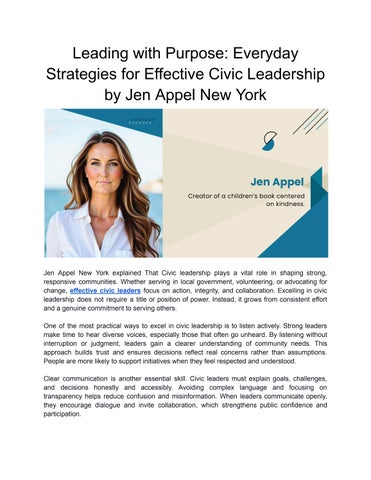
Leading with Purpose: Everyday Strategies for Effective Civic Leadership
by Jen Appel New York

Jen Appel New York explained That Civic leadership plays a vital role in shaping strong, responsive communities Whether serving in local government, volunteering, or advocating for change, effective civic leaders focus on action, integrity, and collaboration Excelling in civic leadership does not require a title or position of power. Instead, it grows from consistent effort and a genuine commitment to serving others
One of the most practical ways to excel in civic leadership is to listen actively Strong leaders make time to hear diverse voices, especially those that often go unheard By listening without interruption or judgment, leaders gain a clearer understanding of community needs. This approach builds trust and ensures decisions reflect real concerns rather than assumptions People are more likely to support initiatives when they feel respected and understood
Clear communication is another essential skill Civic leaders must explain goals, challenges, and decisions honestly and accessibly Avoiding complex language and focusing on transparency helps reduce confusion and misinformation. When leaders communicate openly, they encourage dialogue and invite collaboration, which strengthens public confidence and participation.
Successful civic leaders also lead by example Demonstrating fairness, accountability, and respect sets the tone for others to follow. Simple actions such as showing up on time, following through on commitments, and treating everyone with dignity reinforce credibility Over time, these behaviors create a culture of trust and cooperation within the community.
Building partnerships is equally important No leader can address complex civic issues alone Collaborating with community organizations, local businesses, and residents allows leaders to pool resources and ideas These partnerships not only expand impact but also create shared ownership of solutions When people work together toward common goals, progress becomes more sustainable.
Adaptability helps civic leaders navigate change and uncertainty Communities evolve, and challenges shift over time. Leaders who remain open to feedback and are willing to adjust their approach stay effective in dynamic environments Flexibility shows humility and a commitment to learning, qualities that inspire confidence and respect.
Ultimately, excelling in civic leadership is about service, not recognition By listening deeply, communicating clearly, acting with integrity, and collaborating widely, leaders can make a meaningful difference These practical habits strengthen communities and encourage greater civic engagement, proving that effective leadership begins with everyday actions rooted in purpose and responsibility.