
Traveling After an Injury –A Two-Part Series
Even though our injuries were very different, our desire to travel again was exactly the same … get outside, see new places and have FUN!
Yes, some things have changed now that we live with a disability. We can’t really be spontaneous, since it takes more planning, but many things have not changed. Throughout this two-part series we want to take you along on our journeys, give you some practical tips, and, while doing that, hope to plant some seeds to help you realize you can get back out there, even if you have to do it a little differently.
It’s natural to feel safe in your home routine, knowing the bathroom and shower meet your needs, the bed is the right height, and you can open and close the door. We can assure you that with a little bit of planning, you can find those same creature comforts in fun and different destinations.
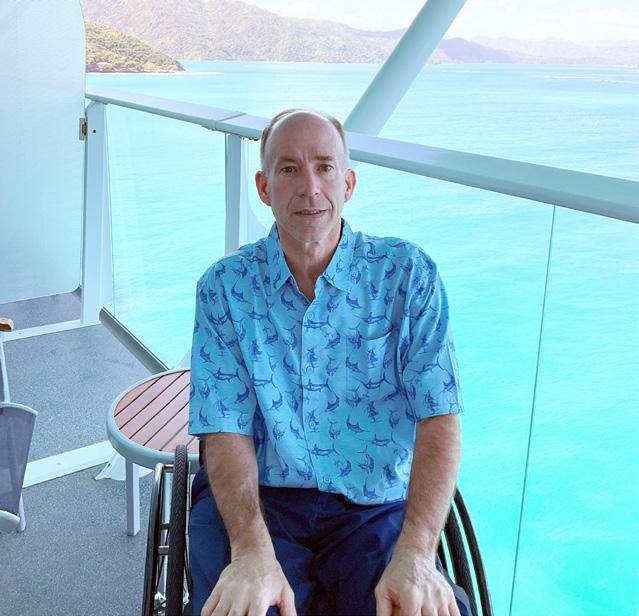
How Mark got started:
Social media wasn’t a thing when I was injured in 1996, so it took digging through the internet, making phone calls and talking to others I met at outpatient therapy to get good information. I got back on a plane just a few months after my injury and learned pretty quickly that there are people at the airport who want to help people like me, and they can do it better if I can give them a little guidance.
I learned to show them how I could transfer into the chair that would take me to my seat on the plane, and how they can assist. I’ve gotten to be a pro after all of these years, but it took some time, and some trust.
My first hotel stays involved asking direct questions about a roll-in shower and bed height. I’ve learned to sleep with the lights on in a hotel from time to time because the switch is on the other side of the room. Sometimes I’ve had to wash my hair in the sink, but have still been able to enjoy being away from home.
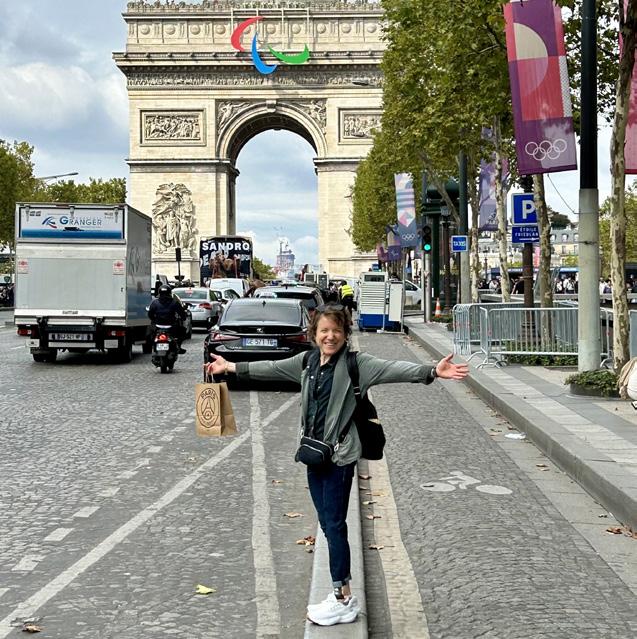
How Rebecca got started:
When I first learned to walk with a prosthesis, even a trip to the mailbox on my street felt like a journey! I packed a backpack with leg supplies, phone, snacks and even a water bottle. I’m not sure what I expected to happen on that “trip,” but when you’re a brand-new amputee, just stepping out of the house feels uncertain!
A few months later, friends invited me to go on a weekend road trip to Maine. My equipment filled our car’s trunk: a shower chair, crutches, medication, wound care supplies, extra prosthetic parts and a mini-DVD player I watched when I couldn’t sleep. I could barely manage my body at home. How could I take it “on the road?”
That trip was different – and at times difficult – but it provided my first taste
of freedom. I learned that small adaptations – researching accommodations, setting up the bathroom, planning for rest time and telling my companions what I needed –could open a world of possibility!
A few tips to get you started:
• Take a day trip or book an overnight stay in a local hotel to try it out. You’ll be close to home just in case something isn’t right, but it will give you a chance to see how you can do it.
• Find some fun blogs or stories about traveling with a disability. Look up “Curb Free with Cory Lee” as he is one of our favorites!
• Join or ask in a support group about others’ experiences.
• Talk with someone who has a similar disability about their travel experiences and strategies.
• Travel with a friend or family member who understands your needs and can help you in challenging moments.
In the next issue, we will feature some specific tips for booking hotels, air travel, cruises and other fun adventures.
About the Authors:
Mark Chilutti has lived with a T5 spinal cord injury for 29 years and uses a manual wheelchair for mobility. While his favorite type of travel is cruising, he has traveled the world in a variety of ways. He has been on staff at Jefferson MossMagee Rehabilitation Hospital — Center City for 25 years and raises funds for important programs and services.
Rebecca Levenberg has lived with an above-knee amputation for 15 years. She walks with a prosthesis during the day and uses crutches as night. She loves international travel, local road trips and walks around the block. Rebecca is the author of The Adaptive Traveler’s Guidebook. She coordinates the Amputation Support Program at Jefferson Moss-Magee Rehabilitation Hospital — Center City.