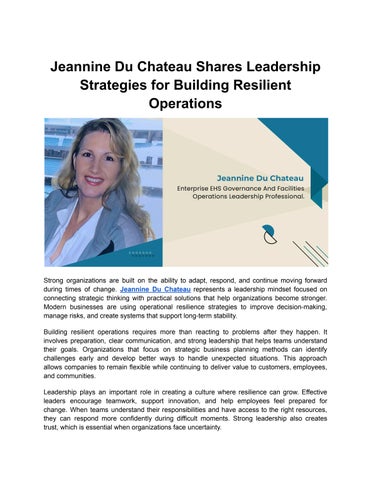
Jeannine Du Chateau Shares Leadership Strategies for Building Resilient Operations
Strong organizations are built on the ability to adapt, respond, and continue moving forward during times of change. Jeannine Du Chateau represents a leadership mindset focused on connecting strategic thinking with practical solutions that help organizations become stronger. Modern businesses are using operational resilience strategies to improve decision-making, manage risks, and create systems that support long-term stability. Building resilient operations requires more than reacting to problems after they happen. It involves preparation, clear communication, and strong leadership that helps teams understand their goals. Organizations that focus on strategic business planning methods can identify challenges early and develop better ways to handle unexpected situations. This approach allows companies to remain flexible while continuing to deliver value to customers, employees, and communities. Leadership plays an important role in creating a culture where resilience can grow. Effective leaders encourage teamwork, support innovation, and help employees feel prepared for change. When teams understand their responsibilities and have access to the right resources, they can respond more confidently during difficult moments. Strong leadership also creates trust, which is essential when organizations face uncertainty.
Strategy is another key part of operational strength. Businesses need clear plans that guide daily decisions while allowing room for adjustment. A strong strategy helps organizations manage resources, improve efficiency, and focus on long-term goals. By reviewing processes and identifying areas for improvement, companies can create operations that are more reliable and adaptable. Technology and data also support resilient operations by helping leaders make informed choices. Digital tools can improve communication, track performance, and identify potential risks before they become larger problems. However, technology alone cannot create resilience. It must work together with thoughtful leadership, skilled teams, and a commitment to continuous improvement. Organizations that invest in their people often build stronger foundations for the future. Training programs, open communication, and employee development help teams gain the confidence needed to manage challenges. When employees feel valued and supported, they are more likely to contribute ideas and take action when new situations arise. A resilient organization does not avoid challenges completely. Instead, it develops the ability to learn from them and improve over time. Businesses that embrace change can discover new opportunities, strengthen their operations, and create better experiences for everyone involved. Leadership and strategy provide the direction needed to turn uncertainty into progress. Adaptive leadership frameworks help organizations respond to change while maintaining focus on their mission and goals. By combining preparation, collaboration, and forward-thinking decisions, businesses can build operations that remain strong in a changing world. Resilient operations are not created overnight, but they grow through consistent effort, effective leadership, and strategic action.