TORQUE 2026
Amazing applications How global customers use JCB powertrains
Hydrogen highlights JCB's hydrogen combustion engine in action
80th anniversary A special year of celebrations and milestones
Amazing applications How global customers use JCB powertrains
Hydrogen highlights JCB's hydrogen combustion engine in action
80th anniversary A special year of celebrations and milestones
Moving forward together
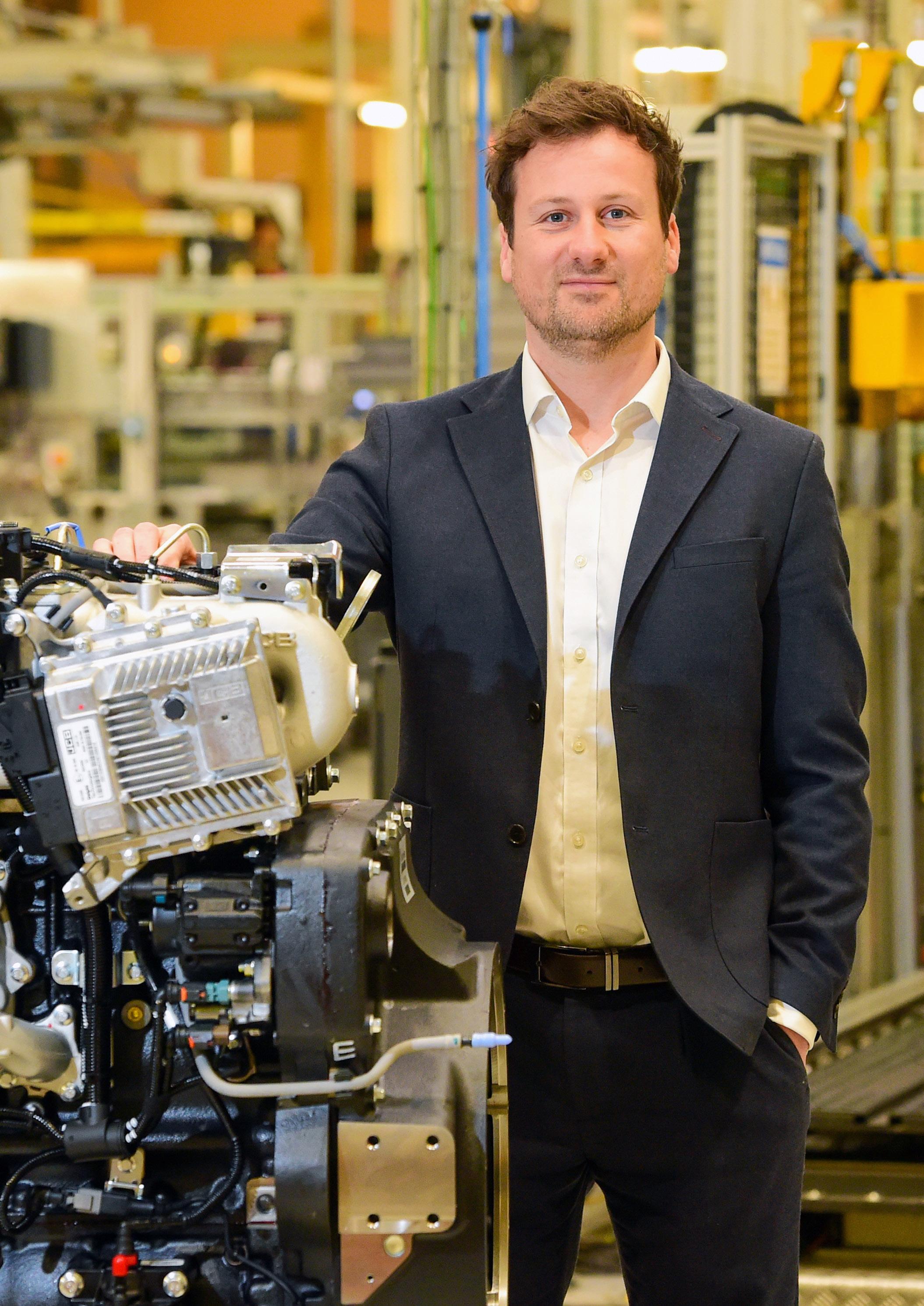
Global Sales and Applications Manager, Jon McNulty reflects on a landmark year and looks ahead to the next chapter for JCB Powertrain.
80 years of innovation
Charting eight decades of engineering ingenuity and impact.
Power. Precision. Performance.
JCB Drivetrain Systems unveils three brand-new components for OEM customers.
Talking about our generation
JCB’s first hydrogen-powered generator hits the market, showing the potential for clean power without compromise.
Hydrogen highlights
Hydrogen momentum builds with certification, legislation and real-world deployment.
Simply the best
JCB marks landmark birthdays with a movie, momentous machines and magical memories.
Berry impressive
British-built harvesters powered by JCB are making their mark miles from home.
Out of Africa
Decades of drivetrain development power Dezzi’s off-highway equipment.
Keep Britain tidy
British-built Stock Sweepers keeps emissions clean with JCB auxiliary engines.
Supreme suction power
JCB powered GWS hoovers up a growing slice of the market.
Built to crush it
JCB Powertrain delivers durability and downtime savings for car crusher OEM - Overbuilt.
Truly global support
JCB Powertrain customers get total peace of mind from the ultimate off-highway service and supply chain.
Driving growth in the Americas
A seasoned business development expert with global experience, Ryan Zenke joins the JCB Powertrain team.
Sellick joins Drivetrain celebrations
JCB Drivetrain Systems marks 40 years supplying global OEMs.
Powertrain continues continental expansion Distributor Continental Engines extends JCB Powertrain territory across 22 US states.
On the road to success
JCB Powertrain's Scandinavian distributor is on a mission. 04 46 52 56 58 60 62 64 66 06 18 22 26 32 40 42 32 46
JCB Powertrain Global Sales and Applications Manager, Jon McNulty reflects on a landmark year and looks ahead to the next chapter for JCB Powertrain.
It has been a year of momentum, milestones and meaningful partnerships. From international exhibitions to the launch of new drivetrain products, the past 12 months have showcased not just the capabilities of JCB Powertrain, but also its commitment to innovation and global growth.
We’ve had some brilliant opportunities this year. Taking our full product range to key trade shows for both the construction and agricultural markets was a real highlight. These events gave us an ideal platform to engage with customers, strengthen our brand presence and demonstrate the value of JCB OEM components.
Those shows also saw hydrogen power take centre stage. We were proud to showcase our hydrogen technology once again. It reinforced our long-term commitment to cleaner propulsion and to helping customers future-proof their applications.
As well as international exposure, the team has grown. We’ve expanded our sales team, placing talented individuals in key regions, and continued to build our global distributor network. That’s essential for providing support for our current and future
customers. A big part of our success is being close to the people who rely on our components every day.
All of this happened against the backdrop of JCB’s 80th anniversary. A proud milestone and a reminder of the strength of the business and the depth of experience we bring to every project.
Looking at the current market landscape, I’m realistic but confident. We’ve seen some welcome stability in certain regions, but in others there’s been uncertainty due to tariffs and other economic pressures. I’ve learned that disruption is always part of the manufacturing story. It’s how you respond that matters and putting the customer first is what really counts.
JCB’s response continues to be focused on long-term investment. We’re growing our global manufacturing footprint, developing exciting new technologies and staying true to our quality-first approach. All of that strengthens JCB Powertrain’s position and builds trust in the brand.
Looking to the years ahead, our direction of travel is clear. The next five years will bring challenges, of course. But there will
also be fantastic new products and opportunities. One of the most exciting areas is hydrogen. Development of the hydrogen internal combustion engine continues at pace and we see real potential there for existing and future OEM customers.
All this does not mean taking the foot off the pedal on diesel. Quite the opposite. We’re committed to growing our diesel business and continuing to increase our global market share. Feedback from our customers is shaping our future engineering programmes in this area.
India has played a significant role in our growth this year. We have initiated some fantastic relationships within the Indian domestic and export markets. We are starting to leverage our Indian manufacturing capabilities to help reduce delivery time and cost in the region.
I wish to conclude by recognising the importance of customer relationships in everything we’ve achieved. I’d like to thank every customer for their continued trust and support. We’ve grown together over the last five years and we’re ready to do the same again in the next five.
Enjoy this issue of Torque which gives a glimpse into our world and highlights how we can help enhance yours with sustainable engine and drivetrain solutions.
Charting eight decades of engineering ingenuity and impact.
Where it all began. The
1945 - Mr

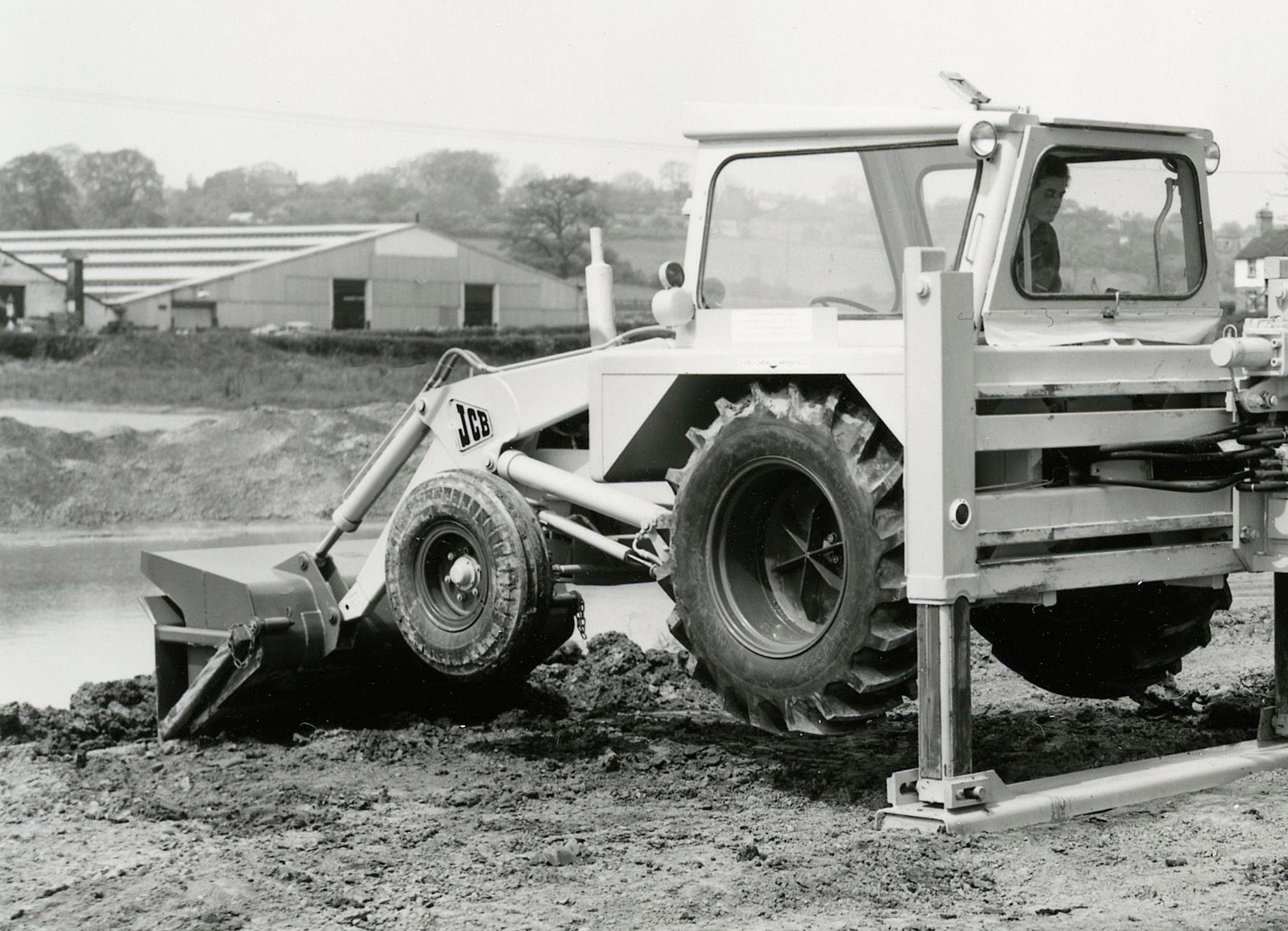
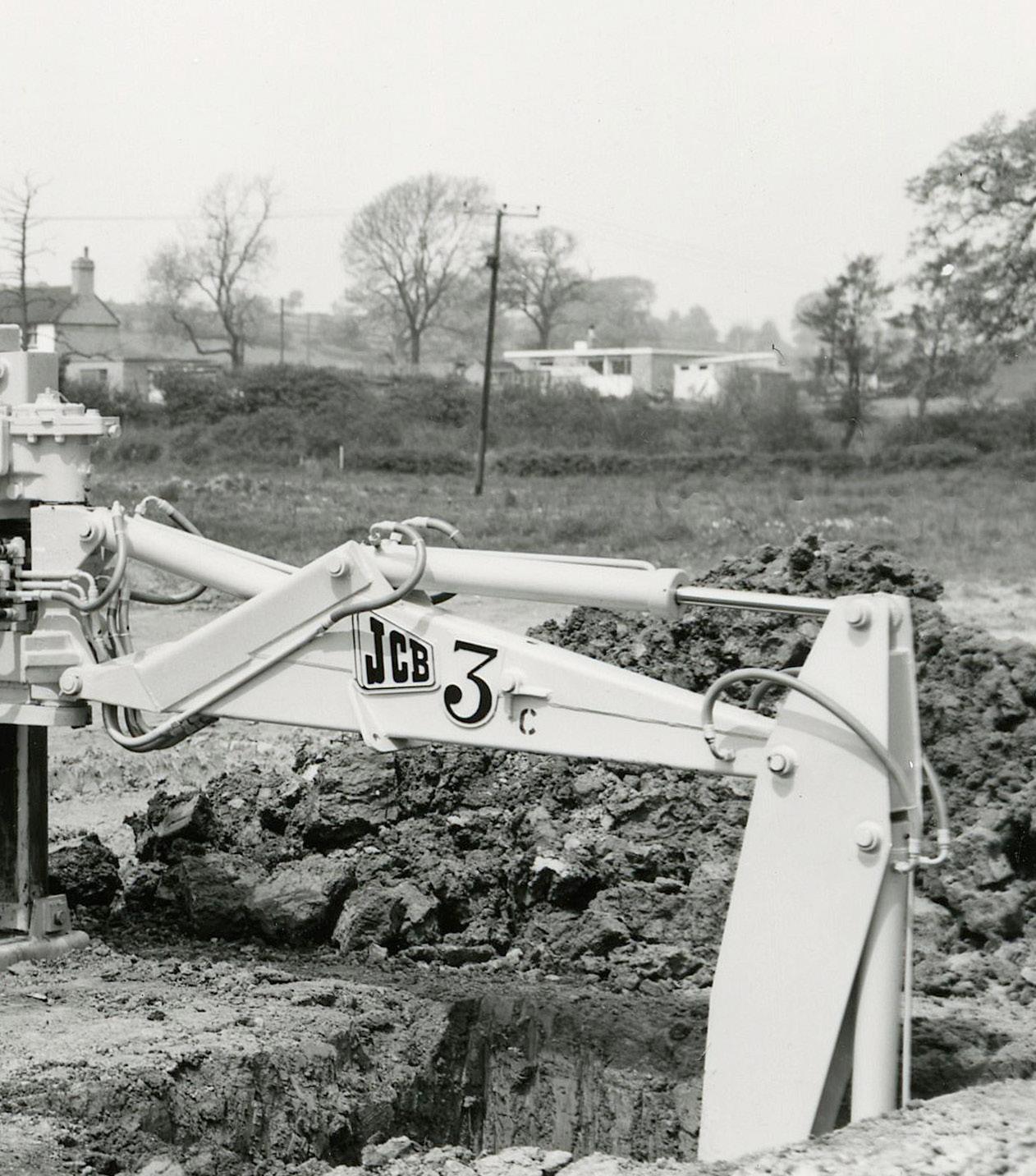
1963 - the JCB 3C backhoe loader became acknowledged as a design classic
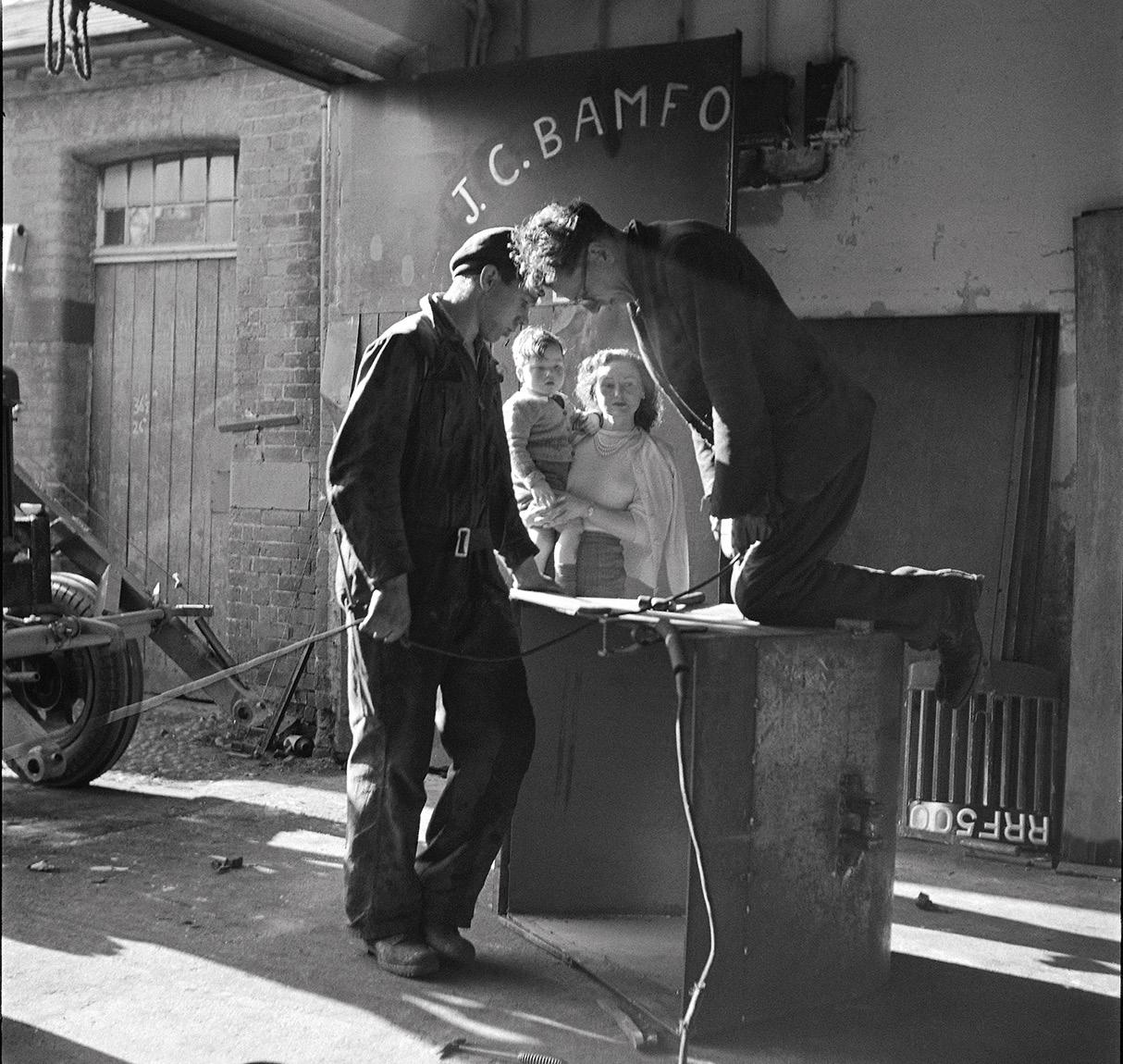
1948- JCB moves to stables at Crakemarsh Hall. Anthony Bamford in the arms of his mother Marjorie as JCB's first apprentice Bill Hirst (left) and Arthur Harrison are at work.
From a small garage in Uttoxeter to global leadership in construction, agriculture and powertrain technology, JCB’s 80-year history has been one of pioneering ideas, bold decisions and constant evolution.
Alongside eight decades of manufacturing, its renowned off-highway machines, the groundbreaking story includes landmark achievements in drivetrain, power systems and hydrogen innovation.
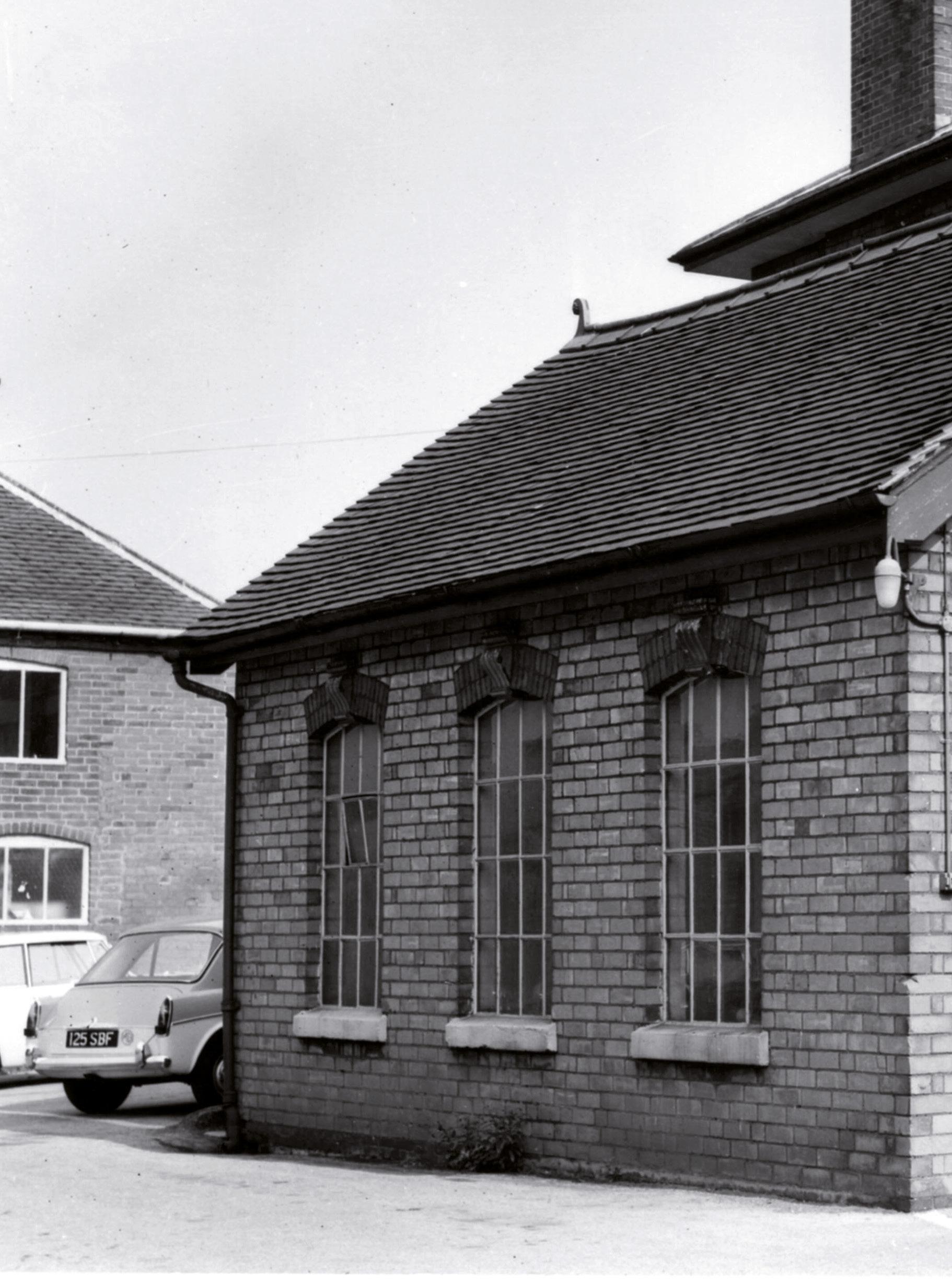
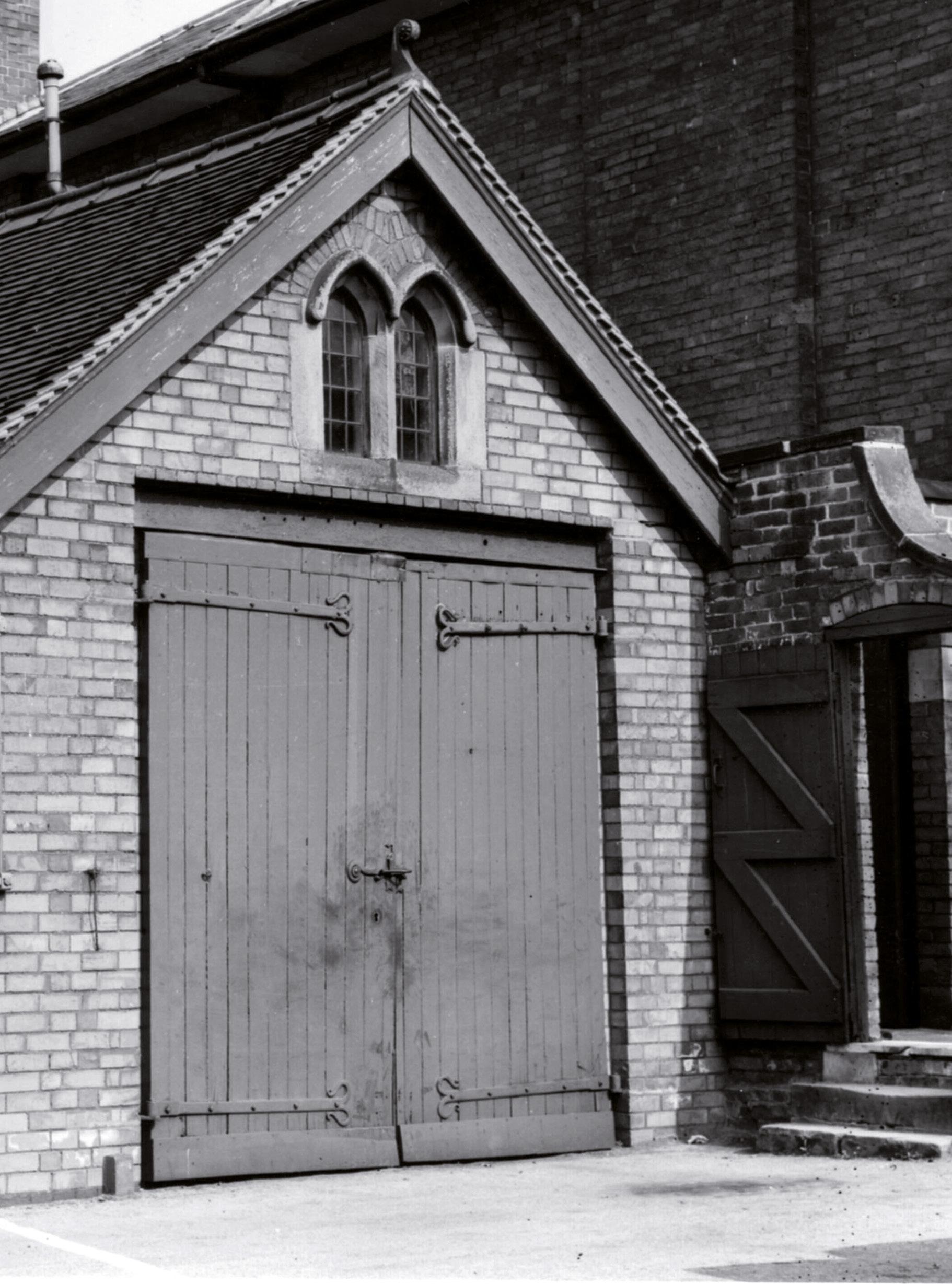
JCB was founded on October 23rd, 1945 by the late Joseph Cyril Bamford CBE in a tiny lock-up garage in the UK market town of Uttoxeter. It was the same day as his son Anthony, now Lord Bamford, was born.
The foundation for the growth was the manufacture of a tipping trailer made out of wartime scrap which today stands proudly in the showroom of JCB’s World HQ. It was produced in his garage and sold for £45 at the town’s market. The buyer’s old cart was also taken in part exchange and Mr Bamford refurbished it and sold it for another £45, therefore making his original price.
But it was 1953 that changed everything. That year, JCB launched the world’s first backhoe loader – the JCB Mk 1. By the 1960s it was clear this machine was revolutionising the building industry, increasing productivity and reducing reliance on manpower and the company began expanding internationally. In 1962, JCB Netherlands became the first overseas subsidiary, followed a year later by the launch of the JCB 3C backhoe loader model which became a design classic.
In 1964, JCB exported its first machine to the USA and within five years exports made up more than half of production. In 1969, JCB received its first Queen’s Award for Export, the first of 30 such accolades. It was a year for awards as Mr Bamford became a Commander of the British Empire (CBE) in honour of the company’s export achievements.
The passing of the baton
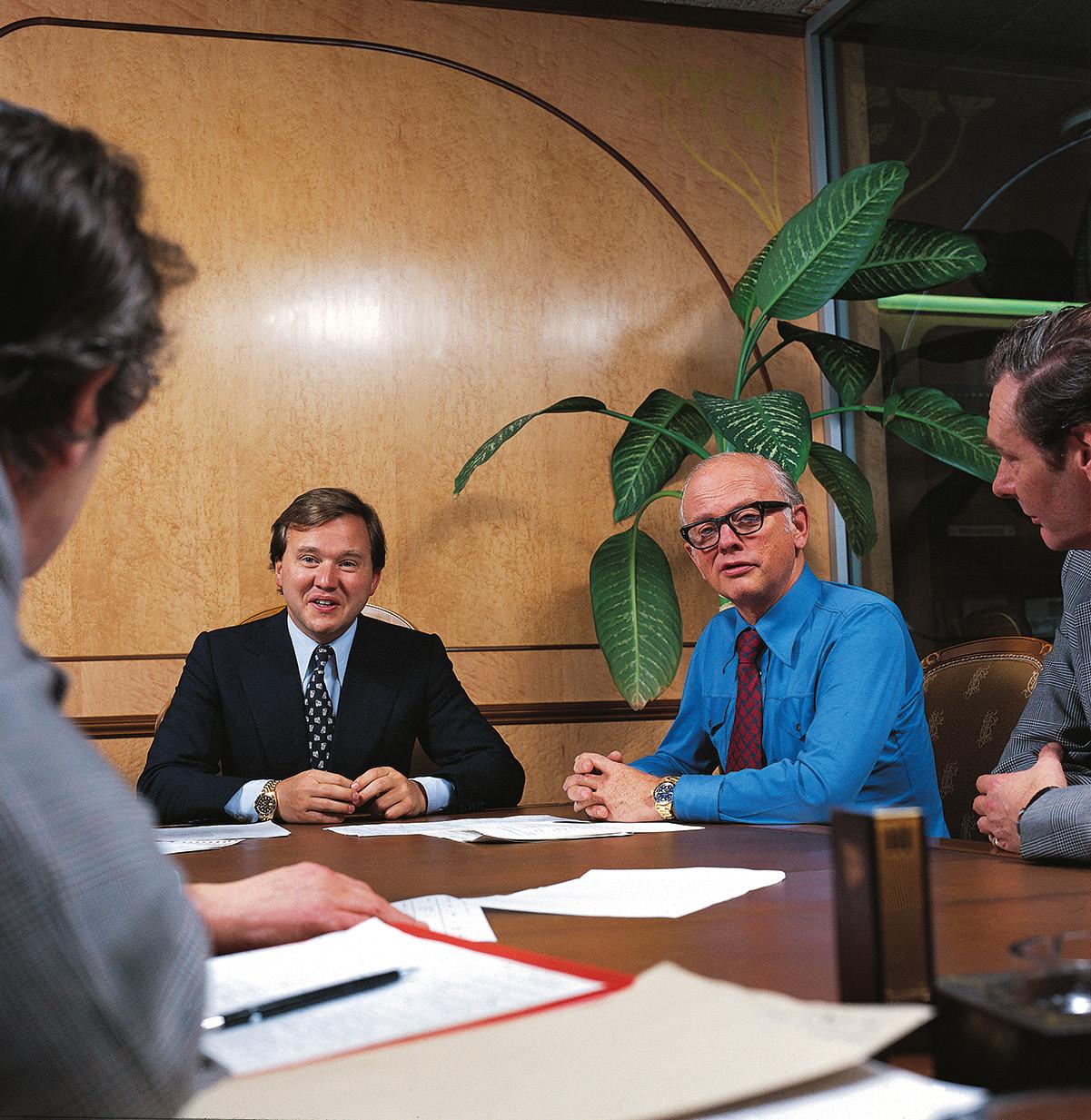
In 1975, Mr JCB passed the baton to his son, Anthony Bamford. Under his leadership the company embarked on a new era of global expansion and product diversification. In 1977 the wraps came off the Loadall telescopic handler, a machine which revolutionised the way loads were handled on both construction sites and on farms. The Loadall has gone on to be one of the most successful products in JCB’s history and today is the world's best selling telehandler.
JCB Transmissions was established in Wrexham in 1978, laying the foundations for future drivetrain development. The following year, JCB opened its first factory in India, a decision that would prove visionary. Today, India is JCB’s largest market in the world, with four factories in operation.
Royal recognition
That same period also saw the start of a series of visits from UK royalty and high-profile dignitaries. In 1977, HRH The Prince of Wales toured the Rocester factory. Prime Minister Margaret Thatcher
famously drove a JCB off the production line in 1987. HM The Queen visited in 1995 for JCB’s 50th anniversary celebrations and unveiled a replica of the original Uttoxeter garage. In 2009 HRH Prince William followed in his father’s footsteps when he toured the company’s headquarters and helped employees celebrate the production of the 750,000th machine.
By 1990 JCB was expanding into new fields with the launch of the JCB Fastrac tractor – the world’s first genuine highspeed, full suspension tractor. It cost £12 million to develop and took the world of agriculture by storm. It was also the year that JCB Chairman Anthony Bamford was knighted by HM The Queen and became Sir Anthony Bamford, an honour he said “recognised the efforts of the whole JCB team.”
On March 1st 2001, flags at JCB factories around the world flew at half-mast following news of the death of the company’s Founder Joseph Cyril Bamford CBE. Britain’s Financial Times newspaper said he was blessed with a rare combination of “engineering genius and marketing flair.”
1975 - Anthony Bamford takes over from his father Joseph Cyril Bamford.

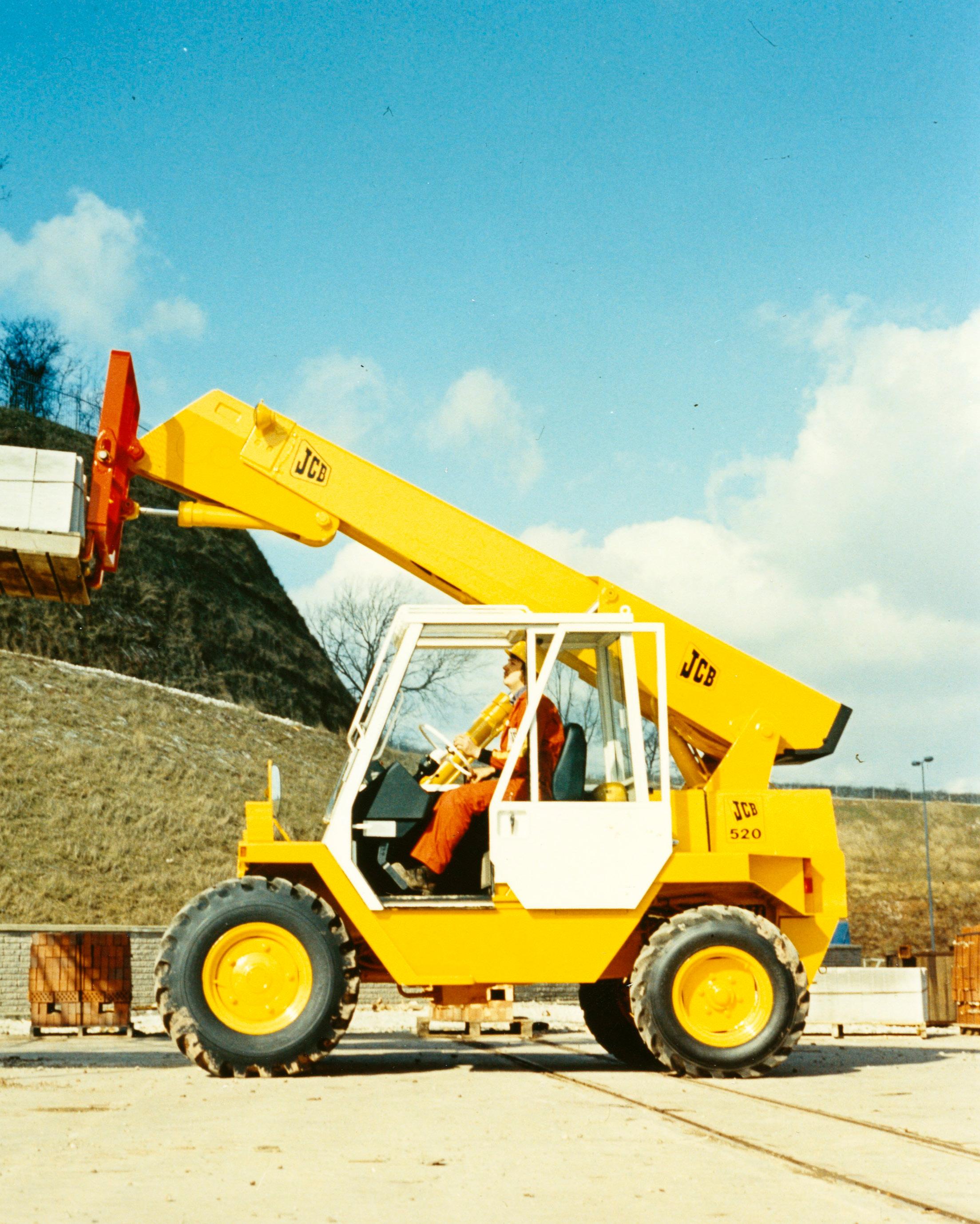
1977 - the launch of the 520 telescopic handler revolutionised the placing and handling of loads.
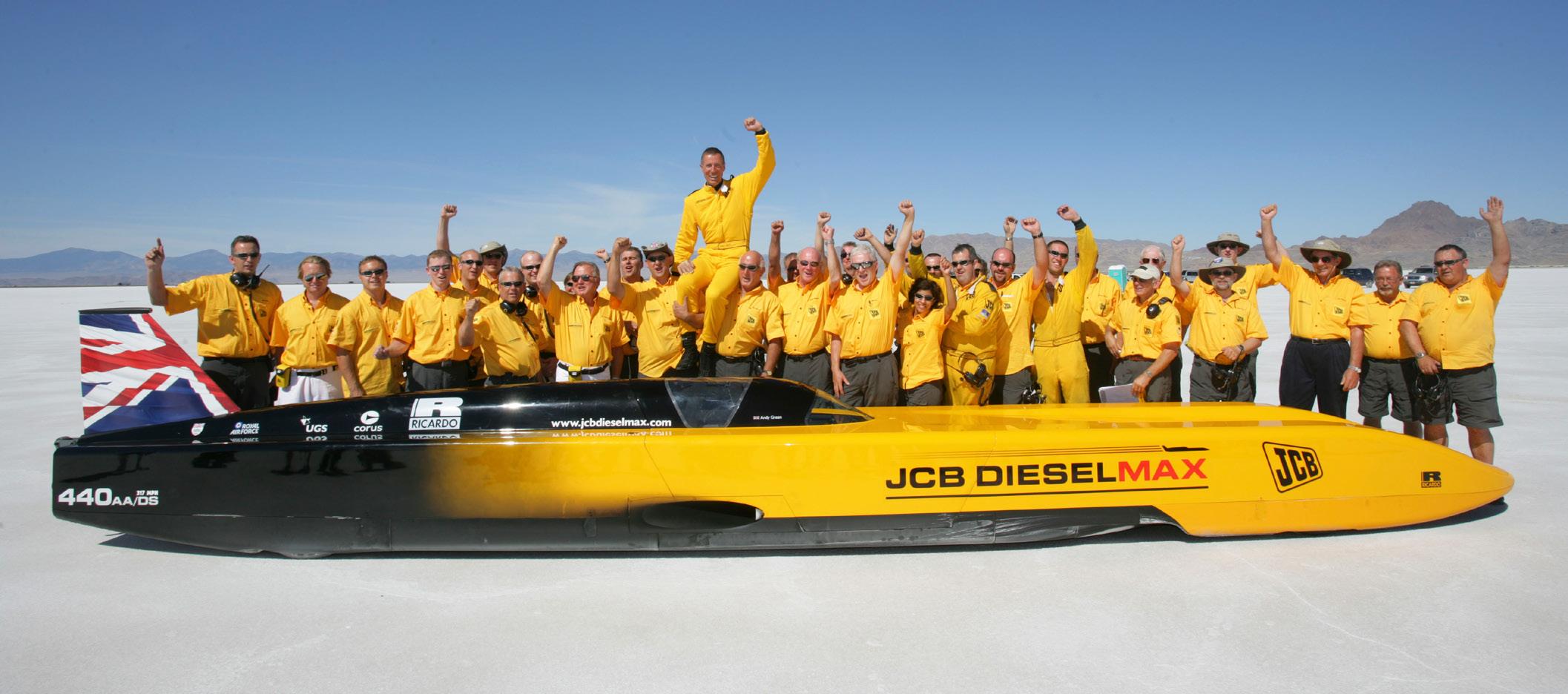
2006 - the JCB Dieselmax streamliner car secures the world diesel landspeed record.
“In 2006, TWO MODIFIED DIEsELMAx EnGInEs pOWERED THE JcB DIEsELMAx sTREAMLInER TO A DIEsEL LAnD spEED REcORD OF 350.092 MpH On THE BOnnEVILLE sALT FLATs In THE UsA. IT’s A WORLD REcORD THAT sTILL sTAnDs TODAY. ”
In 2004, JCB became the first company in the UK to begin diesel engine manufacture for 60 years using the most modern design and manufacturing facilities. A total of 487 engines were manufactured in the first 12 months of production.
External engine sales to the OEM off-highway application market began in 2005. Stage II / Tier 2 mechanical engines were sold to new customers in a variety of industry sectors, including power generation, water pumping, crushing, screening and marine. It was here that JCB Powertrain’s own history began.
From just three engines a day back in its first year of production, JCB Power Systems now produces around 500 a day, at its UK and Indian factories, becoming a world leader in the design, development and manufacture of diesel engines. Variants span from the earliest Stage II / Tier2 models through to today’s award-winning Stage V and Tier 4 technology and JCB is now pioneering development of hydrogen combustion engines.
In 2006, two modified Dieselmax engines powered the JCB Dieselmax Streamliner to a diesel land speed record of 350.092 mph on the Bonneville Salt Flats in the USA. It’s a world record that still stands today. It was Anthony Bamford's idea to attempt the speed record, born of his desire to
showcase the extreme performance of the JCB 444 diesel engine.
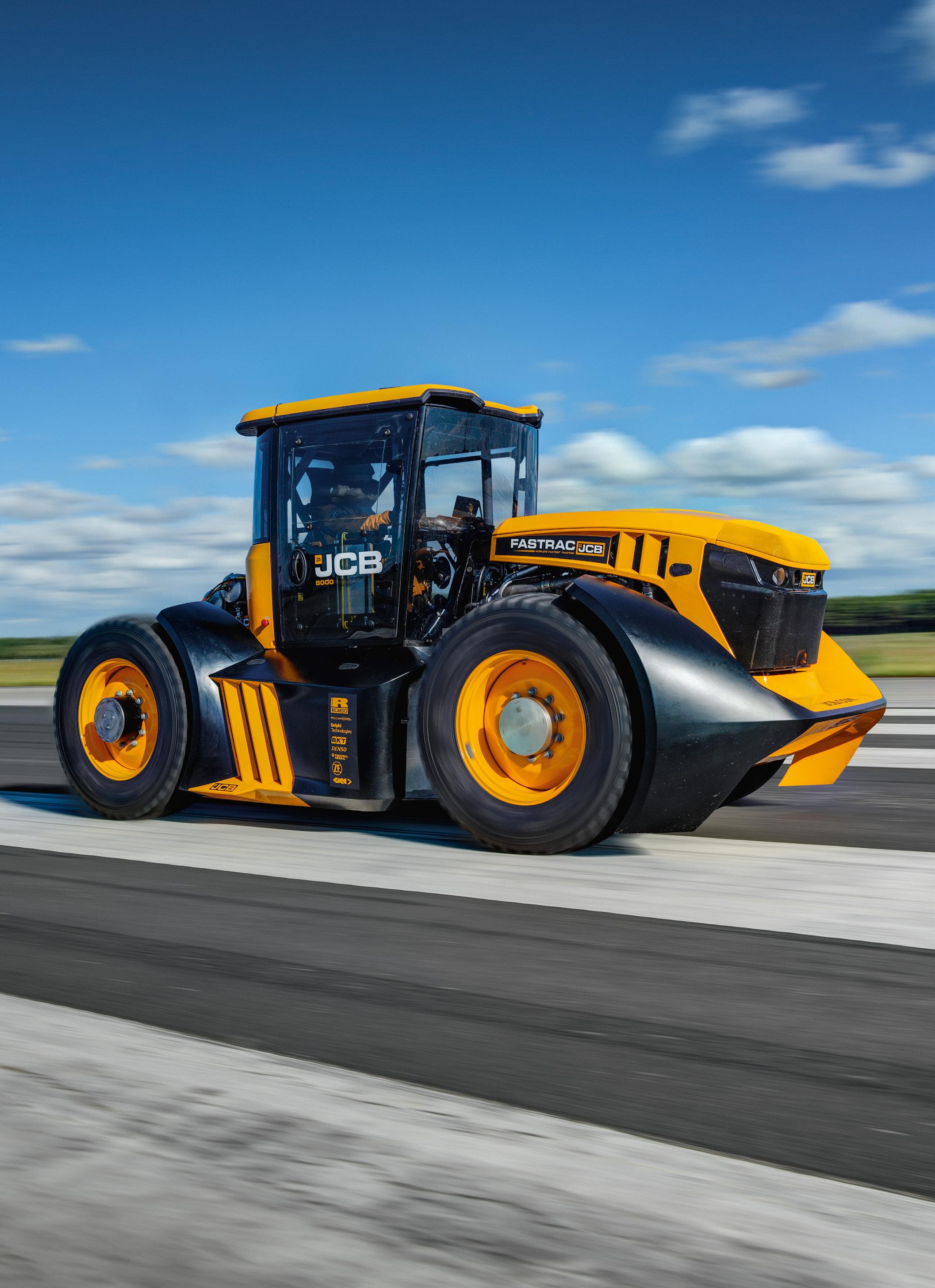
These exploits whetted the appetite for speed and 13 years later it was the turn of the six-cylinder Dieselmax engine to enter the record books. A derivative of the engine was pushed to extremes, powering a specially modified JCB Fastrac to success in a Guinness World Record attempt to become the World’s Fastest Tractor.
The unique JCB Fastrac hit a peak speed of 153.771 mph (247.470 km/h) on its way to an average speed of 135.191 mph (217.568 km/h). The Fastrac’s six-cylinder engine was equipped with a larger turbocharger and an electrically driven supercharger, along with water injection and charge air intercooling through ice tanks. This resulted in a peak output of 757 kW and more than 2,500 Nm (1,843 lb-ft) of torque.
While such power is certainly not standard for industrial specifications for this size of engine, it demonstrated the inherent strength and durability of the JCB Dieselmax design.
As engines evolved, so too did drivetrains. JCB Drivetrain Systems, building on the legacy of JCB Transmissions, has delivered millions of axles and transmissions tailored to the needs of OEMs and JCB machines. From the PS750 and PS1000 transmissions to the latest integrated driveline systems, the team in Wrexham, UK has remained at the forefront of drivetrain innovation.
“THE UnIQUE JcB FAsTRAc HIT A pEAK spEED OF 153.771 MpH (247.470 KM/H) On ITs WAY TO An AVERAGE spEED OF 135.191 MpH (217.568 KM/H). ”
Growth & expansion
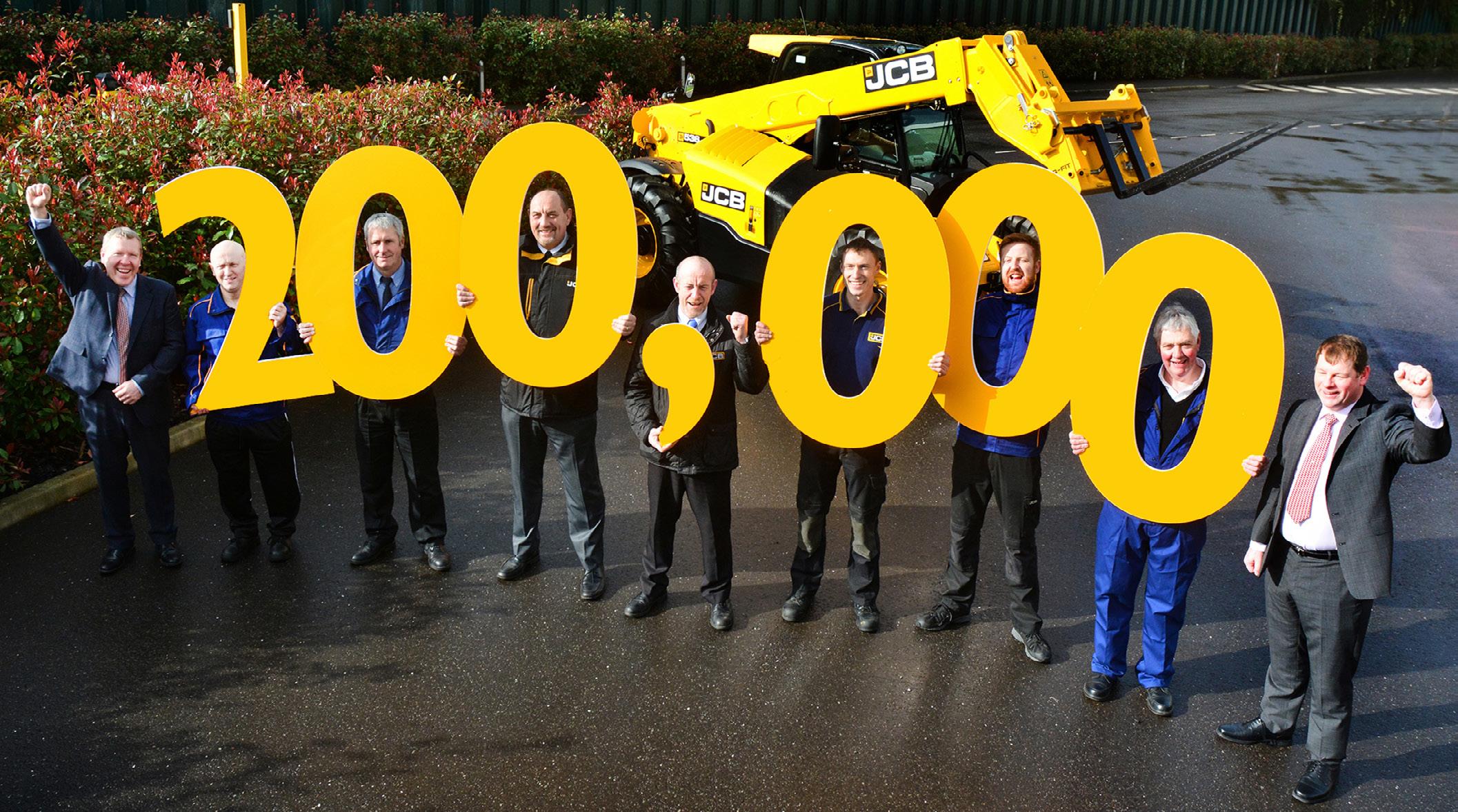
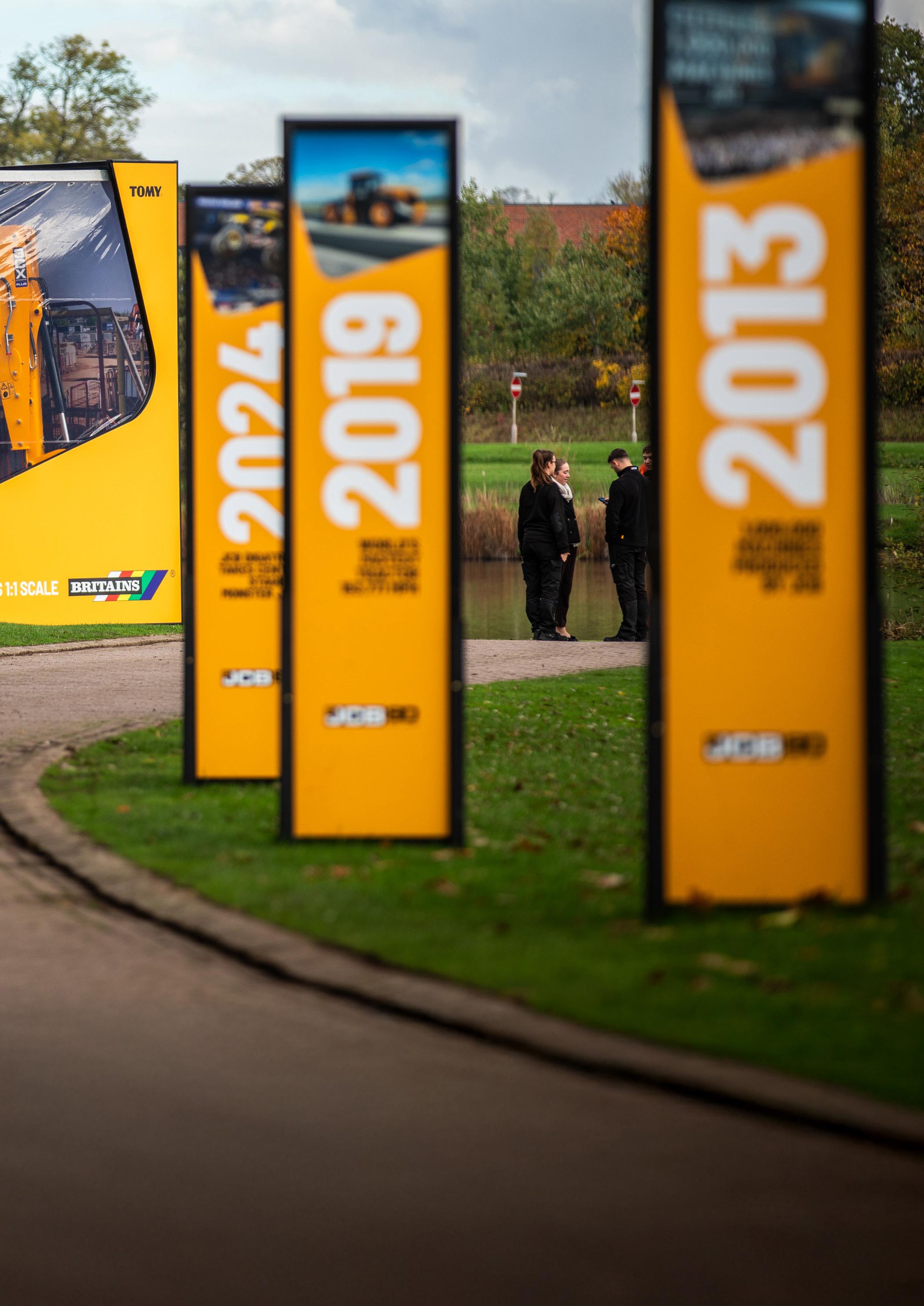
2016 was a year of milestones as the company celebrated the production of the 200,000th Loadall telescopic handler. It took almost 30 years for JCB to sell the first 100,000 Loadalls but it took less than 10 for the next 100,000 to be sold – testament to the growing importance of the product and JCB’s strength in this sector.
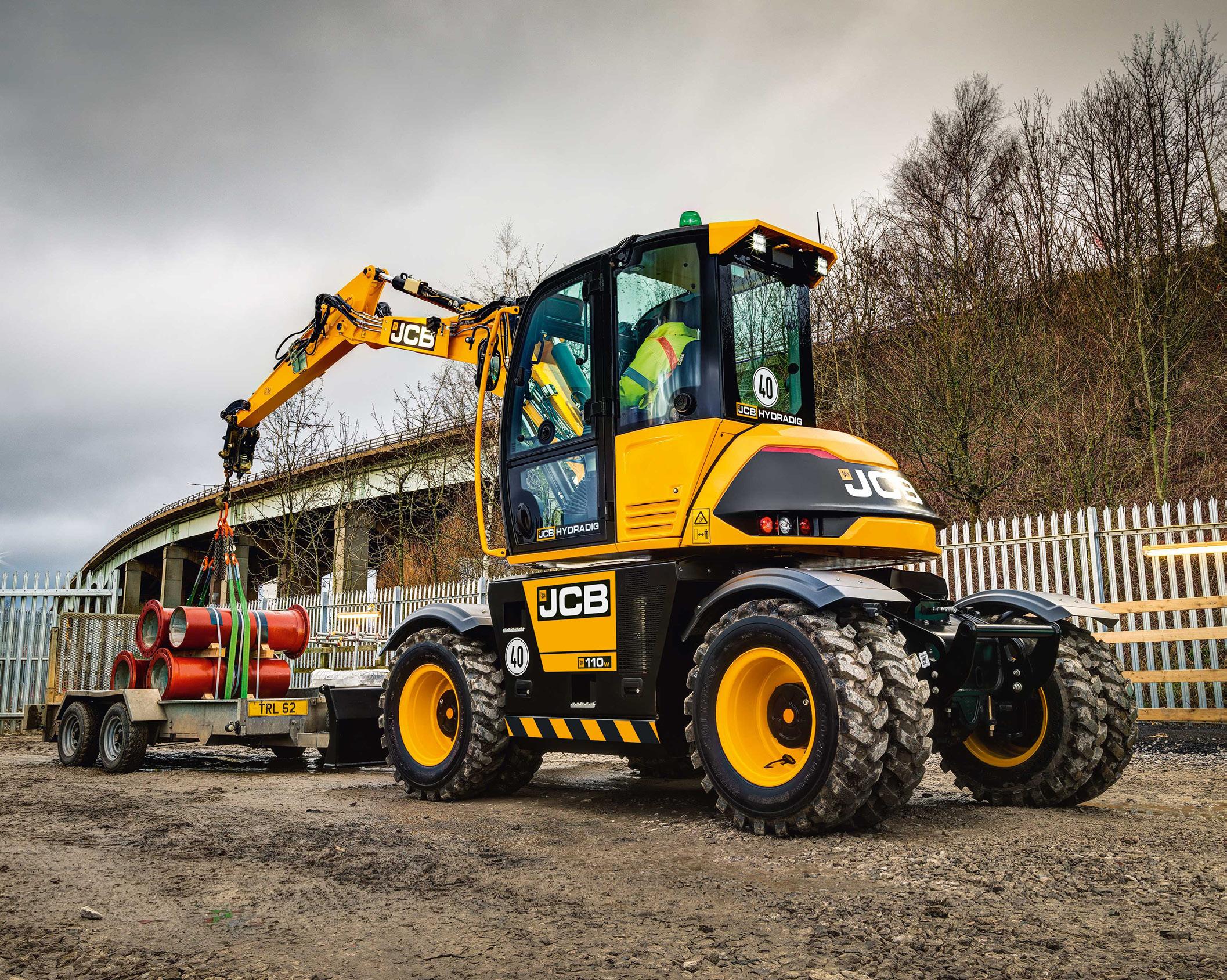
In this year JCB also marked the production on its 100,000th mini excavator and celebrated 25 years of production of the revolutionary Fastrac tractor. It was also the year when the new JCB Hydradig was launched to international acclaim.
JCB entered the powered access market in 2017 with a full range of platforms after two years of development.
Global expansion has remained a strategic focus for decades. New factories opened in North America, South America and Asia, including Savannah in the USA, São Paulo in Brazil and Jaipur in India. Each move reinforced the international footprint and gave JCB a truly global reach. The latest is a 1,000,000 ft2 factory under construction in San Antonio, Texas - which will open in 2026. It will joint other plants in the UK, India, Brazil, China and the USA.
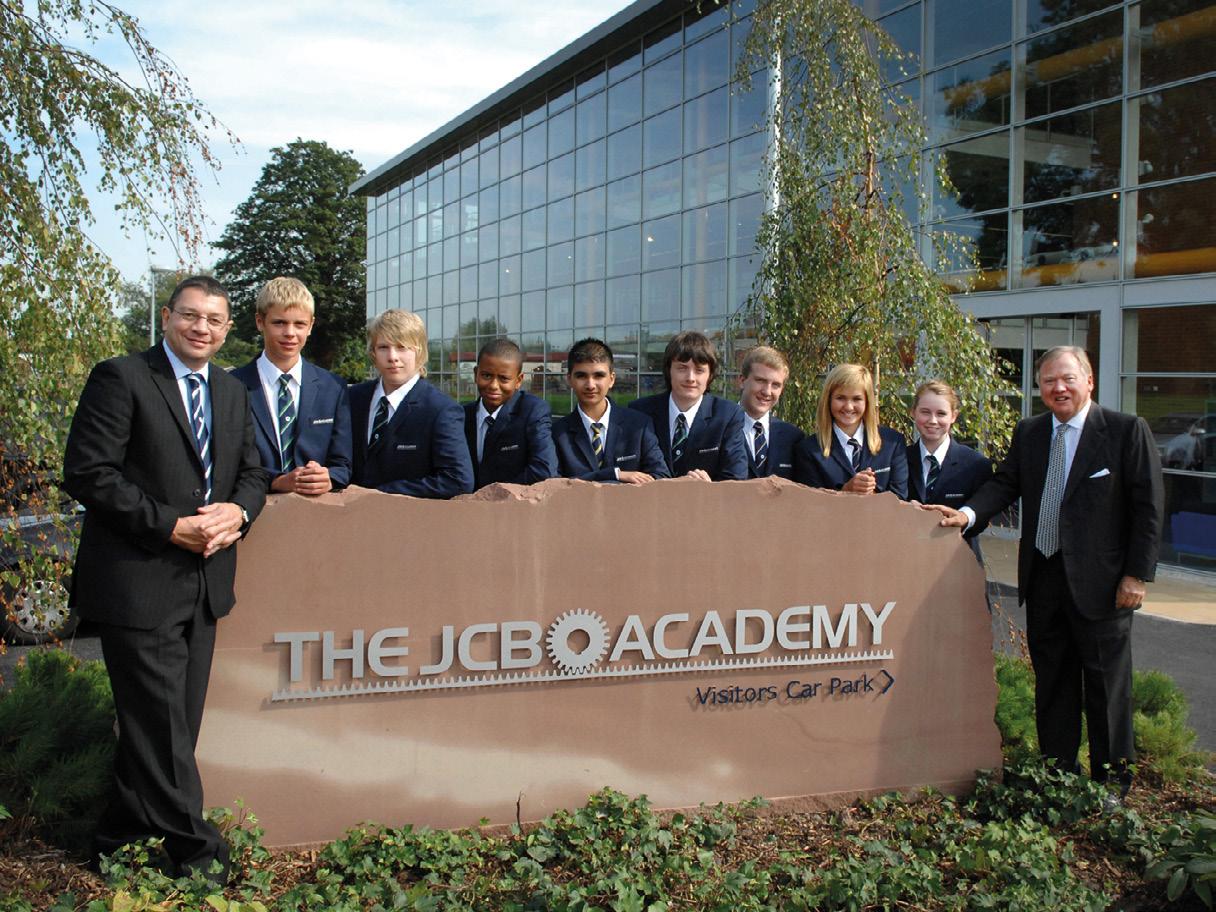
JCB’s commitment to growth and technology is matched by a focus on people and education. The JCB Academy opened in 2010 and has seen more than 3,500 students pass through its doors with many going on to work at JCB and across the wider industry.
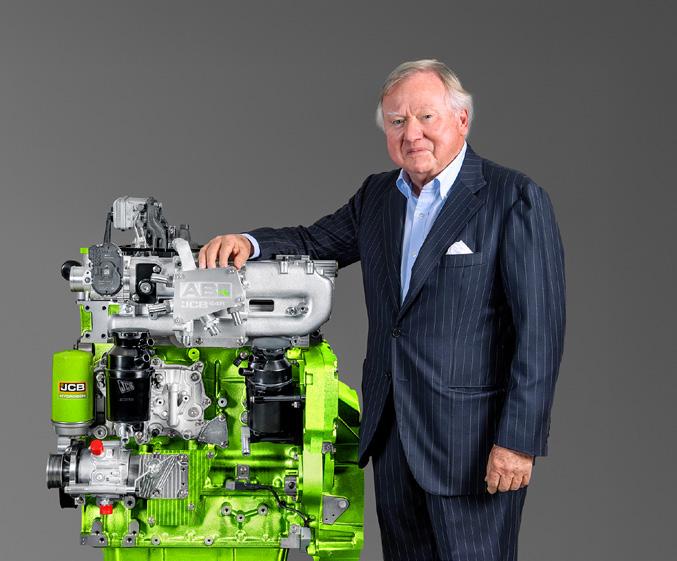
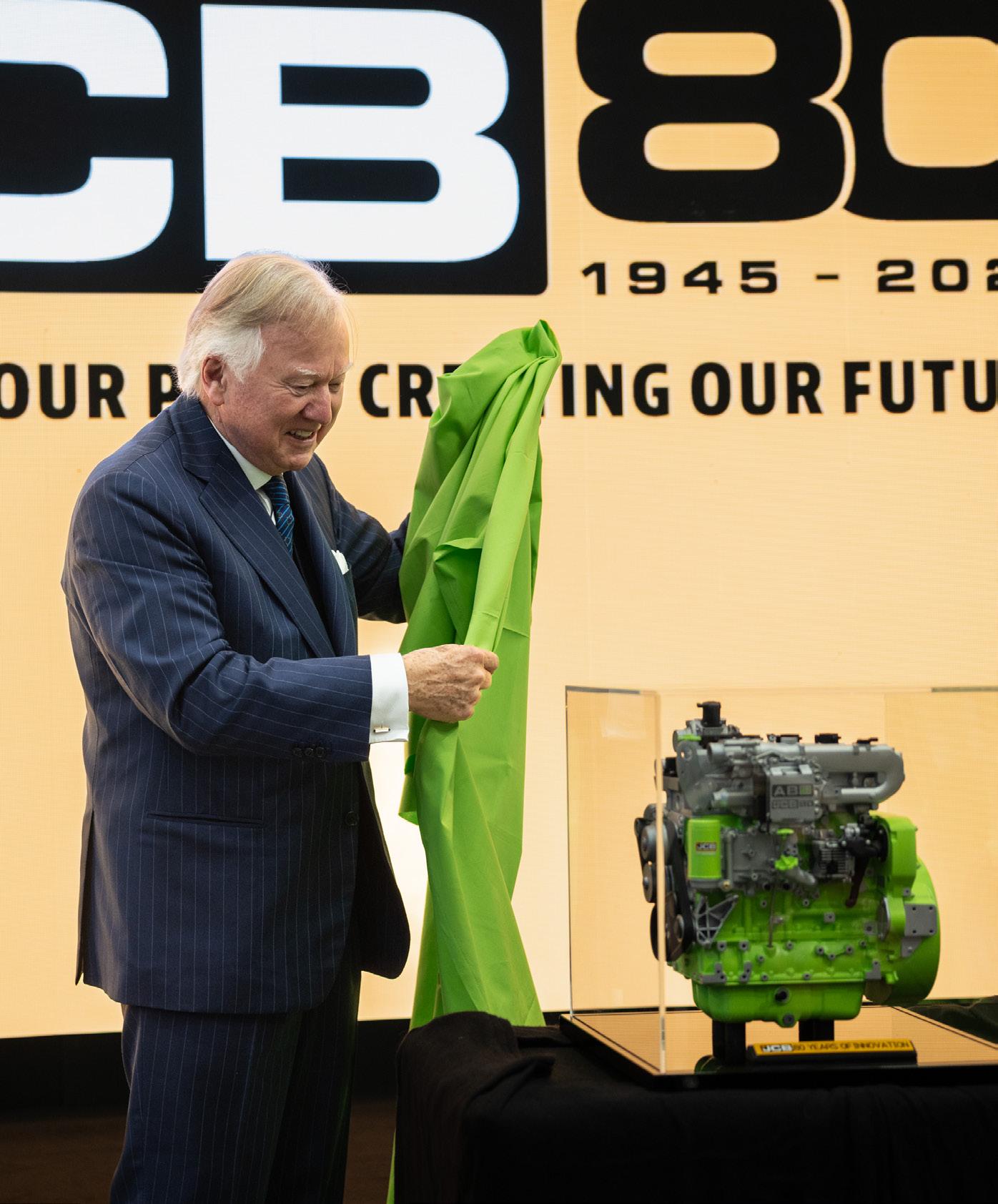
As the company’s 80th year approached, a new chapter was being written. Lord Bamford challenged his engineers to create a hydrogen internal combustion engine - and they delivered.
More than 150 evaluation engines have already been built, powering backhoes, Loadalls and generators. The JCB hydrogen engine received full EU type-approval in 2025, and the UK Government changed the law to allow hydrogen-fuelled machinery on public roads.
Alongside these hydrogen milestones, 2025 was a momentous year across the business. In January, the one millionth JCB backhoe rolled off the production line, powered by JCB’s one millionth engine. The unique 4CX model, decorated in graffiti art by renowned London-based artist
and illustrator Dave Smith known as 'Hatch', was presented to Lord Bamford.
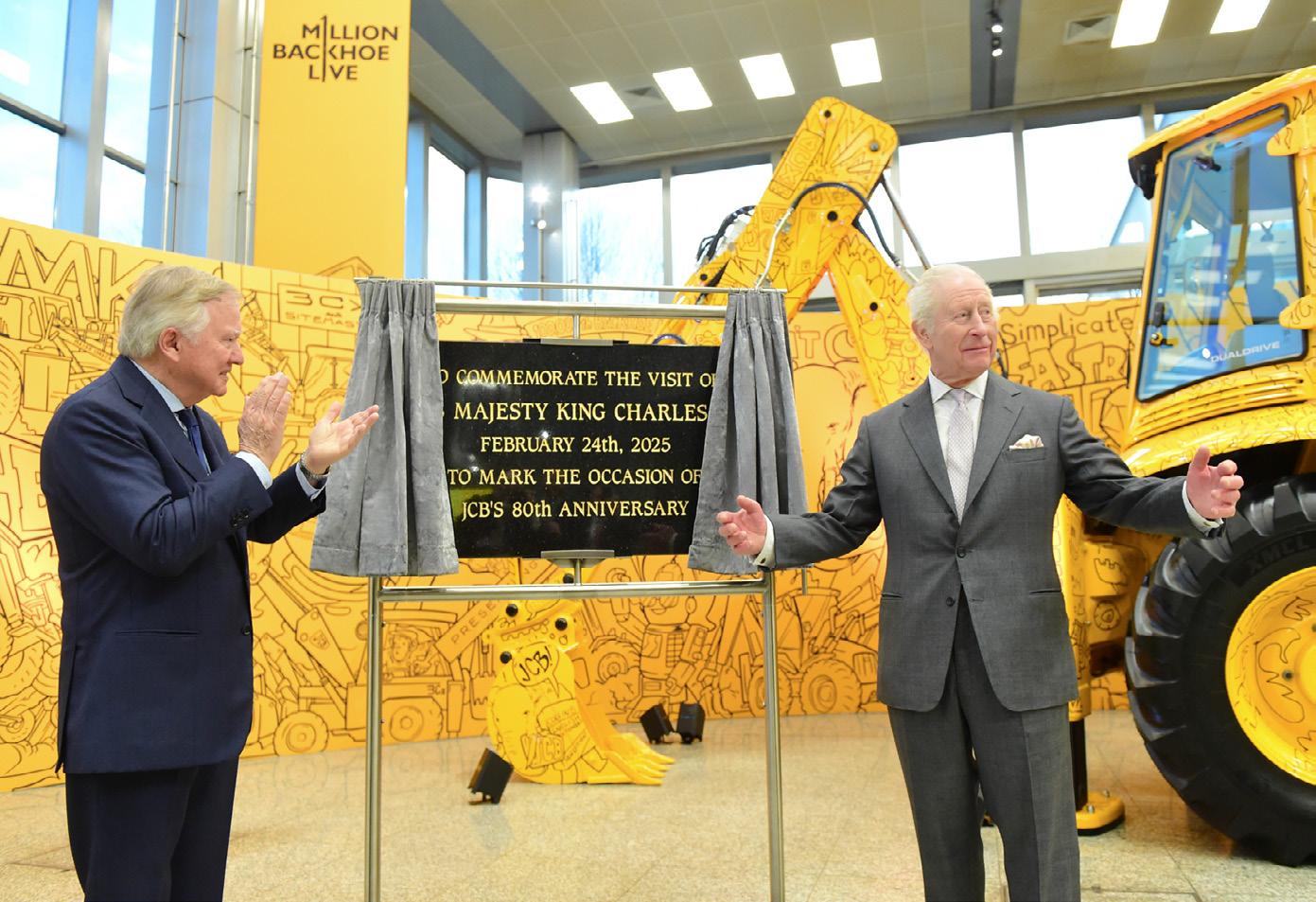
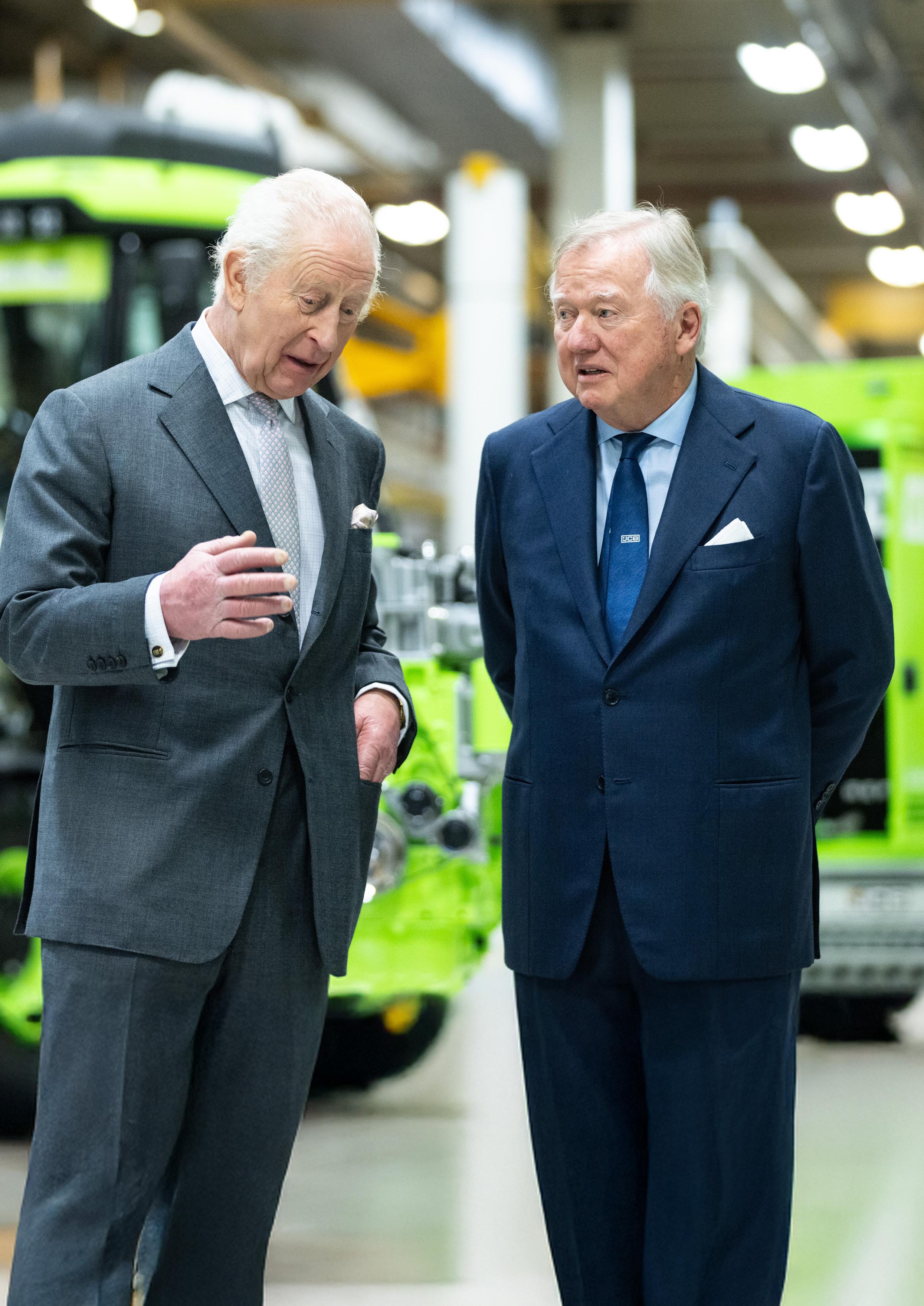
A proud history of royal visits continued when HM King Charles III visited JCB Headquarters in Rocester, Staffordshire to mark the occasion of JCB's 80th Anniversary year.
JCB Transmissions produced its 3,000,000th component and the year of celebrations culminated in October as the company marked the 80th birthday of Lord Bamford and 80 years of JCB - a truly historic moment in the history of British manufacturing.
From a single trailer built from wartime scrap to a global footprint with 22 factories, 19,000 employees and machines in over 150 countries, JCB continues to prove that innovation, ambition and growth are built into its DNA.
JCB Drivetrain Systems unveils three brand-new components for OEM customers.
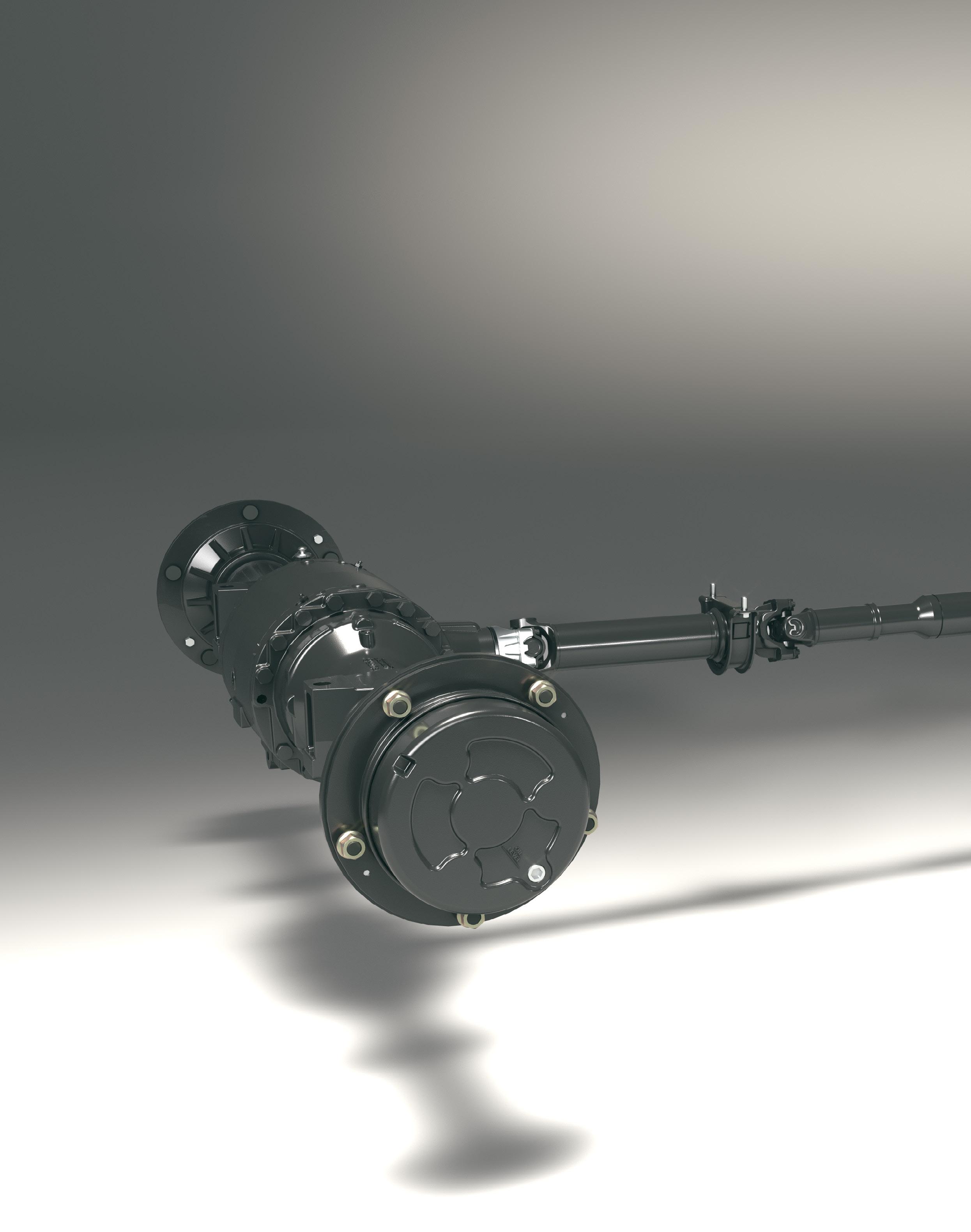
JCB’s innovative new DualTech VT 2-speed transmission shown in a complete driveline.

JCB Drivetrain Systems has launched a trio of game-changing products, now available to off-highway equipment manufacturers around the world as standalone components or as part of a fully integrated JCB powertrain system. Each is rooted in real-world machine development. Originally engineered to meet the needs of JCB’s own construction and agricultural products, they have been adapted and released for the wider OEM market bringing the performance, packaging and power delivery today's off-highway manufacturers rightly demand.
The new JCB DualTech VT is an innovative 2-speed hybrid transmission that gives operators the best of both hydrostatic and powershift technologies.
Taking inspiration from JCB’s market-leading DualTech Variable Transmission used in the company’s heavy-duty agricultural telescopic handlers, this new version has been reengineered into a more traditional inline layout. This makes it perfect for OEMs developing wheeled equipment with conventional drivetrain architecture.
The DualTech VT provides hydro -
static drive for speeds up to 30kph, giving ultra-precise low-speed control as needed in applications such as loading, handling and yard work. Then, with no interruption, it switches to direct powershift drive above 30kph, delivering efficient, fast travel on the road.
It’s the ideal solution for machines that need to combine slow-speed finesse with long-haul capability such as construction support vehicles, specialist agricultural kit or municipal fleet equipment. Innovative high quality componentry brought to OEMs needing optimum performance.
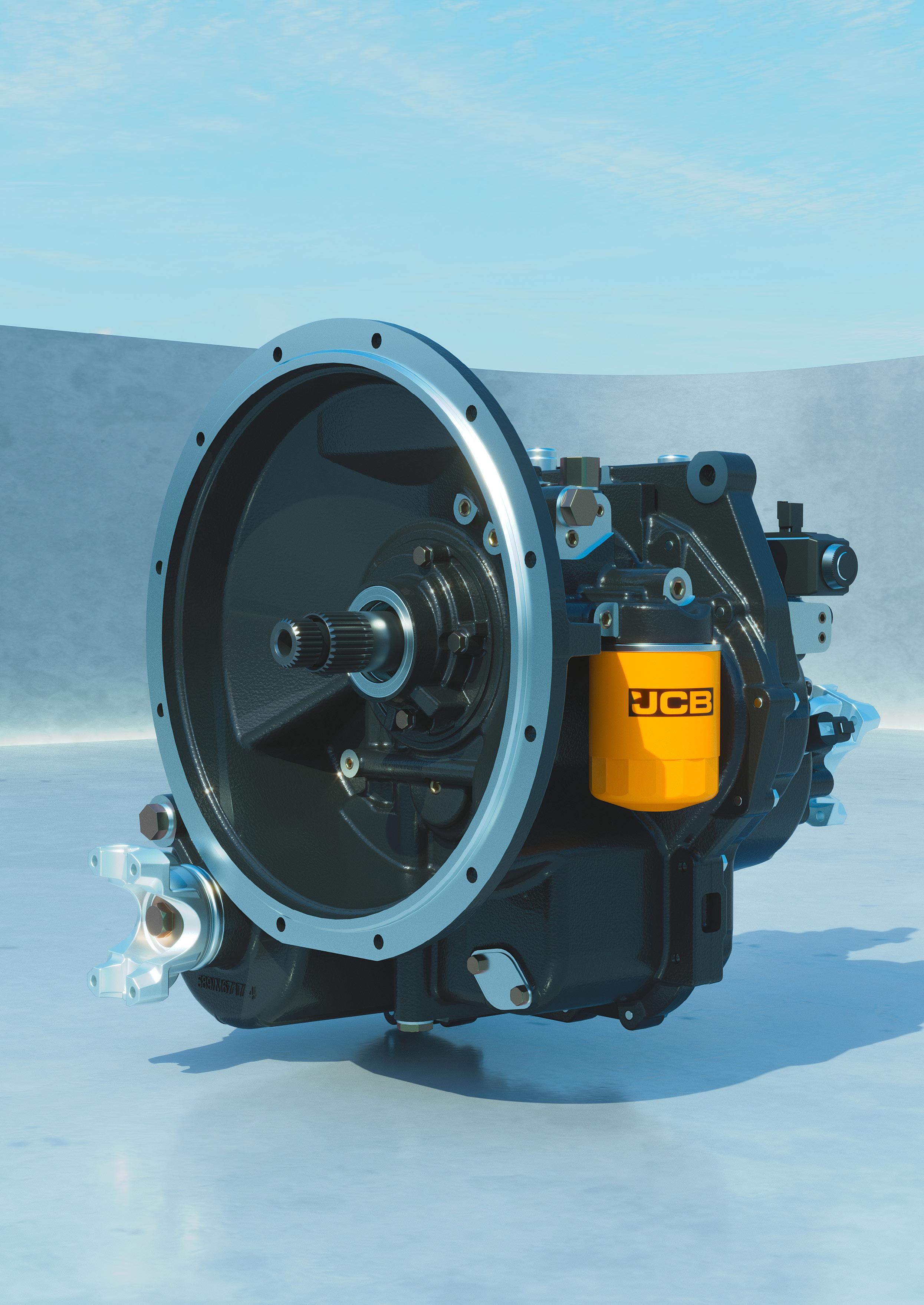
Replacing the long-serving SS600 and SS750, the new SS670 synchro shuttle transmission is designed for simple, lowcost driveline configurations but with big performance gains.
Developed initially for use in JCB’s site dumpers, backhoe loaders and rough-terrain forklifts, the SS670 uses enhanced synchronisers and upgraded shift mechanisms to deliver best-in-class manual gear shift operation and drivetrain efficiency in off-highway applications.
Crucially for OEMs, it brings across the proven efficiency gains and manufacturing methods used in JCB’s powershift transmission range. That means it’s not only smoother to operate, it’s also more robust, better integrated and easier to support.
With a straightforward mechanical layout and full support from the JCB Drivetrain Systems engineering team, it’s an ideal choice for manufacturers needing to achieve reliable performance without unnecessary complexity.
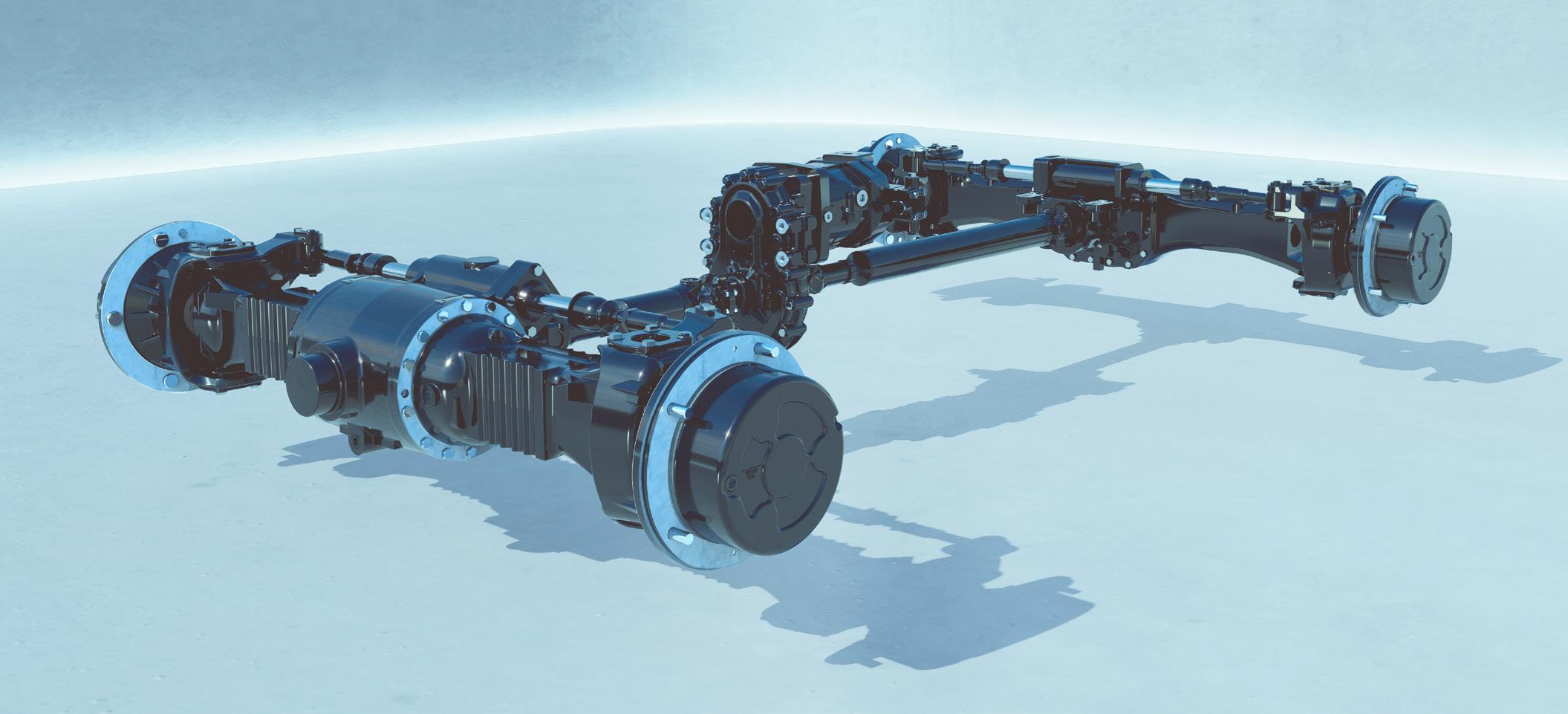
The TG172 is a new single-speed transfer box, created to support hydrostatic driveline applications through a hydraulic motor mounted directly to the input.
It joins the growing range of transfer box products from JCB, expanding the brand’s ability to offer complete driveline solutions - particularly where integration with rigid and steer axles is needed. The
compact, adaptable layout supports a variety of installation requirements, making it a strong fit for machines where space is tight and configuration flexibility is critical.
Designed initially for JCB’s compact telescopic handlers and wheeled excavators, the TG172 is also well suited to ground support equipment, agricultural implements and compact industrial machines.
Each of these new products underlines the unique strength of JCB Drivetrain Systems: offering component design based on real-world applications, developed by engineers who understand what machines and their operators truly need.
With low-cost simplicity, configurable driveline architecture or hybrid transmission excellence, there’s now a JCB drivetrain solution ready to fit your platform and take your machines to the next level.
OEMs can benefit from even greater synergy when choosing not just individual components but a fully integrated JCB Powertrain system within the 55-212kW range. A unique combination for mobile applications where engine, transmission, axles and more are all built by the same manufacturer, guaranteeing total performance matching and seamless integration.
And whether specifying a standalone component of a full powertrain system, each element is backed by the full support of JCB's engineering expertise and global distributor network
Shown here as part of a complete drivetrain, JCB's TG172 single-speed transfer box has been introduced to support hydrostatic driveline applications
JCB's new SS670 synchroshuttle transmission replaces the long serving SS600 and SS750 variants.
JCB’s first hydrogen-powered generator hits the market, showing the potential for clean power without compromise.
“ THIs Is A HUGE sTEp FORWARD FOR cLEAn pOWER In cOnsTRUcTIOn”
World-class innovation has just become a commercial reality.
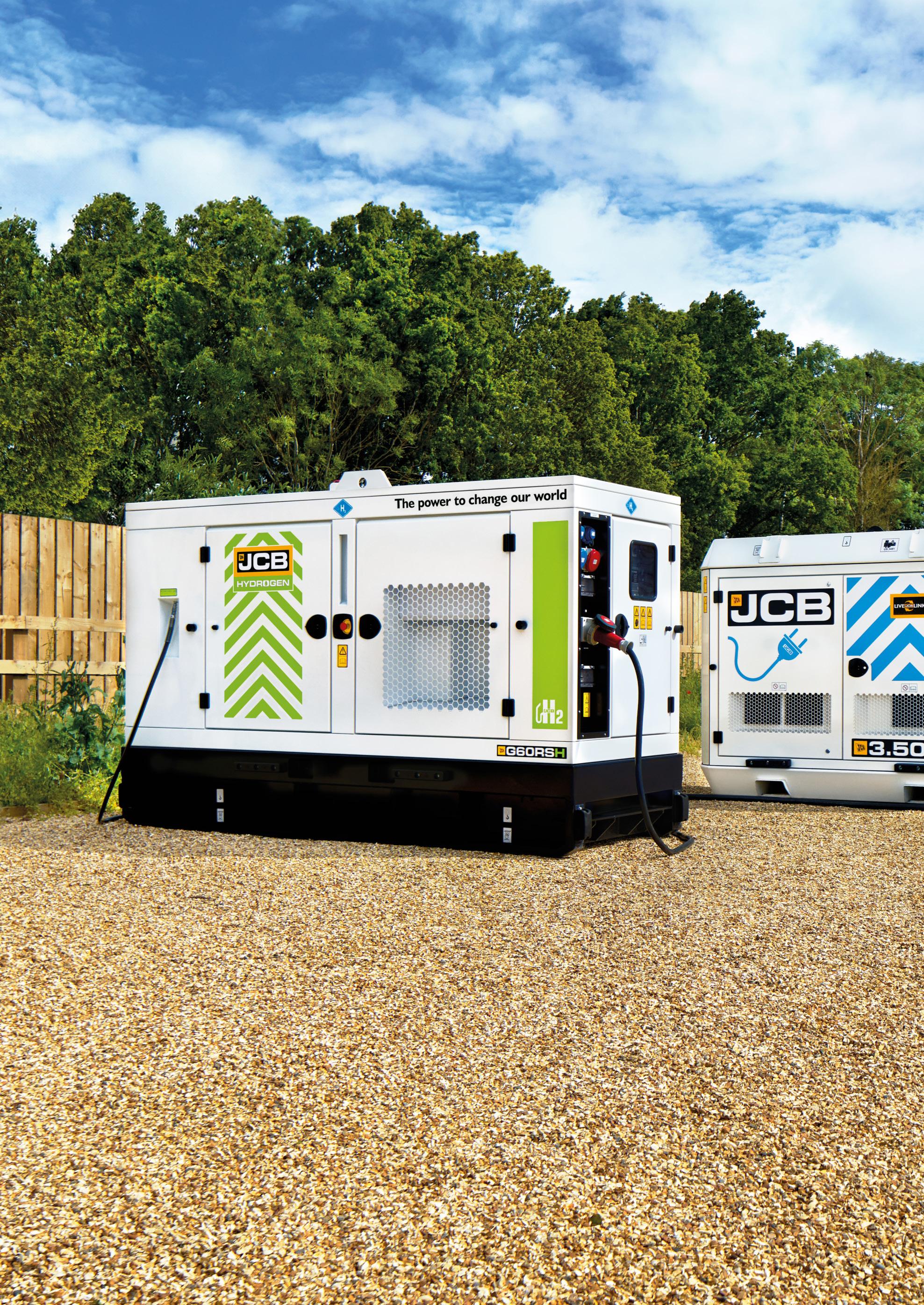
The G60RS H, JCB’s first hydrogen-powered generator, is now available on the market for customers looking to decarbonise their operations without sacrificing performance.
It’s a landmark product. Not only is it JCB’s first hydrogen-powered machine available to buy, it’s also a glimpse into the future of zero carbon worksites. It highlights how the JCB hydrogen generator delivers the same power, performance,
and efficiency as its diesel equivalent – but without the CO�.
And with JCB Powertrain already providing its diesel engines to multiple OEM genset manufacturers, there is huge potential scope for the new hydrogen engine to make a major impact in the power generation sector.
At the heart of the landmark G60RS H is JCB’s pioneering hydrogen combustion engine, designed and built in the UK as
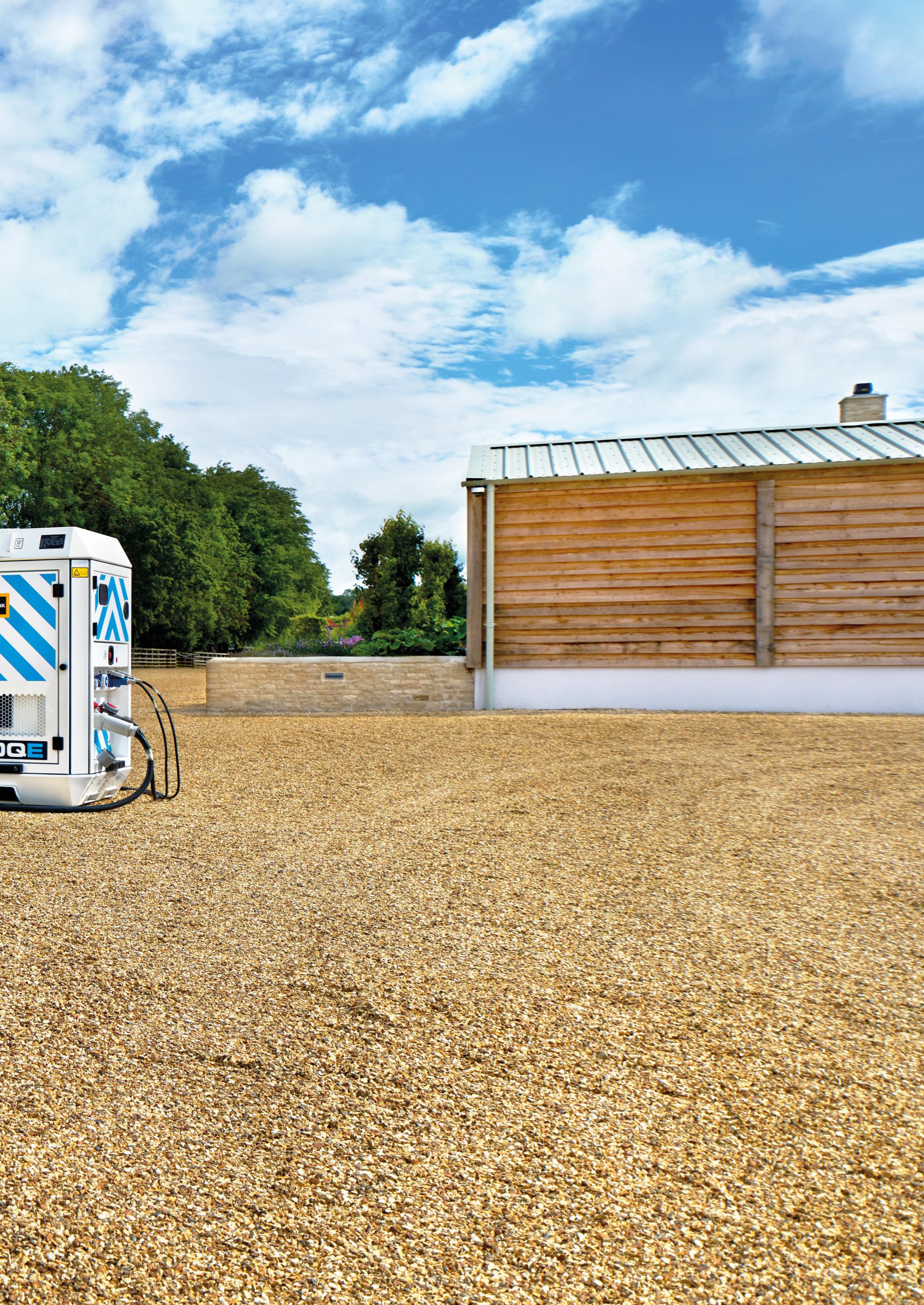
part of a £100 million programme to provide practical, zero-carbon alternatives to diesel. The hydrogen generator works in tandem with JCB’s three-phase Powerpack to effectively create on-site ‘microgrids’ utilising both battery-electric and hydrogen combustion technology.
This isn’t just a concept. The system is designed for real worksite demands. With energy supplied to the Powerpack from renewable sources, the generator, powered by hydrogen, effectively becomes a battery charger, only running for short
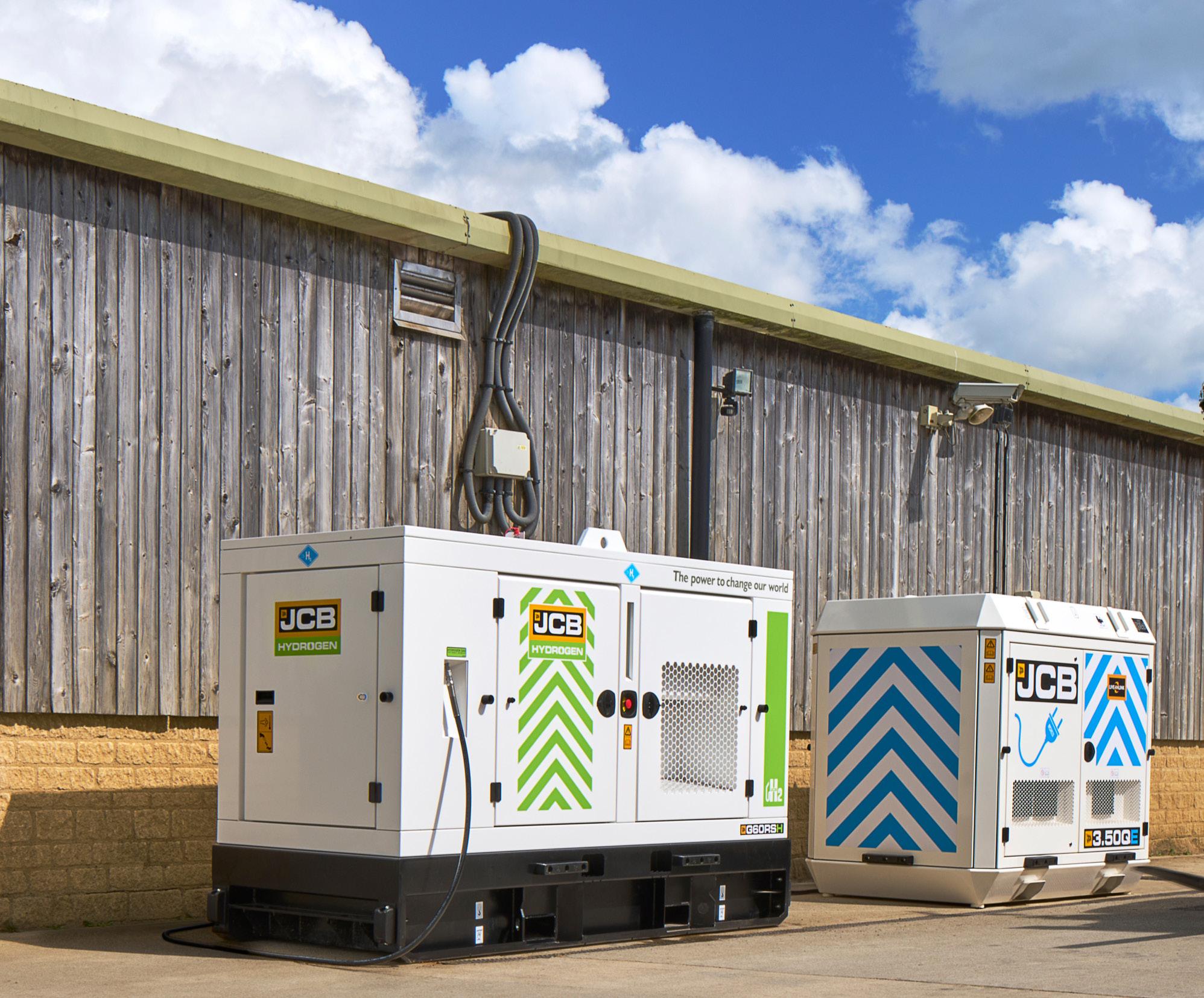
periods when the battery needs topping up, or at peak load points. This reduces fuel consumption and offers long periods of silent or quiet hours operation.
Tom Beamish, Advanced Projects Deployment Manager at JCB, explained the product’s potential: “This is a huge step forward for clean power in construction. The G60RS H proves that hydrogen combustion engines can deliver the same performance on-site as our customers expect from their traditional systems, while cutting carbon emissions.
“One of the most exciting aspects is its versatility. It can operate anywhere a diesel genset would, but without the carbon footprint. It means worksites can move away from fossil fuels without needing to compromise. It’s the future of worksite power.”
That future includes power for everything from lighting towers and welfare units to full site operations. It can be operated, installed and maintained just like a diesel genset - making it easy for customers to
integrate hydrogen power without making major changes.
These generators are proof that JCB’s hydrogen combustion engine is ready to perform. Hydrogen powered generators represent a real opportunity to rethink how work sites are powered, offering a cost-effective, zero-carbon, off-grid energy source. And with JCB's hydrogen engine soon available to global OEM genset manufacturers, that opportunity starts now. When it comes to cleaner power, JCB is leading the charge.
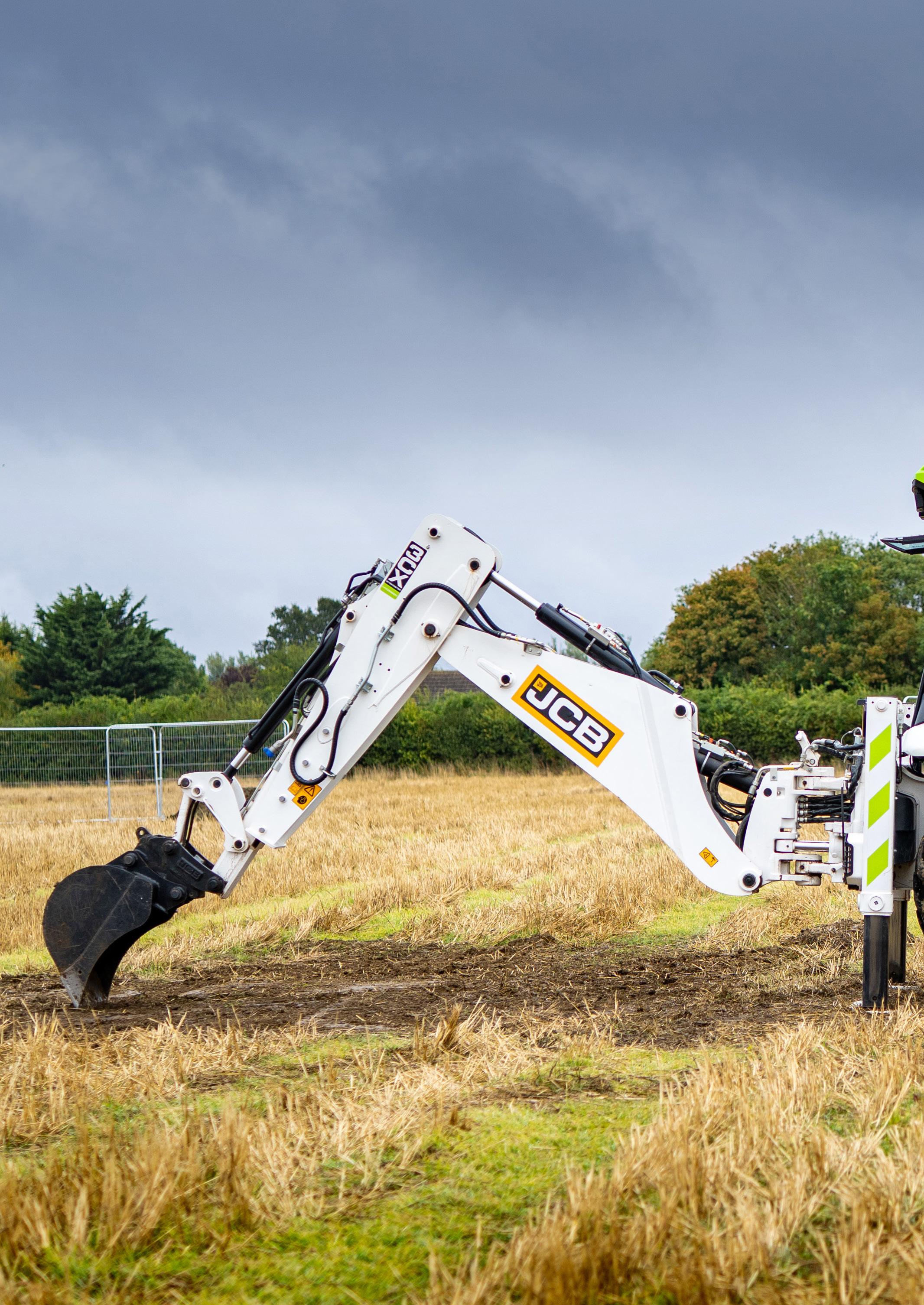
Hydrogen momentum builds with certification, legislation and real-world deployment.
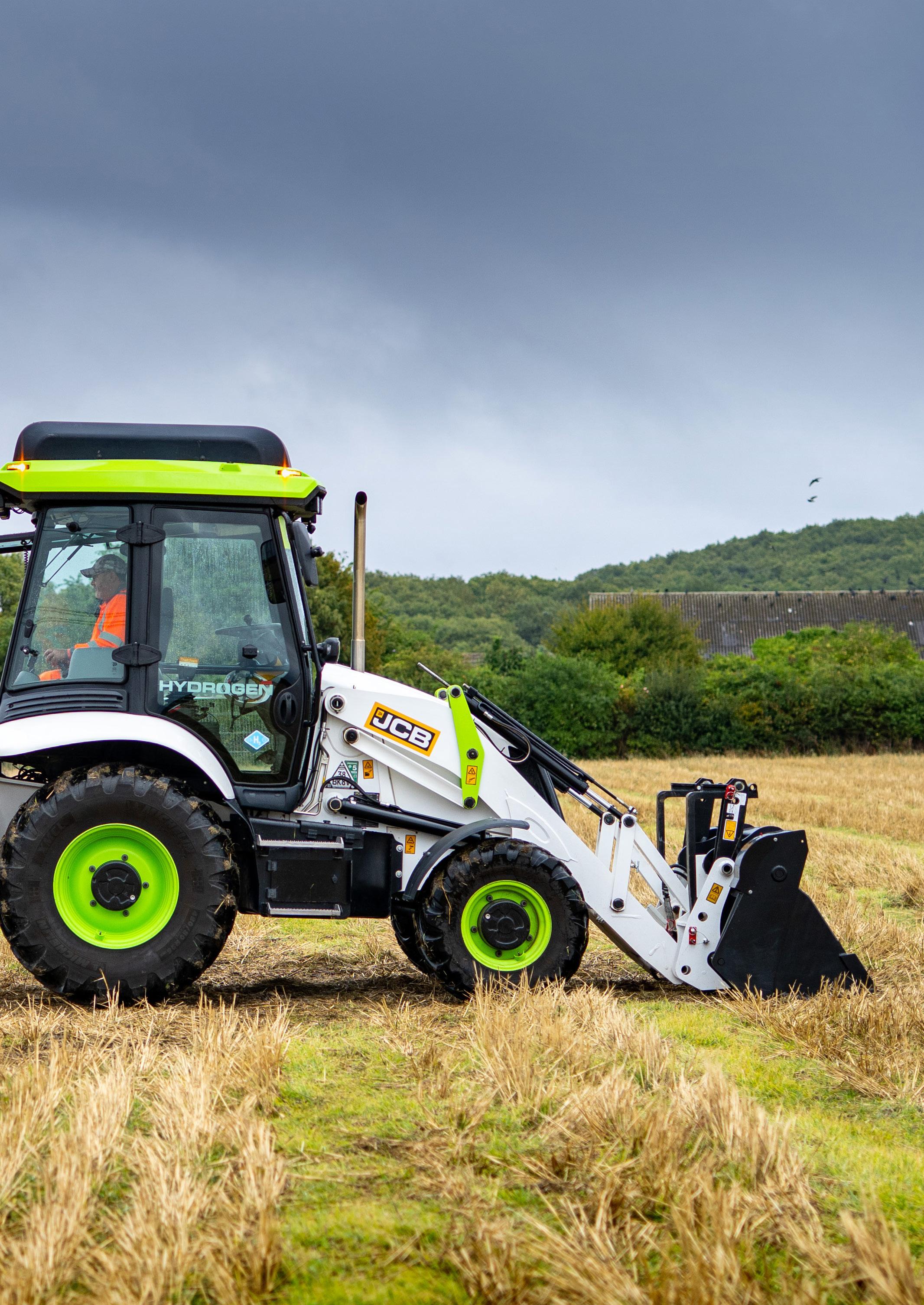
From full EU type-approval to changes in UK road legislation and a live site trial on one of Britain’s most ambitious infrastructure projects, hydrogen is no longer just a future technology – it is proving its value today.
In April 2025, the UK Government made history by granting hydrogen-powered construction and agricultural machinery legal access to UK roads. Prior to this, such machines were restricted despite allowances for hydrogen-powered cars, buses and trucks.
The decision was formalised in a parliamentary statutory instrument amending the Road Vehicles (Construction and Use) Regulations 1986. JCB hailed the move as a breakthrough moment, enabling its hydrogen-powered equipment to travel between sites and farms without needing diesel transporters or low loaders.
Lord Bamford said: “It is truly a historic day for JCB and a milestone moment for the use of hydrogen as a zero-carbon fuel in the construction and agricultural machinery industries.”
Lilian Greenwood MP, then Minister for the Future of Roads, said: “We’re supporting the UK’s Plan for Change by working closely with brilliant British companies
like JCB to harness the opportunities of the net zero transition, driving innovation and securing jobs.”
The following month, in May, JCB became the first construction equipment manufacturer to receive full EU type-approval for a hydrogen combustion engine. Certified to EU Stage V emissions standards under Regulation (EU) 2016/1628, the approval allows JCB’s hydrogen engines to be used across all 27 EU member states and in other territories recognising EU type-approval.
Lord Bamford said: “This is another very significant moment for JCB’s hydrogen programme. It was not so long ago that some said it was ‘game over’ for the internal combustion engine in Europe. JCB securing full EU type-approval confirms that the combustion engine does indeed have a promising future in pursuit of a net zero world if hydrogen, a zero CO� fuel, is used instead of fossil fuels.”
This certification marks a clear shift from early-stage innovation to a commercially viable product. With more than 150 prototype engines already built and evaluated, JCB’s hydrogen engine is ready to support the next phase of industrial decarbonisation.
“IT Is TRULY A HIsTORIc DAY FOR JcB AnD A MILEsTOnE MOMEnT FOR THE UsE OF HYDROGEn As A zERO -cARBOn FUEL In THE cOnsTRUcTIOn AnD AGRIcULTURAL MAcHInERY InDUsTRIEs.”
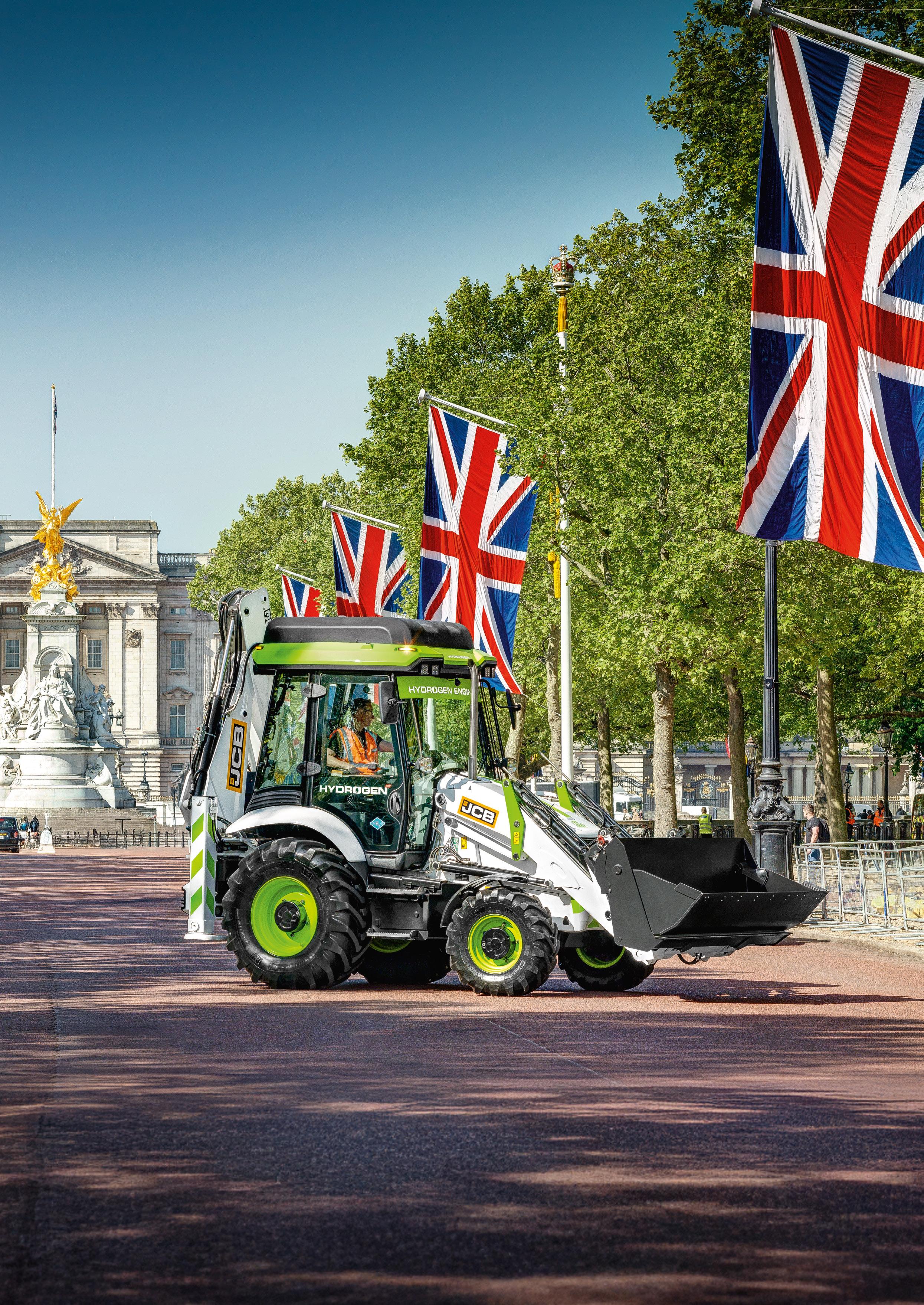
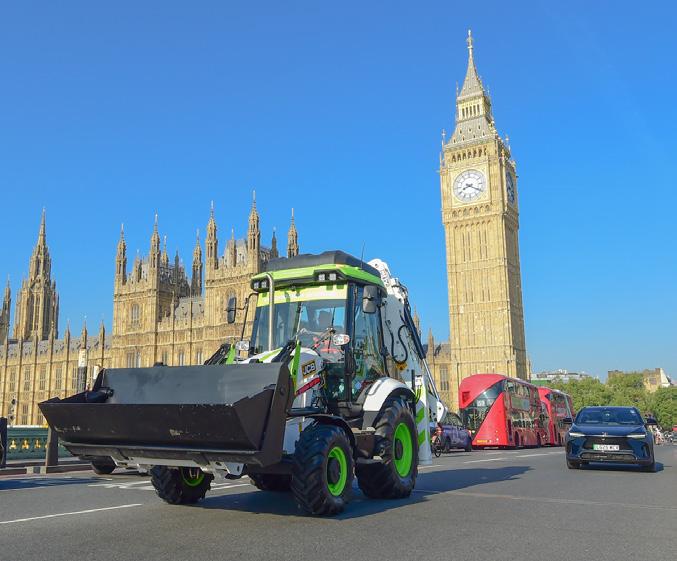
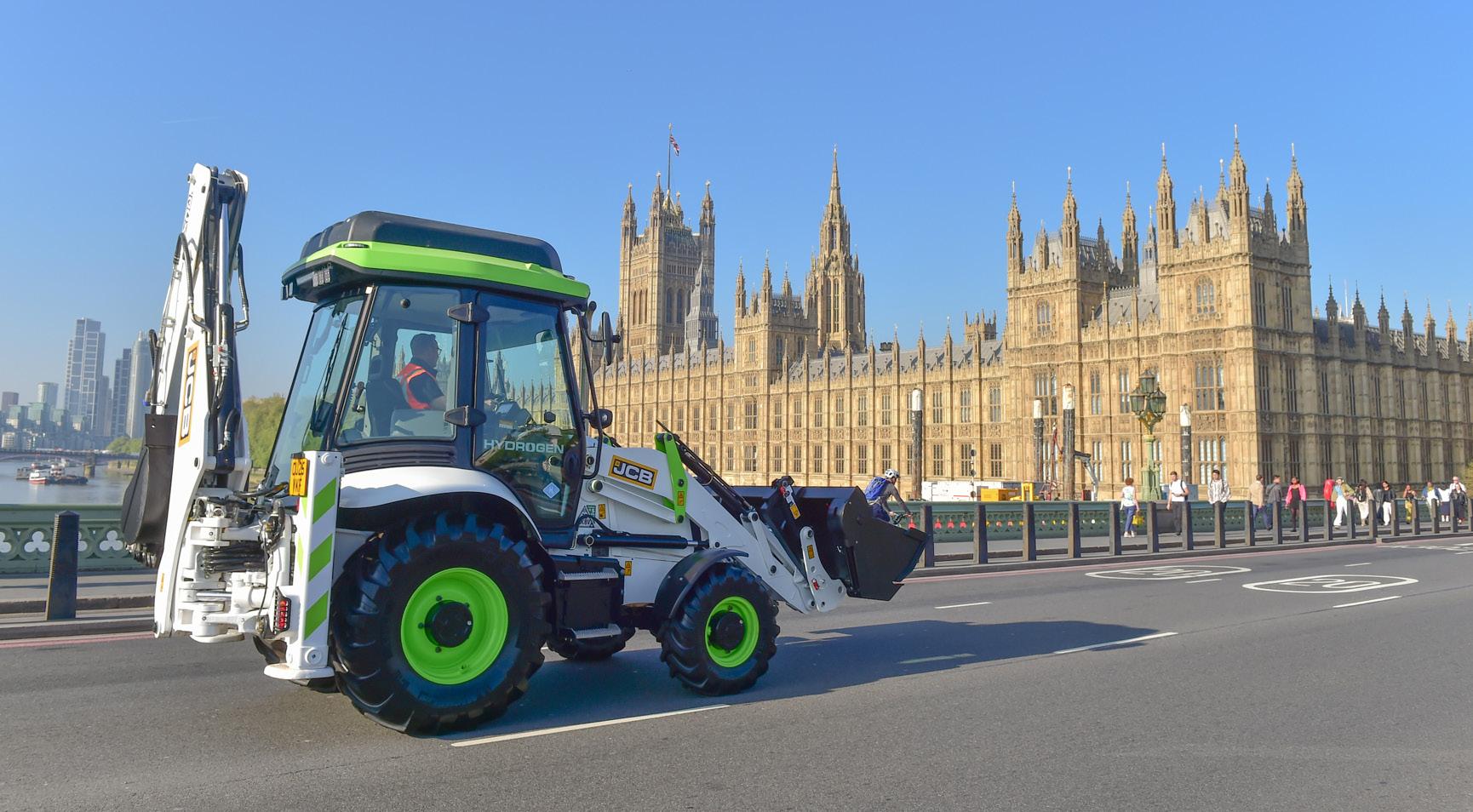
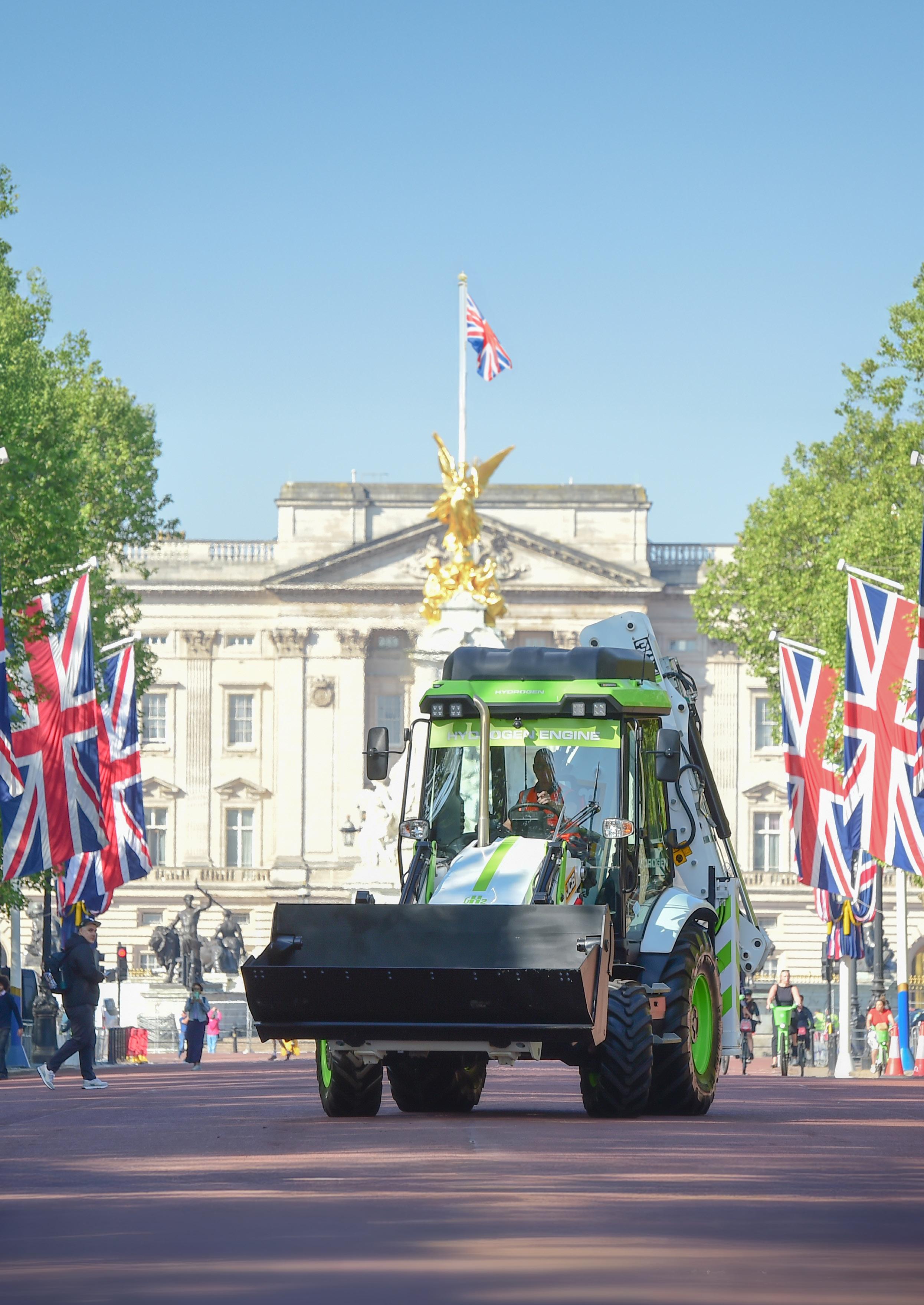
History is made as the UK Government changes the law to allow hydrogen diggers to drive on UK roads. A hydrogen backhoe is pictured driving over Westminster Bridge past the Houses of Parliament in celebration of the historic moment.
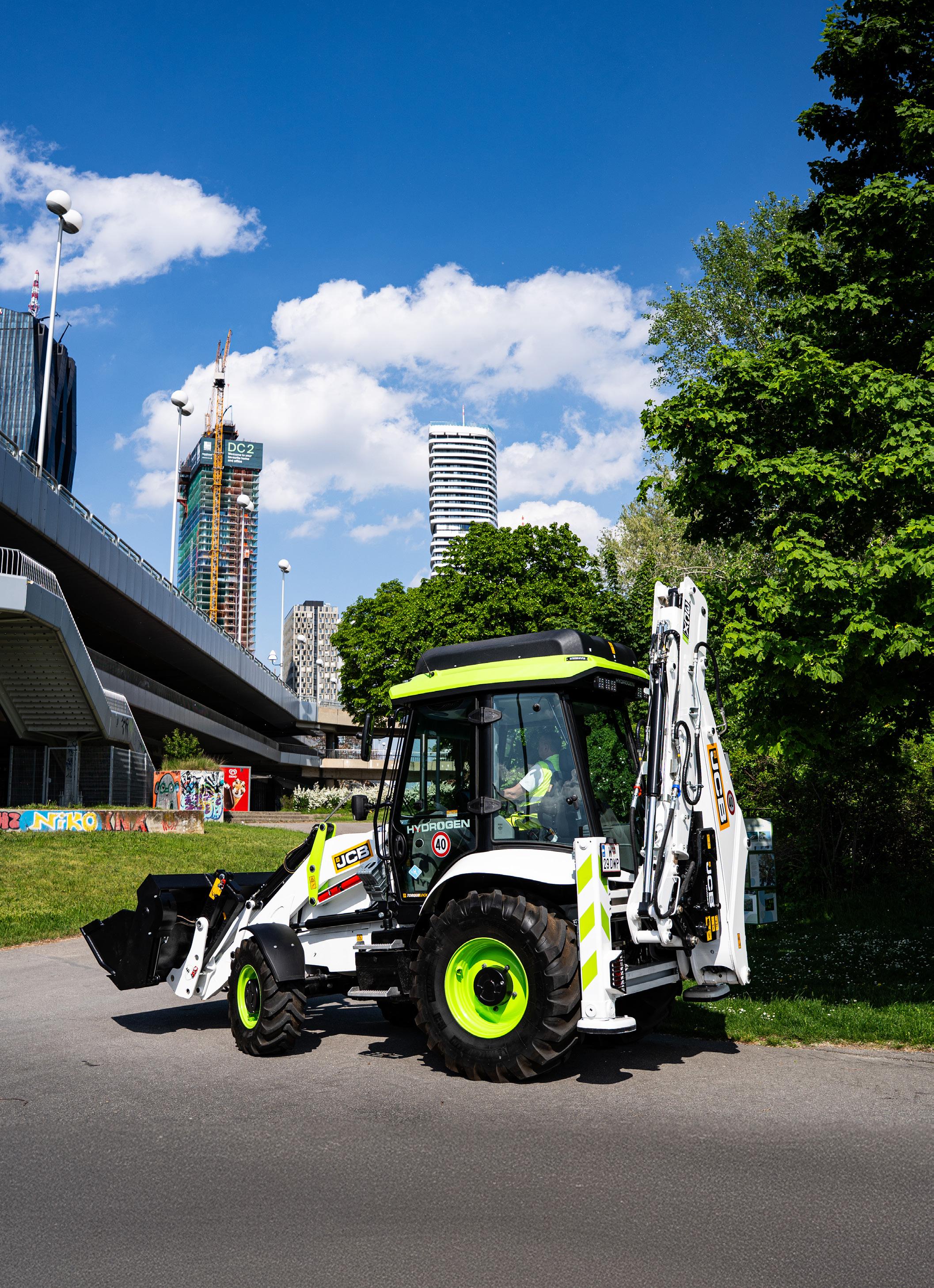
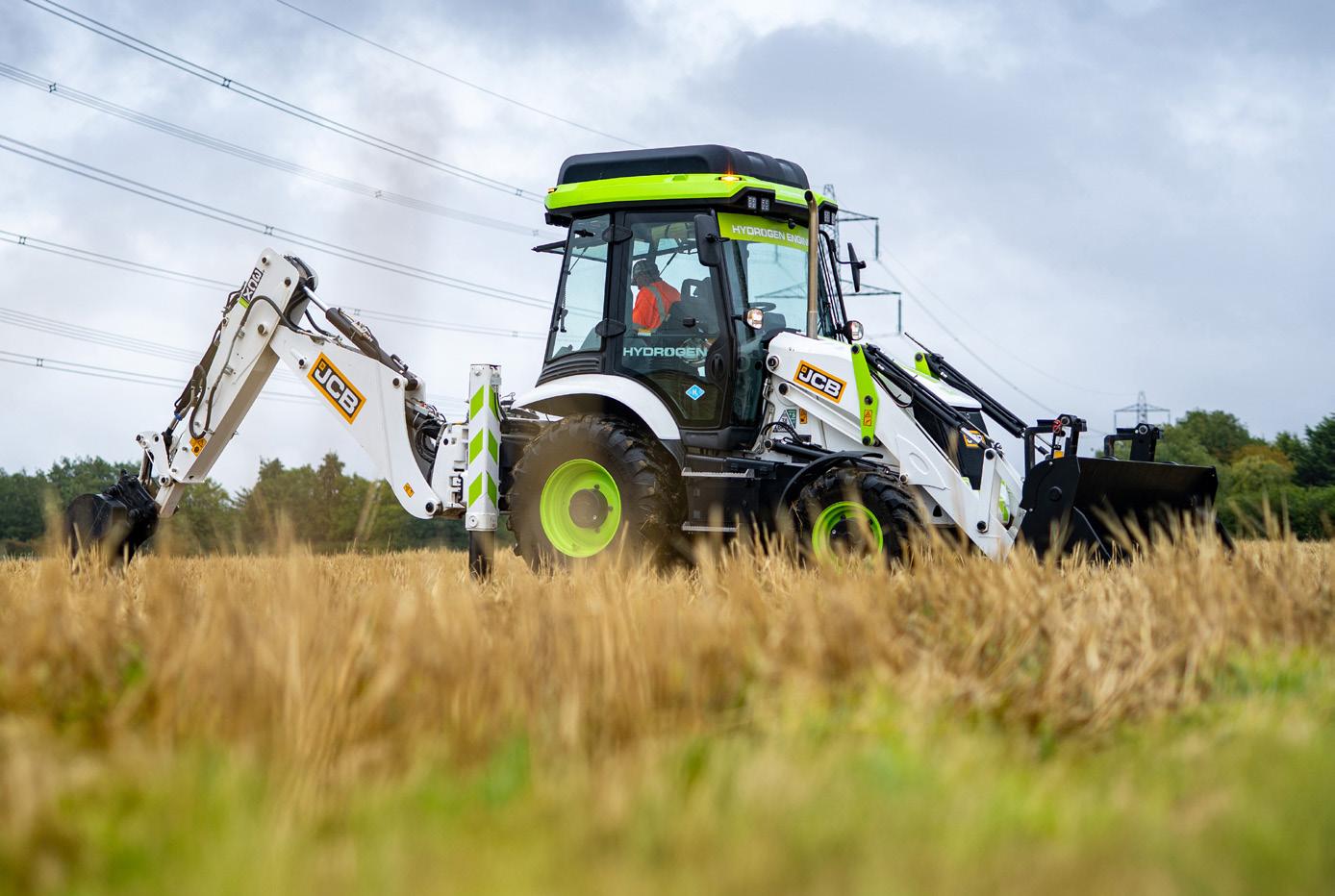
In October 2025, one of the first hydrogen-powered diggers built by JCB was deployed on a live job site on the UK’s first carbon-neutral major infrastructure project.
The machine underwent trials at the Lower Thames Crossing in Kent, where National Highways has committed to building the ‘greenest road ever built in the UK’. Flannery Plant Hire provided the machine to Skanska as part of the construction partnership, with JCB on hand to evaluate performance.
According to project leaders, its performance has proven identical to a conventional diesel machine – but with the crucial benefit of producing zero carbon emissions at the point of use. Chris Butcher, Senior Works Manager for Skanska, said: “It looks and sounds just like its diesel HVO equivalent. There’s no difference at all. The power is there. The manoeuvrability is there. It’s zero emissions and it’s much better for the environment.”
Chris was joined in praising the machine by the operator, Will Power, who has operated JCB backhoe loaders since he was 8 years old. He said: “It does exactly the same as the diesel version of the machine. I’m very impressed with this step forward. It feels like a proper JCB - only cleaner. It’s
the future and I’m proud to be part of it.”
The hydrogen backhoe loader is refuelled on site using a HyKit mobile hydrogen refueller, offering the same convenience and speed as traditional refuelling. After four weeks of operation, it had already saved over one tonne of CO 2 in equivalent emissions compared to a diesel machine.
JCB’s Managing Director for Global Major Accounts, Steve Fox said: “This deployment is a huge milestone for the construction industry. For the first time on a major infrastructure project, hydrogen has proven its worth on site as a carbon-neutral fuel in a working JCB construction machine.”
All three developments - EU approval, UK road legislation change and real-world validation - underscore the scale of JCB’s ambition. With over £100 million invested and a 150-strong engineering team behind the programme, JCB continues to lead the charge for hydrogen combustion in off-highway equipment.
Lord Bamford said: “Now our focus will be on bringing our hydrogen technology to market. JCB’s customers are looking forward to our hydrogen-powered equipment making a difference on their job sites. They won’t have much longer to wait.”
In October 2025, one of the first hydrogen-powered diggers built by JCB was deployed on a live job site on the UK’s first carbon-neutral major infrastructure project.

“nOW OUR FOcUs WILL BE On BRInGInG OUR HYDROGEn TEcHnOLOGY TO MARKET. JcB’s cUsTOMERs ARE LOOKInG FORWARD TO OUR HYDROGEn-pOWERED EQUIpMEnT MAKInG A DIFFEREncE On THEIR JOB sITEs. THEY WOn’ T HAVE MUcH LOnGER TO WAIT.”
JCB marks landmark birthdays with a movie, momentous machines and magical memories.

JCB has always been a business shaped by innovation, investment and people. In October 2025, all three came together as the company celebrated its 80th anniversary and the 80th birthday of Lord Bamford.
He was born on October 23rd 1945, on the same day as his father Joseph Cyril Bamford founded JCB. From a small lock-up garage in the rural market town of Uttoxeter to a world market leader, the joint milestone was marked in true JCB style, with commemorative machines, a moving tribute film and a proud nod to the company’s Staffordshire roots.
A week of celebrations began with JCB announcing a major £100 million investment in new manufacturing facilities at its
global headquarters in Rocester. The project will include a fully automated powder paint plant and a full shopfloor upgrade, reaffirming JCB’s commitment to UK manufacturing.
Lord Bamford said investing in the World HQ, JCB’s home since 1950, was an important and logical step for the company. He said: “Basing JCB in the UK makes business sense, just as it has always made business sense. The work ethic in our country remains strong - especially in the Midlands, with its deep engineering heritage.
“It makes perfect sense to invest heavily in our British factories and the £100 million we are investing now will put us at the forefront of our industry. Obviously, we are expanding overseas, not least in America, where we have been for decades. But the UK is our home."
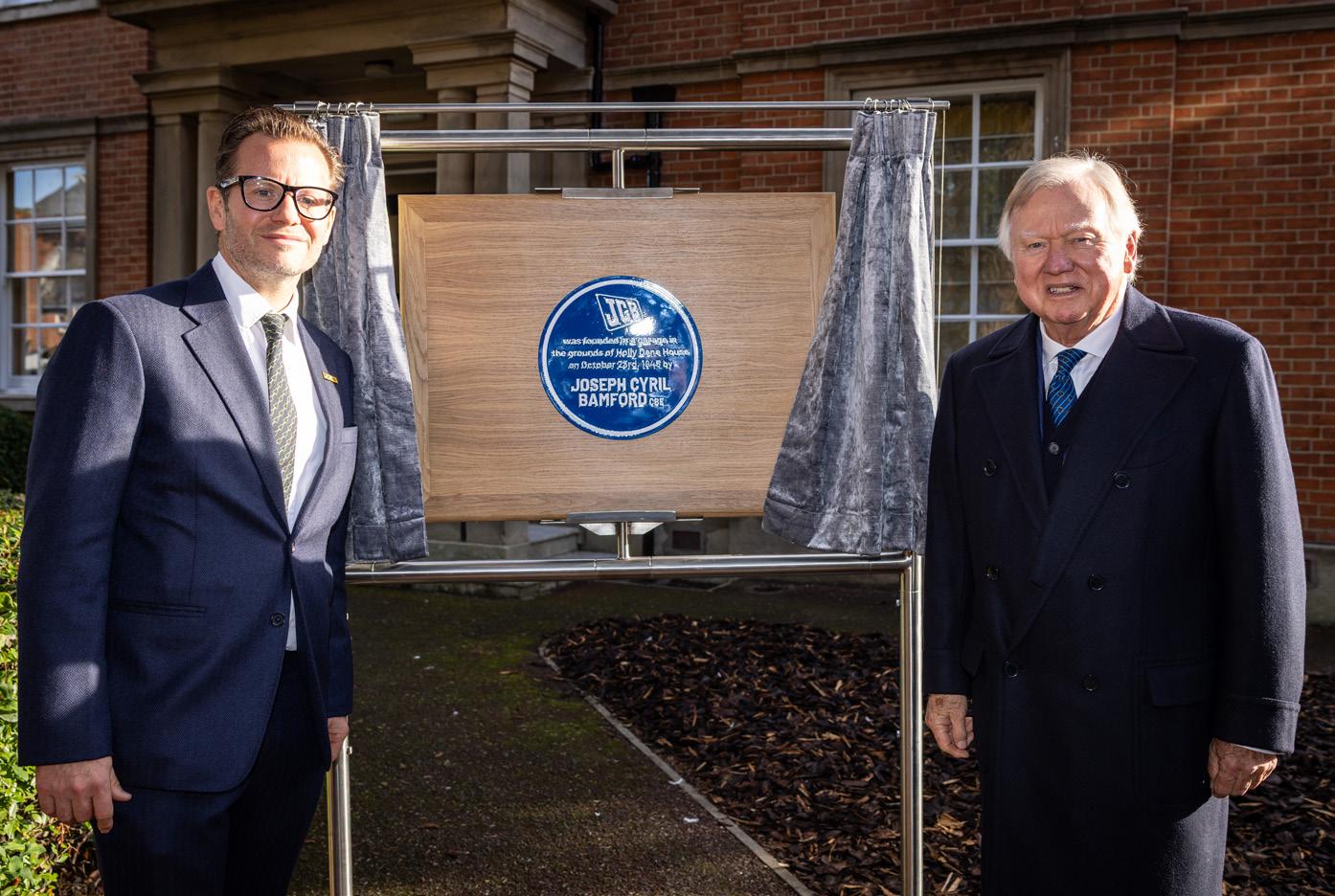
“As WE cELEBRATE JcB’s 80TH BIRTHDAY, IT’s WOnDERFUL TO BE BAcK AT THE spOT WHERE IT ALL BEGAn AnD TO MARK THE LOcATIOn WITH A spEcIAL BLUE pLAQUE. I’M DELIGHTED THAT In A sMALL WAY WE cAn HIGHLIGHT WHERE IT ALL BEGAn AnD REFLEcT On THE cOnTInUInG IMpORTAncE OF OUR HOME cOUnTY OF sTAFFORDsHIRE. ”
On the day that the investment was announced, inventor and entrepreneur Sir James Dyson paid tribute to Lord Bamford as he prepared to celebrate his 80th birthday. He said: “Anthony Bamford is a wonderful example to us all for his entrepreneurship, his engineering, design and manufacturing. He has built what was a small British manufacturing company into one which is a true global success story and one we are all very proud of.”
Back where it began
JCB's official celebrations commenced on the very spot where JCB was founded in 1945. Standing outside Hollydene House in Uttoxeter, Lord Bamford unveiled a blue heritage plaque on the site of the original 12ft by 15ft garage where his father, Joseph Cyril Bamford, built his first farm trailer from wartime scrap.
Lord Bamford said: “My earliest memory of the business is of me playing in my father’s workshop. As we celebrate JCB’s 80th birthday, it’s wonderful to be back at the spot where it all began and to mark the location with a special blue plaque. I’m
delighted that in a small way we can highlight where it all began and reflect on the continuing importance of our home county of Staffordshire.”
Celebratory cavalcade
As the plaque was being unveiled, Lord Bamford’s whole family, including his wife Carole, their other two children Alice and Jo and all of their eight grandchildren were simultaneously gathering outside the World HQ with thousands of employees to spring a rousing birthday surprise on Lord Bamford when he returned.
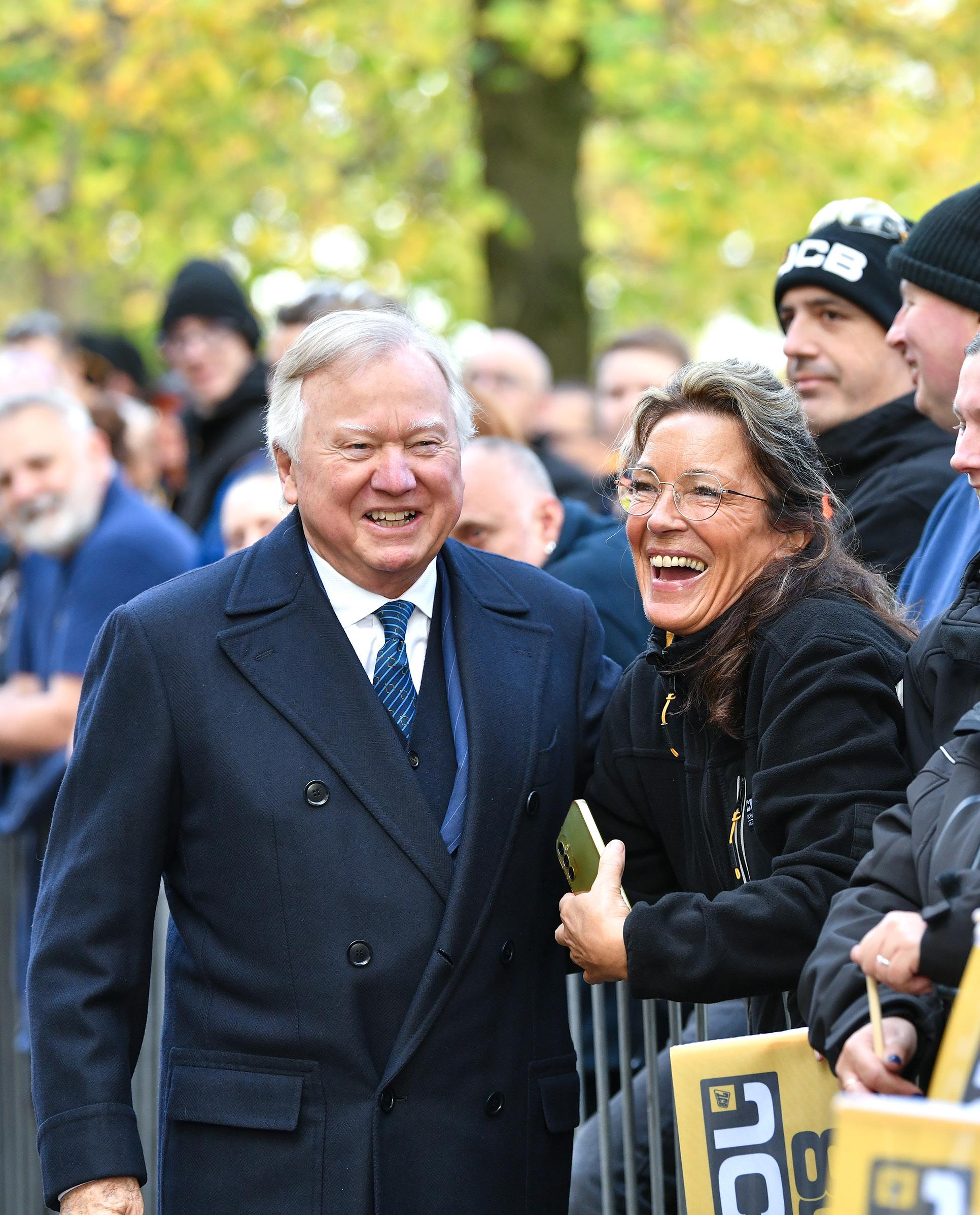
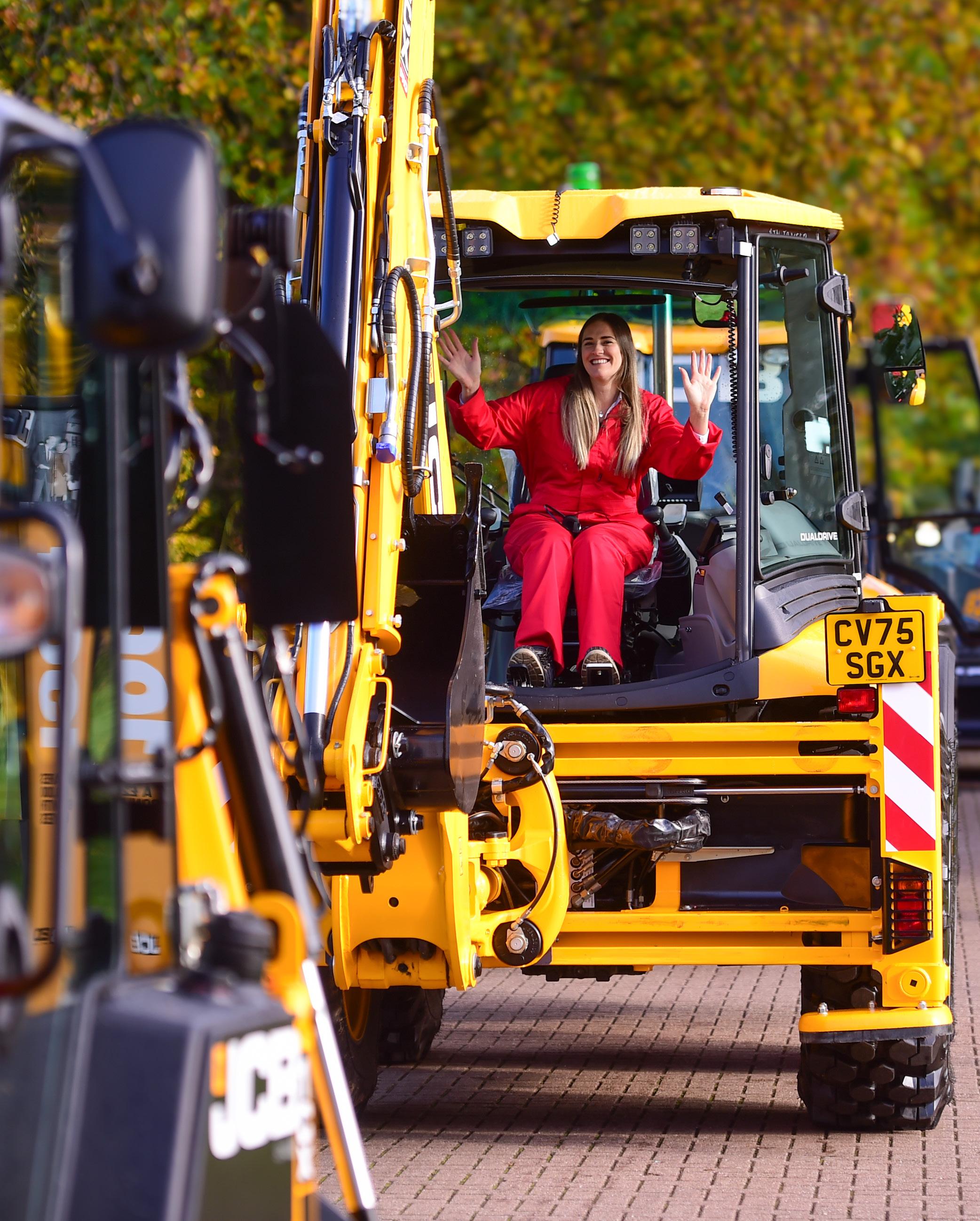
As his car pulled up at Rocester in bright sunshine, a band struck up with Tina Turner’s ‘Simply the Best’ and Lord Bamford went on an impromptu walkabout, shaking scores of hands and receiving countless birthday greetings. As he settled into his seat next to his family, it heralded the start of a dazzling cavalcade of machines introduced over his 50 years as Chairman – innovative products that have catapulted JCB to global success. From the iconic 3CX, to a 1977 Loadall telescopic handler, the JCB engine and the Fastrac tractor.
Limited edition legacy
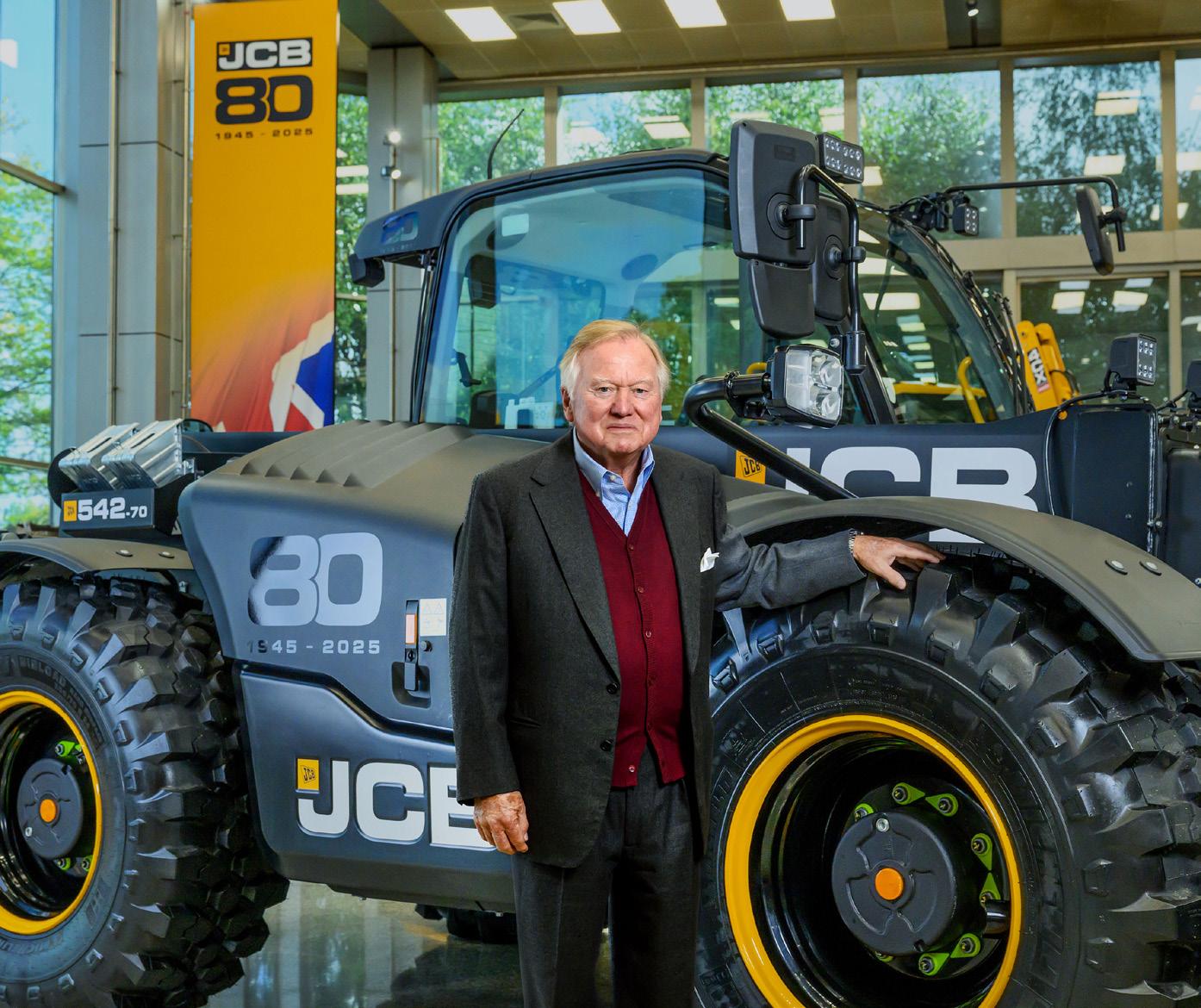
JCB also revealed the production of 80 limited-edition machines – 40 satin black 4CX Pro Dual Drive backhoe loaders and 40 542-70 AGRIPRO Loadalls. With custom decals, chrome highlights and 80th edition embroidery, these collector’s items celebrate the style and substance of JCB’s world-class engineering.
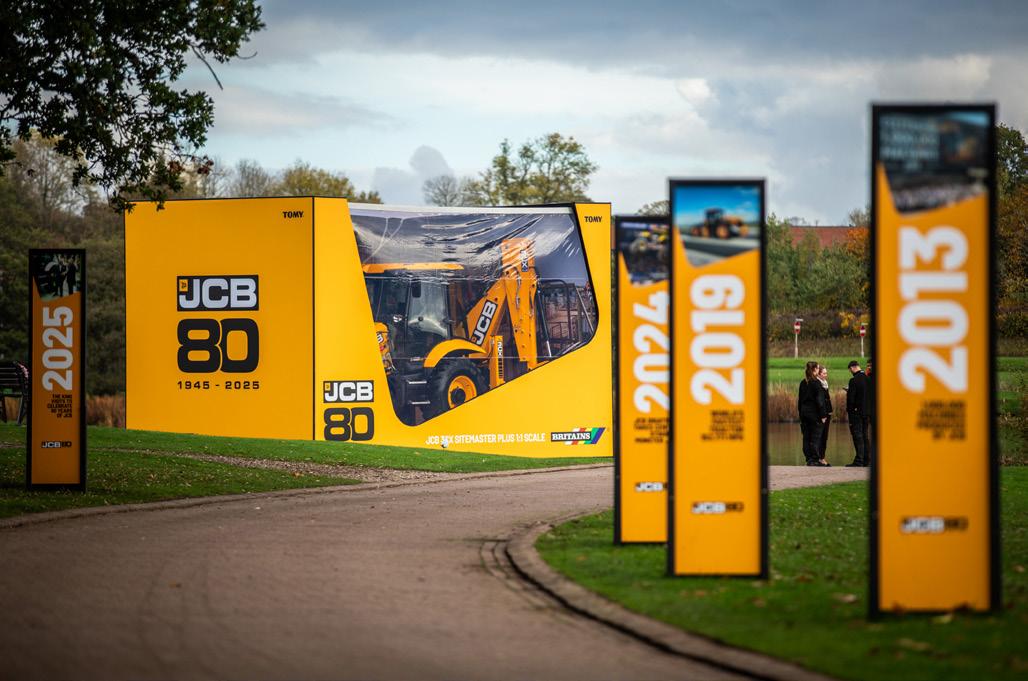
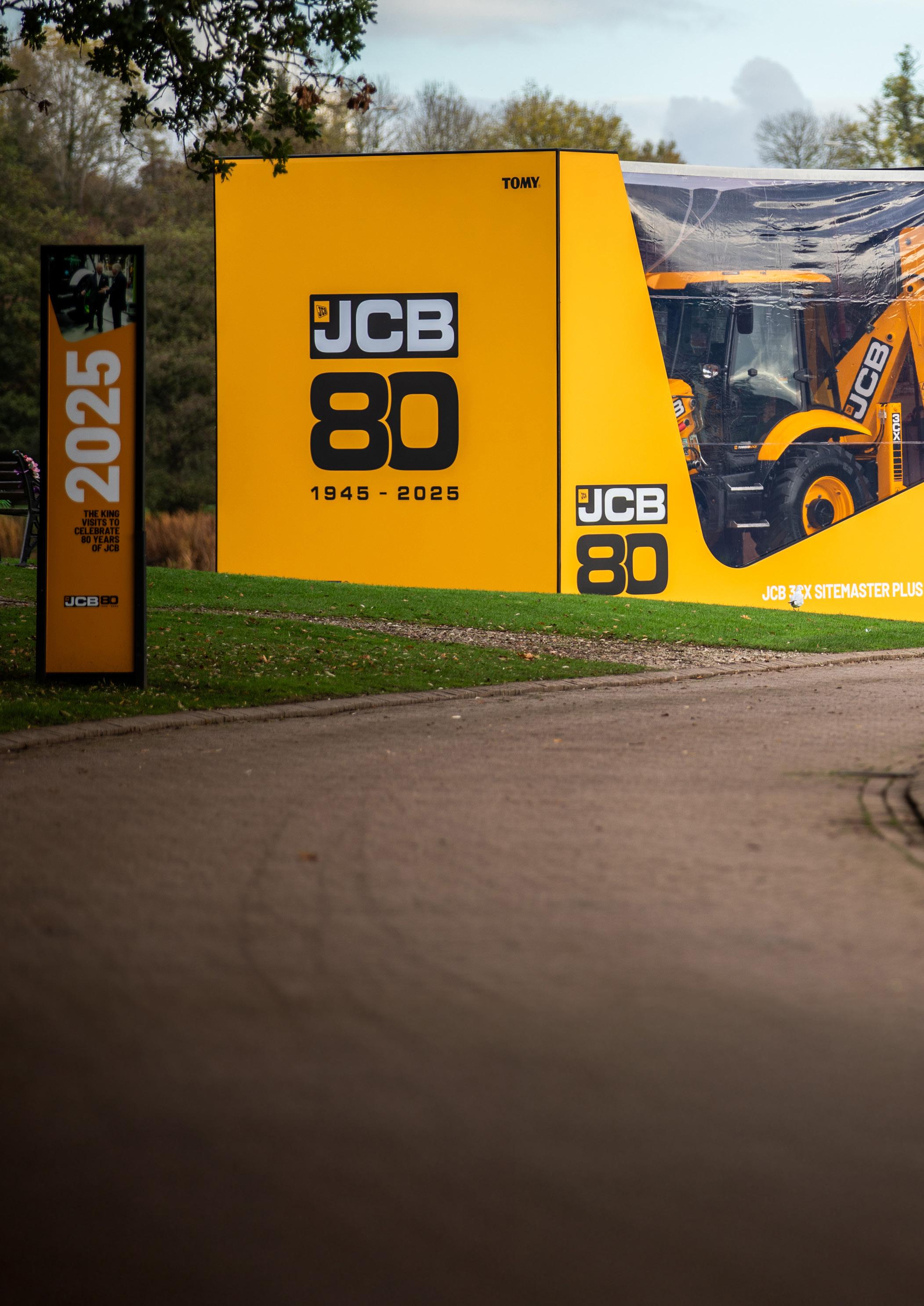
Notably, the 4CX Pro Dual Drive is powered by JCB’s own 81kW Stage V engine, providing a fitting example of how JCB Power Systems is at the heart of wider JCB developments. Another unique machine came with the unveiling of a special JCB 3CX ‘Backhoe in a Box’ - a spectacular lifesize 3CX Sitemaster backhoe loader showcased in the same way as manufacturer Britains package the 1:32 scale models of the JCB machine.
Recognition & reflection
As a thank you to the global JCB team, every one of the company’s 19,000 employees across its 22 plants received an extra day’s holiday. Lord Bamford said: “JCB would be nowhere if it wasn’t for the efforts of our employees around the world. This is a small token of my family’s
gratitude as we mark our 80th birthday.”
A formal celebration closed the day, with more than 100 invited guests, including retired colleagues, joining Lord Bamford at JCB’s world headquarters in Rocester, Staffordshire. In the style of the much-loved programme of yesteryear, ‘This is Your Life,’ a poignant film charting Lord Bamford’s unique part in the story of JCB was shown. It also honoured the role Carole Bamford has played with her husband in helping shape JCB’s success over the past 50 years and was a moving highlight of a very special day.
Closing the celebrations, Graeme Macdonald said: “Lord Bamford, when you became Chairman in 1975, this was JCB’s only factory. Today, we have 22 plants around the world. Your commitment to British manufacturing has never wavered. Everything we’ve just seen is only a snapshot of your incredible contribution to JCB over 50 years as Chairman. You should be immensely proud of everything JCB has achieved; we are all equally proud of you.”
As JCB enters its ninth decade, it does so with a continued purpose - investing in innovation, powered by people and always looking for a better way.



British-built harvesters powered by JCB are making their mark miles from home.

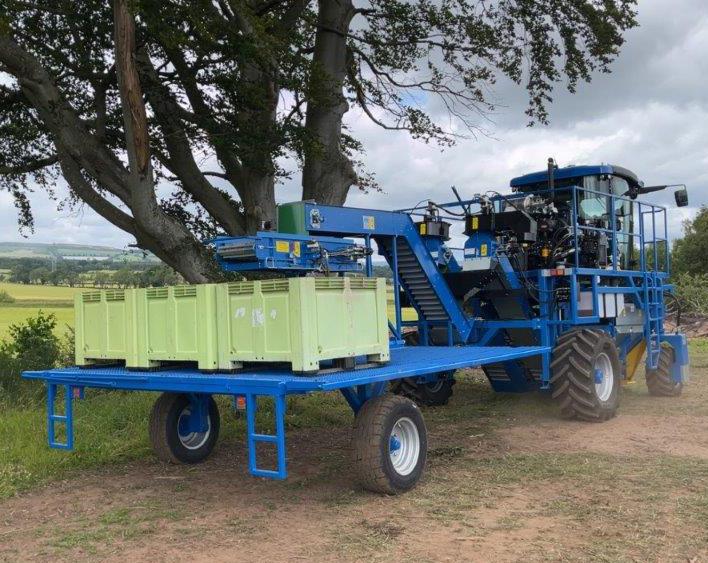
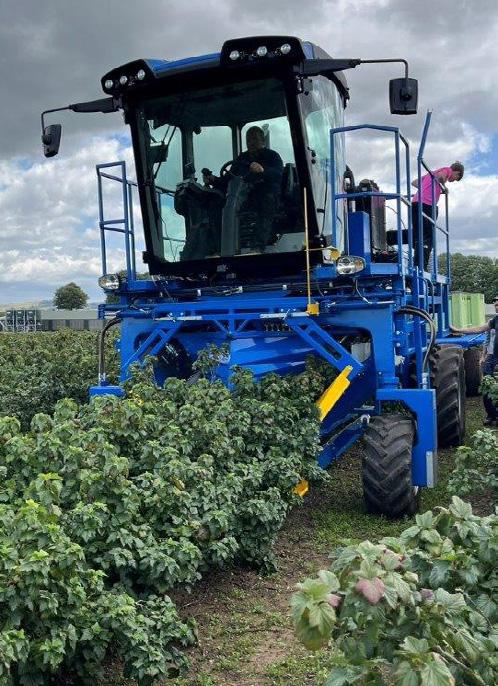
Fruit harvesting is a short, high-stakes window. Miss it, and months of effort can be undone. That is why SFM Technology, one of the UK’s leading manufacturers of self-propelled fruit harvesters, places such importance on reliability. And that is why the team chose JCB engines to power their blackcurrant and apple harvesters sold around the world.
Based in Martock, Somerset, SFM Technology Ltd has been producing specialised harvesting equipment for more than 35 years. Its self-propelled blackcurrant and apple harvesters are a familiar sight in fields and orchards across the UK and beyond, combining high productivity with minimal crop damage. The company prides itself on designing and building machines in the UK, using British components wherever possible - including JCB engines.
The switch to JCB came in 2007, when SFM Technology began exporting blackcurrant harvesters to New Zealand. It was a significant step for the business and one that required absolute confidence in the product performance, emissions compliance and aftersales support.
Len Mathieson, Divisional Manager at SFM Technology, said: “Due to the nature of the crop and the remote work location, our customers needed confidence there was a reliable service network available, as any downtime due to component failure would create major issues.
“After evaluating available power solutions, JCB was the clear standout, so after further discussions with our distributor Power Torque, the decision was made to install JCB engines on our machines.”
Over time, SFM Technology has incorporated a variety of JCB engines tailored to its different customers’ requirements and in line with emissions legislation. These range from the 64kW Tier 2 444 model to today’s 129kW Stage V 448 engine. For SFM, the benefits go beyond performance alone.
Len Mathieson said: “The transition was straightforward with no significant challenges. The initial support included detailed drawings and all of the technical information required to install our hydraulic equipment and control systems.
“JCB is a well-regarded manufacturer in the agricultural industry and a brand that carries a lot of weight. Partnering with JCB Powertrain helps maintain the high standard of our equipment and importantly, our reputation for quality.”
Customers, meanwhile, benefit from JCB’s global service footprint and cleaner, quieter and more fuel-efficient operation. All vital factors in the time-sensitive harvesting environments which they operate.
JCB Powertrain is helping SFM Technology deliver British-engineered productivity across multiple continents. From Somerset to the Southern Hemisphere, the partnership continues to blossom.
Decades of drivetrain development power Dezzi’s off-highway equipment.
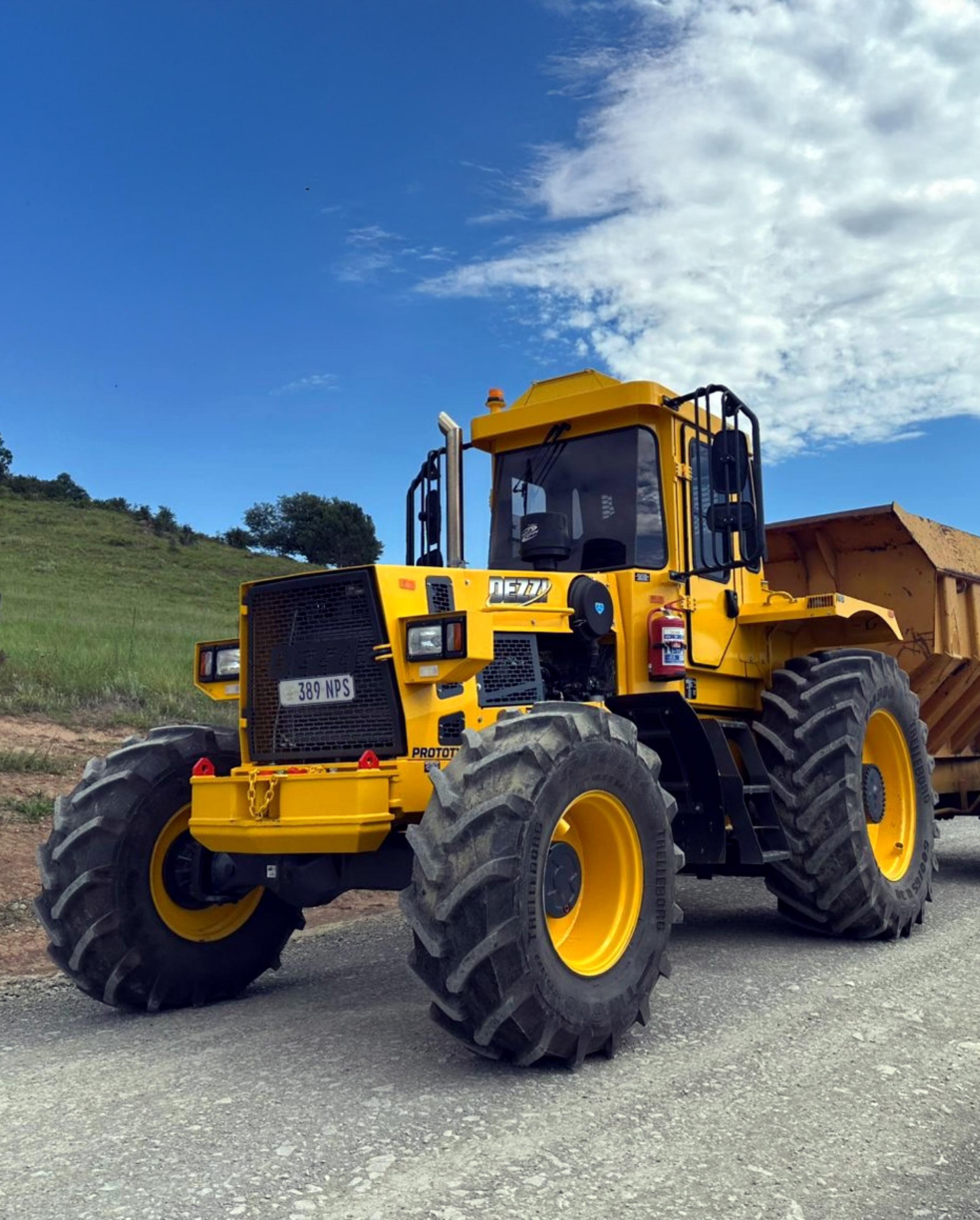
“ROBUsT DRIVETRAIn cOMpOnEnTs BUILT FOR OFF-ROAD cOnDITIOns sUIT MOsT OF OUR pRODUcTs AnD cUsTOMERs’ nEEDs. LIKE-MInDED EnGInEERs AnD sIMILAR AppLIcATIOn ExpERTIsE MAKE FOR A sOLID pARTnERsHIp, sTROnG REpUTATIOn AnD pRODUcT ExcELLEncE.”

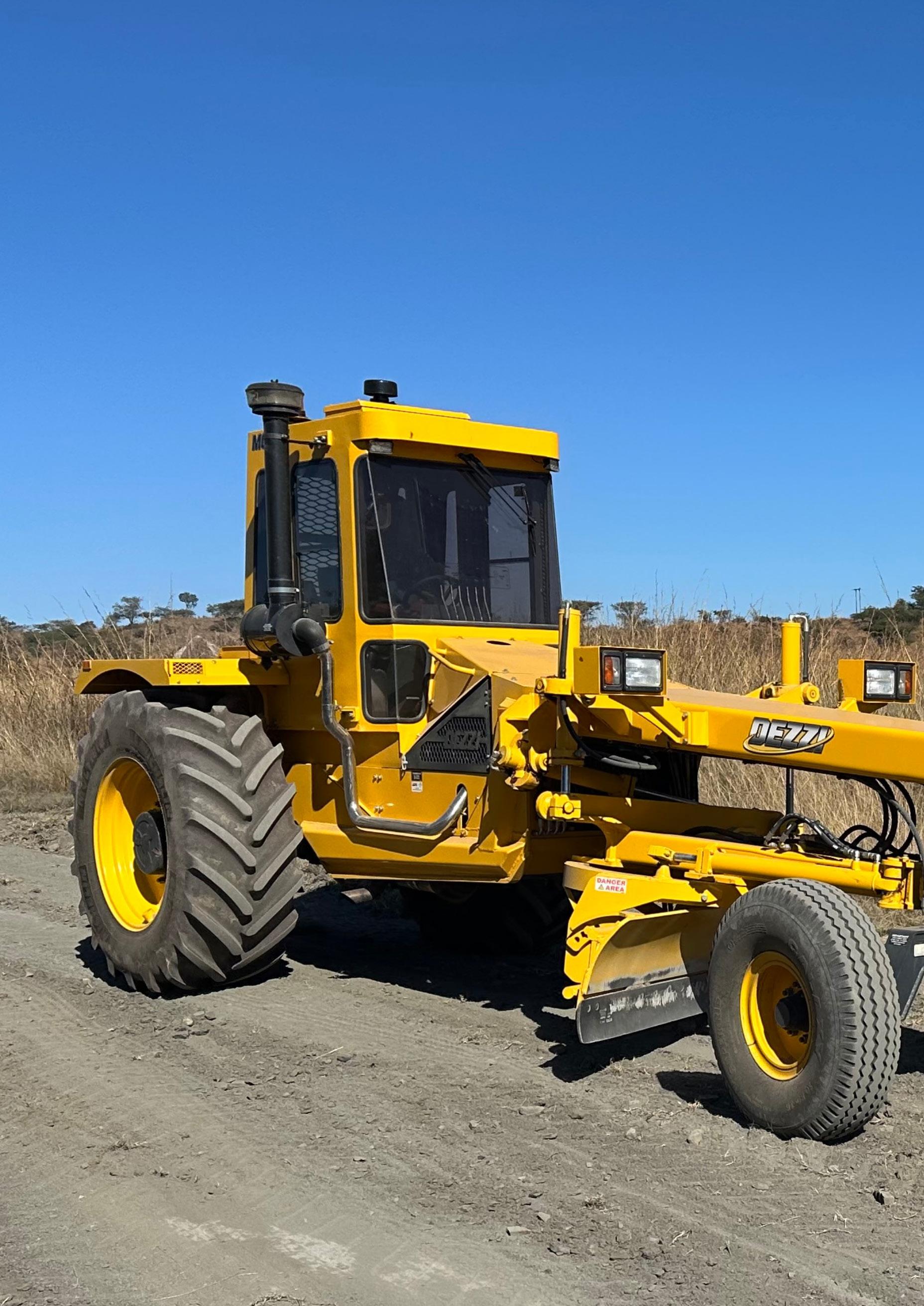
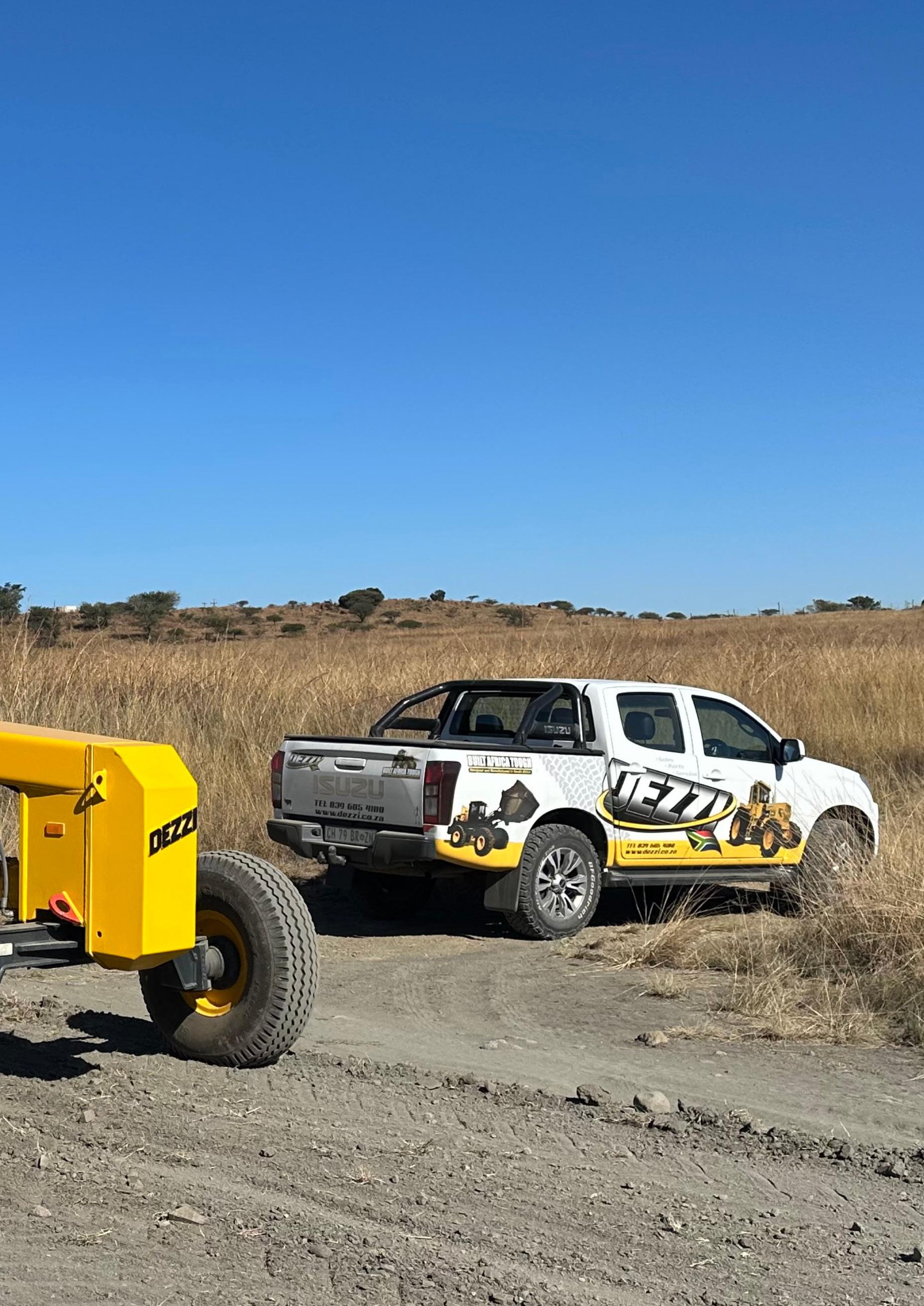
When it comes to off-road performance in the harshest terrain, South African OEM Dezzi Equipment is on the front line. From haulage tractors and graders to wheeled loaders, its machines are built to thrive in the toughest working environments. And for more than 25 years, they’ve had JCB Powertrain components at their core.
The partnership began in the 1990s with the adoption of JCB transmissions on some of Dezzi’s range of machines. That early connection grew into a trusted partnership that continues today based on shared engineering values and components made to withstand the demands of off-road work.
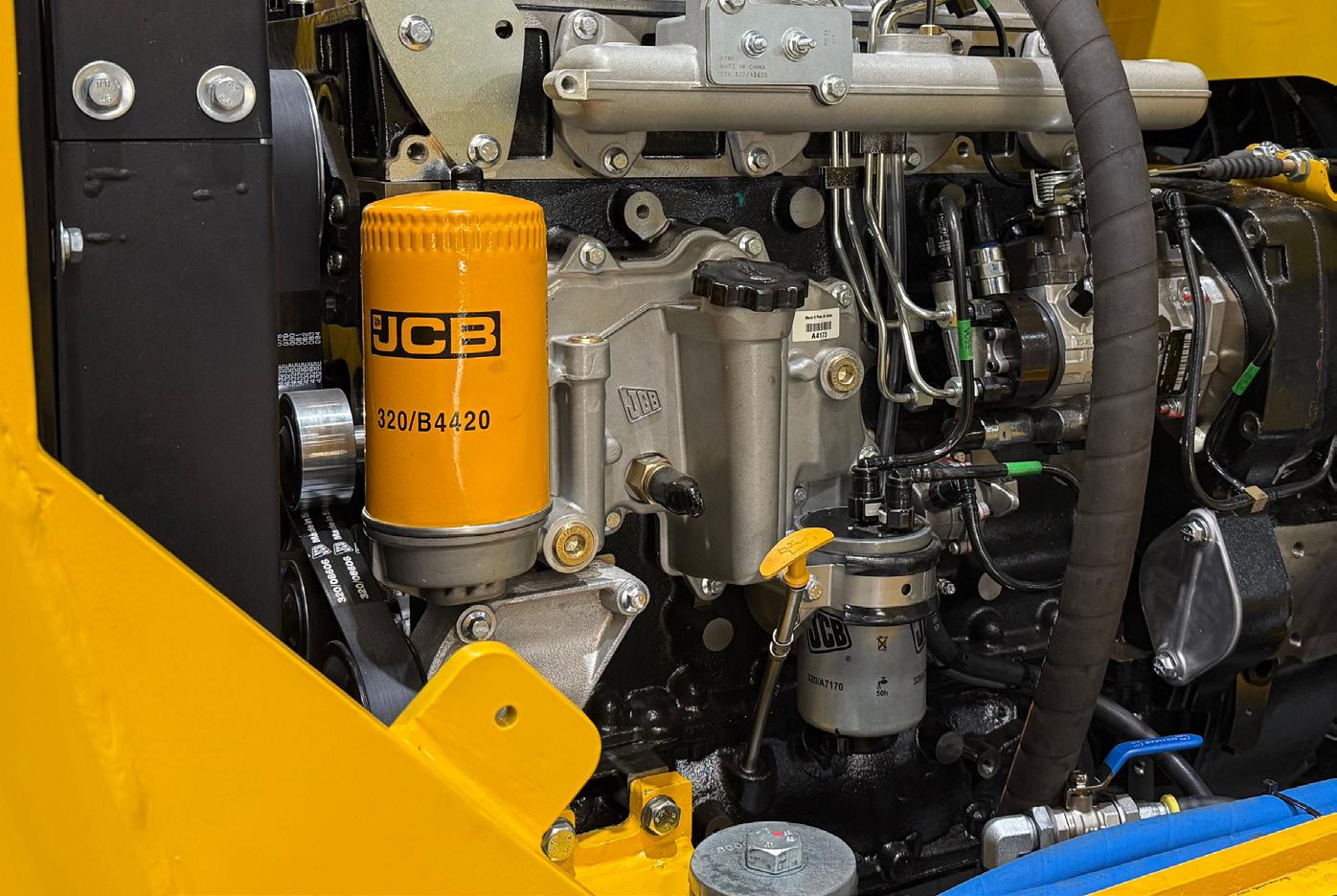
The relationship and continued adoption of JCB products has since grown further. Indeed, Dezzi initially added JCB axles and then became one of the first OEMs to use the JCB Dieselmax engine when it was introduced.
Today, Dezzi’s graders use JCB’s 75kW engine, PS750 transmission and PD87 axle. The smaller haulage tractor range features 75kW or 93kW engines with PS750 or PS1000 transmissions and a combination of SD55 front and PD87 rear axles. Wheel loaders are powered by the 75kW JCB engine and either PD70 or PD87 axles. It represents a full suite of drivetrain components from a single supplier that have been designed to seamlessly integrate.
But far from just a supplier / customer relationship, it has evolved into a genu -
ine partnership. For example, JCB worked closely with Dezzi on the development of the PS1000 transmission – a solution that has now clocked up more than 30,000 hours and counting on many machines.
From power delivery to electronic integration, JCB’s robust driveline components have consistently met Dezzi’s application needs, enabling the OEM to focus on delivering long-lasting, hard-working machines for mining, construction and municipal use.
For Dezzi, the JCB brand strength also played a significant role in building market trust in the early years of the business and the reputation of JCB Powertrain products continues to add value today.
Dezzi Managing Director, Carl Gutzeit said: “Robust drivetrain components built for off-road conditions suit most of our products and customers’ needs. Likeminded engineers and similar application expertise make for a solid partnership, strong reputation and product excellence.
“Being powered by JCB undoubtedly helped strengthen our reputation in the early years and running JCB drivetrains assists in closing deals, no question.”
Dezzi machines, powered by JCB, are renowned for their reliability in extreme conditions. With decades of proven collaboration and a commitment to continuous improvement, this is a partnership built for the long haul – and a product ‘Built Africa Tough’ as Dezzi's strapline exclaims.
British-built Stock Sweepers keeps emissions clean with JCB auxiliary engines.
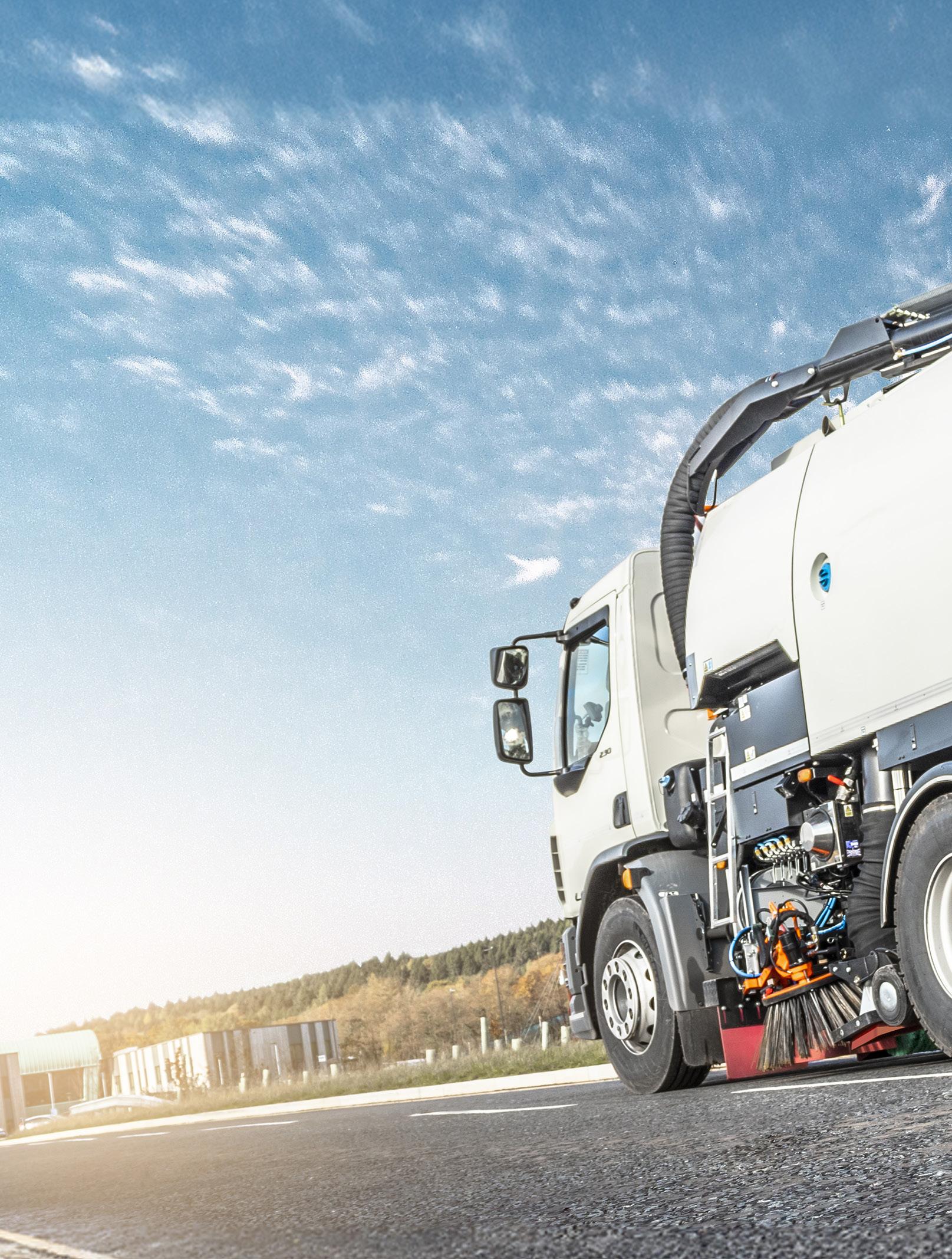
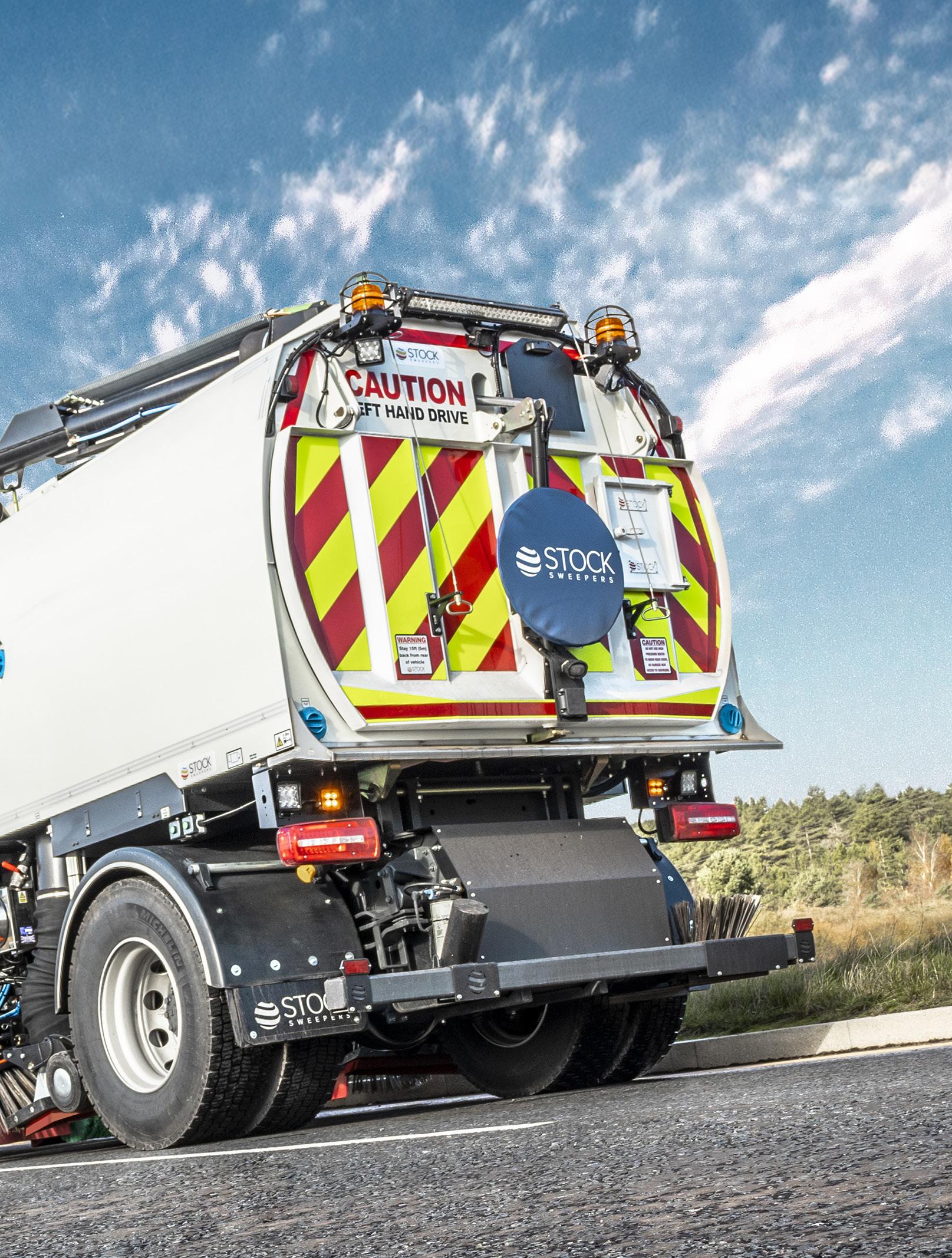
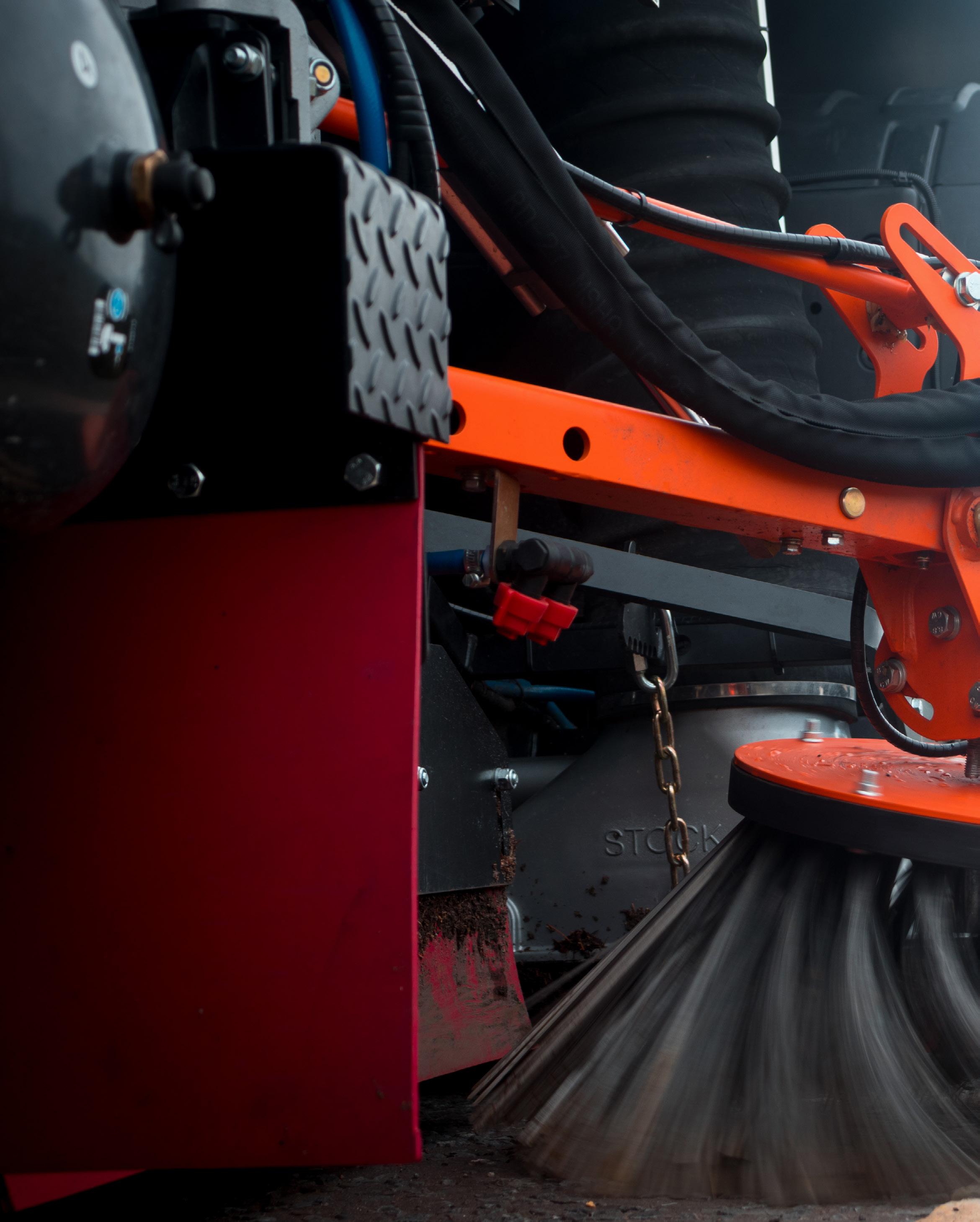
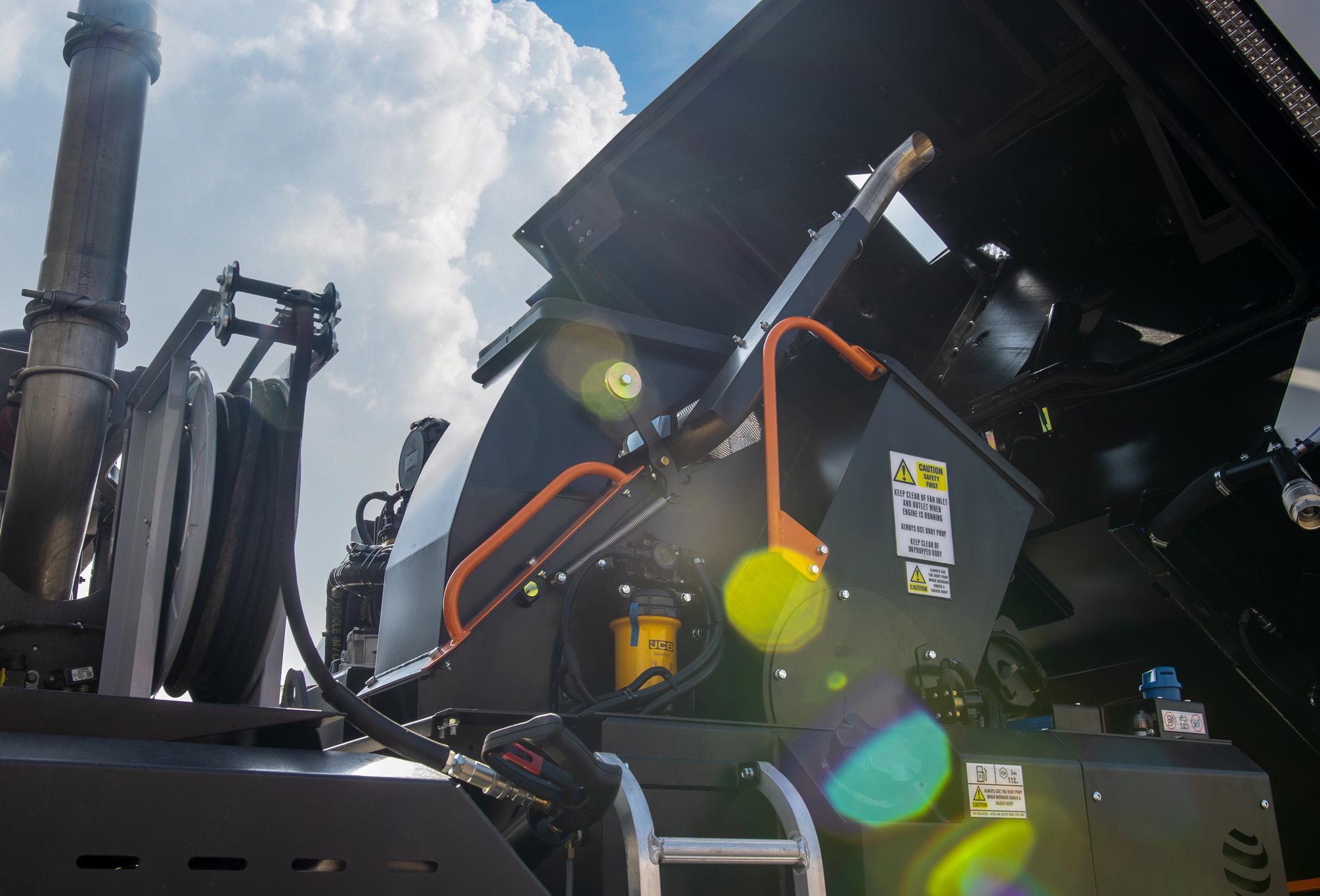
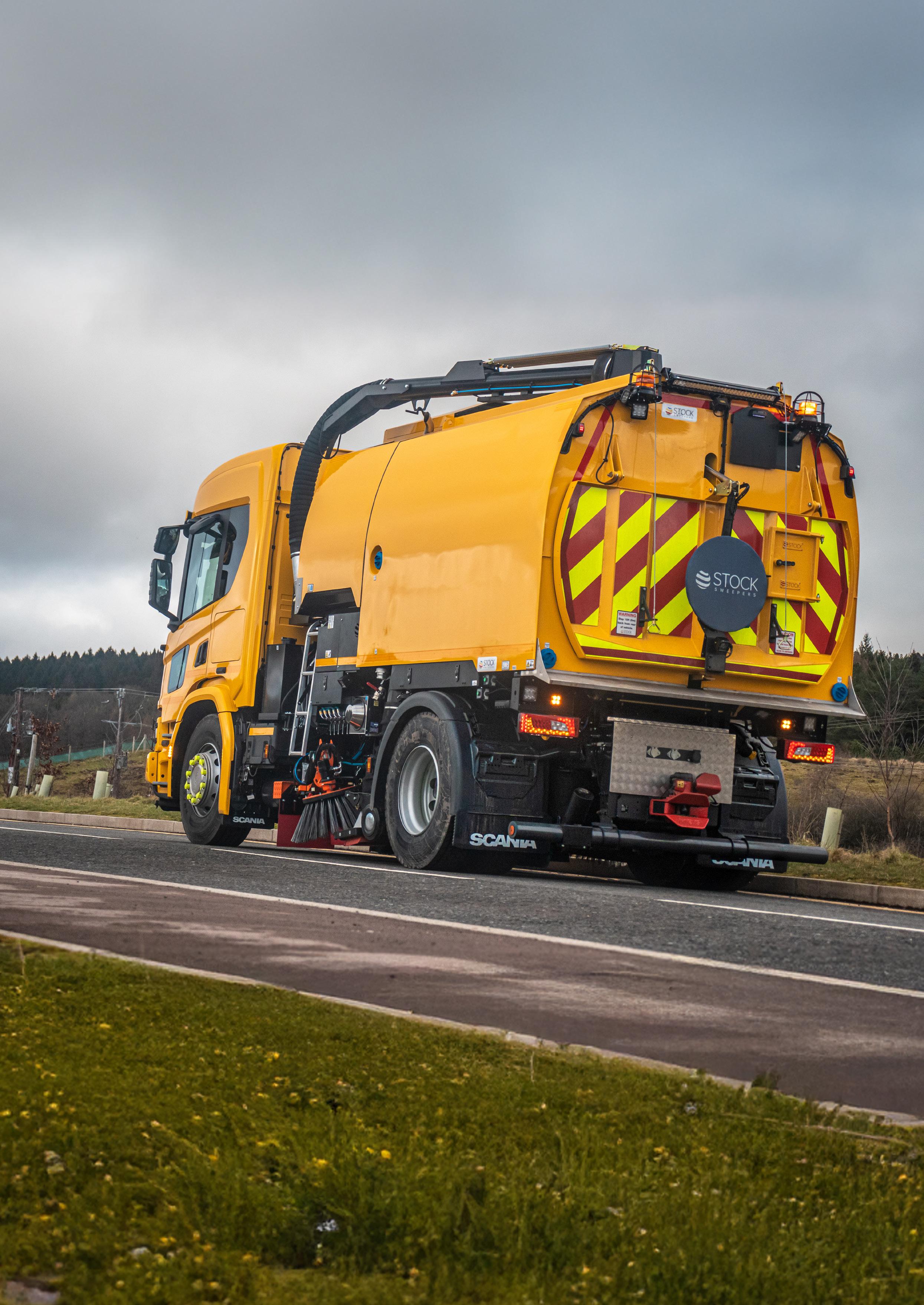
British engineering is at the heart of a long-running partnership between JCB Powertrain and road sweeper manufacturer Stock Sweepers. For nearly two decades, JCB engines have powered Stock Sweepers' equipment in some of the toughest municipal and contractor environments around the world. Helping deliver clean streets, clear highways and reliable performance shift after shift.
“As
A FAMILY-RUn BRITIsH MAnUFAcTURER, WE sHARE THE sAME VALUEs OF InnOVATIOn, QUALITY AnD EnGInEERInG ExcELLEncE THAT JcB sTAnDs FOR AnD THAT’s WHAT MAKEs THIs pARTnERsHIp sUcH A nATURAL FIT.”
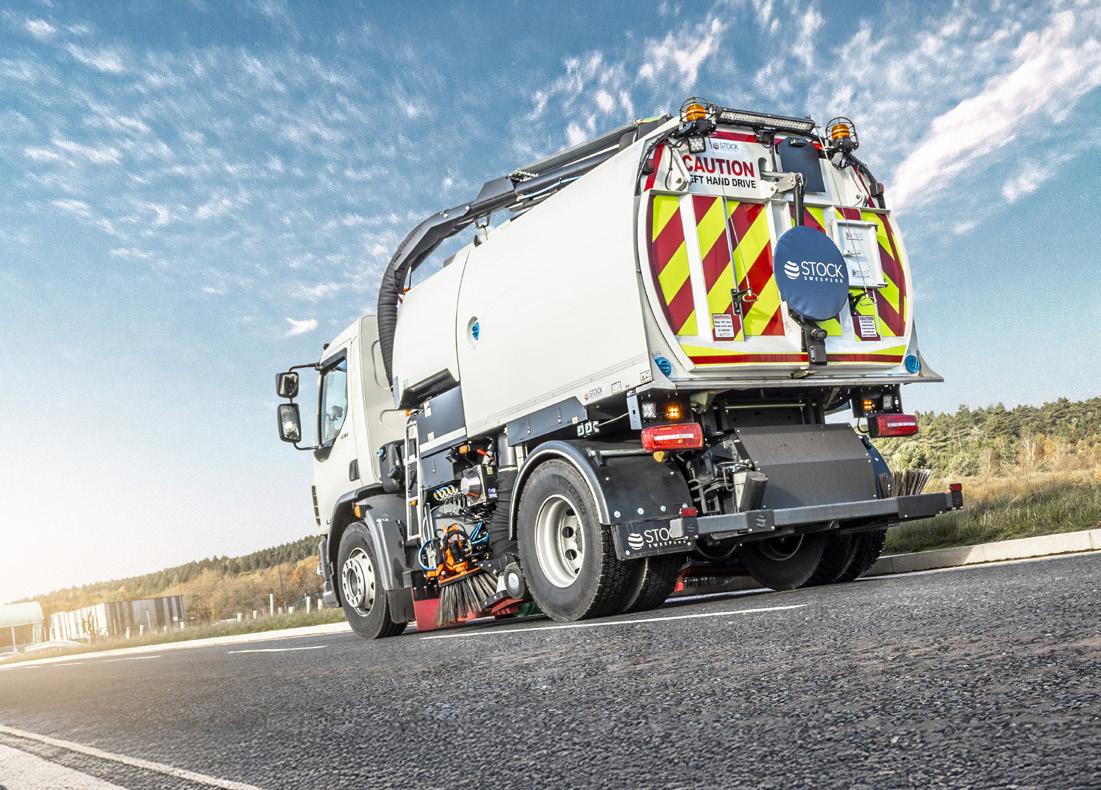
The collaboration began in 2007, when Stock became the first road sweeper OEM to adopt a JCB engine as an auxiliary power unit. The 63kW JCB444 Stage IIIA engine was selected to drive sweeping equipment independently of the truck chassis - delivering consistent power, reliability and fuel economy in a compact package.
For Stock Sweepers, it was a turning point. With demand rising, the business needed a dependable power partner, one able to support its transition to cleaner, more efficient systems for both domestic and global markets. JCB’s UK-based engineering team worked closely with Stock’s in-house design and installation engineers, helping to integrate the new engines into complex duty cycles and confined installation spaces. That early technical collaboration laid the foundation for a trusted relationship that continues to this day.
In 2026, JCB 97kW Stage V or 85kW Stage

IIIA engines are installed across Stock Sweepers’ full product line, including the S6400, S8400 and QuadVac. These high-output engines are responsible for powering the machines’ robust 800mm suction impellers, delivering impressive performance across a wide range of municipal, industrial and highway environments.
Stock Sweepers has built a formidable reputation for the durability and longevity of its products. Each of its road sweeping machines features a heavy-duty 4mm 304 stainless steel hopper, reinforced suction tubes and subframe components, and smart, user-friendly controls. Features such as CANbus integration, automatic greasing, on-board diagnostics and optional high-pressure Supawash systems all combine to maximise uptime and reduce operating costs. Building on Stock Sweepers’ own exacting build quality, customer confidence is further boosted by the long service intervals and excellent parts availability that comes as standard with JCB engines.
“HAVInG JcB’s EnGInEERInG sUppORT THROUGHOUT OUR pARTnERsHIp HAs BEEn A HUGE ADVAnTAGE. As A sMALLER, FAMILY-RUn MAnUFAcTURER, THE REspOnsIVEnEss AnD DEpTH OF ExpERTIsE AT JcB HAs EnABLED Us TO cOnTInUE InnOVATInG AnD GROWInG In A HIGHLY cOMpETITIVE MARKET.”
Emissions legislation has evolved significantly since the partnership began. JCB Powertrain has provided engineering guidance through each transitionfrom Stage IIIA to Stage V - helping Stock Sweepers to remain compliant without compromising performance or reliability.
Stock Sweepers CEO, Jeff Stock, said: “Having JCB’s engineering support throughout our partnership has been a huge advantage. We are a smaller, family-run manufacturer and the responsiveness and depth of expertise at JCB has enabled us to continue innovating and growing in a highly competitive market.”
The companies also share a forward-thinking mindset. In 2016, Stock Sweepers was among the first in the sector to trial an on-demand hydrogen electrolyser system on a JCB auxiliary engine - reducing emissions and supporting more sustainable operation.
Today, Stock Sweepers exports across Europe, North America, Asia and Australia, while remaining proudly family-owned and based in the United Kingdom. From local authorities to national contractors, its machines are trusted to perform in high-pressure environments and JCB engines continue to play a central role in delivering that excellence.
Jeff Stock said: “JCB engines have been a dependable part of our road sweepers for many years. They consistently deliver the reliability, efficiency and performance that our customers expect. As a family-run British manufacturer, we share the same values of innovation, quality and engineering excellence that JCB stands for and that’s what makes this partnership such a natural fit.”
Clean streets, clean engines, and a cleaner future - it’s a partnership that continues to shine.
JCB powered GWS hoovers up a growing slice of the market.
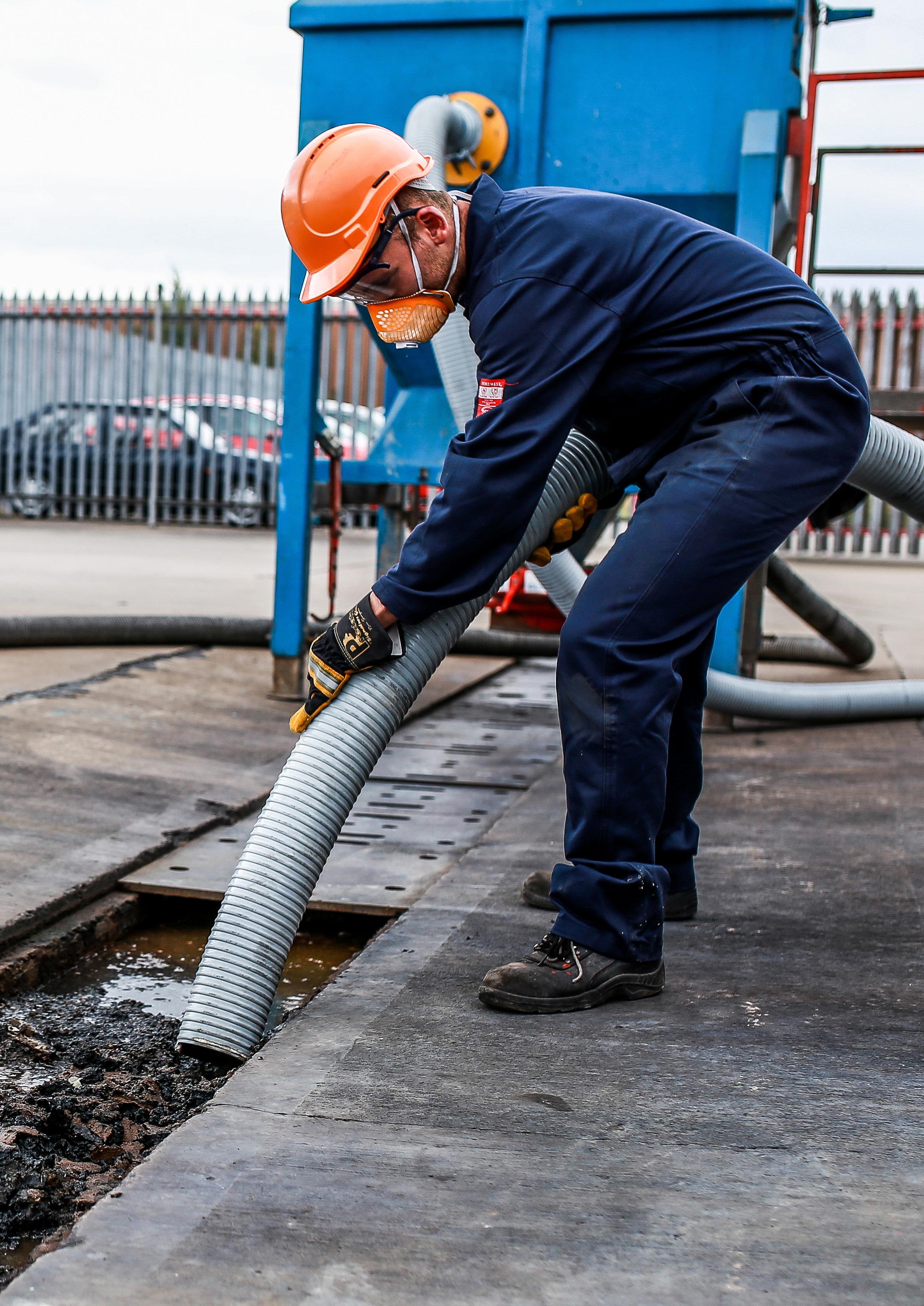
“OUR EQUIpMEnT HAs TO BE ROBUsT BEcAUsE IT WORKs In HARsH InDUsTRIAL EnVIROnMEnTs. THAT’s WHY OUR 50 sERIEs DIEsEL VAcUUM Is pOWERED BY A JcB EnGInE”
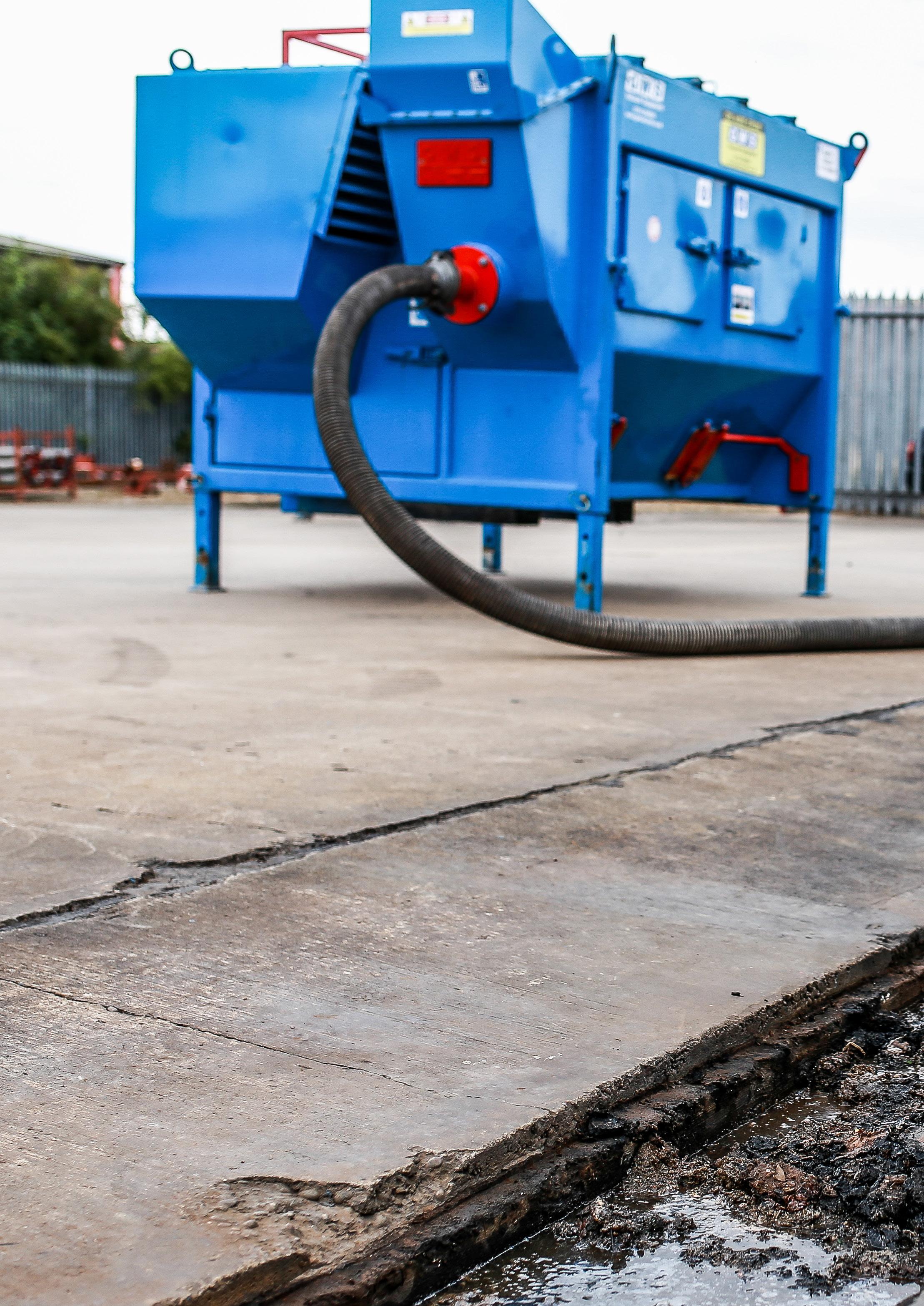
Whether sucking up coal dust in a power station or shifting shot blast in a steel works, GWS builds industrial vacuum systems designed to take everything in their stride.
Performance in those conditions demands serious power and for the past 20 years, GWS has achieved it with JCB engines at the core.
It is the result of a relationship built on shared values, British engineering prowess and two decades of development. Today, the partnership continues with the Stage V JCB 430 IPU at the heart of GWS’s flagship 50 Series diesel vacuum – the most popular model it manufactures.
Harsh environments
Established in 1973, GWS is a family-run, Lincolnshire-based business that has grown into the country’s leading manufacturer and hirer of industrial vacuum equipment. GWS equipment is a familiar sight across the industrial sector in foundries, petrochemical plants, energy-from-waste sites and more. When conditions are punishing and downtime is costly, customers rely on a machine that gets the job done.
GWS Director, Selina Wright, said: “Our equipment has to be robust because it works in harsh industrial environments. That’s why our 50 Series Diesel Vacuum is powered by a JCB engine. It’s engineered for durability, efficiency and performance so you can trust it on our sites every day.”
From Stage II to Stage V
GWS initially made the switch to JCB Powertrain in 2006, attracted by a reliable British-built engine that could futureproof its product line. That move brought the team into close collaboration with JCB Powertrain distributor Power Torque Engineering, which has played a key role supporting product development ever since - from specifying the original 63kW
JCB444 Stage II engine, right through the current Stage V 430 IPU model.
Along the way, the JCB Powertrain engineering team overcame several bespoke requirements, including adapting the engine to a SAE 10” flywheel instead of the standard 11.5” version. As emissions legislation advanced, so did the tech. Power Torque’s Application Engineer Craig Perry worked directly with GWS on the transition to electronic engines, helping to seamlessly integrate the new systems.
Cost saving and customer-friendly Selina Wright said: “Our distributor is a huge support, and they were there with us every step of the way. That’s ensured we’ve been able to incorporate the latest technology while delivering the same reliability and performance that we had with the analogue engine.
“The new engine has even better fuel efficiency which is a real bonus. These units are using about 10 to 12 litres an hour, so it can save our customers hundreds of pounds per shift just on diesel alone compared to larger vacuum machines”.
“Ease of servicing is another advantage. The JCB engine is clearly designed with service engineers in mind as everything is all accessible and easy to service. Global presence is another factor. With over 2,000 dealer locations worldwide, that global network provides crucial reassurance for our export business.”
All systems go
GWS’s 50 Series diesel vacuum units are deployed across some of the dirtiest, dustiest and most demanding sites in the world - from steelworks to bio-fuel processing plants. With JCB power on board, they’re more than ready for the challenge. So, whether it’s ash or air pollution residues, coal dust or foundry sand, GWS is able to just suck it up and succeed.

JCB Powertrain delivers durability and downtime
savings for car crusher
OEM - Overbuilt.


When the job is crushing metal, only the toughest kit survives.
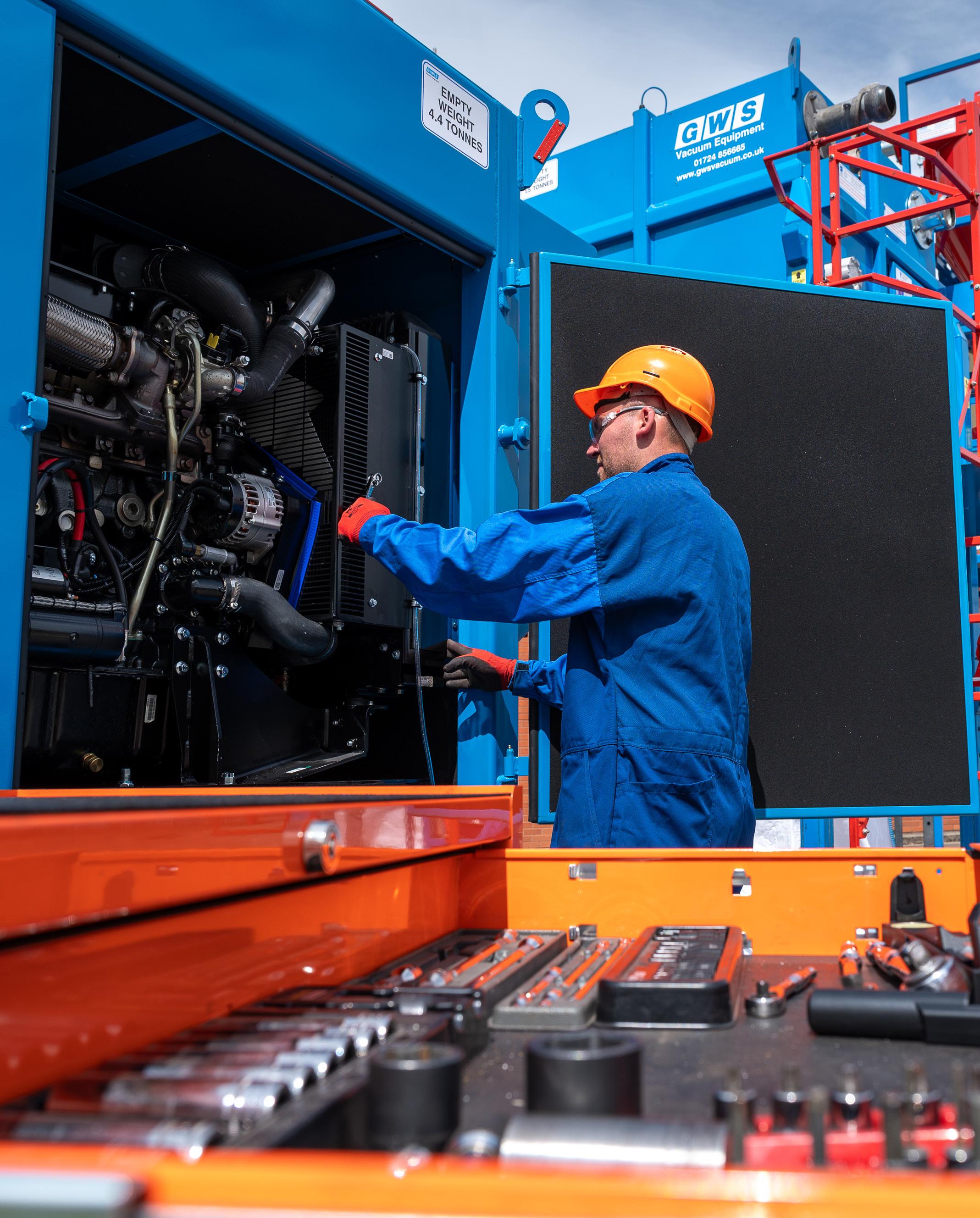
South Dakota-based Overbuilt has been building heavy-duty car crushers for scrap yards across the US since 1996. These machines operate in some of the toughest conditions imaginable, efficiently turning end-of-life vehicles into compact blocks of recyclable material with precision, power and speed.
For Overbuilt, the engine at the heart of each machine must be every bit as rugged and reliable as the steel jaws it powers. That’s why, since late 2019, the company has put its trust in JCB Powertrain.
The relationship began through distributor Anderson Industrial Engines (AIE), which worked closely with Overbuilt to understand the specific needs of their mobile car crushers. Working in partnership with JCB’s engineering team, AIE developed a fully enclosed 74hp power unit optimised for torque and simplicity.
The sizing was no accident. Together, the team identified 74hp as the sweet spot, delivering the muscle required for heavy-duty compression cycles, without the added cost or complexity of DEF (Diesel Exhaust Fluid). It’s a combination that works with more than 100 JCB-powered Overbuilt machines already in operation across the United States.
In a sector driven by uptime and minimal maintenance, the JCB engine quickly proved its worth. A combination of power and simplicity has also helped Overbuilt customers move away from competitor brands. Operators have seen first-hand how JCB engines perform better than alternatives in low-load conditions, helping to reduce fuel usage and prolong engine life.
Todd Evans, Sales Manager at Overbuilt said: “We chose JCB for its robust engines and expert support. The 74hp model delivers reliable power without DEF, boosting uptime and customer satisfaction. There’s a real preference for JCB among our buyers. It’s efficient, easy to maintain and gives them one less thing to worry about on site.”
Support from AIE has been instrumental too, with in-house engineering, inventory support and just-in-time delivery helping Overbuilt manage growth. With plans already forming to increase output in 2026, JCB engines are set to power even more crushers into the future.
And in a world where vehicle volumes keep rising, that future looks set to be busy. From rusted cars to clapped-out camper vans, the next generation of scrap is already rolling in. With JCB engines under the hood, Overbuilt will crush it.
JCB Powertrain customers get total peace of mind from the ultimate off-highway service and supply chain.
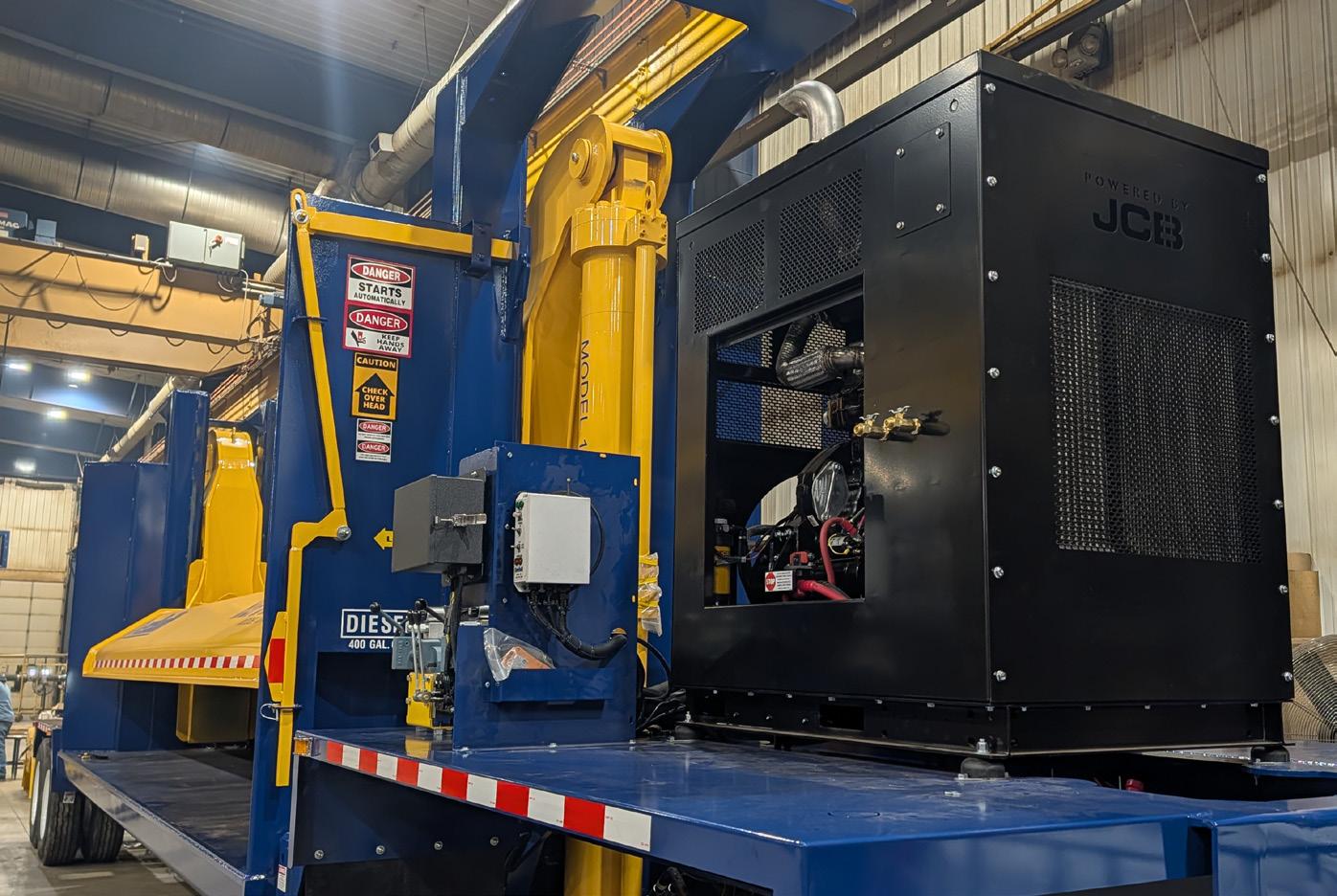
JCB’s global infrastructure ensures its customers never operate alone. Whether it’s the expertise of a JCB Powertrain distributor or the reach of JCB’s parts supply - help is never far away.
The network in numbers
Behind every JCB Powertrain component or drivetrain is a robust and far-reaching network that keeps the wheels turning. JCB Powertrain has three manufacturing sites – in England, Wales and India. There are 20 specialist OEM Powertrain distributors globally – including key partners in Europe, the Americas, Asia, Africa and Australasia – ensuring the right technical advice, component support and application insight is always within reach.
Then the wide JCB network adds another layer of confidence. Across five
continents, more than 750 dealers operate from over 2,000 depot locations in 120 countries. That’s backed by an advanced global parts system that dispatches over one million genuine parts every week, 95% of which can be delivered anywhere in the world within 24 hours.
It’s clear this is no ordinary supply chain.
The JCB difference
What sets JCB apart isn’t just the breadth of the network. It’s the levels of efficiency and expertise within it. The service model is built around speed, simplicity and maximising machine uptime. That means proactive support and reactive solutions all delivered by specialists who know the product inside out.
These teams operate to strict manufacturer standards, using OEM-approved
parts and extensive data to get the job done right. That helps protect equipment warranties and extend engine life. Mobile service vans, 24/7 assistance and realtime diagnostics add flexibility and convenience, particularly for customers in remote locations or challenging environments. And because JCB Powertrain customers also have access to the broader JCB dealer network, they benefit from enhanced peace of mind, especially when working internationally.
This seamless service delivers tangible benefits. Operating costs come down. Productivity goes up. Machines last longer and perform better. Downtime is kept to a minimum and customers stay on the right side of safety and compliance.
It’s a support network built to help you do more and operate anywhere.


Gulf Equipment Technology LLC
Bahrain • al-alawi.com
Westquip Diesel Engines
Canada • westquip.ca
Marindustrial Inc
Canada • marind.ca


Ercesa sro
Czechia • ercesa.cz
JCB India
India • jcb.com/en-IN
Pitteri Violini SPA
Italy • pitteriviolini.com
Maruma Technica
Japan • maruma.jp


Brinkmann & Niemeijer BV
Netherlands • brinkmann-niemeijer.nl
Pace Power & Air
New Zealand • pacepower.co.nz
GB Equipment
UAE • galadariequip.com


Power Torque Engineering
UK • westquip.ca


Power Torque (PTY) Ltd
South Africa • powertorque.co.za
Wids Tech Corporation
South Korea • jcb.com
BTM Iberia


Spain • btmiberia.es


Power House
Sweden • powerhouse.se/
Paul Forrer AG
Switzerland • paul-forrer.ch


Motormart SA
Mexico • motormart.com

SIF Is Makinalari
Turkey • sif.com.tr
Mitchell Powersystems UK • mitchells.co.uk
JCB Power Systems UK • jcb.com

JCB Transmissions UK • jcb.com
Anderson Industrial Engines USA • ai-engines.com
Continental Engines LLC USA • continentalengines.com
M & L Engines LLC
USA • mlengine.com
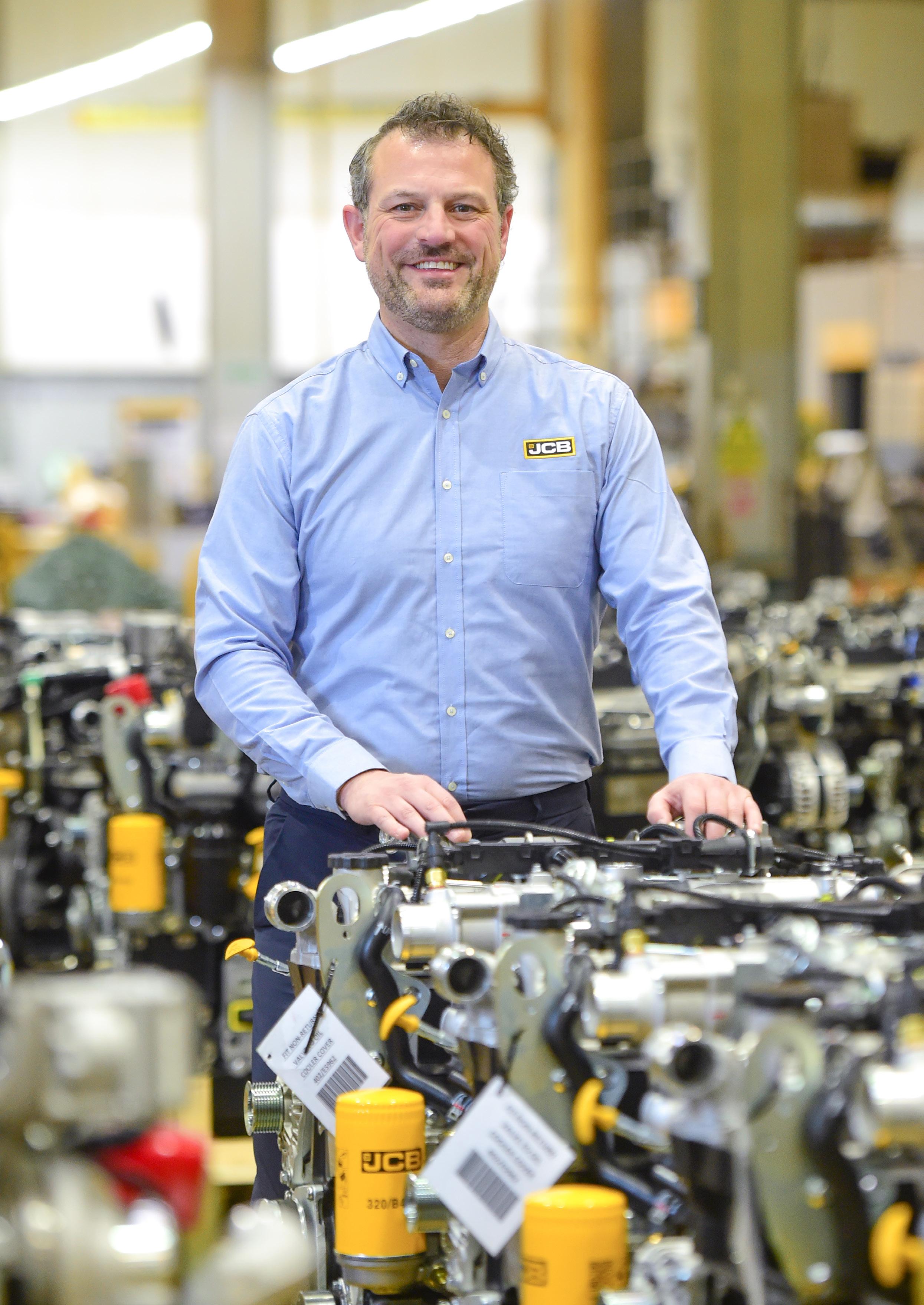
Strengthening its commercial presence in a region of key strategic importance, JCB Powertrain has appointed Ryan Zenke as Regional Sales Manager for the Americas.
Based in the United States, Ryan takes on responsibility for distributor relationships and direct OEM partnerships across the Americas, acting as a key link between customers and JCB.
Ryan brings a wealth of international experience. He began his career in military aerospace before working in pharmaceuticals and technology development. Since 2013, he has held senior commercial roles in the off-highway engine sector, with companies including DEUTZ AG, FPT and Kohler Engines. His unique experience spans diesel, gasoline and alternative power markets, on both the OEM and distributor sides.
Ryan said: “My decision to join JCB was driven by the company’s integrated product offering and forward-thinking
approach. JCB Powertrain offers a full package approach to its customers with a comprehensive portfolio of engines, transmissions and axles that is superior to the competition. The focus on hydrogen and net-zero worksites for the future is an impressive and exciting programme I am excited to be a part of.”
Pivotal moment
Ryan’s remit includes championing the needs of customers within the wider JCB organisation, while expanding the company’s footprint in the region. With major developments underway in North America, including the construction of JCB’s new facility in San Antonio, Texas, Ryan’s appointment comes at a pivotal time.
Ryan said: “I am responsible for all distributor partnerships and working with key direct OEMs in the region. I also represent JCB at industry shows and events, with the goal of expanding our global business base. JCB is an organisation that consistently invests in developing cutting-edge
technology and in excellent facilities. The diversity of the JCB product offering is truly impressive and is perfectly poised for continued growth.”
Looking ahead, Ryan is keen to grow the business in the Americas through both new OEM alliances and the expansion of JCB’s distributor network. His aspirations for the next five years are ambitious, including the development of an extended regional team to support what he is confident will be an ever-expanding JCB Powertrain footprint.
Ryan said: “I pride myself on the ability to collaborate and I’m excited about the opportunity to facilitate working with JCB for our current and future partners. I look forward to playing a part in the growth of the Americas and the overall JCB Powertrain business.”
Ryan's appointment by JCB Powertrain is a critical step in the company's continued investment in supporting partners and customers in the region.
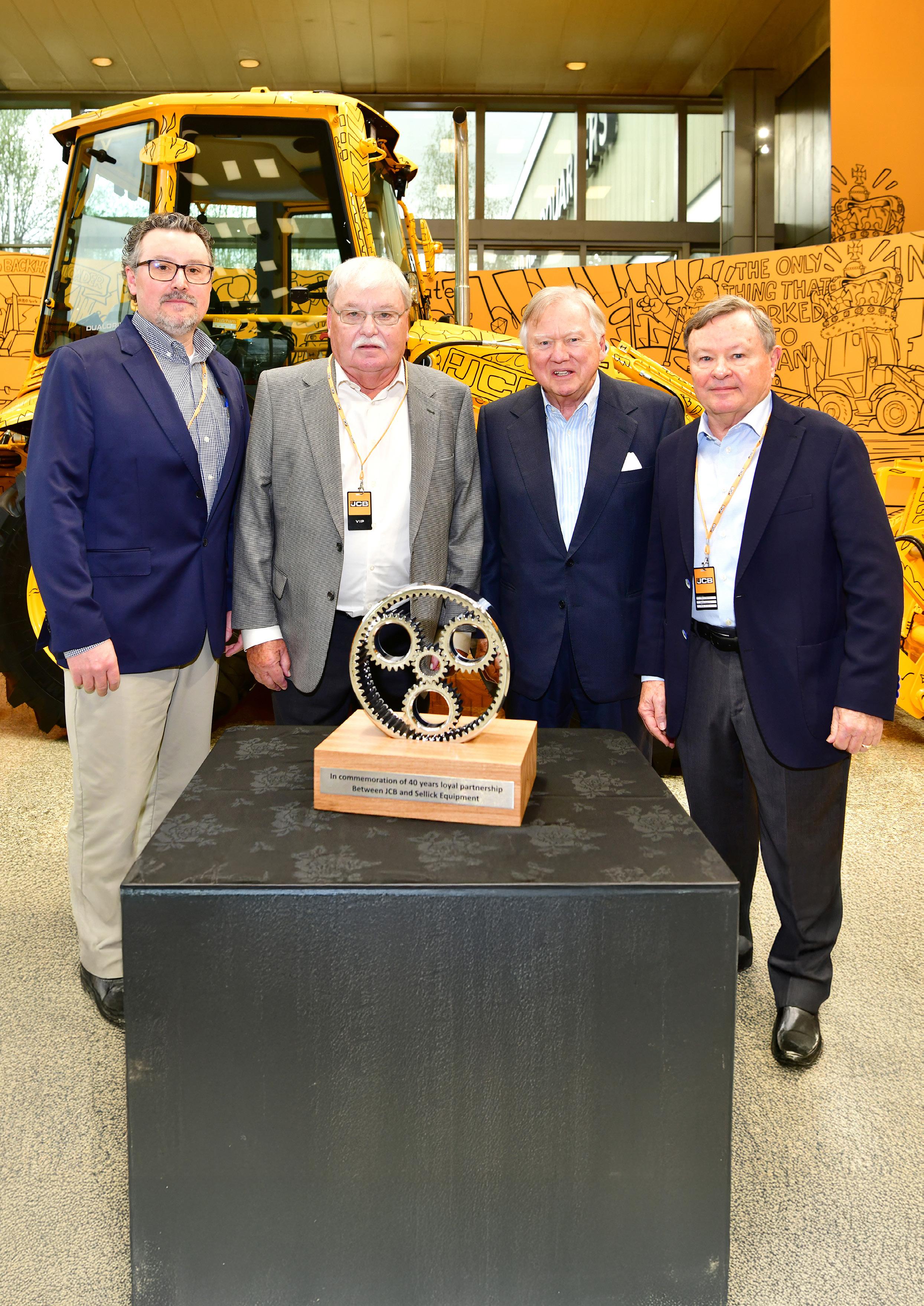
JCB Drivetrain Systems has celebrated four decades as a supplier of world-class components to OEM customers around the globe.
To mark the milestone, one of its longest-standing partners – Canadian manufacturer Sellick Equipment – joined the team in the UK for a special celebration.
Sellick, a family-run business based in Ontario, has been specifying JCB drivetrain components in its rough terrain for 40 years. During the visit, Lord Bamford presented the Sellick team with a mounted axle model in recognition of the enduring relationship.
JCB began manufacturing axles and transmissions in Wrexham in 1978 as part of a wider plan to bring component production in-house. Just seven years later, in 1985, the company formed International Transmissions Limited (ITL) to begin selling those same high-quality components, originally designed for its own machines, to other equipment manufacturers around the world.
Lord Bamford said: “When we started supplying drivetrain components to external customers in 1985, we knew we had something special to offer. Today, the scale and reputation of the business is tes -
tament to the hard work of the entire team and the loyalty of our customers.”
Now trading as JCB Drivetrain Systems, the business is a global force, providing integrated drivetrain solutions to OEMs in more than 150 countries. Its offering spans engines, axles, transmissions, cooling packages and hydraulic systems, all engineered to perform in demanding off-highway applications.
The evolution has been remarkable. From supplying basic synchromesh transmissions and axles in the 1980s, JCB Drivetrain Systems today delivers a full range of sophisticated drivetrain solutions. These include 8-speed powershift transmissions with lock-up torque converters and DualTech technology, combining lowspeed hydraulic drive for precision with the high-speed performance capabilities of a mechanical transmission.
As the company celebrates 40 years of powering OEMs worldwide, its sights remain firmly set on the future – continuing to support partners with proven products, innovative design, and outstanding global service.

Distributor Continental Engines extends JCB Powertrain territory across 22 US states.
JCB Powertrain has broadened the territory of long-standing North American distributor Continental Engines , significantly increasing the company’s US coverage and reinforcing its role as a key partner in the region.
Continental – a Palmer Johnson company – has assumed responsibility for six additional states: Wisconsin, Minnesota, Ohio, Indiana, Illinois and Michigan. This takes the distributor’s total footprint to 22 states, spanning nearly half the country.
Continental has been an authorised JCB Powertrain distributor since 2018, supporting OEM customers across the eastern US with diesel engines, full powertrain solutions, technical support and servicing. The territory expansion recognises both the distributor’s proven track record and the increasing demand for JCB engines in the region.
JCB Powertrain OEM Sales and Engineering Manager, Jon McNulty said: “This expansion for Continental represents the next step in JCB Powertrain’s strategy to grow its global engine distribution capabilities. Our combined expertise positions
us to meet growing market demands at pace and with an unwavering commitment to quality.”
With Palmer Johnson’s already long established presence across the Great Lakes region, the move gives Continental a strong platform to accelerate growth in these new territories.
Jeff Cooper, President of Continental Engines, said: “The expansion of our JCB territory marks a key opportunity to grow alongside JCB as they invest heavily in the North American powertrain and engine market. Leveraging Palmer Johnson’s established footprint in the Great Lakes region, we’re well positioned to accelerate growth and deepen our partnership with JCB.”
With customers already on board in the newly added states, more OEMs are benefitting from JCB’s world-class engine technology. Backed by Continental’s responsive, high-quality service network, it’s a move sure to grab an even greater slice of the fast-growing US off-highway market.

“THE
E
xpAnsIOn
OF
OUR JcB TERRITORY MARKs A KEY OppORTUnITY
TO GROW ALOnGsIDE JcB As THEY InVEsT HEAVILY In THE nORTH AMERIcAn pOWERTRAIn AnD EnGInE MARKET. ”
JCB Powertrain's Scandinavian distributor is on a mission.
New distributor Power House AB has quickly become a dynamic force in the JCB Powertrain network. Since joining as a distributor for Sweden, Denmark and Norway in 2024, the Gothenburg-based team has wasted no time in getting JCB engines in front of the right people - literally.
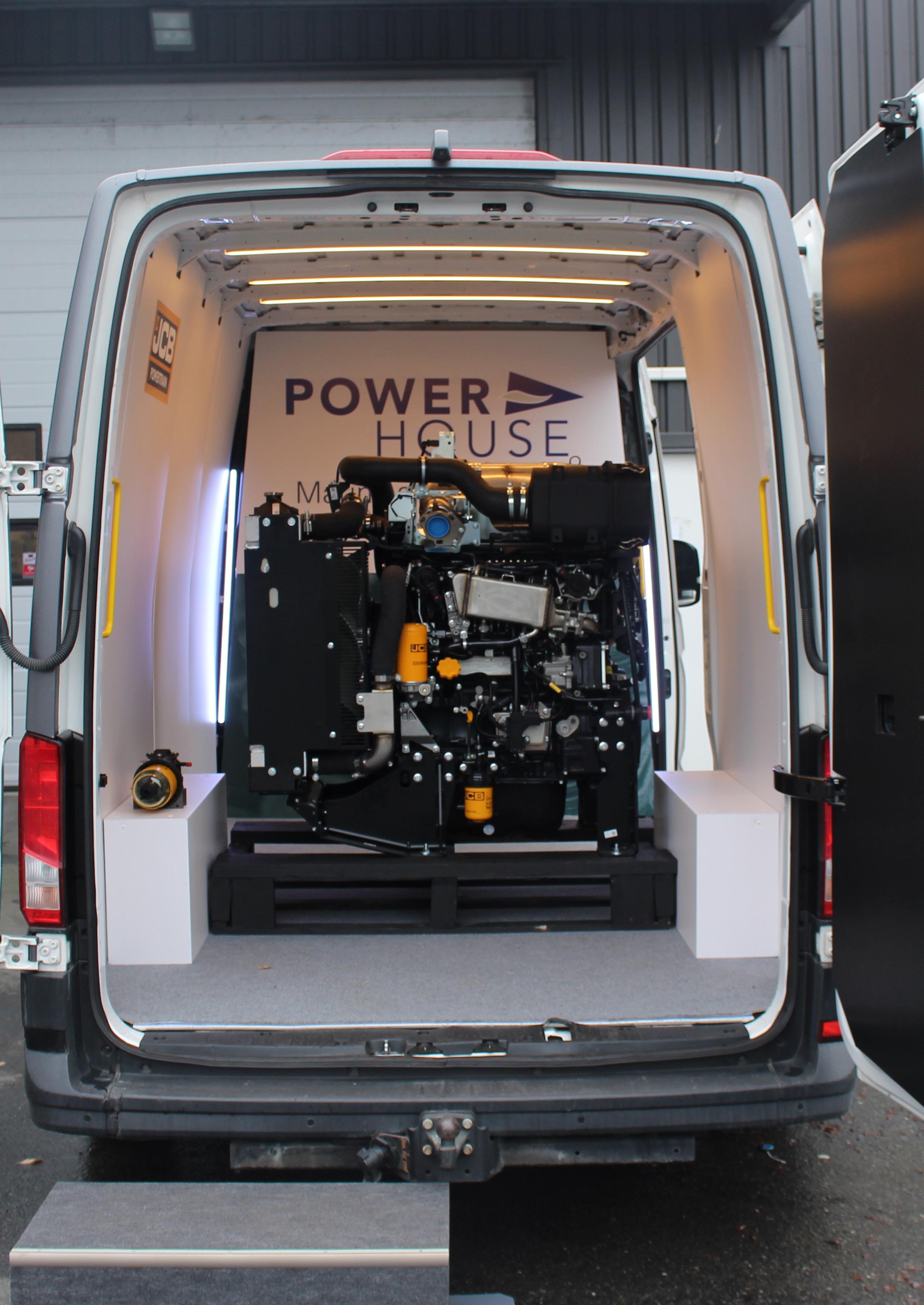
Power House took the JCB engine range directly to OEM prospects with two successful roadshow tours completed in the last year. The tours spanned seven sites in Sweden and reached more than 100 engineers, designers and decision-makers at potential prospect organisations.
But this was more than a static display. It was about interaction. Power House Sales Director, Reine Pettersson said: “The JCB engines really are high quality, technical products that we are proud to work with. But the true success was bringing it directly to the people who work with it every day. Many rarely get to see the equipment live, and watching them feel, test and experience it first-hand created a whole new level of confidence and connection.”
That was a view shared by Power House’s Industrial Sales Lead, Lars Eriksson. He said: “Connection is everything. We didn’t just bring the products to the OEM, we created a forum. At one customer stop, the entire office took their coffee break around the roadshow van. There was over 30 peo -
ple outside, asking questions, measuring parts and discussing engine technology. That level of engagement is priceless.”
Founded in 2008, Power House brings decades of hands-on experience in marine propulsion and industrial power generation. With 24 employees and more than 300 years of combined sector knowledge, the team’s approach is focused, technical and highly customer-led. They offer everything from initial specification and installation through to lifetime service and support with the business spanning across a vast application range, including: marine gensets, firefighting systems and land-based industrial power.
Power House CEO, Richard Johansson said: “We decided to test the idea of a road show following our start as distributors for JCB Powertrain. We’re very happy that JCB supported the idea with product information, merchandise and good advice. We’re looking forward to working with those we have met and planning more tours in 2026”.
Whether it's on the road, at the docks or on a customer site, Power House is proving to be a proactive partner committed to growing the JCB presence across Scandinavia. The team has certainly put the miles in and judging by the reception so far, they are well on the road to success.
Telephone: +44 (0)1889 590312
Email: jcboempowertrain.sales@jcb.com
Website: www.jcb.com/en-gb/products/powertrain-for-oem