Dear Members/Friends of the Jazz Club of Sarasota,
As we move into the summer season, I’m delighted to share an update on the vibrant programming ahead, along with an exciting development that will enhance how we stay connected as a community. Summer has long been a time when our club embraces fresh ideas, and this year is no exception.
Our popular monthly Jazz Thursdays at The Sarasota Art Museum will continue uninterrupted throughout the summer and into next fall. Artist announcements will be coming soon, and we’re thrilled about what’s ahead. The Monday Night Jazz Cabaret series will see some welcome changes this summer. In response to the strong enthusiasm from our audiences, the number of performances will double to twice a month, under the thoughtful curatorial leadership of Michael Ross. We’re pleased to extend the schedule of this most popular series to meet the growing demand.
We’re also excited to announce the launch of the club’s newly redesigned website. The updated platform features easier navigation, a streamlined event calendar, enhanced membership tools, and richer content that celebrates our artists and our history. It’s designed to make staying informed and engaged simpler than ever—whether you’re discovering upcoming performances or renewing your membership.
Thank you for your continued support and enthusiasm. Your passion keeps jazz alive in Sarasota, and we look forward to sharing an inspiring summer of music with you.
Warm regards,
Ed Linehan, President
Celebrating 100 Years of John Coltrane
By Joseph Petito
he year 1926 was unusually rich for the future of jazz, marking the birthdays of eight musicians and vocalists who had a significant impact on the genre.
Melba Liston was the first female trombonist to play alongside men in big bands from the 1940s to the 1960s. Saxophonists Lou Donaldson and Jimmy Heath performed into their 90s. Composer and pianist Randy Weston left a rich legacy, exploring his ancestral African connection. Ray Brown, who played double bass, did extensive work with Ella Fitzgerald and Oscar Peterson. And Tony Bennett won 20 Grammys and two Emmys during his more than sixty years singing pop and jazz.
But the most innovative and impactful members of the centenary group were trumpeter Miles Davis and saxophonist John Coltrane. Davis, who played a critical role in jazz development from the 1940s to the 1990s, deserves an article of his own, but that is for another time.
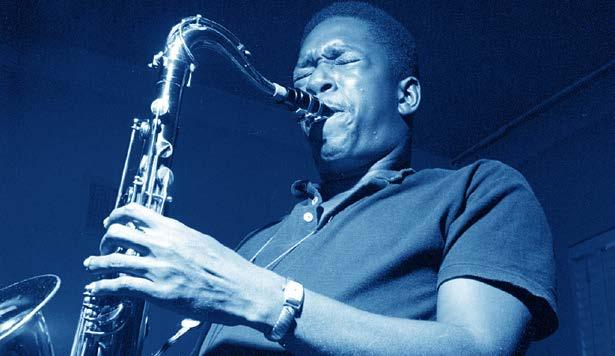
John Coltrane, or “Trane” as he was commonly known, was born on September 23, 1926. More than 58 years after his passing, he remains a monumental figure whose probing and exploratory music continues to reshape the landscape of sound.
SARASOTA JAZZ Sounds
He played alto, tenor, and soprano saxophones and experimented with the flute in his last years. For his seminal works in the 1960s, he relied on McCoy Tyner on the piano, Jimmy Garrison on bass, and Elvin Jones on drums. On some occasions, other saxophone greats joined his quartet, notably Eric Dolphy and Pharaoh Sanders.
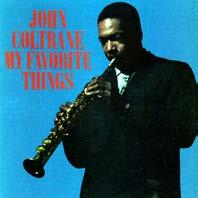
During his over 20-year-long career, Coltrane moved easily among genres, from Bebop/Hard bop to free jazz. He took popular songs like “My Favorite Things” from the movie Mary Poppins, and gave it a thrilling, inventive jazz treatment. His composition could be lyrical and hard-driving. He infused his music with profound spiritual focus. His unique, dense, improvisational technique transformed saxophone playing and continues to influence jazz, as well as rock and hip-hop.
Coltrane’s explorations sparked intense controversy. Given the then-current structures of traditional jazz and bebop, many critics and some musicians labeled his avant-garde, free jazz as “anti-jazz” and his “sheets of sound” as angry and overly complex. His later works, including Kulu Se Mama and Ascension, were
considered overly spiritualistic, abstract, and intense by some critics, though others regarded them as profound.
To honor this centennial, the Coltrane Estate has unveiled "COLTRANE 100," a global, year-long celebration featuring symphonic concerts at the Hollywood Bowl, the opening of his historical homes to the public, and a comprehensive reissue campaign of his music.
His composition could be lyrical and hard-driving. He infused his music with profound spiritual focus. His unique, dense, improvisational technique transformed saxophone playing and continues to influence jazz, as well as rock and hip-hop.
Coltrane’s catalog is vast. His discography exceeds 100 albums, including 25 studio albums and numerous live recordings issued decades after his death, such as The Olatunji Concert and Live at the Half Note. Trane recorded over 25 albums with other jazz greats, including Duke Ellington, Jonny Hartman, and Thelonious Monk. He also played with Miles Davis on the legendary 1959 recording, Kind of Blue, which has sold more than 5 million albums.
But in my view, three specific albums stand out as essential markers of his evolution, representing the technical, melodic, and spiritual pillars of his legacy.
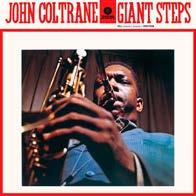
Giant Steps (1960) — The Architect of Modern Jazz
As the 1960s began, Coltrane cemented his reputation as a visionary artist with Giant Steps. Recorded for Atlantic Records, this album is a masterclass in harmonic complexity. The title track is renowned for its rapid, shifting chord changes, often called "Coltrane changes," which pushed the boundaries of bebop and forced improvisers to think faster and more abstractly.
The album represents the peak of Coltrane's technical mastery over traditional jazz structures, just before he dismantled them. As part of the Coltrane Mono Collection released for the centennial, this album showcases the raw intensity of his sound.
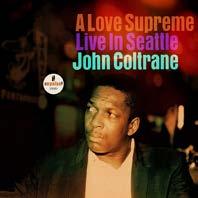
A Love Supreme (1965) — The Spiritual Journey
If Giant Steps was a testament to Coltrane’s intellect, A Love Supreme is the expression of his soul. Recorded in 1964 and released in 1965, this four-part suite – "Acknowledgement," "Resolution," "Pursuance," and "Psalm"– is widely considered one of the greatest jazz albums ever made. It captures the moment when Coltrane’s music was fueled by a profound spiritual awakening. Even today, this album continues to be a beacon of artistic devotion.
In honor of Trane’s centennial, Impulse Records has unveiled the first-ever official music video for "Acknowledgment,” recreating the Van Gelder Studio, a legendary recording venue in Englewood Cliffs, NJ, proving the album’s enduring power to move listeners across generations. Designed by engineer Rudy Van Gelder, the studio is famous for its unique acoustics due to its chapel-like structure.
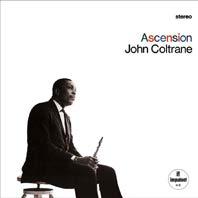
Ascension (1966) — The Leap into the Future
By the mid-60s, Coltrane was moving beyond conventional form into free jazz, seeking a sound that was raw, intense, and unfiltered. Ascension, produced a year before his death from liver cancer at
the age of 40, is a chaotic, thrilling largeensemble recording that shocked many upon its release, but is now recognized as a landmark of avant-garde music. It is the sound of a master letting go of constraints to explore pure emotional expression.
Ascension highlights Coltrane’s refusal to be comfortable or repetitive. It embodies the searching that defined his final years and serves as a testament to his restless, fearless creativity.
As these three albums show, Coltrane did not just play music; he built a world, loved it, and then set it free.
The 2026 centennial celebrations, including the release of The Tiberi Tapes (private live recordings from 1961-1965) and Coltrane 100: Legacy, highlight that Coltrane is still with us.
He keeps a-rolling. His music is as urgent, challenging, and contemporary as it was in the days he played it.
“I’m
Only the Piano Player”
By Darienne Oaks
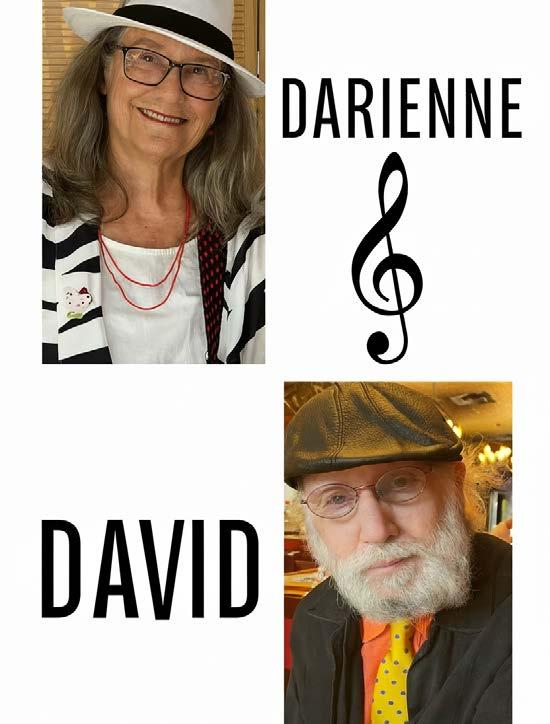
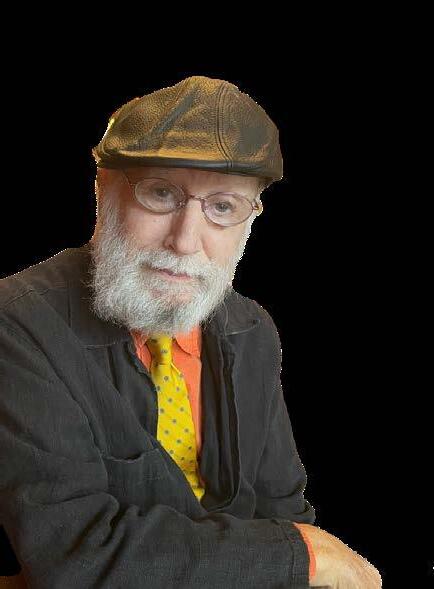
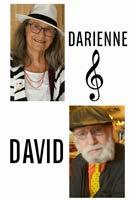
met David Lahm at Allegro Bistro one Tuesday night in the fall of 2025 when Kitt Moran’s band was playing. I knew Kitt because I had taken voice lessons with her a few years earlier. A very generous musician, Kitt often invites audience members to come up and sing or play their instrument with the band. That evening, she called on me to join them. When the band took their break, a mutual friend introduced me to David, a piano player. We clicked and began rehearsing and performing together as “Darienne and David.”
As I got to know him better, I realized what a jazz treasure we have in our midst. As a piano player, he has worked with notable bands in Los Angeles and New York, including Buddy Rich. He supports jazz singers and jazz bands, and directs jazz cabarets around the country. I thought that others would enjoy learning about this quiet master, and he was kind enough to let me interview him for this article.
recording of “Honeysuckle Rose” in 1957. Blown away by Monk’s playing, he purchased his first jazz album and never looked back. He grew into a professional jazz pianist, composer, cabaret composer, bebop lyricist, jazz band leader, and accompanist for singers.
These days, you might hear David say, “I’m only the piano player,” with his open hands shrug-like lifted toward the sky, but he is so much more. His welleducated fingers know hundreds of songs American Songbook; hymns (he accompanied the morning hymns at the Riverdale Country School, Bronx, NY), Gilbert and Sullivan gems, old obscurities, and, of course, his own compositions.
As a dutiful son, David stuck to the classical piano lessons his mother had arranged for him when he was six or seven, but he never really enjoyed them. For a while, he almost stopped playing the piano, but then the jazz bug bit him when he was a teenager. His mother, the wellknown lyricist Dorothy Fields, who wrote for nightclub revues, Broadway shows, and films, encouraged his newfound musical explorations. When she dropped him off to begin freshman year at Amherst College, David brought with him clothes and the usual college accessories, plus a stack of Thelonious Monk records.
While attending his freshman classes, David became so caught up in jazz that he enrolled for three summer weeks at The School of Jazz in Lenox, Massachusetts. The faculty included The Modern Jazz , pianist Bill Evans, trumpeter Kenny Dorham, and drummer Max Roach. His fellow students included Ornette Coleman, Don Cherry, and Dave Baker. By the time sophomore year began, David was so jazz-immersed he couldn’t focus on his classes and decided to take off a year to study composition with jazz pianist and composer George Russell, who had also been a teacher at Lenox.
David finally graduated in 1963 with a degree in English and went to work at ASCAP in New York.
Over the years, his jazz skills have been informed by many enriching opportunities, including a three-month State Department tour of the Middle East and South Asia with a combo from Indiana University. David also spent 14 months touring with the Buddy Rich Orchestra. They called him in October 1968 to join the band. He quit his day job after he hung up the phone. That night, he was playing for Buddy.
When the tour ended, David returned to New York City and worked as an intermission pianist at the Top of the (Village) Gate. He twice toured Germany with another Lenox alum, jazz guitarist Attila Zoller, became a composer for a small jazz combo, and wrote bebop lyrics. Remembering his time jobbing as a pianist for cabaret singers around New York City, he said, “I came to realize that playing for vocalists is what I do best.”
David started taking himself seriously as a composer around 1974. “There was a moment when I was tinkering around on the piano and realized I could compose because a phrase would come up, and I had enough music background to develop that kernel of a phrase into a full piece. I never knew when something would get my
brain started when I was tinkering on the piano. Once it did, it was like working on a crossword puzzle.”
Throughout his career, David has collected singers, compositions, and songs. He has worked with approximately 30 singers. One, Judy Kreston, became his second wife. They performed cabaret shows together, mostly in New York City, until her death in 2009.
David now lives in Estero, happily married to Nancy Watson, an expert chef (and Scrabble assassin). Still accompanying singers today, he continues trying to help them enjoy what they do and get more confidence in marketing themselves. He is also a serious thrift store shopper, who continues to add to his collection of over 400 sports hats and team jerseys.
At 85, always on the lookout for the next singer…or hat, David lives in the now. “I am living for today. I don’t look back; I am not ashamed of anything; carry no regrets, and don’t copy. Everything I write originates with me. The stuff I write can be challenging, but I try to give players the opportunity to express themselves and offer input, not only in their improvisations but in the pieces themselves. Sometimes what I write is chordally packed. Musicians help me hold onto the character of the
“There was a moment when I was tinkering around on the piano and realized I could compose because
a phrase
would
come
up, and I had enough music background to develop that kernel of a phrase into a full piece. I never knew when something would get my brain started when I was tinkering on the piano. Once it did, it was like working on a crossword puzzle.”
original but let it breathe a little. I want them to know I pay attention to their preferences.”
The qualities he most admires in fellow musicians are “their competence in rendering the music effectively; their openness to stuff they have never heard before, and their reverence for jazz, real jazz.”
He insists that there is a difference between real jazz and what people often sell as jazz. “Jazz has a long tradition and a reputation for integrity, but there are predators who kidnapped that reputation and used the word ‘jazz’ to market what is definitely NOT jazz. Don’t spend money at a ‘jazz fest’ if you want to hear jazz.”
When I asked, “If you could give advice to young jazz musicians, what would it be?”
David responded, “The only advice I could give to anyone is to try and make yourself the only person who can deliver what you can deliver so people who want it need to come to you.”
David Lahm’s passion for jazz and good music keeps him engaged with area singers and musicians. He works regularly with Jeremy Russell at Stretto at the Sunseeker Resort in Charlotte Harbor; with the Kitt Moran Jazz Band at Allegro Bistro, Tuesday evenings from 5:30 to 8:30 pm, and with me, as the jazz duo, Darienne and David, performing in local senior residences, libraries, private parties, and public halls.
DISCOGRAPHY
“If you could give advice to young jazz musicians, what would it be?” David responded, “The only advice I could give to anyone is to try and make yourself the only person who can deliver what you can deliver so people who want it need to come to you.”
2002 with Judy Kreston MEDLEYFYIN’ (a centennial tribute to Richard Rodgers)
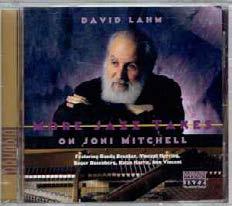
2001 MORE JAZZ TAKES ON JONI MITCHELL
1999 JAZZ TAKES ON JONI MITCHELL
1991 MUSCLE MEMORY HOEDOWN
1989 BE SOMEBODY (David considers this album his magnum opus)
1985 LIVE AT JAN WALLMAN’S w/Judy Kreston
1982 HERE IN LOVE LIES THE ANSWER w/Judy Kreston
1982 REAL JAZZ FOR THE FOLKS WHO FEEL JAZZ
If you are looking for an accompanist, email: Dflahm@gmail.com or If you are interested in booking the jazz duo Darienne and David, email Darienne.oaks@gmail.com.
Darienne Oaks is an award-winning short story and YA historical fiction writer. A professional jazz singer, ukulele player, composer, and former educator, she resides in Nokomis with her husband and likes to spend time with her daughter, son-in-law, and energetic grandson who live nearby.
Photo courtesy of Stephen Splane
Arturo Sandoval
Received the 2026 Satchmo
Award
By Chris Angermann
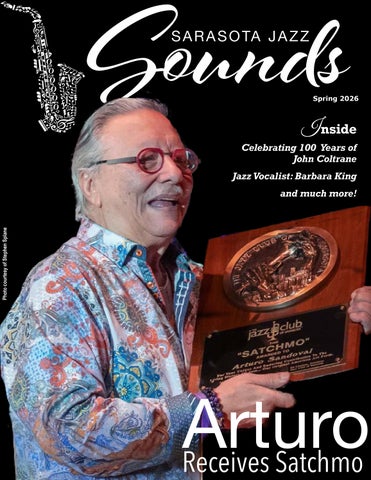
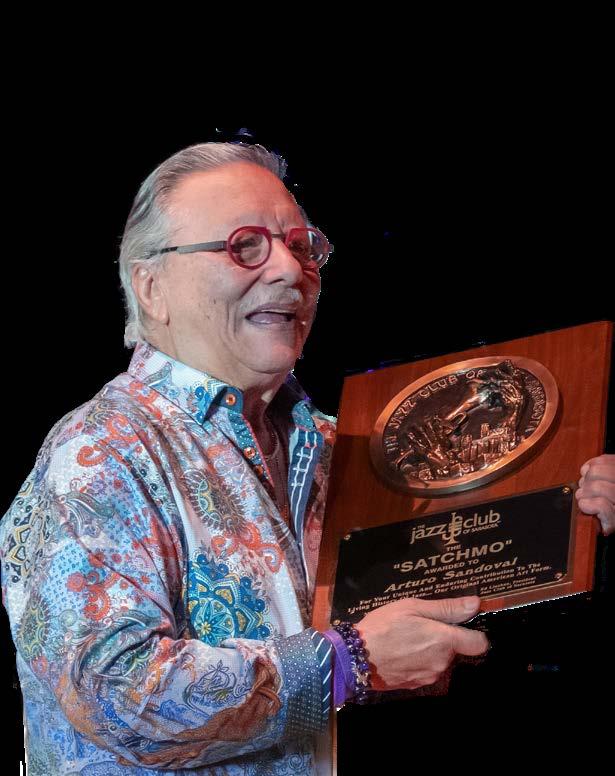
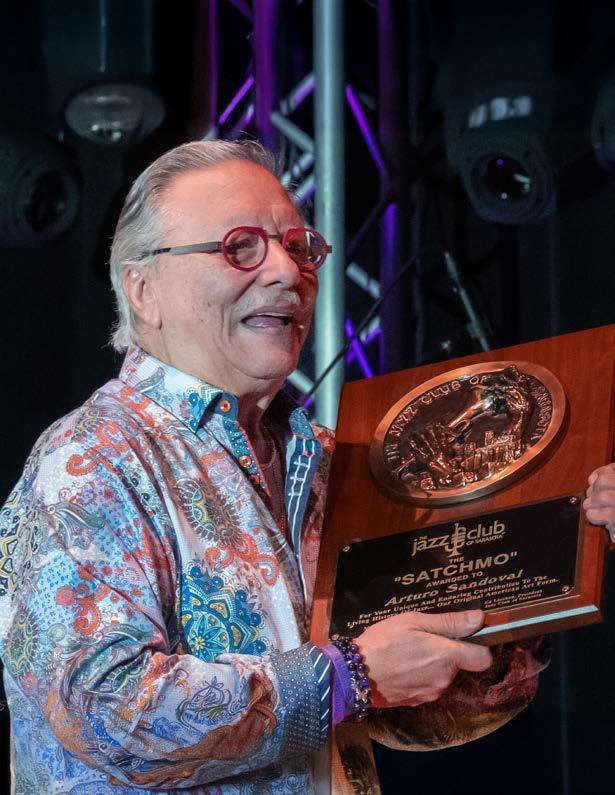
he final evening of this year’s Sarasota Jazz Festival was special for several reasons. To start with, Arturo Sandoval, the famed CubanAmerican trumpeter, received the 2026 Satchmo Award.
Then, before the largest audience of the three-day festival, he and his 8-member band put on a high-energy show that thrilled the audience, with some of the spectators dipping, bopping, and dancing at the back of the hall. Sandoval was virtually a oneman orchestra. He not only played his signature trumpet but also accompanied his band on a small synthesizer and timbales (a pair of single-headed, open-bottom drums with metal casing that produce a high-pitched sound). In addition, he danced and scatted and performed a beautiful solo piano number of his own.
Sandoval has received numerous awards throughout his career, including 10 Grammys, an Emmy, and the Presidential Medal of Freedom, presented to him by President Barack Obama in 2013. More recently, he was a recipient of the 2024 Kennedy Center Honors. But getting the Satchmo meant a lot to him, too. He insisted on taking the trophy home with him. Most honorees in the past have had it shipped to them afterward.
The annual Satchmo Award, named after Louis Armstrong, was created by Jazz Club founder Hal Davis to recognize individuals who have made “a unique and enduring contribution to the Living History of Jazz.” The award sculpture was created by Frank Eliscu, who also designed the Heisman Trophy, the most prestigious award in college football.
Past winners include such notable performers as Ella Fitzgerald, Milt Hinton, Bucky Pizzarelli, John Lamb, Gerry Mulligan, Dick Hyman, Houston Pearson, and Ken Peplowski.
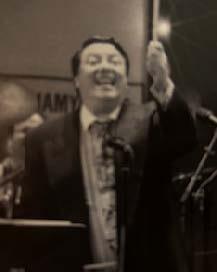
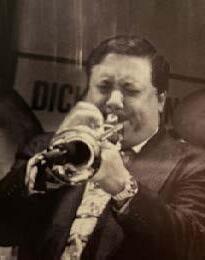
Sandoval is no stranger to Sarasota. He first performed at the Jazz Festival in 1993 and 1994 when it was getting started. He was also the Saturday night headliner four years ago.
1994 Jazz Festival
A native of Cuba, Sandoval was classically trained on the trumpet at the Cuban National School of Arts. He was influenced by several bebop jazz musicians, including Charlie Parker and Clifford Brown, but above all, by Dizzy Gillespie, who became his friend and mentor. Starting in 1981, Sandoval toured worldwide with a band he founded in Cuba.
In 1989, on tour with the United Nations Orchestra led by Gillespie, Sandoval defected from Cuba, seeking refuge in the U.S. embassy in Greece with Gillespie’s help. Nine years later, he became an American citizen. Since then, he has performed in numerous venues, large and small, including the White House and at the 1995 Super Bowl.
Sandoval always puts on a great show, but this time was especially wonderful. You could feel him reaching out to the audience, a master of his art pulling out all the stops to entertain and delight, rousing our emotions, and inviting us to join him on a high-octane musical journey. Highlights included “Sangú,” the rollicking, Afro-Cuban title track from his new album, due for release in early May, and the solo piano performance, which showed off Sandoval’s versatility and gifts as a composer.
At 76, he is still exploring new sounds, conjuring up infectious rhythms and melodies, and taking us with him for the ride.
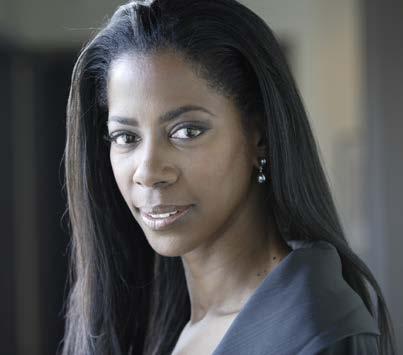
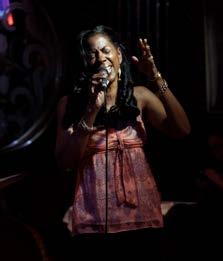
Jazz Vocalist: Barbara King
By Chris Angermann
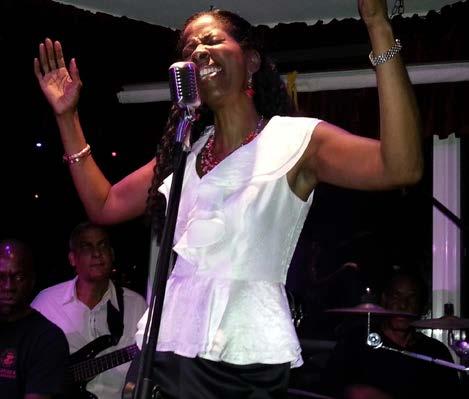
Barbara King learned about jazz at an early age. Her father was an avid fan and had a large collection of jazz albums, so she grew up listening to Sarah Vaughn, Ella Fitzgerald, Gloria Lynne, and Carmen McRae. “My father would always test me on who was playing and singing,” Barbara remembered.
Church and schools in Brooklyn’s Bedford-Stuyvesant and Coney Island exposed her to other kinds of music. In middle school, she sang the role of Maria in a production of West Side Story.
At Vassar, she sang in the college choir. “It was mostly classical, some pop,” she recalled, “and we toured all over the United States.”
She also met lifelong friends. One was a woman from New Orleans who was into jazz, and they started singing together. “It really opened me up to more jazz at that point,” Barbara recalled. “I didn’t realize until then how much I loved it – the fact that it allows a lot of room for creativity and improvisation, and creating your own sound.” When Barbara graduated, she returned to New York and enrolled in the Brooklyn Music School, where she studied under Roland Washington. “He was a fantastic vocal teacher who helped me quite a lot to develop my voice,” she said.
When Barbara embarked on a singing career, her smooth, husky tone and statuesque elegance opened many doors. She has performed in numerous clubs around New York, including Birdland, The Iridium, The Water Club, The Village Gate, Tavern on the Green, and Le Bar Bat. Barbara also toured internationally. She toured Europe several times, sang in Dubai, and traveled twice to Japan. “There were times when people didn’t speak English, and music became my way of communicating with them,” she said. “So, I always say music is the universal language.”
Sometimes Barbara traveled with a band, sometimes she connected with local musicians in foreign venues. In Greece, she had a full band with her. On her second trip to Japan, a pianist who lived there arranged the concerts.
When asked about the difference in audiences in America and abroad, Barbara said, “There is a love for jazz here in the United States, but there is an amazing love for jazz overseas. People have a hunger for it.”
At an engagement in Hokkaido, she sang at a festival called “Jazz and Golf.” People came to play golf during the day and attended jazz concerts at night. “Golf was really big in Japan at the time,” Barbara recalled. “But everyone who came to the performance was so excited about the music, it was really great!”
In 2008, Barbara released her first CD, Perfect Timing, which included four of her own compositions. She has continued to write songs when the spirit moves her, starting with the lyrics first and then figuring out the melody. While based in New York, Barbara met her husband, Julian Philips, an Emmy-winning TV journalist and anchor, who later became the first African American spokesperson for the NYPD.
In 2018, she and Julian started a restaurant and music club on 50th Street in Manhattan’s Hell’s Kitchen, called “The Sound Bite,” combining their passions. Julian created Cajun-Southern Italian cuisine. His chicken wings won first place in a competition! Barbara was the music director who booked performers and sang once a month. “It was a great place not only for established musicians but for young, up-and-coming performers,” she remembered. “It was a wonderful experience.”
One of them was Samara Joy, who sang at the club when she was 19 and still in college. “We became friends, and we’re still in touch today,” Barbara said.
Barbara and Julian retired to Sarasota a year and a half ago. They had visited friends here for 15 years and enjoyed
the weather, beaches, and cultural scene. “When we started thinking seriously about relocating from New York, Sarasota was at the top of the list.”
As a newcomer, Barbara appreciated the welcome she received. “I know there are people who wonder what they are going to do when they get to Sarasota. Not knowing anyone, will they have to start all over?” She said. “I have met so many wonderful musicians since we’ve come here. The networking has been really great.”
Since their arrival in August of 2024, Barbara has given a Monday night concert at Florida Studio Theatre for the Jazz Club and participated in Trolley Night at this year’s Sarasota Jazz Festival. She has sung at the Sarasota Bay Club, in Pelican Cove, and at the Anna Maria Island Beach Café, and she performs regularly at The Grill in Port Charlotte.
She is grateful to Dorothy and Scott Bates for encouraging her to sing at assisted living residences. “There is a real appreciation for the music,” Barbara explained. “Some residents don’t really get out much, and it’s an opportunity to
bless them with good music. At one performance, a man started to cry and said, “You know, this has brought back so many memories. I’m glad you came.”
For Barbara, such testimonials validate her approach to singing for others. “It’s about people being moved, not just entertaining. It’s about connecting with people,” she said. “I want to convey the emotion of the song and touch people with my music.”
For herself, Barbara listens to other favorite vocalists, notably Sarah Vaughn – she recently did a tribute concert of her songs at Pelican Cove. Barbara identifies with Vaughn’s statement to a reporter, “I don’t want to be categorized as a jazz singer. I want to sing all kinds of music.”
Barbara has also been listening to Carmen McRae. “She can take a melody and twist it around and do all kinds of things with it and come back,” she explained. “I find it interesting that she gets so creative with how she tells a story and weaves in and out of the melody.”
Barbara plans to continue to perform at various venues in the area. She is also putting together a big band concert. Having sung with the Brooklyn Big Band a couple of times and enjoyed the experience, she is working to assemble a group of 14 musicians to back her. “I like that full sound, and I’ve wanted to do it again for some time,” she explained. Meanwhile, Barbara recently created a YouTube channel for herself, where people can see videos of her performances. She also has her own website: https://www. barbarakingjazz.com/music.
Barbara’s next performance will be at the Sarasota Art Museum – Jazz on Thursday, May 14, 2026, from 5:30 to 8:00 pm.
June 8: Thomas Carabasi The
June 22: Fred Johnson It Don’t Mean a Thing:A modern take on the Great American Songbook
July 13: Daniel Jordan
Alegria: The Joy of Antonio Carlos Jobim
July 27: Scotty Wright By George! By Ira! Scotty Wright Sings Gershwin
August 10: Barbara King A Conversation With Billie and Ella
August 24: Alejandro Arenas Deep Roots: Bass and Latin Voices