This issue of Search highlights some of the myriad ways in which technology is powering The Jackson Laboratory’s research and shaping its impact on biomedical research and human health.
When people think of technology, the images that often come to mind are machines, computers and other devices. You’ll find those at JAX, but the technologies that are transforming our work and enabling us to change human health are highly varied, ranging from complex devices and powerful computing technologies to the sophisticated techniques we apply to analyzing data and creating disease models.
These models themselves are essential technologies that advance biomedical knowledge — both the mouse models for which JAX has long been known and newer types of models, like cellular models, that complement what we can learn from model organisms.
The Jackson Laboratory discovers precise genomic solutions for disease and empowers the global biomedical community in our shared quest to improve human health.
Finished reading?
Consider giving this publication a second life by passing it off to a friend or family member.
Genetically diverse mouse models were fundamental to the research on the immune response to the COVID-19 virus led by Nadia Rosenthal, Ph.D., FMedSci., the Maxine Groffsky Endowed Chair and scientific director, JAX Mammalian Genetics. Specialized mouse models are also integral to the pediatric cancer work of Ching Lau, M.D., Ph.D., and to the work led by Cat Lutz, Ph.D., and our Rare Disease Translational Center using preclinical gene editing to develop treatments for rare neurological disorders.
Powerful new gene sequencing technologies are expanding our ability to understand all aspects of the human genome and its relationship to health. In a landmark article in Nature, the lab led by Charles Lee, Ph.D., FACMG, the Robert Alvine Family Endowed Chair and scientific director, JAX Genomic Medicine, applied such technology to sequencing the full human Y chromosome, revealing new insights into human genetic diversity.
Search magazine is a production of JAX Strategic Communications in partnership with Mainebased Owl’s Head Solutions.
Printed October 2023
EDITOR
Brian Oleksiw
COPY EDITORS
Joseph Blanchette
Carol Lamb
As we look to the future, JAX is investing in the technologies that will enable us to tackle challenging health problems. Support from friends and donors will be vital as we grow our data science capabilities, expand our Rare Disease Translational Center and launch more innovative programs like the Maine Cancer Genomics Initiative. These technologies are accelerating the pace of fundamental scientific discovery as well as our ability to apply this new knowledge to helping patients. Improving human health is our ultimate goal. This is what inspires our work and we hope that you, too, are inspired by how JAX is making a difference in the lives of people around the world.
Ph.D.,
Last login: Fall 2023 08:29:46 in laboratory jax@ :~Thefuture$ []author:brian_oleksiw
Beyond the now
JAX’s pivotal role in future research
by Brian Oleksiw
On the surface, scientific advancements may seem to appear almost by magic, especially in a time when biomedical research is progressing in continual leaps and bounds. Yet for these advances to happen, there needs to be a vast supporting web of previous research breakthroughs, emerging technologies, forward-thinking scientists and accommodating lab facilities, to name but a few of the many factors involved.
As 2023 draws to a close, JAX continues to have a pivotal role in driving future progress. What sets JAX apart from other research institutions is not just one thing but a combination of elements that establishes the Laboratory at the forefront of genetics and genomics research. Originally best known for its mice, JAX is increasingly recognized as a leader in translational research, data science, rare disease research and much more. While the road from basic science to the clinic can be long, JAX is working relentlessly to fast-track momentum toward treatments and cures.
In this issue, we will dive into recent advancements, exploring many of the new technologies JAX is using, and emerging research that will have lasting impact. These highlights include only a handful from the recent past; accurately capturing the breadth of JAX research would take many more issues! We invite you to explore how JAX is moving beyond the now to play a pivotal role in the future of research and health.
[]why_the_y: author:sophia_anderson
Why the Y?
Pille Hallast, Ph.D., and collaborators were among the first to sequence not one, but 43 diverse human Y chromosomes in their entirety. Hallast’s work reveals the complexities of the male sex chromosome and creates a foundation for future paternal lineage and male-linked disease studies.
Pille Hallast is a detective, but not in the traditional sense.
As an associate research scientist in the Charles Lee lab, her research focuses on deciphering the clues hidden within our genome. Hallast identifies and traces structural changes or variations in the genome from generation to generation. Her work reveals how these inherited variants are useful for mapping migration patterns, pinpointing the timeline for historical events and determining ancestry, in addition to studying human health. In particular, Hallast has spent many years deciphering the mysteries of the Y chromosome — the sex-determining chromosome for biological males.
The Y chromosome defines relationships between generations,” says Hallast. “It is directly inherited from father to son and therefore is key to understanding human population history.”
The Y chromosome acts as a genetic fingerprint passed down through the paternal lineage. It has stretches of code that are never recombined or swapped out with other genetic material. This creates a signature for the men of a specific family or line. But over great expanses of time, natural alterations or mutations to this genetic code occur, making the fingerprint even more distinct. From there, researchers like Hallast can build family trees, or phylogenies, describing the evolutionary history and biological relationships between the male members of a family tree.
“As mutations occur in the Y chromosome, they will appear in the male descendant’s genome. If your grandfather had a specific mutation, all his male descendants will have the same mutation because it is highly unlikely that it will disappear within that short of a timeframe,” says Hallast. “Based on these informative sites, we can generate a phylogeny to determine which chromosome was ancestral, and isolate when the mutation occurred.”
One of Hallast’s first studies traced the Y chromosome throughout the European expansion during the Bronze Age. Her work showed how mutations tracked through paternal lineages correlated with the rapid and widespread changes of the era, and was even cited in an episode of the mystery science-fiction series “X-Files” — specifically Season 10, Episode 2: “Founder’s Mutation.”
My family is so proud. They do not understand science at all, but they love that my name has been said on ‘X-Files.’ For them, it has been the greatest moment of my career,” says Hallast.
Missing in (in)action
Hallast’s expertise in tracking male lineages has been proven yet again in her most recent research effort, published in Nature . Hallast, Charles Lee, Ph.D., FACMG, and collaborators from Clemson University and the University of Düsseldorf are the first to piece together a diverse sampling of the historically underresearched Y chromosome. Using openaccess data and modern long-read sequencing technologies, Hallast and collaborators used 43 cell lines to sequence and compare Y chromosomes base by base. But hasn’t the human genome already been sequenced?
It is no secret that in 2003 the Human Genome Project completed the first full sequencing (building base by base) of the human genome. While a great feat for modern science, the project did not complete the genome in its entirety.
Approximately 92% of the human genome was sequenced, while the remaining 8% was, in effect, swept under the rug. Much of the Y chromosome fell into that 8%.
The Y chromosome is much smaller than its complementary sex-determining chromosome, X, and most of the 22 other chromosomes. Filled with densely packed repetitive areas, it proved to be difficult to examine using the technology available at the time — mainly Sanger sequencing.
Like other areas of the genome, the Y chromosome is small and very difficult to study because its base components are highly repetitive. The composition is quite complex,” says Hallast.
In 2022, the Telomere-to-Telomere (T2T) Consortium published the first truly complete sequence of the human genome, including over 3 billion base pairs across all 23 chromosomes. This data still does not paint a completely accurate picture, however. The genome sequenced was collected from a single European male. Hallast’s research utilizes samples from Africa, Europe, East Asia and South Asia to create a diverse launching point for the continued study of inheritance and health implications associated with the Y chromosome.
Under surveillance
Hallast found a huge amount of complexity in the rather small sample size of the male population. Perhaps the biggest surprise was discovered in the non-coding regions (areas containing no genes) that comprise nearly half of all the Y chromosome. The data showed large regions that had switched orientation. Also known as inversions, these flip-flopped bases were found in very closely related Y chromosomes, which was not expected or typically seen in mutation patterns.
What do these inversions cause? We don’t know, but now we know they exist,” says Hallast.
“It changes the perspective of the Y chromosome. We have always viewed it as something very stable, but these complexities and changes to structure are not a typical characteristic of stable genetic material.”
Hallast intends to continue to unravel the mysteries of the Y chromosome and its implications for human health, specifically diseases where men are at higher risk. Perhaps, in the near future, the Y chromosome will reveal why men are more prone to certain diseases, infections or cancer. Maybe the Y holds genes or biomarkers linked to certain allergies, depression or cancer risk? Whatever the case, Hallast is excited to play a role in finally bringing the whole genome to light.
It’s about time that the Y chromosome is a bit less ignored.”
attgacaaaatattttcaaggggcaaacaaaggtttg
atgctgccaagggacctgagggcaccggggatggca
author:mark_wanner
MCGI’s mission: Connecting Maine to cutting-edge cancer care MCGI’s mission: mission: Connecting Maine to cutting-edge cancer MCGI’s Connecting Maine to cutting-edge cancer care mission: to Connecting Connecting Maine to cutting-edge cancer care
MCGI’s mission: cutting-edge cancer care mission: MCGI’s mission: cutting-edge MCGI’s Connecting to cutting-edge cancer MCGI’s Maine care mission: Connecting Maine to Connecting Maine care Connecting Maine to cutting-edge cancer care
MCGI’s mission: cutting-edge cancer care MCGI’s Connecting to cutting-edge cancer MCGI’s mission: Maine care MCGI’s mission: to Connecting Maine Connecting Maine to care mission: Connecting Maine to cutting-edge cancer
MCGI’s Connecting to cutting-edge cancer MCGI’s mission: Maine care to MCGI’s mission: Connecting Maine Connecting Maine to care MCGI’s mission: Connecting Maine to cutting-edge cancer care
MCGI’s mission: cutting-edge cancer MCGI’s Connecting Maine to cutting-edge cancer care
MCGI’s mission: Connecting to cutting-edge cancer care MCGI’s mission: Maine care to cutting-edge cancer care Connecting Maine
MCGI’s mission: care Connecting Maine to mission: cutting-edge cancer MCGI’s Connecting to cutting-edge cancer care
MCGI’s mission: Maine to Connecting Maine to cutting-edge cancer care
MCGI’s mission: Connecting Maine cutting-edge cancer care
MCGI’s mission: Connecting to cutting-edge cancer MCGI’s mission: Maine care Connecting Maine to Connecting Maine care Connecting Maine to cutting-edge cancer care
MCGI’s mission: cutting-edge cancer care mission: cutting-edge cancer
MCGI’s mission: Maine to Connecting Maine Connecting Maine to cutting-edge cancer care
MCGI’s Connecting Maine to cutting-edge care mission: to cutting-edge cancer care
MCGI’s Connecting to cutting-edge cancer care MCGI’s mission: Maine to Connecting Maine to care mission: Connecting Maine to cutting-edge cancer care
MCGI’s mission: cancer MCGI’s Connecting to cutting-edge cancer care mission: Maine to Connecting MCGI’s mission: Maine care Connecting Maine to mission: cutting-edge to cancer
MCGI’s mission: mission: cutting-edge MCGI’s Connecting Maine to cutting-edge cancer MCGI’s Maine care mission: to Connecting Connecting Maine to MCGI’s mission: cutting-edge cancer care cutting-edge cancer care mission: cutting-edge
MCGI’s mission: Connecting Maine cutting-edge cancer care care
MCGI’s mission: cutting-edge cancer care
For the past 40 years, The Jackson Laboratory has been designated a basic research Cancer Center by the National Cancer Institute (NCI) for its research into the molecular underpinnings of cancer initiation, progression and spread.
But as new, more precise and more effective therapies began to benefit patients a decade or so ago, a sad reality emerged. Most Maine residents in JAX’s own backyard lacked access to them.
JAX had a response, and then-President and CEO Edison Liu, M.D., spearheaded the establishment of the Maine Cancer Genomics Initiative (MCGI) in 2016, supported by funding from the Harold Alfond Foundation. The goal was and is to provide all Maine cancer patients with the opportunity to benefit from the latest genomic testing, expert evaluation and modern cancer therapies.
A recent paper in JCO Precision Oncology documented the formation and initial efforts of MCGI’s first stage from 2016 to 2020. Its striking success under the leadership of JAX Chief Medical Officer Jens Rueter, M.D., himself an oncologist, is seen through MCGI’s continued expansion through 2023.
Photo credit: Brian Fitzgerald
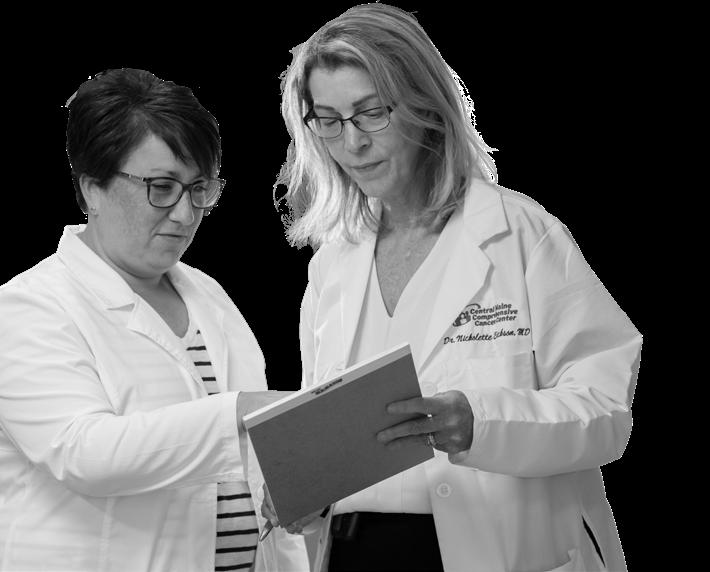
An oncologist and nutritionist discuss an oncology consultation in Maine.
Engaging and educating oncologists and patients
JAX is a biomedical research laboratory with no direct clinical presence in Maine or elsewhere, so the first task facing MCGI was to engage with the practicing oncologists who work directly with cancer patients. Over an 18-month period in 2017 – 2018, MCGI was able to enroll every Maine oncology practice. Because of the oncologists’ support and commitment, patient enrollment in MCGI increased rapidly, from 15 patients in 2017 to 162 in late 2018 to 1,610 by October 2020. To further support clinical implementation, MCGI offered educational resources to increase medical professionals’ knowledge of and confidence in interpreting results from the genomic tumor tests they ordered.
Next, MCGI established genomic tumor boards (GTBs) comprising national and international precision oncology experts and JAX laboratory testing and cancer data specialists. The GTBs provided Maine oncologists with direct access to colleagues from the leading academic precision oncology programs for case discussions and treatment
decision support. In the paper, the authors state that GTBs were the most impactful intervention in supporting the interpretation and appropriate use of genomic tumor testing, and clinical participants expressed strong interest in them, stating that they were beneficial to their practice.
MCGI 2.0
While the paper only presents data from MCGI’s first phase, the program is forging ahead with renewed Harold Alfond Foundation funding. Called MCGI 2.0, it is addressing additional challenges encountered during the launch phase. Of particular note is improving access to cancer drug clinical trials based on the genomic tumor testing results. MCGI has now helped bring precision oncology clinical trials into Maine through the NCI-MATCH and TAPUR studies. MCGI has also added a central clinical genomic navigator position to further assist patients and oncologists throughout the testing, analysis and therapy delivery process. MCGI is now serving as a model for cancer care delivery within the U.S. as well as internationally, and its benefits are likely to help cancer patients far beyond Maine’s borders in the years ahead.
Photo credit: Tiffany Laufer
(l to r) MCGI Associate Director Leah Graham, Ph.D.; Lindsey Kelley, M.P.H., M.S., CGC; JAX Chief Medical Officer Jens Rueter, M.D.
Cathleen (Cat) Lutz, vice president, Rare Disease Translational Center
[]preclinical_editing: author:mark_wanner
Moving preclinical genome editing to the clinic
Recent research advances and FDA approvals have brought attention to new options for many rare disease patients and renewed hope for effective therapeutics. Now, JAX researchers are leading an exciting collaboration that seeks to use an advanced genome editing method to develop clinical treatments that address and repair the genetic mutations underlying four rare diseases.
Now Cathleen (Cat) Lutz, Ph.D., of The Jackson Laboratory is spearheading a major effort to implement a new genomic research tool preclinical genomic editing to cure rare neurological genetic diseases.
The advent of advanced research capabilities such as fast, efficient high-throughput genetic sequencing, genetic editing with CRISPR-based tools, human in vitro cell modeling with induced pluripotent stem cells (iPSCs) and more has greatly accelerated our understanding of human genomics and rare genetic diseases. While the translation of the accumulated knowledge to safe and effective therapies has followed more slowly, there are many reasons to predict that the situation is changing for the better, as powerful new gene-based therapies succeed in clinical trials and receive FDA approval.
Therapeutic strategies such as gene replacement and gene modulation (e.g., blocking protein production with anti-sense oligonucleotides) are at the forefront of the recent progress. But while they carry exciting promise for many applications and diseases, they are not without risk. In some cases they can provoke adverse immune responses, initiate cancer and cause other serious side effects. Researchers are therefore still hard at work to develop safer therapies for rare genetic diseases that provide lasting benefit.
Beyond CRISPR
CRISPR has revolutionized gene editing, but as originally applied it involves double strand DNA breaks that leave absolutely no room for error in the clinic. Researchers have continued to enhance CRISPR methods, however, and they have now advanced them to the point where they are able to make precise genomic alterations without cutting the DNA.
Lutz, vice president of the Rare Disease
Translational Center at JAX, will lead a multiinstitutional team to develop and validate new gene editing-based therapeutic approaches for four neurological conditions: spinal muscular atrophy, Friedreich’s ataxia, Huntington’s disease and Rett syndrome. Supported by a five-year, $22.8M grant from the National Institute of Neurological Disorders and Stroke (NINDS), Lutz and collaborators at JAX, The Broad Institute, Massachusetts General Hospital, Boston Children’s Hospital and UT Southwestern Medical Center will ultimately seek to advance at least one lead candidate therapy through a successful investigational new drug (IND) application.
At JAX, Lutz will work closely with Associate Professor Steven Murray, Ph.D., who leads the preclinical mouse model core to develop, validate and optimize in vivo mouse models for each disease. Other collaborators have extensive experience and resources for producing virus-based, gene-editing therapy delivery to tissues, possess deep expertise in preclinical evaluation of gene-editing therapeutics and have successfully navigated the regulatory path to IND submission.
Collectively they seek to close the gap between preclinical research that has produced promising rare disease therapy strategies and the actual clinical delivery of safe and effective treatments to patients. Successful completion of the project milestones has the potential to revolutionize treatment for at least one of the diseases and provide a way forward for the other three, as well as a wide range of other rare genetic diseases.
From biology to the clinic
While each rare genetic disease affects relatively few individuals, collectively nearly one in 10 people has some form of one, underscoring the desperate need for research discoveries to be translated to clinical progress. But while the preclinical genome editing project is being launched at a time when FDA approval of therapies for a few rare diseases are in the headlines, the path to such approvals remains frustratingly difficult most of the time. There are many obstacles to developing safe, effective treatments for rare diseases,” says Lutz, including small patient populations, high costs and regulatory barriers.
Our goal is to remove or move past the obstacles, bring a highly promising new therapy strategy to the clinic, and directly benefit individuals with these diseases.”
One recent advance was the FDA approval of a drug for Friedreich’s ataxia (FA), one of the diseases that Lutz and her collaborators are working to address.
“The approval of Skyclarys was a real step forward for the FA and other rare disease communities,” says Lutz, “and we’re hoping that we can build on the momentum in the Rare Disease Translational Center. Our goal is to use the NINDS funding to bring a highly promising new therapy strategy to the clinic to benefit individuals and families dealing with these diseases.”
The drug, Omaveloxolone (brand name Skyclarys), has been shown to slow the neurodegeneration seen in FA patients. But it doesn’t address the root cause of the disease, which is a gene defect known as a triplet repeat expansion — where hundreds of copies of a three-base DNA sequence (GAA in FA) are added to a gene — in a gene known as FXN. So while the drug’s approval is a significant milestone for the FA community, more effective therapies, such as the ones Lutz seeks to develop, are still needed.
A national effort
NINDS focuses on neurological diseases, of course, but the research supported by the Somatic Cell Gene Editing (SCGE) program may have much larger implications across the rare disease community and the estimated 7,000-10,000 rare genetic diseases that affect patients worldwide.
Genetic mutations can cause some of the most rare and devastating disorders of the nervous system and throughout the body,” says Walter Koroshetz, M.D., director of NINDS and co-chair of SCGE.
Thanks to large-scale efforts like the Somatic Cell Genome Editing Program, we are starting to bring tools into the clinic to edit out these gene mutations. While there are still challenges to overcome, the level of hope for effective treatments is high.”
Photo credit: Tiffany Laufer
[]response_mimicry:
author:mark_wanner
Genetically diverse mice mimic the variable responses to SARS-CoV-2 infection in patients
Researchers at JAX have created a panel of genetically diverse mice that accurately models the highly variable human response to SARS-CoV-2 infection. Together with collaborators at NIH’s Rocky Mountain Laboratories, the team uncovered differences in immune and inflammatory responses, the timing and strength of which are associated with disease severity.
The diverse mouse panel will allow scientists to pinpoint the underlying causes of patient variation in COVID-19 outcomes, providing a platform for predicting disease severity, characterizing antiviral immune responses, and evaluating vaccines and other countermeasures.
Nearly everyone remembers the days in early 2020 when they realized that the world had changed suddenly and dramatically.
The novel coronavirus SARS-CoV-2 and the disease it causes, COVID-19, had blanketed the globe. Travel halted, offices emptied, hospitals filled, and, tragically, the first deaths were reported. At the same time, scientists scrambled to learn more about the virus itself, how it made people ill, and what, if anything, could be done to stop it.
Even though its faculty focuses mostly on mammalian genetics and not infectious diseases, JAX was among the research institutions that leapt into action. At first it mounted a massive rescue effort, helping scientists at outside institutions protect mouse strains critical to research despite stay-at-home orders. It also explored how mice, which were not able to be infected with the initial SARS-CoV-2 variants, could be used to help research the disease and identify ways to develop effective vaccines and treatments. To this end, a mouse model with humanized angiotensin-converting enzyme 2 (hACE2) receptors, which allowed for SARSCoV-2 infection to be studied in mice, was rederived and distributed as quickly as possible early in the pandemic.
JAX® Mice reflect human COVID-19 outcomes
New challenges quickly emerged, on both the clinical and research sides. First, it became clear that people had hugely variable responses to SARS-CoV-2 infection. Many exhibited no symptoms at all, while a small percentage contracted severe or lethal disease. The elderly and those with certain chronic conditions and diseases were at most risk for severe disease, but otherwise it was impossible to predict disease severity, and the reasons underlying the large variability remained unclear.
At the same time, the hACE2 gene was initially engineered in a single inbred mouse line on a widely used genetic background (C57BL/6J). This transgenic line, known as K18-hACE2, always developed severe/lethal disease, making it difficult to study the range of human responses in an experimental system.
Since then, the timing and strength of innate immune activity and interferon signaling — the front-line cellular defense against microbial infection — have been implicated in the variability in patient response. Yet many of the underlying factors that determine differences in disease severity between individuals remain poorly understood to this day.
To help address the issue, a team of researchers led by JAX Scientific Director and Professor Nadia Rosenthal, Ph.D., FMedSci., crossed the original K18-hACE2 strain with other mouse strains.
The resulting hybrid offspring produced by the crosses comprised a “COVID-19 mouse panel” that represented the broad genetic diversity seen in patient populations.
With collaborators at the Rocky Mountain Laboratories, the team exposed the COVID-19 mouse panel to SARS-CoV-2. In a paper published in Nature Communications , they reported that members of the panel indeed modeled the spectrum of human COVID-19 severity, ranging from asymptomatic to lethal, depending on the genetic background of the parent strains.
The original C57BL/6J mice proved to be among the most susceptible, while hybrids generated from a cross to another parent known as PWK were highly resistant to disease. Still other hybrids in the panel generated from crosses with various parent strains — A/J, 129S1, NOD, NZO, CAST, WSB, BALB/c and DBA/2 — had a range of responses mostly between the two extremes. Interestingly, some of these — CAST, NOD and WSB — also had sex differences, with consistently different levels of disease severity between males and females.
Moving from mice to molecules
To uncover the mechanisms driving these diverse disease outcomes, the team investigated differences in the innate immune responses across the panel that had been implicated in human disease variability. In particular, type 1 interferon (IFN-1) is essential for the control of virus replication: the timing of its response and how it is regulated and resolved can play key roles in determining disease severity. If the IFN-1 response is delayed, viral replication and spread can proceed unchecked during the early stages of infection. However, failure to reduce signaling once acute infection resolves can lead to ongoing inflammation and adverse health consequences.
The research team found that the highly resistant PWK x K18-hACE2 hybrid mice exhibited early control of virus replication in the lungs, with effective amplification and resolution of pro-inflammatory responses and prevention of virus dissemination to other organs. In contrast, hybrid mice from the more susceptible strains exhibited relatively inefficient IFN-1 expression in the lung, failed control of virus replication and dysregulated pro-inflammatory responses. An outlier was WSB, which had high early IFN-1 expression but also high early virus burden in the lung, and clearance was delayed in a manner similar to mice with low IFN-1 expression.
This suggests that IFN-1 is not the only factor mediating the viral response, and the WSB hybrid mice may hold clues for discovering additional pathological responses associated with severe disease.
The COVID-19 panel represents a powerful preclinical platform for bridging the knowledge gap in our understanding of the underlying differences in COVID-19 susceptibility, for developing rapid diagnoses and for designing new therapeutic intervention strategies. Bridging the mouse-human gap Bridging the mouse-human gap Bridging the mouse-human gap the mouse-human the mouse-human gap Bridging gap the mouse-human mouse-human gap Bridging Bridging the gap the mouse-human gap Bridging mouse-human Bridging the mouse-human gap Bridging mouse-human gap the gap Bridging the gap the mouse-human the mouse-human mouse-human gap Bridging Bridging gap the gap Bridging Bridging the mouse-human gap Bridging the mouse-human mouse-human the gap Bridging Bridging gap the mouse-human mouse-human gap Bridging Bridging the gap the mouse-human the gap mouse-human Bridging Bridging the mouse-human gap Bridging mouse-human the gap Bridging the gap Bridging the mouse-human the mouse-human mouse-human gap Bridging
The complex responses of the COVID-19 mouse panel illuminate the many gaps in our current knowledge of SARS-CoV-2 infection and COVID-19 pathology in humans, including the variations in innate immune control of virus replication, the events needed for a well-orchestrated inflammatory response, the molecular mechanisms of sex-dependent disease severity, and longer-term implications for tissue repair and lung function. Yet JAX researchers are confident that their discoveries in mice can help link disease outcome to patient genetic features.
Photo credit: Tiffany Laufer
JAX Scientific Director and Professor Nadia Rosenthal
[]pediatric_cancer: author:sophia_anderson
Fighting for pediatric cancer patients
Six
questions with JAX pediatric cancer researcher, Ching Lau
Jackson Laboratory Professor Ching Lau, M.D., Ph.D., researches the genetic abnormalities behind pediatric brain tumors and bone tumors. At JAX, his team works tirelessly to model the real patient cases he sees as the scientific director of the Center for Cancer and Blood Disorders at Connecticut Children’s Hospital. As an active oncologist at Connecticut Children’s, he diagnoses and treats children with brain and bone tumors as well as blood cancers.
Those cases are then studied at JAX to identify cancer cell origins and to determine the optimal treatment method for the patient. Lau also holds a position at the UConn School of Medicine as head of the Division of Pediatric Hematology-Oncology in the Pediatric Department.
How have pediatric cancer patients been treated in the past?
Previously, because a lot of children with cancer would not survive, we tried very hard to improve on survival first. We ended up using more and more intensive treatments. As a result, we saved more lives, but many such children became handicapped for life owing to long-term side effects.
I always use the analogy that it is almost like dropping an atomic bomb on an anthill. Yes, you wipe out the anthill, but the price you pay is pretty steep because you have a lot of collateral damage to normal tissues in the body.
JAX Professor Ching Lau Photo credit: Tiffany Laufer
Why did you decide to pursue a career as both a pediatric oncologist and a pediatric cancer researcher?
I was frustrated that we’re not actually curing a lot of childhood cancers. To me, that is not satisfactory. It’s not just about the patient. The rest of the family is affected. The parents have to take care of a handicapped child now.
If that child cannot lead an independent life when they grow up, that also becomes a burden to society. For those reasons, I decided that maybe I could contribute to something to improve the overall outcomes for these children with cancer.
Why are pediatric cancers different from adult cancers?
First, every single type of pediatric cancer is classified officially as a rare disease. Second, one thing we have learned is that cancer types in children are very different from those in adults. In pediatric cases, we see a lot of cancers that are related to what we call “primitive cells” in the body.
When you trace the lineage of these cells, invariably you find them showing up during different times of normal development. That already tells us that the development of pediatric cancer is very dependent on what kinds of cells initially underwent genetic changes.
Once the cell has gone through a certain window of development, the genetic abnormalities that they acquire may or may not have the same effect anymore. I always feel that to study cancer genetics
in pediatric cancers, we have to know what the cell or origin is, and then determine in which window of development are those cells most vulnerable to the genetic abnormalities.
How
do you use animal and cellular models in your research?
We believe that if we can identify the genetic abnormalities in cancer cells, we are in a better position to design more effective therapies that target only the cells that have the genetic abnormality causing the cancer.
We must use cells in conjunction with patientderived tumors in mice to demonstrate that a therapy works. Once we think that we have a candidate therapy that we could bring to the clinical side, we again have to go back to the cells and the mice that bear these tumors to prove that the experimental therapy is actually working. With the cell lines and the xenograft (PDX) models that we’ve established, we can move much faster.
What is your lab doing to improve pediatric cancer therapies and treatments?
We are now working on an orthotopic xenograft model, which is a lot more difficult to generate than a normal patient-derived xenograft model. In a typical PDX model, you can implant tumor tissue from the patient under the skin. In orthotopic xenograft models, you have to find the anatomically equivalent location in the mouse model that matches where the tumor is in the patient before you implant the tumor tissue. This is much more challenging but provides an even more accurate depiction of the patient’s cancer.
Why have you made JAX the home for your research efforts?
JAX has all these years of experience using mouse models to study human diseases. The experience that they have acquired in developing mouse models that meet different types of requirements is unparalleled anywhere else.
We are poised to go one step further in integrating the knowledge that we have acquired from mouse genetics together with the newly emerged knowledge acquired through human genomic testing. I cannot think of any other place where the vast knowledge of mouse genetics can be practically integrated with human genomic findings.
Making a clinical impact
Lau and his team are working in conjunction with hospitals and laboratories across the United States, including JAX’s own Advanced Precision Medicine Laboratory, to validate promising new tests in order to diagnose his patients more effectively. These tests capitalize on methylation patterns in the DNA of cancer cells that regulate how genes are expressed. Results from these tests have been proven to improve immunotherapy effectiveness and have increased the number of success stories in the clinic. Improving on quality of life for his patients has been, and will continue to be, Lau’s top priority as he continues to fight for his patients.