This issue of Search focuses on an aspect of health that affects nearly every one of us eventually: aging. Aging is not a simple matter of getting older; it is a complex array of processes that affect us at every level, from individual cells to our interconnected organ systems, our bodies and our minds.
The central challenge before us is this: How can we extend not only life span, but also health span the range during which we can enjoy good health and a full, active and engaging existence? Getting older may be inevitable, but aging as we currently think of it may not be. At The Jackson Laboratory, scientists are imagining a future in which declining health is not an inevitable consequence of aging. A future in which we can not only have longer lives, but better, healthier, fuller lives.
Solving the mysteries of aging holds tremendous promise for transforming every aspect of our health.
ON THE COVER
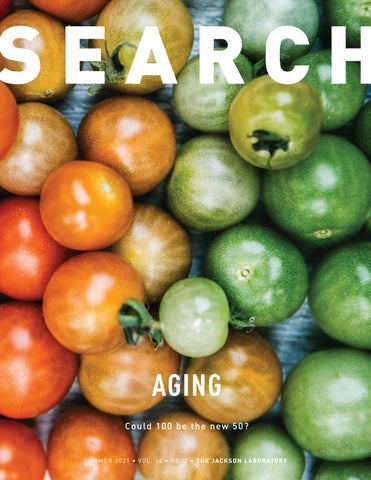
COULD 100 BE THE NEW 50? ABSOLUTELY. JAX researchers are using genomic technologies and specialized mouse models to better understand the aging process in order to extend our health span, delay age-related health issues, repair damaged organs and improve our quality of life.
The Jackson Laboratory discovers precise genomic solutions for disease and empowers the global biomedical community in our shared quest to improve human health.
Search magazine is produced by JAX Creative.
Printed June 2021
EDITOR
Joseph Blanchette
DESIGN & ART
Jane Cha
Karen Davis
Danielle Meier
Zoë Reifsnyder
Rebecca Hope Woods
COPY EDITORS
Carol Lamb
Joyce Dall’Acqua Peterson
Rebecca Hope Woods
Myriad diseases, including most forms of cancer, cardiovascular disease and Alzheimer’s, are closely intertwined with aging — with the risk of disease increasing as we get older. In this issue, you will learn more about how JAX researchers are expanding our understanding of the aging process, creating better models of age-related conditions, discovering new approaches to treating associated diseases and training new generations of scientists focused on these questions.
As I reflect on aging, I am inspired both by the young scientists who are taking up this scientific challenge and by friends from all generations whose life experience motivates them to support our work. I’m delighted that this issue features one of my own oldest friends, Esther Koch, who recently found that her interest in leukemia research provided a connection to rising research
stars at JAX. And I can think of few stories more compelling than that of Lusia Milch, also profiled here. Lusia’s boundless determination to help others and her enthusiasm for our scientific mission led her to endow a new faculty chair at JAX, supporting our work in Alzheimer’s disease and dementia and, in her words, “shining a light in the darkness.”
Whether as scientists, donors or advocates for JAX’s mission, every one of us can follow Lusia’s example and light our candles as well to shine new light on scientific challenges and illuminate the path to a healthier and more hopeful future for all — at every age.
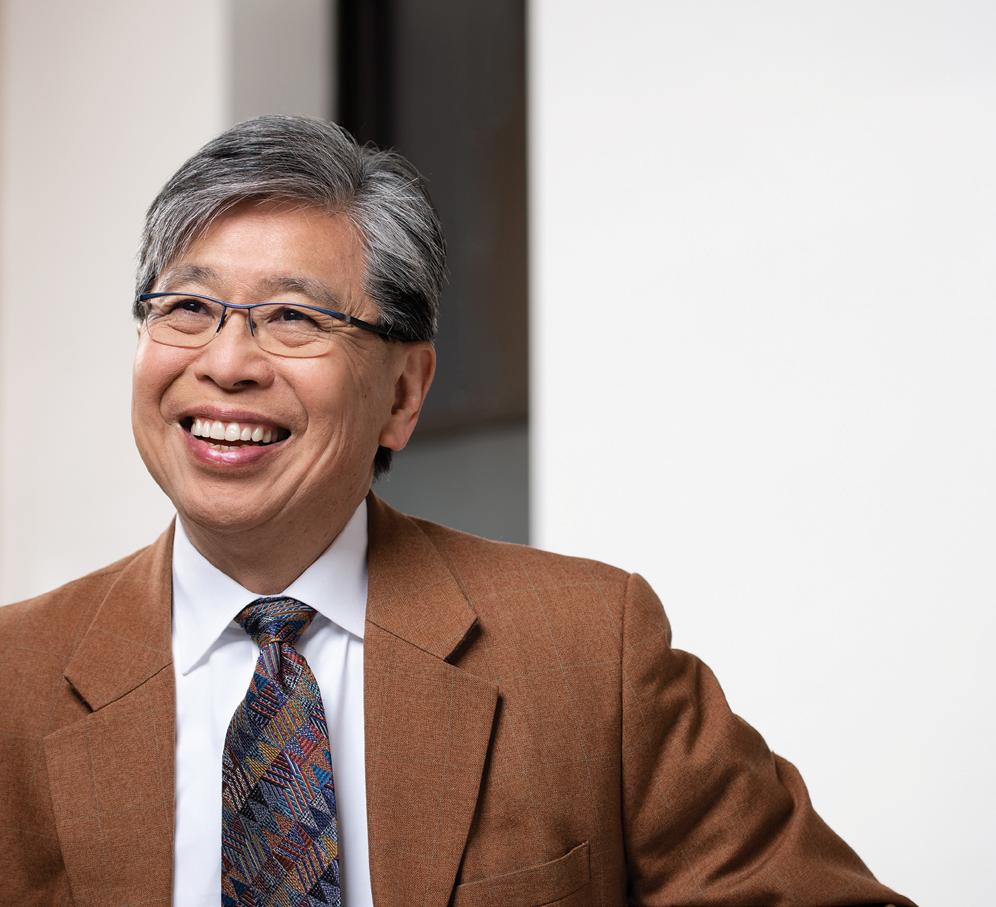
Edison Liu, M.D. President and CEO, The Jackson Laboratory
Transforming
The 20th century delivered a remarkable transformation: Advances in public health and medicine added a whole generation, about 25 years, to the life span of the average American. At the current rate, the number of Americans aged 65 and older will more than double to exceed 98 million by 2060. The 65-plus age group’s share of the total population will rise to nearly 24% from 15%.
But living longer also means greater risk for developing chronic and acute diseases of aging, such as cancer, Alzheimer’s, heart disease, kidney failure and immune malfunction. These health issues take a tremendous economic and human toll on our nation.
Besides investigating the mechanisms of the major diseases of aging, researchers at JAX are using the latest genomic technologies to explore new approaches to understanding aging itself, to delay age-related health issues, repair damaged organs and extend health span as well as life span.
The goal is an even more powerful 21st century transformation, wherein people can stay healthy, enjoy life and actively contribute to their communities well into their eighth, ninth or even tenth decades.
WHY AND HOW
A newly re-funded JAX center is empowering innovative approaches to aging research.
Aging is inevitable, but can the diseases of aging be thwarted or at least postponed? New tools, including genetically varied mouse populations and advanced imaging technologies, hold promise for untangling the myriad mechanisms of human aging.
The Jackson Laboratory makes these and other tools available to the worldwide aging research community, with support from the National Institute on Aging. JAX has one of six NIA-funded Nathan Shock Centers of Excellence in the Basic Biology of Aging, and the grant has been renewed for a total of $5,347,630 over five years.
PHOTOGRAPHY BY TIFFANY LAUFER
WE
“The JAX Shock Center has been a resource for the geroscience community for more than a decade,” says JAX Associate Professor Ron Korstanje, Ph.D., co-director of the center. “We provide data and samples from our studies, but most important, we offer a pilot project program for investigators.”
Twice a year, the JAX Center puts out a request for applications for pilot projects, Korstanje explains. “We get about 15 to 20 applications per round. We select the best of those and work with the investigators to conduct the experiments at JAX, providing the preliminary data they can use for grant proposals or papers.” In some cases, the team invites participating investigators with special expertise to come to JAX for the duration of their experiments.
For decades, mice have been essential to aging research. Lifelong studies are practical in an animal that lives an average of two years in laboratory care. And as fellow mammals, mice and humans share the genetic code that both enables life and programs its eventual deterioration.
Until recently, JAX Shock Center aging studies have been conducted with the world’s most widely used inbred strain of laboratory mouse, the famous C57BL/6J “Black 6” mouse. The Black 6 genome was the first to be sequenced after the human genome, and more is known about the biology of this mouse strain than any other. However, even the mighty Black 6 has limitations: Its very genetic uniformity means that it represents only a sliver of potential genetic variations.
To better represent humans with all their genetic variability, in the early 2000s an international research team including JAX Shock Center co-director Professor Gary Churchill, Ph.D., developed the Collaborative Cross (CC) and the Diversity Outbred (DO) mouse populations by intercrossing genetically defined mouse strains. The mice from the CC and DO populations are genetically diverse and, in the case of the DO mice, unique individuals, like each human.
Aged JAX DO colonies have produced some of the longest-lived mice ever recorded nearly five years, more than twice the average life span of most laboratory mice. These individuals could provide valuable insights into the genetic components of a long and healthy life. The JAX Shock Center has conducted several large studies on DO mice over the past decade, and Korstanje says investigators are now able to submit applications for their own projects using DO mice.
The JAX Shock Center is also launching a project to explore senolytic drugs, a hot topic in aging research. Senolytics target senescent cells — cells that have stopped dividing and are the hallmark of many diseases of aging as well as aging itself.
“All studies so far have been performed in just a single inbred strain, Black 6,” Korstanje says,
“so there’s really nothing known about the effect of these senolytics and genetic variation. Our plan is to do a large intervention study, where we compare one group of aged DO mice that get the senolytics to another group that does not.”
A new Image Analysis Core at the JAX Shock Center will use machine learning to analyze age - related histological profiles. “We’re doing this in close collaboration with the Geropathology Research Network,” Korstanje says, “which is an NIA-funded network of pathologists from different universities that are working on standardizing geropathology. Korstanje, whose own lab focuses on age-related kidney diseases, has already launched a study of kidney tissues. “And we’re going to expand this to be able to quantify aging lesions in the heart, liver, lung and possibly other tissues.”
Other planned Shock Center projects include aging colonies of several new mouse models for COVID-19 research currently being developed at JAX. “Age is an important factor in COVID-19, and we want to provide aged mouse models for the community to do pilot experiments on those.” The Shock Center at JAX is also collaborating with the one at the University of Washington to support the production of a video lecture series on aging research for use in undergraduate and graduate biology courses.
Gary Churchill, Ph.D., has spent the last five years aging a large cohort of genetically diverse outbred mice — the Diversity Outbred or “DO” stock — with startling results. A few hardy females from this group appear to have won the genetic lottery, and will soon reach the ripe old age (for mice) of 4.5 years — over twice the normal life span of a laboratory mouse, or roughly equivalent to a 180(!) year old human.
Recently the JAX Shock Center convened with the researchers of the National Cancer Institute-funded JAX Cancer Center. JAX Associate Professor Jennifer Trowbridge, Ph.D., who studies age-related blood diseases, notes, “We now understand that the greatest risk factor for cancer development is aging, and yet we know little about why and how aging increases risk of cancer development. We have a unique opportunity at JAX to bring these independent groups of investigators together as a think tank to tackle these challenging questions.”
Trowbridge notes that her lab bridges these two concepts: “We are actively studying how and why aging of the blood system increases risk of blood cancers, with the primary goal of identifying intervention strategies to prevent blood cancer development in aging populations.”
Korstanje says he wants the geroscience community to know about all the resources available from the JAX Shock Center. “We can do much more than just provide the aging mice,” he says. “We can be your collaborator to innovate your research programs.”
We can be your collaborator to innovate your research programs.
– Ron Korstanje
A lifelong friendship inspires support for JAX blood cancer research
It’s a fact of life: As we age, mutations happen.
The longer we live, the more genetic changes accumulate in our cells. That’s why the likelihood of developing cancer, including blood cancers, increases the older we get.
Jennifer Trowbridge, Ph.D., studies the processes that pave the way for lymphoma and leukemia in older people. The JAX associate professor has her eye on a condition that results from mutations that form in bone marrow stem cells.
The condition is called CHIP, for clonal hematopoiesis of indeterminate potential, and if you’ve already attended your 25 th high school reunion, you may have it.
“It’s estimated now that everyone over the age of 50 and maybe even 40 — is carrying stem cells with these mutations,” Trowbridge says. “And that puts them at higher risk of developing blood cancers, such as lymphoma and leukemia, and also cardiovascular disease and atherosclerosis.”
That sounds scary, Trowbridge says, “but actually, most people can carry these mutations and live out a normal life span without any problems in their blood or immune systems.” The very name of the condition contains the term “indeterminate potential,” she notes, “and the name implies we don’t really yet know for any particular person how risky it is.”
Trowbridge’s lab is looking at new approaches to extend the production of healthy cells in the bone marrow during aging, and to prevent the progression of CHIP to aging-related blood cancers and other disorders.
For this work, the Leukemia and Lymphoma Society has recently awarded Trowbridge a five-year Career Development Scholar Award, earmarked for rising stars in the blood cancer research field.
EstherKochandEdLiu
BY JOYCE DALL’ACQUA PETERSON PHOTOGRAPHY BY ESTHER KOCH & TIFFANY LAUFER
Trowbridge’s work caught the attention of gerontologist Koch. Koch has been active with the LLS for nearly two decades, starting when her mother, Harryette Esther Koch, received a diagnosis of lymphoma that would ultimately prove fatal.
“Trowbridge’s aging - related research is personal to me in a number of ways,” Esther Koch says. “We already know that age is a risk factor for developing blood cancer. Most people don’t know that 90% of all cancers are diagnosed in patients 45 years and older, and that blood cancers combined are the third leading killer of Americans.”
Harryette Koch was diagnosed with her first cancer in her early 50s, Esther Koch states, and with chronic lymphocytic leukemia, her fourth of five cancers, at 78. “As a gerontologist, I know that age is a risk factor for so many diseases. What if Trowbridge’s research unlocks the key not only to who will develop blood cancer as
they age, but to aging as a general risk factor for cancer and other chronic diseases?”
Harryette Koch’s illness was a turning point for her only child. Esther Koch, who is a C.P.A. with an M.B.A. from Stanford, had held a series of top corporate management jobs when she became her mother’s primary caregiver. She obtained a master’s degree in gerontology from the University of Southern California and started a consulting company, Encore Management, to help her fellow baby boomers with the many issues associated with caring for an aging parent and their own aging. Esther Koch has served as a delegate to the White House Conference on Aging and is in high demand as a speaker on aging-related topics.
But her JAX connection goes back decades before her mother’s illness. She and President and CEO Edison Liu share a friendship that began at Lowell High School in San Francisco in the late 1960s.
“Ed likes to say I’m his oldest friend,” she says with a laugh. “I would prefer to be known as his most long-standing friend.”
Koch and Liu first met in student government, when they were both class presidents who enjoyed jazz — Liu, a lifelong musician, was in the school’s jazz band, and Esther Koch grew up with a jazz-enthusiast father.
Over the years Esther Koch and Liu stayed connected. “I reached out to him when my mom was diagnosed, and when he was actually conducting lymphoma research,” she recalls. “I worried that she wasn’t being treated adequately because she was older, and I thought it was ageism. But Ed, in his kind and compassionate way, made it clear to me that her treatment was appropriate given her age and condition.”
Esther Koch has announced that she is making a donation to JAX to support the Trowbridge lab, “in memory of my mother, and in honor of my dear friend, Edison Liu.”
Liu had started his scientific career studying the oncogenic drivers for different forms of leukemia. He was the first to describe an activated oncogene, RAS , in a human preleukemic condition. Between 1991 and 1996, when he was on the faculty of the University of North Carolina at Chapel Hill, Liu was named an LLS Scholar, 30 years before Trowbridge.
Since those early days, Liu expanded his line of investigation to breast cancer biology, molecular epidemiology, functional genomics and systems biology, and advanced not only in scientific prominence, but also to institutional leadership, including at the National Cancer Institute. Before joining JAX as president and CEO in 2012, Liu was president of the Genome Institute of Singapore; on trips home to visit family, he and Esther Koch
occasionally met for a chat at the San Francisco Airport.
Liu marvels at the progress in the field of blood cancer research since the beginning of his career. “I started focusing on one gene and its effects in preleukemia and leukemias. Now we know a lot more genes that are drivers, and the challenge is now one of understanding genetic complexity.”
Trowbridge says she is delighted with the gift to her lab “to continue pushing forward in our research into the origins of leukemia. Esther Koch’s passion for and long-term support of leukemia and lymphoma research is inspiring, and we are very fortunate to have made this connection with her.”
Working with a novel mouse that models CHIP, the Trowbridge lab has already shown that an age-related increase in the concentration in the bone marrow environment of pro - inflammatory molecules called cytokines accelerates CHIP expansion and progression.
With age, Trowbridge says, “you have more inflammation in your body systemically, and that’s true in your bone marrow as well. And so, one hypothesis is that with aging, this inflammation is changing the environment and giving stem cells with these mutations a growth advantage over the other stem cells.
They’re thriving more than the stem cells that don’t carry CHIP mutations.”
Besides studying this mechanism with experiments, the Trowbridge lab will be testing whether inhibiting the inflammatory pathways with drugs can prevent the diseases associated with CHIP. “Can you change the environment so that you can stop those mutated stem cells from having that selective advantage?” If that turns out to be accurate, she says, “then certain anti-inflammatory drugs might be very useful in reducing the risk of people with CHIP to develop a blood disorder, blood cancer or cardiovascular disease.”
In a paper recently published in the distinguished journal Cell Stem Cell , Trowbridge’s lab showed that declining levels of the hormone IGF1 contribute to
overall longevity in middle - aged mice, but also causes aging and decline of blood stem cells, a possible precursor to cancers.
Esther Koch notes that while aging certainly has its biological disadvantages, among them increased cancer risk, long friendships are just one of the benefits of living to middle age and beyond. In fact, at her popular talks on successful aging, she always tells her audiences that “relationships are essential, for both physical and emotional well-being.”
She says she is grateful for her 50 -year friendship with Liu, and for his and Trowbridge’s contributions to understanding blood cancers. “I know that if my mother were alive today, she would enthusiastically support my decision to fund JAX research.”
“We know a lot more genes that are drivers, and the challenge is now one of understanding genetic complexity.”
– Edison Liu
Liu a n d Koch in secondary school
Training the next generation of dementia researchers
BY BRIAN OLEKSIW | PHOTOGRAPHY BY ROGIER VAN BAKEL
JAX Associate Professor Ron Korstanje, Ph.D., Associate Professor Gareth R. Howell, Ph.D., and Professor George Weinstock, Ph.D., have written and been awarded a grant that will secure funding for a “Training Program in Precision Genetics of Aging, Alzheimer’s Disease and Related Dementias.”
Financial support for the program comes from $1.1 million awarded by the National Institute on Aging of the National Institutes of Health. Sixteen faculty members in Maine and Connecticut are participating.
With this program, JAX is equipping trainees with the tools they need to become well-rounded researchers, proficient in the most modern techniques and free to pursue science at any institution they choose.
“We continually strive to provide cutting-edge, unique and highly relevant training opportunities designed to prepare all JAX trainees for successful scientific careers,” Korstanje says. He adds that this grant will “provide high-quality graduate and postdoctoral training to prepare trainees for careers as independent investigators in universities, research institutions and the biomedical industry.”
JAX faculty members may submit an application for one of their postdoctorate or graduate students. Once accepted, the individual will fill one of the four available slots and receive support from the program for two years, after which another four trainees will be accepted. In this way, the grant will support the entire JAX community.
researchers
Training precision in genetic research
The trainees will have a rigorous course of study: testing hypotheses regarding the genetic underpinnings of aging and disease, and utilizing the computational science and mouse model resources at JAX to model new diagnostic and therapeutic modalities. The main course of the research is precision genetics finding ways to personalize treatment and diagnoses in the most accurate way possible.
To accomplish this, trainees will have customized development opportunities in areas such as teaching and grant writing, and will participate in
seminars, workshops and research interest groups. They will also write external funding applications, present their findings at scientific meetings and publish in peer-reviewed journals.
The ultimate goal is to prepare these future leaders in the precision genetics of aging and dementia. Or, as Korstanje says, “The program will provide exceptional research opportunities in a stimulating scientific training environment and enable trainees to launch successful independent careers in biomedical research.”
JAX Associate Professor Ron Korstanje
THE WEAKENING LINE Aging and immune
We change as we age.
On the surface, that’s a completely obvious statement. But most of the actual mechanisms of biological aging are invisible, occurring underneath our increasingly wrinkled skin. And many of those hidden processes, which change functions over time at a molecular level, remain poorly understood.
What happens to our bodies between ages 25 and 45, between 65 and 85, and every decade along the way? Why do we become ever more susceptible to various diseases over time? And do we all age in the same way, or are there differences?
Weakening immune response
A vital element of the aging process involves our immune responses. Decades of observational clinical data have shown that immune systems grow weaker and more prone to dysfunction as we age. What serves as an effective protective mechanism in our youth becomes far less reliable, and it can even cause active harm. The elderly are therefore more prone to infections and inflammation and less responsive to vaccines than their younger peers. Researchers have also observed that immune responses differ between men and women, and that those differences can become more important with age. For example, on average, women are more susceptible to autoimmune diseases, while men are more prone to infectious diseases. The exact reasons why have remained elusive, but advances in research capabilities allow scientists to probe exactly what happens within us as the years pass.
And while all the differences are clinically meaningful, the recent COVID-19 pandemic has increased both the awareness and urgency around understanding them in more detail.
It quickly became apparent that the incidence of severe disease and death increased markedly with age, with anyone over 70 being particularly vulnerable regardless of their prior health status. Men and women also had significant differences in their responses to infection. While the pandemic crisis will hopefully ease, it has shown, in stark terms, how essential it is to study our immune mechanisms and improve our ability to address vulnerabilities.
Studying molecules gone awry
How can one determine age-related immune differences? The ideal situation would be to follow people over a long period of time, taking specific samples at regular intervals. But these so-called studies take decades to provide usable aging data. Instead, researchers at JAX and UConn Health have teamed up to match healthy people as best they can between different age groups. Their early findings show that men and women experience immune changes with age, as expected, but both the changes and the timing of the changes differ.
JAX Professor Jacques Banchereau, Ph.D., and Associate Professor Duygu Ucar, Ph.D., co-lead the study and approach the work with very different perspectives and areas of expertise.
Banchereau is an immunologist who has extensive experience studying the molecular pathways involved with immune function. His research covers many facets of the field, including how the immune system mounts a defense against infectious pathogens, how it can be activated for cancer immunotherapy, and how vaccines can be developed to activate the best possible protective immune response. Banchereau is particularly
OF DEFENSE: immune function
BY MARK WANNER
Professor Jacques Banchereau
Adaptive immunity-related genes are more active in Genes involved with innate immune activity inflammatory processes
interested in figuring out how to improve vaccine effectiveness in the elderly, who can be vulnerable to both familiar pathogens, such as influenza, and emergent pandemics.
Ucar is a computational biologist who specializes in assessing the state of the genetic material within cells and how it can affect particular genes’ activity. These molecular traits reveal essential characteristics of specific cells and identify functional differences between them. Ucar can detect even subtle changes with age between the same kinds of immune cells.
Human immune aging
The research of Banchereau and Ucar has revealed some intriguing insights into what happens to immune function as we age, and why changes occur. It has shown that many aspects of immune activity make a transition from mostly helping us to sometimes hurting us, especially once we reach certain ages. For example, a preliminary study looked at which genetic regions are more active in immune cells from young people than those from their older counterparts. It found changes in gene activity associated with adaptive immune function, the part of the immune system that responds to new situations, such as new infectious microbes, and “remembers” the microbes to protect against them in the future. Not surprisingly, adaptive immunity-related genes are more active in younger people than in the elderly.
On the other hand, genes involved with innate immune activity (which provides initial, non - specific immune responses) and inflammatory processes are increasingly active with age. Inflammation involves chronic low- level
immune activity even in the absence of pathogens, associated with autoimmune disease or obesity. And chronic inflammation has been linked to many diseases, including cancer.
Subsequent work has further revealed the specific ages at which significant molecular changes affect our immune function. The first was detected in the late 30s and early 40s, and the timing was similar in both sexes. The second, however, differed in both timing and magnitude between men and women, taking place in men between ages 62 and 64 and women, less profoundly, between ages 66 and 71. Interestingly, adaptive immune activity can increase in women over 65, giving them an advantage over men in fighting infections and providing a possible explanation for the increased incidence of autoimmune disorders. Men see increased activity associated with innate immune cells,
younger people than in the elderly. and processes are increasingly active with age.
which are less effective against pathogens and can be associated with inflammation.
The results are significant enough to have implications for clinical care. Men and women often need different therapies for them to be maximally effective. A better understanding of the changes can also help researchers explore ways that we might be able to target certain immune functions for enhancement or suppression. This would allow us to retain immune function like that of our youth, even as we age.
The battle against late-onset
Alzheimer’s disease
BY MARK WANNER
When looking at all the consequences of aging, neurons’ dysfunction and death associated with cognitive function are among the most devastating. The resulting dementias, including Alzheimer’s disease (AD), are calamitous for patients, families and society. Experts predict that the number of cases will more than triple over the next 30 years, and care costs in the U.S. could reach trillions of dollars annually within the same time frame. The need to find an effective therapy or, better yet, preventative treatment, is growing.
Unfortunately, Alzheimer’s disease has proven to be challenging to address clinically. While there are behaviors and wellness strategies that statistically reduce risk at the population level, no preventatives or therapies have been found for those at high risk or who have the disease. There are many reasons why AD research discoveries have been so difficult to translate to the clinic. But today’s researchers are bringing new perspectives and vastly more powerful research methods and tools to address the problem. In a field that has seemed to quell optimism at every turn, there are now reasons for hope for doctors and their patients.
Clouds of witness
Why has AD research been such a troubling field? At a high level, it’s analogous to the situation in a mystery novel first published nearly 100 years ago, in which writer Dorothy Sayers coined the phrase “clouds of witness.” Instead of clues being hard to find, her murder scene had an overabundance of clues. There were also so many people tromping around and through the murder scene just before and after the untimely death that it was tough to determine what actually happened. AD presents a similar challenge. The function of the human brain and how it is compromised with age is such a complex combination of genes, behaviors and other factors that add up over the decades. It’s arduous to determine what actually tips the scales to disease and large-scale neuron death in some people. And why other people, you’d think would be at high risk, avoid cognitive decline and retain regular function as they age.
In fact, until recently, AD research was reductionist by necessity, focusing on one narrow area of inquiry, such as a single gene at a time. As recently as 15 years ago, preclinical AD research was largely limited to working with what was known: a few rare, highly penetrant genetic mutations that cause early- onset Alzheimer’s disease (usually manifesting in patients between their 30s and 60s). Therefore, researchers worked for the most part with mutations in three genes — APP , PSEN1 and PSEN2 — and their associated pathways. Unfortunately, while there were many discoveries regarding the specific forms of AD caused by these mutations, they have not proven successful in guiding therapy development.
Late-onset Alzheimer’s disease (known as LOAD), which affects people in their late 60s and after, is far more common, comprising more than 95% of cases. Unfortunately, LOAD’s genetic complexity, environmental components, and long, pre - symptomatic early stages are extremely difficult to accurately model in an experimental system. But recently, particularly over the past decade, the ability to accommodate such complexity has proliferated. Detailed patient data, including molecular traits that help researchers identify genetic contributors, is also accumulating at an unprecedented rate. Combining these resources promises to be a powerful platform for new research inquiries and, hopefully, therapeutic discovery.
Beyond amyloid
The physical hallmarks of AD are the accumulation of abnormal proteins in neurons, specifically beta-amyloid plaques and tau tangles. The genetic mutations that cause early-onset AD are associated with dysfunctions that lead to rapid beta-amyloid accumulation. This was the near-exclusive focus of therapy development efforts for many years. But removing beta-amyloid or blocking its accumulation is insufficient for improving cognition or slowing disease progression. Now, investigations into the genetics underlying LOAD risk have provided many other areas to explore.
Immune response and inflammation in the brain are high on the list, and the role of microglia (the central nervous system’s immune cells) is subject to
intensive study. Our immune activity may work in concert with vasculature dysfunction, such as a “leaky” blood-brain barrier that allows macrophages from general circulation into the brain. The clues from behavioral risk factors — a lower risk with vigorous exercise and a healthy diet, a higher risk with sleep dysfunction — also point to disease mechanisms beyond simple amyloid accumulation. Some of them likely begin well before cognitive decline can be detected. Learning how to spot these so-called “biomarkers” of disease early is the key to finding preventative treatments. Finally, researchers can now investigate how different genetic backgrounds can increase or decrease susceptibility to LOAD. No two people are identical, and evidence is emerging that LOAD has different mechanisms in different patients.
Progress at JAX
JAX researchers are forging ahead in several areas to expand AD knowledge and research capabilities. A significant step forward was the formation of MODEL-AD, a collaborative research center established in 2016 to develop and validate mouse models to improve LOAD research. The JAX effort is led by the complementary research programs of Co-Principal Investigators Gareth Howell, Ph.D., Gregory Carter, Ph.D., and Michael Sasner, Ph.D., in collaboration with clinical researchers at Indiana University and drug development experts at the University of Pittsburgh and a bioinformatics core at Sage Bionetworks.
Mouse models for Alzheimer’s disease
are a key tool for research and therapeutic testing
In his laboratory, Howell investigates many aspects of LOAD, with a particular interest in microglial contributions and how they differ in mice with different background genetics. He also studies how diet and exercise contribute to disease in relation to how they affect immune and vascular health in the brain. Sasner focuses on mouse model development and distribution, validating their relevance to human disease and providing resources for the global LOAD research community. Carter, a computational biologist, mines human patient data for genetic associations with AD to guide mouse model development. He is now also a principal investigator in the TREAT-AD program, seeking to uncover genetic susceptibilities and disease mechanisms targetable by therapeutics.
Additionally, Catherine Kaczorowski, Ph.D., leads a JAX program focused on a different aspect of LOAD — resilience. What is it about some people’s genetics that allows them to avoid neurodegeneration? Kaczorowski has developed a population of genetically diverse mice. She works with them to see how their genetic backgrounds affect their susceptibility to disease when they carry a mutation that causes AD in a particular mouse strain. In the genetically diverse population, some of the mice exhibit little or no neurodegeneration, and she is isolating the genes that contribute to their resilience. Another area of inquiry is led by Kristen O’Connell, Ph.D., who is particularly interested in the intersection of diet, energy balance and brain function. Obesity
These dramatic drawings represent sketches from analog clock-drawing tests that doctors use to screen people for dementia. A clinician asks the patient to draw a clock showing a specific time. A patient without dementia is able to draw it perfectly, but a patient with dementia may struggle with drawing the features and will thus require further evaluation.
and associated chronic inflammation have been strongly implicated in LOAD. Understanding the mechanisms may provide insight into behavioral and environmental contributors to disease. O’Connell is also interested in how another risk factor that has recently emerged — poor sleep patterns — may contribute to disease susceptibility.
A growing need, a building hope
Moving forward, it is essential to combine human patient data with model organism research to better understand disease progression and develop improved mouse models of LOAD. The ability to embrace genetic diversity and probe deep into the molecular mechanisms of disease also brings new possibilities to LOAD research. JAX is leading a fresh push in the field, and the results have the potential to benefit millions in the years ahead.
Lighting a way out of darkness
BY CHRISTI JENSEN |
OF LUSIA MILCH & TIFFANY LAUFER
As children, Bernard and Lusia Milch survived the evil of the Holocaust, setting them on a life path defined by determination to survive, help others and give back. After another kind of darkness — that of dementia — fell upon Bernie in the final years of his life, Lusia was determined to shine a new light of hope through the power of philanthropy.
Holocaust survivor Lusia Milch says that she is motivated to give charitably to organizations like JAX because philanthropy is, at its most essential, a response to the brutality she and her family experienced.
Lusia recently donated $1.5 million to JAX in order to establish The Bernard and Lusia Milch Endowed Chair, named after her late husband and held by Associate Professor and Computational Biologist Gregory Carter, Ph.D.
Not only is the Milch family impressed by the science and discoveries made at the Laboratory, but the sense of entrepreneurship, resiliency and transformative nature at JAX speaks to their history.
Survivorship inspiring philanthropy
Lusia and her late husband, Bernard Milch, arrived in the United States as immigrants after World War II. Penniless, the two met in New York City where they built a life and their own business together. Lusia’s son and member of the JAX Board of Trustees Neal Milch, J.D., explained that his family’s philanthropic instincts come from the basic support that his family received as immigrants. Their desire to give back is also inspired by the atrocities they faced during the Holocaust.
Lusia was only a child when she went into hiding and miraculously escaped a Nazi death squad while her sister and mother were caught and killed in the street. She recalls seeing the Nazi guard dogs barking just inches away from her through small cracks in a wall behind which she was hiding. “Philanthropy is a refutation of hatred, violence and insanity. I was helpless then; I am not helpless now,” says Lusia.
In his youth, Bernard was a risk taker, and teamed up with his brother David to steal bread by moonlight from Nazi food trucks. The brothers were captured and due for execution the next day. That night, in an effort to escape, Bernard was able to get away but David was caught and killed. Neal recalls his father calling out to him decades later, in an anesthesia - induced delirium following a surgery, “We need to warn David that the Nazis are coming!” All those years later, Bernard was still trying to save his brother. For the Milch family, these stories are never far from their minds.
Improving humankind through the triumph of the human spirit
Neal was recruited to the JAX Board of Trustees for being a self-proclaimed “science geek.” Trustee Emeritus David D. Elliman was on the Board at the time and inspired Neal to become involved with JAX, citing it as an organization on the cusp of transformation and with great promise. “David was exactly right!” says Neal.
As Neal grew more familiar with the Laboratory, he shared his knowledge and the work of JAX scientists with his mother. The family admires the agility, focus and innovation that the Laboratory and JAX® Mice, Clinical and Research Services offer. “The combination of deep mammalian genetics and human genomics expertise, burgeoning data sciences, and JMCRS firepower is unique,” Neal explains. “It’s important to me I’m a better person in my own eyes as a consequence of my involvement.”
Lusia finds value in JAX’s entrepreneurial instincts, which she sees as an aspect of the survival methods that got her family through the war. She says although the context is different, “an organization that can adapt, change, transform and thrive speaks to our family values and experiences.”
For these reasons, Lusia worked with Neal and JAX President and CEO Ed Liu, M.D., to identify where they could make a positive impact.
Illuminating darkness in Alzheimer’s disease
Later in his life, Bernard suffered from dementia, likely due to mini strokes and the extreme physical and psychological trauma he faced early in life. “It was a challenge for us to navigate,” Neal says. “To witness a powerful man — a survivor who built a very successful business — slowly deteriorate is tragic.”
Alzheimer’s disease is an age-related neurodegenerative disease affecting more than five million Americans. It is also the leading cause of dementia among people age 65 and older and ranks among the top six causes of death. The disease is complex and involves many different genetic deviations and interactions.
Enter computational biologist Carter and team, who are on a data-driven quest to identify which genetic variants are most likely to trigger Alzheimer’s disease. From trillions of data points generated by analyzing human genomes at the most basic levels, Carter is using a new, powerful mathematic approach to identify biomarkers of Alzheimer’s disease, before symptoms emerge.
The ability to address neurodegenerative diseases with innovative technologies is what drew Lusia and Neal to supporting Carter’s research. Lusia says, “Supporting research at JAX and establishing a chair has been very satisfying, even more so than I expected.”
This newly endowed chair will enable Carter to accelerate his work examining disease across multiple dimensions to empower researchers around the globe. Neal says, “If in some small measure we can be helpful in the quest to develop understanding and therapies, then we will have lit a candle to illuminate darkness.”
Live your life as an act of lighting candles to cast light into the darkness which would otherwise envelop us.
– Lusia Milch
JAX Ass ociate
ProfessorGregCarter
PATHS TO TREATMENT AND HOPE FOR ALZHEIMER’S
SEPTEMBER 8, 2021
Join us for a virtual event focused on drug discovery for Alzheimer’s disease.
The path to drug discovery for Alzheimer’s disease has been long and discouraging, but new research strategies and capabilities are providing renewed hope. Join JAX for a discussion about how research into the genetic differences that protect mice from cognitive decline could lead to promising drug developments for Alzheimer’s disease.
CONNECT WITH US
Register, learn more and watch the video archive from past events at www.jax.org/jaxtaposition
Questions? Contact Advancement Events at advancementevents@jax.org.