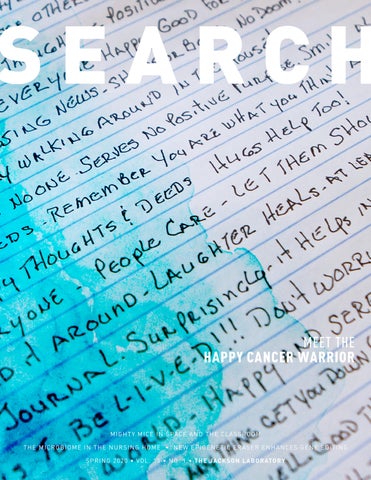
Above is a colorized scanning electron micrograph of a cancerous tumor in a human lung. Maine resident Betty Walls may be battling lung cancer, but if the notes she keeps in her journal are any indication (see cover), she is keeping a positive attitude. Walls and her doctor are participating in the Maine Cancer Genomics Initiative, which uses genomics to guide more personalized treatments for patients. Learn more about Walls and her fight on page 16.
DEAR FRIENDS,
Lately I have been reflecting on the past, present and future of The Jackson Laboratory. In 2019, we celebrated the 90 th anniversary of our founding in Bar Harbor, Maine, as well as the five-year anniversary of the opening of The Jackson Laboratory for Genomic Medicine in Connecticut. We also officially established JAX’s Shanghai facility, laying the groundwork for directly providing China access to the mouse models of human health and disease for which JAX is renowned.
As you’ll read in this issue of Search, JAX® Mice are not just circling the globe to accelerate biomedical discovery in research labs; they have also gone into orbit on the International Space Station, realizing a long-held dream
Join us
Learn more about our innovative scientific research in a fun and interactive way. JAX hosts a variety of special events in Connecticut and Maine throughout the year.
of JAX Professor Se-Jin Lee. The outcome of this research will provide solutions to muscle-wasting syndromes that include not only space travel, but also all forms of muscular dystrophy. We are well known for our mouse models, but our vision has always been to improve human health, and while our mice may be going farther than ever before, we are still deeply committed to our Maine roots. The JAX-led Maine Cancer Genomics Initiative (MCGI), highlighted in this issue, brings the benefits of genomic medicine to patients who might otherwise have little access to state-of-the-art precision cancer treatment, creating a new model for community genomic medicine.
Together, the stories of MCGI and “Mighty Mice” in space bring into focus the key features that define JAX today: our commitment to leading creative, collaborative initiatives; our growing investment in research with potential clinical applications, complementing our
long-standing leadership in basic science research; and the exceptional quality of our science.
As we look to what’s ahead for JAX in 2020 and beyond, I am truly excited about the future, not only for JAX, but for the biomedical sciences more broadly. We are embarking upon bold new initiatives, and we could not dream big without the support of our friends. Thank you, as always, for helping launch JAX into the next phase of our mission.
Edison Liu, M.D. President and CEO, The Jackson Laboratory
2020 EVENTS
JAXtaposition event series
Come listen to conversations with JAX researchers and senior leadership on research breakthroughs in areas like the microbiome, immunology and neurodegenerative disorders. Events will take place in the spring and fall in both Connecticut and Maine. More detailed information will be available soon at www.jax.org/jaxtaposition.
Forum for Discovery
Save the date for the Laboratory’s annual Forum for Discovery event on Thursday, July 16, 2020 in Bar Harbor, Maine. Join scientists, JAX leaders and fellow friends of JAX to learn about how we can change the future of human health, together. Learn more at www.jax.org/give/events
Questions? Contact Advancement Events at advancementevents@jax.org
LEVERAGING OUR IMMUNE SYSTEMS FOR GOOD
Professor Jacques Banchereau and S. Catherine “Katy” Longley, executive vice president and chief operating officer, talked about breakthroughs in the study of the human autoimmune system, cancer and vaccines during a JAXtaposition event at the Portland Museum of Art.
“There’s this part of the immune system that is really effective. It’s protecting you from viruses, bacteria and parasites by making antibodies,” explains Banchereau. “Once you have mounted that response that protects you, you have another part of the immune system that suppresses that response. And sometimes, because this system is like a complex piece of machinery, it derails.”
Longley moderated the fireside chat with Banchereau, who discussed possible treatments for children with lupus, research into juvenile arthritis, how our immune systems respond to vaccines, and breakthroughs in immunotherapy.
JAXtaposition events give you access to expert researchers. Join us at a fireside chat near you. Visit www.jax.org/jaxtaposition to learn more.
SPREADING THE JAX MESSAGE
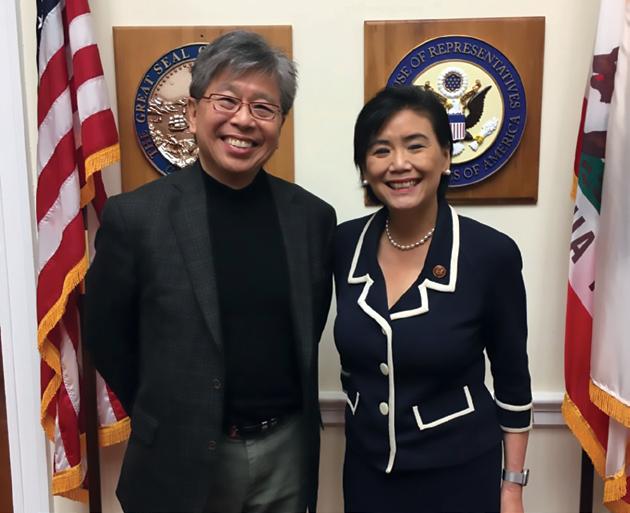
In December, JAX President and CEO Edison Liu, with External and Government Affairs Vice President LuAnn Ballesteros and Federal Government Relations Director Jill Homer Stewart, visited Washington, D.C. to meet with members of the U.S. Senate and House of Representatives as part of an ongoing effort to raise JAX’s national profile, and steward relationships with federal officials.
Liu met individually with Reps. Chellie Pingree (ME 1), Ami Bera (CA 7) and Judy Chu (CA 27), as well as Senators Susan Collins (R-ME) and Chris Murphy (D-CT), with whom he discussed JAX initiatives that varied from local issues such as affordable housing and commuter transportation to global engagements and academic research.
Liu also had meetings with other offices in the Connecticut and California delegations and emphasized the growth of the organization both in terms of employees and economic impact on the state economies.
‘MIGHTY MICE’ REACH FOR THE STARS
Mighty Mice were launched into space on SpaceX’s Dragon spacecraft in December. Employees from The Jackson Laboratory, including researchers, educators, and members of the animal care team watched and celebrated the live launch at Cape Canaveral Air Force Station in Florida.
The genetically engineered mice were sent to the International Space Station as part of a research project that will help scientists at JAX, UConn Health and Connecticut Children’s Medical Center better understand the impact of microgravity on muscles and bones.
Turn to page 10 to learn more about how these Mighty Mice are not only helping scientists, but also helping high school students develop scientific and data analysis skills.
PHOTOGRAPHY BY TIFFANY LAUFER & JILL HOMER STEWART
Gary Churchill, Ph.D.
Gary Churc hill, Ph.D.
BY JOYCE DALL’ACQUA PETERSON | PHOTOGRAPHY BY TIFFANY LAUFER
The American Association for the Advancement of Science (AAAS) has elected JAX Professor Gary Churchill as an AAAS Fellow, one of the nation’s highest scientific distinctions.
Churchill is a pioneer in developing genetically diverse laboratory mouse populations, known as Collaborative Cross and Diversity Outbred. This 21st-century approach to using animal models is gaining traction in the research community and revealing unprecedented insights in human biology, aging and disease.
With his international collaborators, Churchill brings a systems approach to studying the genetics of health and disease, developing new statistical methods and software for the investigation of complex disease related traits in the mouse.
This year 443 AAAS Fellows have been named in recognition of their scientifically or socially distinguished efforts to advance science or its applications.
We are turning big data into actionable science — and turning health care on its head. Learn more at www.jax.org/code
Churchill, who holds the Karl Gunnar Johansson Chair in computational biology at JAX, was recognized by his peers for his “distinguished contributions to computational biology and genomics, particularly in the systems genetics analysis of complex traits and disease processes.”
BY SARAH LASKOWSKI
PHOTOGRAPHY
BY
TIFFANY LAUFER
&
COURTESY
OF
NASA ILLUSTRATIONS
BY
KAREN DAVIS, DANIELLE MEIER & REBECCA HOPE WOODS
…and the classroom, too.
Researchers from The Jackson Laboratory, UConn Health and Connecticut Children’s Medical Center sent genetically engineered “Mighty Mice” to the International Space Station to learn about the effect of microgravity on muscle and bone loss.
The mice were passengers on the SpaceX Dragon spacecraft on a Falcon 9 rocket launched in December from Cape Canaveral Air Force Station in Florida. These Mighty Mice, special mice raised by JAX’s custom breeding team in Bar Harbor, Maine, are genetically engineered to lack myostatin and therefore display approximately twice the average muscle mass. The mice spent about a month in space to help Se-Jin Lee, M.D., Ph.D., JAX professor and Presidential Distinguished Professor at UConn School of Medicine, understand the impact of microgravity on muscles and bones.
Lee’s research study is a collaboration with co-investigator and spouse
Emily Germain-Lee, M.D., professor of pediatrics at UConn School of Medicine and division head of Pediatric Endocrinology at Connecticut Children’s Medical Center.
Lee discovered the myostatin gene in 1997, and was the first to show its role in regulating muscle growth. His space-based project, funded by a competitive grant from the Center for the Advancement of Science in Space, which manages the International Space Station U.S. National Laboratory, will explore a new angle on the role of myostatin.
“We are so excited to help advance our research findings both to help protect our astronauts traveling to space and to aid people here on Earth with serious health conditions that impact their muscle and bone strength and use, and most importantly their daily quality of life,” says Germain-Lee.
In addition to the remarkable science, the “Sending JAX Mighty Mice to Space” project incorporates an invaluable STEM learning experience within the Hartford public school system. Lee and Germain-Lee worked with JAX’s Genomic Education team to develop a curriculum for two Hartford public high schools.
Lee and Germain-Lee visited both classes in November, leading discussions on the value of mouse models in genetics research and the importance of muscle and bone research on human health. Once the experiments launched on the ISS are complete in early 2020, the students will use the collected data to develop scientific and data analysis skills aligned with the Next Generation Science Standards, and to conduct their own independent research projects about muscular and bone degeneration.
JAX Education Director Sarah Wojiski, Ph.D., and Christina Vallianatos, Ph.D., genomics educator for STEM and undergraduate education, arranged and attended the school visits.
“In addition to having direct access to the scientists,” Wojiski says, “the students are being immersed in this research project and will have the opportunity to learn about all of the different types of career paths that might be available to somebody who has an interest in science.”
It’s not just about becoming a doctor or scientist in a white lab coat in a research laboratory, Wojiski notes. “There are many different ways that one can be involved in STEM research, so this will be a great opportunity for these students to get exposed to all of those options that are available to them.”
Professor Se-Jin Lee presents his research project to high school students in Hartford, Conn.
Scientists Emily Germain-Lee and Se-Jin Lee answer questions during a pre-launch event in Florida.
The SpaceX Falcon 9 rocket launches from Cape Canaveral, Fla.
The microbiome nursing in the
BY JOYCE DALL’ACQUA PETERSON ILLUSTRATION BY ZOË REIFSNYDER
Older adults are at high risk for skin, lung, urogenital, gastrointestinal and other infections. Potentially deadly in themselves, infections can cause secondary problems, such as pneumonia following a “cold” or upper respiratory tract infection.
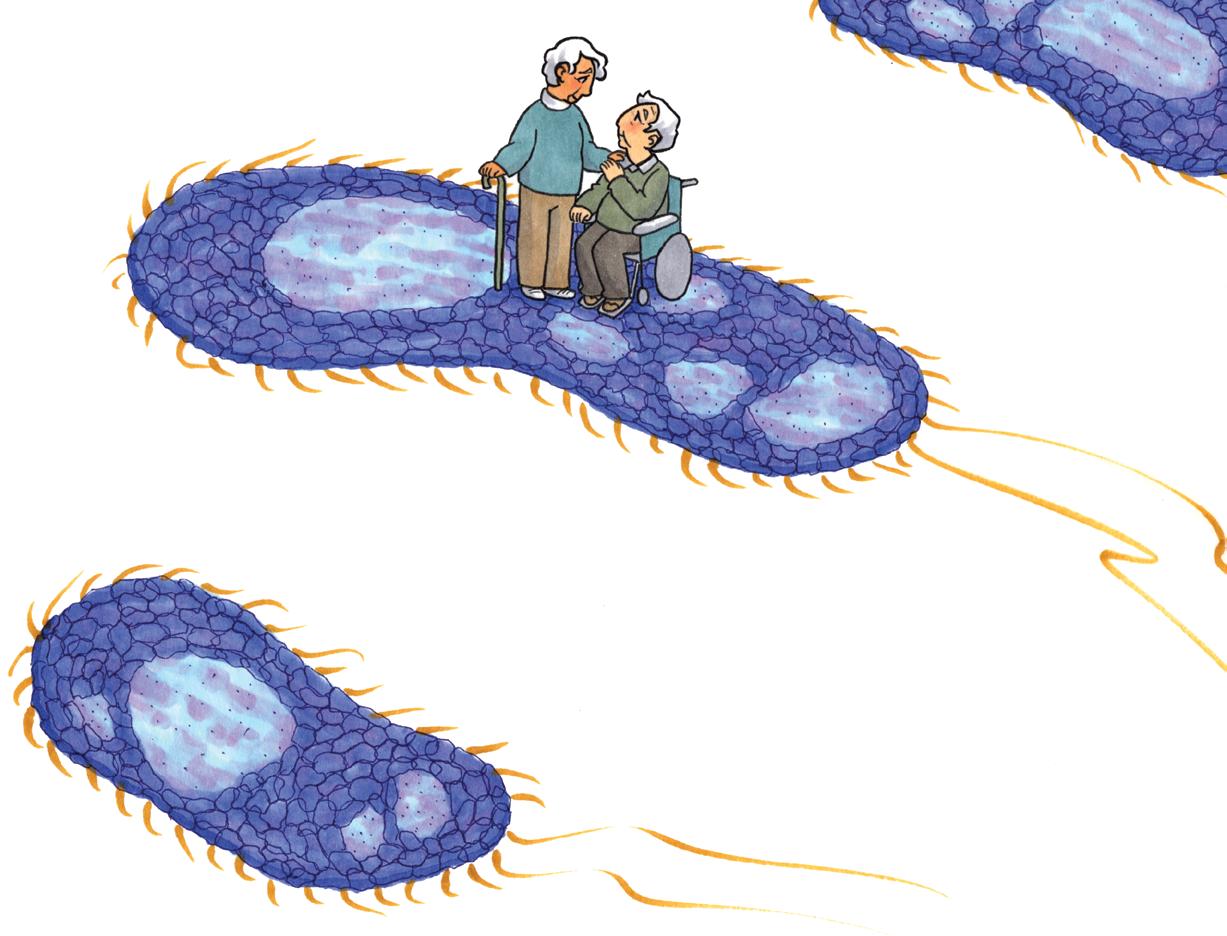
The elderly are particularly vulnerable to infection and other adverse events during the transition from a skilled nursing facility back to community living. More than 2 million Americans aged 65 and over spend time in these long-term care accommodations, many to recover from a health crisis such as a heart attack, stroke or accident.
Why does the move from skilled nursing facility to home lead to more of these adverse events? The answer may lie in how the change of environment alters patients’ microbiomes, the community of microorganisms that live and grow in and on every person.
A new grant from the National Institute on Aging to JAX and UConn Health will fund studies of changes in the skin, oral and gut microbiomes of older adults who have been living in skilled nursing facilities and have transitioned back to their homes.
JAX Assistant Professor Julia Oh, Ph.D., a microbiome researcher and the principal investigator of the grant, says, “The microbiome can harbor numerous pro-disease elements, including infectious agents, antibiotic resistance genes and pro-inflammatory stimuli. Understanding the microbiome in these individuals will provide important hypotheses into how the microbiome might contribute to the health of older adults and conversely, how it might be modulated to improve their health.”
In collaboration with Julie Robison, Ph.D., and George Kuchel, M.D., FRCP, of the UConn Center on Aging, Oh will perform a longitudinal study to compare the skin, oral and gut microbiomes of older adults living in skilled nursing facilities, those who live in the community and those that transition from facilities to the community.
Oh notes that people 65 and over are the fastest-growing demographic in the U.S. “This population is significantly understudied, highly vulnerable to disease and accounts for at least $400 billion in Medicare costs per year. There is a critical need for new biomarkers and risk factors that impact older adult health to better serve this expanding population.”
home
Researchers from JAX and UConn explore how patients’ microbiomes, and risk of infection, change after time in a skilled nursing facility.
GENOMIC MEDICINE INTO THE 2020s
BY MARK WANNER
Genomic research has made tremendous progress over the past decade. So what are the next steps, especially for bringing research discoveries into the clinic?
Interestingly, while experts in the field agree on the importance of genomics in medicine, they see many different areas as particularly important for progress. There are research methods that were mere pipe dreams 10 years ago, such as single-cell analyses and liquid biopsies for circulating cancer DNA, that may lead to significant medical progress. Human patient sequencing may become commonplace in countries with existing large-scale genomic medicine efforts, such as the U.K. The large numbers of new genome sequences will provide further insight into the medical utility of large amounts of sequencing data.
Another area with huge potential is genome engineering, particularly around the use of Clustered Regularly Interspaced Short Palindromic Repeats (CRISPR) in the clinic. The rapid emergence and use of CRISPR has presented challenging ethical issues related to human germline experimentation, but it’s now almost ready for use in treating disease in non-controversial ways. Delivering the editing apparatus to sufficient numbers of mature cells remains a huge challenge — current protocols involve using viral vectors to deliver it — but genetic editing is being tested in accessible tissues, such as in the retina, to cure vision disorders.
Of course, along with recent clinical progress, there has also been insight into unexpected biological complexity. As a result, while we
understand far more about ourselves down to the molecular level, we remain unable to apply that knowledge in the clinic. For example, advances in long-read genomic sequencing have helped reveal the importance of structural variants (SVs) such as duplications and inversions in human genomic variability and disease. Short-read sequencing methods, which chop the sequences into small segments that then need to be reassembled, often fail to detect SVs because they don’t change the actual linear sequence itself. SVs have been shown to be an important consideration for any application of clinical genomics, however.
Also, non-coding regions of the genome, which comprise about 98.5% of the sequence, are now understood to play vital regulatory roles in gene expression. Indeed, most of the genomic areas associated with common complex diseases (think cancer, Alzheimer’s disease, type 2 diabetes, etc.) are in non-coding regions, and most of them remain poorly understood. Therefore, some of the most important disease research areas remain challenging to address.
It’s a fascinating time, as the tools available to researchers may finally approach the power needed to explore the massive systemic complexity of biology that has previously stymied progress in many areas. Translating knowledge to medical progress will remain difficult, but the sheer amount of knowledge will grow with increasing rapidity. In the end, it’s reasonable to expect that medicine in 2030 will be far different from what we have now, and we’ll look back on the 2010s as the decade that laid the foundation for true progress.
CRISPR Cas9 protein and nucleic acid structures.
Image by Marcin Klapczynski, iStock by Getty Images
Meet the
Betty Walls is fighting cancer with an upbeat attitude and advanced genomic treatment.
You can try not to laugh when you’re in Betty Walls’ company, but you won’t succeed. You’re in trouble when her twinkling green eyes meet yours, her elfin face crinkled in a grin. And you’re sunk when she follows one of her many jokes with her irresistible, wheezy chuckle.
CANCER
BY JOYCE DALL’ACQUA PETERSON | PHOTOGRAPHY BY TIFFANY LAUFER | ILLUSTRATION BY JANE CHA
That wheeze may actually have saved Walls’ life.
In the spring of 2019, she and Hillard, her husband of 58 years, both came down with lung infections. Walls was recovering more quickly, but because she had had asthma and other lung problems all her life, both of them had their lungs x-rayed at Mount Desert Island (MDI) Hospital, just a few blocks from Hillard Walls & Sons Plumbing and Heating in Bar Harbor, Maine.
But Walls’ x-ray showed seven troublesome spots, as did a follow-up CT scan, and the results of a biopsy were positive for cancer. Four years earlier, she had been pronounced free of uterine cancer following a course of radiation and chemotherapy. Still, apparently some cancer cells had evaded treatment and invaded her lungs.
She treated the news matter-of-factly in her journal the day she got her diagnosis. “My treatments will be by Dr. Brooks in Bar Harbor. They start on June 5.” She added, in all caps, “I FEEL FINE.” And that’s what she tells her family and friends.
“People come up to me with long faces and say, oh, you poor dear, you have cancer,” she says. “I tell them I feel great, and I
sleep great. And when they ask how my appetite is, I tell them if a moose walked by me, he’d soon be missing a hind leg!”
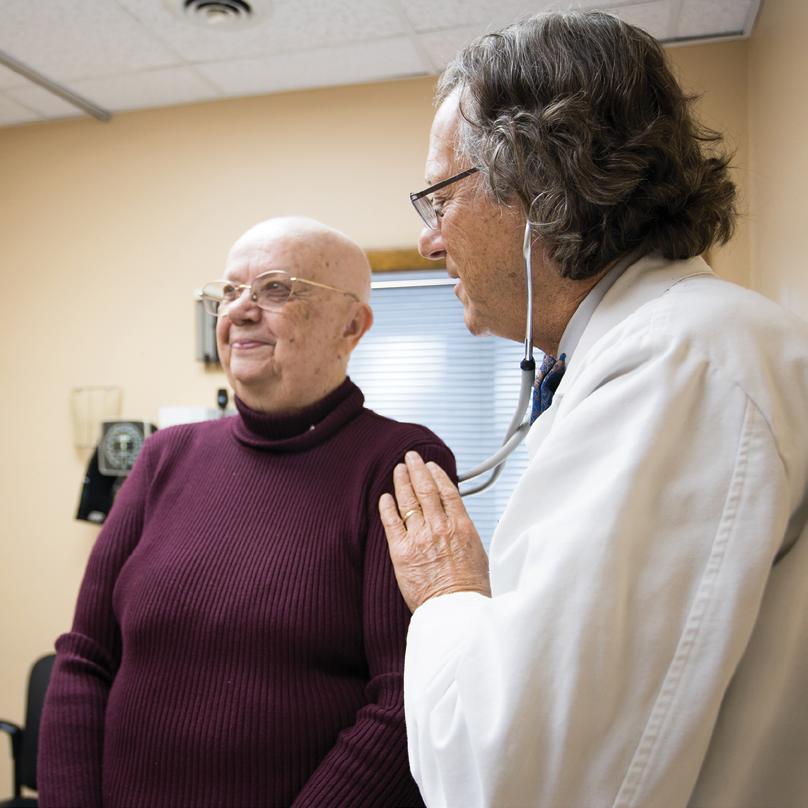
At that first appointment with oncologist Philip Brooks at MDI Hospital, Walls agreed to participate in an initiative aimed at making the latest genomic analysis available to cancer patients throughout Maine. JAX established the Maine Cancer Genomics Initiative (MCGI) in 2016 with a grant from the Harold Alfond® Foundation, and by now every oncology practice in the state has enrolled in the program.
JAX was one of the world’s first cancer genetics research institutions, and it has had a National Cancer Institute funded Cancer Center since 1983. Today more than 80 principal investigators study the genetic basis for cancer and other diseases as well as normal development and aging.
“The first time I met Dr. Brooks, I don’t think I’d been with him 10 minutes when he told me about this program,” Walls recounts. “He said, ‘Would you consider going in it?’ I said, ‘If that would help other people.’ He said, ‘But it could help you.’ I said, ‘Yeah, but help others, too.’ That was the exact right combination.”
Now, thanks to JAX and MCGI, I can learn much more about the genomics of each of my patients’ cancer …
– Dr. Philip Brooks
Through MCGI, Brooks and other clinicians get access to advanced JAX cancer diagnostic tools, based on the unique genetic profile of each patient’s cancer. There is no cost to Maine patients to have access to this new technology. Genomic tumor boards — specialized teams of oncologists, researchers and clinicians — convene in person and by videoconference to review patients’ test results and design personalized treatment plans. Patients also receive assistance in identifying and applying for clinical trials that are appropriate to their diagnoses.
Walls was born in Town Hill, which is part of Bar Harbor but has its own community and identity. In her high school class of 1960, she wrote for the school newspaper (“I did the love column and the jokes”). Hillard is from Mount Desert, all of five miles away. The two of them now live just down the road from JAX, in Otter Creek, where they raised their two sons, one now a lobsterman and the other Hillard’s partner in the family business.
Brooks, who is affiliated with Northern Light Eastern Maine Medical Center, is “from away” but has practiced at MDI Hospital for 40 years. He sees cancer patients from cities and towns around
the world, and cares for the local population. He has long friendships with administrators and scientists at nearby JAX, serving for several years on its Institutional Review Board.
“Well, certainly The Jackson Laboratory is a well-known and highly respected institution,” Brooks says. “Now, thanks to JAX and MCGI, I can learn much more about the genomics of each of my patients’ cancers, and the mutations and alterations of those cancers, and can use that information to match them with the best possible treatment available.”
Brooks describes Walls as “a wonderful, very brave patient.” He says that the information provided through MCGI revealed two mutations on her cancer. “These mutations have the possible chance of offering her targeted treatment that isn’t yet approved, which might be beneficial to her in the future.”
The kind of genomic-based cancer diagnosis that Brooks now accesses through MCGI “is really becoming a standard of practice for almost all patients who have advanced cancer,” he says, “especially for patients who are
past the standard treatments and need more innovative ways to control their disease.”
Brooks says that when people ask him, “Isn’t it sad to be an oncologist?” he says no. “I meet wonderful patients,” he says, “brave patients who are dealing with their illness in often remarkable ways. My fervent hope is that, through these advanced technologies, we’re going to find innovative treatments that will prolong their lives in very meaningful ways, and with fewer side effects and toxicity than standard radiation and chemotherapy.”
Over six months, Walls has received four chemotherapy treatments. Five of her tumors have disappeared altogether, and two are shrinking.
“I believe God has blessed me again by giving me the best team possible,” Walls says, “and on top of it all, it’s right here in Bar Harbor!”
At 78, the outgoing Walls shows no sign of slowing down. She’s active in several church groups, still helps out with the busy family plumbing business, and until recently ran a carry-out food operation in the building next door. She has been a writer all her life, writing for the local newspaper, authoring several cookbooks and journaling daily.
But her real vocation is as a teacher. She has collected hundreds of dolls over her lifetime, and her popular public talks about them combine cultural history, creative storytelling and life lessons. And she uses her natural communication gifts to talk to her friends and family — many of whom pride themselves on their Yankee stoicism — about lifesaving advances in treating cancer and other diseases.
“You mention the word cancer, they immediately are scared to death,” she says. “It doesn’t have to be that way anymore. I’m not a doctor, and I’m not into science, but if you feel something’s wrong, go find out. If it’s
Five of her tumors have disappeared altogether, and two are shrinking.
bad news, at least you’ll catch it early, and you have some help there to do it. It’s not like it was just five years ago.
“We’re going to beat this,” Walls says. “Between what Dr. Brooks is doing with me and what The Jackson Laboratory is doing with me, I’m very optimistic. I don’t see anything to be negative about.”
Visit www.jax.org/supportmcgi to watch a video about Walls’ fight against cancer and learn how the Maine Cancer Genomics Initiative is changing the lives of patients.
Over her lifetime, Betty Walls has collected hundreds of dolls — including handmade baby dolls, a fashion doll that predated Barbie and these tiny “worry dolls” — and she has a story for each of them.
NEW EPIGENETIC ERASER ENHANCES GENE
BY MARK WANNER | ILLUSTRATION BY KAREN DAVIS
EPIGENETIC EDITING
CRISPR/Cas9 has revolutionized genome editing. The process is straightforward: by simple base-pairing, the guide RNA localizes to a particular site in the genome, where the accompanying Cas9 nuclease binds to the DNA and cuts it. And that’s it, an easy and accurate way to cut DNA at a specific sequence.
But what if you want to do more than that?
“Compared to CRISPR/Cas9, Casilio is like a smart phone,” says Cheng. “With an old phone, you could call and maybe text, but that was it. With the smart phone, you can get apps to do all sorts of tasks. For example, you can listen to music while you play a game and receive texts. Casilio allows you to do several things simultaneously within the same genome.”
Casilio can be used to increase or inhibit gene expression, label specific DNA regions with fluorescent markers and more. In a new paper published in Nature Communications , a team led by Cheng and Associate Research Scientist Aziz Taghbalout presents an important new use for Casilio: epigenetic editing.
Epigenetic changes, such as the addition or removal of methyl groups to DNA sequences, play vital roles in the regulation of gene expression. Aberrant DNA methylation is associated with various human diseases, including cancer. In its report, the team demonstrated a highly effective new way to demethylate DNA and activate genes at targeted DNA sequences.
With Casilio, it’s possible to develop different modules — like smart phone apps — by adding more or different proteins to the Pumilio system. Cheng and his team achieved successful demethylation by delivering a demethylating enzyme, and greatly increased the efficiency of the process by also including proteins that facilitate DNA repair pathways. The removal of the methyl group led to greatly increased gene activation.
JAX Assistant Professor Albert Cheng developed a tool called Casilio that makes it possible to manipulate genomes in many more ways. Casilio uses a disabled version of Cas9 (dCas9) that still binds to the DNA but doesn’t cut it. It also includes a modular RNA binding system, called Pumilio, that can be attached to the guide RNA to deliver a protein effector (or multiple proteins) to the targeted DNA sequence. The result is a versatile tool that, instead of just cutting DNA, can alter its function in more nuanced ways.
The work showcases the ability of the Casilio system — to bring multiple protein factors in close proximity to a targeted genomic sequence — and significantly expands the system’s scope and applications. The result is a powerful new epigenetic research tool that represents an important step forward from current methods of DNA methylation editing.
Training scientists for the future
BY JOYCE DALL’ACQUA PETERSON ILLUSTRATION BY REBECCA HOPE WOODS
For most of us, lifelong learning is a goal; for biomedical researchers, it’s an imperative. Fields and techniques that barely existed a decade ago — cancer immunology, gene editing, the microbiome and single-cell sequencing — are transforming the study of human health and disease.
To help keep researchers ahead of the learning curve, JAX presents a wide range of in-person and online courses and workshops. The Howard Hughes
Medical Institute (HHMI) recently made a three-year grant to JAX totaling $900,000 to support advanced courses for talented graduate students, postdoctoral fellows and early-career faculty who will be future leaders in biomedical research and education.
HHMI has been supporting JAX education programs for 13 years, including funding for the world-renowned McKusick Short Course
in Human and Mammalian Genetics and Genomics. Over six decades, the scientists making up the Short Course faculty are a virtual “who’s who” of the biomedical research world. Gregg Semenza, M.D., Ph.D., who shares the 2019 Nobel Prize in Physiology or Medicine, first attended the Short Course as a student in 1986 and has served on the faculty each year since 1990.
“The Short Course is the most incredible survey of experimental mammalian and
CONNECTIONS
Online students
In-person students
Both online and in-person
medical genetics available anywhere in the world,” Semenza says, “and I remain a student who learns something new every year that I attend the course.”
DID YOU KNOW?
JAX offers free educational programming for budding scientists and experts alike. Learn more at www.jax.org/education
Understanding CORONAVIRUSES
BY MARK WANNER | ILLUSTRATION BY MATT WIMSATT
BEYOND THE NEWS
WHAT IS A CORONAVIRUS AND HAVE OTHERS BECOME INFECTIOUS BETWEEN PEOPLE?
Coronaviruses are a large group of RNA viruses, and scientists have identified hundreds of such viruses to date. They are named “corona” (like a crown) because their membranes are studded by spike-like proteins.
A concern regarding coronaviruses is that they are zoonotic, meaning they can spread from animals to humans and take more virulent forms. In the previous 20 years, there have been two zoonotic coronavirus outbreaks that infected thousands of people. Severe acute respiratory syndrome (SARS) emerged in 2002 and the Middle East respiratory syndrome (MERS) was first reported in 2012.
WHAT ARE SARS-COV-2 AND COVID-19?
SARS-CoV-2 is a coronavirus that’s newly capable of infecting humans, and it causes a disease named COVID-19. The initial COVID-19 cases were identified in Wuhan, China, in late 2019. It has since spread around the globe. The majority of those infected experience mild symptoms, if any, but roughly 10% require hospitalization, and COVID-19 can be fatal, particularly in the elderly.
WHAT IS BEING DONE TO ACCELERATE VACCINE AND DRUG DEVELOPMENT FOR COVID-19?
An important first step is to characterize the virus and track how it can change and mutate over time. The good news is that modern research technologies provide the ability to do both quickly and easily, including generating genome sequences as the virus spreads. The data has provided a vital first step for determining how to design vaccines and therapies.
HOW CAN ANY VACCINES AND THERAPIES THAT EMERGE BE TESTED FOR SAFETY AND EFFICACY?
The usual first step for the drug approval process is to test them in mice. Unfortunately, the previous outbreaks showed that the spiky coronavirus proteins that bind readily with a particular human protein to enter cells do not bind well with the mouse counterpart. The solution was to introduce the human version of the gene that codes for the protein into mice, which are then known as “transgenic.” Subsequent research showed that the first SARS virus did bind well with the transgenic (human) proteins in the mice and efficiently infected them. The latest research in the field has further shown that SARS-CoV-2 binds with the same human protein to enter cells, meaning that the mouse developed for a previous outbreak may play a critical role in the one facing us now.
WHAT IS JAX DOING TO HELP WITH THE CORONAVIRUS?
Integral to its mission, JAX is currently using its expertise and mouse husbandry ability to expand a transgenic mouse colony as rapidly as possible. JAX is distributing these mice at cost to infectious disease research facilities globally in the hope of providing the research and clinical communities with the resources needed to stem the current outbreak. The mice were originally developed by Stanley Perlman, M.D., Ph.D., at the University of Iowa.
600 Main Street
Bar Harbor, ME 04609-1523
Forwarding service requested
A PUBLICATION OF THE JACKSON LABORATORY
Mission
We discover precise genomic solutions for disease and empower the global biomedical community in our shared quest to improve human health.
Locations
United States California, Connecticut, Maine
China
Shanghai
www.jax.org
Editor
Joseph Blanchette
Design & art direction
Jane Cha
Karen Davis
Danielle Meier
Zoë Reifsnyder
Rebecca Hope Woods
Copy editors
Carol Lamb
Joyce Dall’Acqua Peterson
Rebecca Hope Woods
This publication was produced by JAX Creative. Printed March 2020