Arsenic plagues much of the world’s drinking water. At JAX we are studying genetic susceptibility to the global contaminant.
Inside cover: Addiction and obesity are major global health issues, and dopamine (shown in the micrograph above) is the key player in both epidemics. JAX is at the forefront of understanding the genetics of addiction, and this research is providing insights into the neurobehavioral aspects of obesity.
COMPLEX CONNECTIONS — MIRRORING GENETIC DIVERSITY
For 90 years, The Jackson Laboratory has been harnessing the power of the mouse to transform human health. This issue of Search highlights some of the ways in which our world-leading expertise in mammalian models of human disease is enabling us to tackle challenging health problems, from rare diseases to the effects of environmental toxins, to the complex relationships between sleep, social interaction and addiction.
JAX has long been a leader in developing mouse models of human disease, powering research not just in our own scientists’ laboratories but also at institutions around the world. One strain provides the foundation for more medical research than any other: a strain known as Black 6. Recently, a team of JAX scientists sequenced the genome of Eve, the founding ancestor of most Black 6 mice in laboratories today, and you can read more about those findings in this issue.
Join us
in our search for cures for the diseases that impact all of us in some way — Alzheimer’s, addiction, cancer, diabetes, rare diseases and more.
While genetically standardized mice like Black 6 enable scientists to explore many important questions, they do not reflect the diversity of mouse — or human — populations, so there are some questions they can’t answer. JAX researchers like Professor Gary Churchill, whose work on susceptibility to environmental toxins is highlighted in this issue, have developed new resources, such as JAX’s Collaborative Cross, that mirror the genetic diversity of humans. This is the key to discovering new genes associated with disease, whereas mice with specific genes re-engineered not only validate the importance of a mutation to a disease, but also reveal the potential range of disease outcomes.
Thus, both inbred mice and diverse mouse populations have vital roles to play in advancing biomedical research. Together, they enable scientists at JAX and around the world to understand the complex connections among external factors, genetics and human health; to
identify potential strategies for preventing and treating disease; and to test new therapies.
As we celebrate our 90 th year and look to the future, I am excited about where JAX is headed. Every day, we are discovering new ways to amplify the well-established value of mouse models with new technologies driven by computational power, including artificial intelligence. Your support of our mission makes all of this possible, and for that, I thank you.
As a nonprofit institution, JAX depends on the support of our philanthropic community. Our donors play a pivotal role in our mission: One donation, one transformative gift, could open the door to the next great scientific discovery. You can learn more about how you can support the Laboratory by visiting www.jax.org/give, calling (800) 474‑9800 or emailing advancement@jax.org
Edison Liu, M.D. President and CEO, The Jackson Laboratory
LEARN MORE ABOUT JAX’S 90 TH BIRTHDAY Visit www.jax.org/jax90.
At JAX, we consider ourselves an extended family — a network of scientists, employees, donors and friends working together to improve human health. Together, we are JAX
Thank you for being a part of our family.
LESSONS IN LEADERSHIP
Local nonprofits and aspiring leaders at JAX attended the inaugural Hewett Family Lecture on Nonprofit Leadership in Bar Harbor, Maine this summer. Our featured presenter was David Yarnold, president and CEO of the National Audubon Society, under whose direction the Society is becoming a coordinated, collaborative force for hemispheric conservation through science, advocacy and education. Yarnold presented to more than 100 attendees, sharing his perspective on the Audubon Society, nonprofit leadership, communication techniques and more. A select group of JAX employees participated in a leadership workshop, benefitting from an interactive discussion about the challenges and rewards of operating in a mission driven, nonprofit environment.
Former JAX Chief Operating Officer Charles E. Hewett and his wife Jacqueline endowed the Hewett Family Lecture as a biennial event that will bring a prominent national figure to Maine to share leadership experiences with JAX employees and representatives from Maine-based nonprofits.
The Charles E. Hewett, Ph.D., Leadership Excellence Fund was created to honor Dr. Hewett’s legacy of leadership and the advancement of aspiring colleagues. The endowment will fund the Hewett Family Lecture in support of his enduring dedication to mentoring and empowering future leaders.
To learn more about this fund, visit www.jax.org/chuck-hewett-fund
Visit www.jax.org/news.
FORUM FOR DISCOVERY
JAX hosted its annual Forum for Discovery event in Bar Harbor, Maine. Invited guests joined institute leaders and scientists for a day, reflecting on 90 years of discovery and looking ahead to JAX’s future growth. JAX President and CEO Edison Liu, M.D., gave a State of the Laboratory address, which was followed by a closer look at JAX’s 90 year history, led by Faculty Emerita Muriel Davisson, Ph.D.
Professor Elissa Chesler, Ph.D., discussed the unique value of the JAX mammalian model, and Assistant Professor Basile Tarchini, Ph.D., gave a talk on his inner ear research and how it could someday lead to solutions for hearing loss. Madeleine Braun, Ph.D., chief of Presidential Initiatives, and Associate Professor Gregory Carter, Ph.D., talked about how JAX is using big data to map a disease-free future.
COLLEGE SCHOLARSHIPS AWARDED
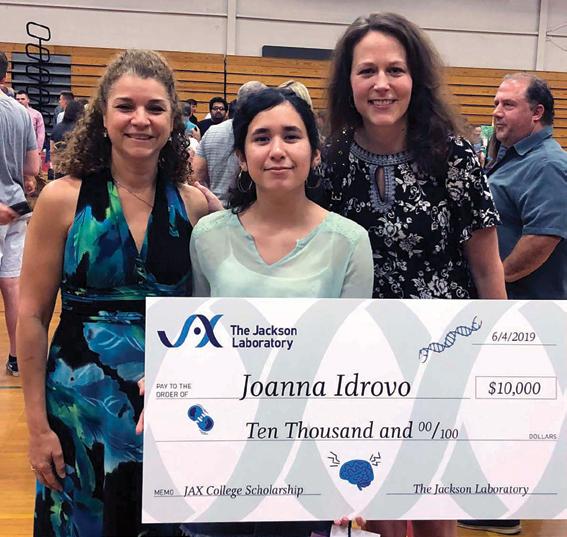
The college scholarship program at JAX annually awards three $10,000 scholarships — one each to students from Maine, Connecticut and Sacramento County in California. The scholarships are awarded to students with financial need who aspire to pursue careers in research or medicine, thus supporting JAX’s mission to discover precise genomic solutions for disease.
This year’s awards went to Shannon O’Roak of Exeter, Maine; Joanna Idrovo of Torrington, Conn.; and Monserath Mendoza of Sacramento, Calif.
PHOTOGRAPHY BY THOMAS FOUCHEREAUX
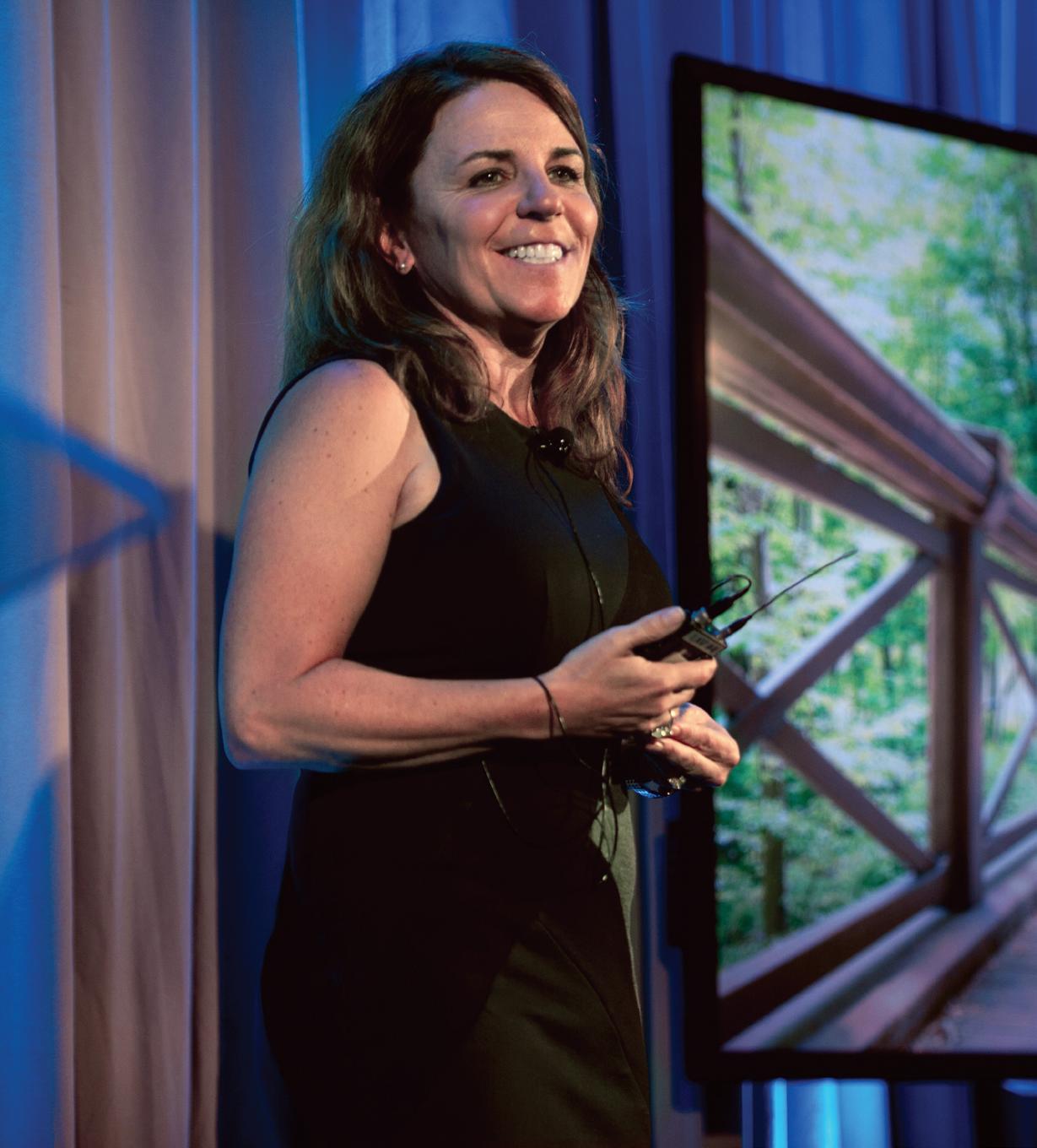
Cat Lutz delivers a TED-style talk about strides in rare disease research as part of the Laboratory’s JAXtaposition speaker series. See the JAXtaposition schedule at www.jax.org/jaxtaposition .
Cat Lutz, Ph.D.
BY SARAH LASKOWSKI | PHOTOGRAPHY BY BRIAN FITZGERALD
Neuroscientist Cat Lutz and her team have created two new mouse models to study neurological developments in Snyder-Robinson syndrome (SRS), advancing global understanding of this rare disease.
SRS is an ultra-rare genetic disorder that causes intellectual disability, seizure disorders, hypotonia, osteoporosis, gastrointestinal issues and a host of other medical problems. Fewer than 100 cases have been diagnosed worldwide.
“The Jackson Laboratory is committed to helping families affected by all diseases — including the rarest ones — by advancing mouse model generation and therapeutic strategies to help identify causes and direct future treatments,” says Lutz. “JAX continues to work with the global scientific community to explore innovative ways to advance these efforts.”
These new models, available immediately to the worldwide scientific community, are two of the latest additions to JAX’s extensive
We are always delighted to see the impact a single mouse model can have in moving a foundation closer to its goal.
collection. The Laboratory is the world’s source for more than 11,000 strains of genetically defined mice, is home of the Mouse Genome Informatics and Mouse Phenome databases, and is a hub for scientific courses, conferences, training and education.
With your help, better futures are possible for people suffering from rare diseases like SRS. Learn more about JAX rare disease research at www.jax.org/rare-disease-research .
BY JOYCE DALL’ACQUA PETERSON
Harnessing a specific immune response to avoid inflammation could prevent insulin resistance and cardiovascular disease.
We’ve all read enough headlines to know the equation: A high-fat diet leads to obesity, which leads to the so - called metabolic syndrome. This is an unhealthy confluence of conditions that may include insulin resistance and high blood sugar, high levels of cholesterol and triglycerides in the blood, hypertension and cardiovascular disease. But what if this progression could be interrupted?
An important driver of metabolic syndrome is inflammation in the body’s visceral white fat. As it turns out, says JAX Research Scientist Daniel Skelly, Ph.D., and Associate Research Scientist John Graham, Ph.D., certain white blood cells interact directly with white fat to depress inflammation. But these important regulatory cells, known as invariant natural killer T (iNKT) cells, tend to decrease in white fat as a person transitions from lean to obese.
To account for this loss, Graham and Skelly are studying the genetic differences that give each individual (human or mouse) a particular quantity of iNKT cells. “Most of our knowledge of the regulation of white fat
comes from studies of a single inbred mouse strain,” Skelly notes. “To better understand the functioning of the immune system of white fat, we’re looking at immune cells in a genetically varied mouse population, the Collaborative Cross, that approximates levels of genetic diversity found in humans.”
Skelly and Graham have received a two -year exploratory research grant totaling $467,500 from the National Institute of Allergy and Infectious Diseases to pursue their hypothesis that genetic differences in iNKT cell abundance in fat affect the consequences of high - fat, diet-driven inflammation.
The genetically diverse mice, fed either a high-fat diet or a typical, grain-based diet, will be monitored for signs of metabolic syndrome. “Our focus will be on the role of iNKT cells as members of a complex immune cell network,” Graham says, “where cells communicate with each other and can influence the behavior of other cells. By correlating immune cell abundance and indicators of metabolic disease, we will gain insight into the immune regulation of visceral fat.”
Skelly and Graham expect the project to produce valuable new mouse models for studying immune mechanisms involved in obesity-related diseases, with the ultimate goal of identifying potential therapeutic targets for the many diseases associated with metabolic syndrome.
What’s fueling cancer?
BY MARK WANNER ILLUSTRATION BY JANE CHA
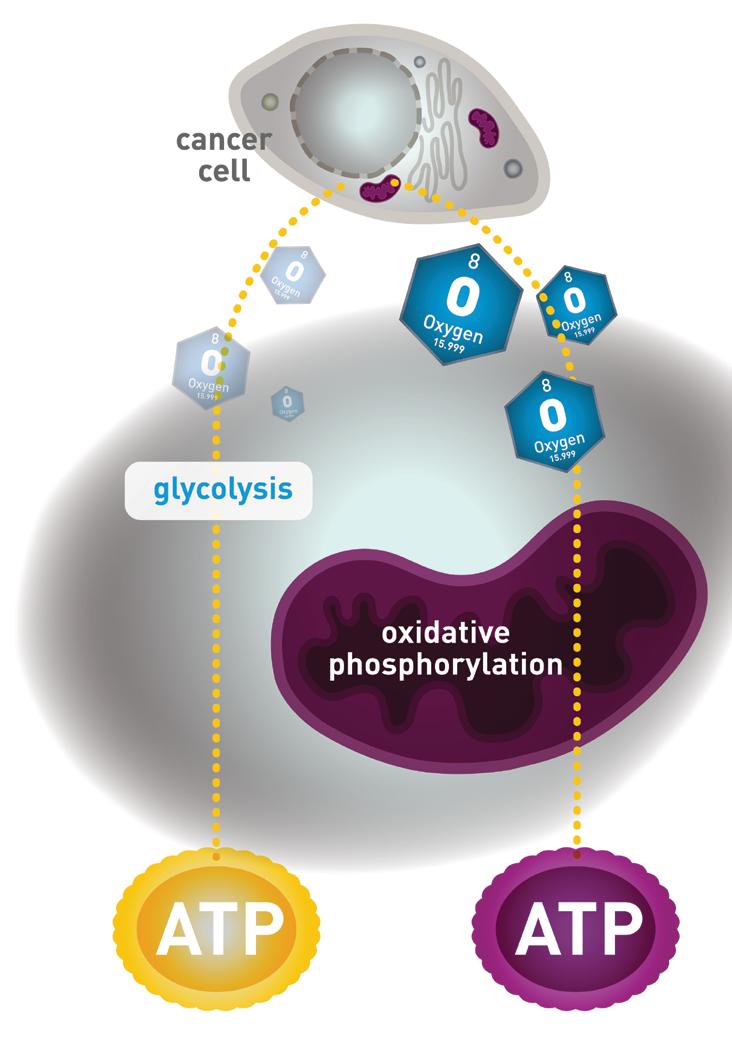
Cancer cells need energy. A lot of it. Their aggressive growth, not surprisingly, is therefore largely fueled by an abnormal metabolism.
In the presence of oxygen, normal cells produce energy in mitochondria through a pathway called oxidative phosphorylation. When needs are extreme, a pathway called glycolysis can provide energy even in the absence of oxygen for a short burst. Cancer cells can utilize a glycolytic pathway even in the presence of excessive oxygen. It generates the molecule that provides us with energy (ATP) at a rapid clip, which can be sustained over time. It fuels the growth of tumors, their ability to resist therapies and their spread to different areas of the body through metastasis.
But that’s not all. Recent research has shown that cancer can also use the oxidative phosphorylation pathway. But how do cancers switch from one metabolic state to another? And can tumors use both at the same time?
In “Elucidating cancer metabolic plasticity by coupling gene regulation with metabolic pathways,” a paper published in the Proceedings of the National Academy of Sciences , a team led by Herbert Levine, Ph.D., and including JAX Assistant Professor Mingyang Lu, Ph.D., reveals the mechanisms involved with cancer’s so‑called metabolic plasticity. They also show that yes, cancer cells can leverage both glycolysis and oxidative phosphorylation in a stable hybrid metabolism, using gene regulation to orchestrate how the different pathways are used to facilitate malignancy.
The researchers developed an extended computer model to couple gene activity with metabolic pathway activity. They focused on key components of the metabolic pathways to determine whether one or the other was dominant, or if it was in a hybrid metabolic state. Their predicted associations were confirmed with metabolomic and transcriptomic data from a breast cancer patient cohort and RNA sequencing data from The Cancer Genome Atlas . They also worked directly with two triple negative breast cancer (TNBC) cell
fueling
lines to confirm that metastatic TNBC cells can acquire a stable hybrid metabolic state.
The paper’s findings indicate that cancer cells are able to adjust their metabolisms in response to their immediate environments. This provides the ability to use different kinds of fuel, and the cells can avoid DNA damage due to excessive reactive oxygen species. The hybrid state may also aid in metastasis, allowing the cells to adapt and proliferate in a variety of in vivo conditions. Also shown was that targeting abnormal metabolism to treat cancer will require an understanding of the metabolic plasticity present and necessitates modulating multiple metabolic pathways.
JAX scientists are working to crack the genetic code of different cancers, from pediatric cancers to breast cancers to brain cancers, and even canine cancers. Will you help?
Visit www.jax.org/cancer- research to learn more.
Cancer cells are able to adjust their metabolisms in response to their immediate environments.
– Mingyang Lu
MEIER
MOST VULNERABLE
ENVIRONMENTAL TOXINS
How much arsenic in drinking water is toxic? Unfortunately, it depends.
JAX scientists are working to pinpoint the safest levels for those most at risk.
Arsenic is an odorless, flavorless element that, in high concentrations, is a deadly poison. (That’s why it figures in countless 1930s English murder mysteries.) It’s a natural component of rock and soil, and leaches into groundwater, some of which finds its way into private wells. Some 44 million Americans get their drinking water from private wells, but how much arsenic is too much?
High dose arsenic poisoning kills by shutting down kidney function, but there are many health risks associated with small quantities over time. According to the U.S. Centers for Disease Control and Prevention (CDC), long term exposure to arsenic from drinking water and food (such as plants and fish that accumulate arsenic) can increase the risk of skin, lung, liver and bladder cancer. Exposure in utero and in early childhood has been linked to negative impacts on cognitive development and increased deaths in young adults.
“When you ingest metallic arsenic through drinking water,” explains JAX Computational Biologist Gary Churchill, Ph.D., “it gets into your liver, and your liver decides that this is not something it wants. It modifies it chemically into various compounds, including
trimethylated arsenic. Trimethylated arsenic gets rooted to your kidneys, concentrates in your urine and causes DNA damage in the bladder. That’s what causes cancer.”
In the United States, the maximum contaminant level allowed for arsenic in public water supplies is 10 micrograms per liter (mcg/L). But even this standard of 10 mcg/L may not be low enough to protect the most vulnerable people — including pregnant women, children, the elderly and people with compromised immune systems — from arsenic’s damaging effects.
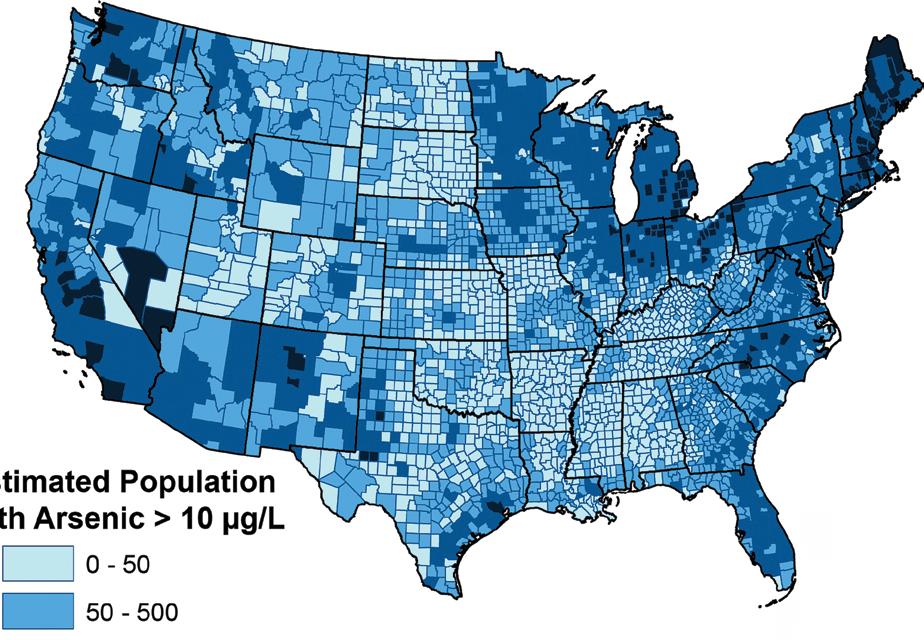
Across the nation, the concentration of arsenic in groundwater ranges from virtually zero to more than 5,000 mcg/L. Notable arsenic hotspots, as indicated on the following map created by the U.S. Geological Survey (USGS) in collaboration with the CDC, are in areas of California, Nevada, Washington, Illinois and Maine. The USGS CDC study estimates
Estimated population with arsenic greater than 10µg/l
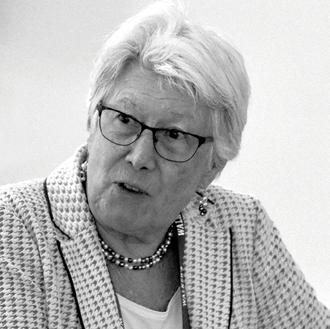
Gary Churchill
that 2.1 million Americans are drinking water from private wells with elevated arsenic levels.
Churchill wants to know what makes an individual more or less susceptible to the adverse effects of arsenic. The Karl Gunnar Johansson chair and JAX professor is the lead investigator of a five year, $3.5 million grant from the National Institute of Environmental Health Sciences (NIEHS) to study the genetic factors that influence arsenic toxicity.
“Instead of trying to protect the average person,” Churchill says, “we would really like to know how we protect the person who’s most at risk, what the safety level is for the worst case.”
Regulatory toxicology seeks to create safety thresholds for chemical exposure in humans based on experimental studies in animals, he explains, “but results of these studies may not accurately predict human sensitivity, because they fail to accommodate the genetic diversity that exists across human populations.”
Churchill’s solution is to change the animal studies themselves.
For more than a century, the scientific and regulatory worlds embraced the use of inbred laboratory mice to reduce the daunting complexity of biology and focus on a single genetic trait, such as coat color or cancer susceptibility. But reductionism comes at a cost: That complexity is what defines a unique individual, mouse or human.
Churchill wants to know what makes an individual more or less susceptible to the adverse effects of arsenic.
Testing the efficacy of drugs, or the toxicity of an element like arsenic, in inbred mice is like testing in a theoretical human family of hundreds of identical twins. Actual humans are “outbred,” with millions of genetic variations that make them unique. So, results vary when a drug enters clinical trials. And a few people get bladder cancer after consuming even minute quantities of arsenic in drinking water.
In 2004 Churchill, together with JAX Professor Elissa Chesler, Ph.D. (when she was working at Oak Ridge National Laboratory), and dozens of other leading laboratory mouse experts around the world, devised the Collaborative Cross: a mouse population established with eight different founder strains. The goal of this group of experts, known collectively as the Complex Traits Consortium, is to create laboratory mouse populations that better reflect the genetic variation found in humans.
Crossing these animals shuffles the genetic deck to yield populations of mice with greater genetic diversity than is present in the entire human race. Sequencing the DNA of each animal allows researchers to peg physiological characteristics to specific genetic variants. Today Collaborative Cross and related Diversity Outbred mouse populations are revolutionizing the study of diseases and genetic traits, including response to drugs and toxins.
In 2004 Churchill and other leading laboratory mouse experts around the world devised the Collaborative Cross: a mouse population established with eight different founder strains, including standard inbred strains but also some wild-type mice.
Crossing these animals shuffles the genetic deck to yield populations of mice with greater genetic diversity than is present in the entire human race. The Collaborative Cross is a vital component of Churchill’s toxicity research.
Together with his JAX colleagues Ron Korstanje, Ph.D., and Laura Reinholdt, Ph.D., Churchill will be evaluating the effects of very low quantities of arsenic — well below the regulatory benchmark for public drinking water — on Collaborative Cross and Diversity Outbred mice. Churchill is devising a new statistical program to analyze the resulting data so that the findings can be translated to develop more individualized standards for human chemical exposure.
Churchill says the project is a proof of principle of a new approach to chemical safety evaluation, which he and his colleagues call systems toxicology. This approach could lead to a dramatic change in how toxic substances are regulated. Besides the grant to JAX, NIEHS has made awards to the University of North Carolina, Texas A&M University and other institutions to explore the role of genetic diversity in toxicology.
“The field of toxicology is tied to regulatory issues,” he says. “There’s a lot of government oversight. There’s real inertia to stick with the tried and true. This is a bold initiative to go forward and explore some new approaches to using animals to understand adverse outcomes from toxic exposure.”
The experiments will center on kidney function, Korstanje’s research focus. “Arsenic accumulates in the proximal tubule of the kidney,” Korstanje says,
“and we want to understand this process. Does genetic variation lead to a difference in uptake or a difference in dealing with the arsenic once it is inside the cell? What is the mechanism that leads to renal damage and how important is genetic variation and the arsenic dosage in this process?”
In parallel with the mouse experiments, the researchers will also study the effects of arsenic on cell lines taken from the very same mice. “Can we learn everything we need to know about the toxicology just from looking at the cells?” Churchill asks. “If the answer is yes, then we can reduce the use of animals in toxicology testing and we can go high throughput, testing billions of compounds in a much simpler way.”
But, he says, “I expect the answer is going to be no. In the cell lines, we’re going to be looking for DNA damage. But we still don’t understand all of the things that happen physiologically in the whole organism when it gets exposed to arsenic.”
Churchill, Korstanje and Reinholdt work at JAX in Bar Harbor, Maine, which is in one of the arsenic hotspots on the USGS map. Like many residents of rural Mount Desert Island, Churchill gets his drinking water from the well on his property.
“Fortunately,” he says, “our water’s fine.”
You can support JAX scientists like Gary Churchill, Ron Korstanje and Laura Reinholdt by visiting www.jax.org/give
CONNECTED THROUGH SCIENCE
BY MAGGIE MOORE
When Isabelle Chen, a senior at The Ethel Walker School in Simsbury, Conn., met Ann Bresnahan during a science alumnae panel discussion at Bresnahan’s 50-year high school reunion, the two knew that they shared a passion for science. But they had no idea that they also shared a special connection with The Jackson Laboratory.
Bresnahan has been a supporter of JAX for 25 years, while Chen, who is now attending Northwestern University, had just wrapped up a year-long internship at The Jackson Laboratory for Genomic Medicine.
Suzanne Piela, D.V.M., Chen’s science teacher and chair of the science department at The Ethel Walker School, participated in the Laboratory’s Teaching the Genome GenerationTM
PHOTOGRAPHY BY TYLER VARSELL & LAURA ELDRIDGE ILLUSTRATION BY REBECCA HOPE WOODS
program, a unique professional development program for teachers to enhance genetics instruction in their high school classrooms.
“The relationship with JAX and Ethel Walker is a match made in heaven,” says Bresnahan. “I so enjoyed meeting Isabelle for the first time and reconnecting with Suzanne at my 50th reunion, and couldn’t be prouder of our mutual association.”
Each year, several outstanding high school and undergraduate students make the commitment to participate in a research experience at JAX while also being full-time students. JAX interns work part time on independent research projects under the sponsorship of a member of the Laboratory’s faculty, who provides guidance, laboratory space and equipment.
Chen learned how to use data analysis to study lupus, which is part of a family of autoimmune diseases, under the mentorship of JAX Professor and Immunologist Jacques Banchereau, Ph.D.
She credits Piela with encouraging her to apply to the program. Chen’s final project, entitled “scRNA-seq Analysis of Adult Systemic Lupus Erythematosus PBMCs and Its Challenges,” was a labor of love: She designed the project, implemented the research plan, analyzed data and reported results.
“I learned a lot this past year. Science takes a lot of initiative. Sometimes, I would do data analysis and get
CONNECTIONS
null results, and that was frustrating,” says Chen. “But my teachers at both JAX and Ethel Walker taught me what being a scientist means. It means perseverance and the pursuit of your passion, no matter what.”
“Isabelle is an amazing student,” says Piela, who taught Chen in advanced biology and honors biochemistry. “I think her experience at The Jackson Laboratory has taught her a lot about resilience and perseverance. This is a lesson that students don’t always learn in high school.”
Chen says that both Bresnahan and Piela have inspired her to pursue a career in science.
“It’s important to have more women in research fields and doing science,” she says.
Bresnahan’s family has long supported science: The Ethel Walker science wing bears her mother’s name, as does a plaque at JAX’s Bar Harbor campus.
“My family has supported the Laboratory through the years, and the intersection in this new generation is heartwarming,” says Bresnahan.
You can empower the next generation of students like Isabelle and educators like Suzanne by supporting JAX education programs at www.jax.org/give .
HOW DO SLEEP INTERACTION
Innovative AI technology captures mouse sleep and social behaviors for study of their influence on drug intake.
It’s long been clear that sleep and social interaction — or lack thereof — influence the use of addictive substances. But existing techniques for measuring sleep behaviors in laboratory mice have failed to replicate that vital social component.
“Current available methods for assessing different sleep states are designed to be used with isolated animals,” says JAX Assistant Professor Vivek Kumar, Ph.D., “and don’t measure multiple individuals in their normal group setting.” Although social context is known to be an influence on addiction vulnerability, he says, it has been largely studied by changing the housing environment and testing isolated animals.
With a new two year grant from the National Institute on Drug Abuse, Kumar is developing a highly innovative technology that, for the first time, will allow researchers to continuously and non invasively monitor complex sleep and social behaviors in groups of mice, using low cost and easily scaled video equipment.
Kumar is collaborating with prominent sleep researcher Allan I. Pack, Ph.D., of the University of Pennsylvania’s Perelman School of Medicine.
“We will exploit techniques of artificial intelligence to develop a neural network‑ based, machine ‑vision method of video analysis of these behaviors, designed to be used in an ethologically relevant group setting, over long periods of time,” Kumar explains.
Armed with this detailed data, addiction researchers will be able to measure the influence of social interaction and sleep on drug intake behavior in large scale genomic experiments, to discover genes that regulate vulnerability to addiction.
Kumar will develop his machine vision method to measure rapid eye movement (REM) sleep, non‑REM sleep and waking behaviors in mice. As a proof of concept, he will compare two mouse strains that are known to differ in these sleep parameters, in both group and single housing settings.
AND SOCIAL INTERACTION AFFECT ADDICTION?
BY JOYCE DALL’ACQUA PETERSON | PHOTOGRAPHY BY BRIAN FITZGERALD
The next step will be to extend the method to enable assessment of group social dynamics and to record all social and active behaviors over multiple days. “This will allow us to test the bidirectional effects with the consumption of self administered methamphetamine,” Kumar says. “We will assess the effect of initial social status and sleep quality on drug consumption, and also measure how the social interactions and sleep patterns are changed after the drug is available.”
He says the new approach “will be a significant advance in behavioral phenotyping, fulfilling the demands of the high throughput genetic studies necessary for optimizing the mouse as model of addiction.”
JAX researchers are at the forefront of understanding the genetic factors involved in individuals’ vulnerability to addiction. Learn more and support this work by visiting www.jax.org/addiction-research .
Vivek Kumar
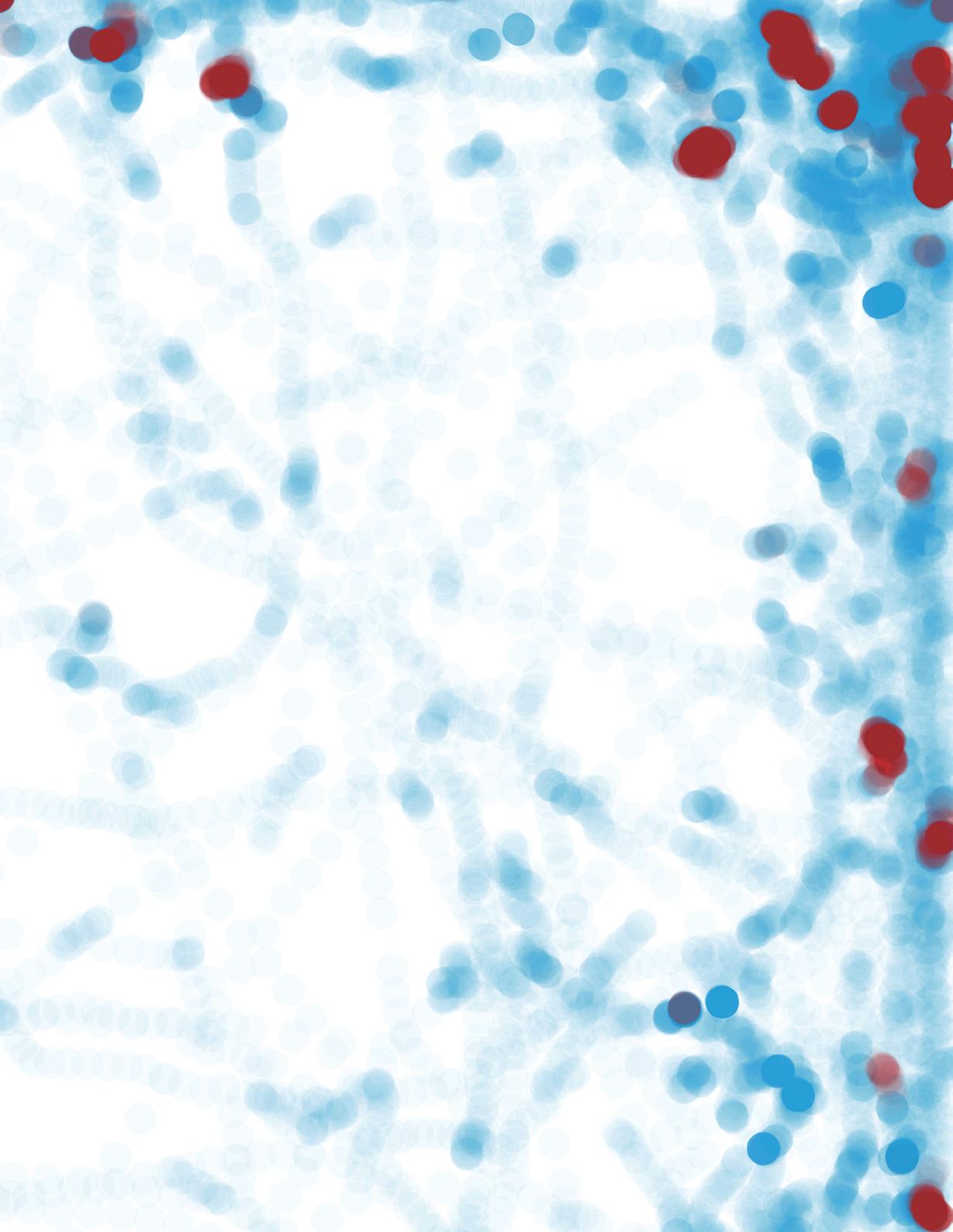
This background image details a map of mouse grooming habits in an enclosure. Red indicates stopping to groom; blue indicates stopping without grooming.
GENOMES PROJECT
BY MARK WANNER
Interview
with
Sir
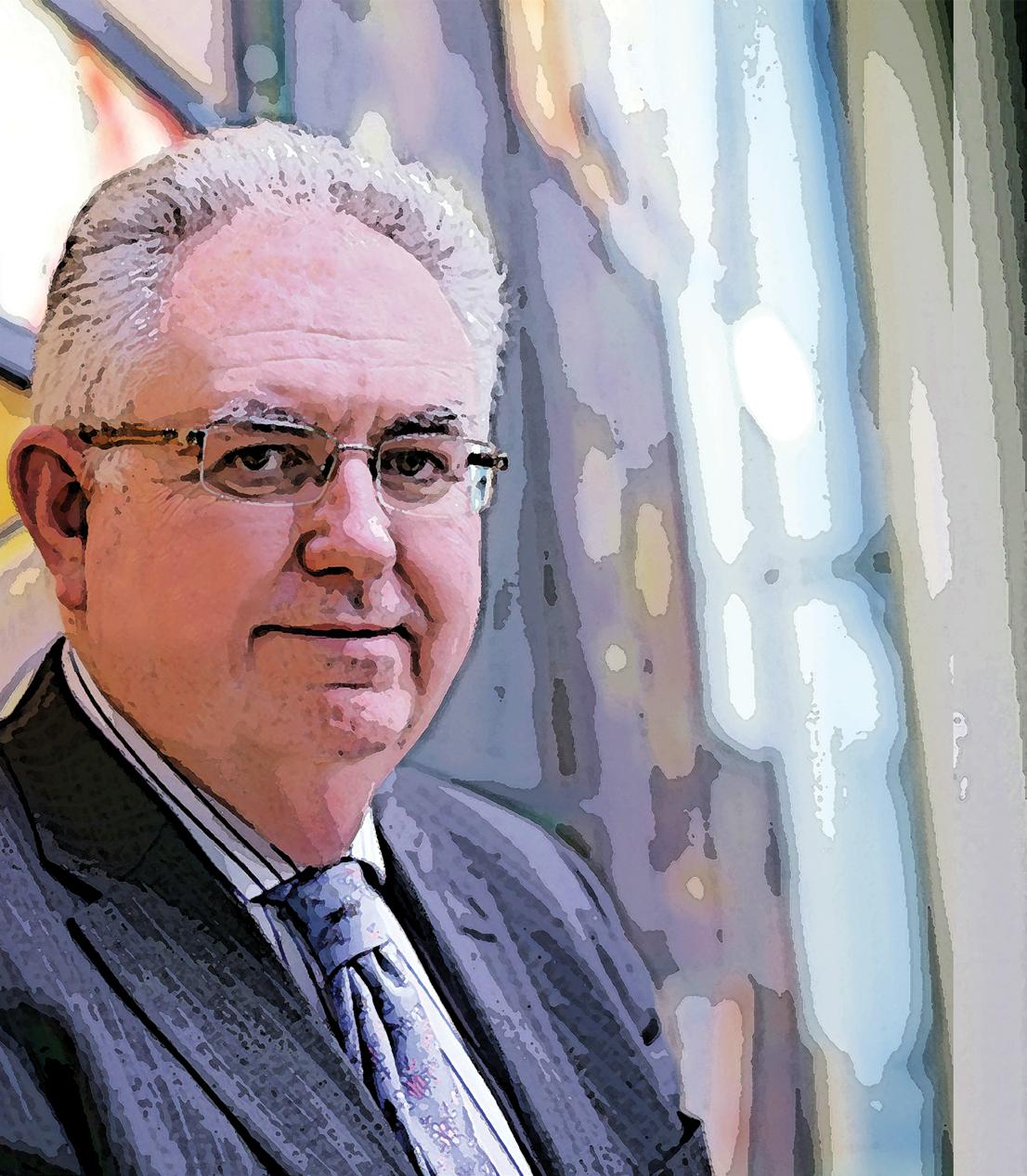
Mark Caulfield, Professor, Chief Scientist, Genomics England
Sir Mark Caulfield, F.Med.Sci., was named chief scientist for Genomics England in 2013 and has led the scientific strategy for its 100,000 Genomes Project since. The program has brought whole genome sequencing to the U.K. National Health Service, with an initial focus on rare disease and cancer patients. Mark Wanner interviewed him at the Human Genomics meeting in Seoul, South Korea in April 2019. Sir Mark Caulfield was knighted soon after his return to England for his significant contributions to medical progress in the U.K.
Mark Wanner: Where did the initial idea for Genomics England come from?
Sir Mark Caulfield: The concept of the 100,000 Genomes Project arose from the London 2012 Olympics. At that event, then Prime Minister David Cameron gathered scientific leaders across a range of areas, including genomics. They advised him that the moment was ripe for a free-at-the-point-of-care health system to consider adopting whole genome sequencing to transform the application of
genomic medicine in health care. So, if you like, the project is a legacy of the Olympics.
MW: Where does the 100,000 Genomes Project stand today?
SMC: We’ve enrolled 97,000 people, and we’ve sent 73,000 analyses back to the National Health Service — the majority of which are in rare disease. Between the 7th of February 2018 and the 2nd of December 2018, we sequenced 52,000 whole genomes. We’re achieving 20 – 25% diagnostic yield for rare disease, and in cancer we’re seeing a potential route to a therapy or a clinical trial in about 50% of people. This can be done at scale.
MW: So, in your experience, whole genome sequencing is beneficial and feasible at large scale in a clinical setting. Are you finding that there can be cost benefits as well?
SMC: There was a case where a child had been 151 times to the hospital before her fourth birthday, and at least 20% of those attendances were about
| PHOTOGRAPHY BY GENOMICS ENGLAND | ILLUSTRATION BY JANE CHA
going to multiple specialists. So, we reckoned that if she’d had her genome sequenced and been diagnosed earlier, she could have avoided those attendances. And that would have released a significant amount of money. If you pivot this to the NICU (neonatal intensive care unit), then the savings are potentially much greater.
MW: What does the future hold?
SMC: We have a new challenge, which is the aspiration of our politicians to reach five million genome analyses. So, that is obviously another order of scale up. We want to bring opportunities for rare disease trials to the U.K. Another focus will be cancer clinical trials, and we will look also at pharmacogenomics — can we spot a proportion of drugs that just doesn’t work and see what we can do in that area? Finally, we’re looking at newborn screening. There have been challenges with enrollment in earlier studies, but let’s be candid, there were important findings that could have implications for people. The evidence shows that you could get to 1 in 286 people in childhood who would avoid harm or where we would even be able to reduce disability. So, 1 in 286, that starts to have a reasonable value proposition. If you then consider adding things like familial high cholesterol, hemochromatosis, adult presenting disorders, you get to 1 in 55. It’s a major quality-of-life issue. Instead of waiting until you’re ill and then trying to repair things, you can actually stop things before they’ve developed, or at least arrest them at an early stage.
Genome of Eve
BY MARK WANNER | ILLUSTRATION BY KAREN DAVIS
C57BL/6 — aka Black 6 — is the most widely used mouse strain in research .
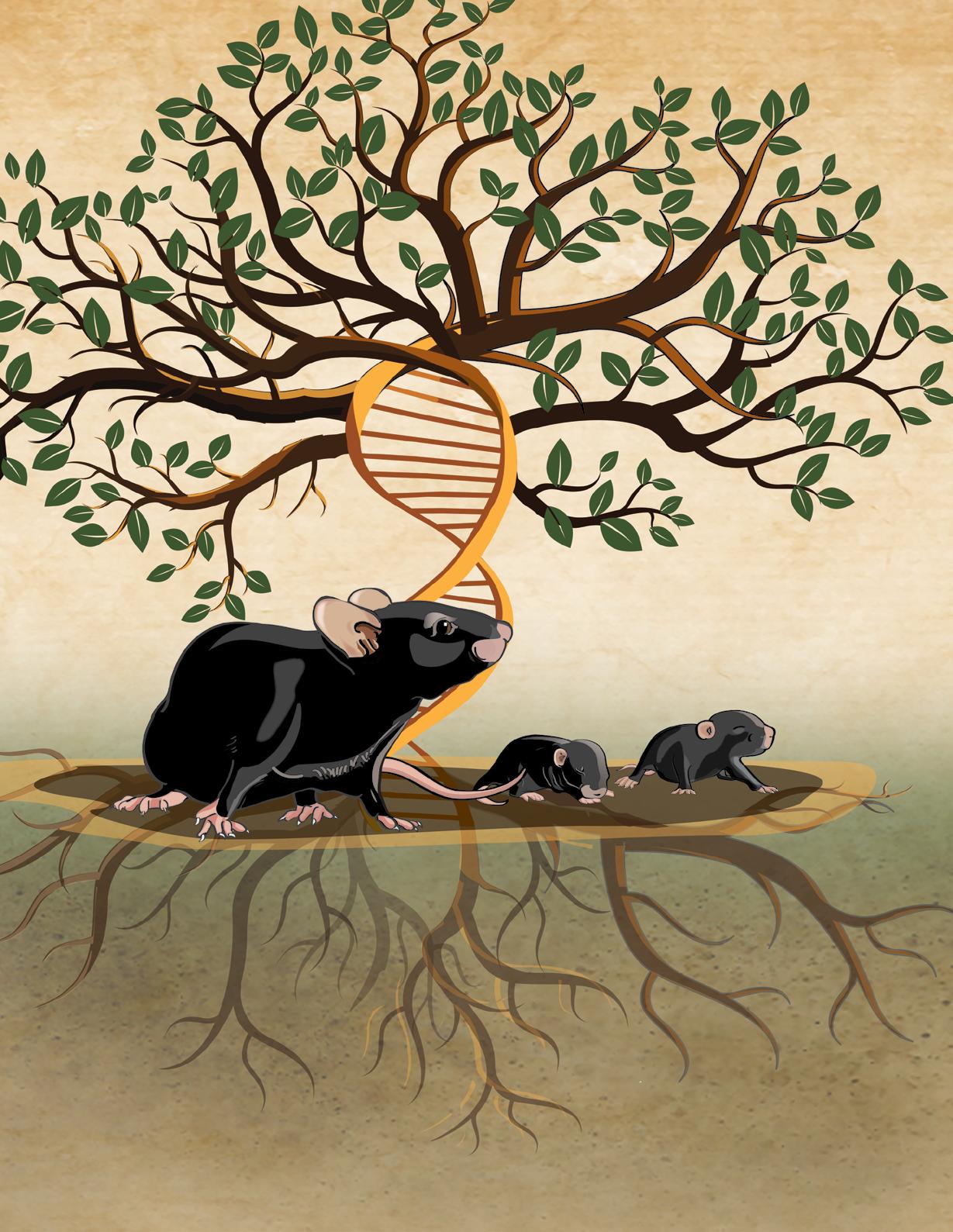
Its reference genome was published in 2003 and has been carefully curated over the years since. Nonetheless, most Black 6 mice today are from 26 generations later, derived from a mouse known as Eve, and important discrepancies have emerged. Now JAX scientists have assembled a thorough sequence of Eve’s genome, using advanced technologies not available 10 years ago and providing important insight for researchers.
Eve was a mouse. Specifically, she was a C57BL/6J mouse born in 2003 whose descendants — in embryo form — are on ice, almost literally.
Inbred mice are valuable to research because all of the individuals within a strain have genomes that are as identical as possible. Over generations, however, the genomes change in a process known as genetic drift, and strict measures must be employed to slow it.
For this reason, as part of the Genetic Stability Program (GSP) at JAX, Eve’s descendants are
regularly removed from cryopreservation and re-derived to minimize the accumulation of genetic change in the population.
Now, thanks to technology that didn’t exist in 2003, Eve’s genome has been sequenced and analyzed with unprecedented focus and depth. In a paper published in G3: Genes, Genomes, Genetics, a research team led by JAX Associate Professor Laura Reinholdt, Ph.D., and JAX Computational Scientist Anuj Srivastava, Ph.D., presents the sequence, which they generated using multiple technologies and includes important differences from the original reference C57BL/6J mouse genome.
Being able to compare genetic apples to apples, as it were, greatly increases the value of research done at different times across different laboratories. And knowing exactly what each genome contains is necessary for putting experimental data in the proper context.
600 Main Street
Bar Harbor, ME 04609 1523
Forwarding service requested
A PUBLICATION OF THE JACKSON LABORATORY
Mission
We discover precise genomic solutions for disease and empower the global biomedical community in our shared quest to improve human health.
Locations
United States
California, Connecticut, Maine
China Shanghai
www.jax.org
Editor Joseph Blanchette
Design & art direction
Jane Cha
Karen Davis
Danielle Meier
Zoë Reifsnyder
Rebecca Hope Woods
Copy editors
Carol Lamb
Joyce Dall’Acqua Peterson
Rebecca Hope Woods
This publication was produced by JAX Creative. Printed November 2019