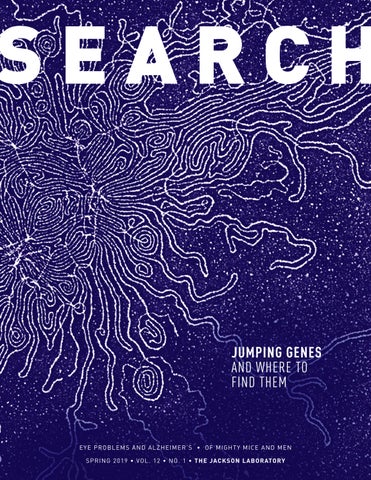
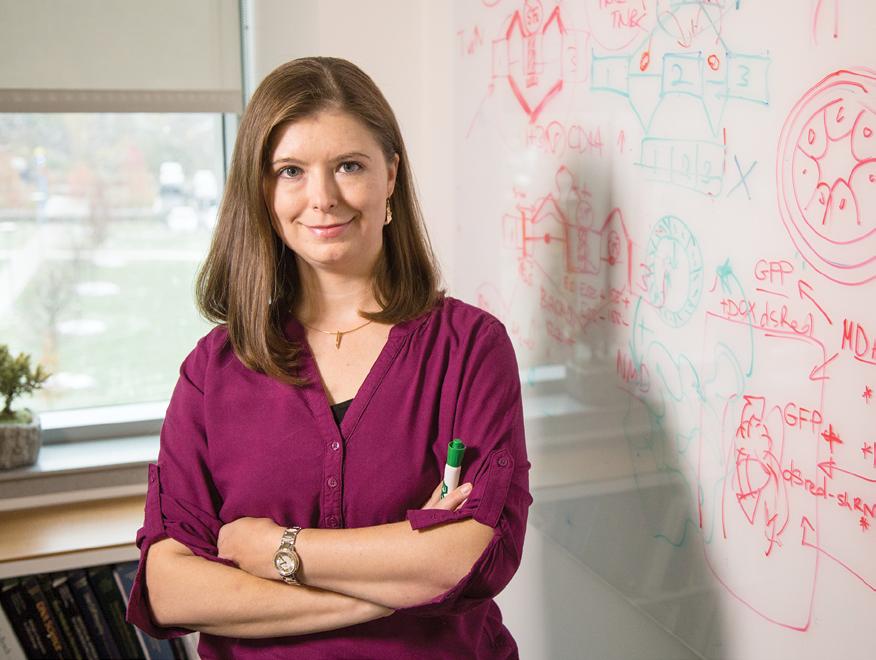
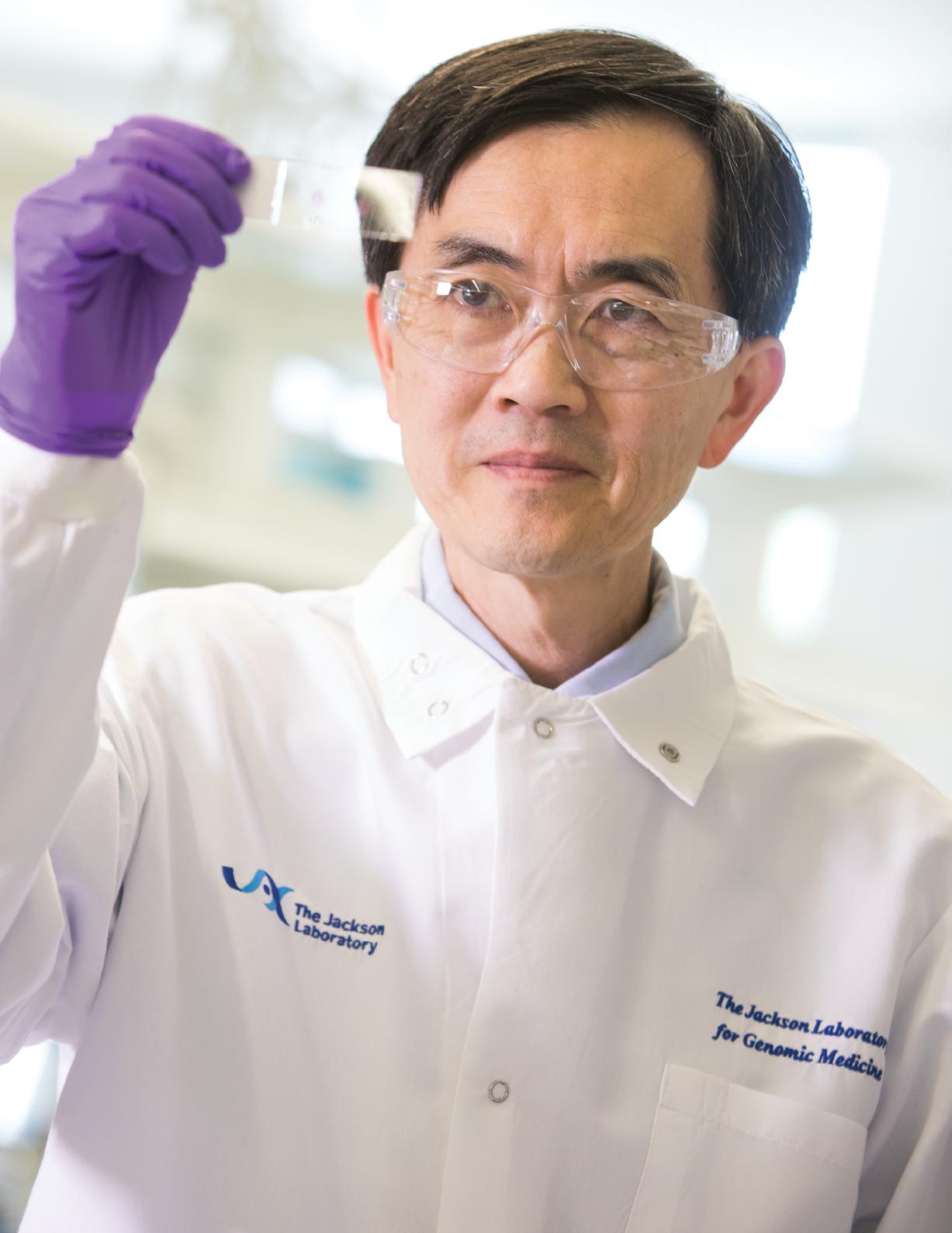
When in its uncondensed form, human DNA measures several meters in length. Assistant Professor Christine Beck, Ph.D., is uncovering how quirky segments of DNA, often called “jumping genes,” can copy or cut and paste themselves into new locations within the genome. The resulting genome instability often can cause cancerous mutations or serious genetic diseases.
ENVISIONING THE FUTURE OF GENOMIC MEDICINE
At The Jackson Laboratory, our eyes are on the future of precision medicine.
Last year, eye research at JAX got a boost with the establishment of a new endowed chair, the Diana Davis Spencer Foundation Chair for Glaucoma Research. The chairholder, Associate Professor Gareth Howell, who studies Alzheimer’s and other neurodegenerative diseases as well as glaucoma, has identified a promising new approach to treating glaucoma that may also lead to treatments for Alzheimer’s. As Howell puts it, the eye is a window to the brain. This issue of Search highlights the work of Howell and fellow JAX eye researchers Professor Patsy Nishina and Senior Research Scientist Bo Chang, whose work offers new hope for preventing blindness.
Join
us
Learn more about our innovative scientific research in a fun and interactive way. JAX hosts a variety of special events in Connecticut and Maine throughout the year.
Keeping an eye out for what others have missed — or dismissed as unimportant — is a hallmark of groundbreaking science. The genetic material known as non-coding DNA used to be regarded as “junk DNA,” but for Assistant Professor Christine Beck, it posed an intriguing challenge that has led to new insights on how cancer develops.
Sometimes the effect of a gene is evident to the naked eye. Dramatic images of muscular mice, engineered to lack a single gene, sparked Professor Se-Jin Lee’s quest to understand the genetic mechanisms responsible for muscle growth. Lee’s pioneering work on myostatin has implications not only for treating degenerative muscle diseases like muscular dystrophy, but also a host of other conditions like cancer, kidney disease and even aging, in which muscle loss is a damaging effect.
JAXTAPOSITION EVENT SERIES
Conversations with JAX faculty and senior leadership on how diseases like cancer, cardiac disease, immunological disorders and more can affect you and your family. Discussions will cover new research in these areas, as well as preventative approaches to disease.
PUBLIC TOURS
Experience guided walking tours of our campuses located in Bar Harbor, Maine and Farmington, Conn. Each tour is hosted by a JAX postdoctoral researcher and includes a behindthe-scenes look at our cutting-edge research.
Every day, JAX scientists are bringing the potential of genomic medicine into sharper focus — and envisioning how our work can create a brighter future for human health. We have bold plans for the future, bringing together our longstanding expertise in mouse models with our rapidly expanding capabilities in computation.
With the support of friends like you, we will realize our vision: a world in which JAX will play a central role in creating new models of human health and disease to help scientists, doctors and patients around the world achieve a healthier future.
Edison Liu, M.D. President and CEO, The Jackson Laboratory
FORUM FOR DISCOVERY
JAX’s annual Forum for Discovery event will take place on Thursday, July 11 in Bar Harbor, Maine. Join scientists and JAX leaders for an update on how the Laboratory is changing the future of human health.
Learn more or register at www.jax.org/give/events
Questions? Contact Advancement Events at advancementevents@jax.org
THE CHANGING FUTURE OF HEALTHCARE
The 5th annual JAX Healthcare Forum in October realized its largest attendance yet — 312 people joined us in Farmington, Conn., to hear esteemed speakers such as National Cancer Institute Director Ned Sharpless and prominent geneticist David Botstein.
More than 40 notable scientific pioneers and biomedical innovators shared their plans and aspirations with the audience. The Forum is an exclusive gathering
of decision makers from across the healthcare industry — scientific innovators, payers, providers and investors. JAX has opened its doors (literally) to host this successful event year after year.
We are already planning next year’s Forum for October 23 – 24, 2019. Learn more at www.jax.org/cthealth
DOGGED DETERMINATION IN THE FIGHT AGAINST CANCER
The Jackson Laboratory was the featured collaborator of a recent Bark for Life event in Connecticut. Bark for Life is an American Cancer Society fundraising event that honors the caregiving qualities of our canine family while raising money for lifesaving cancer research, advocacy, education and patient service programs.
JAX Genomic Medicine Scientific Director Charles Lee, Ph.D., FACMG, kicked off the event, which celebrates the unique and healing bond between humans and their dogs, while contributing to the fight against cancer.
A JAX team hosted a table at the event, staffed by our Bark for Life mascot Patrick, an Irish wolfhound. Learn how canines are helping to cure cancer through our Tallwood Cancer Canine Research Initiative at www.jax.org/tallwood
ROLLING OUT THE RED CARPET FOR CONNECTICUT HIGH SCHOOLERS
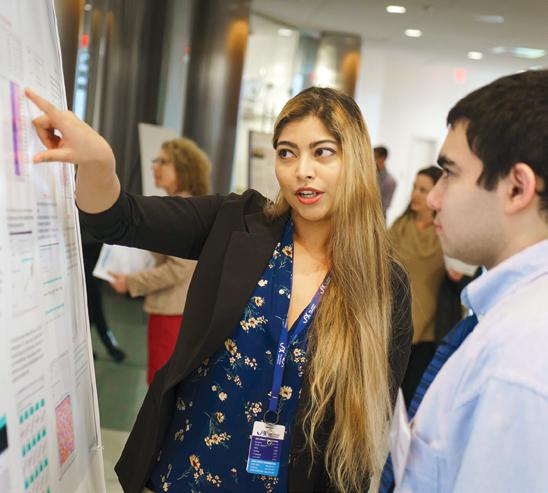
At a recent STEM open house, employees at our Farmington facility welcomed more than 100 high school students, teachers and parents from more than 20 school districts in Connecticut. The students heard about state-of-the-art research from JAX scientists on topics including cancer, computational biology and the microbiome.
Students also had the chance to network with 13 different STEM college professors, health care professionals and scientists who volunteered their time to talk with students about career paths and training in biomedicine.
PHOTOGRAPHY BY JARED SKOLNICK & CAREY VO
V Foundation funds JAX cancer research for third straight year
BY GRACE SCOTT | PHOTOGRAPHY BY TIFFANY LAUFER & MARIE CHAO
Olga Anczuków
2018 V Scholar grant recipient Olga Anczuków, Ph.D., is uncovering genetic changes in the breast, paving the way to early cancer detection and prevention.
Like many creative endeavors, movies contain only a fraction of the footage collected during filming. Indeed, hours of outtakes are removed — left on the cutting-room floor — and never make it into the final product.
Surprisingly, the genome has a cutting-room floor, too. In her lab, Anczuków is on the hunt for novel cancer therapies that can shrink a tumor or stop it from spreading. By studying gene splicing during normal breast and ovary development, she is learning how errors in this process lead to cancer.
“Our work will help researchers understand how aging affects the breast tissue, and why women are more likely to develop breast cancer as they grow older,” says Anczuków.
The V Foundation for Cancer Research was founded by ESPN and legendary basketball coach Jim Valvano in 1993. To date, it has awarded more than $225 million in grants tosupport cancer research.
Ewelina Bolcun-Filas
2017 V Scholar grant recipient Ewelina Bolcun-Filas, Ph.D., is working to preserve fertility for women battling cancer.
For female cancer patients of reproductive age, radiation and chemotherapy treatments pose a threat to fertility. Bolcun-Filas is working to preserve these patients’ fertility by harnessing a natural process that prevents DNA damage to oocytes — the cells that develop into eggs.
Her work is advancing the development of drugs to prevent infertility caused by cancer-treating radiation.
“Our main goal is to identify egg-saving treatments that can be used along with standard cancer therapies,” says Bolcun-Filas.
Jennifer Trowbridge
2016 V Scholar grant recipient Jennifer Trowbridge, Ph.D., is targeting acute myeloid leukemia before it starts.
As we age, we grow more likely to develop cancer. In her lab, Trowbridge wants to know why older people are more likely to get acute myeloid leukemia (AML). She is investigating aging stem cells that should be building blood cells but are developing cancer cells instead.
As with all cancer, the earlier this leukemia is detected, the better the outcome for the patient. Trowbridge has figured out a way to profile blood tumor cells that offer a powerful new prognostic tool, allowing doctors to target AML before it takes hold in patients.
“Our main goal from this work is to help assess patients’ disease risk and minimize the rate of post-treatment relapse,” says Trowbridge.
SHEDDING LIGHT ON NEW TREATMENTS FOR EYE PROBLEMS AND ALZHEIMER’S
BY JOYCE DALL’ACQUA PETERSON PHOTOGRAPHY BY JENNIFER TORRANCE | ILLUSTRATIONS BY REBECCA HOPE WOODS
The eyes may be the window to the soul, but the laboratory mouse is the window to the eyes and brain.
By researching the mouse eye, JAX scientists are not only discovering new information about the mechanisms of eye diseases like glaucoma — they’re also shedding light on Alzheimer’s and other neurodegenerative diseases.
Over the past decade, JAX Professor Patsy Nishina, Ph.D., and colleagues have developed hundreds of mouse models for translational vision research. Her lab recently announced seven new models, each of which carries genetic variants linked to retinal development or diseases that affect the eye. Now, these models are available to the biomedical research community.
“In people, most eye diseases take many years, even decades to appear,” Nishina says. “This means you don’t know you have the genetic predisposition for the disease until you actually have the symptoms.” She says that’s why we need mouse models — so that scientists can develop mice with the same genetic profile as patients, and then find therapies to target those early stages of disease development before symptoms occur. Ultimately, Nishina and her colleagues hope to prevent, delay onset or decrease severity of eye disease through this research.
She also notes the value of the relatively short life span of a mouse — about two years in laboratory care. This shorter window of time gives scientists the ability to control the environmental factors that may contribute to eye diseases, allowing researchers to perform detailed, longitudinal studies that reveal exactly how the diseases progress throughout a lifetime.
In her own research, Nishina focuses on inherited disorders that affect the retina, the thin layer of tissue on the inside back wall of the eye. She and Mark Krebs, Ph.D., an associate research scientist in her lab, are the principal investigators of a grant from the National Eye Institute to study diseases of the retina.
THE RETINA: WINDOW TO THE BRAIN
Gareth Howell, a JAX associate professor who studies Alzheimer’s disease, was named the Diana Davis Spencer Foundation Chair for Glaucoma Research at the Laboratory in 2018. It turns out that there are several connections between Alzheimer’s and glaucoma.
In glaucoma, the clear fluid that flows continuously through a chamber at the front of the eye doesn’t drain properly, leading to a buildup of pressure that can damage the optic nerve. That damage causes vision loss and blindness. An estimated 60 million people worldwide, including 3 million Americans, have glaucoma, and according to the World Health Organization it is the second leading cause of blindness.
“Glaucoma is a devastating disease that affects so many,” says Diana Davis Spencer, chairman and president of the foundation. “Our foundation is committed to contributing to research that will make real strides in preventing blindness, and we are confident that The Jackson Laboratory is the best place to make an impact on this disease.”
Howell is examining how certain immune-like cells that are found in the optic nerve might be harnessed for treating glaucoma. Those same cells help clear amyloid plaques in the brain (one of the hallmarks of Alzheimer’s disease), so he and his colleagues are hopeful that the research can lead to treatments for both diseases.
Howell and his lab have also identified a protein called MEOX2, which appears to have a role in plaque buildup in Alzheimer’s disease. “Our gene profiling studies predicted it also played a role in glaucoma,” he says. The team led by Rebecca Buchanan, a JAX research intern, and Kate Foley, a Tufts Ph.D. student, looked to the DBA/2J mouse, which develops glaucoma as humans do, in middle age (which is 8 to 13 months for a mouse). “If you reduce protein levels of MEOX2, glaucoma is worse,” Howell says. “We want to know if there are ways to control MEOX2, or its downstream targets, to switch the environment from a damaging one to a beneficial one.
JAX Professor Patsy Nishina
“In addition,” Howell says, “we are looking at the eye as a window to the brain for diseases like Alzheimer’s. We’re particularly interested in blood vessel health in the brain. We hypothesize that in Alzheimer’s disease, retinal vessels may decline in a similar fashion to brain vessels. If proven, it would allow us to use retinal vessel health as a proxy for brain vessel health to identify those at risk of Alzheimer’s before dementia-like symptoms develop.”
THE MOUSE AND THE MACULA
A leading cause of vision loss in older people is age-related macular degeneration (AMD). According to the National Eye Institute, AMD affects more than 1.75 million Americans, a number that is expected to increase to almost 3 million by 2020 due to the aging of the U.S. population.
Howell is exploring the intriguing interplay between two gene variants, APOE2 and APOE4, that relate to both AMD and Alzheimer’s disease. The APOE4 variant is the greatest genetic risk factor for late-onset Alzheimer’s, the most common form of the disease. APOE2, on the other hand, appears to have a protective effect against Alzheimer’s. But in AMD, those roles appear to be reversed: APOE2 raises risk while APOE4 lowers it.
AMD disease causes damage to the macula, a small spot near the center of the retina and part of the eye that is necessary for seeing things clearly. Despite the widespread use of laboratory mouse models in the study of glaucoma and many other eye diseases, research in AMD has been hampered because mice aren’t thought to have a macula.
But this may not be the case. Krebs in Nishina’s lab has discovered that AMD-like pathology in a recently described mouse model is localized to a small area at the back of the eye, which may be related to the macula. The researchers continue to look into the area to see how it may be involved in severe vision impairment and loss in AMD and other inherited eye diseases.
POWERFUL TOOLS IN GENE THERAPY
A longtime goal of genetics research has been to develop safe and effective gene therapy — directly delivering corrected genes to replace defective versions. Significant technical challenges have prevented gene therapy for many diseases, but some of the first successful applications have been in eye diseases.
In 2007, JAX Research Scientist
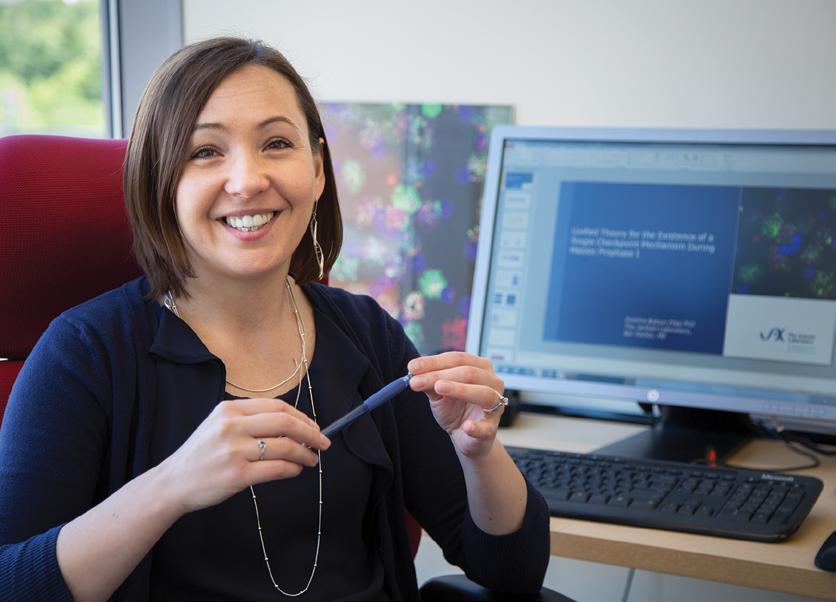
Bo Chang, Ph.D., director of the JAX Eye Mutant Resource, was on the research team that reported the first successful gene therapy
to restore sight in mice. Since then Chang has collaborated on several other gene therapy projects, most recently with researchers at the Icahn School of Medicine at Mount Sinai to restore vision in mice with damaged retinas.
“Serious or disabling eye diseases affect many millions of people worldwide,” Chang says. “But research on these diseases is limited by the obvious obstacles to studying disease processes in the human eye. Mouse models of inherited ocular disease provide powerful tools for understanding disease progression, and for designing molecules for translational research and gene-based therapy.”
THE HUMAN EYE
Vitreous gel
Iris Cornea
Pupil
Lens
Macula
Retina
Optic nerve
JUMPING GENES
BY GRACE NIEWIJK | PHOTOGRAPHY BY CHARLES CAMARDA | ILLUSTRATION
& where
At the end of the day, a lot of the beauty in our biology is in the smaller, more nuanced things that people initially cast off as uninteresting.
–
Christine Beck
BY KAREN DAVIS
to find them
Assistant Professor Christine Beck is uncovering
how recurring sequences in our genomes might explain how and why we get diseases like cancer.
Until just a few decades ago, biologists referred to large portions of the human genome as “junk DNA.” Anything that didn’t end up being translated into a protein wasn’t worth bringing to the lab bench. The persistent existence of so much non-coding DNA was baffling (why didn’t evolution take out the trash as it went along?), but uninteresting to most people.
Eventually, however, the non-coding “junk” turned out to be crucial in genetic variation. In particular, much of this non-coding genetic material consists of transposons, or “jumping genes.”
These quirky segments of DNA can copy or cut and paste themselves into new locations within the genome, causing disruptions that occasionally have dramatic consequences such as cancerous mutations or serious genetic diseases.
A single person may have over a million copies of certain transposons scattered throughout their genome. Assistant Professor Christine Beck, Ph.D., who joined JAX in August 2017, is investigating how these mobile, repetitive sequences affect basic biology and human health.
“People discount regions of DNA as junk because they don’t think that repeats are interesting or that they can lead to phenotypic consequences,” Beck says. “At the end of the
day, a lot of the beauty in our biology is in the smaller, more nuanced things that people initially cast off as uninteresting.”
THE BEAUTY IN OUR BIOLOGY
Beck describes her own path to her research as “agnostic.” Her childhood love of math and science hadn’t crystallized into a career path by the time she arrived at Iowa State University. Even as she graduated four years later with a degree in biochemistry, she didn’t have a research focus in mind.
She took a job as a technician in a laboratory that produced specialized viruses. Quickly realizing that she loved all research-related aspects of her job, she found she wanted to have more of a say in the work she was doing.
“As a technician, I wasn’t able to come up with my own questions and answer them in the ways that I thought would be interesting,” she remembers.
In order to chase after those answers, Beck left the technician position to pursue a Ph.D.
“I could tell she really wanted to get her graduate degree,” says former mentor John Moran, Ph.D., of the University of Michigan. “Once she realized her project was a good one, she drove to the finish line. She has a lot of tenacity and curiosity.”
Her judgment and the way she assesses the quality of science is something that’s truly grown. She’s now a full‑force, card carrying scientist.
I’m looking forward to watching her build her lab .
– John Moran
WHAT MAKES GENES JUMP?
When transposons move around, they sometimes copy and paste themselves right into the middle of a protein-coding gene. This insertion is essentially a mutation in the gene, and it can therefore change how the protein works or prevent it from functioning entirely. Viruses use some of the same techniques when they infect host cells, and that similarity is what led Beck to pursue transposon research as a Ph.D. student in Moran’s lab.
“I was interested in what makes these things tick,” she says. “Then I became interested in population genetics and genomics, and that led me to the path where I am today.”
Beck moved to Baylor College of Medicine to complete her postdoctoral work, which included studying mechanisms of genomic rearrangements. From there, she found a research home at JAX, where she is zeroing in on finding where and how specific transposons make changes to the human genome.
“She has fantastic opportunities at JAX,” says Moran. “Her judgment and the way she assesses the quality of science is something that’s truly grown. She’s now a full- force, card-carrying scientist. I’m looking forward to watching her build her lab.”
Beck says that identifying regions of the genome that are more susceptible to transposon-related disruption could be important for finding the causes of genetic diseases that appear at birth, as well as
for identifying potential danger zones where disruption and rearrangement might lead to cancerous growth.
Based on what she’s already found, she hypothesizes that transposons might destabilize genetic material by making certain regions of the genome more prone to abnormal DNA repair.
In the long term, Beck is excited to study how repetitive sequences like transposons contribute to various forms of genomic instability, and how they might be useful for future therapeutic approaches for cancer patients. With greater understanding and control of transposon sequences and pathways, scientists might be able to throw a wrench in cancer growth by exploiting them to destabilize cancer cell genomes.
Beck emphasizes the importance of conducting thorough basic biology research as a sturdy foundation for any potential future extrapolation to medical applications.
“If you don’t understand the impact of over 50 percent of the human genome on basic structure, function and stability of human DNA, then you set yourself up for really not understanding a large swath of the science of human genomes,” she says. “Without that knowledge, we can take things forward toward developing therapeutics, but then at least some of it will be based on poor information.”
Assistant Professor Christine Beck
JAX expands its impact in China
BY SARAH LASKOWSKI | ILLUSTRATION BY ZOË REIFSNYDER
JAX has announced several key milestones in China that are an extension of the Laboratory’s mission to empower the global biomedical community in the shared quest to improve human health.
IMPROVED ACCESS TO RESEARCH MODELS
The Jackson Laboratory is establishing a dedicated quarantine facility for the importation of JAX® Mice into China, providing improved access to more than 11,000 strains. This includes 22 highly immunodeficient and humanized mouse models, which are globally regarded as the premium models for cancer, stem cell biology, humanized mice and infectious disease research.
Additionally, JAX’s Shanghai facility in the Zhangjiang Hi-Tech Research Park in Pudong has been established for the purposes of researcher support and knowledge sharing.
“The new physical presence and employees based out of Shanghai will allow us to better empower scientific researchers in China. This will be accomplished through improved access to mouse models and sharing of scientific insights to accelerate biological discovery and drug development,” says Auro Nair, Ph.D., executive vice president of The Jackson Laboratory and president, JAX® Mice, Clinical and Research Services.
RESEARCH COLLABORATION
Charles Lee, Ph.D., FACMG, scientific director of The Jackson Laboratory for Genomic Medicine, will be collaborating with Dr. Kai Ye of the Xi’an Jiaotong University and the First Affiliated Hospital of Xi’an Jiaotong University.
Lee has been appointed as an adjunct professor and is co-leading the establishment of a precision medicine initiative at the First Affiliated Hospital of Xi’an Jiaotong University, a comprehensive level-three, class-A hospital in Northwest China. It is one of the select hospitals honored with the level-three class-A rank in China, and has been one of the first national “One Hundred Exemplary Hospitals.” His research program will have translational significance in using his expertise in genomic structural variation to advance an understanding of the complex genomic structures and variants, and gene networks, and also uncover the genomic basis of diseases. Some of the most advanced genetic and cell engineering technologies will subsequently be used to develop novel therapies for treating them.
Shanghai
Xi’an, Shaanxi
PRECISION MEDICINE AND MAKING
BY MARK WANNER | ILLUSTRATION BY KAREN DAVIS
SENSE OF DATA
The advent of personalized medicine has been anticipated since the publication of the first human genome sequence in 2003. Its cornerstone concept is that we can learn far more about the health of each of us by embracing all of our clinically relevant data. Unfortunately, difficulties with managing those data remain a significant barrier to progress.
In a paper published in the New England Journal of Medicine , “Enabling Precision Medicine — Classification, Ontology, and Computational Reasoning,” JAX Professor Peter Robinson, M.D., M.S., and colleagues, propose how to adjust the medical data infrastructure to overcome the current obstacles.
Exactly what data are being obtained? Think about a typical doctor’s office visit. There are the easy ones: height, weight, blood pressure, pulse, temperature. With a blood draw add cholesterol, blood sugar and any number of other measurements. A short Q&A assesses history and current behavior and environment. For a long time, that was about all there was.
Now you can add genome or exome sequences; RNA sequencing (which genes are active or not); proteomics (the actual proteins present, and at what levels); CAT scans, MRI and/or other imaging; and other measurements and test results that essentially reveal a patient’s biology. There’s also patient-reported data, including the emerging trend of wearable data and other real-time inputs generated outside of the clinic, sometimes on a 24/7 basis.
For a doctor practicing in the current environment, all of these data can pose a significant challenge. Modern electronic health records have been designed more with billing purposes in mind than making these new patient data standardized and interoperable. So what solutions are available?
In the paper, the authors argue that there needs to be a concerted effort “to align data across patients and systems with comparable and consistent formats and contextual meaning.” A way to do this is to implement ontologies in medicine. Ontologies are essentially sets of terms about a specific subject that not only describe the properties of the terms but also specify the relationships between them.
Robinson envisions a medical ecosystem in which a doctor can ask and/or answer a variety of questions about a patient, including demographics, symptoms, family history, diagnoses, test results, radiology and “omics” measures. The doctor can then determine how much of these data are already in the patient’s record, how much are in the records of similar patients, and how much corresponding data can be examined in the same hospital, country or around the globe.
In addition to the task of implementing ontologies, Robinson identifies three primary barriers to realizing the vision. Figuring out patient privacy and security issues, in the context of laws enacted before access to medical data became so valuable, is one. The electronic health records issue, including lack of interoperability, proprietary interfaces and non-standard data structures, is another. Finally, integration of additional data sources with electronic health records and each other, including public research databases and clinical references, is needed to break down data siloes and maximize data value across larger patient populations.
We are on the threshold of insights that will transform the field of medicine. Once barriers are removed and effective data management is enabled, we will realize them.
Pioneering scientist Se-Jin Lee, a leader in the study of muscle development, moves his groundbreaking research program to JAX.
OF M IGHTY
MICE AND MEN
BY NICOLE DAVIS, PH.D. | PHOTOGRAPHY
Iconic images can conjure memories of pivotal times. This is not only true in history but also scientific research. A case in point: In May 1997, the scientific community was abuzz after seeing a photo of a mouse with a sculpted, muscular body. Engineered to lack a single gene, these extraordinary mice developed with striking muscular builds, sporting more than twice the amount of skeletal muscle relative to their normal counterparts.
This revelation spurred a decades-long effort led by a visionary scientist named Se -Jin Lee, M.D., Ph.D. He and his team dissected the biology of the culprit gene, which they named “myostatin.” Lee devoted his early career to laying bare the biology of myostatin and its relatives — part of a large group of molecules known as the transforming growth factor beta (TGFß) family. These proteins play diverse roles not just in muscle development, but in a multitude of biological processes, from establishing the body’s basic pattern during the earliest stages of life to guiding the proper form and function of organs like the kidney.
Now, more than 20 years after he unveiled his mighty mice, Lee has joined the faculties of The Jackson Laboratory and UConn Health. As a professor at JAX and Presidential Distinguished Professor at UConn School of Medicine, he continues his pioneering studies of the role of myostatin in muscle development and maintenance. He is also applying his extraordinary know-how to studies of another important realm of human biology: aging.
“There are some significant challenges to studying aging in mice,” says Lee. “But with the remarkable resources and expertise at JAX, I think we have a real opportunity to move aggressively in this area and reveal the key molecular signals that regulate aging at the cellular and tissue levels.”
A host of devastating diseases specifically target muscles, including degenerative disorders such as muscular dystrophy, which gradually extinguishes the body’s fundamental capacity for movement, sometimes with grave consequences. At the same time, there is a long list of illnesses in which muscle is an unwitting bystander: diseases like cancer,
BY CHARLES CAMARDA | ILLUSTRATION BY MATT WIMSATT
kidney failure, sepsis, chronic obstructive pulmonary disease (COPD) and many others. Yet all of these represent conditions that might be helped by a myostatin-based therapy, seeking to repair muscles lost, withered or otherwise ravaged by disease.
Unfortunately, the earliest efforts to molecularly interfere with myostatin — and thereby release the brakes that normally restrain muscle growth — proved unfruitful. Now, some two decades after Lee’s pioneering discoveries, several biopharmaceutical companies (including global players like Novartis, Roche and Regeneron) continue to pursue development programs focused on an anti-myostatin therapeutic.
While it is still too early to know whether these newer efforts will lead to a successful drug, the Lee Lab’s end goal — targeting myostatin and boosting muscle mass in humans — is proving more complicated than first believed. “It is clear that blocking this pathway does work in humans to increase muscle mass, but the magnitude of the effect in humans is nowhere close to what we’ve seen in mice,” says Lee.
He adds, “At the end of the day, there’s still lots of science to sort out in terms of how the myostatin pathway works (its various components and their physiologic effects) so that’s what we’re focusing our efforts on.”
Belgian Blue cattle like this 8-month-old bull carry a genetic mutation that suppresses myostatin growth, leading to “double-muscling.”
Probing the unknown
An important and unexplored question remains: What are the evolutionary benefits of myostatin? The myostatin protein is virtually indistinguishable in diverse species: human and chickens, for example, harbor identical versions. This striking conservation implies there are forces at work to help preserve myostatin’s molecular identity through evolutionary time. But why?
Lee’s hunch is that myostatin’s evolutionary significance has something to do with achieving the right balance between muscle and fat levels in the body.
“Metabolically speaking, muscle is very expensive to maintain. If I’m living in the wild, I don’t want more muscle than I absolutely need. I also want some fat around so I can burn it for fuel when food is scarce,” he says.
Of course, these metabolic demands are much less substantial in modern humans, for whom food is vastly more abundant and predators less common. Yet the myostatin protein persists.
“It’s an evolutionary vestige that we don’t need so we can tamper with it all we want. To me, that’s the beauty of targeting this pathway for therapeutic use.”
Beyond muscle
In addition to the Lee Lab’s ongoing studies of myostatin, the team is expanding into other key areas, such as metabolic diseases, including diabetes and aging.
The latter topic is particularly compelling to Lee. Mounting evidence points to the role of TGFß in cell and tissue aging, particularly in promoting aging, but the details are obscure.
By harnessing the extraordinary tools, resources and expertise at JAX, the researchers will study an array of mice at multiple different ages — both normal mice as well as mice engineered to lack specific genes. The animals will be screened with a battery of blood and physiologic tests, assessing the overall health and vitality of basic body systems, including the bones, heart, muscles and metabolism.
“There’s so much to be gained by taking this kind of approach,” says Lee. “Our project will serve as a model for thinking about deregulated signaling pathways that are important for normal biology and also go awry during aging.”
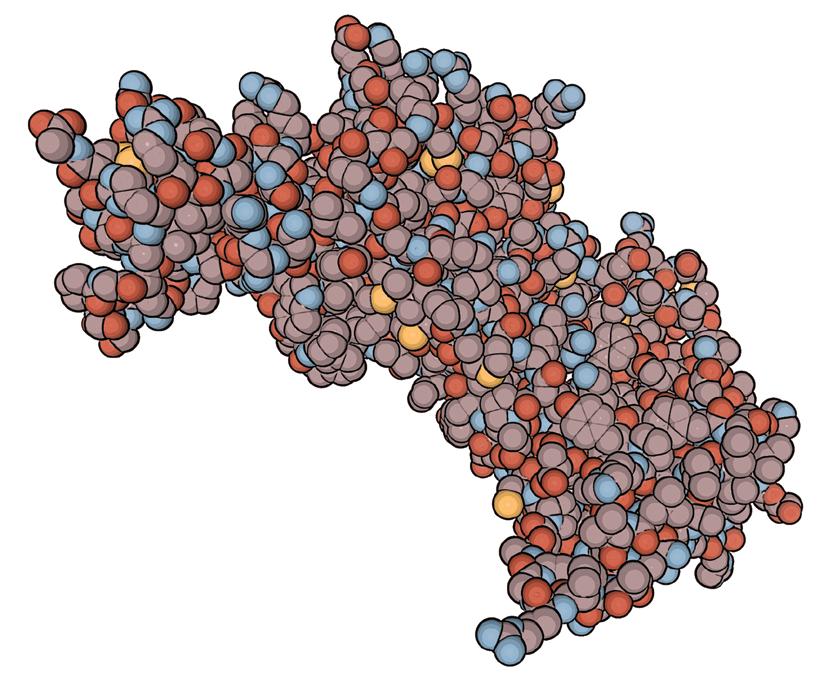
Structure of a myostatin molecule
What is
BY DAYANA KRAWCHUK, PH.D. | ILLUSTRATION BY DANIELLE MEIER
If you had a hole in your favorite pair of blue jeans, your tailor could fix them by simply patching them up with new fabric.
But if something goes wrong with one of the 24,000 genes in your body? Your doctor’s approach to repairing them is not so simple.
Unfortunately, mutations in our genes can cause life-threatening diseases, and sometimes there is no drug or surgery available for your doctor to prescribe.
Wouldn’t the best strategy for a permanent fix be to patch up the mutated gene, or at least provide a correct copy to cells in the body? This is the hope of gene therapy versus hit-or-miss drug therapies.
Many studies in animal models have been successful and offer promise for treating people. But first, scientists need to make sure of the long-term effects of gene therapy before the technique can be adapted for human use.
JAX thinks it’s a solution worth exploring because gene therapy could not only cure a variety of different genetic diseases, but it could also give cancer a big “kick in the pants.”
600 Main Street
Bar Harbor, ME 04609-1523
Forwarding service requested
A PUBLICATION OF THE JACKSON LABORATORY
Mission
We discover precise genomic solutions for disease and empower the global biomedical community in our shared quest to improve human health.
Locations
Bar Harbor, Maine
Ellsworth, Maine
Farmington, Connecticut Sacramento, California
Editor
Joseph Blanchette
Design & art direction
Karen Davis
Danielle Meier
Zoë Reifsnyder
Rebecca Hope Woods
Copy editors
Carol Lamb
Rebecca Hope Woods
This publication was produced by JAX Creative. Printed March 2019