
Volume 28 - Issue 4 - April 2026


Volume 28 - Issue 4 - April 2026
President & CEO Chris Chastain

As President and CEO of RushShelby Energy, I have the unique privilege of seeing firsthand what it truly takes to keep the lights on for our members. In April, we take time to pause and recognize the brave men and women who make that possible every single day—our lineworkers.
When storms impact our communities and outages occur, many people experience the inconvenience, but our lineworkers see a call to action. Our crews are always ready when it matters most; leaving family dinners, stepping away from ball games and school events. They are working through the night and heading into challenging conditions to restore power as safely and quickly as possible. That readiness is not accidental. It comes from rigorous training, deep experience, and a shared commitment to serving others.
What makes lineworkers especially remarkable is that they are not just restoring power to a system, they are restoring power to their own communities. They live here. They raise their families here. They understand that electricity is more than a convenience; it is essential to daily life, to local businesses, to schools, farms, and emergency services. Powering the places we call home is personal to lineworkers.
Electric cooperatives like RushShelby Energy were built on the principle of neighbors helping neighbors, and our lineworkers embody that spirit every day. They are frequently the first to respond and the last to leave, often working long hours behind the scenes. At times, serving our neighbors means going beyond our own service territory through a process known as mutual aid. During major outage events, RushShelby Energy crews stand ready to assist other co-ops restore power, sometimes close to home, and sometimes across state lines. This spirit of mutual aid strengthens all cooperatives and ultimately benefits the members we serve.
We understand any time the lights go out, it can be frustrating and bring everyday life to a halt. We are incredibly grateful to our members for the patience and encouragement during these times. Linework is demanding, physical, and at times, it can be dangerous. Our crews approach each job with a focus on safety and teamwork. They take pride in their craft and in the trust our members place in them.
On April 13, 2026, we will celebrate Lineworker Appreciation Day, but one day is hardly enough. Every day, we are thankful for our lineworkers—for their skill, their courage, their readiness, and their unwavering commitment to the communities we serve. They are truly the backbone of our cooperative.
To our lineworkers: thank you for your hard work, your sacrifice, and your steadfast service. We are proud to stand behind you, grateful for your dedication, and honored to serve alongside you as we continue powering our communities together.
A power surge is an unexpected increase in voltage, and it can occur from a variety of sources. Regardless of the cause, power surges can majorly damage electronic devices and equipment in your home.
Let’s take a look at common causes of power surges and how you can protect your sensitive electronics. One of the most common causes of a power surge is lightning. Many of us have experienced this during a severe thunderstorm. When lightning strikes an electrical system, the excess current must be channeled somewhere; unfortunately, in many cases, it’s sent through a home. Your best bet is to unplug all unused devices and electronics during severe thunderstorms.
Another common cause of power surges is electrical overload. This happens when devices or appliances are plugged into an outlet that cannot handle the required amount of voltage, or if multiple devices are plugged into one outlet through an extension cord. If you’re experiencing power surges due to electrical overload, it’s time to call a qualified electrician to evaluate your home’s circuits and electrical needs.
Faulty wiring in a home can also cause power surges. Damaged or exposed wires can cause spikes in voltage, creating a potentially dangerous situation. If you notice signs of faulty wiring, like visible burns on outlets, buzzing sounds from outlets or frequently tripped circuit breakers, your home may be due for electrical wiring repairs and updates.
Surges can also occur after a power outage. Sometimes, when electricity is being restored and reconnected, it’s common to experience a quick surge in current. Similar to advice for a surge caused by lightning, it’s best to unplug sensitive electronics during the outage––then wait to plug them back in after power is fully restored.
Aside from unplugging devices when you suspect a power surge, there are two ways you can take additional precautions to protect electronics in your home.
Point-of-use surge protection devices, like power strips, can protect electronics during most surges. But remember, not all power strips include surge protection, so read the packaging label carefully before you buy, and do not overload the power strip with too many devices. You can also install specialized electrical outlets that offer additional surge protection. Talk to a trusted electrician to learn more.
Another option is a whole-home surge protector, which can help protect your home from larger, more powerful surges. In most cases, whole-home suppressors are connected to your home’s service panel and include features like thermal fuses and notification capabilities that indicate when a device has been impacted by a surge. Whole-home surge protection prices vary based on the size of the home and suppressor. Whole-home suppressors should always be connected by a licensed electrician, so consider the cost of installation as well.
Occasional power surges are inevitable, but by unplugging devices when you think a surge may occur and using additional levels of protection like power strips or whole-home suppressors, you can better safeguard your sensitive electronics and devices.
After a long, cold winter, we can’t wait to get outdoors during longer days of sunshine to begin long, put-off chores in the yard or start spring landscaping. But before heading out with a ladder or a shovel, looking up and down for electric power lines and equipment might save your life; or at least extend the lives of trees and other greenery you intend to plant.
Ladders present safety risks whether you’re standing at the top or the bottom. Most of us have felt that uneasy moment when we reach the top rung and think about the possibility of falling. But what we don’t always think about is the danger before we ever start climbing. When moving a ladder from place to place, it’s natural to look straight ahead to avoid tripping. However, what’s above you can be just as important as what’s in front of you. Overhead power lines may not always be obvious, and accidentally making contact with one can have serious, or even deadly consequences.

Spring projects often involve more than ladders. Installing fences, cleaning gutters, repairing roofs, planting trees, or even flying kites can put you closer to power lines than you realize. Electricity can arc, or “jump,” from a power line to a nearby object, meaning you don’t have to touch a line directly to be seriously injured. Taking a few extra seconds to survey your surroundings can prevent devastating consequences.
Here are important points to consider with overhead power lines:
Look up and around. Always be aware of the location of overhead power lines. Ladders and other long items, like pool cleaning tools, should be carried horizontally whenever possible.
Keep equipment and people at least 10–15 feet from lines. Never trim trees near power lines. Don’t place a ladder where it could fall into a power line. If you believe branches are growing too close to electric lines, contact your local electric cooperative for assistance.
Use the right ladder. Consider using a fiberglass ladder when working near electricity. Metal ladders conduct electricity and increase the risk of serious injury.
Be storm-aware. Never approach power lines knocked down by a storm or try to move broken tree limbs or branches that might be entangled in power lines. Power lines, though damaged and silent, can still be fully energized and dangerous. Always assume a downed line is live and report it immediately.
Overhead is not the only place electric power lines cross our yards or bring electric service to the meter on the house. In many neighborhoods, buried power lines have become the norm. While this means there are no poles and wires running overhead to worry about, they still require special consideration:
Underground power lines require those green boxes, called pad-mount transformers. Though it may be tempting to hide them with landscaping, please don’t. Your electric cooperative might have to open that equipment during a power outage or for routine maintenance.
Keep shrubs and structures at least 12 feet from the “door” of the box, and at least 3 feet from the sides. This allows crews safe access and proper airflow. If landscaping is too close, inadequate air circulation can cause equipment to overheat and fail. Plantings might have to be cut and removed. Planning ahead can save both your plants and potential repair costs.
Keep the meter on your house visible and accessible, too. Clear away vines, bushes, and other obstructions so crews can quickly and safely access the meter if needed.
Never allow children to play on or around pad-mounted transformers. They contain high-voltage electrical equipment inside and are not safe for climbing or sitting.
Do not plant near underground utility services. Tree roots can grow and interfere with underground pipes, cables, and wires. Future repairs to these facilities also could damage the health and beauty of nearby plants and trees. At least a few days before planting, call 811, the underground utility locator service, to come out and mark the locations of underground utilities. This free service helps protect you from injury and prevents costly damage to buried lines.
It’s also important to never use electric yard tools with a power cord when the ground is wet and always make sure your power tools are plugged into an outlet with a ground fault circuit interrupter (GFCI). Inspect extension cords for fraying or damage before each use and avoid overloading outlets.
A little preparation goes a long way. By taking time to look up, look down, and plan ahead, we can all safely enjoy spring.
Maintaining a comfortable temperature in a two-story home can be challenging. Many homeowners notice that the upstairs feels warmer in the summer and cooler in the winter compared to the main level. That’s because heat naturally rises, and air circulation can vary between floors. With the right strategies, however, you can improve comfort, increase efficiency, and potentially lower energy costs.
Why Temperature Differences Happen
In a two-story home, warm air rises and cool air sinks. During the summer, heat from the roof and attic can radiate downward into upstairs rooms, making them feel significantly warmer. In the winter, warm air generated by your heating system rises to the second floor, leaving the lower-level cooler.
Other factors that contribute to uneven temperatures include:
• Poor insulation
• Leaky ductwork
• Inadequate attic ventilation
• Thermostat placement
• Sun exposure through windows
Understanding these causes is the first step toward creating a more balanced indoor environment.
Adjust
If your home has a single thermostat, its location plays a crucial role in how your system operates. Since most thermostats are located on the main floor, your HVAC system may shut off before the upstairs reaches the desired temperature.
Helpful tips:
• Set the thermostat a few degrees lower in summer to compensate for upstairs heat.
• In winter, slightly increase the setting downstairs if it feels chilly.
• Consider installing a programmable or smart thermostat to adjust temperatures throughout the day.
• If possible, upgrade to a zoned HVAC system, which allows separate temperature control for each floor.
Proper airflow is key to balancing temperatures.
In the summer:
• Slightly close vents on the main floor (never fully close them).
• Keep upstairs vents fully open to direct more cool air upward. In the winter:
• Slightly close upstairs vents.
• Keep main floor vents fully open.
This encourages air to move where it’s needed most without overworking your HVAC system.
Air circulation helps mix warm and cool air throughout the home.
• Run ceiling fans counterclockwise in summer to create a cooling breeze.
• In winter, switch ceiling fans clockwise on low speed to push warm air down from the ceiling.
• Keep interior doors open to allow air to move freely.
• Use portable fans to help circulate air between levels.
A well-insulated home maintains temperatures more effectively.
• Ensure your attic has proper insulation to reduce heat transfer.
• Seal gaps around windows and doors with weatherstripping or caulk.
• Check for drafts near stairwells and upper-level ceilings.
• Inspect ductwork for leaks that may reduce airflow to certain rooms.
Upgrading insulation can make a noticeable difference in comfort year-round.
Sunlight can dramatically increase upstairs temperatures.
• Close blinds or curtains during the hottest parts of the day.
• Install blackout or thermal curtains in bedrooms.
• Consider window films to reduce heat gain.
• Plant shade trees or install awnings to block direct sunlight.
In winter, open curtains during the day to take advantage of natural warmth.
If temperature differences persist, it may be time for a professional evaluation.
• Have your HVAC system inspected annually.
• Clean or replace air filters regularly.
• Ask about adding a second thermostat or zoning system.
• Ensure your system is properly sized for your home.
An inefficient or undersized unit can struggle to regulate temperatures evenly between floors.
Regulating temperature in a two-story home doesn’t always require major renovations. Simple adjustments like using ceiling fans correctly, balancing vents, and sealing drafts can significantly improve comfort. With a combination of smart habits and proper maintenance, you can create a more even temperature throughout your home, no matter the season. A balanced home isn’t just about comfort; it also helps your heating and cooling system operate more efficiently, saving energy and money over time.

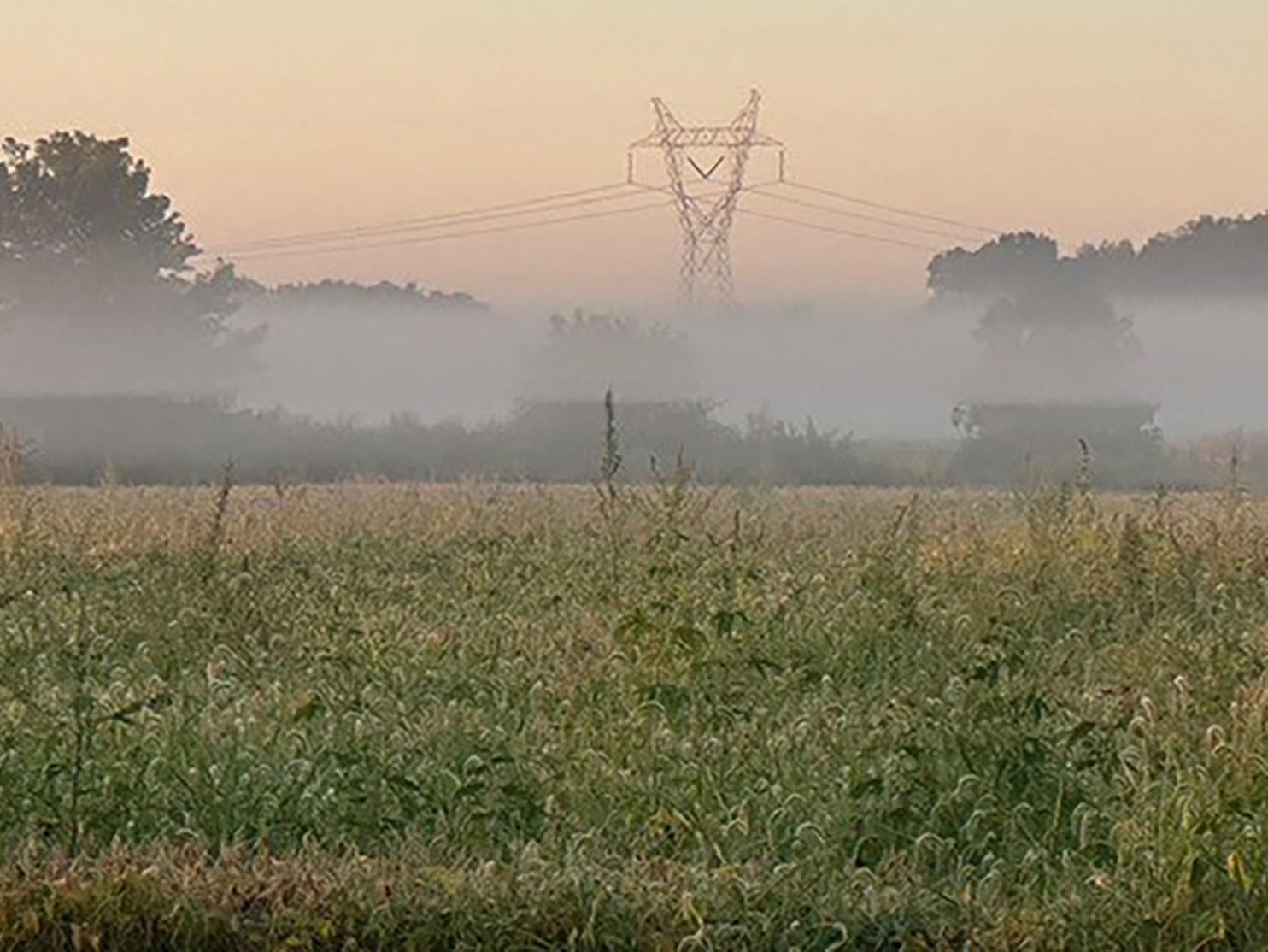
The photo above, taken by member Brian Roberts, received an honorable mention in last year's photo contest. It was originally selected to appear on the front cover of the March Electrawatt. However, due to sizing constraints, we were unable to use it as the cover image.
We still wanted to make sure this great photo was seen and recognized. Thank you, Brian, for your submission and for sharing your talent with us!