
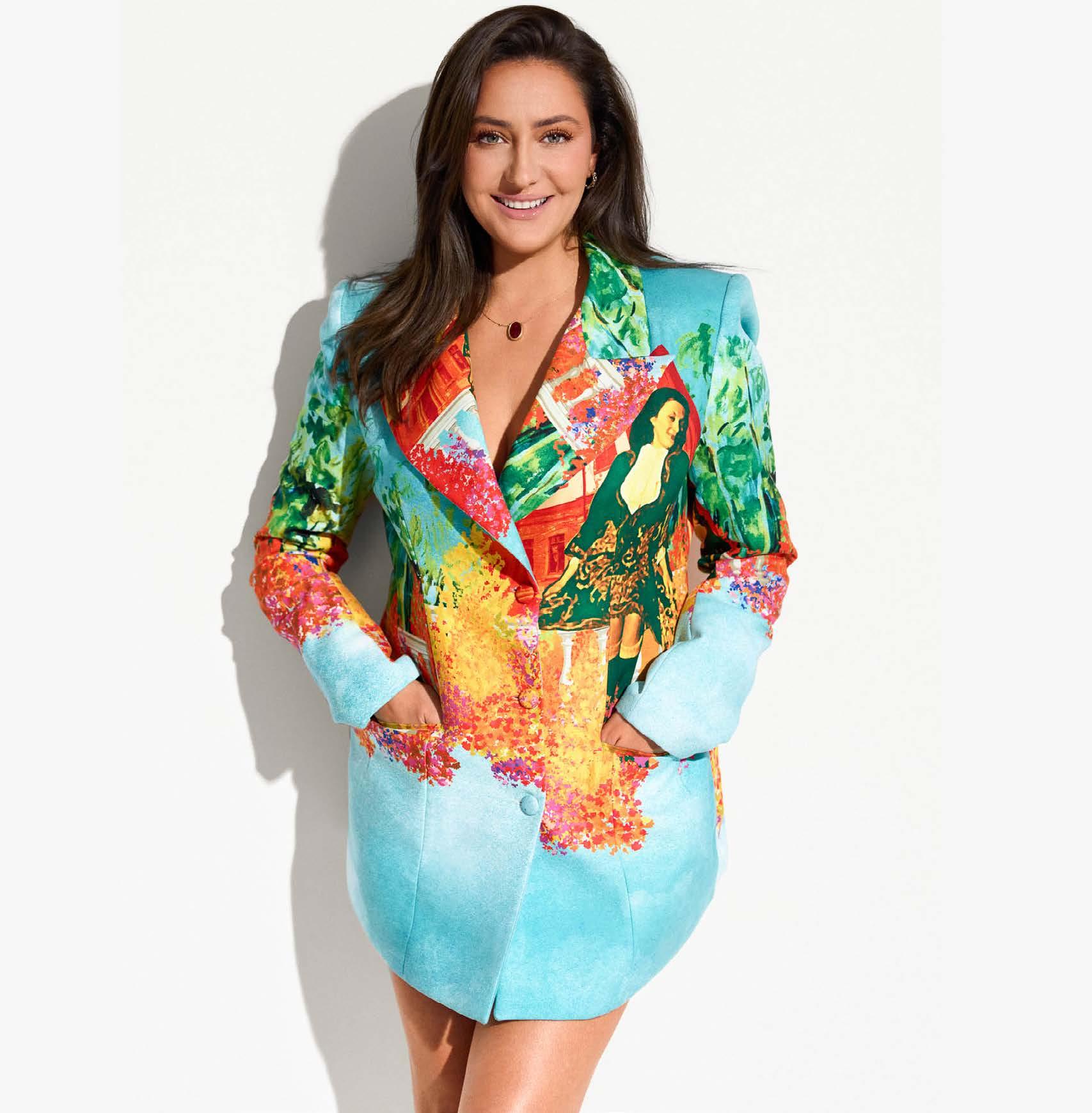
JANUARY 2026
ASPIRE WITH ELTERDA
ZANI
What Has Surprised Me Most About Entrepreneurship
Working with Binghatti is a Unique Experience
LEAD ALBANIA Motivates me to Strive for Excellence
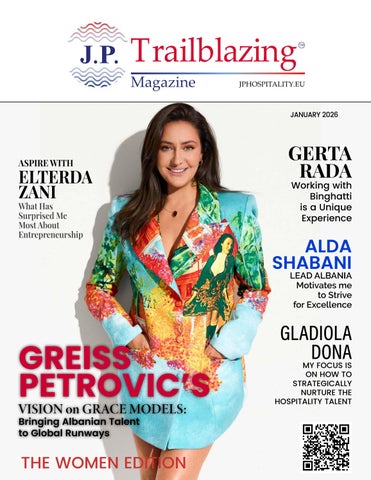
JANUARY 2026
What Has Surprised Me Most About Entrepreneurship
Working with Binghatti is a Unique Experience
LEAD ALBANIA Motivates me to Strive for Excellence
MY FOCUS IS ON HOW TO STRATEGICALLY NURTURE THE HOSPITALITY TALENT

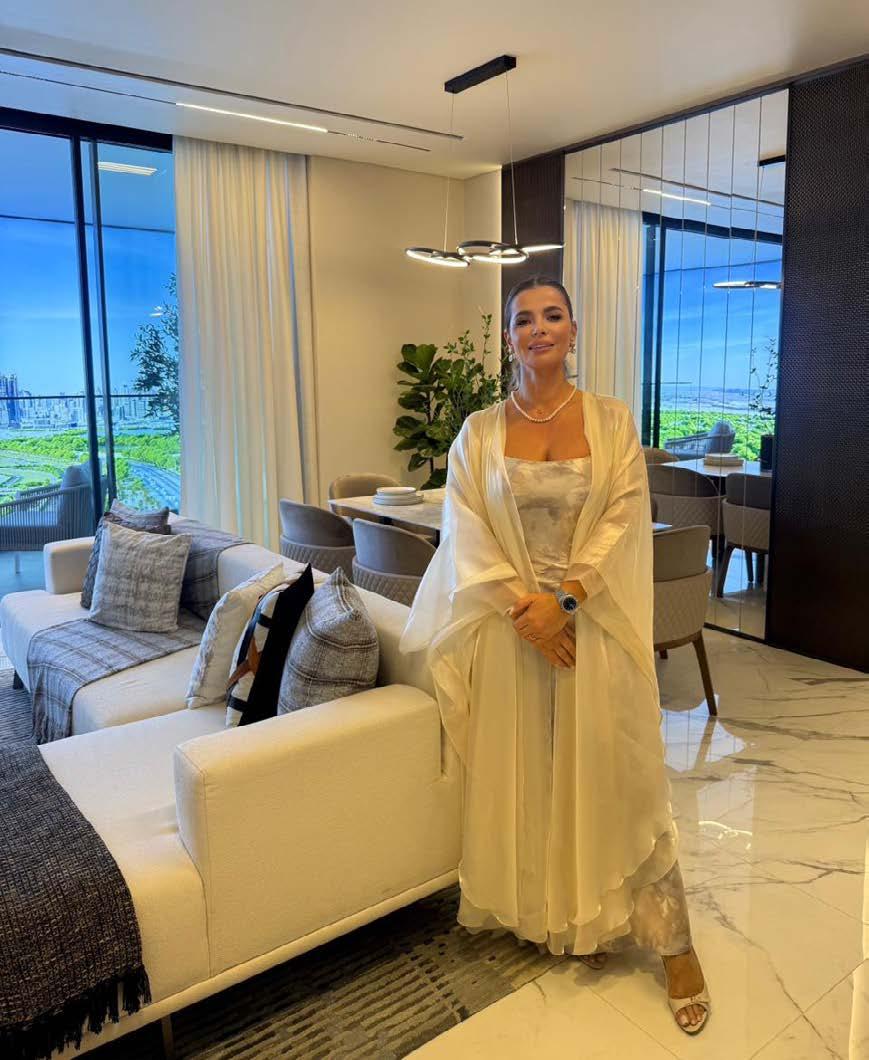
Dear Readers,
Winter has a way of asking us to slow down, to listen more closely, and to gather our thoughts and strength. Beneath the quiet of the season, something powerful is always forming. This edition of Trailblazing Magazine/ The Women Edition is dedicated to that very truth—the steady, courageous growth of women who build, lead, and imagine businesses that reflect both ambition and heart & soul.
This winter, we celebrate a pool of founders and visionaries who chose attained goals and hard work over ease, who turned challenges into blueprints, and who understood that impact matters more than ever.
The women featured in this issue have worked harder and harder with a quiet and solid conviction, getting promoted and moving ahead faster. This winter they are preparing for what’s next.
May this issue inspire you to honor your own season—whether you are planting new seeds, protecting what you’ve built, or preparing for your next bold move. Wherever you are on your journey, know this: your vision is valid, your voice is needed, and your leadership has the power to reshape the future.
Here’s to warm ideas, brave decisions, and a winter filled with intention and a daring spirit.
With gratitude and belief,
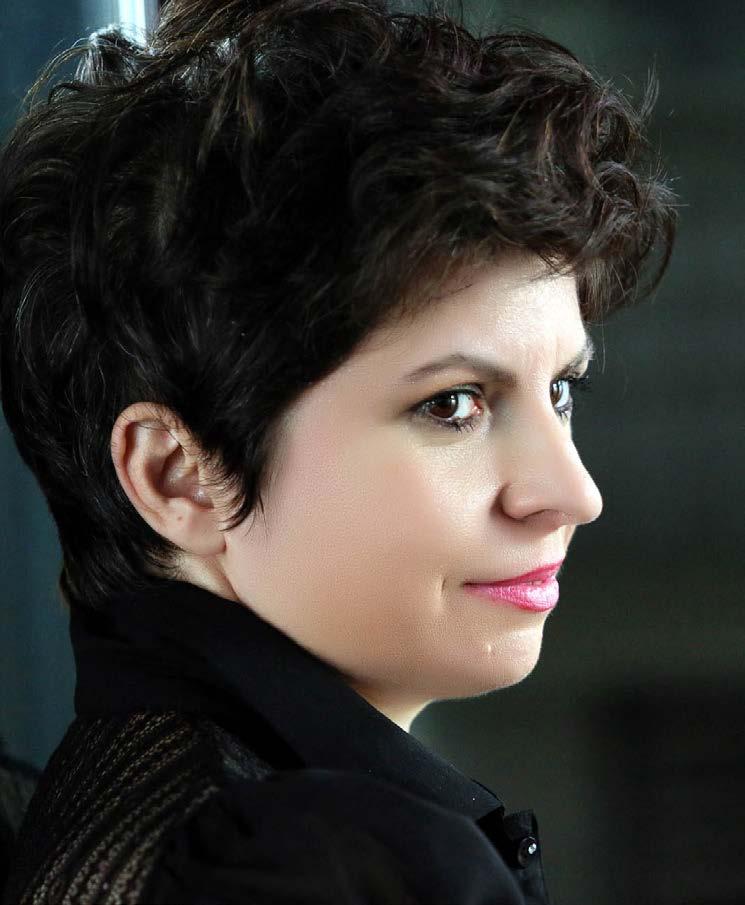
Rudina Hoxha Founder & Editor-in-Chief
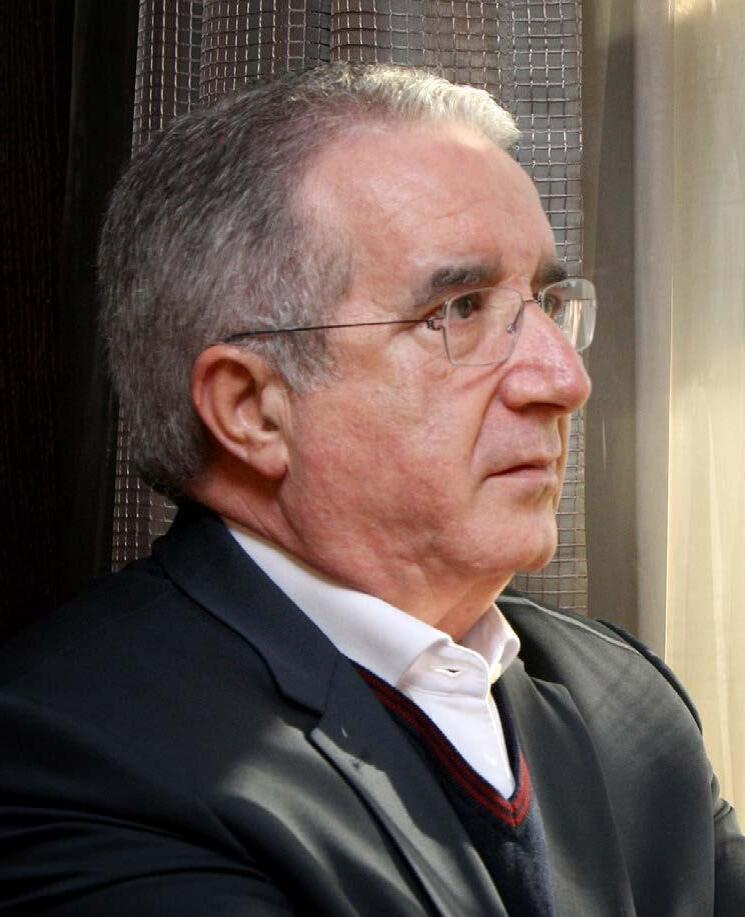
Jose Pinto • Co-Founder
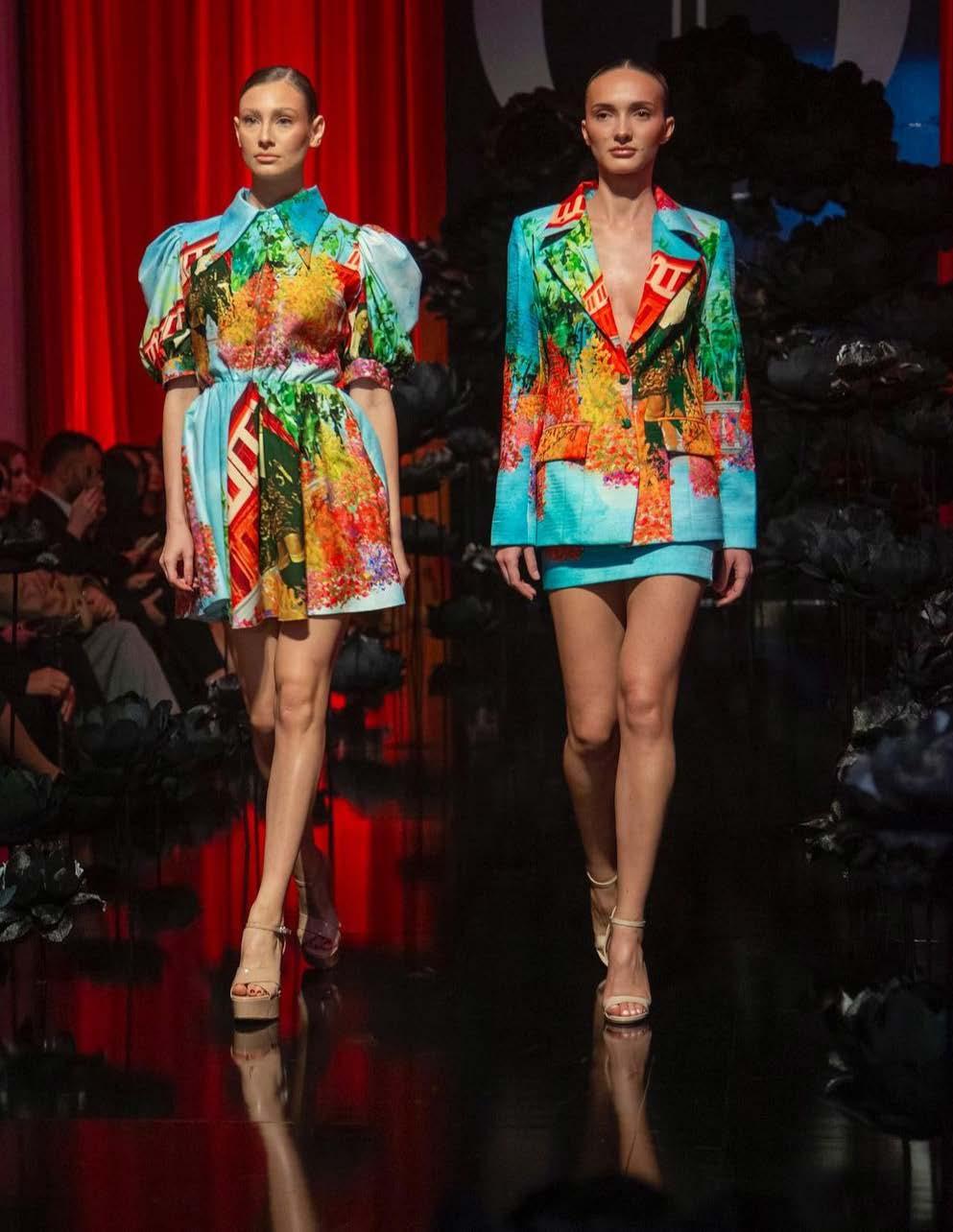
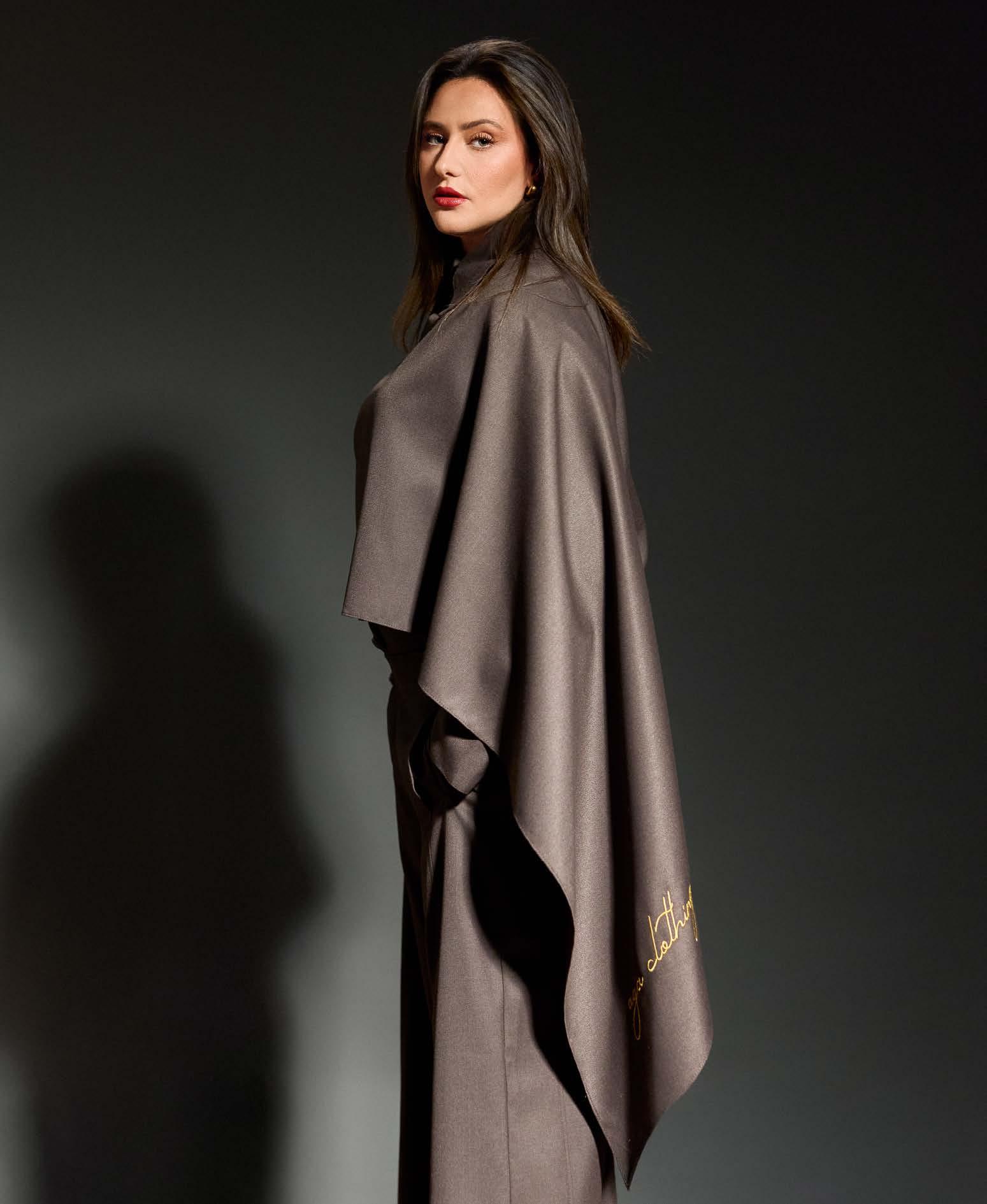
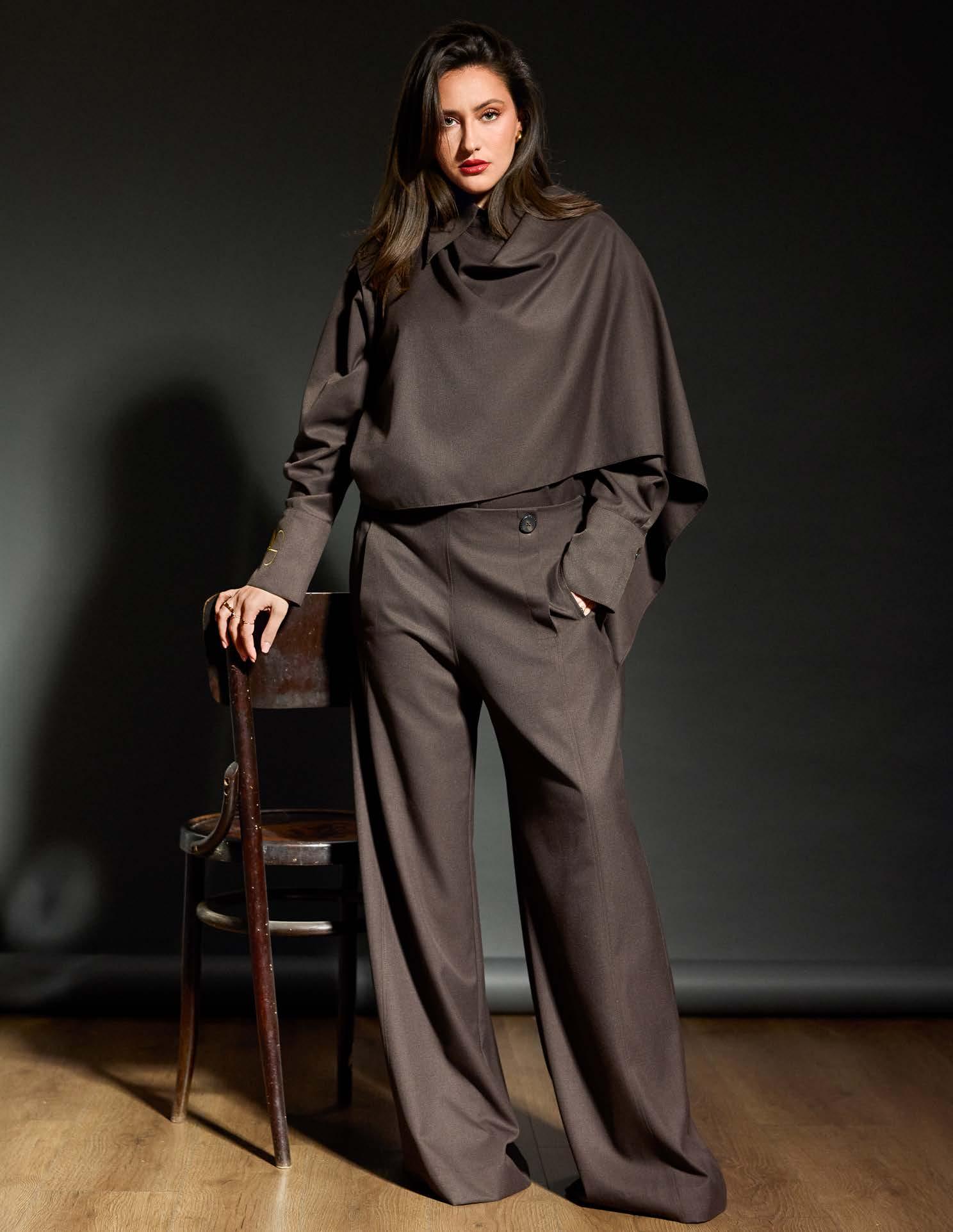
Founded in 2021, AGA Clothing is an Albanian womenswear brand created by the union of three sisters, embodying modern elegance, strength, and the confident attitude of the contemporary woman. Designed for career-driven women and young professionals, AGA creates garments that transition effortlessly from day to evening — from professional environments to social moments — without ever losing identity or class. Refined minimalism, clean silhouettes, and functionality form the foundation of every collection. Each garment is designed to serve an active, self-assured woman who seeks comfort and elegance in equal measure.
AGA Clothing is the first Albanian brand to have developed a fully personalized design, building a unique and distinctive identity. Each collection is presented as a limited capsule, where exclusivity is essential: every garment is produced in only 9 pieces, reflecting the 3×3 concept (S, M, L). This detail transforms each creation into a unique piece, designed for women who value individuality and authenticity.
AGA maintains a subtle connection to its origins, expressed through artistic details and a contemporary aesthetic. This makes the brand authentic, distinctive, and relevant in an international context.
AGA is more than fashion. It is an attitude. It is a lifestyle.
It is the choice of women who make every day their own.
Grace Models
Grace Beauty Salon
Rruga:
Rruga:


By
“Binghatti doesn’t just build buildings — they create recognizable landmarks. Clients immediately understand that buying a Binghatti property means investing in something exclusive, future-driven, and architecturally significant.”
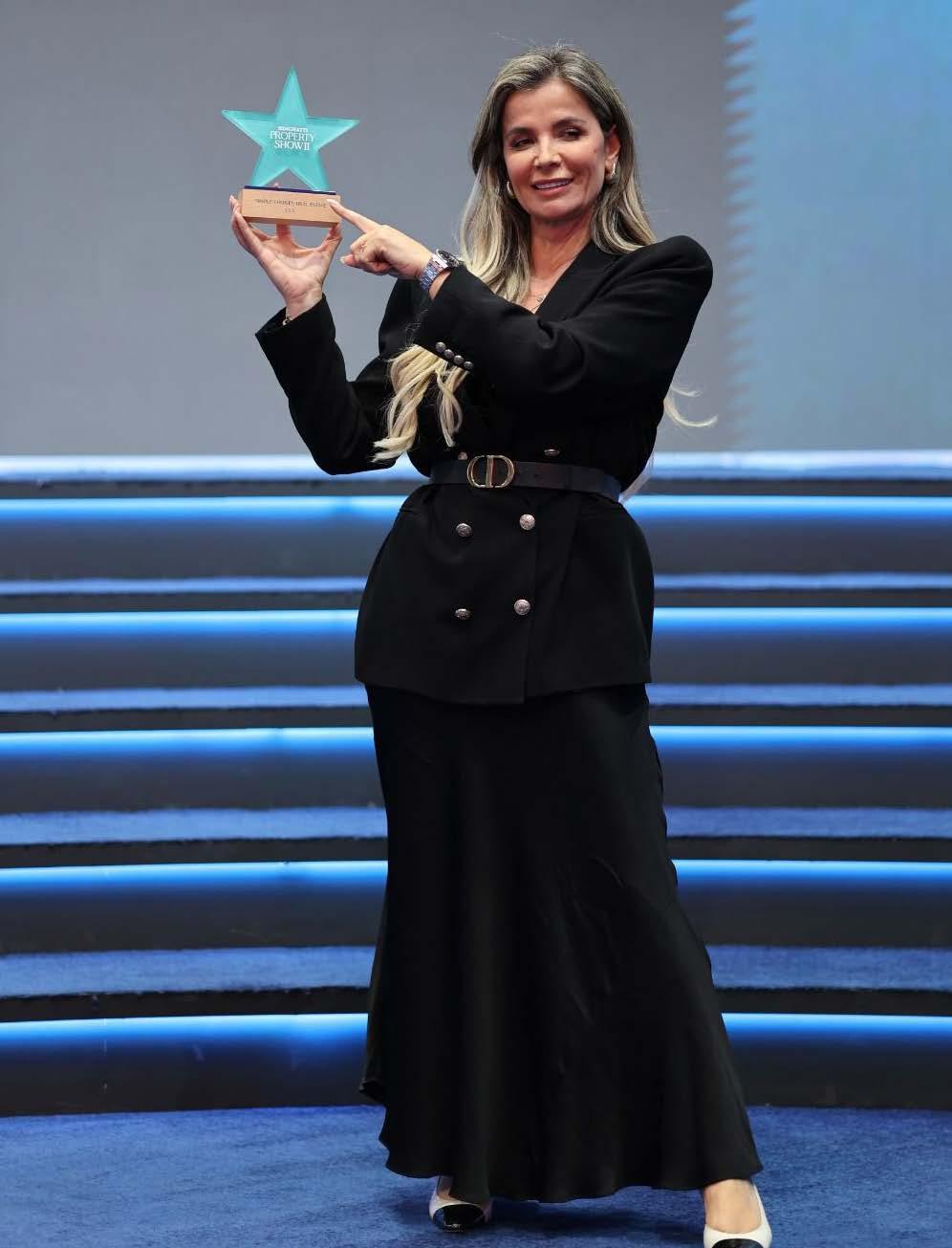
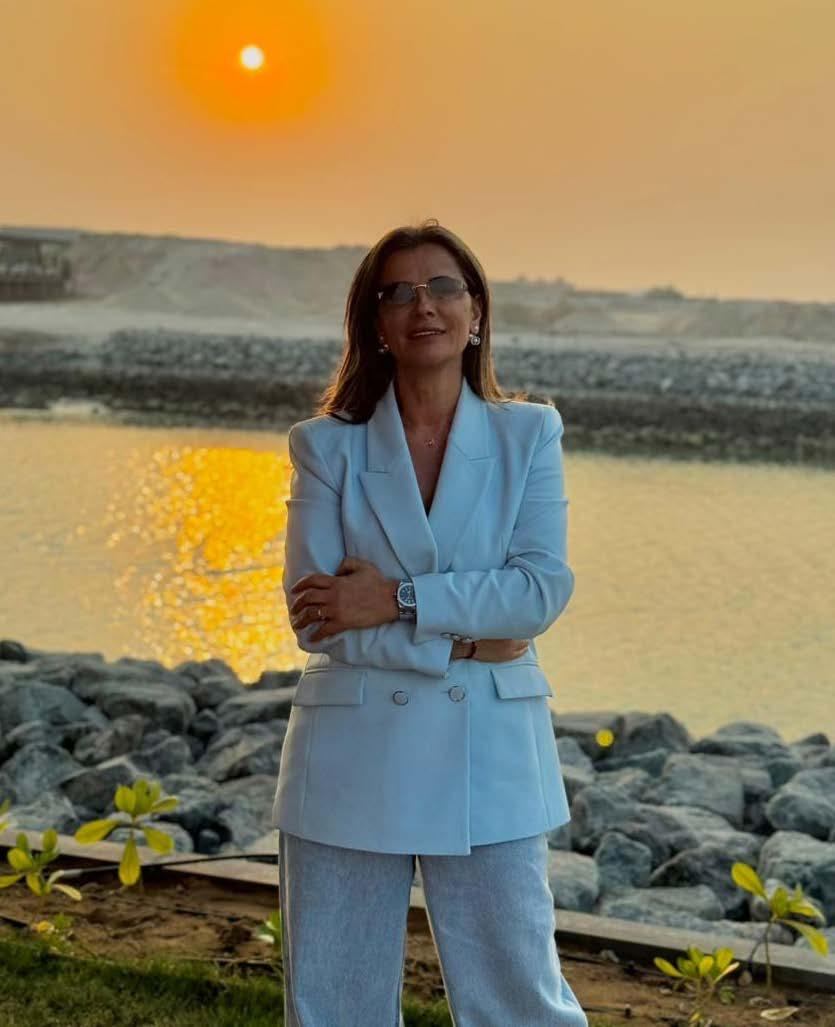
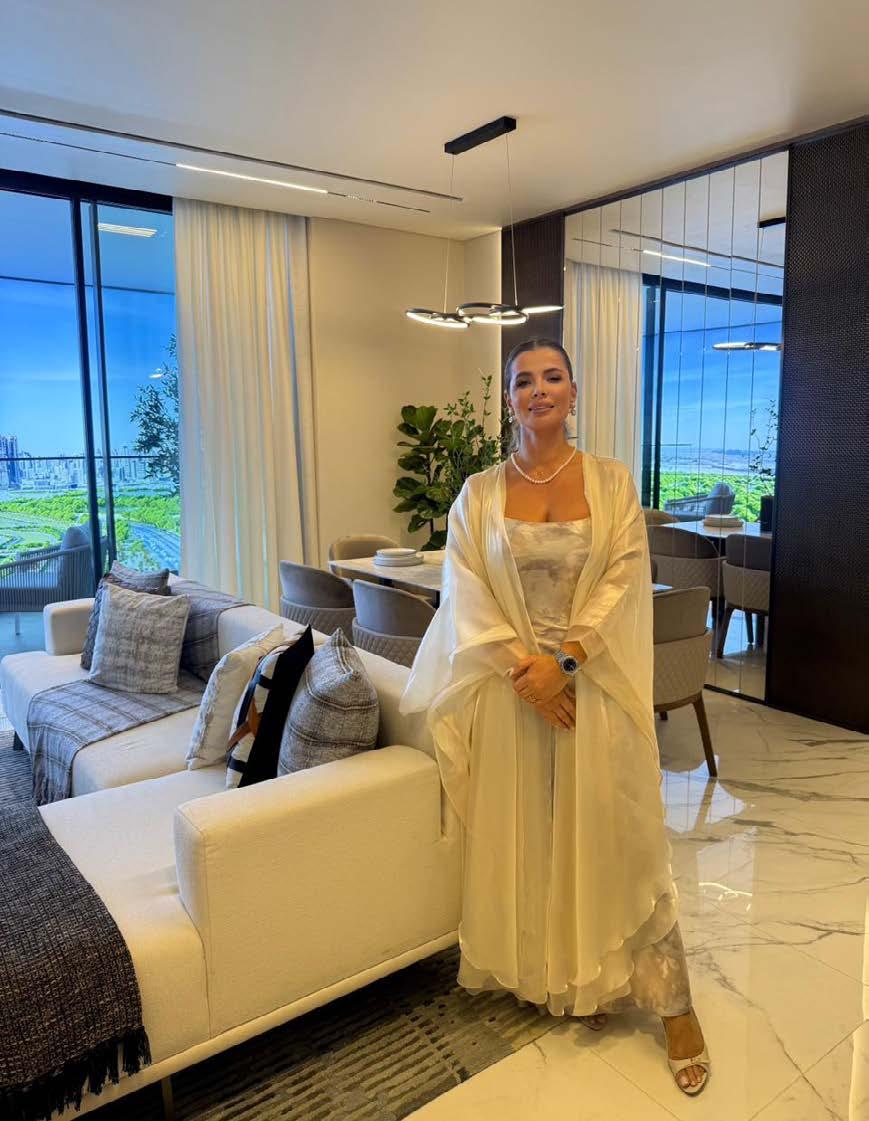
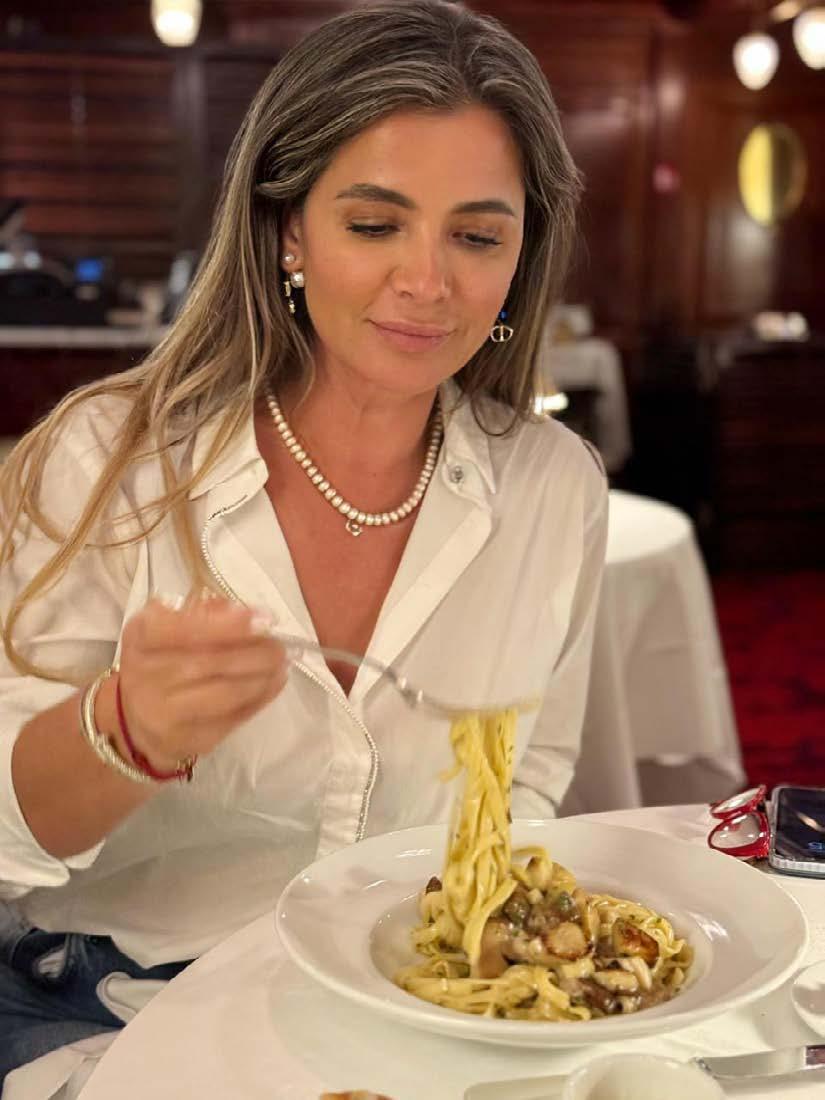
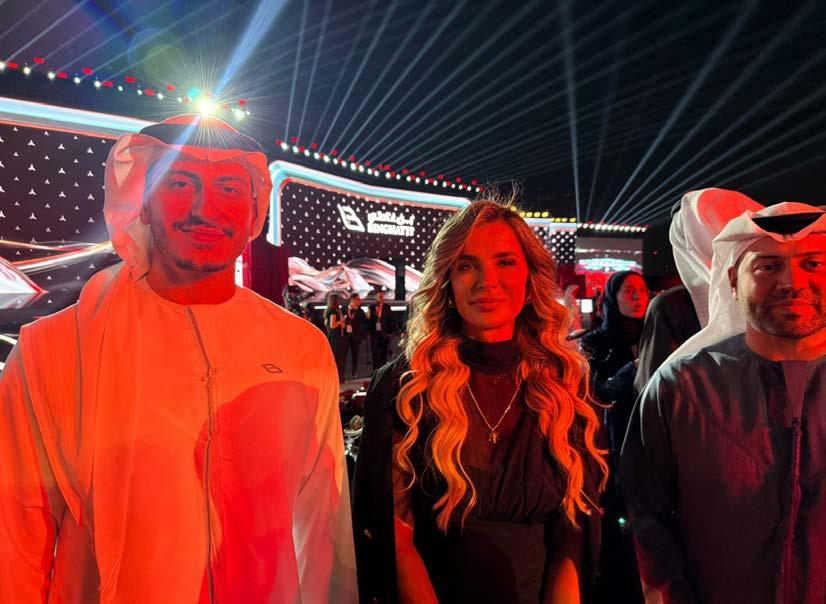
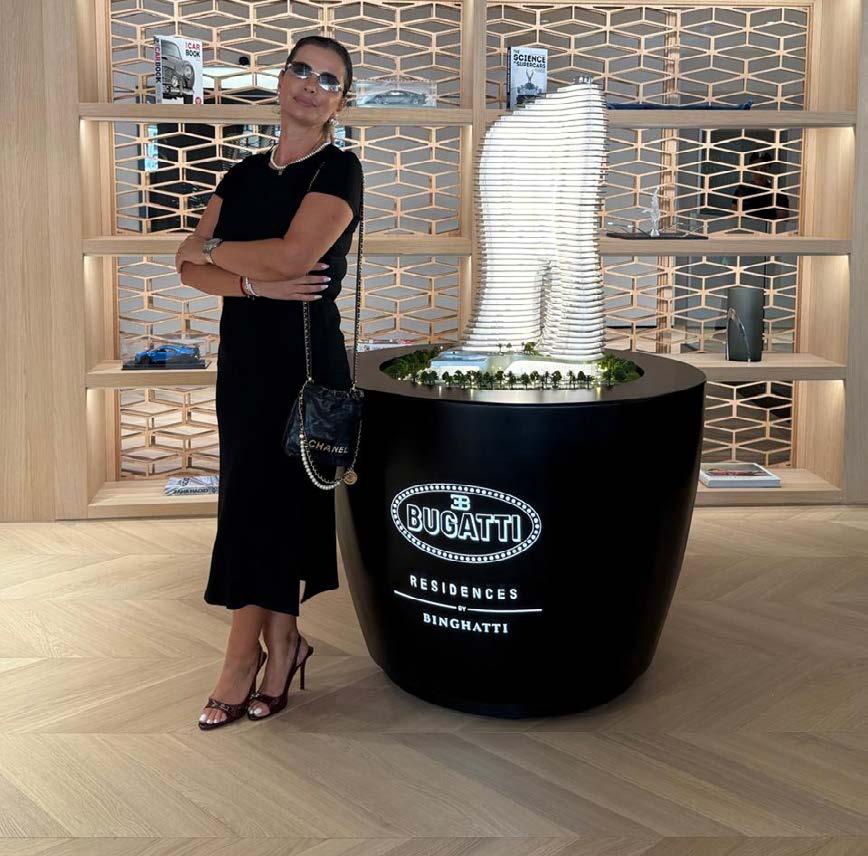
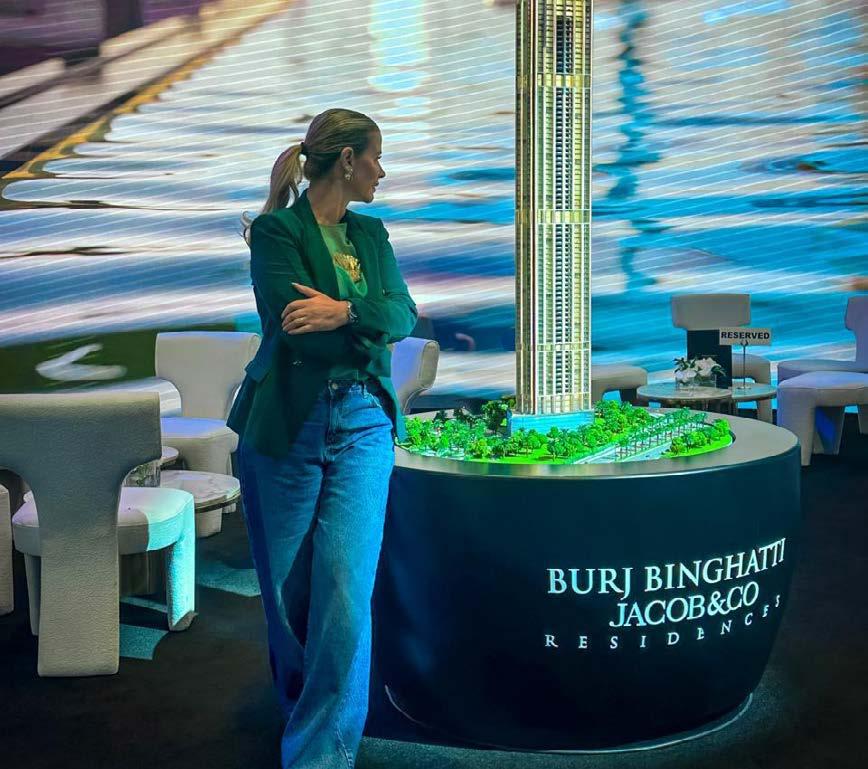
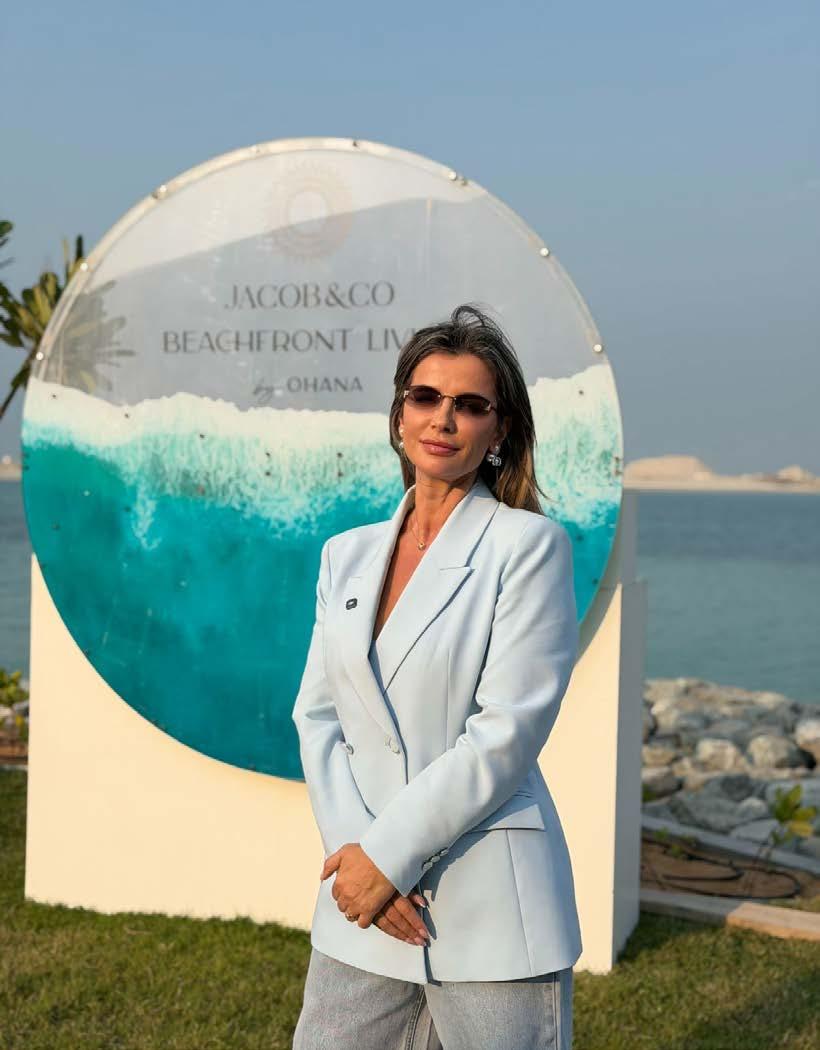
Gerta Rada is a seasoned and trustworthy freelance real estate broker. Among the many companies she works for, it is also Binghatti a well-known private Emirati real estate development company headquartered in Dubai, United Arab Emirates..
Gerta is an Albanian professional, full of grace, kindness and knowledge. She has worked with a lot of dedication and persistence to come to where she is nowadays. During her recent trip to Tirana where she showcased Binghatti at Marriott Tirana Hotel, I managed to get an exclusive interview for TRAILBLAZING MAGAZINE/The Women Edition.
Binghatti - a Brand that Aligns Perfectly with my Values of Innovation, Design Excellence, and Premium Service
“I wanted to be part of a market where every day brings new opportunities and bigger goals. Dubai’s ability to transform constantly is what inspired me,” Gerta said among others in this interview. From here, all took wings for her.
Let’s read her story below:
Can you tell us about your journey into real estate and how you came to work with Binghatti?
My journey into real estate started with a strong passion for luxury properties and the incredible opportunities Dubai offers. Over the years, through dedication and consistency, I built a solid network of clients and industry partners. This path naturally led me to collaborate with Binghatti — a brand that aligns perfectly with my values of innovation, design excellence, and premium service.
What attracted you to the real estate sector in Dubai specifically?
Dubai is one of the most dynamic real estate markets in the world — fast-growing, investor-friendly, and filled with architectural ambition. The city’s ability to transform constantly is what inspired me. I wanted to be part of a market where every day brings new opportunities and bigger goals.
As a woman, what challenges did you encounter?
Being a woman in real estate required proving myself early on, especially in a highly competitive market. But with professionalism, strong communication, and consistent performance, I turned challenges into strengths. Today, many clients choose to work with me because they appreciate my discipline, transparency, and attention to detail.
How does working with a developer like Binghatti differ from working with other companies in the market?
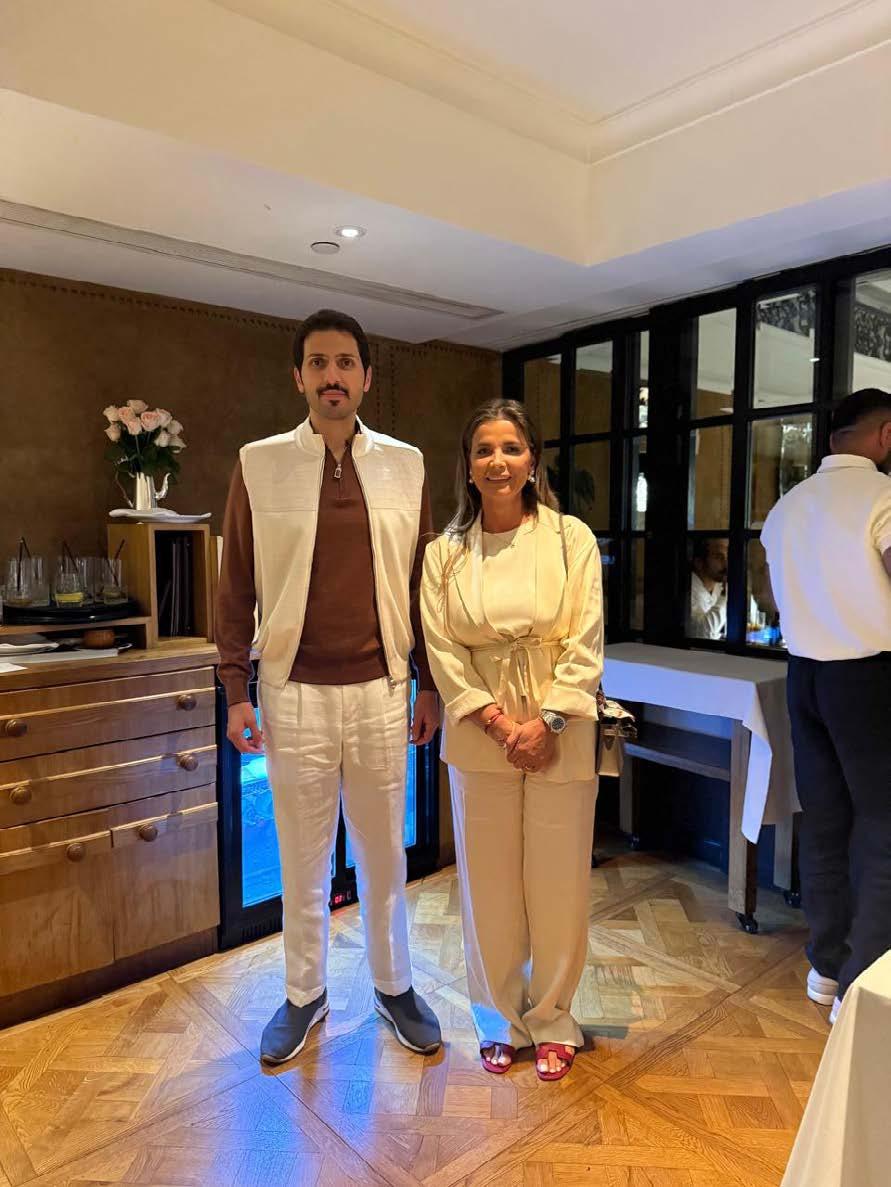
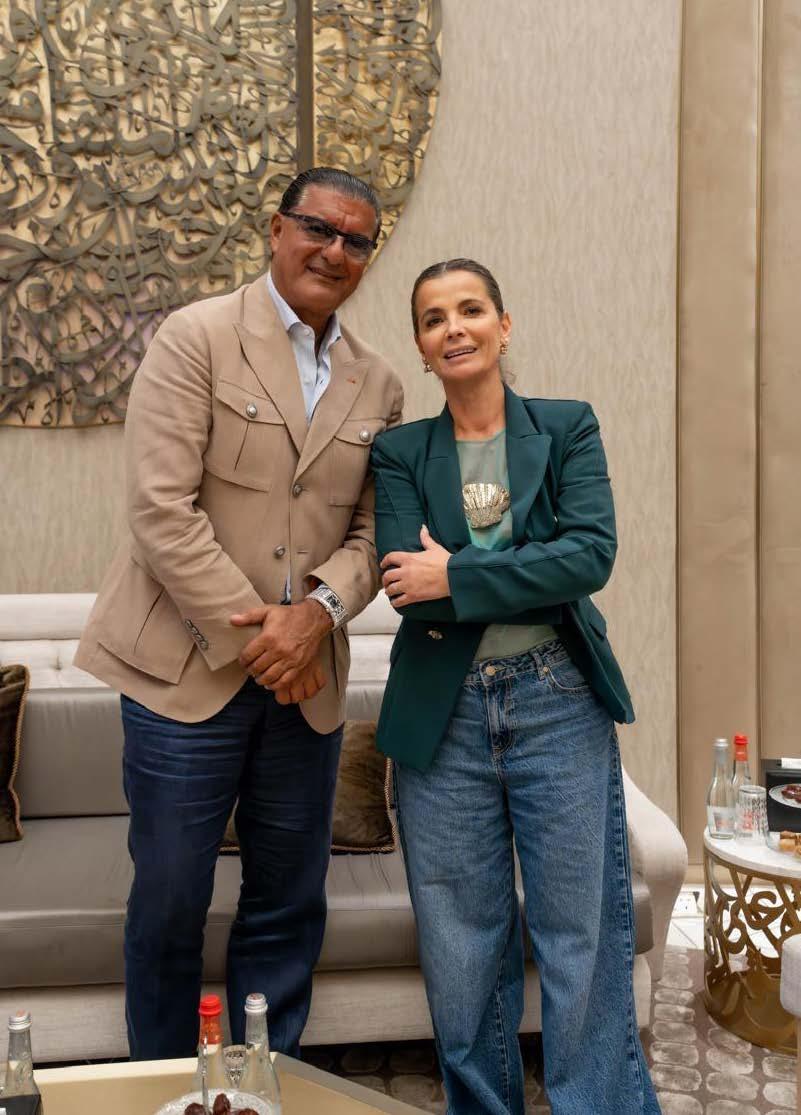
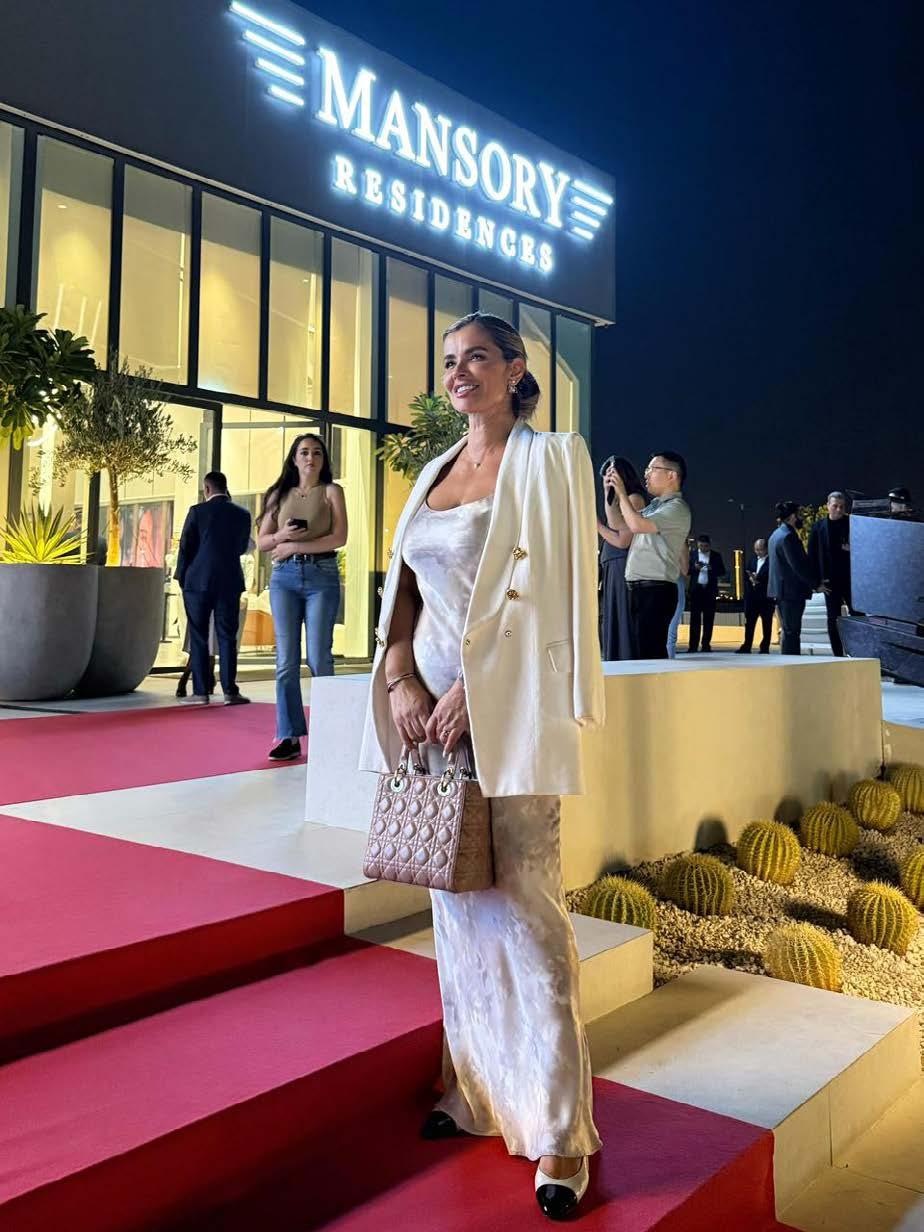
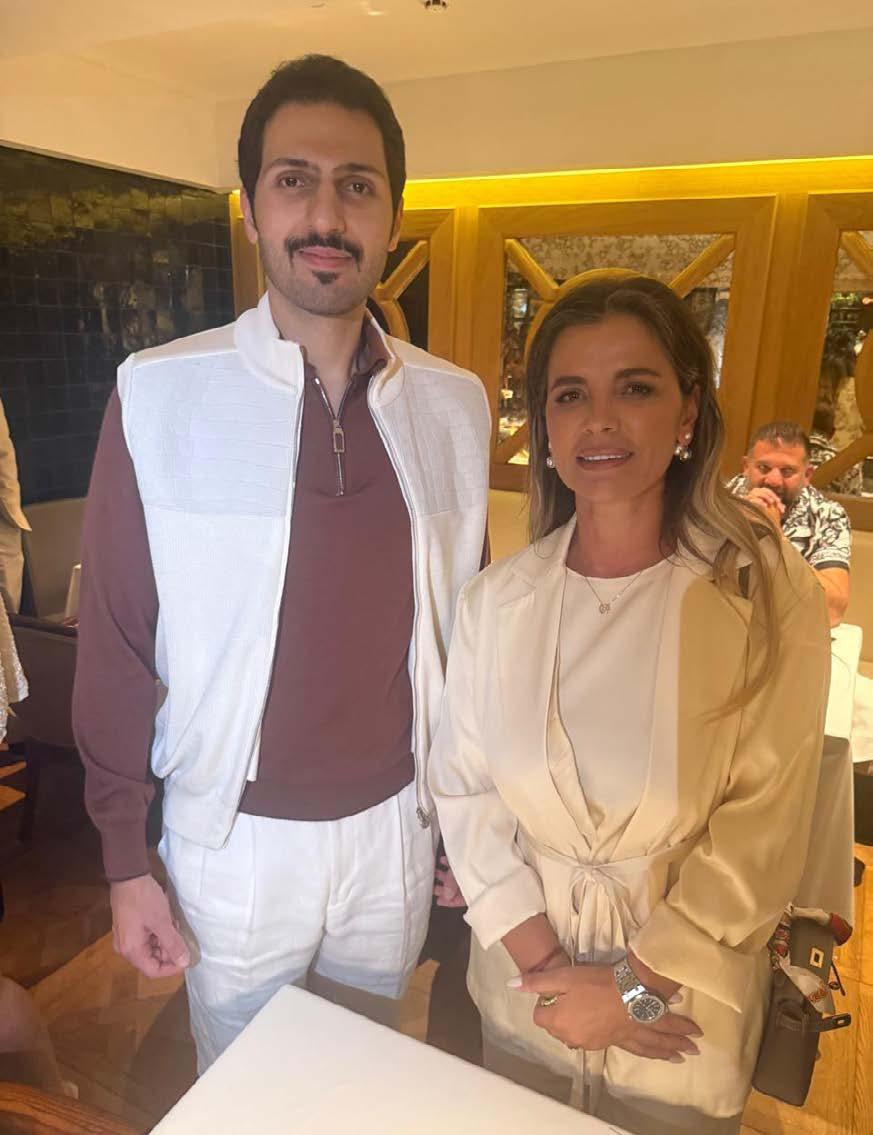
Working with Binghatti is a unique experience because the brand is extremely visionary and fast-paced. Their projects have strong identity, exceptional architectural statements, and a clear commitment to quality. The support, structure, and innovation they offer make the sales process smoother and more impactful compared to many other developers.
Binghatti is known for its distinctive architectural designs and luxury developments. How do you present the company’s vision to clients?
I always highlight two things: the iconic design philosophy and the long-term value. Binghatti doesn’t just build buildings — they create recognizable landmarks. Clients immediately understand that buying a Binghatti property means investing in something exclusive, futuredriven, and architecturally significant.
Which Binghatti project has been the most exciting or successful for you to sell, and why?
One of the most exciting projects for me has been Binghatti’s branded residences, because they combine luxury living with global brand partnerships. These properties stand out due to their design, amenities, and strong ROI potential — which makes them a favourite among both investors and end-users.
What kind of buyers are most interested in Binghatti’s developments?
Binghatti attracts a mix:
• Investors looking for high ROI
• End-users who want unique architecture and premium amenities
• International clients drawn by Dubai’s stability and Binghatti’s strong reputation
In recent years, I’ve seen more foreign investors and younger professionals entering the market,
especially those who value lifestyle and long-term growth.
How do you see the Dubai real estate market evolving right now? The market is stronger than ever. Demand is driven by global investors, business relocations, tourism, and Dubai’s unmatched safety and tax benefits. I believe the next few years will continue to bring growth, especially in the luxury and branded residence segments.
What are the most important skills for success in real estate sales in Dubai?
Consistency, market knowledge, communication, patience, and the ability to build real trust. In Dubai, clients expect speed and professionalism — so being proactive and reliable is key.
Can you walk us through your approach when meeting a potential buyer for the first time?
I focus on listening first — understanding their goals, budget, lifestyle, and expectations. Then I guide them with clear information, options that fit their needs, and transparent advice. My goal is to make them feel comfortable and confident from the very first interaction.
How do you build trust and long-term relationships with clients in such a fastmoving market?
By always being honest, delivering what I promise, and staying available. I follow up consistently and provide real value — not just during the sale, but long after. Many of my clients return to buy again or refer others, which is the biggest sign of trust.
What is the biggest challenge when closing a deal, and how do you overcome it?
The biggest challenge is usually timing and decision-making. Clients sometimes hesitate. I help them by giving clear comparisons, market data, and explaining the long-term value. When clients feel informed, decisions become much easier.
What do you find most rewarding about your job?
The most rewarding part is seeing clients happy — whether they’ve found their dream home or secured a strong investment. Helping people grow their wealth through real estate gives me real satisfaction.
How do you handle competition and pressure in such a dynamic environment?
Pressure motivates me. I stay focused on my goals, stay consistent, and constantly upgrade my knowledge. Instead of competing with others, I compete with myself — to be better than I was yesterday.
What advice would you give to someone aspiring to work in real estate sales in Dubai?
Be patient, be consistent, and never stop learning. Build relationships, be transparent, and show up every day with discipline. Dubai rewards those who are serious, committed, and passionate about what they do.


“What

By Rudina Hoxha & Jose Pinto
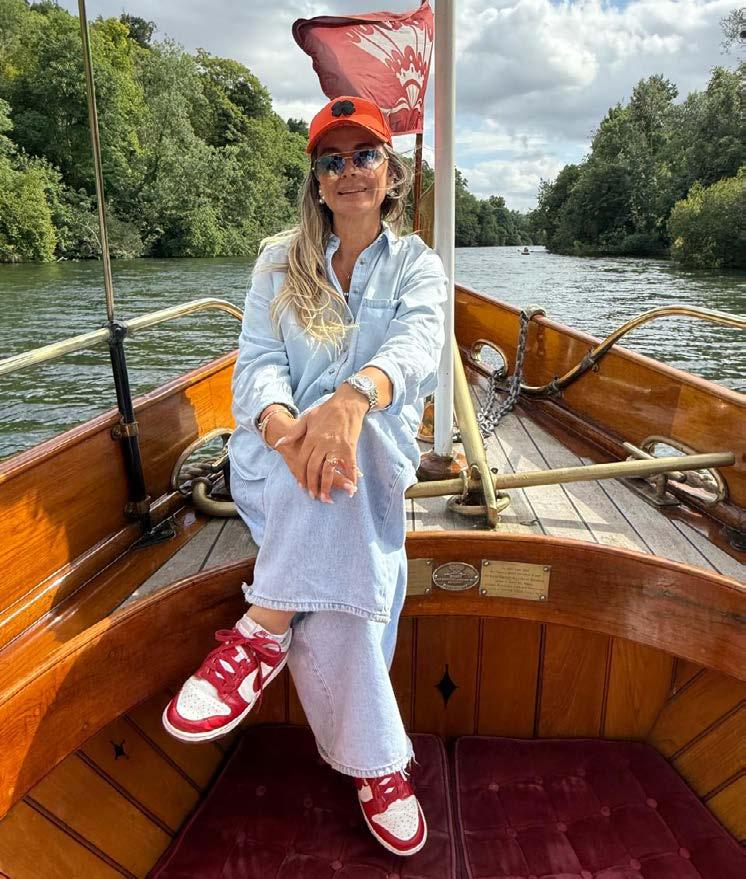
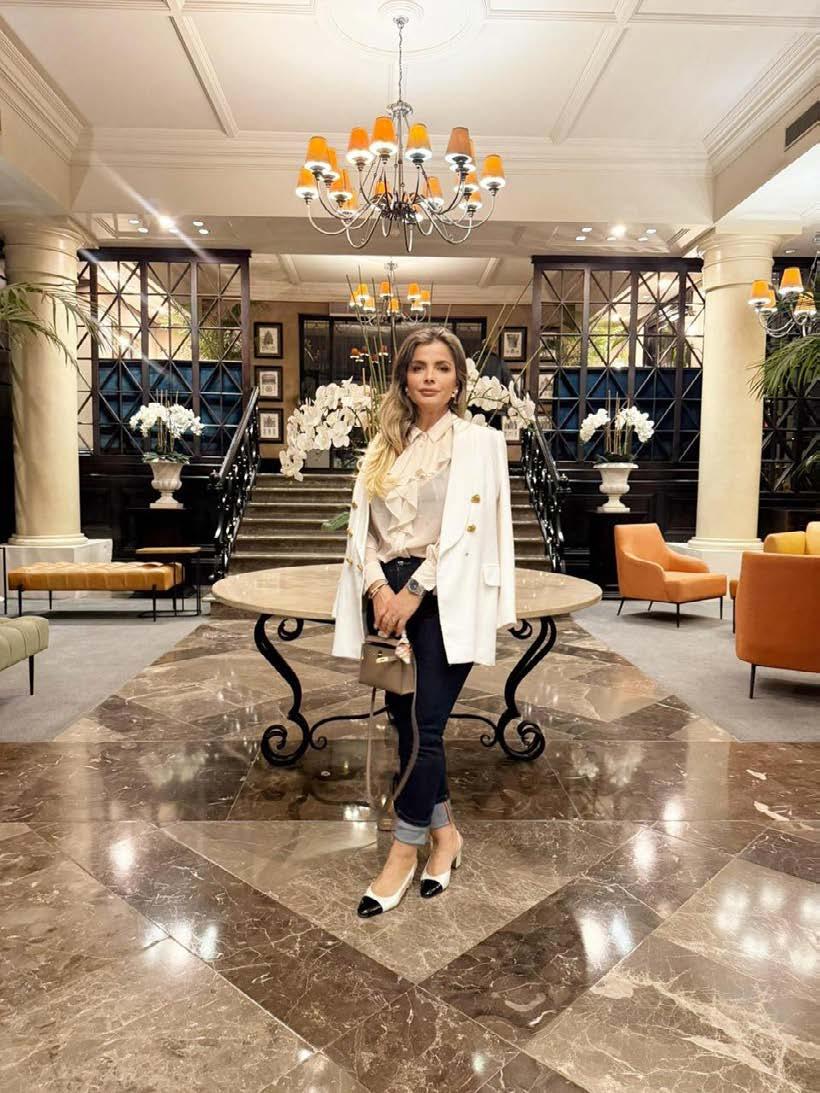
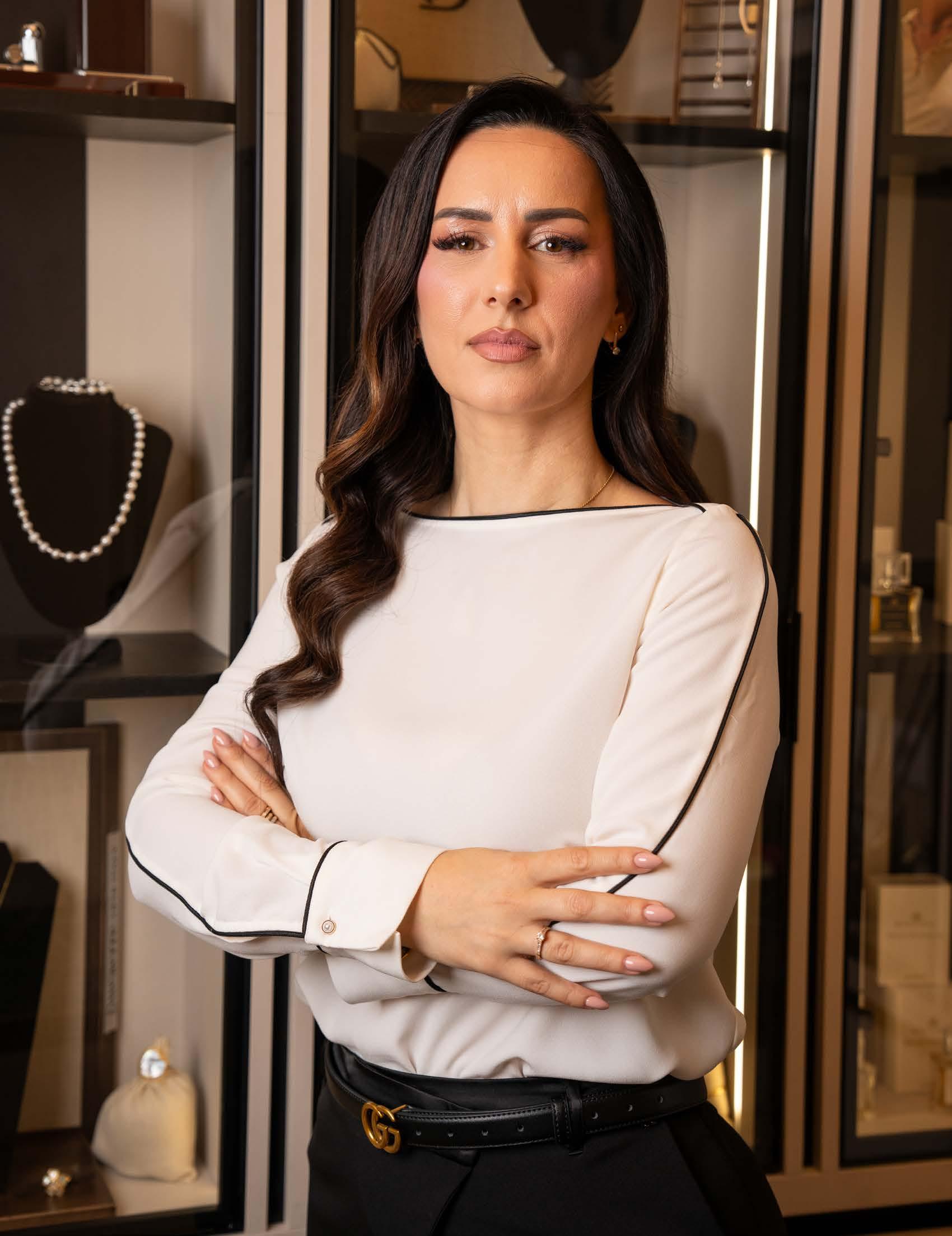
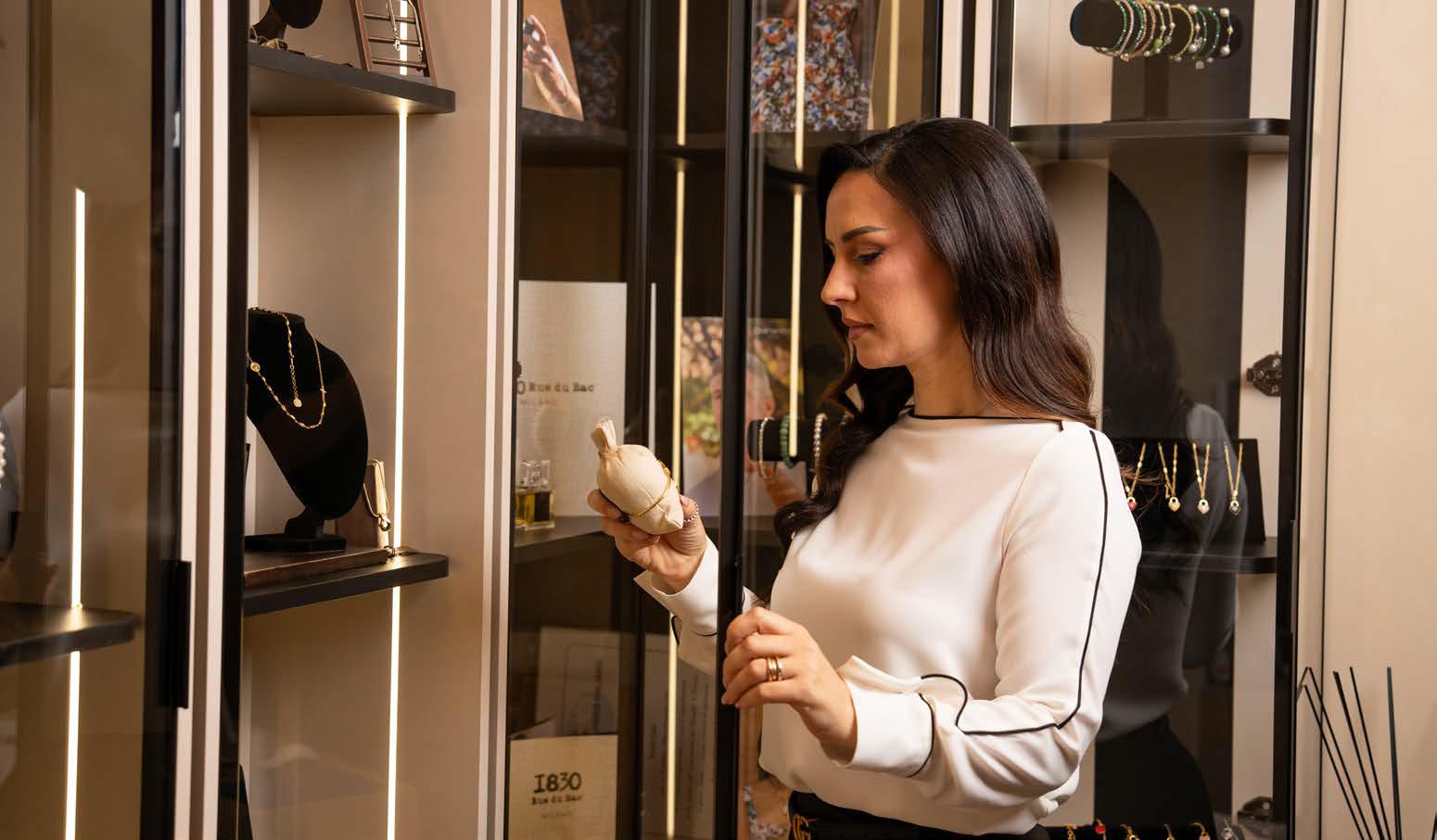
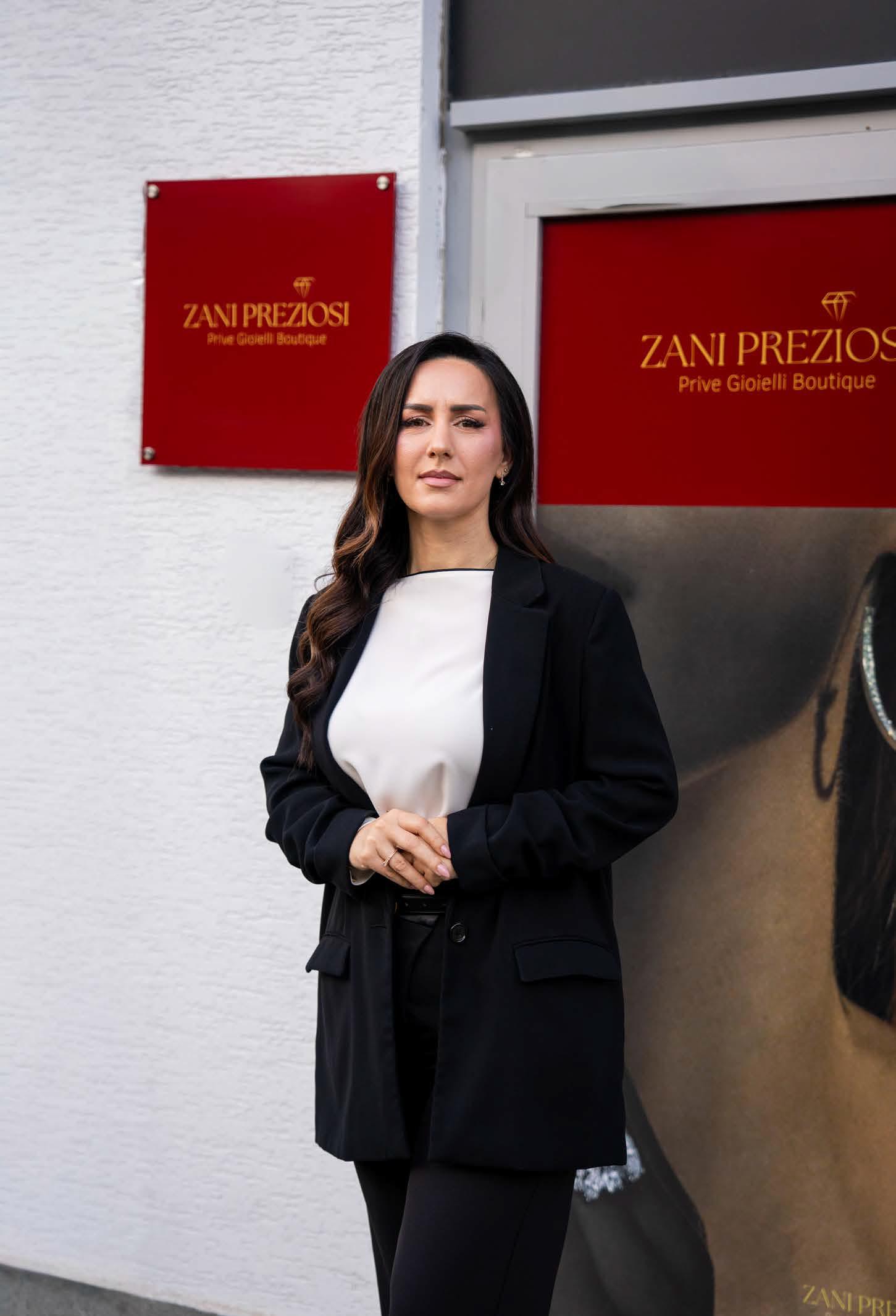
Elterda Zani, a self-made Albanian businesswoman sits down with Trailblazing Magazine/The Women Edition to uncover the incredible journey of how she made it by committing herself into Delta Group—now known as Delta Corporation for 14 years to spend 5 years running the Cohl’s franchise in Durrës which she personally managed. Until recently she has started to run her own jewelry store - Zani Preziosi Prive Gioielli.
Through this interview, she shows how she navigated offering practical insights into monetizing your passions, securing the equity you deserve, and maintaining authenticity while chasing your dreams.
Full interview follows:
You have a 14-year career at Delta Group, covering various roles—from leading procurement, to human resources, and eventually seven years as Marketing Director. On the other hand, you also personally managed and operated a Cohl’s franchise in the city of Durrës for shaped your professional identity?
My 14-year experience at Delta Group— now known as Delta Corporation—was fundamental in building my professional identity, as it encompassed several key roles that gave me a comprehensive understanding of how a large company operates.
Initially, in procurement management, I developed strong skills in negotiation,
market analysis, and supplier relationship management—elements that taught me how to make fast and accurate decisions in complex situations.
Later, leading human resources taught me the importance of developing workplace culture, motivating teams, and establishing effective organizational structures. This role deepened my understanding of human dynamics and their impact on sustainable business outcomes.
The seven years I spent as Marketing Director were the period during which I fully implemented strong marketing strategies, managed important brands, and led teams toward ambitious targets. This role enabled me to combine creativity with analysis and turn vision into concrete results.
running the Cohl’s franchise in Durrës— which I personally managed—offered a completely different and highly valuable experience. I wasn’t just in a leadership position; I was fully responsible for every aspect of the business—from management and customer experience.
take direct responsibility, and the ability to view every detail of the business through an entrepreneurial lens. The on-the-ground experience gave me deep sensitivity to the local market and reinforced my belief that success is built through daily decisions and constant dedication.
Ultimately, these two chapters—one inside a large corporation and the other running my own business—have shaped me into a wellrounded professional: strategic, analytical, people-oriented, and at the same time highly practical in execution.
What were the key skills or lessons you took from the corporate world and applied to entrepreneurship?
My experience in the corporate environment provided a very strong foundation that served me exceptionally well when I transitioned into entrepreneurship. One of the most important skills I carried with me was organizational discipline the way processes, decisionmaking, and priorities are structured. In entrepreneurship, where everything depends on you, this discipline is essential for ensuring

From procurement management, I carried forward strong negotiation skills, cost management, and the ability to build long-term relationships with partners. These elements were decisive in securing
good terms, quality supply, and sustainable margins for my business.
From my experience in human resources, I brought a deep understanding of the importance of motivated teams and clear communication. As an entrepreneur, I knew that the success of my business depended not only on the product or the strategy but also on the ability to create an environment where people work with commitment and clarity.
Meanwhile, my long role as Marketing Director equipped me with what is perhaps the most important skill in entrepreneurship: the ability to read the market critically, understand consumer behavior, and build a strong brand identity. In a franchise model, where competition is direct and customers have many choices, the ability to differentiate yourself becomes crucial.
In essence, the corporate world taught me strategy, while entrepreneurship tested my execution. And the combination of these two dimensions helped me build a sustainable business and perform to high standards in every role I take on.
At what moment did you realize it was time to start your own business?
It wasn’t a sudden decision, but rather a process that became clearer over time. As I grew professionally in various leadership roles, I began to feel that the experience and maturity I had gained had prepared me for a greater responsibility—the responsibility of building something that carried my own signature.
I increasingly felt the need for autonomy—to create my own vision and drive it forward with the standards and pace I believe in. And when the opportunity to acquire the Cohl’s franchise in Durrës came along, it created a special harmony between my experience, ambition, and the right timing. It was exactly the kind of alignment that gives big step has arrived.
At that moment, I clearly understood that I was ready to invest my energy, knowledge, and passion into a business I would run myself—with full responsibility, but also with the deep satisfaction that comes from building something personal and sustainable.
How did your previous roles—both in the corporation and in managing the Cohl’s franchise—prepare you to lead a brand in such a creative and detail-oriented industry as jewelry? And what were the biggest challenges when transitioning from the Cohl’s franchise to running your own jewelry store?
My experience in the corporate world gave me the strategic and managerial foundations that have guided me throughout my career Moving from procurement to human resources and then to marketing, I learned to build sustainable structures, lead teams, and develop clear brand identities—skills that
are essential in any sector but become even more important in a detail-sensitive industry like jewelry
On the other hand, managing the Cohl’s franchise offered me an entirely practical dimension of entrepreneurship: being close to the customer, handling daily operations, reacting quickly, and building longlasting relationships with the local market.
There, I learned the true rhythm of a retail
how hospitality, service, and consistency
When I transitioned from Cohl’s to creating and managing my own jewelry store, the biggest challenge was shifting from
standards to a reality where every standard had to be built by me In jewelry, every detail from collection design to presentation, from gemstone quality to sensitivity in customer responsibility required a strong combination of creativity and discipline.
However, this process also gave me the freedom to create an experience entirely
standards I believe in. The transition was not easy, but it was transformative—
professionalism, care, and the aesthetic values I want to bring to this industry.
How did you build your business model, brand identity, and product line from scratch? And what has surprised you the most about entrepreneurship so far?
Building my business from the ground up was a process that required deep
vision I wanted to bring to life. I began by focusing on the business model—identifying


exactly what value I would offer the market and how I would differentiate myself in an industry where detail and trust mean everything. I analyzed the market, the clientele, and the highest international standards, shaping a model that balances exclusivity with accessibility.
Next, the brand identity emerged as a very personal process. I wanted a brand that not just in design, but in every interaction with the client. I worked carefully to create an identity that spoke the language of trust, aesthetics, and professionalism. Every element—from the colors to the communication style—was chosen to convey a sense of calm, quality, and care.
As for the product line, it was perhaps the most delicate and exciting part. I focused on creating collections that not only looked beautiful, but carried a story and a standard of craftsmanship that honored quality. Every stone, every design every combination was selected with meticulous attention to aesthetics and detail, ensuring brand.
What has surprised me the most about entrepreneurship is how deeply personal everything becomes. In a corporate setting, even the highest roles operate
own business, every decision from the strategy to the smallest detail—carries my signature. This makes the process incredibly challenging, but also profoundly rewarding. I have been surprised by the strength of an inner instinct I had never tested so clearly before: the ability to make calm decisions, trust my vision, and
and emotion.
Entrepreneurship has taught me that growth doesn’t come only from big plans, but from how you manage the small, everyday moments—with patience, care, and persistence.
How do you balance the strategic and creative sides of running a jewelry business?
Balancing strategy and creativity are essential in my work. The strategic side gives me clarity to build sustainable processes, analyze the market, and position the brand professionally. Meanwhile, the creative side allows me to bring identity, sensitivity, and aesthetics into every collection.
I see these two aspects as complementary forces: strategy helps channel creativity with intention, while creativity makes strategy more vibrant and emotionally connected to the client. This balance is what allows me to build a brand that is both structurally strong and stylistically distinctive.
What is the vision behind your jewelry boutique—Zani Preziosi Prive Gioielli—and what makes your brand stand out? Who is the client you design for?
The vision for Zani Preziosi Prive Gioielli took shape naturally after three years of experience managing the online marketing of my brother’s business in Italy, within the same industry. That period brought me closer to Italian standards, artisanal
jewelry. His mentorship was pivotal in creating the foundation of the idea that eventually became my boutique.
The boutique operates on a privé concept—a personalized and serene approach where each client books a private appointment and has the opportunity to view, try, and order pieces
with precise details. This concept is especially important when it comes to selecting precious stones, particularly diamonds, which require time, care, and specialized explanation
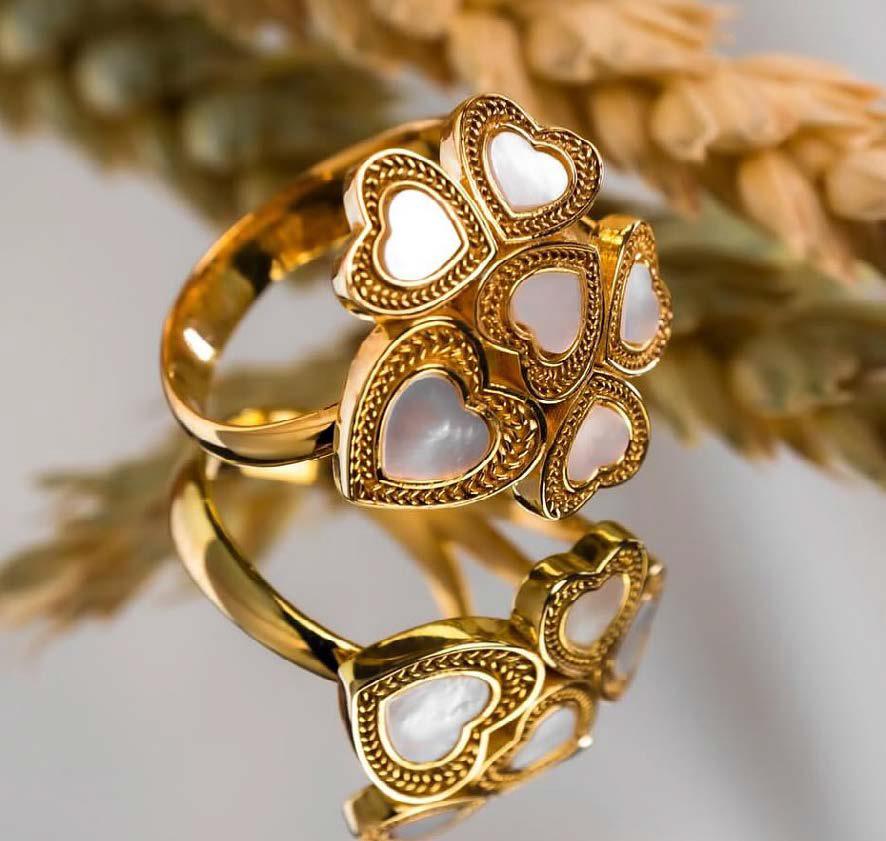
A key element that distinguishes my boutique is the exclusivity of the Italian brand Dueaerre, a company with 90 years of tradition in producing gold-plated
design, consistent quality, and signature Italian craftsmanship. Bringing this heritage to the Albanian market has been an important part of my vision to create a trustworthy, high-level destination in the world of jewelry.
The woman I design for is modern, elegant, values not only aesthetic beauty but also the symbolism and personality a piece of jewelry carries. She seeks the brilliance of and uncompromising quality. For her, jewelry is not just an accessory—it is an identifying element that accompanies her in meaningful moments.
At its core, Zani Preziosi Prive Gioielli intertwines Italian tradition, an intimate and personalized client experience, and my passion for designing with precious stones and diamonds, creating a brand authenticity
What inspires your designs, and how do you stay aligned with market trends while remaining authentic to your brand? Which sales and marketing strategies have been most effective in growing your brand?
My designs are inspired by everyday elegance, clean lines, and the natural beauty of precious stones—especially
diamonds. I follow international trends and market behavior, but every innovation is
clarity, and quality. This allows me to stay modern without losing the authentic identity of the brand.
The most effective strategies have been the combination of targeted online marketing and a fully personalized service experience. Privé appointments, transparency in gemstone selection, and thoughtful visual communication have built trust and long-term relationships with clients. This balance between a professional online presence and individual care has been the key to the brand’s steady growth
What advice would you give to women who want to transition from a long corporate career to entrepreneurship?
My advice would be to take this step with clarity, courage, and preparation. Corporate experience is an incredibly valuable asset—it gives you structure, discipline, and strategic skills—but in entrepreneurship

On this journey, my greatest gratitude goes to my family, who have always been my quiet strength and my most sincere support. A special thank you to my husband, who has been not only an unwavering source of support, but also a high-level advisor at every step of my entrepreneurial journey. His support has been foundational in every decision and every moment of courage I have taken.
As Roy T. Bennett beautifully says:

I would tell them not to rush but to
vision. To seek guidance from the right people, because mentors and a strong professional network play a crucial role in the beginning. And above all, not to fear responsibility: in entrepreneurship, every decision is yours, but so is every achievement
It is a path that demands a lot, but gives just as much. And for women who are ready to believe in themselves, this transition can become one of the most powerful chapters of their professional journey.
“The right support turns even the greatest challenge into the most beautiful opportunity.”
This quote perfectly captures his role in every success of mine.
A heartfelt thank you also goes to you, Rudina, for inviting me to be part of your magazine. I truly appreciate your story to life. I would also like to extend my gratitude to Jose, for your vision and tireless work over the years—your dedication has allowed the magazine to grow naturally, with integrity and high standards. passion as it does professionalism.
Celebrating The 14th Anniversary of Grace Models (9 January 2012 – 9 January 2026)
By Rudina Hoxha & Livia Hoxha
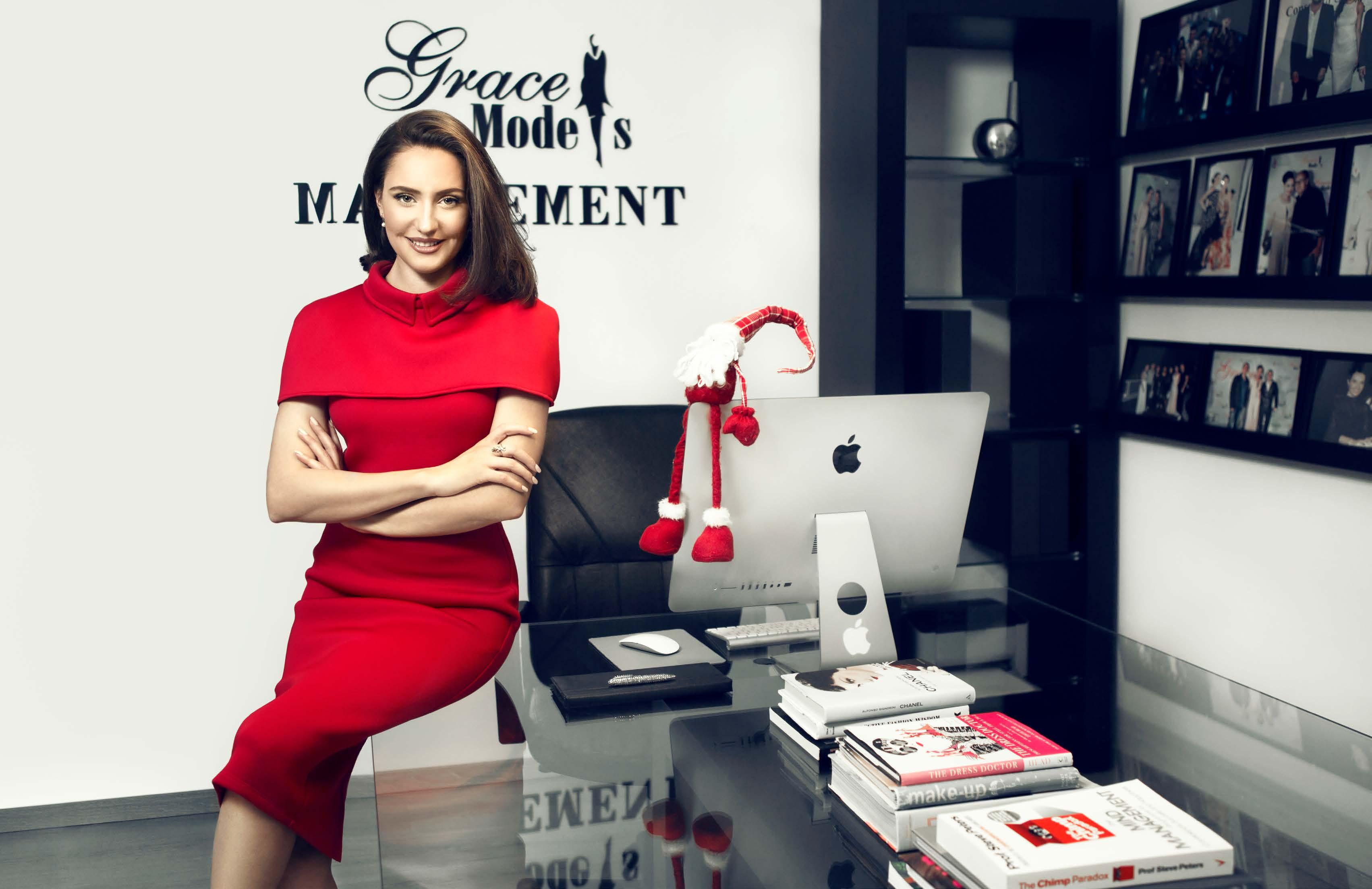
The Albanian-Croatian model, Greiss Petrovic, is a highly outspoken, trailblazing and audacious entrepreneur and a well-known figure behind Grace Models. As leader of the very first registered provider modelling agency in Albania, Greiss proudly creates the pathway for unique and diverse models to enter the industry.
In this feature, we sat down with the CEO and Founder of Grace Models Albania, Greiss Petrovic and talked about what makes her company stand out among others.
“My long-term vision is for Grace Models to remain a benchmark for ethics and professionalism,” she says in this exclusive interview with Trailblazing Magazine/The Women Edition.
Grace Models Albania was founded in 2012 and this did not pass without facing challenges.
The greatest challenge was shifting outdated perceptions of what a modelling agency should be. Establishing clear standards, educating families, and building trust required time and persistence,” Greiss states.
Full interview follows:
What inspired you to start a modelling agency, and what gap did you see in the industry that led you to create it?
I began my career very young, and through competitions and television work, I noticed a significant gap in the industry. Many young talents had potential, yet they lacked structure, protection, and proper guidance. Grace Models was created to offer a safe and educational environment where talent can grow with dignity and professionalism.
How did you build your agency from the ground up, and what were the biggest challenges in the early days?
The greatest challenge was shifting outdated perceptions of what a modelling agency should be. Establishing clear standards, educating families, and building trust required time and persistence. Guided by consistency and a strong vision, Grace Models has been a consolidated and respected institution since its inception.
What does it mean for your agency to be the only certified one — and how did you achieve that recognition?
Certification reflects our dedication to professionalism and ethical practices. It required structured work, transparent procedures, and collaboration with cultural and educational partners, along with compliance with the formal requirements for establishing the agency.
How has your personal background influenced your approach to building and managing the agency?
Growing up surrounded by art — with a grandmother who was both a pianist and a painter — shaped my appreciation for aesthetics. My studies in communication and experience further helped me build an agency focused on personal development and meaningful professional growth.
“Certification reflects our dedication to professionalism and ethical practices. It required structured work, transparent procedures, and collaboration with cultural and educational partners, along with compliance with the formal requirements for establishing the agency.“
Why do you think certification is important in the modelling industry?
Certification ensures safety, structure, and responsibility. It helps regulate the profession, protects young people, and gives families and clients confidence in the agency’s standards.
How does being certified set your models and your agency apart from others?
Certification guarantees proper training, safe working conditions, and transparent contracts. Clients know exactly what to expect, and our models feel supported throughout their journey.
What are some of the misconceptions people have about modelling agencies, and how do you address them?
Some believe agencies only care about appearance or simply “find jobs.” We counter this by prioritizing education through courses, workshops, and regular communication with parents. When people see the process, they understand the depth and professionalism behind our work.
How do you discover and nurture new talent?
We discover talent through castings, collaborations, and community activities. Once they join us, we support them with training, artistic development, mentoring, and essential professional tools.
What qualities do you look for in a model beyond physical appearance?
Curiosity, discipline, communication skills, and emotional awareness. True presence comes more from personality than measurements.
How do you prepare your models for the realities of the fashion world — both the opportunities and the pressures?
We teach both technical and psychological skills: professionalism, confidence, resilience, and healthy boundaries. Our goal is for them to enter the industry with realistic expectations, not illusions.
Can we talk at length about the courses the Grace Models agency offers?
Our courses provide programs that teach skills in runway walking, posing, styling, etiquette, communication, and selfpresentation. We also collaborate with photographers, stylists, makeup artists, and psychologists to support healthy and balanced development.
Through our Modeling & Photomodeling programs for children and teenagers, the attendees receive knowledge on:
• Runway Technique
• Photographic Posing Techniques
• Body Movement & Control
• Stage Spatial Awareness
• Emotional Control & Expression
• Dining Etiquette
• Film Casting Preparation
Besides our main courses in Modeling and Photomodeling, other courses are:
• Fashion Design
• Photography
• Hairdressing
• Aesthetics
• Make-Up Artist
• Image Consulting
• Visual Merchandising
Professionalism, Standards, and Elegance — these values define Grace Models Albania.
Can you share a success story that particularly inspires you from your agency?
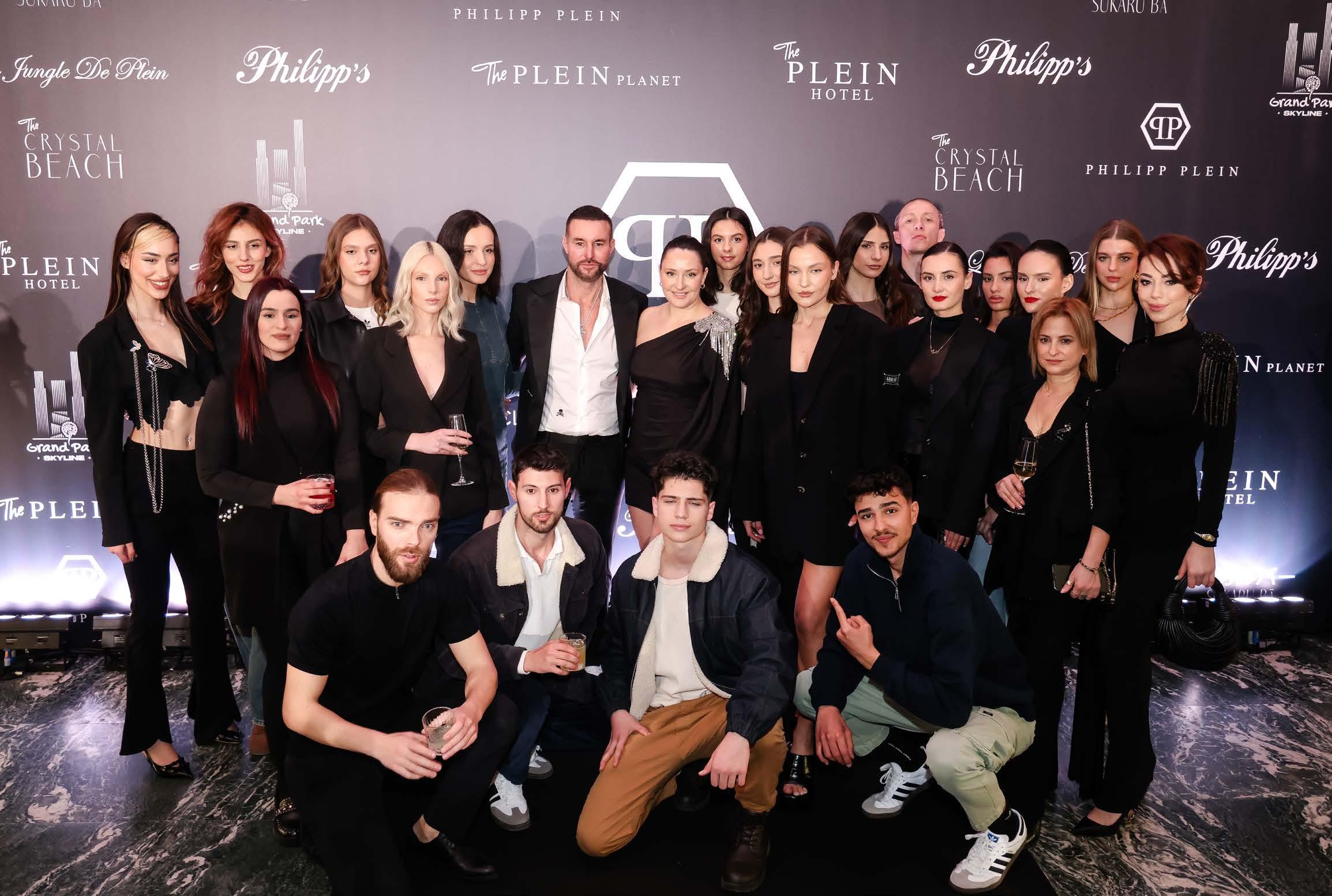
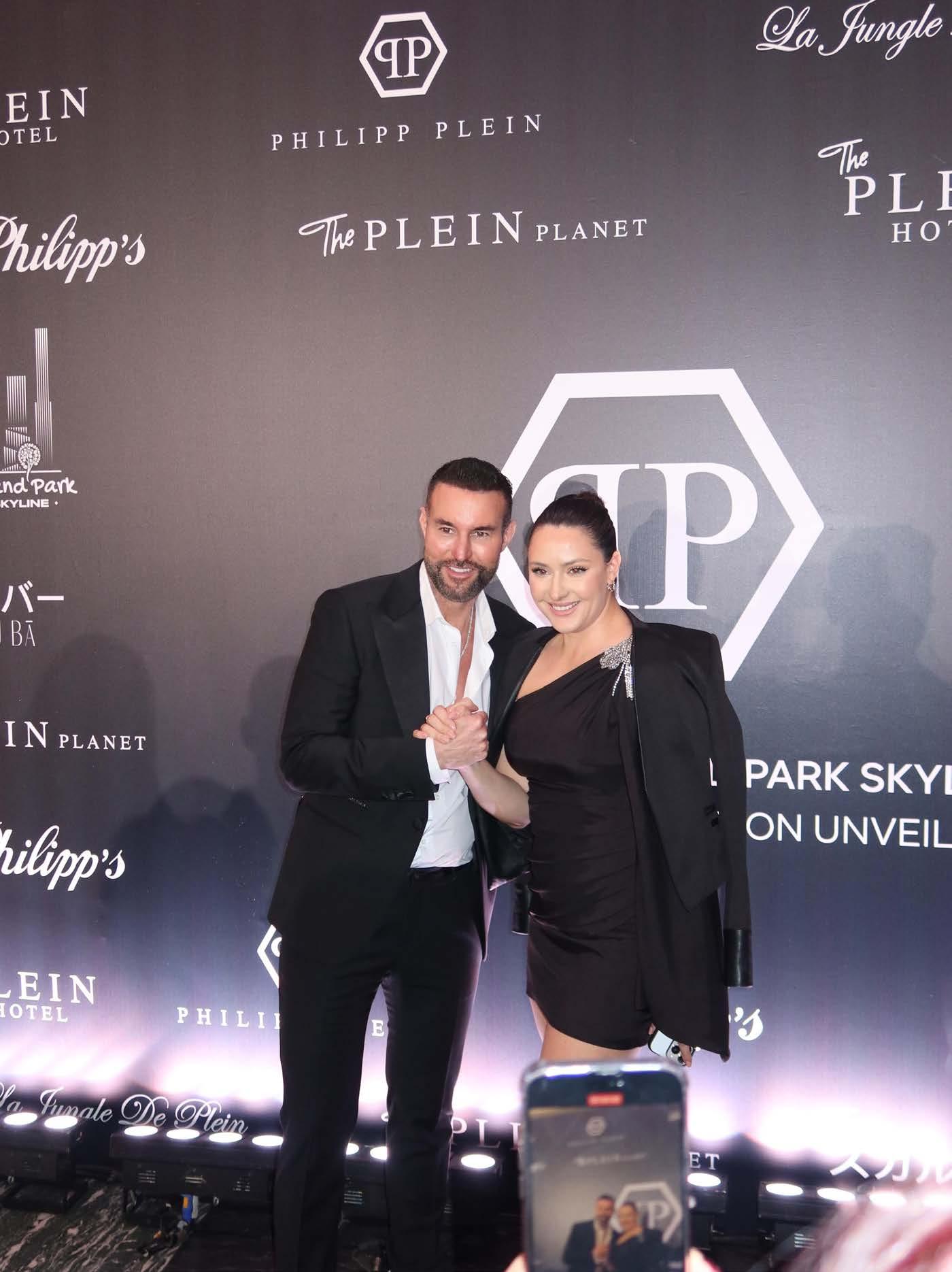
A defining moment was seeing our models participate in Philipp Plein’s presentation in Albania. It demonstrated that Albanian talent can shine confidently on an international-level platform.
What steps do you take to ensure your models’ safety, well-being, and fair treatment?
We rely on clear rules, strong contracts, and parental involvement when working with minors. We partner only with trusted collaborators and ensure our models are well-informed about their rights so they always feel safe and respected.
How do you see the modelling industry evolving in terms of body image, representation, and ethical standards?
The industry is becoming more inclusive and authentic. Diversity, individuality, and transparency are increasingly valued over traditional “perfection.” Ethical standards are strengthening, and I believe this positive shift will continue.
What are your future goals for the agency?
We aim to expand internationally, introduce more educational programs, and bring Albanian talent to global runways. My longterm vision is for Grace Models to remain a benchmark for ethics and professionalism.
How do you envision the next generation of models and agencies working differently than today?
The next generation will be more digital, creative, and independent. Agencies will emphasize education and protection, while models will build careers shaped by personality and online presence.
What kind of legacy do you hope to leave through your work?
A legacy of empowerment — a place where young people develop confidence, discipline, and pride in their culture. If my work helps others believe in themselves, that will be the legacy I hope to leave.
What advice would you give to aspiring models or entrepreneurs who want to enter the fashion world?
Stay authentic, be patient, and never stop learning. Build your identity rather than chasing trends. Discipline, curiosity, and individuality are your greatest strengths.
How do you define success — both personally and professionally?
Personally, success is living with integrity and joy. Professionally, it is making a positive impact on young people and helping create a healthier, more creative community.
How would you describe your brand’s style and identity?
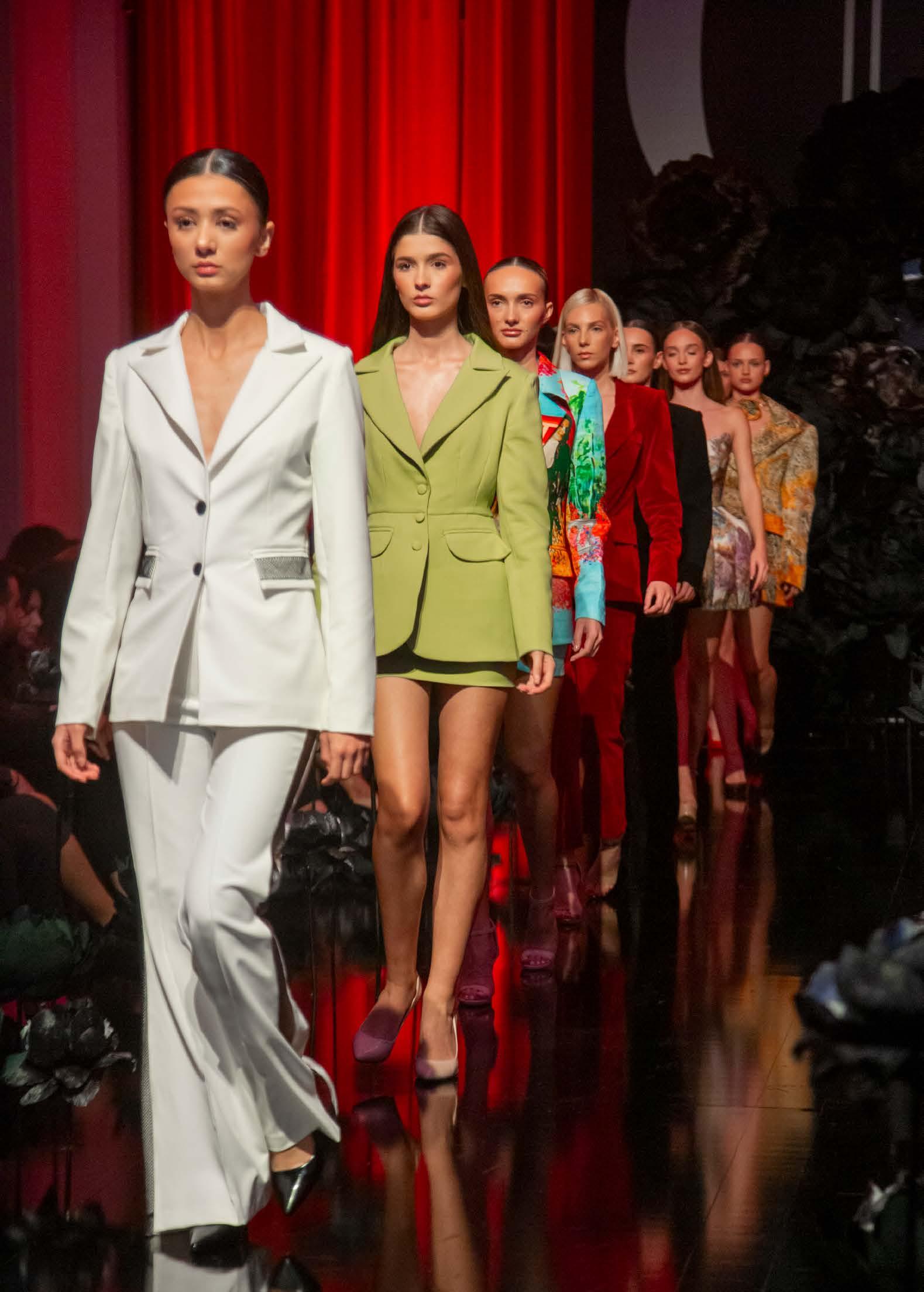
AGA blends cultural heritage with clean, modern design. The brand is elegant, functional, and created for women who value both meaning and style. Launched in 2021, AGA is the newest “Made in Albania” clothing brand, founded by three sisters— Andreina, Greiss, and Anxhela. Our vision brought together three essential elements: traditional Albanian ethnographic motifs, a distinctive contemporary aesthetic, and everyday practicality.
These three elements ensure that any girl or woman wearing AGA feels confident and comfortable throughout her day—whether she’s at work, in meetings, attending events, or enjoying a glass of wine with friends. For us, AGA is the “common thread” that empowers women to perform at their best, making the day—and the spotlight— truly theirs.
What makes your clothing line stand out in today’s fashion market? How do you keep your brand fresh and relevant in a competitive industry?
Every piece tells a story. We stay fresh by focusing on quality, craftsmanship, and timeless design rather than fast fashion. This approach keeps our brand both relevant and authentic.
All AGA Clothing garments are produced in limited-edition capsule collections of only nine pieces each. AGA is also the first Albanian brand to release its own unique pattern design.
Is your collection inspired by your personal style or shared experiences?
Both. AGA reflects the artistic environment we grew up in and the influence of our grandmother. It blends our personal tastes, values, and shared memories as sisters.
How do you want women (or your target audience) to feel when they wear your designs?
Confident, comfortable, and connected to something honest and meaningful. Our designs are crafted to complement a woman’s identity, not overshadow it.
Do you incorporate any cultural, ethical, or sustainable elements into your brand?
Yes. Our logo is inspired by the xhubleta. We focus on responsible production, local craftsmanship, and thoughtful design. Culture and ethics guide our entire process.
Do you plan to expand internationally or into new product lines?
Yes. International expansion is one of our goals, and we also plan to introduce accessories and special-edition pieces inspired by regional craftsmanship.
What’s the most rewarding part of building something beautiful like AGA?
The most rewarding part is seeing women connect emotionally with our designs in a modern way. Creating AGA together as sisters makes the journey even more meaningful.
“Career
By Rudina Hoxha
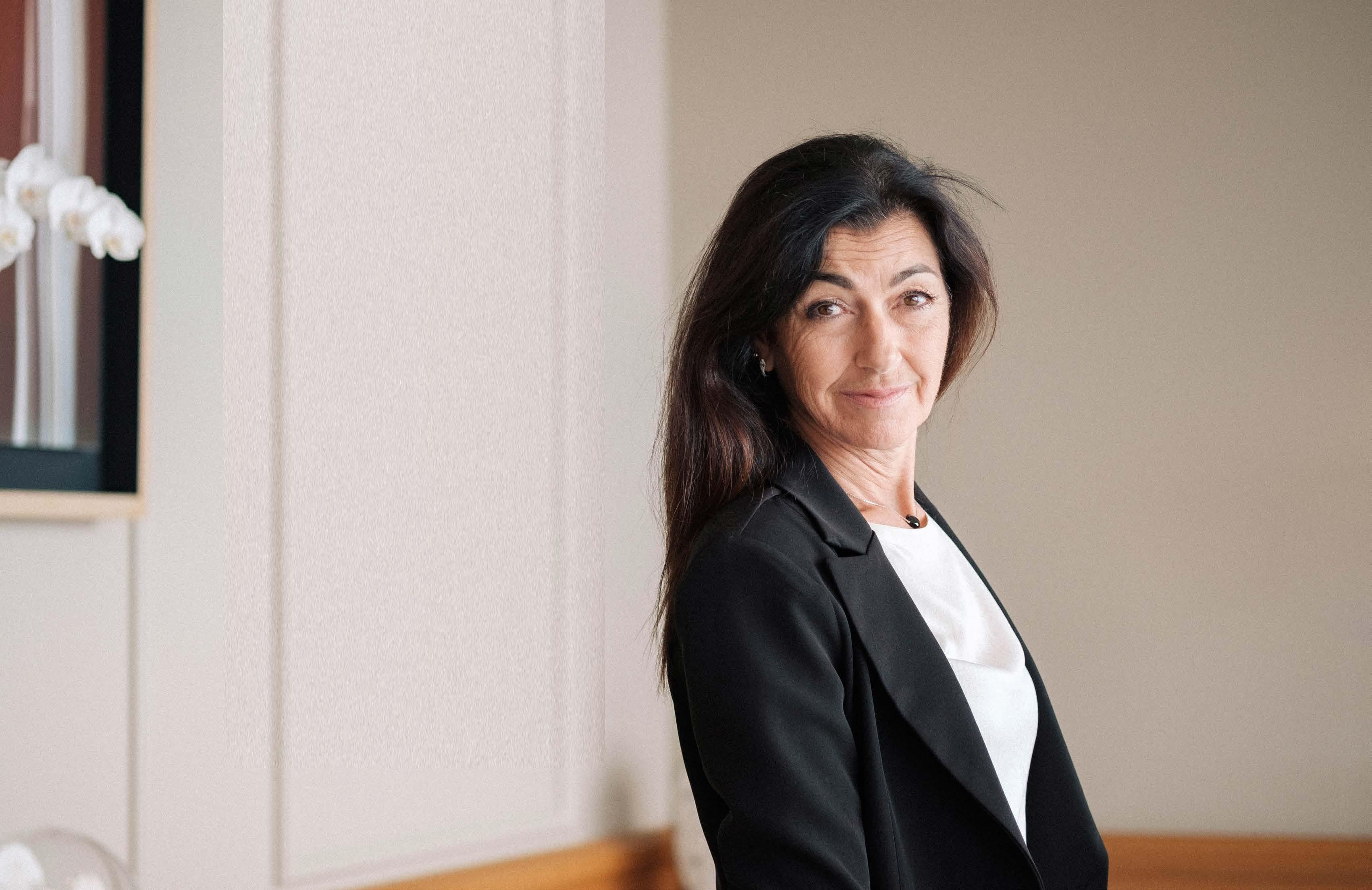
Jacquie Lutz is ball of fire at the Glion Institute of Higher Education. She acts as the Head of Career and Alumni Services & Industry Relations in this School which has up to 100 nationalities on campus. Being the first contact with the students, she takes care of them from Day 1 to Graduation.
“The earlier students engage with Career Services, the more and the better we can assist them. On our side, we connect with them as soon as they arrive on campus, and accompany them throughout their journey through Glion, from Day 1 to Graduation... and in many cases, even beyond!,” Lutz says to TRAILBLAZING MAGAZINE/The Women Edition.
Recognized for offering professional interships to the students to find their own path properly and for helping them transitioning from education to employment successfully, one of the top 5 world universities, the Glion Institute of Higher Education is transforming education with its revolutionary curriculum and fully active learning methods.
Jacquie Lutz’s dedication and leadership has encouraged many students to follow their career journey confidently. At the core of her vision is the student success. “Student success, for sure. Seeing our students evolve from shy teenagers to polished young professionals as they journey through the school to the day of Graduation,” she states.
Full interview follows:
How would you describe the mission of the Career Services and Alumni Office of the Glion Institute of Higher Education today?
The mission of Career and Alumni Services and Industry Relations of Glion is multifold. Our main priority is to personally assist every student with their career journey. Firstly, we help them to find exciting and enriching internship opportunities, and also to ensure they learn key job-seeking skills, creating their own toolbox of competences as well as developing an understanding of recruitment mechanisms and processes used by employers. In this way we ensure that once our graduates leave the campus, they are able to independently navigate their future employment seeking needs, fully equipped with the know-how and selfconfidence to successfully apply for and secure the positions they are seeking – for life. Our mission is also to grow our network of industry partners, and to assist them to access the best and most suitable profiles for their future talent pipelines, enabling and facilitating the exchange between students and employers and providing a platform and structure for seamless recruitment of our students into the roles best suited for them. At the same time, we provide specific services to our global alumni community, assisting them in their needs as a networking organisation, as well as, in certain cases, as job seekers and as recruiters. Keeping our community of alumni highly engaged with the school on many different levels, both professional and social, ensures win-win opportunities on both sides. They are, after all, our best ambassadors.
What does “career readiness” mean in a rapidly changing job market? Can you share an example of a success story that best represents your office’s impact?
Career readiness in a rapidly changing job market implies versatility, agility and adaptability, together with a willingness to continuously learn, grow and develop. It means being hungry – and humble. It means knowing one’s limits and striving every day to go beyond them. It means being able to apply one’s knowledge to new or unexpected situations – and to come out on top. It means not resisting change, but embracing it, understanding and managing it. It is not about being prepared for one job or line of work only, but being open, flexible, resilient. It is about having the confidence to try new things – and the strength and resources to try again when you fail.
We have so many success stories! The role of our office is to guide, advise and accompany students; so the most rewarding cases have to be where you see a student struggle with indecision, and your coaching guides them and helps them to build strategies which enable them focus on making optimal choices – and to then see them evolve into successful and confident young professionals as they move through the school, graduate and launch successful careers.
How has your department evolved in recent years to better serve students and graduates?
We obviously continuously strive to grow our network of industry partners, specifically in areas which are most relevant to the direction our programmes take: luxury, finance, entrepreneurship etc. We also endeavour to remain constantly up to date with the trends in hospitality and recruitment in order to prepare students to meet evolving customer and industry demands. For example, we have notably incorporated AI solutions into our range of Career Services tools available for students.

“We also endeavour to remain constantly up to date with the trends in hospitality and recruitment in order to prepare students to meet evolving customer and industry demands. For example, we have notably incorporated AI solutions into our range of Career Services tools available for students.

At what stage should students begin engaging with career services, and why?
The earlier students engage with Career Services, the more and the better we can assist them. On our side, we connect with them as soon as they arrive on campus, and accompany them throughout their journey through Glion, from Day 1 to Graduation... and in many cases, even beyond!
What are the most common challenges students face when transitioning from education to employment?
This is something that never changes and that we have all experienced! Students will need to adapt to a professional way of life, to a new rhythm in their daily life, to living and working with people of different generations and cultures. In that respect Glion is great training ground: not only do we have up to 100 nationalities on campus, therefore exposing students to a whole host of international backgrounds, but the professional internships that are required as part of both our Bachelor and Master programmes set the scene and really prepare students in advance for their future working lives.
How do you build and maintain strong relationships with employers and industry partners?
We accompany employers very closely with the internship recruitment processes and during the internship period, also inviting them to recruit directly on-campus for our twice-yearly Recruitment Days. This contributes to the development of personal connections between recruiters and team members, which enables us to better understand individual company
preferences and practices. We frequently welcome industry partners for speaking engagements, either as individuals or as part of on-campus industry-related events Staying in touch with and very close to the industries we serve is very important for a school such as ours, and building close industry connections is invaluable as we tailor our educational programmes to suit evolving trends and needs. Our Hospitality & Luxury Insight Council regroups a number of industry representatives who we bring together for regular meetings in order to gain valuable insights into the latest trends, meaning that, as our programmes and practices develop, they remain completely relevant and aligned with industry needs.
What feedback do employers most often share about graduates entering the workforce?
Employers often comment that Glion graduates are well prepared and are fully industry ready. They praise students’ academic competencies, but often comment in particular about their soft skills: their communication skills, their ability to work well in a teams, their can-do attitude, their professionalism. In fact, it is not rare that, after hiring a Glion graduate, an employer who has not worked with us before will contact us to enquire about hiring interns: they are so happy with their new employee that they want more of the same!
How do internships, mentoring, and practical placements enhance employability?
Internships really do prepare students to face the real-world. These placement periods are a time when students can put into practice what they have learned on campus and really understand
and integrate professional codes and practices while in a training setting. During their placement semesters they are fully supported and mentored by their employers, which really maximises the learning experience. This means that they are perfectly prepared to hit the ground running when they begin their first fulltime professional experiences. They are not phased by the expectations, demands or the atmosphere of a professional workplace – they have already experienced these. Employers are much more inclined to engage a young graduate who understands what will be expected of him or her from word go, fully understanding that these employees will require less support and need less time to settle in before becoming fully engaged and operational.
What emerging career trends should students and graduates be preparing for?
Hospitality careers are evolving rapidly, creating diverse opportunities for students and graduates beyond traditional hotel roles. Key trends include sustainabilityfocused careers, technology-driven guest experiences, and data-based revenue management, alongside growing demand for experience design, alternative lodging, and AI integration. The industry is also emphasizing people-centered leadership, entrepreneurship, niche sectors such as wellness and culinary tourism. Together, these trends highlight a shift toward innovation, personalization, digital skills, well-being, and responsible business practices in modern hospitality.
What advice would you give students who feel uncertain about their career direction?
First of all, I would tell students that it is quite normal to have doubts and to question their


choices. There are so many opportunities available to choose from! They should naturally come and talk to the team in Career Services who can help them to evaluate their different choices in line with
their own specific personal and career goals and dreams. As career counsellors, we always try to encourage our students to think strategically about the different opportunities that are available to them, helping them to weigh up the pros and cons of each one. Internships are great for students who are unsure of which direction to choose, as they can often serve as a “testing ground” for a certain field. For example, a student may find very appealing the thought of a career in marketing. Undertaking a 24-week internship in a marketing function will quickly help to confirm if a career in marketing is likely to live up to their expectations or not. We also reassure our students that they can feel secure in the knowledge that the incredible transferable skills that they learn at Glion, such as communication, problem-solving, and digital literacy, will hold them in good stead throughout their careers, if at any time they feel the need to shift paths: when you are equipped with so many skills, resources and a solid professional network, changing direction is always an option, and no job or career need ever be binding for life! Finally, I would tell them that whatever plans they make, well, sometimes “life” comes along and throws us an opportunity or an unexpected curve ball... and all our best laid plans go out the
window. Career paths naturally evolve over time, unexpected opportunities occur, unexpected connections develop... and our fixed plans are suddenly not so fixed anymore. They need to be flexible, open, resilient and resourceful.
Student success, for sure. Seeing our students evolve from shy teenagers to polished young professionals as they journey through the school to the day of Graduation. Seeing the evolution of our graduates and alumni, following them as their careers go from strength to strength, from promotion to promotion. Witnessing the smiles and the joy they feel when they tell us, “I got the job!” Welcoming them back to campus as recruiters at Recruitment Day...
What also motivates me is seeing the connection and the love they feel for each other and for the school. At Glion, students make memories – and friends – for life. Glion is one big family and everyone who has studied there keeps a little bit of the school forever in their hearts. They love to come back and visit, and they all have a place here. And I am very happy and proud to have been a small part of the journey of so many of them.
“Leading a growing, multidisciplinary legal group brings its own complexities, but as a woman, one of the ongoing challenges is ensuring diverse voices are heard and represented at every level.”
Leaders must be able to navigate constant change while remaining grounded in strong values
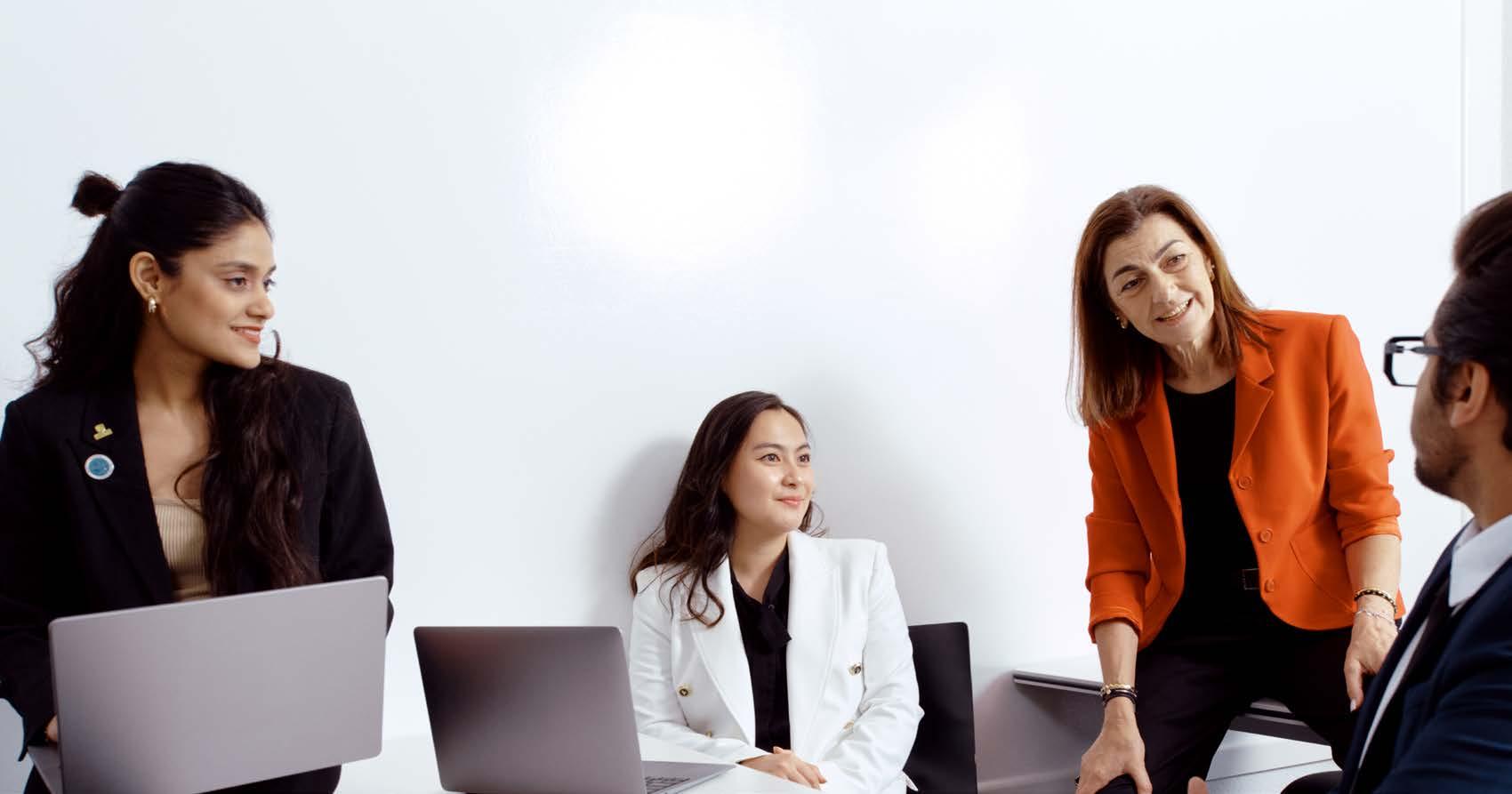
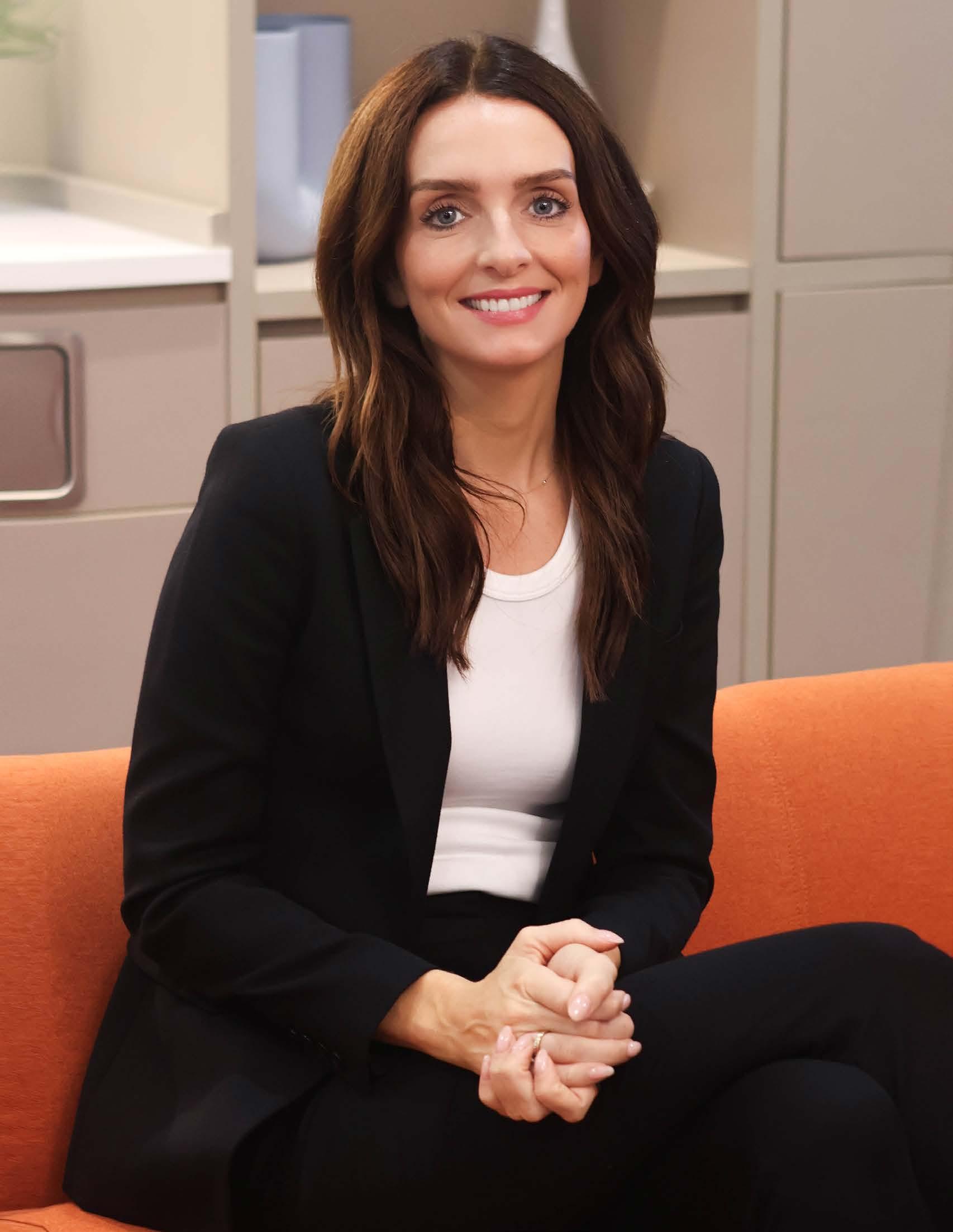
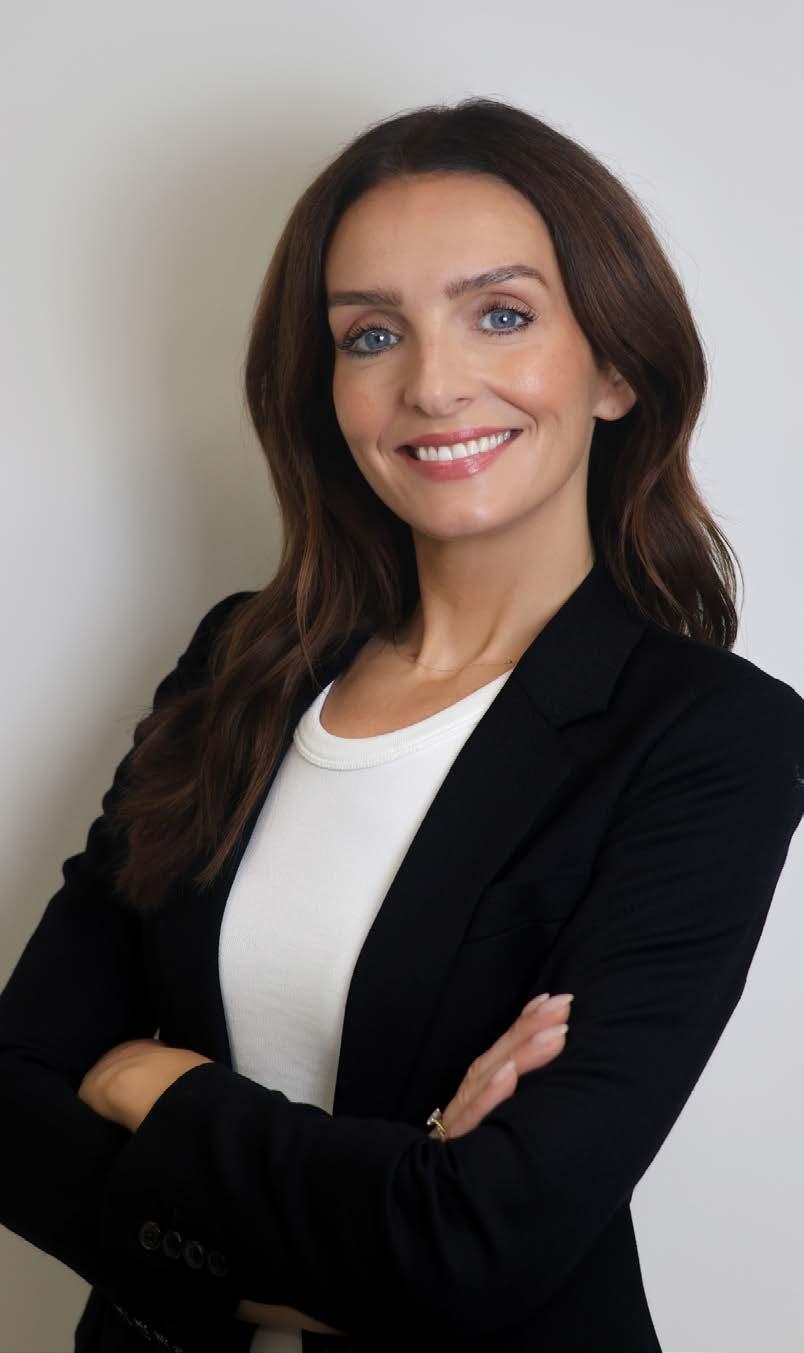
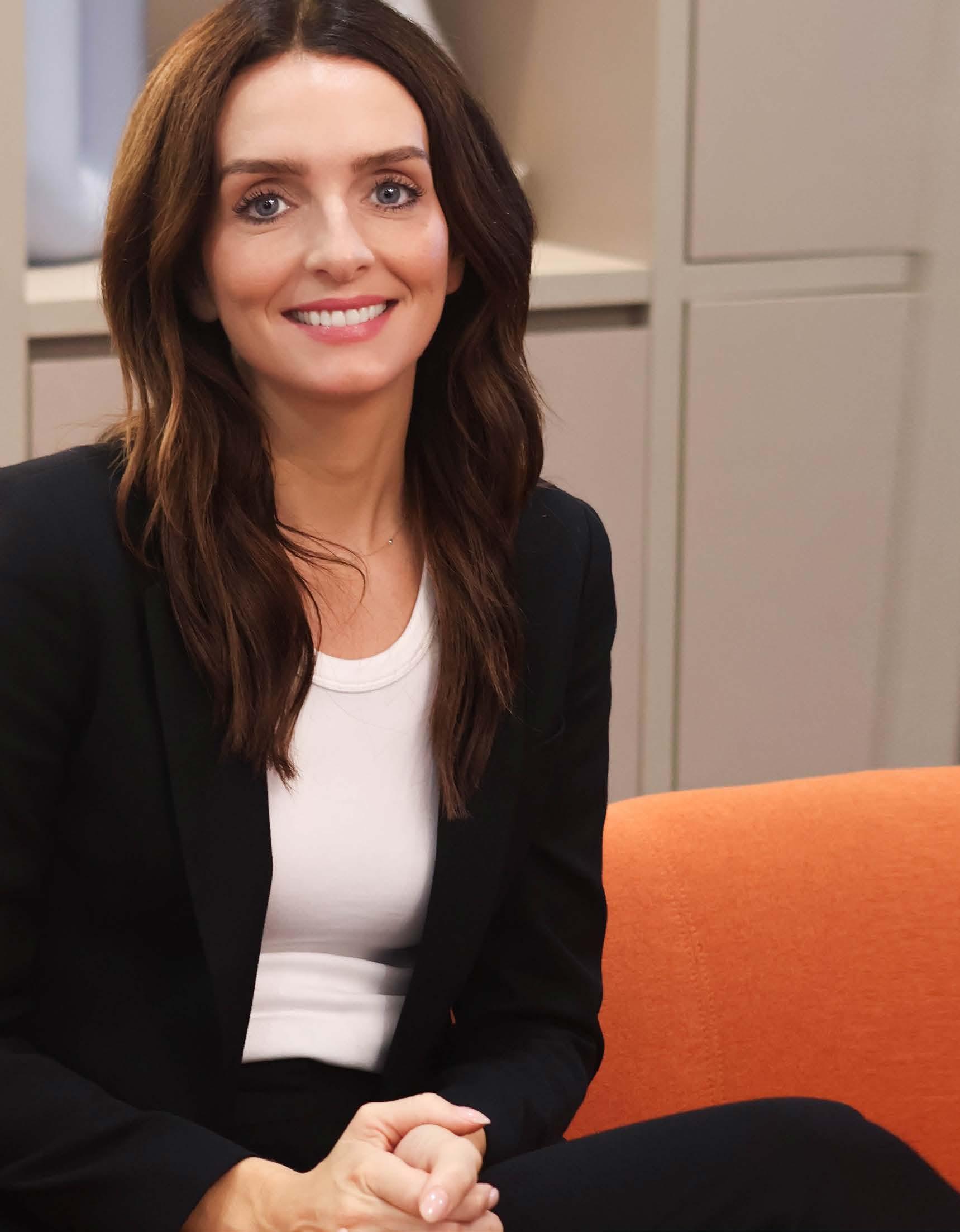
Claire Kelly shares with Trailblazing Magazine/The Women Edition her experiences as Director and Chief Operating Officer at Oracle Law Global, based in London.
She was trained as a barrister and later cross qualifying as a solicitor. She joined Oracle Law Global 16 years ago and she has been attributed to shaping the firm’s direction and growth. “Watching Oracle develop into a multi-service, internationally focused legal group, and knowing I’ve played a part in building its infrastructure, culture and people, has been incredibly fulfilling,” Kelly emphasized in this exclusive interview.
Claire is really confident and happy for the legal training she has completed over the years. “Legal training encourages you to think several steps ahead, and that mindset is invaluable at an executive level,” she said.
Moreover, find out what life is like in the legal corporate world, what challenges do exist across the legal profession in her view, what is next for her company and how important is family to her.
Full interview below:
You have been part of Oracle Solicitors for 16 years. How would you describe your professional evolution within the company and what has been the most rewarding moment?
I joined Oracle Law Global over 13 years ago at a very different stage in both my career and the firm’s journey. Over time, my role has evolved organically from being deeply involved in legal work to taking on broader operational and strategic responsibilities, ultimately stepping into my current position as Director and COO.
What has been most rewarding is being trusted to help shape the firm’s direction and growth. Watching Oracle develop into a multi-service, internationally focused legal group, and knowing I’ve played a part in building its infrastructure, culture and people, has been incredibly fulfilling.
What initially drew you to the legal sector, and how has your legal background shaped your approach to operations?
I was drawn to law because of its intellectual challenge and its ability to solve real, complex problems. Training as a barrister and later cross qualifying as a solicitor gave me a strong grounding in critical thinking, structure, and risk assessment; skills that translate seamlessly into operations.
My legal background means I approach operational decisions with a clear understanding of compliance, commercial impact and long-term risk. It allows me to bridge the gap between legal delivery and business performance in a very practical way.
As a lawyer and non-practising barrister, how do you blend legal expertise with executive decision-making in your current role?
Legal training encourages you to think several steps ahead, and that mindset is invaluable at an executive level. Every operational or strategic decision I make is informed by an understanding of regulatory obligations, client expectations and commercial consequences.
It also helps me translate complex legal considerations into clear, actionable
business strategies, ensuring decisions are both legally sound and commercially effective.
As Director and COO, how do you ensure operational performance remains aligned with the firm’s strategic vision?
Alignment comes from clarity and consistency. I work closely with the board and senior leadership to ensure our strategic objectives are reflected in our operational frameworks, policies and performance metrics.
It’s about embedding strategy into everyday decision-making, from compliance and risk management to resource allocation and client service delivery, so that the firm’s vision is lived, not just documented.
As a woman, what are the biggest operational challenges in leading a multiservice legal group, and how do you navigate them?
Leading a growing, multi-disciplinary legal group brings its own complexities, but as a woman, one of the ongoing challenges is ensuring diverse voices are heard and represented at every level.
I navigate this by being intentional about inclusive leadership, transparent structures and creating opportunities for others to progress. I strongly believe that diverse leadership strengthens operational performance and decision-making, and that belief is reflected in the culture we continue to build at Oracle.
What innovations or structural changes have been critical to Oracle Solicitors’ growth in recent years?
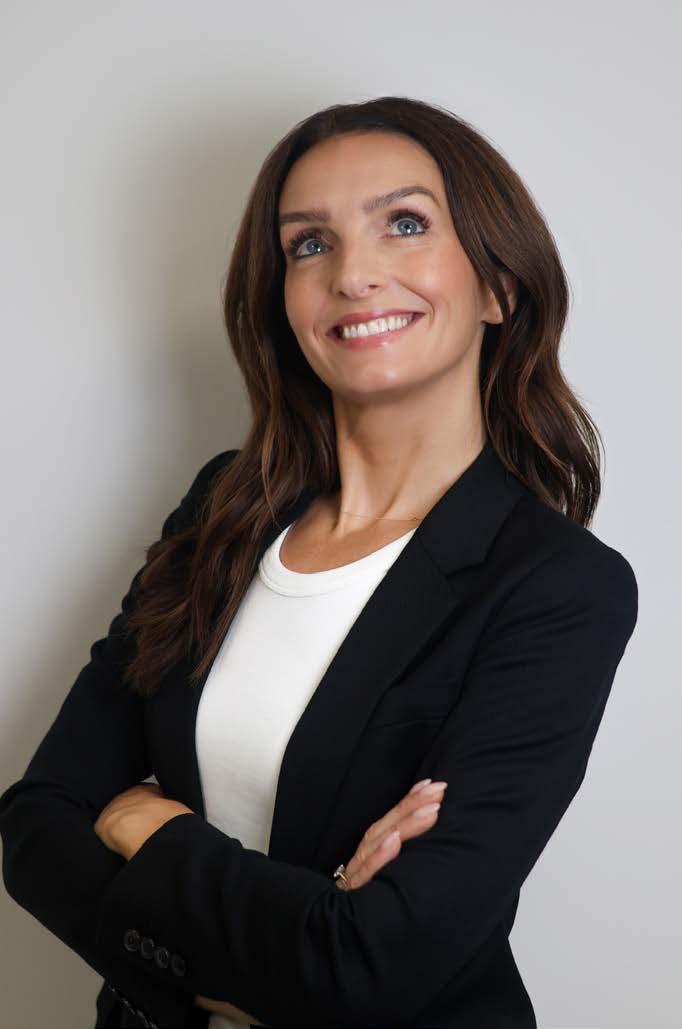
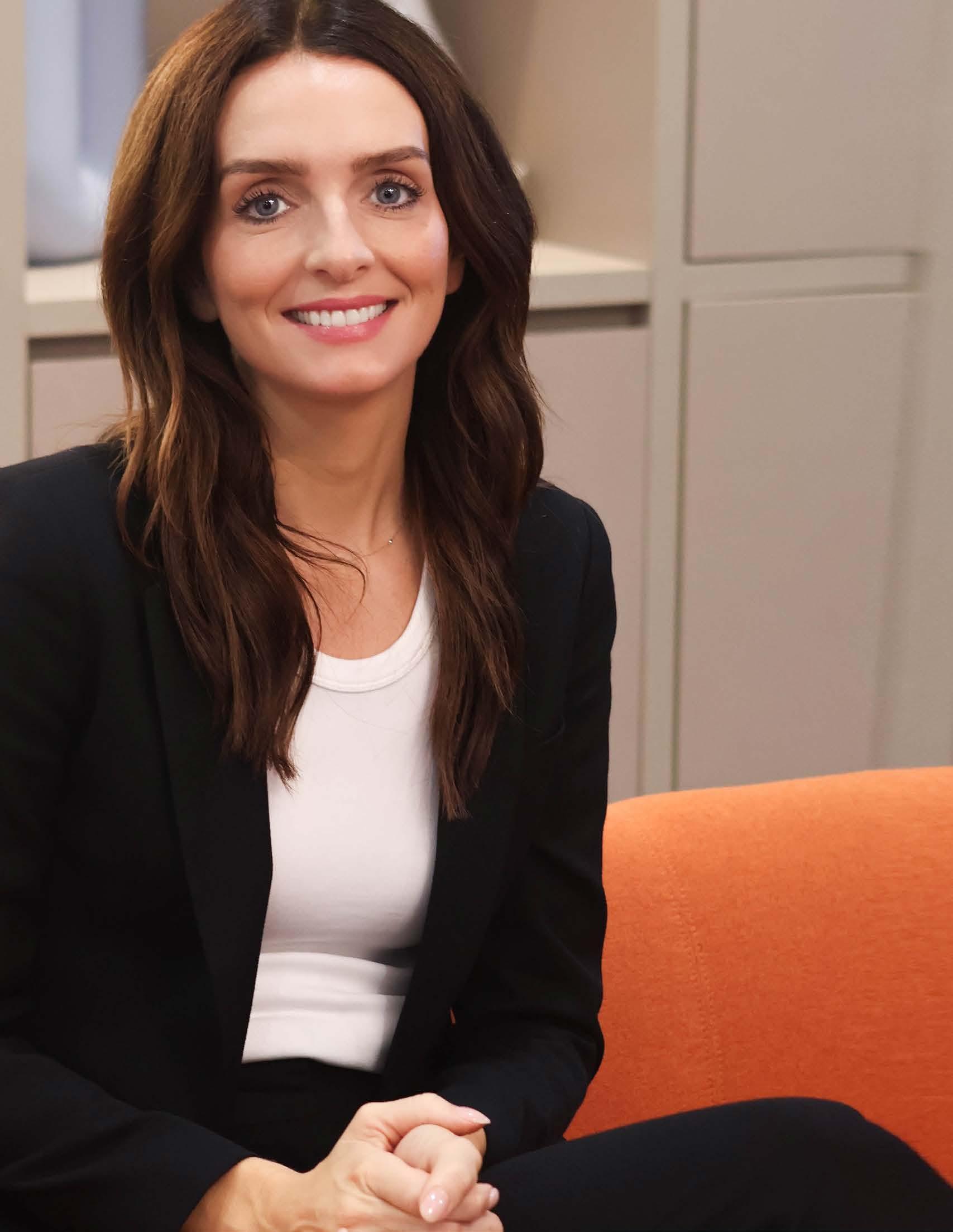
A key factor has been investing in scalable systems and technology while maintaining a highly personalised client approach. Structurally, we’ve focused on building strong governance, efficient workflows and cross-functional collaboration across jurisdictions.
These changes have allowed us to grow sustainably while remaining agile and responsive to our clients’ needs.
Where do you see the biggest opportunities for the firm over the next 3 to 5 years? How are technology advances helping in your sector?
The biggest opportunities lie in international expansion, service diversification and the continued integration of technology into legal delivery. Advances in legal tech are transforming how we manage data,
collaborate and deliver services more efficiently.
Technology allows us to enhance accuracy, speed and transparency, all while freeing our people to focus on strategic and advisory work where real value is created.
What leadership qualities do you believe are essential in today’s legal and business environment?
Adaptability, integrity and clarity are essential. Leaders must be able to navigate constant change while remaining grounded in strong values.
Equally important is the ability to empower others. To build trust, encourage accountability and foster resilience within teams. Leadership today is as much about listening and enabling as it is about directing.
What motivates you the most today in your work? How much do you attribute to family?
What motivates me most is seeing people and the business grow! Helping create an environment where individuals can develop, succeed and feel valued. Building something meaningful and sustainable continues to drive me every day.
Family plays an important role in grounding that motivation. It brings perspective, balance and a clear sense of what truly matters, which ultimately makes me a better leader. Having two young children means that by 9am I have faced my toughest negotiation of the day – the school run. After that, I can handle anything!
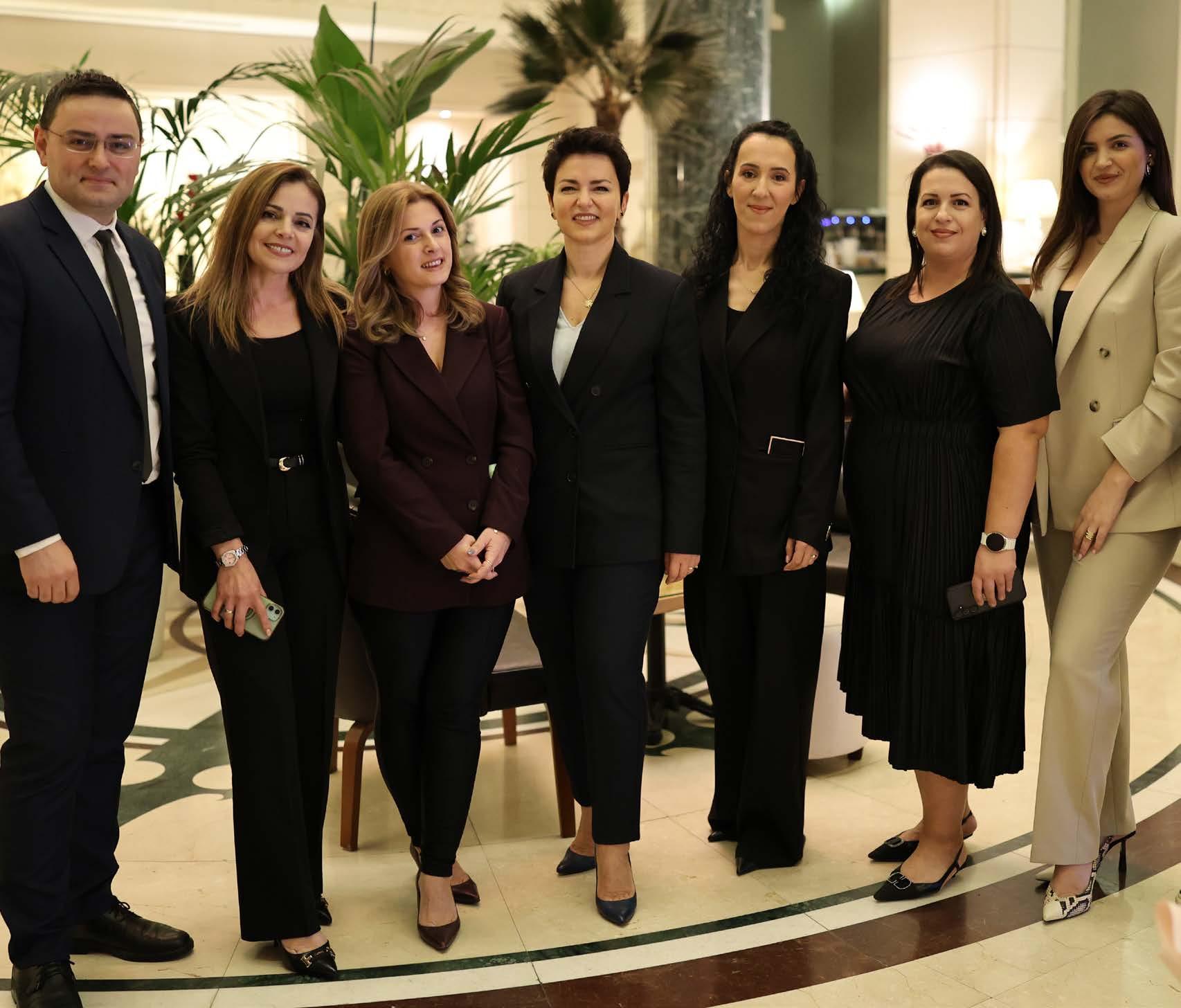
“My Focus is on How to Strategically Nurture the Hospitality Talent”
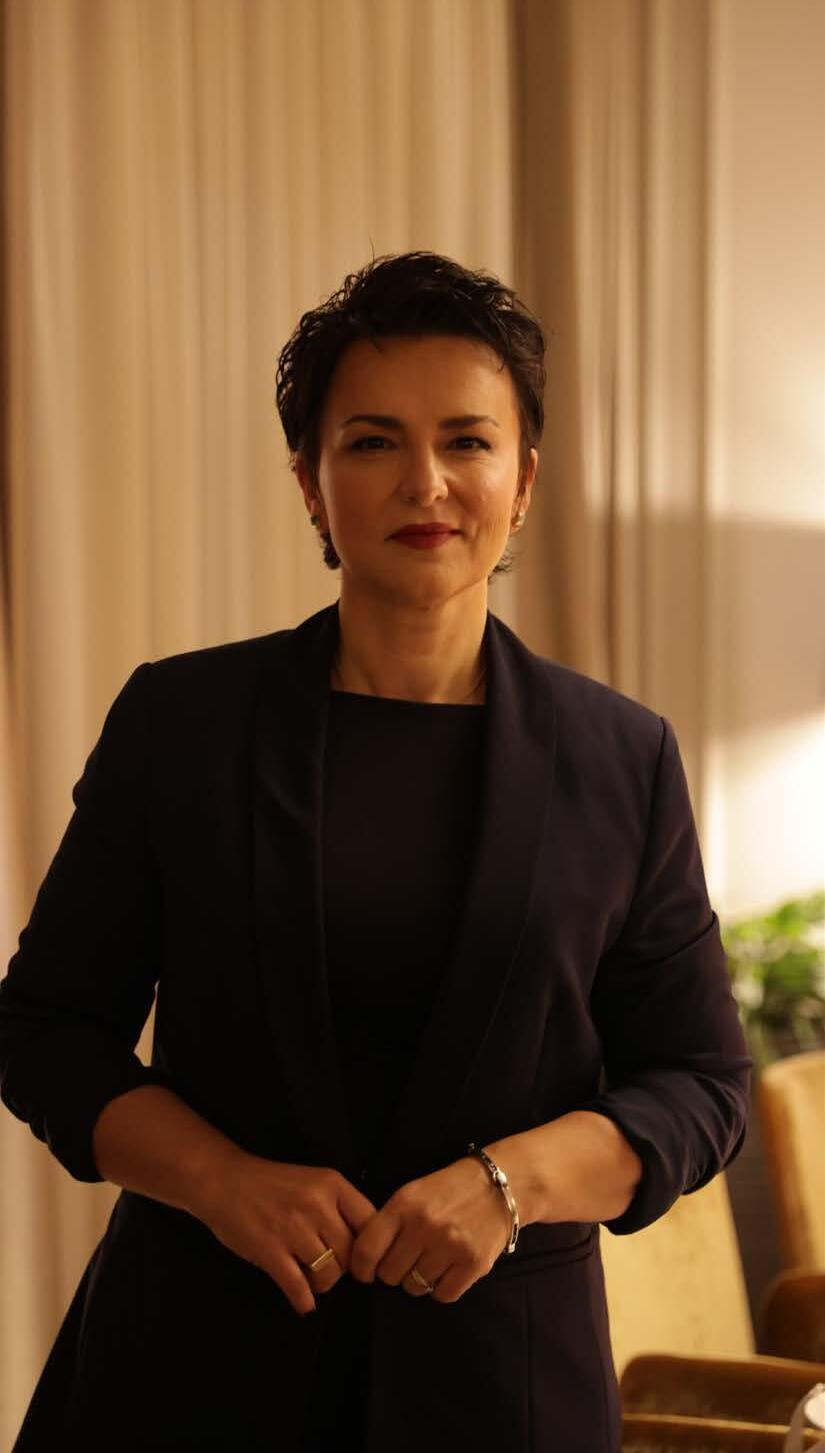
Gladiola Dona, a prominent businesswoman in the world of hospitality and tourism in Albania for the last 20 years, highlights in an interview with TRAILBLAZING MAGAZINE/The Women Edition, that her approach to training hotel owners stems from her experience as a woman in leadership, “where I emphasize empathy, strategic flexibility, and mentorship.”
She loves to dwell on “the powerful link between the hospitality talent of local women and the deep traditions of Albanian culture, a commitment to excellence in hosting that is unparalleled.”
“I believe this inherent dedication provides a unique, high-potential talent pool for the industry,” Dona says.
She runs the Hospitality and Tourism Academy (HAT) Academy which is dedicated to the training of young generations in the field of hospitality and tourism.
“The HAT Academy proves that empowering one individual creates a leader who returns to enrich the entire industry,” she underlines while adding that her mission is “to empower individuals and organizations by building sustainable excellence through instilling accountability at every level.”
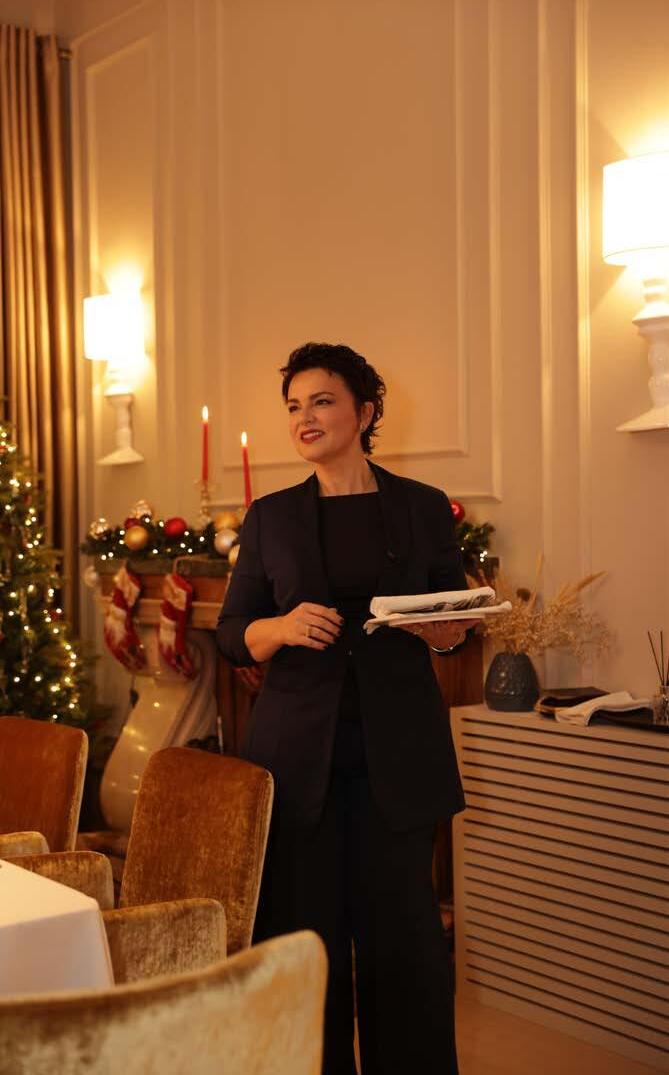
Contact: Rr. E Kosovareve, Rezidenca Lake View, Godina A, Kati 2 info@hat.al
+355 69 400 5 400
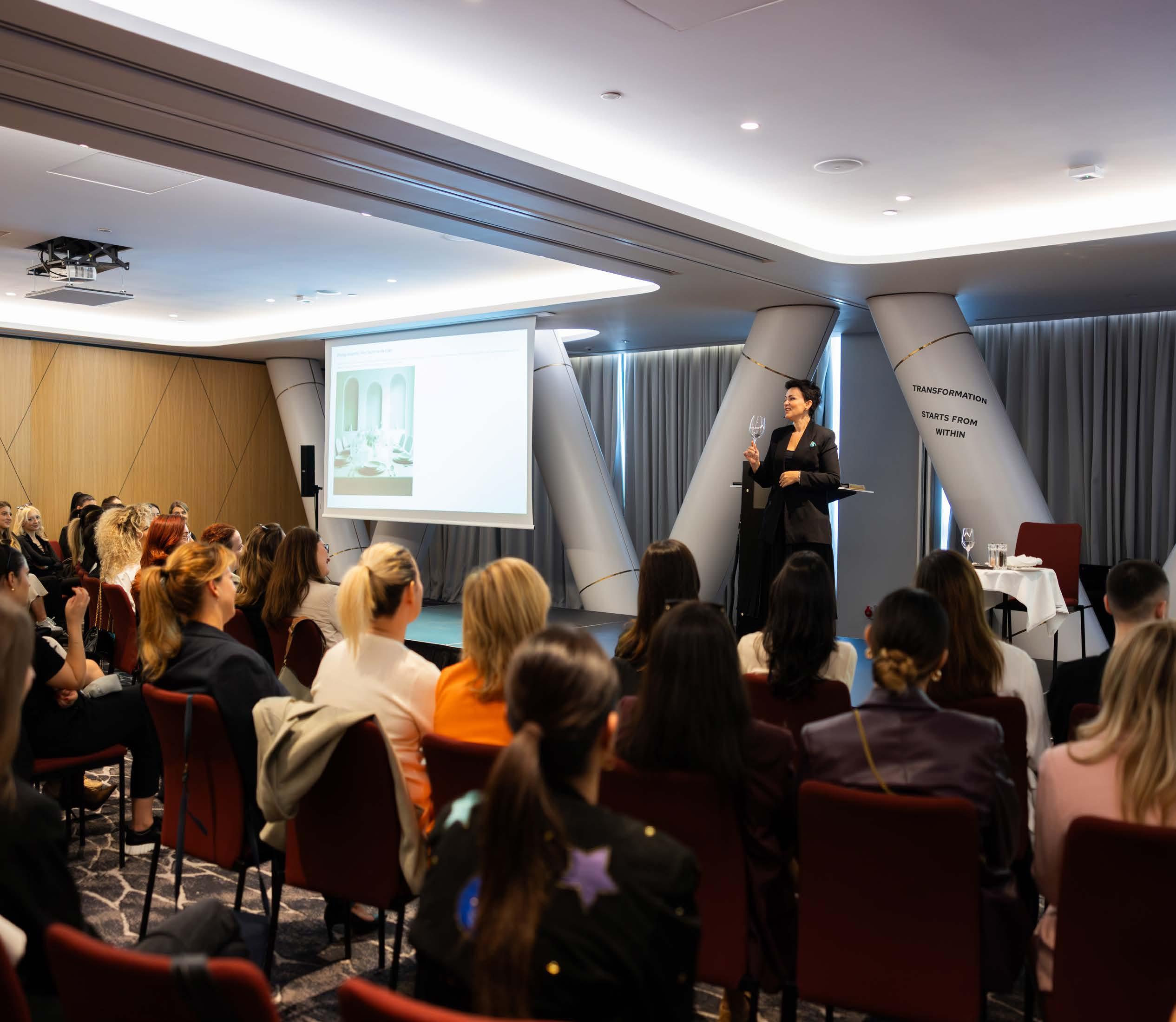
Full interview follows:
How did your journey in tourism and hospitality begin, and what inspired you to specialize in training and talent development?
What turning point in your career made you realize the importance of investing in young professionals in this industry?
My career in hospitality was ignited at the age of 18, during a summer job that truly ‘went under my skin’ and inspired me to formally study Tourism and Hospitality Management. After years of gaining operational experience, the turning point that led me to specialize in training was around 2015. I observed the industry rapidly advancing and recognized a critical need for highly specialized staff that general training wasn’t producing. I realized that the key to sustained service excellence wasn’t just recruiting, but proactively investing in young professionals mentoring them to become the agile, skilled leaders who will drive the future of our industry.
How has being a woman in a leadership role shaped your approach to training and mentorship?
My approach to training hotel owners is rooted in my experience as a woman in leadership, where I emphasize empathy, strategic flexibility, and mentorship.
I see a powerful link between the hospitality talent of local women and the deep traditions of Albanian culture, a commitment to excellence in hosting that is unparalleled. I believe this inherent dedication provides a unique, highpotential talent pool for the industry.
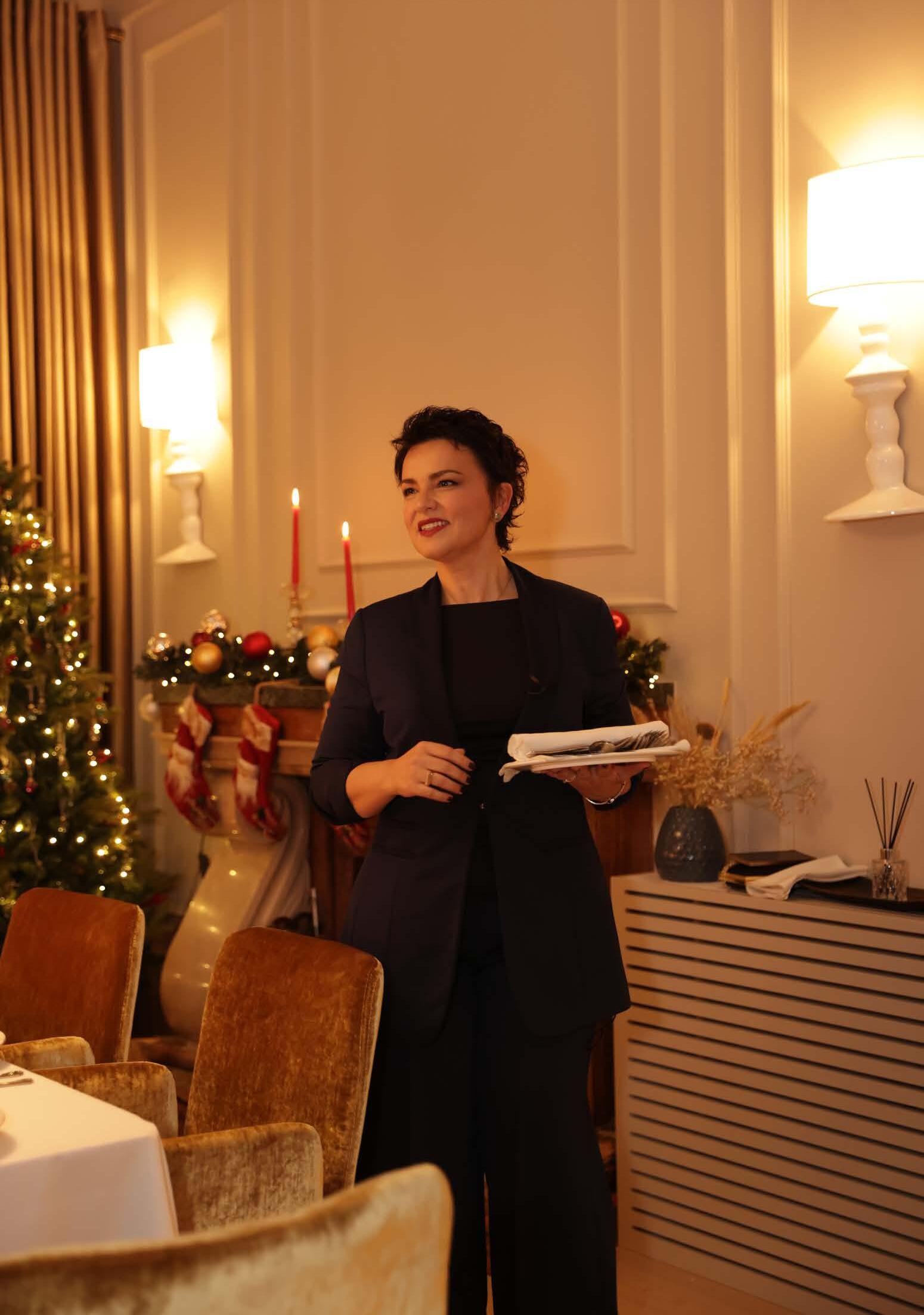
Therefore, my training for hotel owners and high-level leaders focuses on how to strategically nurture this talent. I develop and deliver empathy training to ensure executives understand that fostering a supportive culture, one that recognizes and retains local dedication is the key to sustainable success and superior guest experience.
Finally, my mentorship actively champions these talented women, going beyond advice to provide sponsorship ensuring owners are equipped to open doors and create clear pathways for high-potential local professionals to reach the highest executive levels.
Your mission focuses on empowering individuals and organizations. What does empowerment mean to you in the context of hospitality?
How do you translate this mission into everyday practice in your training programs?
To me, empowerment means granting staff the autonomy and confidence to make real-time decisions that enhance the guest experience, paired with providing them the necessary resources and training to succeed. Ultimately, it’s about cultivating a mindset where employees take personal ownership and pride in the organization’s success.
I translate this mission into practice through specific training for hotel owners and executives.
First, I train leaders to establish decision making authority frameworks. Instead of rigid rules, we define clear financial and procedural boundaries (like SOPs or KPIs)
that empower staff to fix guest problems instantly, allowing leaders to measure success by return on guest loyalty, not by fear of loss.
Second, I focus on developing leaders into coaches, not commanders which promotes critical thinking and skill transfer throughout the organization. Finally, true empowerment requires a culture of psychological safety. The focus is always on process correction, ensuring that risk-taking and innovation are seen as vital steps toward growth, not grounds for punishment.
You run the HAT Academy dedicated to the training of young generations in the field of hospitality and tourism. Can you share a success story of a young trainee whose transformation deeply inspired you?
A success story I am deeply proud of is a lady who joined us as a career changer. She quickly secured a role as a Hotel Manager after her initial HAT course. Her dedication was clear; she attended three subsequent, higher-level courses at HAT, continuously leveling up her strategic knowledge. Today, she is a testament to our model as she now works for HAT as a consultant and project manager. She uses her real-world success to guide new hoteliers and business owners, and most importantly, she is actively helping HAT to level up our own services. Her journey proves that empowering one individual creates a leader who returns to enrich the entire industry.
In your view, what are the most common skills young waiters lack today, and how does your academy address these gaps?
Young waiters often lack the confidence and autonomy to move beyond the script and
solve guest issues immediately; they default to asking a manager rather than being empowered to act. Secondly, they treat the menu as a list, lacking the strategic ability for culinary storytelling that naturally upsells and enhances the guest experience.
As a recognized figure in tourism and hospitality, what leadership lessons have guided you the most?
The most vital lesson I have learned is that empathy is not softness; it is a strategic business tool. True leadership means seeing the business not just through the owner’s eyes, but through the eyes of the staff and the guest.
This guides me to teach owners that an investment in empathy training directly leads to lower turnover and higher guest satisfaction.
How do you support hotels, bars, and restaurants in building stronger service cultures and operational excellence?
I support the industry through a dual focus on operational efficiency and cultural transformation.
For operational excellence, I provide comprehensive start-up services for new businesses, immediately establishing tailored Standard Operating Procedures (SOPs), developing new menus, and conducting rigorous on-the-job training to ensure swift and consistent execution.
For service culture, the work begins with collaboratively designing the ideal guest experience, mapping every touchpoint. By combining documented processes with empowered employees, we successfully transition businesses to a state of
measurable operational excellence and superior service delivery.
What opportunities do you see for young people who choose to build a career as waiters or hospitality professionals?
In what ways do you help them build confidence and leadership skills?
I see two major opportunities for young hospitality professionals and help them succeed by focusing on empowerment and cultural pride. The career path for young Albanian professionals offers dedicated staff to quickly reach management roles or use their knowledge for entrepreneurship in a rapidly developing tourism sector. Furthermore, their high-level service expertise ensures global career portability and mastery of soft skills like strategic communication and empathy.
What keeps you motivated after 20 years in the industry? How would you describe your personal mission of “empowering individuals and organizations” in practical terms?
My motivation after two decades is no longer about transactions; it’s about transformation. I’m fueled by witnessing the direct, measurable impact of our work, seeing talented Albanian professionals transformed into confident, strategic leaders who return to help level up our industry. This proves we’re building a more professional and sustainable tourism sector.
My mission of “empowering individuals and organizations” is to build sustainable excellence by instilling accountability at every level.
Empowerment means ensuring every staff member, leveraging the cultural value of
Hospitality, feels trusted and capable of making instant decisions. We practically achieve this by giving them DecisionMaking Authority Frameworks to solve guest problems without management oversight, moving them from order-takers to on-thespot solution providers.
For organizations, empowerment means giving owners and executives the tools to create a self-sustaining, agile culture. This involves establishing comprehensive SOPs and a coaching leadership style that drives measurable results and continuous improvement, ensuring the organization is equipped to thrive long after my consultation ends.
If you could change one aspect of the hospitality sector, what would it be and why?
If I could change one aspect of the hospitality sector, it would be to eliminate the perception of hospitality as a lowskill, temporary stepping stone and firmly establish it as a high-value, specialized profession with clear, rewarding career pathways.
This current perception creates a negative cycle of high turnover and insufficient investment. When young professionals view the job as temporary, they lack commitment, forcing owners to constantly incur high recruitment and training costs. Elevating the professional identity is essential for sustainability. It encourages long-term commitment, justifies higher wages and specialized training (like our programs at HAT Academy), and ultimately delivers a superior, consistent guest experience driven by skilled, retained professionals.
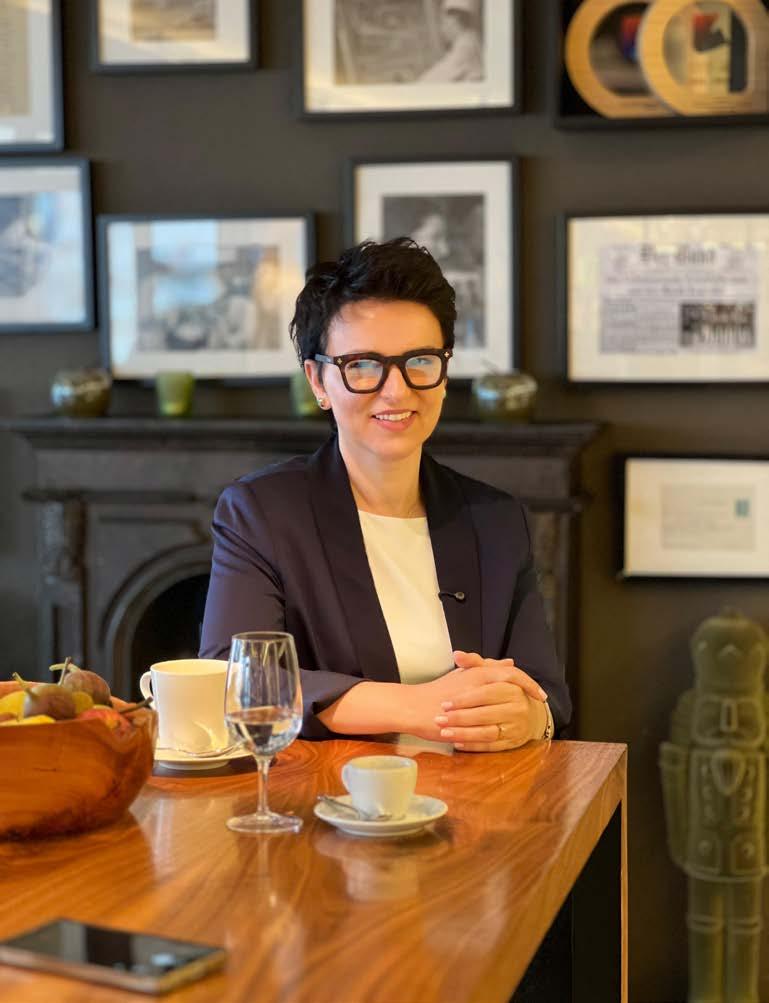
What future projects or initiatives are you most excited about in your mission to empower people and organizations?
The project I am most excited about is the comprehensive integration of storytelling as a non-traditional learning methodology to maximize engagement and make complex strategic lessons immediately actionable.
I am particularly thrilled about the upcoming launch of our online educative reality-show style programs. This initiative directly addresses the need to train in a less traditional way by showcasing powerful, real-life narratives of success, doubts, and challenges faced by hotel owners in the Albanian market. This program will visually track how our empathy training and strategic SOPs are applied, proving that success is attainable and providing a transparent, non-intimidating way for young professionals to gain confidence.
“I am particularly proud of how the program not only develops individual leadership skills but also strengthens institutional capacity and promotes a culture of accountability, integrity and innovation across Albania’s public sector.”
“LEAD
By Rudina Hoxha
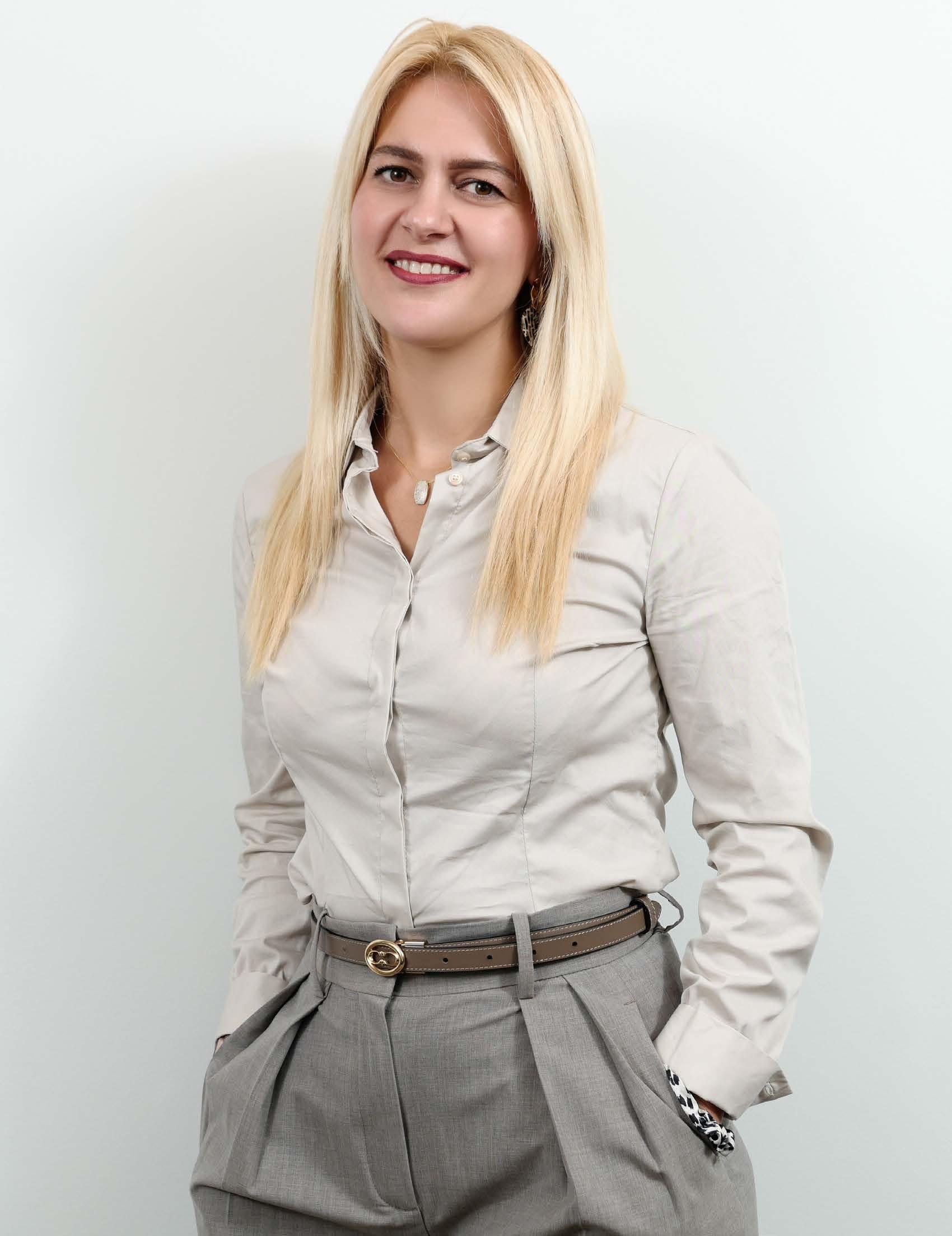
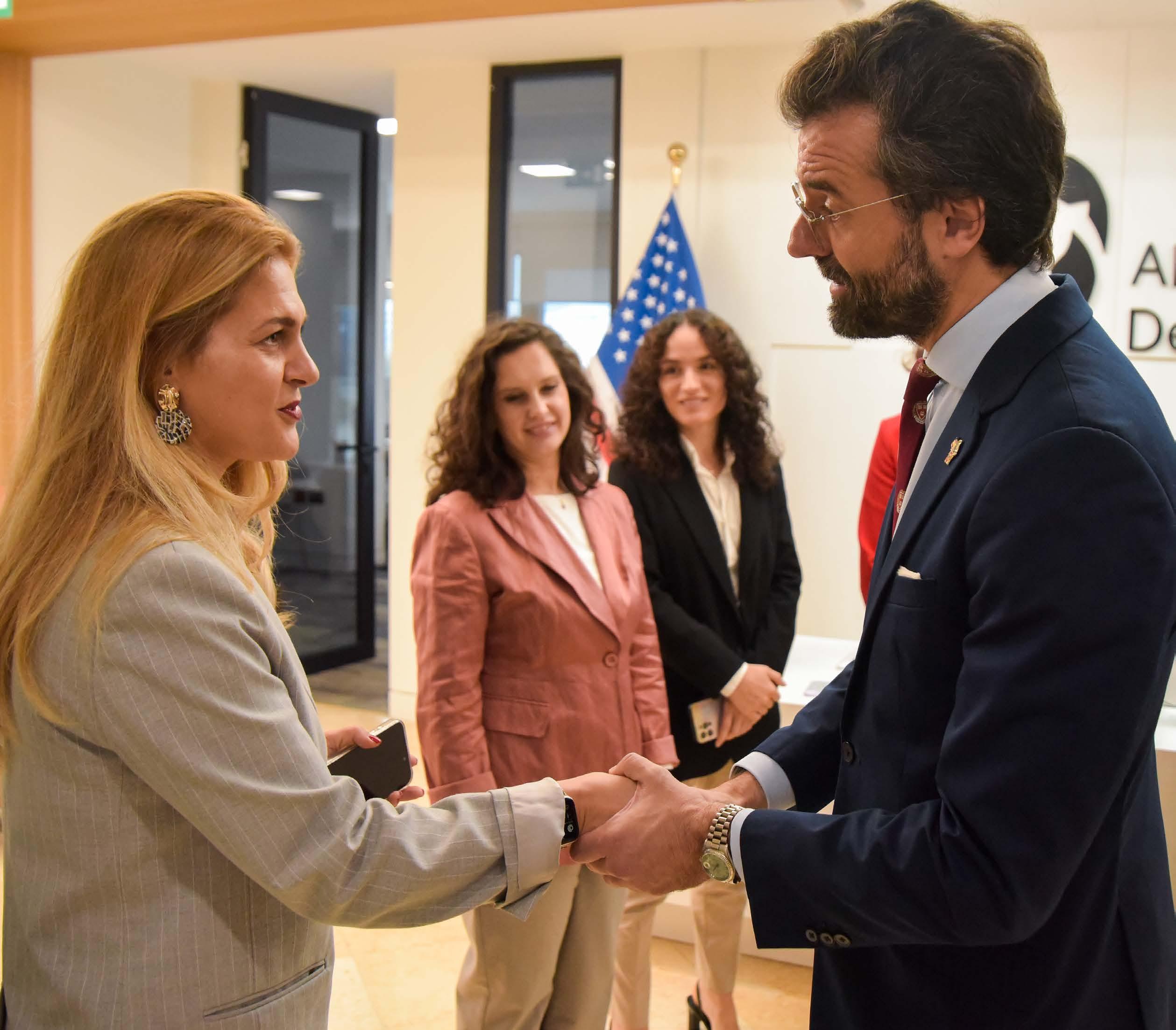
The major success of the LEAD Albania program lies in the vibrant community of Fellows it cultivates each year,” says Alda Shabani in this feature which corresponds with her recent promotion as Project Manager for the LEAD Albania.
With a colorful educational and professional background, Alda makes a balance sheet of the program at the end of 2025. And she is proud of the results so far.
“I am particularly proud of how the program not only develops individual leadership skills but also strengthens institutional capacity and promotes a culture of accountability, integrity and innovation across Albania’s public sector,” she says.
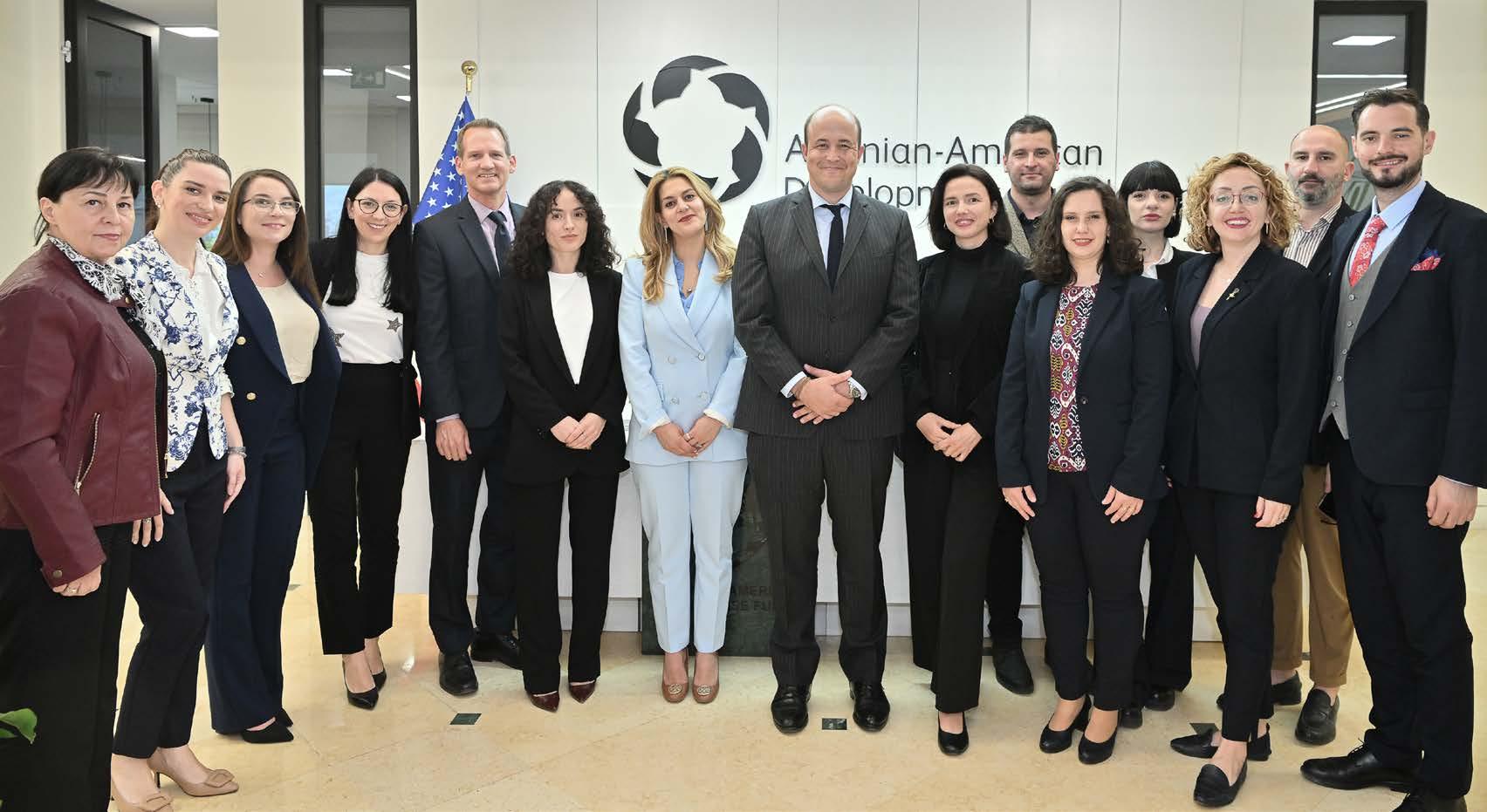
LEAD Albania is designed after the White House Fellowship Program and implemented in Albania since 2013 by Albanian American Development Fund (AADF) which is a non-profit organization that works to promote social and economic development in Albania. Around 140 fellows are enrolled in the program so far marking the 14th cohort actually.
Full interview below:
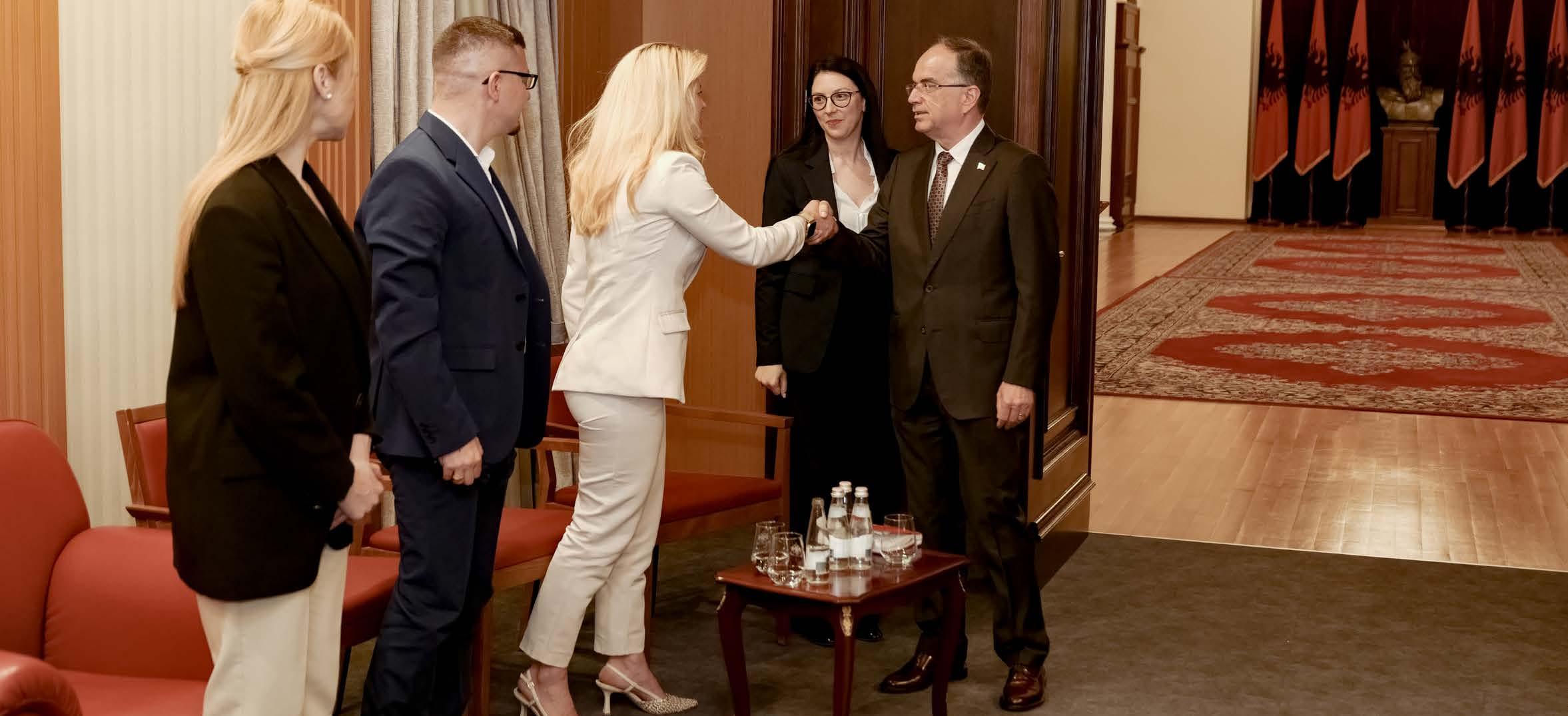
What does your promotion as Project Manager of the LEAD Albania signify for you? What are your specific responsibilities in this role and your ultimate goals?
My promotion to Project Manager of LEAD Albania represents a strong vote of confidence in my work, leadership, and commitment to the program’s mission. It reflects both recognition of the responsibilities I have progressively assumed and an opportunity to contribute more strategically to the program’s long-term impact. I sincerely appreciate AADF for this opportunity and feel proud to contribute to an organization that consistently supports growth and champions professional excellence.”
In this role, I oversee the overall
implementation of the program and act as a bridge between strategy and execution. I manage complex stakeholder relationships, including government institutions, fellows, and international leaders—to ensure effective collaboration and meaningful impact.
I am also responsible for supporting and mentoring fellows, monitoring program progress, addressing risks, and ensuring alignment with the organization’s mission as well as the broader strategic goals, objectives, and values of LEAD Albania.
My ultimate goal is to strengthen the sustainability and impact of LEAD Albania by delivering a well-managed, high-quality program that empowers emerging leaders, fosters collaboration across alumni cohorts, and contributes meaningfully to positive change in Albania.
What do you define as the major success of the LEAD Albania program? Can you relate the key outcomes achieved so far? What are you particularly proud of?
The major success of the LEAD Albania program lies in the vibrant community of Fellows it cultivates each year. These individuals are not only talented and hardworking, but also committed to integrity, public service, and contributing meaningfully to Albania’s governance.
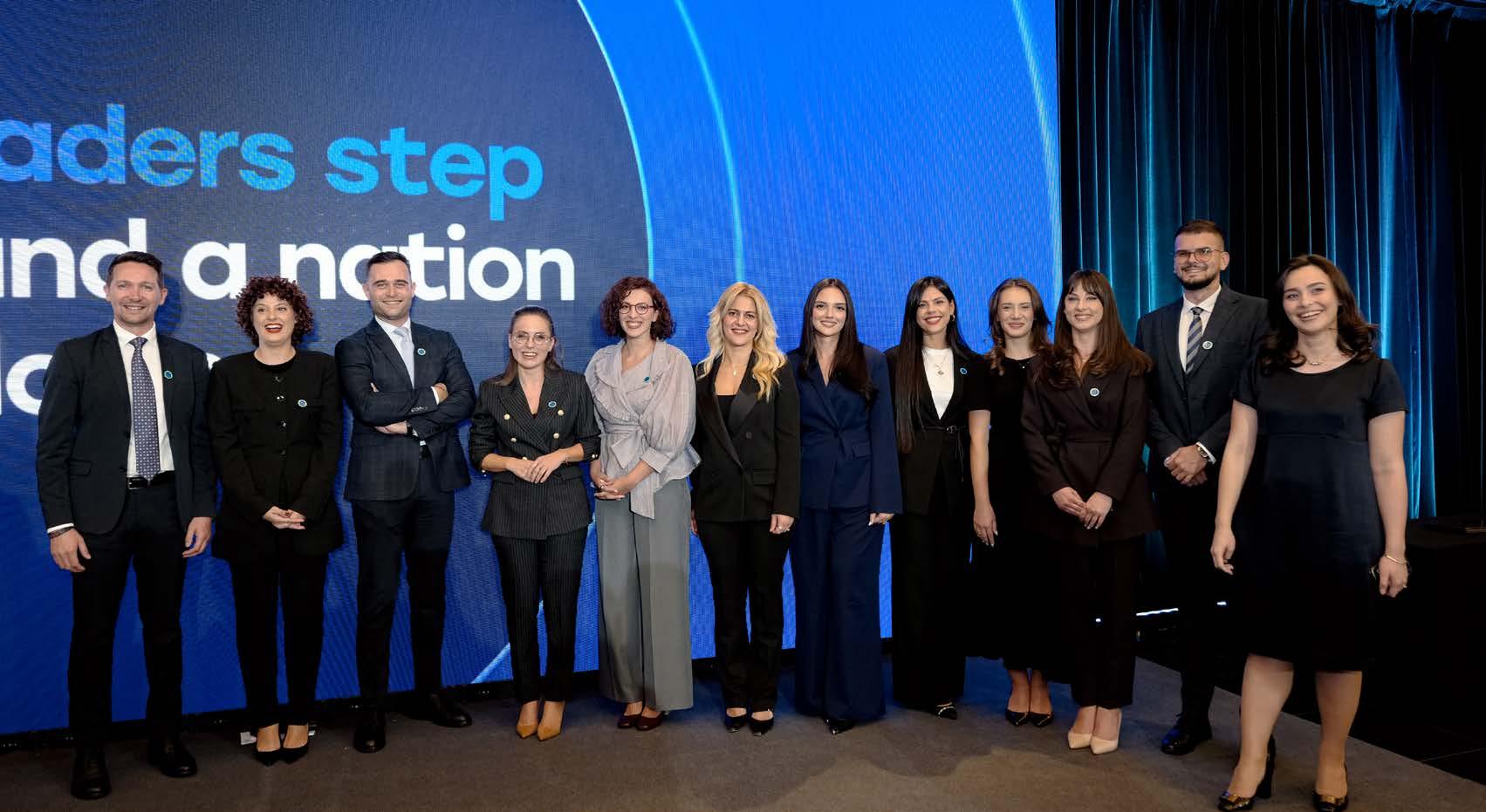
Modeled after the White House Fellowship Program and implemented in Albania since 2013 by AADF, LEAD Albania equips young professionals with first-hand leadership experience and exposure to public-sector governance. The program has three core components:
Fellow Placements: Fellows serve as advisers in key institutions, including the
Prime Minister’s Office, the President’s Office, line ministries, the Municipality of Tirana, and new justice institutions, for a 12-month term.
Fellows participate in tailored leadership training, workshops, and skill-building sessions designed to enhance their professional competencies. The highlight of the trainings is Executive Program at Harvard Kennedy School where fellows attend two different programs in high senior leadership level. Alongside we partner as well with Centre for Creative Leadership who develop a tailored executive program based on LEAD Fellows needs and priorities with the focus to develop their leadership skills.
Fellows receive guidance from senior leaders and connect with alumni, enabling knowledge sharing and fostering a sustainable network of future leaders.
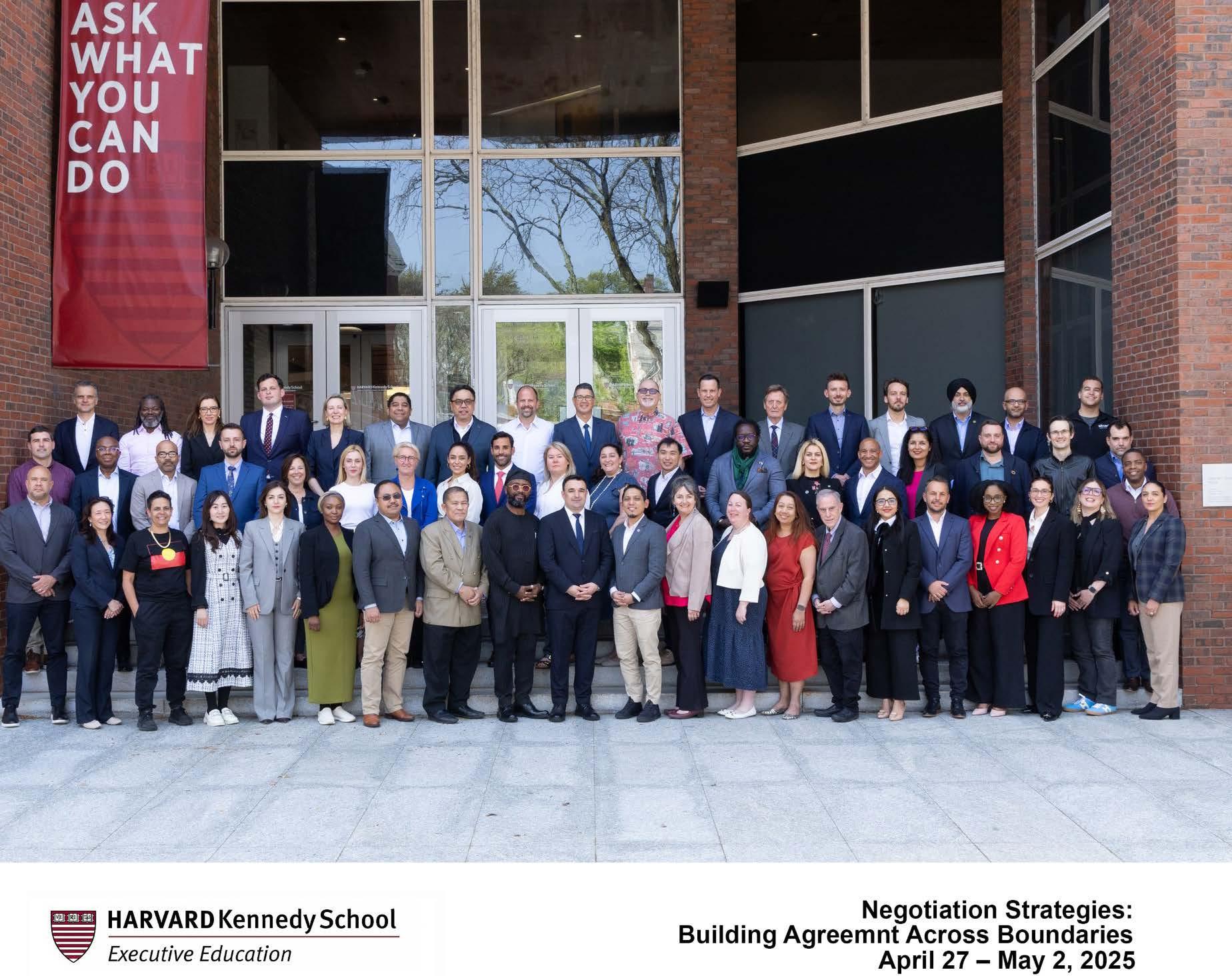
I am particularly proud of how the program not only develops individual leadership skills but also strengthens institutional capacity and promotes a culture of accountability, integrity and innovation across Albania’s public sector.
What strategies do you use to ensure that this prestigious leadership development project stays aligned with the organization’s broader goals and vision?
LEAD Albania maintains alignment with AADF’s strategic goals through intentional, mission-driven practices. Program objectives, leadership competencies, and training modules are explicitly mapped to AADF’s mission- to contribute to Albania’s Social and Economic Progress.
• We implement structured oversight and monitoring mechanisms.
• Mission-driven metrics track both program outputs and longterm institutional impact.
• Adaptive management practices allow the program to respond effectively to evolving governance priorities and to give to fellows the opportunity to contribute through their technical and professional background.
Can you provide examples of how the LEAD Albania program tailors to the unique needs of its participants? How do you assess participant progress and program impact?
LEAD Albania tailors its approach through:
Individualized Fellow Placement: Matching participants to host institutions based on their professional backgrounds and interests. Fellows from the application phase choose the institution that best fit to their expertise and knowledge.
Personalized Development Plans: Designing training and mentorship programs aligned with each Fellow’s career goals.
Adaptive Curriculum: Continuously updating content to reflect emerging governance and institutional priorities.
Participant progress is assessed through competency-based evaluations, host institution feedback, training assessments,
and reflective work. Program impact is measured by Fellows’ contributions to institutional priorities, long-term career trajectories, alumni engagement, and overall alignment with AADF’s mission to strengthen leadership and governance in Albania.
How does LEAD Albania integrate experiential learning and real-world applications? Have you incorporated new technologies or tools to improve engagement and learning outcomes?
Experiential learning is central to LEAD Albania. Fellows engage in real-world placements, project-based assignments, interactive workshops, and mentorship with senior leaders. This approach allows participants to translate leadership theory into actionable solutions within public institutions.
Recent innovations include:
Executive Program at the College of Europe: Combining EU institutional theory with practical simulations to strengthen understanding of EU integration processes.
AI and Technology Training: Providing tools and best practices for leveraging AI to support performance in public-sector roles.
Digital Collaboration Platforms: Using learning management systems and online tools to enhance engagement, track progress, and facilitate peer-to-peer learning.
These initiatives have significantly improved learning outcomes, engagement, and the ability to apply knowledge in practical settings.
What are some of the most common challenges you face when coordinating LEAD, and how do you overcome them?
LEAD Albania presents several challenges:
• Managing diverse stakeholder expectations.
• Aligning Fellows’ skills with host institutions’ needs.
• Maintaining motivation and engagement.
• Handling logistical and administrative complexities.
• Adapting to evolving institutional or national priorities.
These challenges are addressed through clear communication, detailed preplacement assessments, personalized mentorship, adaptive project management, and structured evaluation processes that track both short-term learning and longterm impact.
What’s the most rewarding part of managing a leadership development project for you personally and professionally?
The most rewarding aspect of managing LEAD Albania is witnessing Fellows grow into capable, confident leaders professionally but as well personally
who contribute meaningfully to public institutions. Professionally, it is fulfilling to see the program strengthen institutional capacity, promote good governance, and build a sustainable network of leaders who collaborate and innovate across sectors.
Personally, mentoring and engaging motivated, diverse, and talented Fellows is both intellectually stimulating and deeply inspiring. Additionally, fostering innovation and contributing to systemic impact motivates me to continuously strive for excellence in this work.
’’Sometimes when a client does not like a product, I deduct the cost from the bill reconfirming once again that for us, at Cioccolatitaliani, quality is over profit.’’
By
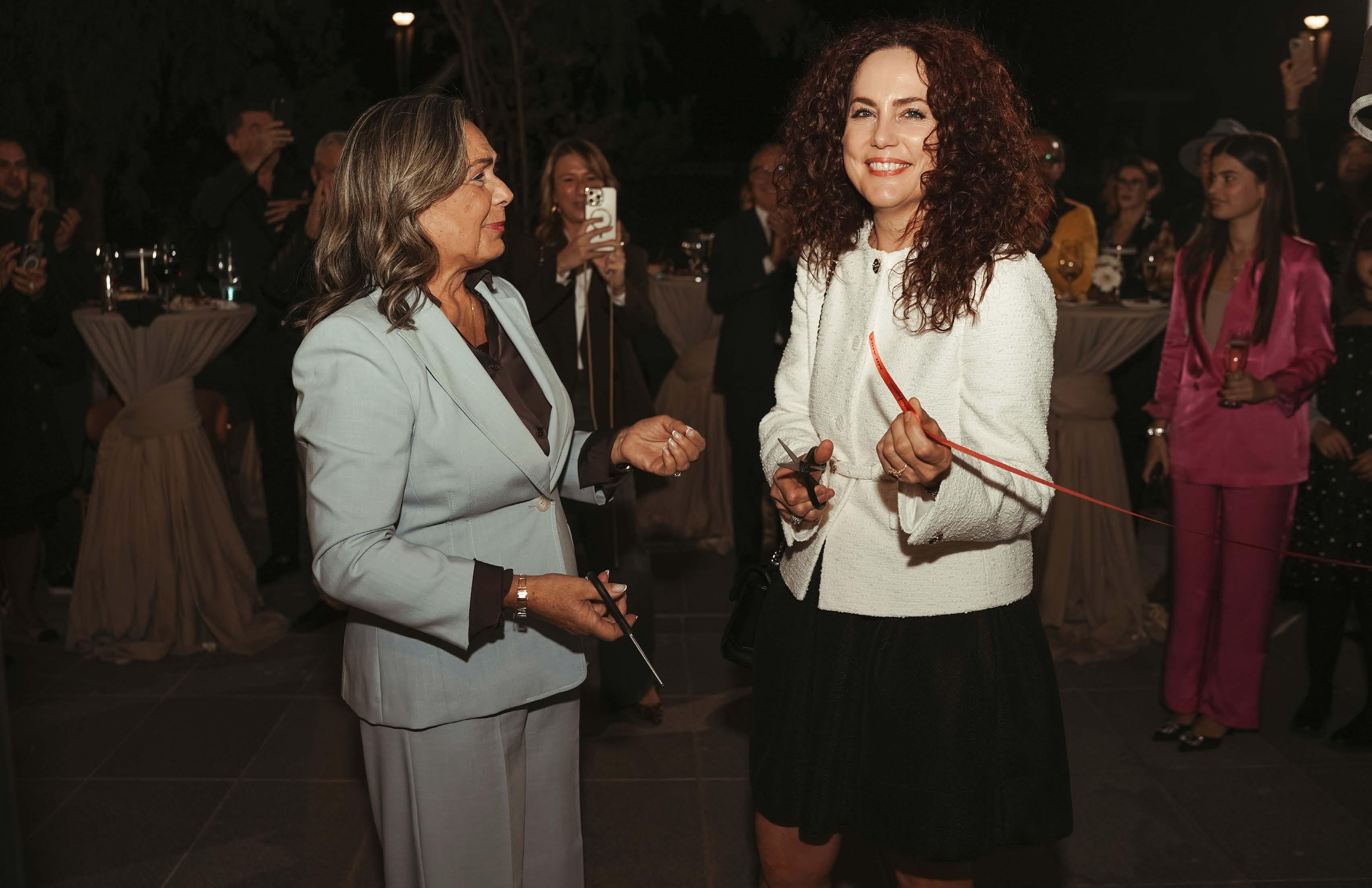
The Grand Opening of Cioccolatitaliani at Lake View Complex, in one of the most panoramic views of Tirana, Lake of Tirana, took place on October 14, 2025 marking the inauguration of the third Cioccolatitaliani points where Italian heritage meets contemporary indulgence. The doors opened just as the light began to soften over the Lake of Tirana, that golden hour when the city exhales and the water turns to glass. Cioccolatitaliani arrived quietly, confidently—like a promise kept.
Guests gathered along the panoramic hall, the scent of melted chocolate mingling with espresso and the fresh evening air. Inside, marble counters gleamed, machines hummed softly, and ribbons of warm chocolate flowed like art in motion. Outside, the lake reflected laughter, clinking glasses, and the slow pulse of Tirana at dusk.
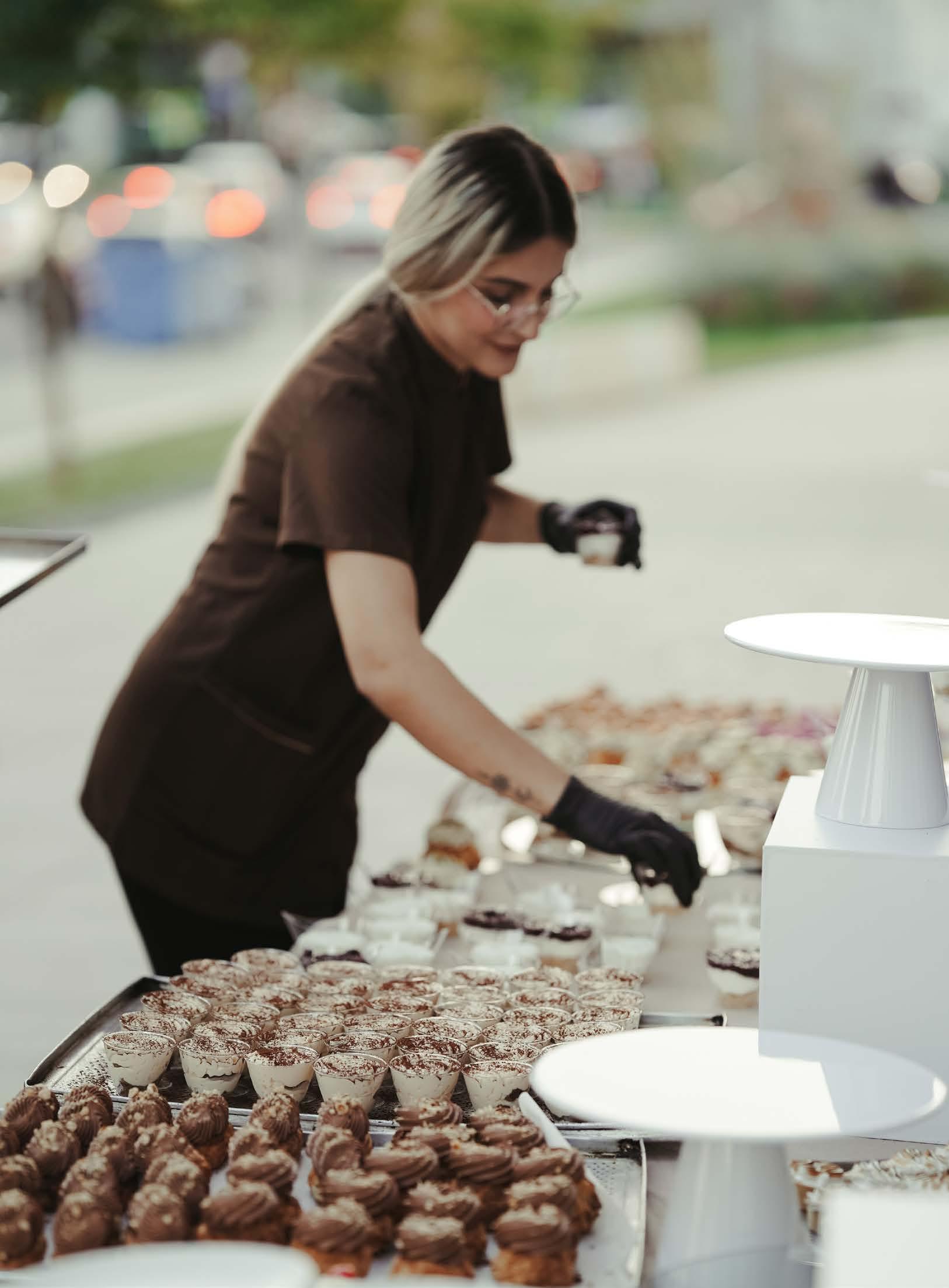
A spoon dipped into the first swirl of gelato. A glass was raised. A moment was shared. This was more than an inauguration. It was a meeting of places and passions: Italian craftsmanship and Tirana’s rhythm, indulgence and simplicity, taste and view.
Rooted in a passion for “vero cioccolato Italiano”, the brand celebrates craftsmanship, quality ingredients, and the art of slow enjoyment. From rich, velvety chocolate made with carefully selected cocoa to freshly prepared gelato, pastries, coffee and pasta, every creation is designed to turn everyday moments into refined experiences.
More than a café or a chocolatier, Cioccolatitaliani is a lifestyle destination— inviting guests to pause, savor, and reconnect with pleasure in its purest form.
Elegant yet welcoming, modern yet deeply Italian, it embodies a philosophy where taste, design, and authenticity come together to create moments worth lingering over.
On this occasion, we took a chance to interview the General Manager of Cioccolatitaliani Tirana, Fiorela Cekaj:
You are doing “a quiet revolution” at one of Tirana’s most famous brands
Cioccolatitaliani. How have you managed this?
It is supposed that the key is the service to the client. If the client is satisfied, more clients follow. So, it works out by the word of mouth. But nowadays, it is far more difficult to deal with your employees. They are generally young and need time to get experienced. That’s why I invest a lot of my time here. Whenever we have an unsatisfied client, I am here to resolve the situation. That’s why I am everywhere: at the cashier’s desk or at the hall, so I can handle every possible situation.
Sometimes when a client does not like a product, I deduct the cost from the bill reconfirming once again that for us, at Cioccolatitaliani, quality is over profit.
In my view, that’s why it is very important that the employees are very qualified and communicative. Unfortunately, such qualities are missing and we need to cultivate them.
What makes a difference today is the service coupled with the communication skills. Though on the other hand, we are aware that there are difficult clients as well. But all in all, it is important to adapt the mindset that the client is above all when it comes to service.
On the other hand, we experience ups and downs because of many factors such as climate change or the latest trends to celebrate various feasts abroad. The travel agencies provide good offers on the occasions of these celebrations.
How can you describe Cioccolatitaliani in a nutshell?
Cioccolatitaliani is a 100 % Italian franchise. It is cozy, sweet, comfort, attractive and full of varieties. At the end of the day, we unite people. We bring them together to have a coffee, to enjoy and to relax.
Since becoming chief manager of Cioccolatitaliani three years ago, you and Cioccolatitaliani have introduced some eye-catching initiatives and products. How have you reached this?
It is very important to play with the change of the image in order to fight monotony off in terms of products but also the Interiors part.
For example, we invested in new chairs and tables, we changed the look of Cioccolatitaliani – into “Finalmente una Gioia!”
As for the new products, we always coordinate with our mother company in Italy. There is a group of famous experts there who tests the products until they detect the finest tastes of the coffee, ice-cream and others. Parallel to that, there is a qualified marketing group which checks how the statistics alter accordingly. According to them, the visual impact of a product is crucial.
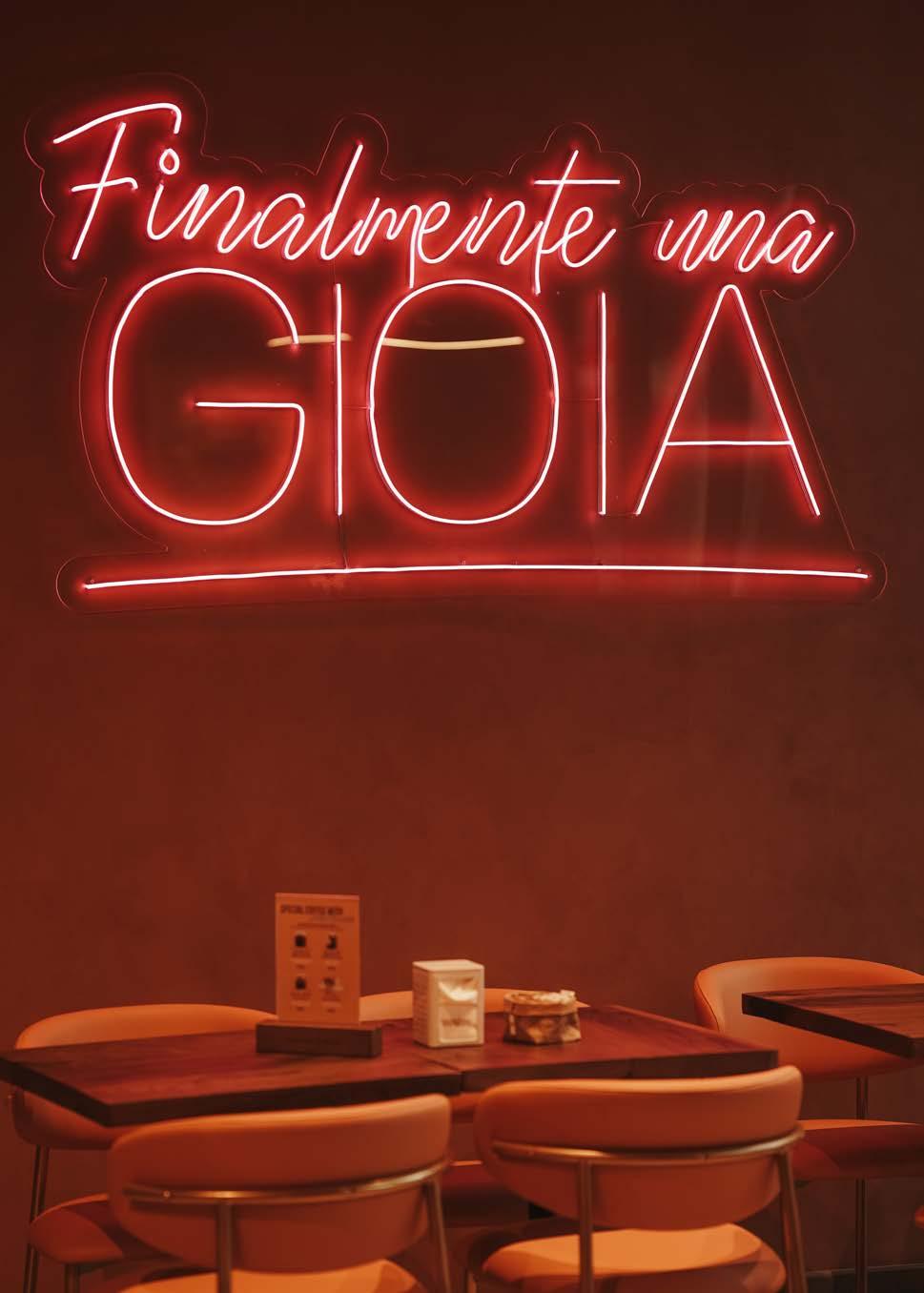
On the other hand, we experience ups and downs because of many factors such as climate change or the latest trends to celebrate various feasts abroad. The travel agencies provide good offers on the occasions of these celebrations. As we look forward for such feasts to have more clients, we fall out of expectations all of a sudden.
Obviously, customer expectations up and down the high street and in retail are changing. How have you kept pace? The location has its own advantages. We know that.
But, on the other hand, the increasing number of tourists is a big plus for us especially for our shop at the touristic area of Kalaja e Tiranes (Castle of Tirana).
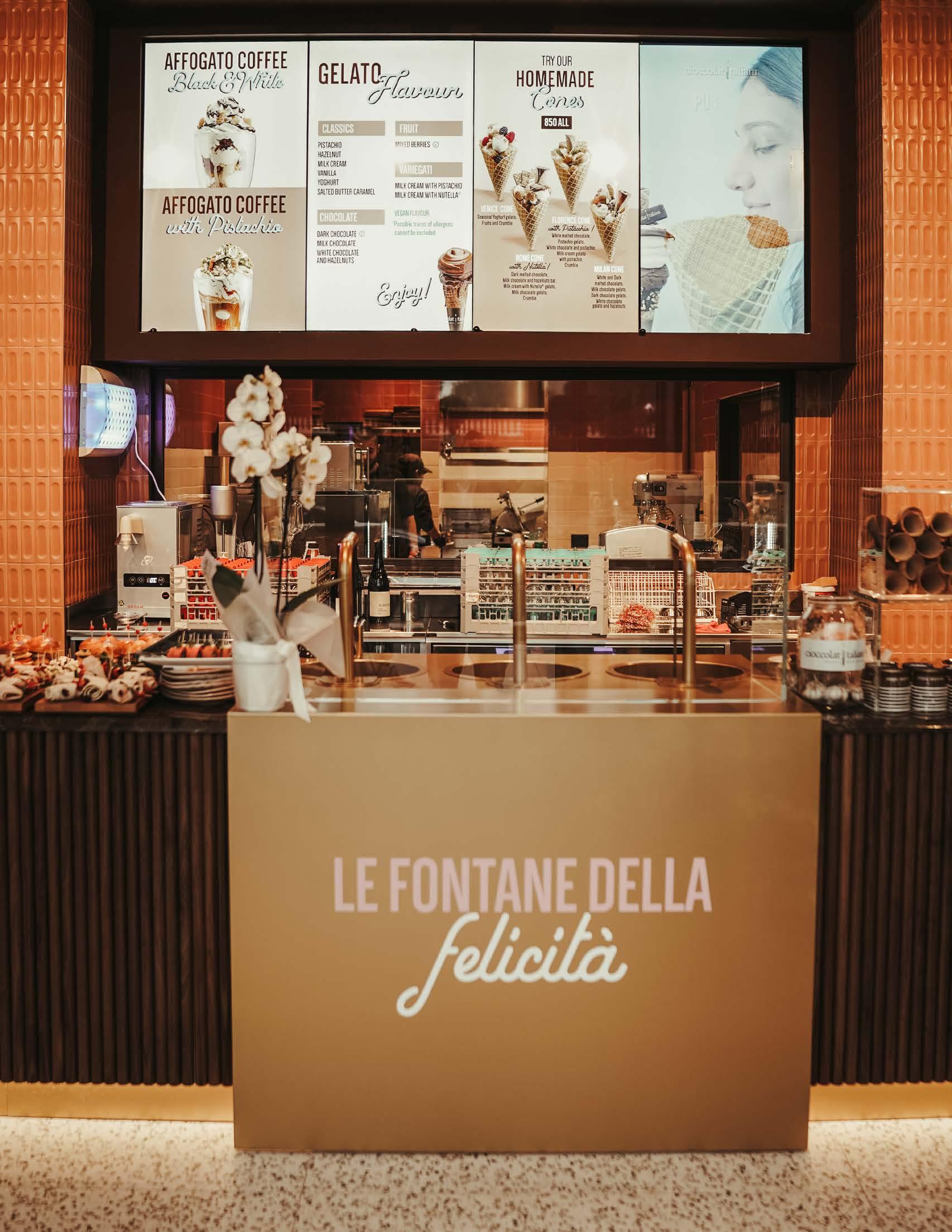
“The 2025 Beijing International Art Biennale marked a Defining Milestone in My Artistic Life”
By Rudina Hoxha
Ledia Çeta is the spouse of an Albanian diplomat. This status gave her the possibility to travel a lot by the side of her husband such as Greece, Italy, Turkey, Bulgaria and China… The latter destination gave wings to her artistic imagination which was growing tremendously over the years. There she met great Albanian and Chinese artists who inspired her to go on in her artistic pursuit, nurtured since a kid by the authentic nature of her homeland – Albania.
Until she was accepted into Beijing International Art Biennale (BIAB 2025) as an Albanian artist, among participants from 130 countries and regions, and nearly 600 selected works. “This was a defining opportunity and honour,” Çeta said exclusively to TRAILBLAZING MAGAZINE/The Women Edition.
Read a thought-provoking conversation with Ledia Çeta, the visionary painter blooming in all
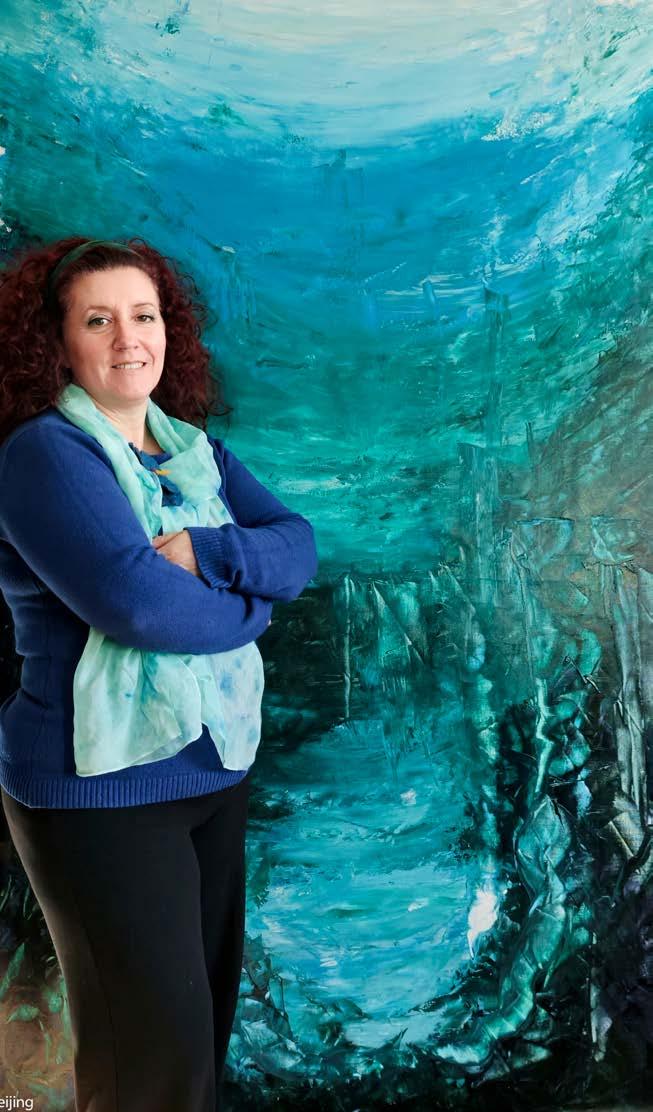
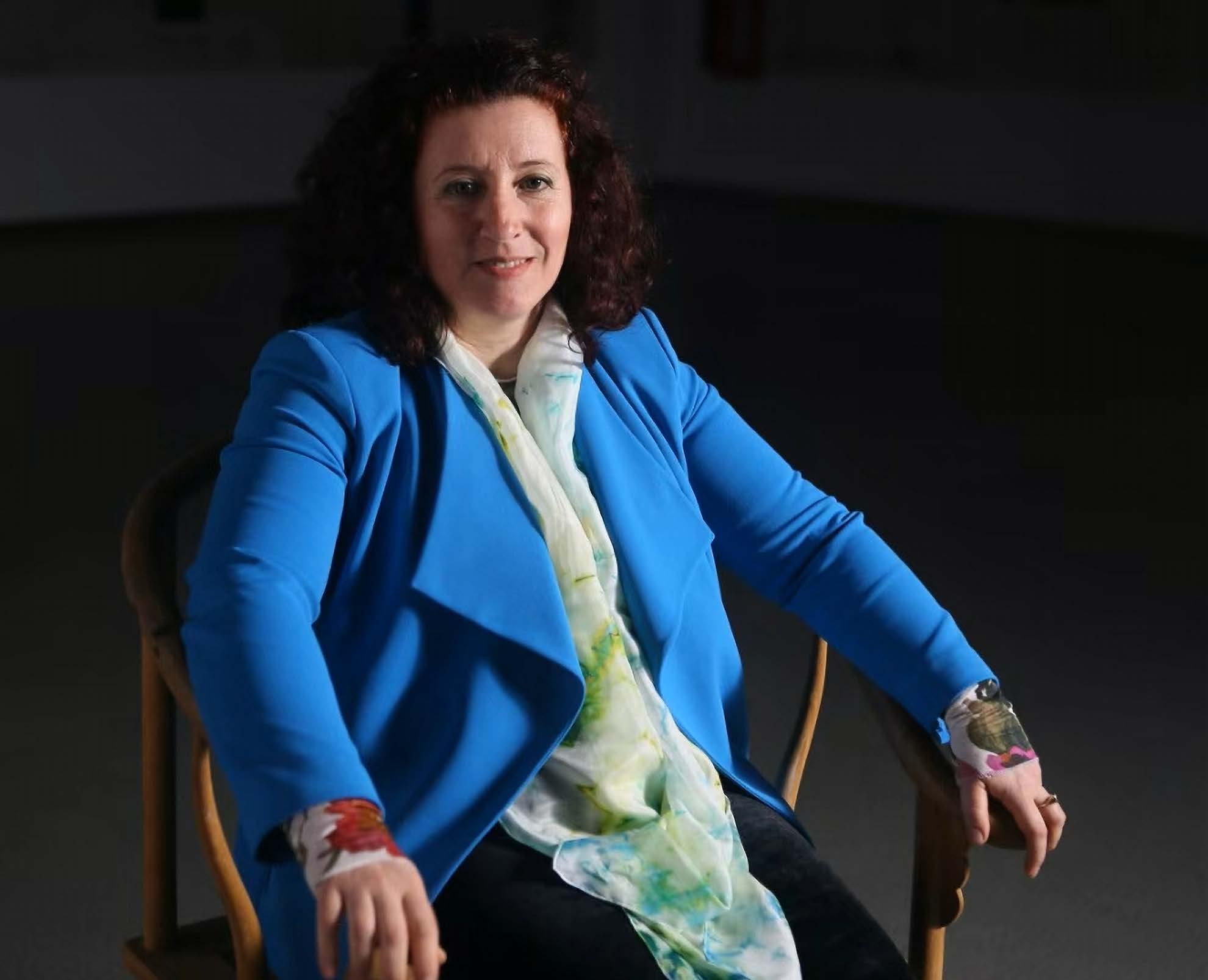
pulling, blending. Sometimes they are rebellious and unpredictable, and you must carefully control moisture and movement to avoid mistakes. This process led me toward abstraction paint on silk, mixing different techniques and transforming “mistakes” into expressions of emotions and concepts.
Over time, my work has evolved in tandem with my life experiences— shaped profoundly by years of living as an expat in foreign lands. From my early artistic practice rooted in Albania to the subsequent phases of creation across different countries
her diversity:
Can you tell us about your artistic journey and what first inspired you to become a painter?
My artistic journey began very early in Tirana. My earliest memory of painting dates back to kindergarten. I remember one particular day vividly: during class, I was asked to draw a factory as part of a thematic exercise—five or six times within the same lesson—because the teacher asked me to help five or six other children in the group (we were being assessed that day). After that, I remember a classmate bringing me a small box of watercolour paints so I could try painting with them, even though I had no idea how to use them at the time.
Another powerful memory is drawing Vincent van Gogh’s self-portrait, inspired by a book about his life and work. What stayed with me was the comment of
some art students who saw my pencil reproduction and asked, “Why is this girl studying at the Pedagogical Institute and not at the Academy of Arts?”
My earliest works were pencil drawings, replicas, and still-life compositions. My garden was a major source of inspiration. I spent much of my time planting, caring for flowers, photographing them, and later painting them on canvas, porcelain, and silk. For many years, flowers dominated my work. Images of my flowers and floral paintings accompanied me during my stays in Ankara (2009–2010) and Sofia (2016–2019). Those early stages taught me discipline, observation, and respect for form. Gradually, painting became more than a skill—it became a necessity, a way of understanding myself and the world around me.
Later, I became deeply attracted to the play of colours on silk. The pigments are fluid and interact with one another—pushing,
abroad, each chapter introduced me to new materials and expanded my perspectives. Yet amid all these changes, what has remained unwavering is my deep emotional bond with nature, forged in my homeland. Years of being far from
home have kindled a profound longing for my roots, and it was this nostalgia that led me to embrace the sea as one of my core creative themes. Taking the sea as my starting point, I began to delve into reflections on the intricate relationship
between ecology and humanity—exploring how nature sustains our spirits, how human activities interact with the natural world, and how this interconnectedness resonates across borders and cultures. To this day, the sea and the natural world remain my
most enduring and cherished source of inspiration.
What led you to move from Albania to China, and how did this transition shape your career?
All these years, I have lived in different countries as a diplomat’s spouse, accompanying my husband. Encouraged by him, I have persisted in artistic creation. Before arriving in China, I had already lived in Greece, Italy, Turkey, and Bulgaria, and I have been expanded my artistic language through canvas, porcelain, and silk, striving to find an artistic language that suits me. And China has provided an excellent environment for this. By chance, I met two great Albanian artists, Helidon Xhixha and Alfred Marash Milot. Through their introduction, I got to know representative Chinese artists such as Jiang Heng, Yan Yu, Yan Laichao, and Lai Junjie. They frequently hold international exhibition activities in China, Italy, France, Albania and
other countries. Our collaborations have been highly inspiring, greatly boosting my creative output especially over the past two years, and enabling me to participate in international exhibitions held in museums and galleries across China.
Was there a defining moment when you realized China would become an important part of your artistic path?
Yes. As I began participating regularly in exhibitions across China and engaging with Chinese audiences, I realized that this environment resonated deeply with my artistic philosophy.
“At the Seaside”, International Contemporary Art Invitational Exhibition, organized by School of Fine Arts and Design at Hebei Normal University, 2025 Installation Art, Water Colours on Silk 2×250×50 cm, and 50×50 cm
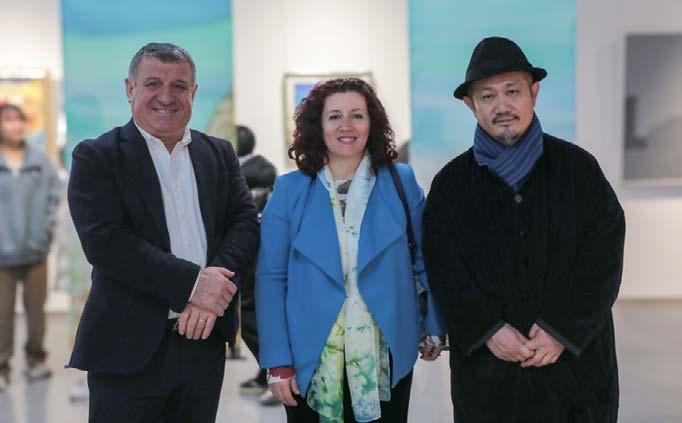
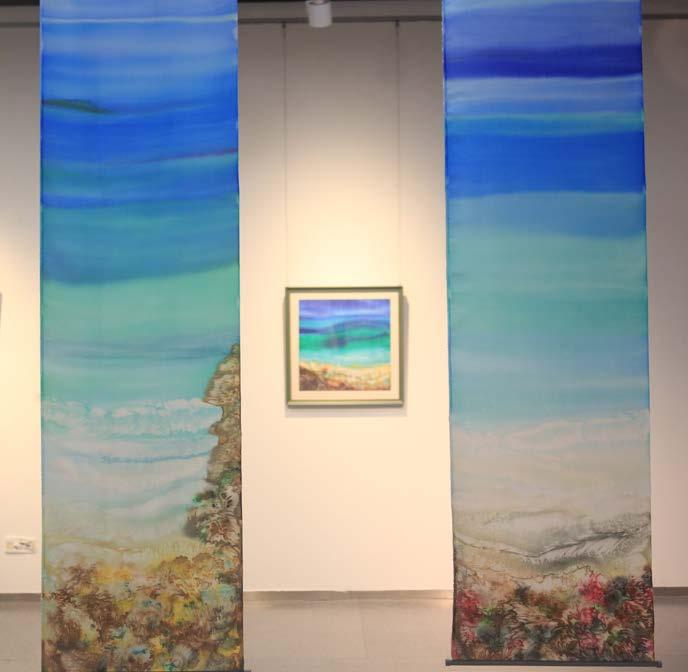
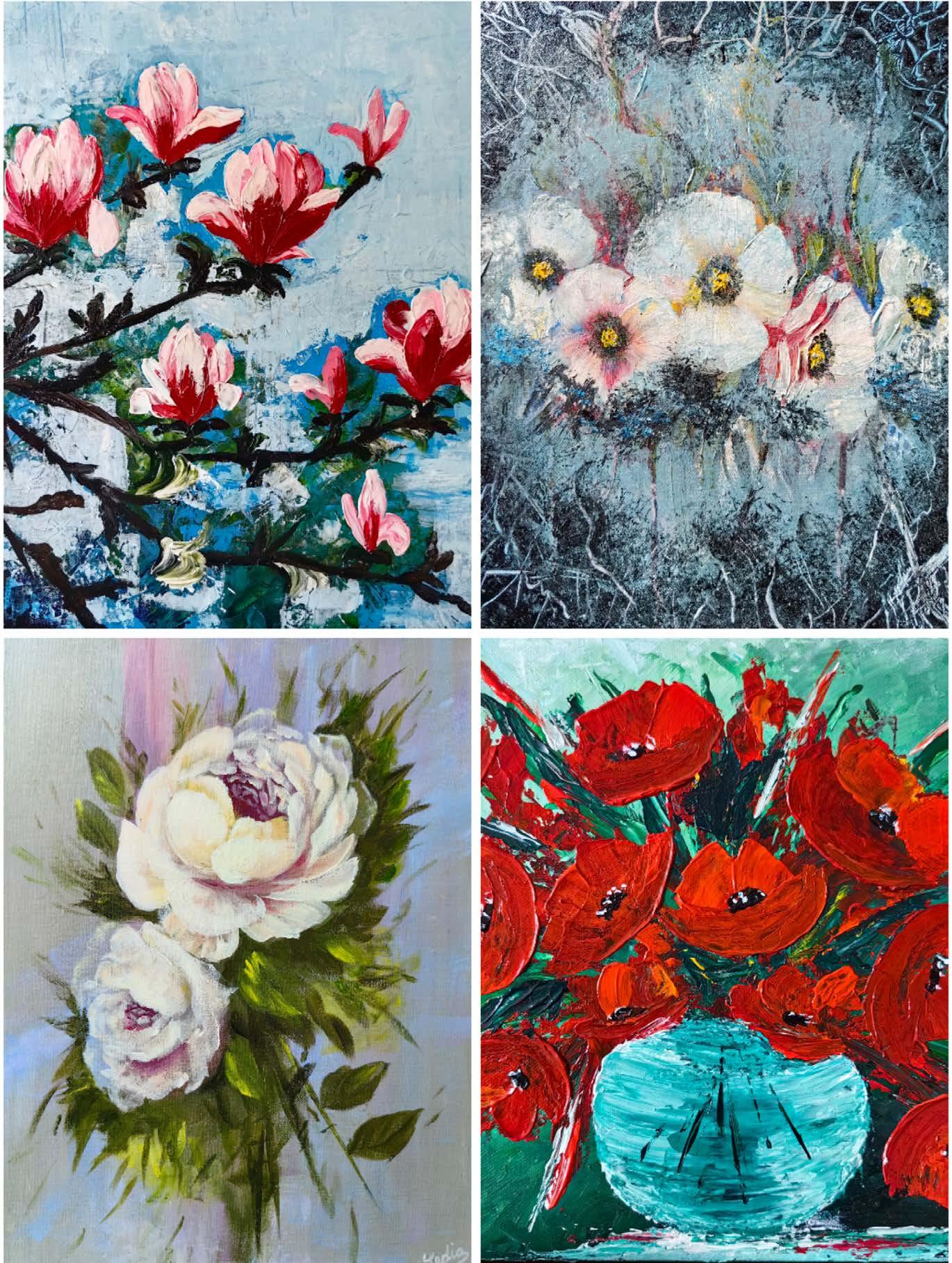
medium, while my themes became more abstract and meditative. China reinforced my belief that contemporary art transforms tradition rather than rejecting it. While my subject matter remains deeply rooted in nature and the sea, my approach has become more fluid and experimental.
Sometimes it is difficult to explain how you reach a certain artistic point—it is the result of continuous daily work, and each piece reveals something new about yourself. There have been moments when I surprised myself upon stepping back and viewing my work from a distance. When I work—especially on abstract pieces or themes of earth, water, and sea—I become deeply emotionally involved, and the process becomes instinctive rather than analytical.
Being invited to exhibit on major international platforms—culminating in my participation in the 10th Beijing International Art Biennale—made me understand that China was not just a place of residence, but a space where my artistic voice could grow, be challenged, and be heard internationally. The acceptance of my application and my qualification as a participating artist in the Beijing International Art Biennale confirmed that China had become a defining chapter of my artistic life.
How has living in China influenced your artistic style, themes, or techniques?
Living in China has encouraged me to embrace fluidity, both conceptually and technically. I returned strongly to silk as a
My contact with contemporary Chinese art—which competes strongly both in China and Europe—expanded my understanding of the power of brushstroke, calligraphy, and even digital art. These influences inevitably shape artistic taste and context, while intertwining with the desire to express who I am and where I come from.
The development of my ongoing collection “Under the Sea” was also driven by dialogue with my Albanian and Chinese artist friends, particularly Junjie Lai, whose feedback and perspective helped me see my work differently. Seeing yourself through the eyes of another helps you grow, refine your vision, and explore paths you may once have dismissed. Our many conversations regarding —“My sea through Chinese eyes”—his opinions about my theme and my techniques, deeply influenced my approach and helped me define my unique artistic path.
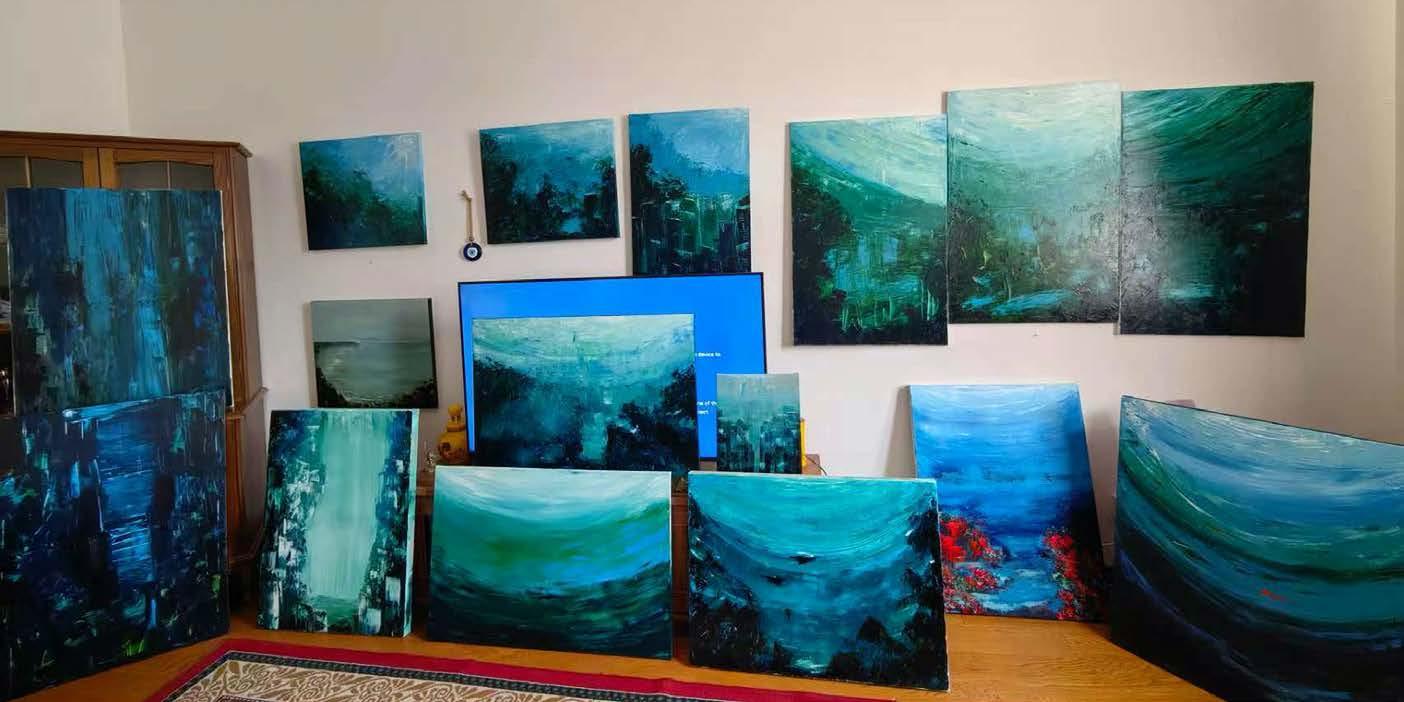
In what ways do Albanian culture and heritage continue to appear in your work?
Albanian culture appears through memory, emotion, and landscape. The sea—especially the Ionian and Adriatic coasts—is a powerful symbol of my identity. The sea of Albania remains my spiritual anchor, present in my colours, movement, and emotional depth, even when my work becomes abstract. Even when working in abstract forms, my paintings carry the rhythm, colours, and emotional depth of my homeland. It is my way of staying rooted while living abroad.
Do you see your art as a bridge between Albanian and Chinese cultures? If so, how?
Absolutely. I strongly believe that art is a bridge of communication between cultures and generations. Contemporary art has no borders. My work creates a silent dialogue between cultures—allowing viewers to experience another identity through feeling rather than explanation. My work becomes a dialogue—one that speaks through colour, movement, and shared human experience rather than words. In international
exhibitions, I have felt that artists, regardless of origin, share a common visual language while maintaining their individuality and uniqueness.
How would you describe the Chinese art scene compared to the Albanian or European one?
The Chinese art scene is dynamic, ambitious, and deeply respectful of tradition. Compared to Albania or Europe, it offers a rare balance between experimentation and institutional support.
What has been the biggest challenge—and the greatest opportunity—of working as a foreign artist in China?
My first and immediate challenge is navigating cultural and linguistic differences. However, this challenge quickly transforms into an opportunity for learning.
Another challenge is becoming part of such a vast artistic ecosystem, marked by immense productivity and large scale. Everything in China operates on large dimensions and numbers. Yet, in
2025, I participated in several exhibitions and collaborations, most notably two joint international exhibitions with Hebei University in March and May 2025.
The greatest challenge is bringing something genuinely new—something that distinguishes your voice within this vast artistic landscape. At the same time, the greatest opportunity lies in the openness of Chinese audiences and institutions. Being accepted into the Beijing International Art Biennale (BIAB) 2025 as an Albanian artist, among participants from 130 countries, and nearly 600 selected works.
How do Chinese audiences respond to your work?
The response has been deeply encouraging. Many viewers connect emotionally with my paintings, especially the themes of sea, nature, and inner reflection. I’ve been touched by how audiences relate to the sense of calm, healing, and vulnerability that my work seeks to convey. During the BIAB 2025 exhibition days, I met many visitors and had meaningful conversations about my painting “Under the Sea.” Many expressed appreciation for the colours and the unconventional way the sea is represented, saying it brings them joy. Some even became curious to visit Albania to experience the crystalline nuances of the Albanian sea in person. This fills me with immense joy and pride.
What inspires you most in your daily life in China—cities, landscapes, people, traditions?
I am inspired by contrasts: the vastness of modern cities, the persistence of tradition, and the philosophical depth embedded in everyday life. Seasonal changes—especially spring and autumn—deeply affect me during walks through Beijing’s vast and
beautiful parks, reminding me of my garden in Albania.
These experiences often lead me to revisit familiar themes with renewed emotion. For example, my floral collection returns in the bright yellow of ginkgo trees from Ritan Park, or includes water lilies inspired by their blooming along the Liangma River and Chaoyang Park and peonies from the Jingshan Park. Nature remains my greatest inspiration, and I find deep joy in seeing it nurtured, protected, and celebrated.
At the same time, my strongest inspiration often comes from within—from memory, reflection, and my connection to the nature, especially the sea. These inner and outer worlds continuously interact in my work.
Can you walk us through your creative process from idea to finished painting? My creative process is intuitive and deeply emotional. It begins with a sensation rather than a defined image. This process has always been therapeutic for me. From my early work on canvas and porcelain to my current large-scale paintings, art has remained a form of self-healing and emotional expression.
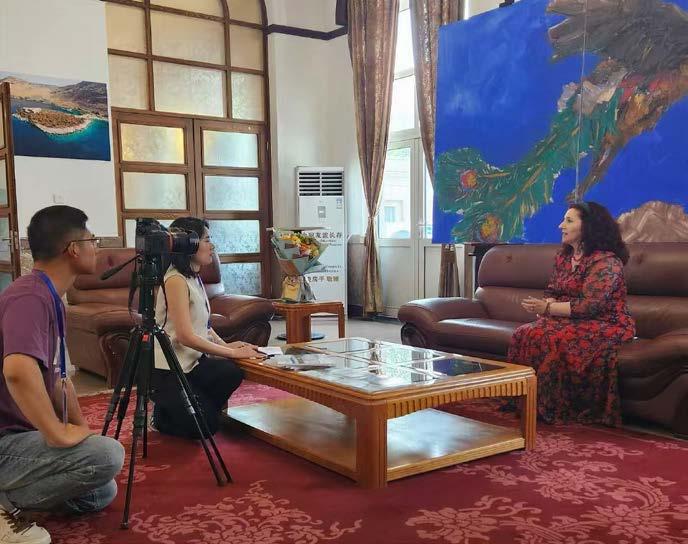
I have often been using brushes in my paintings. However, I increasingly work with a palette knife—mixing colors directly on canvas to create underwater worlds, moving the knife in imitation of wave motion. It becomes an immersive game, where knowing when to stop is crucial, so as not to “disturb the waters” too much.
I am also drawn to the stratification of earth in rocky landscapes, which I recreate using a spatula and earthy pigments. When I combine earth and water, I am inspired by Albania’s rocky southern coastline and canyons. My recent works reflect this admiration, remaining on the emotional side of the earth–water dialogue, free from strict rules or rigid forms.
Are there specific Chinese or European artistic philosophies and techniques that have influenced you?
My techniques have evolved alongside my artistic growth and research. In 1988, the biographical book on Van Gogh “Lust for Life” and albums on the Impressionists became my first visual references. Reproducing Van Gogh’s self-portrait with wooden pencils was my first serious work and a turning point in my artistic curiosity.
Chinese artistic philosophy has strengthened my belief in balance, flow, and inner harmony. While I work with Western materials and techniques, the Chinese emphasis on energy, simplicity, and spiritual depth resonates deeply with my values. A single brushstroke can embody form, emotion, and meaning—an idea also central to Chinese calligraphy. I often translate this concept into my work using brushes or palette knives, mixing colors directly on the canvas.
Have you participated in exhibitions or collaborations in China or internationally?
Which experiences stand out most?
Yes, extensively. Over the years, I have participated in numerous fairs and exhibitions in Albania, Turkey, Bulgaria, and China. However, the year 2025 was particularly significant for me, with multiple international exhibitions across China, including the Beijing International Art Biennale (BIAB), environmental art exhibitions in Guangzhou, Contemporary Art Exhibition in Shenzhen, International Contemporary Art Exhibition at Hebei Normal University Museum and several invitational shows and academic forums. Participating both as an exhibiting artist and as a speaker at the BIAB
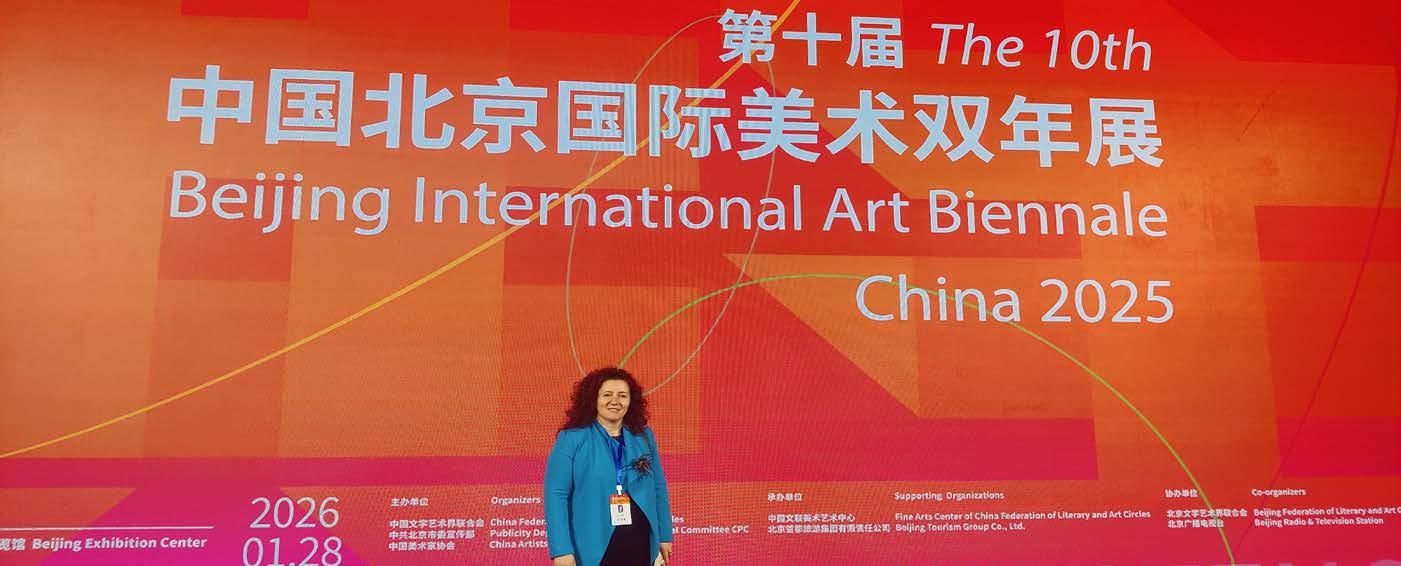
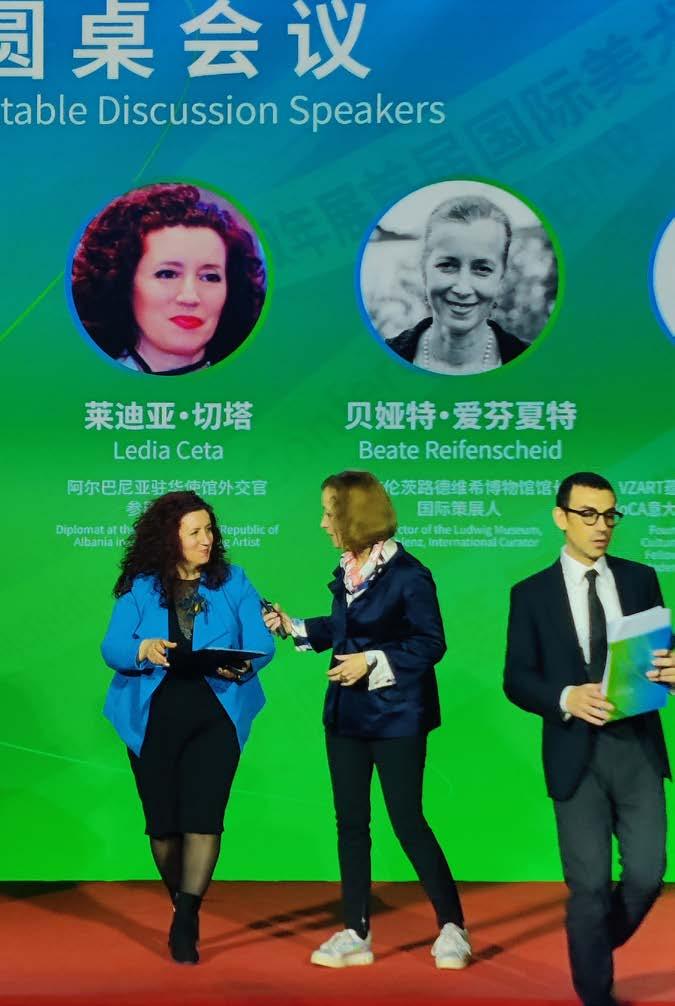
in Ankara to canvas and silk works in Beijing— has strengthened my artistic identity.
How do you personally define success as an artist living abroad?
Success, for me, means remaining true to my artistic language while allowing it to evolve through experience. It also means contributing to cultural dialogue and creating work that resonates emotionally across borders – while allowing me to grow, both as an artist and as a human being.
What message or emotions do you hope viewers take away from your paintings?
I hope viewers feel calm, reflection, and emotional connection. My work speaks of nature, vulnerability, and healing. If someone finds a moment of peace or recognition within my paintings, then the work has achieved its purpose.
How can art help foster understanding between different cultures today?
International Art Conference stands out as a defining experience and a particularly meaningful milestone.
For 2026, I am preparing another collaboration with Hebei University for a joint exhibition of women artists who are diplomats’ spouses, and possibly a solo exhibition in Beijing—currently at the idea stage.
How has international exposure affected your confidence and artistic direction?
International exposure has given me clarity and confidence. Moving through different artistic environments helped me understand that authenticity is more important than trends. Each stage—from porcelain painting
Art communicates beyond language and politics. It allows people to meet on an emotional level and recognize shared human experiences. In a world shaped by constant movement and difference, art can offer understanding, a space for empathy, mutual respect, and connection—and that is its greatest power. That, I believe, is more important than ever.
Do you see your future in Albania, China, or elsewhere?
Albania will always be my emotional home. I will return to Albania when my husband finishes his diplomatic mission. China, however, has become an essential part of my artistic journey. I see my future as fluid—continuing to move, exhibit, and create wherever meaningful dialogue and inspiration exist.
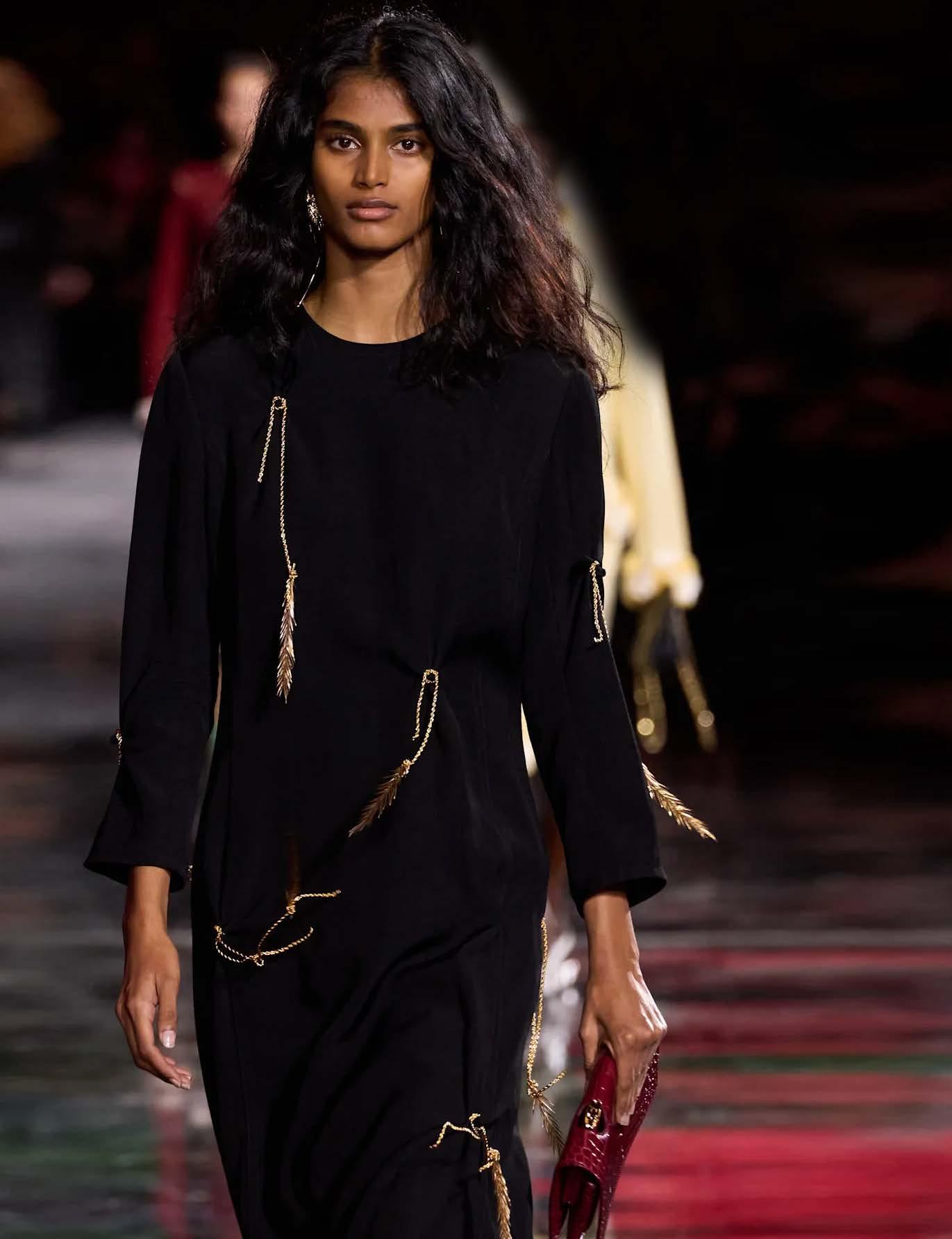
Who is Bhavitha Mandava, the Indian NYU graduate model who opened the Chanel fashion show in the New York subway Fate often has a somewhat ironic way of charting its course. Who knows what Bhavitha Mandava must have thought when she found out that the Chanel Métiers d’Art 2025 2026 fashion show, for which she was the opening model, would be set in the New York City subway, the very place where a year earlier she was noticed by Matthieu Blazy and her unexpected career began.
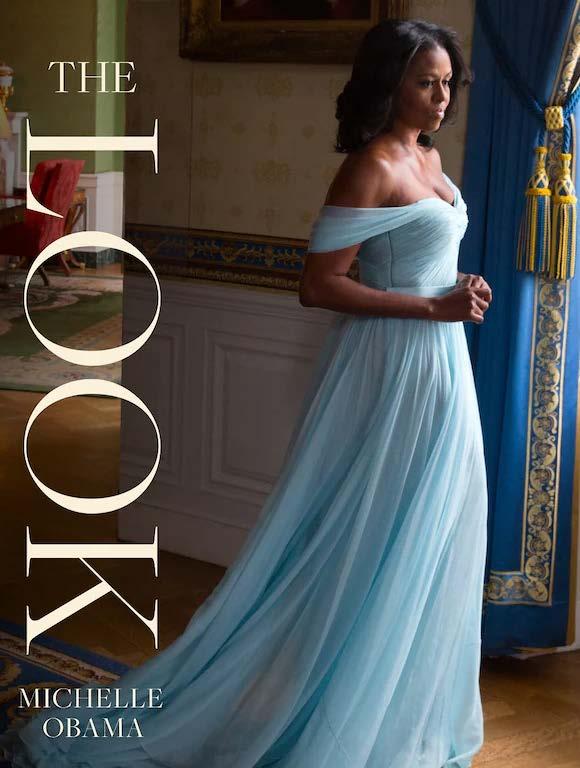
After
READ MORE
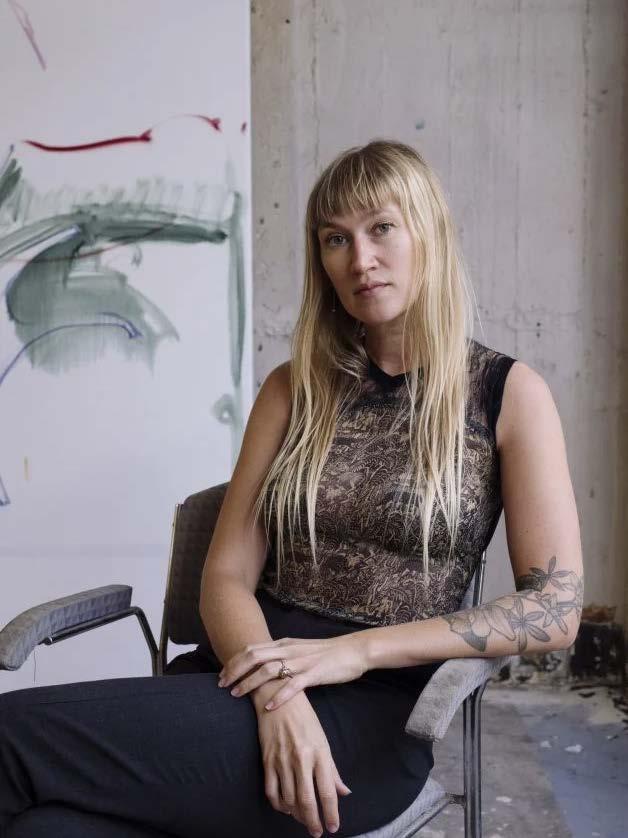
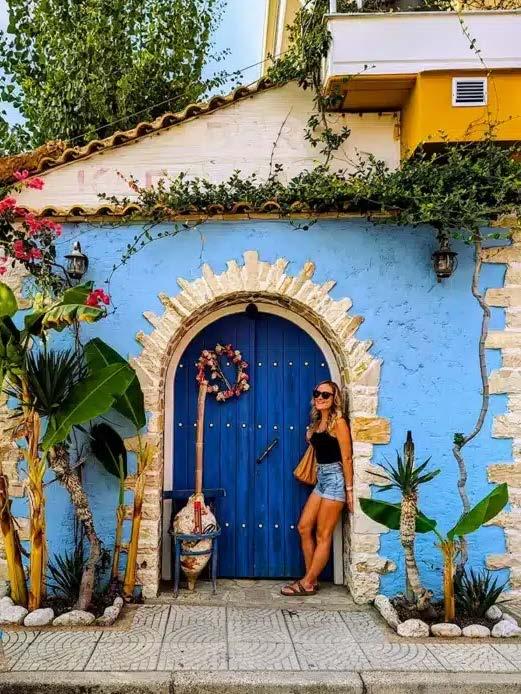
By Ann Kelly
After all of my solo trips to Albania over the years, it’s the question I get asked the most often. Is Albania safe for solo female travellers?
A quick search on Google will bring up many conflicting opinions on this topic so my goal for this post is to clear things up and shed some light on this controversial subject.
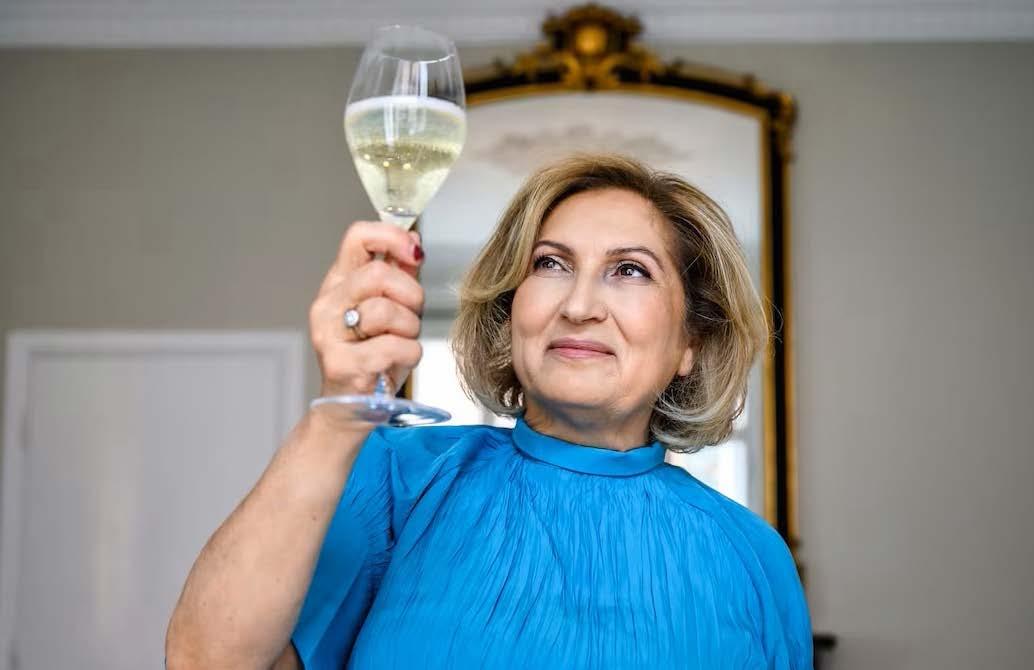
Swedish woman’s social mission turns into non-alcoholic winemaking empire
As alcohol consumption plunges worldwide, many winemakers are scrambling to cater to a growing desire for non-alcoholic options. But 13 years ago, a Swedish social worker was already miles ahead. Moa Gürbüzer is the founder of non-alcoholic wine brand Oddbird, and as with many stories of great innovators, she never planned on becoming a winemaker, let alone a major disruptor of the entire category. For Gürbüzer, it all started with a desire to create social change.
READ MORE