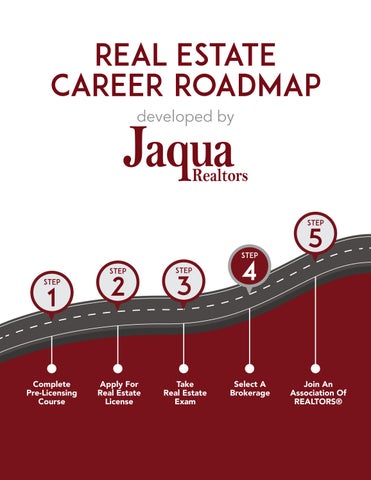
As you explore a career in real estate, we hope this roadmap serves as a valuable guide—offering clarity, direction, and support to help you navigate the challenges, seize opportunities, and build a successful path forward.
- Agent Development Team
1 6 2 3 4 5 6
Advantages of a career In real estate
Unlimited Earning Potential
As an entrepreneur, how much you earn depends solely on your own work ethic rather than someone else’s payroll. You have the opportunity to earn commissions from an endless number of clients, placing no limit on how much you can earn or how quickly. With no limits on your earning potential, your dedication is your only cap.
Job Security
In every state of the market, there will always be reasons to move. A set paycheck may provide a sense of security, but it can end at a moment’s notice. Real estate agents don’t have to worry about company cutbacks or lay-offs— They can continue to work to the capacity they see fit in any kind of market.
Flexibility
A day “at the office” doesn’t necessarily mean a day spent in the office. Though office time is often necessary, real estate agents do a lot of their business outside of a cubicle. Meeting with clients at properties is common, which adds variety to your workday. Working for yourself provides flexibility and means you do not have to follow a rigid hourly schedule.
Independence
Running your own business allows you control over your production, workflow and all decision-making. You decide what each day will look like, working as little or as often as you’d like while reporting only to yourself and your clients.
Community
Working in real estate allows you to grow your knowledge of the communities you serve and deepen your connections within them. Socialization is part of the job- If you enjoy meeting new people and attending community events, this will certainly be a benefit to you.
Meaningful impact
As a real estate agent, the work you do makes a lasting impact on those you serve. Purchasing or selling a home may be one of the largest financial decisions a person can make. Finding someone a home that will serve as the backdrop to their memories for years to come can be an emotional, yet fulfilling task!
Things to consider...
Finances
Financial preparation may take some time. During the initial few months of being a real estate agent, it may be challenging to get by while you wait to complete a transaction. You can mitigate this downside by building an emergency fund to cover 6-9 months of personal expenses to dip into should the need arise.
Inconsistent or irregular business hours
Even though being a real estate agent allows for added flexibility, you may need to meet with clients for open houses or showings at different times of the day. That means you may find yourself working on weekends or nights depending on your clients’ needs.
Becoming Successful
Achieving success in real estate is absolutely possible, but it won’t happen overnight. If you’re serious about it, dedicate the next 3-5 years to working hard, prospecting daily, mastering your craft, and connecting with as many people as possible.
Step 1 Complete a Pre-Licensing Course things to consider...
Things to consider...
fORMAT
Knowing your learning style can help improve your overall experience and results. Pre-licensing classes are offered in-person classroom setting, online live/interactive, online self-paced. (Recorded video, audio narration, human instructor, virtual instructor).
location
The locality can impact your decision based on factors like commute time, accessibility, and convenience. A closer location may save time and travel costs, while a well-situated class with flexible scheduling options can better fit into your daily routine.
schedule
The dates, and times are especially important if you’re balancing work, family, or other commitments. Choosing a class that aligns with your availability makes it easier to stay consistent and complete the course successfully.
materials Provided
Course providers vary in what they include with their lessons, so it’s important to choose one that offers resources that match your learning style. Opt for one that provides tools like textbooks, flash cards, video tutorials, exam prep, and interactive quizzes to help reinforce your understanding.
exam prep
Exam prep and practice exams are essential for reinforcing what you’ve learned and boosting your confidence before taking the licensing exam. Not all pre-licensing courses include these resources—some may charge extra—so it’s important to check what’s included before choosing a course.
success rate
A course provider’s student success rate can give you valuable insight into how well their pre-licensing program prepares students for the licensing exam. High pass rates often reflect quality instruction and effective materials, making it a key factor to consider when comparing courses. Cost
$150-$300
Pre-Licensing Course Options
In Person Online
Holloways Real Estate Institute
Grand Rapids
Lansing/Dewitt Jackson
Mt Pleasant Pellston
Michigan Property Partners
Grand Rapids
MiLicense
NE Grand Rapids Cascade Muskegon
Success Licensing
Grand Rapids
West Michigan Lakeshore
Association of REALTORS®
Grand Haven
West Michigan School of Real Estate
Portage - Coming 2026
The CE Shop
Online Self-Paced
Colibri Real Estate
Online Live
WMLAR
Online Live
Aceable Agent
Online Self-Paced
The Acme Institue Online Live
Holloway’s Real Estate Institue
Online Live
Online Self-Paced
NCI Associates
Online Self-Paced
Real Estates U
Online Self Paced
Pre-Licensing Educational Requirements:
Complete 40 hours of approved prelicensure education courses which includes at least 4 hours of civil rights law and equal opportunity in housing.
2
Apply for your Real estate License
Register for an account in miplus
BEFORE you schedule your exam, make sure to create an account in the MiPLUS licensing system.
MiPLUS is Michigan’s online system for licensing and regulating health and occupational professionals. It’s run by the Bureau of Professional Licensing (BPL), which is part of the Department of Licensing and Regulatory Affairs (LARA).
apply for real estate salesperson license
Just like in many other states, you need a license to sell real estate in Michigan. This ensures those involved in real estate transactions have the necessary qualifications and knowledge to protect the rights and interests of the parties involved.The real estate salesperson license allows a licensee to be employed either directly or indirectly by a licensed real estate broker for compensation or valuable consideration.
After submitting your Michigan real estate salesperson application, you will receive an email providing you with your Exam Candidate ID number, which is required to register for your exam. If you try to book your exam before submitting your application, the system won’t recognize you — and you won’t be able to move forward. Cost $88
Exam Prep
The pre-licensing course is designed to prepare you for the exam, but you might find it helpful to use some extra study tools to boost your confidence. Depending on the prelicensing package you choose, exam prep might already be included. If it’s not, you can always purchase it separately to get access to state-specific practice tests, detailed study guides, and support for trickier topics—like the real estate math section.
Many find the math section tricky, so as soon as you’re seated, jot down all memorized formulas on the provided paper for a quick reference to stay focused and reduce pressure.
Take the Real Estate Exam
Course Options
Each question has four choices, by eliminating two incorrect ones you double your chances of guessing correctly—from 25% to 50%. Aceable Agent
Things to consider...
Timing
It’s a good idea to take the exam within a week or two of finishing the course so the material stays fresh in your mind.
Location
Choose a PSI testing site that’s convenient, easy to access, and offers a calm, distraction-free environment.
availability
Check the availability of test dates and times at different locations to find the most convenient option.
Other Test Takers
Seeing others leave early can cause anxiety or doubt, but don’t stress—testing centers often run multiple exam types simultaneously 50/50
Select a Brokerage Step 4
Upon passing the exam, you must find a broker within one year or the exam will have to be retaken. Don’t panic—this gives you ample time. While it’s easy to get caught up in the excitement of starting a new career, it’s crucial to approach it with a clear, informed mindset. This might be the fourth step in the process, its ranked #1 in importance. Research, learn, and prepare, because the company you choose to start with can play a pivotal role in your long-term success.
Things to consider...
Reputation
Clients will judge you by your company’s reputation—its market presence, sales success, reviews, and community involvement all shape that first impression. Until you build your own following, that reputation plays a key role in earning trust.
Training and education
As a new agent you want as much training as possible, as soon as possible. Look for a company that has a well rounded training curriculum focused on new agent development. It’s also important a broker provides ongoing training for all agents that cover a range of topics from market trends to legal compliance.
Mentor Program
For new agents, a strong mentoring program can make all the difference—offering guidance, industry insights, and support to help you build confidence and avoid common mistakes. Choose a brokerage that pairs you with experienced mentors to fast-track your growth and success.
lead generation
Many brokerages generate leads through their website, calls, walk-ins, or a relocation department if they have one. Some distribute leads through “floor time,” while others expect agents to find their own. As a new agent, it’s important to understand how a brokerage handles lead generation and sharing.
Strong listing company
A strong listing office can you dramatically help a new agent early in their career because it ensures the opportunity to work with a lot of buyers.
Marketshare
A strong market presence means greater brand recognition, a wider network, and more resources to attract clients and close deals. The more active a brokerage is locally, the more opportunities there are for its agents to thrive. A higher market share often reflects a strong track record of securing listings and delivering results—boosting credibility for both agents and clients.
Other Agents
The makeup of agents at a brokerage can greatly influence a new agent’s growth and success, shaping their learning experience, support system, and overall satisfaction. Surrounding yourself with professional, experienced, and collaborative professionals can make all the difference as you build your career.
Office Environment and Culture
The culture of a brokerage plays a key role in your success and satisfaction—look for one whose values and environment align with yours, whether that’s collaborative, competitive, or independent. Feeling supported and comfortable can make all the difference in your motivation, growth, and overall experience in real estate.
Marketing & Advertising
A strong broker brand enhances the credibility of their agents, attracts more clients, and helps agents stand out in a competitive market. Marketing services also generate leads, build trust, and support agents in effectively promoting properties and fostering client relationships.
Branding Assistance
A strong personal brand is essential for agents to stand out in a competitive market, attract clients, and grow a successful career. When a brokerage offers branding support—like help defining an agent’s unique value and creating consistent messaging—it empowers agents to differentiate themselves and build lasting client trust.
Technology
A broker’s investment in technology—like CRM systems, marketing tools, and virtual presentations—can help you stay competitive. Look for a tech-savvy brokerage that offers cutting-edge tools and training that will streamline your work, improve your marketing efforts, and enhance your overall productivity. Give extra points to brokers that have a full-time technology trainer on staff to support their agents.
Broker/Management
Having accessible and approachable owners is a valuable advantage, as their involvement often brings insight, guidance, and a sense of community. Seek a brokerage where management is accessible, knowledgeable, and genuinely invested in your success. The right support can help you navigate challenges, stay motivated, and grow both personally and professionally.
Legal and Compliance Support
Legal and compliance support from your real estate brokerage is essential for protecting you and your clients while ensuring transactions follow industry laws and ethical standards. It helps reduce risk, navigate complex issues, and promotes transparency and trust in every deal.
Locations
A brokerage with multiple locations offers more than just convenience—it expands your client reach, boosts networking opportunities, and often provides greater access to training, resources, and flexible workspaces. This kind of environment can be especially valuable for agents looking to grow their business and collaborate across markets.
Community Service
Getting involved in your community builds trust, credibility, and connections that no ad campaign can replicate. It’s not just good for business—it positions you as a trusted local expert and a valued part of the community you serve. Top brokerages focus on actively building and strengthening their communities
Fees
Be sure to ask about all potential fees—like desk fees, printing, transaction costs, and insurance—so you can calculate your true monthly expenses. Understanding which fees are standard across brokerages and which are unique to each company will help you make a well-informed comparison.
Commission Splits
Brokers vary in their commission splits and support offerings—some may offer higher splits with fewer services, while others offer lower splits but provide more support and tools to help you succeed. Understanding the financial details of each option will help you choose the best fit for your income goals and long-term career growth.
Final Thoughts...
Rank Areas of Importance
On a scale of 1 (poor) to 10 (excellent), rate these key services each company provides to new agents:
Training
Office Environment & Culture
Broker/Management
Other Agents
Reputaion
Marketing/Advertising
Marketshare
Strong Listing Company
Each of these are important, with extra emphasis on training. For new agents, strong training often means the difference between success and failure. Understanding whether it’s led by brokers, done through online modules, or only provided reactively can help you spot the most supportive companies.
Opportunity costs
New brokerage models have been introduced with the enticement of a large commission split to the agent but with little or no tech, marketing, or operational support. What looks like “They’re paying me more” doesn’t always tell the full story. Some brokerages operate on thin margins by bringing in lots of agents and shifting key responsibilities—like marketing, tech, and compliance—onto the agents themselves.
Higher splits can come with hidden costs when you’re left managing everything on your own
Agents often face a tough choice:
Spend more time on admin tasks and less time selling
Hire outside help and cover the costs themselves
Or skip important steps, which can impact compliance, client experience, and growth
Don’t overlook opportunity costs—support and infrastructure can make all the difference in the long run.
Complete Licensure Process
Once you pass the exam and are hired by a broker, you’ll need to confirm the broker’s sponsorship through your MiPlus account to finalize the licensure process. After the selected employing broker approves your request, your license will be issued and you will be notified via email. The State of Michigan will not issue a license unless the applicant is under the control and supervision of a broker.
Joining An Association of REALTORS®
Things to consider...
Location
When choosing a REALTOR® association, think about how easy it is to get to, whether your broker is already a member, and if their coverage area matches where you plan to do business. This ensures smoother support, networking, and access to essential tools within your market.
Battle Creek Area Association (BCAAR)
Branch County Association of REALTORS® (BCAR)
Greater Kalamazoo Association of REALTORS® (GKAR)
Greater Regional Alliance of REALTORS® (GRAR)
Benefits
Advocacy
Access to essential tools and services
Ethics and Professionalism
Orientation
Mason, Oceana & Manistee Board of REALTORS® (MOM)
Southwestern Michigan Association of REALTORS® (SWMR)
West Michigan Lakeshore Association (WMLAR)
Education and Resources
Networking Opportunities
Consumer Confidence
In Michigan, new REALTOR® members must complete an orientation program—usually a live or online class—that includes Code of Ethics training. Many local associations also cover membership benefits, MLS access, and other essential resources during orientation. Scan QR code for preferred association’s orientation schedule.
Costs
$700-800 Anual Fees
$60-85 Monthly User Fees
6
Suggested reading
NOTES
“Starting a real estate career can feel overwhelming, but the book Your 1st Year in Real Estate by Dirk Zeller does a great job of setting clear expectations. It gives new agents a realistic view of the challenges and opportunities they’ll face in that critical first year. That’s why our Agent Development Team recommends it as a go-to resource for anyone stepping into the business.”