HOW TO START & RUN A
BAR VOL 9
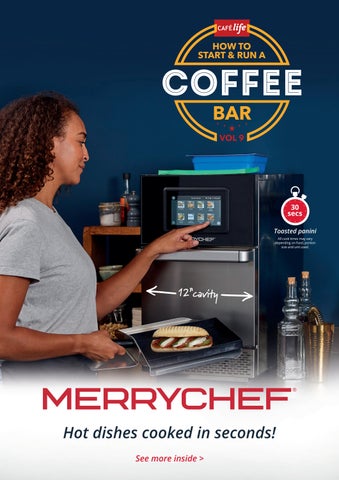
30 secs Toasted panini All cook times may vary depending on food, portion size and unit used.
12”cavity
Hot dishes cooked in seconds! See more insideHOW > TO START AND RUN A COFFEE BAR | VOL 7 26 08 Café life FRONT COVER A4.indd1 1 How_To_Vol9_2026_p01_Cover.indd
1
17/08/2026 17:07 10:56 20/08/2026
Welcome What’s always exciting about our How to… guide is that the independent café sector is as vibrant as ever. With an estimated 12,000-plus sites fighting the good fight for community connection, versatile menus and eye-catching food & drink, we believe Vol 9 is an essential advisory tool. As you can see from our contents key, we cover seven different topics – but it’s the depth of expertise and insight that I’m really proud of. We are so grateful to all of our contributors, both in terms of editorial and advertorial. So, if you are on the verge of diving into the café melting pot, we wish you the very best of luck – and just keep this copy to hand. I promise, there’s something for everyone. Enjoy and see you next year. Alex Bell – editor
HOW TO START & RUN
BAR VOL 9
HOW TO START AND RUN A COFFEE BAR | VOL 9
How_To_Vol9_2026_p02-03_Contents_G AB.indd 2
20/08/2026 17:08
HOW TO START AND RUN A COFFEE BAR | VOL 9
CONTENTS 4 Consultant Michele Young can troubleshoot with the best 6 A refurb delivers valuable insight – so we spoke to Lewisford Group 8 Fracino’s commercial espresso expertise is second to none 12 Navigate automation, while retaining the personal touch with Cimbali 16 Volcano Coffee Works explores the realities facing new independents 20 Sabert’s packaging expertise can ensure a pathway to success
TO RUN A
22 Hitting sustainability goals and labelling essentials, Planglow style! 26 Start smart with the right gear – Merrychef always delivers 28 Commercial Oven Store is all over performance at busy times 30 Skipper illustrates there are no barriers to outdoor excellence 32 Space-saving, dayparts and global flavours with Panasonic 34 Matcha Wholesale elaborates on a menu essential
R
Key TROUBLESHOOTING REFURBISHMENT COFFEE MACHINES CUSTOMER CARE ENVIRONMENTAL & PACKAGING EQUIPMENT & SHOPFITTING MATCHA
HOW TO START AND RUN A COFFEE BAR | VOL 9
How_To_Vol9_2026_p02-03_Contents_G AB.indd 3
20/08/2026 17:08
HOW TO / TROUBLESHOOTING
Question time! Consultant Michele Young is often asked what needs to be considered when opening a café, so here are her top 10 tips. Or, perhaps more accurately, the key mistakes that have already been made when she is brought in to support start-ups and concept developments. Opening a café is exciting. But there’s a big difference between having a great idea and a commercially viable, operationally sound business. Here’s what you need to get right to avoid any pitfalls during the launch period. 1. Know your audience Who are you actually creating your café for? And who is in the neighbourhood throughout the week? Your Mondayto-Friday customer may look very different from a Saturday. Understand who you’re serving before deciding what you’re serving. 2. Your place in the market Are you value-led, premium or somewhere in-between? Your positioning needs to be clear because it will influence everything from pricing and menu to design, service style and customer experience.
not enough on its own. What is your real point of difference? 4. Make sure the numbers stack up Have you built a proper master budget and financial forecast that looks at expected sales against all outgoing costs? This isn’t just about knowing whether you’ll make a profit – it helps you understand sales patterns, production levels and how much food you can realistically prepare without creating unnecessary waste. 5. Don’t underestimate the importance of working capital What is your real investment budget?
Have you allowed enough for the fitout, equipment, pre-opening costs and launch activity, with enough reserve cash to operate afterwards? There will always be an unexpected bill, a slower-than-expected opening period or something that needs fixing. Ensure you have enough financial breathing space to get through the first year. 6. Consider equipment and operational flow Have you really investigated what equipment you need or whether it can cope with anticipated volumes? A beautiful café with an undersized coffee machine, inadequate
3. Define a clear reason for people to choose you If your café was sitting side by side with a major chain or another independent, why would someone walk through your door instead? ‘Great coffee and friendly service’ is lovely but probably
4
HOW TO START AND RUN A COFFEE BAR | VOL 9
How_To_Vol9_2026_p04-05_Troubleshooting_G AB.indd 4
20/08/2026 17:09
TROUBLESHOOTING / HOW TO
refrigeration or poorly designed backof-house operation can become an expensive headache. Get the right advice early and consider how the team will actually move through the space. 7. Know the supplier mix Who is providing your coffee, bakery, fresh produce, packaging and other key ingredients? Do you have reliable alternatives if something isn’t available? Supplier selection isn’t just about price. Quality, consistency, delivery frequency, minimum order quantities and reliability matter. Regular out of stocks are frustrating, so consider ‘Plan B’ if key ingredients are not available. 8. Don’t overcomplicate the menu Especially when starting out, less really is more. Every additional item adds complexity to purchasing, stockholding, prep, training and service. Something that looks impressive on paper can quickly slow down your team. Start focused, get it right, then evolve.
9. Systems in place from day one Once you’ve defined the menu, develop the right management and reporting systems to understand what’s actually happening. You need visibility of sales, labour, food costs, waste and profitability, so you can identify shortfalls before they become expensive surprises. You also need to be fully compliant with legislation around allergens and health & safety. 10. Recruitment & training The team will ultimately deliver the experience you’ve designed. Make sure roles and responsibilities are clearly defined, employment contracts are in place and your people have the training, tools and support they need. An exceptional customer service can’t be delivered if you haven’t equipped them properly or clarified the desired cultural requirements. My biggest takeaways? Your proposition needs to meet the needs of your intended audience.
●
The numbers have to stack up so you can make a profit. ● The operation must deliver your promise consistently. ●
A great café concept isn’t just about the coffee, interiors or Instagrammable counter – it’s about creating something people want, building a business that works and having a team that can execute it brilliantly. Michele Young is director of Foodservice Support Ltd, working with brands and businesses across the café, QSR and casual dining sectors with growth programmes, concept development and national and international expansion. The business also provides project management and interim assistance delivering initiatives, managing change and keeping projects moving from strategy through to successful execution.
HOW TO START AND RUN A COFFEE BAR | VOL 9
How_To_Vol9_2026_p04-05_Troubleshooting_G AB.indd 5
5
20/08/2026 17:09
HOW TO / REFURBISHMENT
A cunning plan!
Café refurbs are an ideal behind-the-scenes look at all aspects of running an operation. Sarah Barnard, business development director at Lewisford Group, shares her expert tips on the ins and outs. 1. Budget, timeline and constraints Gaining a clear understanding of these three areas is essential from the outset. This allows the team to shape a tailored project plan that delivers maximum value, ensuring every decision is aligned with the client’s priorities. 2. It all starts with the menu A big mistake is designing the space before fully defining the offer. The menu dictates equipment, preparation areas, storage requirements, service style and ultimately how people experience the café. Whether it’s speciality coffee, grab-and-go food or a premium afternoon tea offer, the menu should be the blueprint that guides every decision.
4. Design for peak trade Your quiet Tuesday morning shouldn’t dictate your layout. Plan for weekends, school holidays and Christmas when you will be at your busiest. 5. Create natural upsell moments From cakes and pastries at the counter to retail coffee, sandwiches and those all-important seasonal promotions, every café or coffee house has opportunities to increase spend per head. Thinking about where and how these products will be displayed during the planning stage ensures they become a natural part of the customer journey rather than an afterthought.
3. Consider customer flow Think about how people will queue, collect food and drinks and move through the venue. Also, identify any points where they may pause or hesitate, as this can affect overall experience. Customers should instinctively know where to go next, without needing signs to tell them. Good flow creates a better experience and supports efficient service.
6
HOW TO START AND RUN A COFFEE BAR | VOL 9
How_To_Vol9_2026_p06-07_Refurb_G AB.indd 6
20/08/2026 18:03
REFURBISHMENT / HOW TO 6. Think practically A café isn’t just created for customers. Employees and staff need to be considered too. The best-looking counter is no good if staff can’t move efficiently behind it. Considering workflow, storage, equipment and ease of service from the outset pays dividends long after a refurb is complete. 7. Use bespoke where it matters Made-to-measure counters and joinery can maximise awkward spaces and improve workflow, so are usually worth the additional investment. 8. Respect the location Customers value experiences that feel authentic. Heritage and destination venues should celebrate what makes them unique. The best café formats don’t compete with their surroundings, they complement them. 9. Future-proof the investment The sector is always evolving, so build a space that can adapt
to menu changes, technology and shifting customer habits. Also, think long term. Floors, counters and wall finishes need to withstand years of traffic, spills and cleaning. 10. Simplify project management Refurbs are challenging enough without having to coordinate multiple suppliers, contractors and traders. A single point of contact keeps communication clear, reduces delays and ensures every element of the build is working towards the same vision.
Lewisford Group is a family-run specialist in commercial fit-out, bespoke joinery and catering equipment. With more than 70 years of experience, the team delivers spaces for hospitality, leisure and retail clients. With two specialist divisions – Lewisford Construction and Lewisford Equipment Solutions – design, joinery, build and equipment are all under one roof in their head office and workshop facility in Hampshire.
HOW TO START AND RUN A COFFEE BAR | VOL 9
How_To_Vol9_2026_p06-07_Refurb_G AB.indd 7
7
20/08/2026 18:03
HOW TO / COFFEE MACHINES
GET IT RIGHT FIRST TIME Fracino has been hand-building commercial espresso machines in Birmingham since 1990, and is still the only manufacturer in Britain doing so. Here, the head of global sales and marketing, Peter Atmore, shares what he has learned about specifying equipment for independents – and where new entrants fall short. What are the major considerations when purchasing a machine? Not, ‘how many groups do I need?’ Instead, ‘what does my worst 20 minutes look like?’ Almost every specification error we see comes from operators sizing a machine against their daily average rather than their peak. Around 200 covers spread evenly across 10 hours is a very different machine from one dealing with 90 arriving between eight and nine in the morning. It is the peak that determines whether your steam pressure holds, whether the queue moves and whether your team spends the rush apologising or excelling. FIVE KEY QUESTIONS: 1. What is the local water like? This is the single most consequential and least asked question in the category. Water hardness varies enormously, and scale is the leading cause of premature machine failure – it also invalidates most warranties. Get your supply tested before you choose a machine, not after. Filtration is not an accessory to be added later; it is part of the specification. This is one investment guaranteed to save you money over the first five years, by avoiding the need for descales when managed properly. Water that’s too hard will damage your equipment – but so too will water that’s too soft!
8
2. What power level can my electrical supply provide/accommodate? Available electrical capacity, phase and the position of your incoming water and waste will constrain options more than your budget. Establish this at the earliest design stage. Moving a drain after fit-out is an expensive way to learn. 3. Who fixes it – and how quickly? Ask where engineers are based, where spares are held and the lead time on a common failure. A machine out of action for a fortnight in week three of trading isn’t a technical problem; it’s a catastrophic business problem. 4. What does it cost over 10 years? Purchase price, energy consumption, servicing, parts, annual steam boiler certification, water filtration and the cost of any downtime. The cheapest machine on the counter is rarely the cheapest machine in the account’s ledger. If your supplier can’t help you with this information, run a mile.
5. Traditional, hybrid or bean-to-cup? This is the biggest fork in the road, and I would encourage you to analyse your rationale carefully before you decide. For most independents, a traditional machine is the answer – and I say that as someone whose company offers all solutions. Your customers walked past a chain to reach you, and a good part of what they came for happens at the counter: the grind adjusted through the day, milk textured by hand, a person who knows the order. A traditional system gives you a higher ceiling on cup quality, the freedom to move between beans and roast profiles as the season and price of green coffee dictate, and a visible point of difference that automation cannot manufacture. It is also, group for group, the more economical machine to buy and the more straightforward one to keep serviceable over a long life. But there are service models where
HOW TO START AND RUN A COFFEE BAR | VOL 9
How_To_Vol9_2026_p08-11_Fracino_G AB.indd 8
20/08/2026 17:09
COFFEE MACHINES / HOW TO
automation is the commercial answer. If your trade is predominantly takeaway with low dwell time; if you run long hours on thin or high-turnover staffing; if the quality of the 7 o’clock flat white depends on who happened to open up; or if you are adding a secondary service point at a bakery counter, coffee in a QRS takeaway, a hotel breakfast or a self-serve station – then a bean-to-cup will outperform an undertrained team on a traditional machine. The question is not which system is better. It is which one your service model can sustain. If serving 100 drinks per day, with a peak hour of 30 drinks per day, what’s the best machine? A tried-and-tested solution is the Fracino 2 group Bambino Electronic Traditional espresso machine paired with a Kenia-tron On Demand grinder. This simple to operate and easy to clean two group machine is plug and play with its 13 amp power requirement. Sassy and reliable, it leaves enough in the budget to pair with a powerful on-demand grinder.
chains, with greater economies of scale. Arabica futures spiked through 2024 and have stayed elevated, and staff costs now absorb 30-40% of revenue at a typical independent. That pressure is reshaping what operators want from equipment. Three shifts stand out: Cold is no longer seasonal. Iced drinks have moved from a summer line to a default order for younger customers, with iced lattes and frappes occupying permanent menu space and cold brew and nitro systems appearing in independent cafés. Ideally, you want a second service path that does not collide with the espresso station. ● Non-coffee carries serious revenue – matcha is driving record sales. Hot on its heels is Hojicha, a Japanese, roasted green tea. If a meaningful share of your drinks is matcha, chai or hot chocolate, perhaps your ●
steam and hot water demand is not what your espresso machine was sized for. Upgrade with purposebuilt steam and hot water systems made here in Birmingham. ● Automation has earned a second look. Bean-to-cup systems are increasingly visible, with improved milk operations and compact commercial models. For an operator fighting a wage bill, it is a legitimate answer for the right service model, rather than an automatic compromise. High-cost European systems are being price challenged by competent Asian machines. For a sit-in independent trading on craft and personality, though, it remains the wrong tool for the main counter. Technological advancement is exciting. Would you agree? Yes – it can eliminate traditional pinch points of the barista process: grinding accurately, dosing to recipe, tamping
What trends are you seeing? The sector is growing, while operators are being squeezed. World Coffee Portal’s Independents Report UK 2026 puts the market at 13,211 outlets, up 3.3% over 12 months. But these businesses are more exposed to price inflation than branded
HOW TO START AND RUN A COFFEE BAR | VOL 9
How_To_Vol9_2026_p08-11_Fracino_G AB.indd 9
9
20/08/2026 17:09
HOW TO / COFFEE MACHINES
the correct downwards pressure, brewing at optimised extraction temperatures and milk steaming. It used to be that on-demand grinders were a trend; now they are defacto – and those that accurately measure the weight of the coffee being ground. New automatic tamping devices like the original Puqpress, which now has healthy competition, are worth a look. Often, a pressured tamped puck of 16g can make better coffee than 18g of poorly tamped coffee. There’s a saving to be made in accurate measures and consistent tamping. Lastly, is energy efficiency. An element might be on 33% of the working day, so make sure you have a decent thick boiler (Fracino do them!) and specify the right element for your operation, not just the right machine. Before paying for any piece of technology, assess consistency in the cup, speed at peak service and cost over the life of the machine. The grinder is often where the money buys the most cup quality. It is routinely under-specified, while the espresso machine gets all the attention and most of the budget.
compact single-group traditional machines to multi-group systems for high-volume sites – and more recently, fully automated bean-tocup systems for the operators who need them. Because of our diverse portfolio, we have no reason to steer you towards one answer. 2. Factory support. Everything from our traditional and hot water boiler range is built in Birmingham, so spares, engineers and technical advice come from the people who made the machine rather than from an importer’s warehouse. 3. Flexibility as you grow. Our dual fuel machines run on LPG as readily
How can Fracino help new operators? 1. Advice, insight and expertise. We would far rather have a conversation about your site, peak service, water and staffing model than send you a catalogue. Our range runs from
10
as mains electricity, which means a pop-up, market pitch, festival or outside catering booking becomes possible without a generator or temporary supply. For an independent looking for revenue beyond the four walls, that is a genuinely useful option. We built a waffle and panini machine simply to support our mobile catering clients. But whichever system you choose, build barista training into your opening plan and budget, rather than treating it as something to sort out later. It is the cheapest performance improvement available to a new operator, and the one most often skipped. A good coffee roaster will always offer such a service. With proper planning and true supply partnership, you can aim for sustainable and profitable success, removing large service or replacement costs within your first five years, while being resourced for current and future drink tends perfectly. Always ask questions, take advice, get hands on and choose an eager, trusted supplier.
COMMON MISTAKES Ignoring the water filtration. It remains number one and is entirely avoidable. ● Treating training as a launchweek activity. A modest machine operated well beats an excellent machine operated badly, every single day. Train, train, revisit and retrain. ● No maintenance rhythm. Daily backflushing, cleaning schedules, filter changes booked in the diary rather than remembered. Most emergency callouts we attend are the accumulated result of skipped routine. ● Leaving equipment to the end of the design process. Get your designers/builders/ architects dialled in early, with machinery on the blueprint. ● Buying used without service history. The saving is real but so is the risk. ●
HOW TO START AND RUN A COFFEE BAR | VOL 9
How_To_Vol9_2026_p08-11_Fracino_G AB.indd 10
20/08/2026 17:09
NEWS R
GRINDERS
ESPRESSO MACHINES
Equipment Solutions For Coffee Bar Operators
WARE WASH ICE MAKERS
An extensive range of Grinders to suit every venue and user preference..... Stylish Design? Quiet Operation? Easy To Use? Touch Control? On Demand or Dispenser? There's a model for you here!
The touch-panel Romano-R model with real wood handles and led edge lighting reflects a modern interpretation of style that makes for a stunning, yet timeless focal point in any coffee bar or restaurant. The black and highly polished stainless steel finish looks awesome from every angle!
Our range of Glass & Dish Wash Equipment and Under Counter Ice Makers are designed to fulfill the demands of all coffee bars - large and small. Powerful, reliable and compact, they surpass at performing the menial tasks they're produced for - year in, year out!
• A Pedigree of Award Winning Innovation and Contemporary Design • Engineering Technology with Reliability and Simplicity as Standard • The Perfect Choice For Every Coffee Bar
For product advice and details of your nearest distributor:
0121 328 5757 | sales@fracino.com | www.fracino.com THECAFELIFE.CO.UK | CAFÉ LIFE 11
How_To_Vol9_2026_p08-11_Fracino_G AB.indd 11
20/08/2026 17:09
HOW TO / COFFEE MACHINES
Passionately purpose-built
It’s a challenge to navigate the latest automation, while retaining that personal touch. Maxime Herbaut, head of sales & customer experience at Cimbali Group UK, understands that keeping your patrons front of mind is essential. THINKING AHEAD In today’s highly competitive market, operators should view coffee equipment as a strategic long-term investment, rather than simply a capital purchase – aligning with the business model, anticipated beverage volumes,
12
operating environment and skills of the team on-site. Consumers expect exceptional quality and consistency, so the ideal solution should deliver reliability, ease of use, operational efficiency and the flexibility to support future growth. Equally important is looking beyond the machine itself and evaluating the support network behind it. Comprehensive training, responsive aftersales, preventative maintenance programmes and access to technical expertise significantly impact performance, satisfaction and longterm profitability. In many cases, this is just as valuable as the equipment itself. And too often, equipment is purchased solely on price, rather than overall value and long-term return on investment. While capital cost is a necessary consideration, greater operational expenses down the line have to be assessed. It’s also common to under- or over-specify equipment requirements. A machine that cannot comfortably handle peak demand may impact service speed and consistency, while unnecessary functionality adds complexity you really don’t need.
SUPERA SONIC The coffee industry is evolving rapidly, with consumers looking for elite beverages, variety, speed and consistency across every channel. At Cimbali Group, our response is a significant investment in innovation, automation, digital connectivity and customer experience. Our latest platform, the LaCimbali Supera, has been developed specifically to help cafés and coffee houses deliver premium experiences, while simplifying daily operations. Today’s out-of-home coffee market demands solutions that deliver fast service and flexibility. Supera has been designed as a next-generation, fully automatic platform, offering espresso quality comparable to a traditional
HOW TO START AND RUN A COFFEE BAR | VOL 9
How_To_Vol9_2026_p12-15_Cimbali_G AB.indd 12
20/08/2026 17:11
COFFEE MACHINES / HOW TO
machine, even in high-volume environments. Its modular architecture can adapt to a wide range of venues – from coffee shops and QSR chains to hotels, convenience stores and the growing petrol station sector. As preferences evolve, Supera also supports demand for diverse menus, including plant-based beverages and cold drinks. Technologies such as Dynamic Thermodrive temperature management, the Perfect Grinding System and High Quality Milk (HQM) system have control, recipe flexibility and consistency at their core. Featuring dairy and plant-based milk circuits, HQM eliminates the risk of crosscontamination, enabling you to expand the beverage offering with confidence. Beyond product innovation, we continue to invest in training, technical expertise and aftersales. Success in today’s market is built on partnership; supporting customers from equipment selection and installation, through to ongoing backing. PERSONAL TOUCH Baristas remain at the very heart of the coffee experience and should be a central consideration in any equipment decision. Technology needs to empower teams, not replace them. The most effective solutions are those that simplify workflows, reduce repetitive tasks and allow baristas to focus on what they do best: creating exceptional coffee and meaningful customer relationships. At Cimbali Group, our mission is to make the barista’s role easier, while preserving the skill, creativity and human connection that make the industry so unique. The best results come from combining talented people with the right technology. And finding that balance depends on the operational concept and beverage volumes. For smaller venues, offices and locations where space is limited, solutions such as the LaCimbali S-Lite and S15 provide a compact, easy-to-use option. For busier sites requiring broader menus or greater
automation, LaCimbali Supera offers flexibility, consistency and customisation through its modular design. For high-footfall environments where speed is critical but operators still want a barista-led experience, LaCimbali S60 provides a balance between productivity and craftsmanship. With its innovative Dual Boiler and Carousel technologies, the S60 is renowned for the efficiency of a fully automatic machine, with the engagement and theatre of a traditional set-up. Built for specialty coffee shops, premium cafés and high-end venues, LaCimbali M40 combines advanced technology, connectivity and consistency. Its innovative thermal system ensures precise temperature stability and extraction, while improving energy efficiency. An Intelligent Traditional Coffee Machine, the M40 enhances the barista expertise rather than replacing it. Through the Art.In.Coffee IoT platform, users can monitor the machine in real time, while the Barista Drive System (BDS) and Perfect Grinding System (PGS) automate recipe recognition and grinder adjustments. Ultimately, the UK coffee remains
one of the most dynamic sectors in hospitality. While competition increases, there are opportunities for operators who differentiate themselves through exceptional coffee and outstanding customer experiences. Our advice is simple: invest in quality, choose trusted partners rather than simply suppliers and never lose sight of the end customer.
HOW TO START AND RUN A COFFEE BAR | VOL 9
How_To_Vol9_2026_p12-15_Cimbali_G AB.indd 13
13
20/08/2026 17:11
How_To_Vol9_2026_p12-15_Cimbali_G AB.indd 14
20/08/2026 17:11
NEWS
THECAFELIFE.CO.UK | CAFÉ LIFE 15
How_To_Vol9_2026_p12-15_Cimbali_G AB.indd 15
20/08/2026 17:11
HOW TO / CUSTOMER CARE
Rules of engagement
Emma Loisel, executive chair at speciality coffee roaster Volcano Coffee Works, explores the realities facing independents – from customer expectations and rising costs to signature drinks and automation. BUILDING BLOCKS For independent cafés, consistently good coffee remains essential. But in an increasingly competitive and costconscious market, quality alone is no longer enough to guarantee success. With customers scrutinising where they spend their money, premium coffee still has a place, but the quality and experience need to clearly justify
the price. For new and established operators, success depends on creating memorable experiences and building a commercially sustainable operation. The first step is to understand that ‘better coffee’ means different things to different people. Taste is highly personal and evolves through experience. An espresso customer may expect something rich, chocolatey and
intense, while a different person wants something bright and fruit-driven. These are preferences and expectations of what great coffee tastes like – but how coffee is described and presented can be just as important as the product. Customers should be able to understand what they are ordering, without needing specialist knowledge. For most cafés, that means starting with a clear, core coffee that appeals to the broadest possible audience. More distinctive processing methods and flavour profiles can be introduced later in an approachable way. Operators also need to remember that they are building a hospitality business. Cafés fulfil many needs, from convenience and remote working to socialising and relaxation. Coffee is only part of the value customers buy, so the atmosphere, service and overall experience matter just as much. SPECIAL SIGNATURE Traditional speciality coffee often communicates value through origin, processing methods and quality scores. While these are important, the signals
16
HOW TO START AND RUN A COFFEE BAR | VOL 9
How_To_Vol9_2026_P16-17_Volcano_G AB.indd 16
20/08/2026 17:12
CUSTOMER CARE / HOW TO
can be largely invisible to anyone outside the industry. Conversely, signature drinks are more commercially compelling and make that value more tangible. Customers can see the creativity, ingredients and craftsmanship, giving independents an opportunity to respond to wider trends to entice custom. Furthermore, signature drinks are becoming a pillar of speciality coffee menus around the world, delivering increased spend and gross margin, while creating something distinctive that cannot be easily replicated by the café next door. And in terms of Volcano Coffee Works, independents are fundamental to what we do. We focus on being a wholesale partner rather than building a large retail estate, as we believe our greatest value comes from supporting cafés and hospitality businesses. With our success directly linked to theirs, we focus our people, investment and expertise on helping partners grow through coffee, equipment, technical services, training, menu development, seasonal drinks and marketing. For us, wholesale is more than a sales channel; it is an investment in the long-term success of those we support. PEOPLE FIRST With rising rents, energy costs, wages and business rates, operators face a challenging trading environment. At the same time, consumers have more choice than ever. Larger cities are already densely saturated, making it increasingly difficult for new businesses to stand
Credit: Charlie McKay
out. Recruiting and retaining good people also remains challenging. And coffee alone is rarely enough to sustain a successful café. Food, retail products and additional revenue streams are important to generate success but can also introduce complexity, cost and operational risk. But there’s enormous opportunity – and it comes down to understanding the customer. The best cafés are those that consider value from their perspective, rather than relying solely on the industry’s traditional definition of speciality coffee. Independents have a real opportunity to innovate around experience, relevance and hospitality, while remaining closely connected to the communities they serve. Another key consideration is the barista, as visible craftsmanship is key. Our philosophy is to automate the invisible tasks, while preserving the craftsmanship and hospitality that gives a café its character. Automation should absolutely be adopted where
it improves consistency, tamping, quality and efficiency. This gives baristas time to do what machines can’t, including welcoming customers, making recommendations and creating an experience. In addition, customers value seeing care and skill go into what they are buying. In settings where coffee preparation takes place away from the customer, such as hotels or restaurants, expertise is still valuable, to help guests navigate different choices. When it comes to the future, coffee has never been more competitive. The successful independents we see truly understand the customer, and value their perspective rather than the industry’s. Their advantage lies in being personal, relevant and connected. That said, technical expertise also remains important – but creating better experiences is where the future of coffee will ultimately resonate. For info: volcanopr@bwpgroup.com.
HOW TO START AND RUN A COFFEE BAR | VOL 9
How_To_Vol9_2026_P16-17_Volcano_G AB.indd 17
17
20/08/2026 17:12
HOW TO / FEATURE
TRANSFORM EXPERIENCE the coffee experience with MYTICO WITH MYTICO 4
HOW TO START AND RUN A COFFEE BAR | VOL 9
How_To_Vol9_2026_p18-19_Franke.indd 4
20/08/2026 17:12
e
FEATURE / HOW TO
MYTICO: Tradition Meets Contemporary
Whether it’s the energising lift of a morning espresso, the calming comfort of a late-night decaf, or the indulgent richness of a velvety hot chocolate, Mytico delivers a flawless experience, cup after cup.
At the heart of this perfection is iQFlow™, Franke’s intelligent coffee extraction technology. It unlocks deeper aromas, fuller body, and richer flavour profiles, ensuring every drink is crafted to five-star standards – no matter what your customers order.
But Mytico isn’t solely about taste; it's also about smart performance. With Franke Digital Services (IoT), you gain real-time visibility across your entire machine fleet. Monitor popular drinks, identify peak service hours, and make data-driven menu adjustments to maximise your ROI.
And when it comes to Mytico maintenance, you’re never alone. With over 100 Franke engineers across the UK and Ireland, expert support is always just a call away.
Discover more at uk.franke.coffee
How_To_Vol9_2026_p18-19_Franke.indd 5
HOW TO START AND RUN A COFFEE BAR | VOL 9
5
20/08/2026 17:12
HOW TO / ENVIRONMENTAL & PACKAGING
Responsible resilience Ensuring you make the right choices is the pathway to success, says Sabert Corporation Europe senior vice president and MD, Alex Noake.
COMMERCIAL REQUIREMENT Running a successful coffee shop has never been more demanding and the recipe for success has evolved. Operating costs are more important than ever, with margins under pressure. Customers expect premium quality, while governments expect ever higher environmental standards. Packaging sits at the intersection of all four. Great coffee, service and an inviting atmosphere remain essential but operators are also expected to demonstrate environmental responsibility. Sustainability is no longer a marketing initiative; it’s a commercial requirement that influences cost, customer loyalty, regulatory compliance and profitability. This means making packaging decisions that remain fit for purpose as legislation and infrastructure develop. Packaging is no longer a commodity purchased on unit price alone. As one of the most visible touchpoints with customers, it must protect food & drink,
20
deliver a premium experience and work within existing recycling systems. It also influences efficiency and the long-term resilience of the business. People are discerning about the environmental impact of the businesses they support. They want evidence that cafés make responsible choices – recyclable or reusable cups, reduced unnecessary packaging or simplified recycling. Communicating these decisions helps customers become part of the sustainability story, strengthening trust and reinforcing brand values. But sustainability extends beyond the products – it also depends on what happens after packaging leaves the counter. However, too many businesses still buy packaging on unit price alone. Increasingly, this approach can be too narrow. The cheapest pack at purchase can become the most expensive once waste costs, compliance, customer perception and future legislation are taken into account.
KEEPING IT SIMPLE The introduction of Simpler Recycling legislation in England in March 2025 marked one of the biggest operational changes for the catering sector in recent years. Businesses with more than 10 employees are now required to separate ‘recycling relevant waste’ before collection, including glass, metal, plastic, paper and card, alongside food. From March 2027, these requirements will extend to operations with fewer than 10 employees, making compliance a reality for virtually every café. While the legislation introduces new responsibilities, it also provides an opportunity to improve waste management. Clearly labelled, wellpositioned recycling stations make it easier for customers to dispose of waste correctly, while effective staff training ensures recycling becomes part of everyday operations rather than an additional burden. Packaging choices are fundamental to making these systems work. Products that align with infrastructure are becoming just as important as cost or appearance. And recycling is only one aspect of the wider picture. Packaging Extended Producer Responsibility (pEPR) transfers 100% of the financial burden of managing waste to the business that places it on the market. For cafés, this could mean greater reporting requirements, higher costs being passed down, increased scrutiny and stronger incentives to specify materials that minimise environmental costs. Also, the EU’s Packaging and Packaging Waste Regulation (PPWR) is driving innovation. Although UK
HOW TO START AND RUN A COFFEE BAR | VOL 9
How_To_Vol9_2026_p20-21_Sabert_G AB.indd 20
20/08/2026 17:12
ENVIRONMENTAL & PACKAGING / HOW TO
businesses are governed by domestic legislation, many manufacturers supply international markets, meaning PPWR is influencing development. Mandatory reusable targets, requirements for all packaging to be recyclable by 2030 and restrictions on certain materials are shaping the future. FINDING ALIGNMENT Rather than reacting to change as it arrives, forward-thinking operators are choosing packaging platforms that will remain compliant for years to come. One material group receiving attention is per- and polyfluoroalkyl substances (PFAS). Providing grease and water resistance in takeaway cups and food packaging, these chemicals are facing restrictions because of their persistence in the environment. Café operators should work with suppliers to ensure products don’t contain intentionally added PFAS and are supported by recognised certifications. This changing landscape reinforces the importance of designing products
with their entire lifecycle in mind. Material sourcing, functionality, recyclability, certification and end-oflife outcomes have to be considered. Ultimately, sustainable packaging needs to keep drinks hot, prevent leaks, protect food, support service, minimise waste and remain commercially viable – while fitting into existing workflows and recycling systems. Our approach is to embed sustainability throughout the entire product lifecycle – and collaboration is equally important. By working closely with customers, suppliers, industry bodies, policymakers and the waste management sector, we can help ensure solutions align with existing infrastructure, while supporting the transition to more circular systems. Cafés that invest in operationally effective, future-ready options today will reduce risk, strengthen customer trust and ensure they are better equipped for whatever comes next. For more information, visit sabert.eu.
Expanded portfolio. Greater expertise. More possibilities. EXPLORE THE NEW
SABERT
CATALOGUE
www.sabert.eu
HOW TO START AND RUN A COFFEE BAR | VOL 9
How_To_Vol9_2026_p20-21_Sabert_G AB.indd 21
21
20/08/2026 17:12
HOW TO / ENVIRONMENTAL & PACKAGING
&
Logic preparation
Rachael Sawtell, Planglow’s marketing director and co-owner, offers invaluable insight around sustainability goals, labelling essentials and the importance of planning ahead. What are the key questions new operators should be asking around environmental requirements? Before speaking to suppliers, you should define what sustainability means to them and identify any practical barriers to achieving those goals. The most effective environmental decisions balance customer expectations with operational realities and how these fit within budgets and local infrastructure. What are my sustainability goals and what do my customers expect? ● What budget, space and resources do I have for packaging and waste management? ● What waste disposal services are actually available to me locally? ● How will my products be sold, ●
22
displayed and consumed, and what packaging will this require? ● How will waste be separated and managed by staff and customers? ● What environmental legislation and requirements do I need to plan for? ● Are there opportunities to collaborate with neighbouring businesses to improve efficiency or reduce costs? What do new businesses often fail to consider and how can you help? A major challenge is staffing. It’s common for café owners to interview dozens of candidates before finding the right people. Recruiting early is essential, as are contingency plans in case team members get work elsewhere before you actually open. Training is equally important. Every
member of staff should understand their responsibilities around food safety and allergen management, with clear procedures from day one. Labelling is a crucial aspect, helping businesses comply with legislation, while giving customers confidence in what they’re purchasing. We offer free labelling consultations to explain obligations and put compliant systems in place. Another consideration, particularly when taking over an existing hospitality site, is the expectations of the previous customer base. A venue known for leisurely cream teas may not attract the same audience if it becomes grab-and-go. Consider how to position your offer and the opportunities to retain existing business. A common mistake is over-extension on fit-out costs. It’s very easy to focus on
HOW TO START AND RUN A COFFEE BAR | VOL 9
How_To_Vol9_2026_p22-25_Planglow_G AB.indd 22
20/08/2026 18:26
ENVIRONMENTAL & PACKAGING / HOW TO
premium countertops, designer lighting or expensive tableware and overlook staffing, equipment maintenance and seasonal fluctuations in demand. Packaging and labelling are often sorted last minute. Operators spend months perfecting the café’s look, only to forget about allergen compliance and product display. And all this beautifully made food ends up wrapped in basic bags, with handwritten labels, that don’t reflect the quality of the brand they’ve worked so hard to create. The biggest regret we hear is: ‘I wish I’d thought about packaging and labelling sooner.’ This is especially true for businesses that want bespoke branded packaging but underestimate the lead times involved. When planning budgets and opening schedules, allocate funds for packaging and labelling from the outset. If you want bespoke branding, you’ll typically need three to five weeks for printed labels and up to 16 weeks for custom packaging, plus time for design and approvals. We offer solutions for most budgets, including off-the-shelf, pre-branded packaging and customisable labels, dispatched the same day they’re ordered. For those on tight deadlines or with limited budgets, branded labels and stickers can be a simple, cost-effective way to add personality, professionalism and compliance.
their heads in the sand, but it doesn’t have to be a nightmare. We’ve made compliance – and labelling in general – very simple and easy with our app, where you create online, then print using your roll or desktop printer. I wouldn’t recommend leaving labelling until the last minute, but if you do, the reality is we get people up and running very quickly. How important are environmental considerations to the consumer? This varies hugely depending on location and customer base. Research what matters to customers and consider how this aligns with your own environmental goals. The reality is consumers usually focus on the food or drink first. Whatever you offer, it should be made to the highest
possible standard, with packaging and presentation that support its quality. Brand story and perceived value are also important, and environmental goals can form part of both. Whether your father was a pastry chef, you fell in love with sandwiches backpacking around Sicily or you love good coffee, tell that story through your brand. When communicating the environmental aspects of your café, remove as many barriers as possible. Customers generally want to do their bit and see that businesses are doing the same – but it shouldn’t complicate their lives or make them feel as though they are getting something wrong. Make processes such as waste disposal simple, provide clear instructions and help customers feel positive about taking part.
Good packaging influences first impressions and adds value – correct? If new operators are overwhelmed by labelling compliance, they’ll often bury
HOW TO START AND RUN A COFFEE BAR | VOL 9
How_To_Vol9_2026_p22-25_Planglow_G AB.indd 23
23
20/08/2026 18:26
HOW TO / ENVIRONMENTAL & PACKAGING
"a strong brand identity is essential, as it tells people who you are, what you’re about and attracts new business."
Returning custom is key in this sector. What’s the best approach? Outstanding service and innovation where possible – even with something as simple as choice of condiments or adding a twist to presentation. You don’t have to reinvent the wheel but do whatever you’re doing to your very best, priced appropriately for the customer base. A strong brand identity is essential as it tells people who you are, what you’re about and attracts new and repeat business. If you don’t have the budget for multiple bespoke products, the branded takeout bags or coffee cups speak volumes. Where budgets are really tight, a branded sticker applied to a plain product offers a costeffective alternative. Loyalty cards are another way to boost return custom. And you might want to look at incentivising Google reviews or tagged posts on social media through a free coffee, cookie or something similar.
and coffee shops are also subject to Natasha’s Law, which states that all foods Pre-Packed for Direct Sale (PPDS) – such as sandwiches, salad pots or cakes packaged on-site before being chosen by the customer – must carry a full ingredients list highlighting the presence of 14 regulated allergens. As mentioned above, our app, LabelLogic Live, has been designed specifically for providers in foodservice settings. You’re using all your existing
kit, nothing specialist, and it’s available for as little as £15 per month. This includes full access to all features, so you can create nutritional values and QUIDs, highlight allergens, add logos and anything else you require. You also need to be aware of packaging waste and recycling requirements, including Extended Producer Responsibility (EPR) and the move towards simpler recycling systems. Clear disposal instructions and strong environmental credentials support compliance and expectations. Our new flagship packaging and labelling range – Back to Nature – includes certified compostable and recyclable products. We look to bypass restrictions, while offering solutions anywhere in the UK.
C
M
Y
CM
MY
CY
CMY
K
In terms of govt legislation, what are major areas of consideration? The main one is the Food Information Regulations, requiring prepacked food to display key info – including product name, ingredients, allergen declarations, storage instructions and use-by dates where applicable. Cafés 24
HOW TO START AND RUN A COFFEE BAR | VOL 9
How_To_Vol9_2026_p22-25_Planglow_G AB.indd 24
20/08/2026 18:26
NEWS
C
M
Y
CM
MY
CY
MY
K
THECAFELIFE.CO.UK | CAFÉ LIFE 25
How_To_Vol9_2026_p22-25_Planglow_G AB.indd 25
20/08/2026 18:26
HOW TO / EQUIPMENT & SHOPFITTING
Starting smart Alistair Farquhar, director, national key accounts UK & Ireland at Welbilt UK, is perfectly placed to deliver an essential equipment guide. FLEXIBILITY IS KEY Opening a coffee bar is exciting but early equipment decisions have a lasting impact on efficiency and profitability. With budgets tight, space at a premium and operators learning how customers will use the venue, the goal should be to create a simple, flexible setup that supports the menu, team and commercial ambitions. You need to be clear about what the venue is delivering. What will the menu look like? Which dayparts is the business serving? How many customers could arrive during peak periods? Will food be prepared from scratch or is the focus on dishes finished to order? Also, who is using the equipment? New coffee bars often rely on small, multi-role teams, with the same people taking orders, preparing drinks and serving food. Staff turnover is high, so equipment needs to be intuitive deliver reliable results without extensive training. Merrychef conneX® high speed ovens meet these requirements via touchscreen controls, visual instructions and pre-programmed profiles. Space, power, ventilation, drainage and cleaning requirements should also be assessed early. OVER THE TOP A common mistake is over-specification. It’s tempting to buy the most advanced appliance or several pieces of equipment for cooking tasks, without knowing how much of that capability the business will realistically use. Every appliance should justify the space it occupies and contribute directly to the menu. Compact, 26
multifunctional equipment is often a stronger choice because it allows operators to achieve more from a smaller footprint, while retaining flexibility to evolve the offer. The Merrychef conneX® range combines microwave energy, convection heat and impingement airflow in one unit. Cook, toast, grill and reheat, without installing separate appliances for each task. Its ventless, plug-and-play design makes it possible to introduce hot food where a traditional kitchen setup or external extraction may not be practical. The conneX®12 is well suited to cafés and other space-conscious operations. Its compact footprint fits front or back of house, while supporting different menu categories and dayparts. A SIMPLE PLAN Introducing food does not mean becoming a full-service restaurant. A small, well-executed menu can create an additional revenue stream, increase average spend and give customers another reason to stay for longer. A focused menu is also easier for a new team to manage. Ingredients across several dishes can simplify stockholding, while cooking little and often helps you respond to demand and reduce waste. The Merrychef conneX®12 cooks a toasted sandwich in as little as 40 sec, reheats a sausage roll in 60 sec or reheats a jacket potato in 75 sec. This enables teams to serve hot food quickly, without
creating lengthy queues or placing unnecessary pressure on employees during busy periods. GUARANTEED CONSISTENCY Recruiting experienced chefs may not be practical – equipment must remove as much guesswork as possible. The conneX® range helps different team members produce the same result. We often say that if you can use a smartphone, you can use a Merrychef oven. We also support operators via Ready Recipes, offering tested menu ideas and downloadable recipe cards. Food Suppliers extends this platform by connecting operators directly with suppliers offering packaged, portioncontrolled products, tested and validated by Merrychef. In conclusion, customer preferences, popular dayparts and best-sellers will become clear, so equipment should offer the flexibility to respond, without further investment. A multifunctional oven enables you to test products and try seasonal dishes from the same footprint. KitchenConnect® also makes it easier to update menus, monitor performance and maintain consistency. Check out merrychef.com.
HOW TO START AND RUN A COFFEE BAR | VOL 9
How_To_Vol9_2026_p26-27_Merrychef_G AB.indd 26
25/08/2026 09:50
All m
NEWS
If you’ve enjoyed reading How to Start & Run a Coffee Bar...
...you might like our other publications. August 2026 | Issue 235
www.thecafelife.co.uk
Tasting the lifestyle of the café sector
No.128 I Spring 2026
www.sandwichandfoodtogonews.co.uk
ISSUE 224 | JULY/AUG 2026
& Italian food magazine
Authentic appearance. Exceptional taste
TWIST UP
your menu
Unlock a new layer of flavour
Stay ahead of trends
Maximise menus all year round
with SIMPLY Twist
www.durumcompany.com
Café Life_128_Spring26_p01.indd 1
26/02/2026 14:56
S&FTG_224_July26_p01.indd 1
www.endosfood.co.uk
“together we go far” 26/06/2026 13:03
235_P&P_Aug26_p01_G.indd 1
29/07/2026 13:57
Visit jandmgroup.co.uk to subscribe to our magazines.
THECAFELIFE.CO.UK | CAFÉ LIFE 27
How_To_Vol9_2026_p26-27_Merrychef_G AB.indd 27 All mags - Cafe 2026 - Final.indd 1
20/08/2026 20/08/2026 17:36 17:35
HOW TO / EQUIPMENT & SHOPFITTING
Long-term
thinking
The team at The Commercial Oven Store talks through the importance of initial investment, covering all bases and. how partnerships are key to success. KEY CONSIDERATIONS When planning a new business, it is worth remembering that you will be investing in commercial equipment to perform at high operating demands, so buying cheap does not pay in the long term. For example, a domestic dishwasher may be run once a day in a home environment but that number can reach 200 in a commercial operation. In addition to robustness, we can recommend more energy-efficient options. Also, you have to think about ‘provenance’. Just like when choosing food ingredients, quality is key. Is there a full parts and labour warranty, will the manufacturer have spare parts in the country, and is there decent service back-up are essential considerations for any new operator It is common for us to see businesses that have made the mistake of buying low-specification cheaper products that aren’t suitable for the business or equipment that is over-specified. We work with recognised reputable
28
brands, supplying equipment for a small community café or a large conference hotel. They support customers with considered design, quality manufacturing and a full parts and labour warranty. When operators start setting up, there is a natural and exciting ambition to see the vision come to fruition, with beautiful design, lighting, seating, etc. However, the engine is in the kitchen or behind the bar or counter, and if that breaks down, the business cannot operate at full efficiency. We offer great products at competitive prices, plus it is possible to get all equipment with extended warranties under a lease deal to ensure no unexpected surprises for up to five years. TECH TRENDS There seems to be a big move towards apps being used to to check the status of equipment. But some of this can be a bit gimmicky, while others offer real value at no additional cost. Unox provide LONG.Life4 via a Warranty Portal, with a four-year parts and
HOW TO START AND RUN A COFFEE BAR | VOL 9
How_To_Vol9_2026_p28-29_Prego_G AB.indd 28
20/08/2026 17:13
EQUIPMENT & SHOPFITTING / HOW TO
two-year labour warranty. This also enables Unox to monitor oven performance and help them improve products for the future. We work with a number of national coffee franchises, cinema chains, garden centres and regional pub groups, as well as a host of independents – from small tea shops, to caterers or boutique hotels, we always strive to offer sound advice and professional installations. One partnership was with a golf club wanting to convert a cellar and storeroom into a kitchen. We redesigned the whole site, including extraction system, ovens, fryers, fridges, freezers and stainless steel worktops. For more information, check out thecommercialovenstore.com.
Feel Snug
Colours inspired by nature, made from bamboo
Full range available 1st October
@vegware
HOW TO START AND RUN A COFFEE BAR | VOL 9
How_To_Vol9_2026_p28-29_Prego_G AB.indd 29
29
20/08/2026 17:13
HOW TO / EQUIPMENT & SHOPFITTING
No barrier to success Debbie Philip of Skipper™ looks at how cafés and eateries can make the most of their alfresco spaces, with safe and stylish additions. LICENCE TO EAT Over the past few years, we have seen UK foodservice establishments expand their offering and appeal to new audiences by building up outdoor dining areas. Since 2020, outdoor dining capacity in UK city centres has grown by 55% – with over over 17,000 extra seats licensed1. There was initial growth in this European-style café culture during the pandemic. As indoor dining was restricted, authorities relaxed the rules around outdoor spaces – and restaurants adapted quickly, giving shelter, protection and warmth from the inclement weather, while ensuring safety and security. Suburban streets turned into seating areas, with heated pods popping up in carparks, and tents and tepees evolving town centres into festival zones. It allowed us to continue socialising and support hospitality.
30
Many of those tents, pods and tepees have long gone but the appetite for dining ‘alfresco’ has not diminished: 75% of UK diners would like more outdoor eating options, according to a recent survey by Open Table. And UK councils have responded, granting more licenses to café and restaurants, enabling them to grow safely and legally, without impeding pedestrians or passing traffic. THE GREAT OUTDOORS The key is to get it right first time, with the correct outdoor furniture, services and safety barriers providing style and security for the customer. That’s why we introduced the S4 Life system: a high-end, bespoke barrier scheme which gives cafés extra kerb appeal. We work with many global industries to provide safety barriers and products, but having spoken to foodservice clients, we recognised that a more sophisticated design was required to provide a premium ambience and atmosphere for outdoor dining. A cost-effective and robust alternative to canvas barriers and fixed fabricated metal systems, S4 Life offers the strength, modularity and versatility of other barriers in our Skipper range – but has been designed to create a more premium finish, thanks to attractive styling and lighting.
HOW TO START AND RUN A COFFEE BAR | VOL 9
How_To_Vol9_2026_p30-31_Ruthie_G AB.indd 30
20/08/2026 17:14
EQUIPMENT & SHOPFITTING / HOW TO
Constructed from metallic recycled polypropylene, the S4 Life system panels are bevelled, injection moulded swirling strips. These come in metallic bronze, silver or purple – or even created to match the colours of the customer brand. S4 Life barriers are 100% weatherproof and can be left outside at all times. However, they are easy to take down and store or reposition – vital for operators who may need to remove outdoor seating at the end of service. The panels hook into each other at right angles, so it’s easy to shape the product as you need around seating, pathways or queues. NOW YOU SEE ME… Another key aspect to outdoor dining is lighting, providing customers with the right ambience and comfort levels to enjoy their meals and conversation. Integrated lighting adds to the premium finish of S4 Life: elegant lanterns can sit on top of the join of each panel, powered by rechargeable Li-Po batteries that offer weeks of light on a single charge. These are customer-controlled by an app and can be dimmed automatically – at dusk, for example – or set to flash for a celebration or at last orders. There are several other elements to consider: premises and pavement licenses, outdoor heating, awnings and the right kind of furniture that maintains a safe and effective
flow. Blankets for added warmth. Pest control. QR Code and POS purchase tools for efficient service. These are costs but they could be considerably less than internal expansions – and they all work together to deliver extra income. Seven in 10 foodservice operators have said they’d all offered some type of outdoor dining service during the past three years2, and this ‘trend’ looks set to stay, with 79% of UK diners saying their dwell time increases when dining outside3 – which means a revenue boost of up to 30%4. When outdoor furniture works with the right furniture, safety systems, tools and service, alfresco offers a connected, sophisticated, scalable space that brings joy to the consumer. (1) PWC. (2) National Restaurant Association. (3) Big Hospitality. (4) VSAG.
Follow us on
Smoothies, Milkshakes, Frappe, Hot chocolates, Chai, Syrups, Ice creams, Take-Away Cups, Lids & Straws, Blenders & More! www.smoothiefresh.co.uk e: info@smoothiefresh.co.uk
01992 677 505 / 07544 638 329 HOW TO START AND RUN A COFFEE BAR | VOL 9
How_To_Vol9_2026_p30-31_Ruthie_G AB.indd 31
31
20/08/2026 17:14
HOW TO / EQUIPMENT & SHOPFITTING
Full speed ahead! Scott Kedwards, European culinary lead at Panasonic Professional Kitchen, elaborates on space-saving, daypart management and global flavours. REPUTATION BUILDING My biggest piece of advice is to keep your menu focused and ensure you can deliver every dish consistently. It’s tempting to offer everything, but a smaller, well-executed selection is more effective than an extensive one that’s difficult to manage. Invest in versatile, reliable equipment that handles multiple tasks, saves space and improves efficiency. And consider workflow from day one, in terms of customer service, waste reduction and building a strong reputation. It’s also important to take a seasonal approach, keeping food fresh, relevant and cost-effective. Using ingredients at their best often means better flavour, improved quality and competitive pricing. It also gives customers a reason to return, as they can look forward to new dishes throughout the year. Additionally, cooking methods change. Lighter dishes and quicker prep are popular in spring and summer, while autumn and winter call for heartier meals and comfort food. With social media accelerating global trends, operators draw inspiration from content in real time. We’re seeing a strong Asian influence, with dishes built around umami-rich ingredients like miso and yuzu. Whether it’s Korean fried chicken sandwiches or rice bowls, customers want variety – so the right equipment makes all the difference. Panasonic Professional Kitchen brings trends to life. The NE-SCV3 High Speed Oven is ideal for toasted sandwiches, pastries and hot snacks, while the SR-PGE54 Pro IH Rice Cooker is ideal for poke bowls, Japanese curries and other globally inspired favourites.
quiet periods with fewer staff. The Panasonic Professional Kitchen NE-SCV3 High Speed Oven is a great example. But of course breakfast and brunch are hugely important, in terms of demand, freshness, comfort and convenience. Staples such as pastries, breakfast rolls and baked goods remain essential, while grab-and-go items are a must. Cheese & bacon flatbreads and croissants are particularly popular, with plant-based and high-protein dishes increasingly sought after – think wraps and filled porridge pots. Panasonic Professional Kitchen is proud to work with a range of cafés. We recently supported La Chouquette Bakery with the launch of Piqniq by La Chouquette in 2023. Piqniq is a compact grab-and-go concept, focusing on sandwiches, pastries, weekend specials and hot snacks, all supported by La Chouquette’s commitment to quality. But in such a small and busy site, efficiency and consistency were critical. So, Piqniq turned to the high-performance oven, the NE-SCV3. Manager, Elliot, explained: “Someone may not have 15 minutes to wait for a sandwich. We needed a solution that was fast, reliable and easy to use. The main seller through the NE-SCV3 are the toasties, with fillings like beef birria and Cajun chicken to veggie options like brie and chilli jam and jalapeno popper. Heated in one minute, it’s consistent perfection.” Check out panasonic.co.uk/professionalkitchen.
SEIZE THE DAYPART Extended trading hours are a great way to maximise revenue – but flexibility is key. From breakfast and brunch through to lunch, evenings and grab-and-go, equipment has to keep pace. Versatile appliances that can cook, reheat and finish a range of dishes deliver consistency quickly, even during
32
HOW TO START AND RUN A COFFEE BAR | VOL 9
How_To_Vol9_2026_p32-33_Panasonic_G AB.indd 32
20/08/2026 17:14
NEWS
The NE-SCV3 allows us to heat our toasties in just one minute and consistently cooks everything to
perfection, every time. Elliot, Manager at PIQNIQ by La Chouquette
NE-SCV3 High Speed Convection Oven. Fast. Versatile. Efficient.
See it in action THECAFELIFE.CO.UK | CAFÉ LIFE 33
How_To_Vol9_2026_p32-33_Panasonic_G AB.indd 33
20/08/2026 17:14
HOW TO / MATCHA
Matcha the day! As founder and director at Matcha Wholesale, Lee Fitzgerald is perfectly placed to understand how this drink is markedly changing consumer habits.
BOOM & TRUST It’s been a remarkable time for our sector. A few years ago, matcha was still a specialist order in the UK – today, customers actively look out for it on a menu, while the creativity levels are brilliant. It’s brought a welcome dose of theatre and excitement to cafés. Social media definitely helped it emerge as a trend but the next stage relates to quality and sustaining that interest. Matcha is becoming a
34
permanent part of UK café culture – and customers are increasingly able to recognise the difference between a genuine purchase and one that relies heavily on milk or flavoured syrups. To explain the popularity, it’s arrived at the meeting point of several consumer trends. People want coffee alternatives as they pay more attention to what they consume, while valuing drinks that provide a daily ritual and moment to slow down. Matcha contains caffeine alongside naturally occurring L-theanine, and the result is described as a calmer, more sustained feeling of focus. This fragrantly green offering also fits the modern café perfectly, served hot or iced, paired with dairy or plant milk, while delivering seasonal appeal. For new operators, my main piece of advice is to start simple. Serve an excellent hot latte, an exceptional iced latte, then create a large menu. Agree the recipe, serving size and preparation method, then ensure every team member can reproduce it consistently. Once those foundations are in place, introduce signature flavours or use matcha in cakes, pastries, chocolate and desserts. I would also love to see more cafés serving traditionally whisked matcha with water – that’s how I like to drink it! This gives customers the chance to experience the flavour of the matcha itself, without the masking agents of milk or syrup.
MAKING THE GRADE Importantly, the grade must suit the application. A delicate matcha can be wasted in a strongly flavoured bake, while a robust culinary grade could work brilliantly in a brownie but be too bitter to drink with water. A good supplier should help operators choose the right products, rather than simply selling them the most expensive. ‘Ceremonial grade’ is not a regulated or universally defined standard. Two suppliers can use the same term for very different products, so the wording on the bag should never be the end of the conversation. We use the term because UK customers recognise it but our test is simple: would we be happy serving this matcha whisked only with water as koicha or usucha – thick or thin matcha – as it would be served in a traditional Japanese tea ceremony? Key indicators are a vibrant green colour, fine texture, clean aroma and smooth balance of umami, natural
HOW TO START AND RUN A COFFEE BAR | VOL 9
How_To_Vol9_2026_p34-35_Matcha_G AB.indd 34
20/08/2026 17:14
MATCHA / HOW TO
sweetness and gentle bitterness. A dull colour, grainy texture or overly bitter flavour can indicate that the matcha isn’t suited to traditional preparation, regardless of the label being used. Operators should question where it was grown, when it was harvested, how it was processed and whether laboratory testing and traceability are available. The main priority is to sample it in the exact drink you intend to sell. QUESTION OF TASTE One key selling point is the versatility. It can be served as a traditional tea, latte, iced drink, seasonal special or food ingredient, leaving room for innovation. It also creates different entry points. Someone may discover it via a strawberry latte or white chocolate cookie, then move towards drinks where the flavour is more prominent. Independents face major financial challenges, so they need products that attract customers, support premium pricing and provide regular opportunities to refresh the menu.
A mistake is buying on price or terminology alone. A cheaper rate per kg doesn’t necessarily offer better value if it lacks flavour, consistency or strength. The figure that matters is the cost of producing a drink the customer will repeatedly order. I’d rather see an operator use the correct quantity of excellent matcha and win repeat custom, than save a few pence and risk making somebody’s first one their last. Preparation also matters. It should be sifted, mixed with water below boiling point and whisked until smooth. Pour ratios, excessive heat and incorrect storage can have an adverse effect. Traditional whisking creates a premium experience, with electric whisking working well in busy cafés. Batching is also practical but should be done little and often, kept chilled and not carried over for multiple days. And consider reliability. Does the supplier hold UK stock, is consistency guaranteed, and can they fulfil orders when a drink becomes successful? In conclusion, there is opportunity
but also confusion. Products use the same terminology, while delivering different standards of flavour, colour, origin and traceability. You don’t need to be a Japanese tea expert – but ask suppliers clear questions: ● Where was the matcha grown? ● Is it traceable to a farm or producer? ● When was it harvested, milled and packed? ● Is independent testing available? ● Which grade suits the intended recipe? ● Is stock held in the UK? ● Can it be sampled first? You require clear responses to all of these – ‘it’s ceremonial grade’ isn’t enough. At Matcha Wholesale, we work directly with a fifth-generation family tea farm in Shizuoka, Japan. Our matcha is freshly milled and packed at source, independently tested and traceable from crop to cup. We also hold stock in the UK because cafés need reliability. Operators require access to exceptional Japanese matcha, at a price that works commercially.
35
How_To_Vol9_2026_p34-35_Matcha_G AB.indd 35
20/08/2026 17:14
NEWS
Hot dishes cooked in seconds!
Want to serve up a hot, tasty dish at any time of the day, without the need for a chef or large kitchen? Whether offering hot food for the first time, or expanding your menu, the Merrychef conneX® 12 high speed oven fits into small spaces and is already fully trained with pre-programmed menus so no need for extra staff. Sitting neatly next to your coffee machine, the multi-talented oven can cook, toast, air-fry, grill and reheat. Always ready for action, simply select your menu, Press & Go!
High speed
up to
Versatile
80%
Easy to use
Efficient & easy to install
faster
To find out more scan code, or visit merrychef.com 36 CAFÉ LIFE | THECAFELIFE.CO.UK
How_To_Vol9_2026_p34-35_Matcha_G 26 08 Café life INSIDE PAGE A4.indd 1AB.indd 36
We’re exhibiting! Meet us at stand L321 to learn more about expanding your hot food offering.
20/08/2026 14/08/2026 17:14 14:22