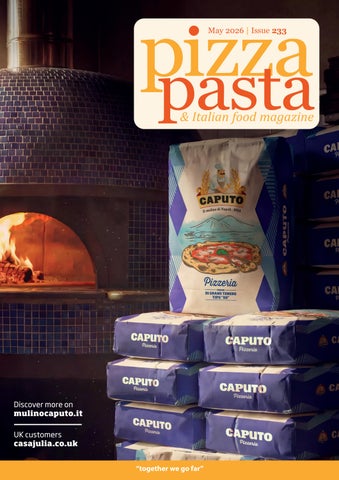
Pizza, Pasta & Italian Food Magazine - May 2026 - Issue 233
We span the generations with our flour special, celebrating an ingredient that’s becoming increasingly versatile. Caputo has set the standards for more than a century, while Marco Fuso has decades of experience and his own specialist brand. And we catch up with the youthful Francesco Mattana, helping to inspire the social media-savvy generation.
Another exciting development is a new wine section. Melanie Leyshon is our regular columnist, while each issue I will delve into trends around Italian varieties, regional favourites, imports and seasonal options – we kick off white and sparkling!
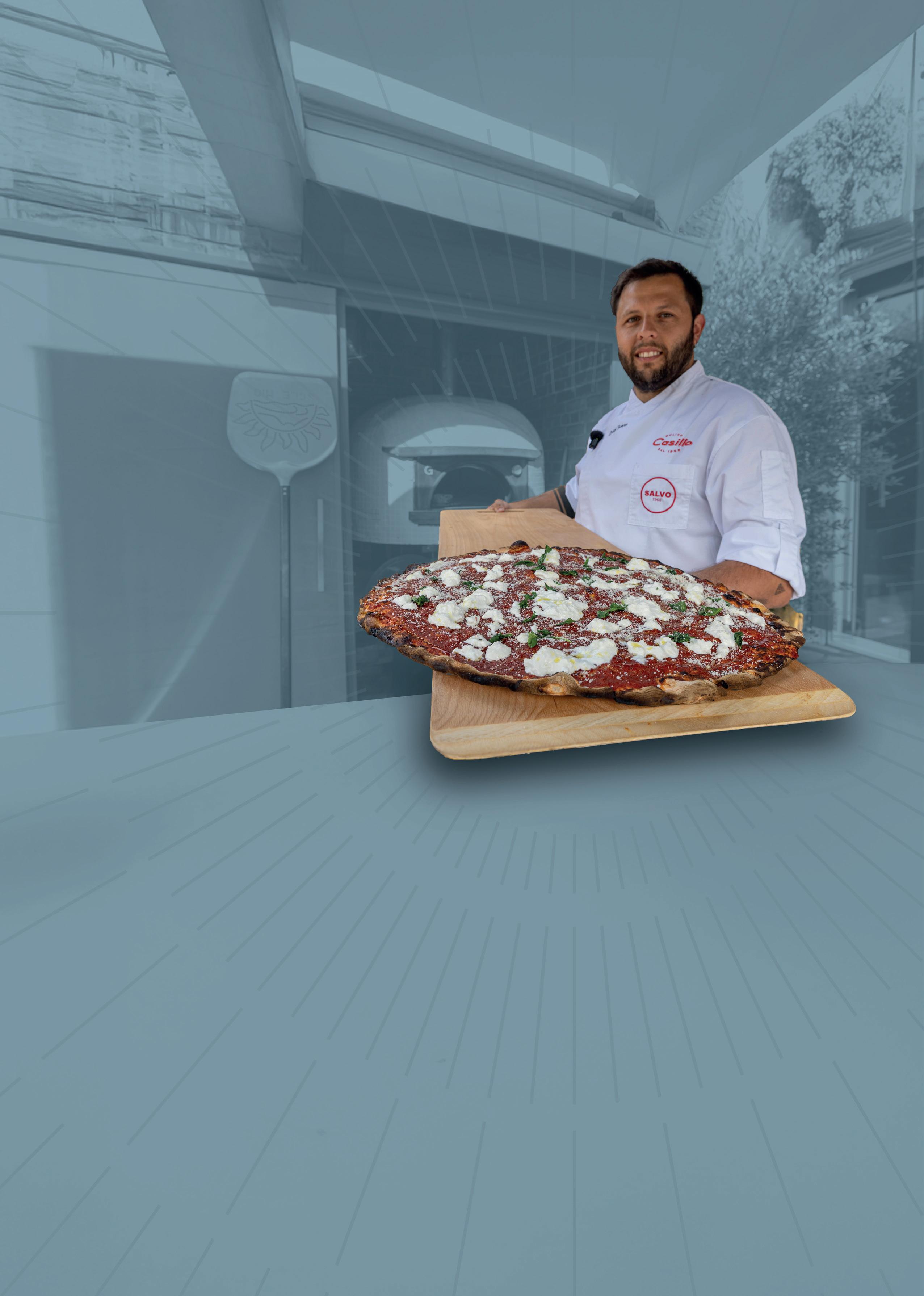
Incredibly, we also serve up an ovens & equipment focus, reviews, previews, a packed news section, spotlight on Jay De Vito at Salvo 1968 and plenty more. Here’s to the sunshine… finally! Please enjoy!
ALEX BELL - EDITOR alex@jandmgroup.co.uk
members
56 Index of suppliers & Classifieds
ADVISORY
14 Further updates from Richard Harrow on packaging EPR
PAPA AWARDS 2026
16 Opportunity knocks for sponsorship of this industry highlight SPOTLIGHT
20 Salvo 1968’s Jay De Vito on his passion for Italian food FLOUR
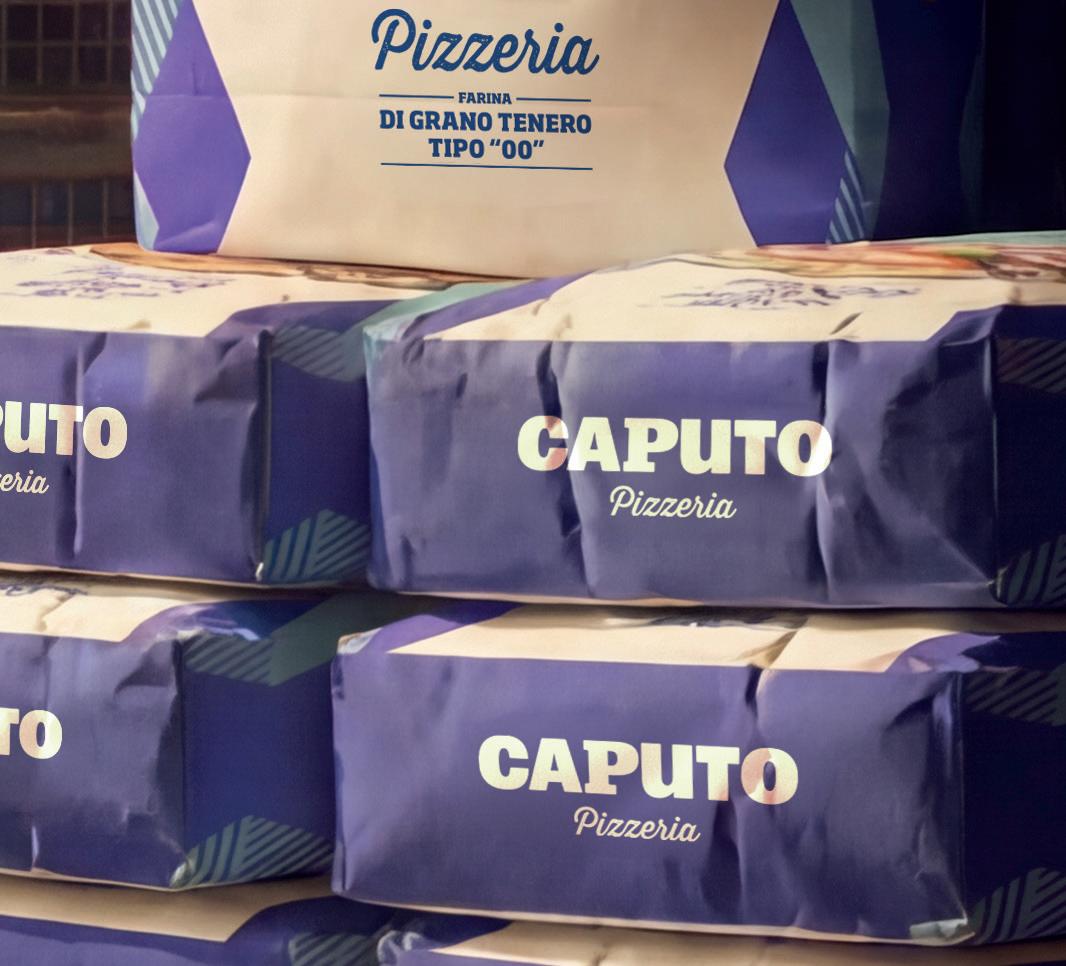
24 Caputo’s goal is quality, aligned with a focus on sustainability
26 Welcome to the new generation of chef: Francesco Mattana
28 With his own UK mill, Renaissance man Marco Fuso is on trend PREVIEW 32 The International Franchise Show is pizza perfect OVENS
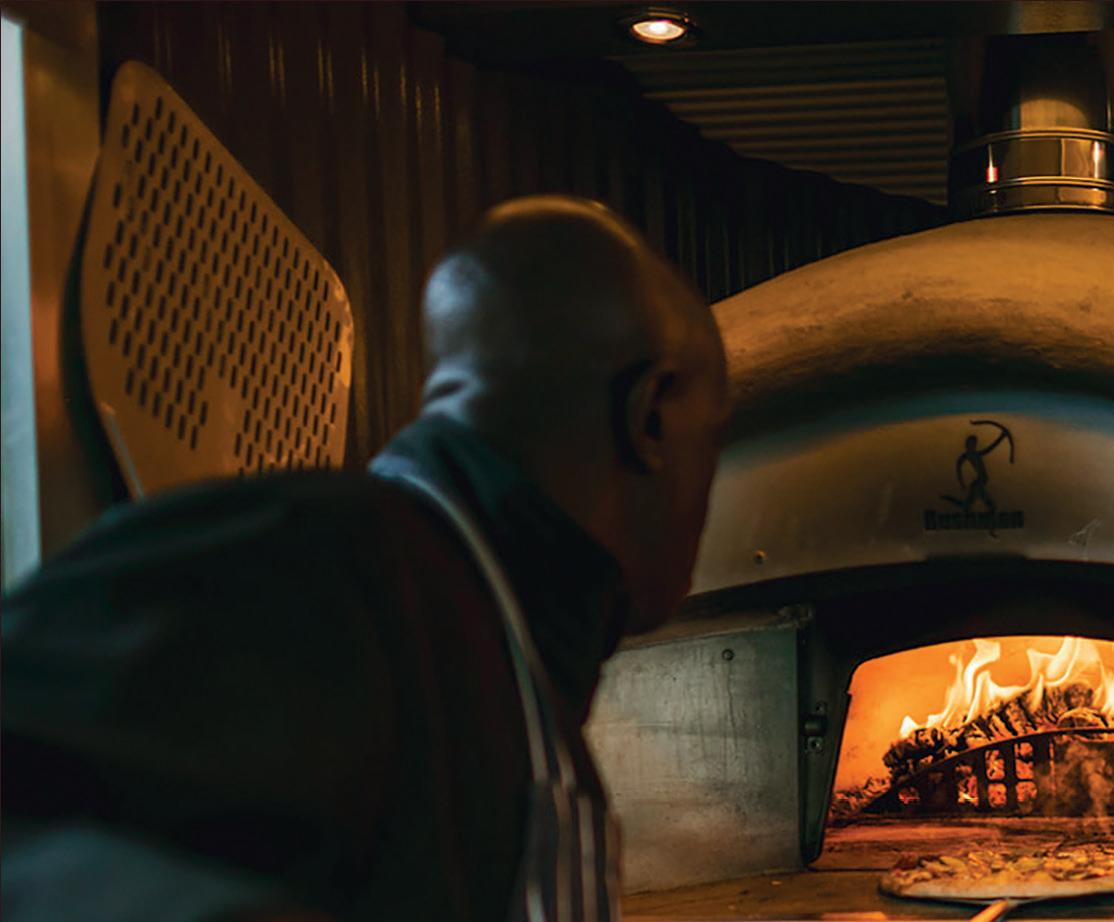
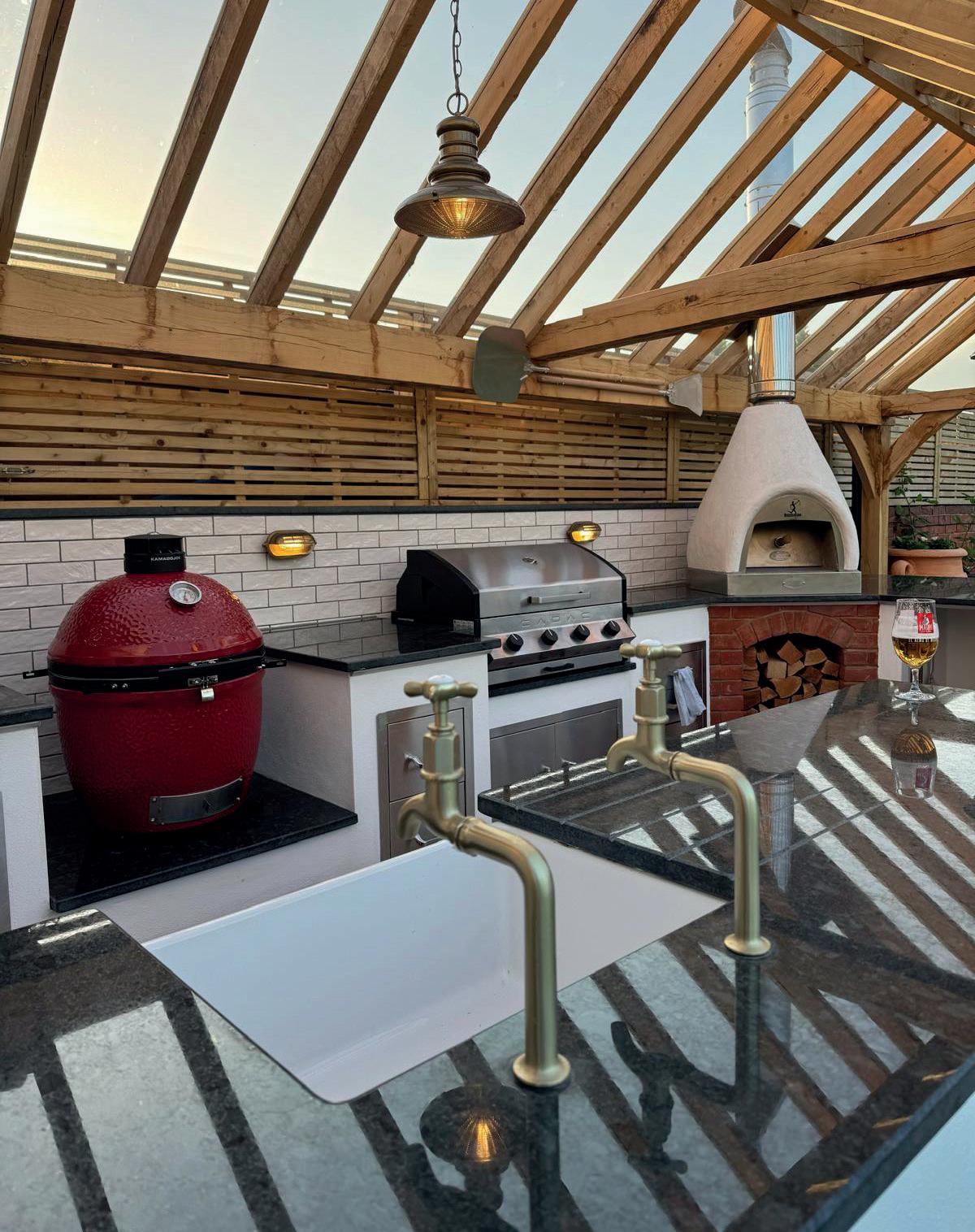
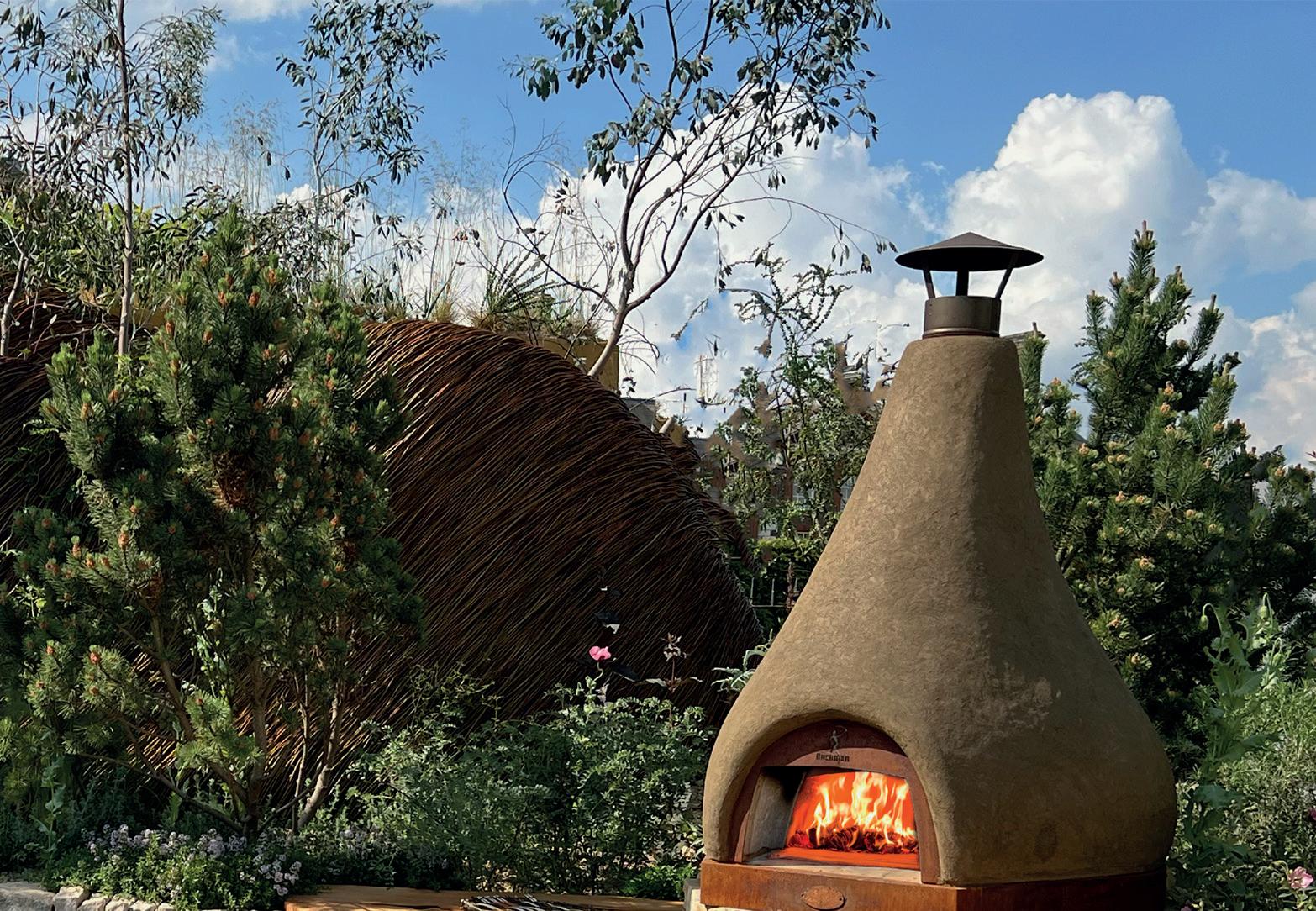
34 Bushman Ovens expands into the leasing market
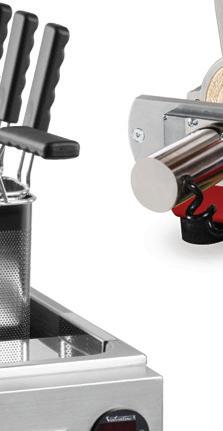
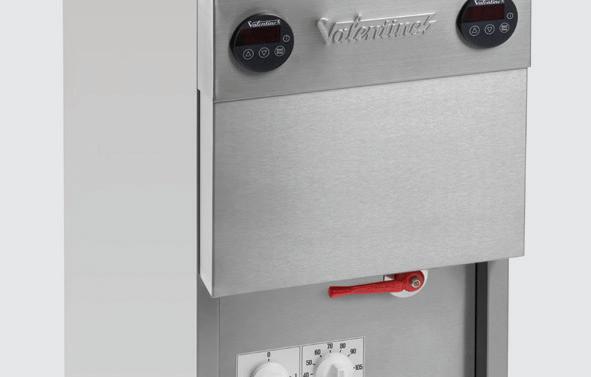
38 Cutting edge pasta innovation at Valentine & Cuisinequip
40 Second time around for Orchard Ovens at The River Café
42 Mythos lighting delivers ambience and the wow factor
43 Exclusive events for Lockhart Catering Equipment WINE 44 Melanie Leyshon takes us on a Falanghina taste trip
46 Two Italian whites guarantee a premium experience
BUSINESS OPERATIONS
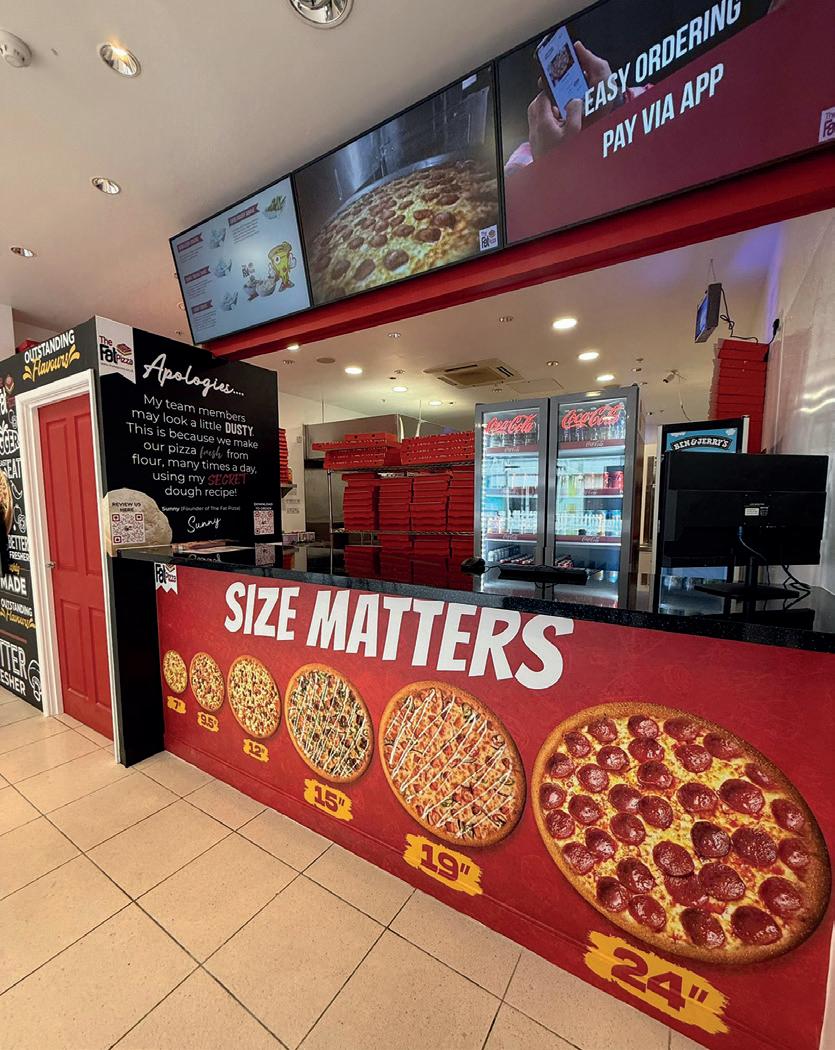
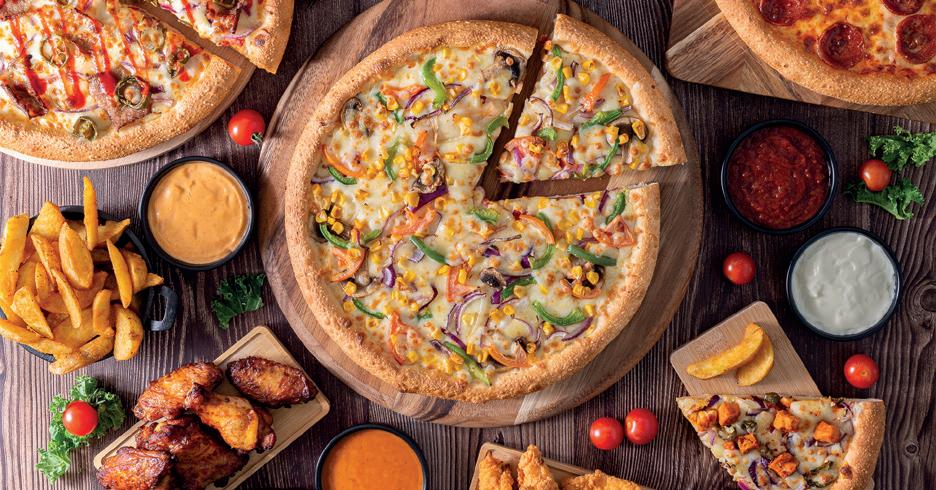
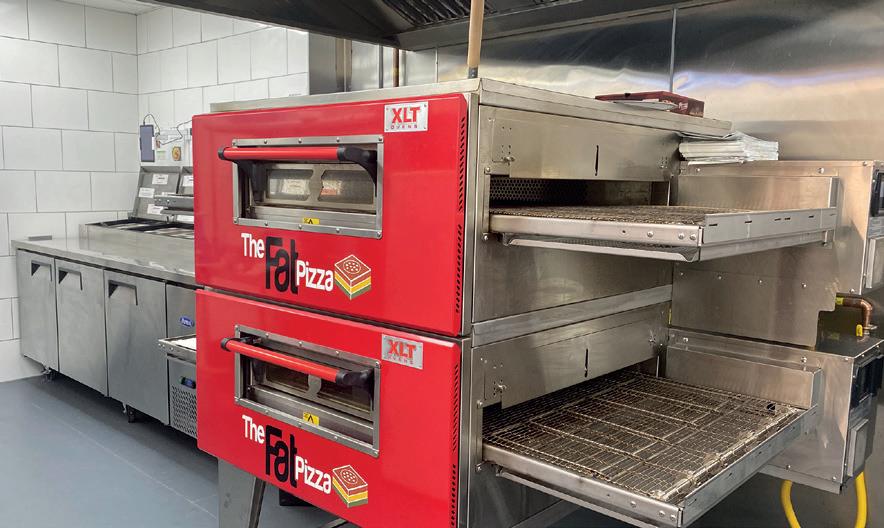
48 Global franchising and a pub project, courtesy of Fat Pizza
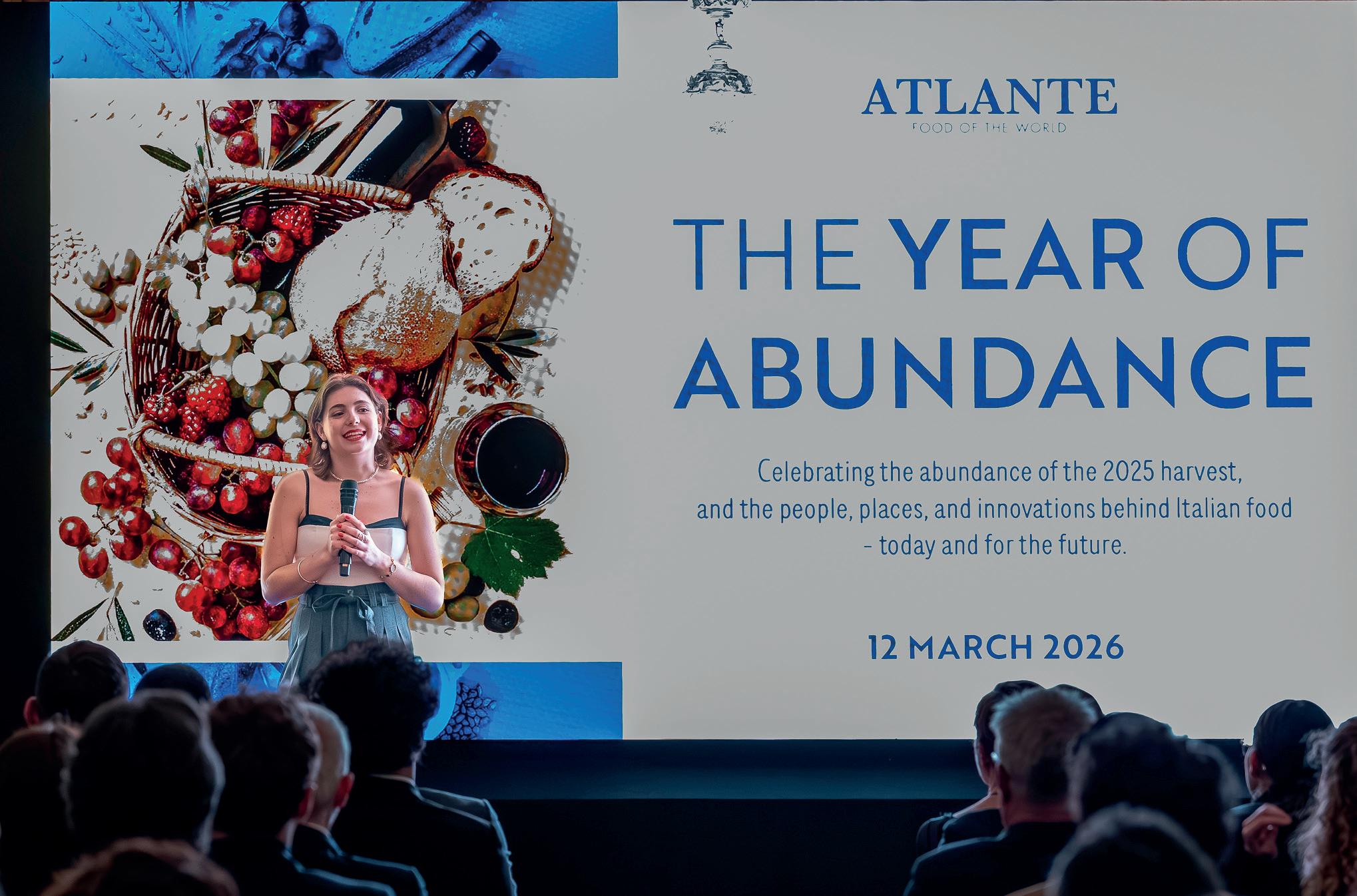
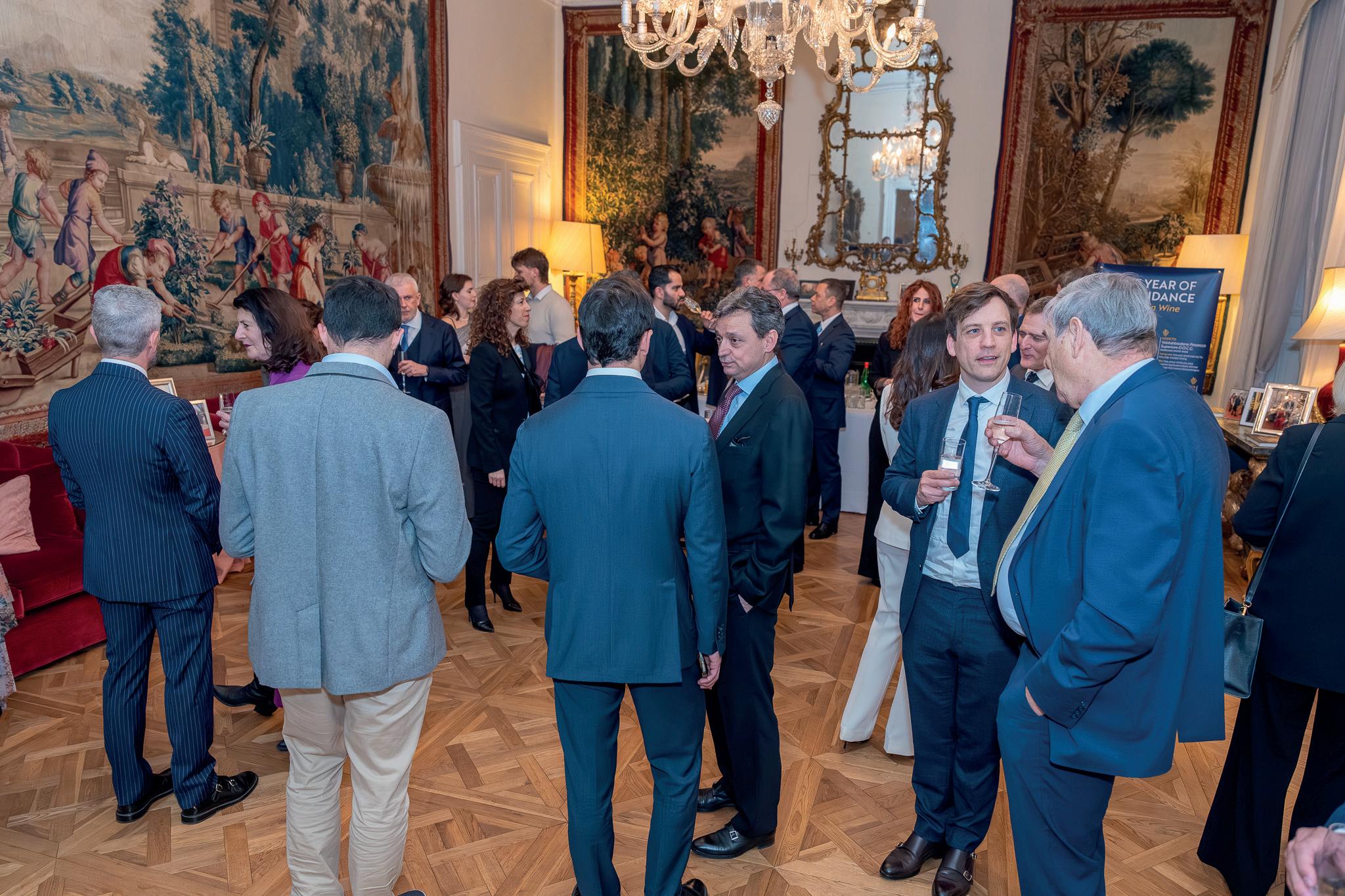
50 The Year of Abundance is a celebration, Atlante style!
PASTA
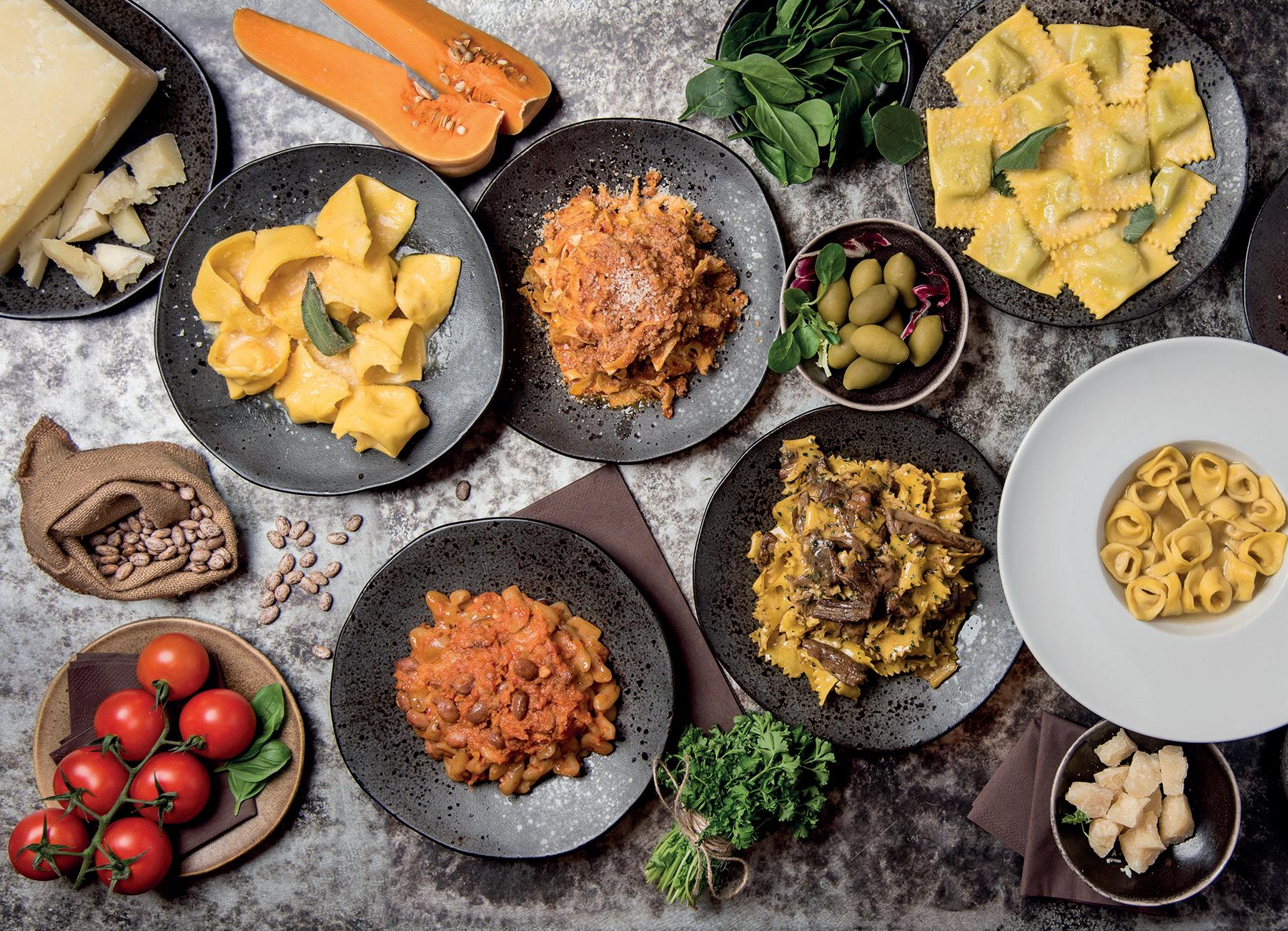
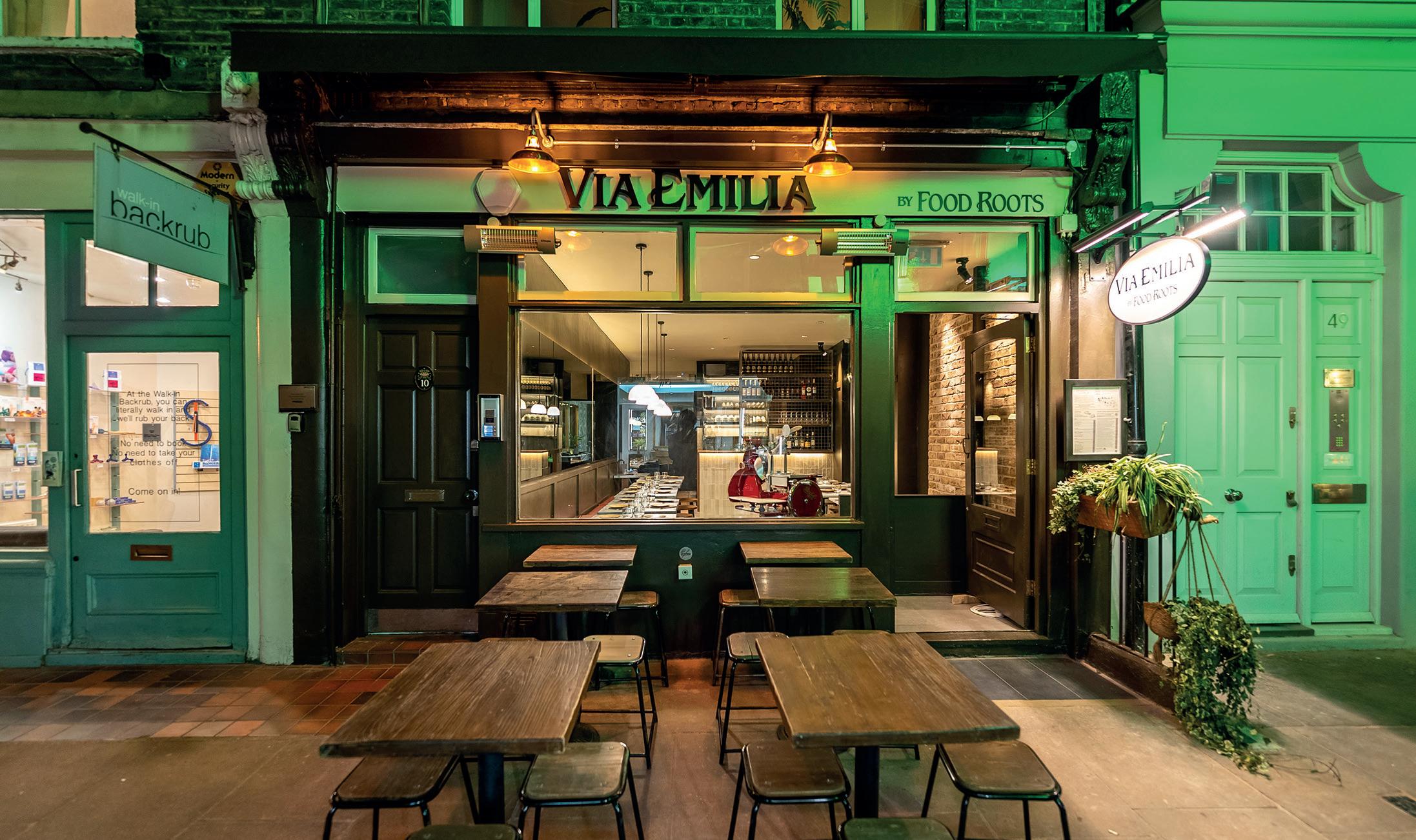
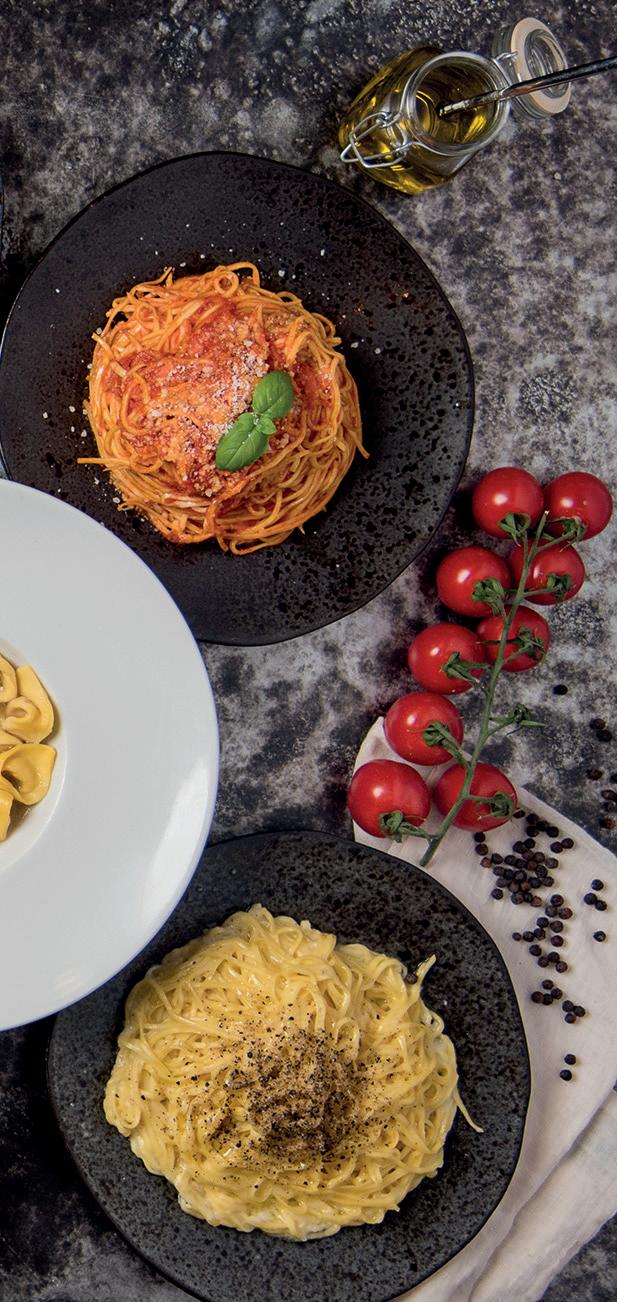
52 Fresh, handmade and delicious, the Via Emilia way
NEW Ranges
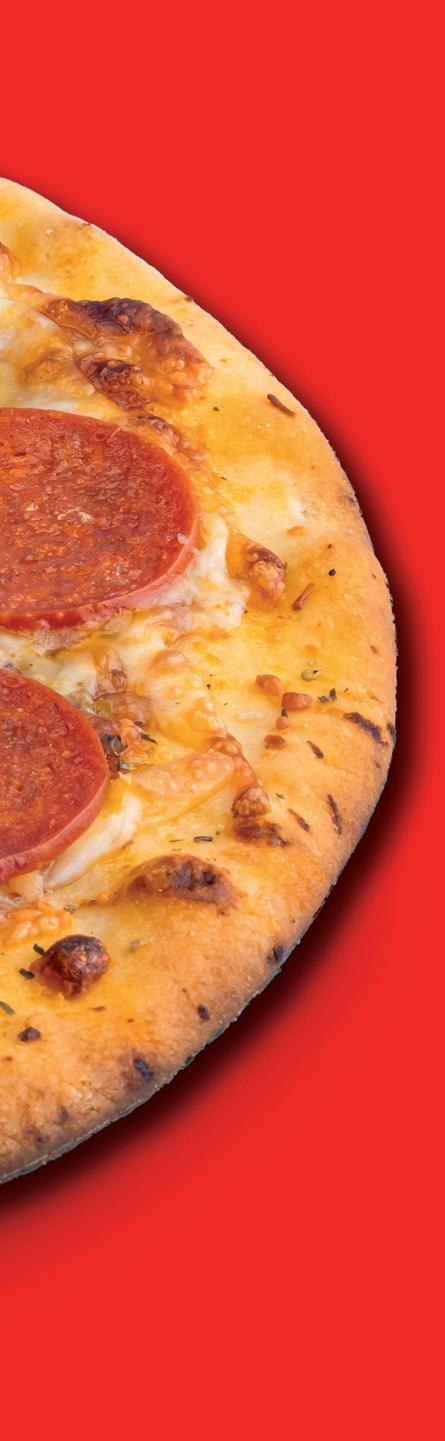
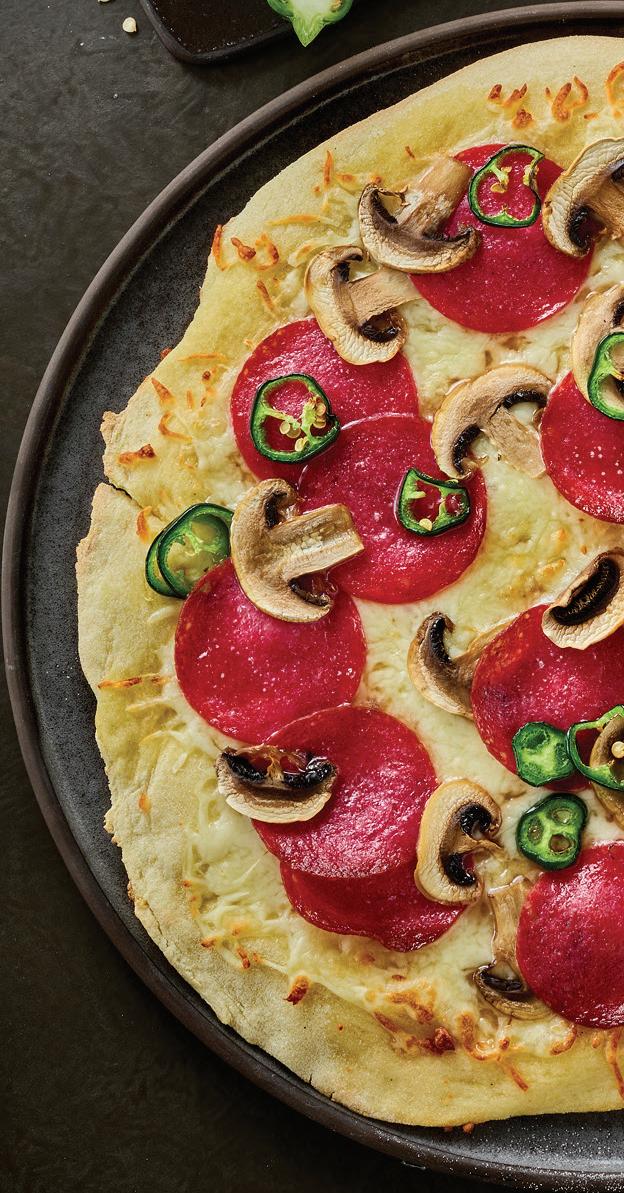
For true pepperoni lovers. Our Pepperoni is a taste sensation. Authentically made and perfectly seasoned, it’s packed with rich, savoury flavour without being too spicy, striking just the right balance.
NEWS
Exciting
restaurant openings, sustainability updates from across Europe, movie royalty campaigning to save olives and that’s just for starters.
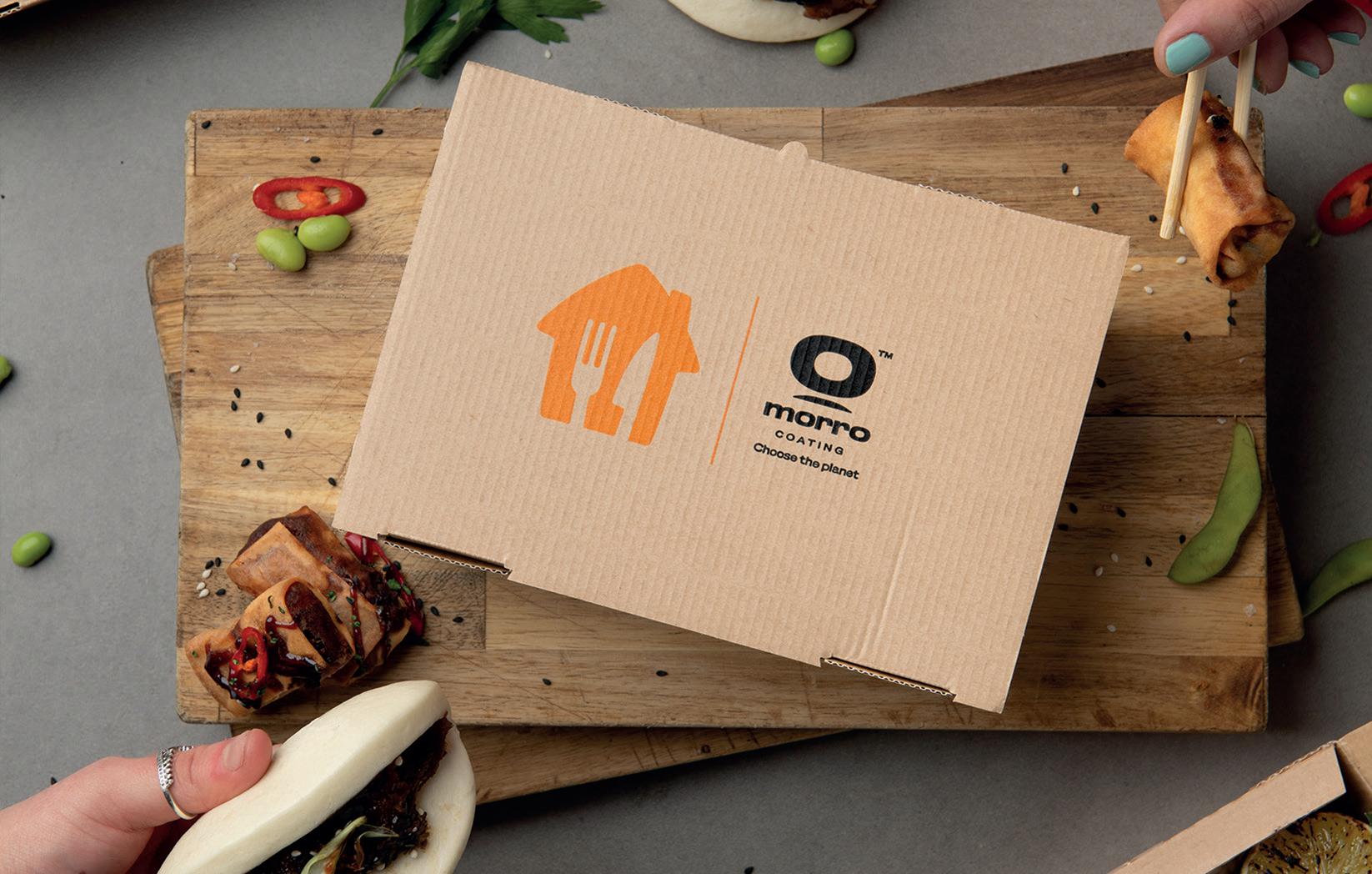
Just Eat expands Morro packaging rollout
Just Eat Takeaway.com is expanding its partnership with sustainable packaging provider Huhtamaki, offering a new range of plastic-free takeaway boxes across 10 European markets: Austria, Belgium, Bulgaria, Switzerland, Germany, Italy, the Netherlands, Poland, Slovakia and Spain.
Following successful launches with Lieferando in Germany and Austria, this expanded rollout extends Xampla’s Morro Coating across the full breadth of Just Eat Takeaway.com’s European platform.
Morro™ Coating is an innovation of Xampla, a UK-based materials technology company, with the boxes made by sustainable solutions leader Huhtamaki.
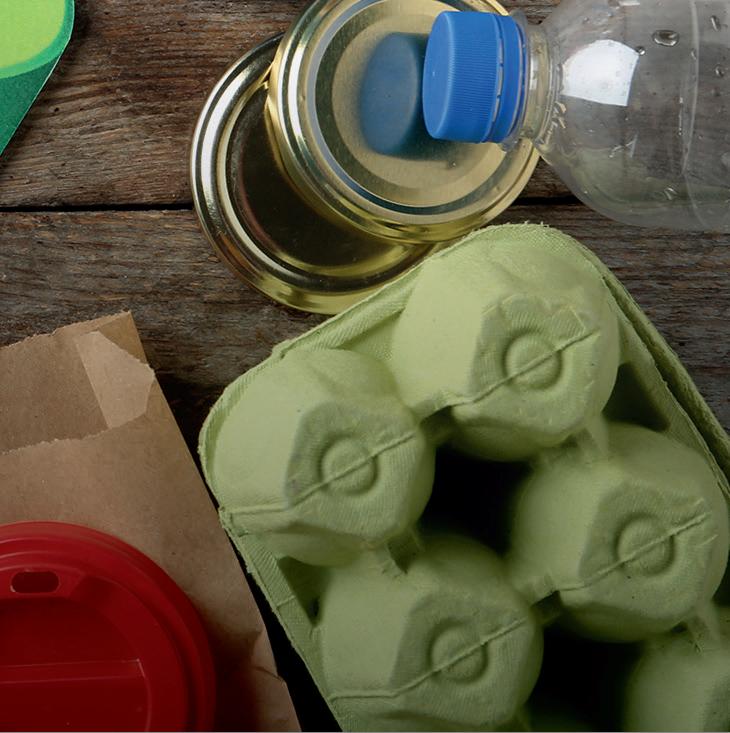
The coating is made from natural plant proteins with no chemical modification, offering the delivery market a highperformance, plastic-free alternative to the coatings used in traditional boxes. They are fully recyclable, Single Use Plastic Directive (SUPD) compliant, and made from sustainably sourced corrugated paper.
Designed to perform across a range of foods, the packaging maintains rigidity
and heat retention, even with greasy or moist dishes. Verified as plastic-free by the National Physical Laboratory – the only food packaging coating to hold this accreditation – Morro™ Coating has proven compatibility with existing recycling streams to enable EPR benefits.
Unlike traditional plastic coatings, paperboard packaging that uses Morro™ Coating can be processed through established waste streams without the need for plastic separation.
Alexandra French, CEO of Xampla, said: “Europe is moving fast on regulation, and the demand for materials that can replace plastic has never been stronger. There is real regulatory clarity across these markets, strong environmental ambition and a willingness to adopt new materials when they work.
“If we want to replace plastic, we have to do
it in high-volume, high-performance applications like food delivery. This rollout shows that natural materials can compete, and win, in those environments.”
A Just Eat Takeaway.com spokesperson said: “We’re excited to be partnering with innovative companies that share our vision of eliminating single-use plastic waste... creating value for partners and consumers.
“Expanding our collaboration with Xampla marks a significant milestone in accelerating the adoption of plastic-free packaging across on-demand delivery.”
Brakes says benvenuti to Authentic Italian
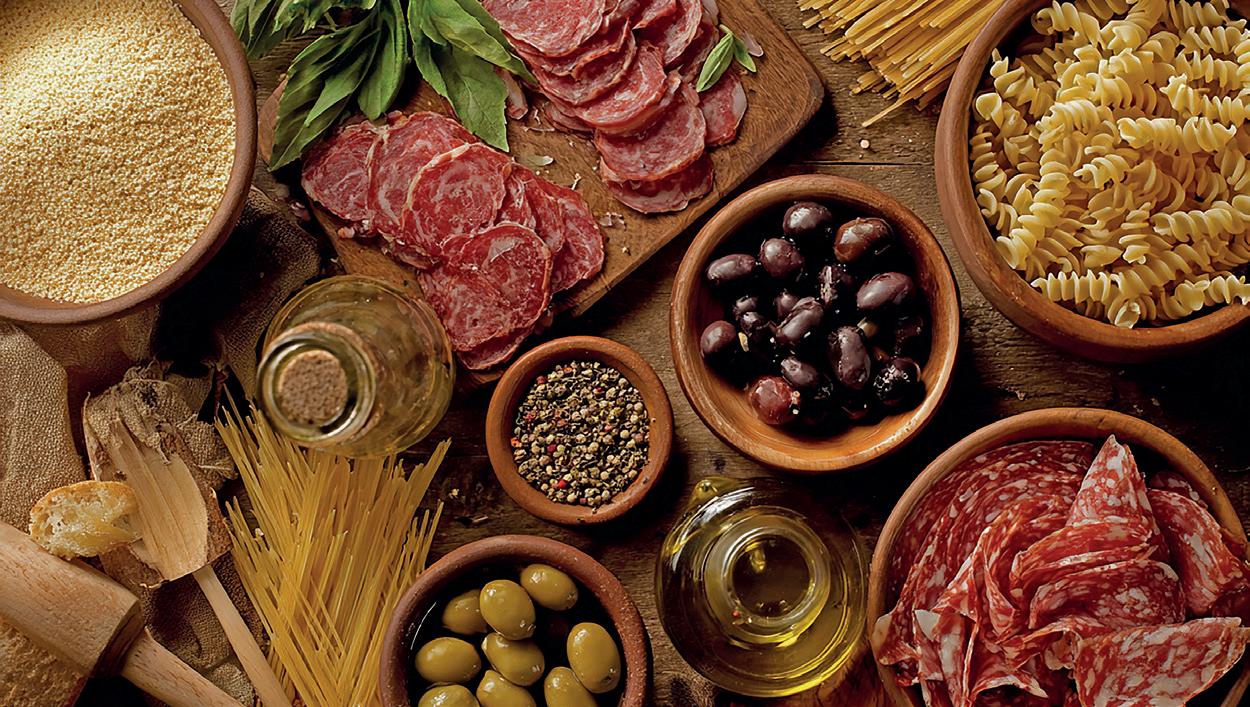
The UK’s leading foodservice wholesaler, Brakes, has unveiled a new authentic Italian range, bringing the true flavours, craftsmanship and traditions of Italy directly to professional kitchens.
Every product in the collection is sourced exclusively
from Italian producers and suppliers, each selected for their commitment to regional heritage, traditional methods and the unmistakable character of Italian food culture. Made in Italy using time-honoured recipes and local ingredients, the range delivers genuine provenance and exceptional consistency.
Featuring a broad selection of more than 200 products, many with Protected Designation of Origin (PDO) or Protected Geographical Indication (PGI), it provides everything operators need to build a complete Italian menu, spanning pasta, pizza flours and bases, sauces and tomatoes, olive oils and vinegars, cheeses and cured meats, antipasti and olives, and bakery and dessert options.
Designed to balance everyday essentials with premium specialities, each product has been carefully reviewed.
Thomas Pighi, senior Authentic Italian sales specialist, said: “Italians are renowned for passion and great food, so our Authentic Italian range brings together the true flavours, colours and textures of Italy. Operators can tell a story on menus – while delivering quality, consistency and confidence that chefs rely on.”
Wells done! Senza Fondeli ready to launch
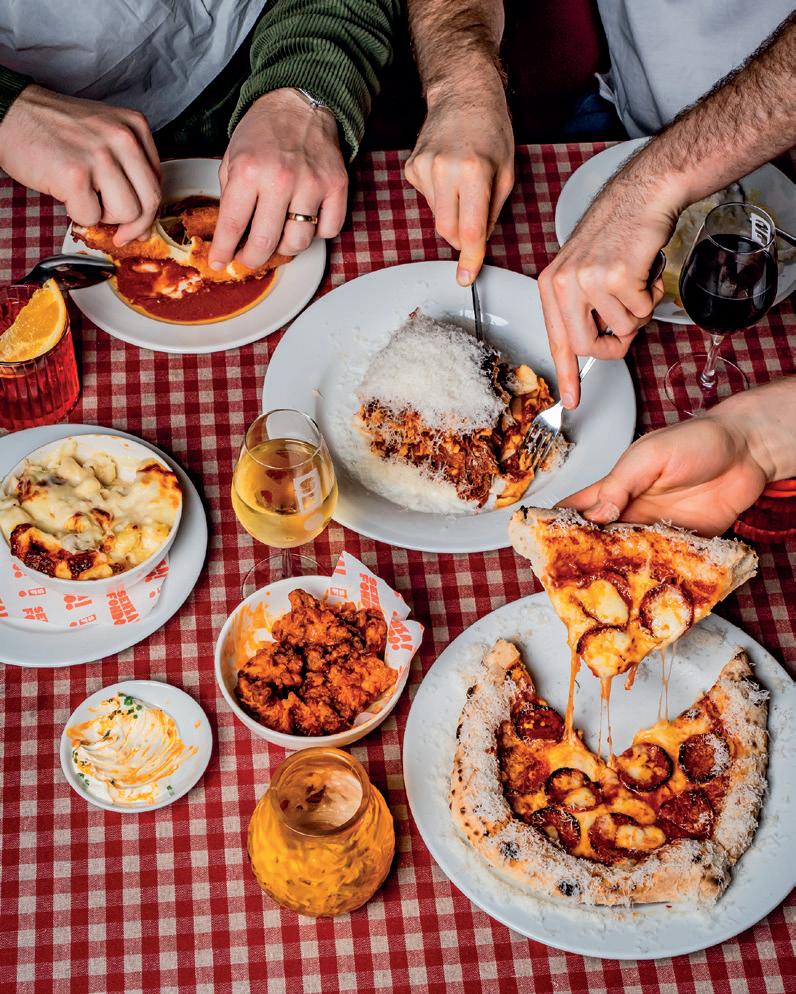
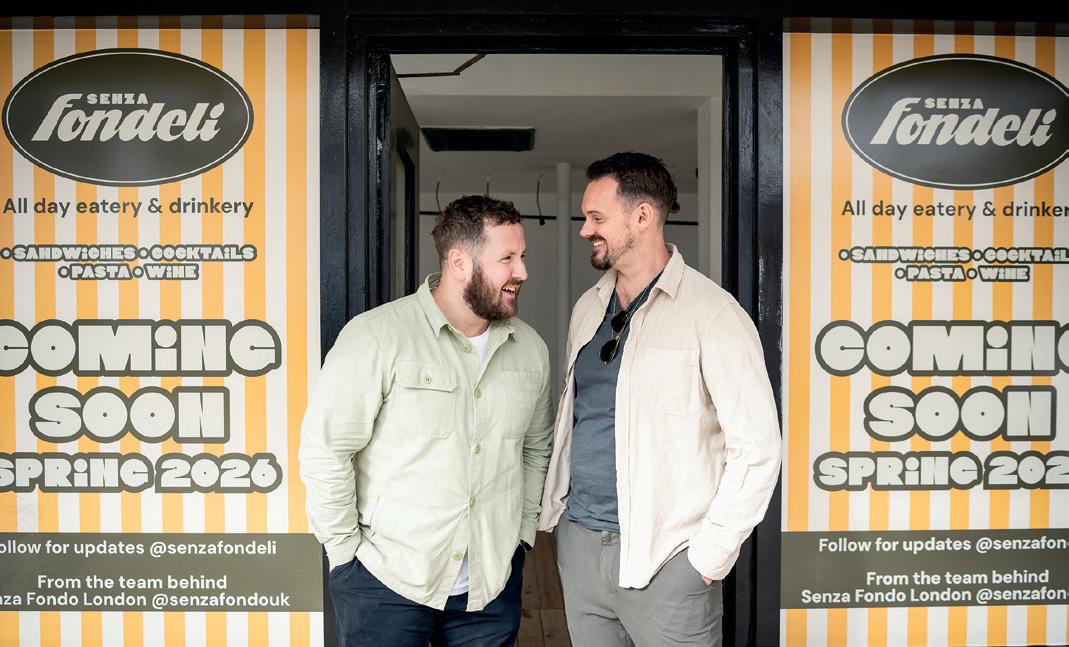
Senza Fondo is opening its first site outside London in early April, with Senza Fondeli in Tunbridge Wells – an all-day restaurant deli.
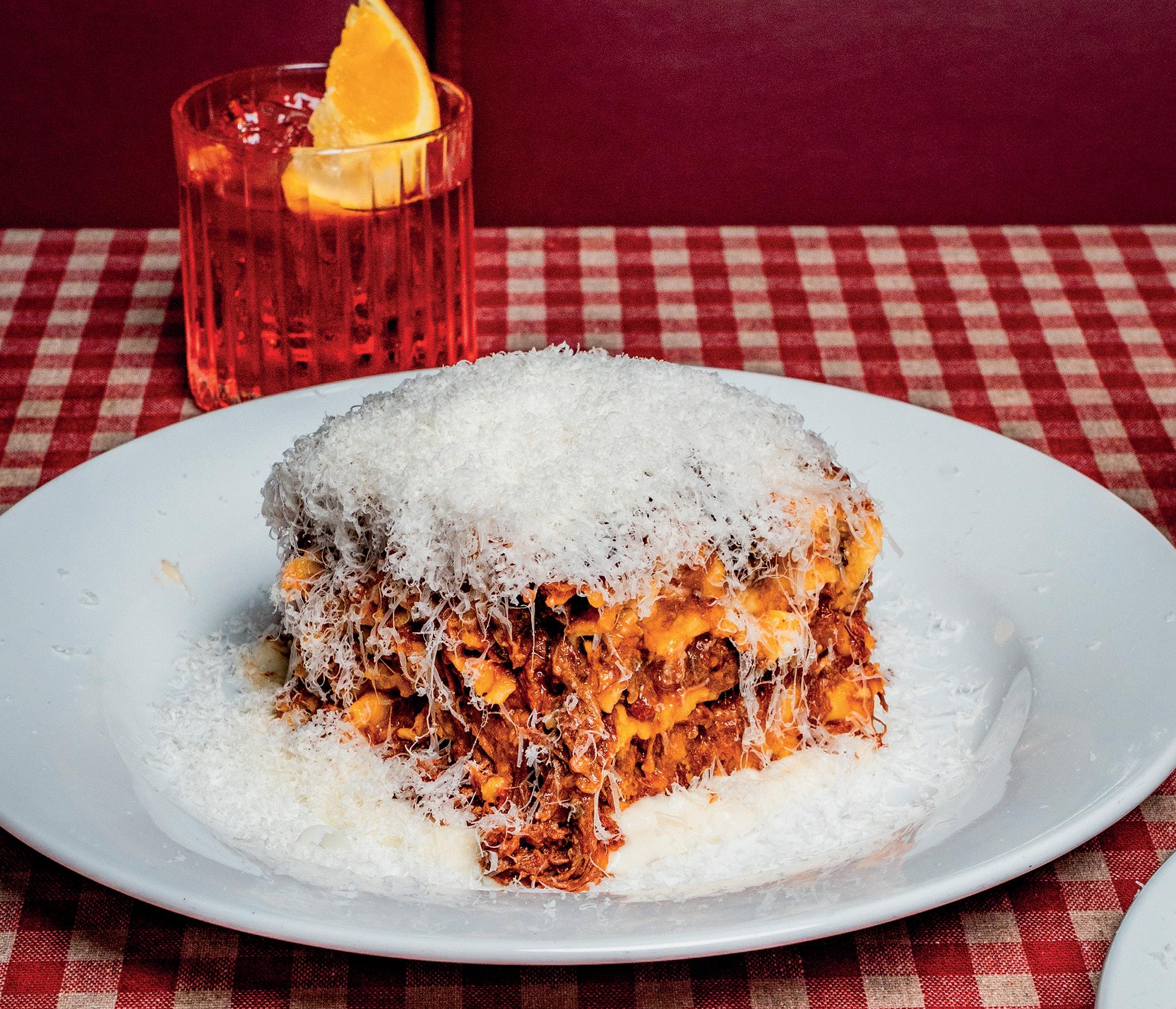
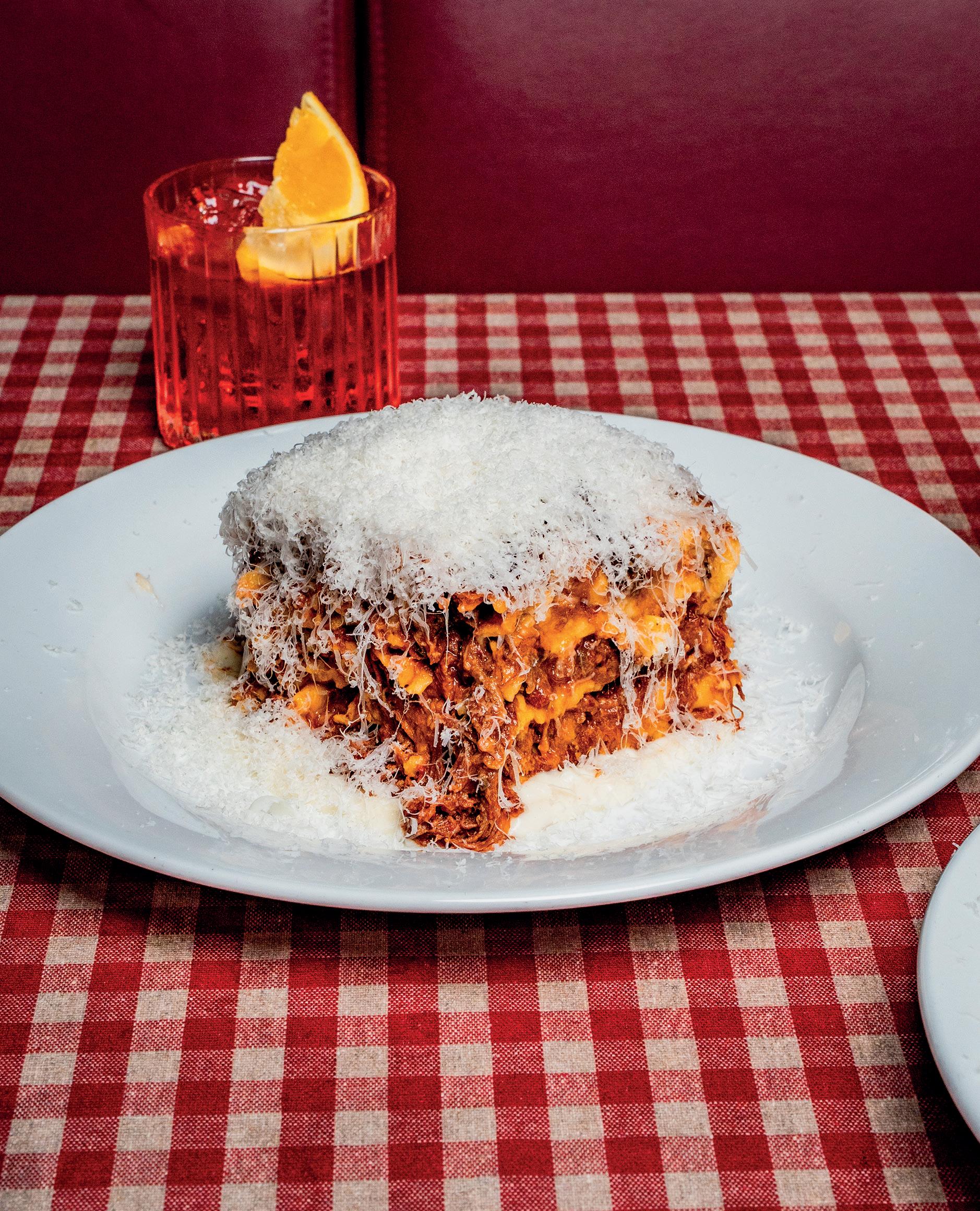
The 90-cover site marks the regional expansion of the Italian-American concept founded by Joe Worthington, whose Shoreditch restaurant is known for its all-you-can-eat lasagna format. The new venture is a partnership with Charlie Sweet, founder of premium mobile bar business, The Cocktail Social.
Senza Fondeli represents an evolution of the Senzo Fondo brand into a coffee-to-cocktails, day-to-night model combining restaurant, bar and deli retail. With both founders local to the area, Tunbridge Wells is the brand’s first expansion site.
“This is built around people and relationships,” said Worthington. “In a competitive space, it’s not just the food or design; it’s the energy and hospitality. If people feel welcomed, remembered and looked after, they’ll always come back.
“Clarity is important too. We know exactly what we are: generous, Italian-American, high energy and no pretension.
“What’s exciting is that the UK is opening up to this style. There’s a shift away from formality towards places that feel more alive and personal. It feels like we’re just getting started with it.”
The food spans grab-and-go focaccia sandwiches, salads and fresh pasta, enduring classics like cacio e pepe and carbonara and stuffed tortellini, alongside charcuterie, cicchetti and antipasti. Bottomless lasagna transfers to the new site every Tuesday, while its classic lasagna is available every day for eat-in and takeaway.
“We’re working closely with a mix of independent producers and established suppliers to make sure the quality is consistent across everything – from fresh produce and ingredients through to wine and spirits,” said Sweet.
It will also incorporate a deli retail element, stocking local and Mediterranean produce.
Sweet continued: “Tunbridge Wells has a strong independent hospitality scene and we see a clear opportunity for a premium but accessible all-day concept. Senza Fondeli allows us to evolve the Senza Fondo brand, while introducing a more drinks-led and retaildriven model.”
“This marks the first step in expanding the Senza Fondo universe beyond London,” concluded Worthington.
Liquid gold in massive growth!
Following years of less than easy harvests, olive oil sales in the UK grew to fruition in 2025. This has also led to increases in demand for products associated with what’s known as liquid gold.
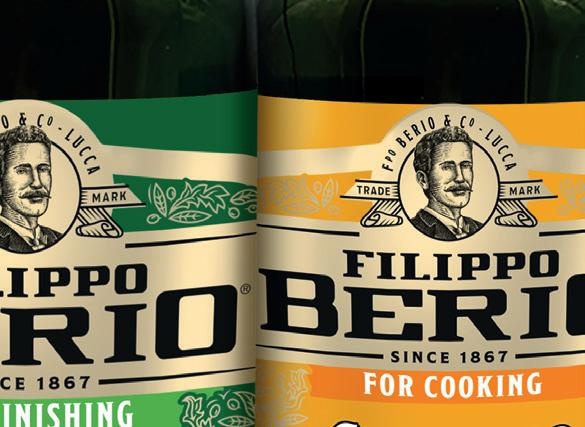
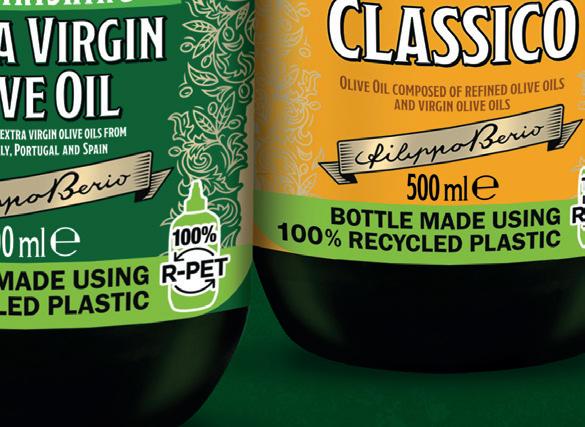
Filippo Berio has released figures from Nielsen which show 15% growth in its olive oil sales last year, a spike of more than 14% in its pesto range, nearly 7% increased demand for balsamic vinegar and pasta sauce sales up 20.2% year on year.
Walter Zanre, UK MD Filippo Berio, said: “Olive oil is now booming in the UK!
We are stunned by the success – not just olive oil but across our whole range. We believe it is the halo effect of the brand pushing all our products. This year alone we have won Which Best Buys for both our Pesto and Italian Extra Virgin Olive Oil.
“In 2026, we intend to smash the £100m retail sales barrier. January has started well as we deliver strong growth.”
Dame Helen & Filippo Berio team up to fight olive crisis
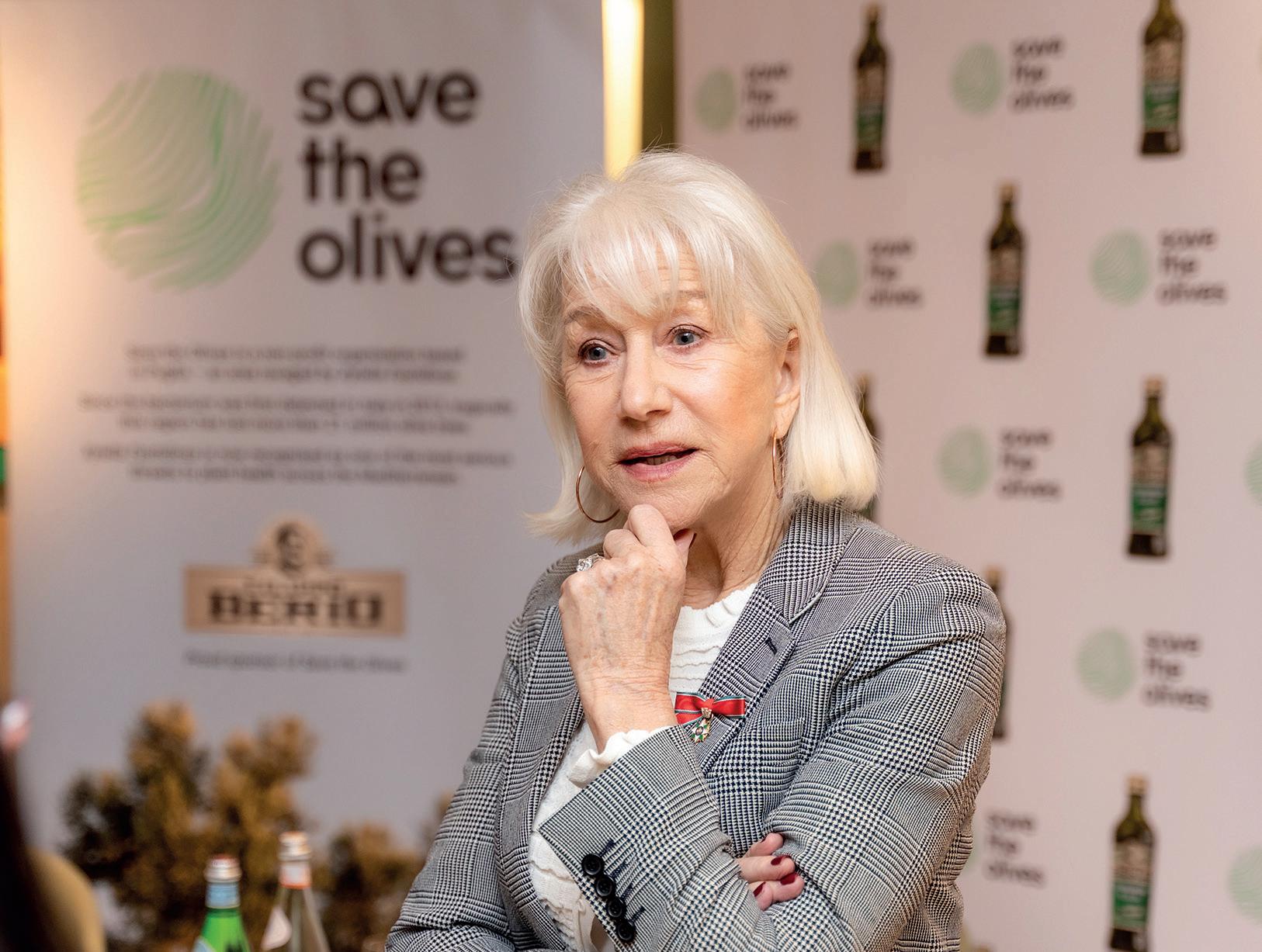
Iconic olive oil brand, Filippo Berio, has announced a new three-year partnership with the Institute for Sustainable Plant Protection of the National Research Council (CNR-IPSP) and the non-profit organisation Save the Olives to combat the devastating spread of Xylella fastidiosa.
The partnership was officially unveiled at a lunch hosted at Theo Randall’s Cucina Italiana at the InterContinental Hotel, Park Lane, with Dame Helen Mirren and her husband, director Taylor Hackford, as guests of honour.
The couple, who have a home in Puglia and co-founded the Save the Olives charity, have been deeply affected by the devastation caused. Their personal connection to the area, combined with a commitment to raising awareness and supporting restoration efforts, has made them passionate advocates for protecting olive heritage.
The initiative brings together scientific research, industry expertise and grassroots action to address one of the most serious threats facing olive cultivation in Italy and across the Mediterranean.
For more than a decade, Xylella has caused destruction in Puglia, killing millions of olive trees and putting both livelihoods and cultural heritage at risk.
At the heart of the partnership is a long-term research programme focused on identifying and developing olive tree varieties that are resistant to the bacterium. Filippo Berio will co-finance advanced genetic research and has funded the installation of a state-of-the-art mobile laboratory – designed to accelerate the screening of thousands of experimental plants under controlled conditions.
Awareness campaigns and the dissemination of scientific findings, helping to protect olive-growing regions and promote more resilient agricultural practices, are also in the pipeline.
This initiative builds on Filippo Berio’s investment in sustainability, including research conducted at its Villa Filippo Berio estate in Tuscany – an ‘open-air laboratory’ dedicated to olive biodiversity and sustainable cultivation techniques.
Xylella fastidiosa continues to pose a significant threat, with billions of euros in losses recorded in southern Italy alone. While the bacterium has not been detected in the UK, it is a major biosecurity risk.
Gianmarco Laviola, Filippo Berio Group CEO, said: “Through this collaboration, we are investing in science, sustainability and awareness to safeguard a heritage central not only to Italy but to communities around the world.”
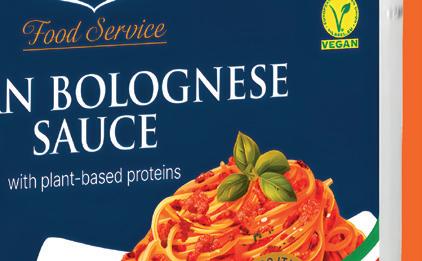
Cirio launches vegan bolognese format
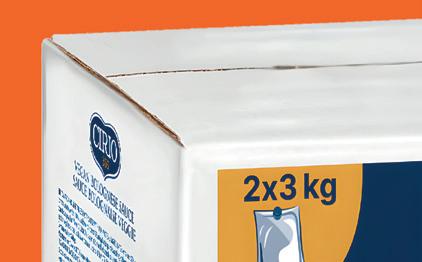
Farmer-owned Italian food brand Cirio is expanding its foodservice portfolio with the launch of its Vegan Bolognese Sauce in a new 2x3kg bag-in-box format, created for professional caterers.
Following the success of Cirio’s consumer vegan bolognese, the brand
is responding to surging demand for plant-based catering options by providing a product that pairs authenticity with convenience.
The move marks a strategic expansion of the foodservice range, bringing its popular retail vegan recipe into a format built to reduce waste, improve portion control and simplify back-of-house operations.
Reducing food waste is an important consideration for the 170-year-old brand, which prides itself on sustainability credentials. Featuring a resealable spout for controlled pouring and easy storage, Cirio’s Vegan Bolognese Sauce helps reduce waste during preparation and ensures optimal sauce preservation once opened.
The compact design also saves valuable storage space compared to traditional tins, making it a practical solution for busy kitchens. And plant-
based options have become a critical offering in foodservice.
Made with 100% Italian tomatoes authentically grown by Cirio’s farmer owned co-operative and enriched with pea protein (soy-free), the sauce is designed to offer a rich flavour and meat-like texture.
Ready-to-use, it provides chefs with a convenient and versatile base for classic dishes such as spaghetti bolognese, lasagne and pasta, helping to expand plant-based offerings with confidence.
Matteo Polgrossi, brand manager at Cirio, said: “Plant-based dishes are no longer a niche offering in foodservice; they’re an essential part of modern menus. Our Vegan Bolognese Sauce has proved popular with retail customers, so we’re delighted to now bring the same authentic Italian flavour to catering professionals.”
Request a free sample by completing the form here: cirio1856.com/free-sample/.
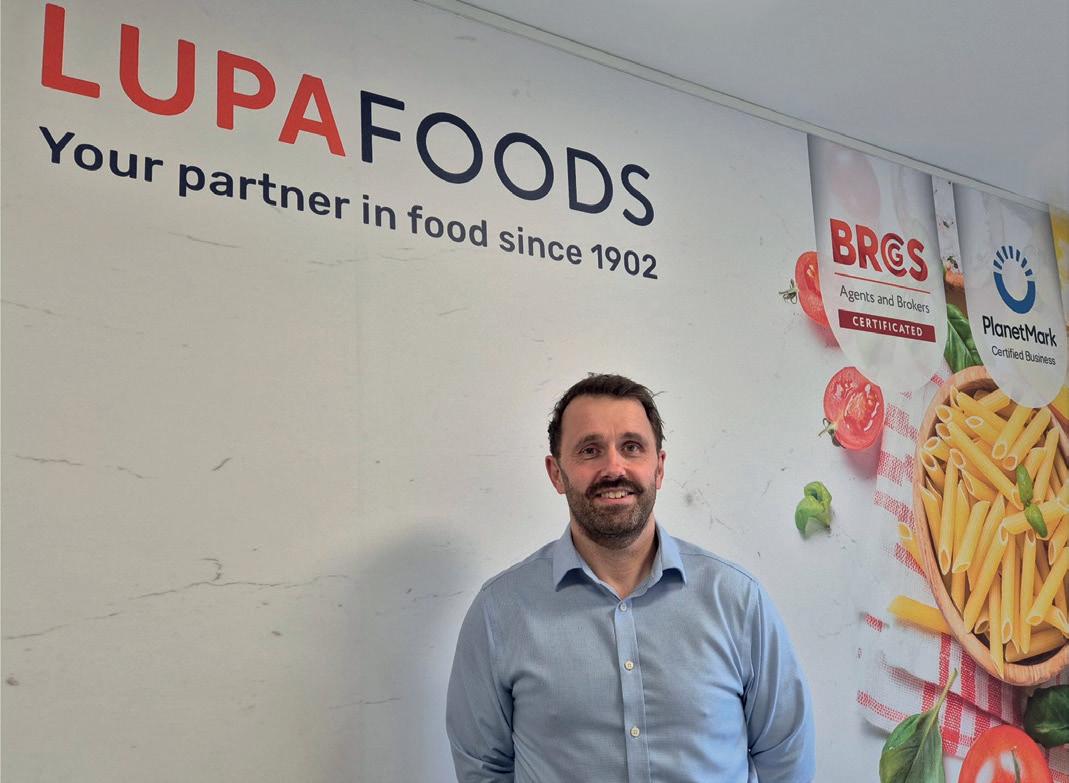
Ben Pearce new Lupa commercial director
Lupa Foods, the UK-based importer and B2B distributor of food ingredients, has promoted Ben Pearce to the role of commercial director, effective immediately. The change forms part of wider Geia Group alignment initiatives, following its 2025 acquisition.
Pearce has been with Lupa Foods since January 2020, having joined as purchasing director. He has played a central role in shaping the commercial and procurement strategy, supporting the successful merger of the Donatantonio and Compleat Food Group into Lupa Foods, steering the business through the Covid-19 pandemic and contributing to turnover growth of more than 60%, achieving best-ever numbers in the last financial year.
More recently, he has been instrumental in aligning Lupa Foods with the Nordic Geia Group, following Geia’s acquisition of the business in early 2025 as an entry to the UK market. This has included supporting the integration of group-wide structures, systems and ways of working, designed to enhance collaboration. Initiatives will continue in 2026, with a focus on delivering increased value and consistency for customers and suppliers.
Pearce takes on responsibility for leading Lupa’s sales team, alongside oversight of end-to-end commercial strategy. He will work closely with customers, suppliers and internal teams to support sustainable growth and ensure Lupa Foods continues to meet the evolving needs of UK food manufacturers.
He brings more than two decades of experience in procurement and supply chain management. Prior to joining Lupa Foods, Pearce spent eight years at Bar Foods, progressing from purchasing manager to head of purchasing & supply chain, before moving to Billington Food Service.
“I’m incredibly proud to be stepping into this role at such an important stage in Lupa Foods’ journey,” said Pearce. “Taking on the additional responsibility for leading the sales team, alongside our broader commercial strategy, allows us to strengthen alignment across the Group and work even more closely with customers and suppliers. I’m fortunate to be supported by a strong and experienced team, and together I’m confident we can continue to deliver sustainable growth and long-term value.”
Manish Mandavia, CEO of Lupa Foods, added: “Ben’s promotion is thoroughly deserved and a natural progression. As an existing member of our senior leadership team, he works closely with key customers, which enables a seamless transition as he takes on responsibility for leading the sales function.”
New opportunities for global espresso
Triestespresso Expo, the leading international trade fair dedicated to the espresso coffee supply chain, will return for its 12th edition from 21-23 October 2026 in Trieste, introducing a format designed to be even more business oriented and efficient for professionals.
The event will take place at the Generali Convention Center Trieste in Porto Vivo/Porto Vecchio and is organised by the Venezia Giulia Chamber of Commerce together with the Associazione Caffè Trieste, in collaboration with the Gruppo Italiani Torrefattori.
Expectations are already growing around what remains the only global exhibition entirely dedicated to the espresso coffee supply chain. The 2026 edition will introduce several initiatives aimed at supporting companies facing increasing costs in sourcing raw coffee, as well as growing strategic complexities.
Day one focuses on logistics and the evolving global routes of the coffee trade. Experts and industry leaders will discuss strategic storage areas, international transport dynamics and scenarios around global distribution.
Day two is dedicated to B2B meetings and country presentations from the exhibition’s key markets, particularly Central and Eastern Europe and the
Mediterranean region. The goal is to provide a clear overview of business opportunities and market developments.
The third day highlights espresso coffee machines, superautomatic systems and industrial equipment. Special attention will be given to technological innovation, new production solutions and evolving technical support models.
In the 2024 edition, the event welcomed visitors from 51 countries, confirming its global reach. For 2026, organisers have introduced targeted solutions to make participation more efficient and economically sustainable.
“The coffee sector is currently under significant pressure due to rising raw material prices, logistical complexities, the climate crisis, international political instability and new regulatory frameworks,” said Antonio Paoletti, president of the Venezia Giulia Chamber of Commerce.
“Triestespresso Expo aims to provide a unique environment for companies to meet, develop strategies and generate business opportunities across the espresso supply chain, while also addressing the need to reduce participation costs.”
To support this objective, the 2026 edition is introducing new modular exhibition formats and ready-to-use
customisable stands. These solutions are designed to simplify logistics, reduce installation costs and encourage the reuse of exhibition structures in future editions.
The official recognition of Triestespresso Expo as an international trade fair opens up opportunities for exhibitors to access financial support. Companies may be able to apply for contributions and incentives from public institutions, chambers of commerce and regional funds to cut participation costs.
There will also be a dedicated focus on two strategic market segments: Home & Expert Consumer and the Custom Coffee Industry for private label roasting.
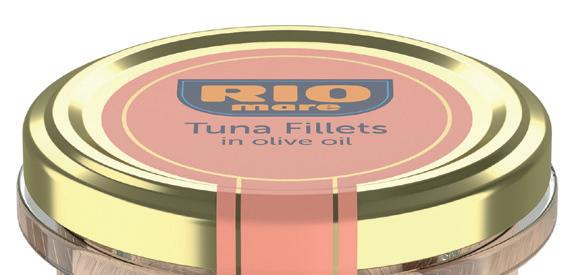
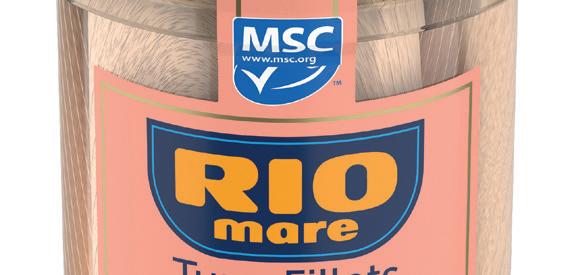
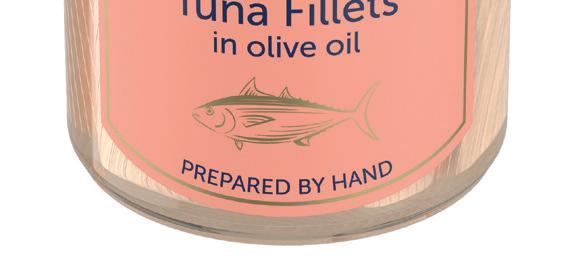
Premium Tuna Fillets in the pink for Rio Mare
Rio Mare, Italy’s No.1 premium tuna brand, has launched Tuna Fillets in Olive Oil in a glass jar in the UK.
It’s a value-added SKU designed to drive premiumisation within the shelf-stable seafood category.
Positioned for speciality, the new format delivers elevated shelf presence and reinforces Rio Mare’s differentiation in a competitive tuna segment traditionally dominated by commodity offerings.
Crafted from tuna loins that are twice cleaned and hand-prepared according to traditional methods, fillets are packed in olive oil with a pinch of sea salt. The result is neatly compacted fillets with visible, regular fibres, offering a firm, tender texture that flakes into large pieces.
A distinctive pink colour and refined flavour profile aligns with growing consumer demand for authentic, minimally processed and premium-imported foods – ideal on its own as a main course, featured in gourmet salads, served in appetisers and cold preparations or in traditional Mediterranean recipes.
The glass jar format offers:
● Enhanced shelf appeal and visibility
● Premium price positioning opportunity
● Strong differentiation from standard canned tuna
The nutrition profile meets consumer demand for highprotein, low-carb meal solutions, while also supporting keto, Mediterranean and protein-forward dietary trends, reinforcing tuna’s role as a versatile, nutrient-dense pantry staple.
As consumers trade up within shelf-stable categories, premium seafood continues to show resilience and growth potential.
Now available in Tesco, Asda, Booths, Ocado and Amazon.
Rossella on its way to Muswell Hill
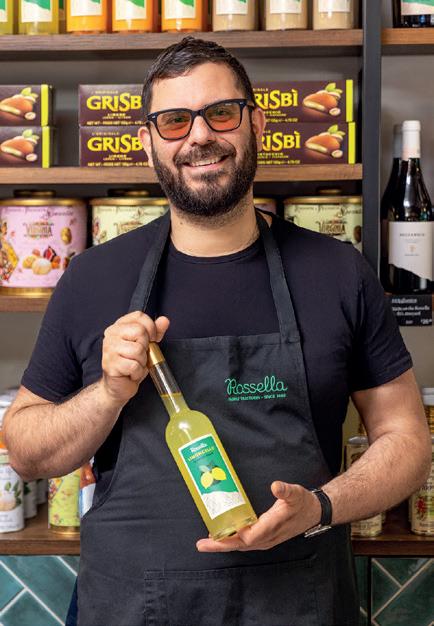
Italian restaurant Rossella is opening its second North London site, in Muswell Hill, this May, building on the success its Kentish Town operation with a new space bringing together a restaurant, bar and deli under one roof.
Led by owner Luca Meola, Rossella has built a loyal following for its seasonal cooking, family-led hospitality and sense of community. A Londoner and secondgeneration Italian, Meola draws on his heritage to shape a restaurant that is as much about storytelling and tradition as it is about the food on the plate.
The Muswell Hill restaurant is designed as as an all-day destination. It includes a separate bar for aperitivo and cocktails, serving a menu of small plates and pizzas, and a deli element showcasing Rossella’s own products and curated Italian hampers.
The menu stays true to Rossella’s ethos, while introducing an expansive à la carte offering with a stronger emphasis on generous mains. Alongside signature pasta dishes such as Tagliatelle Ragù di Agnello and Spaghetti allo Scoglio, the menu places greater focus on seasonal main dishes, including Veal Milanese, Bistecca Tagliata, sliced steak served with a rocket and parmesan salad, and Salmone alla Puttanesca, creating a more rounded, bistro-style menu.
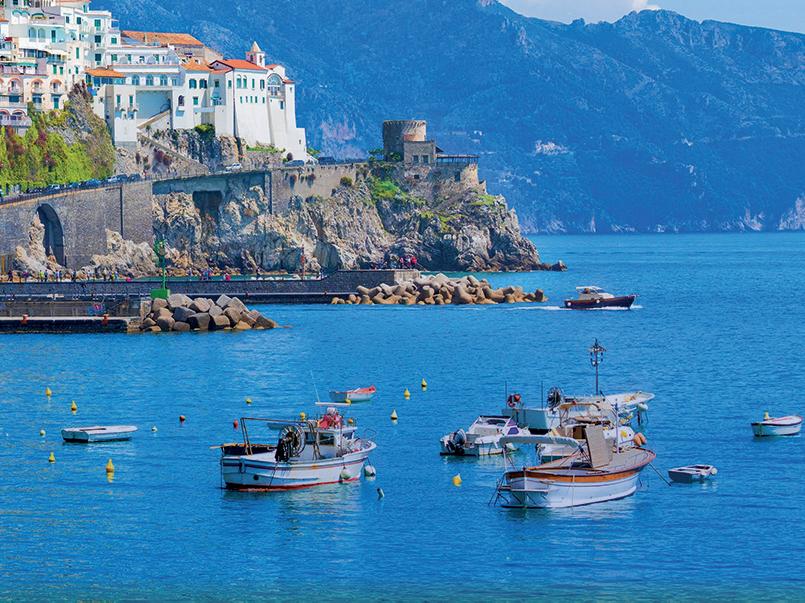
House wines are sourced directly from the Meola family vineyard in Benevento, while Limoncello and Meloncello are made on the Amalfi Coast using the family’s traditional recipes. Alongside these, the Rossella Collection includes in-house chilli oil and balsamic glaze, as well as olive oil, all available to enjoy in the restaurant or purchase to take home. Rossella’s deli, already established in Kentish Town and online, will extend into Muswell Hill through a curated offering.
Meola said: “Everything we do comes from my family and how I grew up. Food was always about bringing people together around the table, and that’s still
what drives it now. Muswell Hill feels like somewhere that really values that kind of place, somewhere local, relaxed and genuinely part of the neighbourhood. We’re not trying to reinvent anything. It’s about doing things properly, sharing those traditions and creating somewhere that feels like part of people’s everyday life.”
Rossella Muswell Hill is set to open at St James’s Square in early May 2026.
Silverstone driven by the illy formula
Italy’s No.1 premium coffee brand¹, illy, has announced a multi-year partnership with Silverstone, bringing its 100% Arabica blend to the home of motorsport.
The partnership marks a significant step in Silverstone’s ambition to continually enhance the fan experience. The coffee will be available across all major races, as well as throughout the year at corporate events, at the recently opened Kart Silverstone and at Escapade Hotel & Restaurant – Silverstone’s premium trackside residences.
Sustainability is a shared priority for both brands. illy’s commitment to responsibly sourced 100% Arabica beans, long-term grower partnerships and ongoing innovation in sustainable packaging and production aligns with Silverstone’s environmental ambitions.
Marcello Canetti, MD UK & IE at illy, said: “We are proud to partner with Silverstone. Serving illy coffee across the site allows us to connect with hundreds
of thousands of visitors each year and to support Silverstone’s ambition to create a true destination venue where every experience is a premium one that will not disappoint. We look forward to building a long-term partnership.”
Rachel James, head of partnerships at Silverstone, added: “Silverstone is
more than a race circuit, it’s a year-round destination, and as we continue to raise the standard across food and beverage, it’s vital we collaborate with brands that share our passion for quality and experience.
(i) Circana Italy | HM+SM+Sss | MAT DEC 2025 |
Leading lights
The co-located NRB and lunch! NORTH shows attracted a high-calibre of visitors alongside leading exhibitors and speakers – with dates already in place for 2027.
DOUBLE THE VALUE
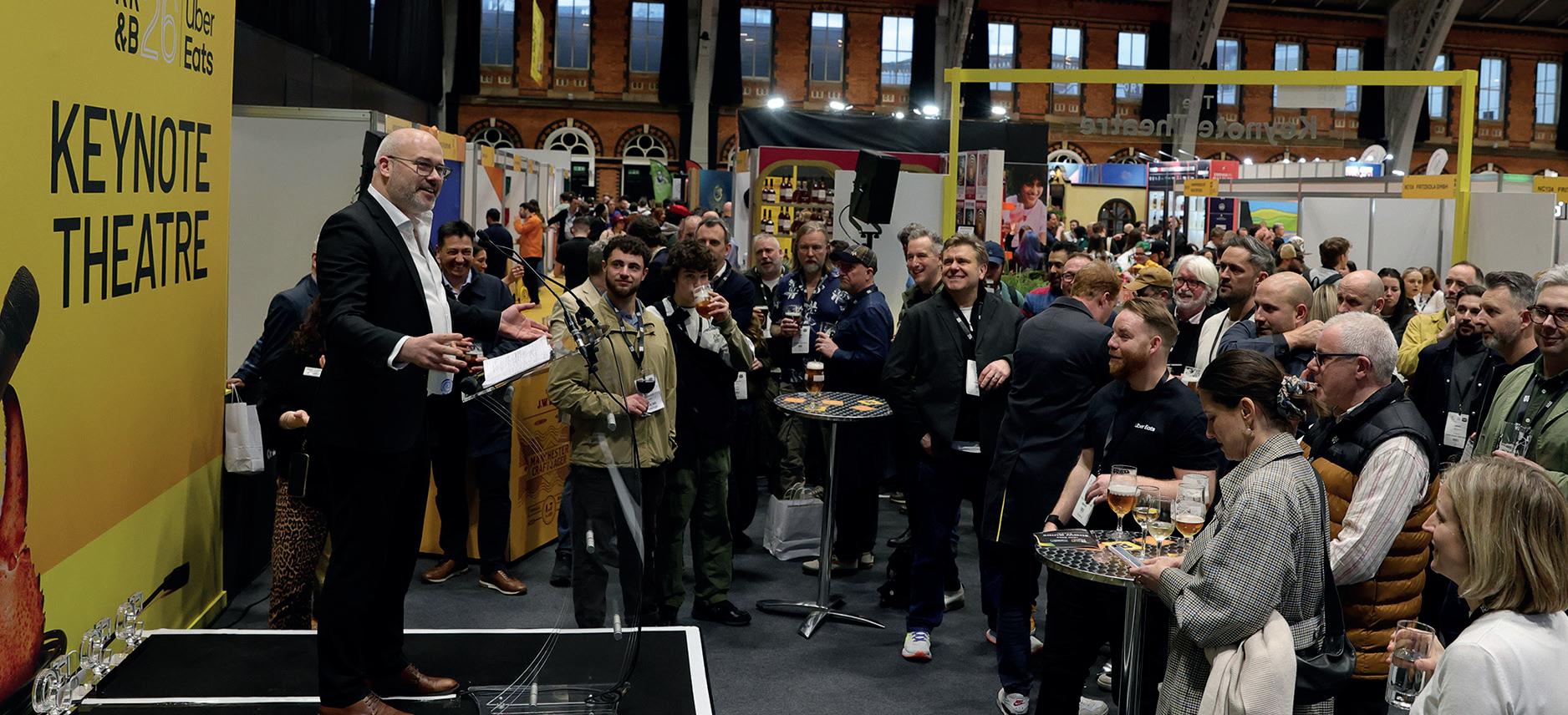
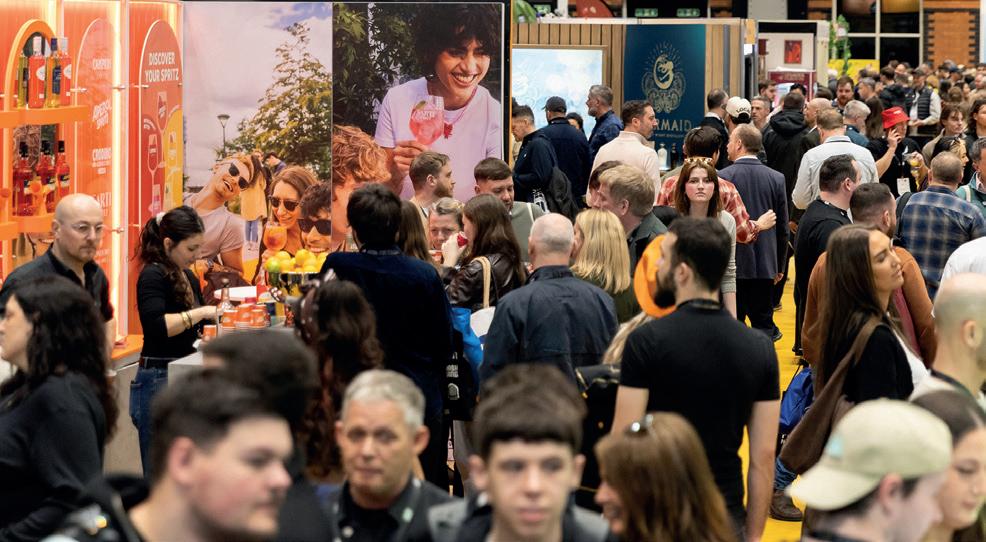
Northern Restaurant & Bar (NRB) and lunch! NORTH, both sponsored by Uber Eats, have concluded another successful edition, welcoming 10,120 visitors across two days at Manchester Central on 10-11 March 2026. Over 300 food, drink, tech and equipment suppliers showcased innovation across the sector.
The event attracted operators, buyers and decision-makers, who engaged with exhibitors alongside its strongest keynote programme yet, with headline interviews and panels.
On day one, NRB saw UKHospitality CEO Allen Simpson deliver a frank assessment of pressures facing the sector, while making a forceful case for hospitality’s irreplaceable role in the UK economy and its power to influence the political agenda.
Industry leaders continued the conversation. Hawksmoor CEO and co-founder, Will Beckett, discussed the brand’s expansion into new cities and communities, including its US sites. And double Michelin-starred chef Kenny Atkinson shared his journey to becoming one of the UK’s most celebrated operators and his latest restaurant in London.
Day two opened with a keynote from KAM founder Katy Moses on ‘Feeding the Mounjaro Generation’, exploring how the growing prevalence of GLP-1
medications – now used by approximately 10% of the population – is already affecting customer behaviour.
BUILDING MOMENTUM
Across the floor, the Chef Live Theatre showcased culinary talent from across the North, while the Pub & Bar Theatre hosted discussions focused on leadership, trends and operational challenges.
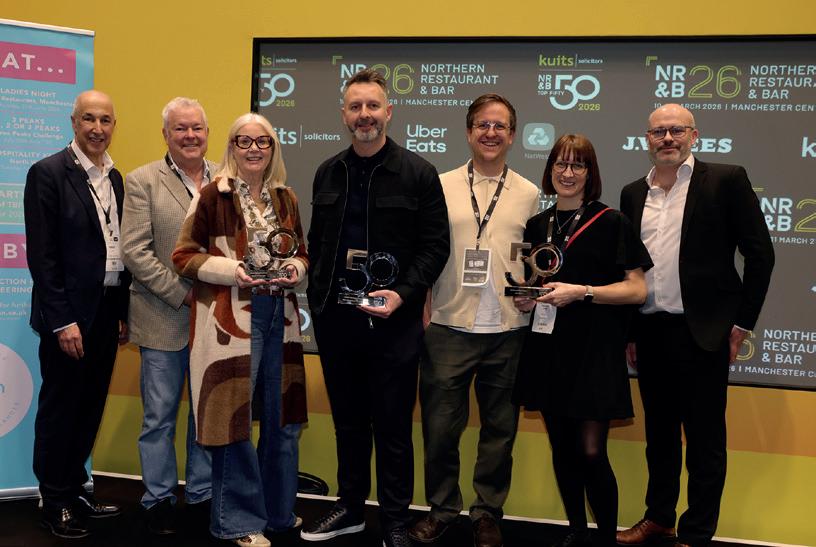
There was the welcome return of the Kuits NRB Top Fifty, now in its 13th year. The prestigious list celebrates 50 outstanding hospitality operators in the North, recognised for both their commercial success and critical acclaim.
Special achievement awards were presented to Nell’s Pizza, Cheshire Cat Pub & Bars and Moor Hall Restaurant with Rooms.
Running alongside NRB for its second year, lunch! NORTH continued to build on the momentum of its successful 2025 launch.
GAIL’s managing director, Nick Ayerst, shared insight on the brand’s continued growth and positioning within the market. Panels across the two days covered coffee shop leadership, new site openings and menu innovation.
Another standout session featured Knoops CEO William Gordon-Harris, who spoke about the brand’s rapid growth and distinctive business model, which
combines immersive in-store experiences with strong online retail and gifting sales.
Chris Brazier, group event director for NRB, said: “NRB26 proved once again why this show is the heartbeat of northern hospitality. The conversations have felt particularly charged, with operators navigating real challenges, yet the energy, ambition and innovation on display was remarkable. We can’t wait to do it all again in March 2027.”
Katie Tyler, event director for lunch! NORTH, added: “Seeing lunch! NORTH build real momentum in its second year has been incredibly rewarding. The community that we’re building around this event – the coffee shops, food-to-go operators, independent café owners – is exactly what we hoped for when we launched. The conversations this year went deeper, the connections felt stronger and we’re excited about where the show goes from here.”
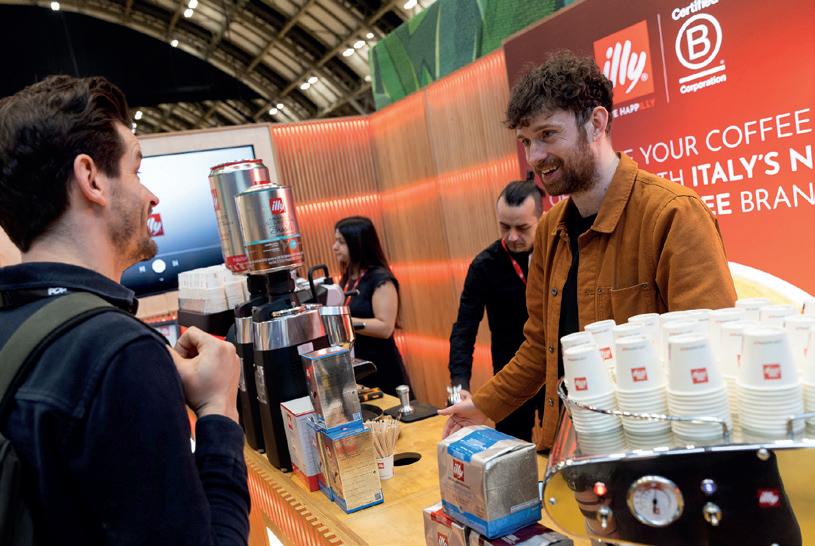
Katie Colvin, marketing director UK & IE at illycaffè and an exhibitor at lunch! NORTH, said: “A highlight of the calendar – a perfect launchpad for new products and industry connections.”
The date for next year’s Northern Restaurant & Bar and lunch! NORTH is 9-10 March 2027 at Manchester Central. Visit northernrestaurantandbar.co.uk & lunchnorth.co.uk.
Are you ready?
As pEPR enters its most consequential phase, consultant Richard Harrow highlights the importance of preparation for its consequences – and how understanding exposure around new modulated fees is crucial for affected businesses.
MODULATED FEES
In April last year, I examined the introduction of Extended Producer Responsibility for packaging (pEPR), the most significant reform of the UK sector in a generation.
Introduced in 2025, the legislation fundamentally reshaped the funding model for household waste by transferring the full net cost of collection, recycling and disposal away from local and central government and directly onto producers.
That shift alone was material. However, 2026 marks a far more consequential stage in the regime, with the introduction of modulated fees – designed to financially reward recyclable packaging and penalise materials that local authority systems struggle to manage.
From 2026, PackUK – the scheme
administrator and part of Defra – will apply differential fees across all obligated packaging. Materials will be classified into three bands (Green, Amber and Red), with Amber acting as the base fee, Green attracting a discount and Red carrying a substantial tax premium.
PackUK has confirmed that Amber fees across the eight main material categories will rise by an average of 12.6% per tonne in 2026, well ahead of inflation. The real exposure, however, lies in the Red classification, where fees rise by close to 20% on average compared with 2025, and significantly more for certain materials.
THE RAM RULEBOOK Classification under Green, Amber or Red is determined by the Recycling
Assessment Methodology (RAM) – a technical document updated in Dec 2025 and expected to remain a live framework subject to regular revision.
Based on industry discussions, much of RAM reflects current recycling system capability, rather than future policy intent. In practice, this means materials are assessed against what local authorities and re-processors can demonstrably collect and recycle today, not what legislation or industry requires them to do tomorrow. This creates several near-term distortions.
An example is flexible plastic. Under RAM, this packaging is automatically classified as Red, unless the producer can demonstrate participation in an approved take-back or closed-loop scheme. The rationale is simple: fewer than 75% of local authorities currently
The fees announced in December 2025 illustrate the scale of change:
Aluminium
Fibre-based
Glass
Paper
Plastic
Wood
Other
collect flexible plastics at the kerbside.
£266
£461
£192
£196
The anomaly is that legislation mandating universal local authority collection of flexible plastics does not come into force until 2027. As a result, for at least one year, producers using flexible plastics face punitive fees – even where they are actively improving recyclability or supporting infrastructure development.
DATA QUALITY
Another major risk sits not in material choice but in data quality.
Where obligated companies fail to submit packaging data that fully aligns with RAM requirements, PackUK will default the material to Red classification. For fibre-based composite packaging, this alone represents a 36.7% increase in fees compared with 2025.
For large multinationals, this is an administrative challenge. For SMEs, it is a structural risk.
The obligation threshold is relatively low – more than 50 tonnes of packaging placed on the market and turnover above £2 million – bringing thousands of businesses into scope, many without in-house compliance or expertise. Also, pEPR moved the obligation onto the brand owner, a fundamental change to
UPDATE
On 27 March 2026, PackUK released updated Notices of Liability (NoL) to all liable producers who reach the materiality threshold under the packaging Extended Producer Responsibility (pEPR) scheme.
PackUK has distributed Q4 of Year 1 pEPR payments to Local Authorities, following grant determination letters that were distributed on 26 Mar 2026. This finalises payments for Year 1 of pEPR.
What you need to know:
£245
£475
£185
£190
£270
£525
£205
£210
previous legislation. This covers not only when packaging carries branding but also when only a company name and address appears on the pack.
For smaller obligated businesses, the most effective mitigation is early engagement with suppliers. They should be able to provide material specifications, weights, recyclability evidence and RAM-aligned documentation. This not only supports accurate declarations but allows companies to forecast likely pEPR liability for late-2026 invoicing.
Basic controls also matter. Packaging weights should be independently verified rather than accepted at face value. Even minor rounding discrepancies can materially affect liabilities at scale. Records should be retained, as HMRC auditing powers apply to pEPR data and fee calculations.
Where possible, businesses should also explore lighter-weight formats or alternative materials that meet Green criteria under RAM – ideally achieving material reduction and fee mitigation.
TAX BY ANOTHER NAME
pEPR is a tax, so obligated companies should treat it as such, ensuring it is fully reflected in product costing and
● Obligated producers who resubmitted packaging data, and had it accepted by the regulators, will have their approved tonnages reflected in the updated NoL.
● Updated NoLs will reflect both producer resubmitted tonnages and a slight decrease in PackUK administrative costs.
● Any producer’s obligation that has changed by less than £25 will not receive a new NoL, and their original obligation will stand.
£325
£630
£245
£250
recovered through pricing wherever commercially feasible.
This is particularly important against the backdrop of wider scrutiny. PackUK is understood to be under pressure from HMRC to ensure full recovery of the £1.4bn target for 2025, the sum required to fund local authority household waste services.
Reports suggest that a significant number of producers challenged invoices issued in Oct 2025, contributing to a funding shortfall totalling millions. There is speculation supplementary invoices for 2025 may yet be issued to close the gap.
One conclusion is certainly unavoidable: packaging costs will continue to rise. Modulated fees are explicitly designed to change behaviour, and future iterations of RAM are likely to become more stringent as collection systems evolve.
For obligated companies, the priority is no longer awareness but control –understanding exposure, ensuring data accuracy, influencing material choices and recovering costs.
Those that fail to do so will not just face higher fees but sustained margin erosion in a system that is only just getting started.
● As previously communicated, the disposal fees will remain unchanged compared to NoLs issued in Oct 2025.
The updated NoL relates to the 2025/26 assessment year and is based on the packaging the producer supplied for the previous calendar year (2024 data).
For any questions, contact PackUK’s support desk: 0300 060 0002. Email EPRCustomerService@defra.gov.uk.
Whose crust will claim the crown?
Who will top the lot?
Who will be ‘Il Grande Formaggio?’
The final of Pizza Chef of the Year 2025 was one for the ages. With so many incredible creations presented to the judges, choosing winners proved to be no easy task. So much so, there were ‘highly commended’ entries in every category.
Of course, at the end of it all, Michele Rutigliano from Due Forni walked away with the Pizza Chef of the Year title. The judges described his ‘Green Whisper’ entry as possibly the best pizza ever produced in the competition’s history.
Over the years, the event has seen so many talented chefs grow and ultimately succeed through the shared experience of competing with and learning from their peers.
As well as the glory, category winners receive a cash prize of £250, while the overall winner takes home a cool £1000!
PIZZA CHEF of the year
WHAT ARE YOU WAITING FOR?
If you think you’ve got the skills to make history all over again, visit the awards website www.papaindustryawards.co.uk and register to enter.
This finals are on 5 November 2026 at Rudy’s Pizza Napoletana, Queensway, London W2 4SJ.
SPONSORED BY
That’s am re!
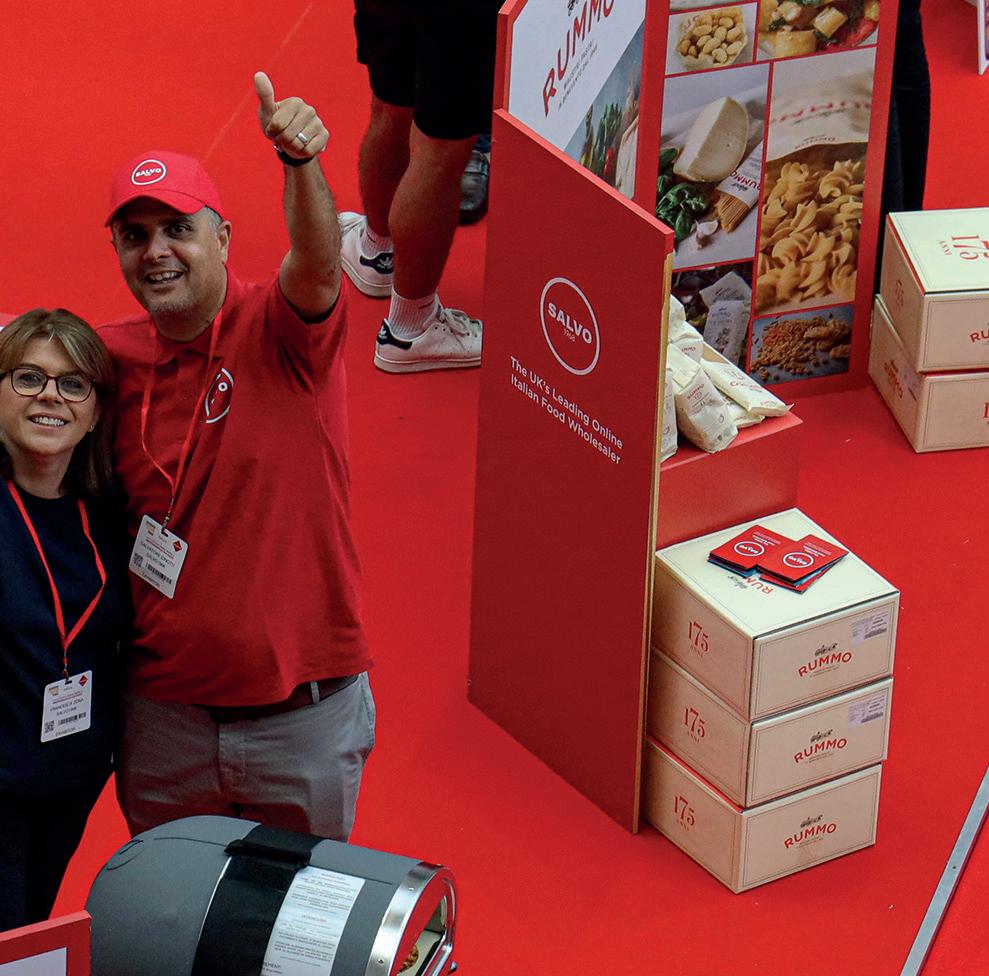
Having joined the PAPA management committee, it was the perfect time to focus on Salvo 1968’s MD, Jay De Vito, and a life defined by Italian food.
EARLY DOORS
Having been in the food business for most of his life, it’s far to say that Jay De Vito has followed his passion. His father ran many restaurants and dining events, so childhood was centred around kitchens, chefs and cooking.
“My earliest memories were in a multilingual kitchen environment,” said De Vito. “My father was also a buyer for Forte Hotels and other hospitality groups – and I learned a lot on his travels to both the fish and meat markets of London. Starting at 2am was the norm back then!”
His family have been at the forefront
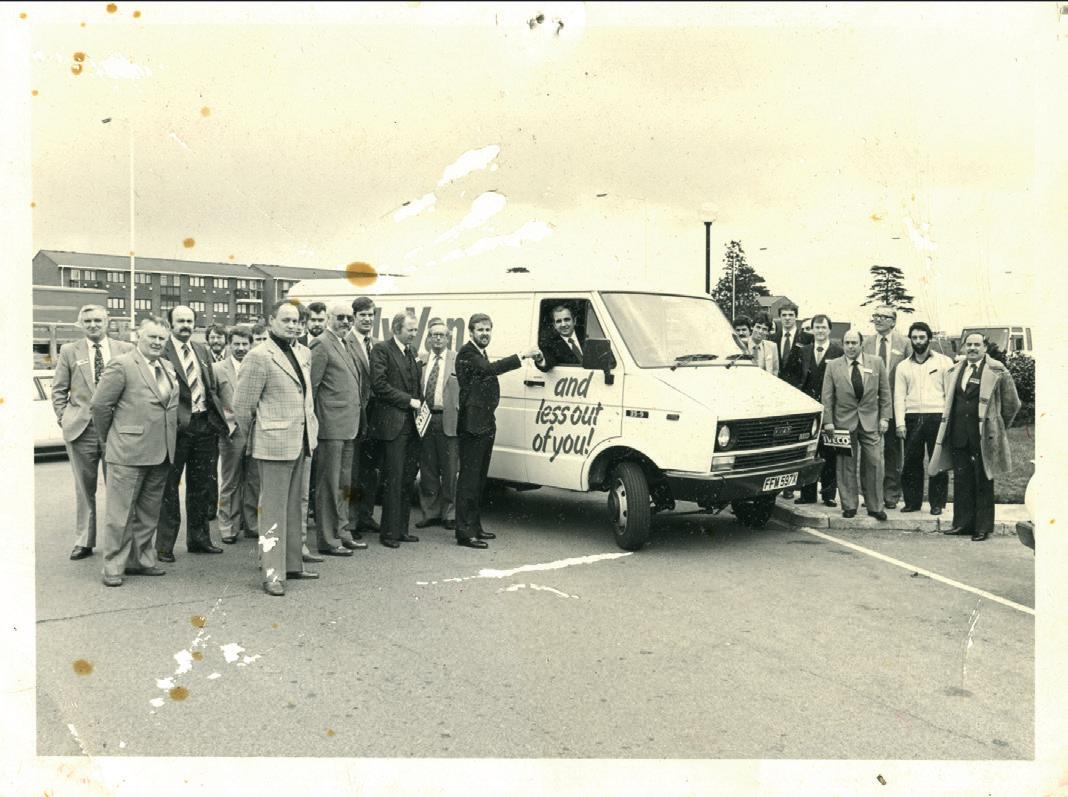
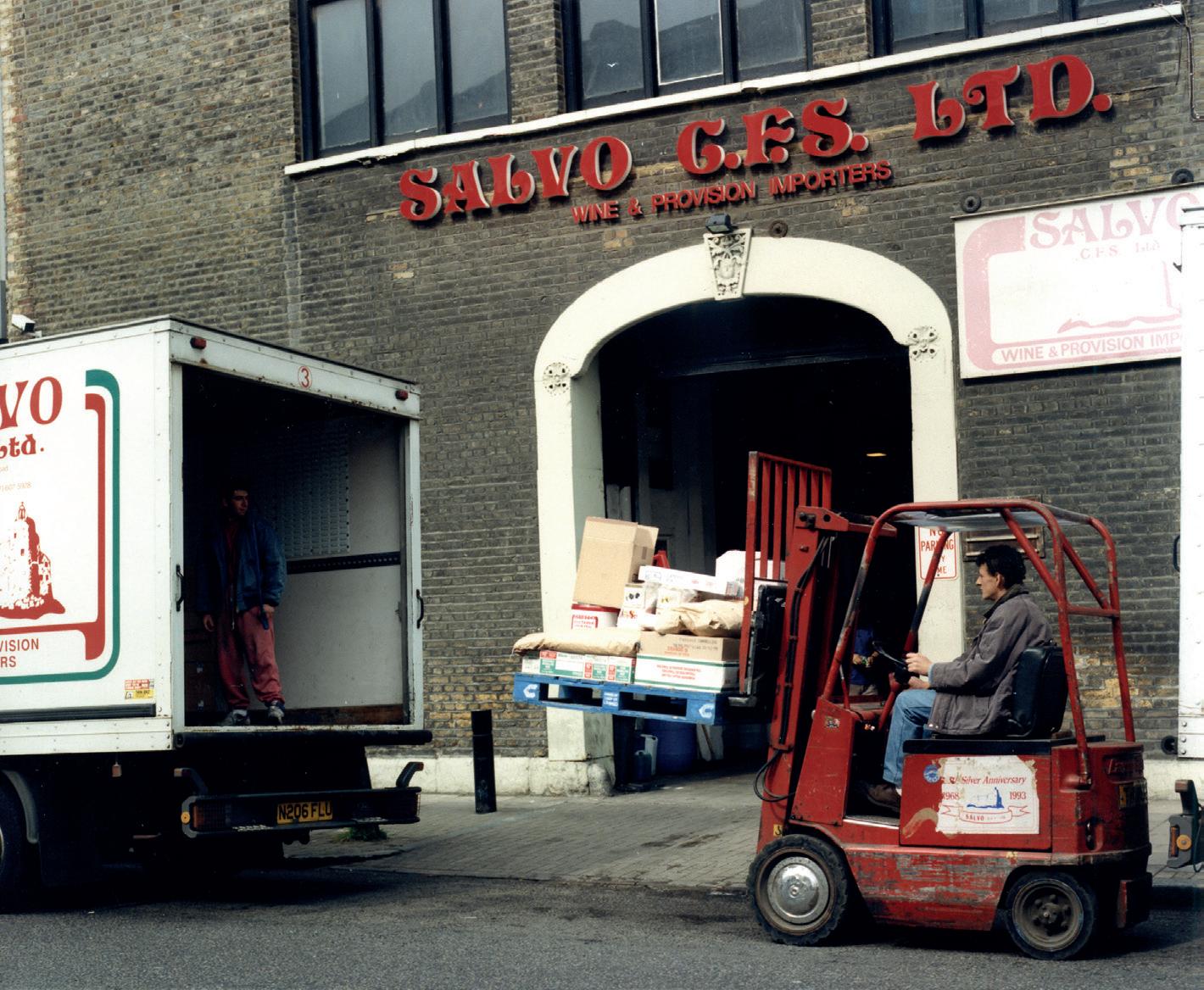
of introducing Italian food to the UK consumer, via foodservice and retail sales channels. Salvo was established in 1968 by Salvatore Cumbo, who was a pioneer importer to the Italian restaurant sector.
“My Irish uncle was the first person to introduce sliced Parma ham to UK retail, with Marks & Spencer, and we were one of the first importers to bring gnocchi to Sainsbury’s. We also introduced ‘Nduja onto Pizza Express menus.”
And while De Vito’s background is mainly sales and operations centred around retail product development, over the years his experience has allowed him to develop a unique understanding of consumer needs.
A SIMPLE PLAN
While flavours always evolve, with trends coming and going, some things remain constant.
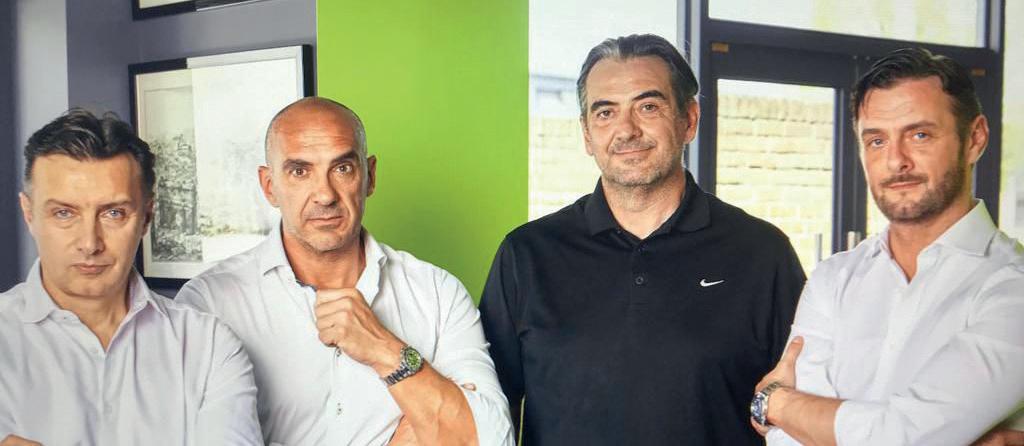
(L to r) Adriano De Vito, Marco Voltan, Davide Voltan, Jay De Vito
“In my opinion, the industry hasn’t changed that much,” continued De Vito. “What has changed are the additional complex processes for an importer or employer. Consumers still want authenticity, on-trend products and the education and story behind them but inflation does not help anyone. When you add Brexit, Covid and recent unforeseen events into that mix, then it is essentially how you balance those pressures while maintaining and delivering quality at competitive pricing.
“The spectrum of where the sector currently sits is so vast, and I could write an essay on the subject. Skill sets in
hospitality are often spoken about but I maintain the view that the UK has some incredibility talented chefs, from all different backgrounds – and I grew up in a family that embraces multiculturalism at its core. The industry today reflects this, so we should help with education and not frown upon it.
“I read a lot of data and insight. Last year’s Mintel report on the UK Pizza and Italian Restaurants Market showed substantial growth in the sector, with over half the UK population having ordered either a pizza or Italian meal in the past 12 months. That is a sizeable figure which is not showing any signs of erosion. The
emergence of Malaysian, Lebanese and Sri Lankan cuisines is also good. As we have seen with Chinese and Indian, these flavours and fusions are on trend. I have already seen the pizza market evolve to be inclusive of some of these flavours.”
AMBASSADORIAL ROLES
The core message of Salvo 1968 is to support operators with authentic ingredients and quality pizza essentials. Its pizza ambassadors maintain a high-profile connection between customers and the brand, while the business has earned BRCGS AA Grade certification four years running.
“Salvo is progressively becoming the authority in developing the UK pizza scene – and we’re on a journey to expand that market. We see trends like pinsa, New York, Detroit and London-style evolving at high speed, and understand our responsibility to the consumer. Health is also part of our vision, selling ingredients that concentrate on gut health and a more digestible eating experience. Our responsibility is to ensure products are safe
and that we have audited each supplier and distribution model to a strict standard.
“Demand on reducing carbon footprint is also on the agenda and, together with UK supplier partnerships, we are helping innovation to resource local sustainable products. In a recent supplier meeting I learnt the term ‘anaerobic digester’. Ever since, I have researched this in more depth and if Salvo and partners can do its part to aid renewable energy, then that is
exactly what we should be doing.”
As the first Italian importer in the UK to market its online web portal, it gave Salvo 1968 the opportunity to combine with WhatsApp channels and listen to customers. This flexibility is key.
“We have to understand their demands on price and work, then find solutions. Whether that be on their menus across multi-temperature products, storage and waste control, or just finding options to increase yield and thus profitability,” concluded De Vito.
Email ciao@salvo1968.co.uk.
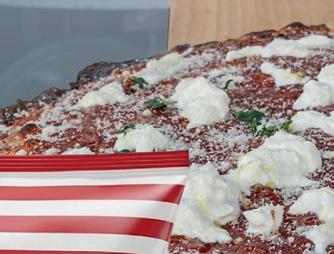
American style pizza is currently making waves in the UK pizza world.
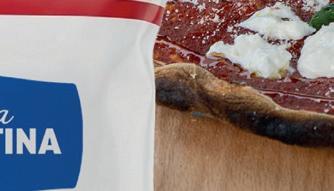
Leading the charge is the light, easy to fold New York style with its crispy but chewy crust. We’re also seeing a surge in demand for the thin crispy New London style and the deep, but airy Detroit pan pizza.
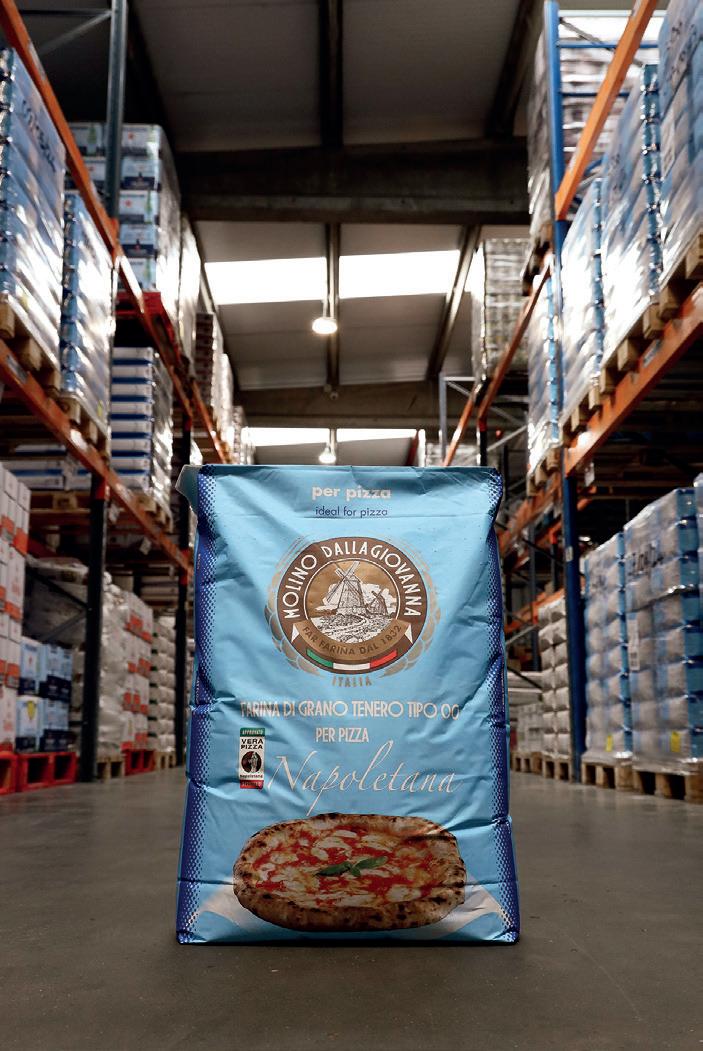
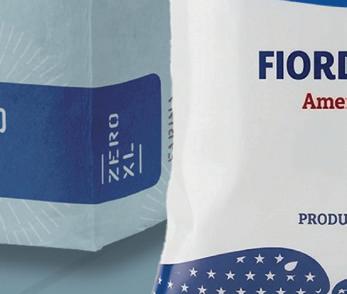
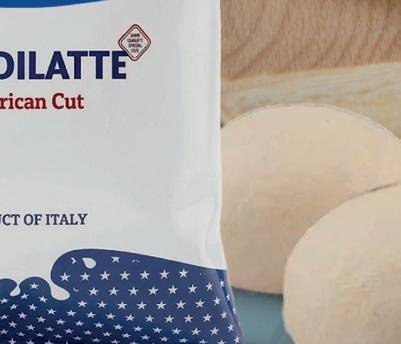
At the heart of any good pizza lies the dough; flour and doughballs are no longer just ingredients. Casillo XL Black flour and frozen doughballs work particularly well for these styles of pizza as does Latteria Sorrentina’s American cut fior di latte mozzarella.
Great pizza is being redefined. Stay ahead of the curve and scan below for more info.
Making a difference
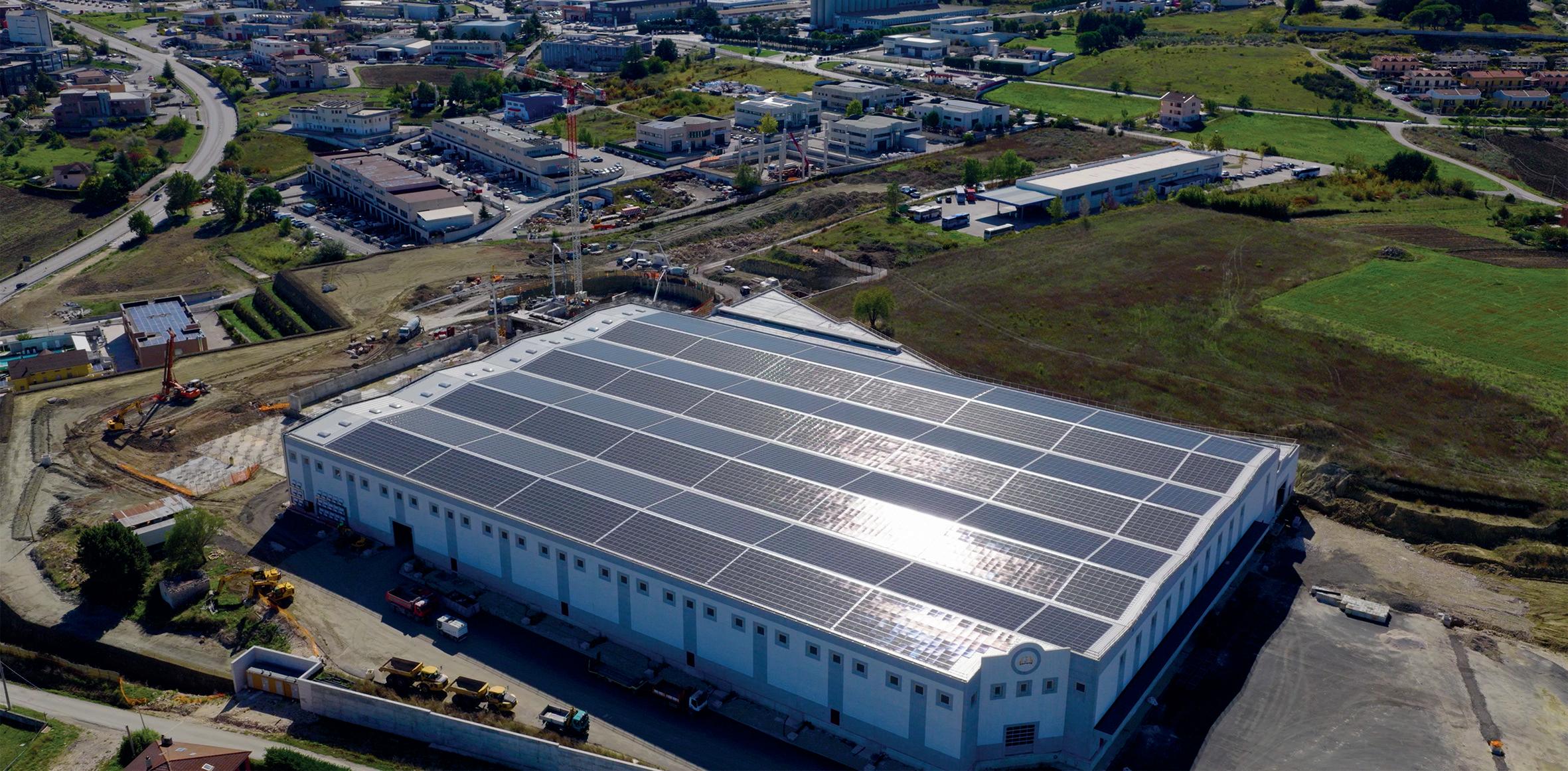
The most sustainable flour mill in Europe, set to open in Ripalimosani next year, is the centrepiece of Caputo’s drive towards the most innovative and environmentally friendly production processes.
RIGOROUS INSPECTION
It’s been a memorable few years for Caputo. Turnover growth in 2024 hit a reported figure of €227 million (£197m), with exports to around 90 countries. As the leading pizza flour brand in Italy, it’s increasing sales in the most competitive and discerning market in the world. But other ambitions are equally important.
Caputo’s second sustainability report, again relating to 2024 when the business
celebrated its centenary, illustrates how values and activities respond to respect for the social and environmental context. Production capacity is articulated across two operational headquarters: in Naples and Campobasso. Plants are completely automated and equipped with state-of-the-art instrumentation, ensuring maximum quality and safety – with every batch of grain subjected to rigorous inspection and lab controls.
These detailed principles also apply to a clear commitment to the environment and the territory, based on a concrete and measurable approach. This is aimed at managing resources consciously, enhancing the supply chain and progressively reducing impacts.
HAT-TRICK OF GOALS
Caputo’s commitment to environmental responsibility is based on three aspects: ● Enhancement of the territory and its resources. Via supply chain projects
in synergy with stakeholders and the cultivation of organic soft wheat flours.
● Energy efficiency and maximisation of the use of renewable energy, with important and continuous investment.
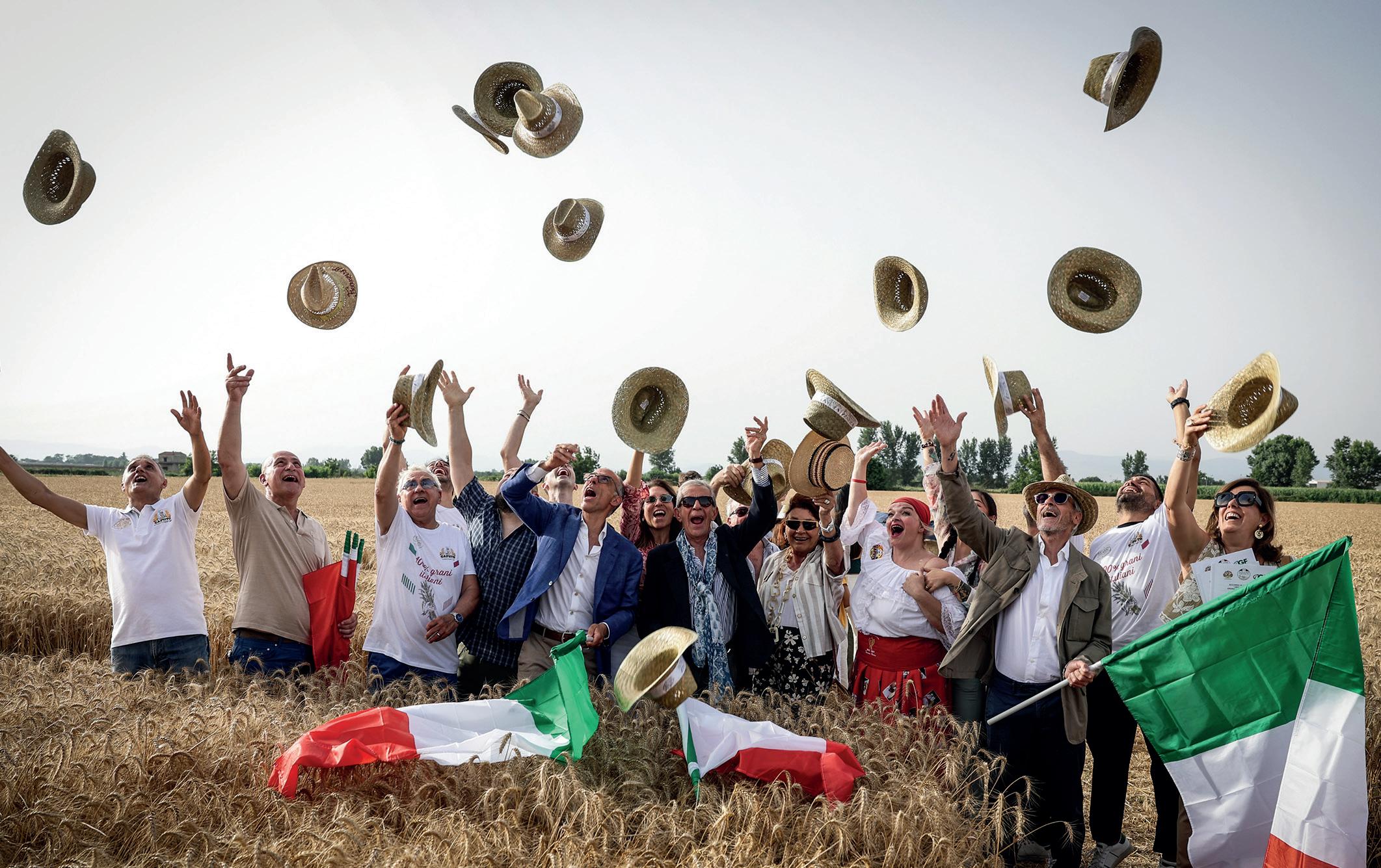
● Waste and emission reduction, recycling/reusing of processing waste. Running through the core of the business is a link with home, Naples. This manifests via concrete urban regeneration actions. These include Miller’s New Year (celebrating its eighth edition), which
acknowledges the start of the harvest and renewal of the supply chain agreement with Green Farm.
The adoption of the Aragonese Towers Gardens began in 2023, for the 100x100 Naples Foundation. Caputo adopted the green area in via Marina, maintaining and redeveloping to this day.
While the Grano Nostrum supply chain is a continuing pact for quality agriculture. It is here, in the Campo Caputo, that grain is cultivated, 100% Italian.
Grano Nostrum is a complete supply chain project, from seed to flour, aiming to enhance quality agriculture and the art of slow milling. A large group of farmers operating on 3000 hectares in
the Southern regions participate in this project. Produced flour is a balanced blend of six different varieties of soft wheat, among which the Dom Carmine variety stands out, named in honour of Carmine Caputo – president of Molino Caputo.
The contract includes a reward system to protect small agricultural entrepreneurs, promoting scientific research and optimising each work phase – from sowing to harvesting and storage, ensuring homogenous yield naturally all year.
THE FUTURE
Any sustainability strategy must focus on energy. Caputo has consolidated the approach, to improve efficiency and boost
self-production from renewable sources. The energy management system allows the analysis of individual production departments in real time, identifying inefficiencies and intervening with corrective actions. This ensures economic savings and reduced environmental impact. Electric energy is the main carrier, at 99% of total consumption.
One example of continued innovation is at the historic Naples site. In 2024, Caputo launched a modernisation project for the pneumatic transport system, which was responsible for about 15% of total electricity requirement. It involved replacing the head and tail turbines with new-generation models, equipped with higher efficiency motors and inverter regulation to optimise the operating point based on actual demand.
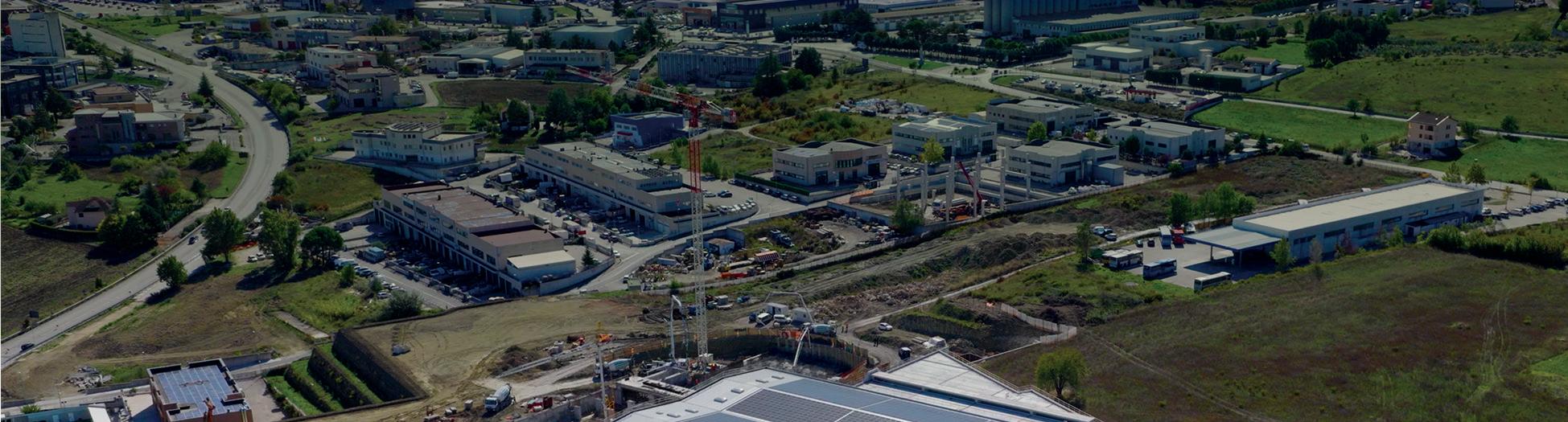
These ambitions are ultimately reflected in the Ripalimosani site in Molise, set to open next year, with a new photovoltaic system. As the most sustainable mill in Europe, it will cover a mammoth 20,000 sq m, 100% powered by solar panels on the exterior.
It’s all set to establish new standards in the flour milling production journey.
On a cooking journey
Different types of flour are bringing versatility and excitement to Italian kitchens. Chef, teacher and author, Francesco Mattana, guides us on his approach.
FRESH FACE
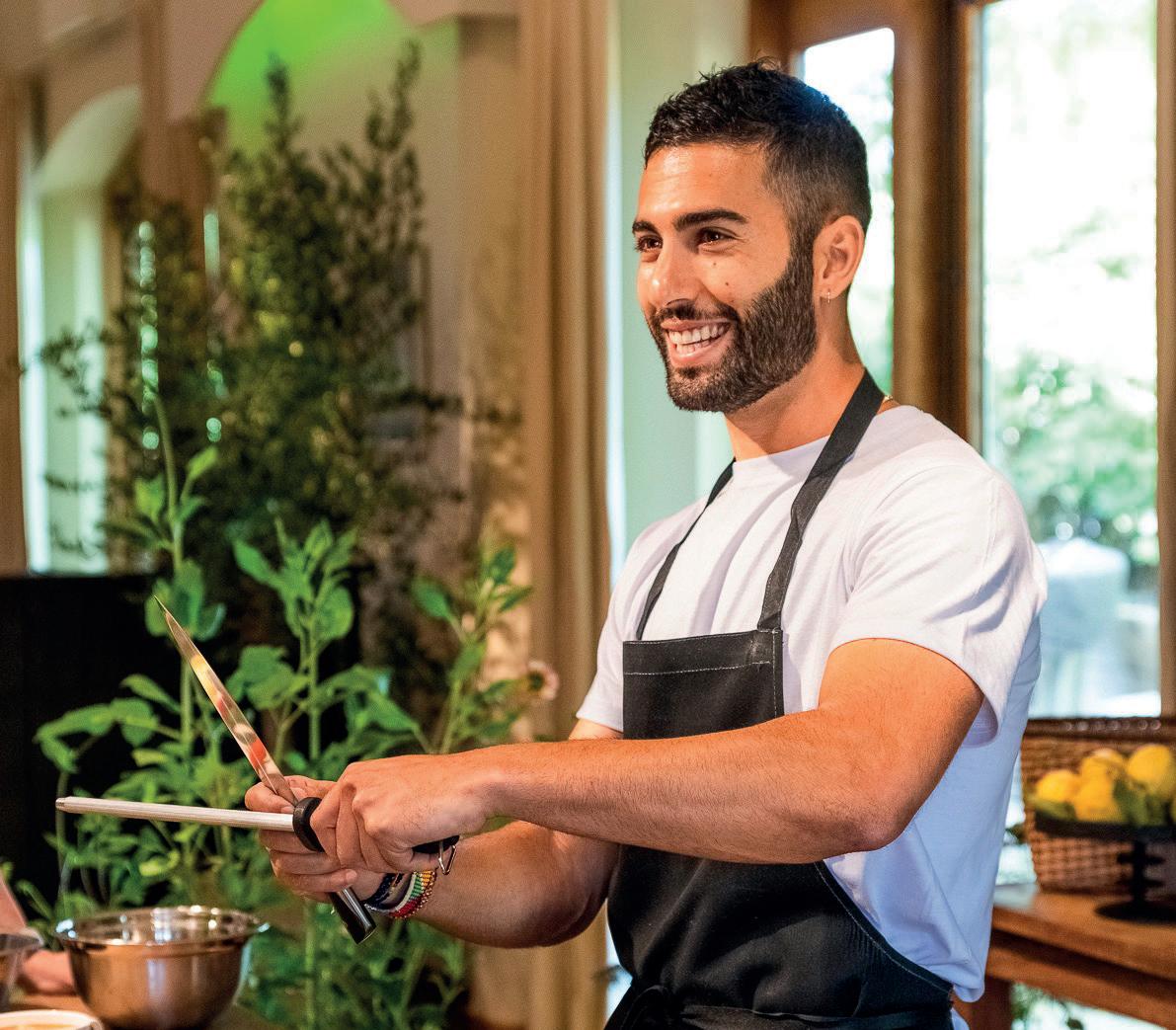
Francesco Mattana is one of the new breed of young chefs, using social media platforms and the online universe to introduce a fresh generation to the joys of Italian cuisine. Hailing from Sardinia, he’s also penned a book, packed with over 90 simple, yet authentic recipes.
And when it comes to flour, Mattana understands that it is the foundation of everything, with a massive impact on the dough’s structure, texture and flavour.
“The protein level, milling process and how the flour absorbs water all influence the final crust and crumb. I try and choose different types to achieve a combination of good gluten strength with wholemeal and less refined flours for a great aroma and flavour! Consistency and understanding
how the flour behaves during fermentation are key to success. So, I experiment with new recipes for different styles, whether it’s a light and fluffy Neapolitan or golden crispy crust like a Sardinian pizza.”
When it comes to trends, he’s loving the pasta makers, pizza chefs, bakers and home cooks growing more interested in specialised and artisanal flours.
“We are now enjoying the exploration of more ancient grains and different wheat varieties. When before, a bread or pizza dough was simply made from one type of flour, blending is becoming popular to achieve that perfect balance.”
ENVIRONMENTAL CONCERNS
This outlook is reflected in the modern view of flour as a hugely versatile ingredient – especially in Italian kitchens.
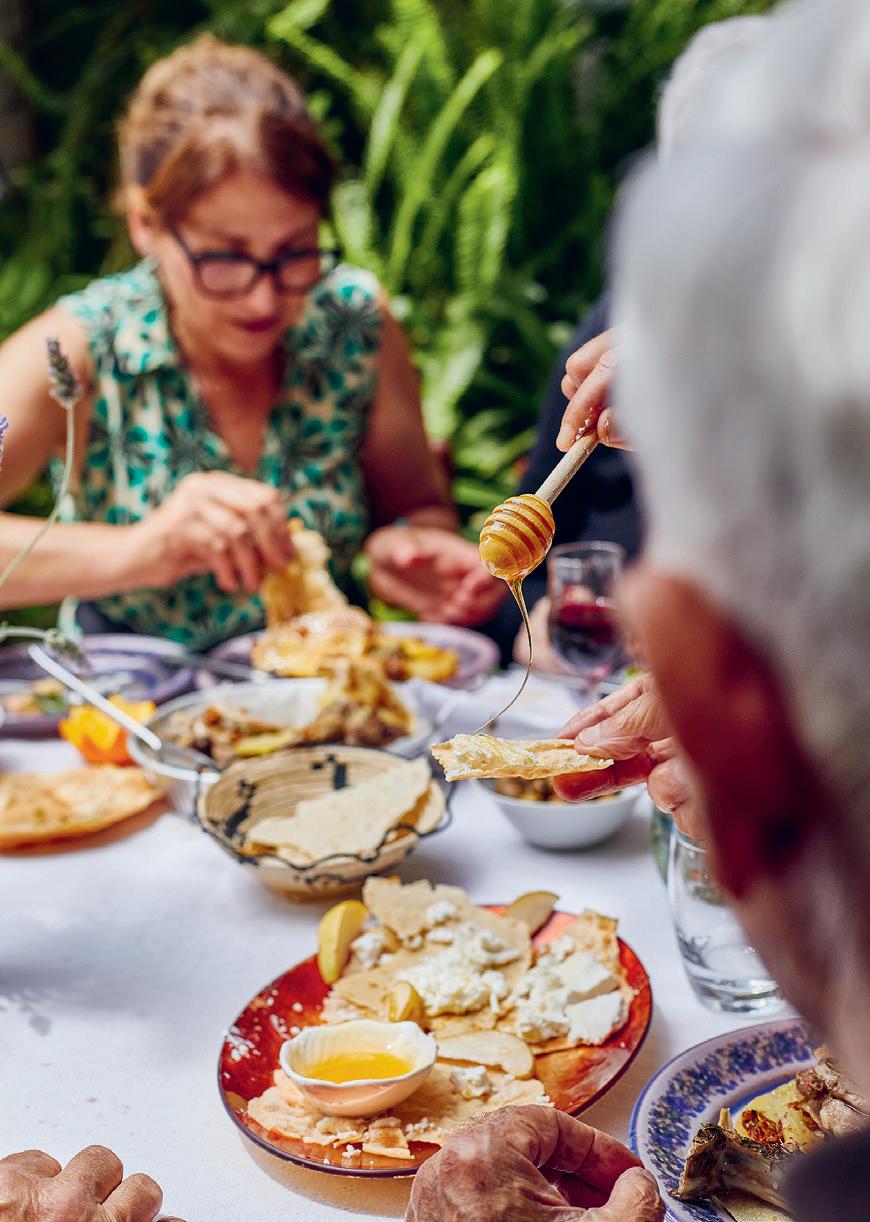
“It can act as a structure builder, thickener, coating, binder, fermentable base like impasto madre (sourdough), biga or poolish. But, of course, it’s still used for pizza, pasta, bread, sweet baking or as a finishing dust for shaping dough... you name it! One of my favourite dishes using flour is Mazza Frissa, a traditional Sardinian offering from the Gallura region. You simmer fresh cream (specifically sheep’s cream), adding salt and slowly stirring in semolina until it thickens into a smooth, creamy and sometimes buttery consistency – serve with a drizzle of honey on top.
Mattana uses a variety of flours, here are his favourites:
● Manitoba
● Tipo 00 & 0 & 1
● Rye flour
● Semolina
● Semolina rimacinata
“It’s important that operators consider protein content, water absorption, final textures and the flavour profile of the dough – and how the flour performs with their fermentation method, depending on the yeast. I’ve made the same dough in different places around the world and it always reacts differently. Remember the environment you are in – an important ingredient that isn’t considered.”
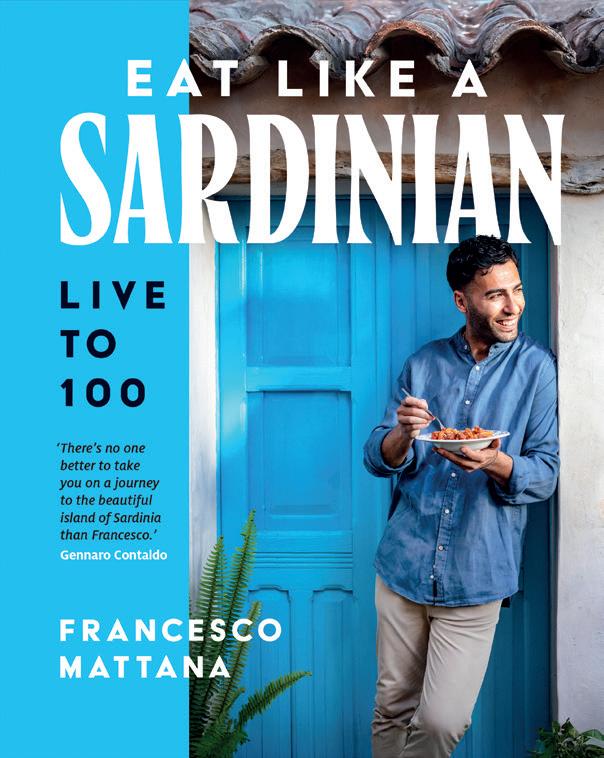
And it’s a big year for Mattana. “I’m most excited about my new book, Eat Like A Sardinian, Live to 100. We have also launched an online cookery school, with live and interactive classes, and I’m doing demonstrations at UK festivals, plus filming recipe videos for social channels.”
If his 919k followers on Instagram [our_cookingjourney] tell us anything, it’s obviously working!
A NEW CHAPTER
murdochbooks.co.uk
Eat Like a Sardinian, Live to 100 by Francesco Mattana is published by Murdoch Books, £22.
The Rennaisance Man
What do you think of the huge competition in the market right now?
With a UK mill, Marco Fuso’s products are easily accessible – and his new restaurant has an ambience all its own.
Is the perception changing around the importance of the right flour?
Yes, we are finally there. When I came to the UK 17 years ago, nobody knew much about pizza making. Today, local operators are becoming pizza stars, which is partly due to advanced knowledge and interest in this amazing product.
I’ve trained the best chefs and consultants, and it makes me happy to see them spreading knowledge. People in the industry want not just the best flour, but with the right protein content to suit their product and achieve daily consistency.
What’s so special about your flour?
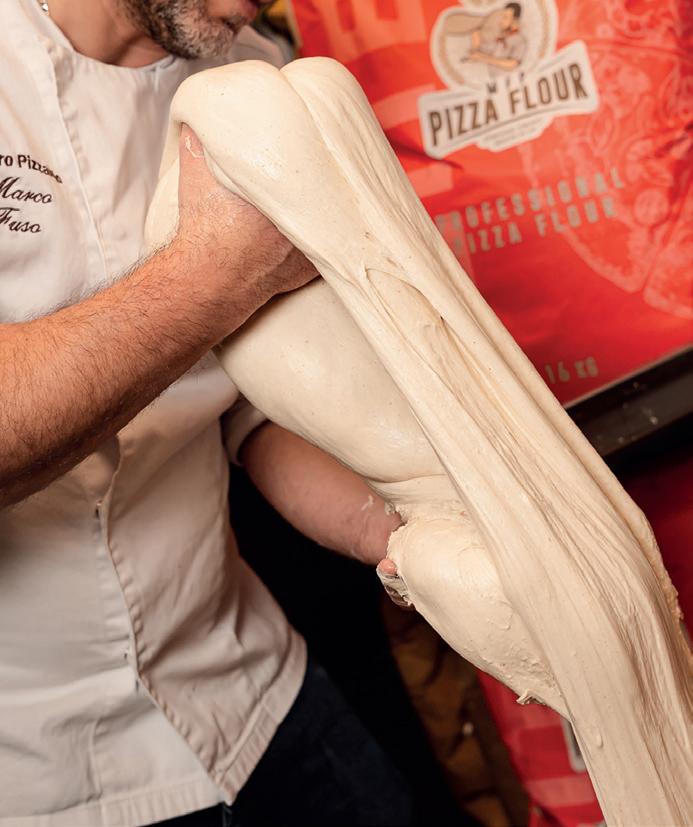
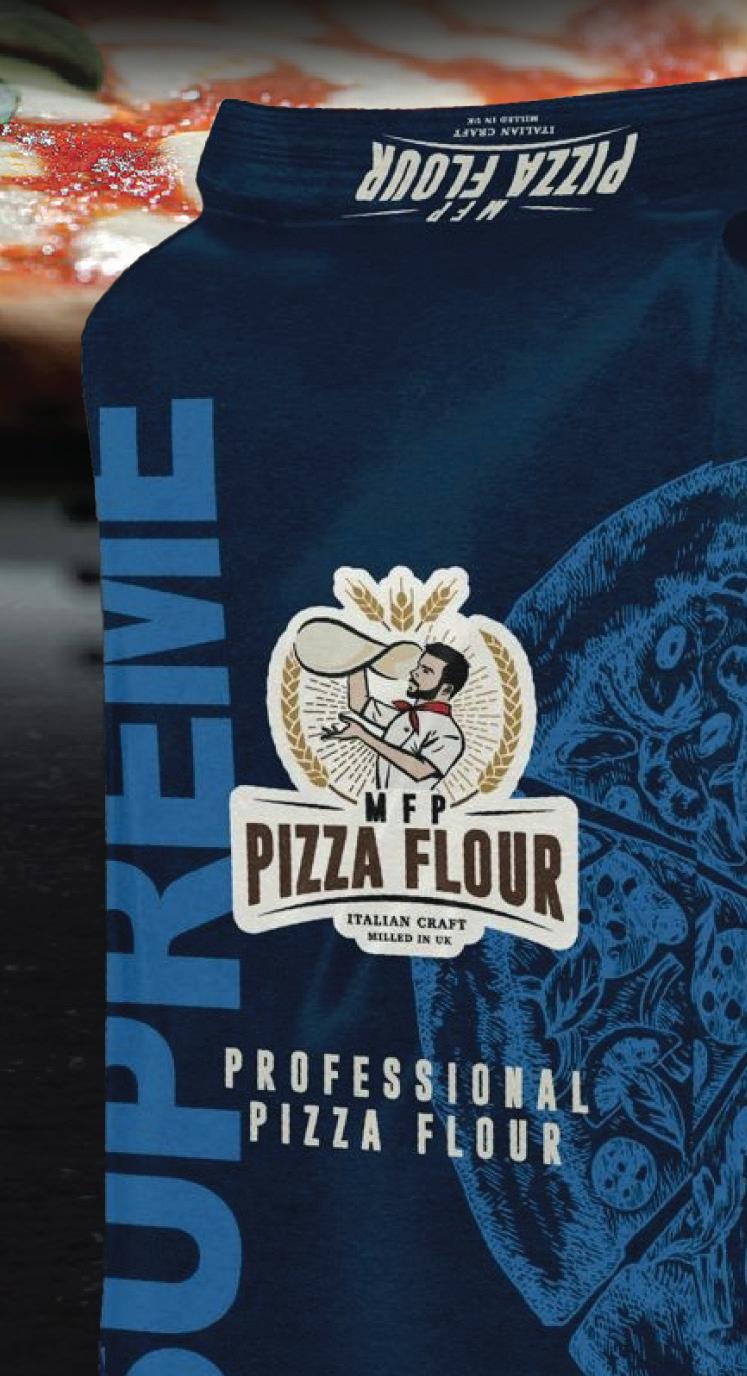
My Supreme and Elite variations are local flours that suit the processes of pizza chefs – across different protein content, while delivering high-performance results.
It was a project that took me years to launch. But if I wanted to develop a pizza flour made in the UK, I had to find the right mill, the perfect wheat and the people to distribute nationwide.
I think it’s an amazing story to hopefully inspire people. It started during the first Covid lockdown – I had time to discover British flour mills, test local pizza flour and develop my business plan. Once ready, I sent 20 emails. Only two were happy to give it a chance and develop a product under my specifications.
After nearly two years of testing, I narrowed it down to one and found the right wheat and perfect dough elasticity. The rest is history… and I’m grateful to the hundreds of pizza restaurants using MFP Flour. The brand is now experiencing rapid growth.
Margins on pizzas are great but a city like London, for instance, is becoming saturated with restaurants. And the numbers of pizza that they’re baking are way lower than say five years ago, while site numbers are much higher.
One secret of success to my flour is that it’s made locally and doesn’t have to travel far. That makes it sustainable and affordable, compared to shipping from other countries.
In 2025, wheat decreased in price, so we decreased prices for customers. I want to remain close with operators that have chosen MFP Flour and help a little. Behind this brand is a person who knows how difficult it can be to run a pizzeria.
Who are you working with?
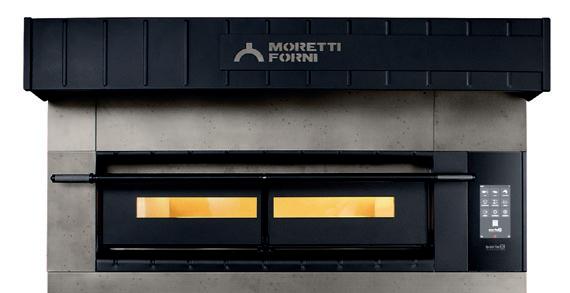
I’m collaborating with so many companies, including some I have loved since I was young. Moretti Ovens are high-performing – and a few years back I became a global ambassador, helping to spread my knowledge and love for pizza. But I am always open to teaming up with companies that value product quality.
How is the consultancy looking?
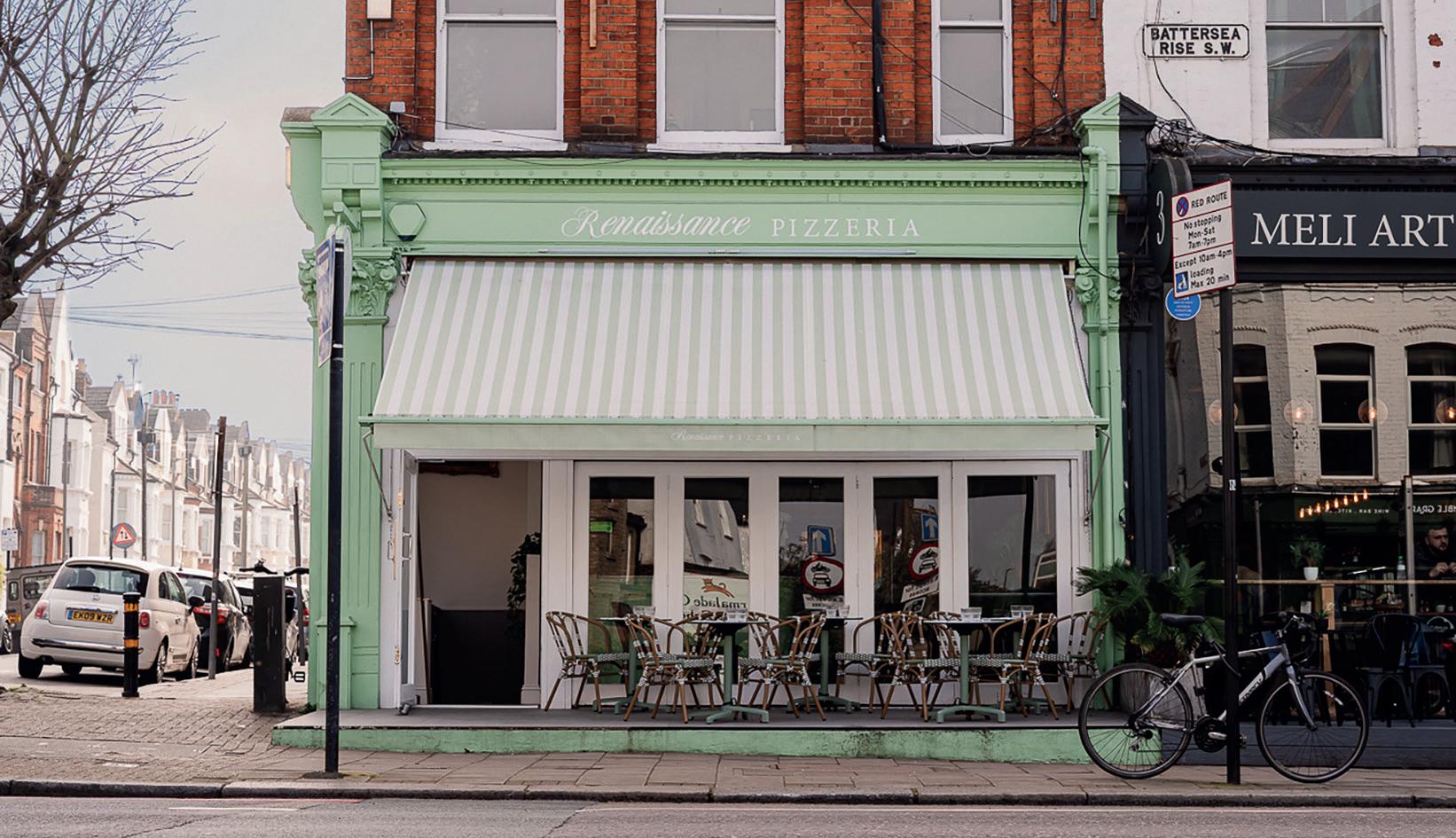
Last year, I opened my first UK pizzeria in London, called Renaissance [at 1 Battersea Rise].
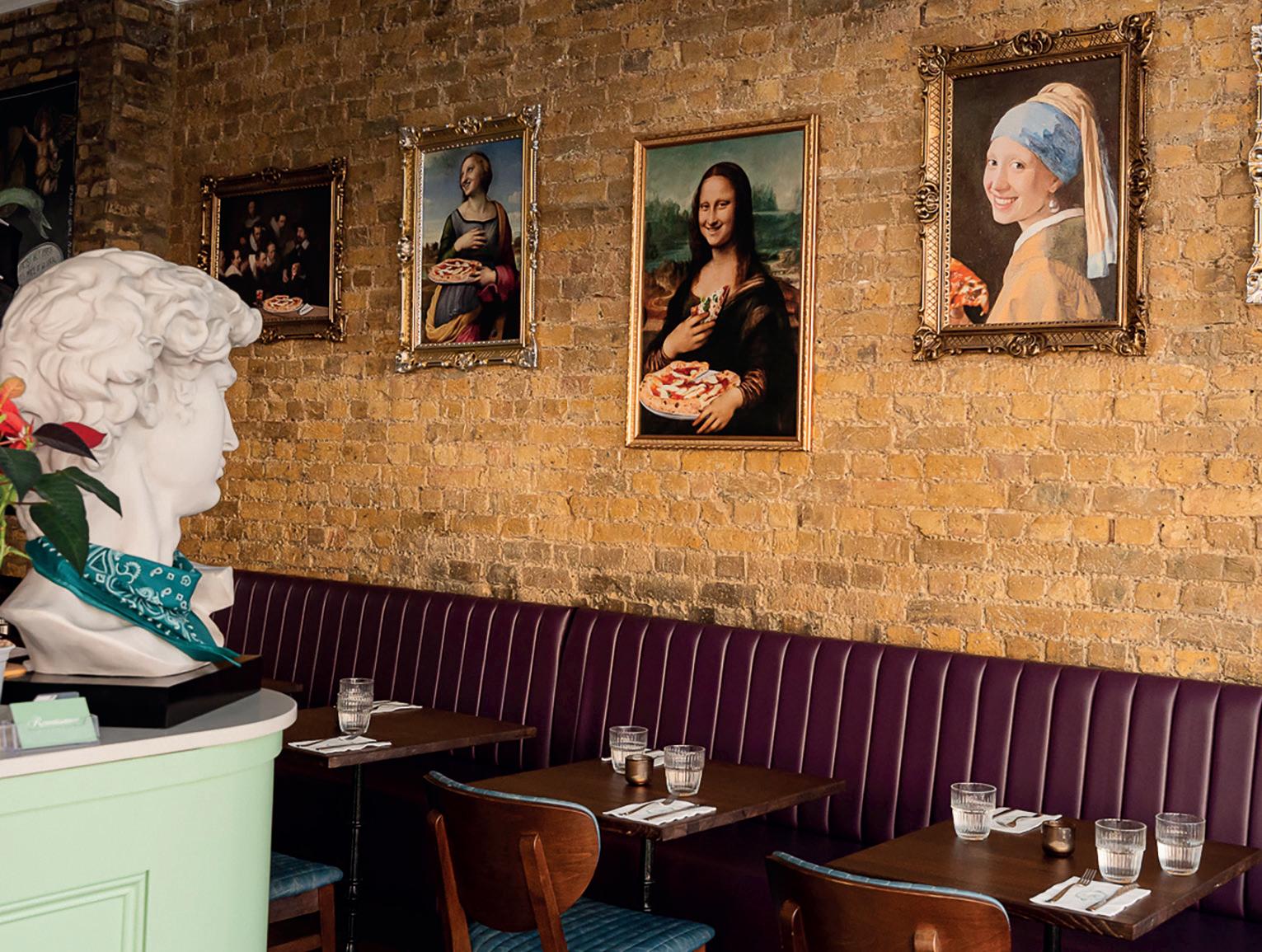
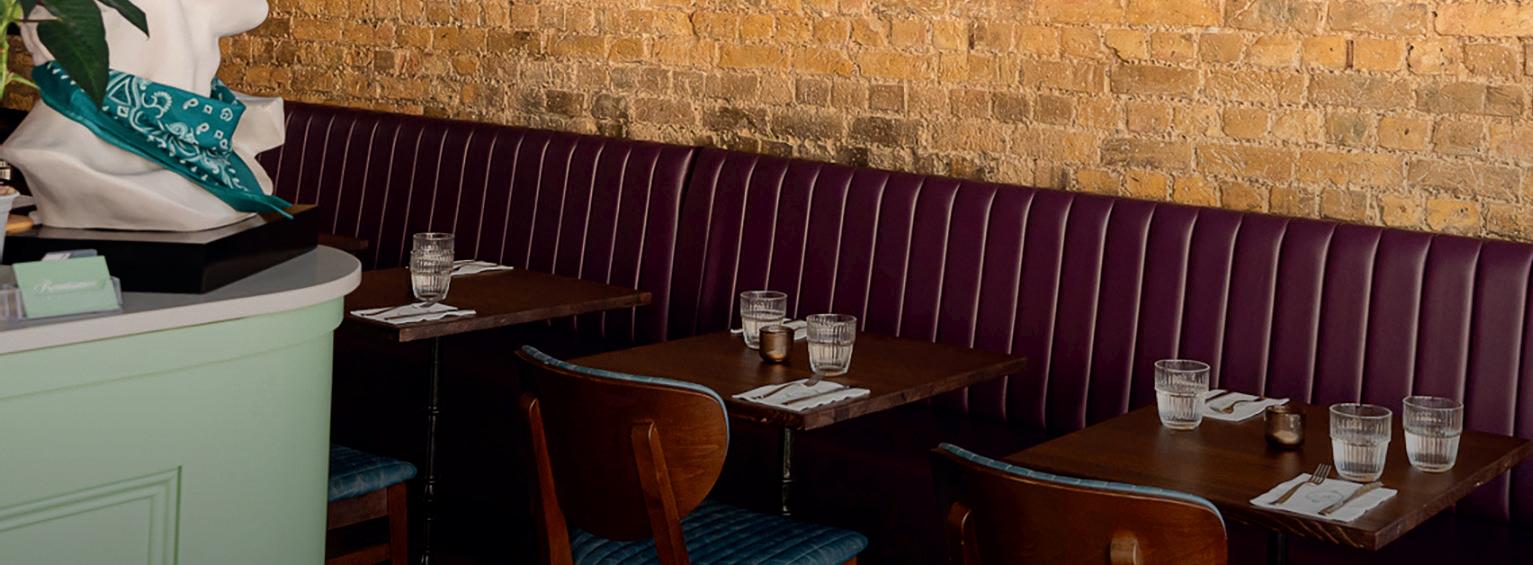
We use paintings from the period, with the likes of the Mona Lisa holding a slice! But the message is simple: quality ingredients, super-light bases and an elegant ambience. In terms of the MFP consultancy, I’m ready to offer my services to traders.
COLLECTIVE APPROACH
Soil To Slice Conference 2026 to spotlight regenerative agriculture across the entire supply chain.
MAKING CONNECTIONS
The Green Farm Collective has launched its inaugural Soil To Slice Conference 2026, a one-day event exploring how regenerative agriculture can strengthen and connect the entire supply chain –from farmer to baker to consumer.
Taking place on 20 May 2026 at the Great Yorkshire Showground, it will bring together farmers, millers, bakers, businesses, researchers and supply chain partners to share insights, real-world case studies and collaborative solutions.
With increasing pressure on farm profitability, soil health, climate resilience and market transparency, Soil To Slice aims to demonstrate how regenerative principles can deliver tangible benefits across processing, retail and consumption.
The programme features:
● Expert speakers from across the arable, milling and baking sectors.
● Farmer-led case studies on regenerative transitions.
● Discussions on supply chain collaboration and value distribution.
● Practical strategies for improving resilience and profitability.
● Networking opportunities for cross-sector partnerships.
The Green Farm Collective is a group of farmers focused on regenerative farming practices which nurture the soil and
nature. They are passionate about making farms a positive legacy for the future of the countryside, wildlife and soils.
PRACTICAL PATHWAYS
“Soil health is the foundation of our food system,” said Michael Kavanagh from The Green Farm Collective. “But lasting change happens when everyone in the chain understands their role and shares in the value created. Soil To Slice is about building those connections and creating practical pathways forward.”
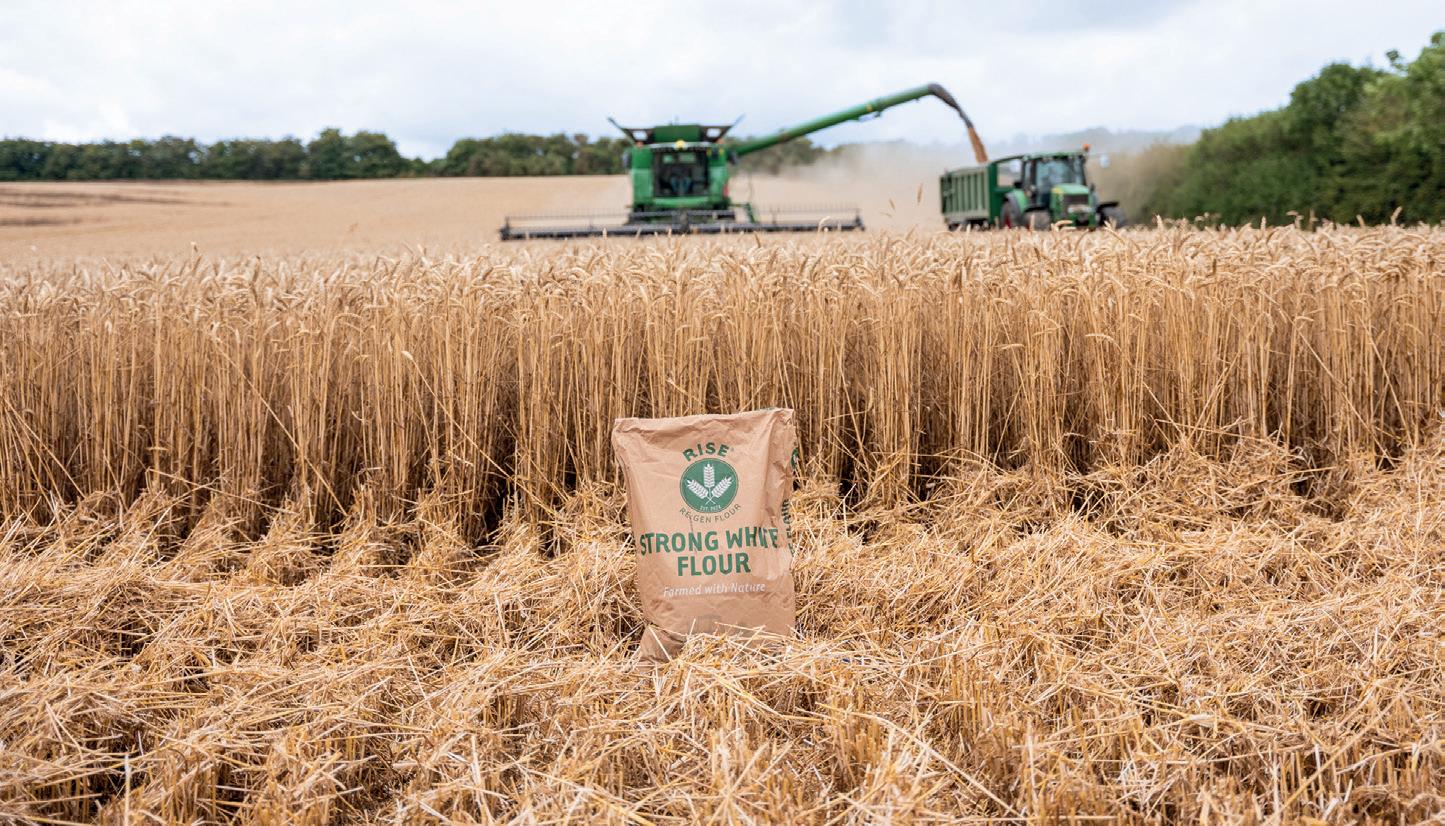
The Green Farm Collective produces wheat for RISE Re:Gen in collaboration with Eurostar Commodities. RISE Re:Gen is a range of regenerative flours, setting a
new standard for sustainability and quality in the food industry.
The Green Farm Collective believes that meaningful change in agriculture requires alignment across the full value chain. By connecting primary producers directly with processors and end users, the event will showcase how healthy soils underpin food quality, business performance and consumer trust.
It is expected to attract progressive farmers, manufacturers, artisan and commercial bakers, grain buyers, agronomists and sustainability leads.
Tickets are available to purchase now. Visit greenfarmcollective.com.
ON TOP OF THE WORLD
Become your own boss
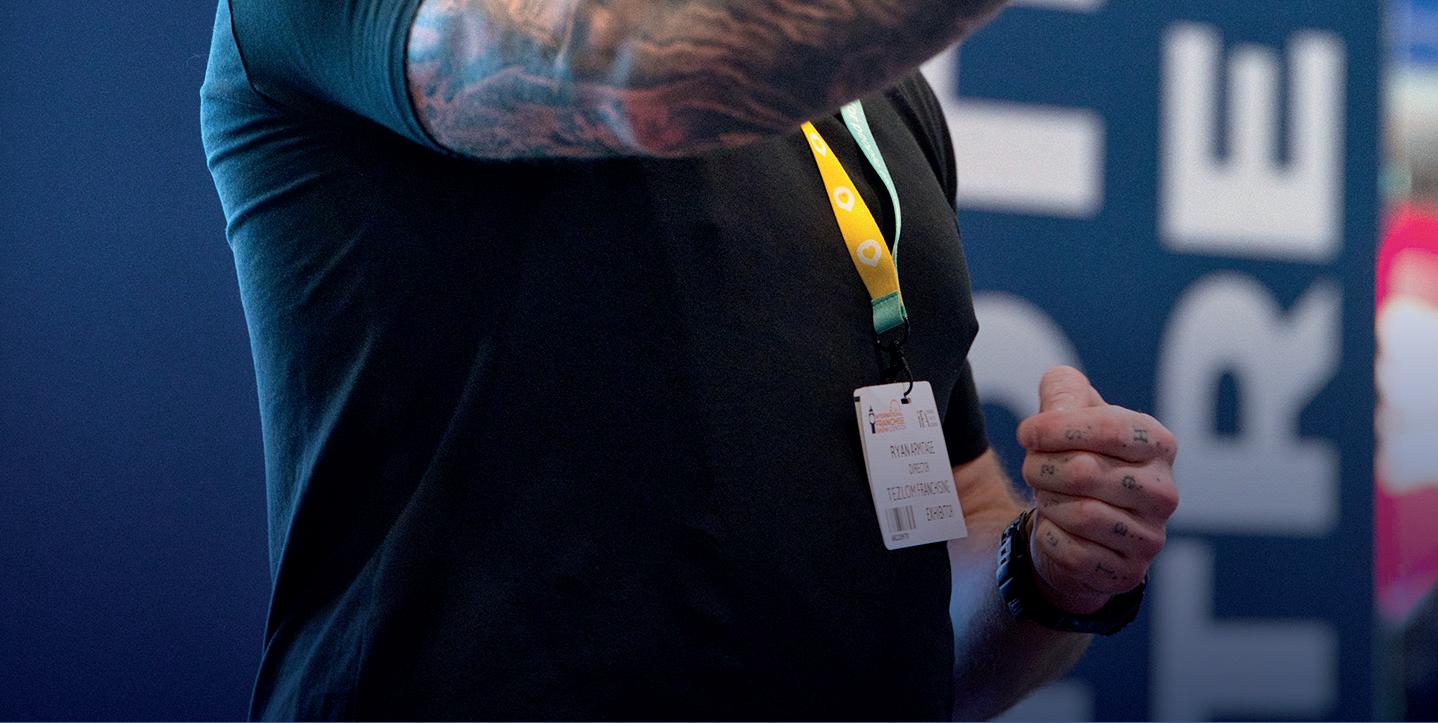
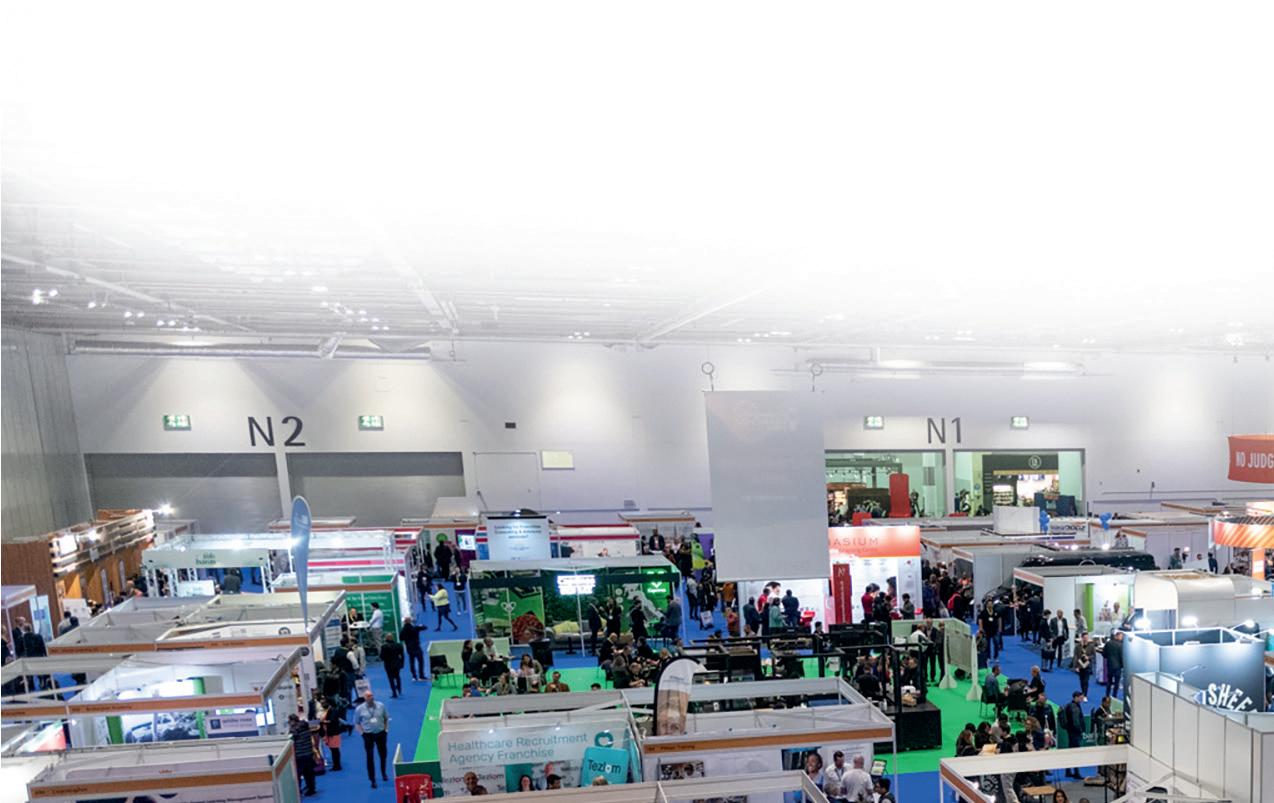
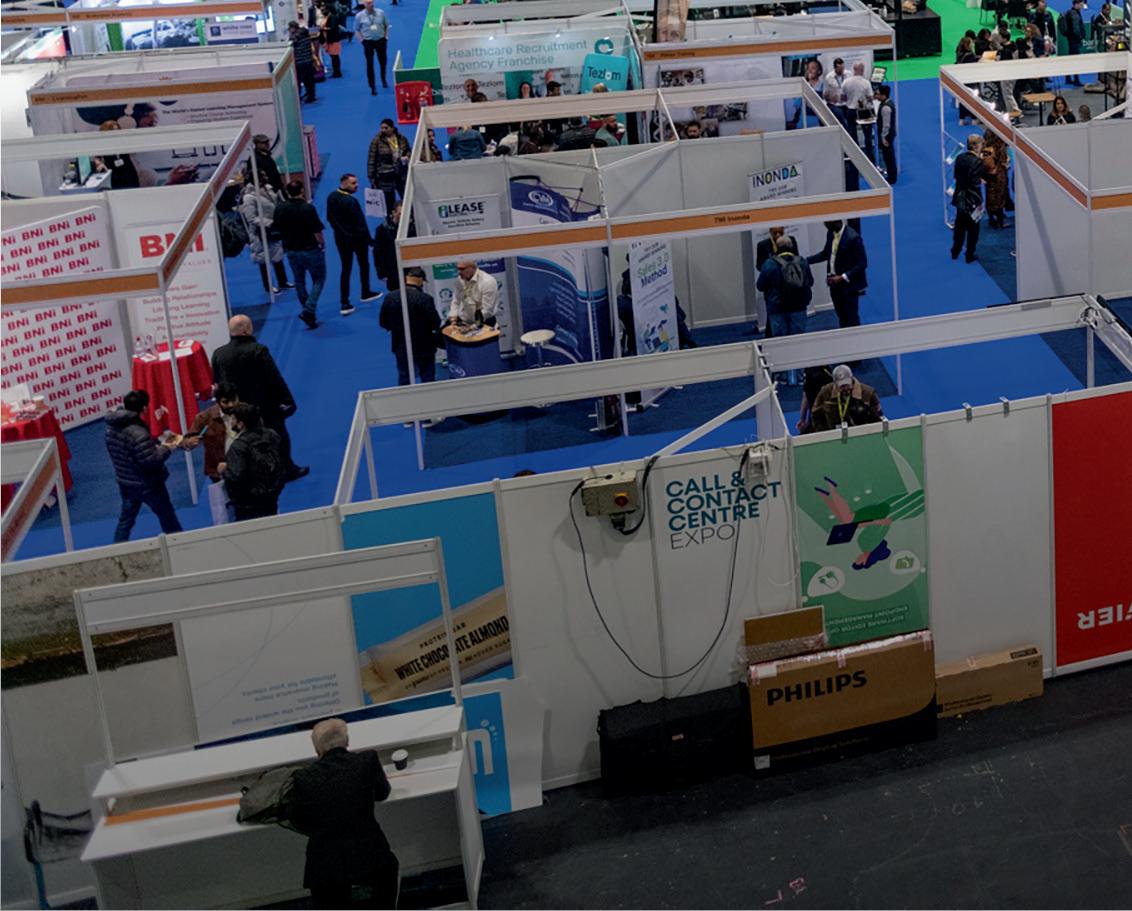
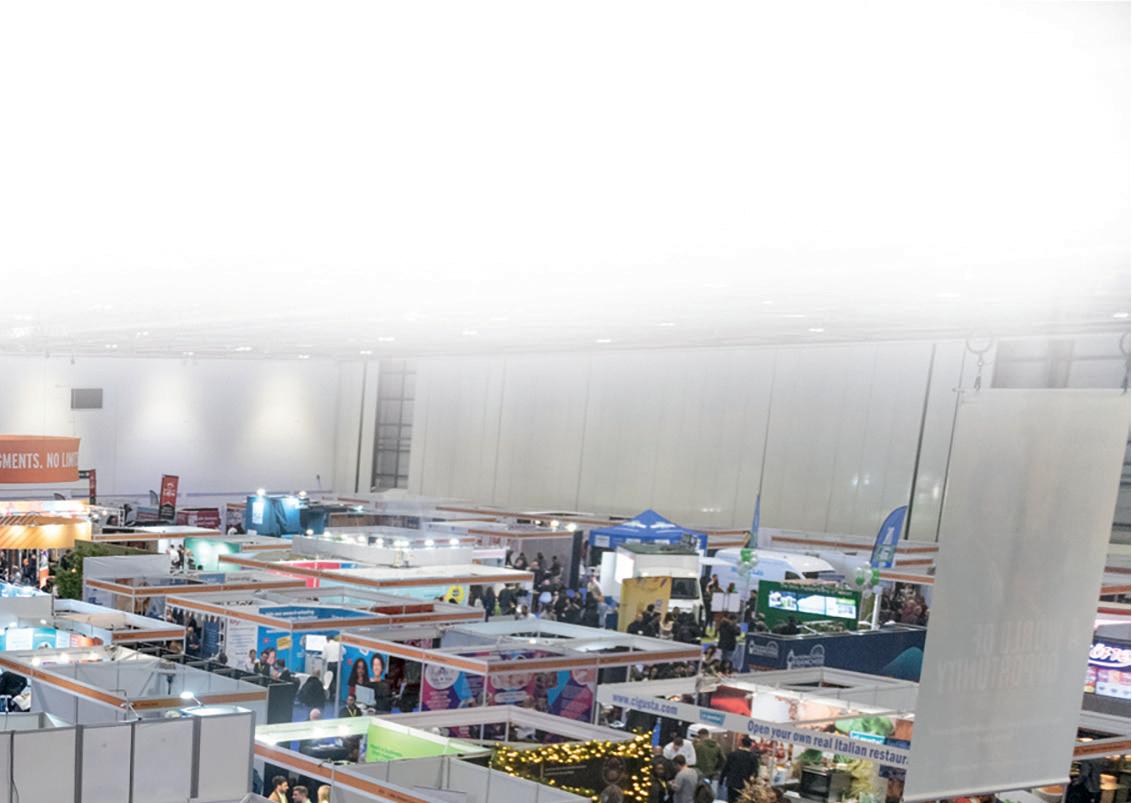
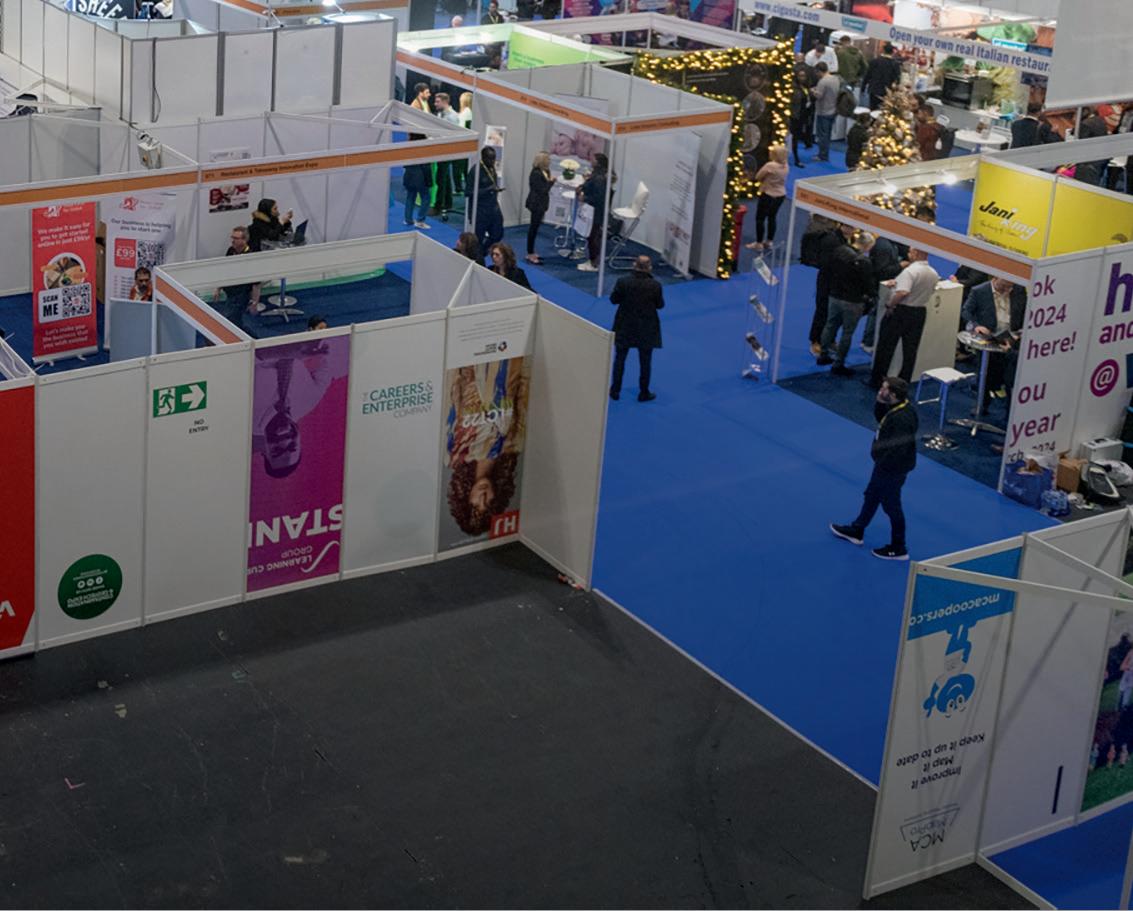
This April, London becomes the hub for food entrepreneurs at the International Franchise Show 2026, taking place from 17-18 April at Excel London.
Perfect for pizza, pasta and Italian food operators looking to expand, diversify or launch a franchise, this is more than an exhibition; it’s your gateway to business ownership.
In the heart of London this spring, a career-defining opportunity arrives for anyone who’s ever imagined owning a business.
Why pizza & pasta operators should make it a priority
Franchising offers a proven path into hospitality, allowing operators to grow without reinventing the wheel. Whether you’re exploring a new concept or seeking additional units, the show delivers tools, insights and connections tailored to food-focused entrepreneurs.
Event highlights
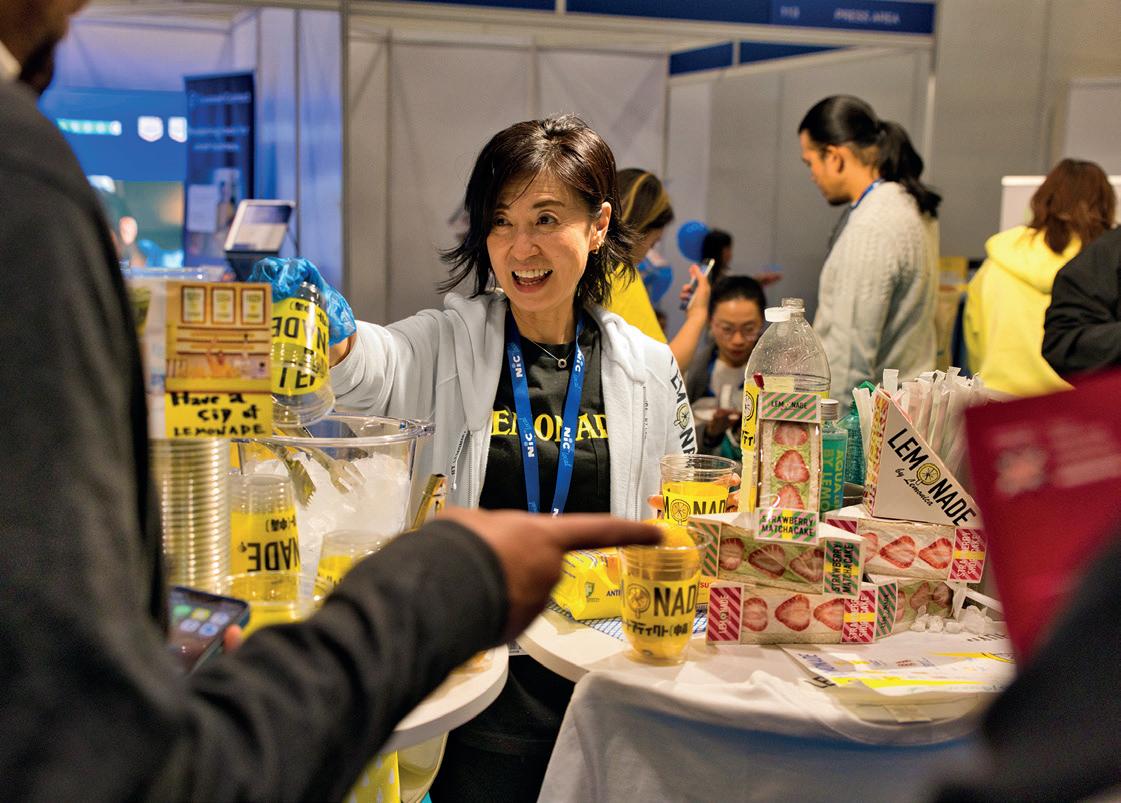
● 250+ franchise brands across the food sector, including Caprinos Pizza, Little Caesars Pizza, Fireaway Pizza and Tony Macaroni.
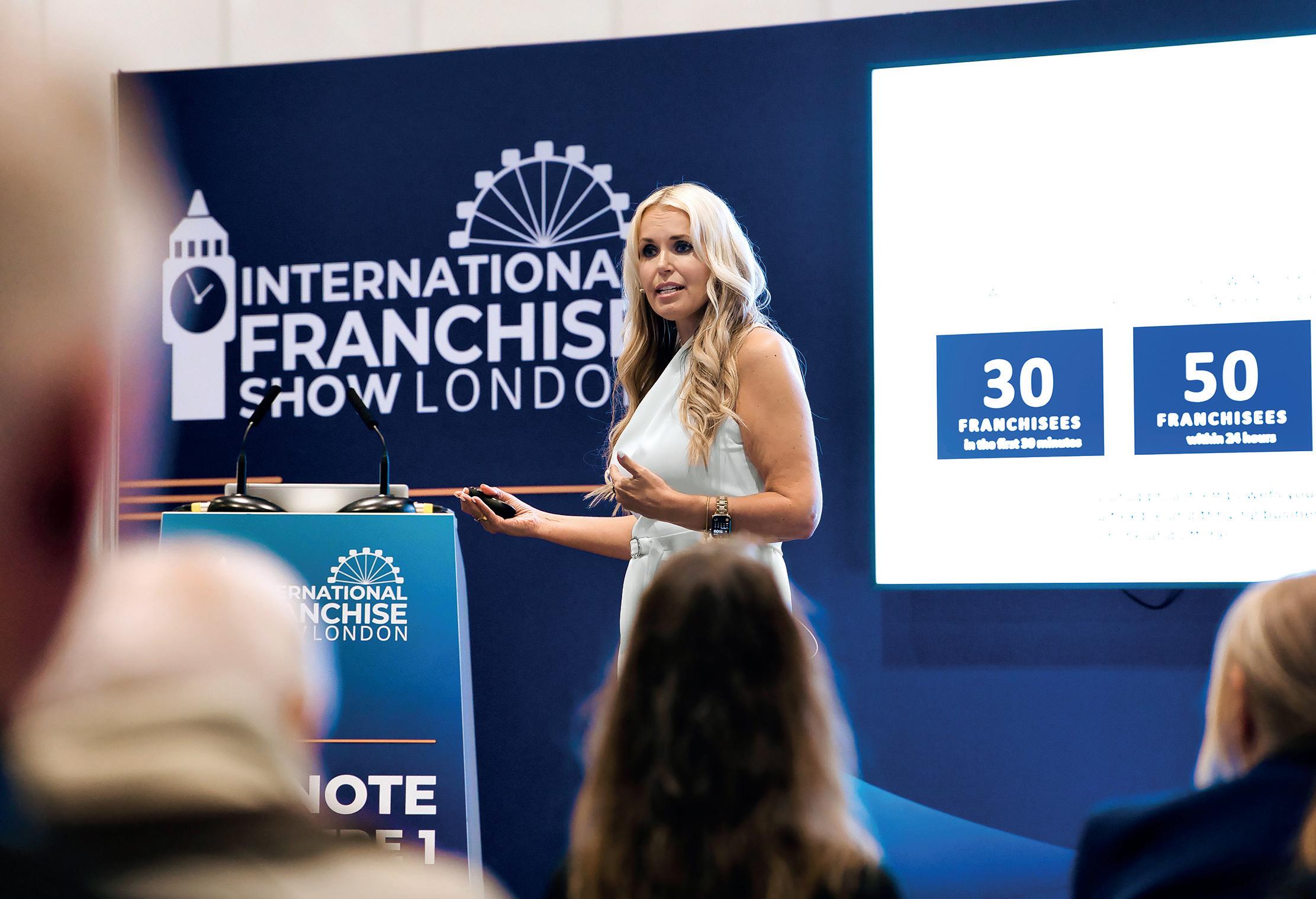
● 60+ expert seminars, covering investment, operations and marketing strategies for restaurant and foodservice businesses.
● One-to-one consultations with franchisors and advisors, ideal for those seeking hands-on guidance.
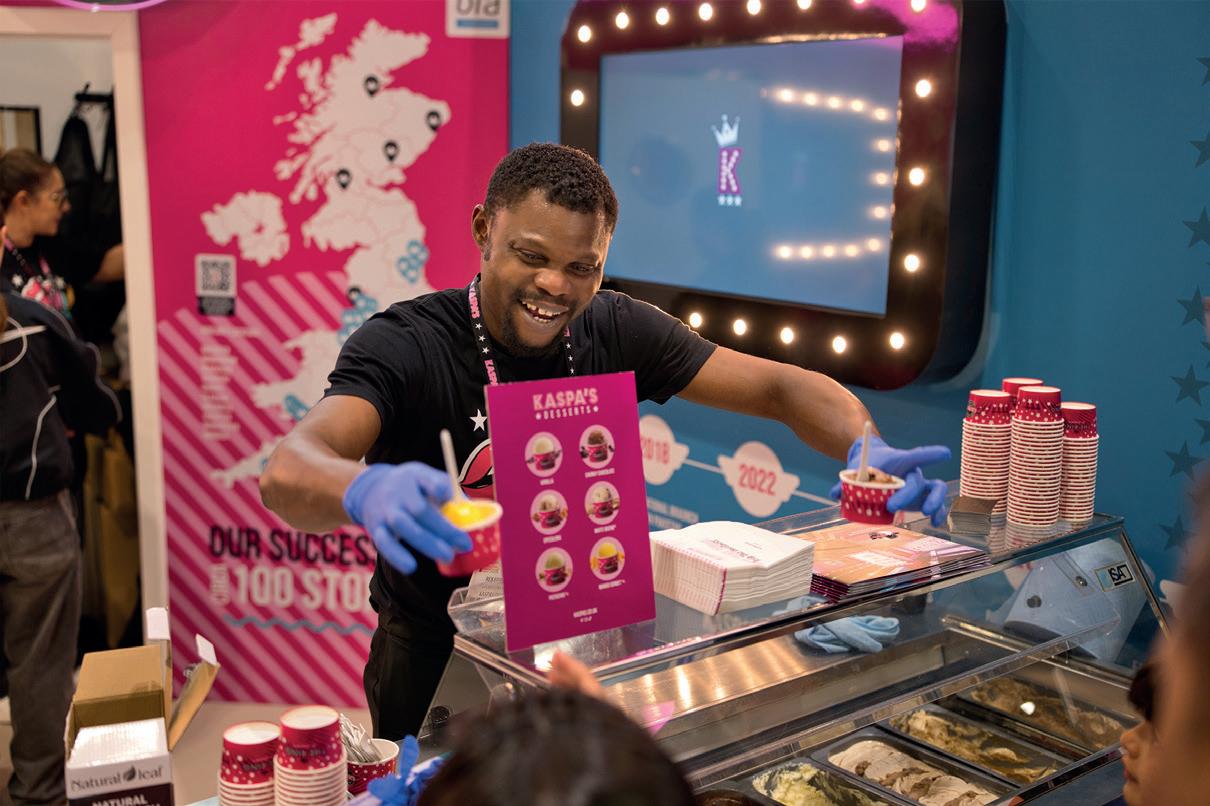
● Showcase of international food franchises, from pizza and pasta to coffee shops, gelato and casual dining concepts.
Franchising: A ‘Business in a Box’ For food operators, franchising means:
● Established brands with customer recognition, saving you marketing headaches.
● Proven operational systems, from kitchen workflows to menu planning.
● Support on supply chains, staffing and promotion, helping your unit thrive from day one.
This structure reduces risk and accelerates growth, allowing you to focus on serving the best possible food and expanding your brand.
Learn, network & grow
Hear success stories from fellow food franchise owners who turned their passion into thriving businesses, while attending panels on launching your franchise, financing, operations and marketing tailored to foodservice. Network with franchisors, industry experts and future collaborators – opportunities that can shape your business trajectory.
Whether you want to scale your pizzeria, diversify into Italian fastcasual or explore a new F&B concept, the International Franchise Show brings everything together. Free tickets are available to help you discover the franchise that fits your skills, budget and culinary requirements.
Visit thefranchiseshow.co.uk for free tix
Burning love!
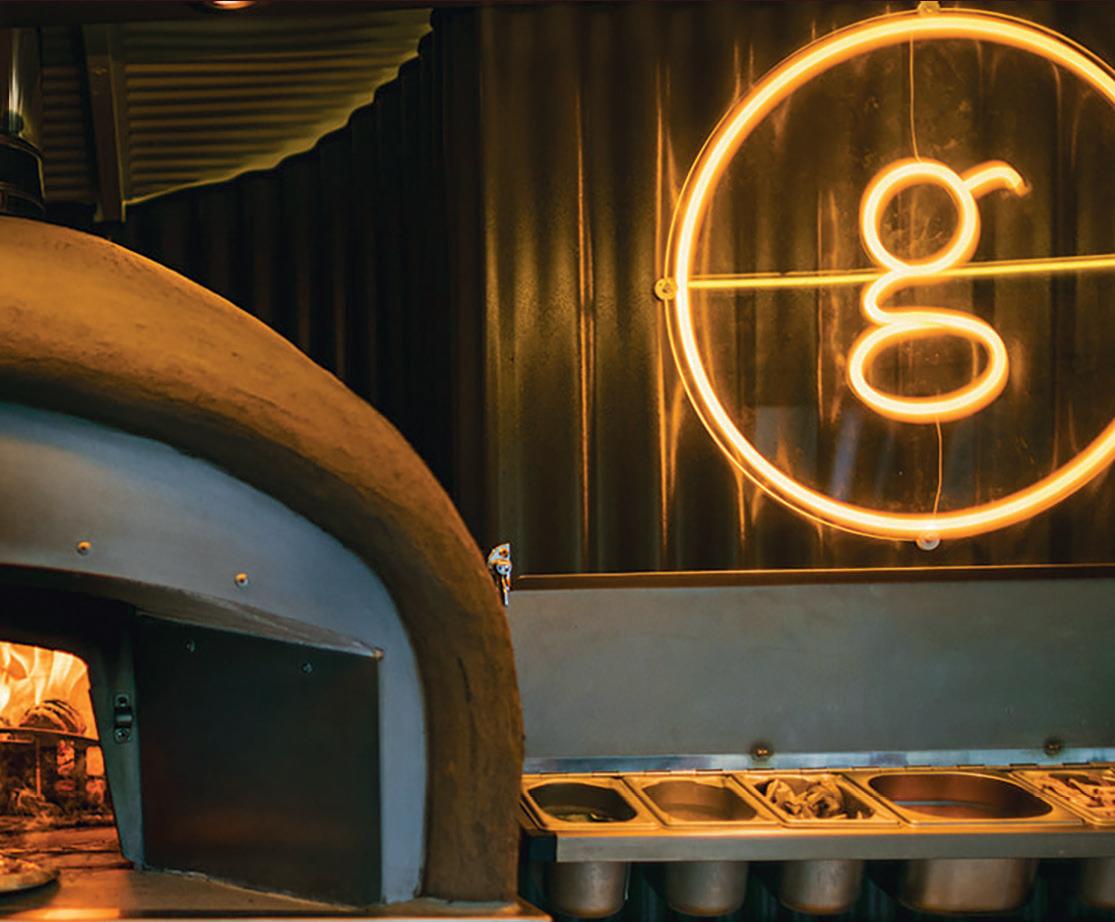
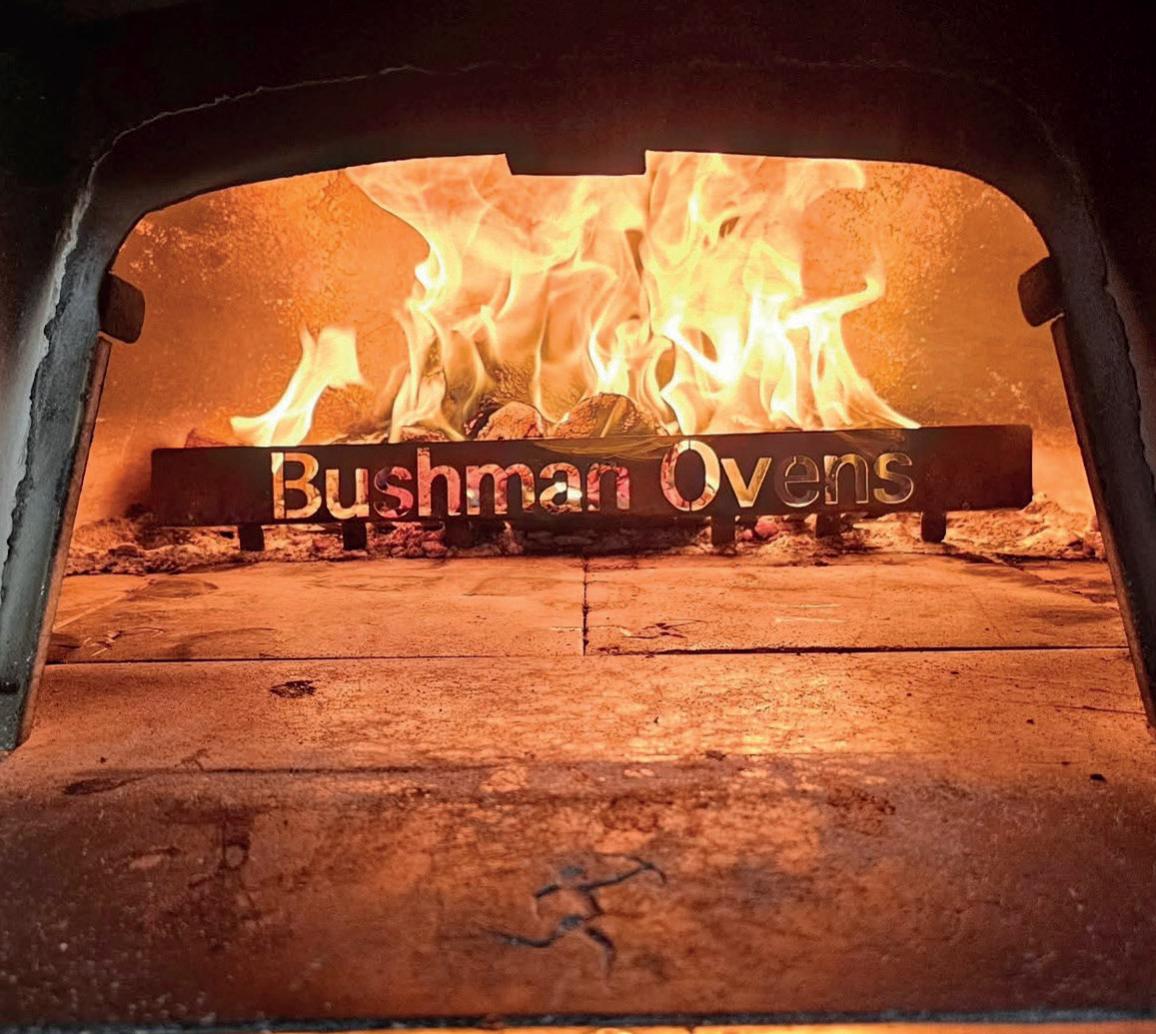
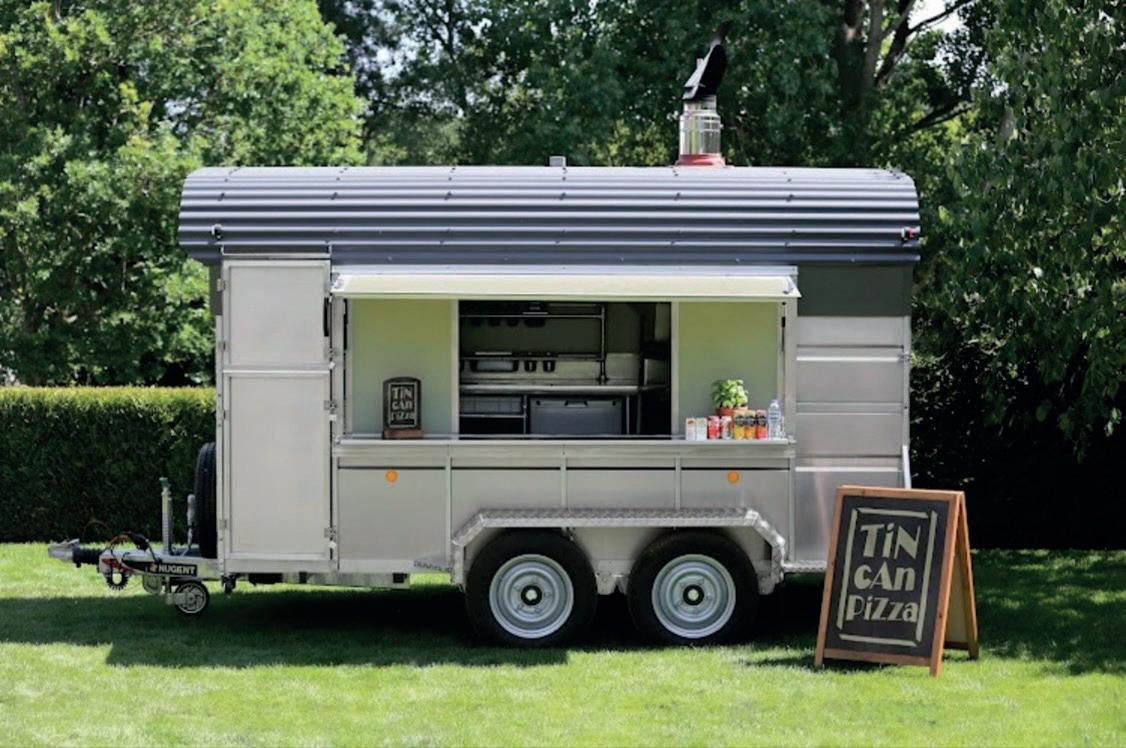
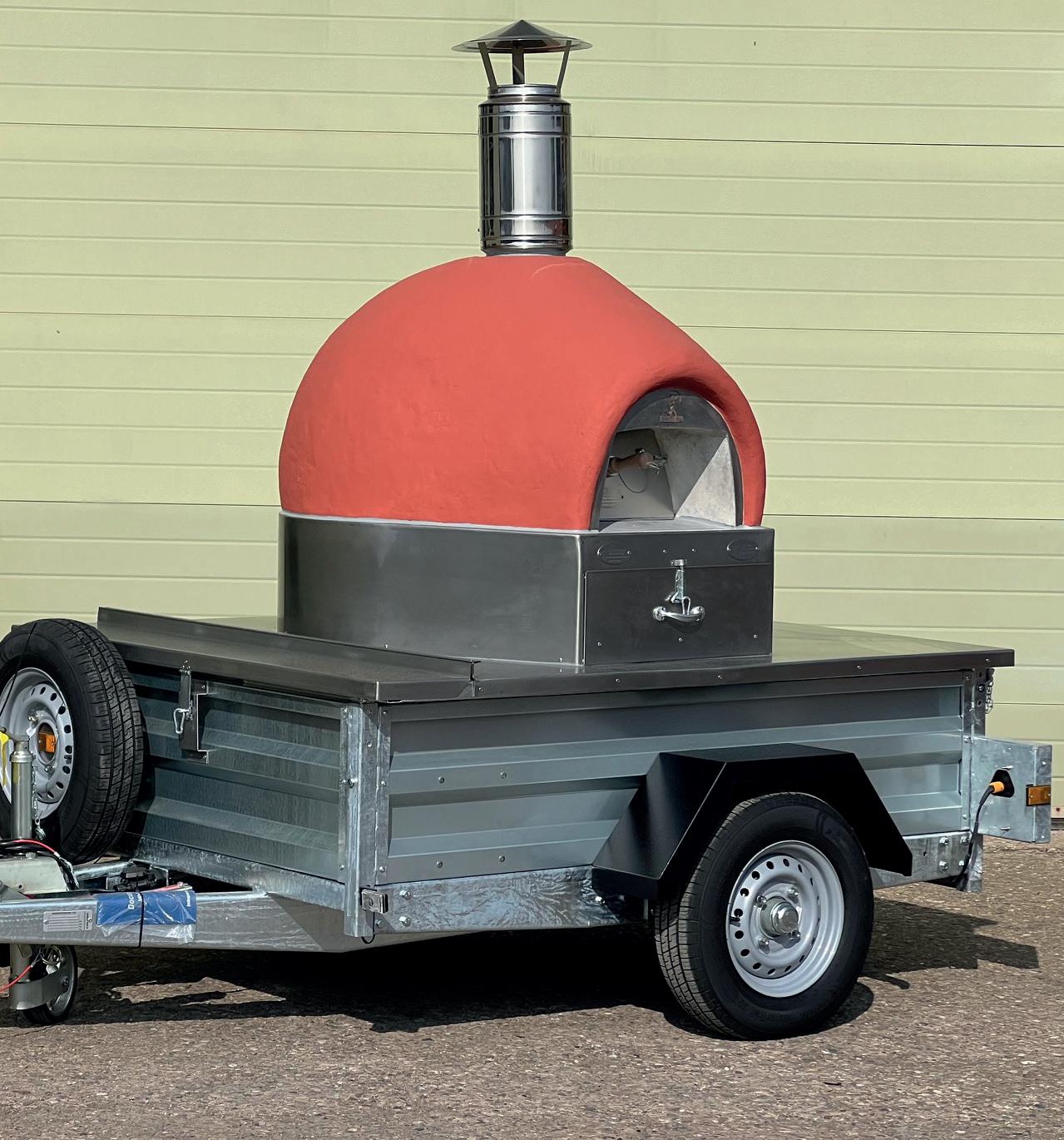
With over 3000 variations of bespoke Bushman Ovens, it’s a unique brand, offering personalised customer care – and a new rental programme could be a game-changer.
BIG PICTURE
For over 25 years, Jay Emery has been at the heart of the pizza industry. His Bushman Ovens brand was the first to manufacture domestic and commercial ovens in the UK, and he also set up the first mobile pizzeria on these shores, so he understands the sector better than anyone.
“I was told it was a stupid idea,” said Emery. “We developed a rotating floor oven for a Scottish site that we made and delivered. It was a huge wood-gas combination and I quickly realised that a high percentage of businesses are owner-operated. I learned on the job that bigger isn’t necessarily better. The key is finding the right oven to fit the business model.”
Emery says poor decisions are being made, with the wrong questions being asked.
“If I look at my current client base – including fast-
growing brands like Eric’s Pizza and MOTO Pizza – a massive oven that chews a truckload of power isn’t the right fit. Because I’ve been an operator and run my own mobile catering trailer, I understand the restaurants. I find out their exact requirements, while not being driven by sales figures like other companies.
“They’re looking to offload the biggest oven to make the most profit – but I think differently. New operators need to consider how much they’re going to produce at the busiest times, then create the most cost-effective approach. And if they’re planning to grow, with something like a beer garden or delivery operation, that has to be taken into account.
“Beyond style, there’s insulation, the size and type of mounting and stand, tool kits, thermometer options, chimney and extract systems and more.”
Another key aspect that’s often overlooked is legislation and certification.
“We were the first to put ovens through DEFRA approval in the UK, even though they weren’t even sure of categorisation at first. Our complete Bushman range has that guarantee. You read about dual-fuel ovens, burning wood or gas; it’s either or, but not both simultaneously.
Our ovens can and have been fully tested by BSI to comply with any regulations!
“Gone are the days when a commercial business could just put in an oven and start cooking pizza, with regulations now getting stricter. If you’re located in a registered smoke control area, you can only install a smoke-exempt appliance. Fortunately, All Bushman commercial ovens are on the DEFRA-exempt appliance list.”
FULL PACKAGE
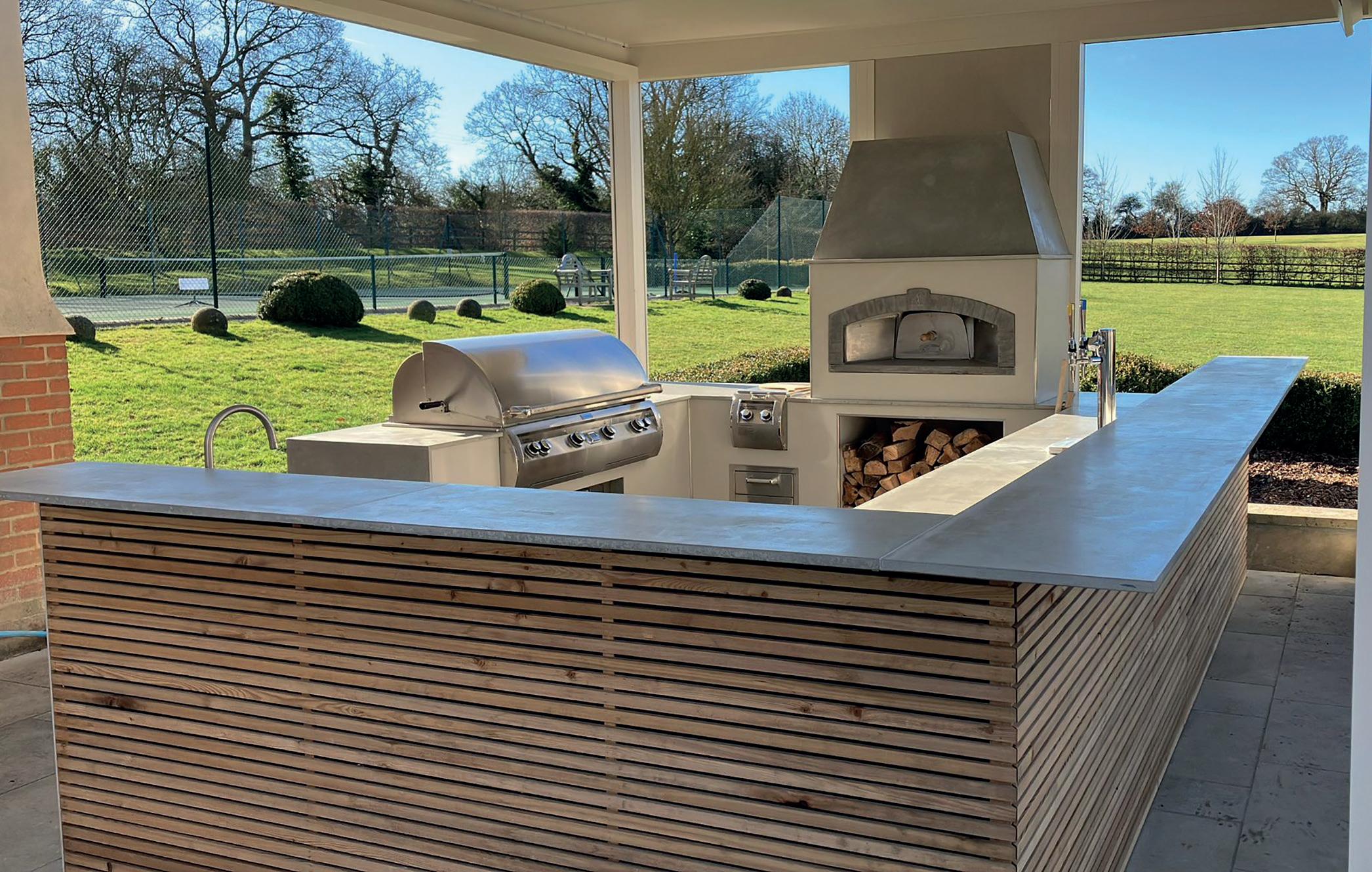
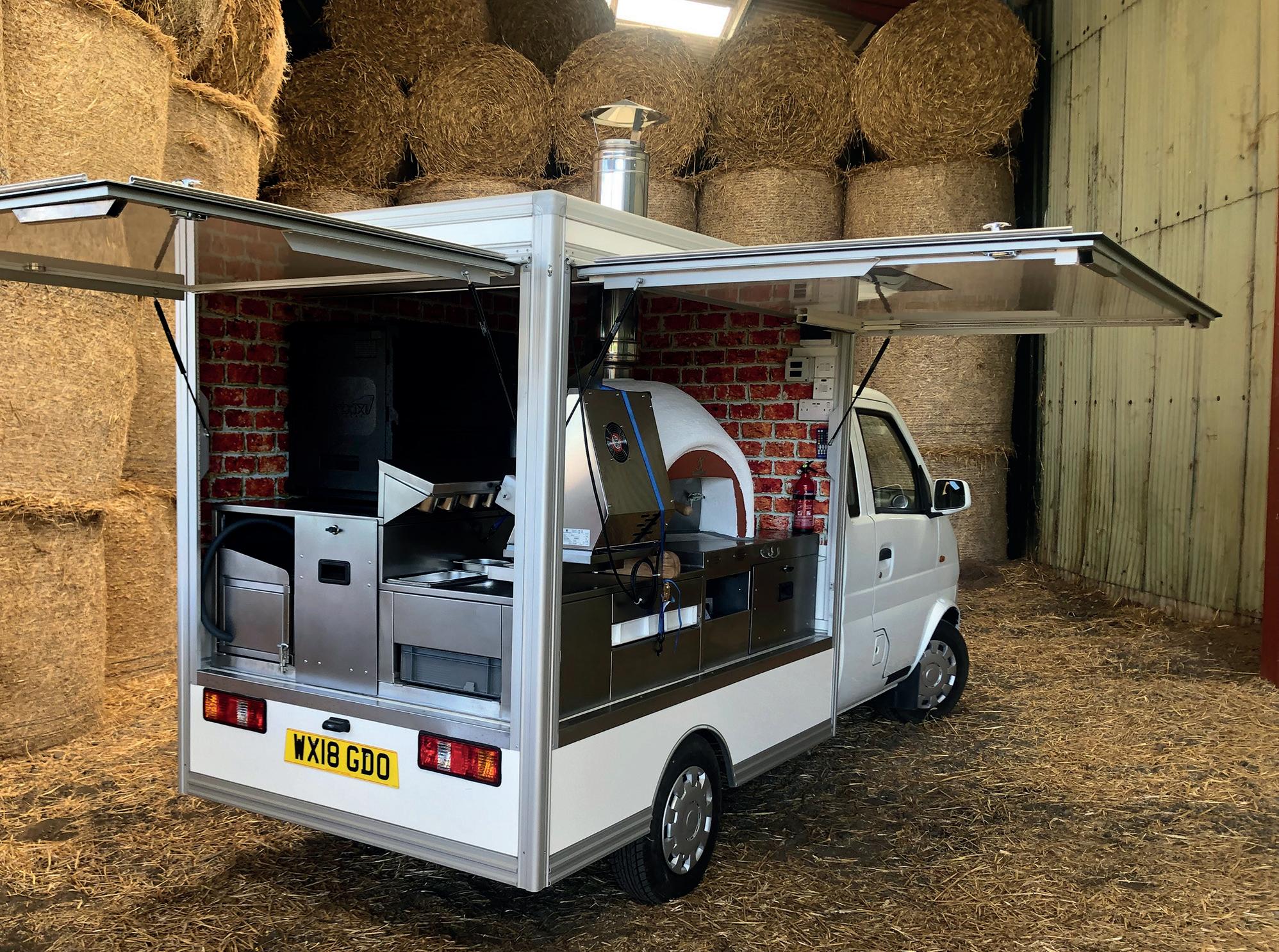
Key trends in the oven market are leaning towards pubs and smaller venues with gardens – even wedding specialists. And for a commercial mobile operator,
Emery knows that the personal touch makes the difference.
“Rather than just being a supplier, we can help with the oven spec, design the kitchen and offer training to be profitable. Remember, people are assuming that Neapolitan is the only way to go, or sourdough – that’s simply not the case. There’s a multitude of options.
“For all of these questions, I’m available to answer any calls. Businesses often have to deal with an agent, working nine to five. That’s not the case with me. Also, high-street chains work with kitchen designers and wholesale suppliers that push certain products purchased from Italy at trade. But we devise the most productive system.
“A big misconception is that you need a chef to run a pizzeria but you don’t. You
require a system and process that works –and in one day I can teach anyone to run a pizzeria. A pub or a restaurant does not require a highly trained, skilled pizza chef.
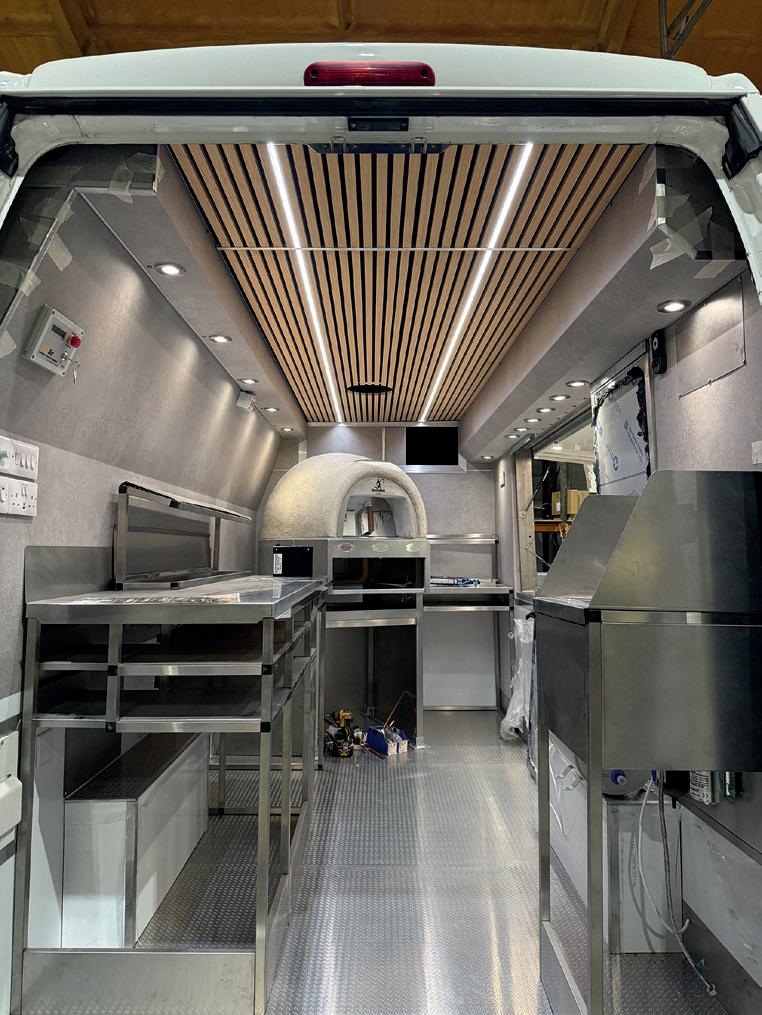
“I’ve also had calls from clients that want to expand or their lease finishes, so they need to move premises – but the oven they purchased has to be destroyed. If I install a Bushman, I can get it out, at any point in the future. From an 80cm small operator to a 145cm high-capacity kitchen, through a standard doorway. No mess, no fuss, no building on site.”
RENTAL OPTION
Market statistics around UK restaurant failure are commonplace, with the general number being around 60% closing in the first year; nearly 80% within five years.
But Emery’s success rate across his relationships bucks that trend.
“I’ve helped over 400 people set up mobile catering businesses – and around 80% have flourished. This is because of the advice I can provide, and it’s crucial you get things right from the very start. Plus, an exceptional product, of course.”
And expansion plans are in the works, with the launch of a rental programme.
“If you want to come and put a deposit down with us, with a minimum term of a year, you can rent a trailer or mobile catering trailer. After 12 months, if it works for you, continue renting. Or look to purchase you own trailer from us – the philosophy is: ‘Get the right equipment from the start, then watch how the business grows.’
“And in terms of asset finance, if you
“RATHER THAN JUST BEING A SUPPLIER, WE CAN HELP WITH OVEN SPEC, KITCHEN DESIGN AND TRAINING.”
are a newbie, this is normally granted after three years – with Bushman, our asset finance company will accommodate after two years. The rental model could be a lifesaver for pubs or community businesses that don’t have 50 grand to spend. And what’s interesting is that these ovens can be used for more than pizza. Riley’s Fish Shack is a prime example.”
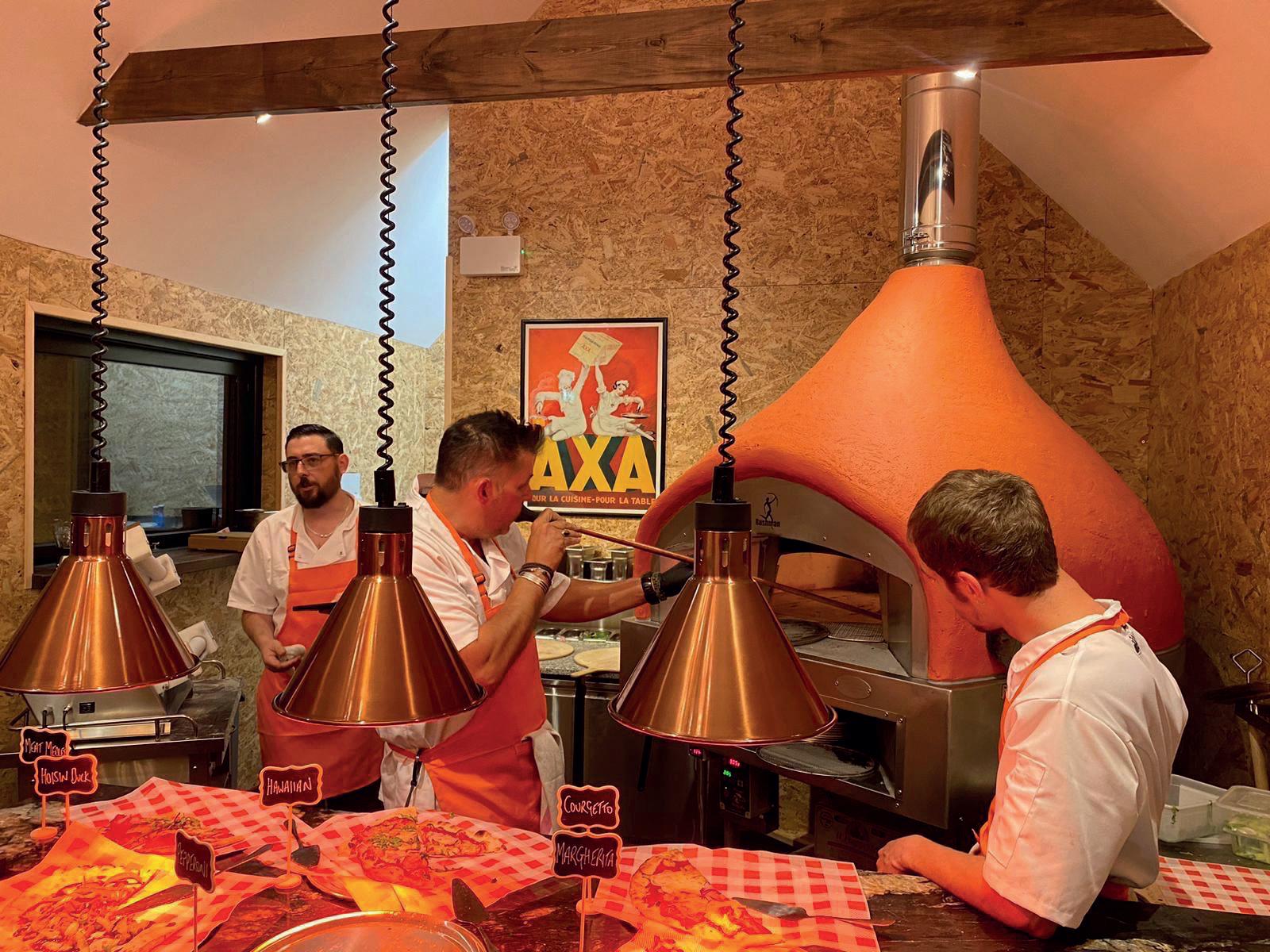
It’s no surprise to see Bushman growing. It has potential for thousands of bespoke models, with three standard ovens that can be tailored to differing needs, with four chimney shapes –distinctive in style and look.
Bushman is partnering with dozens of UK operators, while Emery was also a key player in the embryonic stages at the likes of Eric’s Pizza and Digbeth Dining Club. It’s an impressive cast list but with such a passionate man behind the wheel, you feel there’s plenty more to come.
An oven for every comercial environment, with elite supplier support for every
● Fully certified, wood only, gas only or wood gas combo.
● Inside, outside or mobile conversions.
● In-house coach building, so nothing is impossible.
The cutting edge
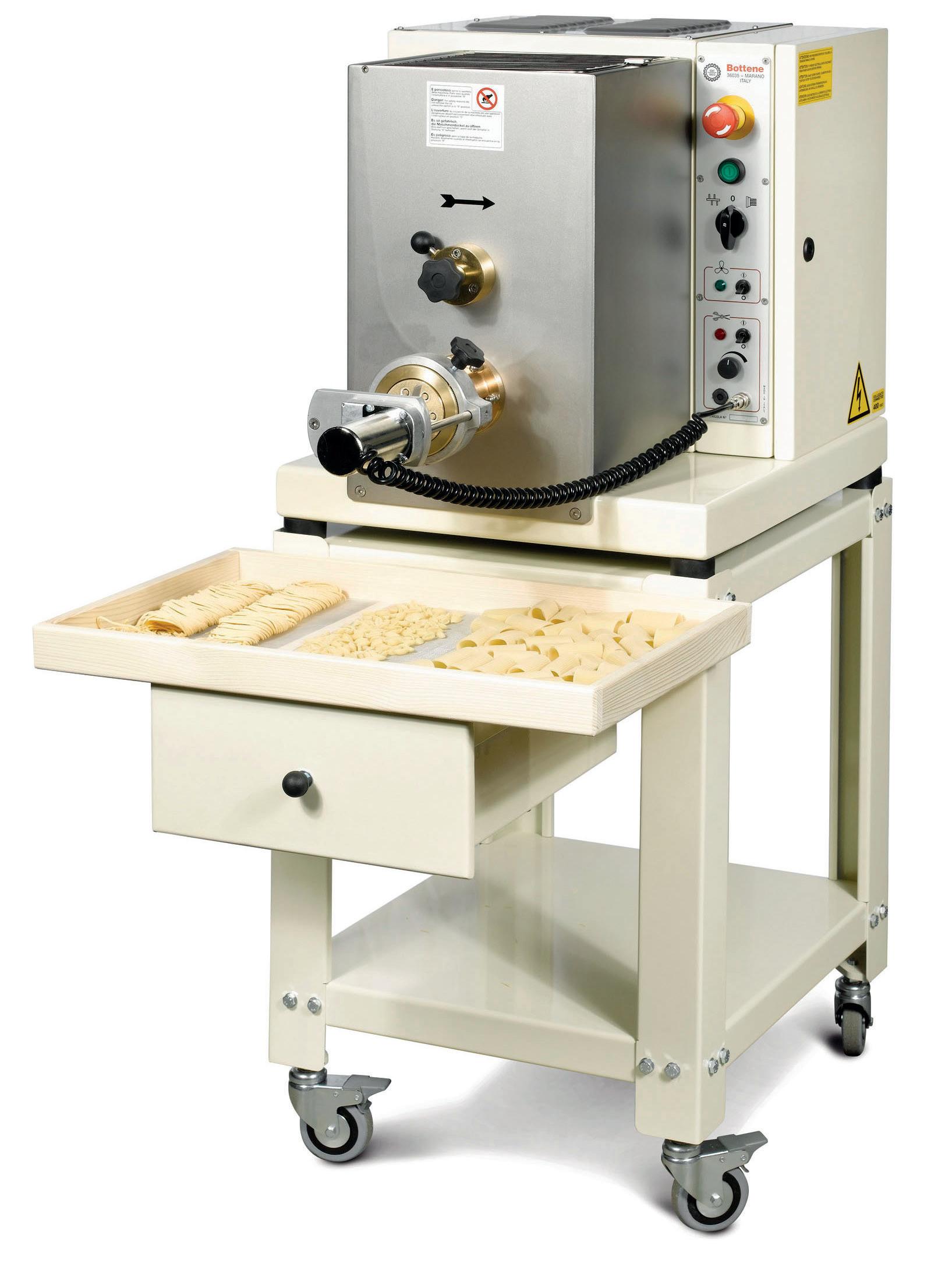
Philip Sanderson, sales director at Valentine Equipment & Cuisinequip, talks pasta innovation with Bottene.
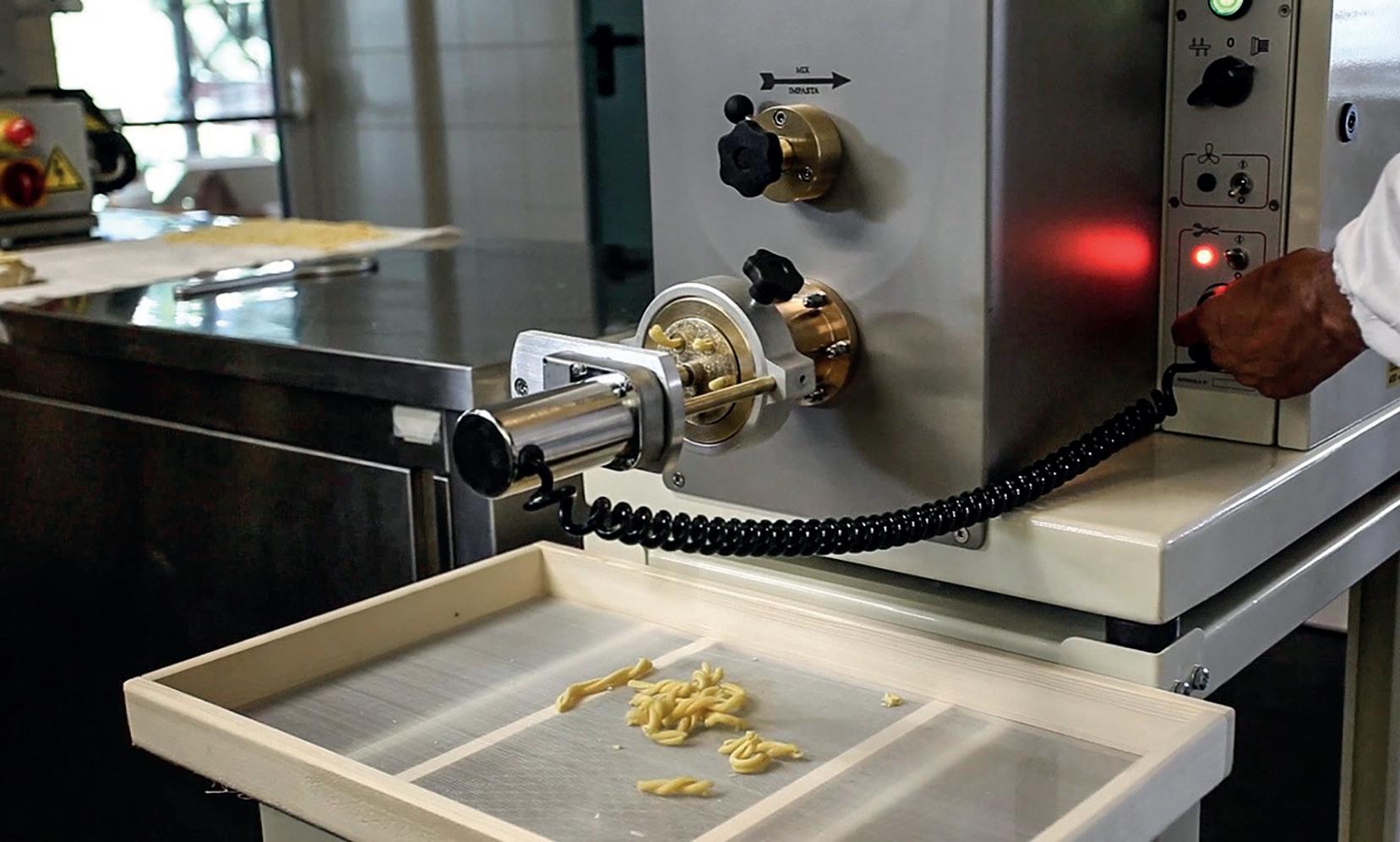
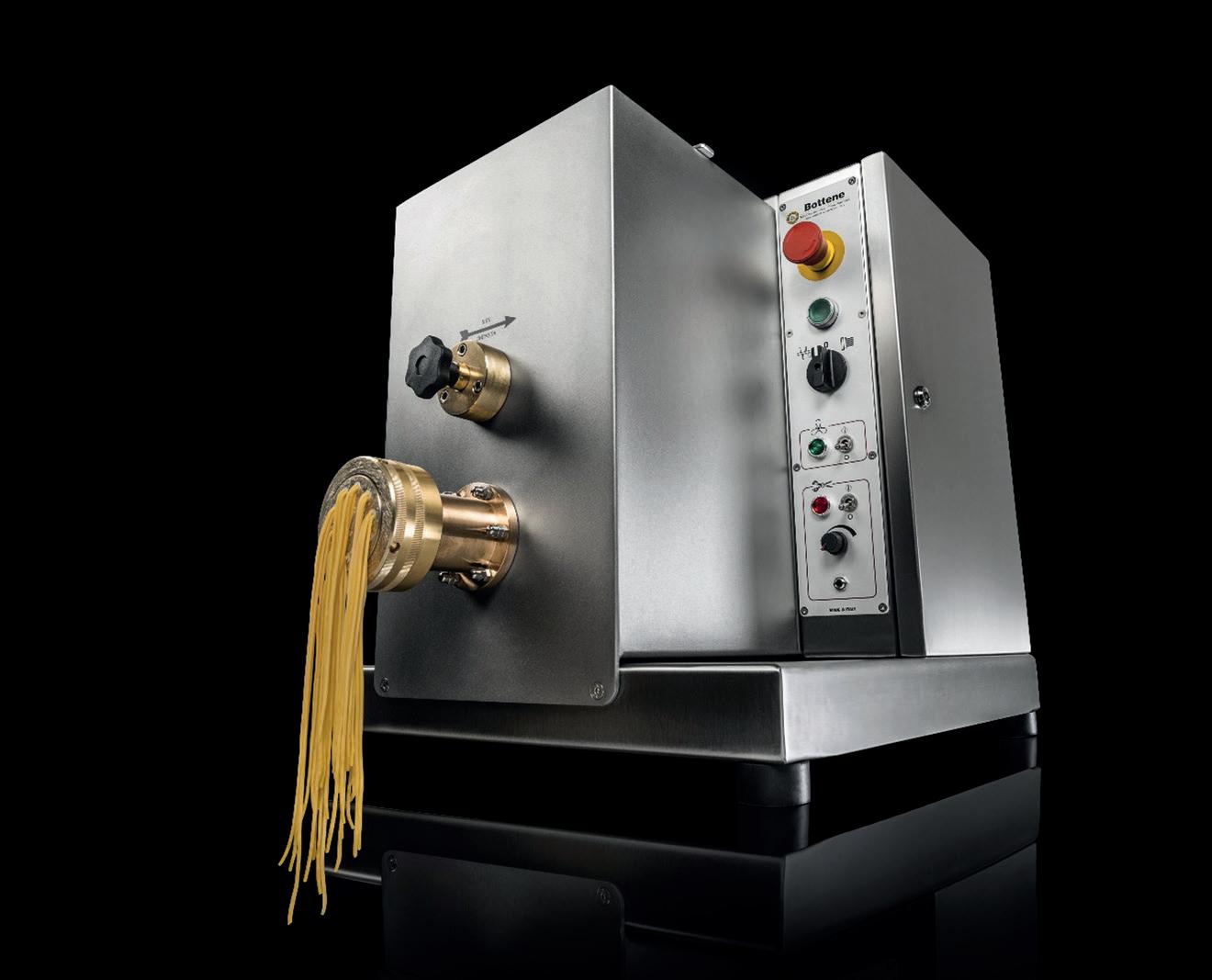
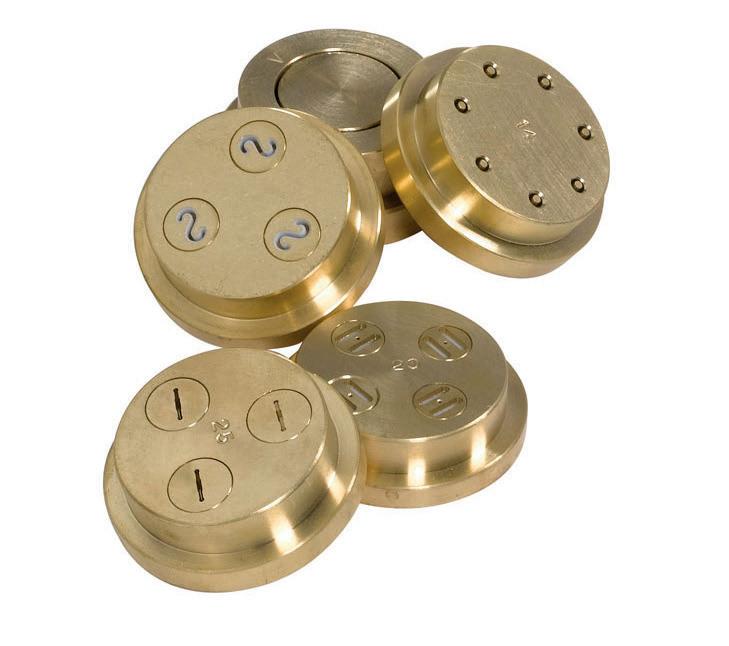
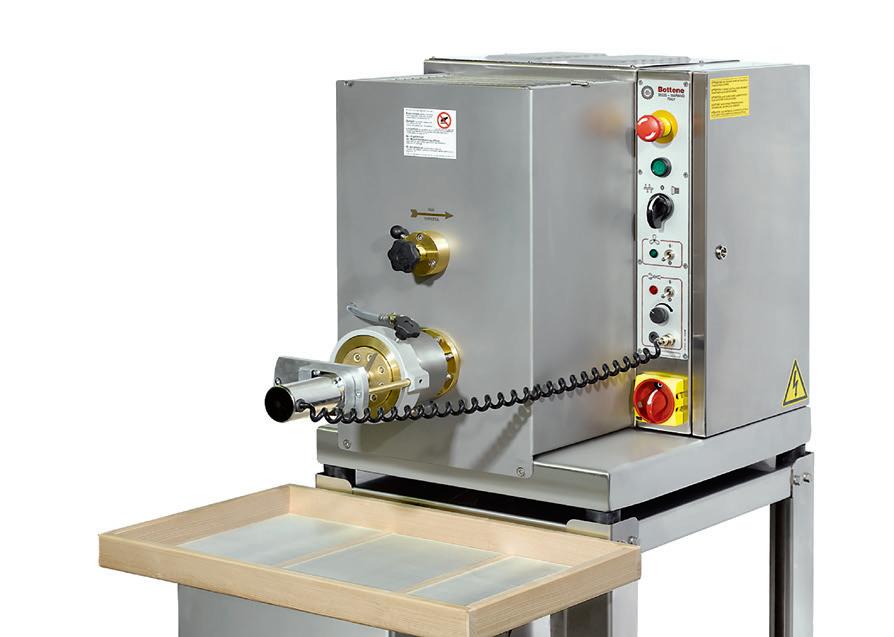
Valentine Equipment & Cuisinequip is proud to be the exclusive UK distributor of Bottene, a brand globally renowned for over 140 years of expertise in crafting high-quality pasta-making machines.
Enhancing the versatility of the Bottene range even further, operators will soon benefit from a new long pasta cutter attachment. Designed to deliver consistent length across both short and long shapes, this feature responds directly to customer demand, while reinforcing Bottene’s commitment to continuous innovation. With a simple switch from short to long, operators can effortlessly produce a variety of shapes, while fine-tuning length using the regulator dial, making the process more efficient, without compromising on quality. Integrated cutting allows maximum prep time, enabling the machine to run independently without constant supervision.
At Valentine & Cuisinequip, we’re not just supplying machines – we’re helping chefs unlock new levels of creativity, control and profitability. Whether it’s a boutique restaurant, high-volume production kitchen or large-scale catering, we can elevate any pasta offering.
As demand for authentic pizza and pasta continues to grow across the UK, in-house pasta production is fast becoming the benchmark for quality and differentiation – while adding adding theatre and engagement for diners. Producing fresh pasta daily also gives operators full control over ingredients, greater flexibility to manage stock in line with demand, and the opportunity to drive stronger margins, all while keeping menu prices competitive.
For more information, check out valentine.com or cuisinequip.co.uk.
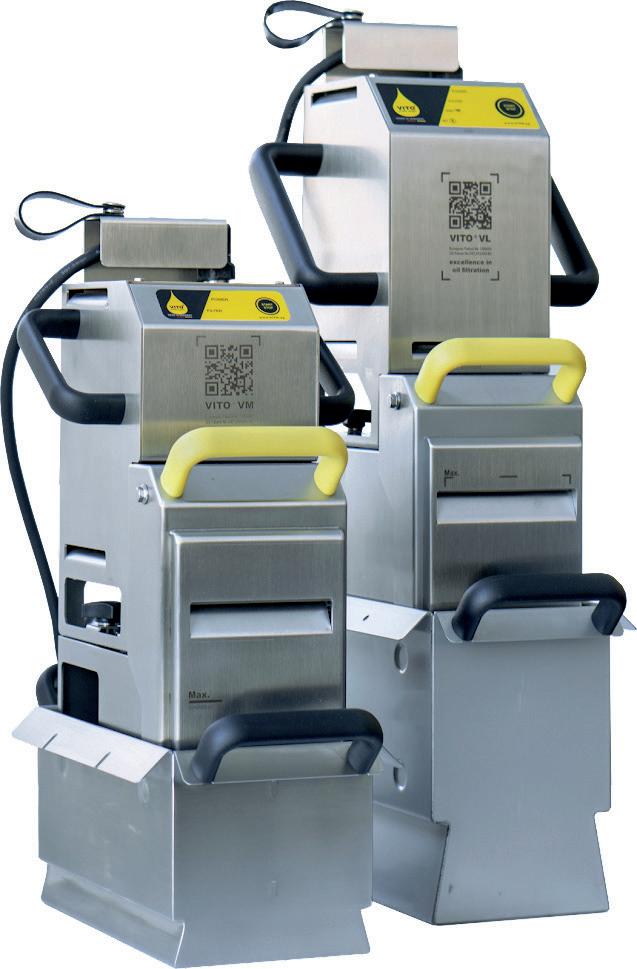
Cordless VITO VM brings mobility
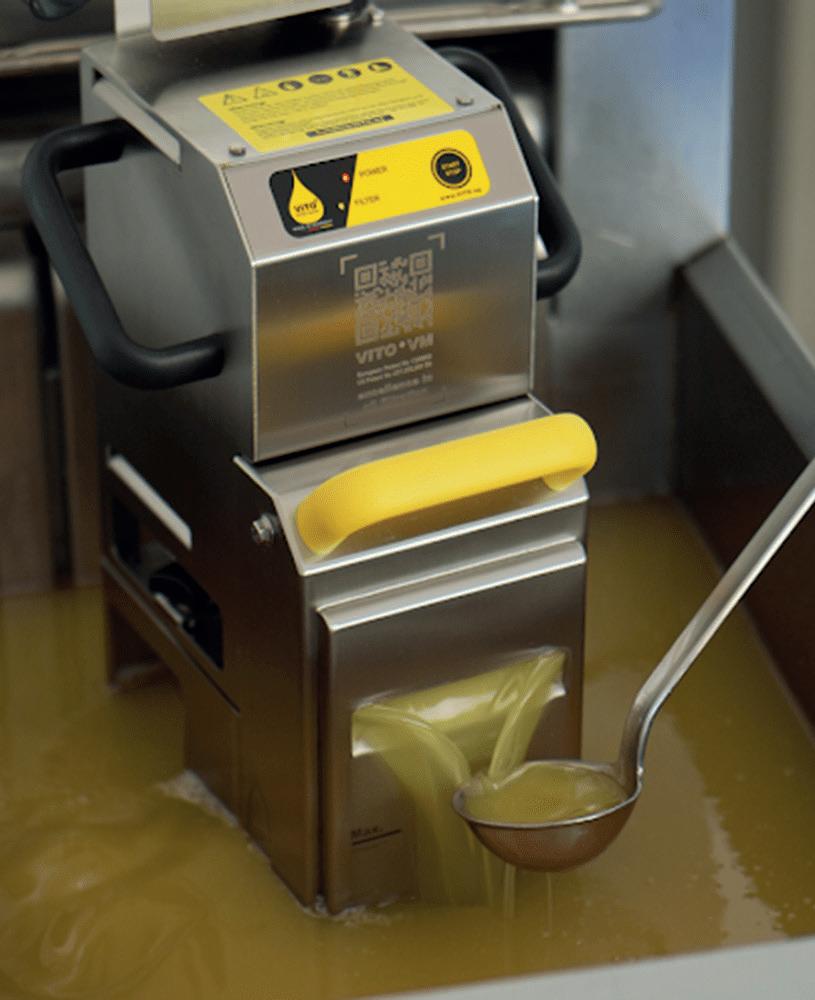
Valentine & Cuisinequip, the exclusive UK distributors for the VITO range of oil filtration equipment, has launched the new VITO VM Battery, a cordless version of its trusted frying oil filtration system, designed to deliver greater flexibility and efficiency in professional kitchens.
Building on the proven performance of the existing VITO VM, the cordless VITO VM offers full mobility through an 18V interchangeable battery system. This allows operators to filter frying oil without being restricted by the accessibility of power supply or power cuts – a major advantage in fast-paced or spacelimited kitchen environments.
Each battery charge supports four or more filtration cycles, enabling use across multiple fryers and helping kitchens maintain oil quality with minimal disruption to service.
The system retains all the core benefits that have made VITO a staple in commercial kitchens worldwide. The unit is placed directly into hot oil, where it removes suspended particles and debris automatically, without need for supervision. After a standard cycle of approximately 4.5 minutes, the filtration process stops automatically, leaving the oil ready for immediate reuse.
The VITO VM Battery is fully compatible with the VITOconnect system, providing real-time insights into productivity, servicing, HACCP compliance and system updates via WiFi connectivity.
Constructed from stainless steel and food-safe materials, the VITO VM is designed for durability, hygiene and ease of cleaning, with dishwasher-safe components.
BELLISSIMO!
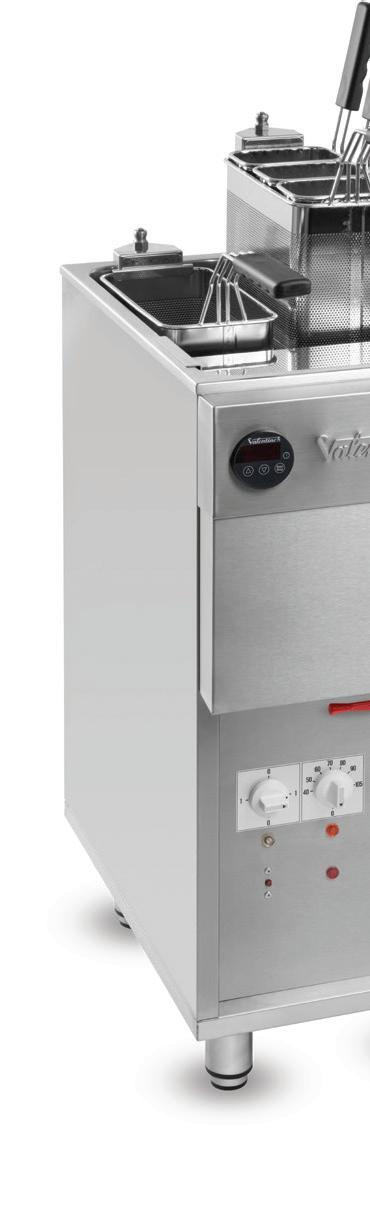
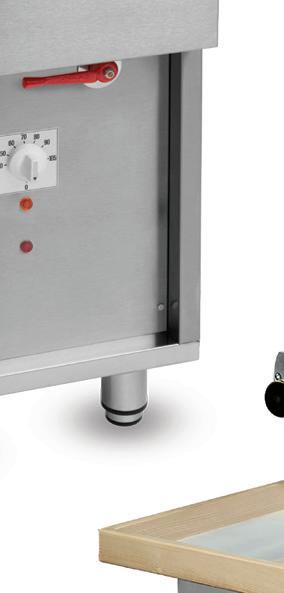
From Bottene pasta makers to Valentine pasta cookers, we are helping to make preparing and cooking authentic, fresh pasta easy.
Take me to e River!
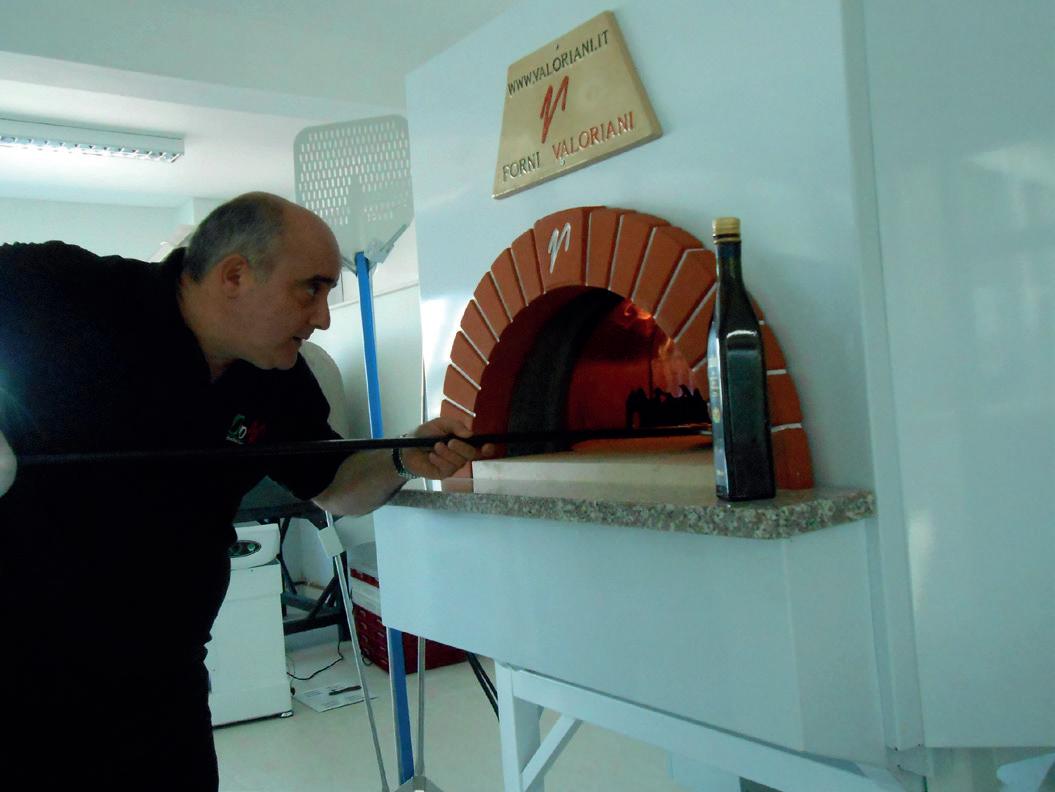
Orchard Ovens has just fitted out London’s Michelin-starred venue, The River Café, with its second model.
The commercial pizza team at Orchard Ovens have had a fantastic start to 2026, with what it’s calling re(pizza) business –second-time-around purchases of its restaurant-grade stock.
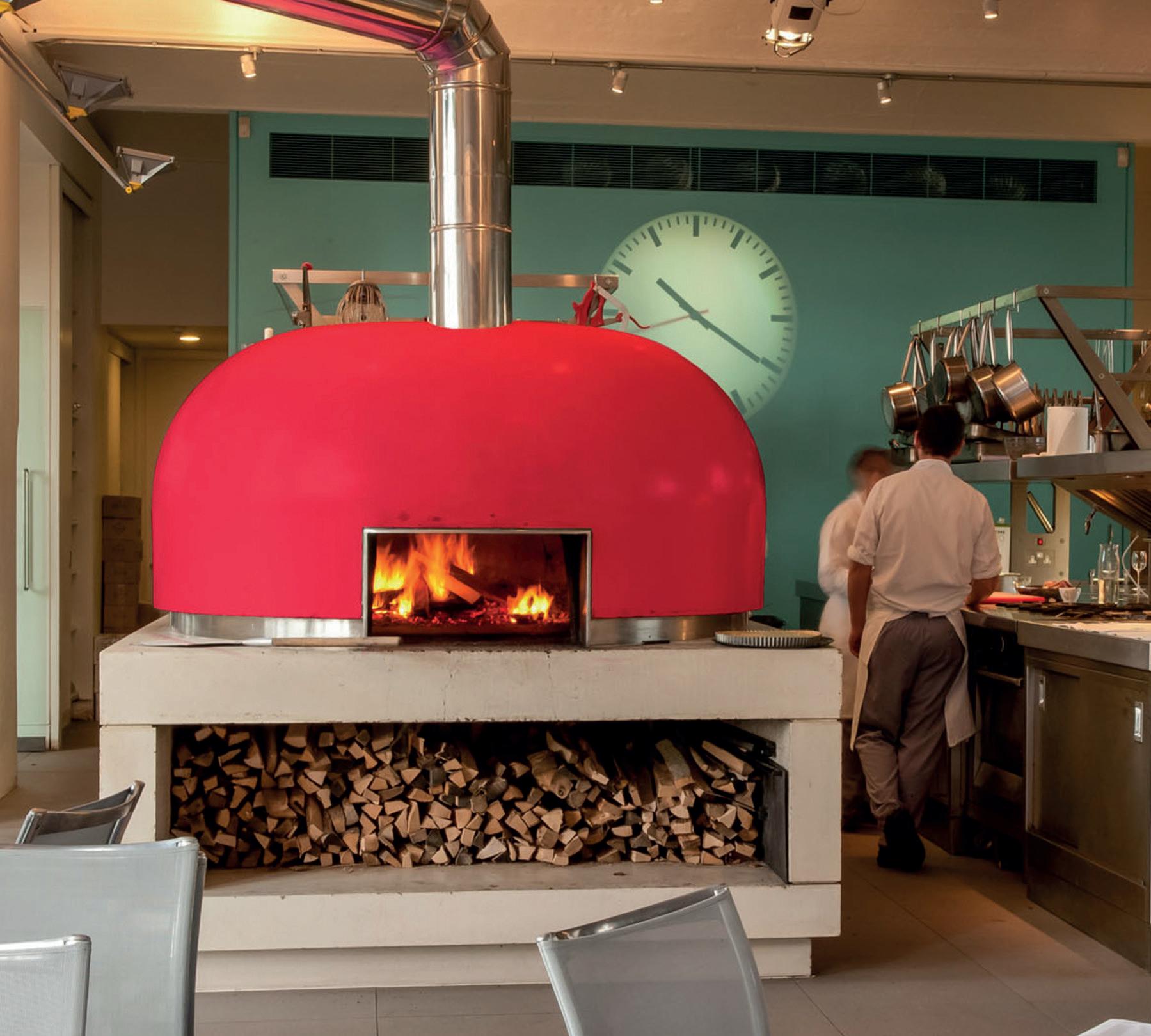
Orchard first fitted a commercial oven at the River Café, located at Thames Wharf, in 2008, with an eye-catching pink design leading to many publicity shots.
Dezeen magazine stated at the time: ‘A notable addition is a new wood-burning oven, dominating the dining room and kitchen. Manufactured by the Italian firm Valoriani –made in Reggello, in the hills of Tuscany 25km southeast of
Florece – it is key to the preparation of the River Café’s many dishes.’
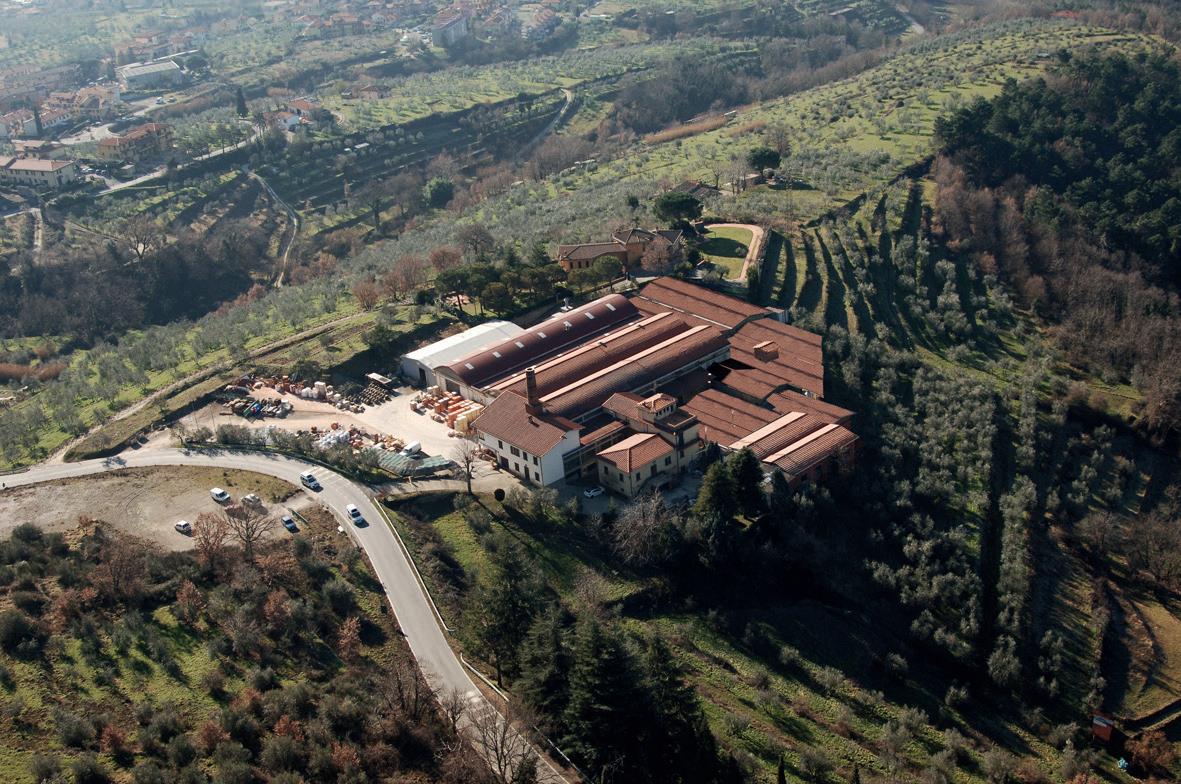
Now, 18 years later, Orchard Ovens has gone back into the venue to equip it with a brand-new Valoriani oven, as part of a refurbishment. The longevity of the original model is testament to its quality. Despite being in constant use, cooking a huge variety of dishes, it had been in situ for nearly two decades and still hadn’t reached end of life.
Owner of Orchard Ovens, Andrew Manciocchi, said, “We couldn’t be happier to have equipped The River Café with another oven that is now the workhorse behind an exciting menu that changes daily but which makes great use of the oven’s capacities. The team are a delight to work with and are as wowed by their
new oven as their former one.”
FLOURS 4 PIZZA
A sample menu on the restaurant’s website features dishes such as Pollo Arrosto – chicken cooked in Valpolicello and served with Tuscan roast potatoes. There is also Fegato di Vitello (calves liver) cooked with pancetta and herbs, alongside roast pumpkin. Fish can also be cooked in the wood-fired oven - the Sogliola al Forno dish is a whole slip-sole, roasted with black olives, marjoram and slow-cooked Florence fennel.
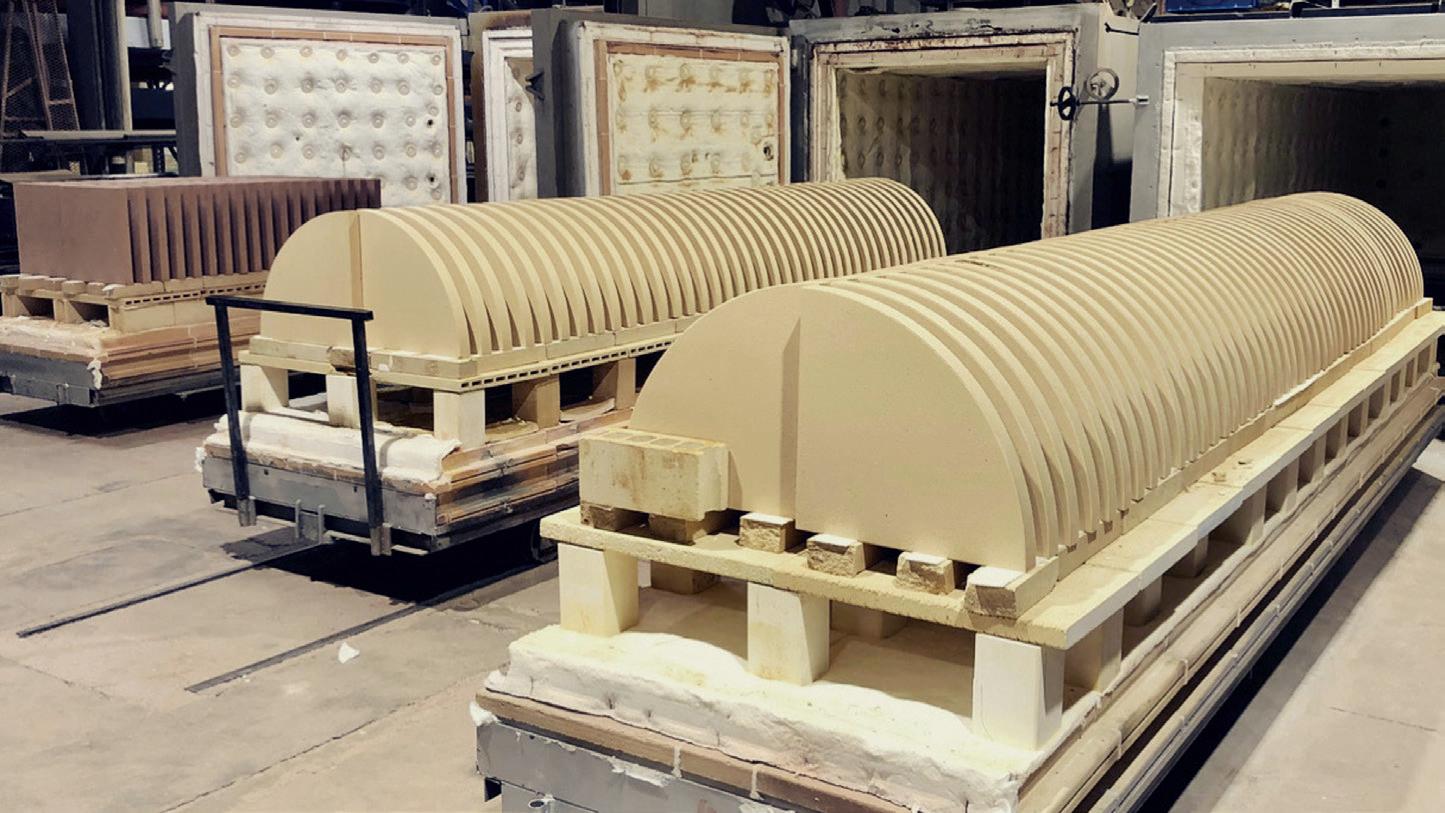
“There are some true tastes of Tuscany in The River Café’s menu, cooked in an oven lovingly shaped by undisputed Tuscan artisans and fire-brick specialists – the Valoriani family,” continued Manciocchi.” The oven is manufactured from unique ‘cotto’ clay, which has remarkable firing-up and heat retention properties, alongside first-class design and insulation.”
Contact Orchard Ovens: 077483 847647.
Farine per pizzaioli professionisti
Let there be Mythos at Signature FSE
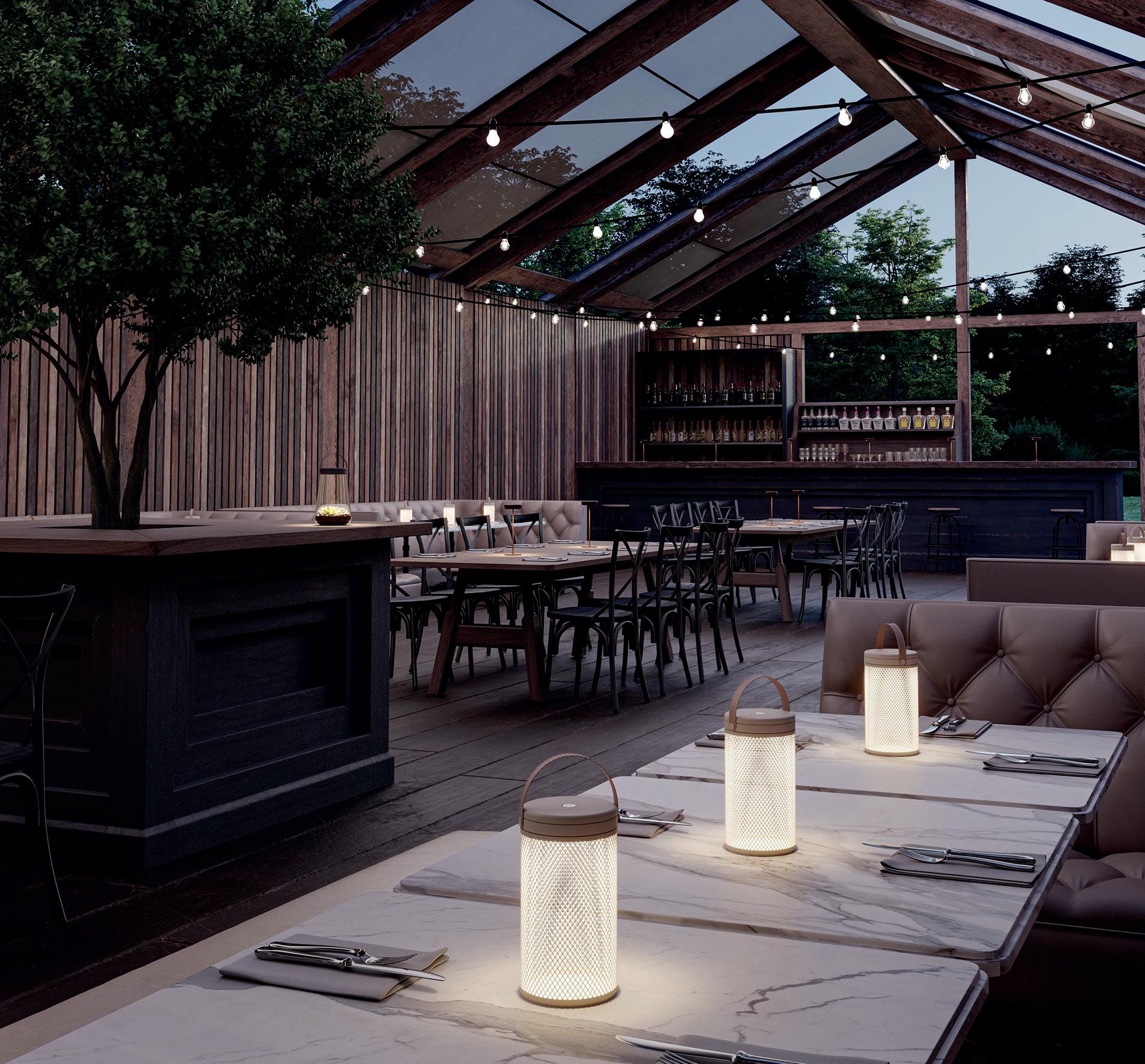
Signature FSE is expanding its brand portfolio to include Mythos Lighting – a patented, Italian rechargeable table lighting system.
As the brand’s exclusive UK distributor, Signature FSE brings Mythos’ distinctive collection of modular, cablefree table lamps to the UK market for the first time.
Designed from the ground up for the hospitality sector, Mythos combines the craftsmanship of Italian design with the practical demands of a busy service environment, giving operators an elegant solution to one of the most overlooked elements of the guest experience.
The patented LED light pod –‘Gaia’ – pairs with a core collection of interchangeable diffusers to create an almost limitless number of combinations.
Each one is unique in shape, material and finish, allowing operators to create table settings that are as individual as their venue.
Precisely engineered, the LED light pod offers 220 lumens at 2700K, with a Colour Render Index (CRI) score of 90/100 – meaning food looks exactly as it should, wine reads true in the glass and the careful attention of tableware is brought to life.
Paula Sherlock, MD of Signature FSE said: “Mythos represents true innovation in the table lighting category. Created by product development specialists with deep expertise in lighting and hospitality, you can tell that every operational detail has been thoroughly thought through, as well as the stylish design elements.
“The Gaia light pod is fully charged in just four hours and gives up to 60 hours of light depending on the dimmable
setting chosen. Where Mythos has really developed a smarter approach is in the way the pods are charged. The Modular Charging Cart system uses stackable trays, each capable of simultaneously charging up to 15 light pods from a single plug. For UK operators, Mythos is a genuinely exciting addition to the market, offering an elegant yet practical way to elevate the dining experience – and that kind of detail is what guests remember.”
Exclusive news from Lockhart!
Lockhart Catering Equipment welcomed 35 attendees to its London Innovation Centre for the first in a series of exclusive events to be held this year. It showcased the latest in kitchen functionality, tabletop innovation and culinary techniques, hosted in collaboration with chef Ben Murphy and mixologist Kat McQueen.
Simon Britten, head of marketing at Lockhart Catering Equipment, said: “In a rapidly evolving industry, it’s important for operators and suppliers to constantly adapt to emerging trends. With our new Exclusive Series, we’re putting innovation at the forefront all year round and collaborating with those setting new trends in hospitality.
“The events are open to all operators, with priority given to those that have indicated early interest in the second edition of our Catering Innovation Show, as a thank-you for their ongoing support.”
There was a tour of the showroom, with insights into Lockhart’s product developments, followed by a cooking demo courtesy of Rational. Kat McQueen’s mixology demonstrations used the award-winning Ariane porcelain barware collection, which the multiaward-winning mixologist helped create.
Combining the elegance and performance of porcelain with the innovation driving the drinks sector, the pieces hold temperature longer, feel incredible in hand and open new
Conveyor Pizza Oven Touch Control
● 45cm direction control belt.
● 50 x 35cm pizza/hr, fully adjustable speed, and temperature to 400 degrees centigrade.
● Forced air circulation for fast even baking!
● Lateral inspection door and window.
FX201M & FX202M Spiral Mixers
● 30litre (20KG) spiral dough mixers.
● Fixed head, 1 or 2 speed options, supplied with casters.
● Powerful chain driven mixers with the versatility of 13amp single phase power.
possibilities for cocktail presentation. There are three styles in the range: ultramodern white Solar, black Midnight, and monochromatic speckled Lunar.
Attendees made the short stroll to the newly opened 74 Charlotte St by Ben Murphy for a meal. With 15 years of industry experience under his apron, he has been very deliberate when it comes to menu design, ethos and equipment. Indeed, much of the tableware, glassware and cutlery was sourced from Lockhart.
To find out more, check out cateringinnovationshow.co.uk.
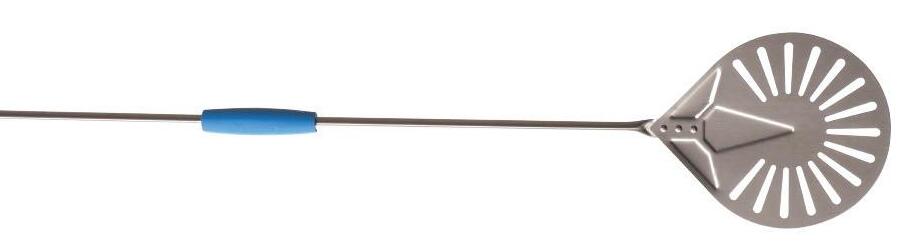
830 EM and 430 EM – Twin Deck and Single Deck pizza ovens
● Twin deck and single deck pizza ovens.
● 63cm x 63cm internal stone deck size.
● 32 x 30cm pizza/hr per deck.
● Thermostatic control up to 400 degrees centigrade.
NEW NEW
The cellar
Welcome to our new wine section. Every issue, we will feature expert opinion and product guidance, from red to white, seasonal trends, the perfect menu combinations and so much more. Saluti!
God’s gift
Crisp, fruity Falanghina is always a refreshing choice. This native Italian grape dates back to antiquity, coming into its own during warmer months, says our new columnist, Mel Leyshon.
FROM THE RUINS
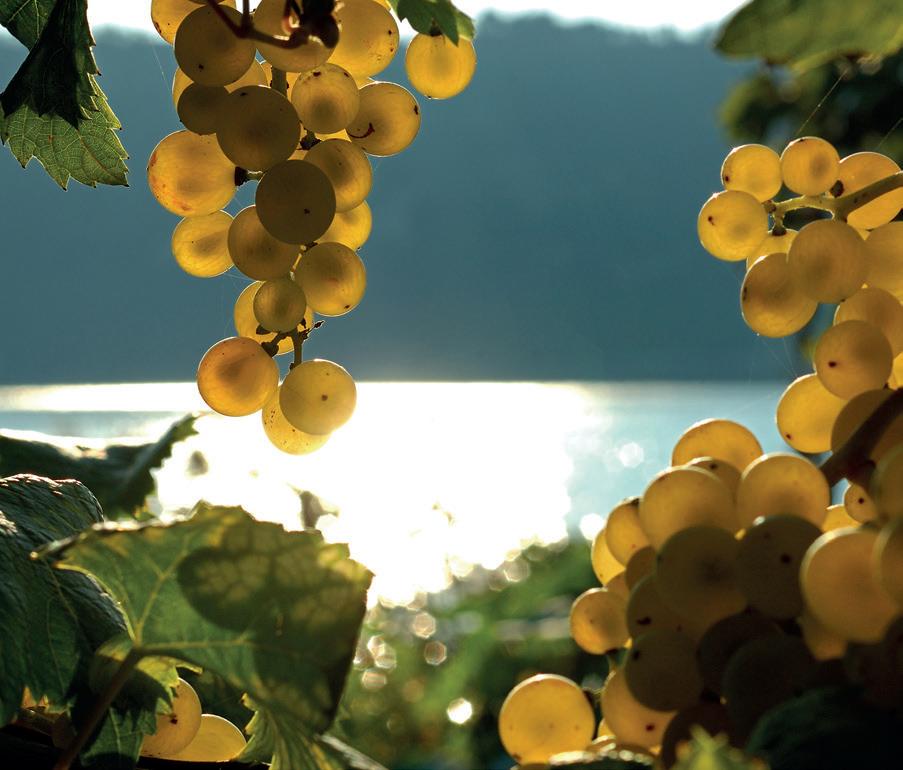
The best wines come with an interesting back story and Falanghina’s is up there with the best. Legend has it that Campania’s most planted white grape was gifted to this south-west region by none other than Bacchus, the God of Wine.
The Roman deity appeared to a poor farmer in his fields, who shared his milk, bread & olives. Impressed by this generosity, Bacchus transformed the slopes on Monte Massico into vineyards planted with, some claim, Falanghina.
Our new regular columnist, Melanie Leyshon DipWSET, is a wine and travel journalist. She writes for BBC Good Food, Olive and Sainsbury’s magazine and as LadySips on Substack.
No doubt this story may have been concocted by inebriated Romans in the bars of Pompeii. They were partial to a drop of Falernum, a wine so alcoholic, Pliny the Elder wrote that it could ignite if approached by a flame.
Falernum was premium and a menu etched on the walls in the ruins of Pompeii after Vesuvius erupted showed it came in four styles. Experts believe Falanghina was a key part of these blends, with Greco and Aglianico. This vino was aged for 10 years or more in clay amphora and served diluted with sea water, flavoured with honey, spices and resin.
GOOD GOING
Falanghina today couldn’t be more different. It’s an elegant, dry white, usually made as a single varietal or as
85% of a white blend with local varieties. A light-to-medium body bursts with flavours of citrus, apple, white peach, light floral and herbaceous fennel notes. Crisp acidity makes it an excellent food wine. It’s usually unoaked to showcase fruitiness. A little lees ageing – leaving the wine on the dead yeast cells for a few months before bottling – adds weight and texture. The wines tend to be good to very good, which translates into inexpensive to mid-priced bottles for operators.
The Sannio district, Campania’s largest wine-producing area, is the heartland of Falanghina. The sub-region of Falanghina del Sannio DOC appellation is, as the name suggests, dedicated to the grape. This is a large area, so products depend on vineyard locations. Wines from the western warmer areas are smooth and fruity with signature floral notes, while in the eastern half with volcanic soils and more altitude, there’s a crispness and refreshing minerality.
The bright, clean flavours of Falanghina pair well with the fresh ingredients of Italian cooking, particularly seafood – perhaps a plate of linguine with clams, grilled prawns or a seafood risotto. Its freshness and medium body has enough oomph to partner herbs, garlic and olive oil. Ideal with antipasti – mozzarella, olives, grilled vegetables and salami – you can carry on through to mains of creamy pasta dishes, grilled chicken and fish.
Bright, approachable and deeply tied to the cooking of its region, Falanghina is exactly the kind of wine you want when Italian food is being served –and when customers are seeking alternatives to that go-to Pinot Grigio.
FOUR FALANGHINA FACTS
● The name Falanghina comes from the Latin word falangae, the wooden stakes that were once used to support the vines.
● It was nearly wiped out by phylloxera in the late 19th century but this high-quality grape was saved from extinction in the 1970s by Leonardo Mustilli. He started producing a single-variety Falanghina in 1979.
● Falanghina is grown in all Campania’s wine districts and features as part of white blends, such as those along the Amalfi coast.
● There are two types of Falanghina grape: Flegrea, which grows on the vineyards around Mount Vesuvius in the Campi Flegrei DOC, and Falanghina Beneventura, grown in the Falanghina del Sannio DOC. Many producers grow both and blend them together.
Heroes of viticulture
The Italian white market is incredibly saturated but two wineries refuse to compromise their authentic values: Andreola in Col San Martino & Collio’s Tenuta Stella
DESIGNED TO CAPTIVATE
The Andreola winery has made heroic viticulture its hallmark since 1984, located in one of the most representative areas of UNESCO-recognised Valdobbiadene DOCG – the highest quality classification of Italian sparkling wine in Veneto. Its production is powered by manual work in the vineyard, often requiring the use of a pulley system to transport the grapes due to the steep hills.
Based in Col San Martino, in the municipality of Farra di Soligo, the winery is the heartbeat of Nazzareno Pola, the father of Stefano Pola, the current owner. In 1984, Dad founded the Andreola Orsola winery to produce wines with his own label from his mother’s land – and the family has worked unceasingly since then, with Stefano taking over between 2009/10.
Investments in machinery and technologies help define the unique style of the wine – distinctively creamy and intensely fruity, with elegant aromas, harmony and balance. Just over 15 years ago, the company’s image underwent a complete renewal, along with the bottle, with the name simplified to Andreola.
“We offer a product naturally on trend, thanks to a low alcohol level and reduced sugar content, while highlighting freshness and elegance,” said Stefano. “The result is a range of wines with personality, designed to captivate from the very first sip.
“Our heroic viticulture on the steep hills in the Valdobbiadene district reaches an inclination of up to 72%, making these vineyards really challenging to work. But the advantage is that at these altitudes, the grapes express more finesse, a richer and broader range of perfumes, and simply become more
expressive and generous. Sommeliers are looking for indigenous grapes – and Italy has many.”
UK demand is important for Andreola, with 35% of its market coming from exports.
“Between the UK and Italy there has always been a strong link and consumers are keen on eating and drinking Italian. In the international panorama, our food products and wines continue to have a great price-quality ratio. I think that what most of us want is for the world to choose the path of peace and collaboration. Wines are often a means of making a dinner relaxed, bringing people closer together – exactly what the world needs right now!”
Andreola works with Alvini Company Ltd, a well-established Italian produce specialist in the UK – helping the business tap into the trend for consumers to drink slightly less, with a preference for something more premium.
And with solar panels on the roof of the winery, and the health of the ecosystem, soil and vines more important than high yields or industrial efficiency, Andreola is certainly delivering.
STRONG IDENTITY
A gem, set amidst the rolling hills of Collio, Tenuta Stella lies on a piece of land that seems created for winegrowing.
Sergio Stevanto founded a winery whose production is based almost exclusively on vines native to the Friuli region. Today, the company is run by Alberto Faggiani, an agrotechnician, and Erika Barbieri, an enologist and technical/marketing manager.
Quality and authenticity have guided production since its birth in 2009, closely linked to a sustainable approach without the use of pesticides or chemical fertilisers. There has also been investment in photovoltaic systems to increase energy independence and reduce the environmental footprint, while recycling all production waste and cutting the use of heavy metals.
“We resonate with a growing segment of UK consumers who are not simply drinking wine but actively seeking discovery,” said Erika. “They look beyond familiar labels, eager to explore small producers and indigenous varieties. We work with native grapes such as Ribolla Gialla, Friulano and Malvasia – expressing a strong identity, sense of place and distinctive character.
“There is a clear shift towards authenticity and diversity; something different from the international mainstream. Smaller, artisanal producers with a strong commitment to sustainability – consumers are not just fascinated by what’s in the glass but the story behind it.”
To convey this message in the UK, Tenuta Stella works with Pandemonium Wines, led by Luca Dusi.
“Partnership is about a shared vision,” continued Erika. “They understand how to communicate the identity of a small, quality-driven winery like ours and have a strong ability to position indigenous varieties in the right context.”
Of course, international markets remain essential for Italian wine but Erika is adamant that instead of adapting to short-term preferences, they guide consumers towards a deeper understanding of taste. “Our wines are often described as gastronomic – structured, complex and designed to evolve over time.
“Italy offers an extraordinary range of grapes and styles. The real challenge is not competition between producers but how effectively we can communicate this richness.”
SIMPLE CONCEPTS
Sunny Chhina is a business tornado, on call seven days a week. Having been a takeaway marketing consultant, he launched The Fat Pizza just over six years ago. With more than 40 stores, and expectations for double that in a year, he understands franchising better than anyone – and is an inspiration to any foodservice or hospitality entrepreneur.
Also, as chairman of the Pizza, Pasta & Italian Food Association, he’s in a unique position to see how the sector is evolving. And having been to the likes of Hemel Hempstead, Coventry, Cambridge, Sunderland and Dubai in the last few weeks alone, it was a blessing just to get half an hour with him.
His goal is, on average, a couple of new stores a week, and setting up a simple process for franchisees is key.
“We opened a Coventry site today
Have pizza, will travel
Whether franchising, incorporating the latest AI technology or growing internationally, The Fat Pizza continues to thrive.
(16 March) and I’m looking at the figures now – we’ve had nearly 40 orders already in just under an hour. It’s about understanding the two key points of failure: is the product the best around and does it work, and are you delivering in a decent time. Those are the basic parameters. While wood-fired might be all the rage, it doesn’t really work for delivery. They need to be eaten within 10 minutes of being served.”
Working in delivery for years gives Chhina a unique understanding of how to make it as smooth as possible – which in turn makes it profitable!
“I just look at each area and ask if we can be successful there. Additionally, we are taking over sites of a global high-street operator. Equipment has been removed but there’s still walk-in chillers. It’s a straightforward process.”
He gets numerous inbound requests around the regions for franchisee jobs, so that ‘straightforward process’ also has to apply to recruitment and leans heavily into AI. “There is no hard sell. Prospects must want a franchise with Fat Pizza, as they do not get chased by anyone here.
“Everything is set up for any new franchisee team member to be successful. What’s key is that they makes money first, not me.
“We have a bespoke tech model incorporating the best in each field to make sure that franchisees have an advantage in operations, inventory and
most importantly marketing. We manage it ‘in house’ and are probably one of the best at it. The AI means we are growing with AI, so we have the advantage of looking at what can be done rather than what can be replaced. A crucial difference in being able to use the tech differently.
“Most important is that we own our customer data and ‘Native’ (direct delivery orders) make up the majority of our sales.”
UNIQUE LANGUAGE
Of course, no international operator is immune to the geopolitical climate, and having opened a site in Dubai, Chhina is watching developments closely.
“Petrol prices are a major concern generally, because all the drivers are affected and we have to increase delivery fees. It hasn’t yet fed through into equipment food supplies but we wait and
see. I went over and helped to launch the pilot store in Dubai and we are looking at different sites to expand the franchise model but it’s on hold currently.”
However, Chhina’s international ambitions are far from quelled. He has someone looking in Florida, Trinidad, Panama and all over South America, with India definitely in the pipeline.
What courses through the veins of this almost incessant desire to expand is a unique understanding of what makes the pizza franchise and delivery operation tick, because the principles do not change, from Stockton-on-Tees to St Tropez.
“It’s a unique language. Basically, our cheese pizza is the number one seller, with pepperoni next and meat feast just behind – this doesn’t move much. Of course, we have quality chicken sides and desserts, while the protein and nutrition aspect is growing in importance. Oven-baked is one key health differentiator there, as when you fry stuff, you add calories.
“But people (like me) just love pizza. When opening a site, we don’t bother with weeks of marketing. You don’t want people thinking about your menu and realising they can’t get a slice for another
14 days – they will go somewhere else. I publicise a day or two before launch. It’s a treat that you always go back to, and it’s something people often order on the fly. They’re not planning a delivery a few weeks in advance or walking down the high street and deciding to stop for a slice. You have to be in touch with your demographic.”
In terms of trends, the biggest one is a smaller 7-inch. “People asked why we were adding this and they soon worked it out. It’s now our second-bestseller.”
As if Chhina hasn’t got enough on his plate, he’s also launching a Fat Pizza pub concept in Cambridgeshire.
“We are ready to go in the next few weeks. An inspiration was my sister, who is out in Los Angeles. She took us to BJ’s Brewhouse sports bar, somewhat reluctantly! But it had loads of TVs and got me thinking.
So, The Fat Pizza will soon be
- FRANCHISEE, THE FAT PIZZA -
operating from a sports pub in Cambridge. It’s going to have the exact same menu, with a delivery operation from the kitchen. And not just sports events…but promotions like Love Island hang-outs!
“That’s what pizza does. It brings together mates, young and old, families –everyone. You just have to get ensure your product is the best.”
I think he was off to Grimsby and Rochdale next!
Documenting opportunity
From scarcity to strategy: what Italy’s Year of Abundance means for the food sector.
BROADER QUESTIONS
On 12 March 2026, Atlante hosted a private screening at the Italian Embassy in London that brought together producers, partners and professionals from across the food industry to reflect on an unusual and significant moment for European agriculture.
At the centre of the evening was The Year of Abundance, an upcoming documentary produced by Atlante, presented by botanist and science communicator James Wong and directed by Natasha Olive. Filmed across Italy, it explores a rare piece of good news: after several difficult years marked by climate pressure, geopolitical instability and supply chain disruption, the 2025 harvest delivered strong production across key staples, including wine, olive oil and durum wheat.
So, the broader question is what does abundance actually mean and how should it be managed?
MOMENT OF RELIEF
For much of the past decade, the European food sector has operated under conditions of constraint, with sustained pressure on production and pricing.
Against this backdrop, the stronger harvests in 2025 offered welcome relief. Wheat yields recovered, olive oil production stabilised after two difficult years and several agricultural sectors moved closer to historical averages. But abundance brings its own complexity. Higher volumes do not automatically
translate into higher value. As supply increases, prices at origin come under pressure, while producers face elevated operating costs, from energy and labour to regulatory compliance. This can reduce margins to the point where reinvestment becomes difficult, even in a strong year.
There is also a physical dimension. Agricultural products are inherently timesensitive. Olive oil oxidises, grains absorb moisture, grapes require rapid processing. When volumes increase suddenly, the ability of infrastructure – such as storage, logistics and processing – to keep pace becomes critical.
Abundance, in this sense, is not simply a surplus. It is a test of the system’s capacity to absorb, manage and preserve value.
VOLUME TO VALUE
As Natasha Linhart, CEO of Atlante, has argued, the key challenge is not producing more but transforming abundance into lasting value across the supply chain.
This requires a shift in mindset. In periods of scarcity, the priority is securing supply. When production is strong, the focus must shift to managing that supply intelligently, through strategic stock planning, quality differentiation and market positioning.
One of the most important levers is the valorisation of quality and origin. Italian food is built on a strong foundation of provenance, craftsmanship and regional identity. From the polyphenol content of extra virgin olive oil to the territorial specificity of PDO and PGI products, these attributes become even more important when volumes are high and price competition intensifies.
Rather than allowing abundance to drive commoditisation, there is an
“IN PERIODS OF SCARCITY, THE PRIORITY IS SECURING SUPPLY. WHEN PRODUCTION IS STRONG, THE FOCUS MUST SHIFT TO MANAGING SUPPLY INTELLIGENTLY.”
opportunity to reinforce the value of what makes these products distinctive.
SYSTEMS & EXPORT
Turning strong harvests into opportunity depends on the systems behind production.
Investment in logistics, storage and digital infrastructure improves visibility, planning and efficiency across the supply chain. At the same time, circular approaches are becoming increasingly relevant. Surplus does not have to mean waste – it can be redirected into new uses, creating additional value streams.
None of this can be achieved by a single factor. As reflected in the Embassy discussion, resilience depends on coordination across the value chain, from farmers and producers to distributors, retailers and export partners.
Exports are also critical. Domestic markets are often insufficient to absorb increases in production without exerting downward pressure on prices. Expanding into new geographies helps balance supply and demand while reducing risk.
Asian markets in particular – including Japan, South Korea and Vietnam –are showing strong demand for high-quality, traceable food products, aligning well with European standards and reputation.
In addition, the Embassy event highlighted the importance of partnerships in making this system work.
The documentary was made possible through collaboration with producers such as Montalbano (olive oil), Alma Wines and Casillo Group (wheat), reflecting the diversity and expertise behind Italian food production.
For companies operating between production and retail, the challenge is to connect these producers with the right markets, in ways that preserve both quality and value. In this sense, the role of intermediaries is not simply logistical but strategic, shaping how products are positioned and understood.
LOOKING AHEAD
If there was clear message that emerged, it is that abundance should not be seen as the end of a cycle but as a moment to act.
Periods of strong harvest provide a window in which to invest, in infrastructure, innovation, market development and partnerships. Failing
to do so risks repeating a familiar pattern: under-investment in favourable conditions, followed by vulnerability when circumstances shift again.
Used well, however, these moments offer the possibility of building a food system that is not only productive but more resilient and capable of withstanding future shocks while continuing to deliver quality and value.
In that sense, The Year of Abundance is not simply a story about favourable conditions or improved yields. It is a reminder that the real work lies in what comes next.
And perhaps that is what made the Embassy evening feel so timely – not just as a celebration of what has been achieved but a shared recognition of the responsibility that comes with it.
Stories worth telling...
Fresh, handmade and delicious, Italian pasta is generating real momentum with the UK consumer – and London restaurant Via Emilia is at the heart of the buzz.
CREATING TEXTURE
Inspired by Emilia Romagna – the food basket of Italy and birthplace of fresh egg pasta – the menu at Via Emilia by Food Roots is centred around nine fresh pasta dishes and represents a journey of discovery through this revered region.
The founder of this trio of Italian restaurants is Christian Pero, originally from Parma. His London journey began in 2012 with his first operation, aptly titled In Parma!
“Back then, the city hadn’t yet experienced the fresh pasta boom,” said Pero. “My inspiration was – and still is – the traditions of the Via Emilia. We eventually rebranded to Via Emilia by Food Roots to better represent our dedication to the diverse, regional recipes found along that historic road.”
With around 40 covers at each site, Via Emilia sets an intimate scene that’s light and airy. White marble and dark
stained wood greet the customer, with a quirky use of aged steel, copper and caged displays adding a modern twist. From Shoreditch to Fitzrovia or the boho-chic
of Notting Hill, an exceptional experience has to be a delivered.
“We stand out by refusing to take shortcuts. Many pasta restaurants rely on
“IT TAKES FOCUSED CRAFT TO PRODUCE JUST A SINGLE PORTION. WE AREN’T INTERESTED IN BEING A HIGH-SPEED FACTORY.”
extruders that can churn out 10 portions every minute – we do things differently. At Via Emilia, we still make our pasta by hand, one by one. It takes focused craft to produce just a single portion. We aren’t interested in being a high-speed factory; we are about storytelling and the specific heritage of Emilia Romagna. That ‘slow’ approach is exactly what creates the texture and soul our guests can taste.”
LESS IS MORE
That ‘handmade’ touch is integral, with authenticity a key watchword around Italian cooking and ingredients. And having launched in Notting Hill at the start of 2026, Pero understands how pasta
is developing, as expectations rise.
“The evolution since 2012 has been incredible. When I started, fresh handmade pasta was a rarity in London. Now, it’s a centrepiece. The UK palate has become much more sophisticated. Diners recognise regional shapes and demand high-quality DOP products. It has shifted from simple comfort food to a respected culinary craft where authenticity is the new gold standard.”
This appreciation for the Italian philosophy of simplicity and transparency ties in with the Via Emilia approach.
“People want to know the ‘roots’ of their food. Londoners have a great respect for the ‘less is more’ approach, and they are increasingly seeking out the kind of
experiences they would find in a small trattoria in Bologna or Parma.”
The name Food Roots is the mission, partnering with specialised importers for the essentials: genuine Parmigiano Reggiano, Prosciutto di Parma and Mortadella from Pero’s home region.
“I want to connect with more niche, family-run producers in Emilia-Romagna who are reviving ancient traditions.
“With three restaurants now, the goal is growth without losing the human touch. I want every plate of pasta to feel like it was made with the same individual care as that first restaurant in 2012. We’ll continue to be the London home for the stories and flavours of the Via Emilia, one handmade portion at a time.”
Caputo began in Naples, at the very heart of countryside culinary culture.
Since 1924, we have worked wheat with generosity and passion, to offer professionals and baking connoisseurs the very best in quality flour, produced with great respect for the raw ingredients and traditions.
The experience developed over three generations of Master Neapolitan Millers means we can guarantee extremely high standards, so that expert restaurateurs and
skilled artisans can express their creativity to their full potential.
The quality and value of our products is recognised and appreciated all around the world, thanks to our ability to preserve the natural authenticity of flavours. This is achieved using innovative processing techniques which still respect all the oldest
traditions, which require the use of wheat alone, skilfully selected and mixed using a slow grinding process.
Prestige, spontaneity and tradition. This is the art of Caputo, the only mill in Naples.
More info: mulinocaputo.it.
A key turning point came in 1985, when an entrepreneur named Boizett opened one of the first pizzerias in Soho, London, and introduced Peroni Nastro Azzurro beer to the UK. This led to wider distribution opportunities, and Casa Julia expanded rapidly in the beer market.
Essex, it supplies restaurants, cafés, pubs, hotels and retailers.
Its product range includes wines, beers, spirits, soft drinks, pasta, flour, tomatoes, and other Italian essentials. The company also provides nationwide delivery, seasonal product updates and customer support.
The Casa Julia journey starts with Vincenzo Santomauro, born in Salerno in 1942 on Christmas Day. His grandparents were from Castellabate, where they owned a farm without electricity. He spent school holidays there, gaining early exposure to traditional food and wine production. He later graduated as an architect and moved to England in 1964, working on large-scale housing projects, eventually founding Casa Julia in 1975, as a specialist importer of premium Italian wines. During the 1980s, Italian restaurants in the UK increased significantly. Customers requested wines such as Chianti, Frascati and Valpolicella, driving demand for authentic imports.
During the 1990s, Casa Julia invested in a peeled tomato factory in Campania. This move was influenced by Linda McCartney, who promoted Italian vegetarian products in the UK. Casa Julia began supplying organic and specialty foods, including vegetarian parmesan, additive-free tomatoes and egg pasta made with free-range eggs.
In the early 2000s, pizza became one of the most popular foods in the UK, even surpassing fish and chips, with pizzerias expanding rapidly.
In 2009, Casa Julia began importing Caputo flour. This grew dramatically from 400 bags per year to around two million. The company also focused on importing San Marzano tomatoes. Today, Casa Julia operates as a major UK wholesaler and distributor of Italian and international food & beverage products. Based in Braintree,
In Feb 2026, in Rome, Casa Julia received the Brand Ambassador Award for services to Italian trade for Imports, after Italy became the first nation to have its cuisine recognised as Intangible Cultural Heritage of Humanity by UNESCO.
Vincenzo (“Enzo”) Santomauro founder of Casa Julia receiving the PAPA industry Award 2025.
UP
NEXT ISSUE COMING
JUN/JUL 2026
SPECIAL
Tomatoes
Seasonal outlook, profiles, products
FOCUS
Plant-based & free from Operators & manufacturers, trends
EXCLUSIVE
AI/tech/delivery
Sta ng, market leaders, innovation
TEAM
Editor Alex Bell telephone 01291 636349 e-mail alex@jandmgroup.co.uk
Advertising Andrew Emery telephone 01291 636334 e-mail andrew@jandmgroup.co.uk
Production Gareth Symonds telephone 01291 636339 e-mail gareth@jandmgroup.co.uk
The following businesses are members of The Pizza Pasta & Italian Food Association (PAPA) and subject to its rules and guidelines. While the Association cannot guarantee the products and services supplied by those listed, it does believe that those listed are reputable and is con dent in recommending them.
The Pizza Pasta & Italian Food Association is the trade body representing the UK Pizza, Pasta and Italian Food Association. The Association is given direction by a Management Committee comprising:
Moretti Forni X100
Vesture
EVERYTHING YOUR PIZZA MENU NEEDS
A broad SuperTops topping range including pepperoni, bacon, ham, salami, pulled pork, spicy beef chunks and more