Trusts vs. Estates: Understanding the Key Differences
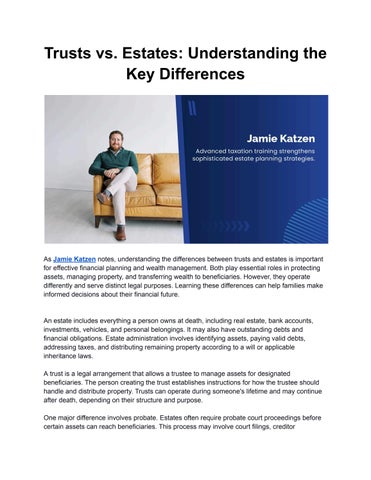
As Jamie Katzen notes, understanding the differences between trusts and estates is important for effective financial planning and wealth management. Both play essential roles in protecting assets, managing property, and transferring wealth to beneficiaries. However, they operate differently and serve distinct legal purposes. Learning these differences can help families make informed decisions about their financial future.
An estate includes everything a person owns at death, including real estate, bank accounts, investments, vehicles, and personal belongings. It may also have outstanding debts and financial obligations. Estate administration involves identifying assets, paying valid debts, addressing taxes, and distributing remaining property according to a will or applicable inheritance laws. A trust is a legal arrangement that allows a trustee to manage assets for designated beneficiaries. The person creating the trust establishes instructions for how the trustee should handle and distribute property. Trusts can operate during someone's lifetime and may continue after death, depending on their structure and purpose. One major difference involves probate. Estates often require probate court proceedings before certain assets can reach beneficiaries. This process may involve court filings, creditor
notifications, and administrative expenses. In contrast, assets properly transferred into a living trust can generally pass to beneficiaries without probate, potentially reducing delays and maintaining greater privacy. Trusts also provide flexibility in controlling asset distributions. For example, parents may establish a trust that provides financial support for children until they reach a certain age. Some trusts may offer creditor protection, although this depends on their structure and applicable laws. Revocable living trusts generally do not protect the creator's assets from creditors. Estate planning remains important even when someone establishes a trust. A will can address property outside the trust and identify guardians for minor children. Coordinating these documents helps create a more complete plan and reduces the likelihood of unintended outcomes. Both trusts and estates may involve tax responsibilities, administrative expenses, and legal requirements. Their financial effects depend on asset values, ownership arrangements, and applicable regulations. Professional guidance can help families understand these considerations before making decisions. Ultimately, choosing between estate planning tools requires evaluating personal goals, family responsibilities, and financial circumstances. Understanding how trusts and estates work together allows individuals to protect assets, clarify inheritance instructions, and support smoother wealth transfers for future generations.