mammogram.
“I remember the day I got the call and they said that it was cancer,” she said. “... I totally shut down because it was like you hear that ‘C’ word and that was 14 years ago. And usually, the stories you heard (back then) weren’t positive … it was a scary time for my husband (Chuck) and I. And of course, my daughter (Niki), she was going to high school, just graduating from high school, going into college.”

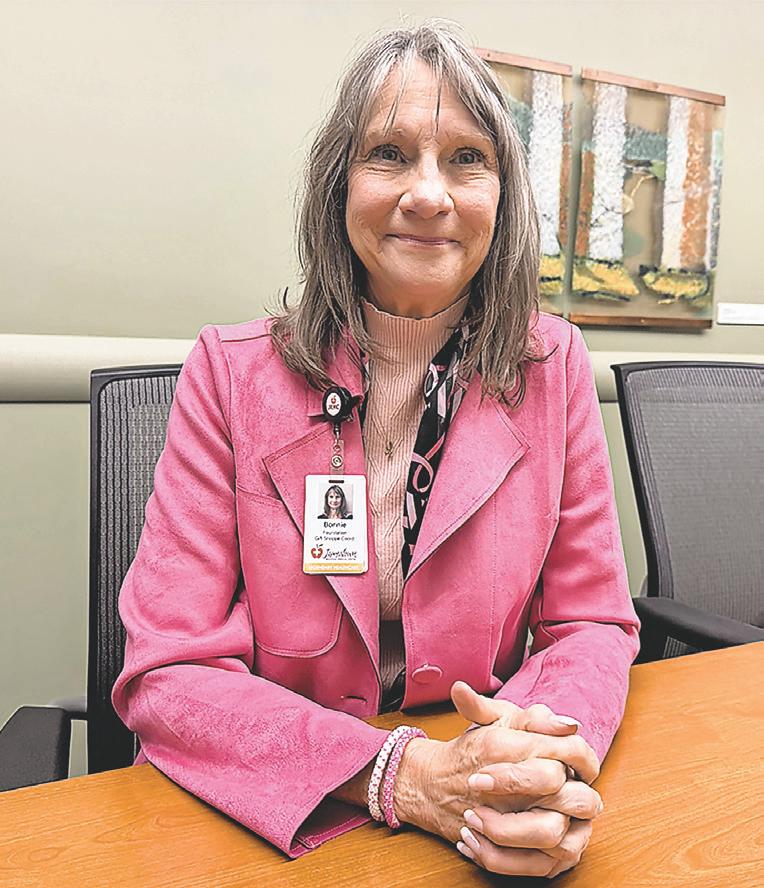
The cancer she had in her left breast was called DCIS, she said.
“Ductal carcinoma in situ, which means it’s in the milk ducts and that it was selfcontained,” she said.
Dr. Steven Maier performed a lumpectomy at then-Jamestown Hospital. Schmitz saw an oncologist at Sanford Roger Maris Cancer Center and went on tamoxifen, a drug that suppresses hormones, for 4 ½ years.
Schmitz said she had aggressive chemo treatment to shrink the tumors for 16 weeks at Roger Maris Cancer Center. During that time, she also got infusions at JRMC. The Jamestown Cancer Support Group provided a gas card and chemo bag, she said.
believes her sister did as well.
Schmitz is part of a lifetime research program through the Mayo Clinic and the information is collected through the Roger Maris Cancer Center, which is documenting her case.
“... it always hangs over your head, you know, when you go in for your visits and stuff like that,” she said. “You try to push it out … and it always kind of creeps in there. I think being positive, that lifetime research program that I’m in, they have found that there is an infusion that I can take and I get that administered at the (JRMC) Cancer Center. I’m on this program for five years. It’s supposed to help up my bone strength and it’s supposed to give me a 25 percent better chance of not getting a cancer. It gives me a little better percentage.”
Schmitz serves on the Jamestown Cancer Support Group’s board of directors because she wants to give back, she said. She has worked as the JRMC Gift Shoppe coordinator for 2 ½ years.
“... this job at the hospital is so awesome because there’s a lot of people here that are going through things that we don’t know about and I just think the Gift Shoppe and all of our volunteers, if we can provide them a little bit of joy — yeah,” she said.


During a routine check at Roger Maris Cancer Center in 2014, she told her doctor that she had started spotting. He said that doesn’t happen while taking tamoxifen.
“And then, within two days, he had me being biopsied for endometrial cancer,” she said. “And they took three samples and one of them had carcinoma in it.”
At that time, there were only physicians in Minnesota and South Dakota in this region where Schmitz could be referred, she said. She went to Sioux Falls, South Dakota.
“I had to have a complete hysterectomy,” she said.
During that surgery, they determined the carcinoma had not spread.
“So that was the end of that endometrial cancer journey,” Schmitz said. “I didn’t have to do anything further there.”
In 2018, Schmitz’s sister, Wanda, a breast cancer survivor, was diagnosed with glioblastoma, a brain cancer. She died in June 2018.
“And we didn’t want to take it because we figured we had means, that we wanted somebody else to have it, that we didn’t need it, but they insisted take it,” Schmitz said. “They said if they could help in some way they wanted to help.”
After the chemo, she said they waited a month for her to regain her strength and her husband decided to retire to be able to take care of her.
“Then we had a choice of removing the one breast or two,” she said.
Learning a tumor could show up in the other (left) breast, Schmitz decided to have a double mastectomy. A tumor was found in the left breast during surgery, she said, called a “hidden tumor” because it had not shown up in the mammogram.
“I didn’t do a reconstruction because my luck, I would have gotten an infection and had to have more surgeries,” she said.
Schmitz completed six more months of oral chemo in 2020.
Currently, she has six-month checkups.

“And then in 2019, I went in for my routine breast exam and they found two tumors in my right breast,” Schmitz said. “And then they did the biopsy and they found out it was triple-negative, which is — it’s an aggressive breast cancer. And we were going to start our journey with the meeting with all the teams, our care teams.”
“I’m clear,” she said. “I just had all my tests.
My breast cancer tests all came back clear.”
Schmitz said she had genetic testing done and learned she has a CHEK2 gene mutation, which makes her susceptible to certain cancers, she said. Her late sister’s daughter also had the testing and has the gene mutation, so Schmitz





BY KATHY STEINER
The Jamestown Sun
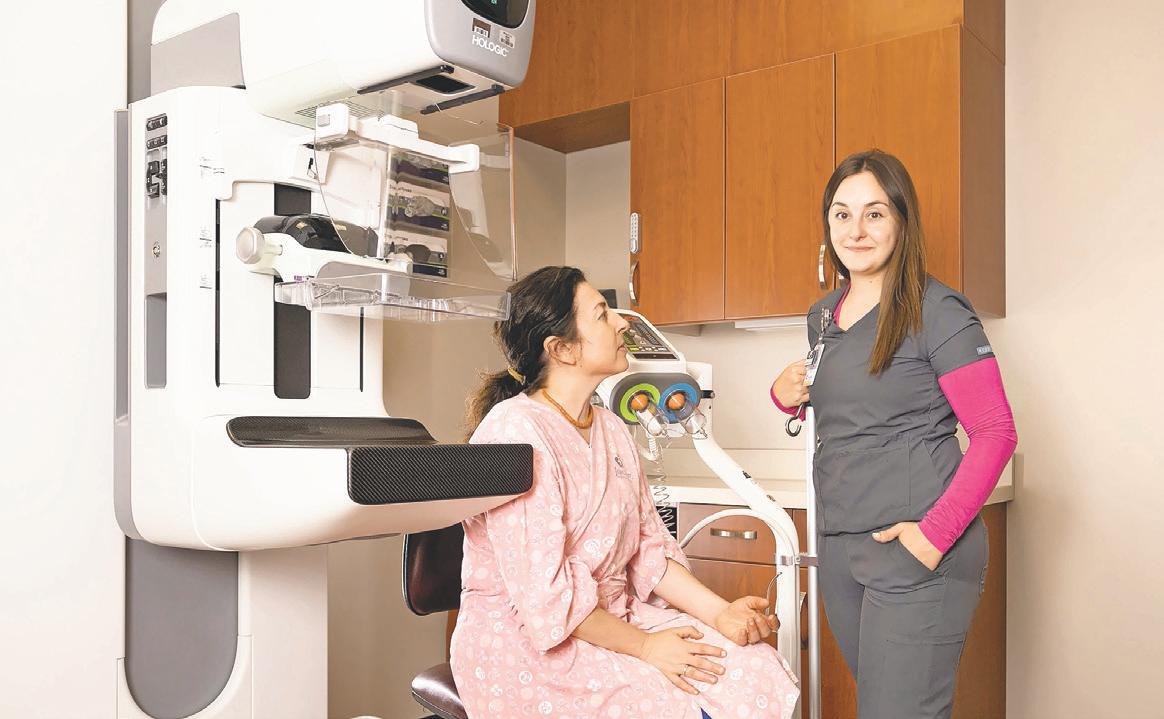
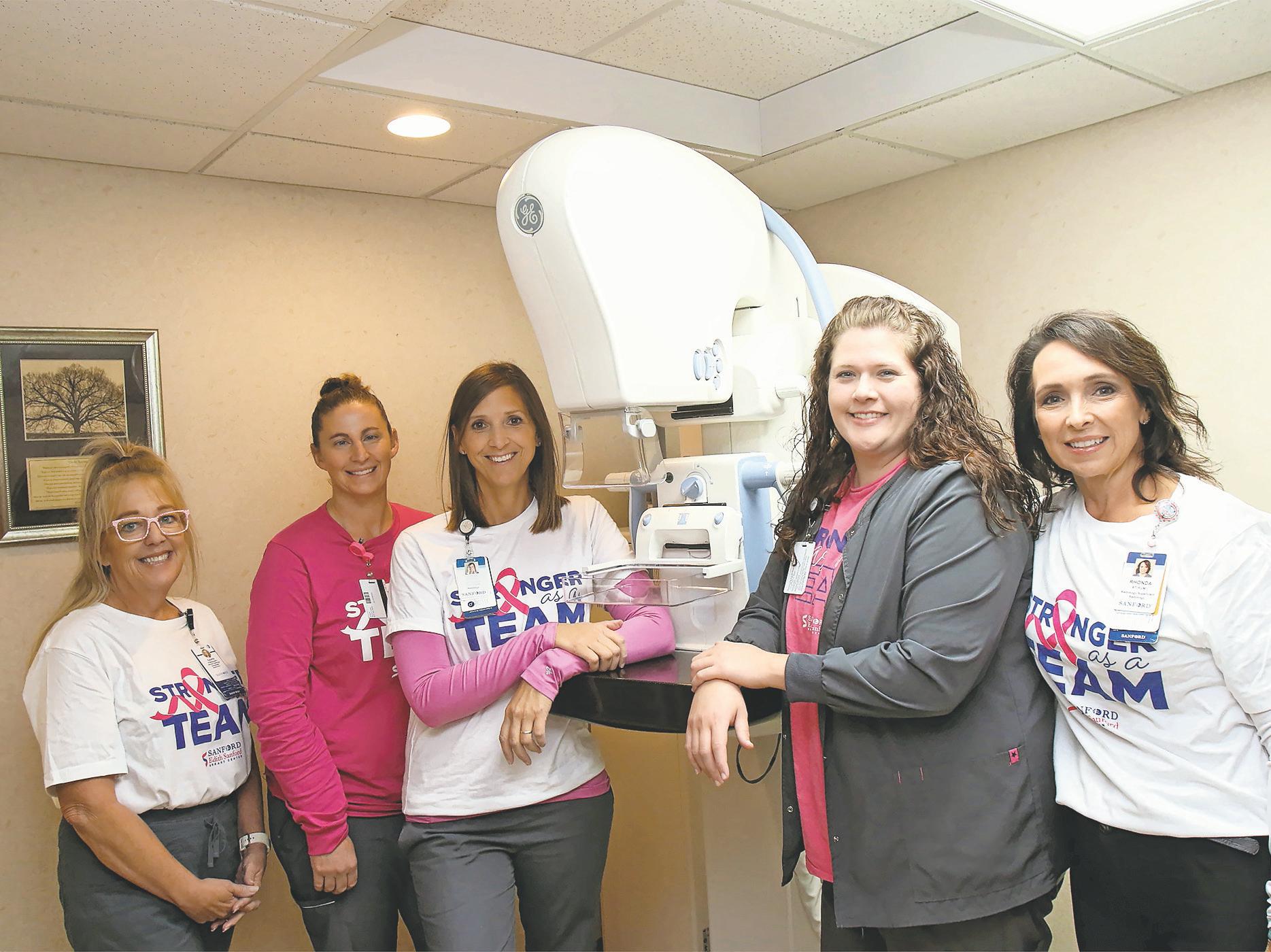
Jamestown Regional Medical Center added a contrast-enhanced digital mammography machine in July, the first such technology offered in Jamestown.
The new machine is primarily used for regular mammograms but has the capability to provide contrast-enhanced images when additional imaging is warranted, JRMC officials said.
“... it (the new equipment) shows JRMC’s commitment to the community, commitment to the patients that it’s always had here,” said Conrad Mitzel, JRMC radiology manager.
He said having the equipment allows patients who have a mammogram where there is something questionable to stay in their community to get care rather than having to drive to Bismarck or Fargo to get an MRI.
“It’s just a commitment to the community, a commitment to the patients of the community that JRMC has that offers this technology,” he said.
JRMC works to provide a more comfortable experience for women having a mammogram.
“When the patient comes in we now have a gown warmer, so they can have a warm gown during their exam,” she said.
A wipe warmer is also used so when women remove their deodorant it will be with a warm wipe rather than a cold wipe, she said.
The new machine, like the previous one, has curved paddles, which are more comfortable, she said. Berg said the equipment provides clearer images and the radiation dose is lower than the previous equipment used. The exam takes at least 10 minutes, she said.
“We usually tell them right after their exam, we’ll tell them it takes seven days to get the results from the radiologist,” Berg said.
Reddy said he understands a mammogram can be stressful for the patient, who wants the results as soon as possible. He said he is very thorough in reviewing the images, so getting the results to the patient may take longer. If the patient has had previous mammograms, he will compare those with the current images.
“If they do need a follow up we will call them and try to get that scheduled, if they need to come back for X-ray imaging,” Berg said.
like a CT exam, she said. The patient gets an IV, where the contrast is administered through, and the remainder of the exam is like a regular mammogram. The contrast enhances most cancers.
Since the new equipment was acquired, two patients have had the contrast-enhanced mammogram, Mitzel said.
JRMC Foundation aided in purchasing equipment
Tonya Perkins, director of the JRMC Foundation, said the foundation purchased the injector for the contrast-enhanced digital mammography machine using funds from community donations.
She noted events such as Running of the Pink hosted by R.M. Stoudt and the community event in November, Baskets, Bags and Bubbly, support women’s programs at JRMC and Central Valley Health.


She said most of her career was at Western Gear. She also worked at the University of Jamestown and for Christopher & Banks before it closed.
She said she feels fortunate to be strong enough to be able to work at JRMC. She said sometimes she feels like cancer took five years from her because there was a period of time that she wasn’t able to work.
“I just feel really grateful that JRMC offered me this job and that I’m able to do what I do,” she said.
Schmitz said it’s important to get a mammogram, noting she had them routinely before her diagnosis.
“Especially from where I’m sitting on the other side, there’s no excuse not to get it,” she said. “It’s so important. If you can save yourself from going through treatment, through surgery, death — this triple-negative (breast cancer), if I would let that go, I mean, it was already taking over. So it (getting mammograms) should be like brushing your teeth.”
She said having support is also important.
“I do know that without my family, my friends, my church, my community, I don’t know if I could have made the journey myself,” she said. “It takes a lot out of you. I know that just so many people were so supportive and so loving and caring. … It wasn’t just me, it was my whole family was on this journey.”

Mitzel said if there is something that is seen on a mammogram that is suspicious, especially on dense breast tissue, then the patient could return for a contrast-enhanced mammogram because that would help distinguish between a dense breast and an area that has a mass.
He said contrast-enhanced mammograms are not being used as a screening tool in North Dakota but more like an MRI.
“They have to have the screening or a diagnostic first,” he said. “They have to a reason to have the contrast-enhanced mammo.”
Contrast-enhanced digital mammography provides quicker results and is less costly to the patient than an MRI, said Dr. Madhusudhan Reddy, JRMC radiologist.
Mitzel said getting an MRI of the breast after finding something suspicious on a mammogram has been the standard for a long time but there are cases where people can’t get MRIs if they’re claustrophobic, have metal implants or are uncomfortable having to be in a prone position for the MRI.
Reddy said there are four types of breast tissue: fatty, scattered fibroglandular, dense and extremely dense. Dense and extremely dense tissue can hide cancer. Dense tissue makes up 40% and extremely dense tissue 10% of breast tissue in women, he said.
Mammograms
JRMC has created a “VIPink Experience” for women receiving mammograms, says Nicole Saavedra, JRMC media and public relations specialist.
Renae Berg, JRMC mammographer, said





“Otherwise, if they don’t need follow-ups, they should be able to see all their results in their MyChart and then their doctor should let them know.”
Reddy said women should get mammograms starting at age 40. Women with a strong family history of breast cancer should start having them at age 35. He said it’s important to get the screenings every year. He said many people think they would get too much radiation with an annual mammogram, but the radiation is a very low dose and the benefits of a mammogram outweigh any risks from the low radiation dose from the exam, he said.
Women can continue to get mammograms into their 80s and 90s, Reddy said, depending upon their health and life expectancy, and can discuss that with their primary care doctor.
Contrastenhanced digital mammography
“When they come back, if they need a follow up, they will either get a contrast-enhanced mammography or MRI,” Berg said. “But for us (JRMC), they’ll come back for the contrast if they decide to go that route.”
Contrast-enhanced digital mammography is

























































“And then we do receive a lot of just individual and family donations to our mammography program,” Perkins said. “We also … if a woman doesn’t have insurance, we cover the cost of their mammograms every year, so we see quite a few ladies come through that we’re covering or their co-pays or whatever additional out-of-pocket expense they have, we cover those too through the No Excuses program.”
The No Excuses program is designed for women who need help affording their routine health screenings, and if needed, the additional diagnostic and other procedures that may follow.
Women’s Way through Central Valley Health also assists with those costs, Perkins said. The program provides breast and cervical screenings and has certain age and income qualifications, according to its website, centralvalleyhealth.org/ For more information, visit jrmcnd.com