www.iceniprojects.com
iceni-projects
iceniprojects

www.iceniprojects.com
iceni-projects
iceniprojects
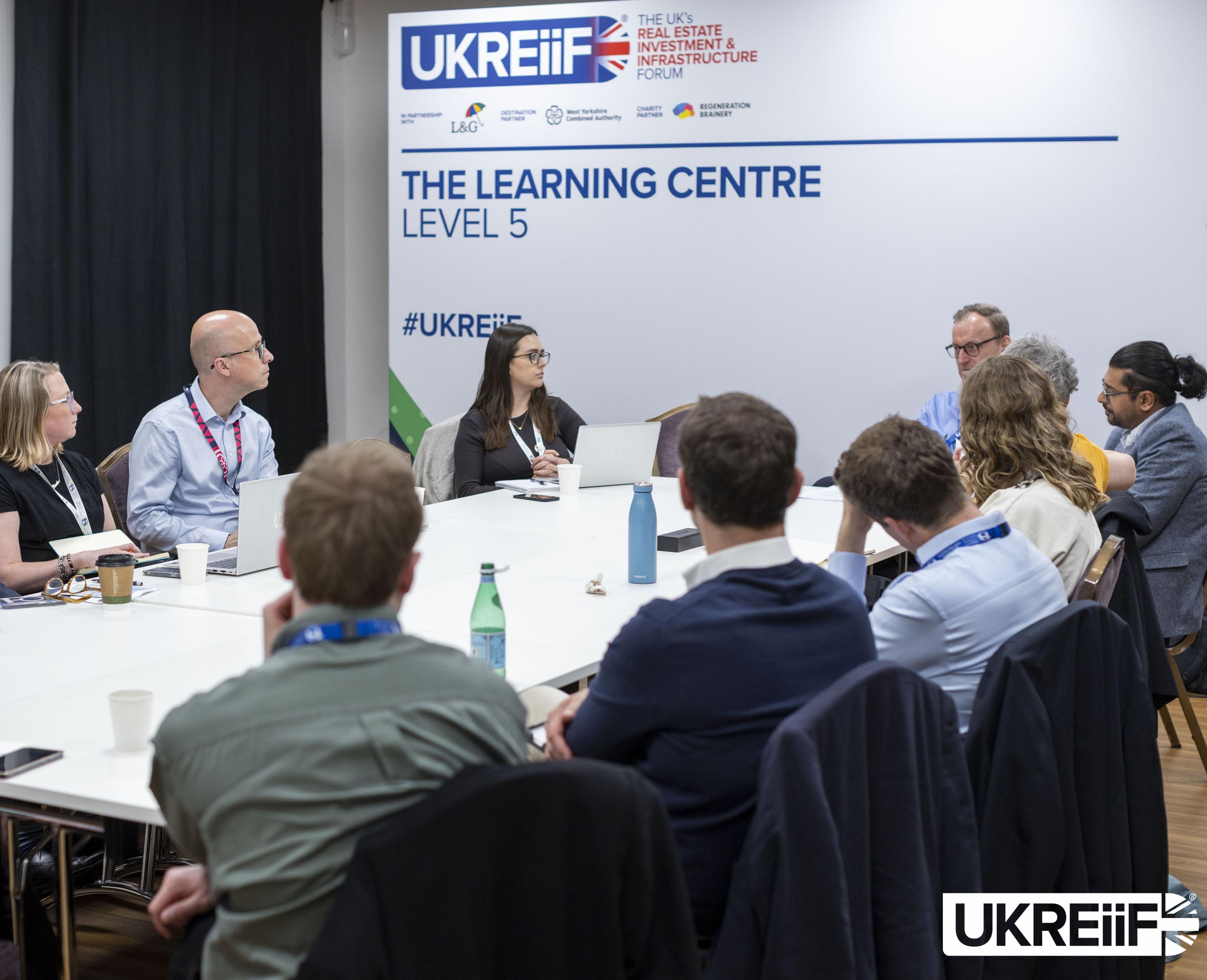
An Iceni hosted roundtable at UKREiiF, bringing together key infrastructure practitioners to explore practical ways to unlock delivery and accelerate essential infrastructure.
The planning reforms have given us permission to deliver, and to take pride in the work we do in infrastructure planning and delivery. However, policy and legislation can only take you so far and the rest needs to be down to the practitioners progressing practical solutions and driving a shift in culture.
As shared in the Iceni Wednesday email, all those attending were asked to consider:
f Why infrastructure is important in the UK
For further information, please contact:

Anna Sutherland-Bamber
Director, DCOs and Planning
E: asutherlandbamber@iceniprojects.com
T: 07345 113 434

Ruth Jackson
Director, Manchester Planning
E: rjackson@iceniprojects.com
T: 07712 422 744
f What makes you proud about infrastructure delivery in the UK
f How behaviours and culture are influencing the delivery of infrastructure planning
f With no constraints, what one thing you would do differently on your projects
f Your commitment to deliver infrastructure in the UK and one action you will take implement.
Anna opened the roundtable emphasising that, as Infrastructure practitioners, we must deliver sustainable and inclusive infrastructure, and we can’t do it alone. She set the challenge to shift the discussion towards practical actions and solutions that we can all lean into improving, not only the process of infrastructure delivery, but also the infrastructure itself.
For further information, please contact:
Anna Sutherland-Bamber
Director, DCOs and Planning
E: asutherlandbamber@iceniprojects.com
T: 07345 113 434
Ruth Jackson
Director, Manchester Planning
E: rjackson@iceniprojects.com
T: 07712 422 744 Permission
Individuals were asked to share their proudest moment in infrastructure delivery, whether that may be an individual project, how a team worked or a relationship with a stakeholder. These stories are not ours to tell, but a key take away was that we must do better at sharing the positive infrastructure stories. The key themes included:
f Providing projects which have lasting positive changes to the communities and environment where they are located
f Teams pulling together on a shared vision to ensure projects are sustainable, inclusive and transformational
f Contributing to solving some of the UK and global challenges such as the drive to net zero and biodiversity net gain
f Making meaningful changes to projects after listening to local communities on their views of the projects
f The legacy the projects leave long after the project has its consent and been delivered
f Finally, the infrastructure family, connections and network which has been created through infrastructure planning and delivery
Anna’s proudest moment(s):
f Working on the Thames Tideway Tunnel which is now now diverting significant amounts of sewage away from the River Thames
f Investing in the people who deliver the teams, forming the project teams, watching them grow to the roles they want. How they all still talk to each other, look out for each other and become a work family.
Ruth’s proudest moment(s):
f Stabilising a large project team, finding suitable ways of working for that team, resetting the project programme, and submitting our Development Consent Order (DCO) to that programme.The knowledge I have gathered from working with so many other town planners, environmental specialists, land agents, economists, project manager, engineers, lawyers, sponsors, communications experts, and funders that helps me every day when I meet the next brilliant team!
Permission to Deliver:
For further information, please contact:
Anna Sutherland-Bamber
Director, DCOs and Planning
E: asutherlandbamber@iceniprojects.com
T: 07345 113 434
Ruth Jackson
Director, Manchester Planning
E: rjackson@iceniprojects.com
T: 07712 422 744
With the Government’s ambition to progress some 150 Nationally Significant Infrastructure Projects (NSIPs) decisions in this parliament, and planning reforms providing a clear and stable framework for delivery, the focus now moves to all those in the industry, whether that is applicants, local authorities, regulators or other elected officials to take responsibility and deliver our much-needed infrastructure.
The ambition has been set, National Policy Statements and local plans are being updated, spatial development plans (SDSs) are coming – but we are still not seeing a strategic infrastructure vision nationally or regionally. Infrastructure will always have local opposition as that is where the impact can be felt the hardest. But we can do more to tell the positive story and by providing the public with insight into the good that comes from infrastructure investment. This has the potential to shift the focus of discussions away from an “us vs them mindset” towards what we can achieve together for the good of the Nation.
What can we do today to improve delivery:
f Greater public narrative on the need for infrastructure
f Better storytelling on the benefits of infrastructure that is not buried deep in DCO Application documents
f Promote successful positive delivery stories
f Commit to community and social value earlier in the process
f Embed infrastructure projects into local planning frameworks and placemaking, starting with the new SDSs.
How well do those working within the system really understand the DCO process, and what a Development Consent Order does (and doesn’t) provide. A DCO is commonly referred to as a large planning application, which can be unhelpful when people view the process and supporting material through that lens.
The best professionals in the DCO sector are those who are curious, inquisitive and who don’t rely upon “this is what we did previously”. They ask questions,learn from other projects and stakeholders and reflect on what worked well, and what they may do differently.
Across the system, we need to better support people, either with an interest in infrastructure projects, or those who suddenly find themselves as a neighbour to one, through training and by promoting cross-sector knowledge sharing. Promoter to promoter, LPA to promoter, sector to sector.
DCOs are more than just planning (which is one of the reasons why so many people love working on them) but that means learning and understanding aspects outside of your core specialism and having the confidence to recognise the value you and other colleagues all bring to the table. We need to support people on their learning journey, whether it’s understanding the DCO process, commercial and project management aspects, or helping engineers better engage with National Policy Statements.
What can we do today to improve delivery:
f Lesson learned and best practice sessions should be standard practice and more than tick box exercises
f Offer training sessions to all those involved in the DCO regime – promoting knowledge of the process, ability to constructively ask, listen and influence, driving better outcomes.
The planning reforms give the permission to deliver projects differently and not necessary following how projects have been progressed before.
There was a strong consensus to simplify the process and reduce the need for unnecessary paperwork. Everyone agreed they spend more time updating various trackers than doing the work needed to move the projects forward. This was the case across the board — both for those working on the applicant side and those in statutory roles — whether to support internal governance processes or to meet requests from the Planning Inspectorate and other statutory bodies.
What can be done today to improve delivery:
For further information, please contact:
Anna Sutherland-Bamber
Director, DCOs and Planning
E: asutherlandbamber@iceniprojects.com
T: 07345 113 434
Ruth Jackson
Director, Manchester Planning
E: rjackson@iceniprojects.com
T: 07712 422 744
f Question why the information is being produced and shared – what do you need to know, why and when.
f Acknowledge not all the information is available at the beginning of a project as it follows it project lifecycle.
f Be truthful on what you need to see, and why
f Explain the project development lifecycle and where greater influence can be made
f Don’t be afraid of change – it will happen!
Be bold, be confident, be collaborative, be respectful
Applicants and statutory bodies needs to be more collaborative – and both sides need to look at how their behaviours are limiting that collaboration.
It is also entirely possible to be collaborative to achieve the best outcomes for a scheme, whilst still maintaining an in-principle objection. All in the industry need to:
f Engage early and act promptly
f Be clear on why you object to or support a project
f Demonstrate you have read and understood the evidence submitted
f Be clear on what you want to see out of a project
f Be clear on what a project can and cannot achieve –infrastructure is there to provide essential services to the Nation.
f Be clear on why you want more detail on a project and why flexibility should not be used for projects which take years to get permission and deliver
After a passionate discussion, each attendee was asked to provide one action they would commit to undertake in the next year to ensure greater efficiency in the delivery of infrastructure projects.
These are not commitments for us to share, but the key themes include:
f Deliver DCO/NSIP training for all those who will need to be involved with future infrastructure planning including local authorities
f Explore new innovative engagement and consultation models focused on better outcomes rather than the same as before
For further information, please contact:
Anna Sutherland-Bamber
Director, DCOs and Planning
E: asutherlandbamber@iceniprojects.com
T: 07345 113 434
Ruth Jackson
Director, Manchester Planning
E: rjackson@iceniprojects.com
T: 07712 422 744
f Share best practice and lessons learned
f Better embed social value into project development
f Better storytelling and narrative in the projects
f Apply a stronger spatial lens to demonstrate national and regional benefits
f Strengthen partnership working between local authorities and combined authorities.
f Promote the benefit of early contractor involvement in discussions
f Challenge the Planning Inspectorate and Stakeholders on the number of documents and level of detail needed in the pre-application and examination stage
f Share positive infrastructure stories
f Continue asking challenging questions about existing processes and assumptions.
Anna’s personal commitment:
To shift the conversation and behaviours around infrastructure planning and delivery – we need to move away from an us and them culture and look at how all parties collaboratively work together to deliver these projects. I will continue to call out when unnecessary inefficiencies are in the process.
For further information, please contact:
Anna Sutherland-Bamber
Director, DCOs and Planning
E: asutherlandbamber@iceniprojects.com
T: 07345 113 434
Ruth Jackson
Director, Manchester Planning
E: rjackson@iceniprojects.com
T: 07712 422 744
Encourage as many interested professionals as possible to be brave and say yes to working in infrastructure offering training and mentorship.

Anna’s reflection on UKREiiF
I came away from UKREiiF with a strong sense of positive momentum around infrastructure planning. There was a clear appetite across the industry to work more collaboratively and deliver the infrastructure the UK needs—done well, and done responsibly, without leaving a lasting negative legacy on the landscape.
However, alongside that optimism, there was an undercurrent of trepidation. A recurring theme was the urgency to “get on with it”, coupled with uncertainty about what lies ahead.
It was disappointing to hear several speakers still characterising planning as a barrier to delivery, rather than recognising the opportunity it presents to shape meaningful, well-considered infrastructure. Planning too often becomes the easiest part of the process to blame, instead of examining the end-to-end delivery model.
Are we investing enough at the mobilisation stage? Are the right teams in place early enough? And are projects taking sufficient time to fully understand and de-risk their consenting strategy?
There is no doubt we are moving in the right direction—but if we are to maintain momentum, we need a more mature conversation about the role of planning, and a greater focus on getting the fundamentals of project set-up right from the outset.
For further information, please contact:
Anna Sutherland-Bamber
Director, DCOs and Planning
E: asutherlandbamber@iceniprojects.com
T: 07345 113 434
Ruth Jackson
Director, Manchester Planning
E: rjackson@iceniprojects.com
T: 07712 422 744
Thank you to all those who attended and contributed to this roundtable.
Chair: Anna Sutherland-Bamber and Ruth Jackson, Iceni Projects












Jennifer Cooper, Iceni Projects
Martin Elliot, Leeds City Council
Kate Ashworth, West Midlands Combined Authority
John Reed, West Yorkshire Combined Authority
Angus Walker, TLT
Robbie Owen, Pinsent Masons
Greg Phillimore, Camargue
Viral Desai, Atkinsrealis
George Beard, Market Infra
Tom Hudson, Market Infra
Sinead Turnbull, Tritax Big Box Permission to
Shen Neville-Clarke, Greenshank Environmental
Archaeology | Built Heritage & Townscape | DCOs | Design | Economics | Engagement | Impact Management | Landscape | Place | Planning | Transport Birmingham: 20 Colmore Circus Queensway, Birmingham, B4 6AT
Edinburgh : 14 -18 Hill Street, Edinburgh, EH2 3JZ
Glasgow : 201 West George Street, Glasgow, G2 2LW
London : Da Vinci House, 44 Saffron Hill, London, EC1N 8FH
Manchester : WeWork, Dalton Place, 29 John Dalton Street, Manchester, M2 6FW www.iceniprojects.com | iceni-projects | iceniprojects