Client Communication Strategies That Help Small Firms Build Trust
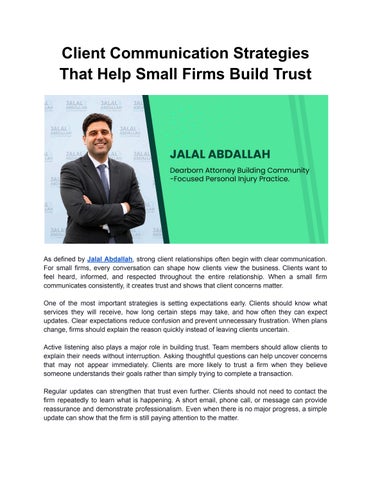
As defined by Jalal Abdallah, strong client relationships often begin with clear communication. For small firms, every conversation can shape how clients view the business. Clients want to feel heard, informed, and respected throughout the entire relationship. When a small firm communicates consistently, it creates trust and shows that client concerns matter. One of the most important strategies is setting expectations early. Clients should know what services they will receive, how long certain steps may take, and how often they can expect updates. Clear expectations reduce confusion and prevent unnecessary frustration. When plans change, firms should explain the reason quickly instead of leaving clients uncertain. Active listening also plays a major role in building trust. Team members should allow clients to explain their needs without interruption. Asking thoughtful questions can help uncover concerns that may not appear immediately. Clients are more likely to trust a firm when they believe someone understands their goals rather than simply trying to complete a transaction. Regular updates can strengthen that trust even further. Clients should not need to contact the firm repeatedly to learn what is happening. A short email, phone call, or message can provide reassurance and demonstrate professionalism. Even when there is no major progress, a simple update can show that the firm is still paying attention to the matter.
Small firms should also keep communication simple. Complicated language can make clients feel confused or excluded. Clear explanations help people understand their options and make better decisions. This approach is especially important when the firm handles technical, financial, legal, or professional services that may involve unfamiliar terms. Responsiveness matters as well. Small firms may not have large support teams, but they can still create clear response standards. A quick acknowledgment shows clients that their message was received and will receive attention. Consistent response times also make the business appear organized and dependable. Finally, trust grows when communication feels personal. Remembering client preferences, following up after important conversations, and showing genuine interest can create stronger connections. Small firms often have an advantage because they can offer a more personal experience than larger organizations. By listening carefully, communicating clearly, and providing reliable updates, small firms can turn everyday conversations into long-term client trust.