Architecture’s enduring relevance lies in its capacity to recognize and respond to the conditions of place: its ecology, its community, its moment in time, all while holding a delicate balance between saying and doing. My practice is built on the conviction that buildings do not merely occupy a place. They define it. And in doing so, they define the vessel of daily life for the people who inhabit them.
This conviction has deepened through my experiences across a range of typologies, scales, and locales. My work has taught me that creative artistry and technical discipline are not competing values — that the rigor required to resolve and articulate a building’s relationship to light, material, structure, and enclosure is precisely the rigor that produces architecture worth inhabiting. The two are inseparable, and I have pursued both simultaneously throughout my career.
At the center of this practice is a commitment to place-based resilience — to architecture that is not sustainable by metric alone, but genuinely responsive to the ecological, social, and economic lifeblood of a specific community. Resilient architecture, as I understand it, must empower communities to adapt, offering spaces that can be reconfigured to serve a multiplicity of futures. It must promote equity not only in environmental terms but in the spatial distribution of resources, the cultivation of local identity, and the nurturing of community interconnectedness. My civic responsibility as a practitioner is to carry that ambition forward — toward buildings that elevate the fabric of the places they touch, across Tennessee and the American South, today.
towards place-based resilience.
Education
University of Tennessee, Knoxville
Bachelors of Architecture
Summa Cum Laude
Aalto University, Helsinki
International Study, B. Arch
Experience
Earl Swensson Associates
Architecture Team | Nashville, TN | 2024 - Present
Earl Swensson Associates
Architectural Co-Op | Nashville, TN | 2023
Skidmore, Owings, and Merrill, LLP
Architectural Intern | Chicago, IL | 2022
C3 Studio, LLC
Architectural Intern | Knoxville, TN | 2021
University of Tennessee, School of Architecture
Teaching Assistant | Knoxville, TN | 2022
Zurich Homes Group, LLC
Design Intern | Nashville, TN | 2019 - 2020
Volkert, Inc.
Summer Intern | Franklin, TN | 2018
Skills / Interests
Revit, Rhino, AI Visualization (Midjourney, Flux Playground), Enscape, D5 (Beginner), Grashopper, Adobe Suite, Bluebeam, Mass Timber, Building Science
Co-Chair, Professional Development | 2025 - Present
SGA UTK Campus Infrastructure Committee
Chair | 2022
UTK Student Government Association
Senator | College of Architecture + Design | 2022
American Institute of Architecture Students
Member | 2020-2021
U.T. Campus Events Board
Arts + Culture Committee Board Member | 2019-2020
U.T. Symphony Orchestra
Violinist | 2019-2020
Honors + Awards
Guest Juror
Belmont University - O’More College of Architecture + Design | 2025
Tau Sigma Delta Bronze Medal of Design Distinction
University of Tennessee | 2024
Volunteer of Distinction
University of Tennessee | 2024
Guest Lecturer
University of Tennessee | 2023
Passive Design - Arch 261
Studio Critic
University of Tennessee | 2023
Professional Works
Academic Works
01 - p. 01
Arkansas Children’s Research Institute
Earl Swensson Associates 2024
02 - p. 15
Unnamed Hospital - The Villages Earl Swensson Associates 2022
03 - p. 23
Bento House
Finalist - AIA ADU Design Competition 2024
04 - p. 33
Mary Bridge Children’s Hospital Earl Swensson Associates 2023
05 - p. 37
Central Place Sydney
Skidmore, Owings, and Merrill, LLP. 2022
06 - p. 43
Peace and Goodwill Community Collaborative 2023
07 - p. 57
Knoxville Central Station 2024
08 - p. 75
Micro-Retreat 2022
09 - p. 85
Carswell Grove Remembrance Memorial 2021
Earl Swensson Associates: Arkansas Children’s Research Institute
Typology: Institutional Research | 65,000 SF
Location: Little Rock, Arkansas
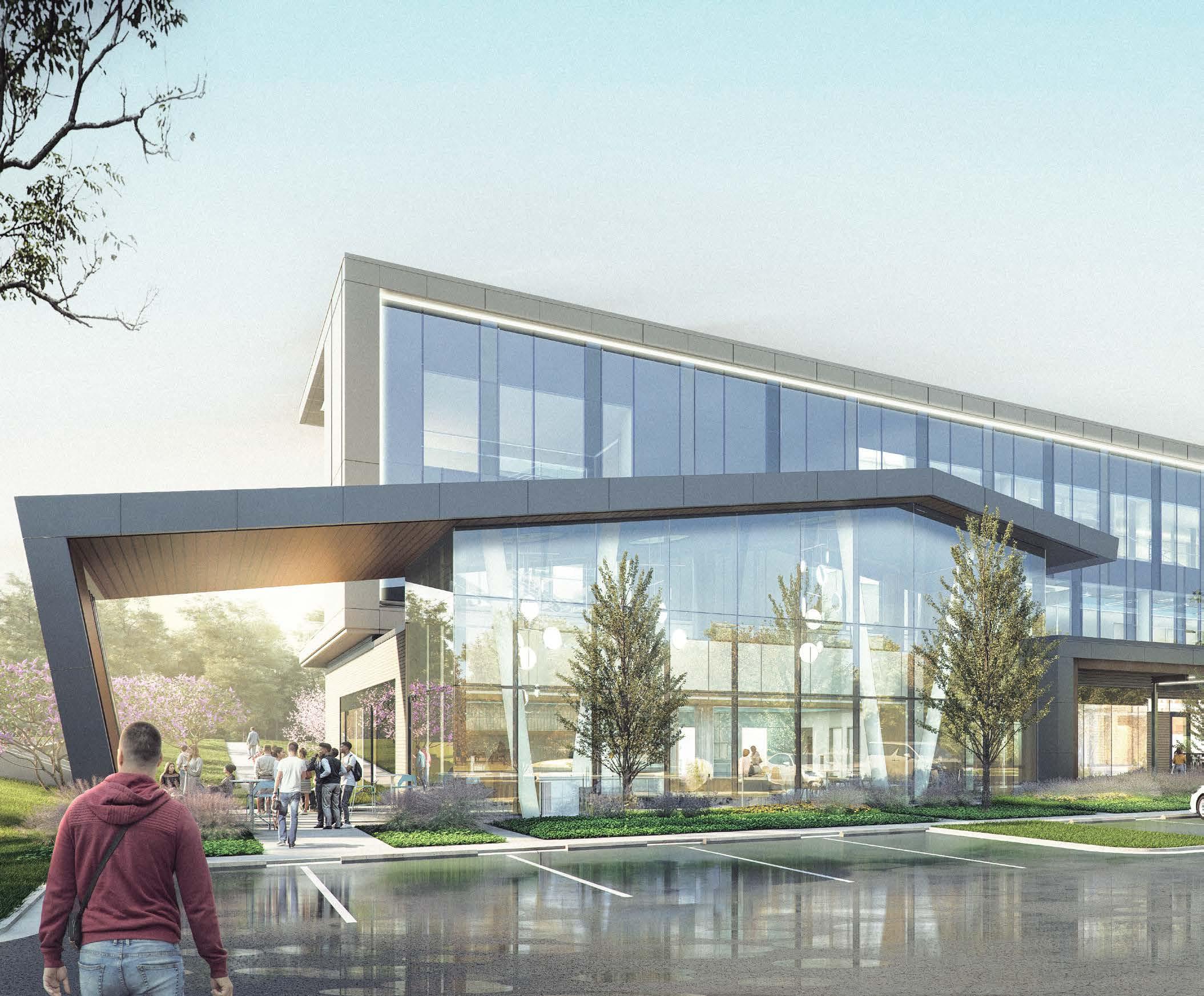
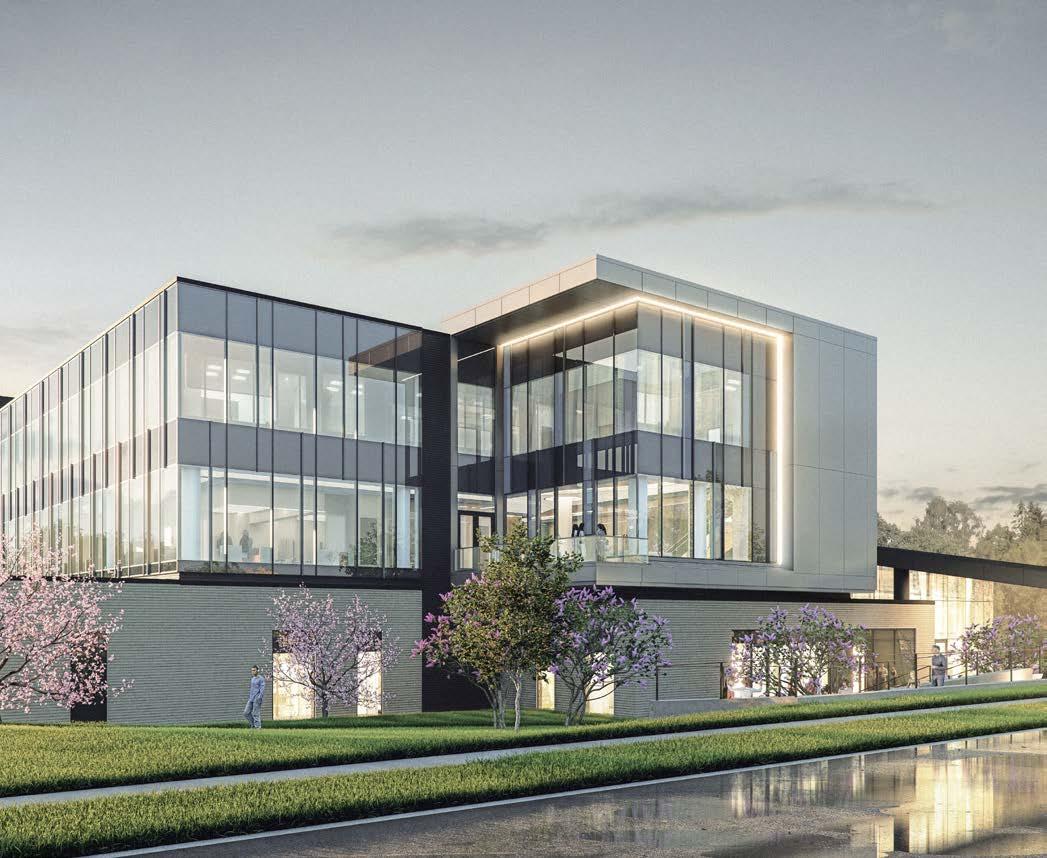
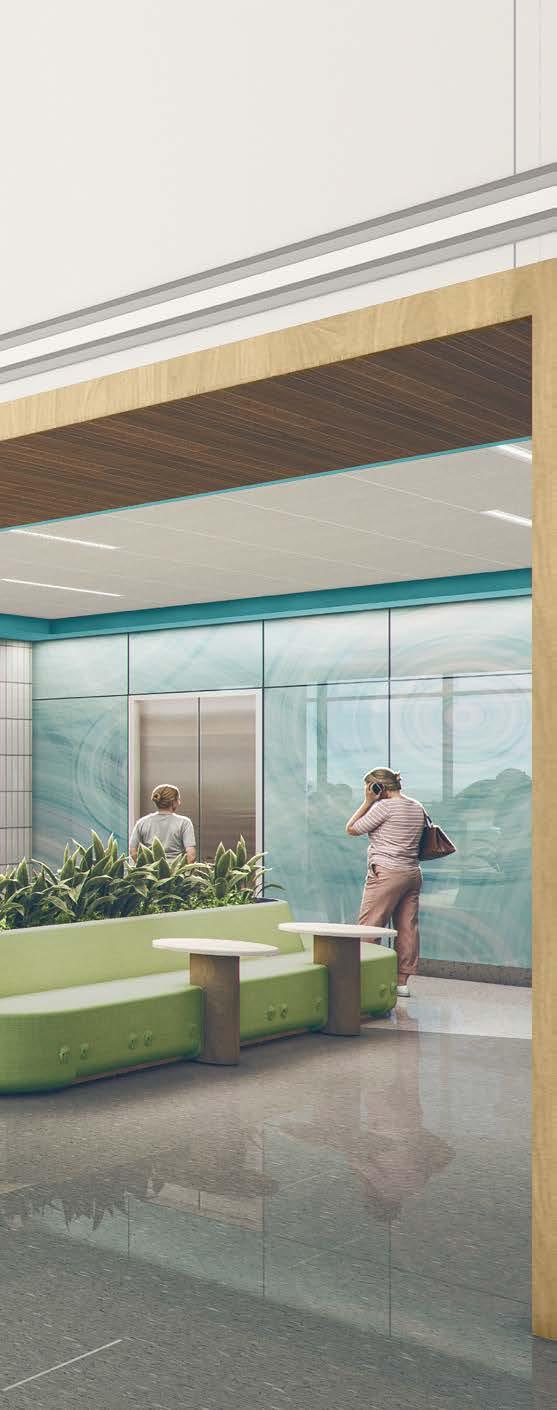
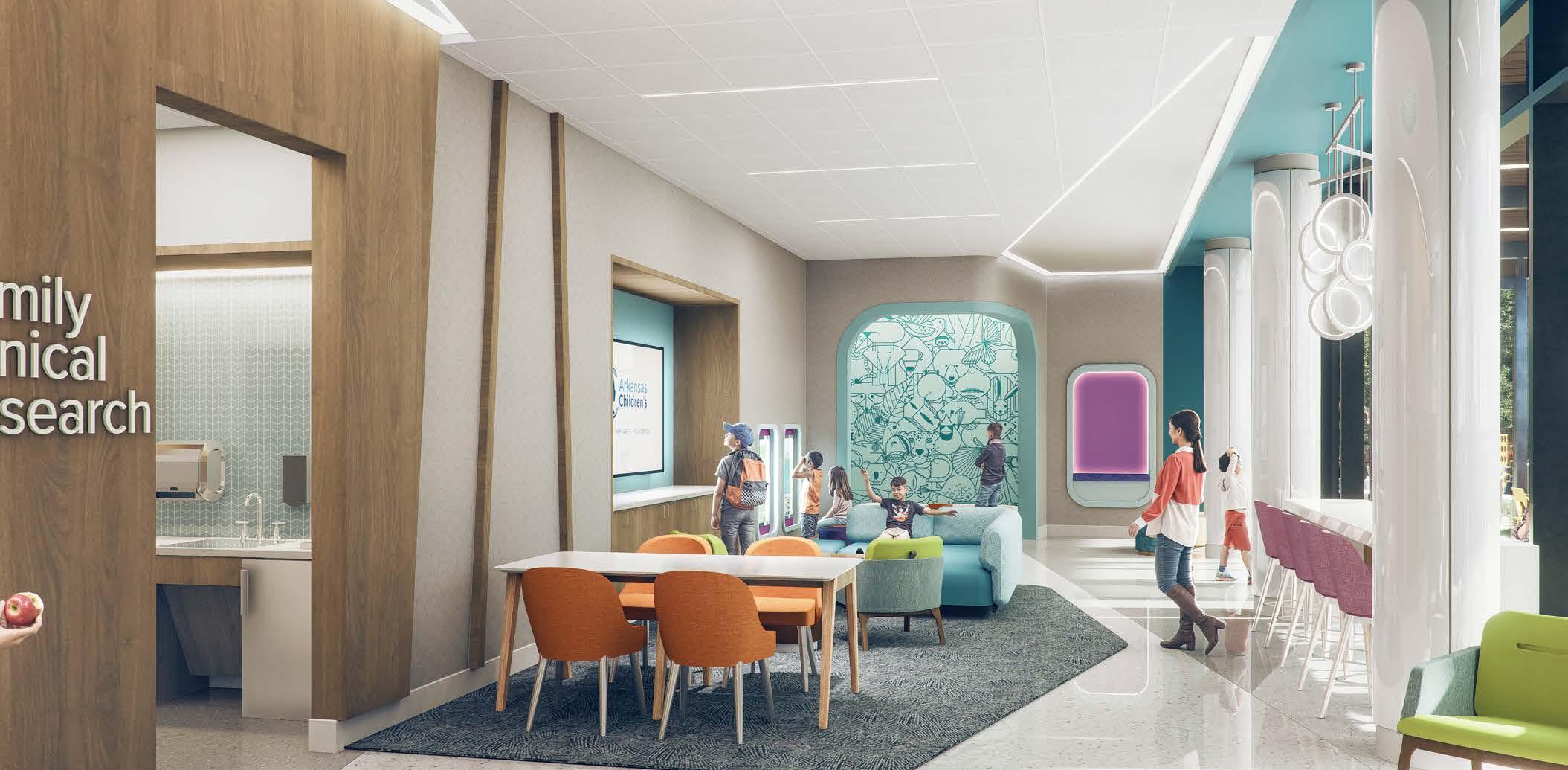
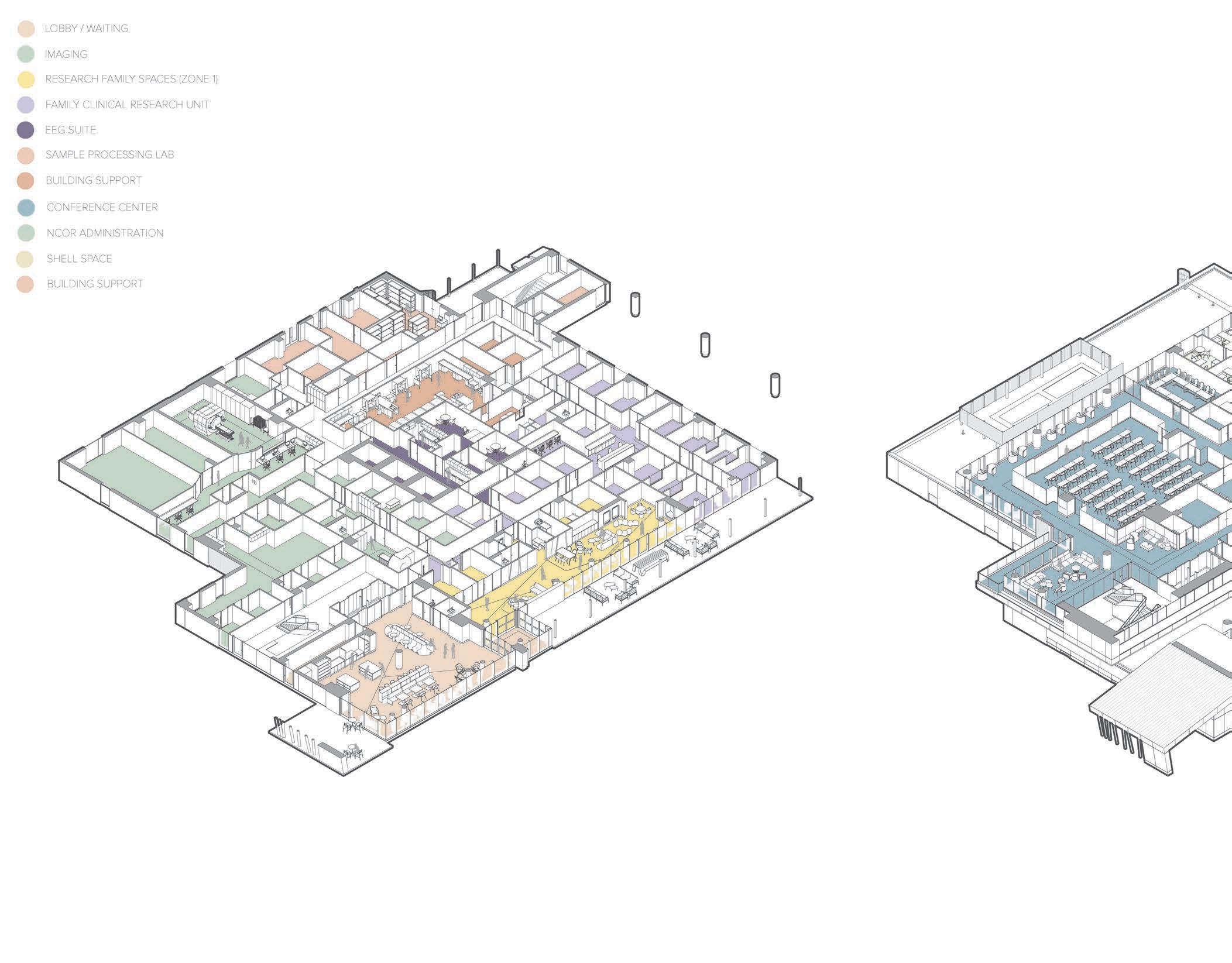
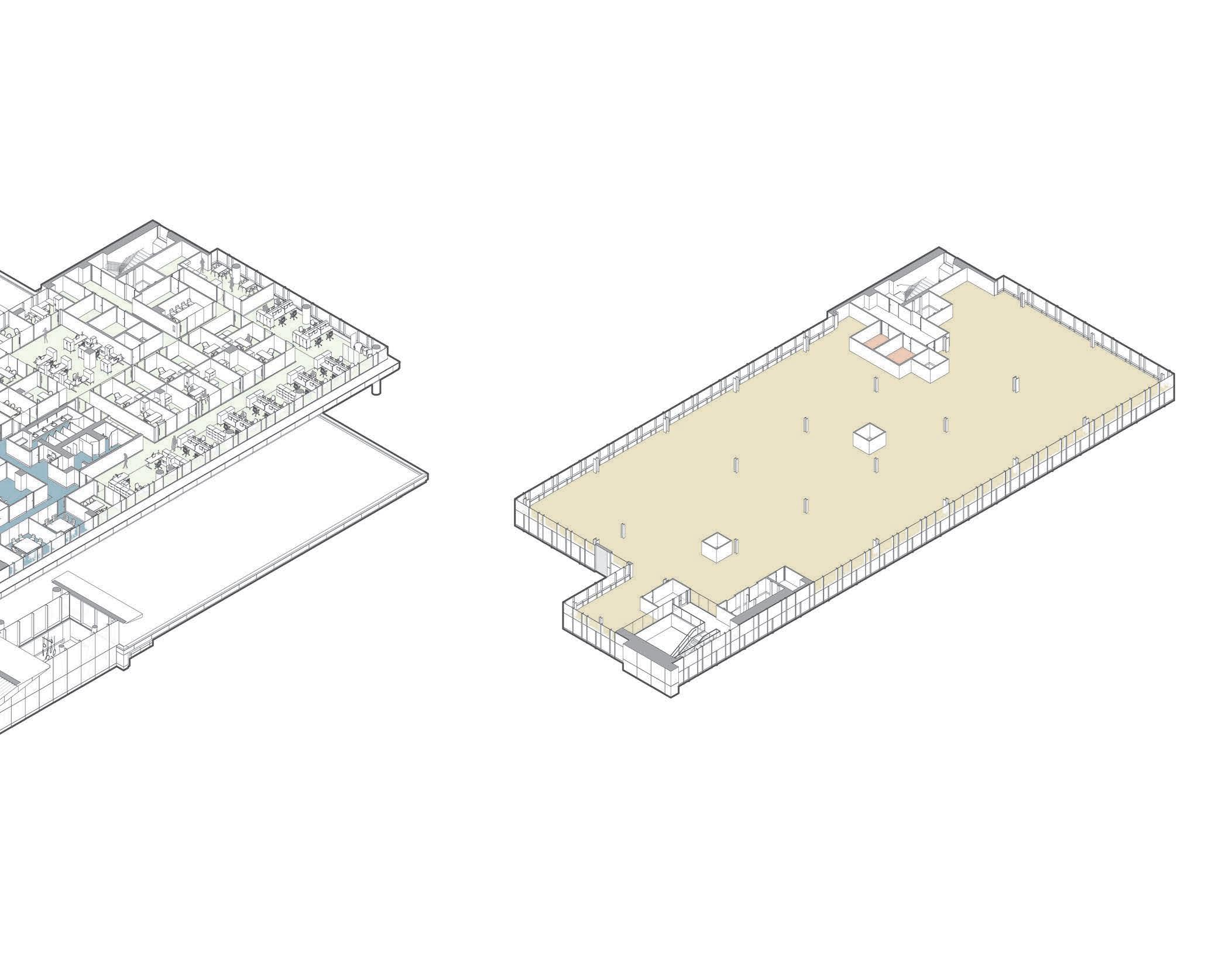
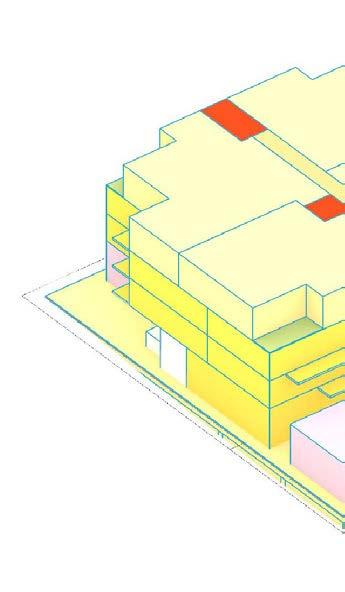
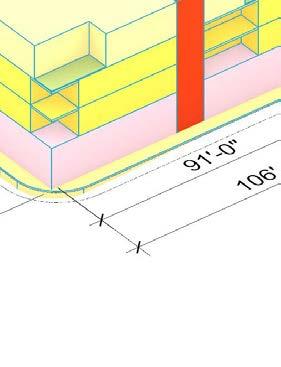
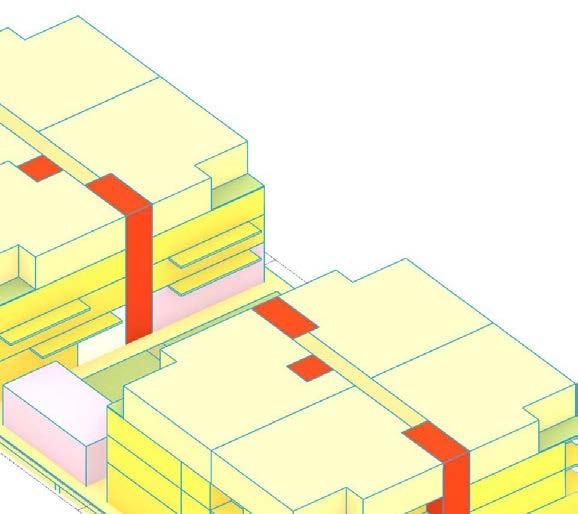
Arkansas Children’s Research Institute is a first-of-its-kind facility dedicated to advancing the study of opioids and substance abuse in pediatric and adolescent populations. Conceived as both scientific instrument and civic resource, the institute integrates laboratory environments, high-tech imaging suites, community outreach spaces, and research offices into a singular architectural framework—establishing a new typology defined by collaboration and public engagement.
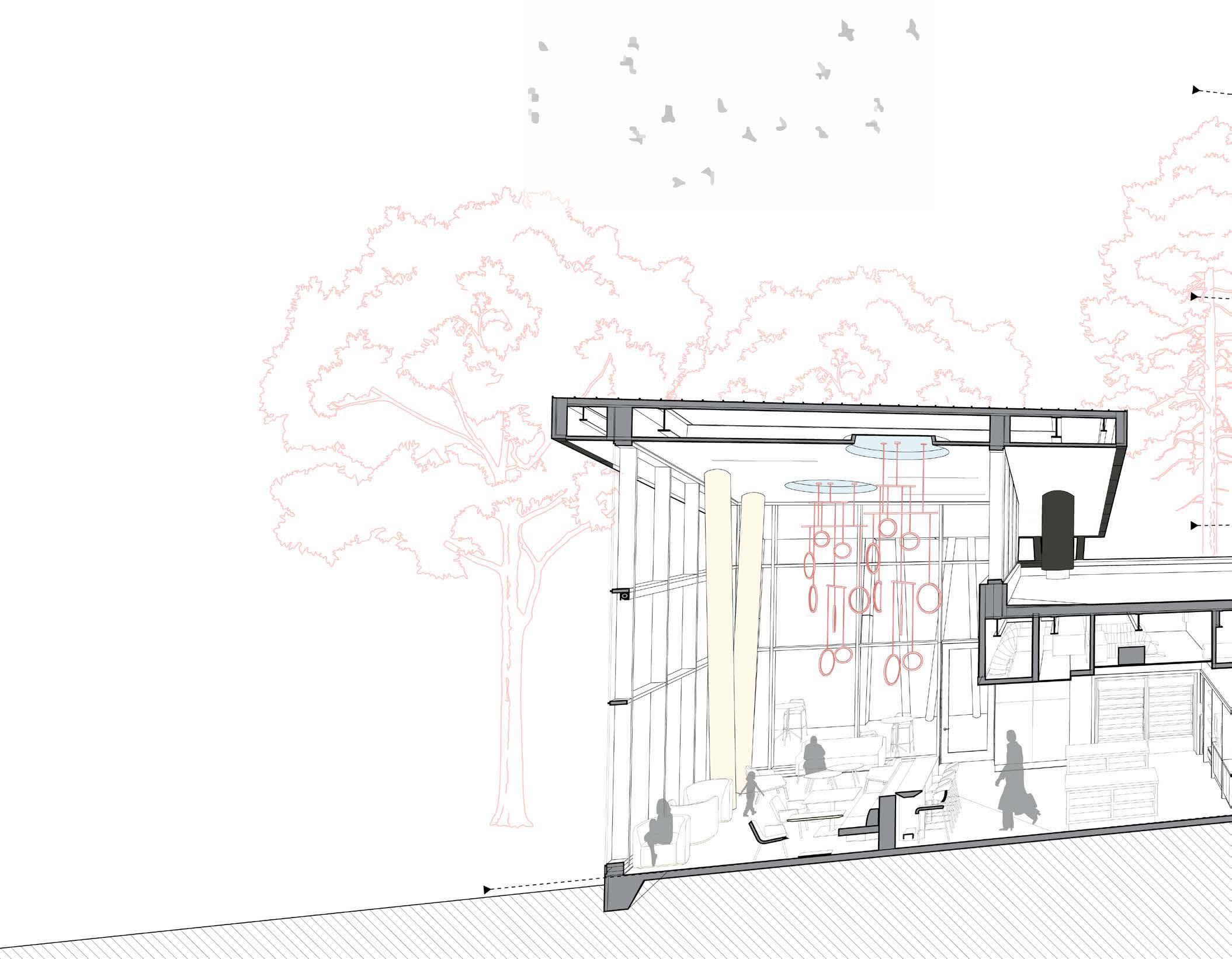
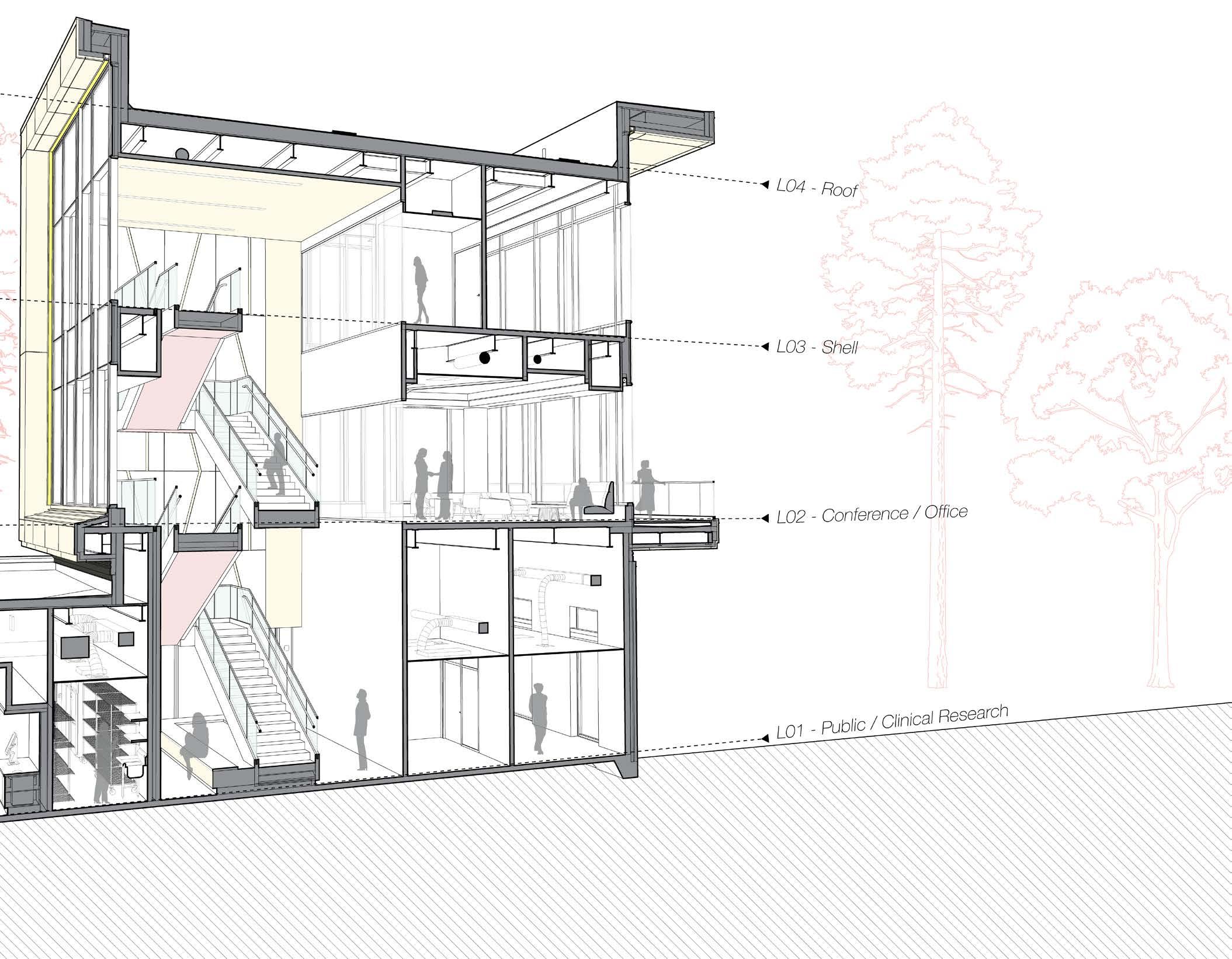
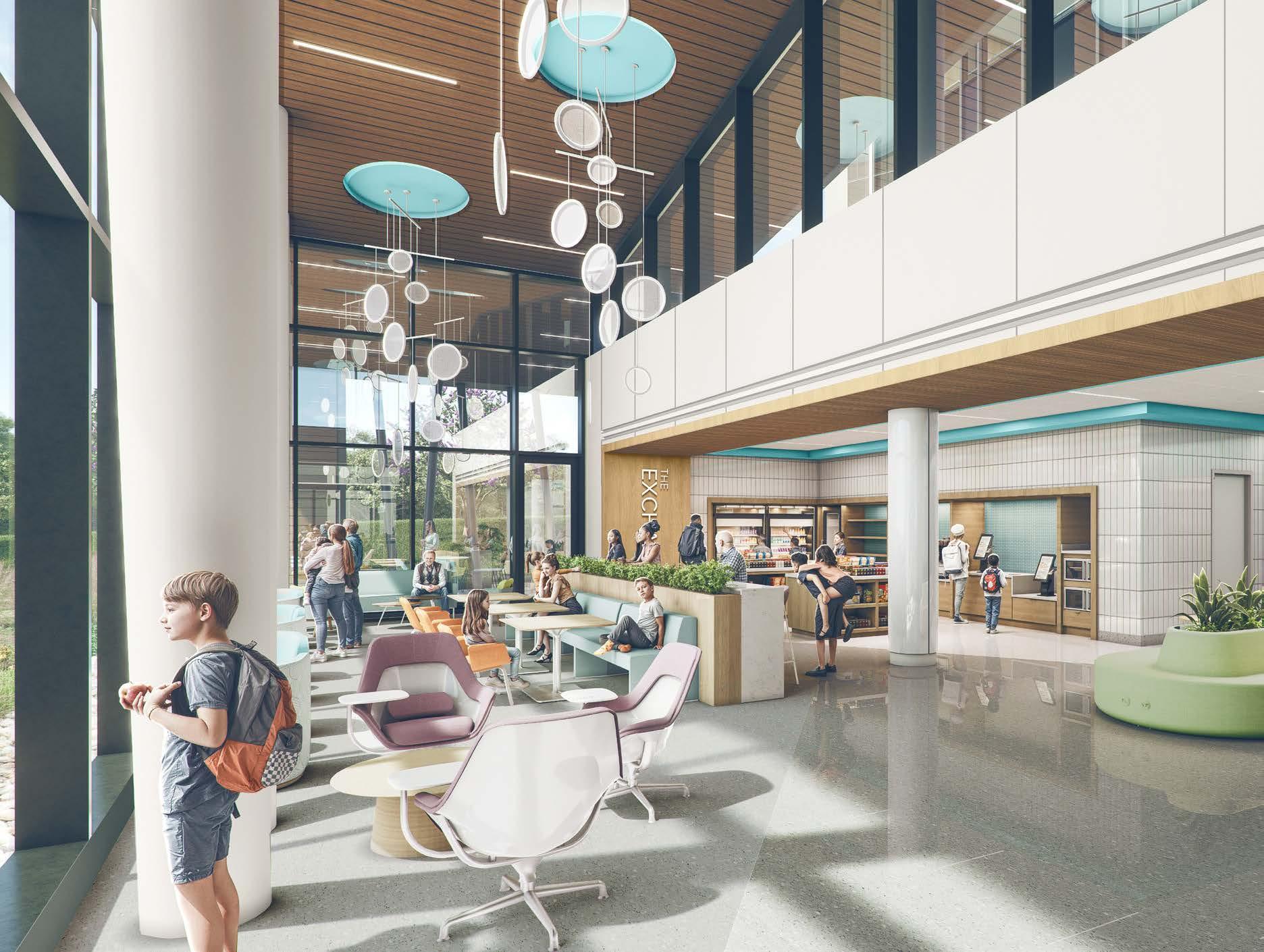
The design embraces this convergence through a central, monumental stair that acts as both circulation spine and social condenser, visually and physically linking the institute’s diverse programs. Wellness and approachability were fundamental drivers: terraces and outdoor gardens extend research environments into landscape, while a reduction in scale at the primary entry introduces a glass gable volume that houses the lobby. This domestic inflection tempers the building’s contemporary expression, creating a welcoming threshold for patients, families, and researchers alike.
My primary role was leading core and shell development and documentation for the project, working in close collaboration with the design manager on exterior design development from early concept. I managed a team of two documentation staff, responsible for producing and coordinating the full set of proprietary envelope details, including complex material transitions, unique brick detailing, and expressed structural connections that reveal the buildings tectonic logic. I also produced representation of the project for awards submissions.
Now in construction, I am engaging in RFI and Submittal review with the contractor and facade subcontractors. The project has been an immersive experience in the full lifecycle of a complex, mission-driven building — and my first sustained lesson in how to lead through it.
CORRUGATED METAL PANELS ON EXTRUDED ALUMINUM FRAMING SYSTEM
SEE ADDITIONAL DETAILS FOR TYPICAL CORRUGATED METAL PANEL EXTERIOR WALL CONSTRUCTION
KEEP PANEL SYSTEM WEEPS OPEN AND CLEAR
PROVIDE CUSTOM FIELD-FABRICATED, WELDED MITERED PANEL CORNER AT ALL CORRUGATED PANEL OUTSIDE CORNERS - SEE PLAN DETAILS
INSULATING GLASS IN ALUMINUM CURTAIN WALL FRAMING SYSTEM ANCHORED PER INSTALLER'S DETAILS
CLOSE CAVITY WITH 1/4" GALV'D STEEL ANGLE AND LAP S.A.F. FROM ROOF SURFACE OVER CURB TO INSIDE FACE OF MULLION
SHEATHING ATTACHED TO CURB THROUGH 2" MOISTURERESISTANT MINERAL WOOL SEMI-RIGID INSUL. BATTS WITH 2" Z-GIRT
TIE ROOF FLASHING INTO CURB PER ROOF MANUF'S APPROVED DETAILSMATCH ROOF FINISH
UNDERLAYMENT AS REQUIRED FOR SELECTED ROOF PRODUCT
BERMUDA PANEL MTL. ROOF SYSTEMPROVIDE ALL TRIM AND CLOSURE PIECES AS REQUIRED FOR FINISHED AND WATERPROOFED ASSEMBLY
NOTCH METAL STUDS AT SLAB EDGE
METAL FASCIA TRIM PER ROOF MANUF'S DETAILS - COLOR TO MATCH CMP
VERIFY SEALANT REQUIREMENT W/ WARRANTED FASCIA ASSEMBLY
/ SMOKE SAFING (COMPONENTS EQUAL TO UL CW-S-1022 )
METAL STUD CLIPS DESIGNED BY STUD SUPPLIER'S LICENSED ENGINEER
LAP S.A.F. AT SOFFIT CORNERS - TYP.
FIRE-RESISTIVE COMPOSITE METAL PANELS ON EXTRUDED ALUMINUM FRAMING SYSTEM
FILL VOIDS WITH 4 PCF MINERAL WOOL
.063" PVDF-COATED ALUMINUM SILL PAN FLASHING WITH POSITIVE SLOPE (MATCH COLOR OF ROOF) SEAL END DAMS TO JAMB FLASHING - COORDINATE BACK DAM WITH CURTAINWALL WEEP LOCATIONS - BED FLASHINGS IN SEALANT
PAINTABLE SEALANT FINISHED SILL
CONTINUOUS SEALANT AND BACKER ROD INTEGRAL W/ SEALANT AT JAMBS (TYPICAL INT. AND EXT.)
PAINTABLE CAULK AT BEADED EDGES (TYPICAL)
5/8" GYP. BD. ON METAL STUD FRAMING
SEE INTERIORS FOR FLOOR FINISH
UL RATED COMPOSITE SLAB ASSEMBLY
BENT PLATE PER STRUCTURAL
ATTACH METAL PANELS TO 4" Z-GIRT PER PANEL MANUF'S APPROVED DETAILS METAL PANELS ON EXTRUDED ALUMINUM FRAMING SYSTEM METAL PANEL TRIM CLOSURE PER PANEL MANUF. DETAILS
PAINTED .050" ALUMINUM SILL FLASHING WITH BACK AND END DAMS (BED IN SEALANT) - SEAL END DAMS TO ADJACENT MATERIAL - MATCH FINISH TO CORRUGATED METAL PANEL
MINERAL WOOL SAFING AT 25% MIN. COMPRESSION
BRICK W/ 1" (MIN.) AIR SPACE
BRICK TIES - SCREW TO METAL STUDS - SEE SPECS FOR SPACING
BEAM BEYOND - SEE STRUCTURAL
4" MIN.
CONT. SEALANT
MTL. STUD DEFLECTION TRACK
FIRE / SMOKE SAFING
APPLY 3" OF CLOSED CELL SPRAY FOAM INSULATION TO UNDERSIDE OF DECK UNDER CONDITIONED SPACES
STUFF SOFFIT FRAMING CAVITY WITH INSUL. AT PERIMETER
LAP S.A.F. AT SOFFIT INSIDE CORNER
4" MOISTURE-RESISTANT MINERAL WOOL SEMI-RIGID INSULATION BATTS
LAP S.A.F. OVER ALUMINUM FLASHING - BED SEALANT ATTACHMENT FLANGE IN SEALANT
5/8" GYP. BD. ON EXTERIOR METAL STUDS DESIGNED BY LICENSED ENGINEER - TYP.
3" MOISTURE-RESISTANT MINERAL WOOL SEMI-RIGID INSULATION BATTS
1 LEDGE AT 2ND FLOOR CURTAIN WALL - BRICK TRANSITION
S.A.F. CORNERS
LAP
ON
DECK AND STEEL FRAMING (VERIFY ROOF TYPE FOR SPECIFIC FLASHING DETAILS)
SEE ROOF PLAN FOR SPECIFIC U.L. ASSEMBLY 3/4" 3/4" MIN.
WEATHER / AIR BARRIER ON 5/8" FIBERGLASS-FACED GYPSUM SHEATHING - SEAL SHEATHING JOINTS AND FASTENER PENETRATIONS
FIRE-RESISTIVE COMPOSITE METAL PANELS ON EXTRUDED ALUMINUM FRAMING SYSTEM
EXTERIOR CIRCULAR COVE LIGHT - SEE ELECTRICAL - MATCH FIXTURE COLOR TO CMP RAL #
PRE-FINISHED BRAKE METAL ATTACHED TO SHEATHING SURFACE AT REVEAL COVEBED IN SEALANT - MATCH MCM (C1) - COLOR 2
ACCENT METAL PANEL COLOR AT TRANSITIONMATCH MCM (C1) - COLOR 1
FLASHING MEMBRANE ADHERED TO COMPATIBLE SHEATHING (PRIME ALL SURFACES AS REQUIRED)
STUFF MINERAL WOOL INSUL. BATT IN VOID / CAVITIES STEEL FRAMING - SEE STRUCTURAL
MISC. STEEL IN STUD CAVITYSEE STRUCTURAL
EXTERIOR LINEAR LIGHTING W/ CONT. SEALANT AND BACKER ON BOTH SIDES - SEE ELECTRICAL - MATCH FIXTURE COLOR TO CMP RAL #
GALV'D STEEL PLATE - PLATE AND ATTACHMENTS DESIGNED BY CURTAIN WALL INSTALLER'S LICENSED ENGINEER - BED PLATE IN SEALANT
CONT. SEALANT AND BACKER ROD (TYP.)
PROTECTION OF VERTICAL CURTAIN WALL MULLION (BEYOND) PER UL ASSEMBLY
FIBROUS THERMAL INSULATION FULL HT. OF PARAPET
INSULATING GLASS IN ALUMINUM CURTAIN WALL FRAMING SYSTEM ANCHORED PER INSTALLER'S APPROVED DETAILS
STEEL FRAMING - SEE STRUCTURAL
FIRE-RESISTIVE COMPOSITE METAL PANEL COLUMN WRAP ON EXTRUDED ALUMINUM FRAMING SYSTEM PER MANUF. REC. DETAILS
ENCASE STEEL FRAMING IN CONCRETE OR ELEVATE STEEL 8" MIN. ABOVE FINISHED HARDSCAPE
KEEP PANEL SYSTEM WEEPS OPEN AND CLEAR
FINISH GRADE - SEE CIVIL
CONT. VAPOR RETARDER
DRAINAGE MAT
Earl Swensson Associates:
Unnamed
Hospital - The Villages
Typology: Places for Healing / Institutional
Location: The Villages, FL
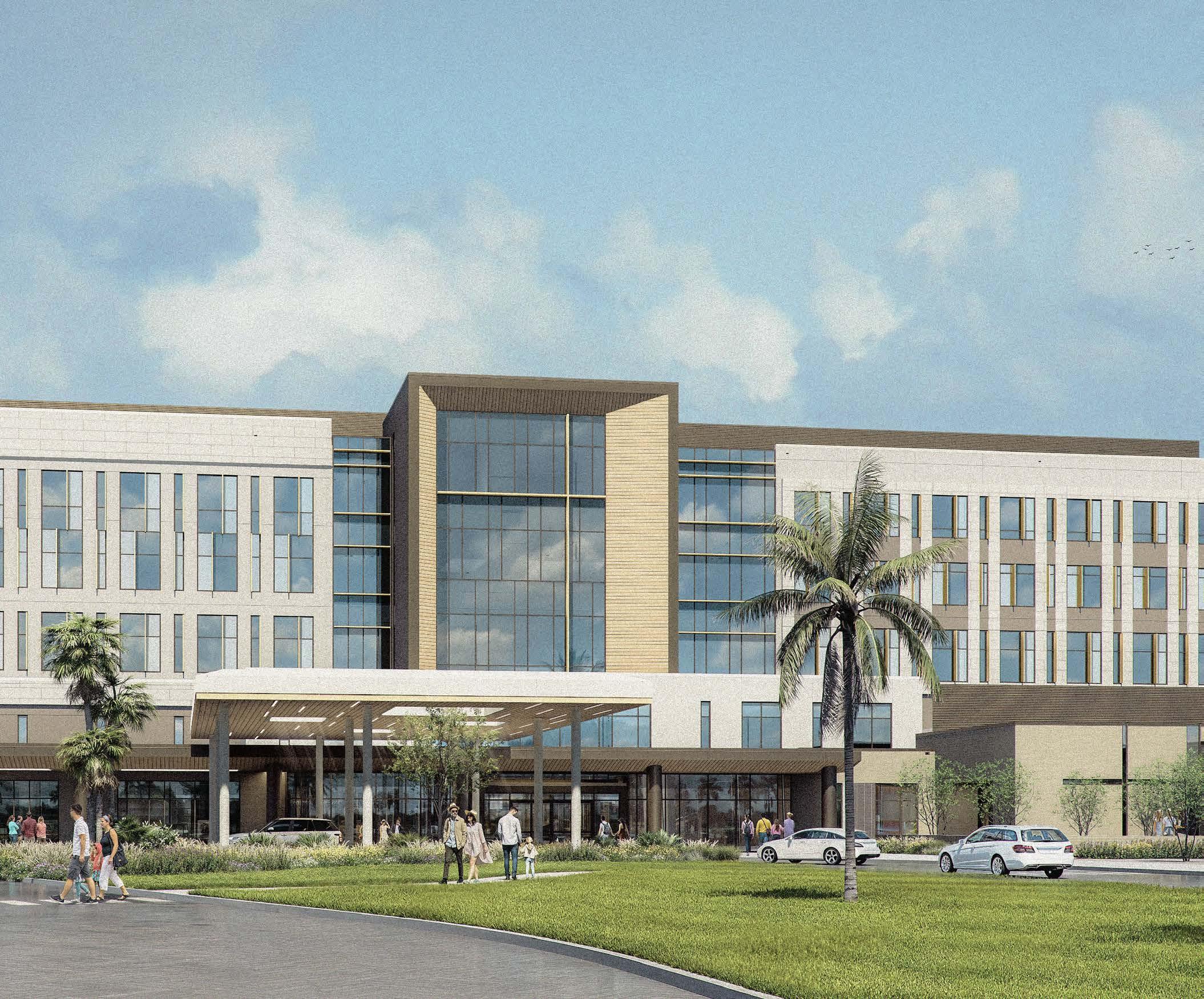
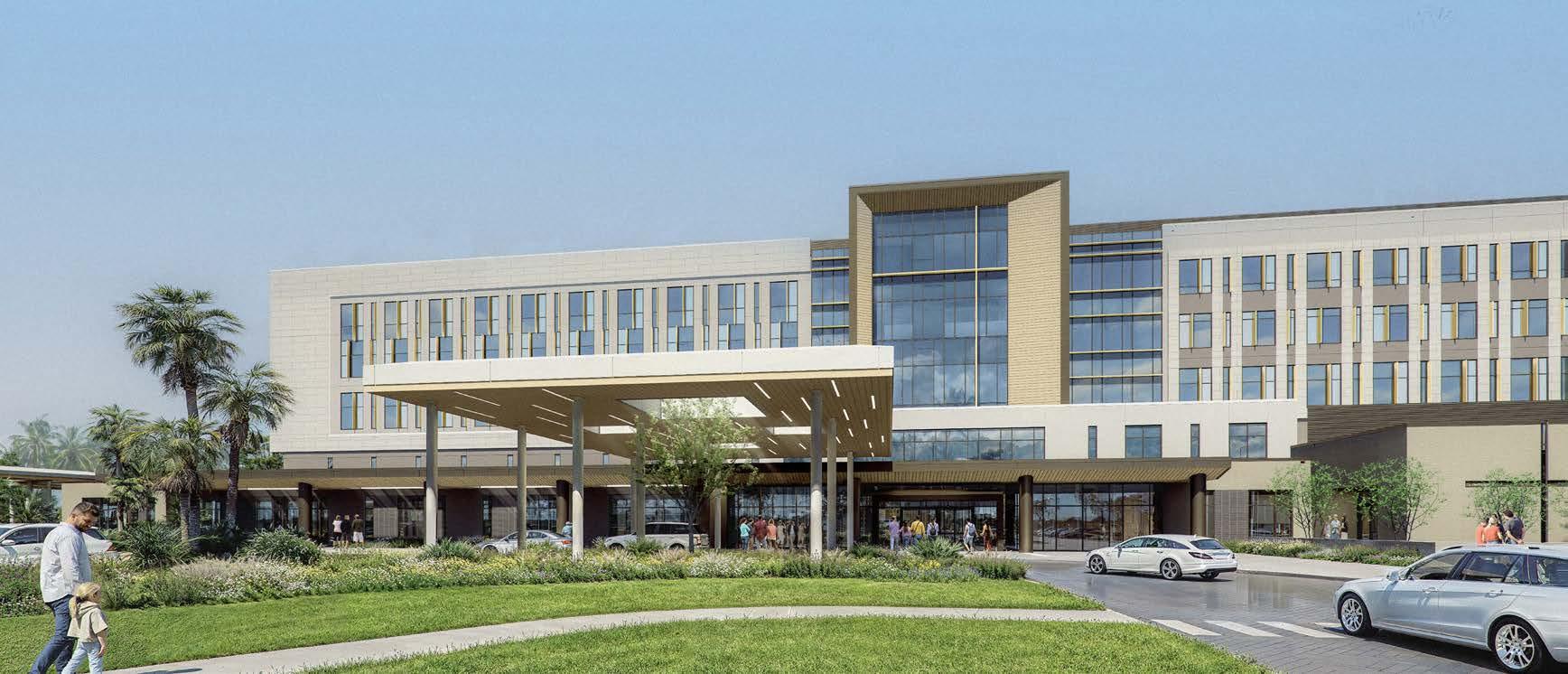
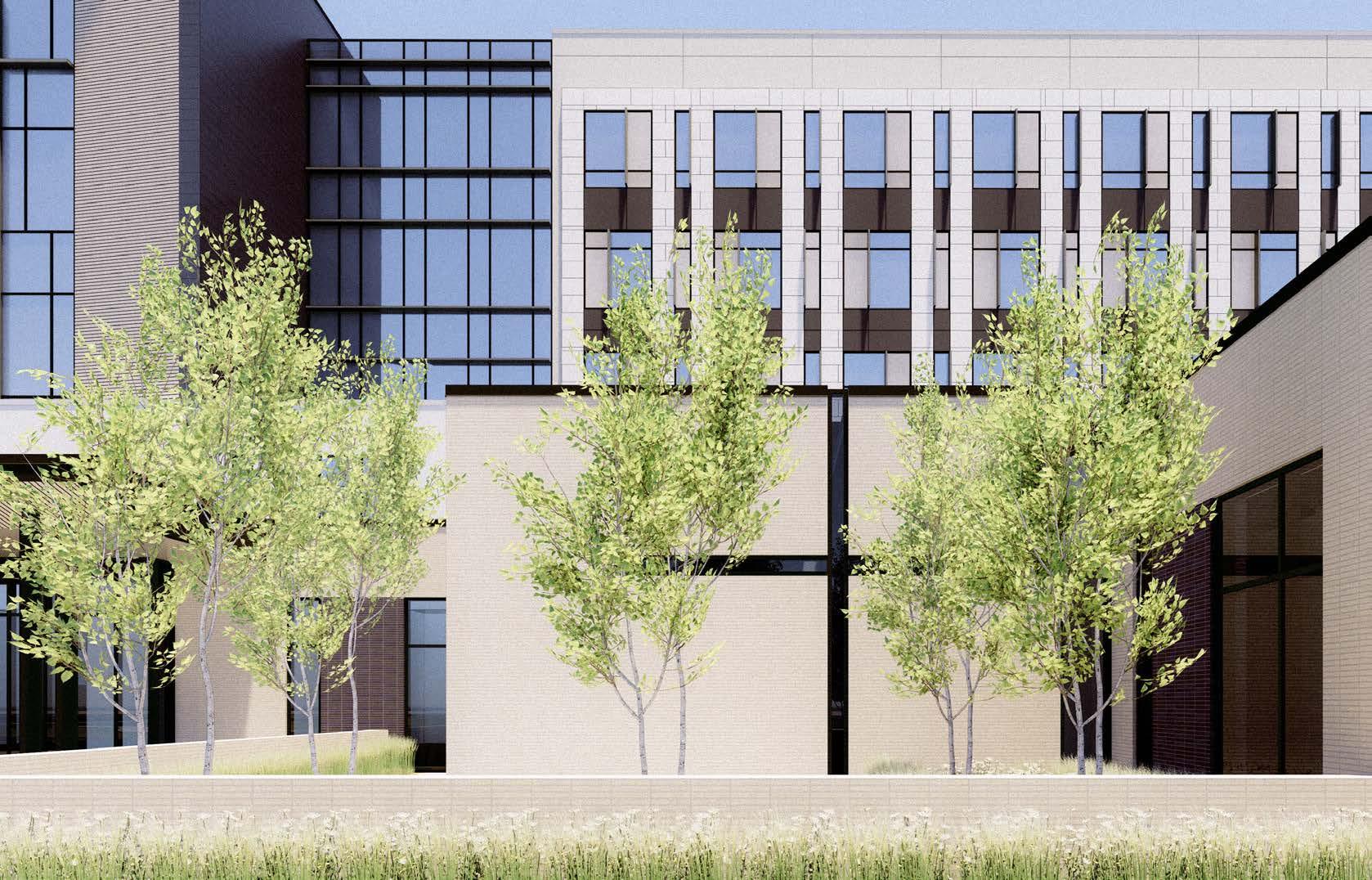
In The Villages, this hospital is conceived not as an isolated greenfield facility, but as a civic anchor embedded within a larger mixed-use development - an approach that required fundamentally rethinking the conventions of healthcare architecture. The development’s ambition to attact young physicians and staff to the region demanded a project that reads as a destination for innovation and community rather than an isolated institution. This drove an approach focused on ground-floor presence, material warmth and outdoor connectivity to align with the hospitality and commercial typologies surrouding it.
I led the building’s formal and material concept from master planning through schematic design. The architectural language I developed centers around an uncompromising focus on human scale. Loggias, tactile brickwork, and biophilic respite spaces align with adjacent commercial development, creating a retail-like edge that is grounding, textured, and inviting. A language of refined warmth guides the architecture: vertical glass and steel are layered with deep, wood-toned mullions that cast rhythmic shadow and lend depth to the patient tower, balancing precision with comfort. At the ground plane, the massing steps down to a transparent, hospitality-inspired frontage.
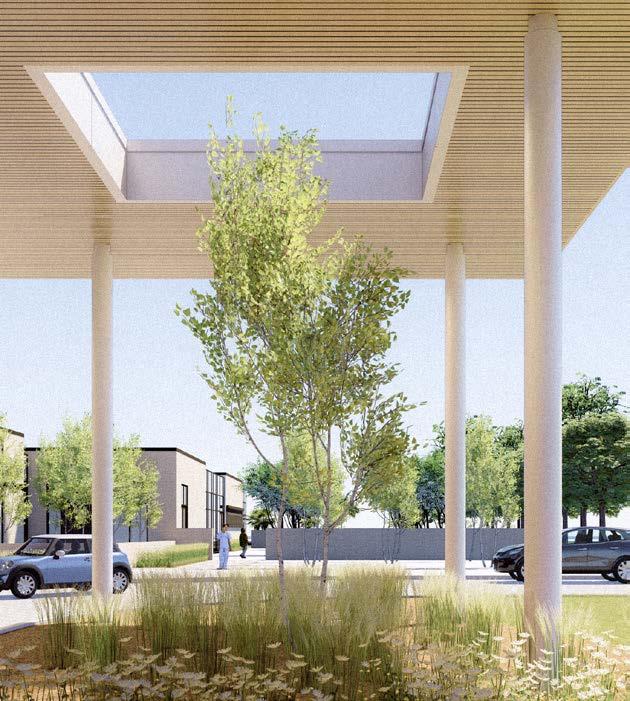
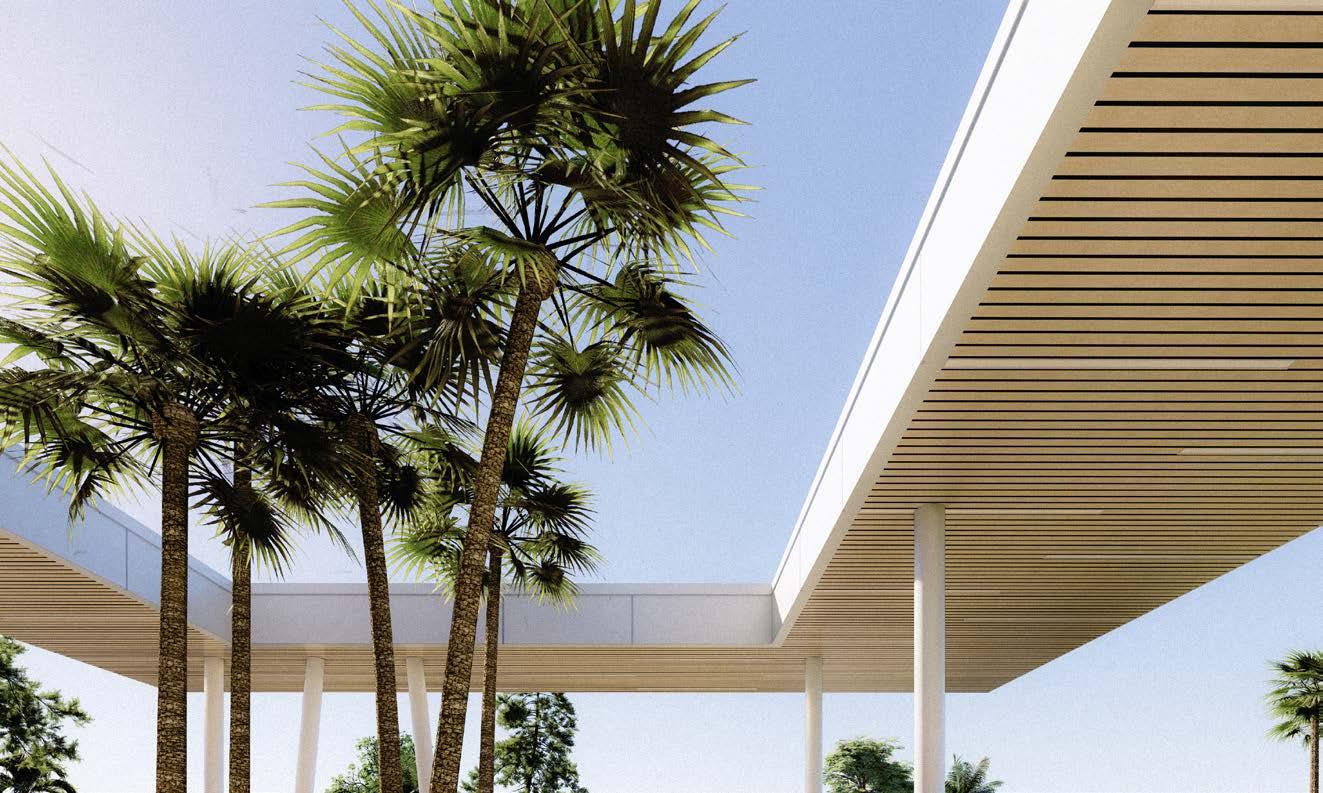
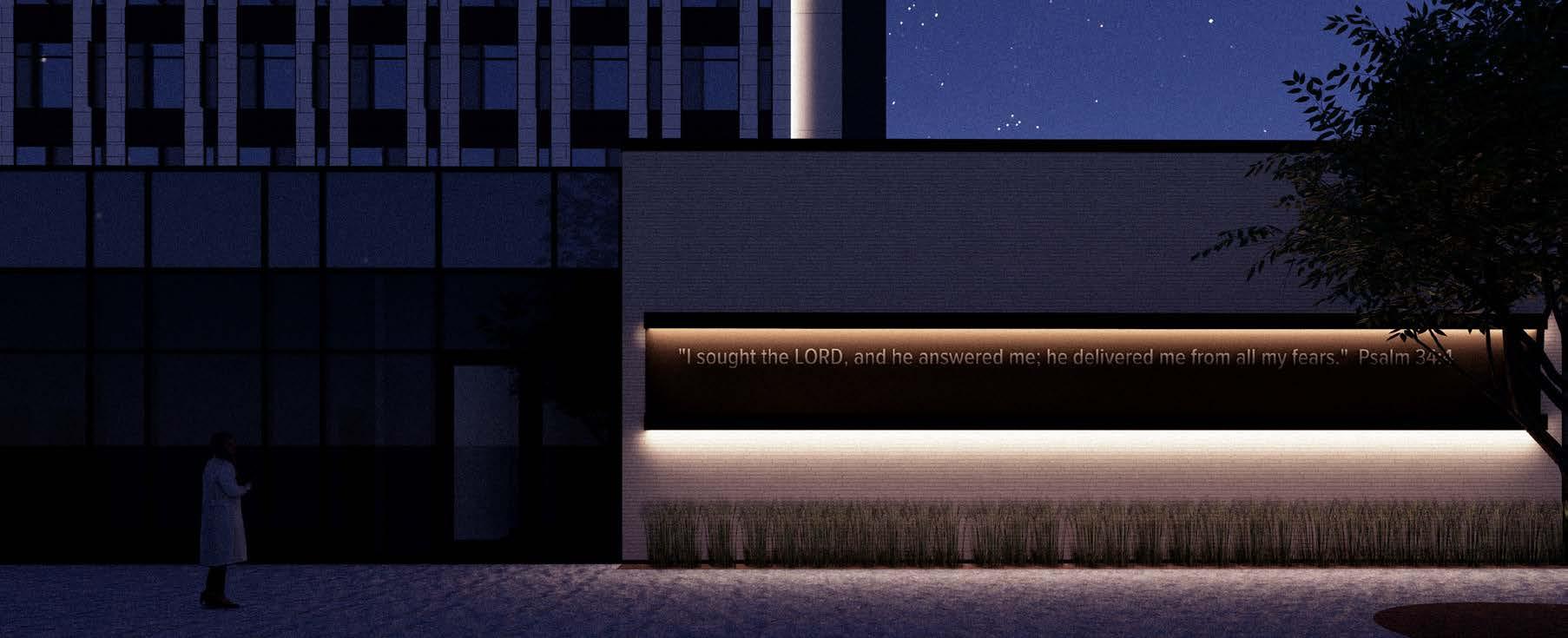
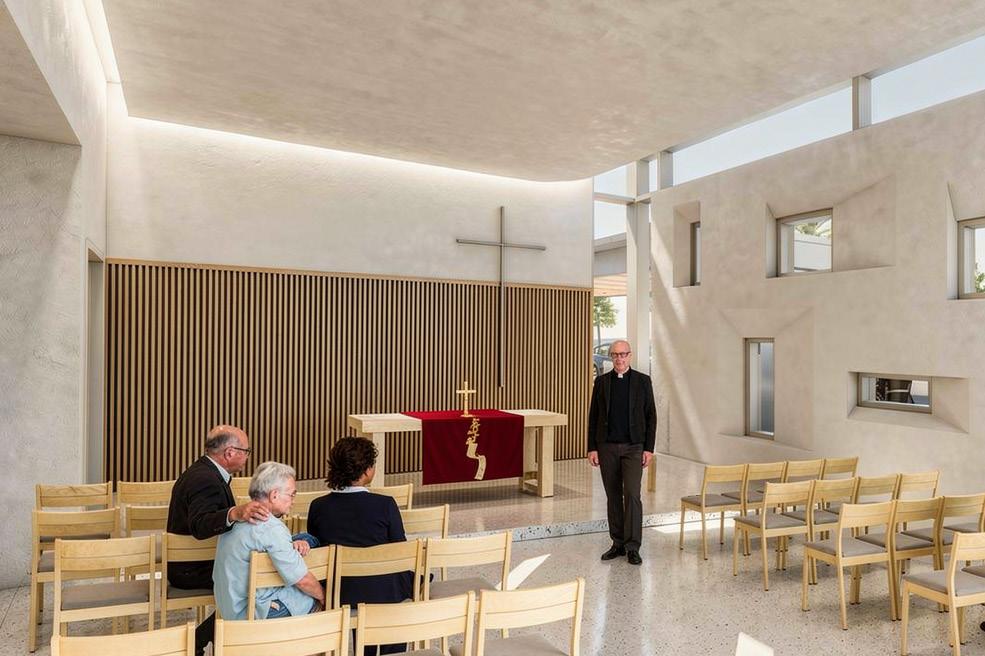
Framed “skyscapes” are woven throughout the pedestrian experience to reshape the perception of a typically hectic hospital environment. At the Emergency Department, a canopy aperture frames an island of trees and open sky, transforming the drop-off into a moment of respite. Repeated across entries and circulation paths, these nature-connected pauses reinforce dignity, wellness, and community presence. Subtle expressions of faith are integrated through a restrained cruciform relief and a luminous chapel volume, with signage strategies that reinforce mission while preserving architectural clarity.
Coordination with structural and MEP consultants during this phase required defending design decisions under significant value-engineering pressure — a process that sharpened my ability to distinguish between moves that were formally motivated and those that were truly imperative to the project’s identity. What I learned most from this project is how early design decisions constrain or liberate every subsequent phase, and how essential it is to arrive at schematic design with a position that is both deeply considered and conceptually defensible.
Roles: Lead facade / envelope designer; Lead concept designer; Structural / MEP Coordination
Year: 2025 - Present
emergency department entry. perspective. credit: Scott Marlow with edits by myself.
main entry. perspective. credit: Scott Marlow with edits by myself.
entry portal. perspective.
emergency department skyscape. perspective.
respite courtyard signage. perspective.
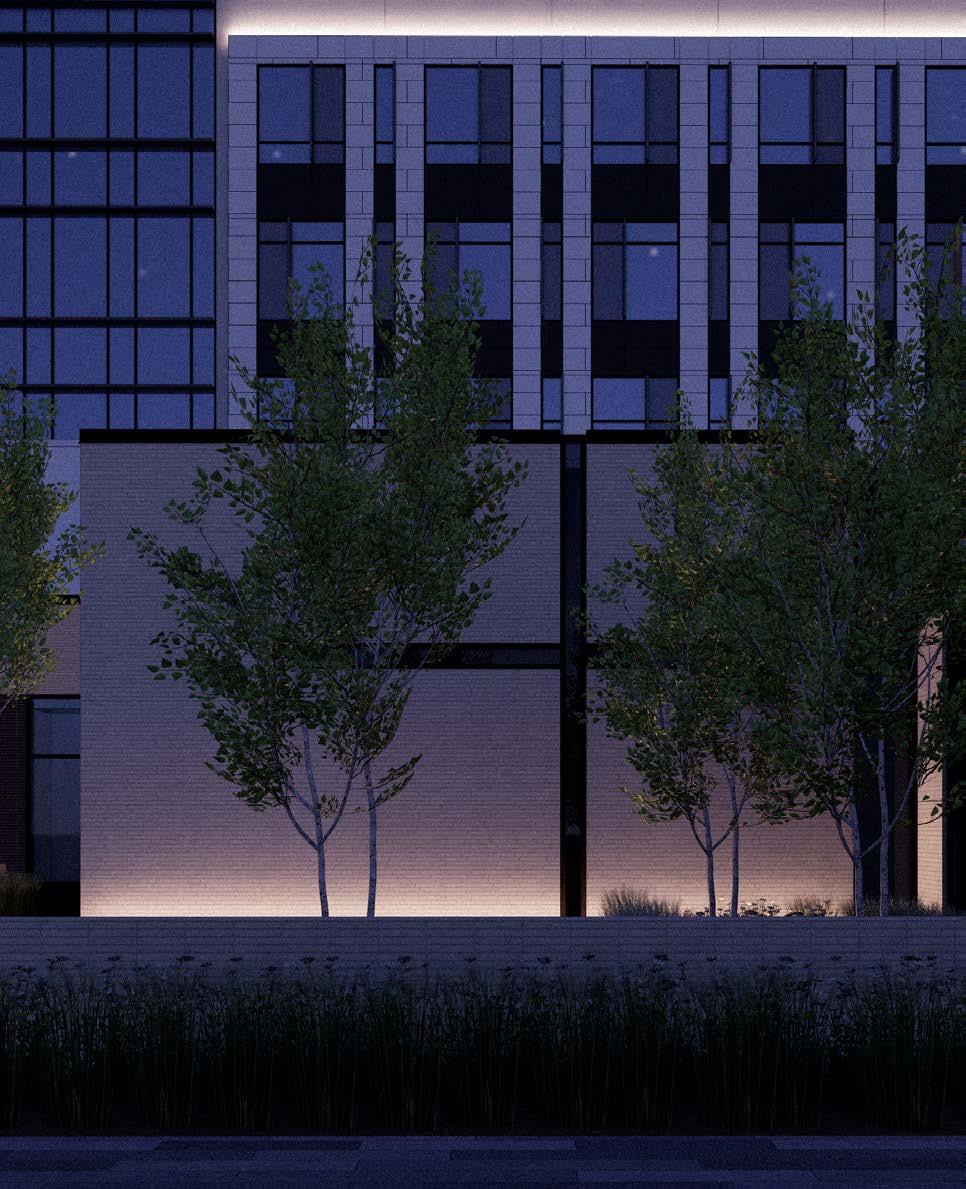
chapel landscape lighting. perspective.
Freelance Design Competition:
Bento House
Typology: Accessory Dwelling Unit, Missing Middle Housing
Location: Parkridge, Knoxville, Tennessee
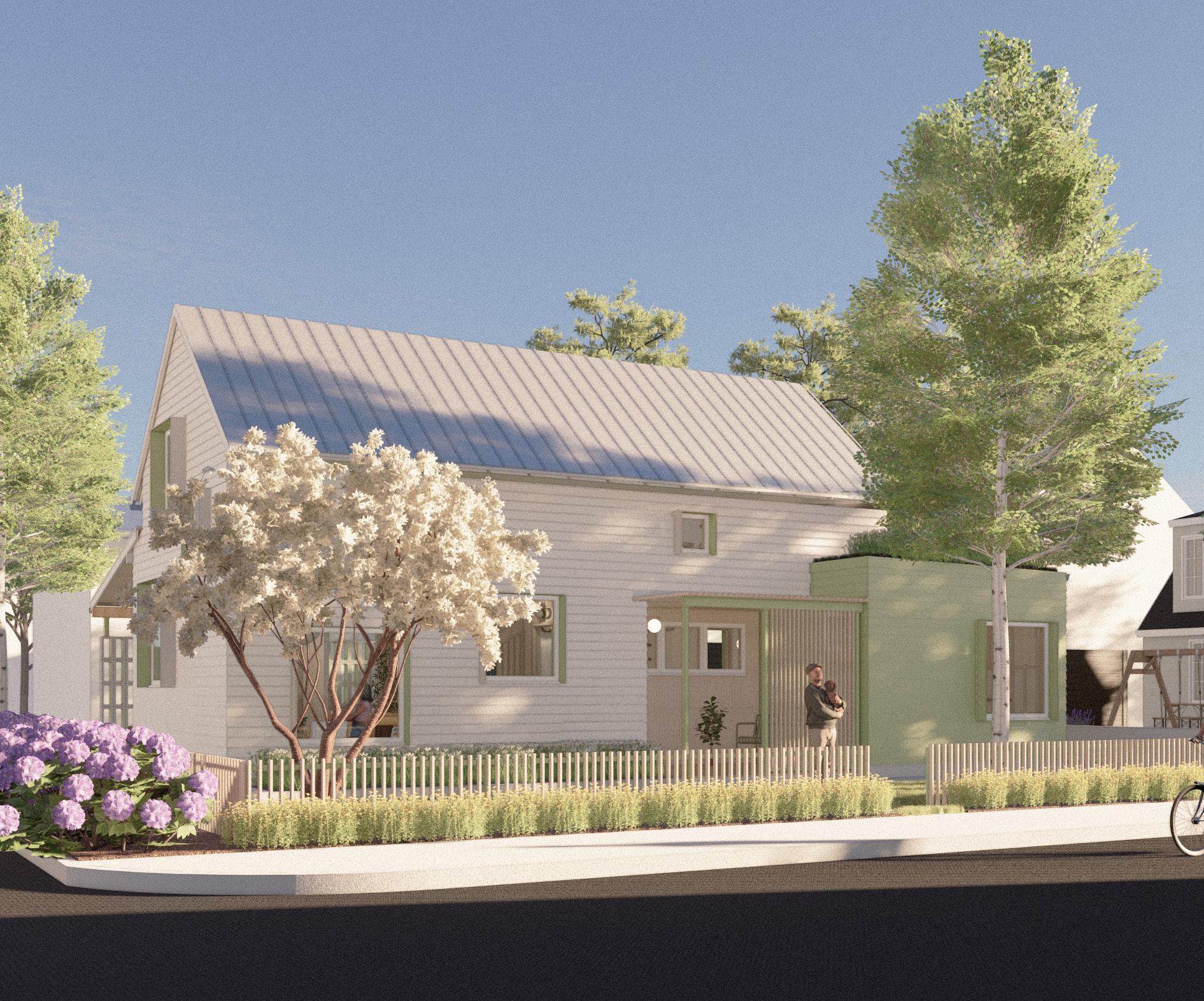
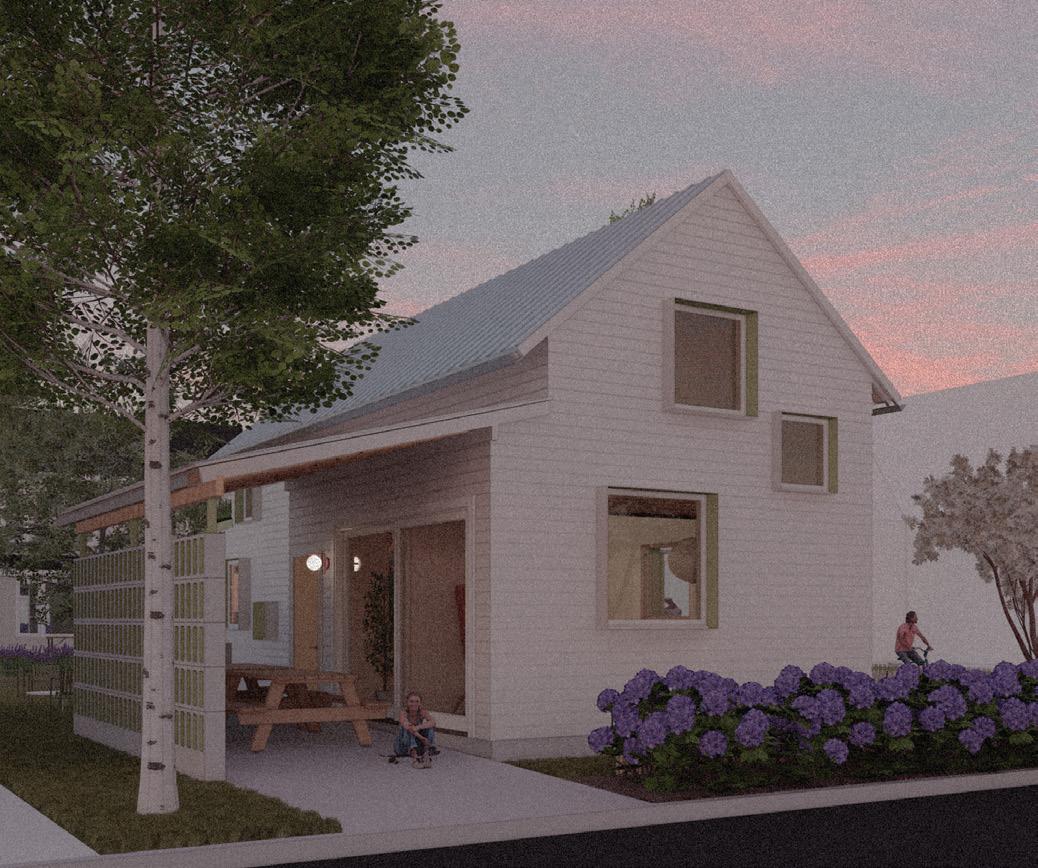
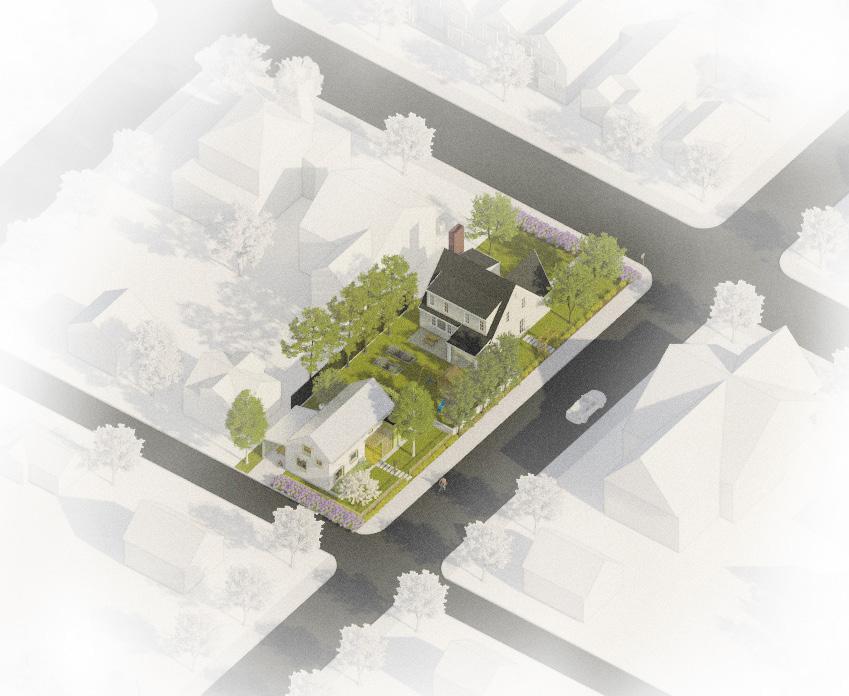
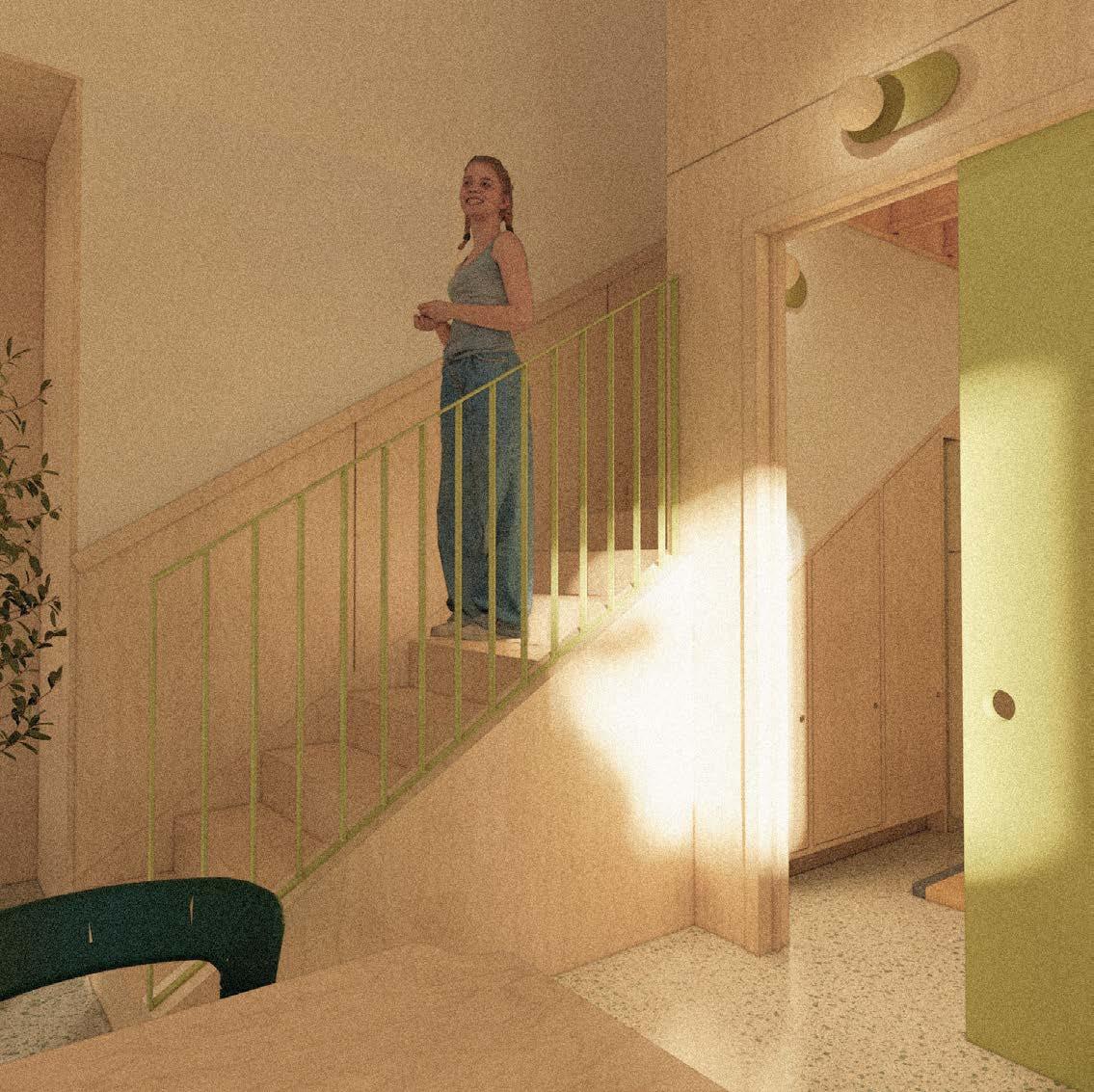
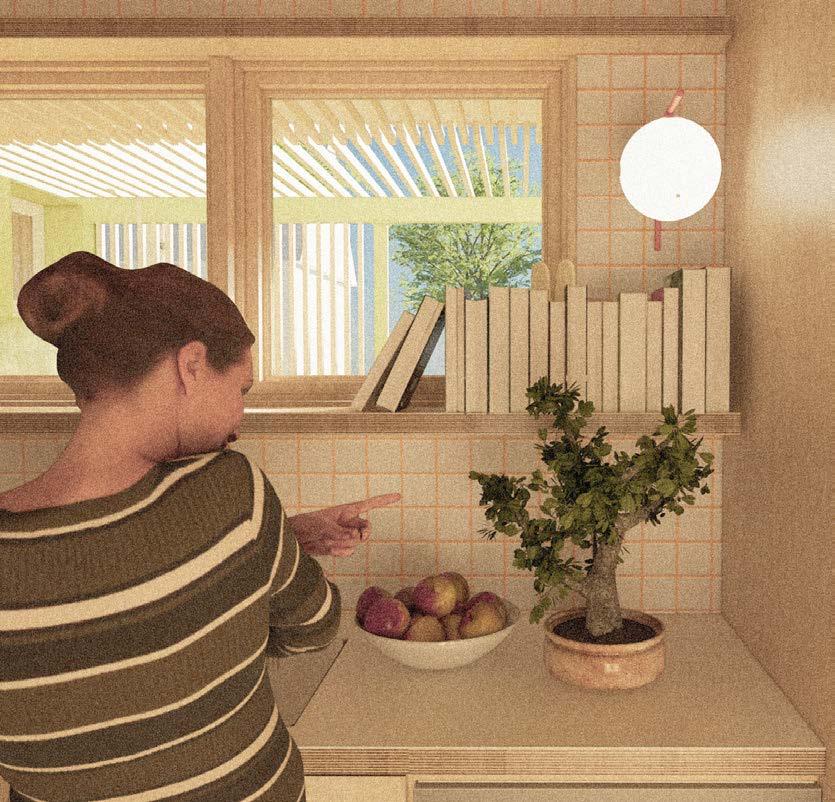
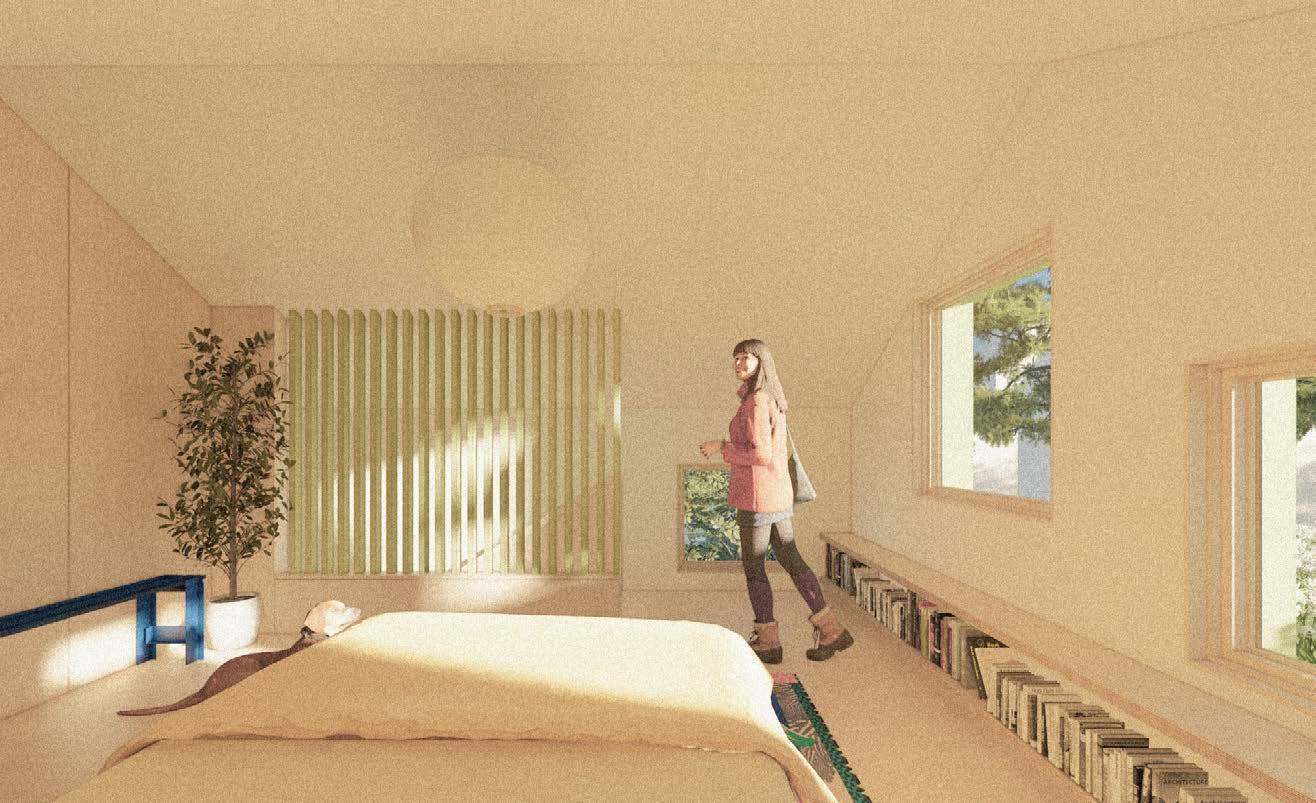
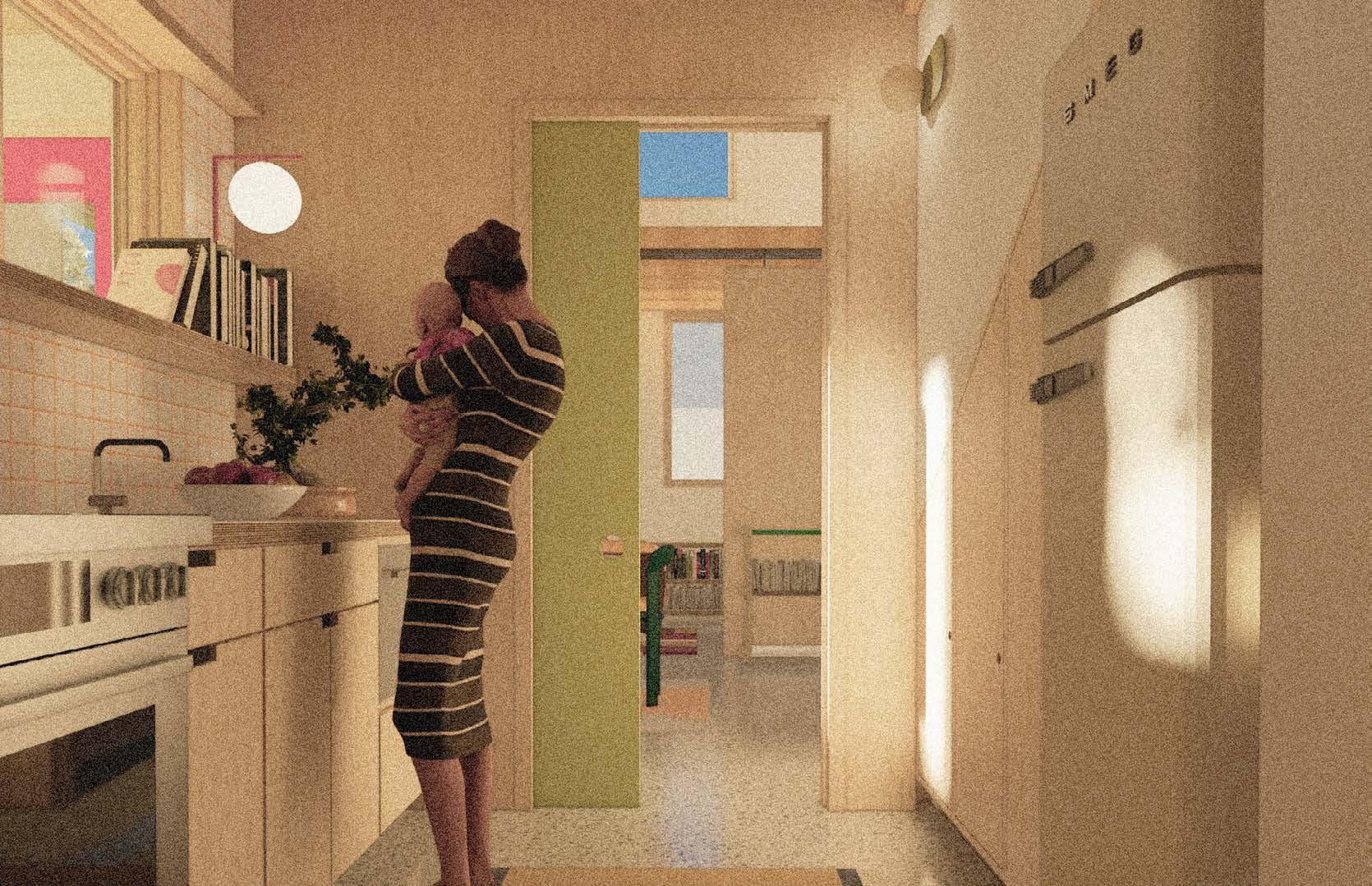
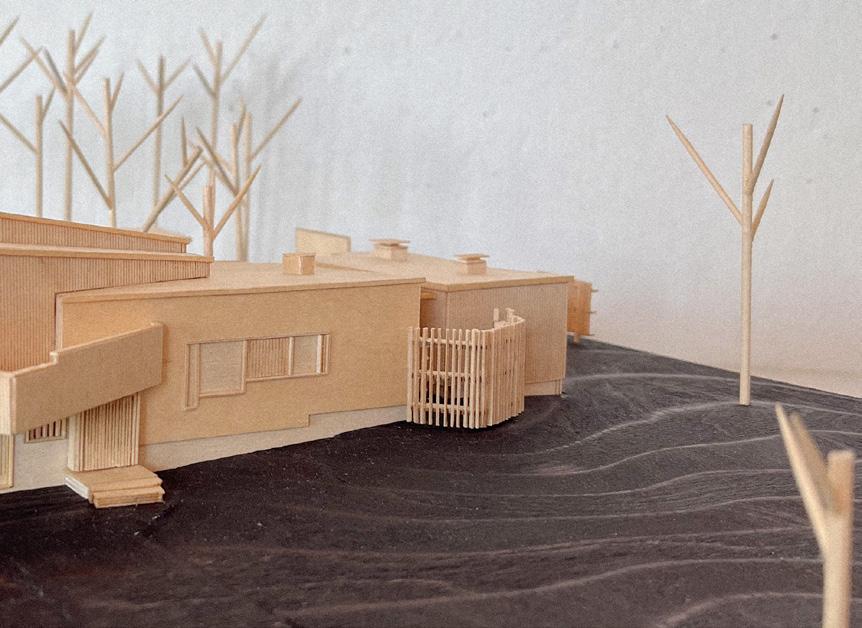
Bento house tells the story of a home designed for adaptability, offering flexible space that evolves alongside its occupants’ needs. More than just a dwelling, it’s a container for living and creating, balancing comfort, efficiency and accessibility. The ADU complements the main residence while asserting its own unique identity, forming a harmonious yet independent addition to the Knoxville Traditional Neighborhood typology.
Clad in humble, resilient materials, the exterior blends seamlessly with its surroundings, while the interior celebrates the everyday, using plywood and accessible finishes that feel warm and practical. Playful, operable windows punctuate the envelope, inviting daylight and fresh air while creating visual connections to the outdoors. Even the often-overlooked alley becomes part of the community fabric, fostering a sense of openness and inclusion to the surrounding site.
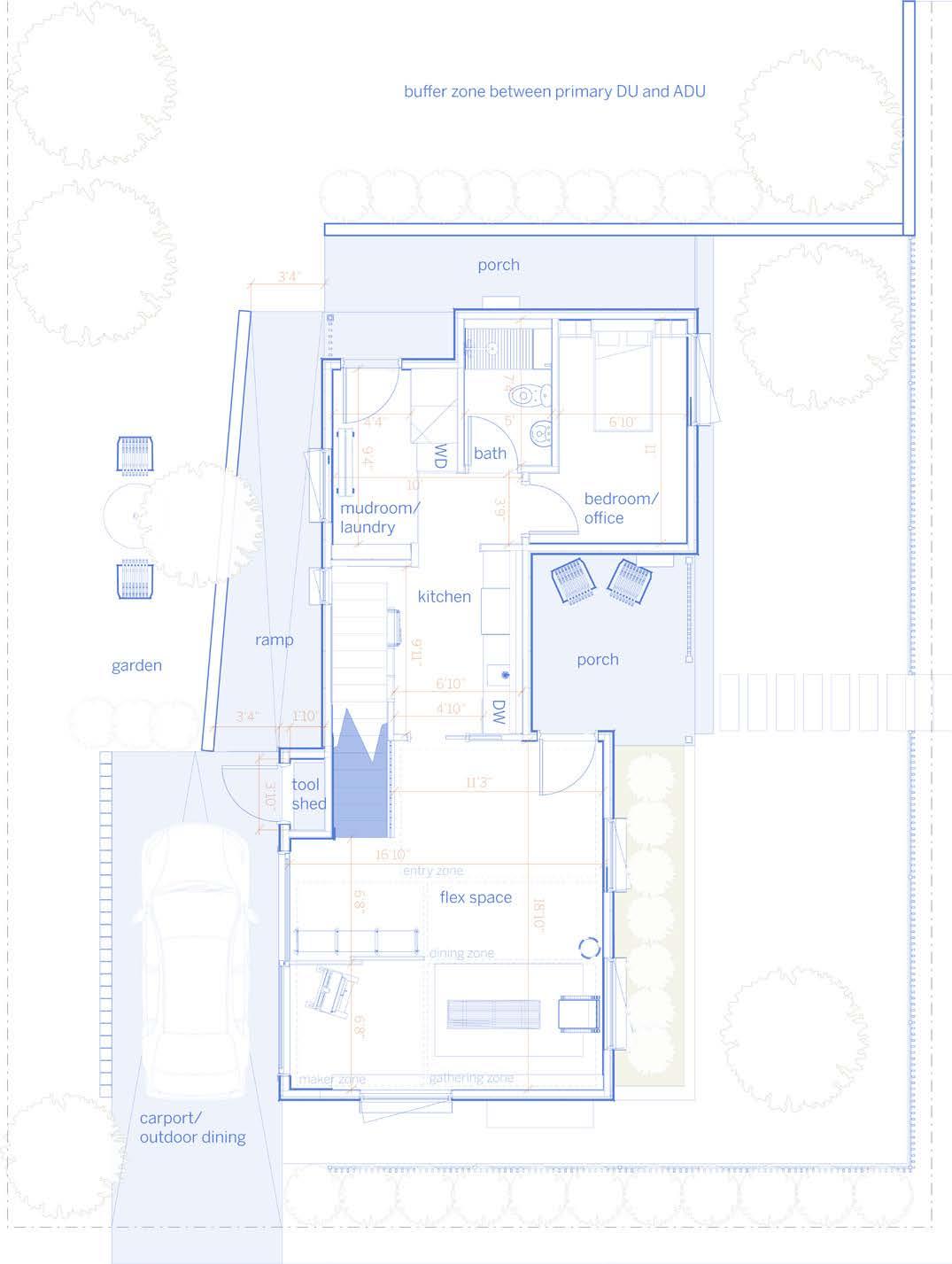
The design thoughtfully reimagines the carport, transforming it into a multifunctional covered porch that expands gathering space. With its self-contained amenities, semi-private implied yard and thoughtful layout, Bento house is perfectly suited for a variety of uses–from shortterm rentals to long-term tenants, a young adult finding independence, or an aging family member seeking proximity.
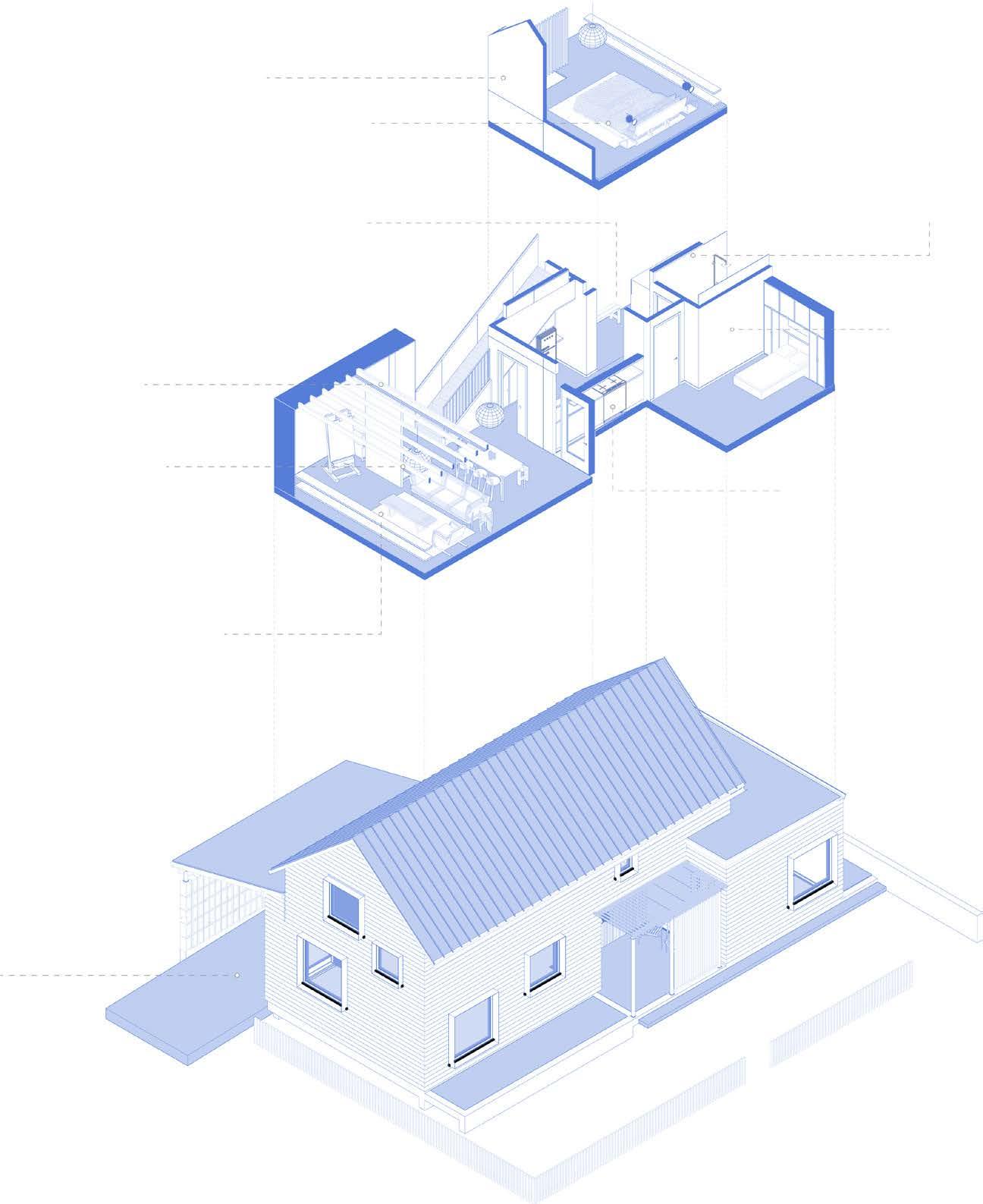
As life evolves, so does Bento house. Its design allows for effortless transformations, accommodating multi-generational living, non-residential uses, or entirely new purposes without major renovations. It pushes the boundaries of traditional neighborhood living, offering a resilient, communal vision for Knoxville’s future.
This project was developed in parallel with the professional demands of full-time practice and represents the kind of design work I am most motivated to pursue: precise, place-specific, ecologically responsible, and committed to the idea that rigorous design belongs as much to the small and the modest as to the monumental.
A majority of materials used are intentionally conventional, reductive, and yet locally sourced and/or salvaged to reduce building and finish costs in addition to embodied and life-cycle carbon. Finished ceilings and floors are omitted when possible to reduce material impact. Bento House’s sustainable design elements include natural ventilation, a vegetative roof to offset site runoff, an edible garden, thermal mass floors, deep overhangs, high performance windows and insulation, and salvaged or locally sourced materials. These strategies reduce the project’s overall EUI and carbon footprint, as well as upfront material costs and post-occupancy energy costs. The use of FSC certified plywood and non-toxic finishes increases durability and flexibility of the interior spaces, while promoting health and wellness for the long term.
exterior carport / porch. perspective.
carport
staircase. perspective.
art nook. perspective.
loft / bedroom. perspective.
Earl Swensson Associates:
Mary Bridge Children’s Hospital
Typology: Places for Healing / Institutional
Location: Tacoma, Washington
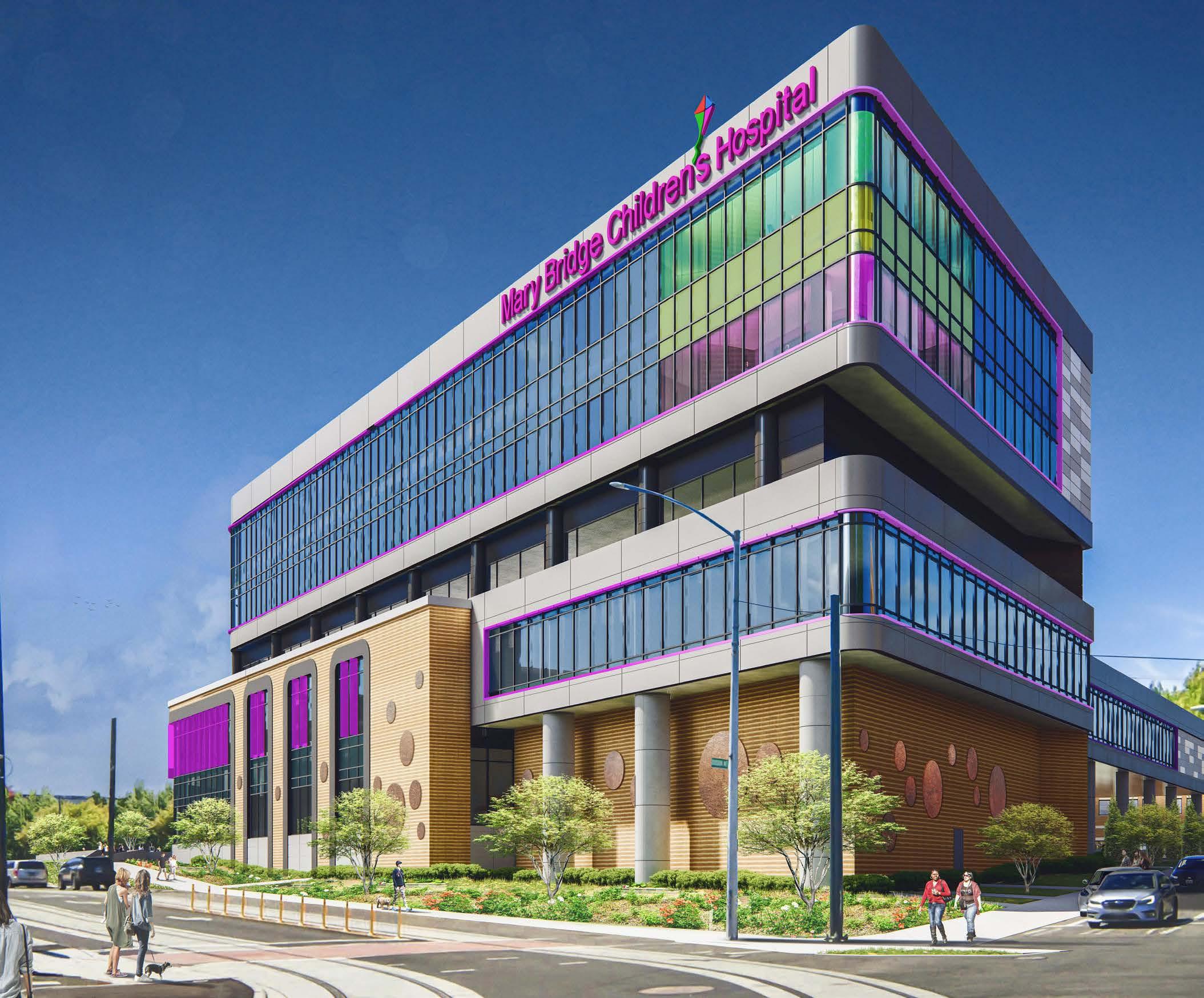
This flagship hospital is poised to redefine the standard of care and comfort for children throughout the greater Seattle region, and is soon to become a leader in healing. With such lofty ambitions, ESa was sought out to reimagine what’s possible for the existing site, which due to its strange shape, tough existing infrastructure, seismic challenges and rail rights of way had many existing challenges.
My role in this project was primarily centered around supporting our technical architects through detailing, coordination, and extensive Revit modeling. I was responsible for developing the majority of the many proprietary core + shell details on the project in accordance with firm standards. This included modeling and detailing fire terminations, UL assemblies, helipad clearances, shaft wall assemblies, roofing systems, and slab edge detail plans. Additionally, I worked directly with engineering and envelope consultants to keep the project on budget and on schedule, which allowed this project to make it smoothly through CD’s in a timely manner.
Roles: Technical detailing, construction administration, IPD coordination.
Year: 2023 - Present
DRAINING E.I.F.S. EXTERIOR WALL CONSTRUCTION
FACE OF EXTERIOR WALL WITH AIR / WEATHER BARRIER INSTALLED PER DETAILS AND SPECS
ROOF-WALL CONNECTION ASSEMBLY PER REFERENCED DETAIL
COVER EDGES OF SADDLE FLASHING WITH 4" WIDE STRIP OF SELF-ADHERED FLASHING AS SHOWN (SHINGLE LAPPED)
PARAPET-WALL INTERSECTION PER REFERENCED DETAIL
FACE OF EXTERIOR WALL WITH AIR / WEATHER BARRIER INSTALLED PER DETAILS AND SPECS
COVER EDGES OF SADDLE FLASHING WITH 4" WIDE STRIP OF SELF-ADHERED FLASHING AS SHOWN (SHINGLE LAPPED)
PARAPET-WALL INTERSECTION PER REFERENCED DETAIL
.063" COATED ALUMINUM SADDLE FLASHING FABRICATED TO CONFIGURATION OF ALL DRAINAGEPLANE MATERIALS AT PARAPET / WALL INTERSECTION -BED ATTACHMENT FLANGES IN SEALANT (PROVIDE DETAILS FOR APPROVAL)
WRAP ROOF FLASHING OVER TOP OF PARAPET PER EXTERIOR WALL SYSTEM DETAILS
ROOF PARAPET CONSTRUCTION WITH AIR / WEATHER BARRIER INSTALLED PER DETAILS AND SPECS -SEE REFERENCED DETAILS
INSULATING GLASS IN ALUMINUM CURTAIN WALL FRAMING SYSTEM ANCHORED PER INSTALLER'S APPROVED DETAILS
.063" COATED ALUMINUM SADDLE FLASHING FABRICATED TO CONFIGURATION OF ALL DRAINAGE-PLANE MATERIALS AT PARAPET / WALL INTERSECTION -BED ATTACHMENT FLANGES IN SEALANT (PROVIDE DETAILS FOR APPROVAL)
WRAP ROOF FLASHING OVER TOP OF PARAPET PER EXTERIOR WALL SYSTEM DETAILS
BRICK/E.I.F.S. CORNER PER SIMILAR REFERENCED DETAIL
ROOF-WALL
DETAIL
BRICK/E.I.F.S. CORNER PER REFERENCED SIMILAR DETAIL
WALL
BRICK/ROOF FLASHING PER REFERENCED DETAIL
FLASHING AT CORNER
E.I.F.S. ROOF FLASHING PER SIMILAR REFERENCED DETAIL
COVER EDGES OF SADDLE FLASHING WITH 4" WIDE STRIP OF SELF-ADHERED FLASHING AS SHOWN (SHINGLE LAPPED)
DETAILS .063" COATED ALUMINUM SADDLE FLASHING FABRICATED TO CONFIGURATION OF ALL DRAINAGE-PLANE MATERIALS AT PARAPET / WALL INTERSECTION BED ATTACHMENT FLANGES IN SEALANT (PROVIDE DETAILS FOR APPROVAL)
Skidmore Owings & Merrill: Central Place Sydney
Typology: Office / Commercial
Location: Sydney, Australia
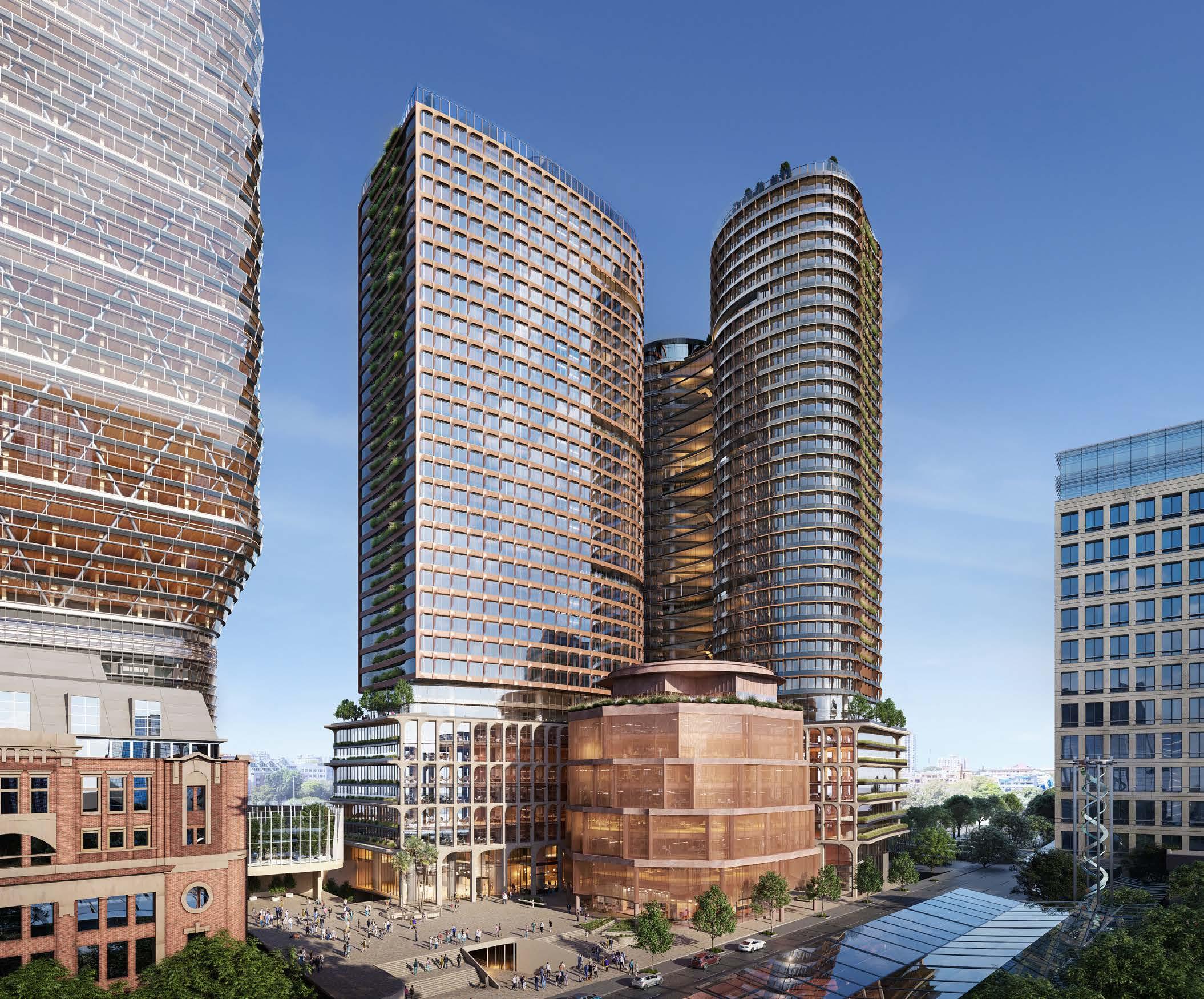
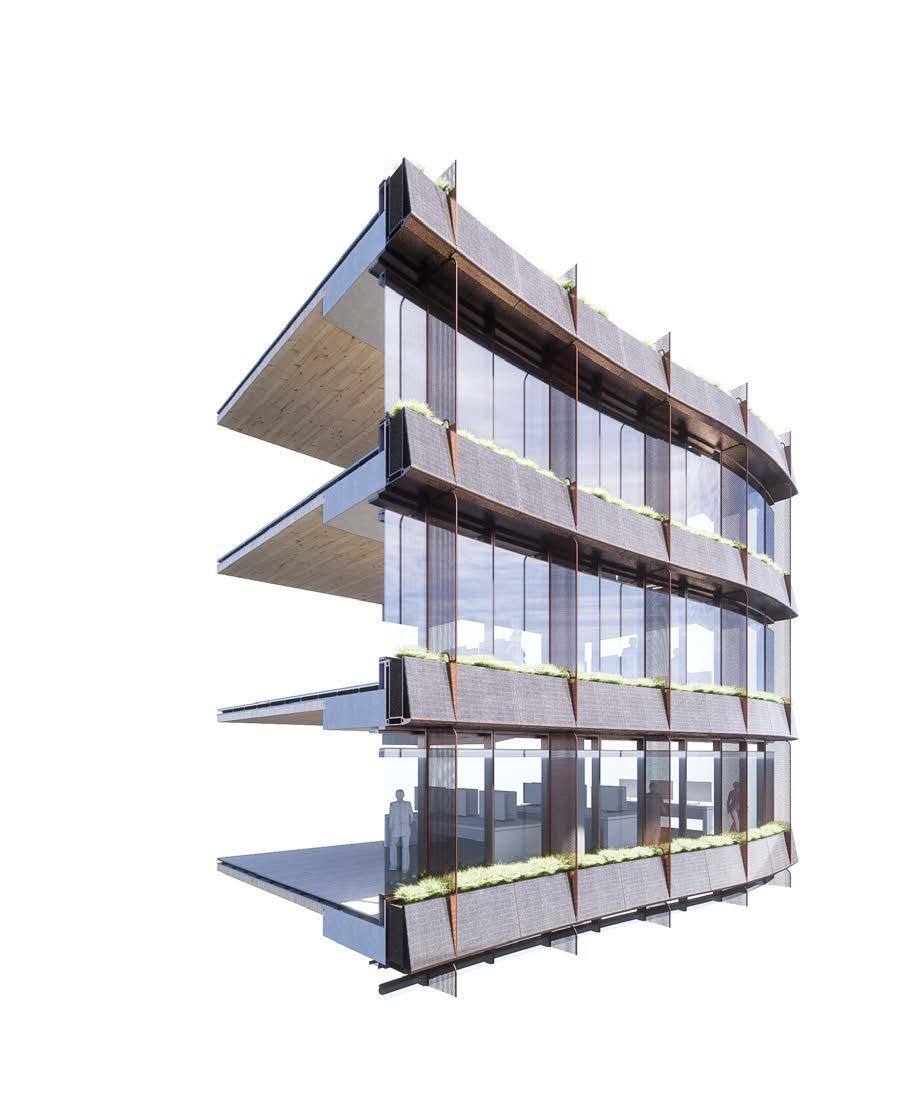
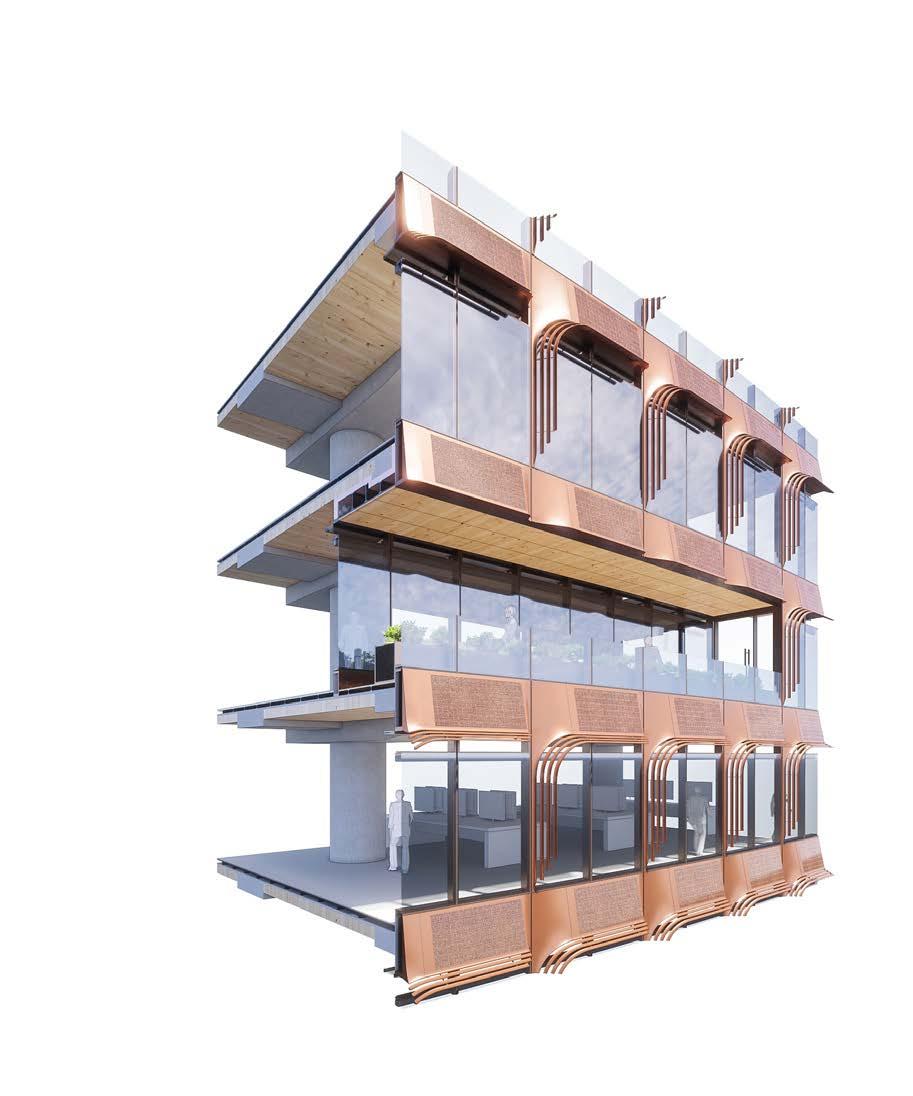
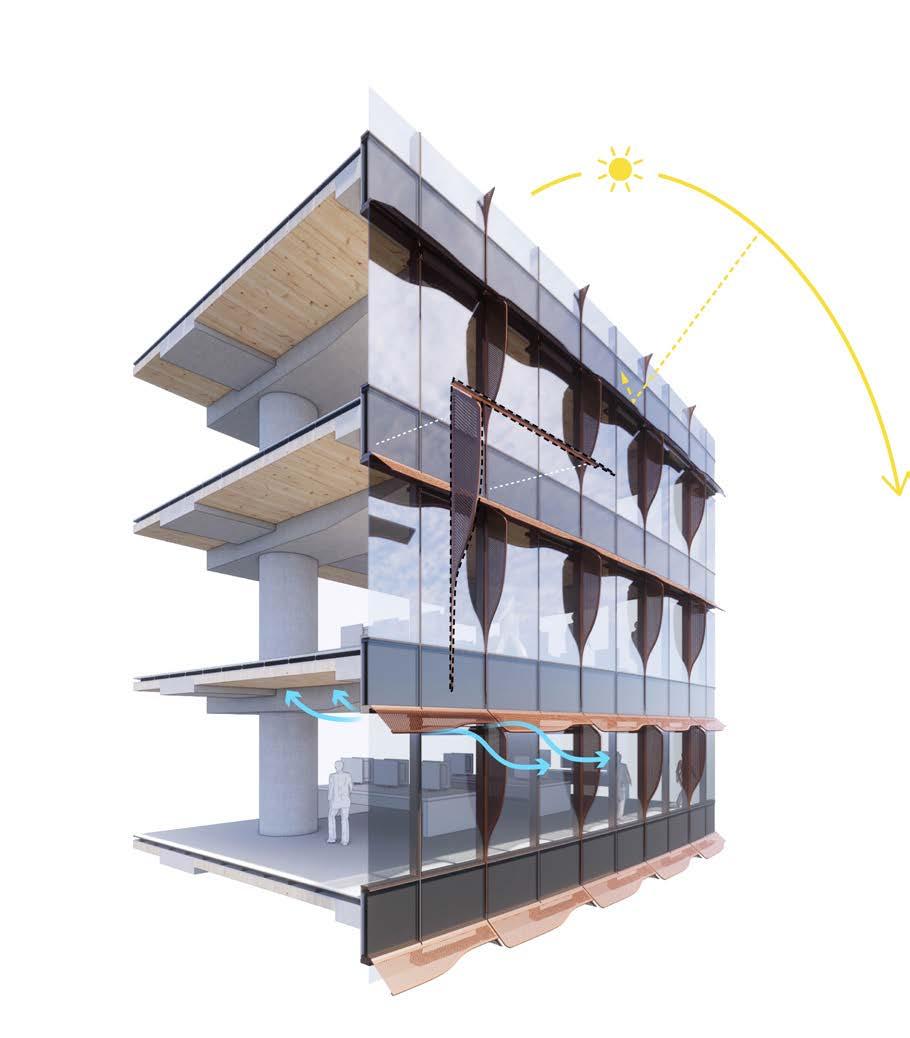
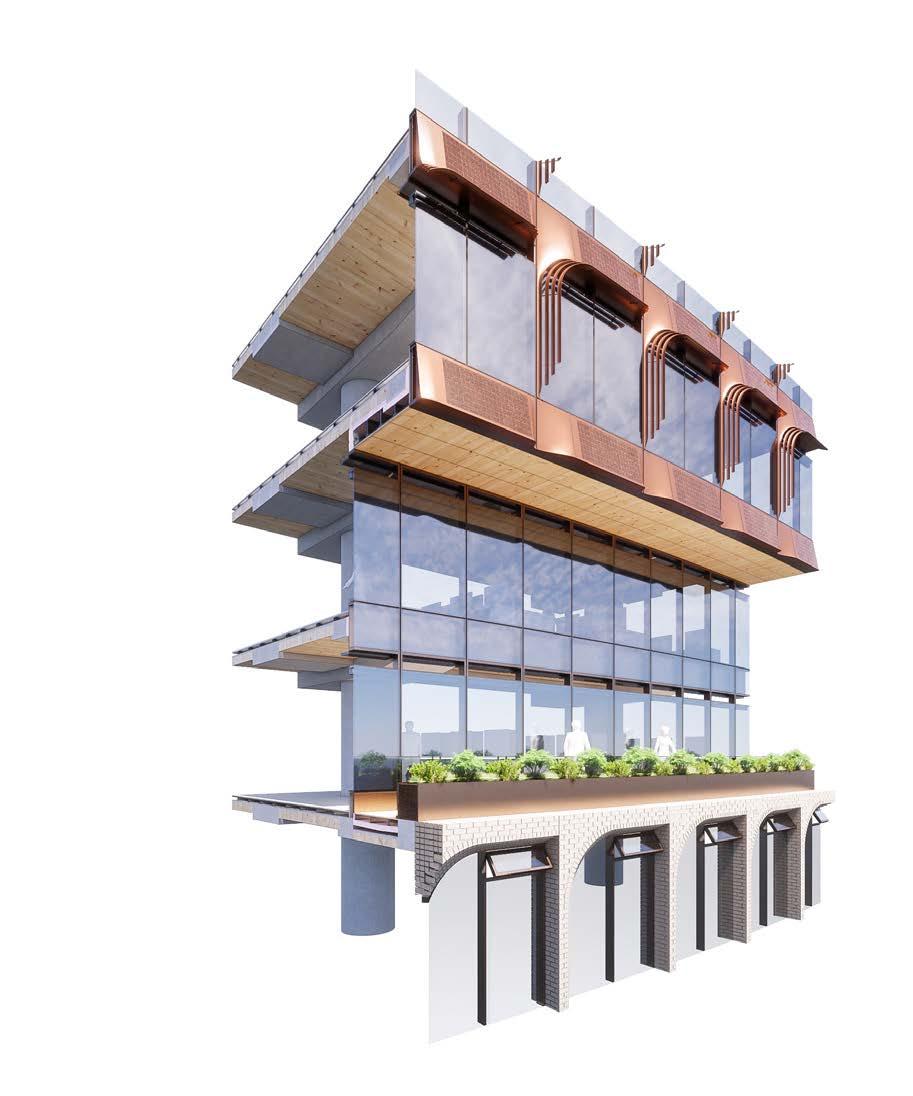
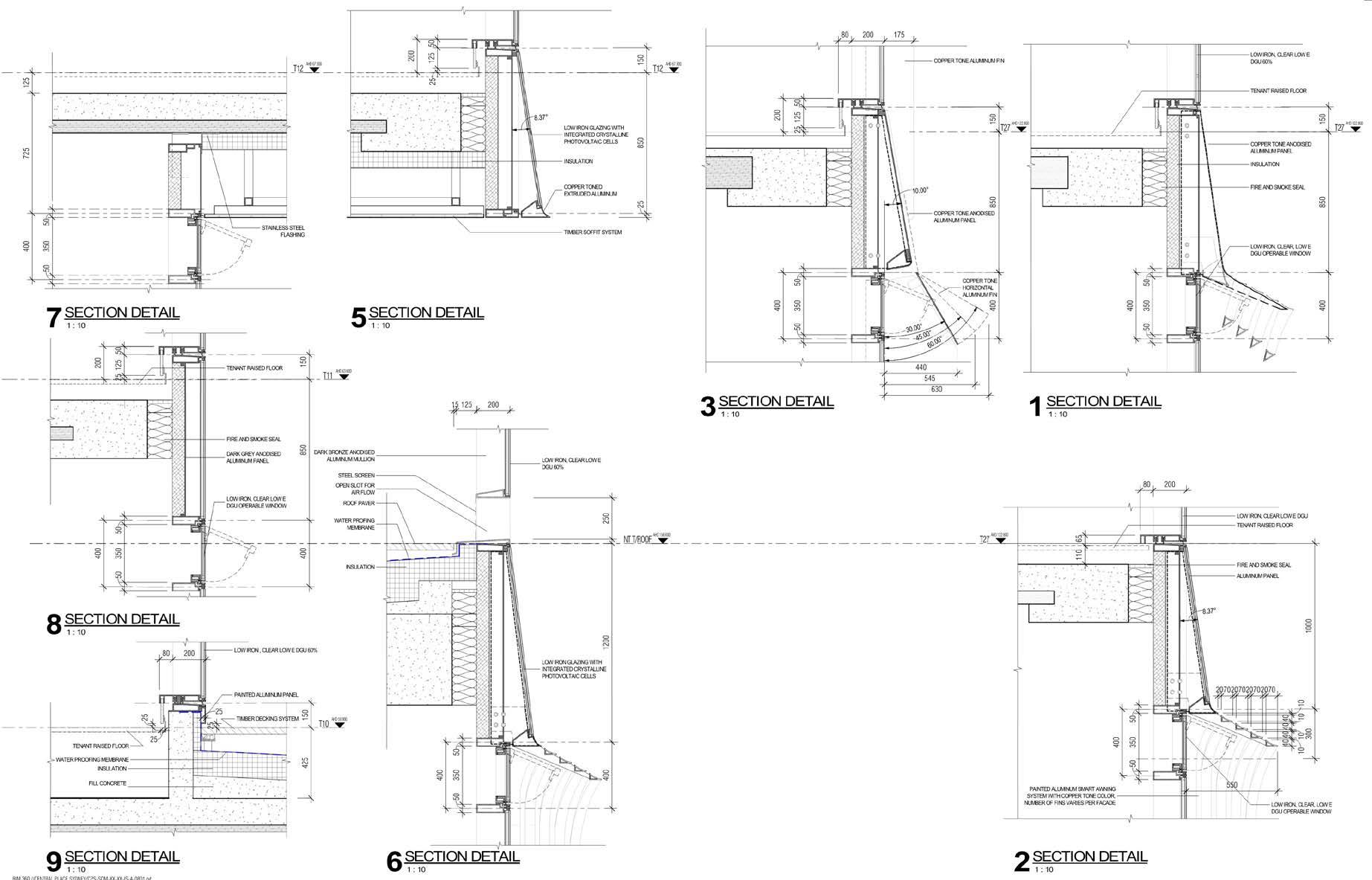
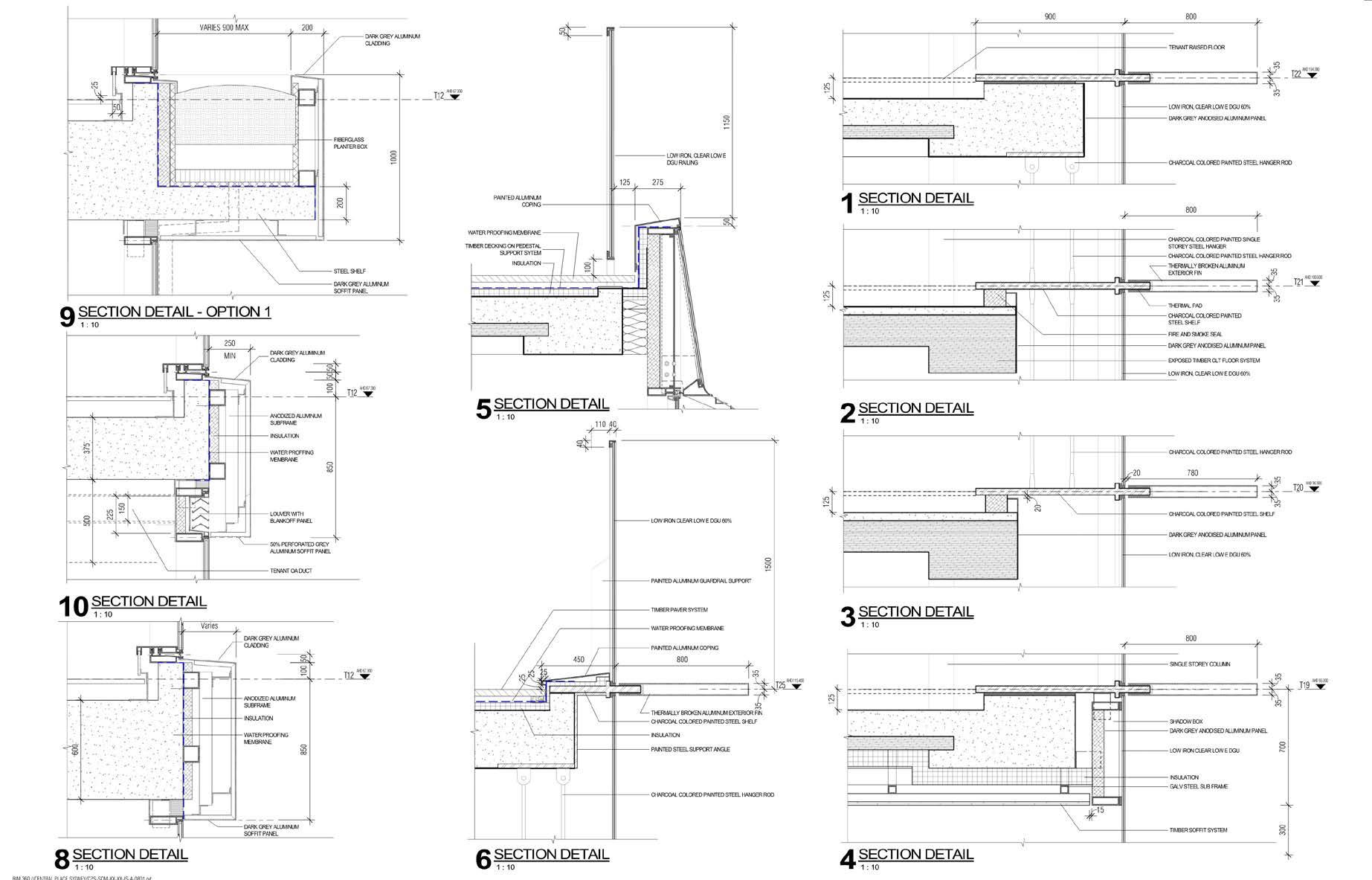
This 38-story hybrid concrete/timber high rise tower rises prominent in Sydney’s new technology district and stands as a partnership between SOM (tower designer) and Fender Katsaitis (podium designer). The project consists of three commercial towers and a public amenity - the condenser, all adjacent to a new rail transit hub. The project is aiming to achieve WELL and LEED Platinum and utilizes strategies like PV facade panels, shading devices, vegetative roofs, and a hybrid timber floor system. My role included prototyping facade iterations, reducing complex facade geometries, developing presentation renderings, construction documents, diagrams, and assisting in creating a proprietary 3d model for published renderings for our rendering consultant, Norviska. I was also responsible for engaging in client and consultant meetings with ARUP and WSP, facilitating my understanding of the profession and its multi-disciplinary nature.
at right: presentation rendering by Norviska. I was partly responsible for the creation of the proprietary 3d models which were provided to Norviska for publication images.
pv / vegetative facade array copper / pv array
spandrel / shading array
terrace curtain wall array
Peace and Goodwill Community Collaborative
Typology: Missing Middle Housing, Community Design
Location: Parkridge, Knoxville, Tennessee
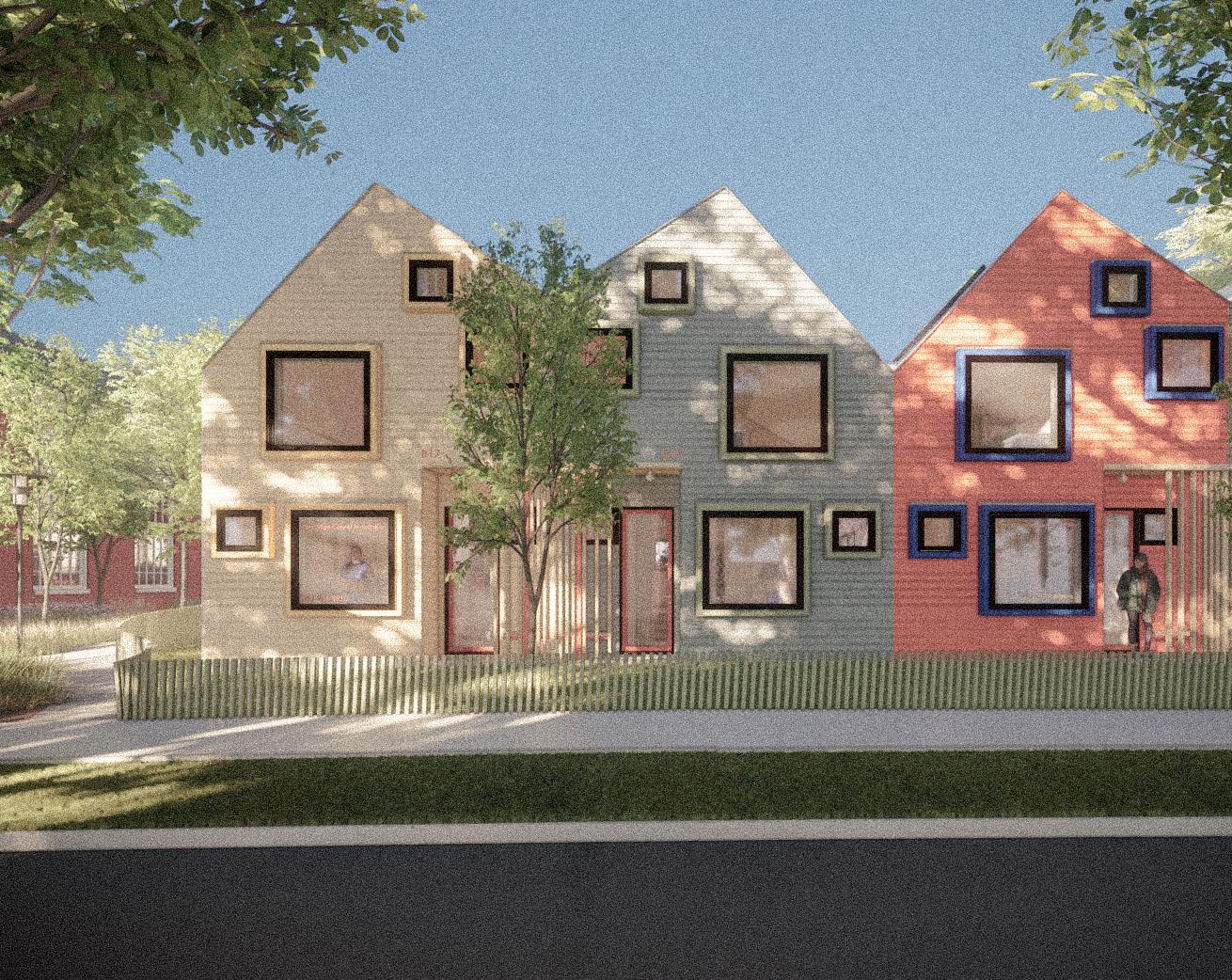
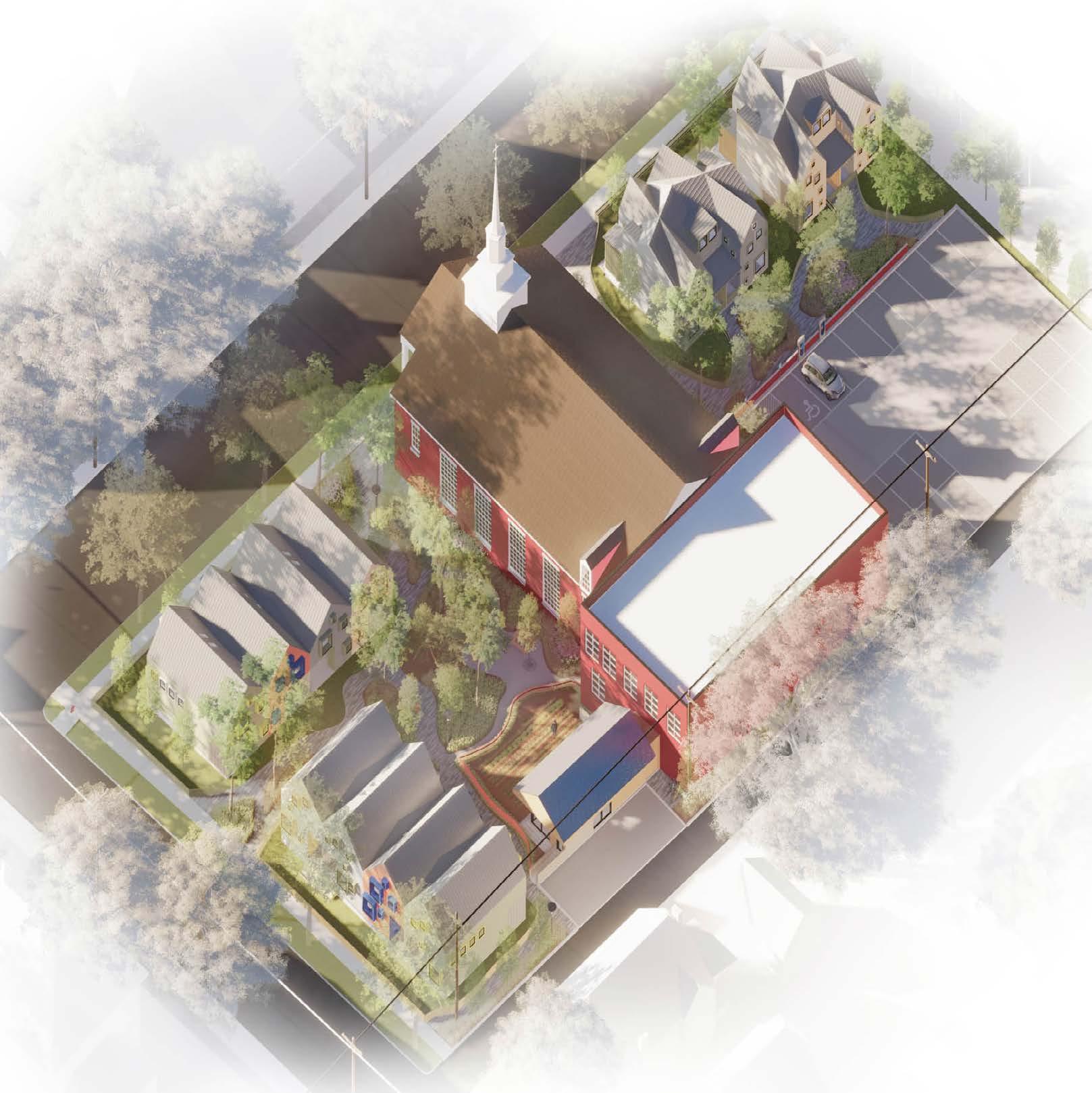
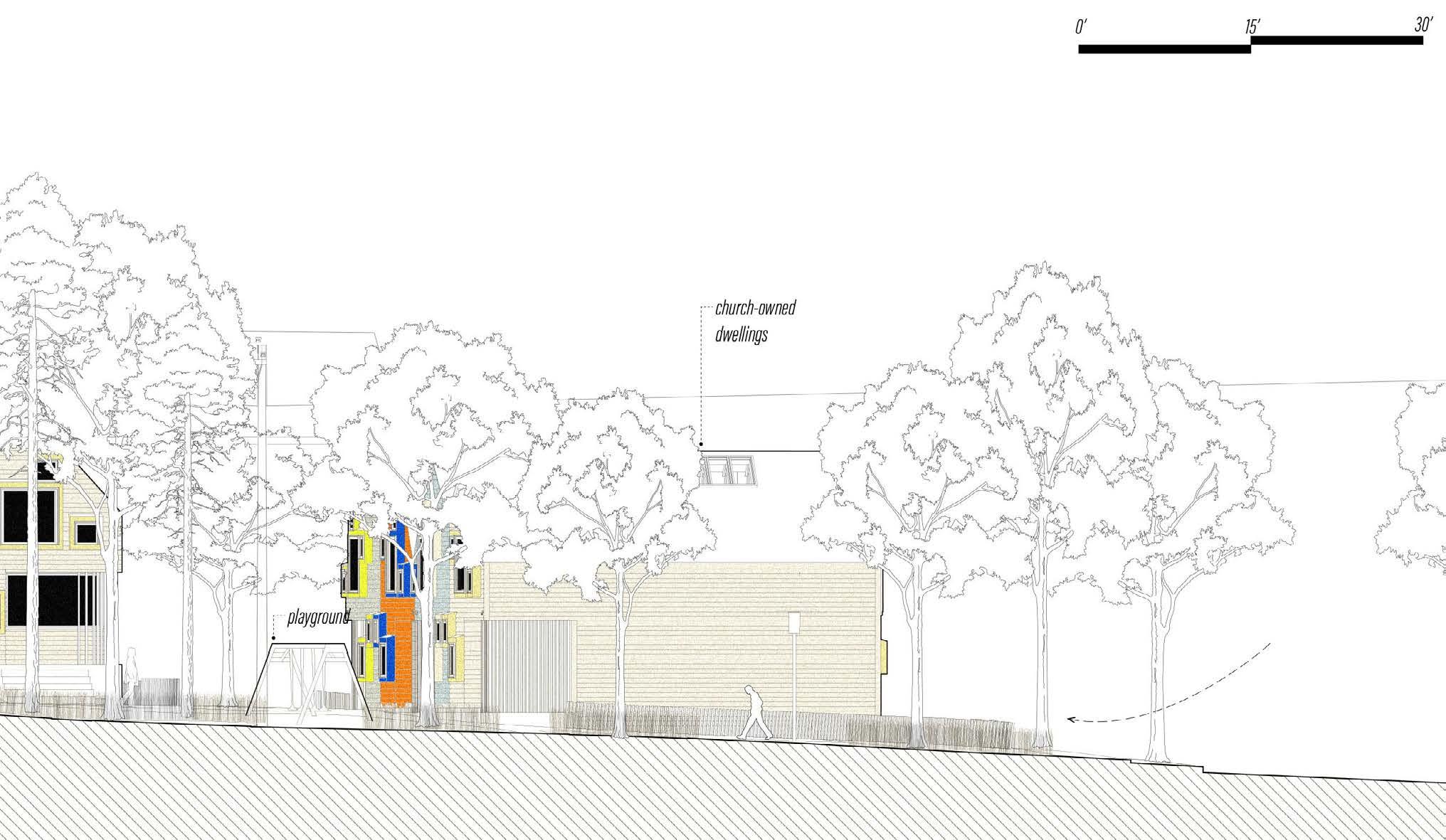
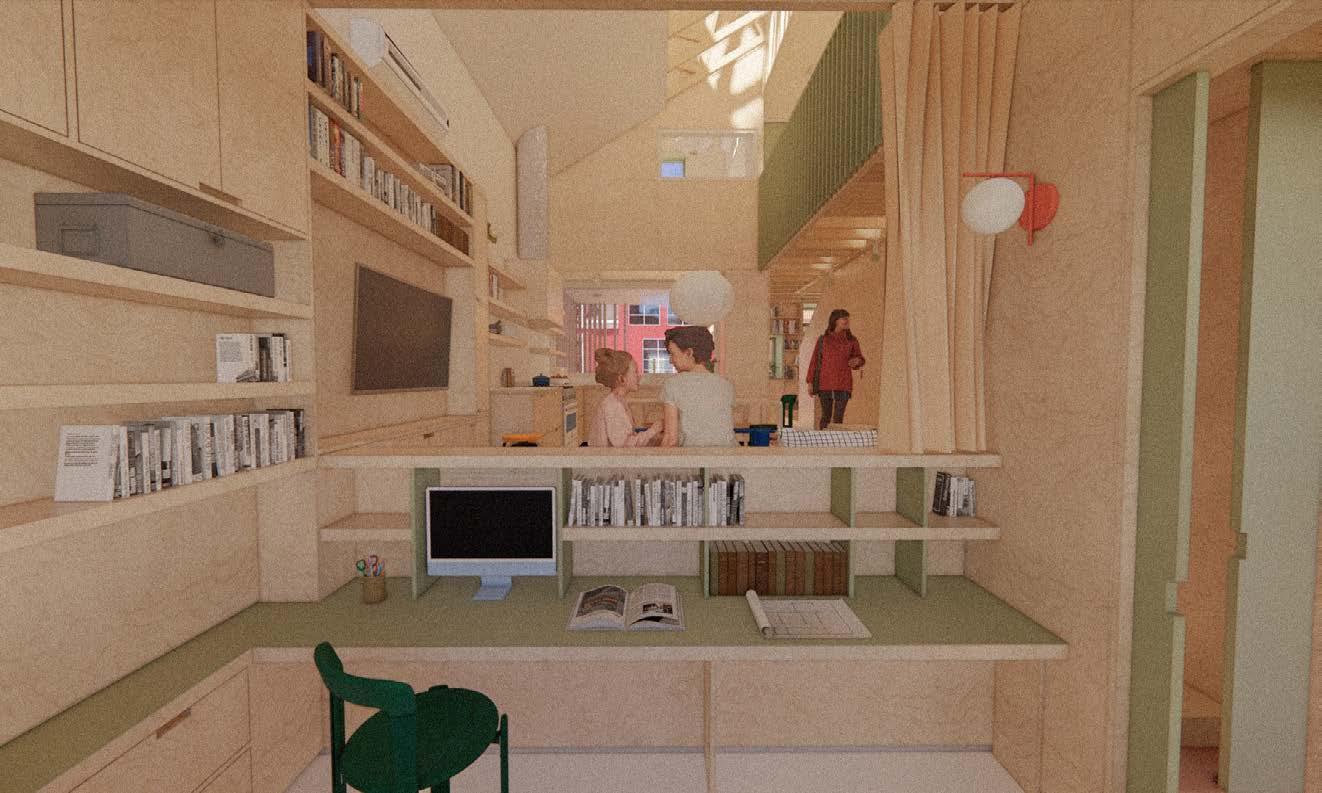
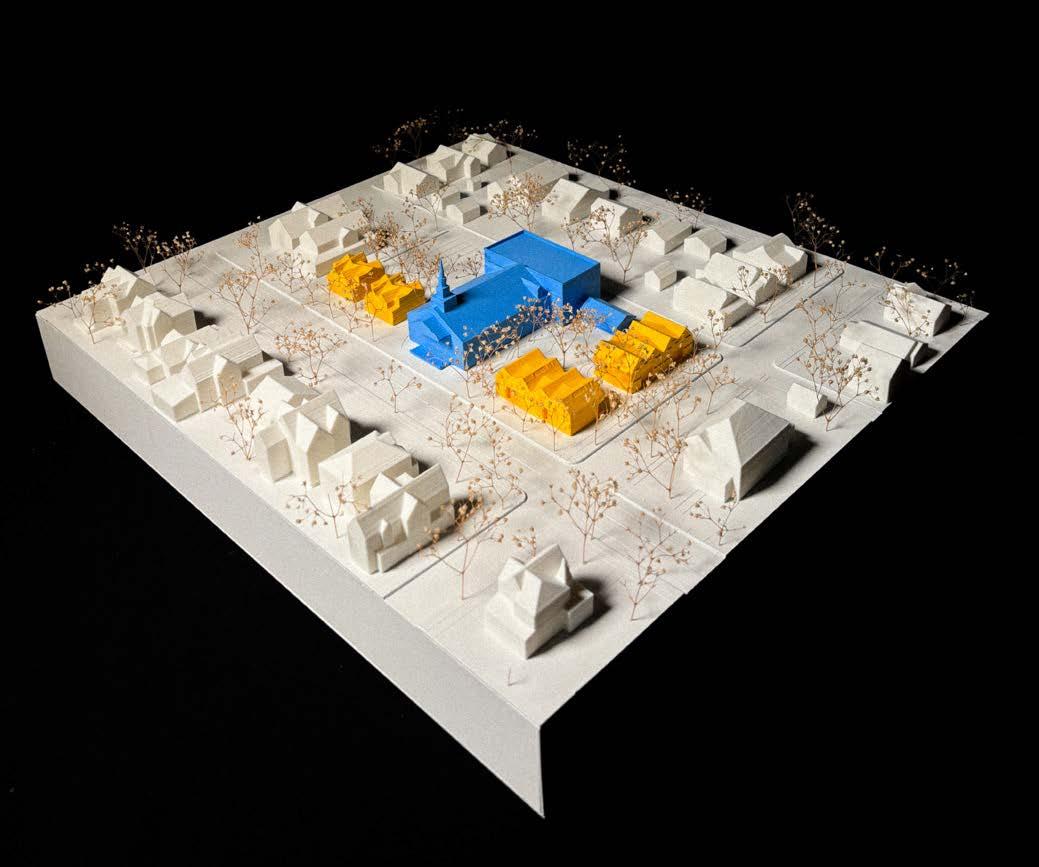
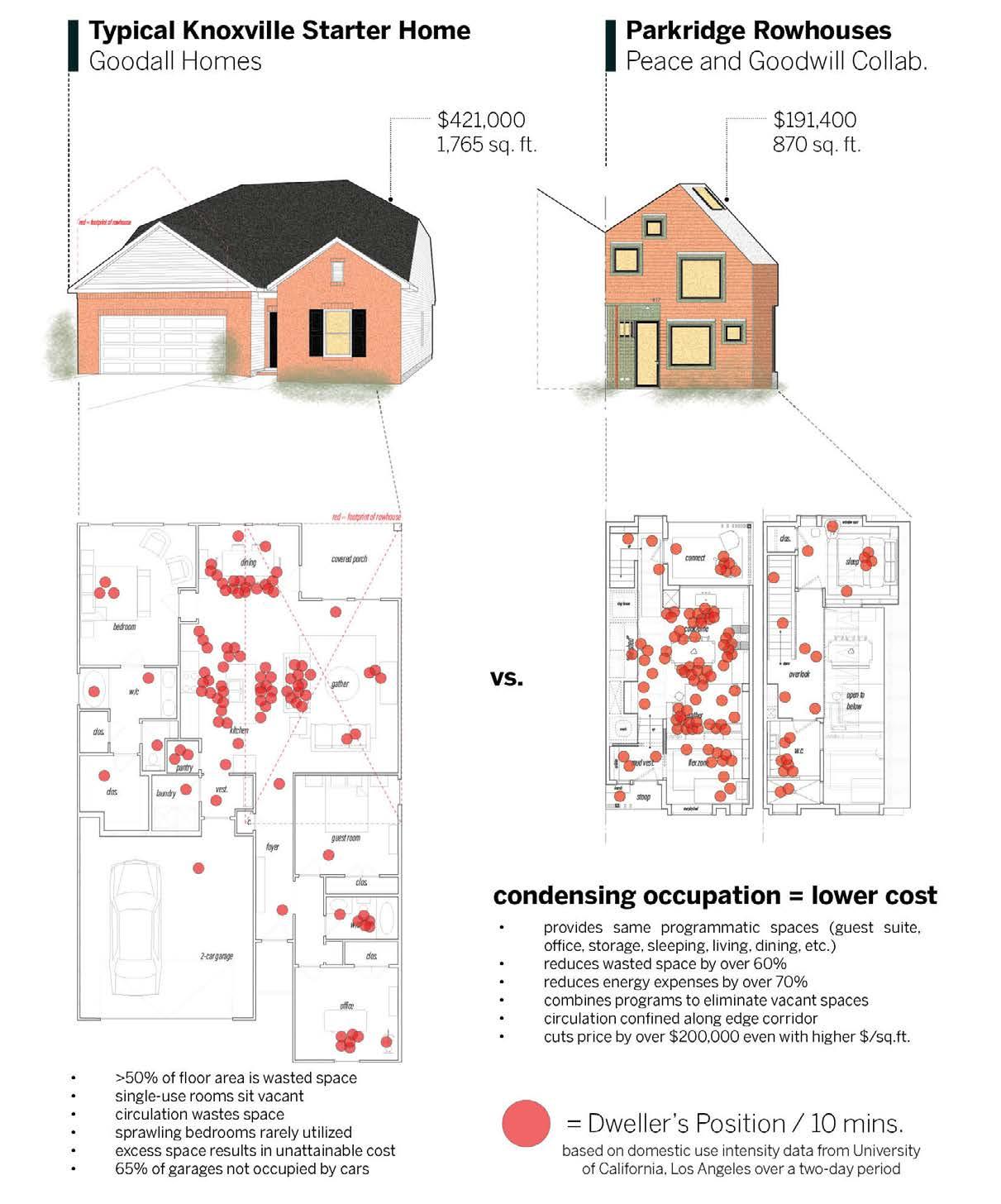
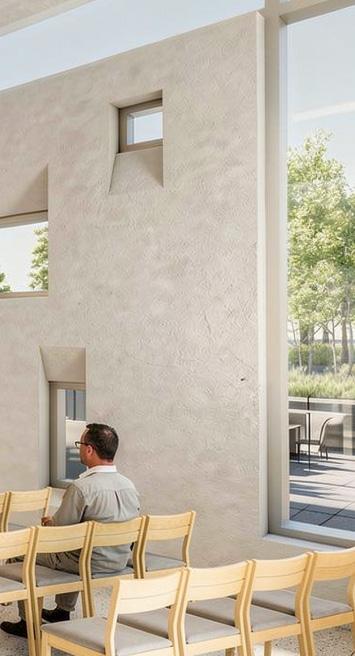
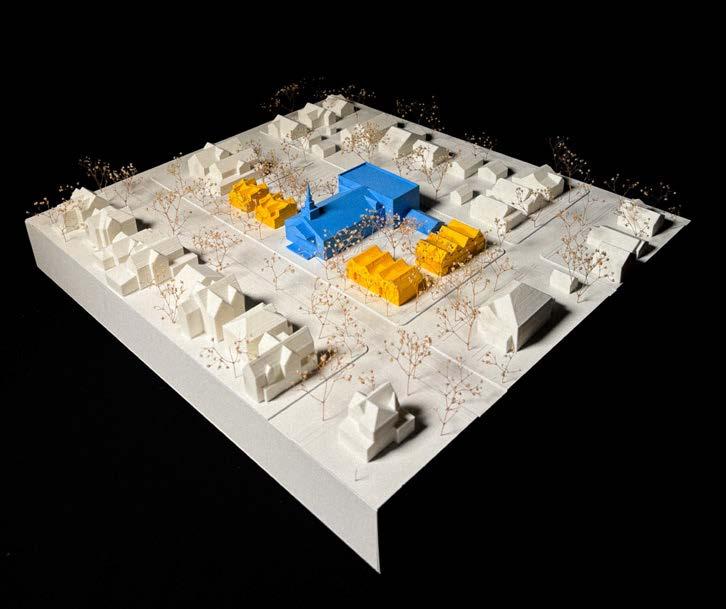
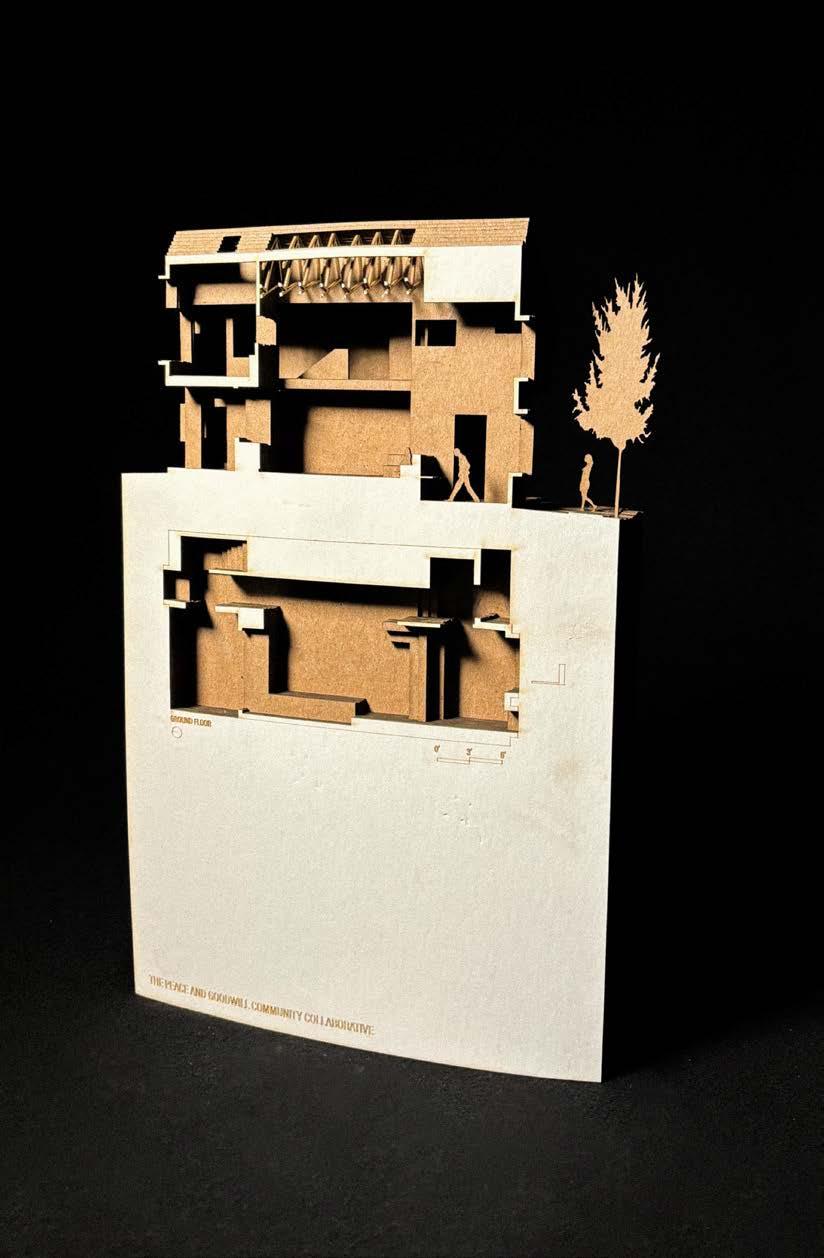
The peace and goodwill community collaborative is part of a research venture between the UT Housing America studio run in partnership with Professor Tricia Stuth, FAIA, her acclaimed practice, CURB, and the city of Knoxville government. The project is inspired by the Nehemiah Project, a non-profit housing model. The intent was to explore how Churches in Knoxville can develop their vacant land into missing middle housing to meet the enormous housing demand facing Knoxville and many other sun-belt cities today. The Peace and Goodwill collaborative specifically proposes an implementation in Parkridge, a former streetcar neighborhood of Knoxville, on the unused land portions of the Park Lane Baptist Church.
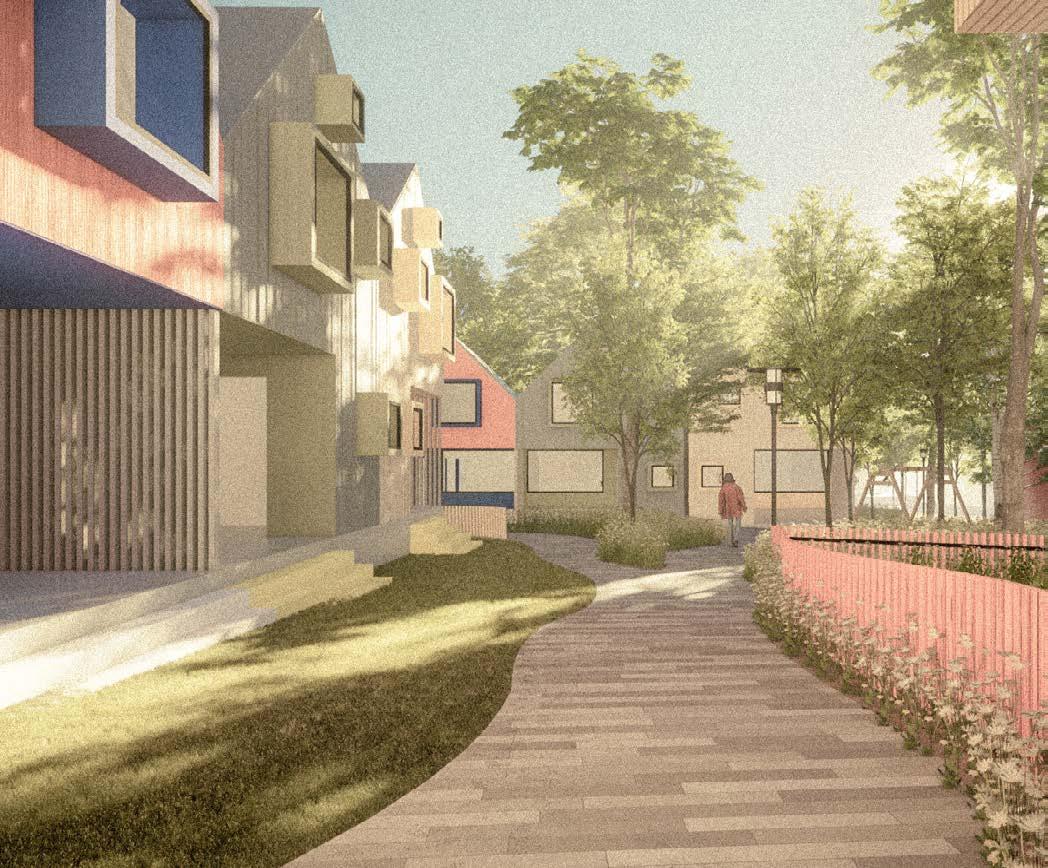
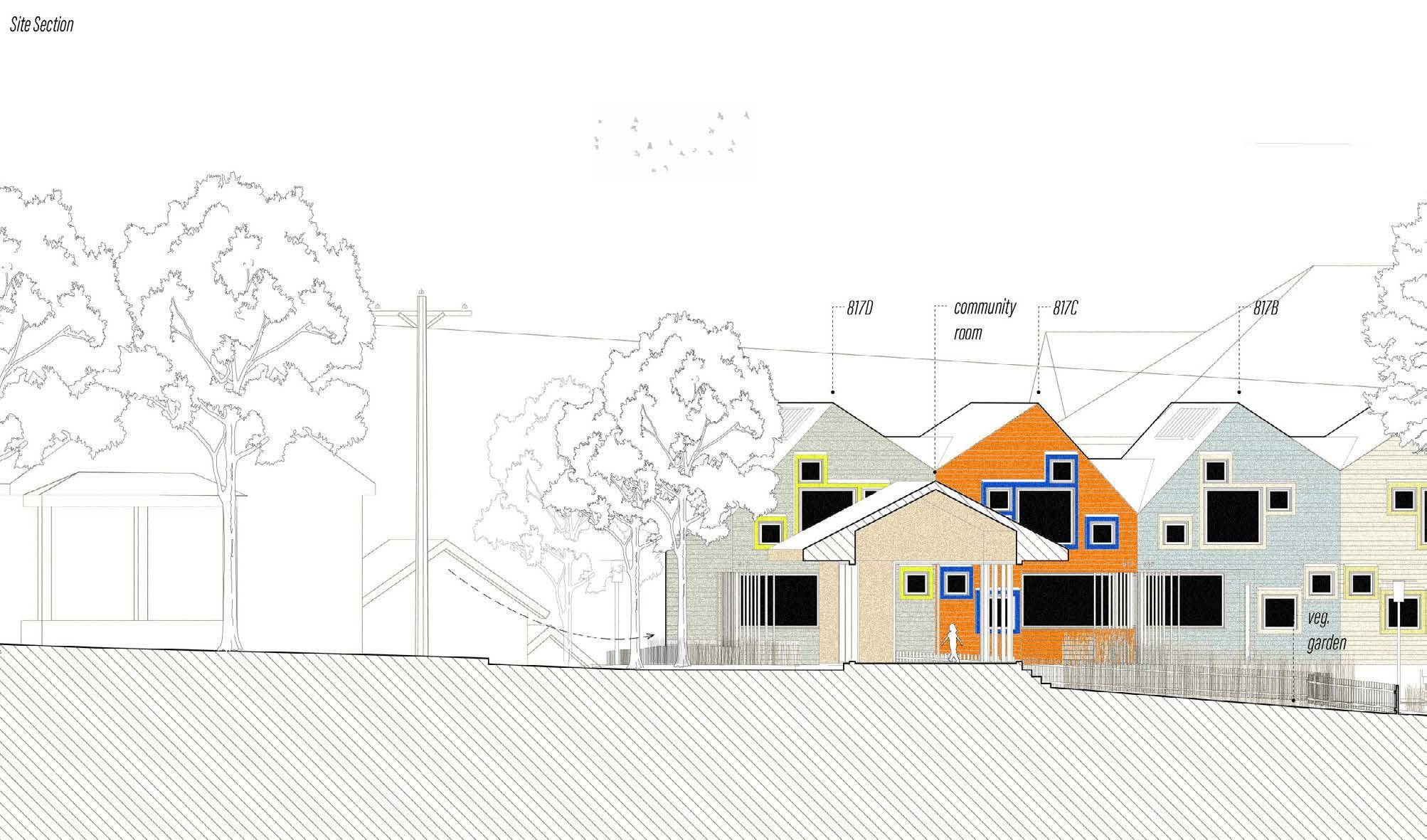
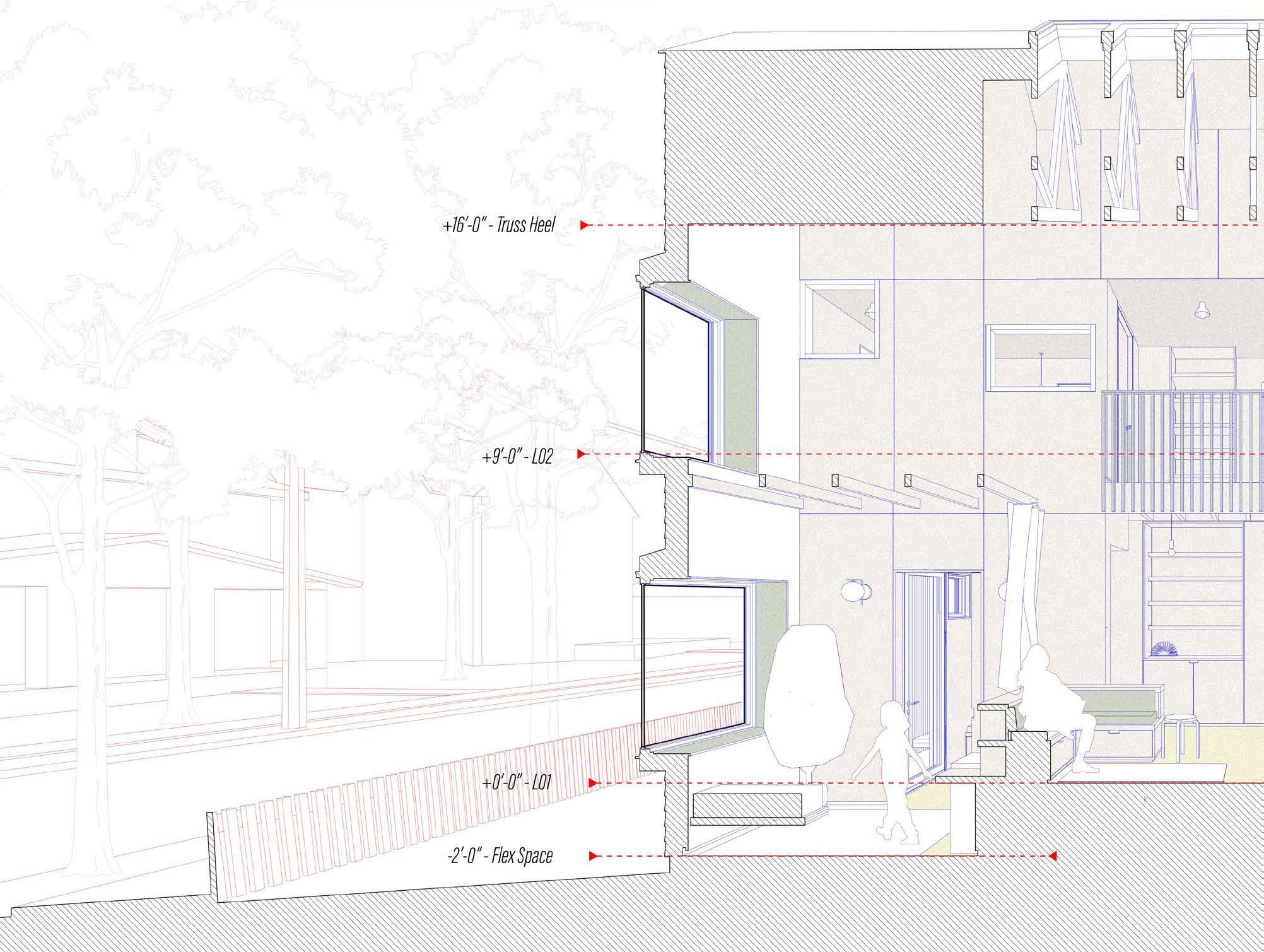
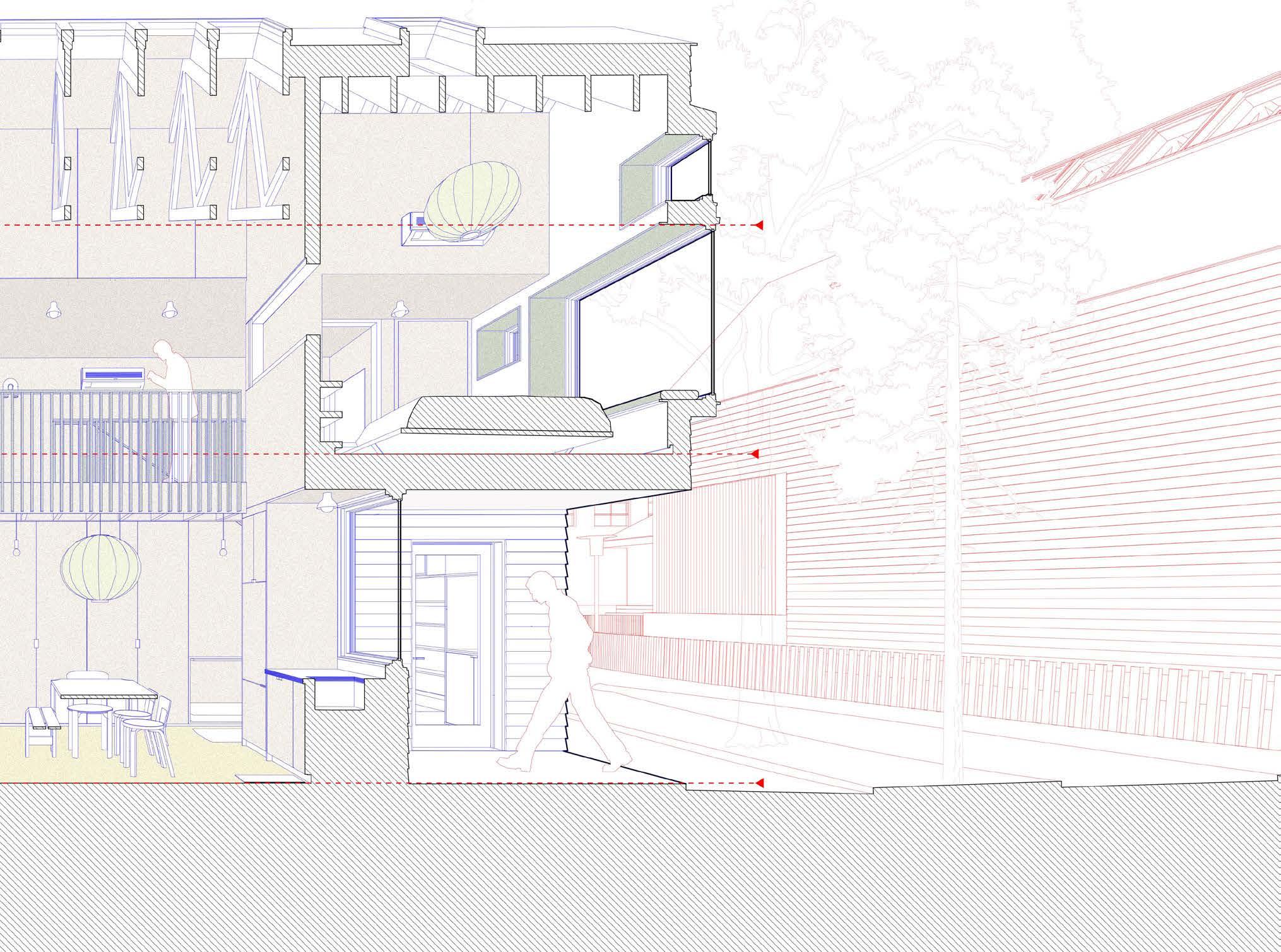
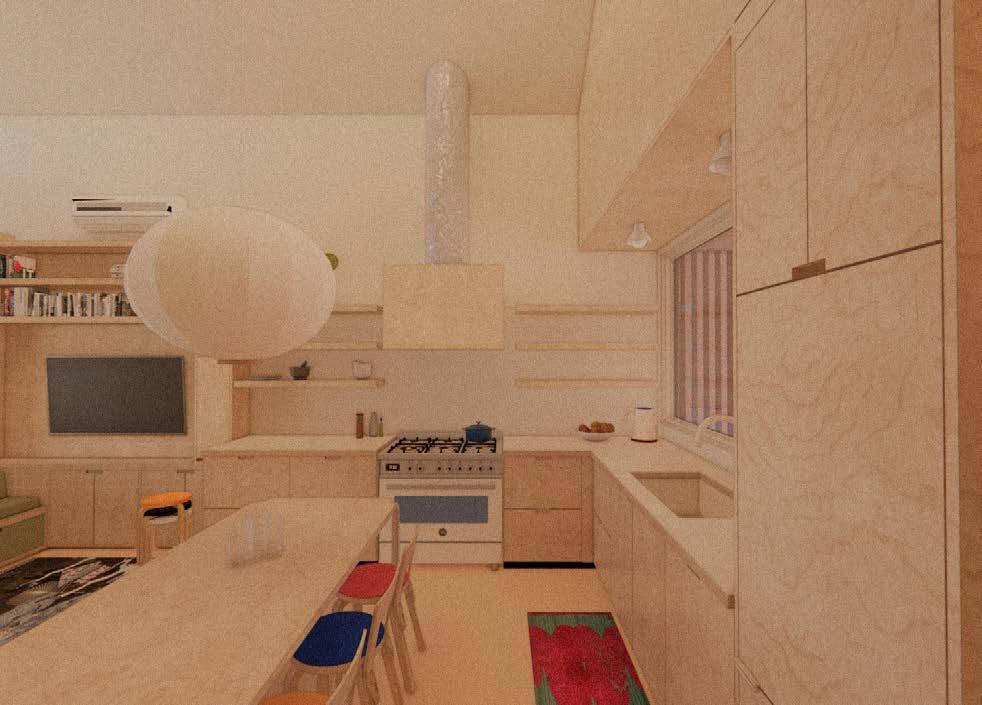
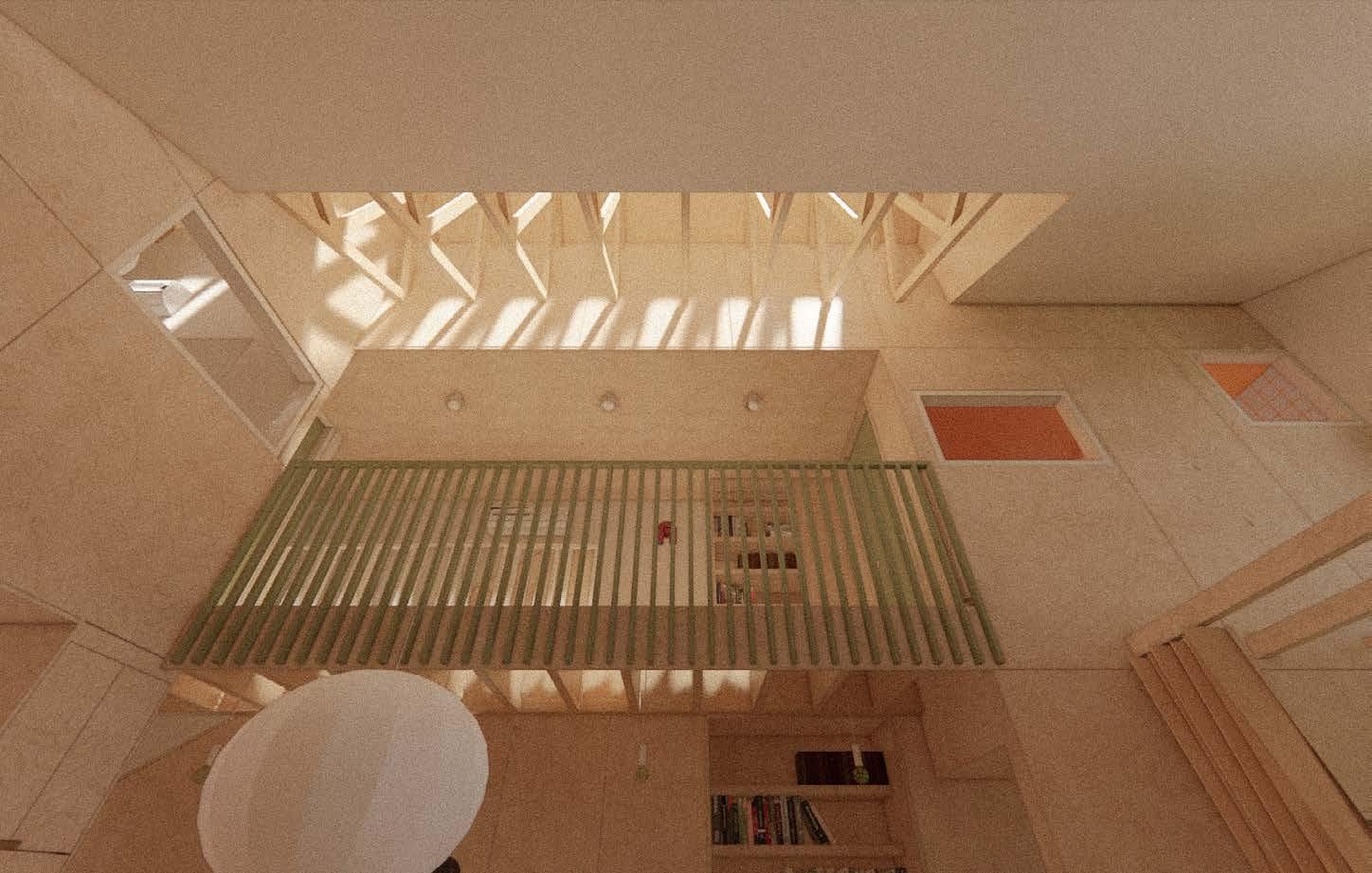
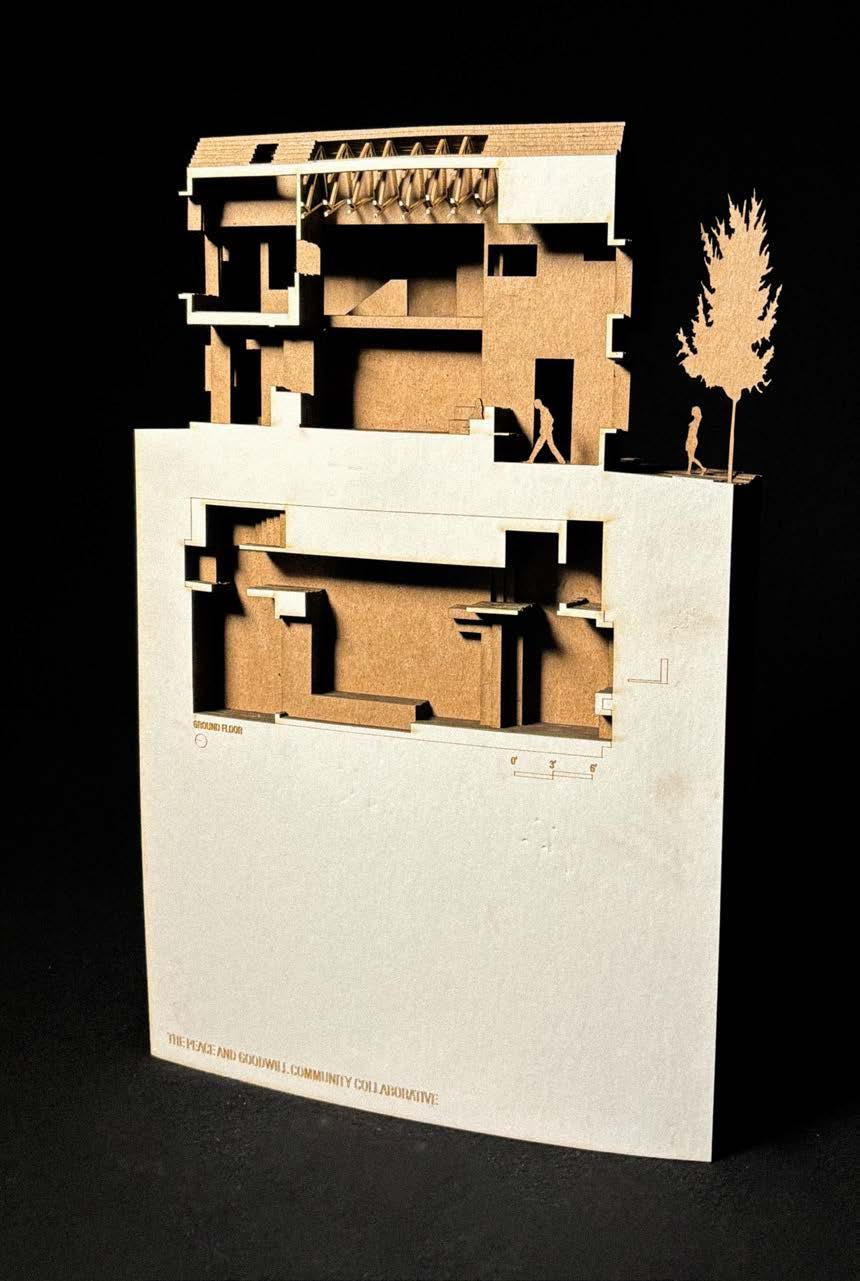
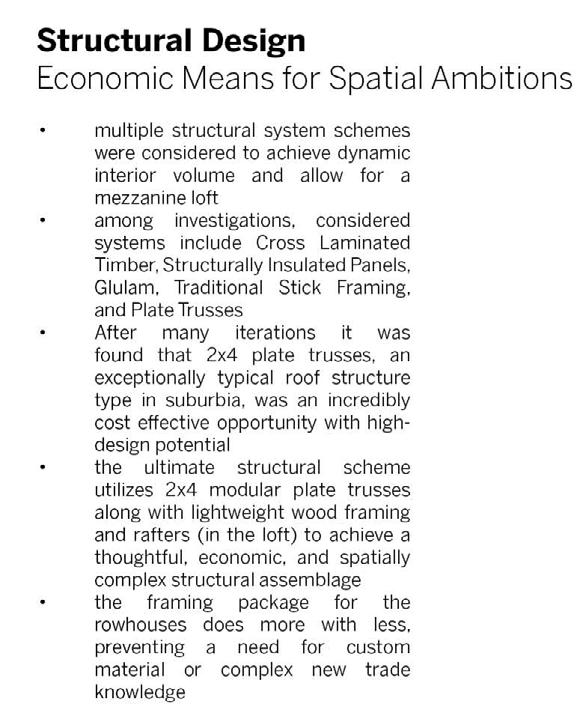
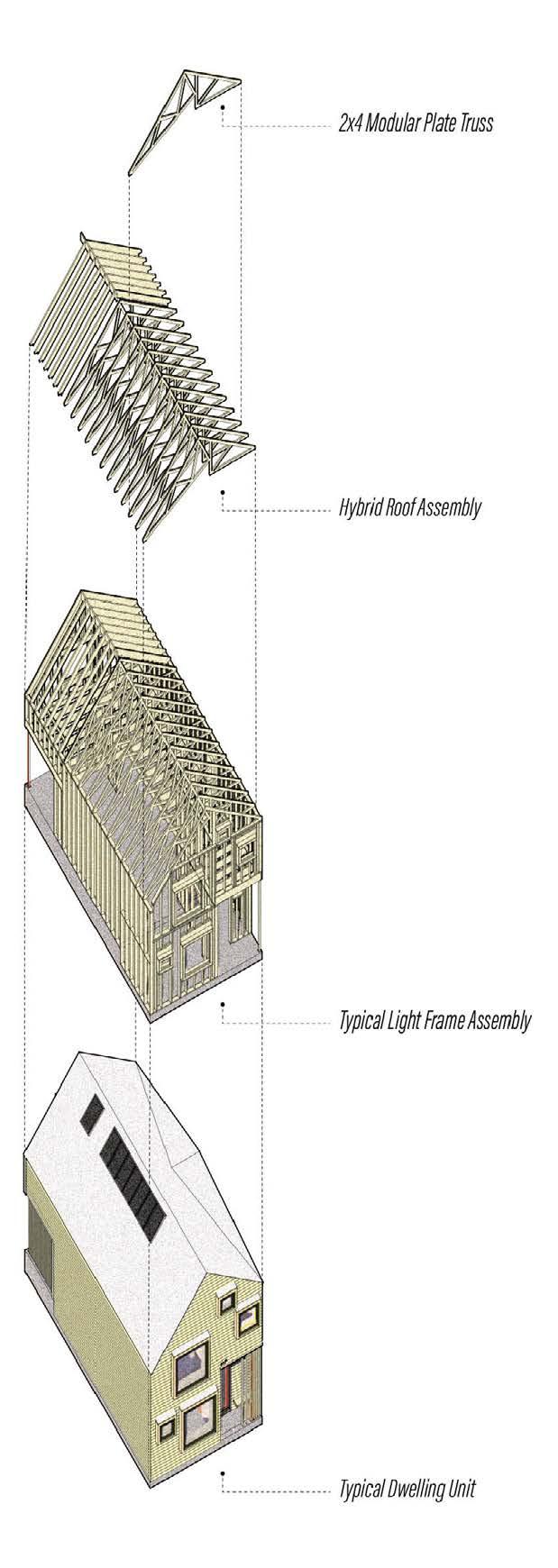
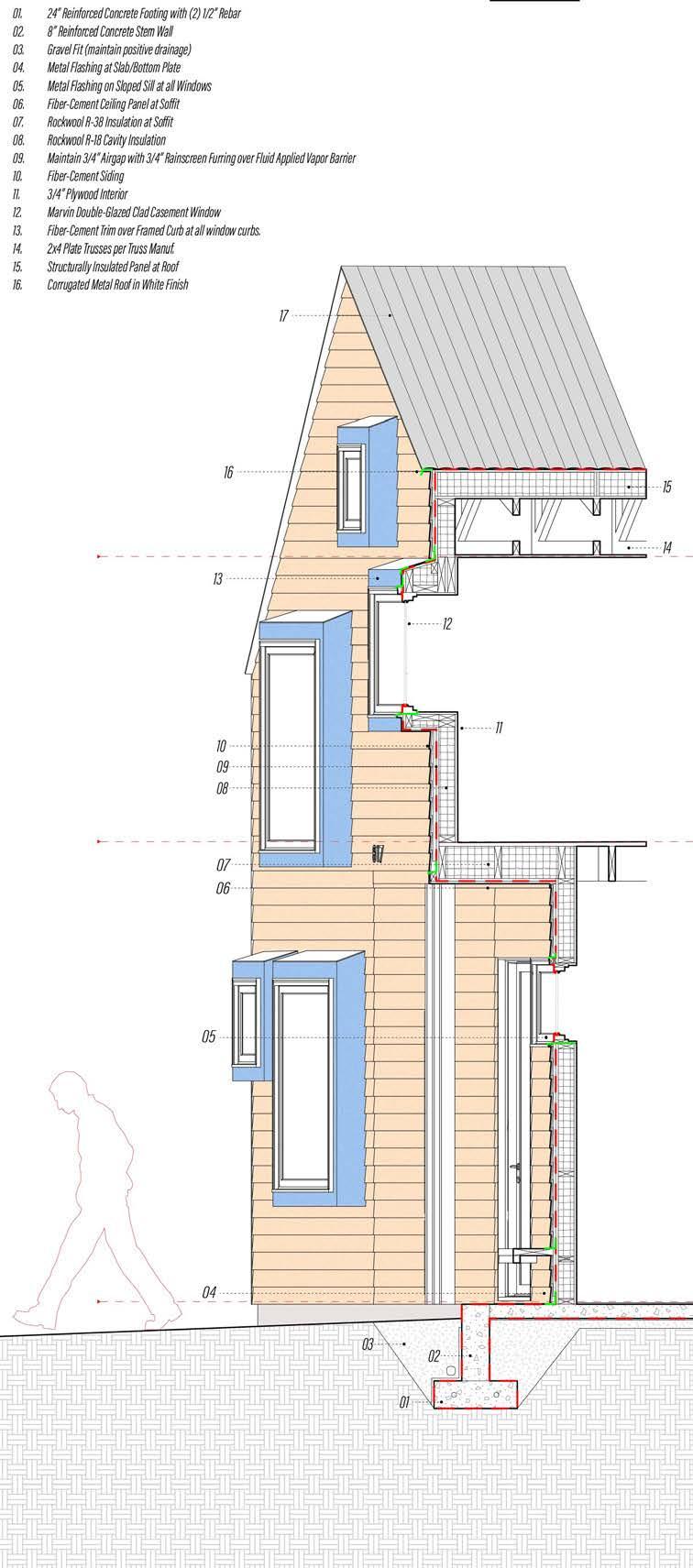
The project proposes 8 rowhouses and 2 duplexes to be developed by the local church that will result in 8 below-market rate housing units, and four church-owned and rented housing units in addition to addressing issues of shade and food scarcity through a community agriculture garden and community event space. The units are developed with single-person households in mind ( a growing trend) and feature flexible plans designed to maximize their space through strategically designed flexible zones and casework that allow the dwellings to be modified, used as makeshift storefronts, home offices, guest rooms, workshops and more, in the spirit of the surrounding neighborhood kit houses. Ultimately, the project aims to create community resilience by keeping development in the community and for the community, to create housing that meets direct needs, to invite the community in, and to serve as a model for other religious institutions to develop their own land in the future.
The connection between this project and the Bento House competition entry — completed two years later — is not coincidental. Both emerge from the same sustained inquiry into how missing middle housing can be designed with genuine specificity to place, community, and lived experience. That continuity is something I continue to develop.
Professor: Tricia Stuth, FAIA, Partner, CURB
University of Tennessee, Knoxville
Year: 2023
Rowhouses
Wander Paths
Garden Community Room
Duplexes
interior courtyard. perspective.
community agriculture garden facing rowhouses. site section.
rowhouse dwelling. flex space looking towards kitchen.
rowhouse dwelling. kitchen.
rowhouse dwelling. looking up towards ceiling apertures.
plan. physical model. perspective.
rowhouse dwelling unit. longitudinal section model.
Knoxville Central Station
Typology: Transit Station, Urban Garden
Location: The Old City, Knoxville, Tennessee
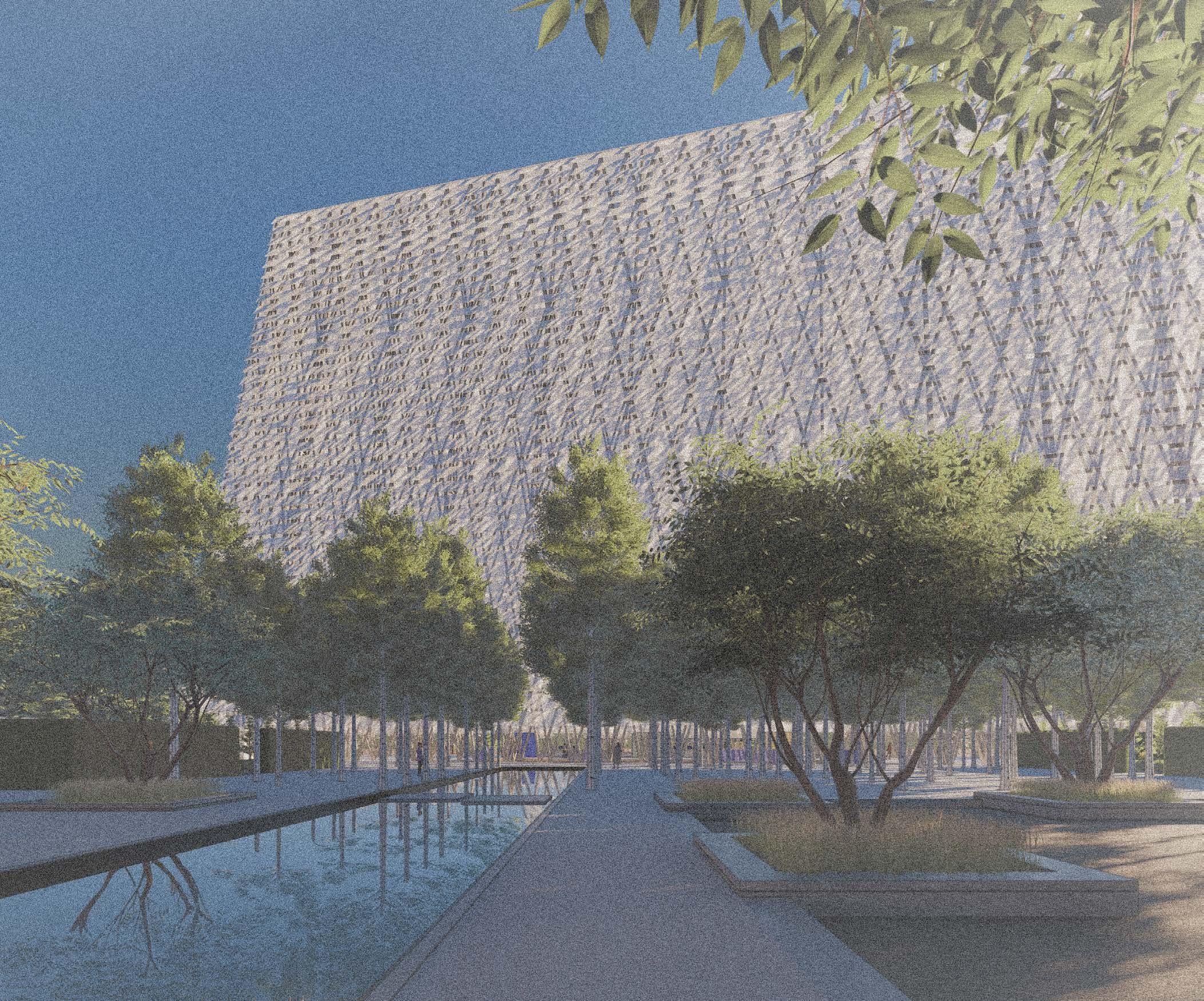
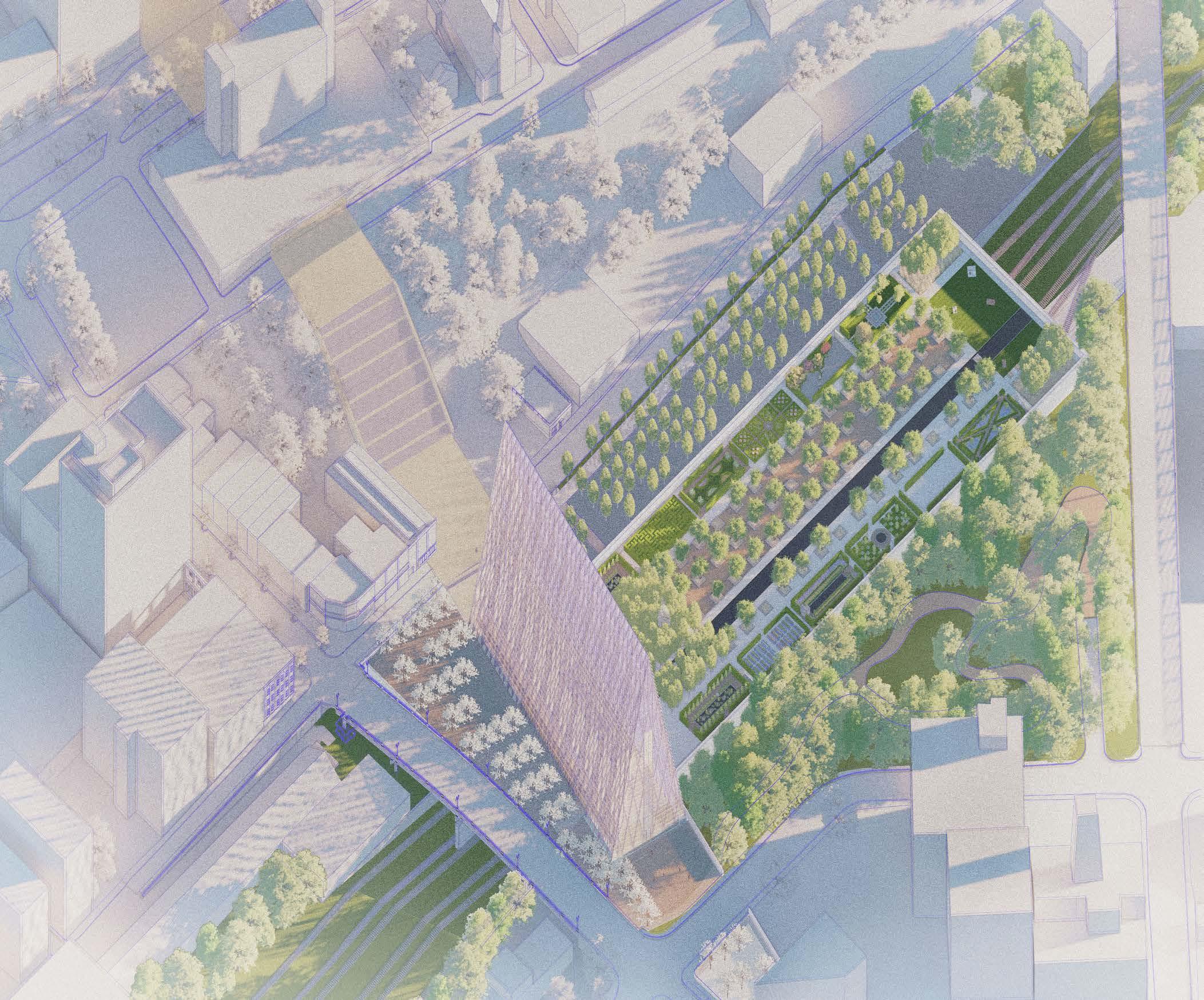
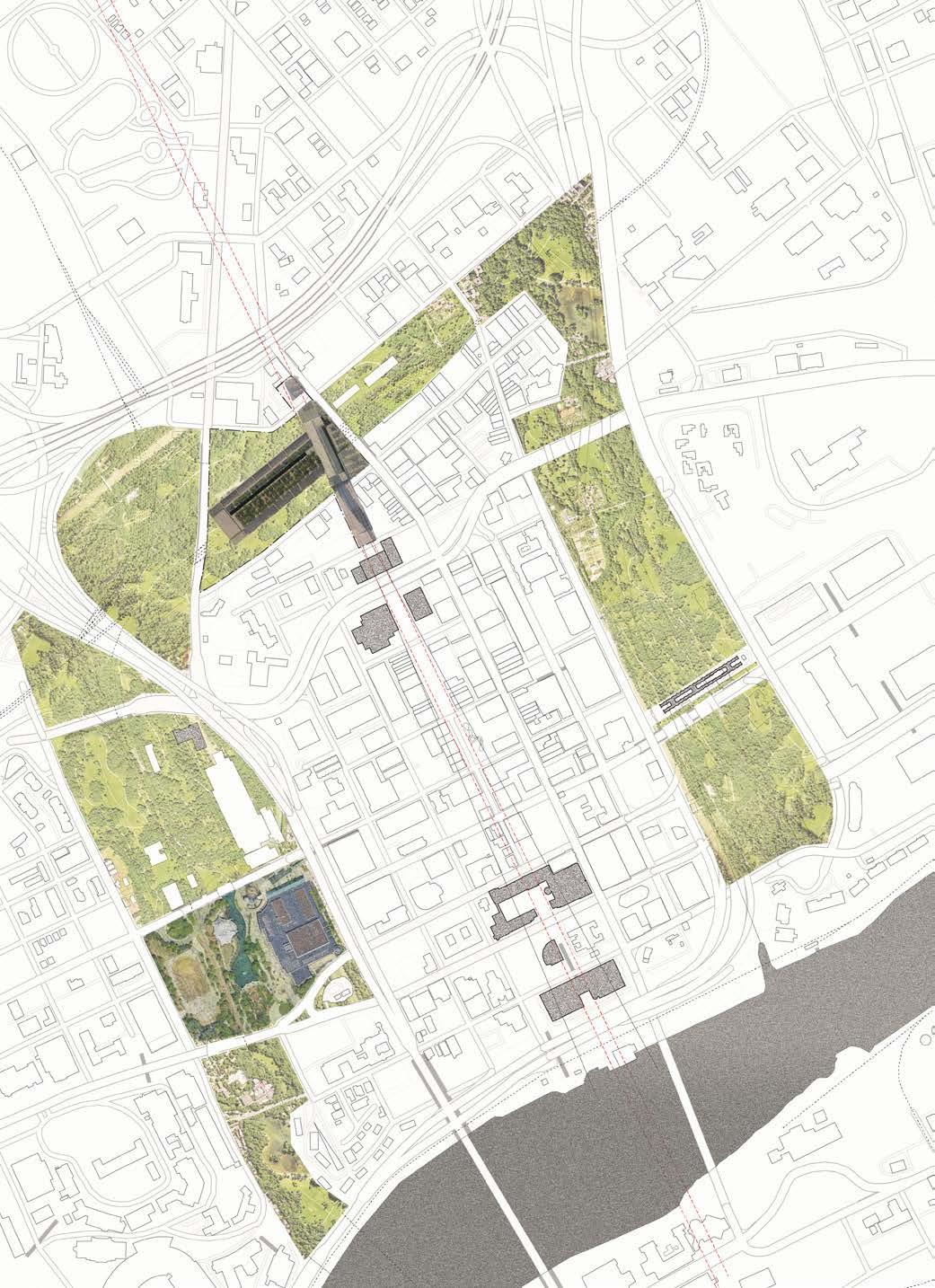
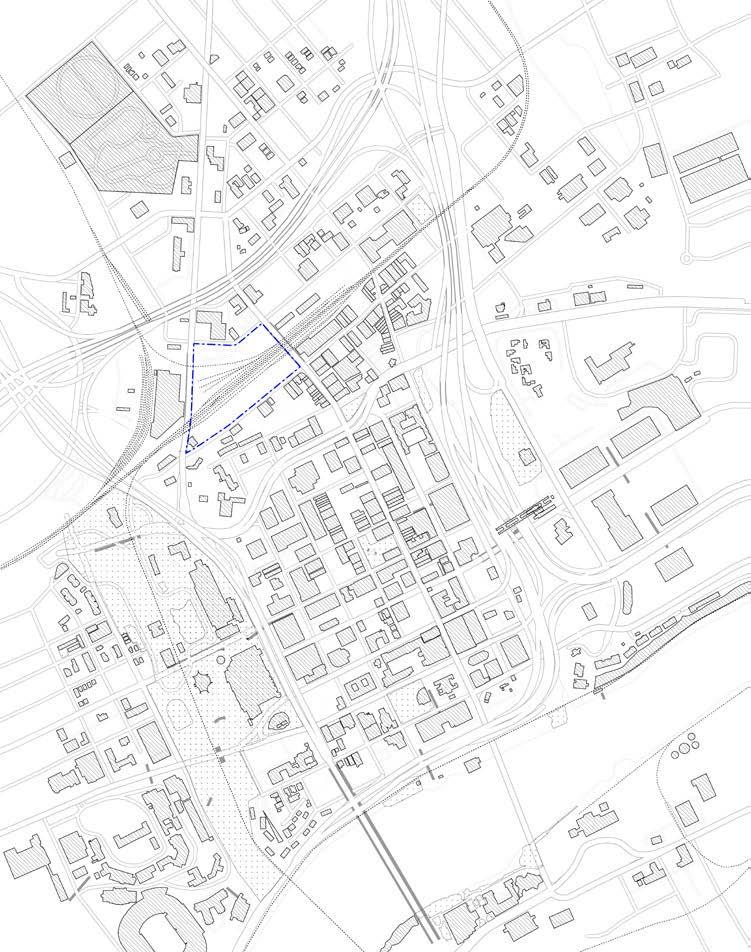
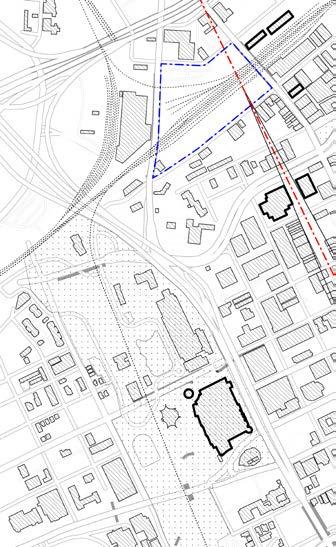
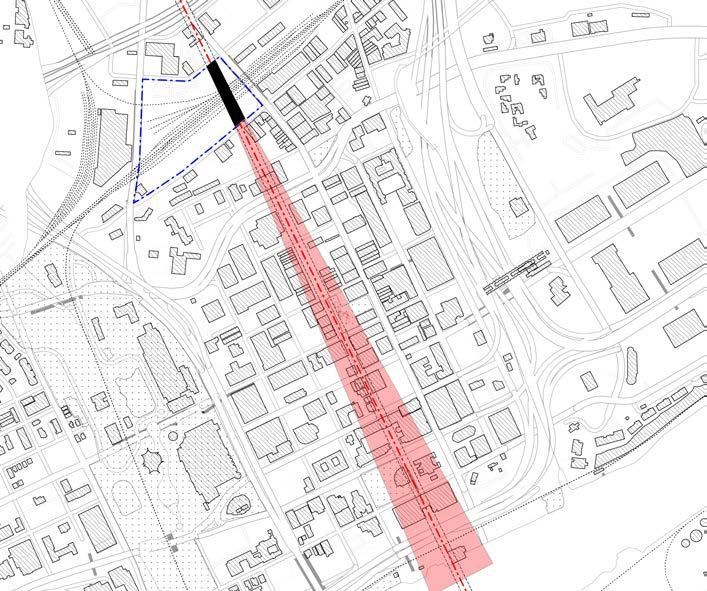
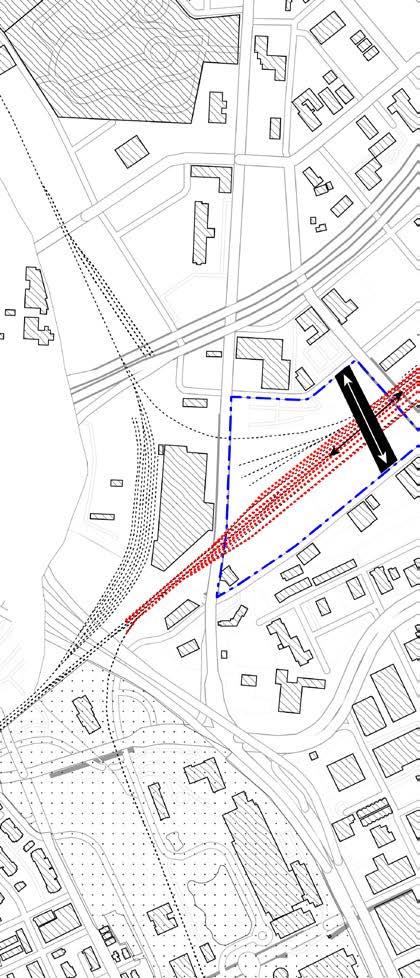
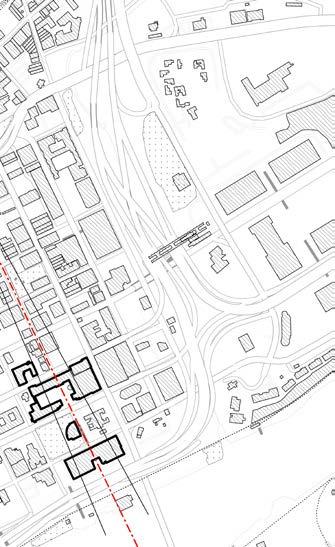
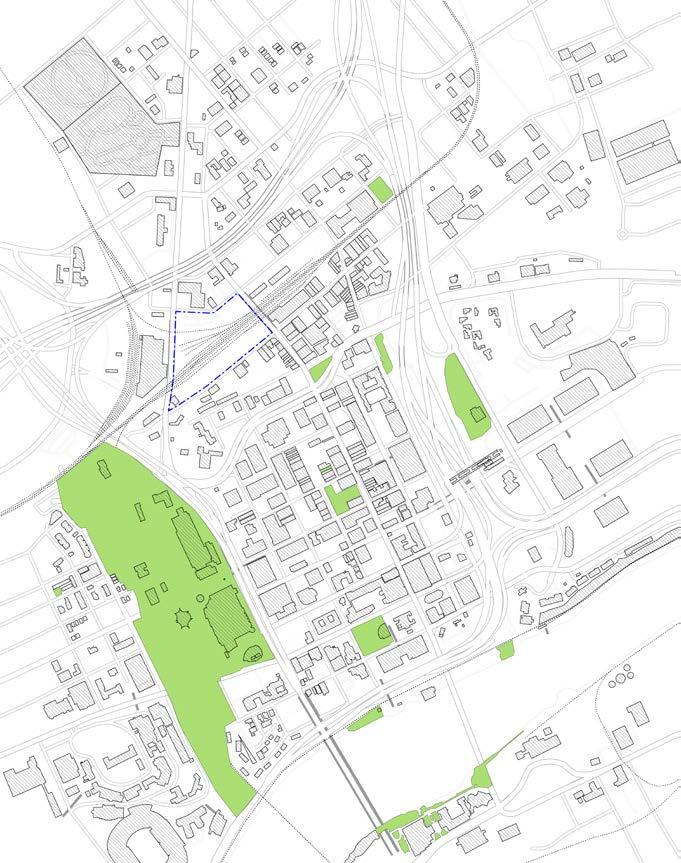
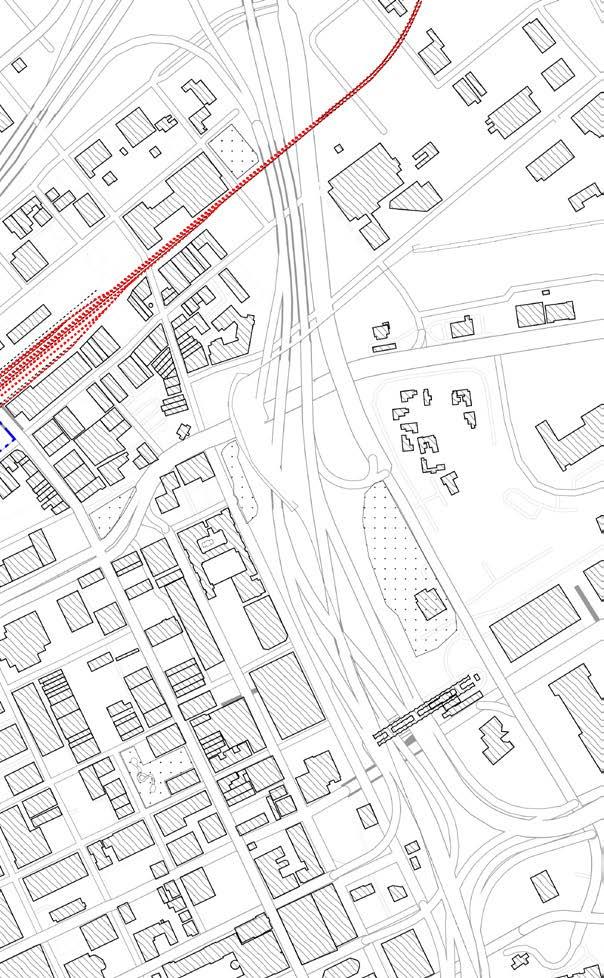
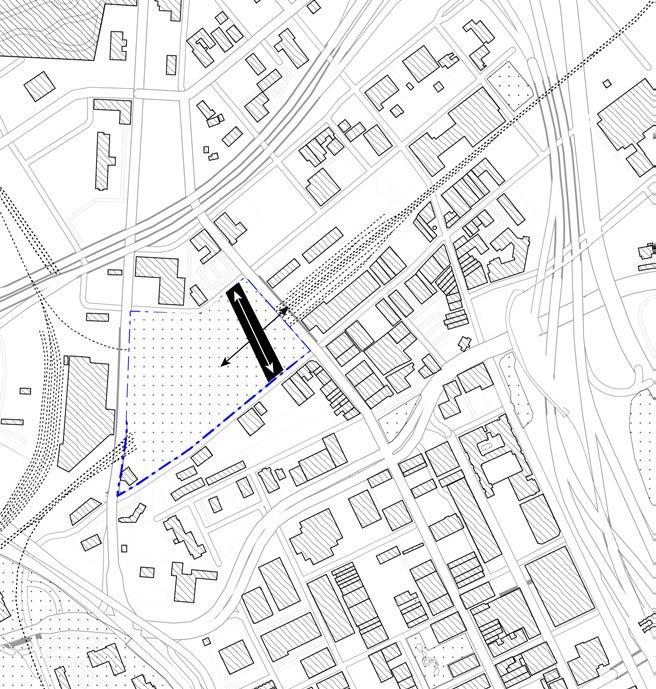
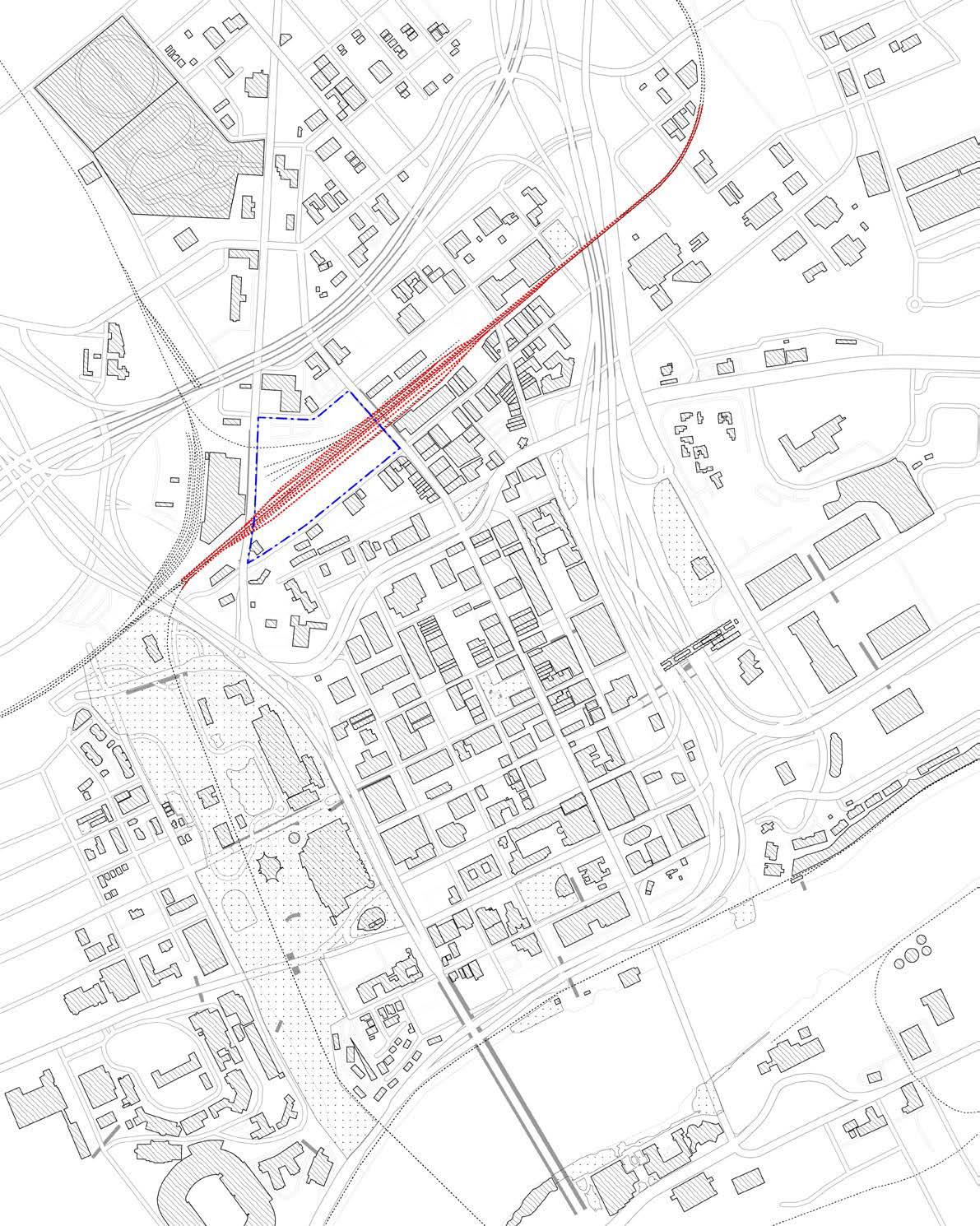
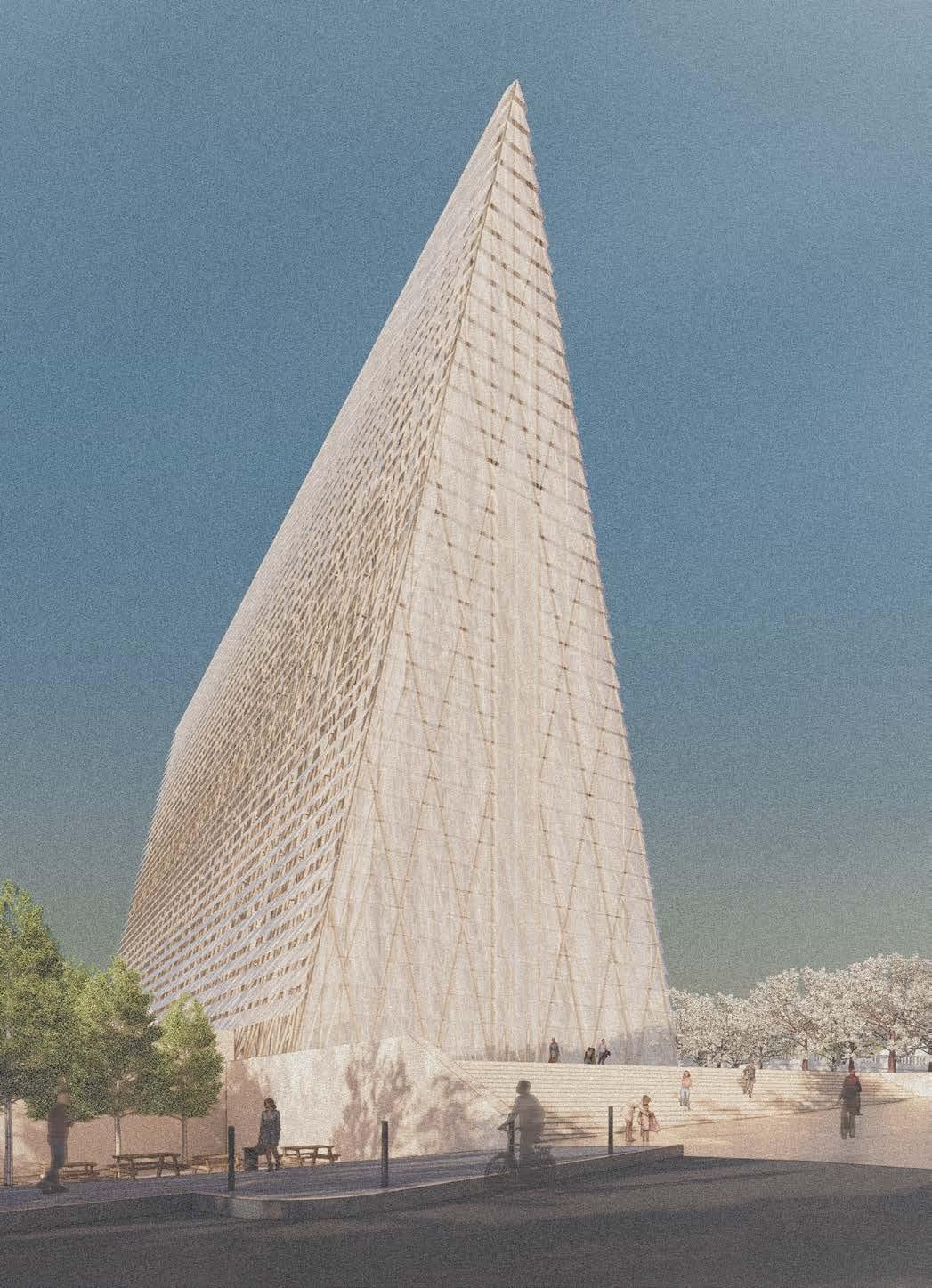
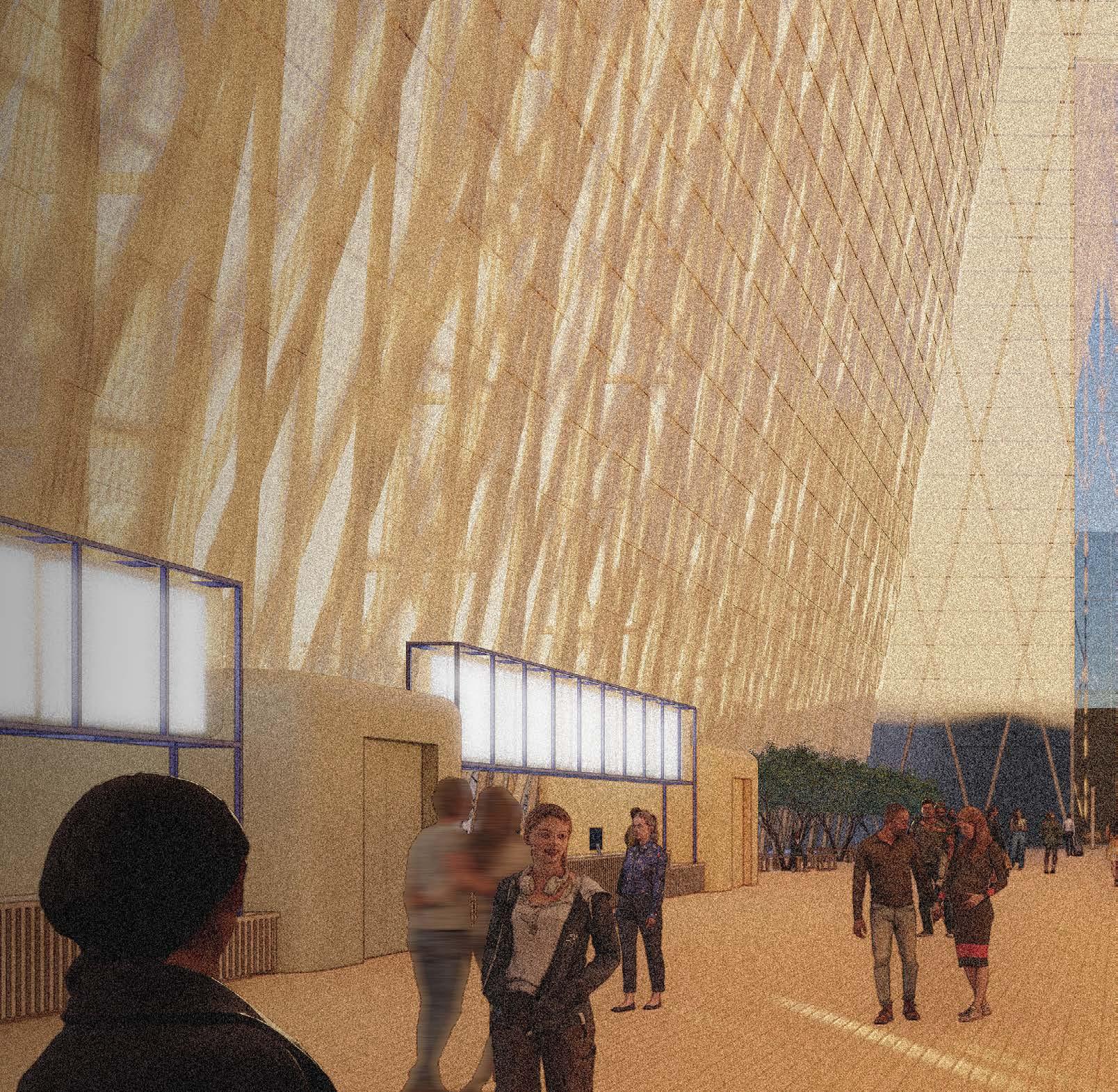
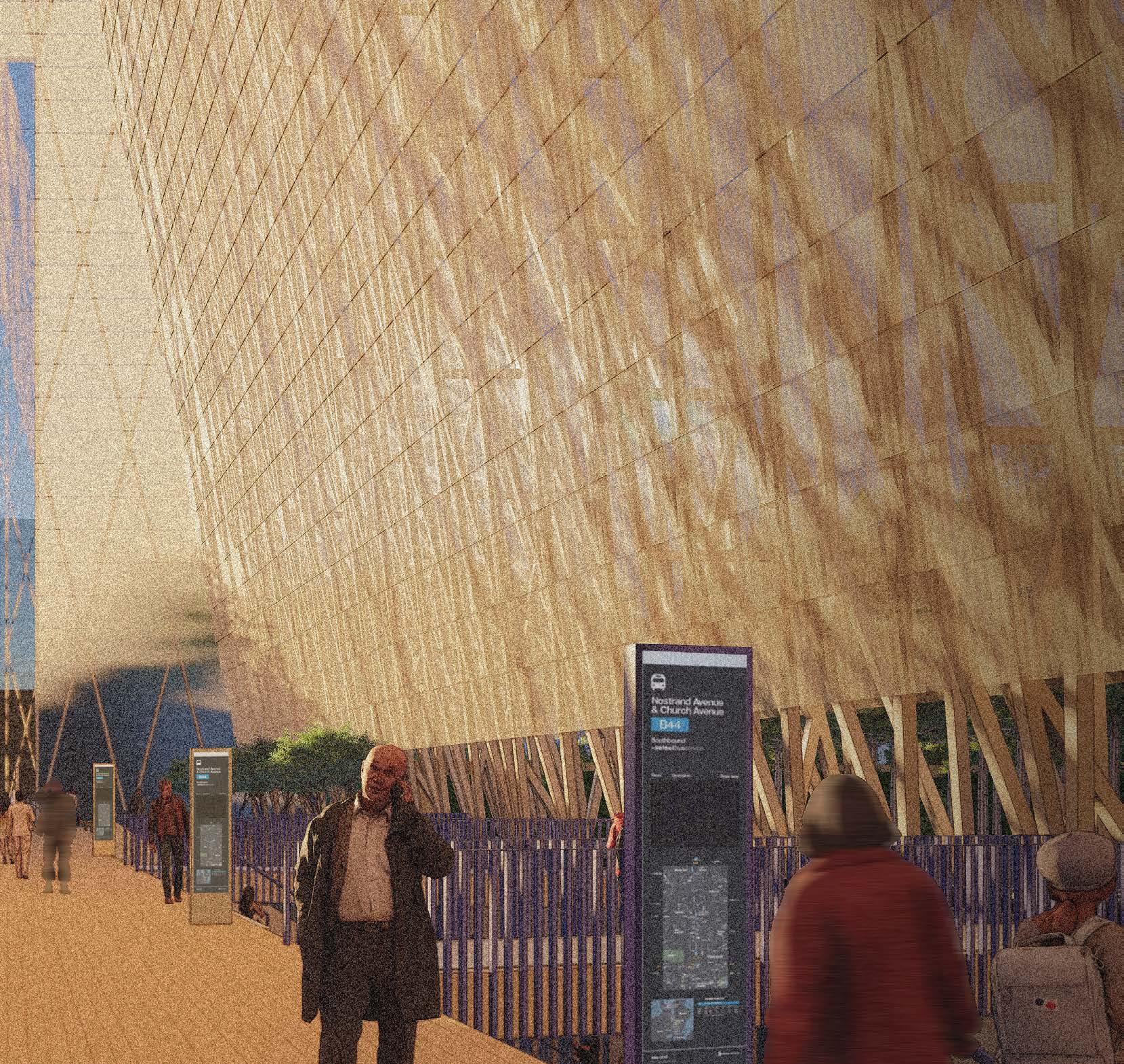
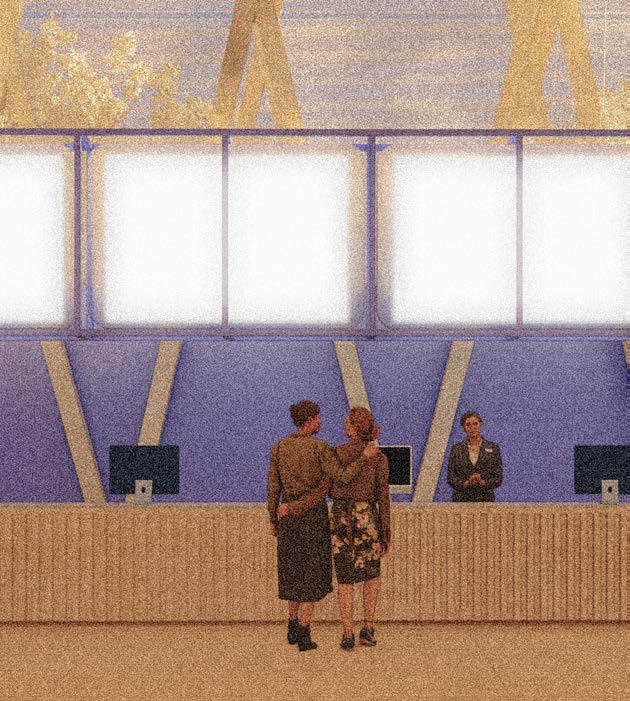
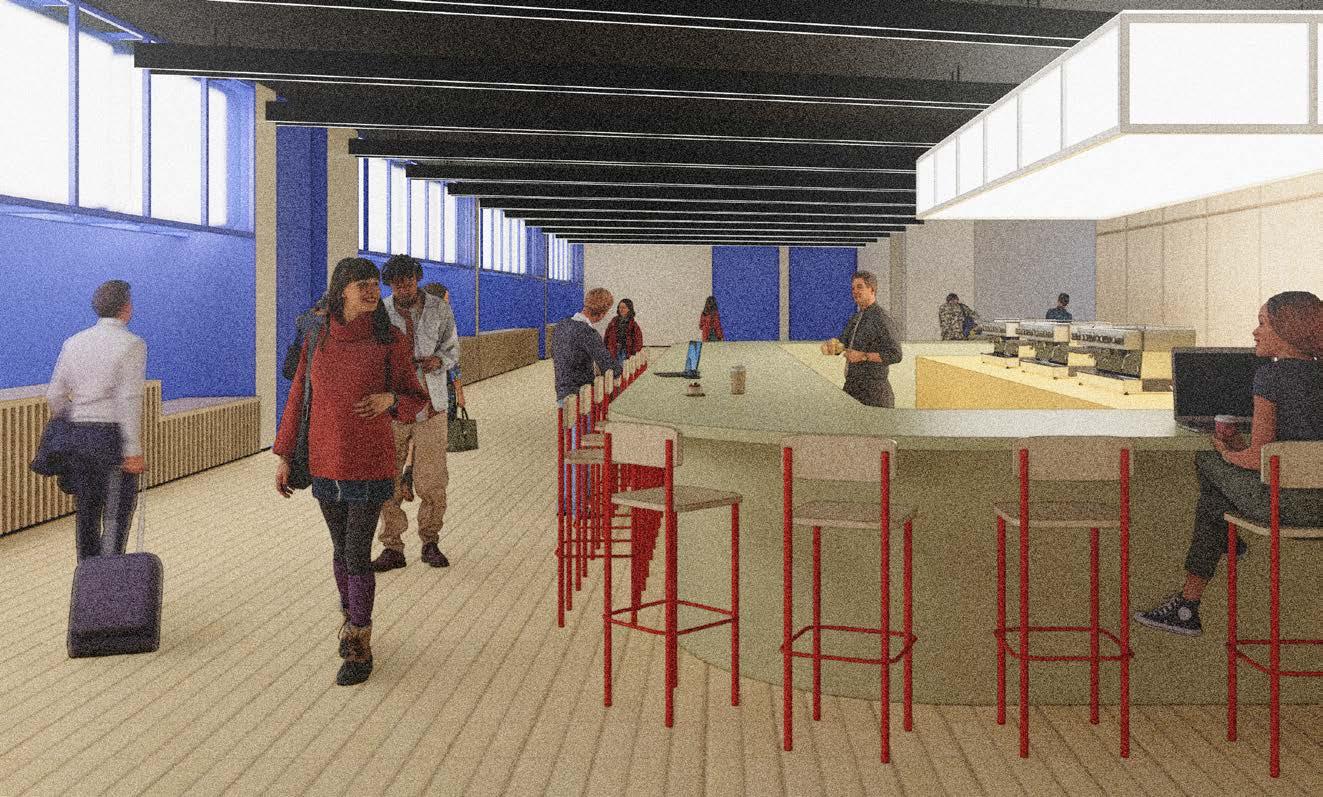
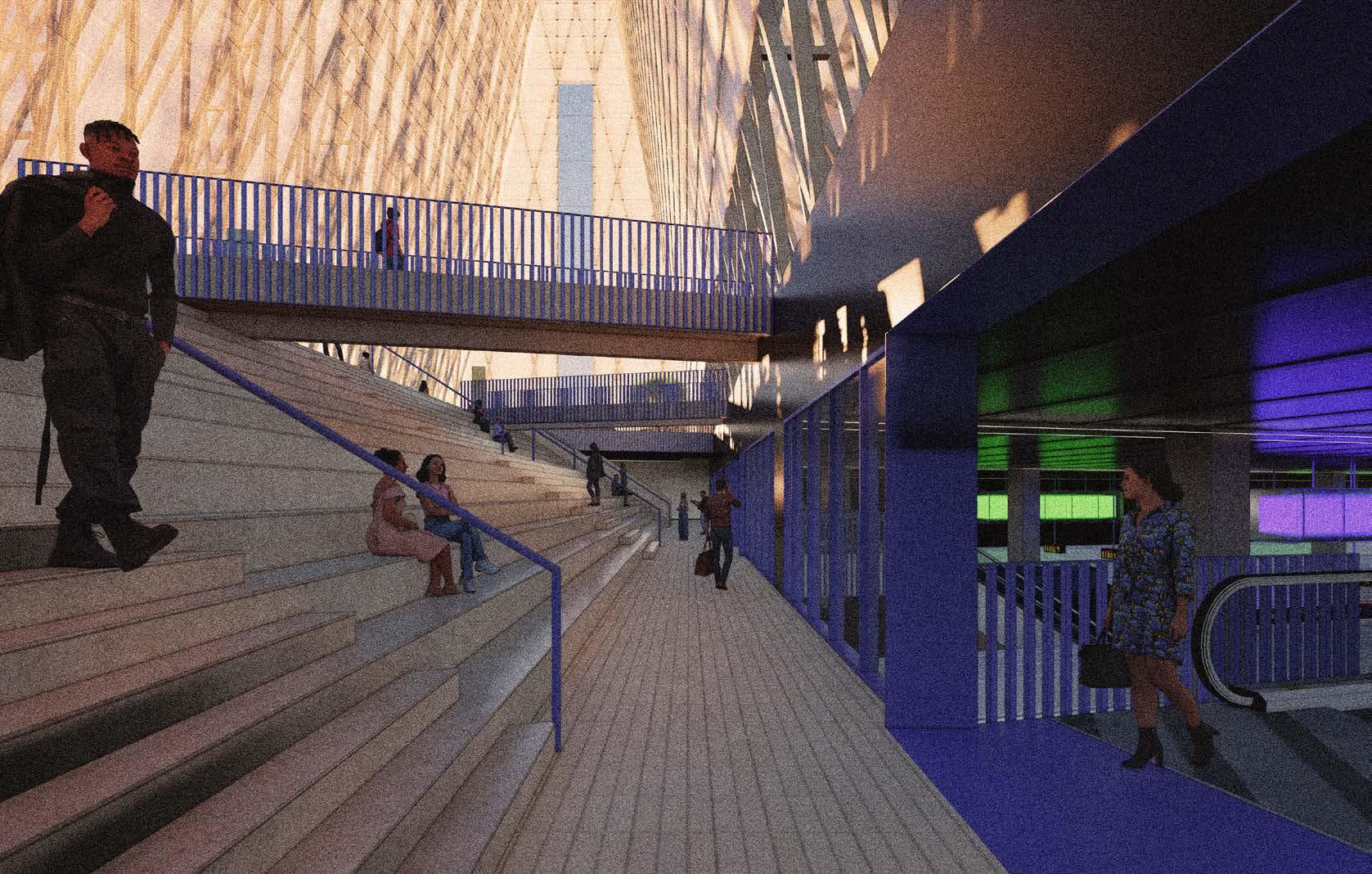
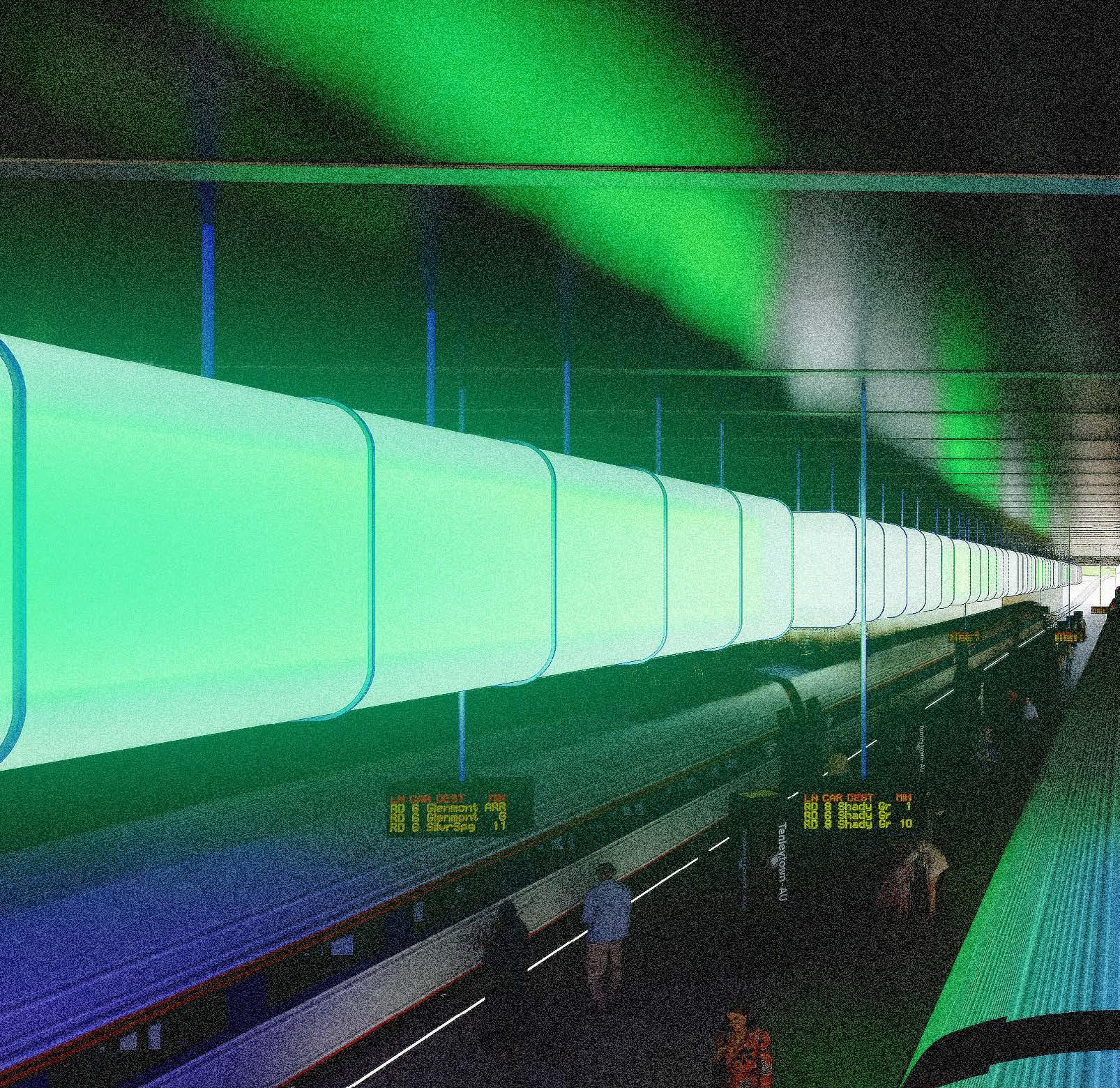
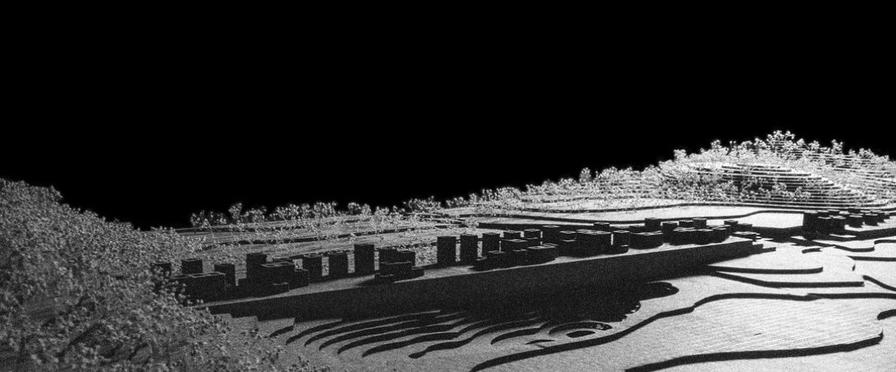
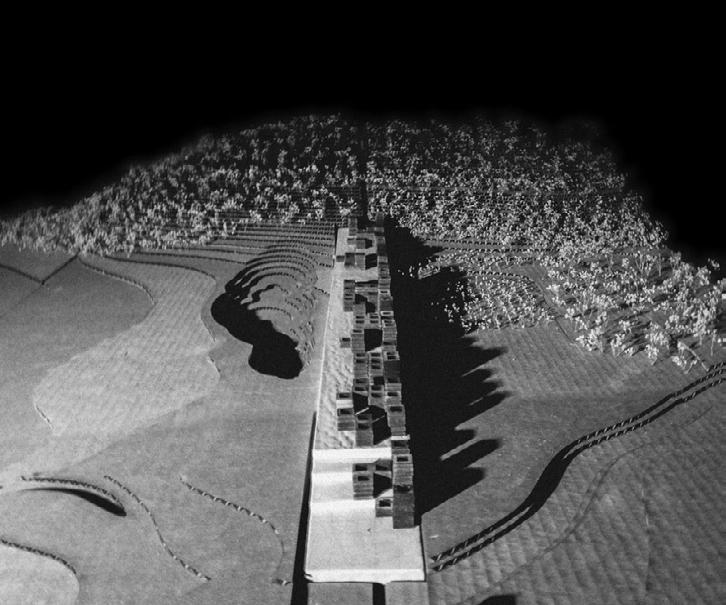
Knoxville Central Station is a speculative proposal for a regional rail hub sited within the former rail yards of Knoxville’s Old City. Developed as an extension of thesis research exploring the future of passenger rail in the Southeastern United States, the project positions infrastructure as civic monument. Anchoring the terminus of the Knoxville Skyline Promenade, the station establishes a new gateway to the city, with eight Amtrak platforms embedded below grade.
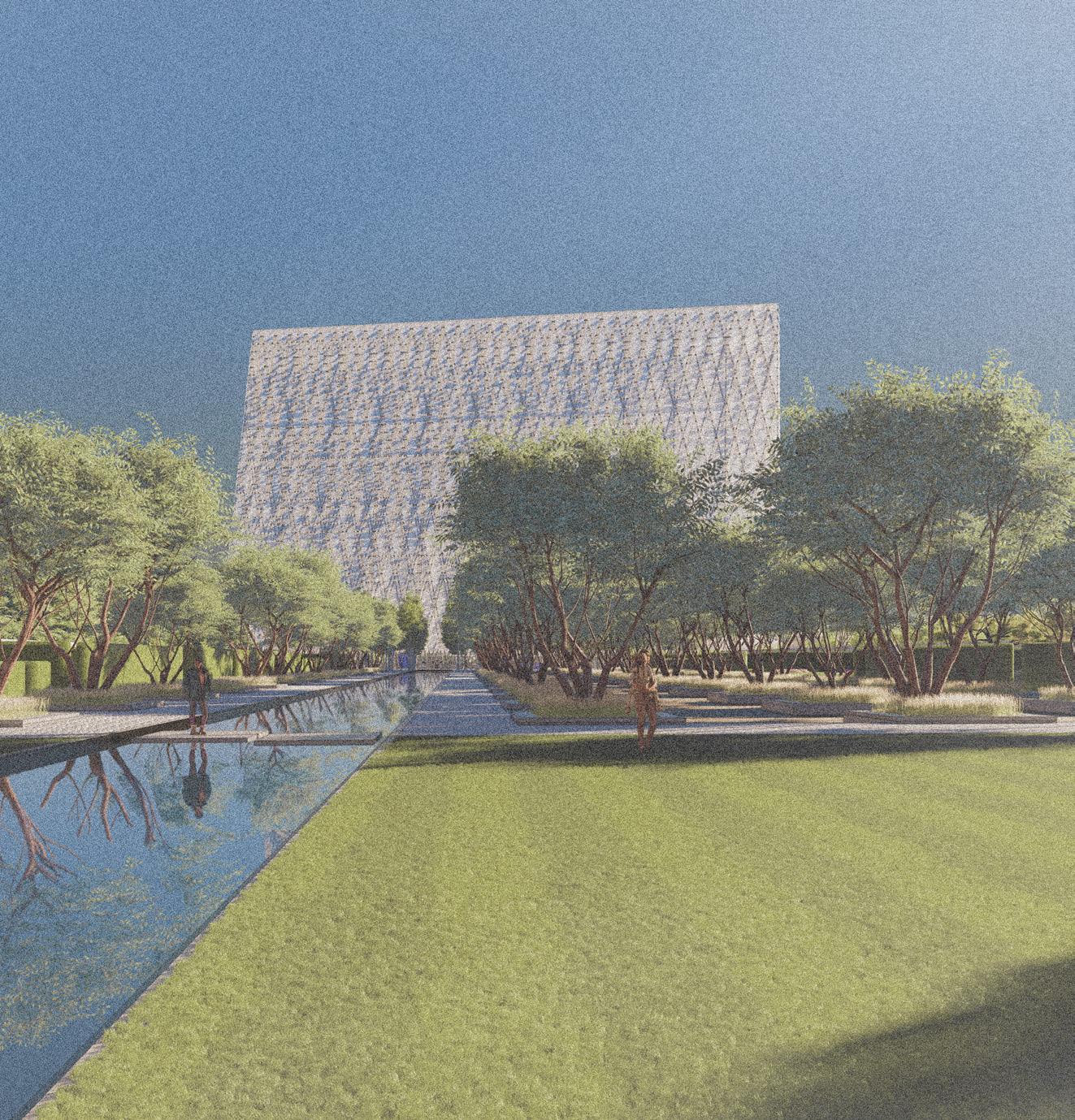
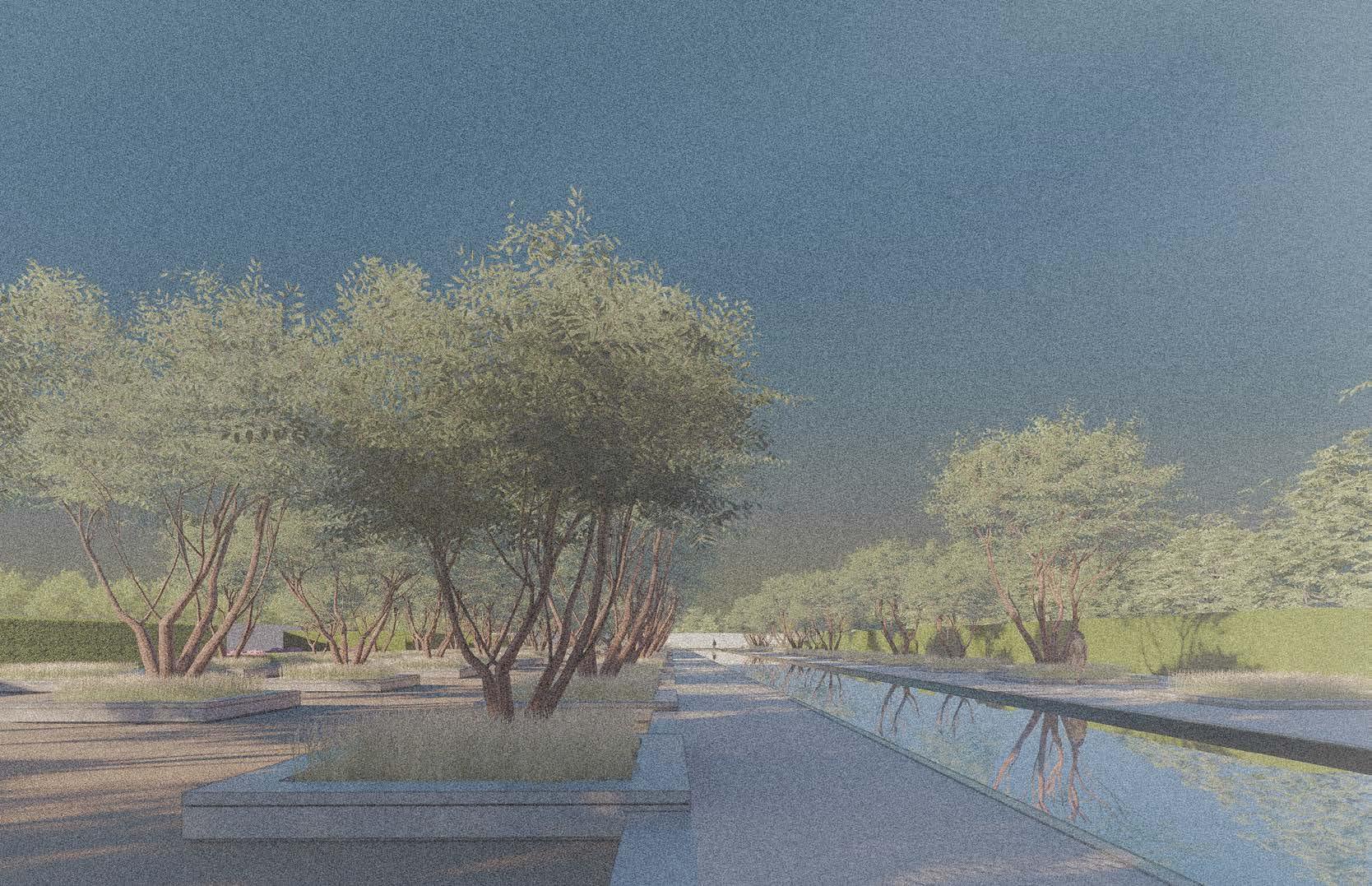
Conceptually grounded in the phenomenology of time-based architecture, the project examines the relationship between transportation and temporal experience. The parti is organized along two intersecting three-dimensional axes, generating sequences of movement, pause, compression, and release. The expansive energy of the grand hall is set in counterpoint to a monumental elevated garden above the train shed. This ten-acre landscape functions as an urban commons, allowing the intensity of the station to diffuse into the surrounding city fabric.
The station rests on a long-span, post-tensioned concrete plinth bridging the rail yard below. Above, the train hall is formed by a latticed mass timber structure enclosed in a double-wall ETFE system, balancing structural clarity with material lightness. The elevated garden— comprising eight distinct landscapes and full-scale tree canopies—required a structural approach beyond conventional green roof systems.
Knoxville Central Station ultimately reframes transit as an embodied civic experience, transforming infrastructure into a space of awareness and collective presence.
Returning to this project after several years of professional practice, what strikes me most is the degree to which its ambitions — to recover the civic character of transit infrastructure, to make time an experiential rather than merely logistical dimension of travel — remain entirely relevant. The problem it addresses has not been solved. If anything, the underdevelopment of passenger rail in the American Southeast has become more acute, and the opportunity for architecture to reframe transit as a dignified civic experience remains largely unrealized.
Recognition: Nomination + Exhibition - UTK Distinguished Design Award; Winner - Tau Sigma Delta Bronze Medal of Design Distinction
converging axis' 1. portal to the promenade 2. mending the tear - a place
place to pass
promenade disconnected fabric lack of urban green
3. patching the tear - the plinth
4. cultivate oasis - the walled garden
main garden - reflection pool. perspective.
main garden. tree grid. perspective.
1. time perception is an internal act
• psychologically, our sense of time is indistinguishable from our sense of self as an internalized entity - our awareness and embodiment is / can be managed through time
• our socio-emotional identity influences our perception of time introversion / anxiety identities perceive time slower than extroverted / avoidant identities
• cultural rituals specifically focus on internalization an internal embodiment as a way of interrupting monotony, breaking social rhythm + altering awareness of time
• time is not universal, it is entirely subjective - even when socially unified, it is always at the influence of our psychological self
2. environment + structure shapes time
• our sense of time is shaped by inferrence, therefore space shapes time perception - structured spaces order our perception. tall, narrow, light spaces are associated with short temporal duration, whereas wide, shallow, dark space is associated with long duration
• through spatial arrangement of elements, a perceptible temporal dimension is constituted - time compressions and dilations are possible by increasing or decreasing the elements that constitute and characterize space.
• ritual spaces seek to filter and distill the universal environment, removing externalities towards introspective states
3. ritual emancipates us from time
• social and cultural activities shape our perception of timecrowding of space is highly associated with temporality
• Ritualistic spaces are liminal but also highly structured - they take on the structure of order to free us from time
• Rituals create rhythms which provide arbitrary periodicity by which society and the individual can re-center and fuse the self with the experience of the world
• Ritual spaces tend to locate themselves on peripheries of social environments, aiming to step away to strenghten the self
4. architecture distills
• while architecture can subtract internalized time/moments, the external, to mediate referential
• the referential nature of light aperture to create unique senses the embodied experience in
• inferral becomes a psychological heighten the sense of external manipulation of form and aperture.
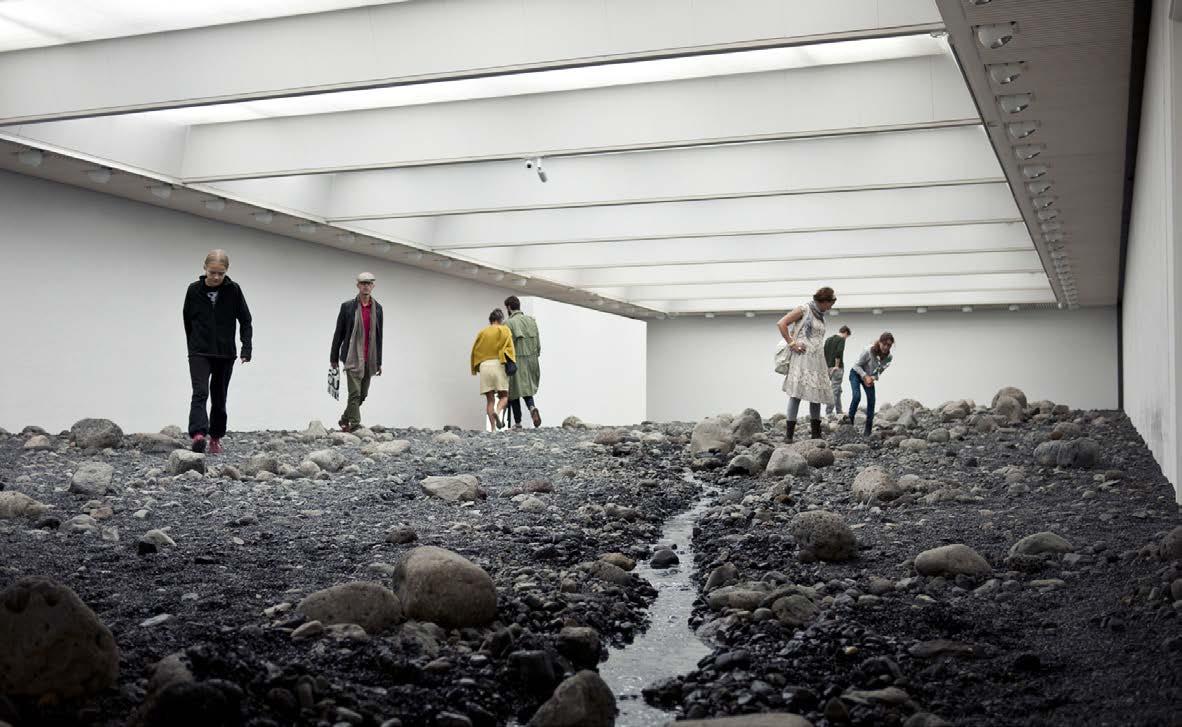
+ 9 Contact. Olafur Eliasson.
+ 9 Riverbed.
Olafur Eliasson.
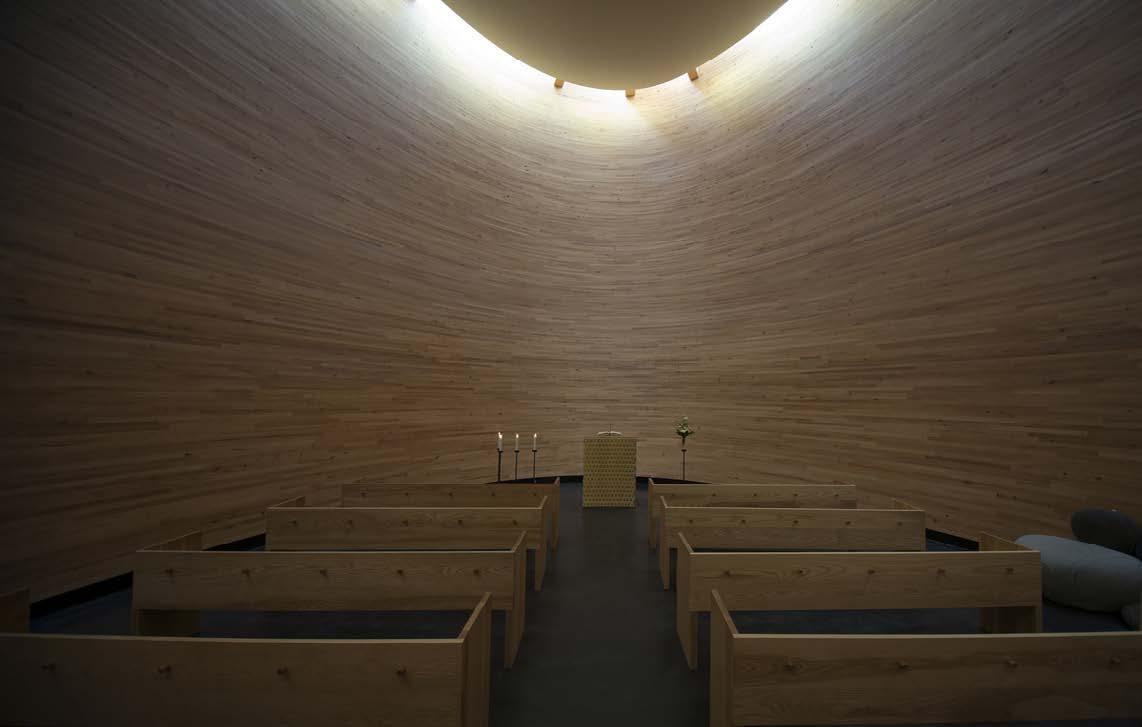
+ 9 Kamppi Chapel of Silence.
distills referential time
subtract externalities and synthesize time/moments, it also has great power in distilling referential time in powerful ways
light can be concentrated through senses of temporality and to ground in natural time perception
psychological tool that is capitalized to external connection thanks to spatial aperture.
train station: a time institution
the train stop is an architectural manifestation of a societal power - the clerical power that is a society on the move. our civilization rests on time structures born from the railroad, and the line of the train serves as a spatial mark of our societal and physical relationship to time... with this in mind, our experience of transit spaces, reflects our societies relationship to time, and our own embodied experiences in connection...
the problem: rail typology as time dis-embodied
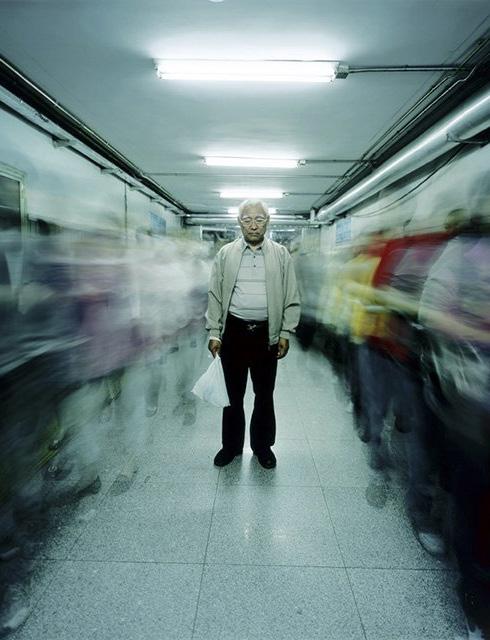
the train stop is inherently external - time becomes disembodied. with rare exceptions, one cannot be aware of themself or self-actualized at the train stop - this is why we rarely remember ourself in these moments. everything floats past us, and we do not actually feel the weight of ourselves in space. time is not framed - time remains external. while train stops represent an institutional portal to the world, they are not places that welcome one to stop and wonder in the mundane.
scheme / intent
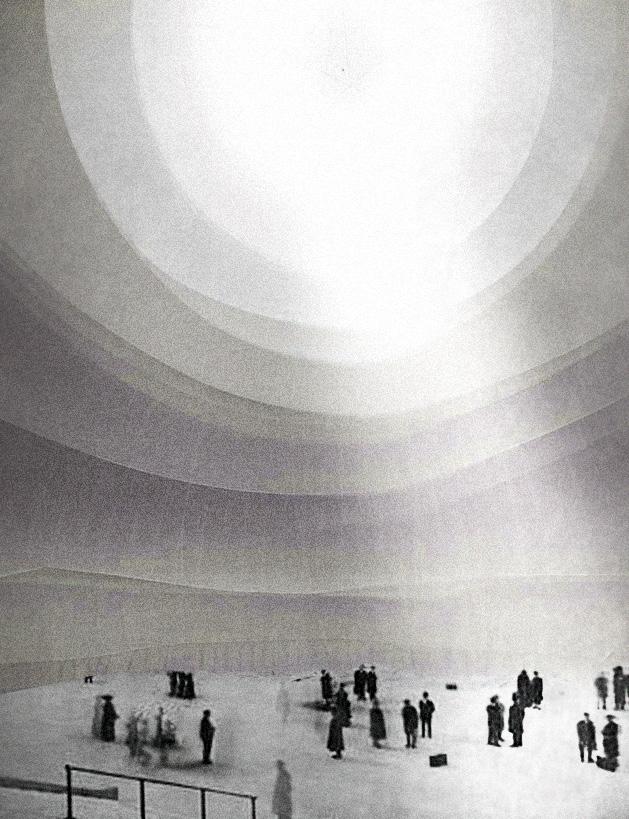
utilizing spatial methods of time-warping to skew perception, time[line] reimagines the experience of the station towards internal, temporally embodied experiences - forcing one to stop and wonder - to frame something bigger. acknowledging the institutional power of time and the train as portal to the city along a line, mediating this to poetically frame the mundane. this synthesizes self-actualized moments where through the swelling of time one is embodied and aware of themself in space.
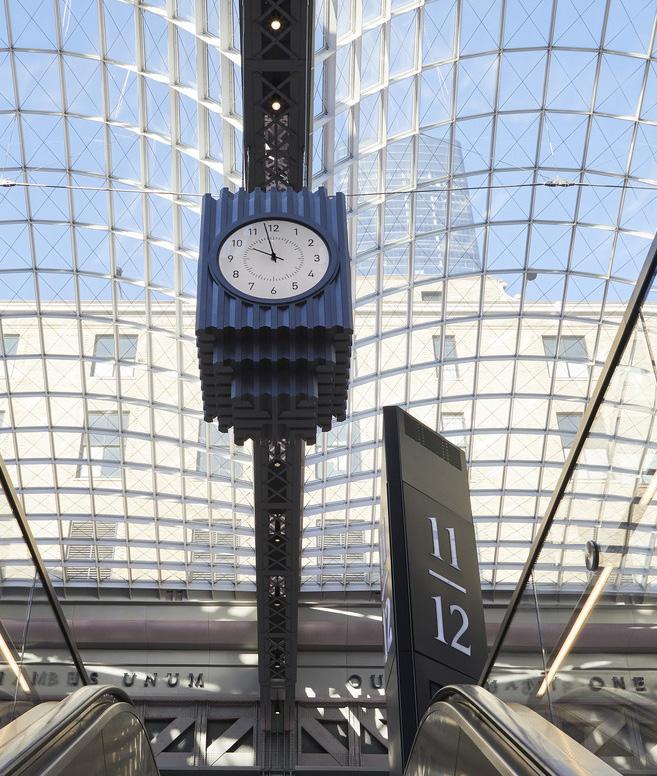
+ Moynihan
Train Hall. SOM.
+ Train Station. Pierre Seidel.
+ Collage.
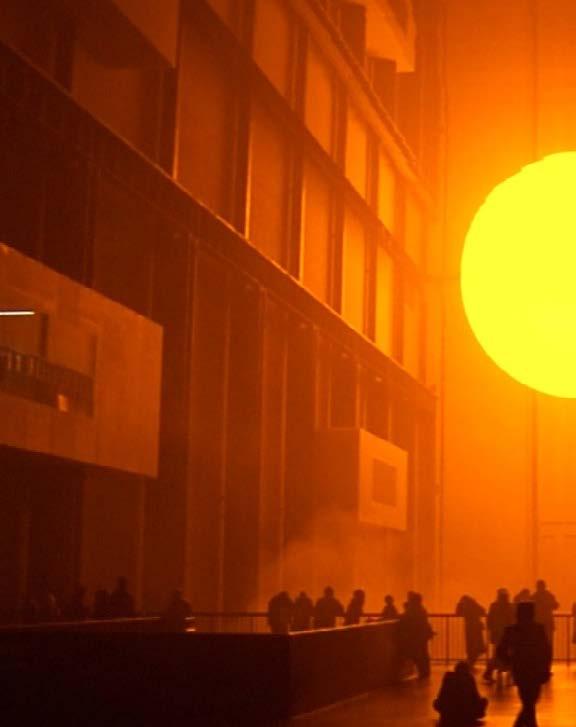
Base Image:
The Weather Project. Eliasson.
ticketing desk. perspective.
mezzanine cafe. perspective.
communal staircase towards platform. perspective.
Mindfulness, Retreat, and Dwelling: mass-manufactured weekend retreat
Location: No Specific Site - Designed for all U.S. climate zones with options / adaptations to suit
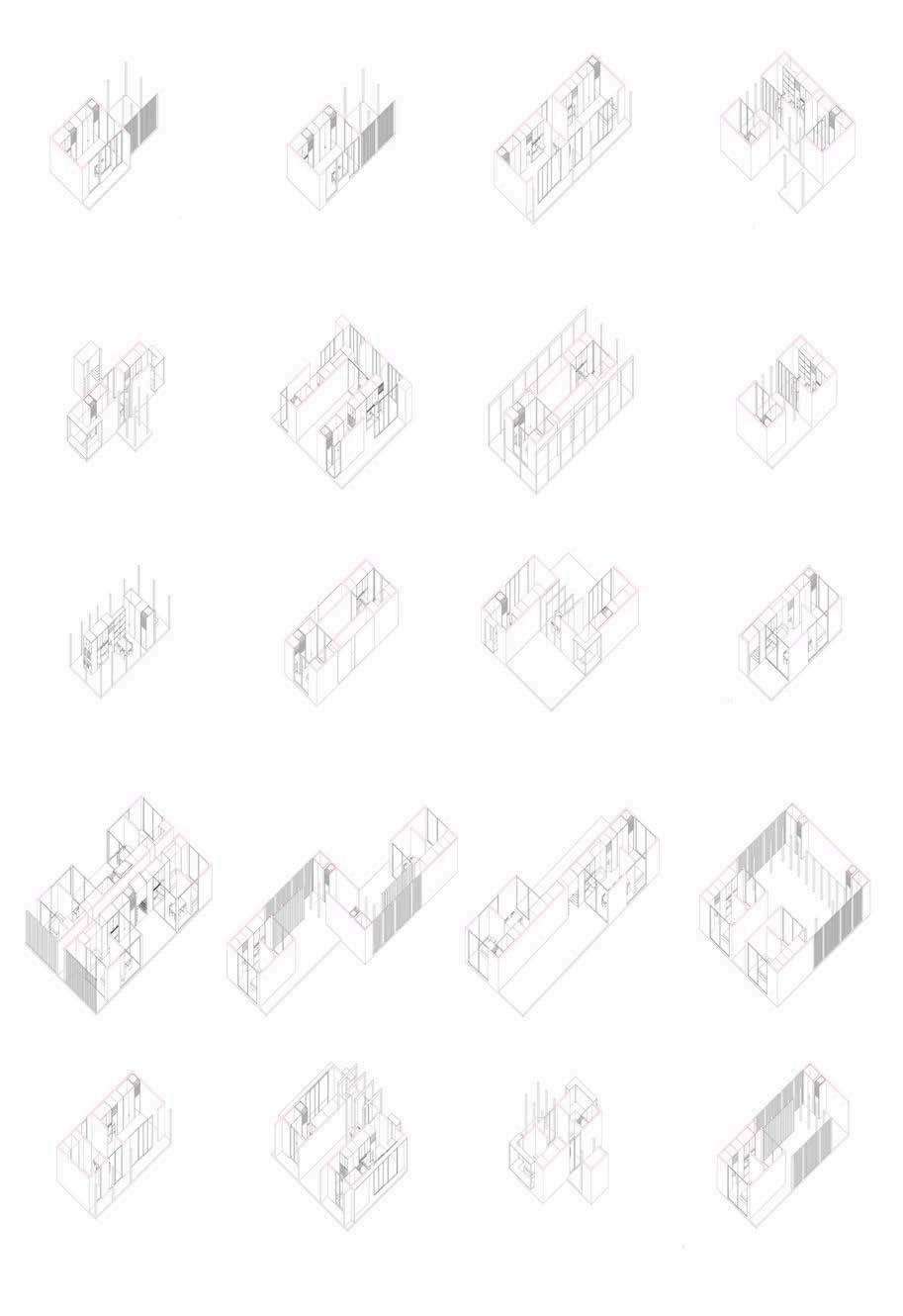
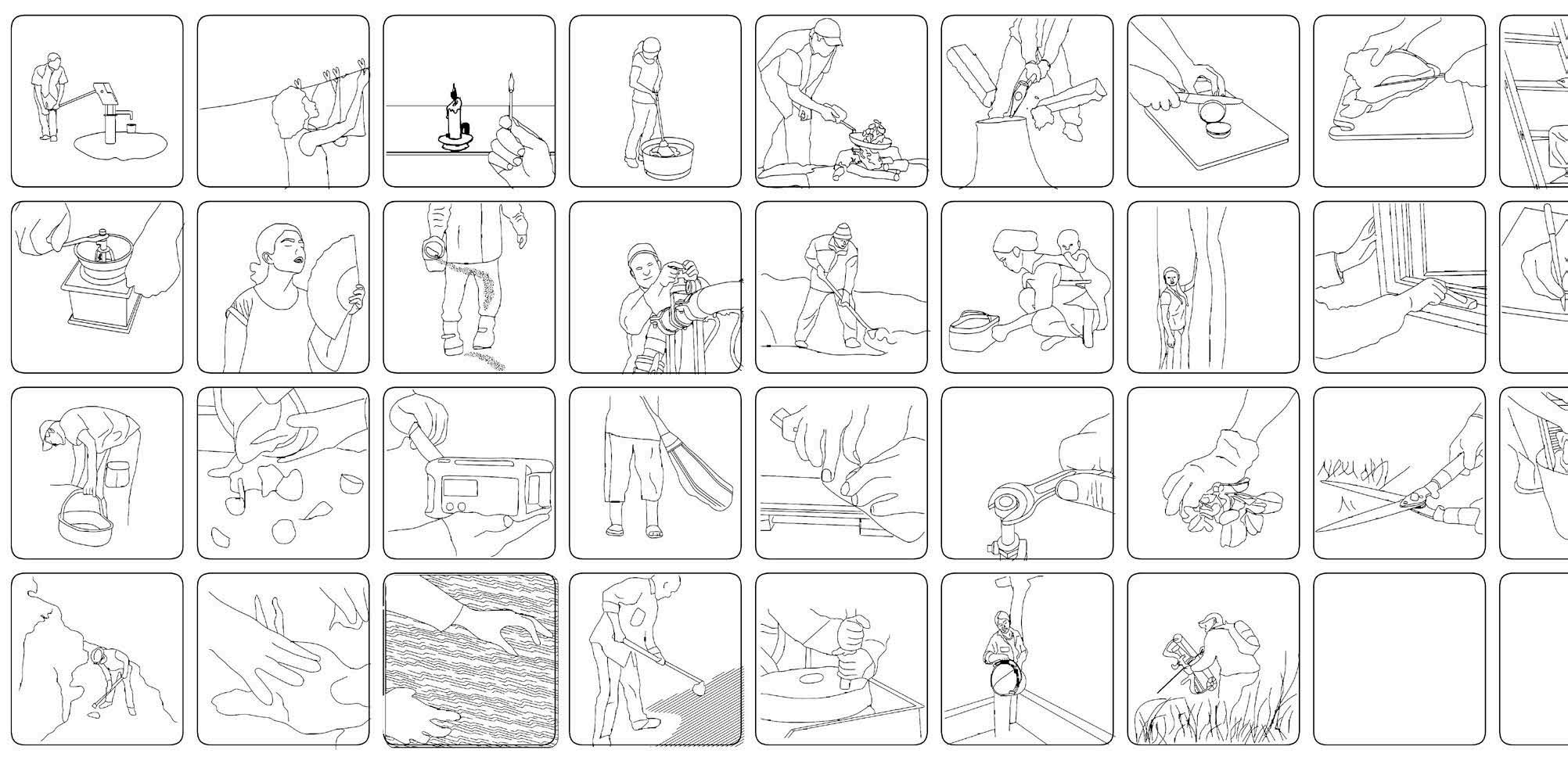
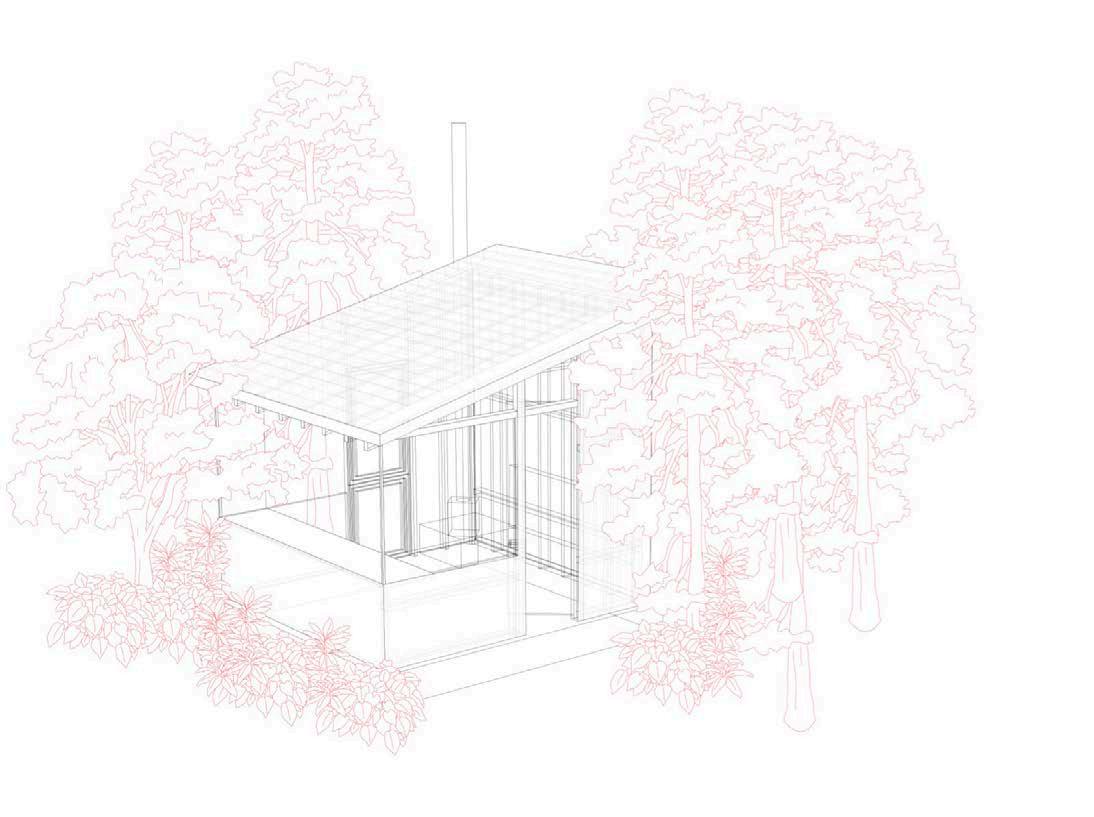
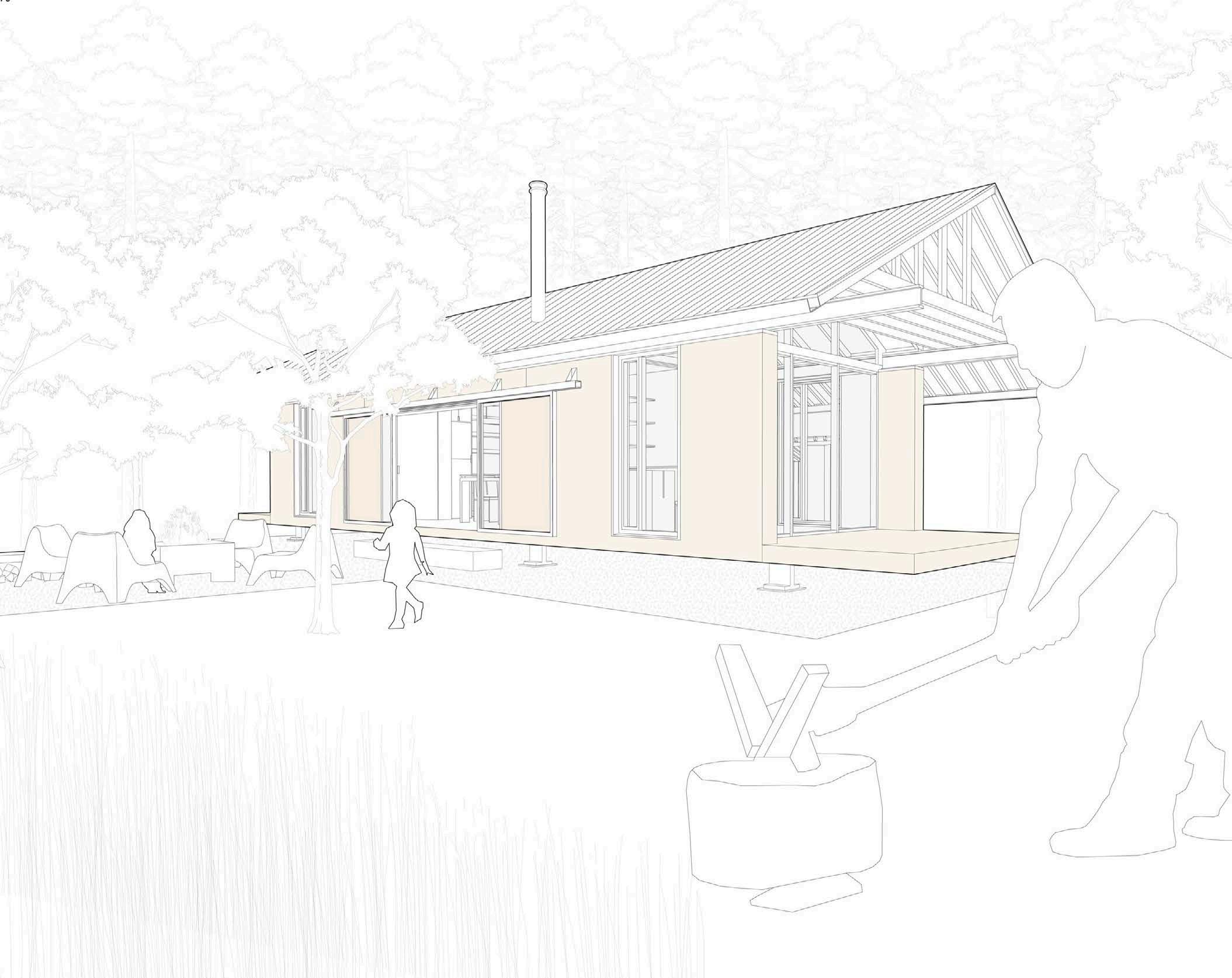
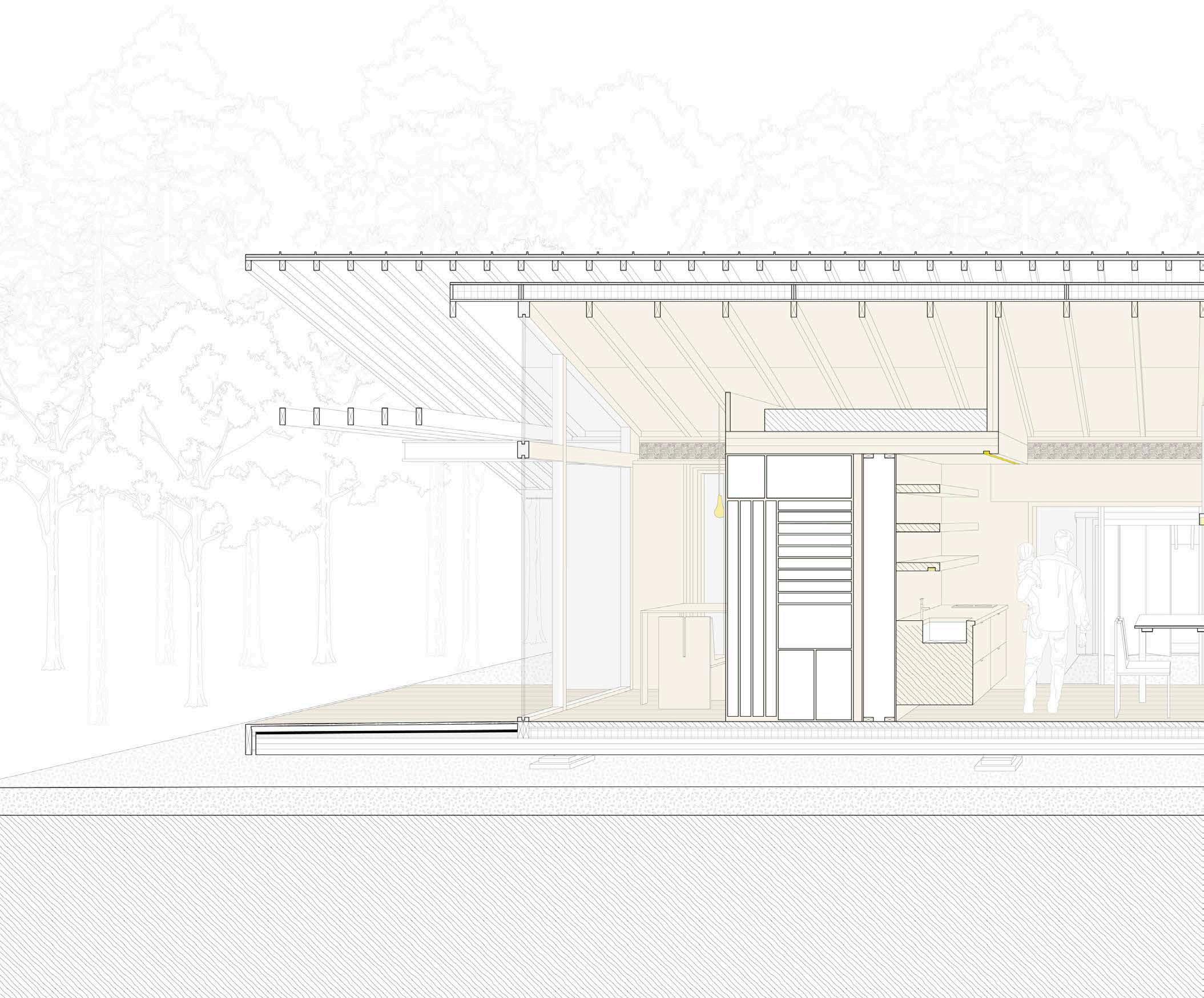
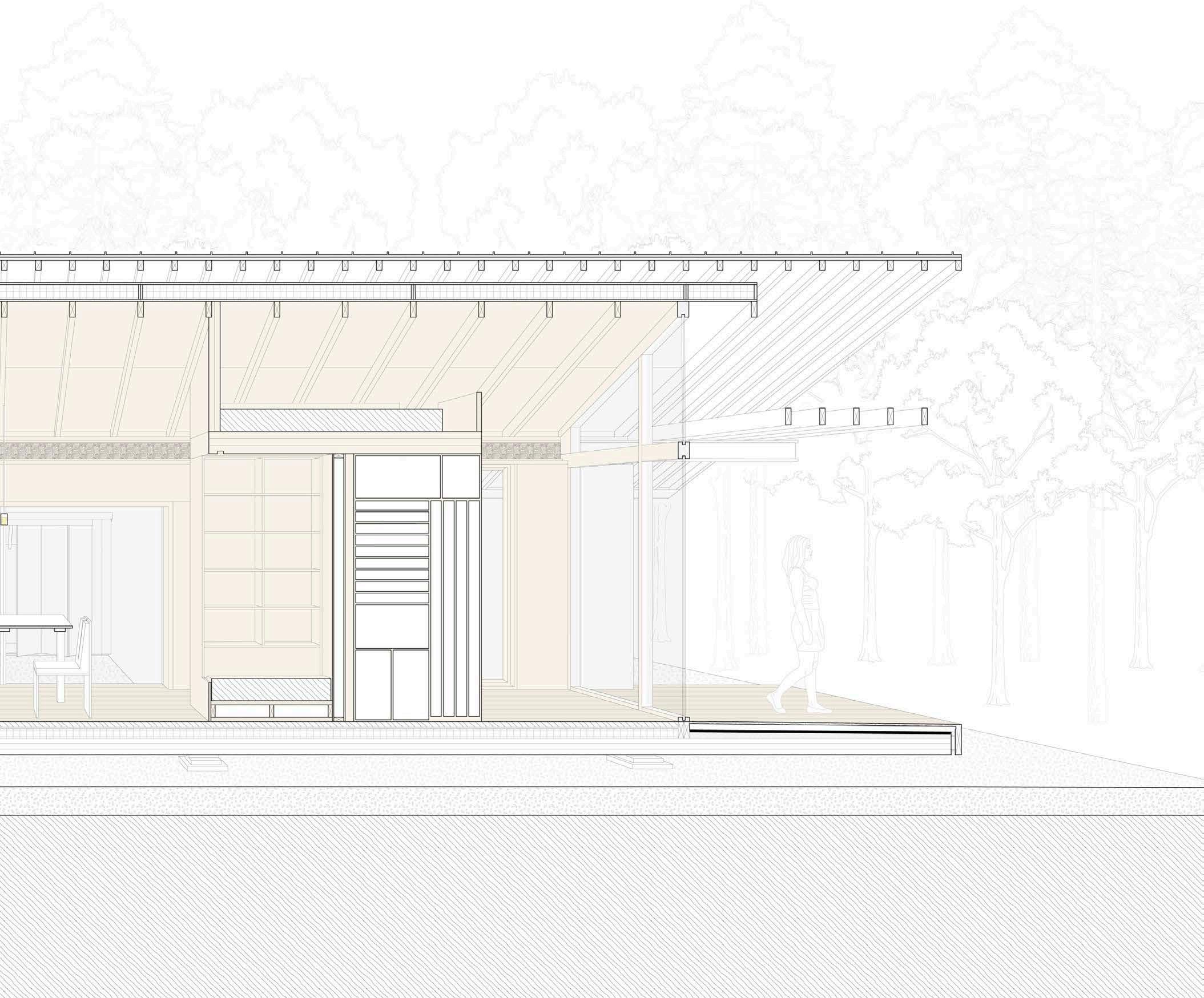
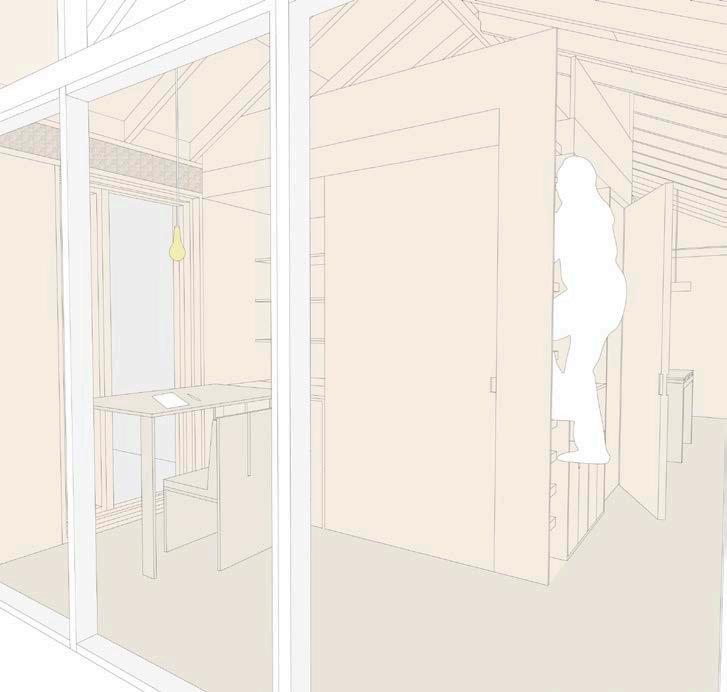
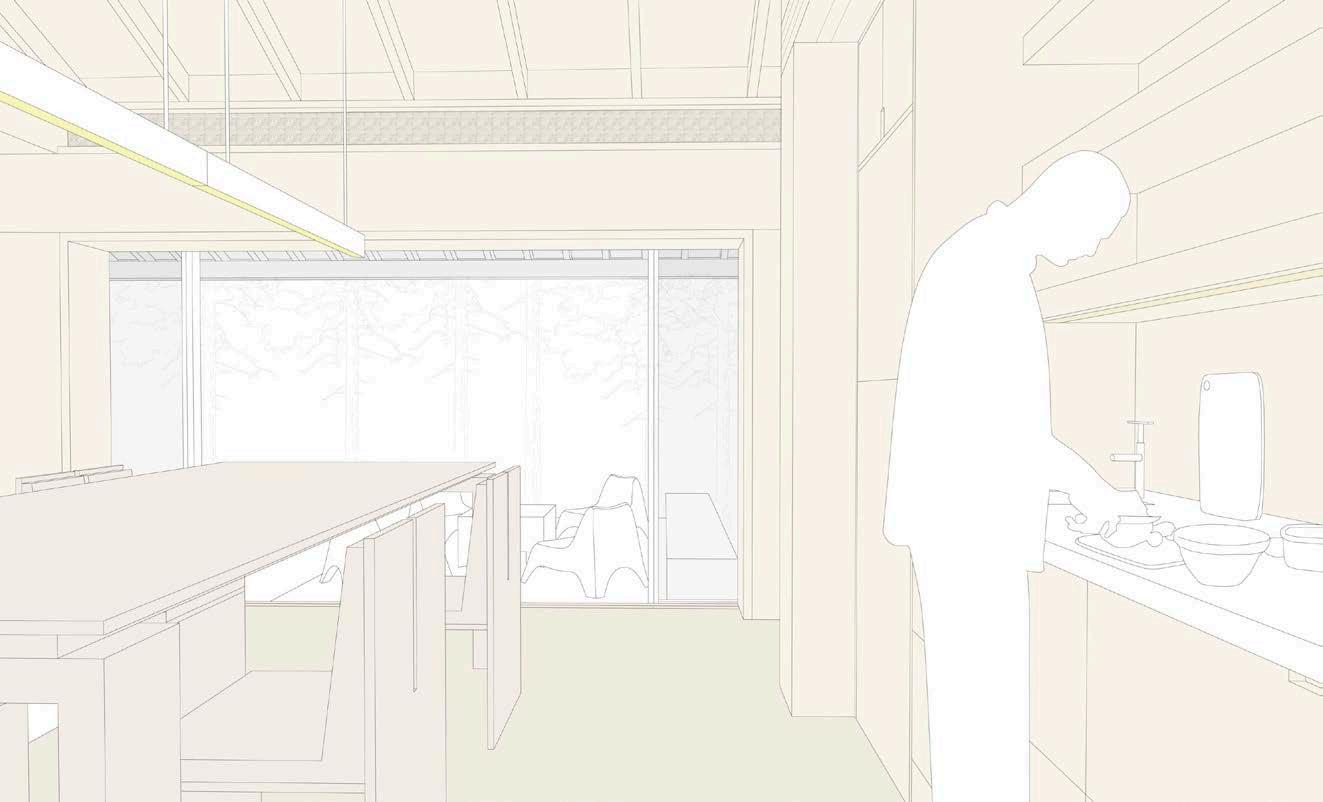
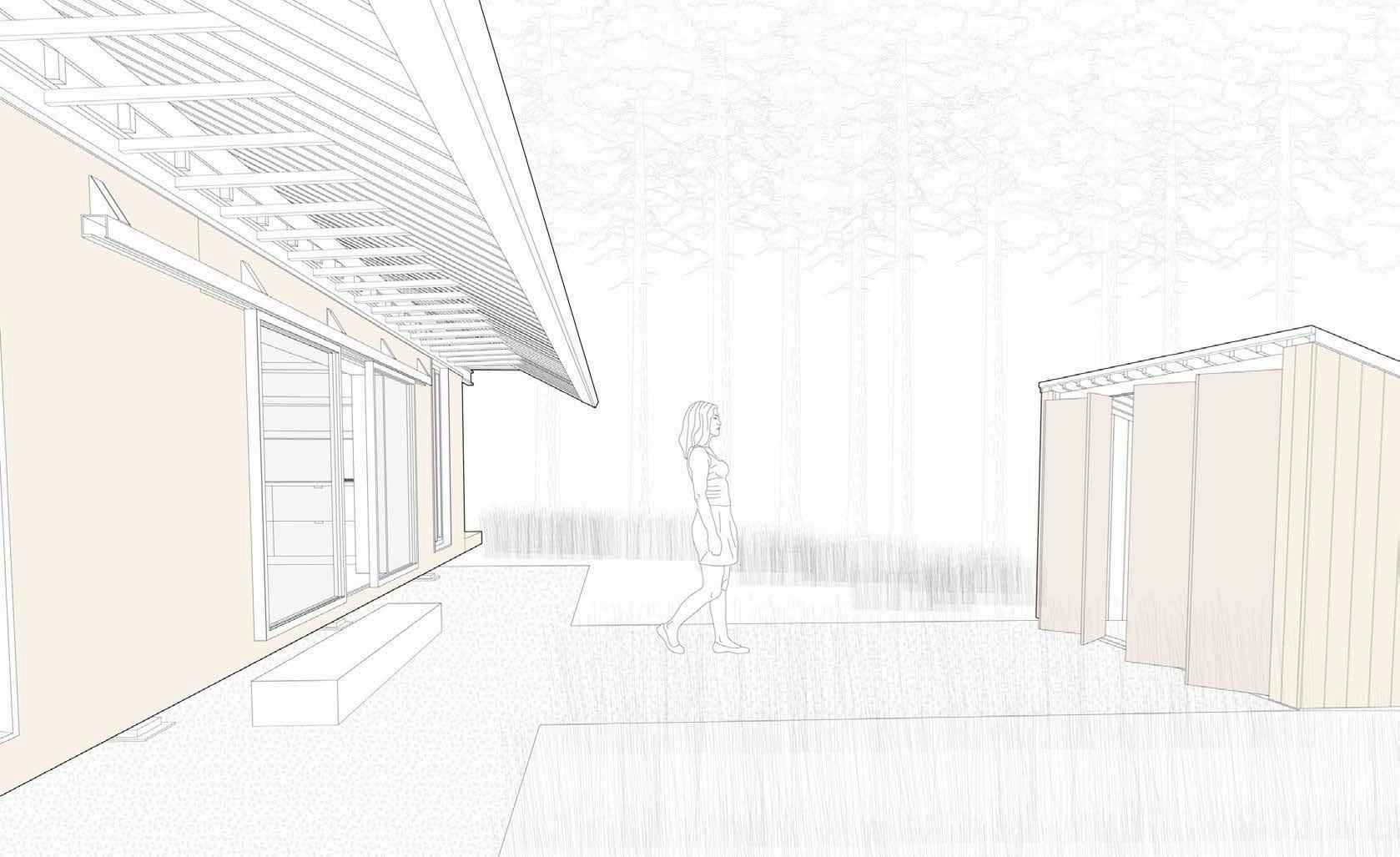
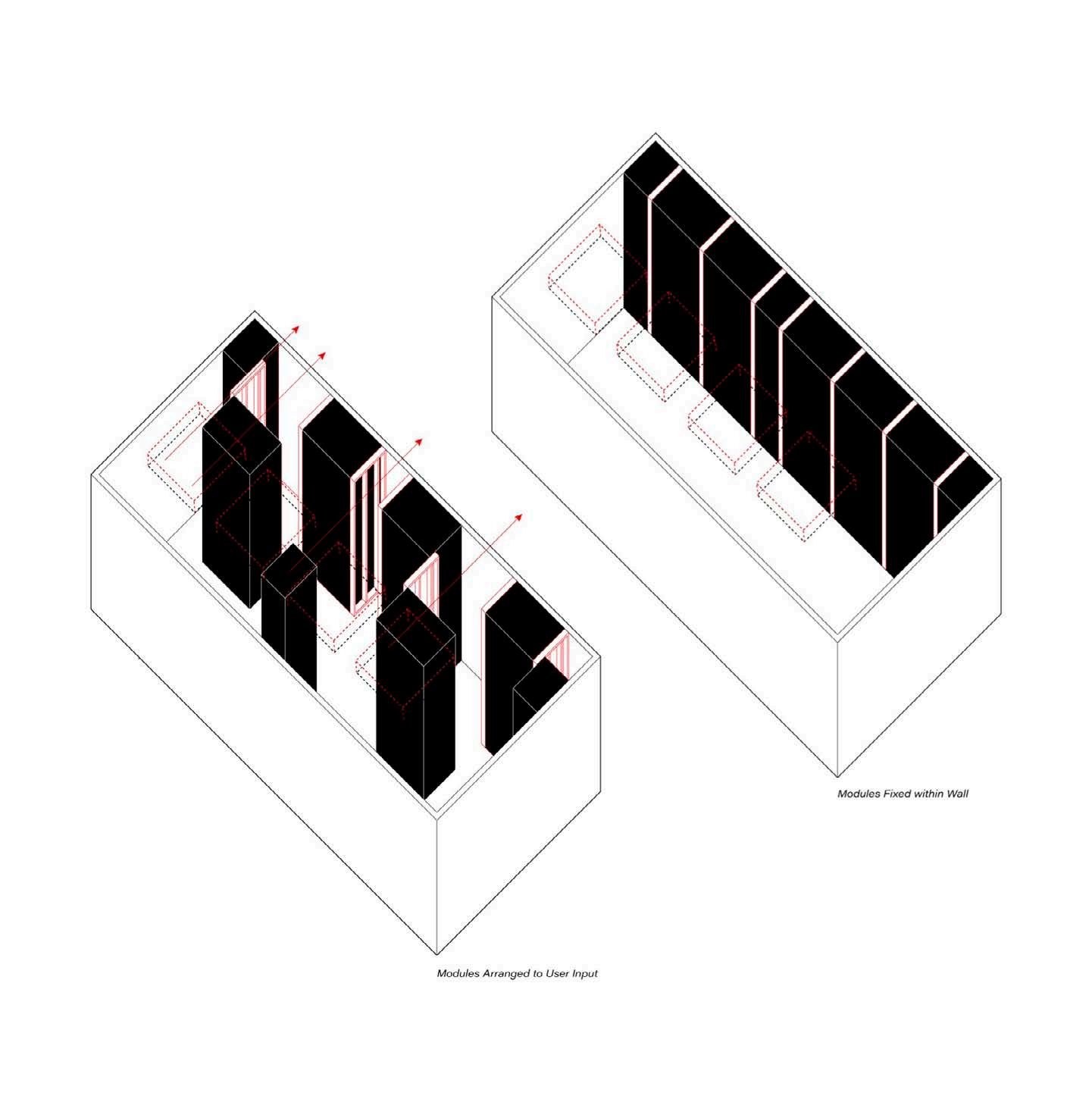
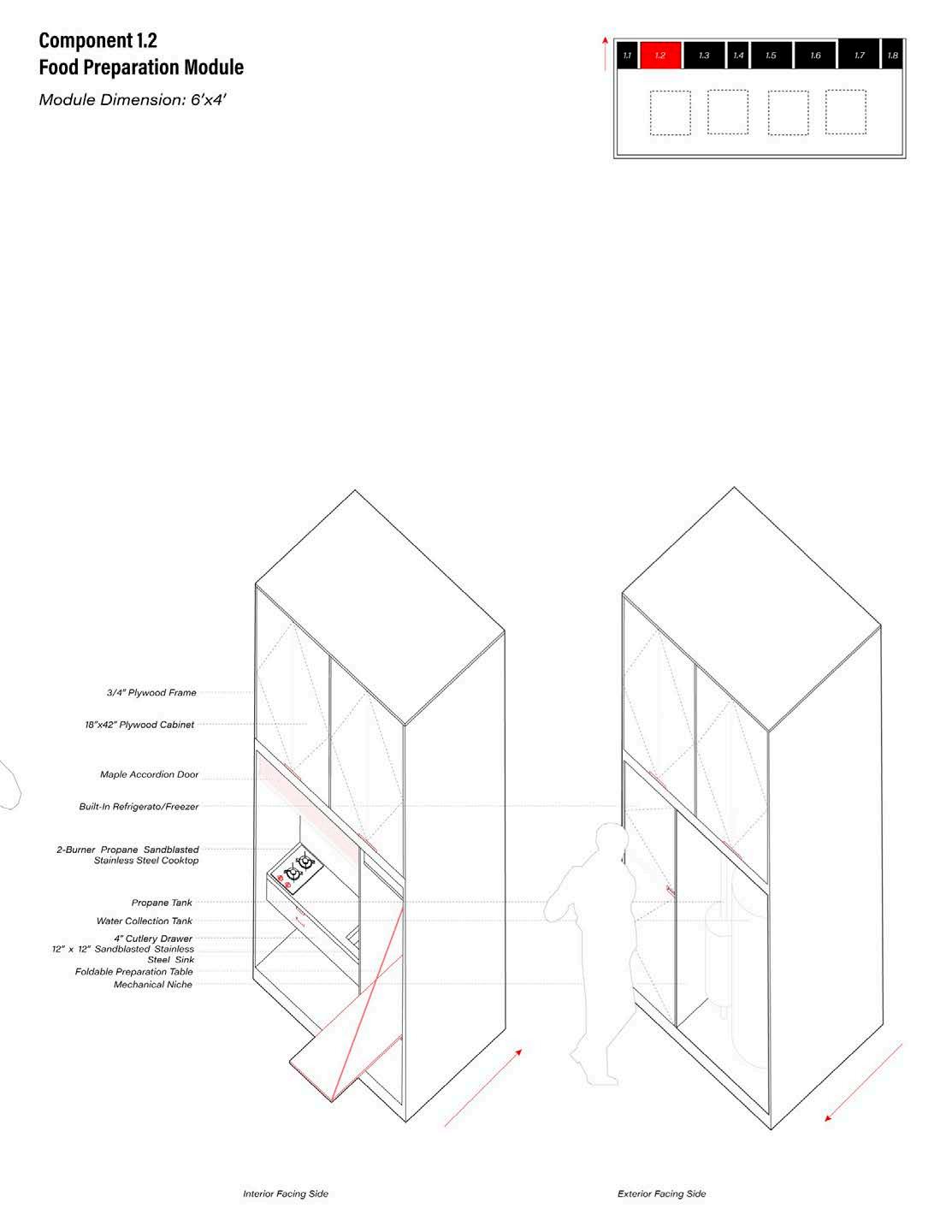
The micro-retreat sparked out of a desire to revive the kinesthetics of daily life in an increasingly digitally engulfed world. This endeavor aims to reconnect individuals with nature to enhance their mental well-being. This involves designing user-conditions that heighten awareness and require conscious input, enabling one to meet their own physical and psychological needs. The outcome is a modular, prefabricated retreat designed for all U.S. climate zones, offering rapid deployment options for both individual and community-scale use, while promoting tenants of subsistence - true sustainability.
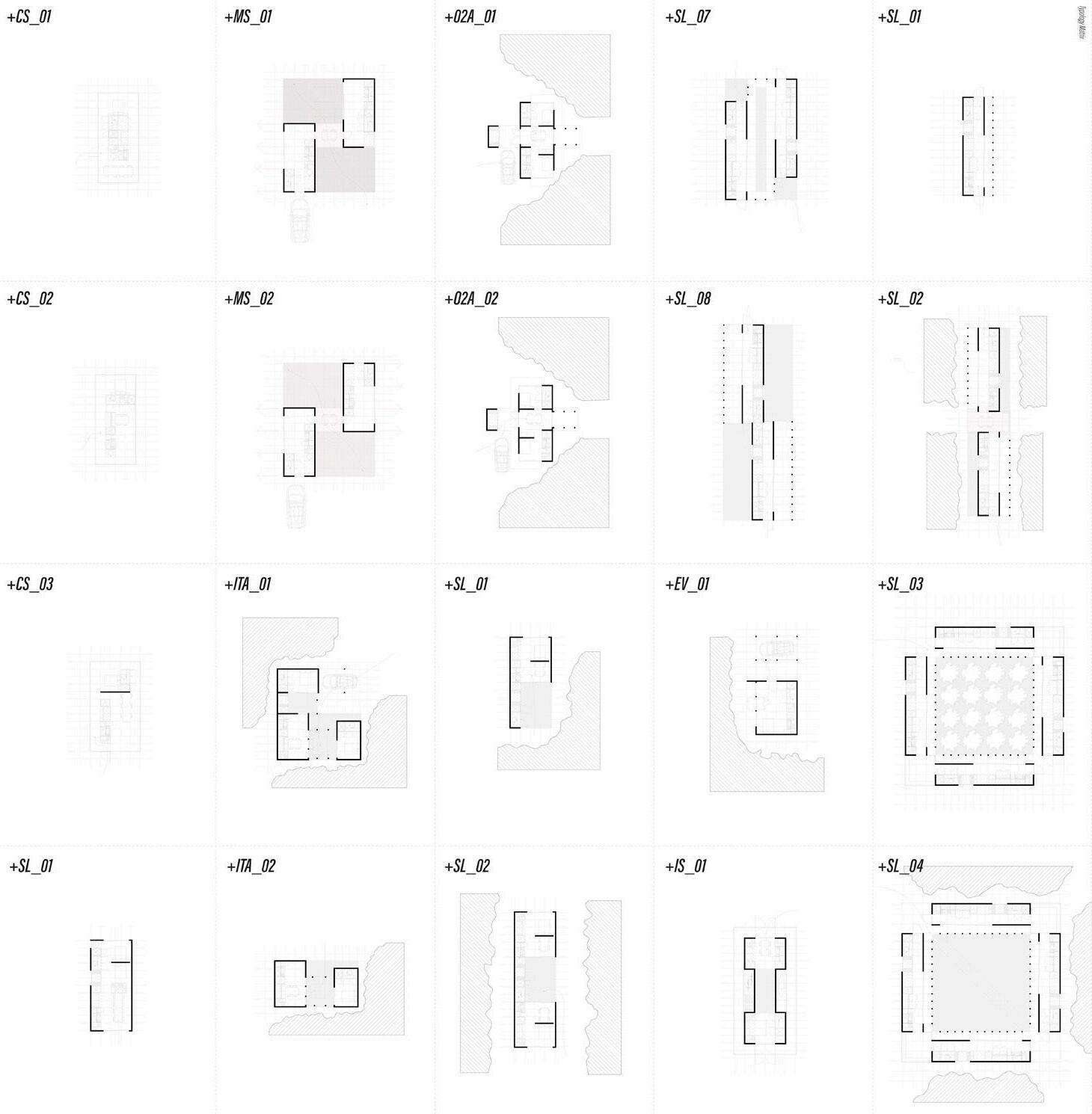
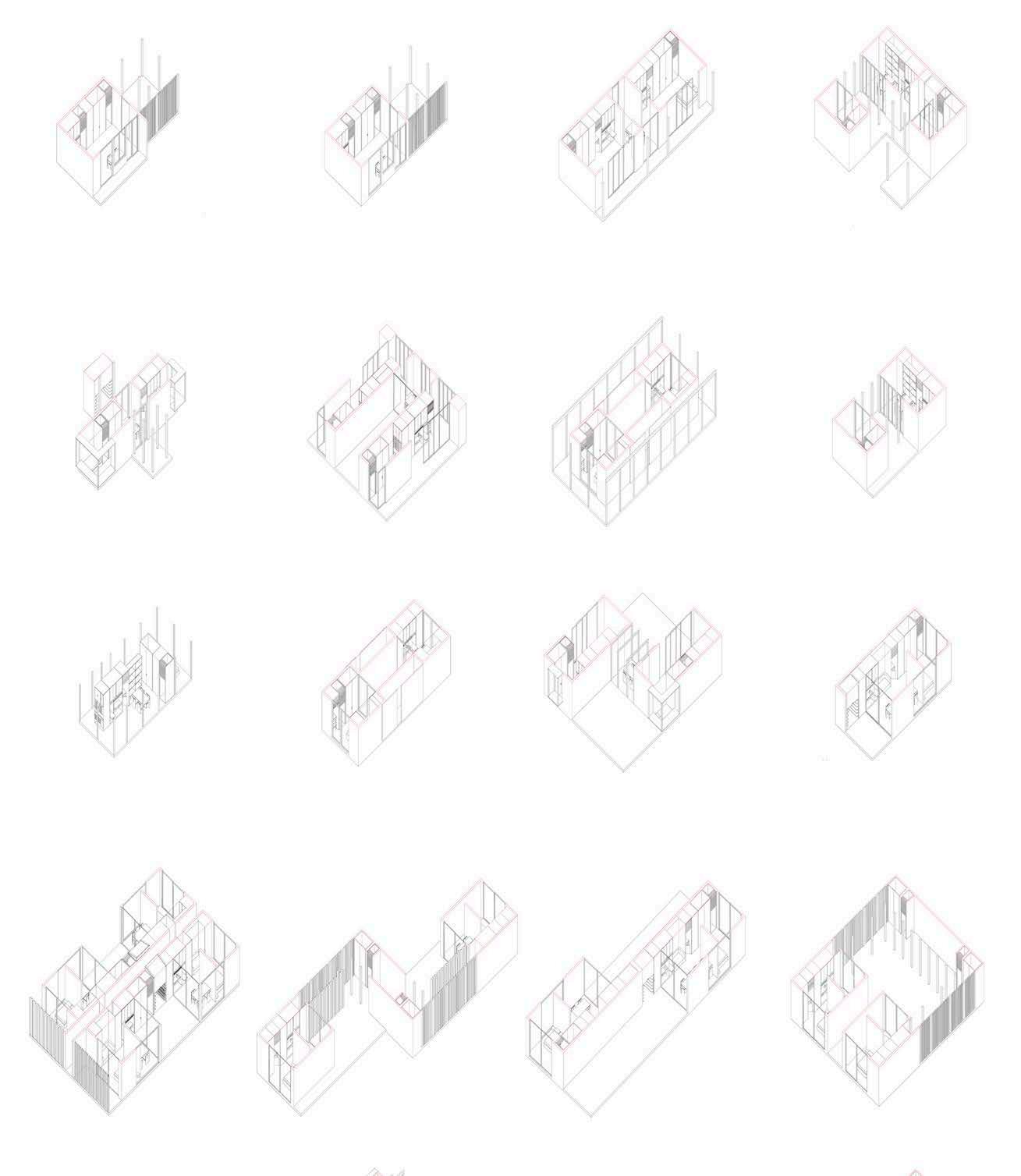
The project’s design involved over 52 formal iterations, emphasizing applicability to passive, climate-responsive strategies and modular construction techniques. The construction combines cross-laminated timber (C.L.T.) for walls and floors with a wood-trussed double roof and structurally insulated panels (S.I.P.). The foundation adapts to varied topographies, delicately floating
above the ground on pilotis to minimize impact on the landscape. The design process which involved addressing every detail from trusses to casework, light switches to fenestration was integral to the project, with a strong emphasis on materials research to reduce embodied carbon.
The modular dwelling can be transported on a standard tractor trailer and meets highway clearance requirements. The project’s passive performance strategies, which required extensive research due to the non-site-specific nature of the project, are designed to suit all U.S. climate zones, includes cross-ventilation, double roofs, S.I.P.S, thermal mass, and strategic shading to enhance energy efficiency. The design process involved addressing every detail from interiors specifications to structural piers and connections with the ultimate goal of offering retreat, resilience, and affordability. Today.
Design Team: Jakob Mikres, Ella Larkin | Professor: Hansjoerg Goeritz, AKN, AIA/IA
University of Tennessee, Knoxville
Year: 2022
Outhouse in rear yard. Perspective.
Framing Community Voices: Carswell Grove Remembrance Memorial
Typology: Civic + Community - Memorial and Community Space
Location: Millen, Georgia
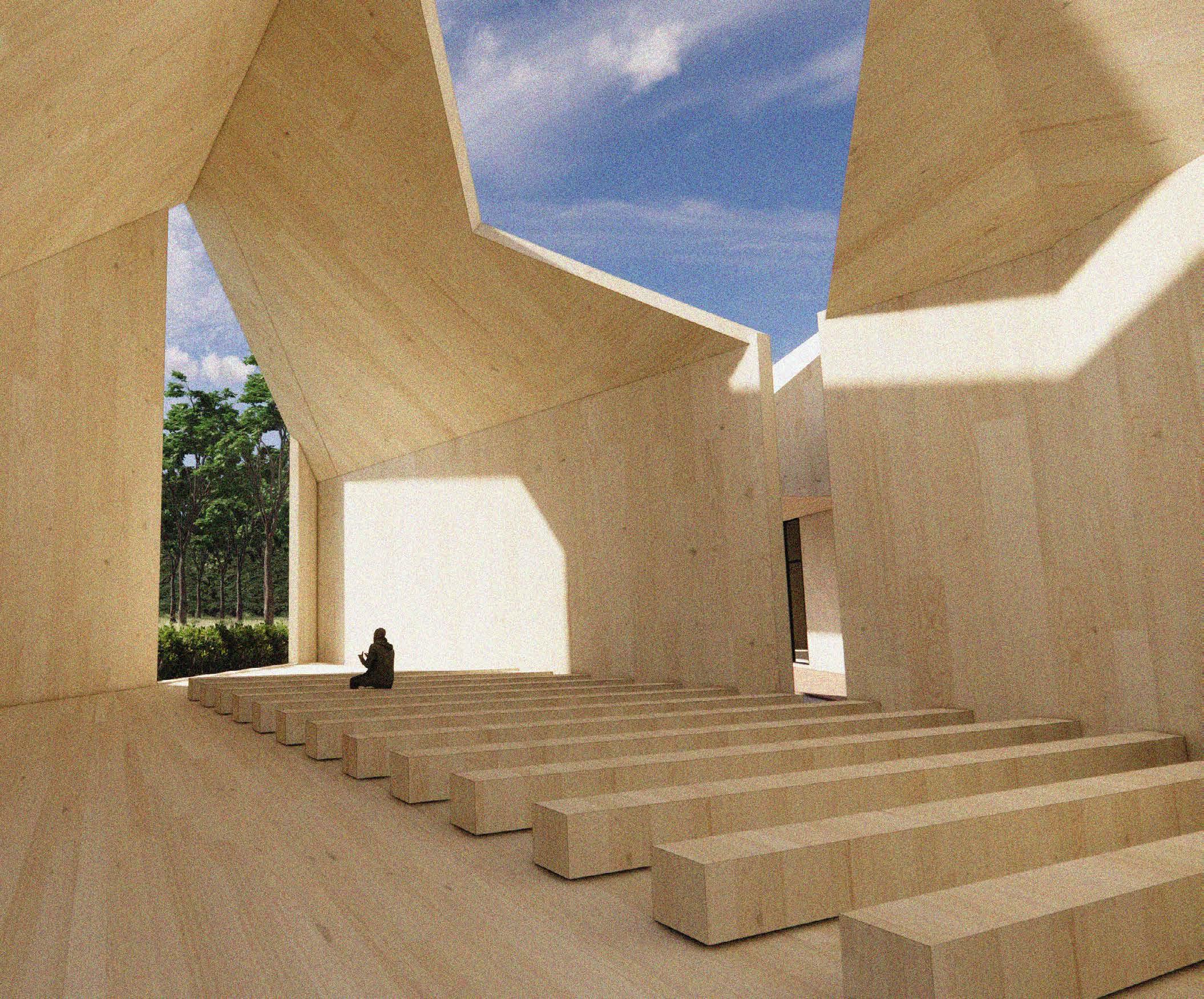
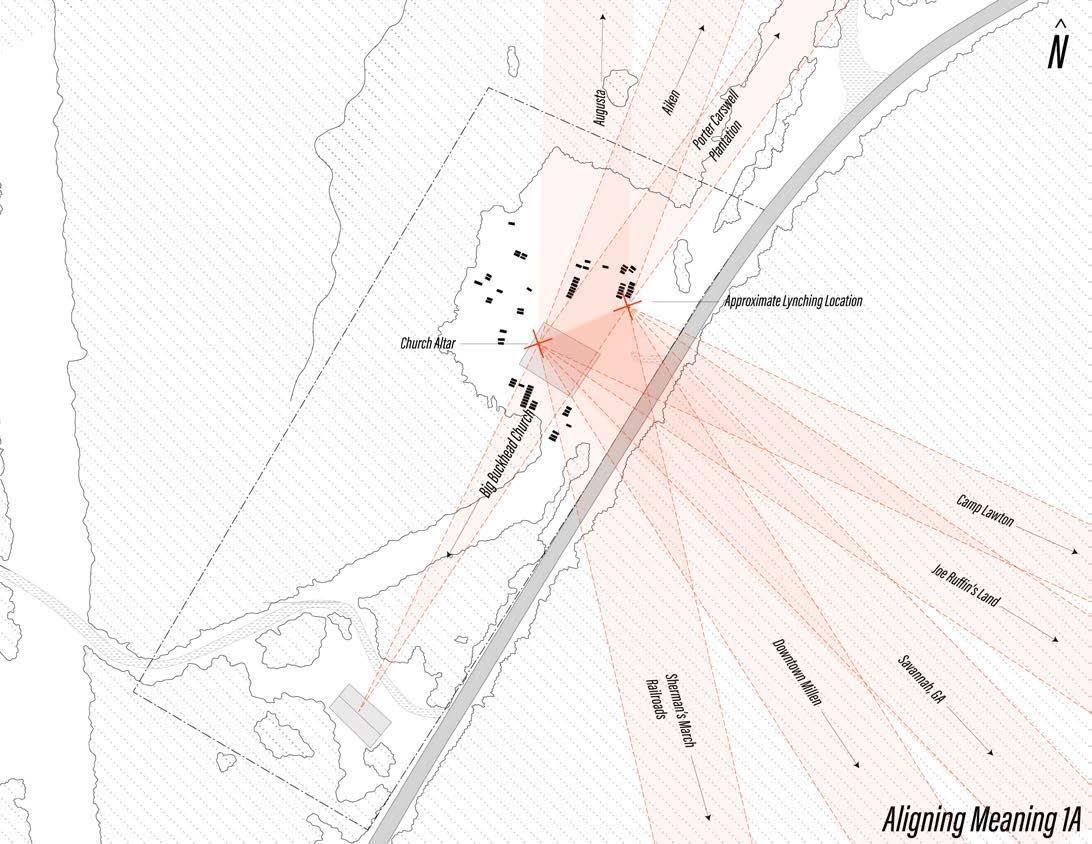
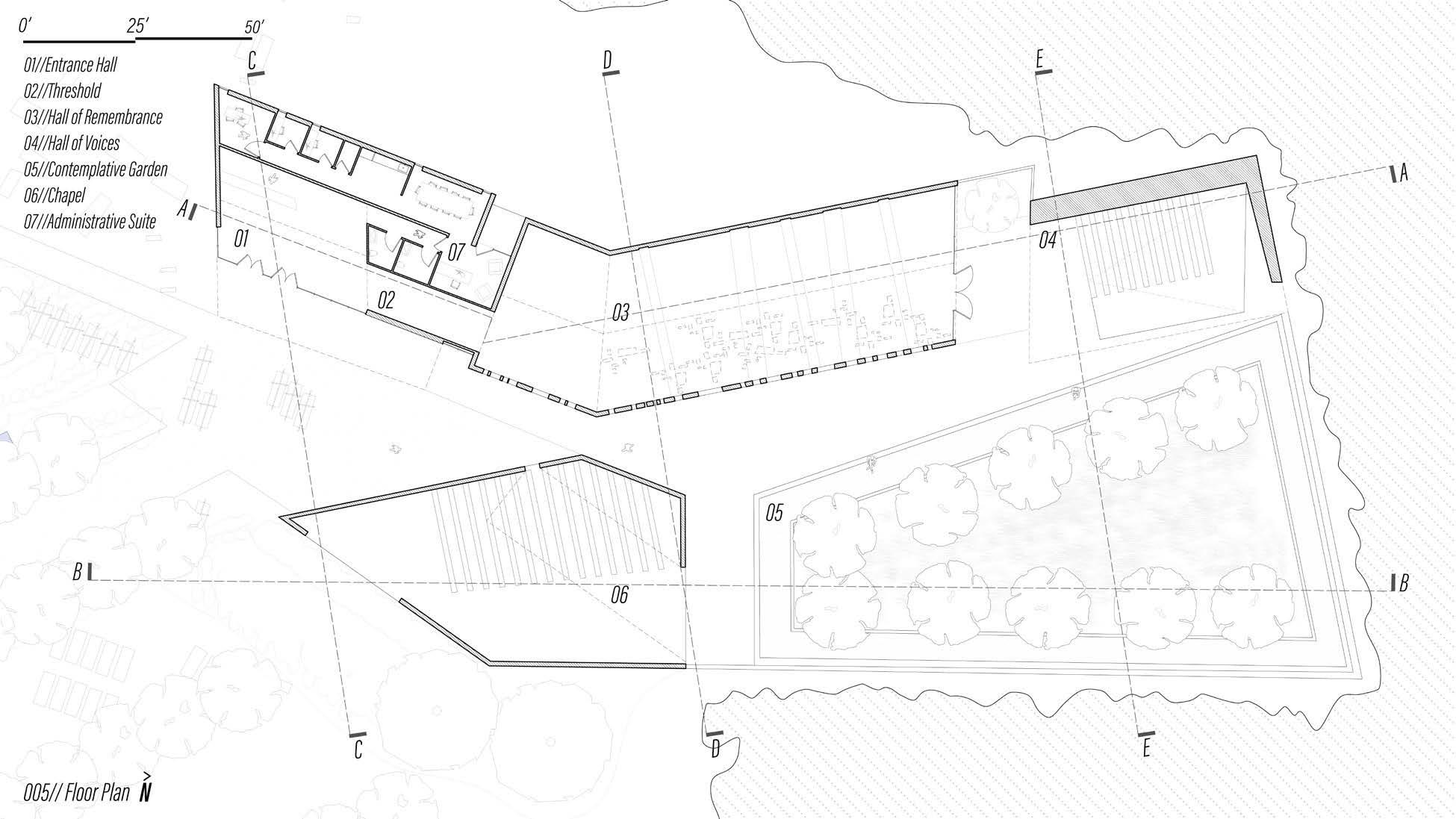
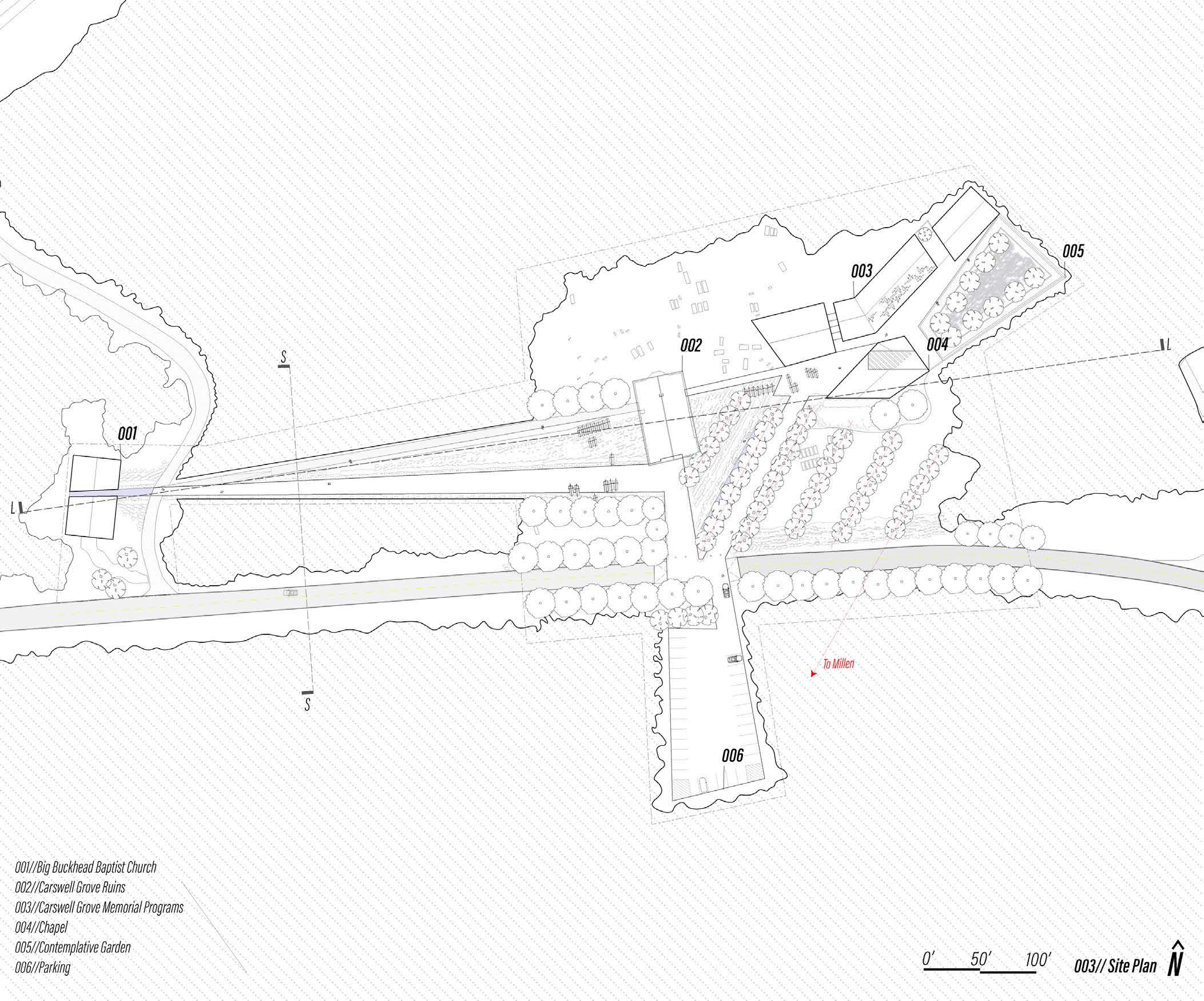
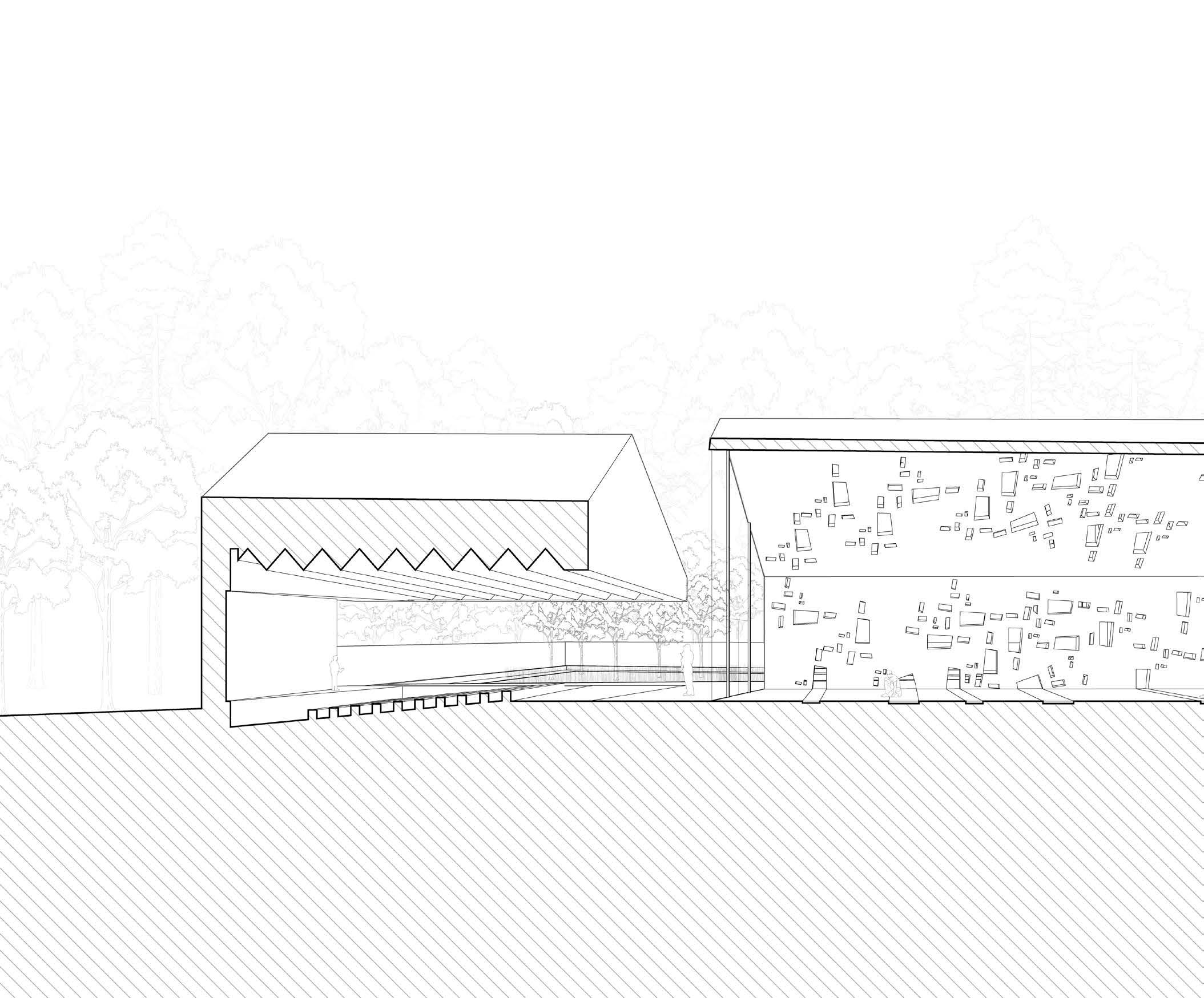
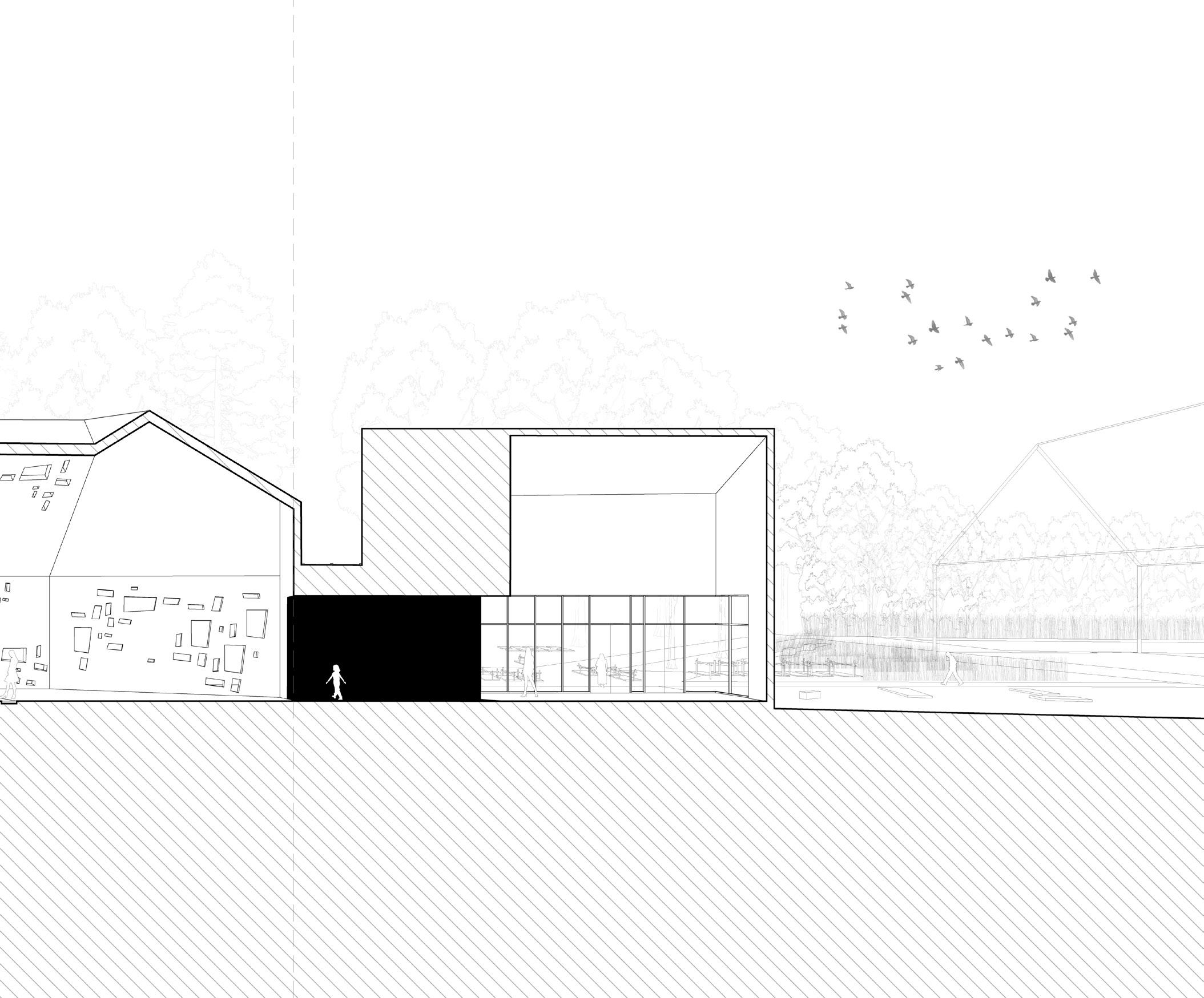
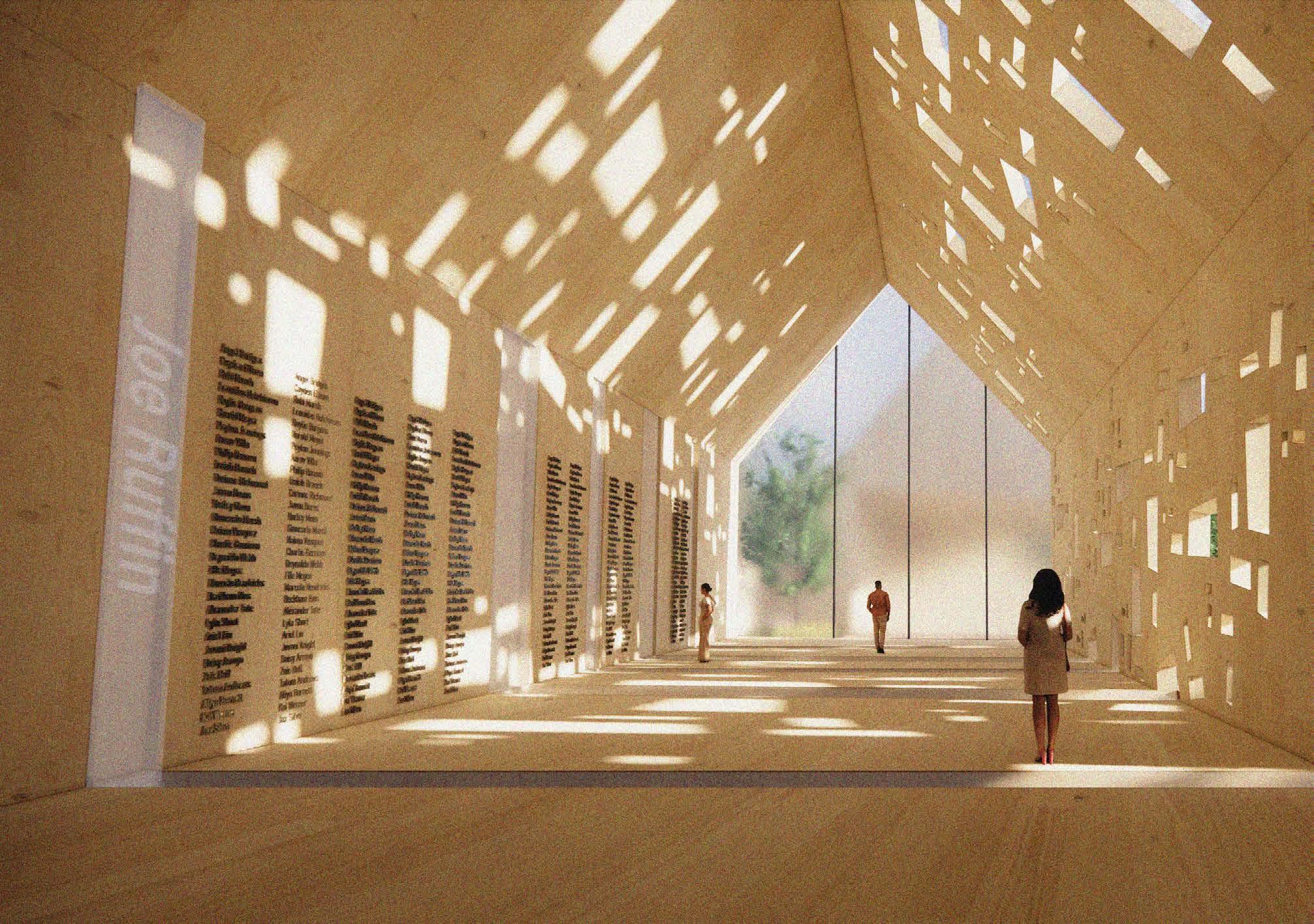
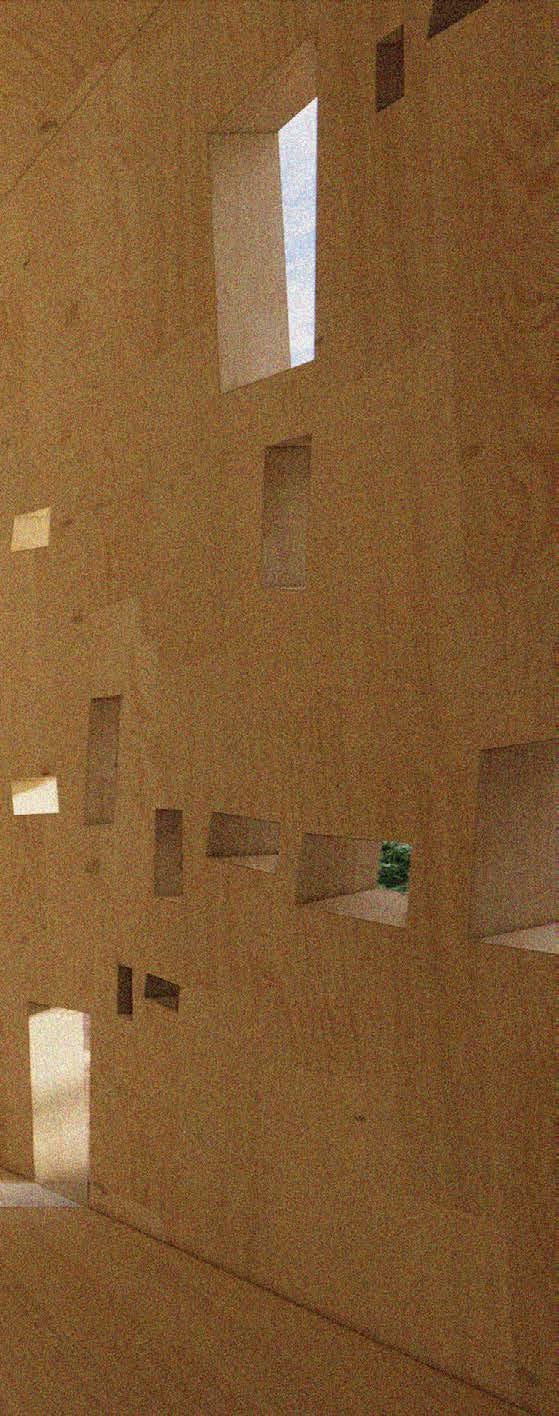
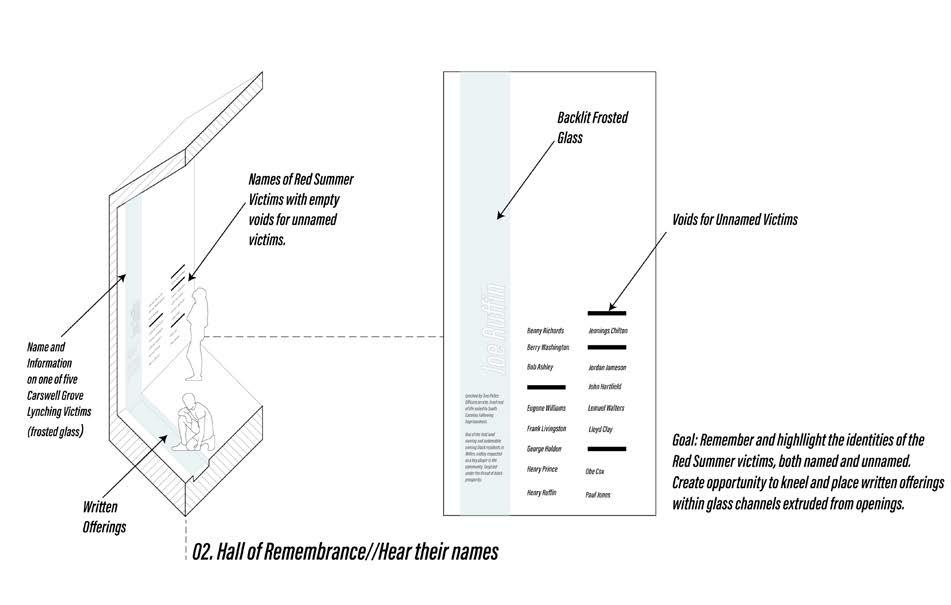
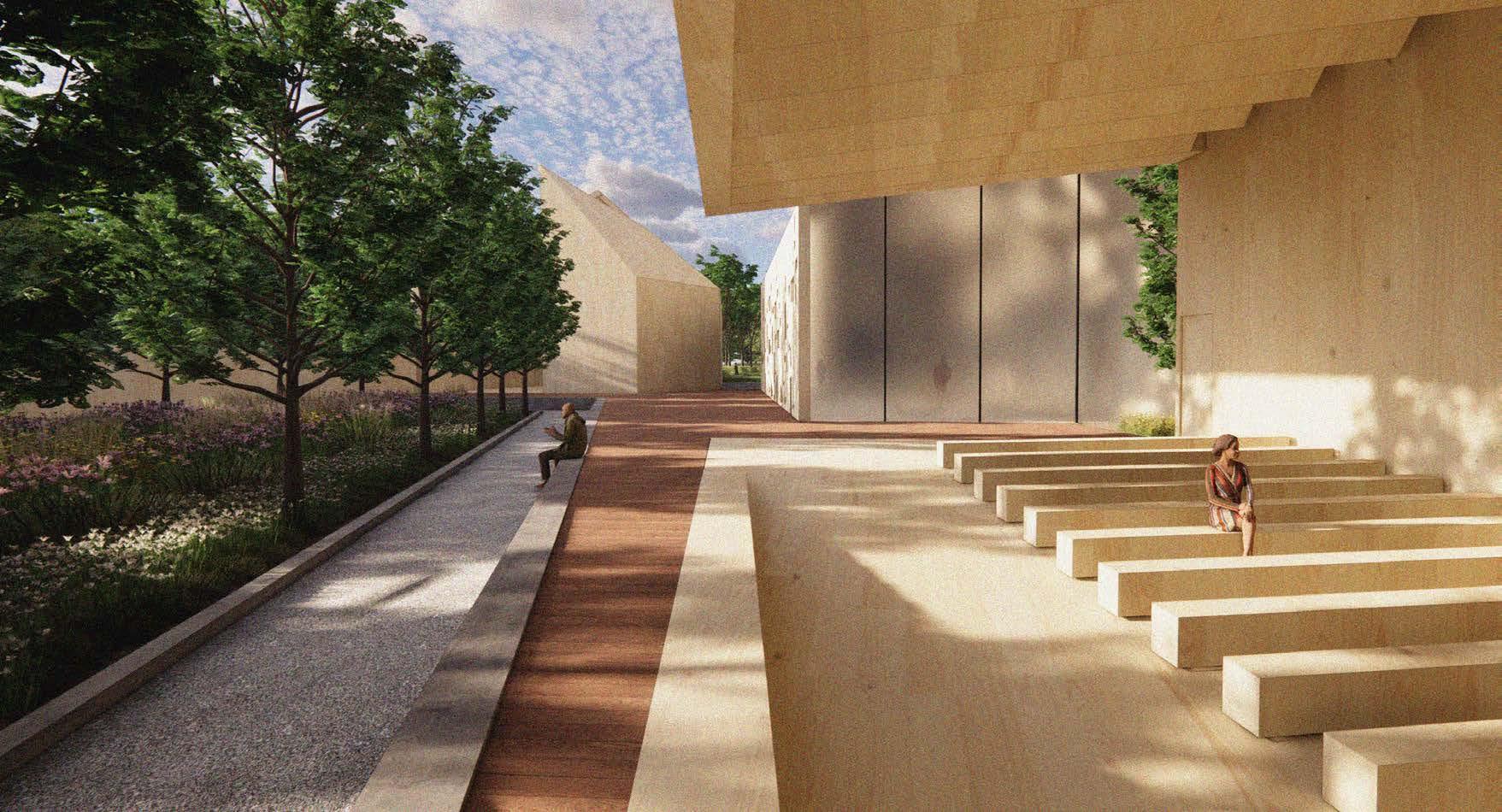
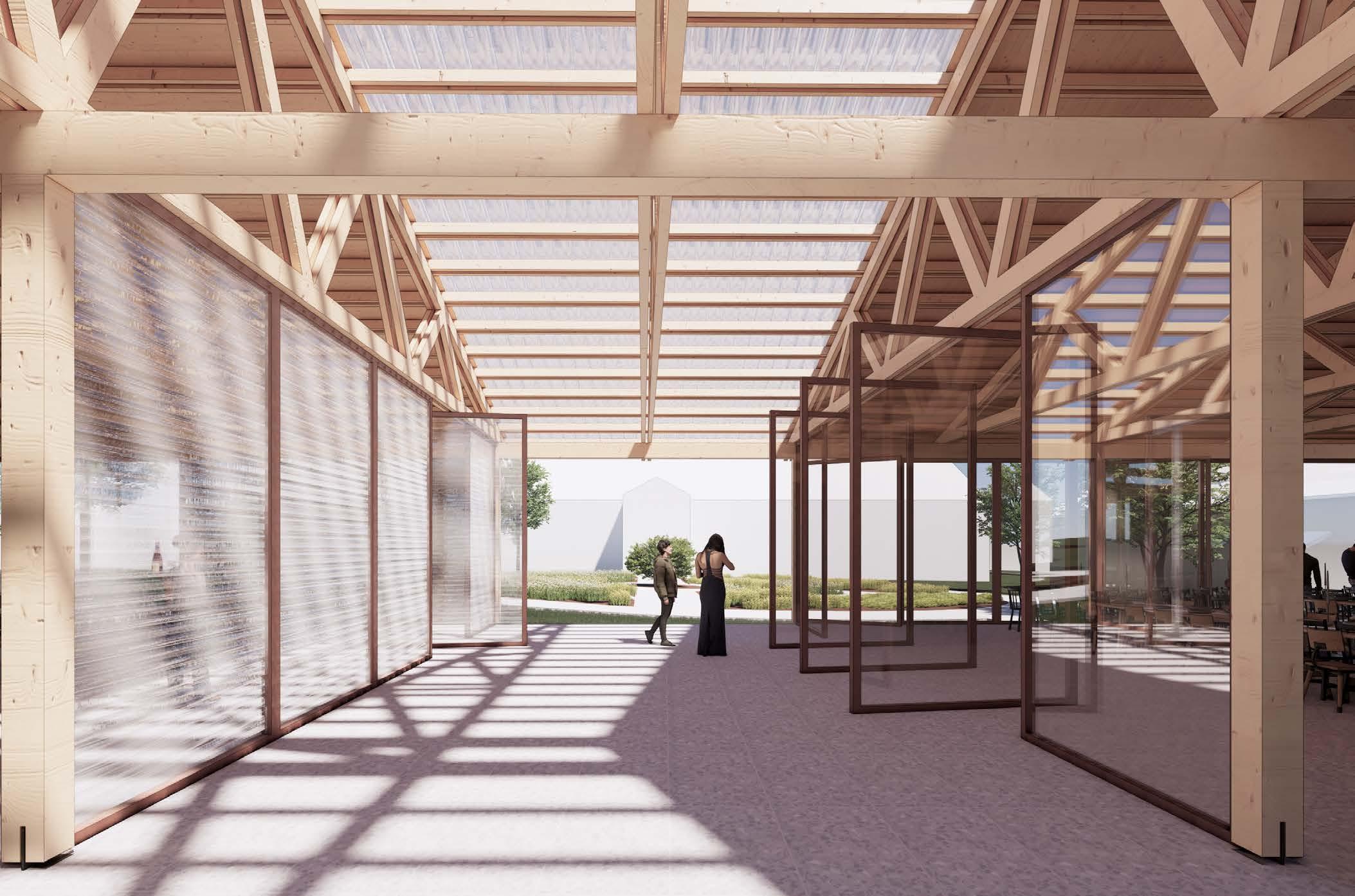
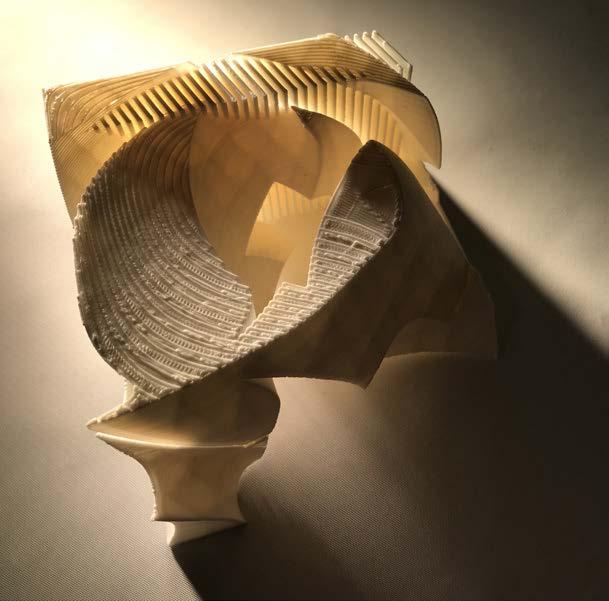
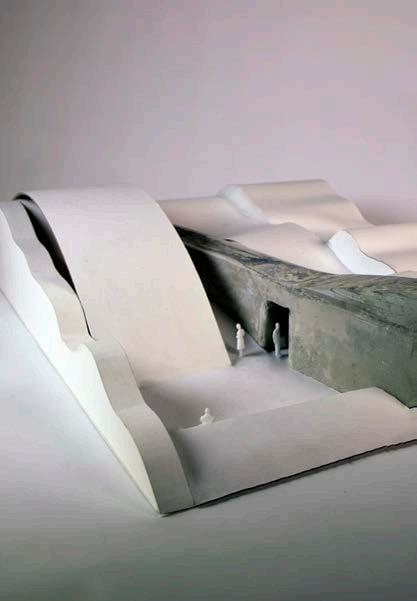
Carswell Grove is the site of a historic Black Church that experienced racial lynching during the Red Summer of 1919, in addition to two horrific arsons, with one as recent as 2014. The goal of this project was to take the site of a former institutional community backbone, and restore its dignity by acknowledging the atrocity that was, while framing a space for the community to speak its own truth and rewrite its future. The ultimate CLT design addresses the agrarian site, frames a ghost structure around the ruins, and creates a space for the community to address its future.
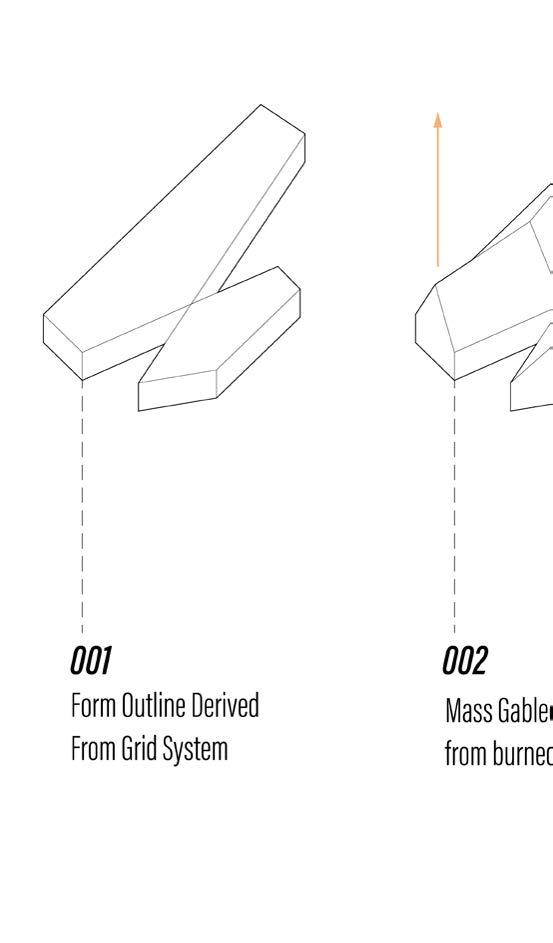
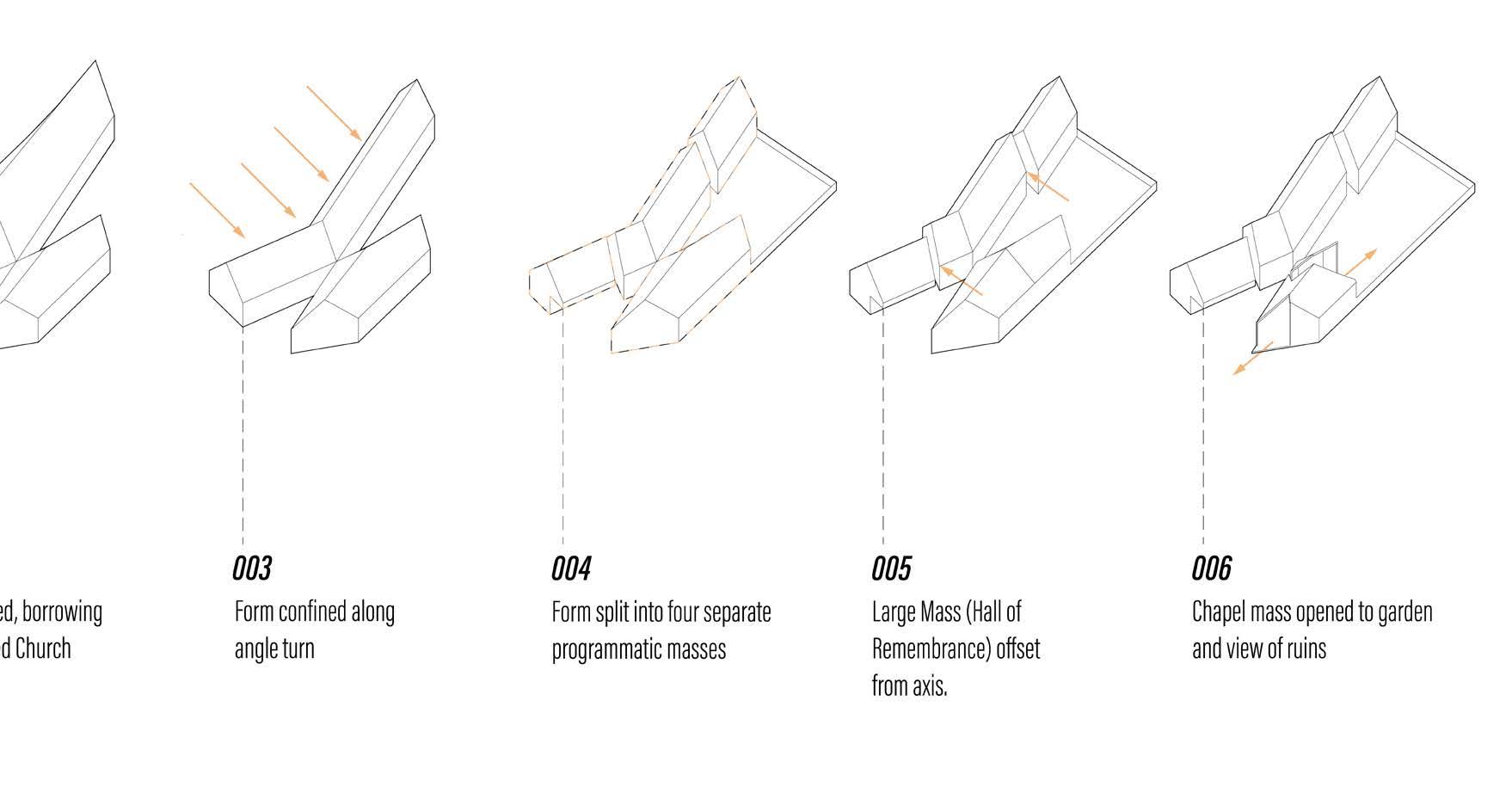
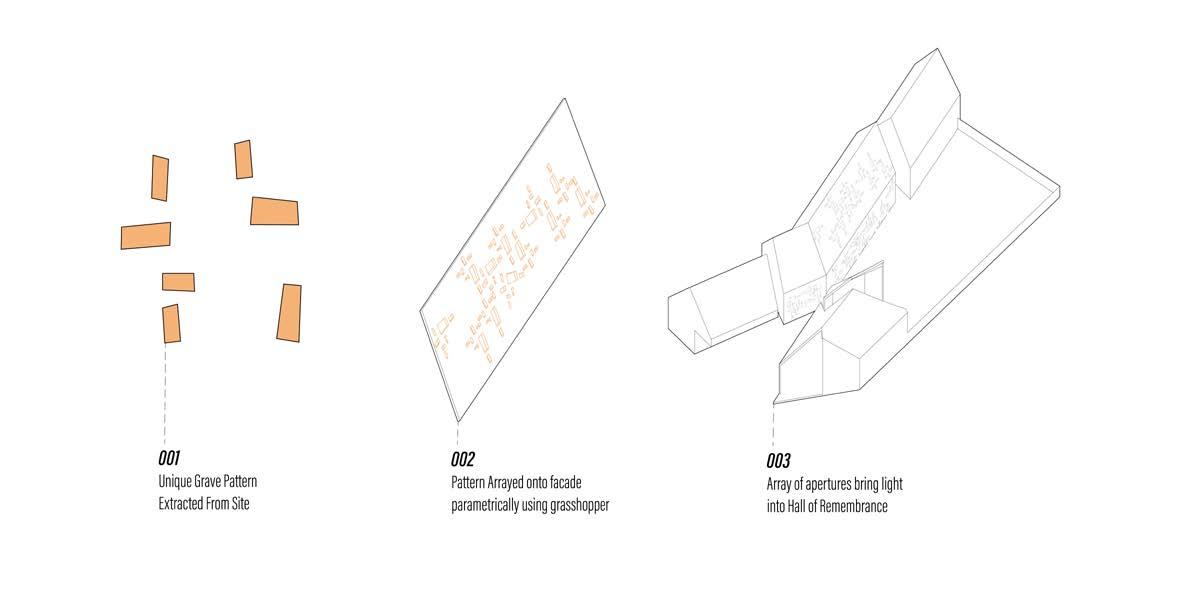
My efforts included a research stage and a design charette that centered around the program of a contemplative garden, hall of remembrance, ruins site, chapel, and public speaking space. The research utilized site data, national historic registry data, and primary source accounts to understand the history of Millen, the Church, and the events. The charette consisted of developing a detailed forming logic, the creation of modular CLT structures, parametric fenestration patterns and elements, and form-fitting installations.
I return to this project with a particular kind of gratitude. It was the first project in which I understood, in a felt rather than merely intellectual sense, that architecture is not neutral — that every spatial decision encodes a position on power, place, memory, and who belongs. That understanding is the foundation of my practice.
Professor: George Dodds, PhD, Alvin and Sally Beaman Professor of Architecture
University of Tennessee, Knoxville
Year: 2021
forming diagram - aligning cartographic meaning
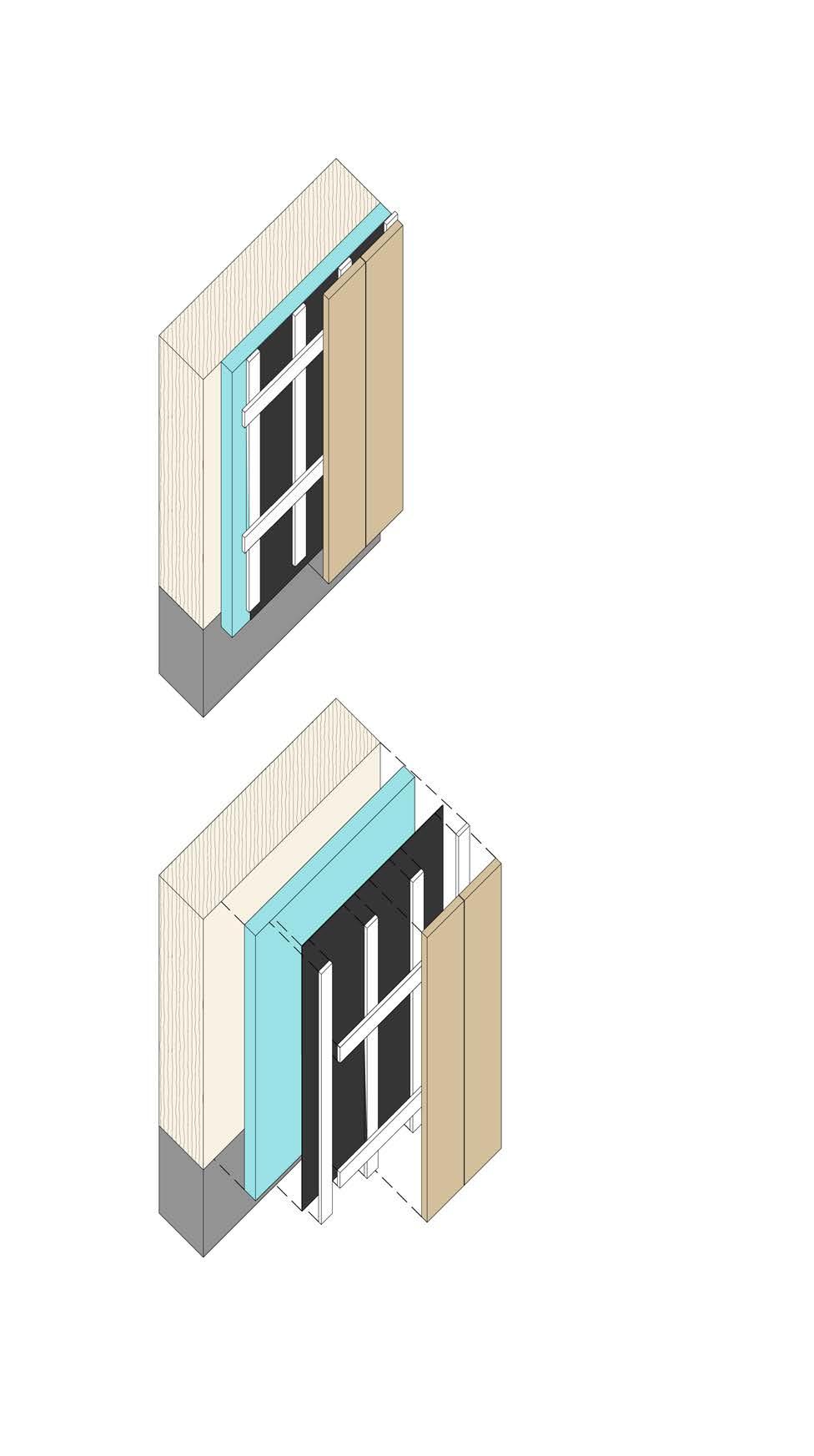
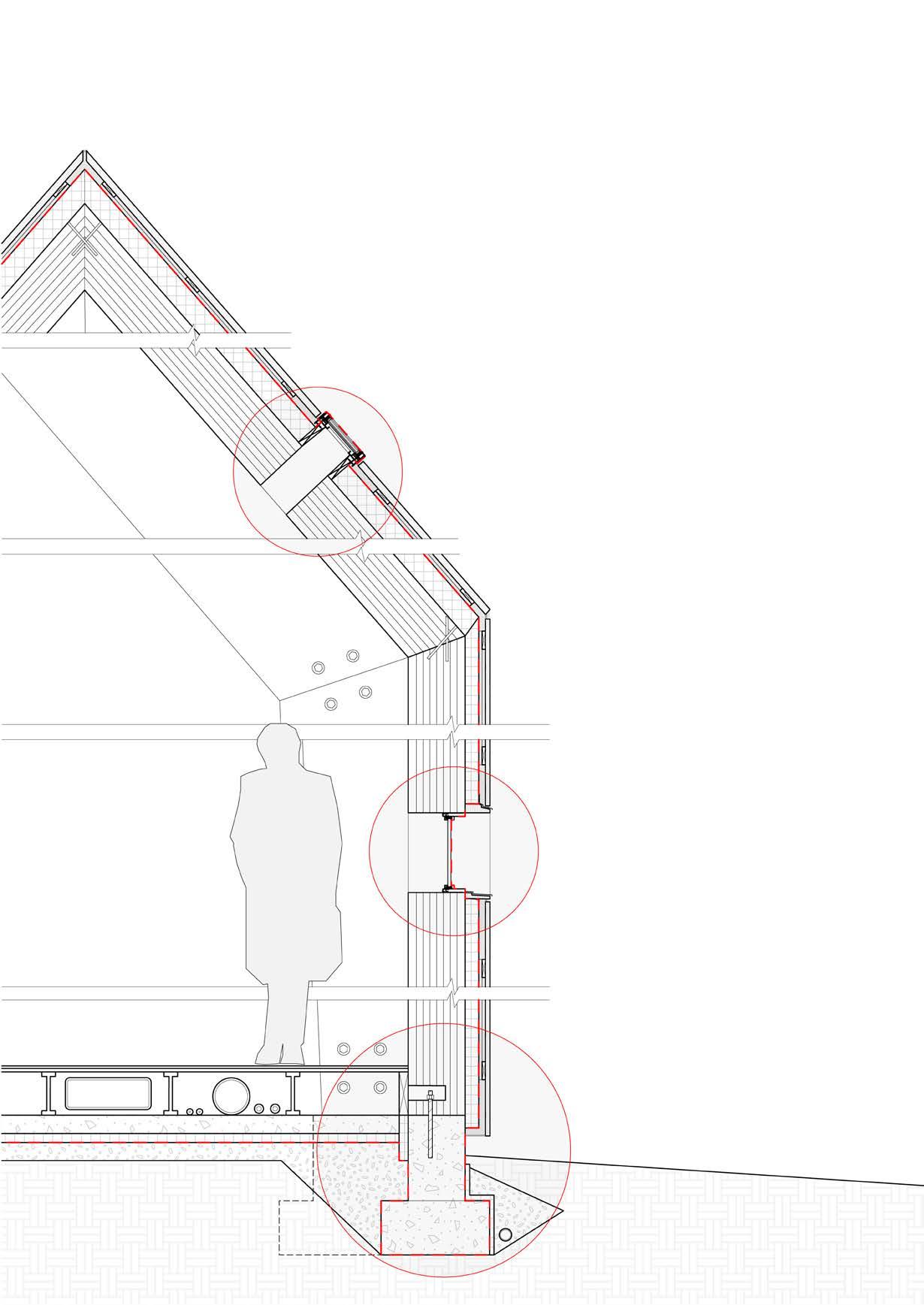
12” 9-Ply CLT Panel (~R-15)
3” Polyiso Insulation (R-15)
abodo vertical timber screening in “straw” finish
1x3 Pressure Treated
Counter Batten
1x3 Pressure Treated
Batten
Fluid Applied, UV Rated Vapor Barrier
1.5” Air Gap Created by rainscreen battens
Concrete Stem Wall
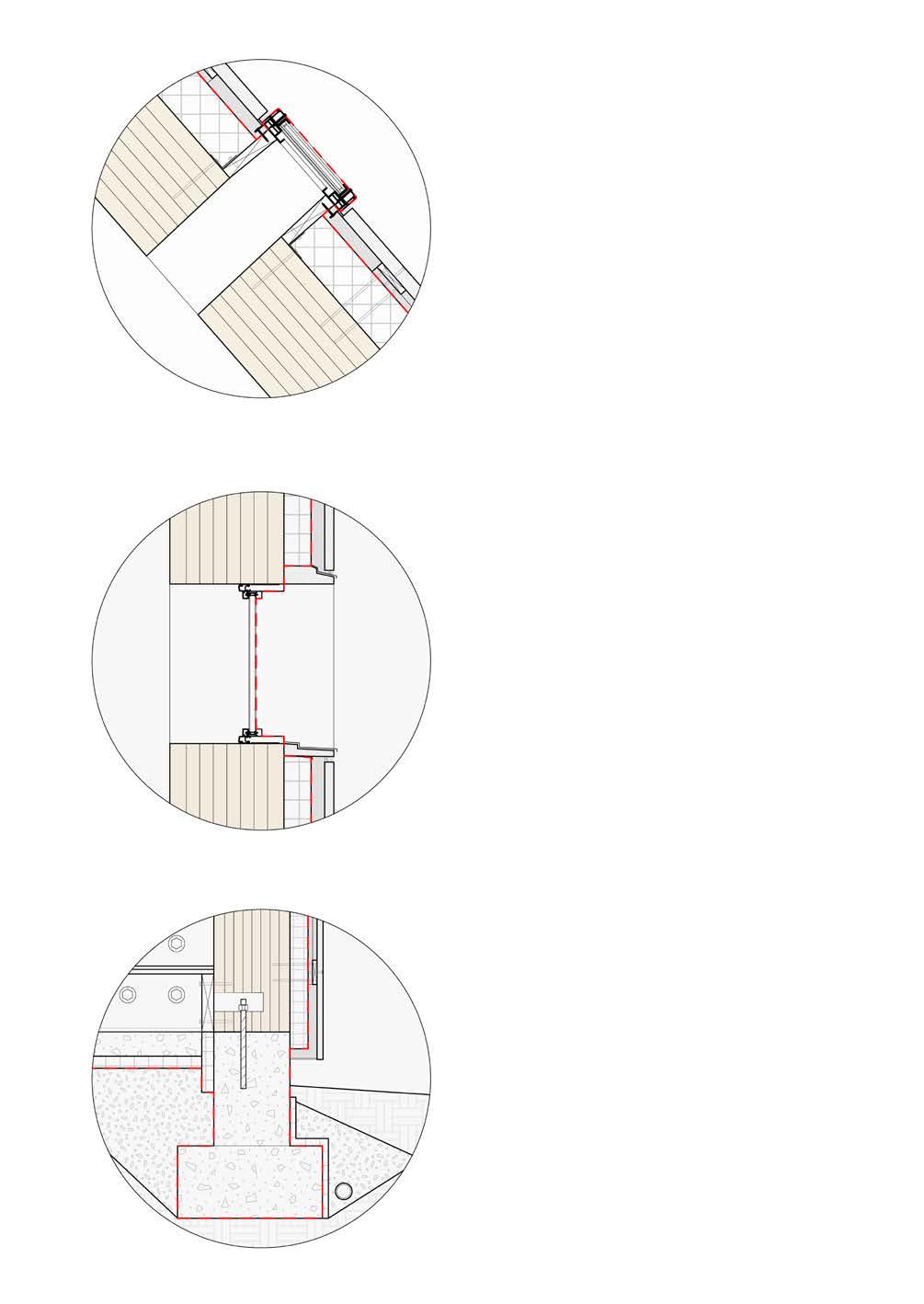
Detail A: Skylight Assembly
Velux curb mounted, triple glazed skylight
skylight flange nailed directly to curb
3/4” air gap between flange and 2x6 curb with same, continuous fluid steel bracket with timber screws
1x3 battens and counter battens fastened to clt with 9” fully threaded timber screws
5” polyiso insulation with fluid applied,
12” 9-ply clt panel
Detail B: Vertical Aperture Assembly
abodo vertical timber screening
flashing above sill to end of air gap
flashing on sloped still at frame Marvin triple pane, clad, fixed window sloped sill at frame
3/4” air gap with mesh bug net below sill
1.5” air gap + battens beyond
3” polyiso exterior insulation with fluid
12” 9-ply clt panel
Detail C: Foundation + Floor System
1x3 battens fastened with 9” timber
9-3/4” rim board fastened to 12” clt panel with 1/2” advantech subfloor
abodo vertical timber screening in glulam beam fastened to foundation
4” concrete slab on 2” polyiso on 20 mil vapor barrier and gravel ductile hold down connection