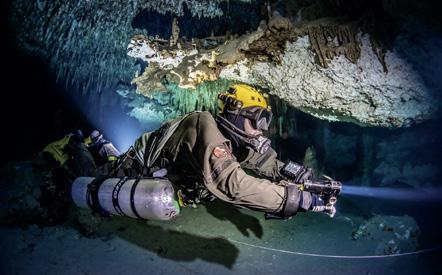
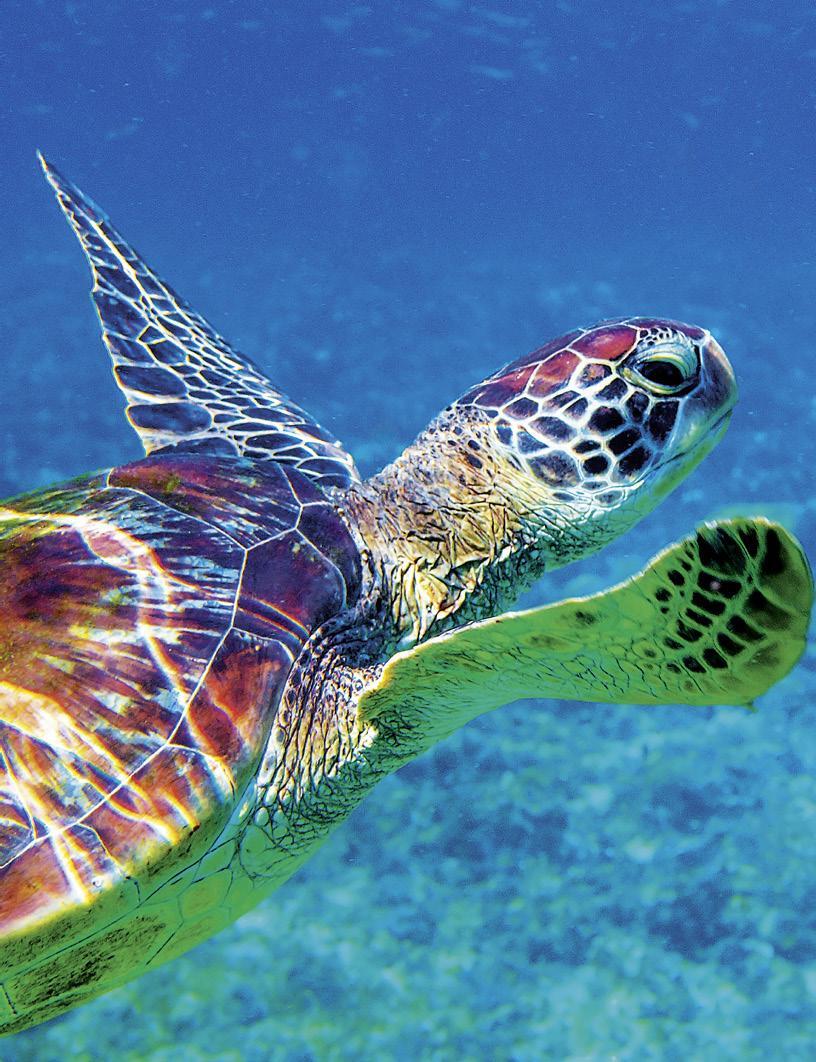
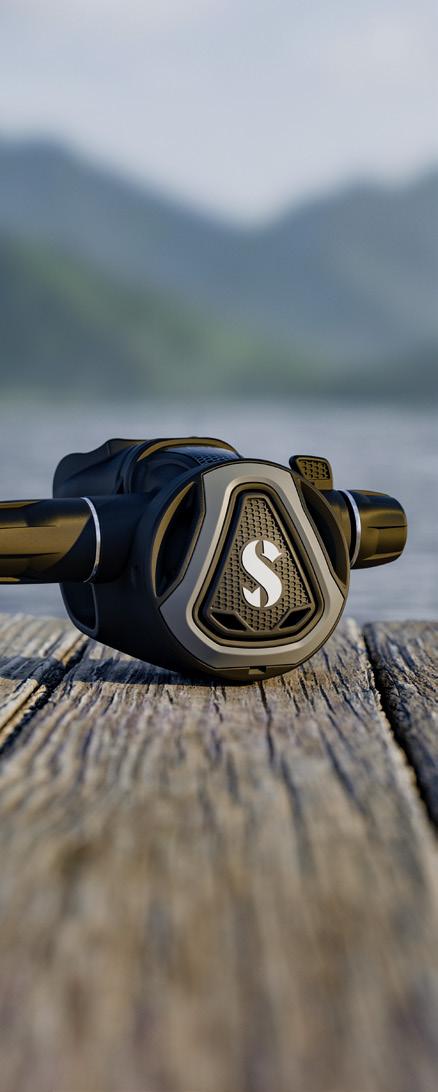
A profile of the DiveSystem Review: Mares regulator sets
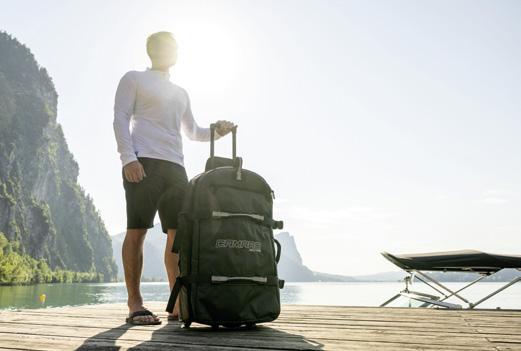
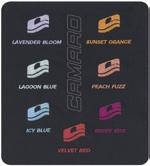
Bags by Camaro
Baja
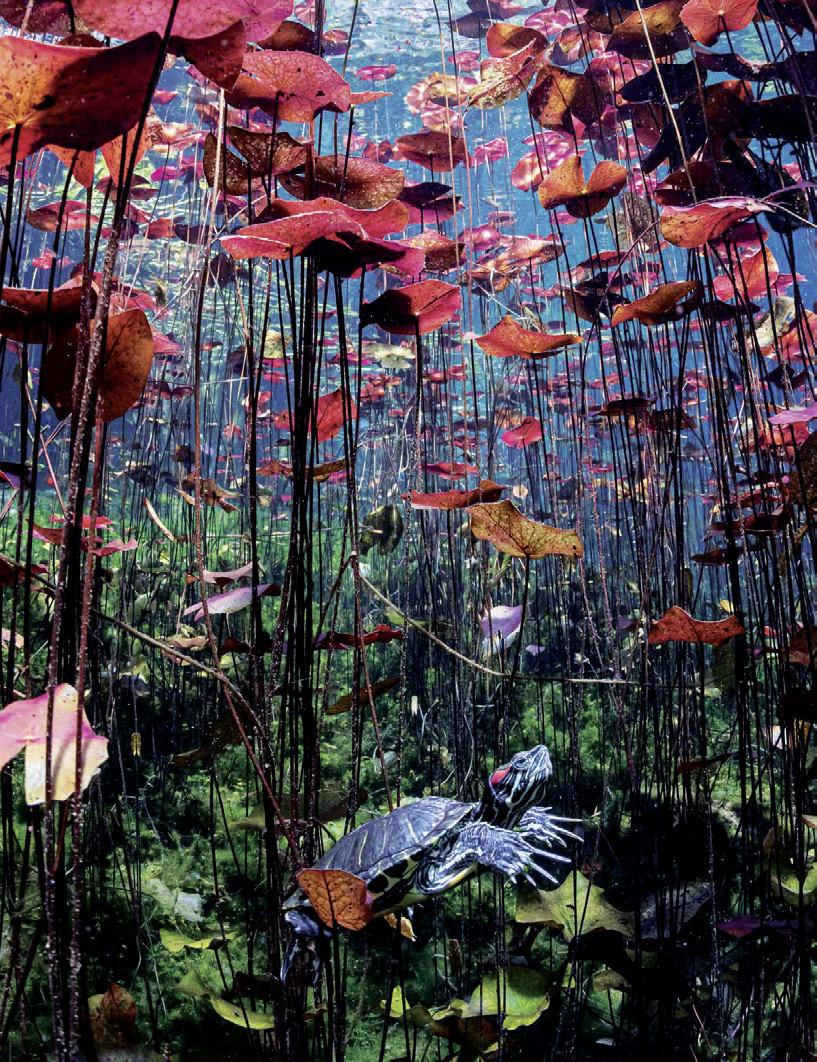
Mexico’s biodiverse west California
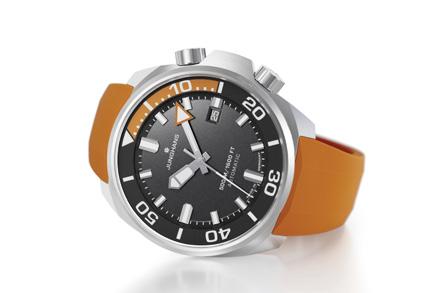
Der Innendrehring in Kombination mit dem Minutenzeiger in Pfeilform zeigt Ihnen Ihre Tauchzeit genau an. Lebenswichtige Instrumente für die Tiefe des Ozeans. www.junghans.de 27/4668.44
It’s got me...
I wasn’t sure whether I should share my very personal moment of stupidity with you. But I’ve decided to go ahead and do so: in mid-April, I went on three wonderfully beautiful dives in my favourite lake. It was cold, deep and long. And I was stupid. My smartwatch dive computer didn’t record the second dive. It only displayed the depth and time. My mistake – I’d forgotten to press ‘Go’. I thought it would just keep track of the data in the background. But it didn’t. I only realised this after the third dive, though, when my skin started to itch and my shoulder joint began to ache. A clear case: signs of decompression sickness. I breathed oxygen for 20 minutes from my buddy, who, fortunately, had brought his rebreather with him. The itching went away; ibuprofen did the rest. At least for the evening. The next day, my shoulder hurt more and more. By the evening, my hand was slightly numb. Theoretically, I understood what was going on. In fact, I’d realised it straight after the symptoms first appeared. So it took a bit of effort to pick up the phone and call the hyperbaric chamber – fortunately, it was only 40 minutes away. The rest was the usual routine: medical history, hyperbaric chamber
sessions, an MRI scan, hospital admission and observation – two days in hospital. Fortunately, the symptoms disappeared after the first 8-hour session – lucky again. One of the lessons I’ve learnt from this experience: use your head when it comes to dive planning, and don’t just rely on the equipment. Even the best equipment is useless if it’s operated by an idiot. At this point, a big thank you to the hyperbaric chamber team at Halle University Hospital. They know what they’re doing, and on top of that, they’re absolutely lovely.
Now turn the page! The best bits of diving are waiting for you. Enjoy reading and dreaming. And please do feel free to get typing and let me know what you think is missing or what moves you as a diver.
auch ein Palau haben!
Alexander Kaßler Editor-in-Chief of TAUCHEN alexander.kassler@tauchen.de
MAGAZINE
Gallery: Henley Spiers
JOURNEY
from the travel industry
Photos: Timo Dersch (1); Mark B. Hatter (1); Sascha Caballero (1); Benjamin Schulze (1); Brandon Cole (1); Manufacturer (1); Phil Simha (1)
Madagascar: Nosy Be 18 Cape Verde: Reader’s report from Boa Vista 24
Indonesia: Liveaboard trip around Komodo 28
Mexico: The Allure of Baja California 34
TECHNOLOGY
New products on the equipment market 42
Company profile: Divesystem, 44
Review: Action cameras put to the test – 50
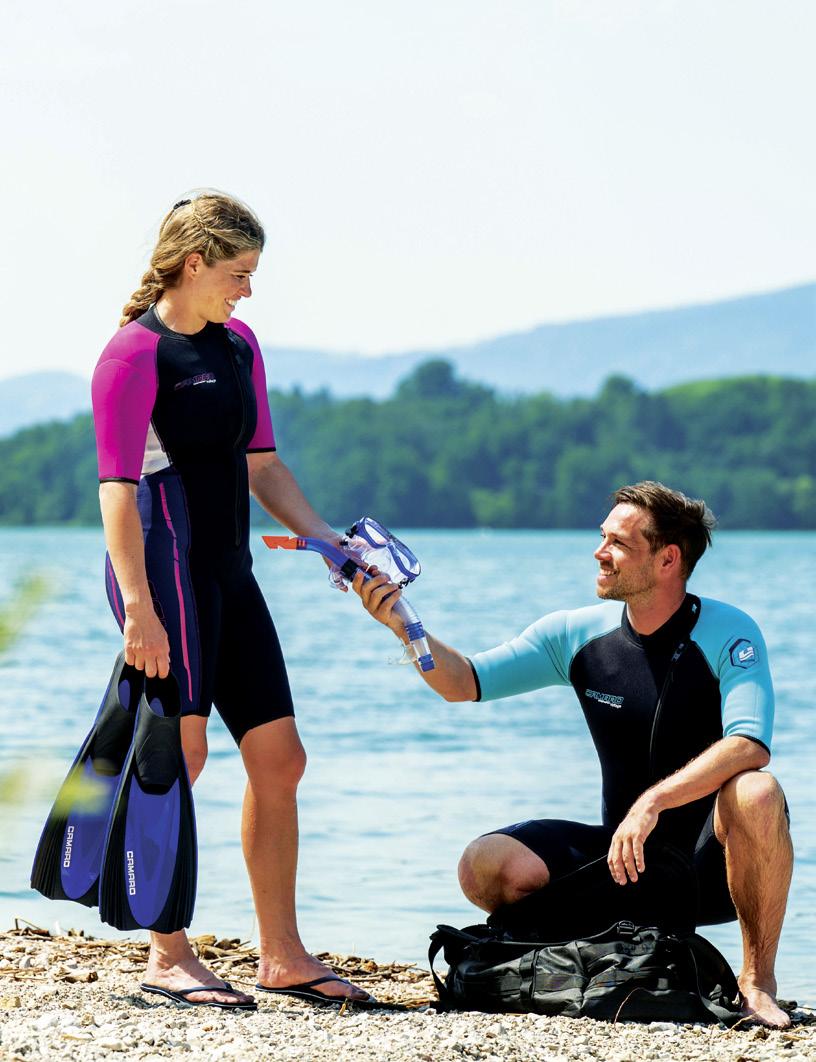
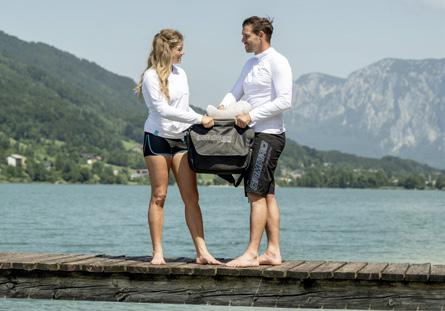
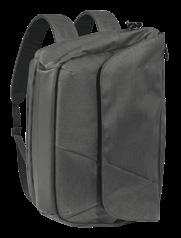
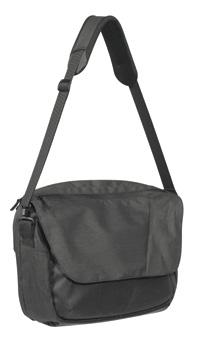
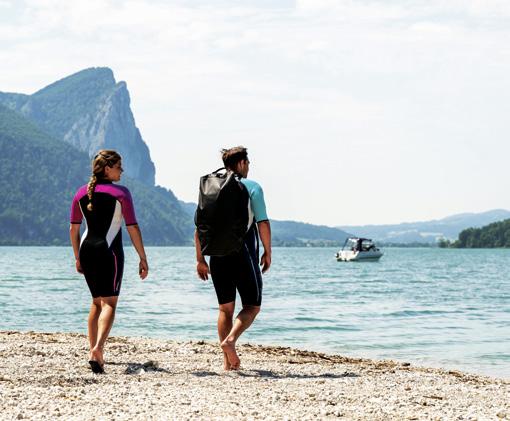
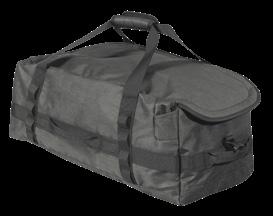
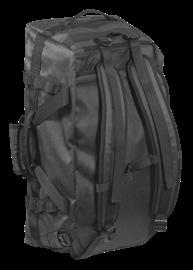
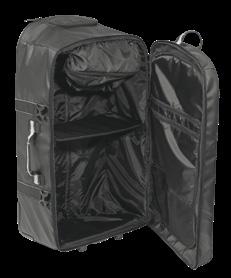
Advertorial: Camaro’s new bag range 58
Review: Mares Abyss Navy II vs. Mares Abyss Classic 26 62
EXPERTS
News from Science & Research 66
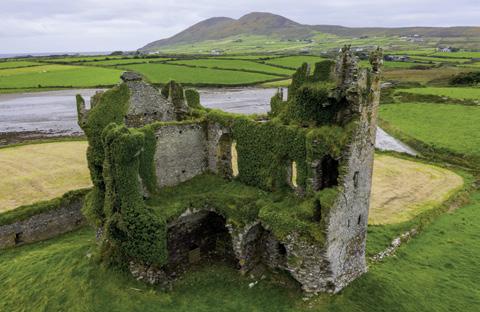
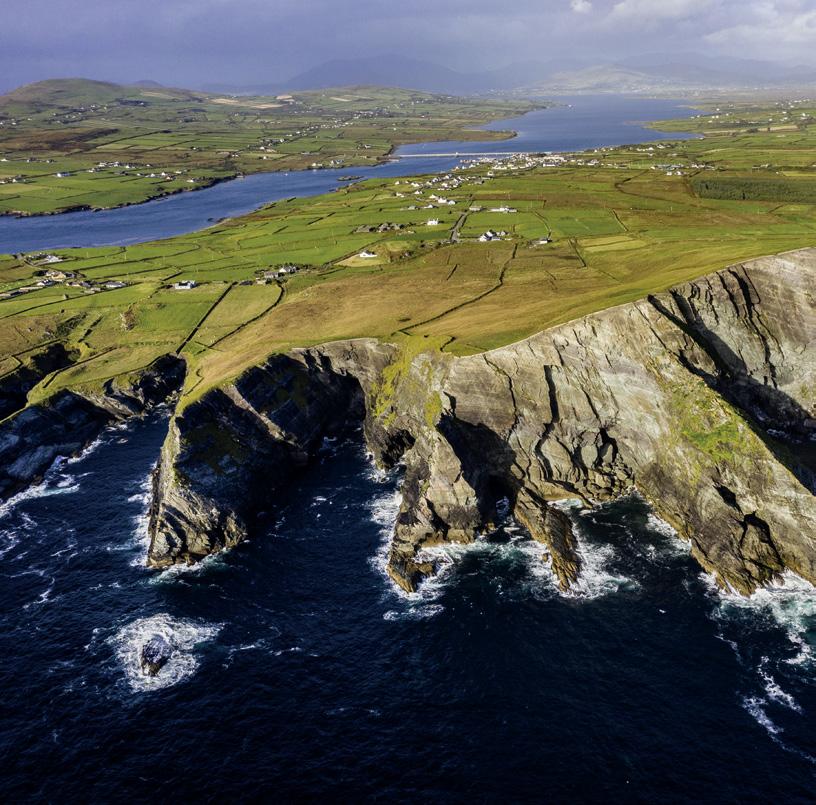
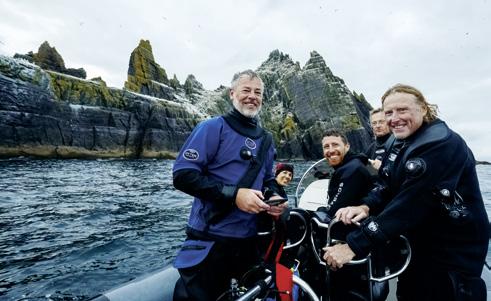
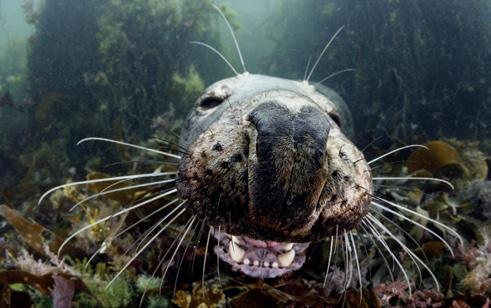
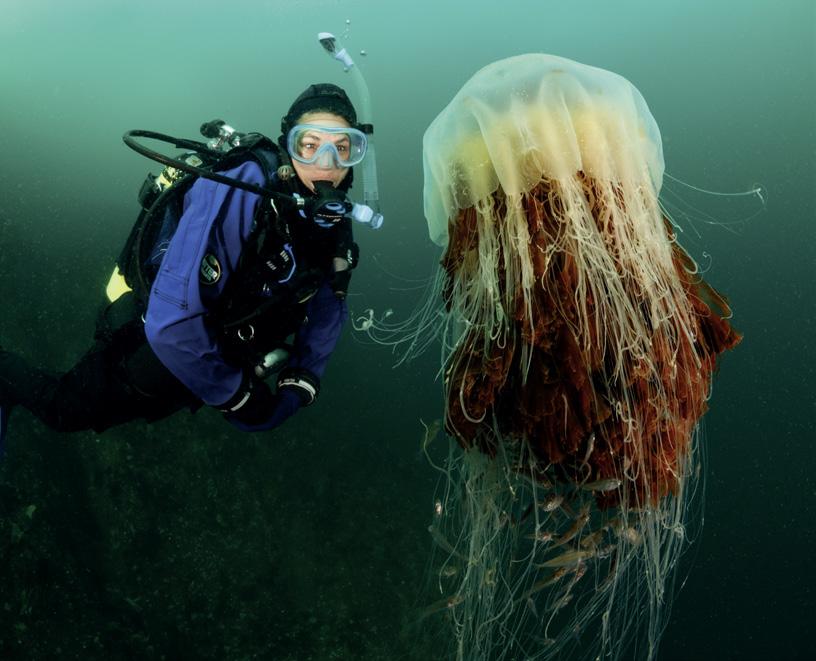
Feature: Ireland Above and Below the Water 68
Interview: Rip-off at the holiday doctor 76
How to: Swimming training for divers 72
Apnoea: Not a deep-diving addict 80
Medicine: Diving with ADHD 84
FOCUS
Photography Philosophy
Photo Competition
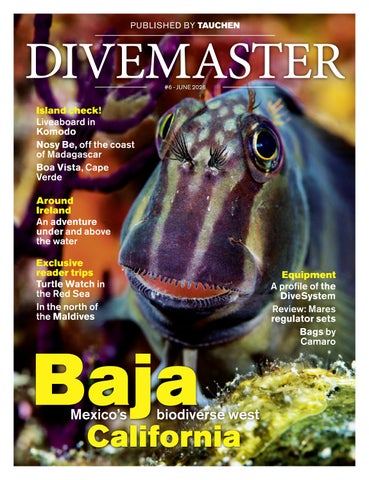
Cover No. 7.26
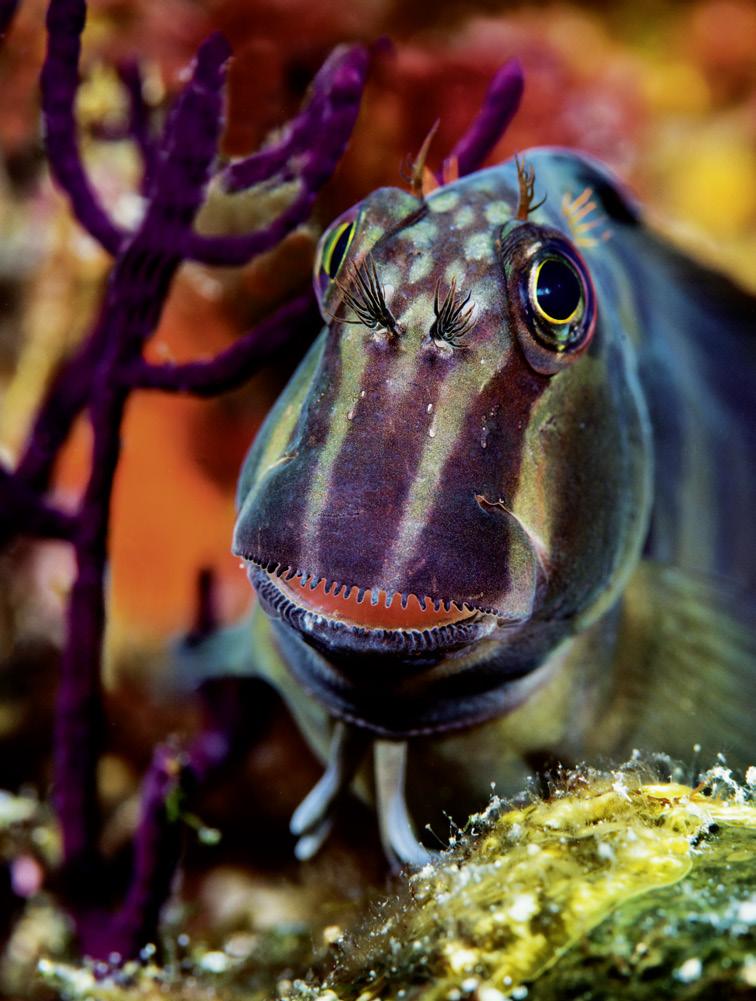
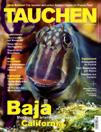
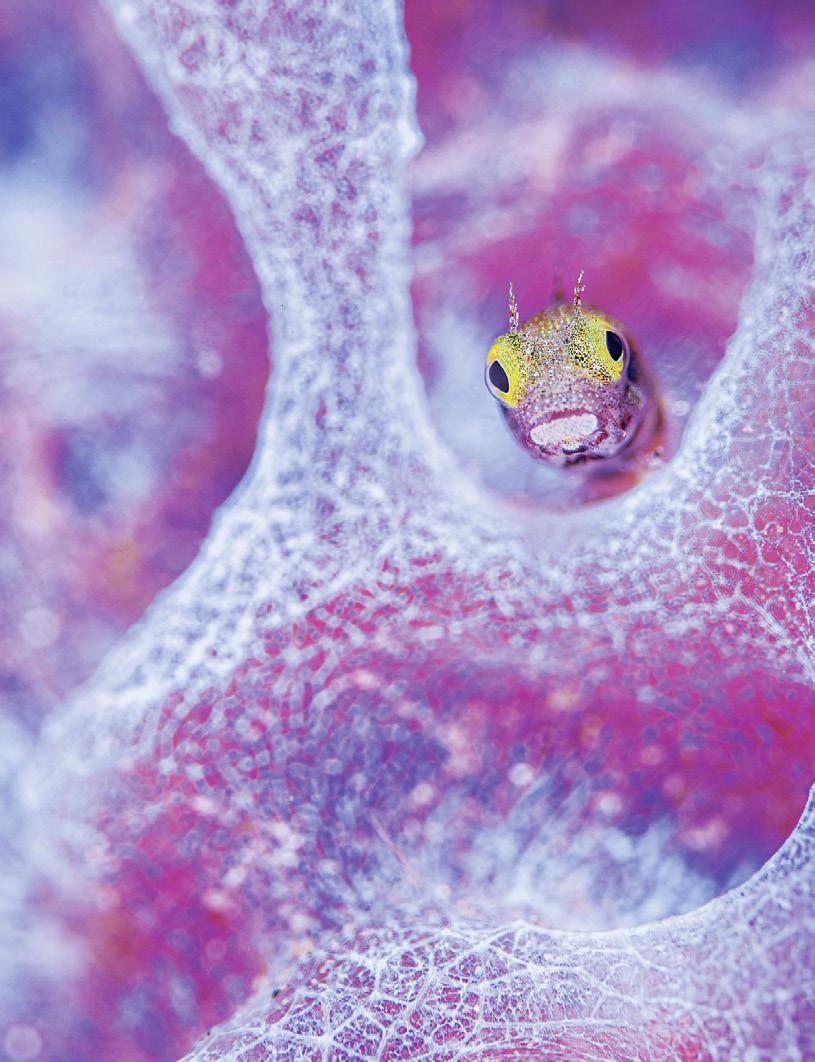
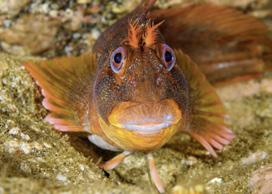
The cover image is by Martin Strmiska (aquasphere.sk) and shows a Panama blenny (Ophioblennius steindachneri), photographed off La Paz, Baja California, Mexico.
CONTACT & MORE
EDITORIAL TEAM
Jahr Artopé Media GmbH & Co. KG Bajuwarenring 9, 82041 Oberhaching Tel. 089/5 52 41-0, Fax 089/5 52 41-244
Did you know that TAUCHEN is also available digitally? This includes our social media channels Facebook and Instagram as well as our website and our YouTube channel. You can also listen to our podcast channel. Just drop by and listen. Follow the links below. Do you want to read TAUCHEN digitally? Download our TAUCHEN app for iOS and Android. We look forward to hearing from you.
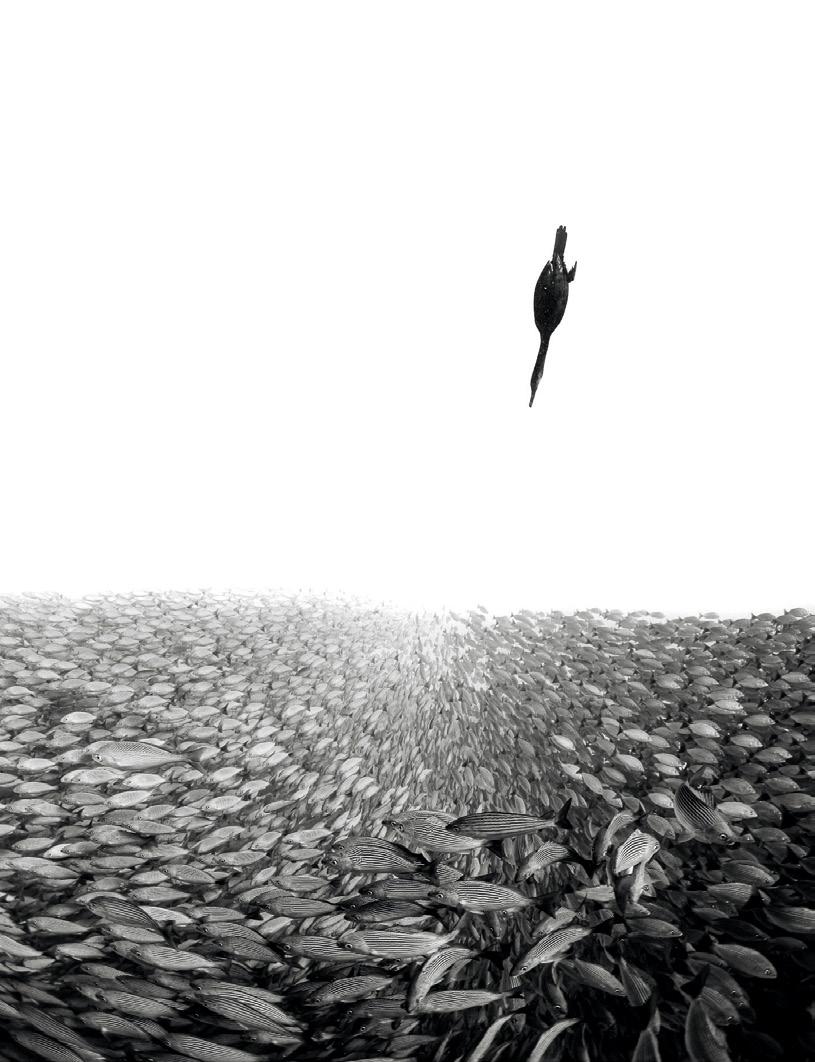
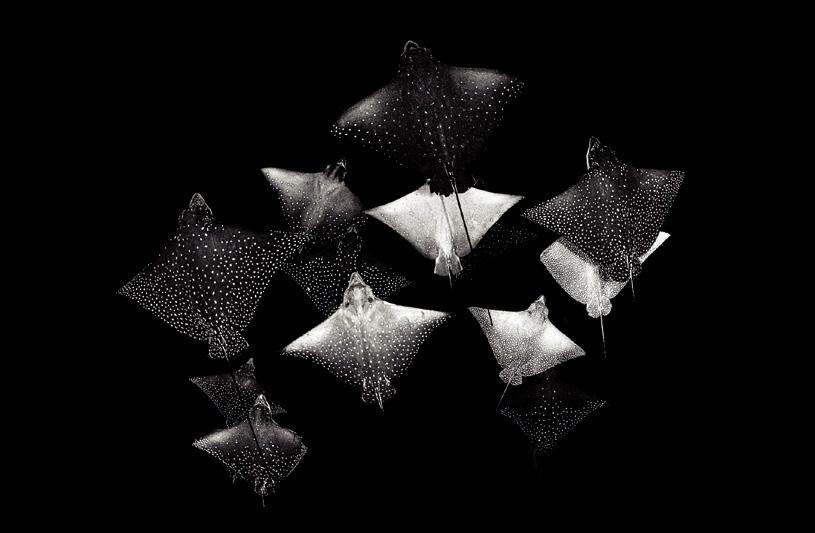
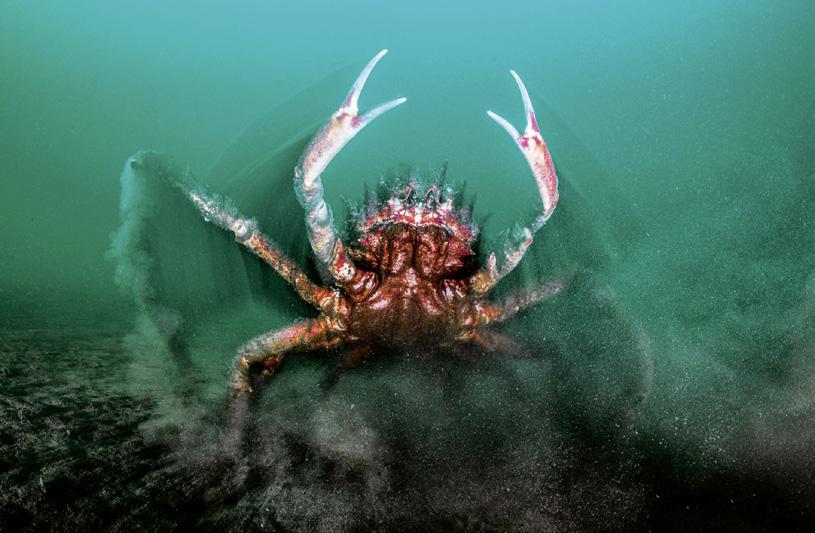
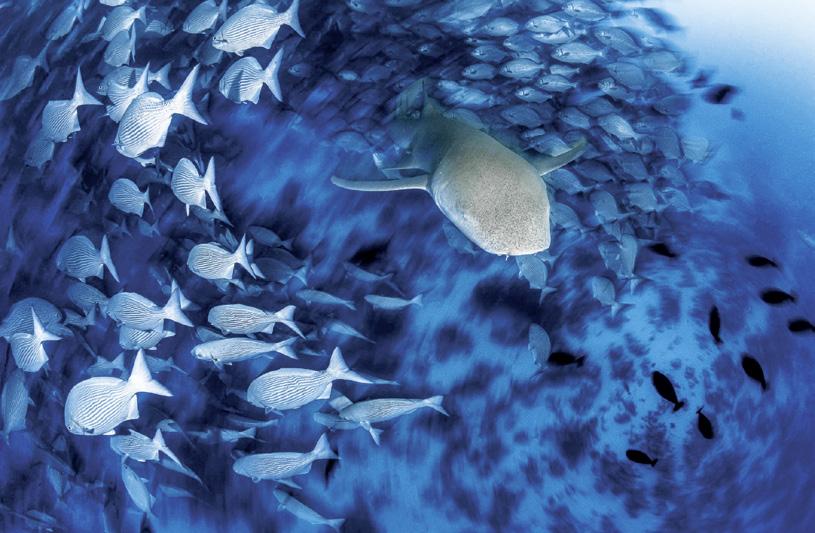
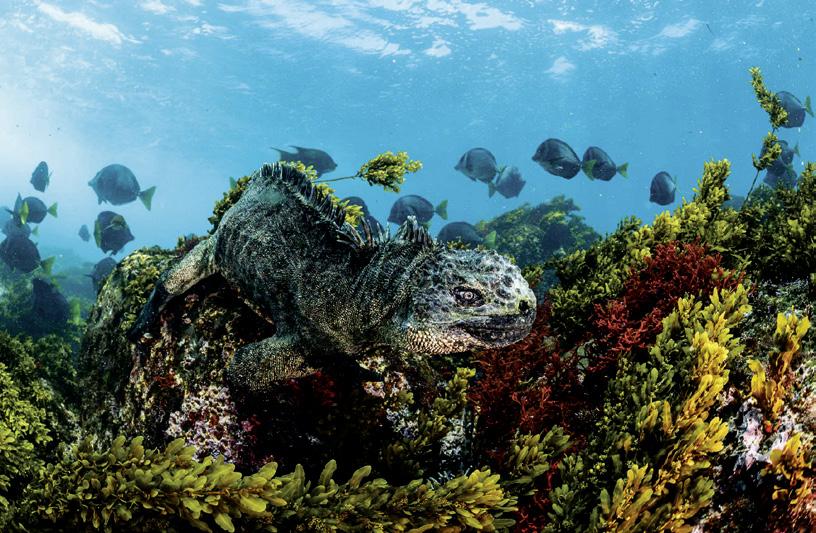
The passion of the award-winning wildlife photographer Henley Spiers. We are delighted to present some of his photographs.
www.henleyspiers.com
Instagram: @henleyspiers
Facebook: @henleyspiersphotography
PICTURES, THAT TELL THE STORIES
FORTAUCHENREADERS exclusive
TFAR FAR NORTH
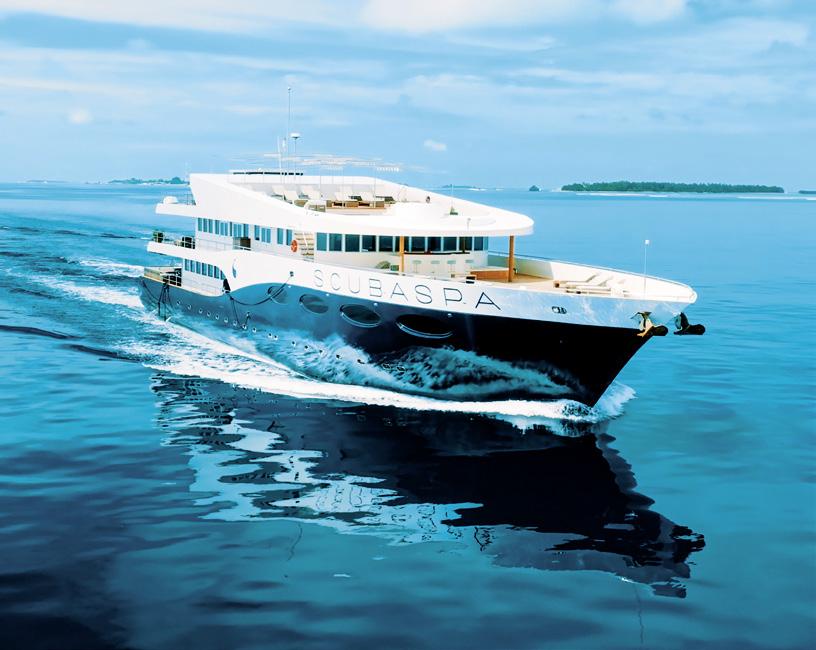
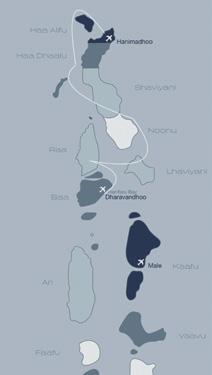
The other side of the Maldives, which you rarely get to experience. Join us on our liveaboard trip in September! The ‘Scubaspa’ fleet takes you off the beaten track through the Maldives archipelago.
he Maldives can surprise you in the quietest of ways. Not where one route follows another, but far up in the north, where the islands are smaller, the paths quieter and encounters more intimate. This is precisely where ‘Far Far North’ takes you – a special ‘Scubaspa’ expedition running from 5 to 12 September 2026: from Hanimaadhoo to Dharavandhoo, through the Baa, Lhaviyani, Noonu, Shaviyani, Haa Dhaalu and Haa Alif atolls – a route that steers clear of the well-known Maldivian classics.
What makes this trip so special begins even above the water. Rather than simply moving from one dive site to the next, this expedition also takes in the quieter, more human sides of the Maldives: sandbanks,
inhabited islands, small harbours and places where the rhythm of daily life is still dictated by fishing, the weather and the tides. These are the moments when children wave from the jetty, fishing boats rock gently at the mooring, and the country suddenly feels more tangible than any picture-postcard scene.
A cultural highlight is Utheemu in the Haa Alif Atoll, the home of Sultan Mohamed Thakurufaanu, a key figure in Maldivian history. A visit to the island and its traditional wooden house, which is still inhabited today, offers a glimpse into a country that is far more than just a tropical idyll and turquoise waters. It is precisely this contrast that makes ‘Far Far North’ so appealing: mornings spent in the blue of the ocean, afternoons immersed in history, is-
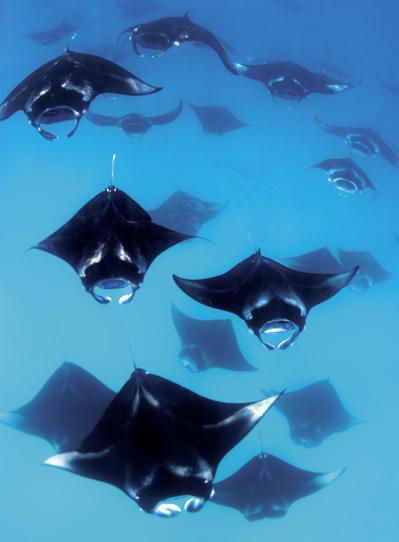
land life and the warm evening light. And yet, of course, the itinerary also thrives on what lies beneath the surface. In Hanifaru Bay, the focus is on encounters with manta rays (snorkelling), whilst in Lhaviyani, channel dives with sharks beckon. Added to this are pinnacles, caves, overhangs, cleaner and feeding stations, plus a mix of macro and wide-angle subjects, the likes of which are rarely found in such concentration on a single trip. The northern atolls are considered comparatively less frequented. In many places, you’ll encounter reefs shaped more by nature than by daily boat traffic. In Haa Dhaalu, cave formations await; in Shaviyani, lively walls and drift dives; and in Noonu, the striking ‘Christmas Tree’ pinnacle creates a particularly impressive underwater landscape featuring reef fish,
Photos: Scubaspa archive
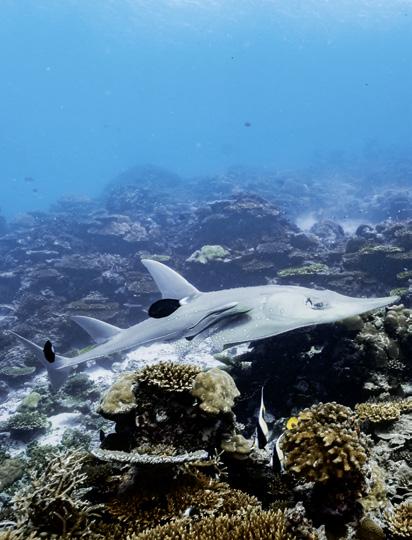
nudibranchs and passing pelagic fish. With a bit of luck, you might even spot rarities such as guitar sharks or spiny seahorses.
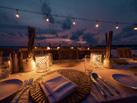
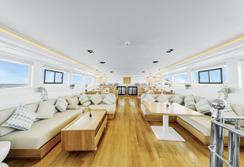
All of this is complemented by life on board that combines discovery with a slower pace. The ‘Scubaspa Yin’ and ‘Yang’ are 50-metre-long yachts accommodating up to 26 guests – complete with a restaurant, bar and lounge, spa deck, gym, sun deck and Thai deck. Between dives and island visits, there’s plenty of time for the things that often make for a great holiday: a coffee with a view of the open sea, a late-night chat after dinner, sunsets overlooking the islands, a clear night sky and the feeling of being truly far out at sea.
The accommodation also reflects this commitment to comfort: from the Sea Star Suite on the lower deck to the spacious
Manta Suite on the main deck, all with ensuite bathrooms, air conditioning and a safe; the suites on the main deck also feature panoramic windows.
Prices start at US$3,750 per person in the Sea Star Suite and go up to US$4,950 in the Manta Suite, based on double occupan-
cy. A 10 per cent service and administration fee and a US$12 green tax per person per night are added to this. International flights and domestic flights to and from Malé are not included in the price. ‘Far Far North’ –this is far more than a traditional liveaboard. It is a journey for anyone who doesn’t just want to tick off the highlights of the Maldives, but wishes to delve deeper into remote atolls, unknown underwater worlds and an island culture that unfolds its own quiet power far away from the major tourist hotspots.
Would you like to take part? Please email ‘Scubaspa’ at: redaktion@tauchen.de
MAGAZINE
A SCIENTIST IS ON BOARD: TURTLE SAFARI IN THE RED SEA
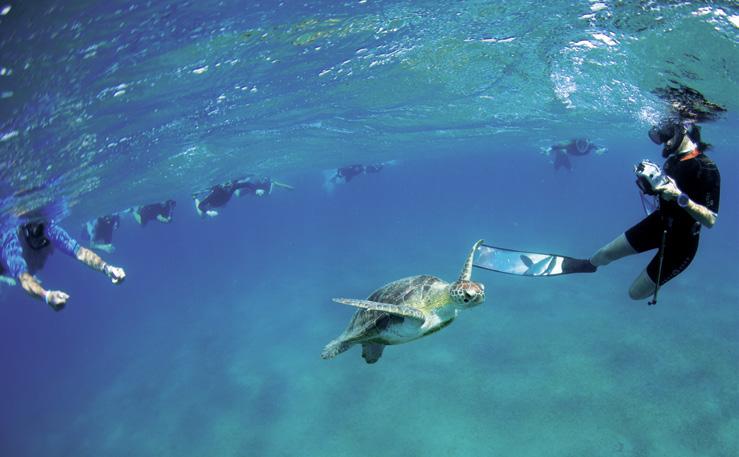
Dive, observe, take part in research: this unique liveaboard trip in the Red Sea combines spectacular dives with genuine marine research. For a week, a marine biologist from the TurtleWatch Egypt 2.0 team will accompany the trip, actively involving participants in a scientific project – with a particular focus on sea turtles.
Whether it’s scuba diving, freediving or snorkelling: the biologist is in the waterevery day , assisting with observations and coordinating the collection of data on marine life and coral reefs. After each dive, the sightings are discussed and analysed as a group. In the evening, talks build on the day’s experiences and provide fascinating insights into the ecology of the Red Sea.
The focus is on the sea turtles of the Red Sea: their biology, life cycle, threats and conservation measures, as well as their role in seagrass ecosystems. The programme also covers coral reefs, coral bleaching, whales and dolphins, and the fish life of the Red Sea. Guests not only learn about these topics, but also make an active contribution to research themselves.
Particularly exciting: participants help to identify turtles from photographs, document their behaviour, depth, location and time of sighting, and pass their data directly to the biologist on board. Guests can also get involved in monitoring coral bleaching and collect data for the CoralWatch programme.
On the final evening of the safari, the week’s findings will be presented: How many turtles were spotted? Which species were among them? Were any familiar animals identified, or were new individuals even documented? If a newly discovered turtle has been sufficiently documented, participants may even be allowed to name it – thereby contributing directly to the TurtleWatch Egypt catalogue.
This safari is far more than just an ordinary liveaboard: it combines the beauty of the Red Sea with direct scientific involvement, fascinating talks and a genuine contribution to marine conservation. For anyone who loves turtles or is generally passionate about marine biology, this is an exceptional opportunity to combine an unforgettable week at sea with meaningful involvement.
Facts & Figures
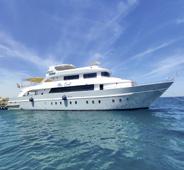
Turtle Watch Biology DivingSafari on the Alia Soul – Southern Tour (Fury Shoals) | 25 November – 2 December 26
Experience a unique diving, freediving and snorkelling safari in the Red Sea, where diving meets genuine marine research. Together with a marine biologist from TurtleWatch Egypt 2.0, you’ll explore the underwater world – with a particular focus on sea turtles.
What to expect:
• Guided dives and snorkelling sessions with a focus on marine life
• Information on turtles, coral reefs, fish and dolphins
• Active participation in real-world data collection (citizen science)
• Fascinating evening talks on marine biology
• Daily debriefings and Final presentation
Highlight: Will you spot a new species of turtle? Can you suggest a name for it to be included in the official catalogue? A week packed with diving, learning and active marine conservation.
Price: Start/End: Port Ghalib
Lower deck: 1,650 euros; Upper deck: 1,750 euros; 80 euros port charge (payable on site)
Includes:
• 8 days / 7 nights
• Full board
• Guides
• Nitrox (12-litre cylinder) free of charge
• Marsa Alam airport transfer
• Hurghada airport transfer: + 85 euros surcharge
A suitable flight can be arranged if required.
Fancy joining us?
Then get in touch with us at: redaktion@tauchen.de
Reference: ‘TurtleSafari’
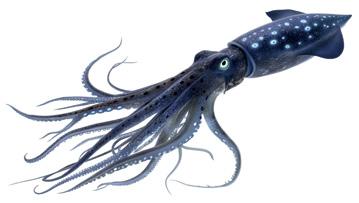
GIANT SQUID DETECTED OFF THE COAST OF WESTERN AUSTRALIA USING DNA TRACES
Researchers have analysed environmental DNA from seawater in deep underwater canyons off the Nyinggulu/Ningaloo coast of Western Australia. In samples taken from depths of more than 4,000 metres, they found evidence of 226 species, including traces of the giant squid Architeuthis dux, deep-diving whales and possibly previously unknown species. The curious thing is that the animals did not need to be sighted or caught — their presence was revealed by genetic ‘traces’ in the water.
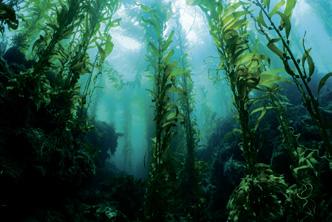
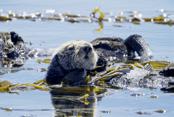
Along the Californian coast, kelp forms dense, species-rich underwater forests of great importance: this giant seaweed absorbs vast quantities of carbon dioxide, thereby helping to regulate the climate. These kelp forests are also home to sea otters – California’s charismatic marine mammals. What few people realise is that sea otters are the last hope for this unique habitat, which is on the brink of disappearing. The film by Claudia & Hendrik S. Schmitt (aka The Jetlagged) follows the family life of the sea otters through spectacular above- and underwater footage and showcases the work of the famous Monterey Bay Aquarium and other marine conservation organisations dedicated to protecting sea otters and kelp forests. Broadcast date: ARTE, 17 June 2026. www.thejetlagged.com
FLORIDA RESTRICTS THE CATCHING OF GIANT MANTA RAYS
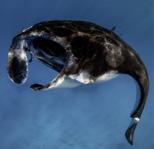
Florida has introduced new regulations governing the capture of endangered giant manta rays, following public criticism sparked by a video showing an apparently distressed manta ray being captured for export to an aquarium in Abu Dhabi. From 1 July 2026, the export of manta rays abroad will be banned. US institutions will in future be required to demonstrate an educational purpose and obtain the direct approval of the Florida Fish and Wildlife Conservation Commission. However, there is no complete ban on catching them.
You can find out more about the artist Michel Ley at: Facebook/michels.imbaerium, Instagram (‘michels.imbaerium’) and www.michels-imbaerium.de
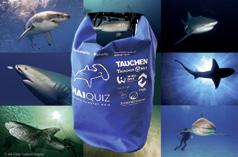
SHARK KNOWLEDGE MAKES YOU (MORE) CLEVER …
What is so special about a cigar shark’s revolver-like teeth?
A) It takes just ten minutes for a new tooth to fully erupt.
B) The entire set of teeth is replaced at the same time. C) The delicate needle-like teeth are extremely firmly anchored.
Correct answer: B
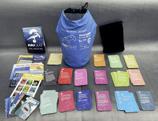
Explanation: Cigar sharks are small deep-sea sharks. They attach themselves to larger marine animals and bite out small, circular chunks of flesh. Another of their distinctive features is that, instead of a single tooth, a whole new row of teeth always grows in to replace it. You can find these and more facts and figures about sharks at in Ocean Heroes’ new shark quiz. It’s both entertaining and educational, available at a charity price (100% of the proceeds goes to charity) of 25 euros. Available to buy at: www.ocean-heroes.shop
TRAVEL
MALIKIA YOUNG OCEAN CREATORS AWARD
Young divers and great stories s from the Red Sea.
The ‘Malikia Young Ocean Creators Award’ marks the launch in Marsa Alam of an event format that creatively connects young divers and snorkellers with the underwater world. During the Christmas holidays, the Malikia Resort Abu Dabbab will, for the first time, be transformed into a stage for budding photographers and young filmmakers aged between 12 and 18. The project is being launched as a permanent annual collaboration between the Malikia Resort Abu Dabbab, Beluga Reisen GmbH, the underwater housing specialist ProShot, Scubapro and SSI as training and safety partners. The aim is to inspire young people’s enthusiasm for the sea, diving and creative storytelling.
One highlight is specifically aimed at families: children and young people up to and including the age of 18 can stay at the Malikia Resort completely free of charge during the Christmas period – one child per full-paying adult. In doing so, the resort is sending a strong message in support of family-friendly diving tourism and is making the Christmas holidays particularly attractive for families who enjoy diving.
Competition entrants can produce either an underwater photograph or a social media clip – with a modern twist, filmed vertically and suitable for Instagram Reels or TikTok. The event will be accompanied by workshops on underwater photography, filming, safety and marine conservation. All activities take place under professional supervision and in accordance with international SSI standards. The best entries will first be selected by a jury comprising representatives from the partner organisations and then published online. The community will ultimately decide the winners based on the number of likes on Instagram and TikTok.
With the ‘Malikia Young Ocean Creators Award’, Marsa Alam could soon be hosting another extraordinary event – young, modern and with a clear message: the next generation is discovering and protecting the underwater world in its own way. Further information & bookings: www.belugareisen.de & info@belugareisen.de
THE SAUERLAND DIVE CHALLENGE REWARDS ACTIVE DIVERS
The Sauerland Diving School is launching a new initiative for divers called the ‘Sauerland Dive Challenge’. Anyone taking part in events, training sessions, day trips or courses between 1 May and 4 December 2026 will collect stamps on a personal card. Points are awarded for, amongst other things, Friday dives, club barbecues, divers’ get-togethers, indoor pool training, special events and for each dive undertaken as part of a course. The stamp cards are available from the diving school’s shops. Depending on the number of points collected, participants can win vouchers, including an ‘SSI Try Scuba Pool Voucher’, vouchers for speciality and Scuba Diver courses, and a €100 voucher for an SSI Dive Professional course. Anyone who reaches 25 points will also be entered into the prize draw at the Advent festival on 6 December 2026. The top prizes include a Mares Ready 2 Dive regulator set and an AQOR wing set of your choice. www.tauchschule-sauerland.de
A DREAM DESTINATION IN THE PACIFIC
Fiji is a dream destination for divers: Taveuni, with the Somosomo Strait, delights visitors with its colourful soft corals, strong currents and enormous biodiversity.
Another highlight is the Great Sea Reef, a largely unspoilt barrier reef that stretches along the north coast of Vanua Levu. It is one of the most biodiverse reef systems in the world and, with hundreds of coral species and over 1,000 species of fish, offers spectacular and unspoilt dive sites. An unforgettable diving experience in the South Pacific. www.pacific-travel-house.com
Photos: Rosie Holidays, tour operator
A HIDDEN GEM ON THE RED SEA
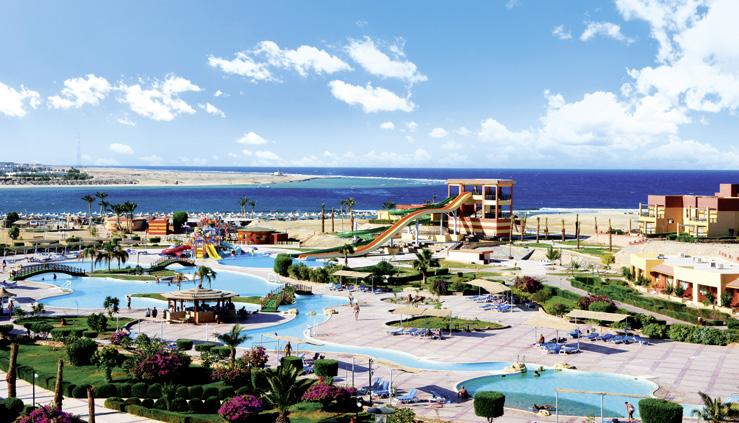
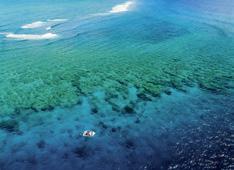
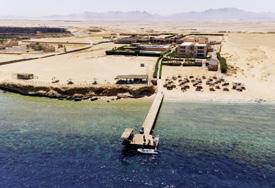
Around 50 minutes south of Hurghada, the Viva Blue Resort with Extra Divers Sharm el Naga is situated in a quiet bay on the Red Sea – an insider’s tip away from large hotel complexes and overcrowded dive sites. The superbly preserved house reef is accessible directly from the short jetty and offers ideal conditions for relaxed dives – for beginners as well as experienced divers. Surrounding dive sites are reached by speedboat; day trips from Safaga to highlights such as Salem Express, Panorama Reef or Abu Kafan are also available. The international team at Extra Divers impresses with personalised service, warmth and genuine passion – for diving experiences in a friendly atmosphere and one of the most beautiful corners of the Red Sea. Info & booking: www.extradivers-worldwide.com, sharmelnaga@extradivers.org
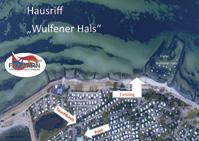
DIVE CHALLENGE ON FEHMARN: BALTIC SEA ADVENTURE FOR TWELVE
PARTICIPANTS
From 4 to 6 September 2026, the Fehmarn Diving Centre is hosting the ‘Baltic Sea Challenge’ on the Baltic Sea. We are looking for twelve participants who are keen to enjoy a weekend full of action, teamwork and new challenges. Places will be allocated by lottery from among all applicants. The entry fee is 125 euros. The price includes breakfast, two group barbecue evenings and a varied weekend of diving, water sports and Baltic Sea adventure. The event starts on Friday at 5 pm. Applications can be sent by email to info@ostseebasis-fehmarn.de. Further information is available at www.ostseebasis-fehmarn.de
NEW: CENINGAN DIVERS NEAR BALI
With Ceningan Divers, Aqua Active Agency is expanding its Indonesia portfolio to include another highlight near Bali. This charming resort on Nusa Ceningan offers a relaxed atmosphere, personalised service and an ideal location for dives around Nusa Penida. It is easily accessible via Denpasar Airport and can be perfectly combined with a stay in Bali. Divers can look forward to an underwater world featuring impressive drop-offs, manta rays and – depending on the season – even sunfish. The daily trips around Nusa Penida are among the region’s highlights. Particularly appealing during the summer months is the combination of a stay at Ceningan Divers followed by a liveaboard trip in Komodo National Park. Information & Booking: www.aquaactive.de
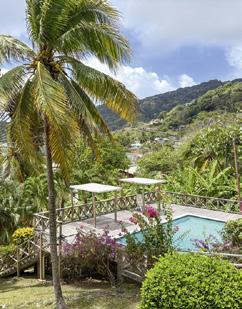
Nabucco's Resort Speyside Inn: Das charmante BoutiqueHotel ist der ideale Ausgangspunkt für Taucher, Naturreisende und Individualurlauber, die das authentische Karibik-Flair suchen.
Eröffnungsspecial
Nabucco's Resort Speyside Inn
14 Nächte bleiben, 12 Nächte bezahlen 14 Übernachtungen im Superior Bungalow mit Frühstück, inkl. Flug und Transfers ab 1.869 € pro Person
Anreisetermine 03.11 oder 10.11.2026 Preise können je nach Reisezeitraum und Abflughafen variieren.
Tauchen mit Extra Divers Speyside
Direkt an das Hotel angeschlossen ist die Tauchbasis Extra Divers Speyside, die Zugang zu einigen der besten Tauchplätze der Karibik bietet.
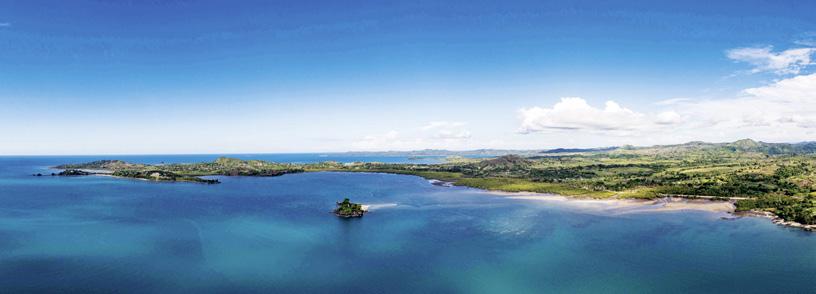
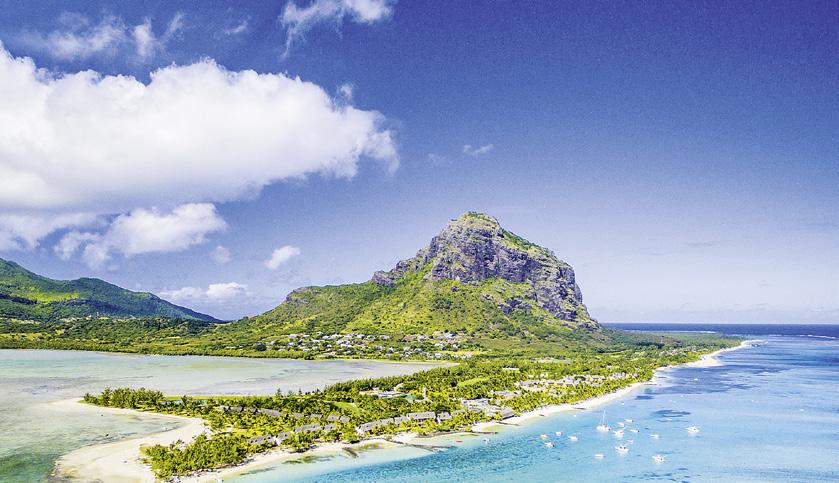
If there is one destination that delights nature lovers, connoisseurs and divers alike, it is the island of Nosy Be off the north-west coast of Madagascar. The island lies just 30 minutes by boat from the main island – and captivates visitors with its lush tropical vegetation, hospitality and a fascinating underwater world that is second to none.
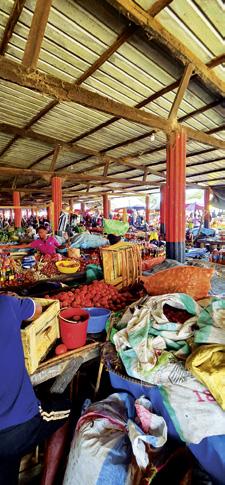
NosyBe, like Madagascar itself, has a French influence; it lies off the beaten track of mass tourism and has retained its original charm. Even on your very first stroll through the markets, you’ll notice the scent of vanilla, cocoa, pepper and other exotic spices. Madagascar is one of the most important sources of aromatic vanilla – a treat for all the senses! Fresh tropical fruits such as bananas, pineapples, mangoes and lychees are also everywhere here.
NOSY BE IS AN UNDERWATER PARADISE, WHICH IS SUITABLE FOR BOTH BEGINNERS AND EXPERIENCED DIVERS THRILLED.
The main town of Andoany, formerly known as Hell-Ville, is a lively and authentic place: at the market, you can find meat and fish, whilst at the harbour, old cannons serve as a reminder of the colonial era. In the little shops, you can find everything from souvenirs and chocolate to fragrant spices.
The way there
Our trip to Nosy Be began in Frankfurt in early December 2025. After a flight of around ten hours, with a stopover in Addis Ababa, we landed at the small Nosy Be airport. The journey to our accommodation took us past palm trees, dense rainforest and small villages. Time and again, the sea glinted in the background amidst the lush greenery. This gave us a first impression of the scenic beauty of this small island in the Indian Ocean.
Relaxation by the sea
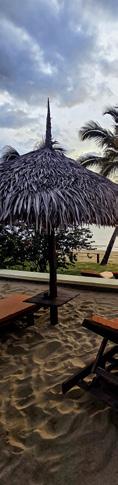
Our accommodation, the Hotel Corail Noir, was situated in a peaceful spot on the north-west coast, on a palm-fringed beach. Its spacious bungalows are comfortably furnished and offer plenty of privacy, set amidst a tropical garden dotted with huge mango trees. A large swimming pool with sea views is the perfect place to relax. Those seeking absolute tranquillity can visit the hotel’s private beach on the neighbouring island of Nosy Sakatia, about five minutes from the hotel; the hotel’s own boat makes daily trips there. In the late afternoon, you can watch the sun sink into the sea on the horizon whilst enjoying a delicious drink at the pool bar. The open-plan restaurant serves regional and international specialities. The French breakfast, featuring fresh sweet treats such as croissants, jam and fresh fruit every day, is sure to leave a lasting impression. Dinner is served à la carte or as a buffet.
Diving in the Enchanted Forest
Nosy Be is an underwater paradise that delights both beginners and experienced divers alike. The extraordinary diversity of the underwater world is truly impressive, with pristine coral reefs and sponges, interspersed with table corals and giant gorgonians, three to five metres in diameter, which at some dive sites are so densely clustered that you feel as though you’re in an enchanted forest.
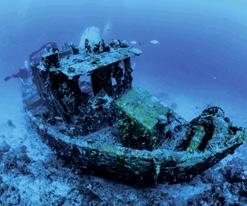
Off the coast of Nosy Be, the Indian Ocean is at its best, boasting a vast array of reef fish. On every dive, you’ll encounter a colourful group of butterflyfish, angelfish and shoals of fusiliers, snappers, barracudas, trevally and numerous other fascinating creatures. The reefs are home to various species of nudibranchs. These are joined by groupers, net moray eels, octopuses, mantis shrimp, pipefish, anglerfish and wobberfish, blue-spotted stingrays and, with a bit of luck, seahorses or even large fish such as the whale shark. On the outer reef, occasional white-tipped and grey sharks, Napoleon wrasse, eagle rays and mobula rays were spotted. Visibility was often around 40 metres. You only find that in very few diving spots. There are also two smaller wrecks, which are magnificently overgrown and teeming with life. Spiny lobsters, crocodilefish, lionfish, shoals of glassfish, fusiliers and various moray eels peeking out from the crevices provide ideal photo opportunities.
Dive centre right next to the hotel
The Aqua Diving centre is situated right on the grounds of the Corail Noir Hotel and offers excellent comfort from the very first minute. Every morning, the dive boat and all our equipment were ready and waiting. Dives are carried out as standard using 30% nitrox in 12-litre steel cylinders, which is an advantage at depths of between 15 and 25 metres. Everything was well organised after the dives too – no lugging around gear, no stress, just relaxed diving. The dive centre is run by Moana, an experienced diving in-
structor from French Polynesia. He has previously worked on Mayotte and La Réunion and knows the waters around Nosy Be like no other.
We were accompanied by the diving instructors Matteo from Italy and Simone from Austria, who inspired us with their extensive expertise, wealth of experience and palpable passion for the underwater world. Every morning at around eight o’clock, we set off for two dives at the most beautiful dive sites around the island. The journey times were usually between 20 and 40 minutes. Even during the boat trip, we kept a close watch on the sea – particularly birds hunting at the water’s surface. They are considered an important indicator of large schools of fish such as sardines, which are hunted by tuna and thus also attract larger marine creatures. In this way, we were able to spot a whale shark and a rare Omura’s whale – a member of the baleen whale family – and observe them at close quarters. Moments that are almost im-
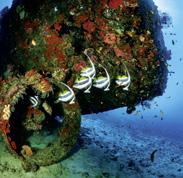
Off the coast of the small island of Nosy Be, the Indian Ocean has opened its cornucopia wide: a colourful array of tropical fish, including bannerfish and lionfish, are clearly at home amongst the coral reefs, sponges and gorgonians. Shipwrecks can also be explored there at moderate depths.
SIGHTSEEING TIPS FOR NOSY BE AND MADAGASCAR
• A day trip to the island of Nosy Iranja. These are two islands connected at low tide by a strip of white sand and lapped by clear, turquoise waters. Absolutely stunning!
• A three-hour boat trip around the
island of Nosy Sakatia. Here, you can snorkel amongst green and hawksbill turtles as they feed amongst the seagrass.
• A canoe trip in the Lokobe Reserve on Nosy Be. Accompanied by a guide in a traditional canoe, you
can spot endemic animals such as snakes, frogs, chameleons and lemurs. Under the guide’s guidance, you’ll discover rare flowers, medicinal plants and ancient trees in the reserve.
• A day trip with a private driver/
guide to the main island of Madagascar, where you can discover the diverse natural environment and culture, as well as a cocoa and vanilla plantation and a giant sequoia.
possible to put into words. We will always remember how the ten-metre-long whale rolled onto its side to feed, allowing us to see its white belly. Another highlight was a night dive with Matteo, during which we observed sleeping turtles, spider crabs, free-swimming moray eels and squid hunting. At the end of the dive, we switched our torches to blue light. What a sight! Thanks to the fluorescence effects, corals, anemones and other marine life appear in fascinatingly vibrant colours. From July to September, it’s humpback whale season in the region. During this time, the whales linger in the waters off Nosy Be to mate and raise their calves. You’re only allowed to observe them from a boat, keeping a safe distance.
Trips to see lemurs and boas
A popular day trip takes you to the small island of Nosy Tanikely: a marine reserve where you can enjoy two dives in crystalclear waters. Encounters with turtles and large groupers are almost guaranteed here. Between dives, you can explore the island of Tanikely and its lighthouse. Afterwards, the tour continues to a beautiful beach on the island of Nosy Komba for lunch, before exploring the national park. Lemurs live here, and you can observe them at close quarters. You’ll also see various species of reptiles, such as chameleons, boas and impressive tortoises.
Conclusion: Nosy Be is a destination that doesn’t just set divers’ hearts racing. The combination of nature, spices, delicious food and idyllic beaches makes this little island in the Indian Ocean an unforgettable experience that will stay with you for a long time to come. <<
… mit Pacific Travel House –dem Spezialisten seit über 35 Jahren!
21 Tage Französisch Polynesien
Tahiti, Rangiroa und Fakarava Fantastisches Großfischtauchen an den Riffen und in den Passagen der Atolle · Inkl. 21 Tauchgängen, Flügen, Übernachtungen/Frühstück/Transfer ab 7.550 € p.P. / DZ
21 Tage Fiji Inseln
Viti Levu, Taveuni, und Beqa Lagune
Aufregendes Tauchen zwischen farbig leuchtenden Korallen, bunten Rifffischschwärmen und beeindruckenden Großfischen
Palau und Yap Faszinierendes Tauchen an steilen Außenriffen, in Strömungen und Lagunen mit zahlreichen Großfischen · Inkl. 20 Tauchgängen, Flügen, Übernachtungen/Frühstück/Transfers ab 5.475 € p.P. / DZ
18 Tage Papua Neuguinea
Lissenung Island und Tufi Resort
Reiche Artenvielfalt, Sichtweiten bis zu 30 Meter, unberührte Korallenriffe und große Fischschwärme
Weitere Vorschläge, ausführliche Beschreibungen und kostenlose individuelle Ausarbeitung unter:
pacific.travel.house
Pacific Travel House Reiseveranstaltungs GmbH Schwanthalerstraße 100, D-80336 München info@pth-muc.de, 089-543 21-80
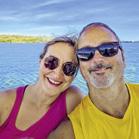
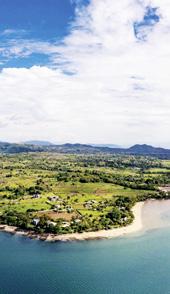
Pure diversity: markets, a national park and a constant succession of stunning views, both near and far, draw visitors to north-western Madagascar. Our readers, the photographers and authors Nicole and Sascha Caballero (pictured above), were delighted.
MADAGASCAR
Nosy Be
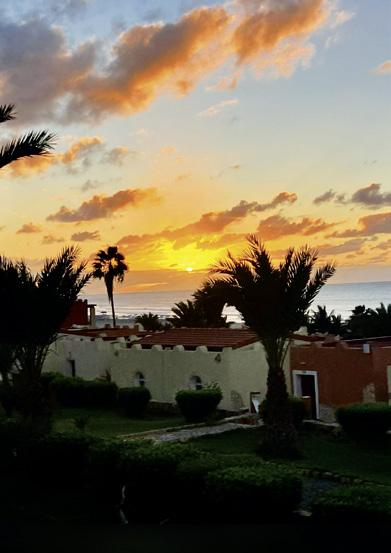
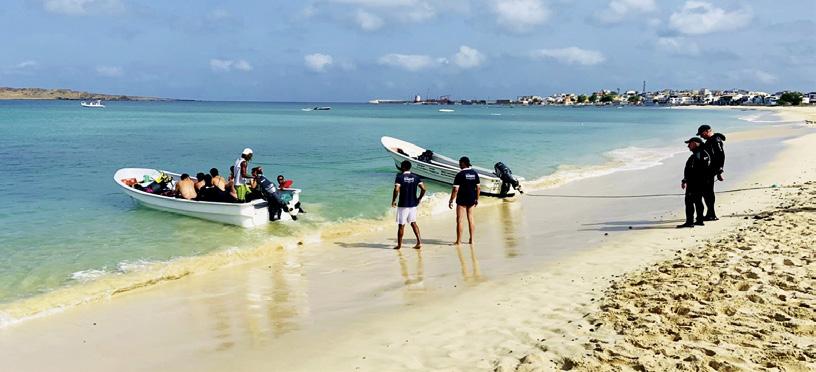
BOA VISTA ‘NO STRESS’
There are a number of Portuguese enclaves in the Atlantic that are well worth packing your diving kit for. The Cape Verde Islands, particularly the island of Boa Vista, are rarely mentioned in German dive logs. One of our readers has been there.
Boa Vista is the third-largest island in the Cape Verde archipelago. A flat plain, surrounded by volcanoes and covered with white dunes. Among them is the Deserto Viana, formed by Saharan sand blown over from the African mainland – from Senegal, 600 kilometres to the east. Having gained independence from Portuguese rule in 1975, there is hardly anything historical to be found here today. People actually live in Boa Vista’s few villages, which consist of unplastered, partly dilapidated huts and rusty shipping containers. It seems as though someone has turned the clock back 50 years here.
No Stress
Hakuna Matata? On Boa Vista, this cheerful ‘Crioulo’ phrase, spoken alongside the official language of Portuguese, sounds like mere chatter to the locals. The island’s main employer is the tourism industry, which is centred on the resorts. The local population works as service staff, gardeners or taxi drivers. The feigned warmth, or even hospitality, effectively amounts to servile begging for tips. And on top of that, you hear ‘No stress’ time and again – a mantra repeated ad nauseam that smilingly urges Boa Vista’s guests to relax, but which in reality masks an inability, or even a reluctance, to help anyone. Nevertheless, there is one reason to come here: diving. Water temperatures, which are consistently above 23 degrees Celsius, mean you can get by with a thin wetsuit. Visibility of over 20 metres is possible even in strong swells. The beaches at Santa Monica Beach and ‘Praia de Lacacao’ are the only worthwhile shore dive sites on the island. What makes Boa Vista special is its boat dives. The half-hour boat trip is sure to set every diver’s heart racing, as sightings of large fish are the order of the day. Cave diving is on offer, as are wreck and deep dives.
T & F Christof Batton
TRAVEL
Hotspots in the Atlantic
Two dive centres share the area: ScubaCaribe (scubacaribe.com) in the south and Riamar Divecenter (dcriamar.com) in the north. During the peak season around the turn of the year, it can be difficult to secure one of the eight coveted places on the excursion boat, which always sets off for a two-tank dive. The journey begins by braving the treacherous surf from the beach to the numerous dive sites with evocative names such as ‘Mako Point’, ‘Shark Bow’ and ‘Nurse Shallow’ for shark enthusiasts, ‘Atlantida’ or ‘Bodega de Flor’ – the latter for deep-diving enthusiasts, with depths of up to 40 metres. The excellent wrecks are called ‘Taliarte’ and ‘John Miller’ and are easy to reach, even for ambitious beginner divers.
A healthy underwater world
Florentino Monteiro has been running the Riamar Dive Centre for ten years. Born in Cape Verde, he worked for many years in Portugal and the Azores before finally setting up his own business following a three-year stint at ScubaCaribe. “The real challenge lies in guiding and training staff and diving students,” comments the friendly 35-year-old.
“With the locals, I first had to make it clear to them that they were responsi-
BOA VISTA / CAPE VERDE / ATLANTIC OCEAN
Cachupa: That’s the name of the national dish: a stew made with sweetcorn, beans, vegetables and cabbage
Grogue: This is the national drink: a strong sugarcane spirit
110 escudos – the currency of Cape Verde (equivalent to 1 euro)
A boat dive using your own equipment costs 50 euros
A boat dive with hired equipment costs 62.50 euros
49%: Cost of living compared to Germany
December–May is the peak season (the rainy season runs from August to October)
No stress: the locals’ go-to response
The needles (Cape Verde) in the haystack (the Atlantic) are a magnet for the entire marine food chain. At the top of the chain are sharks such as the sand tiger. With a bit of luck, you might even spot one. Well worth it!
An unconventional yet effective way to get there is to head straight from the beach to the dive sites at , all of which are about 30 minutes away.
ble for the diving guests.” That is precisely why you feel so safe with him – the boss, guide, captain and technical manager. And almost as an afterthought, he introduces divers to the beauty of the Atlantic.
Unlike in the Canary Islands, for example, the underwater world here is still in good shape. You experience the power of nature anew on every trip: be it the shoals of sardines you spot near the shallow beach, the flying fish that accompany the boat as it rides the waves on its way out to sea, or the healthy corals in the depths. Gorgonians and black corals ‘thrive’ on the rocks. Lobsters, moray eels and crabs hide in the crevices. Schools of fish circle the reefs and plateaus. Of course, you can feel the swell and the current, but the dive sites are selected and approached according to the abilities of the certified divers.
Even if the standard of living outside the hotels might put off luxury-spoilt Europeans on this small, isolated spot in the Cape Verde archipelago, how about a diving trip to Boa Vista? You’ll be rewarded with unspoilt nature, fantastic dive sites and affordable adventures. And the stamps collected out there in the Atlantic certainly look special in your logbook …
The Cape Verde archipelago comprises nine inhabited islands — as well as a number of smaller, uninhabited islands. Our reader visited Boa Vista in the east of Cape Verde.
CAPE VERDE
BOAVISTA
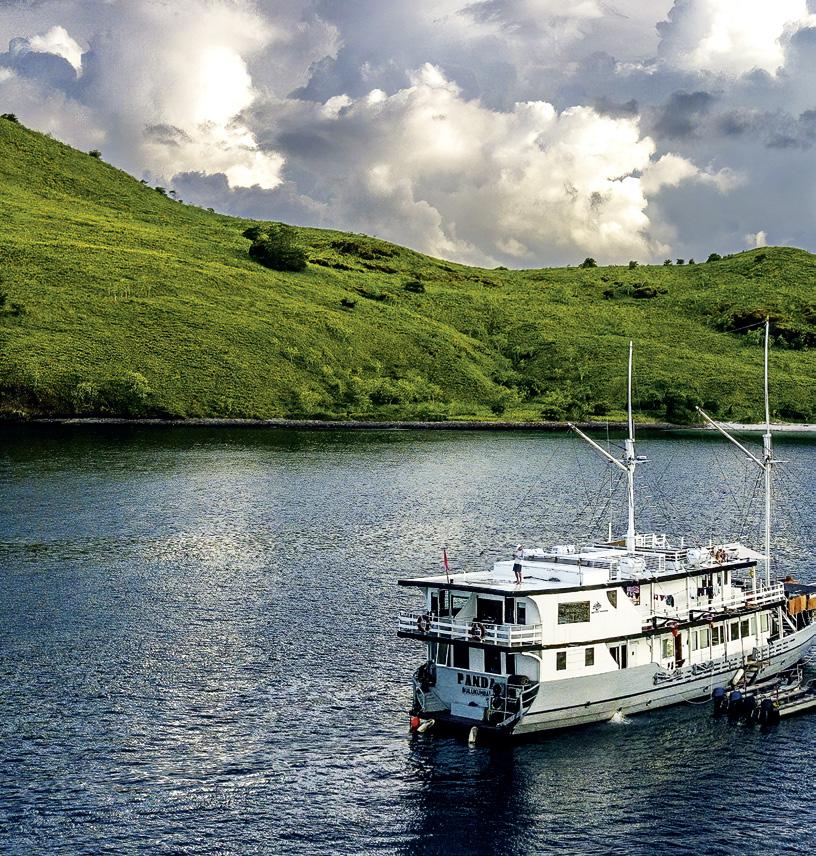
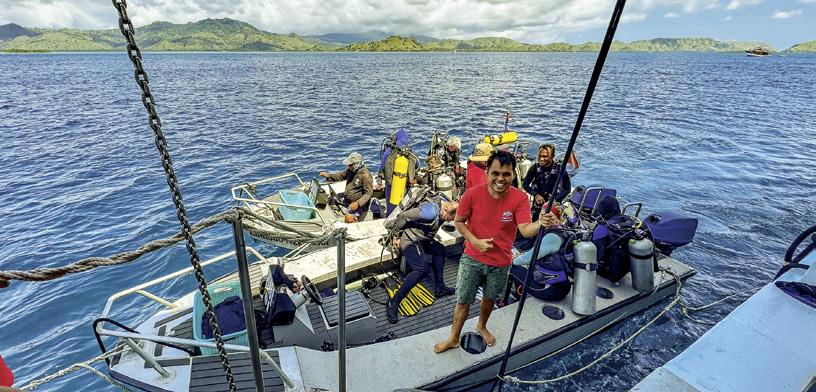
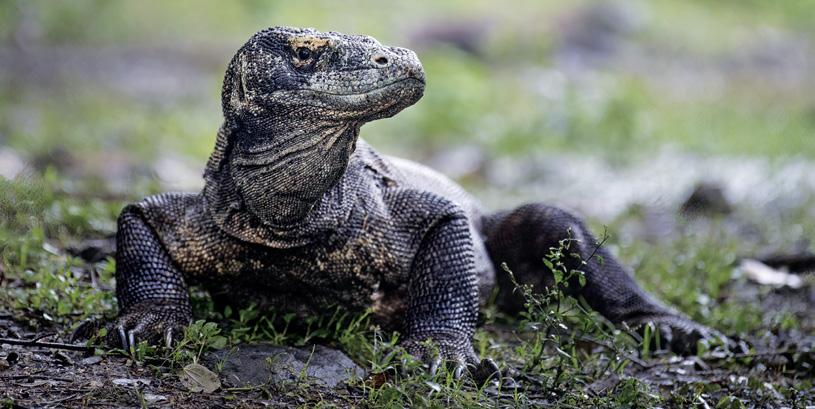
On a liveaboard trip aboard the Komodo Aggressor, our author experienced Komodo as an untamed underwater realm teeming with currents and biodiversity. Encounters with manta rays, sharks and the legendary monitor lizards feature in his logbook.
In
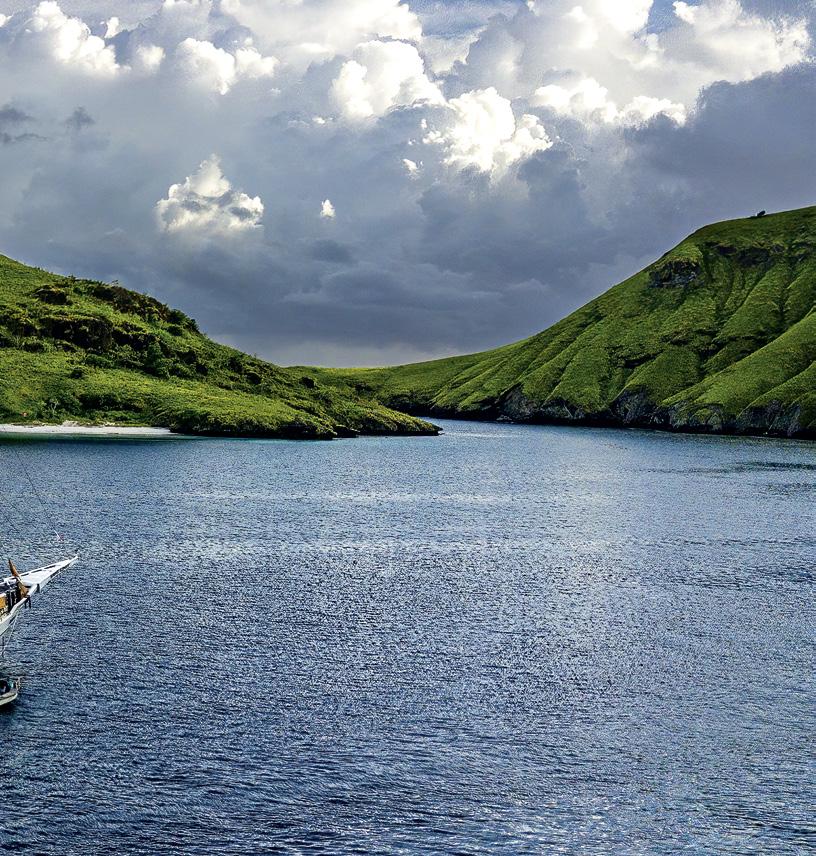
Dawn is breaking over the Flores Sea as the Komodo Aggressor gently drifts to anchor. The silhouettes of Komodo, Padar and Rinca rise out of the sea like the spines of an ancient creature. A fitting image for a place where prehistoric-looking monitor lizards live on land and powerful currents reign in the water. You don’t travel to Komodo for easy diving. You come for the unspoilt, the majestic and the bountiful. As soon as the engines start up on board and the crew prepare the tanks for the first dive, it becomes clear why this remote corner of Indonesia ranks among the world’s most electrifying diving destinations.
An engine between two oceans
Komodo, a UNESCO World Natural Heritage Site situated between the Indian Ocean and the Pacific, is a biological powerhouse. Vast masses of water force their way through narrow straits, creating nutrient-rich currents. This constant interplay between the oceans fuels an explosion of life: the reefs teem with fish, corals and invertebrates. Upwelling currents bring plankton and, with it, manta rays, sharks and other large marine creatures. At the heart of the Coral Triangle, the marine biodiversity here is among the highest on Earth. Yet this abundance demands respect. Timing, tides and experience are crucial. Komodo is no place for passive diving –you often find yourself becoming part of the current.
On board the Komodo Aggressor
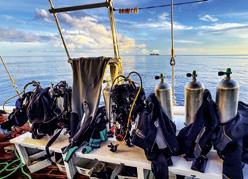
Life on board the Komodo Aggressor follows the rhythm of the sea: dive, eat, sleep, repeat. Four dives a day, each one different, each shaped by the tides. In between, savannah hills, mangroves, pink beaches and volcanic ridges glide past. The trip feels less like a typical diving holiday and more like an expedition. Even the briefings make it clear what you’re getting yourself into: strong currents possible, reef hooks may be necessary, manta rays likely. In Komodo, ‘likely’ is often an understatement.
Mawan and Police Corner
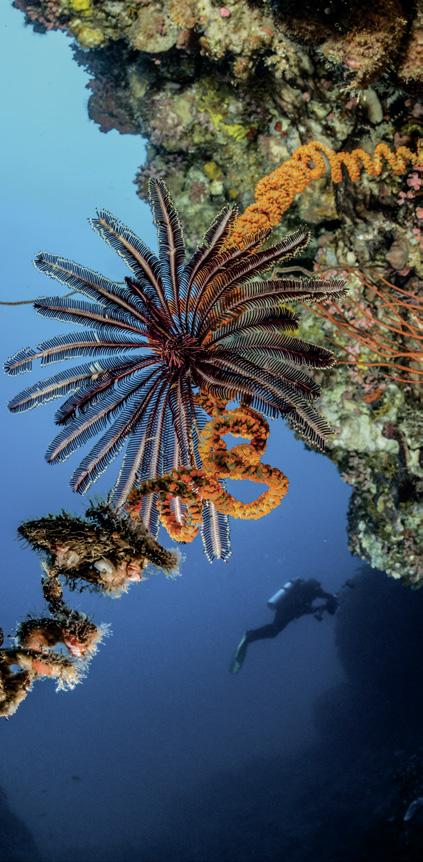
Mawan is a gentle introduction. Above a gently sloping reef teeming with bannerfish and damselfish, manta rays glide slowly through the scene, hovering above the cleaner station and passing within arm’s reach of the divers. There is no chaos here, only quiet magic. Police Corner at Siaba Besar is quite a different story. A brisk current carries you down to a steep, deeply eroded wall at 20 metres. Shallow caverns and narrow channels, adorned with feather stars and whip corals, offer brief shelter from the current. Above, a colourful slope of leather and stony corals, anemones and clownfish awaits. If Mawan is a calm exhalation, then Police Corner is an adrenaline rush.
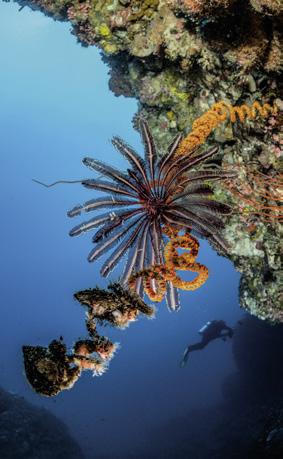
Komodo’s current-swept areas, even looking up is an experience in itself: feather stars and whip corals cling to overhanging reef structures whilst divers drift in the blue water. The nutrient-rich currents between the Indian Ocean and the Pacific Ocean bring the reefs to life.
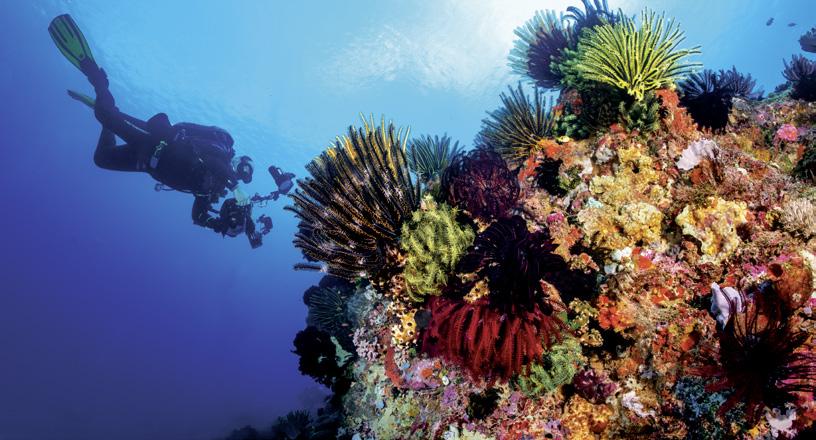
Colourful reefs, feather stars, anemones, nudibranchs and cleaner fish demonstrate the enormous diversity of Komodo National Park. Strong currents bring nutrient-rich water teeming with plankton into the region – benefiting corals, schooling fish and manta rays. Komodo has been a UNESCO World Heritage Site since 1991. UNESCO specifically highlights the species-rich coral reefs and the presence of large marine animals, which is facilitated by the currents.
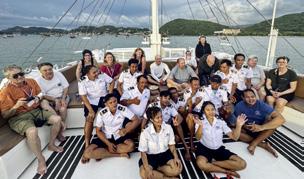
Whilst on board the Komodo Aggressor it is the crew, the atmosphere and the food that make an impression, on land it is above all the monitor lizards that have left their ‘mark’ on this region.
Night dive and Pelican Rock
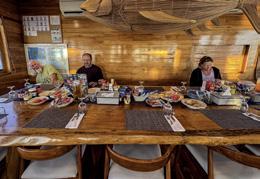
In the evening, a night dive at Mar Central reveals Komodo’s microcosm: nudibranchs, spider crabs, squat lobsters, wonder snails and even two seahorses. Back on board, sirloin steaks, crème brûlée and a glass of wine await – that’s all part of the expedition too. Further south, in Horseshoe Bay off Rinca, Pelican Rock is a riot of colours – yellow, orange, mahogany and red. Feather stars and barrel sponges cover the sheer wall like an exuberant tapestry. You’d like to stay here longer than the depth allows.
Encounter with the Dragons
No trip to Komodo would be complete without an encounter with the monitor lizards for which the island is named. On Komodo Island, a guided walk through the savannah takes you to several of these creatures as they bask in the morning sun. These massive reptiles have an unmistakably primeval appearance. They stand in stark contrast to the elegance of the manta rays – and yet both are perfectly at home in this place, where evolution has taken an uncompromising course.
Manta Alley, Taka Makassar and Tatawa Kecil
Manta rays are a common sight in Komodo, but encounters are never guaranteed. At the famous Manta Alley, encounters remain fleeting. It is only at Taka Makassar that the tide turns: above a vast sandy expanse dotted with scattered bommies, a pair of manta rays finally circles lazily above a cleaning station. They are being cleaned by dozens of sunbeam butterflyfish – a truly impressive sight. Finally, Tatawa Kecil offers a glimpse of Komodo’s wildest side. The seamount in the Linta Strait is notorious for chaotic currents caused by up- and down-currents and swirling eddies. We quickly descend to 20 metres, then into a sheltered zone by the rock face. From there, the current leads to a plateau at a depth of ten metres that is literally teeming with life: thousands of bannerfish and damselfish fill the water, sunbeams dance across the corals, and the whole scene feels electrifying. Tatawa Kecil is exhilarating, humbling and unmistakably Komodo.
A place that endures
As the Komodo Aggressor finally sets course for home, passing peaks, bays, mangroves and pink beaches, one realisation remains: Komodo is not merely a holiday destination. It is a place you have to earn – and whose images of currents, manta rays, sharks, dragonfish and untamed beauty will linger in your memory for a long time to come.
For further information and to book, please visit: https://www.aggressor.com/
CONCERNS ABOUT THE FUTURE OF KOMODO
For all its power and abundance, Komodo is not immune to human-induced impacts. Pollution , microplastics and climate change threaten the national park’s sensitive ecosystems. Rising sea temperatures increase the risk of coral bleaching , whilst ocean acidification weakens reef structures in the long term. Tourism, too, remains a double-edged sword: whilst it funds conservation and supports local communities, it also raises questions about the park’s resilience. Marine protected areas, visitor caps and conservation programmes are designed to preserve Komodo’s natural environment. Whether these efforts succeed will determine whether future generations will be able to experience the same richness.
Your Buddies Tauchen Sie Bonaire auf Ihre Weise.
Komodo is known as the island of the monitor lizards, but it is also a diving region that includes islands such as Flores and Rinca, amongst others.
INDONESIA
Komodo
THE BEST FROM TWO WORLDS
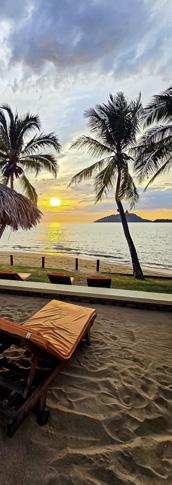
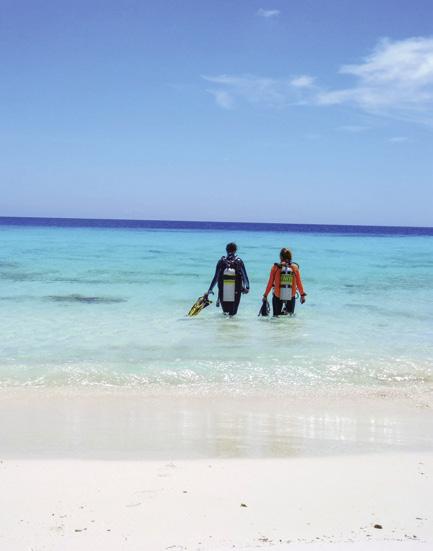
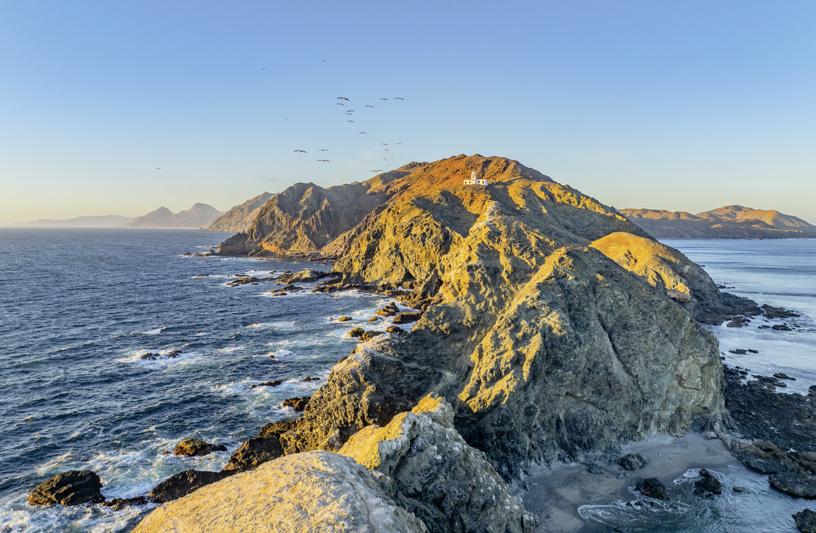
Situated between the Pacific Ocean and the desert, Baja California offers one of the most impressive diving regions on the American continent. From the biodiversity-rich Sea of Cortez to the Sardine Run in the open Pacific off Magdalena Bay, divers can experience the best of two very different ocean worlds.
T & F Timo Dersch
TRAVEL °BAJA CALIFORNIA
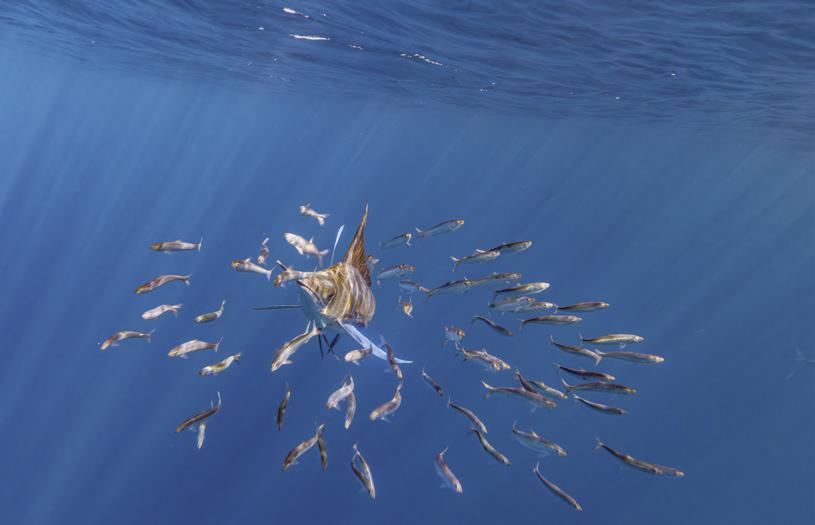
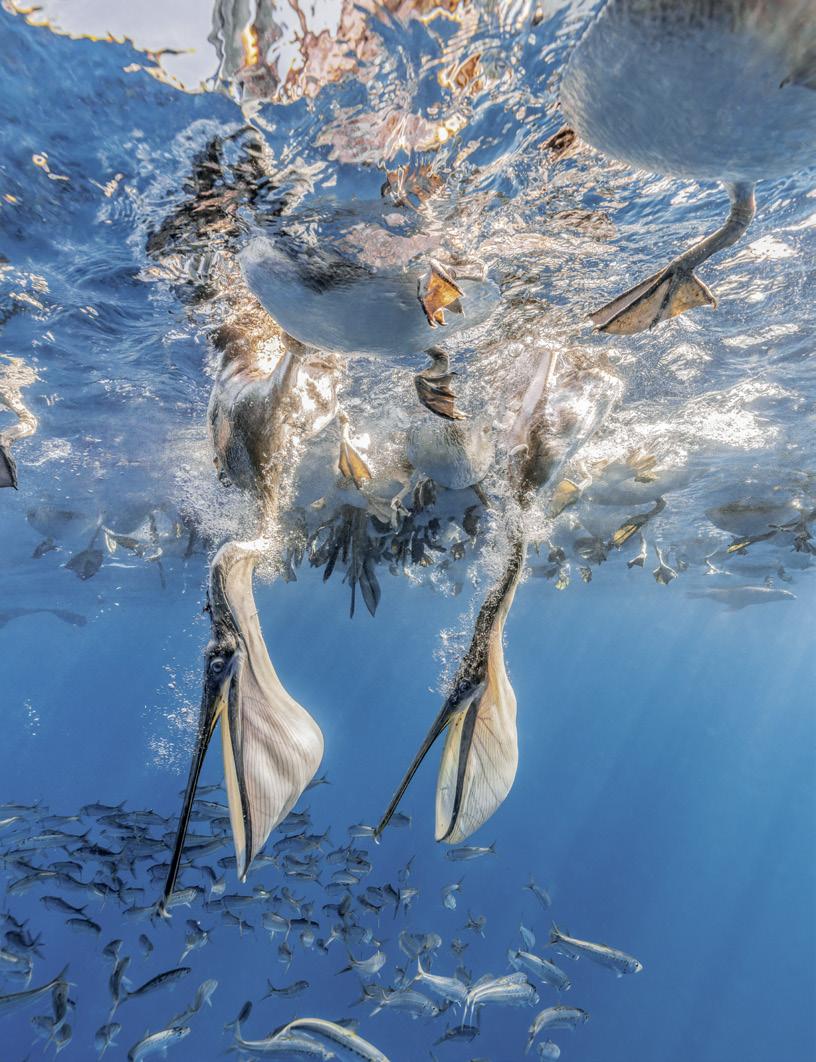
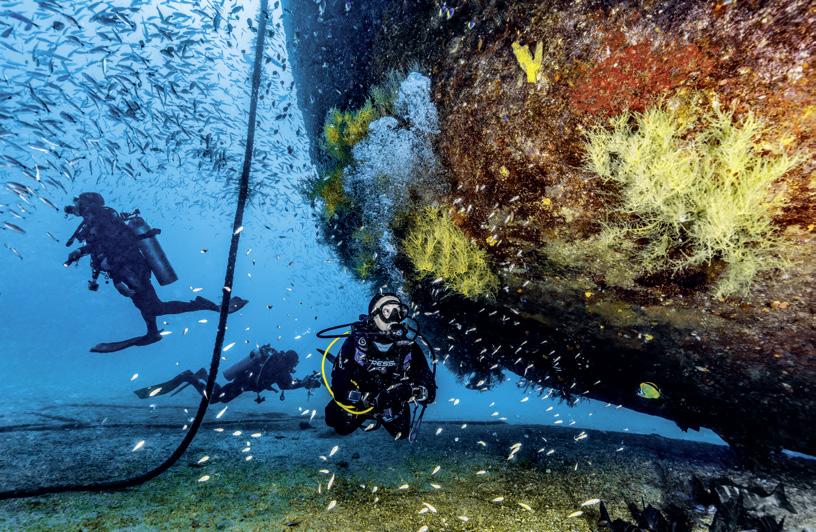
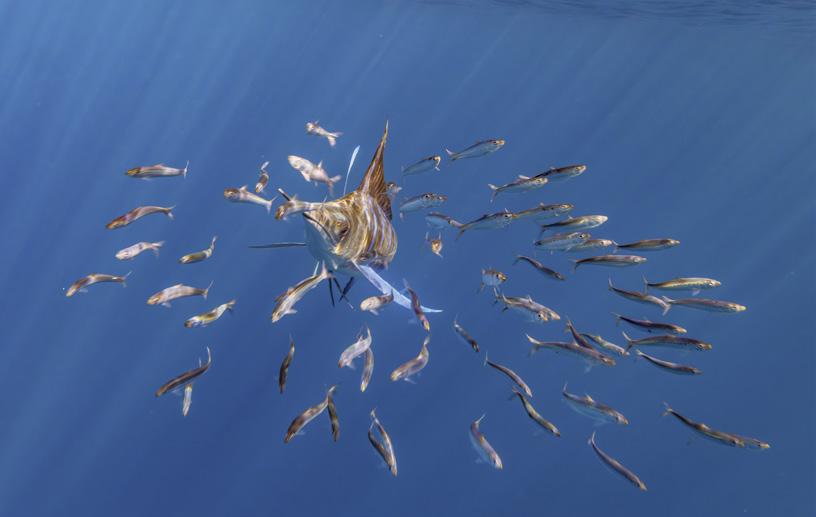
Above: the open Pacific Ocean. The Mexican Sardine Run takes place every year off Magdalena Bay. Below: In the Sea of Cortez off La Paz, numerous shipwrecks attract divers with their abundance of fish.
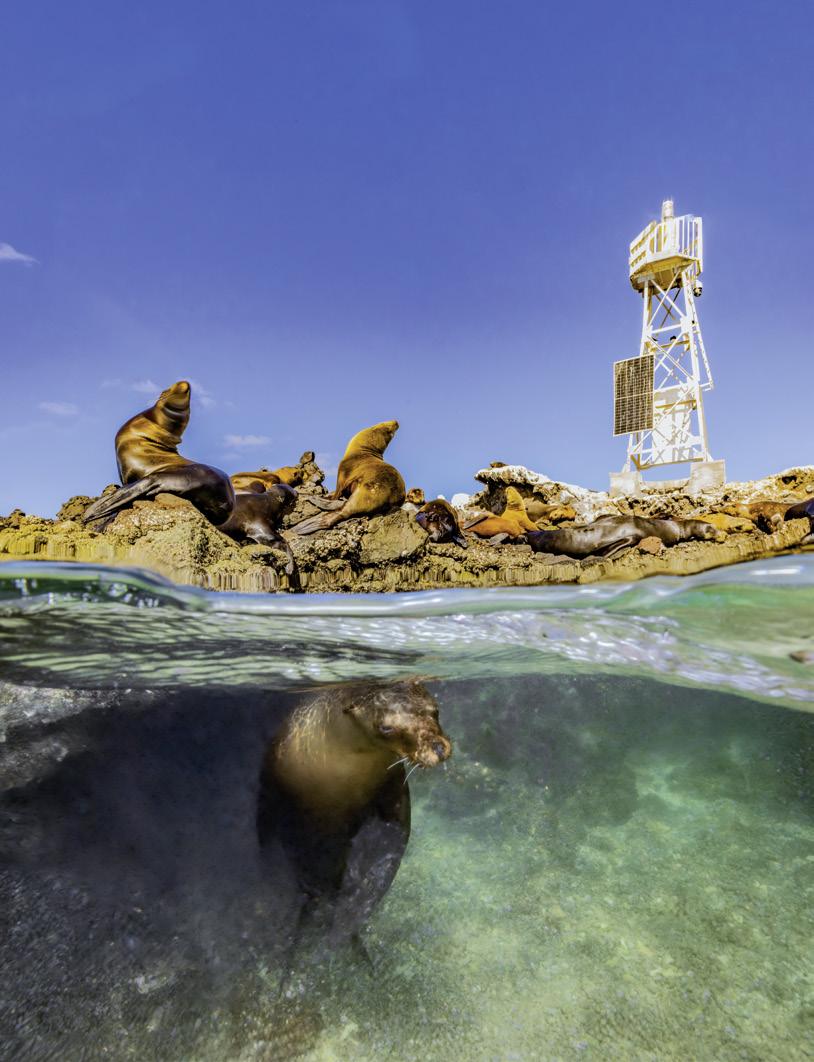
Incredible diversity: there’s plenty to explore underwater around La Paz. For example, colourful coral reefs such as Swanee Reef (top left) and shipwrecks such as the ‘Fang Ming’, teeming with fish and home to resident turtles. Or sea lion colonies, such as here at the San Rafaelito lighthouse (bottom).
Baja California – a narrow, barren strip of land, shaped by wind, sun and salt. On land, the desert dominates, a scene reminiscent of old Warner Bros. cartoons featuring the Coyote and the Roadrunner. In the water, however, life teems. To the east lies the Sea of Cortez, once described by Jacques-Yves Cousteau as the ‘Aquarium of the World’ due to its enormous biodiversity. To the west lies the open Pacific – vast, unpredictable and the setting for one of the sea’s most spectacular natural spectacles: the Mexican Sardine Run.
La Paz – Gateway to the Sea of Cortez
But first, we’re off to La Paz, the capital of the state of Baja California Sur. The city has a laid-back atmosphere: a chic waterfront promenade, a charming old town, and delicious restaurants serving traditional cuisine – it’s a lovely place to spend some time. Yet the real riches begin just a few minutes’ boat ride off the coast. The Sea of Cortez
benefits from nutrient-rich currents and a complex interplay of reefs, islands and deep blue water. The result is an impressive abundance of marine life.
Encounters
that leave a lasting impression
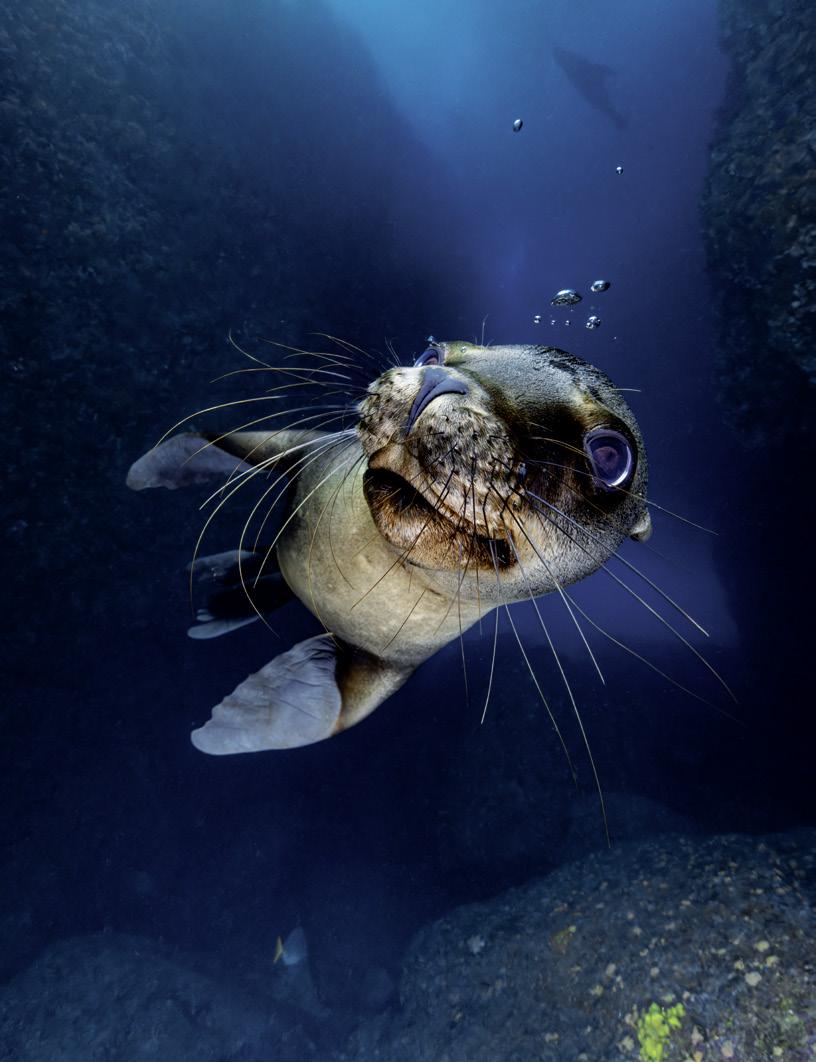
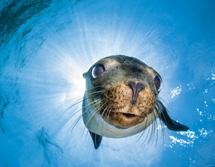
Legendary encounters are not uncommon here. The huge shoals of mobula rays are a seasonal highlight. This is what people come here to snorkel for. But there are plenty of other spots for scuba divers in particular. One of the absolute highlights is the ‘Los Islotes’ dive site. “Whenever the weather permits, we’ll take you there – no matter how far it is,” explained Gabriel, one of the two sons of the owner of the “Buceo Carey” dive centre, to the new arrivals during the briefing. “This is where you’ll find our big underwater stars: the baby sea lions.”
Playful Stars of the Coast
And stars they certainly are. The large sea lion colony, numbering around 400 animals, lives on two small rocks north of Isla Partida within the marine reserve. There, it
almost seems as though the furry inhabitants are just waiting to send their young over to play with the bubbling visitors. And everyone instantly takes the lively young sea lions, with their big eyes, to their hearts. They are incredibly playful and keep themselves busy with whatever they find: a starfish, a dangling shaker on a diver’s jacket, a stone – everything is fascinating to these little fluffy balls. This creates fantastic opportunities for photos and videos. But be careful when Papa Sea Lion starts barking! Then it’s time to keep your distance. After all, even the most wonderful afternoon of play has to come to an end eventually.
In the blue waters of the Great
If the surf allows, you can also dive through the rock arch of the small island and keep an eye out for hammerhead sharks in the open water. On some days, hundreds of these fascinating creatures swim past in the open water. Simply brilliant!
As well as sea lions, the Gulf of California also offers unforgettable encounters with eagle rays, turtles or – at the right time
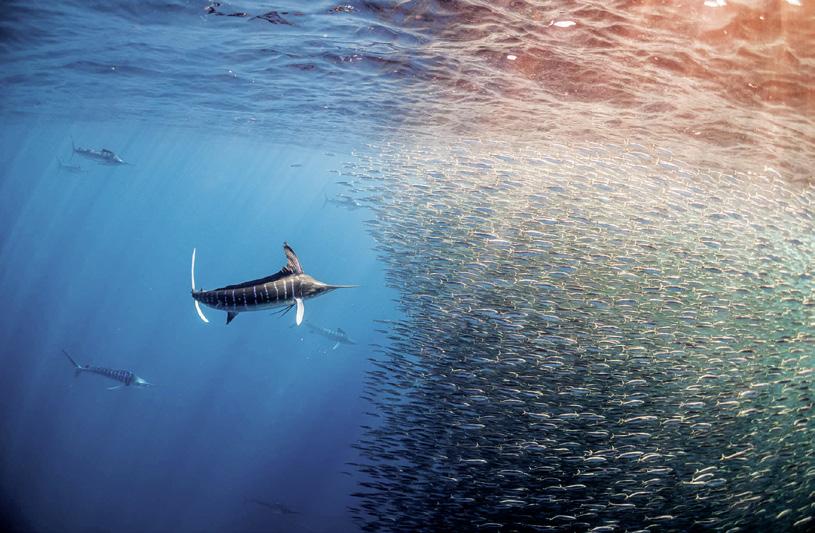
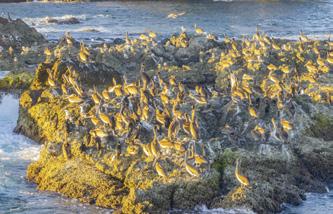
The stars of the Mexican Sardine Run are the striped marlins (Kajikia audax): Watching the animals hunt is simply breathtaking.
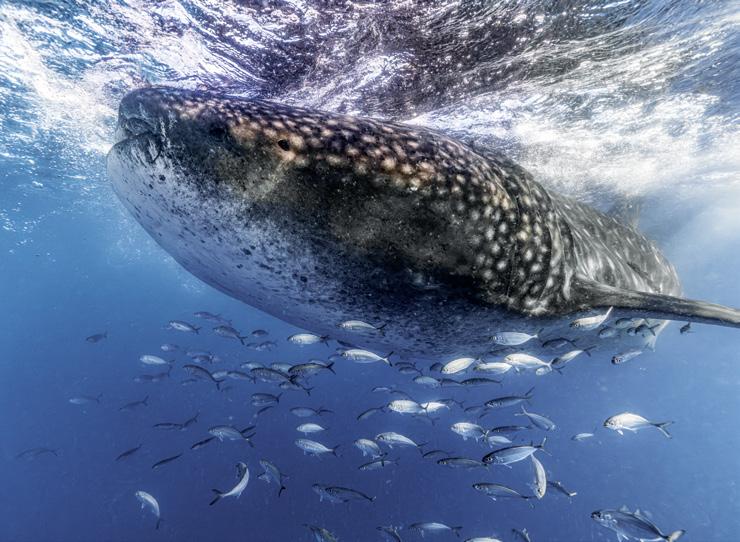
of year – manta rays. On the way to the dive site, a humpback whale slaps its fin against the surface of the water, as if to greet the divers on the passing boat. From October to April, the nutrient-rich waters also attract other large creatures: whale sharks. During this time, enchantingly spotted juvenile whale sharks cruise through the plankton-rich water, tirelessly filtering it as they swim in circles. A fantastic snorkelling opportunity – provided you can keep up.
Wrecks teeming with life
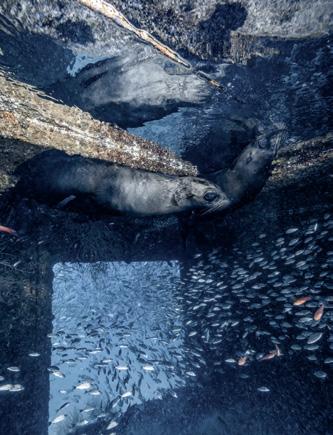
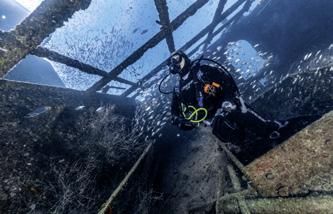
The marine park is also home to numerous shipwrecks. The highlight among them is the ‘Fang Ming’. This artificial wreck off the west coast of Espíritu Santo Island was once a Chinese cargo ship that attempted to smuggle undocumented migrants to California. Over the past 25 years, it has become a dive site that brings a sparkle to every diver’s eyes. The abundance of marine life around the wreck is so overwhelming that, at first glance, you wonder where the ship actually is. Turtles have also made the wreck their home. Even sea lions use it as a
GETTING THERE: Convenient direct flights twice a week with Condor (www.condor. com) from Frankfurt to Los Cabos. From there, a two-hour shuttle to La Paz or a 30-minute shuttle directly to the safari ship.
DIVING & ACCOMMODATION IN LA PAZ: Information: www.buceocarey.com.mx and www.belugareisen.de
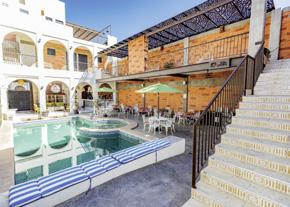
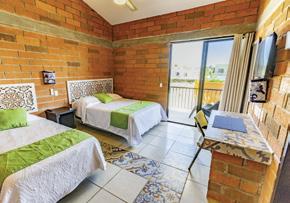
The Villa Carey Dive Lodge offers everything a diver could wish for. A hearty breakfast, short, punctual shuttle rides to the harbour, drying facilities, camera tables in the rooms, a swimming pool, a balcony and much more.
Price example: a week at Villa Carey, including breakfast, transfers and diving, from 1,549 euros per person. Book via: www.belugareisen.de
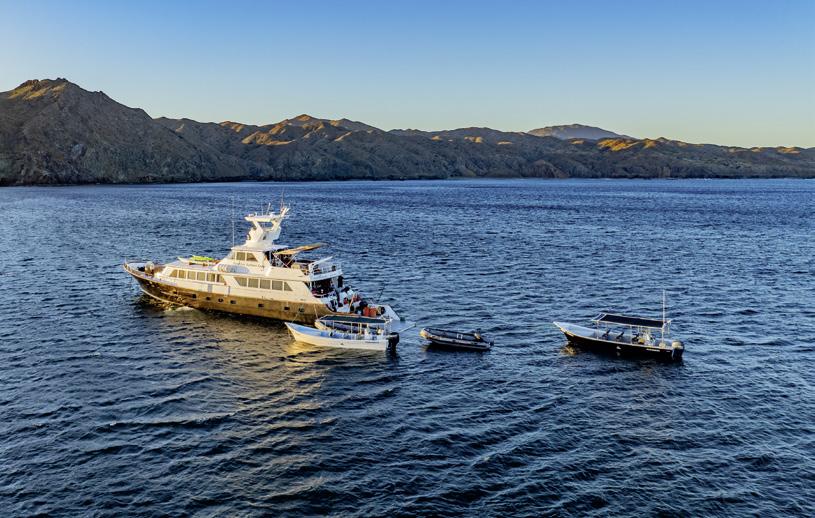
Liveaboard operators for the Sardine Run: The M/Y Gallant Lady sets sail from Cabo San Lucas and spends a week cruising around Magdalena Bay. The Sardine Run season runs from late October to mid-December.
Further information: www.nautilusliveaboards.com and www.belugareisen.de
Price example: one week’s stay, including full board, per person from 2949 euros. Book via: www.belugareisen.de
refuge. If you look more closely, you’ll also discover a fascinating macro world featuring scorpionfish, seahorses and nudibranchs.
Diving with Passion
Buceo Carey’s diving operations are straightforward and well-organised, yet still manage to make every guest feel welcome and part of the family. The ‘Villa Carey’ dive lodge offers everything divers need: drying facilities, camera tables, short distances and a relaxed atmosphere. The stay is rounded off with a traditional Mexican barbecue on the roof terrace. And
MEXIKO
Los Cabos
La Paz
BAJA CALIFORNIA
BAJA CALIFORNIA
A home in two worlds: above, the ‘Gallant Lady’, the Nautilus Liveaboards vessel; below, the ‘Villa Carey’ owned by Buceo Carey in La Paz.
TRAVEL °BAJA CALIFORNIA
What isn’t there off the coast of La Paz?
Young whale sharks come into the bay to filter-feed (top), whilst sea lions sometimes rest inside the large shipwrecks – here, the ‘Fang Ming’ (bottom).
everyone drifts off to sleep with a smile on their face and a warm feeling in their heart.
The other side of Baja California
Yet this easily accessible part of the peninsula tells only part of the story. On the Pacific coast, far from towns and infrastructure, off Magdalena Bay, something happens every year that magically draws them all in: predatory fish, sea lions, whales, birds –and, consequently, snorkellers too. The Mexican Sardine Run is one of the most impressive feeding spectacles in the world. When the sea explodes
There are no fixed dive sites here – everything depends on the dynamics of the open water. Anyone coming for the Sardine Run will experience a natural spectacle that cannot be planned. Striped marlins, tuna and sea lions hunt together through huge shoals of sardines. Frigatebirds circle above the
THE AMOUNT OF BIOMASS ON THE WRECK IS SO OVERWHELMING THAT, AT FIRST GLANCE, YOU FIND YOURSELF WONDERING WHERE THE SHIP ACTUALLY IS.
water, whilst beneath the surface a threedimensional chaos of movement, speed and energy unfolds.
Right in the thick of it, rather than just watching from the sidelines
The dives are quick and spontaneous. Most of the action takes place close to the surface, which is why snorkelling andfree diving
SICHERHEIT ist kein Extra. Sie ist STANDARD.
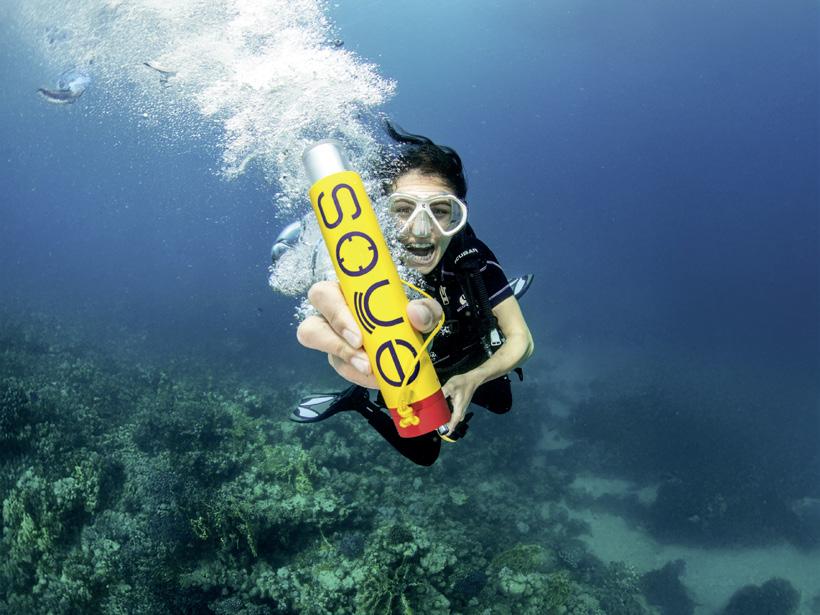
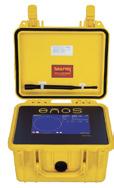
Mit ENOS® orten Sie vermisste Taucher in Echtzeit – direkt zur Crew, ohne monatliche Kosten, ohne Umwege.
Wenn Strömung, Wind oder Distanz entscheiden, liefert ENOS® präzise GPS-Positionen genau dorthin, wo sie gebraucht werden: an Bord.
ENOS® – weil Sekunden zählen.
are the main focus. For photographers, the Sardine Run is both a challenge and a dream. Those who remain flexible and go with the flow will be rewarded with unique moments.
Life
on a liveaboard
Life on board the Gallant Lady is comfortable, despite its secluded location. With no long journeys, there is plenty of time for relaxation and socialising. Sunsets, good food and the special atmosphere at sea make a stay on board an experience in its own right.
It is precisely this contrast that makes Baja California so special. La Paz epitomises diversity and encounters, whilst Magdalena Bay embodies raw dynamism and untamed nature. Together, they paint a complete picture of a region where diving is more than just observation. It is a plunge into two worlds.
EQUIPMENT
TWO NEW BUOYANCY VESTS
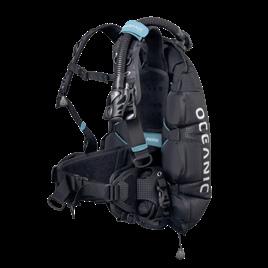
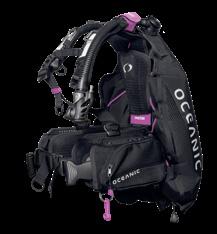
Oceanic is expanding the Photon series with two back-inflate jackets designed for different purposes. The robust Photon Pro offers a modular design, high levels of comfort and plenty of freedom of movement – even for demanding dives. Price: 699 euros. Weighing just around three kilograms, the Oceanic Photon Air is aimed at divers who love to travel. The modular back-inflate jacket features a streamlined design, quick-drying properties and a flexible fit for maximum comfort on the go. Price: 549 euros. oceanicworldwide.com
SUIT REPAIRS
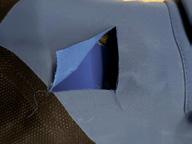
To ensure that dry suits remain reliably watertight and ready for use, the diving centre on Lake Zwenkau near Leipzig offers professional repair and maintenance services. Whether it’s minor leaks, faulty cuffs or other signs of wear and tear: here, drysuits are professionally inspected and restored to full working order for their next use. tauchbasis-zwenkauer-see.de
PHOTO CORNER
DANGER OF TOO MUCH LIGHT
Can an image sensor be exposed to too much light? Actually, yes – although sensors generally benefit from light. It helps the autofocus and ensures vibrant colours. From the analogue era, we’re still familiar with the trick of flashing directly into the lens to test the TTL flash control. With film, an overexposed image wasn’t a big deal. With mirrorless digital cameras, however, it’s best to avoid this: in the worst-case scenario, the sensor could be damaged – resulting in an expensive total write-off. These days, it’s safer to check the TTL settings on the monitor.
DSLRs are less at risk because the mirror usually shields the sensor and only exposes it briefly when the shutter is released. CSCs, on the other hand, are more sensitive to strong light sources. UV light can theoretically cause pixels to fade, although the UV/IR blocking filters in modern cameras provide fairly reliable protection. The situation becomes more critical in direct sunlight, such as during a solar eclipse. In such cases, a filter should be fitted in front of the lens. Underwater, there is practically no risk due to the high level of light absorption.
Laser light is particularly problematic. Anyone photographing laser shows with mirrorless cameras risks causing permanent damage to the sensor. Even the lasers from autonomous vehicles’ distance sensors can cause problems if a beam passes through the lens and hits the sensor. Canon addresses this issue in some of its R-series mirrorless cameras by incorporating a shutter that closes automatically when the lens is changed – which, incidentally, also helps to keep dust out.
Image sensors are generally robust. Dust and dirt can usually be cleaned off without any problems. However, you should avoid placing an underwater housing in direct sunlight. The front window can act like a magnifying glass and focus the sunlight directly onto the sensor. This is when things get critical – not only because of the light, but also because of the heat.
Herbert Frei
COMPUTER AND ANALYSER IN ONE
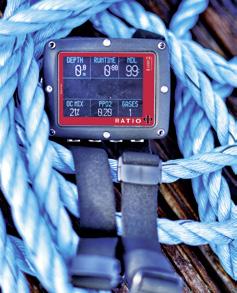
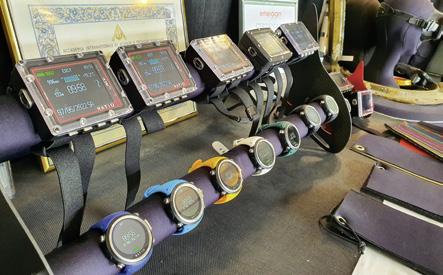
The iX3M2TX Easy is a robust and reliable dive computer for air and Nitrox divers. Its large 2.8-inch colour display ensures excellent visibility in all conditions. The new LSK user interface makes operation simple and intuitive –with virtually no need for a manual. With air integration, a nitrox analyser and a lightweight yet durable casing, the iX3M2TX combines performance, precision and comfort for safe diving. Price: 549 euros/749 euros (including transmitter). ratio-computers.com
VOLUNTARY RECALL CAMPAIGN
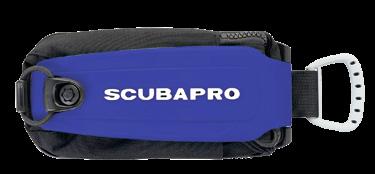
Scubapro is voluntarily recalling certain Monorail weight pockets, which were sold between November 2025 and February 2026. The reason is a potential defect in the plastic D-ring of the quick-release pocket. In an emergency, the pocket might then fail to detach. Two cases have been reported so far; there have been no injuries. Owners can have the bags replaced free of charge via authorised dealers or send them directly to Scubapro . Monorail bags currently being produced and sold do not have this problem. Affected products have been withdrawn from sale, and dealers have been notified to check their stock for the faulty batches. scubapro.com
CUSTOMISE THE SHEARWATER PEREGRINE
EMERGENCY TRAINING
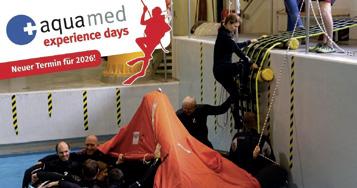
On 10 October 2026, aqua med will be hosting the 1-day ‘stress & rescue’ workshop for divers who wish to deepen their practical knowledge of rescue, evacuation and emergency management. The focus is on intensive training that not only imparts theoretical knowledge but, above all, prepares participants for practical application in an emergency. In addition to the basics of stress reactions, communication and safety, participants can expect realistic exercises in the trainingpool, including various rescue and evacuation scenarios under conditions that are as realistic as possible. The aim is to build greater confidence, decision-making skills and routine for critical situations both underwater and on board. Also featured: Deutsche WindGuard and Thomas Kromp. Price: 299 euros. Special rates for groups. All information & registration: aqua-med.eu
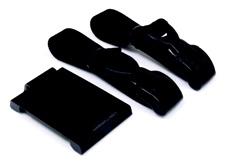
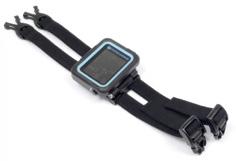
Narkedat90.com is offering a new adapter kit for the Shearwater Peregrine. The Dual-Strap Plate replaces the standard wrist strap with two elastic bungee cords, similar to those found on the Perdix 2 and Petrel 3. This is designed to provide a better fit over dry suits and offer additional safety. Charging remains possible despite the adapter. Price: approx. 66 euros. narkedat90.com
A BESPOKE BRAND FROM TUSCANY
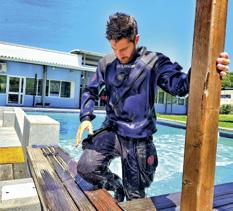
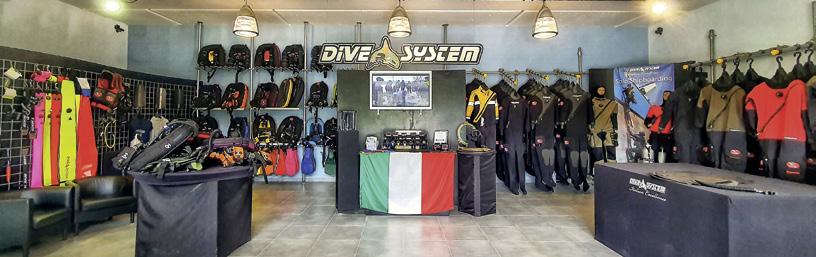
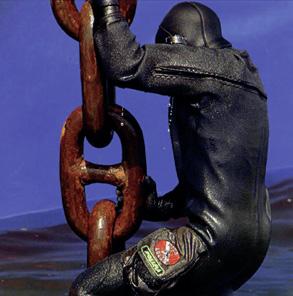
Since 1993, DiveSystem has been developing and manufacturing diving equipment in Italy for recreational, technical, commercial and professional use. The brand, based in Tuscany, is synonymous with bespoke solutions and a clear focus on practical application.
T Alexander Kaßler
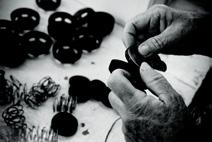
When people talk about high-quality diving equipment these days,theyoften end up mentioning big international names. This makes it all the more exciting to look at manufacturers who are deliberately taking a different approach: less corporate, more artisanal; less pure branding, more in-house development; less interchangeable mass-produced goods, more bespoke
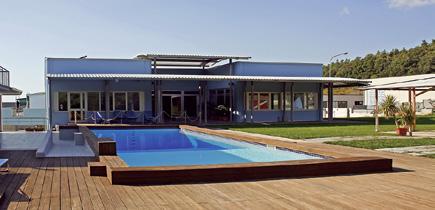
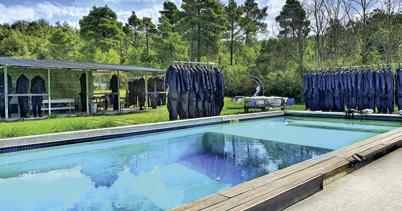
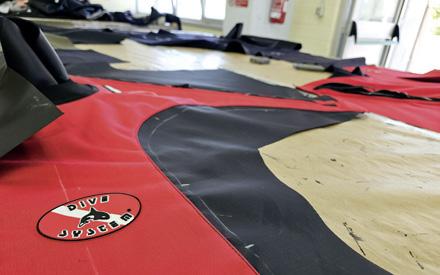
work. DiveSystem has positioned itself precisely in this niche. The company is based in Valpiana, Tuscany, where it brings together development, manufacturing, research, warehousing, a showroom and training facilities under one roof. According to the company, the centre covers around 2,500 square metres and even has its own test pool. This is more than just a nice mar-
keting touch: it shows that DiveSystem doesn’t just sell products, but closely oversees the entire process from concept to testing.
A brand with workshop DNA DiveSystem was founded in 1993 and continues to see itself as a manufacturer with a clear ‘Made in Italy’ identity. This heritage is not presented here as a folkloric feature, but
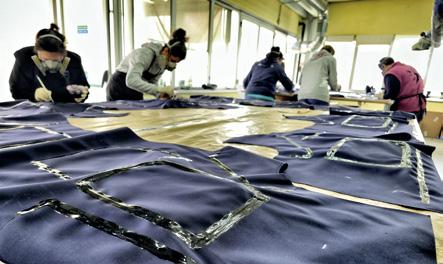
is approached from a functional perspective: short supply chains, direct quality control, close integration of development and production, and the ability to actually implement customisations in-house. This is particularly relevant in the diving market. Many brands develop concepts and then have them manufactured externally. DiveSystem stands out because its core competencies have not been outsourced but have, step by step, been consolidated within the company. Ultimately, this structure is of interest not only to professional users but also to ambitious recreational and technical divers who want to know who is actually building their product.
The people behind the brand DiveSystem sees itself as a family-run, or rather owner-managed, company founded by Paolo Zazzeri and Gioia Ancillotti. Both names are closely linked to the brand’s origins and development. “Continuity, independence and a close link between diving experience and product development” – that is how they see themselves. This is precisely part of the appeal: DiveSystem does not come across as a brand that emerged from an Excel spreadsheet, but rather as the result of specific requirements arising from the water. Ultimately, divers don’t just want to know what a brand is selling, but why its products have been designed the way they have.
From a craft business to a system brand
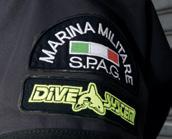
The company’s development shows that DiveSystem has never relied on a single product alone. Officially, the company cites a number of milestones: since 1999, it has been a supplier to key Italian military and
elite units. In 2007, it established its own electronics department. This was later followed by collaborations with research and medical partners, including ‘DAN-Research’, universities and specialist institutions. The acquisition of ‘Mediving’ accessories and the expansion of its own sales
structures are also part of this development. The common thread here is particularly noteworthy: over the years, DiveSystem has not only expanded its product range but has also systematically built up its expertise. What began as an equipment brand has evolved into a systems brand that combines textile manufacturing, technical components, customisation and professional applications.
What DiveSystem manufactures today
The current range is extensive and covers almost all key areas of modern diving equipment. Officially, DiveSystem’s range includes, amongst other things, dry suits, surface dry suits, jackets and BCDs, fins, base layers, semi-dry suits, sidemount products, torches, regulators, pressure gauges, accessories, clothing, bespoke items and equipment for professional divers. Ratio Computers is also included in the product range. For readers, however, it is not so much the length of the list that is of interest as the question of where the brand’s real strength lies.
Dry suits and bespoke tailoring
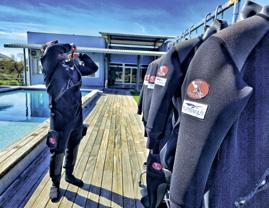
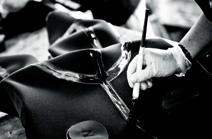
The brand’s most distinctive feature lies in its range of drysuits. DiveSystem emphasises that these are individually designed, cut by hand, sewn and bonded. Here, bespoke tailoring is not a luxury extra for enthusiasts, but a functional approach: better mobility, a more precise fit, less air movement, greater comfort and, ideally, greater safety underwater. Anyone who has ever experienced just how much a poorly fitting drysuit can impair a dive will quickly understand why this area receives so much attention at DiveSystem. The Italian brand do-
EQUIPMENT °DIVESYSTEM
esn’t simply sell ‘a drysuit’; it sells the promise that fit is part of performance.
Wings, BCDs and sidemount
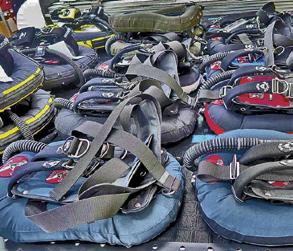
The brand’s technical focus is also evident in the areas of buoyancy control and system design. Wings, harness and sidemount solutions are aimed at divers who think in modular terms and view their setup not as a rigid product, but as an individually configurable system. This makes DiveSystem particularly interesting for those readers who have moved away from the classic jacket concept or are just beginning to tailor their equipment specifically to their area of use, type of water and diving style.
Photos: Dive System
Fins and robust peripherals
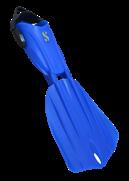
Fins often appear to be a simple product. In reality, however, it is precisely here that the difference between well-thought-out practical design and flashy catalogue design quickly becomes apparent. A brand with a professional background must address different considerations when it comes to fins: propulsion, control, durability, performance in different environments and efficiency with various finning techniques. DiveSystem also offers its own solutions in this area.
Professional, Military, Commercial
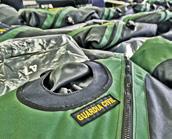
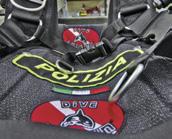
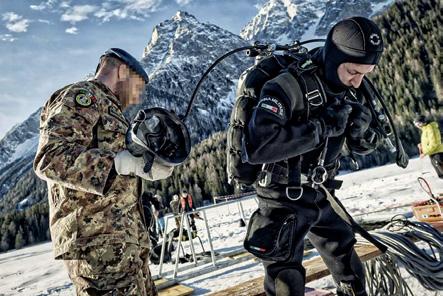
The brand’s professional division is particularly exciting. DiveSystem also operates in the military, rescue, special forces, commercial diving, aquaculture and fishing sectors. It also produces bespoke equipment. For the average recreational diver, this does not automatically mean they need ‘military equipment’. Rather, it means that the brand’s development and understanding of quality are informed by fields of application where equipment must function reliably. It is precisely this sense of trust that the civilian range is also intended to convey.
Why ‘professional DNA’ is important
Many divers react to terms such as ‘military’ or ‘professional’ with either excessive enthusiasm or excessive scepticism. Both reactions fall short of the mark. Things get exciting when professional requirements are incorporated into civilian products: robust materials, simple maintenance, modular designs and a clear focus on the essentials. DiveSystem benefits precisely from this credibility. Having been a supplier to key Italian units since 1999 is not merely a point of pride, but an indication that the brand has held its own in demanding fields of operation over the years. Many of the qualities valued by authorities, rescue units and professional divers are also attractive to ambitious recreational divers: durability, clear functionality, reliability and a wellthought-out approach to service.
Research rather than mere assertions
Another factor that makes DiveSystem an interesting company is its close links with research and development. The company’s profile highlights not only its in-house electronics department but also its collaborations with scientific and medical partners. That alone does not guarantee a good product, but it does show that innovation here is not merely a marketing buzzword. In an industry where ‘new’ often simply means a different colour or a slightly altered detail, a systematic approach to development is a genuine distinguishing feature.
Conclusion
The brand combines craftsmanship with a systems-based approach. Here, bespoke work is not merely a premium concept, but has a clear functional purpose. The ‘Professional DNA’ lends the product range credi-
bility. Development, manufacturing and testing are visibly and closely interlinked. DiveSystem is one of those brands that should not be reduced to a mere slogan. Behind the name lies an Italian manufacturer with a long history, its own production facilities, a distinct workshop ethos and a range that extends from bespoke dry suits to professional specialist solutions. The combination of family and owner management, technical rigour and a strong practical focus makes the brand particularly appealing to divers who want more than just standard off-the-peg gear. And that is perhaps the greatest appeal of DiveSystem: here, you don’t just get products, but also the feeling that someone behind the label has genuinely understood what matters underwater.
JETZT 12 AUSGABEN + TOLLE PRÄMIE SICHERN!
Staunen Lernen Träumen
Mittendrin – verlässlich – jeden Monat neu SEAWING NOVA , 50€ Zuzahlung
Gratis-Ausgabe bei Bankeinzug Versandkostenfreie Lieferung
Geschenk-Abo: Heft und Mappe gratis amazon Gutschein, Wert 30 € oder
Sie erhalten 12 Ausgaben TAUCHEN für zzt. 118,80 € (DE) / 130,80 € (AT) / 194,40 CHF (CH) (inkl. MwSt. u. Versand) zzgl. des jeweiligen Zuzahlungsbetrags. Dieses Angebot gilt nur solange der Vorrat reicht. Ersatzlieferung vorbehalten. Der Prämienversand erfolg nach Zahlungs eingang. Zahlungsziel: 14 Tage nach Rechnungserhalt. Es besteht ein 14-tägiges Widerrufsrecht. Anbieter des Abonnements ist JAHR Artopé Media GmbH & Co. KG. Belieferung, Betreuung und Abrechnung erfolgen durch DPV Deutscher Pressevertrieb GmbH als leistenden Unternehmer. *(Bitte die Bestellnummer angeben: Selberlesen: 2054866 · Verschenken: 2054868)
ACTION CAMERAS
Photos: Alexander Kassler (1); Benjamin Schulze (1)
Here you will find a video featuring and some comparative sample shots.
EQUIPMENT °CAMERA REVIEW
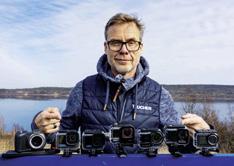
Action camera sare under pressure. Modern smartphones now deliver impressive video quality, waterproof cases are available at affordable prices and are getting better all the time, and there are also significant developments in the software side of things. At the same time, 360-degree cameras are making an ever-stronger inroads into the market, promising flexibility in terms of framing and post-production. The question therefore naturally arises: is there still any need for traditional action cameras these days?
Underwater, this question remains an intriguing one. This is because, despite their high-quality sensors, smartphones still quickly reach their practical limits when used for diving. Operation whilst wearing gloves, long recording times, lower heat build-up and more reliable image stabilisation remain the classic strengths of specialised action cameras.
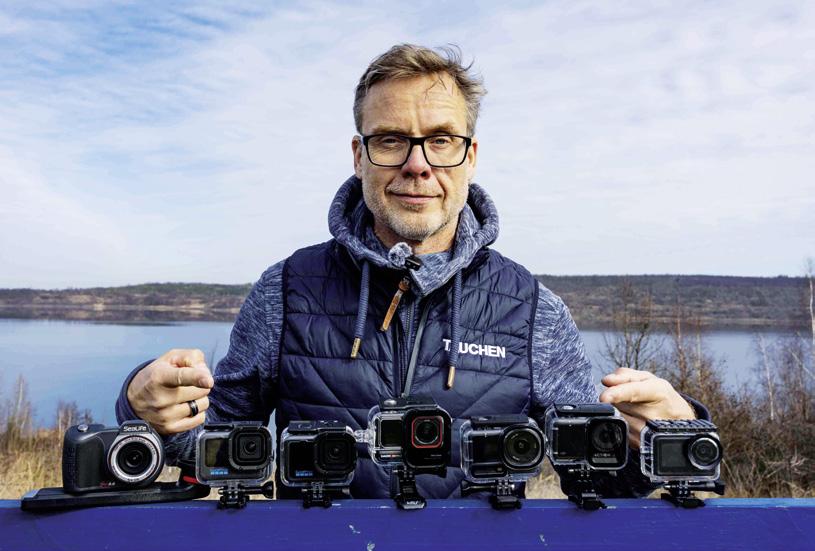
To find out how the latest models perform in real-world diving conditions, we tested six cameras over two days at Geiseltalsee and Kulkwitzer See near Leipzig.
The following were tested:
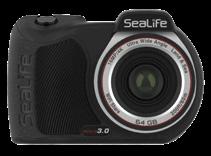
• SeaLife Micro 3.0
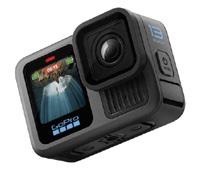
• GoPro HERO13 Black
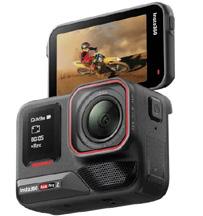
• Insta360 Ace Pro 2
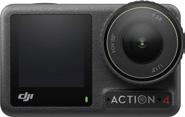
• DJI Osmo Action 4
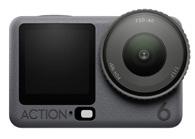
• DJI Osmo Action 6
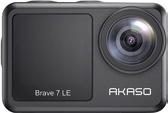
• AKASO Brave 7 LE
The manufacturers were contacted in advance and asked to provide what they considered to be their best current model for our usage profile (see info box on the right). The DJI Osmo Action 4 played a special role. It was deliberately included to highlight just how much two cameras have evolved over two consecutive generations –and whether an upgrade is worthwhile.
SeaLife Micro 3.0 – the specialist
The SeaLife Micro 3.0 occupies a unique position amongst the test candidates. Whilst all the other contenders are classic action cameras, the SeaLife was developed
purely as an underwater camera. You can tell. The sealed housing looks robust and is clearly designed with divers in mind. Large controls and a generous display made the SeaLife the most user-friendly system in
terms of operation, even if the intuitive menu navigation could still do with a bit of fine-tuning. In terms of image quality, however, it became apparent that the SeaLife can no longer quite keep up with modern
THE TEST SETUP
The conditions could hardly have been better for a technical underwater comparison. The test took place in mid-March in sunny, almost cloudless weather. Visibility was exceptionally good. Clear water with few suspended particles allowed more light to penetrate, particularly at depth, which the cameras gratefully captured.
The water temperature was around ten degrees Celsius at the surface and about six degrees at a depth of 20 metres. Thick gloves were therefore necessary and essential for a realistic test.
All cameras were set to the same settings:
• 4K resolution
• 30 frames per second
• automatic white balance
• no log profiles
• no additional picture styles
• no LUTs (these are automatic colour transformations used in post-production)
• no post-processing of images
Important: The assessment of image quality relates exclusively to underwater use. Above-water shots were deliberately not assessed. The test focused entirely on underwater use. Where a manufacturer offered specific underwater or diving modes, these were activated. In the test group, this applied exclusively to the Insta360 Ace Pro 2. Diving was carried out using the manufacturers’ original housings, even if a camera could theoretically reach a depth of 20 metres without a housing.
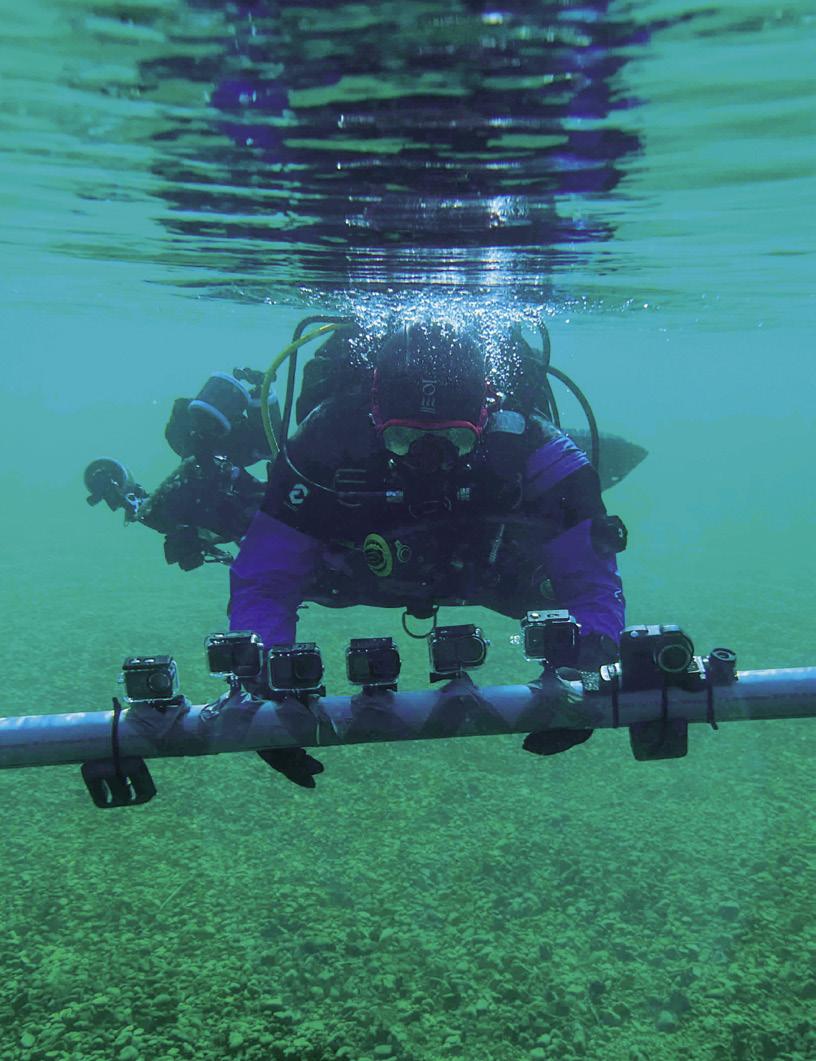
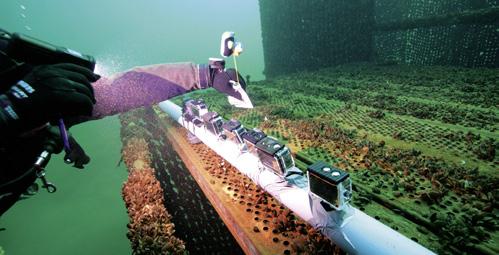
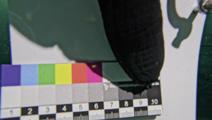
All the cameras were mounted on a PVC pipe and moved through the water simultaneously in parallel. This made it possible to compare identical scenes under exactly the same conditions. The cameras were positioned stationary in both shallow and deep water (shallow: five metres; deep: 20 metres). The following was carried out there:
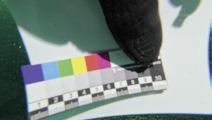
• Colour tests using standardised colour charts
• White balance tests using a white card
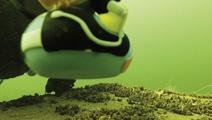
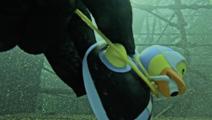
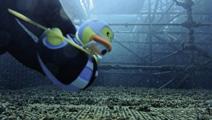
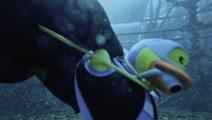
• Colour reference photos featuring a colourful
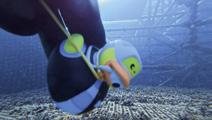
rubber duck
• Filming with video lighting
• Comparison shots without additional lighting
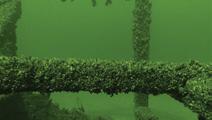
During the descent, dynamic range, motion rendering, stabilisation, panning shots and shadow areas were deliberately captured. Close-ups of mussel beds were also used to analyse sharpness and level of detail. The evaluation of thefootage was not carried out directly underwater, but subsequently on a computer using the DaVinci Resolve editing software. The original camera files were assessed – without any subsequent colour correction, sharpening or noise reduction. A standardised 4K UHD timeline in the Rec.709 colour space with a gamma of 2.4 was used for the analysis. Video monitoring was carried out in 10-bit. Proxy files were deliberately not used during the final review to avoid additional compression artefacts or distorted impressions of sharpness.
WHY UNDERWATER PHOTOGRAPHY IS PARTICULARLY DIFFICULT
Underwater, light and colours change drastically after just a few metres. Red disappears first, followed by shades of orange and yellow. At the same time, the contrast visibly decreases. This poses an enormous challenge for modern action cameras. This is because many manufacturers now rely heavily on automatic image processing:
• AI-assisted sharpening
• aggressive noise reduction
• dynamic contrast adjustment
• automatic colour corrections
• HDR processing
On land, such techniques often look impressive. Underwater, however, they quickly result in unnatural colours, overly sharp contours or a visibly artificial look.
Furthermore, water degrades micro-contrast much more significantly than air. Even small amounts of suspended particles cause stray light and visibly reduce perceived sharpness. At the same time, electronic stabilisation systems find it much more difficult to operate underwater, as water movements are interpreted differently from conventional camera pans on land. The following are therefore particularly challenging:
• Blue/cyan gradients
• Red colour rendering
• Shadow drawing
• Backlit situations
• fine structures such as mussel beds or sediment
That is why the test deliberately focused exclusively on evaluating the so-called ‘out-of-cam’ look – in other words, exactly the image that users will actually end up with later, without any post-processing.
high-end action cameras from a technical standpoint. The sharpness is noticeably inferior to that of DJI, GoPro or Insta360. At the same time, the SeaLife’s automatic underwater colour calibration did not work reliably. Without manual adjustment, the image tended towards yellowish and sepialike tones. The automatic white balance, in particular, was not convincing. Colours
often appeared too warm, at times almost brownish. Particularly with neutral surfaces and the white card, it became apparent that the camera struggles to produce natural colours without manual intervention. Only by using the manual white balance modes for ‘sea’ or ‘green water’ could the camera be controlled more effectively. This highlights SeaLife’s philosophy: the camera is aimed at
traditional divers who are prepared to actively engage with underwater colour modes and manual settings. Another special feature is the charging and data cable, which mustn’t be left at home when travelling. In low-light conditions, the small sensor also reaches its limits. Nevertheless, the SeaLife Micro 3.0 remains a reliable tool for divers who want to film and take photos with minimal technical effort. Incidentally, good lighting is essential with this camera.
GoPro HERO13 Black
–the tried-and-tested all-rounder GoPro remains one of the leading names in the action camera market. However, the HERO13 Black demonstrates just how much competing models have caught up in the meantime. In our test, the HERO13 impressed with its well-developed user interface and extensive range of accessories. Presets, mounts, lens mods and app integration all work well. That said, GoPro’s former dominance has now diminished significantly. DJI, in particular, has caught up massively in terms of accessories, quick-release systems, battery technology and general system integration. In practical diving use, the two manufacturers are now much closer to each other than they were just a few years ago. In terms of image quality, the HERO13 continues to deliver a very strong overall package:
• high sharpness
• significant stabilisation
• good momentum
• convincing portrayal of movement
At the same time, the typical GoPro image characteristics remain evident. The camera applies a comparatively aggressive level of sharpening and contrast. Underwater, this occasionally made the image look slightly more artificial than with DJI. With additional video lighting, the GoPro produced a vivid, high-contrast image. Without lighting, however, it lost its natural colour tones more quickly than the other high-end action cameras. The HERO13 is still among the frontrunners, though it is no longer the undisputed leader.
SeaLife Micro 3.0
GoPro HERO13 Black
TECHNOLOGY° CAMERA REVIEW
Insta360 Ace Pro 2 – the most exciting camera in the test
No other camera in the test field sparked more discussion than the Insta360 Ace Pro 2. Whilst the DJI Osmo Action 6 offered the most balanced overall package, the Insta360 produced the most striking visual effect. The camera really came into its own, particularly in low-light areas and shadows. Thanks to its large 1/1.3-inch sensor, it delivered the best low-light performance of any camera in the test. Colours remained stable for longer, whilst the camera retained more detail in dark areas than most of its competitors. The image processing has a modern, high-contrast look and is visibly more heavily processed than that of DJI or SeaLife. Sharpening and noise reduction are applied quite heavily, which often makes footage look impressive straight away. Blue-water scenes and shots taken in natural ambient light benefited from this in particular. At the same time, however, the camera also exhibited the typical side effects of this more aggressive image processing. Fine details occasionally appeared smoothed out, whilst uniform water surfaces sometimes looked slightly artificial. We did not test the many settings options, such as the log functions for subsequent colour grading in editing software. The Insta360 Ace Pro 2 therefore does not necessarily deliver the most neutral rendering, but in our tests it produced the most visually impressive underwater images – and for that very reason quickly became the team’s secret favourite.
DJI Osmo Action 4 – an interesting point of comparison
The DJI Osmo Action 4 was, in a sense, in a league of its own in this test – and that’s precisely what made it particularly interesting. For although it has already been technically overtaken by the newer Action 6, it impressively demonstrates just how high the standard of modern action cameras has now become. The natural colour reproduction was
particularly impressive. Overall, the DJI appeared smoother and less harsh in its rendering than some of its competitors. Colours remained pleasantly controlled. At the same time, however, the camera clearly showed its limitations compared to the newer generation. In difficult lighting conditions, the Action 4 lost detail in shadowed areas more quickly. Its dynamic range and level of detail also lagged slightly behind the Action 6. Nevertheless, the camera remains remarkably competitive – particularly for users who already own an Action 4. The upgrade is noticeable, but less dramatic than marketing departments often suggest.
package overall
DJI Osmo Action 6 – the most well-rounded
In our test, the DJI Osmo Action 6 achieved the best overall balance of image quality, stabilisation, dynamic range and ease of use. Its controlled image processing was particularly striking. Whilst other manufacturers sometimes visibly oversharpen
DJI Osmo Action 6
DJI Osmo Action 4
Insta360 Ace Pro 2
Camera type Compact underwater camera with a permanently sealed housing
maximum video resolution 4K UHD at up to 30 fps 5.3K at up to 60 fps; burst slow-motion at up to 5.3K 120 fps 8K at 30 fps
Maximum frame rate 1080p at up to 120 fps; 720p at up to 120 fps; 480p at up to 120 fps 4K at up to 120 fps; 2.7K at up to 120 fps; 1080p at up to 240 fps; burst mode at up to 400 fps at 720p 4K at up to 120 fps; 1080p at up to 240 fps 4K/2.7K at up to 120 fps; 1080p at up to 240 fps 4K at up to 120 fps; 2.7K at up to 120 fps; 1080p at up to 240 fps
Video codec MPEG-4 / H.264, MP4 MP4, H.264/AVC and H.265/HEVC MP4; H.264; H.265 MP4, H.264/HEVC MP4, HEVC
× 3456 px
Max. field of view 100° diagonal; 3.37 mm, approx. 19 mm 35 mm equivalent 156° field of view in 8:7 aspect ratio; compatible with HB-Series lens mods
2.7K at up to 60 fps; 1080p at up to 120 fps; 720p at up to 240 fps
Summarit; 157° angle of view
Image stabilisation Electronic stability control HyperSmooth 6.0
10-bit / Log / HDR No
10-bit, HLG HDR, GP-Log with LUT s support Leica colour profiles; HDR/low-light modes; 10-bit, i-Log
Displays 2.4-inch TFT-LCD Front and rear touchscreens, 2.27 inches
2.5-inch fold-out touchscreen; front status display
Storage 64 GB internal storage A V30 microSD card is recommended microSD microSD up to 512 GB; no internal storage
Runtime (according to the manufacturer) 3+ hours (4K/30fps) 1.5
GB built-in, of which 50 GB is usable; microSD up to 1 TB
Front display and 2-inch rear touchscreen
up to 64 GB
EQUIPMENT °CAMERA REVIEW
their images or apply heavy processing, the DJI performs with a pleasing sense of confidence. The image is sharp without looking artificial. Colours remain vibrant yet natural. This balance worked exceptionally well, particularly underwater. The camera demonstrated:
• excellent dynamics
• excellent low-light performance
• clear depiction of movement
• gentle stabilisation
• natural colour reproduction
At the same time, the DJI comes across as more understated and less spectacular than the Insta360. Yet that is precisely where its strength lies. The Action 6 makes less of an effort to make the image appear artificially ‘impressive’. Instead, it delivers a very controlled and reproducible result. Added to this is its native diving depth of 20 metres without an additional housing. This means the camera fits the maximum test profile perfectly, even though it was dived in its case for safety reasons. The DJI Osmo Action 6 is therefore neither a specialist like the SeaLife nor an effects-focused camera like the Insta360 – but rather the most well-rounded package overall.
AKASO Brave 7 LE –the budget option
The AKASO Brave 7 LE clearly demonstrates just how far affordable action cameras have come – but also where their limitations lie. For simple social media clips or holiday videos, the camera delivers perfectly serviceable results. In a direct comparison with high-end models, however, the differences quickly become apparent. Sharpness is significantly lower, colours appear less consistent, and – particularly
without additional lighting – image quality deteriorates relatively quickly. The camera showed particular weaknesses when it came to capturing movement and low-light shots. Added to this is an overall less sophisticated user interface. Nevertheless, the AKASO serves its purpose: it offers an affordable entry point into the world of underwater action cameras. However, anyone looking to film or take photographs seriously will reach its technical limits relatively quickly.
So do action cameras still have a future?
Based on this test, the answer is: yes. Smartphones have made enormous strides. They are perfectly adequate for many everyday situations. Underwater, however, spe-
cialised action cameras still offer clear advantages:
• robust construction
• ease of use
• long recording times
• very sturdy casings
• lots of accessories
• greater stabilisation
• improved heat dissipation
• more compact dimensions
360-degree cameras, on the other hand, open up exciting creative possibilities. However, for classic, documentary-style underwater footage, traditional action cameras are still generally the most practical solution.
Conclusion
The test clearly shows that the market has changed significantly in the meantime. GoPro is no longer automatically the sole benchmark. DJI has caught up massively in terms of accessories, user interface and overall integration. At the same time, manufacturers are increasingly adopting different approaches. The SeaLife Micro 3.0 remains the most dedicated underwater specialist, offering the best genuine underwater user experience. The GoPro HERO13 Black impresses as a highly sophisticated all-rounder with a strong ecosystem of accessories. The Insta360 Ace Pro 2 produced the most exciting and impressive visual effects in the entire test. The DJI Osmo Action 4 demonstrates just how high the standard of the previous generation already was. Finally, the DJI Osmo Action 6 delivers the most well-rounded package overall. And the AKASO Brave 7 LE proves that even budget action cameras can achieve a surprising amount these days – provided you accept their limitations.
Special thanks go to the team at Geiseltalsee for their on-site
AKASO Brave 7 LE
THAT’S PERFECT!
With its new bags, the Austrian manufacturer Camaro has something to suit every need. Here, we take a look at what the new collection has to offer.
With a new collection of bags, Camaro is expanding its range to include well-designed companions for everyday use, travel and diving. Developed for heavy-duty use between your local lake, the airport and the dive centre, the range combines functional design with robust materials and flexible carrying options. Whether it’s a compact shoulder bag, a versatile travel companion or a spacious dive bag with a roll-top closure – every bag is designed with a clear purpose in mind and is aimed at divers who value organisation, protection and comfort.
The minimalist, modern design of the new Camaro range catches the eye straight away. Clean lines, durable materials and high-quality workmanship characterise the collection. Reinforced seams ensure durability, as do corrosion-resistant zips, buckles and clips, which are designed to function reliably even in salty environments. Wide, padded shoulder straps take the
strain off your shoulders and back, whilst numerous internal and external compartments help keep your gear organised. Padded interior compartments provide additional protection for delicate items such as laptops, tablets or camera equipment.
Flexible on the go –the Messenger Bag from
This compact messenger bag is designed for anyone looking for a versatile bag for everyday use, travel or a quick trip to the water. A particularly handy feature is that the bag can be transformed from a classic shoulder bag into a rucksack in just a few simple steps. To do this, simply remove the shoulder strap and pull out the integrated rucksack straps.
Measuring 51 × 37 × 16/21 centimetres, the bag has a capacity of 25.7 litres. Despite its extensive features, its weight of 1249 grams remains comparatively moderate. A padded laptop compartment, several internal pockets and the option to carry it in
different ways make this messenger bag a versatile everyday companion – from the office to a weekend trip to the lake. The recommended retail price is 149.95 euros.
Three ways to carry it in one bag – the Travel Bag
For those who travel frequently, the new Travel Bag is a versatile travel companion. The design is based on maximum versatility: the bag can be used as a rucksack, a classic shoulder bag or a carry-all. Multiple carrying handles make it easier to stow the bag in a car, boat or aeroplane. With a capacity of 50 litres, the Travel Bag offers plenty of space for sports and travel gear. The bag measures 65 × 34 × 21 centimetres and weighs 1169 grams. A padded compart-
Messenger Bag
ment for a laptop or tablet, as well as numerous internal and external pockets, make it easy to stay organised whilst on the move.
The bag really comes into its own on diving trips: documents, electronics, a change of clothes and delicate equipment can be neatly stowed away and are easily accessible. At the same time, the bag remains easy to carry – a real advantage on long journeys between the terminal, the transfer bus and the dive centre. The recommended retail price for this model is 159.95 euros.
For big adventures –the 2-Part Cargo Duffle Bag
The largest model in Camaro’s new bag range is clearly aimed at divers who travel with a lot of kit. The 2-Part Cargo Duffle Bag has been specially designed for diving holidays and focuses on maximum organisation and high carrying capacity.
With a capacity of 110 litres, the bag offers plenty of space for two full sets of diving kit, including a wetsuit (three millimetres), jackets, fins and accessories. Numerous internal and external pockets, as well as separate compartments, help to keep your luggage organised and allow you to transport delicate items separately.
The reinforced base provides additional protection for the contents, whilst sturdy
Travel Bag
Duffle bag
wheels make it easier to transport the case through airports or along hotel corridors. This is complemented by a 35-centimetrelong telescopic handle. Several carrying handles also allow for different carrying positions when loading the case.
Measuring 35 × 43 × 83 centimetres and weighing 4940 grams, the Cargo Duffle Bag is one of the most robust models in the range – designed to withstand heavy loads and intensive travel use. Recommended retail price: 269.95 euros.
Fully customisable
An additional feature is aimed specifically at clubs, diving schools or those with individual requirements: on request, the bags can be uniquely embroidered for an additional charge – for example, with a name, club logo or personalised lettering. This makes Camaro’s bag range suitable not only as travel luggage, but also as personalised team or event kit.
Entdecke den Atemregler, der zu deinem individuellen Tauchstil passt. Kompakt, reisetauglich und mit optionalen, vom Taucher selbst austauschbaren Farbrahmen, mit denen du ein klares Statement setzt. Der neu entwickelte C370 vereint persönlichen Stil mit der bewährten Leistung, die Taucher von SCUBAPRO erwarten. Wähle ein System, das unverwechselbar deins ist.
ERFAHRE MEHR: SCUBAPRO.COM
TWO CONTROLLERS, ONE QUESTION: HOW MUCH ‘EXTREME’ DO YOU NEED?
We are comparing the Mares Abyss 22 Navy II with the Mares Abyss 26 Classic in a practical test.
Photos: A. Kassler, mares
T Alexander Kassler
When two regulators come from the same product range, it is often only underwater that their quality really stands out. That is exactly what we wanted to find out: we tested the Mares Abyss 22 Navy II and the Mares Abyss 26 Classic in real-world conditions over several weeks – in cold seawater as well as on diving trips in warmer salt water. The regulators were provided to us by Mares as complete sets, including an octopus and pressure gauge, for testing.
Both regulators are part of the Abyss range and therefore share a common DNA: excellent breathing comfort, high-quality build and a commitment to reliable performance even under stress. Nevertheless, they are based on different philosophies. Our test question was therefore: Which regulator is really designed for whom?
First impressions & handling
The difference in character between the two regulators is immediately apparent as soon as you unpack and assemble them. The Navy II immediately appears somewhat more ‘technical’ due to its design, with the angled high-pressure outlets on the first stage. Mares specifies a total weight of 1,172 grams for the DIN version; of this, 685 grams is accounted for by the first stage and 269 grams by the second stage (Abyss Navy II). In our test, the set was supplied as a complete kit comprising an MR22 first stage, an Abyss Navy II second stage (429 grams with rubber MD hose) and an octopus (Abyss Navy II), an inflator hose and a pressure gauge (MR1), all packed in a handy bag. Rubber hoses are used for the medium-pressure connections.
Visually striking: the first stage has a roughened, sandblasted surface and is shaped to allow for maximum heat exchange –‘no frills’. You can see the skeleton of the first stage, so to speak. Please note: All ports are 3/8-inch connections, except for the port for the second stage – this has a 1/2-inch thread. This connection is also designed as a DFC connection. The set is fitted to the cylinder valve using a plastic rotary knob. What at first glance appears to
be a ‘completely different second stage’ is, in fact, the tried-and-tested Abyss variant with an additional fluoropolymer resin coating, designed to prevent ice crystals from forming. This not only gives the regulator a different appearance but also helps to prevent icing.
TEST SCENARIOS
Diving depth: up to 40 m | Water temperature : 6–31 °C | Test duration : 4 dives per unit
Diving sites: Geiseltalsee, Kulkwitzer See, Bandasee/South Sulawesi
By comparison, the Abyss 26X Classic Set has a more ‘conventional’ design. It comes as a complete package comprising the 26X as the first stage (approx. 589 grams), the Abyss as the second stage (402 grams including Miflex hose), the octopus (DUAL), the pressure gauge (MR1), an inflator hose and a bag. Miflex hoses are fitted as the intermediate-pressure hoses for the second stage and the octopus. The first stage is a ‘compact block’ with four low-pressure ports and two angled high-pressure ports. If you look closely, you’ll find a ‘hidden fifth medium-pressure port’ underneath the first stage. The first stage is attached to the cylinder using a metal twist lock.
Underwater view
Abyss 22 Navy II: As soon as you dive with the Navy II, you can feel the reserves this regulator has to offer. The air delivery feels steady and plentiful, even at higher breathing volumes and in cool water. Mares has certified the regulator for cold-water dives down to -2 °C and depths of up to 60 metres, and this is precisely what you can feel: The regulator remains calm, without any ‘nervous’ behaviour. The second stage’s Mesh Grid design reduces the direct flow of
water onto the diaphragm, thereby preventing unwanted blow-off – a detail that makes all the difference in currents or when your head is in an unfavourable position. The cold-water protection is complemented by the CWD (Cold Water Diving Kit) and the fluoropolymer coating mentioned earlier. All these components are designed to significantly reduce free-flow caused by ice formation.
Our impression: The Navy II inspires a strong sense of ‘instinctive confidence’ –more so, it feels, than many other regulators we’ve used to date. Anyone who dives regularly in such conditions will appreciate this added sense of security. The weight of the second stage and the comfort of breathing are impeccable. The only wish – one that will probably never be fulfilled –would be to fit a mouthpiece with a palatal seal. But even that is a matter of taste, or rather, personal preference. When used correctly, there are no signs of jaw fatigue, even during long or strong-current dives.
Abyss 26 Classic: The 26 Classic offers a lighter and more relaxed breathing experience – without losing any of the typical Abyss DNA. The 26X with DFC (Dynamic Flow Control) keeps the mid-pressure drop to a minimum during inhalation, which is particularly noticeable during long, calm dives and under moderate exertion. The second stage, featuring VAD (Vortex Assisted Design), produces a natural breathing sensation that many divers would describe as unobtrusive in the best sense of the word: the regulator doesn’t stand out because it simply works. For relaxed dives in moderate temperatures, the 26X Classic set is a very compelling choice.
Respiratory resistance & stress test
A direct comparison of the inhalation resistance highlights the quality of both regulators. The Navy II remains remarkably stable even at higher ventilation rates: DFC and its robust construction limit the drop in intermediate pressure. The metal construction of the second stage ensures thermal stability. When breathing forcefully
STRENGTHS & WEAKNESSES
Abyss 22 Navy II – Strengths:
Unbeatable cold reserve, extremely robust construction, consistent air delivery even under high load, mesh grid to prevent blowoff, comprehensive anti-icing protection. The regulator for divers who refuse to compromise. If you buy the set, you’ll receive two high-quality second stages.
Abyss 26 Classic – Strengths:
Well-balanced handling, a modern feel when breathing, a practical complete set including an octopus and pressure gauge, versatile for all conditions in recreational diving. An ideal allrounder for a wide range of uses.
Abyss 22 Navy II – Weaknesses: Heavier – although an extra 200 grams hardly makes a difference. This makes it oversized for travel and warm water. If you rarely dive in very cold water, you’ll be carrying around a considerable amount of unused capacity.
Abyss 26 Classic – Weaknesses: Does not match the Navy II’s extreme cold-water reserve. It is less consistently designed for regular use in very cold or extreme conditions. In a direct comparison, Oktopus does not offer a regulator of equivalent standard.
It is here, and here alone, that the main air regulator is fitted to ensure optimum air delivery.
against a current, the resistance remained noticeably consistent – a real plus point in the endurance test. The Abyss 26 Classic set also delivers a very comfortable inhalation resistance, which is thoroughly impressive for both standard and advanced recreational diving. In a direct comparison, it lacks the Navy II’s final reserve of cold-water performance and extreme durability –though this is hardly noticeable as a weakness in everyday use.
Weight & mouthpiece feel
On the Navy II, the second stage has been deliberately designed to be substantial, weighing 269 grams, which contributes to thermal stability but also makes the mouthpiece feel more substantial and heavier – compared with other brands. In practice, this gives it a very high-quality, robust feel – though without the lightness of a travel regulator.
In a direct comparison, the Abyss 26 Classic feels slightly ‘lighter on its feet’ in
Photos: A. Kassler, mares
Somewhat hidden on the , at the lower end of the first stage, there is a fifth medium-pressure outlet on the 26X stage.
terms of comfort. This may be primarily because the Miflex hose offers a little more ‘freedom of movement’ – compared directly with the rubber hose on the Navy II. It is therefore the more comfortable choice for long, relaxed dives. This difference is particularly noticeable on diving holidays, where you sometimes do three or four dives a day. Here, too, the unfulfilled wish remains: a palate seal would be brilliant!
Conclusion & Recommendation
The €470 surcharge for the Navy II is considerable – and, to be honest, difficult for most recreational divers to justify. For €829, the 26 Classic set already provides everything you need for demanding recrea-
TECHNICAL SPECIFICATIONS
1. Levels Control
Encapsulation
Offset
Departures: MD/HD
Suitable for 300 bar
Din / Int
Stage 2
Valve principle
Venturi regulator
Inhalation resistance control
Suitable for cold water
Octopus
Mares Abyss 22 Navy II Set
MR 22
Diaphragm-controlled
yes
yes
2x HD / 4x MD (1x 1/2-UNF DFC)
yes
Both are possible
Abyss Navy II
Downstream no no yes
Abyss Navy II
Yes, MR1
Inflator MD hose, pouch
mares.com 1299 (RRP)
Specialist retailers
tional diving, including a full set of equipment. The 470-euro premium essentially buys you three things: extreme cold resistance down to -2 °C, the robust build quality of a US Navy-certified regulator, and a sense of security under high-stress conditions that most divers will never actually push to the limit in practice. To top it all off, there’s an octopus included – the identical model – which is in no way inferior to the main regulator in terms of performance and comfort. And let’s not forget the US Navy: here, the Mares Abyss Navy II is one of only two types of regulator in use.
A clear recommendation: if you dive in Germany or Central Europe, occasionally visit the Baltic Sea or Alpine lakes, and ha-
Mares Abyss 26X Classic Set
26 X (excluding TBP)
Diaphragm-controlled
yes
yes
2 x HD, 5 x MD
yes
Both are possible Abyss
Downstream no no
Yes, MR1
Mares DUAL
Yes, MR1
Inflator MD hose, bag, MiFlex-MD hoses
mares.com
829 (RRP)
Specialist retailers
ve no plans for drysuit dives in extreme conditions – go for the 26-Classic set. Your money is better spent on diving trips. We only recommend the Navy II if cold-water diving is not the exception but the norm –in other words, for drysuit divers in Nordic waters, cave divers or anyone who regularly dives in water below 10 °C. For this group, it’s worth the price; for everyone else, it’s a luxury.
EXPERTS
SENSATIONAL DISCOVERY IN LAKE NEUCHÂTEL: ARCHAEOLOGISTS RECOVER A UNIQUE ROMAN SHIP’S CARGO FROM THE EARLY IMPERIAL PERIOD
archaeologists are
Of particular note are the finds of cart components, including wheels, which are in an exceptionally good state of preservation.
The discovery of weapons, particularly swords, suggests there was a civilian merchant ship with a military escort.
An exceptionally well-preserved Roman ship’s cargo dating from between 20 and 50 AD has been discovered in Lake Neuchâtel and has now been recovered. The finds provide rare insights into trade networks, transport logistics and everyday life on board ships during the early Imperial period. Due to the acute threat posed by environmental factors and human activity, the preservation of the artefacts is being treated as a high priority.
A Roman ship’s cargo is currently the focus of an underwater excavation being carried out by the Archaeological Office of the Canton of Neuchâtel (OARC) in collaboration with the Octopus Foundation and the Archaeological Service of the Canton of Fribourg (SAEF). The recovered objects come from a ship, the location of which has not yet been pinpointed, that sank between 20 and 50 AD. The site was discovered in November 2024 as part of a lake-bed monitoring programme using aerial photography. This was followed by targeted diving surveys and an initial excavation campaign in March 2025. The aim was to assess the site’s scientific potential and the challenges involved in its conservation. Even at this early stage, the exceptional significance of the find became apparent: hundreds of objects were identified, documented and recovered – in a state of preservation that is unprecedented in inland waters north of the Alps. Despite being in excellent condition, the artefacts are considered to be at high risk. Several factors are having a negative impact on their preservation, including erosion of the lake bed, the anchoring of pleasure boats, as well as vandalism and looting. Against this background, particularly fragile artefacts were recovered immediately after they had been documented. These preventative measures are designed to protect a cultural heritage that could be irretrievably lost without swift intervention.
Lake Neuchâtel (or Lac de Neuchâtel in French) is the largest lake situated entirely within Switzerland, with a surface area of 217.9 square kilometres.
Underwater
recovering unique Roman artefacts from dating from the early Imperial period.
The recovered cargo is characterised by its extraordinary diversity. The largest proportion consists of several hundred ceramic vessels – including plates, bowls, mugs and dishes – which were produced locally in the Swiss Mittelland and were found lying almost intact on the lake bed. The range of finds is complemented by olive oil amphorae from Spain, which point to far-reaching trade links. In addition, there are tools and everyday objects that provide insights into the lives and work of the ship’s crew. Particularly noteworthy are finds of cart components, including wheels in an exceptionally good state of preservation. These are the only known Roman examples of this kind in Switzerland to date. This discovery points to a combined transport system linking land and water routes. The discovery of weapons, particularly swords, suggests that this was a civilian merchant ship under military escort. This interpretation allows for a more precise placement of the shipwreck within the historical context of the early Roman Empire. The site opens up far-reaching prospects for archaeological research. The combination of excellent state of preservation and clear contextualisation of the finds provides a rare basis for investigations into trade networks, production centres and technological knowledge from the Roman period. Furthermore, the dissemination of the findings is of central importance. Once the conservation and restoration work has been completed, the plan is to make the finds accessible to the public at the Laténium, the archaeology park and museum in Neuchâtel. However, this requires the careful and longterm conservation of all objects. Only in this way can their scientific analysis be safeguarded and their display under suitable conditions be ensured.
chemical diversity that has so far been little explored.
HARNESSING THE GENETIC POTENTIAL OF MARINE FUNGI
At the GEOMAR Helmholtz Centre for Ocean Research Kiel, scientists are currently investigating the as yet largely unexplored genetic potential of marine fungi. The focus is on an international collaboration between marine microbiologist Prof. Dr Xi Yu and natural products chemist Prof. Dr Deniz Tasdemir. Together, they are investigating fungi from marine habitats, particularly the deep sea, with the aim of discovering new bioactive compounds for medicine and biotechnology. Marine fungi are regarded as an exceptionally promising source of chemical diversity. Many of these microorganisms produce substances that enable them to withstand environmental stress or compete with other organisms. It is precisely these substances that could also be of use to humans in the future – for example, as the basis for new antibiotics or cancer drugs. Unlike many bacteria, fungi often have large genomes and thus the ability to produce numerous different bioactive compounds.
A BETTER LIFE UNDER PROTECTION?
German researchers are currently investigating the effectiveness of marine protected areas in the Baltic Sea. Scientists at the GEOMAR Helmholtz Centre for Ocean Research Kiel are analysing fish stocks, kelp beds and food webs in the protected areas of the Bay of Pomerania, the Kadetrinne and the Fehmarn Belt. The aim is to find out how effectively protected marine areas can stabilise ecosystems and contribute to climate protection. Modern, minimally invasive methods are being used, such as acoustic fish detection and autonomous underwater vehicles to map the seabed. Particular focus is being placed on brown algae such as sugar kelp and sawtooth kelp, which act as important carbon sinks. The data collected is intended to help evaluate and further develop conservation measures for the Baltic Sea in a more targeted manner in future. Autonomous Underwater Vehicles (AUVs) can be used to map the seabed using sonar systems and cameras.
DR FLORIAN HUBER reports here every month on the latest news from the world of underwater science. He himself is an underwaterarchaeologist and research diver (florian-huber.info).
The research focuses primarily on fungi from marine habitats – particularly from deep-sea environments. These microorganisms are regarded as a source of
From the north to the west, with a detour to the Skelligs: join us as we explore the top spots in an underwater world that’s actually rather unknown. Ireland’s, that is.
first saw my underwater photos of Ireland through the eyes of friends. Three Irishmen, all brilliant photographers, had been telling me for years just how much I would enjoy diving in their home waters. Their vibrant, striking images immediately captured my imagination. And their stories further fuelled my thirst for adventure, which constantly draws me to new places. When they finally offered to show my wife and me around their country, we booked our flights straight away, packed our bags and set out to learn a few words of Irish.
Shelter from the storm
Our tailor-made trip began in Donegal, on the northern tip of Ireland. The weather was dreadful. But the company was brilliant. Nigel had brought his compressor, Nick had brought his boat, and, buoyed by their optimism, we set out for Mulroy Bay – for my first dives in beautiful Éire. Whilst a storm swept across the outer coast, the inner reaches of Mulroy Bay – an inlet or fjord – were among the few safe diving spots. In these sheltered waters, I saw my first Atlantic lobsters: the European species with powerful claws and blue legs, as well as the smaller, spiny ‘crays’ without claws. New species of gobies and starfish were added to my personal global species list. We found scallops as big as my hand, decorator crabs camouflaged as orange, antler-like sponges, and anemones with pink tentacles.
THE GEEN ISLAND IRELAND ABOVE & UNDER WATER I
The next day, the storm had eased off enough for us to go diving off Melmore Head in the Atlantic. The ten-metre visibility took me by surprise – significantly better than in the sheltered inlet. Compass jellyfish pulsed through the blue-green water, some of them with fish caught between their fringed tentacles. Caramel-coloured kelp cascaded down the wall from a depth of ten to twenty metres. Pollack, gobies, wrasse and a conger eel had their hiding places there.
EXPERTS °IRELAND
Along the ‘Kerry Route’, you can experience the many different facets of Ireland at first hand. Whether it’s the ancient dwellings you can explore on the Skellig Islands, or simply the perspectives and insights into the Irish way of life.
EXPERTS °IRELAND
Kelp (brown algae) forms extensive, ecologically valuable underwater forests along Ireland’s rocky coasts, which are regarded as the ‘rainforests of the sea’. The dominant species is Cuvie (Laminaria hyperborea), which can live for up to 15 years.
The wild waters of in Connemara
Diving clubs often head for Killary Harbour when storms make other spots on the west coast unsuitable for diving. This fjordlike inlet was formed 20,000 years ago by glaciers and today forms the boundary between the counties of Mayo and Galway. As the sea off the north coast was still too rough, Nick advised us to leave Donegal and drive five hours south-west to Killary. So we did just that – and had plenty of ‘craic’ (fun) in Connemara’s water-rich wilderness. The lads showed us more species that were new to us, including orange-coloured Norway lobsters and harmless spotted cat sharks, about a metre long. Their leathery egg capsules were attached to seaweed and hydrozoans. Inside each one, an embryo was developing, wriggling about like a tiny rubber worm.
Our next stop was the Aran Islands in Galway Bay. Using my drone, I flew, so to speak, 3,000 years back to the Bronze Age and hovered over the remains of Dún Aonghasa, a prehistoric hill fort on the steep cliffs of Inishmore. I then took my diving gear and descended 25 metres below the sea’s surface, swimming along fast-flowing, eroded limestone terraces covered in sponges, white gorgonians and soft corals –known as ‘dead man’s fingers’.
Charmed by seals
Nigel from Dublin was our seal expert whilst we were snorkelling off Dalkey Island, on the outskirts of the capital. Nothing says ‘fáilte go hÉirinn’ – welcome to Ireland – better than a wet, moustachioed kiss from a friendly male grey seal. One played hide-and-seek with us, disappearing into the seaweed and then peeking outmi-
Kelp, overhangs, rock formations, algae and coral in the most dazzling colours, plus encounters with rarely seen species of fish and frequent interactions with the playful seals. If that doesn’t put a smile on your face, your Irish diving mates will certainly do the trick with their distinctive sense of humour – if you can understand it.
EXPERTS °IRELAND
The yellow hair jellyfish (Cyanea capillata) is a large and potentially dangerous species found in cool temperate to polar northern waters. The small fish beneath its bell live in symbiosis with their host. The animal has a total diameter of up to two metres. Its tentacles (over 30 metres long) contain stinging cells that can injure humans. Sunfish and leatherback turtles are its predators.
In the Irish Sea, everything is interconnected: plankton and algae provide food for small crustaceans, larvae and schooling fish, which in turn serve as food for larger fish, seabirds, seals, dolphins and porpoises. This food web is fed by the North Atlantic Drift, an ‘offshoot’ of the Gulf Stream.
For underwater photographers, the waters around the Irish islands are a worthwhile destination. The only real dilemma here is choosing the right lenses. Subjects range from macro to wide-angle – all in the course of a single dive.
schievously to see if we were still looking. Another ignored us completely and took a nap on the seabed. The third snuggled up to our cameras, nibbled at our flippers and even wrapped his flippers around our arms and legs.
The spectacular Skelligs Michael, the third member of the Irish trio, generously showed us the highlights of County Kerry. Off Valentia Island, we dived at a deep pinnacle overgrown with invertebrates, along a wall glowing with limegreen jewel anemones, and in a kelp forest. Here, too, there were crays, cat sharks, scorpionfish and photogenic tompot blennies. During a night-time shore dive in Kells Bay, Michael also drew our attention to some iridescent pygmy squid.
The Skelligs are steeped in both history and mystery. On Skellig Michael, the larger of the two remote islands, visitors climb hundreds of steps to the summit to see the simple stone huts where Christian monks lived from the 6th to the 12th century. Underwater, however, the islands are rarely explored by divers. When the weather finally cooperated, we set off from Portmagee in an eight-metre-long inflatable boat – 18 kilometres out to Skellig Michael. At Landing Pinnacle, Melissa and I descended to 30 metres into a playground for giants: gigantic, sloping rock slabs, some jagged like shark’s teeth, others rising from the depths as dark, vertical monoliths. Colonies of jewel anemones in rainbow-like colours formed living carpets on some of the structures. Fluffy orange and yellow soft corals covered other surfaces. Added to this were spider crabs and fish darting wildly about.
My favourite was the male cuckoo wrasse, strikingly coloured in blue, yellow and red. During the safety stop, we were
entertained by a yellow hair jellyfish, whose tentacles trailed behind it like a tangled nest of spaghetti. What a phenomenal dive – perhaps even the best of the whole trip. A few hours later, we stood 200 metres above sea level amongst the monks’ cells, gazing out into infinity and smiling. In a Star Wars film, Luke Skywalker, having gone into exile, sat brooding on this very same lonely rock. But we had come to Ireland –to the Skelligs and to many other wonderful places – to enjoy the company of good friends and to celebrate the fascinating seas beneath us. <<
IRELAND
BEST TIME TO VISIT:
The weather is generally at its best in summer and autumn. In winter, storms make planning a diving trip risky.
DIVING CONDITIONS:
Water temperatures range from nine to 17 degrees, and visibility ranges from three to 20 metres. Autumn and winter usually offer the best visibility, as there is less plankton in the water at these times. Wind, swell and currents can make diving challenging.
DIVING CENTRES AND INFORMATION:
Dive shops are scattered across Ireland. There are a few charter boats, but most people dive either independently or with local diving clubs. Many clubs have their own boats and portable compressors.
TRAVEL TIPS:
The website https://diving.ie/ is a good place to start when researching diving. It’s well worth getting in touch with local diving clubs and introducing yourself. Irish hospitality is legendary.
Do also take the time to experience Ireland on land: go hiking, visit castles, drive along the Wild Atlantic Way and have a pint in a proper Irish pub.
MEDICAL TREATMENT ABROAD BETWEEN HELP AND RIP-OFF
Overpriced treatments, dubious diagnoses and immense pressure to pay: Anyone needing medical assistance abroad can quickly find themselves in a tricky situation. Sven Aumann, Managing Director of Medical Helpline Worldwide and aqua med, explains how travellers can spot dubious bills, why the hotel doctor is not always the best choice, and how a good assistance service can protect you in an emergency.
Photo:
Interview by Alexander Kaßler
Why is it that in some countries – and the trend is on the rise – extremely high medical bills keep cropping up –particularly from doctors working in hotels?
Generally speaking, in travel medicine – as in all other areas of life – we are seeing a rise in prices worldwide, particularly in popular holiday destinations. Where there are large numbers of tourists, competition leads to increased economic pressure –and, unfortunately, this sometimes also leads to the temptation to unnecessarily extend treatments or charge overpriced fees. Particularly when it comes to illnesses or accidents whilst on holiday, many people find themselves in an exceptional situation: uncertainty, language barriers and the desire to get well again quickly mean that medical procedures are less likely to be questioned. This can then quickly lead to overtreatment or unusually high bills. Regions such as Egypt have come under the spotlight more frequently of late – a trend that could also have a negative impact on tourism there in the long term. At the same time, however, this is not purely an ‘Egyptian phenomenon’, but can be observed in many travel destinations. Of course, there are also reputable medical providers in Egypt. The key is to know who they are and not to leave anything to chance in an emergency. Anyone with overseas travel health cover that includes medical assistance (help and organisation in an emergency) – such as the aqua med dive card – has a clear advantage here.
Is it advisable to always see the hotel doctor first, or are there better alternatives?
Anyone who feels unwell and is unsure whether their symptoms might simply be a mild cold should always seek expert advice if in doubt. Experience shows that, unfortunately, this is often not the hotel doctor, who might initially put a patient with the typical symptoms of traveller’s diarrhoea on a drip for five days, even though a visit to the local chemist’s for five euros and two evenings of camomile tea instead of caipi-
rinhas would have offered a good chance of a speedy return to the sun lounger or the water. Ideally, you should seek expert advice through your medical assistance service or overseas travel health insurance. These can help you choose suitable doctors or clinics and often arrange for costs to be covered directly. However, it is very important to note that in acute emergencies, the local emergency services always take priority. In such cases, you should dial the local emergency number immediately.
How should holidaymakers respond if they have already received an extremely high bill or are being pressured to pay? Although it does not happen often, there are still occasional cases where passports, identity cards or credit cards are withheld, or where patients are pressured – with far-fetched stories – to pay inflated bills. In such situations, it is important to stay calm and seek help where possible, for example via our hotline. Adopting a firm and decisive manner also helps in many situations. Furthermore, we can provide our customers with targeted support thanks to our experience, local contacts and telephone support. Incidentally, documents such as passports or identity cards must not be confiscated or withheld at all – and if this does happen, simply contacting the local tourist police or the embassy can help. In such cases, too, we naturally support our customers and are on hand to offer advice and assistance.
What role does international health insurance play in such situations – and when should you contact them?
Ideally, as early as possible. On the one hand, to receive assistance quickly; on the other hand, because insured persons have certain obligations to cooperate. Many assistance providers help with selecting suitable doctors or clinics, coordinate treatment and can often arrange for costs to be covered directly. The latter significantly reduces processing time and relieves travellers of both organisational and financial burdens. Divers with the aqua med
dive card have access to precisely these services and can call our medical emergency hotline round the clock to speak directly to a doctor. We are also always available to our customers for urgent organisational queries relating to an illness or accident, and provide the best possible support. So, anyone planning a holiday should think carefully and weigh up whether they simply need insurance that will reimburse costs in the event of a claim (tip: always check the small print, particularly regarding exclusions or excesses), or whether they would be better off with professional medical assistance that also provides support and organisation.
What specific advice does aqua med offer divers and travellers to help them avoid problems from the outset? Preparation is the best form of protection. Before you travel, find out about the medical facilities in your holiday destination and save important emergency numbers, such as the aqua med emergency hotline, so that you can act quickly in an emergency. Divers, in particular, should also inform their buddies or guides about any existing medical cover and relevant pre-existing conditions. We’re also happy to advise our customers before a trip on vaccinations, managing pre-existing conditions and general (diving) medical queries. This should put all your worries to rest, leaving you free to simply enjoy your holiday.
SVEN AUMANN, Managing Director of Medical Helpline Worldwide GmbH & aqua med
EFFICIENTLY THROUGH THE WATER
T Benjamin Schulze
Good swimming technique is crucial. It also improves safety, stamina and air consumption for recreational divers and snorkellers. If you move efficiently, you’ll reach your destination more relaxed – and get more out of your dive.
Anyone whodives or snorkels is moving through a medium that offers significantly more resistance than air. Every inefficient movement costs energy – and, ultimately, air whilst underwater. A clean swimming technique is therefore not an end in itself, but a practical advantage for anyone whospends time in the water on a regular basis. The key is to maintain a stable position in the water. Your body should be as stretched out as possible and lying horizontally in the water. If your hips sink, the resistance increases significantly. This is
particularly common when snorkelling: the head is raised to look forwards, the neck is overextended, and the legs sink. It is better to look slightly downwards and keep the body in a straight line. This reduces drag and saves energy.
Breathing also plays a key role. When swimming without scuba gear, you should breathe out underwater to establish a steady breathing rhythm. The same applies to snorkelling: steady, calm breathing prevents you from becoming flustered and improves your buoyancy. If you breathe hurriedly or constantly lift your head, you will quickly lose efficiency.
There is another important aspect to consider: the fin stroke. Unlike in conventional swimming, propulsion here comes primarily from the legs. An effective fin stroke is smooth, steady and comes from the hips – not the knees. Excessive, frantic movements increase water resistance and lead to fatigue more quickly. The aim is to maintain a steady rhythm with as little effort as possible. Regular swimming training can help to improve these fundamentals. Even just one session a week is enough to slightly improve technique and endurance. Two sessions are better. A typical session is divided into three phases: a gentle
warm-up, a focused main phase and a relaxed cool-down. During the main part, for example, you can swim longer distances at a steady pace or do short intervals at a higher intensity. It doesn’t always have to be front crawl. If you feel more confident with the breaststroke, you can also train effectively using that – provided your technique is correct. Above all, it is important to consciously alternate between the glide and drive phases. Each arm stroke is followed by a short extension phase, during which the body remains in the water for as long as possible. This glide phase is often underestimated in recreational swimming, but it is crucial for efficient propulsion.
Training aids can be a useful addition to your training. Fins are ideal for specifically training the leg muscles and developing a feel for propulsion. A snorkel helps you to concentrate on your position in the water without having to coordinate your breathing. Simple exercises such as swim-
native. With a suitable wetsuit, you can train comfortably even in cooler lakes; the extra buoyancy helps you maintain your position in the water. A safe environment is essential: calm waters where possible, good visibility – for example, using a buoy – and, ideally, a training partner. If you start with shorter distances and gradually build up, you’ll quickly get used to finding your bearings and the conditions outside the pool.
Swimming is therefore one of the easiest ways to improve your performance in the water. It doesn’t require any expensive equipment and can be easily incorporated into your daily routine. If you train regularly, you’ll not only move faster through the water, but above all, you’ll feel more relaxed. This is a skill that pays dividends on every dive and every snorkelling trip.
SWIMMING MORE EFFICIENTLY
– WHAT MATTERS
Stabilise your posture
• Assume a stretched, horizontal position in the water.
• Look slightly downwards and relax your neck.
Controlling your breathing
• Breathe calmly and steadily.
• Breathe out underwater; avoid rushing
Optimising movement
• Make the most of long gliding phases.
• Perform the movements calmly and evenly
Improving fin technique
• Kick from the hips, not from the knees.
• Small, efficient movements rather than large swings.
Designing effective training sessions
• Two sessions a week as a starting point.
• Alternating between relaxed swimming and more intense sections.
• Use equipment such as fins, snorkels and diving masks effectively.
ming slalom around markers or swimming with a reduced leg kick also help to improve technique and body awareness.
For divers, this training has a direct impact underwater. Those who swim efficiently use less energy – and therefore less breathing gas. At the same time, it improves control over one’s own movements, which is an advantage in currents or during longer dives. It also makes it much easier to reach an exit safely or cover longer distances on the surface.
The benefits are just as clear when snorkelling. Calm water, a steady fin stroke and controlled breathing ensure that you can stay relaxed on the surface for longer. This not only increases comfort, but also safety – for example, in choppy conditions or when covering longer distances.
Swimming training does not necessarily have to take place in an indoor pool. In summer, open water offers a practical alter-
The ‘Pullbuoy’ (above) is a buoyancy aid that can be clamped between the legs. This allows you to practise your arm strokes in a targeted manner. Pull buoys increase visibility in open water. A mask and snorkel can also be useful aids for training.
You can warm up by snorkelling at a moderate pace. Slalom swimming or ‘chase swimming’ adds variety to your daily training routine.
EXPERTS
T Nik Linder
I
won‘t be a Depth Junkie
On more than one occasion, I have heard what is probably a genuine view that many participants on my freediving course are not at all interested in diving particularly deep, but simply in staying at a certain depth in a more relaxed manner.
However, a large number of these people eventually forgot this intention and succumbed to the fascination of the depths. And that is entirely understandable. For the free fall into the blue and sometimes dark, mysterious and silent depths becomes, for many, a place of longing that draws them in like a magnet. But it can take a while to get to that point, and for many, the first few metres – which they struggle to descend, hampered by problems with coordination and pressure equalisation – are also quite frustrating. Once they get the hang of it, though, there’s often no stopping them. In this article, we explain how to get the hang of it.
How much lead do I need?
Just as with scuba diving, whether you need weights – and how much – depends on your height and weight, the type of water –that is, salt or fresh water – and the thickness of your wetsuit. In freediving, however, even the intended depth and the specific freediving discipline play a role. The buoyancy control exercise in a freediving course involves participants entering chest-deep water wearing a wetsuit, mask and snorkel, and exhaling whilst there. Once they have exhaled completely, they should sink no further than to their forehead or eyes. The aim is to achieve neutral bu-
oyancy at a depth of nine to 12 metres. At the water’s surface, freedivers should be able to lie relaxed after exhaling, both before and between dives, and, when ascending after a deep dive, float completely and effortlessly of their own accord during the final metres. Anyone diving deeper than 30 metres should adjust the number of weights so that the neutral buoyancy point is also slightly deeper, in order to be able to utilise buoyancy earlier during the ascent. Conversely, anyone diving very shallowly –for example, to look at the reef – can either exhale a little so that the lungs provide less buoyancy, or add an extra weight to the weight belt. It is important to ensure that there is still sufficient buoyancy at the surface to allow you to relax. The type of deepdiving discipline is also important when determining the neutral buoyancy point. When deep-diving without fins, you notice
every extra gram on the weight belt, whereas when diving with a monofin, strong propulsion is generated, meaning that an extra kilo or so makes little difference.
How do you get past that initial enthusiasm?
The wetsuit and your lungs – they all provide buoyancy. To dive safely, on the one hand, and to get past the buoyancy zone, on the other, you need a special technique. The best-known of these is the duck dive technique:
• The freediver takes a full breath and removes the snorkel from their mouth.
• This is followed by the first pressure equalisation at the water’s surface, in order to force a cushion of air through the Eustachian tubes into the middle ear.
• A fin stroke provides a bit of momentum
A flexible strap and small weights ranging from 0.5 to one kilogram are ideal for freediving.
EXPERTS
and brings the fins to the surface of the water.
• The upper body is bent at a 90-degree angle and the arms point downwards.
• Now the fins are lifted vertically out of the water, which provides the necessary lift.
• An additional arm stroke makes it easier to submerge beneath the water’s surface
• After this arm movement, the hand moves towards the nose, and further pressure equalisation takes place before any sensation of pressure is felt.
• The fins are now in the water, and the fin strokes propel the diver down into the depths.
How do you find the neutral point?
As an advanced freediver, you’ll eventually want to dive deeper than ten to twelve metres. Determining the neutral buoyancy point is therefore often incorporated into a warm-up for deep dives. The diver descends to a depth of ten metres and remains there for a few seconds. On the one hand, this descent triggers the diving reflex. On the other hand, the freediver can now tell whether they have buoyancy, sinkage or are neutral. To do this, they hold the rope loosely between their fingers and observe the depth reading on the dive computer for around ten seconds. Once the neutral point has been determined, a sensitive descent follows, in which, after the duck dive, you initially kick vigorously with
your fins and then, after a few metres, use your fins less and less. At some point, you’ll notice that you’re slowly starting to fall. Depending on whether I want to dive very deep and my ear equalisation is working reliably, I can also transition to freefall later on to achieve a faster descent speed. But be careful! At depth, the lungs and the wetsuit become compressed, meaning that the freefall accelerates rapidly.
Free Fall
For someone who has never experienced freefall, the idea of sinking into the dark, lonely depths sounds rather unnerving. In deep diving in particular, a gradual progression helps to gently expand your comfort zone. If you surface each time with the satisfying feeling that you could have gone a little further, you’ll descend more relaxed on your next dive. Once you’ve overcome the buoyancy and are gliding effortlessly and completely relaxed into the depths, it’s a feeling that can perhaps only be compared to flying.
It is not just the gradual descent that ensures relaxed dives. Once the stationary part of the dive begins, it is particularly important to relax the neck, face, thighs and gluteal muscles. If you concentrate on the parts of the body that are usually still tense and release them, this relaxation will spread to the surrounding smaller muscle groups. However, whilst you’re relaxing, don’t forget to equalise the pressure in your middle ear and your mask.
The Turning Point and the Rise
uses a ‘slope’ as a popular warm-up exercise. It is also where fine-tuning and determining the neutral point take place.
Pulling on the rope now initiates the ascent. The diver holding the rope at the surface can feel that their dive partner is beginning to ascend. Just as at the start, the diver must now kick their fins a little harder. The closer they get to the surface, the less they need to use their fins. Over the final few metres, the buoyancy is sufficient for them to stop kicking, and the ascent takes place of its own accord.
Photos: Nik Linder, Phil Simha
Unlike in distance diving, in deep diving you have to kick your fins a bit harder at the start, as the drag is particularly high over the first few metres.
Watch the video here:
Sensitive pressure equalisation
In freediving, the head-down position and the rapid descent speed can make it difficult to equalise pressure. When using the Frenzel method for pressure equalisation, it is important that the abdomen is not tensed and does not move during the process. The teeth should not be clenched either; instead, the jaw should remain relaxed. The hand covers the nose, whilst the tongue presses against the roof of the mouth, forcing a small amount of air into the middle ear. Unlike in scuba diving, pressure equalisation takes place early on,
When turning, the rope is pulled to signal to the safety diver at the surface that the ascent is beginning. This also builds up momentum, enabling the diver to leave the current’s influence more quickly.
Watch the video here:
before any sensation of pressure is felt. When descending, a small amount of air should occasionally be allowed into the mask to equalise the pressure within it as well. Freedivers experience mask barotrauma significantly more frequently than scuba divers.
Safety in deep diving
A freediver is alone at depth. It is only when the diver turns round that the safety diver begins his descent from the surface. Any changes during the dive cannot be communicated to the dive partner. Com-
munication before the dive is therefore just as important as sticking to the dive plan. If the diver has a problem with pressure equalisation or turns back earlier than planned, they also pull on the rope, and the safety diver begins their descent. Usually, the diver and the safety diver meet in the final third of the dive depth. The safety diver accompanies the diver to the surface, and both begin their recovery breathing at the buoy. Even if you don’t want to become a ‘depth junkie’, energy-efficient descent, relaxing your muscles at neutral buoyancy, effortless ascent and sensitive pressure equalisation ensure relaxed dives even in shallower waters.
The buoy serves as a signal for boat traffic and as a buoyancy aid for recovery breathing. The rope used to descend into the depths is also attached to it. It is important that the base weight is not too heavy.
The lanyard connects the rope to the Freediver and features a quick-release mechanism in case it becomes tangled. In the unlikely event of a deep-water blackout, the rope, along with the bottom weight and the diver, must be pulled back to the surface.
The safety diver provides safety cover for the freediver during the final third of the dive. He also checks that the diver has attached his lanyard and reminds him to practise recovery breathing after surfacing.
HEY DOC, AM I FIT TO DIVE WITH THIS?
In this column, we answer readers’ questions about fitness to dive. This instalment focuses on diving with ADHD and fitness to dive in children and adults.
T Dr Dr Philipp Stahl, Deputy Medical Director, MHW/aqua med Medical Board
Our 16-year-old son has ADHD, which is well managed with methylphenidate. From a medical point of view, is diving a good way to find inner peace and relaxation?
Diving is a sport that places high demands on attention, concentration, awareness of the rules and impulse control. Furthermore, the ability to remain calm and in control even under stress is crucial. For people with attention deficit/hyperactivity disor-
der (ADHD), the question therefore often arises: is it possible to dive safely? If so, under what conditions? The answer is not clear-cut.
Does ADHD increase the risk of drowning?
ADHD is characterised by reduced attention span, impulsivity and, in some cases, hyperactivity. This can be problematic
when diving, as safety procedures must be followed reliably.
This leads to an increased risk of distraction and a lack of situational awareness, impulsive decisions under stress, and inadequate adherence to rules. Practical experience from diving training shows that many children, young people and adults with ADHD can dive safely. However, there are no scientific studies on an increased
Photo:
risk of accidents, meaning that the assessment is based predominantly on expert opinion.
ADHD and fitness for diving
ADHD manifests itself to varying degrees. It is therefore not the diagnosis that is decisive, but the individual’s behaviour.
Key issues in diving medicine:
• Can the person reliably understand and follow rules?
• Is there sufficient impulse control and stress resilience?
• Is it possible to maintain a stable concentration throughout an entire dive?
When diving, actions must be second nature and reliably executed. A diver’s true fitness for diving is therefore often only evident in their practical behaviour during training under controlled conditions.
Recommendations
The GTÜM takes a rather cautious view of ADHD, particularly when the condition is being treated with medication, and regards it as a criterion for exclusion from diving,
PRACTICAL ADVICE FOR DIVERS WITH ADHD
Before diving
■ Medical fitness assessment for diving
■ Consultation with treating doctors
■ Take your medication as prescribed
During the training
■ Start under controlled conditions
■ Keep a close eye on their behaviour
■ Progress is only possible with consistent compliance with the rules
When diving
■ Choose conservative dive profiles
■ clear agreements between buddies
■ Only dive when you’re feeling fit and well
Take particular care
■ After a change in medication: take a 2-month break
■ If you have a heart rhythm disorder: do not dive
■ If you feel restless, easily distracted or uncertain: skip the dive
based on theoretical safety concerns. International organisations such as the UHMS and SPUMS take a more nuanced view of ADHD: it is not an absolute contraindication, but a case-by-case assessment is required, taking into account cognitive and emotional stability as well as sound diving skills. The Working Group on Children’s and Youth Diving of the Society for Paediatric Sports Medicine also emphasises that behaviour, maturity, training and an interdisciplinary assessment of diving fitness are crucial.
As a result, there is still no consensus on the recommendations within the field of diving medicine, and the debate remains contentious, with arguments for and against:
Pros:
• Good concentration is possible when there is a high level of interest
• Promoting self-confidence and social integration
• The key is to manage the condition responsibly
Cons:
• Impulsiveness and distractibility can pose a safety risk
• Mistakes made underwater are difficult to correct
• Risks are difficult to predict
ADHD and medication
Many people with this condition are prescribed stimulants such as methylphenidate, which can improve concentration and impulse control and thus help them to be fit to dive. However, there are risks:
• Interactions with diving conditions: cold, physical exertion, hypothermia and stress can exacerbate the effects mentioned above
• Rebound effects: increased hyperactivity and impulsivity once the effects of the medication have worn off
Stimulants can intensify the effects of deepwater intoxication (increased nitrogen par-
Dr Philipp Stahl, Deputy Medical Director, MHW/aqua med Medical Board is a specialist in internal medicine, emergency medicine, diving medicine and travel medicine aqua med has been the medical emergency hotline for divers for 20 years. Behind the brand is the dedicated team at Medical Helpline Worldwide (MHW) in Bremen. The team of medical assistants and doctors is on hand for you 24 hours a day. www.aqua-med.eu
Do you have any questions for our Doc? Email: redaktion@tauchen.de, subject line: ‘Hey Doc’.
tial pressure). In children, this is usually not a problem due to the shallow depths at which they dive. However, caution is advised for young people aged 14 and over and adults: a depth limit must be set by the diving doctor, and diving should be avoided for at least two months after starting the medication or changing the dose, in order to assess tolerance.
Whether to dive whilst taking medication or not is a decision that must be made on an individual basis, as both untreated symptoms and side effects carry risks. There are currently no studies examining a link between ADHD and diving, or the effect of medication on nitrogen partial pressure.
Children and young people
For children and young people with ADHD, fitness for diving must be assessed on a case-by-case basis by a doctor, ideally in consultation with paediatricians, psychiatrists and diving instructors. Training should begin in a controlled environment (e.g. a swimming pool), and open-water dives should only take place once the rules are consistently followed, initially under close supervision.
Conclusion
ADHD is not a general contraindication for diving, but it does require a careful, individual assessment. Behaviour, maturity and training are key factors. Provided the right conditions are in place and there is cooperation between doctors and diving instructors, safe diving is possible, though initially this is often limited to swimming pools.
OUR EXPERT
PEAK PERCEPTION: WHEN TIME SLOWS DOWN
How a photographer’s perception changes as they gain more experience. An (almost) philosophical reflection from our professional photographer.
As the energy of an underwater scene intensifies, the photographer’s perception also changes. At the start of an encounter, the action often seems complex, fast-paced and difficult to predict. Several elements must be taken in simultaneously: the subject’s movement, the spatial arrangement, the distribution of light and the dynamics of the interaction. Everything seems to be happening at the same time, and that is precisely where the real challenge lies.
But as the scene approaches its climax, one’s perception shifts. The photographer no longer sees just individual, separate elements. Instead, the action appears as a coherent system. Movement, space, light and behaviour interlock to form a recognisable structure. Many experienced underwater photographers describe this moment as if the scene were suddenly becoming transparent: what had just seemed chaotic takes on an inner order.
The most common reaction to fast-paced situations is to try to move faster oneself. However, this is precisely what often leads to a loss of synchronisation. Anyone who simply tries to keep up with the movements ends up playing catch-up with what is happening. The scene breaks down into its individual parts once more: the subject’s movement, the composition, the lighting and the distance are all perceived separately. In this state, one is no longer interpreting the situation, but merely reacting to it. By then, the decisive moment has usually already passed.
The key lies not in speed, but in synchronisation. When the photographer keeps pace with the scene, a remarkable shift in perception occurs: time seems to slow down. The action no longer feels hectic, but clear, structured and easy to follow. Trajectories of movement become discernible. Spatial planes fall into place. Lines of sight align. The visual focal point of the scene can be anticipated. At this stage, the photographer no longer consciously analyses every single detail. The future image becomes visible before it has
T & F Martin Strmiska
fully taken shape. Pressing the shutter release feels almost instinctive, but it is not random. The photograph is not created only at the moment of exposure; it was already recognised by the photographer’s perception a moment earlier.
The best underwater photographers are therefore not simply quicker than others. They recognise the rhythm of the scene earlier and more clearly. When they are fully in sync with the rhythm of the scene, time seems to slow down, and the decisive moment becomes visible.
OUR EXPERT
MARTIN STRMISKA
He has been photographing the wonders of the underwater world for years and shares his experience with others. His photographs have already won him several prizes and awards (aquasphere.sk).
1ST PLACE
YOUR FAVOURITE PHOTOS
Every month, TAUCHEN.de hosts a new photography competition open to a underwater photographer. You decide who wins.
JURY
2ND PLACE
FOCUS °READERS‘ COMPETITION
3RD PLACE
1ST PLACE
CHRISTOPH DÖRNEMANN
“ORANGE FLYING ELEPHANT”
Taken with an Olympus OM-D EM1 MKII off the coast of Tulamben, Bali, Indonesia. 1/200 sec., f/10, ISO 200
TAUCHEN says: Have you ever tried photographing this little creature? I (Alexander Kaßler) have – mind you, I’ve only ‘tried’. So let’s give the photographer the credit for winning the readers’ vote! As well as the right equipment, it takes patience and a delicate touch to capture this tiny creature so brilliantly. Congratulations!
2ND PLACE
MATTHIAS RÜGER
“GUARDIANS OF THE LEAF”
Taken with a Canon EOS R6 MKIII near Dauin, Philippines. 1/160 sec., f/14, ISO 200
TAUCHEN says: Deserves to be right up there. The nudibranch and its clutch of eggs – a brilliant shot, excellent photography technique, brilliant post-processing. Everything’s spot on.
Off to the print shop, because this is a real eye-catcher for the living room wall.
3RD PLACE
MAGGIE
‘TRANSPERENCY’
Taken with an Olympus OM-D EM1 MKII near Dauin, Philippines. 1/160 sec., f/22, ISO 250
TAUCHEN says: In a nutshell: brilliant composition, good photographic technique, and great post-processing. Keep up the good work!
JURY
MALTE MERTEN
“A WORLD WITHIN – FROGFISH EYE”
Taken with the Olympus TG5 off the coast of Cebu, Philippines. 1/100 sec., f/14, ISO 100
TAUCHEN says: Courage –or perhaps luck – must be rewarded. When, on many occasions, the concept behind an image only emerges from a frame during post-production, the result can be nothing short of ‘masterful’. Art at its finest –– this is what nature and the photographer have created together here.
PHOTO VOTE
HERE’S WHAT YOU CAN WIN
The three new bag designs from Camaro. The jury’s winner will choose one of them for themselves.
THE PRICES! CAMARO presents a new collection of bags and rucksacks for divers and adventurers . Sturdy materials, reinforced seams, corrosion-resistant zips, padded straps and functional internal and external compartments ensure optimum protection and comfort. Choose from the versatile Messenger Bag (rucksack/shoulder bag), the spacious 2-Part Cargo Duffle Bag with wheels for diving trips, and the convertible Travel Bag with three carrying options. Ideal for everyday use, travel and diving holidays.
The WINNER OF THE READERS’ VOTE will be delighted to receive the handy ‘Smarty Multi Tool’ from Mares (mares.com). This small, useful tool combines a bottle opener, an Allen key, vari ous hex keys and a screwdriver all in one (10 cm). Value: 29 euros.
GET INVOLVED! Our readers’ photo vote is open to all underwater photographers – regardless of camera model or subject! You have a full month to upload your photo to www.tauchen.de (www.tauchen.de/ foto-voting/teilnehmen). Voting will then take place the following month, and all users are invited to take part. In addition, a jury –which includes editor-in-chief Alexander Kaßler – will select a monthly winning photo. As a prize, the jury’s winner will receive one of the three bag models (of their choice, see above). Why not pop over and have a look?
Ihre Tauchbasis oder Ihr Hotel bestens präsentiert im
DIVE MARKET
Breite x Höhe 56 x 105 mm nur € 300,- pro Anzeige
Ihre Ansprechpartnerin für Anzeigen: Tanja Karg dispo@tauchen.de +49 (0) 89 55 241-222
Entdecken Sie die Welt unter Wassermit uns an Ihrer Seite.
Mehr als Tauchen – ein Erlebnis unter Wasser. Persönliche Betreuung, professionelle Ausbildung und unvergessliche Taucherlebnisse für jedes Level
Ihr Partner für anspruchsvolles Tauchen. www.darkdiving.de
GRUPPEN MEGA DEAL
FRÜHBUCHER FÜR
CLUBS & VEREINE
Hol Dir den TOP Deal bis zu 25% für deine Gruppenreise 2025 ! April - Juni, September - Oktober Schiff für 25 TaucherInnen gültig bei Reservierung inkl. Anzahlung bis 31.12.2024
Baron Gautsch
Coriolanus
Banjol
selbst ausbilden
Hausbucht
Seepferdchen
Tauchbasis Riesenstein
… ein Erlebnis über und unter Wasser
ÄGYPTEN, Safaga, Rotes Meer DEUTSCHE TAUCHBASIS
SSI Tauchkurse seit über 40 Jahren in Safaga
familiäre Atmosphäre traumhafte Riffe wie Panorama, Abu Kafen & Tobia Arba deutschsprachiges Team täglich Bootstauchen á 2 TG Hausriff mit Schildkröten
Flug, Hotel, Transfer & Tauchen TAUCHREISEN WELTWEIT
ÄGYPTEN MEXIKO SRI LANKA KENIA Safaga, Marsa Alam, El Quseir, Sinai, Tauchsafari Süd-Tour 26 Socorro, Cabo San Lucas, San José del Cabo Bentota, Passikudah Watamu
Safaga Tauchreise inkl. Flug, 4*Hotel HP, Transfer & Tauchen ab 680 €
ZU DEN TAUCHREISEN www.volkert-touristik.de 09357/97490
Zakynthos/Griechenland
35 Jahre Nero Sport In gemütlicher Atmosphäre familienfreundliches Tauchen im Ionischen Meer erleben.
• Kostenlose Kinderbetreuung
• Eigene Appartements
• Taverne „Dive Inn“
• Direktflüge
• Einzel-/Doppel-/Tagesfahrten
Email: info@nero-sport.de www.nero-sport.de
Telefon: 02361-32041 Mobil: 0173-8931673
BLUE SWIMMING CRAB
TOAD MATING
BALI VILLA DIVE RESORT
FUVAMULAH
READ ABOUT THAT AND MORE IN THE NEXT ISSUE
EQUIPMENT
Watch review: What’s behind Junghans’ new diving watch?
DiveVolk: Lamps with remote control
TRAVEL & FEATURES
Northern France: Off the beaten track in Brittany
Face to face: With the sharks of Fuvamulah
Toad mating: pictures you don’t usually get to see Tasty Invaders: The Story of the Blue Swimming Crab
Pure relaxation: A visit to the Bali Villa Dive Resort
LEGAL NOTICE
Editorial office & publisher
DIVING
JAHR Artopé Media GmbH & Co. KG
Management: Alexandra Jahr, Philip-A. Artopé
Bajuwarenring 19, 82041 Oberhaching
Telephone: 089/5 52 41-0, Fax: 089/5 52 41-2 44
Editor: Alexandra Jahr
Editor-in-chief: Alexander Kassler (responsible for the content)
Art Director: Achim Matschiner
Editors: Lars Brinkmann, Benjamin Schulze
Freelancers: Tobias Friedrich, Heike Gehrmann, Rose & Udo Kefrig, Dr Florian Huber, Barbara & Wolfgang Pölzer, Martin Strmiska
Current advertising rate card: 2026 rate card dated 1 November 2025
Production management: Ilja Badekow, Sybille Hagen, Andreas Meyer
Graphic design: JAHR Artopé Media GmbH & Co. KG; Conny Anders, Kerstin Meister
Printed by: Walstead Central Europe, ul. Obr. Modlina 11, 30-733 Kraków
Prices:
Subscription price: 12 issues, within Germany: 142.80 euros including postage, Austria: 154.80 euros, Switzerland: 226.80 Swiss francs, other European countries (by land): 168.00 euros, other European countries (by air): 210 euros, non-European countries: 235.20 euros. Ordering individual issues: By direct debit from a bank or credit card only
(total price: number of issues multiplied by the issue price of 11.90 euros plus postage) via the Tauchen subscription service or by email: abo@tauchen.de, website: www.tauchen.de