design proposal
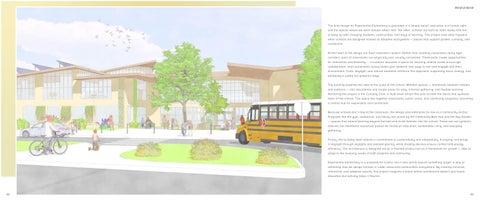
The final design for Experiential Elementary is grounded in a simple belief: education is a human right, and the spaces where we learn should reflect that. Too often, schools are built as static boxes that fail to keep up with changing students, communities, and ways of learning. This project asks what happens when schools are designed instead as adaptive ecosystems — places that support growth, curiosity, and connection. At the heart of the design are fluid classroom clusters. Rather than isolating classrooms along rigid corridors, pairs of classrooms are physically and visually connected. These pods create opportunities for interaction and flexibility — circulation becomes a space for learning, shared zones encourage collaboration, and connections across levels give students new ways to see and engage with their environment. Color, daylight, and natural elements reinforce this approach, supporting focus, energy, and wellbeing in subtle but powerful ways. The building expands this idea to the scale of the school. Middoor spaces — thresholds between indoors and outdoors — blur boundaries and create areas for play, informal gathering, and flexible learning. Anchoring the project is the Curiosity Core, a multi-level atrium that acts as both the literal and symbolic heart of the school. This space ties together classrooms, public areas, and community programs, becoming a central hub for exploration and connection. Because schools don’t stop at the classroom, the design also embraces its role as a community anchor. Programs like the gym, auditorium, and library are joined by the Community Bike Hub and the Sky Garden — spaces that extend learning beyond the bell and invite families into the school. These are not symbolic add-ons but intentional resources: places for hands-on education, sustainable living, and everyday gathering. Finally, the building itself reflects a commitment to sustainability and adaptability. A sloping roof brings in daylight through skylights and stacked glazing, while shading devices ensure comfort and energy efficiency. The architecture is designed not as a finished product but as a framework for growth — able to adapt to the evolving needs of both students and community. Experiential Elementary is a proposal for Castro, but it also points toward something larger: a way of rethinking how we design schools in under-resourced communities everywhere. By creating inclusive, interactive, and adaptive spaces, this project imagines a future where architecture doesn’t just house education but actively helps it flourish.
48
49