
Jubilee to mark 800th year since St. Francis’ death; saint’s body to be displayed
(CNS) – Pope Leo XIV has proclaimed a special Jubilee Year coinciding with the 800th anniversary of the death of St. Francis of Assisi.
The Apostolic Penitentiary, a Vatican tribunal that deals with matters of conscience, issued a decree published by the Franciscan Friars Jan. 10, declaring a yearlong celebration in honor of the Poverello, or the Little Poor One.
According to the decree, Pope Leo has established that from Jan. 10, following the closing of the church’s Jubilee Year, until Jan. 10, 2027, a special Year of St. Francis may be proclaimed, in which every Christian, “following the example of the Saint of Assisi, may himself become a model of holiness of life and a constant witness of peace.”
Noting previous jubilee celebrations related to the works of St. Francis – such as the eighth centenary commemorations of the first Nativity scene, as well
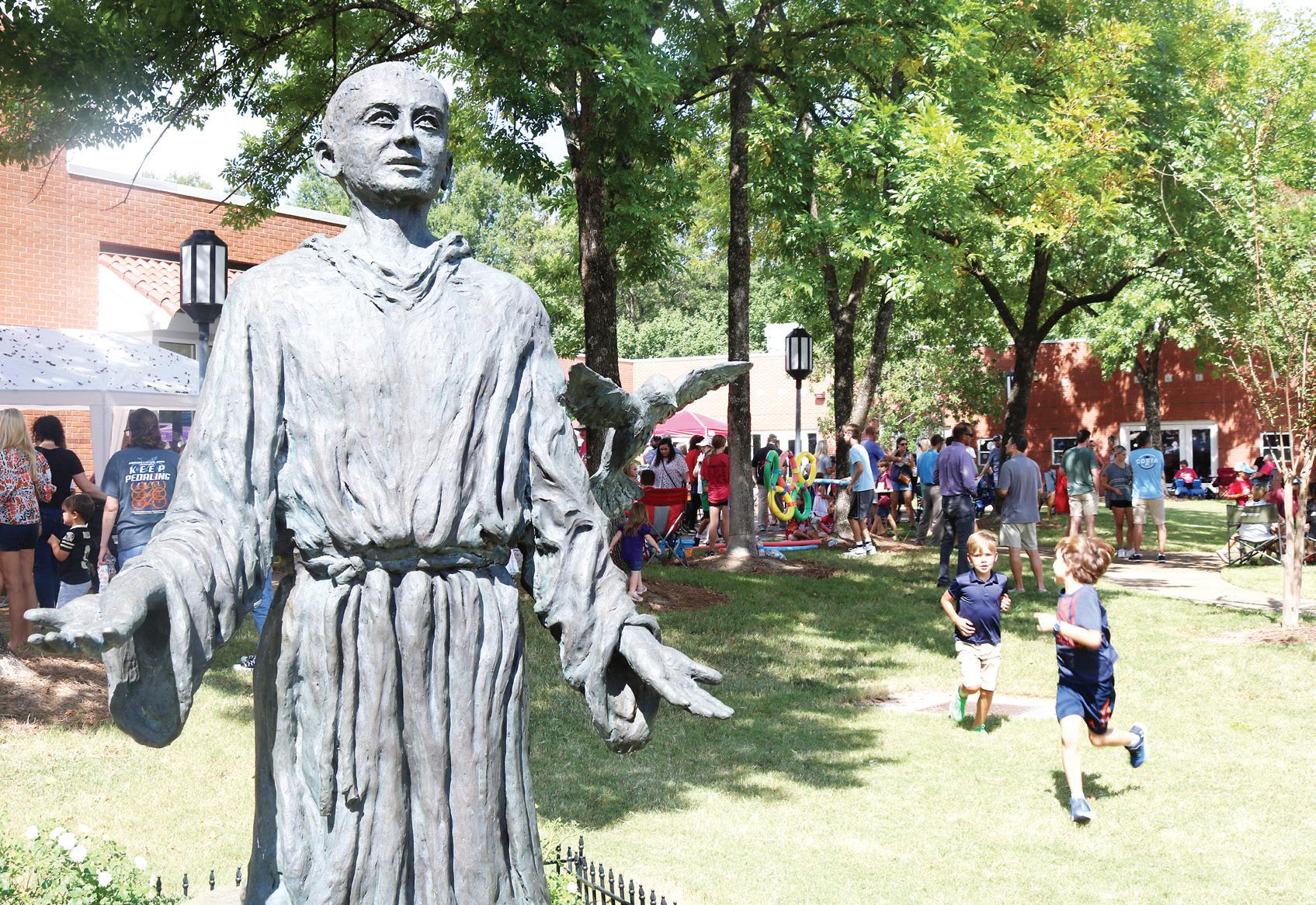
MADISON – The sun shines on a statue of St. Francis of Assisi at Cajun Fest at St. Francis of Assisi parish in 2021. Pope Leo XIV has proclaimed a special Jubilee Year coinsiding with the 800th anniversary of the death of St. Francis. (Photo from archives)
as his composition of the “Canticle of the Creatures” and his receiving of the stigmata – the decree stated that “2026 will mark the culmination and fulfillment of all previous celebrations.”
In its decree, the Apostolic Penitentiary also announced that plenary indulgences will be granted to Catholics “under the usual conditions (sacramental confession, Eucharistic communion and prayer for the intentions of the Holy Father), which can also be applied in the form of suffrage for the souls in Purgatory.”
The indulgence will be granted to those who participate in a pilgrimage “to any Franciscan conventual church, or place of worship in any part of the world named after St. Francis or connected to him for any reason,” it stated.
The sick, the elderly and caretakers unable to leave their
– Continued on page 6 –
BY JOANNA PUDDISTER KING
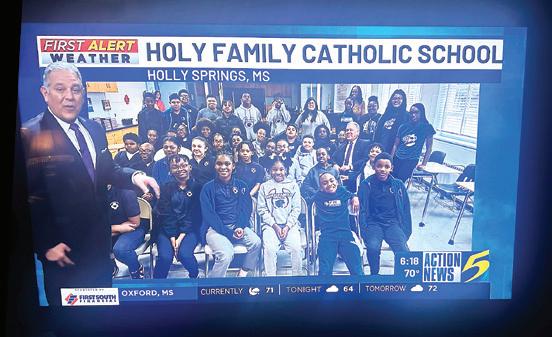
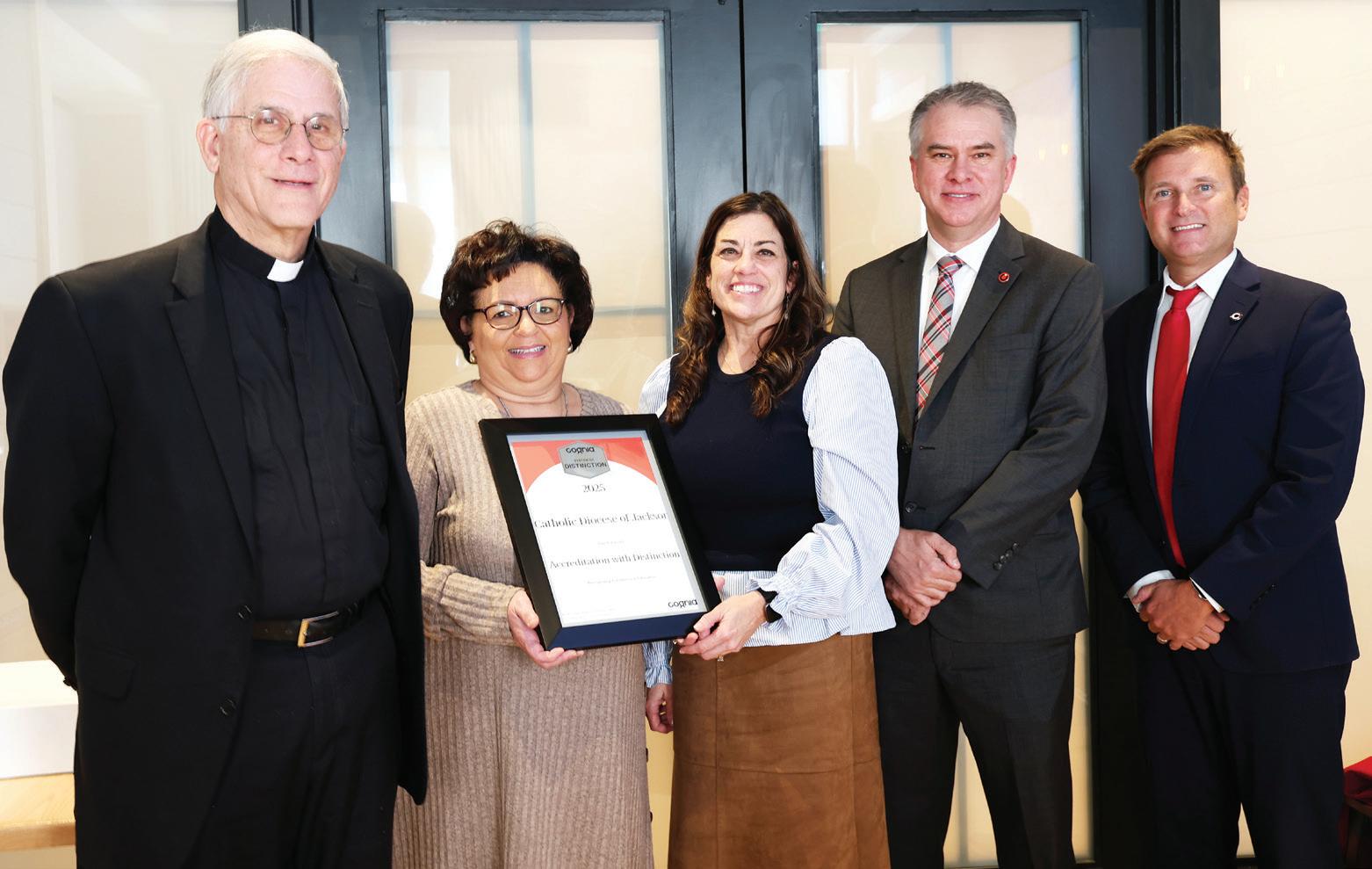
JACKSON – Representatives from Cognia formally presented the 2025 Cognia System of Distinction Award to the Catholic Diocese of Jackson on Monday, Feb. 2, recognizing the diocesan Catholic school system for exceptional performance during its most recent accreditation review.
The presentation took place during a gathering that included Bishop Joseph Kopacz, principals from Catholic schools across the diocese, and chancery staff who work closely with Catholic education. The ceremony marked the culmination of a rigorous review conducted during the 2024–2025 school year.

Dr. Jeremy Stinson, Cognia’s director of the Southeast Region, presented the award on behalf of the organization, joined by Dr. Michael Bratcher, vice president of domestic accreditation services and lead evaluator




for the diocese’s review. Stinson said the distinction recognizes systems that truly stand out in their service to learners by meeting and exceeding Cognia’s performance standards.




“The System of Distinction program recognizes systems and schools across the world who truly stand out in their service to learners,” Stinson said, noting that honorees demonstrate excellence in culture for learning, leadership for learning,
– Continued on page 6 –


DIOCESE – Engaged Encounter 2026 dates, Feb. 27 – March 1; May 1-3; Aug. 28-30; Oct. 2-4. Details: couples may register at https://jacksondiocese.flocknote.com/signup/230073 or email debbie.tubertini@jacksondiocese.org.
DCYC 2026, March 20-22 in Vicksburg. The conference will feature keynote talks, music, liturgy, games, small groups, Bishop Chanche Youth Awards and much more. Open to ninth through twelfth grades. Details: Contact your parish youth ministry o ce.
Young Adult Spring Retreat, Saturday, April 11 from 11:30 a.m. to 5 p.m. at Locus Benedictus in Greenwood. Ages 21-35 are invited to a day of celebration and spiritual renewal. Cost: $20/includes lunch. Register at https://bit.ly/2026YASpringRetreat. Details: amelia.rizor@jacksondiocese.org or (601) 949-6931.
GLUCKSTADT – St. Joseph, Lenten Retreat: A Journey with Jesus, Saturday, Feb. 21 beginning at 8:30 a.m. in the parish hall; ends after 4 p.m. Mass in the church. Please RSVP by Wednesday, Feb. 18. Details: church o ce (601) 856-2054.
HERNANDO – Holy Spirit, Millions of Monicas – Praying with confidence for our children, each Monday from 5-6 p.m. in the church. Join with other mothers and grandmothers as we pray for our children’s faithful return to the church. Details: church o ce (662) 429-7851.
JACKSON METRO AREA – Theology on Tap, Tuesday, March 3 with Diocesan Chancellor Mary Woodward. Meet at Blaylock Photography, 117 N. Wheatley, Ridgeland at 7 p.m. Details: amelia.rizor@ jacksondiocese.org.
MERIDIAN – St. Patrick, Lenten Retreat with Father Sebastian Myladil – “The Paschal Mystery: From the Cross to New Life,” March 1-3. Details: church o ce (601) 693-1321.
CANTON – Holy Child Jesus, Sister Thea Bowman Annual Musical Celebration, Saturday, March 28 at 3 p.m. Details: Cherie at arievans29@yahoo.com or (601) 259-1363.
JACKSON – Cathedral of St. Peter, Bishop Chanche Awards, Saturday, Feb. 28 at 11 a.m.
JACKSON – Sister Thea Bowman School, 20th annual $5,000 Draw Down, Saturday, April 25 at 6:30 p.m. Tickets: $120 and second chance insurance $15. Details: school o ce (601) 352-5441.
JACKSON AREA – Young Adult Basketball League, play March 5 – April 30. Teams for men 1835. League registration fee: $35. Deadline: Feb. 23. Games at First Baptist Jackson Gym from 6-9 p.m. on Thursdays. Details: amelia.rizor@jacksondiocese. org or (601) 949-6931.
MADISON – St. Joseph School, Annual Draw Down, Saturday, Feb. 21, 2026, at Reunion Country Club. Details: school o ce (601) 898-4800.
OLIVE BRANCH – Queen of Peace, Spaghetti Luncheon, Sunday, Feb. 22 from 11 a.m. to 2 p.m. with silent auction. Cost: $10 adults; $6 child; $35 family. Dine in or carry out. Details: church o ce (662) 8955007.
PARISHES OF NORTHWEST MS – World Youth Day in South Korea, Aug. 3-7, 2027. Join the Priests of the Sacred Heart on an unforgettable pilgrimage that includes Mass with Pope Leo and more. For ages 1623. Cost: $1,333 plus fundraising. Application packets available in the parish o ce. Registration deadline is Feb. 22, 2026. Details: Contact Vickie at (662) 895-5007.
SOUTHAVEN – Sacred Heart School, Open House, Sunday, Feb. 22 from 2-4 p.m. Come meet our sta and learn about our diverse, loving school community. Details: school o ce (662) 349-0900.
CLINTON – Holy Savior, Stations and Mass at 5:30 p.m.; and Lenten meals following 5:30 p.m. Mass, every Friday (no meal on March 13). Lenten Penance Service, Wednesday, March 4 at 6 p.m.
GLUCKSTADT – St. Joseph, Stations, Every Friday during Lent at 6 p.m. or after Mass. HERNANDO – Holy Spirit, Penance Service, Wednesday, March 25 at 7 p.m.
JACKSON – St. Richard, Knights of Columbus, Fish Fry Dinners, Feb. 27, March 20 and March 27 from 6-7 p.m. following Stations. Dine in, carry out or order in advance at https://bit.ly/STRfish2026. Dinner includes fried fish, fries, coleslaw, hush puppies and dessert. Cost: adults $15; children $8; families $45. Details: church o ce (601) 366-2335.
MADISON – St. Francis, Rosary at 6 p.m.; Stations at 6:30 p.m.; and Lenten meals at 7 p.m., Fridays during Lent.
OLIVE BRANCH – Queen of Peace, Soup and Stations, every Friday during Lent. Supper at 5:30 and Stations begin at 7 p.m. Last Friday of Lent will be Knights Fish Fry. Penance Service, Wednesday, March 18 at 7 p.m.
OXFORD – St. John, Knights Fish Fry, Friday, Feb. 20 from 5:30-7 p.m. Details: church office (662) 234-6073.
PEARL – St. Jude, Stations, every Friday during Lent at 10:30 a.m. and 6 p.m. Lenten Penance Service, Wednesday, Feb. 25 at 6 p.m.
SOUTHAVEN – Christ the King, Stations, Every Friday during Lent at 7 p.m. Penance Service, Wednesday, March 4 at 7 p.m.
JACKSON – Event Planning Coordinator: The Diocese of Jackson is seeking a faith-filled and organized Event Planning Coordinator to assist with planning and coordinating diocesan gatherings, meetings and donor events. Applicants should have prior event planning experience, strong communication and organizational skills, and availability for occasional evenings, weekends and travel. To apply, submit a résumé and cover letter to Rebecca Harris at Rebecca.harris@jacksondiocese.org. Find more information at https://bit. ly/CDJjobs.
Coordinator of Operations: The O ce of Catholic Education for the Diocese of Jackson is seeking a detail-oriented and service-minded Coordinator of Operations to support the dayto-day operational needs of diocesan schools and Early Learning Centers. Responsibilities include compliance tracking, recordkeeping, accreditation support, school safety coordination, systems support, and event logistics. Applicants should have strong organizational and communication skills, comfort with databases and o ce software, and experience in administration or school-related operations. To apply, submit a résumé and cover letter to Joni House at joni.house@jacksondiocese.org.
The Diocese of Jackson has launched a third-party reporting system that will enable all diocesan employees, volunteers and parishioners to anonymously (or named if preferred) make reports. Examples of this activity include fraud, misconduct, safety violations, harassment or substance abuse occurring at a Catholic parish, Catholic school or at the diocesan level. The system is operated by Lighthouse Services.
To make a report visit www.lighthouse-services.com/jacksondiocese or call 888-830-0004 (English) or 800-216-1288 (Spanish).
The Association of Priests of the Dioceses of Jackson and Biloxi provide a small pension to our retired priests. As you consider your estate plans, please remember these faithful servants by making a donation or leaving a bequest to the Association of Priests. Our parish priests dedicate their lives to caring for us, their flocks. Let us now care for them in their retirement. Donations can be made payable to the Association of Priests and can be mailed to: Diocese of Jackson, P.O. Box 22723, Jackson, MS 39225-2723

Questions?
We have answers.
*Medicare Plans & Drug Plans Leading Companies & Plans Local Mississippi Agent Call Today 601-991-0081
BY BISHOP JOSEPH R. KOPACZ, D.D.
In January 2026, The Holy Land Co-ordination undertook its annual mission to the land made holy by the incarnate presence of the Lord nearly 2,000 years ago. The Holy Land Coordination was initiated by the Vatican, the Holy See at the beginning of the third millennium in order to deepen the relationship between the Christian communities in Palestine and Israel with Catholic Episcopal Conferences in Europe, the British Isles, Canada and the United States. Its defining characteristics are pilgrimage, prayer, presence, and pressure or persuasion. The theme for 2026 was: A Land of Promise – Encounter and dialogue with People of Hope.
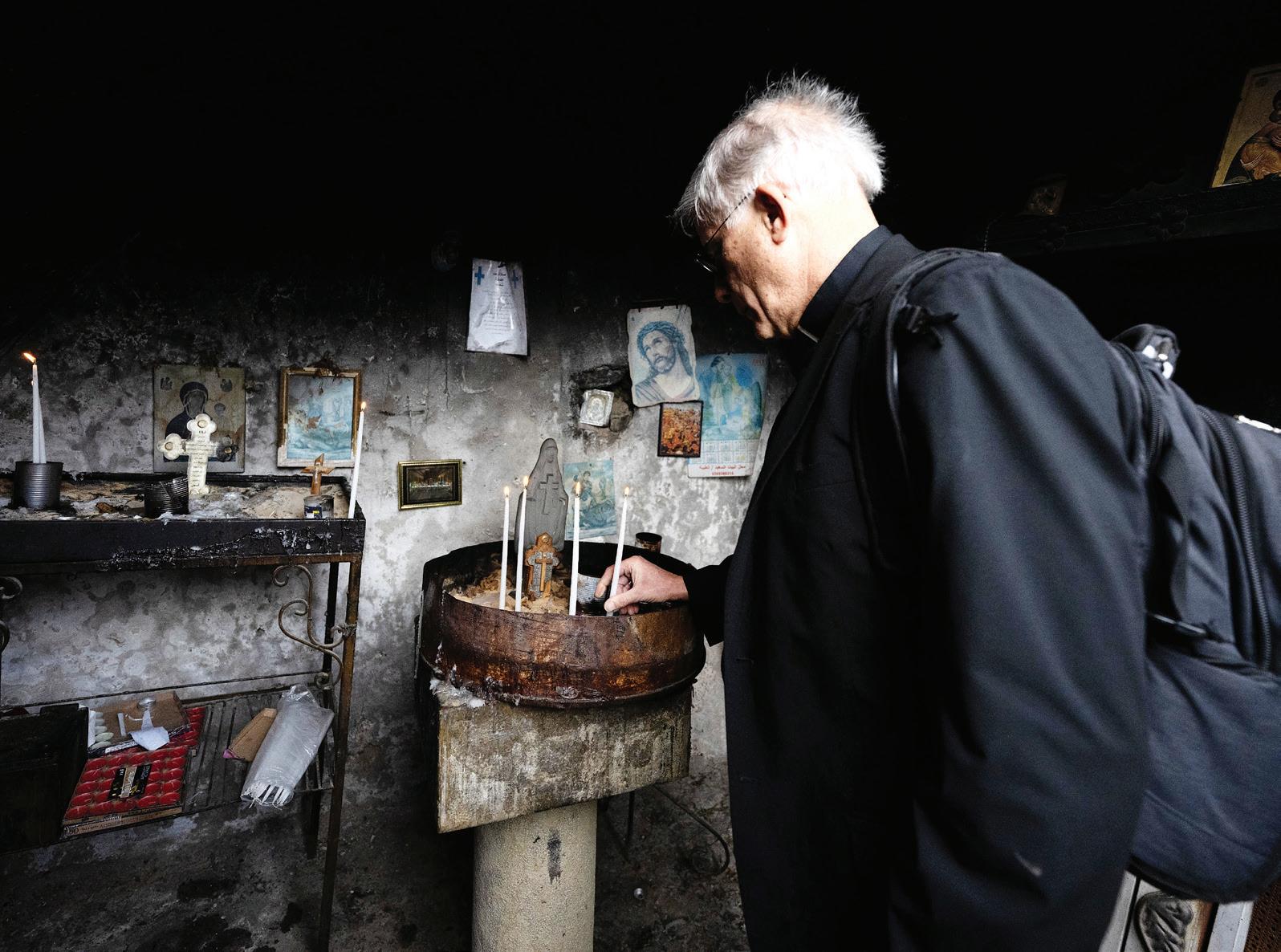
The pilgrimage included a visit to the Church of the Holy Sepulcher where we celebrated Mass at the Lord’s tomb on two consecutive days. The first moment of the resurrection dawned on this site when the risen Lord Jesus blessed men and women of every age with the hope and peace that the world cannot give and for which the Holy Land hungers and thirsts. The Eucharist was the heart of each day and especially meaningful when celebrated with various communities of biblical roots. This pilgrimage did not include the traditional holy sites marking the Lord’s life, death and resurrection, but rather an experience of the sacred each time the people of Palestine and Jerusalem opened their hearts and homes to us in wholehearted hospitality.
Along with pilgrimage and prayer, another pillar of the Holy Land Co-ordination is presence. Each encounter with diverse communities on the margins was an opportunity to humbly listen to their stories of daily hardship and yet to witness their resolve not to give up hope for a life of dignity and peace. Our presence was an embrace of hope, an assurance that they are not forgotten. Who are the marginalized in Palestine and Israel whose voices are barely heard during the current din of war and catastrophic destruction in Gaza in response to the heinous act of terrorism on Oct. 7, 2023.
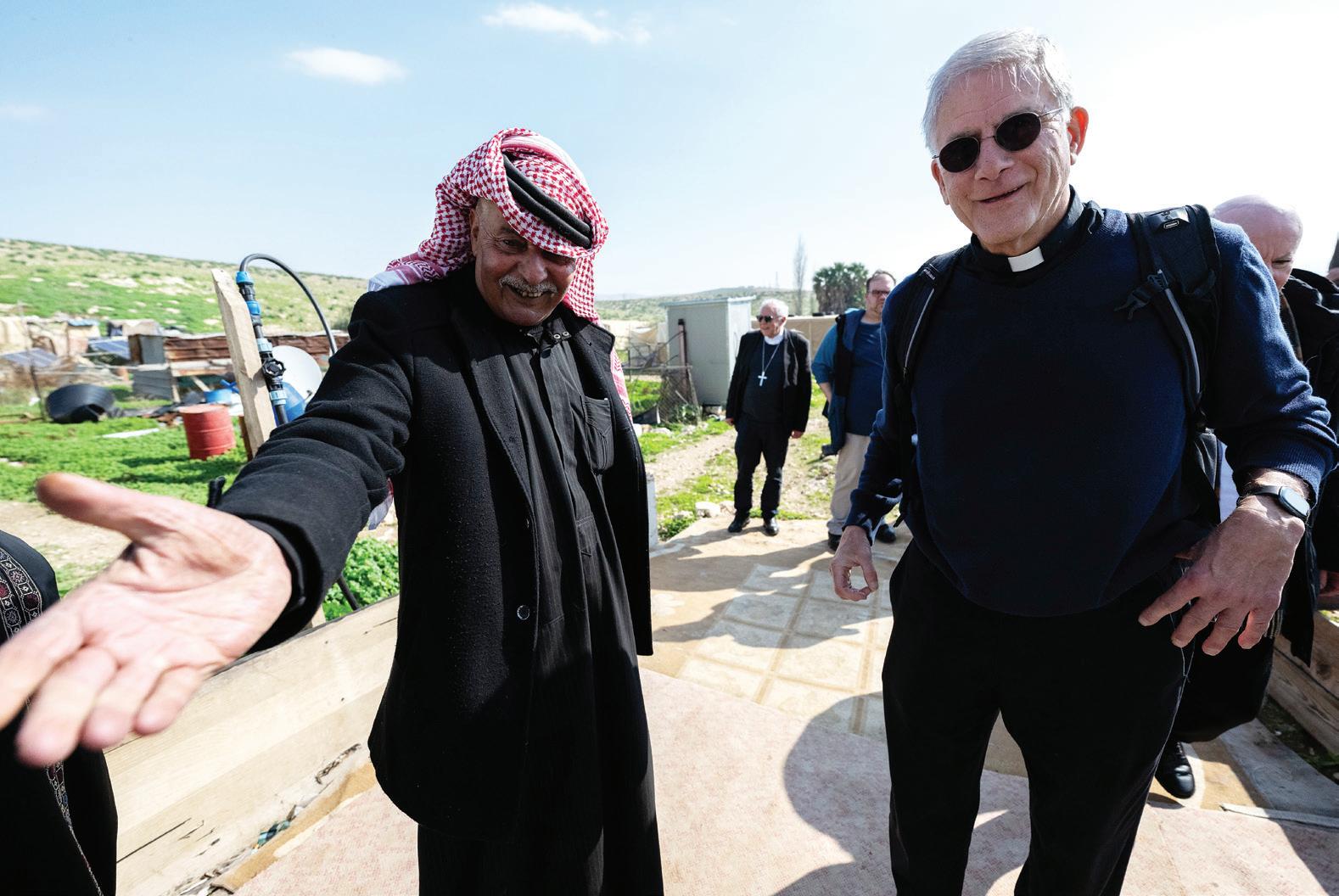
Bishop Joseph Kopacz visited a Bedouin community outside of Jerusalem on the Holy Land Co-ordination pilgrimage undertaken by various Catholic Episcopal Conferences in Europe, British Isles, Canada and the United States. This year’s theme was A Land of Promise – Encounter and dialogue with People of Hope. (Photo by Marcin Mazur/Catholic Church of England and Wales)
At the outset, we sat with a Bedouin community who are visible from the highway that leads from Jerusalem to Jericho toward the Jordan River and the Dead Sea. Their ancient way of life is threatened daily by the intimidation and violence of the extremist Jewish settlers who want to drive them from the land. These nomadic tribes are recognized by law and so they seek legal recourse
February 6
Bishop Joseph Kopacz (ordained bishop)
February 7
Father Hendrik Ardianto, SCJ
February 14
Father Jofin George
February 19
Father Vijaya Bhaskar Madanu, SVD
Thank you for answering the call!



P.O. Box 2130 Jackson, MS 39225-2130 Phone: 601-969-3581 E-mail: editor@jacksondiocese.org
6, 2026

Publisher Bishop Joseph R. Kopacz
Communications Director Joanna Puddister King
Production Manager Tereza Ma
MISSISSIPPI CATHOLIC is an official publication of the Diocese of Jackson, 601-969-1880, 237 E. Amite St., Jackson, MS 39201. Published once per month, Mississippi Catholic mails 12 editions per year.
For address changes, corrections or to join the email list for the digital edition, email: editor@ jacksondiocese.org. Subscription rate: $20 a year in Mississippi, $21 out-of-state. Periodical postage at Jackson, MS 39201 and additional entry offices. POSTMASTER: Send address changes to Mississippi Catholic, P.O. Box 2130, Jackson, MS 39225-2130. Website: www.mississippicatholic.com www.jacksondiocese.org
from the government over their plight, but their voices are barely heard, and their rights are routinely ignored. They were grateful that we spent time with them in conversation that continued over a traditional Bedouin meal. It was an affirmation of their dignity, a great gift for them and for us.
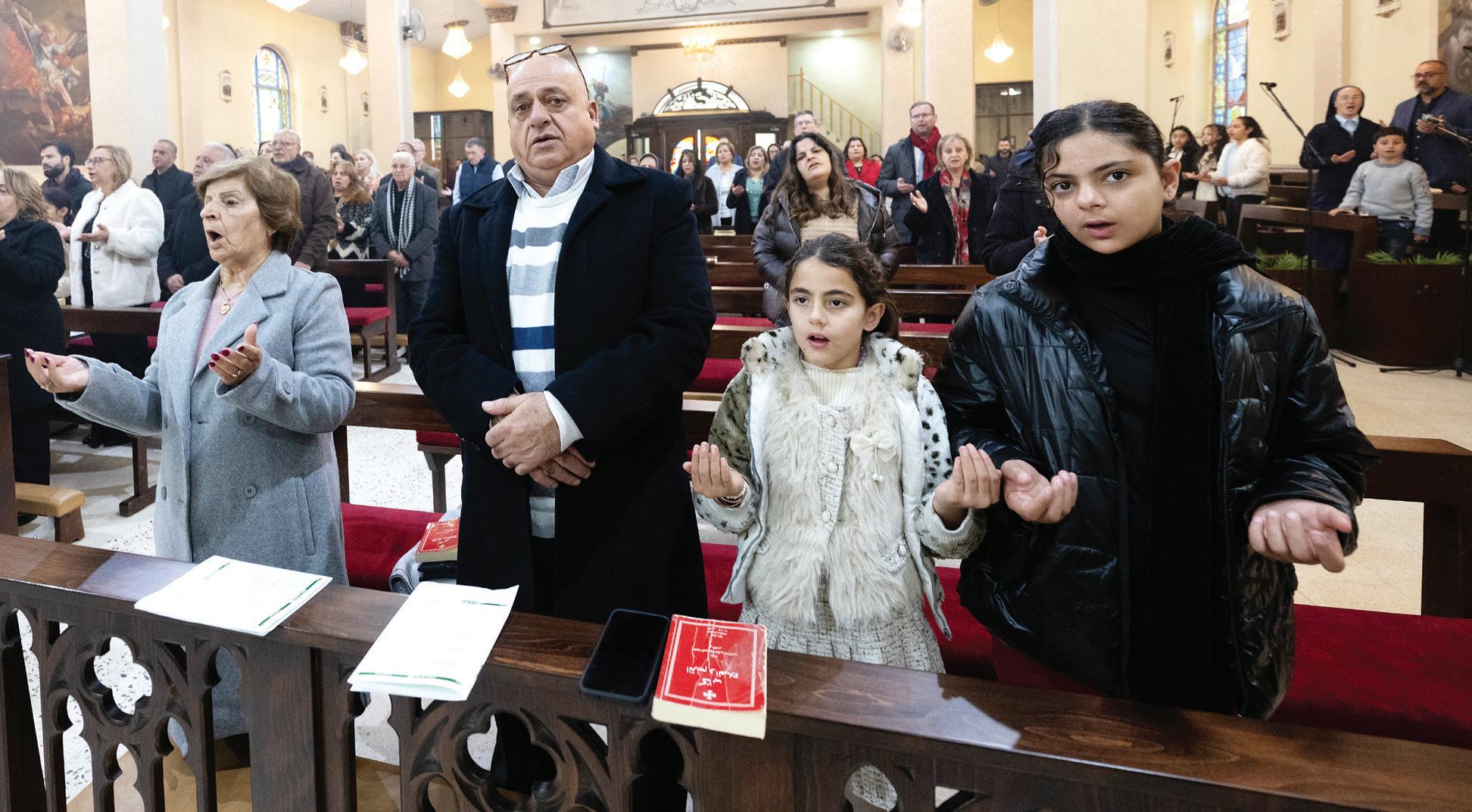
Throughout the West Bank many Palestinian communities have been under extreme duress and relentless pressure to leave their ancestral lands and villages either through internal displacement or external migration. We visited Taybeh – a Christian community of approximately 1,300 residents who are struggling mightily for their survival. We celebrated Sunday Mass and afterwards listened to the elders of the town who spoke about their struggle that has led to the forced migration of nearly 90% of their family members and neighbors. Extremist Jewish settlers destroy their olive trees, steal or kill the
– Continued on page 7 –
Saturday, February 21, 11 a.m. – Rite of Election, Holy Spirit Church, Hernando
Saturday, February 21, 6 p.m. – St. Joe Draw Down, Reunion Country Club, Madison
Sunday, February 22, 2 p.m. – Rite of Election, St. Francis of Assisi, Madison
Saturday, February 28, 11 a.m. – Bishop Chanche Awards, Cathedral of St. Peter the Apostle, Jackson
Tuesday, March 3, 17 & 24, 7:30 a.m. – Mass, Carmelite Monastery, Jackson
Monday, March 16, 6 p.m. – Confirmation Mass, St. James, Corinth
Tuesday, March 24, 6 p.m. – Confirmation Mass, St. Joseph, Starkville
Tuesday, March 31, 12 p.m. – Chrism Mass, Cathedral of St. Peter the Apostle, Jackson
All events are subject to change. Check with parishes, schools or organizations for further details.
FEBRUARY 13, 2026 MISSISSIPPI CATHOLIC CALLED BY NAME
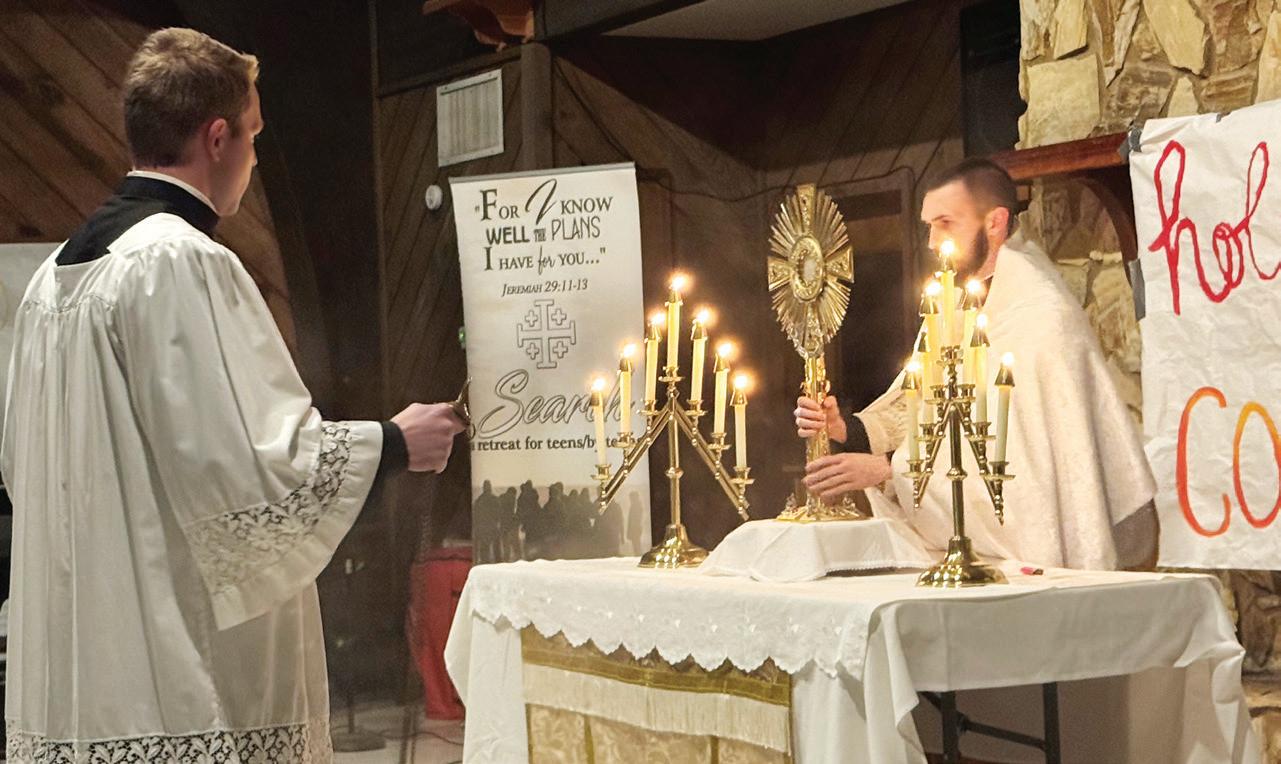
Our seminarians are back at school following Christmas break. Many of our men spent time in their home parishes or in other parishes throughout the diocese. One of the movements of formation is a desire to spend time in the parish and in the rectory as guys progress closer to priesthood. I hosted several of our seminarians here at the Cathedral Rectory, and I’m grateful to other brother priests who made their homes available as well. Beyond spending time with family and in parishes, our seminarians also participate in diocesan events as they are able when they are home. The winter SEARCH retreat hosted by the Office of Youth Ministry has long been a great event where our guys can share their gifts. SEARCH has long been a keystone event for high schoolers in our youth groups and Catholic schools. It is a weekend-long retreat that has helped countless young people come closer to
Christ at this key point in their lives. I appreciate Abbey Schuhmann, our diocesan youth coordinator, for having the seminarians help plan and execute liturgies and to help accompany the teens who are on retreat. This tradition goes back at least 2012 when I was in seminary. Back then, Father Aaron Williams was a SEARCH alum who made it a priority to provide beautiful opportunities for liturgical prayer for the teens while he was a seminarian. He passed that role to Father Andrew Bowden, who passed it to Deacon Will Foggo, who is passing that role (I think!) to Joe Pearson.
I was very proud to see Deacon Will at SEARCH this year leading adoration and benediction for the teens. It was a full-circle moment for him, having been a youth group member at St. Paul Flowood and a SEARCH participant, and now leading the teens in prayer as an ordained minister. This is the sort of homegrown story that I always try to highlight. The seminarians we have are from our com-
munities, and, when ordained, will serve our communities. So much goodness can come forth from this type of continuity, both for the people of God and for the seminarians and priests of our diocese.
I was a little embarrassed, however, during benediction. Like a proud dad, I got my phone out to take a picture of Deacon Will, and I forgot to put it on silent. So when I took the photo, there was a loud click in the midst of the beauty and silence of benediction. Whoops. Sorry, Lord.

By Father ron rolheiser, oMi
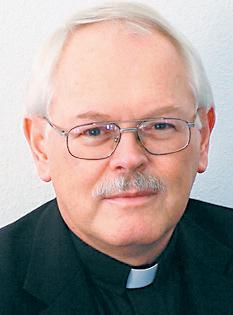
It is becoming ever more acceptable today, whether in politics or in general discourse, to speak of brute human strength, force, and power as being the forces we need to guide our lives. Indeed, empathy is now sometimes named explicitly as a weakness.
It is one thing for people to say that strength, force, and power are in fact what govern the world, but it is dangerously wrong to try to throw a Christian cloak over this. In brief, this is the antithesis of Jesus, as the Gospels make clear.
Here’s how the Gospels define strength and weakness.
For centuries the chosen people, feeling oppressed, longed and prayed for a Messiah from God who would come brandishing intimidating muscle, would vanquish their enemies, bring them prosperity, and bind them together in community by a strength, force and power that was superhuman. But that’s not what they got.
Against every one of their expectations, when their hopes and prayers were finally answered, their longed-for Messiah appeared, not as a superhuman, but as a helpless baby unable to feed himself, helpless to nurture himself into adulthood.
Granted, as an adult he performed miracles and sometimes displayed a strength and power that was supernatural. However, the power he displayed in his miracles was never political, militaristic, or physically intimidating. His miracles were always displays of God’s compassion and fidelity.
There’s an interesting play of words in the Gospels when they speak of “power” or “authority”. They use three different Greek words: Sometimes they refer to power as Energia – the type of power a star athlete can bring to a playing field; and sometimes power is referred to as Dynamis – the type of power a rock star can bring to a stage. However, whenever the Gospels refer to Jesus as powerful or as having authority, they never use these words. Instead, they use the word Exousia (for which we have no English equivalent), though we do have a concept of it.
Exousia is the paradoxical power a baby brings into a room. On the surface, it looks like powerlessness, but ultimately it’s the greatest power of all –vulnerability, the moral power to create intimacy.
Simply put, if you put three people into a room: an athlete in the prime of his physical prowess, a rock star who can electrify a stadium with energy, and a baby. Who ultimately has the most power? Jesus answers that.
We see this clearly in the manner of his death. As he hangs on the cross, suffering and humiliated, he is being taunted, if you are the son of God, come down off that cross! If you have divine power, show it! Jesus doesn’t take the bait. Instead of demonstrating the kind of power we like to believe God should be using, Jesus instead resorts to another power, a higher one. In his powerlessness, he gives over his spirit in love and empathy and, in that, shows us the place where intimacy is born.
Moreover, Jesus could not be clearer in his teaching. As he makes clear in the Sermon on the Mount (perhaps the greatest moral code ever written) human strength, force, and power are not what bring about the kingdom. What creates community and intimacy among us?
Blessed are the poor in spirit, for theirs is the kingdom of heaven.
Blessed are those who mourn, for they will be comforted.
Blessed are the meek, for they will inherit the earth.
Blessed are those who hunger and thirst for righteousness, for they will be filled.
Blessed are the merciful, for they will be shown mercy.
Blessed are the pure in heart, for they will see God.
Blessed are the peacemakers, for they will be
called children of God.
Blessed are those who are persecuted because of righteousness, for theirs is the kingdom of heaven. (Matthew 5:3-11)
Unfortunately, today in our politics and in our civil discourse (which sadly often lacks civility) people are increasingly putting their faith in brute human power – political power, economic power, military power, social media power, historical privilege. These, as many politicians now claim, are what’s real. They decide things in the world. It’s the strong, the powerful, and the rich who will inherit the good things of this earth. Those who are poor in spirit, who mourn, who are meek, who are merciful, and who are persecuted, will miss out on life. And, undergirding this is the belief that empathy is a weakness.
What’s to be said in the face of this? What should be the Christian response?
Since the beginning of human life on this planet, brute strength and power have always made themselves felt and have often been a dominant force in shaping history. The meek haven’t always inherited the earth (at least not this earth). And today the meek are being threatened from all sides.
However, whatever its political or economic expediency, this kind of raw strength and power may not cloak itself with Jesus and the Gospels. It is the antithesis of Jesus and the Gospels.
(Oblate Father Ron Rolheiser is a professor of spirituality at Oblate School of Theology and award-winning author.)
The Pope’s Corner Happiness cannot be bought, hoarded, only shared with others, pope says
By Carol Glatz
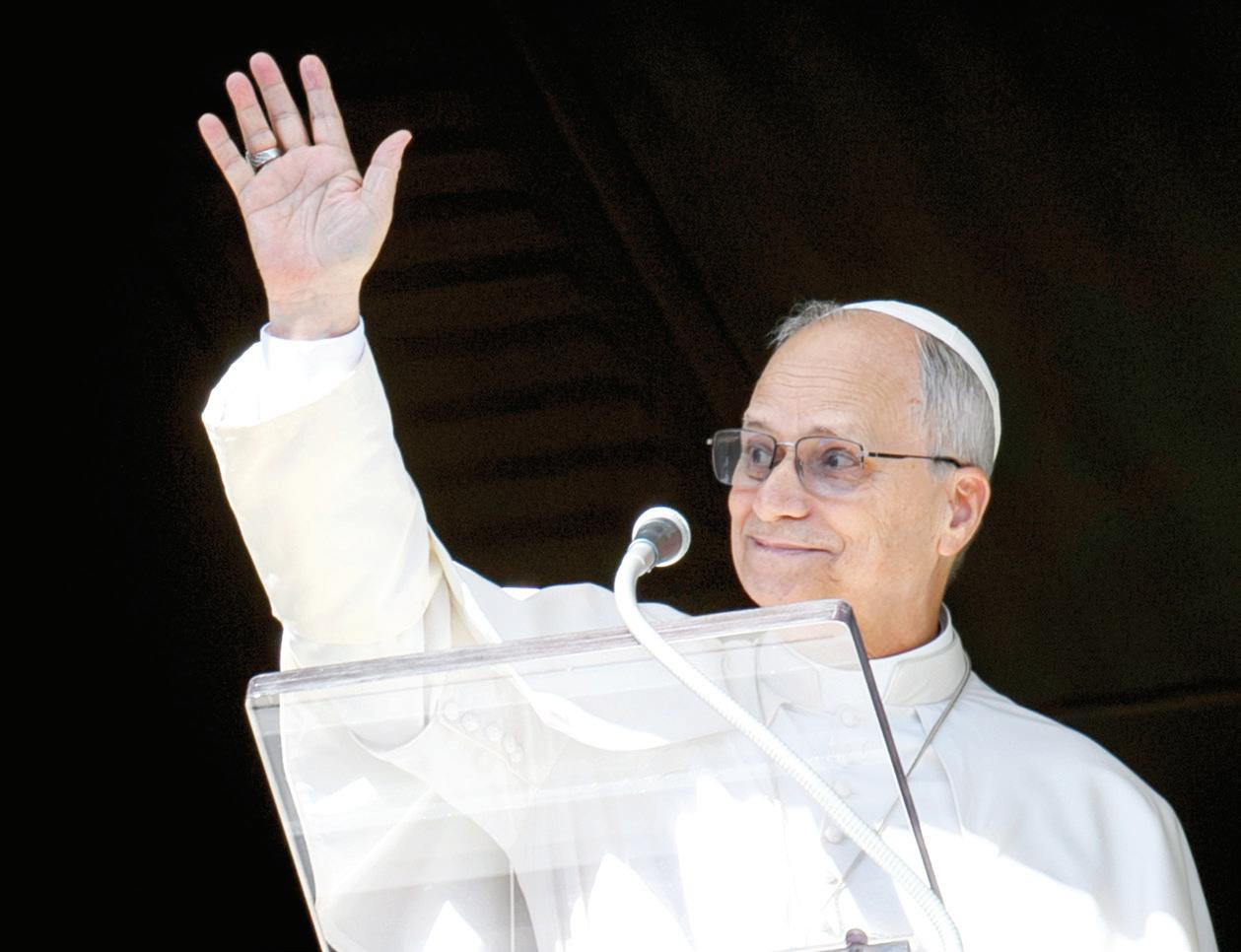
VATICAN CITY (CNS) – A lack of faith in Christ leads to many delusions, such as believing the arrogant will always rule and only money can buy happiness, Pope Leo XIV said.
The beatitudes, which show how to love as Christ does, “become for us a measure of happiness, leading us to ask whether we consider it an achievement to be bought or a gift to be shared; whether we place it in objects that are consumed or in relationships that accompany us,” the pope said Feb. 1.
“The Beatitudes lift up the humble and disperse the proud,” he said.
Before praying the Angelus with visitors in St. Peter’s Square, the pope reflected on the day’s Gospel reading: the beatitudes from Jesus’ Sermon on the Mount, which begin, “Blessed are the poor in spirit, for theirs is the kingdom of heaven,” according to the Gospel of St. Matthew (5:1-12).
The beatitudes, which single out the lowly for God’s favor, “remain a paradox only for those who believe that God is other than how Christ reveals him,” Pope Leo said.
For example, the pope said, “Those who expect the arrogant to always rule the earth are surprised by the Lord’s words. Those who are accustomed to thinking that happiness belongs to the rich may believe that Jesus is deluded.”
“However, the delusion lies precisely in the lack of faith in Christ. He is the poor man who shares his life with everyone, the meek man who perseveres in suffering, the peacemaker persecuted to death on the
cross,” he said.
Jesus shows that history “is no longer written by conquerors, but rather by God, who is able to accomplish it by saving the oppressed,” Pope Leo said. “The Son looks at the world through the Father’s love.”
He said the faithful should not follow today’s “experts in illusion,” as Pope Francis said, because “they are unable to give us hope.” Instead, God gives hope “primarily to those whom the world dismisses as hopeless.”
It is, in fact, because of Christ “that the bitterness of trials is transformed into the joy of the redeemed,” Pope Leo said. “Jesus does not speak of a distant consolation, but of a constant grace that always sustains us, especially in times of affliction.”
13, 2026
‘... The wish I make to everyone ... is to rediscover this saint of ours ...’
– Continued from page 1 –
homes can also obtain a plenary indulgence under the usual conditions “if they join spiritually in the Jubilee celebrations of the Year of St. Francis, offering their prayers to the Merciful God, the pains or sufferings of one’s life.”
In a statement announcing the decree’s promulgation, the Franciscan Friars invited Catholics to take part in the Jubilee celebrations and hope that St. Francis’ example would inspire participants “to live with authentic Christian charity towards our neighbor and with sincere longings for concord and peace among peoples.”
life points to the authentic source of peace,” the pope wrote.
That peace, the pope added, “is not limited to the relations between human beings,” but extends to “the entire family of Creation.”
May this year of St. Francis “be for each one of us a providential occasion for sanctification and evangelical witness in the contemporary world, for the glory of God and the good of the whole Church,” the statement read.
In a Jan. 10 letter to the ministers general of the Conference of the Franciscan Family, Pope Leo said St. Francis’ message of peace was needed now more than ever.
“In this age, marked by so many seemingly interminable wars, by internal and social divisions that create mistrust and fear, he continues to speak. Not because he offers technical solutions, but because his
“This insight resonates with particular urgency in our time, when our common home is threatened and cries out under exploitation,” he wrote. “Peace with God, peace among human beings, and with creation are inseparable dimensions of a single call to universal reconciliation.”
Pope Leo conclud-
ed his letter with a prayer to St. Francis, asking the saint’s intercession “to give us the courage to build bridges where the world raises up boundaries.”
“In this time afflicted by conflict and division, intercede for us so that we may become peacemakers: unarmed and disarming witnesses of the peace that comes from Christ,” the pope wrote.
The pope’s letter was read during a Jan. 10 celebration marking the start of the Franciscan Jubilee Year at the Basilica of St. Mary of the Angels in Assisi, which houses the Chapel of the Transit, marking the site where St. Francis died.
Archbishop Domenico Sorrentino of Assisi, who was present at the ceremony, said the start of the
centenary celebration was “an explosion of true joy” that comes from the heart and “from the commitment of each one of us to rediscover Francis in all his dimensions.”
“The wish I make to everyone and to the entire Church is to rediscover this saint of ours, to rediscover Jesus, the only source of joy and peace,” the bishop said.
Among the notable events taking place in Assisi during the Franciscan Jubilee Year will be the first public display of St. Francis’ body.
In October, the Basilica of St. Francis announced that Pope Leo had granted permission to display the saint’s body from Feb. 22 to March 26.
According to the basilica’s website for the historic event, as of December, some 250,000 pilgrims have so far registered for the veneration of St. Francis’ remains.
The overwhelming number of people coming for the public display, the basilica said, is a testament to “the universality of the message of the Saint of Assisi and the timeless appeal of his figure.”
A free but mandatory online reservation system has been set up on the centenary website, available in both Italian and English.
(Junno Arocho Esteves is an international correspondent for OSV News. Follow him on X @jae_journalist.)
‘... Recognition as a Cognia System of Distinction affirms the hard work of our schools ...’
– Continued from page 1 –
engagement of learning and growth in learning.
Launched in 2021, Cognia’s Schools and Systems of Distinction program honors institutions in their year of accreditation review that exemplify high-quality instruction, organizational effectiveness and a strong commitment to continuous improvement. During the most recent review cycle, Cognia evaluated more than 1,100 systems worldwide and selected only seven systems across 14 states and four countries for the distinction.
Stinson emphasized that Cognia accreditation is not a checklist or a onetime achievement, but a continuous improvement journey. He said the Diocese of Jackson’s accreditation review was a rigorous external audit of systemwide practices and procedures and reflected the diligence and collaboration of educators and leaders throughout the diocese.
“This great accomplishment emphasizes the importance of a students-first approach and collaborative leadership within the diocese,” Stinson said.
One measure that stood out during the review was the diocese’s Index of Education Quality (IEQ) score of 389 out of 400, significantly higher than the Cognia network average of 296. Stinson said the score reflects the diocese’s mission in action and its commitment to providing engaging and equitable learning environments.
During the review, Cognia evaluators identified several Noteworthy Practices, including the diocese’s effective and intentional commitment to Catholic identity, mission and guiding principles, as well as its culture of collaboration and continuous improvement. Evaluators also highlighted the system’s leadership model, which supports shared priorities while allowing individual schools to reflect their unique charisms and needs.
The System of Distinction recognition builds on work that began in 2018, when the Diocese of Jackson embarked on its first systemwide accreditation process with Cognia. The two-year effort led to initial system accreditation in 2020 and laid the foundation for this year’s honor.
That work was led by Karla Luke, who retired in September after more than 33 years in Catholic education. Luke described the recognition as one of the most meaningful moments of her career.
“Over the past 33 years, the most recent accomplishment of having Cognia recognize the Diocese of Jackson as a System of Distinction has been an overwhelming and rare experience,” Luke said. “However, in the everyday realm of the work, I am most proud of being able to interact with so many students, teachers and principals.”
Joni House, executive director of Catholic Education, said the formal presentation was an opportunity to celebrate the collective efforts of Catholic school communities across the diocese.
“The recognition as a Cognia System of Distinction affirms the hard work of our schools,” House said, “and it challenges us to sustain and grow that culture of continuous improvement so Catholic education in our diocese remains strong and vibrant.”
Stinson concluded by congratulating the Diocese of Jackson on behalf of Cognia’s leadership, calling the distinction an extraordinary accomplishment and a reflection of the diocese’s commitment to faith-centered education and continuous growth.
CATHOLIC FEBRUARY 13, 2026
let there be light
‘... In many sectors of society, the peacemakers are not considered blessed, but treasonous ...’
– Continued from page 3 –
livestock, confiscate their land and cast a climate of fear over this besieged community. In the current climate especially, their voices go unheard, and their rights are relentlessly trampled. The Taybeh community is indicative of the evident diminishment of the Christian population in the Holy Land. Those who remain are long suffering and survive by relying on the generosity of those who left and have not forgotten them, as well as their own industriousness born of their love for their ancestral homeland. Courage and hope are renewed with visits such as ours. On another note, considered to be the first Palestinian brewery, Taybeh beer made on site is delicious, and provides much needed employment for some of the locals.
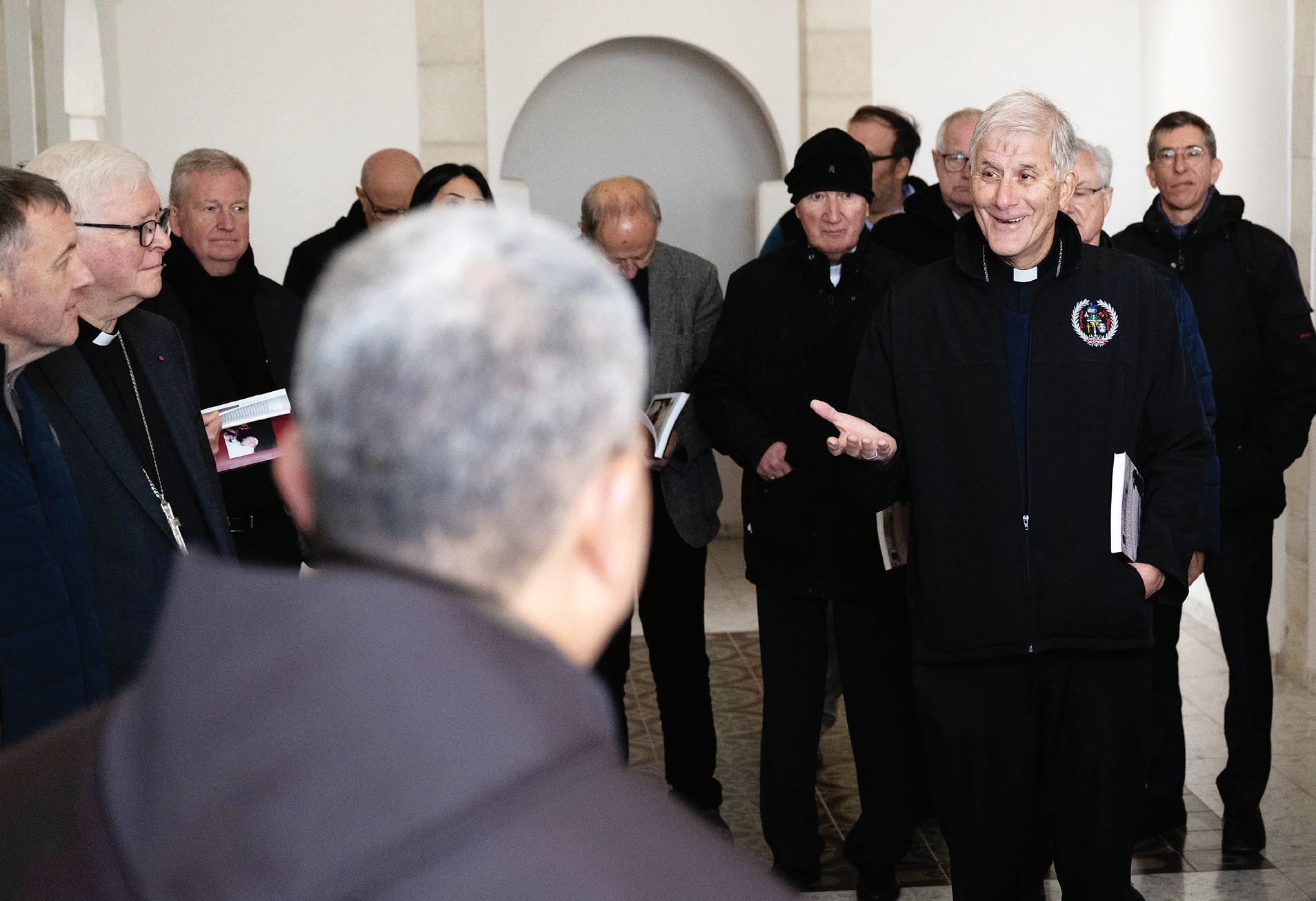
Leaving the West Bank, we visited the St. James Vicariate of the Latin Patriarchy which is comprised of Hebrew speaking Christians in Israel. They were eager to point out that they have lived peacefully for generations in the midst of their Jerusalem Jewish neighborhoods. Whereas Arabic is the mother tongue of the Palestinian population, the Hebrew speaking Catholic Christian is a rarity – 1,000 to 2,000 in the dominant culture of 8 million. They work tirelessly to teach the faith to the next generation of their children and youth, as well as to serve the Catholic migrants in Israel who come from the Philippines and other countries to shore up Israel’s work force.
they persevere with their vision for a sustainable and humane future and tirelessly work to impact the hearts and minds of the young, especially in the education system and other forums.
The final day for the Holy Land Co-ordination pilgrimage was in Bethlehem where the Christian population is greatly diminished, having been scattered to the four winds in recent decades. Many have left the city of the Lord’s birth and now live in the Diaspora, so to speak, likely never to return to their homeland. Nevertheless, we had the opportunity to visit a school for the deaf, the St. John Paul II Foundation, an educational institution for Christian youth, and the Latin Patriarch seminary that has recently reopened its doors to candidates from Palestine, Jordan and Cyprus. In these three diverse educational settings, hope is renewed in the eager faces of the children, youth and candidates for the priesthood. Of course, the generosity from Christians from afar is crucial for the survival of these institutions.
We had the privilege of a lengthy visit with Cardinal Pierbattista Pizzaballa, the Latin Patriarch of Jerusalem and his staff that included the Eucharist, a sumptuous meal and presentations that provided a broader perspective of the besieged Christian population in the Holy Land that includes Palestine, Jordan and Cyprus. His ardent prayer and hope are to see the return of the flow of pilgrims and tourists to the holy sites from around the world because the locals suffer greatly in their absence.
In the midst of our visit to the Latin Patriarchy, we heard from Father Gabriel Romanelli via Zoom. He is the pastor of Holy Family Parish in Gaza who has lived with the daily devastation since the war began. No one can reverse the unimaginable loss of life and the destruction of essential structures and infrastructure, but he is hoping that governments and NGOs can collaborate to begin the rebuilding process without delay. In his experience, each day that passes without the distribution of food, medicine and water is a death sentence for many who are extremely vulnerable. All people of good will are hoping against hope that the peace plan takes hold, and the weapons are put aside.
Another key facet of our pilgrimage were gatherings with those dedicated to reconciliation, justice and peace. In these dark times of war and devastation, voices for peace in Israel are given little credence from the majority of the population and have no chance at all among the hardliners and extremists. In many sectors of society, the peacemakers are not considered blessed, but treasonous for deviating from the prevailing standard of uncompromising retribution. This goes for the majority on both sides. Nonetheless, the voices and witness of The Rossing Center for Education and Dialogue, of Rabbis for Human Rights and the Defense of Human Dignity, and of the Parents Circle – Family Forum whose members, Palestinian and Israelis, have lost children to war and terrorism, and yet walk side by side, were all points of light and hope. Against all odds,
In conclusion, each evening the bishops and staff gathered for reflection, conversation and prayer. From this hour of prayerful listening to one another and to the Holy Spirit the accompanying statement was written to be distributed by our Episcopal Conferences and through our (arch)dioceses. In doing so, the fourth pillar of pressure/persuasion of the Holy Land Co-ordination is addressed. May the seeds that are planted through this unique pilgrimage in solidarity with many who cry out in this tortured land, produce a harvest of justice and peace.
– Final Communiqué on the Holy Land Pilgrimage on page 8 –
“You are the salt of the earth; you are the light of the world” Matthew 5:13-14
keep the hope of peace alive.
Our Lady Queen of Palestine and of all the Holy Land, pray for us.
Rt. Rev. Nicholas Hudson Bishop of Plymouth Moderator of the Holy Land Coordination Chair of the International Affairs Department, Bishops’ Conference England and Wales
Rt. Rev. Nicolo Anselmi Bishop of Rimini Italy
Most Rev. Udo Bentz Archbishop of Paderborn Germany
Rt. Rev. Peter Burcher
Bishop Emeritus of Reykjavik Denmark, Finland, Iceland, Norway, Sweden, Switzerland
Rt. Rev. James Curry Auxiliary Bishop of Westminster International Affairs Department, Bishops’ Conference England and Wales
Our pilgrimage was to a Land where people are suffering trauma. We began with a visit to Bedouin communities living on the margins of society in the Occupied West Bank. They shared their experiences of a life on the periphery, being observed but often not encountered, their movement heavily restricted by rapidly expanding settlements encircling them on the surrounding hills.
We heard stories about Israeli settler attacks and their continual violence and intimidation, theft of livestock and demolition of property, leaving many unable to sleep at night for fear of further violence. When we asked them who sees their struggles and their cry to live in peace with their neighbors, they replied: “Nobody sees us.”
Our journey continued with Mass in the only completely Christian town in Palestine. They, too, told us of their suffering: endless attacks from extremist settlers, uprooting of their olive trees, the seizure of their land and intimidatory acts that make their daily life unbearable, driving many into mass emigration. In the twelve months since our last visit, the Land of Promise is being diminished and challenged. Gaza remains a catastrophic humanitarian crisis. The people of the West Bank we encountered are demoralized and fearful. The courageous Israeli voices which speak out for human and civil rights are increasingly threatened; advocating for marginalized voices is a costly solidarity. We fear that soon, they too will be silenced.
As Christians, it is our calling and duty to give a voice to the voiceless, and to bear witness to their dignity, so that the world may know their suffering and be moved to advocate for justice and compassion.
The settlements in the West Bank, illegal under international law, continue to expand by commandeering the land of others. The universality of human rights applies to all without exception. Instead, it is relentlessly replaced by a system where dignity
and protection depend on one’s civil status.
We affirm Israel’s right to exist and for Israelis to live in peace and security; equally, we call for these same rights to be upheld for all those rooted in this land. We hope that efforts for peace will prevail over violence, and that there will be no more acts of terrorism and war. We also urge our governments to exert pressure on Israel to uphold the rules-based international order and to revive meaningful negotiations toward a two-state solution for the benefit and security of all.
We were deeply moved by the faith and steadfastness of local Christians and also by people of other faiths who work to sustain the hope of their communities. They remind us that it is our shared vocation to be “salt of the earth” and “light of the world” and to strive for peaceful coexistence and security across the Holy Land.
We also witnessed the courage of those Jewish and Palestinian voices who, despite immense challenges and their own trauma, continue to advocate for justice, dialogue and reconciliation. Hearing from parents who have lost a child to conflict and can still find a way to forgive, offers a powerful witness to the possibility of peace and reconciliation. Few experiences are more devastating. When such a mother or father pleads for an end to violence, the world must listen – and act.
The people of the Holy Land cry out for our help and prayers; they long for an end to their suffering. Stand with them. Recognize their plea for dignity. Help foster genuine dialogue between communities. Heed the call of Cardinal Pierbattista Pizzaballa, the Latin Patriarch of Jerusalem, to come on pilgrimage as a sign of our love, support and solidarity with them.
As we leave this Land, we do so with our hearts full of compassion for those who are suffering and inspired by those who, by their pursuit of justice,
Rt. Rev. Paul Dempsey Auxiliary Bishop of Dublin Ireland
Rt. Rev. Michel Dubost C.I.M. Bishop Emeritus of Evry-Corbeil-Essonnes France
Most Rev. Antoine Herouard Archbishop of Dijon Co-President of Justice & Peace, Europe Vice-President of COMECE France
Rt. Rev. Joseph Kopacz Bishop of Jackson International Justice and Peace Department, Bishops’ Conference United States of America
Most Rev. William Nolan Archbishop of Glasgow Justice and Peace Scotland Scotland
Rt. Rev. Christian Rodembourg M.S.A. Bishop of Saint-Hyacinthe Canada
Most Rev. Joan Enric Vives Sicilia Bishop Emeritus of Urgell Spain
Rt. Rev. Abdallah Elias Zaidan Bishop of the Maronite Eparchy of Our Lady of Lebanon Chair of the Committee on International Justice and Peace, Bishops’ Conference United States of America

Sirviendo a los Católicos Hispanos de la Diócesis de Jackson desde 1997
Por JUNNo arocho esTeVes
(OSV News) – El Papa León XIV ha proclamado un año jubilar especial que coincide con el 800 aniversario de la muerte de San Francisco de Asís.
La Penitenciaría Apostólica de la Santa Sede, un tribunal del Vaticano que se ocupa de asuntos de conciencia, emitió un decreto publicado por los frailes franciscanos el 10 de enero, en el que se declara un año de celebración en honor al Poverello, o el Pequeño Pobre.
Según el decreto, el Papa León ha establecido que, desde el 10 de enero, tras la clausura del Año Santo de la Iglesia, hasta el 10 de enero de 2027, se proclame un Año especial de San Francisco, en el que cada cristiano, "siguiendo el ejemplo del santo de Asís se convierta en modelo de santidad de vida y testigos constantes de la paz".
Teniendo en cuenta las anteriores celebraciones jubilares relacionadas con las obras de San Francisco de Asís, como las conmemoraciones del octavo centenario del primer belén (también llamado pesebre o nacimiento), así como su composición del "Cántico de las criaturas" y la recepción de los estigmas, el decreto afirma que "el año 2026 marcará la culminación y conclusión de todas las celebraciones anteriores".
En su decreto, la Penitenciaría Apostólica también anunció que se concederán indulgencias plenarias a los católicos "en las condiciones habituales (confesión sacramental, comunión eucarística y oración según las intenciones del San-
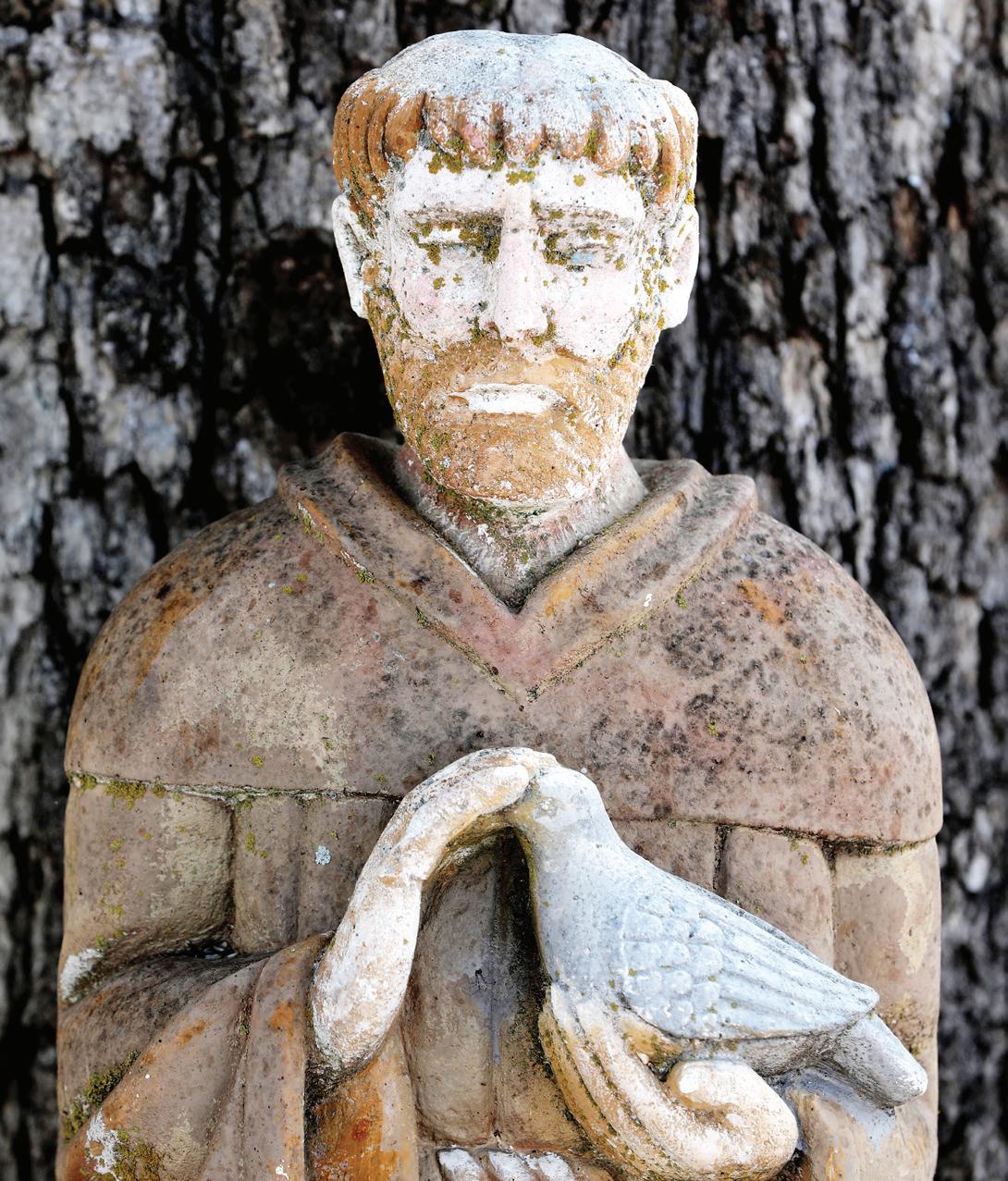
Una estatua de San Francisco de Asís se ve en un jardín en Austin, Texas, el 9 de septiembre de 2021. (Foto OSV News/Bob Roller)
to Padre), aplicable también en forma de sufragio por las almas del Purgatorio".
La indulgencia se concederá a quienes participen en una peregrinación a "cualquier iglesia conventual franciscana, o lugar de culto en cualquier parte del mundo dedicado a San Francisco o relacionado con él por cualquier motivo", según se indica.
Los enfermos, los ancianos, y quienes los cuidan, así como todos los que no puedan salir de sus hogares también pueden obtener una indulgencia plenaria, "siempre que se desprendan de cualquier pecado" y tengan la intención de cumplir lo antes posible "las tres condiciones habituales", "si se unen espiritualmente a las celebraciones jubilares del Año de San Francisco, ofreciendo al Dios misericordioso sus oraciones, los dolores o los sufrimientos de su vida".
En un comunicado en el que se anunciaba la promulgación del decreto, los frailes franciscanos invitaron a los católicos a participar en las celebraciones jubilares y expresaron su esperanza de que el ejemplo de San Francisco de Asís inspirara a los participantes "a vivir con auténtica caridad cristiana hacia el prójimo y con sinceros anhelos de concordia y paz entre los pueblos".
Que este año Franciscano "sea para cada uno de nosotros una ocasión providencial de santificación y de testimonio evangélico en el mundo contemporáneo, para gloria de Dios y bien de
– Continúa en la página 2 –
El "Fray Augusto" de Guatemala es un mártir del confesionario, afirma el vicepostulador
Por JUNNo arocho esTeVes (OSV News) – A primera vista, la foto oficial del venerable Augusto Ramírez Monasterio – conocido simplemente como "Fray Augusto" – muestra a un fraile franciscano sonriente de pie en un pequeño jardín, con las manos juntas y ligeramente ocultas dentro de las mangas de su hábito marrón. Sin embargo, el comportamiento alegre y tranquilo del fraile ocultaba los horrores a los que fue sometido antes de su martirio en 1983, reconocido por el papa León XIV el 22 de enero. De hecho, la foto fue tomada en junio de 1983, momentos después de que él soportara horas de tortura a manos de los militares. En una entrevista con OSV News el 29 de enero, el padre franciscano Edwin Alvarado, vicepostulador de la causa de canonización del padre Augusto, dijo que antes de su liberación, sus torturadores lo obligaron a firmar un documento en el que afirmaba que había sido "bien tratado" y "solo interrogado".
La foto oficial "fue tomada después de su tortura", dijo el padre Alvarado. "Querían tomarle algunas fotos, así que él fue y se colocó las manos dentro del hábito para que no se vieran las quemaduras que tenía en ellas".
El vicepostulador dijo a OSV News que encontró la foto y su origen mientras recopilaba información sobre la vida del padre Augusto. Inmediatamente la envió al padre franciscano Giovangiuseppe Califano, postulador general que supervisa las causas de beatificación y canonización dentro de la orden franciscana.
Al recibir la foto, el padre Califano dijo: "No hay mejor foto que esa, que muestra lo que había sucedido", recordó el padre Alvarado.
El padre Alvarado, originario de Costa Rica, recordó su llegada a Guatemala en noviembre de 1983 como postulante, o candidato a la orden franciscana. "Cuando llegué al aeropuerto – tenía 17 años, era solo un niño–, el hombre que abrió mi maleta vio el hábito religioso y me dijo: "Esto lo vas a pagar con tu vida"". No lo entendí porque en mi país, Costa Rica, no existía ese tipo de hostilidad", contó a OSV News. Solo unos días después, el 7 de noviembre, se enteró de que habían asesinado a un sacerdote. "No lo conocía... y era el decimotercero al que mataban".
Era el padre Augusto.
Nacido el 5 de noviembre de 1937 en la ciudad de Guatemala, el futuro franciscano estudió en Nicaragua y España, donde fue ordenado en 1967. Regresó
a Guatemala para servir como párroco de San Francisco el Grande en Antigua Guatemala, dedicando su ministerio a los jóvenes y los pobres durante la brutal guerra civil de 36 años que vivió el país.
Según el padre Alvarado, los testigos de la época recuerdan a "Fray Augusto" como un hombre alegre que se dedicaba incansablemente a los jóvenes y a los que sufrían en Guatemala. Como músico talentoso, enseñaba "solfa", una técnica de canto, lo que le permitía conectar con los jóvenes a través de la música.
El padre Alvarado dijo a OSV News que los feligreses de San Francisco El Grande, especialmente los miembros del coro de la iglesia, recordaban el carácter jovial del sacerdote franciscano y su afición a hacer bromas.
"Hay una historia sobre un miembro del coro que siempre molestaba a la gente. Se llamaba Francisco, pero todo el mundo lo llamaba (por su apodo) Paco. Y el padre Augusto lo llamaba "Paco Satanás"", recordó el vicepostulador.
"Ese hombre aún lo recuerda hoy en día y dice: "Ese es el apodo que me puso el padre (padre Augusto). Solía decir que yo era el único Satanás que trabajaba en la Iglesia"", contó el padre Alvarado.
– Continúa en la página 2 –
'... El deseo que tengo ... para toda la Iglesia es redescubrir a este santo nuestro...'
–
Viene de la página 1 –
toda la Iglesia", se lee en el comunicado.
En una carta del 10 de enero dirigida a los ministros generales de la Conferencia de la Familia Franciscana, el Papa León dijo que el mensaje de paz de San Francisco era más necesario que nunca.
"En esta época, marcada por tantas guerras que parecen interminables, por divisiones internas y sociales que crean desconfianza y miedo, él sigue hablando. No porque ofrezca soluciones técnicas, sino porque su vida indica la fuente auténtica de la paz", escribió el Papa.
Esa paz, añadió el Papa, "no se limita a las relaciones entre los seres humanos, sino que abarca toda la creación", sino que se extiende a "toda la familia de la Creación".
"Esta intuición resuena con especial urgencia en nuestro tiempo, cuando la casa común está amenazada y gime bajo la explotación", escribió. "La paz con Dios, la paz entre los seres humanos y con la Creación son dimensiones inseparables de una única llamada a la reconciliación universal".
El Papa León concluyó su carta con una oración a San Francisco, pidiendo la intercesión del santo para que nos conceda "el coraje de construir puentes allí donde el mundo levanta fronteras".
"En este tiempo afligido por conflictos y divisiones, intercede para que lleguemos a ser artesanos de paz: testigos desarmados y desarmantes de la paz que viene de Cristo", escribió el Papa.
La carta del Papa fue leída durante una celebración el 10 de enero que marcó el inicio del Año Jubilar Franciscano en la Basílica de Santa María de los Ángeles en Asís, que alberga la Capilla del Tránsito, que marca el lugar donde murió San Francisco.
El arzobispo Domenico Sorrentino de Asís, que estuvo presente en la ceremonia, dijo que el inicio de la celebración del centenario fue "una explosión de verdadera alegría" que brota del corazón y "del compromiso de cada uno de nosotros por redescubrir a Francisco en todas sus dimensiones".
"El deseo que tengo para todos y para toda la Iglesia es redescubrir a este santo nuestro, redescubrir a Jesús, única fuente de alegría y paz", dijo el obispo. Entre los eventos notables que tendrán lugar en
Asís durante el Año Jubilar Franciscano se encuentra la primera exposición pública del cuerpo de San Francisco.
En octubre, la Basílica de San Francisco anunció que el Papa León había concedido permiso para exponer el cuerpo del santo del 22 de febrero al 26 de marzo.
Según el sitio web de la basílica dedicado a este acontecimiento histórico, hasta diciembre se habían inscrito unos 250.000 peregrinos para venerar los restos de San Francisco.
El abrumador número de personas que acudirán a la exposición pública, según la basílica, es un testimonio de "la universalidad del mensaje del santo de Asís y el atractivo atemporal de su figura".
Se ha creado un sistema de reserva en línea gratuito pero obligatorio en el sitio web del centenario, disponible en italiano y en inglés.
(Junno Arocho Esteves es corresponsal internacional de OSV News. Síguelo en X @jae_journalist.)
' ... lo torturaron para que "dijera la verdad"...'
– Viene de la página 1 –
Sin embargo, no solo era conocido por su descarado sentido del humor. Los recuerdos más entrañables que muchos testigos contaron al padre Alvarado eran de cómo el sacerdote franciscano visitaba a los enfermos en sus casas o en el hospital a cualquier hora.
Pero por lo que más se le conocía era por el tiempo que pasaba en el confesionario, a veces durante horas, atendiendo a quienes buscaban el sacramento de la reconciliación.
"Recientemente, encontré el testimonio de un fraile que decía que el padre Augusto hacía de todo en el ministerio pastoral: como párroco, como superior, pero donde pasaba más tiempo era sentado en el confesionario", dijo el padre Alvarado, añadiendo que en Guatemala, especialmente los domingos, las confesiones comenzaban a las 6:30 de la mañana y, salvo las pausas para ir al baño o almorzar, los sacerdotes se quedaban hasta última hora del día confesando.
Lamentablemente, el padre Alvarado dijo a OSV News que la tortura y el posterior martirio del padre Augusto no se debieron a sus obras de caridad o a su ministerio con los jóvenes, sino específicamente a su fidelidad al secreto de confesión.
Los acontecimientos que condujeron a su muerte comenzaron en junio de 1983, cuando un antiguo líder guerrillero, que esperaba aceptar una oferta de amnistía del gobierno, acudió al padre Augusto para confesarse. Con el deseo de ayudar al hombre a reintegrarse en la sociedad, el sacerdote franciscano lo acompañó al municipio para obtener una tarjeta de identificación.
Sin embargo, las autoridades municipales reconocieron al hombre por sus actividades pasadas y alertaron a la policía, que llegó y detuvo al padre Augusto, al hombre y a sus tres hijos,
que lo acompañaban. Luego fueron entregados a los militares, relató el padre Alvarado.
A pesar de las súplicas del hombre para que los soldados liberaran a sus hijos y al padre Augusto, los soldados llevaron al sacerdote a una habitación aparte, le vendaron los ojos y le ataron las manos.
"Fue allí donde lo torturaron para que "dijera la verdad" y afirmara que el hombre pertenecía a un grupo paramilitar", explicó el padre Alvarado. "El padre Augusto les dijo: "Fue una confesión, no puedo hablar de ello". Entonces lo torturaron; le quemaron las manos, las plantas de los pies y otras partes del cuerpo".
Aunque fue liberado después de posar para la foto y firmar el documento en el que aseguraba que había sido bien tratado, desde ese momento, el padre Augusto fue condenado a muerte por el gobierno.
El gobierno guatemalteco lo siguió durante meses y recibió amenazas de muerte, y el 7 de noviembre de 1983, fray Augusto fue secuestrado, torturado y, en un intento de fuga, fue asesinado a tiros por agentes de policía leales al gobierno.
Para el padre Alvarado, ese momento en junio en el que el padre Augusto se negó a divulgar la confesión del hombre es el núcleo de su martirio: su disposición a sufrir tortura física antes que violar la seguridad espiritual de un penitente.
"Para nosotros, los sacerdotes, y para el pueblo, dice mucho sobre cómo un sacerdote puede guardar la confesión hasta el punto de dar su vida", declaró el padre Alvarado a OSV News. "Esto no hace más que reforzar el sacramento de la confesión".
A través de su tortura y muerte, dijo, "Fray Augusto nos ha dicho que debe ser así; eso es lo que vale el secreto de confesión".
Una vez confirmada su beatificación, el padre Alvarado declaró a OSV News que le sorprendió una coincidencia providencial mientras se discutían las posibles fechas entre la Arquidiócesis de Santiago de Guatemala, el Dicasterio para las Causas de los Santos del Vaticano y el postulador general franciscano.
"Para estas celebraciones, suelen pedir que sea un sábado, no un domingo, para que pueda asistir la mayoría del clero", explicó. Sin embargo, el padre Alvarado señaló que el calendario ya estaba lleno de otros eventos eclesiásticos, incluidas beatificaciones en Estados Unidos e Italia.
Al revisar las fechas disponibles en el año, el padre Alvarado se sorprendió al descubrir que el único sábado disponible era el 7 de noviembre, el mis-
mo día del martirio del padre Augusto. "No sé cómo sucedió, pero es sábado. Así que confirmamos la fecha con (el arzobispo Gonzalo de Villa y Vásquez)", que será el 43.º aniversario de su martirio, dijo el padre Edwin.
El avance de la causa de fray Augusto se produjo mientras la Iglesia universal celebraba el Día Mundial de la Vida Consagrada el 2 de febrero.
En una carta enviada el 29 de enero a los religiosos y religiosas, el Dicasterio para los Institutos de Vida Consagrada y las Sociedades de Vida Apostólica animó a los consagrados, señalando que están llamados a ser una "presencia que permanece" junto a los pueblos y las personas heridas, en lugares donde el Evangelio se vive a menudo en condiciones de fragilidad y prueba".
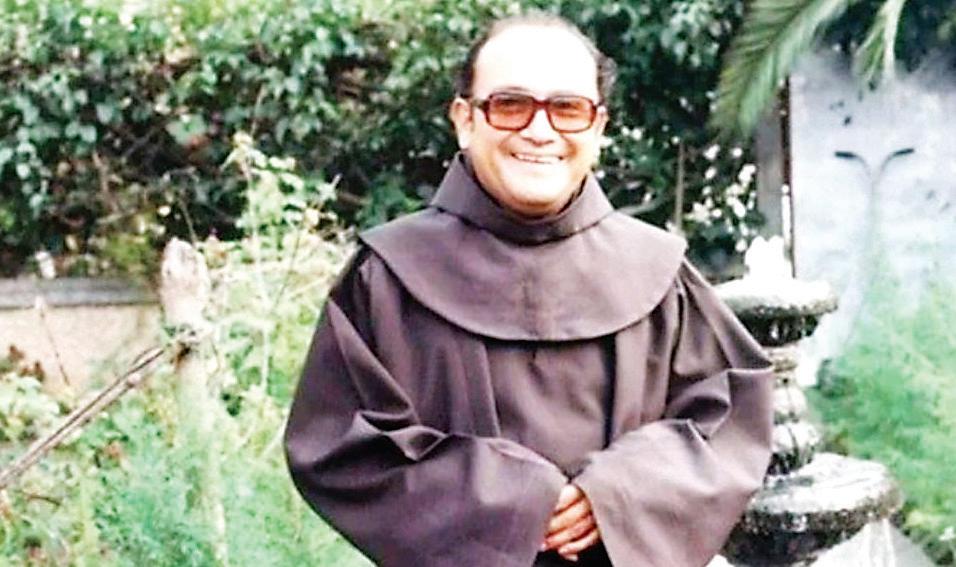
El Venerable Augusto Ramírez Monasterio aparece en una fotografía tomada instantes después de su liberación, tras haber soportado horas de tortura a manos del ejército en junio de 1983. Sus torturadores lo obligaron a firmar un documento en el que afirmaba haber sido “bien tratado”, según informó el vicepostulador de su causa. El papa León XIV reconoció el martirio de fray Augusto el 22 de enero de 2026. (Foto de OSV News / cortesía del padre franciscano Edwin Alvarado Segura)




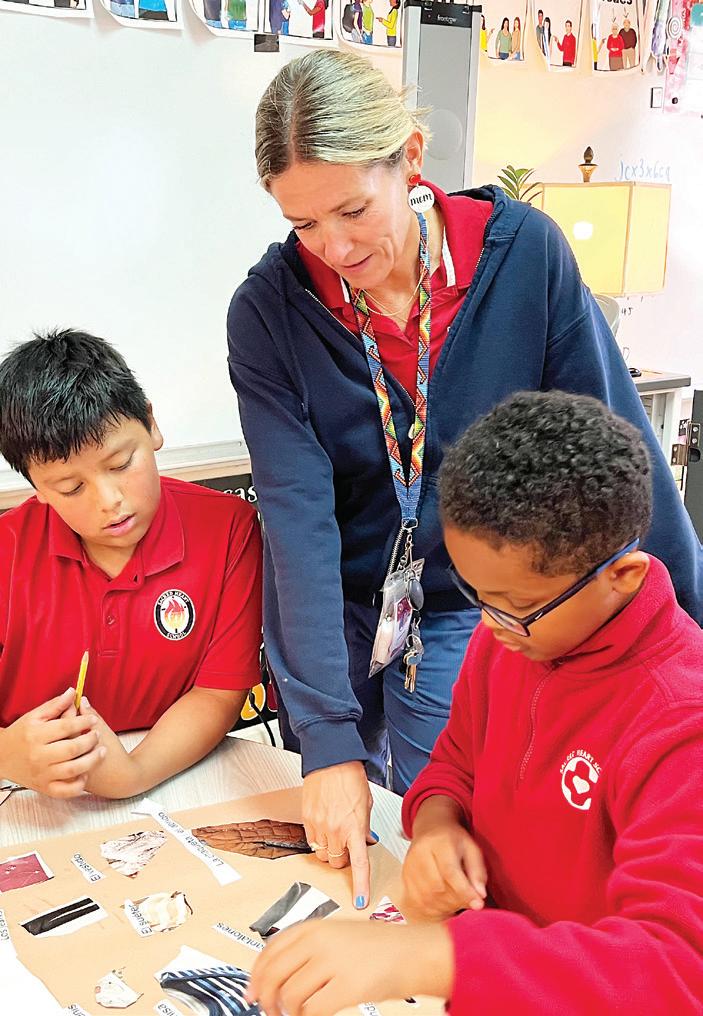

BY JONI HOUSE
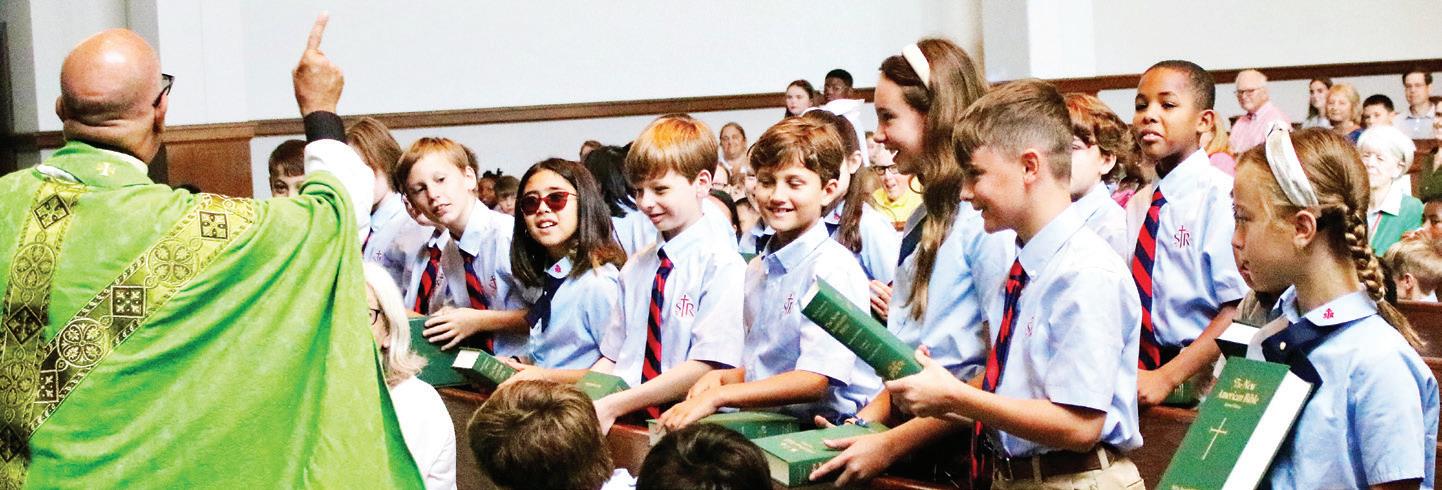
As I reflect on the first semester, I am grateful for the time spent simply being present in our schools and early learning centers. There is something powerful about walking into a classroom, standing in a hallway, or sharing a brief conversation, moments that quietly remind you why Catholic education matters so deeply.
These experiences have reinforced an important truth: the heart of our schools cannot be understood from a distance. It is found in the daily faithfulness of faculty and sta , the curiosity of students, and the steady leadership of those who serve our communities with care and conviction. Presence allows us to see, to listen, and to appreciate the quiet work that so often goes unnoticed.
Being in our schools has also deepened my understanding of our shared culture. While each community is unique, all are united by a common mission to foster disciples and pursue excellence in a Christ-centered environment. That mission is strengthened when we walk together, supporting one another through both moments of joy and seasons of challenge.
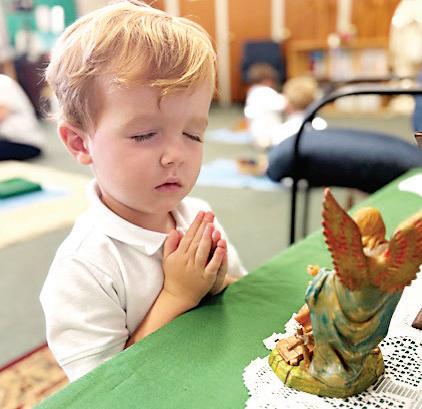
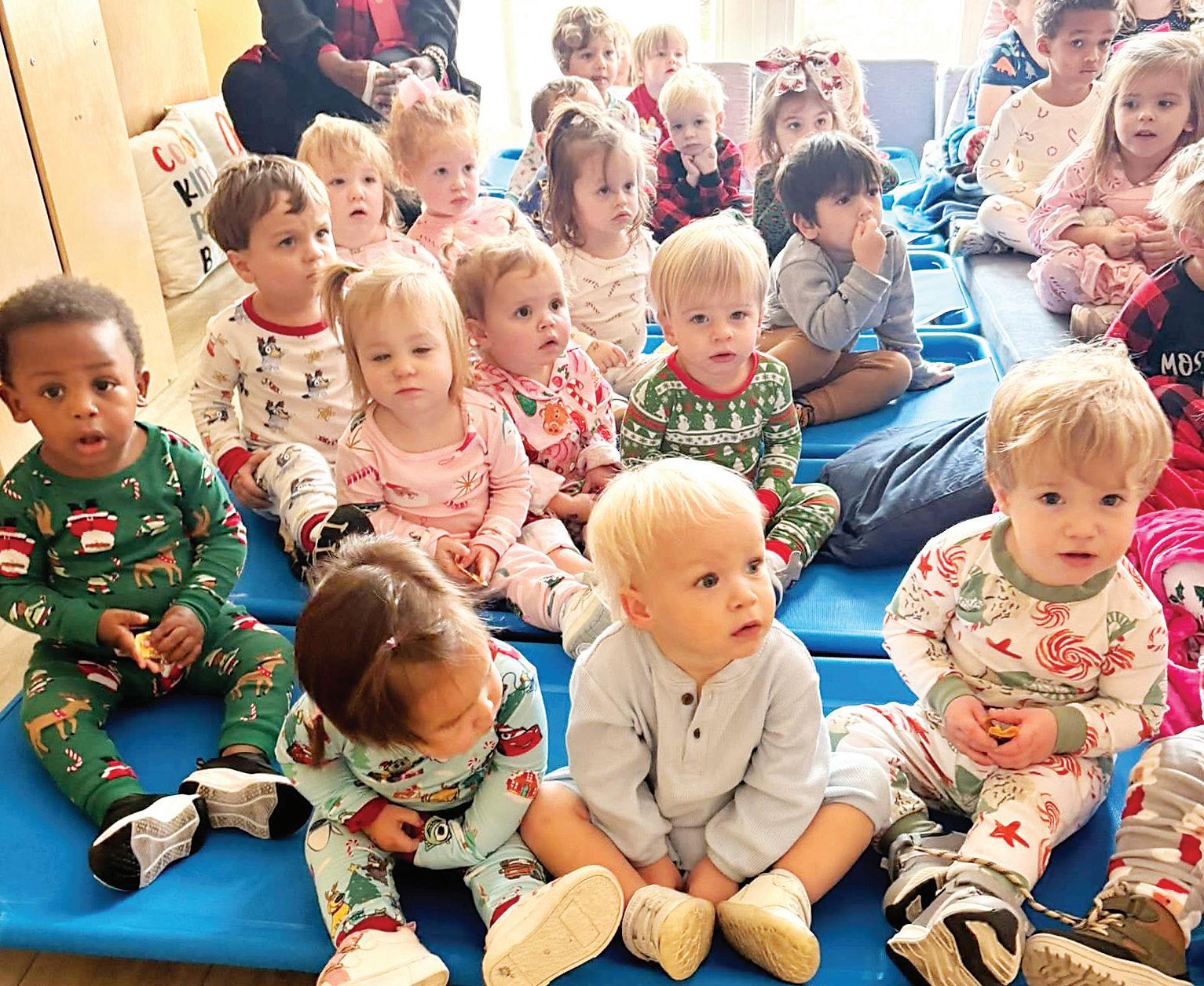
Our early learning centers, in particular, remind us that Catholic education begins long before
a child enters a traditional classroom. These spaces are where trust is built, faith is gently introduced, and the foundation for lifelong learning is formed.
Christ led by walking with His people, meeting them where they were. In that same spirit, I remain committed to being present, listening with intention, and accompanying our school communities.
As we continue the school year, I return often to our theme rooted in John 10:27: “My sheep hear my voice; I know them, and they follow me.” Being present in our schools has reminded me that listening comes first. When we take the time to truly hear one another, to know our students, our educators, and our communities, we lead with greater clarity, compassion and purpose. It is through this listening and accompaniment that the culture of Catholic education is strengthened and our mission continues to unfold.
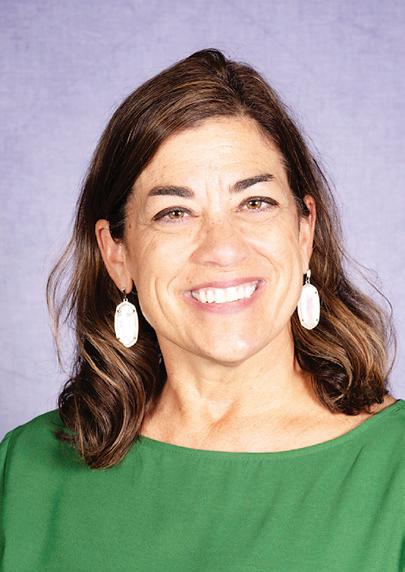
(Joni House is the executive director of Catholic Schools for the Diocese of Jackson.)
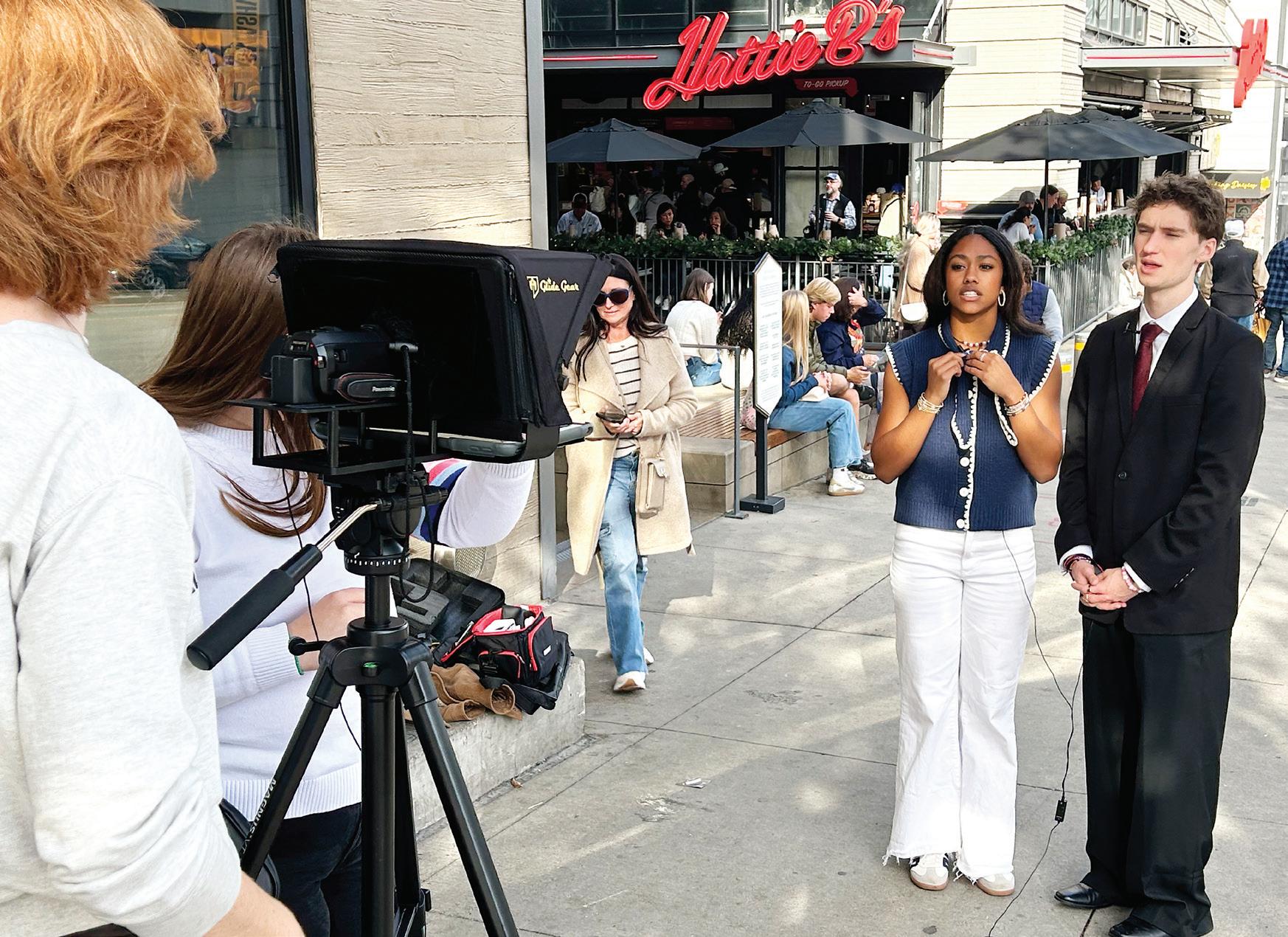
– Seniors McKenzie Cummings and Thierry Freeman, both students at St. Joseph Catholic School in Madison, anchor the award-winning, student-produced weekly newscast Bruin News Now on location in Nashville. Junior Jason Buckley mans the camera. Cummings, Freeman and Buckley were among a group of St. Joseph journalism students who attended the national high school journalism convention sponsored by the Journalism Education Association and the National Scholastic Press Association Nov. 13–16. (Photo courtesy of school)
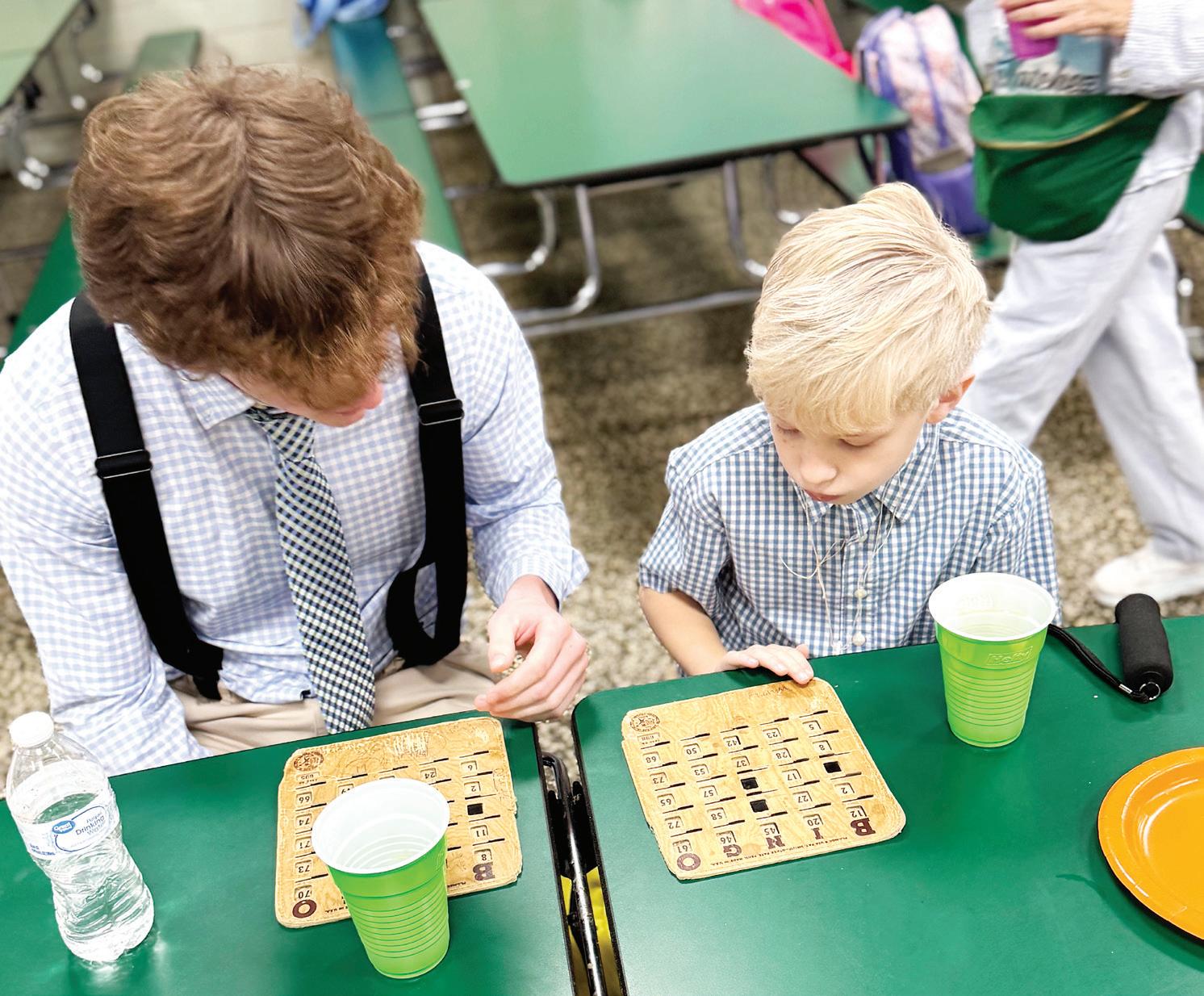
Senior Grayson Gay and first-grade student Noah Loyed play bingo together at Cathedral School. (Photo courtesy of school)

GREENVILLE – (Right)
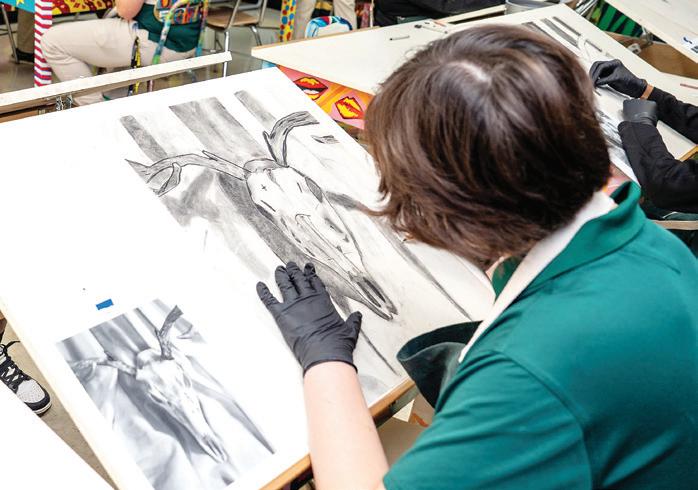
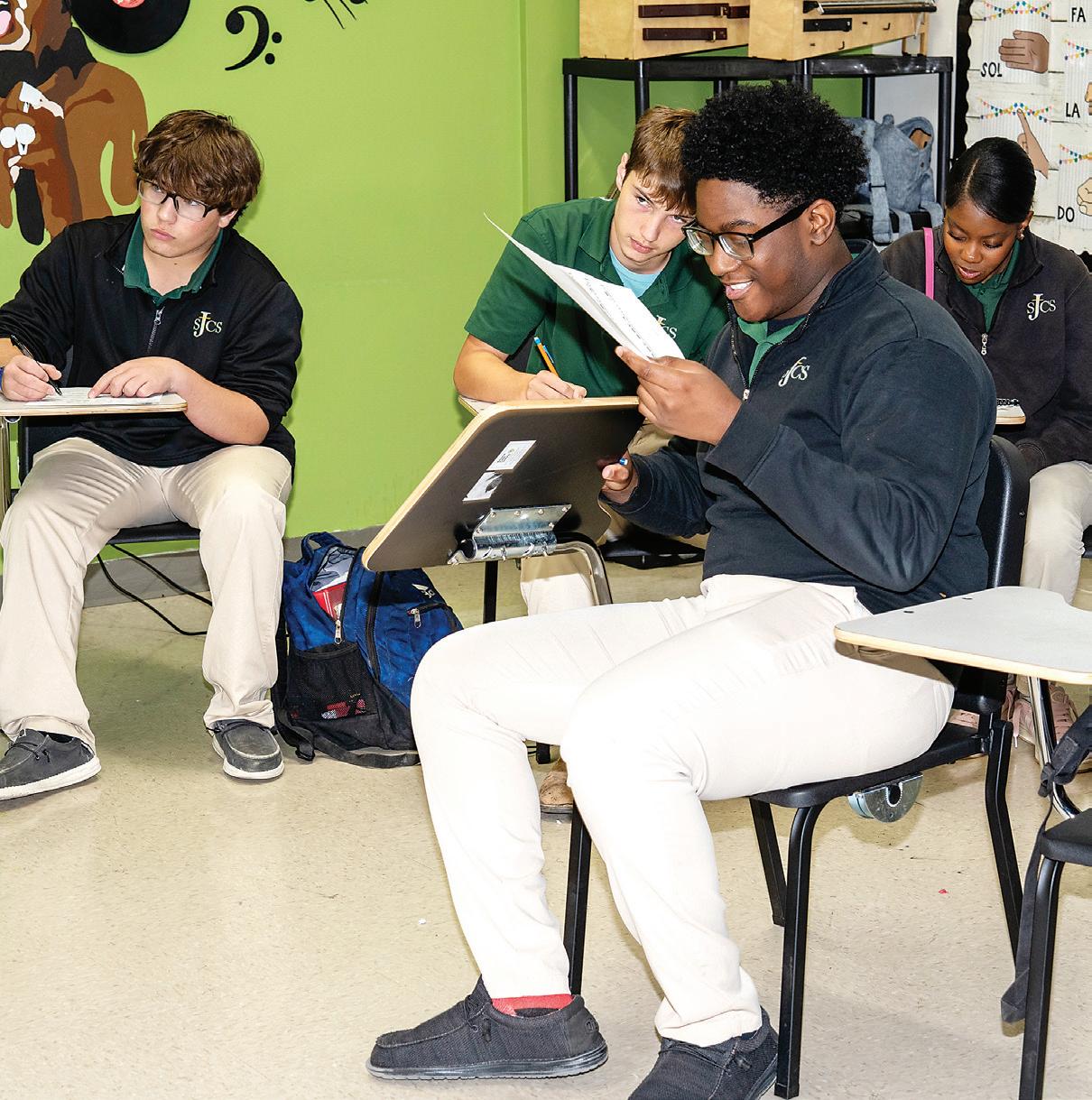
St. Joseph High School students John Paul Rogers, Jacob Powers, Santo Borganelli and Jada Hicks take notes during a music appreciation class. (Photo courtesy of school)
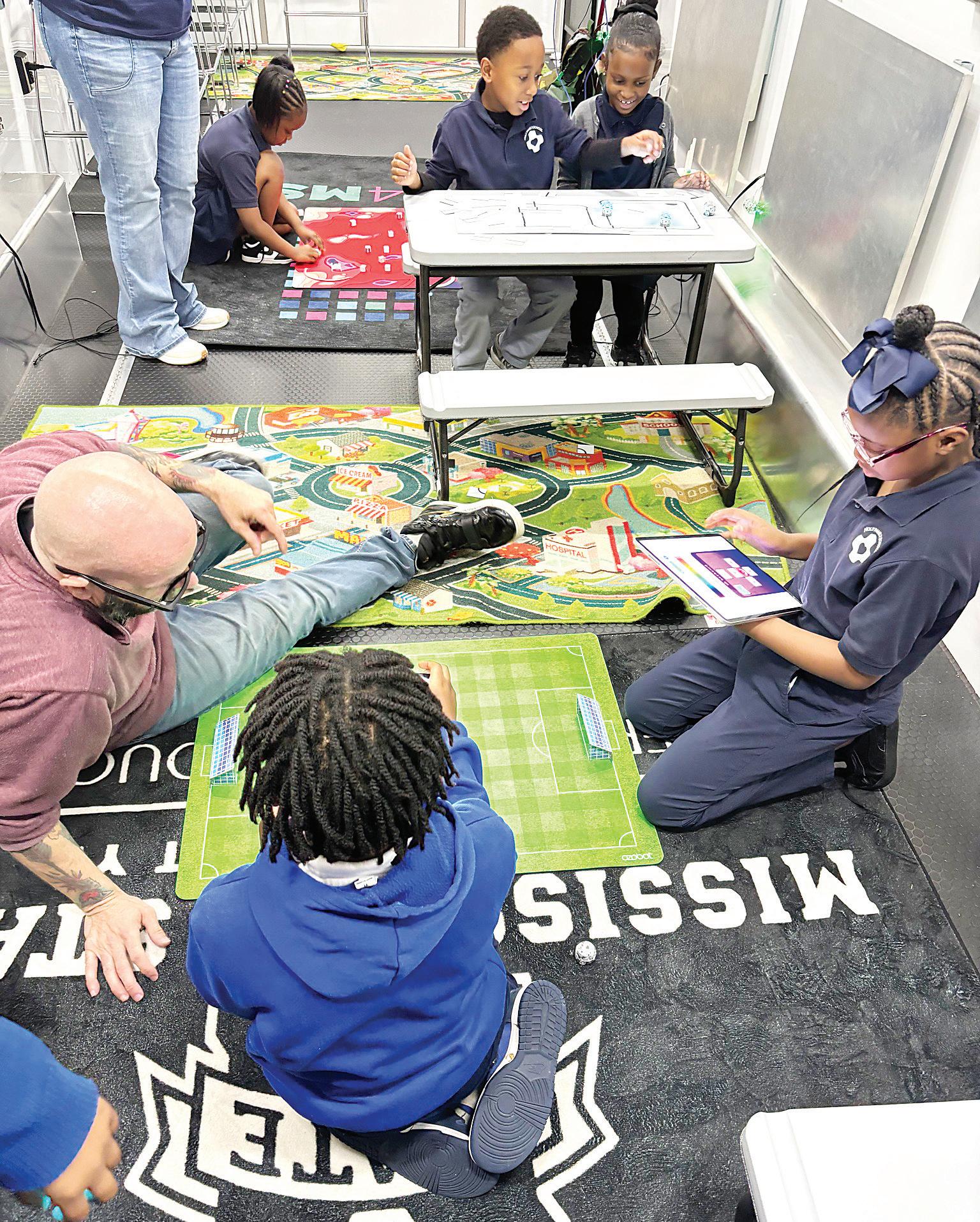
HOLLY SPRINGS – (Below) Holy Family School students engage in handson coding activities as part of a classroom lesson. (Photo courtesy of school)
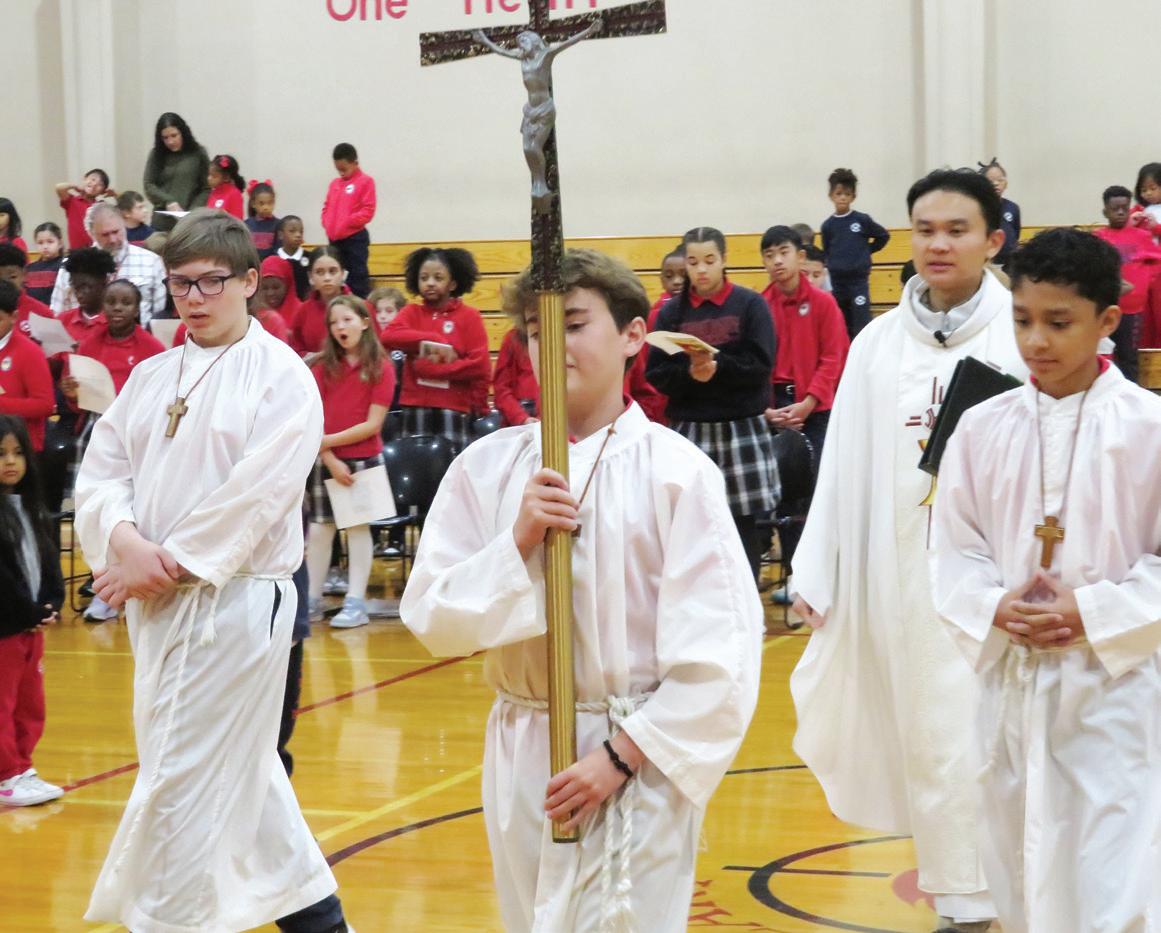
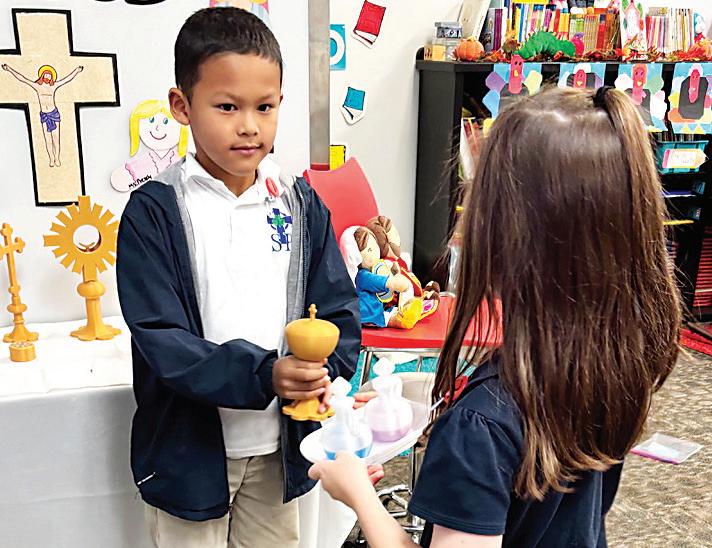
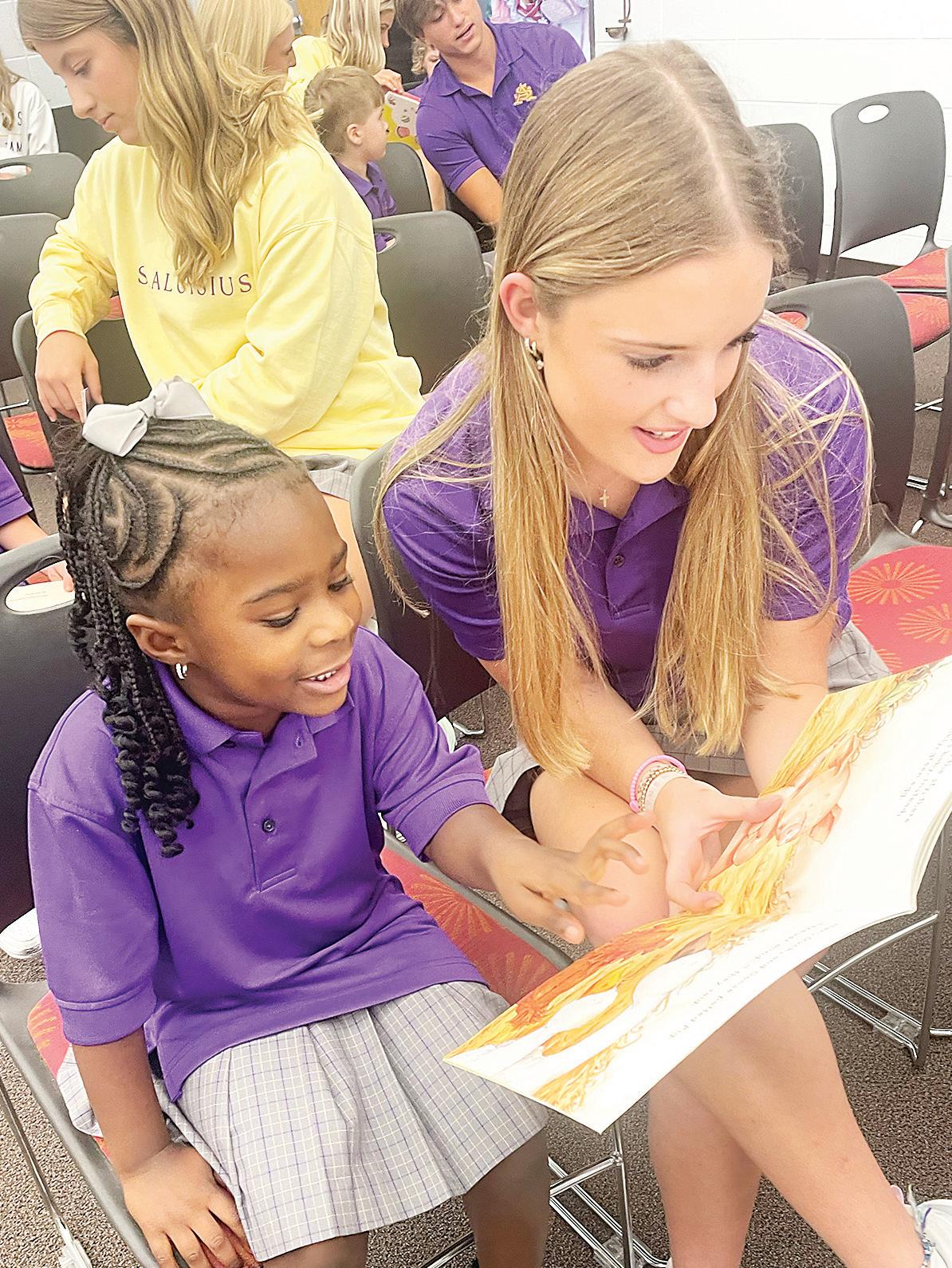
SOUTHAVEN – Students at Sacred Heart School participate in the opening procession for the celebration of Mass, with Ben Baskin serving as cross bearer alongside altar servers Michael Lickteig, left, and Gustavo Bermudez. (Photo courtesy of school)
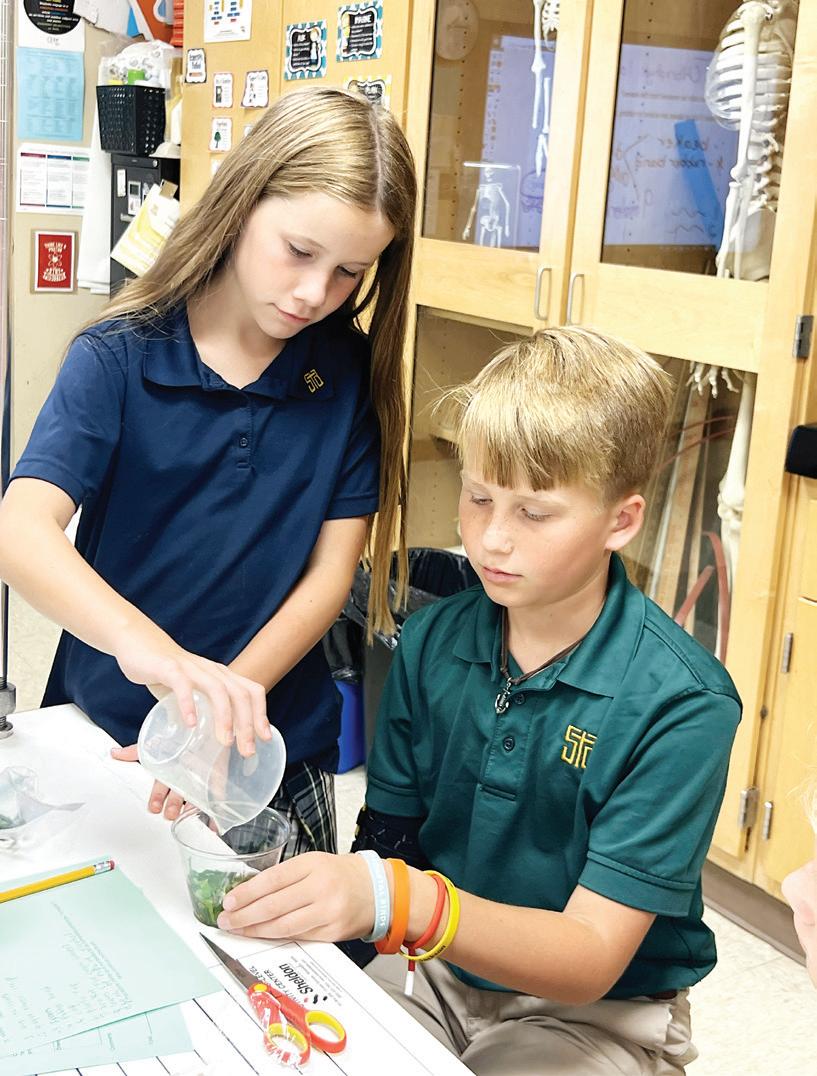
MADISON – (Right) St. Anthony School fifth-grade students Josephine Klar and Patrick Harris conduct a chlorophyll experiment during a science class in Mrs. Moorehead’s laboratory on Sept. 11. This moment reflects school community because curiosity, collaboration and inquiry are at the heart of St. Anthony’s learning and STEM centered curriculum. (Photo courtesy of school)
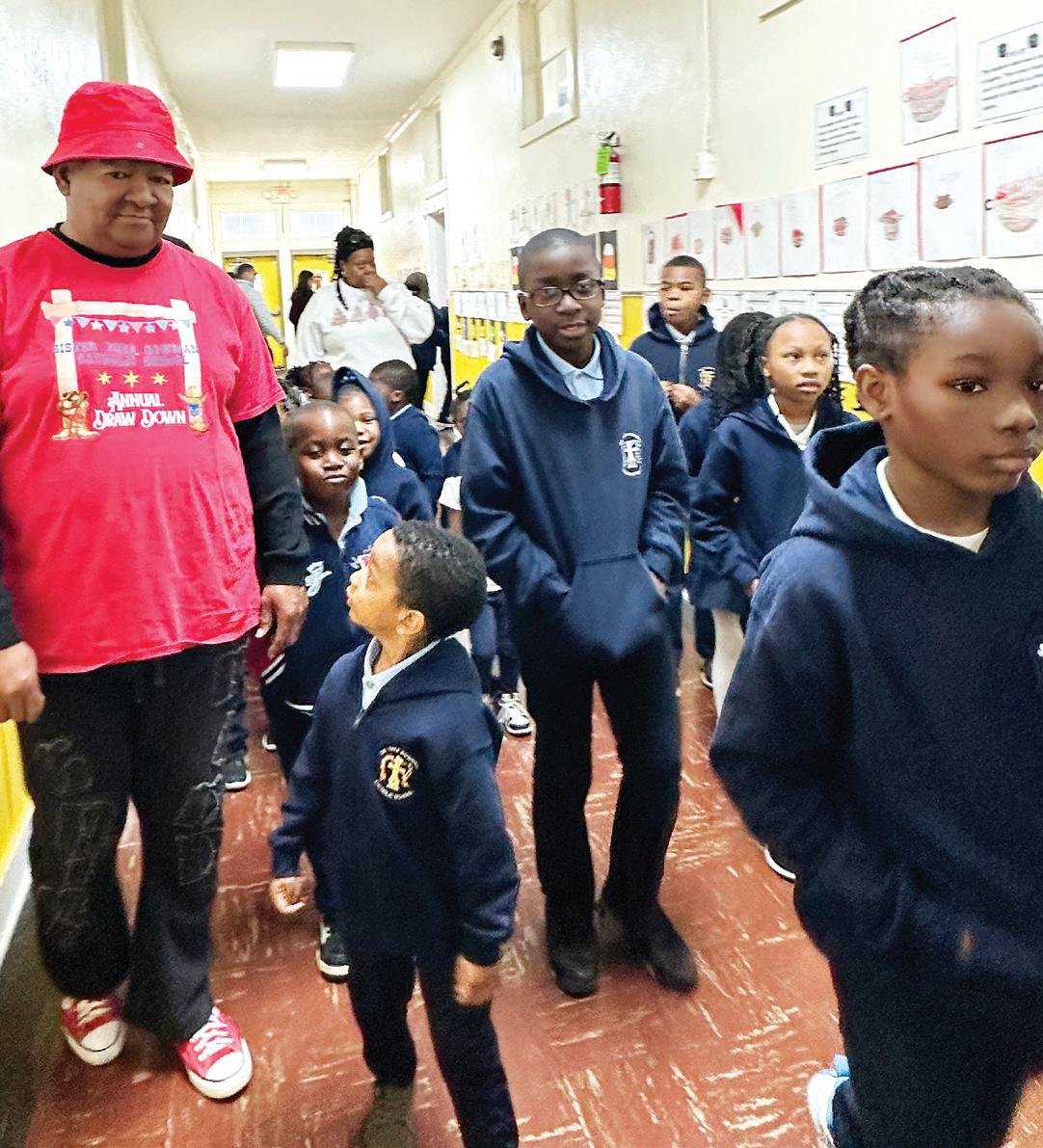
JACKSON – (Right) Charles Speech walks with students at Sister Thea Bowman Catholic School, including Haniel and Hanry Chia, Ja’Kayla Davis, Eliel Cattenhead and Zachary Gordon. (Photo courtesy of school)
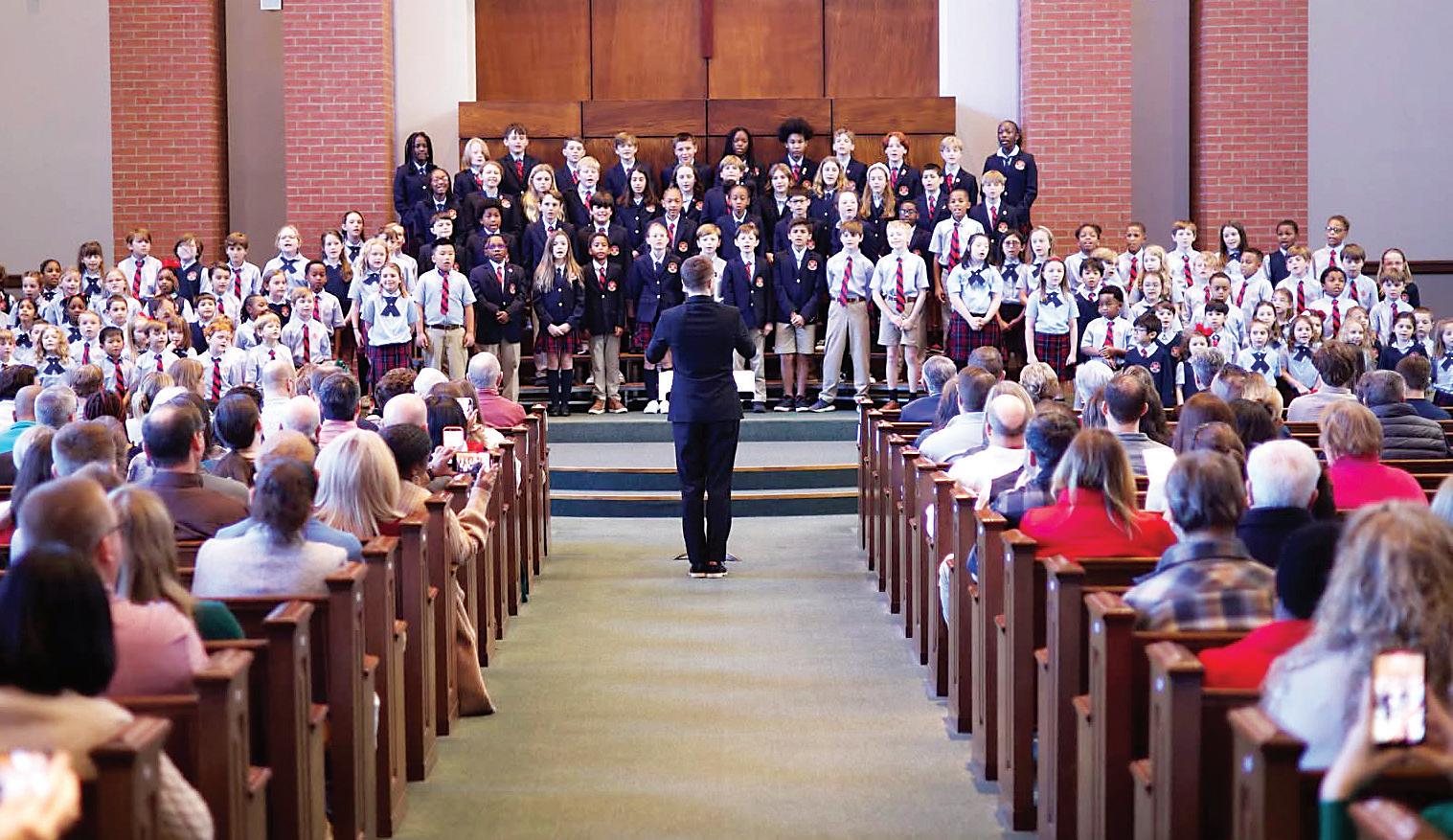
JACKSON – (Below) Students at St. Richard Catholic School present a whole-school Advent program directed by Andrew Ladd on Dec. 19. (Photo courtesy of school)
COLUMBUS – (Right)
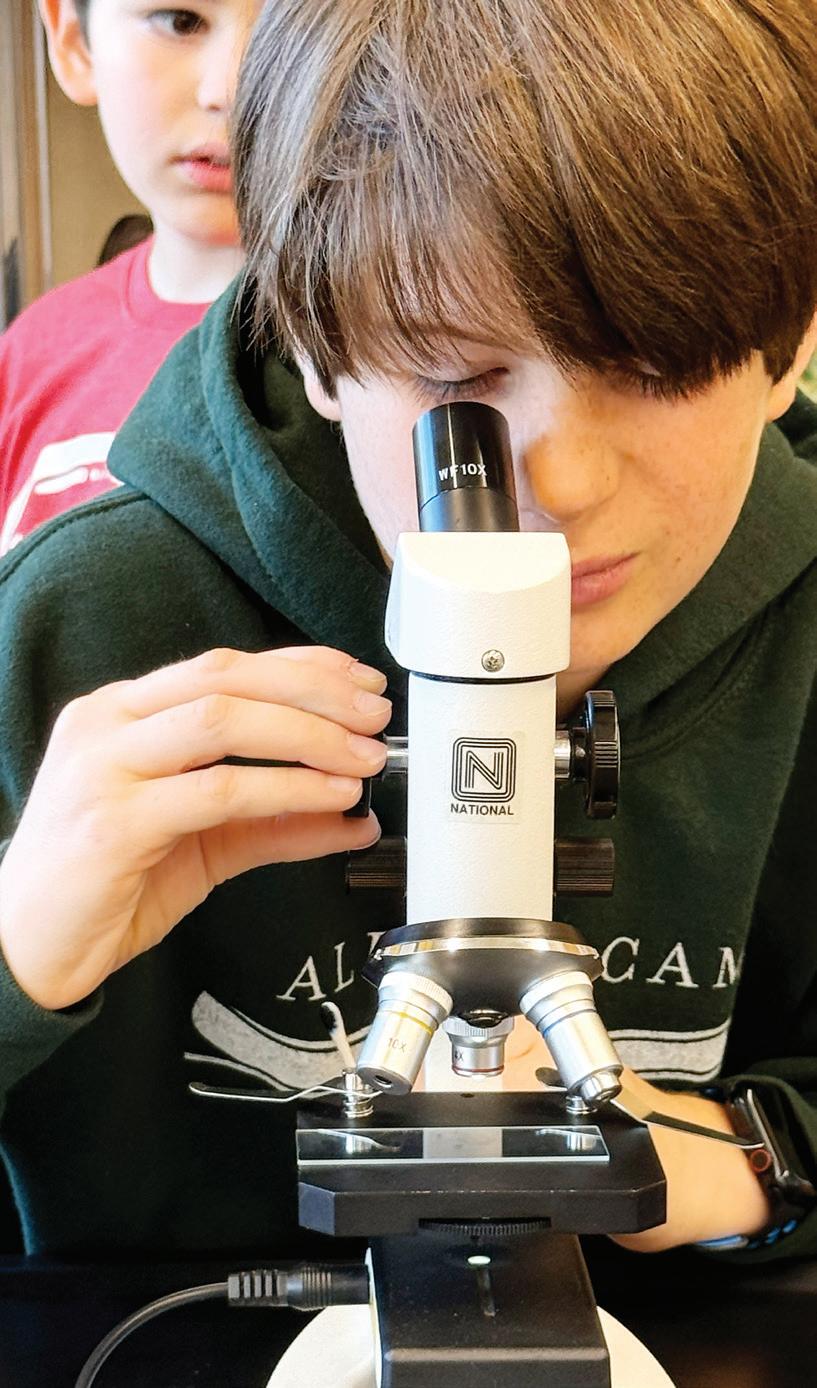
James Thomas, a student at Annunciation School, looks through a microscope during an ACS STREAM Day activity. Students rotate through hands-on stations, including examining cheek cells under a microscope. (Photo courtesy of school)
Assisi Early Learning Center
4000 W. Tidewater Lane, Madison, MS 39110

Phone: 601-856-9494 aelcmadison.org aelcmadison@jacksondiocese.org

St. Paul Early Learning Center 5969 Hwy 25, Flowood, MS 39232 Phone: 601-992-2876 saintpaullearningcenter.com stpaullearningcenter@gmail.com
St. Richard Early Learning Center 1242 Lynwood Drive, Jackson, MS 39206 Phone: 601-414-0511 strichardelc.org strichardELCo ce@gmail.com


Annunciation Catholic School 223 North Browder Street, Columbus, MS 39702 Phone: 662-328-4479 AnnunciationCatholicSchool.org

St. Elizabeth Catholic School
150 Florence Avenue, Clarksdale, MS 38614
Phone: 662-624-4239 seseagles.com Tours: mstonestreet@seseagles.com

St. Patrick Catholic School 2700 Davis Street, Meridian, MS 39301
Phone: 601-482-6044 stpatrickcatholicschool.org Tours: kowen@stpatrickcatholicschool.org
Cathedral School
701 N. Martin Luther King, Jr. Street, Natchez, MS 39120 / Phone: 601-442-2531 cathedralgreenwave.com Tours: vicki.watts@cathedralgreenwave.com

Sacred Heart Catholic School 5150 Tchulahoma Road, Southaven, MS 38671 Phone: 662-349-0900 sheartschool.org Tours: bmartin@shsm.org
St. Richard Catholic School 4261 I-55 North, Jackson, MS 39206 Phone: 601-366-1157 strichardschool.org Tours: snasif@strichardschool.org
Holy Family Catholic School 395 West Street Holly Springs, MS 38635 Phone: 662-252-1612 Hfamilyschool.org Tours: pparker@shsm.org
St. Joseph Catholic School 1501 V.F.W. Road, Greenville, MS 38701 Phone: 662-378-9711 stjoeirish.org

Sister ea Bowman Catholic School 1217 Hattiesburg Street, Jackson, MS 39209 Phone: 601-352-5441 theabowmanschool.com
Sisters of Mercy Early Learning Center 1220 Howard Street, Vicksburg, MS 39183 Phone: 601-638-5810 vicksburgcatholic.org info@vicksburgcatholic.org
St. Anthony Catholic School 1585 Old Mannsdale Road, Madison, MS 39110 Phone: 601-607-7054 stanthonyeagles.org Tours: ctassin@stanthonyeagles.org

St. Joseph Catholic School 308 New Mannsdale Road, Madison MS 39110 Phone: 601-898-4800 stjoebruins.com Tours: csigler@stjoebruins.com
Vicksburg Catholic School 1900 Grove Street, Vicksburg, MS 39183
Phone: 601-636-2256 vicksburgcatholic.org
Tours: jordan.amborn@vicksburgcatholic.org
Por obisPo JosePh r. KoPacz, D.D.
En enero de 2026, la Coordinación de Tierra Santa realizó su misión anual a la tierra santificada por la presencia encarnada del Señor hace casi dos mil años. Esta iniciativa, promovida por el Vaticano al comienzo del tercer milenio, busca profundizar la relación entre las comunidades cristianas de Palestina e Israel y las Conferencias Episcopales Católicas de Europa, las Islas Británicas, Canadá y los Estados Unidos. Sus pilares fundamentales son la peregrinación, la oración, la presencia y la presión o persuasión.
El tema de 2026 fue: Una tierra de promesa – encuentro y diálogo con pueblos de esperanza.
La peregrinación incluyó una visita a la Iglesia del Santo Sepulcro, donde celebramos la Eucaristía en la tumba del Señor durante dos días consecutivos. Fue allí donde amaneció por primera vez la Resurrección, cuando el Señor Jesús resucitado bendijo a hombres y mujeres con la esperanza y la paz que el mundo no puede dar y por las que Tierra Santa tiene hambre y sed. La Eucaristía fue el corazón de cada jornada y adquirió un significado especial al ser celebrada junto a comunidades de profundas raíces bíblicas.
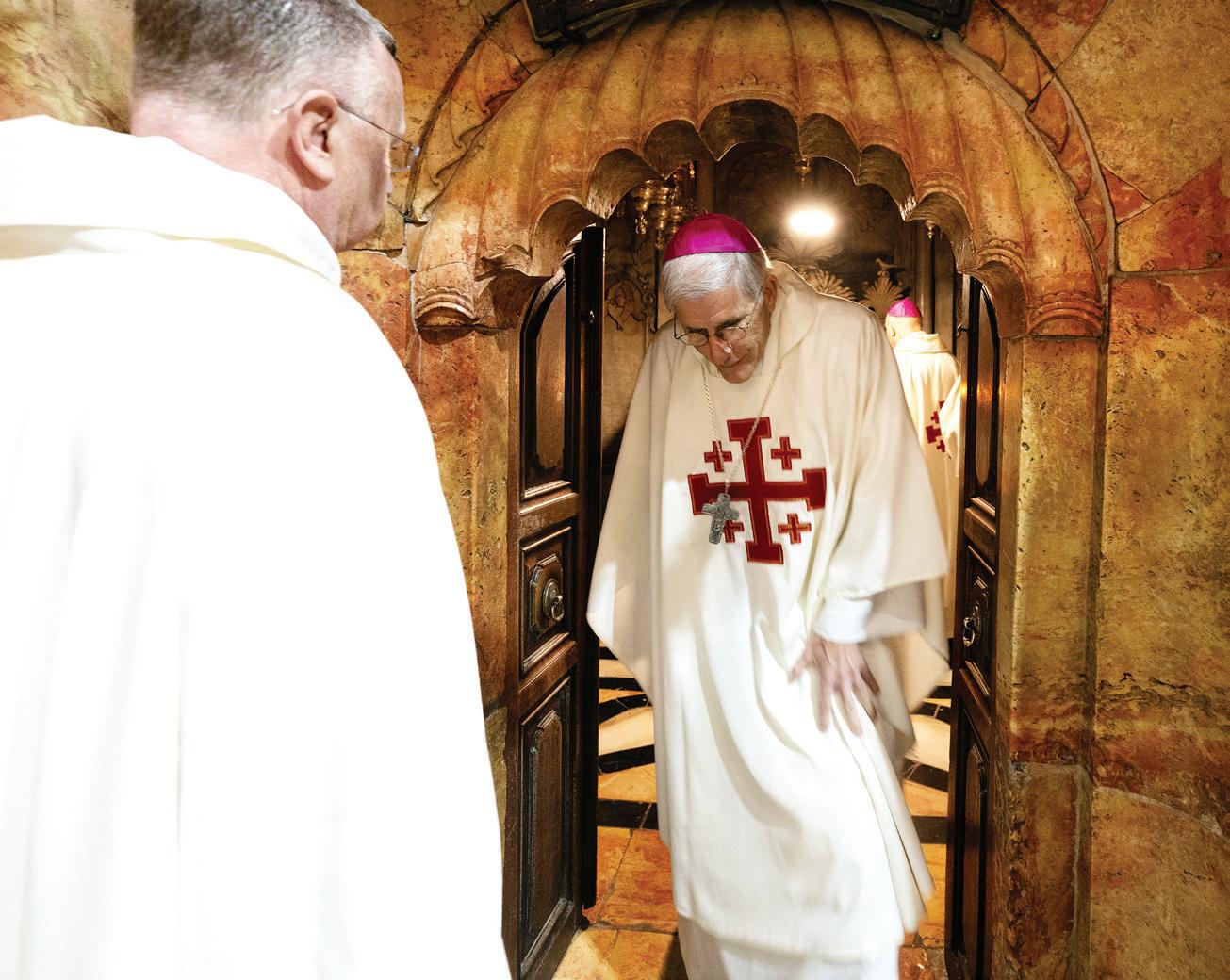
El obispo Joseph Kopacz se inclina para atravesar una puerta antes de la Misa en la tumba del Señor, en la Iglesia del Santo Sepulcro, durante la peregrinación de la Coordinación de Tierra Santa, realizada por diversas Conferencias Episcopales Católicas de Europa, las Islas Británicas, Canadá y los Estados Unidos. (Fotos por Marcin Mazur/Catholic Church of England and Wales)
Esta peregrinación no se centró en los sitios tradicionales de la vida, muerte y resurrección del Señor, sino en la experiencia de lo sagrado cada vez que el pueblo de Palestina y Jerusalén nos abrió su corazón y su hogar con una hospitalidad generosa y sincera.
Junto con la peregrinación y la oración, otro pilar esencial de la Coordinación de Tierra Santa es la presencia. Cada encuentro con comunidades diversas y marginadas fue una oportunidad para escuchar sus relatos de sufrimiento cotidiano y, al mismo tiempo, ser testigos de su firme determinación de no renunciar a la esperanza de una vida con dignidad y paz. Nuestra presencia fue un abrazo de esperanza y una señal clara de que no han sido olvidados.
¿Quiénes son hoy los marginados en Palestina e Israel, cuyas voces apenas se escuchan en medio del estruendo de la guerra y la devastación en Gaza, desatada tras el atroz acto de terrorismo del 7 de octubre de 2023?
Al comenzar nuestro recorrido, nos reunimos con una comunidad beduina visible desde la carretera que conduce de Jerusalén a Jericó. Su modo de vida ancestral se ve amenazado a diario por la intimidación y la violencia de colonos judíos extremistas que buscan expulsarlos de sus tierras. Aunque estas tribus recurren a los canales legales para defender sus derechos, sus voces rara vez son escuchadas. El tiempo compartido en diálogo y en una comida tradicional fue una afirmación de su dignidad y un gran regalo para todos.
En Cisjordania, muchas comunidades palestinas viven bajo una presión constante para abandonar las tierras heredadas de sus antepasados. Visitamos Taybeh, una comunidad cristiana de aproximadamente 1,300 habitantes que lucha por su supervivencia. Tras celebrar la Misa dominical, escuchamos a los ancianos relatar cómo esta realidad ha provocado la migración forzada de casi el 90 % de sus familiares y vecinos. La destrucción de olivos, el robo de ganado y la confiscación de tierras han creado un clima permanente de miedo.
En el contexto actual, sus voces siguen siendo ignoradas. La experiencia de Taybeh refleja la alarmante disminución de la población cristiana en Tierra Santa. Quienes permanecen lo hacen con paciencia y perseverancia, sostenidos por la solidaridad de quienes emigraron y por su profundo amor a la tierra ancestral. La valentía y la esperanza se renuevan con visitas como la nuestra.
Al dejar Cisjordania, visitamos el Vicariato de Santiago del Patriarcado Latino, formado por cristianos católicos de habla hebrea en Israel. Esta pequeña minoría vive pacíficamente en barrios judíos de Jerusalén y trabaja incansablemente para transmitir la fe a las nuevas generaciones y servir a migrantes católicos que llegan al país.
Tuvimos el privilegio de una extensa visita con el cardenal Pierbattista Pizzaballa, Patriarca Latino de Jerusalén, quien compartió su profunda esperanza en el regreso de los peregrinos a los lugares santos, ya que la población local sufre gravemente en su ausencia.
Durante nuestra estancia, escuchamos por videoconferencia al padre Gabriel Romanelli, párroco de la parroquia Sagrada Familia en Gaza. Compartió la devastación cotidiana causada por la guerra y la urgente necesidad de alimentos, medicinas y agua. Cada día sin ayuda, afirmó, pone en riesgo la vida de los más vulnerables. Personas de buena voluntad esperan, contra toda esperanza, que el camino hacia la paz se consolide y que las armas sean finalmente silenciadas.
Otro aspecto fundamental de la peregrinación fueron los encuentros con quienes trabajan por la reconciliación, la justicia y la paz. En un contexto donde los pacificadores suelen ser desacreditados, el testimonio del Centro Rossing para la Educación y el Diálogo, de Rabinos por los Derechos Humanos y del Foro Círculo de Padres – integrado por palestinos e israelíes que han perdido hijos a causa de la violencia – fue una luz de esperanza. Contra toda expectativa, perseveran en la formación de jóvenes y en la construcción de un futuro más humano.
La peregrinación concluyó en Belén, donde la población cristiana ha disminuido drásticamente. Visitamos una escuela para personas sordas, la Fundación San Juan Pablo II y el seminario del Patriarcado Latino, recientemente reabierto. En estos espacios educativos, la esperanza se refleja en los rostros de niños, jóvenes y futuros sacerdotes, sostenidos en gran parte por la generosidad de cristianos de otras regiones.
Para concluir, cada noche los obispos y colaboradores nos reuníamos para la reflexión, el diálogo y la oración. De ese discernimiento nació una declaración conjunta que será difundida por nuestras Conferencias Episcopales y diócesis, poniendo en práctica el cuarto pilar de la Coordinación de Tierra Santa: la presión y la persuasión.
Que las semillas sembradas por esta peregrinación solidaria en una tierra profundamente herida den fruto abundante de justicia y de paz.
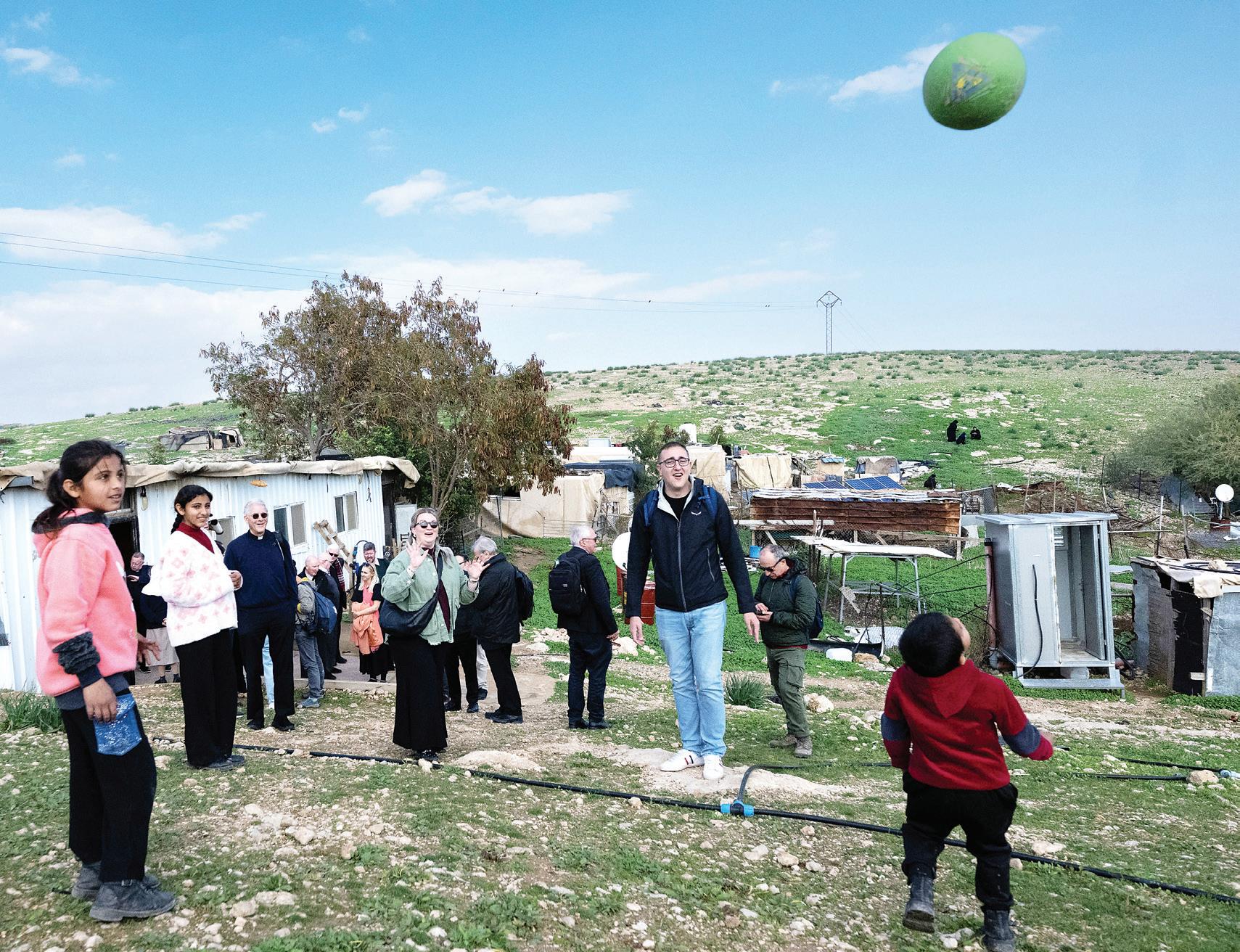
En el primer día de la peregrinación de la Coordinación de Tierra Santa, el obispo Joseph Kopacz y otros participantes visitan una comunidad beduina cerca de Jerusalén, donde niños del lugar juegan con una pelota en la ladera, reflejando el ritmo de la vida cotidiana en medio de desafíos constantes.
La felicidad no se puede comprar ni acumular, solo compartir con los demás, dice el Papa León
Por caroL GLaTz
CIUDAD DEL VATICANO (CNS) – La falta de fe en Cristo conduce a muchas ilusiones, como creer que los arrogantes siempre gobernarán y que solo el dinero puede comprar la felicidad, afirmó el Papa León XIV. Las bienaventuranzas, que muestran cómo amar como lo hace Cristo, "son para nosotros una prueba de la felicidad, llevándonos a preguntarnos si la consideramos una conquista que se compra o un don que se comparte; si la reponemos en objetos que se consumen o en relaciones que nos acompañan", dijo el Papa el 1 de febrero.
"Las Bienaventuranzas elevan a los humildes y dispersan a los soberbios de corazón", afirmó.
Antes de rezar el Ángelus con los visitantes en la Plaza de San Pedro, el Papa reflexionó sobre la lectura del Evangelio del día: las bienaventuranzas del Sermón de la Montaña de Jesús, que comienzan con "Bienaventurados los pobres de espíritu, porque de ellos es el reino de los cielos", según el Evangelio de San Mateo (5:1-12).
Las bienaventuranzas, que destacan a los humildes para el favor de Dios, "son una paradoja sólo para quien considera que Dios es diferente de como Cristo lo revela", dijo el Papa León.
Por ejemplo, dijo el Papa, "quien espera que los prepotentes sean siempre dueños de la tierra, permanece sorprendido ante las palabras del Señor. Quien está acostumbrado a pensar que la felicidad pertenece a los ricos, podría creer que Jesús sea un iluso".
"Y, en cambio, la ilusión está precisamente en la falta de fe en Cristo; Él es el pobre que comparte su vida con todos, el manso que persevera en el dolor, el que trabaja por la paz y es perseguido hasta la muerte en cruz", dijo.
Jesús muestra que la historia "no la que escriben los vencedores, sino la que Dios realiza salvando a los oprimidos", dijo el Papa León. "El Hijo mira al mundo con el realismo del amor del Padre".
Dijo que los fieles no deben seguir a los "profesionales de la ilusión" de hoy, como dijo el Papa Francisco, porque "son incapaces de darnos esperanza". En cambio, Dios da esperanza "sobre todo a quien el mundo descarta como desesperado".
De hecho, es gracias a Cristo "que la amargura de las pruebas se transforma en la alegría de los redimidos", dijo el Papa León. "Jesús no habla de una consolación lejana, sino de una gracia constante que nos sostiene siempre, sobre todo en la hora de la aflicción".
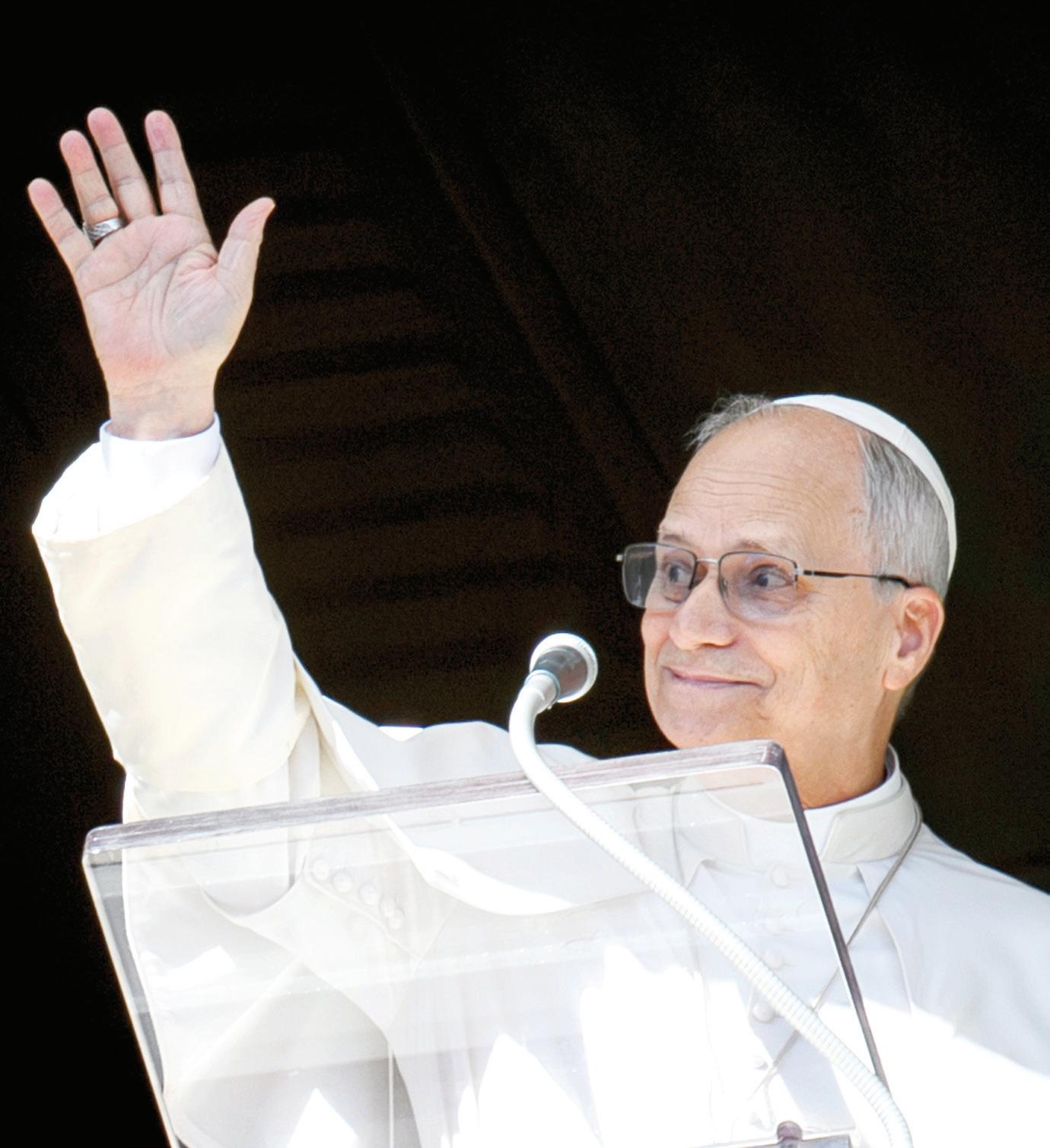
El Papa León XIV saluda a la gente durante el rezo del Ángelus en la plaza de San Pedro del Vaticano, el 1 de febrero de 2026. (Foto CNS/ Matteo Pernaselci, Vatican Media)
La Diócesis de Jackson se compromete a garantizar que ninguna persona a la que sirva la iglesia corra el riesgo de sufrir abuso o explotación sexual por parte del clero, los religiosos o el personal laico de la iglesia.
El bienestar espiritual de todas las víctimas, sus familias y otros miembros de la comunidad es de particular interés para la iglesia. De acuerdo con nuestra política, a todas las víctimas se les ofrece asesoramiento y atención pastoral.
Se alienta a cualquier persona que haya sido víctima de abuso o explotación por parte del clero, religioso o personal de la iglesia laica y aún no lo haya denunciado, a que lo haga. Nuestra coordinadora de asistencia a víctimas, Jenifer Jenkins, una trabajadora social con licencia, está disponible para ayudar a hacer un informe. Números de contacto del Coordinador de Asistencia a las Víctimas: (601) 326-3736; (601) 326-3760.
Para obtener más información sobre las políticas y procedimientos diocesanos y para saber qué está haciendo la diócesis para crear un entorno seguro para todos, visite el sitio web diocesano en www.jacksondiocese.org y haga clic en "Protección de Niños."
Para hacer una denuncia de abuso o mal manejo de denuncias de abuso sexual por parte de un obispo, visite https://reportbishopabuse.org.


Vírgenes, Santos y Días Festivos
Santos Cirilo, Monje, y Metodio, Obispo. Día de San Valentín. Nuestra Señora de la Esperanza. 14 de febrero
Celebración del Natalicio de Washington. 16 de febrero
Los Siete Santos Fundadores de la Orden de los Siervos de la BVM. 17 de febrero
Miércoles de Ceniza. 18 de febrero
Primer Domingo de Cuaresma. 22 de febrero

+Joseph


R. Kopacz D.D., Ph.D.
Bishop of Jackson
Santa Catalina Drexel. 3 de marzo
Día de San Patricio 17 de marzo
Envíenos sus fotos a editor@jacksondiocese.org
Síganos en Facebook: @DiócesisCatólicadeJackson
Únase a lista de correos electrónicos Mande un texto: MSCATHOLIC a 84576
LÍNEA DIRECTA DE PREVENCIÓN DE FRAUDE El Departamento de Asuntos Temporales de la Diócesis de Jackson ha contratado a Lighthouse Services para proporcionar una línea directa anónima de fraude financiero, cumplimiento, ética y recursos humanos. Esta línea directa permite un método adecuado para reportar sucesos relacionados con la administración temporal dentro de parroquias, escuelas y la oficina de cancillería.
www.lighthouse-services.com/jacksondiocese Hispanohablante USA: 800-216-1288
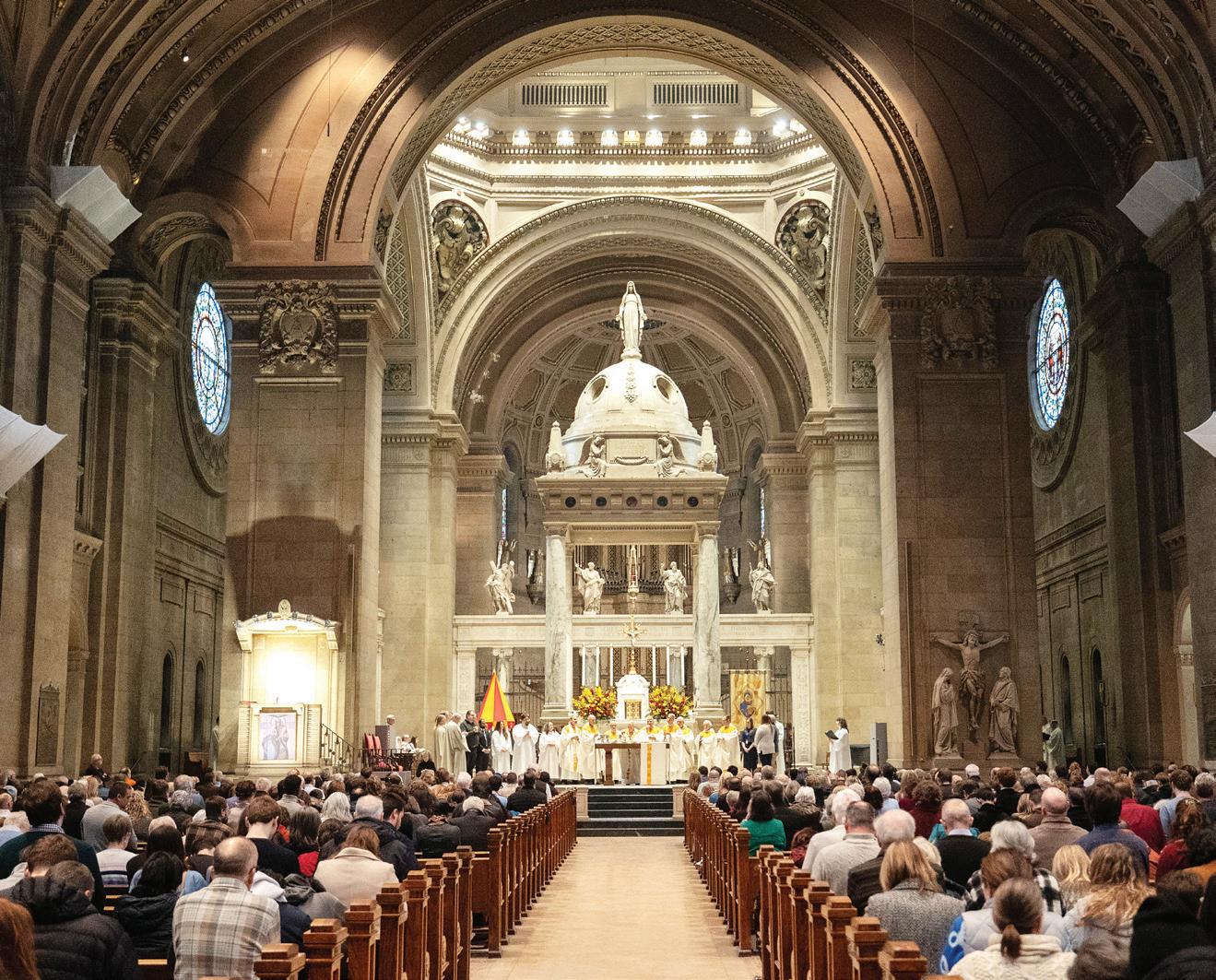
People pray during a Mass at the Basilica of St. Mary in Minneapolis Feb. 1, 2026, to celebrate the 100th anniversary of the church being named a minor basilica by Pope Pius XI. Archbishop Bernard A. Hebda of St. Paul and Minneapolis was the main celebrant. (OSV News photo/Dave Hrbacek, The Catholic Spirit)
MINNEAPOLIS (OSV News) – A century ago, Pope Pius XI granted a grand Minneapolis church dedicated to the Immaculate Conception the title of “basilica.” It was the first church in the United States to receive the designation. To mark the anniversary, Archbishop Bernard A. Hebda celebrated a Feb. 1 Mass that included a reading of the 1926 proclamation, a centennial letter from Pope Leo XIV, and the introduction of a processional hymn commissioned
for the event. In 1926, the Holy Father conferred on the Pro-Cathedral of St. Mary the title minor basilica “by reason of the piety of its worshippers as well as by the splendor of its ritual and the richness of its adornment,” according to the basilica’s website. Currently there are 94 minor basilicas in the United States and more than 1,700 worldwide, in addition to four major basilicas in Rome and the Vatican. Among the privileges of the basilica designation is an attachment to the papal household and the right to use the papal coat of arms. In 1966, St. Paul VI changed the name of the Archdiocese of St. Paul to the Archdiocese of St. Paul and Minneapolis, and elevated the Basilica of St. Mary to the archdiocese’s co-cathedral.
VATICAN CITY (CNS) – Pope Leo XIV has added the feast day of St. John Henry Newman, who is “a radiant light for the Church on pilgrimage through history,” to the General Roman Calendar so that “his Optional Memorial be celebrated by all on 9 October.” Cardinal Arthur Roche and Archbishop Vittorio Francesco Viola, respectively prefect and secretary of the Dicastery for Divine Worship and the Discipline of the Sacraments, announced the pope’s decision in a decree published by the Vatican Feb. 3. Cardinal Roche said the inclusion of St. Newman in the General Roman Calendar “is intended to present his figure as
an outstanding example of the constant search for the truth that enlightens and saves” and to help the faithful contemplate him “as a man led by the ‘kindly light’ of God’s grace to find peace within the Catholic Church.” Bishops’ conferences around the world will need to translate from Latin the prayers issued by the dicastery for Mass on his feast day as well as those used in the Liturgy of the Hours and in the Roman Martyrology, and have the translations confirmed by the dicastery.
MANAGUA, Nicaragua (OSV News) – Nicaragua’s Sandinista regime has blocked a Catholic diocese from carrying out door-to-door evangelization, ordering all pastoral activity to remain inside parish grounds. The restriction affected the Diocese of León, where parishioners planned missions on Jan. 24, according to exiled lawyer Martha Patricia Molina, who documents religious persecution in the country. The move is the latest in a sweeping crackdown on the Catholic Church that intensified after the bishops mediated – and later withdrew from – talks following anti-government protests in 2018. Since then, at least 305 clergy and religious, including four bishops, have been forced into exile, and more than 5,000 Catholic charities, schools, and religious groups have lost legal status. While some religious orders have quietly left the country, the government continues to detain clergy and restrict ministry. Church leaders and human rights monitors say recent prisoner releases are strategic gestures, not signs of real religious freedom. Exiled Auxiliary Bishop Silvio José Baez of Managua spoke of freedom and democracy “coming increasingly closer” in Latin America. He said in his Jan. 25 homily at St. Agatha’s parish in Miami that it’s “time to speak to illuminate the darkness of the moment, feed the hope of the people and denounce the oppressive structures that have prevailed until now, but that are about to disappear.”
MARCH 14 & 15
BY MARY WOODWARD
Since Mardi Gras is approaching and parades are rolling all over the region, I wanted to share a fun fact about Bishop Richard Gerow’s father, Warren Rosecranz Gerow.
As I have chronicled in these columns, Bishop Gerow is a native of Mobile. There is a big debate as to where the first Mardi Gras celebration occurred in the United States. New Orleans claims Mardi Gras, but Mobile is fiercely protective of the fact that the first hint of Mardi Gras on the soil of the country happened around 1699 outside of its current location. I think the towns have settled on Mobile came first, and New Orleans made it bigger. That is probably the best consensus among the ranks.
With that being said, let me tell you about Bishop Gerow’s father. Warren Gerow was born in Mobile on Aug. 21, 1850 to Warren DeLancey Gerow and Charlotte Rosecranz, who had moved to Mobile from Duchess County, New York prior to the arrival of Warren Rosecranz. He was the oldest of Warren and Charlotte’s four children.
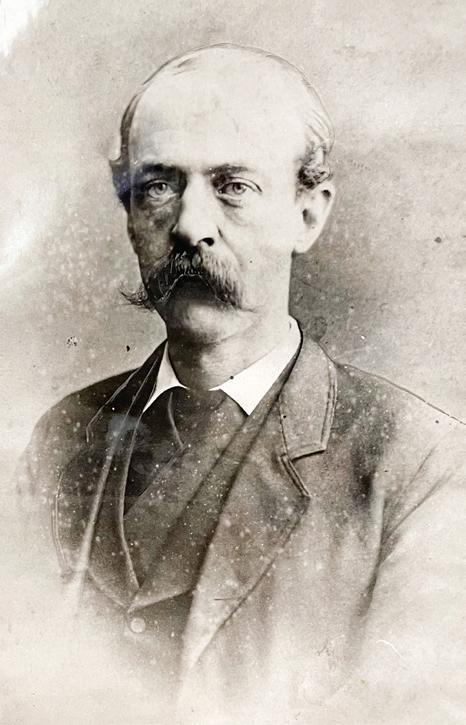
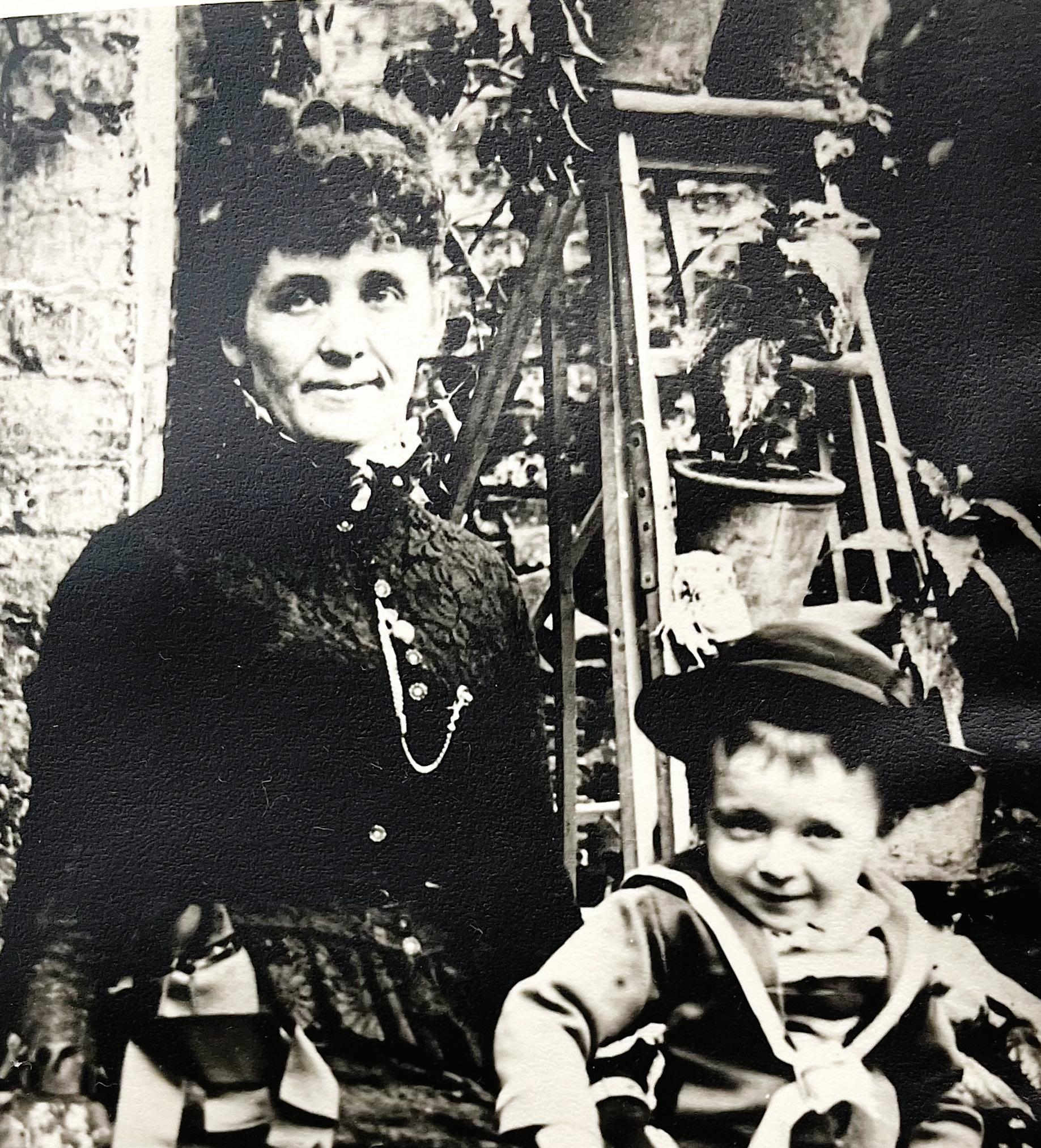
Warren DeLancey was a shipbuilder and probably moved to Mobile, which was growing into a large port. The family home was a one-story wood-framed building on the east side of Hamilton Street near Eslava Street. Bishop Gerow in his Reminiscences describes the yard as having two fig trees and that he would visit his grandparents much more often during fig season. Having a fig tree in my yard, I understand why the visits were probably daily during July.
Annie Skehan Gerow is pictured in an undated photograph taken prior to 1894. At left, her husband, Warren Rosecranz Gerow, father of Bishop Richard Gerow, is shown in an undated portrait. Warren Gerow was a Mobile native known for his artistic talent and work designing Mardi Gras floats for the Order of Myths. (Photo from archives)
Bishop Gerow’s father married Annie Skehan on April 11, 1883. Two years later on May 3, the future bishop, Richard Oliver Gerow was born to Warren and Annie.
Let me allow Bishop Gerow to take it from here: “My father received his education in the public schools of Mobile. His early years gave evidence of a talent for art, drawing and painting, and later this became most helpful to him when he was engaged permanently by the Order of Myths (OOM) for designing and construction of the Mardi Gras floats of that Order.
“He was a great reader and student all his life and accumulated a rather fine library of classics of history, science, and literature. I still have very vivid memory of my father. As I grew we became the greatest of close pals. To me he was the greatest man in the world.
“I remember well the large warehouse on Commerce Street where he used to construct the floats. I was a frequent visitor, and I had the esteemed privilege of knowing long in advance the great secret of what the floats would represent when they were paraded on Mardi Gras night.
“I still remember many of the intriguing floats. One particularly I remember had little electric bulbs lighted at the tip of gigantic morning glory blossoms each representing a sparkling dew drop. “In order to light these bulbs my father had to construct within the float a dynamo – for storage batteries were not available in those days. I remember that at night at home he would study books on electricity. I remember, too, the big wheel within the float with iron cranks on either side had to be turned by two muscular men – and it worked beautifully.
“Other cities from time to time called upon him to put on pageants – among these was Baltimore, Albany, Vicksburg. He was a member of the No. 5 Volunteer Fire Department and also of a Volunteer Company of the U.S. Artillery.
“On May 29, 1894, my father died; he was buried in the Gerow lot in Magnolia Cemetery. During his long illness he gave serious thought to preparing his soul for death. He had not been a church-goer for many years. He now gave
thought to the Catholic Church, and well before he died his family had the pleasure and consolation of seeing him received into the Catholic Church and prepared with the last sacraments.”
Having come upon this account in Bishop Gerow’s Reminiscences I will have a more nostalgic and more appreciative experience of Mardi Gras this year. Bishop Gerow was only 11 when his father died. His father had become his closest friend and losing one’s father at any age is so di cult. But losing one’s father at such a young age had a profound effect on young Richard.
As I have written before, Richard grew up in the shadow of the Cathedral, and he received all his sacraments there, except for ordination to the priesthood. His father would have been received into the church there.
As he grew older, Bishop Edward Allen became somewhat of a spiritual father to Richard. Bishop Allen would have helped guide Richard ultimately to seminary and ordination. But I sense that Warren Rosecranz Gerow was deep within Richard’s heart as a profoundly spiritual and creative driving force who instilled in his young son a sense of wonderment for creation and a love for arts and sciences that he carried with him throughout his life.
I hope this memory of Bishop Gerow inspires you as much as it has inspired me. Have a wonderful and safe Mardi Gras and a blessed Lenten journey.
(Mary Woodward is Chancellor and Archivist for the Diocese of Jackson.)






The Diocese of Jackson is committed to ensuring that no one being served by the church be (is) at risk of sexual abuse or exploitation by clergy, religious or lay church personnel. The spiritual well-being of all the victims, their families and others in the community is of particular concern to the church. In accordance with our policy, all victims are o ered counseling and pastoral care.
Anyone who has been a victim of abuse or exploitation by clergy, religious or lay church personnel and has not yet reported it is encouraged to do so. We encourage any victim to contact Jenifer Jenkins, Coordinator of Victim Assistance & O ce of Protection of Children and Safe Environments at 601-960-8471.

For more information about diocesan policies and procedures and to learn what the diocese is doing to create a safe environment for everyone, please visit the diocesan website at www.jacksondiocese.org and click on “Protection of Children.”
To report an allegation of abuse or mishandling of allegations of sexual abuse by a bishop, please visit https://reportbishopabuse.org.










+Joseph R. Kopacz D.D., Ph.D. Bishop of Jackson
BY STAFF REPORTS
PEARL – The St. Jude Artisan Guild, a ministry of St. Jude Catholic Church, met Saturday, Jan. 24, to prepare Comfort Kits for individuals experiencing homelessness. The kits include handmade items designed to provide warmth, dignity and practical support.
The Artisan Guild is a small group of parishioners led by Linda Tynes-Artman that uses artistic skills to support other parish ministries, primarily Feed My Sheep. Last year, the group collected used linens – including blankets, drapes and other heavy materials – with strong support from St. Jude parishioners. Guild members transformed the donated materials into ponchos and oversized tote bags, which serve as staple items in the Comfort Kits. Members also created pouches to hold feminine hygiene items for distribution.
The St. Jude Feed My Sheep Ministry distributed 39 Comfort Kits at the Opportunity Center. Each kit
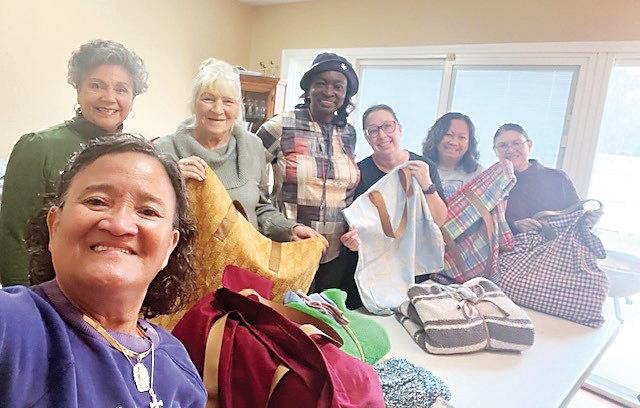
PEARL – Members of the St. Jude Artisan Guild, a ministry of St. Jude Church, display handmade items prepared for Comfort Kits during a recent work session. Pictured, from left, are Ascuncion M. Canon, Linda Tynes-Artman, Dusty Avilez, Marlene Williams, Christi Doucet, Myra Woodward and Deniza Buenaventura. (Photos courtesy of Linda Tynes-Artman)
BY DUNCAN DENT, MADISON COUNTY JOURNAL
MADISON – A Greenville native and the current assistant principal at St. Patrick Catholic Middle School on the coast will be the next principal at St. Joseph Catholic High School here.
Trey Bailey will start as principal of St. Joseph on July 1, Joni House, Director of Schools for the Diocese of Jackson, said.
Father Joe Tonos said he and Father Albeen Vatti, administrators at the school, were happy to accept Bailey’s nomination for the position from the School Advisory Committee.
“We welcome Mr. Bailey to the Bruin Family and back home to the Diocese of Jackson,” Tonos said.
Bailey said he looks forward to joining the long legacy of St. Joseph Catholic School.
“I am looking forward to joining a faithful community in carrying on the excellent tradition of Catholic education in the Jackson Metro area at St. Joseph, one that has been carried on for over 155 years,” Bailey said.
He currently serves as the assistant principal over the Middle School at St. Patrick in Biloxi and is also head coach for men’s football and athletic director for the high school.
Bailey will finish the school year on the Coast. He will work with interim principal Dr. John Jordan while making the transition to Madison this summer.
Bailey said it will be his goal as principal of St. Joe to prepare each student for all aspects of life.
“While we will strive to accomplish a wide array of goals, our primary focus will be on developing the student spiritually, emotionally, academically, and physically in order to leave St. Joseph and go into the world and carry out the Great Commission,” Bailey said.
Bailey is a native of Greenville and a graduate of the city’s Catholic schools. He has a BA in History from Millsaps College, an MA in Educational Leadership, and a designation as an Education Specialist in Educational Leadership from Arkansas State University.
He has taught special education, world history, physical education and Mississippi studies in Bolton, Raymond and Richland.
(Reprinted with permission of Madison County Journal.)
contained a poncho, tote bag, hat and scarf. The items were shared with guests receiving essential services such as showers, laundry, mail, computer access, and case management for housing and employment.
The donations helped provide comfort, dignity and practical assistance to individuals who rely on the Opportunity Center as a safe daytime “home base,” particularly during times of need. Shared with unhoused individuals, “these kits reflected God’s love in action and the strength of a community caring for one another,” said Tynes-Artman.
The Artisan Guild meets on the third Saturday of each month at 10 a.m. in the old rectory and plans to begin work in February on new additions to the Comfort Kits, including sleep mats and knapsacks.
Tynes-Artman expressed appreciation on behalf of the Guild saying, “We are so grateful to parishioners for their generous donations late last year and look forward to continued collaboration in the year ahead.”

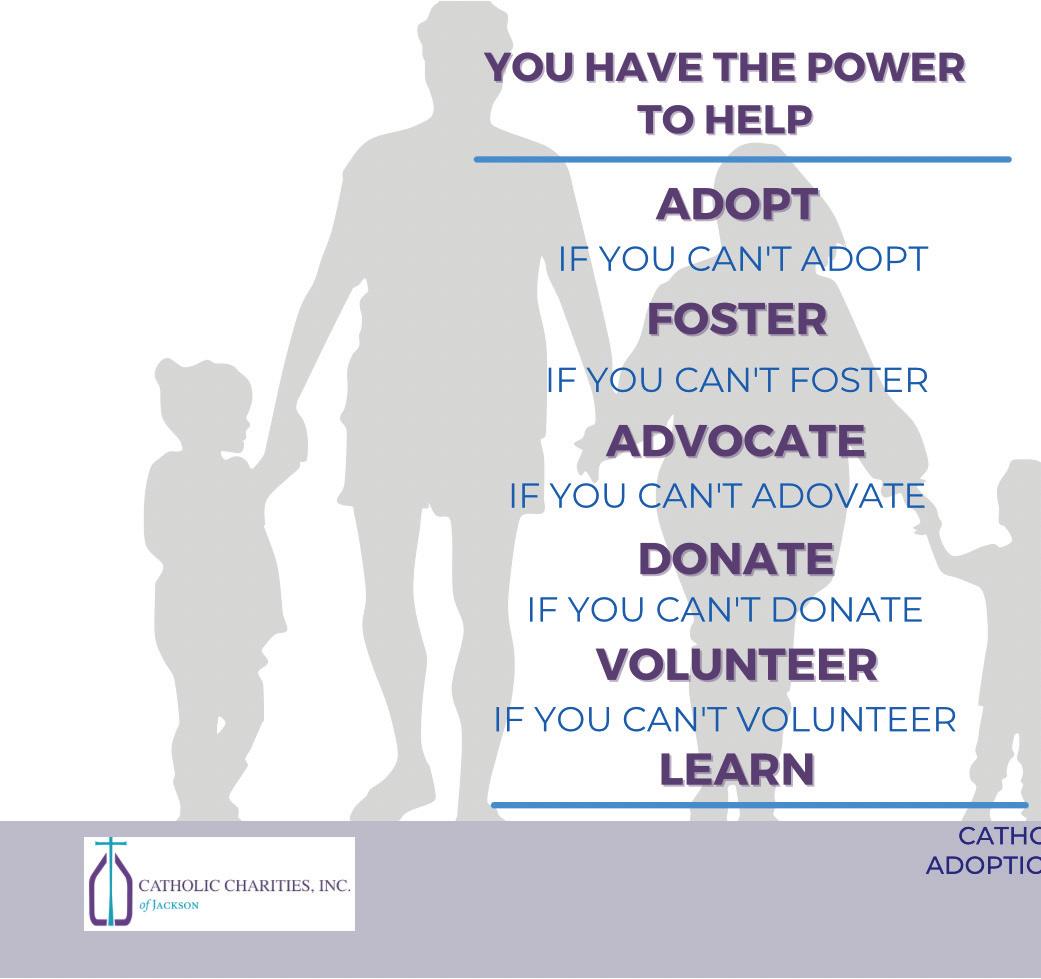
(For more information on the Artisan Guild at St. Jude parish contact (601) 939-3181.)
A collection of Comfort Kits prepared by the St. Jude Artisan Guild, a ministry of St. Jude Church, awaits distribution. Each kit includes a handmade poncho, oversized tote bag, hat and scarf, created from donated linens and materials to provide warmth, comfort and dignity to unhoused individuals in the Metro Jackson community.

By Dr. Fran lavelle, D. Min
Our nephew works offshore on an oil rig. When he is back in Starkville visiting his folks, I often invite him to have dinner with us. My husband and our nephew have common interests, from music to healthy eating to farming. On a recent visit, we were having a conversation about how people get labeled with pejorative monikers that often have lasting negative impacts, sometimes even demonizing a whole culture or race. He travels internationally work and encounters people from many cultures and races. We talked about how our prejudices are dismantled when we actually encounter people who are different from ourselves.
This kind of labeling or name-calling is meant to diminish the value of the other. It often elevates the sense of self-worth in the name-caller. Terms like lazy, crazy, radical or stupid make it easier to dismiss the person or persons. As children, we are taught that name-calling is unkind and hurtful. I remember growing up in our family, and pejorative terms used about another person were met with immediate consequences. This line in the sand
By sister alies therese
was drawn from my mother’s own experience as a child.
My mother went to Catholic school in her small southeastern Ohio town and remembers Catholic children being taunted by public school kids passing by on the bus. She was called names like “Cat Licker” (right? Where did that come from?). She vividly remembers her closest friend, who was African American, being especially harassed for being Black and Catholic in a place where Black Catholics were part of a super-minority.
We all can recall memories of when we were the object of someone else’s name-calling. Too fat, too thin, not smart, ugly, not enough, too much – the list goes on. My mom and her friend grew beyond those remarks, but the underlying need for the use of such name-calling has remained.
Proverbs 19:11 tells us, “Good sense makes one slow to anger, and it is his glory to overlook an offense.” We are called, therefore, to fight the urge to respond in kind. After all, provocateurs thrive on reaction and love when arguments are escalated. Look at our culture of keyboard warriors. The time lapse between an insult and an inferno
One pair of brand-new white socks. You might have received a pair last year about this time, but none since, and the ones you get weekly from the laundry are not necessarily yours. You sit in a prison cell, perhaps on death row. Consider how you feel when you slip those socks on – clean, unworn by anyone else, just for you. You are not sure whom to thank, but the chaplains are a good place to start. What you do know is that you received them through an act of kindness – kindness from people you do not know, people who are concerned for your welfare, people who follow Jesus, the rescuer and explorer.
“Anyone who is kind wants to know when people have been made happy. They care for that more than for being thanked,” writes Frances Hodgson Burnett in The Little Princess. Happy, no matter where you reside, is a blessing.
Or maybe you received some writing paper, an adult coloring book, hard candy or a hygiene product. Perhaps you also received a Christmas card, peanut butter crackers or a new toothbrush and toothpaste. A puzzle book, a new ballpoint pen or some crayons.
The point is obvious – when you receive these few items allowed by Parchman prison, especially for death row and maximum-security prisoners, you are one of the fellows welling up with gratitude.
is measured in nanoseconds. We have become a people quick to judge, label, diminish and dismiss. Sadly, there are those in the Catholic world who use their platform to add to the nastiness. The dualism that dominates our culture and our conduct is killing us – literally. I remind myself often, and speak it gently to the world, that if we believe in the dignity of the human person, that dignity extends to all people, not just the ones with whom we align our political, religious or other beliefs. As Catholics, we are called to a higher standard. Colossians 3:7-8 reminds us, “You used to do these things when your life was still part of this world. But now is the time to get rid of anger, rage, malicious behavior, slander and dirty language.”
Years ago, I quit smoking for Lent. What I learned was that nicotine leaves the body in three days. After that, the real challenge – breaking the habit. One must train the mind to do something else instead of smoking. I took up cross-stitching. It gave my hands something to do in the evening, when I was most apt to smoke.
The same can be said for changing how we respond on social media. Look, my nature tends to look for the best in a situation, but I am also a realist. People who cannot break the habit of
Kindness seems a small thing, and it is when many of us take things for granted; we miss its deep gift. “Kindness must be the highest virtue; don’t let me forget that ever,” writes Joan Blos in A Gathering of Days
I find in the Psalms – 47 and counting – the call to kindness, the description of kindness, and the God who is kindness. For example, Psalm 103:4, 17 tells us: “God redeems your life from destruction, crowning you with kindness and compassion; the kindness of the Lord is from eternity to eternity toward those who fear him.” (See also Psalm 89.)
Kindness is God’s essential character, and in Hebrew the word is hesed. You might be surprised to learn it has many meanings: loving devotion, mercy, goodness, generosity, loyalty, favor and love. When you do a kind act, you may not think much about all that – just “git ’er done,” because it is the right thing to do. Yet there is much deeper meaning, and I hope in this new year you will want to know more. Hesed also means dependable, faithful, sacrificial love – no matter the circumstances – and unwavering reliability. Here is the key: It is an active commitment, not just an emotional sentiment. We find this lived out throughout Scripture – in Exodus, Ruth, Hosea and Micah – where we discover the covenant God has made with us, his people.
When you have a covenant, such as marriage, you are in a constant relationship. This means the promises are not spontaneous feelings but deliberate actions taken to maintain the bond. Kindness means taking gracious action, built on the faithful and enduring actions of a loving God. We experience God as rescuer, bringing us relief and revealing his divine compassion. The parishioners of the tiny parish who
name-calling and dismissive behavior are often living out of their own insecurities and brokenness. One must first be aware of their behavior. I am not suggesting that you muzzle your First Amendment rights, but rather ask yourself: Are you adding to a positive discourse, or are you adding to the vitriol?
Perhaps we would all be well served if we applied this acronym attributed to Dr. Ed Young. He suggests we T.H.I.N.K. before we speak, asking ourselves if what we have to say is: true, helpful, inspiring, necessary and kind.
Lent is a great time to put into practice the wisdom of our nephew – prejudices are dismantled when we have an encounter with people who are different from ourselves. So perhaps instead of firing off a divisive response to a social media post of a friend, go out for a cup of coffee. And if all else fails, remember the Golden Rule: “Do to others as you would have them do to you” (Luke 6:31). A more peace-filled and blessed Lent awaits.
(Dr. Fran Lavelle is the director of faith formation for the Diocese of Jackson.)
collect these items each Advent know the joy of gracious action. What else does it look like?
St. Mother Teresa wrote in Something Beautiful for God: “Be kind and merciful. Let no one ever come to you without coming away better and happier. Be the living expression of God’s kindness: kindness in your face, kindness in your eyes, kindness in your smile, kindness in your warm greeting.”
Another aspect is one St. Paul points out to the Romans: “Do you not know that God’s kindness is an invitation to you to repent? Despite this, your hard heart and impenitent heart is storing up retribution on the day of wrath when the just judgment of God will be reveled, when He will repay everyone for what they have done: and immortality by eternal life for those whom strive for glory, honor, patiently doing right; wrath and fury to those who selfishly disobey the truth and obey wickedness.” (Romans 2:4ff NAB)
In this new year, full of opportunities for random acts of kindness – paying it forward and sacrificing for people you might not even know – I pray to learn. God keeps his promises. Will I?
“A man was lost in the desert. Later, when describing his ordeal to friends, he told how, in sheer despair, he had knelt down and cried out to God to rescue him. ‘And did God answer your prayer?’ they asked. ‘Oh no! Before he could, an explorer – a rescuer – appeared and showed me the way,’” writes Anthony de Mello in The Prayer of the Frog (1992).
We know that rescuer is Jesus. What great kindness. Let us do the same for one another.
Blessings.
(sister alies therese is a canonical hermit who prays and writes.)
By Joe Pearson
There were many sleepy eyes as we seminarians gathered for Mass at 3:15 a.m. before departing for our mission trip to Costa Rica. The chapel was dark and quiet, without the usual buzz of the choir rehearsing, but there was an air of excitement and anticipation.
The prayer over the Offerings for that Mass, the Memorial of St. Francis Xavier, was a fitting send-off: “Receive, O Lord, these offerings we bring you in commemoration of St. Francis Xavier, and grant that, as he journeyed to distant lands out of longing for the salvation of souls, so we, too, bearing effective witness to the Gospel, may, with our brothers and sisters, eagerly hasten toward you. Through Christ our Lord.”
As part of our priestly formation, each year the class of first-configuration seminarians travels to the Diocese of Limón on the western coast of Costa Rica. The week consists of evangelization, manual labor and the celebration of liturgy with the people.
Our flight arrived in the capital city of San José, and from there we bused to our base camp in Limón. We were joyfully greeted by Father Pablo Escriva de Romani, a missionary priest originally from Madrid, Spain, who would be our leader for the week. We immediately gathered for an hour of Eucharistic exposition and evening prayer.
“It is important to remember we are evangelists, not social workers,” Father Pablo said over dinner that first night, a point he reiterated throughout the trip. The source of our strength was prayer. Our purpose was not merely to perform charitable acts but to encounter people. Our motivation was not simply that it is good to help those in need. We have encountered the gratuitous love of our Lord, and as a consequence we are compelled to share that love with our neighbors, especially the poor, with whom Christ aligns himself in a unique way.
The next day, we set out a few miles down the road to work in conjunction with the Missionaries of Charity, the religious order founded by St. Mother Teresa. Through them, we were connected with two refugee families whose homes were in desperate need of repair. We spent the day tearing out rotting floors and digging holes for the concrete pillars that would support new ones. Throughout our work, we spoke with the families, and at the end of the day we gathered to pray with them and thank them for the opportunity to serve.
From there, our trip transitioned as we drove to remote villages of the indigenous people to minister to them and celebrate Mass. I rode with Father Pablo as we bounced along rough mountain roads in his old 4Runner. His excitement was contagious. He
grinned from ear to ear, like a child awaiting Christmas morning. His love for the people was tangible.
For more than 40 years, the indigenous communities had not been visited by a priest until Father Pablo began doing so about 10 years ago. The people knew they were Catholic in name but little else about the faith. Over years of loving, zealous care, Father Pablo has helped build up a vibrant community.
I was deeply moved by the faith of the indigenous people. Many walked miles along rugged mountain paths from neighboring villages when they heard Mass would be offered on Sunday. They prayed fervently late into the night before the Blessed Sacrament.
At the end of our trip, we set aside a full day for a silent retreat to reflect on our experiences and the graces the Lord offered during our time on mission. It is true that the Lord is never outdone in generosity. As missionaries, we prepare to give of ourselves and to witness selflessly and boldly to the Gospel. Yet so often it is the people we encounter who witness to us by their faith, leaving us spiritually edified.
Over the course of the mission trip, we experienced the essence of the priesthood: offering worship to God and, out of longing for the salvation of souls, inviting all to share in the joy of the Gospel. And what a joy it is. As we invite others to hasten toward the Savior, we simultaneously hasten toward him ourselves. There is no greater gift, no greater happiness.
(Joe Pearson is a seminarian for the Diocese of Jackson in the first-configuration class at St. Joseph Seminary College in St. Benedict, Louisiana.)
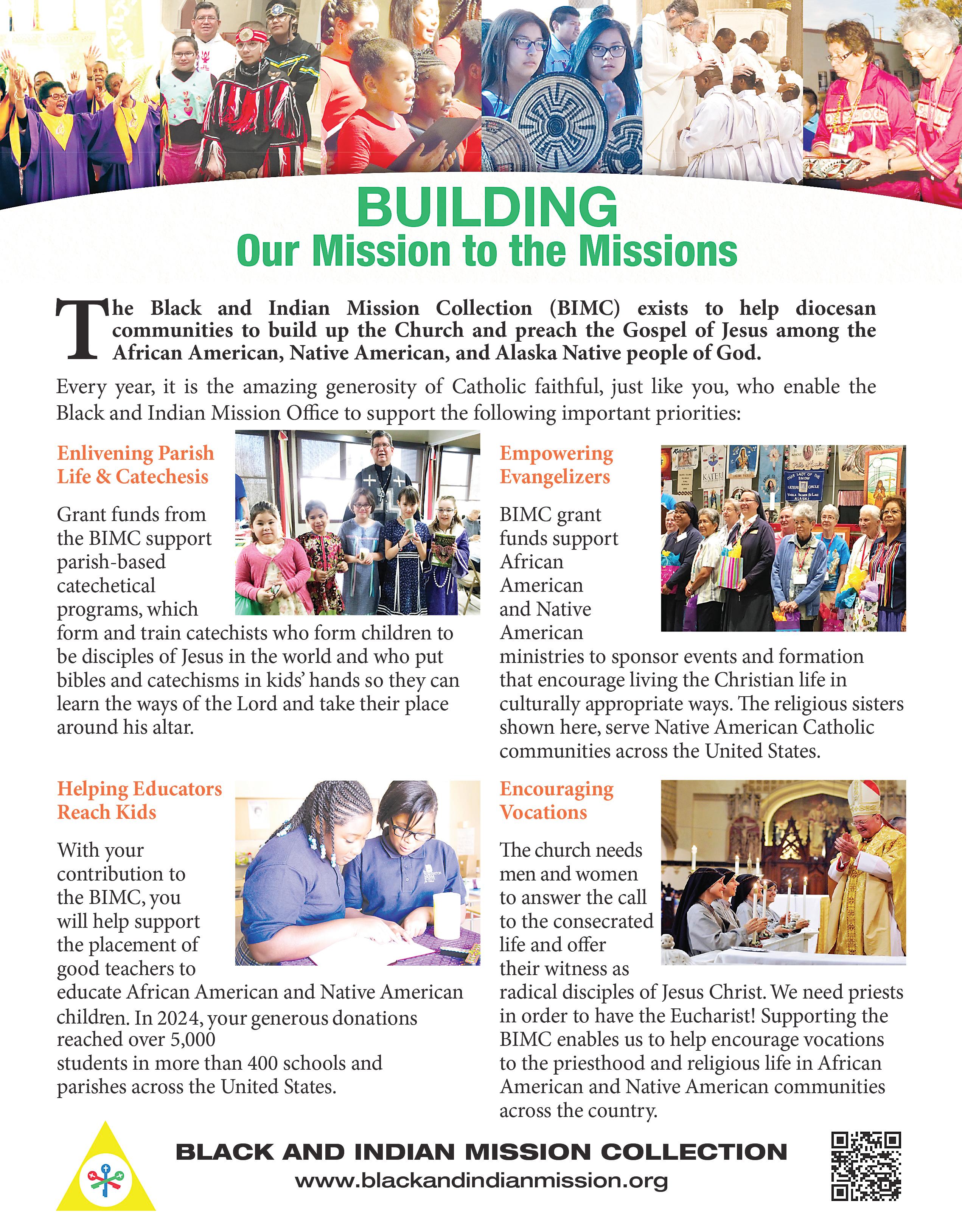
C olle C tion : F ebruary 21-22, 2026
By Joanna Puddister King
GALLMAN – High school juniors and seniors from across the Diocese of Jackson gathered at Camp Wesley Pines near Hazlehurst Jan. 16–18 for the annual diocesan SEARCH Retreat. SEARCH is a Catholic youth retreat modeled after the Cursillo retreat for adults, designed specifically for high school juniors and seniors who desire to deepen their faith and relationship with Christ.
A retreat “for teens, led by teens,” SEARCH is an experience like none other, with a strong focus on vocations. It engages youth in a special way and calls them to live out their Catholic faith in a bold, real, active and healthy way.
“Much of what happens in the retreat is kept a mystery, but a few things are certain – you will have fun, you will be challenged to grow in your faith, and chances are you will make a few new friends,” said Abbey Schuhmann, coordinator of the Office of Youth Ministry for the Diocese of Jackson.
The retreat team is primarily made up of a youth staff of teens who have previously attended a SEARCH retreat. Once a teen attends a SEARCH weekend, he or she has the opportunity to apply to staff future retreats, Schuhmann explained.
While the teens lead the retreat, adult leaders and clergy serve largely behind the scenes. Deacon Will Foggo assisted throughout the weekend and led adoration and benediction, helping guide the teens in prayer and worship. Seminarians Joe Pearson and Henry Haley were also present, offering witness talks and spending time with participants to share about vocational discernment and life in seminary.
The SEARCH model gives youth the opportunity to demonstrate and carry out servant leadership. The retreat would not be possible without the support of adult volunteers who have served in this ministry for many years.
“We are especially grateful to Ann and Jeff Cook for continuing to serve as volunteer adult SEARCH coordinators,” Schuhmann said. “Without their dedicated service, this ministry would not be where it is today.”
The SEARCH ministry continues to grow in the diocese, with each retreat welcoming new participants into what has become a strong and enduring SEARCH family.

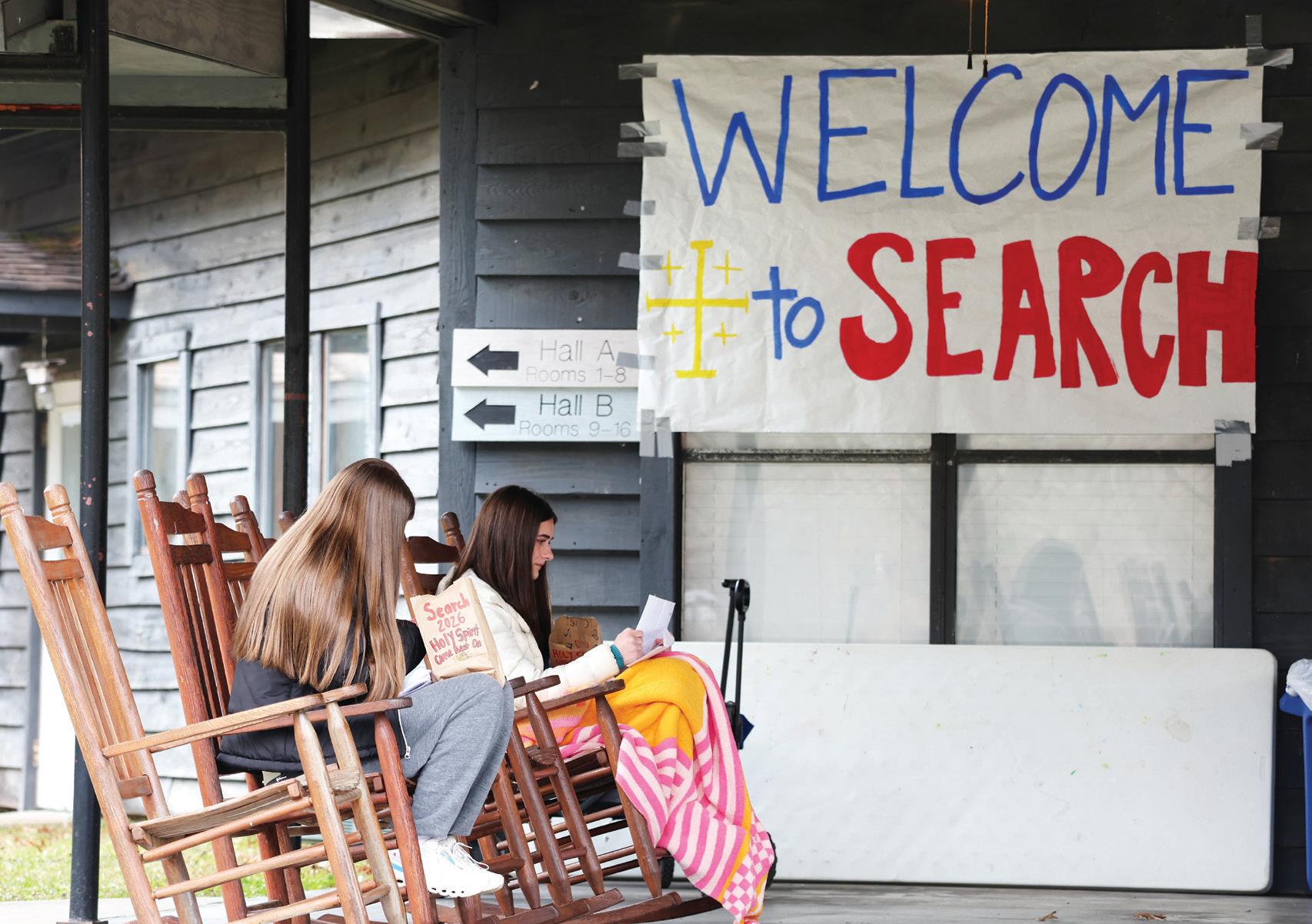
GALLMAN – Teens from across the Diocese of Jackson participate in prayer, small-group discussion, quiet reflection and community-building activities during the diocesan SEARCH Retreat at Camp Wesley Pines Jan. 16–18.

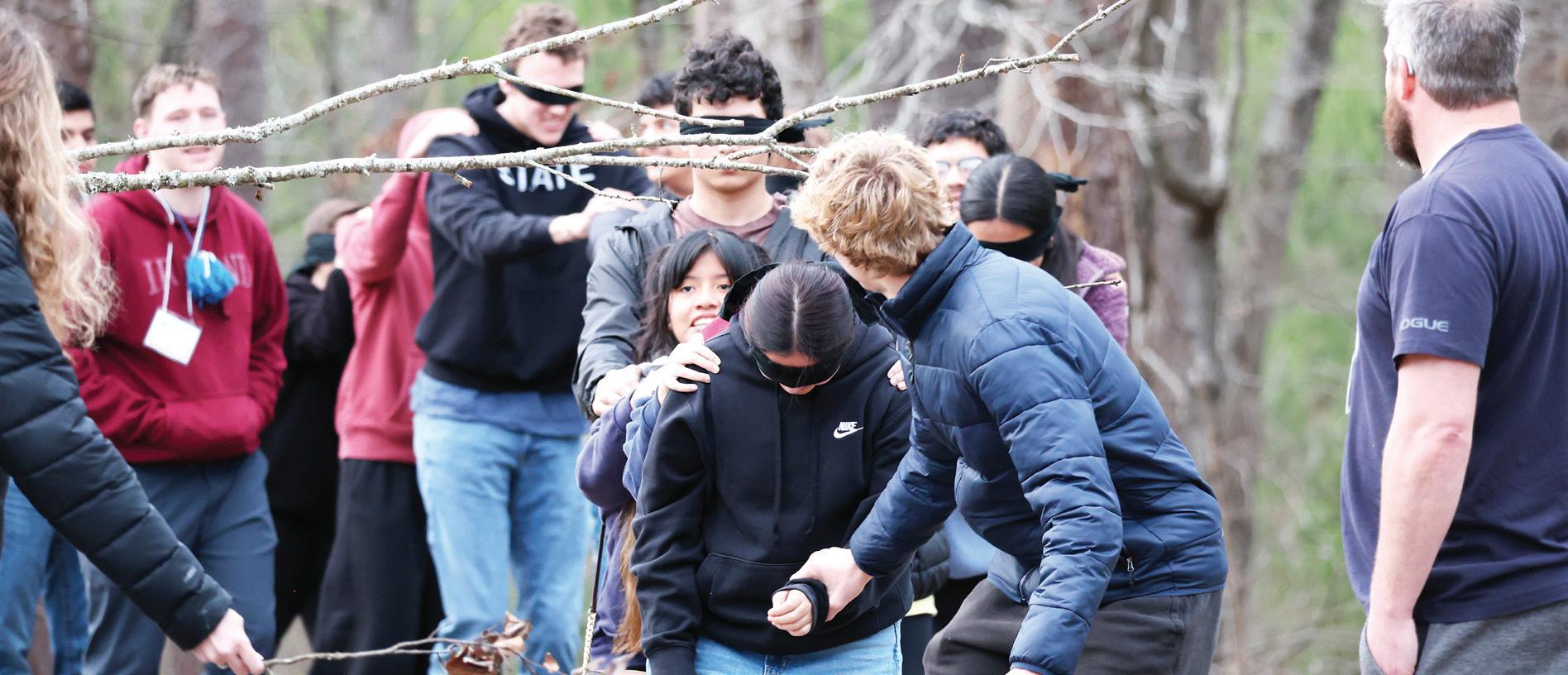

BY JOANNA PUDDISTER KING
JACKSON – As the Diocese of Jackson approaches Commitment Sunday for the 2026 Catholic Service Appeal (CSA), Catholics across the diocese are invited to prayerfully reflect on their commitment to prayer, participation, and generosity in support of ministries that serve communities throughout the diocese.
Commitment Weekend, including the in-pew collection, will take place Feb. 14–15 in parishes across the diocese.
The theme for the 2026 Appeal, Hope Rising, reflects both the spiritual foundation of the CSA and its tangible impact across the diocese. Rooted in the Gospel and inspired by the Beatitudes, the Appeal supports ministries that bring Christ’s compassion to life in parishes, missions and communities large and small.
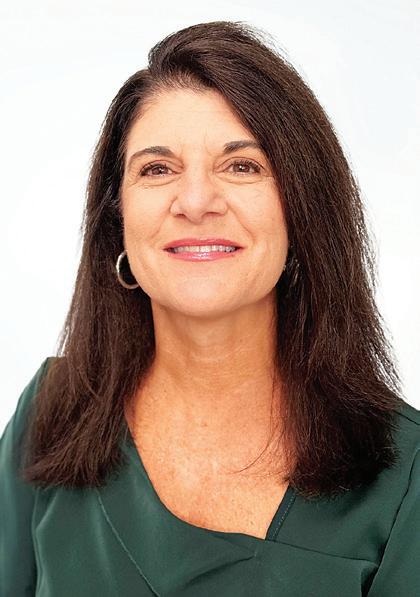
Bishop Joseph R. Kopacz has emphasized that hope is not an abstract idea, but something made visible through the shared mission of the Church. When Catholics live out the Beatitudes, he notes, hope does not merely glimmer – it rises. Through the Catholic Service Appeal, the faithful become a living witness of Christ’s compassion, serving those in need and strengthening the Church across the Diocese of Jackson.
Funds raised through the CSA support a wide range of diocesan ministries, including the formation of future priests, care for retired clergy, prison ministry, faith formation programs, and the charitable outreach of Catholic Charities. Together, these ministries serve individuals and families facing hardship, accompany those seeking healing and reconciliation, and nurture faith at every stage of life.
The Appeal is the primary means by which the diocese funds ministries that no single parish could sustain alone. Through the Catholic Service Appeal, each parish works toward a shared goal to help sustain diocesan ministries, and through this shared participation, Catholics across the Diocese of Jackson help ensure that pastoral care, education, charitable outreach and evangelization remain accessible in every corner of the diocese.
While the CSA is a financial appeal, diocesan leaders stress that it begins with prayer. Parishioners are encouraged to reflect on how God is calling them to participate – through prayer, service, and, as they are able, financial support.
As one diocesan family, Catholics are invited to be the hands and heart of Christ. When the faithful walk together in faith and generosity, hope truly rises for those they serve.
For more information about the 2026 Catholic Service Appeal, visit csa. jacksondiocese.org or contact Rebecca Harris, director of stewardship and development at rebecca.harris@jacksondiocese.org.