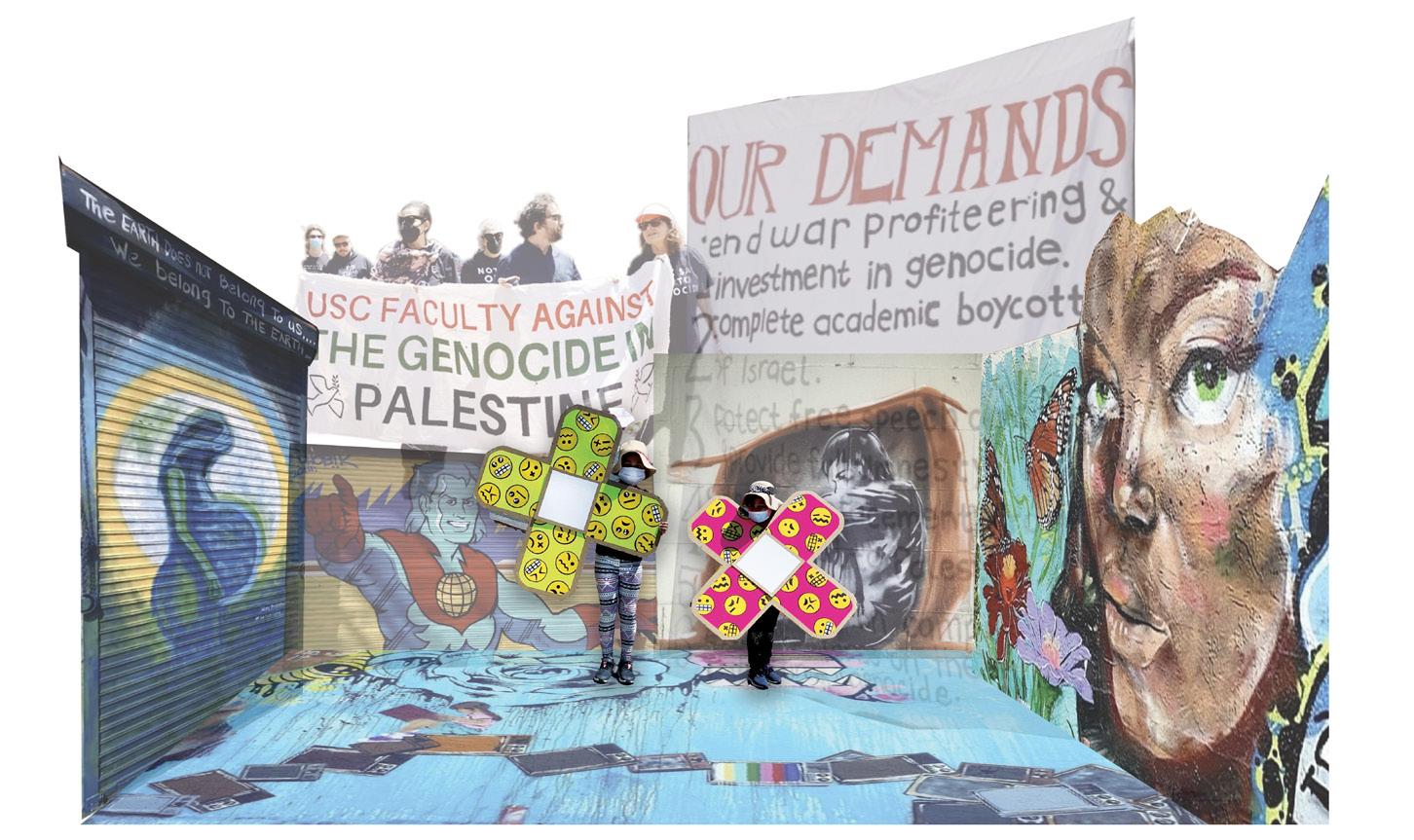
architecture portfolio. jasmin cabuco.
architecture portfolio. jasmin cabuco.
(704) 917-9275 | jcabuco2002@gmail.com | jcabuco@usc.edu | linkedin.com/in/jasmin-cabuco | instagram.com/jac.architecture/
EDUCATION
University of Southern California, M. Arch - Los Angeles, CA
Advanced Standing (3.96 GPA)
August 2024 - Present
University of Virginia, School of Architecture, B.S. Arch - Charlottesville, VA
Minor in Civil Engineering (3.613 GPA)
August 2020 - May 2024
Leadership - School of Architecture First-Generation Low-Income Initiative, 2022 - 2023
Outreach Committee - School of Architecture Student Council, 2022 - 2023
ACHIEVEMENTS
Fall 2024
Fall 2023
Spring 2019
Spring 2018
University of Southern California Merit Based Scholarship
University of Virginia Architecture Departmental Award
NAWIC Regional Design and Drafting Competition 1st Place
NAWIC National Design and Drafting Competition 1st Place
EXPERIENCE
SKILLS VOLUNTEERING
Adobe Photoshop, Adobe InDesign, Adobe Lightroom, Microsoft Office, Hand Drawing, Physical Model Making, Rhino, AutoCAD
Photography, Revit, SketchUp, V-Ray, Enscape, ArcGIS
Grasshopper, Adobe Illustrator
2023
Managed small residential projects, producing design proposals and construction documents in accordance with local building codes
Consulted with clients, contractors, and local landscape architect to ensure structural, site, and client needs were met during site visits and in-office meetings.
Extern at Anderson Mason Dale Architects
Assisted in design development through model making
Administrative Assistant at Candace M.P. Smith Architect PC
Prepared invoices, client information folders, and ammended office documents
Organized essential office spaces, archiving materials and past projects
Prepared invoices, client information folders, and ammended office documents
Job Shadowing at RdM Architecture
Accompanied senior members of the firm to client meetings and site visits
Rendered current and past projects in SketchUp
Reviewed building codes and edited project specifications
AutoCAD Specialist at Consolidated Fire Protection
Transferred foor plans for a Marriot Hotel in Helen, GA onto AutoCAD
United Way Day of Caring
Expanded mural at Charlottesville-Albemarle Technical Education Center (CATEC)
United Way Day of Caring
Preliminary mural at Charlottesville-Albemarle Technical Education Center (CATEC)
project 01. project 02.
architecture for survival. rooted row.
project 03. project 04. learning the land. jungle gym.
arch 605A | fall 2024. los angeles, california.
early concept design collaboration with chloe kaplankristensen. all drawings and images shown are done by myself.
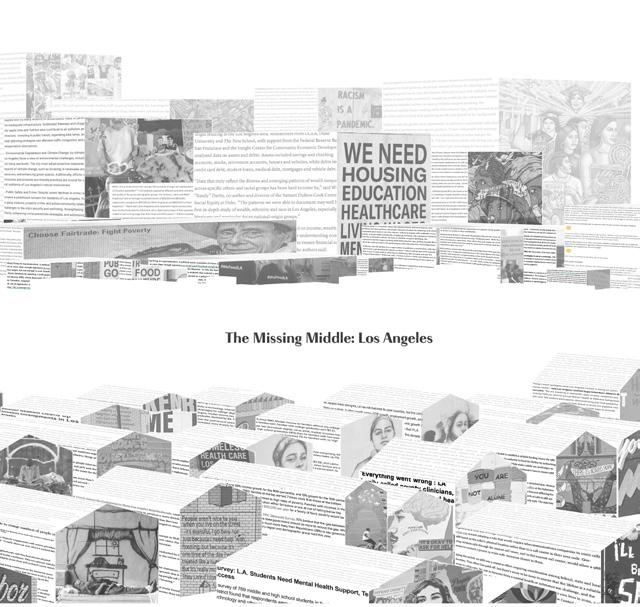
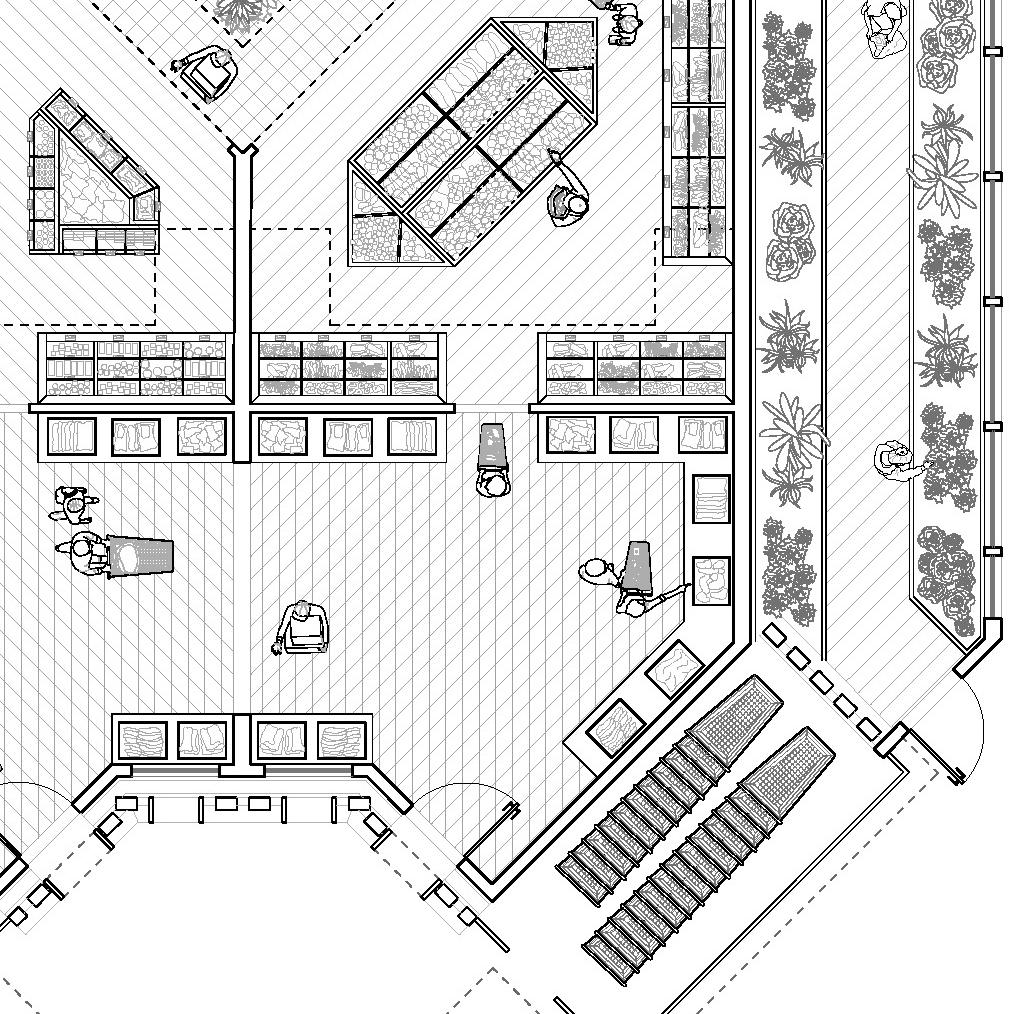
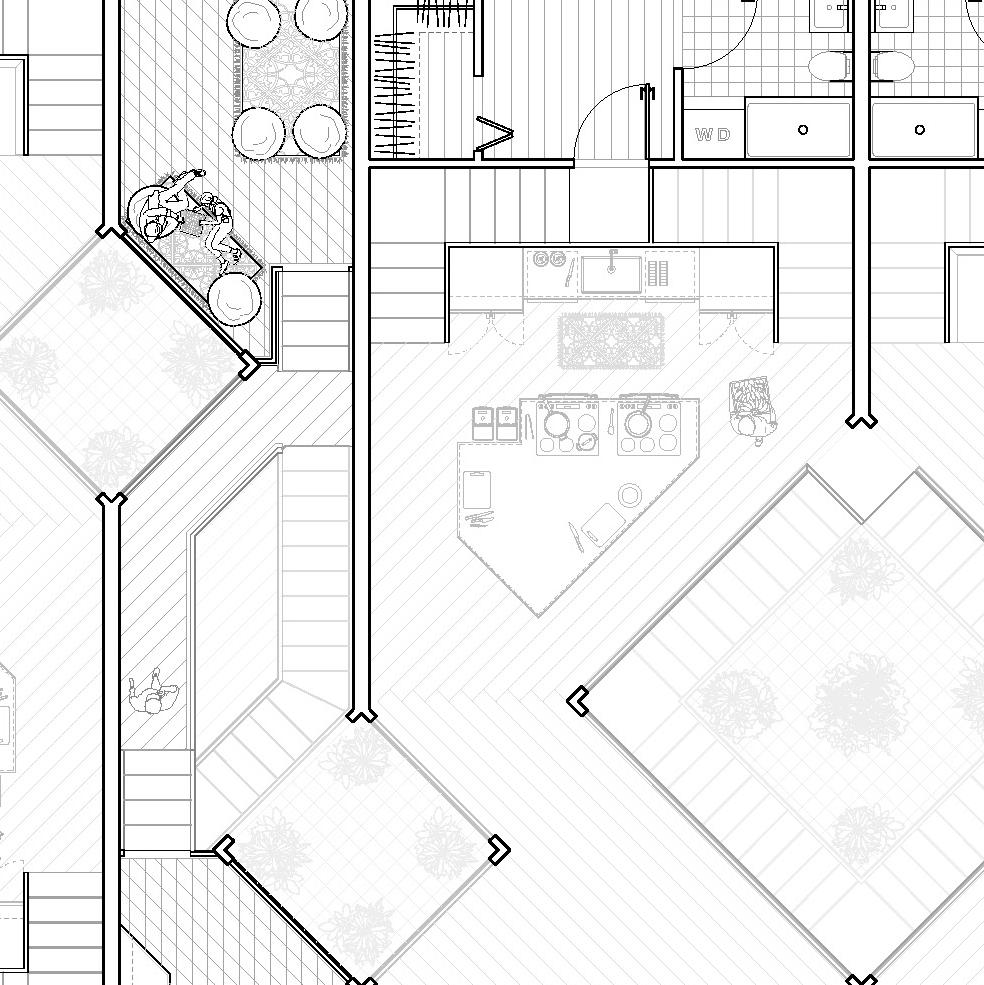
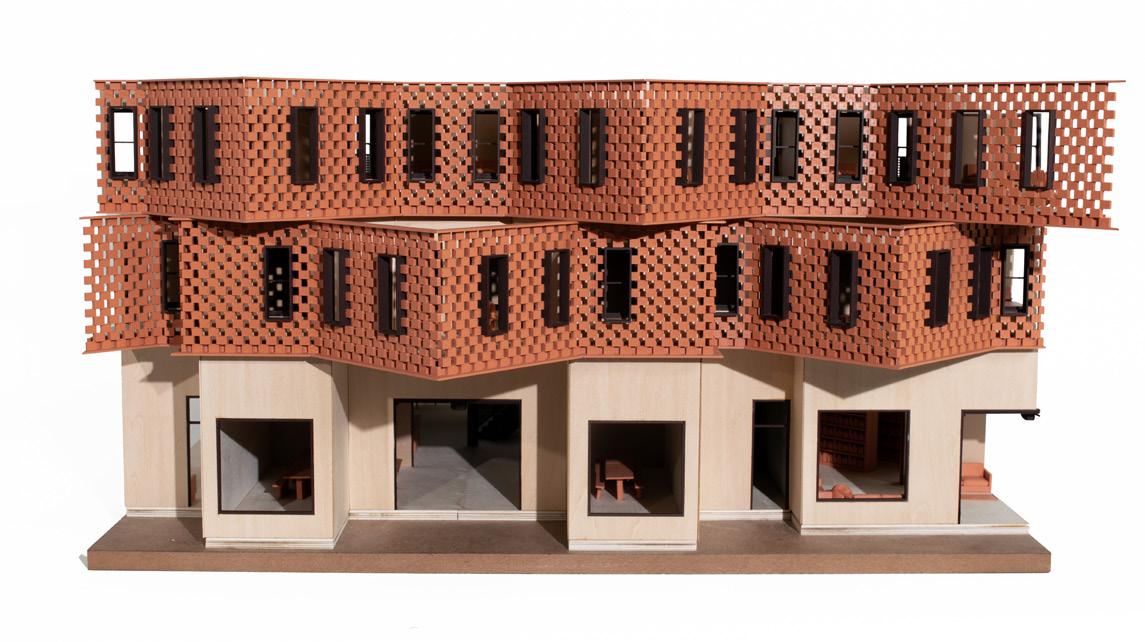
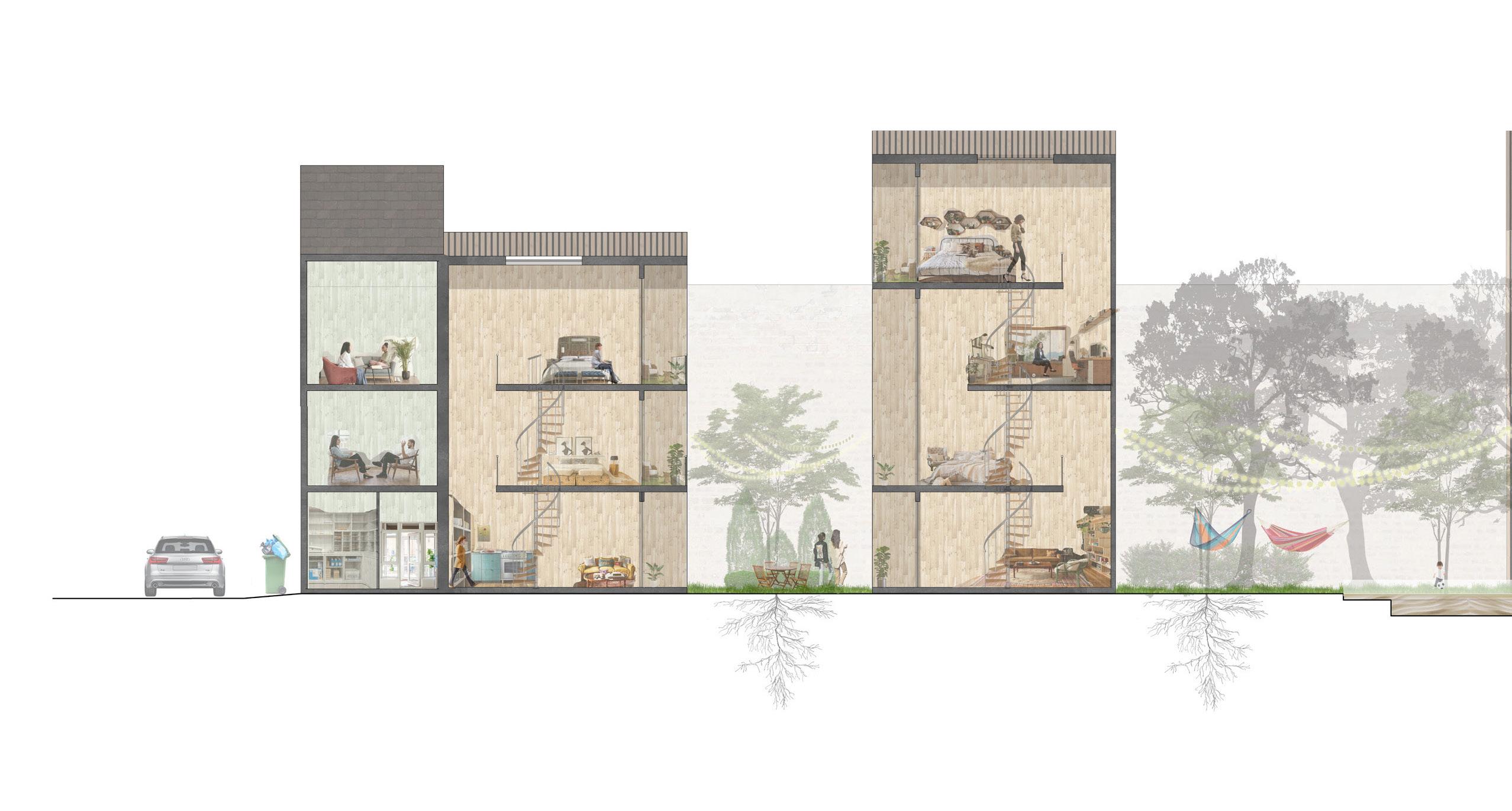
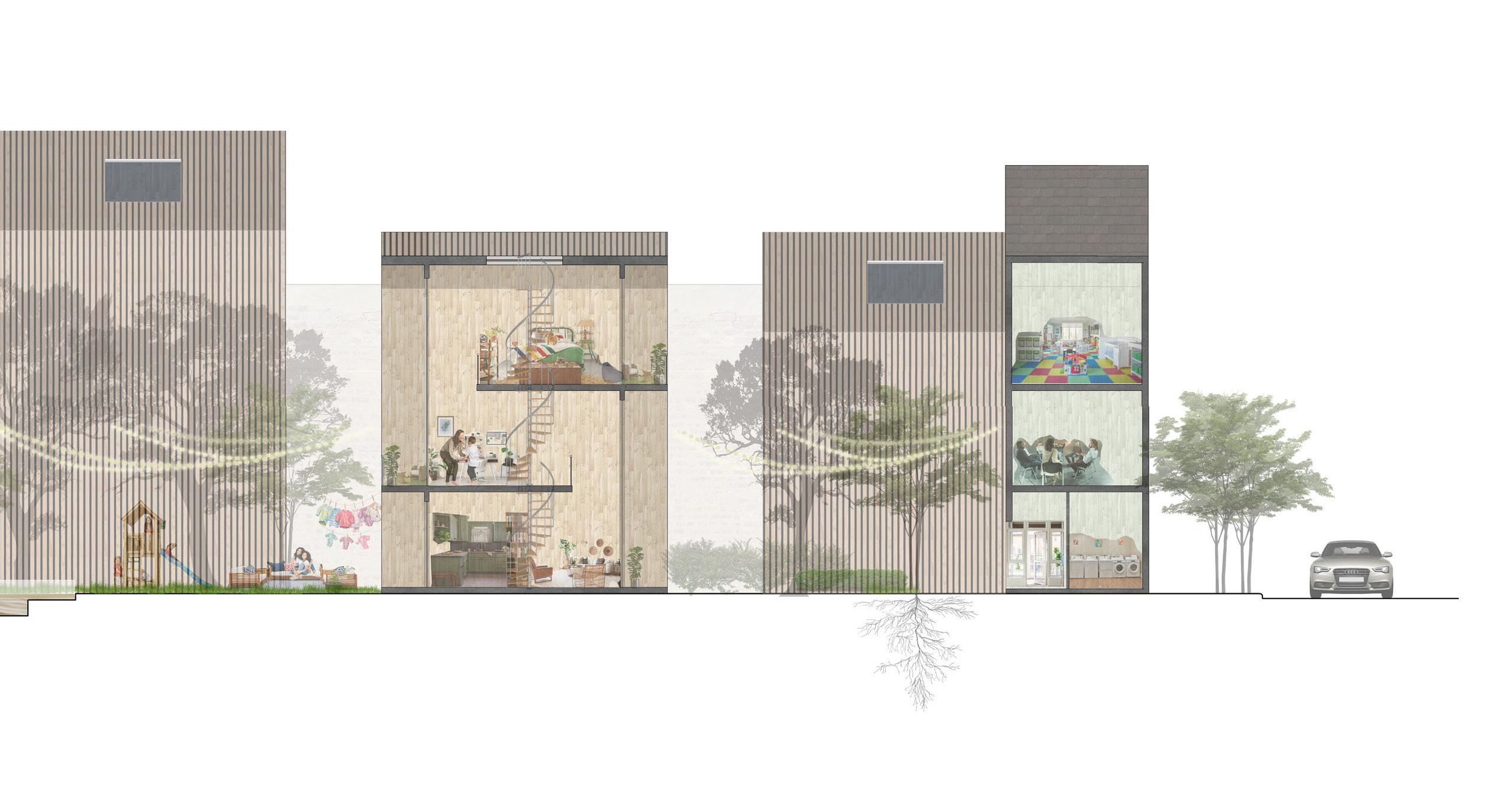
Within the urban fabric of Los Angeles, people are consistently confronted with the issue of housing availability and affordability. One demographic that feels the weight of this scarcity are the individuals of the unhoused community. Rooted-Row seeks to address this demographic with intentionality by having the ground floor of the row houses be dedicated to services such as soup kitchens, food banks, clothing banks, and public restrooms. Additionally, this housing typology scheme consists of two types of row houses: a 20 ft. row house and a 10 ft. row house. The 10 ft. row houses are dedicated to unhoused individuals, hoping to assist in reintegrating them back into society and establish a level of care and quality that they are often rejected from. In this project, each row house is equipped with a series of layers and boundaries that are pushed and pulled to create a delicately articulated form. Similarly, the row houses aren’t just placed in any blank lot, but rather within current singlefamily residential neighborhoods throughout Los Angeles. They are slid into the unutilized setback spaces between existing homes as well as vacant or publicly owned lots. In this way, the row houses become more than just the missing middle housing typology in Los Angeles, they become the bridge and helping hand to a community that is continuously ignored, forgotten, and marginalized.
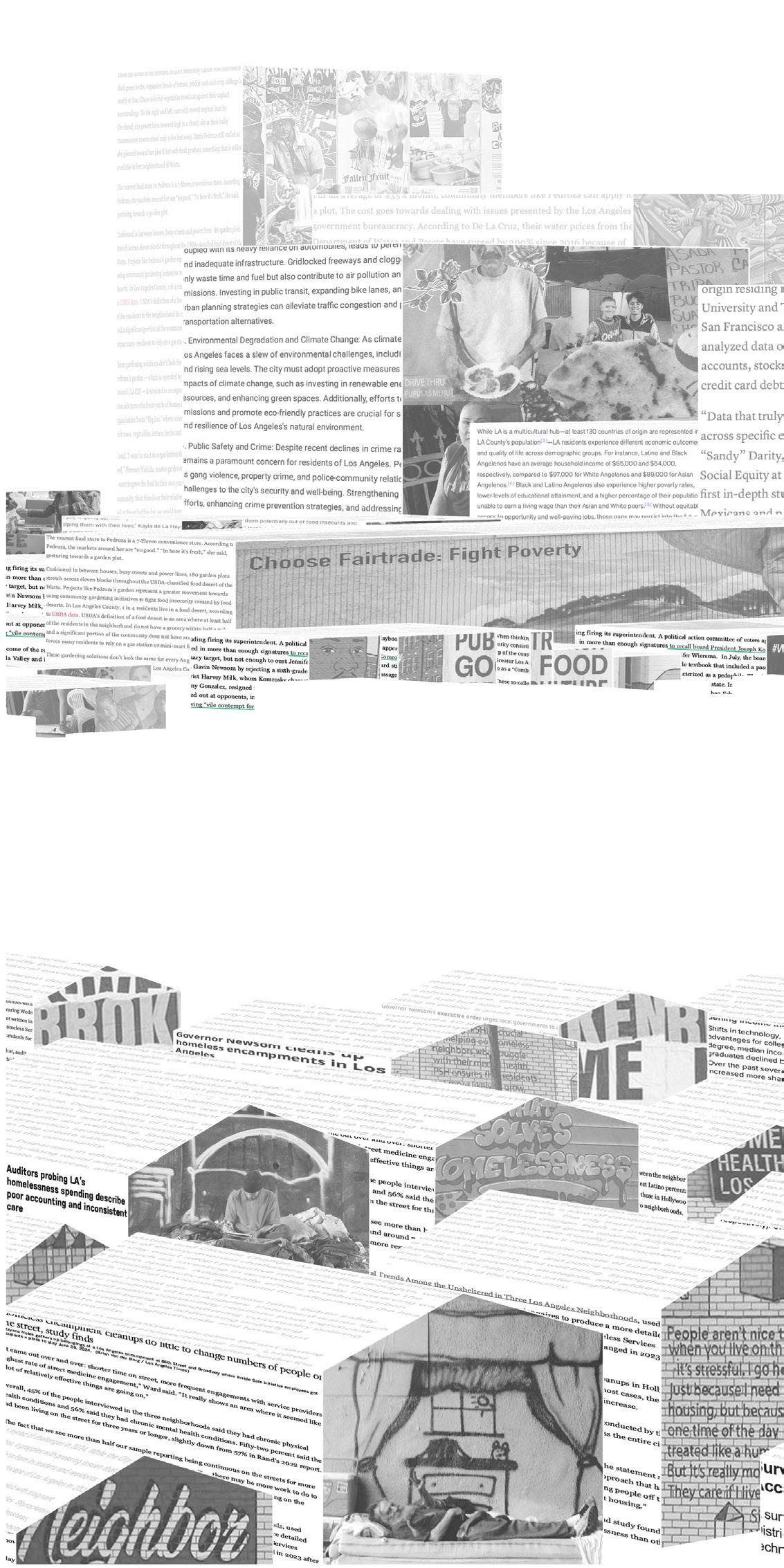
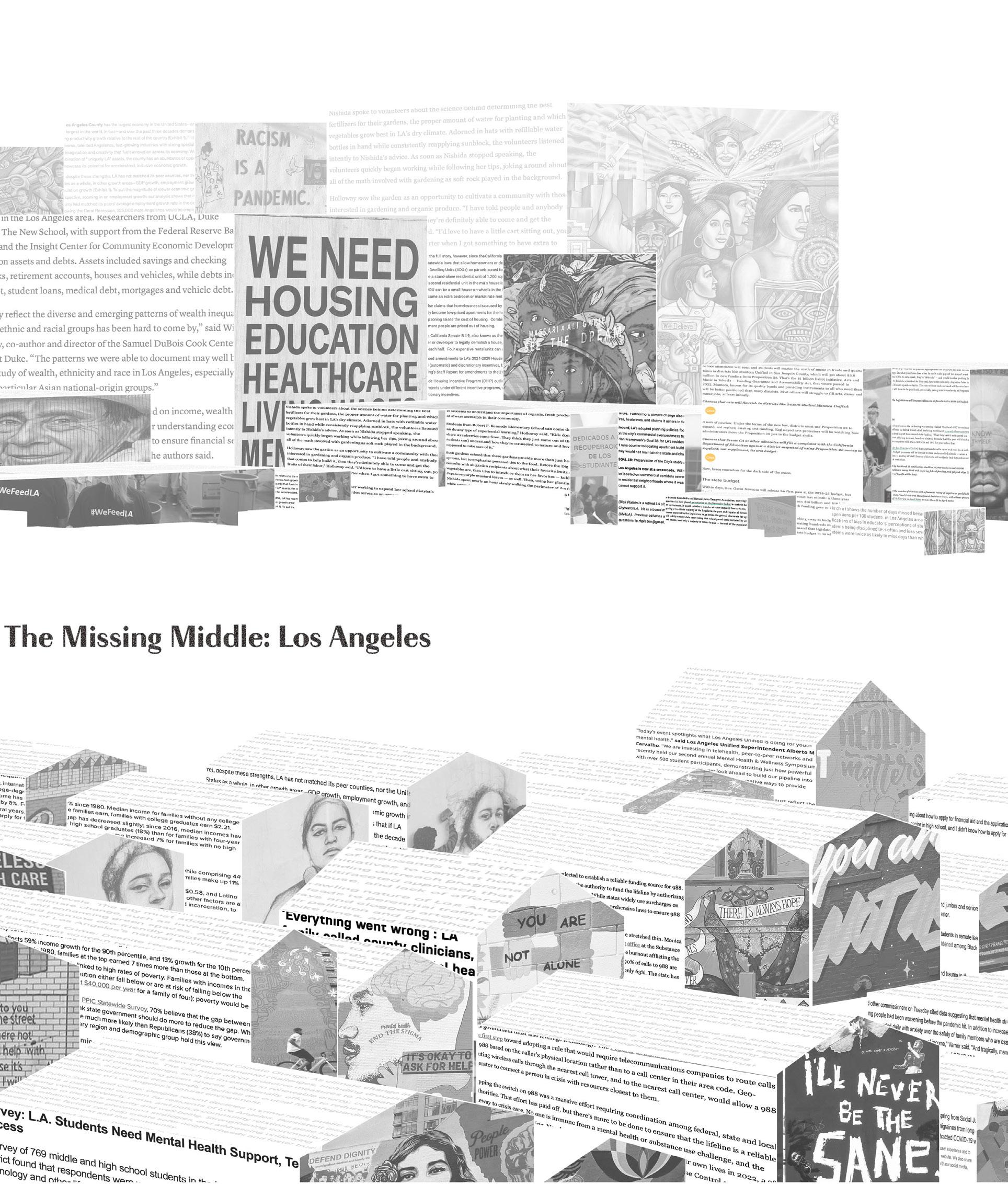
issues facing the greater los angeles community.
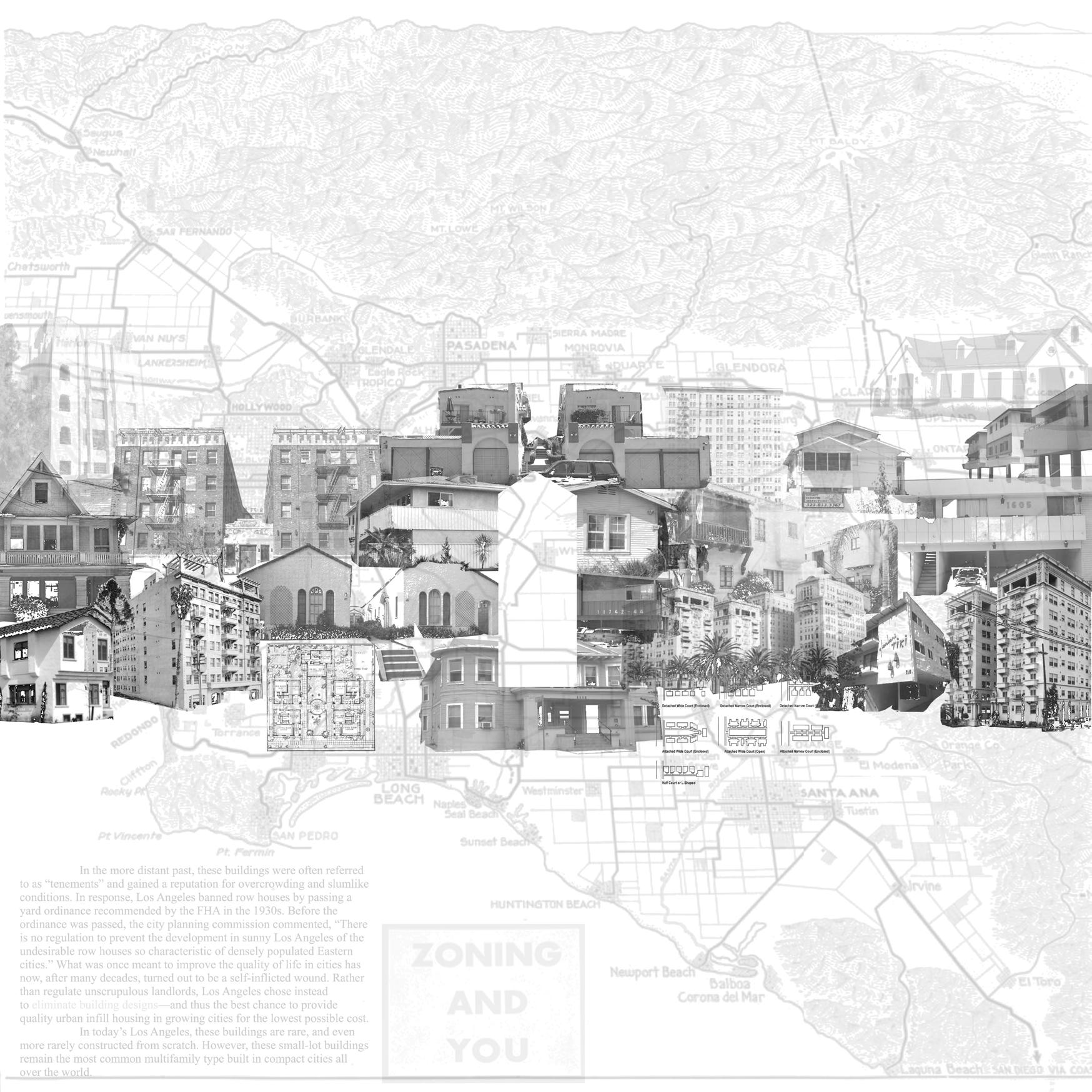
los angeles multifamily housing typologies.
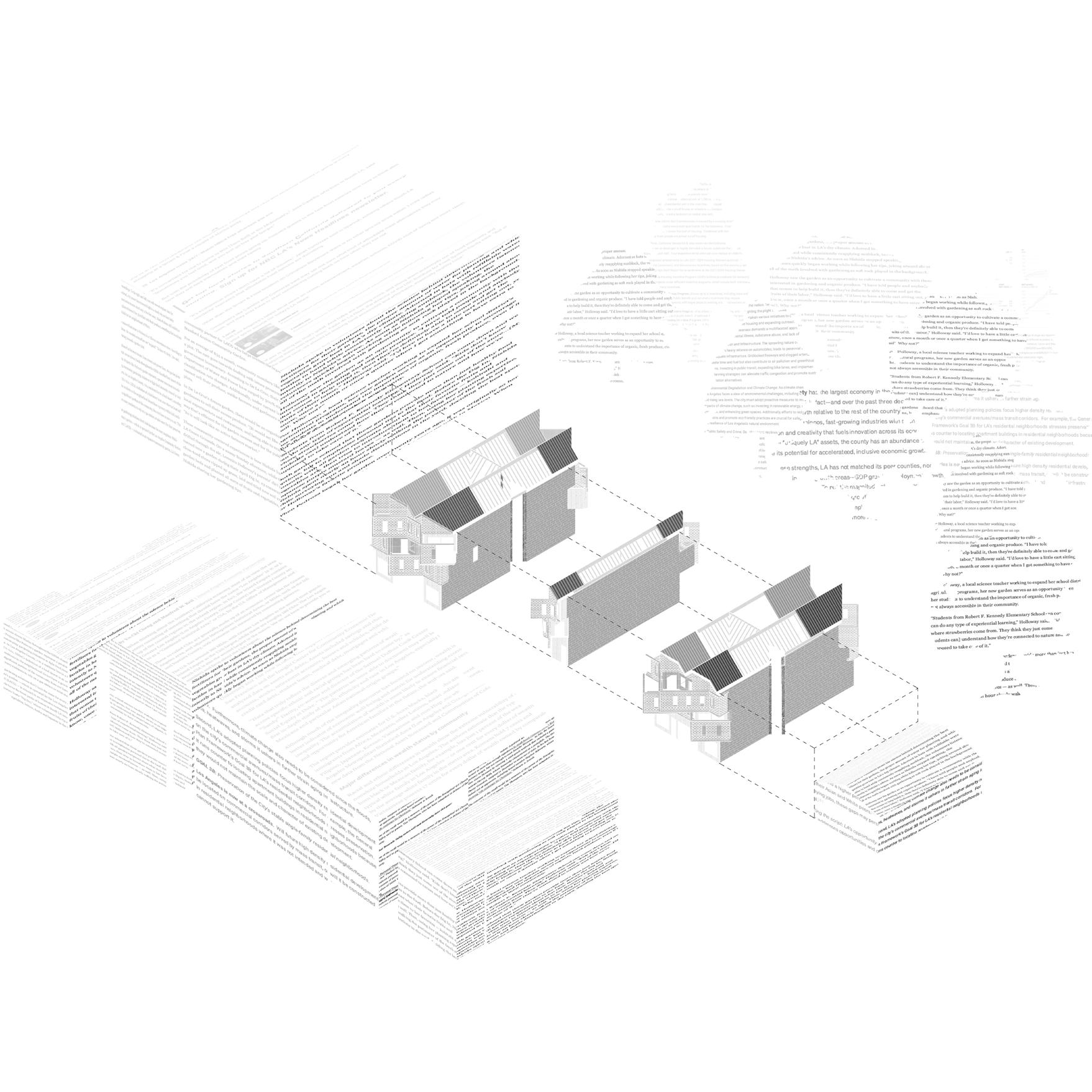
missing middle row house concept.
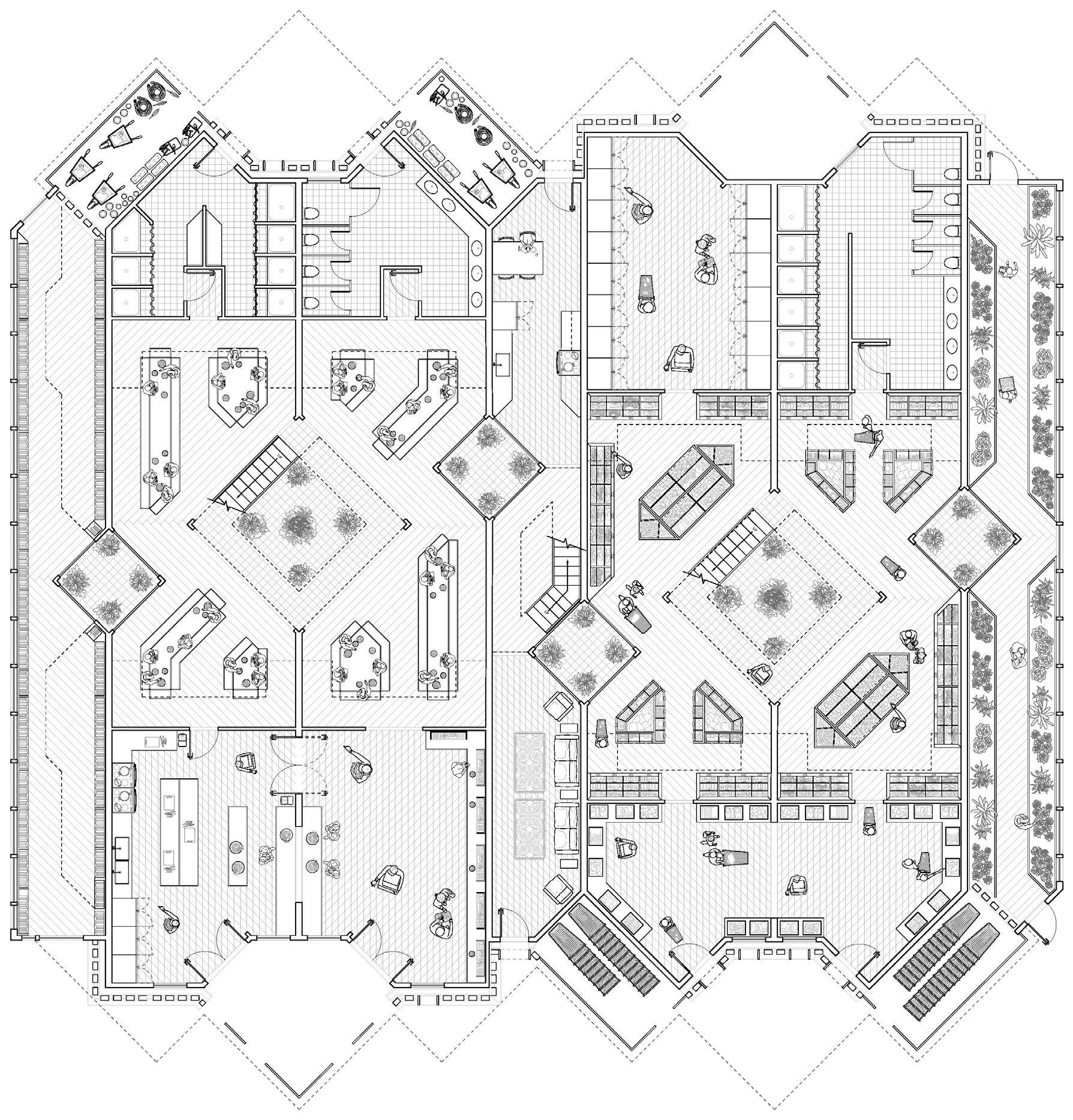
sample ground floor.
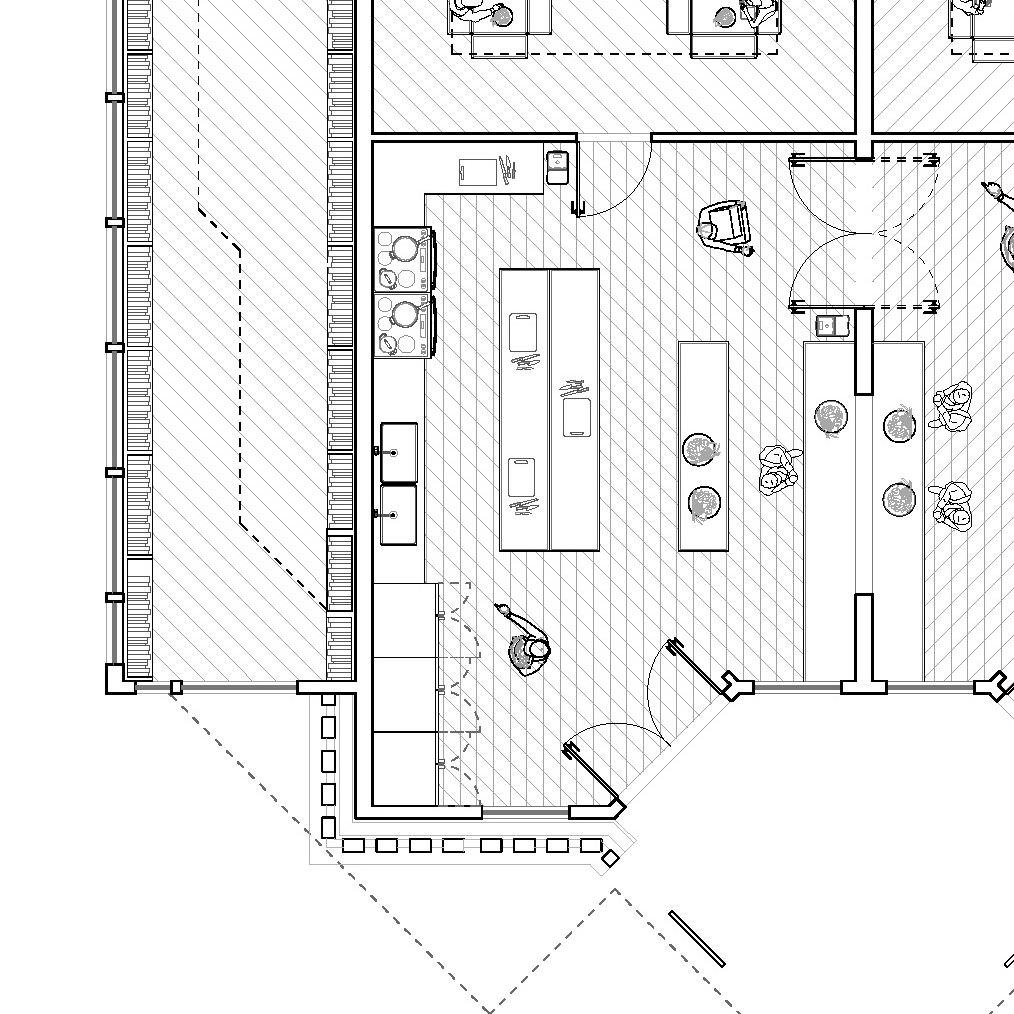
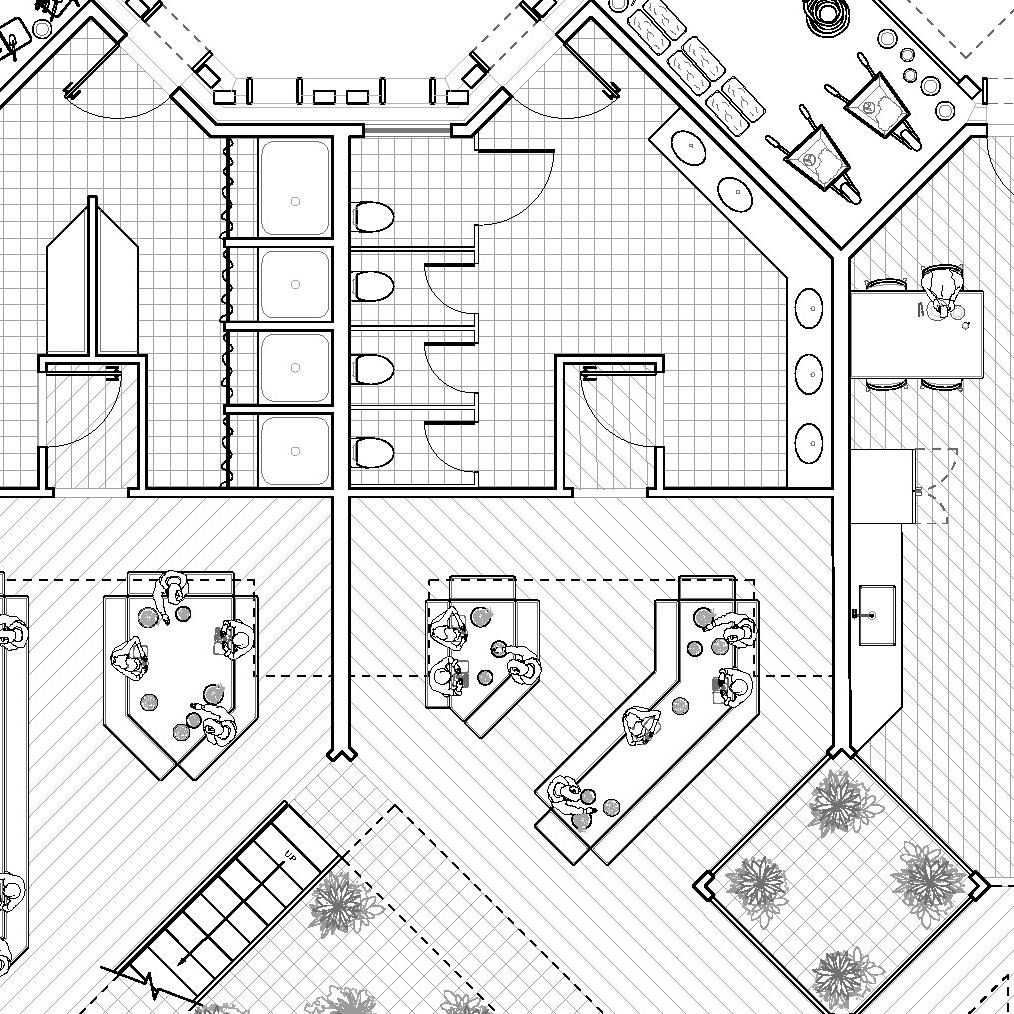
food bank. restroom. greenhouse. clothing bank. library. soup kitchen.
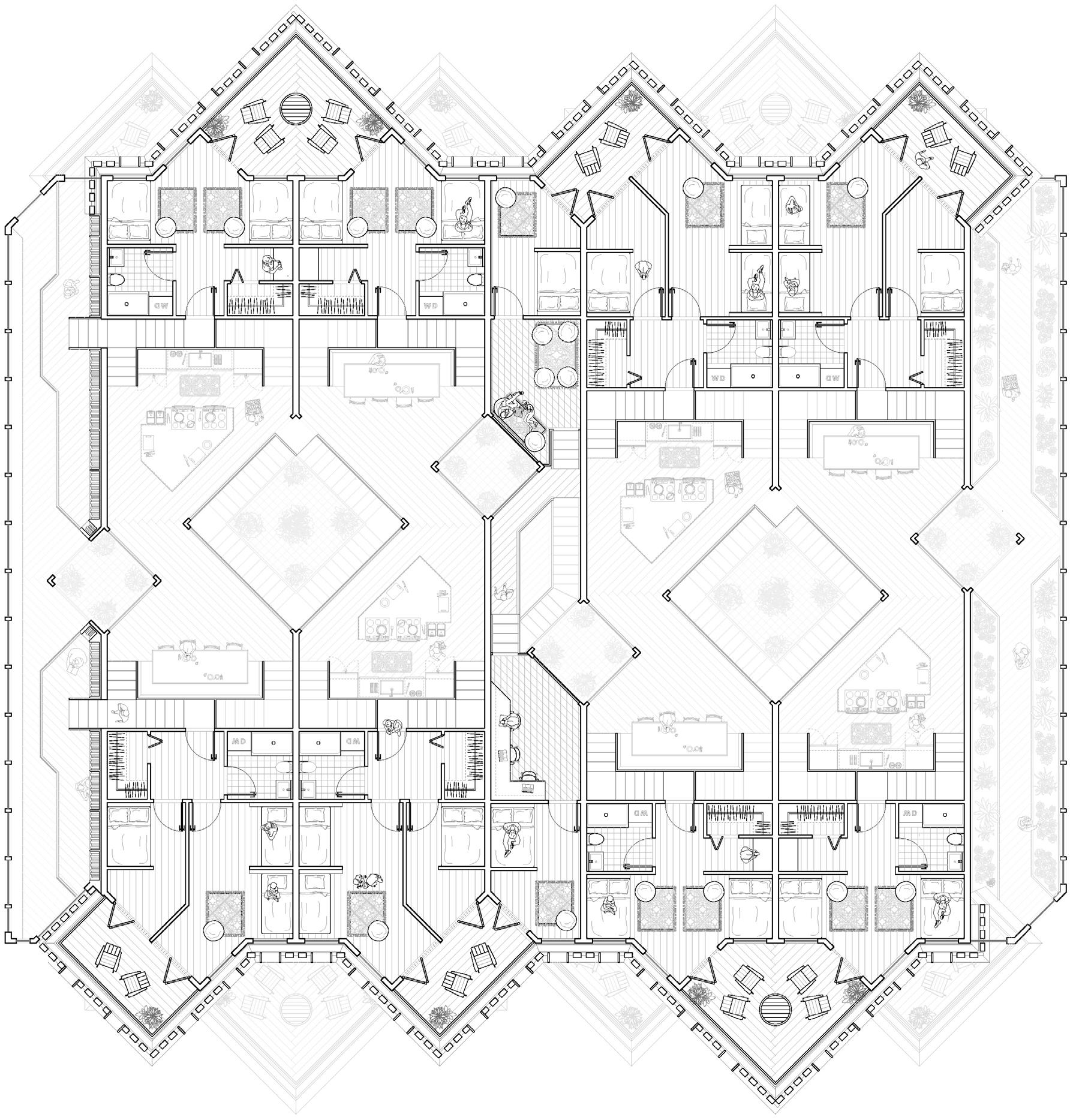
sample third floor.
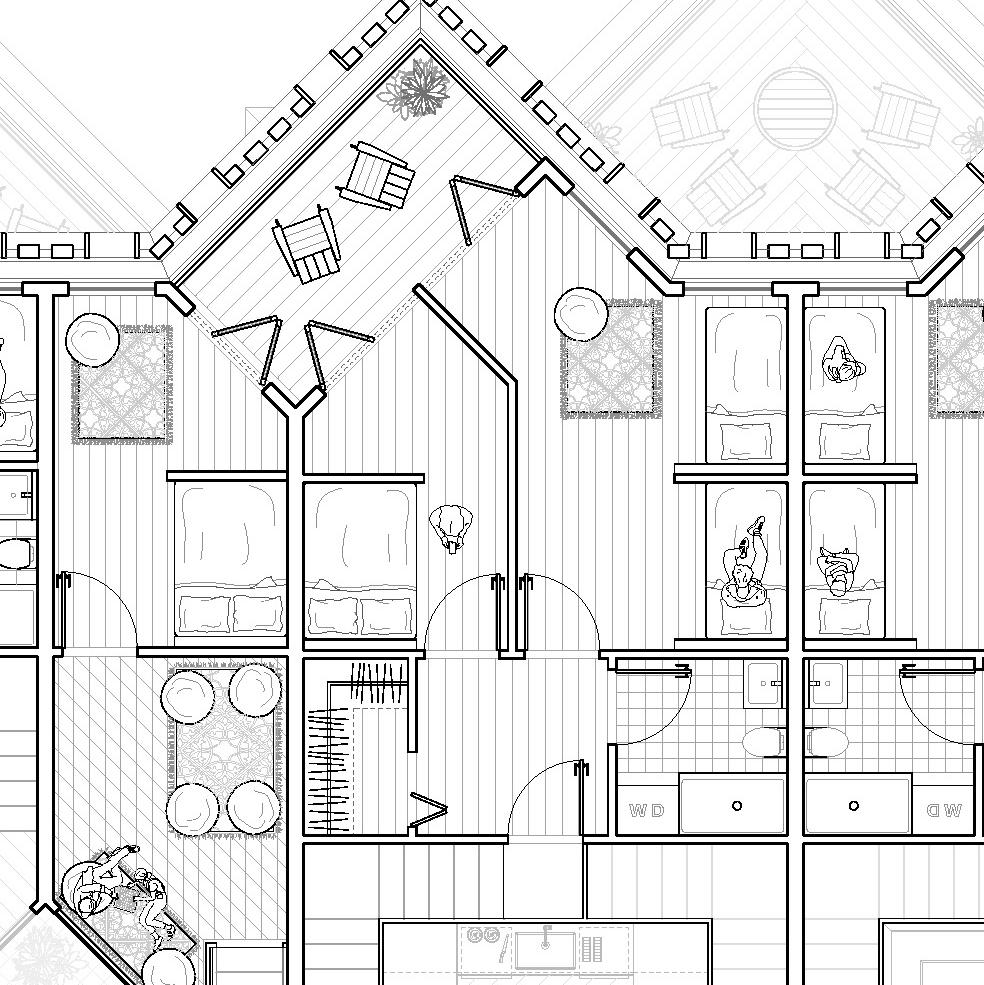
co-housing kitchen. lightwell.
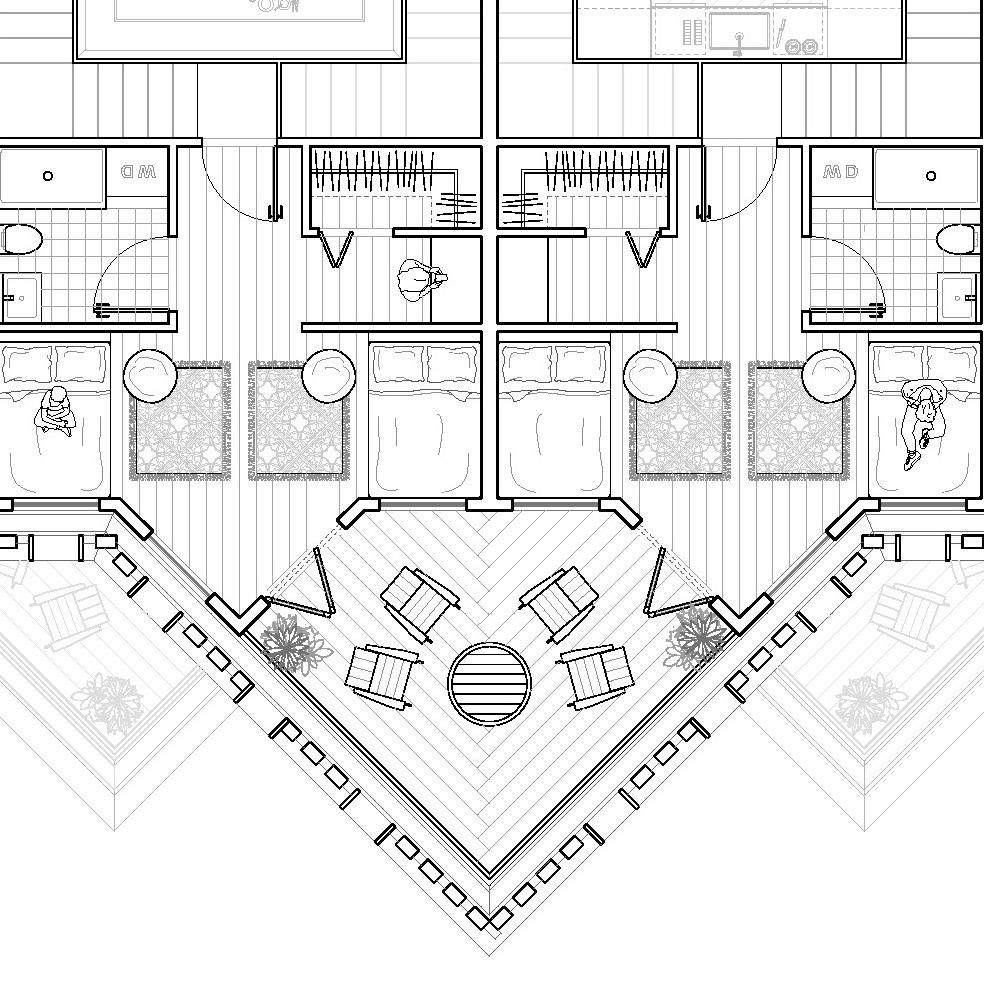
family unit co-housing. co-living.
dorm-style co-living.
shared balcony.
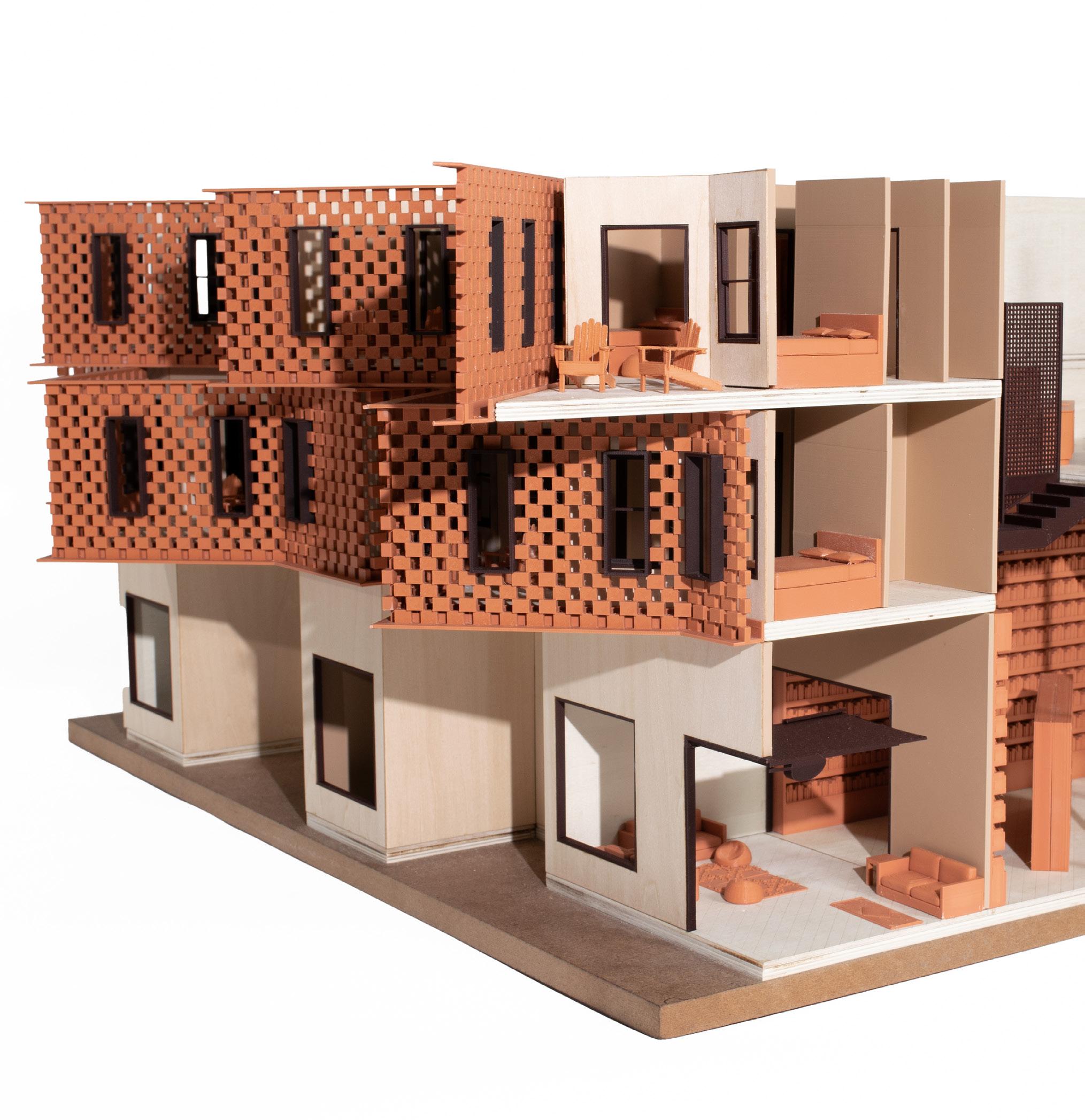
rooted row chunk model.
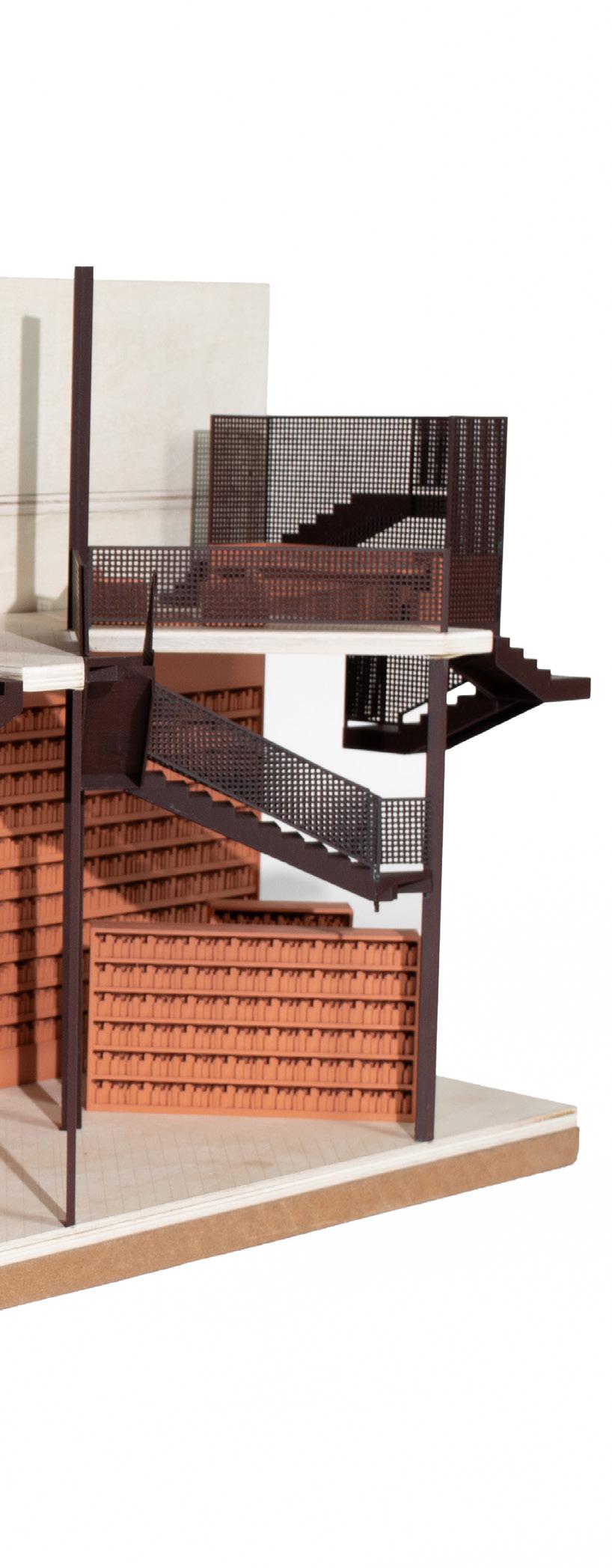
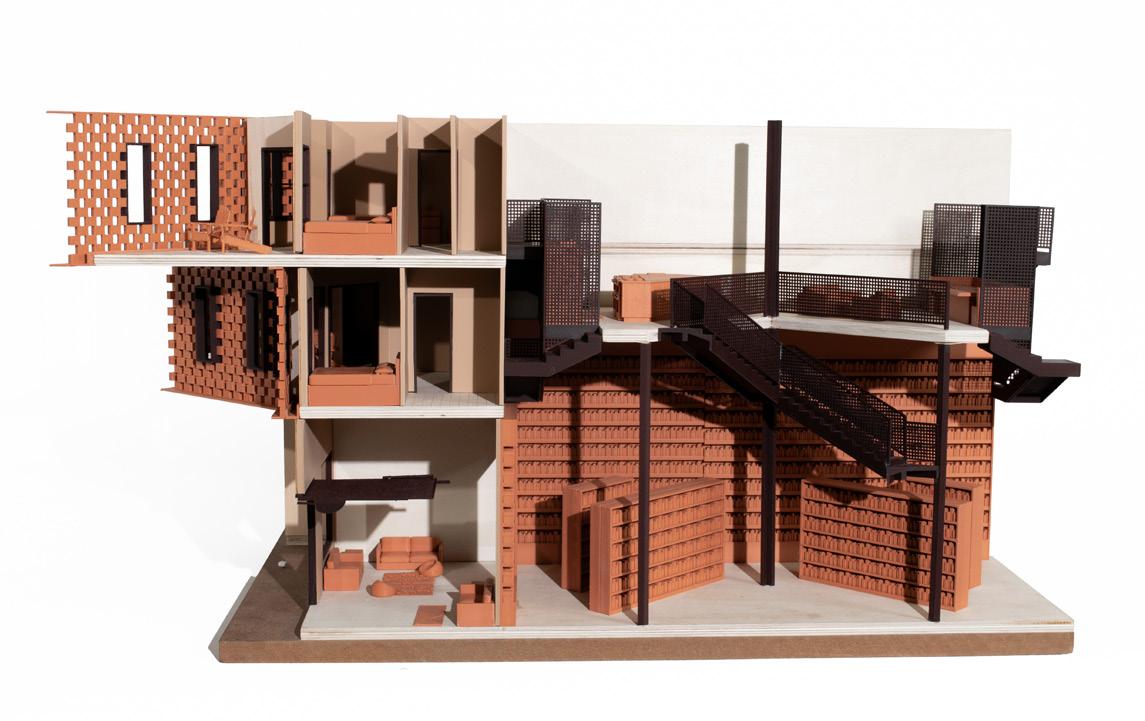
20ft longitudinal section.
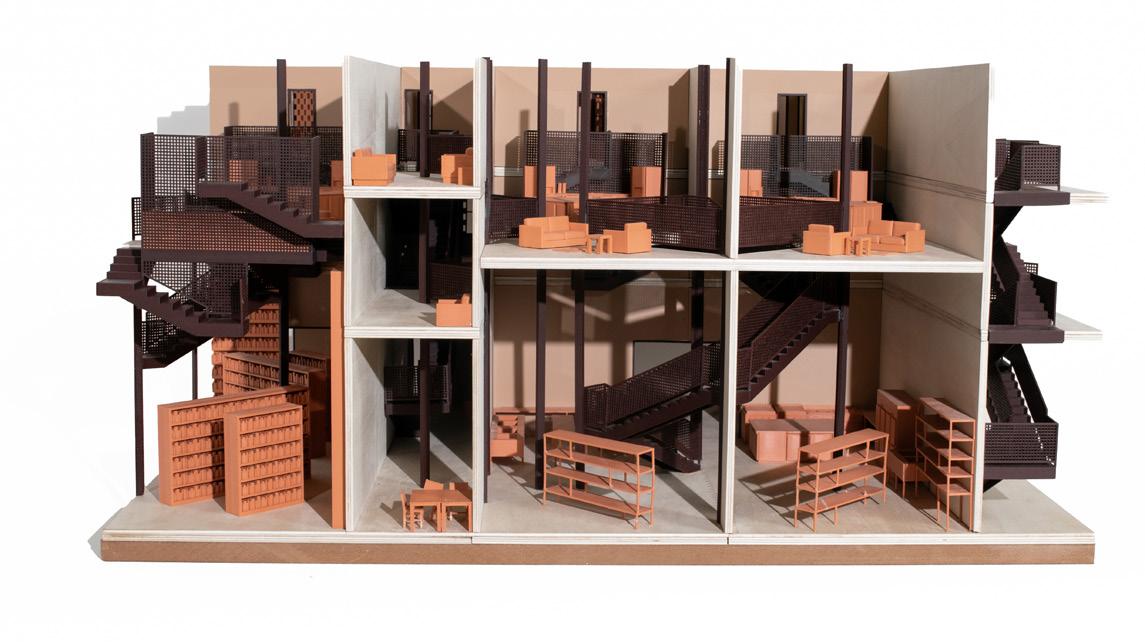
transverse section.
arch 4020 | thesis | spring 2024. louisville, kentucky.
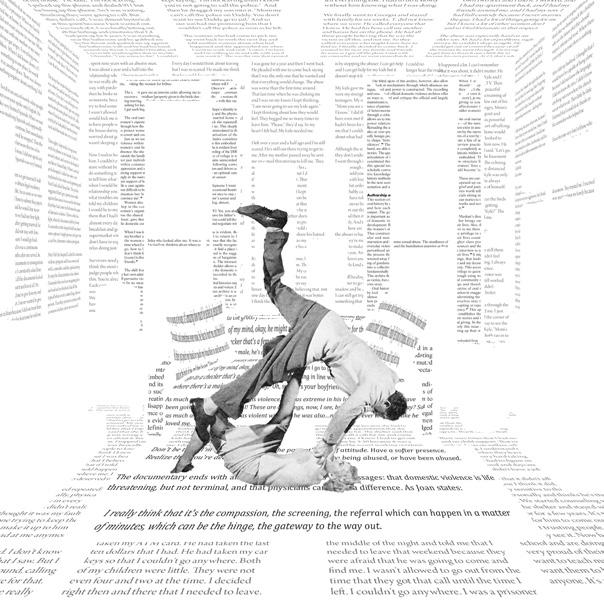
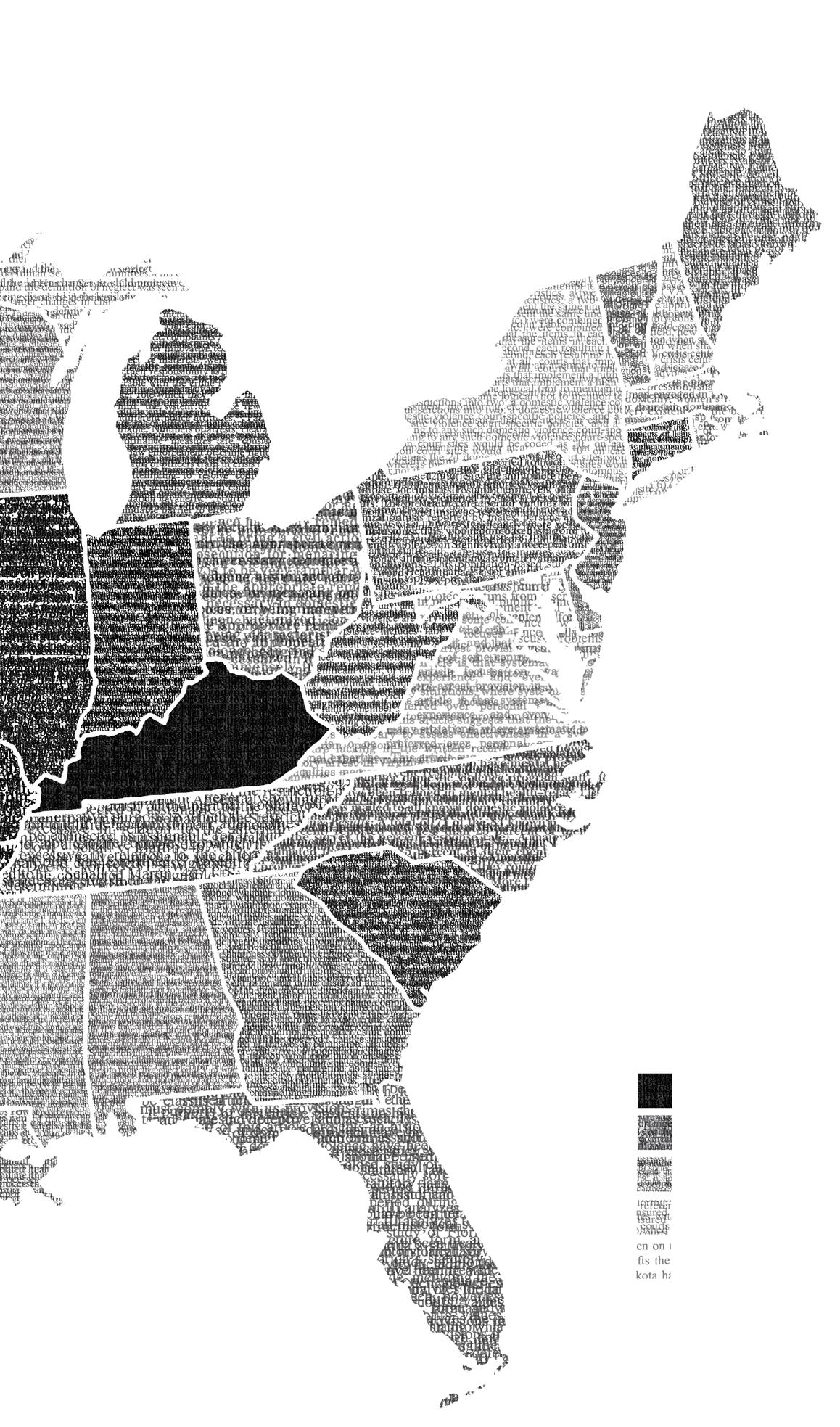
“Why didn’t you leave?” A question that is, more often than not, answered by the words, “I had no place to go.” Throughout the United States, millions of men, women, and children live in constant fear. They find themselves in physical, mental, emotional, and financial prisons, constantly doubting their own sanity and praying the pain will end. It is the tragedy that is domestic violence. Each state reports at least 30% of their population experiencing intimate partner violence, with Kentucky having percentages of 45.3% for women and 33.8% for men. This is a demographic that, historically, has been ignored, forced to keep the horrors of their relationships behind closed doors. This is a demographic the system has failed. In this thesis I aim to propose a methodical approach to the concern of where survivors go when they leave their abusive environments, creating a blueprint for healing and rehabilitation in the urban housing fabric. For several people, their home is full of warmth and life, with every wall being a testament to the love that is shared within. For survivors of domestic violence, that is not the case. Their walls are painted by words of self loathing and degradation, acting as a stage for where their tumultuous relationships unfold. Rather than a loving home, it is a series of rooms that act as a physical reminder for the hurt and fear they are living with daily. The desire of this project is to explore how the feelings of safety and security can be reignited by making the house a home once more.
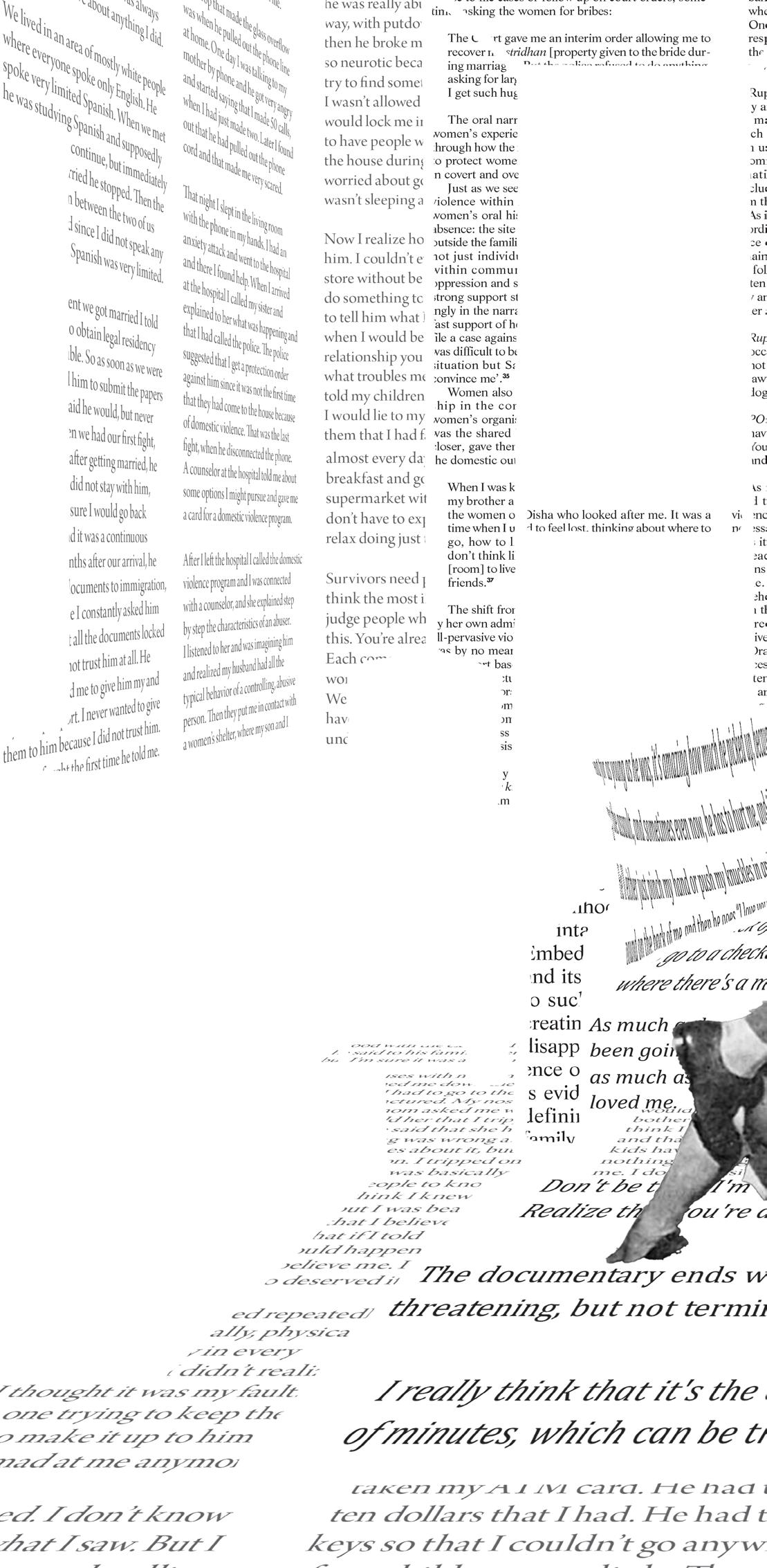
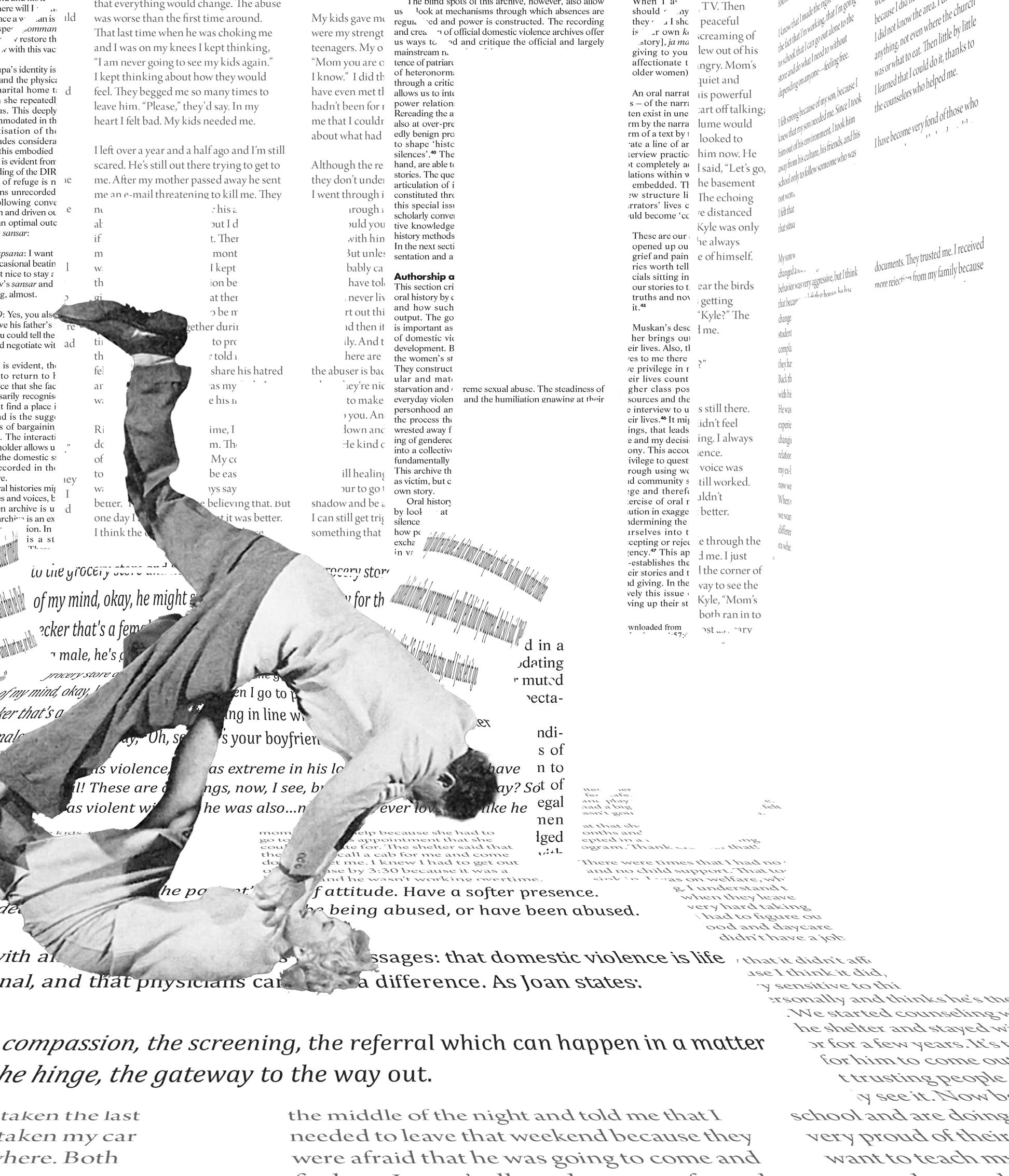
staging.
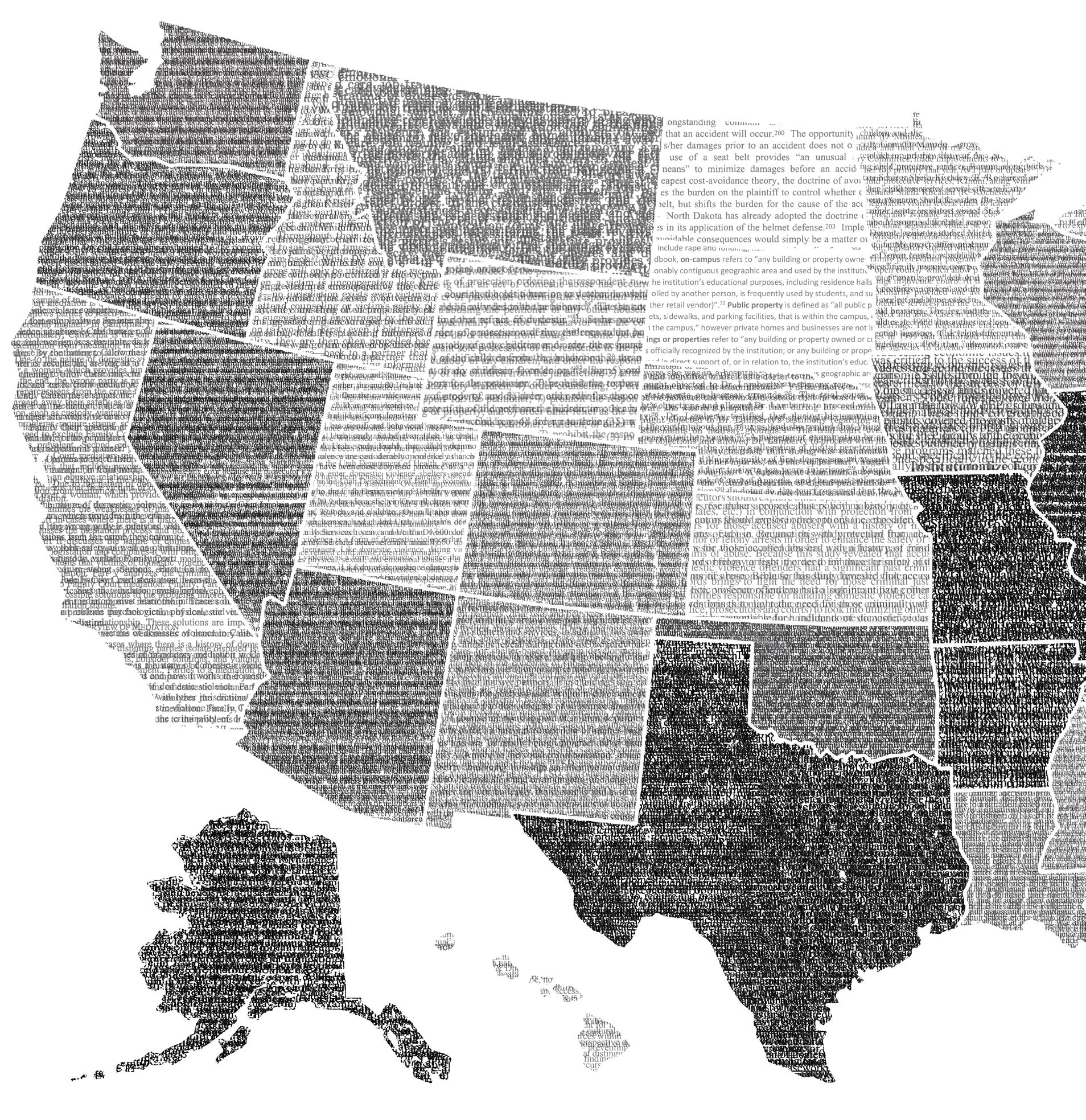
domestic violence rates across the united states.
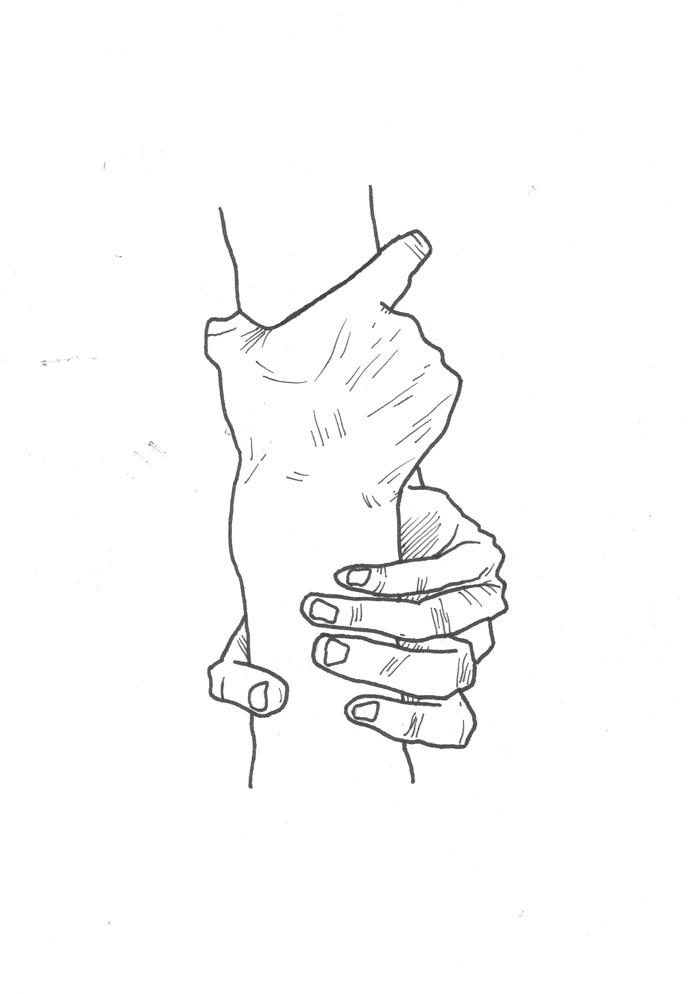
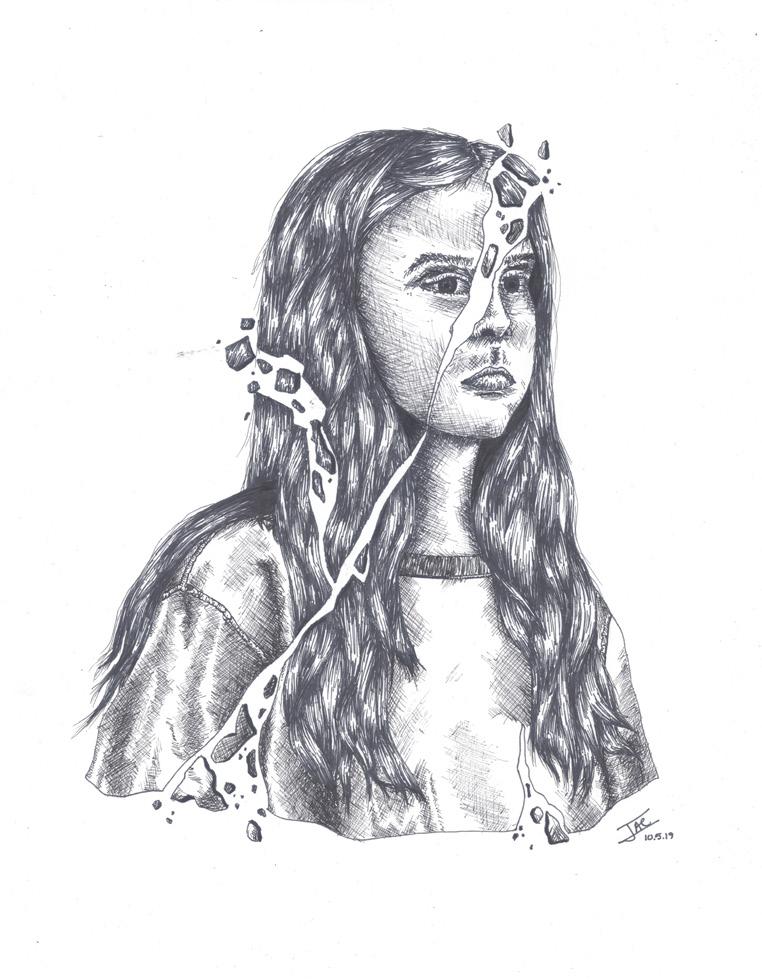
you are not alone.
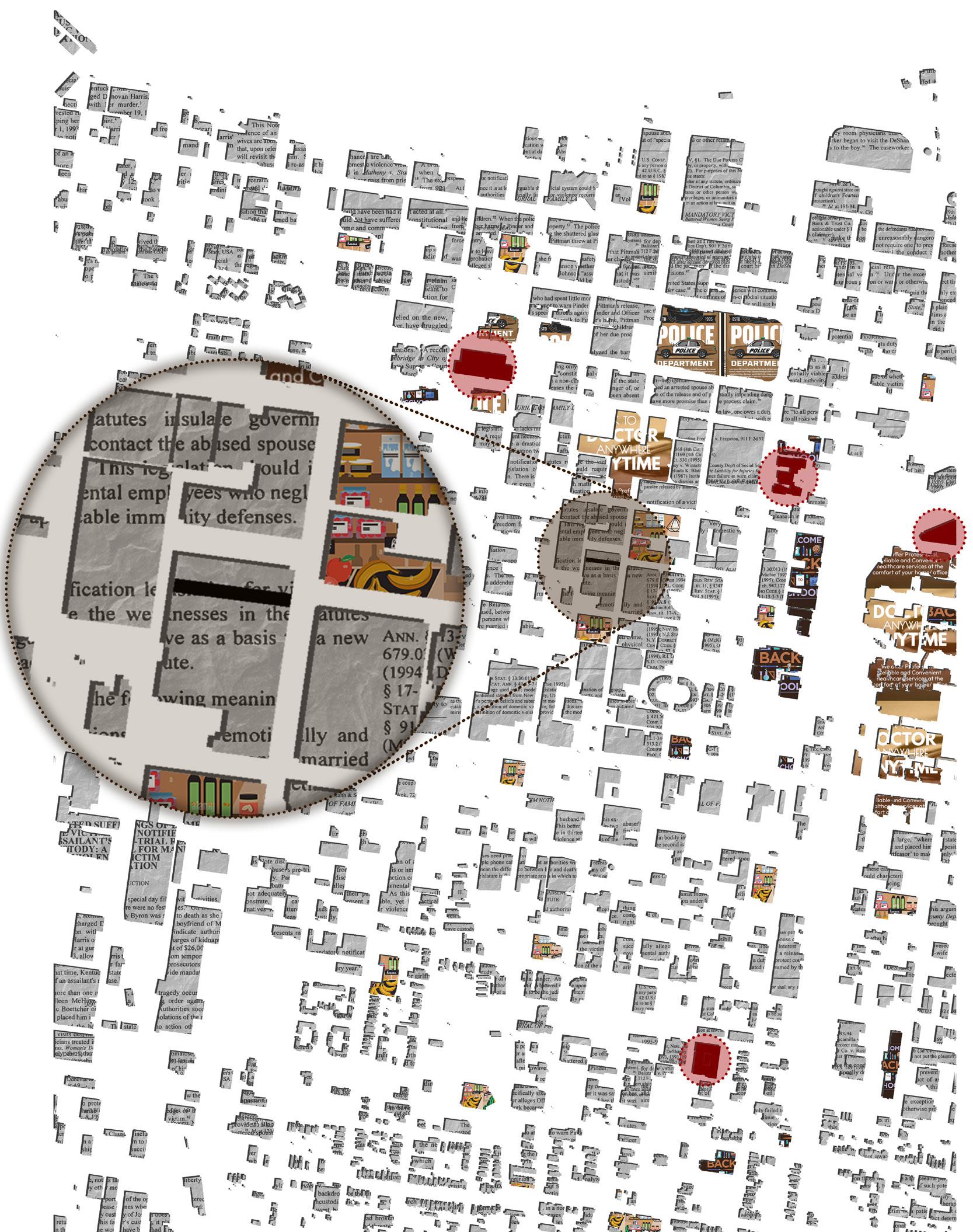
downton corridor of louisville & resources in relation to the site.
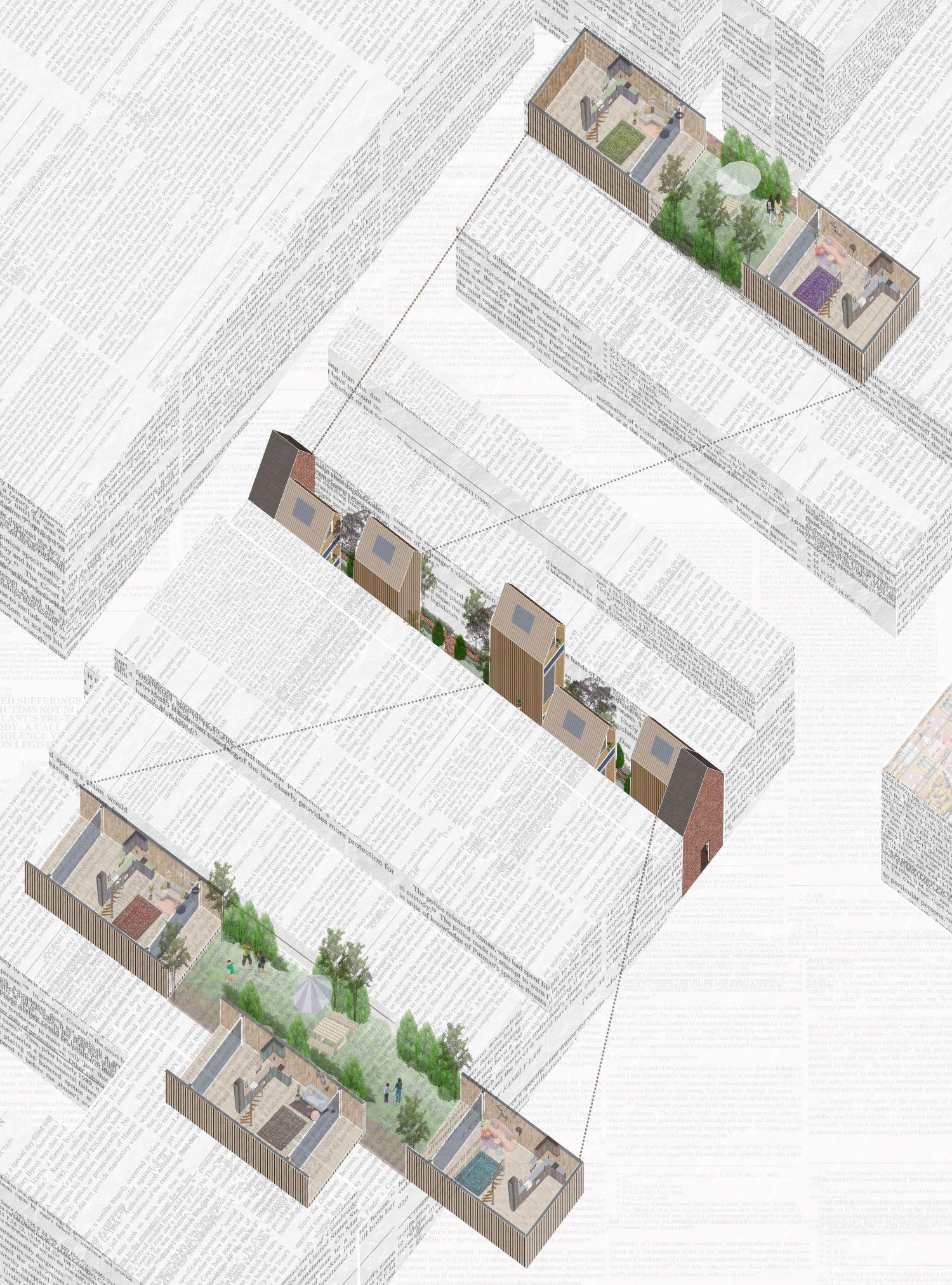
family & co-living communal areas within the site.
interior & exterior relations in post-abuse long-term hosuing.

survivor case studies.
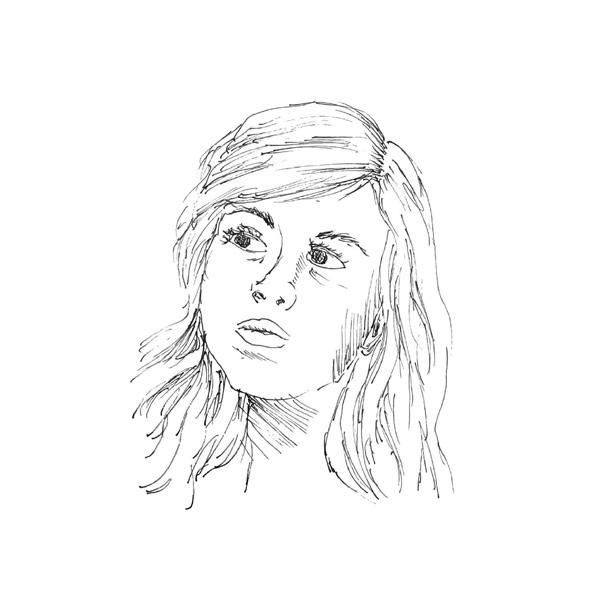
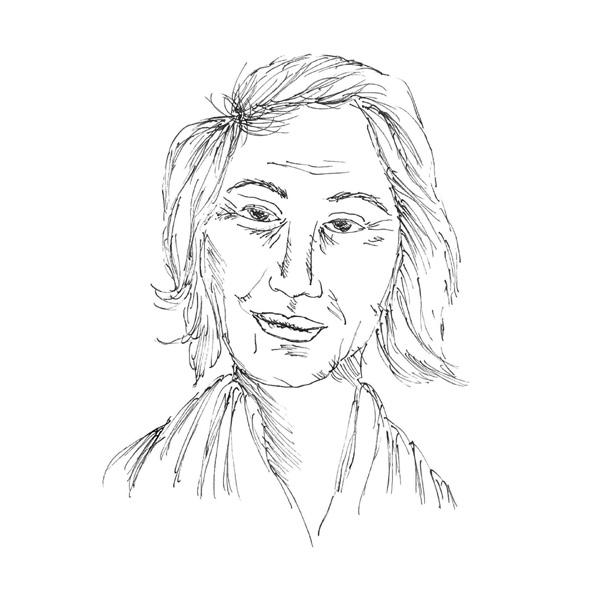
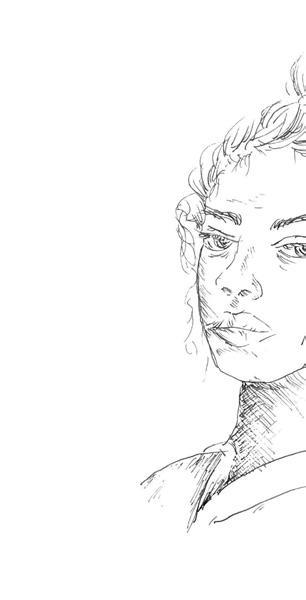

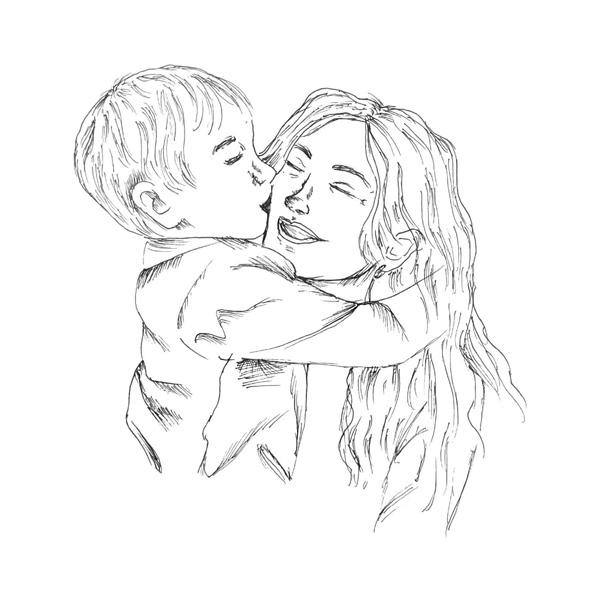
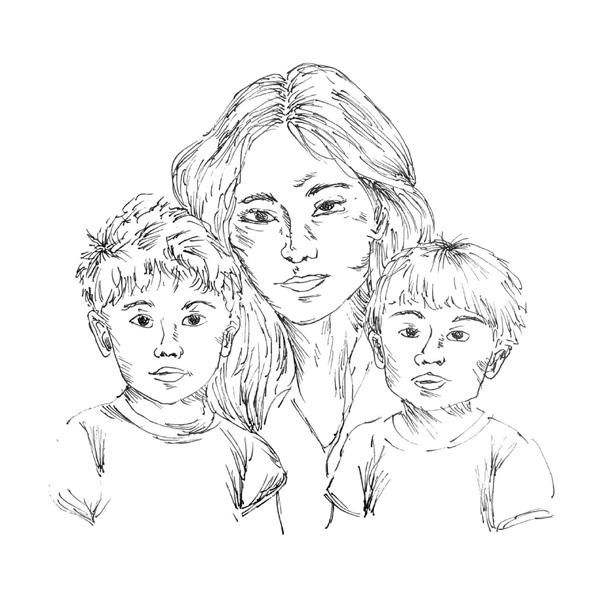
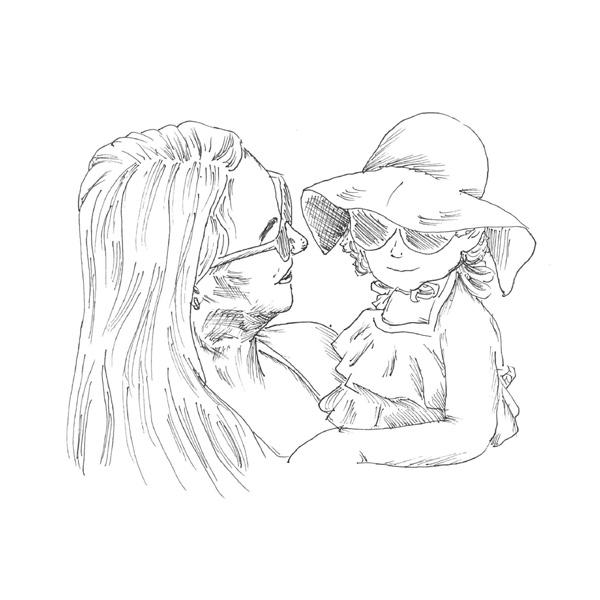
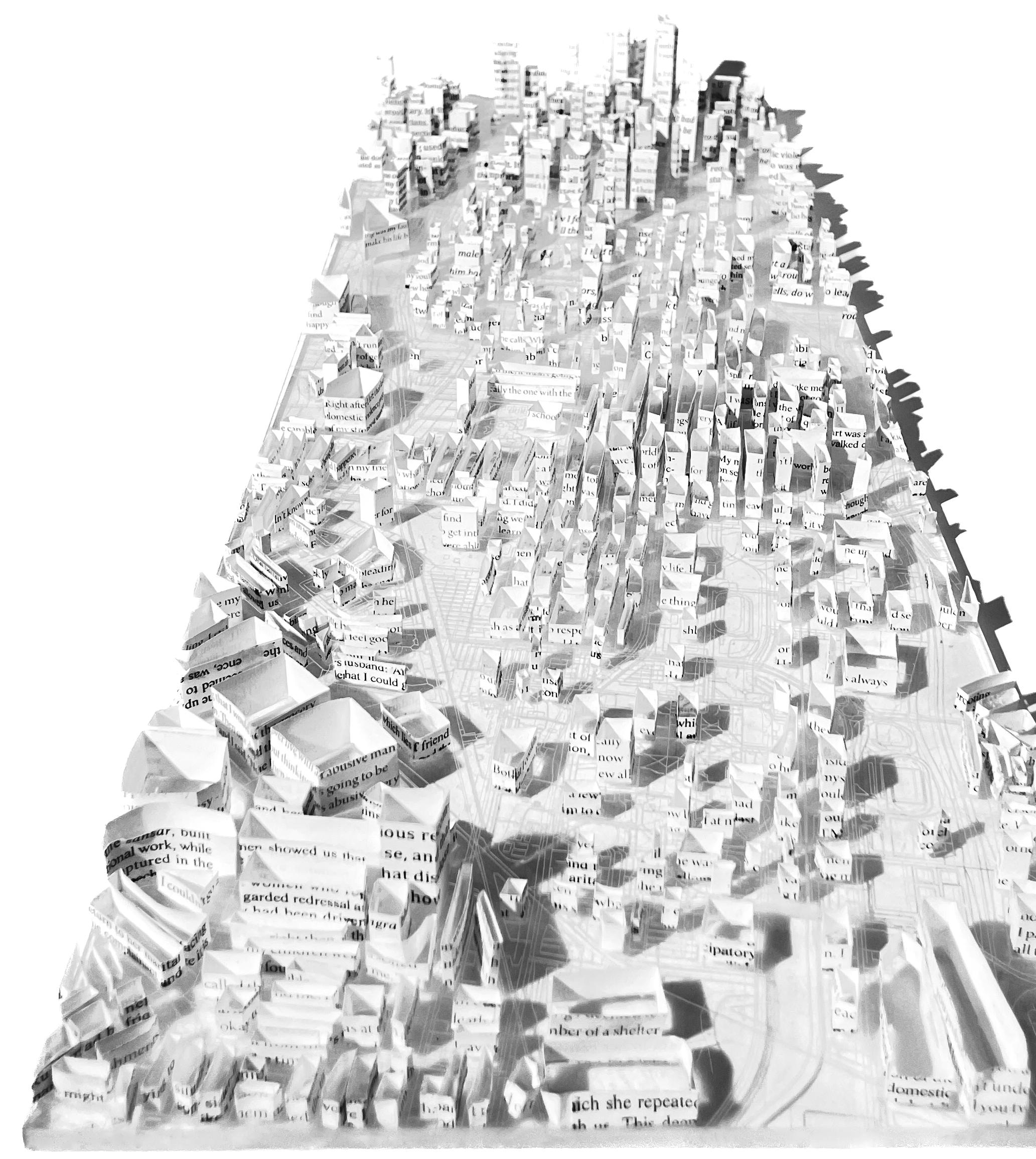
trauma painted walls of louisville.

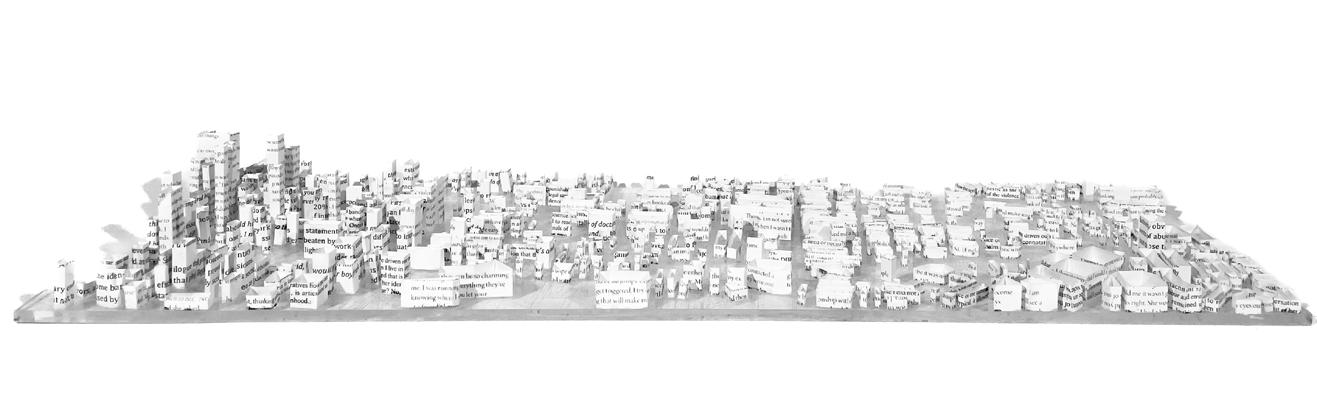


scale. trauma. abuse.
arch 3030 | spring 2023. charlottesville, virginia.
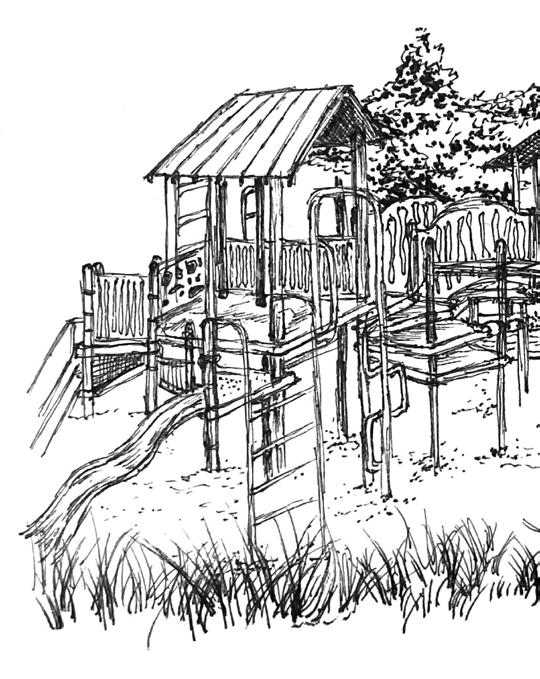
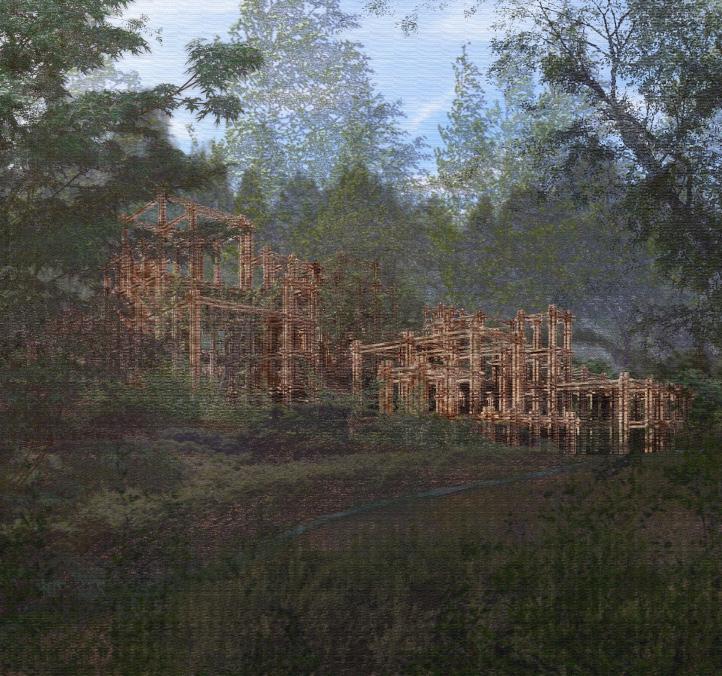
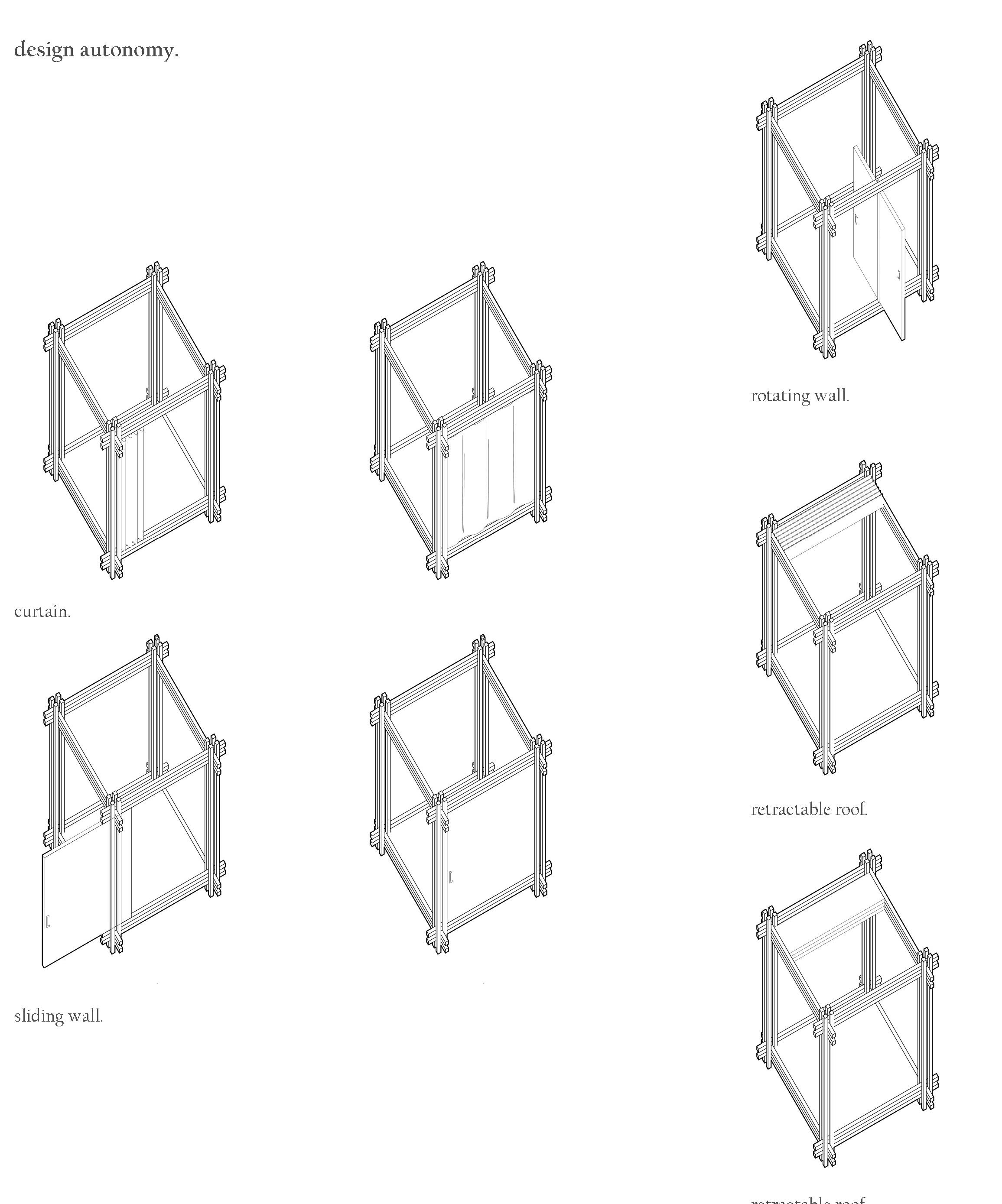
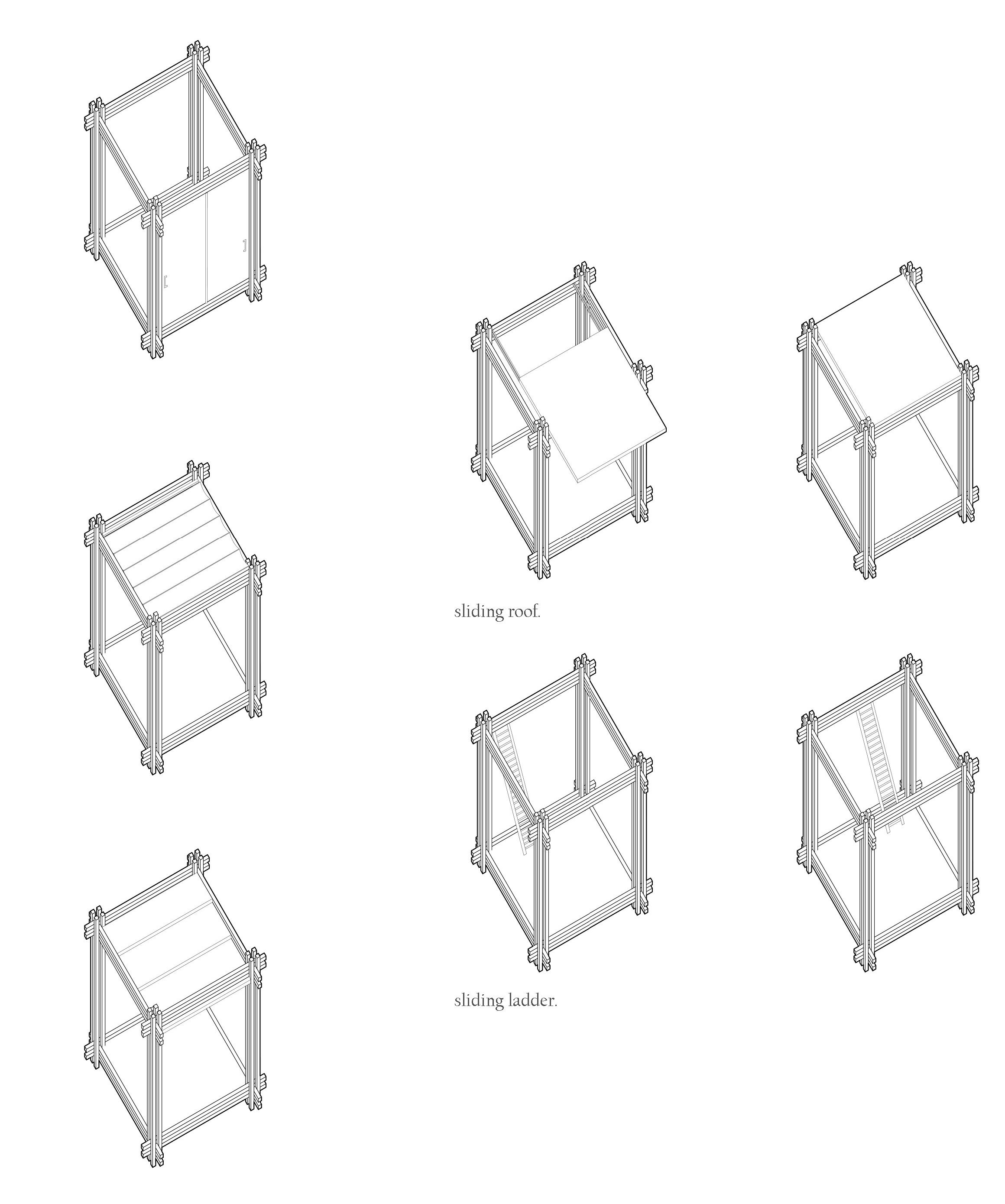
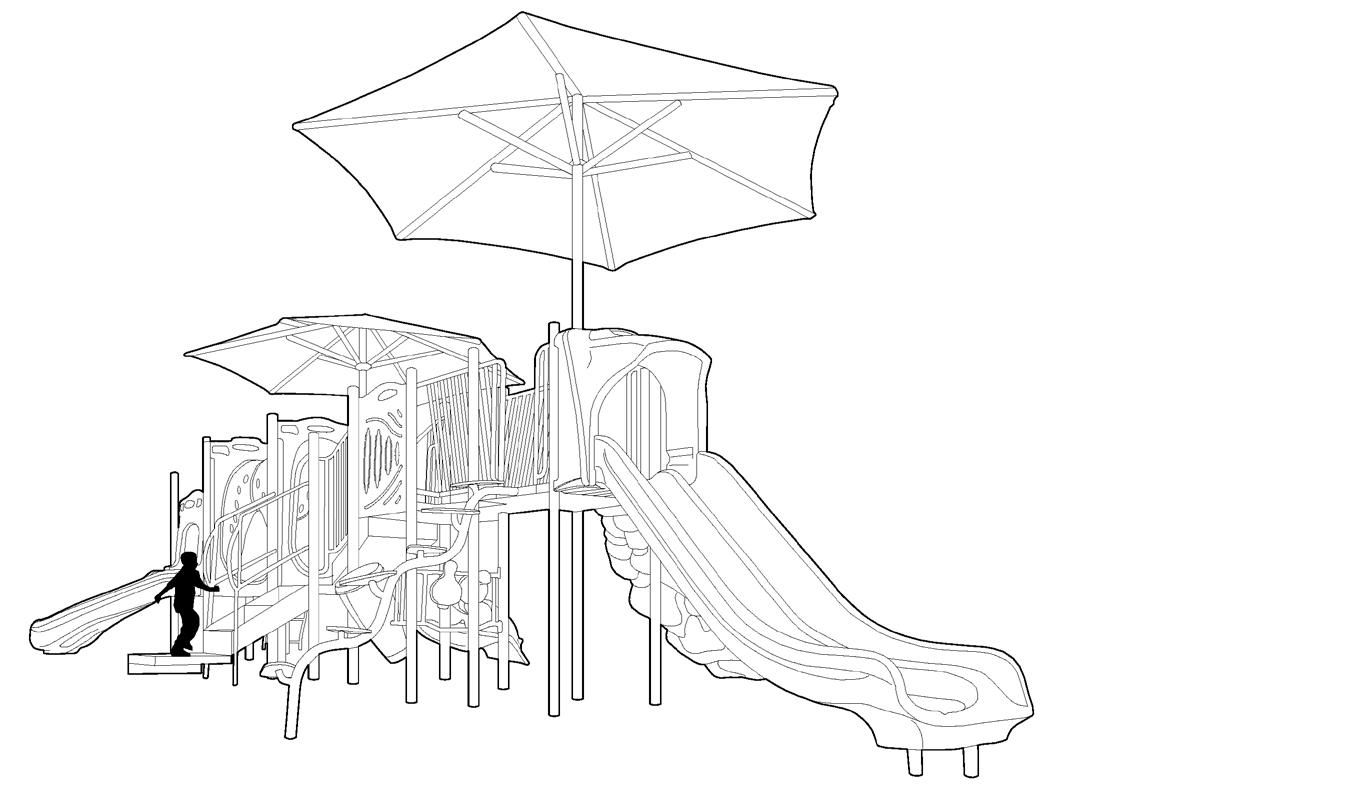
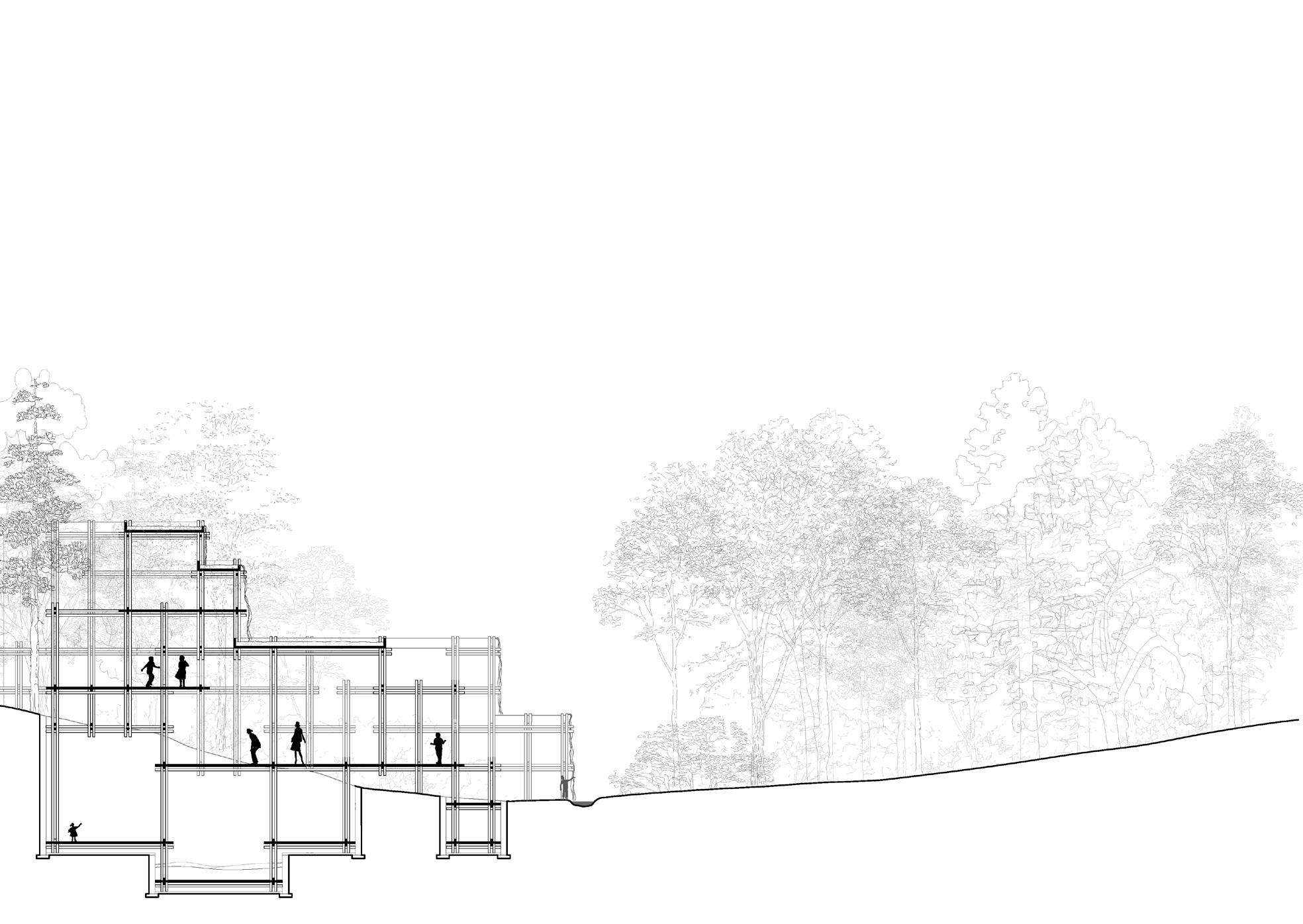
With the increasing research on the importance of play and nature in early childhood development, this project offers an extreme yet simple framework for a minimally invasive nature -based kindergarten. While on site, I took note of the dense tree and ground coverage on the slope adjacent to the neighborhood playground of greenleaf park. Located between the playground and the trail that lies at the foot of the slope, the structure resembles a larger jungle gym with habitable spaces. Utilizing simple construction materials and methods, the kindergarten can be morphed, expanded, or disassembled based on the needs of the community as well as the school. Within this extensive playscape, there are several scales of interaction and play including an embedded sand pit, net hammocks, slides, etc. Additionally, the structure offers ample opportunity to provide autonomy to the children and teacher’s involved in the education. Using several movable elements such as sliding ladders, folding stairs, retractable roofs, sliding walls, rotating walls, and curtains, faculty and students are able to dictate spaces for education and engage in a very tactile form of education and autonomy. Combining play-scape and do-it-yourself components with respect to the surrounding natural environment, Jungle Gym poses a question regarding the implentation of
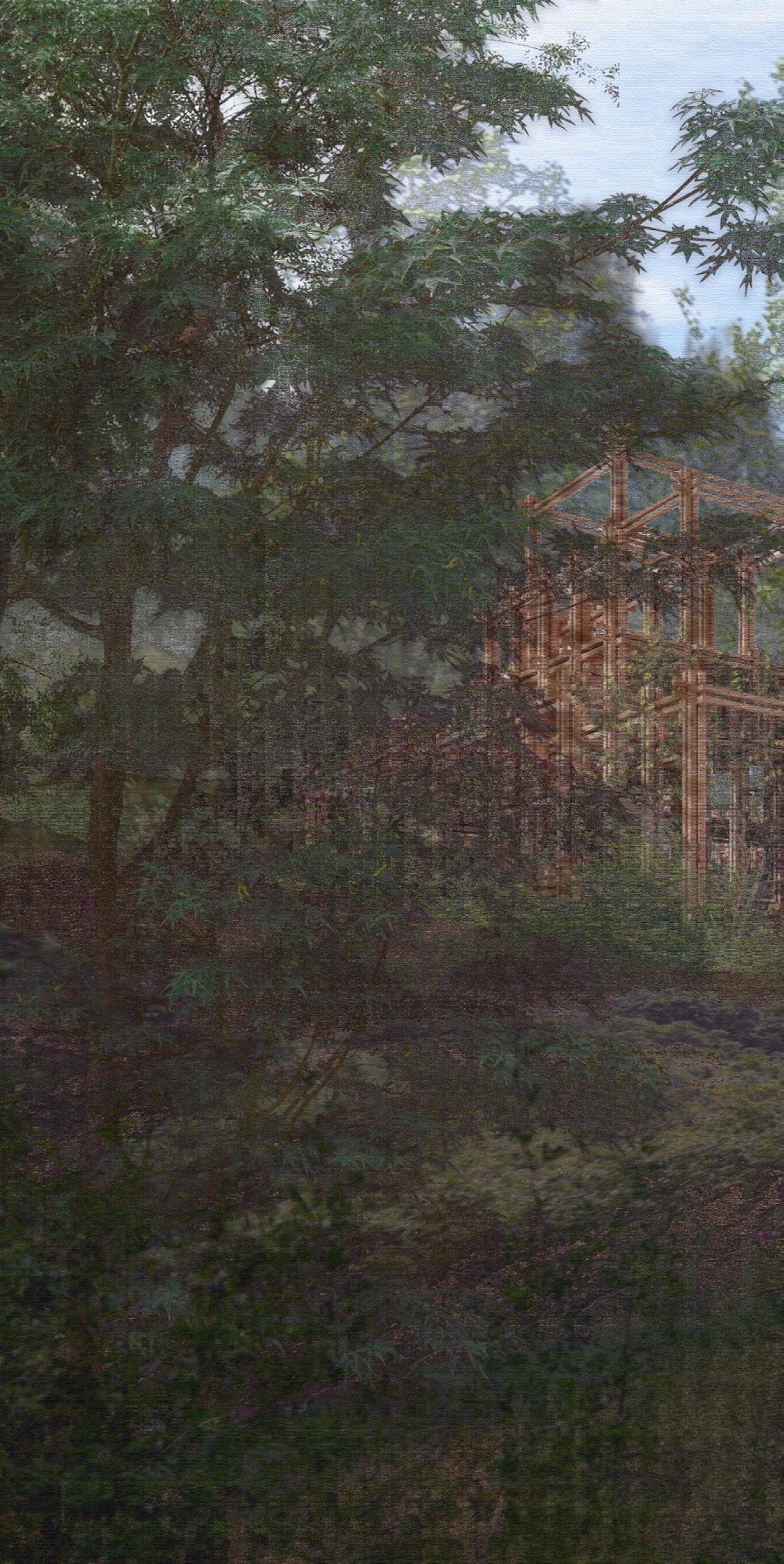
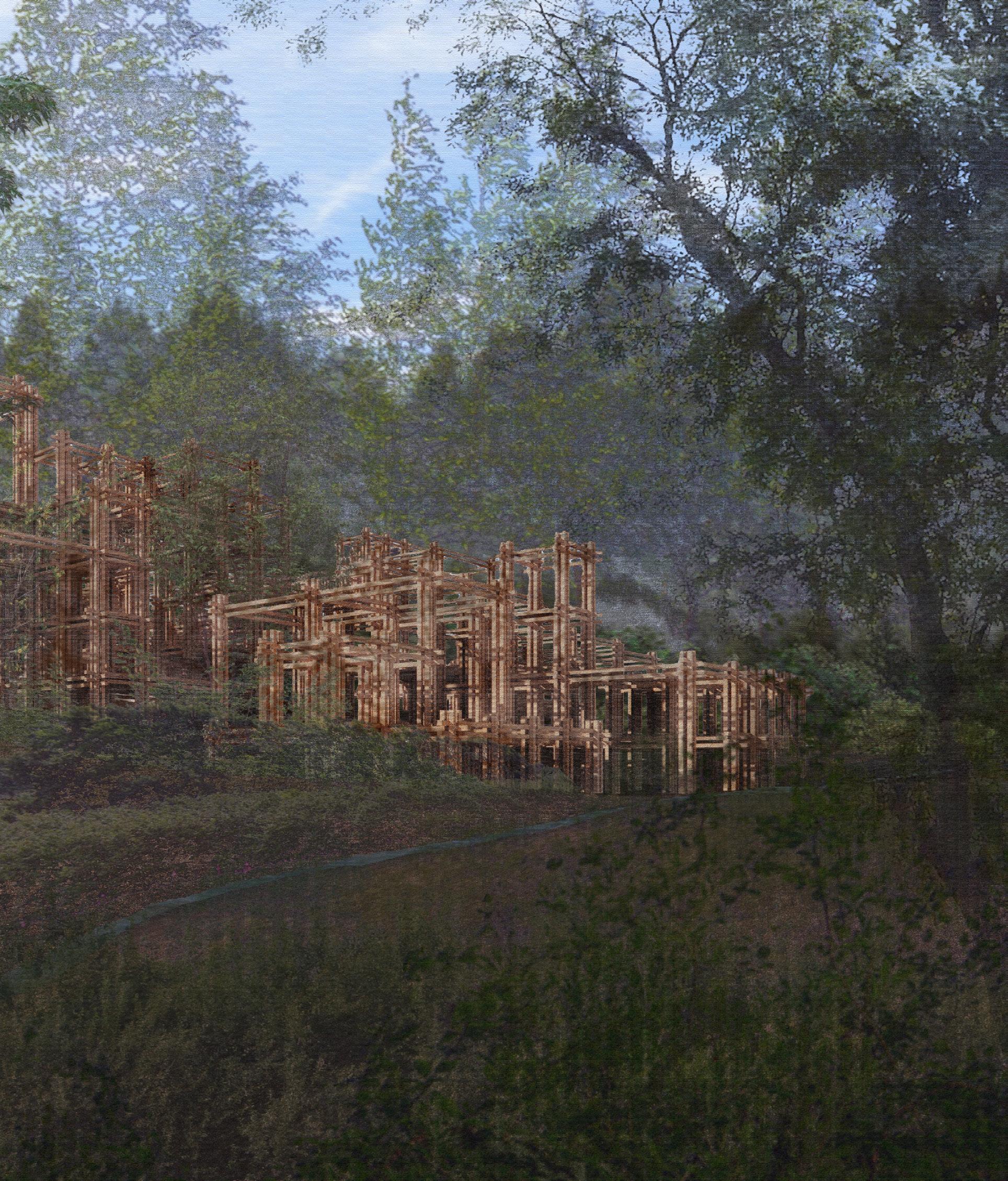
learning within the forest.
design autonomy.
site progression through elements of play. greenleaf.
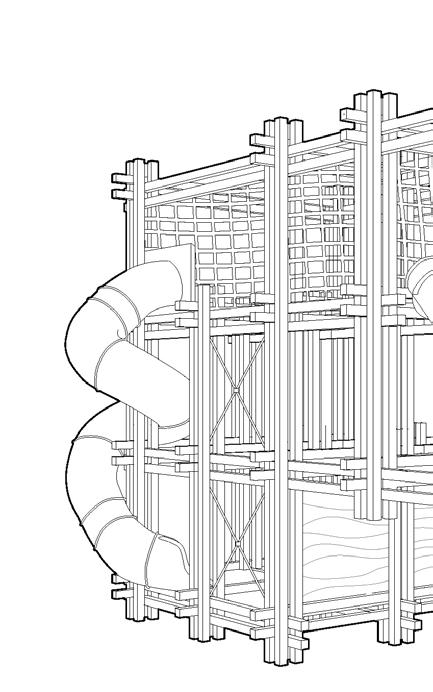
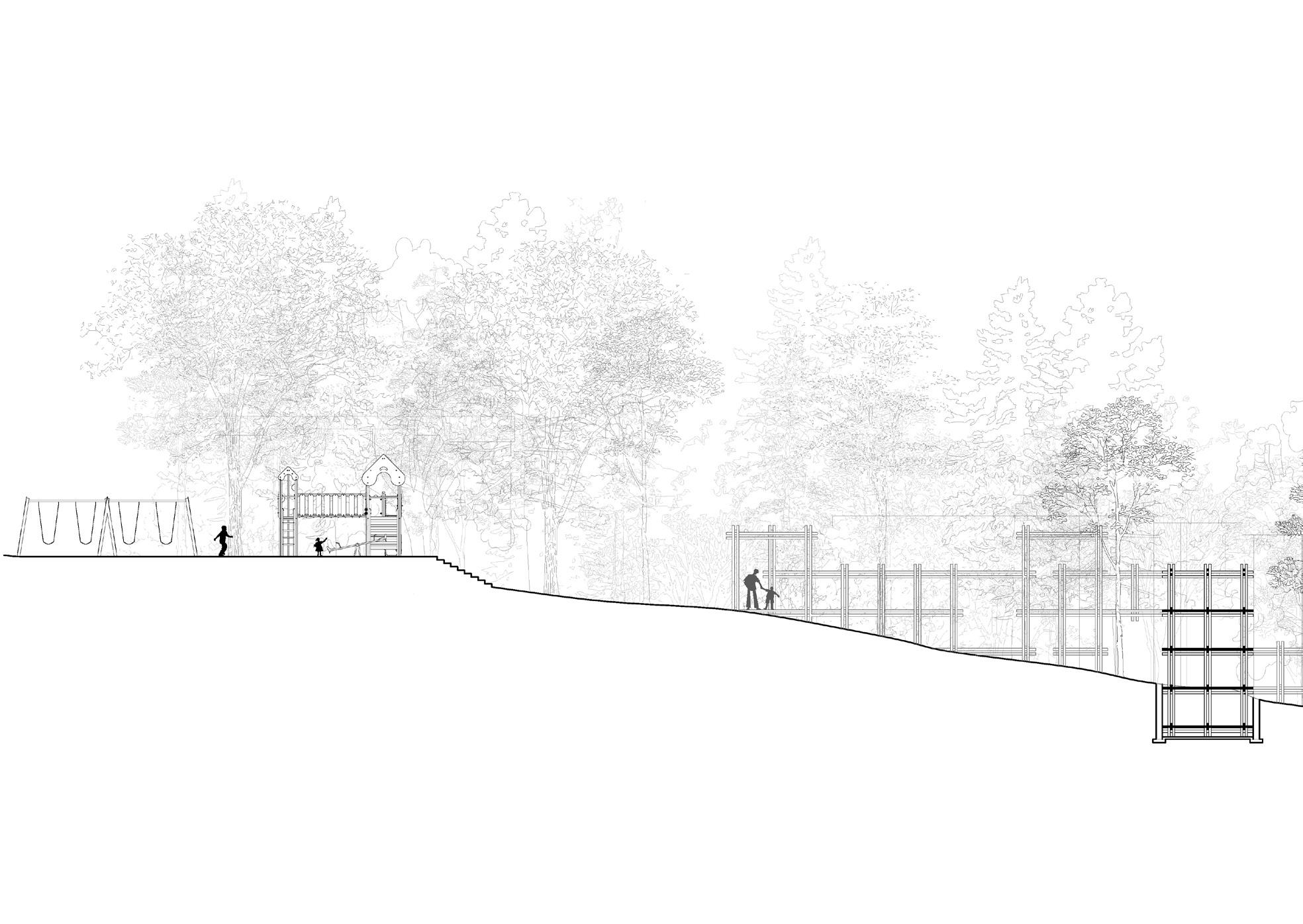
entrance playscape.
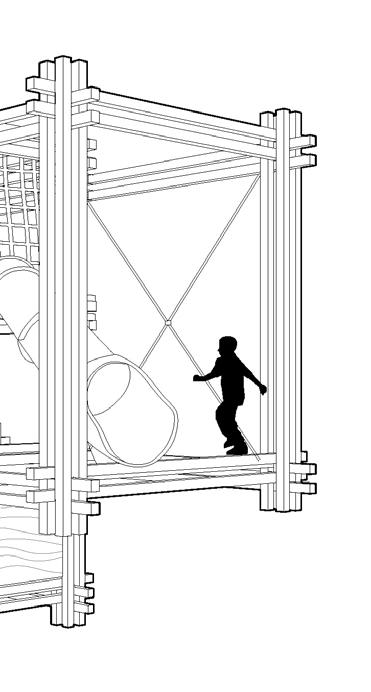
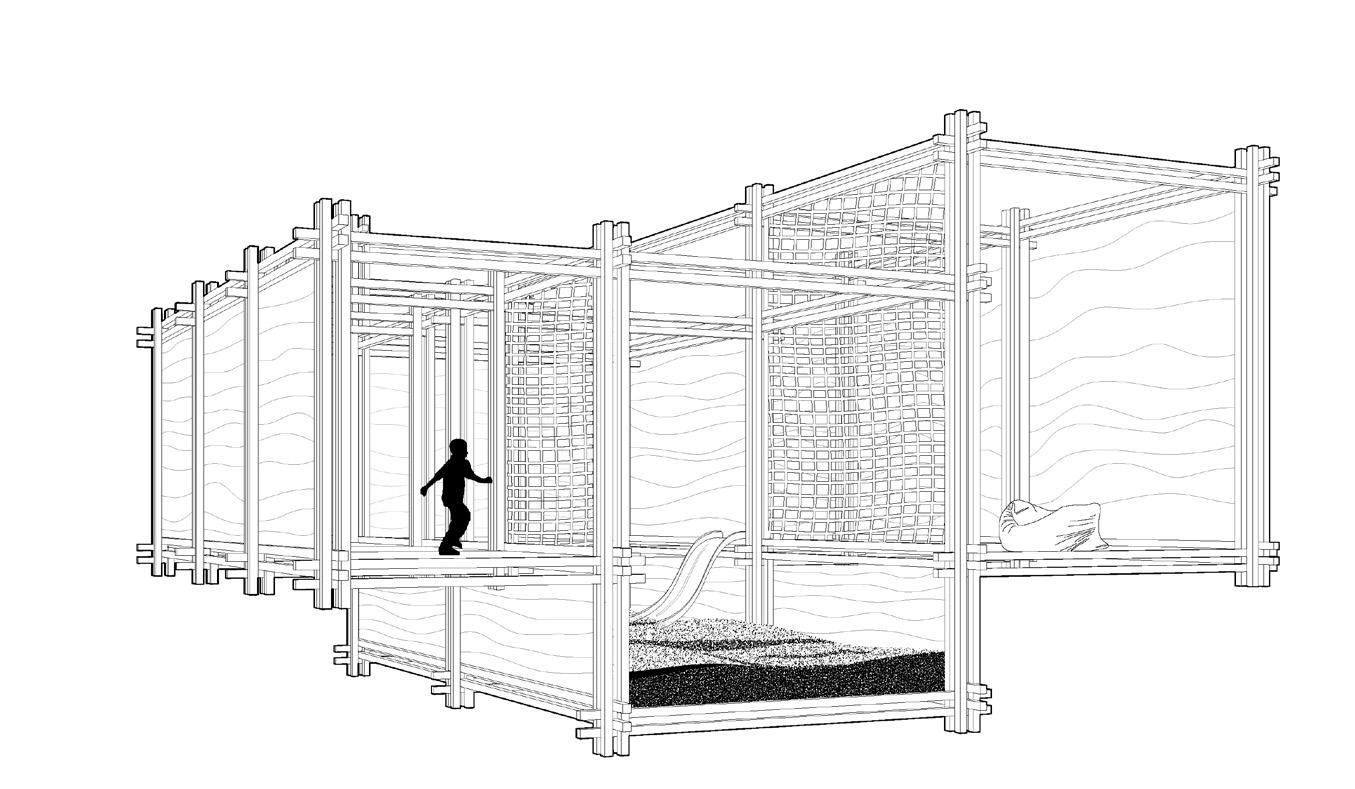
sand pit.
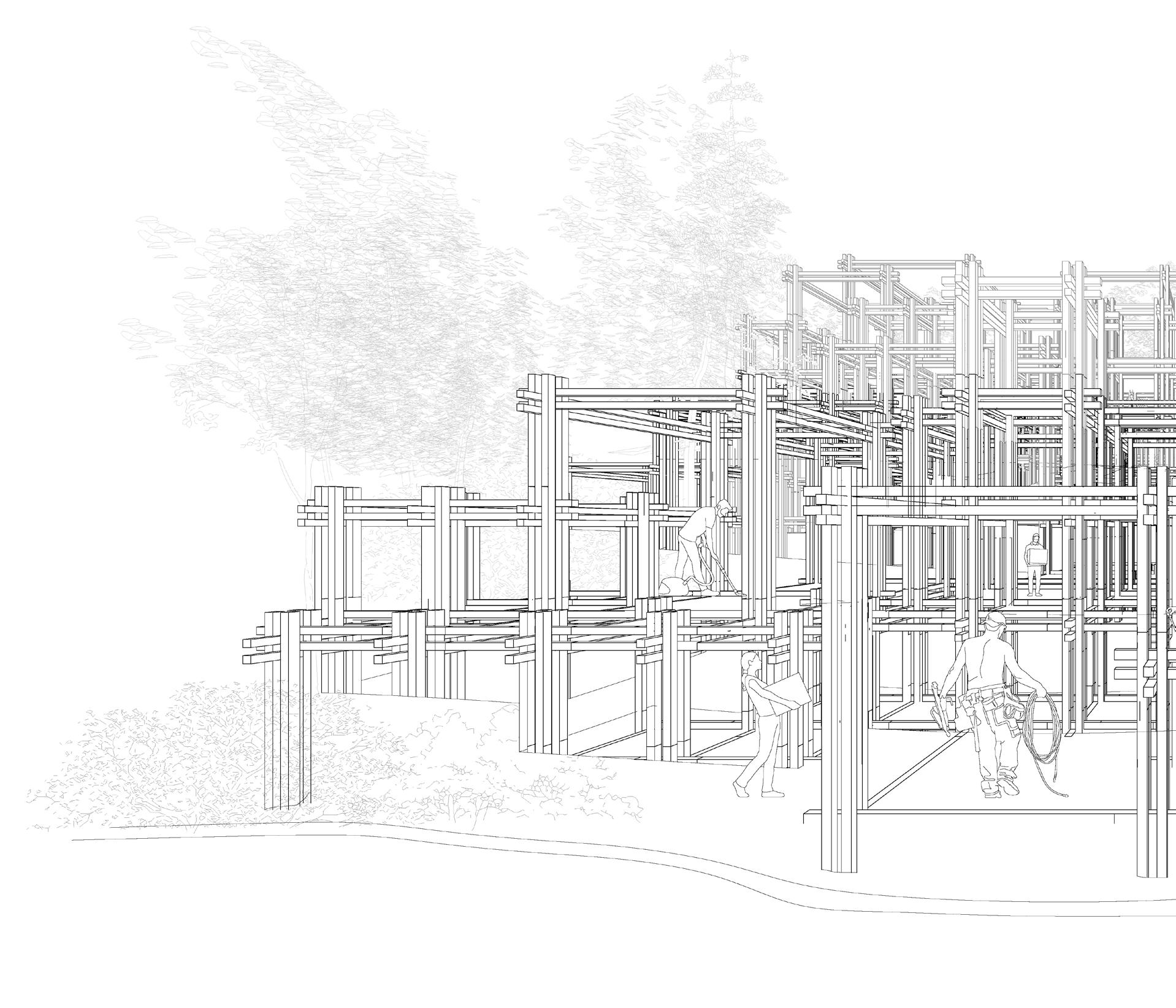
community involvement in do-it-yourself build.
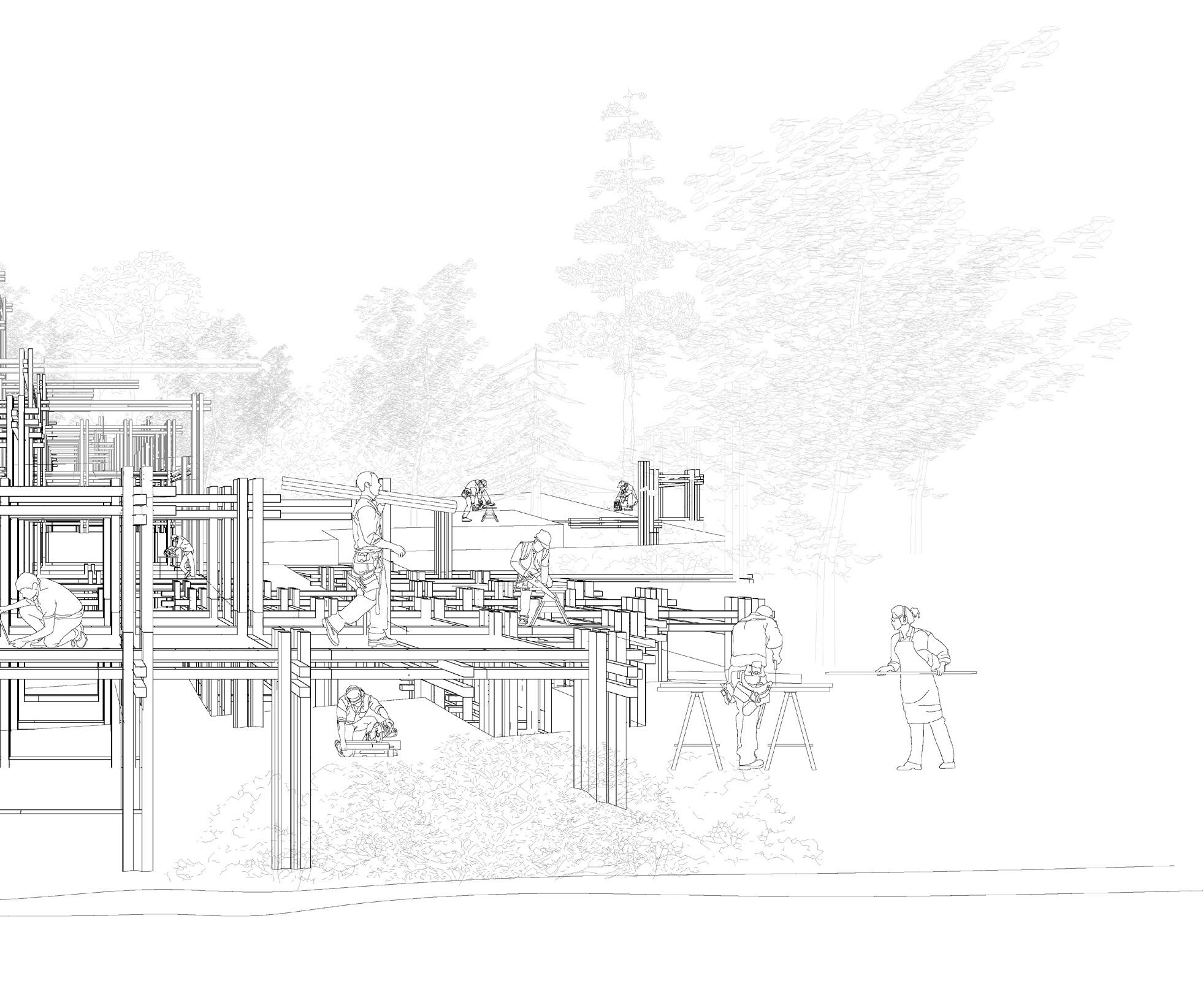
intricacies of playscape as a kindergarten.
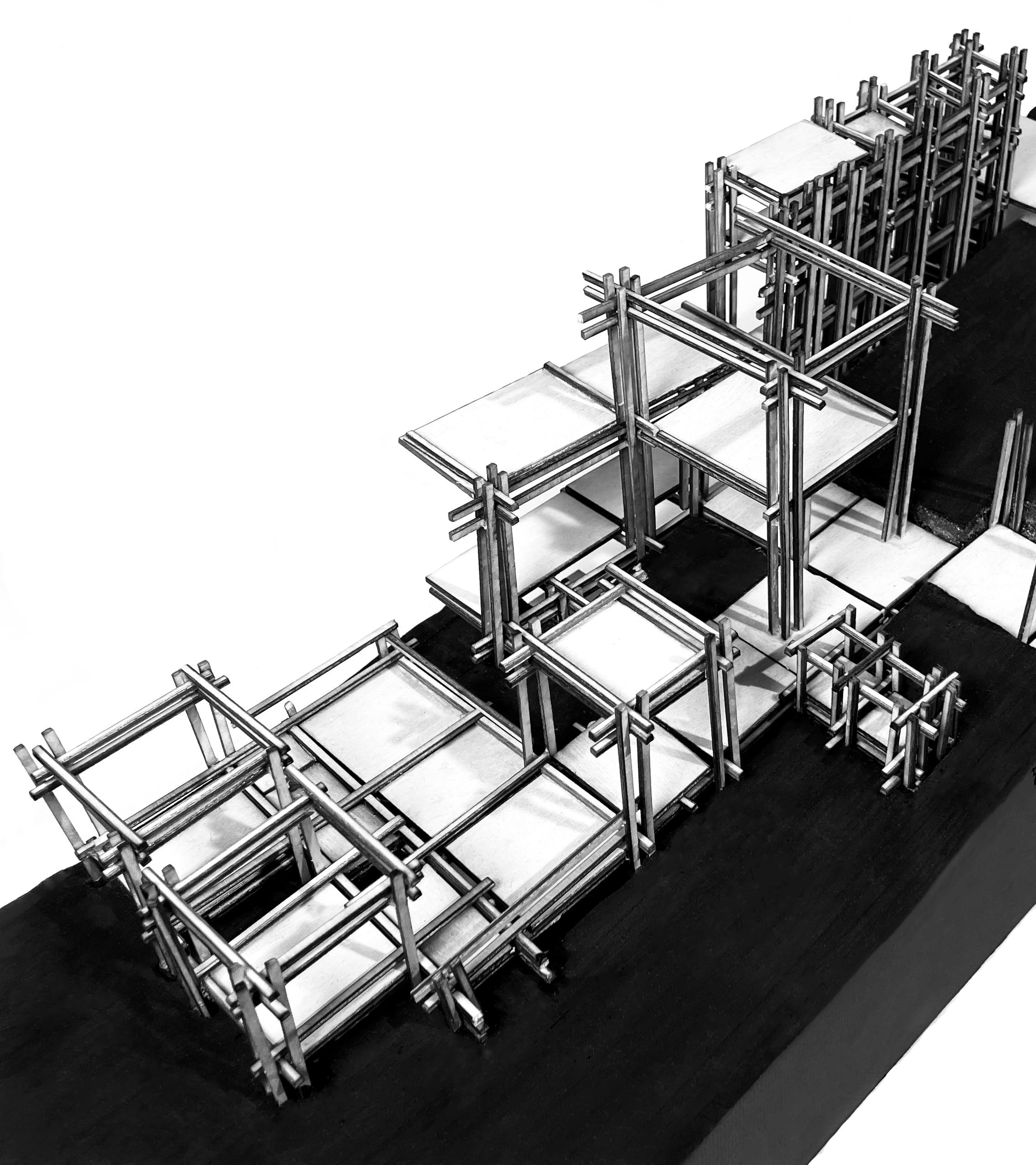
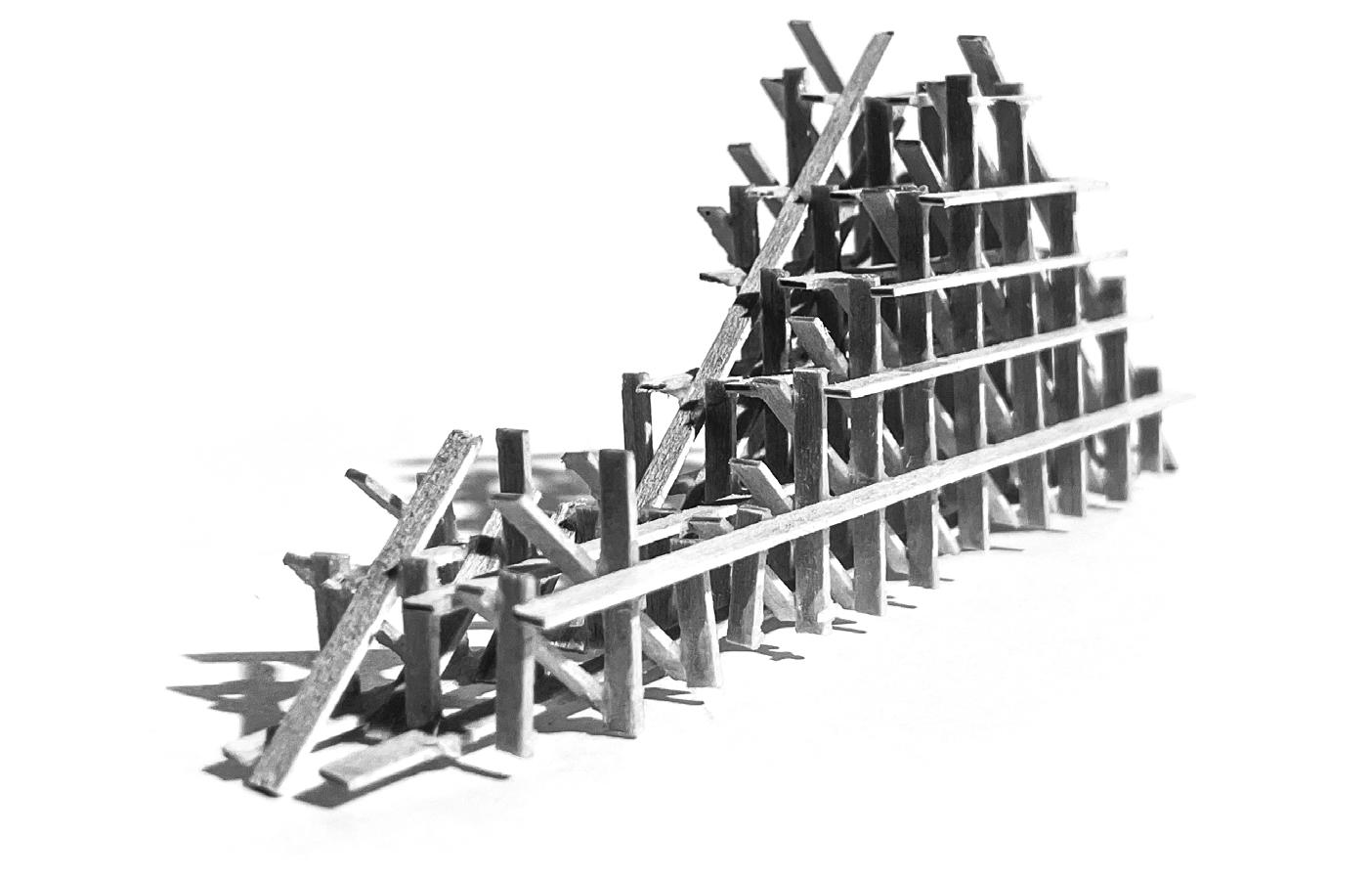
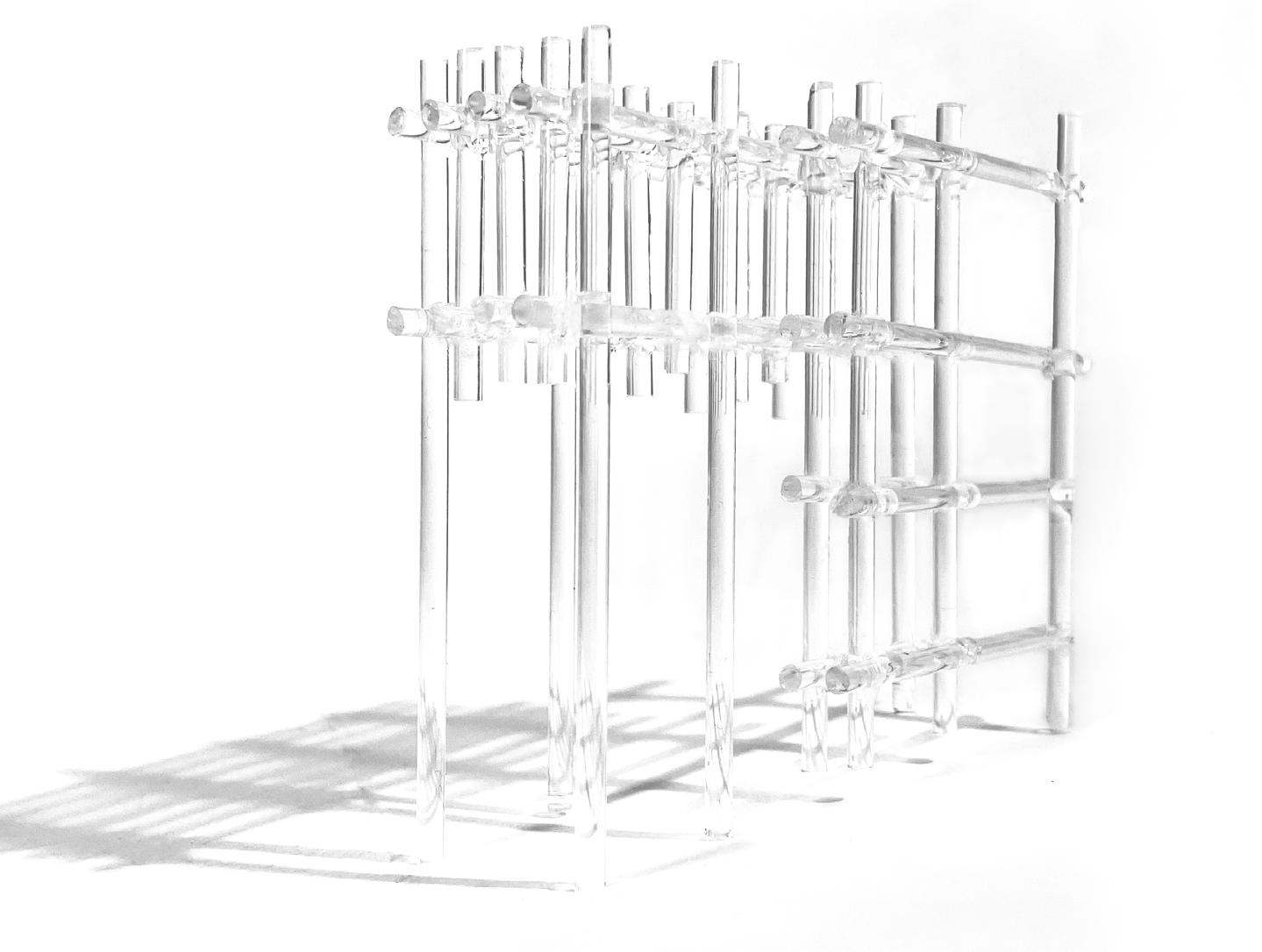

massing. transparency. tectonic.
didactic interventions along the indiana lakeshore.
arch 4010 | fall 2023. gary, indiana.
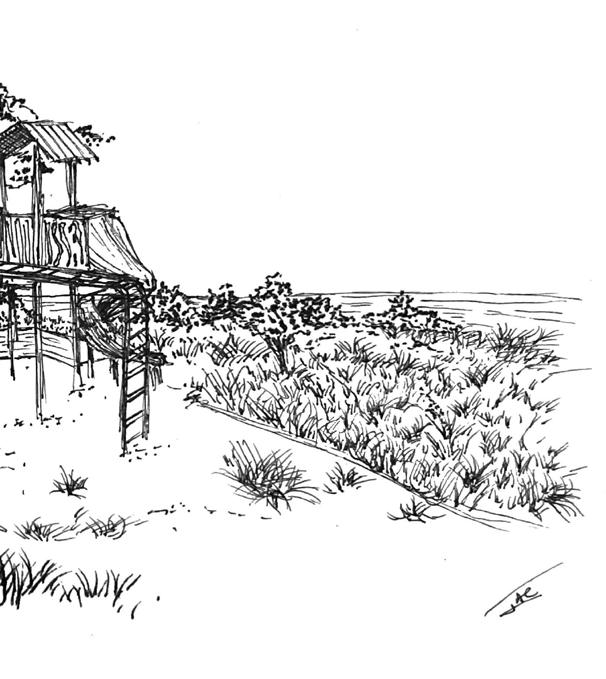
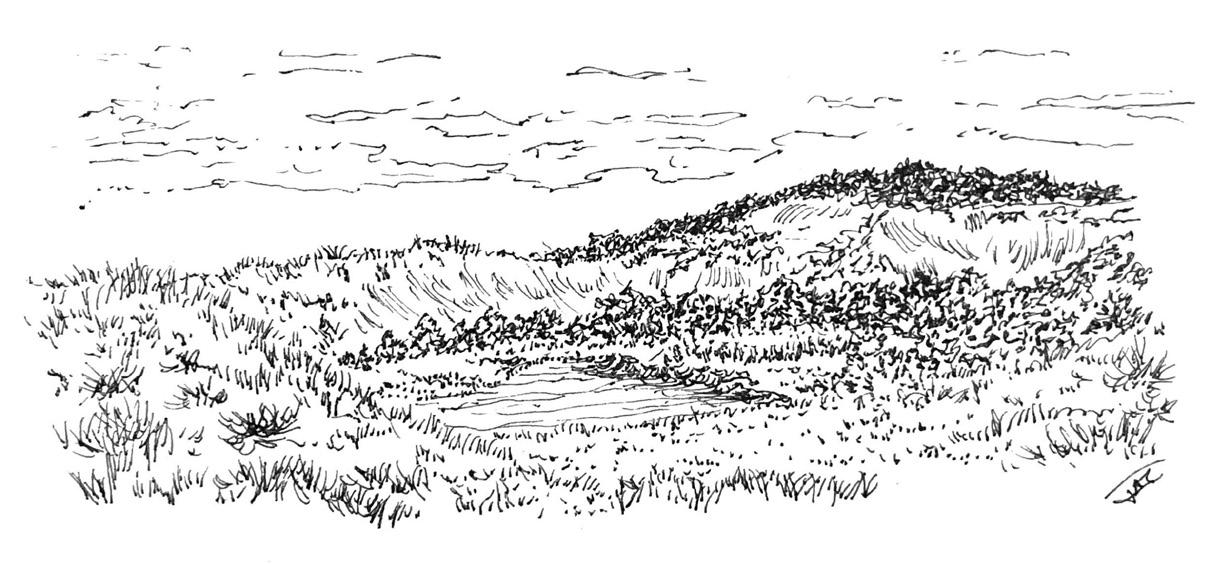
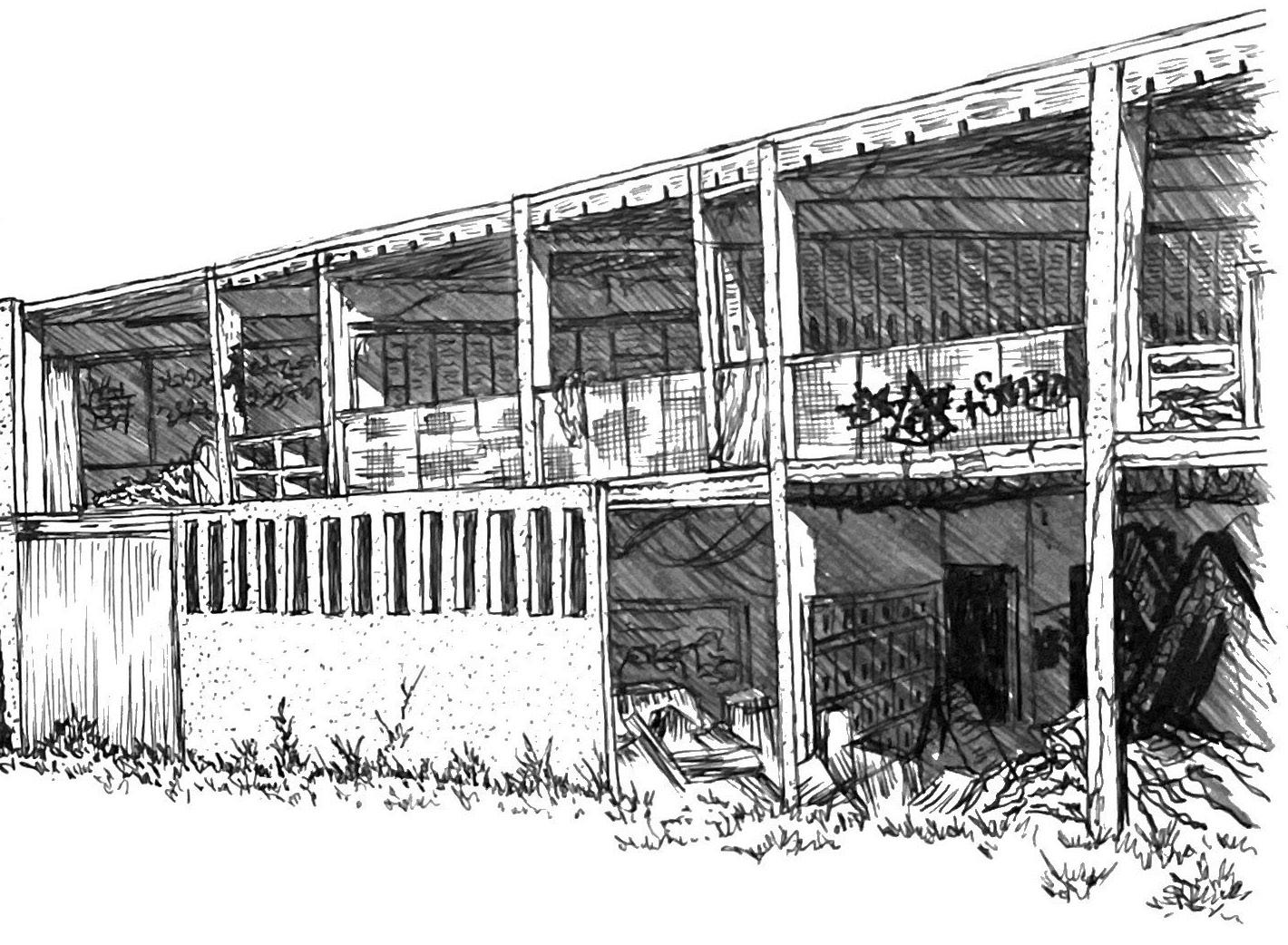
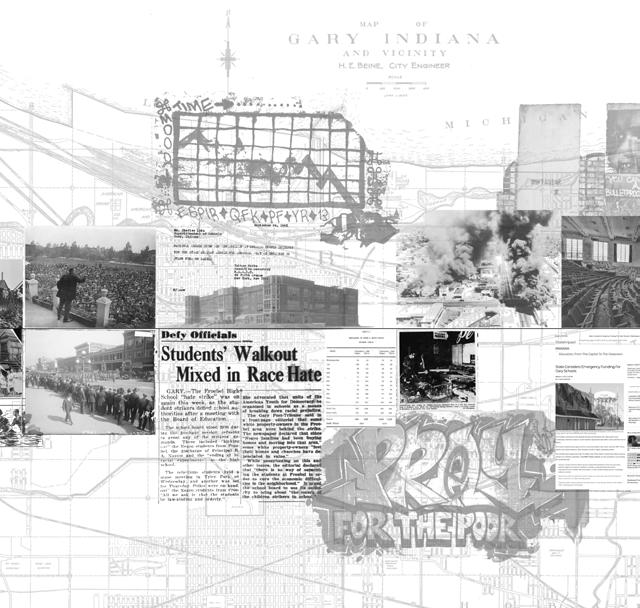
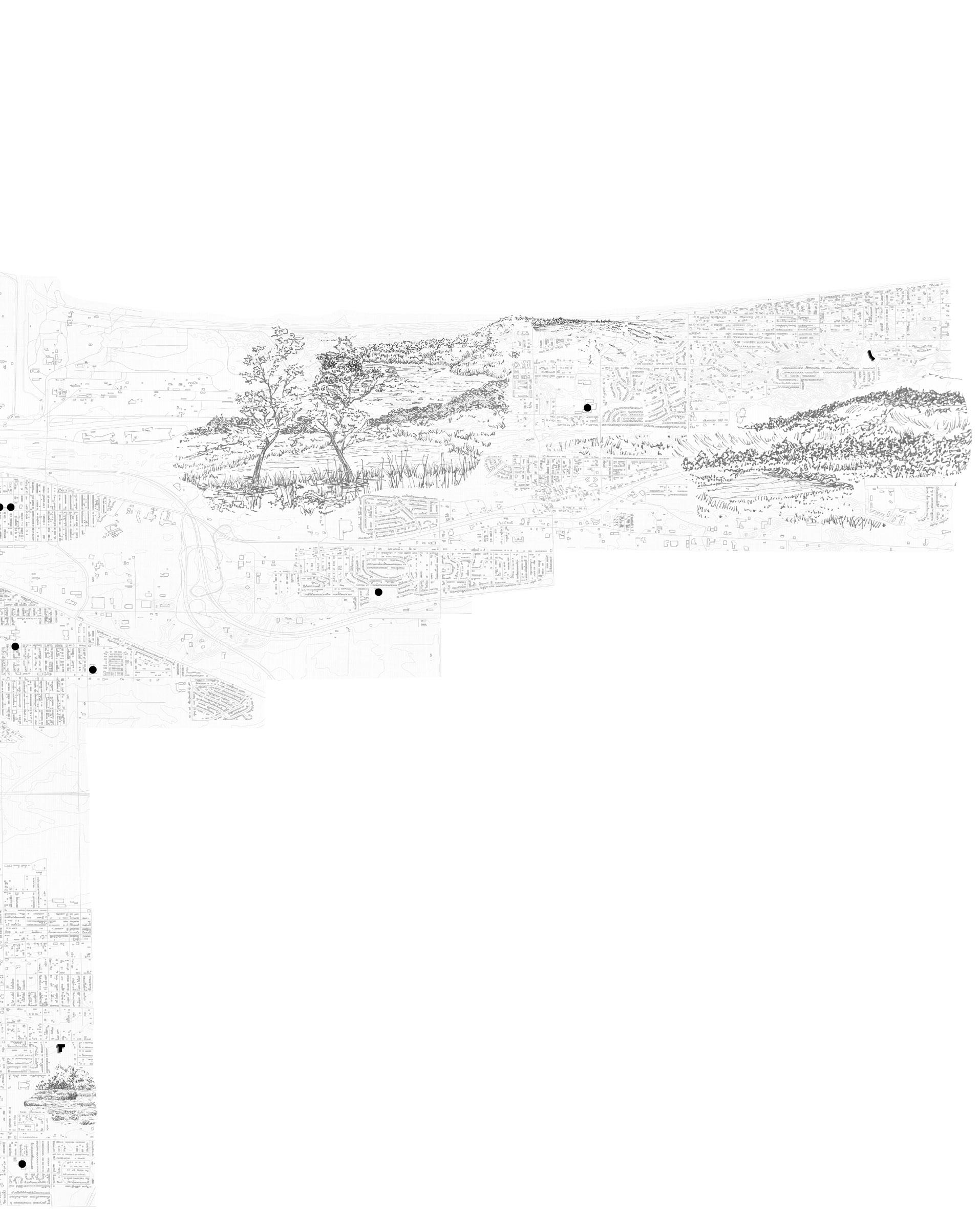
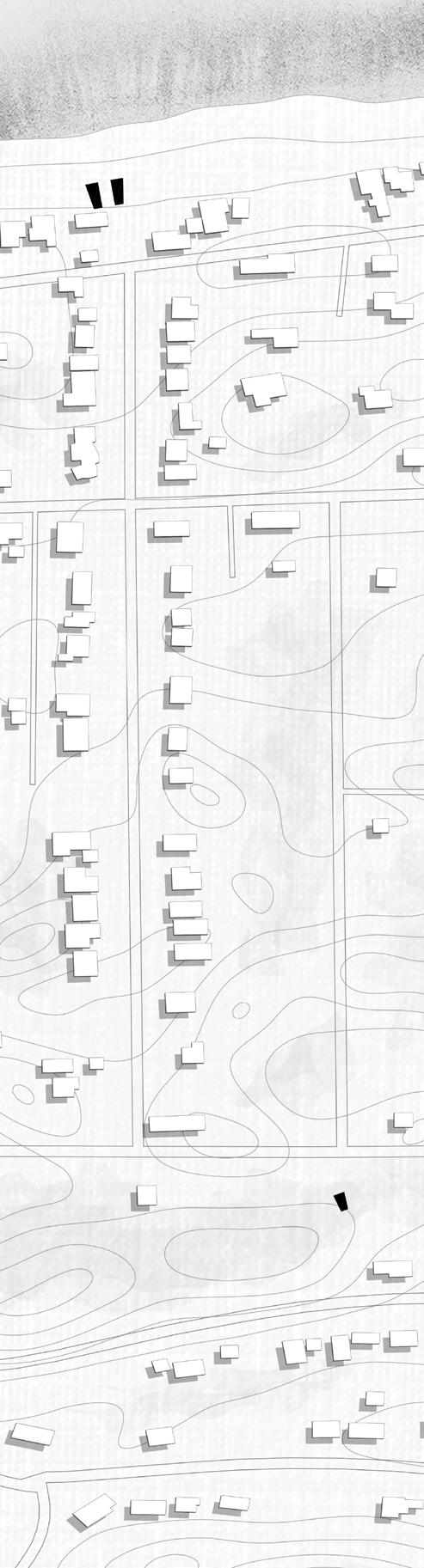
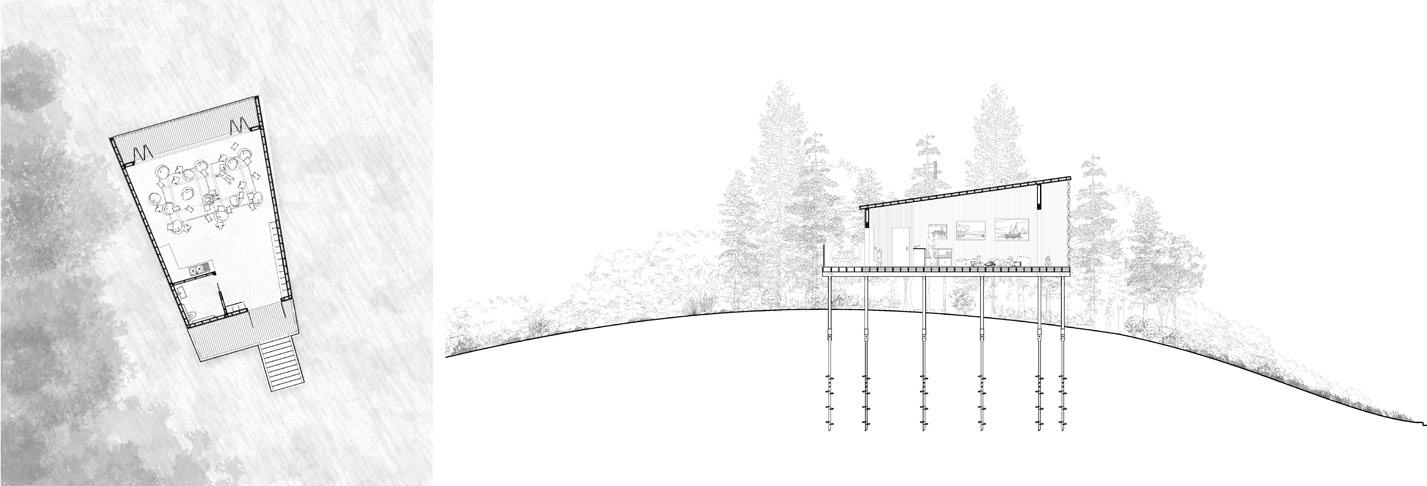
From the inequities of school funding distribution to the inequalities in nature based educational opportunities, the youth of Gary, Indiana has been deprived of enriched academic experiences that come with the inclusion and focus of nature based education. In an effort to reignite the long lost connection between Indiana’s shoreline and the youth of Gary, “Learning the Land” explores a possible framework for how architecture can be a driving force in the engagement of students with their surrounding environment. Designed at the, now demolished site of abandoned school, Nobel Elementary, lies a smaller and more intimate educational center that acts as a point of departure for these didactic interventions. Being a twelve to fifteen minute walk to a public access point to Miller Beach, the corridor offers several opportunities for architecturally facilitated and inspired interactions with the natural environment. The corridor is split up into four points, the central education center (point of departure), intermediate dune site (dune classroom), intermediate tree site (treehouse classroom), and the beach classrooms (point of arrival). “Learning the Land” is meant to introduce the possibilities of revitalizing and re-imagining what could have been with these educational structures if they had been provided adequate resources and a progressive mentality in favor of the students. The buildings are vessels for a much larger discussion that needs to be instigated throughout society.
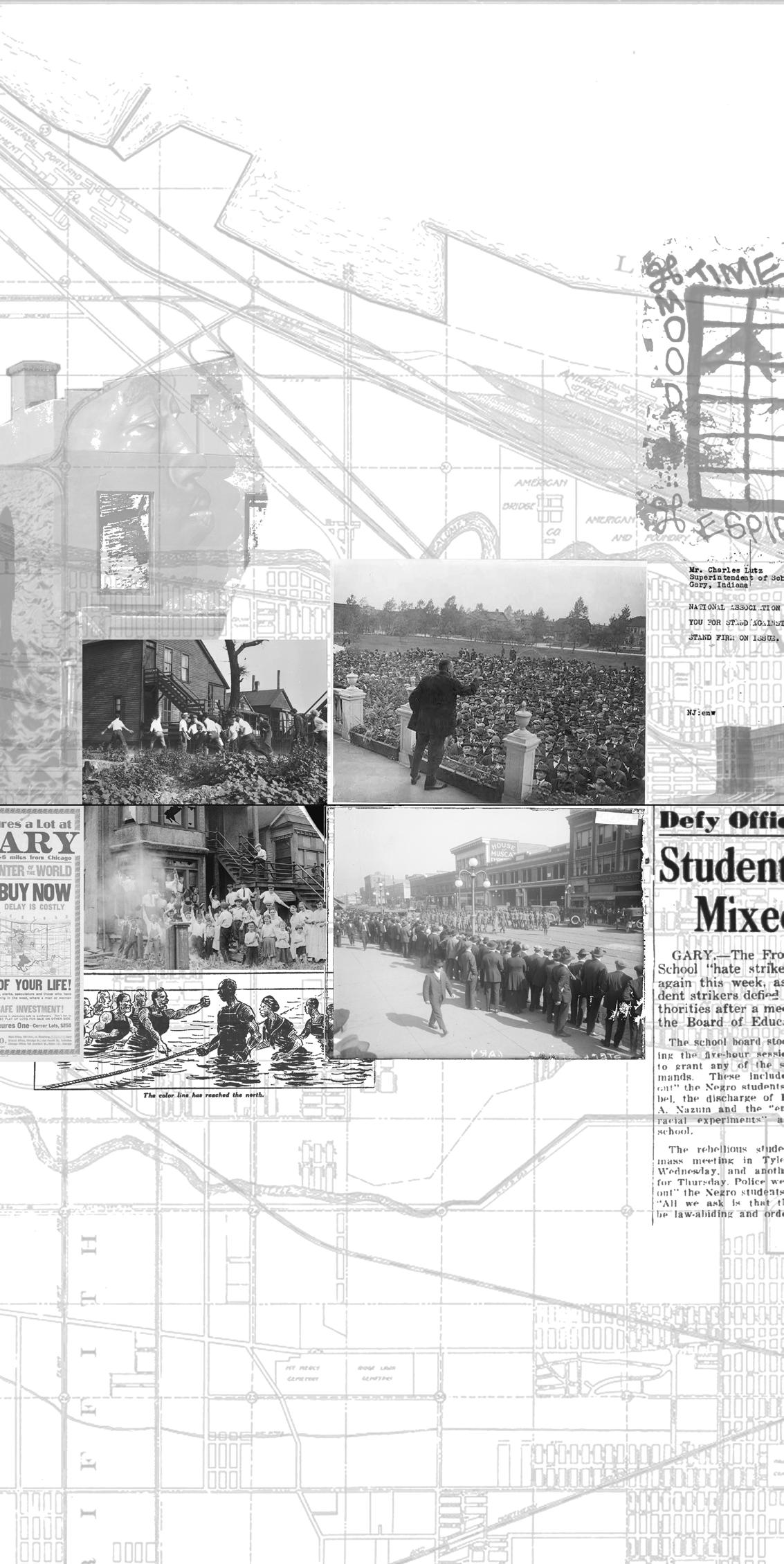
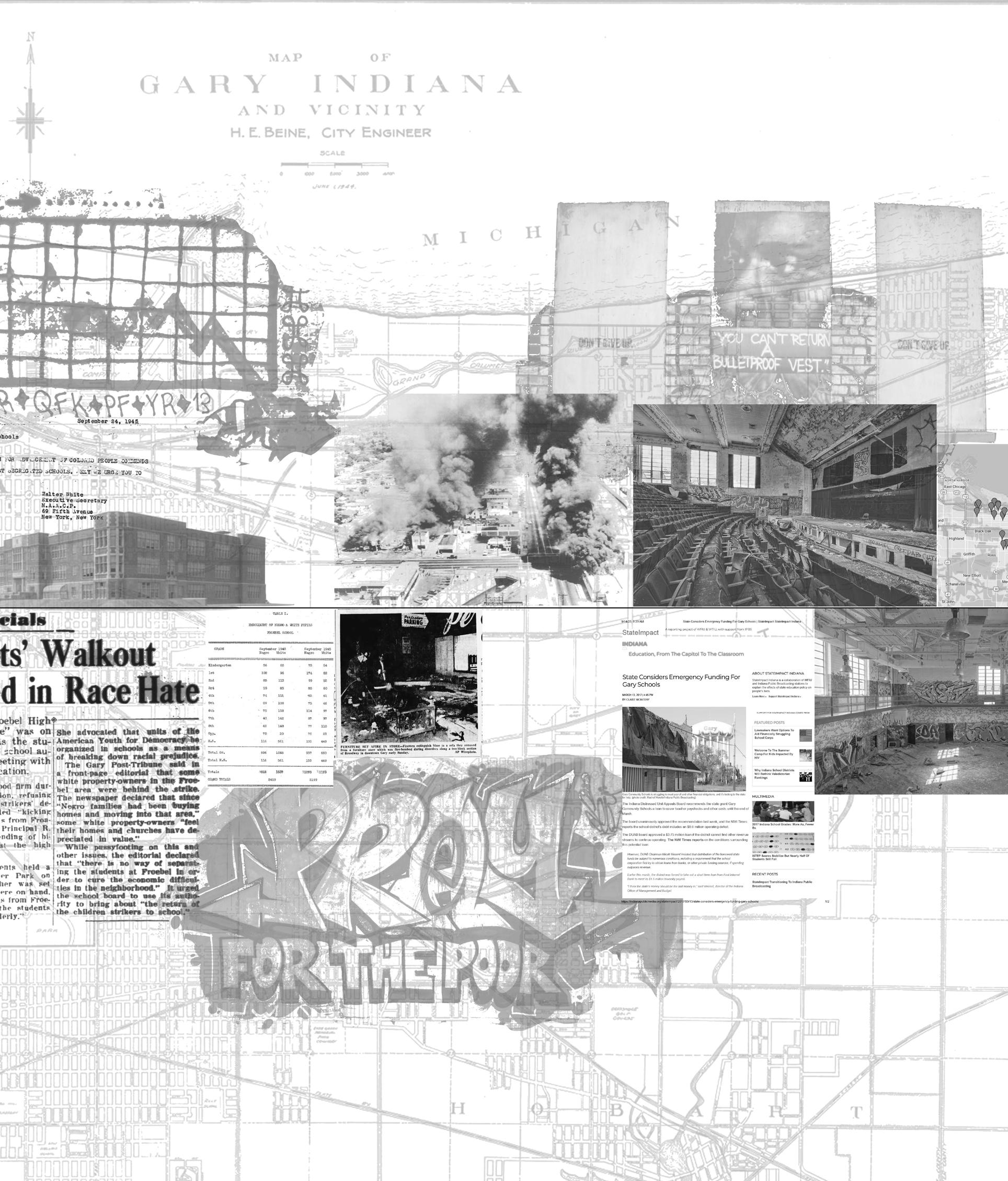
history of gary.
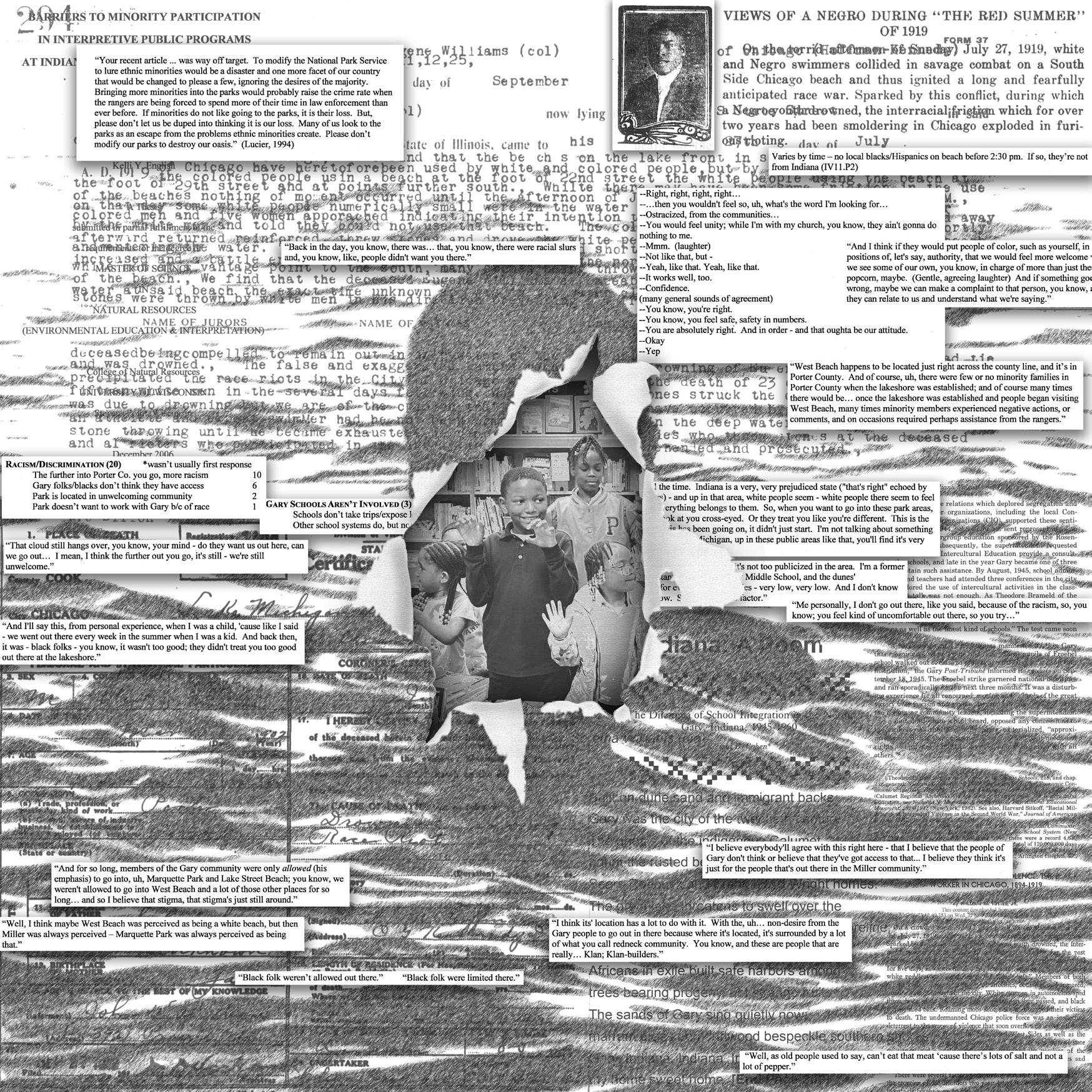
racial inequities of shoreline access.
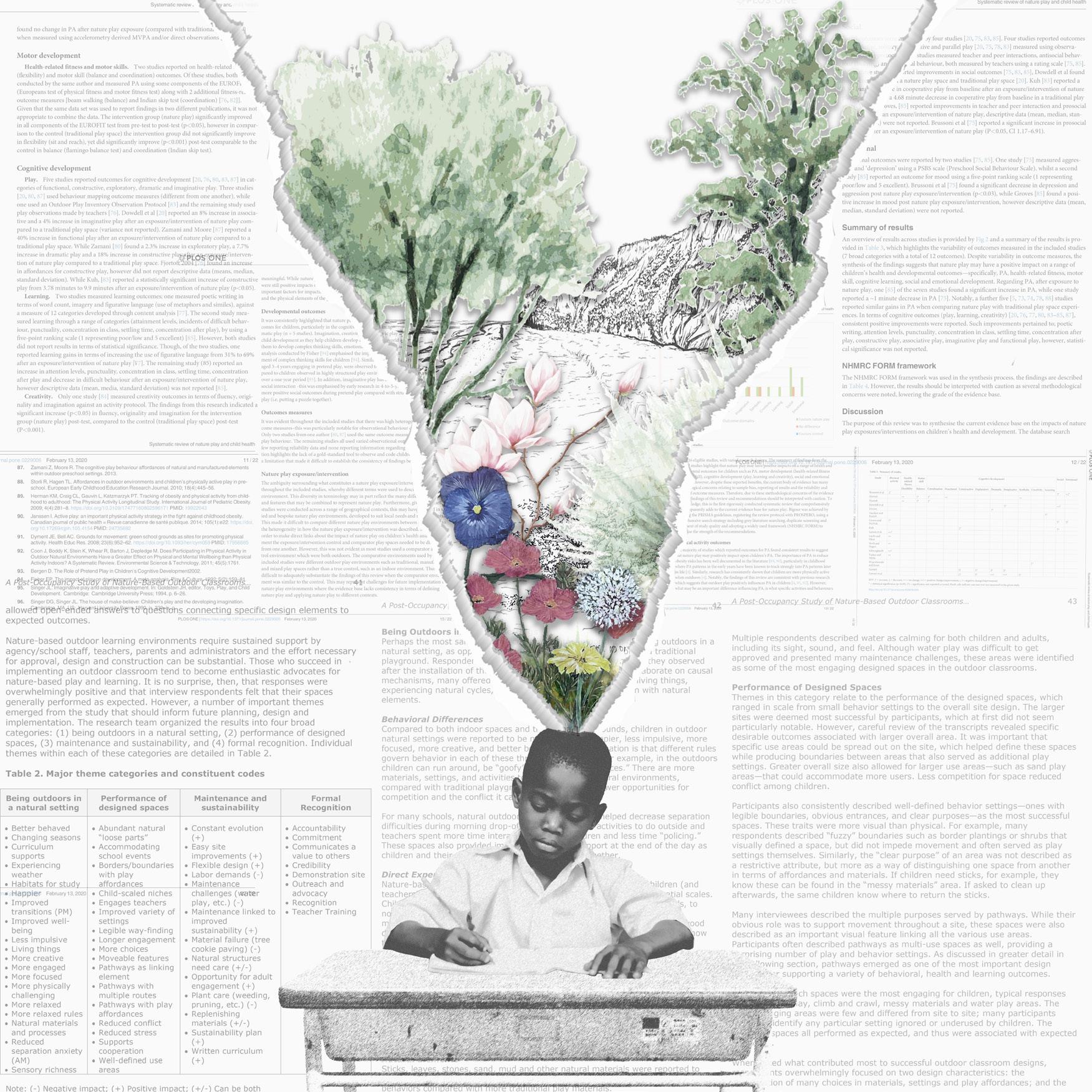
importance of nature-based learning.
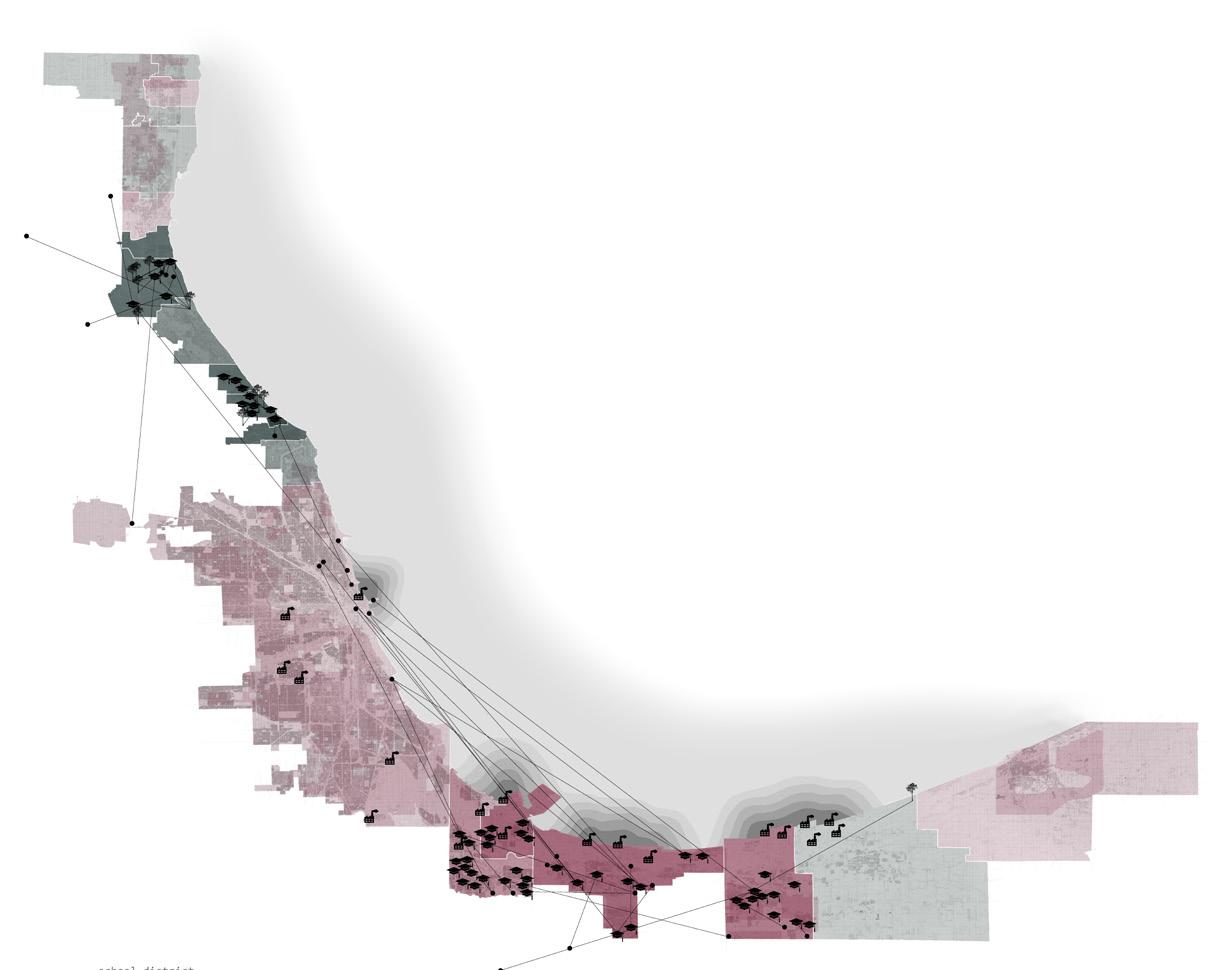
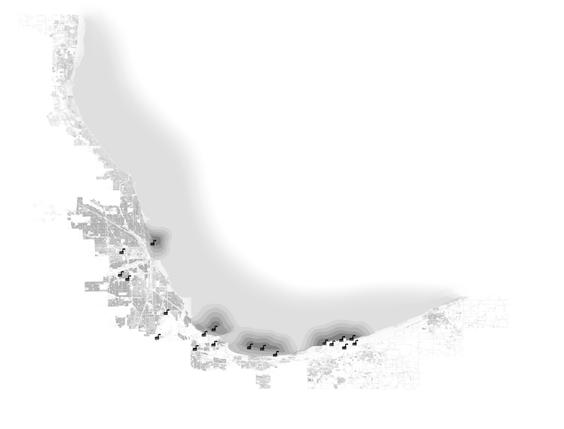
missed opportunities of environmental engagement in gary, indiana. chicago - gary education abandoned elementary schools.
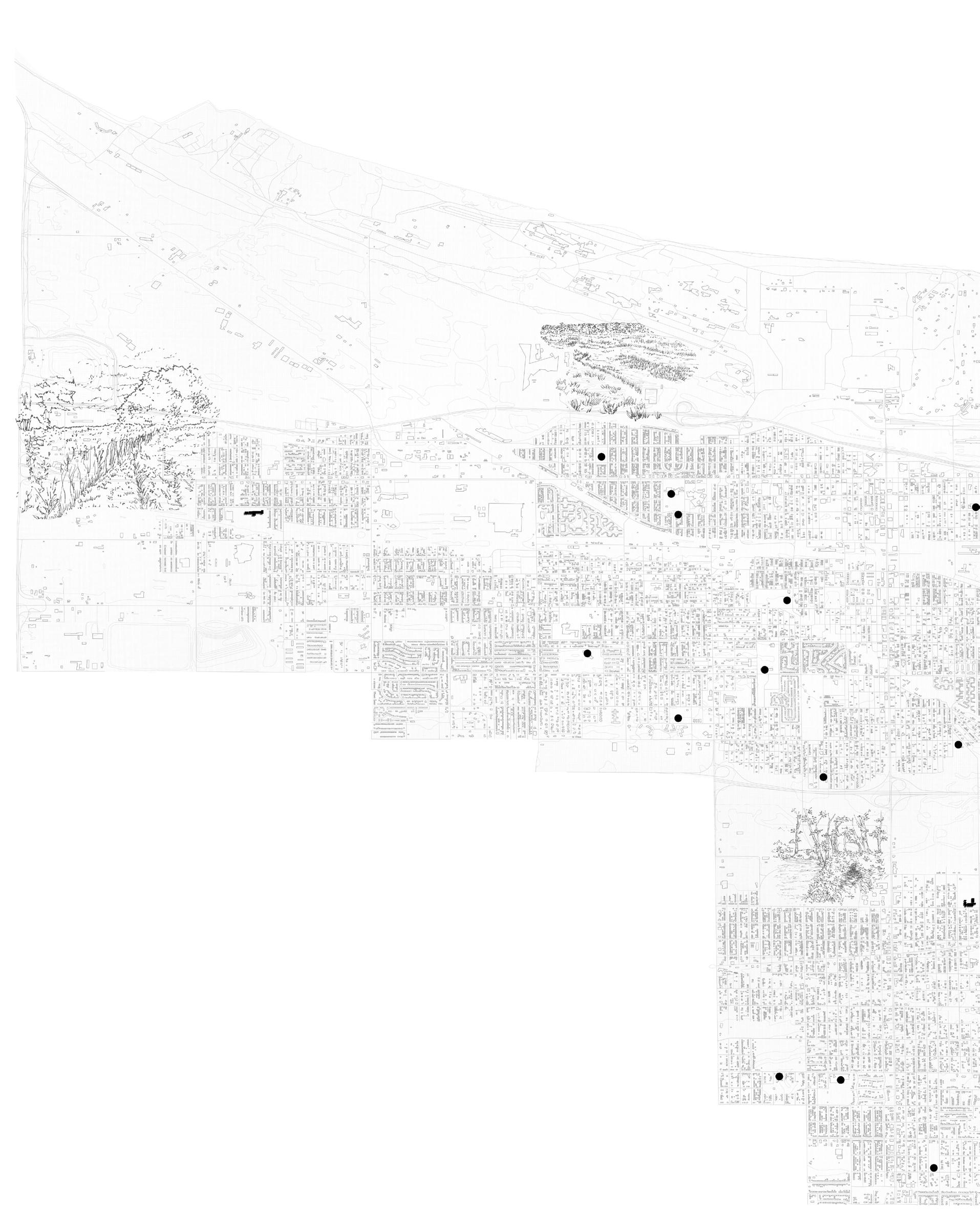
chosen sight: nobel elementary
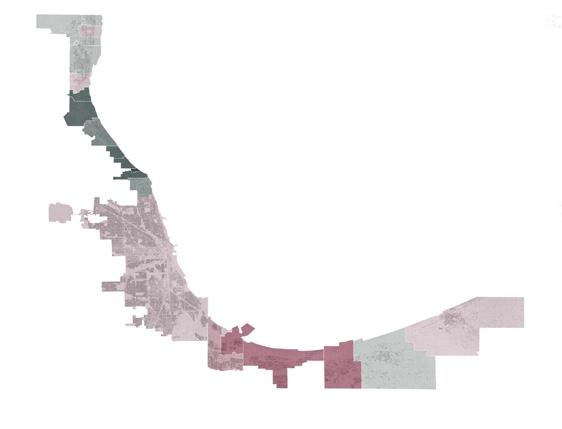
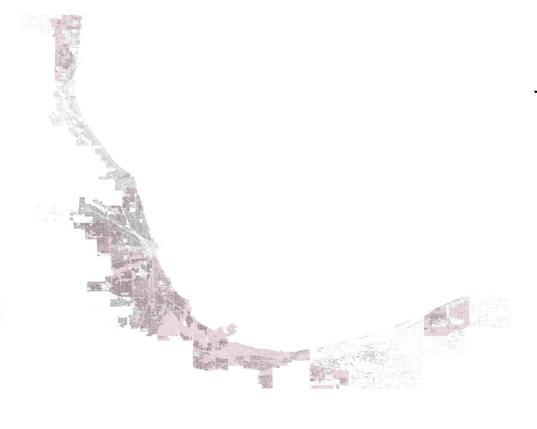
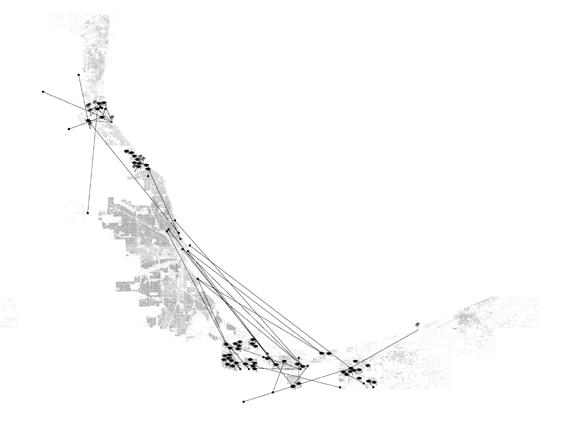
school district funding. field trips. income distribution. pollutants.
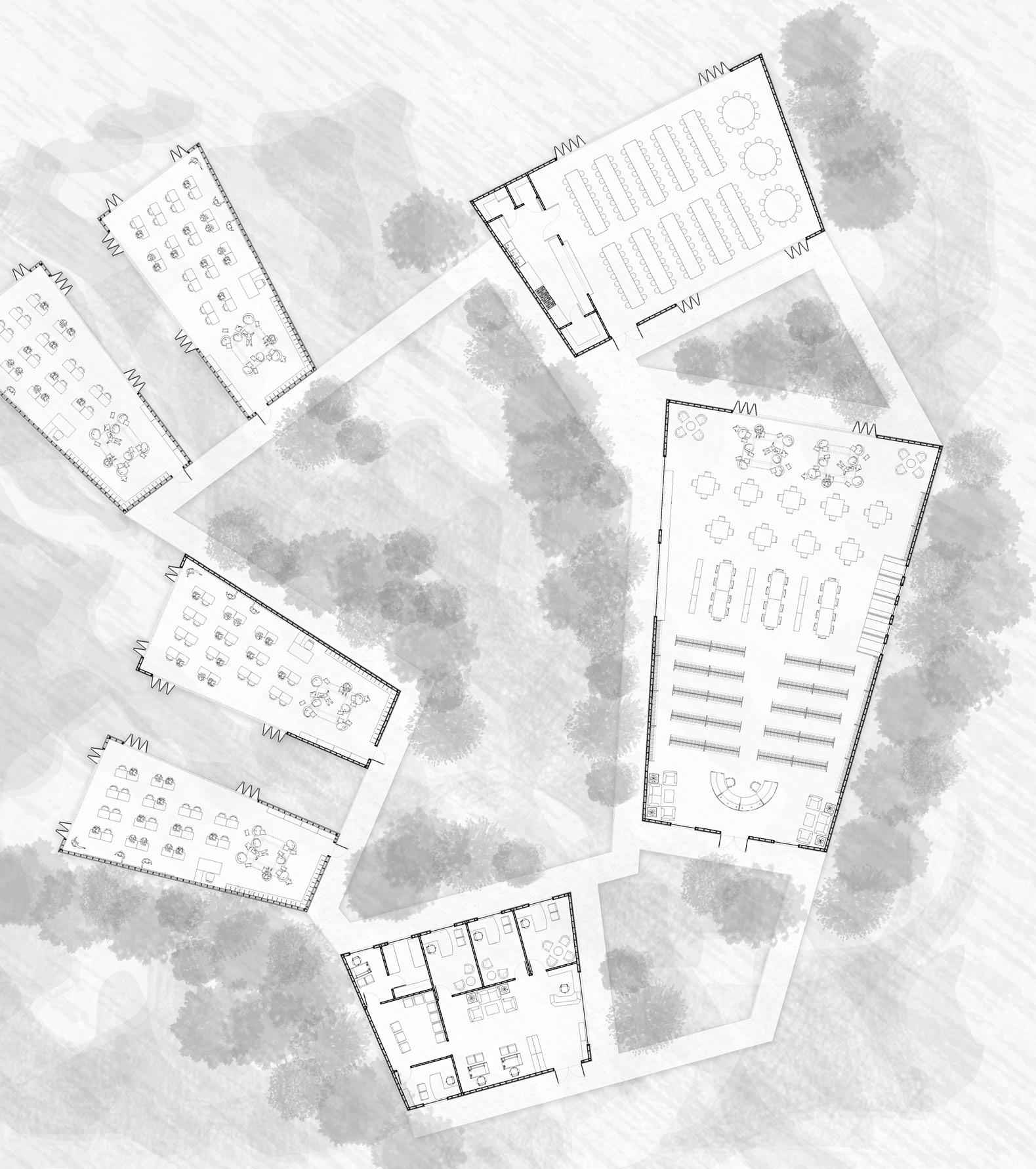

point of departure. journey. site.

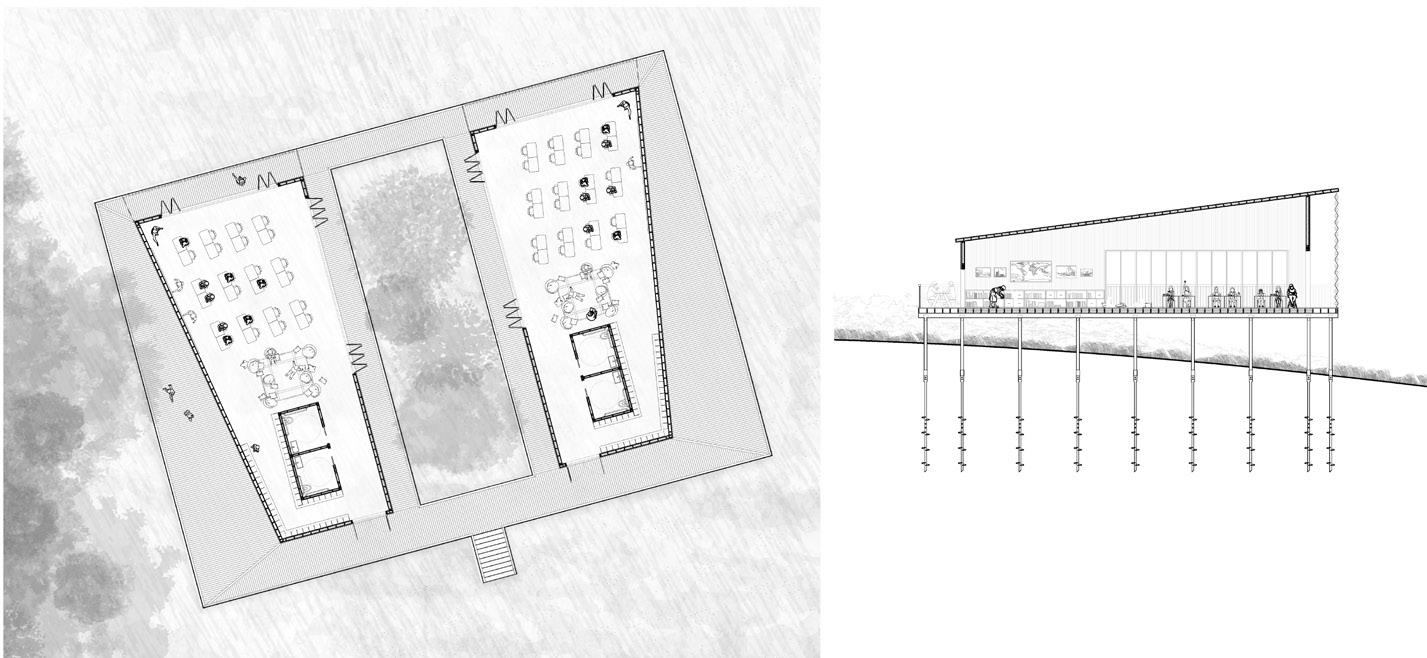
point of arrival.
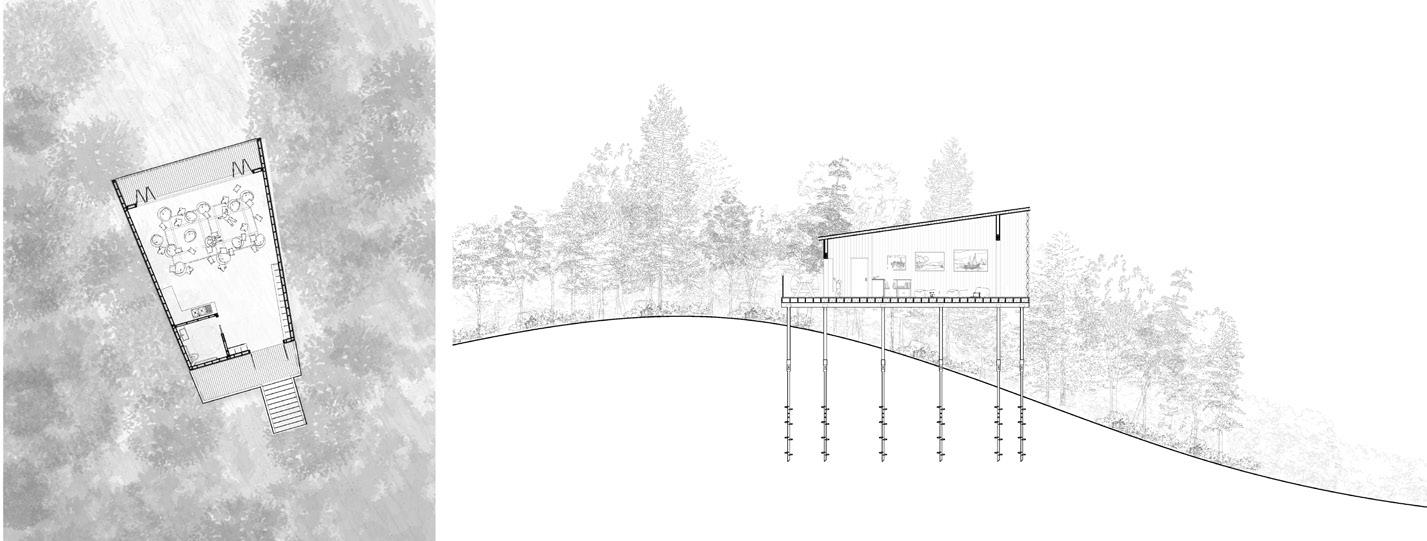
treehouse classroom.
dune classroom.

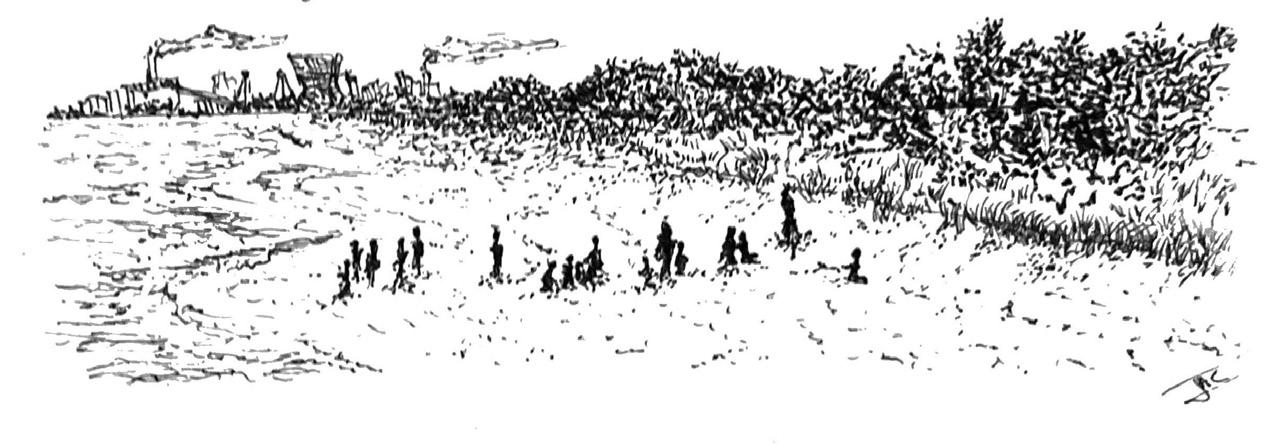
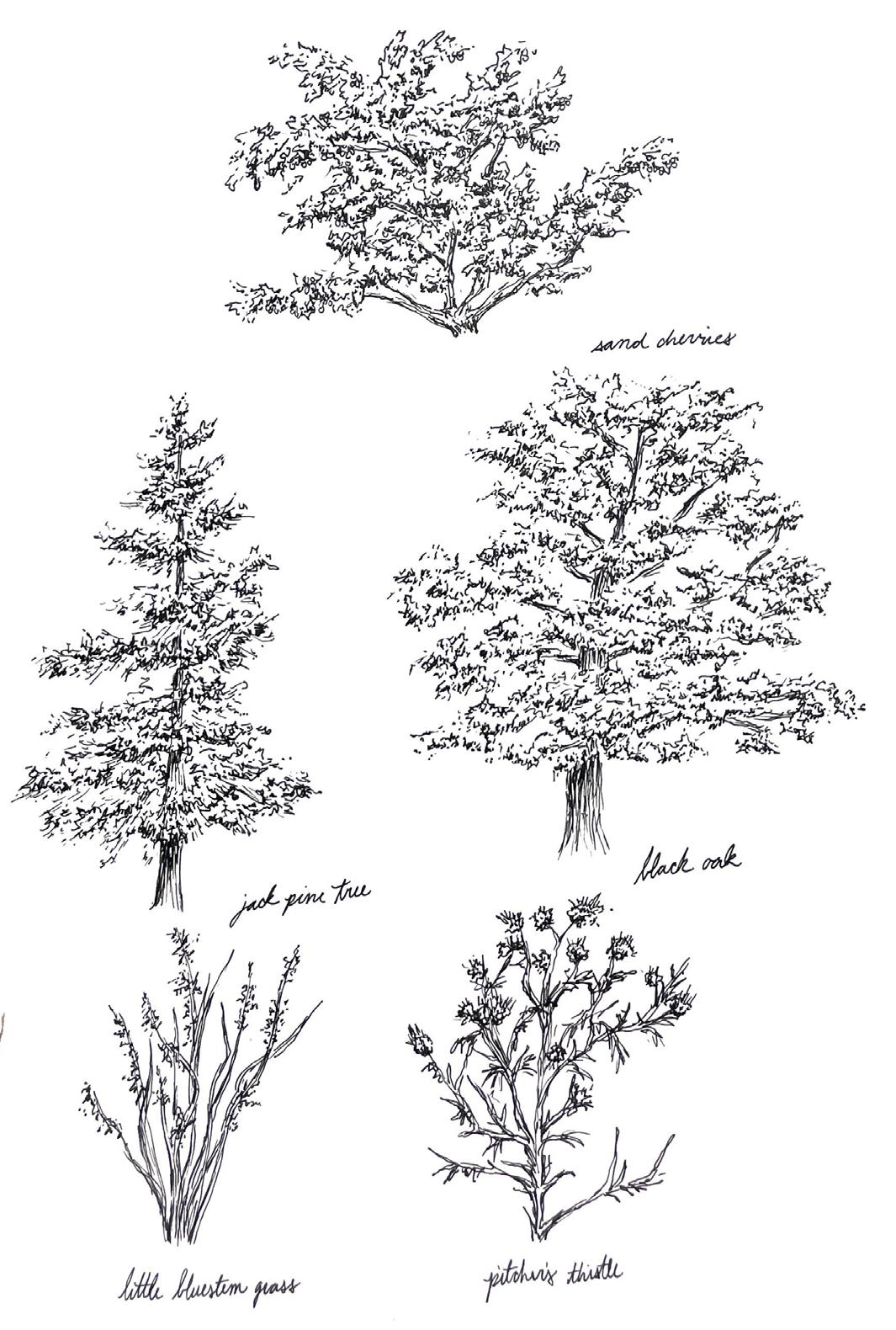
texures of miller beach, gary.