Navigating the Warehouse During Winter
Winter Driving Safety Tips
Prepare Your Vehicle
• Check tires for proper tread & pressure.
• Ensure windshield wipers and defrosters are working.
• Keep your gas tank at least half full to avoid fuel line freeze-up.
• Stock your car with emergency supplies: blanket, flashlight, ice scraper, jumper cables, and non-perishable snacks.
Drive Cautiously
• Slow down and increase following distance — roads may be slick even if they look clear.
• Avoid sudden stops or sharp turns to prevent skidding.
• Use low beams in snowy or foggy conditions for better visibility.
Be Weather-Aware
• Check the forecast before heading out.
• Delay travel if conditions are hazardous.
• Watch for black ice, especially on bridges, overpasses, and shaded areas.
Continued on pg. 4

Winter weather brings unique challenges to warehouse operations, from icy loading docks to increased slip-and-fall risks indoors and outdoors. Maintaining safety and efficiency requires a proactive approach and collective vigilance. Here are key areas to focus on this season:
1. Slip, Trip, and Fall Prevention
The number one workplace injury during winter months is slips, trips, and falls . Snow and ice tracked in from outside can create slick spots on smooth warehouse floors, while frozen patches pose a risk on loading docks and in parking lots.
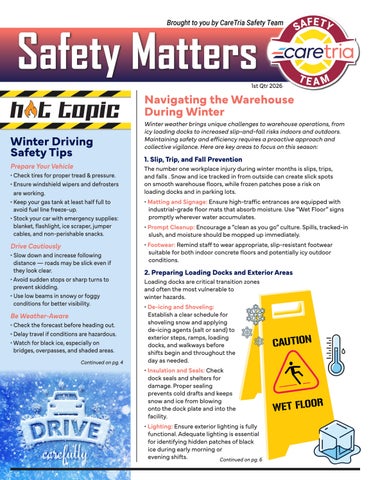
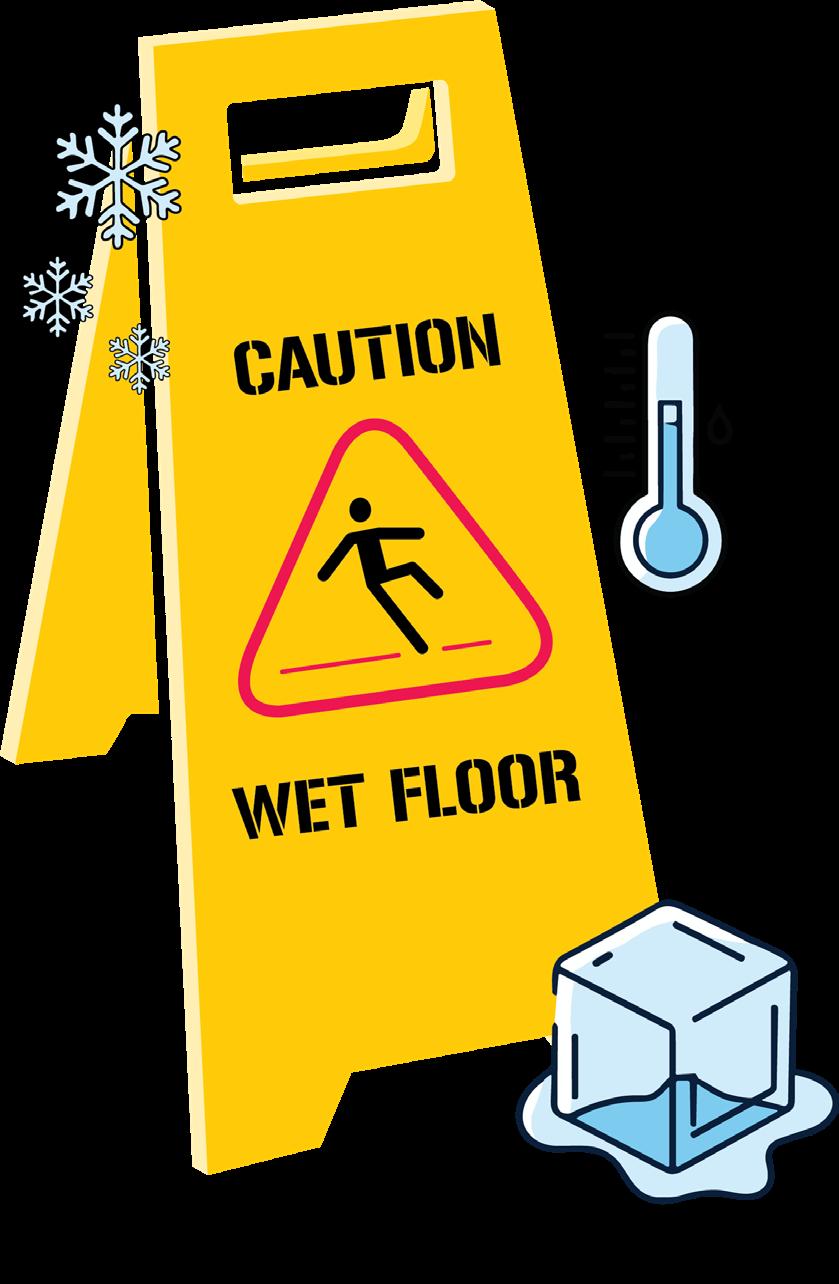
• Matting and Signage: Ensure high-traffic entrances are equipped with industrial-grade floor mats that absorb moisture. Use “Wet Floor” signs promptly wherever water accumulates.
• Prompt Cleanup: Encourage a “clean as you go” culture. Spills, tracked-in slush, and moisture should be mopped up immediately.
• Footwear: Remind staff to wear appropriate, slip-resistant footwear suitable for both indoor concrete floors and potentially icy outdoor conditions.
2. Preparing Loading Docks and Exterior Areas
Loading docks are critical transition zones and often the most vulnerable to winter hazards.
• De-icing and Shoveling: Establish a clear schedule for shoveling snow and applying de-icing agents (salt or sand) to exterior steps, ramps, loading docks, and walkways before shifts begin and throughout the day as needed.
• Insulation and Seals: Check dock seals and shelters for damage. Proper sealing prevents cold drafts and keeps snow and ice from blowing onto the dock plate and into the facility.
• Lighting: Ensure exterior lighting is fully functional. Adequate lighting is essential for identifying hidden patches of black ice during early morning or evening shifts.
Winter Wellness Tips: Staying Healthy During Flu Season
Winter is known for its chilly temperatures and shorter days, but it also brings with it an increased risk of illness. That’s why it is essential to prioritize your health and stay strong to fight off common viruses and infections. Check out these simple tips to help you stay healthy during the colder months.
Boosting Immunity Through Nutrition
Essential Nutrients for Immune Support
Vitamins C, D, and zinc are like the Avengers of the nutrient world – they swoop in to save the day when your immune system is under attack. Including these essential nutrients in your diet can help you stay one step ahead of those germs.
Key Foods to Include in Your Diet
Say hello to citrus fruits, leafy greens, nuts, seeds, and yogurt – they’re like the dream team of immune-boosting foods. Incorporating these goodies into your meals can provide you with extra nutritional firepower to tackle winter health challenges head-on.
Importance of Hydration and Rest
Hydration Tips for Winter Months
Just because it’s cold outside doesn’t mean you can skimp on hydration. Drinking water, herbal teas, and warm soups can keep you hydrated and help flush out those toxins trying to make you feel lousy.
The Role of Sleep in Immune Function
Ah, sleep – the magical time when your bodies repair and recharge. Getting enough quality shut-eye is like hitting the reset button for your immune system, gearing it up to combat any winter bugs that come your way.
Exercise and Movement for Winter Health
Benefits of Physical Activity in Winter
Exercise isn’t just for sunny seasons – it’s a year-round superhero for your health. From boosting your mood to strengthening your immune system, staying active in winter can keep you feeling like a winter warrior.
Indoor Exercise Ideas for Cold Weather
If the thought of braving the cold for a workout sends shivers down your spine, fear not! There are plenty of indoor exercise options to keep you moving and grooving, from yoga to dance videos to home workout routines. Winter may be cold, but your workouts can be fire!
Strategies for Stress Management
Understanding the Link Between Stress & Immunity
Feeling stressed during winter can be as common as ugly Christmas sweater parties. But did you know stress can actually weaken your immunity, leaving you more vulnerable to catching the flu? It’s like opening the door and inviting those pesky germs in for a cozy stay. So, try to chill out a bit and give your immune system a fighting chance.
Stress-Relief Techniques for Winter Wellness
When stress comes knocking, it’s time to show it the door. Embrace stress-relief techniques to keep your immune system happy and healthy. Whether it’s cozying up with a good book, taking a relaxing bath, or trying some deep breathing exercises, find what works for you. Your immune system will thank you, and you’ll be ready to tackle winter like a boss.
Practical Tips for Preventing Illness
Hand Hygiene and Respiratory Etiquette

Just like covering a bad haircut with a beanie, practicing good hand hygiene and respiratory etiquette can help prevent the spread of germs. Wash those hands like you’re scrubbing off the evidence of binge-watching a guilty pleasure show, and don’t forget to sneeze or cough into your elbow. Your friends and coworkers will thank you.
Creating a Healthy Home Environment
Transform your home into a germ-fighting fortress by keeping it clean and cozy. Wipe down frequently-touched surfaces, change your bedsheets often, and make sure your space is well-ventilated.
A healthy home is like a good sidekick – always there to support you in the battle against winter bugs.
SAFETY STATISTICS
The importance of having a Safety Committee
In 2026, companies that maintain wellinformed and organized safety committees significantly outperform industry averages across key safety and financial metrics. These committees serve as the foundation for proactive safety cultures, moving beyond simple compliance to active hazard prevention.
KEY IMPACT STATISTICS
Cost Reduction: Workplaces with effective health and safety management systems (including active committees) can reduce injury and illness-related costs by up to 40%.
Incident Reduction: Proactive safety training and committee-led programs can reduce incident rates by as much as 74% compared to industry averages.
Behavioral Improvement: Behavior-based safety strategies, often managed by these committees, typically yield a 26% reduction in incidents within the first year, potentially rising to 69% by the fifth year.
Market Performance: High-performing Environmental, Health, and Safety (EHS) organizations see 16% higher revenue and 10% higher market cap growth than average firms.
VALUE OF COMMITTEE ENGAGEMENT
Hazard Identification: Sophisticated committees perform job hazard analyses and use predictive data to identify risks, such as AI-detected hazards or unresolved physical issues like missing guardrails.
Employee Confidence: Only 26% of general workers feel their safety concerns are “always” taken seriously; organized committees bridge this gap by ensuring frontline reporting is disengaged from “punishment” and integrated into decision-making.
Compliance Protection: With OSHA penalties for serious violations reaching $16,550 in 2026, committees act as a critical defense against regulatory fines and the reputational risks of publicly available incident data.
Home Safety: Your Furnace & Carbon Monoxide
To ensure furnace and carbon monoxide (CO) safety in winter, install CO alarms on every level, have your furnace and vents inspected annually, and keep exterior vents clear of snow. These tips along with the checklist below will help keep your home safe this winter!
Furnace Maintenance & Airflow
Annual Inspections: Have a qualified technician service your furnace, water heater, and other fuel-burning appliances yearly.
Clear Vents: Clear snow, ice, leaves, or debris from exterior furnace, dryer, and fireplace vents to ensure proper airflow and exhaust.
Change Filters: Replace furnace filters every 1-3 months during heavy use.
Fire Safety: Keep anything that can burn at least 3 feet away from your furnace, fireplace, and space heaters.
Carbon Monoxide (CO) Alarms
Placement: Install CO alarms on every level of your home and near sleeping areas.
Testing: Test alarms monthly and replace batteries at least annually. Interconnected Alarms: Consider interconnected alarms that sound throughout the house.
Dangers to Avoid
Never Indoors: Do not use generators, grills, charcoal, or camping stoves inside your home, garage, or near windows/vents.
Vehicle Exhaust:
Never run a car or other engine in an attached garage, even with the door open.
Gas Stoves: Do not use your gas range or oven to heat your home.
If an Alarm Sounds
• Get everyone outside immediately.
• Call 911 from a safe location.
• Do not re-enter until firefighters or emergency personnel say it’s safe.
Fire Safety: Prevent, Plan, Practice
Common Fire Hazards:
• Electrical issues (frayed cords, overloaded outlets)
• Cooking left unattended
Fire Prevention (Prevent)
• Improper storage of flammable liquids
• Careless smoking
• Good Housekeeping: Keep areas clear of clutter. Combustible materials should be stored safely and properly handled.
• Electrical Safety: Don’t overload circuits; use one plug per receptacle. Replace damaged cords immediately.
• Cooking & Appliance Safety: Never leave cooking unattended. Give space heaters at least 3 feet of space from anything flammable
• Smoke Alarms: Install alarms on every level, inside bedrooms, and outside sleeping areas.
*Test monthly, change batteries annually.
• Fire Extinguishers: Strategically place the correct type of extinguisher. Ensure all occupants know how to use them.
Emergency Response (Plan & Practice)
• Evacuation Plan: Have at least two ways out of every room/building. Know all available exits.
Classes of Fire and Extinguisher Types
It’s Important to Select the Correct Extinguisher
The most common type of fire extinguisher used in homes is the multi-purpose ABC dry-chemical extinguisher, which is effective against ordinary combustibles (Class A), flammable liquids (Class B), and electrical fires (Class C). These are versatile because they can handle the most common types of fires that occur in a household, such as those involving wood, paper, liquids, and electronics.
Class A: Ordinary combustibles (wood, paper, cloth, trash)
Class B: Flammable liquids and gases (oil, grease, solvents)
Class C: Energized electrical equipment (wiring, appliances, computers)
Class D: Combustible metals (magnesium, titanium, potassium)
Class K: Cooking oils and fats (kitchen fires)
P. A . S . S . Method

HOT TOPIC, Continued from cover
Stay Visible and Alert
• Keep headlights and taillights clean.
• Remove all snow from your vehicle before driving.
• Stay focused — avoid distractions and keep both hands on the wheel.
Know What to Do If You Get Stuck
• Stay with your vehicle — it provides shelter and makes it easier for rescuers to find you.
• Run the engine periodically for warmth but ensure the exhaust pipe is clear of snow.
• Display a bright cloth or hazard lights to signal for help.
The
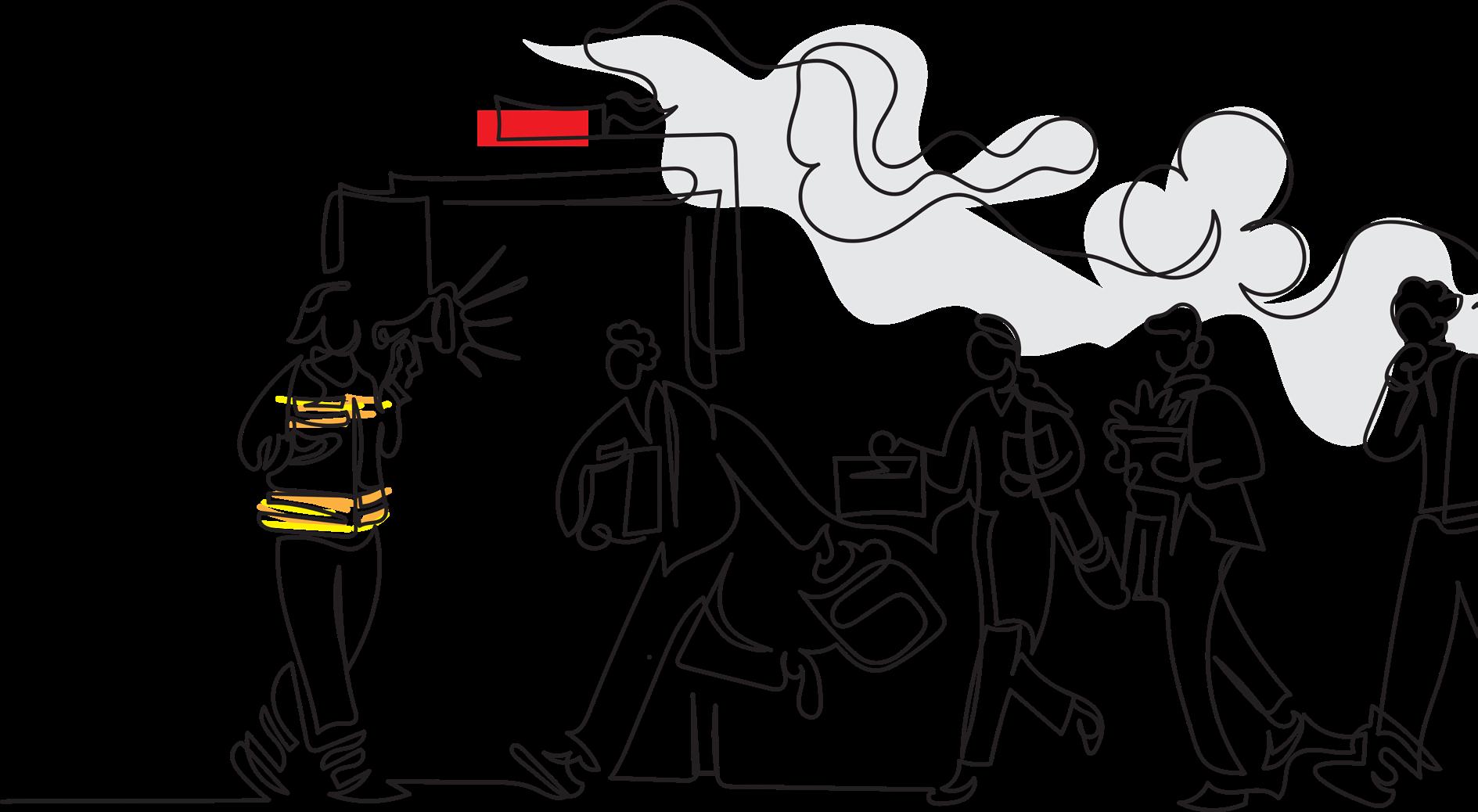
Fire Evacuation Safety: Key Roles That Save Lives
In the event of a fire or emergency evacuation, having a documented plan is essential—but assigning trained individuals to key safety roles is what ensures the plan works effectively. Two of the most critical roles during an evacuation are Sweepers and Accountability Team Members.
The Role of the Sweeper
Sweepers are responsible for conducting a quick, systematic check of assigned areas during an evacuation. Their role is not to fight the fire or delay evacuation, but to help ensure no one is unintentionally left behind.
• Check offices, restrooms, break rooms, and common areas
• Ensure employees have exited the area
• Alert anyone who may not have heard the alarm
• Close doors if safe to do so, helping limit fire and smoke spread
• Exit immediately after completing the assigned sweep
• Report any concerns or missing individuals to the Accountability Team or emergency responders
Why this role matters: Employees may be isolated, wearing hearing protection, or physically unable to evacuate quickly. Sweepers provide an essential final check to reduce risk and confusion.
The Role of the Accountability Team Member
Once employees reach the designated assembly area, Accountability Team Members ensure everyone is accounted for and communicate critical information to leadership and emergency responders.
• Conduct headcounts or roll calls at the assembly area
• Account for visitors, contractors, and temporary employees
• Identify missing individuals and last-known locations
• Relay accurate status information to emergency responders
• Remain at the assembly area until cleared to leave Why this role matters: Emergency responders depend on accurate information. Knowing whether someone may still be inside helps responders act quickly and safely.
Everyone’s Responsibility During an Evacuation
• Evacuate immediately when the alarm sounds—do not investigate
• Use the nearest safe exit
• Proceed directly to the designated assembly area
• Follow instructions from Sweepers and Accountability Team Members
• Do not re-enter the building until cleared by authorities
Fire Evacuation Role Checklist
• Sweepers: Assigned area clearly defined and understood
• Sweepers: Familiar with exits, stairwells, and high-risk areas
• Sweepers: Know when to stop and evacuate if conditions are unsafe
• Accountability Team: Current employee and visitor lists available
• Accountability Team: Assembly area location clearly marked
• Accountability Team: Method established for reporting missing individuals
• All Employees: Aware of alarm signals and evacuation routes
• All Employees: Know the designated assembly area
Training Updates
We’re proud to share that the following list of people have successfully completed certification or recertification in Hazardous Material shipping!
This includes training in DOT (Domestic) and IATA (International). This certification reflects a strong commitment to understanding the requirements for the safe and compliant shipping and handling of hazardous items when they are being prepared for shipping.
Please join us in thanking all of these CareTria Contributors for volunteering and stepping up to make a real difference in our facilities. Their efforts are greatly appreciated, and their dedication helps create a safer space for all!
+ MEMPHIS FACILITY
Robert Austin
Jodie Jefferson
Gregory Strahan
Robert Cunningham
John Fryman
Anthony Cole
Marvin Williams
Eddie Thompson
Gregory Strahan
Latricia Craine
Davitress Richardson
Barbara Williams
3. Equipment and Facility Maintenance
Cold temperatures stress machinery, from forklifts to bay doors.
• Battery Management: Cold weather significantly reduces battery efficiency in electric forklifts and other equipment. Implement procedures for regular charging and maintenance in designated warm areas.
• HVAC and Ventilation: Maintain the heating system to keep the facility at a safe and comfortable working temperature, which helps prevent cold-related stress injuries and maintains productivity.
• Door Checks: Inspect high-speed and conventional bay doors to ensure they seal correctly and open/close smoothly, minimizing heat loss and preventing operational bottlenecks.
4. Communication and Training
The most effective safety measure is a well-informed team.



• Safety Briefings: Hold brief, regular toolbox talks about current weather hazards and expected conditions.
• Reporting Hazards: Empower every employee to immediately report slippery areas, equipment malfunctions, or other potential safety risks to a supervisor or the safety team.

By working together and taking these proactive steps, we can ensure a safe working environment and keep our operations running smoothly through the winter months.
Stay warm, stay safe!
Working from Home Tip: Check Your Posture Regularly
Be sure to maintain proper posture, paying careful attention to your body positioning. Basically, ensure the small of your back is supported, your shoulders are relaxed (not slumped and not elevated), and that there is no pressure under your thighs. Sure, you can do everything from your laptop while sitting on the wooden chair at your kitchen table, but you can’t do it without putting yourself at risk!


Safety Starts at the Base: The Essentials of Pallet Safety
Pallets are the workhorses of logistics, essential for moving and storing goods efficiently in warehouses, distribution centers, and shipping operations. However, their ubiquity often leads to complacency regarding safety protocols, which can have serious consequences. A compromised pallet or improper handling can lead to product damage, costly equipment repairs, and, most importantly, severe injuries to employees.
Prioritizing pallet safety isn’t just about compliance; it’s about creating a secure environment for everyone on the team. This article outlines key practices and critical inspection steps to ensure pallets remain a safe tool, not a workplace hazard.
The Foundations of Safe Pallet Usage
Adhering to simple, consistent guidelines can significantly reduce risks in your operations.
1. INSPECT BEFORE YOU LOAD
Never assume a pallet is fit for use. Before loading any pallet with goods, a quick, thorough inspection is mandatory:
• Check for Damage: Look for cracked stringers, broken deck boards, protruding nails, or splinters.
• Heat Treated: Look for the industry standard “Heat Treated” symbol which all CareTria requires and make sure to never allow use of chemically treated pallets.
• Evaluate Structure: Ensure all components are securely fastened and that the pallet sits flat without warping or bowing.
• Reject Compromised Pallets: If a pallet is damaged, tag it immediately for removal from service. Do not use a faulty pallet, even for light loads.
2.
LOAD IT RIGHT
Proper loading is crucial for stability during transport and storage:
• Distribute Weight Evenly: Center the load and avoid concentrating heavy items on one side or corner.
• Stack Within Limits: Be aware of the pallet’s maximum weight capacity and never exceed it. Stacking merchandise too high creates an unstable center of gravity.
• Secure the Load: Use appropriate methods like stretch wrap, banding, or corner boards to prevent shifting during transit. The load should move with the pallet as a single unit.
3. HANDLE WITH CARE
How pallets are moved around the facility matters:
• Use the Correct Equipment: Ensure forklifts or pallet jacks are properly rated for the load weight and operated by certified personnel.
• Enter Squarely: When lifting with a forklift, ensure the forks are fully inserted into the pallet openings to provide maximum support and stability. Forks should never protrude from the other side.
• Maintain Visibility: When carrying a loaded pallet, the operator must have a clear line of sight. If the load obstructs the view, the equipment should be operated in reverse.
4. THE DANGERS OF NEGLECT
Ignoring these protocols introduces several serious hazards:
• Injuries: Falling merchandise, collapsing stacks, and equipment accidents can cause strains, sprains, fractures, and even fatalities.
• Trip Hazards: Damaged pallets with broken boards or scattered debris in walkways are a leading cause of slips, trips, and falls.
• Equipment Damage: Using a compromised pallet can damage the forks of a lift truck, racking systems, or automated machinery.
A Culture of Safety

Pallet safety is a shared responsibility. By taking a moment to inspect equipment, following loading guidelines, and reporting hazards immediately, every employee contributes to a safer, more
Stay safe, stay secure, and always remember: safety starts at
WINTER SAFETY

Slippery Surfaces Severe Weather Penguin Walk Winter Storm
Hypothermia
Frostbite Ear Muffs Cautious
Gloves Falls Boots Cold
Snow Salt Slip Ice
Hat
Jim Garcia ................ Content Creator
Ken Bent
Content Creator
Carol Chifulio .......... Content Creator
Debbie Lada Graphics & Layout