Staying on course in higher education has been challenging lately. The landscape and circumstances in which we operate have been disruptive. But here at IUP, we’re not daunted by these challenges. We are pushing ahead with real focus.
That’s nothing new at IUP. We’ve always found ways to move forward, even when things got hard. That same approach is what keeps us steady now.
This year challenged many of us in higher ed, but IUP’s direction hasn’t wavered. The strategic plan and the seven presidential goals give us a solid roadmap, keeping our attention on the things that count most: our students, strong academics, financial stability, ties to the community, research and new ideas, and setting high standards for all of our work.
Read through this report, and you’ll see we’re not just reacting to change— we’re getting out in front of it. We’re improving how we support students, updating our facilities and programs to fit what’s coming next, and making real progress built on clear priorities.
Looking back at 2025, one thing that really hit home for me is how our past and present keep lining up. From those early milestones to the programs that set us apart, IUP has stepped up early and often. You see it in every story here: each one paired with a piece of our history to show that when challenges come, we don’t back down. We lean in.
At IUP, change is not a threat. It’s a skill. Our track record proves we can adapt, and right now we’re doing it thoughtfully and with confidence.
By reading this report, I hope you get a sense of what I see every day: a university that’s active, supported by people who care deeply about what we do and where we’re headed. We’re making steady progress together, building on 150 years of showing what leadership looks like.
Thanks for your support, for your partnership, and for believing in what IUP can be.
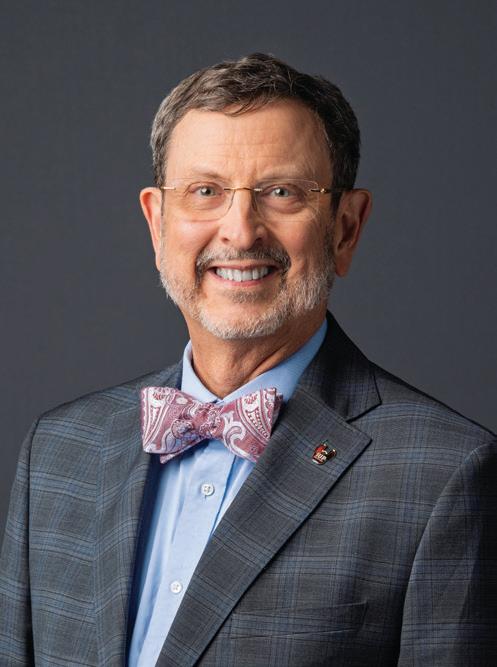
Michael A. Driscoll President
2023-28
1 Keep every student who comes to IUP by being an exceptionally student-centered university.
2 Grow market share in traditional market.
3 Educate other student groups in new markets.
4 Grow IUP’s reputation.
5 Engage the internal and external IUP community in realizing the vision.
6 Find alternate revenue streams to support our work.
7 Focus resources on the highest priorities to ensure a sustainable, thriving future.
Celebrating 150 Years of Momentum
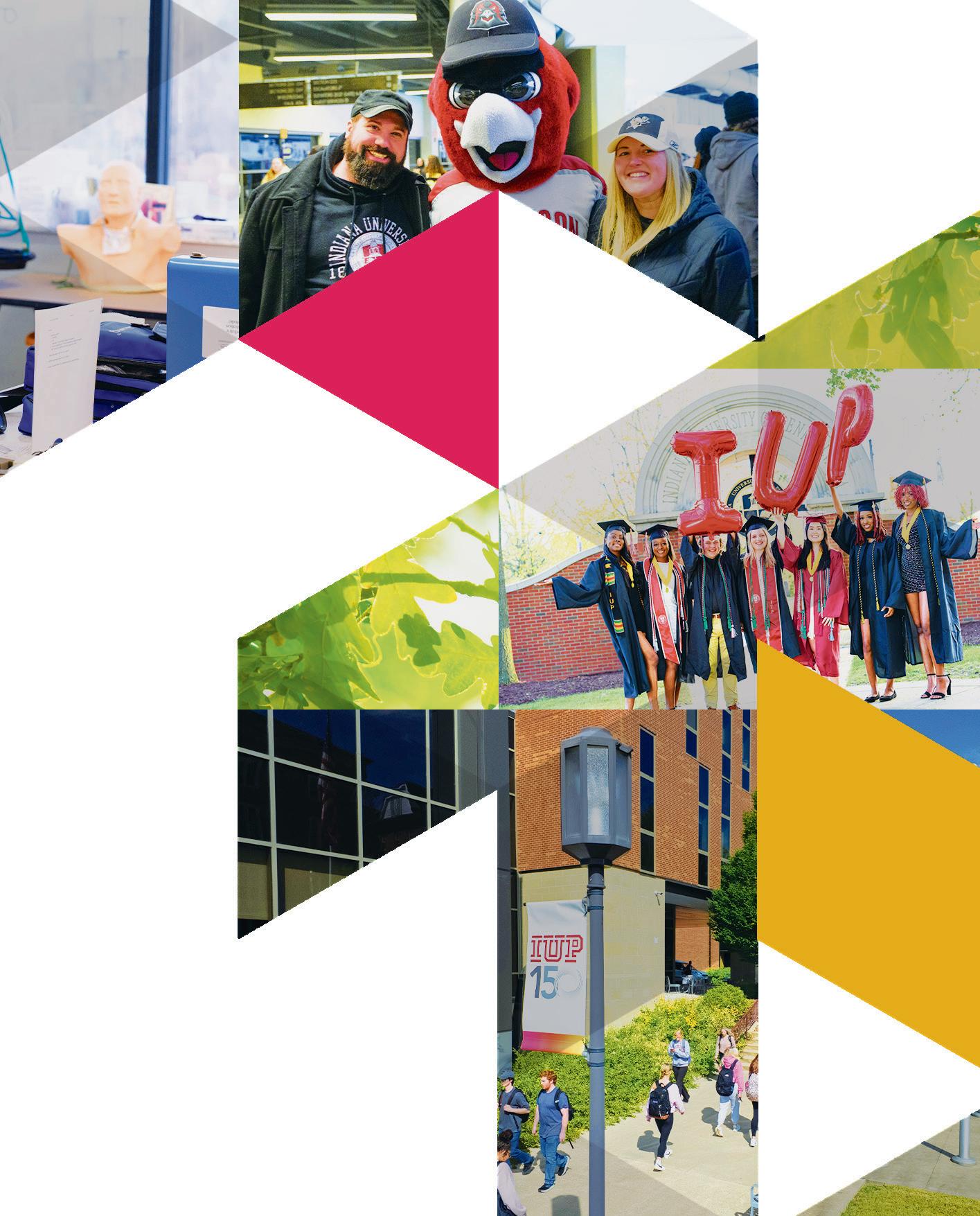
In August, IUP kicked off its sesquicentennial, celebrating 150 years since the university first opened as Indiana Normal School on May 17, 1875. The anniversary launched with a lively community celebration on August 23: the IUP Crimson Carnival, an outdoor event on the eve of the start of the fall semester.
The carnival marked the official start of a yearlong tribute to IUP’s history, its resilience, and its mission to change lives through education. It also highlighted the university’s long-standing spirit of independence and its continued commitment to helping students succeed.
IUP also created a dedicated sesquicentennial website with event details, historical stories, and ways for students, alumni, and friends to get involved. Leading up to the kickoff, the university hosted a T- shirt design contest, unveiling the winning design—by a student—at the August 23 event. The anniversary also tied into IUP Day at PNC Park on August 10, and donors had the chance to be entered into a drawing to throw out the ceremonial first pitch at the Pittsburgh Pirates game.
After the carnival, IUP rolled out a full slate of events for the 2025–26 academic year. Highlights included a major exhibition in the University Museum titled IUP@150: Let’s Meet in the Oak Grove, tracing the
university’s growth since 1875. Celebration-themed activities were also woven into Family Weekend, the Athletics Hall of Fame ceremonies, and Homecoming, which featured a special concert at the Kovalchick Complex by the Clarks, the Pittsburgh rock band with deep IUP roots.
Together, these events set the stage for a meaningful year of reflection, pride, and community connection—honoring IUP’s past while looking ahead to the next 150 years.
Branching Out
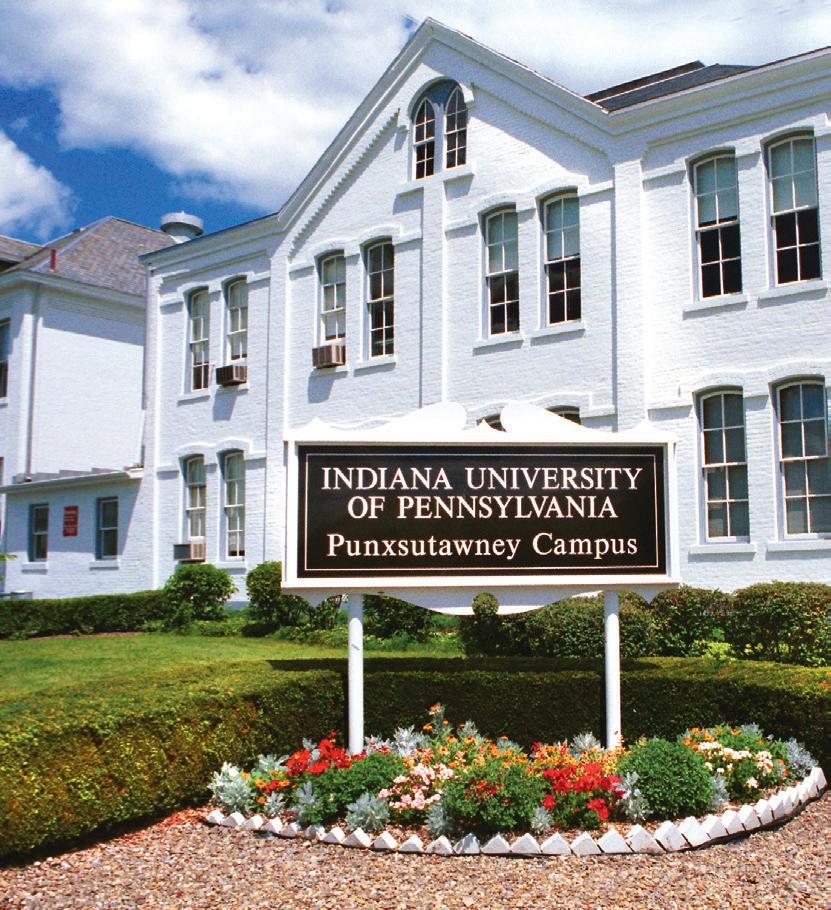
By 1960, enrollment at Indiana State College had increased dramatically, and there wasn’t much room to put more students. Under the direction, of President Willis Pratt, ISC began working to create branch campuses, where more students could access the high-quality education at an affordable rate that Indiana was known for.
In 1962, the school opened its Punxsutawney center, with 55 students enrolled there. The following year, the campus in Kittanning opened with 97 students. By 1970, enrollments reached more than 300 at Punxsutawney and 500 at Kittanning. The Punxsutawney campus remains active today, more than 60 years after it opened. IUP also opened a center in Wilkins Township (Monroeville) in 1996 for graduate-level work.
Progress Toward a Public First
IUP made significant, measurable progress in 2025 toward opening its proposed college of osteopathic medicine, advancing academic, accreditation, and operational milestones that position the university to help address the critical physician shortage, particularly in rural Pennsylvania.
A significant highlight of the year was earning “candidate status” from the American Osteopathic Association’s Commission on Osteopathic College Accreditation (COCA), marking the second step in the accreditation process and validating the extensive work completed by faculty, staff, and university leadership. This milestone also places IUP on a path toward pre - accreditation, the stage that will eventually allow the university to recruit its first medical students in 2026. Achieving this designation reflects thousands of hours of
collaborative effort and broad support from legislators, alumni, community leaders, and regional healthcare partners.
When it opens, tentatively planned for the fall of 2027, the college would be the first of its kind at a public university in the commonwealth.
In late 2025, momentum continued when the IUP Council of Trustees approved a new Doctor of Osteopathic Medicine degree program. This approval followed reviews by the University - Wide Graduate Committee and the IUP-APSCUF Representative Council.
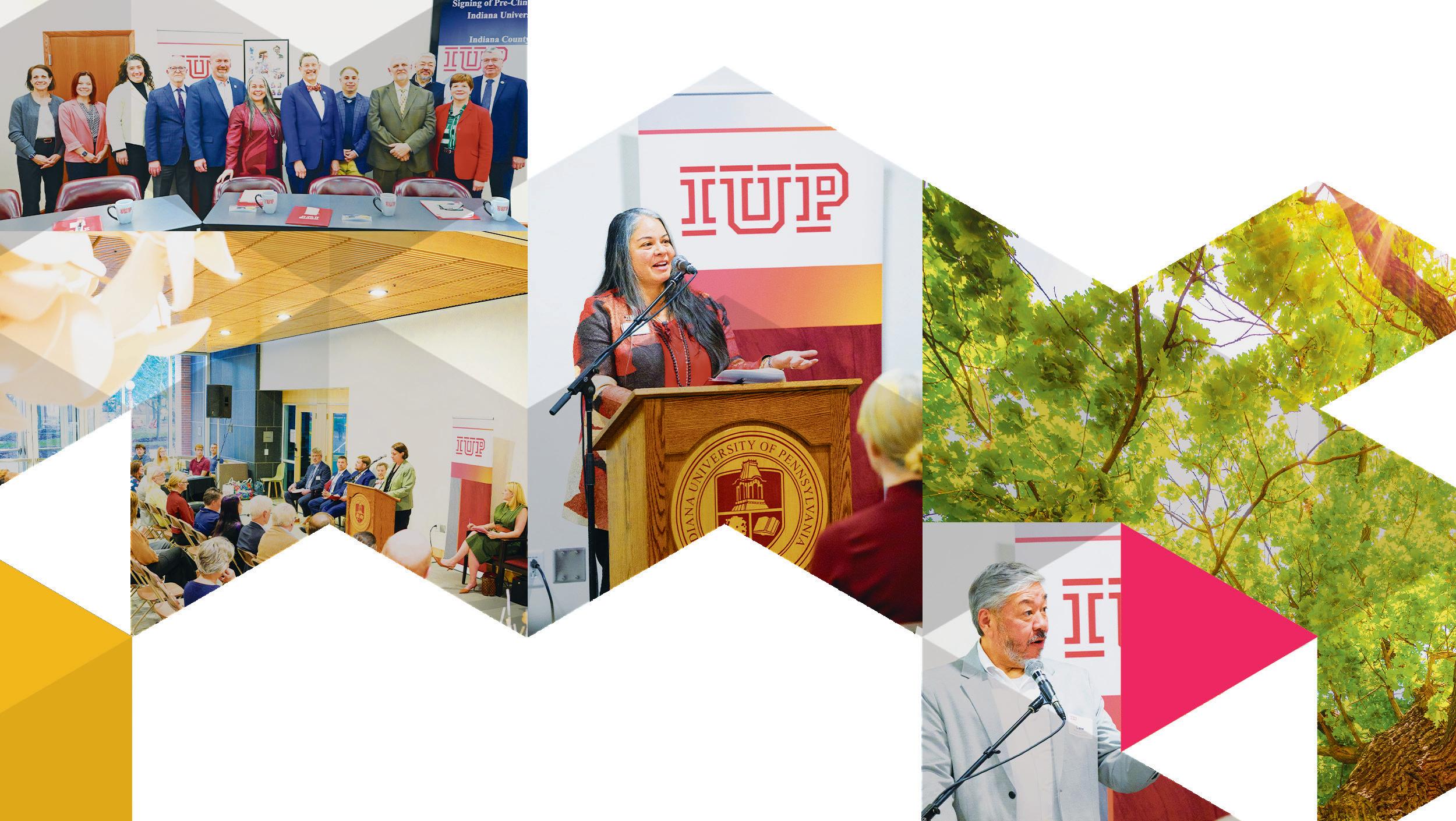
IUP also continued expanding its clinical network, which is essential for medical training. By late 2025, the university had secured 19 clinical training
affiliation agreements with hospitals and clinics across Pennsylvania and a preclinical partnership with the Indiana County Coroner’s Office—critical steps toward ensuring robust hands - on learning opportunities for future students.
Collectively, the accomplishments of 2025 demonstrate sustained progress, broad regional support, and a growing foundation of academic and clinical readiness. They mark IUP’s proposed college of osteopathic medicine as one of the most significant strategic initiatives in the university’s modern history and as a transformative step toward improving healthcare access across Pennsylvania.
The First to Rise
“If Indiana State College is ready for university status, then we should do it now, and let it be an example for the other state colleges.” That’s how State Senator Albert Pechan phrased it in 1965, when the state legislature was promoting the plan to create a state-owned public university on the western side of the commonwealth that would be a flag bearer for other schools wanting to raise their academic profile.
ISC was picked because of its growing student enrollment, research reputation, expert faculty, and available facilities. In December of that year, the state house and senate approved the measure. Governor William Scranton signed it into law, and what had been Indiana Normal School, then Indiana State Teachers College, and finally Indiana State College was now Indiana University of Pennsylvania, the first state-owned school in western Pennsylvania to achieve such status.
The 13 other state-owned public schools attained university status collectively in 1983, when Pennsylvania’s State System of Higher Education was formed.
A Breakthrough Year for Students
When the fall 2025 semester began, IUP posted its strongest student-retention results in recent history—a significant milestone in the university’s work to help students stay on track and succeed.
From fall 2024 to fall 2025, 78.2 percent of new, first - time, full - time bachelor’s students returned for their second year. That’s a nearly three - point increase over the previous class and the second straight year of improvement, adding up to a seven - point gain over two years.
The progress reflects campus-wide efforts to better support students. IUP also saw a five-point jump in the number of continuing students who persisted into their third year, showing the early and lasting impact of these initiatives. University leaders credit faculty and staff for creating an environment that promotes academic growth, personal development, and a strong sense of belonging.
Enrollment trends in 2025 reinforced this momentum. Undergraduate enrollment rose to 7,118 students, up 107 from the previous year. New undergraduate
enrollment grew by 145 students, bringing the total to 1,887. These gains follow a strong 2023–24 cycle, when IUP welcomed its largest class of new first-time students since 2018. Total enrollment across all levels held steady at 9,082.
By mid-2025, IUP reached a 90 percent fall-to-spring retention rate, strengthening the foundation for continued progress in the years ahead.
Dawn of the Doctoral Degree
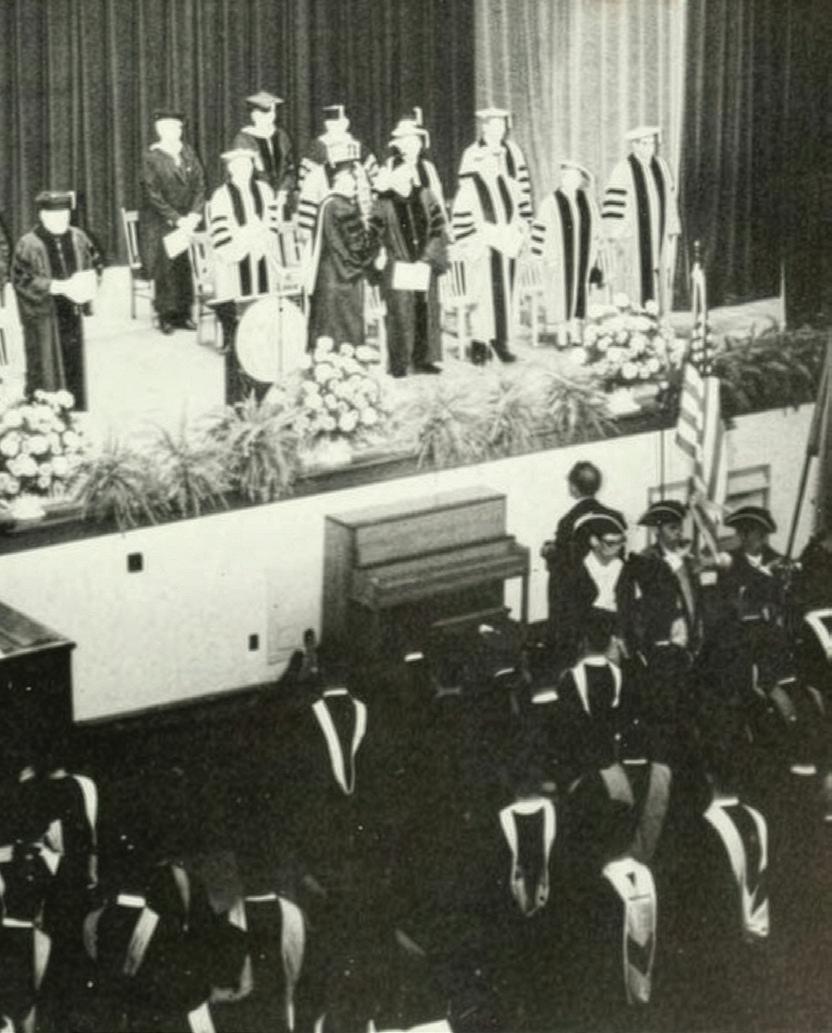
When Indiana State College became Indiana University of Pennsylvania in 1965, one of the things that the new status would afford was the ability to award PhD and other doctoral degrees.
As state-owned colleges, many schools were branded as bachelor’s degree factories, with advanced degrees reserved for the more academically prestigious universities. But that changed in 1969, when IUP offered a doctor of philosophy degree in English, making it the first PhD in Pennsylvania at a wholly state-owned school. IUP’s first doctoral program opened the year before, in elementary education.
Today, IUP offers nine doctoral programs across diverse fields, including psychology, business, safety sciences, nursing, and education. But 57 years later, IUP is still the only school in the State System to offer PhD programs.
The Next Era of Learning
In 2025, IUP launched the Crimson Core, its first major update to general education in more than three decades. The new program replaces the long - running Liberal Studies curriculum and shifts the focus, within a variety of disciplinary contexts, toward development of durable skills that students can use in their careers and communities.
Starting with the fall 2025 first-year class, students now take courses organized around 10 key skill areas, such as communication, data analysis,
leadership, teamwork, scientific reasoning, ethics, and global awareness. The goal is to help students apply what they learn, think critically, and build abilities that employers consistently say they value.
The Crimson Core is designed to help students connect their coursework to future career paths from the moment they arrive on campus. The program also gives students room to choose electives that strengthen the skills most relevant to their goals.
Alongside this new curriculum, IUP is continuing to expand learning opportunities for the broader community—through public lectures, arts events, museum programming, and other noncredit offerings that support lifelong learning.
Together, these efforts reflect IUP’s commitment to modernizing its academic programs, strengthening skill - based education, and preparing students for long - term success in a rapidly changing workforce.
A Legacy of Law Enforcement CRIMINALJUSTICETRAINING POLICE ACADEMY
In 2025, our Criminal Justice Training Center marked the 50th anniversary of its opening.
The center is a state - certified police academy that prepares students seeking careers in law enforcement. When it opened, it was the first of its kind at a state-owned public university, and today it is one of only two in the State System.
The IUP Criminal Justice Training Center offers Act 120 municipal police officer training, providing the required 919 hours of instruction for certification in Pennsylvania. It delivers high - quality education, hands-on skills training, and advanced scenario-based learning. Thousands of officers have been trained through its programs statewide and have gone on to careers in law enforcement.
Foundations for Future Growth
IUP moved forward with several major facility upgrades in 2025, both on the Indiana campus and in Punxsutawney, part of a broader effort to modernize university spaces and prepare for future growth.
On the Indiana campus, the university continued demolishing older, unusable buildings—Pratt, Eicher, and Weyandt halls—to open up space for potential future projects.
Removing Eicher Hall also allowed IUP to expand and continue using the centrally located Eicher parking lot, which serves faculty, staff, and people with disabilities. The site where Weyandt
Hall once stood was transformed into a green space for public use, extending the fabled Oak Grove northward along Oakland Avenue.
A lot of progress was made in 2025 in Punxsutawney, where IUP is advancing a long -range plan to expand and modernize the Academy of Culinary Arts. In April, the university began demolishing six recently acquired, unused buildings on West Mahoning Street—the first step toward building a new culinary education and multipurpose facility next to the academy’s Fairman Centre. Once cleared, the site will become home to a modern training center that brings all academy operations together in a revitalized downtown Punxsutawney area.
The new facility is part of a multiyear expansion supported by state, federal, and private funding and designed to add advanced teaching kitchens, labs, and hands- on learning spaces that meet workforce needs in the fast- growing culinary and hospitality fields. Architectural design work is underway, with plans expected to be completed by June 2026.
Together, these projects—demolition, site preparation, consolidation, and new construction—show IUP’s commitment to creating modern, efficient, and well - designed learning environments across all of its locations.
Cooking Up Careers
IUP and Punxsutawney have long had a strong relationship, and that grew in 1990 when IUP opened its Academy of Culinary Arts in downtown Punxsutawney. Pittsburgh-based food writer Elaine Light, the president of the Punxsutawney College Trust, a nonprofit founded in 1963 to help Jefferson County students get a college education using grants and scholarships, was the inspiration for the academy. She envisioned a school in which faculty members with realworld culinary experience would teach eager students and prepare them for careers in culinary arts and in baking and pastry arts. Today, the IUP Academy of Culinary Arts is known throughout the region for the quality of its graduates, many of whom have landed in leading resorts and restaurants around the world.
A Campaign to Shape Tomorrow
On August 23, IUP launched the Impact 150 campaign, the largest fundraising effort in its 150-year history. The public kickoff took place during a campus carnival that ended with a fireworks show—a fitting start for a campaign designed to secure IUP’s future for the next century and beyond.
Impact 150 aims to raise $150 million to support three priorities: helping students thrive, strengthening the university, and investing in healthier communities. The campaign will fund scholarships, student well - being programs, academic innovation, faculty research, facility improvements, and community - focused initiatives—including the proposed college of osteopathic medicine. By the time the
campaign went public in August, IUP had already raised more than $81 million from over 11,600 donors, reflecting strong momentum during the two - year quiet phase. When the calendar flipped to 2026, we had surpassed $102 million in support.
The campaign is about more than reaching a dollar amount. It’s about expanding opportunity, improving academic programs, and preparing graduates to succeed in a rapidly changing world. Donors had already committed more than $34.3 million specifically to the proposed college of osteopathic medicine, showing broad support for addressing healthcare shortages, especially in rural areas.
Impact 150 is a shared commitment to sustaining the university’s mission of access, excellence, and community impact. The campaign has also benefited from major philanthropic leadership, including 13 gifts of $1 million or more and $15 million in anonymous donations.
As a signature part of IUP’s sesquicentennial, the Impact 150 campaign positions the university to expand student support, strengthen academic quality, and invest in key priorities that will shape its next 150 years— ensuring IUP remains a vibrant, innovative, student-centered institution well into the future.
The Engine Behind Discovery
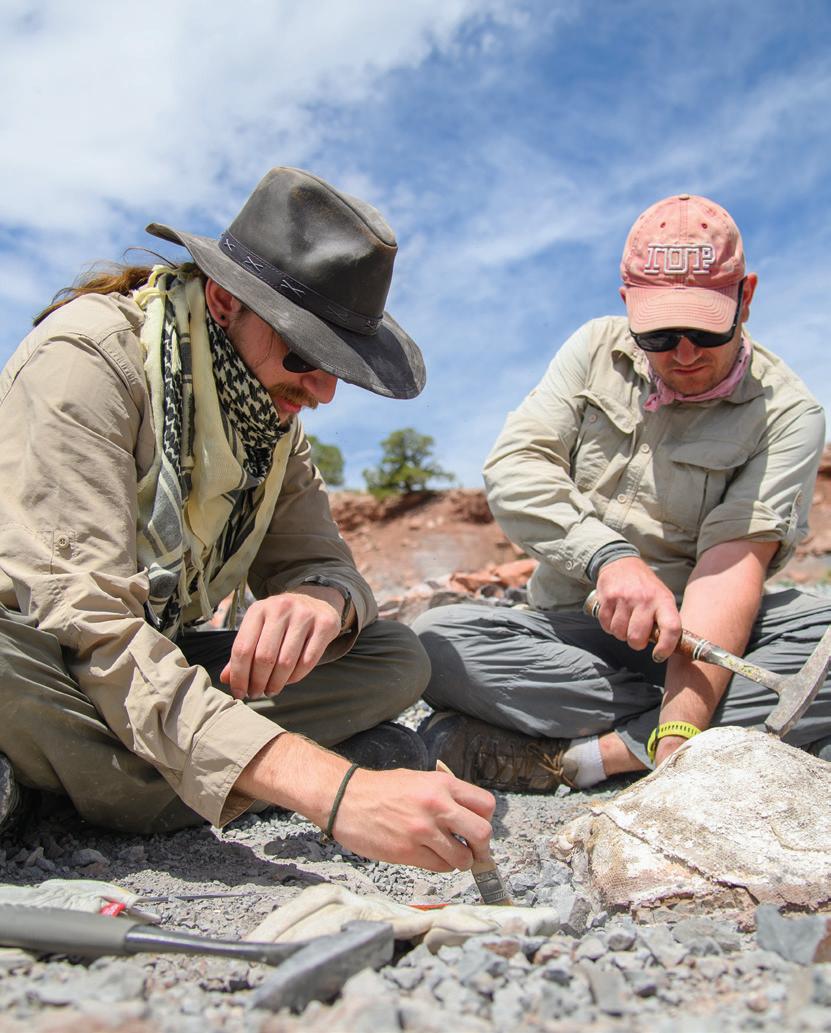
Capitalizing on IUP’s long-standing position as a leader in research in the region, in 2004 the IUP Research Institute was established, giving the university a stronger foundation for managing and expanding its research activity. From the beginning, the idea was simple but ambitious: create a dedicated nonprofit organization that could handle the financial, administrative, and contractual work behind grants and sponsored projects, freeing faculty to focus on discovery, innovation, and teaching. Over time, that mission evolved into a full partnership with the university.
Today, the Research Institute serves as IUP’s hub for externally funded work. It helps faculty and staff apply for and manage grants, connects researchers with potential sponsors, and supports collaborations across Pennsylvania’s State System of Higher Education. IUP is the only school in the State System with a free-standing institute to promote and facilitate its research endeavors.
30% of IUP students are enrolled in STEM-H programs as of fall 2025. (STEM
Financial Support
$26M+ in scholarships awarded to IUP students in 2024-25
$16,268
average student aid award, including scholarships, grants, and loans, in 2024-25
$5M+ awarded in graduate assistantships in 2024-25
Total Graduates, 2024-25
2,321
Academic Experiences
2,220 out-of-classroom learning experiences completed in 2024-25
$16M+ expended in research and innovation in 2024-25
1 of 97
public universities in the US with a High Research Spending and Doctorate Production (R2) designation in the Carnegie Classification of Institutions of Higher Education
IUP Alumni and Friends Giving Back to Make an Impact
164,418 alumni in 100 countries
89,998 alumni in Pennsylvania
3,156 total donors in 2024-25
$7,496,236 in total gifts in 2024-25
4,252 alumni volunteers, from networking partners to admissions event hosts