
















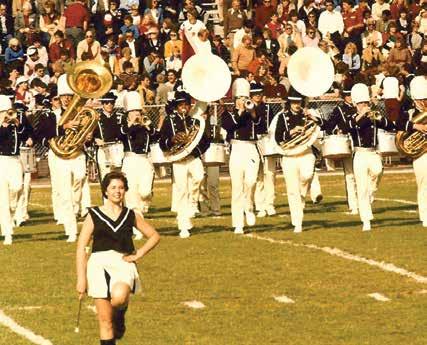

In June, 130 alumni couples renewed their wedding vows, and a young-alumni couple got married during a ceremony in the Oak Grove that wrapped up IUP’s 150-year anniversary celebration. Standing for the toast were Sue Ann Johnson Fox ’88 and Alan Fox ’88 of Virginia. Find more photos from the year of celebration at IUP.edu/lookback150

As we wrap up the celebration of our 150th anniversary, we have seen how our history shapes our path forward. A milestone like a sesquicentennial is more than a chance to look back; it’s also a reminder that the seeds of IUP’s future were planted in its past.
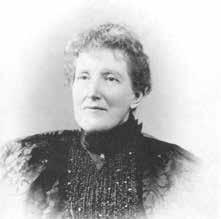
Our core mission—giving students what they need to succeed—goes straight back to Jane Leonard. That same spirit that led to her famous words, “Go forth. Be true, be brave, be successful!” is still alive at IUP today, more than 100 years after she led our campus in its early days.
In this issue, you can read how that legacy lives on, as campus community members share their favorite moments from IUP history. You will also see that spirit in action in the story of a 60-year tradition of lunchtime pickup basketball, in which faculty members, staff members, and students meet to play and connect.
When we give our students the right foundation, they achieve remarkable things. We see that on full display in these pages as we celebrate our women’s basketball team, which advanced to the NCAA Division II national championship game for the first time in program history.
But perhaps the biggest indicator of our future success is the major news from our pursuit of becoming the first public university in the commonwealth to open a college of osteopathic medicine. The college recently earned pre-accreditation status and has been approved to begin recruiting its very first class of students, which we expect to be on campus in fall 2027.
This is a massive step forward for IUP. By training primary care doctors to provide care in rural and underserved areas, we are doing something amazing and unprecedented that will meet a critical need across the state.
You can learn about the IUP College of Osteopathic Medicine, plus much more, inside.
As you read, I hope you feel a deep sense of pride in how far we’ve come. Our anniversary showed us the strength of our foundation, but milestones like our new IUP College of Osteopathic Medicine prove that our best days are still ahead.
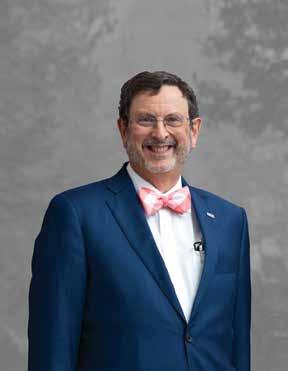
Michael Driscoll President
Lunchtime pickup basketball has connected IUP people for almost 60 years.
Favorite Moments
From Jimmy Stewart’s visit to a total solar eclipse—relive historical moments shared by the IUP community.
In 2023, IUP transformed the way it supports students. Today, the results look promising.
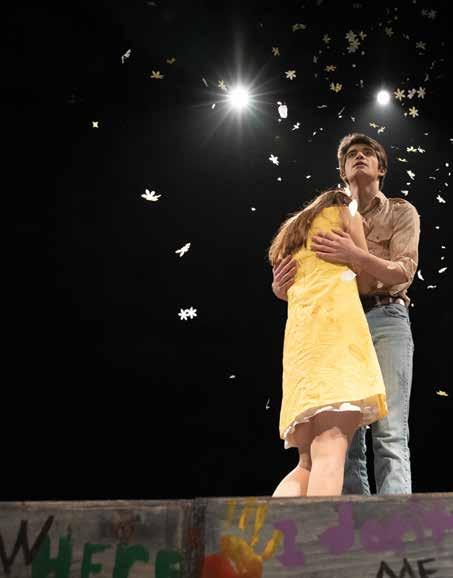
ABOVE: Last spring, students and faculty members had five weeks to put on the developmental premiere of John Spellos’s By the Time We Got to Woodstock, directed by Joshua Kelly. The small cast included Ashley Rhodes and Nathaniel Roberts. Learn about the sprint to opening day at IUP.edu/Woodstock.
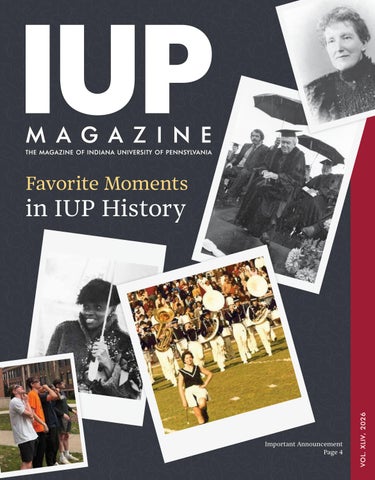
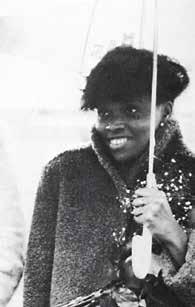
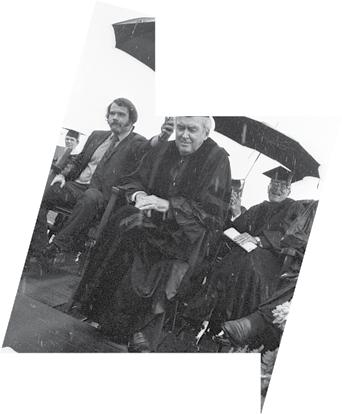
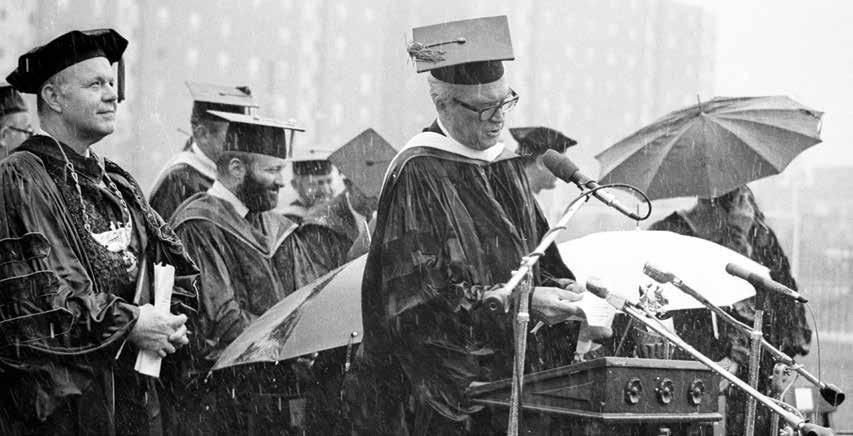
COVER: In the collage, from left, are students watching the solar eclipse from the Oak Grove in 2024 (Emily Jaros Smith ’03, M’05), Donna Reaves ’81 during her 1980 crowning at Homecoming (IUP Archives), the marching band in 1981 (courtesy of Mary Kreider Megna ’84), Student Government Association president Dan Truxell ’75 shielding Jimmy Stewart from rain in 1974 (Tom Peel/Indiana Gazette), and Jane Leonard in the 1890s (IUP Archives). Illustration by Gavin Schucker ’22. Story begins on page 10.
Find photographs that chronicle a year of celebrating IUP’s sesquicentennial, from the kickoff carnival to Chalk the Walk. Go to IUP.edu/lookback150
Find out what’s happening at the university through IUP Now, a news site updated every weekday. Go to IUP.edu/news-events.
PRESIDENT OF INDIANA UNIVERSITY OF PENNSYLVANIA: Michael Driscoll
EDITOR: Elaine Jacobs Smith ’93
CONTRIBUTING EDITORS: Karen Philippi Gresh ’67, Bob Fulton ’75
NAMEDROPPERS EDITOR: Matthew Burglund ’98
DESIGN: Meghan McMeans Strittmatter ’13
PHOTOGRAPHY: Brian Henry, Tristan Landsberg
IUP Magazine is published by Indiana University of Pennsylvania, a member of Pennsylvania’s State System of Higher Education.
The magazine’s address is John Sutton Hall, Room 321, 1011 South Drive, Indiana, PA 157051046 (telephone 724-357-3112; email iupmagazine@iup.edu). Correspondence regarding any aspect of the magazine may be directed to this office. Print and web images derived from photos submitted for publication become the property of Indiana University of Pennsylvania and may be reprinted at the discretion of the university.
IUP Magazine welcomes contributions to help defray the cost of publishing. The Official IUP Magazine Form may be used for this purpose.
©2026 by Indiana University of Pennsylvania. All rights reserved.
Indiana University of Pennsylvania is an equal opportunity/affirmative action employer committed to excellence through diversity.
Over the years, IUP Magazine has undergone many changes—in frequency, paper, and size—to reduce the cost of production and postage. Once a quarterly publication, it has more recently followed a biannual schedule.
Starting with the next issue, the magazine’s primary format will be digital, and it will come out once a year. A print magazine will be produced for and mailed to a smaller audience, determined by factors such as age, giving history, and engagement with the university.
Online, this annual edition will be available to everyone. Those who have shared their email address with IUP will be notified of and directed to each new issue.
In addition to the digital periodical, magazine stories will be published at regular intervals on a revamped IUP Magazine website. Those stories will also be promoted through the alumni email newsletter, social media, and other venues.
Alumni and friends seeking more IUP updates can visit the university’s news site, IUP Now, at IUP.edu/news-events. Updated every weekday, the site includes feature stories, faculty and staff spotlights, and news and upcoming events contributed by departments and offices across IUP.
Go to the IUP Magazine website to find out more about these changes and to update your contact information (using the Official IUP Magazine Form) to ensure the digital magazine comes to you.
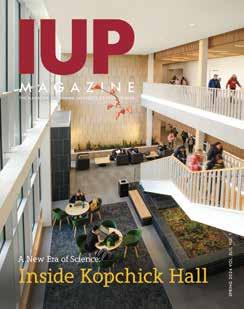

Marianne Dougherty’s lovely “Old School” in the last edition resonated so strongly with me that I am compelled to comment. First off, Dougherty captures the ethos of this chapter of IUP history incredibly well. Your younger readers are provided a vivid glimpse into many aspects of life on campus in the ’60s, from dial phones to Bermuda shorts. I was particularly pleased that Dougherty included an account of poet Gerald Stern. He was my freshman composition teacher, and I subsequently took three more English courses from him. In addition to the other activism attributed to Stern, he also actually led the march for civil rights on Philadelphia Street in 1965. At that time, I was the editor of the Indiana Penn, and I followed and photographed the event for the front page of the newspaper. Stern was an incredible asset
to IUP, and his influence on me continued for many years, including my decision to enter the Peace Corps and my own subsequent teaching career.
Bill Sweigart ’67
New Albany, IN
I was sad to see the death notice for Alice Dickie. I was a physical education major and student of hers and later a friend. She formed a women’s golf club in 1977, and we practiced in Waller Gym, hitting off mats with plastic balls, aiming for the venetian blinds on the big windows. We were thrilled when she told us she was taking us to the Penn State Women’s Invitational, a two-day event, in May 1977. That was a time when many of us still did not have that many competitive opportunities. She was passionate about golf
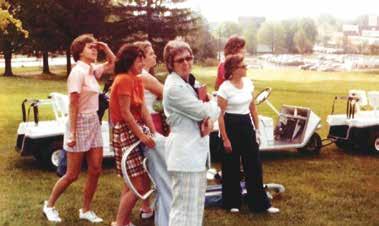
At the 1977 Penn State invitational, from left: Becky Beard Paul ’77, M’82, Judy Lazzaro ’79, Bonnie Prencipe McMahon ’79, Alice Dickie, Debbie Bone ’78, and Donna Szwast Flickinger ’80. Missing is Maryann Dick ’78. Becky wrote, “The expression on Mrs. Dickie’s face is priceless—putting up with our silly shenanigans.”
and, as a licensed LPGA [Ladies Professional Golf Association] instructor, wanted to pass on her love of golf to her many students. When a male golfer, thinking he was complimenting her, would say, “You swing like a man,” she would reply, “No, I swing correctly!” She is remembered fondly.
Becky Beard Paul ’77, M’82 Fredericksburg, VA
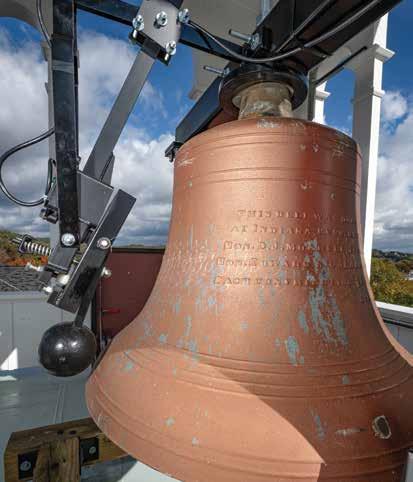
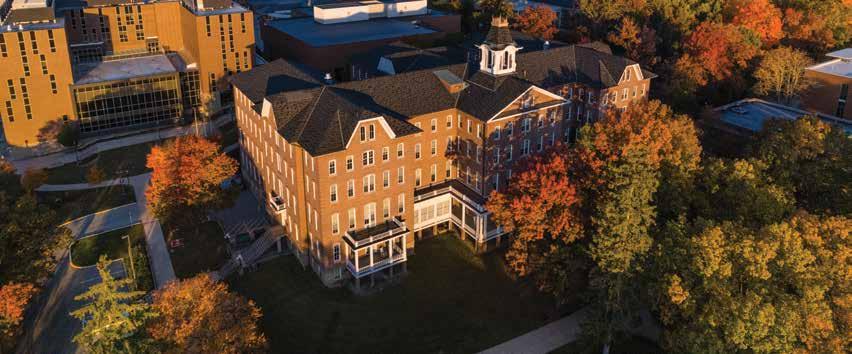
The bell atop Sutton Hall is sounding once again with the recent installation of electricity, an automatic ringer, and a steel structure to support it all. Controlled by a computer, the bell now sounds during special events, such as the marriage vow renewal ceremony held in the Oak Grove in June.
The bell’s history is inscribed right on its surface. Dated December 8, 1875—roughly seven months after Indiana
State Normal School opened—it was donated by D. J. Morrell, James McMillen, Edward Golden, and William Sterett, each contributing $100 through the school’s principal, Edmund Fairfield.
The maker of the bell was Jones & Company Troy Bell Foundry, which operated under various names from 1852 to 1887 in the industrial city of Troy, New York.
By Bob Fulton
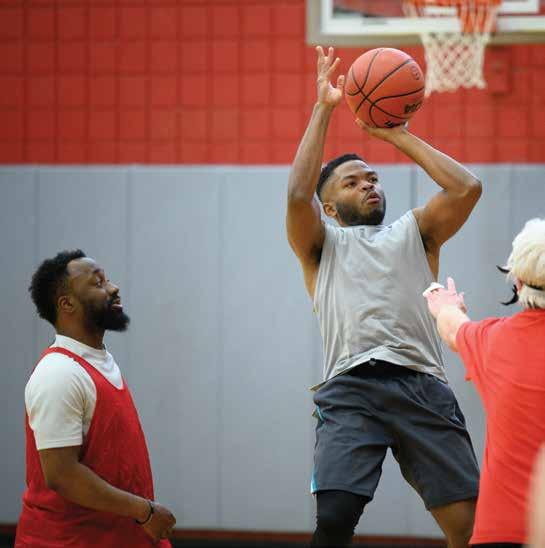
Bill Hamilton ’92 and Alex Heckert have joined forces to build bridges on campus.
Not with steel and concrete. With basketball.
Hamilton and Heckert serve as de facto co-commissioners of a pickup league whose players meet at noon three times a
week in IUP’s Zink Hall. The participants— faculty and staff members, varsity coaches, undergraduate and graduate students, alumni, community members, even foreign nationals—not only break down defenses during their half-court games; they break down barriers.
“We have people from all different perspectives, all walks of life, different education levels, different ages,” said regional planning professor John Benhart, who has played noontime basketball for more than 25 years. “It’s the kind of thing that people spend a lot of time and effort trying to create, and here it just happened organically.”
Noon basketball has bridged all sorts of divides. People who might never have crossed paths gather on Mondays, Wednesdays, and Fridays to shoot hoops and, in the process, gain some understanding of those from different backgrounds.
“For people living in Indiana who weren’t exposed to kids from Philadelphia, Pittsburgh, Harrisburg, it really has broken down barriers,” said Heckert, a sociology faculty member and IUP’s 2025-26 Distinguished University Professor, who has played at noon for more than 30 years. “People figure out we’re all just human and love to play basketball and have a good time.”
Many of the participants are students. Some, like Ellie Wilkerson of Plainfield, Indiana, play varsity basketball at IUP and are looking for offseason recreation.
“This was an easy way to get a sweat in, and it was enjoyable,” said Wilkerson, a guard/forward on the IUP women’s team that advanced to the NCAA Division II championship game in March.
When Wilkerson first showed up for the pickup games two years ago, she worried that, as a woman and a stranger to the group, she’d be picked last. But the players learned fast.
“It ended up with them always wanting me on their teams as soon as I walked in the door,” she said. “I do think they made me better in some aspects of my game, especially with my confidence.”
For similar reasons, Patrick Hamilton, a May marketing graduate from Philadelphia and no relation to Bill, has been a pickup-league regular since 2022. He goes “to have fun, to keep myself from being sedentary, and it seems to be a good workout for me,” he said.
Though many of the players are older, that hasn’t deterred him. He said he’s been able to learn from them and improve certain aspects of his game, such as his court vision.
Bill Hamilton, who has played pickup ball for more than 20 years, said he never knows who will walk through the door at Zink. The games even have a global flavor on occasion. Participants have hailed from Puerto Rico, China, Nigeria, Egypt, Turkey, and the Czech Republic.
“It’s really beautiful when you come there and you know that you’re about to meet somebody from a different part of the world,” said Bryant Pinder ’17, an IUP navigator and a noon-ball participant since 2008.
He marvels at how a simple game can bring together such a diverse cast of characters.
“It’s such a wide variety of people,” he said. “It reminds you of a stew, where you throw all these different ingredients into one pot.” What results is a concoction more appealing than anyone could have imagined.
During the games, connections are made that extend beyond the court. And the elder statesmen, to borrow Pinder’s description, often embrace a mentorship role with the newcomers.
“Everyone’s there to play basketball, but over time, you get to know people, and the students find out that you actually work at IUP,” said Benhart, who played collegiately at UPJ and whose father, Jack ’65, is an IUP Hall of Fame forward. “Students might approach you and say, ‘I’m trying to figure something out,’ or, ‘What course should I choose?’ Sometimes it’s just giving them direction. A lot of the mentoring is informal, which makes it cool.”
Many students develop bonds with the older players, who have asked them to join their families at holiday meals or church services. And it’s not unusual for noon-ball participants to stay in touch after leaving Indiana.
Last year, Dorian Goosby-Dean, who played pickup games while his girlfriend studied at IUP, asked Bill Hamilton, Heckert, and Chip Dietz ’82, another longtime player, to share in a momentous occasion: he invited them to the ceremony for his induction into the Quaker Valley High School Sports Hall of Fame.
Reunions of former noon-ball participants sometimes take place unexpectedly. Bill Hamilton, the director of Video Services at IUP, recalls reconnecting with two former players seven years ago, far from campus.
“I was shooting in New York City, doing an alumni feature on a woman who worked for Cartoon Network, Jonneé Tonsel [’09],” Hamilton said. “So, I was meeting her in Brooklyn, and she’s coming down the sidewalk with her baby and her husband. And I look at this guy, and we got about 50 yards apart, and he yelled out my name. Here I had played ball with him.”
Tonsel’s husband immediately got on the phone with another noon-ball alumnus, and the three FaceTimed, reliving happy moments they had shared on campus.
New pickup-ball connections are still being made today. Both Wilkerson and Patrick Hamilton say they’ve developed friendships through the league with players of all ages.
Wilkerson said some of them would come regularly to her IUP games to support her. Bill Hamilton made her highlight videos, and Dietz attended both the regional title game at the Kovalchick Complex and the national championship game at Duquesne. And Patrick Hamilton, now pursuing a master’s in sport management at IUP, said he’ll continue to show up for pickup games as his schedule permits.
The late Ed Sloniger and Bill Blacksmith M’68, IUP Health and Physical Education faculty members and varsity coaches who launched noontime ball in the 1970s, probably never envisioned pickup games forging such bonds. For an hour or two, three times a week, the game of basketball builds bridges across generations, genders, and races and fosters lasting relationships.
“It’s a really special thing,” Pinder said. “It’s a brotherhood. I’ll even put it this way— there’s a family relationship that comes from it. And it really helps the students. I’ve seen some who may have been a little more reserved when they came here, and as time goes on, their confidence grows. And that carries on outside of the basketball court. It impacted my life for sure. I was encouraged and supported by these other people, and that helped me with my confidence.
“So noon-ball is not just about basketball. No, it’s far beyond that.” m

The Distinguished Alumni Award is the highest award presented by the IUP Alumni Association. It honors those who have achieved distinction in their chosen fields or who have demonstrated loyal, active service to their alma mater. The award’s 2026 recipients were honored at a gala in April. Video profiles appear at www.alumni.iup.edu.
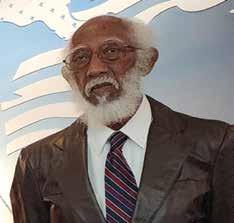
Believed to be the school’s first Black male graduate, the late George Blair ’54 overcame many challenges to become a minister, educator, and administrator. After hitchhiking from Pittsburgh to Indiana at 16, he paid his tuition by working in the library and performing with a band. He was commissioned as an Army officer at graduation, went on to earn a master’s degree and a doctorate, and retired as deputy chancellor of the State University of New York. The son of a sharecropper, he founded the Black World Championship Rodeo, which honored the history of Black riders, and the New York City Riding Academy for inner-city youth.
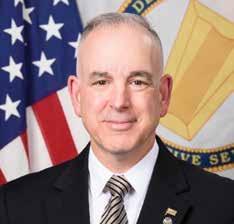
An ROTC Distinguished Military Graduate, Michael Formica ’82 went on to a 43-year career in the US Army, earning two master’s degrees along the way. A Johnstown native now living in Virginia, he served 27 years as an officer in the US, Europe, Asia, and the Middle East and commanded 3,500 soldiers during combat operations in Iraq, for which he received the Distinguished Service Medal. After retiring from active duty as a colonel in 2009, he returned to government service as a Department of the Army senior executive. Now a Tier 3 senior executive, he is one of only 25 of these Army civilian leaders.
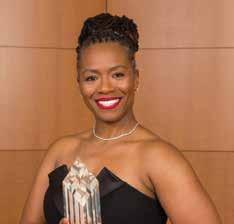
Growing up in Philadelphia, Christine R. Hardy ’99 persevered through teenage motherhood. She cared for a young family while juggling the demands of law school. As a trial attorney, she litigated transportation cases nationwide. In 2014, she joined Norfolk Southern Corporation and, in 2020, was named deputy general counsel and chief data privacy officer. She advises on complex corporate, regulatory, and commercial matters; has excelled in integrating legal strategy with enterprise goals; and led the development and implementation of the company’s first data governance and artificial-intelligence governance frameworks. Based in Atlanta, she serves on the board of Cool Girls, Inc.
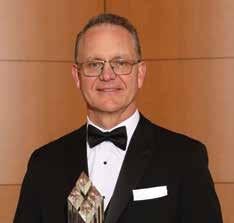
Ed Hartman ’86, a 2019 inductee into the IUP Athletics Hall of Fame, was drafted by the Pittsburgh Pirates in 1986 and played professionally for four seasons, earning minor league MVP honors. He has built a distinguished career as a financial and business leader and now serves as executive vice president of Business Operations for the Pirates. As founder of CFO BI LLC, he led the successful turnaround of a $360-million transportation company. He also served as chief financial officer of Aires, executive vice president and CFO of the Buffalo Sabres, and CFO of Basis100, formerly a Toronto Stock Exchange-listed company.

A passion for high-stakes business finance set James Leda ’95 on a path to some of the world’s most influential financial institutions, including Merrill Lynch, PPM America, and Cayman-based insolvency firm KRyS Global, where he serves as managing director. As an IUP undergraduate, he was a student trustee and president of the Student Congress. Later, he earned an MBA at the University of Chicago. He is passionate about giving back to his alma mater. As president of the Foundation for IUP Board of Directors, he oversees the foundation’s efforts to steward its assets for the benefit of IUP.
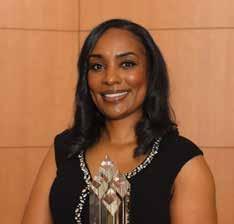
Since graduating with a degree in psychology, Pittsburgher Sharise Hemby Nance ’02 has earned a master’s degree in social work, provided mental health services to thousands of patients, and added the roles of entrepreneur and author to her résumé. She co-owns HandinHand Counseling Services, which aims to reduce mental health disparities in Black communities, and founded Vitamin C Healing, which provides workshops, group coaching, and online courses to enhance the emotional wellness of social workers. She also created the Social Worker Appreciation of Greatness (SWAG) Awards to recognize social-work heroes in the Greater Pittsburgh area for compassionate service and commitment to the profession.
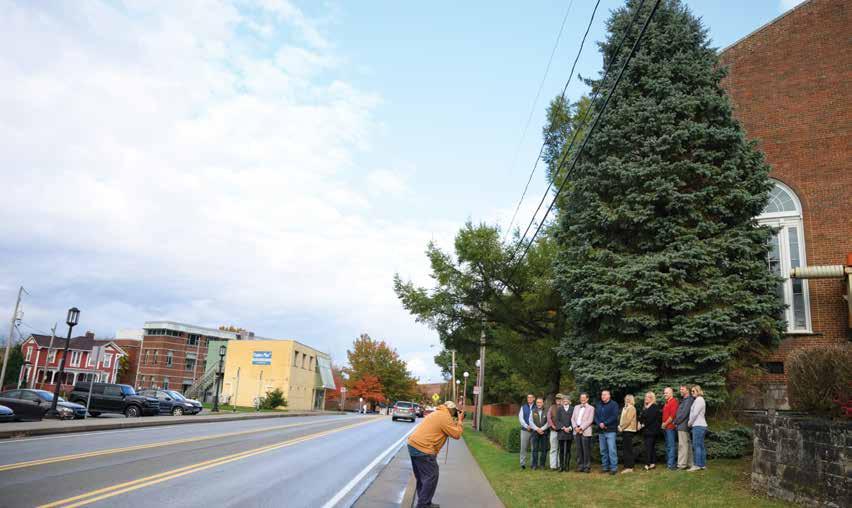
Two trees from the Allegheny Arboretum at IUP were celebrated in recent months.
A 40-foot blue spruce from behind Waller Hall became the centerpiece of downtown Indiana’s 2025 holiday festivities. Crews transported the spruce from campus to North Seventh Street in time for November’s It’s a Wonderful Life tree lighting.
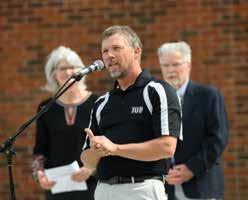
In April, a young white oak was dedicated at the former site of Weyandt Hall to commemorate two anniversaries—IUP’s 150th and the arboretum’s 25th. Event speakers included IUP President Michael Driscoll; biology professor Michael Tyree and Indiana landscape architect Barbara Hauge, co-executive directors of the arboretum board; and retired arboretum board executive director Jerry Pickering.
To bring the year of celebrating IUP’s 150th anniversary to a close, 18 members of the university community—current and former faculty members and administrators, historians, journalists, and alumni (many filling more than one of these descriptions)—were asked to share their favorite moments in IUP history. These didn’t have to be moments they witnessed or that even happened in their lifetimes— just moments with special meaning. See their responses, listed chronologically.

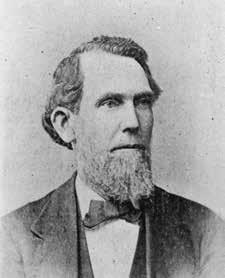
Jonathan Bogert M’15
Executive director, Historical and Genealogical Society of Indiana County
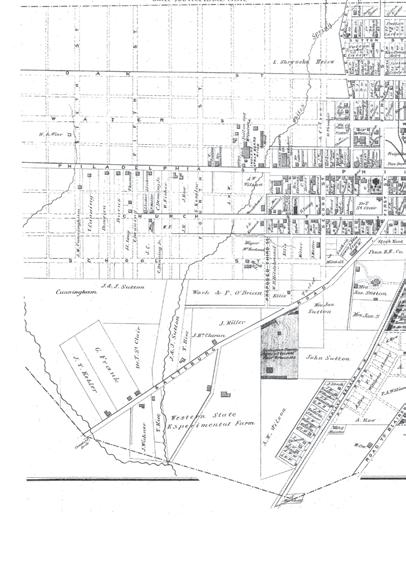
The land originally owned by John Sutton where the IUP campus is situated today was not the only proposed location for the new normal school. Acreage outside of town belonging to James P. Carter was also offered as a possible site at a much lower cost. Fortunately, the trustees selected Sutton’s land, which sat right at the edge of the growing town of Indiana. A reporter from the local paper commented that the location “is certainly the most desirable about the town.”
I came across this fact while researching local events at the historical society. I cannot imagine IUP’s campus being anywhere else in town. The location is perfect and has led to the construction of a beautiful and unique setting. This has provided many students, faculty members, and community members with the perfect place to make memories over the years.

Charles Cashdollar ’65
Professor emeritus of history, Distinguished University Professor, author of The IUP Story
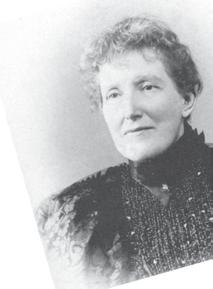
Jane Leonard boarded a westbound train in Lancaster, transferred to the BlairsvilleIndiana Branch line, and arrived in Indiana in April 1875 to start a new job. It was a risky personal and career move. She left behind her friends, her prized rose garden, and a secure teaching position at Millersville, an already flourishing normal school, for Indiana, which as yet had no students, no other teachers, and no final approval from state authorities.
Her living quarters at the school were not ready, and she found herself in a spare bedroom at trustee Silas Clark’s house. When she first saw the school’s unfinished building (now Sutton Hall), it was surrounded by construction debris, shale, and mud. She wondered if she would ever find good soil to grow roses. And yet she did. She planted and tended not only a rose garden, but a normal school that has blossomed into today’s university.
IUP Magazine Namedroppers editor
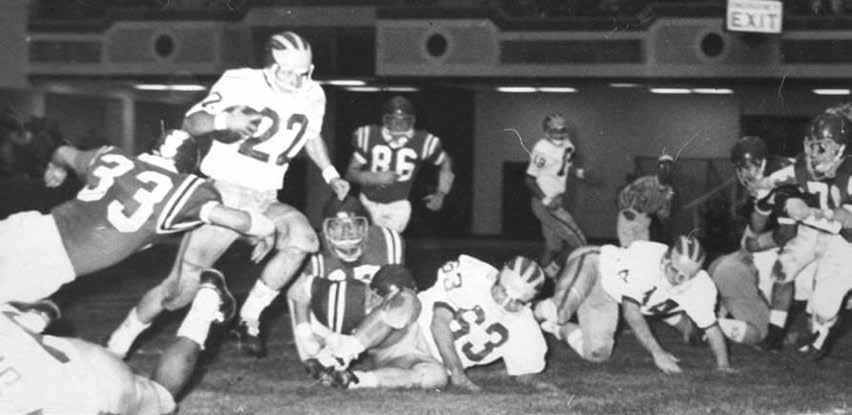
IUP was 9-0 and invited to play in the Atlantic Region championship game against the mighty Blue Hens of Delaware, who were 7-3 but had played a more challenging schedule. A newspaper columnist who covered Delaware dubbed it the “Cakewalk Bowl,” because it was deemed such a mismatch.
But head coach Chuck Klausing’s troops didn’t cower. In front of a TV audience watching the ABC broadcast live from the Atlantic City Convention Hall—site of the Miss America pageant—the Indians took a 21-10 lead into halftime in the first NCAA championship game played indoors.
But the lead didn’t last, and Delaware gained control in the third quarter. IUP fought back and took a 24-23 lead on Bob Tate’s 32-yard field goal with about a minute to play. But Delaware rallied and scored a touchdown with six seconds left, for an emotional 31-24 win.
They say a loss is a loss, but for the Indians, this was the rocket booster that launched the program into its golden era of the 1980s and ’90s. The 1968 Boardwalk Bowl was the moment when IUP grew from a regional team to a national contender.
To me, this game is a reminder that greatness isn’t always defined by a victory. Sometimes, it comes from the courage to challenge giants and cement a legacy that outlasts the scoreboard.
Namesake of the Kopchick College of Natural Sciences and Mathematics and Kopchick Hall
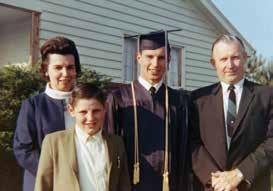
My dad, Pete, along with my grandfather and uncle, worked in the Ernest coal mine, which shut down in the mid-1960s. After getting a few other jobs, my dad was hired by IUP and ended up being the receiving clerk for chemicals and equipment that came into Weyandt Hall, the science building.
As a biology major, I spent most of my time in Weyandt. My dad would periodically bring me lunch. I worked for him my junior year, distributing chemicals to the faculty for their research. I loved seeing my dad each day, going home for my mother’s (Kathryn’s) cooking, and having fun with my brother, Bill. Some of the faculty and students remember my dad bringing cucumbers and tomatoes from his garden and sharing them at lunch. He also invited many faculty and students to our house for dinner and his homemade wine.
During my junior year, I met a girl, Charlene Labay, from Sagamore, who ended up being my wife. Three years ago, Weyandt Hall was removed and replaced. I am a bit melancholy about this, since I had such good memories of Weyandt. But, I am extremely humbled and proud that the new science building is named Kopchick Hall, home of the Kopchick College of Natural Sciences and Mathematics. My dad, looking down from above, would love this new building.
Read the full version at IUP.edu/magazine
Ron Juliette ’68
Retired professor (Communications Media); coauthor, Indiana University of Pennsylvania: Our Homage and Our Love
At 24, I left a tenured junior high teaching position to take a one-semester sabbatical leave position at IUP. On my first day, my department members performed a simple act that would change my life and enhance what turned out to be my 33-year career at IUP—they invited me to lunch.
Daily, we walked to the cafeteria in the basement of Foster Dining Hall and found a table where others were already dining. Soon, more people were pulling up chairs and tables. What ensued was a dozen or more people chatting about every topic imaginable.
I eventually would learn that administrators, faculty, and staff were all represented. Many were leaders at the university, but at that table, everyone was equal, debates were civil, humor was universally appreciated.
After several years, the cafeteria closed. Campus became more contentious. Gone was the table where many shared lunch and conversation.
I learned early on at IUP that we can all get along if we choose to do so and that we can find common ground if that’s what we want to find. More importantly, if we so choose, we can all appreciate and learn from each other.
Bob Fulton ’75
IUP Magazine contributing writer
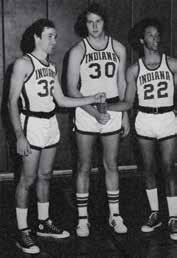
I was a Sports Information Office student worker in March of 1974 when the IUP men’s basketball team qualified for the National Association of Intercollegiate Athletics national tournament in Kansas City, Missouri. Twelve of us—eight cheerleaders and four media types—crammed into a campus van for the 900-mile journey west. Coach Carl Davis’s unheralded Indians, who entered the 32-team tourney with a modest 19-7 record, quickly showed they belonged. First, they knocked off 28-4 Azusa Pacific (Calif.), 79-74, behind senior Randy Allen’s triple-double. IUP then stunned 28-1 Grand Canyon (Ariz.), 66-65, as Rich Lynch, a 6-foot-5 freshman center, held his own against 6-10 All-American Bayard Forrest. The Indians thus became the only unseeded team to reach the quarterfinals, earning them a new nickname from the assembled sportswriters—giant killers.
IUP’s long-shot bid for a title ended with a lopsided loss to West Georgia, the eventual national champion. But, oh, what a ride it was!
Randy Jesick
Retired faculty member (Journalism and Public Relations) and administrator
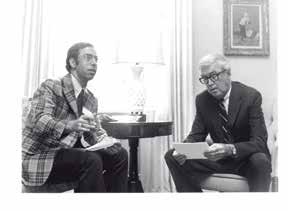
On Friday, September 13, 1974, Indiana native Jimmy Stewart arrived at IUP to receive an honorary doctor of letters degree. In John Sutton Hall where he met me, the director of Public Information, to discuss his schedule, I was unprepared for a Princeton graduate, a famous actor, an Academy Award recipient, and a bomber pilot in World War II to be as pleasant, cooperative, and down-to-earth as he was.
He graciously participated in a news conference, a luncheon, and a raindrenching Miller Stadium ceremony so intense that he dropped his umbrella, threw away his disintegrating note paper, and joked about his squishy shoes. It was, after all, Friday the 13th! But after all this, he was kind enough to appear at Fisher Auditorium, where he introduced the showing of two of his movies, including It’s a Wonderful Life. A special person and a wonderful life experience for me—one of my most memorable in my 52 years at IUP.

Debra Evans Smith ’81
IUP Alumni Association board member, Black Experience Alumni Committee founding cochair
On October 25, 1980, one of my best friends, Donna Reaves, became IUP’s first Black Homecoming queen, crowned during halftime of the football game against Edinboro. She was sponsored by the Black Student League and Delta Sigma Theta sorority and was the Black Student League’s third candidate in three years to make the Homecoming court. She told The Indiana Gazette, “This is something that will go down in history. It’s a first, and I’m glad to be in that position.”
Coming to IUP from Sussex, New Jersey, Donna was also on the track and field team and made it to the national meet in Wichita, Kansas, in the 400 meters.
Her selection as Homecoming queen made me very proud of Donna—and also proud of IUP.
Mary Kreider Megna ’84
Former IUP Marching Band piccolo player; cocreator of the Sustaining Grace documentary
In the fall of 1981, the IUP Marching Band performed for the first time a special arrangement of “Amazing Grace,” commissioned just for the band from the now-famous arranger Chris McDonald. Just before the performance on the field, band members were full of excited anticipation, knowing the emotional impact of the piece. The experience did not disappoint. The majestic high-knee steps taken in perfect rhythm to a building crescendo of sound of the beloved hymn brought audience members to their feet in a standing ovation. That moment was never forgotten by band members, by Director Charles Casavant, or by the crowd of students and fans. A tradition of excellence followed, built on the proud musical history of the mighty band and of that moment, igniting a spark that became “the Legend,” the IUP Marching Band!
Mary Morgan ’91
Retired assistant vice president for Alumni and Friends; IUP Alumni Association board president
Having enrolled at IUP in the spring of 1986, I saw the old mansion near the Hadley Union Building but didn’t give it much attention, since the windows were boarded and the only thing you heard about it were rumors of ghosts roaming the halls. To my surprise, it was undergoing renovations and soon would be open once again.
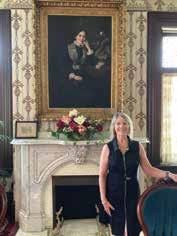
As Breezedale Alumni Center, it became a special place to hold events, take photos, and celebrate with friends. Visitors could enjoy this historic mansion, restored with so much care and passion, and learn the rich history of the home, built by James Sutton, that would become part of IUP’s growth.
When I joined the alumni team in 1996, I would spend 25 years of my IUP career caring for Breezedale, maintaining its story, and helping the IUP family make new memories. Today, this part of IUP, created more than 150 years ago, is home to nearly 150,000 alumni. It will always have a special place in my heart and soul.
Ruth Riesenman ’64
Retired executive assistant to the president
One of my very favorite moments from working at IUP was on Wednesday, November 16, 1989. As chair of the Nell and Sam Jack Distinguished American Lecture Series, I was asked by President John Welty to serve as host for the year’s lecturer, Justice Sandra Day O’Connor. She was the first woman appointed to the Supreme Court and the sixth lecturer in this prestigious series, which began in 1984. Other lecturers included Carl Sagan, William F. Buckley, and Beverly Sills.
In addition to speaking, she received an honorary doctor of laws degree. To prepare for her day on campus, I started researching her life and rereading the Constitution and the history leading up to her nomination as a justice. When Dr. Welty and I went to the Jimmy Stewart Airport to meet her, I was filled with trepidation. However, she was so calm and friendly that I relaxed and enjoyed hearing about her life growing up on the Lazy B cattle ranch in Arizona and going to Stanford University at 16.
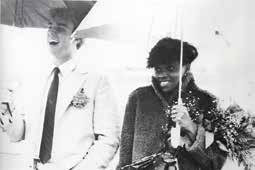
1980 Homecoming royalty: Don Thomas and Donna Reaves
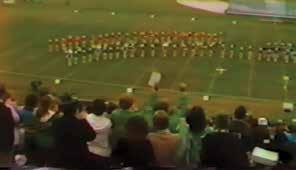
The IUP Marching Band performed its special arrangement of “Amazing Grace” for the first time.
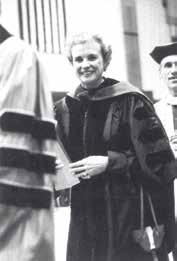
Sandra Day O’Connor at IUP, 1989
Melvin Jenkins M’92
Retired professor (Developmental Studies) and administrator; founder, IUP Voices of Joy
I began working at IUP in the early 1990s after receiving my MA in student affairs in higher education. As an administrator in the Office of the Vice President for Student Affairs, I was given the opportunity to coordinate a program known as “Division Diversion.” This was a team-building and morale-boosting endeavor which encouraged everyone in each division to go outdoors for various games and activities on a weekday afternoon.
I recall a tremendous amount of camaraderie and engagement among all participants and truly felt that the event had a positive impact on overall employee morale. It was interesting to see folks from all levels bounce a ball or swing a bat with colleagues.
I remember winning a small trophy for some reason, and though the trophy is a distant memory, the relationships that were built have lasted a lifetime. Those IUP connections, early in my career, have helped me understand the importance of team building within any workplace.
Prashanth Bharadwaj Dean, Eberly College of Business
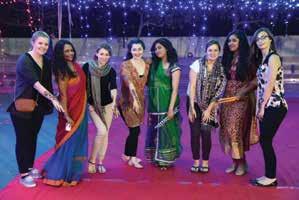
The Eberly College of Business has always had a global mindset, but achievement of the coveted accreditation by AACSB (Association to Advance Collegiate Schools of Business) International in 2001 helped the school soar high on the world stage. In the last two decades, ECOB has forged highly productive partnerships with universities in East Asia, South Asia, the Middle East, Europe, and Africa in areas such as collaborative graduate programs, undergraduate pathway partnerships, short-term faculty-led study abroad programs, collaborative online international learning programs, and exchanges of students and faculty.
As a result, ECOB has enrolled over 3,000 international students, more than 600 students have studied abroad, and over 40 faculty have taught abroad. Highlights include over 1,500 MBA students from India, over 800 undergraduate students from China, over 300 Executive MBA and PhD students from the West Bank, nearly 300 students traveling to India, over 200 students to Germany and France, and 40 students to Norway.
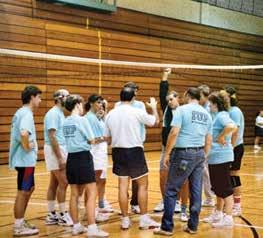
ECOB continues to forge strong global partnerships to benefit its students and faculty.
Karen Philippi Gresh ’67
Retired IUP Magazine editor
You don’t really realize how big the Oak Grove is until you see nearly every inch of it occupied by a person. That was the view from the third floor of Sutton on September 14, 2001.
The thousands in the Oak Grove had been summoned, more or less, by the nation’s president, George W. Bush, who had declared a National Day of Prayer and Remembrance for the Victims of the Terrorist Attacks three days before. He asked that noontime memorial services be held across the nation, and IUP had complied.
It would be a long time before we would learn that three IUP alumni had died in New York’s World Trade Center. Eventually, a battered remnant of that structure would make its own way to the Oak Grove.
On this day, though, we recognized that a moment in IUP history was truly a moment in the history of the nation.
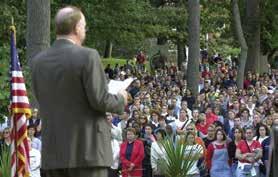
spokeduringamemorialservice intheOakGrovethreedaysafterthe9/11attacks.

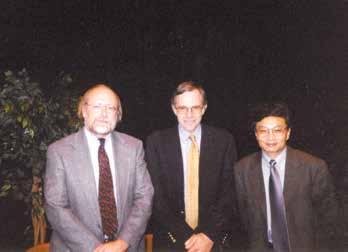
Xi Wang Professor of history, Distinguished University Professor
During my 31 years of teaching at IUP, I have participated in many memorable academic programs, but one evening stands above all others—the public lecture delivered by Eric Foner on November 5, 2001. That night, the 1,460-seat Fisher Auditorium was filled to capacity with students, faculty, and community residents.
Foner—an award-winning historian, author of 14 books at the time, and president of both the American Historical Association and the Organization of American Historians—spoke on “The Idea of Freedom in American History,” based on his widely read The Story of American Freedom. For nearly an hour, he held the audience spellbound.
What made the evening truly unforgettable, however, was the Q&A session. IUP students posed thoughtful and probing questions that not only engaged the speaker but also impressed him. In that moment, the lecture became a dialogue—a vivid reminder of what a university at its best can be: a place where ideas are not only presented, but actively tested, challenged, and shared.
Michael Driscoll IUP president
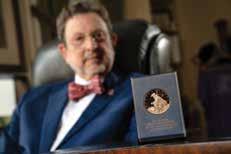
In January 2012, it was announced that I would be IUP’s next president. Soon after,
collaboration agreement with the University of Alaska Anchorage, where I was provost and vice chancellor for Academic Affairs. The agreement was for facilities use for statewide athletic championships and helped connect high school students with my university. I assumed he hoped to extend the agreement before I left, so I agreed to meet.
I was surprised that his wife, whom I had not met, came with him. They said they wanted to give me something of theirs to take with me to my new home and job. Inside the small, scuffed box was a solid bronze medal—the official 1976 bicentennial medal of the Commonwealth of Pennsylvania. They told me they were pleased that someone they knew and respected was taking the helm of their dear alma mater—the place where they had met and fallen in love.
That’s when I first understood that IUP alumni are everywhere, making the world a better place by their actions, big and small. The couple’s gift is still in my office, and its lesson is one I will never forget.
Stephen Abel ’73
Retired colonel, US Army; Distinguished Alumni Award recipient
As I look at my experience at IUP, it was difficult to find just one moment to help mark IUP’s 150-year anniversary. Certainly, the friendships I made in Kittanning my freshman year that have lasted all these years are significant. My time as a resident assistant comes to mind. The foundation IUP set for my 27-year military career and my rise to the rank of colonel are also significant. Receiving the IUP Distinguished Alumni Award was certainly a high point.
However, I believe the creation of a Foundation for IUP endowment, the Veterans Assistance Fund, is my most rewarding moment. The fund provides financial assistance to full-time students who are veterans to help alleviate financial emergencies that may impact their ability to remain at IUP. It was my hope that not naming the fund after myself would attract donations from a broad range of alumni who would like to show their appreciation to men and women who have served and sacrificed for their country.
Harrison Wick D’18
IUP Special Collections librarian and university archivist
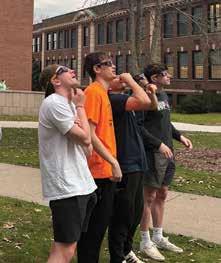
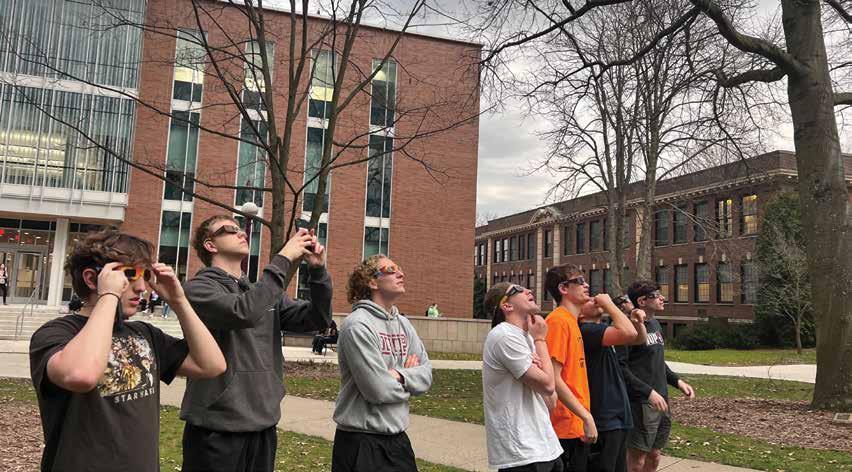
In the 18 years I’ve been at IUP, this is one of my favorite moments. It brought everyone together at the heart of campus, all at once, just for a few minutes.
On April 8, 2024, there was a near-total eclipse at IUP, and in front of Stapleton Library, hundreds of students and employees gathered in the Oak Grove to “watch” this special event. Probably more people were gathered there, in one open place on campus, than I have ever seen before. This was just a year before IUP marked the sesquicentennial of its founding as Indiana Normal School in 1875. To think that our school opened its doors to 225 students on May 17 of that year and how many people have walked through the Oak Grove since. m
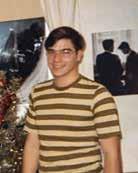
In May, the University Senate presented the following faculty and staff awards.

Distinguished Faculty Award for Teaching to Amanda Poole, professor of anthropology, a member of the faculty since 2009.

Distinguished Faculty Award for Research to Andrea Palmiotto, associate professor of anthropology, who joined the faculty in 2018.

Distinguished Faculty Award for Creative Arts to Timothy Paul, associate professor of music and director of Bands, a member of the faculty since 2015.

Distinguished Faculty Award for Service to Gian Pagnucci, professor of English and chair of the Department of Language, Literature, and Writing, who joined the faculty in 1995.

Distinguished Staff Award for Service to Michelle Fryling, executive director of Communications and Media Relations, who joined the IUP community in 1992.
IUP presents its Young Alumni Achievement Award annually to one graduate of the last 15 years from each academic college. Following are the 2025 award recipients, with their information from the time of the award presentation in November.

Ray Edwards ’11, Eberly College of Business. A
Cook Honors
College alumnus, he is the director of Data
Engineering for Home Depot. A native of Wernersville, he now lives in Atlanta.

Byron McClure D’16, College of Education and Human Services. A native of Fort Washington, Maryland, he is the founder of Lessons for SEL (Social and Emotional Learning) and the founder and CEO of School Psych AI and the Black School Psychologists Network. He lives in Spring, Texas.

Luke Piper ’13, Kopchick College of Natural Sciences and Mathematics
An alumnus of the Cook Honors College, he is a consult psychiatrist and Integrated Behavioral Health faculty member for UPMC in Central Pennsylvania. Originally from Indiana, he lives in Elizabethtown.

Angelica Terepka M’13, D’16, College of Health Sciences
A native of Queens, she is the director of psychology for New York City Health + Hospitals/Elmhurst
and an associate professor at the Icahn School of Medicine at Mount Sinai in New York City. Cykhira Walton ’15, College of Arts, Humanities, Media, and Public Affairs

A native of Philadelphia, she is the senior policy advisor to council member Anthony Phillips, who represents Philadelphia’s 9th District.
In April, IUP presented its Award of Excellence in Volunteer Leadership in four categories:
The Advancement Support award went to Punxsutawney Area College Trust for its longtime support of the IUP Punxsutawney Campus. The trust has also provided funding for high school students taking college courses, for scholarships, and for the IUP Academy of Culinary Arts and its new facility.
The Affinity Service award went to Denise Spangler Imbrogno ’78 and Patrick Imbrogno ’78 for their support of the IUP football program and for hosting former players and coaches at their Moon Township home each summer. A former football standout, Pat is a 2014 inductee into the IUP Athletics Hall of Fame.
The Regional Impact award went to Sloan Kayla Dantzler ’15, cochair of the Black Experience Alumni Committee, which works to improve the college experience for minority students. Dantzler coordinates alumni-student networking events in the Philadelphia area and serves as an IUP Admissions and Promising Scholars Program volunteer.
The Aspiring Alumni award went to Kamden Boyle, a 2024 bachelor’s degree recipient who went on to earn a master’s in public affairs in May. A highly involved student, he served as a campus tour guide, a resident assistant, a graduate assistant in the Office of Alumni and Friends, and a graduate support assistant for Housing Operations.
In honor of IUP’s 150th anniversary, a special Legacy Impact award was presented to Charles Cashdollar ’65, professor emeritus of history, and his wife, Donna Cashdollar, a graphic designer, for creating The IUP Story: From Normal School to University, the first book in 30 years to chronicle IUP’s history.
Keynote speaker for this recognition event was Karen Kelly Deklinski ’79, a past president of the IUP Alumni Association Board of Directors, a 1998 recipient of the Distinguished Alumni Award, and a 1988 recipient of the Alumni Ambassador Award. In addition, alumni association board member Scott Rhoades M’06 presented the university with an IUP flag that he took on a 2016 reduced gravity research flight as part of his work in aerospace health.
For the 2026-27 academic year, biology professor Josiah Townsend was awarded a Fulbright to Costa Rica to resolve taxonomic confusion surrounding the leopard frog. This is his second Fulbright award. During his first, in 2019, he designed a facultyled study-abroad program to Honduras that has since had more than 60 student participants.
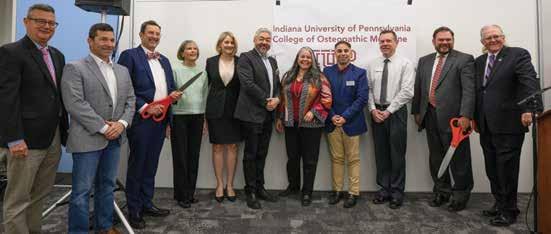
In May, IUP’s College of Osteopathic Medicine earned pre-accreditation status from the American Osteopathic Association’s Commission on Osteopathic College Accreditation.
With this status, IUP can begin recruiting students to its Doctor of Osteopathic Medicine program and can begin instruction within the approved curriculum. The program was approved by Pennsylvania’s State System of Higher Education in April.
While Pennsylvania has three colleges of osteopathic medicine, IUP’s would be the only one at a public university.
To achieve pre-accreditation status, the university had to complete a self-study, feasibility study, and business plan and host a COCA team visit, which happened in March.
A college of osteopathic medicine can hold preaccreditation status for up to five years. For the college to achieve accreditation, the first class of students must graduate within those five years. IUP’s first class is to enter the program in fall 2027 and graduate in 2031.
Also in May, the IUP Council of Trustees gave its support for the college’s annual tuition, which, for 2027-28, is $43,200 for Pennsylvania residents and $65,000 for students who live out of state. Tuition would have a 3 percent base increase annually for all four years.
Osteopathic medical students typically spend their first two years in the classroom and the next two at clinical sites in the community. IUP has secured clinical training partnerships at more than 30 sites, which is well above the number needed for accreditation.
In 2022, IUP began exploring establishing a college of osteopathic medicine to address the shortage of primary care physicians throughout rural Pennsylvania. National data shows that physicians trained in osteopathic medicine are four times more likely to select primary care specialties and almost twice as likely to practice in rural areas as physicians with doctor of medicine (MD) degrees.
As of the pre-accreditation status announcement in May, the IUP College of Osteopathic Medicine had received $54 million in funding from individual donors, foundations, and agencies.
Recent changes in IUP leadership positions include the following:
In January, Peter Holden started as vice president for Administration and Finance. He came to IUP from Williston Northampton School in Massachusetts, where he was chief financial officer. Larry Wakefield filled the role in the interim.
In May, Prashanth Bharadwaj transitioned from interim dean to dean of the Eberly College of Business. In his more than 30 years at IUP, he has also served as professor and chair of the Management Department and dean’s associate for the business college.
In May, English professor Todd Thompson took over as director of the Cook Honors College. A faculty member since 2009, he succeeds Chauna Craig, who had led the college since 2019 and who continues to serve on the faculty of the Department of Language, Literature, and Writing.
In June, Emily Ruth Rutter started as dean of the College of Arts, Humanities, Media, and Public Affairs. Previously, she was associate dean for Academic Affairs and a professor of English at
Bloomfield College of Montclair State University in New Jersey. At IUP, she replaced Curt Scheib ’77, M’78, who retired in June after seven years of service.
In June, IUP announced the selection of Stephen Rossi as dean of the College of Health Sciences. He comes to IUP from Georgia Southern University, where he was senior associate dean and interim dean of the Waters College of Health Professions. Hilliary Creely, IUP’s vice provost for Research and Innovation, was serving as the college’s interim dean.
At the end of March, IUP announced that Impact 150, its largest-ever comprehensive fundraising campaign, had surpassed $114.5 million, or 76 percent of the campaign’s $150-million goal. Through March, Impact 150 had received 50,150 gifts from 13,138 donors. Its public launch coincided with the August 2025 kickoff of IUP’s sesquicentennial celebration.
As part of the IUP Academy of Culinary Arts’ long-range facilities master plan, a new facility is coming to downtown Punxsutawney. Last year, the university started a demolition project in the 100 block of West Mahoning Street to make way for the building—a two-story, 27,250-square-foot addition to the Fairman Centre. The first floor will house three teaching kitchens, one dual-purpose kitchen, a banquet room with a demonstration kitchen, and a reception lobby. The upper floor will have two classrooms and a connecting bridge to secondfloor classrooms of the Fairman Centre. The new facility is expected to open in 2028.
In the summer of 2023, IUP launched its student success infrastructure, a collaborative, university-wide approach that changed the culture around how IUP supports its students. Three years after its rollout, the results look promising.
Inspiration for the infrastructure came from IUP’s strategic plan, which called for a cultural transformation “to enhance the student experience by fostering exceptional student centeredness.”
“A lot of people at IUP were doing impactful work for specific groups of students,” said Paula Stossel, strategic advisor to the president for Student Success. “We needed to institutionalize these efforts—to scale our practices so they reach every student while integrating additional best practices along the way.”
The infrastructure engages students, faculty members, and staff members in a shared responsibility for student success. These are its three key components:
• The navigators—17 full-time staff members who build relationships with their assigned students and support them through graduation
• The Advising Center, a year-round service that provides coordinated, student-centered support to guide students in making academic decisions and in completing their educational goals
• Increased use of data and technology to identify and address barriers to student success before they arise
Monitoring for barriers starts at admission, said Amber Racchini M’03, D’10, vice provost for Academic Success and dean of the University College, which houses most of IUP’s student success resources. She emphasized that the infrastructure is for all students—from high school
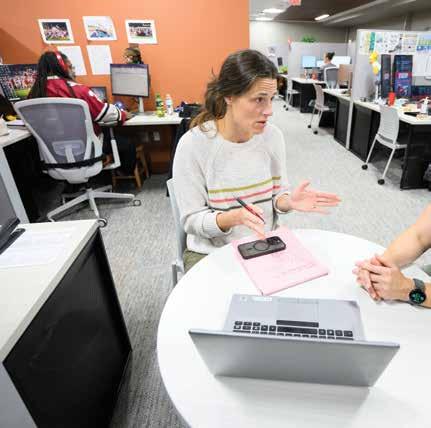
All Pell Eligible First-Generation College Underrepresented Minority Retention rates have gone up for first-year students, including some subgroups. A Federal Pell Grant is a need-based form of financial aid.
students taking college courses to graduate students to “clock-hour” students in the Criminal Justice Training Center. “And the communication, outreach, and support are tailored to each individual,” she said.
While the university has not yet achieved President Michael Driscoll’s top goal from 2023—to keep every student who comes to IUP—it has made significant progress.
From 2022 to 2025, student retention from the first to second year rose by nearly 8 percentage points (70.51 percent to 78.20 percent). And some subgroups have experienced even greater gains, thus closing the retention gap (see graph).
Similarly, the undergraduate persistence rate to the third year (junior year) jumped nearly 5 percentage points (61.70 percent to 66.10 percent) from 2024 to 2025.
While the number of high school graduates in the region declines, IUP’s overall enrollment held steady from fall 2024 to fall 2025 (9,081 to 9,082), which Driscoll described as a “testament to everyone’s hard work.”
Although they take pride in the rising numbers, both Stossel and Racchini said the benefit to students is far more important.
“We’re continually evaluating, enhancing, and identifying other elements we need to address,” Racchini said, “to keep more students and to ensure timely progression to degree completion.”
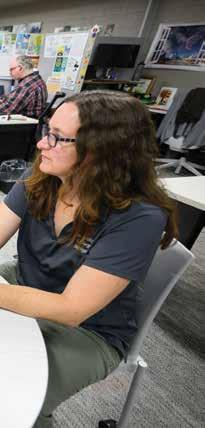
By Robin Jennings
While statistics are essential to show the effectiveness of the student success infrastructure, the real-life stories behind the numbers also tell the tale.
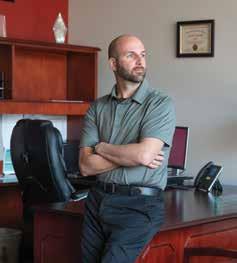
When IUP rolled out its student success infrastructure, introducing navigators as a key component, David Wachob ’05, M’09, D’12 questioned the impact these new hires could have.
But his skepticism gave way to endorsement. As chair of the Department of Career and Wellness Education and coordinator of its teacher education programs, he said the navigators “have become essential to my program.”
While IUP offered many resources to help students succeed, his knowledge of those resources was limited. “The navigators have the answers or will get them,” he said. “I value their attention and follow-through so much that I copy the navigators on communication with my students so that, if there are any barriers, they get identified and addressed. I count on them.”
Wachob guides more than 100 graduate students from diverse undergraduate disciplines—from accounting to criminology to fashion merchandising—as they seek teacher certification.
One of his students contemplated withdrawing from a semester because of financial difficulties. “His navigator was able to assist him with applying for financial aid and with other billing questions,” he said. “So, rather than dropping out for one term, or permanently, he has a way forward.”
Wachob noted that graduate students as well as first-time students benefit from having a go-to person.
“There’s a misperception that once you graduate high school or college, you’re an adult and you’ll just figure things out,” he said. “Having someone point you in the right direction and encourage you along the way can make a huge difference. It’s more than academic advice; it’s assuring you that you have a handle on life.”

As director of Advising, Transition, and Support, Meghan Erwin ’08, M’09, M’11 leads the University College’s Advising Center, which removes obstacles for students as they discern their career interests, select courses, add a minor, or change majors.
“Who really knows what you want to pursue when you start out?” Erwin said. “There are multiple career options, and you don’t always know what a program is until you’ve gotten started. We’re able to help with scheduling and making transitions between majors or departments. And there’s lots of follow-up.”
Also an associate professor in the Department of Student Affairs, Student Success, and Disability Access, she said the Advising Center’s work complements that of her faculty peers.
“There are program-specific academic advisors, and that’s what they know,” she said. “In the Advising Center, we can liaise across departments and help with advisor reassignments when there is a change in majors so students are paired with the appropriate person.”
Predictive software, which monitors risk factors for student success, is essential to Erwin’s work. “Looking at a student’s GPA is a start,” she said. “Are they on track? What progress has been made? What credits were attempted? From there, we can have sensitive, thoughtful conversations about what might be a better path forward.”
Coaching and mentoring are also key to achieving a positive outcome and can begin as early as high school for students in IUP’s Dual-Enrollment Program.
Readmitted students are another population Erwin’s team helps. “Perhaps a student stepped away from classes to have a child or to help out with an aging parent,” she said. “When they return to campus, we’re updating them on what’s new and the many resources available to them to continue to their goal.”
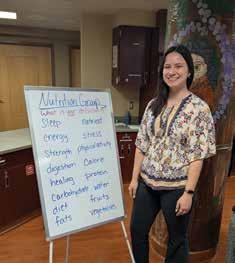
Since September, Sarah Anderson, a registered and licensed dietitiannutritionist, has worked in a behavioral health setting at UPMC Presbyterian Shadyside, where she addresses the nutritional concerns of people with eating disorders and other mental health conditions.
That’s the career she wanted, but to get there, she took a winding path through IUP, picking up a certificate and three degrees and making use of components of the student success infrastructure, as well as other IUP resources.
In high school, Anderson wanted to be an executive banquet chef. She received a scholarship to the IUP Academy of Culinary Arts, earning a certificate in 2019 and an associate degree in 2022.
But after injuring her back in a car accident and doing a three-month externship at the Breakers, a luxury resort in Palm Beach, she questioned pursuing a career that required such long hours on her feet.
She segued into a bachelor’s program in nutrition, concentrating in culinary dietetics. With help from her academic advisor, Nicole Clark M’94, the transition was seamless, she said.
A required course in psychology would prove pivotal. “I ultimately turned that into a minor,” she said. “It helped me refocus and settle on a career in which I can touch food and help people.”
After earning her bachelor’s in 2023, she entered a master’s program in food and nutrition. Her faculty advisor, Jodie Seybold ’06, M’07, D’21, helped her with a plan to reach her academic goals and move on to a career as a clinical dietitian.
With the launch of the student success infrastructure, Anderson also had a navigator, Yvonne Branan ’01, who helped her with billing issues and other “struggles with navigating my graduate program as a burned-out, financially insecure student,” she said.
“At first I wondered why I needed a navigator when I’d been figuring things out all my life,” said Anderson, who earned her master’s in May 2025. “But it became very clear very quickly what a benefit this was to me and can be to others.”
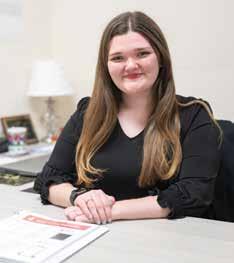
Before graduating with two master’s degrees in May, Abigail Hancox spent two years as an academic success assistant in IUP’s Advising Center. It was a graduate assistantship, and she worked closely with students on academic probation, providing
individualized attention to encourage academic recovery.
The reasons they ended up on probation varied widely, she said. “Basic needs, like food or housing or transportation, can be a challenge for students from lowincome families,” she said. “Or, just getting classroom supplies—a folder or a notebook. Sometimes little things are big things.”
Isolation during the pandemic may also have led to underdeveloped life skills, she said. “Time management, self-care, socialization, and interpersonal relationship building—these are things we can teach,” Hancox said. “Helping students find their purpose and where they see themselves in the future is also part of what we do. As awful as COVID was, it pointed out just how important the programs offered through the University College are.”
First-generation students, in particular, may miss classes and not realize how that impacts their grades, she said, and mental health concerns, such as anxiety and depression, may be at the root of poor performance. “Getting students to the Counseling Center can be an important step,” she said. “Not just telling them about it, but physically walking with them.”
Hancox, who received her bachelor’s from IUP in 2024, remembers feeling “lonely and homesick” her first year before she got involved in the Student Government Association, eventually serving as president. She also served as a student member of the State System Board of Governors.
But from her role as an academic success coach, she learned that no “one size fits all.”
“Success is finding the individual’s path to a life of fulfillment and purpose,” she said. “Higher education is a gateway to that end.”
Editor’s Note:
Robin Stahl Jennings ’79 is a freelance writer.
The university community is grateful to the following donors, who made gifts totaling $25,000 or more to the Foundation for IUP between July 1 and December 31, 2025.
Stephen Abel ’73, a gift to support the IUP Veterans Assistance Fund and many other initiatives, including a matching gift opportunity to encourage student organizations to raise funds for the Student Assistance Fund
An anonymous gift to support the academic, programmatic, and scholarship needs of the women’s volleyball team
Jane Miller Banks ’56, a gift to support the Jane Miller Banks ECOBIT (Eberly College of Business) Scholarship
Robert Basehore ’71 and Kathie Kuvinka Basehore ’71, gifts to support the Bob and Kathie Basehore Boardwalk Bowl Scholarship, the Robert W. Basehore Jr. and Kathie Kuvinka Basehore Athletic Scholarship, and the IUP College of Osteopathic Medicine
Tim Cejka ’73 and Debra Phillips Cejka ’73, gifts to support the Student Assistance Fund and the Fusion Fellows Program, a competitive, yearlong initiative that fosters research collaboration between students and faculty of the College of Arts, Humanities, Media, and Public Affairs and the Kopchick College of Natural Sciences and Mathematics
Jere Cowden ’69 and Sharon Tahl Cowden ’71, a gift to support the IUP College of Osteopathic Medicine
Robert Danko ’80, a gift to establish the Danko Family
Scholarship, supporting members of the men’s swimming team, with preference given to students majoring in fine arts
Gregory Davis AA’80, ’85 and Frances Nee, a gift to support the William F. and Louise R. Nee Endowment, benefiting members of the women’s swimming team
Mary Ann Dickey, a gift to support nursing and culinary students
Michael Driscoll, gifts to support the IUP College of Osteopathic Medicine, the Sutton Scholarship, and the Fund for IUP
T. Kerry Green ’78, a planned gift to support the Dr. Lou Sutton Track and Field and Cross Country Scholarship, the Coach Fry Athletic Enhancement Fund, and students majoring in health and physical education or exercise science
The Leonard A. and Mary Jane Schafer Foundation, a gift to support the Fund for the IUP Libraries and the Student Assistance Fund. Mary Jane McMurray Schafer was a member of the Class of 1931.
Douglas Lingenfelter ’83, a planned gift to support the Eberly College of Business Dean’s Innovation Fund
Robert O’Toole ’74 and Melinda Estridge, a planned gift to establish the James and Jean O’Toole Memorial Scholarship benefiting students from Indiana, Jefferson, Clearfield, Cambria, Westmoreland, or Armstrong County with demonstrated financial need
Punxsutawney Area College Trust, a gift to support the Department of Culinary Arts Student Scholarship and the Punxsutawney Campus
Ruth Riesenman ’64, gifts supporting the Dr. Ruth A. Riesenman Scholarship; men’s basketball; the University Museum Enhancement Fund; the Allegheny Arboretum at IUP; the IUP College of Osteopathic Medicine; the College of Arts, Humanities, Media, and Public Affairs Dean’s Merit Scholarship; and the IUP Libraries Department of Special Collections and University Archives
Rutter’s, a gift to support educational programs in the Educational Improvement Tax Credit Program
William Scheeren ’68 and Judith Scheeren, a gift to support the Labyrinth Center
The Estate of William Sefler ’62, a gift to support the IUP College of Osteopathic Medicine
Terry Serafini ’61 and Janet Serafini, gifts to support the IUP Food Pantry and Help Center, the Military and Veterans Resource Center Enhancement Fund, and the IUP College of Osteopathic Medicine
Marilyn Silvey, a gift to support the Bedford John “BJ” Silvey Sr. (’62) Scholarship for full-time students, with preference given to first-generation college students
Ashley Stoner ’15, a gift to establish the Ashley Rose Stoner Women’s Basketball Scholarship, benefiting women’s basketball studentathletes, with preference given to those enrolled in the Cook Honors College
Joyce Thames, gifts to establish the Richard Thames, DO, College of Osteopathic Medicine Scholarship
William Wagner ’75 and Amy Wagner, a gift to support the William J. Wagner Eberly College of Business Scholarship
David Walzak ’71 and Rebecca Blocker Walzak ’70, a gift and planned gift to support the IUP College of Osteopathic Medicine
B. Gail Wilson and Michael D. Barrett, a gift to establish the Wilson-Barrett Fund for Communications Media and the B. Gail Wilson Fund for Communications Media to support the academic and programmatic needs of the department
John Wingfield ’85, M’88 and Tania Williams Wingfield ’88, a gift to establish the John V. Wingfield Diving Enhancement Fund to support the academic, programmatic, and scholarship needs of the diving program
Frances Zambotti, a gift to establish the Geno and Fran Zambotti Scholarship for Nursing. Geno Zambotti ’57, M’62 was an IUP professor emeritus of chemistry.

Make a gift to a fund of your choice using the Online Gift Form at IUP.edu/makeagift.
By Matt Burglund
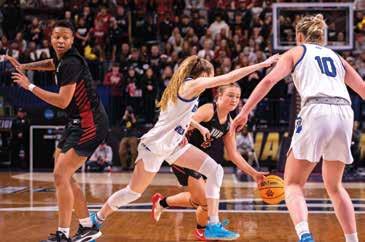
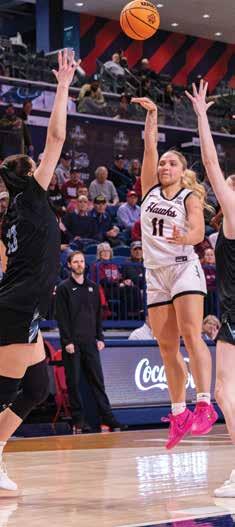
When it was announced a few years ago that the 2026 NCAA Division II women’s basketball Elite Eight tournament would be held in Pittsburgh, probably many people from the IUP community thought it would be nice if the Crimson Hawks could advance that far.
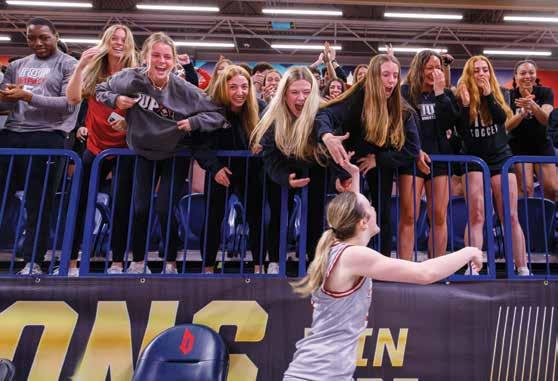
In a postseason run that opened a lot of eyes and made a lot of memories, head coach Craig Carey’s team obliged. IUP made the tournament and won its first two games before losing on March 28 in the national championship game—its first-ever appearance in the title tilt. All three games at Duquesne University’s UPMC Cooper Fieldhouse had a vocal IUP contingent on hand, including several student groups and athletic teams, plus many members of the Indiana community.
“It was great,” Carey said after the Crimson Hawks beat Colorado Mesa in the national semifinals to reach the title game. “The girls feed off that. We’re asking these girls to play a lot of minutes in some grueling games. They’ve been really physical and fast-paced games, and any little energy boost helps. I think it’s rattling the other teams as well, especially when you have the football team behind a basket
and all that. You’re expecting it to be in an emptier gym with just your fans, but here come 500 students who are just screaming and yelling at them in warm-ups. All of that psychologically takes a toll.”
It was a remarkable run for a team picked to finish third in the Western Division in the Pennsylvania State Athletic Conference preseason coaches’ poll. The Crimson Hawks won a school-record 31 games, the PSAC championship, and the Atlantic Region title, proving their detractors wrong.
“The reason it means so much to us is because nobody thought we could,” said senior forward Nyshae’ Weaver, the team’s leading scorer. “When you do it when nobody thought you could—so all the odds are against you, and you do it— that’s a great feeling.”
Although IUP fell short in the national finals to defending champion Grand Valley State, the Crimson Hawks still put together a remarkable season that few people outside the Kovalchick Complex probably saw coming.
“Now when people hear IUP, they’re not sweeping it under the carpet,” Weaver said. “We’re getting a little more respect,
so that means everything. The future is bright at IUP.”
It’s safe to say there’s not a bigger name in college football—or maybe all of sports—right now than Curt Cignetti
The former (2011-16) IUP head football coach led the Indiana Hoosiers to the NCAA championship in just his second season with the team, which, before his arrival, had been the losingest program in college football history. After an undefeated regular season, Indiana beat Ohio State in the Big Ten championship game and then defeated Alabama, Oregon, and Miami (Fla.) to cap a perfect 16-0 season.
For his leadership, Cignetti captured nearly every major coaching award.
On the national stage, Cignetti became the first coach to win back-to-back Home Depot and Walter Camp National Coach of the Year honors. His postseason sweeps also included the prestigious Paul “Bear” Bryant Award, the Maxwell Football Club’s George Munger Award, and the AP Coach of the Year, alongside top coaching honors from the American Football Coaches Association, The Sporting News, and ESPN. Additionally, Cignetti was named the 50th recipient of the Dodd Trophy, recognizing his program’s excellence on the field, in the classroom, and in the community.
He was also a unanimous choice for Big Ten Coach of the Year after guiding the Hoosiers to their first outright conference title since 1945. His impact extended well beyond the gridiron, culminating in Indiana Governor Mike Braun presenting him with the 2026 Sachem Award—Indiana’s highest civilian honor—for his transformative leadership and service to the state.
In May, Cignetti and the Hoosiers were guests at the White House, where they were welcomed by President Donald Trump. During a ceremony on the South Lawn, Trump called Cignetti the “coach of the last decade.”
In addition, Bryant Haines, who was an assistant at IUP under Cignetti in 2015 and is now the Hoosiers’ defensive coordinator, was named winner of the Broyles Award, given annually to the top assistant coach in the country.
The IUP Athletics Department has announced its Class of 2026 for the IUP Athletics Hall of Fame: Johnny Franco ’13, football; Helen Gilbey M’85, cross country; Matthew Kohler ’83, swimming; Krista Matsko ’14, M’15, track and field; Gary Milanovich ’68, M’73, football; Taylor Norwood ’14, lacrosse; Mike Steve ’67, baseball; Randy Strayer ’84, wrestling; Kristen Tunno ’11, softball; and Ryan Uhl ’17, baseball.
In addition, Adel Heder, the IUP women’s soccer coach from 2001 to 2022, will be inducted in the Coach/Administrator category; the 1977 men’s cross country team, which won PSAC and regional championships, will be welcomed in the Team category; and longtime IUP supporter Audley “Pete” Alexander ’80 will receive the Bell Ringer Award.
The honorees will be feted at the annual hall of fame ceremony in September before the football game vs. Seton Hill.
During her nearly two-decade tenure at the University of Pittsburgh, Jennifer Tuscano M’07 has advanced through several key administrative roles and now serves as executive associate athletic director for Sport Administration and senior woman administrator. Named
Pitt’s “Gold Standard Leader” in 2022 for exemplary service, she served as interim director of athletics in 2024.
Last fall, Phil Miller M’12, who earned his master’s in sport management from IUP, was named athletics director at Alma College in Michigan. Most recently, Miller served as the associate director of Operations and Facilities at Franklin & Marshall College.
Ahead of the 2025-26 NBA season, Ashton Smith was hired as a full-time assistant coach with the Atlanta Hawks. Most recently, Smith had served as a player development coach for the Hawks. He played at IUP from 2008 to 2012 and was inducted into the IUP Athletics Hall of Fame in 2024.
In March, former IUP men’s basketball assistant coach Joey Cantens was hired as head coach at his alma mater, Florida International University. Cantens was on IUP head coach Joe Lombardi’s staff for the 2014-15 season.
Also in March, Adeniyi Amadou ’07, ’08, who played at IUP from 2004 to 2008, was named head women’s basketball coach at
New Mexico State University. Amadou had been an assistant at the University of Rhode Island for the past seven years.
In football, Anthony Leonard, who coached the defensive line from 2016 to 2021 and spent last season at Akron, was hired as the defensive line coach at Marshall.
Bob Ligashesky ’85, an assistant coach at Division I schools and in the NFL for more than 40
years, was hired as the special teams coach at Wisconsin. He spent the last two seasons at Minnesota.
Tom Rebholz ’03, who most recently served as defensive coordinator for Division II Findlay (Ohio), was hired in March as linebackers coach at Division I Southern Illinois. Rebholz played football at IUP from 1998 to 2001.
Matt Scott ’08, who was named PSAC West Coach of the Year last season for leading Edinboro to a 7-4 overall record and a share of the division crown, left after one season with the Fighting Scots to become defensive coordinator at Division I Albany.
And Logan Danielson ’26, a senior on last year’s IUP team, has begun his coaching career as defensive line coach at Division III Waynesburg.
John Angelo, who served as manager of the IUP football team for 18 years and was known for leading the team onto the field at home games, died in Indiana on March 26. He was 53. IUP bestowed the Honorary Bell Ringer Award on Angelo in 2017.
Tom Beck, who was IUP’s men’s basketball head coach from 1983 to 1988 and was a 2010 inductee to the IUP Athletics Hall of Fame, died on April 24 in Pittsburgh. He was 93.

Martha Jean Kritzer Sherk Brunk ’54, who started her Indiana State Teachers College education as a kindergartner at the Training School, died January 19, 2026, in Springfield, Oregon. According to her son Warren, she was the second woman in Arizona hired by UNIVAC as a computer programmer, and she worked for many years as a systems designer at Honeywell.
Robert Doerr ’57, who retired as director of IUP’s Armstrong County Campus in 1995 after 33 years of service, died April 8, 2026.
Last fall, retired Army lieutenant colonel Barry Gasdek ’64 served as keynote speaker for IUP’s Veterans Day dinner. The event included the unveiling of a portrait commissioned in his honor for display in Pierce Hall. A 2012 inductee into the IUP Athletics Hall of Fame and a 2015 recipient of the Distinguished Alumni Award, Barry keynoted and received an honorary doctorate at IUP’s
May 2025 commencement ceremonies.
Robert Lepley ’65 reported that his wife, Rebecca Baird Lepley ’67, died November 20, 2025. Ordained to the Episcopal priesthood in 1985, Becky served many churches in the Detroit area. A voice teacher and musician, she also worked as a Marine City commissioner and police department chaplain.
A 2003 recipient of IUP’s Distinguished Alumni Award, Jim Self ’65 died November 2, 2025. A tuba virtuoso based in Los Angeles, he played on more than a thousand movie and television soundtracks and was well-known as the “voice” of the mother ship in the film Close Encounters of the Third Kind. Jim and his wife Jamie’s longtime support of IUP included gifts to establish the Legacy Brass Quintet and a music scholarship.
At its Centennial Gala in Washington, DC, the Distance Education Accrediting Commission presented its first Lifetime Achievement Award to executive director emeritus Michael Lambert ’68, M’69. Mike joined DEAC, an accrediting body for online
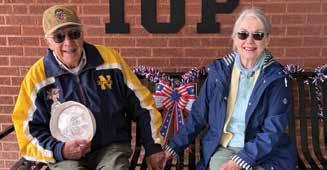
In May, members of the IUP Veterans Club who graduated in 1983 and ’84 dedicated a bench in front of Pierce Hall, home of the IUP ROTC program, in honor of Navy veteran Jack Frank
’58, IUP’s longtime veterans’ counselor and the club’s former advisor. A professor emeritus, Jack received the Distinguished Alumni Award in 2006 and the President’s Medal of Distinction in 2024.
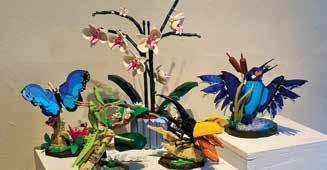
From Lego sets to pencils, a range of personal collections were on display in early spring as part of the IUP University Museum exhibit What Do You Collect? The alumni who contributed were Maureen Flaherty Post ’63, antique irons; Chuck Olson ’74, M’76, African masks; Kathleen Lambert Mack ’79 and husband Jonathan, antique toys, mallets, and cigar molds; Jessica Green ’05, ’12, ceramics; Dan Fleming ’09, television broadcasts; Cook Honors College alumna Erin Koolman ’12 (IUP voice instructor), quotes; Josh Williams ’12, M’13, DeLorean time machines; Kenny Campbell ’14, pencils; Evan
schools and universities, in 1972 after his US Army service and retired in 2013. He and his wife of 57 years, Carol Kofmehl Lambert ’68, live in Northern Virginia.
Fredric Bender ’69, M’71 said he wrote his 2024 book, The Real Alchemy of Harry Potter, “as a way of giving back” for the chemistry education he received at IUP. According to a description, the book not only explores the magical elements within J. K. Rowling’s classic series, but reflects on the art of alchemy, which has “captivated scholars and seekers for centuries.”
Weaver ’21, M’22, PM’24, running shoes; and Adam Jones D’24 (IUP dean of students), Legos. Current and former faculty members and administrators who participated were David Ferguson (political buttons and playing cards), Lorraine Guth (masks from around the world), Steve Hovan (geological specimens), John Kuehn (Ecuadorian stamps), and Miko Rose (meditation prayer beads). A participant list provided by exhibition coordinator James Rickard ’06 also included many community members. Stay up-to-date on museum exhibits at IUP. edu/museum
After four years on the board of Ohio-based CareSource, the nation’s largest Medicaid administrator, Linda Sidor Willett ’69 was elected board chair. Retired from Horizon Blue Cross Blue Shield of New Jersey, where she worked as executive vice president, general counsel, and secretary until December 2021, she said her board service helps her stay current on healthcare issues while leaving her time to travel and to work with not-for-profits in her community of East Hampton, New York. A 2020 recipient of the Distinguished Alumni Award, Linda plans to visit IUP this fall.
PIAA board chair Michael Barber, left, and retired executive director Bob Lombardi
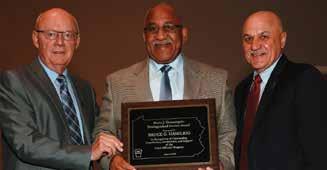
In August 2025, the Pennsylvania Interscholastic Athletic Association presented its highest award for a sports official, the Mario J. Donnangelo Distinguished Service Award, to Bruce Haselrig ’69, M’73. A longtime officer of the CambriaSomerset chapter of the PIAA wrestling officials organization, Bruce has officiated high school and
In March, KBO Theatre Company presented staged readings of Prairie Coteau, a new play by Liam Mitchell M’70, at the Dramatists Guild Foundation in Manhattan.
According to author Patricia Fisher Vido ’72, fellow alumni will recognize IUP-inspired landmarks on the fictional campus in her new novel, For Love of Billie, a family drama published by Grunge Muffin Press. Living in Owings Mills, Maryland, Pat began writing fiction after a career in journalism and nonprofit management.
In October, Pennsylvania’s State System of Higher Education presented a Keepers of the Flame award to Debra Phillips Cejka ’73 and Tim Cejka ’73 for their commitment to diversity and inclusion at IUP. Initiatives they have championed include the Crimson Scholars Circle, an IUP scholarship and support program for students who face
collegiate wrestling for 53 years. He retired from the University of Pittsburgh at Johnstown as director of the Student Union and Student Activities. He also started the school’s wrestling program and served as its first coach. Additionally, Bruce played for the 1964 Indiana State College football team inducted into the IUP Athletics Hall of Fame in 2024.
barriers to success in higher education.
A 2025 recipient of IUP’s Award of Excellence in Volunteer Leadership, Blane Dessy ’73 died March 14, 2026. Before retiring, he had a distinguished career in library science, including service as director of Federal Enterprises at the Library of Congress. In 2019, he made a gift to establish IUP’s Dessy-Roffman Myth Collaborative, honoring Rosaly DeMaios Roffman, a professor emerita of English whom he considered a major inspiration and influence.
In November, Howard “Skip” Kingston ’73, M’75 won his fourth R&D 100 Award, one of the world’s most prestigious honors for technological innovation. His breakthrough technology, Thor’s Hammer, increases the sensitivity of mass spectrometers enough to make dried blood spot cards a practical alternative to traditional blood draws for certain analyses. A 2019 recipient of the Distinguished
Alumni Award, Skip serves as a visiting scientist in IUP’s Madia Department of Chemistry, Biochemistry, and Physics. After 38 years as owner of the Comic Store in Lancaster, Joe Miller ’74 sold the business in 2023. A lifelong fan of comics, he said he inspired the store’s opening in 1977, eight years before he took over, by asking the eventual owner to mail him comics while he taught overseas. In his retirement, Joe volunteers at his local food bank, plays tennis, and travels with his wife, Stephanie, often to visit their three adult children.
Now retired, Colleen Kirby Yarbrough ’74 and Gary Yarbrough ’74 have more time for family, they said. Among their four children and four grandchildren are two with IUP ties: daughter Emily Yarbrough Hackett ’06 and grandson Gavin Scanlon, a current student.
IUP Magazine contributing writer Bob Fulton ’75 has published his sixth book, When Rooney Sold the Steelers: An Offbeat History of Pittsburgh’s Beloved Team, released by Dorrance Publishing in January. Moments in franchise history Bob covers include how the Steagles, the wartime merger of the Steelers and Eagles, finished with a winning record despite the two bickering head coaches and how Joe Greene drained 27 Coca-Colas while filming an iconic television commercial. The book is available through the publisher and major retailers.
Light & Sanctity, an exhibition of oil paintings and serigraphs by Ray Byram ’76, will run through mid-August at William King Museum of Art in Abingdon, Virginia. Ray has been a fulltime artist for nearly 50 years, persevering through the deaths of his son, Sam, in 2014 and his wife, Dona, in 2024. At IUP,
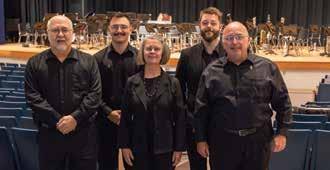
From left: Kevin Eisensmith, Justin Bianconi, Mary Megna, Joshua Snively, and Daniel Klingbeil
Five IUP alumni were among the musicians who came together at West York Area Middle School in November for the Pennsylvania Military Veterans Band’s first performance. Founded and led by Daniel Klingbeil ’89, M’98, the band is intended to celebrate military service, community, and the bond of music. A composer and conductor, Daniel served the Pennsylvania National Guard’s 28th Infantry Division Band for 40 years. Other members include IUP professor emeritus Kevin
Eisensmith ’78, a former solo trumpeter with the US Army Forces Command Band in Atlanta; Mary Kreider Megna ’84, who spent five years with the Army Training and Doctrine Command Band at Fort Monroe in Virginia; Joshua Snively ’20, a five-year member of the Pennsylvania Air National Guard Band of the Northeast; and Justin Bianconi ’25, principal trumpet and unit librarian for the 28th Infantry Division Band.
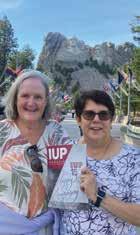
Dale McClelland, left, and Nikki Konyk at Mount Rushmore
In September, former IUP roommates Nikki Pribish Konyk and Dale McClelland, both of the Class of ’79, along with Nikki’s husband, John, went on a 10-day road trip in the Pacific Northwest. Nikki said that when she saw in the magazine that IUP was turning 150, she remembered being a freshman when it turned 100. “For the first time, it dawned on me that I had been out of college for 50 years!” she said. “IUP was a wonderful experience, and I am still spending time with the friends I made there.”
he was among the students who assisted art history professor Barbara Balsiger ’50 in cofounding the University Museum in 1976. Learn more at raymondbyram.com
In her book Stopping School Violence: One Teacher’s Silent Scream, longtime teacher Marian Carlino M’77 gives her account of what transpired after she voiced concerns about a student’s behavior in the interest of school safety. Published by Silversmith Press in 2024, the book is available through major retailers.
After more than 45 years with Dollar Bank in Pittsburgh, Stephen Cehovin ’78 has retired. He started as a computer programmer, eventually took on analysis
duties, and retired as an assistant vice president.
Now retired, Susan Sutliff George ’80 is a volunteer with the Lebanon County Christian Ministries.
Executive director and cofounder of the nonprofit Let’s Play America, Pat Abramski Rumbaugh ’80 was interviewed for the national 1,000 Hours Outside Podcast. The episode, “Play Is Disappearing, so Here’s How to Bring It Back,” aired in January.
A faculty member in the College of Nursing at Texas A&M University, Sharon Dormire ’82 along with three colleagues received a $3.9-million competitive award from the Health Resources and Services Administration’s Nurse Education, Practice, Quality, and Retention—Workforce Expansion Program. Their funded initiative aims to improve healthcare in Texas’s rural and underserved areas by addressing the nursing shortage and improving nurse training and mentorship opportunities.
After more than 43 years in professional safety and risk management, John Henderson ’82 has retired. Most recently, he
Kenn, Colleen, and Megan Marshall with a statue of the Fonz in Milwaukee
Truist Park, home of the Atlanta Braves, is where Kenn Marshall ’80 completed his mission of visiting all 30 major league ballparks. In his new book,
was senior director of Risk and Asset Management for Goodwill of Southwestern Pennsylvania. Living in Bridgeville, John and his wife, Michelle Mazza Henderson ’83, look forward to traveling, spending time with family and friends, and relaxing. John added, “Monica, if you’re reading this, I will always remember the first person I met during freshman orientation. I hope this finds you well!”
Former sportswriters Tom Bickert ’78 and Tim Wesley ’83 teamed up on Game Changers, a novel that follows a fictional 1920s sports conspiracy started by a low-level government employee. A former Penn editor, Tim is originally from Harrisburg and now lives in Cranberry Township. A Pittsburgh native now living in Ellwood City, Tom was a Penn sports editor. Both had careers in journalism; Tim also worked in corporate communications. See IUP.edu/alumninotes

Lynn and Francis DeFabo outside their Pleasant Unity shop
To the surprise of Lynn Geary DeFabo ’82 and Francis DeFabo ’84, House Beautiful magazine named their Pleasant Unity business, fdp studio+shop, to its Best Home Stores in America 2025 list. One of 25 independent shops across the country to make the list, fdp features pottery by Francis and artisan home goods curated by Lynn to complement Francis’s work.
In February, William John Shepherd ’84, M’86 was honored for 35 years of service at Catholic University of America in Washington, DC. He has served as university archivist and head of Special Collections since 2019. He also celebrated the 10th anniversary of his blog, The Archivist’s Nook, and continues to write book reviews for Catholic Library World, Pennsylvania History: A Journal of Mid-Atlantic Studies, and Finest Hour: The Journal of Winston Churchill and His Times. After 38 years in the Communications Department of Americans United for Separation of Church and State in Washington, DC, Rob Boston ’85 has retired. While at Americans United, he wrote four books; wrote for and edited the membership magazine, Church & State; and wrote thousands of blog posts, press releases, and speeches. He also traveled extensively to speak on church-state issues, appearing on MSNBC, Fox News, CNN, and NPR and giving many more interviews for print media. A former Penn editor in chief, Rob has also been a guest lecturer at IUP. He lives in Silver Spring, Maryland.
Tomorrow’s Game: Stories of Baseball and Family, Kenn shares his adventures—from meeting a grumpy Dave Parker and David L. Lander (Squiggy from Laverne & Shirley) as a Pirates intern to seeing quirky attractions en route to the stadiums. He even gives a rundown of ballpark hot dogs, from the Dodger Dog to a Cleveland frank topped with mac and cheese and Fruit Loops. Kenn retired in 2019 as Media Relations manager for Pennsylvania’s State System of Higher Education. Completing his IUP alumni family are his wife, Colleen McClain Marshall ’79, and their daughter, Megan Marshall ’13
Last September, Elizabeth Fitzpatrick ’85 was named
executive director of the University of Tennessee Health Science Center’s research core laboratories. She is a longtime leader in the center’s research infrastructure and a professor in the College of Medicine’s Department of Microbiology, Immunology, and Biochemistry.
In April, Jim Hill ’86 and Cindy Simcho Hill ’88, vice president and president, respectively, of Arizona Law Enforcement Outreach & Support, organized the nonprofit’s 15th annual Battle of the Badges. This flag football event pits first responders from the east and west sides of the Phoenix metropolitan area against one another to raise funds for scholarships, injured first responders, and other initiatives. Around the holidays, AZLEOS holds a Shop with a Cop event, which pairs children with special needs or from low-income families with police officers for a Christmas shopping trip. Learn more at azleos.org
In addition to earning her doctor of education degree in instructional and performance technology from the University of West Florida, Diane Gerhard Darling ’87 gave the commencement address at the December 13, 2025, ceremony for graduate students. She is an instructional designer at Bucks County Community College. Find a photo at IUP.edu/ alumninotes
Lisa Wegener Estrada ’88, who has guided hospitals, healthcare providers, and nonprofit organizations through regulatory and operational challenges for more than 25 years, recently joined IUP’s College of Osteopathic Medicine team as an executive in residence. A former IUP gymnast and the daughter of late Criminology faculty member Fred Wegener, she served as general counsel and as a compliance officer for some of the largest hospitals and healthcare networks in the country.
Scott Gibson ’89, M’01, a former Pechan Health Center director who left IUP in 2013 after 17
years of service, died March 5, 2026.
DA Rebmi, a band that Bill Villa ’89 describes as a staple of Indiana’s late-’80s music scene, was the headliner for the seventh annual Coyote Fest, an outdoor concert held in Glen Campbell in June. The band features Tim Gabor ’88, John Weber ’88, Mike Schwalm ’89, and Mike Novak ’90, with special guest Mark Kissel ’89 on cowbell. Bill said the concert grounds are owned by about 30 alumni, including members of Lambda Chi Alpha and Sigma Chi fraternities.
In April, IUP’s student newspaper, The Penn, featured former basketball standout Margo Hinton ’90 in its IUPeople series. A 2002 inductee into the IUP Athletics Hall of Fame, Margo has taught at Ingomar Middle School in the North Allegheny district since 1992. She has coached basketball, softball, and volleyball and is a Pennsylvania State Athletic Conference referee. In addition, she has written two children’s books and runs a blog and podcast, all focused on inspiring others.
Yvonne Redd ’91, who retired as IUP’s Faculty Human Resources manager in 2005 after 21 years of service, died March 14, 2026.
Historian Sonya Stewart M’91, M’96 was interviewed for a documentary, The Wild Girl of Brushvalley Township, about Minnie Adams, a young woman institutionalized in the early 1900s. The film premiered at the Boston Film Festival, was screened in the Indiana area, and can be viewed at www.pbs. org (Search “brushvalley”). Last year, Sonya lost her partner, Douglas Wise, who enrolled at IUP with the Class of ’84. She said that, as a member of Phi Kappa Theta fraternity, Doug learned to play Dungeons and Dragons and eventually became a Dungeon Master.
The director of Academic Advising and Policy for the Computational Finance master’s program at Carnegie Mellon University, Susan Storrick
Timko M’91 is the 2026 recipient of the IUP Student Affairs in Higher Education program’s Ronald Lunardini Distinguished Alumni Award. Established in 2006, the award was named in honor of retired SAHE professor Ron Lunardini ’69 in 2008. Owner of Baronick Funeral Home & Crematorium in DuBois, Jeffrey Baronick ’92 was named president of the Pennsylvania Funeral Directors Association for 2025-26.
A psychologist from Sarver, Robert Gregory ’94, M’96, D’08 set a national deadlift record of 540 pounds in the Masters 50-54, 181-pound weight class at the American Powerlifting Federation Ohio Cup in February. In May 2025, he set the national lightweight deadlift record of 535 pounds in the Masters 50-plus, 181-pound class at the US Strongman Pittsburgh Record Breakers competition. Also a longdistance cyclist, he ranked 15th in the world with 39 centuries (100-mile rides) during the 2025 World UltraCycling Association Year-Rounder Challenge.
During an IUP open house last fall, Stacy Hopkins ’94, M’96, executive director of Undergraduate Admissions, met Jennifer Chandler Stepp ’96 and Brian Stepp, who were accompanying their daughter Kyla, an incoming freshman. Jennifer’s three alumni siblings are also married to alumni: Valerie Chandler Eckley ’98 to Luke Eckley ’95, David Chandler ’02 to Amy Hoover Chandler ’99, and Nick Chandler to Jessica Sheets Chandler ’05, M’07. While David and Amy met in Washington, DC, all of the others met at IUP.
In March, Malaika Moses Turner ’95, M’99, D’15 keynoted an IUP symposium focused on contemporary women’s issues. A consultant and motivational speaker, Malaika discussed how women can strategically leverage artificial intelligence to enhance their careers. She retired from IUP in 2023 as assistant vice president for Student Affairs.
This year, Jason Hayes ’96 celebrates 30 years with St. Mary’s County Public Schools in Leonardtown, Maryland. He started as an Earth and Space
A veteran and former educator, Jerry Shaffer ’97 started a national nonprofit that aims to prevent suicide among service members, veterans, and first responders and to support survivors of suicide loss. His Florida-based organization, the Red Star Foundation, offers services including a national peersupport network, volunteer training to support those at risk, a website and mobile app that connect
Jerry Shaffer spoke when the Georgia Senate recognized the Red Star Foundation in February. Senator Matt Brass is behind him.
visitors with resources, and ways for communities to raise awareness of this population’s high suicide rate and to recognize affected families. Jerry came to IUP after serving in the US Marine Corps and played football from 1993 to 1995. He also taught at Lake Anne Elementary School in Reston, Virginia, and was nominated for the national Teacher of the Year award. Learn more about his work at RedStarFoundation.org
Erin-Caitlin Rinker in the Library of Congress with John Worzbyt’s book
As an IUP graduate assistant, Erin-Caitlin Rinker ’03, M’05 helped John Worzbyt, professor of counseling, prepare the manuscript and images for his 2004 book, Teaching Kids to Care and to Be Careful. Now an elementary school counselor in Fairfax County, Virginia, she requested the book at the Library of Congress in nearby Washington, DC, so she could get a photo with it in the renowned library. Erin said that John Worzbyt and his fellow faculty member Claire Dandeneau, who died in 2023 and 2024, respectively, had a major impact on her life. As an undergraduate, Erin was a member of the IUP Ambassadors, and as a graduate student, she helped reactivate the Counselor Education Student Association and served as chapter president of the Chi Sigma Iota honor society.
Science teacher and will finish his career as supervisor of science.
Lynn Harding ’97 has known John Busovicki ’65 since the late 1960s, when John was his geometry teacher at United High School. After a career in the coal industry, Lynn was in his 40s when he enrolled at IUP and became reacquainted
with John, then a faculty member in the Mathematics Department. Their friendship is the subject of a poem Lynn wrote, My Teacher, My Friend, which he shared with IUP Magazine. He has written 80 poems on myriad topics and two books about his hometown of Robindale, destroyed by floods in 1977. Lynn has played key roles in Robindale tributes, including the 2024 dedication of Robindale Memorial Highway in East Wheatfield and West Wheatfield townships. Find Lynn’s poem at IUP.edu/ MyTeacher
Having worked with young people for 30 years as a teacher, counselor, and football coach, David Heavner M’97 felt they needed more tools to address their mental health struggles. He started a company, Through Service We Grow, that offers programs and presentations to build all-around wellness. He also published a book, Faith, Hope, and Love: The Space Between Therapy Sessions, to help adolescents and young adults navigate anxiety and depression. Learn more at www. throughservicewegrow.com
Leading up to Christmas 2022, Double Keyed, a duo featuring Kirstin Stoudt Myers ’97 on oboe and English horn and Frances Drost on piano, released its debut album, Midwinter’s Gift, which reached No. 13 on the Billboard Classical Crossover chart. More recently, Kirstin and Frances began work on an ambitious followup—a second Christmas album they’re recording with the London Symphony Orchestra. They started crowdfunding for the project in fall 2024, and in May, they were at 90 percent of their $150,000 goal. A portion of the donations will go toward MS FitEffect, a nonprofit that assists people with multiple sclerosis. Learn more about the duo’s LSO project, slated for release in November, at www. doublekeyedmusic.com
Longtime school counselor
Jennifer Bollinger Licate ’99 has released her eighth book in the Navigating Friendships series, published by Boys Town Press. My Anxiety Is Messing Things Up is the
latest release in the series, which also tackles bullying, rumors, and other challenges children and adolescents face growing up. Jennifer has worked for Pennsylvania Leadership Charter Schools since 2023. Learn more at www. storiesbyjennifer.com
JoAnne Britcher ’00, a management technician in IUP’s Eberly College of Business with 17 years of service, died December 26, 2025.
Associate vice president for Student Affairs at Keene State College in New Hampshire, Jennifer Ferrell ’01, M’05 received ACPA–College Student Educators International’s 2026 Annuit Coeptis Senior Professional Award, which honors outstanding student affairs leaders. She is an alumna of IUP’s Cook Honors College. Assistant director of Government Relations for the Pennsylvania State Education Association, Jennifer Krause Statler ’01 was named to City & State Pennsylvania’s 2026 Power List for Government Relations.
Associate professor of performance studies and director of Athletic Bands at the University of Louisville, Jason Cumberledge ’02 recently led the Brass Band of Louisville in a featured performance at Chicago’s Midwest Clinic, the largest international band and orchestra conference. He was also elected to a twoyear term as president of the Atlantic Coast Conference Band Directors Association.
Last fall, the Pennsylvania Principals Association selected Radnor Middle School’s David Wiedlich ’02 as Pennsylvania’s 2026 Principal of the Year. His accomplishments have included involving students in shaping school policies on schedules and special events and building a culture of belonging and respect. Dave joined the Radnor Township district in 2019 after serving as a teacher and, later, an assistant principal in the Downingtown Area district. He started his teaching career in
Philadelphia. He and his wife, Kellie McGavin-Wiedlich ’03, have two sons.
NODA, an organization for professionals who work in support of student success in higher education, presented its 2025 Outstanding Orientation, Transition, and Retention Professional award to Katie Motycki M’04, director of Student Orientation and Transition Programs at Penn State.
The Pennsylvania Psychological Association honored its director of Professional Affairs, Molly Haas Cowan M’05, D’10, as Ethics Educator of the Year for 2025.
Joining Sarah Wagner Gracey ’11, M’13 and Kyle Gracey in welcoming their daughter, Charley, in January was grandmother Dorothy “Dot” Gracey M’05, D’10, a retired assistant dean from IUP’s Eberly College of Business.

As vice president of Programs and Development for Rivers of Steel, Chris McGinnis ’06 works to advance the mission of this Pittsburgh-area nonprofit that celebrates the city’s industrial past through art, education, and the revitalization of spaces. Find a story and video detailing Chris’s unique path after earning his art degree at IUP.edu/ ChrisMcGinnis.
By completing and mailing the form below, you help IUP keep your records up to date and IUP Magazine coming to you. Doing this also ensures that the information reaches the magazine. If you’d prefer to save a stamp, you’re welcome to send the same information to the magazine’s editor at iup-magazine@iup.edu or simply complete the online form at IUP.edu/magazine.
Name Maiden name
Address
Graduation year
Home phone ( )
Business phone ( )
Email address
Job title
Employer
(Check one or more)
Spouse’s name
Spouse’s maiden name
Spouse’s grad. yr. (if IUP)
Spouse’s job title
Spouse’s employer
Phone ( )
IUP retiree: faculty/staff Years
News
I/We would like to make a gift to help defray the cost of publishing IUP Magazine (Please make checks payable to the Foundation for IUP.)
____ Here is news for All About Alumni (Class Notes, Lost and Found, Weddings, Arrivals, or Deaths) or Mentors. I understand it may appear in both the print magazine and online.
Please note: News that appears in Class Notes for this issue arrived in the magazine office by May 12, 2026. If your news came in after that date, it will appear in the 2027 issue. Submissions for the 2027 issue must arrive in the magazine office no later than April 30, 2027. News for All About Alumni, Weddings, and Arrivals must be reported either by or with the explicit approval of the subject(s). Photos become the magazine’s property and may or may not be returned. The magazine does not report engagements.
My/Our address is new. ____ I/We get more than one magazine. Enclosed are labels.
Signature _________________________________________________________
By signing this form, you have authorized the university to make changes to your biographical data. These changes affect all personal and academic records (including your transcript) maintained by the university.
Mail to Elaine Jacobs Smith, IUP Magazine, John Sutton Hall, Room 321, 1011 South Drive, Indiana, PA 15705 or send this information via email to iup-magazine@iup.edu.
At the 118th Congress’s Safety Recognition Awards program in June 2025, the Office of Congressional Workplace Rights and the National Safety Council presented their Safety Advocate Award to Kevin Penharlow M’06. He serves as Safety and Occupational Health specialist in the Office of the Chief Administrative Officer, which supports the US House of Representatives. Find a photo at IUP.edu/alumninotes.
An associate professor of music history at Baldwin Wallace University, Danielle Kuntz ’07 was awarded a
Fulbright to Portugal to strengthen collaboration among organizations that study 18th-century music in the US and Portugal. A Cook Honors College alumna, she earned her PhD in historical musicology with a focus on 18th-century Portugal from the University of Minnesota. Married to Andrew Machamer ’07, she is a 2019 recipient of the Young Alumni Achievement Award.
Since March, Robert Fernandes ’08 has served as a Planning Commission member and as Vacancy Board chair for the Borough of Pleasant Hills,
Maximillian Esmus ’12 to Felix Cadman, September 27, 2025. Samantha Lutz ’18 to Anthony Massafra ’18, October 10, 2025.
Dante Mahlmeister ’20 to Hannah Rich ’20, May 24, 2025.

To Sarah Wagner Gracey ’11, M’13 and Kyle Gracey, a daughter, Charley, January 8, 2026.
Allegheny County. He works as a human resources manager for the century-old South Hills Movers. A former professional wrestler in New England, Bobby is also pursuing a role in promotions for the sport in the Pittsburgh area.
Last winter, Robyn Markowitz Lawler ’08 was named Marcus Family Executive Director of Penn State Hillel, an organization that supports the university’s roughly 5,000 Jewish students. In 2019, Robyn came to Penn State from Pitt Hillel, where she had worked since 2013.
Band director at Pocono Mountain West Junior High School, Sarah Williams ’11 was named to Yamaha’s “40 Under 40” list of music educators. Since joining the district in 2020, Sarah has taught different grades and formats and said being flexible and creative are the key to her success. A Cook Honors College alumna, she is certified in the Orff Schulwerk developmental music education method and assists a national board in promoting it.
The executive chef at Conemaugh Memorial Medical Center in Johnstown, Blake Eckenrod ’18 won HHS Healthcare’s 2025 SuperChef competition last fall in Grand Rapids, Michigan. His championship menu included tuna tataki with creamy sweet chili sauce and gochujang and sesame-grilled pork tenderloin served over brûléed sweet
A music teacher at Indiana Area Junior High School, Zack Karcher ’12, M’17 was
along with student
potato with spicy pickled cabbage.
The American Physical Society journal Physical Review B recently published research by Sky Semone ’18, M’23 that offers new insights into the behavior of spin glasses, complex magnetic systems that have puzzled physicists for decades. Now pursuing a PhD in electrical engineering at Penn State, Sky was a member of physics professor Gregory Kenning’s research team at IUP. Read more at IUP.edu/ SkySemone
In May 2025, Dante Mahlmeister and Hannah Rich, both of the Class of 2020, were married. They met their freshman year while living in Wallwork Hall and started dating their senior year before having to leave campus that spring because of the pandemic. Find a wedding photo at IUP. edu/alumninotes
Born in Serbia, Danijel Babić graduated from a Pennsylvania performing arts charter school and trained as a meteorologist in the Air National Guard before coming to IUP. Through a 3+2 program with the University of Pittsburgh, he graduated in 2024 with dual degrees in physics from IUP and in mechanical engineering from Pitt. He went on to earn a
a multimedia story about the IUP music education network’s role in helping these graduates succeed. Find the story at IUP.edu/ MorethanNotes.

As an undergraduate, Jessica Cochran ’20, M’25 was stressed and unsure about her future, until she got a professor’s advice. Today, she is a medical device manager who supports surgeons at nearly 40 facilities across western Pennsylvania. Learn about her path in a story and video at IUP. edu/JessicaCochran
master’s degree in aerospace science and technology at Polytechnic University of Catalonia in Barcelona, putting him at the forefront of aerospace innovation. Read physics professor Andy Zhou’s story about Dan at IUP.edu/ DanBabic
In January, Sam Bigham ’24 became the youngest mayor
Coming from Ligonier to IUP may not sound like a big step, but Kamden Boyle was hesitant before he set foot on campus. He went on to become one of the university’s most involved students—writing for The Penn, giving tours as a Crimson Guide, serving as a resident assistant, and advising the IUP Ambassadors. After earning his bachelor’s in 2024, he added a master’s in public affairs in May and now works as assistant director of Financial Aid. Read about his journey at IUP.edu/ KamdenBoyle.
ever of Carnegie, Allegheny County. A Cook Honors College alumnus and former Penn news editor, Sam also serves as executive director of the Carnegie Community Development Corporation and is pursuing a master’s degree in public policy and management at Carnegie Mellon University.
A student in the University of Pittsburgh’s Materials Science and Engineering program, Gregory Kenning ’24 returned to IUP in October to talk with students about the value of National Science Foundation research experiences for undergraduates and how to apply for them.
Chi Alpha Sigma/Delta Tau Delta Reunion, Indiana, August 7-9, 2026
IUP Night at PNC Park, Pittsburgh Pirates vs. New York Mets, August 8, 2026
Kappa Delta Rho Reunion, Indiana, August 20, 2026
IUP Business Golf Classic, Longue Vue Club, Verona, August 24, 2026
Sigma Nu Reunion, September 18 and 19, 2026
Swimming and Diving Coach Chris Villa’s 20-Year Anniversary Celebration, September 18 and 19, 2026
Alumni Legacy Breakfast (for students and their alumni parents or grandparents), IUP, September 26, 2026
Homecoming Crimson Huddle, Kovalchick Complex, IUP, October 10, 2026, 11:00 a.m.–2:00 p.m.
Alpha Sigma Tau 110-Year Anniversary Celebration, October 9-11, 2026
Alpha Sigma Alpha 125-Year Anniversary (Founders’ Day) Celebration, November 13 and 14, 2026
Find details at www.alumni. iup.edu
The following alumni deaths were reported between July 1 and December 31, 2025.
1945: Sara Yuksic Squier
1947: Wanda Pawlowski
1950: Gordon “Billy” Hunter
1951: James Getz, Marion Bankert Michael
1952: Lorraine Rosenik Hardin, Keith Michael
1953: Charles Baltzer, Joan Everly Boyd, Mary Lou Kline Hansen, Marianne Demchak Hornyak
1954: George Blair
1956: Donna Koontz Gindlesperger, Betty Stewart Lepley, Merle Loch
1957: Ada Murray Gross
1958: Sally Shaffer Friend, Gerald Geisel, Grace DePolo Marlin*, Michael Zito
1959: Barbara Matson Altmire, Kathleen Webb Bainbridge, Robert Cleminson, Virgle Glen Foster, Mary Hesselgesser McGrath
1960: Marsha Lentz Lokar, Emma Lou Hay Shaffor*
1961: Barbara Bragg Boblick, Margaret Porter Hunt, Patrick Kelly, William Schmearer, JoAnn Bussard Smith
1962: Patsy Ciardulli, James Fields, Gerald Fischer, Florence McLennan Perri, Jacqueline Bakuhn Santillo, Susan Yeager Story
1963: Clara Burlando Bayne, Charles Duffy, James Fabert, James Rabine, Linda Amorose Raymond
1964: Sally Johnston Groves, Mary McGregor McFarland, Karen Cristy Smith
1965: Mary Brenner, Janet Castagnero, Harry Feathers (M), Robert Fletcher, Linda Gregg, Lawrence Hanley, John Marley, Robert Nicely (M), John Rajaski, Mary Isler Raupp, James Self
1966: Judith Anderson, Frederick McCoy, Judith Wick Walliser, James Whitfield (M)
1967: Austin Behan, Dennis DiCicco, John Heilman, Wayne Klaum (M), Rebecca Baird Lepley, Duane Morningred (M), Sondra Auld Schwartz, David Smith, Arthur Wood (M)
1968: Raymond Bitar (M), John Burtoff, Barbara Baker Glessner (M), Roxane Campbell Johnston, George Kepple, Kenneth Nevling, Cheryl Nelson Nowacki
1969: Susan Fonner Bayle, Dolores Jean Chronoski Cunnings, Leo Hayes, William Pauly, James Plassard, Wesley Semple (M), Gary Stokes
1970: Harold Evans, Paul Hopkins (M), Sharon Gritzen Nelmes, Walter Orlosky, Ronald Reeder, Ronald Russell, Dan Tannacito (D)*
1971: Kathy Delenko Broskin, Donald Jarvis, Beverly Buechley Lanham, Patty Cafera Perkins, Barbara Widdowson Planinsek, Kathryn Farrow Smith, Joyce Chittester Sunderland, James Thieman
1972: James Algoe, Jeanne Hanna Kirkwood, Allen Klosky, Jeffrey Marsico, Patricia Hickey McKearn, Ruth Lohr Walker
1973: Vincent Balitas (D), John Bem (M), Deborah Brewer Beswarick, Joseph Gasbarre, John Goga (M), Theodore Gordish (M), Brenda Rader Graham, Dale Grasso Harper, Jeannine Peck May, Craig Miller, John Mulvihill, Charles Runquist, Mary Ann Vernier Steinbeck, Thomas Wines, Karen Focht Zang
1974: John Angle (M), Beverly Taufer Drentkiewicz, Vickie Hoover, Joanne Peplowski Hulin, Nancy Williams Roth, Anita Lazar Smith
1975: Elizabeth Fennell Frankel, Evelyn Dujmic Gomez, Martin McCullough, Terry Mitchell, Louise Nase, John Steele, Dennis Trout
1976: Kathleen Vernon Blodgett, Anita Crispo, Susan Barrett Deluca, Ronald Doane (M), Stephanie Haikalis Firestone, Susan Wilson Klein, Alan Mikula (M), Patricia Strefeler Tellers, Randal Whitlatch
1977: Terence Egan (M), John Ferry, Patricia Boughamer Lundberg (M), Duane Schulte (M), Jeanne Kogut Wardrop, Emerson Work
1978: Sandra Yaegle (M)
1979: Mark Bradbury, Lisa Battistone Brown, Mark Caffrey, Scott Kasbee, Ronald Mabon*
1980: Paul Jovenitti, Paul Oberst
1981: Michael Conway, Mary Lazeration Kivisto, Douglas Schlegel, Debra Dorgan Smathers (M)
1982: Michael Kelly, Victoria Cooper Rhodes, Randy Straka
1983: James Borton, Paula Maochi, John Moineau, Elizabeth Domville Wolfe
1984: Michael Krafcik
1985: Larry Ament, Barbara Dondero Crowley, Linda Bybel Potts
1986: William Bauer, Fay Reedy Brown, Maureen Kane (M), Donald McCormick (M), Sandra Setree
1987: Christopher Staronka
1988: Deborah Cole (M)
1989: Thomas O’Connor
1990: Craig Frey, Michael Glassic
1991: Lois Hoffman, Trevah Panek*
1992: Samuel Gabud, David Strong*
1993: Richard Griffith (D)
1994: Russel Pawlas (M), Alexandra Persichetti (M), Herbert Plummer (D)
1995: Michael Martinelli
1996: James Abel (D), Bridget Reynolds Orner
1999: Andrea Foster
2000: Barbara Petersen
2002: Berenice Murray
2004: Joseph Petrulionis (M)
2007: Christina Palmer
2008: Robert Breslow (M)
2011: Randy Baker (M), Nicholas Scull (M), Teresa Smith (D)
2012: James Imhof
2014: Javier McClellan
2015: Aaron Skerkavich
2016: Lisa Lindsay (M), Shawn Newpher
2019: Hannah Ghrist (M), Samantha Nichols
* current or former faculty member, staff member, or administrator
Note: In cases in which an IUP degree beyond the bachelor’s degree was earned, only the bachelor’s degree is indicated. Faculty deaths are reported in the Mentors section. Alumni staff and administrator deaths are reported in All About Alumni.
Jolene Campbell, who retired from the Safety Sciences Department in 2021 after 20 years of service, died January 24, 2026.
Donald Clark, who retired from the Student Cooperative Association in 1999, died August 29, 2025.
Linda Flack, who retired in 2011 after 30 years of service, died March 5, 2026. She worked for several years with the Pennsylvania Occupational Safety and Health Administration Consultation Program at IUP.
Richard Johns, who retired from Custodial Services in 2016 after 33 years of service, died December 2, 2025.
Matthew Miller, a senior majoring in early childhood and special education, died February 11, 2026.
Mary Jane Piccolini, who retired from the English Department in 1991 after 21 years of service, died March 21, 2026.
Juan Esteban Riaño Guayara, a senior majoring in finance, died January 11, 2026.
Frederick Roadarmel, who retired from Custodial Services in 2024 after 35 years of service, died April 9, 2026.
Deborah Stanley, who retired as associate director of the Career Development Center in 2013 after 20 years of service, died January 9, 2026.
Eleanor Stelma, who retired from the Graduate School in 1997 after 14 years of service, died November 8, 2025.
Waleed Farag, professor of computer science and director of the Institute for Cyber Security, was named IUP’s Distinguished University Professor for 2026-27.
A member of the faculty since 2002, he has secured more than $20 million in federal funding for IUP. That total includes the largest grant in university history—nearly $5 million from the US Department of Defense to establish and lead a consortium of community colleges to strengthen the workforce in STEM (science, technology, engineering, and math) fields.
As part of the Distinguished University Professor award, recipients are allowed a reduced teaching load for one year to pursue an academic project. Farag’s project, the Cyber Workforce Ecosystem and Pathway Initiative, focuses on mapping, analyzing, and strengthening regional STEM workforce pipelines, with an emphasis on cybersecurity.
Laurence Kruckman, professor emeritus of anthropology, was interviewed for Rachel Moran’s 2024 book, Blue: A History of Postpartum Depression in America, about the role he and his wife, longtime childbirth educator Carolyn White, played in forming Postpartum Support International, a nonprofit focused on mental health issues related to childbearing. A founding
member and former acting president of PSI, Kruckman said IUP’s contributions, including the work of many students on the PSI website, were pivotal to the organization’s early growth. He has a book, Driftless Anthology: Coming of Age in Southwestern Wisconsin, slated for release this year. Kruckman retired from IUP in 2011 after 27 years of service and now lives near Madison, Wisconsin.
In July 2025, the Keystone Wind Ensemble performed in San Antonio for the annual convention of the Texas Bandmasters Association, the world’s largest state band organization. Established in 1992 by Jack Stamp ’76, IUP professor emeritus and retired director of Bands, the ensemble is composed of roughly 50 alumni, students, faculty members, and administrators. Keystone Winds presented a clinic, “The British Are Coming—Again!” on the convention’s opening day and gave a fulllength concert the following morning. Conducting duties were shared by Stamp and his successor at IUP, Timothy Paul. Find a report by ensemble member and professor emeritus of trumpet Kevin Eisensmith ’78, as well as photos of the event, at IUP.edu/ KWEinTexas
Recently reported deaths of former IUP faculty members:
Abbas Ali, who retired from the Management Department in 2025 after 36 years of service, died February 24, 2026. He received the lifetime title of Distinguished University Professor in 2012.
Thomas Beck, a professor emeritus who retired from the Department of Health and Physical Education in 1994 after 22 years of service, died April 24, 2026.
Brooke Grant ’63, a faculty member who retired from the Sociology Department in 2003 after 35 years of service, died February 7, 2026.
Rebecca Hartman, a faculty member who retired from the Nursing and Allied Health Professions Department in 2008 after 16 years of service, died July 5, 2025.
Grace DePolo Marlin ’58, M’65, who retired in 1998 after 30 years of teaching at the University School, died December 6, 2025.
Doyle McBride, a professor emeritus of mathematics who retired in 1991 after 27 years of service, died February 6, 2026.
Trevah Panek ’91, M’93, a former faculty member in the Nursing and Allied Health Professions Department, died August 31, 2025.
Maggie Patterson, a faculty member from 1979 to 1982 in the English Department and, later, the English and Journalism Department, died November 10, 2025.
Richard Ray ’58, M’65, a professor emeritus who retired from the English Department in 1993 after 28 years of service, died April 24, 2026.
Cora Lou Sherburne, a faculty member who retired from the Psychology Department in 2020 after 20 years of service, died May 15, 2026.
Rosalee Stilwell, a faculty member who retired from the English Department in 2021 after 23 years of service, died February 15, 2024.
Connie Evans Sutton ’67, M’68, a professor emerita who retired from the Geoscience Department in 2003 after 35 years of service, died February 1, 2026.
Dan Tannacito D’70, a professor emeritus of English who retired in 2012 after 34 years of service, died November 16, 2025.
Lawrence Turton, a professor emeritus who retired from the Special Education and Clinical Services Department in 2001 after 21 years of service, died November 4, 2025.
Mary Lou Zanich, a professor emerita of psychology who retired in 2011 after 34 years of service, died April 18, 2026. She also served as interim dean of the College of Natural Sciences and Mathematics.
Terry Serafini during a 2018 visit to IUP
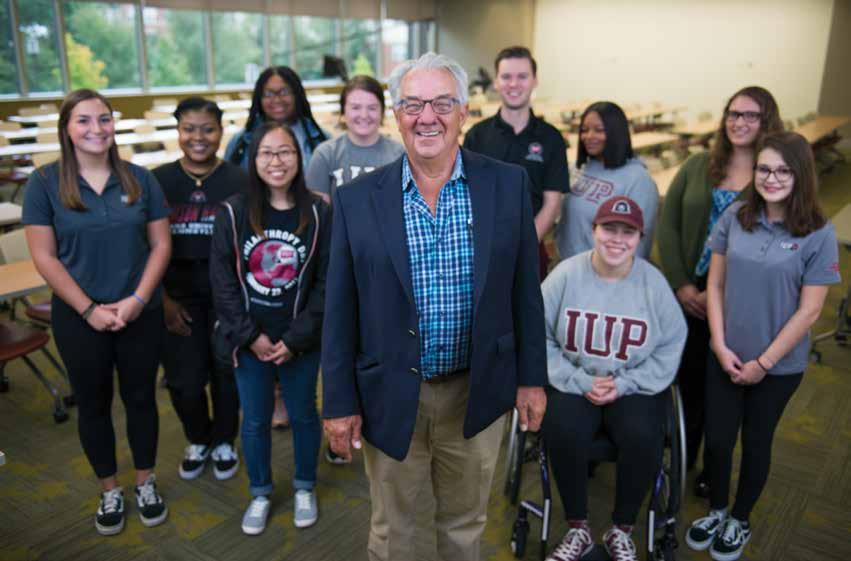
Pittsburgher Terry Serafini ’61 has a long record of leadership at IUP. It goes back all the way into the last century—back to his undergraduate years, when he was president of the Student Government Association and vice president of his fraternity, Sigma Tau Gamma.
After military service and a successful career in computer systems, Serafini continued his leadership in a different way: he became a benefactor. With a recent million-dollar donation to the IUP College of Osteopathic Medicine, he has made gifts to the university that total more than $3 million over several decades. His latest gift is part of the university’s landmark Impact 150 campaign.
“I met with members of the Advancement team and then with Dr. Miko Rose,” Serafini said. “She is founding dean of what at that time was still the proposed osteopathic college. Her passion for the project was clear.
“I have a soft spot in my heart for IUP, and I appreciated the fact that the university was taking the blinders off, trying to do something that was beyond what they had ever done before,” he said. “The osteopathic field seems to be aligned with rural communities, and that struck a chord with me—the fact that a college of osteopathic medicine could help not so much the research centers of the world but the Punxsutawneys, the Clymers, and places like Creighton, where I grew up.”
Following his graduation from Indiana State College and from the ROTC program, Serafini was an officer in the Army, where he got his initial experience with computers. After fulfilling his military obligation, he began his business career in 1964 as a computer systems marketing representative for the IBM Corporation. Six years later, he became co-owner of Computerpeople, Inc., and worked there for 27 years.
Under Serafini’s leadership, the company grew to employ more than 1,300 computer professionals. With headquarters in Pittsburgh, it also maintained offices in Columbus, Cincinnati, Sacramento, and Portland, Oregon, providing systems expertise in all disciplines to major corporations throughout the US.
Serafini is also a cofounder of Compucom, Inc., a digital-imaging and microfilmsolutions company in Pittsburgh, and he later joined its board of directors.
His previous contributions to the university have benefited the IUP Food Pantry and Help Center, supported scholarships for students in business and mathematics through the Serafini Outstanding Scholars
Program, and underwritten the Grant Street and Eberly College of Business atrium projects.
According to IUP President Michael Driscoll, “Terry Serafini’s longstanding support for IUP and our students is inspiring. His focus is always on what our students need to thrive and to be successful, now and in the future, and how he can impact both the future of individual students and IUP’s future. We are very grateful.”