Chemistry International | Apr 2026 | Magnesium - from the sea to the stars
CHEMISTRY International
The News Magazine of the International Union of Pure and Applied Chemistry (IUPAC)
All information regarding notes for contributors, subscriptions, Access, back volumes and orders is available online at www.degruyter.com/ci
Managing Editor
Fabienne Meyers
IUPAC, c/o Department of Chemistry
Boston University
Metcalf Center for Science and Engineering 590 Commonwealth Ave. Boston, MA 02215, USA
E-mail: edit.ci@iupac.org
Design/Production: Stuart Wilson
Chemistry International
Chemistry International (ISSN 0193-6484) is published 4 times annually in January, April, July, and October by De Gruyter Brill Inc., 121 High St., 3rd Floor, Boston, MA 02110 on behalf of IUPAC. See https://iupac.org/what-we-do/journals/chemistry-international/ or https://www.degruyter.com/ci for more information.
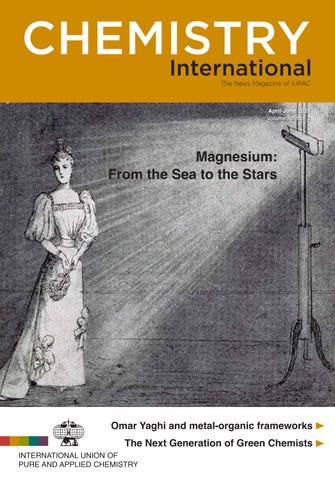
Cover: From the depths of the ocean to the heart of exploding stars, magnesium’s story is one of unlikely abundance and extraordinary impact. Though hidden in seawater and bound within minerals, this lightweight metal has quietly shaped everything from wartime technology to modern industry—and even the chemistry of life itself. As scientists and engineers learned to extract it on a massive scale, magnesium became a bridge between Earth’s most accessible resources and humanity’s boldest ambitions, proving that even the most common elements can fuel remarkable journeys. Directly from the Science History Institute, see Patrick Shea’s feature p. 6.
Venice to the World: Inspiring the Next Generation of Green
Neumann Receives the 2026 IUPAC–Soong Prize for
Sustainable Chemistry
to Mónia A. R. Martíns
2026 IUPAC-Richter Award Goes to Richard B. Silverman
Announces 2026 Global Awards Honoring Excellence in
An Interview with Omar Yaghi
By Gideon Levy1
A Door Opens—and a Life Begins
From a childhood as a refugee to becoming the first Palestinian scientist to win a Nobel Prize—the extraordinary journey of a man turning air into water and capturing carbon from the atmosphere.
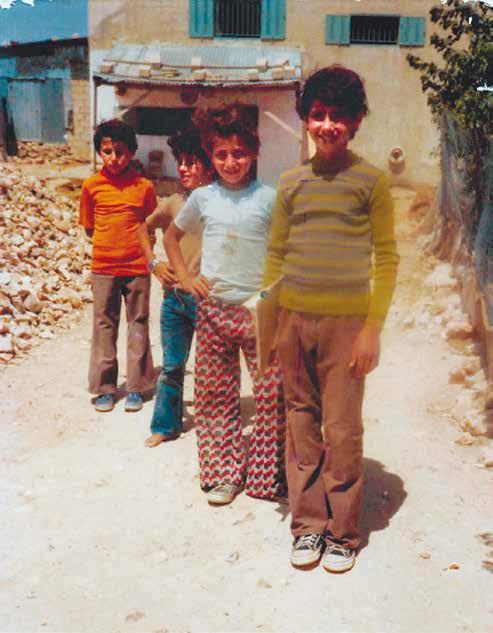
Amman, 1975. The afternoon heat pressed against the walls of the school as the bell rang and children rushed outside. One boy, slight and shy, stayed behind. Omar Yaghi, a fourth grader, wandered into the school’s locked library—and, for reasons he still cannot explain, found the door open.
Inside, he pulled a book off a shelf and stared at drawings of sticks and spheres. Molecules. He didn’t know the word yet, but something electric passed through him.
“It felt sacred,” he says today. “I didn’t tell anyone. I just kept it inside me. Later I learned these were the building blocks of everything—living and non-living. From that moment, I was captivated.”
A half-century later, that quiet boy from a refugee family would win the Nobel Prize in Chemistry, becoming the first Palestinian scientist ever to do so. His work has opened realistic paths toward solving two existential crises: water scarcity and climate change.
“It was like falling in love.”
Yaghi still recalls his childhood revelation with disarming warmth. “It was like meeting the love of your life very young. I’ve been in love with molecules ever since — with their beauty.”
His Nobel-winning discovery, metal-organic frameworks (MOFs), stems from that early fascination “I began studying them because they were beautiful. Only later did we realize how useful they could be.”
Useful is an understatement. MOFs are crystalline,
porous structures that store enormous amounts of gas in tiny volumes. A Nobel committee member compared them to Hermione’s bag in Harry Potter—capable of holding impossibly large quantities within a seemingly small container.
Today, MOFs are emerging as platforms for:
• capturing water from dry air, even in deserts
• trapping carbon dioxide directly from the atmosphere
Solutions humanity urgently needs.
From Masmia to Amman: A Childhood of Hardship and Resolve
Yaghi is the sixth of ten children. His parents grew up in the Palestinian village of Masmia, near present-day Gedera. When the village was captured in July 1948, the family fled to Jordan, penniless.
“We lived in a single small room. Half was for the cow and its food; the other half was for us. No electricity. No running water.”
His mother managed the home; his father, who had completed only six years of schooling, worked as a butcher—and instilled in his son a deep respect for discipline and excellence.
Every morning, father and son walked three kilometres to school. “He taught me how to live,” Yaghi says. After school, Omar worked in the butcher shop, learning to clean machines, wash floors, and do everything “perfectly, or else do it again.”
A pivotal moment came when 15-year-old Omar argued with his father about how to cut a piece of meat. “It was the first time he truly heard me,” he recalls.
Shortly after, his father delivered a stunning instruction: Go to the U.S. Embassy and apply for a visa. To demonstrate financial support, he handed his son every cent of the family’s life savings— $9,000.
“I didn’t want to leave. But he insisted. He saw potential and wanted me to have opportunities we didn’t have.”
A New Life in America
At 15, Yaghi landed in Troy, New York. His father told him:“Take your ninth-grade transcript to the nearest college and tell them you want to enroll.”
He was admitted on a provisional basis. By 16, he was a full-time college student.
His English was shaky, and he communicated by writing notes. His money ran out within a year, so he packed groceries, cleaned stores, and restocked shelves. But the laboratories were his sanctuary.
“When we crystallized organic molecules, I told the student next to me, ‘Look how beautiful this is!’ She
“Science collapses when politics enters. We must be able to speak to anyone—friend or enemy— through science.”
didn’t understand.”
He eventually earned his PhD at the University of Illinois, choosing his advisor because the molecules in that lab were, simply, beautiful.
Inventing a New Way to Build Matter
In the 1990s, chemists commonly relied on “shake and bake”—mixing ingredients to see what would form. Yaghi had a different dream: designing materials atom by atom, like assembling Lego bricks.
His group succeeded where others had failed and began constructing deliberate, predictable structures.
Then a persistent graduate student, Guangming
An Interview with Omar Yaghi
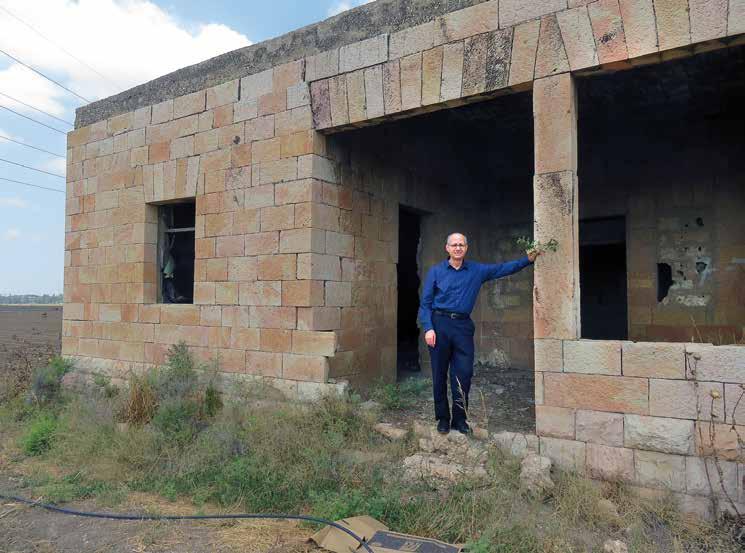
Yagi at the entrance to the only residential building that survived intact in Masmia, his parents’ village. Photo: Ehud Keinan
Li, insisted on combining metals with organic linkers. At first, Yaghi dismissed the idea—believing the structures too unstable. But she persisted, and he eventually realized they needed linkers with “claws.”
The result was revolutionary. Their 1995 Nature paper opened the field of MOFs. In 1999 they created MOF-5, a crystalline lattice resembling a cut diamond, with the highest internal surface area ever produced.
Seeing it for the first time, Yaghi says, was “a feeling beyond description… You feel almost superhuman.”
More than 100,000 scientific papers on MOFs have since been published.
How MOFs Work—A Molecular Sponge
MOFs look like white powder, but under an atomic zoom they appear as vast networks of rooms and corridors.
A gram contains billions of microscopic cavities.
Professor Ehud Keinan of the Technion explains: “Yaghi essentially created a molecular sponge. Gases that normally occupy huge space become densely packed—like bees drawn into a honeycomb.”
The gases can later be released with small changes in temperature or pressure. This makes MOFs extraordinarily powerful for:
• carbon capture
• hydrogen storage
• water harvesting
• pollutant removal
Creating Water from Thin Air
By engineering MOFs to attract water molecules, Yaghi’s team developed materials capable of extracting water from the atmosphere—even in extreme desert conditions.
• 1 kg of MOF can absorb ~0.5 litres of water
• It can be cycled up to 200 times a day
• Devices function even in Death Valley
A company is already producing prototypes yielding 100 litres per day, with 4,000-litre systems expected in 2026.
“As a child, I sometimes woke at dawn to fetch water because our taps barely worked,” Yaghi says. “Now we’ve found a new source of water for the world.”
A Method to Reverse Climate Change
Other MOFs—and especially COFs (covalent organic frameworks)—are designed to trap carbon dioxide.
According to Yaghi: “If we built around 600 plants,
An Interview with Omar Yaghi
each using 100,000 tonnes of material, we could remove all the excess CO₂ humanity has emitted—in three and a half years.”
He emphasizes: “The scientific problem of CO₂ capture has been solved. This is not an exaggeration—it’s a fact.” The remaining obstacles are engineering and political will.
AI and the Future of Materials Discovery
With more than 100,000 MOFs already known, finding the perfect one for any application is daunting. Yaghi’s group has now built an AI-powered MOF accelerator, reducing design times from years to two weeks.
“The possibilities are endless,” he says. “AI will take us from ideas to real-world applications far faster.”
Science Beyond Borders
Yaghi is adamant that science must remain free from political interference.
“Science collapses when politics enters. We must be able to speak to anyone—friend or enemy—through science.”
He collaborates with researchers across the Middle
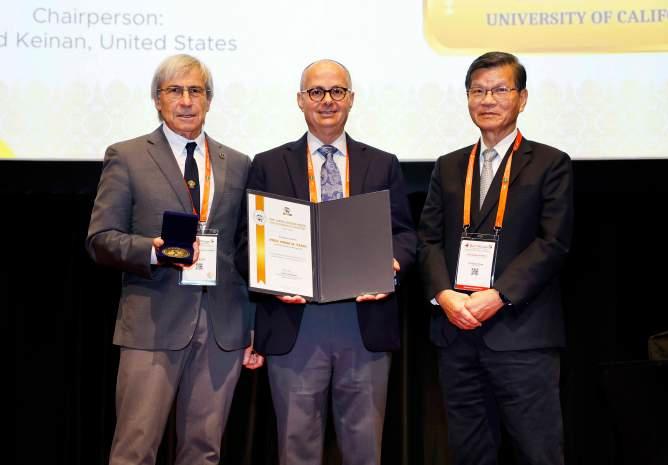
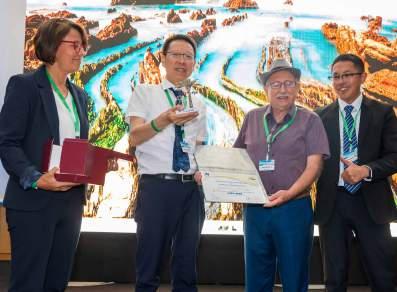
Omar Yaghi received the inaugural IUPACSoong Prize, on 16 Jul 2025 during the IUPAC World Congress in Kuala Lumpur; pictured with Ehud Keinan, IUPAC President (left) and Chi-Huey Wong.
East and Asia, and in 2018 traveled to Israel to receive the Wolf Prize, despite political pressure not to.
During that visit, he went to his parents’ abandoned village, Masmia. He found only one building still standing. He photographed the wheat fields surrounding it. That photo now hangs above his dining table in Berkeley.
A Future Worth Believing In
For a man who grew up without running water, Yaghi’s optimism is hard-won, not naive.
“When humanity wants to solve a problem, it succeeds. There is no historical example to the contrary. That’s why I’m optimistic.”
He pauses, then smiles.
“We’ve found a new source of water. We’ve found a way to remove carbon from the air. These breakthroughs don’t happen often. But they are happening now.”
1 “This article was first published in Haaretz’s weekend magazine, 5 Dec 2025, and the translation proofed read by Gideon Levy and Ehud Keinan; reproduced with permission.
Magnesium, from the Sea to the Stars
Dow’s gamble on magnesium helped push the boundaries of human exploration and launched an ocean of consumer products
by Patrick H. Shea
The world is not likely to run out of magnesium anytime soon. As the eighth most abundant element on Earth, the metal makes up roughly 2% of the planet’s crust. It’s also the third most plentiful element in seawater, but unlike other metals, such as gold or copper, it only exists in nature in combination with other elements.
Magnesium’s initial discovery is credited to Scottish chemist Joseph Black, who performed a series of experiments with magnesium carbonate in the 1750s. Humphry Davy first reported magnesia was the oxide of a new metal in 1808, but it would take 20 more years before French scientist Antoine Bussy obtained magnesium in its pure metallic form.
Production of magnesium on a commercial scale started in Germany in 1886. Commercial magnesium production was made possible by using a modification of an electrolytic cell developed by Robert Bunsen. Magnesium chloride would be heated to between
655°C and 720°C (or roughly 1200°F to 1325°F), then zapped with an electrical charge to separate the compound into molten magnesium and chlorine gas. This process, the principles of which are still used today, allowed Germany to dominate the early magnesium market, which at the time was still relatively small.
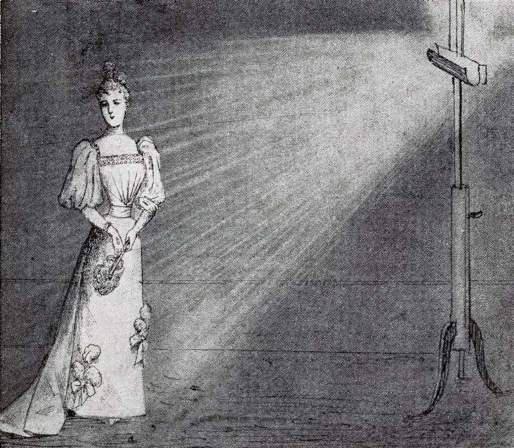
Initially, magnesium proved useful for triggering many laboratory reactions, especially organic reactions, where it is used as a Grignard reagent. As an essential element for growth in human organisms, it was also added to many foods and fertilizers. Outside of the laboratory, magnesium was used almost exclusively for its illuminating properties, particularly as a flashbulb in photography. Although uses for the metal were initially limited, demand boomed with the outbreak of war.
Magnesium found many uses in the trenches of Europe during World War I, particularly in the aptly named “star shells,” which were used to light up the battlefield at night. The element was also used in tracer bullets, flares, and incendiaries. Yet production outside of Germany remained small and sporadic until the British navy’s blockade of Germany forced American manufacturers into the business. Herbert H. Dow, founder of the Dow Chemical Company in Midland, Michigan, was quick to answer the call.
As it happened, the briny, prehistoric sea that lay under Midland was flush with magnesium chloride, among many other chemicals. Dow had already figured out a way to efficiently extract bromine and chlorine from this brine and in the process had laid the foundation of his chemical empire. But extracting and selling chemicals from the brine was one thing; fabricating metals was something else entirely.
When the British blockade cut off German imports, the resulting spike in magnesium prices gave Dow an opportunity to enter the market. In 1916, after a period of trial and error, Dow employees produced the first ingot of magnesium. Although it was only a small cake from an experimental electrolytic cell, it was a sign of much bigger things to come. After a period of research and development, the company scaled up
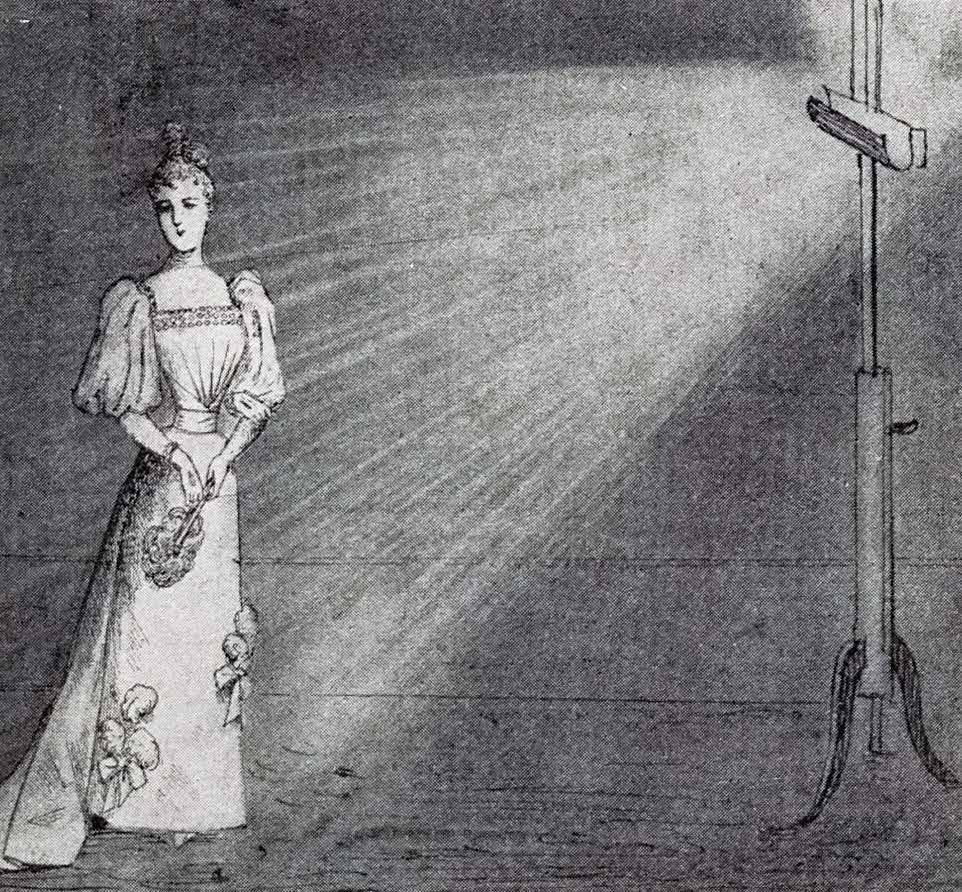
Illustration of a magnesium flash in action from Ris-Paquot’s La pratique de la photographie à la lumière artificielle. (Science History Institute)
operations and sold a modest 3,852 pounds of magnesium in 1918, with nearly all of it going to the war effort.
After the war, demand for magnesium faded rapidly, and the ability to produce and sell the metal at a profit caused all but two U.S. companies to leave the industry. Several years later only Dow remained.
Herbert Dow was convinced that with sufficient R&D, magnesium’s potential for structural applications was great. Magnesium is extremely lightweight when compared with many other metals, but it lacks sufficient strength in its pure state for most structural uses. By alloying magnesium with small amounts of other metals, such as aluminum, zinc, and manganese, the company found it could create alloys that were stronger than magnesium alone while maintaining magnesium’s lightweight characteristics and solving many of magnesium’s inherent corrosion problems.
But in those early days, industry showed little enthusiasm for Dow’s new product. Aluminum was the
structural metal of choice, and if Dow wanted to expand its magnesium business, it would have to create the market itself.
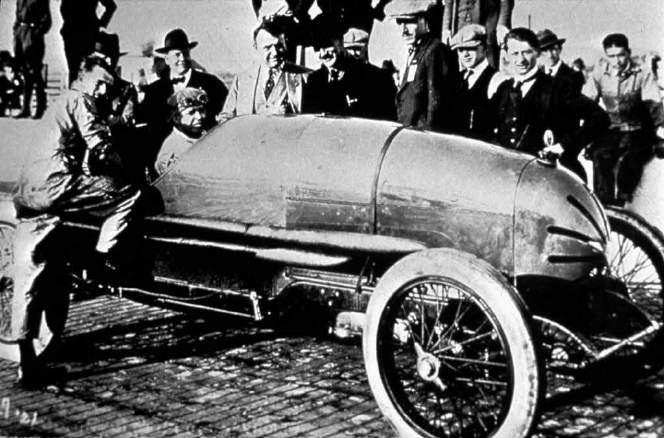
When Herbert Dow learned the nearby General Motors Company intended to switch to aluminum pistons in its engines because they were lighter and thus required less power to operate, he saw an opportunity to introduce magnesium to the automobile industry. Replacing pistons in automobiles was common at the time, and Dow assumed that if aluminum pistons were desirable for their light weight and strength, then magnesium pistons would be even more desirable. He set up a separate department at Dow to manufacture magnesium alloys, which would be marketed as Dowmetal. The magnesium pistons cost more than those made from other alloys, and that hampered their sales, but they soon became the preferred choice for automobile racers looking for an edge. These “racing pistons” were used in many winning race cars during the early 1920s,
A store advertising automotive equipment, include pistons made from Dow magnesium, ca. 1920s. (Science History Institute)
Magnesium, from the Sea to the Stars
including the Frontenac driven by Tommy Milton at the 1921 Indy 500.
The replacement piston business was well established by the mid-1920s when Dow enticed the aircraft industry to begin using magnesium in aircraft engines, landing-gear parts, seats, wheels, and various other applications. Magnesium proved reliable in these settings and soon was introduced in machinery parts, hand tools, and vacuum cleaners, to name just a few.
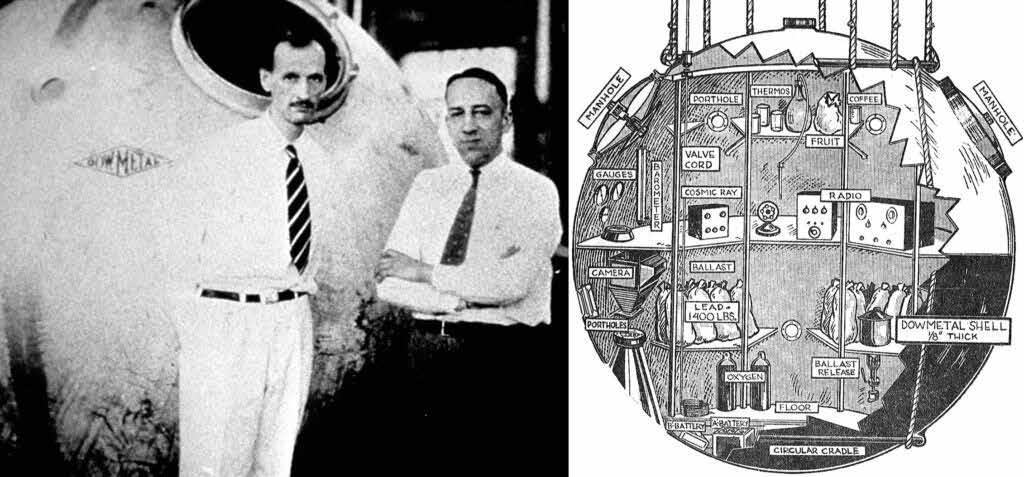
One of the more memorable applications of magnesium was its use in three gondolas used to carry passengers in a series of stratospheric balloon flights between 1933 and 1935. The first such gondola was built in Midland and was designed by famed balloonist Jean Piccard for the Chicago World’s Fair.
Earlier iterations of the gondola had been produced from aluminum, but it was hoped that the weight saved by using magnesium would allow for a new altitude record. Dow jumped at this golden marketing opportunity for Dowmetal and agreed to build the gondola at the company’s expense.
Thomas G. W. “Tex” Settle of the U.S. Navy was the lone crew member for the flight, but 20 minutes after lift-off a faulty hydrogen valve forced him to crash-land the balloon. Settle, however, was undeterred, and after the gondola was repaired, he lifted off again in November 1933, this time joined by Chester Fordney of the U.S. Marine Corps. The balloon, which took off from Akron, Ohio, floated at peak altitude for two hours before landing gently in Bridgeton, New Jersey. When the equipment they were carrying was
examined by the National Bureau of Standards, it was confirmed that they had climbed a record-breaking 61,237 feet (11.6 miles).
The following year, the Army Air Corps and the National Geographic Society teamed up to plan another recording-setting expedition into the stratosphere using a redesigned magnesium gondola named Explorer. The gondola weighed just 700 pounds, far less than the ship’s massive balloon bag, which tipped the scales at nearly two and half tons and required 1,500 cylinders of hydrogen gas to fill to capacity.
On July 28, 1934, three Army Air Corps officers lifted off from a site near Rapid City, South Dakota, and soared to within 624 feet of a new record, when a sudden rip in the balloon fabric caused a hydrogen-gas explosion and sent the craft plummeting back to Earth. All three men managed to parachute to safety, but the gondola was destroyed. The expedition planners were determined, though, and began plans for a second expedition in 1935.
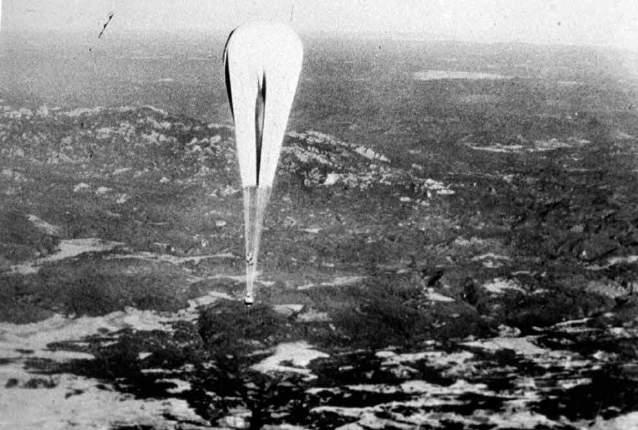
On November 11, 1935, the third magnesium gondola, Explorer II, set off from Rapid City. This time the balloon was filled with helium to prevent another explosion, but since helium lacks the lifting power of hydrogen, the ship required an even larger balloon bag. The Goodyear-Zeppelin company used three acres of cotton fabric to create a balloon that could hold 3.7 million cubic feet of helium.
The new ship also sported a redesigned gondola that was both larger and lighter than its predecessor. It was painted black on the bottom to absorb heat from Tommy Milton and the Frontenac he used to win the Indianapolis 500 in 1921. The car featured Dow’s magnesium pistons. (Science History Institute)
Magnesium, from the Sea to the Stars
the earth and white on top to reflect the sun’s intense rays. Manning the ship were Orvil Anderson and Albert Stevens, both of whom had narrowly escaped death in the crash of the Explorer in 1934.
Almost four hours after lift-off, Explorer II reached an altitude of 72,395 feet (13.71 miles), setting a world record that would last for 21 years. At that height nearly 96% of the atmosphere’s mass was below the balloon, allowing Anderson, Stevens, and the 64 different scientific instruments on board to conduct an unprecedented study. The crew gathered new information on the nature of cosmic rays, the distribution of ozone in
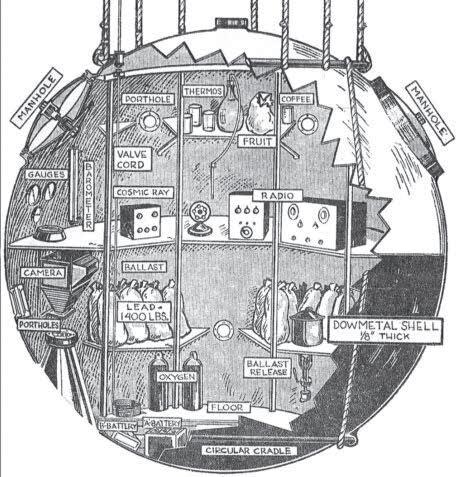
depicting the instruments and supplies aboard Explorer, August 1933. Left, photograph of Explorer II in flight, November 1935. (Science History Institute)
the upper atmosphere, the brightness of the sun, and the chemical composition of air above 70,000 feet. The eight-and-a-half-hour flight captured the imagination of people around the world.
Information gained from these flights was later used during World War II to give American airmen superiority in the skies over Europe and the Pacific. Advances to magnesium alloys, pressurization techniques, and personal equipment, such as heated flying suits and two-way radios, all came out of these expeditions. By 1958 that information began bearing further fruit in the U.S. space program.
Top left, Jean Piccard (left) and Tex Settle in front of the magnesium gondola used on Explorer, ca. 1933. Right, Chicago Daily News illustration
Magnesium, from the Sea to the Stars
While the magnesium used in the gondolas was extracted from Michigan brine, it was becoming increasingly apparent that the Midland wells would be unable to fulfill the growing demand for magnesium, bromine, and the many other chemicals Dow produced.
Since brine itself is the residue of ancient oceans, Herbert Dow postulated that if he could extract magnesium from brine, he should also be able to extract it directly from seawater. But with Herbert Dow’s death in 1930, that fantastical idea was left to his son Willard to pursue.
The younger Dow—unfazed by the economic havoc of the Great Depression—dove headlong into the project, setting up a pilot seawater-processing plant at Kure Beach, North Carolina. The plant focused on bromine production, which it sold to the Ethyl Corporation for use in the company’s anti-knock gasoline additive.
At Kure, Dow perfected the process for extracting chemicals directly from the ocean. The pilot plant
processed more than six cubic miles of ocean water to produce nearly 2.4 billion pounds of bromine. With World War II looming and the demand for magnesium increasing, creating a magnesium-producing seawater plant became a top priority. Dow soon broke ground on a new seawater plant in Freeport, Texas, and by 1941, it began extracting magnesium from the sea at levels never previously imagined.
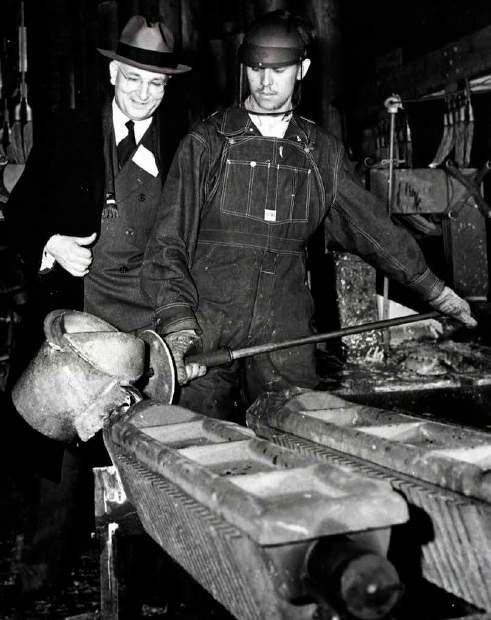
The process of extracting metals from the sea involves oyster shells, natural gas, electricity, and a whole lot of water (about 800 tons’ worth for every one ton of magnesium). Heating oyster shells produces calcium oxide, which is mixed with seawater to precipitate magnesium hydroxide. After concentrating the magnesium hydroxide suspension, it is mixed with hydrochloric acid, and the resulting magnesium chloride solution is then evaporated to form a solid cake. This cake is dried and then charged in electrolytic cells, where it is decomposed into chlorine gas and metallic magnesium. The chlorine gas returns to the process by reacting with natural gas to remake hydrochloric acid. The molten magnesium floats to the top of a salt bath, where it is trapped, ladled, and poured into iron ingot molds.
Today seawater is an important source of many minerals, such as sodium, magnesium, sulfur, calcium,
Willard Dow (left) watches Woodrow Rands pour magnesium ingots at a newly opened magnesium plant in Marysville, Michigan, April 1943. (Science History Institute)
Dow employee and military officer William Cooley holds up a magnesium ingot on the cover of the June 1943 issue of the Dow Diamond, the company’s staff magazine. (Science History Institute)
Magnesium, from the Sea to the Stars
and potassium, but in 1939 the idea of recovering a metal from the ocean must have seemed far-fetched to most people and a foolhardy undertaking to Willard Dow’s competitors. But Dow’s gamble proved prescient when the United States entered World War II just months after the Texas plant came online.
In the early days of World War II, the German Luftwaffe dominated the skies over Europe. Its planes flew faster and farther and carried payloads larger than any military experts predicted possible. Studies of German bombers that crashed on British soil revealed that the planes contained a large percentage of magnesium, which greatly reduced the weight of the aircraft and allowed for the increased payloads. These bombs, it turned out, were incendiary weapons also made from magnesium. The Germans had been quietly ramping up magnesium production through the 1930s and by 1938 produced more magnesium than the rest of the world combined.
From the earliest days of the Battle of Britain, it became clear that magnesium would play a vital role in the overall war effort. Air power became a significant factor in warfare, and magnesium made the construction of those planes possible. Magnesium was used in the engines, fuselage, and various accessories. Landing wheels in particular contained large amounts of magnesium to take advantage of the metal’s high strength-to-weight ratio and superior shock-absorbing qualities.
In the United States, demand for magnesium grew from six million tons per year to an impossible 800 million tons per year in just a matter of months. Since Dow was the only U.S. manufacturer of magnesium and output at its state-of-the-art seawater plant was capped
at about 18 million tons per year, the U.S. government declared magnesium a strategic metal, and all of its production was allocated toward national defense.
The U.S. government also introduced a $400 million program to spur production. By 1943 an additional 14
Dow advertisements for ocean-sourced magnesium from 1941, 1942, and 1947, respectively. (Science History Institute)
A military-themed ad for Dow magnesium from 1943. (Science History Institute)
Magnesium, from the Sea to the Stars
magnesium plants were up and running, four of them built and operated by Dow.
When military demand for magnesium plummeted after the war, Dow switched gears and sought to incorporate the metal into the postwar explosion of consumer products. Dow marketers hailed magnesium’s ability to reduce the weight of just about every product imaginable—furniture, canoes, vacuum cleaners, wheelbarrows, golf clubs, and lawnmowers, to name just a few.
In the decades that followed, magnesium again was called on to push further into Earth’s atmosphere. It was sent into orbit in July 1962 as part of AT&T’s Telstar 1 communications satellite, which transmitted the first space-relayed telephone calls and television images. Magnesium alloy’s strength, light weight, and heat conductivity made it an ideal choice for the satellite’s outer frame.
Dow continued to produce magnesium at Freeport until the 1990s. By that time, nearly half the magnesium it produced ended up in aluminum beverage cans. It became clear, however, that profitable magnesium production depended on who had access to the cheapest power. With power costs rising at the Freeport plant and its facilities becoming increasingly antiquated, the writing was on the wall. In 1998 Dow began the
shutdown process in Freeport and left the magnesium business entirely.
Today most magnesium is produced in China. It continues to be the third most used structural metal, with its main use as an alloy for aluminum. Because of magnesium’s excellent electrical conductivity and heat dissipation qualities, it is used in many modern-day electronic devices alongside the more buzzworthy rare earth elements, whose limited supplies make national security officials anxious these days. There will always be an ample source of magnesium, however, as long as there are oceans to supply it.
Patrick H. Shea is chief curator of archives and manuscripts at the Institute.
1. Reprint with permission from Distillations, the magazine of the Science History Institute November 3, 2022 Inventions & Discoveries < https://www.sciencehistory.org/stories/ magazine/magnesium-from-the-sea-to-the-stars/>
Dow pitched the use of magnesium in many consumer goods after the war including bowling pins (1964), horseshoes (1946), and bows (1947). The magnesium-shell Magna-Pin (left) made it to market as the first artificial pin approved by the American Bowling Congress. (Science History Institute)
International Postgraduate Summer School on Green Chemistry 2026
XVIII Edition
Organized by Green Science for Sustainable Development Foundation in collaboration with PhosAgro 6th-10th July 2026
From Venice to the World: Inspiring the Next Generation of Green Chemists
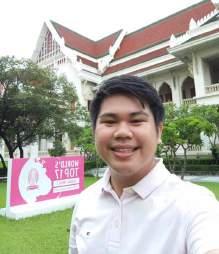
by Beatriz Chícharo, Vinícius de Paula, Bryle Matthew F. Bacatan, Joy Salome Dotse and Maria-Iuliana Chirica
The International Postgraduate Summer School on Green Chemistry has grown into a cornerstone event for the global green chemistry community. Held annually in the historic city of Venice—an improbable masterpiece built on science, engineering, and vision—the program takes place in a city that exists because people dared to experiment, adapt, and solve problems that once seemed unsolvable. This same spirit makes Venice the perfect setting for a summer school devoted to reimagining green chemical solutions. Each year, it brings together graduate students, researchers, and industry experts to explore innovative approaches to green chemistry that prioritize sustainability and environmental responsibility.
The 2025 edition, co-organized by the Green Sciences for Sustainable Development Foundation (a nonprofit Foundation based in Venice, Italy) and PhosAgro (the world’s leading producers of phosphate-based fertilisers), offered an immersive educational experience focused on sustainable and environmentally responsible chemical practices across a range of fields, including benign synthesis routes, green catalysis, alternative
solvents, renewable and green raw materials, green chemistry for energy, clean processes, green chemistry education, and sustainable polymers. Highlights from this year included a seminar on green metrics, a lecture on agrochemicals, and a session dedicated to energy transition. Through lectures, workshops, and discussions, participants gained valuable insights into the principles of green chemistry and their real-world applications, helping to foster a new generation of environmentally conscious scientists.
Over five days, 75 participants from 33 countries attended 26 talks delivered by experts, sponsors, and institutional representatives—each reflecting the urgent need to connect green chemistry with real-world sustainability challenges. In addition, 32 posters were presented across two on-site sessions, complemented by 14 online poster presentations.
By the end of the program, participants left not only with sharper technical knowledge but also a broader understanding of global challenges and an expanded professional network. Feedback was overwhelmingly positive, with many attendees praising the school’s comprehensive format and the opportunity to learn collaboratively with their peers.
The true success of this event goes beyond its lectures and data; it lives in the curiosity and motivation it awakens in its participants. Among them, five students stood out for their outstanding contributions, earning this year’s Best Poster Awards. Their reflections,
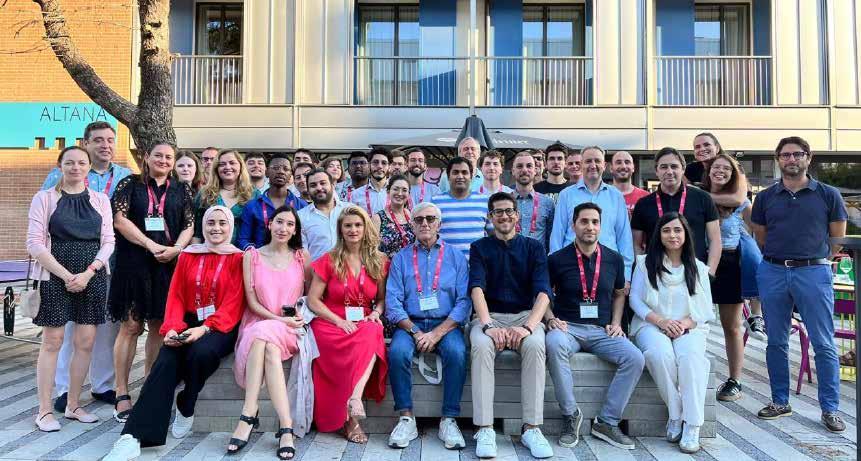
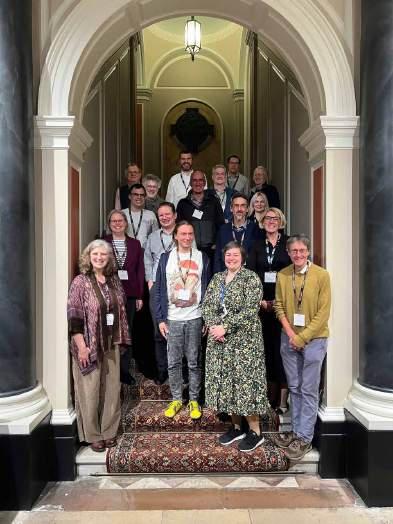
Group photo of the 17th International Postgraduate Summer School on Green Chemistry, Venice July 2025.
shared below, reveal how the experience shaped their thinking, strengthened their purpose, and deepened their belief in a greener future for chemistry, which is a core belief of this school.
I would say it was a long-held aspiration crystallized into reality. As a recipient of the last scholarship available for the GSSD Summer School, I saw it as my golden ticket to experience a rare opportunity: Attending a summer school, as a postgraduate student from a developing country, even just virtually. It felt overwhelming and humbling at the same time.
Bangkok is five hours ahead of Venice, and obviously, my routine had a bit of a shake-up as lectures started as afternoons waned. With reliable university internet and coffee, I waited for topic after topic with excitement. Personally eyeing topics on Green and Sustainable Materials, Green Solvents, Metrics, and issues related to my research on developing metal organic frameworks for green applications. The lessons from top-caliber institutions were insightful and priceless. Honestly, it was the motivation behind my questions, which I seemed to poorly phrase, but I am happy they got what I meant. Submitting my poster provided an additional chance to gain feedback from the community of scientists on-site. To my surprise, my idea landed on one of the best posters.
Inspired by the vibrant exchange of ideas and research networks, this year’s summer school felt like the cornerstone of development that fosters individual growth and collaboration. My interest was set ablaze, that together we can bring forth in the long pursuit of Green Chemistry, a principled way of doing responsible and sustainable chemistry. Though from afar, I felt drawn near to Venice, where new beginnings and collaborations flourish.
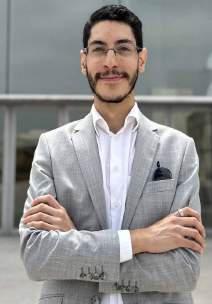
Vinícius de Paula
Affiliation: CICECO – Aveiro Institute of Materials, Department of Chemistry, University of Aveiro, Aveiro, Portugal
Spending a week in Venice—a city that still stands thanks to the audacious engineering of centuries past—felt like the right setting for a summer school on sustainability and innovation. The atmosphere was intentionally informal: in one session, a professor started quizzing the room, then zeroed in on me. I ended up fielding every question on his slide deck, and the lecture morphed into a lively two-way exchange. That absence of hierarchy, particularly for me, set the tone for the entire program.
Technically, little to me was brand-new; years of green-chemistry conferences have already filled my toolbox. Nonetheless, what this school did was cement that knowledge and, more importantly, widen the circle of people I can call colleagues and friends. I went to Venice to meet new researchers and reconnect with familiar faces and ended up leaving with several fresh branches on my “chemistree.” The biggest takeaway for me will always be that green chemistry isn’t about repairing something external. We are not separate from nature—we are of it—and our diverse backgrounds are strengths, not obstacles. The school’s egalitarian spirit reinforced that idea; every participant stands on equal footing.
Beyond the lectures, Venice itself became an unscripted classroom. Evening walks along quiet canals sparked spontaneous debates, and sharing cicchetti in a crowded bàcaro turned conversations into friendship. Those informal moments remind us of that breakthroughs rarely happen in isolation and that they surface when ideas, people, and places intersect, meaning that community is green chemistry’s most renewable resource.
Beatriz Nunes Zambujal Chícharo
Affiliation: Ca’Foscari University of Venice, Department of Dipartimento di Scienze Ambientali, Informatica e Statistica, Venice, Italy
I had the pleasure of attending the 17th International Post-Graduate Summer School on Green Chemistry in the beautiful city of Venice. Being a student from the hosting university, I have had the privilege of joining this event three times already, both before and after
From Venice to the World:
starting my PhD in Environmental Science, and it never ceases to amaze me. Each edition feels like it is continuously improving, attracting dedicated students from diverse fields across the globe who come to learn directly from the pioneers of green chemistry.
What makes this school truly special is the diversity of topics covered during the lectures, all presented in an interactive way by world-leading scientists. This allows young researchers to gain a broad understanding of the different directions in which sustainability is being pursued. Moreover, the opportunity to engage directly with these experts—to ask questions, exchange ideas, and discuss challenges—is an experience that textbooks and articles cannot replicate. These interactions are often the spark for new perspectives, innovative ideas, and even future collaborations.
For me, each time I participate in this event, I feel deeply motivated to continue my research, reassured by the fact that I am not fighting alone for a greener future. Meeting other “green warriors” who dedicate their life’s work to building a better world for future generations fills me with both joy and a renewed sense of responsibility. This summer school is not only a platform for learning; it is also a powerful reminder that science can and must be a driver of sustainable development. I truly believe this event is essential for educating young green chemists and preparing them for the inevitable challenges they will face ahead.
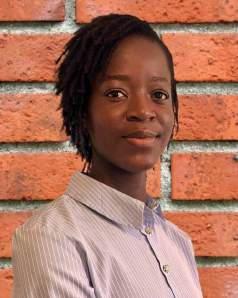
Joy Salome Dotse
Affiliation: Research Centre for Synthesis and Catalysis, Department of Chemical Sciences, University of Johannesburg, Auckland Park, Johannesburg, South Africa
As an early-stage researcher passionate about green chemistry and sustainability, I have always looked forward to the chance to engage directly with experts in the field—to ask important questions and share ideas on key topics. The 17th Green Chemistry Postgraduate Summer School, held in the beautiful city of Venice, Italy, gave me that opportunity.
The week-long program began with highly inspiring, exciting and educational lectures. All of which
highlighted a critical point: true sustainability starts with intentional design. Green chemistry isn’t just about avoiding hazardous materials—it’s about creating chemical processes that prevent waste, use resources efficiently, and consider the entire life cycle of a product from beginning to end. I genuinely don’t think the summer school would be complete without the talk delivered by Professor Peter Licence from the University of Nottingham, UK. His contagious passion ignited our own excitement and drive to advance sustainable chemical practices. He encouraged us to find our ‘forest’—a community of like-minded individuals who will both support and challenge us to grow personally and professionally. This experience deepened my appreciation for the global scientific community, and I was fortunate to find my own ‘forest’ in the cohort of students who attended the summer school with me—a forest where ideas grew as quickly as laughter. I was also happy to receive valuable insights into my research during the poster sessions and to learn new things from fellow students. Finally, winning the poster award was a proud moment for me, leaving me feeling more confident and motivated.
Exploring Venice was a dream—its history, art, and canals kept me enchanted at every turn. Beyond sightseeing, I was pleased to make deep friendships with Sarahi and Oscar, and our language lessons have turned into laughter-filled cultural exchanges. I am deeply grateful to the organizers for the scholarship that made this experience possible, as well as to my supervisor and institution for their support.
Maria Iuliana Chirica
Affiliation: National Institute of Materials Physics, Romania
Participating in the Venice Summer School on Green Chemistry was an inspiring and enriching experience. Receiving a scholarship to join the program virtually felt like an exceptional opportunity and a chance to connect with a vibrant international community dedicated to advancing sustainable science. Even from a distance, the atmosphere of curiosity and collaboration was
Inspiring the Next Generation of Green Chemists
unmistakable. The lectures covered a wide range of topics, many closely connected to my own research in catalysis and circular economy. I followed each session with great enthusiasm, especially those focused on green processes, sustainable materials, and innovative approaches for chemical recycling. The clarity and depth offered by speakers from renowned institutions were both motivating and an intellectual boost.
Presenting my experimental work at the online poster session was a true highlight. The feedback from the scientific community was invaluable, and being selected as one of the best posters was an unexpected and deeply rewarding recognition. I am sincerely grateful that this award also came with a scholarship for attending the Summer School in person next year, an opportunity I appreciate tremendously and look forward to with excitement.
Beyond the scientific content, the Summer School fostered a sense of belonging to a global network of young researchers united by the same goal: advancing chemistry in a responsible and sustainable direction. This experience strengthened my commitment to contributing to greener solutions and encouraged me to continue building meaningful collaborations across borders.
I am deeply thankful to the organizers for their dedication, for the generous opportunities they provide, and for creating a program that is both impactful and inclusive.
Conclusions
The 17th International Postgraduate Summer School on Green Chemistry once again demonstrated why it has become a benchmark for training the next generation of sustainability-driven scientists and green-innovators. Rather than simply offering a sequence of lectures, this school created a space where technical knowledge, personal growth, and genuine collaboration intersected, and the reflections shared by the five Best Poster Award recipients highlight precisely that; i.e., what truly defines this school: a community that empowers soon-to-be-researchers to think critically, question boldly, and connect their research to
global environmental challenges. Their experiences— whether in Venice or asynchronously—pinpoint how accessible, inclusive, and intellectually stimulating this program has become, reiterating its importance.
As green chemistry continues to evolve, the strength of its future depends on opportunities that cultivate curiosity, build networks, and inspire responsibility. This year’s summer school succeeded in doing exactly that, reaffirming its mission and setting the stage for even stronger contributions in editions to come.
Acknowledgements
The authors would like to thank Prof. Mirabbos Hojamberdiev for his encouragement and discussion during the preparation of this article.
On behalf of all the students who attended the 17th Green Chemistry Postgraduate Summer School, we would like to thank Prof. Pietro Tundo (Founder) and the members of the Organizing Committee: Prof. Francesco Trotta (Chair), Prof. Fabio Aricò, Prof. Aurelia Visa, Prof. Mirabbos Hojamberdiev, and Dr. Graziana Gigliuto for organizing this remarkable Summer School on Green Chemistry.
The 17th GCPSS was organized and managed by the Green Sciences for Sustainable Development Foundation (www.gssd-foundation.org), a nonprofit Foundation based in Venice, Italy. The event was endorsed by IUPAC, the Organization for the Prohibition of Chemical Weapons (OPCW), PhosAgro Industry, Sasol Industry, and the Interdivisional Group of Green Chemistry—Sustainable Chemistry of the Italian Chemical Society (SCI).
See IUPAC corresponding project <https://iupac.org/ project/2025-001-1-041/>, or follow the Daily Briefs at <https://iupac.org/ daily-briefs-from-the-2025-postgraduate-summer-school-on-greenchemistry/>
Beatriz Chícharo Ca’Foscari University of Venice, Dipartimento di Scienze Ambientali, Informatica e Statistica, 30170 Mestre, Venice, Italy;
Vinícius de Paula, CICECO–Aveiro Institute of Materials, Department of Chemistry, University of Aveiro, 3810-193 Aveiro, Portugal;
Bryle Matthew F. Bacatan, Chulalongkorn University, Bangkok, Thailand;
Joy Salome Dotse, Research Centre for Synthesis and Catalysis, Department of Chemical Sciences, University of Johannesburg, Auckland Park, Johannesburg, South Africa;
Maria-Iuliana Chirica, National Institute of Materials Physics, RO-077125 Măgurele, Romania.
IUPAC Wire
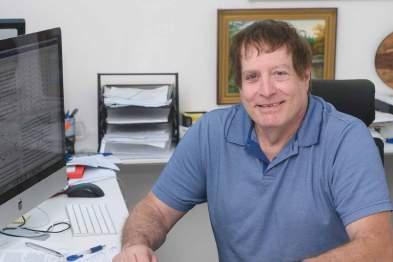
Ronny
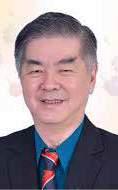
Neumann Receives the
News and information on IUPAC, its fellows, and member organizations. See also www.iupac.org/news
2026 IUPAC–Soong Prize for Sustainable Chemistry
IUPAC has awarded the 2026 IUPAC–Soong Prize for Sustainable Chemistry to Professor Ronny Neumann of the Weizmann Institute of Science, Israel, in recognition of his pioneering contributions to green and sustainable chemistry and his leadership in developing electrocatalytic production of ammonia from water and air at a low voltage.
Over the course of his career, Neumann has advanced the principles of green chemistry through innovative approaches to the activation of small molecules and the development of robust, molecularly designed catalysts based on polyoxometalates. His work combines detailed mechanistic insight with practical catalyst design, enabling new electrocatalytic processes that can replace energy-intensive high-carbon-footprint industrial reactions.
Among his most notable recent achievements is the development of an iron-based catalyst that enables the direct electrocatalytic reduction of nitrogen to ammonia using water as the proton and electron source. This process represents a potential zero-carbon alternative to the century-old Haber–Bosch process and opens the possibility of decentralized ammonia production that could improve fertilizer accessibility and global food security.
Neumann has also developed a molecular copper–iron electrocatalyst for the highly selective conversion of carbon dioxide to carbon monoxide under ambient conditions. This reaction produces an important feedstock for sustainable fuels and for the decarbonization of the steel industry.
Congratulating Neumann on the award, IUPAC President Mary Garson said: “His mechanistic insight and application of fundamental chemistry have significantly advanced the electrocatalytic synthesis of ammonia from air and water as an alternative to the energy-intensive Haber-Bosch process. His research has the potential to reduce the overall carbon footprint, to assist global food security, and to reduce reliance on global transport chains.”
IUPAC Past President Ehud Keinan added: “The IUPAC-Soong Prize recognizes individuals whose chemistry-related research directly supports the UN Sustainable Development Goals, emphasizing the crucial role of chemistry in addressing urgent global challenges.”
The inaugural IUPAC-Soong Prize, in 2025,
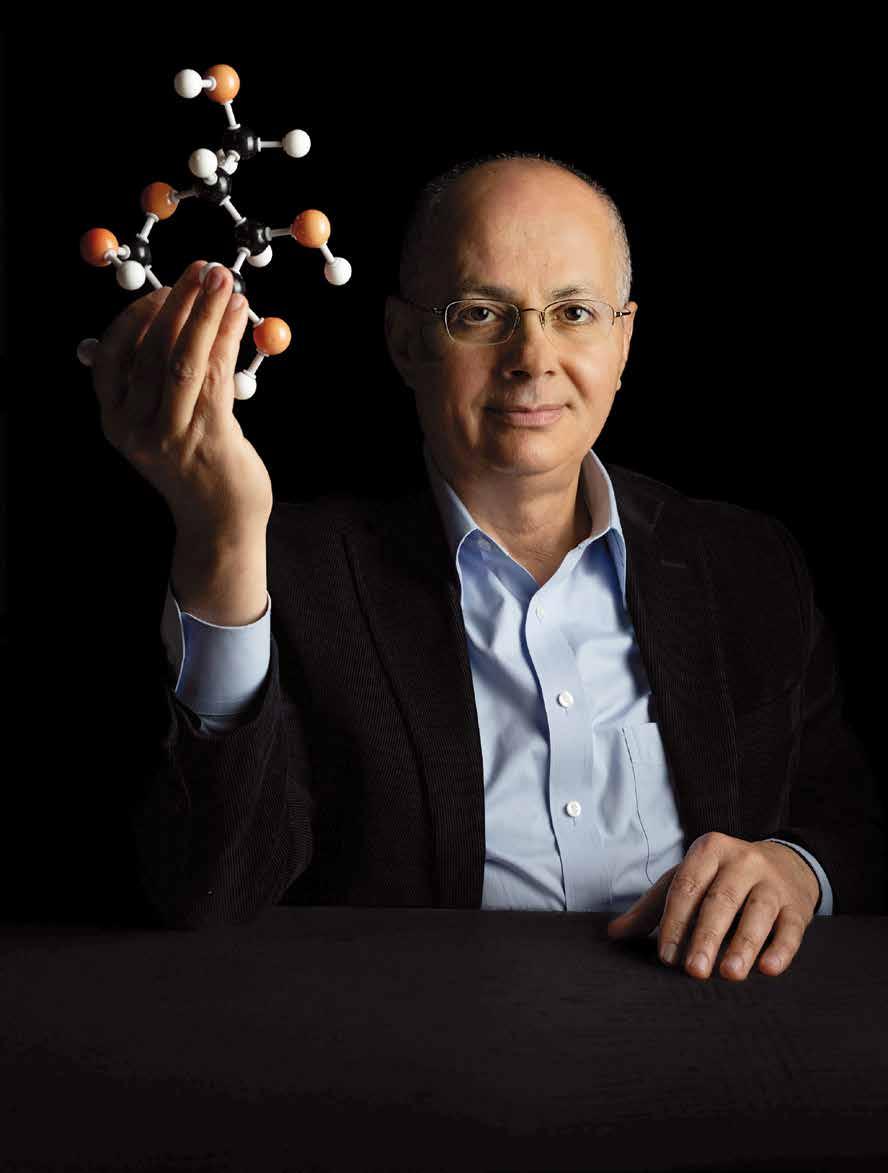
Professor Ronny Neumann
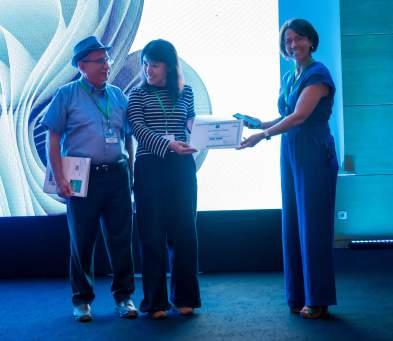
honored Professor Omar Yaghi for his groundbreaking work in reticular chemistry. The Prize includes a certificate, a commemorative medal, and a monetary award of $30,000 (USD). This year, the Prize will be presented to Professor Neumann at the upcoming 10th EuChemS Chemistry Congress, 12-16 July 2026, in Antwerp, Belgium. The awardee is also invited to deliver a plenary lecture at National Taiwan University at a later date.
For more information on the IUPAC-Soong Prize and its mission, visit: https://iupac.org/what-we-do/awards/iupac-soong-prize/
Christo Balarew Award Awarded to Mónia A. R. Martíns
The Christo Balarew Award for an Outstanding Young Scientist 2025 has been awarded by the IUPAC Analytical Division Subcommittee on Solubility and Equilibrium Data (SSED) to Dr. Mónia A. R. Martíns.
Martíns obtained her European PhD in Chemical Engineering from CICECO, University of Aveiro (Portugal). During her doctoral studies, she completed two international research internships, at the University of Warsaw (Poland) and at UNICAMP in Campinas (Brazil). Her research focused on novel separation processes involving terpenes, ionic liquids, and eutectic mixtures, as well as on their environmental distribution. Martíns has built an impressive professional track record, with research positions at the University of Porto, CICECO, Hovione, and the Polish Academy of Sciences. In addition, she has undertaken research internships in the Czech Republic, Poland, Brazil, and India. Her scientific interests demonstrate both breadth and depth, and she has made significant contributions
to solubility and equilibrium studies. Notably, she has compiled comprehensive solubility datasets for a wide range of complex systems, including ionic liquids, terpenes, phenolic acids, and benzimidazole derivatives. She has also developed and applied novel experimental methodologies, enabling high-precision solubility measurements across diverse compound classes and temperature ranges. Furthermore, she has employed predictive models to assess the distribution of compounds in environmental compartments, highlighting the interdisciplinary relevance of her work.
Martíns is currently a researcher at CIMO, Polytechnic Institute of Bragança, where she continues to focus on solubility and chemical equilibria. She is the author of 52 peer-reviewed articles in journals indexed by the Web of Science, which have collectively received more than 3,500 citations, resulting in an h-index of 23.
In recognition of these achievements, the SSED has selected Mónia A. R. Martíns as the recipient of the Christo Balarew Award 2025.
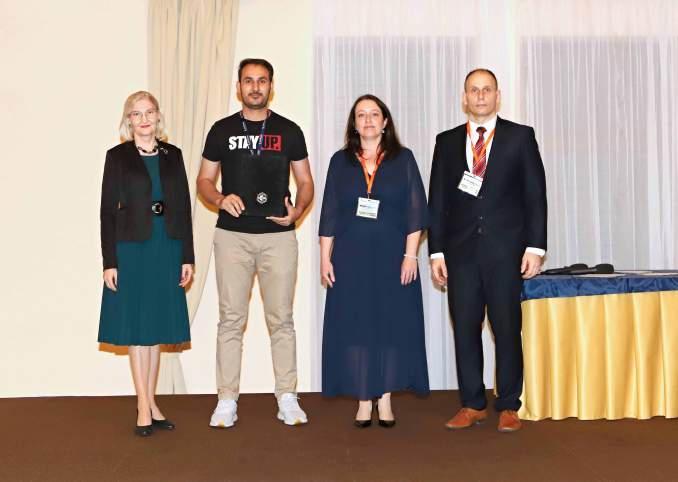
The Award will be presented at the 22nd ISSP in Bulgaria in August 2026.
The Christo Balarew Award was established in 2023 by Christo Balarew, a Bulgarian professor of inorganic chemistry at the Institute of General and Inorganic Chemistry, Bulgarian Academy of Sciences (Sofia, Bulgaria), and a dedicated supporter of the Solubility
Data Project with long-standing involvement in IUPAC activities. The award is administered by the IUPAC Subcommittee on Solubility and Equilibrium Data and is presented annually to recognize a promising young scientist working in the fields of solubility and/or chemical equilibria.
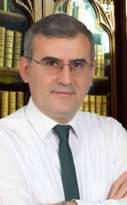
The 2026 IUPAC-Richter Award Goes to Richard B. Silverman
Professor Richard B. Silverman has been awarded the 2026 IUPAC-Richter Prize in Medicinal Chemistry. Silverman is the Patrick G. Ryan/Aon Professor at the Department of Chemistry of Northwestern University, United States. The 2026 IUPAC-Richter Prize recognized Silverman’s transformative and sustained contributions to medicinal chemistry that have fundamentally reshaped both scientific understanding and patient care. He is the inventor of pregabalin (Lyrica®), one of the most successful university-originated drugs in history, which has alleviated suffering for millions of patients worldwide and stands as a landmark achievement in academic drug discovery.
Beyond this singular accomplishment, Silverman has repeatedly translated deep mechanistic insight into clinically advanced therapeutics, including CPP-115 and OV329 for epilepsy and neuropathic pain, and AKV9 (formerly NU-9) for ALS and Alzheimer’s disease, each arising from elegant physical-organic and enzymological principles and progressing to human clinical trials. His pioneering work on selective neuronal nitric oxide synthase inhibitors has opened new therapeutic avenues for neurodegeneration, melanoma, and infectious disease, while his innovations targeting ornithine aminotransferase represent a novel strategy for hepatocellular carcinoma. Complementing these discoveries,
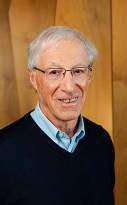
Professor Richard B. Silverman
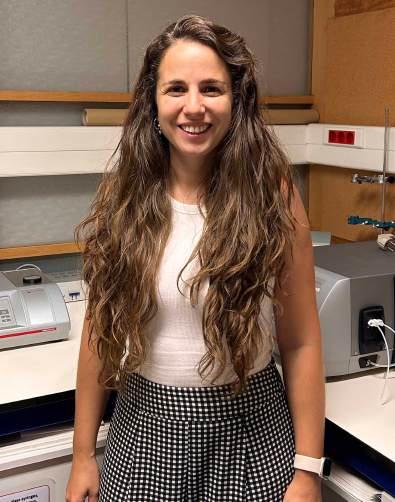
Dr. Mónia A. R. Martíns.
IUPAC
Silverman has trained generations of medicinal chemists worldwide through his definitive textbook The Organic Chemistry of Drug Design and Drug Action and an extraordinary academic career marked by global recognition, including election to the National Academy of Sciences and numerous international prizes. Taken together, his career exemplifies the highest ideals of medicinal chemistry: rigorous fundamental science, creative molecular design, and tangible benefit to humanity, making him an outstanding candidate for the highest level of international distinction.
This year marks the eleventh occasion of the IUPAC-Richter Prize, which was established in 2005 by the IUPAC and Gedeon Richter PLC. Awarded biannually, the awardee is announced by the IUPAC following nominations and the decision of an independent international selection committee. The lecture in which the prize is awarded occurs alternatively in Europe and in the United States. The awardee receives a prize of $ 10.000, which is sponsored by Richter PLC, and a plaque, which presented by IUPAC.
The acceptance lecture will be held in Atlanta, GA, United States at the 39th National Medicinal Chemistry Symposium (31 May–3 June 2026). A lecture will also be presented at the forthcoming EFMC International Symposium on Medicinal Chemistry in Basel, Switzerland (6-10 September 2026).
The previous awardees are: 2006: Malcolm FG Stevens (UK), 2008: Jan Heeres (Belgium), 2010: Arun Ghosh (USA), 2012: Stephen Hanessian (Canada), 2014: Helmut Buschmann (Germany), 2016: Michael Sofia (USA), 2018: Peter Grotenhuis (USA), 2020: John Macor (USA), 2022: Michael E. Jung (USA), 2024: Craig M. Crews (USA)
CCE Announces 2026 Global Awards Honoring Excellence in Chemistry Education
The IUPAC Committee on Chemistry Education (CCE) is proud to recognize outstanding contributions to chemistry education worldwide through its 2026 awards.
Distinguished Contribution to Chemistry Education (DCCE) Award
• Jorge G. Ibanez (Universidad Iberoamericana, Mexico)
• Rachel Mamlok-Naaman (Weizmann Institute of Science, Israel)
• David Treagust (Curtin University, Australia)
Outstanding Early Career Researcher in Chemistry Education (ECRCE) Award
• Fun Man Fung (University College Dublin, Ireland)
Special Recognition Award for Excellent Service to the Committee on Chemistry Education (ESCCE)
• Ting-Kueh Soon (Institut Kimia Malaysia, Malaysia)
• Mustafa Sözbilir (Atatürk Üniversitesi, Erzurum, Türkiye)
These awardees have made remarkable impacts through research, leadership, and service in advancing chemistry education globally. Congratulations to all!
The awards will be presented in July 2026 at Erzurum, Türkiye during ICCECRICE: https://iccecrice2026.org/
The winnersof the 2026 CCE Award to honor excellence in chemistry education, from left to right: Jorge G. Ibanez, Rachel Mamlok-Naaman, David Treagust, Fun Man Fung, Ting-Kueh Soon and Mustafa Sözbilir.
2026 Franzosini Prize and Balarew Award—Call for
Nominations
Since 2023 the Franzosini Prize and the Balarew Award are offered annually by the Subcommittee on Solubility Equilibrium Data (SSED) in recognition of outstanding and sustained contributions to the field of critical evaluation of data in solubility and related chemical equilibria and for an outstanding young scientist working in the field.
The Franzosini Prize is to be presented to researchers working in the areas of solubility and/or homogeneous system equilibrium data, while the Balarew Award is presented to an outstanding young scientist working in the areas of solubility and/or homogeneous equilibrium data.
The Winners of the 2026 Franzosini Prize and of Balarew Award for Outstanding Young Scientists will be announced during the annual meeting of the Subcommittee on Solubility and Equilibrium Data that occurs in conjunction with the 22nd International Symposium on Solubility Phenomena and Related Equilibrium Processes (ISSP22, https://issp2026-igicsofia.uniburgas.bg/), in Sofia, Bulgaria, 31 August to 3 September 2026, and will be invited to give a research presentation during ISSP22.
The nomination deadline is 30 April 2026 For details, https://iupac.org/what-we-do/awards/ or contact Slobodan Gadzuric at slobodan.gadzuric@ dh.uns.ac.rs or Mónia Martins at moniamartins@ipb.pt
IUPAC Formalizes Establishment of European-Based Secretariat with Signing of Agreements in Rome and Malaga
IUPAC marked a major milestone in the establishment of its European-based Secretariat with the signing of memoranda of understanding with its host institutions in Rome, Italy, and Malaga, Spain.
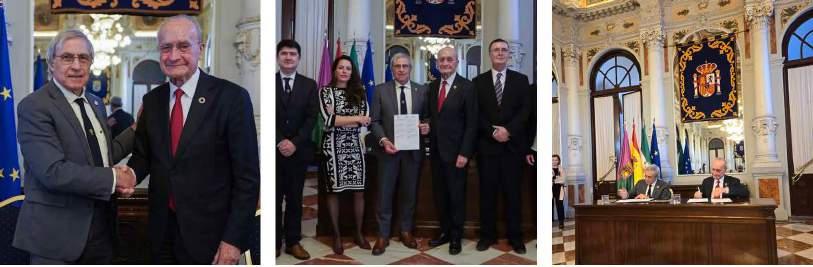
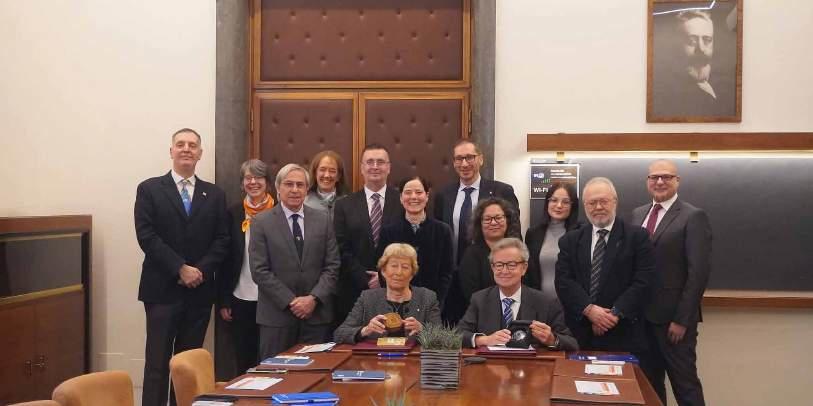
IUPAC Officers attended signing ceremonies with the Consiglio Nazionale delle Ricerche (CNR) in Rome on 3 February, and with the City and University of Malaga on 5 February, formally launching the next phase of the Secretariat’s transition. The agreements confirm the creation of complementary Secretariat sites in Rome and Malaga and provide the framework for their longterm cooperation with IUPAC.
The decision follows an open international call for proposals and reflects IUPAC’s commitment to aligning its operational arrangements with its global scientific mission. The new European-based Secretariat will strengthen institutional support, expand professional staff capacity, and enhance services for IUPAC’s worldwide volunteer community, which plays a central role in advancing the Union’s work.
Mary Garson, IUPAC President, said: “The signing of these agreements represents a decisive step forward for IUPAC. Establishing a dual-centre European Secretariat will significantly enhance our capacity to support chemistry worldwide and to serve our members with greater effectiveness and resilience.”
Andrea Lenzi, President of CNR, welcomed the agreement, emphasizing the importance of hosting the
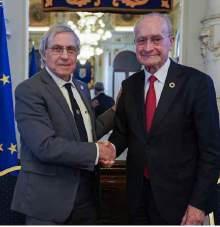
Signature ceremony the Malaga City Hall with former President Ehud Keinan and Francisco de la Torre, Mayor of Malaga.
Secretariat in Rome: “The National Research Council of Italy is honored to host the IUPAC Secretariat at its headquarters. Fully mindful of the Union’s prestige and its more than century-long history, CNR will work closely with its sister office in Malaga to strengthen IUPAC’s international standing and its role as a reference point for the global chemical community.”
Francisco de la Torre, Mayor of Malaga, highlighted the broader significance of the agreement for the city: “Malaga’s selection, together with Rome, to host the European-based Secretariat of IUPAC represents an important milestone for our city. It strengthens our international visibility as a technology-driven hub and reinforces our commitment to scientific innovation in areas closely linked to chemistry.”
The University of Malaga will host the Secretariat within its Rectorate building. Rector Teodomiro López described the agreement as a landmark moment for the institution: “Hosting the IUPAC European Secretariat at the heart of our university is a historic milestone. It demonstrates that the University of Malaga is not merely observing global scientific progress, but actively contributing to the decisions that shape the future of chemistry.” He added that the collaboration reflects a shared vision between the city and the university, noting that the offices will serve as more than administrative space: “These facilities will be a true nerve center, where important aspects of the future of global chemistry and its standardization will be shaped.”
Under the agreements, the host institutions will provide office space, seconded staff, and corporate support, enabling IUPAC to enhance communication, coordination, and engagement across all levels of its membership. The dual-site model will be supported by robust governance arrangements and modern digital collaboration tools, ensuring effective coordination between Rome and Malaga.
The relocation of the Secretariat was discussed by the IUPAC Council in July of last year and subsequently endorsed by both the Executive Board and the Science Board. With the signing of these agreements, IUPAC now moves from planning to implementation.
IUPAC expressed its gratitude to all institutions and stakeholders who participated in the open call and supported the process. The Union looks forward to working closely with its hosts in Malaga and Rome as it advances its mission of serving chemistry and society worldwide.
Towards gender equality in scientific organizations
The International Science Council (ISC), the Interacademy Partnership (IAP), and the Standing Committee for Gender Equality in Science (SCGES) have published a report, “Towards gender equality in scientific organizations: assessment and recommendations,” (DOI: 10.24948/2026.03) based on their collaborative project, “Advancing Gender Equality in Scientific Organizations.”
The report details an assessment of the status of leadership of women scientists in academies of science, medicine, and engineering, and in global disciplinary science unions. The findings in the report are based on surveys of national science academies and international scientific unions; a survey to gather information about the experiences of individual scientists; and interviews with a dozen prominent scientists. The report details
Signing ceremony at the Consiglio Nazionale delle Ricerche (CNR) in Rome: (sitting) Mary Garson and Andrea Lenzi
the status of women in these organizations with respect to their participation, leadership, and recognition, and it outlines practices that have led to improvements.
IUPAC is a member of the ISC and is a founding member of SCGES, and IUPAC volunteers contributed to the project and to the report.
For information on the project and the report, see https://council.science/ publications/towards-gender-equality-in-scientific-organizations/ . The report is available for download as doi.org/10.24948/2026.03
See also IUPAC project 2020-016-3-020 “The Gender Gap in Chemistry“.
Green Chemistry for Life—Evaluation of the PhosAgro/UNESCO/IUPAC Program
Commissioned by UNESCO, an evaluation of the PhosAgro/UNESCO/IUPAC Green Chemistry for Life Program assesses the programme’s relevance, coherence, effectiveness, efficiency, impact and sustainability from 2013 to 2025.
This evaluation of the PhosAgro/UNESCO/IUPAC Green Chemistry for Life program demonstrates the strong strategic value of IUPAC’s engagement in advancing global green chemistry. The report highlights how IUPAC’s scientific leadership, credibility, and role in proposal evaluation have helped ensure the program supports high-quality, sustainability-driven research aligned with the 12 Principles of Green Chemistry. It provides evidence that the partnership has strengthened early-career scientists worldwide, expanded international collaboration networks, and contributed to research outputs and capacity-building consistent with IUPAC’s mission to advance chemical sciences for the benefit of society. Importantly, the evaluation identifies opportunities for IUPAC to further amplify its impact through enhanced outreach, governance strengthening, networking mechanisms, and innovation pathways.
See full report at <https://unesdoc.unesco.org/ ark:/48223/pf0000396872.locale=en>
The PhosAgro/UNESCO/IUPAC Green Chemistry for Life Programme, launched in 2013, provides competitive research grants of up to USD $30 000 to early-career scientists for projects aligned with the 12 Principles of Green Chemistry. Jointly implemented by UNESCO, PhosAgro, and IUPAC the initiative aims to foster green and sustainable chemistry approaches that support safer chemical practices, reduced environmental impact and more sustainable production and consumption patterns.
Since its launch, the programme has supported a total of 55 early-career researchers across multiple cohorts through grant funding. Projects span cleaner synthesis routes, waste valorisation, biocatalysis, Survey for the Green Chemistry for Life Awardee, 2025, Specific way in which the programme helped strengthen the awardees research capacities. (N=28)
IUPAC Wire
renewable feedstocks, green extraction, sustainable formulations and energy/component-efficient processes. A dedicated grant focused on phosphogypsum was introduced in 2016. Governance reflects the tripartite structure, with UNESCO acting as the main executive partner responsible for overall coordination, administration, and oversight of implementation. UNESCO, PhosAgro, and IUPAC share responsibility within a goal-oriented alliance that brings together a sponsor and industrial partner (PhosAgro), a specialised UN agency promoting science, education, and culture (UNESCO), and the leading international non-governmental organisation representing the global chemistry community (IUPAC). An international scientific jury, supported by its tripartite Monitoring Bureau, constitutes the principal mechanism for the scientific evaluation of proposals and monitoring programme implementation. All three partners contribute to key stages of the process, including the evaluation and selection of grant applications, dissemination of calls, programme visibility, and related activities such as the organisation of international green chemistry symposia.
In memoriam: Hans Vliegenthart
Professor Dr. Johannes Frederik Gerardus (Hans) Vliegenthart (April 7, 1936 – February 12, 2026)
We mourn the passing of Hans Vliegenthart, a pioneering Dutch biochemist whose groundbreaking work in carbohydrate chemistry and glycobiology transformed our understanding of the molecular basis of life.
Born in Zuilen in 1936, the Netherlands, Hans Vliegenthart’s path to scientific eminence began with an inspiring biology teacher who instilled in him the vision that molecular-level insights are essential to understand biological problems. This conviction led him to pursue chemistry rather than biology at Utrecht University, where he earned his degree in 1960 in a combination of organic chemistry (with prof. Kögl) and histology. He completed his PhD in 1967 under the supervision of prof. Arens, with a thesis on neurohypophysial hormones.
The academic journey of Hans Vliegenthart at Utrecht University spanned over six decades. After his appointment as an Assistant and Associate Professor (1968-1975), he was professor of Bio-Organic Chemistry until his retirement in 2003. His research
focused on the structural characterization of (poly) saccharides, glycoprotein glycans, glycolipids, and proteoglycans, and on the synthesis of fragments of capsular polysaccharides of pathogenic bacteria.
He became internationally renowned for pioneering the analysis of primary and three-dimensional structures of carbohydrates and glycoproteins using advanced technologies including NMR spectroscopy, chromatography, and mass spectrometry. His work had far-reaching applications in biology and medicine, from research into blood types to the development of carbohydrate-based vaccines against infections and the role of glycoprotein glycans in healthy living cells and tumour growth. Besides his strong activities in carbohydrate research, he also became interested in the function of lipoxygenases in relation to their effects on unsaturated fatty acids. Over his career, he supervised 75 doctoral candidates and is (co)author of over 650 scientific articles.
His exceptional contributions to science earned Hans Vliegenthart numerous prestigious honours. In 1989, he became an honorary member of the American Society for Biochemistry and Molecular Biology. He was elected to the Royal Netherlands Academy of Arts and Sciences in 1990 and became a Foreign Member of the Royal Swedish Academy of Sciences.
Hans Vliegenthart received three honorary doctorates: from the University of Debrecen, Hungary (1992), the University of Science and Technology in Lille, France (1993), and Stockholm University, Sweden (1997). In 1994, he was awarded the prestigious Claude S. Hudson Award in Carbohydrate Chemistry by the American Chemical Society. He received the Bijvoet Medal in 2000 and the Order of the Netherlands Lion in 1998. Utrecht University honoured him with its Silver Medal in 2003, and in 2017, he was elected a Fellow of the American Association for the Advancement of Science.
He was chairman of the organizing committees of the XIIth International Carbohydrate Symposium in Utrecht (1984), the 9th European Carbohydrate Symposium in Utrecht (1997), and the XVIth International Symposium on Glycoconjugates in The Hague (2001). Among many national and international functions, he was a member of several Nomenclature Committees (IUBMB and IUPAC), and a member of the Scientific Advisory Board of the Science Frontier Program at the Riken Institute in Wako, Japan.
Extracted from https://www.uu.nl/en/news/ in-memoriam-hans-vliegenthart
Project Place
Engaging Chemistry Experts to Explain How Their Research Addresses World Needs
Information about new, current, and complete IUPAC projects and related initiatives. See also www.iupac.org/projects
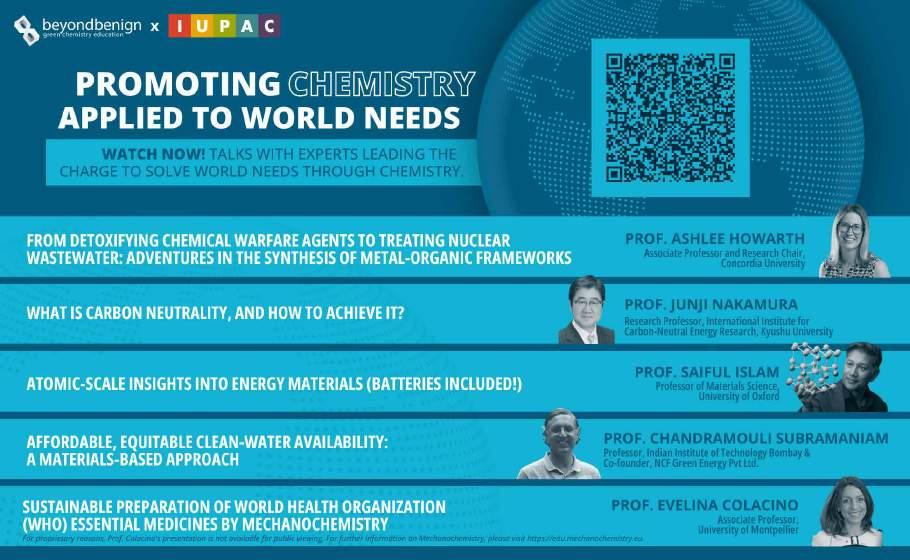
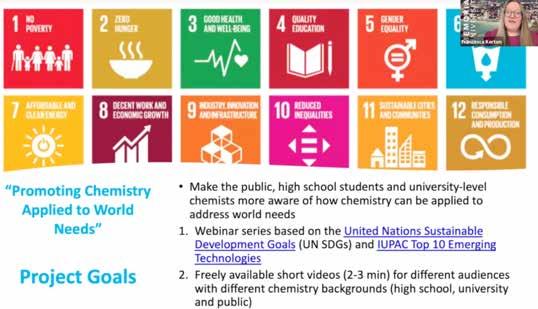
To highlight the role chemistry plays in addressing the United Nations Sustainable Development Goals, IUPAC’s CHEMRAWN in collaboration with Beyond Benign, launched a project aimed at informing chemists, students and the public about the importance of chemistry. This initiative, titled “Promoting Chemistry Applied to World Needs,” is unfolding across two phases with the first phase, a webinar series, beginning in January 2025 and the second phase focused on education starting now.
This report highlights our task group’s achievements during 2025 and our plans for 2026. Ultimately, 2025’s webinar series laid the groundwork for short, educational videos that will be released during 2026.
Phase One: Expert Webinar Series
In 2025, a collaborative team including IUPAC volunteers and Beyond Benign, organized a series of 5 webinars featuring experts who are leading the charge to solve world needs through chemistry and situating their work around the UN SDGs and IUPAC’s Top 10 Emerging Technologies. Over the course of the series, we have had a total of 473 registered participants, with an average of 43 attendees at each session, and 297 attendees for the entire series. The webinar recordings
have collectively over 1.5k views on YouTube. This webinar series has served as a leverage point for both IUPAC and Beyond Benign’s programs in particular engagement with early career chemists and educators around the globe. Below is the list of webinars hosted and their numbers, as of January 2026:
• “From Detoxifying Chemical Warfare Agents to Treating Nuclear Wastewater: Adventures in the Synthesis of Metal-Organic Frameworks,” Ashlee
Screenshot of introductory slide during one of the webinars
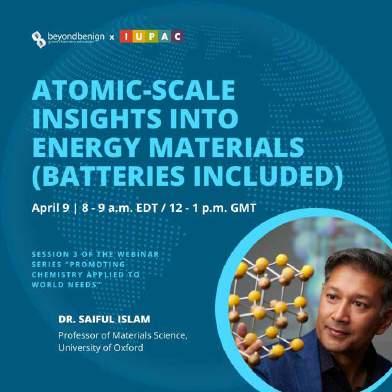
Example promotional image for one of the webinars
Project Place
Howarth (Concordia University), January 2025. 54 attendees and 950+ views on YouTube.
• “What is Carbon Neutrality and How to Achieve It?,” Junji Nakamura (Kyushu University), February 2025. 76 attendees and 230+ views on YouTube.
• “Atomic-Scale Insights into Energy Materials (Batteries Included),” Saiful Islam (University of Oxford), April 2025. 45 attendees and 240+ views on YouTube.
• “Affordable, Equitable Clean-Water Availability: A Materials-Based Approach,” Chandramouli Subramaniam (Indian Institute of Technology (IIT), Mumbai), September 2025. 44 attendees and 80+ views on YouTube.
• “Sustainable Preparation of World Health Organization (WHO) Essential Medicines by Mechanochemistry,” Evelina Colacino (University of Montpellier), December 2025. 39 attendees and recording not listed to YouTube for proprietary reasons.
We encourage you to watch the videos shared on this website <https://www.beyondbenign.org/ news/designing-chemistry-for-global-challengesexpert-perspectives/> and if appropriate, share with your colleagues and students. Another webinar will take place on 9 April 2026 by J.C. (Chris) Slootweg, Van’t Hoff Institute for Molecular Sciences, University of Amsterdam.
Phase Two: Communicating with non-experts
Building on the momentum from this first stage, we recently held our fifth task group meeting with a focus on developing short, engaging videos for education and outreach purposes. We are making short (2-5 minutes) videos inspired by our expert webinar speakers for use in classrooms and linked with foundational chemistry knowledge, and also for communicating with the public (to promote the role of chemistry in their lives and in providing solutions to meet UN SDG targets). Our videos will be shared in the first instance with Beyond Benign’s Green Chemistry Teaching and Learning Community for feedback prior to their public release.
This project serves to strengthen the field of chemistry by highlighting its central role in sustainable development and new technologies. By promoting chemistry in an open and accessible way, we hope to inspire the next generation of scientists and to champion ongoing research worldwide including discoveries recognized by IUPAC’s top ten emerging technologies
For more information and comment, contact task group chair Francesca Kerton <fkerton@mun.ca> and Juliana Vidal <juliana_vidal@ beyondbenign.org>. Updates on this project are available on the project webpage https://iupac.org/project/2024-010-2-021
Revision and Update of the Red Book—Nomenclature of Inorganic Chemistry
The Red Book 2005 is the standard source on the nomenclature of inorganic compounds and systems (together with its seven translations as of 2025). The objective of this project is to modernise the current Red Book (2005), reflecting how inorganic chemistry has evolved significantly since 2005. The goal is to ensure consistency with current practices for inorganic nomenclature as it has evolved, and the recommendations included in publications since the last Red Book revision.
The Red Book update will include digital standards and representations, and incorporate a range of nomenclature advances, including cluster nomenclature, metallacycles, coordination polymers and coordination nomenclature. New chapters will include: discrete inorganic chain, ring, cage, and cluster compounds; inorganic chains, rings and cages, Zintlanions, polyboron clusters, transition metal clusters; inorganic extended materials; isotopically modified inorganic compounds; designation of the donor atoms in ligands: kappa and eta conventions; stereochemical configurations in inorganic nomenclature.
A detailed outline of the proposed revision has been developed to provide continuity with earlier Red Books and to ensure a broad coverage of the nomenclature required for the majority of inorganic systems, whether they exhibit molecular or extended structures. The naming of coordination entities will encompass additive nomenclature and address the challenges of identifying central atoms in polynuclear and polymeric systems. Extended structures will be covered, working closely with other IUPAC experts and external partners such as IUCr.
The project will also update the Brief Guide to the Nomenclature of Inorganic Chemistry to retain consistency with the new edition of the Red Book.
For more information and comment, contact task group chair Edwin C. Constable <edwin.constable@unibas.ch> https://iupac.org/project/2025-014-2-800
Project Place
Terminology for Polymer Materials used in Energetic Applications
The field of energetic materials encompasses much research on propellants which may be used for commercial and peaceful purposes. Examples of systems that employ such propellants are sounding rockets, used for research purposes in sub-orbital flight, rockets to deliver satellites for applications such as global positioning systems, and delivery of other small payloads to space. It is a niche area, and within the realm of polymer chemistry there exist many problems in reports from this community with regard to terminology. Specifically, there are several terms used within the field which i) are ambiguous, ii) may be reasonably assumed to have other definitions, or iii) have existing IUPAC definitions which are not relevant. The objective of this project is to provide clear definitions for these terms, as polymers constitute a large portion of any solid-rocket motor (up to 30 % by mass). A term of high importance will be the overarching term “energetic material,” as reasonable definitions will clearly include different types of systems, such as batteries or capacitors. It may be necessary here to introduce qualifying words, such as “energetic polymer material,” etc Other terms presently under consideration for inclusion are “propellant,” “binder,” and “explosophor.” The task group may further include polymer materials relevant to energy storage and conversion, such as batteries, photovoltaic cells, supercapacitors, etc. (referred to as “energy materials”).
For more information and comment, contact task group chair Patrick Theato <patrick.theato@kit.edu> or Wesley Farrell https://iupac.org/project/2025-013-3-400
Threshold values for environmental chemical contaminants in the marine environment
Threshold values for environmental chemical contaminants in the marine environment are very important as they serve as scientifically and legally established limits to protect marine ecosystems, seafood safety and human health. In that way, they prevent ecosystem degradation, protect biodiversity, and maintain ecosystem services, due to various geo-physico-chemical and biological factors. The salinity and temperature of seawater, the seabed sediment type (fine, sandy, muddy, high/poor in organic carbon), the hydrodynamics and
flushing rates of the marine area (open sea/strong currents, semi-enclosed bay/low flushing), and ecological sensitivity (presence of coral reefs, seagrass beds, shellfish-growing areas) are crucial factors. In addition, in areas where local diets heavily rely on seafood from the same waters, marine contaminant limits are set lower to prevent human health risks from bioaccumulation and protect public health. Contaminants accumulate not only in humans but also in other marine organisms, from plankton and benthic invertebrates to fish and marine mammals, leading to bioaccumulation and biomagnification across trophic levels, with potential sublethal effects on growth, reproduction, and behavior. Moreover, threshold values serve as reference points for environmental monitoring programs and are used by frameworks such as the EU Water Framework Directive, the Marine Strategy Framework Directive, MARPOL (International Convention for the Prevention of Pollution from Ships), etc.
This project aims to critically review and synthesize scientific data to establish or refine threshold values for key chemical contaminants in marine environments. The objective is to develop internationally recognized recommendations that support science-based regulatory frameworks, enhance marine ecosystem protection, and ensure seafood safety. The intended outcome is to strengthen IUPAC’s role in providing authoritative guidance for global environmental and public health policies.
For more information and comment, contact task group chair Fani Sakellariadou <fsakelar@unipi.gr> https://iupac.org/project/2025-036-1-600
Ultra-Processed Food: The Chemistry Within
Few excellent technical reviews that dive deep into the chemical landscape of ultra-processed foods (UPFs) have recently emerged and become highly cited. These articles have become very popular with the layman audience as well. Some of these reviews explore the additives intentionally included, some review also the synthetic chemicals that migrate into food from packaging, processing equipment, and other sources. Some, as the most recent one published in Nature Medicine (https://doi.org/10.1038/s41591-025-03697-5), have focused on health impacts of exposure to synthetic chemicals in food. However, none of them provide an overview of well-defined food chemistry and the impact of the chemicals on human health.
Project Place
Ultra Processed Foods and the impact on human health has not been reviewed by IUPAC yet. The task group will gather the most recent body of evidence concerning the chemistry of ultra-process food. The outline of the work is below:
1. We will start with summarising the current consensus on the definition of UPF - comparison of the NOVA classification system, WHO and some key National Food Safety and Nutrition Agencies.
2. Regulations—brief overview of the current gaps in the regulation and dietary guidelines for UPFs
3. Reasons for UPF—we will summarise the main reasons why food chemicals are added to UPFs.
4. Classification—we will provide a structured overview of the inorganic, organic and biopolymer chemicals that are being added to UPFs, based on the most recent published reviews and consensus reports. The classification will be done considering the chemical nature of the additives and their intended function (e.g. stabilisers, emulsifiers, colorants, flavouring agents etc.) as well as considering the source (i.e. deliberately added, accidental and neo-formed).
5. Impact on human health— The effects of UPF on human health will be discussed to provide context for the chemical evidence. We will present selected examples of health conditions that have been associated with overall UPF consumption, as well as reported associations with specific chemical classes discussed in earlier sections. This
Deliverables: dissemination in the research community (publication) and public through social media engagement
section will provide interpretative context rather than a full systematic review.
6. Socio-economic and geographic context—Socioeconomic and geographic patterns of UPF consumption will be briefly discussed to contextualise exposure patterns and public health relevance.
For more information and comment, contact task group chair Alena Vdovchenko | https://iupac.org/project/2025-023-2-700
The Current Status of Analytical Chemistry Education
There is a widespread perception that analytical chemistry is being eroded as a discipline, with it being regarded more as a service function rather than a field in its own right. A significant contributing factor is that analytical instruments have become easier to use, leading to the concomitant mistaken belief that there is a reduced need for highly trained analytical specialists. This is reflected in a number of current university chemistry curricula worldwide, which may consequently neither address the needs of chemistry graduates nor future employers. A project was thus initiated to review the current status of analytical chemistry education, including reflection on interdisciplinary chemistry curriculum development, as well as the priorities and needs of industrial employers of analytical chemists.
The project was initiated in 2020 under the leadership of Zoltan Mester but had to be re-launched post-COVID in 2023. After project meetings held during the 53rd IUPAC General Assembly in Kuala Lumpur, Malaysia, the project leadership was transferred to Patricia Forbes. Two subgroup project teams are focusing on analytical chemistry in academia (led by Bhavik Patel) and industry (led by Steve Lancaster), respectively. Results of the initial comparison of the analytical chemistry undergraduate curriculum in different regions of the world can be found in: Thomas J. Wenzel, Patricia B. C. Forbes, Betty C. Galarreta, Bhavik A. Patel, Martin Vogel, and Danny K. Y. Wong, Analytical and Bioanalytical Chemistry, 2024, https:// doi.org/10.1007/s00216-024-05360-3.
Questionnaires focusing on each of these stakeholder communities have been developed to gain insight into the status quo across academia and industry around the world. Links to these questionnaires are provided on the project website, and we kindly request the active participation of all who can contribute to ensure a comprehensive and representative dataset is
Project Place
collected.
Ultimately a deep, fundamental understanding of analytical chemistry is required to foster the next generation of analytical scientists who have the insight and capacity to contribute to fundamental new developments in this field, as well as the generation of new disruptive technologies. This project seeks to highlight hindrances to achieving this and thereby provide guidance on the possible ways forward.
For more information and comment, contact task group chair Patricia Forbes <patricia.forbes@up.ac.za> | https://iupac.org/project/2019-039-3-500
Flow-through analytical systems and microsystems with electrochemical detection for monitoring of biologically active species
by Jan Labuda
A IUPAC Technical Report reviewing the title topic and aiming to address both current trends and future development in fabrication, commercialization and application areas has been published in a recent issue of the journal Pure and Applied Chemistry [1].
The detection and monitoring of bioavailable chemical compounds is of great importance for the decisions on human health and environmental exposure. Additionally, the trends in point-of-care and in-field analyses stimulate the development of sustainable, eco-friendly, low-cost, labor-effective devices effectively generating analytical signal. Analytical platforms and procedures in flowing systems such as injection analysis, liquid chromatography, capillary electrophoresis, lab-on-a-chip and others represent compact portable systems useable for decentralized analysis. In these systems, electrochemical detection (ED) meets most of the requirements of flow analysis and the techniques of amperometry, voltammetry, potentiometry, coulometry, conductometry, and high-frequency impedimetry utilizing all typical working electrode materials including screen printed electrodes (SPE) can be advantageously utilized for numerous organic compounds and metal ions strictly monitored according to legislation.
According to IUPAC, flow analysis is the generic name for all analytical techniques that are based on the introduction, processing, and detection of liquid samples in flowing media [2]. Here, electroanalytical assay using conventional instrumentation is substituted by electrolysis in a thin layer medium with just a few microlitres of sample solution. The electrochemical microfluidic
platforms simple or combined with a pre-separation step address the challenges for chemical monitoring of biologically active, mostly ecotoxic/genotoxic species of an important priority in the real samples of environmental, food, pharmaceutical, medical diagnostics and other origin. Such approaches can be considered within a concept of miniaturized total analysis system which involves sampling, sample pre-treatment, separation and detection performed within a single microdevice [3].
Arrangement of Fluidic/Microfluidic Devices
Flow injection analysis (FIA) represents a system consisting of quick introduction of a small sample volume into a turbulently flowing stream of inert or reacting carrier solution, on-line sample processing, and the detection during the flow of analyte (in non-derivatized or chemically derivatized form) through the detector system. The automation of FIA systems speed up the analytical processes and increases the reproducibility compared to a manual method. New techniques with lower reagent consumption are developed such as multi-commutated flow-injection analysis, multi-pumping flow systems and others. Flow injection systems as multi-detection devices led to flow injection electronic tongues characterized by the use of arrays of low-selective chemical sensors with high stability and cross-sensitivity to different analyte species and aided by computational and statistical tools. Sequential injection analysis (SIA) is the next generation of FIA centered on a multiple port valve, which allows precise handling of samples and reagents, favoring operations that involve complex chemical reactions. Batch injection analysis (BIA) is conceptually comparable to FIA, because it is also based on reproducible transport of a solution toward a detector. This technique consists of the injection of small sample aliquots (usually using an automated electronic pipette) directly on the detector surface, typically a wall-jet arrangement of the working electrode, which is immersed in a large volume of supporting electrolyte.
Analyses of samples with complex matrices require a high-performance separation of individual analyte species or separation of sample matrix components. A suitable detector is positioned on an output of the separation system. By this construction the analytical measurement in the flowing system differs from a batch-wise determination in individual fractions obtained at separation. Separation techniques like liquid chromatography, typically high-performance liquid chromatography (HPLC) and ion chromatography (IC), as well as electrophoresis, mainly capillary electrophoresis (CE), profit from the electrochemical detection in
Project Place
increased sensitivity and selectivity, as well as in the lower price of detectors.
The Technical report [1] includes detailed a SWOT analysis of Strengths, Weaknesses, Opportunities, Threats of these techniques. Miniaturized versions of liquid chromatography relate to overcoming significant instrumental challenges such as the development of technologies capable of handling extremely low flow rates, reduction of column dimensions, and minimization of extra column volumes.
Variants of dual detection concept (DDC) become more and more popular in analytical chemistry. At CE, the combination of an amperometric detector and a mass spectrometer (MS) has a good complementarity as the first one exhibits high sensitivity for the quantitation, whereas the second one provides excellent selectivity in the identification of substances [4]. Novel approaches to the identification of products of an electrochemical reaction (oxidation or reduction) and corresponding electrochemical reaction mechanism, represent hyphenation of electrochemistry and MS. Hyphenation of electrochemistry to separation techniques is achieved by coupling electrochemistry to HPLC via electrochemical flow cells installed prior to (or after) the separation column. The concept of electrochemically-assisted injection coupled with CE and MS a good candidate for commercial use and industrial application [5].
The lab-on-chip (LOC) demonstrates a mini lab of a small coin-size where reagents mixing, dilution, separation, and detection can be realized. Integration of electrochemical detectors within chips with the electrophoretic separation is challenging. Microchip capillary electrophoresis (MCE) represents the next generation of miniaturized devices for the separation in complex sample matrices. 3D-printing was reported for an integration of continuous flow sampling with microchip electrophoresis and amperometric detection using the microwire electrodes [6]. The lab-on-valve system was introduced as an alternative solution to the dilemma of the LOC system and now it has become a useful platform for the analytical task in mesofluidic handling. It exhibits powerful capability in instrument miniaturization and on-line sample pretreatment. Lab-on-a-disk represents a unique microfluidic platform that utilizes centrifugal force to pump liquids. It is a tool for the urgent need of cost-effective and reliable point-of-care diagnostics.
In comparison with traditional microfluidics, microfluidic paper-based analytical devices (μPADs) utilize a simple capillary passive force for the stochastic capillary flow within a paper pores network instead of the active external power sources. The μPADs represent unique advantages, such as easy fabrication using
Scheme of typical electrochemical flow-through detection cell (reproduced from ref [1]).
established patterning methods, low cost, ability to drive and manipulate flow without equipment, and capability of storing reagents for various applications [and already developed industries. Consequently, a wide range of materials like silicon from the electronic industry to all the way, silicone, from the chemical engineering industry, has been spotted to solve similar challenges. Although a typical microfluidic chip, fabricated from glass or polymer substrates offers definite benefits, however, paper-based microfluidic analytical devices (μPADs7]. Electrochemical paper-based analytical devices (ePADs) have gained popularity within the point-of-care research thanks to the inherent advantages of both electrochemical sensing and paper testing platforms. Within the DDC context, a μPAD has been designed with integrated colorimetric and electrochemical detection for the assessment of transferrin saturation in serum samples from ischemic stroke patients [8].
3D-printed flow-through miniaturized devices with integrated electrochemical detection utilize the capabilities of 3D printing technology to fabricate (micro–milli) fluidic channels capable of managing very small liquid volumes and fabricate (integrated) electrodes. With benefits of decreased time and low-cost for the production of unrestricted complex 3D shapes, they offer a modern solution for precise and miniaturized sample analysis including the DDC approach [9].
Applications to biologically active species and commercialization
Nowadays, applications of the flow-through approaches and methods in special fields of analysis are quite widely covered by numerous publications. It concerns, for instance, biomedical analysis and
Project Place
healthcare applications with point-of-care monitored diseases, pollution and water analysis, food analysis, forensic analysis, point-of-care testing using microfluidic-based biosensors and others [1]. Through miniaturization, electrochemical sensing devices are designed with new recognition elements/modifiers, coating chemistries, and signal amplification including those for multi-analyte sensing. Electrochemical paperbased analytical devices are also already utilized in biomedicine, environment, and food and water safety monitoring.
Equipment for HPLC and capillary electrophoresis with electrochemical detection (often in tandem with mass spectrometer) are widely available on the market, for instance, through the companies Agilent Technologies, Thermo Fisher Scientific, and others. However, the segment of miniaturized LC market remains constrained. Electroanalytical flow cells designed for screen printed electrodes (SPEs) and interdigitated (micro)electrodes are also commercially available. A novel benchtop system for the processing of electrochemical methods on SPE platforms has been introduced to overcome major disadvantages in processing SPE technology, such as a low level of automation and issues with process repeatability [10].
Conclusions
The alliance between microfluidics, liquid chromatography and capillary electrophoresis separation, and electrochemical detection combines synergistically the features of these techniques, enhances their potential to overcome the challenges within total analysis microsystems, and thus already leaded to commercial products. In the field of portable instruments, miniaturized liquid chromatography and microchip capillary electrophoresis with electrochemical detection are expected to expand under a joint effort of academic researchers and developers (startups) thanks to further advancements in automation technologies and integration of smartphone facilities (Bluetooth, etc.) and the internet of things for in-situ analysis. An integration of multiple sensors into organ-on-chips via the microfluidic platforms will continue for drug screening and personalized medicine or in situ non-invasive simultaneous biomarkers detection [11]. To ensure consistent, reproducible results across different systems and
environments, it is important to establish standardized testing protocols. These protocols should cover all aspects of system operation. To broaden the adoption of flow-through analytical systems, accessibility via user-friendly interfaces is essential.
References:
1. J. Labuda, C.E. Banks, J. Barek, A. Escarpa, A. Farenhorst, J. Kudr, F.-M. Matysik, A. Merkoçi, L. Švorc, J. Wang, O. Zítka, Pure Appl. Chem. 98, 329-365 (2026). https://doi.org/10.1515/pac-2025-0514 (AOP 14 Nov 2025).
2. K. Tóth, K. Štulík, W. Kutner, Z. Fehér, E. Lindner. Pure Appl. Chem 76, 1119 (2004). https://doi.org/10.1351/ pac200476061119.
3. S. Aralekallu, R. Boddula, V. Singh. Mater. Des 225, 111517 (2023). https://doi.org/10.1016/j. matdes.2022.111517.
4. D. Böhm, M. Koall, F. M. Matysik. Electrophoresis 44, 492 (2023). https://doi.org/10.1002/elps.202200228.
5. T. Herl, F. M. Matysik. Anal. Chem. 92, 6374 (2020). https://doi.org/10.1021/acs.analchem.9b05406
7. J. L. Chen, D. I. Njoku, C. Tang, Y. Gao, J. Chen, Y.-K. Peng, H. Sun, G. Mao, M. Pan, N. F.-Y. Tam. Small Methods 8, 2400155 (2024). https://doi.org/10.1002/ smtd.202400155
8. S. Dortez, M. Pacheco, T. Gasull, A. G. Crevillen, A. Escarpa. Lab Chip 24, 4253 (2024). https://doi. org/10.1039/d4lc00398e.
9. M. Chávez, A. Escarpa. Anal. Chem. 97, 2667 (2024).
10. J. Zitka, J. Sileny, J. Kudr, Z. Koudelkova, L. Ilieva, L. Richtera, T. Syrovy, V. Adam, O. Zitka. Anal. Methods 14, 3824 (2022). https://doi.org/10.1039/D2AY01123A.
11. H. Aydogmus, M. Hu, L. Ivancevic, J. P. Frimat, A. M. J. M. van den Maagdenberg, P.M. Sarro, M. Mastrangeli. Sci. Rep 13, 8062 (2023). https://doi.org/10.1038/ s41598-023-34786-5.
The Project Task Group was composed of Ján Labuda (Chair), Vojtech Adam, Craig Banks, Jiří Barek, Alberto Escarpa, Annemieke Farenhorst, Jiří Kudr, Miroslav Macka, Frank-Michael Matysik, Arben Merkoçi, Eduardo Mathias Richter, Ľubomír Švorc, Joseph Wang, Xiurong Yang, Ondřej Zítka.
For more information, see https://iupac.org/project/2023-010-2-500/ and https://doi.org/10.1515/pac-2025-0514.
Making an imPACt
A brief guide to polymer terminology (IUPAC Technical Report)
Roger C. Hiorns, Jiří Vohlídal, Ray Boucher, Chin H. Chan, Christopher M. Fellows, Michael Hess, Richard G. Jones, Pavel Kratochvíl, Christine K. Luscombe, John B. Matson, Graeme Moad, Olga E. Philippova, Stan Slomkowski, Natalie Stingelin, Patrick Théato, Jean-Pierre Vairon and Michel Vert
Pure and Applied Chemistry, 2026
Vol. 98, no. 1, pp. 1-8
https://doi.org/10.1515/pac-2023-0304
The correct use of terminology can facilitate clarity in scientific publications, litigation, and education. This document summarizes IUPAC’s recommendations for polymer terminology and definitions of terms are paraphrased here with hyperlinks and screen-tips to approved definitions in the Gold and Purple Books, or the original source documents. The document complements the Brief Guides to Polymer Nomenclature, Polymerization Terminology, and Polymer Characterization.
https://iupac.org/project/2012-048-3-400/
Flow-through analytical systems and microsystems with electrochemical detection for monitoring of biologically active species (IUPAC Technical Report)
Ján Labuda, Craig E. Banks, Jirí Barek, Alberto Escarpa, Annemieke Farenhorst, Jirí Kudr, Frank-Michael Matysik, Arben Merkoçi, Lubomír Švorc, Joseph Wang and Ondrej Zítka
Pure and Applied Chemistry, 2026 Vol. 98, no. 3, pp. 329-365 https://doi.org/10.1515/pac-2025-0514
Requirements for cost and labor-effective quality control chemical analysis, which is friendly to environment and human health according to principles of green and white analytical chemistry, lead to challenges in instrumentations, their setup and testing methods. Low-cost and effective electrochemical detection platforms and procedures in flowing systems such as injection analysis, liquid chromatography, capillary electrophoresis, lab-on-a-chip and other devices have emerged as a
Recent IUPAC technical reports and recommendations that affect the many fields of pure and applied chemistry.
See also www.iupac.org/what-we-do/journals/
simple and robust alternative to conventional tests. The technical report aims to address both current trends and future potential in this field for the development of new methods as well as fabrication and commercialization of the devices including miniaturization and portable assays realization under on-site, point-of-care, in-place, and field analyses.
A review of the work in presented in this issue of Chem Int pp. 33
https://iupac.org/project/2023-010-2-500/
Metrics for green syntheses
Marco Eissen, Giacomo Trapasso, James Clark, Fabio Aricò, John Andraos and Pietro Tundo Pure and Applied Chemistry, 2026 Vol. 98, no. 3, pp. 415-442
https://doi.org/10.1515/pac-2025-0553
Despite being introduced approximately 30 years ago, green metrics are still not widely implemented in the practice of Green Chemistry. Nowadays, there is a general desire and fashion for Green Chemistry considering the modern global concerns of climate change and resource scarcity. However, the scientific literature reveals a confusing array of definitions and methodologies related to green metrics, particularly in both organic and inorganic chemistry. In this review we want to focus on organic synthesis, namely new reaction pathways that employ organic and inorganic catalysts, grounded in fundamental chemistry. The application of rigorous green metrics must go along with the experimental validation of synthetic procedures. This is essential to establish clear guidelines for defining truly green synthetic approaches, and to prevent misunderstandings or overreaching claims that are based on subjective rather than objective assessments.
This work originated from an IUPAC project aimed at providing standardized guidance for the use of green metrics. This review article presents a list of green metrics and related terminology currently employed to assess material usage, energy efficiency, and environmental impact in individual reactions and synthetic strategies.
https://iupac.org/project/2017-030-2-041
The influence of quantum theory on chemistry
Gernot Frenking
Pure and Applied Chemistry, 2026
Vol. 98, no. 3, pp. 393-414
https://doi.org/10.1515/pac-2025-0536
This Review Article gives an overview of the most important contributions to the development of quantum chemistry since the first paper by Heitler and London in 1927 and ends with comments. Frenking argues that although quantum theory has greatly improved the technical and computational tools of chemistry, its conceptual impact on chemistry as a scientific discipline has been limited. Most developments in quantum chemistry focus on methodological improvements and numerical calculations that help explain experiments, but they rarely lead to deeper theoretical understanding of chemical phenomena. Looking to the future, Frenking notes that quantum computing could greatly expand computational capabilities and impact fields like biochemistry and materials science. Artificial intelligence may also assist research, but the author emphasizes that true scientific breakthroughs require human creativity, since AI mainly interpolates existing data rather
than generating fundamentally new theories.
This Review Article concludes the Special PAC series celebrating Quantum Science.
Setting the standard on chemistry terms and symbols
Clear, consistent communication is essential in science and a goal Nature Reviews Methods Primers addresses with the ‘Reproducibility and data deposition’ section in Primers.
In a recent Q&A, Brynn Hibbert, ICTNS Secretary, interviewed by Ashley Mapile, shares insights on new IUPAC projects and evolving symbols that help to standardize chemistry.
Read full Q&A, published 8 Jan 2026: Hibbert, D.B., Mapile, A. Setting the standard on chemistry terms and symbols. Nat Rev Methods Primers 6, 1 (2026) https://doi.org/10.1038/s43586-025-00466-z
Provisional Recommendations are preliminary drafts of IUPAC recommendations. These drafts encompass topics including terminology, nomenclature, and symbols. Following approval, the final recommendations are published in IUPAC’s journal Pure and Applied Chemistry (PAC) or in IUPAC books. During the commentary period for Provisional Recommendations, interested parties are encouraged to suggest revisions to the recommendation’s author. https://iupac.org/recommendations/under-review-by-the-public/
Glossary of terms relating to modeling and simulation of polymers
Provisional Recommendations are drafts of IUPAC recommendations on terminology, nomenclature, and symbols, made widely available to allow interested parties to comment before the recommendations are finally revised and published in Pure and Applied Chemistry.
This document gives definitions of terms related to computational and modeling studies of polymeric materials. The terms and methods covered by this document are characterized by different degrees of resolution, such as molecular dynamics and Monte Carlo simulations of both atomistic and coarse-grained polymer
models. Most of the terms defined herein apply to particle-based methods, which retain at least some degree of molecular-level information. Thus, continuum-level theories and computational methods are excluded, while electronic structure methods are included to some extent. Modeling of polymerization and other chemical reactions are excluded. The list is restricted to the most commonly encountered terms.
Return comments by 31 July 2026 to the corresponding authors: Guido Raos guido.raos@polimi.it and Valdo Meille valdo.meille@polimi.it
From 14-17 September 2025, the 39th International Conference on Solution Chemistry (39ICSC) was held for the first time in Africa and the Arab world at the Rosa Beach Hotel in Monastir, Tunisia. Endorsed by IUPAC, it was organized with the support of the University of Monastir and the Tunisian Chemical Association (ACT) as co-organizer. As Chair, I am pleased and honored to provide in this report an overview of the history and objectives of the ICSC, as well as the key scientific work and advances presented during this event, with some remarks and recommendations.
History
The International Conference on Solution Chemistry (ICSC) has a fairly long history. It was around 19651966 that the founding professors—Ron Gillespie (Canada), Cliff Addison (England), Viktor Gutmann (Austria), and Alex Popov (USA)—launched the idea of organizing a summer school in May 1967, with financial support from NATO’s scientific branch. The school was held on the campus of McMaster University in Hamilton, Canada, and aimed to discuss various topics in the chemistry of non-aqueous solutions. This symposium was considered the first International Conference on Non-Aqueous Solutions (ICNAS), organized every two years under the auspices of the IUPAC, successively in England (three times), the USA (twice), Austria, Canada, Germany, France, and Belgium, until 1986.
Meanwhile, the renowned professors Harold L. Friedman and Frank H. Stillinger contributed to the creation, around 1970, of the biennial «Gordon Conference on Water and Aqueous Solutions,» which is still held at Holderness School, Plymouth, NH, USA. On the European side, Professor Georges Carpéni (University of Marseille, France) founded the International Society for the Study of «Solute-Solvent-Solute Interactions,» which
held its first meeting in September 1972 in Marseille, followed by two meetings in 1974 and 1976 in Belgium and Poland. The fourth conference was held in Vienna in 1978 as the «4th International Symposium on Solute-SolventSolute Interactions,» considered the first in a series of conferences focusing primarily on the aqueous phase, known as IS4I, sponsored by IUPAC. Consequently, two major international conferences on solution chemistry, IS4I and ICNAS, were held in the same year in two different European countries, and this continued until 1980, when a new joint International Steering Committee was established to manage both series of meetings. As a result, the 6th IS4I was moved to Osaka, Japan, in 1983. Subsequently, ICNAS and IS4I were able to meet alternately between 1982 and 1987.
An agreement to merge ICNAS and IS4I into a single, universally recognized International Conference on Solution Chemistry (ICSC) was reached in 1985 at the 7th IS4I in Reading. Bernard Gill of the University of Leeds served as the first chair of the ICSC’s
Attendees at the opening ceremony, including the president of the University of Monastir 39ICSC, the Dean of the Faculty of Sciences of Monastir, the President of the Tunisian Chemical Society, and Chair of the 39th(ICSC).
Group photo taken during the closing ceremony of the 39th ICSC 2025
International Steering Committee. The first combined conference was the 19th ICSC, held in Lund, Sweden, in August 1988.
Subsequently, ICSC meetings were held annually until 1991, after which they became biennial. At the 27th ICSC in Vaals in 2001, Ingmar Persson (Swedish University of Agricultural Sciences, Uppsala, Sweden) assumed the chairmanship. At the 35th ICSC in Szeged in 2018, the chairmanship was transferred to Toshio Yamaguchi (University of Fukuoka, Japan). On 26 August 2025 the members of ISC designed Yongquan Zhou (Roger) (Qinghai Institute of Salt Lakes, Chinese Academy of Sciences, Xining, China) as the current Chair of the International Steering Committee.
The 36th ICSC took place in 2019 in Xining, China. The 37th ICSC was postponed from 2021 to 2022 due to the global COVID-19 pandemic; it was held online in Cartagena, Colombia, and the 38th ICSC took place in 2023 in Belgrade, Serbia. Tunisia’s bid to host the 39th ICSC was a long and determined process, and it was only in Xining, China that it was accepted in 2019 and confirmed in 2023 in Belgrade.
Fundamental Objectives and Applications
Fundamentally, solution chemistry is generally concerned with the relationship between the structures and properties of mixtures in the liquid phase at different scales (macroscopic, mesoscopic, molecular, and atomic). This relationship is governed by all the interactions between the particles in solution, particularly solute-solvent interactions. The solution can be aqueous or organic.
As for the properties, they relate to various physicochemical processes, such as solidification, evaporation, and boiling; but especially the solubility of solutes and their dissolution process; as well as the electrolysis of the solvent and solutes.
Strong interactions and molecular collisions can also give rise to different types of reactions followed by equilibria in solution (redox, acid-base, complexation, or precipitation reactions), characterized by an exchange of particles (electron, proton, ligand, or ion) in a donor/acceptor pair. More recently, solution chemistry has increasingly focused on the formation processes of nanoparticles such as colloids, micelles, supramolecular, etc., as well as their structures, properties, and applications.
Solution chemistry has always played an important role in the chemical industry, particularly in extraction, separation, and valorization processes, as well as in improving analytical methods. Currently, it is becoming increasingly involved in the pharmaceutical and
medical fields, green chemistry, and environmental protection in general.
Evolution and Scientific Advances
From a scientific perspective, ICSCs perfectly illustrate the complete abandonment of the old rigid compartmentalization between disciplines. Indeed, solution chemistry is a vast and interdisciplinary field that draws upon chemistry, physics, and biology, as well as pharmaceutical and medical sciences. The objective is to achieve, through the synthesis of this knowledge, a better understanding of the various processes in liquid solutions, which in fact constitute more than 70 % of the composition of the Earth and living organisms.
In particular, the 39th ICSC, which in 2025 brought together approximately 150 participants from five continents (37 countries), featured five plenary lectures and 13 keynotes presented by world-renowned professors, as well as 45 oral presentations in three parallel sessions and 65 posters in three sessions. The 39th ICSC provided an opportunity to delve deeper into and exchange ideas on 14 themes, demonstrating how the extension of solution chemistry to interface chemistry, polymer chemistry, and supramolecular chemistry has led to significant innovations in analytical chemistry, coordination chemistry, and the field of nanocomposites.
Furthermore, the development of computational and molecular dynamics calculations, combined with computational chemistry, quantum computing and their application to the latest spectroscopic techniques at different scales, has enabled a better qualitative and quantitative description of structures and dynamics in solution, particularly in the case of complex solutions, supercritical solutions, ionic liquids, and deep eutectic
Each speaker received a certificate of participation to the 39ICSC 2025 and a souvenir prize.
Conference Call
solvents, thus paving the way for various new applications in diverse fields.
To cite just a few examples of applications, we can mention:
• Progress in fundamental research and key technologies for optimal valorization through selective extraction of brine chemical resources (Li, Cs, Rb, etc.), as well as prospective research on the integrated production of salt lakes and salt chemical industries.
• Progress in separation chemistry at various scales, aimed at separating elements from natural resources (rare earths, uranium, etc.) or waste for recycling.
• The development of selective polymer inclusion membranes for new separation applications, including water purification and selective metal recovery, based on molecular recognition and coordination.
• Advances in analytical chemistry in the field of nano-modified sensors.
• Advances in organometallic chemistry, particularly in the field of homogeneous nano catalysis.
• The design of efficient drug delivery systems incorporating co-encapsulation techniques for bioactive compounds.
• The technologies and applications of supercritical fluids for the synthesis and targeted modification of materials and composites.
• Applications of quantum dots and carbon dots in various nanotechnology.
More details are given in the Proceedings of the 39ICSC.
Conclusion
Both scientifically and culturally, the 39th ICSC-2025 contributed to perpetuating the tradition of promoting scientific and cultural interaction between different research communities worldwide. This, in particular between countries of the North and South, in order to share their latest discoveries, both fundamental and practical, to guide new generations, and to disseminate their knowledge and technological innovations for the benefit of society and environmental protection.
Furthermore, the 39th ICSC-2025 provided an opportunity for the IUPAC Subcommittee on Solubility and Equilibrium Data (SSED), chaired by Slobodan Gadzuric (Univ. of Novi Sad, Serbia), to hold its annual meeting concurrently.
For more information, readers can visit the 39th ICSC website: https://www.sctunisie.org/icsc2025/, and
consult the Conference Program and Proceedings.
Finally, a special issue of the Springer Nature— Journal of Solution Chemistry will be dedicated to publishing all the contributions (Conferences, Oral communications and Posters) presented at the 39th ICSC-2025 (collection presented at https://link.springer. com/collections/ebgdcfefad ). To encourage young researchers, Springer Nature offered a total prize of 500 euros for the best posters presented at the 39th ICSC.
Invited speakers (Plenary and Keynote lectures) are invited to contribute to the special issue in the IUPAC journal Pure and Applied Chemistry.
We hope that these scientific, cultural, and human connections will strengthen and continue to develop in Rome at the 40th ICSC-2027. Jalel Mhalla is Chair of the 39th ICSC and member of the ISC.
IUPAC Poster Prize Certificate awarded at the 77th Annual Congress of the Slovak & Czech Chemical Societies by Milan Drábik, Vicechair of Slovak National Committee of IUPAC
The 77th Annual Congress of the Slovak & Czech Chemical Societies was held from 1-5 September 2025
The best poster award is presented at the 39ICSC 2025 to Jing Ma and Zhiwu Yu, Department of Chemistry, Tsinghua University, Beijing, China.
Conference Call
in High Tatras, Slovakia, attracted 250 participants who presented and discussed the large scope of topics and scientific achievements of chemists from Slovakia and Czech Republic. The congress has been opened by the exclusive plenary lecture of Martin Venhart, DrSc, president of Slovak Academy of Sciences entitled “Bude oganesón posledný?“ / “Will oganesson be the last one?“.
The entire program comprised invited lectures, lectures (incl. a section of the Shimadzu Prize), poster presentations and workshop of Slovak branch of Metrohm AG (Golden sponsor of the Congress). Organisers had the opportunity and responsibility to decide on the awardee of the IUPAC Poster Prize Certificate from among poster presentations of nearly 100 young colleagues. Members of ad-hoc monitoring and evaluating committee, chaired by Renáta Oriňaková, considered topic presentations and also the levels of scientific discussions of young colleagues. The committee decided to award and present the certificate to: Yasir Ali, PhD student at the Institute of Chemistry, Slovak Academy of Sciences, Slovakia (https://orcid.org/0000-00021230-1666), and also member of the Laboratory of Computer-Aided Molecular Design at Medical University of Graz, Austria, for the poster entitled “Modelling the Active Site Dynamics of Galactofuranosyl-transferase 2 for Rational Drug Design.”
The awardee, when asked to describe in brief his research and results, answered “In my work, I use advanced computational chemistry methods to design new drugs for the treatment of tuberculosis (TB). TB remains the world’s deadliest bacterial infection, where the causative bacterium—Mycobacterium tuberculosis, survives within host cells by building a cell envelope rich in galactan and arabinan polysaccharides. We focused on the synthesis of galactan, which maintains both cell-wall integrity and bacterial viability. This synthesis is performed by Galactofurnosyl-transferases (GlfT) and inhibition of these enzymes would make the survival of the bacteria impossible. However, the main challenge with GlfT’s in general and GlfT2 in particular is the presence of a loop at the active site that encompasses catalysis. Thus, we needed to explore both open and closed conformations. In our study, we used classical and enhanced sampling methods to first identify both open and closed states of the enzyme and the factors governing these dynamics. From the obtained solutions, we looked for the molecules to bind to the active site via ultra-large docking campaigns. The stability of the lead compounds was tested via binding pose metadynamics and binding free energies calculations. Subsequent in-vitro and in-vivo studies will evaluate these compounds as inhibitors of the enzyme.”
From left to right Renáta Oriňaková, Yasir Ali, Monika Jerigová, and Ľubomír Švorc
Conference Call
Digital Units, Symbols and Terminology for the Physical Sciences
by Jeremy Frey
A Session on Digital Units, Symbols and Terminology for the Physical Sciences (DUST) was coordinated during the International Data Week meetings held in Brisbane, Australia on 14 October 2025. The meeting follows that held at the Royal Society of Chemistry, Burlington House London, in March 2025 (see report in Chem Int, vol. 47, no. 4, 2025, pp. 59-60. https://doi. org/10.1515/ci-2025-0435) The proceedings, presentations and recordings of that meeting are available at www.psdi.ac.uk/dust
The core of our discussion revolves around what is a quantity. What do we (as Chemists, Physicists, Scientists in general, Social Scientists, Economists etc.) mean by a quantity and what information needs to be provided to ensure that the associated measurement or prediction quantity is appropriately explained in a way that the value is useful both to human readers and computational systems? In this regard, units are fundamental, necessary, but not on their own sufficient.
The session started with a philosophical perspective from Vanessa Seifert taking a top-down look at how our whole approach to scientific investigations is changing in response to the growing capabilities of AI systems. While Max Gruber gave us a bottom-up basis for digital representations explaining the work of Digital SI to provide a firm basis for unit descriptions.
The talk given by Elizabeth Newbold, for Cerys Willoughby, discussed the nature of representing measurements across many fields and what metadata is essential companion to the quantity and unit. Taking this further Aillen Day and Blair Hall describe the M-Layer as a way to provide the additional information about the measurement scale (linear, ratio, etc) and other information needed to ensure faithful comparison and unit conversion. The final talk in the session given by Stuart Chalk drew the connections with metadata and more expansive and detailed semantic representations of scientific data.
The titles and abstracts of the individual talks are given below:
Scientific
discoveries in the age of AI by
Vanessa Seifert
Forms of AI based on Machine learning algorithms (MLAs) are rapidly developing and already being used widely in science. Philosophers and scientists are grappling with how to understand AI-driven science,
its capabilities and limitations, and its role in society. Despite the AI revolution in science being well underway, it is still unclear to what extent we should expect AI to truly revolutionise science and contribute to its progress. In this talk, I attempt to demystify the role of AI in chemical progress by presenting some standard philosophical views on scientific progress and spelling them out from the perspective of AI. I argue that it is far from uncontroversial what the true contribution of AI can be to science, thus warranting an interdisciplinary approach towards understanding the role of AI in science.
A knowledge model for the SI brochure : the SI Reference Point by Max Gruber
In 2022, the General Conference on Weights and Measures (CGPM) encouraged the wider metrological community to develop “a globally accepted digital representation of the SI.” This presentation provides an overview of the development process, fundamental ideas, outcomes, current state and next steps of this endeavour.
Quantities, not quantities, and making sure our data is useful by Cerys Willoughby and Elizabeth Newbold
A brief exploration of measurements across different areas of science including archaeology, ecology, geology, and chemistry. The presentation will discuss what is a quantity and what isn’t, and whether it matters. It will also discuss the role of units and how metadata fits in. Some brief ideas about how to encourage the capture of metadata for measurements will be included.
Sharing measurement data : enabling interoperability by Blair Hall
Interoperability is considered from the perspectives of data producers and data consumers. Consumer use cases illustrate problems associated with conventional unit notation when used in digital systems and motivate the inclusion of extended metadata. Explicit reference to the nature of what has been measured (e.g., the quantity kind) and to the type of measurement scale on which the data are expressed is shown to be essential. These ideas underpin the M-layer’s approach to interoperability.
Practical application of the definition and conversion of units in the physical sciences data infrastructure (PSDI), by Aileen Day Physical Sciences Data Infrastructure (PSDI) is an integrated data infrastructure for empowering physical
Conference Call
sciences research data and streamlining its processes. Its version 1, released in spring 2025 hosts example data, services, tools and guidance which are grouped into resource themes and top-level metadata which describes these. We are taking a top-down approach of development of the PSDI metadata and the next step will be to formally describe the properties in the different data sets and their units, with a view to standardising services which access their data such as the PSDI Cross Data Seach. Here we outline the requirements that we have for capturing units in PSDI and an evaluation of M-Layer against those requirements in the first instance. As such, we will illustrate how a practical application of M-Layer might look in practice: the metadata in PSDI which could capture units, the use of M-Layer web services to support conversion into permitted units and suggested developments in M-Layer to make its use easier for consumers.
Thoughts on AI and scientific data by Samantha Pearman-Kanza and Stuart Chalk
We are now in an AI society, so what can the research community do to make scientific data available to AI in a way that it can be better understood. This talk will briefly present ideas around semantification of scientific data and what that means for the research community.
Sustainability of Digital Data Standards in the Chemical Sciences
From 6 to 7 November 2025, the planning meeting of the Coalition for the Sustainability of Digital Data Standards in the Chemical Sciences -DigSustain3- took place in London. Following meetings in Cambridge (2024) and Delitzsch (spring 2025; see also Chem Int, vol. 47, no. 3, 2025, pp. 45-48. https://doi.org/10.1515/ci-20250317), numerous organisations from science, industry and infrastructure were once again involved, including IUPAC, CODATA, Pistoia Alliance, NFDI4Chem, PSDI, InChI Trust, IUCr, the Royal Society of Chemistry and the Beilstein Institute. The aim was to lay the foundations for a sustainable, coordinated landscape of community-driven standards.
The aim of the coalition is to overcome the fragmentation of existing standards. Clear governance structures and practical tools such as the use case
register and standards mapping are intended to accelerate acceptance. In the long term, this should ensure the quality, interoperability and reusability of chemical data. The participants particularly emphasised the need to establish professional coordination and financial resources in addition to voluntary commitment, because “our scarcest resource is our time”.
The Coalition aims to establish an institutional platform that brings together scientists, software developers, publishers, regulatory authorities and industry to embed FAIR principles in chemistry and simplify digital workflows. Over the next few months, the first phase of work will involve establishing a steering committee and developing a business plan for this platform. The coordinator is Derek Craston (IUPAC). Participants were highly motivated to advance this platform as a joint, pre-competitive project to create an open, interoperable and future-proof chemical data infrastructure.
For more information contact Derek Craston at derek.craston@iupac.org
reprinted from https://nfdi4chem.de/digsustain3-workshop-in-london/
Announcements of conferences, symposia, workshops, meetings, and other upcoming activities
Where 2B & Y
Philosophy of Chemistry
Call for Abstracts | 29th Conference of the International Society for the Philosophy of Chemistry | 29-31 July 2026
The 29th annual conference of the International Society for the Philosophy of Chemistry (ISPC 2026) will be held from 29 to 31 July 2026, at the University of California Los Angeles (UCLA) under the auspices of the UCLA Department of Chemistry & Biochemistry and the International Society for the Philosophy of Chemistry (ISPC). https://philosophyofchemistry.com/
Proposals addressing a diverse range of contemporary questions in the epistemology and metaphysics
Engaging ChemistryIUPAC | CSC 2027
by Francesca M. Kerton
The 54th IUPAC General Assembly and 51st World Chemistry Congress and together with the 110th Canadian Chemistry Conference and Exhibition will take place in mid July, 2027, in the Palais des congrès de Montréal, located in the heart of downtown and a short walk from the old port, Vieux-Port.
of chemistry, in addition to historical and educational aspects of chemistry are invited.
Confirmed keynote speakers:
• Pieter Thyssen, Liège University, Belgium
• Guillermo Restrepo, Max Planck Institute for Mathematics in the Sciences, Leipzig, Germany
Further details regarding the venue, program, and registration process will be provided in due course at the website for the International Society for the Philosophy of Chemistry: https://philosophyofchemistry. com/symposia-2/
Please direct any inquiries to Eric Scerri, UCLA, scerri@g.ucla.edu
Although it is over a year away, I enthusiastically encourage you to start thinking about IUPAC|CSC 2027. We have an amazing team working behind the scenes organizing the congress and general assembly. The Canadian Society for Chemistry (CSC) looks forward to welcoming you to Montréal mid July 2027.
We have a range of different sized meeting rooms booked for the general assembly and our opening plenary of the congress will take place on Sunday, 11 July. Those of us who were able to attend the last congress and general assembly in Malaysia left feeling inspired and with wonderful memories of our generous hosts, and big shoes to fill!
Organizing Committee
The organizing committee has been hard at work to ensure our meeting is as successful as the last one. I would like to thank everyone who is involved. Bruce Arndtsen (McGill University) is serving as the Chair of the Organizing Committee and our General Assembly Coordinator is Homin Shin (National Research Council Canada, NRC). Our technical programming is being organized by three co-chairs: Jennifer van Wijngaarden
(York University), Eli ZysmanColman (University of St. Andrews) and L.-C. Campeau (Merck). They will be working with a great team of scientists (representing CSC members, NRC chemists and IUPAC volunteers) across the conference themes to assemble an exciting program featuring the latest chemical discoveries and more. Other members of our organizing committee include Sanela Martić (Trent University), Dajana Vuckovic (Concordia University), Johanna Blacquiere (Western University), Melanie Hazlett (Concordia University) and the executive director and staff of the Chemical Institute of Canada (CIC). On that note, I would like to thank Carly Wilk who has been an enormous help in organizing and recording minutes for our organizing committee and international advisory board meetings so far.
International Advisory Board
Our International Advisory Board has met twice during the past six months, and we are grateful for all their advice and input. Members include Mary Garson (Australia; President, IUPAC), Christine Luscombe (Japan; Vice-President, IUPAC), Zoltán Mester (Canada; Secretary General, IUPAC), Lidia Armelao (Italy), Pierre Braunstein (France), João Borges (Portugal), David Cole-Hamilton (Scotland), Annemieke Farenhorst (Canada), Javier Garcia-Martinez (Spain), Jan Merna (The Czech Republic), Frances Separovic (Australia), Jay Siegel (Hong Kong, China), and Soon Ting-Kueh (Malaysia) along with Bruce Arndtsen and myself representing the organizing committee. Many of you will recognize these names due to their extensive
involvement in IUPAC activities, and we look forward to continuing working with them from now until July 2027.
Scientific Program
In addition to our overall conference theme of Engaging Chemistry, we also have six sub-themes focused on how chemistry can be engaged at different scales:
• Chemistry at the Quantum Scale
• Chemistry at the Molecular Scale
• Chemistry at the Nanoscale
• Chemistry at the Macro- and Supramolecular Scale
• Chemistry at the Human Scale
• Chemistry at the Global Scale
A call for symposia is coming soon! And will be shared around the world and within the IUPAC community, so please keep your eyes open. We encourage you, your colleagues and students to organize a symposium in Montréal and ensure that the conference represents the diverse flavours of engaging chemistry being studied around the world. In addition to the thematic programming, there will be general sessions on topics related to each division of the CSC and CIC, [1] so there will be opportunities for everyone to present within our scientific program. Our annual CSC conference, this year being held in late May with our
sister organization the Canadian Society for Chemical Engineering (CSChE) concurrently, [2] has a tradition of providing students with an opportunity to present on a global stage, build their networks and gain networking experience, and as such in 2027 discounted registration will be provided to BSc, MSc and PhD students. We anticipate that this will be an inspiring meeting for the next generation of chemists who will be excited to hear that Ben Feringa (Nobel Prize in Chemistry, 2016) will be one of the Plenary speakers at IUPAC|CSC 2027.
Other activities
In addition to being the home of four major universities and many other research centres, Montréal has a lot to offer in addition to science for conference participants. It is a city with Old World charm and vibrant urban culture. It is famous for its culinary scene, from world-famous bagels to award-winning restaurants that showcase the city’s diverse cultural influences. Nature lovers will enjoy Mount Royal Park (Parc du Mont-Royal), a 150-year-old green oasis designed by Frederick Law Olmsted who also co-created New York’s Central Park, with its panoramic views and wide-range of outdoor activities. One of Montréal’s most iconic scientific and architectural landmarks is the Biosphère, originally designed by Buckminster Fuller as the United States pavilion for Expo 67. Fuller’s geometric ideas later inspired the naming of buckminsterfullerenes (C₆₀), whose spherical “buckyball” structure echoes this dome’s geometry. Now, the Biosphère serves as an environment-focused museum, just a short metro ride from the conference venue. It hosts interactive exhibits, and educational activities exploring climate, ecosystems, and environmental innovation. Montréal will offer delegates the opportunity to engage at the intersection of science, design, and sustainability—whilst learning about cutting-edge chemistry discoveries at different scales from around the world. Bienvenue à Montréal!
Francesca Kerton is a Professor of Chemistry at Memorial University of Newfoundland, Canada. She is the Chair for IUPAC|CSC 2027 World Chemistry Congress & General Assembly. She is the past-chair of the IUPAC Chemical Research Applied to World Needs (CHEMRAWN) standing committee and a member of many task groups including chairing the Promoting Chemistry Applied to World Needs project.
Montreal’s famous Biosphere, originally designed by Buckminster Fuller in 1967. photo by Ralf Roletschek
The 10th EuChemS Chemistry Congress is a prestigious biennial event that brings together the European chemistry and life sciences communities for five days of world-class science across eight diverse themes.
• Catalyzing New Chemistry Solutions
• Chemistry Meets Biology & Food Science
• Computational Chemistry & AI: The Power of Data
• Energy, Environment & Sustainability
• Innovative Materials
Molecular Design & Reactivity
Upcoming IUPAC-endorsed events
See also www.iupac.org/events
Mark Your Calendar
2026 (starting June)
7–11 Jun 2026 - 20th International Conference on Electroanalysis (ESEAC 2026) - Lisboa, Portugal
Chair: Dr. Felipe Conzuelo felipe.conzuelo@itqb.unl.pt • Instituto de Tecnologia Química e Biológica (ITQB) Av. da Republica 2780-157 Oeiras, Portugal • Contact: eseac2026@chemistry.pt https://eseac2026.events.chemistry.pt/
21–24 Jun 2026 - 14th IUPAC International Conference on Bioorganic Chemistry (ISBOC-14) - Milano, Italy
Co-organizers: Francesco Nicotra, Anna Bernardi, Luigi Lay • E-mail: secretariat@iupac-isboc14.org https://www.iupac-isboc14.org/
22-24 Jun 2026 - Nature Inspires Creativity Engineers – Nice, France
International N.I.C.E. Rendez-vous on Bioinspiration & Biobased Materials – summer 2026
28 Jun – 2 Jul 2026 – Biotechnology - Kobe-city, Japan
The 20th International Biotechnology Symposium and Exhibition Program committee co-chairs: Akihiko Kondo (Kobe University), E-mail: akondo@kobe-u.ac.jp and Haruyuki Atomi (Kyoto University), E-mail: atomi.haruyuki.8r@kyoto-u.ac.jp IBS2026 Secretariat E-mail: ibs2026@aeplan.co.jp, https://aeplan.jp/ibs2026/
29 Jun - 3 Jul 2026 - Science, Technology, Society and WIKIPEDIA -Milano, Italy
Chair: Raos Guido, Dept. of Chemistry, Materials and Chem. Eng. “G. Natta”, Politecnico di Milano, E-mail: guido.raos@polimi.it • Program details at polimi.it and https://iupac.org/project/2025-016-3-400/
5-8 Jul 2026 - Phosphorus Chemistry - Montpellier, France
25th International Conference on Phosphorus Chemistry (ICPC25) Chair: Béatrice Roy beatrice.roy@montpellier.fr, Contact: icpc25@sciencesconf.org https://icpc25.sciencesconf.org
5-10 July 2026 - 24th International Conference on Organic Synthesis - Łódź, Poland
Contact: Prof. Łukasz Albrecht, Conference Chair • Lodz University of Technology, Institute of Organic Chemistry • Żeromskiego 114, 90-543 Lodz • tel. +48 42 631-31-40 • E-mail: contact@icos2026.com https;//icos2026.com
8–10 Jul 2026 - 13th International Symposium on Microscale Chemistry - London, UK
Contacts: Matthew Smith, MChem, MRSC, Head of Chemistry, St Paul’s School • Bob Worley, MSc, BSc, PGCE, FRSC, Senior Advisor, CLEAPSS • E-mail: 13ismc26@gmail.com. https://sites.google.com/view/13ismc26
12–17 Jul 2026 - 30th IUPAC Symposium on Photochemistry - Zagreb, Croatia
Chair: Prof. Dr. Thorsten Bach (Technische Universitaet Muenchen), E-mail: thorsten.bach@ch.tum.de Chair of the Local Organizing Committee: Dr. Nikola Basarić (Ruđer Bošković Institute, Zagreb), E-mail: nbasaric@irb.hr • photoiupac2026@hkd.hr • https://photoiupac2026.hkd.hr/
13–17 July 2026 - Chemistry Education in the Age of AI - Erzurum, Türkiye 28th International Conference on Chemistry Education (ICCE) with a joint organization of 17th European Conference on Research in Chemical Education (ECRICE)
Contact: Mustafa Sozbilir, Atatürk University, E-mail: sozbilir@atauni.edu.tr • https://iccecrice2026.org/
21-23 Jul 2026 - Chemistry that transforms, science that connects - San Jose, Costa Rica Congreso de Química Costa Rica 2026
Contact: Dr. Carlos Alberto Vega Aguilar, Universidad de Costa Rica, E-mail: Carlos.vegaaguilar@ucr.ac.cr or congresocr@colegioquimicoscr.com * https://congresoquimica.com
Mark Your Calendar
28–31 July 2026 – MACRO - Kuching, Sarawak, Malaysia
31 Aug 2026 – 3 Sep 2026 - Solubility Phenomena and Related Equilibrium Processes - Sofia, Bulgaria
22nd International Symposium on Solubility Phenomena and Related Equilibrium Processes
Contact: Prof. Dr. Diana Rabadjieva • Institute of General and Inorganic Chemistry, Bulgarian Academy of Sciences, Acad. G. Bonchev str., bl. 11, 1113, Sofia, Bulgaria | e-mail: didiarab@svr.igic.bas.bg; d_rabadjieva@abv.bg • https://issp2026-igicsofia.uniburgas.bg/
6–9 Sep 2026 - 27th IUPAC International Conference on Physical Organic Chemistry - Munich, Germany
Contact: Prof. Oliver Trapp <oliver.trapp@cup.uni-muenchen.de> Department of Chemistry, Ludwig-MaximiliansUniversität München • https://icpoc27.de/
8–12 Sep 2026 - 11th IUPAC International Conference on Green Chemistry - Lisboa, Portugal
Contact: Ana Aguiar Ricardo, E-mail: air@fct.unl.pt • Department of Chemistry, NOVA School of Science and Technology, 2829-516 Caparica, Portugal • https://www.greeniupac2026.org/
14-19 Sep 2026 - 21st International Conference on Retinal Proteins - Siena, Italy
Chair/contacts: Chair Massimo Olivucci (University of Siena & Bowling Green State University, USA) olivucci@ unisi.it; co-Chair Kwang-Hwang Jung (Sogang University, Republic of Korea); Organizing secretariat: University of Siena: unieventi@unisi.it • www.congressi.unisi.it/retinalproteins2026
Program Chair: Pavel Drašar, drasarp@vscht.cz, UCT Prague, Czech Republic https://isopsoc.org/Isoprenoids2026.html
28 Sep 2026 – 1 Oct 2026 - Next Horizons in Polymers - Busan, Korea IUPAC-PSK50 International Conference on Next Horizons in Polymers: Beyond the past 50, toward the next 100 Contact: Jonghwi Lee, e-mail: jong@cau.ac.kr Chemical Engineering and Materials Science, Chung Ang University • 84 Heukseok-ro, Dongjak-gu, Seoul, Korea • https://psk50.org/
6-9 Oct 2026 - Polymer-solvent Complexes and Intercalates (POLYSOLVAT-16) Tutzing, Germany
Contact: Stefano Pasini, E-mail: s.pasini@fz-juelich.de, Jülich Centre for Neutron Science (JCNS) at Heinz MaierLeibnitz Zentrum (MLZ); E-mail: jcns-workshop@fz-juelich.de • https://iffindico.fz-juelich.de/e/polysolvat16
11-14 Oct 2026 - Chemistry Education for Environmental Restoration and Innovation - Winneba, Ghana
7th African Conference on Research in Chemistry Education (ACRICE)
Contact: Ernest Koranteng <ekoranteng@uew.edu.gh>, Chair of local Organizing Committee, University of Education, Winneba, Ghana, General E-mail: info@acrice2026.com • https://acrice2026.com/
22-25 Nov 2026 - POLY-CHAR 2026 - Chiang Mai, Thailand
Smart, Sustainable & Data-Driven Polymeric Materials: From Molecular Design to Circular Applications
Contact/Chair: Pakorn Opaprakasit, e-mail: pakorn@siit.tu.ac.th, Sirindhorn International Institute of Technology (SIIT), Thammasat University, Pathum Thani, Thailand; polychar2026@gmail.com • https://fametu.com/ polychar2026/
8-10 Dec 2026 - Nature Inspires Creativity Engineers – Nice, France
International N.I.C.E. Rendez-vous on Bioinspiration & Biobased Materials – winter 2026 Chair Frédéric Guittard, e-mail: frederic.guittard@nice-u.com, contact: contact@nice-conference.com https://www.nice-conference.com/
8–16 Jul 2027 - IUPAC World Chemistry Congress 2027 - Montréal, Québec, Canada 54th IUPAC General Assembly and 51st World Chemistry Congress and together with the 110th Canadian Chemistry Conference and Exhibition www.iupac2027.org
11–15 Oct 2027 - 16th IUPAC International Congress of Crop Protection Chemistry - Thessaloniki, Greece IUPAC2027@artion.com.gr • https://iupac2027.gr/
I U P A C
ADVANCING THE WORLDWIDE ROLE OF CHEMISTRY FOR THE BENEFIT OF MANKIND
The International Union of Pure and Applied Chemistry is the global organization that provides objective scientific expertise and develops the essential tools for the application and communication of chemical knowledge for the benefit of humankind and the world. IUPAC accomplishes its mission by fostering sustainable development, providing a common language for chemistry, and advocating the free exchange of scientific information. In fulfilling this mission, IUPAC effectively contributes to the worldwide understanding and application of the chemical sciences, to the betterment of humankind.
NATIONAL ADHERING ORGANIZATIONS
Australian Academy of Science (Australia)
Österreichische Akademie der Wissenschaften (Austria)
The Royal Academies for the Sciences and Arts of Belgium (Belgium)
Federal Council of Chemistry (Brazil)
Bulgarian Academy of Sciences (Bulgaria)
National Research Council of Canada (Canada)
Sociedad Chilena de Química (Chile)
Chinese Chemical Society (China)
Chemical Society located in Taipei (China)
LANOTEC-CENAT, National Nanotechnology Laboratory (Costa Rica)
Croatian Chemical Society (Croatia)
Czech National Committee for Chemistry (Czech Republic)
Det Kongelige Danske Videnskabernes Selskab (Denmark)
Egyptian Committee for Pure and Applied Chemistry (Egypt)
Estonian Chemical Society (Estonia)
Finnish Chemical Society (Finland)
Comité National Français de la Chimie (France)
Deutscher Zentralausschuss für Chemie (Germany)
Association of Greek Chemists (Greece)
Universidad de San Carlos de Guatemala (Guatemala)
National Autonomous University of Honduras (Honduras)
Hungarian Academy of Sciences (Hungary)
Indian National Science Academy (India)
Royal Irish Academy (Ireland)
Israel Academy of Sciences and Humanities (Israel)
Consiglio Nazionale delle Ricerche (Italy)
Caribbean Academy of Sciences—Jamaica (Jamaica)
Science Council of Japan (Japan)
President
Prof. Mary Garson, Australia
Vice President
Christine Luscombe, Japan
Past President
Prof. Ehud Keinan, Israel
Secretary General Dr. Zoltán Mester, Canada
Treasurer Derek Craston, United Kingdom
Jordanian Chemical Society (Jordan)
B.A. Beremzhanov Kazakhstan Chemical Society (Kazakhstan)
Kuwait Chemical Society (Kuwait)
Institut Kimia Malaysia (Malaysia)
Nepal Polymer Institute (Nepal)
Koninklijke Nederlandse Chemische Vereniging (Netherlands)
Royal Society of New Zealand (New Zealand)
Chemical Society of Nigeria (Nigeria)
Norsk Kjemisk Selskap (Norway)
Colegio de Químicos del Perú (Peru)
Polska Akademia Nauk (Poland)
Sociedade Portuguesa de Química (Portugal)
Colegio de Químicos de Puerto Rico (Puerto Rico)
Russian Academy of Sciences (Russia)
Comité Sénégalais pour la Chimie (Sénégal)
Serbian Chemical Society (Serbia)
Singapore National Institute of Chemistry (Singapore)
Slovak National Committee of Chemistry for IUPAC (Slovakia)
Slovenian Chemical Society (Slovenia)
National Research Foundation (South Africa)
Real Sociedad Española de Quimíca (Spain)
Institute of Chemistry, Ceylon (Sri Lanka)
Svenska Nationalkommittén för Kemi (Sweden)
Swiss Academy of Sciences (Switzerland)
Department of Science Service (Thailand)
Türkiye Kimya Dernegi (Türkiye)
Royal Society of Chemistry (United Kingdom)
National Academy of Sciences (USA)
PEDECIBA Química (Uruguay)
Version last udpated 1 December 2025
ACS is turning 150 on April 6, 2026. Since our inception in 1876, ACS has connected chemists around the world and fostered innovation. The future of chemistry includes you, join us as we catalyze the next 150 years.