
www.itsupportsolutions.ae


www.itsupportsolutions.ae
Exchange email server settings are used to configure email accounts for smooth communication.
With the right setup, messages flow correctly between devices and platforms.
Trusted by businesses, schools, and professionals worldwide.
“Email works best when the settings work right.”
Example: Adding your Exchange account to Outlook keeps emails, contacts, and calendar events in one place.

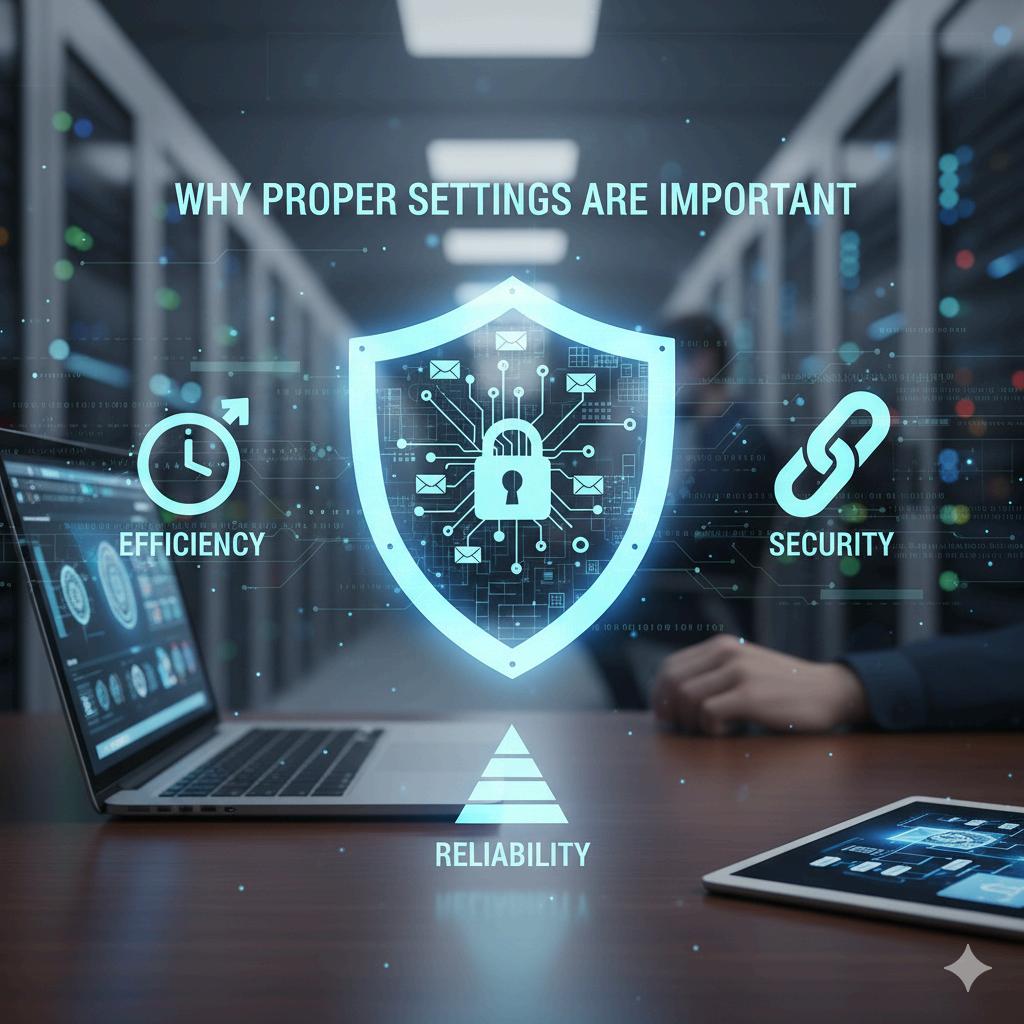
Prevents common problems like undelivered emails or login errors. Keeps access consistent across phones, laptops, and web browsers. Helps teams stay connected with fewer technical interruptions.
Example: A project team using exchange email server settings can share updates instantly across devices.

Incoming Mail Server: Receives messages into your inbox.
Outgoing Mail Server (SMTP): Sends emails safely to recipients.
Username & Password: Secure login to access your account.
Port Numbers & Security Options: Protect the connection during transmission.
Example: Many Exchange accounts use SSL on Port 443 for safe connections.
Centralized control of emails for all staff.
Access the same inbox on mobile and desktop without errors.
Share calendars, contacts, and tasks seamlessly.
Example: Remote workers rely on exchange email server settings to keep schedules aligned across locations.
“Clear settings mean clear communication.”

Double-check the server name, email domain, and login details.
Use SSL/TLS security options for safe connections.
Keep a written or digital note of your settings for easy reference.
Reach out to IT support if you face repeated errors.
Example: Taking a screenshot of your server setup helps when reinstalling email on a new device.
info@itsupportsolutions.ae