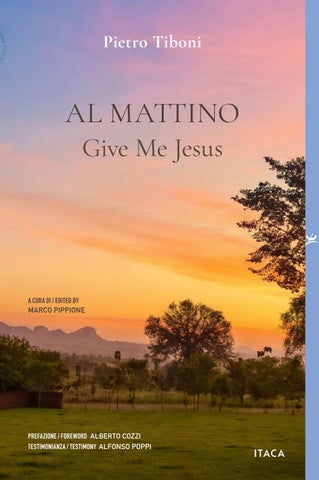
AL MATTINO Give Me Jesus

A CURA DI / EDITED BY MARCO PIPPIONE
PREFAZIONE / FOREWORD ALBERTO COZZI
TESTIMONIANZA / TESTIMONY ALFONSO POPPI
al mattino give me jesus
Questo libro appartiene a / This book belongs to _____________________
Pietro Tiboni
AL MATTINO GIVE ME JESUS
A cura di / Edited by Marco Pippione
Prefazione / Foreword Alberto Cozzi
Testimonianza / Testimony Alfonso Poppi
al mattino give me jesus
Pubblicare è dare alla luce.
Desideriamo mettere in luce parole che accompagnino le persone nella vita.
Questa è la responsabilità che abbiamo come editori. Libri compagni di viaggio.
Publishing means bringing things to life.
Our aim is to highlight words that accompany people through their lives. This is our responsibility as publishers.
Books as travelling companions.
Nelle edizioni Itaca / Other Titles Published by Itaca
Filippo Ciantia
Padre Tiboni «uno tra i più santi uomini che abbiamo»
Father Tiboni “one of the holiest men we have”
Elio Croce fratello missionario comboniano
Elio Croce Comboni Missionary Brother
Tu sei un valore. Le donne di Rose. Work in progress per una vita
A cura di Matteo Severgnini, Mónica Fontana Abad
Pietro Tiboni
Al mattino Give Me Jesus www.itacaedizioni.it/al-mattino-give-me-jesus
Prima edizione bilingue / First Bilingual Edition: agosto / August 2026
Traduzione inglese / English Translation: Neil Bartholomew
© 2026 Itaca srl, Castel Bolognese
All rights reserved
ISBN 978-88-526-0853-7
Foto di copertina / Cover Photo: Alba a Kalongo / Dawn in Kalongo (Giuseppe Bottelli)
Progetto fotografico / Photography Project: Giuseppe Bottelli, Filippo Ciantia, Marco Pippione
Crediti fotografici / Photo Credits: Stefano Antonetti (179), Giuseppe Bottelli (16, 17, 40, 54, 55, 96, 97, 112, 113, 134, 135, 152, 178, 190), Filippo Ciantia (67), Samuele Rizzo (191), Ivone Rizzo (221), Giorgio Taglietti (41, 220)
Mappe / Maps: Sofia Crosta
Stampato in Italia da / Printed in Italy by Modulgrafica Forlivese, Forlì (FC)
Seguici su / Follow us on
Itacalibri Itacalibri
Veni Sancte Spiritus, Veni per Mariam.
Prefazione
La cosa più bella e preziosa di questi frammenti di preghiera e meditazione che padre Tiboni offriva quotidianamente ad amici e conoscenti sparsi per il mondo è il coinvolgimento nel suo dialogo con Cristo. Chi vi entra è subito stimolato a rimettere Cristo nel suo sguardo, ritrovando così un modo nuovo e promettente di stare di fronte alla realtà. Si può allora riassaporare il significato intenso delle circostanze della vita, vissuta al cospetto del Mistero e nella prospettiva del Destino. Si tratta di fare un’esperienza cristiana in senso pieno, dove con “esperienza” si deve intendere il recupero del nesso che l’agire ha con la sorgente ultima di tutto, cioè col mistero di Dio. Impressiona la forte connotazione “cristocentrica” della vita spirituale di padre Tiboni, dove con “cristocentrismo” non si intende un’affermazione astratta e intellettualistica della centralità di Cristo. Si tratta piuttosto di un’esperienza quotidiana, che si traduce nella ripresa, in apertura di ogni riflessione, dell’invocazione del suo nome, in un dialogo ininterrotto.
Vi troviamo una testimonianza fresca e convincente e una traduzione esistenziale dell’affermazione dello starets Giovanni all’Imperatore: «Quello che noi abbiamo di più caro nel cristianesimo è Cristo stesso. Lui stesso e tutto ciò che viene da Lui, giacché noi sappiamo che in Lui dimora corporalmente tutta la pienezza della Divinità»1.
Ciò che rende particolarmente efficace ed edificante questa preghiera condivisa è proprio la concretezza della relazione con Cristo, un rapporto che si incarna in una storia ed esprime un’esperienza quotidiana, che si rinnova di continuo e ri-
1 V. Soloviev, Il racconto dell’Anticristo, Tipheret, Acireale 2017, p. 72.
Foreword
The most beautiful and precious thing about these fragments of prayer and meditation that Father Tiboni offered daily to friends and acquaintances scattered around the world is the way he drew the reader into his dialogue with Christ. Those who enter into this dialogue are immediately stimulated to focus once more on Christ (back into their gaze), thus discovering a new and promising way of facing reality. It becomes possible to savour once again the intense meaning of life’s circumstances, lived in the presence of Mystery and in the perspective of Destiny. It is a question of having a Christian experience in the fullest sense of the word, where ‘experience’ means recovering the connection that our actions have with the ultimate source of everything, in other words with the mystery of God.
The strong ‘Christocentric’ connotation of Father Tiboni’s spiritual life is striking, where ‘Christocentrism’ does not mean an abstract and intellectualistic affirmation of the centrality of Christ. Rather, it is a day-to-day experience, which expresses itself in the invocation of his name at the beginning of every reflection, in an uninterrupted dialogue.
We find here a fresh and convincing testimony and an existential translation of the statement made by the starets John to the Emperor: “What we value most in Christianity is Christ himself – in his person. All comes from him, for we know that in him dwells all fullness of the Godhead bodily.”1
What makes this shared prayer particularly effective and edifying is precisely the concreteness of the relationship with Christ, a relationship that is embodied in a story and expresses
1 V. Soloviev, A Short Story of the Antichrist.
mane aperta alla vita, senza preclusioni o difese selettive, ma pronta a riprendere il confronto col reale in tutti i suoi fattori.
Sono pienamente realizzate qui le raccomandazioni di don
Luigi Giussani: «il rapporto mio con Cristo non può non passare attraverso la modalità concreta di una storia, dentro la quale Lui mi si è manifestato persuasivamente, […] suscitando capacità creativa in me. […] senza passare attraverso le modalità concrete, storiche, attraverso le quali Cristo ci si è presentato, anche di sfuggita, ma persuasivamente […], se insomma non viviamo il rapporto con la modalità concreta con cui Cristo ci è venuto incontro in modo da interessare la nostra umanità, […] senza questo spessore storico noi perseguiamo una nostra immagine di Cristo»2.
Vivere facendo esperienza all’interno del dialogo con Cristo significa ritrovare il vero significato delle cose: «Le persone diventeranno più sé stesse, se guardate con gli occhi di Cristo, alla luce di Cristo; le cose diventeranno più sé stesse se afferrate con l’amore con cui le afferrava la mano di Cristo»3.
La conferma toccante di questa attitudine la troviamo nelle riflessioni sul dolore, sul limite, sull’impossibilità di prendersi cura di tanti, troppi bisognosi. L’esperienza cioè di un’impotenza strutturale, che però non diventa fuga né si trasforma in polemica rabbiosa o indignazione, ma si risolve in un umile affidamento a Colui che tutto può.
Ritroviamo anche qui un tratto significativo della spiritualità di don Giussani: si può accogliere l’altro e portarlo con sé anche nel proprio limite e nella propria impotenza soltanto affidandolo insieme a sé alla potenza di Dio. Solo l’amore di Cristo può far emergere questa suprema umiltà del proprio limite, dell’impotenza che non diventa mancanza di generosità o fuga o chiusura, ma accoglienza dell’altro e del suo dolore
2 L. Giussani, Il miracolo dell’ospitalità, Piemme, Casale Monferrato 2012, pp. 32-33.
3 Ivi, p. 37.
a daily experience, which is continually renewed and remains open to life, without preclusions or selective defences, but is ready to engage once again with reality in all its factors.
The recommendations of Fr Luigi Giussani are fully realised here: “relationships with Christ – my relationship with Christ – can only pass through the concreteness of a story within which He persuasively and pedagogically shows Himself to me, evoking a creative capacity within me. […] without passing through historical, concrete ways through which Christ made Himself known to us in a persuasive way, even if it was only a moment […] if, in short, we do not live in relationship with the concrete way through which Christ came toward us and engaged our humanity, […] without this historical depth, we pursue our own image of Christ […]”.2
Living through a continual dialogue with Christ means rediscovering the true meaning of things: “When seen with the eyes of Christ, in the light of Christ, people become more themselves, and things, too, if held in the same love with which Christ loved us, become more themselves”.3
We find a touching confirmation of this attitude in the reflections on pain, on limitation, on the impossibility of taking care of so many – too many – people in need. That is to say, the experience of a structural impotence, which, however, does not become a way to run away from the problem or vent itself in angry outbursts or indignation, but resolves itself in a humble entrusting of ourselves to the One who can do everything.
Here, too, we can find a significant feature of Fr Giussani’s spirituality: we can embrace another person and carry that person along, despite our own limitations and impotence, only by putting that person along with ourselves entirely in God’s hands. Only the love of Christ can bring out this supreme humility of our own limitations, of powerlessness, which does
2 L. Giussani, The Miracle of Hospitality. Seattle, WA: Slant Books, 2023, p. 16
3 Ibid., p. 19.
come parte di me nell’affidamento a Dio, così che quel poco che si può fare e si riesce a fare diventa lo spazio di abbandono a Colui che tutto fa. «È una cosa che può lasciare nella pace solo se io offro a Cristo il dolore di questo o di quello»4.
In molte preghiere, nelle quali si sente sfidato da tanta sofferenza umana, padre Tiboni è testimone credibile ed efficace della pace che proviene da uno stile di vita definita dalla dimensione dell’offerta, laddove il termine “offrire” significa anzitutto rivolgersi a Cristo dicendogli: «Riconosco Cristo che Tu sei la consistenza di questa cosa qui. È un dolore? Benissimo: Tu sei la consistenza del mio dolore! E proprio in quanto tu sei la consistenza del mio dolore, il mio dolore diventa una cosa grande, diventa parte della tua azione redentrice, fa parte dell’azione con cui Tu domini il mondo». Da questa offerta scaturisce la supplica: «Se Tu, Cristo, sei la consistenza di questo, mostrati in questo! Ti prego di mostrarti in questa mia cosa, in questa mia azione, in questo mio dolore. E se Tu, Cristo accetti di mostrarti in questo mio dolore, questo mio dolore è un paradosso grandioso: diventa, non dico un sollievo, ma una gioia; diventa l’argomento e la radice di pace nel mondo»5. Queste brevi meditazioni e invocazioni costituiscono una vera e propria scuola di preghiera, fatta meno di teorie e consigli astratti, quanto piuttosto di stimoli concreti a purificare lo sguardo e a disporsi nella giusta postura di fronte al Mistero. Un dono spirituale prezioso.
Don Alberto Cozzi
Docente di teologia sistematica presso la Facoltà Teologica di Milano
4 Ivi, p. 82
5 A. Savorana, Vita di don Giussani, Rizzoli, Milano 2013, p. 882, Esercizi dei preti a La Thuile nel 1993.
not become a lack of generosity or a form of escape or closure, but rather the acceptance of the other person and their pain as part of ourselves in the act of entrusting ourselves to God, so that the little we can do and effectively manage to do becomes an act of abandonment to the One who does everything. “It is something that can leave me in peace only if I offer Christ the pain of my limits and of those people […].”4
In many of his prayers, in which he feels challenged by so much human suffering, Father Tiboni is a credible and effective witness to the peace that comes from a lifestyle defined by the dimension of offering, where the term ‘offering’ means first and foremost turning to Christ and saying to him: “I recognize, o Christ, that You are the substance of this thing in front of me. Is it pain? That’s just fine: You are the substance of my pain! And to the extent You are the substance of my pain, my pain becomes something great, becomes a part of Your redeeming work, becomes a part of the same action with which You dominate the world.” From this offering springs the supplication: “If you, o Christ, are the substance of this thing, then show yourself in it! I ask you to show yourself in what I’m doing, in this action of mine, in my suffering. And if you, Christ, are willing to show yourself in my suffering, then my suffering is a magnificent paradox: it is transformed not into comfort, but joy. It becomes the evidence and the root of peace in the world: […].”5
These brief meditations and invocations constitute a veritable school of prayer, consisting less of abstract theories and advice than of concrete stimuli to purify our gaze and to enable us to adopt the right stance in the face of the Mystery. A precious spiritual gift.
Father Alberto Cozzi Professor of Systematic Theology
at the Theological Faculty of Milan
4 Ibid., p. 51.
5 A. Savorana, The Life of Luigi Giussani. McGill-Queen’s University Press, 2018, p. 874 – Spiritual Exercises for priests in La Thuile in 1993.
Introduzione
Questa pubblicazione intende contribuire a tenere viva la memoria di padre Pietro Tiboni (1925-2017) – cui è già stato dedicato un fondamentale volume biografico da chi lo conobbe molto meglio di chi scrive1 –, analizzando strumenti che il missionario comboniano usò fra i primissimi in modo tanto originale, quanto efficace sul piano pastorale: sms e email.
All’inizio del XXI secolo padre Tiboni, allora già quasi ottantenne, intuì le straordinarie possibilità di comunicazione insite nei sempre più evoluti dispositivi informatici e, superando molte limitazioni tecniche, anticipò l’efficacia dei social, attraverso la diffusione di messaggi individuali da parte di chi li riceveva alle proprie reti, raggiungendo centinaia e centinaia di persone, creando una sorta di piattaforma di fede e amicizia.
Per lui si trattò di un modo nuovo, del tutto inimmaginabile quando era partito per l’Africa nel febbraio 1957, una modalità insolita con cui condividere il tesoro per cui aveva impegnato tutta la propria vita.
Iniziò così ad inviare ogni giorno una breve mail o un sms ad amici e conoscenti che in numero crescente lo avevo incontrato e lo seguivano, in Italia e un po’ in tutto il mondo, colpiti dalla profondità della sua fede, dal suo carisma, dalla sua travolgente personalità.
1 F. Ciantia, Padre Tiboni «uno tra i più santi uomini che abbiamo», Itaca, Castel Bolognese 2022.
Introduction
This publication aims to keep alive the memory of Father Pietro Tiboni (1925-2017) – to whom an important biographical volume has already been dedicated by those who knew him much better than the author1 – by analysing the tools that the Comboni missionary was one of the first to use in such an original and effective way at a pastoral level: text messages and emails.
At the beginning of the 21st century, Father Tiboni, then almost 80 years old, recognised the extraordinary communication possibilities inherent in increasingly advanced digital devices and, overcoming many technical limitations, adopted a system that was later to ensure the comunicative effectiveness of the social media, namely the dissemination of individual messages by those who had previously received them on their own networks, thus reaching many hundreds of people and creating a sort of platform of faith and friendship.
For him, it was a new way, something he couldn’t possibly dream of when he left for Africa in February 1957, an unusual way to share the treasure to which he had devoted his entire life. He thus began sending a short email or text message every day to friends and acquaintances who had met him and followed him, both in Italy and around the world, struck by the depth of his faith, his charisma and his overwhelming personality.
1 F. Ciantia, Father Tiboni “one of the holiest men we have”, Itaca, Castel Bolognese 2024.
Leggendo questi messaggi, brevi pensieri e riflessioni talvolta fulminee che vanno dal 2002 al 2014, ci si trova di fronte –prima ancora che a considerazioni indirizzate a determinate persone, spesso a commento di passi evangelici – innanzitutto ad un uomo che prega e dialoga con Cristo (e la Madonna), spesso sottoforma di vere e proprie invocazioni.
Anche dopo la sua morte, sono tantissimi coloro che ancora ricevono quotidianamente i suoi messaggi, “girati” dalle persone che più si affezionarono a Tiboni.
Le pagine che seguono non vogliono essere una raccolta cronologica, bensì una scelta suddivisa per temi, ovvero i tratti più autentici della multiforme personalità di padre Tiboni.
Sono testi che non hanno alcuna velleità letteraria e, anzi, per la propria natura di scritti “immediati” lasciano trasparire anche i diversi stati d’animo di padre Tiboni mentre li scriveva: gioia, dolore, preoccupazione, ironia, umorismo, sarcasmo, severità, accondiscendenza, commozione…
Si è scelto di privilegiare la riproduzione dei messaggi, proprio per lasciar parlare padre Tiboni il più possibile, limitandosi a poche righe di presentazione o di raccordo, nella speranza di permettere al lettore di incontrarlo (o ri-incontrarlo) in modo semplice e diretto.
Chi ha curato questo volume vuole infine esprimere la propria gratitudine per avere avuto occasione di incontrare di persona padre Tiboni più volte, durante i suoi annuali viaggi in Italia e per averlo potuto incontrare di nuovo, ogni giorno, ricevendo i suoi messaggi dall’amico Giuseppe Bottelli, che qui voglio ringraziare, custode fedele di tali messaggi, quotidianamente trasmessi a tantissime persone.
Un grande ringraziamento va da ultimo sia a Neil Bartholomew per la bella traduzione e l’impegno profuso, sia a Filippo Ciantia per l’accurata attività di revisione svolta.
Marco Pippione
Reading these messages, short thoughts and reflections, sometimes fleeting, dating from 2002 to 2014, we find ourselves faced not so much with considerations addressed to specific people, often commenting on passages from the Gospel, but above all with a man who prays and converses with Christ (and Our Lady), often in the form of genuine invocations.
Even after his death, there are still many who receive his messages daily, ‘forwarded’ by the people who had grown especially attached to him.
The following pages are not intended to be a chronological collection, but rather a selection divided by theme, i.e. the most authentic traits of Father Tiboni’s multifaceted personality.
These texts have no literary pretensions and, indeed, due to their ‘immediate’ nature, they also reveal Father Tiboni’s different states of mind as he wrote them: joy, pain, concern, irony, humour, sarcasm, severity, indulgence, emotion…
The decision was made to focus on reproducing the messages, precisely to let Father Tiboni speak as much as possible, limiting the text to a few lines of introduction or connection, so that the reader may encounter him again – or for the first time – in a simple and direct manner.
Finally, the editors of this volume would like to express their gratitude both for having had the opportunity to meet Father Tiboni in person several times during his annual trips to Italy and for having had a chance to meet him again every day by receiving his messages in recent years, from our friend Giuseppe Bottelli, whom I would like to thank here, the faithful custodian of these messages, which he continues to share daily with so many people.
Finally, heartfelt thanks go both to Neil Bartholomew for his fine translation and dedicated commitment, and to Filippo Ciantia for the careful revision work he carried out.
Marco Pippione
al mattino give me jesus
La fede: riconoscere con amore l’amore di Cristo
Faith: Recognising Christ’s Love with Love 17
Faith: Recognising Christ’s Love with Love
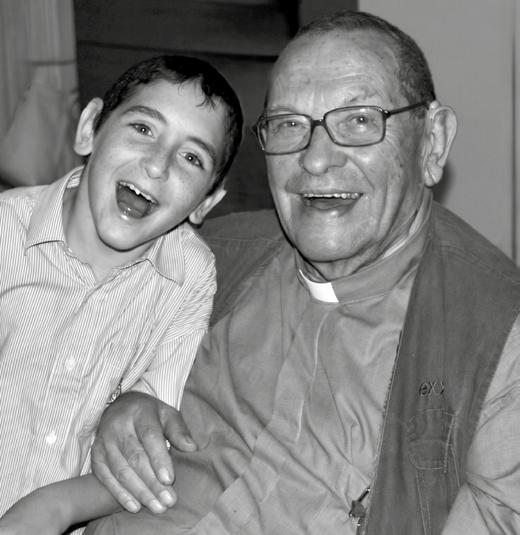
Vigevano, Casa di Accoglienza “La Fucina”, 15 agosto 2010. La fede gioiosa di padre Tiboni, contagiosa e condivisa da Rickie.
Vigevano, “La Fucina” Hospitality House, 15 August 2010. Fr Tiboni’s joyful faith, contagious and shared by Rickie.
18
La fede: riconoscere con amore l’amore di Cristo
Quello che emerge, innanzitutto, in padre Tiboni è la fede in Cristo. Parrebbe ovvio, per un sacerdote, per un missionario, per un cristiano, ma colpisce molto la sua specificità, fatta di semplicità, certezza, affezione, abbandono fiducioso. Una fede che è tutt’una con la preghiera.
21 gennaio 2009
Una grande folla, sentendo ciò che faceva, si recò da lui. (Mc 3,8)
O Cristo, tu non sei mai troppo impegnato o distratto: ma tu mi ami e hai cura di me come fossi l’unico. E il mio cuore scoppia di gioia e di fiducia.
4 marzo 2014
«In verità vi dico: non c’è nessuno che abbia lasciato… a causa mia e a causa del Vangelo, che non riceva già al presente cento volte tanto, insieme a persecuzioni, e nel futuro la vita eterna». (Mc 10,29-30)
Cristo, tu sei il mio tesoro, il cuore del mio cuore e sei tutto di me. Tu sei il mio presente, passato e futuro. Tu sei più del centuplo adesso, senza di te la mia vita non avrebbe alcun gusto e sapore. Tu mi doni il tuo infinito amore per le persone che incontro e a molti doni il tuo amore per me. Signore, ti prego, fa’ che tutti scoprano la tenerezza che hai per ciascuno di loro.
19 febbraio 2014
Allora preso il cieco per mano, lo condusse fuori del villaggio e, dopo avergli messo della saliva sugli occhi, gli impose le mani e gli chiese: «Vedi qualcosa?». Quegli, alzando gli occhi, disse: «Vedo gli uomini, poiché vedo come degli alberi che camminano».
(Mc 8,22-24)
What emerges above all in Father Tiboni is his faith in Christ. This may seem obvious of a priest, a missionary, a Christian, but what is striking is its specificity, a combination of simplicity, certainty, affection, and trusting abandonment. It is a faith that is one with prayer.
21 January 2009
Hearing what he was doing, a large number of people came to him. (Mk 3:8)
O Christ, you are never too busy or distracted: you love me and care for me as if I were the only person on Earth. And my heart bursts with joy and trust.
4 March 2014
“I say to you, there is no one who has given up… for my sake and for the sake of the gospel who will not receive a hundred times more now in this present age, with persecutions, and eternal life in the age to come.” (Mk 3:29-30)
Christ, you are my treasure, the heart of my heart, and you are my everything. You are my present, my past, and my future. You are more than a hundredfold now; without you, my life would have no taste or flavour. You bestow on me your infinite love for the people I meet, just as you bestow your love for me on many others. Lord, please let everyone discover the tenderness you feel for each of them.
19 February 2014
He took the blind man by the hand and led him outside the village. Putting spittle on his eyes he laid his hands on him and asked, “Do you see anything?” Looking up he replied, “I see people looking like trees and walking.” (Mk 8:22-24)
La fede: riconoscere con amore l’amore di Cristo
Cristo, prendimi per mano, conducimi con te, imponi le tue mani sopra di me, parla al mio cuore affinché io entri in grande intimità con te. Così matura la mia fede e si fa più chiaro l’occhio ogni giorno fino a raggiungere la chiarezza finale nella visione beatifica del tuo volto umano-divino. Concedi la divina visione di fede a tutti, specialmente ai più ciechi.
25 febbraio 2010
«Quanto più il Padre vostro che è nei cieli darà cose buone a quelli che gliele domandano». (Mt 7,11)
Cristo, tu insisti che io devo chiedere e che il Padre nostro ascolta e a me sembra che la preghiera e il grido al Padre non funzioni e mi trovo davanti al mare del silenzio di Dio. Ma è ragionevole che io mi affidi alle tue parole piuttosto che a quel che appare e continuo a mendicare.
11 marzo 2010
«Non sei lontano dal regno di Dio». (Mc 12,34)
Cristo, se lo scriba ha risposto così bene, cosa gli manca per entrare nel regno? Gli manchi tu. Senza te anche ciò che è perfetto è insipido. Io ti amo, mio Dio, contemplandoti così inchiodato alla Croce per amor mio. Amo il tuo amore; al di là dei tuoi doni e promesse, voglio, mio Dio, amarti ugualmente.
2 maggio 2004
«Chi crede in me farà le mie stesse opere e ne farà anche di più grandi». (Gv 14,12)
«Chi crede in me farà le mie stesse opere e ne farà anche di più grandi». Queste parole sono scioccanti! Dove è la mia fede? Dove sono le mie opere? Signore, credo in te, donami di fare tutto quello a cui mi chiami!
Faith: Recognising Christ’s Love with Love 21
Christ, take me by the hand, lead me along with you, lay your hands on me, speak to my heart so that I may enter into deep intimacy with you. In this way my faith matures and my sight grows clearer each day until I reach final clarity in the beatific vision of your human-divine face. Grant the divine vision of faith to all, especially to the spiritually blind.
25 February 2010
“How much more will your heavenly Father give good things to those who ask him.” (Mt 7:11)
Christ, you insist that I must ask and that our Father listens, but my impression is that prayer and crying out to the Father do not work, and I find myself facing the sea of God’s silence. Yet it is reasonable for me to trust your words rather than what appears, and so I continue to beg.
11 March 2010
“You are not far from the kingdom of God.” (Mk 12:34)
Christ, if the scribe answered so well, what does he still lack to enter the kingdom? He lacks you. Without you, even what is perfect is insipid. I love you, my God, contemplating you nailed to the Cross for my sake. I love your love; beyond your gifts and promises, my God, I want to love you just the same.
2 May 2004
“Whoever believes in me will do the works that I do, and will do even greater ones than these.” (Jn 14:12)
“Whoever believes in me will do the works that I do, and will do even greater works than these.” These words are shocking! Where is my faith? Where are my works? Lord, I believe in you, grant that I may do everything you call on me to do!
220 «Maria, Tu sei la Madre di Cristo, Madre della Comunione…»
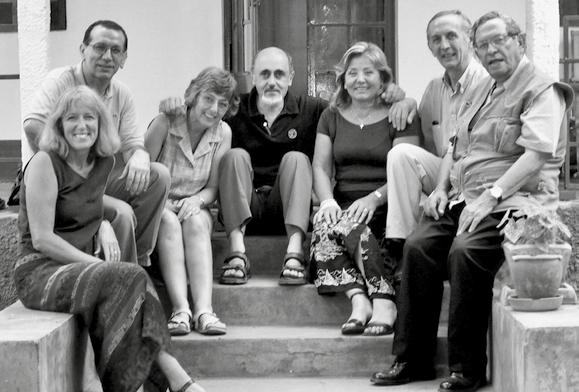
Kitgum, Casa dei medici all’ospedale St Joseph’s, 7 aprile 2005. Padre Tiboni con Enrico e Giovanna Guffanti, Giorgio e Pupa Salandini, Giorgio e Giovanna Taglietti.
Kitgum, Doctors’ House at St Joseph’s Hospital, 7 April 2005. Fr Tiboni with Enrico and Giovanna Guffanti, Giorgio and Pupa Salandini, and Giorgio and Giovanna Taglietti.
“Mary, You Are the Mother of Christ, Mother of the Communion…”
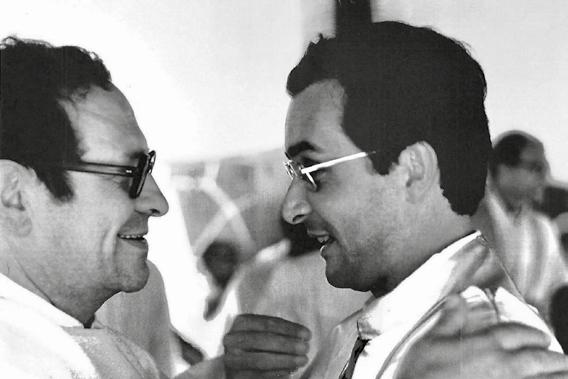
Kitgum, 15 agosto 1980. Padre Tiboni e don Alfonso Poppi nel giorno della sua ordinazione sacerdotale.
Kitgum, 15 August 1980. Fr Tiboni and Fr Alfonso Poppi on the day of Fr Alfonso Poppi’s priestly ordination.
Nota per il lettore
Nel testo italiano, le citazioni bibliche sono state mantenute secondo la versione che appare nei messaggi di padre Tiboni. Per la loro traduzione in inglese è stata utilizzata la versione della Bibbia reperibile nel sito della Santa Sede (vatican.va).
Note for the reader
The version of the Bible available on the Holy See’s website has been used for the translation of the biblical texts (vatican.va).
Questa pubblicazione è stata promossa dall’Associazione Amici di Tibo ed Elio APS per custodire la memoria di padre Pietro Tiboni.
Chi volesse inviare la propria testimonianza su padre Pietro Tiboni e ogni altro materiale utile a custodirne la memoria può scrivere a: info@tiboeliofriends.org
Per conoscere la figura di padre Tiboni consulta il sito: www.tiboeliofriends.org
This publication has been promoted by the Associazione Amici di Tibo ed Elio APS to preserve the memory of Father Pietro Tiboni.
Anyone wishing to send their testimony on Father Pietro Tiboni and any other material useful for preserving his memory can write to: info@tiboeliofriends.org
To learn more about Father Tiboni, visit: www.tiboeliofriends.org
Atto di Consacrazione della nostra vita a Cristo attraverso Maria, perché la Chiesa diventi sorgente di vita nuova per tutti i popoli
Maria, tu sei la Madre di Cristo, Madre della Comunione che Tuo Figlio ci dà, come dono sempre nuovo e potente, che è un gusto di vita nuova. Attraverso di Te noi perciò consacriamo tutto noi stessi, tutte le gioie e le sofferenze che Tuo Figlio sceglie per noi e la nostra stessa vita, affinché Tu diventi la Madre della Vita e Cristo doni a tutti gli uomini lo stesso gusto di vita nuova che ha donato a noi.
Amen. act of consecration of our lives to christ through mary, that the church become a source of new life for all the peoples
Mary, You are the Mother of Christ, Mother of the Communion Your Son is granting us, as a gift ever new and powerful, which is a taste of new life. Through You we hereby consecrate our whole selves, all the kinds of joys and sufferings Your Son will choose for us, and our very lives, so that You become the Mother of Life and that Christ give all the same taste of new life He has given us. Amen.
Al mattino dammi Gesù: è l’invocazione al cuore di questi brevi messaggi inviati da padre Tiboni agli amici.
In the Morning Give Me Jesus: this is the prayer at the heart of these brief messages sent by Father Tiboni to his friends.
«L’unico lavoro della mia vita è per la gloria umana di Cristo, perché egli sia conosciuto e riconosciuto come colui che trasfigura la nostra umanità».
«Voglio vivere perché tutti i disperati del mondo possano scoprire Te».
“The sole purpose of my life is the human glory of Christ, so that he may be known and recognised as the one who transfigures our humanity.”
“I want to live so that all the desperate people in the world may discover You.”
Pietro Tiboni
Pietro Tiboni (1925-2017) ha vissuto gran parte della sua vita tra Sudan e Uganda come missionario comboniano.
Pietro Tiboni (1925–2017) lived for much of his life in Sudan and Uganda, serving as a Comboni missionary.
€ 18,00