Contact quinn@sunislife.com August 2026 | Volume 2 | Issue 8
Sun Is Life ISSN 2329-8545 (USPS 023-149) is published monthly by Glo Tanning Inc., 2741 E Belt Line Rd Apt 113, Carrollton, TX 75006. Periodicals postage is paid at Flint, MI and additional mailing offices. POSTMASTER: Send address changes to: Sun Is Life, 12335 N Rockwell Ave., Oklahoma City, OK 73142. To authors, photographers and people featured in this publication: All materials, articles, reports and photos published in this publication are the property of Sun Is Life Magazine and cannot be used without written permission. The opinions and conclusions recited herein are those of the respective authors and not of Sun Is Life Magazine. Sun Is Life Magazine is not responsible for returning unsolicited manuscripts, photos or other materials. Every effort will be made however, to return rejected manuscripts, etc., if they are accompanied by sufficient first-class postage, but the publisher will not be responsible for loss of any such material.
One of the most interesting shifts happening in our industry isn’t just the rise of wellness services — it’s how naturally clients move between tanning and wellness, often without even realizing they’re expanding their routine. A client may walk in for a tan, but over time they become curious about red light therapy, hydration treatments, saunas, or recovery tools. Just as often, someone who first visits for wellness discovers the confidence and cosmetic benefits of UV or spray tanning. The journey flows both ways, and salons that understand this crossover are seeing stronger engagement and more loyal clients. Today’s consumer isn’t thinking in categories. They’re thinking about how they want to look, how they want to feel, and how they want to function in their daily lives. We’ve always been a Look Good/Feel Good industry. Tanning gives them confidence. Wellness gives them energy, recovery, and balance. Together, these services create a fuller experience — one that keeps clients coming back throughout the year. Successful owners are the ones recognizing that tanning and wellness aren’t separate lanes anymore. They’re part of a single continuum. When a client trusts your team with one service, they’re far more open to exploring the next. That’s why education, conversation, and a guided experience matter more than ever. This evolution is reshaping the modern salon. What used to be a seasonal business is becoming a year‑round destination for confidence, care, and personal improvement. And as clients move fluidly between tanning and wellness, they’re building deeper relationships with the businesses that support their goals. As we look ahead, the opportunity is clear: embrace the full journey. Celebrate the client who starts with UV and discovers red light. Welcome the wellness‑first client who decides to try spray tanning for the first time. Every pathway strengthens your business and expands what your salon can be. Our industry isn’t just changing — it’s growing in ways that create more value for clients and more stability for owners. And that’s something worth leaning into.
This month’s issue covers The Client Journey from Tanning to Wellness. Here’s to guiding clients through every step of that journey, wherever it begins!
Continued success to all,
Joe Schuster Editor-in-Chief
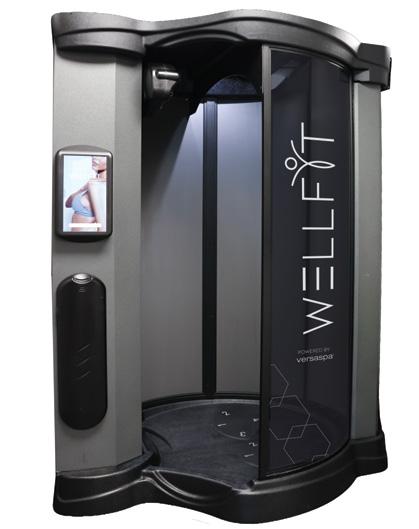
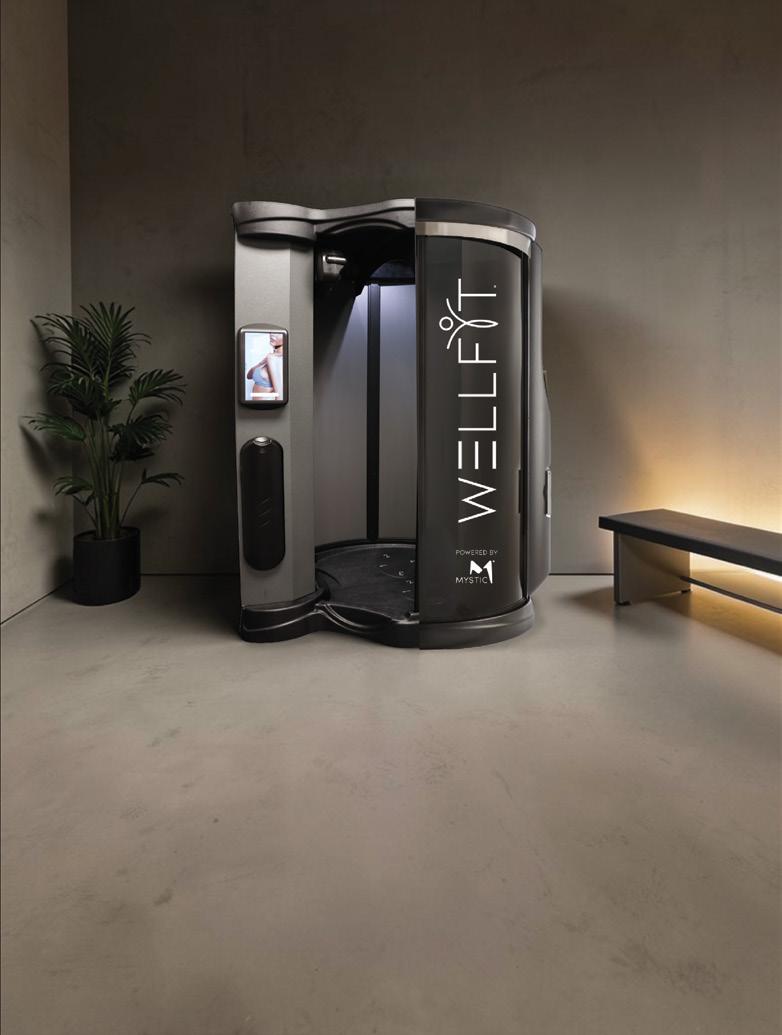
WellFit closes the gap in traditional skincare by supporting the 90% of skin that facial routines ignore: elbows, knees, feet, shoulders, back, and everywhere in between.
would tell their friends
loved how their skin felt 100% want to continue treatments 98%
Make your existing wellness amenities work harder Pair WellFit skincare with treatments your customers already love
DEPARTMENT
IN EVERY ISSUE
58 Sun is Life The Experts
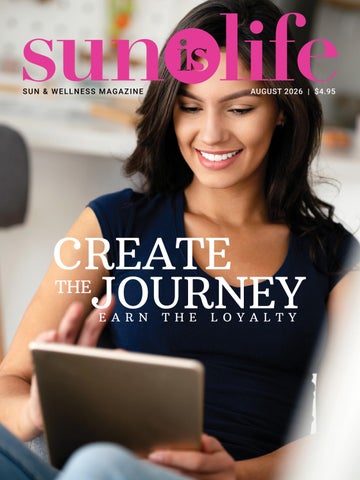
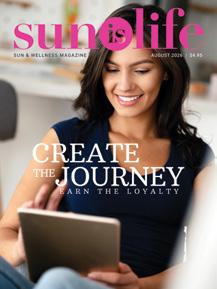
ABOUT THE COVER
The journey from tanning to wellness explores how today’s salons are evolving into yearround destinations for confidence, health, and self-care. As clients naturally embrace both tanning and wellness services, salons have new opportunities to build stronger relationships, increase loyalty, and create personalized experiences that keep clients returning throughout every season.
From a Season to a Lifestyle: Building a Business That Outlasts the Seasons
BY ALIESHA COLVIN
There comes a point every year when the energy shifts.
The rush of spring has settled. The long summer days are winding down. And before anyone even looks at the numbers, you can almost hear the conversations starting.
“Things are slowing down.”
For a long time, that’s how I looked at August too. It felt like the moment we had to start preparing for the quieter season ahead.
Now, I think it’s one of the most important months of the year.
Not because of how many people walk through the door, but because of who keeps walking through it.
Summer brings in a lot of first time guests. They’re getting ready for vacations, weddings, reunions, or simply chasing that feeling that comes with a healthy glow. Some may never return.
But plenty of them do.
The interesting part is that when they come back, they’re usually not looking for the exact same thing they came in for the first time.
Maybe they ask about red light therapy because their shoulders have been bothering them. Maybe they’ve heard someone mention infrared sauna. Maybe they need help finding skincare that actually works. Maybe they simply enjoy how your salon makes them feel after a hectic week.
Somewhere along the way, tanning stops being the reason they visit. It becomes just one piece of a much bigger picture.
I think that’s where our industry is headed.
More and more, salons are becoming spaces where people come to invest in themselves. Yes, they want to look good. But they also want to feel good. They want a place that helps them unwind after work, prepare for a vacation, care for their skin, or simply carve out a little time for themselves in a busy week.
That changes the role we play.
We’re no longer introducing people to a single service. We’re introducing them to an experience that supports confidence, self care, and wellness in whatever way fits their life.
When you start looking at it through that lens, every interaction carries a little more weight.
A first visit isn’t just a sale. It’s the
beginning of a relationship.
A lotion recommendation isn’t just an add-on. It’s a chance to show someone you’re listening.
Taking a few extra minutes to answer questions or explain the benefits of a service may seem small at the moment, but those are often the interactions people remember. Clients don’t always remember the exact package they purchased. They remember how comfortable they felt. They remember whether someone took the time to help them make the right decision instead of the most expensive one.
Trust is built that way. Quietly, one conversation at a time.
Even a casual chat at the front desk can become the reason someone chooses your salon over every other option in town.
None of those moments feel especially significant by themselves.
Together, they’re what create loyalty.
The salons that thrive year after year usually aren’t the ones with the biggest promotion or the newest piece of equipment. Those things certainly matter, and innovation will always move our industry forward. But technology alone has never been what keeps people coming back.
People come back because they feel known.
They walk in and someone remembers their name. Their favorite room is ready. A staff member asks how their vacation went or follows up on a conversation from weeks before. Those little moments aren’t part of a marketing campaign. They’re simply signs that a client matters.
That’s something no seasonal special can replace.
As you read through this month’s issue, I hope you’ll think about your own client journey. Not as a sales funnel or a checklist, but as a collection of moments that shape how someone feels about your business.
What does a first time guest experience during those first few minutes?
What makes someone decide to come back a second time?
What encourages them to explore a new service, trust a recommendation, or tell a friend about your salon?
Those answers look a little different for every business, and that’s what makes this industry so exciting. There isn’t one perfect formula. There are simply businesses that continue showing up, building trust, and creating experiences that make people want to return.
Because that’s really what August represents.
Not the end of the tanning season.
It’s the beginning of something more sustainable.
It’s the point where a seasonal customer can become a year-round client. Where someone who walked in looking for a tan discovers a business that supports their confidence and well-being long after summer has passed.
Those relationships don’t happen overnight.
They grow through consistency, genuine care, and hundreds of small interactions that add up over time.
And in the end, those relationships are what carry our industry forward.
7 Questions with Taryn & James Godman
Building a Thriving MultiLocation Salon Busines
BY KRISTIN SMITHERS
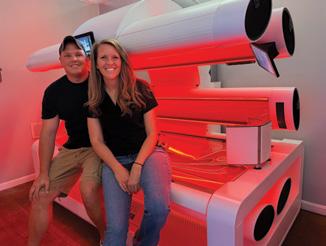
As the owners of Tropical Tan, Taryn & James Godman have spent years building a salon brand centered on exceptional customer experiences, smart growth, and operational excellence. What began as a single location in Northern Kentucky, has grown into three successful salons that blend tanning and wellness services within efficient, thoughtfully designed spaces. Their commitment to consistency, innovation, and client care has helped Tropical Tan become a trusted destination while proving that strong systems and great service can be just as important as square footage.
1. Tropical Tan has successfully grown to three locations while maintaining a relatively compact footprint. What inspired your business model, and what advantages have you found in operating efficient, smaller-space salons?
From the beginning, we wanted to create salons that were convenient, clean, and easy for clients to navigate. We focused on making the most of the space rather than simply adding more square footage. A smaller
footprint encourages efficiency, helps maintain consistency across locations, and allows us to stay focused on the client experience. We’ve found that thoughtful design and operational discipline can be just as important as size.
2. Your salons offer a diverse mix of services, including UV tanning, VersaSpa spray tanning, red light therapy, and halotherapy. How did you decide which equipment and services were worth the investment, and what factors guide those decisions today?
Our approach has always been to invest in services that provide clear value to our clients and complement one another. We look for offerings that fit our brand, meet customer demand, and create a wellrounded wellness and tanning experience. Today, we continue to evaluate
opportunities based on client feedback, long-term sustainability, and how well they align with our overall business strategy.
3. Looking back, what has been the biggest risk you took as salon owners, and how did that decision ultimately impact your business?
Expanding beyond our first location was probably our biggest risk. Opening additional salons requires a significant commitment of time, resources, and confidence in your systems. While growth always comes
with challenges, it pushed us to become more organized, improve our processes, and think more strategically about the business. It ultimately helped strengthen the company and positioned us for future opportunities.
As Tropical Tan expanded, the operational challenges evolved alongside the opportunities. Building multiple successful locations meant developing systems that could grow with the business.
4. Every successful business experiences challenges. What has been one of the toughest obstacles you’ve faced while growing Tropical Tan, and what did you learn from it?
One of the biggest challenges has been maintaining consistency as we’ve grown. What works in a single location doesn’t always translate automatically across multiple stores. We learned the importance of building strong systems, training processes, and communication standards early. Consistency doesn’t happen by accident—it requires constant attention and a willingness to adapt.
5. Many salon owners struggle with maximizing revenue per square foot. What strategies have helped Tropical Tan generate strong performance from a smaller footprint without sacrificing the client experience?
We focus on making every area of the salon purposeful while keeping guest comfort and satisfaction front and center. A well-trained team, efficient scheduling, and offering complementary services all help maximize the value of the space. At the same time, we’ve never wanted efficiency to come at the expense of comfort, cleanliness, or convenience for our clients.
6. If a new salon owner approached you today with plans to open their first location, what is the one piece of advice you would give them before they sign a lease or purchase equipment?
Take more time than you think you need to understand your market and develop a clear business plan. Equipment and build-outs can be changed over time, but choosing the right location and having a solid understanding of your customer base are decisions that can impact your business for years. Start with a strong foundation and let growth follow.
7. Fun Question: If you could go back and give yourselves one piece of advice on the day you opened your very first salon, what would it be, and would you actually listen to it?
We’d probably tell ourselves to be patient and trust the process. In the early days, it’s easy to focus on every challenge and wonder if you’re making the right decisions. Looking back, many of the lessons that helped us grow came from working through those challenges. As for whether we’d listen? Probably not, but we’d appreciate the advice later.
As Tropical Tan continues to grow, Taryn and James Godman remain focused on the principles that have guided them from the beginning: thoughtful planning, operational consistency, and an unwavering commitment to delivering an exceptional guest experience. Their journey serves as a reminder that sustainable success isn’t measured by the size of a salon, but by the strength of its systems, the quality of its service, and the relationships built with every client who walks through the door.
EXTEND YOUR SKINCARE. INCREASE YOUR SALES.
WellFit supports full-body skincare results, gives clients product to take home and another reason to come back.
Purchase $250+ and receive a FREE marketing kit ($85 value) for in-location awareness.*
Use code WFATHOME at checkout.
*Availability and eligibility may vary by account
INSPIRED BY CLEAN BEAUTY
PARABEN
The Top Ten Training Rules Every Business Needs
Lessons I’ve Learned Building High-Performing Teams
BY AMBRIA HATCHER
I’ve spent more than 25 years training people in one of the highest-turnover industries there is. During that time, I’ve watched thousands of employees walk through the door. Some became incredible leaders. Others never made it past their first week.
When people ask me what makes the difference, they usually expect some complicated answer. The truth is, it rarely comes down to talent. Most of the time, it comes down to how they were trained.
Good training doesn’t happen because you have a great handbook or a few shadow shifts. It happens because you create clear expectations, stay consistent, and invest the time to teach people well. Looking back over the years, these are the ten training rules I’ve come back to again and again.
1. Customer Service Comes Before Everything
Before I teach someone how to clean a room or explain a membership, I want them to
understand one thing: our job is people.
Every guest who walks through the door should feel acknowledged. Smile. Say hello. Make eye contact. Be genuinely interested in helping them.
The technical side of the job can be learned. Making someone feel welcome is a choice they make every single day. If your guests don’t feel cared for, it won’t matter how clean your salon is or how great your services are.
People remember how you made them feel long after they’ve forgotten what you sold them.
2. Standing Around Is Never an Option
One of the first conversations I have with new hires is about initiative.
There will be moments when a trainer gets pulled away or business suddenly gets busy. That doesn’t mean learning stops.
Every new employee should have a
running list of productive tasks they can complete on their own. If they finish everything, they ask someone what else needs to be done. If they don’t know how to do something, they ask someone to teach them.
Curiosity is a better habit than waiting.
I’ve always believed busy people find ways to help. They don’t wait to be managed every minute of the day.
3. Orientation Sets the Tone
The first day tells a new employee almost everything they need to know about your business.
If onboarding feels organized, intentional, and welcoming, they’ll naturally assume your standards are too.
Even if you can’t personally lead orientation every time, give them something structured. Walk them through your expectations, your culture, and the way your business operates.
Confusion on day one usually turns into inconsistency later.
CERTIFICATION TRAINING & PROFESSIONAL DEVELOPMENT
4. Hire for Attitude, Not Availability
I’ve passed on applicants with open schedules and hired people with limited availability because they had something far more valuable—a great attitude.
Schedules change. Life changes. Character doesn’t.
When you find someone who’s excited to learn, genuinely enjoys helping people, and fits your culture, you’ll almost always figure out how to make the schedule work.
Great people are hard to find. Don’t overlook them because the calendar isn’t perfect.
5. Hire More Than You Think You’ll Need
This one surprises people.
I rarely hire for exactly the number of openings I have because experience has taught me that not every new hire is going to stick.
Some decide the job isn’t for them. Some don’t meet expectations. Others simply aren’t the right fit.
Planning ahead saves you from constantly feeling like you’re hiring in crisis mode.
6. Train Together Whenever You Can
I’ve found people learn just as much from each other as they do from their trainer.
Questions get asked that someone else didn’t think to ask. Watching another trainee practice often helps concepts click in a different way.
Training in small groups also creates consistency. Everyone hears the same
information instead of each trainer explaining things differently.
7. The First Week Creates Habits
The standards you allow during someone’s first few days tend to become their normal.
If shortcuts are ignored early, they’ll be repeated later. If accountability is inconsistent, employees notice.
Those first shifts aren’t just about teaching tasks. They’re about showing people what excellence actually looks like inside your business.
It’s much easier to build good habits than it is to break bad ones.
8. Everyone Needs to Teach the Same Way
One of the quickest ways to frustrate a new employee is hearing three different answers to the same question.
“I do it this way.”
“Well, I do it differently.”
That creates uncertainty.
Your systems should be consistent enough that every trainer teaches the same process. When expectations stay consistent, employees become more confident because they know exactly what’s expected of them.
9. Telling Isn’t Teaching
One of the biggest mistakes I see is assuming people have learned something simply because they heard it once.
Most people don’t learn that way. They need to hear it, see it, practice it, ask questions, and repeat it. Then they need to do it again.
Training works best when you involve as many senses as possible and break information into manageable pieces instead of overwhelming someone all at once.
Repetition isn’t wasted time. It’s how confidence is built.
10. I Show You. You Show Me.
If there’s one training philosophy I’ve relied on more than any other, it’s this.
I show you.
Then you show me.
Not because I don’t trust you—but because that’s how I know you’ve truly learned it.
Watch people perform the task. Coach them through it. Let them make mistakes while you’re standing beside them.
Never assume understanding because someone nodded their head.
Real accountability starts after you’ve given someone every opportunity to succeed.
Training has never been about checking boxes for me. It’s about building people.
When employees know what’s expected, feel supported, and are given the tools to succeed, they usually rise to the occasion.
Strong teams aren’t created by accident. They’re built one conversation, one expectation, and one training moment at a time.
And that’s always worth the investment.
*for more specific information on indoor tanning training and certification, visit www.sunislife.com
The Confident Consultant: Influencing a Wellness Lifestyle, not just a tan
BY EMILY CLEMENTS
Moving into the change of seasons, our summer tan begins to fade, and the desire for that local tanning salon increases. This becomes the peak time for your salon staff to truly consult clients on the benefits of the salon wellness lifestyle, turning the occasional customer into a year-round client.
“A
confident consultant does more than recommend a service. They listen, educate, personalize, and help clients understand how each visit can support their overall lifestyle.”
opening a client’s mind to the full salon wellness experience. The Sun is Life certification course has recently added sections on red light therapy education. Visit www.sunislife.com to learn more about this certification course for your staff.
Fostering Client Connections
Making sure your staff helps clients achieve their wellness and lifestyle goals creates a greater opportunity to foster deeper relationships and stronger client connections. While checking in on product usage or how frequently clients rotate their UV beds is an important part of business operations, consultants should not forget to check in on the client themselves.
Getting to know clients on a more personal level can create the foundation for their wellness journey. Understanding their current lifestyle, such as what they do for work, what their fitness routine looks like, or how many children they have, allows consultants to recommend spa services that help the client feel better and see more value in their membership.
When a client is shown they can achieve more than physical results, and that your staff takes a genuine interest in them and their lifestyle, a membership at your salon becomes more than an optional expense. It becomes part of their routine.
A confident consultant does more than recommend a service. They listen, educate, personalize, and help clients understand how each visit can support their overall lifestyle. When clients feel seen beyond their tan, they begin to view the salon as part of their wellness routine, not just a seasonal stop. That is where true loyalty is built: through connection, confidence, and a wellness experience that keeps clients coming back all year long.
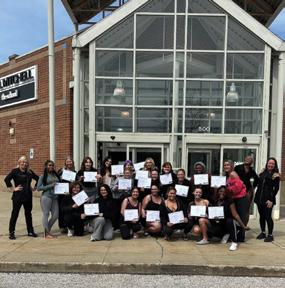
BECOME CERTIFIED WITH NORVELL UNIVERSITY
THE ORIGINAL & #1 PROFESSIONAL SPRAY TANNING CERTIFICATION PROGRAM
Partnering with norvell provides the bridge between self-taught skills & a certified professional spray tanning manufacturer curriculum. skills
YOUR PATH TO SUCCESS BEGINS HERE
Join our NU Educators for a full day of business building, technique honing and networking.
MO SEPT 9/13/26: Tan International, Phoenix, AZ NOV 11/1/26: Four Seasons National Tanning Expo, Ameristar Casino Resort Spa, St. Charles, MO
WINE DOWN WEDN ESDAYS
JOIN US FOR WINE DOWN WEDNESDAY AS WE CHAT ABOUT ALL THINGS SPRAY TAN BUSINESS!
THE LAST WEDNESDAY OF EVERY MONTH, 7PM EST
Heartland Tan’s MYB6 Salon Owners Retreat
A Fresh Venue, New Energy, and Unmatched Community
BY STAFF WRITERS
This year marked a venue change for Heartland Tan’s MYB6, moving to the Margaritaville Resort in Kansas City, where the tropical atmosphere brought fresh energy to the retreat. It proved to be the ideal backdrop for three days of learning, networking, and celebration in a relaxed, islandinspired setting.
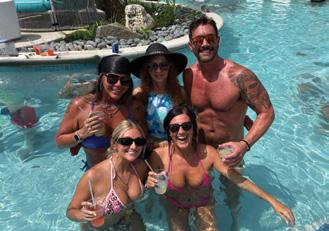
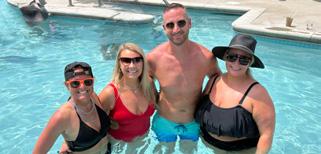
The weekend opened with a lively Welcome Pool Party sponsored by New Sunshine, giving attendees the chance to reconnect with friends, meet new ones, and ease into the event with sunshine, music, and conversation. As evening arrived, Innové hosted an Outdoor Movie Night under the stars, offering a casual, comfortable space for salon owners to unwind and connect.
Education Meets Collaboration
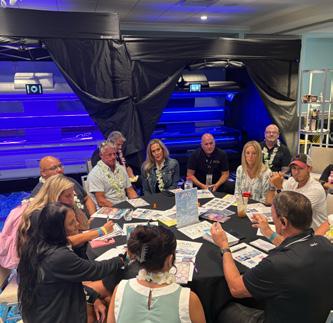
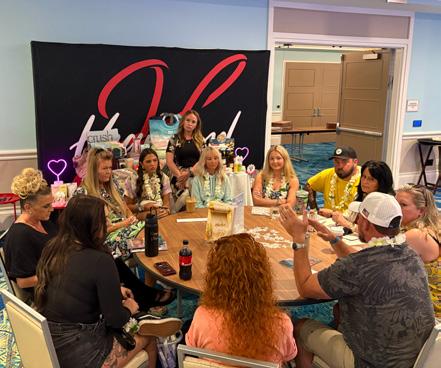
Day 2 and Day 3 shifted into the core of the retreat with the Owners Discussions, where salon professionals engaged in open, honest conversations about staffing, pricing, equipment investments, and evolving client expectations. Running alongside these sessions, the Networking Roundtables paired owners with vendors for rotating small-group discussions on lotions, marketing, equipment, and operations. Many attendees say these roundtables provide the most immediately useful ideas to take home.
A favorite MYB tradition continued with raffle drawings and vendor supplied prizes, ensuring everyone
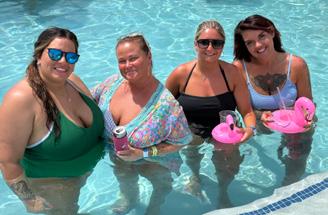
left with something extra. Evenings brought more fun, including a Margaritaville-themed Trivia Party hosted by Sun Evolutions. MYB6 wrapped with the Pink Flamingo Paradise Pool Party sponsored by Devoted Creations—a vibrant, memorable close to a weekend built on connection and community.
The new venue elevated the experience, blending education, inspiration, and genuine relationships in a setting that encouraged both learning and laughter.
What Attendees Had to Say
While the agenda offered plenty of educational opportunities, attendees consistently pointed to the relationships, conversations, and
MYB at Margaritaville: A Retreat Built on Learning, Connection, and Community
collaborative atmosphere as what made MYB6 truly memorable. Here’s what they had to say.
“At the risk of sounding repetitive for every post MYB, from our staff, vendor partners, and most of all the attending salon owners, the 6th annual gathering was the strongest yet. Participation at the roundtables was nothing short of fantastic. The new Margaritaville venue was the perfect choice for three of the most rewarding days of the year. Thanks to all!”
Brad Henson, Heartland Tan
“Our MYB events have combined fun and networking, and this one at Margaritaville exceeded expectations. We learned, connected, and left inspired. Now we’re securing next year’s venue and planning enhancements. We never intended to host two major events each year, but both now serve a purpose. Our February event energizes teams with education, launches, and networking—and based on the upcoming agenda, it’s going to be one for the books.”
Tammy Reed, Heartland Tan
“The MYB Retreat was an absolute blast! There is nothing better than getting out and spending real, faceto-face time with salon owners and industry friends and proving that yes, we can actually survive without communicating solely through Facebook, text messages, and emails. From amazing conversations and sharing ideas to learning from one another and celebrating each other’s successes, every moment was incredibly valuable. Cheers to next year!”
Gina Jaeger Morris, Sun Evolutions
“This is the event I look forward to each year! A great opportunity for salon owners to learn from world-class suppliers and, more importantly, their peers. Such collaboration and support amongst the group of salon owners. Not only developing business contacts, support, and knowledge, but also creating wonderful friendships that will pay dividends for years to come!”
Kevin Apgar, Light Sources
“Heartland has mastered something our industry needs more of… real connection. They don’t just bring people together; they create spaces where relationships are built, ideas
are shared, and people feel genuinely supported. In an industry driven by people, those connections become the foundation for growth, inspiration, and long-term success. Heartland reminds us that while products and business bring us together, relationships are what keep us coming back.”
Jessica Snider, New Sunshine
“One of the greatest benefits of MYB is the chance to connect with salon owners, entrepreneurs, manufacturers, and industry leaders from across the country. These relationships have helped me and my company grow tremendously. Heartland delivers world-class business advice, fresh ideas, and creates an environment where owners can learn and collaborate. The smallgroup roundtables make it easy to build meaningful connections with vendors and manufacturers. Heartland truly puts customers first, and their hard work shows in every event. I’m grateful for the friendships I’ve gained, and I always recommend MYB as the premier event for learning, growth, and connection.”
Cole Johnson, Haute Co. Brand
“I’ve been a salon owner for 10 years and feel like I have a pretty good grasp on the industry and my business. I’ve been to expos every year and all six MYB events hosted by Heartland. Without any hesitation, I can honestly say MYB events are the most beneficial use of my time and money. The folks I’ve gotten to know at MYB are more than smart—they’re brilliant. Owners and industry leaders coming together with a unified goal of helping every salon succeed is so unbelievably uplifting. And to top it off, this event is so much fun!”
Vic Perrin, Total Tan
“MYB was exactly what I needed as a small business owner. I left inspired, motivated, and full of ideas I could immediately bring back to my business. The education was incredible, but the connections and conversations with other business owners were just as valuable. I left Kansas City energized and excited for what’s next.”
Shay Ellen, The Sunshack & Co.
“The knowledge from the classes and the manufacturers is outstanding, and it works extremely well for us to be able to listen to what other owners have accomplished and ask our own questions. We have attended almost every year, including our first meeting with the Heartland team before we were actually the owners. We look forward to the upcoming events, learning more, and sharing
more with others within the industry.”
Terry & Christine Harris, Desert Tan
“As a newbie, I was pleasantly surprised by the amount of information I received. I met a great section of the country, and it was interesting hearing their take on the industry. I would especially recommend this to any new business owner.”
Genee Waleski, Get Tan
“The best opportunity in the industry to talk to other owners, get reallife ideas, and be reminded you are not alone in the daily struggles of this unique industry we are in. The friendships I have formed in the last two years of MYB are priceless!”
Nikki Capps, President/Owner, Tantalizing Salons
“I have always considered an event successful if I leave with even one valuable idea or relationship. MYB6 delivered far beyond that standard. I returned home inspired, energized, and equipped with numerous actionable ideas to implement in my business. Heartland’s Jessica Stone and their entire team made me feel welcomed, informed, and supported from the moment I registered through every step leading up to the event. Space for MYB7 is already on my calendar for next year!”
Lori VanDeWall, The Beach House Tanning Salon
“Every time I attend an event, I go in search of that one ‘golden nugget’ of knowledge or information that will make a meaningful impact when I get back home. This year, MYB exceeded expectations by providing several. The connections I made with fellow owners were the biggest takeaway. The conversations, collaboration, and friendships formed this year were unlike anything I’ve experienced before. Add in the incredible energy and fun that MYB is known for, and it was truly an unforgettable event.”
Emily Sigmon, Owner, Carolina Tan & Wellness
As MYB6 came to a close, one thing was clear: the retreat has become more than an annual event—it has become a cornerstone for salon owners who value education, collaboration, and genuine relationships. Whether attendees arrived looking for new business strategies, stronger vendor partnerships, or simply the reassurance that they are not navigating the industry alone, they left with renewed confidence and a network of peers invested in each other’s success. If MYB6 is any indication, Heartland Tan continues to raise the bar for what meaningful industry events can accomplish, and anticipation for MYB7 is already well underway.
- Tamie M., Salon Owner
A Complete Beginner’s Guide to Paid Advertising Google Ads for Businesses
BY MACKENZIE MORRIS
Paid advertising isn’t just for large companies with massive marketing budgets anymore. It’s one of the most effective ways for businesses of any size to generate leads, reach qualified customers, and create consistent growth.
If you’ve ever looked into digital advertising, you’ve probably been overwhelmed by terms like CPC, CTR, PMax, LSAs, Display Networks, Facebook Ads, and geofencing. With so many options available, it’s easy to wonder where to start.
This guide breaks it down in simple terms. You’ll learn:
• What Google Ads are
• The six main types of Google Ads
• When each campaign type works best
• How Google Ads compare to Facebook Ads and geofencing
• Why paid advertising has become an essential marketing tool for modern businesses
Whether you’re a local business, service provider, personal brand, or growing company, understanding how these advertising platforms work will help you invest your marketing dollars more strategically.
What Are Google Ads, and Why Do They Matter?
Google Ads, formerly Google AdWords, allow businesses to pay for premium placement within Google’s search results and advertising network. Instead of waiting for your website to rank organically, your business can appear when potential customers are actively searching for the products or services you provide.
Think about the last time you searched for something like:
“emergency plumber near me”
“best lash extensions in Oklahoma City”
“IV therapy OKC”
“wedding photographer Tulsa”
“brand strategist for entrepreneurs” Those searches weren’t casual browsing. You were looking for a solution.
That’s exactly what makes Google Ads so effective. Rather than interrupting someone’s day, they place your business in front of people who already have a need and are ready to take action.
Because Google Ads capture buying intent instead of simply attracting attention, they consistently deliver some of the strongest returns on investment for service providers, medical practices, local businesses, home service companies, and other high-ticket industries.
Showing up at the exact moment someone needs your business often makes the decision much easier.
The Six Types of Google Ads
Google Ads isn’t a single advertising product. It’s a collection of campaign types designed to reach customers at different stages of the buying journey.
Here’s how each one works.
1. Search Ads
Search Ads are the familiar text advertisements that appear at the top of Google’s search results. They remain the foundation of Google advertising because they connect businesses with people actively searching for specific products or services.
When someone enters a keyword related to your business, Google determines whether your ad is relevant and displays it to that potential customer.
Example:
A wellness clinic offering hormone testing wants to reach new patients. When someone searches for “integrative doctor near me,” the clinic appears at the top of the results. The searcher visits the website, learns more about the services, and schedules a consultation.
Search Ads work especially well because they’re shown to people who already know what they’re looking for. Whether someone needs an emergency dentist, kitchen remodeler, branding agency, or HVAC repair company, these ads place your business in front of highintent customers before they find your competitors.
Best for: Local businesses, professional services, high-ticket offers, and businesses solving immediate problems.
2. Display Ads
Display Ads are visual advertisements that appear across millions of websites, blogs, apps, and mobile games within Google’s Display Network.
Unlike Search Ads, these campaigns don’t require someone to be actively searching. Instead, they keep your business visible, helping build familiarity and encouraging potential customers to return when they’re ready.
Example:
A bride visits a wedding photographer’s website but leaves before submitting an inquiry. The next day, while reading a wedding planning blog, she notices the photographer’s Display Ad featuring one of the same images she admired earlier. The reminder brings her back to the website, where she finally reaches out.
Display Ads are especially valuable for retargeting visitors who have already shown interest in your business but haven’t converted yet.
Best for: Brand awareness, remarketing, and staying top of mind throughout a customer’s decision-making process.
3. YouTube Ads
Because Google owns YouTube, YouTube advertising is managed through the Google Ads platform and benefits from Google’s powerful audience targeting.
Video advertising allows businesses to educate potential customers, demonstrate expertise, and build trust in ways static ads simply can’t.
Ideal for:
• Brand awareness
• Educational content
• Product demonstrations
• Storytelling
Example:
A roofing company prepares for storm season by running a short YouTube video explaining common signs of roof damage. Homeowners within targeted ZIP codes see the ad before watching videos online. After recognizing potential warning signs on their own homes, many contact the company for inspections.
Video helps businesses build credibility while reaching highly targeted audiences at a relatively low cost compared to traditional television advertising.
4. Performance Max (PMax)
Performance Max is Google’s AIpowered campaign type designed to simplify advertising across multiple platforms.
Rather than creating separate campaigns for Search, Display, YouTube, Maps, Gmail, and Google’s Discovery Feed, Performance Max automatically distributes your ads wherever they’re most likely to generate results.
Google’s machine learning continually analyzes customer behavior to determine which placements are most likely to lead to conversions.
Example:
A lash studio wants to attract more first time clients. Instead of managing multiple campaigns, they launch one Performance Max campaign. Google automatically delivers ads across Search, YouTube, Display, Maps, Gmail, and other placements based on where potential customers are most likely to book an appointment.
For businesses looking to maximize reach without constantly managing individual campaigns, Performance Max offers a streamlined solution powered by automation.
5. Local Services Ads (LSAs)
Local Services Ads appear above traditional Google Search Ads, making them some of the most valuable advertising placements available for eligible service-based businesses. These ads also display the Google Guaranteed badge, giving potential customers added confidence before they even click.
Example:
A homeowner’s air conditioner stops working during an Oklahoma heat wave. They search for “HVAC repair near me” and immediately see several Google Guaranteed businesses at the top of the results.
If the HVAC company is running Local Services Ads, they’re among the first businesses the homeowner sees. With one click, the customer can call and schedule service.
Because Local Services Ads prioritize trust, convenience, and proximity, they often generate high-quality leads for businesses that rely on local customers.
Best for: Home services, contractors, legal professionals, medical providers, and other eligible local service businesses.
6. Google Shopping Ads
Google Shopping Ads display product photos, pricing, and store information directly within search results, making them one of the most effective advertising formats for eCommerce businesses.
Instead of reading through multiple websites, shoppers can compare products at a glance before deciding where to purchase.
Example:
A candle company wants to increase holiday sales. When someone searches for “pumpkin spice candle,” the business’s product appears near the top of the page with an image, price, and brand name.
The shopper already has much of the information needed to make a purchasing decision, creating a faster path from search to checkout.
Shopping Ads reduce friction in the buying process, which often leads to higher conversion rates for productbased businesses.
Best for: Retail stores, eCommerce brands, and businesses selling physical products.
Google Ads vs. Facebook Ads vs. Geofencing
Each advertising platform serves a different purpose. Understanding those differences helps businesses choose the right strategy instead of expecting one platform to accomplish everything.
Google Ads Capture Intent
Google Ads connect businesses with customers who are actively searching for a product or service. When someone searches for “IV hydration near me,” “roof repair,” or “branding agency,” they’re already looking for a solution. Google Ads help ensure your business appears during that critical decision-making moment.
Facebook Ads Build Interest
Facebook and Instagram Ads reach people while they’re browsing social media, even if they weren’t actively looking for your business.
These campaigns are ideal for introducing your brand, sharing educational content, telling your story, nurturing potential customers, and retargeting people who have already interacted with your website.
Geofencing Ads Target RealWorld Behavior
Geofencing uses location data to serve ads based on where people have been.
For example, someone who visits a competitor’s store, attends a trade show, walks into a gym, or spends time in a particular neighborhood can later receive your ads while browsing websites, using apps, or streaming television.
Rather than replacing Google or Facebook Ads, geofencing adds another layer of precision by targeting audiences based on real-world behavior.
Together, these three advertising methods create a wellrounded marketing strategy that reaches customers throughout every stage of the buying journey.
Why Most Businesses Benefit from Multiple Ad Types
Every advertising platform plays a different role, which is why many businesses see stronger results by combining multiple campaign types instead of relying on only one.
An effective Google Ads strategy can help businesses:
• Generate more qualified leads
• Increase local visibility
• Improve brand credibility
• Retarget interested customers
• Reduce dependence on organic social media
• Scale marketing efforts with greater consistency
The biggest advantage comes from using each platform for what it does best.
Google Ads capture customers who are ready to make a purchase.
Facebook and Instagram Ads build familiarity and nurture potential buyers who may not be ready yet.
Geofencing keeps your business visible to highly targeted audiences based on where they’ve been in the real world.
When these strategies work together, businesses create multiple opportunities for customers to discover, recognize, and ultimately choose their brand.
Paid Advertising Helps Your Business Stay Visible
Paid advertising has become an essential part of modern marketing. Whether you own a local service business, retail store, medical practice, or personal brand, showing up when customers need you can significantly impact growth.
Google Ads place your business in front of people actively searching for your services. Facebook and Instagram Ads help build awareness and strengthen relationships with potential customers. Geofencing adds another layer of targeting by reaching audiences based on their real-world activity.
Rather than relying on algorithms or hoping customers eventually find you, paid advertising allows you to take a proactive approach to visibility and lead generation.
When used strategically, these platforms work together to create a marketing system that attracts new customers, builds trust, and supports long-term business growth.
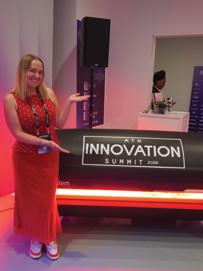
Innovation, Education, and the Future of Wellness: Reflections from the Athletech Innovation Summit
BY KRISTIN SMITHERS, CLT
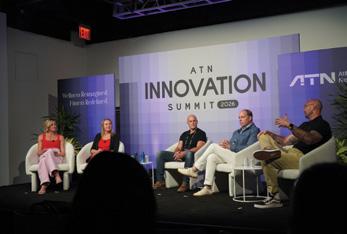
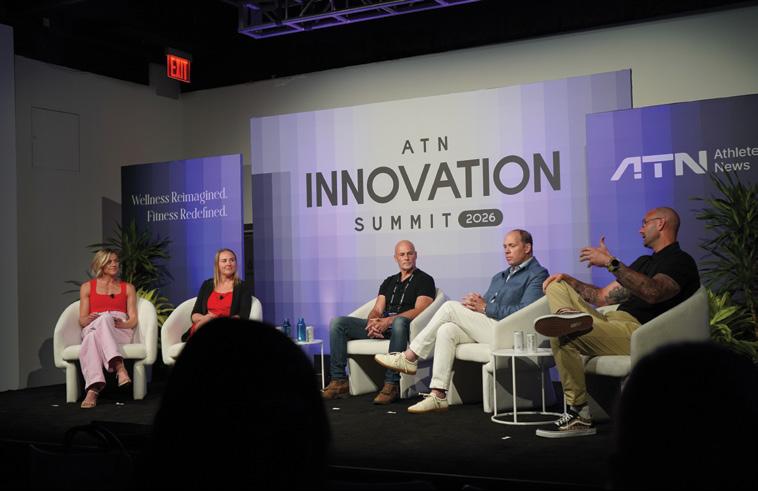
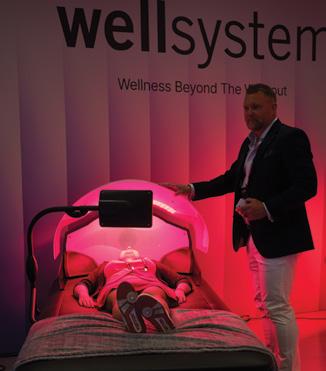
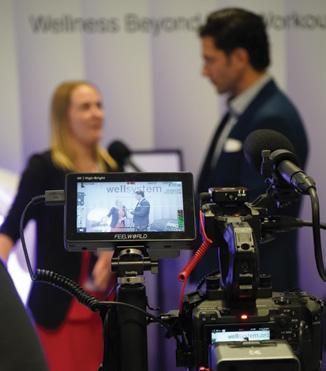
On June 15 and 16, 2026, industry leaders from across fitness, wellness, recovery, and health technology gathered in New York City for the Athletech Innovation Summit. It was honor to attend as a featured Board Certified Light Therapist in partnership with JK Products & Services and Wellsystem, with a mission to help bring evidence-based light therapy education to a rapidly evolving fitness and wellness market.
What I discovered over those two days reinforced both the tremendous opportunity ahead and the significant educational gaps that still exist.
The Athletech Innovation Summit brought together some of the brightest minds in fitness, wellness, recovery, technology, and business innovation. Throughout the event, one thing became abundantly clear: consumers are demanding wellness services that are more accessible, more efficient, and easier to integrate into their daily lives. Companies across the industry are responding with remarkable innovations that are reshaping how people approach recovery, performance, and overall well-being.
Exploring the exhibits and speaking with operators, entrepreneurs, and wellness professionals, I was struck by the incredible variety of technologies being developed. Cold therapy chairs, vibration platforms, hydrotherapy systems, recovery technologies, and automated wellness experiences were everywhere.
This trend makes sense. Fitness centers, spas, and wellness facilities are looking for ways to improve the member experience while also improving operational efficiency. Technologies that can safely deliver guided services without requiring a dedicated attendant create opportunities to expand wellness offerings while controlling labor costs.
What stood out most was not simply the technology itself, but the direction the industry is heading. There is a tremendous push toward self-guided wellness experiences that allow members to recover, relax, and improve their overall well-being in a convenient and scalable way. The focus is no longer just on exercise. It is becoming increasingly centered around recovery, longevity, and total wellness.
As exciting as these innovations were, they also highlighted something I have become increasingly aware of over the years: the need for education.
My primary goal at the summit was to bring light therapy education to a fitness and wellness audience that is rapidly adopting these technologies but often lacks the scientific understanding behind them.
Throughout the event, I found myself having the same conversations repeatedly. Many people have heard of red light therapy. Many have seen red light devices. Some have even installed them in their facilities. However, very few truly understand photobiomodulation.
One of the things I found myself explaining repeatedly was that a red light is not just a red light. Two devices can sit side by side, look almost identical, and yet deliver completely different treatments. The amount of energy reaching the body, the distance from the light, the wavelengths being used, and the length of the session all matter when we’re talking about true photobiomodulation.
Consumers often assume that if a device glows red, it must be therapeutic. The reality is far more complex. Some systems are designed specifically to deliver measurable doses of light to tissue, while others may simply provide a wellness experience. Both can have value, but they should not automatically be considered equal.
Another misconception I encountered was the belief that more light is always better. More time, more sessions, and higher output are often viewed as positive things. In reality, photobiomodulation follows what is known as a biphasic dose response. Too little light may not create the desired effect, while too much light may also reduce effectiveness.
This concept is well understood in the scientific community but is often overlooked in marketing materials. Light therapy should be viewed much like exercise. More is not always better. Proper dosing is what creates optimal results.
Another important conversation involved safety.
Many people assume that because light therapy has an excellent safety profile, it is appropriate for everyone in every situation. While photobiomodulation is generally considered very safe, there are certain medical conditions, medications, and circumstances where additional screening or physician guidance may be appropriate.
As wellness professionals, we have a responsibility to move beyond simple marketing claims and provide consumers with accurate information. Education must accompany innovation.
Despite these educational challenges, I left New York feeling incredibly optimistic.
The technologies showcased at the summit demonstrate that our industry is moving beyond traditional fitness models and embracing a much broader approach to health. Recovery is becoming just as important as exercise. Sleep, stress management, circulation, recovery, and overall well-being are now becoming central conversations within fitness facilities.
Cold therapy systems continue to evolve. Vibration therapy technologies are becoming more sophisticated. Hydrotherapy and recovery systems are becoming more accessible. Light therapy continues to expand into both fitness and wellness settings. Businesses are beginning to recognize that people are not simply looking for workouts. They are looking for complete wellness experiences.
Perhaps the most exciting development is the movement toward combining multiple evidence-based modalities into one integrated approach. The future is not one miracle technology.
The future is understanding how different tools work together to support the body’s natural healing and recovery processes.
My partnership with JK Products & Services and Wellsystem provided an incredible opportunity to share these ideas with an entirely new audience. The interest in light therapy was encouraging, but the need for education was even more apparent.
The conversations I had throughout the summit reinforced something I have believed for years: technology alone is never enough. Innovation creates opportunity, but education creates results.
As a Board Certified Light Therapist, my goal has never simply been to promote light therapy. My goal has always been to promote responsible, evidence-based implementation through proper dosing, realistic expectations, appropriate screening, and scientific understanding.
The Athletech Innovation Summit demonstrated that the future of wellness is incredibly bright. New technologies are emerging rapidly, businesses are finding innovative ways to deliver wellness services, and consumers are becoming increasingly invested in their health.
Now our challenge is ensuring that education keeps pace with innovation.
After two inspiring days surrounded by some of the brightest minds in fitness and wellness, I left New York energized, encouraged, and more committed than ever to helping bridge the gap between innovation and education. The future of wellness is already here. Our responsibility is to help people understand how to use it wisely.
Setting the Standard: How Salons Build Trust Through Cleanliness
BY JOE SCHUSTER
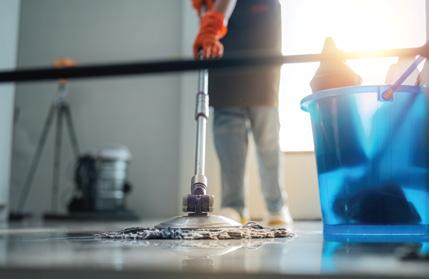
This summer, many people saw the Inside Edition segment highlighting concerns about sunbed sanitation. The investigation focused on several fitness centers— not professional tanning salons—and brought renewed public attention to the importance of proper cleaning and disinfecting procedures.
This month, we challenged our Salon Pros to share the steps they and their teams take to provide a clean, safe environment for every client. How concerned are today’s clients about salon cleanliness? Do some still prefer to clean the beds themselves—even after your staff has sanitized them? What advice would you give to new salon owners looking to reassure clients that every unit is properly disinfected, and what should staff know about maintaining those standards?
Building Trust Through Cleanliness
Lori VanDeWall
The Beach House
Over the past year and a half, our salon has evolved from a luxury tanning destination into a luxury wellness retreat. While we remain committed to offering the most advanced tanning technology available, we have expanded our services to include innovative wellness experiences such as Red Light Therapy, the Cocoon Wellness Pod, Halotherapy
Infrared Sauna, and our newest addition, PEMF Therapy paired with POLY Red Light Therapy.
As an industry, we are witnessing a significant shift toward wellnessfocused services, and our clients have enthusiastically embraced this transition. Not only have we introduced an entirely new category of services to our existing clientele, but we have also welcomed a growing number of members whose primary interest is our wellness offerings. Interestingly, many of these wellness-focused clients have become increasingly curious about—and receptive to—our UV tanning and spray tanning services as well.
The testimonials and feedback we receive from our guests continually
reinforce that expanding into wellness was the right decision. To complement these services, we have intentionally created a high-end, spa-inspired environment designed to promote relaxation and rejuvenation. Select service rooms feature softer lighting and calming music to enhance the guest experience. We also provide complimentary fruit-infused water, along with spa robes and fresh towels, allowing our clients to feel pampered from the moment they arrive.
Since opening our doors nearly 25 years ago, cleanliness has remained one of the foundational principles of our business. We dedicate multiple training shifts to ensuring that new team members fully understand our standards and systems for room preparation and salon sanitation.
Detailed opening and closing checklists are utilized daily to promote consistency and accountability among our staff.
One of the key systems we have implemented is our Three-Point Room Inspection. After preparing a service room, employees are required to evaluate the space from three different vantage points to ensure every detail meets our standards—whether that means removing a small product smudge, perfectly placing a fresh towel, or confirming that every element of the room is guest-ready. We even empty the trash receptacles between each client visit.
Ultimately, our success comes down to well-defined systems and unwavering non-negotiables regarding the client experience at The Beach House. Our goal is simple: for every guest to feel as though they are checking into a luxury resort each and every time they walk through our doors.
Vic Perrin Total Tan
At Total Tan, proper sanitizing is a core standard we reinforce with every new hire. During orientation, I walk each employee into a clean room and ask what they notice. Most mention the basics—a bed, towel, body spray, bench. Then I take them to a room I’ve intentionally left messy. Suddenly they see everything: a crooked towel, fingerprints on the acrylic, trash on the floor, and a smudged mirror. We fix it together so they understand what “Room Ready” truly means. Clients notice what’s wrong long before they notice what’s right, and we only get one first impression.
In staff training, we review our Non-Negotiables, beginning with customer service. Our goal is not to meet expectations but to exceed them. True service includes trained staff, clean floors, quality products, clear information, comfortable temperatures, stocked bathrooms, and reliable results.
Before any client enters a room, these standards must be met: disinfected acrylics, smudge-free bed exterior, clean mirrors, spotless walls, neatly folded towel, centered body spray, and a clean floor.
We’re not perfect, but in ten years we’ve never put a client in a bed that wasn’t properly cleaned. Training, follow-up, and fully stocked supplies keep our standards high. My advice to new owners is simple: Do it right. Don’t cut corners, and never give clients or regulators a reason to question your cleanliness.
Kristy Mazeika Tan Oconee
People—especially post-COVID—have become much more aware of germs and sanitation in public spaces, making salon cleanliness more
important than ever. Clients want to know that tanning beds, spray booths, red light equipment, and wellness services are properly sanitized after every use.
The key is consistency and communication. Professional salons should follow strict cleaning protocols, use approved disinfectants, and ensure every team member can confidently explain the sanitization process to clients. For newer salons, visible cleaning practices, posted sanitation procedures, and welltrained staff help build trust and credibility.
A clean salon creates confidence, enhances the client experience, and reinforces the connection between tanning and wellness. Clients may initially visit for a tan or wellness service, but they return because they trust the environment you’ve created. Cleanliness isn’t optional—it’s the foundation of the entire package!
Shay Ellen
The Sun Shack
Recent media stories have once again brought public attention to cleanliness and sanitation in businesses. While salon owners have always understood the importance of proper cleaning procedures, today’s clients are more aware than ever of their surroundings.
At The Sun Shack, every tanning bed, red light therapy unit, wellness service, and high-touch surface is cleaned and disinfected after each use. For us, cleanliness isn’t just a task—it’s an essential part of the client experience.
Training Staff to Maintain Standards
Michele Walters Island Glow
Our staff is responsible for sanitizing all equipment after each use. We follow the two-minute rule before the next client can use—or even touch—the equipment. We use salon-approved sanitizers mixed according to the manufacturer-recommended ratios and use clean hand towels for each cleaning. A second inspection of the cleaned area is required to ensure nothing was missed.
We have always taken pride in our attention to detail, and over the years we have had no reported outbreaks of seasonal illnesses within our salon or reports of skin irritation related to our sanitation practices. Our clients consistently comment on how clean our salons and equipment are, and those reviews reinforce the importance of maintaining high standards every single day.
Nikki Capps Tantilizing Tans
People get naked here! Yes, really. Every single day, guests walk into your room, lock the door, and take it all off. They stretch out on that bed and trust what they’re lying on—and it has to be spotless. That’s not a small thing. That’s everything.
That is how I begin the cleaning section of our employee orientation.
We have a strict cleaning checklist— or, as I prefer to call them, communication sheets—for our daily and weekly tasks. Every item must be checked off after completion. To ensure the sanitizer is mixed correctly, employees must use the appropriate test strips to verify the solution.
Making sure the acrylics are sanitized is just one part of maintaining a clean and sanitary salon/spa environment. Every day, our staff wipes down the entire exterior of each piece of equipment. Weekly, every room
receives a full detail, including behind and underneath the sunbeds, air vents, light fixtures, filters, walls, doors, door frames, poster frames, the tops of walls, and bathroom vents. If it exists in that room, it receives attention.
Every few months, we perform deep cleanings of each bed by removing and cleaning all sunlamps, cleaning inside the acrylics, and servicing the internal fans. Because we clean the exterior of the beds weekly, these deeper cleanings are much more efficient.
Maintaining a clean, low-dust environment not only makes your guests feel valued and safe, but it also helps keep your equipment operating at peak performance.
Creating a Culture of Accountability
Angelique Bordering Glo Tanning
As a salon owner with a nursing background, cleanliness has always been my top priority. Clients should feel safe the moment they walk through the door and trust that sanitation is taken seriously.
After watching the Inside Edition story, it was obvious those locations lacked strong cleaning standards and systems to protect client safety. It made me question what procedures they had in place—and how easily the situation could have been prevented. Whether you’re a new or experienced salon owner, clear cleaning systems and standard operating procedures (SOPs) are essential. Your standards directly influence how clients view your business and whether they feel comfortable using your services.
Before opening my salon, I remembered visiting gyms and tanning salons and thinking, When was this place last cleaned? Growing up, the only tanning salon in my area didn’t prioritize sanitation. They simply provided paper towels and cleaner so clients could wipe down their own beds—which I always did— and I refused to stand barefoot on the floors. Those experiences shaped the systems I built for my own business. Cleanliness couldn’t be optional; it had to be trained, demonstrated, coached, and inspected.
Training staff was the real challenge. Many employees are young and have little experience with professional cleaning standards, so training must be strategic and hands-on. Every new hire spends at least one week learning our procedures. We don’t hand them a checklist—we demonstrate the process, observe them, and coach them until they consistently meet our expectations.
Accountability is just as important. We conduct daily walkthroughs and audits, and repeated failures lead to documentation and, if necessary, termination. Strong SOPs prevent shortcuts, protect your reputation, and ensure cleanliness becomes part of your company culture.
Victoria Cordes Bear Naked Tanning
For us, cleanliness is everything.
Recently, we sent out a survey asking our customers what keeps them coming back to Bear Naked Tanning. The results were overwhelming—100% said our staff and the cleanliness of our salons. When we asked them to describe BNT to a friend, one of the most common responses highlighted how clean our salons are— along with the exceptional service provided by our staff.
exact same spot every single time. Not only does it create a professional and consistent appearance, but it also trains our customers to know exactly what to look for when entering a room.
Let’s be honest—we’ve all had those customers who are trying a new bed for the first time and, when the bed shuts off to cool down, they think pressing the start button again will magically give them more tanning time. Unfortunately, all it does is reset the bed. On a busy day with multiple employees, those resets can occasionally be missed.
By consistently placing our sanitized sign and bed setup the same way every time, we’re helping customers recognize when a room has been properly cleaned and prepared for them.
Think about it. You’re lying in a tanning bed that other people have used before you. If you walk into a room and see lotion smudges, fingerprints, or anything that makes the bed or room appear unclean, your first thought is probably, Was this bed even sanitized? That feeling alone can make someone decide never to come back.
That’s why we work so hard to instill in our team that friendliness and cleanliness are our top priorities.
You’ll notice we place the towel, goggles, and sanitized sign in the
The little details matter. Cleanliness isn’t just about appearances— it’s about building trust, inspiring confidence, and creating a customer experience that keeps people coming back.
Whether it’s a detailed cleaning checklist, rigorous staff training, or simply taking pride in every guest interaction, one message is clear from this month’s Salon Pros: cleanliness is far more than a routine task—it’s a promise. As salons continue expanding into wellness and attracting new clientele, maintaining exceptional sanitation standards remains one of the most powerful ways to build trust, strengthen client loyalty, and elevate the professional image of the tanning industry.
The Problem Customer: Why Every Salon Needs a Safety Procedure Before Things Escalate
BY ALIESHA COLVIN
Every salon owner eventually discovers that customer service is not always happy clients, easy conversations, and routine problem solving.
Sometimes it means a customer screaming at the front desk. Sometimes it means an intoxicated client refusing to leave. Sometimes it means harassment, inappropriate comments toward staff, threats, intimidation, chargebacks, or a customer who has already been told not to return by walking back through the door.
Most salon owners have policies for exposure schedules, cleaning procedures, memberships, cancellations, and equipment operation. Yet many have no written procedure for handling aggressive or abusive customers.
That needs to change. Your salon is a workplace. Your employees deserve a safe environment. Your clients deserve
a professional atmosphere. Most importantly, your team should never be forced to guess what to do when a situation becomes uncomfortable or unsafe.
The first step is recognizing the difference between a frustrated customer and an abusive one.
A frustrated customer may be upset about pricing, a membership charge, appointment availability, or a salon policy. Those situations can usually be resolved through communication and problem solving.
An abusive customer is different. They use threats, intimidation, harassment, screaming, discriminatory language, inappropriate comments, aggressive body language, or refuse to follow reasonable requests. At that point, the issue is no longer customer service. It becomes a workplace safety issue.
When that happens, staff need a procedure, not improvisation.
Step 1: De-escalate
Train employees to remain calm, lower their voice, and maintain a safe distance. The goal is not to win an argument. The goal is to reduce tension and regain control of the interaction.
A simple script can help:
“I want to help resolve this situation, but I cannot continue the conversation while being spoken to in this manner. If we can speak calmly, I would be happy to help.”
Many situations end right here because the customer realizes a boundary has been established.
Step 2: Issue a Clear Warning
If the behavior continues, staff should move to a formal warning.
For example:
“This is your final warning. If the
yelling, threats, or inappropriate behavior continues, we will end this interaction and ask you to leave.”
This step is important because it establishes expectations and gives staff permission to stop negotiating if the behavior does not improve.
Step 3: End the Interaction
Not every customer can be deescalated.
If someone appears intoxicated, becomes threatening, harasses staff, refuses to follow safety policies, or creates an environment that feels unsafe, the interaction should end immediately.
No tanning session, red light treatment, spray tan, or sauna appointment is worth risking employee safety.
A simple statement works best: “We are ending today’s visit. You must leave the property now.”
Avoid arguing, debating, or continuing to explain policies. Once the decision has been made, keep communication brief and professional.
Step 4: Call for Assistance
One of the biggest mistakes employees make is waiting too long to ask for help.
If a customer refuses to leave, blocks access to the front desk, follows employees, damages property, makes threats, or causes anyone to fear for their safety, law enforcement should be contacted immediately.
Calling for assistance is not an overreaction. It creates documentation, protects employees, and establishes a record of the incident.
Step 5: Document Everything
Every salon should have an incident report form.
Immediately after the situation, document:
• Date and time
• Employees involved
• Customer name
• Witnesses
• What was said and done
• Whether video footage exists
• Whether police were contacted
• Any actions taken
Good documentation protects both the business and the staff if questions arise later.
Step 6: Decide Whether the Customer Can Return
Not every incident requires a permanent ban.
Some situations can be resolved through education or a warning. Others warrant account termination, a ban from the business, or a formal trespass notice.
Examples that may justify banning a customer include:
• Threats toward staff or clients
• Harassment or inappropriate comments
• Repeated abusive behavior
• Intoxication
• Fraudulent payment activity
• Refusal to leave when directed
• Physical aggression
If a customer is being removed permanently, keep communication factual and professional.
Avoid emotional language. State what occurred, the action being taken, and the expectation moving forward.
Common Mistakes Staff Make
Many confrontations become worse because employees have never been trained how to handle them.
Some of the most common mistakes include:
• Trying to win the argument
• Continuing to explain policies after a final warning
• Standing too close to the customer
• Touching the customer
• Following the customer into the parking lot
• Making threats in return
• Failing to document the incident
• Allowing repeat behavior because the customer spends a lot of money
Training employees to avoid these mistakes can prevent minor situations from becoming major ones.
Your Employees Need Permission to Walk Away
The most important lesson salon owners can teach is that employees do not have to tolerate abuse.
Our industry is built on service, but service does not mean accepting harassment, intimidation, or threats. We can be professional without sacrificing safety. We can be respectful without allowing inappropriate behavior.
If your salon does not currently have a written procedure for handling aggressive customers, now is the time to create one.
Because when someone is screaming at your front desk, threatening an employee, refusing to leave, or making others feel unsafe, that is not the moment to figure out the policy.
That is the moment your team needs to already know exactly what to do.
Mastering the Stay Meeting
BY QUINN COOPER
We have all received the same dreaded call or text from our best employee. It usually happens right as you are gearing up for a busy Saturday or just as peak season starts to kick into high gear. The message is always the same: “I am sorry, but I am resigning.” That sinking feeling in your stomach is all too familiar for those of us who live and breathe this business. Retaining great employees in our industry can sometimes feel impossible. We find someone who truly loves the brand, understands the products, and builds real bonds with our customers, and then they walk out the door. It leaves a hole in the team and the salon culture that is incredibly hard to fill. However, taking a more proactive approach can change that cycle.
When we lose a star consultant, we lose more than just a body on the schedule. We lose the revenue they generate through lotion sales and upgrades, and much more importantly, we lose the personality and the drive that keeps the business thriving. We lose that unique
connection with our regulars who look forward to seeing their favorite consultant every time they walk through the door. If it is a manager who leaves, we lose the person who handles the daily headaches, from customer complaints to the complex puzzle of the weekly schedule.
In the same way we train our staff to close a sale, we have to close the deal on their loyalty. These five questions offer a simpler way to connect with your team that does not feel like a formal performance review. They are the most effective tools I have found to protect your talent and uncover exactly what your people need to stay happy and committed to your brand through what we call Stay Meetings. When you follow up by asking strong questions that dig a little deeper, you will get all the information needed to develop a plan that actually works to keep your team productive and engaged.
Before you start these conversations, there are a few simple habits that will help you get the most out of the time you spend with your staff.
First, listen eighty percent of the time. Enter the meeting with a commitment to ask, listen, and only ask again once you have really digested all you have heard. Listening without the distraction of thinking about your next question requires discipline, but it is the most important part of the process.
Second, dig deeper to learn more. This not only gives you better information but also shows your staff that you truly care about their experience. It shows them that their voice actually matters in the room.
Finally, take notes and take action. You need to capture the key points, the emotional words they use, and important quotes. This is especially helpful if you eventually need to look at your budget to see if a new commission structure or solution is possible. These notes are not just paperwork; they are a blueprint for how you will lead and mentor that specific person over the coming months.
Most importantly, you must make a genuine effort to implement the changes or actions discussed. If an employee opens up about a frustration and nothing changes, they will feel even less valued than before. When they see you making adjustments based on their feedback, they feel heard, respected, and truly part of the salon’s future.
Now let us explore what each question is and why they work for a tanning salon environment.
Question 1: What do you look forward to each day when you walk into the salon?
We start with a question that brings employees into the here and now. It asks them to focus on their daily duties and the fun parts of the job rather than broad issues like base pay. Most consultants stay because of the relationships they have with their coworkers and how much they enjoy the fast paced environment of the salon. Effective follow up questions include:
Can you give me an example of a recent shift you really enjoyed?
Tell me more about your favorite part of the sales process.
Who do you look forward to working with the most on our team?
Question 2: What are you learning here, and what do you want to master next?
Next, we invite our team to tell us about their goals. In our industry, some are ambitious and want to move into management, while others simply want to become the top sales performer in the district. We want to focus these discussions on skills. Your follow up questions might look like this:
Which other responsibilities in the salon look interesting to you?
What skills do you think are required to handle those tasks?
What do you think we need to work on to help you get to that next level of sales or management?
Question 3: Why do you stay with us?
This sounds simple, but the question of why an employee stays with your salon opens major doors. Most employees have never actually sat down and thought about it. Your role is to kindly but firmly require an answer. A good line to use is, “Take your time because I really want to know.” When they answer, they are announcing to you, and more importantly to themselves, what they value most about their job. You might ask:
Tell me more about why that specific reason is so important to you.
Is that the only reason you stay, or are there others that keep you coming back?
If you had to pick the single most important thing that keeps you here, what would it be?
Question 4: When is the last time you thought about leaving us, and what prompted it?
Everyone thinks about leaving at some point. A directly worded question brings a much needed conversation into the light before it is too late. Knowing when they last thought about it tells you the urgency, and knowing why tells you exactly what needs to be fixed. Possible follow up questions include:
Tell me more about how that happened. Who said what in that moment?
What is the single best thing I can do as an owner to make that better for you?
How important is that issue to you right now on a scale of one to ten?
Question 5: What can I do to make your job better for you?
While this question catches any remaining topics, it is ultimately about you as a leader. Avoiding defensiveness is critical here. If word spreads that you cannot take feedback, these Stay Meetings will become short and fruitless. Consider these follow up questions:
Do I tell you often enough when you are doing a great job with a customer?
Do I say and do things that actually help you sell more or manage the floor better?
What are three ways I can be a better owner for you?
It has been proven over and over again: these five questions are the only ones you need to conduct effective Stay Meetings. Your team will not likely remember the specific questions when they speak to their peers, so there is no reason to change the wording. Asking them consistently will sharpen your own management skills until these conversations become a natural part of your salon culture. You are more than just an owner; you are a coach. By investing this time now, you are ensuring that your salon remains a place where your best people want to build their careers, sell more lotion, and keep your customers coming back year after year.
Your Salon’s Brand Lives in the Tanning Bed, Not the Logo
BY DR. JIM SCHLECKSER
Iused to joke that branding was marketing without any responsibility. It got a few laughs, maybe a few side-eyes from the brand consultants, but there’s a hard truth underneath it. Most tanning salon owners think branding is about choosing the right font for their sign, a warm color palette, or a catchy tagline. And sure, all of that can help. But none of it matters if the experience inside your salon doesn’t match the story you’re telling outside it. Here’s the bottom line: your customer experience is your brand.
More than a promise
Every brand is built on what people expect when they walk through your door. Is your salon about affordability? Luxury and pampering? Expert skin care advice? A welcoming vibe for first timers? Whatever you’re claiming, none of it matters as much as what customers feel when they interact with you.
If your website says you offer a “premium experience,” but clients wait ten minutes past their appointment, struggle to figure out which bed is available, or can’t get a straight answer about lotions from your staff, your brand isn’t premium. It’s what they perceive it to be, based on what you deliver.
“Your brand isn’t the sign above the door. It’s what your client says about you on the drive home.”
Think about Woodhouse Day Spa, or any well-known spa brand that’s built a loyal following. Their reputation wasn’t built through advertising alone. It was built because every touchpoint—the check-in, the consultation, the ambiance, and the follow-up—told the same story. Everything was deliberate. That’s branding through experience. You can do that too, at any price point.
So how do you know whether your own salon delivers that kind of consistency?
Walk a mile in your client’s flip-flops
If you want to understand what your brand truly is, start by experiencing your salon the way your customers do. In my book, Great CEOs Are Lazy, I talk about “stapling yourself to a customer,” meaning you literally step into their shoes and go through your own process from their point of view. It’s eye-opening every single time.
I was once running a large company when my computer started acting up. Within minutes, two senior IT guys appeared to fix it. I asked them, “Is this what you do for everyone?”
They laughed. “Of course not. You’re the only one we do this for.”
That hit me hard. What experience were we creating for everyone else?
The same thing happens in salons. The owner walks in, and the staff snaps to attention. The regular who drops $200 a month on memberships gets warm hellos. But what about the nervous first timer who just found you on Google? What’s her experience like? Is there someone to explain the bed options, recommend a lotion, and make her feel confident—not overwhelmed?
Try this exercise
Describe your ideal salon experience in five to ten words. Then ask your team to do the same. Then ask three loyal clients. Are the answers aligned? If not, that gap is where your brand work begins.
Can’t do it yourself? Send a friend in as a “mystery shopper.” Ask them to report back honestly. No coaching,
Branding in a tanning salon isn’t just the scent as you walk in or the playlist on the speakers, though both matter. It’s the interaction at the front desk during the busiest moments. It’s whether a client feels seen when they come back after a three-month absence. It’s how your team handles it when a spray tan goes wrong, or a UV bed goes down.
Those are the moments that build or break your brand. Not the logo on the window.
There’s a quote I love: “Your actions speak so loudly that I can’t hear your words.” For tanning salon owners, that means the most powerful brand investment you can make isn’t a new sign or a social media refresh. It’s making sure every client interaction— from booking to checkout—reflects the experience you say you’re delivering.
Walk your own process. Ask the hard questions. Act on what you find. That’s how brands are built—not in a marketing meeting, but in the moments that matter.
Tired of
Managing Payroll, HR,
and Hiring
Alone?
How Smart Salon Owners Are Reclaiming Time (And Their Sanity)
Disconnected systems and poor support are out. Reliable tools and real help are in.
Running a salon should be about people, not paperwork
We hear this often from salon owners: “We were nervous to make a change because of how bad things had gone before.” Many had a provider that overpromised but underdelivered. When problems came up, there was no one to call, no follow-up, and no real help. Some even faced serious issues like taxes not being filed correctly.
We talk to salon owners every day who felt stuck, stressed, and unsure of what to do next. Many of them trusted a provider that promised to make things easier but ended up making things harder.
When problems came up—like payroll mistakes, system errors, or even missed tax filings—they had no one to call. The person who sold them the service stopped answering, and support was slow or unhelpful. These owners were left to fix big problems alone. Some waited on hold for hours or had to explain the same issue to different people. It was frustrating and unfair.
Here’s what we hear most:
Most salon systems are hard to use and don’t work well together. You waste time entering the same info again and again. Support is often missing. You need tools that are simple, connected, and backed by real people who are there when you need help.
“Our biggest frustration was the lack of customer service and follow-up. We experienced a wide variety of issues that even ranged to our taxes not being filed properly. The salesperson who previously sold the deal ended up being nowhere to be found.”
Glo Tanning CEO, Onyi Odunukwe
. Hiring and Onboarding Still Involves Binders and aperwork
1. Hiring and Onboarding Still Involves Binders and Paperwork
3 You’re Still the One Making Sure Everyone
Correctly
The Five Biggest Time-Wasters For Tanning Salon Owners (And What To Do About Them)
Hiring in salons happens a lot Whether it’s a busy season or omeone just left, you ’ re probably bringing in new people ften. If you ’ re still using paper packets, printing forms, and ollecting signatures in person, it can slow everything down Mistakes happen more often and managers spend extra ime doing tasks that could be easier
1. Hiring And Onboarding Still Involves Binders And Paperwork
Hiring in salons happens a lot Whether it’s a busy season or someone just left, you ’ re probably bringing in new people often If you ’ re still using paper packets, printing forms, and collecting signatures in person, it can slow everything down Mistakes happen more often and managers spend extra time doing tasks that could be easier.
Payroll can be stressful when you ’ re doing it all yourself. You may be checking timecards, making sure special rates are correct, or fixing problems before payday This can take hours each pay period and leaves room for mistakes
The Five Biggest Time-Wasters for Tanning Salon Owners (And What to Do About Them)
Hiring in salons is a regular occurrence. Whether it’s a busy season or someone just left, you’re probably bringing in new people on a somewhat regular basis.
The Five Biggest Time-Wasters for Tanning Salon Owners (And What to Do About Them)
Payroll can be stressful when you ’ re doing it all yourself You may be checking timecards, making sure special rates are correct, or fixing problems before payday This can take hours each pay period and leaves room for mistakes.
That could mean retyping hours, double checking numbers, or fixing small mistakes that take too much time. When systems don’t share information, it slows everyone down.
est Practice: Many salons now use digital tools for hiring nd onboarding These tools let new hires apply online, fill ut forms, and complete tasks from their phones. This means everything is ready before their first day It saves me, lowers the chance of errors, and helps new team members feel ready to work right away.
Best Practice: Many salons now use digital tools for hiring and onboarding These tools let new hires apply online, fill out forms, and complete tasks from their phones This means everything is ready before their first day It saves time, lowers the chance of errors, and helps new team members feel ready to work right away.
4. You’re Fielding Every PTO Request And Shift Swap
Best Practice: Many salons switch to payroll systems that handle these tasks for them These systems can apply the right pay rates, catch errors, and handle taxes without extra work It gives you peace of mind and saves time
1 Hiring and Onboarding Still Involves Binders and Paperwork
1 Hiring and Onboarding Still Involves Binders and Paperwork
Best Practice :
Best Practice: Many salons switch to payroll systems that handle these tasks for them These systems can apply the right pay rates, catch errors, and handle taxes without extra work It gives you peace of mind and saves time
3 You’re Still the One Making Sure Everyone Gets Paid Correctly
3 You’re Still the One Making Sure Everyone Gets Paid Correctly
Hiring in salons happens a lot Whether it’s a busy season or someone just left, you ’ re probably bringing in new people often If you ’ re still using paper packets, printing forms, and collecting signatures in person, it can slow everything down Mistakes happen more often and managers spend extra time doing tasks that could be easier
If you’re still using paper packets, printing forms, and collecting signatures in person, it can slow everything down. Mistakes happen more often and managers spend extra time doing tasks that could be easier.
Hiring in salons happens a lot Whether it’s a busy season or someone just left, you ’ re probably bringing in new people often If you ’ re still using paper packets, printing forms, and collecting signatures in person, it can slow everything down Mistakes happen more often and managers spend extra time doing tasks that could be easier
2 Your Systems Don’t Talk to Each Other
Best Practice:
2 Your Systems Don’t Talk to Each Other f your scheduling app, payroll provider, time clock, and oint-of-sale system don’t connect, you might be doing the ame work more than once. That could mean retyping ours, checking numbers again, or fixing small mistakes that ake too much time When systems don’t share information, t slows everyone down.
If your scheduling app, payroll provider, time clock, and point-of-sale system don’t connect, you might be doing the same work more than once That could mean retyping hours, checking numbers again, or fixing small mistakes that take too much time. When systems don’t share information, it slows everyone down
Best Practice: Many salons now use digital tools for hiring and onboarding These tools let new hires apply online, fill out forms, and complete tasks from their phones This means everything is ready before their first day It saves time, lowers the chance of errors, and helps new team members feel ready to work right away
3 You’re Still the One Making Sure Everyone Gets Paid Correctly
Using one connected system or linking your tools can make a big difference. When data flows between platforms, you don’t have to re-enter it. This saves time and makes sure pay, hours, and records are more accurate.
Best Practice: Many salons now use digital tools for hiring and onboarding These tools let new hires apply online, fill out forms, and complete tasks from their phones This means everything is ready before their first day It saves time, lowers the chance of errors, and helps new team members feel ready to work right away
Payroll can be stressful when you ’ re doing it all yourself You may be checking timecards, making sure special rates are correct, or fixing problems before payday This can take hours each pay period and leaves room for mistakes
1 Hiring and Onboarding Still Involves Binders and Paperwork
Many salons now use digital tools for hiring and onboarding. These tools let new hires apply online, fill out forms, and complete tasks seamlessly from their phones. This means everything is ready before their first day. It saves time, lowers the chance of errors, and helps new team members feel ready to work right away.
2 Your Systems Don’t Talk to Each Other
2 Your Systems Don’t Talk to Each Other
2 Your Systems Don’t Talk to Each Other
Best Practice: Using one connected system or linking your tools can make a big difference When data flows between platforms, you don’t have to re-enter it This saves time and makes sure pay, hours, and records are more accurate
Best Practice: Using one connected system or linking your ools can make a big difference When data flows between latforms, you don’t have to re-enter it This saves time and makes sure pay, hours, and records are more accurate.
4 You’re Fielding Every PTO Request and Shift Swap
4. You’re Fielding Every PTO Request and Shift Swap.
Payroll can be stressful when you ’ re doing it all yourself You may be checking timecards, making sure special rates are correct, or fixing problems before payday This can take hours each pay period and leaves room for mistakes
Handling every time-off request and shift change by hand takes a lot of time It also slows down your day when you have to answer every question or update every schedule yourself
Payroll can be stressful when you ’ re doing it all yourself You may be checking timecards, making sure special rates are correct, or fixing problems before payday This can take hours each pay period and leaves room for mistakes
As a manager, you get it. It seems easy to be the one in charge of approving PTO at first glance. Handling every time-off request and shift change by hand takes a lot of time. It also slows down your day when you have to answer every question or update every schedule yourself.
Handling every time-off request and shift change by hand takes a lot of time It also slows down your day when you have to answer every question or update every schedule yourself
Hiring in salons happens a lot Whether it’s a busy season or someone just left, you ’ re probably bringing in new people often If you ’ re still using paper packets, printing forms, and collecting signatures in person, it can slow everything down Mistakes happen more often and managers spend extra time doing tasks that could be easier
Best Practice: Many salons switch to payroll systems that handle these tasks for them These systems can apply the right pay rates, catch errors, and handle taxes without extra work. It gives you peace of mind and saves time.
Best Practice: Many salons switch to payroll systems that handle these tasks for them These systems can apply the right pay rates, catch errors, and handle taxes without extra work It gives you peace of mind and saves time
Best Practice:
4 You’re Fielding Every PTO Request and Shift Swap
4 You’re Fielding Every PTO Request and Shift Swap
Best Practice: Many salons switch to payroll systems that handle these tasks for them These systems can apply the right pay rates, catch errors, and handle taxes without extra work It gives you peace of mind and saves time
3. You’re Still The Only One Making Sure Everyone Gets Paid Correctly
Best Practice: Many salons now use digital tools for hiring and onboarding These tools let new hires apply online, fill out forms, and complete tasks from their phones This means everything is ready before their first day It saves time, lowers the chance of errors, and helps new team members feel ready to work right away
Best Practice: Self-service tools let employees make requests and see their schedules from their phones. Managers still approve changes, but they don’t have to be involved in every small detail This gives staff more control while helping managers focus on bigger tasks
4 You’re Fielding Every PTO Request and Shift Swap
Handling every time-off request and shift change by hand takes a lot of time It also slows down your day when you have to answer every question or update every schedule yourself
Handling every time-off request and shift change by hand takes a lot of time It also slows down your day when you have to answer every question or update every schedule yourself
If your scheduling app, payroll provider, time clock, and point-of-sale system don’t connect, you might be doing the same work more than once That could mean retyping hours, checking numbers again, or fixing small mistakes that take too much time When systems don’t share information, it slows everyone down
Payroll can be stressful when you’re doing it all yourself. You may be checking timecards, making sure special rates are correct, or fixing problems right before payday. This can take hours each pay period and leaves room for mistakes—or even major legal issues.
Self-service tools let employees make requests and see their schedules from their phones. Managers still approve changes, but they don’t have to be involved in every small detail. This gives staff more control while helping managers focus on bigger tasks.
Best Practice: Self-service tools let employees make requests and see their schedules from their phones Managers still approve changes, but they don’t have to be involved in every small detail This gives staff more control while helping managers focus on bigger tasks.
Handling every time-off request and shift change by hand takes a lot of time It also slows down your day when you have to answer every question or update every schedule yourself
If your scheduling app, payroll provider, time clock, and point-of-sale system don’t connect, you might be doing the same work more than once That could mean retyping hours, checking numbers again, or fixing small mistakes that take too much time When systems don’t share information, it slows everyone down
Best Practice:
2. Your Systems Don’t Talk To Each Other
5 When Something Goes Wrong, Support is Nowhere to Be Found
Best Practice: Self-service tools let employees make requests and see their schedules from their phones Managers still approve changes, but they don’t have to be involved in every small detail This gives staff more control while helping managers focus on bigger tasks
Best Practice: Self-service tools let employees make requests and see their schedules from their phones Managers still approve changes, but they don’t have to be involved in every small detail This gives staff more control while helping managers focus on bigger tasks
5. When Something Goes Wrong, Support is Nowhere to Be Found
5. When Something Goes Wrong, Support Is Nowhere To Be Found
If your scheduling app, payroll provider, time clock, and point-of-sale system don’t connect, you might be doing the same work more than once That could mean retyping hours, checking numbers again, or fixing small mistakes that take too much time When systems don’t share information, it slows everyone down
Best Practice: Using one connected system or linking your tools can make a big difference When data flows between platforms, you don’t have to re-enter it This saves time and makes sure pay, hours, and records are more accurate
Best Practice: Using one connected system or linking your tools can make a big difference When data flows between platforms, you don’t have to re-enter it This saves time and makes sure pay, hours, and records are more accurate
If your scheduling app, payroll provider, time clock, and pointof-sale system don’t connect to each other, you’re probably doing the same work more than once.
When a problem comes up, getting help should be easy But if you ’ re waiting on hold or explaining your issue to different people, it just adds more stress
Best Practice: Self-service tools let employees make requests and see their schedules from their phones Managers still approve changes, but they don’t have to be involved in every small detail This gives staff more control while helping managers focus on bigger tasks
When a problem comes up, getting help should be easy But if you ’ re waiting on hold or explaining your issue to different people, it just adds more stress.
5 When Something Goes Wrong, Support is Nowhere to Be Found
5 When Something Goes Wrong, Support is Nowhere to Be Found
Best Practice: Using one connected system or linking your tools can make a big difference When data flows between platforms, you don’t have to re-enter it This saves time and makes sure pay, hours, and records are more accurate
Or call 800-863-8013
Best Practice: A dedicated support rep who knows your setup can fix issues faster You don’t have to repeat yourself, and problems get solved quickly so you can stay focused on your business.
Most salons switch to payroll systems that handle these tasks for them. These systems can apply the right pay rates, catch errors, and handle taxes without extra work. It gives you peace of mind and saves time.
When a problem comes up, getting help should be easy. But if you’re waiting on hold or explaining your issue to different people, it just adds more stress.
5 When Something Goes Wrong, Support is Nowhere to Be Found
When a problem comes up, getting help should be easy But if you ’ re waiting on hold or explaining your issue to different people, it just adds more stress
When a problem comes up, getting help should be easy But if you ’ re waiting on hold or explaining your issue to different people, it just adds more stress
When a problem comes up, getting help should be easy But if you ’ re waiting on hold or explaining your issue to different people, it just adds more stress
Best Practice:
Best Practice: A dedicated support rep who knows your setup can fix issues faster You don’t have to repeat yourself, and problems get solved quickly so you can stay focused on your business.
Best Practice: A dedicated support rep who knows your setup can fix issues faster You don’t have to repeat yourself, and problems get solved quickly so you can stay focused on your business
Best Practice: A dedicated support rep who knows your setup can fix issues faster You don’t have to repeat yourself, and problems get solved quickly so you can stay focused on your business
A dedicated support rep who knows your setup can fix issues faster. You don’t have to repeat yourself, and problems get solved quickly so you can stay focused on your business.
Best Practice: A dedicated support rep who knows your setup can fix issues faster You don’t have to repeat yourself, and problems get solved quickly so you can stay focused on your business
The Five Biggest Time-Wasters for Tanning Salon Owners (And What to Do About Them)
Joe Schuster
In addition to serving as our Editor in Chief, he’s also one of our contributing writers and serves as the Director and Instructor for our SUN IS LIFE certification and training.
Mackenzie Morris
Mackenzie Morris is the CEO of Prism Haus, a brand management and marketing agency, leading the company’s big-picture strategy, brand direction, client experience, and operational execution. She works directly with brands, founders, and companies to map out high-impact marketing campaigns, visibility strategies, and revenue-driving ecosystems—bridging the gap between creative ideas and real business growth.
SUN & WELLNESS MAGAZINE
the experts
Aliesha Colvin
Executive Director of Sun is Life Magazine, Aliesha Colvin, has spent over a decade in the beauty world and the last three of those helping shape the tanning industry’s creative side. Outside of the office, she channels her energy into her photography business and her social media communities – where she platforms others loving the skin they’re in.
Dr Jim Schleckser
Dr. Jim Schleckser is a CEO coach, entrepreneur, and author of Great CEOs Are Lazy. He advises business owners across the country on strategy and growth.
Quinn Cooper
Quinn Cooper has been a professional in the tanning industry for years, showing his passion for wellness at every turn. He is a proud Senior Account Executive of SUN IS LIFE as well as being a salon owner himself.
Emily Clements
Emily Clements is an Area Manager for the Oxford and Tuscaloosa franchise locations with Glo Tanning. Alongside management, Emily received her degree from the University of Mississippi in integrated marketing communications, minor in general business, and specialization in social media. Combining both passions for industry and writing, she is thrilled to bring her expertise into Sun is Life.
Kristin Smithers
Kristin Smithers, the Red Light Queen™, is a Board Certified Light Therapist through the Board of Advanced Natural Health Sciences. A lifetime SPIE member and WALT member, she’s been active in the tanning industry since 2016 and a salon owner since 2019, blending science with real-world results.
Ambria Hatcher
Ambria Hatcher has spent more than 25 years in the tanning industry helping businesses grow through strong leadership, intentional culture, and scalable systems. Known for her ability to see opportunities before others do, she is passionate about developing people, improving operations, and helping organizations create exceptional customer experiences.
Indulge yourself in unparalleled comfort with our exclusive promotion on the Fujimi Luxury Massage Chairs! Introducing the EP9000MAX and EP7000S models, designed to bring the spa experience right to your home or business. Elevate your relaxation with advanced 3D massage technology, customizable settings, and heated therapy options for a truly transformative experience. Enjoy soothing massages with a sleek design, zero gravity recline, and a variety of invigorating programs to relieve tension and rejuvenate your body.
Don’t miss this opportunity, take advantage with the information provided below.
Word Search Answers
The Guide
More sessions. More revenue.
Better results for your customers and your business.