
Islamic Horizons March/April 2026

Page 1


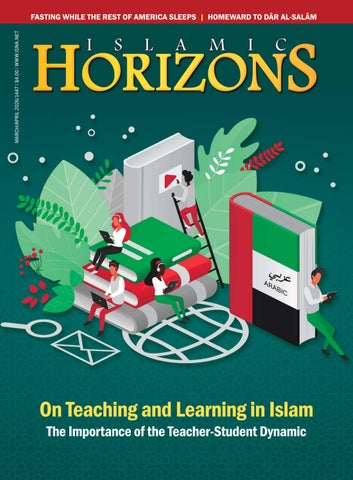
On Teaching and Learning in Islam

The Importance of the Teacher-Student Dynamic
A Time to Strengthen Muslim Kinship

As our readers receive this issue of Islamic Horizons magazine, they will be half way through the holy month of Ramadan. May God bless all to fully partake in the blessings of this month.

In keeping with our program to present the various aspects of the teachings of Prophet Muhammad (salla Allahu ‘alayhi wasalam) during the 1500th year of his birth, this issue includes Rasheed Rabbi’s inspiring article in which he dwells on the blessed city, Madinah, and discusses the Prophetic grace that spreads from Hijaz across the world and throughout the universe.

Rabbi rightly states that Madinah is the homeland of the spirit and the resting place of the Prophet who pledged intercession on behalf of all mankind. A distinct love for the Prophet connects with Islamic theology to shape Madinah as a sacred geography that not only casts a religious spell over its inhabitants, but also binds believers with an emotional gravity, difficult to name, yet impossible to resist.

Certainly, all Muslims yearn to visit Madinah and set their eyes on this beloved spiritual home.

Let us all resolve to live by the guidance that the Prophet Muhammad provided and stand firm in the face of challenges that continue to escalate as Islamophobia establishes itself throughout the United States as normal.

The Jan. 27 attack on Rep. Ilhan Omar (D-Minn.) is one manifestation of this heightening Islamophobia. This religious hatred is clearly growing.

As such, this issue carries two reports on the rise of Islamophobia. The Institute for Social Policy and Understanding’s study examines the effects of exposure to depictions of Muslims in entertainment media on people’s support for policies that are either generally undemocratic or specifically anti-Muslim. The study noted it is critical for creators to consider the implications of their creative choices and endeavor to represent Muslims and other minorities in a more positive light.

Civil rights organization Equality Labs produced a report titled “Manufactured Hate: The Muslim Invasion Conspiracy” in which they found that Islamophobic disinformation is a systemic threat that

corrodes democratic norms, endangers public safety, and marginalizes already vulnerable communities. Addressing it requires coordinated action from government, media platforms, civil society, and the public at large.

By confronting these narratives directly, the United States can once again move toward accountability, repair, and an inclusive democratic future.

Going with the theme of systemic Islamophobia, Faisal Kutty writes that in the past decade, a growing body of investigative journalism and academic analysis has documented a more complex and troubling reality: some Muslim-majority states, particularly the United Arab Emirates, have played a direct and sustained role in shaping Islamophobic policies, narratives, and legal frameworks in Europe and North America. This is not a claim about cultural difference or theological disagreement. It is about state power, law, and political strategy.

There is, however, seemingly official encouragement of Islamophobia in the U.S. and other white-majority countries, as its practitioners assume that they stand to gain from it financially and at the polls.

Regrettably, more than a few Muslimmajority countries have abandoned the kinship about which God reminds, and the Prophet taught, and have caved in to share the podium with the 21st century’s worst committer of genocide. A decision neither based on being an Ummah, which is akin to a body, and the pain felt by one part is felt by the whole (al-Bukhari 6011; Book 78, Hadith 42). For the guilty, ultimately it is about the assumed security of their worldly power that remains, however popularly indefensible for them.

It is a challenging task, but Muslims in Muslim-majority countries and Muslims living as minorities must do their part to keep the God ordained kinship. The Quran states, “Would you then if you were given the authority, do mischief in the land, and sever your ties of kinship? Such are they whom God has cursed so that He has made them deaf and blinded their sight” (47:22-23 and 13:25).

The Prophet said, “Whoever severs the ties of kinship will not enter Paradise” (Sahih al-Bukhari 5984; Book 78, Hadith 15; Sahih Muslim 2556; Book 45, Hadith 23). ih

PUBLISHER

The Islamic Society of North America (ISNA)

PRESIDENT

Syed Imtiaz Ahmad

CHIEF EXECUTIVE OFFICER

Azhar Azeez

EDITOR

Omer Bin Abdullah

ASSISTANT EDITOR

Bareerah Zafar

EDITORIAL ADVISORY BOARD

Iqbal Unus, Chair: M. Ahmadullah Siddiqi, Saba Ali, Rasheed Rabbi, Wafa Unus

ISLAMIC HORIZONS

is a bimonthly publication of the Islamic Society of North America (ISNA) P.O. Box 38 Plainfield, IN 46168-0038

Copyright © 2026

All rights reserved

Reproduction, in whole or in part, of this material in mechanical or electronic form without written permission is strictly prohibited. Islamic Horizons magazine is available electronically on ProQuest’s Ethnic NewsWatch, Questia.com LexisNexis, and EBSCO Discovery Service, and is indexed by Readers’ Guide to Periodical Literature.

Please see your librarian for access. The name “Islamic Horizons” is protected through trademark registration ISSN 8756-2367

POSTMASTER

Send address changes to Islamic Horizons, P.O. Box 38 Plainfield, IN 46168-0038

SUBSCRIPTIONS

Annual, domestic – $24 Canada – US$30 Overseas airmail – US$60 TO SUBSCRIBE

Contact Islamic Horizons at https://isna.net/SubscribeToIH.html On-line: https://islamichorizons.net For inquiries: membership@isna.net

ADVERTISING

For rates contact Islamic Horizons at (703) 742-8108, E-mail horizons@isna.net, www.isna.net

CORRESPONDENCE

Send all correspondence and/or Letters to the Editor at: Islamic Horizons P.O. Box 38 Plainfield, IN 46168-0038

Email: horizons@isna.net

Dear Respected Community, As-Salaamu Alaikum wa Rahmatullahi wa Barakatuh,

It is with great joy and optimism that we announce the appointment of Brother Azhar Azeez as the Chief Executive Officer (CEO) of the Islamic Society of North America (ISNA), effective an. 1, 2026. This milestone marks an exciting opportunity for ISNA to embrace dynamic leadership, innovation, and growth rooted in our Islamic values.

Azeez brings extensive experience to this role. His tenure as a CEO and senior executive at reputable Muslim charities reflects his deep commitment to mission-driven leadership. He has overseen large-scale operations, led program development, and guided highly successful fundraising initiatives. He is widely respected for his ability to build strong relationships within the community and strengthen collaboration across diverse groups.

In addition to his work in corporate America and the nonprofit sector, Azeez has played a pivotal role in advancing community engagement and strategic partnerships. His prior service as President of ISNA, along with over 25 years as a dedicated ISNA board member, provides him with invaluable institutional knowledge and a deep understanding of ISNA’s mission, vision, and the evolving needs of our community.

As we welcome Azeez into this pivotal leadership role, we pray for a smooth transition and continued success for ISNA. We invite our entire community to join us in supporting him as he begins this new chapter in our shared effort to serve the Ummah.

May Allah ﷻ guide our efforts and grant us success.

Sincerely,

The ISNA Board of Directors ih

ISNA’s West Coast Education Forum Inspires and Transforms Islamic Education with Purpose

On Jan. 16 and 17, the Islamic Society of North America (ISNA) hosted its 14th Annual West Coast Education Forum in Costa Mesa, Calif. Over 300 attendees and over 25 speakers gathered at the Hilton Orange County/Costa Mesa to embrace this year’s theme of “Educating with Purpose to Inspire and Transform.”

The forum serves to promote excellence in education for full-time and weekend Islamic schools and provides opportunities for professional development, networking, community leadership, and more. “This forum, for me, [is] a dream come true,” ISNA Program Committee Chair Necva Ozgur said during the opening ceremony. “ISNA [works hard] to answer the needs of the [Muslim] community.”

Program Highlights

The event kicked off with two parallel workshops led by respected educators. “One Language, Two Goals: Linking Quran and Arabic in the Weekend Classroom,” conducted in Arabic, discussed the integration of Quranic studies and Arabic learning. Teachers Amal Sakr Elhoseiny, PhD, of ICSC Sunday

School, and Samar Dalmati Ghannoum, PhD, of the University of Redlands gave an engaging presentation on enhancing linguistic skills, improving pronunciation, increasing comprehension, and more.

During the workshop “Uncovering the Hidden Curriculum through 5D Thinking,” Islamic educator Abir Catovic discussed revolutionizing the classroom to nurture insight, not just information. She emphasized the importance of using Quranic teachings to understand the world while also helping students reconnect the Creator with His creation. She utilized Surah Al-Kahf and other lessons from the Quran to break the 5D Thinking method into five steps: explore, compare, question, connect, and appreciate. “There is a divine reason behind everything that happens,” Catovic said. “There is nothing but good that comes from Allah.”

After the opening ceremony and Jummah prayer featuring a khutbah by Imam Mohammed Faqih, attendees attended various sessions presented by industry leaders that continued into Saturday. The sessions were broken into six tracks: Arabic, Islamic Studies, Weekend Schools, Administration and Leadership, Quranic Studies, and

Educator Dr. Dina Eletreby (left) receives ISNA’s Lifetime Service Award presented by ISNA Program Committee Chair Necva Ozgur (middle) and ISNA CEO Azhar Azeez (right).

Curriculum and Instruction.

One highlight included an interactive session titled “AI Across the Curriculum: Math, Science, and History in Action” presented by Orange Crescent School educators Rana Alshurafa, Nadin Abdulhamid, and Sahar Muhareb. This session explored utilizing Artificial Intelligence tools Alayna (Math), Notebook LM (Science), and Magic School (History) to assist teachers in the classroom and deepen student understanding and engagement. “As an educator, I know that AI is not replacing me, it’s just taking my [lessons] to a whole new level,” said Muhareb.

Another notable session was “Beyond Compliance: Building a Faith-Based

Safeguarding Framework for Islamic Schools” presented by Islamic Schools League of America Board Member Qur’an Shakir. During the session, Shakir, a certified mandated reporter, equipped educators with faith-aligned, evidence-based tools to prevent, recognize, and respond to child sexual abuse. “Harm occurs in trusted spaces,” Shakir said. “We don’t want to. . . Pretend it doesn’t happen in Muslim spaces.”

Celebrating Muslim Excellence

Night one of the forum culminated with a Celebration Banquet that opened with a beautiful Quran recitation by Minaret Academy eighth grader Ayah Hajjar and

featured a performance by students from the school. ISNA also honored Dr. Dina Eletreby, an educator with over three decades of experience, by presenting her with the Lifetime Service Award for her dedication to transforming education and creating opportunities for students to thrive. The evening concluded with speeches from educator, author, and youth activist Habeeb Quadri and ISNA CEO Azhar Azeez.

Support From Sponsors

ISNA’s 14th Annual West Coast Education Forum received support from seven sponsors including Amana Funds, Sunrise USA, the Aldeen Foundation, the Council of Islamic Schools based in North America, the Islamic Shura Council of Southern California, Minaret Academy, and Weekend Islamic Schools Educational Resources. Each sponsor conveyed a shared commitment to educational empowerment.

The forum concluded with a seminar led by Catovic who provided the congregation with an opportunity to reflect on what they learned over the two days and use the information to create a plan for their “dream schools.”

The next ISNA Education Forum will be held in Chicago on April 3 to 5. Visit isna.net/upcoming-events to learn more. ih

Bareerah Zafar is the assistant editor of Islamic Horizons
Students from Minaret Academy perform during the Celebration Banquet.

COMMUNITY MATTERS

The U.S. Postal Service celebrated Muhammad Ali’s birth month by issuing two Forever stamps in his honor on Jan. 15. Popularly known as “The Greatest,” Ali said, “I should be a postage stamp, because that’s the only way I’ll ever get licked” as part of his trademark pre-fight verbal sparring to emphasize his belief that he could never be beaten in the boxing ring. This quote is associated with his 1974 “Rumble in the Jungle” victory against George Foreman.

The stamps feature a famous 1974 photo of Ali from his heavyweight championship win. Ali, who also won a gold medal at the Rome 1960 Olympic Games, was known across the globe as a champion both in and out of the boxing ring.

The first-day-of-issue event was held in his hometown of Louisville, Ky. and was presided over by Ronald A. Stroman, member of the USPS Board of Governors,

Ajmeri Hoque, 41, was elected as a Franklin County Municipal Court judge after running unopposed, and took oath of office Jan. 1, becoming Ohio’s first Muslim judge.

Hoque, who was born in Bangladesh, moved to the U.S. as a toddler with her family. After initially settling in New York City, she moved to Columbus in 2002.

She previously practiced as a prosecutor in Lancaster and as a defense attorney with her own practice in Columbus. Recently, Hoque, represented some of the student activists arrested by The Ohio State University police during protests against Israel’s genocide in Gaza. She also built a legal career defending clients in criminal and juvenile courts and advocating for children and families as a Guardian ad Litem.

She won more than 133,000 votes and succeeded retiring Judge James Green, a Republican, who was county judge for more than three decades. She is also the first naturalized citizen to be a judge in Franklin County. Hoque, a member of the Franklin County Democrats’ central committee, said that as judge, she will foster equitable justice that leads to strong communities.

“When will Muslim-Americans achieve judicial office in greater numbers? It will be

and headlined by his widow Lonnie Ali, and his close friend during his lifetime, award-winning broadcaster and author Bob Costas.

Ali’s humanitarian work spanned the globe supporting medical relief, feeding the hungry, and speaking up for those in need. In 1998, he was named a United Nations Messenger of Peace, and in 2005, he received the Presidential Medal of Freedom, the nation’s highest civilian honor. Ali’s life was defined not only by his victories but by his conviction, generosity, and enduring belief in the power of love and humanity. His spirit continues to inspire people everywhere, and his legacy lives on.

Ali battled Parkinson’s disease for more than 30 years before his death in 2016 but continued to make public appearances and inspire millions worldwide until the end of his life. ih

at a point when they play a large role in one of the major political coalitions,” Ohio State Professor of Law Lee Strang told Spectrum News 1.

New Americans Magazine reported that Hoque has often credited her immigrant roots for shaping her sense of fairness and empathy.

“Judge Hoque, your journey inspires us. Your presence on the bench brings hope, dignity, and a powerful reminder that our communities belong everywhere decisions are made. I am honored to have been there to witness this historic day,” said Zerqa Abid, President at Muslims for Ohio PAC, in her congratulatory message. “May your service be filled with wisdom, fairness, and continued success.”

O n Feb. 9, Malalai Farooqi began her assignment as San Bernardino Superior Court Commissioner.

Prior to her selection, Farqooi, a criminal defense lawyer, served as managing partner at Scafiddi Farooqi Gardner, overseeing operations and managing a team of attorneys and professional staff. Her work included coordinating case assignments, supervising training and compliance, and serving as the firm’s liaison with various courts. She also

managed cases ranging from serious felonies to lower-level offenses. Earlier in her career, she was an associate attorney with the Law Offices of Michael Holmes.

Farooqi has also worked at the Department of State as a South and Central Asian representative. She was the Chief Executive Editor for the University of La Verne Law Review and spearheaded a nationally recognized landmark International Law Symposium on the rule of law and state building in Afghanistan.

Momin Ahmed, a Hinsdale Central High School senior from Illinois, was named in Forbes’ “30 Under 30” for education list (2026), making him the youngest honoree on the list. The Forbes “30 Under 30” is an annual ranking that highlights young leaders across industries.

Last year, he founded and continues to run nonprofit Model UN Academy which has provided free, original resources to over 18,000 students across nearly all U.S. states and 101 countries. The resources educate kids on global issues and have been translated into 104 languages. In addition to running the Academy, Ahmed is the co-president of his school’s Model UN program. He has participated in Model UN since 2019, when he was in 6th grade also serving as the founding executive director of a regional Model UN conference that caters to over 70 students.

The Model UN program simulates UN debates and diplomacy, but Ahmed told Fox32 the experience has traditionally been limited to high-income, English-proficient students.

In college, he plans to study political science before eventually attending law school.

Mount Laurel Councilwoman Fozia Janjua was included by New Jersey Gov. Mikie Sherrill in a bipartisan group made up of elected officials from across the state. The group is tasked with advising the Gubernatorial Transition, TapInto Mount Laurel reported on Dec. 2

Janjua was one of 35 members of the Local Government Advisory Group who will lend their expertise and perspective to the Transition Action Teams to ensure that local communities across the state have a voice in the upcoming Administration.

Janjua was elected to the Mount Laurel Council in 2020 and served as Mayor

in 2024, making her the Township’s first Muslim and South Asian woman to serve in those positions.

Saba Hasan, MD, MACP, director of the Internal Medicine Residency Program at Capital Health in New Jersey, was selected as the 2026 President-elect and 2027 President of the American College of Physicians (ACP) — the largest medical specialty organization for physicians, with more than 160,000 members across over 170 countries.

A graduate of Sindh Medical College in Karachi — and the top 5% in her class — Hasan spent decades in leadership roles in medical education and internal medicine practice. At Capital Health, she served as program director of the Internal Medicine Residency from 2008 and held multiple ACP governance roles. Her selection as President reflects strong acknowledgement of her expertise, experience, and authority in the field of internal medicine.

She served on the ACP and the Association of Program Directors in Internal Medicine committees and is the past governor for the ACP New Jersey Chapter and chair of the ACP Credentials Committee. In 2022, Hasan was elected to the ACP Board of Regents — ACP’s policymaking body. She became a Fellow of the American College of Physicians in 2006.

She was also the 2014 recipient of the prestigious ACGME Parker J. Palmer Courage to Teach Award which is presented to only 10 Program Directors of accredited residencies and fellowships nationally each year. She has also presented at many national and regional conferences.

As President, Hasan said she will assume full presidential duties following the specified term as outlined by ACP’s governance structure. She will advocate for internists and related subspecialists, medical students, and patients.

The program supports artists, cultural leaders, and storytellers whose work deepens public understanding of Muslim communities in America. By elevating narratives that reflect the full complexity and humanity of U.S. Muslim experiences, beyond stereotypes or single stories, the program advances a future rooted in mutual respect and shared humanity.

The DDF press release added, “Barzinji’s appointment reflects the foundation’s continued commitment to narrative equity and cultural bridge building at a moment when these efforts are urgently needed.”

“There is no one better suited to put Duke’s insight to work than Zaki,” said Sam Gill, president and CEO of the Doris Duke Foundation. “His breadth of experience, his energy and his creativity will supercharge our efforts to connect people to powerful stories and ideas about the power of difference.”

Barzinji previously served as Senior Director for Empowered Communities at the Aspen Institute. During the Obama Administration, he served as Senior Associate Director of Public Engagement and President Obama’s liaison to Muslims, Arabs, Sikhs, and other minority faiths.

His career also includes serving as Senior Policy Advisor to Virginia Governor Terry McAuliffe (D), leading state and local government affairs for Hewlett Packard Enterprise, and consulting for community-based organizations such as the Muslim Public Affairs Council and the Arab Community Center for Economic and Social Services.

Beyond his public service, Barzinji is a writer and storyteller whose creative work has been recognized by the Disney/ABC “First 10” TV Comedy Lab and the NYC Midnight Screenwriting Challenge. His writing and commentary appear in Politico, The Atlantic, BuzzFeed, The Washington Post, CNN, and other national outlets.

the United States. As CAIO, he will lead the strategic and responsible integration of artificial intelligence across medical education, research, and clinical innovation at CI MED.

Haider joined Carle Illinois after completing a transformative 6.5-year tenure as dean of the Aga Khan University Medical College in Pakistan. Speaking on his appointment, Haider said artificial intelligence has the potential to strengthen health care systems at scale if implemented responsibly and grounded in real clinical needs.

Haider has authored over 450 publications, secured more than $200 million in research funding, and founded Boston Health AI in 2024.

Prince William County has formally approved the site plan for the Muslim Association of Virginia’s (MAV) Dar Alnoor Masjid expansion project.

This approval represents a significant and long-awaited milestone in the masjid’s multiphase development process and moves it meaningfully closer to initiating construction.

The current 12,000-square-foot facility is being transformed into a state-of-the-art, 76,000-square-foot facility. This also marks the center’s 30th anniversary.

The project has been designed by architect Ansar Hasan Burney.

With the site plan now approved, MAV is proceeding with the required administrative and regulatory steps which include scheduling mandatory pre-construction coordination meetings with county and state offices and preparation for initial site work.

On Jan. 5, the Doris Duke Foundation (DDF) appointed Zaki Barzinji as program director of its Building Bridges Program. “His leadership and commitment to storytelling come at a time when investing in authentic and overlooked narratives is essential to fostering empathy and creating mutual understanding among diverse communities,” the organization said in a press release.

Surgeon and scientist Adil Haider is now the Inaugural Chief Artificial Intelligence Officer (CAIO) at the Carle Illinois College of Medicine (CI MED), the world’s first engineering-based medical school, according to a press statement.

He will also serve as medical director for Research Informatics at Carle Foundation Hospital and as a visiting professor at the University of Illinois Grainger College of Engineering.

The newly-created role marks a major milestone in Haider’s global career spanning Pakistan, the United Arab Emirates, and

The City of Rancho Mirage, Calif. unanimously approved plans for the Islamic Society of the Desert on Oct. 30, 2025. It will be the first mosque on the western side of the Coachella Valley.

The building, which was once a restaurant, is located in between a Christian church and the Jewish Federation of the Desert. The mosque, which will serve Palm Springs, Cathedral City, Rancho Mirage, and Palm Desert, is close to workplaces, medical offices, and Eisenhower Hospital.

The Lakeville City Council in Minnesota unanimously approved the establishment of the city’s first mosque located at the former Lakeville Area School District office building.

COMMUNITY MATTERS

“This is the city we love,” said Lakeville resident Iman Hassan Jama who also serves on the Envision Lakeville Task Force. “This is the city where we chose to raise our children. My children go to different schools here in Lakeville and they were really happy when they saw the mosque [would be] near our house.”

Former Lakeville Mayor Matt Little spoke during the open comment session and wholeheartedly endorsed the formation of a new mosque. “I’m so proud of my city,” he said. “The thing about this city is that we always advance. And I think about our slogan, ‘Position to thrive.’ That slogan [is] applied to everybody here. . . I am so proud of this project and the diversity that Lakeville has brought in.”

hosted a groundbreaking ceremony on Dec. 6 for their eventual home which will become the world’s first Living Building-certified place of worship.

Construction costs for the expansion is around $500,000, and donations are still needed. “We wanted to create a youth center. . .where kids can go and gather and play,” mosque representative Heidi Soliman told KVRR on Dec. 16.

Construction is expected to be finished by spring.

The $9 million Charlotte, N.C. Pillars Mosque is expected to be completed this year. It will serve the city’s growing population and diverse Muslim community which includes an increasing number of converts. The mosque, formerly known as the Muslim Community Center, is led by Imam John Ederer who is a convert himself.

The 30,000-square-foot building, located near the University of North Carolina at Charlotte, will include a cafe, library, and a food pantry open to the wider community.

On Nov. 21, 2025, the Stamford, Conn. Planning Board gave the go-ahead for the Rahmatul-Lil Alameen Mosque.

The building — a structure built around 1900 — was previously used as the site of the Stamford Hellenic Association and was put up for sale earlier this year by the Greek social organization.

Architect Peter Sikora told the Stamford Advocate that the building would be improved with new windows and doorways, and a small plaza to be built in front of the structure would also be another visual enhancement. New street trees would also be planted around the building.

Rendering of the future Roswell Community Masjid. (Photo provided by the Community Masjid.)

Metro Atlanta will soon be home to a landmark mosque that champions sustainability in its design and performance.

The Roswell Community Masjid (RCM)

A Living Building certification is an ambitious international sustainable building certification program through the Living Building Challenge hosted by the International Living Building Institute. Newly constructed buildings must meet 20 rigorous imperatives, along with additional requirements to achieve the designation across categories of place, water, energy, health and happiness, materials, equity, and beauty. As of 2024, there are only around 35 buildings in the world certified as Living Buildings — the highest ranking from the challenge — though hundreds more are listed under other Living Building organization rankings like Zero Carbon, Zero Energy, Petal or Core.

Saad Dar, a volunteer at RCM, is leading the marketing initiative on the mosque’s Beyond Walls project, which is spearheading the effort towards the designation. He told Saporta Report the project was first conceptualized in 2021, when RCM was looking for a new house of worship along with upgraded facilities to accommodate its growing community.

The two-story building will feature prayer halls, classrooms, offices, and an event hall. When complete, RCM plans to have the building accessible to the public.

Trees being taken down from the current site along with materials from a deconstructed barn onsite will be reused to maximize reuse and sustainable building practices.

A certain percentage of land has to be preserved as part of the Living Building Challenge.

Ultimately though, the extra efforts to meet the standards of the certification will pay off long-term in what the building means to the community at large, and non-Muslims.

“The original mosques and universities of the Islamic civilizations were like this,” Dar said. “The first university in the world was founded by an Islamic woman in Morocco. . . which doubled as a mosque. . .we are basically reclaiming our history, the way how Muslims were, by being inclusive.”

The new center is expected to be completed in 2027.

An expansion project is under way at the Islamic Society of Fargo-Moorhead in North Dakota. The expansion, which adds a spire to the mosque, will also feature a play area.

Cleveland, Ohio’s Alomary Mosque has long-term plans that could cover more than a city block with a bigger school, athletic fields, community park, and more.

In Nov. 2025, the city granted final approval for a 12,000-square-foot expansion of the Al Ihsan School, which will add nine classrooms and two science labs to nearly double enrollment. Construction could begin this year, along with work on a new plaza starting with a food store, with the possible addition of an athletic field, pickleball courts, pool, playground, and park to go along with a two-phase school expansion. Construction could begin early this year, Cleveland.com reported.

The broader vision shared by representatives of the Al Alomary Mosque, established in 2000, signals a new wave of growth and rising demand. The mosque’s congregation has grown from a few dozen members to over 1,000 people for Friday prayers, creating parking and traffic challenges. The affiliated Al Ihsan School is at capacity with 295 students, reflecting the high demand that is fueling the need for expansion.

Imam Ayham Abazid told Cleveland. com the mosque’s plan emphasizes a goal to create facilities designed to welcome both Muslims and others from the community. The inclusion of a community park, athletic facilities, and potential public-facing businesses like a coffee shop in the long-term plans reflects this mission of broader community integration.

The Glastonbury (Conn.) Board of Education has decided to recognize Eid-ul-Fitr as an official district-wide holiday in their school district starting in 2027.

Glastonbury joins several Connecticut school districts which have added Eid-ul-Fitr to the school calendar in recent years including Stamford, Norwalk,

Bridgeport, Trumbull, Fairfield, Milford, West Haven, Orange, New Haven, Hamden, Waterbury, New Britain, South Windsor, and Manchester.

Muslim families in Cheshire, Stratford, North Haven, and Farmington are already actively engaging with their Boards of Education to advocate for this recognition. While some superintendents have not responded to CAIR-CT’s requests for meetings, several Boards of Education have taken positive steps by engaging in thoughtful conversations with community members about recognizing how Eid supports students’ mental health, overall well-being, and sense of belonging.

Canadian journalist and broadcaster Samira Mohyeddin was presented with PEN Canada’s 2025 Ken Filkow Prize on Nov. 28, 2025, at the annual PEN Canada Awards Night in Toronto. The prize recognizes an individual or group whose work has advanced freedom of expression in Canada. The jury citation describes Mohyeddin as “a leading voice in Canada calling for the recognition of the fundamental rights of Palestinians while also condemning long-standing violations of Palestinian rights by the government of Israel.” It notes that she has “faced threats outside work, [including] an attack on a family business, and death threats as a direct result of her journalism.”

In 2023 Mohyeddin left CBC radio to create On the Line Media, which the jury praised for challenging the consciences of Canadians about subjects that demand attention. Topics include Black Lives Matter and Indigenous rights among others. The citation recognizes Mohyeddin’s “long, lonely, and above all costly struggle… against those who would silence these and other voices” as the basis for their unanimous selection of Mohyeddin as the recipient of this year’s Ken Filkow Prize.

Mohyeddin’s work typifies fearlessness, integrity, and a willingness to speak out against injustice, wherever she finds it, said PEN Canada president, Ira Wells. “Her boldness and ingenuity have helped to illuminate our world and embody the very essence of the Ken Filkow prize.”

Introduced in 2014, the Ken Filkow Prize is given annually in memory of Kenneth A. Filkow, Q.C., a distinguished Winnipeg lawyer, former chair of the Manitoba Human Rights Commission, and a member of PEN Canada’s Canadian Issues Committee.

The Toronto-based PEN Canada, a nonpartisan organization, celebrates literature, defends freedom of expression, and assists writers in peril at home and abroad. The English-language Canadian center, founded in 1983 is one of over 140 PEN International centers.

has endowed the first-ever Indian Muslim Chair at the Center for Muslim Experience in the United States (CME-US) at Arizona State University.

Muhammad Akbar Ali, 21-year-old owner of graphic design company Mosaic AM, Kennesaw State University graduate, and former First Vice Chair of the Gwinnett County Democratic Party, is now the youngest member of Georgia State House. Akbar will bring a much-needed perspective to the legislature, focusing on strengthening public schools and lowering costs. He shows up, listens, and makes change — something we should demand from every elected leader.

The U.S. Department of Agriculture (USDA) approved the California Department of Education’s statewide waiver request allowing local program operators to serve meals in a non-congregate settings to participants fasting during Ramadan.

The waiver, initiated last year, allows schools to provide fasting students with to-go meals during Ramadan.

“Many students depend on school meals for their daily nutrition, and this waiver ensures that students observing fasting during the month of Ramadan can maintain their spiritual commitment without barriers,” said CAIR-CA CEO Hussam Ayloush. “We urge all California school districts to implement the waiver program, ensuring that Muslims students feel seen and valued at school, not only during Ramadan but throughout the year.”

While this waiver was approved in California, other states were still to submit a request through the USDA to participate in the non-congregate meal program for Ramadan.

In 2024, several school districts throughout California offered free Ramadan meal kits to fasting students, including the Anaheim Union High School District, Corona-Norco Unified School District, Fullerton School District, Garden Grove Unified School District, and San Diego Unified School District.

In a landmark moment for academic scholarship and the study of global Muslim communities, the Chicago-based Islamic Food and Nutrition Council of America

This $2 million endowed chair marks the first time a major American university has created a permanent faculty position dedicated exclusively to Indian Muslim history, culture, and society — a field long overlooked in Western academia despite its richness and complexity.

For decades, Indian Muslims, who exceed 200 million, have contributed to the intellectual, cultural, political, and spiritual life of South Asia. Yet, in academic spaces in the U.S., the study of their experiences has remained fragmented or marginalized.

With this endowment, future generations will gain a deeper understanding of the Indian Muslim experience, from the Mughal legacy to postcolonial transformations, from literary brilliance to contemporary struggles for equity and recognition.

IFANCA’s President, Dr. Muhammad Munir Chaudry, and trustee Mahmood Baig played pivotal roles in shaping the vision and securing the endowment. The check presentation attended by ASU professor Kenro Kusumi, Dean Jeffrey Cohen, and Brittany Martin of the ASU Foundation, symbolized the convergence of academic leadership and community dedication.

The CMES is co-directed by Yasmin Saikia, PhD, Hardt-Nickachos Chair in Peace Studies, and Chad Haines, PhD, Associate Professor of Religious Studies and a cultural anthropologist.

The Portsmouth, New Hampshire City Council voted to add two Islamic holidays, Eid al-Fitr and Eid al-Adha, to their city calendar.

In addition to recognizing the two Eid holidays, the City Council resolved not to schedule meetings the night before Eid al-Fitr during the breaking of the Ramadan fast (Jeff McMenemy, “Portsmouth City Council adds 2 Muslim holy days to city calendar,” Dec. 17, 2025, The Portsmouth Herald).

“We welcome this vote by the Portsmouth City Council and encourage other cities in New Hampshire and nationwide to ensure that people of all faiths have their holidays recognized and respected,” said CAIR National Communications Manager Ismail Allison. ih

Fasting While the Rest of America Sleeps

Muslim Gig Workers Face Another Daunting Ramadan

Every Ramadan for the past five years, in the silent pre-dawn hours, 42-year-old Aisha Muhammad wakes up to prepare suhoor in her modest Chicago apartment. She prepares the pre-fast meal knowing the food and water must sustain her for the next 16 hours. By about 4:30 a.m., Muhammad is already walking down the cold, empty streets to begin her 12-hour shift as a home health aide for her client, an elderly woman of Polish descent in her late 70s.

Her patient suffers from advanced dementia, and Muhammad’s duty is to bathe, feed, and care for her, manage complex medications, and prepare meals that Muhammad herself cannot eat. To her, the physical and mental toll of maintaining compassion and precision while observing the Ramadan fast is undoubtedly perseverance and servitude to God in its purest form.

She described the long day as a test of endurance. “You are managing your own body’s needs while being fully present for someone else’s,” she said.

44-year-old Abubaker Omar, another Chicagoan home health aide, faces similar circumstances. “Hunger is one thing,” he said. “The harder test is the exhaustion that sets in by afternoon and the loneliness of breaking your fast alone in a client’s home with just dates and water. Of course I would prefer my iftar happens at home with family or in a masjid with the congregation.”

Omar’s Ramadan lays bare a reality faced by thousands who observe the Ramadan fast in the constraints of the U.S. economy: a profound devotion tested by the unending demands of low-wage but essential work.

Data shows religious freedom among workers is not equally distributed. While the Supreme Court’s 2023 decision in Groff v. DeJoy strengthened the legal right to accommodations, accessing them remains a daily struggle (Patricia Anderson Pryor, Katharine C. Weber, Andrew F. Maunz & Tara K. Bur, “Groff Takes DeJoy: U.S. Supreme Court Changes Standard in Religious Accommodation Case,” June 29, 2023, Jackson Lewis P.C.). For Muslim workers, employment discrimination is consistently a top category of civil rights

complaints, according to the Council on American-Islamic Relations (CAIR). Additionally, federal enforcement actions over denials of prayer breaks and schedule changes are at a near-decade high, according to the U.S. Equal Employment Opportunity Commission (EEOC).

For workers like Muhammad and Omar, this systemic failure turns the holy month into a fight for both faith and livelihood. For example, Muslim gig workers often face intensive management issues, making it hard to take breaks for religious needs.

For years, the legal framework that is supposed to protect workers was flimsy. The standard came from a 1977 Supreme Court ruling in the Trans World Atlantic v. Hardison case that allowed employers to deny religious accommodations if they imposed more than a “de minimis,” or trivial costs on the employer. This low bar allowed employers to reject requests for prayer breaks or schedule changes during Ramadan by citing major costs or administrative hassle.

The Supreme Court’s unanimous decision in Groff v. Dejoy in June 2023 changed that. The Court rejected the “de minimis” standard, ruling that an “undue hardship” must mean a “substantial increased cost in relation to the conduct of the employer’s particular business.” The burden of proof shifted dramatically. Employers must now carry out a fact-specific analysis of real operational or financial impacts. Resentment amongst coworkers or occasional scheduling adjustments are no longer considered valid reasons for denial. A surge in enforcement actions by the EEOC marked a new era of strategic legal scrutiny. For Muslim

workers, a request for a sunset break to observe iftar or a schedule shift for night prayers can no longer be denied based on claims of inconvenience.

“For workers in hospitals, warehouses, and delivery jobs, Groff was a significant shift,” explained Jaylani Hussein, a civil rights attorney for CAIR. “Before, an employer could claim having to cover a 15-minute prayer break was too disruptive. Now, they must prove that the break is substantial to their whole operation. It is a powerful tool, but it only works if the employee feels safe to use it.”

This caveat reveals the gap between legal theory and the reality in workplaces. The fear of subtle retaliation by coworkers or employers often outweighs the promise of legal recourse. “The law is only as strong as the workers’ ability to invoke it without fear,” Hussein said. “For workers in essential roles, that fear is still very real.”

While Groff strengthened protections for traditional employees, gig workers do not enjoy this benefit. Classified as independent contractors, they are exempted from the Title VII’s protections, making religious accommodation legally nonexistent.

Carlos Mendoza, a 34-year-old Colombian American convert and delivery driver in Phoenix, is faced with this issue daily when he drives for multiple apps to support his family. “The app doesn’t know it’s Ramadan,” he said. “If I pause for [a few] minutes to pray to Allah and for iftar, I lose

my ‘priority driver’ status, get fewer offers, and my income reduces that week. There is no human to request a break from. The system is designed for maximum uptime.”

Mendoza’s experience is the result of a flaw deliberately engineered by corporate lobbying. While states like California boast strong religious accommodation laws, Proposition 22 reclassifies app drivers as contractors, denying them both religious rights and wage protections. Hannah Lee, a labor policy analyst at the Economic Policy Institute described this as a two-tier system of justice. “A warehouse worker in California has robust rights to request a prayer space,” she said. “A delivery driver dropping off at the same warehouse has none. Religious freedom is becoming contingent on a corporate-friendly employment classification.”

The strain is most acute in round-theclock essential sectors where rigid schedules clash with religious obligations. In workplaces like hospitals, factories, and sanitation departments, the spiritual conflict is not just with management policy but with the architecture of shift work itself.

Dawud Okeke, 42, is a Nigerian American Muslim and an overnight sanitation truck operator in Houston who was denied religious accommodations. “My suhoor is at 5:00 a.m., just as my shift ends. I’m operating a 20-ton truck on little sleep and an empty stomach,” he said. “I requested a shift change to a daytime route during last year’s

Ramadan. My supervisor said it would disrupt seniority and he denied it. After the Groff ruling, I went to my union rep. Next year, during Ramadan, we are preparing a formal grievance.”

Dawud’s situation in Texas, a state with minimal workplace religious protections beyond federal law, shows why collective action matters. His grievance is a test case for applying the Groff-standard to municipal shift work like his.

becoming an inspiration to similar labor coalitions in Michigan and New Jersey.

But action is still required on multiple fronts. The recent Groff legal victory is celebrated as a new era for religious accommodation as it requires mandatory action. HR training and updated EEOC guidance must be implemented, putting in place clear parameters such as scheduling accommodations for Ramadan. Furthermore, legislative reforms like the Protecting the Right

While Groff strengthened protections for traditional employees, gig workers do not enjoy this benefit. Classified as independent contractors, they are exempted from the Title VII’s protections, making religious accommodation legally nonexistent.

The most visible change in the status quo is emerging at the intersection of faith and labor advocacy. Unions like the Service Employees International Union (SEIU) Local 73 in Illinois partner with mosques to educate members about their rights and bargain proactively for religious clauses. These partnerships mostly begin with workshops where union organizers explain workers’ rights and the imams provide religious context for why these accommodations are non-negotiable matters of faith.

“Religious accommodation is a fundamental workers’ rights issue,” said Maria Chavez, a lead organizer with SEIU Local 73 in Chicago. The union is working closely with imams to have a good understanding of the needs of Muslim workers like timing for suhoor and iftar breaks. They have negotiated specific accommodations like clear prayer break policies, floating holidays to cover Eid al-Fitr, and fair shift-swapping. This way, requests for fragile appeals are turned into contractual or binding rights. A 2024 contract with a major Chicago-area school district is a prime example. The school now includes a guaranteed “floating religious holiday” and makes provision for a clear process for shift swaps during holy months. In non-union workplaces, requests are easily denied. In unionized settings, they become enforceable contract terms backed by grievance procedures. This model is now

to Organize Act must also be implemented to close the regulation gaps in the gig economy. Workers with intersecting identities like Muslims, immigrants, people of color, and low-income earners must be relieved of their amplified inequities.

For Muhammad, the need is simple: be acknowledged and valued as a whole person. “This isn’t about special favors,” she said. “It’s about being treated as a whole person. I am a caregiver, a Muslim, a woman providing for her family. When my employer allows a five-minute break or avoids scheduling a double shift during the last 10 nights of Ramadan, it signals, ‘We see you, and your faith matters’.”

This Ramadan, thousands of Muslim essential workers will complete their fasts, a powerful testament to faith under pressure. Their dawn prayers observed in break rooms and solitary iftars eaten in delivery vans are more than private acts of devotion. They are a quiet but persistent claim to a fundamental truth in a nation built on freedom: that economic precarity should not be the price of piety or humanity. Their struggle makes clear the urgent work ahead: building true religious freedom into American labor so that labor is met with dignity, not disregard. ih

Umar Ibrahim Agaie is a writer dedicated to documenting the human cost of economic policy. By centering the stories of workers, immigrants, and people of faith, he challenges readers to see the gap between America’s legal promises and its lived realities.

Faith and Fasting on the Frontlines

Muslim Military Chaplaincy in 2026

Some Muslims may not associate Islam with the U.S. military, but there are many Muslims who are in the armed forces. Every military base provides religious accommodations for service members of all faiths, including Islam. Every branch of the military has Muslim chaplains who support the spiritual needs of soldiers and their families. They even offer classes on Islam to active-duty soldiers and their families and host Jumu‘ah prayers.

Muslim chaplains play an essential yet often unseen role in the U.S. Armed Forces. Among them, Chaplain Col. Khallid M. Shabazz, 57, stands out as the highest-ranking Muslim chaplain in the Army. He currently serves as the Command Chaplain for the U.S. Army in the Pacific. With over three decades of military service, a doctorate in ministry, and a Ph.D. in education, he brings a unique blend of academic insight, pastoral care, and leadership experience to his work.

Shabazz also teaches adult learners, combining his background in philosophy and

ethics with compassionate guidance that supports the spiritual, emotional, and ethical well-being of soldiers from all faiths. During Ramadan, when Muslim service members balance fasting, prayer, and reflection with the demands of the military, Shabazz’s role becomes even more vital in exemplifying how faith and soldiery can coexist harmoniously.

Muslim Representation in the Military

When asked about the importance of Muslim chaplains in uniform, Shabazz, who grew up Lutheran and converted to Islam 30 years ago, said every faith group deserves representation. “Just like others have pastors or rabbis, Muslims need someone who can lead Jummah, teach Quranic studies, and advise commanders on religious affairs,” he told Islamic Horizons. He explained that Muslim chaplains not only serve Muslim soldiers’ spiritual needs, but also educate military leadership about Islamic practices like men growing out their beards or women wearing hijab.

“Muslim chaplains had to step in to advise the commanders on religious accommodations,” he said. Without skilled Muslim advisors championing the needs of soldiers, the path to acceptance would have been much steeper.

Shabazz explained that even with the presence of Muslims in the military, misconceptions about Islam still exist within the ranks. His presence as a chaplain offers an opportunity to challenge those misconceptions through experience and dialogue. “By simply being there, serving alongside everyone else, you counter stereotypes with your character,” he said. “I have been in uniform for 35 years, and whenever I am in an organization where those myths exist, the military allows us to do professional leadership development. I can teach people what is right and what is wrong.”

He described his role as a “ministry of presence,” exemplified by attentive service, sincerity, and compassion. Shabazz defined the ministry of presence as “being in the dirt and the mud with the soldiers, not watching from the sidelines.”

Shabazz also noted that his visibility has led to meaningful conversations. When people see a Muslim chaplain praying, fasting, or teaching, it humanizes the faith. They are no longer “the other” but transform into their colleague, counselor, and spiritual leader. Non-Muslim soldiers who may not have otherwise met Muslims can bond with chaplains like Shabazz through their shared military background.

A Man on a Mission

Regarding his day-to-day work, Shabazz described chaplaincy as deeply human-centered. “99% of what I do is counseling, whether marriage counseling, conflict analysis, suicide prevention, or family retreats,” he said. “Chaplains are the bridge between commanders and soldiers who are struggling. We help people navigate life.”

Becoming a chaplain, especially in the military, requires years of theological and professional training including at least 72 graduate credit hours and several years of

religious study. “We come into the military a little older, a little wiser,” he said. “You need maturity because you’re dealing with people’s lives.”

Shabazz provides guidance to Muslim service members on balancing faith and duty. He explained that sometimes soldiers are new to Islam, or they are struggling to maintain their religious identity in a demanding environment. He helps them resolve those tensions by teaching them “how to stay disciplined, how to pray, and how to hold on to their deen while serving.”

connection. “When they sit down with us, hear the adhan, and share that first sip of water after sunset, it changes their perspective,” Shabazz said.

The two Eid celebrations also serve as conduits for bringing people together. At Fort Hood, Texas, Shabazz helped organize one of the largest Eid celebrations in the Department of Defense (since then renamed as Department of War by the Trump administration), drawing more than 250 attendees, nearly half of whom were non-Muslims.

Muslim chaplains not only serve Muslim soldiers’ spiritual needs, but also educate military leadership about Islamic practices like men growing out their beards or women wearing hijab.

Ramadan in the Military Ranks

Shabazz acknowledged that fasting while serving can be difficult for soldiers, especially when leadership does not fully understand the practice. “Before I became a chaplain, I tried to explain to my commander that I couldn’t eat or drink during the day. He responded, ‘Well, everyone skips meals sometimes!’” Shabazz recalled. “He didn’t get that Muslims fast from dawn to sunset, meaning no food, no water. It was foreign to him.” That initial misunderstanding motivated Shabazz to advocate for change.

“As a chaplain, I can now educate commanders through formal memos that outline what Muslim soldiers need during Ramadan,” he said. “We ask for adjustments like being excused from strenuous physical training during daylight hours or being assigned to light duty so they can preserve their strength.” Advocating these policy changes, Shabazz provides the support he lacked as a new Muslim.

Ramadan offers a powerful opportunity for education because commanders are invited to join Muslim soldiers for iftar, which can help them understand the significance of the fast, the meaning of hijab, and the importance of prayer accommodations. Ramadan also facilitates interfaith

The Path to Purpose

Shabazz credits Islam with saving his life and reshaping his understanding of dignity, family, and progress. Like many others, his spiritual journey began with curiosity and admiration for strong Muslim leaders. “I was drawn to Islam through Malcolm X and Muhammad Ali,” he said. “Their discipline inspired me.” After embracing Islam, Shabazz even took on the last name Malcolm X had chosen for himself after performing Hajj: El-Shabazz.

Despite finding strength in his new faith, Shabazz’s path to chaplaincy was forged through personal struggle. “I was a young soldier, a specialist, and I had just converted to Islam, and suddenly I did not feel welcomed in my unit,” he recalled. The isolation led him to a state of depression until one day, a Christian chaplain approached him and offered some unexpected advice. “He said, ‘Why don’t you become a Muslim chaplain to help people like yourself?’”

Shabazz described it as a moment of “revelation” that set him on a renewed path of purpose. Now, as a chaplain, colonel, and scholar, it is Shabazz who inspires other young men. “Chaplaincy exists to help people in their darkest moments, and I was one of those people,” he said.

When asked how he maintains his spiritual focus while taking on such responsibility, Shabazz described his rigorous daily routine. “I wake up at 3 a.m. and go to the gym at 3:30,” he said. “That early discipline keeps me grounded. After my workout, I read the Quran and remember Allah.” Shabazz even records some of his early-morning workouts and posts them on social media to motivate soldiers and civilians alike.

Influence Beyond the Military

Shabazz shared that the impact of Muslim chaplaincy extends far beyond soldiers. “Our work touches families, civilians, and people around the world,” he said. “I’ve been blessed with a platform that reaches millions on social media and in person. I’ve spoken everywhere from Malaysia to Saudi Arabia.”

Shabazz has become an influential public figure with multiple interviews with NPR, The Wall Street Journal, The Washington Post, and The New York Times. He also has a strong social media presence, particularly on TikTok, through which he promotes mental and physical fortitude. His message reflects his military background and Muslim faith, emphasizing shared values such as duty, family, and compassion. “Those are Islamic principles, but they’re also universal,” he said.

A Message for Ramadan 2026

Shabazz offered a reminder from the Quran to consider as Ramadan approaches: “Allah will not change the condition of a people until they change what is within themselves” (Surah Ar-Ra‘d, 13:11).

“Ramadan is our chance to realign ourselves with Allah,” he said. “It’s a time to renew discipline, patience, and gratitude. When we strengthen our relationship with our Creator, everything else follows — our sense of purpose, our resilience, our hope.”

For Muslim soldiers fasting in uniform, he added a note of encouragement. He compared their service to discipline and their fasting to devotion, noting that together they are evidence that faith and duty can coexist. “You can serve your country and your Creator at the same time,” he said.

For more on Chaplain Col. Shabazz, follow him on TikTok @doctorkhallid. ih

Wendy Díaz, is a Puerto Rican Muslim writer, poet, translator, and children’s book author. She is also the Spanish content coordinator for ICNA-WhyIslam and the co-founder of Hablamos Islam, a nonprofit organization that produces educational resources about Islam in the Spanish language.

What Korea Taught Me About Prophetic Eating

How to Eat Properly and Honor the Body this Ramadan

Every Ramadan, the same pattern repeats itself. We fast with sincere intentions to better ourselves, our stomachs empty, our hearts focused. Then the adhan calls and we break our fast, eating like we’re making up for lost time. We overindulge ourselves with samosas, pakoras, biryani, kunafa, and baklava followed by sugary drinks. 30 minutes later, sprawled on the couch, too full to move, we wonder why a month meant for spiritual elevation leaves us feeling sluggish and heavy.

Scholars remind us every year that the Prophet (salla Allahu ‘alayhi wa sallam) never filled his stomach completely. He always left a third of his stomach for air (Sunan Ibn Mājah, Hadith 3349). We nod in agreement, and then iftar comes around again and somehow the platters keep multiplying.

The problem isn’t willpower. It’s that most of us were never taught how to eat. We know the dua‘ before meals, we know to use our right hand, but knowledge of the practical mechanics of eating in a way that nourishes rather than overwhelms has gotten lost somewhere in between us and the modern world.

South Koreans, however, have this knowledge and they utilize it every day.

The Accidental Sunnah

On a trip to South Korea, I took on my usual “when in Rome” attitude, copying the locals in my dietary habits and preferences. But something odd happened during that process. I began to feel good. I was clear-headed and energetic . My digestion, which had been a mess for years, suddenly worked like it was supposed to.

At first, I chalked it up to being away from processed American food. But the more I paid attention to how Koreans eat, the more I realized they were following principles nearly identical to the Prophet’s Sunnah. These were principles that I, a Muslim who had read countless hadiths about food, had never actually practiced.

Many Muslims know these hadiths. But how many of us can honestly say we live by them? Meanwhile, in Korea, people embody

these principles without knowing they are doing it.

Seven Lessons Korean Eating Habits Teach about Prophetic Eating

❶ Small Portions Are the Standard Walk into a Korean restaurant and your meal arrives in small bowls. Rice in one bowl, soup in another, banchan (side dishes) spread across the table in tiny portions. Nothing is supersized. Nothing comes in American restaurant quantities where one plate could feed three people.

Korean portions teach that you can feel completely satisfied after eating a reasonable amount of food. Your body doesn’t need to be stuffed to feel nourished. The trick is eating foods that are nutritious, not calorie dense.

This Ramadan, instead of loading your plate at iftar, try serving yourself in smaller bowls. One bowl for rice, one for soup, one for protein. You’ll be surprised how much less you need when you’re not staring at a heaping plate of food.

❷ E ating Slowly

Chopsticks do something forks and spoons can’t: they make eating quickly nearly impossible. You physically cannot shovel food into your mouth when you’re using two thin sticks to pick up small bites. This matters because it takes time for your brain to register that your stomach is full. If you eat too quickly, you’ll overeat before your brain can send the “stop” signal to your stomach.

The Prophet ate consciously. He also ate using three fingers, never rushing. Chopsticks naturally enforce this practice. Each bite requires intention.

This Ramadan, try eating at least one meal a day with chopsticks or using only three fingers. It will feel awkward at first but that’s the point. It brings your attention back to the act of eating itself.

❸ A n Intentional Diet

The Korean meal structure looks like this: a small bowl of rice, multiple vegetable side dishes (usually fermented foods or uncooked foods like kimchi, spinach, bean sprouts, or pickled radishes), a few pieces of fish or meat, and soup. This variety isn’t just traditional, it’s nutritionally strategic. Eating diverse foods during a meal feeds gut bacteria, which improves digestion and overall health.

Compare this to a typical South Asian or Arab iftar: fried foods, white rice or bread, meat-heavy dishes, and multiple sweet desserts.

The Prophet ate simply, consuming barley, dates, rice, and meat only on special occasions (Sahīh al-Bukhārī, Hadith 2567). Imagine if we followed his example and built our iftars around vegetables and simple proteins instead of treating them like inconvenient additions to the “real” food.

This Ramadan, make integrate simple foods into your iftar plate. Serve small portions and allow for multiple side dishes. See how differently you feel from previous iftar meals.

❹ Daily Fermented Foods

Every Korean meal includes kimchi. Fermented foods are loaded with probiotics which are beneficial bacteria that aid

digestion and gut health. The fermentation process also increases nutrient bioavailability, meaning your body can absorb and use the vitamins and minerals more efficiently.

Muslims have a tradition of eating fermented foods too. Turshi (pickled vegetables), labneh (fermented yogurt), and even traditional bread was often fermented through sourdough-style preparation. Somewhere along the way, many Muslims switched to shelf-stable processed foods and lost these practices.

This Ramadan, add one fermented food to your daily iftar. Real pickles (not the sweet kind soaked in vinegar and sugar), yogurt with live cultures, sauerkraut, anything fermented. Your gut will thank you, especially during a month when your usual eating schedule is disrupted.

❺ Meals Are Communal by Design Korean meals are served family-style. Everyone eats from the same dishes, sharing banchan, reaching across the table, and talking throughout the meal. There’s no isolating yourself with your own plate.

The Prophet encouraged community connections and eating together (Sunan Ibn Mājah — Hadith 3287). He understood that eating is a social act, not just a biological necessity. When you eat with others, you eat slower, you pay more attention to your food, and the meal becomes an act of connection rather than just consumption.

Ramadan already encourages communal iftar, but we often rush through it to get to tarawih. This year, protect meal time. Sit with

Scholars remind us every year that the Prophet (salla Allahu ‘alayhi wa sallam) never filled his stomach completely. He always left a third of his stomach for air. We nod in agreement, and then iftar comes around again and somehow the platters keep multiplying.

your family, put away phones, and experience iftar as a shared moment. That’s when the barakah truly takes place.

➏ Tea Over Coffee, Water Over Soda

Go to a Korean restaurant and they’ll serve you boricha (roasted barley tea) or oksusu cha (corn silk tea). These teas are cold , unsweetened, and incredibly refreshing. Soda exists, sure, but it’s not the default beverage at every meal. Coffee is available in the morning only.

The Prophet drank water, milk, and occasionally other beverages. Simple hydration in this manner eliminates caffeine crashes and sugar spikes. Meanwhile, many of us break our fast with carbonated drinks followed by chai loaded with sugar, and then we wonder why we feel jittery and exhausted at the same time.

Caffeine during Ramadan creates a vicious cycle. You’re tired from lack of caffeine during the day, so you overload on coffee or tea at night, which disrupts your sleep, making you more tired the next day. The Prophet used to take a brief rest during the day, but his hydration came from water and simple drinks that didn’t interfere with his sleep.

This Ramadan, try replacing your post-iftar sugary drink with herbal teas (chamomile tea, barley tea, even plain mint tea). Save coffee for suhoor if you must have it, and then see if your sleep improves.

➐ Dessert Is Occasional, Not Obligatory

In Korea, dessert isn’t automatically part of every meal. You might have fruit. You might have nothing. Sweet treats exist for special occasions, not as a daily expectation.

The Prophet ate dates as his sweet, occasionally eating honey as well. That’s it. But we’ve built an iftar culture where multiple desserts appear daily. We have tables full of kunafa, baklava, jalaybi, and sheer, all at once, every night. Our bodies can’t process that amount of sugar, especially when we’ve been fasting all day.

This Ramadan, try limiting dessert to weekends or special occasions. Use dates as your primary source of sugar. Notice how much more energy you have for night prayers.

The Pattern You Can’t Unsee Korean eating habits closely align with the Sunnah. These aren’t arbitrary cultural preferences but principles of healthy eating that exist across traditional diets worldwide, including the one modeled by the Prophet.

The Sunnah of eating isn’t just spiritual theory. It’s practical, embodied knowledge about how to nourish your body in a way that supports rather than hinders your worship. When you eat the way the Prophet ate, you have energy for qiyam. Your mind stays clear for recitation of the Quran . Your body functions the way it’s supposed to instead of fighting to digest excessive, nutritionally empty food.

Your body is an amanah, a trust from God. Feed it in a way that honors that trust. This Ramadan, eat like you believe the Sunnah works. ih

Nawal Ali is a public health graduate from Chicago with a background in development. She is currently researching Islamic culture in Central Asia.

Are You Honoring the Women In Your Family This Ramadan?

Importance of Helping Loved Ones During the Holy Month

Ramadan is a true trial of patience and dedication. Muslims around the world are tested with hunger, thirst, and a heightened focus on spirituality. But for many women, this holy month comes in tandem with additional hardship: fulfilling the domestic chores of the household — especially preparing suhoor and iftar — all while fasting.

For many wives, grandmothers, sisters, aunts, and daughters, the traditions of Ramadan many Muslims are accustomed to — community, family, and worship — are sometimes eclipsed by the exhaustion brought on by the responsibility of balancing household duties with religious obligations. All too often, it is women who are left standing over a hot stove, rushing to ensure

a delicious meal for their family to break their fast as they fight their own dehydration and fatigue. Meanwhile, the men in many households sit idly by, waiting to be served.

This is not a reflection of Islamic regulations. Instead, it’s a result of cultural expectations borrowing from patriarchal customs and traditions. There is no rule stating that women are responsible for all of the cooking and cleaning during Ramadan.

In fact, wouldn’t you feel as if you were honoring your fast better by taking some of the household burdens off of the women in the family?

What Fasting is Actually About Ramadan is a commemoration of the month the Quran was revealed. It is through fasts

that Muslims are expected to practice self-discipline and grow spiritually. But while abstaining from food and drink are staples of fasting during Ramadan, without the spiritual and personal components, you’re essentially starving yourself without any benefit. Surah Al-Baqarah states, “O you who believe! Fasting is prescribed for you as it was prescribed for those before you, that you may become righteous (taqwa)” (Quran 2:183). And it’s through your actions and treatment of others during your fast that this righteousness can descend upon the faithful.

“There are those who, for a variety of reasons, cannot fast, yet they too can partake in the blessings of Ramadan,” chair of the Center for Islamic Life at Rutgers University Atiya Aftab told Islamic Horizons. “It is an opportunity to

connect more deeply with Allah’s words. . . to strive to improve your behaviors and correct negative habits and conduct.”

She said there are many ways beyond the physical fast that can make Ramadan meaningful: giving charity, feeding the needy, connecting with family and friends.

Muslims are often taught that Ramadan has a lot to do with community — your neighbors, members of your mosque, your extended family. But your community begins with your home.

cook and clean while fasting and it is also challenging to be working outside the home while fasting.”

If fasting is a hardship for anyone whether they’re raising kids or paying bills, why does the additional hardship of Ramadan fall onto women almost exclusively?

And this doesn’t even take into consideration a changing socioeconomic landscape. Many women are not just stay-at-home wives and mothers anymore.

“Unfortunately, often a woman is work-

Muslims are taught that Ramadan has a lot to do with community — your neighbors, members of your mosque, your extended family. But your community begins with your home.

Fasting is Social

“Fasting is also social — especially with those in the household,” Aftab said. She explains that our duties to family are one of the highest priorities in Islam.

Many times, Muslims practice this by creating traditions that support their fast. Aftab named praying in congregation, eating suhoor and breaking fast together, and even competing for good deeds as some ways to do this. Her own family and friends created a tradition of preparing meals for the local food pantry every weekend. Her family also decorates for Ramadan and discusses topics from the Quran together. “There are so many ways to commemorate Ramadan with our families,” she said.

And yet, when so much of the holy month can be improved by sharing and supporting, why are women often left to handle domestic labor alone?

Domestic Labor

I grew up in a home where my mother and oldest sister did all of the cooking and cleaning. My father worked and my mother was a stay-at-home mom. And so when Ramadan came around every year, it seemed to be lumped into the other duties my mother had around the house. Many may argue that this is a fair division of labor. But is it really?

“A marriage is a partnership and labor in the home should be amicably divided,” Aftab said. “It is certainly challenging to

ing two jobs — meaning she is responsible for cooking and cleaning and she is required to work outside the home,” Aftab explained. During Ramadan, her responsibilities are multiplied. It’s often assumed this comes with the territory of being a woman in a Muslim household — but where are we getting this assertion from?

The Prophet’s Model (salla Allahu ‘alayhi wa sallam)

After the direct teachings of the Quran, one of the best ways a Muslim can practice their faith is to emulate the behaviors of Prophet Muhammad.

“The Sunnah of the Prophet is clear on how he was very involved in domestic chores,” Aftab said. In different Hadith, it is said that the Prophet mended and washed his own clothes, helped in household tasks, and served his family. Above all else, it is emphasized that he never made his wives carry the burden of household tasks alone. He practiced partnership — and it was intended that all Muslims do the same.

“Islam is clear that men and women are equal in their ibadat (duties to Allah),” Aftab said. And so, when you’re watching the women in the house cater to you and others, it’s important to ask yourself: Are you practicing equality in your household duties? Are you lessening the burden of your partner, mother, or sister? Are you honoring your fast?

Making Positive Changes in your Home

If you’ve never stopped to think about the workload carried by the women in your family during Ramadan, this is your opportunity to make a positive change and practice righteousness.

“Men should be honoring women in Ramadan as well as outside of Ramadan and vice versa,” Aftab said. “Specifically, regarding Ramadan, I believe couples should have a mindset of working together and caring for each other, uplifting each other’s needs and making a plan for the month.”

This can vary for couples and families depending on what their lives look like. Aftab suggested discussing daily suhoor and iftar preparation, childcare management, charity plans, and Eid celebrations. What’s manageable for each person and where might someone need support? This doesn’t always mean a 50-50 split in the division of tasks. If one person is taking a lead on cooking iftar and suhoor, perhaps the other can manage the other duties of the household — as long as one person isn’t expected to carry the huge majority of the extra work during this very important month for Muslim families.

“Communication of needs and expectations is always key,” Aftab advised.

Carrying these Practices into the Rest of the Year

We should all strive to be the best versions of ourselves this Ramadan and every Ramadan after that. Reflection is the key to this — how can we know which areas of our lives to improve on if we don’t take stock of our actions?

One of the best ways we can do this is by learning about our faith. If your ideas of gender roles in Islam are formed solely by what you’ve seen in your household, your knowledge of your faith is lacking.

“Women and men need to understand their Islamic rights and obligations in marriage,” Aftab said. This way, they can both learn to support one another and create an environment that uplifts them both and whatever their family may look like in the future.

“These characteristics are those of a Muslim and they should be cultivated during the entire year and highlighted in Ramadan.” ih

Syeda Khaula Saad is a Pakistani American lifestyle writer who covers women’s issues, culture, and identity. She is a graduate of the Columbia University School of Journalism whose work can be seen in publications including Teen Vogue and Muslim Girl

Homeward to Dār al-Salām

Madinah’s Prophetic Grace from Hijaz to America to Metaverse

In the luminous Madinah

Could I be there, always there!

Could I stay with all the pilgrims, breathing blessings for the intercessor. (Abdur Rauf Bhatti, “And Muhammad Is His Messenger: The Veneration of the Prophet in Islamic Piety” pg.192)

Longing for Madinah is one of the oldest impulses of Muslim hearts — a yearning carried across centuries, expressed in poetry and culture, and etched into architecture and prayer. It’s the homeland of the spirit, the resting place of the Prophet (salla Allahu ‘alayhi wa sallam), who pledged intercession for his people. A distinct love for him connects with Islamic theology to shape Madinah as a sacred geography that not only casts a religious spell but binds believers with an emotional gravity, difficult to name, yet impossible to resist.

It exerts a pull and feels like home ( ), even when “home” lies far away in geography, in time, or in spiritual altitude. This home is not tied to soil or lineage but shaped by peace and mercy that the soul recognizes before it can name it. No one has fully lived in it, yet everyone somehow knows it. Neither time nor transformation can erode the grace embodied there, untouched by the passing of time.

Madinah is no longer simply the desert settlement of the Hijaz. Mud-brick homes, date palms, and narrow tribal paths have given way to broad avenues, marble courtyards, and the vast canopy of the Prophet’s Mosque. The city that once whispered with the footsteps of the Companions now hums with the movement of millions — pilgrims, workers, seekers — each carrying a personal story of longing. An unyielding homesickness for Madinah endures, silently summoning Muslims toward prophetic mercy and moral return.

Madinah: Earthly Embodiment of Dār al-Salām

To long for Madinah is ultimately to long for the Prophet and pledging “allegiance to the Prophet is actually pledging allegiance to Allah” (Quran 48:10) the One from whom peace descends and through whom guidance takes form. Madinah was the ground where revelation entered daily life, ethics were lived rather than recited, and mercy structured the rhythms of society.

Madinah was not Dār al-Salām in its final, eschatological sense, but in its first intelligible form — where divine peace learned how to walk among people. Over time, the city became a moral horizon, a symbol of God’s proximity, peace, and guidance that approximate the Quranic promise of “the Home of Peace [Dar-al-Salam] with their Lord” (6:127).

Despite centuries of changes, Madinah retains the promise. Beneath layers of stone and history, it remains a softens he hearts

and reorients the. Nearness feels tangible and the promise of intercession becomes a lived relief not a distant hope.

While jurists may not classify Madinah as Dar al Salam legally, classical exegetes associated the city with salam (peace). It models an ecology of peace: rooted in compassion, justice, humility, and remembrance. Here “even the air seems to remember the Prophet” (Martin Lings. Muhammad: His Life Based on Earliest Sources. Cambridge, UK: Islamic Texts Society, 1983) and stir souls towards devotion:

“I long to see your city, O abode of light, Where hearts find rest, and souls take flight.” (“Qasidat al-Burda” [The Poem of the Mantle] by Al-Busiri)

Such longing is not nostalgia. It is orientation. Dār al-Salām is less a destination one reaches than a direction one moves toward. Madinah reminds that “Allah invites to Dār al-Salām” (10:25). A call that crosses centuries and continents — even into the American context.

Diasporic Endeavor for Dār al-Salām

Far from the Hijaz, in the vast and pluralistic landscape of America, this yearning for Madinah takes on renewed urgency. Muslims here inhabit a role reminiscent of the Prophet’s companions — loyal to their land yet longing to cultivate a model of Madinah.

“America is our Madinah. We have arrived; we are here,” said Palestinian American philosopher Ismail al Faruqi. The Prophet’s struggle with displacement — painful yet essential for Islam’s future — resonates with Muslim immigrants in the U.S. who carried their own stories of exclusion, crisis, loss, and desire. The Prophet’s longing for Mecca mirrors immigrants longing for their homelands, and his success in Madinah shapes the hopes for life in America.

But this American Madinah is not about replicating geography. It is about reviving the spirit and the courage to overcome the sense of displacement Muslims feel as religious outsiders in the U.S. and as political victims of secular, anti-revivalist regimes abroad. In American diasporic contexts, Madinah becomes a blueprint for an ethical home. Here architectural accommodations express depth, Islamic education exhibits direction, Muslim culture communicates meaning, and Islamic finance fosters viability — each to recreate a moral homecoming, a lived pursuit of the worldly Dar-al-Salam.

Madinah in American Architecture

Mosques with green domes, slender minarets, and carved mihrabs are not merely echoes of Al-Masjid an-Nabawi but attempts to materialize peace — ordered, merciful, and shared. As Muslim communities navigate local materials, zoning laws, and hybrid

design to create sacred spaces, they echo early Muslims’ creative struggle of embodying the prophetic Dār al-Salām.

The legacy of the Prophetic Mosque is sustained in America’s multipurpose Islamic centers, where worship, healing, counsel, and communal care converge with social justice projects, prison outreach, refugee support, and neighborhood mediation. Just as the Prophet welcomed migrants (Muhajirin), locals (Ansars), Jews, and Christians into his mosques, Muslim American communities prioritize open doors, interfaith outreach, and communal meals. Even naming conventions — “Medina Academy,” “Madinah Community Center,” and “Digital Madinah” — realize the desire to anchor modern life in prophetic values.

Prophetic Pedagogy in U.S. Classrooms

Over 300 institutions integrate Islamic concepts like ihsan and rahma into social-emotional learning to cultivate spiritually-grounded resilience. Ethics, service, and emotional intelligence are taught alongside STEM subjects to accompany academic rigor, as part of the grammar of Dār al-Salām.

Programs like Muslim Youth for Positive Impact and MAS Tarbiyah emphasize mentorship and character formation that mirror the Prophet’s nurturing of companions. Even western media — films, animations, and podcasts — revive prophetic storytelling, presenting Seerah narratives to make the Prophet’s legacy accessible to American youth.

Prophetic Ethos in American Finance

Brands like Saffron Road Foods and LaunchGood revive Madinah’s marketplace built on fairness and transparency. Thrive, an initiative put on by the American Muslim Consumer Consortium, supports ventures that treat commerce not merely an exchange but a pathway toward communal salām, where profit is disciplined by conscience and community reinvestment.

Organizations like Zakat Foundation of America and Islamic Relief USA use zakat and sadaqah to fund food pantries, refugee support, housing aid, and job training reflecting Madinah’s welfare system where giving was truly empowered.

Muslim Nearness in American Culture

Fashion like Aairah’s Modesty, inspired by Madinah’s simplicity and dignity, blends contemporary design with spiritual intention. Murals, calligraphy, and installations in cities like Dearborn and Brooklyn depict hijrah, rahma, and Ummah as living realities. Documentaries like Hijrah: In the Footsteps of the Prophet and T.V. series like “Mo” and “Ramy” explore migration, mercy, and moral struggle — inviting viewers to see Madinah not as a place, but as a posture.

Across fashion, art, architecture, and media, American Muslims craft cultural expressions to converge aesthetics, ethics, and memory. Each becomes a spiritual practice, a way of walking in the Prophet’s shadow, where every thread, brushstroke, and frame invokes the effort to rebuild that Dār al-Salām.

The Prophetic Shadow in Digital Dār al-Salām

Today, the pursuit of Dār al-Salām extends beyond streets and courtyards, beyond geography, into digital territory. Fully interactive 360° virtual tours of Madinah’s key sites allow exploration of sacred spaces and enrich the viewer’s sense of belonging. The 3D virtual tour of Al-Masjid an-Nabawi enables users to walk through the Prophet’s

Mosque, pause at the Al-Salam Gate, and reflect in the Rawdah — offering spiritual proximity when physical access is impossible. Ana Al-Madina VR reconstructs Madinah as it appeared in the Prophet’s time, including early community life and the original layout of Masjid al-Nabawi, giving users immersive encounters with Madinah’s early spiritual and social ethos. Powered by Artificial Intelligence (AI) agents trained on prophetic teachings; many virtual mosques modeled after Masjid-an-Nabawi offer digital Madinah or digital Dār al-Salām for the spiritually displaced believers.

Islamic calligraphy and architectural motifs are included in AI platforms for user-generated content to preserve spiritual aesthetics across media. Documentaries like “Hijrah and Hajj” become guided VR journeys where users retrace the Prophet’s migration and pilgrimage.

The

legacy of the Prophetic mosque is sustained in America’s multipurpose Islamic centers where worship, healing, counsel, and communal care converge with social justice projects, prison outreach, refugee support, and neighborhood mediation.

In virtual reality, Madinah is continuously being reconstructed not just as a visual replica, but as an ethical experience. A place where users gather not only to pray, but to learn, to heal, to connect. Every act becomes a prayer to encode peace in bits and digits.

This digital Madinah is not intended as a replacement for lived experience; it is a reflection, a reminder, and a reach. It invites Muslims to imagine what it means to inherit a prophetic legacy and envision the Dār al-Salām in a world increasingly shaped by algorithms.

Homeward to Dār al-Salām

Across continents and centuries — from the Hijaz to America to the Metaverse — Muslims carry Madinah with them. Not in luggage, but in ethics, architecture, education, culture, and imagination. Every act of community-building, every effort to embody mercy, every digital reconstruction of sacred space is a step in the same direction: homeward.

To imagine Madinah beyond its boundary is to recognize that the Dār al-Salām is not bound by stone and soil. It is a moral atmosphere, a way of living in the Prophet’s shadow, a commitment to create spaces where prophetic grace is practiced, not merely remembered.

Whether in Arabia, America, or the realm of Meta, the task remains the same: to cultivate a community where mercy reigns, where ethics guide, and where the spirit of the Prophet continues to illuminate the path forward. This is the believer’s lifelong migration — homeward to prophetic grace — the Dār al-Salām. ih

Dr. Rasheed Rabbi, an Islamic Horizons board member, is the founder of e-Dawah and secretary of the Association of Muslim Scientists, Engineers and Technology Professionals. He serves as a khateeb at the ADAMS Center and is a certified Muslim chaplain at iNova Fairfax, iNova Loudoun, and Virginia’s Alexandria and Loudoun Adult Detention Centers.

On Teaching and Learning in Islam

The Importance of the Teacher-Student Dynamic

Islam gives great importance to education and encourages all Muslims to constantly increase their knowledge (ilm). Given Islam’s high regard for learning, Marmaduke Pickthall considers an ignorant Muslim “a contradiction in terms” (“The Cultural Side of Islam,” 1927, The Committee of Madras Lectures on Islam). After creating Adam (‘alayhi as salam), God gave him information about all kinds of names, and on the basis of this knowledge, He established the pre-eminence of humans over the angels. The Quran (2:251, 3:48, 12:37, and 18:65-66) testifies that God gave all prophets the inestimable blessing of knowledge.

Considering the primacy of knowledge in Islam, Yale University professor Franz Rosenthal stated, “For ilm is one of those concepts that have dominated Islam and given Muslim civilization its distinctive shape and complexion. In fact, there is no other concept that has been operative as a determinant of Muslim civilization in all its aspects to the same extent as ilm. . .. Ilm is Islam, even if the theologians have been hesitant to accept the technical correctness of this equation” (Knowledge Triumphant, 2006, Brill).

As the Quran and hadith assert repeatedly, the very purpose for which God sent prophets at different spatiotemporal locations was to

liberate humanity from the darkness of ignorance and error while guiding us to the light of discernment and guidance. And knowledge was the most important, invaluable key for them to perform this responsibility effectively, for it was knowledge that they were commanded to disseminate first and foremost.

In hadith literature, the opening Prophetic statement that is categorically mentioned in the chapter on Knowledge is, “Convey from me even if only one verse/message” (Bukhari, qtd. in Mishkat Ul Masabeeh). The fact that this pronouncement constitutes the first hadith mentioned in the Chapter on Knowledge indicates that what Prophet Muhammad (salla Allahu ‘alayhi wa sallam) has transmitted, and what the faithful have learnt from him, is knowledge which Muslims are commanded to spread to others. In other words, knowledge is the doorway to the fundamentals of Islam, such as hidayah (guidance), tawhid (unity of godhead), and iman (belief). Once a person possesses the right kind of knowledge, it may lead them to embrace and practice Islamic teachings in a much more meaningful way.

What’s more, in Islam, knowledge is inevitable for performing one’s duty as God’s khalifah (vicegerent) on earth. The first revelation God sent to the Prophet is “iqra” (read), a command to seek knowledge, and the same

command has been repeated in many other Quranic verses and Prophetic traditions in various ways.

Accordingly, the practice of education and instruction is considered an essential act of worship and obedience to God’s command. Even though rituals like salah (prayer), sawm (fasting), hajj (pilgrimage), praising and celebrating God’s glory orally, and similar practices are important, overemphasis on them should not overshadow the prominence of knowledge in Islam.

The Dignity of Scholars

The Quran (58:11) testifies to the high standing of scholars. The Prophet stated, “The superiority of an ’alim (scholar) over an ’abid (devotee) is like the prominence of a full moon over the stars” (Tirmidhi, qtd. in Mishkat Ul Masabeeh). He also said, “The superiority of an ’alim over an ’abid is like my superiority over the lesser amongst you (in good deeds)” (Daremi, qtd. in Mishkat Ul Masabeeh). It is worth noting that if knowledge is compounded by good action and by laudable character, only then are its possessors worthy of the honor Islam accords to them (Quran 39:9, 35:28, and 3:18). Knowledgeable people are supposed to have a higher moral and ethical ground and, compared to ordinary people, shoulder greater responsibilities, both religiously and intellectually.

“Scholars” Not up to the Mark

In today’s world there is a dearth of scholars that the Quran and hadith celebrate. An overwhelming number of them are perhaps equipped with information about some facts and figures, but their conduct and moral behavior do not satisfy the higher standard that Islam sets for true scholars. In the disciplines of religion and ethics, in many cases, there exists a clear gap between knowledge of ethics and religion and being an ethical and religious person.

In this regard, Harvard professor Harry Lewis’s observation may constitute a wake-up call. “Society is going to Hell in a hand basket, and the great universities are going to get there first,” he said (Excellence without a Soul: How a Great University Forgot Education. 2006, PublicAffairs). Universities are affected by the tsunami of moral decadence that has gripped today’s world. In many cases, youth culture and lifestyle and the leisure activities that many university students pursue are complete anathema to decent people. Upon entering the world of work, such graduates

do not contribute much to elevating and ameliorating the moral and social conditions of the people around them.

Crimes are being perpetrated by members of the educated elite who do not inhabit a higher moral ground. Considering the enormity of their crimes — such as passing on misleading knowledge — they are worse than the non-educated. People affiliated with the great seats of learning therefore have no greater claim to “moral and ethical armor capable of withstanding the blandishments of greed” than anyone else (John Meisel, “The Hagey Lecture,” University of Waterloo, Nov. 28, 2005). Greed and status, lust for power, and other materialistic ambitions seem to determine students’ educational intensity, career choice, and work trajectory.

The Quran (81:26) — “Where are you going?” — provides a stark reminder of such trajectories. Many parents are ready to spend a fortune on their children’s education at renowned seats of learning. However, if education does not make much difference in their moral or religious character, what is the point of all the hysteria for learning? Some Muslims may swim in a sea of complacency and point their fingers at others for this wholesale degradation, but Taha J. al Alwani said Muslims are “now full partners in the worldwide crisis” in education (“The Islamization of Knowledge: Yesterday and Today,” Vol. 12 No. 1 (1995), The American Journal of Islamic Social Sciences).

The Remedy

The need for merging education and religion is felt across religious spectrums. In his book, The Cultural Side of Islam, Pickthall maintained, “In Islam, there are no such terms as secular and religious, for true religion includes the whole sphere of man’s activities,” and in the past subjects like “chemistry and physics, botany, medicine and astronomy” were taught in mosques which “welcomed to its precincts all the knowledge of the age from every quarter.” If this model can be revived especially in Muslim societies, education will come under the purview of religious ethos again, and graduates will not isolate learning from its social and religious contexts nor from their moral and religious obligations.

Al Alwani located the remedy to the crisis in education in the tawhidi episteme that espouses a link between education and the Creator. He emphasized two forms of reading — revelation and real-existential — and argued that the main reason for the intellectual crisis in the present era is the bifurcation between these two readings.

Another remedy is the teacher-student dynamic which is concerned only with the role of the teacher in an educational setting. For teachers and lecturers to produce morally and religiously grounded students, they should not avoid the responsibility of instilling in them moral and religious values as well as the right understanding of human nature and the purpose of life. A stringent analysis of the Quran (30:6-7) — “most people do not know. They know the outward of this world’s life, but of the hereafter they are absolutely heedless” —

the course contents and do not guide them to become better human beings, then they may swerve from the Islamic pedagogical practice and may not be able to prepare future generations to become agents of change.

Contemporary education does not seem to have made a comprehensive moral and ethical impact upon its recipients. It is time to reflect on this grave phenomenon and take appropriate measures so that energy and efforts employed in educational activities do not go in vain.

As the Quran and hadith assert repeatedly, the very purpose for which God sent prophets at different spatiotemporal locations was to liberate humanity from the darkness of ignorance and error while guiding us to the light of discernment and guidance. And knowledge was the most important, invaluable key for them to perform this responsibility effectively, for it was knowledge that they were commanded to disseminate first and foremost.

may suggest that people who have knowledge of only this world (real-existential) and are forgetful of life hereafter are not truly knowledgeable. If educators provide students with only the facts and figures of this mundane life, they may not be able to produce any scholars in the Quranic sense of the term.

In the Quran, the concept of ta’leem (teaching) in its various derivatives has been associated with God about twenty times. For example, the Quran (55:1-2 and 96:4-5) identifies God as Teacher. Prophet Muhammad clearly identifies himself as a teacher — “I have been sent as a teacher” (Daremi, qtd. in Mishkat Ul Masabeeh). It is important to note that, as the Quran indicates (2:129 and 2:151), one important work plan of the Prophet as a teacher is the act of “purification” which is also associated with God the Supreme Teacher (Quran 4:49).

Considering all of the above, if Muslim teachers and lecturers want to emulate the work plan of God and Prophet Muhammad concerning the grand calling of teaching, they must take this task of moral purification seriously. Tazkiyah al-Nafs or the purification of the soul involves molding the praiseworthy character of students and helping them remove all destructive and blameworthy traits from their personalities. If teachers limit their professional duty to teaching their students simply

Great importance should be given to the teacher-student-dynamic. Teachers should be actively involved in the purification of the hearts of their students and in molding their characters. In this regard, Syed Ali Ashraf said, “The teacher has to train the sensibility of students in such a manner that students do not succumb to propaganda and always evaluate the genuineness of a human condition with reference to the absolute norm of human conduct” (“Islamic Principles and Methods in the Teaching of Literature,” The British Journal of Religious Education, Vol. 1, 1978 - Issue 2, p. 54). In today’s world, students are exposed to many untoward influences (propaganda) both from the real and virtual worlds. Therefore, teachers and lecturers have a duty to guide them — with knowledge and experience — to the path of righteousness and rectitude. In other words, it is important for educators to try to protect their students from evil temptations as well as to help them soar both in their overall knowledge and their personal character. ih

Md. Mahmudul Hasan is Professor in the Department of English Language and Literature at International Islamic University Malaysia (IIUM). Email: mmhasan@iium.edu.my

Note: This is an abridged and updated version of the author’s article, “Approaching Teaching and Learning: The Islamic Way.” Kulliyyah Research Bulletin (AHAS KIRKHS, IIUM) 5 (1), 2014, 5-8.

Art and Wilderness Institute Teaches Belonging, Responsibility, and Purpose

Where Children Learn to Lead

Each generation is shaped by the places where its children learn who they are. Some schools teach facts. Some teach skills. A rare few teach belonging, responsibility, and purpose. The Irvine, Calif.-based Art and Wilderness Institute (AWI) is one of those rare places. AWI stands not merely as an educational program but as a living example of what is possible when learning is rooted in nature, ethics, creativity, and community. What began six years ago as a small, faith-inspired experiment has grown into a thriving model of education — one that families trust, children love, and communities are eager to replicate.

A Place Where Education Comes to Life

Families who send their children to AWI often say the same thing, “My child comes home calmer, more confident, and more curious.” That is not an accident. AWI’s programs are built on a simple but powerful idea: children learn best when they feel connected to the earth, to their community, and to themselves. Whether in forests, gardens, parks, or in classrooms (without walls), AWI students learn by doing, exploring, questioning, and ultimately, by caring. From early childhood programs like the Emerald Owl Preschool and Kindergarten, to middle and high school initiatives, children

are taught to observe the natural world, solve real problems, and imagine sustainable futures. Education is not rushed. Curiosity is not punished. Leadership is nurtured gently and intentionally. And the results of this approach are becoming evident. This year alone, AWI expanded Emerald Owl to meet growing demand. They now offer programs twice weekly — clear proof that families are seeking an alternative to conventional, high stakes, and high-pressure early education.

Raising Leaders, Not Just Students

One of AWI’s most powerful contributions is its commitment to leadership — not from a position of authority, but one of service. The Outdoor Leadership Intensive trains young adults and educators from across the country on how to design, manage, and sustain outdoor education programs. Graduates often return to their communities to start hiking groups, environmental clubs, and/or youth programs of their own. This is the AWI ripple effect, and it is intentional.

But AWI does not want to be the only place where this kind of education exists. It wants to be a seed — a model that other states, schools, and communities can adapt and grow. What children learn here is meant to travel with them.

Faith, Justice, and Care for the Earth

Families often ask, “Can children learn science, ethics, and faith together without conflict?” AWI’s answer is an enthusiastic “yes.” Programs like the Green Masjid Initiative show how environmental stewardship can be deeply rooted in spiritual values without exclusion, politics, or dogma. Through webinars, eco-art contests, and nationwide engagement, children and families learn that caring for the planet is not optional; it is a moral responsibility.

In 2025, AWI began developing a comprehensive Environmental Justice curriculum that weaves together ecology, social equity, and collective responsibility. This curriculum will shape all future programming, ensuring that children understand not only how ecosystems work, but who is most affected when they fail and why care for the planet must be shared equally by all.

Learning That Serves the World

What makes AWI especially compelling for Muslim families is that learning does not end at understanding — it moves naturally into service. AWI students have restored fire-damaged land in California after devastating wildfires and have transformed polluted ground near Shifa Clinic into a thriving vegetable garden that now feeds clinic patients. Collectively, they’ve led hundreds of senior citizens on guided hikes, bridging generations through movement and conversation. They have helped to build libraries in Palestine’s West Bank and in Chiapas, Mexico.

These acts were not symbolic gestures. They were student-led, real-world projects, the product of the holistic education provided by AWI. As evidenced, their students grow up knowing that their hands and ideas matter, and that their actions can heal places and people.

A Community That Makes Education Accessible

One of AWI’s quiet strengths is its insistence that access should never be a barrier. In 2025 alone, over 4,000 community members participated in AWI programs, 2,300 individuals received free or volunteer-supported programming, 700 students enrolled in their educational offerings, and several scholarships ensured that families of all backgrounds could participate.

AWI is community-built and community-led. Fundraisers, pop-up events, and local partnerships make it possible for children to learn together regardless of income. This is not charity. It is a collective investment in the next generation.

A Model Worth Replicating AWI’s expansion into Northern California in 2025 signals something important: this model works. Programs in permaculture, art, and traditional skills are already taking root in new regions. Partnerships with farms, colleges, clinics, and schools continue to grow. Families visiting AWI often say, “We wish something like this existed when we were children.” Today, it does. And what’s more

— the AWI model can exist anywhere. AWI proves that education can be academically serious, spiritually grounded, environmentally responsible, emotionally nurturing, and socially just all at once.

If you are a parent wondering where your child can learn confidence without competition, develop leadership without ego, understand faith without fear, love the earth without despair, and grow into service without burnout, then AWI is not just a program, it is a path. The children who pass through this institute are not being prepared only for exams or careers. They are being prepared for life — with resilience, humility, creativity, and care. As one parent said, “AWI didn’t just teach my child. It reminded our whole family what education can be.” This is a success story worth emulating, and one worth joining. And most importantly, it is one worth passing on to the next generation. ih

Abu Batool Abdullah is a freelance writer.

Dar-us-Salam Marks 30 Years

Rooted in Revelation, Rising to the Sky

BY YERUSALEM WORK

When God designated the entire Earth as a masjid (al-Tirmidh ī 317), Muslims gained the ability to pray anywhere as long as certain conditions were met. While most mosques in the United States were built as a result of Muslims needing a place to pray on Jummah or a place to host iftars during Ramadan, Dar-us-Salaam was created to serve a different purpose.

Dar-us-Salam, based in College Park, a suburb of Washington, D.C., was established 30 years ago to build hearts and minds with the express goal of knowing God and loving and pleasing Him. It was started by a group of young people who shared a vision of giving dawah and opening community hearts to the religion of God.

What began as the Al-Huda School has grown to curricula encompassing grades K-12 on two campuses: one in College Park, Md. and one in Camp Hill, Pa. They have also established a robust online presence. In all, its educational reach extends to roughly 4,780 students, more than 150 of whom have memorized the Quran in its entirety. Al-Huda School’s goals are fourfold: to know Allah, including His names, attributes, and actions; to show gratitude toward Allah through every action; to glow with Islamic character so people know you are Muslim through your etiquette and character; and to grow an intentional Muslim community.

Al-Huda School has earned the Middle States Association accreditation, making this Muslim student body eligible to enroll in the most competitive of universities such as Harvard and Princeton, and other Ivy League schools. Al-Huda School is also the first Islamic school in the U.S. built on the foundation of Understanding By Design (UBD). Aligning God-centered curricula with pedagogical best practices such as UBD distinguishes the school as a strong alternative to the public school system.

What makes Dar-us-Salaam, a mosque with 30 to 40 programs and projects throughout the year, unique is its environment. The mosque and the community within it inculcate the beauty of Islam by practicing an authentic form of Quran and Sunnah. Living by Islamic principles has therefore become a daily reality and one reason why the mosque was named Dar-us-Salaam (Abode of Peace) from Quran 10:25. Organizations such as

the Global Association of Islamic Schools connect Al-Huda School with the wider world. From creating a much-needed curriculum that feeds the minds of young believers, to offering students access to counseling and coaching to purify the heart, Dar-usSalaam is meeting a need few area schools can match.

Its 30th anniversary theme during the 2024-25 academic year was “Rooted in Revelation, Rising to the Sky,” drawing inspiration from the Quran: “Have you not considered how God presents an example, [making] a good word like a good tree, whose root is firmly fixed and its branches [high] in the sky?” (14:24).

In the early years, during Dar-us-Salaam’s foundation, the mosque’s leadership heard from many naysayers, but through consistency and purposeful action, the founders’ resilience grew stronger, and their vision expanded from establishing an Islamic school to accomplishing so much more — including building a community, seeking justice, and offering matrimonial services. Its current four-member Shura body is set apart from many other mosques in the country. The Shura (consultation) is conducted by a team of full-time employees at Dar-usSalaam responsible for serving

What began as the Al-Huda School has grown to curricula encompassing grades K-12 on two campuses: one in College Park, Md. and one in Camp Hill, Pa. They also have a robust online presence. In all, its educational reach extends to roughly 4,780 students, more than 150 of whom have memorized the Quran in its entirety.

in a collective decision-making capacity on a volunteer basis. By being employed full-time at the mosque and acting as devoted council members, these servant-leaders have an inside look at the mosque’s operations.

Shura member Minhaj Hasan referenced the following verse to describe how Goliath can be opposed from within Islam: “‘How often a small group overcame a mighty host by God’s Leave?’ And God is with As-Sabirun (the patient)” (2: 249).

At the annual fundraiser on Nov. 8, 2025 welcomed 600 attendees. The community raised $100,000 which will go toward the general fund and will be allocated accordingly. Over the years, the mosque’s financial team has managed a budget of upwards of $11 million.

The Dar-us-Salaam community gives new meaning to AI, which for their purposes does not just represent “artificial intelligence,” but instead speaks to “Allah-inspired” education. This education is bolstered by a partnership with Travel Light Tours based in Virginia. Through special arrangements, mosque members, especially youths, are encouraged to visit places like Spain, Morocco, and Turkey to witness and experience Islamic influence throughout the world.

By developing institutions that serve the Muslim community, Muslims can practice their faith openly without shame or empty idealism. For example, it is not enough to read about the importance of avoiding riba (interest). Muslims must create Islamic community-centered institutions, like banks and centers of education that make a lasting impact. ih

Yerusalem Work is an author and educator. She writes poetry that meets at the intersection of faith and psychology.

Founder Safi Khan

ISLAMOPHOBIA

The Impact of Portrayals of Muslims in Entertainment Stereotypes on Screen

Research shows news media coverage of Muslims is biased and linked to increased anti-Muslim attitudes and support for anti-Muslim policies. Little is known about the impact of entertainment media coverage of Muslims on intergroup attitudes and support for anti-Muslim policies though. Muslims, a highly targeted group in the United States, are often depicted as villains (e.g., terrorists, chauvinists) in entertainment. There is a dearth of research on the consequences of such tropes on people’s attitudes toward Muslims or the influence such tropes have on people’s support for policies that affect Muslims.

The Institute for Social Policy and Understanding (ISPU) conducted a recent study examining the effects of exposure to depictions of Muslims in television shows on people’s support for policies that are broadly undemocratic or specifically anti-Muslim. Some of the results of that research are discussed below.

Research Methodology

The research team, led by University of Illinois Chicago’s Assistant Professor of Psychology Sohad Murrar, PhD, ran an experiment in which participants were randomly assigned to watch either a positive or negative depictions of Muslims in entertainment media to assess the effects of this media on support for various policies, intergroup attitudes toward Muslims, and perceptions of Muslims as a whole.

American non-Muslim participants were recruited through CloudResearch Connect, an online research platform for participant recruitment, from Nov. 5, 2024 to Jan. 16, 2025. All potential participants were prescreened to ensure they had no prior history of watching any of the shows used in the study. To ensure a representative sample of the U.S. population, 747 participants were recruited to match U.S.

Census demographics proportionally on race, sex, and age. Of these, 73 people did not complete any of the outcome measures following episode viewing and were thus removed before analysis. This yielded a final sample of 674 people.

Murrar’s research team completed an extensive TV show sourcing and coding process to select positive and negative representations of Muslims. Shows featuring Muslim characters were gathered through crowdsourcing from Muslim Americans and evaluated based on criteria including screen time for Muslim characters, ratings, and show origin dates (i.e., U.S. shows produced after 2006). After elimination, 32 shows remained.

Episodes were systematically coded along 13 dimensions representing common tropes (e.g., family relations, violence/terrorism, occupations) with four possible valences: positive, negative, mixed, or neutral. Episodes were selected based on the highest total positive or negative codes and pilot tested for comparable entertainment value.

All measures used in the study were validated in prior research and had strong reliability. The study included measures for anti-democratic policy support, anti-Muslim policy support, positive treatment of Muslims, social distancing from Muslims, intergroup anxiety toward Muslims, warmth toward Muslims, symbolic threat from Muslims, identification with Muslims, Islamophobia Index, pro-diversity beliefs, passionate hate scale, and Muslim homogeneity.

Results

The final sample included 674 participants, with 330 men, 340 women, and four participants who chose another gender identification. Participants ranged in age from 18 to 84, with most of the participants being 25 to 34 (24%). Racially, the sample was predominantly white (73%). In terms of education, nearly half of all participants carried

a four-year college degree (45%).

To analyze the data, the team compared responses of participants who viewed the positive depiction of Muslims (“9-1-1: Lone Star,” season 1, episode 3) and the negative depiction of Muslims (“Criminal Minds,” season 2, episode 10) on all the outcome measures. The team used linear regression models to test the effects of experimental conditions on the outcomes.

Outcomes

Anti-Democratic Policy Support

Viewers of positive Muslim representation showed significantly lower support for anti-democratic policies compared to those who viewed negative representation.

Anti-Muslim

Policy Support

Those who viewed positive Muslim representation were significantly more opposed to anti-Muslim policies than those who viewed negative representation.

Positive Treatment of Muslims

Viewers of positive Muslim representation were significantly more supportive of positive treatment of Muslims compared to negative representation viewers.

Social

Distancing from Muslims

Those who watched positive representations had significantly lower desires to

The Institute for Social Policy and Understanding (ISPU) conducted a recent study examining the effects of exposure to depictions of Muslims in television on people’s support for policies that are broadly undemocratic or specifically anti-Muslim.

socially distance themselves from Muslims compared to negative representation viewers.

Intergroup Anxiety toward Muslims

No statistically significant difference was found between positive representation viewers and negative representation viewers regarding intergroup anxiety toward Muslims.

Warmth toward Muslims

Viewers of positive Muslim representation reported significantly higher warmth toward Muslims compared to those who viewed negative representation.

Symbolic Threat from Muslims

Those who viewed positive representations reported a significantly lower perceived symbolic threat from Muslims compared to negative representation viewers.

Identification with Muslims

Viewers of positive Muslim representation showed significantly greater identification with Muslims compared to negative representation viewers.

Islamophobia

No significant difference in Islamophobia score was found between positive representation viewers and negative representation viewers.

Pro-Diversity Beliefs

No significant difference in pro-diversity beliefs was found between positive representation viewers and negative representation viewers.

Passionate Hate

No significant difference in passionate hate score was found between positive

representation viewers and negative representation viewers.

Muslim Homogeneity

No significant differences were found in perceived homogeneity of Muslims between positive representation viewers and negative representation viewers, likely because the selected television shows focused on individual Muslim characters rather than the broader Muslim community.

Analysis

ISPU found that positive depictions of Muslims in entertainment media led to greater opposition to anti-democratic policies when compared to negative depictions. Similarly, the study found positive depictions of Muslims led to more opposition to anti-Muslim policies than negative depictions. Critically, these findings demonstrate that the way Muslims are represented in entertainment media shapes Americans’ views on political policies that impact all Americans regardless of their faith.

The study also shows that positive depictions of Muslims in entertainment media can lead to more positive intergroup attitudes and perceptions of Muslims. Watching a positive depiction of Muslims leads to more support for treating Muslims positively, less of a desire to socially distance from Muslims, and greater warmth toward Muslims compared to watching a negative depiction of Muslims. These findings may in part be because, as we observed in our study, viewing the positive depiction leads to lower perceptions of symbolic threat from Muslims and greater identification with them compared to viewing the negative depiction.

On the flipside, negative depictions of Muslims actively lead to worse intergroup attitudes and perceptions of Muslims. While these findings demonstrate that positive portrayals of Muslims can encourage better intergroup outcomes and opposition to harmful policies, the limited presence of such portrayals in the broader media landscape make it unlikely that these positive effects will manifest widely in the public. Thus, it is critical for entertainment media creators to consider the implications of their creative choices and endeavor to represent Muslims and other minorities in a more positive light. ih

Erum Ikramullah is Senior Research Project Manager at the Institute for Social Policy and Understanding.

Manufactured Hate: The Muslim Invasion Conspiracy

Summary of Equality Labs Report

In 2025, Islamophobic disinformation in the United States escalated into a coordinated, nationwide phenomenon. While many communities experience hate and bigotry, Muslims have become one of the most intensively targeted groups in online and offline disinformation campaigns. This surge was not isolated or spontaneous; rather, it reflected a deeply embedded ecosystem of false narratives, political opportunism, intimidation, and organized harassment that undermined public safety, suppressed civic participation, and contributed to discriminatory policy proposals.

At the heart of this escalation were two intersecting dynamics. First was the convergence of Islamophobia with anti-immigrant sentiment under the Trump administration which framed Muslim presence as a threat to national security and cultural identity. Second was the amplification of long-standing Islamophobic counterterror narratives through social media platforms, extending pre-9/11 “counterterror nationalism” and post-9/11 War on Terror rhetoric into the digital environment with unprecedented speed, reach, and scale. Together, these forces produced a disinformation ecosystem that normalized conspiratorial thinking and escalated hostile rhetoric toward Muslims nationwide.

with approximately 279,000 Islamophobic posts in 2025, followed by Florida (150,000), California (117,000), New York (77,500), and Arizona (44,600). Other heavily targeted states included North Carolina, Pennsylvania, Ohio, Michigan, and Minnesota.

Across the manually coded dataset, researchers identified 10 dominant themes. The most prevalent — appearing in 63% of posts — was the “Muslim invasion” or demographic threat narrative. Other common themes included claims that Muslims were imposing Sharia law (24%), calls to deport Muslims or restrict immigration (23%), demands to investigate Muslim organizations and leaders (23%), assertions that Islam is incompatible with America (17%), and the use of degrading or dehumanizing language (14%). Posts also frequently vilified Muslims’ countries of origin, criminalized Muslims as inherently dangerous, framed Islam as attacking Christianity, and accused Muslims of abusing government subsidies. These narratives often overlapped. A single post might simultaneously claim that Muslims were invaders, terrorists, welfare abusers, and political subversives. This layering intensified fear and reinforced the existential threat against Muslim Americans.

platforms, including X, Facebook, Instagram, TikTok, YouTube, Reddit, and news and blog platforms. Over 4.72 million Islamophobic posts were identified nationwide in 2025 generating approximately 34.8 million engagements such as likes, shares, comments, and clicks.

Historical Roots and Ideological Frameworks

In a report conducted by Equality Labs, investigators examined the orientalist and discriminatory conspiracy theory of a so-called “Muslim invasion.” This narrative portrays Muslims as foreign, hostile, and engaged in a deliberate demographic takeover of the United States. From Jan. 1 to Dec. 31, 2025, researchers tracked Islamophobic narratives across the country, documenting not only a dramatic increase in volume but also a growing intensity, and the explicit incitement of violence.

Methodology and Scope

To analyze this trend, researchers employed a mixed-methods approach combining quantitative and qualitative analysis. Quantitatively, social media intelligence tools were applied to track Islamophobic content across 12

In addition, researchers manually coded a dataset of more than 1,500 posts to identify recurring themes, narratives, and rhetorical strategies that could not be captured through metrics alone.

This qualitative analysis provided insight into how messages were framed, who amplified them, and how they were weaponized in political and civic contexts. Special attention was given to five states — Texas, Michigan, California, Florida, and Minnesota — due to their large Muslim populations and outsized influence on electoral dynamics.

Geographic Concentration and Prevalent Themes

Quantitative data revealed that Islamophobic disinformation was not evenly distributed across the country. Texas led this category

The “Muslim invasion” narrative draws on a long history of racialized fear in the United States. Similar language has been used in the past to target South Asians as the “Dusky Peril,” East Asians as the “Yellow Peril,” and various immigrant groups as civilizational threats. After 9/11, Islamophobia became a dominant feature of American political and media discourse, often conflating Arabs, South Asians, and Muslims regardless of religious identity.

The report emphasizes that these narratives ignore historical realities, including the fact that approximately 30% of enslaved Africans brought to the United States were Muslim and that Black American Muslims today comprise about one-fifth of the U.S. Muslim population. By portraying Muslims exclusively as foreign invaders, Islamophobic rhetoric erases centuries of Muslim contributions to the U.S. throughout American history. In 2025, these tropes became increasingly militarized and intertwined with white Christian nationalist ideology. Social media influencers, including active-duty and retired military personnel as well as weapons manufacturers and contractors, framed their

rhetoric around betrayal and loss, claiming that after fighting Muslims abroad, they had “lost” America to Muslims at home. This framing positioned government officials as complicit through allegations of lax immigration enforcement and an overemphasis on multicultural programs and policies.

Political Weaponization and Civic Targeting

One of the report’s most concerning findings is the extent to which Islamophobia has become a deliberate political wedge issue. Researchers documented more than 25

spaces, film these encounters, and selectively edit footage to depict Muslims as aggressive or dangerous. These videos are then amplified across platforms, creating a feedback loop that fuels further hate.

Violent and explicitly genocidal rhetoric has become increasingly normalized. Calls for “Crusades” or encouragement of violence against Muslims circulate widely with limited platform moderation. Insufficient enforcement by social media companies has allowed repeat offenders to maintain large audiences and monetize hate-driven content.

The report by Equality Labs documents a clear pattern in which online Islamophobic narratives translate into offline harassment and intimidation. Right-wing influencers frequently provoke confrontations in public spaces, film these encounters, and selectively edit footage to depict Muslims as aggressive or dangerous.

elected officials who produced or amplified Islamophobic rhetoric in 2025, often in anticipation of the 2026 midterm elections. This rhetoric frequently overlapped with anti-immigrant policy proposals, including calls to pause visas, denaturalize citizens, and deport immigrants from Muslim-majority countries.

Islamophobic disinformation also catalyzed discriminatory policies and investigations. These include efforts to label mainstream Muslim organizations as terrorist entities, bans on Muslim immigration, anti-Sharia legislation, restrictions on Arabic street names, and hostile scrutiny of Muslim schools. Such initiatives not only stigmatize Muslim communities but also legitimize harassment and surveillance.

Muslim civic engagement itself has become a central target. Candidates, voters, and elected officials across party lines faced harassment, threats, and intimidation. Local government spaces, such as city council meetings and school board sessions, have emerged as flashpoints where provocateurs stage confrontations designed to go viral.

Online-to-Offline Escalation

The report by Equality Labs documents a clear pattern in which online Islamophobic narratives translate into offline harassment and intimidation. Right-wing influencers frequently provoke confrontations in public

Muslim Political Participation and Backlash

The escalation of Islamophobic disinformation in 2025 closely tracked a historic increase in Muslim civic participation. That year, 76 Muslim candidates ran for office nationwide, with 38 electoral victories. These included milestone achievements such as the election of New York City’s first Muslim and South Asian mayor, the first Muslim woman elected to statewide office in Virginia, and new Muslim mayors in Michigan.

Rather than being treated as normal democratic outcomes, these victories were reframed by disinformation networks as evidence of a fabricated “civilizational crisis.” Muslim officeholders were portrayed as proof that America was being overtaken from within. This reframing sought to delegitimize their authority, intimidate Muslim communities, and erode trust in multiracial democracy.

White Christian Nationalism and Broader Democratic Threats

The report situates Islamophobia within the broader rise of white Christian nationalism, an ideology that blends white supremacy, American ethnocentrism, and the belief that the United States was founded as, and should remain, a Christian nation. While not all adherents openly advocate racial supremacy, Islamophobic ideologies frequently treat white Christianity as the default basis for

legitimate political belonging while framing diversity as a threat.

Islamophobic narratives dovetail with other conspiratorial frameworks, including the “Great Replacement” theory, which claims that immigrants and people of color are intentionally replacing white populations. In this context, Muslims are cast as particularly dangerous due to their religion, demographics, and visibility in public life.

The report emphasizes that attacks on Muslim communities often serve as an early warning sign for broader threats to democracy. When Islamophobic rhetoric becomes normalized, it paves the way for wider authoritarian measures, suppression of dissent, and the erosion of civil rights for all marginalized groups.

Recommendations and Conclusion

To counter this escalating threat, the report outlines a comprehensive set of recommendations. These include treating faith-based electoral disinformation as a civil rights issue; strengthening platform moderation, especially during election cycles; protecting Muslim candidates and community leaders; shutting down aggressive provocation in civic spaces; increasing transparency around political advertising and influencer funding; disrupting the financial networks behind Islamophobic campaigns; investing in prebunking and media literacy; enforcing laws against threats and voter intimidation; building multiracial, interfaith coalitions; and supporting community-led safety initiatives without expanding surveillance.

Ultimately, the report concludes that Islamophobic disinformation is not merely a problem of offensive speech. It is a systemic threat that corrodes democratic norms, endangers public safety, and marginalizes already vulnerable communities. Addressing it requires coordinated action from government, platforms, civil society, and the public. The hope expressed is that by confronting these narratives directly, the United States can once again move toward accountability, repair, and an inclusive democratic future. ih

This report was written by researchers at Equality Labs. Their team consists of dedicated civil rights activists, caste equity organizers, technologists, and movement builders. Every day, they fight for the collective liberation of oppressed people everywhere.

[Editor’s Note: This is an official summary of Equality Labs’ new report, “Manufactured Hate: The Muslim Invasion Conspiracy” examining the national rise of Islamophobic narratives in online spaces across the United States in 2025.]

[Equality Labs is a South Asian civil rights organization working to end caste apartheid, gender based violence, Islamophobia, and white supremacy through advocacy, education, digital security, and collective healing.]

When Islamophobia Wears a Thobe

How the UAE and Allied Regimes Export Fear to the West

For some Muslims in the West, Islamophobia is understood primarily as a product of Western history — colonialism, Orientalism, post-9/11 securitization, and the rise of the far-right. That account is incomplete. Over the past decade, a growing body of investigative journalism and academic analysis has documented a more complex and troubling reality: some Muslim-majority states, particularly the United Arab Emirates, have played a direct and sustained role in shaping Islamophobic policies, narratives, and legal frameworks in Europe and North America.

This is not a claim about cultural difference or theological disagreement. It is about state power, law, and political strategy.

The Arab Spring was the turning point. The mass uprisings for transparency and democratization in 2011 demonstrated that political participation grounded in Islamic ethics could coexist with electoral legitimacy and popular mobilization. For authoritarian regimes — especially monarchies, mostly British-installed, and military-backed governments — this posed a structural threat. As one Middle East Eye investigation put it, Abu Dhabi came to see political Islam not merely as an ideological rival, but as an “existential danger” to regime survival. What followed was not simply repression at home, but the export of a counter-narrative abroad. Emirati policy documents, diplomatic cables, and internal reporting reveal a deliberate effort to persuade Western governments that Islam itself — when expressed through civil society, charity, or political participation — should be treated as a security risk.

In legal terms, this meant shifting the frame. Instead of targeting violence or criminal conduct, states increasingly focused on ideology, association, and belief. This move aligned neatly with post-9/11 counterterrorism laws already present in the U.S. and allied states which came into being primed and ready for overbreadth and abuse.

One of the most consequential aspects of this campaign has been the promotion of the so-called association-based suspicion.

Islamophobia, in this sense, is no longer merely social prejudice. It has become institutionalized through law, policy, and administrative power — often with the encouragement of Muslim-majority states that fear democratic accountability more than injustice.

Emirati-backed research and advocacy repeatedly blurred the line between peaceful Muslim organizations and violent extremism, often through the elastic use of the term “Muslim Brotherhood–inspired.”

As investigative reports have shown that Emirati-linked actors worked closely with Western think tanks, intelligence contractors, and policymakers to advance this framing. In Austria, France, Germany, and the United Kingdom, these ideas migrated almost verbatim into government reports, counter-radicalization strategies, and even legislation.

A Middle East Eye analysis observed that entire paragraphs from Emirati-funded studies were replicated into European policy

documents. The legal result was predictable: raids without charges, asset freezes without convictions, mosque closures without findings of criminality.

From a rule-of-law perspective, this represents a profound shift. Liberal democracies traditionally punish acts, not identities. Yet Muslims increasingly found themselves subject to state action based on imputed ideology, communal affiliation, or mere religious expression.

Perhaps the clearest illustration of this strategy can be seen in the campaign against Muslim charities, particularly Islamic Relief Worldwide. Reports by The New Yorker and Middle East Eye detailed how private intelligence firms, retained at enormous expense,

sought to link Islamic Relief to extremism through innuendo rather than evidence.

No court found Islamic Relief to be a terrorist organization. Independent reviews cleared it of institutional antisemitism. And yet, banks severed ties, governments suspended funding, and humanitarian operations were disrupted. As Waseem Ahmad Islamic Relief’s Worldwide chief executive told The New Yorker, “It just hurt and delayed our humanitarian work” ( David D. Kirkpatrick, “The Dirty Secrets of a Smear Campaign,” The New Yorker. March 27, 2023).

From a legal standpoint, this is the destruction of reputation without due process. And these concerns are no longer confined to journalism or academic analysis. In 2023, a formal parliamentary question before the European Parliament cited evidence that a Swiss firm hired by the United Arab Emirates conducted an anti-Muslim disinformation and smear campaign across Europe, targeting civil society actors, politicians, and Muslim communities in multiple EU states. The weaponization of counterterrorism rhetoric allowed states and private actors to achieve specific outcomes — financial exclusion, public stigma, operational paralysis — that would not survive judicial scrutiny if pursued directly.

This dual posture — condemning Islamophobia in principle while enabling it in practice — is not contradictory. It is strategic. By defining acceptable Islam as non-political, state-aligned, and deferential to power, the UAE advances a version of religious freedom that excludes dissent.

For instance, the Washington, D.C.-based Quincy Institute for Responsible Statecraft, in its extensively documented Brief, noted, “25 organizations were registered under FARA [Foreign Agents Registration Act] to work on behalf of Emirati clients in 2020 and 2021; Those organizations reported making 10,765 contacts on behalf of their Emirati clients; Emirati clients paid over $64 million to firms representing them” (Ben Freeman, “The Emirati Lobby in America,” Dec. 5, 2022).

At the same time, the UAE has aggressively branded itself as a global leader in tolerance. Its representatives speak annually at the United Nations on the need to combat Islamophobia. It hosts interfaith initiatives and promotes a vision of “moderate Islam” aligned with secular governance and geopolitical stability.

As one Middle East Eye article noted, this model of Islam “contradicts attempts at change following the Arab Spring,” offering instead procedural gestures without substantive democratic values.

Western governments did not adopt these narratives by accident. They were receptive because the framing served existing political incentives. Casting Muslim-majority communities as security problems justified expanded surveillance powers, emergency measures, and immigration controls. Relying on “Muslim” sources provided political cover against accusations of racism or religious discrimination.

But legality does not equal legitimacy. Laws that disproportionately burden one religious community — without individualized suspicion or evidence — raise serious constitutional concerns. They also erode the moral authority of legal systems that claim to protect pluralism and equality.

The consequences are now well documented. Middle East Eye has reported across multiple investigations that these measures have led to asset freezes, organizational shutdowns, and prolonged legal challenges— some of which were later overturned by courts or criticized by rights groups.

Islamophobia, in this sense, is no longer merely social prejudice. It has become institutionalized through law, policy, and administrative power — often with the encouragement of Muslim-majority states that fear democratic accountability more than injustice.

For Muslims, this reality poses a difficult but unavoidable ethical question. Islamophobia cannot be opposed selectively. It does not become acceptable when advanced by Muslim rulers, nor does repression become legitimate when justified in Islamic language. Islam’s moral tradition has always insisted that power must be accountable, that justice cannot be sacrificed for order, and that collective punishment is a form of oppression. These principles apply whether the violator is a Western government or an Arab autocracy.

If Islam is reduced to a managed identity — permitted only when it poses no challenge to authority — it ceases to function as a moral force. And if Muslims remain silent when Islamophobia is exported from within the Muslim world, they risk conceding the very ethical ground they seek to defend.

The struggle against Islamophobia is not only about confronting far-right demagogues or hostile media narratives. It is also about recognizing how law, geopolitics, and authoritarian interests intersect to redefine Islam itself as a threat.

That redefinition must be resisted — not in the name of ideology, but in defense of justice, due process, and human dignity. Those are not Western values or Eastern values. They are moral imperatives.

And Islam, at its best, has always insisted on nothing less. ih

Faisal Kutty is a lawyer, law professor, and affiliate faculty member at the Rutgers University Center for Security, Race, and Rights. You can follow him on X @faisalkutty.
The Burj Khalifa lights up in red, white, and blue for President Trump’s visit to the UAE.

Islamophobic Language Kills

Canadian Muslims Still Reeling Nine Years After Quebec Attack

On the evening of Jan. 29, 2017, Alexandre Bissonnette stormed the Centre Culturel Islamique du Québec, a mosque in the Sainte-Foy neighborhood, and opened fire, killing six worshippers. Five others were seriously injured and one was paralyzed indefinitely. This shooting created 17 orphans and six widows.

The shooting prompted widespread discussion about Islamophobia, rightwing extremism, and online hate in Canada. In 2019, the week of Jan. 25 to 31 was designated as La Semaine de Sensibilisation Musulmane — Muslim Awareness Week. Since 2021, Jan. 29 has been observed as The National Day of Remembrance of the Quebec Mosque Attack and National Day of Action Against Islamophobia.

Still, Quebec’s Muslims do not feel more secure today than they did in 2017. The demons who haunted Bissonnette are still lurking in the dark, fueled by a wave of xenophobia, the sustained depiction of

Quebec’s Muslims do not feel more secure today than they did in 2017. The demons who haunted Bissonnette are still lurking in the dark, fueled by a wave of xenophobia, the sustained depiction of Muslim men as a threat, and the intense campaign against immigrants.

Muslim men as a threat, and the intense campaign against immigrants.

In video footage of his sentencing hearing, Bissonnette can be heard telling police that his violent action was triggered in part by news coverage of the U.S. travel ban introduced by President Donald Trump in Jan. 2017 — an executive order that paused entry into the U.S. for citizens of Iraq, Syria, Iran, Libya, Somalia, Sudan and Yemen, and halted Syrian refugee resettlement indefinitely.

Bissonnette said when he saw (then) Canadian Prime Minister Justin Trudeau respond publicly saying Canada would welcome refugees “regardless of faith,” it was the ”final straw” for him. He believed allowing more refugees into Canada would increase the threat of terrorism, and that Muslims would come and harm his family.

Policies like the “Muslim travel ban” and language about “radical Islamic terrorism” legitimize the idea that Muslim identity itself is a security threat rather than specific violent groups. This thought process confers a seal of legitimacy to discriminatory discourse.

Western media disproportionately covers attacks committed by Muslims with a narrative casting them only as perpetrators, never as victims. This kind of relentless, emotional reporting done in the absence of context, hardens the association in the public imagination.

Linking Muslim men to terrorism is politically useful. By producing a clear enemy, it justifies restrictive immigration policies, and foreign intervention in majority Muslim countries. These policies ignore the fact that extremist groups like ISIS and al-Qaeda represent a tiny minority among Muslims, yet their crimes are routinely projected onto a global population of more than 1.9 billion people.

After his identity was confirmed, Bissonette’s actions were couched within the usual narratives of a “lone wolf” attacker suffering from mental illness, sometimes with a touch of sympathy. While political leaders, federal and provincial, called it an act of terror, and families of the victims asked for the crime to be seen in this context, Bissonnette was not convicted of terrorism.

In Jan. 2023, Amira El Ghawaby was appointed as the first-ever Special Representative on Combating Islamophobia in Canada. Her mandate to provide strategic advice to the Government of Canada on legislation, policies, and programs impacting Canadian Muslim communities could be referred to as “necessary but not sufficient.”

A much wider interaction between Muslims and society at large is needed to dispel myths and counteract prejudice. It is only through information, interaction and open-mindedness that we will establish the foundation of an inclusive and peaceful society. ih

Samaa Elibyari is president of the Canadian Council of Muslim Women-Québec Chapter.

Salam El-Mousawi is a Co-founder and Board Member of Muslim Awareness Week

You can make an impact with as little as $10 per month!

Your donation can help ISNA continue to offer:

★ The finest Muslim youth programs in the U.S.

★ State of the art leadership training programs

★ Top-quality Islamic conferences and events

★ Opportunities to build bridges of understanding through community alliances and interfaith awarness programs

QURAN Standing Firm for Peace and Justice for All

Understanding Islamic Pillars to Fight for What's Right

Islam’s foundational principle is tawhid, the belief in one God. Tawhid’s “social dimension” implies that lordship of man over man is not acceptable. All human beings are one family having one set of parents — Adam and Eve. When it comes to peace and justice, according to the Quran, the lordship of man over man is one of the main sources of injustice both theologically and socially (Quran 4:1).

The Story of Moses (‘alayhi as salaam) Creating peace and justice in society requires speaking truth to unjust powers. In the Quran, the story of Moses (‘alayhi asalaam) and Pharaoh is a well-known example of speaking truth to unjust power. Pharaoh declared himself to be the lord of his people (28:38). The Quran calls Pharaoh’s rebellion taghā (transgression) against God (20:43). To prove to Pharaoh that Moses was a prophet of God, Moses was provided with several miracles. After receiving these miracles, when God asked Moses and his older brother, Haroon (‘alayhi as salaam) to challenge Pharaoh, they pleaded, “Our Lord! We fear that he may be quick to harm us or act tyrannically” (20: 45). God reassured them, “Have no fear! I am with you, hearing and seeing” (20: 46).

Two lessons can be derived from this event. First, to speak truth to power was not easy for a great prophet like Moses despite having miracles to demonstrate his veracity. Second, only the faithful who are sure of God’s protection can stand up to self-styled lords of the people. This does not mean that the non-religious cannot stand up to corrupt powers. They can, and they do. The point is that the faithful have a special duty to accomplish this task.

The Quran identifies another hurdle when it comes to standing for peace and justice: tribal considerations. At times, it involves seeing injustice committed by our own. We have passions and justifications, but

these are simply self-deceptions. The Quran points out, “Satan had made pleasing to them [‘Aad and Thamud] their deeds and averted them from the path, and they were endowed with perception [meaning that the people failed to correctly perceive it]” (29:38). So, the Quran advises, “Say, ‘Each works according to his manner, but your Lord is most knowing of who is best guided in way’” (17: 84). This means that we should not boast of our piety to ourselves and others. God is the only one Who knows anyone’s true intentions. Standing up for justice requires that when members of our community acts unjustly, we should be the first to call it out and stand for justice.

Standing for Justice

A potent hindrance in standing firm for justice is when we know our unjust position but our love for our spouses, children, relatives, and friends stop us from doing the right thing. The Quran therefore reminds, “O you who have believed, be persistently standing firm in justice, witnesses for God, even if it be against yourselves or parents and relatives. Whether one is rich or poor, God is more worthy of both. So, follow not (personal) inclination, lest you not be just. And if you distort (your testimony) or refuse (to give it), then indeed God is ever, with what you do, Acquainted” (4:135).

When oppression or injustice are committed against a community, the Quran asks, “And what is wrong with you that you fight not in the Cause of God, and for those weak, illtreated, and oppressed among men, women, and children, whose cry is: ‘Our Lord! Rescue us from this town whose people are oppressors; and raise for us from You one who will protect and raise for us from You one who will help’?” (4:75).

An interesting example of remaining just and doing good is an incident in the life of the Prophet (salla Allahu ‘alayhi wa sallam) in the year 6 AH/632 CE, when he and his

from

to perform Hajj in Mecca. The Arab custom during that period was people going on Hajj and wearing Hajj attire, with marked animals for sacrifice after Hajj before their departure. If they carried no weapons, they were allowed safe passage to perform Hajj. The Prophet and his companions fulfilled all these requirements, but the Meccan polytheists refused them permission to pass, nonetheless. The Meccans were acting unjustly according to the religious rights and norms of the day. The Muslims were hurt and angry. In this situation, God revealed to the Prophet that despite Meccan injustice, Muslims should continue working with the Meccans to do good and forbid evil (29:46).

Justice: A Central Pillar of Islam

If believers stand firm in their belief for justice, their reward is substantial. The Quran states, “Indeed, those who have said, ‘Our Lord is God’ and then remained on a right

companions departed
Madinah
The Quran identifies another hurdle when it comes to standing for peace and justice: tribal considerations. At times, it involves seeing injustice committed by our own. We have passions and justifications, but these are simply self-deceptions.

course - the angels will descend upon them, (saying), ‘Do not fear and do not grieve but receive good tidings of Paradise, which you were promised” (41:30). However, the Quran also reminds, “Do you think that you will enter Paradise while such (trial) has not yet come to you as came to those who passed on before you? They were touched by poverty and hardship and were shaken until (even their) messenger and those who believed with him said, ‘When is the help of God?’

Unquestionably, the help of God is near” (2:214).

Is it humanly possible to achieve what the Quran requires from believers, to always stand up for peace and justice? In our own time, during the New York City mayoral elections, Muslim candidate Zohran Mamdani stood for justice and won. He advocated for Palestinian rights when most of the world remained silent; he talked about economic inequality in his city where the top 1% earn

millions on average and the bottom 10% subsist at half of the federal poverty line. He openly declared himself to be a democratic socialist in the world’s most unequal capitalist country. He spoke the truth without compromising his principles.

This should be a reminder, especially to Muslims, that the religion of the five pillars, Islam, exists to strengthen their spirit so that they can always stand firm for peace and justice. In its absence, it is only a building of pillars without a roof for which the pillars are raised. No wonder there is scarcity of justice and peace in the world, as most are only building pillars thinking they have delivered in their religious duties, but without the roof of justice sheltering them all. ih

Tanveer Azmat, a founding member of The World Council of Muslims for Interfaith Relations (WCMIR), currently serves as its Treasurer.

*This piece is partially based on the author’s paper presented at the WCMIR annual conference, held on Nov. 9, 2025, in Lombard, Ill., with the theme, “Challenges to Creating a Moral Force.”

My Complaints to Prophet Muhammad

Muslims Must Cease Inappropriate Behavior during Hajj

Hajj is the obligatory, once in a lifetime pilgrimage for adult Muslims who are physically and financially able to make the trip to the holy city of Mecca. I finally made this journey in 2025 after postponing for years due to work and other preoccupations.

A trip to Madinah is not a rite of Hajj or Umrah (the lesser pilgrimage). But few Muslims who go on pilgrimage miss visiting the city that is enriched by Masjid al-Nabawi (the Prophet’s Mosque), Masjid Quba, and an impressive array of other structures, landmarks, and historic sites.

While contemplating the trip to Mecca and Madinah, I remembered my longstanding wish to have a conversation with Prophet Muhammad (salla Allahu ‘alayhi wa sallam) at a spiritual level. Seeking his guidance upon arrival to the two holy cities, I would ask him a few questions.

Conversing with the Prophet, a Literary Tradition

This desire to speak to the Prophet is supported by literary precedents. Writers have described their mystical exchanges with the Prophet for many years. For example, 20th century poet and philosopher Muhammad Iqbal employed the device of apostrophe in his poem “To the Holy Prophet” (1936). Apostrophe is a literary tool that involves talking to the absent as if they are present. Iqbal addressed the Prophet and informed him about the deplorable condition that Muslims were facing during the colonial period, stating:

Before Iqbal, 13th century Egyptian poet Sharaf al-Din Muhammad al-Busiri was afflicted by hemiplegia, a paralysis of half of the body. In a dream-like vision, Busiri recited a poem in praise of the Prophet who — as a gift in return — wrapped him in his burda (mantle). It is said “when Busiri woke up in the morning, he was miraculously cured from his paralysis” (Rachida Chih, “Prophetic Piety, Mysticism, and Authority in Premodern Arabic Devotional Literature: al-Jazuli’s Dala’il al-Khayrat (15th Century).” International Journal of Middle East Studies 54.3 (2022): 462-483, p. 466).

We [Muslims] are a defunct musical instrument whose chords do not respond to the plectrum any longer. I have wandered through lands, Arab and non-Arab, [But] Lahab is everywhere, Mustafa nowhere. The so-called enlightened Muslim has no lamp to illumine the darkness of his heart. Even in his youth he is soft like silk, the desires in his heart are short-lived. He is a slave, son of a slave, son of a slave, who dare not think of freedom; the school has drained him of love for religion. (Muhammad Iqbal, What Should Then Be Done, O People of the East, trans. B. A. Dar, Lahore: Iqbal Academy, 1977, p. 135).

Busiri complained to the Prophet about his paralyzed body, but Iqbal turned to lament, a form of moral torpor and intellectual paralysis that gripped Muslims and ruined the social fabric of their community.

A Personal Conversation

The questions that I had in mind for the Prophet went along the line of Iqbal’s narrative. I was concerned about Muslims’ collective incompetence, inertia, indolence, and lethargy and about their apathy to their plight and degradation.

I wanted to ask the Prophet why Muslims, as a global community, were so inept. Why are they so weak and persecuted almost everywhere? Despite having such a wonderful religion and such an exemplary role model in the character of the Prophet, why are they in such a despicable condition? Why are they plagued by a myriad of crises both internal and external?

These and other questions were triggered by always hearing news of the persecution of Muslims by forces from within and without. They have been exploited and humiliated by domestic and foreign powers and subjected to gruesome cruelty and innumerable atrocities, including genocide.

All communities face threats to their life, safety, and survival. But if they are internally strong, they can weather such challenges and live with dignity. The long period of time during which Muslims have been subjected to extensive levels of prejudice and acts of violence suggests that as a global community, we are internally weak, fragile, and highly vulnerable. But what makes us so?

My Hajj

My Hajj kafela (group) had about 70 hujjaj (pilgrims), who flew from Dhaka to Madinah. After staying in the Prophet’s city for about eight days, we went to Mecca by bus. We stayed in the holiest city in Islam for 28 days during which we performed Umrah, Hajj, and other acts of worship.

While in Madinah and Mecca, I got answers to the questions that I had wanted to ask the Prophet.

Because of space constraints in Masjid al-Haram, especially during the Hajj season, many pilgrims spread prayer mats on and beside Ibrahim al-Khalil Street to perform their daily and Friday prayers. Although there are trash cans every 50 or so feet, many pilgrims litter and spit right onto this street.

Sanitation workers continuously clean the area, but it is difficult to comprehend how followers of a religion that puts so much emphasis on purity and cleanliness can litter and spit on the ground even when they are in a sacred precinct and on a mission to perform the sacred duties of Hajj and Umrah.

The long period of time during which Muslims have been subjected to extensive levels of prejudice and acts of violence suggests that as a global community, we are internally weak, fragile, and highly vulnerable. But what makes us so?

The huge crowd of Muslims during the Hajj season is a microcosm of the global Muslim community. As they come from all countries, and, to an extent, their behavior and way of life represent those of Muslims around the world.

Unfortunately, many hujjaj seem to be stunted in their understanding of Islam and are often not responsible in their actions. In some cases, their behavior was chaotic and senseless.

For example, for a considerable number of hujjaj, the gap between tawhid (monotheism) and shirk (polytheism) was narrow. This was especially manifested during their visit to the Prophet’s resting place on the premises of Masjid al-Nabawi. The Prophet is reported to have said, “Those who came before you took the graves of their Prophets and righteous people as places of worship. Do not take graves as places of worship — I forbid you to do that” (Sahih al-Bukhari 3453, 3454).

Accordingly, Masjid al-Nabawi authorities have measures to prevent the Prophet’s grave from becoming a place of worship. Despite that, many pilgrims were prone to express excessive adoration and reverence toward his grave and even attempted to use it as a vessel to resolve their spiritual problems or to have their wishes fulfilled.

Aside from theological questions, I noticed other unacceptable misdemeanors from pilgrims.

The Saudi authorities have ensured that there are conveniently located sufficient trash cans — in all places where the pilgrims generally frequent. Despite this, many pilgrims littered the sacred precincts with full or empty water bottles and other garbage. Astonishingly, the sacred area of tawaf (the sevenfold circumambulation of the Kabah) was also littered with water bottles and other trash.

More regrettably, many pilgrims exhibited the abhorrent, shameful habit of spitting anywhere, and thus making a mess. The worst victim of this irresponsible littering and spitting was Ibrahim al-Khalil Street adjacent to Masjid al-Haram in Mecca. It is perhaps the world’s most sacred street not only because of its proximity to the Kabah, but also because it serves as a site for the daily prayers.

Addiction and Bad Habits on Hajj

Another issue is gadget addiction among many pilgrims. While they were supposed to concentrate on devotional activities like praying and reading the Quran, many were fidgeting with smartphones and surfing the Internet. Some were making video calls and speaking so loudly that it was impossible to ignore. Some were even making video calls while doing the tawaf. They showed little respect for others who were trying to focus on acts of worship.

If people fail to avoid being addicted to smartphones even during Hajj and Umrah, what does this tell us about their normal lifestyle? How much time are they likely to spend on gadgets at home and workplaces and for what purposes?

Worse than that, some people were smoking not far from Masjid al-Haram.

These unfortunate habits were not confined to a handful of pilgrims. The number of Muslims who exhibited such disturbing behavior in the two holy places was overwhelming to me. If this is their behavioral norm and disposition, how can they live up to their responsibilities as God’s vicegerents on earth? How can they face various challenges in a world that presents incalculable pitfalls and loopholes for them?

What is most worrying is that such ill-behaving Muslims join innumerable Islamic congregations and listen to Friday khutbahs (sermons) and speeches of imams and other Islamic preachers. In such gatherings, do they get the right Islamic message? What has gone wrong with Islamic preaching in our time? I may not have the right answers to such fundamental questions, but educated Muslims must address such issues for the collective wellbeing of their people.

Indeed, unless Muslims address their inner weaknesses and become well-equipped and well-organized (religiously, intellectually, and otherwise), it is unlikely that they will emerge as a strong community and regain their dignity and good standing in the world. ih Md Mahmudul Hasan, Ph.D., is Professor in the Department of English Language and Literature, International Islamic University Malaysia.

Three Paths, One Horizon

Imam Warith Deen Mohammed, Imam Jamil Al-Amin, and the Moral Lineage of Malcolm X

The story of Islam in America is often told in fragments — moments of protest and prayer, of awakening and struggle, of communities finding themselves while trying to be fully seen by a nation that rarely understands them. Within this vast narrative, specific figures stand as defining peaks. Among them, three stand together like milestones marking different terrains of the same journey: Imam Warith Deen (WD) Mohammed, the quiet architect of traditional Sunni Islam in America; Imam Jamil al-Amin, the uncompromising defender of justice for Black America; and Malcolm X, the luminous bridge between the Black struggle and global Islam whose shadow shaped the moral and intellectual contours of the country.

Comparing their spiritual paths is not to flatten them into simple categories — moderate and militant, reformer and revolutionary, political and spiritual. Instead, it is to understand how Islam in America matured through parallel visions, how contrasting experiences created space for a rich plurality, and how each man’s shared commitments

fostered the diverse expressions of Muslim life in America today.

The Architect of Transformation

When WD Mohammed inherited the theologically unorthodox Nation of Islam (NOI) after his father Elijah Muhammad’s death, he also inherited one of the most complex religious and sociopolitical institutions in American history. He stepped into that role not as a firebrand but as a quiet reformer whose vision of Islam was both expansive and deeply rooted in orthodoxy. Unlike Malcolm, whose departure from the Nation created a significant rupture, WD Mohammed chose to transform the movement from within — methodically, gradually, and with a determined grace.

He guided countless African American Muslims into the global Sunni tradition, steering the community away from theological isolation and racial essentialism. Under his leadership, temples became mosques, ministers became imams, and the Quran replaced spurious racial mythology as the primary source of guidance. His tone — calm, studious, reflective — stood

in contrast to the confrontational cadence that had defined earlier decades of Black Muslim activism.

Yet his contribution was no less revolutionary. He reimagined Muslim American identity not exclusively as an outpost of resistance, but also as a constructive pathway for national and moral life. WD Mohammed forged interfaith alliances, built educational institutions, and established organizations that legitimized American Islam in the eyes of both policymakers and spiritual religious leaders. Through patience and vision, he turned a community inward toward spiritual growth while guiding it outward toward civic engagement. He believed that Islam could heal America’s fractures not through confrontation, but through moral clarity and community building. His leadership was two steady hands shaping clay into form.

The Firebrand of Moral Resistance

If WD Mohammed was the architect, Imam Jamil al-Amin was the sentinel. Before his conversion to Islam, he was H. Rap Brown, one of the most electrifying voices in America’s Black Power movement. His

Warith Deen Mohammed
Jamil Al-Amin
Malcolm X

speeches carried the weight of the cultural revolution; his words had been sharpened by the institutional violence and injustice of the 1960s. The state watched him closely, prosecuted him relentlessly, and pursued him long after his activism matured into disciplined Islamic faith.

Imam Jamil shed the compromised rhetoric of the past but not its moral clarity. His transformation was not an abandonment of struggle, but rather its purification. He built a new community in Atlanta’s West End brick by brick, establishing a model of Muslim communal life rooted in service, safety, and moral discipline. There, drugs disappeared from street corners, families found stability, and young men found purpose.

Where WD Mohammed emphasized institutional legitimacy, Imam Jamil who passed away in November, emphasized moral sovereignty — communities free of addiction, state dependency, and moral decay. He believed that Islam offered liberation not only from sin but from the structures of oppression that produced it. It was a grassroots revolution, intensely local and yet grounded in global Islamic ethics.

But his fearlessness came with a price. His lifelong surveillance under the Counterintelligence Program (COUNTERPRO) followed him into his Islamic leadership. His controversial conviction in 2002 for the murder of a sheriff’s deputy — despite contradictory evidence and a confession from another man — created an open wound in America’s Muslim community. Many saw him as a political prisoner, a casualty of a justice system still acting out the prejudices of the past. And yet Imam Jamil’s leadership was the leadership of a man who refused to bend. His example taught us that faith requires courage, that justice demands sacrifice, and that spiritual conviction must never be divorced from earthly struggle.

The Bridge Between

Between WD Mohammed and Jamil al-Amin stood Malcolm X — neither their mirror nor their opposite, but the archetypal leader from which both drew different lessons. Malcolm taught WD Mohammed the necessity of theological reform; he taught Jamil al-Amin the necessity of moral resistance.

Malcolm’s pilgrimage to Mecca shattered the boundaries of race by deepening his understanding of Islam, opening the door for WD Mohammed’s sweeping reforms. His denunciation of American injustice,

sharpened by his unique courage and poetic rage, became the template for Imam Jamil’s moral activism. Where Malcolm searched for a unifying vision, WD Mohammed sought permanence. Where Malcolm confronted the state, Imam Jamil confronted the street. Malcolm’s charisma lay in transformation through rhetoric; WD Mohammed’s, in transformation through institution; Imam Jamil’s, in transformation through action. All three believed deeply in Islam’s redemptive power. All three saw Islam as the path to human dignity for African Americans. But their methods reflected different interpretations of the same Quranic command: “Stand firmly for justice, even if it is against yourselves” (Quran 4:135).

Islam provided a vocabulary of spiritual and racial equality. For these three foundational Muslim American leaders, leadership was not about visibility but accountability to God, to community, and to the truth.

WD Mohammed left behind institutions, schools, mosques, interfaith councils, and a stable Sunni American Muslim identity. Imam Jamil left behind a generation of street leaders transformed into community protectors, a blueprint for urban Muslim communal life, and an unresolved legal battle that continues to stir the conscience of the faithful even after his death. Malcolm left behind a universal language of dignity that transcended race and faith, animating movements across the globe. Taken together,

Malcolm’s charisma lay in transformation through rhetoric; WD Mohammed’s, in transformation through institution; Imam Jamil’s, in transformation through action. All three believed deeply in Islam’s redemptive power. All three saw Islam as the path to human dignity for African Americans.

The Strength of American Islam

The differences between these leaders were not signs of fracture but of maturity. Islam in America did not grow through a single voice or unified strategy. It grew through multiplicity — through the soft-spoken reformer, the community builder, the revolutionary, the negotiator, the intellectual, the imam on the corner, and the imam in the hall of Congress. WD Mohammed taught Muslims how to enter American institutions with moral confidence. Imam Jamil taught them how to resist the injustices of those same institutions. Malcolm X taught them how to reclaim identity, dignity, and agency in a country that sought to deny them all three. Together, they created a moral ecosystem, one that nurtured the mind, protected the community, and confronted oppression.

Their Shared Commitment

Despite contrasting styles and divergent paths, one commitment bound these men together: the dignity of Black life. Each refused to accept the racial hierarchy imposed by American society and believed

they offer Muslim Americans — and all Americans — three necessary tools: vision, courage, and truth. Vision without courage becomes abstraction. Courage without vision becomes chaos. Truth without both becomes silence. WD Mohammed provided the vision. Imam Jamil provided the courage. Malcolm provided the voice.

To study these men is to encounter the complexity of Black Muslim leadership — its theological evolution, its political entanglements, its spiritual depths, and its unyielding love for justice. They were not perfect, but they were principled. They were not identical, but each was indispensable. And though their roads diverged, their destination was the same: the creation of a community rooted in God, dignity, truth, and liberation. American Islam stands today on the shoulders of many, but few carried its weight as they did. WD Mohammed, the builder; Jamil al-Amin, the defender; Malcolm X, the awakener. Three men — three legacies — one horizon. ih

Aslam

Abdullah, Ph.D., is a Resident Scholar at Islamicity.com.

Islamic Shura Council of Southern California a Model for Muslim Cooperation

30 Years of Shared Destiny

30years ago — long before “American Muslim identity” became a topic of academic study or media fascination — a handful of mosque leaders and community activists in Southern California sat in rented rooms and borrowed offices asking a deceptively simple question: how can we act together?

Southern California already held one of the nation’s largest and most diverse Muslim populations. The region was home to immigrant communities from every corner of the Muslim world including African American mosques with deep historic roots, Latino Muslims, converts of every background, Shia Islamic centers, and humble storefront mosques. They all coexisted peacefully with one another, yet rarely did they speak with one coordinated voice.

In 1993, these leaders began meeting informally. Their dream was modest yet revolutionary: to create a regional shūrā — a consultative council that would allow Muslims in Southern California to coordinate activities, speak collectively, and build institutions grounded in the Islamic principles of consultation, unity, and service.

On April 20, 1995, that dream became a reality. In a moment of historical irony, the Shura Council’s incorporation came one day after the tragic Oklahoma City bombing, unknowingly inaugurating an era in which Muslim Americans would repeatedly find themselves at the intersection of national fear, public suspicion, and political turmoil. None of the founders of the new Shura Council could have predicted

that their small experiment in cooperation would become a critical anchor during both national and global crises.

Becoming One Community

From the beginning, the Islamic Shura Council of Southern California was envisioned as an umbrella body — a parliament of mosques, so to speak. Its task was not to replace the autonomy of local centers, but rather to provide structure to a sprawling landscape. At a time when few national Muslim organizations existed and almost none had regional branches, the Shura Council stood out as a rare example of grassroots institutional infrastructure for Muslim Americans.

By the end of its first decade, the Council had brought together dozens of mosques. By its 25th anniversary, it represented around 60 institutions, and by its 30th, about 75 mosques and organizations serving more than half a million Muslims across the region were represented by the Shura Council.

Its early milestones trace the story of a community slowly recognizing its collective strength:

1996 — First Hajj Seminars: Turning scattered local efforts into coordinated regionwide preparation for pilgrims.

1998 — First Community Calendar: Helping mosques avoid overlapping programs and encouraging shared events.

1999 — Unity Luncheon & Unity Conference: Over 1,000 attendees gathered, with the Los Angeles Times taking note; Southern California Muslims were beginning to act as one.

Late 1990s — Emergency Fundraising: Kosovo and Kashmir relief efforts mobilized thousands, proving Muslims could act locally for global impact.

What began as occasional collaborations became, in the early 2000s, sustained community programming:

Interfaith Dinner (2001): A structured entry into interfaith work — the first step toward the region’s now-famous Musliminterfaith partnerships.

I mam Seminars & Leadership Training (2001): Preparing mosque boards and Imams for the demands of modern American religious leadership.

M oon-Sighting Policy (2002):

25th Anniversary Gala on March 7, 2020.
From the beginning, the Islamic Shura Council of Southern California was envisioned as an umbrella body — a parliament of mosques, so to speak. Its task was not to replace the autonomy of local centers but rather to provide structure to a sprawling landscape.

Bringing coherence to Ramadan and Eid decisions by grounding them in scholarship and community consensus.

Regional Programs: Joint Eid picnics, Qiyām al-Layl gatherings, and shared religious events fostered a sense of one Ummah across a vast geography.

Through these developments, the Shura Council became what many had hoped: a table where all could sit — Sunni and Shia, immigrant and indigenous, established institutions, and small, storefront communities.

The Council’s leadership over the years — Imam Haroon Abdullah, a founding member and past Chairman (d. 2018; board chair 1995-99), Yahia Abdul Rahman, Ph.D. (d. 2025; board chair 2000-02), Muzammil Siddiqi, Ph.D., former ISNA president (board chair 2003-09; 2014-17), and Dr. Maher Hathout (d. 2015; board chair 2010-13), among others — has reflected the breadth of Southern California’s Muslim scholarship, spiritual strength , and civic vision.

Defending Civil Liberties: Shura Council v. The FBI

A turning point came in 2007, when the Islamic Shura Council joined the ACLU of Southern California in filing a Freedom of Information Act lawsuit to uncover United States government surveillance of legally protected Muslim organizations. For the first time in U.S. history, a Muslim regional council challenged federal law enforcement in court.

The results were historic.

The FBI was found to have misled the court regarding the existence of records it possessed which included files documenting peaceful political rallies, local mosque events, and community fundraisers, all of which had been unjustly monitored by the federal law enforcement agency. The court took the rare step of sanctioning the government, ordering fines, and condemning the deception. For the Shura Council, this case was not simply about files or surveillance. It was about asserting the constitutional rights of a religious minority and demonstrating that Muslim Americans would not accept second-class citizenship. The Council became, in effect, a guardian of the Muslim community’s civil liberties.

And as the Shura Council has matured, it has innovated new institutionalized programs that have helped to reshape how Muslims engage with American society in general.

Muslim Speakers Network

Trained Muslim presenters began entering classrooms, civic groups, and churches to offer accurate information about Islam. Independent evaluations showed that student attitudes toward Muslims improved significantly after these sessions. In an age of rampant misinformation, this program became one of the community’s most effective tools for positively, and accurately, shaping the public narrative on Islam.

Prison Outreach

Across county jails, state prisons, and federal facilities, the Council secured religious rights for Muslim inmates, including access to copies of the Quran, prayer rugs, halal food, Ramadan accommodations, chaplaincy services, and educational materials. This work restored dignity to thousands of incarcerated men and women and modeled what faith-based prison reform can look like.

Community Center & Shura Headquarters

In 2018, the Council purchased a two-story building that provides event space, conference rooms, classrooms, and video production facilities. For the first time, Shura had a physical home where the community could gather, learn, deliberate, and plan for decades to come. With ShuraTV, digital newsletters, and “Shura on the Go,” the Council amplified its public voice and offered local mosques a regional platform for announcements, guidance, and crisis communication.

Interfaith Leadership

Southern California has become one of America’s most vibrant centers of MuslimChristian and Muslim-Jewish engagement, and the Shura Council has been central to this transformation. Through long-term dialogue , joint public statements, shared social justice work, and civic coalitions, the Council has ensured that Muslims are not merely participants in interfaith work but also serve as leaders in these initiatives. When crises erupt — whether hate crimes, global conflicts, or local controversies — faith leaders across Southern California now turn to the Shura Council for guidance, partnership, and perspective.

Coordinating a Complex Religious Ecosystem

In a region with more than 500,000 Muslims, coordination is itself a form of service. The Shura Council has built tools that have turned fragmentation into connectivity. It built a region-wide event calendar accessible to every mosque, school, and nonprofit organization, a Masjid Finder that allows newcomers to locate community resources, and internal communication networks linking Imams, board members, youth directors, teachers, and activists. These tools make it possible for Southern California’s Muslims to respond collectively to challenges such as zoning disputes, hate crimes, and media misrepresentation.

Dr. Deana Helmy — current board chair.

ISLAM IN AMERICA

When Covid-19 struck, the Shura Council convened a Covid-19 Task Force that guided mosques through some of the most complex policy decisions in modern memory. Its work involved creating health-based closure and reopening protocols, coordinating regionwide Jumah adjustments, moving Ramadan and Eid programming online, and distributing aid to vulnerable families. The Council’s 30 years of relationship-building bore fruit in this moment: disagreements were handled respectfully, trust remained intact, and decisions emerged from consultation rather than fragmentation.

As the Shura Council entered its 30th year, its achievements formed a blueprint that Muslims across the country — and even in Muslim-majority nations — could study and replicate.

The Effectiveness of the Islamic Shura Council Model

Unity is a discipline, not a slogan. It emerges from regular consultation, transparent communication, and shared responsibility—not from declarations of solidarity alone. Regional structures empower local institutions. Each mosque remains autonomous, but a regional body allows for collective action on civil rights, education, health emergencies, and public engagement. Institutionbuilding is the heart of community survival. Programs such as prison outreach, speakers’ bureaus, and leadership training give a community depth and continuity. In addition to these foundational elements, interfaith relations are not optional. They are essential for civic legitimacy, crisis management, and embodying Islamic values in a pluralistic society. Consultation is a Qur’anic principle with modern relevance. Through these highly impactful initiatives, the Shura Council shows how shūrā can function in a democratic society: through councils, committees, shared policies, and community-wide decision-making.

Why This Model Matters for Muslims Globally

In many Muslim-majority countries NGOs face legal restrictions, political pressure, or fragmentation. The Shura Council offers a non-state, community-driven model rooted in Islamic values yet fully compatible with democratic governance. It shows that Muslims can build regional institutions without state patronage, coordinate religious life without sectarian conflict, defend civil rights through legal mechanisms, serve marginalized populations through independent charitable work, and speak with credibility in the public square. Southern California’s Shura Council demonstrates that Muslims do not need to wait for governments to solve their problems — they can build their own functional and efficient institutions.

As it stands on the threshold of its fourth decade, the Shura Council is no longer just a Southern California story. It is a model — one that other states, and even the broader Muslim world, can learn from wherever Muslims are free to organize, deliberate, and serve. The Council began as a question: “How do we act together?”

30 years later, the answer is visible in every corner of Southern California’s Muslim life: We act together by building together. We build together by consulting together. And we consult together because God commands us to stand as one community. ih

Muslims and Sports

How

Far We’ve Come and What’s Yet to be

Done

On Sept. 22, 2025, French soccer player Ousmane Dembélé won the men’s Ballon d’Or, the most prestigious award in global soccer. He became just the third Muslim to win the award since its debut in 1956, following Karim Benzema in 2022 and Zinédine Zidane in 1998. In addition to this singular achievement for Dembélé, four of Goal’s top 10 global power rankings in 2025 are Muslim including Laminºe Yamal, Mohamed Salah, and Achraf Hakimi.

This achievement is the most recent milestone for the increased representation and visibility of Muslims in sports both internationally and here in the United States.

Muslims in Sports in North America

“When Muslim athletes reach that level, it’s good for themselves, of course, as a personal accomplishment,” said Saludeen Nausrudeen, president of the Islamic Games of North America. “As Muslims, we are taught that discipline and hard work will bring results, and athletes at every level use those guidelines to reach the top.”

Islamic Games is partnered with over 200 leagues and academies and puts on seven sports events annually across North America with over 2,000 participants per event. It began as a local organization in Queens, N.Y. but now has a national profile after years of determined effort. Nausrudeen said it’s a testament to the increase in Muslim involvement in sports in the U.S.

“Our mission is to allow athletes to really come together, learn from each other, compete, be the best they can be and give them inspiration to move further up the sports ladder,” he said.

Shareef Amer, the director of athletics at California State University San Bernardino, can vouch for the increasing Muslim American interest in sports.

After completing his undergraduate and law degree at the University of Michigan and University of Tennessee respectively, he decided to work in college sports. Exposed to a strong sports culture in both of his alma maters, he quickly became interested in athletic compliance.

Aslam Abdullah, Ph.D., is a Resident Scholar at Islamicity.com.

“I always played sports growing up,” Amer said. “It was a big part of my life and there are a lot of life lessons that you learn [through athletic competition].” Some of those life lessons, he said, include collaboration, communication, and understanding team goals.

Nausrudeen would agree. He said he believes that every human being has a natural aptitude in at least one sport, and one way to connect people to athletics is to provide access to different facilities in the community. “Right now, at the Islamic center of Frisco [in Texas], they are raising $3 million to build their gym,” he said.

Such an investment sends a message that Muslims can grow as athletes without compromising their religious obligations such as praying five times each day.

“Muslims in America. . . want to do what’s American and what’s halal,” he explained. “There’s nothing better than sports, which is [both] American and halal.”

Nausrudeen said that while it’s important to celebrate Muslims who have climbed the athletic ladder, it doesn’t mean the community has reached its utmost potential.

“As Muslims we know that when we reach the top, our job is not done — our job has just started,” he said.

second generation, born and raised in the United States, and I think our parents and elders now see that there are other opportunities out there in America that we can take advantage of.”

Through his work, Ahmad helps college athletes maximize their name, image, and likeness (NIL). He helps secure brand deals and partnerships, negotiate contracts, and build personal branding for today’s college athletes.

“I’ve always felt that colleges made… hundreds of millions, if not billions of dollars off the backs of college athletes,” explained Ahmad. “And they’ve never seen a dime of that until very recently.”

In his marketing work, Ahmad helps college athletes portray the most authentic version of themselves. . . But, he explained, some parts of American culture don’t align with Islamic values, a fact that can be

Muslims in America. . . want to do what’s American and what’s halal,” [Nausrudeen] explained. “There’s nothing better than sports, which is [both] American and halal.”

Nausrudeen also emphasized that the Muslim community needs to do a better job of cultivating Muslim athletes on the local level. Oftentimes, local stars fall through the cracks because there isn’t a system in place to elevate them. “There’s a lot of Muslim sports professionals that have great accomplishments, but because we don’t create a space for them to express who they really are, they become just a guy or a sister at the masjid,” he said.

Amer said he can clearly see the result of this lack of infrastructure for young Muslim athletes in the U.S. today. As an athletic director, he knows that sports culture dominates in many college settings. But there is a distinct absence of Muslim representation in those spaces. For example, many college football teams have a Christian chaplain. And most of those teams apply eye black (a grease that’s painted underneath the eyes to limit glare from the sun) in the shape of Christian symbols. “Even if you’re not a Christian, you’re seeing your teammates do their eye black in the shape of a cross and it’s a part of the sport culture, so I think that’s a barrier,” Amer explained.

While growing up in suburban Chicago near Notre Dame University, Amer was around prominent football culture. “It was an area that was about 85% Catholic,” he said. “And just having that shared identity with Notre Dame for a lot of people who live there was really important.”

Despite having influential names in American athletics including Muhammad Ali and Kareem Abdul-Jabbar, Amer always thought about the fact that there isn’t a “Muslim Notre Dame,” a Muslim-centric higher education institution with a prominent athletics program, anywhere in the United States.

Generational Change: Creating Space for Muslim Athletes

Despite the lack of Muslim American representation in American athletics, Amer said he believes future generations will be more involved. Tariq Ahmad, the owner of Sports Court Consulting, a sports marketing agency, echoed that sentiment.

“[Immigrant] parents are like, ‘Be a doctor, be a lawyer, be an engineer — everything else is terrible’,” he said. “But now, we are …

challenging for Muslim athletes at the collegiate level. Still, he explained that it’s important for Muslim athletes to not feel forced to go to spaces that make them feel uncomfortable like bars or nightclubs where American sports culture is blended with the consumption of alcohol.

“Navigating that is tough at first, especially when you’re younger because people say ‘oh, he’s not a team player, how come he never comes out here?’”

Shareef Amer would agree and emphasizes the need to create a safe and welcoming space for Muslim athletes in college programs in America today. He recalls a Senegalese basketball player that chose to sign for his institution after learning that Amer is Muslim. “He said that I’m the first Muslim athletics director that he has ever met, and so I think representation matters,” Amer explained. “When [athletes] see somebody who has a similar background, that helps athletes.”

For example, Amer knows when important dates in the Muslim calendar are coming up, such as Ramadan. This allows him to plan and to accommodate the schedules Muslim athletes need to keep, especially during the holy month.

“We have games that start on Fridays at one or two,” said Amer. “I’m always going to miss those games because I have to go pray, whereas there are recognized rules [that allow time for Christian worship] for Christian universities.”

For example, during the National Collegiate Athletic Association championship, his soccer team was going to play a Christian university on Sunday (the holiest day in the week for Christians), but the governing body made an exception and moved the game to a Saturday.

“None of that exists for Muslims,” explained Amer. “In part it’s just because we are not there yet.”

Muslim athletes have reached new heights globally. However, sports professionals believe that basic involvement and recognition at the local level will help elevate Muslims in sports even further. ih Malak Kassem is a recent graduate of St. John’s University in New York. She is a freelance journalist and works in local news and education.

Between Two Worlds

The Complexity of Being an American Muslim

American Muslims represent a small but significant portion of the country’s population. While many Muslims, especially Black Muslims, in this country trace their lineage to the slave trade there exists another demographic that remains inadequately explored: children of immigrants from Muslim countries with eastern and western identities.

My childhood was defined by this duality. I was expected to honor my family’s heritage while simultaneously embodying the American experience. Despite being born and raised in the United States, I was placed in English as a Second Language (ESL) classes. My parents believed in the preservation of their language at home, even if it meant their American-born child would struggle upon entering the school system. This cultural choice set the stage for a lifetime of questions about who I am and where I truly belong.

The ESL classroom represented my first encounter with institutional categorization. I was grouped with students who had recently immigrated, despite never having lived anywhere but the U.S. The distinction was lost on the education system: we all spoke limited English, therefore we all occupied the same space of foreignness.

The Performance of Heritage

During the 1990s, American schools embraced multiculturalism. Heritage days became common to honor the varied backgrounds representing the students in our classrooms. While I understood the well-intentioned effort, the execution revealed a fundamental flaw: these attempts actively demarcated difference rather than creating genuine inclusion.

I remember standing before my classmates, presenting information about a country I had never visited, describing traditions I had never practiced, and representing a culture that existed for me only in fragments. My parents left their homeland as young adults and yet I was tasked with being an ambassador for a place that even my own family had no desire to revisit.

Meanwhile, my white classmates were never asked to perform their heritage in this way. Their Americanness required no qualifier, no explanation. Their immigrant histories — Irish, Italian, German, French — had been absorbed into the unmarked category of simply “white” or “American,” while mine remained perpetually othered.

Navigating American Perceptions

As I matured, I became increasingly aware of how Americans perceived me despite my citizenship and birthright. My father, despite his pronounced accent, was often assumed to be one of them. People would engage with him warmly, making assumptions about his Italian heritage due to his olive skin and colored eyes. When I entered the room though, the dynamic shifted.

One incident in particular crystallized this perception of bias. While out with my ex-husband, a phenotypically white-passing Lebanese man, an elderly woman struck up a friendly conversation with him. When inquiring about his home state, he responded directly: “I’m Arab. I’m not from here”

“That’s impossible. Arabs are dark,” she stated.

Eventually the conversation turned to my background . As my ex-husband clarified that I was the American, she expressed, “If I had not seen you, I doubt I would’ve even talked to your wife because I’d assume she can’t speak English.”

My belonging was conditional, mediated through an adjacent whiteness that legitimized me. I was acceptable only when vouched for by someone who looked “American,” whatever that meant.

The Invisible Labor of Cultural Translation

The experience of being an immigrant’s child involves a form of labor that remains largely unacknowledged in American discourse. These children become simultaneous inhabitants of two worlds, serving as interpreters not merely of language but of entire cultural systems.

They accompany their parents to medical appointments, translating symptoms and

diagnoses they barely understand themselves. They attend parent-teacher conferences as intermediaries, bridging not just linguistic gaps but fundamentally different educational philosophies. They complete forms, communicate with insurance companies, and wrangle with government agencies while still in the midst of their childhood.

This translation work extends beyond practical matters. Immigrant children become cultural interpreters, explaining American social norms to their parents while simultaneously trying to practice those norms themselves. They learn to code-switch, adopting different personas depending on social context.

The psychological weight of this responsibility is rarely discussed. These children sacrifice elements of their childhood to serve as bridges between their parents and American society. They mature quickly, shouldering adult burdens while their white peers remain completely unburdened by such weighty responsibilities.

This dual existence creates a particular kind of fragmentation. Immigrant children learn early that they must be multiple people simultaneously: dutiful children at home, assimilated Americans at school, and cultural ambassadors in public. The coherent sense of self that others take for granted becomes something that must be constantly reconstructed depending on audience and context.

The Search for Identity

At 16, I eventually sought belonging abroad, hoping that international travel might offer a different dynamic. Instead, I encountered

intensified versions of the same assumptions. Across Europe, Asia, and the Middle East, when I identified as American, it was often met with confusion. “That’s impossible,” people would say. “Americans are white.”

And the question came constantly, “Where are you REALLY from?”

That single word, “really,” carried profound implications. It suggested my initial answer was insufficient, inauthentic, or otherwise incorrect. It implied there existed a deeper truth about my identity that needed excavation.

I struggled to answer that question because I had no other identity to claim. Beyond language, almost nothing of my parents’ homeland existed in my upbringing. And when I tried to embrace my parents’ heritage, people who actually came from those places would dismiss me. Then another problem surfaced: how far back do I trace my roots when even my grandparents came from different places than my parents?

For years, I sidestepped these conversations entirely. Only later did I understand that this wasn’t a personal failing but a symptom of larger structural forces creating a distorted perception of what it means to be American.

Whitewashing

Media representation has profoundly shaped global perceptions of American identity. The television shows of the 1990s — Friends, Seinfeld, Full House — dominated American cultural exports. And yet despite taking place in diverse urban centers within the U.S., these programs featured almost

The experience of being an immigrant’s child involves a form of labor that remains largely unacknowledged in American discourse. While my family was fortunate that they spoke English, many first generation Americans face significant challenges to their prevailing identity . They become simultaneous inhabitants of two worlds, serving as interpreters not merely of language but of entire cultural systems.

exclusively caucasian characters, teaching global audiences that “American” was synonymous with “white.”

This pattern persists today. Muslim characters in contemporary media typically appear as terrorists, oppressed women requiring rescue, or recent immigrants struggling with cultural adaptation. Always ArabAmerican, Indian-American or even Native American. Rarely are we depicted as simply existing as Americans living ordinary lives.

These media narratives also intersect with how American history is taught in schools. The whitewashing of American history is so comprehensive that most Americans fail to recognize it as distortion. The dominant narrative celebrates European immigrants who arrived seeking opportunity and built a prosperous nation. The genocide of Indigenous peoples is dismissed as an unfortunate historical footnote. The foundational role of enslaved labor and stolen land in generating American wealth is treated as a side story.

This historical erasure enables white Americans’ unmarked status. When traveling abroad they rarely feel compelled to discuss their immigrant origins, partly because they are never asked, but also because they have conceptualized themselves as simply American. White American culture has systematically eliminated Indigenous representation from its national narrative. European colonizers claimed an identity that was never theirs while committing genocide against the original inhabitants of the land.

Reclaiming the Narrative

Although I do blame white America for creating this dynamic, I recognize that the world is also ignorant. The colonized backgrounds of some keep them submissive to the words of their oppressors. In other cases, it relates to how their own communities conceptualize

belonging. Some cultures operate through ethnic categorization systems. America, despite its many failings, operates theoretically as a civic nation rather than an ethnic one.

I have begun responding differently when questioned about my origins while traveling. When asked where I am from, I state: “America.” When pressed, I pose my own question: “What do you believe Americans look like?”

This reversal disrupts the expected script. It forces my questioner to examine their own assumptions. When they inevitably answer “white,” I challenge their ignorance. I explain that white Americans are descendants of colonizers, while people of color share greater proximity to this land’s original inhabitants. There are no authentic Americans except Native Americans, the Indigenous people.

I refuse to continue justifying my existence. The question is not where I am “really” from but rather why people assume American identity has only one appearance. When will they recognize that the face they seek never legitimately belonged here to begin with?

What remains certain is this: I am not diminished as an American because I wear a hijab. I am not less American because my parents speak another language. I am not less American because others assume I originated elsewhere. If anything, the persistent questioning of my belonging has generated my conviction about what American identity actually entails. It is not a monolithic narrative but a collection of experiences, including mine. The challenge facing our country is whether it will expand its self-conception to include those of us who have always been here, or whether it will continue to define itself through exclusions that were never legitimate to begin with. ih

Nawal Ali is a public health graduate from Chicago with a background in development. She is currently researching Islamic culture in Central Asia.

A Tribute to a Muslim American Icon

Imam Jamil Al-Amin Led an Exemplary Life that will Endure

Imam Jamil Abdullah Al-Amin, known to an earlier generation as H. Rap Brown, was one of the last people of his generation who refused to bow before authority. He lived and died with a spine that the system could not bend, a voice it could not silence, and a faith it could not break. Long before his name was whispered in prison corridors, and long before the state tried to bury him alive, he stood at the center of a historical movement whose consequences endure to this very day.

As H. Rap Brown, he saw the United States clearly without illusions, without decoration, and without the polite filters that comfort the elites. He came to political maturity during the Civil Rights Movement of the 1960s, rose through the Student Nonviolent Coordinating Committee (SNCC), sharpened its message, and became the organization’s fifth chairman. He told Americans the truths that some still cannot face: that racism is not a malfunction of the country, but its operating system.

He was young, brilliant, uncompromising, and therefore dangerous.

Political Awakenings

Born in Baton Rouge, La. in 1943, he came of age in the crucible of American apartheid. He watched his people beaten and brutalized for wanting to vote, murdered for wanting dignity, and tortured for wanting to sit at a lunch counter. By the time he became chairman of SNCC in 1967 at 23, he had already learned that asking nicely had never freed anyone from oppression.

His rhetoric was incendiary because the conditions of the country demanded it. “Violence is as American as cherry pie,” he famously declared as an observation so obvious it should not have needed saying. White America recoiled not because he was wrong, but because he was right (John Herbers, “Violence; It Is as American as Cherry Pie,” June 8, 1969, The New York Times).

The FBI placed him on its infamous Most Wanted List (“F.B.I. Puts Rap Brown On Most‐Wanted List,” May 7, 1970, (UPI,

May 6, The New York Times). The FBI’s COINTELPRO (a syllabic abbreviation derived from Counterintelligence Program) targeted him with the same ferocity it reserved for anyone who threatened the prevailing, racist social and political order. They surveilled him, harassed him, sought to destroy him through any means available. His very existence was treated as a threat to national security because of what he

represented: an unbroken Black man who would not ask permission to be free.

The Birth of Imam Jamil Al-Amin

When he embraced Islam in 1971, he did not retreat. He refined himself and became disciplined. He rebuilt himself into Imam Jamil Al-Amin, a man whose faith gave structure to his resistance and whose resistance gave meaning to his faith. Islam offered him what

America never could: a framework for justice that did not depend on the goodwill of the oppressors, a brotherhood that transcended borders, and a God who sees what empires try to hide.

He settled in Atlanta’s West End, a neighborhood that had been hollowed out by poverty, drugs, and neglect. What he built there was nothing short of remarkable. Under his leadership, crime dropped, drug dealers left, and small businesses returned. He did not rely on government programs or outside intervention. He relied on the power of a community organized around prayer, accountability, and mutual aid. He walked the streets. He resolved disputes. He buried the dead and counseled the living. He showed what Islam could do when it was lived rather than merely professed. Atlanta’s West End became a testament to what Black Muslim leadership could achieve in the United States when it was simply left alone to flourish.

But the U.S. has a history of trying to marginalize Black leaders who refuse to be manageable. It surveils them, isolates them, distorts them, and when all else fails, it neutralizes them. Imam Jamil was no exception. In 2000, he was accused of shooting two Fulton County (Ga.) sheriff’s deputies, killing one. He was convicted in 2002 and sentenced to life without parole.

The circumstances of his prosecution and conviction have long been shadowed by contradictions, misinformation, and unanswered questions. Witnesses gave conflicting accounts of the event, and another man even confessed to the shooting. Evidence in the case was disputed as the trial unfolded in an atmosphere so politically charged that objectivity seemed impossible. But for those who knew America’s history, who remembered what happened to Fred Hampton, Malcolm X, and countless other Black American leaders, the verdict felt inevitable.

His case highlighted the fact that truth in this country comes with consequences, and that Black truth comes with a prison sentence.

Resilience in Life, Enduring Legacy in Death

Imam Jamil Al-Amin would go on to spend over two decades in federal prison, much of it in solitary confinement. The state moved him from facility to facility, isolated him from his community, and restricted his communications. They wanted him forgotten.

But Al-Amin was steady in the face of that sentence. Even from behind walls meant

to erase him, his presence extended much further than many who were free. His life became a lesson in how to endure the state machinery without letting it touch your soul. He continued to pray. He continued to teach. He continued to embody the dignity they tried to strip from him. Letters smuggled out of prison carried his words to those who still listened. His example reminded us that resistance does not end when the cell door closes.

Imam Al-Amin taught me how to see

American injustice; he embodied the evidence of it. His targeting, his trial, his imprisonment, his isolation, each chapter confirmed what he had been saying all along. May Allah raise him among the righteous, grant him justice in the next world that he was denied in this one, and make his memory a fire that keeps our own resolve alive. May we who remain find in his example the courage to speak, the strength to endure, and the faith to persist.

Islam offered him what America never could: a framework for justice that did not depend on the goodwill of the oppressors, a brotherhood that transcended borders, and a God who sees what empires try to hide.

through institutions that pretend to be neutral. He helped me understand why certain people are targeted — because they refuse to play the game in the role assigned to them. His life sharpened my understanding of the history of the United States and strengthened my resolve to speak even when speaking is costly. Every time I write about environmental justice, about the systems that sacrifice Black and Brown communities for profit and convenience, I carry something of what he taught me: the willingness to name what others prefer to ignore, and the refusal to make myself smaller so that power can feel comfortable. Imam Jamil Al-Amin was a revolutionary before he was a headline, a teacher before he was an imam, a leader before he was a cautionary tale. He was a man who paid the price for telling the truth in a country that rewards silence.

His life is an act of witness. It testifies to what this country does to those who love their people too much and fear their oppressors too little. It testifies to the cost of integrity. It testifies to the possibility of maintaining one’s soul even when everything else is taken.

On Nov. 23, 2025, after years of declining health and decades of incarceration, he returned to his Lord. The state held his body, but it never held him.

Imam Jamil lived boldly. He died with dignity.

And the record of his life stands as an indictment of the racism he spent his entire life exposing. He did not merely describe

The struggle to which he dedicated his life continues. The truth he told remains true. And those of us who learned from him even from a distance, even through impenetrable walls, carry an obligation to honor his legacy by refusing to be silent.

Inna lillahi wa inna ilayhi raji’un. To Allah we belong, and to Him we return. ih

Nadia B. Ahmad is a law professor based in Orlando and Fellow at the Rutgers Center for Security, Race, and Rights.

Humanitarianism Knows No Borders

And Neither Does EMERGENCY USA

At its annual fundraiser in Nov. 2025, the humanitarian organization EMERGENCY USA convened a panel of aid workers in San Francisco to discuss the organization’s operations in Afghanistan, Sudan, and Uganda. The funds raised that evening were equivalent to the amount needed to run one of EMERGENCY’s First Aid Posts in rural Afghanistan for more than three years.

EMERGENCY USA is an affiliate of the broader aid network under the parent organization EMERGENCY, which has provided free, high quality health care to victims of war, poverty, and landmines since 1994. Over the years, it has operated in 21 countries, many of which are predominantly Muslim.

For example, the organization’s Gaza health care clinic in Khan Younis provides primary care to those suffering from the ongoing genocide. After blockades of life-saving medical supplies eased in the last few months, around 30% of the over 200 Palestinians seen each day are children. Four of the seven facilities operating in Sudan are dedicated to pediatric care, and 50% of the patients at the Lashkar-Gah Surgical facility in Afghanistan are children under the age of 14. These statistics serve as grim reminders that victims of political conflict are often those who are most vulnerable.

EMERGENCY in Afghanistan

There are unique challenges working in countries devastated by conflict. EMERGENCY’s

2025 report on Afghanistan highlighted how decades of conflict destroyed the national health care system there (Francesca Bocchini, et. al. “Access to Emergency, Critical, and Operative Care in Afghanistan.” EMERGENCY. 2025). Not only is there a lack of sufficiently trained local providers since many fled the country around 2021, but poor infrastructure and security concerns continue to hinder patients from reaching medical centers.

EMERGENCY operates over 30 Primary Health Care Centers and First Aid Posts, some located in remote areas, as well as a 24/7 ambulatory service between its facilities. It also runs three surgical hospitals with highly trained staff.

For now, that alleviates some of the burden of an overstretched national health care system. However, the hospitals are running at capacity. “Unfortunately, we have to refer patients to other hospitals because of space and funding. That transfer time can be critical,” said Dr. Sandra Juozapaite, an international pediatric consultant at the Anabah Surgical and Pediatric Center, in Panjshir Valley.

Afghanistan is in a transitional phase post war as it looks to rebuild the economy, energy security, infrastructure, and trade relationships. Continued skirmishes along the Pakistan border still threaten stability. However, the medical needs of Afghans continue to grow while international governmental funding from

the European Union, United Nations, and the U.S. continues to decline. “The Afghan people are facing twin humanitarian and economic crises,” said Dejan Panic, EMERGENCY’s Country Director in Afghanistan. “We are confident that if we expanded our facilities, we would continue to fill the beds.”

Last year, the Anabah facility safely delivered over 7,000 babies, providing families with prenatal, birth, and postpartum care and triage appointments at no cost to patients. The hospital also provides pediatric, adult surgical, rehabilitation, and neonatology services all free of charge. Compared to the national statistics, EMERGENCY’s facilities have significantly lower maternal and infant mortality rates. Despite a lean budget, Dr. Michele Usuelli, EMERGENCY’s director of Neonatal Services, attributes this success to a combination of factors: human resources, communication, infection control, and technology.

Human Resources

“Investing in [local] human resources is the single most important indicator of success,” Usuelli said. He emphasized that national nursing staff are crucial to patient care. “There is a 1 to 3 nurse to neonate ratio in the NICU and 1 to 2 in the isolation unit.” That ratio allows for the implementation of advanced lifesaving interventions such as CPAP, intravenous fluid administration, and phototherapy.

A NICU nurse performs a newborn exam at Anabah Hospital. A newborn receives life saving interventions in the Anabah Hospital NICU.

“The nurses are also vested in patient outcomes,” Usuelli said. He said they have an ability to build relationships with mothers that men aren’t able to do because of Islamic and cultural restrictions. For example, they teach mothers how to breastfeed, and when newborns have conditions incompatible with life, the nurses are present with the families when discussing palliative care. They provide compassionate support to the families through the bond they build when caring for the newborns.

Finally, EMERGENCY believes that developing a strong local health workforce is the only way to build a long-term, sustainable health system — one that contributes to the local economy and enables patients

they are able to breastfeed every two hours and provide other forms of care for their newborn in one of the stepdown units. “It helps increase the milk supply for when the babies are discharged because many do not have financial resources for supplementing,” Usuelli explained. “The nurses also spend time educating mothers on danger signs, so they know if they need to bring their children back after discharge.”

The organization is developing relationships with other agencies to address systemic issues such as malnutrition. Often, birth is the only time some families might seek medical attention. EMERGENCY hopes to take advantage of this window of opportunity to connect patients to available resources.

EMERGENCY USA is an affiliate of the broader aid network under the parent organization EMERGENCY, which provides free, high quality health care to victims of war, poverty, and landmines since 1994.

to connect with and be treated by those with similar linguistic, cultural, religious backgrounds. With around 97% local staff, these hospitals are run by and for the Afghan people. Yet Dr. Usuelli worries about the current educational restrictions, and how to tackle the inevitable future workforce shortages.

Communication

Communication between different teams, such as midwives and NICU nurses, is critical for continuity of care and can influence medical management. “The patient may have PROM [premature rupture of membranes]. . . but for how long and how many doses of antibiotics the mother received determines how we treat the baby,” Usuelli gave as an example.

As is the case in the U.S., obstetrics, anesthesiology, and neonatal teams cooperate extensively to increase survival rates. According to Usuelli, the interdisciplinary team includes pharmacy, laboratory, X-ray, biomedical, and onsite blood bank departments. Those shared services support the medical teams throughout the hospital. Furthermore, the mothers themselves play a critical role in outcomes. EMERGENCY provides clothes, food, and housing for the mothers of newborns so

Infection Control

Premature infants are particularly at risk if exposed to infections so standard precautions are taken. Currently, blood cultures are unavailable at the onsite laboratory due to the cost benefit ratio. Instead, based on specific criteria, babies will receive a course of antibiotics as prophylaxis. The same applies to other patients. For example, mothers who have specific risk factors will receive prophylactic treatment. The mothers are also taught about hygiene including the importance of hand washing to prevent the spread of infection.

Furthermore, the cesarean rate is about 7% which is significantly lower than the American average of 32.3%, according to the National Center for Health Statistics. That reduces risk of infection. It also ensures that future pregnancies are safer since each subsequent caesarean increases the risk of complications to mothers.

Technology

The organization seeks to integrate technologies that are financially sustainable long term and show positive impact on mortality and morbidity rates. Usuelli noted that any new technology or procedure is evaluated thoughtfully as well as introduced into practice strategically and methodically. “Many

low-resource countries have equipment donated to them, but it goes unused,” he said. “Our biomedical team participates in all decisions to ensure that the product can be maintained and any necessary modifications to existing infrastructure is considered.”

The organization also invests in proper training of staff to ensure competence in using the equipment and interpreting results. “There are some decisions that need to be made because of being in a low-resource setting [and best allocation of funds],” said Usuelli.

As an example, recently, the hospital invested in cardiac ultrasound training rather than mechanical ventilation in NICU. “Some of the [more impoverished] families don’t have the resources to care for a severely disabled child long term, but cardiac anomalies can be referred for surgery with good outcomes if identified early,” said Usuelli.

Not all technology requires significant capital investment. For example, digital scales are used to more accurately see the trend of newborn weight gain. “It’s simple, but effective,” he said.

Based on these factors, NICU babies over 1500g have close to a 100% survival rate at Anabah, adjusting for conditions incompatible with life. That compares with any high-resource country. Usuelli said that families travel from Kabul or beyond because of the hospital’s reputation.

Beyond maternity and neonatology, pediatrics is also running at capacity. Dr.Juozapaite is evaluating case data to determine where best to allocate resources in her limited spare time. “I’m a physician and want to focus on patient care,” she said. But this analysis is critical to identifying where to expand services — an important factor to convince donors to support the organization’s ongoing mission. “It’s hard to focus on how many children we help when we lose some [due to the extenuating circumstances of post war realities] or have to refer others daily [because of funding limitations].”

Her life’s mission is to see as many children as possible have a chance to grow up and contribute to the future of Afghanistan and in the meantime, create a little mischief as healthy children do. EMERGENCY has shown its commitment to make that happen not only in Afghanistan, but other places around the world. ih

Romy Sharieff is a licensed midwife and founder of the Bryan J Westfield Scholarship. She can be contacted at romysharieff@yahoo. com.wwyahoo.com.

INTERNATIONAL AFFAIRS

Facades Have Limited Mileage

India’s Diplomatic Game

For over a decade, Indian Prime Minister Narendra Modi marketed India to the world as a master balancer. He painted a picture of a country dexterous enough to buy Russian oil, astute enough to court Western governments, and confident enough to claim leadership of the Global South while insisting on unfettered “strategic autonomy” — the so-called “multi-alignment: strategy” as written in Foreign Affairs. At home, this posture has been framed as proof of strength. Abroad, it was tolerated as expedience — the cost of access to a vast and indispensable market.

By 2026, that tolerance is all but absent.

The street-smart vanity that once defined India’s global rise — including its ability to outmaneuver others for a domestic audience — is finally hitting a wall of hard, transactional reality.

What once appeared as diplomatic agility is increasingly read as premeditated opportunism. India’s foreign policy now appears less like principled nonalignment and more like a natural extension of the same populist instincts that have defined Modi’s domestic dominance since 2014. As a result, India has become a nightmare for its 220 million Muslim citizens, according to The Washington Post

Even India’s historically stable relationship with Russia is beginning to fade as Moscow deepens its alignment with Beijing, structurally reducing India’s ability to leverage Russia as a counterweight to China, according to the Center for European Policy Analysis. That strategy now faces a reckoning as Russia’s growing alignment with China constricts the strategic space India once enjoyed.

More tellingly, India decries “Islamic radicalism” as an existential threat — yet quietly negotiates with the Taliban, revealing a stark hypocrisy in its counterterrorism stance. The costs of this double game are no longer reputational alone. They are economic, geopolitical, and moral.

When Strategic Autonomy Starts Hitting the Wallet

This year, the economic costs of “strategic autonomy” have become evident. Trump-era

trade penalties linked to India’s continued purchases of Russian oil are no longer merely symbolic pressure; they are significantly affecting export competitiveness and investor sentiment. According to Financial Times, India’s energy policy has grown strained even as discounted Russian crude strains relations with Western partners.

The Modi government previously insulated domestic growth from foreign policy issues, but that firewall has cracked. U.S. tariffs, once a diplomatic annoyance, now threaten India’s exports and regional growth, turning foreign policy decisions into economic pressures. As supply chains become strategic, access to critical technology depends less on rhetoric or “hug diplomacy” and more on trust and alignment.

From Strategic Autonomy to Strategic Suspicion

When India was excluded — despite its strategic importance — from the inaugural membership of the U.S.-led Pax Silica framework — a flagship effort on AI and supply chain security which includes Israel, Japan, South Korea, Singapore, Britain, Australia, Qatar, and UAE — in Dec. 2025, it underscored that such trust must be earned through a track record of reliability and alignment. India did not qualify due to a perceived trust deficit, not because it lacked the technological edge.

That the U.S. ultimately invited India does not negate the signal of its initial stinging exclusion; it underscores how fluid and contingent strategic trust remains, shaped not

by evasive maneuvering or doublespeak but by sustained diplomatic engagement and alignment.

Selective Leadership of the Global South

During its 2022-23 G20 presidency, India hosted a “Voice of the Global South” summit, positioning itself as a moral bridge between the North and the South. This claim rang hollow, however, as officials in New Delhi spoke in notably muted language about what many in the Global South and international civil society have described as genocide in Gaza. India’s leadership’s claim to Global South solidarity was further weakened by its lopsided relations with its neighbors. Allegations of political meddling in Bangladesh and unresolved transboundary water disputes with Dhaka have deepened regional unease. Additionally, a more aggressive, nationalist rhetoric towards Pakistan — especially with renewed tensions over the 1960 Indus Waters Treaty (mediated by the World Bank) used as indicators of coercion — has increased conflicts in a volatile, nuclear environment. These combined factors have strengthened the view of India as not a supportive partner but an opportunistic regional hegemon, unfit for the leadership role it seeks.

Kashmir, Iran, and the Strongman Illusion

Abroad, India has cultivated Gulf partnerships, securing energy deals and investment

The street-smart vanity that once defined India’s global rise —including its ability to outmaneuver others for a domestic audience — is finally hitting a wall of hard, transactional reality.

flows. At home, Muslims face deepening marginalization through discriminatory policies and normalized hate speech, according to Human Rights Watch Modi offers handshakes and hugs to the world’s powers, exuding power and diplomatic prowess, while keeping an iron fist for India’s own Muslims and Christians.

Nowhere is this inconsistency more evident than in Occupied Kashmir where UN-prescribed self-determination has been crushed under a jackboot. Since 2019, the region has been controlled through a repressive regime marked by mass detentions, communication shutdowns, and draconian emergency laws—a reality that stands in stark contrast to the secular, democratic credentials India projects globally.

India’s erosion of secularism and democracy is intentional, aimed at promoting Hindutva. As King’s College London Professor of Indian Politics and Sociology Christophe Jaffrelot notes in Modi’s India: Hindu Nationalism and the Rise of Ethnic Democracy (Princeton University Press, 2021), this shift moves from pluralism to

a “Hindu-first” approach that marginalizes minorities. Today, India is effectively Hindudriven, with Muslims and Christians depicted as foreign invaders in need of control.

The true cost of this strongman posturing is now emerging on the world stage. The recent abject surrender of Iran’s Chabahar port project shows that while India uses a heavy fist to silence its own people, it readily kneels under superpower pressure. By liquidating its strategic stakes in Iran to appease Washington, the Modi government has shown that its “muscular nationalism” is merely a domestic jackhammer against minorities, not a shield protecting India’s global strategic autonomy.

Courting the Gulf, Governing Through Exclusion

Modi’s diplomacy is a case study in streetsmart vanity. While he writes of the “inclusiveness inherent to the faith of Islam” in the guestbook of the Sheikh Zayed Grand Mosque in the UAE, his domestic reality tells a story of attempts at the systematic erasure of Islam in India. To the world, he

praises Islamic “harmony” to secure energy interests, and to his voters, he frames the same faith as a demographic threat to secure the ballot box. This is more than a double game — it is diplomatic gaslighting, where Islam is a beacon of peace abroad but an “internal enemy” at home. He has successfully had it both ways so far, but the “bill” for this high-wire act is now coming due.

Bangladesh Reset

This failure is severe, especially regionally. After India’s 1971 “liberation,” Bangladesh’s relations with India made it dependent, with trade, defense, and governance controlled from New Delhi. For 50 years, India’s diplomacy kept this illusion through the 1972 Treaty’s formal language.

By mid-2024, however, this rhetoric had lost momentum. According to The Hindu, India claims to be Bangladesh’s vital partner, but unresolved water disputes and border pressures reveal an asymmetric relationship.

Today, when the “Master Balancer” looks East, Bangladesh is a sovereign neighbor capable of independent action and shifting alliances, leaving India’s legacy of control a hollow relic. As Eurasia Review noted, India’s refusal to extradite the fugitive former premier, Hasina Wajid, has worsened relations.

The Bottom Line

India’s opportunistic strategy of hedging across blocs is approaching its end. Diplomatic duplicity is viewed as a calculated form of evasion, a costly approach in a landscape characterized by rigid alliances and extreme economic pressure. The era of fleeting balancing acts is no longer sustainable. In this context, the idea of “multi-alignment” risks turning into “multi-alienation.” Strategic autonomy was never meant to imply strategic avoidance. If India aims to be a genuine participant in a multipolar global order, not just a swing state, it must clearly define its values, build trust with its partners — particularly its neighbors — and ensure that its domestic policies align with its international aspirations.

This urgency does not mark India’s decline; rather, it shows that the easy phase of diplomatic maneuvering is ending. The next phase will demand coherence and consistency, not just clever tactics. ih

Tariq Ahmed is a freelance writer.

Composting During Ramadan

A Spiritual Practice of Environmental Stewardship

Muslims are entrusted with taking care of the Earth, and there are small habits they can form to make a difference every day. One of those habits is composting.

Compost is a mixture of ingredients used as plant fertilizer to improve soil’s physical, chemical, and biological properties. It is commonly prepared by decomposing plant and food waste, recycling organic materials, and manure. The resulting mixture is rich in plant nutrients and beneficial organisms such as bacteria, protozoa, nematodes, and fungi.

Composting is an act of stewardship of the Earth as ordained by God. It might seem complicated, but it is the single easiest step to making homes eco-friendly. It cuts down on household waste and leaves lush, rich soil in its wake. It is nature’s way of recycling — turning food scraps and yard waste into dark, healthy soil that helps plants thrive.

Composting, in a way, observes the circle of life: eating life, transforming it, and returning it to the earth — exactly the way God designed it. The Quran states, “Indeed, Allah is the One Who causes seeds and fruit stones to sprout. He brings forth the living from the dead and the dead from the living. That is Allah! How can you then be deluded from the truth?” (6:95).

Everything is reused, and what remains of one life becomes the means for the next. Composting is simply the limited way we get to play a part: feeding food scraps to the soil, letting the sun, rain, and Allah’s plan do the rest.

A Prophetic Practice

The term “composting” is modern, but the practices of Prophet Muhammad (salla Allahu ‘alayhi wa sallam) and the early Muslims were inherently sustainable . The use of manure, date pits, and other organic materials for fertilizing land was a common practice in 7th century Arabia and reviving dead land was considered a communal priority. Jabir ibn Abdullah reported that the Prophet said, “Whoever revives a barren land will be rewarded for it. Whatever is eaten

from it in good health, he will be rewarded for it” (Musnad Ahmad 23578; Sunan Abi Dawud 3073; Tirmidhi 1379). Using compost was a primary way of reviving depleted soils and turning them into fertile, productive land — an act that is highly encouraged and rewarded.

Composting also reflects key Islamic principles such as stewardship (Khalifa), conservation, avoidance of waste (Israf), and creating continuous benefits (Sadaqah Jariyah). It is not a stand-alone practice but rather an essential part of sustainable agriculture in the time of the Prophet and today.

One of Islamic civilization’s great accomplishments was the systematization of

agricultural knowledge. Scholars compiled and advanced Greek, Persian, and Nabatean traditions by writing detailed manuals. 12th century agriculturist Ibn al-Awwam’s Kitab al-Filaha discussed making fertilizers from manure, dung, ashes, and lime-rich clay. He also detailed how to mix and age materials — a clear precursor to modern composting. It is reported that Muslims in Spain became experts in fertilizers, transforming fields that once produced one crop per year into land capable of producing three or more crops in rotation.

The History of Composting

Ancient farmers discovered that animal manure and plant waste enriched soil, as documented by the Akkadians around 2300 BCE. This practice was also embraced by the Greeks, Romans, Chinese, and Indigenous Americans. Even before the Akkadians, the utility of compost and fertilizer is referenced in both the Talmud and the Bible.

In early America, George Washington spent significant time experimenting with manure formulas before settling on a mixture of animal waste and plant material that he composted in a purpose-built repository. Thomas Jefferson also recognized that healthy soil helps plants resist insects and disease.

The Benefits of Composting

Cutting food waste. Food waste is an environmental burden, and processing it is costly. According to the Environmental Protection

Agency (EPA), the average cost to landfill municipal waste in the United States was about $62.63 as of 2024. The U.S. discards more food than any other country in the world: nearly 60 million tons — 120 billion pounds — every year, sending two-thirds to landfills. Food is the single largest component taking up space inside US landfills, making up 22% of municipal solid waste. All told, the amount of food wasted in America has an approximate value of nearly $218 billion — the equivalent of 130 billion meals (Recycle Track Systems, Inc.).

Reducing methane emissions. Landfills are the third-largest source of human-generated methane in the U.S. While some landfills capture gas, many escape into the atmosphere. Only about 6% of food waste is composted (“Just 5% of America’s food waste is composted. Which states are getting it done?” News Daytona Beach, Oct. 21, 2024).

Creating green cities. San Francisco launched large-scale composting in 1996 and now diverts over 80% of its waste, avoiding more than 90,000 metric tons of carbon emissions annually — equivalent to 20,000 passenger vehicles (“Zero Waste San Francisco: A Food Systems Approach to Waste Management, Global Alliance for the Future of Food,” Aug. 21, 2019).

Conserving water. According to a U.S. Geological Survey report, agriculture uses a substantial amount of ground and surface water in the United States. Irrigation accounted for 47% of the nation’s total

Everything is reused, and what remains of one life becomes the means for the next. Composting is simply the limited way we get to play a part: feeding food scraps to the soil, letting the sun, rain, and Allah’s plan do the rest.

freshwater withdrawals between 2010 and 2020. Each 1% increase in organic matter in arable soil allows the land to hold an additional 20,000 gallons of water per acre .

Conserving food. Food waste makes up 22% of landfill material in the U.S., worth nearly $218 billion — equivalent to 130 billion meals. Most of it produces methane when landfilled (“The Environmental Impacts of U.S. Food Waste,” April 1, 2025, U.S. Environmental Protection Agency).

Composting at Home or in the Community

Composting can be done indoors or outdoors. This process can be as complicated or as simple as you would like. The best way to compost at home depends on several factors:

The availability of space

The amount of organic waste you produce

The kind of organic waste you produce (kitchen and/or yard waste)

The amount of time you have to spend on the composting process

Remember, composting is not an exact science. To figure out the best way to compost in your environment will take some time and experimentation. It is a biological process, so results may vary each time even if the method is not changed at all. Eventually, the compost pile will break down no matter what. The more time one spends with it, the more is learned.

It may be worthwhile to explore community composting at your local mosque or

Islamic center. This offers additional unique benefits as it is a flexible model able to adapt to a community’s needs and resources such as available space, volume of organic materials collected, local sustainability goals, and availability of volunteers to undertake the long-term responsibility.

You can also visit epa.gov/recycle/ composting-home and utilise other online resources to learn more.

Call to Action

Through the Green Ramadan campaign, the ISNA Green Initiative has been urging Muslim communities and individuals to adopt eco-friendly practices since 2014 as part of our commitment to our faith. Last year, the initiative promoted a plastic-free Ramadan.

This Ramadan, we are promoting “LET’S COMPOST — A Spiritual Practice of Environmental Stewardship” following the five principles outlined in Türkiye’s Zero Waste Encyclopedia: Refuse, Reduce, Reuse, Recycle, and Rot (Compost). ih

ISNA Green Masjid Award 2026

One of ISNA Green Initiative’s missions is to encourage Masajid/ Islamic Centers to adopt ecofriendly practices. This being our responsibility as God has ordained humans to be the caretakers of all that is on this planet. To promote eco-friendly practices, as part of the Green Ramadan Campaign, ISNA will offer awards of $1000, $600, $400 to the most ecofriendly Masajid/Islamic centers.

This ISNA Green Initiative Team is Huda Alkaff, Saffet Catovic, Nina Firman, Uzma Mirza, and S. Masroor Shah (Chair).

The Renaissance of Islamic Psychology

Reclaiming the Soul in Mental Health

A2021 Institute of Social Policy and Understanding (ISPU) study revealed over 25% of Muslim Americans have sought mental health services at some point in their lives (Dalia Mogahed, “Only A Third of Americans In Distress Seek Out Mental Health Support,” ISPU, May 16, 2022). Research also shows high rates of dissatisfaction with therapist rapport and low mental health outcomes within the Muslim community in the United States (Samari et al., “Islamophobia, Health, and Public Health: A Systemic Literature Review,” American Journal of Public Health, Feb. 15, 2018). If Muslim Americans are finding their way to the designated experts for their problems but not receiving solutions, then the question arises: what is missing?

An unpublished 2025 Drexel University pilot study showed Muslim Americans are seeking validation of their religious identity and values in therapeutic settings. Instances of therapists showing a lack of cultural knowledge or being dismissive of patients’ belief systems have led to feelings of distrust and disconnect in patients. In some cases, this means that patient-therapist relationships break down and therapy is discontinued before problems are fully resolved.

Nora*, a 28-year-old Muslim American in New Jersey, said she looks for shared values when seeking out a therapist. “I look for someone who makes a point to clarify they understand my background and experiences as well as my goals,” she said. Nora found that working from this common understanding helps with the deeper discussions that she engages in during therapy.

It is reasons such as these that are prompting Muslim Americans to search for alternative solutions to the traditional mental health sector. Dr. Fahad Khan, Deputy Director at Khalil Center, found Islamic Psychology coming to the forefront as a holistic solution for Muslim Americans seeking guidance with mental health.

“In times of distress, people instinctively reach for meaning, prayer, and spiritual support,” Khan said. “Islamic Psychology weaves those spiritual resources together with evidence-based care, so that healing engages the mind, heart, body, and soul as one whole.” Khan said that building on a foundation of shared values creates the space for an immediate patient-clinician therapeutic alliance.

Is Islamic Psychology New?

“Islamic Psychology” is not a new concept. The word “psychology” was originally coined by the Greeks, meaning “the study of the soul.” In the late 1800’s and early 1900’s, the field of psychology began to move away from an emphasis on the soul and developed more of an empirical focus on observable phenomena.

“When we talk about Islamic Psychology, we are not inventing a new trend; we are reconnecting with a centuries-old tradition where scholars wrote in detail about the psyche with God at the center of that discussion,” Khan said. Islamic Psychology is a revival of the original meaning of “psychology” using an integrated, holistic paradigm that reintroduces the heart and soul into our understanding of the human being. Muslim psychologists dating back as far as the 800’s wrote books and outlined psychological frameworks that are relevant to this day.

For example, conditions such as Obsessive Compulsive Disorder that are still being described and reclassified in modern times were thoroughly detailed by Muslim psychologist Abu Zayd al-Balkhi nearly a millennium ago. The research and treatment plan that al-Balkhi developed roughly 1100 years ago is the same treatment plan offered by modern day therapists in the West.

What Does Islamic Psychology Treatment Look Like?

A misconception about Islamic Psychology is that its treatments only involve prayers. And while performing salah (prayer), making dua (supplication), reading Quran, and reciting adhkar (rememberance) are all therapeutic, these practices are not the only treatments for a patient’s mental health. Islamic Psychology is an elaborate discipline with its own framework through which human thinking, behavior, and emotion are interpreted. Islamic Psychology, or ilm an-nafs (study of the soul), is rooted in

Quran, hadith, and Islamic philosophy and emphasizes an equilibrium among the four intertwined aspects of the human self — qalb (heart), nafs (behavior), ‘aql (intellect), and ruh (spirit).

Islamic Psychology views these aspects of the human self to be so interconnected that the original Muslim mental health facilities — dating back as early as the 8th and 9th centuries — were situated within hospitals. Physical ailments were treated alongside psychological disturbances, and there was no differentiation between the two, nor stigmatization when seeking out mental health support.

Does Islamic Psychology Reject Modern Psychology?

Islam and science are never contradictory, but rather mutually complementary. This is the case for Islamic Psychology as well. Practitioners of Islamic Psychology integrate modern psychological and psychiatric perspectives, diagnoses, and treatments that align with Islamic Psychology. For example, Islamic Psychology clinicians use modern diagnostic frameworks used by traditionally practicing clinicians such as the Diagnostic and Statistical

Islamic Psychology is a revival of the original meaning of “psychology” using an integrated, holistic paradigm that reintroduces the heart and soul into our understanding of the human being.
Muslim psychologists dating back as far as the 800’s wrote books and outlined psychological frameworks that are relevant to this day.

Manual for Mental Disorders (published by the American Psychiatric Association Publishers) to assess patient conditions.

“Islamic Psychology is not a rejection of modern science; it is a lens that asks, ‘How do we use what works in Psychology in a way that is faithful to our understanding of the human being in Islam?’” said Khan. “That integration is where the real power lies.”

Finding Therapists Who Incorporate Islamic Psychology

The revival of Islamic Psychology is still in its youthful stages, but application of this discipline is expanding rapidly. There are two different implementation methods typically found among practitioners: Islamization of western Psychology, and the authentic usage of the Islamic Psychology paradigm.

The more prevalent of the two is what has been termed as “Islamization” of western psychology. Muslim and non-Muslim practitioners might infuse aspects of Islamic practices into their therapy or treatment methods. This may very well provide shortterm relief to those who need immediate support, but it is an incomplete solution. There are many hidden biases that go against

Islam in seemingly harmless concepts, such as “manifestation,” that are popular in contemporary mental health practices.

Practitioners of Islamic Psychology fully embedded within the authentic paradigm are ideally dual trained, with solid grounding in both the religious sciences as well as psychology. This includes all types of mental health providers including psychologists, social workers, and marriage and family therapists.

If you are looking for a mental health clinician who practices Islamic Psychology, you can check out organizations such as Maristan and the Khalil Center. They offer remote sessions allowing for accessible, faith-based therapy no matter where you are located.

For more information on Islamic Psychology, visit the International Association of Islamic Psychology website, the International Students of Islamic Psychology website, or the Yaqeen Institute website. ih

*Name has been changed for privacy

Farheen Khan is pursuing a doctoral degree in educational leadership with concentration in mind, brain, and learning, and a diploma in Islamic Psychology through Usul Academy. Farheen also serves in the leadership team for the ISIP North America chapter. Follow her on Instagram and TikTok @IslamicPsych_WithFarheen.

NEW RELEASES

Genocide in Gaza: Israel, Hamas, and the Long War on Palestine Avi Shlaim 2025. Pp. HB $29.95

Irish Pages Press, Belfast, Northern Ireland/Ireland

The brutal war launched by Israel on the Gaza Strip in Oct. 2023, known in Israel as Operations Swords of Iron, was a major landmark in the blood-soaked history of the Israeli occupation. This was the eighth Israeli military offensive in Gaza since Operation Cast Lead in Dec. 2008. It was also the most savage, destructive, and lethal attack with a death toll that far exceeded the combined total of the previous seven offensives.

Shlaim places Israel’s policy towards the Gaza Strip under an uncompromising lens. He argues that these recurrent attacks — what Israeli generals chillingly call “mowing the lawn” — are the inevitable outcome of Zionist settler colonialism whose basic objective is the elimination of the indigenous population. In this war, however, Israel has gone beyond land-grabbing and ethnic cleansing to commit the crime of all crimes — genocide. Providing Israel with the weapons of mass murder as well as diplomatic protection at the UN makes the U.S. not only complicit, but an enabler of Israel’s egregious war crimes. As a historian, Shlaim is meticulous, thoughtful, and robust. He is a Jewish man who has lived in three worlds — Iraqi, Israeli and British — and few authors understand the region as well as he does. His political vision is clear-sighted; his ideals are, above all, humane.

Muslim Mental Health in North America

Amber Haque and Farha Abbasi (eds.) 2025. Pp. 533. PB $49.99. Kindle $22.99

Muslim Mental Health Consortium through Michigan State University, Detroit, Mich.

Tdiverse religious communities in Egypt during the early Islamic period.

This book provides authoritative analysis not only of the textiles themselves, but also of the historical and cultural context in which they were produced. With hundreds of illustrations, including specially commissioned macrophotography, this is a publication that will appeal to scholars and general readers alike.

Confronting Islamophobia in the Church: Liturgical Tools for Justice

Anna Piela and Michael Woolf 2026. Pp. 144. PB $29.99

Judson Press, King of Prussia, Penn.

Religious freedom is foundational to American culture. While many churchgoers and clergy are accepting of religious pluralism, Islam is often misunderstood or even feared by American Christians.

The authors of Confronting Islamophobia in the Church challenge Christians to stand up against Islamophobia as an expression of discipleship. The authors expose the Church’s role in fostering anti-Muslim prejudice and equip congregations to dismantle it.

This book provides much-needed information about the history of Islam, the origins of religious diversity as an American value, and examples of how Islamophobia impacts our culture negatively. The authors invite the church to counter these biases and misgivings through study, worship, and prayer, using liturgical tools linked with the lectionary.

his book comprises a collection of research and reflections on mental health issues faced by Muslim Americans. It draws from various sources, including the past 17 Annual Muslim Mental Health Conferences, and features the expertise of academics, researchers, clinicians, and practitioners from the public and private sectors. The editors selected experienced subject matter experts as contributors. Some topics discussed in this book are being explored in an academic context for the first time, making a unique contribution to the literature on mental health. This resource is for those interested in cultural understanding and culturally sensitive practices when working with Muslims, as well as those struggling with mental health challenges amongst their families and friends.

Textiles of the Early Islamic Caliphates

Jochen Sokoly

2026. Pp. 552 + 700 color illust. HB $64.15 Thames & Hudson, New York, N.Y.

Textiles of the Early Islamic Caliphates , featuring more than 180 examples of textiles from the al-Sabah Collection (some never published before), focuses on a group of tiraz and tiraz-style textiles produced before the 13th century in Muslim-majority communities. Tiraz textiles (tiraz being an ancient Persian word for “embroidery”) were highly valued in the early Islamic world. Inscribed with sacred invocations and the name of the ruling caliph, together with information relating to their year of manufacture, these textiles provide an invaluable window into the political, administrative, and religious life of early Islam including the traditions of textile production. The large majority of the surviving fragments of tiraz textiles, which were originally given as robes of honor to courtiers and ambassadors, have been found in Egyptian tombs, and most of the textiles examined in this book once belonged to burial outfits from the

Blending sharp history, “holy envy” theology, and ready-to-use resources that weave Islamic scripture into the lectionary calendar, the authors make interfaith engagement both practical and transformative. This is a call to replace fear with solidarity — and to live the Gospel fully in a pluralistic world.

Zoning Faith: How City Politics Shape Muslim Communities in Chicago Sultan Tepe 2026. Pp. 320. HB $89.00. PB $30.00. Ebook $21.00 New York University Press, New York, N.Y.

Zoning Faith offers an in-depth look at three of Chicago’s distinct Muslim communities — one Shia, one Sunni, and one Black Muslim community. The book explores how these communities navigate their social and political environments, and how their experiences in urban settings help explain the emergence of new Islamic organizations, practices, and theologies in America.

This book provides the first comprehensive spatial examination of Muslims’ experiences in global cities. Although cities play a crucial role in the enactment of faith, they are often treated as places Muslims happen to live, or as places that are transformed as many Muslims come to inhabit them. Scant attention has been placed on how cities can transform faith groups in meaningful ways, from zoning regulations and debates about where a mosque can be situated to how a building’s structure can influence prayer and communal life. This volume pays careful attention to the intersections of urban space and religion, approaching “built spaces” as profoundly political and particularly illuminating of the experiences of minority faiths.

The result of a multi-year and multi-site ethnography, this book provides a previously absent and thoroughly in-depth look at how Muslim communities in Chicago defy the expectations of conventional places of worship. Crossing the boundaries of urban studies, theological studies, architecture, and public policy, Sultan Tepe offers new insights into how Islam is grounded in the contemporary United States in a variety of different ways.

A Ramadan Night

Nadine Presley (Illus. Asma Enayeh) 2026. Pp. 40. HB $19.99

Simon & Schuster, Salam Reads, New York, N.Y.

Sami and his father are beautifully represented in this nighttime sensory picture book that captures the wonder, excitement, and peace of Ramadan — a month of fasting, devotion, and prayers.

The call for prayer hugs tight against the sky of Damascus on the first night of Ramadan. As the faithful flutter to fill spaces in mosques, Sami sets out on a nighttime walk with Baba to answer his question: what does a Ramadan night feel like?

Through an evening full of sounds and sights and scents, Sami feels the celebration of community. He feels the connection and calm of prayer. He feels the delight of a late-night dessert. He feels the joy of generosity.

He feels…a Ramadan night.

The Exemplary Life of Emir Abd al-Qadir al-Jazairy

Afeefa Syeed and Tamar Miller 2025. Pp. 56 HB $22.95 Fons Vitae, Louseville, Ky.

Children and their parents will enjoy reading about the inspiring life story of one of the world’s noblest and most exemplary leaders. Emir Abd al-Qadir describes his own childhood and education, growing up in the Algerian Sahara. When the French army invaded his country, the people chose him to defend their lands and lives. His enormous restraint on the battlefield, his courage, integrity, selflessness and compassion — which even extended to the enemy — serves as a beautiful reminder that even under dreadful circumstances such as war, it is possible to live up to the highest standards of human dignity, respect for others, and innate goodness.

After signing a truce to relieve his people’s suffering, the Emir was exiled by the French to Syria where his inner spiritual and saintly life was nourished. Later, in Damascus, when a terrible riot broke out, he took Christian, Jewish, and French into his own home to protect them.

The Exemplary Life of Emir Abd al-Qadir al-Jazairy is enhanced by the exquisite illustrations of the renowned artist Demi.

Maysoon Zayid, the Girl Who Can Can Seema Yasmin 2026. Pp. 80. HB $17.99. PB Salaam Reads / Simon & Schuster Books for Young Readers, New York, N.Y.

This is a book about the girl who could!

Maysoon Zayid was just a girl from New Jersey. She might have sometimes felt like she was in the shadow of her three older sisters, but in her dreams, she was Mimi — an amazing actress, comedian, and dancer. The only problem? People kept telling Maysoon her dreams were impossible.

Achieving her goals certainly wasn’t easy; as a Palestinian Muslim girl born with cerebral palsy, Maysoon faced all sorts of physical and social challenges. But Maysoon didn’t dare give up. Instead, she followed her heart all the way to the screen and stage to become one of America’s first Muslim women comedians and an actress on her favorite T.V. show.

Muslim parents can guide their young readers through this book that teaches about not giving up and about finding alternative paths to achieving your goals. By the end of the tale, readers come to learn that all things are possible through Allah. ih

IN MEMORIAM

Abdulaziz Sachedina

1942 – 2025

A Scholar of the Quran, A Bridge Between Traditions, and a Voice of Ethical Clarity in a Turbulent Age

On Dec. 3, 2025, the world of Islamic scholarship lost one of its most profound, thoughtful, and courageous voices. Abdulaziz Abdulhussein Sachedina, PhD, was a Tanzanian-born American Islamic scholar, a professor, and the chair of the International Institute of Islamic Thought (IIIT). He also held a chair in Islamic Studies at George Mason University.

Sachedina (BA, Aligarh Muslim University, ’66; BA, Ferdowsi University of Mashhad, ’71, MA, University of Toronto, ’72; and PhD, University of Toronto, ‘76) was born in 1942 in Tanganyika Territory of South Asian heritage. After the completion of his education, he moved into university teaching where he taught an impressive range of courses on Classical Islam; Islam in the Modern Age; Islam, Democracy and Human Rights; Islamic Bioethics; and Muslim Theology.

A pioneering scholar of Quranic studies, Islamic ethics, and contemporary Muslim thought, he leaves behind a towering intellectual legacy that shaped generations of students, scholars, and community leaders. His work stood at the intersection of scripture and lived experience — an attempt to understand the Quran not merely as a sacred text of the past, but as a living moral guide for the 21st century.

Sachedina also sat on more than a dozen advisory and editorial boards including the Encyclopedia of Ethics, the Oxford Dictionary of Islam, the Center for Strategic and International Studies, the Journal of the American Academy of Religion, and the Tanenbaum Center for Interreligious Understanding, among others. He served as chair of the Center for the Study of Islam and Democracy (CSID) Board of Directors from 2005 to 2010. He led three CSID conferences on Islam, Shariah, and Democracy in Sudan, Iran, and Nigeria, between 2004 and 2006.

After studying in East Africa, he traveled to Iran where he spent years immersed in Islamic jurisprudence, theology, and the classical sciences of hadith, Quranic exegesis, and philosophy at Qom. Later, he pursued advanced academic study at Princeton University, earning a second doctoral degree that would shape his intellectual path. His dissertation and the remarkable body of work that followed sought to bridge the rigor of traditional scholarship with the methodological tools of contemporary academic inquiry.

Besides English, he spoke Hindi, Urdu, Persian, Arabic, Gujarati, Swahili, and English.

He joined the faculty of the University of Virginia (UVA) in 1975 where he spent more than three decades teaching Islamic studies, ethics, and religion. At UVA, he became not only a professor but an institution within the academy.

One of his signature contributions was advocating for the Quran as a vessel that contains the seeds of pluralism, inviting humanity to know one another rather than dominate or erase differences. He

often cited the verse, “O humankind, We created you from a single pair… and made you nations and tribes so that you may know one another” (49:13).

This academic emphasis led him to urge Muslims living as minorities in the West to interpret Islamic law with an awareness of historical context, social justice, and faithful citizenship. He viewed the Quran’s message as mandating that Muslims uphold the rights of neighbors, participate in civic life, and protect the well-being of the society in which they live.

Beyond academia, Sachedina was a global ambassador of Islamic thought. He engaged in interfaith work, believing that dialogue was not merely political necessity but in fact, a Quranic command. He helped draft the Amman Message, contributed to conferences on religious ethics worldwide, and served in advisory roles for institutions seeking nuanced understanding of Islamic perspectives.

Despite global recognition, Sachedina remained humble.

He disliked titles, avoided self-promotion, and often redirected praise toward the broader tradition of Islamic scholarship. His colleagues described him as gentle, thoughtful, and unfailingly respectful — someone who carried himself with the dignity of a scholar and the generosity of a teacher. Sachedina spent his life building bridges between scripture and modernity, tradition and reform, Muslims and non-Muslims, the academy and the mosque, and the intellectual world and the realm of lived ethics.

His publications include The Islamic Roots of Democratic Pluralism (New York: Oxford University Press, 2001); Islamic Messianism (State University of New York, 1980); Human Rights and the Conflicts of Culture, co-authored (University of South Carolina, 1988); The Just Ruler in Shiite Islam (Oxford University Press, 1988); The Prolegomena to the Qur’an (Oxford University Press, 1998); Islamic Biomedical Ethics: Theory and Application (Oxford University Press, February 2009); Islam and the Challenge of Human Rights (Oxford University Press, September 2009), and numerous articles in a variety academic journals.

Sachedina is survived by his wife, Fatima, and his sons, Alireza and Muhammadreza. ih

(Source: Aslam Abdullah; Hartford International)

Mohammad Manzoor Alam

1945 – 2026

Scholar, Economist, and Advocate for Education and Social Justice

Mohammad Manzoor Alam, PhD, a distinguished intellectual and one of India’s most prominent Muslim leaders, passed away in New Delhi, India, on Jan. 13.

He was the founder of the Institute of Objective Studies (IOS), one of India’s foremost Muslim-run think tanks.

Born on Oct. 9, 1945 in Ranipur, Madhubani, Bihar, Alam held a Ph.D. in Economics from Aligarh Muslim University and served in numerous prominent positions both in India and abroad.

Muslims, providing data-driven research and policy recommendations for social development and empowerment.

He was an economic advisor in the Ministry of Finance and National Economy in Riyadh and Associate Professor in the Department of Islamic Economics at the University of Imam Mohammad-bin-Saud, also in Riyadh.

Alam also served as Chief Coordinator for the Translation of the Holy Quran at King Fahd Holy Quran Printing Complex in Madinah; Chief Representative of the International Islamic University, Malaysia (IIUM) in India; member of the General Committee of the Islamic Development Bank Scholarship Program for Muslim Communities in NonMember Countries at the Islamic Development Bank in Jeddah; and a member of Aligarh Muslim University Court for two consecutive terms.

His public life included leadership roles in the All-India Milli Council, Ta’awun Trust, the Indian Association of Muslim Social Scientists, along with advisory engagements abroad.

In 2006, Alam also played a pivotal, behind-the-scenes role in the landmark Sachar Committee report on the social, economic, and educational status of Muslims. The Institute of Objective Studies (IOS) provided critical research capacity, field data, and analytical support during the committee’s work in 2005, helping shape what became a defining document in India’s policy discourse on minorities.

Established in 1986, IOS has now completed over 410 research projects, produced 405 publications, and organized more than 1,230 conferences, seminars, and workshops involving scholars, policymakers, and community leaders from India and abroad.

The think tank focuses on socio-economic, educational, and cultural issues affecting Indian

“The death of noted Islamic scholar and intellectual Dr. Manzoor Alam is an irreparable loss to the Muslim community of India,” Khalid Saifullah Rahmani, president of the All-India Muslim Personal Law Board, said in a press statement. Saadatullah Hussaini, the president of Jamaat-e-Islami Hind, also offered his condolences. “Dr. Mohammad Manzoor Alam was a serious scholar, a farsighted institution-builder, and a selfless servant of the community who believed in research, reason, and responsible engagement with society,” he said.

Former President of the Islamic Society of North America Sayyid Muhammad Syeed, PhD, told Islamic Horizons, “He was close to me, personally and in terms of our Islamic institutions building. He pioneered his Indian Institute of Objective Studies at a time when we were building institutions — in the United States and overseas — such as the International Institute of Islamic Thought, the Muslim Students Association of USA & Canada, and the International Islamic Federation of Student Organizations. May Allah reward him for his unique institution building and leadership.”

Alam served as a patron of several institutions including the All India Milli Council and the Islamic Fiqh Academy India. He built a vast network of scholars, academics, and policymakers and had strong national and international connections, including with late Indian prime minister Manmohan Singh, PhD, and Malaysian Prime Minister Anwar Ibrahim.

He also served as a board member of the International Institute of Islamic Thought in Washington, D.C., founder member of the International Islamic Charitable Organization, Kuwait, and member of multiple international advisory boards and committees.

While several of his ambitious projects, including an Islamic university, media platforms, and health care initiatives, remained unrealized, his legacy lives on through the IOS, the Islamic Fiqh Academy, and the many other organizations he established.

Alam is survived by his wife, five sons, and two daughters. ih

Turn static files into dynamic content formats.

Create a flipbook