2026 UPDATE: TAKAAYA
Sudan’s Community Kitchens Running on Fumes
EXECUTIVE SUMMARY
Almost half of Sudan’s community kitchens have closed in the last six months. Our new research and interviews with takaaya volunteers across Khartoum, Omdurman, Port Sudan, North Kordofan, North Darfur, Sennar, and Gedaref has found that 354 of 844 kitchens (42%) in these seven locations have closed. Diaspora donations - their primary funding source - have diminished after three years of conflict. Meal costs have more than doubled. The system preventing famine is collapsing.
This follows the publication of Islamic Relief’s November 2025 report, Takaaya: How Community Kitchens Offer a Local Lifeline to Sudan’s Hunger Crisis, warning that many kitchens faced closure without urgent support. That warning has now materialised. An estimated 21.2 million people face acute food insecurity, famine has spread to new areas, and the escalation in the Middle East is disrupting supply chains and intensifying Sudan’s crisis further. Meanwhile, heavy fighting continues across Darfur and Kordofan, driving new displacement, while areas such as Khartoum, Sennar, and Gezira have seen limited stabilisation – but returning families often find their homes destroyed and savings exhausted, increasing reliance on community kitchens.
Our new research and interviews with takaaya volunteers across Sudan, including Khartoum, Omdurman, Port Sudan, North Kordofan, North Darfur, Sennar, and Gedaref, has found that almost half (42 per cent) of 844 kitchens in these seven locations have closed in the last six months. Diaspora donations – their primary source of funding – have diminished after nearly three years of conflict. Inflation and currency depreciation have more than doubled the cost of meals, forcing remaining kitchens to cut the size and quality of what they serve. The escalation in the Middle East is disrupting supply chains and intensifying Sudan’s hunger crisis. As more kitchens shut down, there is growing demand on those remaining, threatening the survival of the entire network.
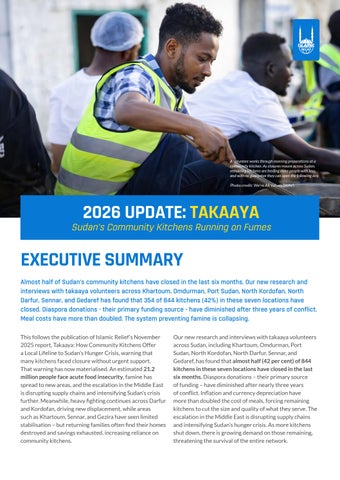
A volunteer works through morning preparations at a community kitchen. As closures mount across Sudan, remaining kitchens are feeding more people with less, and with no guarantee they can open the following day.
Photo credit: We’re All Values (WAV)
Increasingly, international governments are acknowledging the work of Sudan’s local responders and mutual aid groups. However, aid is still not reaching those on the frontlines of the crisis. Urgent action is needed to stop more takaaya from closing. Strengthening and supporting these locally-led networks represents a critical opportunity to not only address immediate hunger, but also to build a foundation for broader community-based recovery and rebuilding across Sudan.
Islamic Relief reiterates our calls to urgently stop the spread of famine in Sudan and recommends that:
Institutional donors and donor governments:
• provide predictable, flexible, and multi-year funding to community-led mechanisms through trusted local and international partners
• recognise and fund the true operational costs of volunteer-led networks.
UN agencies and INGOs:
“When the funding stopped and we had to close [the] kitchen, it felt like abandoning my own family. People would ask, ‘What are we supposed to do now?’ and we had no answers.”
Alaa, takaaya volunteer, Port Sudan
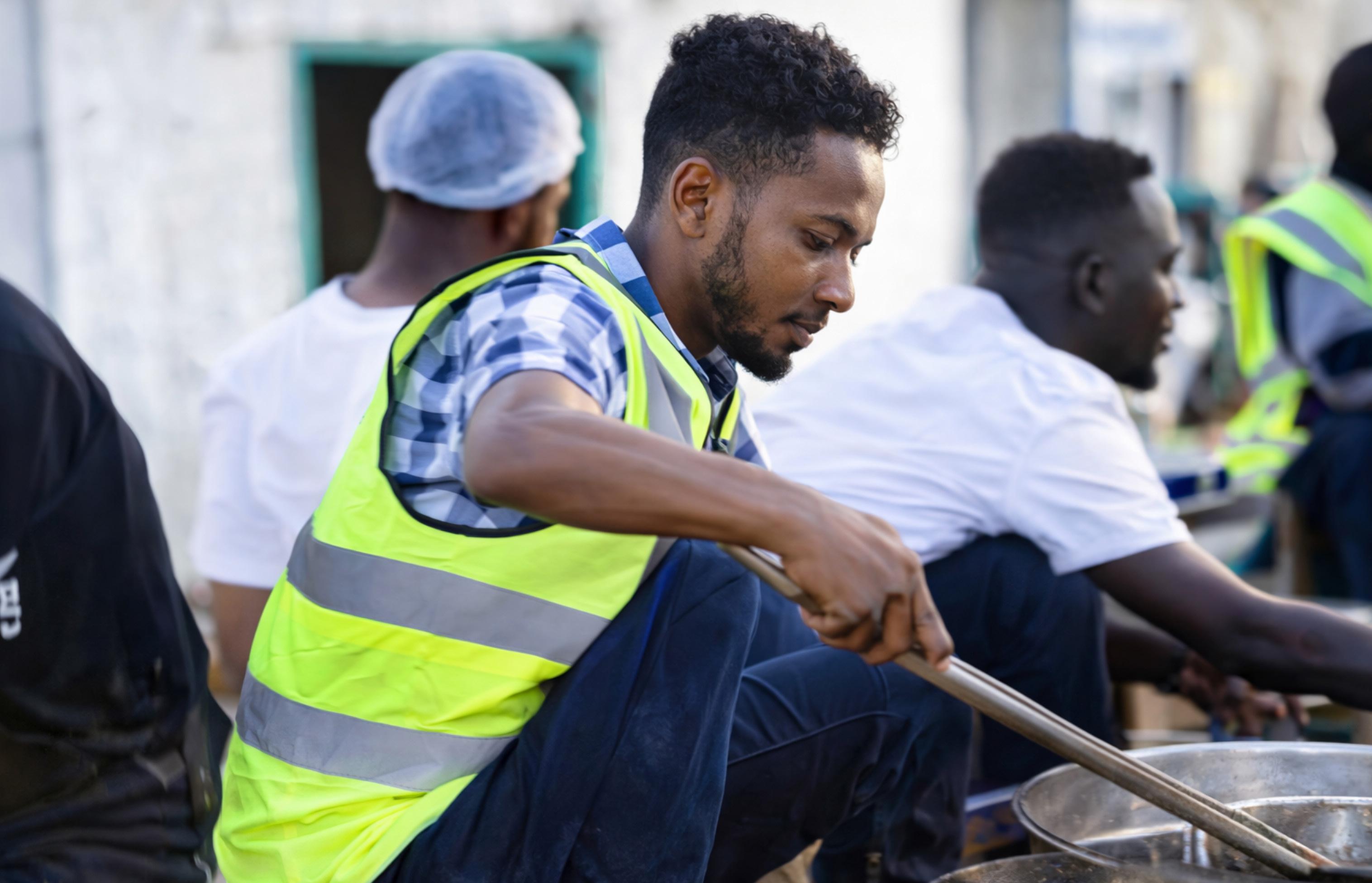
Volunteers prepare freshly baked bread for distribution at a community kitchen in Port Sudan. Takaaya like this one feed hundreds of people a day, funded almost entirely through diaspora donations and local community contributions.
Photo credit: We’re All Values (WAV)
PARTIAL STABILISATION, PERSISTENT HUNGER 1
When Islamic Relief published our first takaaya report in November 2025, Sudan was already experiencing one of the world’s most severe food crises. Six months on, the picture is more complex, but no less critical. Although heavy fighting and horrific attacks on civilians continue in vast areas such as Darfur and Kordofan, there have been improvements in security across other regions, allowing internally displaced people (IDPs) to return home. In areas such as Khartoum, Sennar, and Gezira, daily life is slowly resuming. Markets are reopening and some economic activity has returned. Agricultural areas in particular have begun restoring local production.
However, this stabilisation does not mean the hunger crisis is easing. Over 21.2 million people still face acute food insecurity.1 In locations across Darfur and Kordofan, conditions have surpassed the famine threshold of the UN-backed Integrated Food Security Phase Classification (IPC). A recent nutrition survey conducted in Um Baru, North Darfur, found a Global Acute Malnutrition (GAM) rate of 53 per cent, with 35 per cent of cases classified as Severe Acute Malnutrition (SAM), among the highest levels recorded anywhere in the world.2
Despite relative stabilisation in some regions of the country, many returning families face extreme economic vulnerability. Homes have been destroyed, livelihoods lost, and savings exhausted. As Dr Nazar, a volunteer supporting a takaaya in Omdurman, explains: “The majority of [the returnees] have nothing, they have no houses, no jobs, no assets, and no opportunities to establish businesses.” In these locations, the return of displaced populations can lead to increased demand for community kitchens. “If anything, as people return to the neighbourhood and life resumes on the surface, the hunger has become more visible, not less,” says Ezaldeen, a 65-year-old volunteer from Khartoum. “People who had been managing on savings or on the generosity of host families elsewhere have come back with nothing left. We are dealing with more people in need even as the security situation stabilises.”
At the same time, new displacement continues in areas affected by ongoing conflict. In Omdurman, Soraya, a takaaya volunteer describes the growing pressure on local support systems: “We are now receiving people from Darfur, from Dilling, from Kadugli and from El Fasher. These families have no food, no work, nothing. Most of them are completely dependent [on aid].” In Port Sudan, the arrival of displaced families has also continued steadily. “Every day there are new faces and new children,” says Alaa, a local volunteer. “The responsibility grows every day because the number of people keeps increasing while the funding does not.”
The result is a complex humanitarian landscape in which visible stabilisation in some areas masks deepening hunger and rising dependence on community-led support systems.
ISLAMIC RELIEF’S RESPONSE
Since the start of the conflict in April 2023, Islamic Relief has reached over 2 million people with humanitarian assistance across Sudan, including 1.9 million in 2025 alone. Our response spans food distribution, health, water and sanitation, shelter, and livelihoods support.
In Khartoum, where returning families face destroyed infrastructure, Islamic Relief has launched new programmes repairing schools and supplying hospitals to support the recovery of essential services.
Our response also includes direct partnerships with takaaya in areas that are difficult to access through conventional humanitarian channels.
THE LAST SAFETY NET DISAPPEARING 2
Against this backdrop, takaaya remain one of the most important informal safety nets sustaining vulnerable families. Created and run by ordinary Sudanese citizens, these kitchens play a critical role in preventing widespread famine, supporting IDPs, and preserving social cohesion during the conflict.
This is Sudan, even in the darkest times
“The most beautiful thing about Sudan is its people. Our resilience, our generosity, our ability to stand together even when everything falls apart.
“Right now, during Ramadan, we are running a takaaya with a project called Broosh Al-Khair (The Goodness Budget). Just the other day, an ordinary Sudanese man came to our door. He was carrying a sheep on his shoulders. He said, ‘I brought this for the takaaya. Cook it for the people.’ Another woman brought a calf she had raised herself. Ordinary citizens, people who are also struggling, are coming forward to give whatever they can. They say, ‘I want to help my brothers and sisters.’ This is who we are. Even in the darkest times, we find ways to give.
“The world sees the war, the hunger, the suffering, and yes, all of that is real. But behind all of that is a people who refuse to let go of each other. This is the Sudan I know and love. And this is the Sudan I believe will survive this.”
Hassan, 42, takaaya volunteer, Port Sudan
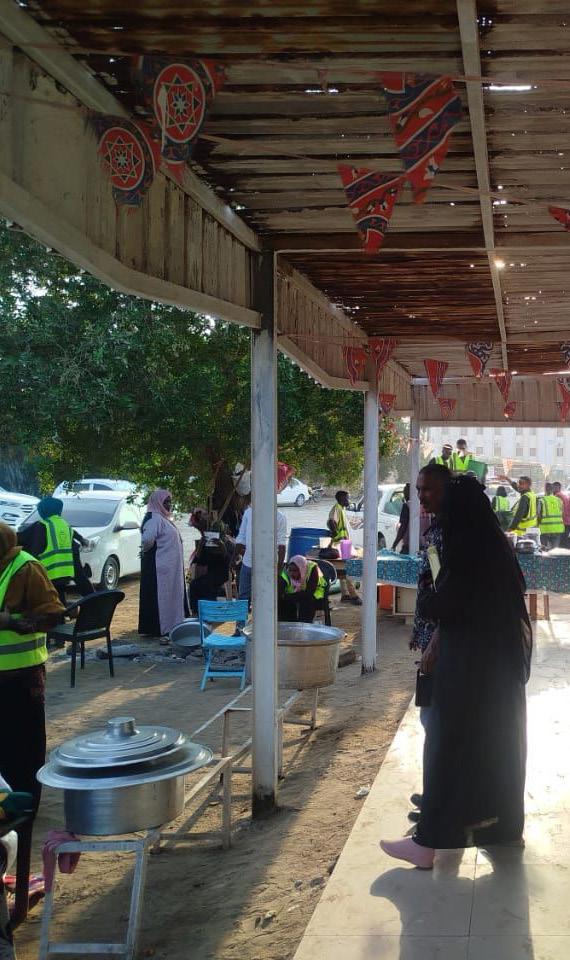
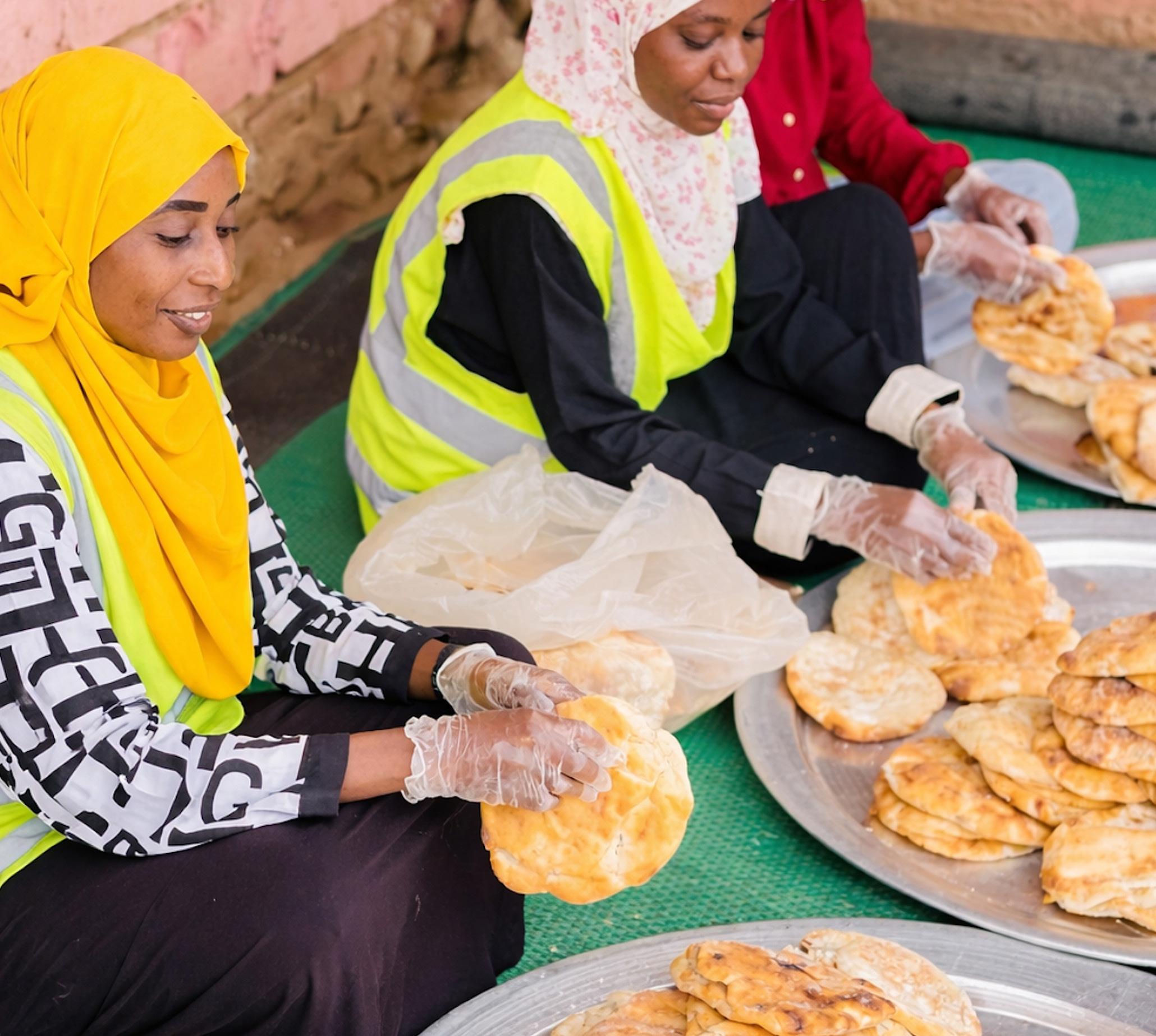
Volunteers serve hot meals directly from a vehicle during a distribution run. As displacement continues to shift across regions, community kitchens have had to adapt their operations to reach families wherever they are.
Photo credit: We’re All Values (WAV)
The Borosh Al-Khair (‘The Goodness Budget’) community kitchen in Port Sudan, photographed during Ramadan. Ordinary Sudanese people donated what they had to keep it running.
Photo credit: We’re All Values (WAV)
Despite this extraordinary solidarity, the network of takaaya is now under severe strain. Inflation, currency depreciation, and disrupted supply chains have doubled the cost of providing meals across the country, while diaspora donations, the primary source of funding for many kitchens, have dwindled as the conflict approaches its third year since April 2023.
Across the country, hundreds of kitchens have already closed.
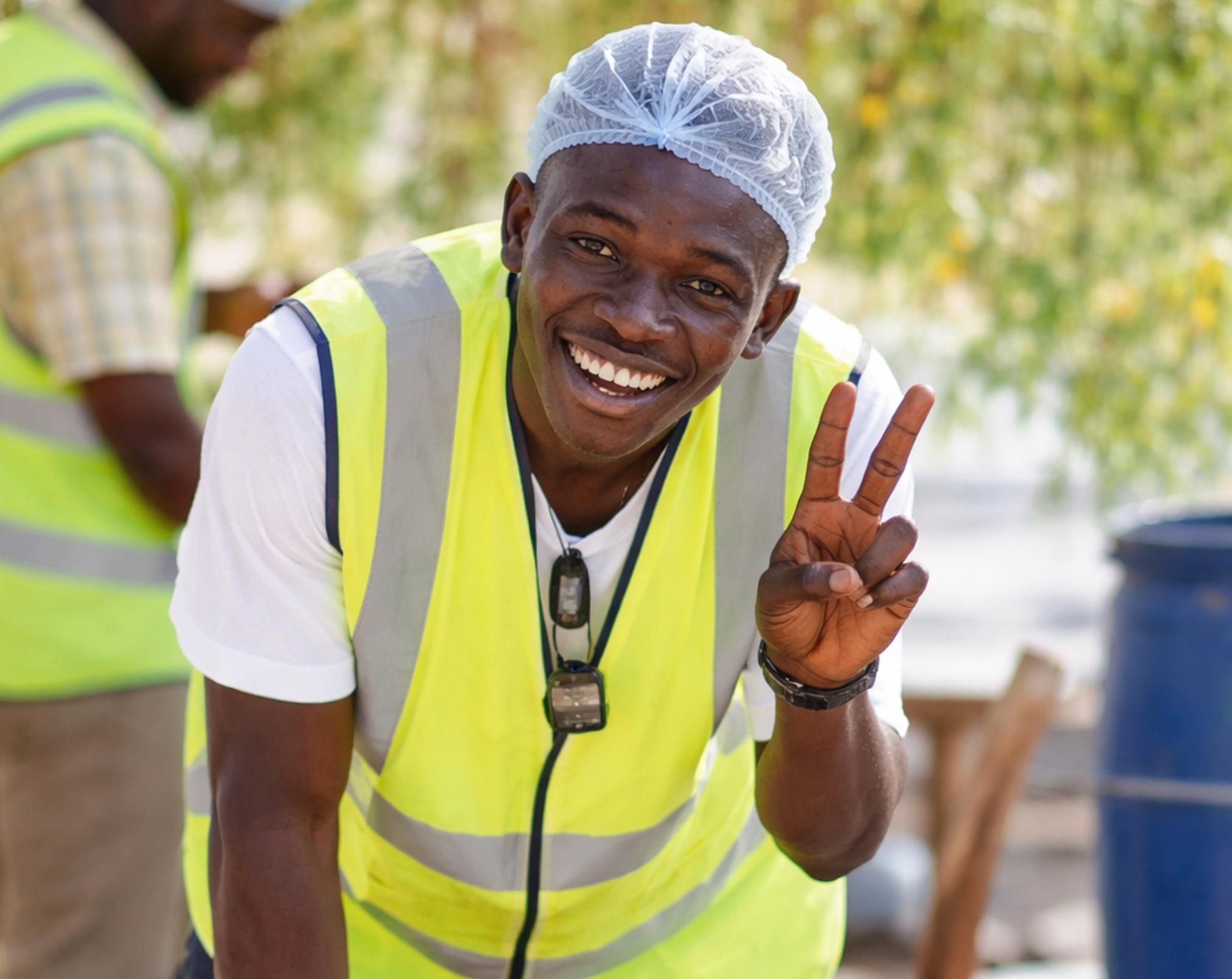
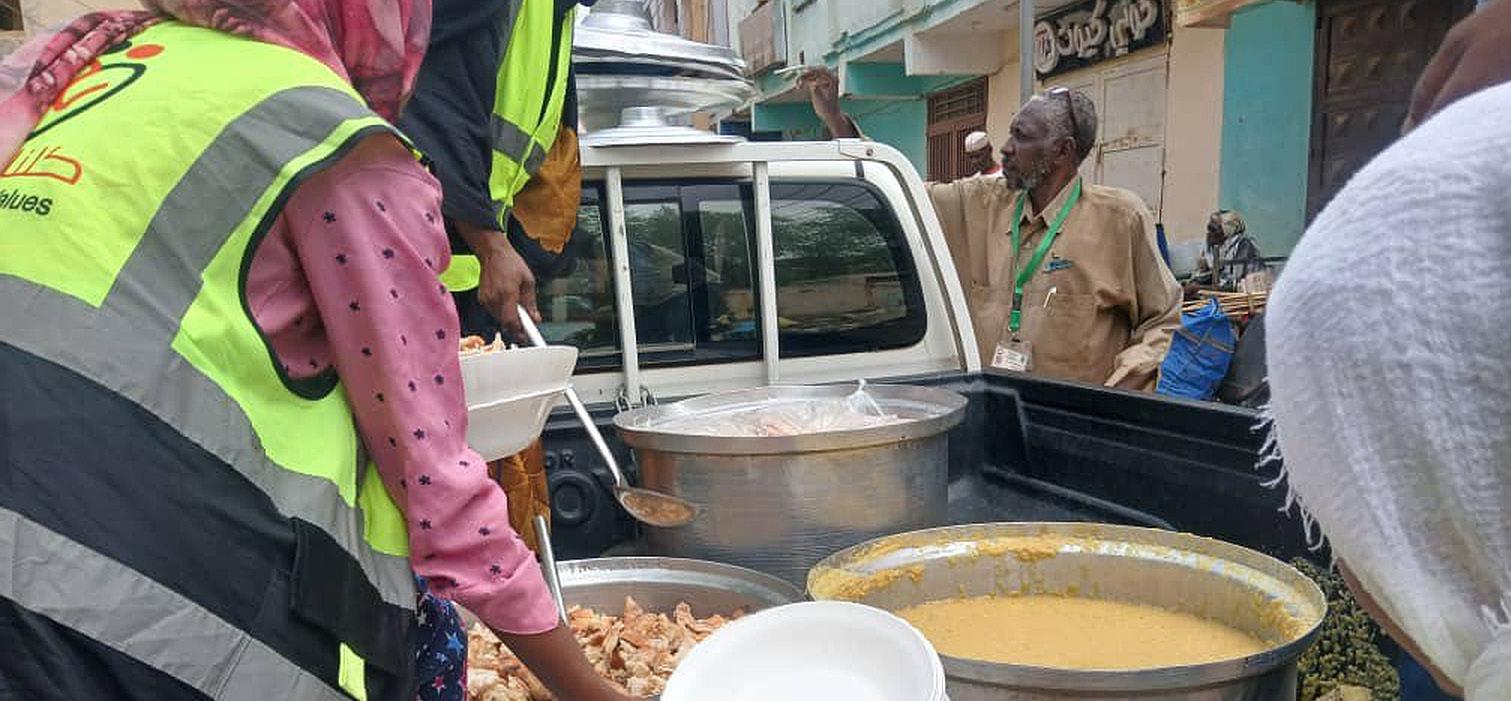
A community kitchen volunteer in Sudan. The takaaya network has been sustained for nearly three years by people like him - giving their time, unpaid, day after day.
Photo credit: We’re All Values (WAV)
** North Darfur figures cover the wider state, with data collected primarily through interviews with volunteers in Tawila.
“After serving the meals we clean the site and count how many people we fed. Then we start thinking about the next day. Do we have enough food? Will we be able to open tomorrow?”
Takaaya volunteer, Khartoum
With dwindling funding and hunger at every corner, Sudanese communities have had to make the difficult decision of investing where the need is the most urgent. In areas of volatile and active conflict, which remain inaccessible to international aid organisations, the diaspora and internal Sudanese support networks have stepped up to ensure the continuation of community kitchens that stand as the final frontier against starvation. In North Kordofan, for instance, where there is urgent and enormous need due to ongoing conflict and displacement, there have been no kitchen closures. Comparatively, areas of relative safety such as Port Sudan have faced more closures. However, this does not mean that the need has lessened in areas of presumed safety.
“We had to suspend operations when our funding stopped in 2025,” recalls Alaa, a volunteer, from Port Sudan. “For six months, we had been feeding up to 4,000 people there every single day. We knew everyone. We became family with them. When the funding stopped and we had to close that kitchen, it felt like abandoning my own family. People would ask, ‘What are we supposed to do now?’ and we had no answers. Now, Alhamdulillah, we have some funding again, but it is limited.”
For the kitchens still operating, each day is a gamble as unstable and uneven flow of funds impedes future planning.
A volunteer in Khartoum describes the daily reality: “After serving the meals we clean the site and count how many people we fed. Then we start thinking about the next day. Do we have enough food? Will we be able to open tomorrow?”
The situation is not much different in Tawila in North Darfur, where young volunteers report having to close the kitchens regularly in between donations, with no guarantee on when or if the next round of funding will arrive.
Closures also increase pressure on the kitchens that remain operational. “Seven kitchens in our area have closed,” explains one volunteer. “This has a direct knock-on effect on those of us still running. The people who relied on them now come to us, so we are feeding more people with fewer resources.”
Adjusting to this instability means that many kitchens have to make the difficult decision of reducing meal sizes and nutritional quality to stretch limited funding. Takaaya across different regions, including Shambat, Tawila, and Omdurman, report a reduction in the number of meals in the last six months. “Before we had variety: lentils, vegetables, beans,” explains volunteer Ezaldeen. “Now it is usually just one type of food. We are feeding people, but we are not feeding them well.”
The consequences of the reductions are already visible.
“More than five people in this community have died from illnesses directly caused by hunger and malnutrition, that I know personally… five people who might still be alive if the takaaya had been better resourced,” Ezaldeen says.
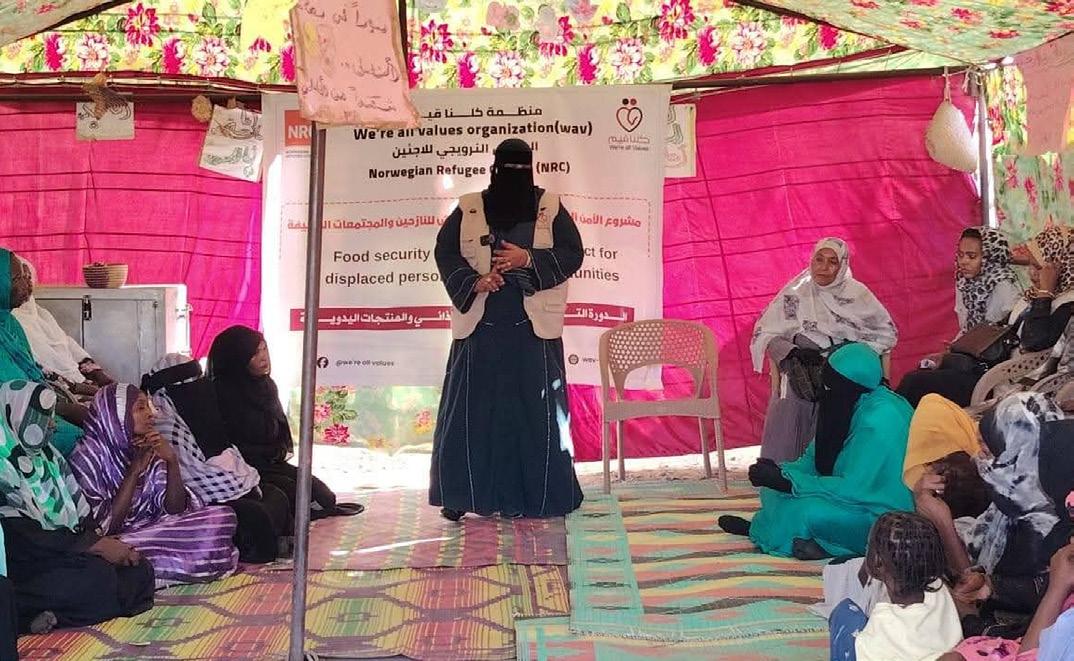
Alaa, a volunteer coordinator from Port Sudan, addresses a community gathering. Beyond running a kitchen that once fed up to 4,000 people a day, her team has operated a trauma centre, child-friendly spaces, and training programmes for women - with no guaranteed funding.
Photo credit: We’re All Values (WAV)
A FUNDING MODEL AT BREAKING POINT 3
The survival of community kitchens depends largely on informal funding networks. The majority of kitchens rely on donations from Sudanese diaspora communities, as well as local contributions from families who are themselves affected by the crisis.
After three years of conflict, diaspora communities are struggling to sustain the level of financial support required. Many donors abroad are sending money to support relatives while also contributing to community kitchens. As the crisis deepens, this dual responsibility has become increasingly difficult to sustain. “The people sending money from abroad are also working people,” explains Rayan, a volunteer from Shambat. “There is only so much one person can give, and the need here has kept growing while the resources have stayed the same or shrunk.”
Funding challenges are further compounded by reductions in international humanitarian aid. Global humanitarian funding in 2025 was the lowest that it has been in a decade, reaching 25 million fewer people than in the year before. In Sudan, less than 40 per cent of the $4.2 billion Humanitarian Response Plan was funded in 2025, in a massive drop from 2024 when 70 per cent of the Response Plan was funded.3
Although community kitchens rarely receive direct institutional funding, cuts to the broader humanitarian response mean that many vulnerable families that might otherwise receive assistance now rely on these informal networks instead. “The impact [of the cuts] has also been felt through Sudanese diaspora associations in European countries that collect donations and channel them to organisations like ours, such as Sama, Khartoum Aid Kitchen, and Khatim Al-Tai,” explains volunteer Alaa. “It impacts them indirectly, which in turn impacts us. This creates additional pressure on kitchens that are already operating with minimal resources.”
In addition to the overall insufficiency of funding, some of the biggest challenges remain the uneven and unpredictable nature of aid and aid distribution. In Port Sudan, for example, humanitarian assistance remains limited because the city is considered relatively stable –despite a rapidly growing displaced population. “Because Port Sudan is seen as safe, much of the aid goes elsewhere,” says Alaa. “But the population here has exploded and the need is enormous.”
In Tawila, takaaya which are a branch of a larger kitchen report the impossibility of planning ahead without predictable flows of finance: “We hope that the main kitchen will send more funds, but we are not sure of that. It is always a gamble. And if the funds do not arrive, there is nothing we can do but stop.” The situation is similarly difficult in Omdurman, where takaaya dependent on the distribution of funds from the Humanitarian Aid Commission (HAC) await aid which may never arrive: “We negotiate with the HAC, but they do not always come through. Honestly, what is available now will not last the full month, but all we can do is wait.”
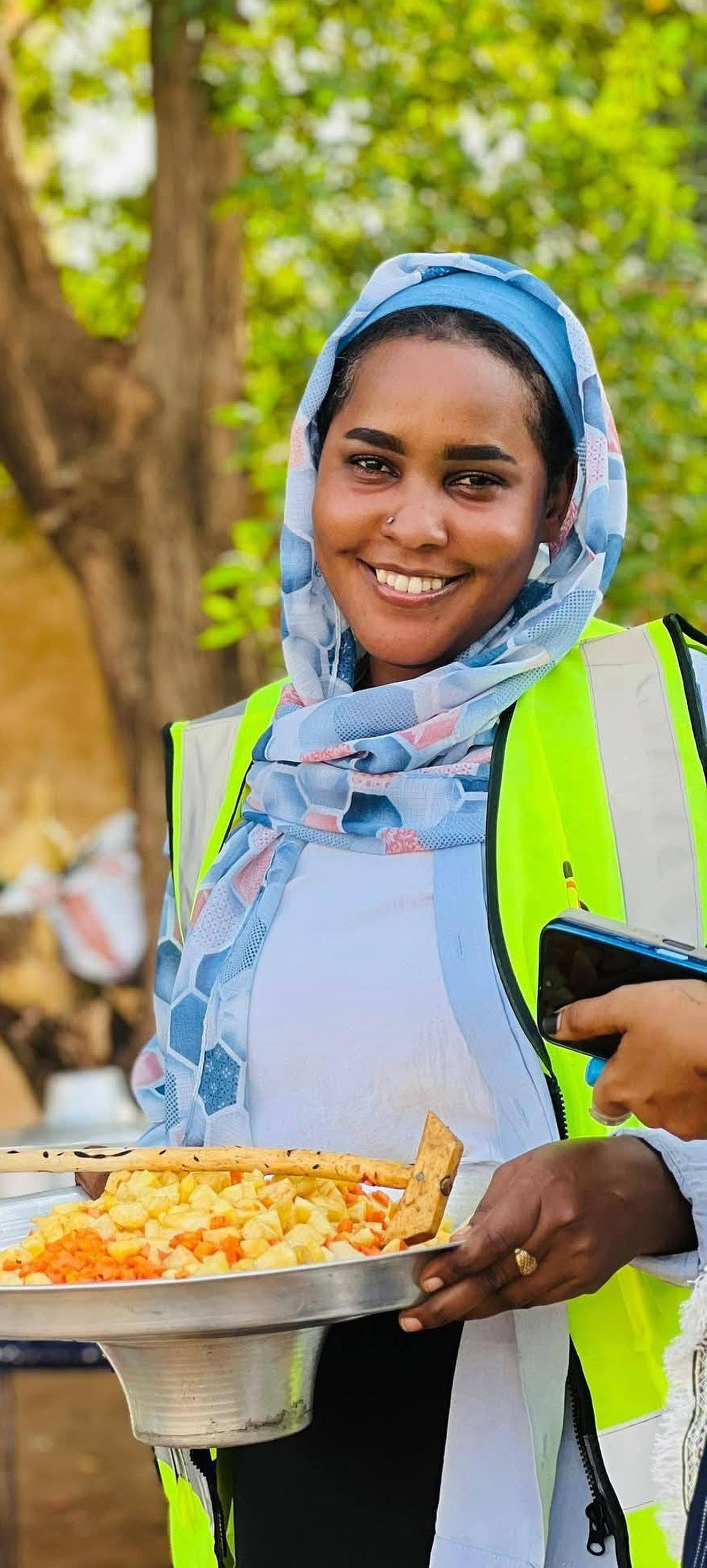
A volunteer prepares a meal at a community kitchen in Sudan. In many locations, a single taakiya is now absorbing the caseload of several that have closed - feeding more people with the same resources.
INFLATION AND MARKET COLLAPSE DOUBLING PRICES
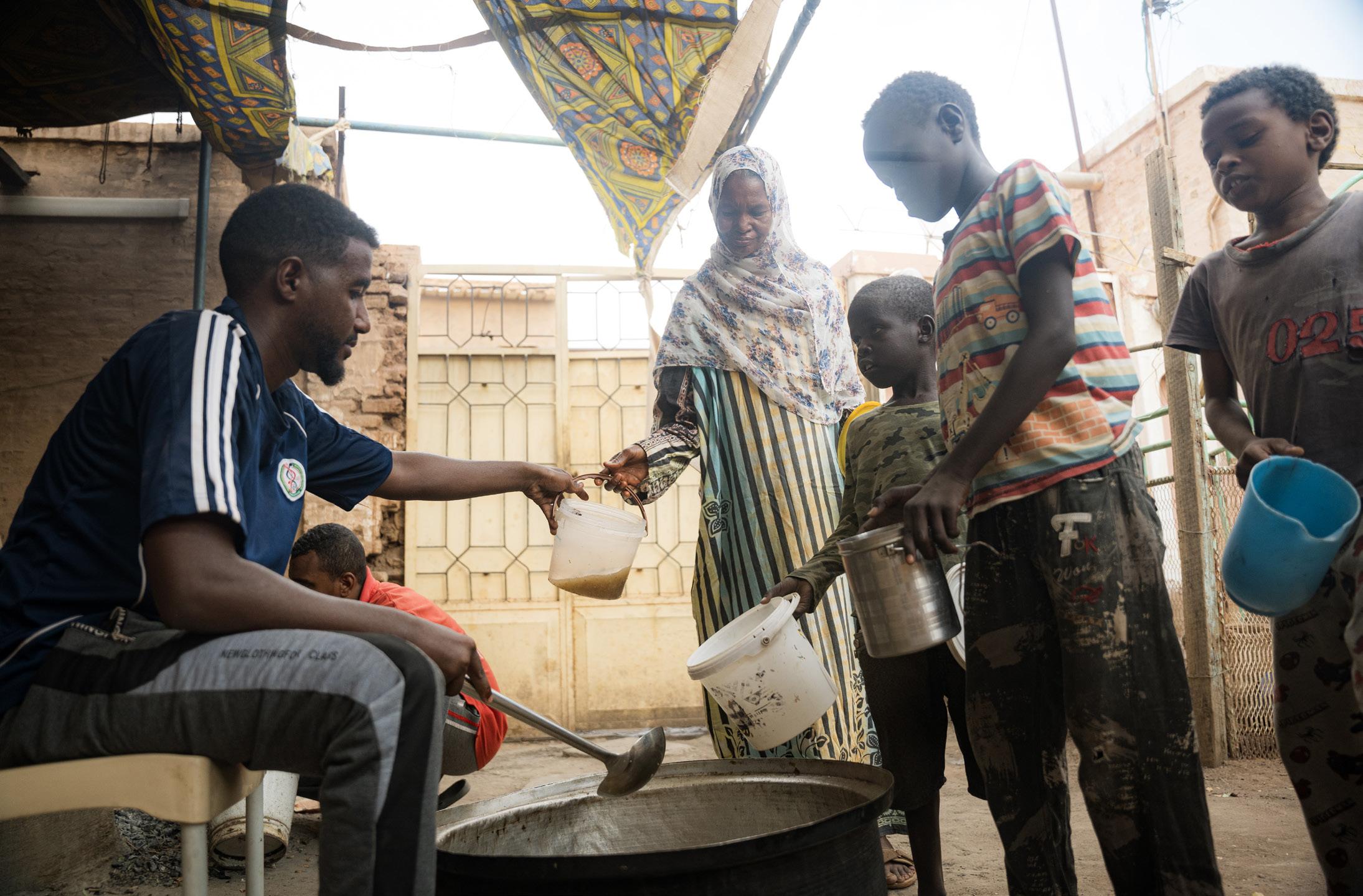
Even where funding is available, rising food prices have dramatically reduced what kitchens can purchase. Currency depreciation, economic collapse, and reliance on imports have driven steep increases in food costs across Sudan, with the prices continuing to increase weekly. A volunteer in Khartoum explains: “Six months ago a meal cost around 3,000 Sudanese pounds (approx. £3.70). Now it costs about 7,000 (approx. £8.70). That is more than double. When you are feeding hundreds of people every day, that difference is enormous.”
Not only does this mean that it is far more costly to feed the same number of people, it also makes planning and budgeting more complicated. “Every time we think we have a workable budget, prices change again,” says another volunteer, “planning anything more than a week ahead has become almost impossible.”
Supply chain disruptions further compound the problem. Road closures due to insecurity and destruction of infrastructure force traders to use longer routes, increasing transportation costs and driving prices even higher, particularly in places like Tawila: “Previously, people from Omdurman, Khartoum, El Fasher, would come through alDabba to Tawila. But now the road is not accessible for traders to bring goods from al-Dabba to Tawila. Most of the traders now are coming from Chad through Zalingei, which makes prices that much more expensive,” explains a young volunteer from the area. Vendors themselves often hesitate to sell food stocks due to price uncertainty. “Sometimes traders refuse to sell because prices are rising so quickly,” one volunteer explains. “That makes planning almost impossible.”
For kitchens feeding hundreds or thousands of people daily, these economic pressures have enormous consequences.
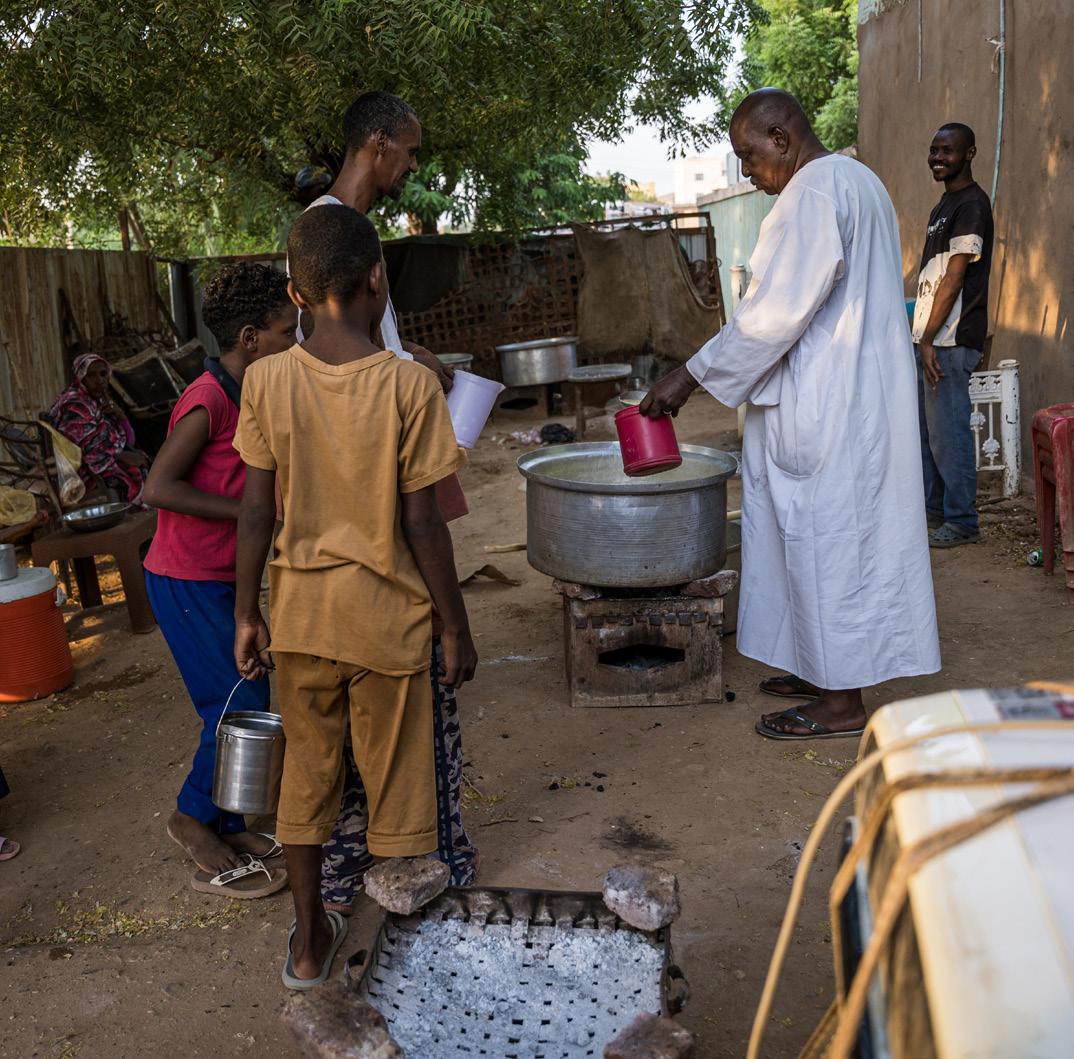
Families queue at a community kitchen. “Seven kitchens in our area have closed,” one volunteer told us. “The people who relied on them now come to us - so we are feeding more people with fewer resources.”
HUNGER WITHIN A WIDER HUMANITARIAN CRISIS
Although food remains the most urgent need, communities that we have spoken to face a range of additional challenges.
Takaaya operation model
Health systems on the brink
Waterborne diseases such as cholera have been reported in several areas. “Many people fall ill due to contaminated or insufficient water,” says Marwa from Port Sudan. “The lack of clean water contributes to waterborne diseases and poses a significant health risk, especially for children and vulnerable groups. When you combine that with the weakened immune systems that come from insufficient food, illness spreads quickly. We have seen a real surge in waterborne diseases.”
Malaria and dengue fever are also spreading, particularly in communities where clean water and sanitation are limited. Despite the massive health problems, many health facilities remain shut, leaving communities with little access to treatment. For people living with chronic conditions, obtaining medication is increasingly difficult. In Shambat, residents report that even basic medicines are difficult to obtain. “Even if you have money, you cannot find diabetes medicine locally,” says one resident. “People sometimes travel for days to find treatment.”
Besides the physical health conditions which require urgent medical attention, volunteers also report witnessing an increase in mental health needs with no available support: “The returnees especially… they left their homes during the conflict and experienced things that have left deep marks. Some of them have lost family members and all that they owned [has been] destroyed. Many of them have not been able to speak about what they witnessed. There is no mental health support here. People are carrying enormous psychological weight with nowhere to put it,” Ezaldeen in Khartoum says.
A generation at risk: Education disrupted
Exclusion of people with disabilities
The war has disrupted Sudan’s education system on a massive scale. Many schools have closed down, teachers have been displaced, and families cannot afford private alternatives. Schools which remain operational are missing “basic educational tools such as school bags, projectors, and classroom essentials,” reports Walid from Sennar, leaving large numbers of children without access to adequate education.
Hunger also affects children’s ability to learn. “Even those that do go to school cannot concentrate because they arrive hungry,” says Soraya from Omdurman. “Our children here are being left behind.” Despite efforts towards school feeding initiatives by the takaaya, limited resources remain an issue: “We tried to distribute meals to schools, but we had to give up because we do not have a vehicle,” says Walid.
Support systems for people with disabilities remain particularly limited. Community leaders emphasise the urgent need for accessible services and education. “Those with mobility impairments or hearing disabilities are in a really difficult position,” says Walid. “There is nothing to help them: no transportation, no specialised facilities. There are so many children with disabilities now, but many schools are already overcrowded, and there are not enough specialised resources or tools. They are not receiving what they need.”
Although takaaya adapt where they can to support people with disabilities, such as by delivering meals to homes, their already-overstretched capacity and lack of resources mean that they are often unable to provide the support needed.
The hidden burden on volunteers
Takaaya depend entirely on volunteers who dedicate enormous amounts of time and energy to sustaining their operations. These volunteers are not professional aid workers. They are members of the same communities affected by the crisis, motivated by their faith, culture, and love of their community. Many travel long distances to collect water, purchase supplies, or coordinate distributions, facing security threats and additional health risks such as exposure to malaria.
Some have even sacrificed their own livelihoods and wellbeing to continue running the kitchens. “There have been days where I reduced my own meals so that others could eat,” says Ezaldeen, “When you see people waiting and the pot is running low, you make sure the most vulnerable are served first. Indeed, the people running these kitchens are not separate from the crisis. We are living it too.”
Ensuring the sustainability of the kitchen network therefore requires supporting the volunteers who run them.
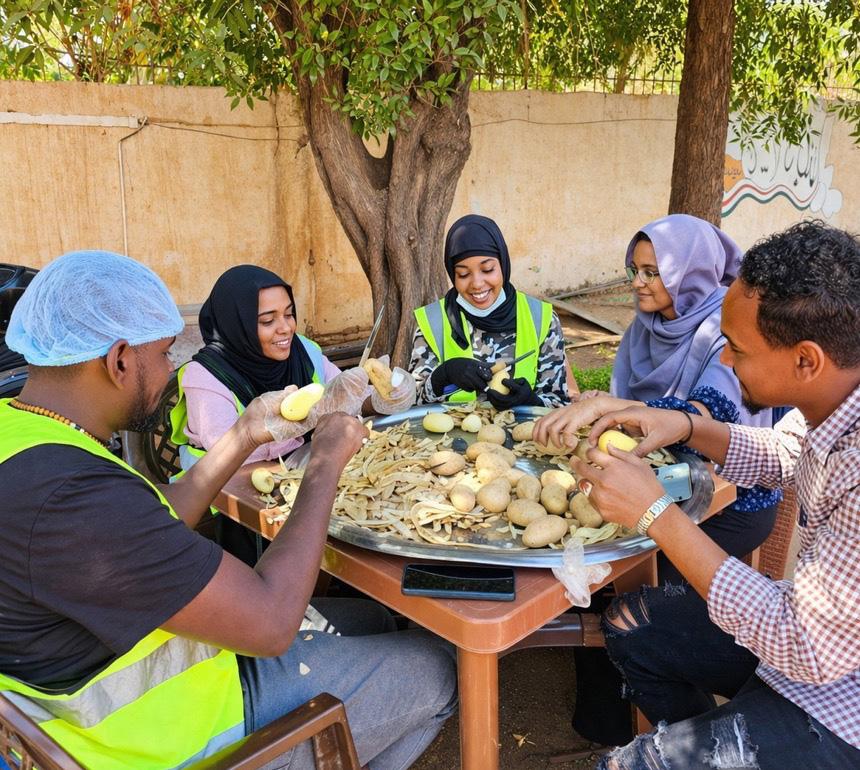
Takaaya volunteers between distributions. Across Sudan, informal networks of young people and women have become the primary barrier between millions of families and famine.
Photo credit: We’re All Values (WAV)
NEED FOR SUPPORT WITHOUT STRINGS
Sudan’s community kitchens represent an extraordinary example of locally-led humanitarian action. Despite the immense challenges they face, community kitchens remain one of Sudan’s most powerful humanitarian assets. They are locally led, highly trusted, and capable of responding rapidly to community needs. Unlike large humanitarian organisations, they require minimal infrastructure to operate and can adapt quickly to changing conditions.
This flexibility creates significant opportunities for humanitarian partnerships and speaks to the localisation agenda long championed under frameworks such as the Grand Bargain and broader United Nations reform commitments to shift power and resources to local actors. Sudan’s takaaya represent localisation not just as policy language, but as an operational reality.
For thousands of people across Sudan, takaaya are the first and only source of humanitarian aid. Amid large gaps in addressing not only in food insecurity but across sectors such as health and education, takaaya are well-positioned to be able to respond. They not only deliver emergency food aid, but build upon their existing capacity to provide healthcare, educational services, and support for people with disabilities. This is not by any means unprecedented.
For instance, volunteer Alaa speaks of one of his takaaya’s ongoing projects in Iskan shelter: “In one of our first projects in the shelter, we ran a full protection programme. It included a trauma centre, child-friendly spaces, and training for women. We are always aware that food is the most urgent need, but it is not the only one. We see the need for healthcare, clean water, and psychological support, especially for the children.”
To not only survive the current crisis but build upon the existing infrastructure to provide long-term services, the takaaya need urgent assistance and sustained support.
Currently, there are significant barriers to this. Although specific donors such as the United Kingdom and European Union stepped up to increase their humanitarian funding in 2025, the overall funding faces massive deficits, with even less going to local and national actors. Moreover, despite increasing focus on localisation, the bureaucratic and administrative costs and stipulations associated with international aid are preventing it from reaching the hands of those who need it the most. Supporting takaaya and other local efforts means not only increased funding but meaningful reforms to how the humanitarian sector operates in complex emergencies.
“Do not wait for things to get worse before you act, because they will get worse if you wait. What is happening here is not going to resolve itself. The community kitchens that are still open are running on fumes. The people who built them and who run them have given everything they have. They need external support now, not in six months’ time.
I know Sudan is not always at the top of the news. But the families coming through our doors every day are real people, and the need is urgent and measurable. We are not asking for anything complicated. We need funding to buy food. We need supplies. We need the means to keep cooking. Give us that and we will do the rest.”
Rayan, takaaya volunteer, Shambat
RECOMMENDATIONS
The recommendations below reflect what we have learned in the six months since our first report. The situation has deteriorated, and the case for supporting community-led mechanisms is now undeniable. Accordingly, we urgently ask that:
Institutional donors and donor governments
• provide predictable, flexible, and multi-year funding to community-led mechanisms through trusted local and international partners
We call on donors to allocate dedicated resources within existing humanitarian funding mechanisms for community-led food security initiatives, with simplified application and reporting requirements proportionate to the scale of individual grants. Funding should cover core operational costs – food, fuel, water, transport – not just programme-specific outputs. Multi-year commitments are essential: the stop-start nature of current funding is itself a driver of closure. Support should strengthen the existing nafeer system,4 of which takaaya are a key component, recognising its proven community-led effectiveness and social legitimacy. Funding must also be distributed equitably across regions. The current data shows that closure rates vary dramatically between states, with some areas losing all community kitchens while others remain intact. Equitable allocation, informed by real-time monitoring of need and operational capacity, is essential to preventing the complete collapse of coverage in the most vulnerable areas.
• recognise and fund the true operational costs of volunteer-led networks
Takaaya volunteers have sustained operations for nearly three years without salaries, psychosocial support, or security provisions. Volunteer burnout is now a systemic risk: if volunteers collapse, the entire community safety net collapses with them. Volunteer led does not mean zero cost. We call on donors to fund operational support – including health provisions for volunteers, basic security measures, and resources to enable volunteer rotation – as essential infrastructure. This is not overhead. It is the foundation on which the system depends.
UN agencies and INGOs:
• integrate takaaya into humanitarian coordination as recognised delivery partners
Takaaya do not exist in parallel to the humanitarian system. In many areas, they are the humanitarian system. Yet they remain excluded from coordination mechanisms, decision-making forums, and resource allocation processes. We call on humanitarian coordination bodies, including cluster leads, to develop pathways for takaaya and Emergency Response Rooms representatives to participate in coordination at the national and sub-national level. Engagement protocols should recognise the informal nature of these networks without imposing compliance burdens that demoralise volunteers and undermine dignity.
• adapt funding mechanisms to the reality of volunteer-led organisations
The standard international non-governmental organisation (INGO) reporting, compliance, and due diligence framework was not designed for volunteerrun community kitchens. Approaches already tested by organisations such as Norwegian People’s Aid – which has implemented simplified reporting thresholds and flexible funding while maintaining accountability – demonstrate that adaptation is both possible and effective. We call on INGOs to develop simplified proposal and reporting templates proportionate to grant size. Risk-sharing frameworks should distribute reputational and financial risk among donors, intermediaries, and grassroots groups, rather than concentrating it on the least-resourced actors.
• link emergency food support to early recovery and resilience programming
Takaaya have demonstrated capacity to expand beyond food into health, protection, and education services. In Port Sudan, Alaa’s team ran a full protection programme including a trauma centre, child-friendly spaces, and training for women. In
Omdurman, takaaya have attempted school feeding initiatives despite severe resource constraints. We call on humanitarian and development actors to design programming that builds on takaaya’s infrastructure rather than creating parallel delivery systems. In practice, this means co-locating health outreach and nutrition screening at takaaya sites, using volunteer networks for education enrolment tracking, and channelling protection referrals through existing community kitchen structures. Funding should accompany this expansion with investment in monitoring and evidence-building to strengthen the case for sustained support.
Local authorities and parties to the conflict:
• protect volunteer networks and prevent politicisation of food distribution
Takaaya operate openly in conflict-affected neighbourhoods, exposing volunteers to insecurity, harassment, and potential targeting. All parties to the conflict have obligations under international humanitarian law to protect civilian infrastructure, including community-led humanitarian operations. Local authorities should take all feasible steps to ensure safe operating space for volunteers, prevent interference or politicisation of food distribution, and facilitate safe access to supply routes. The neutrality of takaaya is foundational to their effectiveness – any political co-option risks destroying the trust that sustains them.
• formally integrate takaaya into service restoration and recovery planning
Takaaya’s embedded presence, community trust, and contextual knowledge position them as essential partners for both immediate response and long-term recovery. Local authorities should formally recognise takaaya within early recovery, health, education, and protection planning, moving beyond viewing them as temporary emergency mechanisms. For instance, this could include affiliating takaaya with existing social forums such as the Women’s Union or Labourers’ Union.
A volunteer carries food for distribution. The question is no longer whether community kitchens can keep doing this without support. It is how many more will close before the international community acts.
Photo credit: We’re All Values (WAV)
CONCLUSION 7
The system that has helped prevent widespread famine is now approaching its breaking point. Rising food prices, currency depreciation, shrinking donations, and declining international aid are steadily eroding the capacity of these networks to operate.
As kitchens close, pressure intensifies on those that remain, creating a fragile system increasingly unable to meet the scale of need. Without urgent and sustained support, the gradual collapse of these community safety nets risks pushing already vulnerable populations further into hunger and instability.
Six months ago, our first report warned that takaaya were at risk of collapse. That warning has now materialised in over 350 documented closures. The question is no longer whether these networks will fail without support, but how many more will close before the international community acts.
Takaaya represent a powerful example of locally-led humanitarian action. Their reach, the trust they enjoy within communities, and ability to adapt quickly to changing conditions demonstrate the immense potential of community-based systems in responding to crises. Supporting these networks is therefore not only a humanitarian necessity but also an opportunity to strengthen localisation in practice – empowering Sudanese communities to lead the response to their own crisis while laying the foundations for recovery and resilience.
Sustained funding, stronger coordination, protection for volunteers, and meaningful integration of community initiatives into broader humanitarian and recovery strategies are urgently needed. With the right support, takaaya can continue to save lives today while helping build the community infrastructure needed for Sudan’s long-term recovery.
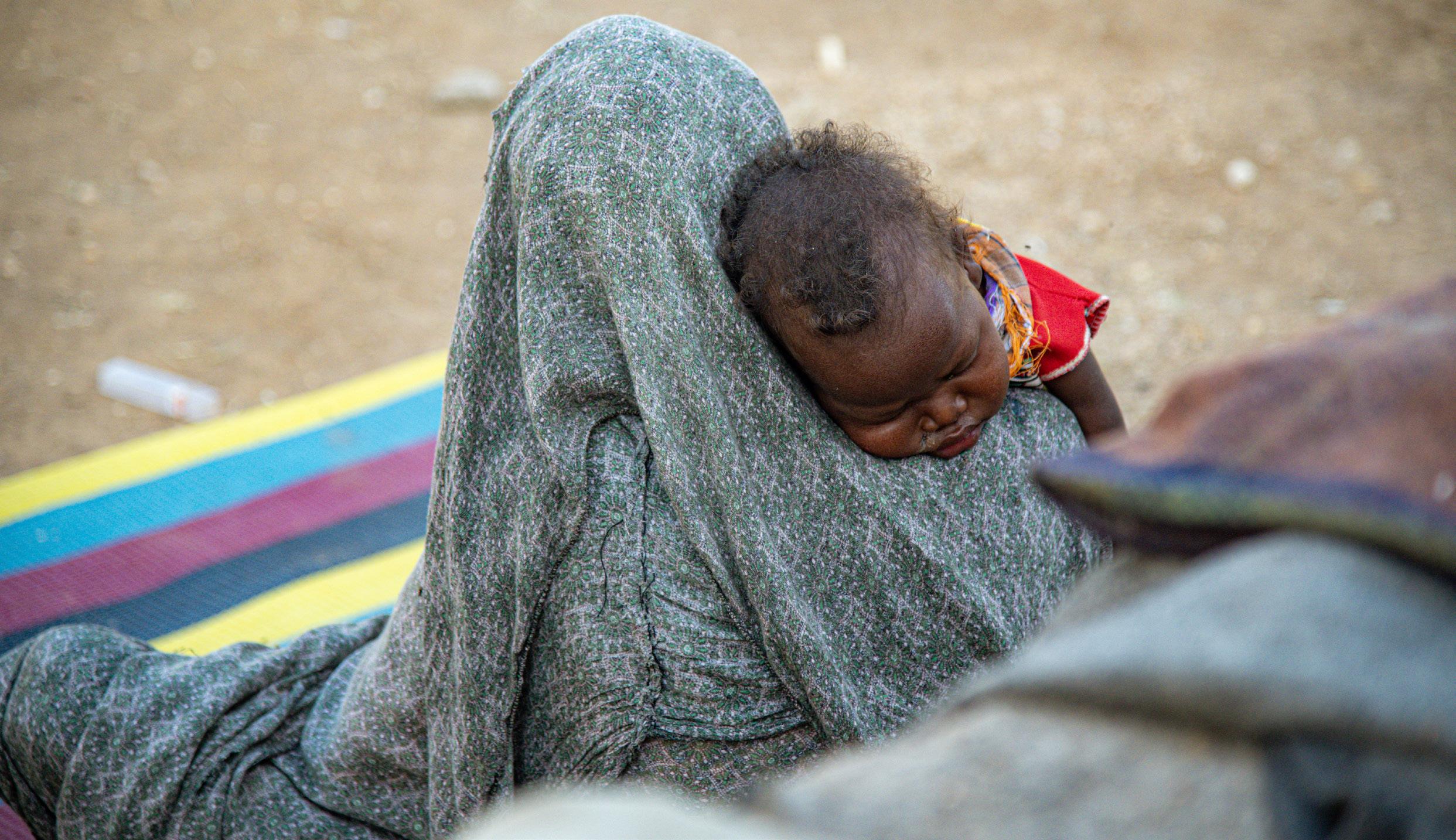
A mother and infant at a displacement site in Sudan. For families who have fled conflict with nothing left, the community kitchen is often the only consistent source of food they can rely on.
© Islamic Relief Worldwide 2026. All rights reserved.
Publisher information: Published by Islamic Relief Worldwide, 19 Rea Street South Birmingham, B5 6LB
April 2026
Researched and written by Sevval Oz (Research and Project Coordinator, Islamic Relief Worldwide), Research support and content collation: Ibtisaam Ashur (Advocacy Content Communications Coordinator, Islamic Relief Worldwide)
Design and Production credits: Global Editorial and Creative Content Team, Islamic Relief Worldwide
Photo credits: Mohammed Abdulmajid Mohamed Elhassan and We’re All Values (WAV)
DOI: 10.5281/zenodo.17407546
ABOUT ISLAMIC RELIEF
Islamic Relief was founded in 1984 in response to famine in East Africa. Today, Islamic Relief Worldwide is among the world’s largest relief and development charities. With global headquarters in Birmingham, United Kingdom, we are the international office of the Islamic Relief federation, which operates in more than 40 countries.